Audio articles are automated for accessibility. Humans wrote and edited the story; however, this audio has not been reviewed for accuracy and may contain errors. Read more about how we use AI to increase access to our reporting.
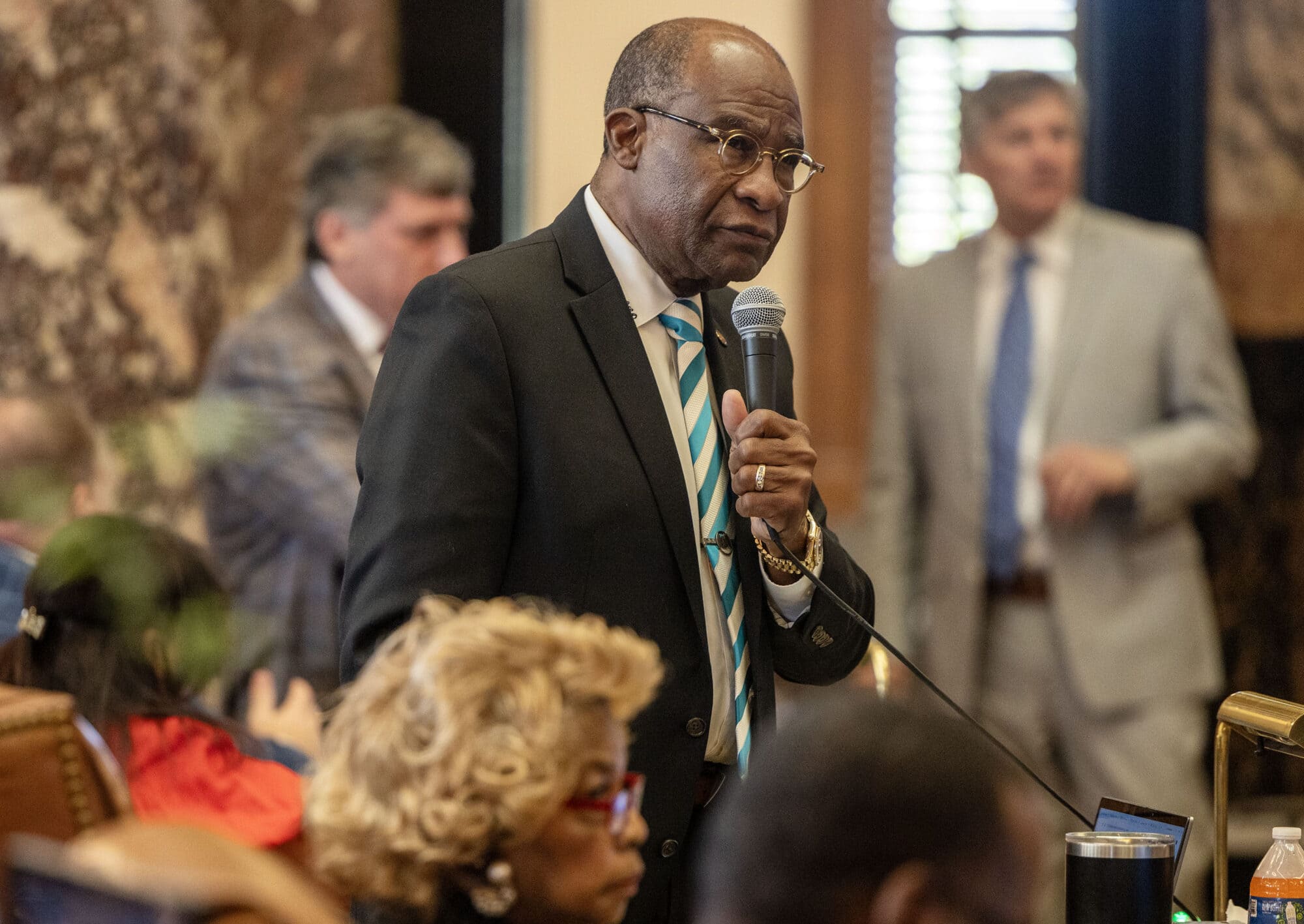
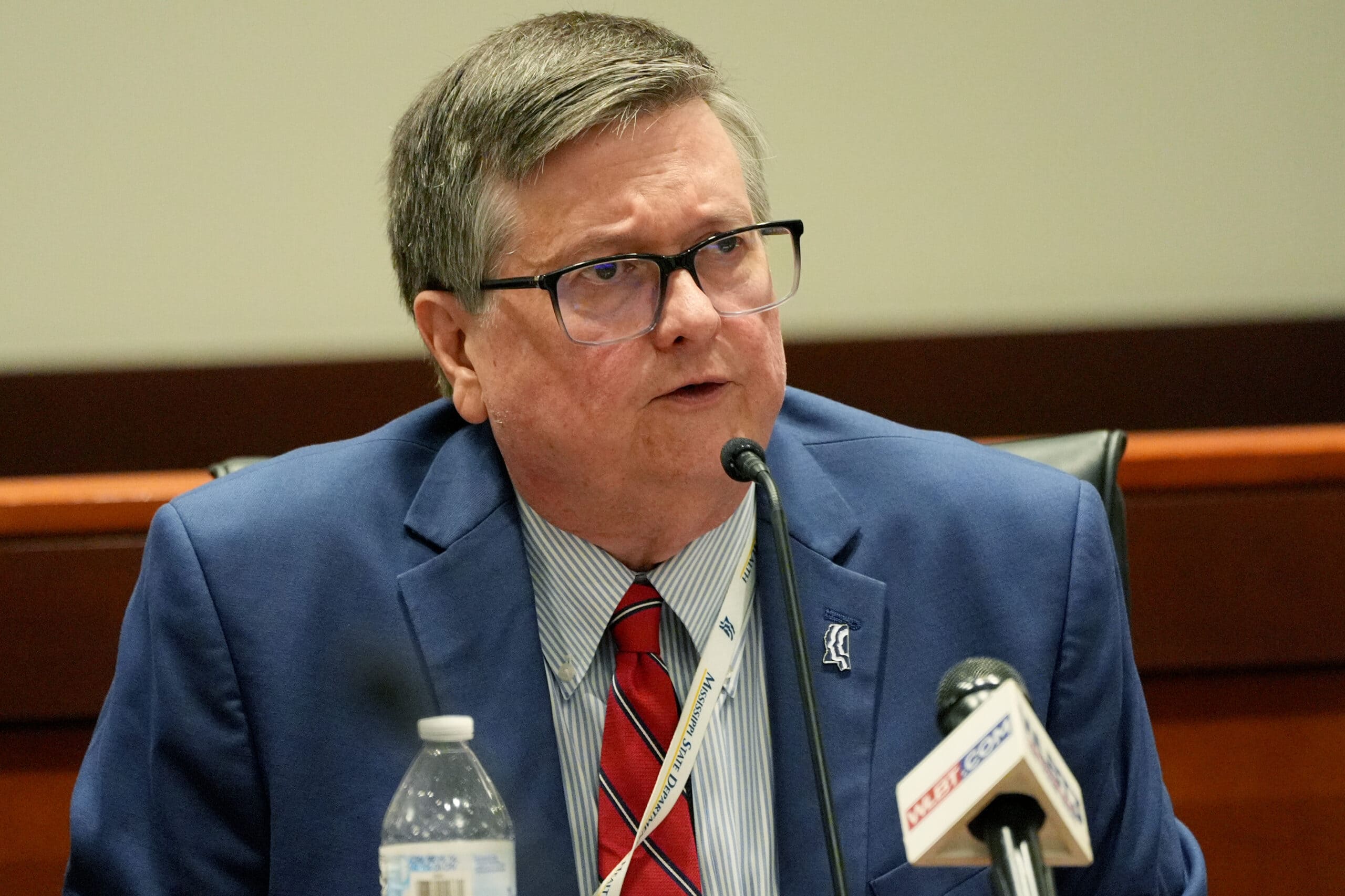
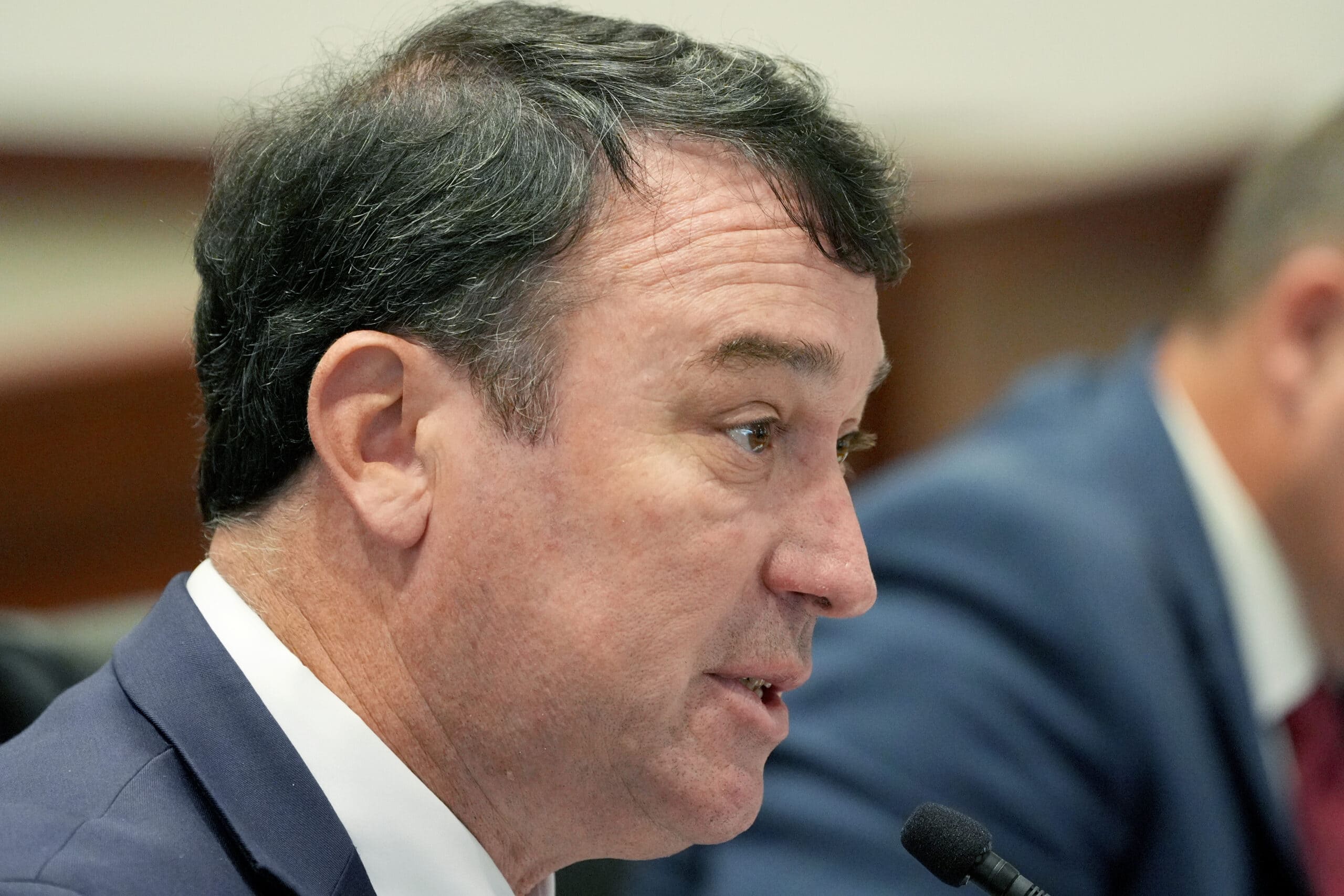
Even though state Sen. Johnny DuPree was elected last year to represent portions of Forrest and Lamar counties in the Legislature, he’s now trying to represent a new area of the state.
DuPree announced on Monday that he’s qualifying to run in a special election in November to fill the seat vacated by Sen. Juan Barnett, a Democrat from Heidlburg who resigned last month.
The reason DuPree is qualifying to run for a new Senate seat is that Secretary of State Michael Watson directed local election officials to revert to legislative districts adopted by the Legislature in 2022, which had been changed in 2025.
When Barnett resigned, Gov. Tate Reeves ordered a special election to fill Barnett’s vacant seat under the 2022 district lines, which contain portions of Forrest, Jasper and Jones counties.
A federal three-judge panel ruled in 2024 that the parts of the state’s 2022 district maps violated the federal Voting Rights Act and required the state to create more majority-Black districts.
The Legislature redrew the lines again in 2025 to comply, which created a majority-Black House district in northeastern Mississippi, a majority-Black Senate seat in Hattiesburg and a majority-Black Senate seat in DeSoto County.
But the U.S. Supreme Court reversed the three-judge panel’s decision on the state legislative districts in light of the high court’s landmark Louisiana v. Callais decision that rolled back racial discrimination protection during redistricting, leaving the status of Mississippi’s legislative districts in flux.
This will be the second special election in two years that DuPree has participated in because of redistricting lawsuits.
“Here we go again,” DuPree jokingly told Mississippi Today.
The state branch of the NAACP, represented by several civil rights legal advocacy groups, asked a three-judge panel to prevent Watson from reverting the districts to the 2022 maps, but U.S. District Judges Daniel Jordan and Sul Ozerden and U.S. 5th Circuit Court of Appeals Judge Leslie Southwick declined.
Now that the federal courts have cleared the way for Watson to unilaterally change legislative districts without action from the Legislature, it’s unclear what this means for a potential special legislative session to, again, redraw legislative districts.
Gov. Tate Reeves has said he will likely call lawmakers into a special session this fall to redraw congressional, legislative and state Supreme Court districts before the end of the year, something Democrats have strongly opposed.
DuPree’s predicament raises a range of questions about which lawmakers can participate in a potential special session and if it’s legal for legislators elected in 2025 under new maps to represent older districts drawn in 2022.
“This is not fair to the people who are going to vote to replace Sen. Barnett,” DuPree said. “It’s not fair to the people of Forrest County. Nothing about this is fair.”
Audio articles are automated for accessibility. Humans wrote and edited the story; however, this audio has not been reviewed for accuracy and may contain errors. Read more about how we use AI to increase access to our reporting.
Mississippi Today Ideas is a platform for thoughtful ideas to be shared about our state’s past, present and future. Opinions expressed in guest essays are the author’s own and do not necessarily represent those of Mississippi Today. You can readmore about the section here.
Every county reports a clearance rate for death investigations, and every county can defend the rate in a budget hearing. Whether anyone believes the finding is a separate question, and no jurisdiction tracks the answer.
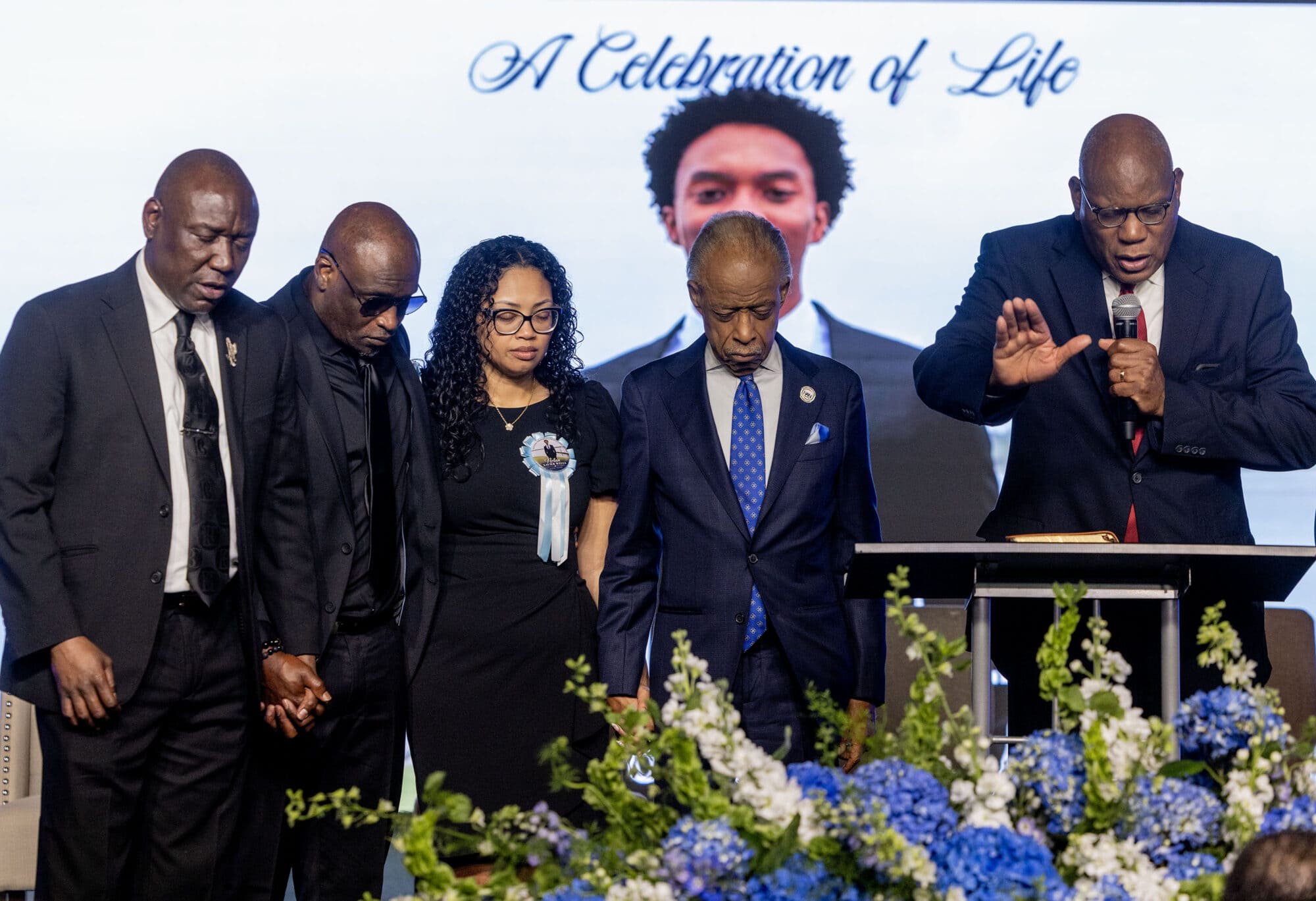
Nolan Wells was 18. On July 4th he went to Horn Island, an uninhabited barrier island off the Mississippi coast, with high school friends. He was, according to accounts, the only Black person on the boat and the last one back to it. The others left without him, and his body was found in the water two days later.
Recently, a Jackson County grand jury returned a no true bill after reviewing witness testimony, physical and digital evidence, GPS records and cellphone data. It found insufficient evidence for criminal charges and none of racially motivated wrongdoing.
It also recorded non-fatal bruising on the back of the teenager’s head, of undetermined origin. The state medical examiner and the pathologist the family hired both recorded the cause and manner of death as undetermined.
Mississippi convened the grand jury process, ran it and published the results. It still cannot say how Nolan Xavier Wells died. The process ends there by design. Its obligations ended the day the report was published. How the teenager died is now an orphaned question, belonging to whoever volunteers to pursue it.
History of racial violence
The Equal Justice Initiative has counted more than 4,400 racial terror lynchings of Black people across 20 states between 1877 and 1950, most in daylight, most with local officials condoning what they had not organized. Congress made lynching a federal hate crime in 2022.
My grandfather came home from the First World War still a private. Decades later at Skene, Mississippi in the early 1960s he lent money to white neighbors and asked to be repaid. A mob took him for it. He lived through the night and died within the year. The county charged no one.
Redlining did the same work with paper and left a cleaner file. The federal government graded neighborhoods by race and withheld credit from the ones it marked. Municipalities executed the grades in zoning and investment, and the mortality tables record what followed.
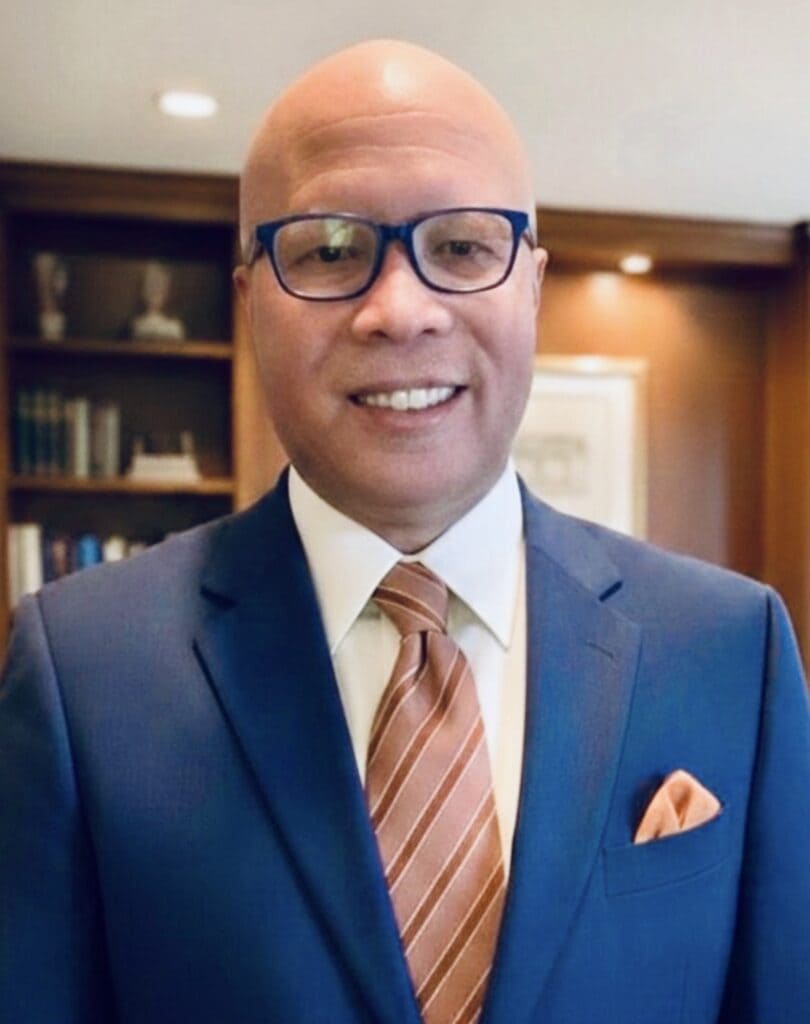
Nikka Lemons Credit: Courtesy photo
The United Nations Framework of Analysis for Atrocity Crimes asks a narrow question, and the narrowness is the point. It sets aside announced intentions and asks whether a state inflicts on a group conditions of life calculated to bring about the group’s destruction in part, and whether officials protect the pattern while it runs. My doctoral research applies the Framework to United States’ spatial policy and evidences genocide by attrition against African Descendants of American Slavery, or ADAS (Rosenberg, 2012). The Framework is the United Nations’ instrument rather than mine, and anyone who disputes the finding may apply it to the same record and publish a different one.
The serious objection deserves its strongest form. Fair housing in 1968, hate crime statutes after it, the Emmett Till Unsolved Civil Rights Crime Act closing a gap the earlier laws left open, and here a grand jury convening, reviewing and publishing within 10 weeks.
Then look at what gets counted. The FBI records the hate crimes police agencies choose to report. The Bureau of Justice Statistics, which asks victims directly, counted roughly 246,900 hate crime victimizations a year between 2005 and 2019. When a repair leaves its own measurement voluntary, enforcement falls to whoever holds the file.
Byron D’Andra Orey, who studies racial trauma at Jackson State University, told Mississippi Today in July people were reading the case of Nolan Wells as another event in which Black bodies do not matter, and that repeated exposure keeps the cycle turning. He is measuring one end of the rope, and the other end goes unmeasured.
Resilience debt, a term I introduced in work now under submission, accumulates where the harm was absorbed and surfaces in wealth, mortality and environmental exposure. The rehumanization deficit accumulates in the population trained to administer it, the population taught to look away. No measurement instrument exists for it yet, and I say so before a reviewer says it for me.
A budget office should care about the second deficit for a practical reason. A population convinced a group’s disadvantage is the group’s own doing will withhold the money required to change the structure, and the money is precisely what the first deficit needs before it can be addressed. The second gates the first. What is being asked for is the recovery of a capacity every working democracy requires: the ability to see the people it governs. This one is measurably losing it. Berwick Mahdi Davenport, who directs the Human Solidarity Project, has spent three decades doing the repair in rooms rather than in journals. He puts it in one line: “The inner work and the outer work are not separable.”
Calls for independent review
Institutions can be retrained on a schedule, and I have done it. Seattle Public Schools came to the work after community uproar over its treatment of Black boys, which is why the policy exists and why it reads as a response to harm rather than as an equity initiative. The district retained my firm to author its anti-racism policy and the superintendent procedures beneath it.
I built them from more than 50 focus groups and interviews reaching every population the district served, on a peer-to-peer method I adapted from the door-to-door canvass W. E. B. Du Bois and Isabel Eaton ran for “The Philadelphia Negro” in 1899.
The policy carries 100 deliverables, each assigned to a role and each carrying a key performance indicator, because awareness training never reaches a referral and an assignment does. Seattle adopted it in 2020, and King County, the city of Seattle and Washington State Charter Schools adopted it afterward.
Here is the same logic outside a school district.
Governance leaders hold the authority this requires, and they hold it alone. Authorize an independent death review board able to order a second examination and required to publish within 90 days, triggered whenever a county closes a Black resident’s death as accidental or undetermined in a jurisdiction with a documented history of racial terror.
Assign the deadline to one named official. A review lacking a date and a name is a press release. Publish charging and conviction rates for racially motivated violence county by county, because those figures now are located inside aggregate crime reports where prosecutors, chiefs and voters cannot see the pattern training a jury. Pair the board with a standing process open to residents and to the staff running these systems, because a record without a room leaves the second deficit untouched. The ordinance takes authority which coroners, sheriffs and prosecutors hold alone today. Set against what those offices already pay in litigation reserves, consent decrees and the recruiting costs of a workforce residents distrust, it is cheap.
Funders can put the independent examination, the investigators and the counsel within a family’s reach inside 48 hours, so that reaching one stops depending on a stranger with a foundation.
Human services agencies can build a trauma response activating for a whole community rather than one household. Planners can enter documented racial terror sites into the permanent land, title and zoning record instead of onto a plaque. Corporate responsibility officers can require any public safety claim about these counties to rest on data the described community validated. And community advocates can keep their own registry of contested deaths, because a community holding its own evidence stops waiting for permission to be believed.
Because a county coroner, a district attorney, a public health director and a community land trust already hold between them every authority the ordinance needs, a county can draft it with the offices it has.
The structure underneath it, acknowledgment of harm, accountability for the decisions producing it and transformation of the systems carrying it forward, is the spatial reconciliation framework from my doctoral research. It is published, it belongs to the field, and a county attorney can draft from it without asking me for anything. The work is at nikkalemons.com.
Simple request of Nolan Wells family
Mamie Till-Mobley never asked Mississippi for permission. Her son came north in a box locked under the seal of the state, and she took a crowbar to it.
Seventy years on, a family on the Gulf Coast asked for something smaller. Tell us what you found. Mississippi answered recently in the grand jury report, and the answer was undetermined.
A state willing to say so on a deadline, under a name, and then keep working, earns the civic trust it will need the next time it asks anyone to believe anything. A state stopping here teaches its residents the record is negotiable, and everyone who lives there inherits the lesson. The evidence has arrived. The authorization is what remains.
Nikka Lemons is a community scholar practitioner, an urban planning scholar, human rights researcher and governance strategist. She is founder and principal consultant of Azimu Group and founder and CEO of Just Society Technologies, which builds data and research tools enabling state and municipal governance readiness. She is former deputy chief of operations at St. Louis Public Schools and former vulnerable populations unit manager at King County, Washington. She holds a doctorate in urban planning and public policy from the University of Texas at Arlington.www.nikkalemons.com
Audio articles are automated for accessibility. Humans wrote and edited the story; however, this audio has not been reviewed for accuracy and may contain errors. Read more about how we use AI to increase access to our reporting.
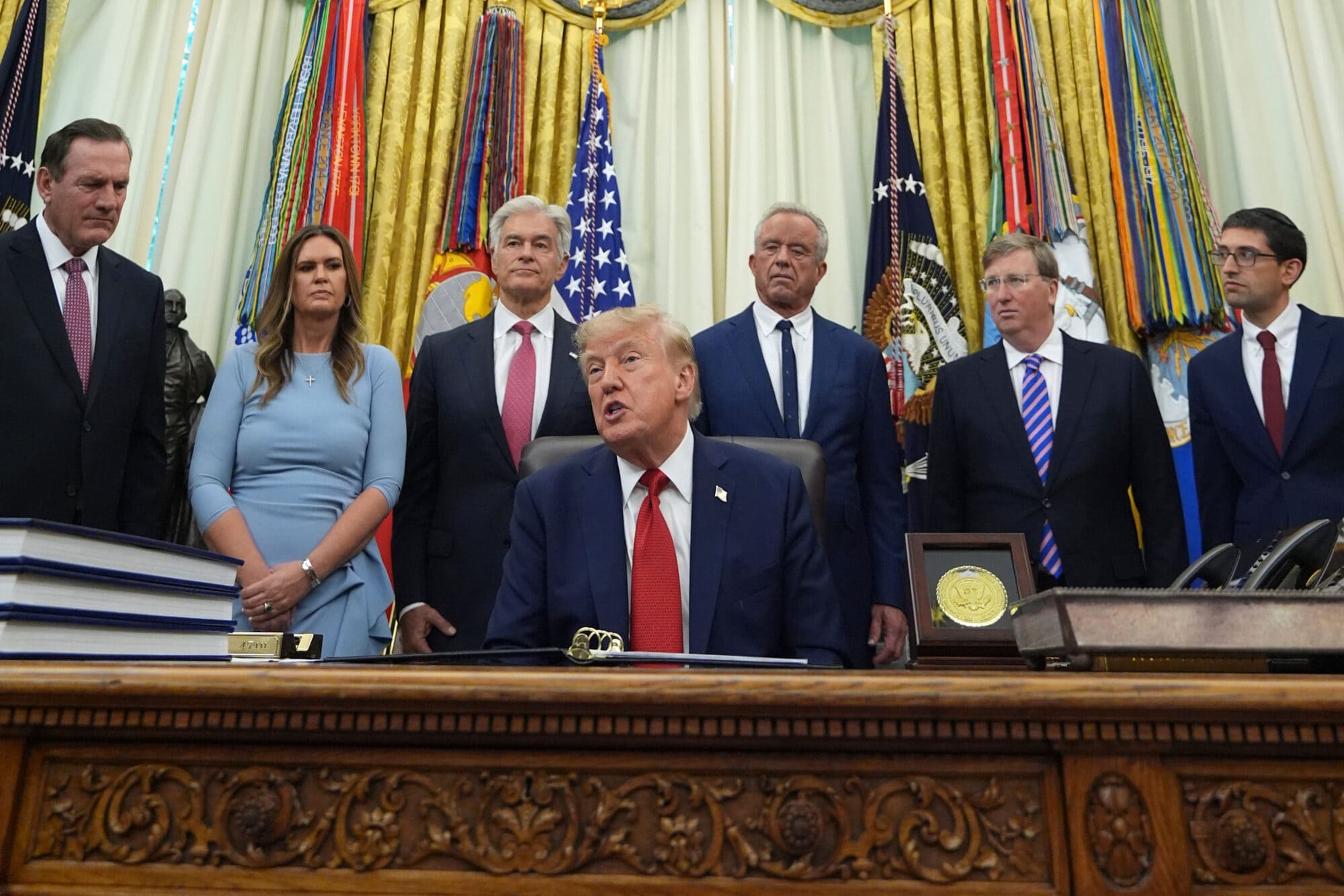
Gov. Tate Reeves has announced that Mississippi would not enforce dyed diesel prohibitions on highways after President Donald Trump signed an executive order to try to lower the soaring cost of the fuel.
This would mean diesel, which has shot up to more than $6 a gallon due to the war in Iran and hit Mississippi truckers and farmers hard, could be purchased without the 24-cents-a-gallon federal or state excise usually levied on dyed fuel meant for highway use.
“This will have positive ripple effects on America’s economy and your wallet,” Reeves wrote in a social media post.
Trump signed the order at a rally in Nebraska on Monday.
Red-dyed diesel is identical to regular diesel but is intended for use in farm equipment and machinery and is not subject to federal and state excise taxes. It’s dyed red to distinguish it from diesel that has been taxed.
“I’d like to thank President Trump and his administration for working quickly to provide this relief,” Reeves wrote on social media. “Mississippi looks forward to working with USDOT to implement the president’s directives and executive order. We’ll continue to explore legal and fiscally responsible ways to help further drive down fuel prices.”
Audio articles are automated for accessibility. Humans wrote and edited the story; however, this audio has not been reviewed for accuracy and may contain errors. Read more about how we use AI to increase access to our reporting.
RANKIN COUNTY — Cherie Reiff said she turned to a friend for a place to stay after losing her housing. While trying to enroll her children in school, she faced questions about how to establish residency without her name on the lease.
Christine Hawthorne described a different situation. She said her grandchildren were already attending school when residency issues arose while she was temporarily staying with her daughter. Their schooling was interrupted during that period, she said.
Cherie Reiff says she encountered difficulties providing documentation while trying to enroll her children in the Rankin County School District. Credit: Cherie Reiff
Reiff said she sought answers about enrollment paperwork. Hawthorne said she had been unfamiliar with the McKinney-Vento Homeless Assistance Act, the federal law providing educational protections for eligible children experiencing homelessness.
Their experiences highlight issues families can face when housing becomes unstable: Can children enroll without a lease? Can they remain at their current school after moving? And what can families do if they disagree with an enrollment decision?
State education officials explained the protections available under McKinney-Vento and how families can seek assistance, navigate missing paperwork and challenge enrollment decisions.
Who qualifies for assistance?
Children do not have to be living on the streets to qualify for McKinney-Vento protections, according to Quentin Ransburg, the Mississippi Department of Education’s interim homeless and emergency impact aid coordinator.
Ransburg said the law covers children who lack a fixed, regular and adequate nighttime residence. That can include sharing housing because of housing loss or economic hardship, staying in motels because adequate alternatives are unavailable or living in shelters.
Ransburg said districts typically use housing questionnaires during registration to identify students who may qualify. Information about a family’s living arrangements can prompt school staff to contact the district’s homeless liaison to determine eligibility, he said.
Rico Buckhaulter, Rankin County School District’s homeless liaison, said families do not always recognize their circumstances as homelessness. He said conversations with families can help staff identify students who need assistance.
Who can help families navigate enrollment?
Every school district must designate a homeless liaison, according to the U.S. Department of Education. Federal guidance also emphasizes training school staff to identify and meet the needs of students experiencing homelessness.
RCSD directs families who believe their children may qualify for assistance to contact Buckhaulter. The district says its McKinney-Vento program assists with enrollment, school stability, transportation when eligible, school supplies and community referrals.
Ransburg said liaisons can also help families find resources beyond the classroom, including food pantries, housing resources and health services.
“They are plugged into the resources of their community,” Ransburg said.
What if a family lacks a lease or other documents?
Quentin Ransburg, interim homeless and emergency impact aid coordinator for the Mississippi Department of Education
Ransburg said eligible students must be enrolled even when families cannot provide documents normally required for registration, such as residency verification, immunization records, birth certificates or previous academic records.
Schools may still need to obtain records, but missing documents should not prevent an eligible student from enrolling immediately, he said.
Buckhaulter said proof of residency is not required for students enrolling under McKinney-Vento.
Ransburg also said the federal act does not require an affidavit. He said some districts use affidavits as part of local procedures, depending on the circumstances, and questions about those procedures should be directed to the district.
Can children remain at their current school after moving?
Federal guidance says districts must presume that remaining in the “school of origin” is in a student’s best interest unless that conflicts with the parent’s or guardian’s request or the request of an unaccompanied youth.
The school of origin generally means the school attended when permanently married or the school in which the child was last enrolled. The definition also includes preschool and designated receiving schools when students complete the final grade at their school of origin, according to the U.S. Department of Education.
The department’s transportation guidance says districts must provide or arrange transportation to and from the school of origin at a parent’s or guardian’s request or at the liaison’s request for an unaccompanied youth.
What if a family disagrees with an enrollment decision?
Ransburg said districts that determine a student is ineligible for McKinney-Vento protections must give the parent, guardian or unaccompanied youth a written explanation and information about challenging the decision. He said districts must also provide written notice when there is a disagreement about school selection.
Federal guidance says the student must be immediately enrolled in the school where enrollment is sought while the dispute, including available appeals, is resolved.
Ransburg said local appeals may involve a superintendent or designee and the school board. Families who disagree with the local outcome can bring the dispute to MDE, he said.
Under MDE’s published procedure, the state homeless education coordinator gathers information and forwards it to the Office of Federal Programs’ executive director for review. A parent, guardian or unaccompanied youth who disagrees with that decision has 10 business days to appeal in writing to the state superintendent.
The procedure calls for the state superintendent or designee to issue a final administrative decision within 10 business days of receiving the appeal.
What other support can families seek?
Buckhaulter said RCSD keeps school supplies available and works with churches and community organizations to connect families with food, clothing and other assistance.
He said finding housing resources can be more difficult, particularly when shelters cannot accommodate an entire family.
Ransburg said McKinney-Vento’s purpose extends beyond registration to helping students participate in school and receive the services for which they qualify.
“The act focuses on educational continuity for these students,” Ransburg said.
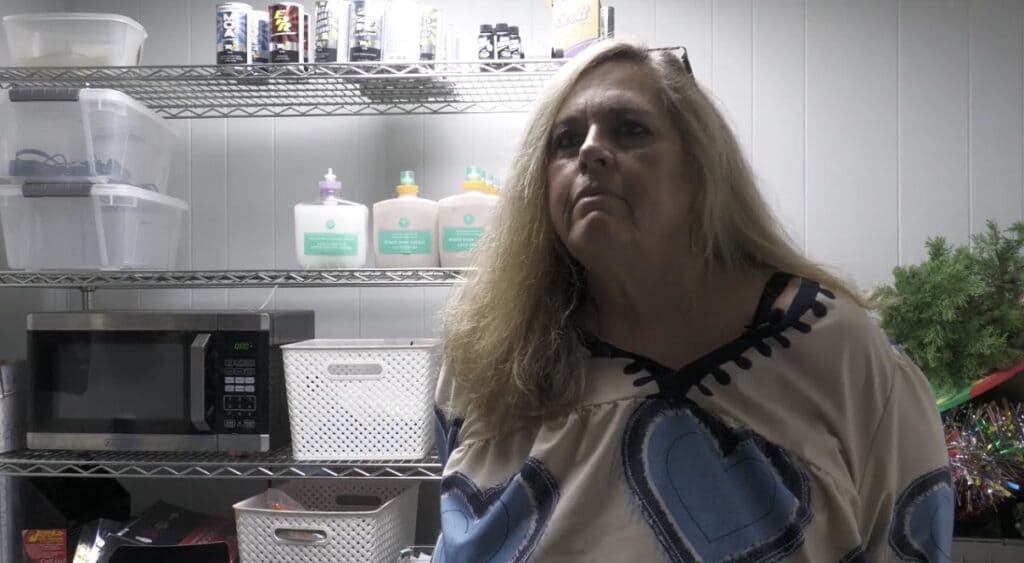
Christine Hawthorne says residency questions arose while her grandchildren were attending school. She said her grandchildren are now enrolled. Credit: RHCJC News
Both Reiff and Hawthorne said the children in their care are now enrolled in school.
Responding to questions about both families’ experiences, Rankin County School District attorney Fred Harrell also said the children referenced in the inquiry were enrolled and attending school and that the district had complied with applicable requirements. He declined to discuss individual circumstances, citing student and family confidentiality.
The Roy Howard Community Journalism Center has not independently established the enrollment timelines or the circumstances surrounding the families’ reported difficulties.
Members of Congress are asking the National Park Service to investigate the death of Mississippi Gulf Coast teenager Nolan Xavier Wells, adding to calls for federal intervention to help his family better understand what happened to him.
Rep. Frederica Willson, a Democrat from Florida, wrote to the agency Sept. 28, requesting a “prompt and exhaustive investigation.” Wells, 18, was last seen on July 4 at Horn Island, a barrier island that is part of the Gulf Islands National Seashore administered by the park service. His body was found there two days later, and a Jackson County grand jury concluded he probably drowned.
Florida Rep. Frederica Wilson Credit: Frederica Wilson home page
“The full resources and investigative authority of the National Park Service must be brought to bear,” Wilson wrote in the letter, which was also addressed to FBI Director Kash Patel and Interior Secretary Doug Burgum.
“ … Nolan cannot speak for himself. We have a duty to ensure his death is met with the seriousness it deserves,” she wrote.
The letter comes several weeks after the Congressional Black Caucus sent its own letter asking for the U.S. Department of Justice and FBI to step in and investigate. Over 60 representatives and senators are part of that group, including Mississippi Rep. Bennie Thompson and Wilson.
On Monday, civil rights attorney Ben Crump joined Wells’ parents at a news conference at Center of Hope church in Inglewood, California, to renew calls for a federal investigation and push for answers for the family.
The family’s legal team has continued to raise questions about his death, including how water was not found in Wells’ lungs, airway and stomach – where water is typically found in drowning incidents. They also raised questions about what caused blunt-force trauma injuries to the back of his head.
Rep. Maxine Waters, a Democrat from California who is also part of the Congressional Black Caucus, was unable to attend the news conference. Crump said she joined Rep. Wilson’s letter asking for the Park Service to investigate.
At the news conference, Christine Wonsley said the Jackson County grand jury’s decision not to indict anyone for her son’s death has left her and her husband with more questions and heartbreak than answers.
“In fact no one has given us any answers other than ‘consistent with accidental drowning’,” she said. “That’s all our Black and Asian child received.”
Through his mother, Wells was Black and Filipino.
Cynthia Choi, executive director of the national group Stop AAPI Hate, also spoke at the news conference and joined calls for a federal investigation into Wells’ death. She also condemned “patterns of harassment and intimidation” his family has faced, including those directed at Christine Wonsley’s workplace.
Stop AAPI Hate was formed in 2020 during a surge in incidents of anti-Asian hate during the COVID-19 pandemic.
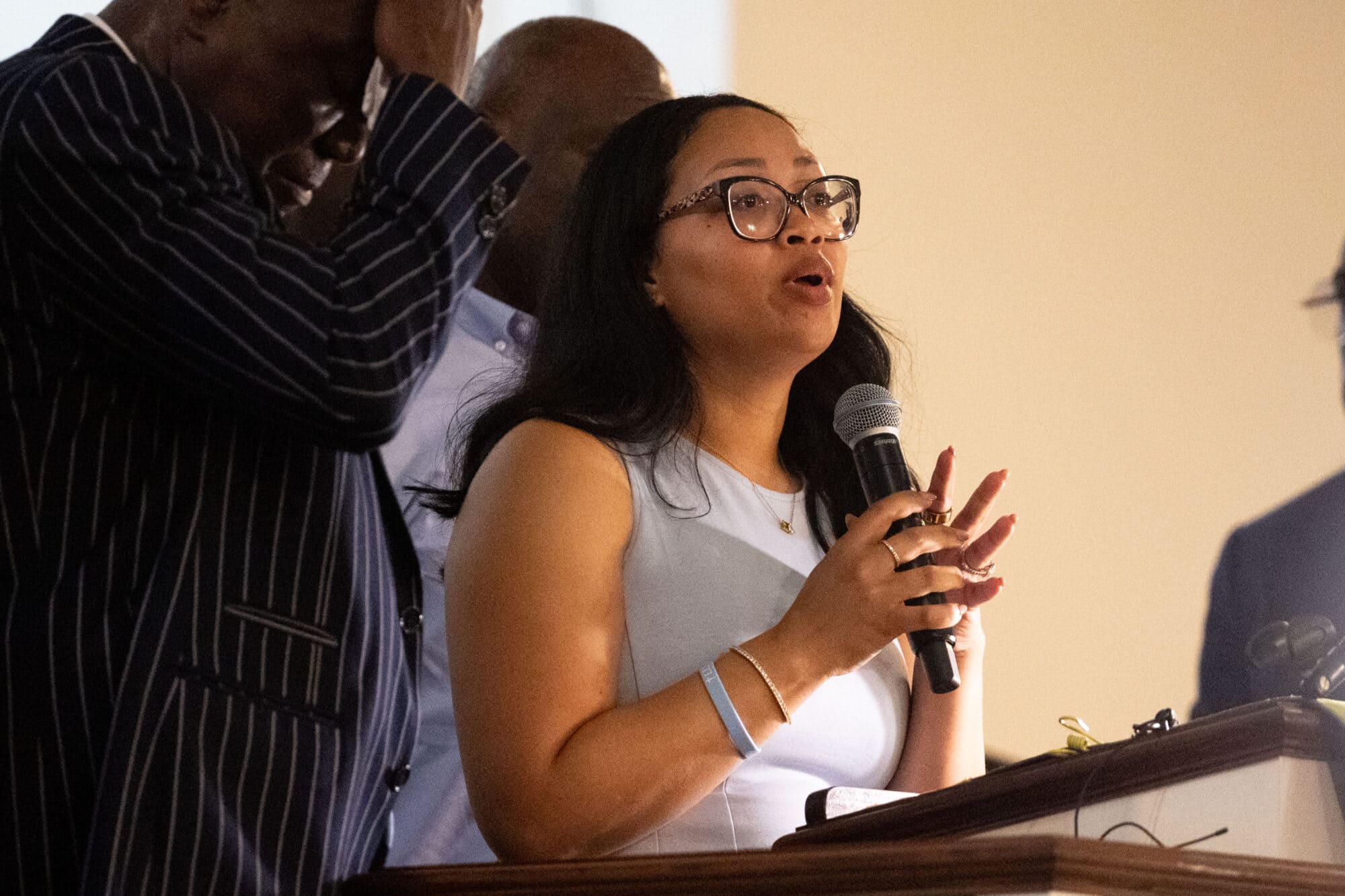
Christine Wonsley gives a speech in remembrance of her son during a vigil for Nolan Wells at Greater St. John AME Church in Biloxi on Wednesday, August. 19, 2026. Credit: Jackson Ranger/The Sun Herald
Christine and Elmore Wonsley were in California over the weekend where she was honored by the National Asian Pacific American Women’s Forum, which hosted its 30th anniversary celebration and showed support for their family.
At the event, Christine Wonsley received the “Voice of Courage Award” for seeking answers and transparency about what happened to her son. She was also recognized for a career of caring for others as a nurse practitioner.
“I never thought I would be in this position,” Wonsley said Monday about receiving the award and her advocacy. “I never thought I would be someone who was giving a voice to so many who feel like they have none because our justice system has told us to just take the answers you have been given.”
Audio articles are automated for accessibility. Humans wrote and edited the story; however, this audio has not been reviewed for accuracy and may contain errors. Read more about how we use AI to increase access to our reporting.
More than a year after breaking ground, Jackson residents and city officials gathered Monday morning to celebrate the opening of Farish Street Green and Urban Forest, a project that has transformed a once-vacant lot in one of the city’s historic neighborhoods into a cooling green space intended to combat extreme heat.
Along North Farish Street, young sycamores, maples and sumacs are beginning to spread their branches over grass, walking trails and lounge areas, replacing a landscape that offered little refuge from the summer heat.
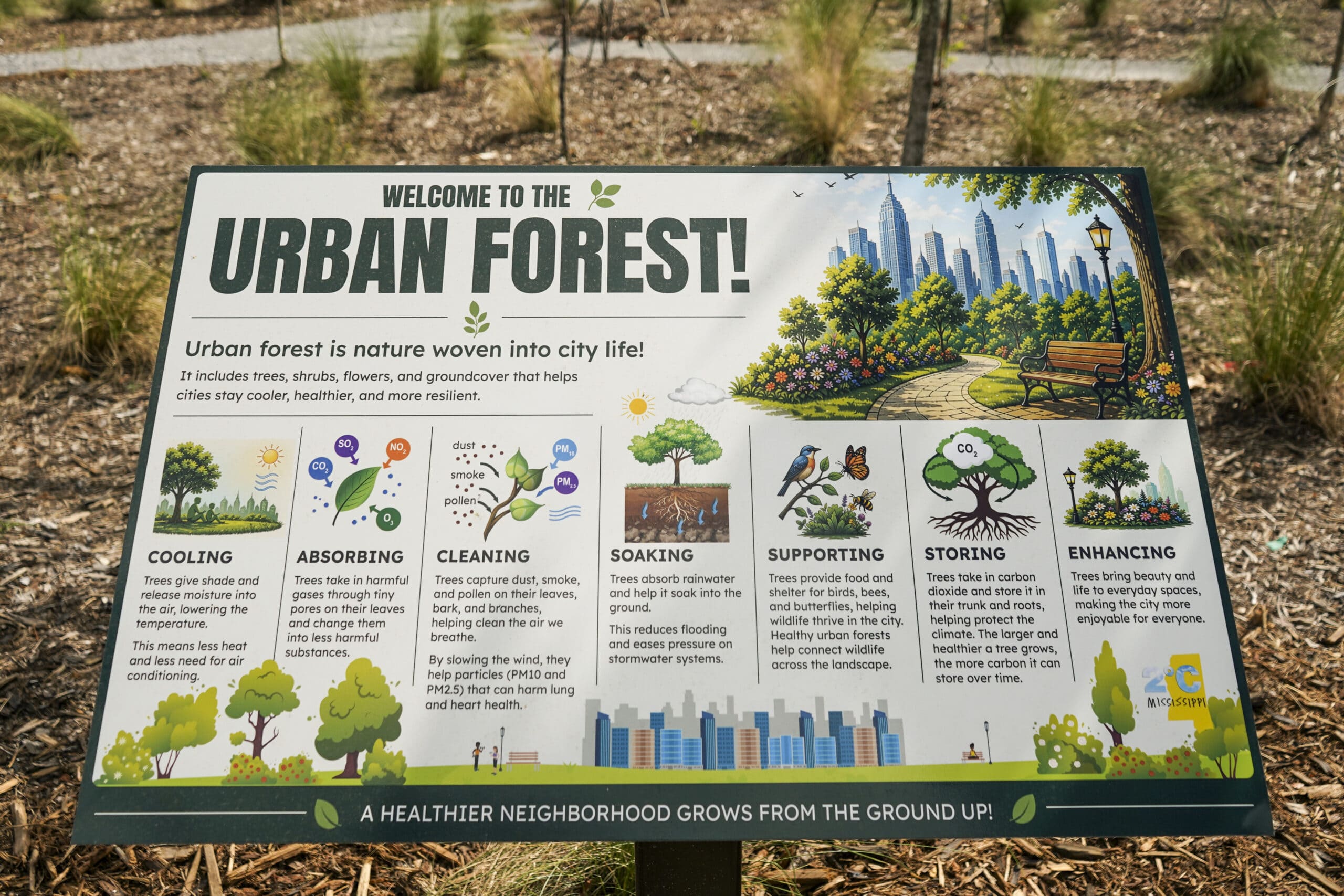
A sign with information regarding greenry sits infront of the new Farish Street Urban Forest on Thursday, Oct. 1, 2026. Credit: Aaron Lampley/Mississippi Today
The project grew out of research begun by the nonprofit 2C Mississippi in late 2020 to examine extreme heat in Jackson. Data gathered by volunteers from Jackson State University and the University of Mississippi Medical Center found that parts of downtown could be more than 10 degrees hotter during the summer than areas on the city’s outskirts. The findings helped spur plans to add trees and green space along Farish Street.
It was made in partnership with Tree Urban Design, Jackson Community Design Center and the Jackson Redevelopment Authority — costing around $500,000, according to Tree Urban Design Architect Travis Crabtree.
“If you’re sitting there thinking, I hope this wraps up before it gets too hot. That’s the whole point,” Ward 7 Councilmember Kevin Parkison said to the crowd.
The project is a part of an effort to eliminate urban heat islands — which suffer from higher temperatures because of asphalt and concrete. The addition of trees and other greenery aims to create shaded areas and reduce ambient temperatures.
Various city officials, volunteers and nonprofit workers gather for the ribbon cutting of Farish Street Green on Monday, Oct. 5, 2026. The new green space in downtown Jackson is meant to offer a shaded canopies to beat the high heat in Jackson. Credit: Aaron Lampley/Mississippi Today
2C Mississippi founder Dominika Parry said the alarmingly high heat in the area, alongside the historical significance of the area, made it easy to choose where to place the green space.
The project will continue to monitor temperature and humidity in the area over the next two years using stationary and handheld sensors. The findings will be used to help develop future projects to reduce Jackson’s urban heat islands, if data shows the tree canopies lower the area’s temperature, Parry said.
“The idea for 2C Mississippi is to provide as many projects as there is a demand,” Parry said in an interview Friday.
This is not the final project the 2C Mississippi and Tree Urban Design are working with the city to tackle.
2C Mississippi is using its resources to green areas for flood control near the Jackson Zoo. Tree Urban Green has been working alongside the city of Jackson and the Jackson River District Partnership to revitalize a 30-acre landfill near Old Brandon Road into a riverfront park.
Tree Urban Design has also announced plans in conjunction with developer Gabriel Padro to revitalize the abandoned YMCA building in the greater Belhaven area into a mixed residential recreational space. The City Council approved rezoning the area in August.
A tree covered trail replaces a previously dilapidated parking lot on Farish Street on Thursday, Oct. 1, 2026. The Urban Forest aims to reduce heat in the area by planting greenery. Credit: Aaron Lampley/Mississippi Today
The 9-acre space will cost $60 million to redevelop.
“We’re planning some new exciting improvements that should be hopefully starting early this fall or early this spring,” Crabtree said.
Farish Street Green’s opening marks a new chapter for the historic district in downtown Jackson that was once the hub of Black-owned businesses — with hopes that the revitalization will help the city’s efforts to breathe new life into the area.
“Projects like this can help create momentum and encourage additional investment and contribute to continued monopolization to Farish Street and downtown Jackson,” city spokesperson Nic Lott said at the green space’s ribbon cutting.
Audio articles are automated for accessibility. Humans wrote and edited the story; however, this audio has not been reviewed for accuracy and may contain errors. Read more about how we use AI to increase access to our reporting.
SCOTLANDVILLE, La. — If you cross the Mississippi River on the Huey P. Long-O.K. Allen Bridge, pass the Exxon Refinery, then head north for a few minutes, you’ll find a pocket of Louisiana that’s unlike any other place in America’s never-ending battle over what it means to have equal representation.
Here is Scotlandville, which was once its own unincorporated town but is now part of Baton Rouge. It’s a nearly all-Black community of 10,000 people that has been, for the second time, shuffled around on the state’s congressional map to make it part of a majority white district. Both times it was during the term of the same representative.
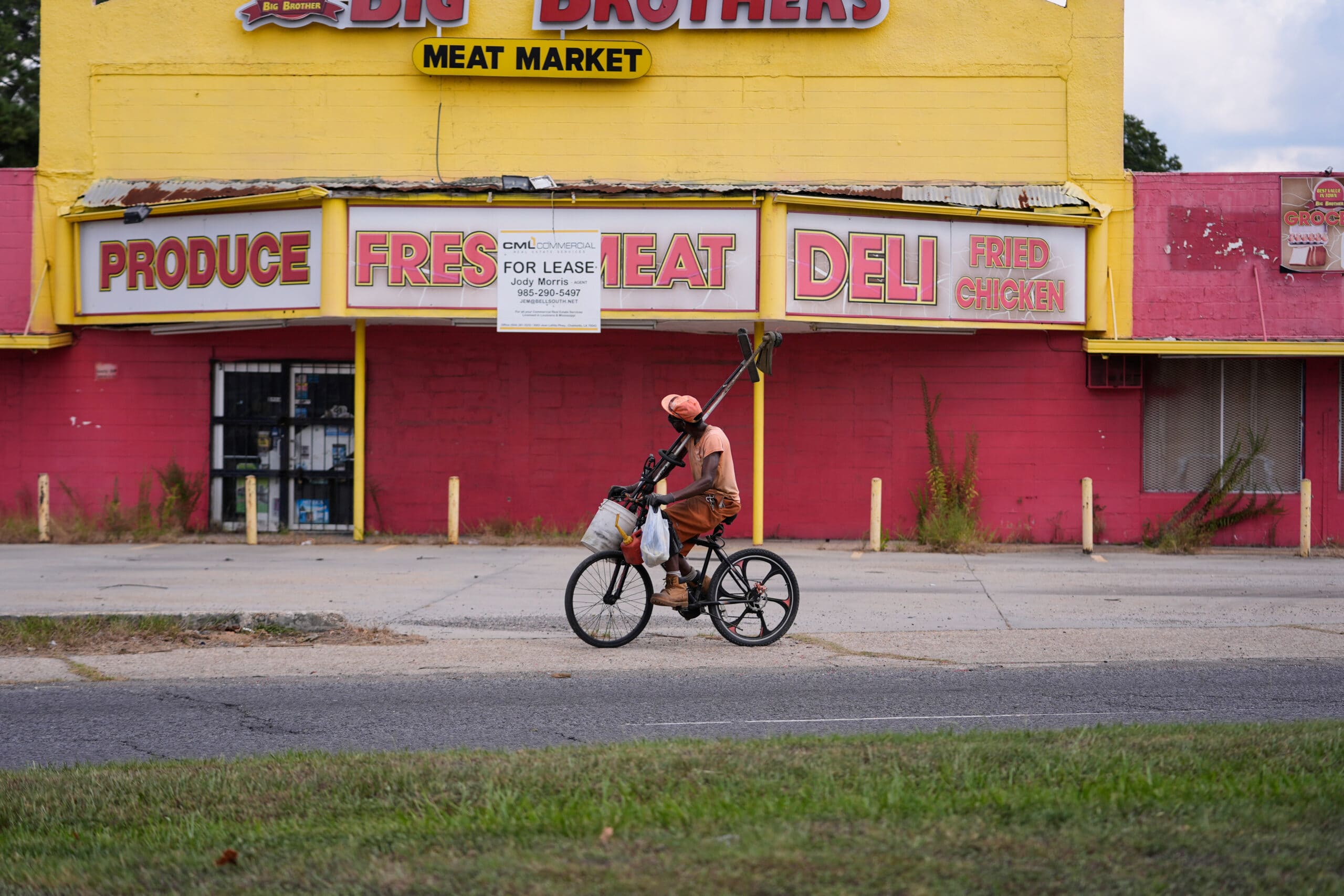
A man rides his bicycle past a closed meat market in the Scotlandville section of Baton Rouge, La., Wednesday, Sept. 16, 2026. Credit: AP Photo/Gerald Herbert
The first time was 1996, when a group of voters sued to redraw the lines. The second time was earlier this year, after the U.S. Supreme Court decided that a core part of the Voting Rights Act intended to protect minorities’ political rights was unconstitutional.
The ruling led to cascading changes around the American South, but the case originated in Louisiana — specifically the 6th Congressional District that included Scotlandville. This is where Democratic Rep. Cleo Fields, 63, grew up poor and attended local schools before graduating from nearby Southern University A&M, eventually climbing the ranks to the U.S. House.
Now he plans to leave Washington and return to the Legislature instead of running for reelection in a race that he sees little chance of winning because the district boundaries have been altered dramatically. Scotlandville will no longer be represented by a native son, someone who people believed instinctively understood their challenges and offered a direct line to power and influence in the nation’s capital.
“We’re back to where we were right after Reconstruction,” said Press Robinson Sr., 89, who has spent years working on issues involving the congressional map. “When they redistrict, they are not concerned about the effect it has on those of us who are people of color.”
The methods have changed over the years, he said, but the intent has not.
“They disenfranchise people of color and they’ve done it again,” Robinson said.
Fields’ career echoes legal battle for representation
Congressional districts are core to debates over racial equality in the South, where white leaders spent decades using gerrymandering to ensure Black people couldn’t gain enough power to elect their own representatives.
The Voting Rights Act signed by Democratic President Lyndon Johnson in 1965 was supposed to fix that. Among other things, it required states and jurisdictions with a history of racial discrimination to get approval from the U.S. Department of Justice before congressional maps could take effect. It also allowed people to sue to challenge laws and procedures that would deny them the chance to elect candidates of their choice.
That didn’t settle the issue, however, and there has been a series of legal battles since then. Fields’ political career has tracked those twists and turns over the years.
He first came to Congress in 1993 when Scotlandville was part of the 4th District, which had been redrawn to create a majority-Black seat. A federal court said in 1996 the boundaries that zigzagged from northwest portion of the state to the Baton Rouge area were unconstitutional.
Southern University students participate in the traditional Pretty Wednesday on campus during lunch time in the Scotlandville section of Baton Rouge, La., Wednesday, Sept. 16, 2026. Credit: AP Photo/Gerald Herbert
Scotlandville shifted to the 6th District, which was then predominantly white, and Fields became a state senator. But he had an opening to return to Washington when Robinson and other plaintiffs challenged how the state drew its maps following the 2020 census.
A 2023 court decision involving Alabama also affected Louisiana, requiring the state to draw new district lines to achieve fairer representation for minorities. The district became majority-Black again, and Fields won the seat in 2024.
Another wave of litigation was already starting, and the issue soon reached the U.S. Supreme Court once more. The new lawsuit by a group of non-Black voters dovetailed with a separate effort by President Donald Trump to push Republican-led states to redraw their maps to help his party keep control of Congress in this year’s midterms.
The high court’s conservative majority said Fields’ district was unconstitutional. Louisiana, Alabama and Tennessee raced to redo their U.S. House districts in time for the November elections.
In Alabama, Democratic Rep. Shomari Figueres is fighting to hold onto his seat, where Black voting age population dropped from 50% to 40% under the new political lines, according to an Associated Press analysis of the citizen voting age population in his redrawn district. In Tennessee, the majority Black district anchored by Memphis was split between three others.
Fields’ district went from being 53% Black to 25% in the new one. He announced in July that he wasn’t going to run for reelection.
Blocks from the main entrance to Southern University A&M, a small crowd hung around a convenience store, but people were unwilling to talk about politics, eyeing strangers suspiciously. One younger man said he didn’t know who represents the area on the city council, let alone in Congress.
Frank Levy, 56, the cashier, said people’s apathy created the political environment that allowed for gerrymandering to occur again.
“A lot of people don’t even think about politics like this,” he said. “They don’t understand.”
About five minutes away, Dakasha Caulfield Leonard, 48, sat in the chapel of Scott’s Bluff Morticians, a nearly century-old fixture in the business community. Leonard returned two years ago to take over the funeral home when her father, who purchased it in the 1990s, became ill. She is worried about what will happen when Fields is no longer in office.
“The community is small and everybody knows everybody. Cleo is a member of our community,” she said. “If he doesn’t speak up and carry our voices, there’s nobody else to do that for us.”
Scotlandville has struggled for investment
Scenic Highway is one of the main thoroughfares in Scotlandville, and it once featured family businesses and restaurants as part of a prosperous self-contained Black community.
It’s faded overtime. The centerpiece boulevard has become blighted by empty lots and vacant buildings.
But deeper into the community is the Louisiana Leadership Institute, a sprawling complex that includes a full-scale gymnasium, classrooms, a fine arts center, a football field and a stadium with artificial turf. A thousand-seat amphitheater is being built.
The campus is the legacy of Fields, who founded the institute as the Congressional Classroom in 1993, during his first stint in Washington, and secured a mix of public and private funding for it. Over the decades since, it has hosted government, civics and leadership classes, and it’s created opportunities to travel and experience art and music and see government work in Washington.
“I wanted to engage young people,” Fields said. “Everything you see with the institute is result of me being a member of Congress.” The goal, he said, was to bring the workings of the federal government and other experiences to kids who had grown up like him.
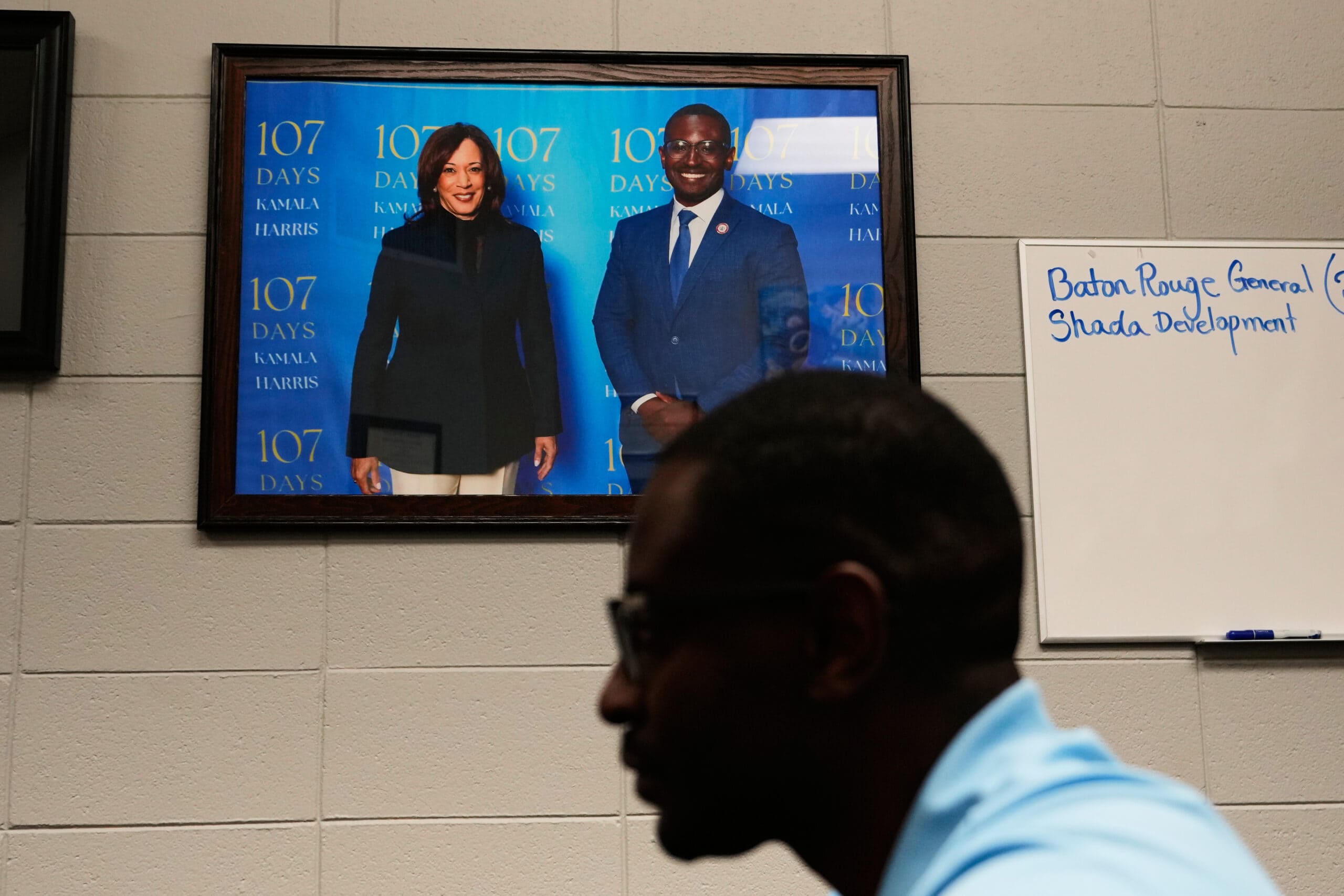
Anthony Kenney, District 2 councilman for the Baton Rouge Metropolitan Council, speaks in his office underneath a photo of him with former Vice President Kamala Harris, in the Scotlandville section of Baton Rouge, La., Monday, Sept. 14, 2026. Credit: AP Photo/Gerald Herbert
Baton Rouge Councilman Anthony Kenney Jr., 29, is one of the human legacies, taking advantage of the course offerings, training and opportunities at the center as a young student.
“Congressman Fields is someone I’ve known my entire life,” Kenney said. “I actually grew up in the Louisiana Leadership Institute. I was talking about civics, how to get involved in government, how to do policy, how to move legislation as a young child.”
Kenney is now responsible for improving the roads, plumbing, drainage and sidewalks around Scotlandville, describing it as essential for attracting new businesses.
He said it was “devastating” to see what happened to Fields.
“It’s important for us to have representation that not only is from here, raised here, but actually lived through that same experiences,” Kenney said.
____
Associated Press data reporter Hannah Recht in Washington contributed to this report.
Audio articles are automated for accessibility. Humans wrote and edited the story; however, this audio has not been reviewed for accuracy and may contain errors. Read more about how we use AI to increase access to our reporting.
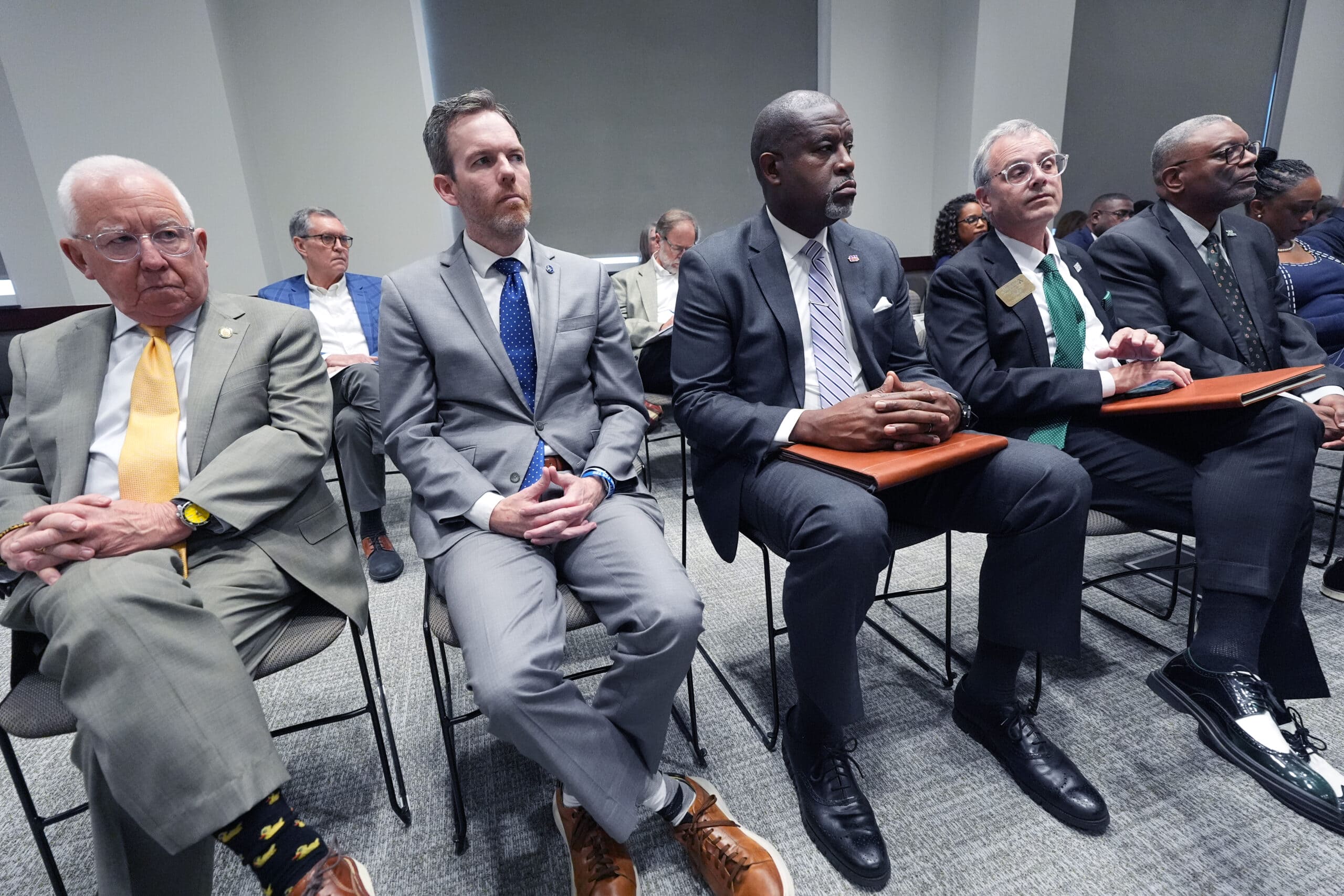
A panel of state lawmakers heard from 11 state agency leaders on Thursday and Friday about their proposed spending for fiscal year 2028.
Nearly every agency asked for more money as legislators begin the work of setting a more than $7 billion state budget.
The Joint Legislative Budget Committee will issue its recommendations and revenue estimate later this year, but the final budget will be set during the regular legislative session that begins in January.
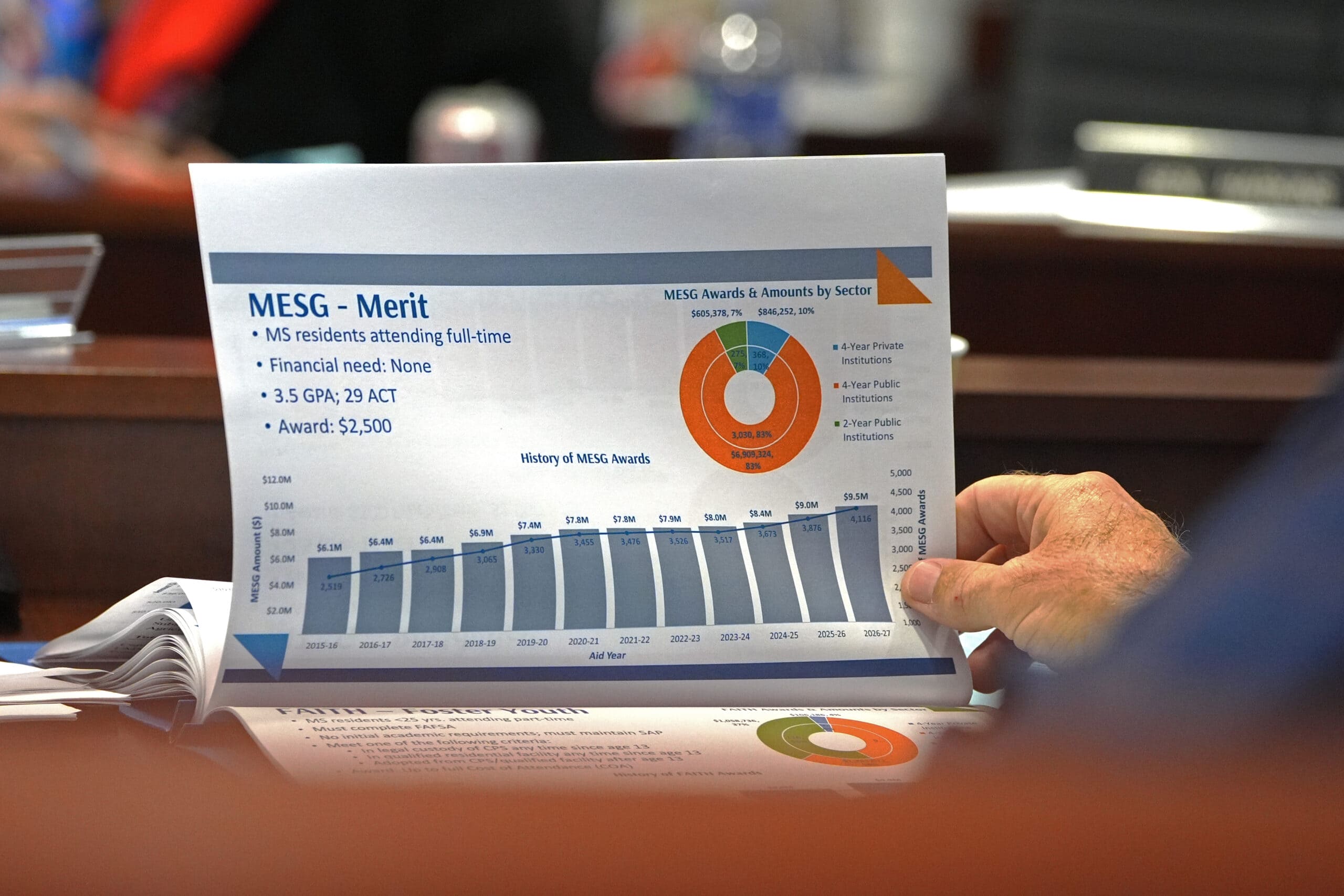
A lawmaker reviews information from the Office of Student Financial Aid at a Joint Legislative Budget Committee meeting, Friday, Oct. 2, 2026, in Jackson. Credit: Rogelio V. Solis for Mississippi Today
For fiscal year 2027, which started July 1, lawmakers passed a $7.5-billion state-funded budget, part of a $29 billion total budget that includes federal money.
With state revenue expected to remain more or less flat over the next few years due to tax cuts and the economy, legislators are carefully watching spending and as Lt. Gov. Delbert Hosemann said multiple times in the hearings, lawmakers do not like running deficits.
Legislators had a lot of questions for the Mississippi Emergency Management Agency as it raised concerns about its coffers after recent disasters, such as Winter Storm Fern, which has become the state’s second most expensive disaster after Hurricane Katrina. They also had many questions for the state Institutions of Higher Learning, over a controversial new funding formula for universities.
Institutions of Higher Learning
IHL’s hearing was perhaps the most contentious hearing. Legislators pressed its leaders for over an hour and a half. The questions were primarily over the move toward a performance based funding model and whether the universities would fund to metrics such as graduation rates, student income after graduation and cost per student.
IHL asked for an increase of $93 million for a total education and general fund request of around $561 million for the coming budget year. Legislators questioned IHL leadership about whether the additional money is needed, how much universities are spending per student and the financial health of the schools amid declining enrollment. They pushed for more funding to be tied to performance. Lawmakers made it clear that their priority is graduating more students and preparing them for the workforce.
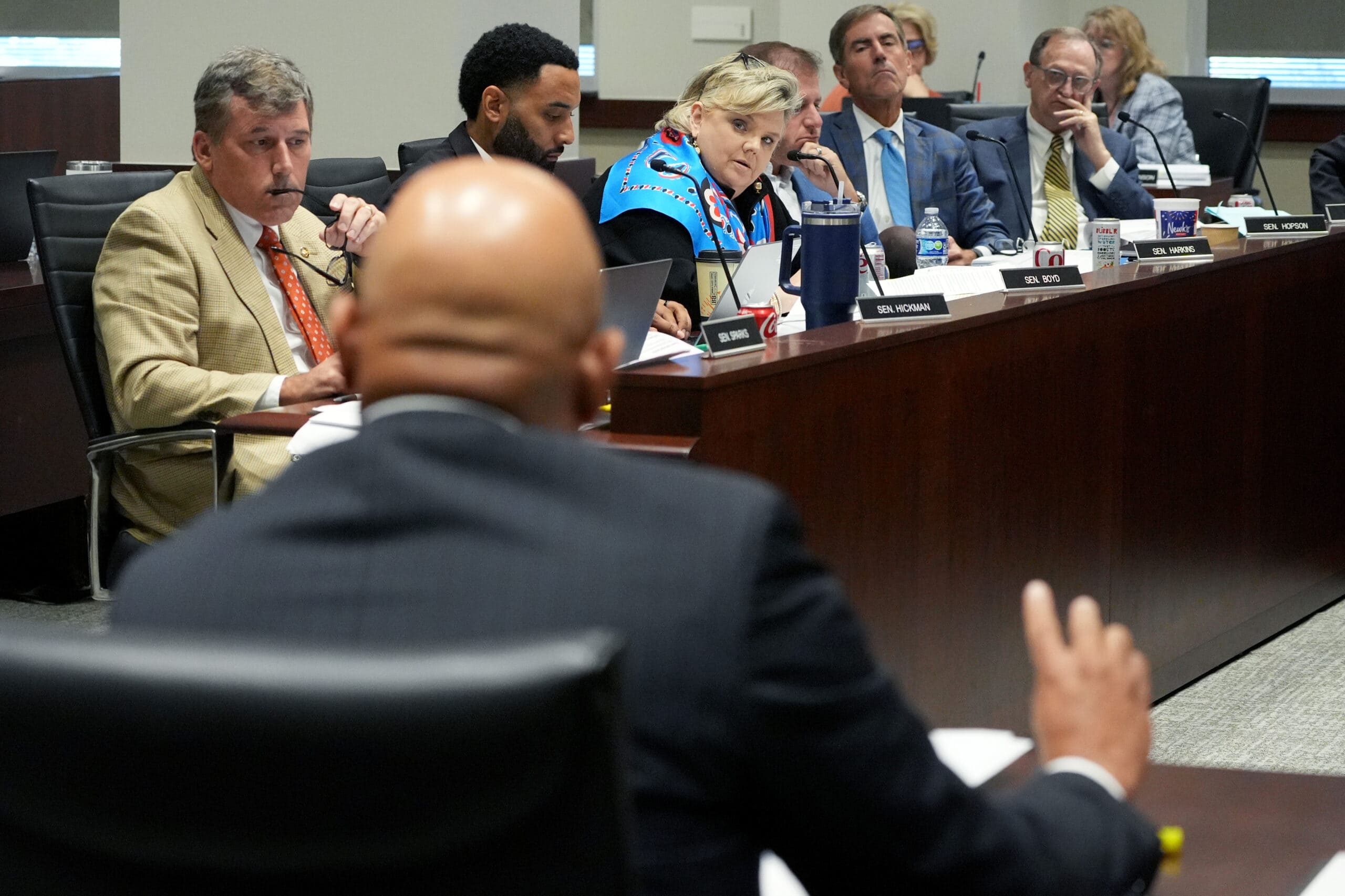
Alfred Rankins Jr., commissioner of higher education, back to the camera, addresses members of the Joint Legislative Budget Committee, Friday, Oct. 2, 2026, in Jackson. Credit: Rogelio V. Solis for Mississippi Today
Legislators questioned the willingness of the agency’s board to find cost savings through shared resources and by turning around financially struggling schools, and asked what IHL would do if the Legislature approved the same funding as the current year.
Alfred Rankins Jr., commissioner of higher education, defended IHL’s approach but said the board is committed to improvement and supporting the universities.
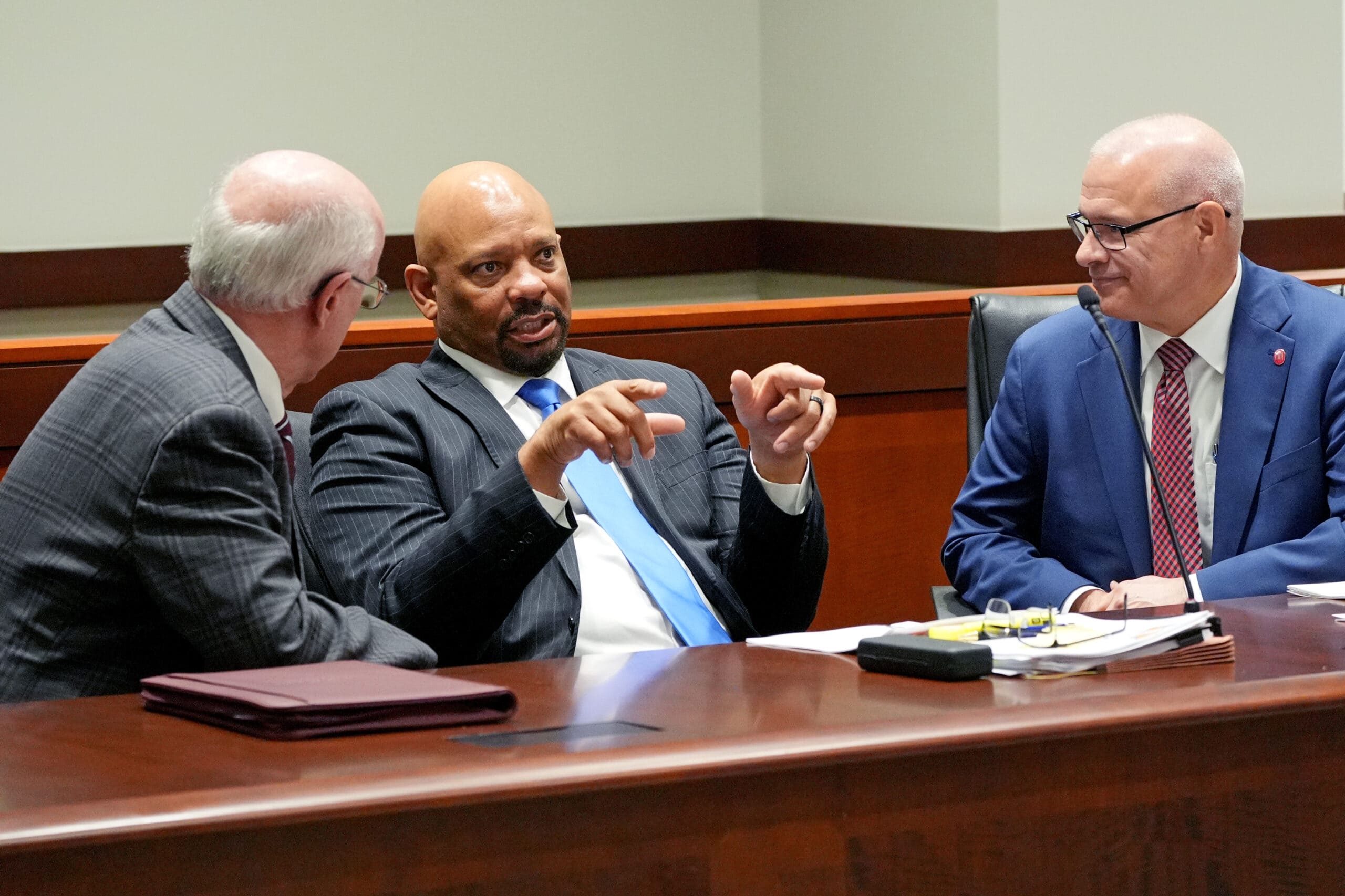
Alfred Rankins Jr., commissioner of higher education, center, confers with provosts David Shaw of Mississippi State University, left, and Noel Wilkin of the University of Mississippi before presenting the universities’ budget requests before the Mississippi Joint Legislative Budget Committee, Friday, Oct. 2, 2026, in Jackson. Credit: Rogelio V. Solis for Mississippi Today
The Office of Student Financial Aid is facing a “significant” deficit in fiscal year 2027 due, in part, to changes in federal student aid and increasing the number of eligible students. Earlier this year, the FAITH scholarship, which is given to former foster youth, faced a funding gap until the Woodward Hines Education Foundation stepped in with a one-time gift of $800,000.
MEMA says it ‘won’t make it to June’
The Mississippi Emergency Management Agency again raised alarms about its funding in a year that saw three federally declared disasters in the state — Winter Storm Fern in January, tornadoes in May and Tropical Storm Arthur in June.
Mississippi Emergency Management Agency Executive Director Stephen McCraney speaks to the Joint Legislative Budget Committee, Thursday, Oct. 1, 2026, in Jackson. Credit: Rogelio V. Solis for Mississippi Today
The agency’s “Disaster Assistance Trust Fund” is critically low — at about half its usual level — considering what future disasters may be around the corner, MEMA executive director Stephen McCraney said Thursday.
The agency’s disaster trust fund — which includes money for the state’s match of federal disaster aid, mission assignments and payments to the National Guard — stood at $6.7 million, MEMA chief deputy Crystal Thompson said Thursday.
“I won’t make it to June,” McCraney said. “Not at this current burn rate.”
In the Fern recovery, the state has so far spent $86 million to match federal funding for “other needs” aid, part of FEMA’s Individual Assistance program that covers costs for things such as funerals, hotel stays and childcare. FEMA covers 75% of the costs and the state pays the remaining 25%.
The Legislature put another $20 million in the disaster trust fund this past session, but MEMA has already spent that money matching FEMA aid, the agency said.
MEMA requested a $70 million budget for fiscal year 2028, nearly twice what it had estimated spending for the current year.
Medicaid’s increasing price tag after COVID
The Division of Medicaid is asking for an additional $179 million for a total request of $1.3 billion from the state. The Legislature provided more money to Medicaid for this fiscal year but the division is still anticipating a deficit of $34 million. And the department’s request for the upcoming fiscal year could continue to change.
Cindy Bradshaw, executive director of the Mississippi Division of Medicaid, speaks to the Joint Legislative Budget Committee on Friday, Oct. 2, 2026, in Jackson. Credit: Rogelio V. Solis for Mississippi Today
It is one of the state’s largest expenditures and about a quarter of the state’s population is enrolled in Medicaid and the Children’s Health Insurance Program. The number of people enrolled has decreased, but the end of increased federal COVID money means that the cost to the state continues to rise even as enrollment has dropped.
Child Protection Services requests large increase
The Department of Child Protection Services requested an increase of about $52 million for a total of over $200 million in state funds.
The agency wants to add 47 attorney positions, partly due to recent Youth Court reforms the Legislature passed during a special session. Around $34 million of the additional money would go to contractual services, including contractors to handle the agency’s large caseload.
Andrea Sanders, executive director of the Mississippi Department of Child Protection Services, left, speaks to the Joint Legislative Budget Committee, Thursday, Oct. 1, 2026, in Jackson. Credit: Rogelio V. Solis for Mississippi Today
One of the requirements of the Olivia Y lawsuit, a federal consent order focused on the safety of children in care of the state’s long-troubled foster system, is for the department to request enough money to meet the lawsuit’s safety standards. Hosemann said that for the past two years the agency has run an annual deficit of $35 million.
“We want them to budget realistically, particularly Child Protective Services,” Hosemann said, “We’re wanting them to be funded to adequately do their job and we don’t need for them to be short funded and have to come up with $35 million at the end of the year.”
Despite deficit, court system lowers its request
Legislators acknowledged there have been many changes in state courts over the last year, including the recent Youth Court Reform Act.
The Administrative Office of Courts has added contractors to handle intake from Youth Courts and will add nine new Youth Court judges next year.
The office is anticipating a deficit of nearly $3 million this year. The office, which includes the state Supreme Court, youth and electronic courts and court interpreters, said this is due to the system coming under oversight of the state Personnel Board and not receiving enough funding.
Despite changes to the office and this year’s deficit, the overall budget request for the next fiscal year is $6 million less than the previous year for a total of close to $34 million.
Demand increases for mental health services
Mississippians’ unmet mental health needs continue to be critical. The state’s suicide death rate has risen in recent years while the national number has declined, according to federal health data.
Wendy Bailey, the Department of Mental Health’s director, requested roughly $10 million more than the Legislature gave the department for the current year.
Wendy Bailey, executive director of the Mississippi Department of Mental Health, speaks to the Joint Legislative Budget Committee, Thursday, Oct. 1, 2026, in Jackson. Credit: Rogelio V. Solis for Mississippi Today
She said $4.5 million of the additional request would be for the department to fund community services for 200 people with intellectual and developmental disabilities. After Bailey told lawmakers that about 2,700 Mississippians were on a waiting list for the program, Hosemann asked why Bailey hadn’t requested more money. He asked a similar question after Bailey said the beds were full at a Brookhaven intellectual and developmental disability youth home.
Bailey responded that plenty of substance use, mental health and disability problems in the state are not being funded.
“There are many, many more things I can add to the budget request,” Bailey said. “This is not an area that we are seeing a decrease in demand of services.”
Office of Workforce Development wants to expand
Accelerate Mississippi, the state office of workforce development, wants to expand its programs in the coming budget year.
The agency requested over $7 million, an increase of $2.5 million. The additional money would go to increasing staffing and covering increased costs of services to train more workers and meet industry demand in the state.
Health Department requests no increase
Dr. Dan Edney, Mississippi’s state health officer, requested level funding, no major increase, for the Mississippi State Department of Health for the third year in a row. The department requested a budget of over $90 million from the state.
State Health Officer Dr. Daniel Edney presents the Mississippi State Department of Health’s budget request to the Joint Legislative Budget Committee, Thursday, Oct. 1, 2026, in Jackson. Credit: Rogelio V. Solis for Mississippi Today
Edney said the agency has worked to reduce overhead on operations in order to maintain services in spite of significant inflationary pressure in healthcare.
Edney said the agency hopes to allocate more of its money to developmental support and services for young children and their families, even as it maintains its current funding level.
Public Safety wants salary increases
The Department of Public Safety requested a budget increase of around $30 million from about $167 million to $197 million.
Most of the money would go to salary increases and making salaries for sworn officers competitive at a base of $65,000.
Mississippi Department of Public Safety Commissioner Sean Tindell speaks to the Joint Legislative Budget Committee, Thursday, Oct. 1, 2026, in Jackson. Credit: Rogelio V. Solis for Mississippi Today
Correction 10/5/2026: This article and a photo caption have been updated to correct Commissioner of Higher Education Alfred Rankins Jr.’s title.
Audio articles are automated for accessibility. Humans wrote and edited the story; however, this audio has not been reviewed for accuracy and may contain errors. Read more about how we use AI to increase access to our reporting.
The U.S. Food and Drug Administration has posted a steady stream of food recalls, following a summer with historic rates of cyclospora-induced illnesses and several products with potential salmonella contamination. Mississippi Today talked to food safety experts to learn about top concerns, how food safety is addressed in Mississippi and how food systems are linked.
What are the active food recalls in Mississippi now?
Several active food recalls in Mississippi include some of Prime Line Distributor’s ready-to-eat pork products potentially contaminated with Listeria, Graziers raw milk cheeses from Sierra Nevada Cheese Company potentially contaminated with E. coli and raw meat products that were produced without federal inspection.
The recalls come in three classes, depending on the level of risk. Class I is for probable serious health risks, including death, such as E. coli or Listeria. Class II recalls have a remote chance of adverse health effects, and Class III recalls violate regulations but are unlikely to cause harm.
Mississippians should know that recalls are very specific to certain brands, product names, use or freeze by dates and lot numbers, said Courtney Crist, a food safety specialist at the Mississippi State University. All information must match for a product to be considered part of the recall, she said, and one product being recalled does not mean every food of that category is unsafe.
“Do not try to make a recalled food item safe,” she cautioned, recommending that consumers properly dispose of their purchases or return them for a refund.
Should I be concerned about cyclospora in Mississippi?
Asked if Mississippians should be concerned about lettuce on their grocery shelves, State Epidemiologist Renia Dotson offered a succinct answer.
“No, I don’t,” she said, while recommending people wash or scrub their fruits and vegetables as a general safety practice.
On Sept. 11, the Centers for Disease Control and Prevention declared an end to the multi-state cyclospora outbreak. Officials linked nearly 13,000 confirmed cases to this outbreak, the largest in modern U.S. history.
Mississippi’s cyclospora cases, however, were not linked to the multi-state outbreak, according to the Mississippi State Department of Health. On July 15, the department temporarily made cyclosporasis a reportable disease in order to “do our part” and provide more data for the CDC investigation, Dotson said. Mississippi was previously one of three states, along with Idaho and Pennsylvania, that did not require clinicians or laboratories to report positive cases to the state Health Department. Dotson said Mississippi has not previously seen large numbers of the illness and that mandated reporting began, not due to increased cyclospora cases, but to contribute to the national database.
On Aug. 22, Mississippi had 33 confirmed cases of cyclospora, Dotson said. For each confirmed case, nurses and a team of epidemiologists conducted an extensive interview with the affected person that included what they ate, where they ate it and when their symptoms started.
“Each one seems to be an independent case on its own, and none of them trace back to the actual multi-state outbreak,” she said.
Cyclosporasis tends to be a seasonal infection that runs from May to the end of August, Dotson said. Positive cases can emerge later because the disease can incubate for two or more weeks.
Should I be concerned about salmonella in Mississippi?
Several recalls remain active for salmonella, a bacteria that causes illness year-round and has been reportable in Mississippi for decades.
“We’re always looking at salmonella,” Dotson said.
Amid multi-state outbreaks of salmonella reported in jalapeno and eggs, Mississippi had some stores in the recall distribution chain but no confirmed cases linking salmonella to either outbreak, Dotson said. On Sept. 3, the CDC closed the investigation into potentially salmonella-contaminated eggs. The jalapeno investigation remains ongoing.
To test for clustered salmonella cases, state public health laboratories send samples through genomic sequencing and add it to a national CDC database called PulseNet. The amount of similar genetic sequences shows how closely bacterial samples are linked. If the samples reveal striking resemblances to a similar sequence, epidemiologists know it is connected to a certain outbreak.
How can I keep myself safe from foodborne illnesses?
Experts recommended the following measures:
Stay up to date on food recalls through the FDA and USDA websites, or sign up for email alerts;
Pay attention to recall notices from grocery stores. If you have a shopper’s card at Kroger or Costco, for instance, you will get emails about their food recalls;
Clean fruits and vegetables, even produce that is pre-washed;
Wash your hands, utensils, and kitchen surfaces often, including before food preparation and eating;
Separate raw meat, poultry, eggs and seafood from foods that are ready to eat, to help prevent cross-contamination;
Refrigerate and freeze foods promptly, such as by refrigerating perishable foods within two hours, or one hour if food is exposed to temperatures above 90°F;
Buy produce locally when possible, such as at farmer’s markets;
Be aware of your risk level. Young children, older adults, pregnant people and those with weakened immune systems have a higher risk of severe symptoms from foodborne illnesses.
Grocery shoppers who see a recalled product or concerning product on store shelves can scan the QR code on a Mississippi Department of Agriculture and Commerce regulatory inspection sticker to report it, said Andy Gipson, the department’s commissioner. The red, white and blue stickers are placed throughout grocery stores and the checkout counter.
What should I do if I think I am sick with a foodborne illness?
First, seek medical care, Dotson advises. From there, medical providers can offer tests for different foodborne illnesses. A cyclospora test is not included in the routine panel and has to be specifically asked for by the patient.
Why have foodborne illnesses been so prominent this year?
It’s hard to say whether food is getting less safe or not, but the whole food distribution system is under stress right now, said Barbara Kowalcyk, director of the Institute for Food Safety and Nutrition Security at George Washington University.
“When you have a system under stress, failures do tend to happen more,” she said. The challenges start from the farms under stress from increased labor and fuel costs. They then spread all the way up the supply chain to distributors and escalating retail costs. Then, there’s public health agencies and regulatory agencies overseeing the safety of the food supply.
As an example, Kowalcyk brought up the CDC’s parasitology group, once comprised of 11 staff members who were in charge of coordinating outbreak response across states and internationally. Part of the CDC team’s funding came from a different federal agency that was responsible for foreign aid and development, USAID. After the Trump administration cut USAID funds in early 2025, the CDC team was reduced to three staff members.
Part of USAID’s work was funding water sanitation and hygiene programs in countries that import produce into the U.S.
“And when you’re talking about cyclospora, you’re talking about contaminated agricultural water in all likelihood, or processing water,” Kowalcyk said.
She thinks it’s important to understand that beyond the number of outbreaks, people should be aware of how quickly a response is mounted. Kowalcyk likens food safety to a fishnet. If the fishnet has big holes, it can only catch big fish, and not many. “Ideally you’ll have a strong fishnet with smaller holes so you can catch fish when they’re smaller, before they become a problem,” she said.
Who’s in charge of food safety in Mississippi?
Recalls are handled by two federal agencies. The FDA covers about 80% of the U.S. food supply, including fruits, vegetables, dairy, eggs, packaged foods, dietary supplements and seafood, except catfish. The U. S. Department of Agriculture, or USDA, handles recalled meat, poultry, processed egg products and catfish. However, most recalls are voluntary and come after the distributing company identified a health hazard in its product.
The Mississippi Department of Agriculture and Commerce has a team of about 200 food safety inspectors in grocery stores working with store managers to make sure recalled products have been taken off the shelves.
“We’re the boots on the ground making sure that lettuce is not being offered for sale at the Dollar General if it’s under a recall,” Gipson said, as an example.
Meanwhile, the state Department of Health is in charge of restaurant and food facility inspections, conducted one to four times a year, depending on the facility’s risk level.
Gipson emphasized that the level of food safety in the U.S. is the “gold standard.”
“There’s no country that has the high level of food safety protocols that we have,” he said. “I feel very good about the safety of our food in Mississippi.” Gipson also encouraged Mississippians to shop for local food, which tends to be fresher than grocery store products.
In the most recent Global Food Security Index report, the U.S. ranked third out of 113 countries on the “Quality and Safety” pillar in 2022. Crist acknowledged this general safety with a caveat, saying, “The United States has many safeguards to protect its food supply, but no food system is completely free of risk.”
This story was produced with support from the Sarah Yelena Haselhorst Fund for Health Journalism.