Home Blog Page 13

Family and community call for answers from police in 1-year-old’s death in Senatobia

Audio recording is automated for accessibility. Humans wrote and edited the story.

Veronica Robeson remembers witnessing the birth of her first and only grandchild, Kohen Wiley, and seeing the bond grow between him and her daughter. 

Robeson is now trying to support the 1-year-old’s mother Vellesiya Wiley, who is experiencing panic attacks, cries every night and doesn’t eat or sleep. On June 14, Wiley held the child in her arms and witnessed as officers in Senatobia fired into the car they were in, hitting him in the rib area and striking the woman driver in the arm and thigh. 

“I watched my baby take his first breath, and I watched my baby take his last breath,” Vellesiya Wiley said at a Monday news conference at Gospel Temple Church in Senatobia. 

Vellesiya Wiley pictured with Kohen Wiley, who was her only child. Attorneys representing the 1-year-old’s family are calling for law enforcement in Senatobia to release body and dashboard camera footage and on Monday June 22, announced plans for an independent autopsy. They said both can help provide the family with answers. Credit: Ben Crump Law

Other relatives and their legal team, national civil rights attorney Ben Crump and Memphis civil rights attorney Van Turner, joined the mother to call for justice and answers. 

An independent autopsy, footage from law enforcement body and dashboard cameras and Walmart surveillance video can help provide the family answers and peace, the attorneys said. 

“Transparency plus accountability equals trust,” Crump said. 

Kohen’s funeral is set for Saturday, and the family is expecting a preliminary autopsy report Wednesday. 

READ MORE: ‘Can’t get him back’: Family and community mourn toddler killed in Senatobia

Last week, Senatobia police and Tate county sheriff’s deputies received a call about shoplifting from the Walmart on U.S. 51. Police said officers saw two adults and a juvenile get into a car and try to drive away. Then police said the car drove in the direction of officers, leading them to shoot. The family and attorneys dispute this claim and allegations of shoplifting. The women in the car have not been charged, according to the family’s attorneys.

Wiley said she raised her baby and tried to show officers he was in the car, according to a video shared by Crump’s office on social media. 

At the news conference, Crump raised issues about the law enforcement response, including how it did not make sense for an officer to shoot into a moving vehicle and use force because of an alleged theft of a box of diapers and a bottle of water. 

He led the crowd in chanting “Baby Kohen’s life mattered” and “Baby Kohen’s life mattered more than a box of diapers” as he held up a pack of diapers in one hand.

After the child was shot and killed, the Senatobia Board of Aldermen placed an unnamed officer on administrative leave. Marquell Bridges, an advocate working with the Wiley family who attended the meeting, previously told Mississippi Today the board did not vote to terminate the officer or release footage. 

After the meeting, hundreds of demonstrators went from Senatobia’s city hall to the Walmart where law enforcement used tear gas to disperse the crowd. Family and community members have set up a memorial at the site. 

On Friday, two Memphis television news stations reported the name of the Senatobia officer as Hunter Foster. Officials with the Mississippi Department of Public Safety said the name was inadvertently disclosed through a public records request. Crump said his office has not received any police background history about the officer, but he encourages people with experiences of excessive force to contact the office. 

The Mississippi Bureau of Investigation took over the case and is expected to spend between six and nine months to complete an investigation, said DPS spokesperson Bailey Martin. 

Public Safety Commissioner Sean Tindell acknowledged the tragic situation and said an independent investigation is underway with five agents assigned. He asked for patience during the process and said records will be made public once the investigation is complete. 

“I want you to be assured that it will be a thorough investigation, and it will be one where transparency is there,” Tindell said last week during a news conference. 

After MBI is finished, the case will be turned over to the attorney general’s office to review the officer’s use of force and present the case to a Tate County grand jury for any criminal charges. 

To date, few Mississippi law enforcement officers have been criminally charged in police shootings. The attorney general’s office has also cleared a majority of officers for their use of force

Senatobia community activists attended the Monday news conference, including Patrick Alexander, who said the police department has had other recent incidents of using force against residents. 

Alexander asked some of those victims to stand, including a 10-year-old child taken into police custody for urinating outside a law firm parking lot in 2023. Another case he referenced was of a woman who said she was Tased and beaten in the same Walmart parking lot last year for alleged illegal use of a handicap parking spot. 

Kohen’s paternal grandparents shared their loss and how they looked forward to sharing life moments with the child. 

“They took away so much,” said Lasandra Williams, Kohen’s grandmother. “I was looking forward to graduation, the first day of school. So much they took away from us. That’s why we demand justice, because it’s not right.”

Governor will set Hinds County special election date

Audio recording is automated for accessibility. Humans wrote and edited the story.

The date for the special election between David Archie and Anthony “Tony” Smith for the Hinds County District 2 supervisor seat is uncertain after a judge changed a recent ruling.

In an amendment filed Thursday, Special Judge Barry Ford said the election date — which was set for July 14 — was void and that Gov. Tate Reeves would have to set an election date under Mississippi law. The law says that the governor or lieutenant governor shall call a special election for the office or offices involved.

Ford said in the ruling he hopes the governor will keep the same date that had been set by the Hinds County Election Commission.

Archie, the incumbent who lost to Smith by nearly two to one in the 2023 Democratic primary, sued Smith and the Hinds County Democratic Party over allegations of fraud and election tampering. What ensued was a multi-year legal battle over the matter.

The amendment comes one day after Smith filed an appeal with the Mississippi Supreme Court about Ford’s initial ruling. His lawyer, Warren Martin, had said he was excited about the appeal, and believed it would be overturned by the Supreme Court.

In his original ruling on June 3, Ford ordered that a special election be held, stating that the will of Hinds County voters could not be determined due to various missing materials during Archie’s 2023 ballot box review. 

Archie said Monday his team is ready for the special election. Smith said he “trusts the system.”

Reeves had not set a new date as of Monday.

Mississippi Board of Mental Health taps new leadership

Audio recording is automated for accessibility. Humans wrote and edited the story.

The Mississippi Board of Mental Health appointed Teresa Mosley and Dr. Sara Gleason as its new chair and vice chair, respectively. They will serve in the posts for the upcoming fiscal year, starting July 1.

Mosley, who was previously vice chair, is the lead psychometrist at the Mississippi College Dyslexia Education and Evaluation Center and owns TRM Educational Consulting. She represents Mississippi’s 4th Congressional District on the board.

Teresa Mosley Credit: Mississippi Department of Mental Health

Gleason is a professor at the Department of Psychiatry and Human Behavior and assistant vice chancellor for clinical affairs at the University of Mississippi Medical Center. She is the board’s psychiatrist representative.

They were named to the positions by fellow board members during last week’s meeting. The previous chair was Dr. Alyssa Killebrew.

The nine-member board governs the state Department of Mental Health. The members are appointed by the governor to staggered terms and require state Senate confirmation, The board includes a physician, a psychiatrist, a clinical psychologist, and a social worker with experience in the field of mental health.

The state Department of Mental Health has more than 4,500 employees working in state hospitals, residential programs in other programs provided by the agency.

“We look forward to working with Ms. Mosley, Dr. Gleason and all of our board members over the coming year,” Wendy Bailey, the Mississippi Department of Mental Health’s executive director, said in a statement.

Sara Gleason Credit: Mississippi Department of Mental Health

“Their leadership and experience, both personal and professional, continues to make a difference for Mississippians in need of mental health, addiction and disability services throughout our state,”  Bailey said.

At the same meeting, the board was also informed that Mississippi was one of 10 states selected for the 2026 Certified Community Behavioral Health Clinic Medicaid Demonstration Program. This federal program changes the reimbursement model, providing these centers more funding and allowing them to provide a wider variety of care options.

Communicare in north-central Mississippi and LifeHelp in the Delta will host pilot programs and receive four years of Medicaid funding.

76 homes damaged by Arthur, flood risk continues in north and central parts of state

Audio recording is automated for accessibility. Humans wrote and edited the story.

Central and northern parts of Mississippi are seeing a continued flood risk Monday, the National Weather Service reported. Meanwhile, state officials’ ongoing assessments have counted 76 homes with damage from Tropical Storm Arthur.

Areas including Greenville, Greenwood, Eupora and Columbus face an elevated risk, including two to three inches of potential flash flooding. Other cities to the south, including Yazoo City and Philadelphia, have a limited risk of flash flooding, which includes one to two inches of rain in a short period.

Arthur inundated south Mississippi late last week. The tropical storm caused one death in Franklin County as of Friday morning, the Mississippi Emergency Management Agency said. Damages from the flooding and severe weather were also reported in Forrest, Hancock, Harrison, Jackson, Lawrence, Pearl River, Rankin, Stone and Walthall counties.

“Our thoughts are with the family (of the deceased) affected by this tragic loss,” said Gov. Tate Reeves, who declared a state of emergency on Friday. “MEMA remains fully engaged with our local emergency management partners to support response operations, assess damages, and ensure resources are available to communities impacted by flooding.”

Seven of the damaged homes were destroyed, and another nine received major damage, Reeves reported Monday. Additional damages included: nine businesses, one farm, 50 roads — including four destroyed — three bridges, two public buildings and three power associations. MEMA reported over 10,000 outages on Thursday, but most were resolved by Friday.

The impacts include “significant flood damage” to a wastewater treatment facility in Harrison County. In addition to flooding, Hancock County saw two confirmed EF-1 tornadoes on Friday, the governor said.

Arthur also threatened to compromise a dam in Pearl River County, emergency officials said, and 30 homes were evacuated as a precautionary measure, emergency officials said Thursday. The Mississippi Department of Environmental Quality said Friday that the structure was operating as designed. As of a 2023 inspection, the dam was in “poor” condition and has a “high” hazard condition for downstream areas if it were to fail, according to the federal government’s inventory

Erosion from the storm also “undermined a portion of” another dam in Harrison County, but state officials said the hazard and downstream impact were low.

MEMA asked impacted residents to self-report damages through the agency’s online portal.

Jonathan Logan Family Foundation awards $500,000 to Deep South Today to support investigative and justice reporting

Audio recording is automated for accessibility. Humans wrote and edited the story.

Deep South Today, a nonprofit network of newsrooms in Louisiana and Mississippi, is pleased to announce it has received a $500,000 grant from the Jonathan Logan Family Foundation to deepen and expand investigative and justice-focused reporting to amplify its impact across the region.

“The Jonathan Logan Family Foundation was among the earliest investors in Mississippi Today and Deep South Today, as it recognized the need and potential for impactful investigative journalism in our region,” said Warwick Sabin, President and CEO of Deep South Today. “We are grateful for the opportunity to build upon that strong foundation and our record of achievement to further scale the reporting on behalf of the communities we serve.”

With this new support, the DST newsroom Mississippi Today will address a critical gap in how courts are covered in the state. Instead of focusing narrowly on proceedings, journalists will cover the broader systems and consequences that shape people’s lives and civic participation.

Building on Mississippi Today’s prior reporting on felony disenfranchisement, the newsroom will develop a justice-oriented reporting beat that examines how court decisions, prosecutorial practices and legal structures impact communities — particularly those historically excluded from the democratic process.

“This work will illuminate where barriers to participation persist, and how systems of justice reinforce or dismantle those barriers,” said Mississippi Today Editor in Chief Emily Wagster Pettus. “By covering the courts through this lens, Mississippi Today will shine light on stories that are too often invisible, while providing the public with a clearer understanding of how power operates within the legal system.”

Resources also will be directed toward increasing impact, which will include dedicating more time and resources to long-term reporting projects, strengthening collaborations across the Deep South Today network and continuing to partner with national outlets to amplify stories that resonate beyond Mississippi. Sustaining and growing the impact of this work requires more than reporting capacity — it requires editorial leadership capable of building systems, guiding strategy and scaling collaboration across multiple newsrooms.

The Deep South remains one of the most consequential and undercovered regions in the country, and Deep South Today is building a network of nonprofit newsrooms designed to meet that challenge by creating infrastructure for investigative reporting and amplifying its reach and influence.

“This kind of reporting doesn’t happen by accident. It takes time, resources and editorial infrastructure built for the long haul,” said Adam Ganucheau, executive editor and chief content officer of Deep South Today. “We’ve already used that infrastructure to expose police torture and the misspending of public dollars, and to dig into how courts shape who gets to participate in our democracy. This grant lets us go further, reaching more communities and strengthening independent journalism in Mississippi and across the Deep South.”

About Deep South Today

Deep South Today is a nonprofit network of local newsrooms that includes Mississippi Today, Verite News and The Current. Its new Arkansas Today newsroom will launch in fall 2026.

Founded in 2016, Mississippi Today is now the largest newsroom in the state, and in 2023 it won the Pulitzer Prize for Local Reporting. Verite News launched in 2022 in New Orleans, where it covers inequities facing communities of color. The Current is a nonprofit news organization founded in 2018 serving Lafayette and southern Louisiana.

With its regional scale and scope, Deep South Today is rebuilding and re-energizing local journalism in communities where it had previously eroded, ensuring its long-term growth and sustainability.

About Jonathan Logan Family Foundation

The Jonathan Logan Family Foundation, based in Berkeley, California, supports organizations that advance social justice by empowering world-changing work in investigative journalism, documentary film, arts and culture and democracy.

At 200 years, Mississippi College becomes Mississippi Christian University 

Audio recording is automated for accessibility. Humans wrote and edited the story.

When Camryn Johnson first heard Mississippi College would become Mississippi Christian University, she wasn’t sure how the name sounded.

Now, she thinks it could help introduce the state’s oldest higher education institution to a new group of students who have never heard of it.

“The only thing was it didn’t roll off the tongue as quickly as I’d like it,” said Johnson, a 2022 alumna. “But, I think still calling it ‘MC’ works.”

The university’s name change and rebranding coincides with the Baptist institution’s celebration of its bicentennial. For alumni such as Johnson, it’s more than changing placards, signs and banners on the private campus in Clinton. It represents their alma mater’s commitment to preserving the school’s heritage, establishing its academic legacy and strengthening students’ connection to their faith. 

MC officials say the change reflects the school’s Christian identity and repositions the institution’s future. Across the country, small private colleges are rethinking everything – from athletics to branding – to survive declining enrollment and rising financial pressures. A new report from the Huron Consulting Group, a research firm based in Chicago, estimates that 442 of the nation’s 1,700 private, nonprofit four-year colleges are at risk of closing or having to merge in the next decade. The firm analyzed federal enrollment data, tuition revenue, assets, debt, cash on hand and other measures for the report. 

In November 2024, the Mississippi College board of trustees voted to change the name to Mississippi Christian University. The university also dissolved its intercollegiate football program. In another press statement that same year, the school said “it wasn’t immune to the challenges” small higher education institutions faced, but was working to make changes to push the university forward to the next 200 years. 

MC officials said replacing signs on campus will continue throughout the summer. The university currently has a marquee sign at the U.S. Highway 80 and Springridge Road intersection. A banner also stands at the main entrance, “The Gates” on College Street. 

“The shift to Mississippi Christian University represents a strategic decision that reinforces our institutional vision – to be known as a university recognized for academic excellence and commitment to the cause of Christ,” said Jenny Tate, vice president of marketing and communications, in a statement to Mississippi Today. “This change was the result of a multi-year process that included university leadership, faculty, staff, alumni and external stakeholders.” 

The change also allows the institution to keep its “MC” logo and branding, Tate said. 

MC President Blake Thompson said the name change will not impact the institution’s accreditation or academic programs. The Mississippi College School of Law in Jackson also will adopt the new name, but will remain known as the MC School of Law or MC Law, according to the June 1 press statement

For Pernell Goodwin, a 2016 MC graduate, removing the “college” from the name and replacing it with “university” can offer more prestige to the institution. 

Rather than MC being seen as a “college,” which is often associated with two-year or undergraduate degrees, the university can compete against four-year institutions and attract a more competitive pool of students, he said. 

“The change could boost enrollment which in turn can improve the institution’s financial stability,” said Goodwin, who is also vice president of the Copiah-Lincoln Community College Natchez campus. 

State Sen. Kamesha Mumford, a Democrat from Jackson, was drawn to MC Law School because of her faith. The university’s rebranding just further ensures it will remain a safe place and community for Christian students, she said.

“I just think that the way things are going right now in this world, we ought to lean more on our faith,” Mumford said. “This change may help draw in students, people and communities to share and celebrate those values and beliefs.” 

Founded in 1826 as Hampstead Academy, Mississippi Christian University is the state’s oldest higher education institution and second oldest Baptist college in the nation. MC currently serves roughly 4,250 students. In 2024-25, the university had 340 faculty members, according to the university’s website

Johnson, who returned to MC in 2024 for her master’s degree in education, said she is feeling more excited about the change. It will be fun to have two diplomas with different names from the same university. 

“I’m excited to see (the name change) on my diploma when I graduate again because it looks like I graduated from two different colleges,” Johnson said. “This change gives students like me and the school a new presence in our state and community.”

Your home is an investment — How to create generational wealth

Audio recording is automated for accessibility. Humans wrote and edited the story.

A Q&A with Melissa Winston, Chase Home Lending Manager for the Greater South Region

For most Americans, owning a home has long been considered a cornerstone to building and preserving generational wealth. A home purchase often symbolizes more than just securing a place to live – homeownership can help anchor families, support long-term financial stability and fuel local economic growth.

If you currently own a home or if homeownership is one of your financial goals, it’s important to understand how your home can be a foundational pillar in helping you build and maintain generational wealth. A home can be an asset that appreciates over time as you build equity which can serve as a financial resource for you and your family for decades to come. 

Melissa Winston, Chase’s Home Lending Manager for the Greater South Region, shares more about the connection between homeownership and building generational wealth, and how you can make sure your home becomes, or remains, your most important financial asset.

Q: How does a home create generational wealth?

A: There are several perks to homeownership, many of which contribute to building wealth. Owning your home may be cheaper than renting in the long term if you have a mortgage with competitive rates; however, it’s important to keep in mind other home expenses, like insurance and taxes, when considering costs. Plus, since you own the home, that means you can build and tap into your equity for future expenses or profit when your home is sold.

Another way to think of homeownership as it relates to your financial picture is that it can influence your overall net worth. When you make monthly payments, you’re slowly owning more of your home and it can become an asset. On the other hand, if you rent, your monthly housing costs are just an expense for a place to live and you don’t own any of it when you leave. Put simply, owning a home may help you grow your money over time.

Q: Explain home equity and how building equity works.

A: The technical definition of home equity is the difference between the fair market value of your home and how much you still owe on your mortgage. Essentially, think of it as the part of your home’s value that you truly own. It’s made up of the amount you’ve already paid off, plus any increase in your home’s value. So, if you’re home’s value goes up, so does your equity and vice versa. Equity grows as you pay down your mortgage and, as I mentioned earlier, the market value of your home increases.

Q: How can this be beneficial financially?
A: There are a few ways. You can borrow against your home equity by taking out a loan, using your property as collateral to secure the loan. There are a variety of ways you can do this such as through a home equity loan, home equity line of credit (HELOC) or a cash-out refinance. You may use these funds to cover other expenses, like high-interest credit card debt, make home improvements, invest in another home or in an emergency. Home equity loans also tend to have more favorable terms than credit cards or other personal loans, potentially saving you money in the long run.

Q: What if you sell your home?

A: The more equity you have, the more you can profit from selling your home if you do so in the future. For example, if you’ve paid off your entire mortgage before you sell, you may get to keep all potential profits. If you haven’t paid off your mortgage, any profits will pay off what you owe and you’ll keep the remaining funds– the more home equity you have, the greater your profit could be.

Q: What other benefits come from owning your home?
A. 
Homeownership offers the potential opportunity for tax deductions. The interest you pay on your mortgage, insurance premiums, property taxes and even improvements to your energy efficiency may provide an opportunity for tax deductions. You can consult with your tax advisor if you’re looking to understand how buying a home may impact your taxes.

There’s no place like home

Homeownership has long been a powerful tool for building generational wealth in communities across the U.S. and can help you secure a solid financial future for yourself and your family. Your home is more than just the place where you rest your head—it can be your greatest financial asset. 

For informational/educational purposes only: Views and strategies described in this article or provided via links may not be appropriate for everyone and are not intended as specific advice/recommendation for any business. Information has been obtained from sources believed to be reliable, but JPMorgan Chase & Co. or its affiliates and/or subsidiaries do not warrant its completeness or accuracy. The material is not intended to provide legal, tax, or financial advice or to indicate the availability or suitability of any JPMorgan Chase Bank, N.A. product or service. You should carefully consider your needs and objectives before making any decisions and consult the appropriate professional(s). Outlooks and past performance are not guarantees of future results. JPMorgan Chase & Co. and its affiliates are not responsible for, and do not provide or endorse third party products, services, or other content.

Deposit products provided by JPMorgan Chase Bank, N.A. Member FDIC. Equal Opportunity Lender.

 © 2026 JPMorgan Chase & Co.

Mississippi tried redistricting in 2001 special session. The majority party fumbled

Audio recording is automated for accessibility. Humans wrote and edited the story.

Republican Gov. Tate Reeves has indicated he could call the Mississippi Legislature into special session later this year to tackle the contentious issue of redistricting.

It is likely that the Legislature would consider redrawing the 52 state Senate and 122 state House districts in addition to the four U.S. House districts in the aftermath of the recent Louisiana v. Callais decision where the U.S. Supreme Court appeared to significantly limit the landmark 1965 Voting Rights Act designed to prevent the dilution of Black voter strength.

Based on comments of Mississippi elective leaders, it is likely they will attempt to redraw political districts with the intent to limit the number of majority-Black districts in a state where the African American population is near 40%.

In any special session, it is likely that the redistricting of legislative districts would be done for the 2027 state elections and that the congressional redistricting would be conducted for the 2028 federal election.

Mississippi tried redistricting in a special session a generation ago, and the majority party – the Democrats – could not agree on a plan. Republicans hold the majority now, and they are likely to get the outcome they want.

In the early 2000s, Mississippi lost one of its five congressional seats based on the results of the 2000 U.S. Census.

The most obvious choice for the candidates who would be placed in the same district were Democratic Rep. Ronnie Shows, who represented southwest Mississippi up to parts of metro Jackson, and Republican Rep. Chip Pickering, who represented portions of east Mississippi, extending over to portions of metro Jackson.

Like ongoing redistricting efforts, the 2001 Mississippi redistricting special session drew national attention. After all, in the early 2000s, just as now, the two parties were fighting for control of the U.S. House.

But the special session highlighted what already should have been obvious – Mississippi Democrats held control of the state Legislature but were not in lockstep with national Democrats.

State House leaders, including Speaker Tim Ford, were the most aligned with the national Democrats. But House leaders said what was presented as a pro-Democratic plan did not favor Democrats, but instead would create “a competitive” district where both Shows and Pickering would have a 50-50 chance.

The Senate, led by Lt. Gov. Tuck, who was still a Democrat, offered a plan that most agreed would give the Republican Pickering a distinct competitive advantage over Shows.

A lot of factors went into the rift between the House and Senate. Many officials in Tupelo and northeast Mississippi opposed the House plan – deemed the tornado plan after one funnel-shaped proposed district – because they did not want to be in a district with parts of suburban Jackson. In addition, Tuck had allegedly made a commitment not to split relatively populous Lauderdale County into two districts.

Opposition to the tornado plan and to the splitting of Lauderdale County made it difficult to draw a district where both Pickering and Shows had a fighting chance.

While Democratic Gov. Ronnie Musgrove would have had to sign into law any plan passed by the Legislature, he held little ability to sway either the House or Senate.

So the House and Senate redistricting committees met and exchanged plans, but essentially sat and stared at each other. The hearings evolved into a comedy routine where Senate Redistricting Chair Hob Bryan and House Chair Tommy Reynolds,  perhaps the two most literate members of the Legislature, regaled onlookers by quoting Tennessee Williams, the two Williams – Shakespeare and Faulkner – and, of course, the Bible.

Finally, Musgrove had had enough, and he opted to use a little known gubernatorial constitutional power and end the special session.

The issue ended up in court. When Republicans did not get the outcome they wanted in the state court, they turned to the federal judiciary, where they got a favorable ruling.

The next election cycle, Pickering handily defeated Shows. And before winning a second term as lieutenant governor, Tuck switched to the Republican Party.

The special session was perhaps one of the many precursors of the state’s by then ongoing embrace of the national Republican Party.

When the Legislature meets in the next redistricting special session, Republicans will have significant majorities of the House and Senate and a resident of the Governor’s Mansion.

It is unlikely that they will disappoint national Republicans to the extent that Mississippi Democrats did their national counterparts in that 2001 special session.

Happy Father’s Day, and here’s to one Ace of a dad

Audio recording is automated for accessibility. Humans wrote and edited the story.

Today is Father’s Day, and just as everyone else, I have one. My father, Robert Hayes “Ace” Cleveland, died just over 31 years ago. 

And still, not day goes by I don’t think of him. Not a day goes by I don’t want to pick up the phone and call him. Sometimes, I’d like his advice about something important. But most times, I’d just like his company. Maybe I can’t get “44 across” in the New York Times crossword puzzle. Maybe I can’t think of the right word for something I am writing. Or perhaps I want to make sure he saw the home run some Atlanta Brave just slammed on TV.

Rick Cleveland

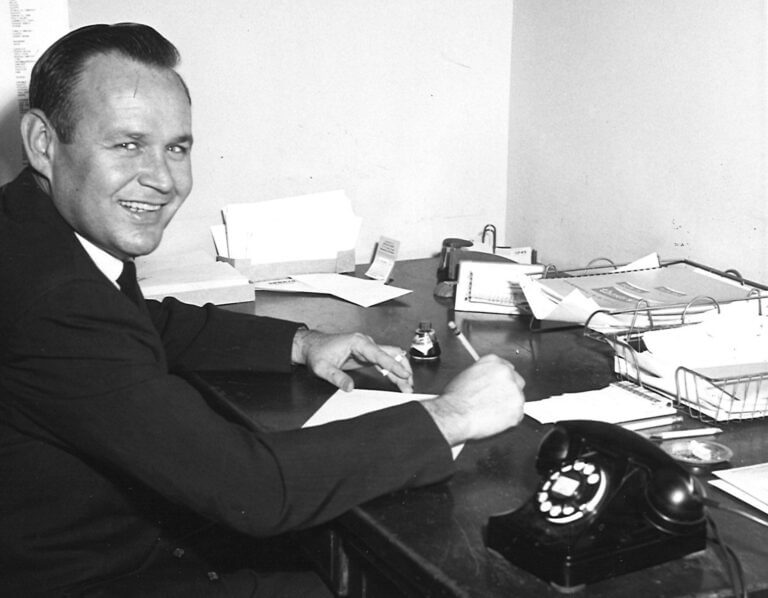
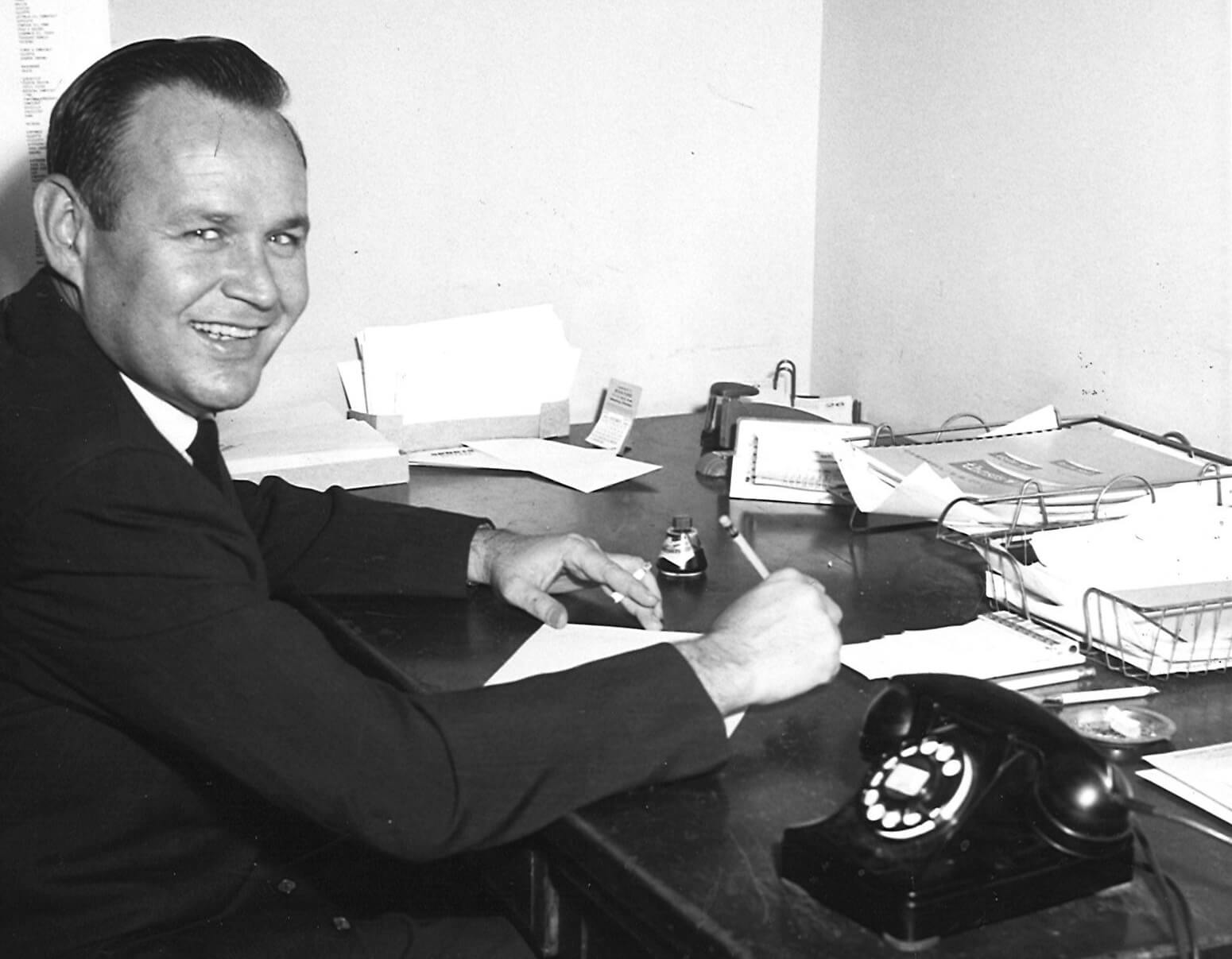
Trust me, Ace Cleveland was a character. He was great fun to be around. He came from humble beginnings. His father was a dairy farmer who cared little if any about sports, but Dad played everything. He was a four-sport letterman in high school who earned his nickname in football. The Hattiesburg American once referred to him as Hattiesburg High’s “ace kicker.” And from then on, Robert Cleveland was Ace Cleveland. The only people I knew who called him Robert were his parents.

Funny thing: The newspaper that gave his nickname was the paper that years later made him a professional journalist. There’s a story there.

This was years after high school, and a couple years after Ace had served his country in the Navy during World War II. He was still playing semipro baseball and was being interviewed post-game by the newspaper’s executive editor, Leonard Lowrey. Ace asked Mr. Lowrey how come Lowrey was covering the game instead of the sports editor. Lowry said the sports editor had quit.

“I’d be interested in that job. You hiring?” Ace asked

“Can you type?” Lowrey asked back

“Yes,” was the answer

“Can you write?” was the next question.

“At least as well as that other guy,” Ace answered.

The job was his. He had the three other essentials for the job: 1) he could spell, 2) he could breathe, and 3) he was willing to work for next to nothing. (About 25 years later, I got the same job for the same reasons.)

Turns out, Ace could really write. He knew sports inside and out. He was really, really smart, and he was a natural storyteller.

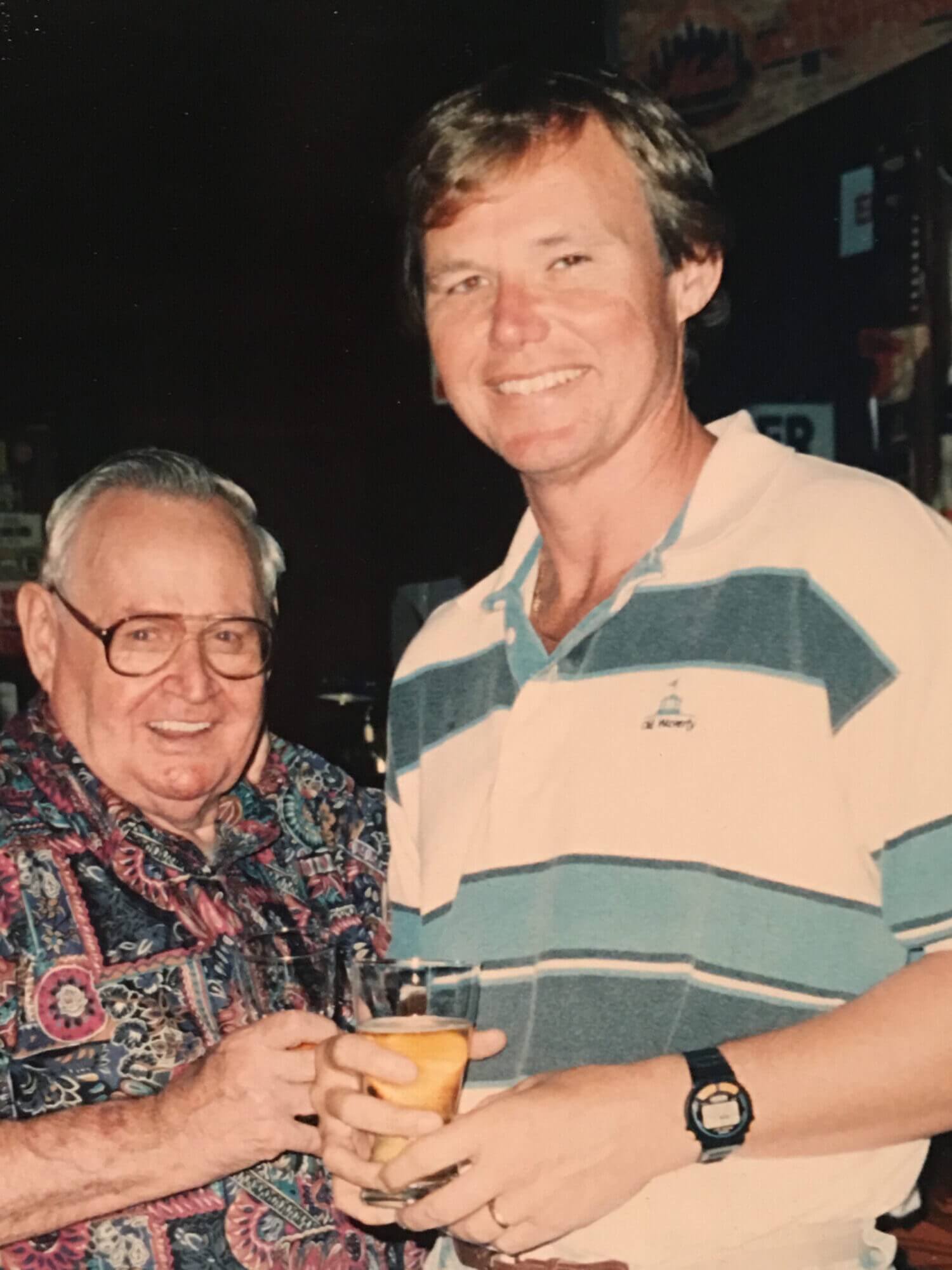
Ace and Rick Cleveland at Manuel’s Tavern in Atlanta, circa 1994. Credit: Rick Cleveland

A marriage and two sons later, Ace needed to make more money. The Jackson Daily News called offering a job. He took it. A couple years later, Mississippi Southern College offered a slightly higher paying job that also came with campus housing in his hometown. As much as he loved writing sports, he couldn’t turn it down. 

So it was that my formative years – and those of my younger brother, Bobby – were spent on a college campus. In fact, for three years, my parents were proctors of the Southern’s East Stadium dormitory, known as the Old Rock, which housed the jocks. Our backyard was the football field. Directly across the street was the gymnasium. Just to the north was the baseball field. Our playmates and babysitters were the school’s athletes. We learned to love sports. We also learned words we had no business knowing.

Quick story: Once we were sitting down to a dinner of my mama’s fried chicken. I was 6, brother Bobby was 5. We both preferred drumsticks. I got one and Bobby got one. While Ace was telling a story after saying grace, Bobby quickly ate his and snatched mine off my plate. 

My reaction was to say what I thought my friends down the hallway might say: “Bobby, you S.O.B., you take a bite of that drumstick, and I’ll kick the shit out your scrawny ass.”

The next thing I knew, Mama was about to cry and Ace was trying, without success, not to chuckle. My memory of that evening is made all the more poignant by the unforgettable taste of Ivory soap that has lingered for nearly seven decades. A couple months later, we moved off campus.

At age 13, I told Ace I wanted to the a sports writer. He told me I was nuts. He said if I was smart enough to do that and do it well, I could make a lot more money doing something else. As usual, he was right. But he also told me to call the newspaper and volunteer to cover games. I did. And he drove me to most of the games I covered before I was old enough drive myself.

Ace gave me the best writing advice I ever received when I couldn’t get started on my very first game story. “If I was you,” he said, “I’d write it the way I’d tell it.”

And so I did. And so I do.

One last story on Dad. This was near his end. He had suffered a series of evilly debilitating strokes. He was in the hospital’s intensive care unit, hanging on.

Bobby and I went for one of the few short visits we were allowed. Ace asked if we had the newspaper. We did. He asked if we had worked the crossword. We had not. This was a Friday, and then, as now, Friday’s New York Times crossword was a bugger.

“Read ‘em out to me,” Ace said, and so we read the clues. He worked the puzzle without opening his eyes. The nurse on duty stopped what she was doing.with all those machines and just listened.

Later, she asked us: “What does he do for a living?”

Bobby, who became Ace made over as he aged, had the perfect answer. “He’s just an old retired sports writer,” Bobby proudly said.

Happy Father’s Day.