Home Blog Page 157

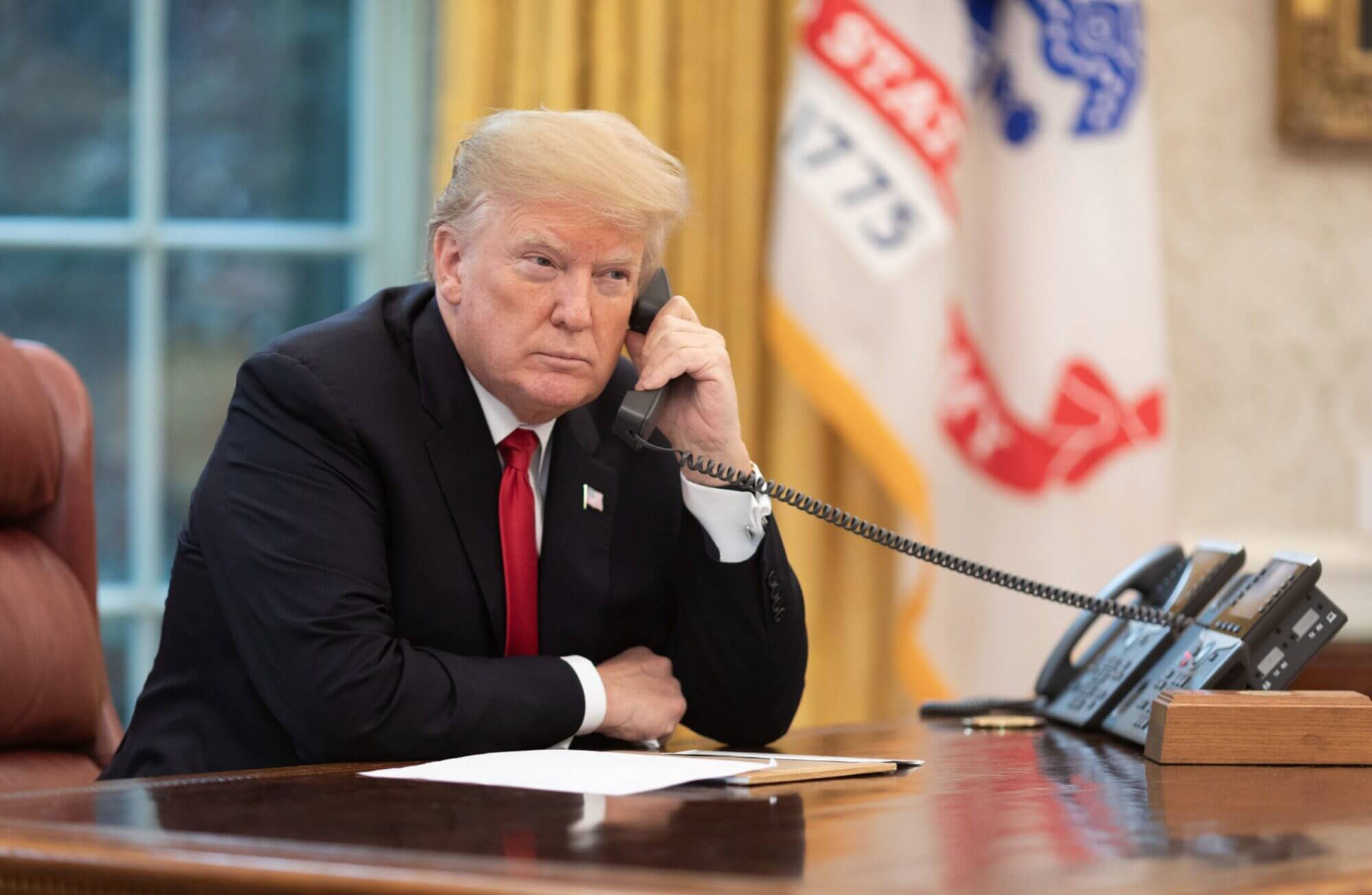
Trump administration slashes education funding. Mississippi leaders and schools panic

Mississippi schools and the state education system are set to lose over $137 million in federal funds after the U.S. Department of Education halted access to pandemic-era grant money, state leaders said this week.

In a Wednesday letter to U.S. Secretary of Education Linda McMahon, Mississippi Superintendent of Education Lance Evans said the federal education department failed to provide states with required notice that it would cut of access to funds committed to schools during the COVID-19 pandemic.

Schools were already using the money to pay for a range of initiatives, including literacy and mathematics programs, mental health services, construction projects for outdated school facilities and technology for rural districts.

“This unexpected change creates a severe hardship for Mississippi’s students, educators, and school communities,” Evans wrote. “These are not merely numbers on a spreadsheet; they represent critical services and supports that directly benefit our most vulnerable students …”

The abrupt loss of funds sent Mississippi public and private school leaders rushing to brace for the impact of wide ranging cuts. By Friday, some were already forced to fire grant-funded teachers, coaches and nurses.

At St. Richard Catholic School in Jackson, Father Joe Tonos and Principal Russ Nelson said the school would lose approximately $1.5 million, funds that pay staff salaries and fund programs for mental health. All schools staffers who were employed through grants were to be fired by Friday.

“This funding was not just a budgetary line item; it was a transformational support system for our school,” Nelson wrote in a memo reviewed by Mississippi Today. “Without it, we are facing difficult decisions and significant setbacks in our mission to provide a high-quality, supportive education for every student.”

McMahon set off panic when she declared in a March 28 letter state education heads that schools would lose the federal COVID-19 relief money they originally thought they would be able to spend until 2026.

President Donald Trump’s administration has made deep cuts to government programs, cancelling hundreds of millions of dollars in federal grants and other funding to states, a priority McMahon cited as a justification for the education cuts in her letter.

“Extending deadlines for COVID-related grants, which are in fact taxpayer funds, years after the COVID pandemic ended is not consistent with the Department’s priorities and thus not a worthwhile exercise of its discretion,” McMahon wrote.

McMahon indicated the federal education department might consider keeping funds available on a project-by-project basis.

The money was awarded to help schools across the country recover from the disruption wrought by the pandemic. Schools began hiring new staff members, creating new education programs and planning new projects under the assumption they had until 2026 to access the federal money

Phillip Burchfield, executive director of the Mississippi Association of School Superintendents, said the federal government’s decision to move up the deadline will force schools to find money for projects that are already underway.

“Some districts have already received the money and spent it,” Burchfield said. “Where it’s becoming problematic is … services have been committed to, but the money has not yet been received, so it puts districts in a little bit of a bind to come up with the money.” 

The back and forth between Mississippi education leaders and the Trump administration unfolded on the same week state lawmakers left the state Capitol without reaching agreement on an annual budget to fund the state education department and other agencies.

Mississippi is one of the most federally dependent states in the nation.

Superintendent Evans said he has asked the federal government to reinstate access to the money.

Mississippi Today’s Kate Royals contributed to this report.

The post Trump administration slashes education funding. Mississippi leaders and schools panic appeared first on Mississippi Today.


Meet Willye B. White: A Mississippian we should all celebrate

In an interview years and years ago, the late Willye B. White told me in her warm, soothing Delta voice, “A dream without a plan is just a wish. As a young girl, I had a plan.”

She most definitely did have a plan. And she executed said plan, as we shall see.

And I know what many readers are thinking: “Who the heck was Willye B. White?” That, or: “Willye B. White, where have I heard that name before?”

Rick Cleveland

Well, you might have driven an eight-mile, flat-as-a-pancake stretch of U.S. 49E, between Sidon and Greenwood, and seen the marker that says: “Willye B. White Memorial Highway.” Or you might have visited the Olympic Room at the Mississippi Sports Hall of Fame and seen where White was a five-time participant and two-time medalist in the Summer Olympics as a jumper and a sprinter.

If you don’t know who Willye B. White was, you should. Every Mississippian should. So pour yourself a cup of coffee or a glass of iced tea, follow along and prepare to be inspired.

Willye B. White was born on the last day of 1939 in Money, near Greenwood, and was raised by grandparents. As a child, she picked cotton to help feed her family. When she wasn’t picking cotton, she was running, really fast, and jumping, really high and really long distances.

She began competing in high school track and field meets at the age of 10. At age 11, she scored enough points in a high school meet to win the competition all by herself. At age 16, in 1956, she competed in the Summer Olympics at Melbourne, Australia.

Her plan then was simple. The Olympics, on the other side of the world, would take place in November. “I didn’t know much about the Olympics, but I knew that if I made the team and I went to the Olympics, I wouldn’t have to pick cotton that year. I was all for that.”

Just imagine. You are 16 years old, a high school sophomore, a poor Black girl. You are from Money, Mississippi, and you walk into the stadium at the Melbourne Cricket Grounds to compete before a crowd of more than 100,000 strangers nearly 10,000 miles from your home.

She competed in the long jump. She won the silver medal to become the first-ever American to win a medal in that event. And then she came home to segregated Mississippi, to little or no fanfare. This was the year after Emmett Till, a year younger than White, was brutally murdered just a short distance from where she lived.

“I used to sit in those cotton fields and watch the trains go by,” she once told an interviewer. “I knew they were going to some place different, some place into the hills and out of those cotton fields.”

Her grandfather had fought in France in World War I. “He told me about all the places he saw,” White said. “I always wanted to travel and see the places he talked about.”

Travel, she did. In the late 1950s there were two colleges that offered scholarships to young, Black female track and field athletes. One was Tuskegee in Alabama, the other was Tennessee State in Nashville. White chose Tennessee State, she said, “because it was the farthest away from those cotton fields.”

She was getting started on a track and field career that would take her, by her own count, to 150 different countries across the globe. She was the best female long jumper in the U.S. for two decades. She competed in Olympics in Melbourne, Rome, Tokyo, Mexico City and Munich. She would compete on more than 30 U.S. teams in international events. In 1999, Sports Illustrated named her one of the top 100 female athletes of the 20th century.

Chicago became White’s home for most of adulthood. This was long before Olympic athletes were rich, making millions in endorsements and appearance fees. She needed a job, so she became a nurse. Later on, she became an public health administrator as well as a coach. She created the Willye B. White Foundation to help needy children with health and after school care. 

In 1982, at age 42, she returned to Mississippi to be inducted into the Mississippi Sports Hall of Fame and was welcomed back to a reception at the Governor’s Mansion by Gov. William Winter, who introduced her during induction ceremonies. Twenty-six years after she won the silver medal at Melbourne, she called being hosted and celebrated by the governor of her home state “the zenith of her career.”

Willye B. White died of pancreatic cancer in a Chicago hospital in 2007. While working on an obituary/column about her, I talked to the late, great Ralph Boston, the three-time Olympic long jump medalist from Laurel. They were Tennessee State and U.S. Olympic teammates. They shared a healthy respect from one another, and Boston clearly enjoyed talking about White.

At one point, Ralph asked me, “Did you know Willye B. had an even more famous high school classmate.”

No, I said, I did not.

“Ever heard of Morgan Freeman?” Ralph said, laughing.

Of course.

“I was with Morgan one time and I asked him if he ever ran track,” Ralph said, already chuckling about what would come next.

“Morgan said he did not run track in high school because he knew if he ran, he’d have to run against Willye B. White, and Morgan said he didn’t want to lose to a girl.”

The post Meet Willye B. White: A Mississippian we should all celebrate appeared first on Mississippi Today.

Pastor: Medicaid expansion should be enacted if Mississippi is to be ‘buckle on the Bible belt’


Editor’s note: Even though the 2025 Mississippi legislative session ended again without lawmakers addressing Medicaid expansion, Chuck Poole, former senior minister of Northminster Baptist Church in Jackson, writes for Mississippi Today Ideas that it is never too late to provide health care for poor Mississippians. Theoretically, Gov. Tate Reeves could allow legislators to consider Medicaid expansion in the special session that he will call in the coming days.


Like clean air, adequate nutrition, decent shelter and safe water, healthcare is a necessity, not a luxury; which is why Medicaid expansion is a morally right and true thing, not a politically red or blue thing.

We don’t need another dialogue or seminar, hearing or study to tell us what we already know. We just need to act on the truth we already have; the truth that basic fundamental healthcare is a necessary part of a healthy life; a universal need which next door neighbors Mississippi and Alabama can make more available to more people by acting to close the healthcare coverage gap for the nearly 300,000 Mississippians and Alabamians who make too much to qualify for traditional Medicaid, but too little to be able to access private health insurance. 

The fact that Mississippi and Alabama are among the 10 states to refuse to expand Medicaid is all the more bewildering when one considers the fact that year after year, in poll after poll, Mississippi and Alabama are the states that report the highest percentage of Christians; Mississippi and Alabama, annually vying for “Buckle on the Bible Belt.” 

Chuck Poole Credit: Courtesy Photo

So how is it that the states with the most Christians continue to be among the least Christian when it comes to caring for those who are most in need of healthcare access, equity and justice? The buckle on the Bible belt; in so many ways so beautiful, but in this way badly broken. 

Medicaid expansion is not a magic wand, but we do know that if we fully expand Medicaid, it will infuse new life into struggling Mississippi and Alabama hospitals, shrink Mississippi’s and Alabama’s growing maternal health deserts, create new Mississippi and Alabama healthcare jobs, and, most importantly, bring comfort and care to thousands of hard working Mississippians and Alabamians who are presently struggling and suffering in the healthcare coverage gap. 

And, we know how to pay for it; by accessing the same federal dollars that 40 other states, red and blue,  Republican and Democratic, are receiving to undergird Medicaid expansion for their residents; our federal tax dollars, funding their healthcare, but not our own.

All of which is to say that there is simply no good reason for Mississippi and Alabama to refuse to do the right thing and close the healthcare coverage gap; not someday, or next legislative session, or once we find out what the new administration in Washington might do, but now. 

As Preacher King, one of the Bible belt’s most courageous Jesus preachers, once wisely said, “It is never the wrong time to do the right thing.”


Chuck Poole retired in 2022 from 45 years of pastoral life during which he served churches in Jackson, Georgia, North Carolina and Washington D.C. The author of nine books, numerous published articles, one gospel song and the lyrics to three hymns, Poole has served as a “minister on the street” in Jackson, as an advocate for interfaith conversation, and as an ally to our immigrant neighbors. Poole and his wife Marcia now live in Birmingham, where he serves on the staff of Together for Hope.

The post Pastor: Medicaid expansion should be enacted if Mississippi is to be ‘buckle on the Bible belt’ appeared first on Mississippi Today.
Judge blocks Trump’s plan for industrial fish farming in the Gulf

President Donald Trump’s first-term push to open the Gulf of Mexico and other federal waters to fish farming has come to a halt in the early days of his second term. 

A federal judge in Washington state ruled against a nationwide aquaculture permit the Trump administration sought in 2020. The wide-ranging permit would have allowed the first offshore farms in the Gulf and the likely expansion of the aquaculture industry into federally managed waters on the East and West coasts. 

The ruling, issued by U.S. District Court Judge Kymberly K. Evanson on March 17, was applauded by several environmental groups.

“A nationwide permit isn’t at all appropriate because our federal waters are so different,” said Marianne Cufone, executive director of the New Orleans-based Recirculating Farms Coalition, a group opposed to offshore aquaculture. “Florida is not Maine. California is not Texas. And in just the Gulf of Mexico, there are significantly different habitats [and] different fish species that could be affected.”

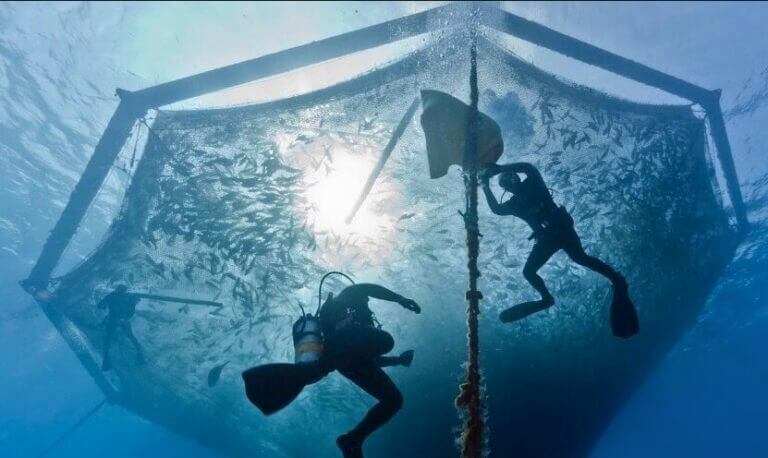
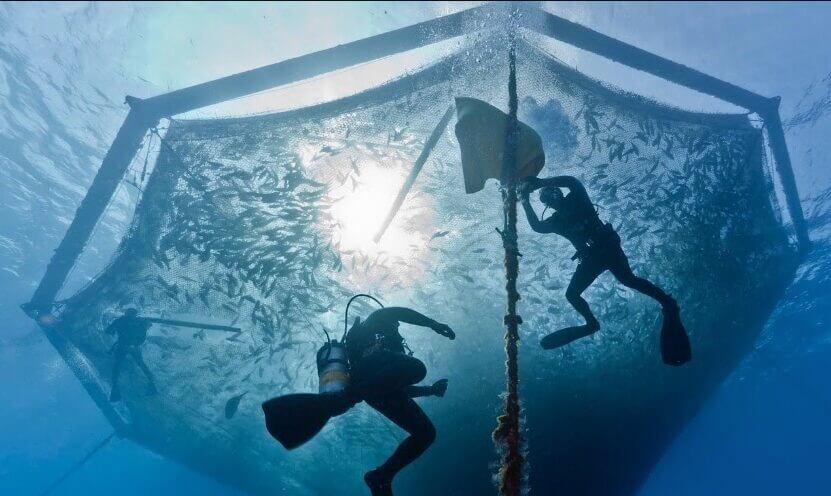
Offshore aquaculture, which involves raising large quantities of fish in floating net pens, has been blamed for increased marine pollution and escapes that can harm wild fish populations. In the Gulf, there’s particular concern about the “dead zone,” a New Jersey-size area of low oxygen fueled by rising temperatures and nutrient-rich pollution from fertilizers, urban runoff and sewer plants. Adding millions of caged fish would generate even more waste and worsen the dead zone, Cufone said. 

Fish farming is an “existential threat” to the Gulf’s fishing industry, said Ryan Bradley, executive director of the Mississippi Commercial Fisheries United. Besides the “cascading negative impacts” on the environment, offshore aquaculture often undercuts the prices of wild-caught fish and shrimp, he said. The Gulf’s fishers are already facing intense competition from foreign fish farms. 

“Offshore aquaculture poses too much risk and not enough reward,” Bradley said. 

The aquaculture industry says fish farming is the only way to meet surging demand for seafood, particularly high-value species like salmon and tuna. As wild fish stocks struggle under climate change, offshore farming could help the U.S. adapt, producing food in a managed environment less affected by ecological conditions, aquaculture advocates say.

Late last year, the National Oceanic and Atmospheric Administration identified five areas in the Gulf that the agency said are best suited for offshore aquaculture. The development of these “aquaculture opportunity areas” near the coasts of Texas and Louisiana received a strong push during Trump’s first term but slowed under President Joe Biden. Evanson’s decision blocks what might have been a speedy approval process for fish farms in opportunity areas.

The fight over fish farms

A cumbersome permitting process and opposition from environmentalists and catchers of wild seafood had long stymied plans for fish farms in the Gulf, which Trump recently renamed the Gulf of America. In 2020, the aquaculture industry got a big boost when Trump signed an executive order that directed federal agencies to “identify and remove unnecessary regulatory barriers” restricting farming in federal waters. 

Trump’s order led the U.S. Army Corps of Engineers to issue the sweeping national permit to open nearly all federal ocean waters to aquaculture. The Center for Food Safety and other environmental groups sued, arguing that the permit failed to analyze fish farming’s threats to water quality and marine life, including several species protected under the Endangered Species Act. 

In October, an initial decision by Evanson, who was appointed by Biden, faulted the Corps for failing to acknowledge aquaculture’s adverse environmental impacts. Evanson’s latest decision vacates, or sets aside as unlawful, the nationwide permit. 

The Corps declined to comment on the decision.

Federal courts have also struck down efforts to establish offshore aquaculture in the Gulf in 2018 and 2020

The repeated legal setbacks should send a clear signal to the industry, said George Kimbrell, the Center for Food Safety’s legal director. 

“It has no place in U.S. ocean waters,” he said.

The aquaculture industry isn’t giving up. Paul Zajicek, executive director of the National Aquaculture Association, said expanding U.S. fish farming is critical for meeting the growing American appetite for seafood. He noted that the U.S. consumed nearly 7 billion pounds of seafood in 2022, the most recent year data was available. About 83% of the seafood was imported, contributing to a trade deficit of about $24 billion, Zajicek said. 

“The heavy reliance on imports for a foodstuff critical to people’s health not only creates a massive trade imbalance, it also creates food security and food safety issues for our country,” he wrote in an email. 

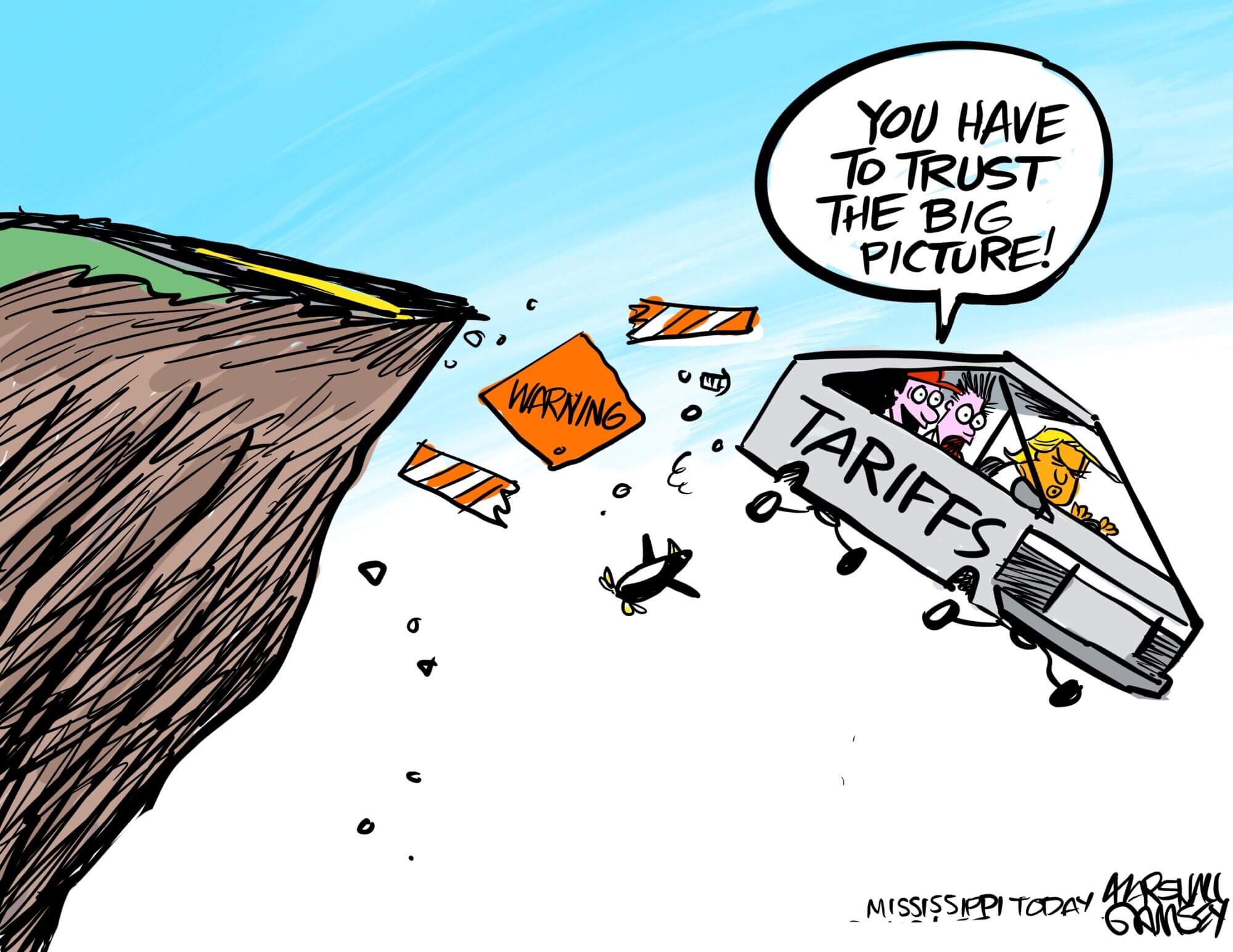
Tilting the balance of international trade is a keen interest for Trump, who on Wednesday announced far-reaching and expensive tariffs that the president says will help U.S. producers and boost the country’s economy.

Farming fish on land but not sea

The U.S. has a robust land-based aquaculture industry, producing pond-raised catfish, trout and other fish. No fish are raised commercially in federal waters, and fish farming operations are increasingly rare in state-managed marine waters. Washington state once had a large salmon farming industry, but large-scale escapes of non-native Atlantic salmon and concerns about pollution and the spread of disease led to a halt on fish farm leases in 2022 and a full ban in January. Hawaii’s state waters host the only offshore fish farm in the U.S.

Other countries have embraced offshore aquaculture on a large scale. China accounts for more than half of global aquaculture production, according to NOAA. Asian countries and Ecuador supply most of the shrimp consumed in the U.S., while farms in Canada, Norway and Chile produce two-thirds of the salmon Americans eat. 

Companies have tried to open the Gulf to aquaculture for more than a decade, yet none of the proposals for floating pens filled with redfish, amberjack and other high-value species have managed to take hold. In 2017, the federal government helped fund a pilot project that would have placed a floating farm about 45 miles from Sarasota, Fla. The project was derailed after regulators received nearly 45,000 public comments opposing it, according to Zajicek. 

Proposed farms face “a permitting system that is too lengthy, too costly, and too subject to legal challenges from groups opposed to commercial aquaculture,” he said. 

Last month’s court decision means companies may now narrow their focus and seek permits for individual projects, Zajicek said. 

That approach also won’t be easy, Cufone warned. The process for permitting each project will likely be slower and more deliberative, giving more consideration to a proposed farm’s impacts on the surrounding environment and nearby communities. 

“Claiming one size fits all doesn’t seem realistic, and the court agreed,” she said. “Now they can’t use one big permit to speed these things through.” 

The post Judge blocks Trump’s plan for industrial fish farming in the Gulf appeared first on Mississippi Today.
Financial interests in the Jackson municipal elections

Candidates in Jackson’s 2025 municipal races raised and spent over half a million dollars, at least, on their campaigns for office, mostly in the mayor’s race.

John Horhn, a 32-year state senator from Jackson, dominated the primary election April 1, receiving over 48% of the unofficial vote after raising over $101,000 and spending about half that in 2025.

Incumbent Mayor Chokwe Lumumba and Horhn, who are expected to challenge each other in the April 22 runoff, have significantly unequal war chests after Horhn out-raised Lumumba nearly 10-to-1 in 2025 so far, according to campaign finance reports.

By Mar. 23, Horhn reported having nearly $50,000 in cash on hand while Lumumba reported having about $46,000. However, Horhn’s campaign said it would file an amended report addressing that cash on hand total, since his previous report shows he raised $80,000 in 2024 and started 2025 with about $65,000, which should have left him $115,000 cash on hand if his most recent contribution and expenditure reporting is accurate.

Lumumba’s pre-election report shows he raised just $11,000 in 2025 so far, and told reporters after the primary that he has not been soliciting donations. Though he raised nearly $114,000 in 2024.

In addition to Horhn, two other campaigns for candidates in the mayor’s race brought in more than $100,000, both of which were primarily self-funded, but money did not necessarily equate to success at the polls.

While Marcus Wallace, a contractor and former mayor of Edwards, spent by far the most of any candidate, $190,000, which included a tour bus with his photo wrapped on its side, he received just 4% of the vote Tuesday, per the unofficial count.

Lumumba received about 17% of the unofficial vote, coming in second, despite the lower-dollar campaign. He filed his campaign finance report on Mar. 31, one day before the election and several days after the deadline.

The majority of candidates were also late or failed to file, including six unsuccessful mayoral candidates and five council candidates who still had not filed reports by Election Day. One Ward 6 council candidate who is expected to go to a runoff, Lashia Brown-Thomas, did not file a report, according to documents retrieved from the City Clerk. She told Mississippi Today her roughly $2,000 campaign was self-funded.

Money raised in council races varied greatly, from just over $4,000 in the three-candidate Ward 5 race to nearly $62,000 in the five-candidate Ward 7 race.

View the breakdown of the fundraising and spending with links to reports retrieved from the City Clerk’s office below. Through a public records request for all reports, the Clerk did not provide all reports filed, so some of the data was retrieved in-person. Some candidates said they filed reports, such as James Hopkins, who said he filed Thursday, but they were not provided by the clerk.

This table will be updated with reports as they become available

The post Financial interests in the Jackson municipal elections appeared first on Mississippi Today.
Gov. Tate Reeves says he’ll call Mississippi lawmakers back in special session after they failed to set budget 

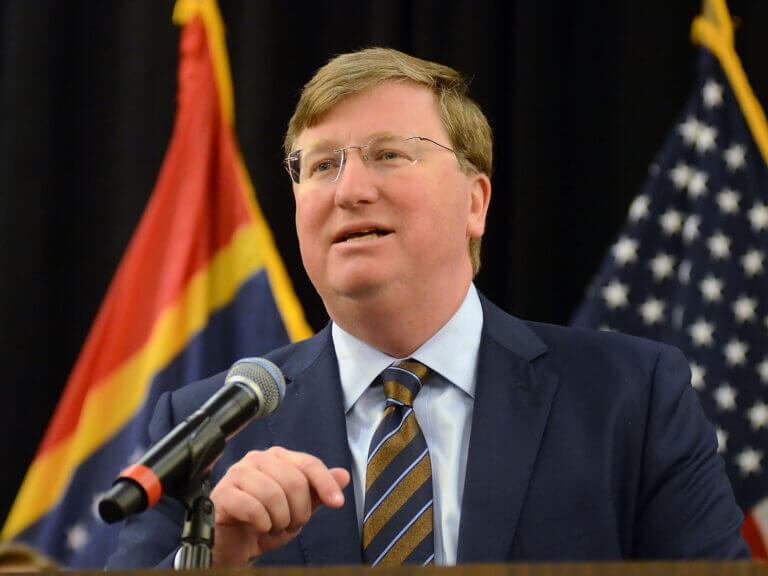
Gov. Tate Reeves on Thursday said he will call lawmakers into a special session to adopt a budget before state agencies run out of money later in the summer and hinted he might force legislators to consider other measures. 

Hours after the Senate ended its regular session on Thursday morning, Reeves said in a press conference that he didn’t have a specific date set for a special session, but his office will work with legislative leaders to quickly adopt a budget before the current fiscal year ends on June 30. 

“I am confident that the House and the Senate will be able to work together and get this done,” Reeves said. “In fact, I have been in personal communication with legislative leadership over the last several weeks, and I don’t think they’re really that far apart (on a budget).” 

House and Senate leaders ended their session this week without adopting an entire state budget, primarily because of intraparty Republican bickering. House Speaker Jason White and Lt. Gov. Delbert Hosemann have blamed each other for blowing past the deadline to pass a budget. 

White, a Republican from West, said on social media Thursday that one of the key differences between the House and the Senate on the budget is finding a recurring revenue stream to help reduce the $25 billion unfunded liability for the public employee retirement system. 

“We will continue these discussions with the Senate to produce a budget that reflects our commitment to smaller government with focused spending, while meeting the core functions and responsibilities to the taxpayers of Mississippi,” White said. 

Hosemann on Wednesday night told reporters that Senate leaders will begin working on finalizing a budget as quickly as possible. 

As has been the case with Reeves for past special sessions, he told reporters he would wait until the House and Senate reach at least a handshake agreement before calling them into a special session to pass a budget. 

But Reeves could force the Legislature to address other issues during a special session.

Under the state Constitution, one of few powers a governor has over the Legislature is the sole authority to call it into special session, and to set the “call” or agenda lawmakers can consider in a special session. Lawmakers can refuse to pass items the governor puts on their agenda, but he could hold them in special session indefinitely, and “feed” items to them one at a time until they are passed.

Reeves said he did not have a specific agenda list, but he was considering adding school choice, a parental bill of rights, certificate of need reform and mobile sports betting as potential items for lawmakers to address during the special session. 

“There are a large number of items at this point,” Reeves said. “I will rule nothing out. Y’all know I am reluctant to add things to a special session. I’m reluctant to call special sessions because of the cost associated with them.” 

Each day of a special session can easily cost upwards of $100,000, to pay, feed and house lawmakers and provide staff and security at the Capitol.

The governor said taxpayers and agency leaders should not fear government services shutting down because he’s confident the Legislature can iron out a final budget before the next fiscal year starts July 1. Reeves said that a few agencies are facing deficits for the current budget year and that, while not a crisis at this point, should be addressed “sooner rather than later.”

Rep. Karl Oliver, a Republican from Winona who leads a House Appropriations Committee, told Mississippi Today that most of the House’s proposed budgets levels would fund state agencies near level to this year, with some added funds for public pension contributions and increased insurance costs. 

The House’s total state-funded budget proposal is a little over $7 billion, according to Oliver, which is similar to the budget the Legislature adopted last year. Some Senate leaders have also said they don’t expect any large increases in spending would be approved for the coming budget year.

The post Gov. Tate Reeves says he’ll call Mississippi lawmakers back in special session after they failed to set budget  appeared first on Mississippi Today.
Flood risks getting worse along U.S. coastlines, new analysis shows

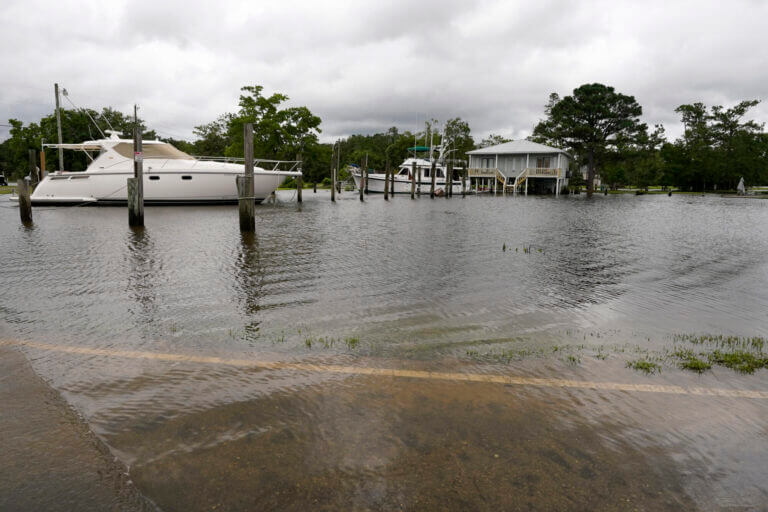
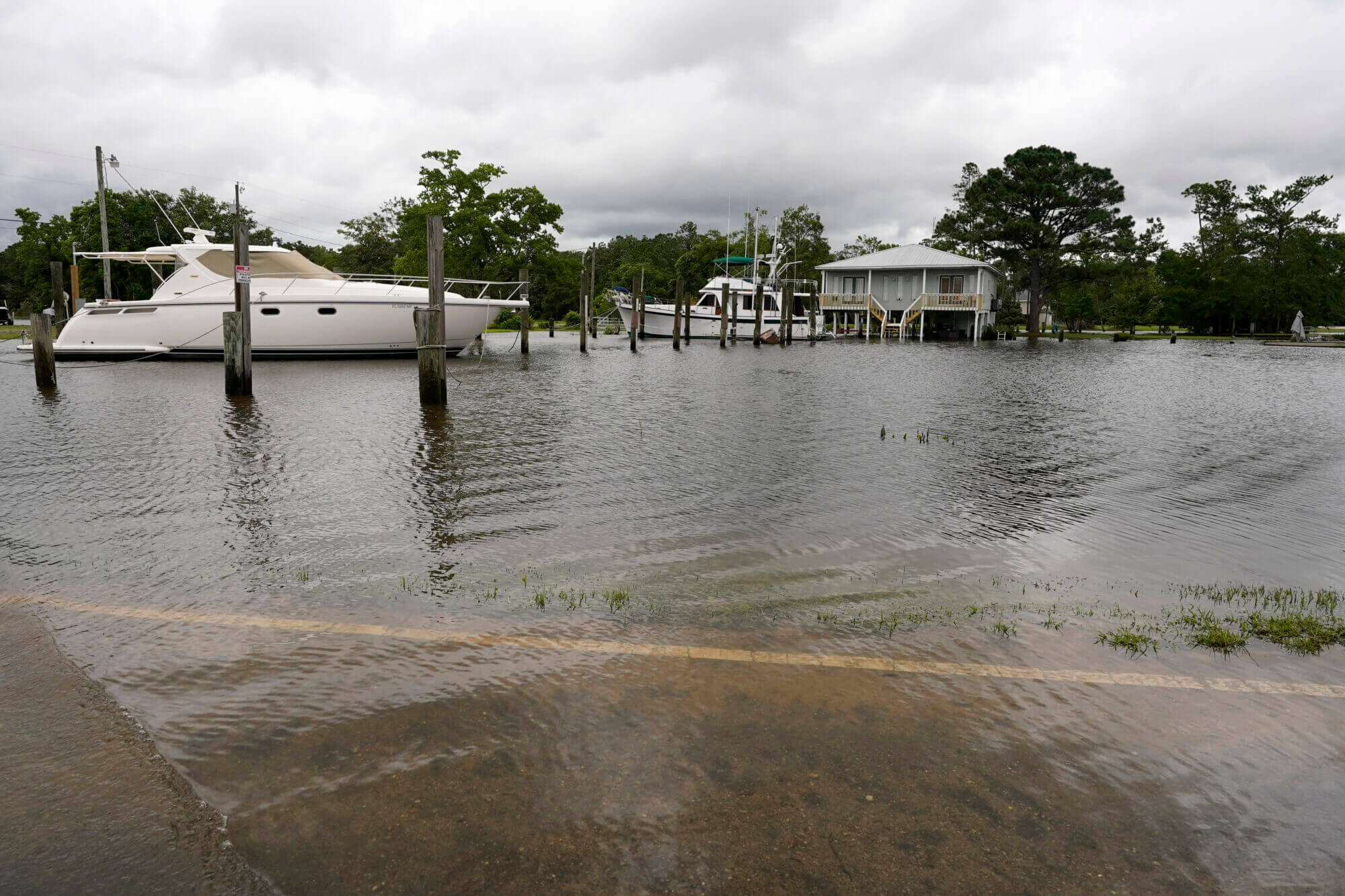
Drivers along the flooded Cedar Lake Road in Biloxi, Miss., found the road underwater and their cars almost parallel to the moored boats in the small harbor, Saturday, June 19, 2021, as water from Tropical Storm Claudette begins to recede. Tropical Storm Claudette brought much evening and early morning rain and flooded various communities along the Mississippi Gulf Coast. (AP Photo/Rogelio V. Solis)

This story was originally published by Floodlight

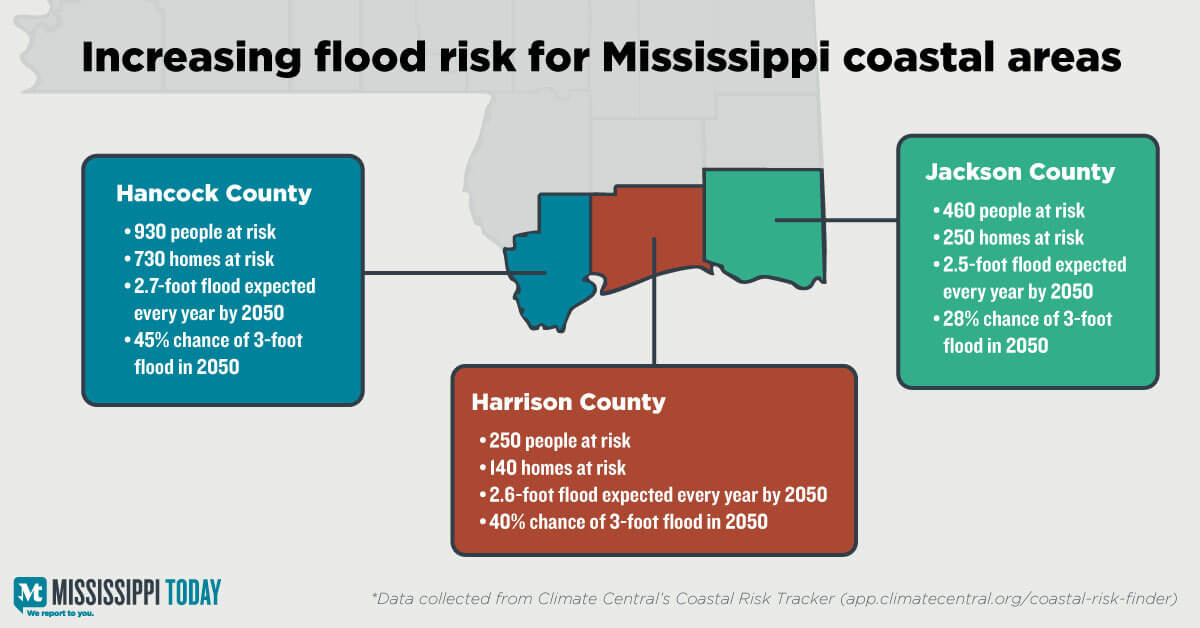
Flooding in coastal areas of the United States is projected to occur 10 times more often over the next 25 years, with about 2.5 million people and 1.4 million homes facing severe property damage from sea level rise, according to a new analysis released Wednesday by Climate Central. 

And that’s only if countries keep their commitments to reduce greenhouse gas emissions by 2050 as outlined in the Paris Agreement —  the international treaty geared toward climate mitigation and greenhouse reduction. President Donald Trump pulled the United States — the No. 2 greenhouse gas emitter  after China — from the agreement days after entering office, saying it would strengthen the U.S. economy. 

“The current administration is going in kind of the opposite direction of where data says we would need to go if we want to reduce risk,” said Kristina Dahl, vice president of science for Climate Central, a nonprofit group of independent scientists and climate change researchers

Climate Central has developed a Coastal Risk Finder tool for the public and policy makers to map the flooding risks for their parts of the country. It paints a dire picture for people living along coastal Florida, New York and New Jersey, where it predicts the largest number of people and homes at risk from severe flooding. 

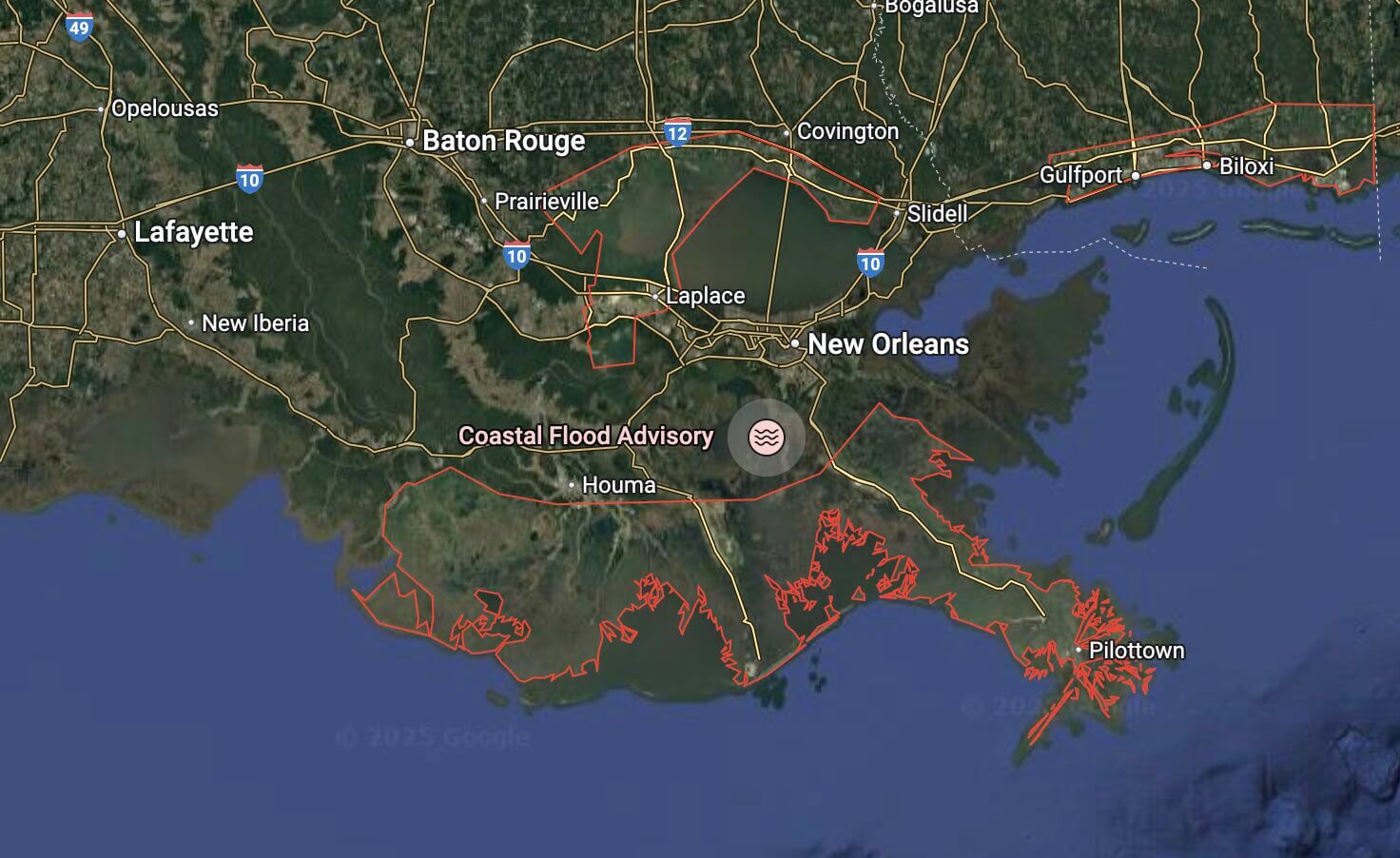
The Gulf Coast region will also see higher rates of sea level rise, the analysis found. The area’s low-lying coasts means larger land areas are at risk of flooding, but Louisiana has a less dense population.  

Other takeaways from the analysis include: 

  • One-quarter of the estimated 1.4 million homes in at-risk areas are in Florida. 
  • About 20% of the people living in areas at risk of coastal flooding are 65 years or older, despite comprising only 16% of total population in those areas. 
  • New York City has the most people currently living in areas at risk of a severe flood in 2050 — an estimated 271,000 people. 

Louisiana’s people, land at risk

Louisiana is ranked fourth in the report’s list of states with the most population at risk from severe coastal flooding in the coming 25 years, but it tops the list when it comes to the amount of land loss from coastal flooding by 2050 — approximately 9,200 square miles. 

The state has been well aware of the dangers on its coastline, which has eroded at a rate of about 5,700 acres of wetlands a year between 1974 and 1990. 

Cities with the most people currently living in areas at risk from severe (100-year) coastal flood in 2050. Source: Climate Central “Coastal Flood Risks Across the U.S.” report Credit: Credit: Rosie Gillies/Floodlight

Since 2007, Louisiana has spent billions on coastal restoration and projects aimed at reducing the risks of land loss and mitigating flooding. The state Coastal Protection and Restoration Authority’s ambitious plan is funded primarily with settlement money from the 2010 Deepwater Horizon oil spill. 

But some of those efforts have been stalled by Republican Gov. Jeff Landry, who has voiced opposition to one of the plan’s crucial yet controversial projects — a $3 billion sediment diversion project on the Mississippi River that has split residents, environmentalists and public officials. 

“I do believe that if we can advance some of these large scale projects that are in this master plan, it gives us a chance at a sustainable coast and a sustainable future,” said Katie G. Daniel, strategy and campaign manager for the Environmental Defense Fund’s Climate Resilient Coasts and Watersheds program. 

More than half of Louisiana voters polled believe coastal land loss will have an effect on them within the next 10 years, according to a 2023 survey published by the Restore the Mississippi River Delta coalition, which the EDF belongs to along with the National Audubon Society, National Wildlife Federation and Pontchartrain Conservancy. The survey found voters “overwhelmingly” favored coastal restoration efforts. 

Daniel thinks Louisiana could have a “long-term solution” to the problem with its coastal restoration master plan and natural resources like the Mississippi River, which — through sediment and water diversion projects — could help shore up the state’s coastline and mitigate flood risk. 

“We are at a turning point,” she said. “If we can work through the political machinations I just think there’s a lot of opportunity there on the local and the state level.”

Climate efforts lagging

A majority of the cities at the top of Climate Central’s analysis are in the Northeast. Houma in southeast Louisiana is the only one where 100% of its population (33,000 people) are at risk of facing a 100-year-flood by 2050.

Climate Central used population and homes data from the U.S. Census Bureau, coupled with elevation data from the National Oceanic and Atmospheric Administration and U.S. Army Corps of Engineers’ National Levee Database to make calculations based on current global emissions reduction pledges. 

Dahl said federal and local governments need to focus on resilience efforts like ensuring there are multiple evacuation routes, upgrading seawalls and facilitating buyouts and relocation programs for those most at risk. 

“But then also reducing emissions as quickly and as steeply as we can as a planet is going to be in the long term, one of the biggest things that we can do to keep people safe,” she added.

Former President Joe Biden had pledged to reduce U.S. greenhouse gas emissions by more than 60% from 2005 levels by 2035. The ultimate goal was achieving net-zero emissions by 2050 through a bevy of initiatives focused on climate change and environmental justice in his multi-billion-dollar Inflation Reduction Act (IRA). 

But the Trump administration is rolling back much of the IRA spending — along with many federal regulations around greenhouse gas emissions implemented under Biden. 

“Countries aren’t on track to meet their current commitments,” Dahl said. “So it could be worse.”

Floodlight is a nonprofit newsroom that investigates the powers stalling climate action.

The post Flood risks getting worse along U.S. coastlines, new analysis shows appeared first on Mississippi Today.
GOP-controlled Senate rejects governor’s pick for public broadcasting board. Reeves calls it ‘chicken s–t’

The GOP-controlled Mississippi Senate refused to confirm a top staffer for Republican Gov. Tate Reeves to a position on a state board — a move that occurred on the tail end of a legislative session marked by Republican infighting.

The Senate on Wednesday roundly rejected the nomination of Cory Custer, Reeves’ deputy chief of staff, to serve a four-year term on the board of directors of Mississippi Public Broadcasting, the statewide public radio and television network. Reeves reacted to the Senate’s vote on Thursday, calling it “chicken shit.”

Only eight senators out of the 51-member body voted to confirm Custer, and three of those “yea” votes came from Democrats. MPB’s board members oversee the organization’s operations, manage its finances and guide programming for its multiple newscasts each weekday.

Reeves appointed Custer over the summer of 2024 to fill an open seat on the board as an interim member. Since then, he has participated in board meetings and is listed as a board member on MPB’s website.

According to Custer’s profile on the website, he oversees the governor’s communication team. Custer’s role overseeing Reeves’ public profile seemed to be a point of concern for some senators who voted against his confirmation.

As the full Senate prepared to vote on Custer’s nomination Thursday, Republican Sen. Brice Wiggins asked what responsibilities Custer had as the governor’s deputy of chief.

Republican Senate Education Chairman Dennis DeBar, who shepherded Custer’s nomination through his committee last month, responded that Custer had access to Reeves’ account on X, formerly known as Twitter.

“If you’re referring to his social media account, he indicated that he did have access to the Twitter account,” DeBar said.

In February, Reeves angered several members of the Senate Republican caucus after the governor used his X account to take shots at Republican Sen. Jeremy England. The Republican senator who chairs the Elections Committee had advanced bipartisan legislation to allow “no-excuse” in-person early voting, a policy Reeves opposes.

Reeves, or someone operating his X account, said England earned the “MVP award for the Mississippi Democratic Party!” He also posted a newspaper photo of England on the Senate floor laughing with Democratic Sen. Derrick Simmons and wrote: ” A picture is worth a thousand words!! Senator Jeremy England, you may think it is funny that you are working with the Senate Democrat Minority Leader to pass the Democrats’ priorities…. BUT I DO NOT!”

It is unclear whether Reeves, Custer or someone else authored those X posts.

Custer did not respond Thursday to messages seeking comment.

At a press conference Thursday, Reeves said the Senate’s decision represented an unfair attack on Custer, and that Republican senators might suffer political consequences for killing one of his appointments.

“There’s no doubt there are some Republican senators who like to vote with Democrats on really important topics, and they don’t like the fact that I call them out on it,” Reeves said. “They ought to attack me and not one of my staff members. He had nothing to do with that. Quite frankly, I think it’s chicken shit what they did.”

The vote against Custer occurred just before the House and Senate concluded its regular session without passing a $7 billion state budget to fund state agencies. Reeves will likely have to call the Legislature back for a special session to deal with the budget.

The Legislature’s bill to overhaul Mississippi’s tax system, which included typos that could eliminate the state income tax much quicker than the Senate intended, contributed to tensions over the budget. Reeves signed the typo-riddled bill into law last week.

Gubernatorial appointees are regularly allowed to serve on boards and commissions prior to Senate confirmation. Now that the Senate has rejected Custer’s confirmation, Reeves could appoint someone else to fill the open board of directors seat. That person would need to be confirmed by the Senate during the next legislative session.

The post GOP-controlled Senate rejects governor’s pick for public broadcasting board. Reeves calls it ‘chicken s–t’ appeared first on Mississippi Today.

Early voting proposal killed on last day of Mississippi legislative session

Mississippi will remain one of only three states without no-excuse early voting or no-excuse absentee voting. 

Senate leaders, on the last day of their regular 2025 session, decided not to send a bill to Gov. Tate Reeves that would have expanded pre-Election Day voting options. The governor has been vocally opposed to early voting in Mississippi, and would likely have vetoed the measure.

The House and Senate this week overwhelmingly voted for legislation that established a watered-down version of early voting. The proposal would have required voters to go to a circuit clerk’s office and verify their identity with a photo ID. 

The proposal also listed broad excuses that would have allowed many voters an opportunity to cast early ballots. 

The measure passed the House unanimously and the Senate approved it 42-7. However, Sen. Jeff Tate, a Republican from Meridian who strongly opposes early voting, held the bill on a procedural motion. 

Senate Elections Chairman Jeremy England chose not to dispose of Tate’s motion on Thursday morning, the last day the Senate was in session. This killed the bill and prevented it from going to the governor. 

England, a Republican from Vancleave, told reporters he decided to kill the legislation because he believed some of its language needed tweaking. 

The other reality is that Republican Gov. Tate Reeves strongly opposes early voting proposals and even attacked England on social media for advancing the proposal out of the Senate chamber. 

England said he received word “through some sources” that Reeves would veto the measure.

“I’m not done working on it, though,” England said. 

Although Mississippi does not have no-excuse early voting or no-excuse absentee voting, it does have absentee voting. 

To vote by absentee, a voter must meet one of around a dozen legal excuses, such as temporarily living outside of their county or being over 65. Mississippi law doesn’t allow people to vote by absentee purely out of convenience or choice. 

Several conservative states, such as Texas, Louisiana, Arkansas and Florida, have an in-person early voting system. The Republican National Committee in 2023 urged Republican voters to cast an early ballot in states that have early voting procedures. 

Yet some Republican leaders in Mississippi have ardently opposed early voting legislation over concerns that it undermines election security. 

The post Early voting proposal killed on last day of Mississippi legislative session appeared first on Mississippi Today.