Jackpotit ovat suuria palkintoja, jotka kasvavat jokaisen panostuksen myötä. Ne voivat olla kiinteitä summia tai progressiivisia, jolloin palkinto nousee jokaisella pelillä. Ennen kuin ryhdyt pelaamaan, on tärkeää tietää, miten RTP (Return to Player) ja volatiliteetti vaikuttavat voittoihisi.
RTP kertoo, kuinka suuri osa panostetusta rahasta palautuu pelaajille pitkällä aikavälillä.
Volatiliteetti kertoo, kuinka usein voittoja tulee. Korkea volatiliteetti tarkoittaa harvempia, mutta suurempia voittoja.
Esimerkki: Jos valitset 96 % RTP‑pelin, saat keskimäärin 96 € takaisin jokaista 100 €:n panosta kohden pitkällä aikavälillä. Tämä tieto auttaa sinua valitsemaan pelit, joissa on paremmat mahdollisuudet suurten jackpotien saavuttamiseen.
Pro Tip: Valitse pelejä, joiden RTP on vähintään 95 %, jotta varmistat parhaan mahdollisen palautuksen.
Jackpot-pelit tarjoavat usein myös bonuksia, kuten ilmaispyöräytyksiä tai “risk‑free” -kierroksia. Nämä lisäedut voivat nopeuttaa voittopolkua, kunhan muistat lukea ehtoja tarkasti.
2. Valitse Oikea Pelialusta – Miksi Rizk Casino on Hyvä Valinta
Kun tiedät perusasiat, seuraava askel on valita luotettava casino. Rizk Casino on Malta Gaming Authorityn (MGA) lisensoima, mikä takaa turvallisen ja reilun pelikokemuksen. Alusta on myös virallisesti rekisteröity, mikä näkyy hakusanoissa kuten Rizk Casino kasino virallinen.
Alustan vahvuuksia ovat:
Laaja valikoima jackpot-pelejä suoraan suosituilta pelivalmistajilta, kuten NetEnt ja Microgaming.
Nopeat kotiutukset – useimmat nostot käsitellään 24 tunnin sisällä.
Live‑tuki, joka on saatavilla 24/7.
Kun olet valmis kokeilemaan, voit siirtyä suoraan Rizk Casino -sivustolle ja aloittaa pelaamisen. Tämä on juuri se hetki, kun linkki Rizk Casino tulee paikalle: se ohjaa sinut suoraan viralliselle sivulle, jossa voit rekisteröityä ja hyödyntää tervetuliaisbonuksen.
Industry Secret: Usein suurin jackpot-voitto tulee pelistä, jossa on alhainen volatiliteetti, mutta korkea RTP. Tämä yhdistelmä pitää pelikassasi tasaisena, kunnes suuri voitto iskee.
Muista aina asettaa itsellesi talletus- ja tappiorajat. Vastuullinen pelaaminen on avain pitkän aikavälin menestykseen.
3. Hyödynnä Bonuksia ja Kampanjoita
Bonukset voivat merkittävästi kasvattaa pelikassaasi ennen kuin suuntaat sen jackpot-peleihin. Rizk Casinolla on useita kampanjoita, jotka on suunniteltu erityisesti jackpot-intoilijoille.
Jackpot Booster – kampanja, jossa jokainen panostus bonuspelissä lisää jackpotin kasvua 10 %.
Uuden pelin lanseeraus – usein mukana ilmaispyöräytyksiä, jotka voivat johtaa suuriin voittoihin.
Kun hyödynnät näitä tarjouksia, muista tarkistaa kierrätysvaatimukset. Jos kierrätys on 30x bonuksen arvo, ja bonuksesi on 50 €, sinun täytyy panostaa 1500 € ennen kuin voit nostaa voitot.
Did You Know? Useimmat jackpot-pelit tarjoavat ylimääräisen “second chance” -mahdollisuuden, jos olet pelannut vähintään 10 kierrosta peräkkäin ilman voittoa. Tämä voi olla ratkaisevaa, kun tavoitteena on suuri voitto.
4. Optimoi Pelistrategiasi
Jackpot-peleissä ei ole täysin varmaa voittostrategiaa, mutta muutamia taktiikoita noudattamalla voit parantaa mahdollisuuksiasi.
Aseta Budjetti – Päätä etukäteen, kuinka paljon olet valmis sijoittamaan jackpot-peleihin päivittäin.
Pelaa Korkeilla Panoksilla – Useimmat progressiiviset jackpotit aktivoituvat vain korkeilla panoksilla.
Hyödynnä Ilmaispyöräytykset – Ne antavat mahdollisuuden voittaa ilman omaa panosta.
Seuraa Jackpotin Kasvua – Jos jackpot on lähellä historiallista maksimiarvoa, se voi olla hyvä hetki panostaa.
Pro Tip: Jos sinulla on rajoitettu bankroll, valitse pelit, joissa on matala volatiliteetti ja keskikorkea panostaso. Tämä tasapainottaa riskin ja mahdollisuuden saada suuri voitto.
Vastuullinen pelaaminen on tärkeää: aseta itsellesi aikarajoituksia ja pidä taukoja. Jos huomaat pelaavasi enemmän kuin haluat, lopeta ja palaa myöhemmin.
5. Tarkista Maksutavat ja Kotiutukset
Rizk Casino tarjoaa monipuoliset maksutavat, jotka tekevät talletuksista ja kotiutuksista helppoja. Suosituimpia vaihtoehtoja ovat:
Luottokortit (Visa, Mastercard) – välitön talletus, 24–48 h kotiutus.
E-walletit (Skrill, Neteller) – nopeat siirrot, usein 24 h sisällä.
Bank Transfer – turvallinen, mutta hitaampi (2–5 päivää).
Kotiutusten nopeus on yksi Rizk Casinon vahvuuksista. Useimmat pelaajat saavat voittonsa tililleen seuraavan pankkipäivän aikana. Tämä tekee kasinoesta erityisen houkuttelevan niille, jotka haluavat käyttää voittonsa nopeasti.
Quick Win: Valitse e-wallet maksutavaksi, jos haluat varmistaa, että kotiutus tapahtuu mahdollisimman nopeasti.
Lopuksi, muista tarkistaa, että valitsemasi maksutapa on saatavilla omassa maassasi ja että kasino noudattaa paikallisia säädöksiä. Tämä varmistaa, että pelikokemuksesi on sujuva ja turvallinen.
Yhteenveto
Jackpot-pelit tarjoavat mahdollisuuden elämää mullistaviin voittoihin, mutta menestyminen vaatii oikean tiedon, strategian ja luotettavan alustan. Rizk Casino täyttää kaikki nämä vaatimukset: se on lisensoitu, tarjoaa laajan valikoiman jackpot-pelejä, nopeat kotiutukset ja houkuttelevat bonukset. Muista aina pelata vastuullisesti, asettaa itsellesi rajat ja hyödyntää saatavilla olevat kampanjat. Kun noudatat näitä viittä vinkkiä, olet valmis kohtaamaan suurimmat jackpotit ja mahdollisesti viemään kotiin elämääsi mullistavan voiton. Onnea matkaan!
Abrupt terminations at the Mississippi Department of Health earlier this month removed the directors of about a dozen preventive health programs from their posts, according to staff members who were laid off.
The layoffs included roughly 20 people in the Offices of Preventive Health and Health Disparities, many of whom were program leaders. Some worked at the health department for nearly two decades.
Terminated directors included those responsible for leading chronic disease prevention, diabetes, cardiovascular health, cancer, school health, tobacco control, injury and violence prevention, heart disease and stroke prevention, and oral health programs, among others.
Mississippi has one of the highest rates of preventable diseases in the country, including heart disease, hypertension, obesity and diabetes. These conditions disproportionately affect Black Mississippians, and contribute to the state’s high infant and maternal mortality rates.
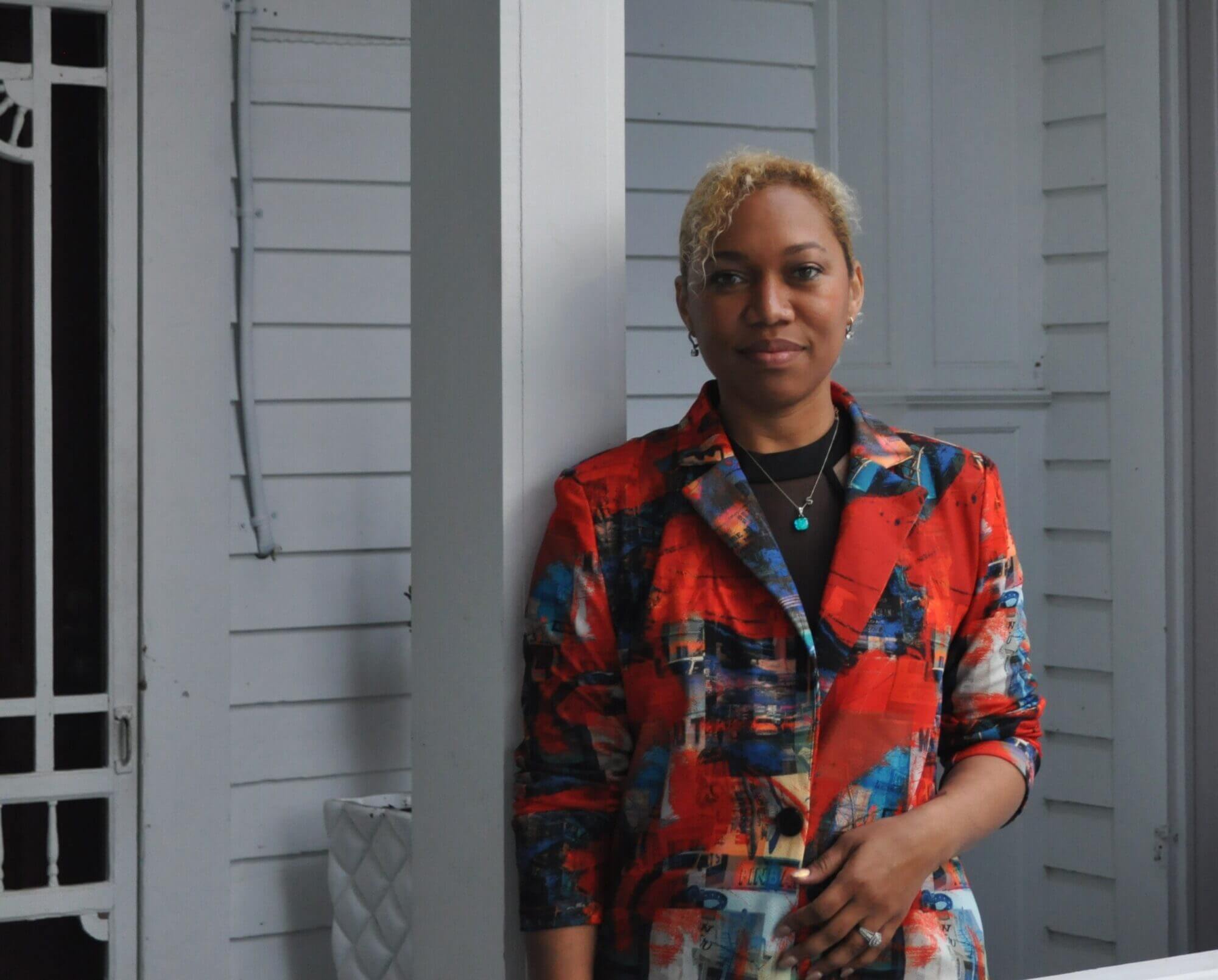
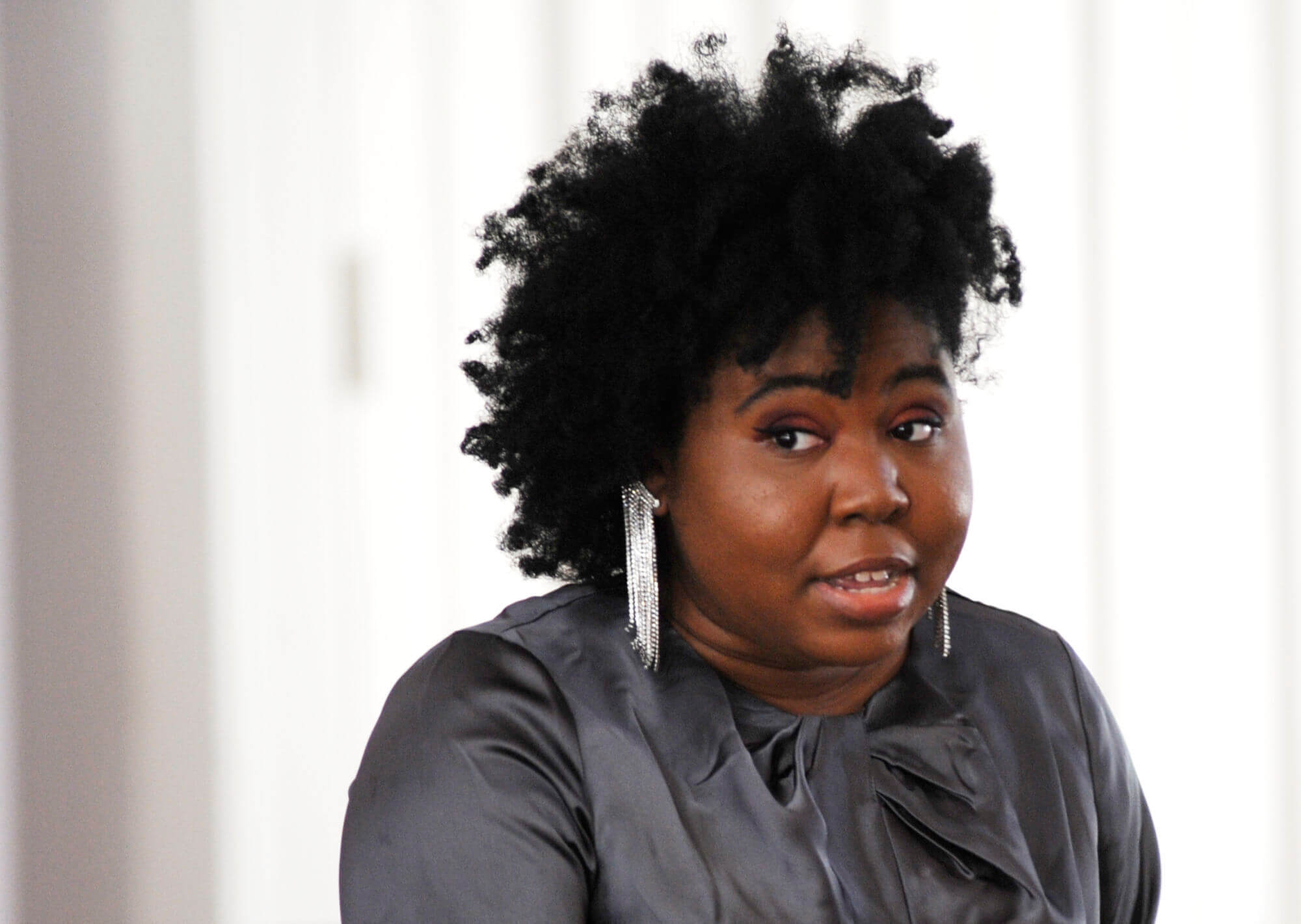
Selma Kelly-Alford is among the agency’s leaders who was fired. The bureau director for language access at the health department, Kelly-Alford was laid off on Oct. 1 after five years working at the agency.
“We were making a great impact,” she said. “…Not all the work happens in the clinic. You know, in order to educate people, we need to learn how to really target those communities appropriately.”
Staff members were also laid off in the department’s Strategic Planning and Response division, formerly the Office of Emergency Preparedness, amounting to a total of about 30 layoffs, said spokesperson Greg Flynn.
The decision to lay off staff members was made largely due to federal funding reductions, State Health Officer Dr. Dan Edney said after the Board of Health meeting Oct. 8.
He also estimated that about 150 contract employees were ordered to stop their work as a result of the ongoing federal government shutdown. Non-essential, federally funded contract workers have since been terminated, Flynn told Mississippi Today.
The reorganization will save the agency about $20 million, Edney said Oct. 8. That figure includes staff layoffs, termination of contract workers and paused federally funded contracts with subgrantees, according to Flynn.
The changes will not affect the agency’s core public health work or the Women Infants and Children’s (WIC) Nutrition program, Edney said.
In spite of the federal funding reductions it faces, the health department does not plan to ask for a funding increase from the state Legislature next year.
Edney said he hopes the staffing changes will result in the agency’s preventive health division providing more direct services to Mississippians on Oct. 8.
“Our programmatic areas should be there to make things better and improve outcomes,” he said. “When I’m not seeing improved outcomes, there will be changes, and I have not seen improved outcomes.”
The Offices of Preventive Health and Health Disparities host a range of programs to improve the health of Mississippians and address inequalities in the health department’s policies and procedures, according to the health department’s website.
Programs the offices administer include providing free rides to county health department appointments, training community health workers, educating the public on chronic disease prevention, and providing interpretive services to people with limited proficiency in English receiving agency services.
Kelly-Alford said she worries the staffing reductions – which removed the employees most familiar with the agency’s preventive health programs – could undermine the initiatives she and others have developed.
“Will it stand?” she said. “Will somebody else come and pick up the pieces?”
The agency has no concerns about its ability to continue preventive health work, Flynn said.
The health department provided few language services in 2019 when Kelly-Aford joined as coordinator for the language access program, she said.
She said she has spent the last five years “building it up, creating the program and really working to make sure that the community was really obtaining those benefits.”
Organizations that receive federal funds are required to provide people with limited English proficiency “meaningful access” to programs and services under Title VI of the Civil Rights Act. During her tenure, the division established a language line to provide interpretive services to county health departments, certified about 130 interpreters and implemented a language access plan, she said.
Today, health department providers use about 20,000 minutes of interpretive services each month to serve patients, she said. Interpreters trained by the health department serve their communities in hospitals, social work settings and schools.
“We’ve come such a long way,” she said, noting that the agency was not in compliance with Title VI regulations when she began.
Kelly-Alford was not given a reason for her termination on Oct. 1.
About a week before the layoffs, a report published by the Office of State Auditor Shad White alleged the health department failed to properly monitor $290,000 worth of taxpayer funds directed to the Office of Preventive Health and Health Equity.
“The state must stop handing taxpayer dollars to nonprofits with vague goals and then failing to monitor what these nonprofits do with it,” said White in a released statement. “The government is wasting so much money.”
Edney has not named the audit as a reason for the layoffs publicly. But a person outside the department who was briefed on the firings and spoke to Mississippi Today under the condition of anonymity to discuss internal agency decisions previously said the downsizing was partially linked to issues outlined in the report.
Kelly-Alford said her work did not overlap with the grants mentioned in the report. She said it felt important to speak up to avoid being associated with alleged mishandling of federal funds.
“I’ve worked hard to build my name,” she said.
At the Oct. 8 press conference, Dr. Edney said the department should do more to eliminate health disparities and improve population health outcomes than simply process federal grants.
“The area should be doing a better job taking care of people and not just taking care of grants,” he said.
Health department subgrants are not the responsibility of a single person. Several staff members must approve them before they are signed off by Edney, including those cited in the auditor’s report.
Kelly-Alford said her termination at the health department does not diminish her commitment to providing language access services to Mississippians. She said she is strategizing on how to continue to provide interpreter training to the bilingual community.
A huge part of public health is preventive health, she said, which includes educating providers and patients about available resources and implementing programs that deliver services to communities.
SAUCIER — Many of the most accomplished college golfers in America gathered here over the weekend for the Fallen Oak Collegiate Invitational. So, naturally, the individual champion hails from about 3,700 miles away in Gardabaer, Iceland.
LSU sophomore Gunnlaugur Arni Sveinsson, the world’s No. 11 ranked amateur golfer, shot rounds of 66, 70 and 67 for a 54-hole total of 13-under-par 203 for the victory, one shot better than Alabama’s William Jennings.
Tenth-ranked LSU and No. 17 Alabama tied for the team championship of the 14-team Fallen Oak Collegiate Golf Championship on Monday, but the biggest winner may have been the tournament itself, which continues to grow in stature and popularity in only its third year. The tournament is tri-hosted by Mississippi State, Ole Miss and Southern Miss.
Rick Cleveland
Played over three days amid gloriously sunny and mild autumn weather on one of the most spectacular golf courses anywhere, the tournament drew raves from coaches and players from some of the top teams across the nation. Said Iowa coach Tyler Stith, “I have been coaching college golf for 15 years and this one of the best tournaments I’ve ever been a part of. The tournament operations and hospitality is first-class and the golf course itself is as good as any we play in college golf. This is our third year to play here, and I sure hope we get invited back.”
Ole Miss, the highest-ranked team in the tournament at No. 4 in the country, finished fifth the tournament – an indication of the quality of the competition. Mississippi State finished ninth, three shots ahead of Southern Miss, which finished 11th.
Alabama came from 12 shots behind In the final round to share the team championship with LSU. Both teams finished 32-under par, three shots better than Big 10 golf power Illinois.
As most college golf tournaments do these days, the tournament had a huge international flavor. Matthew Dodd-Berry, who finished fourth, is from England. Mississippi State’s Ugh Malcor, who tied for 18th, is French. Southern Miss’s Matthew Javier, his team’s medalist at even par, is a member of the Canadian national amateur team and qualified for the Canadian Open on the PGA TOUR this past June.
While disappointed with his team’s fifth-place finish, Ole Miss coach Chris Malloy was thrilled with the success of the Fallen Oak event.
“This has definitely become one of the top four or five regular season golf tournaments in the country,” Malloy said. “Three years ago, we were asking teams to come here. Now, we have a waiting list to get here, including some of the highest-ranked teams in the country. This tournament is only going to get bigger and better.”
Árni Sveinsson | Photo by: Sean Cripple
2024 NCAA individual champion Michael La Sasso shot 3-under-par for the tournament to finish 18th, a shot behind teammates Tom Fischer and Cameron Tankersley.
Said Malloy, “We just had a really bad second round on Sunday and never could really get it back together to make a run in the final round.”
Mississippi State was led by San Antonio senior Garrett Endicott, who finished 13th individually with a 4-under-par total. The Bulldogs pretty much shot themselves out of the competition with a 6-over par round on Saturday but were 4-under for the last two rounds.
Said State coach Dusty Smith, “We did a great job fighting this week. It wasn’t the start we needed in round one, but I was proud of the resilience we showed.”
Southern Miss coach Eddie Brescher, whose team won two tournaments earlier in the fall, believes his Golden Eagles are capable of qualifying for the NCAA Championship for the first time in school history next spring.
“We’re not that far away,” Brescher said. “We played a quality fall schedule and finished 54-17 against the teams we competed against. We didn’t have our best stuff this weekend, but we showed in the second round what we’re capable of when we finished 5-under-par for the day on one of the hardest courses around. I really, really like my team.”
Walker Wise of Tupelo finished with a 3-over-par total for USM, followed by Mississippi Amateur champion Jake Moffitt, who finished at 5-over despite a final round 76
Southern Miss and Mississippi State have completed their fall seasons, while Ole Miss will compete next week in the East Lake Cup at famed East Lake Golf Club in Atlanta.
•••
Final Fallen Oak team standings: 1. LSU and Alabama, 32-under-par; 3. Illinois, 29-under, 4. Arkansas, 18-under; 5. Ole Miss, 15-under; 6. Tennessee, 14-under; 7. UNLV, 3-uunder; 8. Georgia 1-under; 9. Mississippi State, 2-over; 10. Chattanooga, 3-over; 11. Southern Miss, 5-over; 12. Wisconsin, 8-over; 13. Iowa, 17-over; 14. South Carolina, 21-over.
Editor’s note: October is National Drug Prevention Month, making an essay on the ongoing opioid epidemic both timely and pertinent. Mississippi Today Ideas publishes guest essays on the issues impacting the state.
On April 6th, 2015, I discovered my son, Jeffrey, non-responsive in his living room. I called 911 then performed CPR until paramedics arrived. Two hours later, the emergency room doctor confirmed our greatest fear. He was 24 years old and the cause of death was a heroin/fentanyl overdose.
I frequently speak in recovery centers as a father who witnessed his son struggle through a decade of opioid addiction that began in junior high.
In my son, I saw the shame he felt as a result of his addiction and the actions he felt he had to take to keep the dope sickness at bay. The impact of Jeffrey’s addiction on our family was significant then, and it continues to this day.
The safeguards in place to protect Americans from faulty products failed Jeffrey and our family. Addictive opioids were irresponsibly manufactured and distributed years after those profiting knew their actions were costing American lives and destroying families.
I was pleased to learn of the national opioid settlements directing those companies that practiced business unscrupulously to pay into a fund to be used to remediate some of the harms. I was saddened to learn over $63 million of those funds would be directed to Mississippi cities and counties with absolutely no stipulation that they be spent to remediate the opioid epidemic. These local governments are free to patch potholes with these funds if they so choose.
Graphic by Bethany Atkinson
The good news is that as of now, most funds remain unspent, and there’s time to hold decision makers accountable on how they’re spent. The bad news is that hundreds more Mississippians have fallen victim to the opioid epidemic as those funds sat idle in city and county bank accounts.
At Mayor Toby Barker’s request, I formed a citizens advisory group to offer the city of Hattiesburg guidance on how to invest our funds. The committee included a university dean, the director of two area drug rehabilitation centers, a local harm reduction advocate, our local city homeless coordinator, directors of local sober living homes, people in recovery and surviving family members, like myself, who have lost loved ones to overdose.
We agreed on the following six strategies that we believe would best remediate the harms of the opioid epidemic.
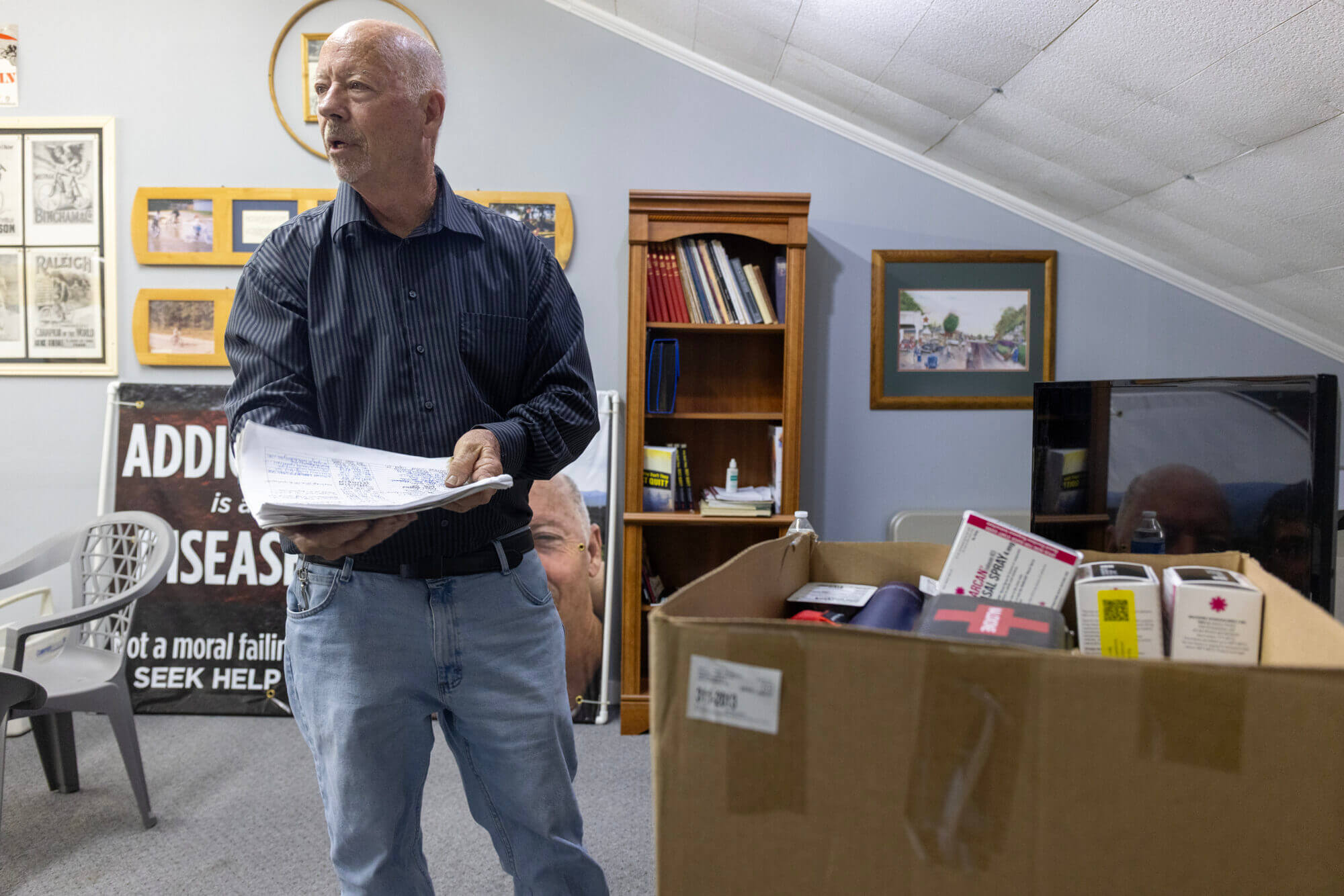
Greater public access to no-cost naloxone (Narcan) is the number one reason for the recent decline in overdose death rates. We suggested our city provide overdose reversal kits anywhere they currently provide an automatic external defibrillator. We also asked that events be held where naloxone is distributed to the public along with overdose reversal training.
The gold standard in treating opioid addiction is the use of medicated assisted treatment drugs (MAT). These drugs help manage cravings, increasing the chance of obtaining long term recovery. Making MAT available in local jails reduces the chance of overdose following discharge and reduces recidivism. We recommended the city explore using the employee clinic as a point of distribution of MAT and that they encourage the local jail to adopt MAT.
The chances of recovering from opioid addiction are increased if a person can move directly into a sober living environment following their treatment stay. If a tree surgeon removes a dying tree from the forest and nurses it back to health in a greenhouse then returns it to the same place where it acquired the disease, the tree’s chances of recovering are slim.
Sober living homes are few in number and the cost of moving into one often exceeds the resources of the person new to sobriety. We suggested the city consider making any vacant housing properties in their possession available to nonprofits experienced in operating sober living homes. We also suggested the city consider paying the move-in deposit and first month’s rent for city residents needing a sober living environment.
The Oxford House model is a worldwide sober living concept where residential homes are rented and shared by as many as eight individuals who split expenses making the arrangement cost effective while holding each other accountable in their personal recovery.
Lack of transportation is another obstacle to long-term recovery. By offering transit passes, the city could help those in recovery find and keep jobs and make the recovery meetings they need to attend. Funds also could be used to transport a resident to a recovery center and to return them home when they complete their stay.
We suggested the city look at ways to remove other small but significant obstacles to recovery, such as assisting those needing a driving license reinstated or obtaining a state-issued ID.
We asked the city to consider removing the “felony conviction” box from their job applications. This box of shame is enough to keep some otherwise well qualified applicants from applying for employment.
Lastly, we requested the city consider constructing a memorial to commemorate the lives of all our residents lost to overdose. It would allow grieving family members to gather to remember those lost and in doing so eradicate the unfair stigma of this disease.
What our group did not ask for was any financial consideration to us personally to compensate us for our pain and suffering. And I’ve yet to hear of any talks of such a settlement being directed at surviving family members.
The only thing we want to see from this settlement is for your family not to endure the losses we’ve endured.
Many elected officials will be tempted to look at these funds as a windfall and will spend them with little regard for the suffering and loss that created this opportunity. I encourage you to visit your city council and board of supervisors and implore them to do the right thing.
Form your own local advisory group, or simply take the suggestions our group has provided for you and offer them to your elected leaders.
Rather than patching potholes, let’s insist on building pathways to recovery.
Bio: James Moore, a small business owner in Hattiesburg, has been an advocate on issues related to drug use and prevention since the overdose death of his son, Jeffrey, in 2015. He is a former alderman for the city of Petal and current member of a task force formed by Hattiesburg Mayor Toby Barker to offer suggestions on how the city can battle the opioid crisis. He also is on the statewide Opioid Settlement Fund Advisory Council.
Alabama poet laureate Ashley M. Jones will be the keynote speaker this week at the Eudora Welty Writers’ Symposium in Columbus – a gathering that highlights authors and poets from across the South.
The winner of the 2025 Welty Prize is drea brown, a professor of English at Texas State University whose manuscript, “Conjuring the Haint: The Haunting Poetics of Black Women,” looks into “the intimacies of haunting and grief in Black women’s lived experiences and literary productions.” Credit: Courtesy photo
The symposium takes place Thursday to Saturday at Mississippi University for Women and is free to the public.
Jones is Alabama’s first Black poet laureate, holding the post from 2022 until next year. She will present her new poetry collection, “Lullaby for the Grieving,” which is inspired by her father’s death and deals with themes of grief, family and heritage.
“I hope the audience hears my humanity, and I hope they take a moment to consider how vital it is right now to hold that truth – our shared humanity – very close,” Jones said.
The symposium is named after Mississippi author Welty, who attended MUW, which was then called Mississippi State College for Women. This year’s theme, “Secrets and Revelations: A Dark Thread Running Through My Story,” is inspired by Welty’s novel “Losing Battles.”
Among the presenters are the winners of the symposium’s two writing competitions – the Welty Prize and the Eudora Welty Ephemera Prize for High School Creative Writing.
The Welty Prize honors works of scholarship. Winners get their manuscript published by the University Press of Mississippi and $2,000 from the university.
This year’s Welty Prize winner is drea brown, a professor of English at Texas State University who does not capitalize their name. Their manuscript, “Conjuring the Haint: The Haunting Poetics of Black Women,” looks into “the intimacies of haunting and grief in Black women’s lived experiences and literary productions.”
T. Kris Lee, a professor of English/creative writing at Mississippi University for Women, is acting director of the Eudora Welty Writers’ Symposium, being held Oct. 23-25, 2025 at the university in Columbus, Miss. Credit: Courtesy photo
“I hope that folks can hold the complexity of ghosts, of grief and fullness of Black women’s humanity,” brown wrote.
The Ephemera Prize goes to five high school students, who receive $200 and lunch with other authors at the symposium.
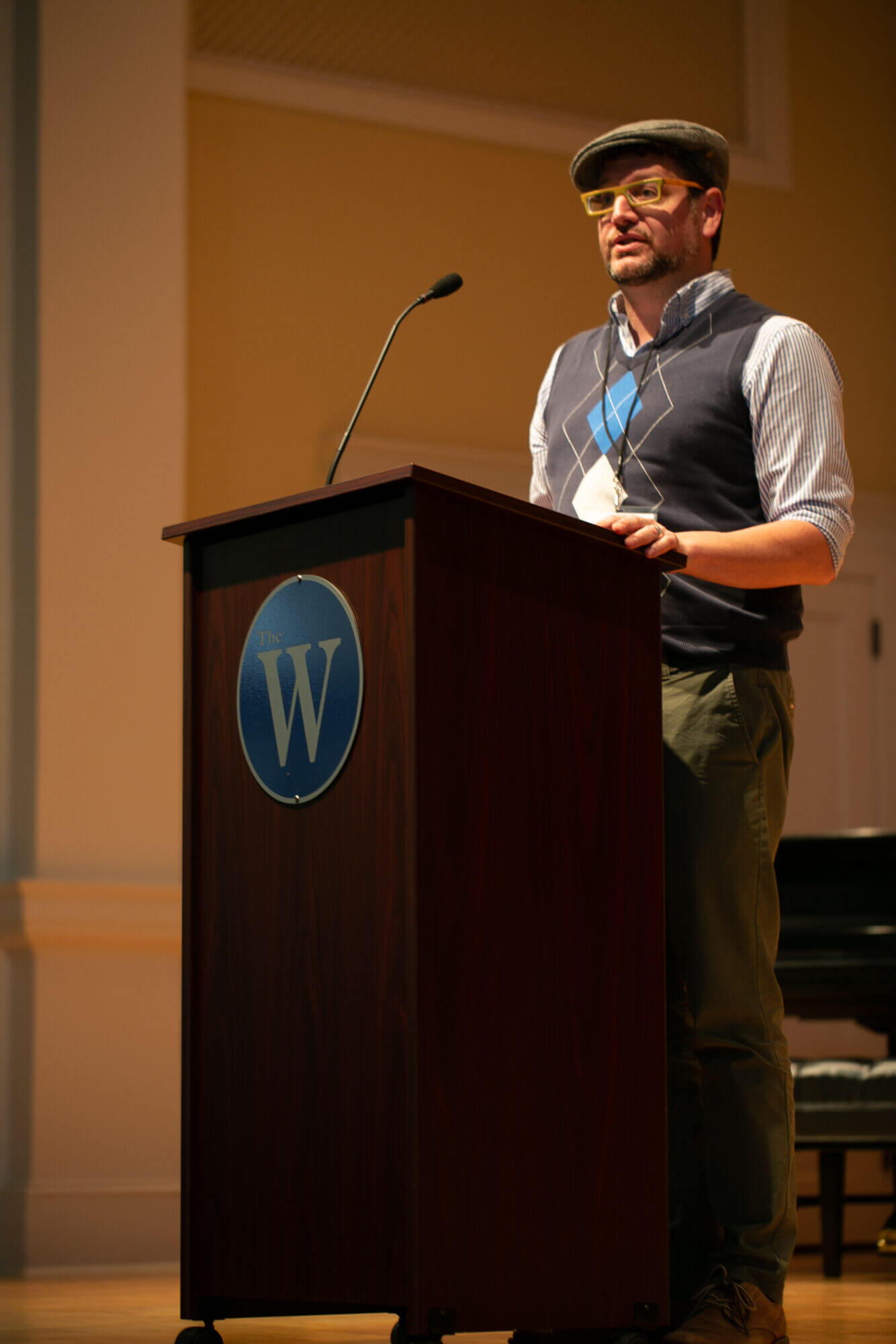
T. Kris Lee is the symposium’s acting director and professor of English/creative writing at MUW. He said the Ephemera prize has many benefits for young writers.
“It affirms the value of these young voices, so often full of fresh perspectives, creativity and emotional honesty,” he said. “By placing their work beside established voices, a very real sense of validation is given to their ideas and experiences, showing that youth voices matter in broader conversations.”
The university will host 12 authors, including several from Mississippi. Poets Kendall Dunkelberg, Olivia Clare Friedman and Samyak Shertok will share their work. Joining them are Robert Busby, who published a collection of stories about a fictional town in north Mississippi; Addie E. Citchens, who published a novel set in a fictional town in the Mississippi Delta; and Lauren Rhoades, who published a memoir about her interfaith family.
Lee said he looks forward to seeing all the writers present their work.
“I’m excited to be part of that energy, to discover new voices and to feel the spark of inspiration that only comes from being in a room full of people who love words as much as I do,” he said.
Strategie estive per massimizzare le free spins su Gioca Gile Casino
L’estate è il periodo ideale per provare nuove promozioni nei casinò online. Molti operatori lanciano offerte a tema balneare, ma pochi sanno davvero come sfruttare al meglio le free spins. Gioca Gile Casino, noto per le sue slot colorate e per la rapidità nei pagamenti, ha introdotto una serie di giri gratuiti legati a eventi sportivi e a giochi di viaggio. Per i giocatori che desiderano aumentare le proprie vincite senza investire troppo capitale, capire il funzionamento delle free spins è fondamentale.
Situation
Immagina di essere Marco, un appassionato di slot con un bankroll limitato. Marco ha notato che, durante la settimana di metà luglio, il sito ha pubblicato una promozione “Summer Spins” che offre 50 giri gratuiti su Book of Ra Deluxe per ogni deposito di almeno 20 €. Il giocatore è entusiasta, ma si chiede: quanto devo scommettere per trasformare quelle free spins in denaro reale? E soprattutto, quali sono i requisiti di scommessa (wagering) applicati?
Challenge
Il problema principale è due‑fold:
Wagering elevato – molte piattaforme richiedono 30‑x o più il valore del bonus, rendendo difficile convertire le vincite.
Limitazioni sui giochi – le free spins spesso sono vincolate a slot con RTP (ritorno al giocatore) inferiore alla media, riducendo il valore atteso.
Marco deve quindi trovare un equilibrio tra velocità di esecuzione, scelta del gioco e gestione del bankroll, evitando di incappare in restrizioni che annullerebbero le sue vincite.
Approach
Per affrontare la situazione, abbiamo definito una strategia in cinque passi, presentata sotto forma di lista puntata per semplicità:
Analizza l’RTP della slot designata; scegli giochi con RTP ≥ 96 % per aumentare le probabilità di vincita.
Calcola il requisito di wagering: moltiplica il valore delle free spins per il moltiplicatore richiesto (es. 50 € × 30 = 1500 €).
Stabilisci una puntata media: usa una scommessa che ti permetta di completare il wagering in un numero ragionevole di spin (es. 0,10 € per spin).
Gestisci il bankroll: non spendere più del 5 % del tuo deposito totale su una singola sessione di free spins.
Monitora le vincite: tieni traccia di ogni guadagno per verificare quando hai soddisfatto i requisiti e puoi richiedere il prelievo.
Questa struttura aiuta a mantenere il controllo e a massimizzare il valore delle free spins senza correre rischi inutili.
Implementation
Esempio 1 – Slot con RTP alto
Marco seleziona Starburst, slot con RTP del 96,6 %. Le free spins valgono 0,20 € ciascuna, quindi il valore totale è 10 €. Con un requisito di 30 x, deve scommettere 300 € in totale. Impostando una puntata di 0,15 € per spin, completa i 2000 spin necessari in circa 10 sessioni di gioco, mantenendo il bankroll entro il 5 % consigliato. Dopo aver soddisfatto il requisito, le vincite accumulate (circa 12 €) diventano prelevabili.
Esempio 2 – Slot con volatilità media
Un’altra promozione offre 30 free spins su Gonzo’s Quest (RTP 95,97 %). Il valore totale è 6 €. Con lo stesso moltiplicatore 30 x, il requisito è 180 €. Marco decide di puntare 0,20 € per spin, completando i 900 spin necessari in pochi giorni. Grazie alla volatilità media, ottiene occasionali vincite di 5‑10 €, che accelerano il cumulo dei requisiti.
Entrambi gli esempi mostrano come un’attenta pianificazione delle puntate e la scelta di slot con RTP adeguati possano trasformare le free spins in profitto reale.
Results
Dopo aver seguito la strategia sopra descritta, Marco ha raggiunto i seguenti risultati:
Tempo medio di completamento: 12 ore di gioco distribuite su una settimana.
Vincite nette: 18 € di profitto rispetto ai 20 € iniziali di deposito.
Tempo di prelievo: 2‑3 ore grazie alla velocità di pagamento di Gioca Gile Casino.
La combinazione di rapidi pagamenti e supporto live 24/7 ha permesso a Marco di ritirare le sue vincite senza intoppi.
Basandoci su questa analisi, Gioca Gile Casino casinò ufficiale si conferma un’ottima scelta per i giocatori che vogliono sfruttare al massimo le offerte estive.
Lessons Learned
Scegli slot con RTP elevato per aumentare il valore atteso delle free spins.
Calcola sempre il requisito di scommessa prima di accettare un bonus.
Mantieni la puntata media entro limiti gestibili per non esaurire il bankroll.
Utilizza le modalità mobile del sito per giocare ovunque, specialmente durante le vacanze estive.
Controlla le condizioni di prelievo: Gioca Gile Casino offre withdrawal in meno di 24 ore per e‑wallet.
FAQ
Q: Quanto tempo richiedono le free spins per essere utilizzate?
A: Le free spins sono valide per 7‑10 giorni dalla loro emissione. Gioca Gile Casino indica la scadenza nella sezione “Promozioni”.
Q: Posso utilizzare le free spins su più giochi contemporaneamente?
A: Di solito le free spins sono legate a un singolo titolo, ma alcune promozioni consentono di scegliere fra una lista di slot.
Q: Qual è il metodo di pagamento più veloce per prelevare le vincite?
A: Gli e‑wallet (Skrill, Neteller) sono i più rapidi, con accredito in poche ore.
Q: Gioca Gile Casino è sicuro per i giocatori italiani?
A: Sì, il sito opera con licenza AAMS e adotta protocolli SSL per proteggere i dati personali.
Q: Come posso limitare il mio gioco per giocare in modo responsabile?
A: Il casinò offre strumenti di auto‑esclusione, limiti di deposito giornalieri e sessioni di gioco.
Conclusion
Le free spins rappresentano una delle promozioni più vantaggiose per i giocatori estivi, a patto di conoscere le regole e di applicare una strategia ben definita. Attraverso l’analisi di Marco, abbiamo dimostrato che una pianificazione attenta, la scelta di slot con RTP elevato e la gestione disciplinata del bankroll possono trasformare i giri gratuiti in guadagni concreti.
Se sei pronto a mettere in pratica queste tecniche, ti consigliamo di visitare Gioca Gile Casino casinò ufficiale, dove troverai un’ampia gamma di slot, fast withdrawal, live support multilingua e un ambiente di gioco certificato. Ricorda sempre di giocare con moderazione e di impostare limiti di spesa; il divertimento deve rimanere al di sopra di tutto. Buona fortuna e buona estate di gioco!
Jackson officials announced Monday the city was beginning to fix leaks at the local zoo that have been going on “for years.”
Workers from the firm Wicker Construction are repairing one of the “major” leaks on Monday, a press release from the city said.
“For years, efforts to identify and repair these leaks have not been dealt with in a swift and aggressive manner, for whatever reason,” said Steve Hutton, Jackson’s recreation manager. “That stops now.”
Hutton referenced “million-dollar plus” water bills incurred by leaks at the zoo over the years. During a recent status conference with U.S. District Court Judge Henry Wingate, third-party utility JXN Water said the city owed over $6 million in unpaid water bills, and that the largest amount came from the Jackson Zoo.
It’s unclear how many leaks are at the zoo, which is located in west Jackson. In 2015, the release said, the city noticed that the moat surrounding the zoo’s chimpanzees, a buffer between visitors and the animals, was losing water. The city then used a fire hydrant to keep the moat full, WLBT reported.
Yet, after officials relocated the chimpanzees and turned the hydrant off, the moat remained full, revealing a “major water line leak” that ran all day, every day. The leak existed “for years,” the release said.
“It seems like when we identify one problem, it results in another problem being discovered,” said Peter Teeuwissen, Jackson’s chief administrative officer. “The voters made it clear they were hiring us to fix difficult problems. We absolutely will get these problems fixed.”
Wicker Construction will focus on fixing the major leak Monday, and then will address leaks within the moat and smaller ones around the zoo, the city said.
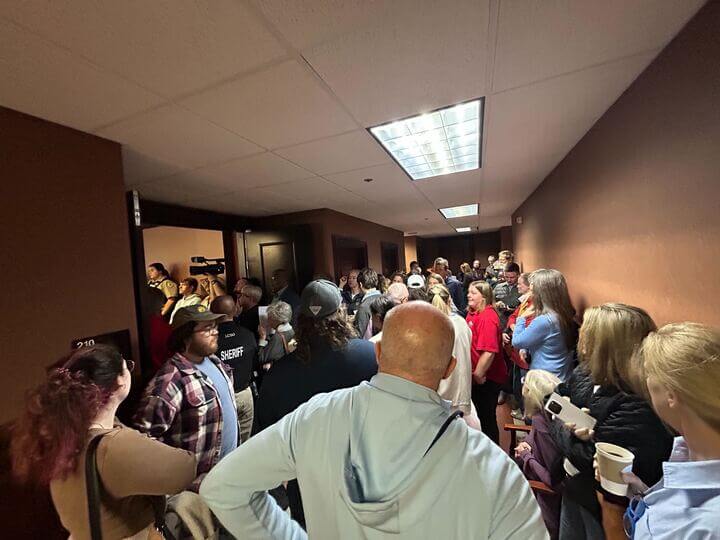
OXFORD — For over four hours Monday, a standing-room-only crowd of residents watched as opponents and proponents of a planned asphalt plant pleaded their cases at a Lafayette County Board of Supervisors meeting.
After the hearing, the board unanimously voted to table a decision on rezoning a property in the town of Taylor from agricultural to heavy industrial use to allow development of the plant.
“We feel like that we need more time,” said Supervisor John Morgan, citing new information presented by both sides and a need for additional time for written statements to be submitted.
“You’re determining the fate of our regenerative farm operation and our livelihood,” said Ley Falkner, whose family lives on and runs Falkner Farms across from the proposed plant.
The Falkner family, their representatives and the bevy of supporters argued that the plant poses a significant environmental and health risk to residents and is anathema to the county’s existing zoning plan.
J.W. McCurdy, the plant developer and owner of the proposed site, and other proponents made the case that there’s a need for a new asphalt plant to accommodate Oxford’s growth. They said it would create jobs and economic development and tried to assure the board that there is minimal environmental risk.
One of the central questions around the rezoning is whether Taylor and Lafayette County have changed enough to justify rezoning. Both sides presented letters from experts ranging from city planners to university professors about the risks and benefits of the proposed plant.
“I am respectfully asking you to consider the agricultural impact the zoning change could have, not only with respect to the land, but also to local food production,” wrote Andy Gipson, state agriculture commissioner and gubernatorial candidate, in a letter to the board.
Emotions ran high in the packed meeting room, with most of the public’s comments being against the plant. One woman was escorted out of the building by a member of the Lafayette County Sheriff’s Department.
“That’s unfair, you gave (McCurdy) 40 minutes,” Elizabeth Falkner of Falkner Farms said in response to her being cut off after five minutes while addressing the board. The crowd applauded.
Five months after the Trump administration closed investigations into law enforcement agencies across the country, the Justice Department has signaled that it will continue its investigation into the Rankin County Sheriff’s Department.
Rankin County NAACP President Angela English said a Justice Department official recently informed her that Attorney General Pam Bondi had authorized federal investigators to move forward with the Rankin County investigation after months of uncertainty about whether it would continue under the Trump administration.
English has been coordinating with Justice Department officials since they began investigating the department in 2023, after a group of sheriff’s deputies and a Richland police officer, some of whom called themselves the “Goon Squad,” tortured two Black men during a late-night raid.
Last year, the six officers were sentenced to federal prison for their roles in the incident, and dozens more people have since accused Rankin County deputies of abuse.
“We need people to be held accountable for what they’re doing,” English said. “We need people to come forward and tell their own stories.”
After learning that the investigation would continue, English organized a listening session to help investigators connect with more alleged victims of the sheriff’s department.
The session will be held Nov. 1 at the Mount Elam Family Life Center in Pearl, where attendees will have an opportunity to share their experiences in private and submit their claims to the Justice Department.
“I have not seen where the Department of Justice has signaled anything regarding the Rankin County Sheriff’s Department,” said Jason Dare, the department’s attorney and spokesperson. “The RCSD will continue its cooperation with the investigation in order to show that all aspects of the department’s policing are within constitutional boundaries.”
The Justice Department launched an investigation into the Rankin County Sheriff’s Department in September 2024, after Mississippi Today and The New York Times exposed a pattern of torture by Rankin deputies stretching back nearly two decades and involving at least 20 deputies.
The federal agency did not respond to requests for comment on the investigation, but in July, it denied a Freedom of Information request filed by Mississippi Today seeking the status of its Rankin County investigation, saying the records “pertain to an ongoing law enforcement proceeding.”
While the investigation had not formally been abandoned, its future was uncertain under the Trump administration, which has moved to scuttle most of the Justice Department’s ongoing investigations into law enforcement agencies accused of civil rights violations.
In May, the Justice Department’s Civil Rights Division announced it was closing eight investigations into police departments in Arizona, New Jersey, Tennessee, New York, Oklahoma and Louisiana.
The division also dismissed lawsuits and investigations into the Louisville and Minneapolis police departments, which were responsible for the deaths of Breonna Taylor and George Floyd.
Civil rights advocates said the sweeping changes signaled an end to the department’s longstanding practice of holding abusive law enforcement agencies accountable.
“The Trump administration is essentially giving a green light to police abuse and unconstitutional policing,” Jarvis Dortch, executive director of the American Civil Liberties Union of Mississippi, said in a May statement.
Survivors of the Goon Squad’s abuses said news of the investigation came as a relief.
Rick Loveday, a former jail guard who said he was brutalized by Rankin County deputies when they raided his home in 2018, said he was excited to hear the Justice Department was continuing its investigation.
“ They did a bunch of bad stuff,” Loveday said. “Fate caught up with some of them, but they still haven’t been punished, really, for what they’ve done.”
FLOWOOD – On the eve of the 20th anniversary of Hurricane Katrina, members of the Mississippi Building Code Council sat befuddled inside a conference room a stone’s throw from the Jackson airport.
The council’s leaders agree Mississippi would benefit from a statewide, uniform building code – a policy experts widely believe improves an area’s chances of surviving destructive weather. By lowering risk, strengthening buildings also helps against rising insurance rates.
“It’s kind of like the three little pigs: You want the straw, the sticks or the brick?” said Jennifer Hall, vice president of the council. “I want the brick.”
But the Legislature, the council also agreed, has no interest in expanding regulations. If anything, lawmakers are more interested in weakening what rules are in place.
“There is a movement at the Capitol right now to do away with regulations,” Hall said at the meeting.
After seeing the impact Katrina had on weaker homes and businesses in 2005, lawmakers in 2014 passed a statewide building code, requiring construction to meet modern standards. But the 2014 law included a key caveat: Within four months of the new regulation going into effect, any city or county could vote to opt out. As it turned out, most did just that.
Resilience experts, public officials and coastal residents who talked to Mississippi Today pointed to crucial policies to enhance local fortitude against future disasters: funding for mitigation and strong building codes. Yet while research suggests Mississippi is as vulnerable to climate change as anywhere in the country, state leadership has failed to embrace either strategy over the last two decades.
“Mississippi has had the opportunity to do this for years,” said Julie Shiyou-Woodard, president of Smart Home America and a Pass Christian native. “Sadly, it’s going to show. The choices we made in Mississippi after Katrina, you will see that when we get hit with a direct category 3 (hurricane) again. It will be clear.”
Train tracks in the Turkey Creek area of Gulfport, Miss., on Friday, Sept. 19, 2025. Credit: Eric Shelton/Mississippi Today
‘A silly question, Senator’
Mike Chaney, a Republican who has been the state’s insurance commissioner since early 2008, estimated that two-thirds of Mississippi’s counties opted out of the 2014 building code standards. Now, just about half of the state has “fairly decent” codes, Chaney said. The lower six counties– including three that touch the Coast – adopted codes shortly after Katrina, although most are now outdated, a federal database shows. The many places in the state without codes altogether are going to “hurt in the long run,” Chaney said.
Hall, who is also executive director of the Mississippi Manufactured Housing Association, said “the only way” lawmakers could have passed the 2014 bill was to allow cities and counties to opt out.
Mississippi Today reached out to several government agencies and organizations, and no one in the state, it appeared, tracked which areas have what building codes. The 2014 law gave no one the authority to actually enforce the codes it put into place, Hall said. In other words, there’s no accountability at the state level, even for the cities and counties that didn’t opt out in 2014.
Last year, the Insurance Institute for Business & Home Safety ranked Mississippi’s codes near the bottom among coastal states. The impact a lack of codes has on life-safety and property damage “has unfortunately been exposed in recent tornado outbreaks” in the state and “would be exploited in a hurricane impact,” the report said.
Over the last decade, tornadoes, strong winds and thunderstorms have directly killed 67 people in Mississippi, national storm data show. Also, including hurricanes, those storms have caused over $740 million in property damage in that time.
Mike Chaney, the incumbent Republican insurance commissioner, speaks during Mississippi Economic Council’s 2023 Hobnob at the Mississippi Coliseum in Jackson, Miss., Thursday, Oct. 26, 2023. Credit: Eric J. Shelton/Mississippi Today
Disaster and insurance experts also point to mitigation grants as a necessary step toward local resilience. Alabama, Louisiana and other states have launched grant programs to help homeowners in high-risk areas pay for improvements that are often cost-prohibitive otherwise.
The Mississippi Insurance Department first established its home mitigation program in 2007, but it didn’t receive funding from the state until 2024 when lawmakers set aside $5 million for the department to do a test run.
With grants up to $10,000, the program paid to upgrade and strap roofs onto homes, protecting against high winds and water leaks. After slowly rolling out the program, which Chaney said was done to avoid mishaps, the state funded improvements to 28 homes.
In a dispute that played out in news stories and on social media over the summer, legislators were critical of the department’s ability to run the program. Particularly, Sen. Scott DeLano, a Biloxi Republican, said he disagreed with Chaney’s approach.
DeLano and other lawmakers slammed the Insurance Department for only doing 28 homes, said Chaney provided scant details about how the program would run, and argued the program should go through an independent contractor.
As a result, the Legislature omitted funding for the program this past session, and killed a bill that would have paid for the grants through fees from insurance companies. Republican Sen. Walter Michel of Ridgeland presented the bill on Chaney’s behalf.
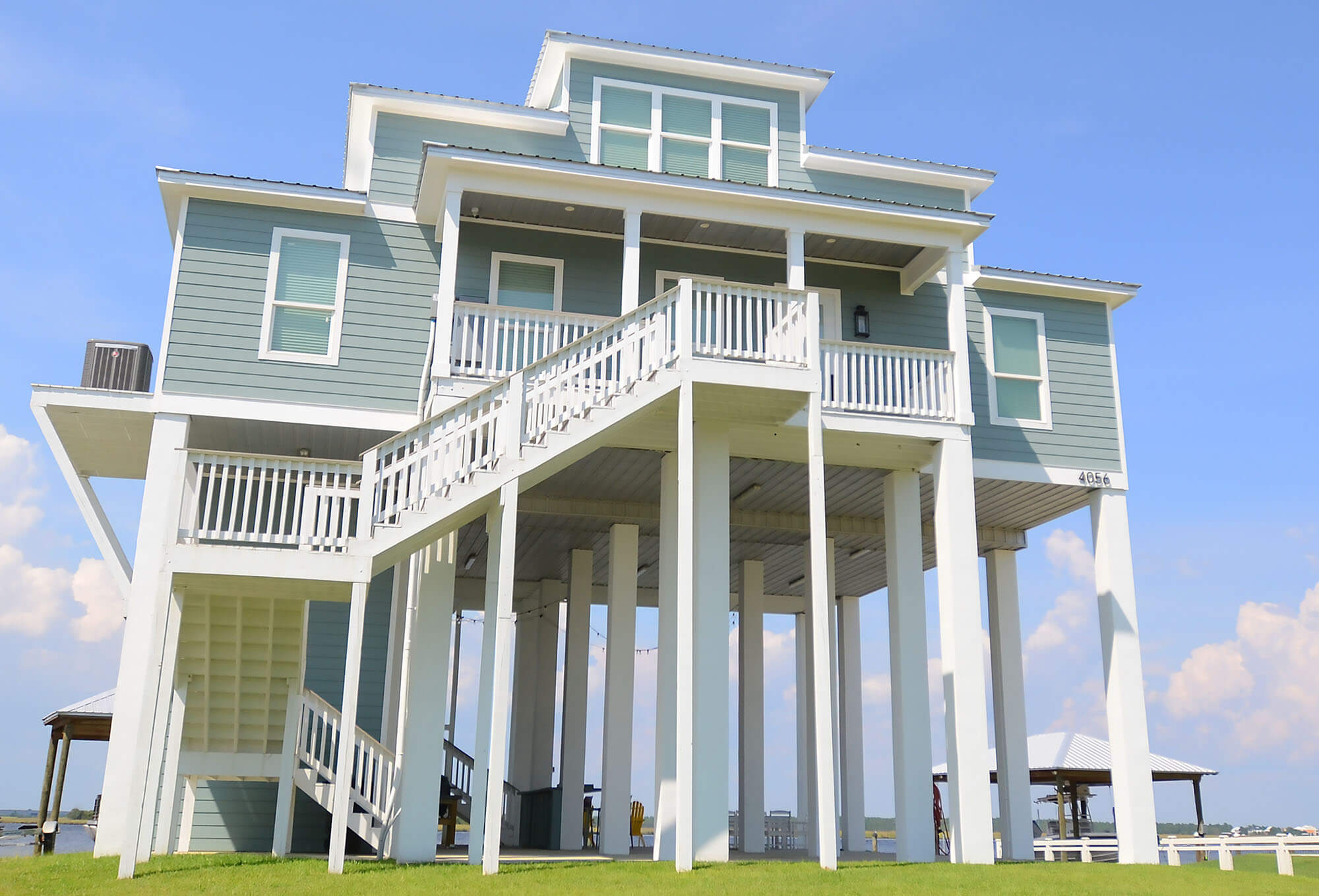
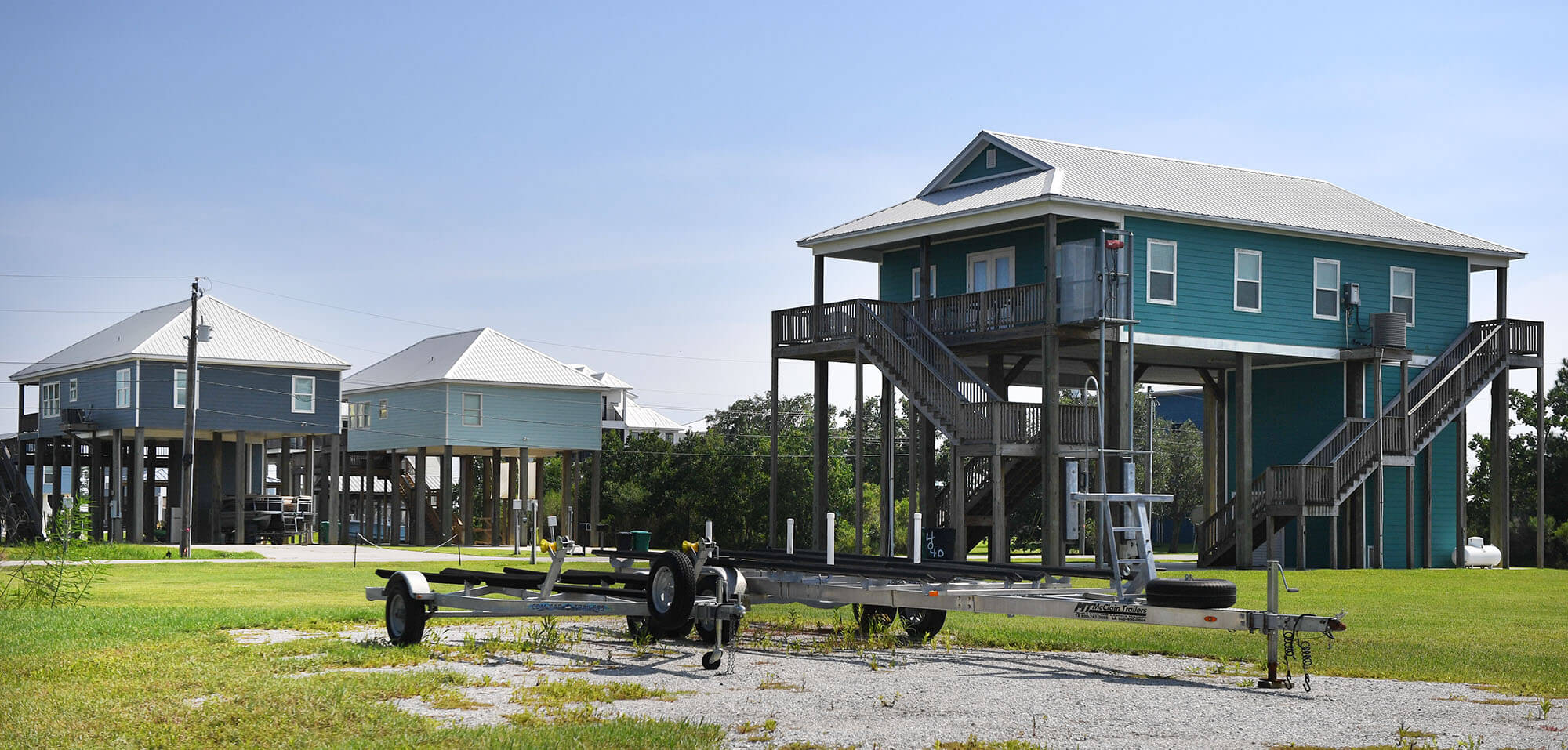
Homes in the Jourdan River area, west of the Bay of St. Louis, are perched on high to keep flood waters out, Monday, Aug. 18, 2025 in Bay St. Louis. Credit: Vickie D. King/Mississippi Today
Some of the criticisms about the pilot fell flat, Mississippi Today found. For instance, DeLano and others pointed to the success story in Alabama – which leads the nation with over 51,000 “FORTIFIED” homes – and said Mississippi should mimic its neighbor to the east. But the Alabama Department of Insurance told Mississippi Today that its program is run almost entirely in-house.
Chaney’s office pushed back on criticism over the results of its pilot program, arguing it executed more grants than other states in its first year.
At a Senate committee meeting in January, DeLano criticized Chaney, who was sitting a few feet away, for not also requiring counties to have up-to-date building codes before residents could receive a grant. Doing so would attract more insurance companies into the state, the senator said.
After Chaney said he would only support the idea in a separate bill, DeLano fired back:
“Are you really for mitigation then?”
“That’s a silly question, Senator,” Chaney responded.
Responding to Mississippi Today about the exchange, Chaney’s office said requiring a county to have certain building codes would only hold up mitigation progress.
The two elected officials agreed about the importance of a mitigation program, but each side accused the other of not playing ball. DeLano said Chaney hasn’t provided details of his proposal, and Chaney said DeLano wouldn’t meet with him to discuss the proposal.
Multiple people told Mississippi Today the distrust between the two sides traces back to 2016, when the state nearly lost $30 million in Federal Emergency Management Agency funds meant for retrofitting 2,000 homes on the Coast. An Office of Inspector General report recommended FEMA suspend the program after finding the state had spent over $30 million and did work on only 945 homes.
A levee can be seen near Turkey Creek in Gulfport, Miss., on Friday, Sept. 19, 2025. Credit: Eric Shelton/Mississippi Today
The Mississippi Emergency Management Agency fired the employees it claimed were responsible for the blunder. The agency eventually resumed the program and ended up with $19 million in federal funds, it told Mississippi Today.
But Rep. Kevin Ford, a Republican from Vicksburg, said lawmakers still have a “bad taste in their mouth.” When asked if the earlier scandal is why the Legislature hasn’t funded the program for roughly a decade, Ford said, “Yes, 100%. There’s no doubt.”
“What it sounds like to me is there is a trust issue,” said Chris Monforton, CEO of Habitat for Humanity of the Mississippi Gulf Coast, referencing the OIG report. Monforton, who worked with the insurance department to start its pilot program, said the pilot was “very similar” to how Alabama established its mitigation grants.
When asked about the issues from 2016, DeLano didn’t go so far as to tie it to his disagreement with Chaney, but said “we know the history of mitigation programs in our state.”
Ford, who wrote a competing mitigation bill in the House this past session, argued that Chaney as an elected official shouldn’t have control over the millions of dollars that would fund the program, suggesting the money could be tilted towards potential voters.
Chaney strongly disagreed with using an outside company to run the program, arguing a contractor would be more expensive and not subject to the same oversight as the insurance department. Both Ford and Michel said they would reintroduce their bills in the 2026 legislative session, and it’s unclear if either side is willing to compromise.
Rep. Jerry Turner, a Republican from Baldwyn, is the House Insurance Committee chairman and has served at the Capitol since 2004. When asked why it took 17 years for the state to fund a mitigation program, Turner said, “I’m not trying to dodge a bullet or pass a buck, but I think you’d be better served if you talked to the people on the Coast and the insurance (department).”
“I’m not siding either way,” he added. “ I’ll do anything I can to get this thing started off because I think it’s something that the citizens of the state of Mississippi deserve.”
‘The market will collapse’
The parallel rise of disaster risks and insurance costs in the nation’s poorest state begs the question: What will happen if neither trend slows down?
Chip Merlin, an attorney who specializes in insurance claims for homeowners and who worked with Mississippians after Katrina, said eventually communities will have to migrate.
“I think we’re starting to see it already,” Merlin said, pointing to parts of California and Florida that have seen residents leave because of climate risk. “There’s an emotional aspect of once your home gets damaged by flood, wind, wildfire, that I don’t want to be in harm’s way anymore. And people look for a place where it’s less emotionally taxing to live.”
Rep. David Baria speaks to media during a press conference before this week’s special session of the Legislature at the Capitol in Jackson Thursday, August 23, 2018. Credit: Eric J. Shelton, Mississippi Today/ Report for America
David Baria, a Democratic former state lawmaker from the Coast, said he ran for office in 2007 largely because of the local issues with insurance he witnessed after Katrina.
Baria called it “a slog” to get any kind of insurance reform passed. He introduced bills in 2017, 2018 and 2019 to fund a mitigation grant program. None made it out of committee.
“ There were many bills that I attempted to pass to rein in insurance company practices to improve the lot of homeowners, to strengthen structures, and they were routinely opposed by the insurance industry and the leadership of both the Senate and the House,” said Baria, who served in both chambers.
Both Merlin and Baria criticized Mississippi leadership for not better protecting policyholders, especially around delaying or denying claims after a disaster.
In 2024, a New York Times analysis of an insurance study looked at which parts of the country pay the most in home policy premiums relative to their house’s value. The analysis found that, throughout Mississippi, that ratio was “much higher” than the national average.
Smart Home America, a nonprofit based in Mobile, Alabama, has helped strengthen homes and design policy in over 20 states. Shiyou-Woodard, its president and CEO, said she “worked closely” with Chaney’s office to kickstart Mississippi’s mitigation program, and it was on the right track until the Legislature cut its funding.
Homes in the Jourdan River area, west of the Bay of St. Louis, are perched on high to keep flood waters out, Monday, Aug. 18, 2025 in Bay St. Louis. Credit: Vickie D. King/Mississippi Today
While policy around mitigation can face obstacles, such as building contractors not wanting to deal with the extra cost of complying with new codes, Mississippi’s lack of local resilience comes down to those in the Capitol, she said.
“Mississippi is a black hole,” Shiyou-Woodard said, explaining that its neighboring states are ahead of the game. “Why is it not catching up? There should be no reason. It has the same risk as Louisiana, the same risk as Alabama, what’s the problem? The problem in Mississippi has been political will.”
When asked what would happen if the state doesn’t act to lower the risk for homeowners, she pointed to Louisiana, which has only recently seen insurance improvements after a slew of companies pulled out due to frequent disasters.
“When Mississippi gets hit with a significant wind event, the market will most likely collapse,” she said. “And that’s not fortune telling. That’s just based on the market, and they’re not getting ahead of it.”
CORRECTION 10/20/25: This story was updated to reflect that the home mitigation program just paid for roofing.