One of the state’s two top public health lawmakers told Mississippi Today he plans to take legislative action to ensure cities and counties spend opioid settlement money on addressing mental health, an issue he said was brought to light by the newsroom’s recent investigation.
In September, Mississippi Today revealed that of the over $15.5 million dollars local governments have received from corporations that helped catalyze an addiction epidemic that’s killed over 10,000 Mississippians, less than $1 million had been used to prevent more deaths. Spending on other purposes is allowed because Attorney General Lynn Fitch wrote a contract in 2021 that says towns, cities and counties can spend their settlement shares on any public purpose and don’t have to report what they do with the money.
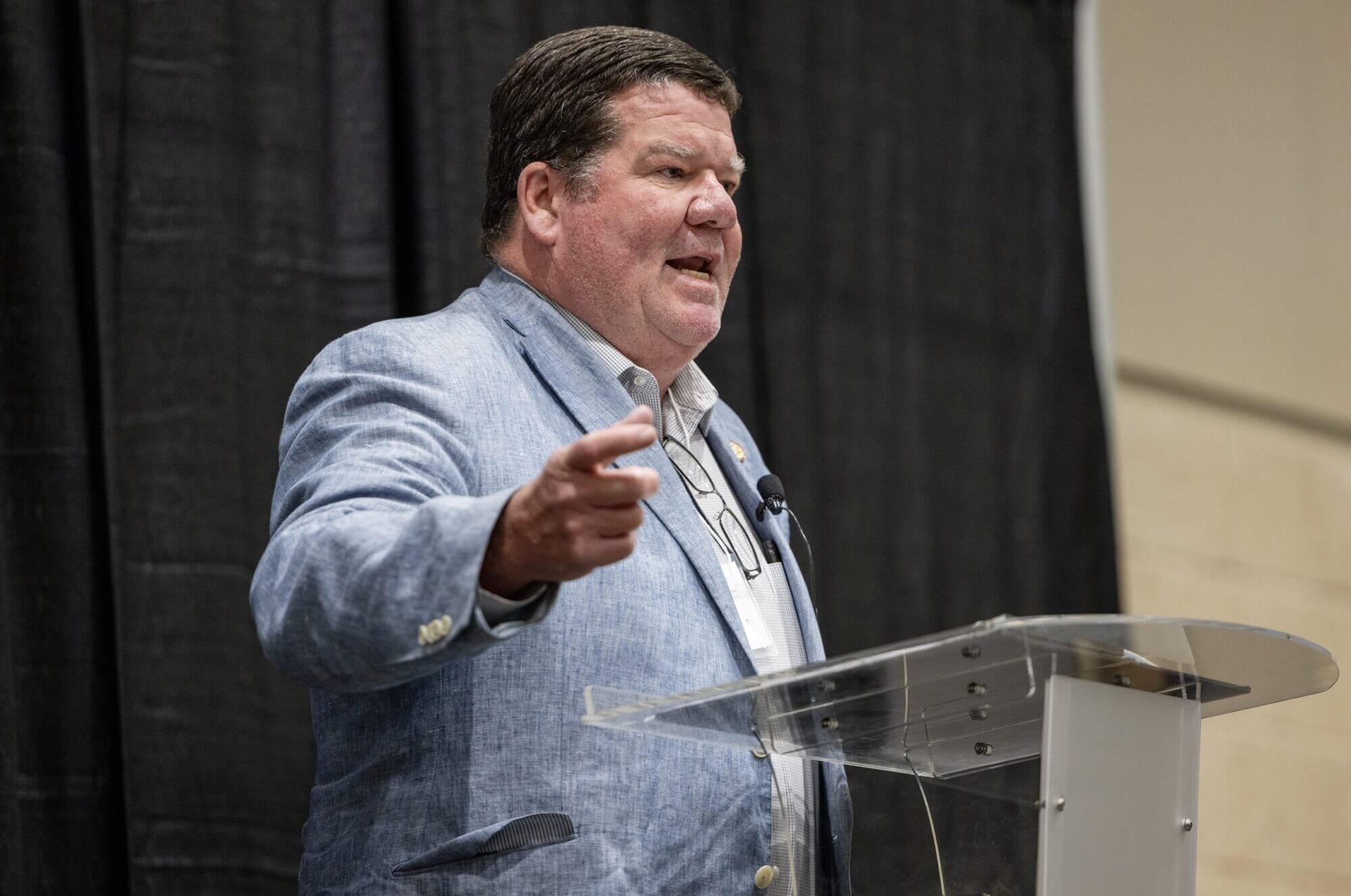
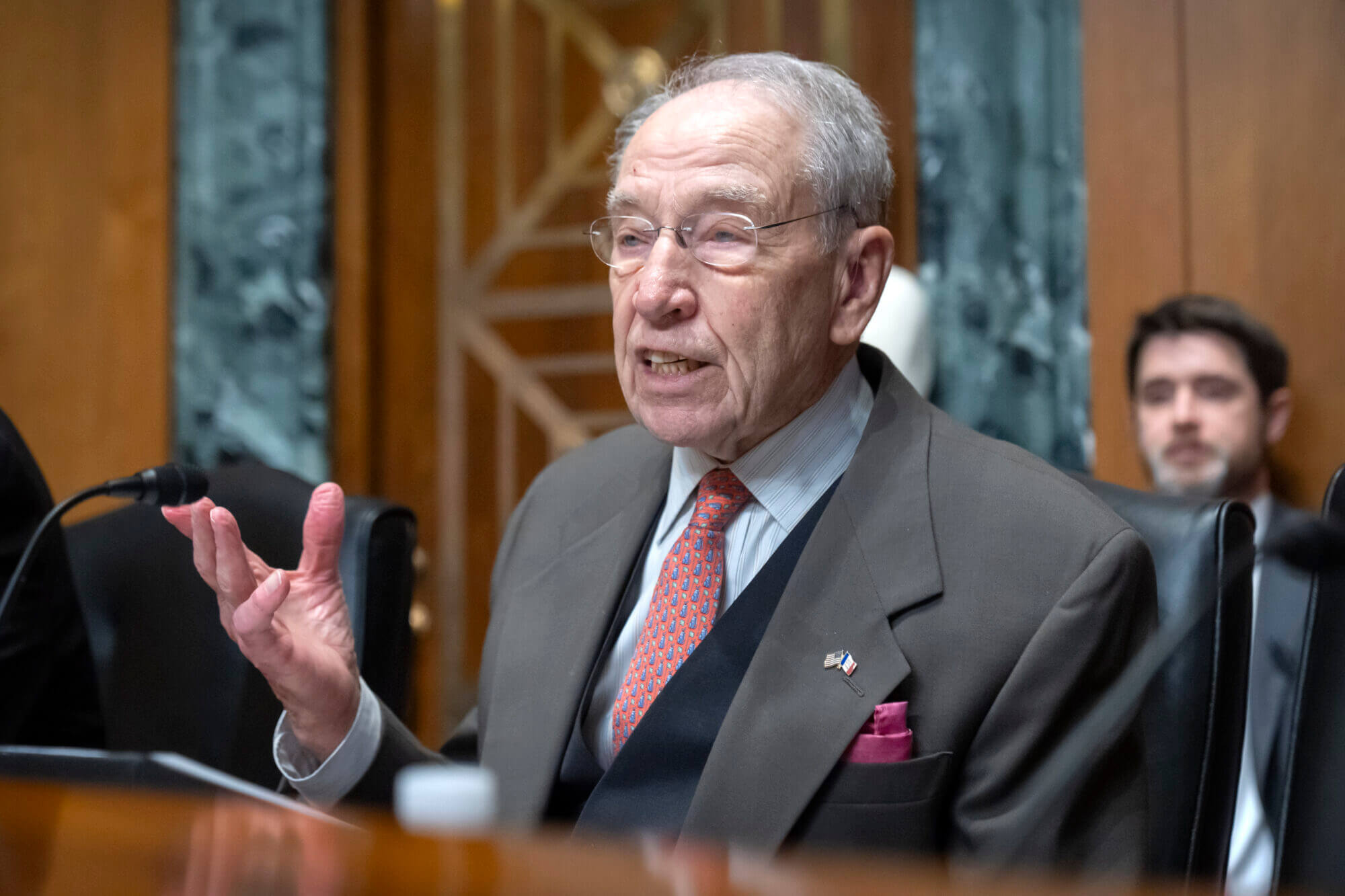
Communities across the state are expected to get an additional nearly $48 million over the next 15 years, according to the settlements and press releases from the Attorney General’s Office. Unlike Fitch, Rep. Sam Creekmore, the Republican House Public Health and Human Services chairman from New Albany, said he believes all opioid settlement money cities and counties are receiving should be for mental health.
“They need to spend it, spend that money on abatement for opioid addiction, PTSD, TBI (traumatic brain injuries),” he said on the podcast. “And they need to be spending it now.”
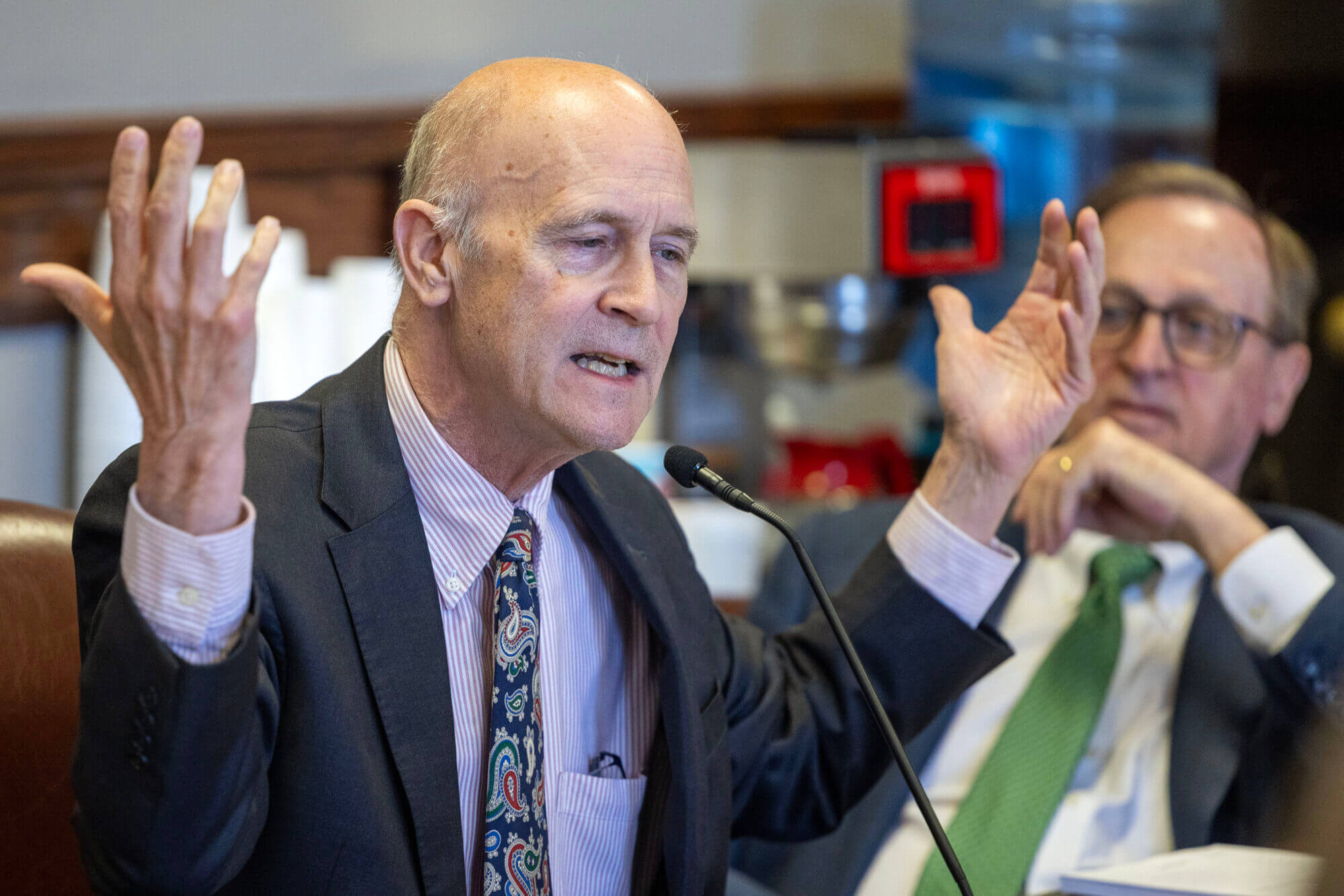
Sen. Hob Bryan, the Democrat Senate Public Health and Welfare chair from Amory, said he would want to see this particular legislation before endorsing it. But in general, he said he supports Creekmore’s efforts to help local governments spend settlement money to address the crisis.
Credit: Eric Shelton/Mississippi Today
Attorneys general and legislatures in some states have provided this type of guidance on settlement spending for their towns, cities and counties. Tricia Christensen, a Tennessee consultant who advises states on how to spend opioid settlement money to prevent more overdoses, said in August these types of guides are effective at encouraging local governments to address addiction.
She said North Carolina’s version, a series of 90 detailed frequently asked questions, provides direct steps for how any local government could spend money for treatment, recovery and prevention.
“That’s really clear guidance for folks,” she said.
Fitch did not respond to a question Mississippi Today sent her in August asking whether she would consider creating these types of suggested guidelines. In a statement, her Chief of Staff Michelle Williams said the opioid lawsuits allow for some of states’ settlement money to be used for any public purpose, a “reimbursement” for the hundreds of billions of dollars American governments spent on the crisis throughout the 2000s and 2010s.
Creekmore also said he would consider proposing a law that requires local governments to publicly report how they spend their settlement dollars. Maine passed a similar bill in May after years of local governments spending their money with minimal public reporting.
Mississippi Today published some amount of city and county settlement spending information from all but one of the 147 local governments receiving money in its investigation, but the data is only current to the summer. Required public reporting for local settlement spending could reveal which localities have changed their plans since then.
While local government leaders are the only people who are spending Mississippi’s opioid settlement money right now, the state Legislature controls the majority of the funds, which an August record from Fitch’s office shows was around $89 million after attorneys fees. Creekmore is helping to oversee most of that money through his role on the state’s Opioid Settlement Fund Advisory Council.
The council was only established this year despite receiving these funds periodically since 2022, and the Legislature will only start distributing money for overdose prevention when the next fiscal year starts in July 2026. The delay is a big reason why Mississippi has spent less settlement money for abatement than every other state, both in terms of share percentage and total dollars.
Bryan said as Mississippi lawmakers use state and local settlement dollars, he would like to see a more comprehensive plan to address addiction — starting with knowing what Mississippi’s addiction response needs are.
Then, he said, he and other decision makers could know whether they should be focused on connecting people in recovery with jobs, expanding in-patient treatment services, supporting the Department of Mental Health’s response efforts or investing in other efforts.
“The problems of addiction don’t stop at city limits or county lines. It’s a state problem,” he said “To me, it works better if all the money is spent in some sort of coordinated fashion.”
Creekmore said he spent the week reviewing state opioid settlement applications to help end the addiction crisis, but getting to that point took longer than he intended when Mississippi received its first check. He and his fellow lawmakers have a responsibility to act quickly and effectively with the money to address a crisis that has led to the untimely deaths of Mississippians and grief from their loved ones, Creekmore said.
Roland Weeks Jr. was a leader among leaders, a man who cared deeply about the Mississippi Gulf Coast and helped shape the region through his 33-year stewardship as publisher of the regional newspaper, The Daily Herald and its successor, the Sun Herald.
Weeks died Saturday at age 89.
Weeks, who lived in Biloxi with wife Sharon Weeks, retired in 2001 as publisher, president and general manager of the Sun Herald. He remained active in the community, continued his adventures as a pilot and served for many years as a volunteer for the Salvation Army in Gulfport, showing up weekly to wash clothes for the homeless.
“He was just this unflinching friend to so many people,” said Ricky Mathews of Biloxi, who spent many years working under Weeks and succeeded him in the publisher’s job before his own retirement. “He loved people. I don’t know that we’ll ever meet anyone like him again.”
“Community leader is an understatement,” said Henry Laird of Pass Christian, who worked closely with Weeks as longtime attorney for the Sun Herald. “He unified the Coast.
“He ran the newspaper much like he lived his life. He was independent. He just stood up for what was right.”
Newspaper publishing in a hurricane
Weeks graduated from high school in Charleston, South Carolina, then attended The Citadel, followed by the executive program at Stanford Business School. He received his bachelor’s degree in engineering from Clemson University before joining the U.S. Air Force, where he served as a first lieutenant.
Weeks worked briefly as an engineer in the private sector but found his calling in the newspaper business. He started out at Columbia Newspapers in Columbia, South Carolina, where he worked as a management trainee.
He came to Mississippi Coast in 1968 — one year before Hurricane Camille — when the State Record Co., which owned the Columbia newspaper, bought The Daily Herald, then headquartered in Gulfport.
Weeks, his trusted editor Bob McHugh and several others rode out the Category 5 hurricane in The Daily Herald’s building. When water rose in the first floor, they moved upstairs.
“My car, as a matter of fact, was washing around in the water outside of several windows as we worked here,” Weeks said in a 2019 Sun Herald video. Weeks and McHugh called Columbia and got an agreement that The Daily Herald would publish there.
The Coast newspaper never missed a day of publication, a tradition that has continued through the years, including for the unprecedented Hurricane Katrina in 2005, when the newspaper won the Pulitzer Prize for Public Service, the industry’s highest honor.
The morning after Camille, The Daily Herald building was covered in debris. Weeks and McHugh cleared the front door. Employees began showing up to see how they could help.
Weeks said one of the first sights was a large sail boat washed up from the Gulf. “That told us what we could expect to find in other parts of the Gulf Coast,” Weeks said.
Weeks strove for excellence
Weeks oversaw construction of a new building on the Gulfport-Biloxi line, where the newspaper operated from 1970-2021. The building was made of concrete with narrow rectangular windows along both sides and large plate-glass windows that could be boarded up only in front.
Staff rode out subsequent storms, including Katrina, in that building.
As publisher, Weeks also set about modernizing the operation and transforming the newspaper from a community publication to a statewide force.
For the first time, he hired local columnists and photographers. He believed strongly in giving the news staff the editorial independence needed to gather and report the news.
“We became who we are because of Roland,” said Kat Bergeron, who worked full time for the Sun Herald for 32 years as a columnist and feature writer, and still writes her Gulf Coast Chronicles column for the newspaper. “He had the wherewithal to hire editors who brought us into the 21st century before we were really in the 21st Century.”
Bergeron said she was given the freedom to get to know the Coast and its history for her column.
“We took off and ran,” she said.
Weeks also brought a morning newspaper to the Coast, as The Daily Herald was an afternoon publication. The Sun and The Daily Herald eventually merged into The Sun Herald.
Publisher leaves strong legacy
Like any good leader, Weeks had the courage of his convictions, publishing news even when it was disagreeable to those in power.
He also had a long-range vision for the Coast, promoting consolidation of government services to increase efficiency and cut waste. He played a key role in consolidating five chambers into the Gulf Coast Chamber of Commerce.
“Roland was a giant in both of his principal capacities — newspaper publisher and community leader,” said Stan Tiner of Gulfport, who was executive editor when Weeks retired. “He was a visionary who recognized that the Coast would be more prosperous as a unified region, while giving great credit to each of the unique communities that were vital to his new home.
“As a publisher, he created a legacy of fairness and public service journalism that served the Coast and South Mississippi with distinction throughout his decades of leadership.”
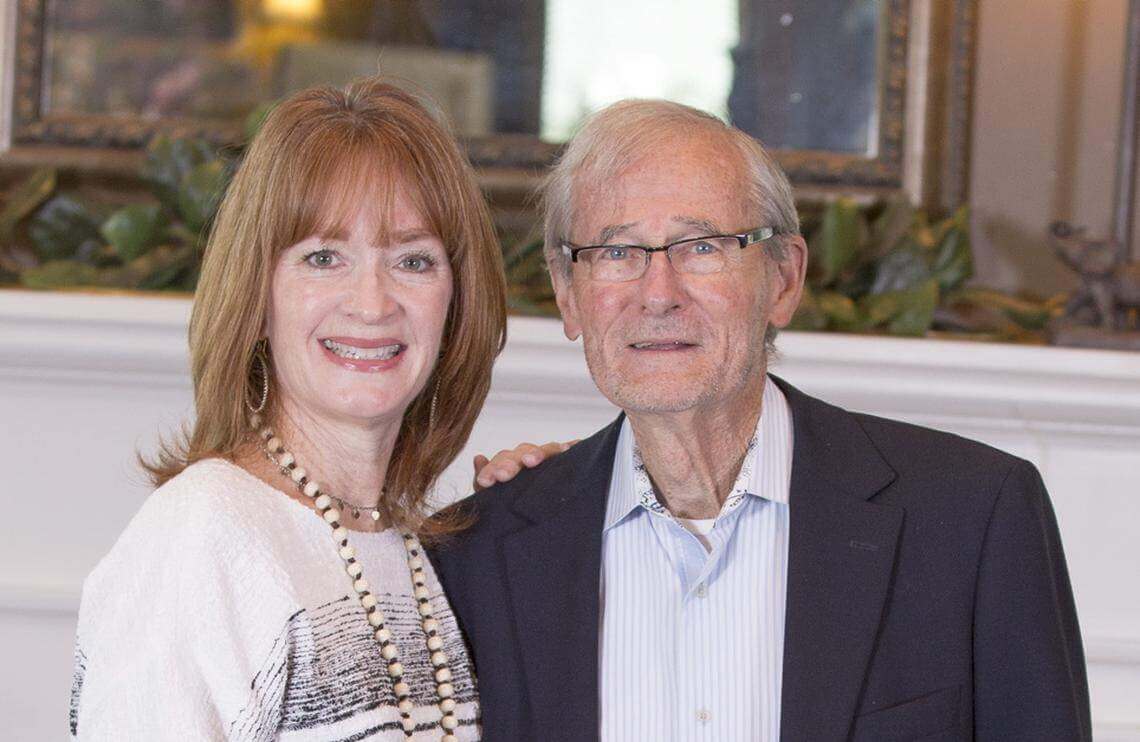
Sharon Weeks and Roland Weeks.
Over the years, Weeks won many awards for his service to the community, including the John S. Knight Gold Medal, the top honor awarded an employee of the newspaper when it was owned by media company Knight Ridder, the Alvah Chapman Award for best-performing newspaper in Knight-Ridder, United Way of South Mississippi Philanthropist of the Year and the Gulf Coast Chamber’s Spirit of the Coast Award.
Weeks also was one of the major fundraisers and promoters of the Ohr-O’Keefe Museum of Art in Biloxi, home to the works of renowned ceramist George Ohr and a replica of the home of Pleasant Reed, a former enslaved person who built his family’s original home in 1887.
“He had so many different causes over the years that he threw himself into,” said Jeff O’Keefe, son of deceased museum founder and former Biloxi Mayor Jerry O’Keefe. “We will be forever grateful for his work with the Ohr-O’Keefe Museum of Art.”
Weeks was humble about his accomplishments. As a publisher, he created a culture of customer service. He considered his employees internal customers. Even after he retired, Weeks frequently stopped by the newspaper office to visit, encourage employees and tell them what a good job they were doing.
“His legacy?” Mathews wrote in a Facebook tribute. “It’s in the bridges he built between people, the resilience he instilled in our institutions, and the way he turned challenges into opportunities.”
Weeks stayed in touch with employees
His enthusiasm for the newspaper and news was contagious.
“I count myself very, very lucky to have worked for him,” said Pam Firmin, a former Sun Herald staff writer. “He made it fun. He made things exciting.
“He was so quick to be understanding and caring and to see the big picture. It was something that seemed to come natural to him.”
Firmin had taken a break from the newspaper when her husband, Pic Firmin, served as executive editor under Weeks. After his retirement, Pic Firmin had cancer. Weeks regularly picked up Firmin to take him for coffee and visited Firmin daily in the last weeks of his life.
“He was so quick to be understanding and caring and to see the big picture,” Pam Firmin said. “It was something that seemed to come natural to him. He did help make the Gulf Coast what it is, but he is so much more than it.”
Flying was one of his passions
After retirement, Weeks faithfully volunteered at the Salvation Army in Gulfport, where for years he washed clothes for the homeless alongside Pam Firmin, who said he was also “an awesome laundry mechanic.”
Weeks also found more time in retirement for his favorite hobby, flying airplanes. He was known as somewhat of a daredevil, but real talent accompanied his rolls and aeronautical stunts.
“I’ve got so many stories,” said Joe Pevey of Gulfport, who became a close friend of Weeks after they met at an airport. Pevey described himself at the time as a Cessna pilot with a Top Gun attitude. He bought a high-performance plane that he really didn’t know how to fly. Weeks studied the book where Pevey had logged his experience and told the younger man, “’Joe, you’re going to kill yourself with this plane.’”
Instead, Weeks taught Pevey to fly the plane. “Roland quite literally saved my life,” Pevey said. Pevey considers himself a technical aerobatics pilot who thinks through his moves ahead of time, while Weeks was a natural.
“He wasn’t a pilot,” Pevey said. “He was an aviator.”
Weeks once corralled Mathews to deliver newspapers from the plane to customers who had chartered Weeks’ boat for fishing at Chandeleur Island. Weeks tested Mathews’ seatbelt strap before they started their mission in Weeks’ twin-engine plane. Mathews was positioned in a seat facing the back of the plane, where the door had been removed.
They located the fishermen on skiffs deployed from the big boat and each time they approached a skiff, Weeks dipped sideways so Mathews could angle a newspaper toward them.
Mathews promised himself, “If I ever make it back to the airport, I’m never getting in an airplane with Roland again. And I didn’t.”
Weeks lived to see the internet change the newspaper business. His belief in a community’s need for strong journalism never wavered, a tradition he helped build on the Coast.
The building whose construction he had overseen came down in the spring, the Sun Herald having moved to quarters more suited to an online operation. He was moving slowly, but Weeks showed up to see some of his former employees for one last photograph on the front steps of the building.
“You’re wonderful people,” he told the group. “You just can’t imagine the excitement that I feel and the love that I feel for all of you.”
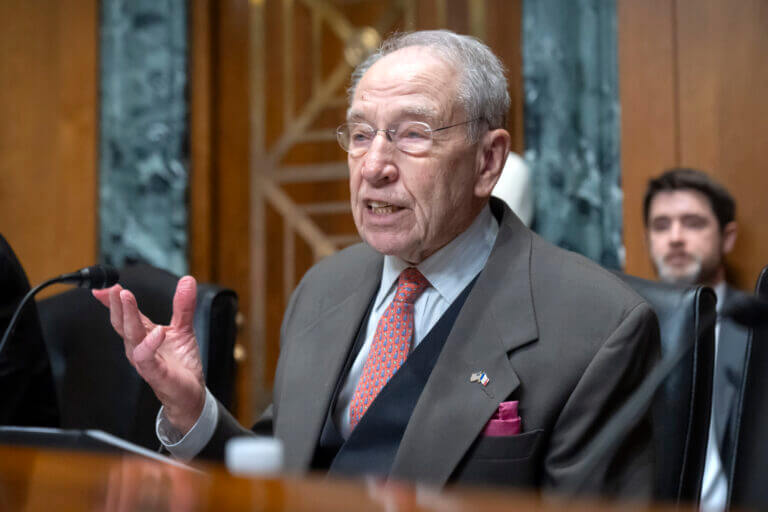
The leader of the Senate committee that oversees U.S. courts is asking a federal judge in Mississippi to explain whether his office used artificial intelligence to write a flawed order in a recent case.
Senate Judiciary Chairman Chuck Grassley, a Republican from Iowa, sent a letter to U.S. District Judge Henry T. Wingate on Monday that questioned whether the judge or his clerks used AI to write an order. He also asked why the order in question had been removed from the public docket and whether the judge planned to restore the original order to the docket.
The letter stems from an error-laden temporary restraining order Wingate issued July 20, which paused the enforcement of a state law that bans diversity, equity and inclusion programs in public schools.
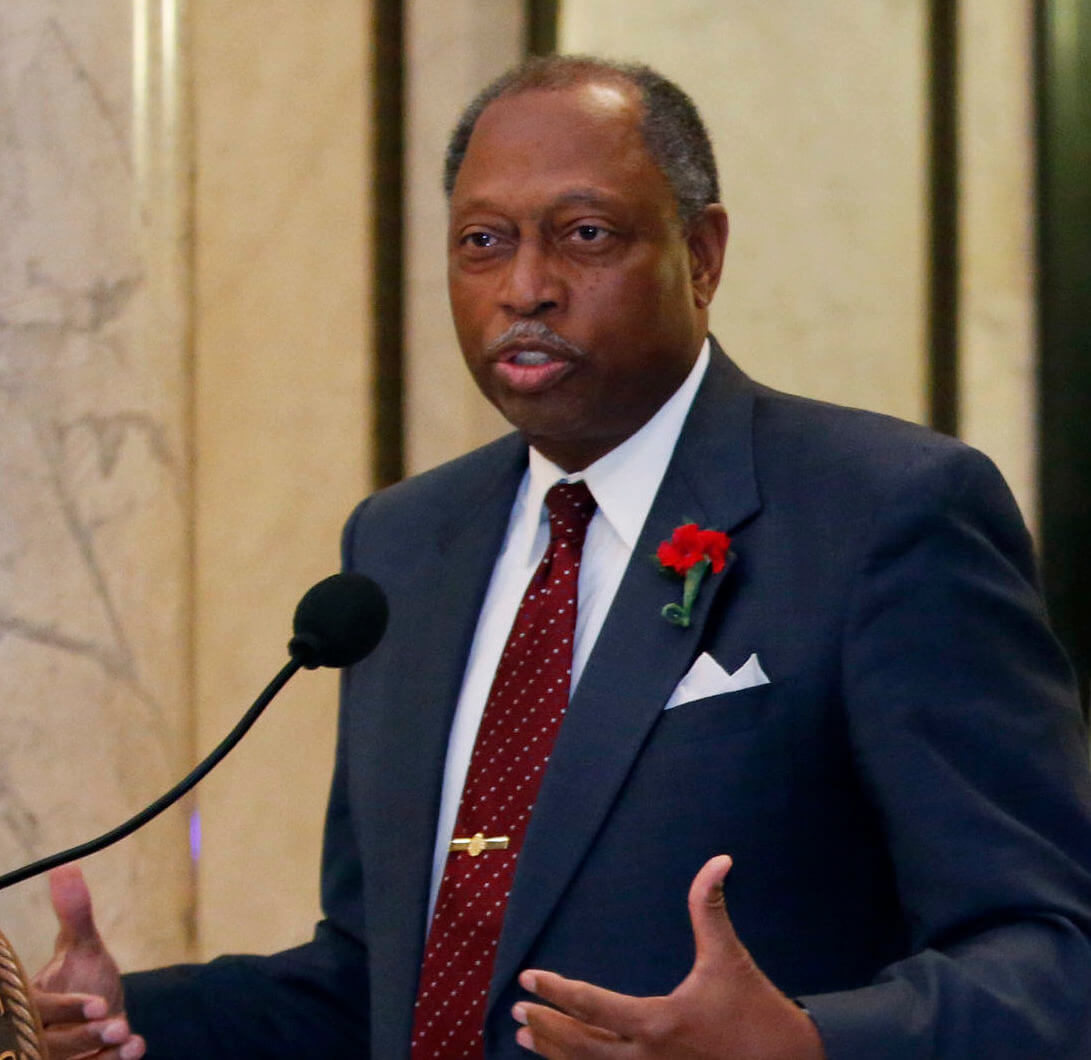
Federal Judge Henry T. Wingate Credit: Rogelio V. Solis / Associated Press
After the Mississippi Attorney General’s Office raised concerns about mistakes in the order — which included naming defendants and plaintiffs that weren’t parties to the case, misquoting state law and referencing a case that doesn’t exist — the judge replaced the order with a corrected version, wiping the original from the public docket.
Wingate denied the state’s request to restore the original order with errors to the public docket and refused to explain the errors, chalking them up to “clerical” mistakes. But attorneys have questioned whether artificial intelligence was used to prepare it. It’s hard to know for certain, experts say, but the original order did contain errors that are “hallmarks” of AI usage.
“These do not appear to be simple slips of the pen or mechanical oversights, but substantive errors that undermine confidence in the Court’s deliberative process,” Grassley wrote.
The state attorney general’s office has since appealed Wingate’s orders prohibiting the state from enforcing the DEI laws to the U.S. 5th Circuit Court of Appeals. Judges from the appellate court could also ask Wingate to explain the errors in the order.
Wingate did not immediately respond to a request for comment about Grassley’s letter.
Grassley’s letter, which cited reporting from Mississippi Today, is a general oversight inquiry and not a subpoena. He has given Wingate until Oct. 13 to respond to his questions.
With a U.S. senator weighing in on Wingate’s recent case, the Mississippi judge may now be at the center of how the federal judiciary polices itself over AI usage.
The legal profession has seen a rise in AI use in recent years, with people relying on software or processes that attempt to replicate aspects of human work. These are trained on vast amounts of data to accomplish tasks such as researching court cases and citing them in legal briefs.
But these systems are not perfect and can “hallucinate,” or provide false information.
It’s increasingly common for judges to sanction lawyers for suspected artificial intelligence usage. Attorneys have a professional and ethical responsibility to make truthful statements in court and in legal filings, but there’s little accountability when the roles are reversed.
Grassley, though, wrote that federal judges should also be held to the “highest standards of integrity, candor, and factual accuracy.”
He sent a similar letter to a federal district judge in New Jersey.
The future makeup of the Mississippi judiciary and the state Legislature lies in the hands of the U.S. Supreme Court.
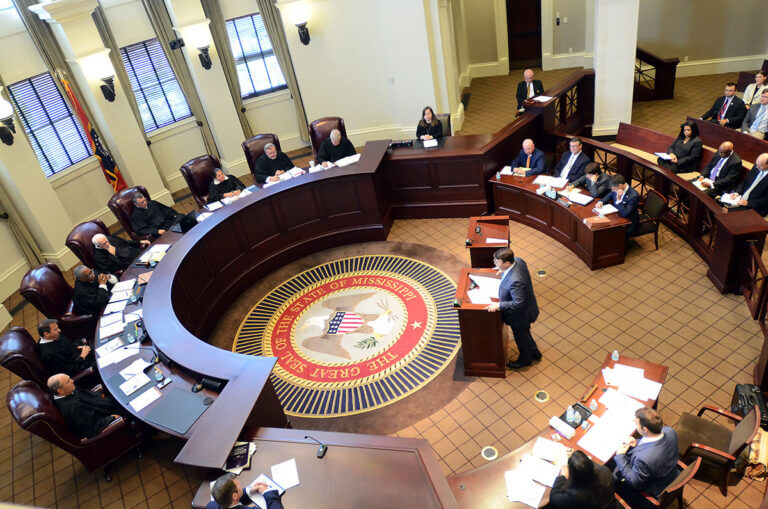
The nation’s highest court is considering three redistricting cases, including a Mississippi case, that could significantly alter the Voting Rights Act, a federal law stemming from the Civil Rights era that Black Mississippians have used for decades to prevent discrimination at the ballot box.
Attorney General Lynn Fitch last month appealed a ruling from U.S. District Court Judge Sharion Aycock of Mississippi. The ruling concluded that state lawmakers must redraw the state Supreme Court districts because they weaken Black voting strength.
That ruling, which forbids the state from using those maps in future Mississippi Supreme Court elections, is pending before the U.S. 5th Circuit Court of Appeals. However, the appellate court has paused all proceedings in the appeal until the U.S. Supreme Court rules on its redistricting cases.
The litigation over the Mississippi Supreme Court includes a group of Black voters and candidates who in 2022 sued state officials, alleging that Black candidates face unfair difficulties getting elected to the state’s high court.
However, while the U.S. Supreme Court considers other cases that could impact the Mississippi Supreme Court cases, Aycock’s lower court in the meantime can proceed with determining how and when lawmakers will need to change the state districts.
One of those three cases the nation’s highest court is considering is another Mississippi case involving state legislative districts.
A federal three-judge panel last year ordered lawmakers to redraw their districts in three areas of the state to give Black voters a fairer shot at electing candidates of their choice. Special elections for these races are currently underway, with the general election scheduled for November.
Fitch’s office also appealed this ruling and asked the U.S. Supreme Court to sharply curtail the federal Voting Rights Act by declaring private voters cannot sue to prevent discrimination at the ballot box.
If the U.S. Supreme Court rules in Mississippi’s favor, it would mean only the Department of Justice could sue to enforce the Voting Rights Act.
In both of the Mississippi redistricting lawsuits, private citizens — not the federal government — filed the lawsuit. So if the U.S. Supreme Court rules in Mississippi’s favor, it could prevent individual voters from filing future redistricting cases.
Another case pending before the U.S. Supreme Court that could limit redistricting cases is Louisiana v. Callais, a suit over Louisiana’s congressional districts. The central question in the case is whether factoring race into the drawing of congressional districts violates the U.S. Constitution.
The U.S. Supreme Court will hold an oral argument in the Callais case on Oct. 15.
Credit cards, debit cards, cash, checks, wires or sending money to others using a P2P (person-to-person) payment app are examples of the many ways consumers can pay for everyday transactions. To help protect their money from scammers, it’s important for people to understand that how they pay matters, especially when buying something from someone they don’t know or trust.
Here are some examples of common scams impacting payment types:
Checks:
Although declining in usage, many people still regularly use checks, particularly for business transactions. Check fraud can happen in various ways, such as writing bad checks, stealing and altering someone else’s check, forging a check, or depositing the same check twice (once through a mobile app and again at a branch).
Here’s What You Can Do: Never make checks out to “cash.” Use permanent ink and write the amount in numbers and words. Don’t leave a check book unattended and always send a check directly from the post office or through secured mailboxes; don’t leave them for pickup in your mailbox at home. When possible, opt for electronic payment methods instead of checks.
Person-to-Person Payments:
Person-to-person payments through services like Zelle® can be quick and convenient ways to send money to others you know and trust (e.g., friends and family or your dogwalker). Don’t use Zelle to buy things online, especially through social media marketplaces or messaging apps. If you send money for something that turns out to be a scam, it’s very unlikely you’ll be able to get it back.
Here’s What You Can Do: If you are purchasing goods or merchandise, including things like concert tickets, a credit or debit card that offers purchase protection may be a better option. If at any time you feel pressured, the deal seems too good to be true, or you otherwise suspect it’s a scam, don’t proceed with the purchase.
Credit and Debit Cards:
When you pay with a credit or debit card, you are not responsible for unauthorized charges if your card is lost, stolen or fraudulently used, as long as you report unauthorized charges promptly. Use your card’s security features to help keep it safe.
Here’s What You Can Do: Two-factor authentication can help block anyone who gets your banking information from using it, and setting up credit monitoring helps you know if your card is used fraudulently. Keep your card safe. If you misplace it or think it is lost or stolen, contact your bank immediately, and lock your card from additional charges.
Scammers may try to get you to send a payment to them to pay for something (like concert tickets) that you then never receive. Credit and debit cards may offer some protections that can help you get your money back for purchases you make if you don’t receive what you paid for. If you pay with a credit card, your bank will likely reimburse you for your payment if you don’t receive the goods. If you paid with a debit card, your bank will try to get your money back from the scammer’s bank, but if the scammer has disappeared with your money, they won’t be able to get the funds back, and your bank is not required to reimburse you.
Here’s What You Can Do: Watch out for sellers who require forms of payment that do not provide purchase protection. Before you pay, always ask yourself: “Am I sure this is not a scam?” Always remember: If you’re unsure, walk away.
Wire Transfers:
Wire transfers are convenient and secure, and they work like cash. Only send a wire when you know the details of the recipient and never feel pressured or urged to send one. Wire transfers are a target for scammers because they are often used for high dollar transactions—like homes or cars—and once sent, they cannot be reversed. Scammers can impersonate companies, banks, and government agencies to quickly receive your hard-earned money, move it to another account and disappear.
Here’s What You Can Do: Never provide your bank account details to unfamiliar or suspicious individuals and avoid wiring money to people or businesses you are unfamiliar with, especially if prompted by suspicious phone calls or emails.
In a world of growing payment options, it’s important that people make informed choices about how to pay for purchases, especially when buying from a person or business you aren’t familiar with, to help keep their money safe.
Learn more about protecting your finances at chase.com/digital/resources/privacy-security
For informational/educational purposes only: Views and strategies described in this article or provided via links may not be appropriate for everyone and are not intended as specific advice/recommendation for any business. Information has been obtained from sources believed to be reliable, but JPMorgan Chase & Co. or its affiliates and/or subsidiaries do not warrant its completeness or accuracy. The material is not intended to provide legal, tax, or financial advice or to indicate the availability or suitability of any JPMorgan Chase Bank, N.A. product or service. You should carefully consider your needs and objectives before making any decisions and consult the appropriate professional(s). Outlooks and past performance are not guarantees of future results. JPMorgan Chase & Co. and its affiliates are not responsible for, and do not provide or endorse third party products, services, or other content.
Deposit products provided by JPMorgan Chase Bank, N.A. Member FDIC. Equal Opportunity Lender.
Ben Bush, a former U.S. Army Ranger combat veteran from Brandon, shares with Mississippi Today his personal story of his struggle with PTSD after returning home from overseas combat, and how the psychedelic plant-derived drug ibogaine helped him regain his life. But he had to travel to Mexico for the treatment. It’s illegal in the United States. House Public Health Chairman Sam Creekmore wants to change that, and he wants Mississippi to invest in testing the drug and help push for federal approval.
One by one, universal school-choice programs are expanding across the Southeast.
Now, as state lawmakers are considering doing the same in Mississippi, they’re looking to our neighbors and talking to experts about what happened in those states.
There has been a nationwide push to expand school-choice programs, most of which give families public money to spend outside of traditional public schools. These options range from charter schools to vouchers that pay for private-school tuition. When these programs are available to all students, regardless of family income, they’re described as “universal.”
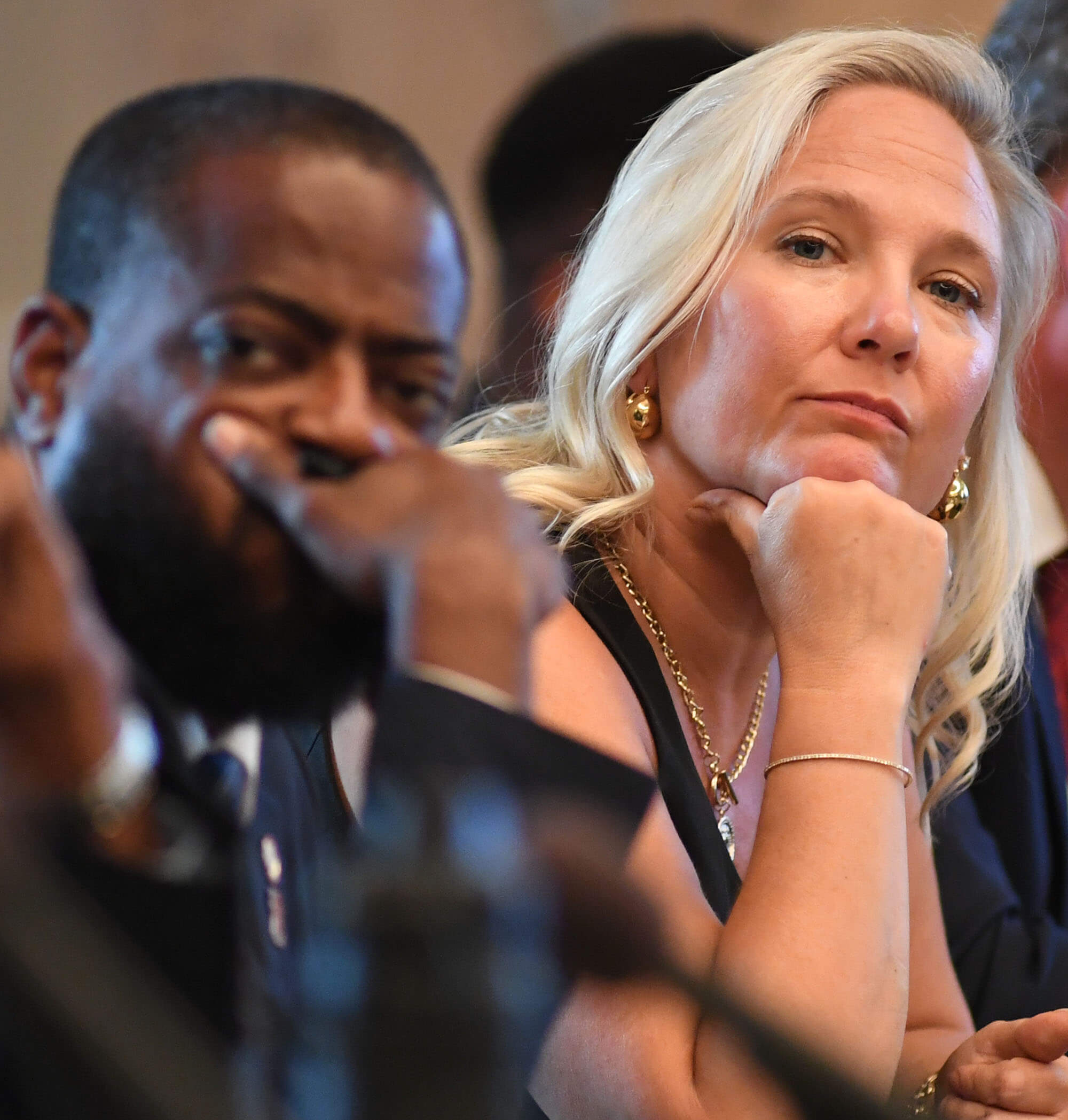
Reps. Fabian Nelson, D-Jackson (left) and Celeste Hurst, R-Sandhill, listens to a presentation from U.S. Department of Health and Human Services Deputy Assistant Secretary for the Office of Early Childhood Development Laurie Todd-Smith during the legislative school choice subcommittee meeting at the State Capitol, Monday, Aug. 25, 2025 in Jackson. Credit: Vickie D. King/Mississippi Today
Rep. Jansen Owen, a Republican from Poplarville and one of the leading school-choice proponents in the House, said he’d like Mississippi to consider a plan with education savings accounts that are at least partially reserved for students of all backgrounds. Education savings accounts, or ESAs, give parents public dollars to pay for their child’s education — that can include tuition to private schools and online education curriculum for homeschooling. Mississippi currently has an ESA program limited to students with disabilities.
Owen also would like to see expanded open enrollment policies, which would allow students to transfer between public school districts. Owen said he believes parents should be able to make the final decision on their child’s education. He also said parents regularly tell him their local districts don’t offer the ideal educational program.
“They’re telling me that they have no options right now,” Owen said.
But school-choice opponents say the pricey programs don’t actually give students more options. Private schools can turn away students, unlike public schools. And national data shows school-choice programs are still out of reach for many low-income students, students of color and students with disabilities because of private-school access, transportation issues and tuition costs.
A Mississippi House committee studying school-choice policies has called on experts from Arkansas and Louisiana, who have lauded school-choice efforts in their states. Owen said he hopes to mimic parts of Tennessee’s plan in Mississippi.
Others from those states often have a different perspective.
Tennessee
Tennessee’s first two education savings account programs were limited to students with special needs and families in Nashville and in Hamilton and Shelby counties who wanted their children to attend private schools instead of their local public school.
But a similar program established this year is open to all students in Tennessee.
Half of the program’s 20,000 scholarships are reserved for students who previously qualified for the education savings account program, students with special needs or students in households with income lower than 300% of the federal free- and reduced-lunch guidelines. The other 10,000 scholarships are open to anyone.
The omnibus legislation also gave public school teachers one-time bonuses and included a “hold harmless” clause that reimburses public schools for any state funding lost from students leaving to participate in the voucher program.
The income cap will be removed next year, and the program can grow by 5,000 scholarships each year, as demand requires.
And the demand is there, said Tori Venable, Tennessee director of Americans for Prosperity, a national conservative advocacy group funded by billionaire brothers Charles and David Koch. This year, people applied for twice as many vouchers as were available, she said.
“We saw a groundswell of parents demanding this after COVID,” she said. “We saw schools shut down and parents were dissatisfied with online learning.”
It’s not clear who has received vouchers so far, Venable said. The state won’t release details about who’s enrolled in the program.Some Tennessee lawmakers previously predicted a majority of the money would go to students who already attend private schools.
The biggest issue for Jenny Mills McFerron, assistant director for policy and research for EdTrust Tennessee, is student performance at private schools.
There’s little data to show how well students are learning in Tennessee’s voucher program. Private-school students in the smaller initial program generally performed below their public-school peers.
Additionally, the rural nature of Tennessee — similar to Mississippi — presents challenges.
According to a 2025 report from the Partnership for Equity and Education Rights, five counties host over half of the private schools in Tennessee. More than 30 counties have only one or two, some with fewer than 10 students each.
While some school-choice programs allow parents to use the money to cover transportation costs, the voucher funds are limited and averaged about $6,000 during the 2023-24 school year, according to the Center for American Progress, a progressive think tank based in Washington.
The conservative policy group Empower Mississippi reports that in-state average private school tuition hovers around the same amount, but some schools in Mississippi have rates higher than $15,000. And after voucher programs were established in other states, private schools raised their tuition.
“The private school-choice programs are not really providing choice to the vast majority of rural families, and they divert funding from public schools, leaving rural students with less,” said Paige Shoemaker DeMio, senior K-12 education policy analyst for Center for American Progress.
While a rural student might be able to utilize a voucher program, losing the student could be harmful to the local public school, she said. Rural areas have lower student population and have to make fewer dollars go further.
“Even when no students from a community use a voucher program, when state-level funding gets cut due to the cost of the practical voucher program, like has been seen in Arizona or in Ohio, rural schools are definitely going to feel it the most because they rely more heavily on state and federal funding,” Shoemaker DeMio said. “We’ve seen this in West Virginia and Indiana, where rural schools are closing or they’re dramatically losing funding as they’re feeling the effects of these programs.”
As federal funding cuts trickle down, McFerron is concerned the program’s costs will continue to increase, putting Tennessee into a tight financial situation.
“Our concern is that the data and accountability are so limited,” she said. “Since we’re in our first year, it’s too early to see large-scale effects.”
Arkansas
The LEARNS Act created an Arkansas education savings account program in 2023.
The program has been slowly scaled up, and as of this school year, all Arkansas students are eligible. Republican Gov. Sarah Huckabee Sanders has committed to funding every student who wants to participate.
The majority of dollars so far have been spent on private-school students. During the 2023-24 school year, 64% of students who received funds through the state’s program were already enrolled in private schools, according to a recent report. Data also show Arkansas private schools raised their tuition in response to the voucher program.
Shay Rafferty, director of social media and marketing for Citizens for Arkansas Public Education and Students, said her child’s religious private school charged more for tuition when it started accepting vouchers.
“Most of the other local private schools have done that, too,” she said. “These students are supposed to get school choice, but they still can’t afford it.”
Still, Josh McGee of the Office of Education Policy at the University of Arkansas said the program has improved education options in rural areas. He said micro-schools and cooperatives have sprung up in unexpected places, and more parents are opting for homeschooling, thanks to the vouchers.
According to him, the competition makes everyone work harder to keep students.
“Superintendents would tell you they’re having to think about how to keep parents in their schools for a number of reasons,” McGee said. “The ultimate story is that if folks can leave, you have to deliver the goods.”
It’s a popular free-market idea that’s been embraced by Mississippi conservatives — that more school choices will make public schools better.
While research shows that in some places, charter school presence has slightly improved the performance of public schools, Nicole Carey from Arkansas Advocates for Families and Children isn’t sure the results are worth the growing price tag.
If every student who applied for vouchers this year is funded, that will cost Arkansas $355 million — far more than the $277 million budgeted for the program.
“We’re letting in everyone even if we don’t have the specific amount of money appropriated, with the hope that every student will not use their entire amount,” Carey said.
Alabama
Since 2013, Alabama has offered tax-credit programs to parents who send their children to private schools.
This year, however, the state has widely expanded school choice after the passage of the CHOOSE Act. Now, families of four that don’t make above $93,600 are eligible for the education savings accounts, and by 2027, all Alabama families can opt in.
The program funds the ESAs through refundable income tax credits, so it’s administered by the Department of Revenue, not the state education agency. Money is never distributed directly to parents. Giving money directly to parents created problems in Arizona, the first state to establish a universal school-choice program. Costs ballooned, and parents reportedly spent money on things such as diamond rings and lingerie.
The tax-credit nature of the program makes it an unlikely option for Mississippi. The state is phasing out its income tax under legislation passed this year.
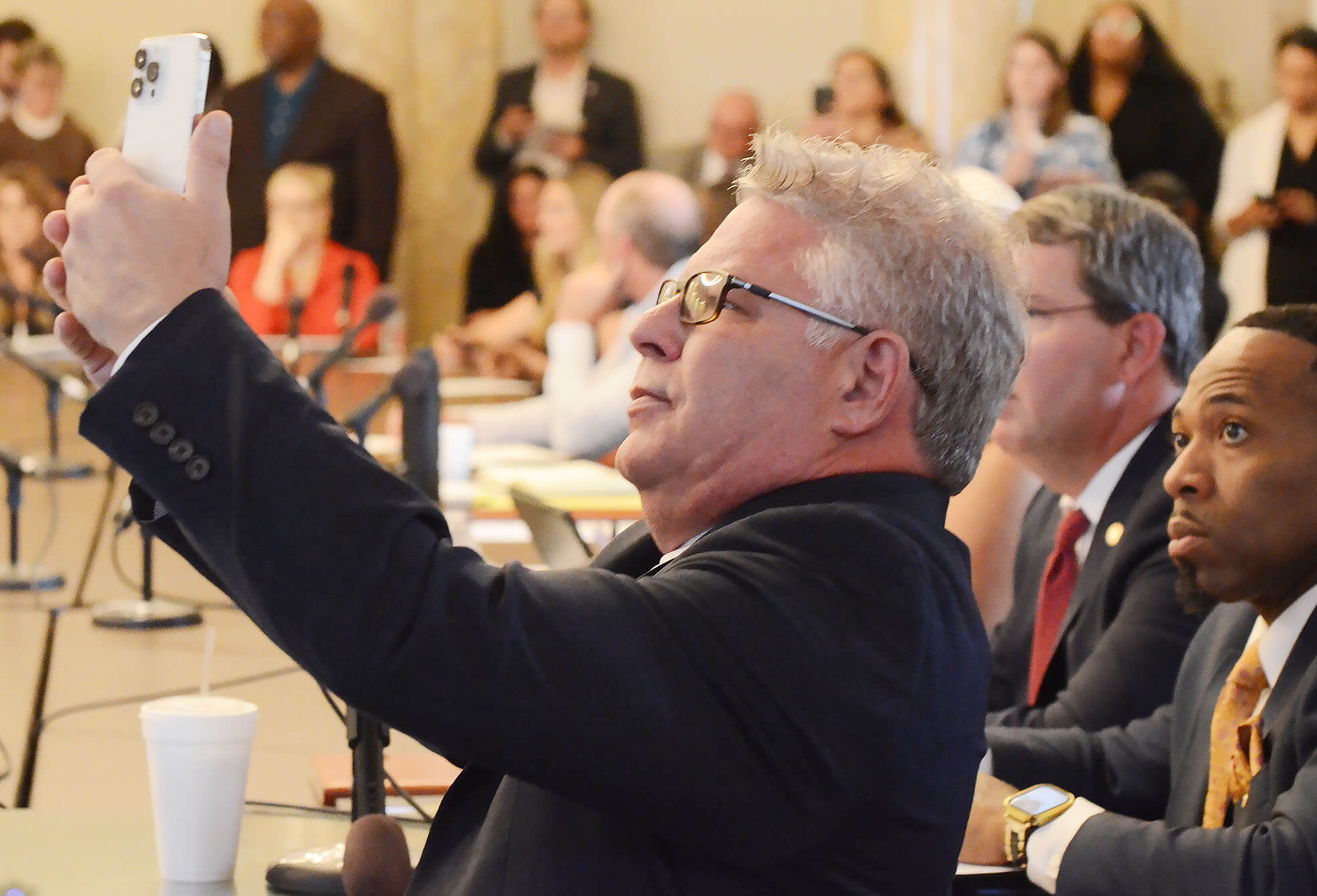
House Education Chairman Rob Roberson, R-Starkville, takes a picture of a presentation from U.S. Department of Health and Human Services Deputy Assistant Secretary for the Office of Early Childhood Development Laurie Todd-Smith, during the legislative school choice subcommittee meeting at the state Capitol, Monday, Aug. 25, 2025 in Jackson. Credit: Vickie D. King/Mississippi Today
But Mississippi lawmakers may take note of the accountability measures built into the program, the income caps, the slow rollout and the prioritization of students with disabilities.
Much of the money has been going to students already in private schools, but Alabama Policy Institute’s Stephanie Smith doesn’t see an issue with that.
“Lots of private-school parents pay public-school taxes and don’t utilize the service,” she said.
But Allison King, government relations manager at the Alabama Education Association, said tax dollars go to public education because it’s a public good.
“Public education may not always be perfect for everyone, but we don’t apply this principle to our police or fire departments or any other public service,” she said. “Like if you don’t like your police department, you don’t ask for your tax dollars to hire private security.”
King acknowledged there hasn’t been a mass exodus from public schools due to the tiered rollout of the program, but taxpayers are “certainly” subsidizing students who were already in private school, she said, and the costs are set to grow.
“The sell, when the bill is running through the Legislature, is that we are doing this to help poor kids get out of failing schools,” she said. “When the dust settles, that’s really not the students that are benefitting at all.”
Louisiana
Louisiana has had a number of school choice programs since 2008, but last year, the Legislature approved the LA GATOR program, which creates education savings accounts across various eligibility groups. By the program’s final phase, the money will be available to all students, regardless of income.
But the Legislature allocated far less money to the program last year than what the governor and other school-choice proponents wanted.
It’s resulted in a self-limiting program that hasn’t been able to reach its full potential, said Erin Bendily, senior vice president of the Pelican Institute.
Bendily said there are more than 30,000 families currently waitlisted for the program.
“The timing of this has just been incredibly frustrating and disappointing for families because they got this news in the middle of the summer, after many of them had already put deposits down,” she said. “Many people just were really counting on this. … The only other option is the public school they’re zoned to.”
In context, that’s 30,000 students out of 700,000 in public schools, said Jan Moller, executive director of Invest in Louisiana. He suspects many of those thousands of students are already enrolled in private schools.
Moller disagrees with the idea that there was a “broken promise” on behalf of the state Legislature.
“This is subject to appropriation,” he said. “Everybody understood that. … To Louisiana’s credit, they saw where this was heading and put the brakes on it.”
Louisiana students using vouchers for private schools were more likely to make lower scores in the four tested subject areas than public-school students, according to research. And by the end of the voucher program’s fourth year, voucher students performed “noticeably worse” on state assessments than their counterparts.
While Bendily acknowledged most Louisianans are educated at public schools and the important role those schools serve in their communities, there are parents who want other options for their children.
“There’s a sense of community around your public schools, and you want your public school to be great, but we still have enormous challenges in our public education system,” she said. “We still have needs that are not being met.”
That’s a reality Mississippi lawmakers have grappled with.
While the state’s public education system has seen great improvement in recent years — improvement that’s been nationally recognized — that doesn’t mean every parent is satisfied with the education their child is receiving.
“We believe that we can do both,” Bendily said. “While we’re making public schools better, we need to make sure that we are also giving families the options that they need.”
The math, however, doesn’t always add up.
This coverage is supported by a grant from Press Forward Mississippi, part of a nationwide philanthropic effort to reinvigorate local news.
Steven Fisk, left, hugs his wife Edith Fisk, right, after winning the Sanderson Farms Championship golf tournament, Sunday, Oct. 5, 2025, in Jackson, Miss. (AP Photo/Rogelio V. Solis) Credit: (AP Photo/Rogelio V. Solis)
Let’s go back to May 19, 1968. War was escalating in Vietnam. President Lyndon Johnson had just announced he would not run for reelection. Mickey Mantle was limping through his last season with the New York Yankees. James Eastland and John Stennis, two Democrats, were Mississippi’s two U.S. senators. A promising young quarterback named Archie Manning was finishing spring training, preparing for his first varsity season at Ole Miss.
Rick Cleveland
Yes, and in Hattiesburg, B.R. “Mac” McClendon, a rookie playing his first professional golf tournament, won the first Magnolia Classic, defeating 53-year-old Pete Fleming in a nine-hole, sudden-death playoff at the Hattiesburg Country Club.
McClendon, fresh out of LSU where he was a three-time Southeastern Conference golf champion, won a not-so-grand total of $2,800 for his efforts. He birdied the ninth hole, his 45th of the day, at dusk, as car lights shone brightly from the parking lot just behind the green.
Few, if any, of us present that damp spring evening in Hattiesburg would have ever believed the little tournament with such humble beginnings would endure for 57 years, but it has.
Fast-forward to Sunday’s breezy, cloudy afternoon at the Country Club of Jackson in the final round of perhaps the final Sanderson Farms Championship. Steven Fisk, a 28-year-old Georgian, fired an 8-under-par 64 with birdies on the final three holes to win the tournament that began so long ago as the Magnolia Classic. First prize this time? Just over a million bucks. The late Mac McClendon surely wouldn’t have believed that.
Just as had happened 57 years before, Sunday’s final round came down to a two-man shootout. Fisk and South African Garrick Higgo trading birdies until Fisk birdied the final three holes with a remarkable display of grit and pinpoint accuracy.
“I know I’m good enough,” Fisk said immediately afterward. “I knew I could do it. It’s a lifelong dream, honestly. Sometimes you doubt yourself, but I just knew I could do it. Nothing was going to stop me from doing what I wanted today.”
A former Georgia Southern golfer, Fisk turned professional in 2019, but his early professional career was slowed – and threatened, really – by a condition in his left hand called carpometacarpal bossing. If that sounds serious, it was. The injury required surgery and then a change in his golf swing to prevent further problems. Fisk persevered.
Perseverance has also been the story of the Magnolia Classic, turned Deposit Guaranty Classic, turned Southern Farm Bureau Classic, turned Viking Classic, turned True South Classic, turned Sanderson Farms Championship. The event’s 57-year-history has included tournaments at three different golf courses, in three different Mississippi cities, and with six different sponsors. It has endured not only the sponsorhip losses, but also a 100-year flood, two lesser floods, a couple hurricanes, a tornado, a pandemic and a half dozen recessions. In 2005, before so much of that happened, Mississippi’s only PGA TOUR tournament had endured so much that a Sports Illustrated deemed it “the little tournament that could.”
The late Robert Morgan, a Hattiesburg businessman, championed the tournament through its first 40 years and a move from the Hattiesburg Country Club to Annandale in Madison. Then, Joe Sanderson, the Laurel poultry magnate, saved the event and oversaw the move from Annandale to the Country Club of Jackson where the tournament had seemingly flourished until now.
But Sanderson sold his company in 2022 and the new owners have decided not to continue sponsoring the event beyond this year’s tournament. A new sponsor has not been found, which could spell the end of the “little tournament that could.”
That would be a blow to several Mississippi charities and especially Children’s Hospital. Since 2013, the event has raised nearly $19 million for Children’s of Mississippi and $2.75 million for other Mississippi charities. Said Steve Jent, the tournament’s executive director, “All I can say is that we’d like to find a title sponsor for next year. We want to keep it going.”
Steven Fisk knew little of any of that before he came to Country Club of Jackson for the first time this week. He has quickly learned to adore the tournament which he called “a first-class event on a great golf course.”
Asked about the likelihood of this being the last Sanderson Farms Championship, Fisk, spoke for many when he replied, “If this was the last one, that stinks…”
Mobil játék élmény a nyárban: NV Casino nyári versenyek és mobil app
A nyár a szabadidő, a napfény és a könnyű szórakozás időszaka. Mobilalkalmazás nélkül nehéz kihasználni a hosszú napokat, amikor a kávézó vagy a strandra menünk. Sokan kérdezik: Miért érdemes a telefonról játszani, ha otthon is van számítógép? A válasz egyszerű – a mobil platform rugalmasságot ad. Egyszerűen nyithatod a kedvenc NV Casino kaszinó játék-odat útközben, a parkban vagy a nyári fesztiválon. Emellett a legtöbb nyári promóció csak mobilon érhető el, így a legfrissebb bónuszok és ingyenes pörgetések csak egy koppintással juthatnak el hozzád. A gyors internet és a korszerű okostelefonok miatt a játékélmény teljesen ugyanaz, mint asztali gépen. Ha még nem próbáltad, most itt az ideje, hogy felfedezd a mobil játék előnyeit a nyár forró napjain.
NV Casino mobilalkalmazás főbb funkciói
Az NV Casino saját mobilappja a felhasználói élményt a csúcsra emeli. A felület letisztult, a menük logikusan szervezettek, így a kezdők is könnyen eligazodnak. A legfontosabb funkciók közé tartozik:
Játékok széles választéka – több mint 2000 cím, köztük slotok, asztali játékok és élő kaszinó.
Gyors regisztráció – néhány perc, és már játszhatsz.
Valós idejű értesítések – a legújabb nyári versenyekről és bónuszokról azonnal értesülsz.
Biztonságos fizetések – a legnépszerűbb magyar bankkártyák és e-pénztárcák támogatottak.
A NV Casino kaszinó HU változata teljesen lokalizált, magyar nyelvű ügyfélszolgálattal és helyi fizetési megoldásokkal. Az alkalmazás letöltése ingyenes, a felhasználói felület pedig optimalizált a kisebb képernyőkre, így a grafika és a hanghatások is kristálytiszták. A fejlesztők folyamatosan frissítik az appot, így a legújabb NV Casino kaszinó hivatalos funkciók mindig elérhetők.
Nyári versenyek és promóciók – hogyan profitálhatsz
A nyár a legnagyobb versenyek időszaka. Az NV Casino minden héten újabb kihívásokat indít, ahol akár több ezer forintot is nyerhetsz. Mi a titka a sikeres versenyjátékoknak? Először is, ismerned kell a szabályokat és a nyerési feltételeket. Másodszor, érdemes kihasználni a bejelentkezési bónuszokat, mivel ezek gyakran extra pontokat adnak a ranglistákon. Íme egy gyors lista a nyári promóciókról:
Ingyenes pörgetések minden új napra.
Betét bónusz 100% + 50 extra forint a hétvégi befizetéshez.
Versenybónusz a legmagasabb nyeremények után, ami akár 200% is lehet.
A nyári eseményekhez gyakran kapcsolódik egy tematikus „strandparti” slot, ahol a jutalmak fokozottak. Ha szeretnéd maximalizálni a nyereményeidet, tartsd szem előtt a NV Casino kaszinó játék-ok RTP értékét, és válassz alacsony volatilitású gépeket, ha stabil profitra vágysz. A versenyek során a gyors kifizetés különösen fontos, hiszen a nyeremények már órák alatt a bankszámládra kerülnek.
Biztonság, licenc és gyors kifizetések – a megbízható platform alapja
Mielőtt bármelyik online kaszinóba belevágnál, ellenőrizned kell a licencet és a biztonsági intézkedéseket. Az NV Casino egy neves európai hatóság (Malta Gaming Authority) által engedélyezett, ami garantálja a tisztességes játékot és a személyes adatok védelmét. A titkosított kapcsolat (SSL) megakadályozza a hackertámadásokat, így a pénzügyi tranzakciók biztonságban vannak.
A gyors kifizetés kulcsfontosságú a játékosok számára. Az NV Casino átlagos kifizetési ideje 24 órán belül, ami jóval gyorsabb a legtöbb versenytársnál. A támogatott fizetési módok között megtalálható a Trustly, a Skrill, a Paysafecard és a magyar OTP Bank kártya. A nyeremények automatikusan megjelennek a játékos fiókjában, és a kivétel egyszerű: néhány kattintás, és a pénz a bankszámládra utal.
Természetesen a felelős játék is fontos. Mindig játssz felelősséggel, állíts be befizetési limitet, és tarts szünetet, ha úgy érzed, hogy túl sok időt töltesz a játékban. Az NV Casino saját felelős játék eszközökkel segíti a játékosokat, például önkorlátozási lehetőséggel és önkizárási opcióval.
Lépésről lépésre a regisztrációtól a nyereményig – végső ajánlás
Az első lépés a NV Casino-ba való belépéshez a regisztráció. Kövesd az alábbi egyszerű útmutatót:
Töltsd le a mobilalkalmazást az App Store‑ból vagy a Google Play‑ről.
Nyisd meg az appot, és kattints a „Regisztráció” gombra.
Add meg a személyes adataidat: név, e‑mail, telefonszám és születési dátum.
Erősítsd meg a fiókot egy SMS‑kóddal.
Válaszd ki az első befizetést, és használd a NV Casino üdvözlő bónusz kódot a 100% + 50% extra bónuszért.
Expert Tip: A regisztráció után azonnal iratkozz fel a push‑értesítésekre. Így semmissé válik a promóciók lemaradása, és elsőként értesülsz a nyári versenyek indulásáról. Emellett a bónuszok felhasználási határideje gyakran 7 nap, ezért ne hagyd ki a lehetőséget!
Miután a befizetés megtörtént, válaszd ki a kedvenc NV Casino kaszinó játék-odat, és vágj bele a nyári versenyekbe. A nyeremények automatikusan jóváíródnak, a kifizetés pedig néhány órán belül megérkezik a bankszámládra.
Összegzésként, ha a nyárra keresel egy stabil, gyors, és szórakoztató mobil kaszinót, az NV Casino minden szempontból megfelel. A mobilalkalmazás, a nyári versenyek, a biztonság és a gyors kifizetések egy csomagban teszik lehetővé, hogy a szabadidődet a legjobban használd. Kezdj el játszani még ma, és élvezd a nyár legizgalmasabb online kaszinó élményét!