Home Blog Page 186

Mississippi appealing mail-in absentee ballot ruling to U.S. Supreme Court 

Mississippi officials are appealing to the U.S. Supreme Court a federal court ruling that struck down Mississippi’s five-day grace period for mail-in absentee ballots to arrive after Election Day. 

Attorneys for the state filed court documents stating their intention to petition the nation’s highest court to overturn a decision from an appellate court that found a state election law conflicted with federal election laws. 

U.S. District Judge Louis Guirrola halted all lower court action until the proceedings with the Supreme Court are completed. 

The Republican National Committee, the state Republican Party and the Libertarian Party of Mississippi sued Secretary of State Michael Watson and local elections officials over a state law that allows election workers to process absentee ballots postmarked by Election Day for up to five days after the election. 

The political parties argue that Congress is the only entity that can set specific parameters for federal elections, while state officials contend that federal law defers to states on specific details for conducting elections.

Judge Guirrola initially ruled in favor of the state, but the plaintiffs appealed. A three-judge panel of the U.S. Fifth Circuit Court of Appeals, one of the most conservative appellate courts in the nation, overturned Guirrola’s ruling and struck down the state law. 

Now Mississippi officials are asking the Supreme Court to uphold the state law, a decision that could have broad implications for more than a dozen states that have similar laws on the books. 

The litigation does not impact state or local races, including Mississippi’s current municipal elections. Mississippi’s next federal election will be the 2026 midterm, where all four of Mississippi’s U.S. House members are up for reelection, as well as U.S. Sen. Cindy Hyde-Smith.

Federal funding loss puts help for domestic violence, crime victims at risk

A dedicated children’s play area is domestic violence shelter, Tuesday, Oct. 30, 2018. (AP Photo/Mary Altaffer)

Mississippi nonprofit centers that serve survivors of domestic violence, dating violence and sexual assault have been unable to apply for crucial federal grants, creating uncertainty and potentially jeopardizing services and staffing.   

The U.S. Department of Justice awards tens of millions of dollars yearly through the Violence Against Women Act, but in February, grant information was taken down from the Office on Violence Against Women’s website right before the usual application deadline.

As of the end of April, the information hasn’t returned, and the office’s website announcing funding opportunities was last updated Feb. 6, telling applicants not to finalize any applications.

“So many times when you’re utilizing federal funds to pretty much run your organization, when those federal funds are cut, you have to start looking at cutting staff and services,” said Joy Jones, executive director of the Mississippi Coalition Against Domestic Violence, which receives VAWA funding. 

“That is detrimental to victims of crime,” she added. 

Since 2017, the U.S. Department of Justice has awarded nearly $50 million to Mississippi nonprofit centers, the State Department of Health and the Mississippi Band of Choctaw Indians. That’s money that has supported the operation of shelters, transitional housing, victim advocacy, education and more. 

Other funding through VAWA includes training for law enforcement officers and prosecutors as well as support for rural communities and college campuses. 

Meridian’s Care Lodge serves nine counties in the east central part of the state. Its executive director, Kim Neal, said federal grants support the organization’s emergency shelter, where over 200 women, men and children turned to last year. 

She said a lot of the funding is to ensure people have basic needs like clothing, food and a safe environment, in addition to advocacy, like when survivors want to file charges or to seek a protective order. 

Tupelo-based S.A.F.E., Inc. serves nine counties in northeast Mississippi. A rural grant has allowed the organization to do work at its domestic violence shelter and in the community, including throughout April – Sexual Assault Awareness Month. 

Through federal and state grants, S.A.F.E, housed 55 people last year, including those who are homeless as a result of domestic violence and sexual assault, said Zowee Shanks, S.A.F.E’s executive director. 

“When people are making these decisions to pull the grants out, they are not understanding these shelters do more work than at our 19-bed facility,” she said. 

Another federal funding source for domestic violence and rape crisis centers is through the Victims of Crime Act. That act created the Crime Victims Fund, which collects fines and penalties from people convicted of federal crimes and distributes the money to states. 

In October, the start of the federal government’s fiscal year, the crime fund is expected to be cut by $700 million, meaning less funding for states and victim service programs.

The Mississippi Department of Health uses VAWA and VOCA grants along with $12 million from the State Legislature to support victim services that many shelters provide, said Gregory Flynn, a spokesperson for the department. 

Currently, the Health Department funds support ten of the 11 domestic violence shelters across the state, including Care Lodge and S.A.F.E, Inc. 

At the same time as VAWA grants were frozen, the Justice Department cancelled funding for 365 grant programs for nonprofit organizations across the country working with crime victims. Some of the grant recipients were notified that their projects no longer “effectuate” the DOJ’s agencies, CBS News reported

“It certainly concerns us,” Neal said about the wait for answers about the federal grants.  

“Domestic violence doesn’t stop even though they may freeze the funding.”

Thousands affected by state’s hold on child care financial assistance

Jackson mom Sequaya Coleman was applying for the first time for a voucher to help pay child care for her 2-year-old son when she heard the news. 

She may not be getting any help from the state’s Child Care Assistance Program — at least not for the foreseeable future. The Mississippi Department of Human Services has put a cost-cutting hold on which families could apply.

Without it, Coleman, who works as a housekeeper, continues to rely on her relatives and friends to watch her kids, a 2-year-old and a 12-year-old, instead. She doesn’t know if she’s been rejected, but she is in a grey area. She applied in March, the month before the hold took place.

Beginning April 1, MDHS began limiting who could apply for new applications, redetermination applications, and “add a child” applications for child care certificates. 

Families who do not fit one of six priority categories (on or getting off Temporary Assistance for Needy Families, are homeless, have foster children, are teen parents, are deployed military or families with special needs) cannot apply for new certificates or have their certificates renewed. There were 36,186 children with child care certificates in late March, a week before the hold began. About 10,800 did not fit any of the six priority categories. 

Coleman is concerned that the lack of child care puts an extra strain on relatives and older children, creates a greater safety risk for young children, and makes it harder for communities to thrive.

Sequaya Coleman and her 2-year-old son Christian White, enjoying a morning at Hico Park in Jackson, Monday, April 28, 2025. Coleman, a housekeeper, wants a Child Care Payment Program voucher so she can keep workinig. Credit: Vickie D. King/Mississippi Today

“Our kids need the help, we need the help, because if you take the help from the American people, how do you expect us to thrive as Americans? How do you expect us to thrive as a state?” she said.

MDHS is trying to reduce the number of children receiving certificates to fewer than 27,000 to fit what the department can afford since COVID-19 relief funding dried up, with a target program cost of less than $12 million a month, said Mark Jones, chief communications officer for MDHS.

“We cannot accurately estimate how long the hold will remain in place, but we will be monitoring the situation very closely and will lift the hold as soon as we can,” he said.

MDHS will notify parents 60 days before their annual redetermination deadline. Parents who want to be notified can enter their email address in the application portal.

The Child Care Payment Program provides assistance to working parents and guardians for child care. The parent or guardian still has to pay the difference between what the program provides and the actual cost of tuition. They may also have to make a co-payment every month. 

According to Jones, Mississippi has dedicated approximately $379.9 million from various COVID-19 relief funding programs to child care since 2020. Mississippi currently spends 85% of its funds from the Child Care Development Fund on child care certificates, which was about $127 million in fiscal year 2024 and more than the federal minimum they’re required to spend. 

Mississippi also transfers 30% of its annual state funds from the Temporary Assistance For Needy Families program to child care. In 2024, that amounted to $25.9 million.

Carol Burnett, executive director of the Mississippi Low Income Child Care Initiative, speaks about a policy change by the Mississippi Department of Human Services, that removed a child support requirement for the Child Care Payment Program, at a news conference Monday, May 15, 2023, in Jackson, Miss. (AP Photo/Rogelio V. Solis)

Carol Burnett, executive director of the Mississippi Low Income Child Care Initiative, explained the financial impact for families: “The CCPP can reduce the cost of child care by as much as 80%. And so if a family is gonna have to pick up what the CCPP has offered, it’s gonna really increase the cost of child care for that family.”

MLICCI’s Employment Equity for Single Moms program helps single mothers in Mississippi access resources for child care and workforce development to help single moms find higher-paying work. 

A key part of the program is helping these mothers get on the Child Care Payment Program. MLICCI usually covers child care costs for its mothers while they wait to get assistance. Without the assistance, MLICCI can’t afford to pay for long-term child care.

“The biggest chunk of families on CCPP are low-income, single-mom-headed families who are working in jobs with low wages, and they’re not one of the six priorities,” said Burnett.

In addition to the financial impact on families, the hold on applications would disrupt education for children during a crucial period. Research has shown that children who attend quality early childhood education have better academic performance in elementary school.

“Without the CCPP vouchers, many families will not be able to afford child care, and so it’s likely that families’ child care arrangements will become unpredictable and piecemeal…and this uncertainty can cause children stress, which can hinder their development and growth,” explained Biz Harris, executive director of Mississippi Early Learning Alliance. 

Deloris Suel, who owns Prep Company Tutorial Schools in Jackson with her husband,said she thinks parents would be able to teach their children at home with the right training, but it would be a strain on top of their other responsibilities. 

“Child care today is not a babysitting service. There’s benchmarks and goals that we have to meet,” she said.

Prep Company Tutorial Schools serves 260 children, 61 of whom have child care certificates. Only two of their students fit among the six exception categories MDHS listed. 

Last week, a group of child care providers, parents and child care advocates held a press conference on the south steps of the Capitol, urging MDHS to lift the limits on new applications and redeterminations, communicate better with providers and families, and use the current and carry-over TANF funds to supplement the child care voucher program.

At the end of 2023, MDHS had over $156 million in unspent TANF funds, as other states do. Nationwide, states had unobligated TANF balances of nearly $8 billion in 2023. Spending this money on child care would be doable without legislative action, MLICCI said, and has already been done in other states. 

Burnett said she does not know why the state hasn’t used this method of funding. “I mean you would think that they would want to do that when they have the money rather than create this harm for so many families,” she said.

When asked why she thinks MDHS has been hesitant to use the available TANF funds, she said “I have two words: ‘Republican state.’ Because if we have other states joining hands to say, ‘Hey, we can pull this down from here.’ Why can’t Mississippi?”

When asked about using unspent TANF funds in this way, Jones responded, “MDHS is committed to following official federal guidance regarding conversion of TANF funds to CCPP. MDHS is resolved to utilize all available recurring revenue streams to support the CCPP and ensure the long-term viability of the program.”

Jones would not comment on why the department will not use left-over TANF funds.

Jones also stated, “MDHS has discussed the potential for a pause in CCPP certificates with the child care industry each month during the information sessions. The members of SECAC (State Early Childhood Advisory Council) were well aware of this potential pause as far back as 2023.”

Families can call the Child Care Payment Program call center at 800-877-7882 for questions or reach out to their nearest Resource & Referral Center for help.

Anna Wolfe contributed to this report.

Update 4/29/24: This story has been updated to clarify that the Department of Human Services has not responded to Sequaya Coleman’s application.

Questions to ask Mississippi lawmakers about transparency, ethics, special-interest money

When Mississippi politicians are running for office, they often pledge transparency as if they mean it.

Next time you’re around such politicians, especially if they are legislators or running for the Legislature, you should ask them a few questions.

Ask them why the Mississippi Legislature exempts itself from the open records and open meetings laws it levies on all other divisions of state government, and why legislative leaders have even fought in court to keep proceedings involving a majority of a legislative chamber secret from the public.

Ask them why you cannot get on your phone or computer and easily search for who funds their campaign and by how much. Then ask them why you could go to any surrounding state (and nearly all others across the country) and easily and quickly find such information.

Then, ask the same for why you cannot easily, or sometimes at all, see who buys them expensive dinners, trips or gifts to influence their voting, or why there aren’t any prohibitions or limits on this as there are in other states.

Ask their thoughts on “gift laws,” or prohibition or limits on campaign donors getting massive government contracts from the people to whom they donate.

Ask them if they believe all the folks who lobby lawmakers even bother to register as lobbyists or report what they do to influence them.

Ask them why Mississippi government, state to local, provides so few public records online, or why agencies charge so much when they do cough up records.

Ask them why millions of dollars in out-of-state, secret-sourced “dark money” has been pouring into Mississippi elections in recent years, and what has been done to curb this.

READ MORE: Campaign finance transparency bill faces uphill battle in Mississippi Legislature

Ask them to explain what Mississippi’s so-called “ethics laws” actually prohibit, what penalties they carry and what authority the so-called “Ethics Commission” has. Ask them how we compare here to other states, such as Alabama, where government ethics laws are actually enforced and their ethics agency has some authority.

READ MORE: Does Mississippi have any campaign finance rules?

For that matter, ask them who or what agency in Mississippi enforces campaign finance, ethics or lobbying laws.

Ask them why Mississippi’s attorney general recently decreed Mississippi’s campaign finance laws and limits to be so jacked up, convoluted and contradictory as to be unenforceable or un-prosecutable. Ask why the head of the state’s ethics agency has described Mississippi campaign finance laws as “a jigsaw puzzle that doesn’t fit.”

READ MORE: House Speaker Jason White, staff treated to Super Bowl by gambling giant pushing for legalized betting

Ask them why, whenever even modest reforms such as campaign finance reporting requirements for politicians are proposed, lawmakers on both sides of the aisle act like their hair is on fire and line up to help kill it.

Ask them whether they believe Mississippi government is riddled with cronyism, nepotism or pay-to-play politics.

READ MORE: Gov. Tate Reeves’ top political donors received $1.4 billion in state contracts from his agencies

Then, finally, ask them whether they believe any of this might play a role in the historic and persistent government corruption that has often earned Mississippi the label of most corrupt state in the country.

READ MORE: Want to launder some money? Just use your Mississippi campaign account

Trump appoints former Gov. Phil Bryant to FEMA Review Council as state awaits ruling on tornadoes

President Donald Trump has appointed former Mississippi Gov. Phil Bryant to the FEMA Review Council, which Trump has tasked to “fix a terribly broken system” and shift disaster response and recovery from federal to state government.

The appointment comes as Mississippi awaits a response from the Trump administration on whether it will approve Gov. Tate Reeves’ request for a federal disaster declaration for deadly tornadoes in mid-March. The federal declaration, which Reeves requested April 1, would allow families and local governments devastated by the storms to receive federal assistance. Trump recently denied a similar request for Arkansas.

Trump has said states should shoulder more of the burden for disaster response and recovery, and he and Homeland Security Secretary Kristi Noem have threatened to shut down the Federal Emergency Management Agency altogether.

“I am proud to announce the formation of the FEMA Review Council, comprised of Top Experts in their fields, who are Highly Respected by their peers,” Trump wrote on social media. “… I know that the new Members will work hard to fix a terribly broken System, and return power to State Emergency Managers, who will help, MAKE AMERICA SAFE AGAIN.”

Trump listed other members of the council, including Secretary of Defense Pete Hegseth and Govs. Greg Abbott of Texas and Glenn Youngkin of Virginia.

Bryant, a longtime political ally of Trump, on social media wrote he is, “Honored to receive this appointment …” and that “Unfortunately, we’ve earned a lot of experience with natural disasters and recovery in Mississippi. Let’s Make America Safe Again.”

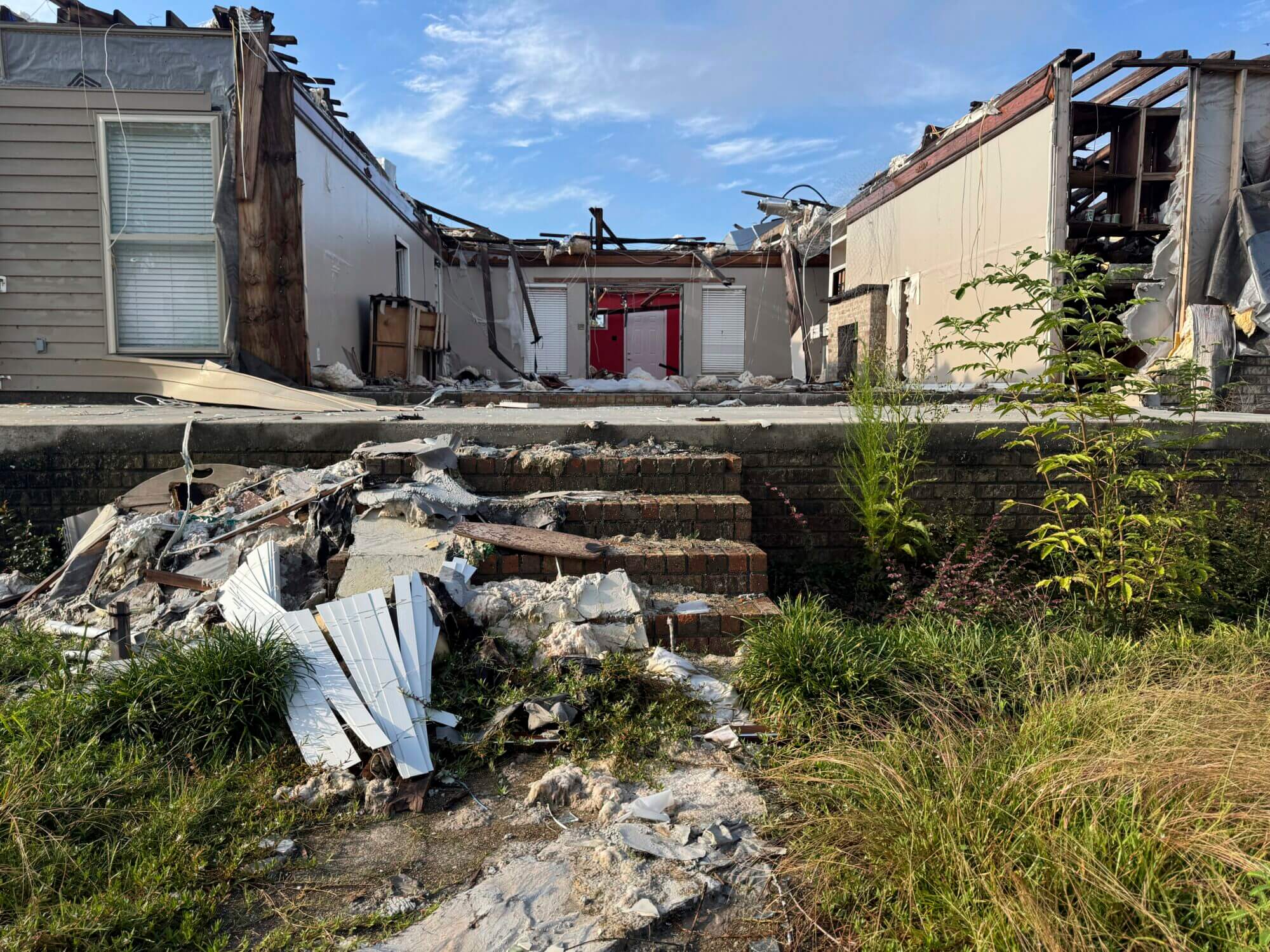
Mississippi saw seven deaths and an estimated $18 million in destruction from multiple tornadoes on March 14-15, the same storm system that caused damage in Arkansas. The Mississippi Emergency Management Agency reported that 233 homes were destroyed across 14 counties, and hundreds more were damaged.

During the initial aftermath, Reeves told reporters he believed there was a “high likelihood” the state’s damages from the March tornadoes would meet the threshold for FEMA’s Individual Assistance, which provides direct payments to disaster victims.

The Trump administration’s FEMA has denied federal assistance for flooding in West Virginia, tornadoes in Arkansas and a storm in Washington state, and refused North Carolina’s request for extending relief after Hurricane Helene.

After Hurricane Katrina’s devastation in 2005, Mississippi received nearly $25 billion in federal relief spending, which state leaders have credited with saving the state from ruin and allowing communities and families to rebuild.

Chris Lemonis fired, national search underway for Mississippi State baseball

Not quite four years after guiding Mississippi State to a baseball national championship, head coach Chis Lemonis has been fired, effective immediately.

Assistant coach Justin Parker will serve as interim head coach for the remainder of the season.

Mississippi State made the announcement in a press release Monday afternoon. 

“A change in leadership is what is best for the future of Mississippi State baseball,” State athletic director Zac Selmon said. “We have not consistently met the standard of success that our university, fans and student-athletes expect and deserve. I want to thank Coach Lemonis for his work and the time he gave to our program, including a national championship in 2021. We appreciate his efforts and wish him and his family all the best moving forward.”

A national search is underway to identify the program’s next head coach, Selmon said.

“In a team meeting moments ago, I expressed to our student-athletes the confidence we have in their abilities and the potential they have for the remainder of the season,” Selmon said. “I encouraged them to compete with pride, resilience, and intensity. With the hard work, preparation, and talent already within this group, we are committed to putting them in the best position to finish the season competing at the highest level.
“Mississippi State is the premier job in college baseball. The tradition, the facilities, the NIL offerings and the fan base are all second to none. Dudy Noble Field is the best environment in the sport, period.”

The current Bulldogs have a 25-19 record and are 7-14 in the SEC. Most recently, the Bulldogs lost two of three weekend games to Auburn, the nation’s 11th-ranked team. State has lost its last two SEC series and five of seven this season. The Bulldogs are currently No. 45 in the nation in ratings percentage index (RPI) and are in danger of not making the NCAA Tournament for the third time in four years.

Lemonis’ MSU teams won 232 games and lost 135 in his six-plus seasons. Hired by former MSU baseball coach and athletic director John Cohen from Indiana, Lemonis has an overall coaching record of 373-226-2.

“This program is built for success,” Selmon said. “Our history proves it, and our future demands it. We are one of only four programs in NCAA history to reach the College World Series in six consecutive decades. With 40 NCAA Tournament appearances, 12 trips to Omaha, 11 SEC regular season titles, and a national championship, our program has always been a national contender. That is the bar. We’re going to find a leader who will embrace that, elevate our program and compete for championships.”

MS House member agrees to pre-trial program after indictment

Rep. Keith Jackson, a Democratic lawmaker from Kemper County, can remain in office despite a felony indictment by participating in a pre-trial intervention program, according to court documents. 

A grand jury last year indicted Jackson, a first-term House member, on charges of receiving stolen property – specifically, a 2006 Magnolia timber trailer worth about $15,000. The grand jury also indicted two other people, Fredwrick (sic) Young and William Tate, in connection with the criminal charges. 

Jackson did not respond to a request for comment, and his attorney, Christopher Collins, declined to comment. 

Cassie Colman, the district attorney in the 10th circuit district, told Mississippi Today that the state agreed to let Jackson participate in pretrial intervention because he had no prior criminal record. If Jackson completes the terms of the pre-trial agreement, then the criminal charges will be expunged from his record. 

Going to trial would likely be risky for the lawmaker because, if convicted of the offense, he could lose the right to hold elected office. 

Receiving stolen property is a disenfranchising crime in Mississippi, and if someone is convicted of a disenfranchising crime, they lose their right to vote. To run for office in Mississippi, someone must be a registered voter. 

But Coleman, who prosecuted the case against Jackson, said the legislator’s agreement to enter the program is neither a guilty plea nor a conviction. Instead, he will enroll in the intervention program for at least a year and pay around $3,350 in fees, according to court documents. 

If he fails to meet the terms of the agreement, the district attorney could remove him from the program and prosecute him for the original crime.

Derrick Simmons: Monday’s Confederate Memorial Day recognition is awful for Mississippians

Editor’s note: This essay is part of Mississippi Today Ideas, a platform for thoughtful Mississippians to share fact-based ideas about our state’s past, present and future. You can read more about the section here.


Each year, in a handful of states, public offices close, flags are lowered and official ceremonies commemorate “Confederate Memorial Day.”

Mississippi is among those handful of states that on Monday will celebrate the holiday intended to honor the soldiers who fought for the Confederacy during the Civil War.

But let me be clear: celebrating Confederate Memorial Day is not only racist but is bad policy, bad governance and a deep stain on the values we claim to uphold today.

First, there is no separating the Confederacy from the defense of slavery and white supremacy. The Confederacy was not about “states’ rights” in the abstract; it was about the right to own human beings. Confederate leaders themselves made that clear.

Confederate Vice President Alexander Stephens declared in his infamous “Cornerstone Speech” that the Confederacy was founded upon “the great truth that the negro is not equal to the white man.” No amount of revisionist history can erase the fact that the Confederacy’s cause was fundamentally rooted in preserving racial subjugation.

To honor that cause with a state holiday is to glorify a rebellion against the United States fought to defend the indefensible. It is an insult to every citizen who believes in equality and freedom, and it is a cruel slap in the face to Black Americans, whose ancestors endured the horrors of slavery and generations of systemic discrimination that followed.

Beyond its moral bankruptcy, Confederate Memorial Day is simply bad public policy. Holidays are public statements of our values. They are moments when a state, through official sanction, tells its citizens: “This is what we believe is worthy of honor.” Keeping Confederate Memorial Day on the calendar sends a message that a government once committed to denying basic human rights should be celebrated.

That message is not just outdated — it is dangerous. It nurtures the roots of racism, fuels division and legitimizes extremist ideologies that threaten our democracy today.

Moreover, there are real economic and administrative costs to shutting down government offices for this purpose. In a time when states face budget constraints, workforce shortages and urgent civic challenges, it is absurd to prioritize paid time off to commemorate a failed and racist insurrection. Our taxpayer dollars should be used to advance justice, education, infrastructure and economic development — not to prop up a lost cause of hate.

If we truly believe in moving forward together as one people, we must stop clinging to symbols that represent treason, brutality and white supremacy. There is a legislative record that supports this move in a veto-proof majority changing the state Confederate flag in 2020. Taking Confederate Memorial Day off our official state holiday calendar is another necessary step toward a more inclusive and just society.

Mississippi had the largest population of enslaved individuals in 1865 and today has the highest percentage of Black residents in the United States. We should not honor the Confederacy or Confederate Memorial Day. We should replace it.

Replacing a racist holiday with one that celebrates emancipation underscores the state’s rich African American history and promotes a more inclusive understanding of its past. It would also align the state’s observances with national efforts to commemorate the end of slavery and the ongoing pursuit of equality.

I will continue my legislative efforts to replace Confederate Memorial Day as a state holiday with Juneteenth, which commemorates the freedom for America’s enslaved people.

It’s time to end Confederate Memorial Day once and for all.


Derrick T. Simmons, D-Greensville, serves as the minority leader in the state Senate. He represents Bolivar, Coahoma and Washington counties in the Mississippi Senate.

Mississippi River flooding Vicksburg, expected to crest on Monday

Warren County Emergency Management Director John Elfer said Friday floodwaters from the Mississippi River, which have reached homes in and around Vicksburg, will likely persist until early May. Elfer estimated there areabout 15 to 20 roads underwater in the area.

A truck sits in high water after the owner parked, then boated to his residence on Chickasaw Road in Vicksburg as a rising Mississippi River causes backwater flooding, Friday, April 25, 2025.

“We’re about half a foot (on the river gauge) from a major flood,” he said. “But we don’t think it’s going to be like in 2011, so we can kind of manage this.”

The National Weather projects the river to crest at 49.5 feet on Monday, making it the highest peak at the Vicksburg gauge since 2020. Elfer said some residents in north Vicksburg — including at the Ford Subdivision as well as near Chickasaw Road and Hutson Street — are having to take boats to get home, adding that those who live on the unprotected side of the levee are generally prepared for flooding.

A rising Mississippi River causing backwater flooding near Chickasaw Road in Vicksburg, Friday, April 25, 2025. Credit: Vickie D. King/Mississippi Today
Old tires aligned a backyard as a deterrent to rising water north of Vicksburg along U.S. 61, Friday, April 25, 2025. Credit: Vickie D. King/Mississippi Today
As the Mississippi River rises, backwater flooding creeps towards a home located on Falk Steel Road in Vicksburg, Friday, April 25, 2025. Credit: Vickie D. King/Mississippi Today

“There are a few (inundated homes), but we’ve mitigated a lot of them,” he said. “Some of the structures have been torn down or raised. There are a few people that still live on the wet side of the levee, but they kind of know what to expect. So we’re not too concerned with that.”

The river first reached flood stage in the city — 43 feet — on April 14. State officials closed Highway 465, which connects the Eagle Lake community just north of Vicksburg to Highway 61, last Friday.

Flood waters along Kings Point Road in Vicksburg, Friday, April 25, 2025. Credit: Vickie D. King/Mississippi Today

Elfer said the areas impacted are mostly residential and he didn’t believe any businesses have been affected, emphasizing that downtown Vicksburg is still safe for visitors. He said Warren County has worked with the U.S. Army Corps of Engineers and the Mississippi Emergency Management Agency to secure pumps and barriers.

“Everybody thus far has been very cooperative,” he said. “We continue to tell people stay out of the flood areas, don’t drive around barricades and don’t drive around road close signs. Not only is it illegal, it’s dangerous.”

NWS projects the river to stay at flood stage in Vicksburg until May 6. The river reached its record crest of 57.1 feet in 2011.

The boat launch area is closed and shored up on Levee Street in Vicksburg as the Mississippi River rises, Friday, April 25, 2025. Credit: Vickie D. King/Mississippi Today
The boat launch area (right) is closed and under water on Levee Street in Vicksburg as the Mississippi River rises, Friday, April 25, 2025. Credit: Vickie D. King/Mississippi Today
City of Vicksburg workers shore up the bank along Levee Street as the Mississippi River rises, Friday, April 25, 2025. Credit: Vickie D. King/Mississippi Today
The old pedestrian bridge spanning the Mississippi River in Vicksburg, Friday, April 25, 2025. Credit: Vickie D. King/Mississippi Today

With domestic violence law, victims ‘will be a number with a purpose,’ mother says

Joslin Napier. Carlos Collins. Bailey Mae Reed. 

They are among Mississippi domestic violence homicide victims whose family members carried their photos as the governor signed a bill that will establish a board to study such deaths and how to prevent them. 

Tara Gandy, who lost her daughter Napier in Waynesboro in 2022, said it’s a moment she plans to tell her 5-year-old grandson about when he is old enough. Napier’s presence, in spirit, at the bill signing can be another way for her grandson to feel proud of his mother. 

“(The board) will allow for my daughter and those who have already lost their lives to domestic violence … to no longer be just a number,” Gandy said. “They will be a number with a purpose.” 

Family members at the April 15 private bill signing included Ashla Hudson, whose son Collins, died last year in Jackson. Grandparents Mary and Charles Reed and brother Colby Kernell attended the event in honor of Bailey Mae Reed, who died in Oxford in 2023. 

Joining them were staff and board members from the Mississippi Coalition Against Domestic Violence, the statewide group that supports shelters and advocated for the passage of Senate Bill 2886 to form a Domestic Violence Facility Review Board. 

The law will go into effect July 1, and the coalition hopes to partner with elected officials who will make recommendations for members to serve on the board. The coalition wants to see appointees who have frontline experience with domestic violence survivors, said Luis Montgomery, public policy specialist for the coalition. 

A spokesperson from Gov. Tate Reeves’ office did not respond to a request for comment Friday.

Establishment of the board would make Mississippi the 45th state to review domestic violence fatalities. 

Montgomery has worked on passing a review board bill since December 2023. After an unsuccessful effort in 2024, the coalition worked to build support and educate people about the need for such a board. 

In the recent legislative session, there were House and Senate versions of the bill that unanimously passed their respective chambers. Authors of the bills are from both political parties. 

The review board is tasked with reviewing a variety of documents to learn about the lead up and circumstances in which people died in domestic violence-related fatalities, near fatalities and suicides – records that can include police records, court documents, medical records and more. 

From each review, trends will emerge and that information can be used for the board to make recommendations to lawmakers about how to prevent domestic violence deaths. 

“This is coming at a really great time because we can really get proactive,” Montgomery said. 

Without a board and data collection, advocates say it is difficult to know how many people have died or been injured in domestic-violence related incidents.

A Mississippi Today analysis found at least 300 people, including victims, abusers and collateral victims, died from domestic violence between 2020 and 2024. That analysis came from reviewing local news stories, the Gun Violence Archive, the National Gun Violence Memorial, law enforcement reports and court documents. 

Some recent cases the board could review are the deaths of Collins, Napier and Reed. 

In court records, prosecutors wrote that Napier, 24, faced increased violence after ending a relationship with Chance Fabian Jones. She took action, including purchasing a firearm and filing for a protective order against Jones.

Jones’s trial is set for May 12 in Wayne County. His indictment for capital murder came on the first anniversary of her death, according to court records. 

Collins, 25, worked as a nurse and was from Yazoo City. His ex-boyfriend Marcus Johnson has been indicted for capital murder and shooting into Collins’ apartment. Family members say Collins had filed several restraining orders against Johnson. 

Johnson was denied bond and remains in jail. His trial is scheduled for July 28 in Hinds County.  

He was a Jackson police officer for eight months in 2013. Johnson was separated from the department pending disciplinary action leading up to immediate termination, but he resigned before he was fired, Jackson police confirmed to local media. 

Reed, 21, was born and raised in Michigan and moved to Water Valley to live with her grandparents and help care for her cousin, according to her obituary. 

Kylan Jacques Phillips was charged with first degree murder for beating Reed, according to court records. In February, the court ordered him to undergo a mental evaluation to determine if he is competent to stand trial, according to court documents. 

At the bill signing, Gandy said it was bittersweet and an honor to meet the families of other domestic violence homicide victims.

“We were there knowing we are not alone, we can travel this road together and hopefully find ways to prevent and bring more awareness about domestic violence,” she said.