The Jackson Police Department is investigating the death of a 29-year-old woman found hanging from a tree in west Jackson last month as a homicide, Chief RaShall Brackney told the City Council during its Tuesday meeting.
Brackney said an autopsy on the woman, Tasia Fortune, was completed four weeks ago.
“To date, we have not received the outcomes of that autopsy,” Brackney told Jackson City Council members.
“However, the Jackson Police Department has been investigating this case from day one as a homicide until we hear otherwise from the medical examiner’s office,” she said.
Brackney’s statements were in response to Councilman Kenneth Stokes and a letter from Fortune’s mother, who lamented the lack of information about her daughter’s death and what she said was the lack of communication from investigators.
“I’m not sure what you can do, but if you need me to present I will travel to Jackson so my voice is heard. I will attend anything I need to attend,” Christy Spivey, who lives in Kentucky, wrote in her letter, which was read out loud during the meeting.
Brackney said that investigators have been in constant contact with Spivey and her estranged husband.
In early August, Fortune’s body was found hanging from a tree behind a vacant house at the 500 block of Road of Remembrance in a mostly Black neighborhood in west Jackson. The manner in which she was found – a Black woman hanging in a place with a history of racial terror lynchings – drew national attention.
Authorities have identified a person of interest, who was arrested on an unrelated gun charge.
Stokes, who shared the letter, said, “Hanging is an ugly, ugly part of our past that we never ever want to come back again.”
Spivey previously told Mississippi Today that she believes her daughter was killed but was not the victim of a hate crime. She insisted Fortune was not suicidal.
Stokes previously wrote to the U.S. Attorney Baxter Kruger, and U.S. Sens. Roger Wicker and Cindy Hyde-Smith, both Mississippi Republicans, requesting federal assistance in the case. He also called for answers at a press conference outside City Hall on Sunday.
By and large, Mississippi’s college football teams had a successful first weekend and the Clevelands break it down game by game, with some high school football on the side.
A recent financial plan from JXN Water, the court-appointed receiver in charge of rebuilding the capital city’s water and sewer infrastructure, is now proposing Jackson sell the systems altogether. The idea comes amid the utility’s call for yet another set of rate increases.
In February, U.S. District Court Judge Henry Wingate, who is overseeing the receivership, greenlit a 12% rate increase after a drawn-out debate. Through court hearings that spanned nearly a year, JXN Water faced pushback from local advocates and city officials who blamed the utility for driving up costs to a point where rates would become unaffordable for residents.
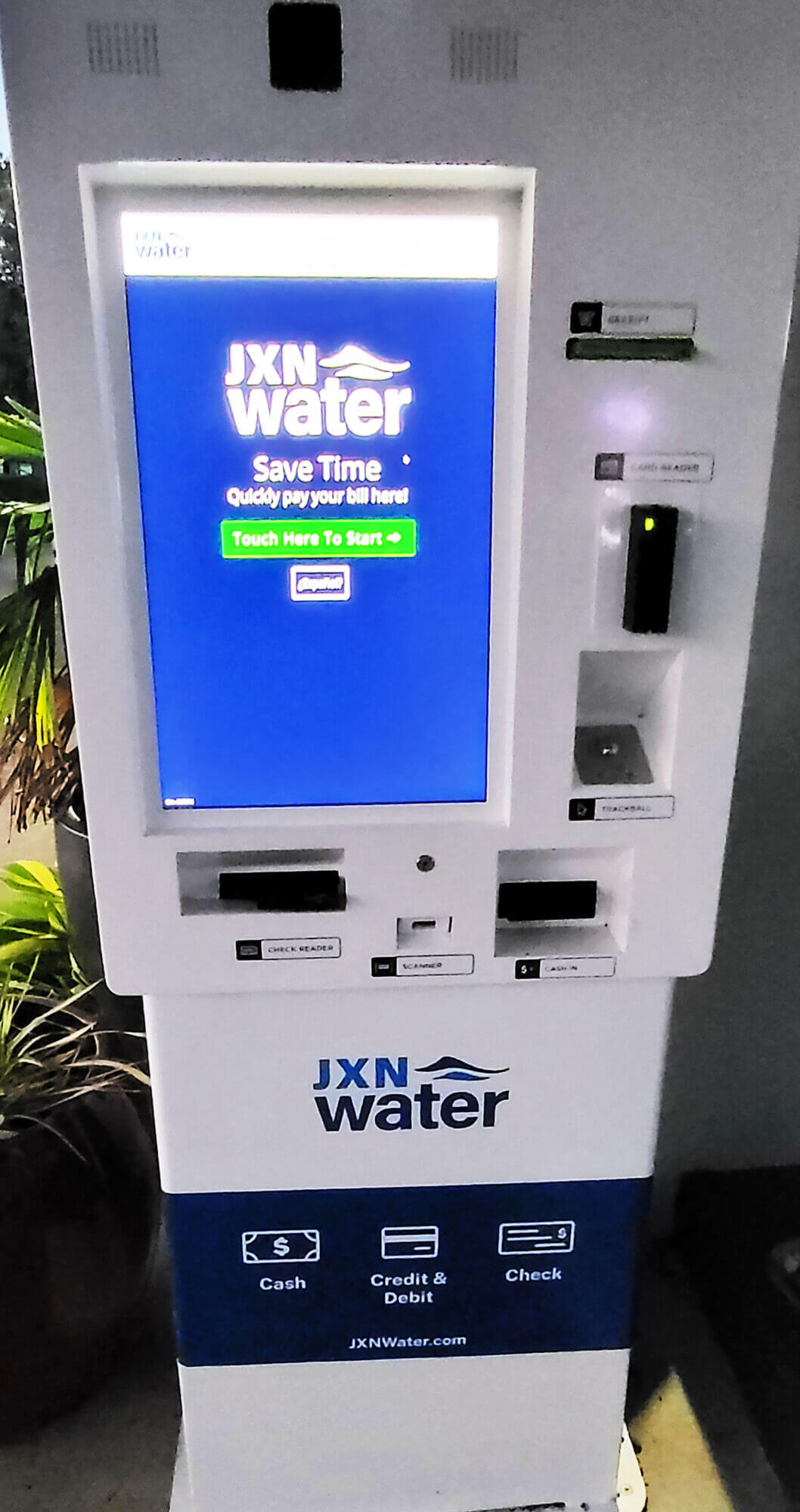
Pay your water bill kiosk at the JXN Water office building, located at 1054 Greymont St. in Jackson, Tuesday, Aug. 25, 2026. Credit: Vickie D. King/Mississippi Today
JXN Water is now saying it needs to increase rates again in 2027 by 10%, followed by 9% and 8% hikes in 2028 and 2029, respectively. Those numbers are a stark jump from figures the utility mentioned in court hearings last year, where it said it would need 3% annual rate increases from 2027 to 2029.
But Ted Henifin, the head of JXN Water, said the city could reduce the need for rate increases if it sold its water and sewer infrastructure. With the revenue it would get from selling those assets, the city could pay off significant debt that’s driving the need for rate increases, Henifin explained in the August financial plan.
“What it does is create greater financial stability for the system, which lessens the need for larger rate increases in the future,” JXN Water told Mississippi Today.
The idea comes as city and state officials, as well as Wingate, are deliberating what to do with Jackson’s water and sewer systems once JXN Water’s interim control is over, which the utility projects to be in 2027. The Mississippi Legislature approved a plan this past session to put the systems under a regional authority, but Wingate halted the state law in June.
Under the judge’s orders, Henifin has to propose his own transition plan, which is due near the end of September.
Jackson City Council members, who repeatedly have publicly criticized JXN Water over the last year, pushed back at the utility’s latest proposal. Ward 7 Councilman Kevin Parkinson said while he doesn’t think the city is ready to regain control of the water system, Henifin’s idea to sell it is a bridge too far.
“ I think the city is not well positioned to take over that water system anytime soon, but I don’t think that should mean the city has absolutely no say and should be forced to sell off its assets,” Parkinson said. ”I’m all for creative solutions, but I’m hoping that those can involve the city having a seat at the table.”
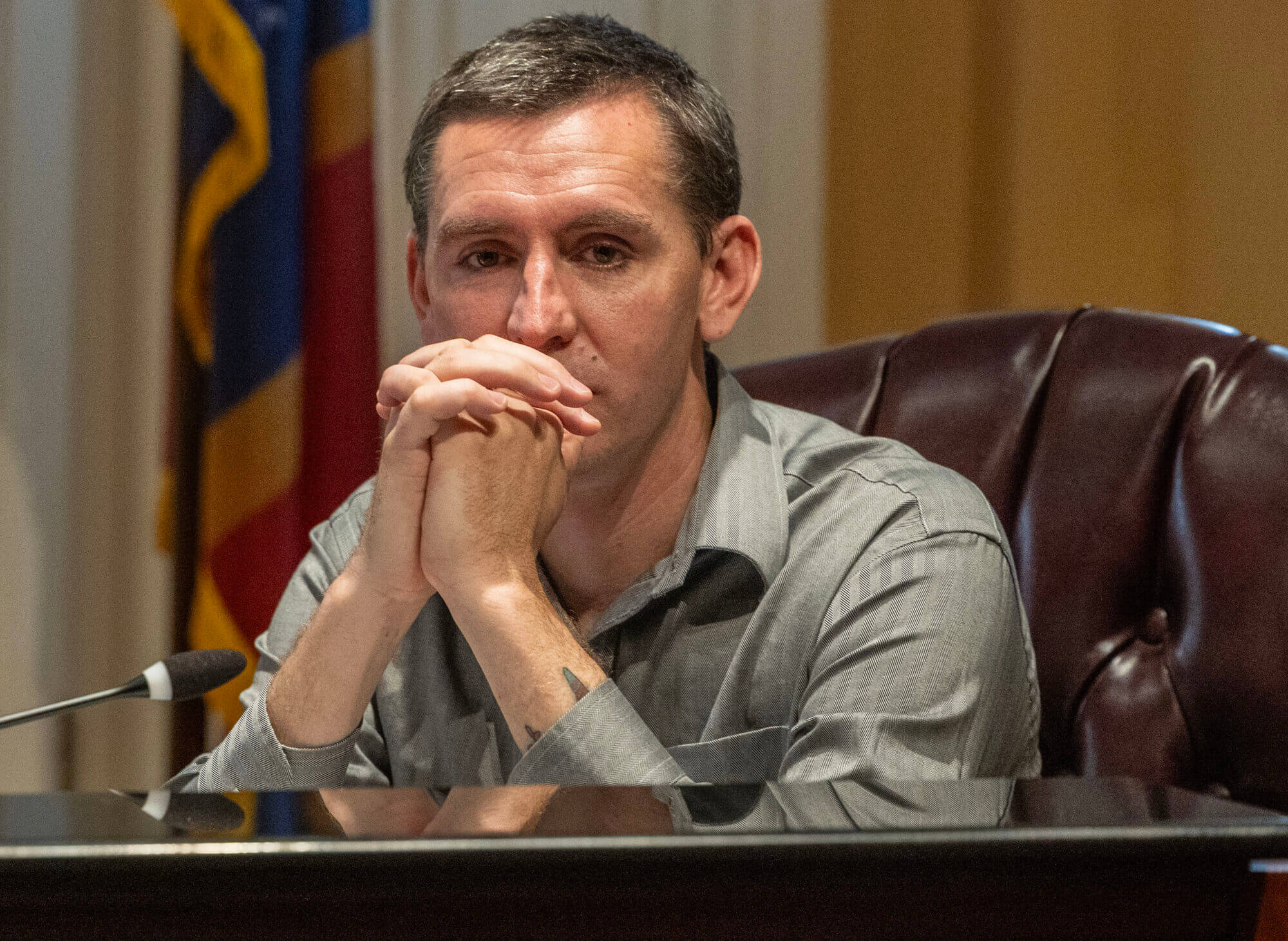
Jackson City Council member Kevin Parkinson listens during a council meeting at City Hall in Jackson on Tuesday, April 21, 2026. Credit: Eric Shelton/Mississippi Today
Ward 2 Councilwoman Tina Clay went further, arguing the infrastructure should return to city control once JXN Water’s term has ended.
“ I am totally against the concept saying that the city of Jackson can’t run its own water department,” Clay said. “ When it left the city, it was run down, it was torn up, it was broken, the city had no money. But now that it’s fixed, the city can run the water department. Anything that’s broken and with no money, nobody can run effectively.”
The councilwoman disagreed with recent comments from Mayor John Horhn, who said it was unlikely the systems would come back under city governance.
“That should not be a thing of the past,” she said. “ Jackson State (University) has an engineering department. We have a lot of resources that we can reach out to. We don’t have to give up and give away things.”
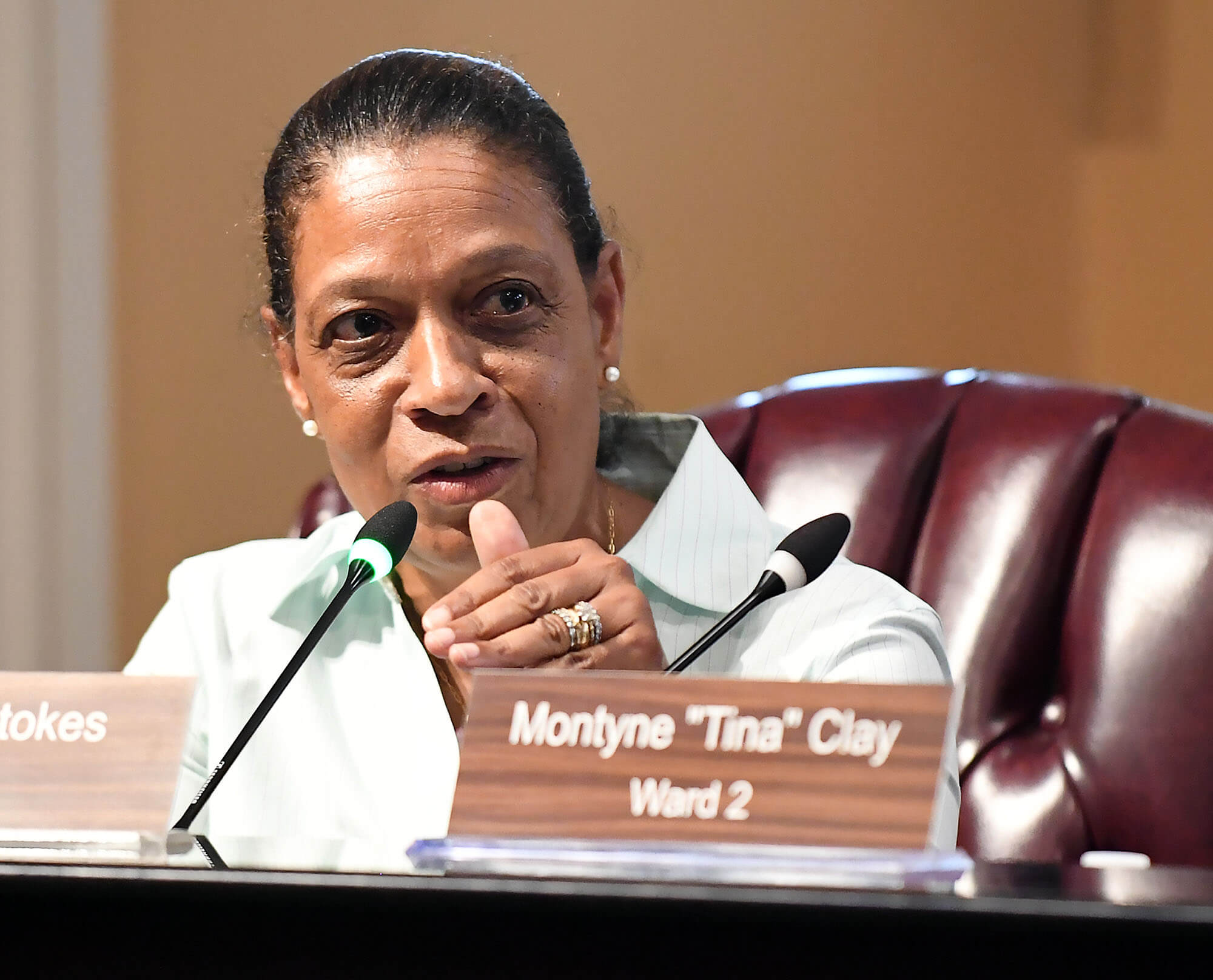
Ward 2 City Councilwoman Tina Clay asks questions of City Attorney Drew Martin about a draft regarding data centers at a City Council meeting held Monday, July 6, 2026, at City Hall in Jackson. Credit: Vickie D. King/Mississippi Today
Under the proposal, whatever authority assumes control after JXN Water would take out a tax-exempt bond to give the city the $121 million needed to pay off its outstanding debt. Henifin said the tax benefit “hinges on the new authority not being connected to the city or under city control.”
“(T)he Internal Revenue Code allows the bonds issued to finance the acquisition price to be issued on a tax-exempt basis, as long as JXN Water (or its successor) is not related to the City for federal tax purposes,” according to the financial plan.
Horhn’s office did not respond to repeated requests for comment.
Mississippi Today asked to clarify whether JXN Water outright supported the idea of Jackson selling its infrastructure, to which the utility responded in an email, “Yes.”
Other council members said they needed a chance to review JXN Water’s proposal, but most were skeptical about increasing water rates again. Ward 1 Councilman Ashby Foote said the collection rate — which the utility said has now climbed above 80% — needs to improve before charging more to those who already pay their bill.
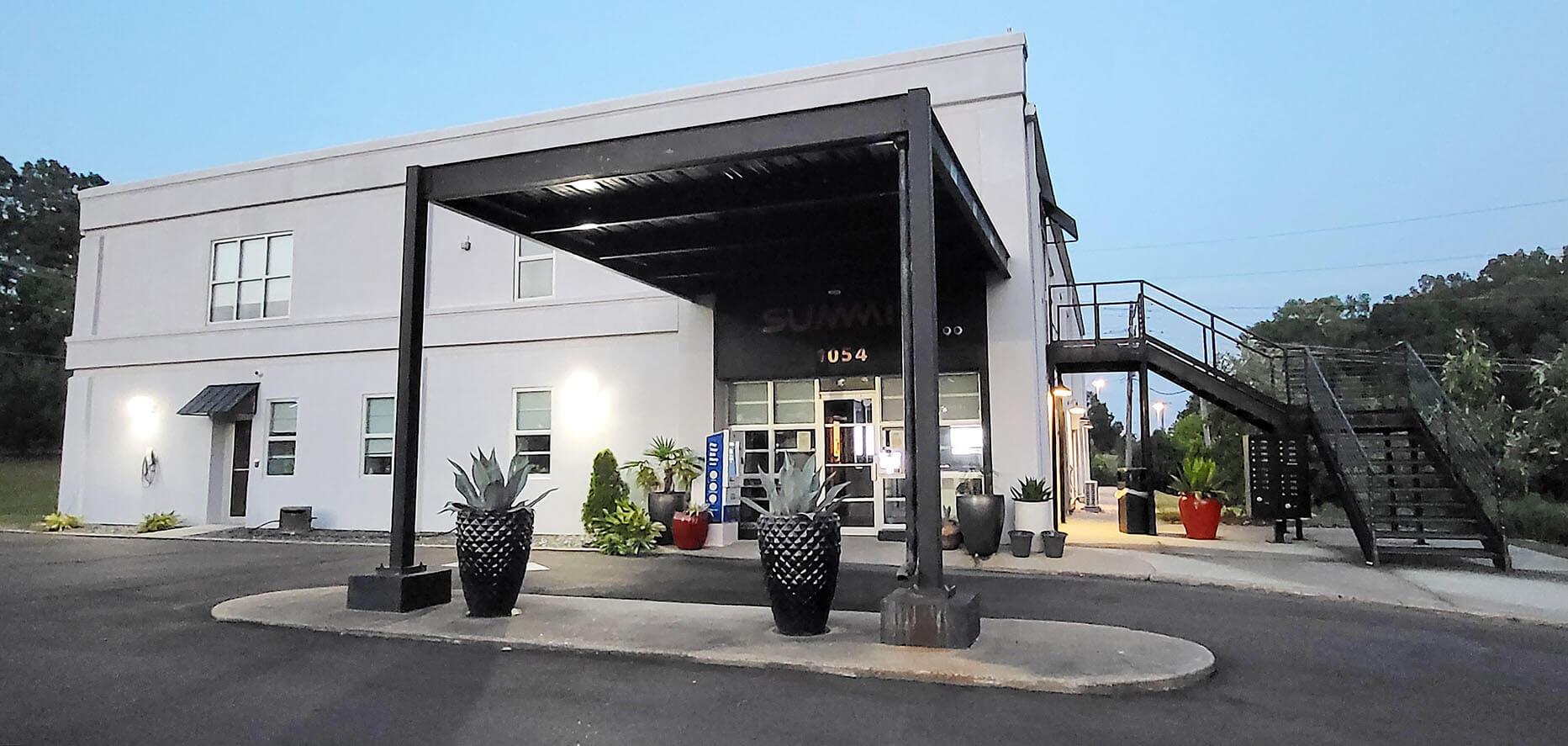
JXN Water offices, located at 1054 Greymont St. in Jackson, Tuesday, Aug. 25, 2026. Credit: Vickie D. King/Mississippi Today
Ward 4 Councilman Brian Grizzell said the city should have increased rates earlier to avoid the huge jumps customers are seeing now. The increases Henifin proposed are too much for Jacksonians, he said.
“At some point, we have to recognize that affordability matters just as much as financial sustainability,” Grizzell said.
“Ratepayer input and city ownership of the assets are not mutually exclusive,” JXN Water said in response to concerns over the city losing its voice in governing its water and sewer systems. “This proposal does not mean ratepayers go unrepresented, and it does not mean the city loses its voice in how the system is run.”
The utility told Mississippi Today it is still drafting its transition plan, and will “have more to share as it progresses.”
Laurene Powell Jobs, founder and president of Emerson Collective, and Darren Walker, president and CEO of Anonymous Content and former president of the Ford Foundation, will headline Mississippi Today’s 10th Anniversary Celebration on Oct. 7 in Jackson.
Bill Bynum, founding CEO of HOPE and a national leader in community development, will moderate the conversation between two of the nation’s most influential voices in philanthropy, storytelling and social impact. The nonprofit newsroom is marking a decade of mission-driven reporting and launching its next chapter serving communities across the state.
The celebration is part of a two-day anniversary event that includes Mississippi Today’s second annual “All In on Mississippi” summit on Oct. 8 beginning at 1 p.m. at the Two Mississippi Museums.
“Mississippi Today was founded on the belief that independent, nonprofit journalism could strengthen our state,” said Emily Wagster Pettus, editor-in-chief of Mississippi Today. “We’re honored to welcome two global leaders whose work reflects that same belief — that informed communities, powerful storytelling and bold ideas can create meaningful change.”
A conversation on storytelling, democracy and the future
Powell Jobs and Walker will appear together during the Mississippi Today 10th anniversary event in conversation with Bynum, exploring the role of storytelling and journalism in strengthening democracy and expanding opportunity.
Their discussion will frame an evening celebrating the impact of independent journalism while looking ahead to the challenges and opportunities facing communities across Mississippi and the South.
About Laurene Powell Jobs
Laurene Powell Jobs is the founder and president of Emerson Collective, a company that combines venture investing and philanthropy to address some of the most consequential challenges in education, economic mobility, immigration and energy.
She founded the Waverley Street Foundation to support community-driven climate solutions and College Track to help students become the first in their families to graduate from college, with continued support as they begin their careers. She also co-founded the XQ Institute to drive innovation in high school education.
She is the lead investor and board chair of The Atlantic, board chair of College Track and a member of the Ford Foundation board.
About Darren Walker
Darren Walker brings decades of leadership across philanthropy, finance and the arts. Currently, he serves as president and CEO of Anonymous Content, leading the company’s next phase of growth — overseeing its management and commercial business, guiding its international partnerships, and shaping a global strategy across film, television, and emerging media.
Prior to Anonymous, Walker served as president of the Ford Foundation for more than 10 years, which followed leadership roles at Rockefeller Foundation, the Abyssinian Development Corporation and senior positions across international law and finance.
He is president of the board of the National Gallery of Art and advises some of the world’s most prominent organizations on governance, strategy and leadership. Additional board service includes the Ralph Lauren Corporation, the Obama Foundation, Bloomberg L.P., the Clooney Foundation for Justice, the Waverley Street Foundation, the Perelman Performing Arts Center and Art Bridges.
A trusted connector across business and culture, Walker has long championed artists and storytellers worldwide. His move into media reflects a belief that great storytelling not only shapes culture but defines it.
Mississippi Today 10th Anniversary Celebration
Taking place at the Two Mississippi Museums on Wednesday, Oct. 7, the celebration will honor a decade of public service journalism through an evening of conversation, music, storytelling and immersive experiences that showcase the newsroom’s work.
Guests will hear firsthand accounts of the newsroom’s impact while getting a look at Mississippi Today’s vision for the future. The celebration is made possible through sponsorship from Carol and John Palmer, Collaborative Solutions LLC and The McMullan O’Connor Fund.
‘All In on Mississippi’ summit
On Thursday, Oct. 8, Mississippi Today will host the second annual “All In on Mississippi” summit, focused on innovative solutions, economic opportunity and community impact.
Presented with support from JPMorgan Chase, the Foundation for the Mid South, Centuri, Butler Snow and Brown Bottling Group, the summit will bring together leaders from business, education, workforce development, philanthropy and journalism for forward-looking conversations about Mississippi’s future.
Featured sessions include:
Boots on the Ground: Mississippi Industry, AI and the Future of Work.
A New Era for Apprenticeship Programs in Mississippi.
The Literacy Launching Point and What Comes Next.
Mississippi on the National Stage.
Additional speakers and agenda details will be announced in the coming weeks.
Tickets and sponsorships
Celebration tickets begin at $150, with additional options including premium seating, tables and sponsorship packages.
Tickets for the “All In on Mississippi” summit are $25.
Organizations interested in sponsorship opportunities can contact sponsorships@mississippitoday.org.
Registration, sponsorship information and the latest event updates are available at summit.mississippitoday.org.
Editor’s note: Emerson Collective is a funder of Mississippi Today. Donors to Mississippi Today have no influence or control over editorial decisions.
For most of the summer, the former Family Dollar on Terry Road in south Jackson has sat vacant, leaving people in the community with fewer convenient options for everyday necessities.
Family Dollar’s shutdown in May is part of a recurrent theme of business closures in the capital city in recent years, with south and west Jackson hit the hardest.
Now, over 41,000 pounds of clothing fill the store’s back room, visible through the glass doors of the storefront.
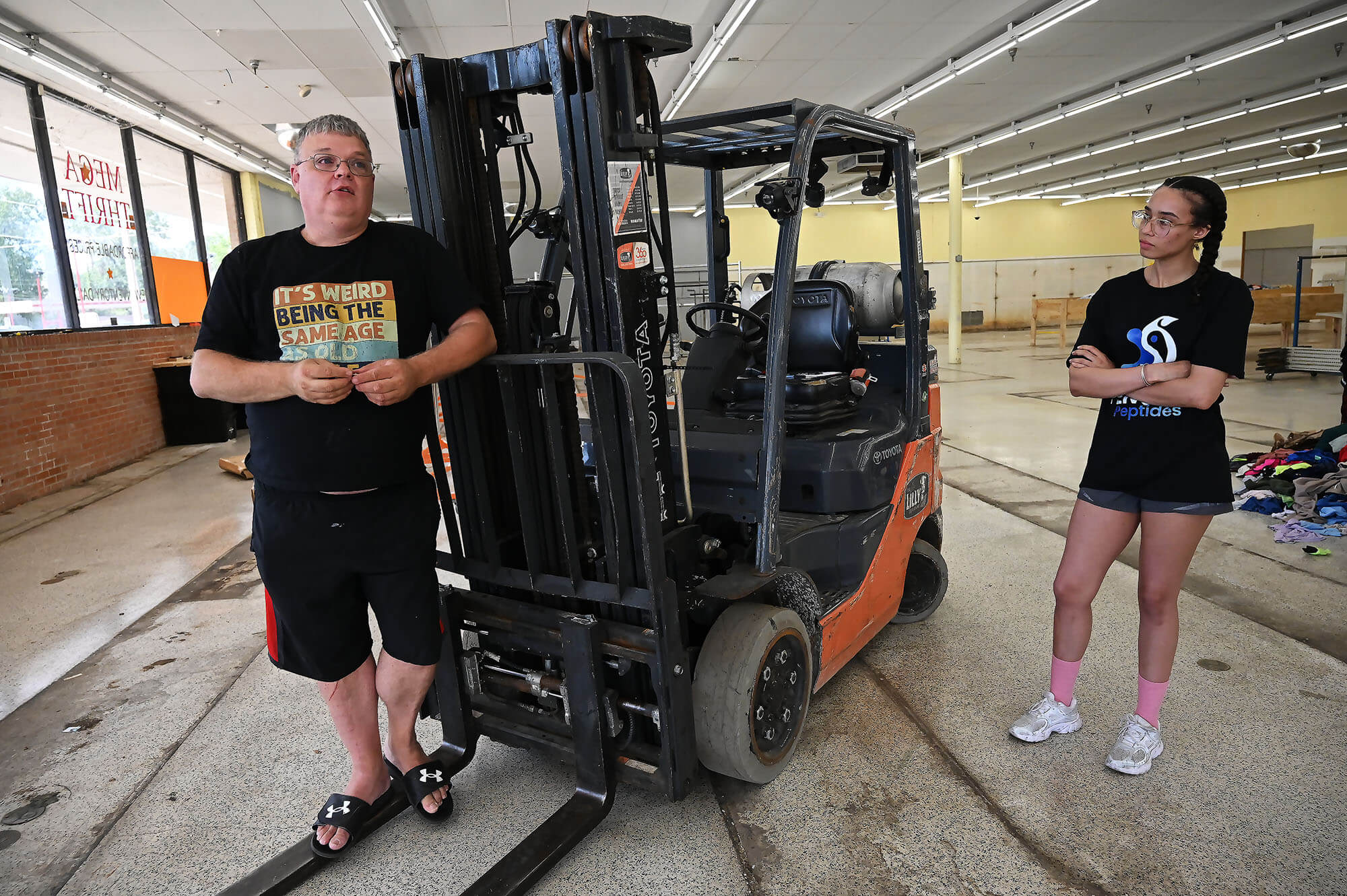
George Roethemeyer, left, and Niyah Sessom talk of renovations inside the the soon-to-open Mega Thrift store, located on Terry Road in south Jackson, Wednesday, Sept. 2, 2026. Credit: Vickie D. King/Mississippi Today
The mountain of clothing is part of what Niyah Sessom and George Roethemeyer have been working toward — a new secondhand goods store named Mega Thrift.
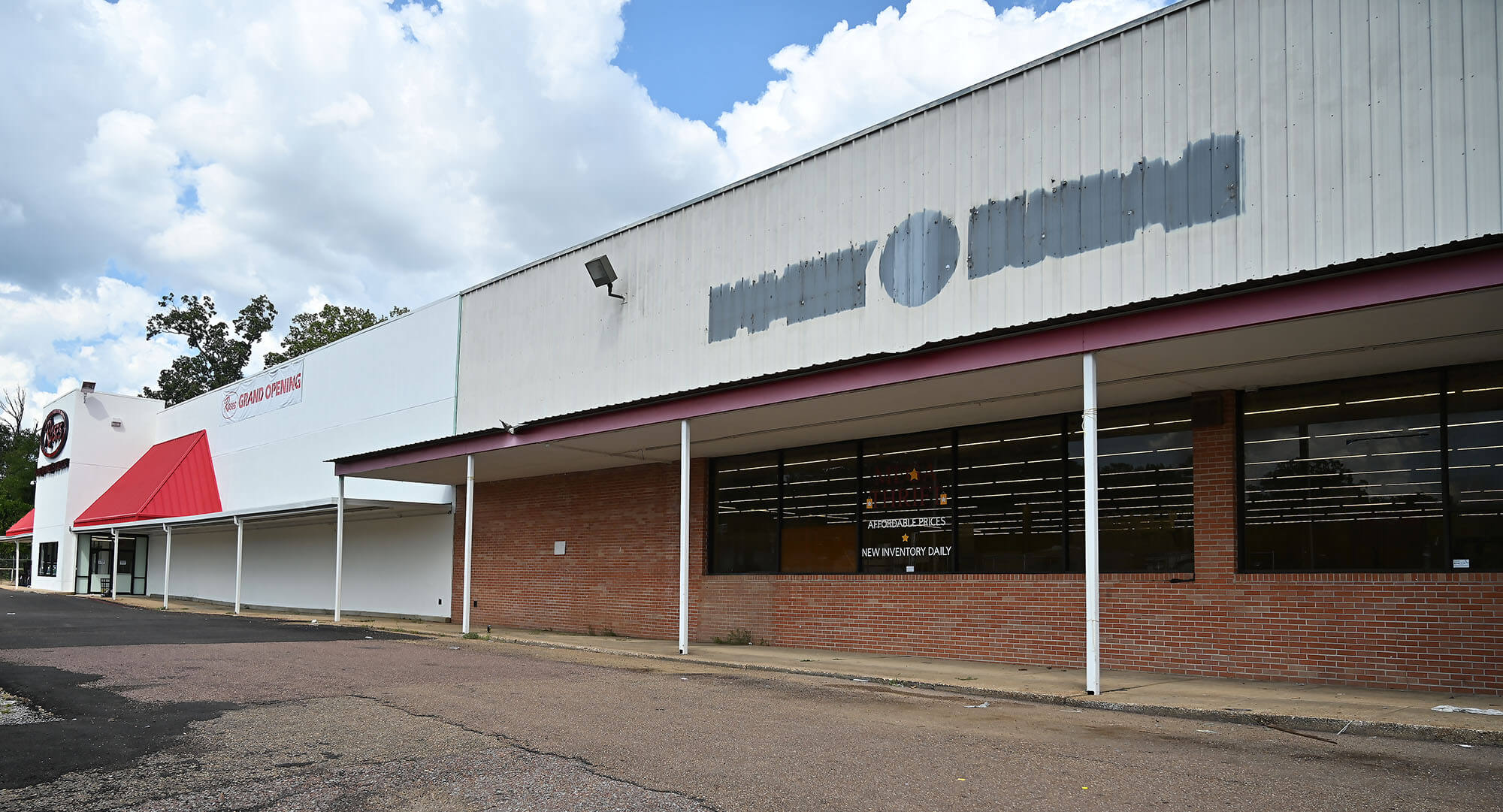
The store will sit adjacent to Roses, a regional discount store, in the Roses Plaza in southwest Jackson. Owned by Nashville-based Brookwood Capital Advisors, the plaza has undergone renovations the past two years.
According to company founder Ben Hamd, $900,000 has been put into the plaza and the July opening of the Roses. The parking lot also hosts a flea market on weekends — an effort to turn the space into a community hub, Hamd said.
Renovations are currently underway to prepare Mega Thrift for an opening no later than Oct. 1, according to Roethemeyer, who serves as the store’s property manager. To keep the community informed of their progress, the store posts “A Day in the Life” videos on social media.
“You’re really seeing a sense of community emerge online, and I think that’s going to translate to a real world community where people want to get involved with something like this,” Hamd said.
The store’s pricing model is what stands out. Most items are marked below $5, with clothing costing customers $1.79. Those who donate items get a 50% discount on their next purchase.
“We don’t cherry-pick our inventory,” Sessom said. “So whatever we get, we put out there.”
After Family Dollar closed its doors, Hamd said Brookwood Capital attempted to lease the building to grocery chains, but was unsuccessful.
The Mega Thrift store, right, in the former Family Dollar store, is adjacent to the new Roses Discount Store on Terry Road, Wednesday, Sept. 2, 2026, in south Jackson. Credit: Vickie D. King/Mississippi Today
“In a perfect world I would have loved to put a grocery store, because I think it’s needed in southwest Jackson,” Hamd said. “But this is the next best thing.”
The lack of options continues to leave south and west Jacksonians without access to food unless they travel to other local communities.
“Even though it’s a thrift store, it could be the beginning for other types of stores,” said Johnny Byrd, the vice president of the Association of South Jackson Neighborhoods.
He said the new thrift shop could help keep “bad actors” out of the area.
Ward 7 City Councilmember Kevin Parkinson and Ward 6 Councilmember Lashia Brown-Thomas, who represent swaths of south Jackson, have voiced their frustrations about the recurrent closures in the area, telling Mississippi Today in May that they had met with several groups who were planning projects in the area.
Parkinson said the area still has potential for development as residents want to support more local businesses.
“They’re tired of going to Byram,” Parkinson said. “They want Jackson options and I think they deserve Jackson options.”
For the past year, men from Mississippi’s death row have been able to share with the public who they are and their experiences while incarcerated through an online platform.
The nonprofit organization Humans Remain, which several of the men formed a year ago with England-based advocate Liz McCann, hosts the platform. McCann runs the website, creates the videos and shares them on the group’s social media pages. Personal tablets enabled users to make video calls and send electronic messages.
On Aug. 7, Mississippi Today published a story about the group’s first anniversary, purpose and work with the 34 men from Unit 17 at the Mississippi State Penitentiary at Parchman. The story quoted McCann and a death row prisoner and included one line about the use of tablets that helps the group do its advocacy and educational work.
Within two hours of the story’s publishing, the death row men lost access to their tablets, according to advocates, leaving two communal phones, mail and in-person visits as their available forms of contact with people outside the prison.
A month later, the tablets have not been returned. The death row men continue to wonder about why it happened, how the decision was made and whether they can get the devices back. A spokesperson from The Mississippi Department of Corrections did not respond to a request for comment.
“There’s literally a wall of silence,” McCann said last week.
The restriction has prompted some of the men to speak out through an unpublished editorial that McCann shared with Mississippi Today.
“The application of ‘mushroom censorship’ is absurd and as outdated as the death penalty itself,” they wrote in the editorial.
Lisa Jo Chamberlin, the only woman on Mississippi death row, had a similar communication restriction at the beginning of the year shortly after Mississippi Today published a story about her.
As with the men, she was not able to use her tablet, but her restrictions also included phone use. Chamberlin was blocked from making phone calls, and advocates who had regular contact with her were met with silence until April. She has since regained phone privileges, according to other advocates working with her.
MDOC did not provide Mississippi Today with a comment explaining why the tablets were removed.
Prison staff gave the death row men reasons why the tablets were taken away, according to the editorial, including that Unit 17 is a restricted area, that McCann has used the devices to contact them and that Mississippi Today published the story about their efforts.
The editorial pushes back against those justifications. Unit 29, death row’s previous location, was also a restricted area and is where they first got access to the tablets. Advocacy from death row in the form of published videos predates the formation of Humans Remain.
McCann said she takes some responsibility for what happened because she operates the organization.
While the death row men criticized the prison officials’ actions, they gave credit to Chief of Institutions Marc McClure, the former Parchman superintendent. Under his leadership, the men said that their quality of life has improved, including freedom of movement within the unit.
According to McCann, Corrections Commissioner Burl Cain and McClure visited Unit 17 on Sept. 4 and talked with the men. The prison officials did not explain why the tablets were taken away, including when they would be restored or whether any prison rules were broken, she said.
McCann said she has been transparent about using tablets to communicate with the men and to show people the advocacy group is being run legitimately.
“We’ve never tried to hide any of this advocacy stuff,” she said.
Mississippi Today welcomes back Adam Ganucheau to look back on the early days of the newsroom and the origins of The Other Side. Plus, Mary Margaret White joins editor-in-chief Emily Wagster Pettus to look ahead to 10-year anniversary celebrations and what audiences can expect in years to come.
Julie Lee is joining Mississippi Today and the Deep South Today Investigative Reporting Center as a data reporter.
Julie Lee
Lee, who earned a master’s degree in investigative journalism and a doctorate in neuroscience, will analyze complex data sets and tell the stories behind the numbers.
“I was drawn to journalism because I wanted to have an impact,” said Lee, who began work Tuesday. “I am honored to have the opportunity to do that two-fold, by putting my data skills to use where it is needed and to do that in a place that is full of important, untold stories.
“As a data reporter, I always strive to center the lived experiences of the real people that comprise data and documents,” she said. “I am looking forward to meeting those people through my reporting and through that of my esteemed colleagues at Mississippi Today.”
The Deep South Today Investigative Reporting Center launched earlier this year and includes full-time investigative and data reporters, as well as New York Times local investigations fellows at Mississippi Today and Verite News in New Orleans. It receives support from Big Local News, a data-sharing journalism program at Stanford University.
“Julie brings exceptional rigor and intellectual curiosity to her work,” Mississippi Today Editor-in-Chief Emily Wagster Pettus said. “We are eager to see how she applies her skills here as part of the investigative reporting team.”
After earning her doctoral degree, Lee spent two years as a public interest technologist in Massachusetts, conducting data-driven investigations into policing, surveillance and algorithmic decision-making systems. She then attended Columbia University, where she graduated from the masters in investigative journalism program with honors. While in graduate school, she was awarded the Philip Greer Memorial Scholarship Award for achievements in financial writing.
Lee most recently spent a summer as a Dow Jones News Fund data intern at the Howard Center for Investigative Journalism at the University of Maryland, where she worked on an investigation with the South Florida Sun Sentinel and Orlando Sentinel.
Mississippi could be responsible for an estimated $75 million a year in SNAP benefit costs under new federal requirements as food pantries across the state report increased demand for assistance.
Mississippi Food Network reported in August that visits across its network were up 36% from a year ago. The increase comes as Mississippi prepares to shoulder a larger share of the costs of the Supplemental Nutrition Assistance Program.
Beginning Oct. 1, states will be responsible for 75% of SNAP administrative costs, up from 50%. Beginning in fiscal year 2028, states may also have to contribute directly to SNAP benefit costs based on their payment error rates, according to the U.S. Department of Agriculture.
Mississippi’s payment error rate was 9.51% in fiscal year 2025, down from 10.69% the previous year and below the national rate of 10.62%, according to the USDA.
At that rate, Mississippi would fall into the 10% state cost-share tier. The Center on Budget and Policy Priorities estimates that it could cost the state about $75 million annually based on current SNAP spending.
If Mississippi lowers its error rate below 8%, its share would drop to 5%, an estimated cost of about $40 million annually. States may use their fiscal year 2025 or 2026 error rate when the requirement begins.
Gov. Tate Reeves said lowering Mississippi’s error rate is a priority.
Gov. Tate Reeves says he believes Mississippi’s SNAP payment error rate will fall below 8% before the end of September. Reeves also says workforce development should be part of efforts to reduce dependence on federal assistance. Credit: Eric Shelton/Mississippi Today
“We’re working very hard to reduce our error rate … When we started this, Mississippi’s error rate was below the national average but still too high … I think we’ll definitely get under 8% before the end of September,” Reeves said.
Updated September figures were not available as of publication.
The USDA defines payment error rates as a measure of how accurately states determine SNAP eligibility and benefit amounts. The rates include overpayments and underpayments and are not a measure of fraud.
Reeves said he expects eligible families to continue receiving benefits and said workforce development should also be part of efforts to reduce dependence on federal assistance.
“I believe very strongly … every single individual has two things. If they have the skills that they need … and the opportunity for a job that pays $60,000 (or more) a year, most of those other things take care of themselves,” Reeves said.
Karli Coughlin says Mississippi Food Network’s primary focus is reducing food insecurity for Mississippi residents. She says the network is working with suppliers to serve counties across its service area as demand continues to increase. Credit: Donnovan Wade
The federal changes come as food assistance organizations respond to existing food insecurity across Mississippi.
Mississippi Food Network serves 56 counties through more than 430 partner agencies and reports reaching more than 163,000 people each month. CEO Karli Coughlin said the organization’s sourcing partnerships allow it to provide about six meals for every dollar donated.
“When considering the impact of SNAP, it’s not only feeding Mississippi families … We want families to stay in Mississippi and build a life here … Food security is part of what makes a state worth staying in,” Coughlin said.
Feeding America’s 2026 Map the Meal Gap study estimates that 591,530 Mississippians, or about 1 in 5 residents, experienced food insecurity in 2024.
Food assistance programs are also serving college students. At Mississippi State University, registered dietitian Suzanne Bowen coordinates Bully’s Pantry, which provides food and other necessities to students in need.
“Bully’s Pantry provides food, toiletries, school supplies and other necessary items to Mississippi State students who are in need,” Bowen said.
Bowen said the pantry recorded 8,515 visits in 2025. During that period, 112 students used the service for the first time.
Bully’s Pantry is open Monday through Friday from 1-4 p.m. Mississippi State University students help spread awareness of the pantry on campus. Credit: Allyson Cole/RHCJC
Asked whether the federal SNAP changes could increase demand, Bowen said the pantry will continue serving students while working to make them aware of the available assistance.
“It’s our students here at MSU that help us by promoting Bully’s Pantry on campus to other students, so that they know it’s a resource that’s available to them… we certainly want to reduce any stigma around food insecurity,” Bowen said.
Mississippi Food Network plans to hold volunteer events during Hunger Action Month in September and “go orange” for Hunger Action Day on Sept. 29.
Mississippi Today Ideas is a platform for thoughtful Mississippians to share their ideas about our state’s past, present and future. Opinions expressed in guest essays are the author’s own and do not necessarily represent those of Mississippi Today. You canread more about the section here.
It is back to school season, and over 67,000 college students in Mississippi are relying on Pell Grants to help pay for college. But, the program is facing a $15 billion funding shortfall that will undermine college access and success unless the United States Congress fixes the funding gap.
The Pell Grant program is the primary federal grant helping low- and middle-income students pay for college. Students can use the funds to pay for tuition, books and living costs like rent and food.
The eligibility changes mean more students are receiving Pell than anticipated. Because Pell is funded through discretionary appropriations, Congress must estimate how much money is needed. When the estimates are too low, there is a shortfall that requires additional appropriations.
Mississippians who rely on Pell funding need to know that funding will be there for the duration of their programs. Students cannot make informed decisions about postsecondary education and training if they do not know whether the financial aid they are counting on will be available from one year to the next.
Cuts to Pell would also undermine Mississippi’s ongoing efforts to increase postsecondary credentials and degrees that lead to family-sustaining employment.
Mississippi Valley State University is seen on Wednesday, March 4, 2026, in Itta Bena. Credit: Eric Shelton/Mississippi Today
Just last year, the state expanded eligibility for financial aid programs like the Higher Ed Legislative Plan and Mississippi Tuition Assistance Grant to make it easier for our students to get help paying for college. But, state financial aid relies on complementing Pell funding, not replacing it. If Pell grants are reduced, state funding cannot make up the difference.
Mississippi has also been a leader in helping students apply for financial aid to help pay for college. This year, according to the National College Attainment Network’s FAFSA Tracker, Mississippi ranks third in the country with a record-breaking 71% of the 2026 high school class completing the aid application. FAFSA is the federal form that determines student eligibility for aid to help pay for college and other training after high school.
More students, especially low-income and first-generation students, enrolling in college is a good problem to have.
FAFSA simplification and increased Pell Grant eligibility are rare examples of policy changes rapidly achieving the hoped-for outcome of increasing college access. This progress will be undermined if Congress jeopardizes millions of students’ Pell Grants by failing to fully fund the program.
There are positive signs that this administration and congress are willing to fix the Pell shortfall. The President’s budget proposed maintaining the current maximum grant, but did not include funding to address the shortfall. Congress is now considering legislation that would both address the funding gap and increase the maximum grant by $50.
But, the House proposal would pay for that increase by eliminating subsidized federal student loans, another important tool that helps make college affordable. This approach would add thousands of dollars of interest to the loan balances of millions of student loan borrowers, but especially students who rely on Pell funding.
If Congress fails to address the Pell funding shortfall, millions of students will struggle to cover tuition, possibly stop attending school or decide not to enroll in the first place
Lower graduation rates would disproportionally impact first generation and low-income students, potentially reversing the enrollment gains we are seeing among those groups.
They are the students that we work to support at the Woodward Hines Education Foundation and our Get2College program, and who have the most to gain from higher education and training. Those students know exactly how valuable college is, because they know what it’s like when a lack of education limits your options.
Mississippi students are doing their part. They are completing the FAFSA, enrolling in college and pursuing credentials that can strengthen their futures and our state’s workforce. They should be able to count on the financial aid they planned around.
Congress must close the Pell funding shortfall so Mississippi students can move forward knowing the support they planned on will be there when they need it most.
James E. McHale is president and CEO of the Woodward Hines Education Foundation and the Mississippi Higher Education Assistance Corporation, based in Jackson. Since joining WHEF as president in December 2015, McHale has led the organization’s efforts to expand postsecondary access, affordability, persistence and completion and strengthen connections between education and family-sustaining work for Mississippians.
Under McHale’s leadership, WHEF has expanded its work beyond college access to support promising practices, programs and policies that help more Mississippians enter and complete postsecondary education and connect their credentials to meaningful employment. He has led efforts to strengthen WHEF’s college access program, Get2College, which provides free college planning and financial aid assistance to students and families across Mississippi, while also advancing the foundation’s partnerships and policy work to address systemic barriers to postsecondary success.