Audio articles are automated for accessibility. Humans wrote and edited the story; however, this audio has not been reviewed for accuracy and may contain errors. Read more about how we use AI to increase access to our reporting.
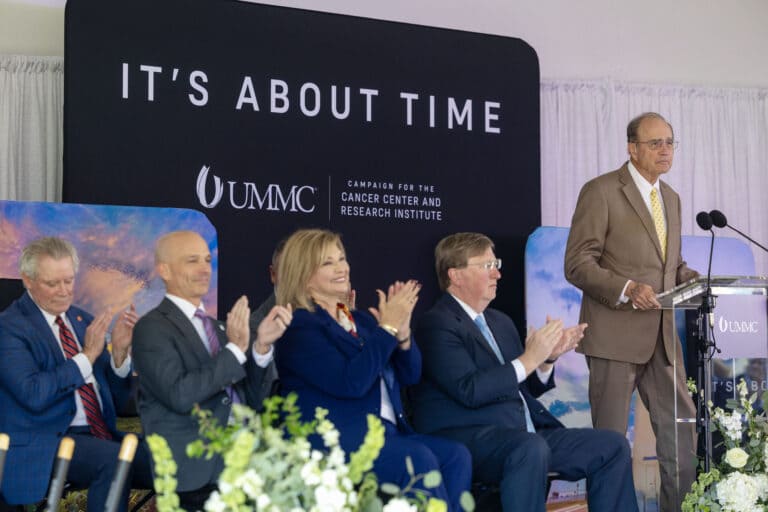
The University of Mississippi Medical Center broke ground Thursday on a cancer center officials say will help improve outcomes for patients in a state with some of the nation’s highest cancer mortality rates.
The new building is critical to the UMMC Cancer Center and Research Institute’s goal of achieving National Cancer Institute designation, which could expand Mississippians’ access to cutting-edge clinical trials and treatment options, officials said.
“We have a real problem here in Mississippi with cancer outcomes,” said Dr. LouAnn Woodward, the medical center’s vice chancellor for health affairs, at the groundbreaking ceremony. “Mississippians need the highest level of cancer care and access to the latest clinical trials right here at home.”

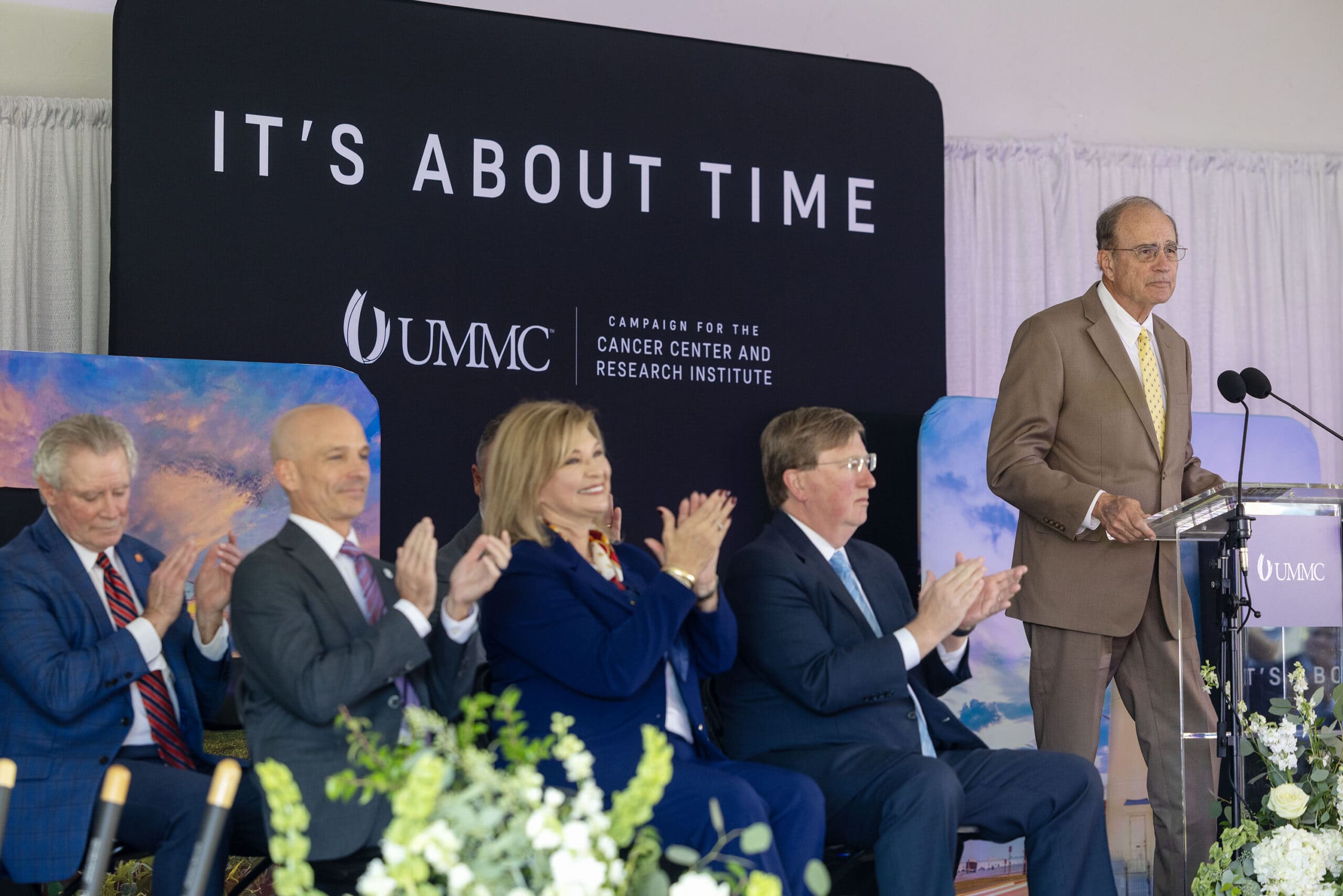
Dr. LouAnn Woodward, vice chancellor for health affairs at the University of Mississippi Medical Center, speaks during the UMMC Cancer Center and Research Institute groundbreaking ceremony in Jackson on Thursday, Oct. 22, 2026. Credit: Eric Shelton/Mississippi Today
The five-story building will be located on State Street across from the medical center and “bring together education, research and treatment under one roof,” according to the project’s fundraising website. The site is adjacent to the American Cancer Society’s Jackson Hope Lodge, which provides free lodging to cancer patients and their caregivers.
The National Cancer Institute is a part of the National Institutes of Health and recognizes cancer centers that meet rigorous requirements for laboratory and clinical research and translate scientific knowledge into innovative treatments for patients.
There are 74 NCI-designated centers nationwide, but none in Mississippi, Louisiana or Arkansas. Cancer patients in Mississippi seeking care at a designated center must travel out of state to receive care. Nearby states with NCI-designated centers include Alabama, Tennessee and Texas.
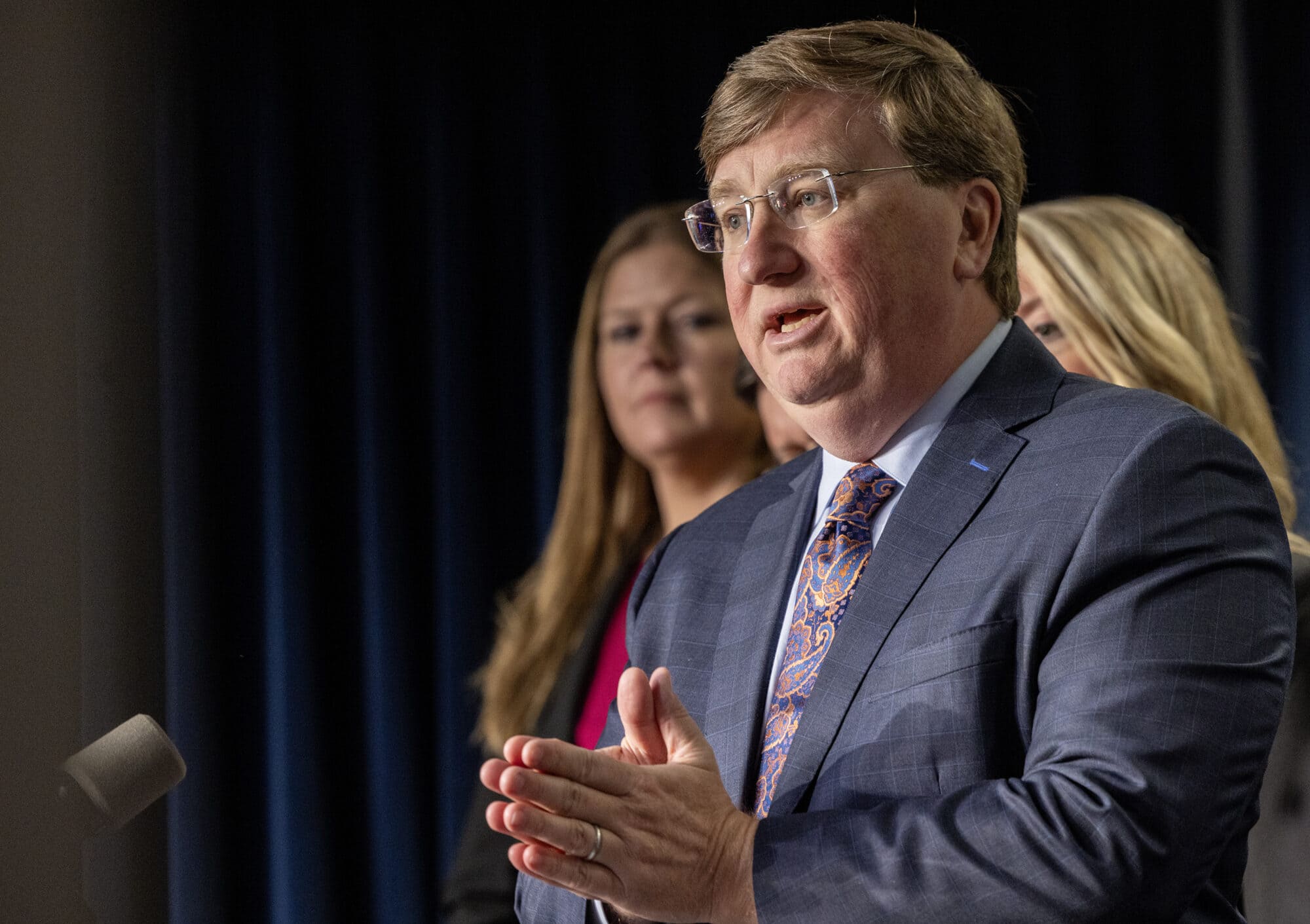
If the cancer center achieves this designation, it will not only serve Mississippi families, but also people in neighboring states, Gov. Tate Reeves said Thursday.
“We’re working to save lives well beyond our borders,” Reeves said.
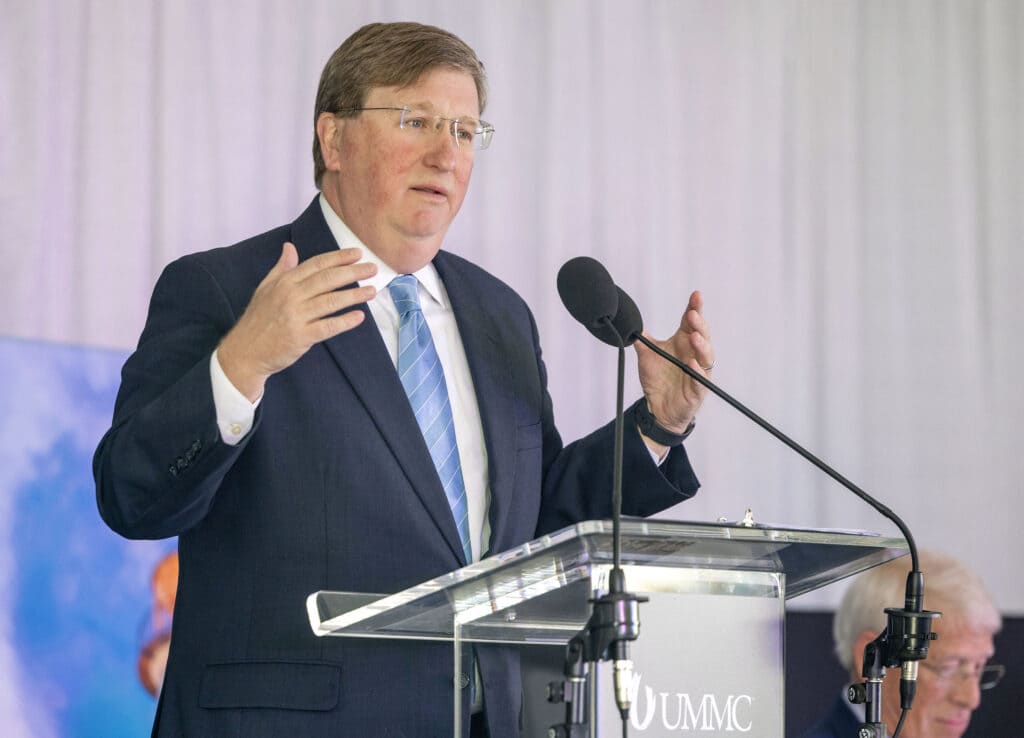
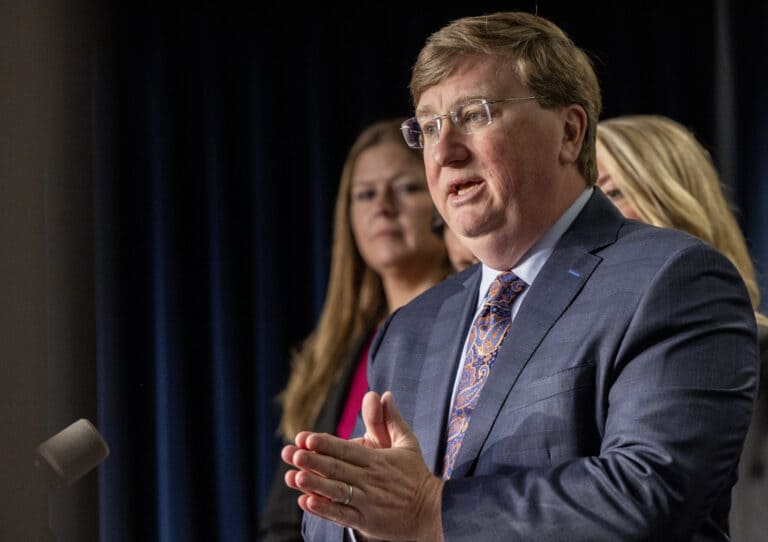
Gov. Tate Reeves speaks during the UMMC Cancer Center and Research Institute groundbreaking ceremony in Jackson on Thursday, Oct. 22, 2026. Credit: Eric Shelton/Mississippi Today
Speakers at the groundbreaking ceremony praised Woodward for her work advocating for the cancer center, noting the accomplishment is a fitting capstone to her more than four decades at UMMC. Woodward announced Oct. 15 that she plans to retire in June 2027. Dr. Alan Jones, the medical center’s associate vice chancellor for health affairs, will succeed her.
Jones said the achievement of NCI designation will take time.
“But we will achieve it, and we will change the outcomes of cancer patients,” he said. “That is our promise.”
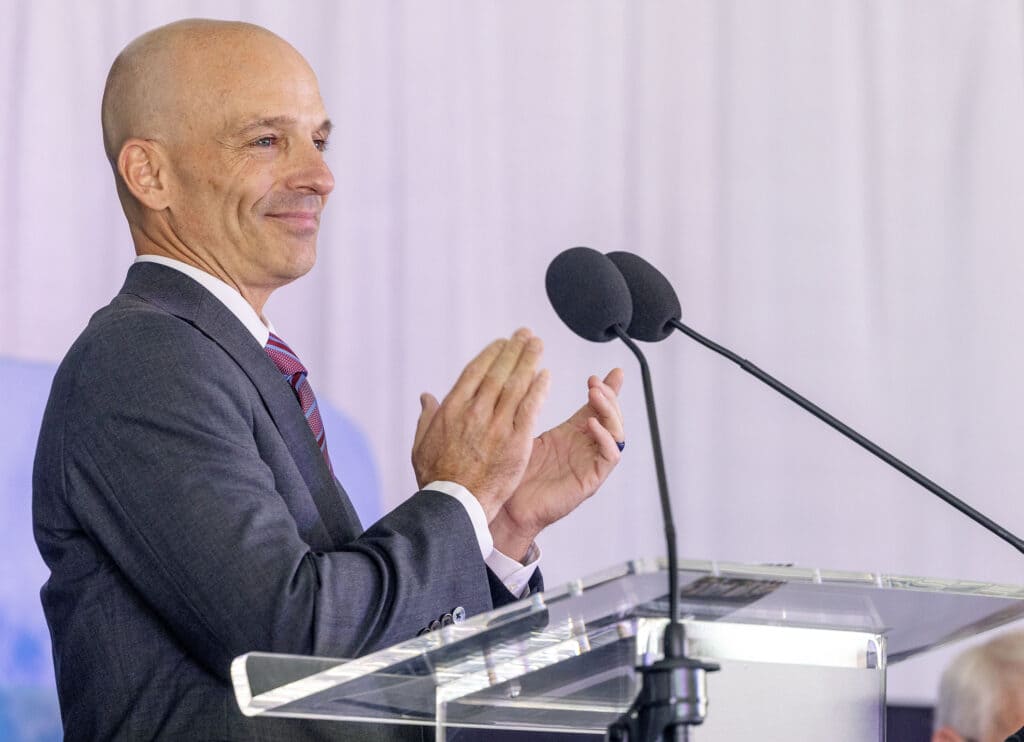
Dr. Alan Jones, associate vice chancellor for health affairs at the University of Mississippi Medical Center, speaks during the UMMC Cancer Center and Research Institute groundbreaking ceremony in Jackson on Thursday, Oct. 22, 2026. Credit: Eric Shelton/Mississippi Today
Funding for the center has been drawn from state and federal sources and private donors. Reeves in April signed legislation appropriating $100 million in state funds to build the cancer center.
Mississippi’s congressional delegation has supported the appropriation of $22 million in federal funds toward cancer research labs and the new cancer center building, and UMMC has requested $16 million in federal support for the project for the upcoming fiscal year, Woodward said.
John and Sandy Black of Madison donated $25 million to support the new facility in 2025. The medical center has raised more than 80% of its $125 million capital campaign goal, according to a press release.
A new building is just one piece of the medical center’s efforts to gain the designation. Dr. Rodney Rocconi, the director of UMMC’s cancer center, previously told Mississippi Today that achieving it will require the center to recruit faculty, expand its research capacity and demonstrate strong programming in community outreach and prevention.
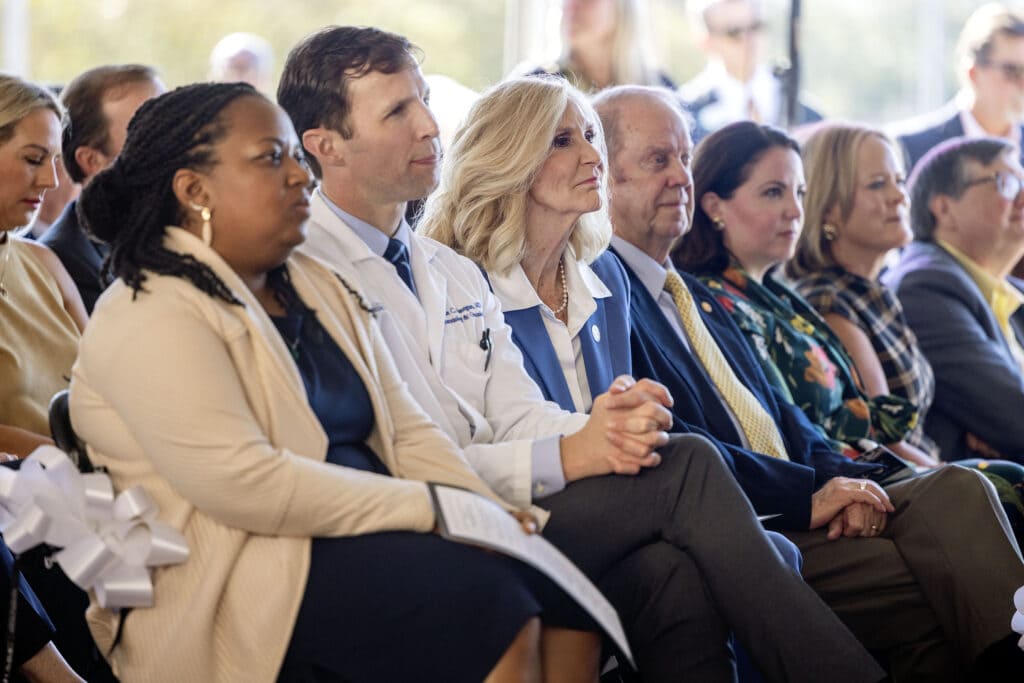
Audience members including Attorney General Lynn Fitch and Insurance Commissioner Mike Chaney listen as Gov. Tate Reeves speaks during the UMMC Cancer Center and Research Institute groundbreaking ceremony in Jackson on Thursday, Oct. 22, 2026. Credit: Eric Shelton/Mississippi Today
Cancer is the second-leading cause of death in Mississippi, according to the Centers for Disease Control and Prevention. The disease disproportionately affects Black Mississippians, who in 2022 had a 13% higher cancer mortality rate than white residents, according to a 2025 report by the Mississippi State Department of Health.
Only six counties in Mississippi fall below the national average of 143 cancer deaths per 100,000 people, according to 2020-2024 data from the National Cancer Institute. Some counties, including Humphreys, Tunica and Issaquena — all located in the Mississippi Delta — have death rates nearly twice as high as the national average.
Eddie Moore, 44, of Clinton, was diagnosed with lung cancer in 2020 and given a prognosis of three months to live. He is still receiving treatment at UMMC.
He said Thursday he is grateful for the treatment he has received at UMMC and believes the construction of a new cancer center will help more people like him.
“It’s a hope for the future,” he said.
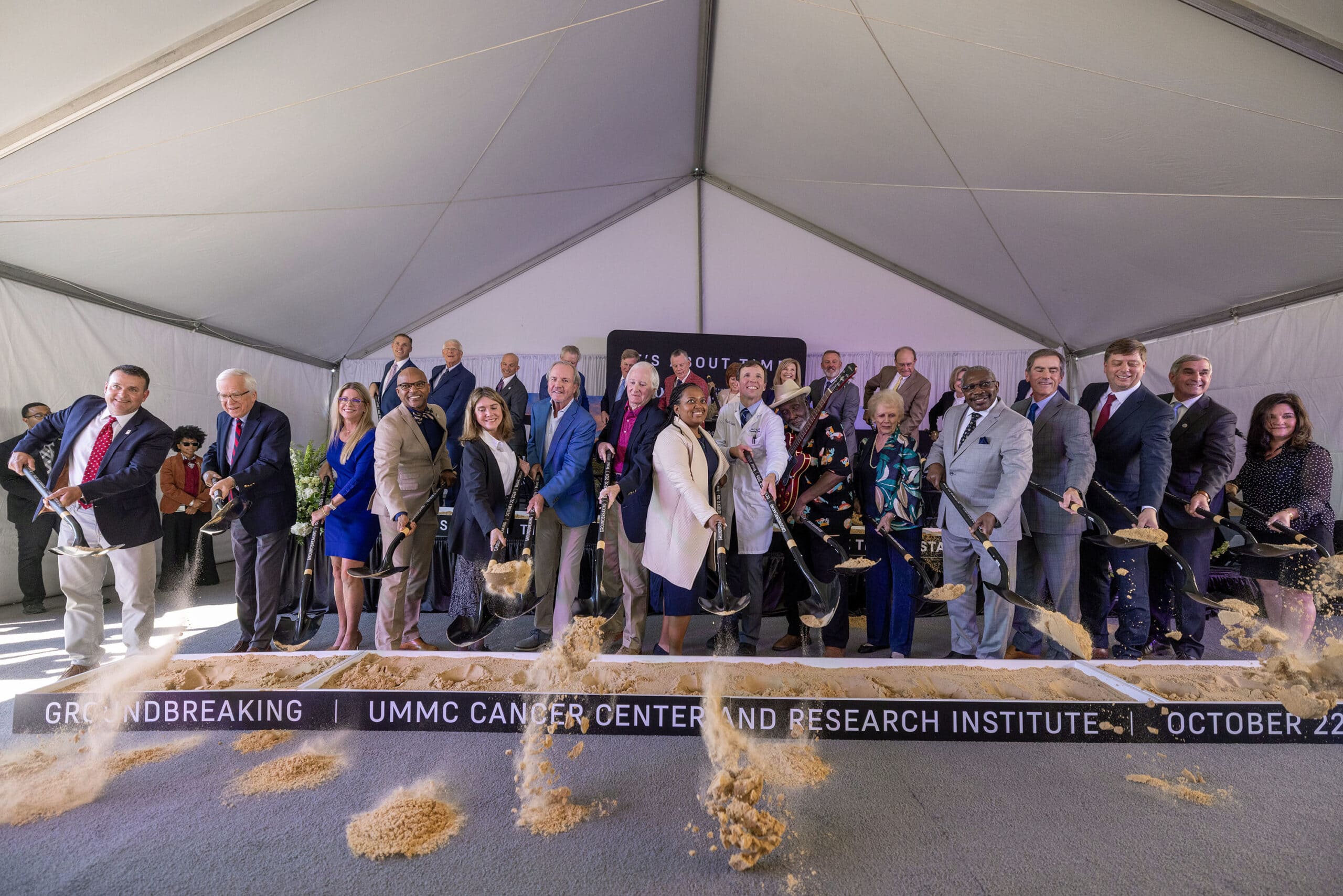
Participants break ground during the UMMC Cancer Center and Research Institute groundbreaking ceremony in Jackson on Thursday, Oct. 22, 2026.Credit: Eric Shelton/Mississippi Today

House Speaker Jason White, R-West, speaks during the UMMC Cancer Center and Research Institute groundbreaking ceremony in Jackson on Thursday, Oct. 22, 2026.Credit: Eric Shelton/Mississippi Today
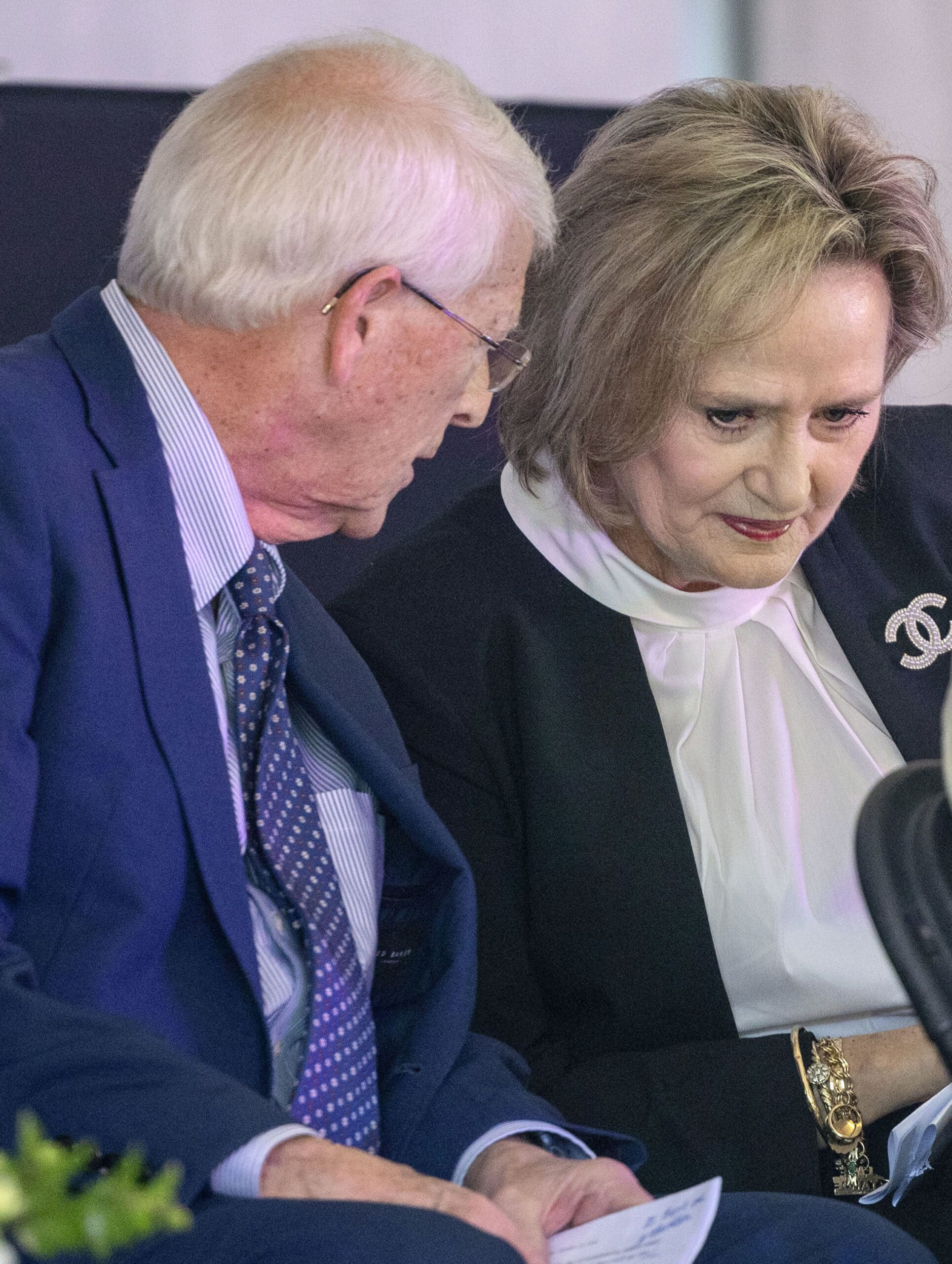
U.S. Sens. Roger Wicker and Cindy Hyde-Smith confer during the UMMC Cancer Center and Research Institute groundbreaking ceremony in Jackson on Thursday, Oct. 22, 2026.Credit: Eric Shelton/Mississippi Today
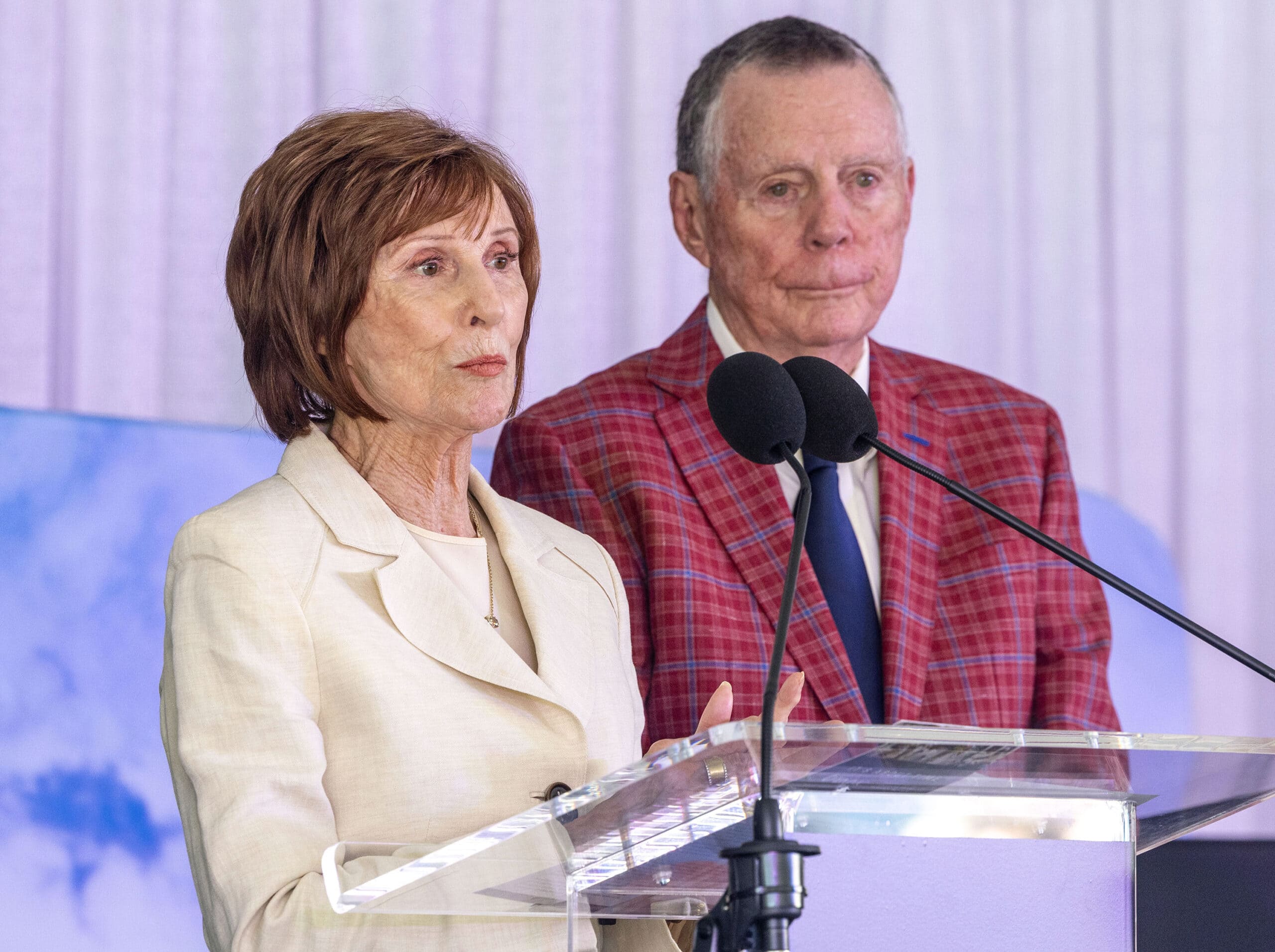
Sandy and John Black speak during the UMMC Cancer Center and Research Institute groundbreaking ceremony in Jackson on Thursday, Oct. 22, 2026.Credit: Eric Shelton/Mississippi Today
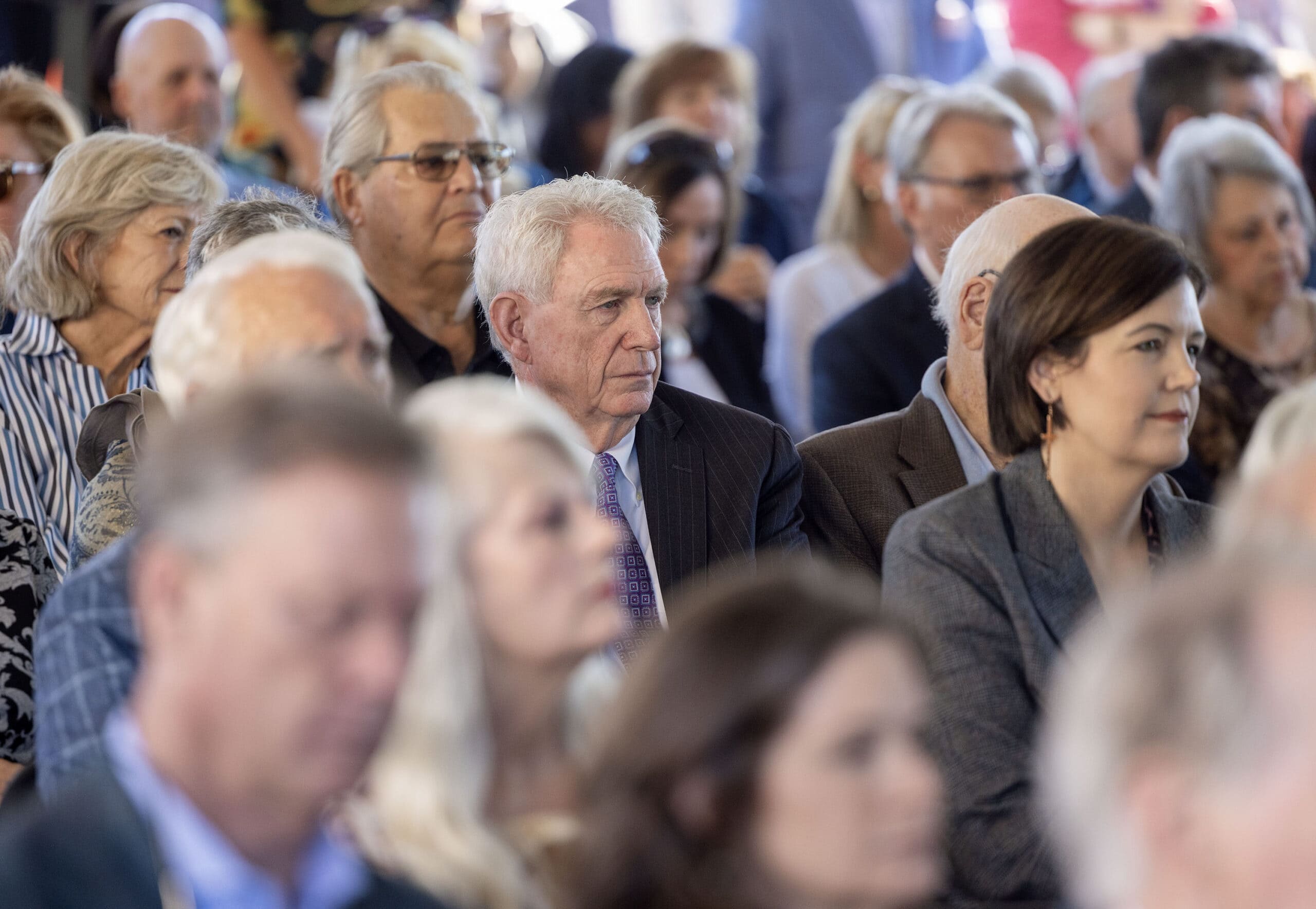
Audience members including Dr. Dan Jones, center, listen as Dr. LouAnn Woodward, vice chancellor for health affairs at the University of Mississippi Medical Center, speaks during the UMMC Cancer Center and Research Institute groundbreaking ceremony in Jackson on Thursday, Oct. 22, 2026.Credit: Eric Shelton/Mississippi Today
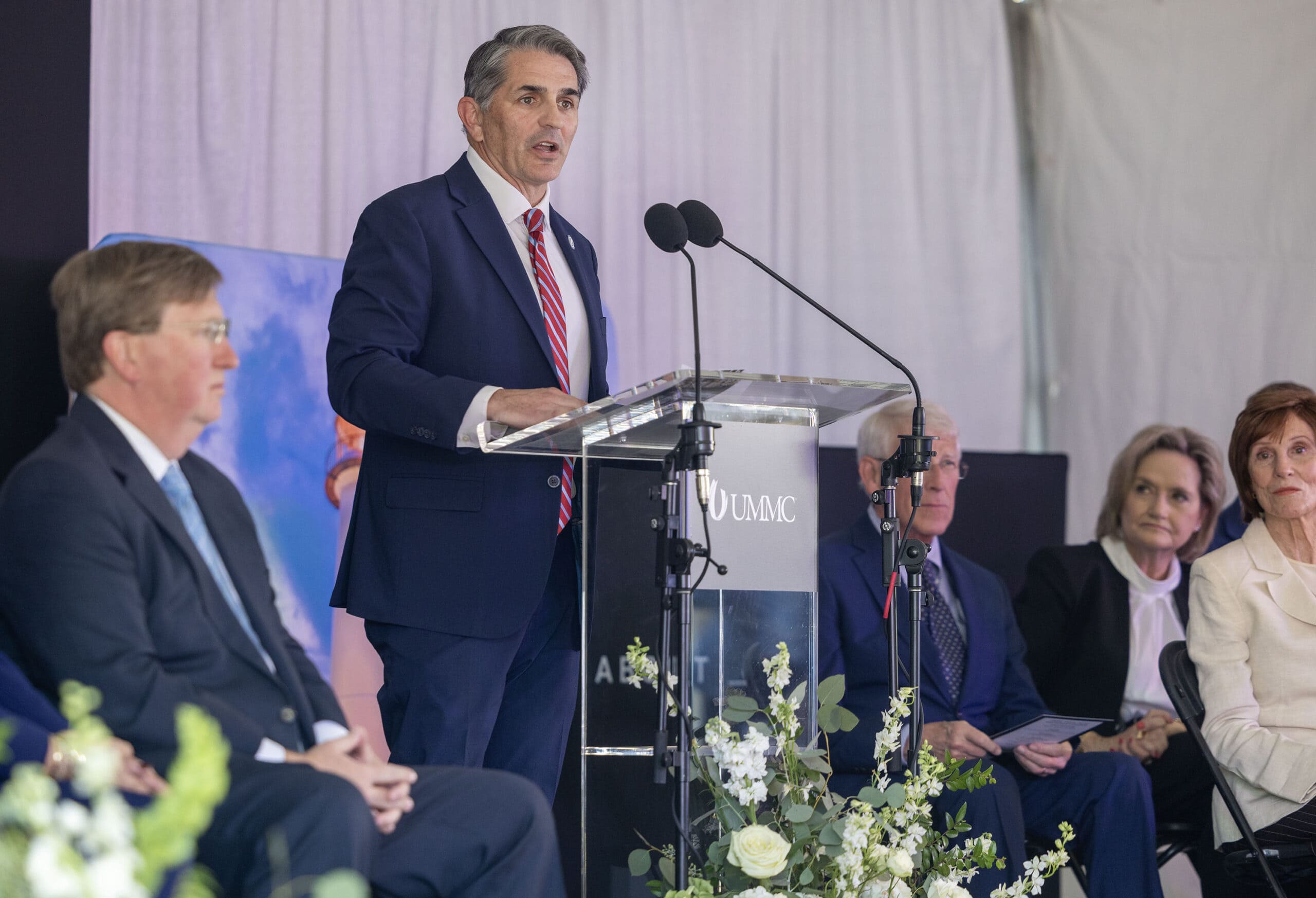
Dr. Rodney Rocconi, director of the UMMC Cancer Center and Research Institute, speaks during the UMMC Cancer Center and Research Institute groundbreaking ceremony in Jackson on Thursday, Oct. 22, 2026.Credit: Eric Shelton/Mississippi Today
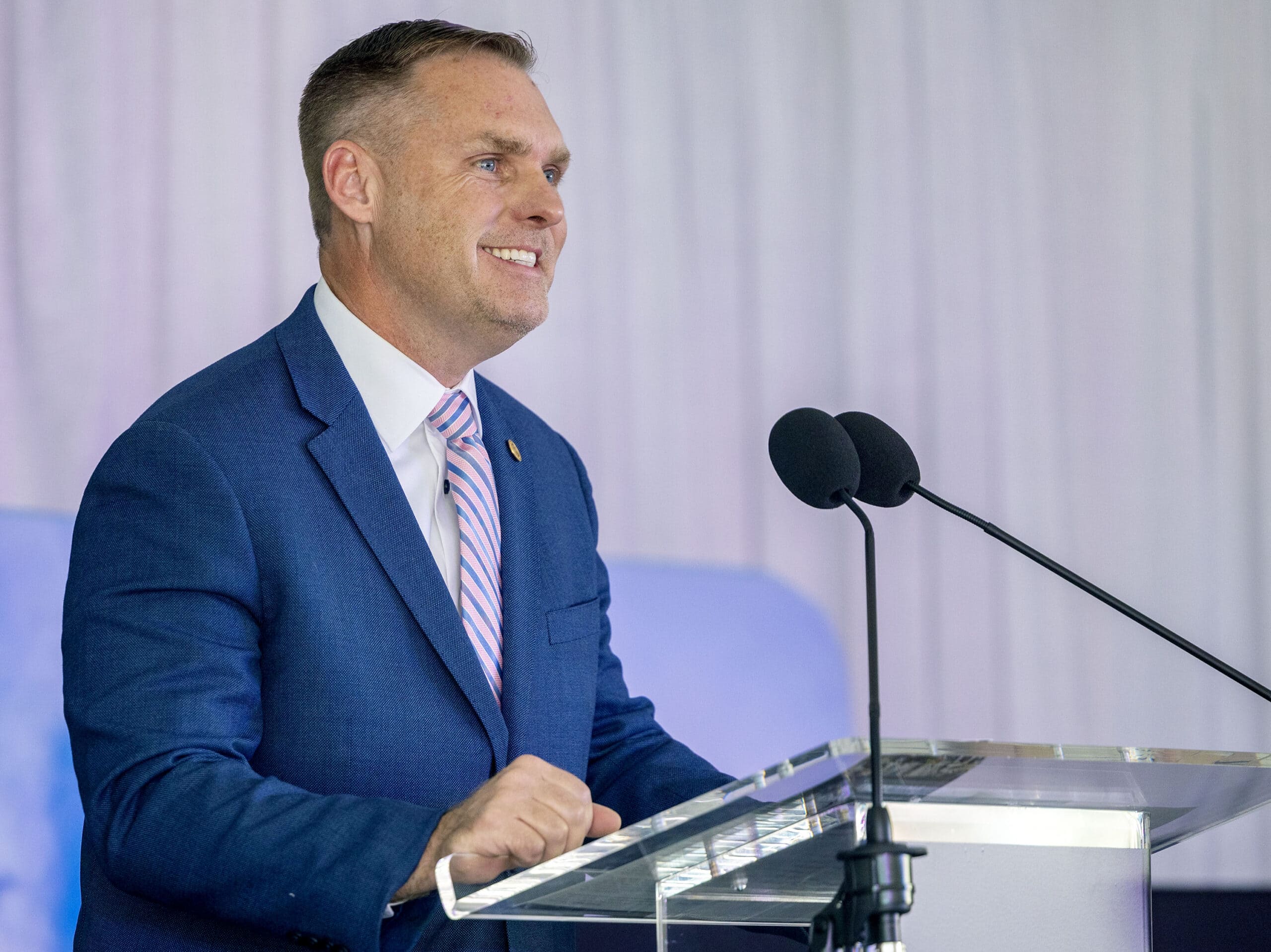
U.S. Rep. Michael Guest speaks during the UMMC Cancer Center and Research Institute groundbreaking ceremony in Jackson on Thursday, Oct. 22, 2026.Credit: Eric Shelton/Mississippi Today
Audio articles are automated for accessibility. Humans wrote and edited the story; however, this audio has not been reviewed for accuracy and may contain errors. Read more about how we use AI to increase access to our reporting.
Mukta Joshi is an investigative reporter at Mississippi Today. She is spending a year as a New York Times Local Investigations fellow examining immigration and criminal justice issues. She can be reached at mukta.joshi@nytimes.com.
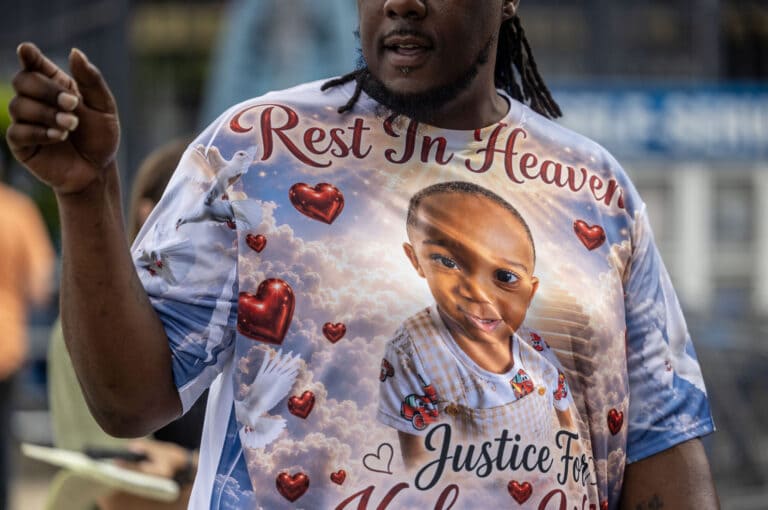
BATESVILLE – The family of Kohen Wiley, the 1-year-old boy fatally shot by the Senatobia police this summer, gathered with state officials Thursday to view unredacted footage of the confrontation, two days after leaked clips were published by a local news outlet and widely circulated on social media.
The viewing was arranged by the Mississippi Bureau of Investigation in Batesville, the family’s hometown, and was closed to the public. Only the toddler’s parents, grandmothers and two members of the family’s legal team were allowed inside.
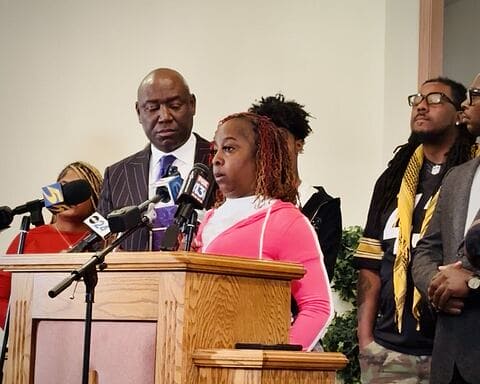
Veronica Roberson, the grandmother of 1-year-old Kohen Wiley who was fatally shot by a Senatobia police officer in June 2026, speaks at a press conference alongside the family’s attorney, Ben Crump, left, on on Thursday, Oct. 22, 2026, in Senatobia. Credit: Mukta Joshi/The New York Times
The Mississippi attorney general, Lynn Fitch, said on Monday that her office would not seek criminal charges against Hunter Foster, the Senatobia officer who fired his weapon at a car while officers pursued two women accused of stealing diapers and baby clothes from a Walmart on June 14.
Kohen’s mother, Vellesiya Wiley, walked out of the meeting after watching the first clip, which had been captured by Foster’s body-worn camera. Wiley said she had already been hesitant to attend after seeing the leaked footage two days before. She said she felt she didn’t need to see any more, especially after Fitch said the shooting was justified.
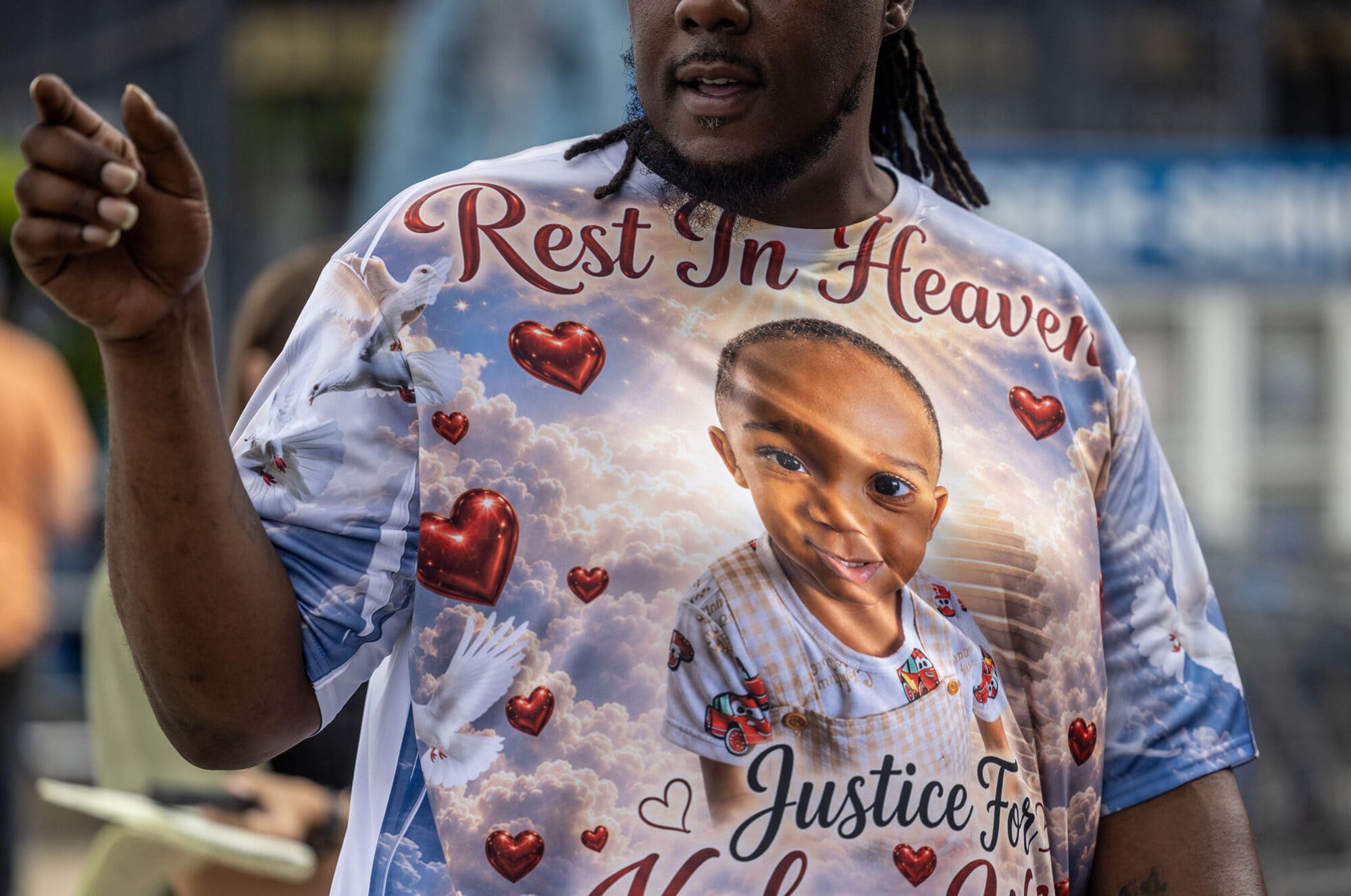
Kohen’s death set off local protests and raised questions about why the police needed to use deadly force over what appeared to be a minor crime.
At least five officers chased the women into the parking lot and then drew their guns when a car carrying Kohen and the women backed out of a parking space and tried to flee.
The car, driven by Latoya Ferrell, moved in the direction of two officers. The authorities publicly stated at the time that the car nearly struck one of them. In the body camera and surveillance footage leaked this week, it is difficult to tell if the car hit any of the officers.
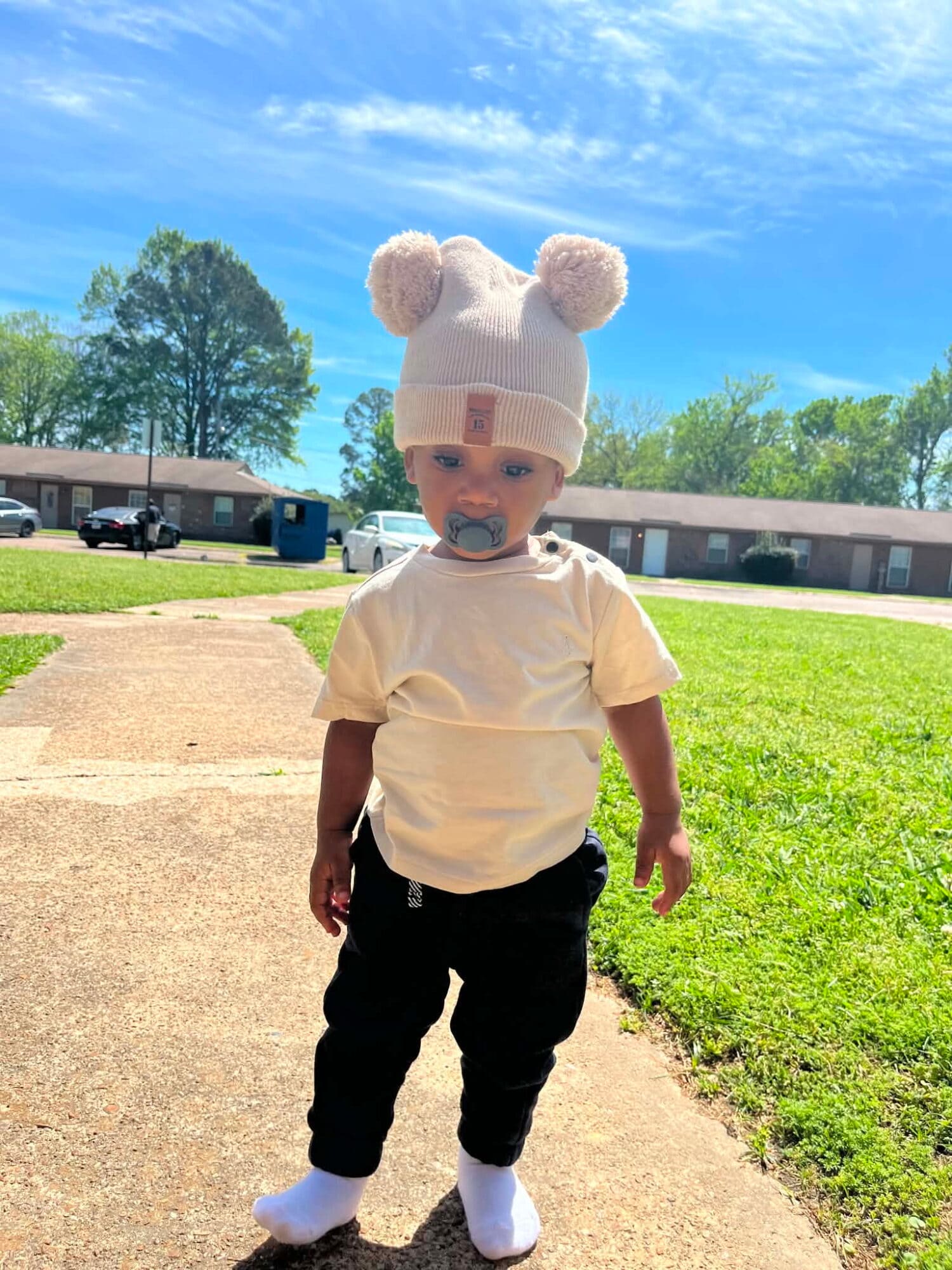
The state Department of Public Safety says a police officer responding to a shoplifting call on Sunday, June 14, 2026, shot at a car that drove in the officer’s direction, killing 1-year-old Kohen Wiley. Credit: Courtesy of Carlos Haynes and Veronica Roberson
Foster, the only officer investigated by state authorities in the incident, fired his weapon four times, the footage showed. Foster has not responded to multiple requests from Mississippi Today reporters for comment over the past several months. Martin Zummach, Foster’s lawyer, said Monday that the attorney general’s decision was “expected” and “overdue.”
Wiley’s mother, Veronica Roberson, who attended the meeting Thursday, said footage from the shooter’s body camera clearly showed he was beside the car, not in front of it, when he fired some of his shots. State officials did not slow down the video or give a frame-by-frame presentation to the family, Ben Crump, the family’s lawyer, said.
The shooter’s body-cam footage was not included in leaked clips published this week by Darkhorse Press, a Mississippi news outlet. State officials are expected to publicly release the video now that the family has viewed it.
Roberson said that the family tried to ask officials about details of the encounter during the private screening, but they said they “weren’t going to get into all that.”
The footage shown in the screening began with a group of officers sitting in a room inside the Walmart, watching unrelated security footage, Crump said. A person who apparently worked at the store and had tried to stop Ferrell and Wiley near the exit then entered the room and said, “They’re running.” Video shows officers sprinting out to surround the car carrying the two women and the toddler.
Roberson said that when they asked officials if the car had injured any officers, “they said the car had made contact with Foster.”
The footage leaked this week shows the car driving toward Foster but turning away from him as it gets close to him. Foster puts his hand on the hood of the car and pivots to avoid being hit. He does not fall down. It is difficult to discern whether the car touches his body. He then continues running and chasing the car along with other officers after the car had passed. In subsequent footage, he is seen standing outside the hospital where Kohen was declared dead.
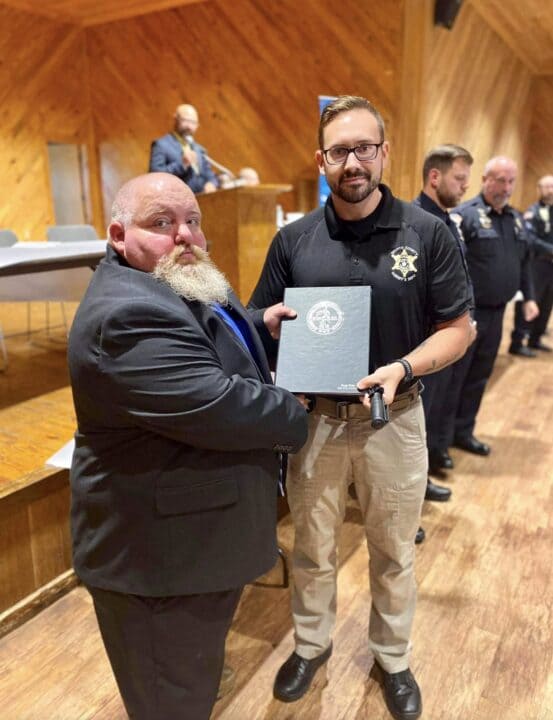
Hunter Foster, right, received an award from the DeSoto County Sheriff’s Office in 2023, when he worked there as a deputy. He later went to work for the Senatobia Police Department. Credit: DeSoto County Sheriff’s Office via Facebook
Shortly after the viewing, Crump held a press conference in Senatobia and criticized the attorney general’s determination that the shooting was justified, repeating that the shot from the side was not justified. He questioned the officers’ drawing guns in response to alleged shoplifting, which would have amounted to a misdemeanor offense. Neither woman has been charged.
Van Turner, the Mississippi lawyer representing Kohen’s family as a member of Crump’s legal team, said he would ask federal authorities to review the footage.
The Mississippi Legislative Black Caucus called for Fitch to give a detailed explanation of how she had reached her decision, and for an independent review of the Senatobia Police Department’s practices.
“Attorney General Fitch cannot reasonably expect public confidence in a decision the public has not been given the evidence to evaluate,” Representative Kabir Karriem, chairman of the caucus, said in a news release. “Announcing that a review is complete does not fulfill the responsibility to explain how a police encounter ended with a baby dead.”
Mississippi Today Justice and Special Projects Editor Debbie Skipper contributed reporting.
Audio articles are automated for accessibility. Humans wrote and edited the story; however, this audio has not been reviewed for accuracy and may contain errors. Read more about how we use AI to increase access to our reporting.
Mississippi Today Ideas is a platform for thoughtful ideas to be shared about our state’s past, present and future. Opinions expressed in guest essays are the author’s own and do not necessarily represent those of Mississippi Today. You canread more about the section here.
I first heard William Faulkner’s quote “To understand the world you must first understand a place like Mississippi” from Chris Routh, former Hinds County deputy public defender.
These words were an invitation that would come to resonate far more deeply over the next five years as my husband and I traversed across the state, two parts of a small but mighty filmmaking team behind The Dead Zone, a Sundance-supported feature documentary exploring the presumption of innocence in America.
As a documentarian, I embed myself in people’s lives, sometimes for years, to intimately understand their lived experiences in pursuit of telling stories that reveal something deeper about the human condition and the systems that shape us.
Faulkner’s words took on a complicated duality. The state became both a cautionary tale – a place where the failures of our criminal legal system are impossible to ignore – and a source of unexpected hope for what it might take to confront one of the most urgent human rights crises of our time.
When I first embarked on this film back in 2021, America was experiencing a racial reckoning over social injustices and a surge of criminal justice reforms ensued. Progressive prosecutors were elected across the country and public sentiment in favor of bail reform gained momentum.
However, as fears of rising crime skyrocketed, and tensions over constitutional rights exploded, criminal justice reforms started to go in a pendulum swing. Our cultural and political silos made it nearly impossible to collaborate on meaningful solutions.
Nearly 400,000 people were stuck in jail before trial, presumed innocent. This is the equivalent of nearly every Ole Miss homegame football attendee over the course of a season being detained behind bars.
I set out to understand this issue, why the pretrial population had skyrocketed and how our so-called ideals – like the presumption of innocence, due process, equality under the law – clashed with our lived realities.
I originally set out to explore issues like cash bail, unlawful detention and their relationship to community safety. Yet an old adage in filmmaking is that you might start with an idea of what your film is, but over time the true film will reveal itself to you. And if you end in the same place you started, it probably wasn’t that good of a story in the first place.
After speaking with dozens of legal experts, directly impacted people, advocates and law enforcement officers, I realized I needed to take a systemic approach and document the story from multiple perspectives inside the system – public defenders, judges, prosecutors and the accused.
One name kept emerging from across our conversations: Public Defender Chris Routh in Jackson. It turned out Mississippi was part of the epicenter of change and hope where I needed to be. The story was revealing itself.
The night before we met Chris, my husband and I sampled beers at Fertile Ground brewery to ease into the filming week in Jackson. The next day we drove to the Hinds County Public Defender’s office downtown. The receptionist buzzed us in, and I immediately noticed the flickering fluorescent lights, magazines from years past scattered across the lobby coffee tables, and a few Christmas decorations still up despite it being May.
But what really caught my eye was a sign on a wall that said: “I hear much of people’s calling out to punish the guilty, but very few are concerned to clear the innocent.” Daniel Defoe.
We sat down and got to know Chris and Chief Public Defender Gail Lowry. Little did they know that this first meeting would inspire a years-long collaboration in the making of this film. We embedded in their office and in Hinds County courtrooms observing quietly and patiently as their undersized but dedicated team took on thousands of cases – from bail hearings to trials – during record turnover.
Over the course of the first year of our filming, their office lost 10 out of 12 lawyers, all of them to higher paying positions that the defender’s office couldn’t match.
Chris and Gail persevered through the storm, working tirelessly to bring in additional funding, attract, train and retain new lawyers all the while managing their own heavy caseloads. A Sisyphean call, but an essential one.
About 80% of defendants in Mississippi require a public defender, yet it’s one of just five states in the country that lack a statewide public defender system.
This is one reason Andre de Gruy, state public defender for Mississippi, has been fighting to address a lack of public defenders, a shortage exacerbated by a myriad of issues like poverty, lack of alternatives to pretrial detention and prosecutorial accountability.
These factors created the perfect storm of people waiting years for their trial in overcrowded jails not convicted of any crime. The gruesome reality of this limbo is that an estimated two people die every day in jail in America awaiting trial.
Unique to Mississippi, the accused oftentimes lack consistent public defenders and could be held with no time limit. This limbo is referred to as the “Dead Zone,” a term used by Jerry Mitchell who reported on this situation.
Attorney Michael Carr, who represented indigent clients in the Delta, also told us that to understand the human toll of the Dead Zone we had to talk to one man in particular: Duane Lake.
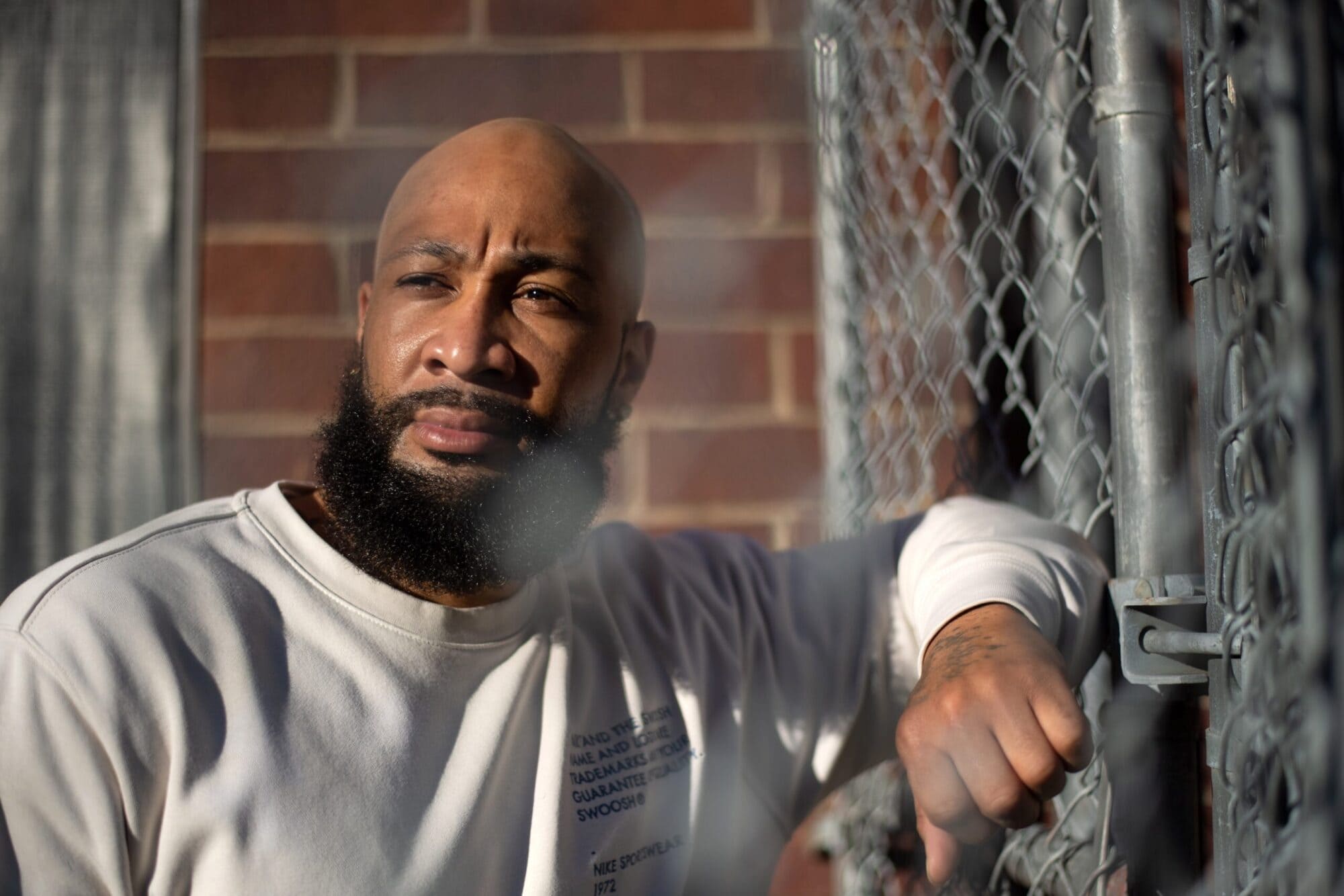
Duane Lake stands for a portrait outside the abandoned Coahoma County Jail in Clarksdale, Mississippi on Jan. 10, 2022. He spent six years in jailfor a crime in didn’t commit. The case against him was dismissed. Credit: Rory Doyle/MCIR
Duane grew up in Clarksdale, and was the father of three young children at the time he was arrested for a triple homicide. He went on to spend over six years trapped in a mold and rat-infested jail awaiting trial. His charge carried the threat of the death penalty and legislators had been floating bringing back death by firing squad at one point.
For three of those years, Duane was stuck in legal limbo without a lawyer – the Dead Zone – because there was no one to represent him between his arrest and his indictment. His indictment took three years in part due to how infrequently the grand jury meets and a lack of available defenders.
We met Duane about a year after a jury found him not guilty. He had moved out of state to Kentucky to rebuild his life. Unlike someone who is convicted and later exonerated, Duane was not entitled to any compensation or recourse because he was held pretrial. Not even an apology.
Like Chris, Duane embraced us cautiously but with open arms. We first filmed him making Mississippi soul food delicacies in his new home in Louisville: grits with plenty of butter and a little bit of sugar. Very quickly, Duane let us into his world and opened up to us, letting us document his journey of building a new life while confronting the realities of what he had just lived through and lost.
Filmmakers inhabit a privileged but complex role. Those privileges include seeing the world through new perspectives and getting to witness the lives of others.
In Jackson, we traveled through elevators at the state public defender’s office gilded with reliefs of Robert E. Lee (the building’s original namesake), through the breezy doors of Hal and Mal’s restaurant, up the carpeted stairs of First Baptist Church for public safety speakouts and through the speakeasy hallway behind Brent’s drugs in Jackson’s Fondren community.
We sampled hot tamales in Cleveland, on the way to the crossroads of Clarksdale and savored the best gumbo we’ve ever had – homemade by Chris himself. We filmed wind turbines whipping in the horizon as cotton rows – an omnipresent reminder of the state’s past – reflected hazy pink sunsets along the Delta highway.
These details may seem ancillary, but they became part of how we came to know Mississippi and, more importantly, how we came to know the people who invited us into their lives.
For us, filmmaking begins with relationships. We believe you have to build trust before you can ask someone to share the most vulnerable parts of their lives. That takes time, honesty, consistency and a willingness to be transparent about who you are, why you’re there, and what you hope to understand. It also means showing up long after the cameras stop rolling.
For us, we couldn’t look away from the injustices we came to witness and the stories we heard from Duane and Chris. We kept coming back and we kept being invited back.
From Chris to Duane and our two additional main participants – Judge Genesis Draper in Houston and Memphis District Attorney Steve Mulroy – this story revealed itself as a powerful, intimate portrait of our country at a crucial inflection point and of the people on the frontlines protecting our justice system against insurmountable odds. Our film asks us all to ponder: Do we still uphold and believe in the core values we claim to? Or is the presumption of innocence dead?
Chris and Duane showed us the importance of keeping on this story, why it matters and the impact it could make. Through all four of our protagonists’ personal journeys, we observed challenges to improving a system that was designed to be broken, but also opportunities for change and above all, the importance of bearing witness.
By cutting through partisan politics and courtroom silos, we hope our film can disarm preconceived notions allowing audiences to embrace a different trajectory forward – one that puts humanity, equality and compassion on a pedestal.
In late 2023, inspired in large part by Duane’s story, Mississippi passed legislation ending the Dead Zone. By law, people who can’t afford a lawyer are now entitled to continuous representation throughout the pretrial process starting from their initial appearance. In theory no longer will a person go without a lawyer between arrest and indictment like Duane.
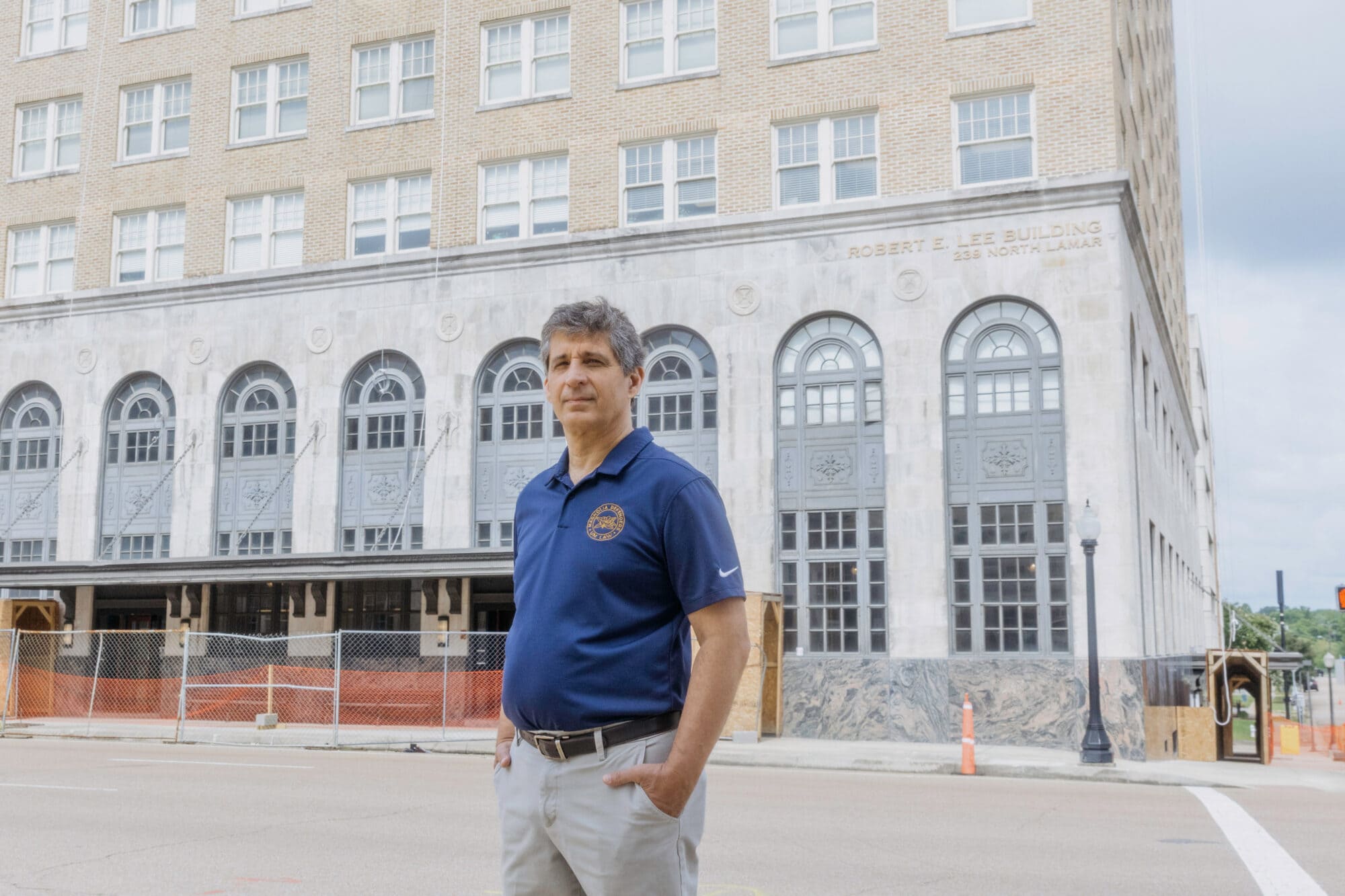
Mississippi state Public Defender André de Gruy stands in front of his office in Jackson in May 2025. Credit: Imani Khayyam for The Marshall Project
Earlier this year, Gail Lowry fought and received additional funding for the Hinds County public defenders office. Andre de Gruy is working with groups like the Deason Criminal Justice Reform Center to forward new pilot programs across the state to dramatically decrease unnecessary lengthy pretrial detention and provide adequate representation from the start.
Indeed, Faulker was right that Mississippi is a lens through which we can better understand our country, and the world.
When we widen the lens, Mississippi could still be the example for the rest of the country. The cradle of our nation’s most challenging issues could also possess the heart of our greatest solutions.
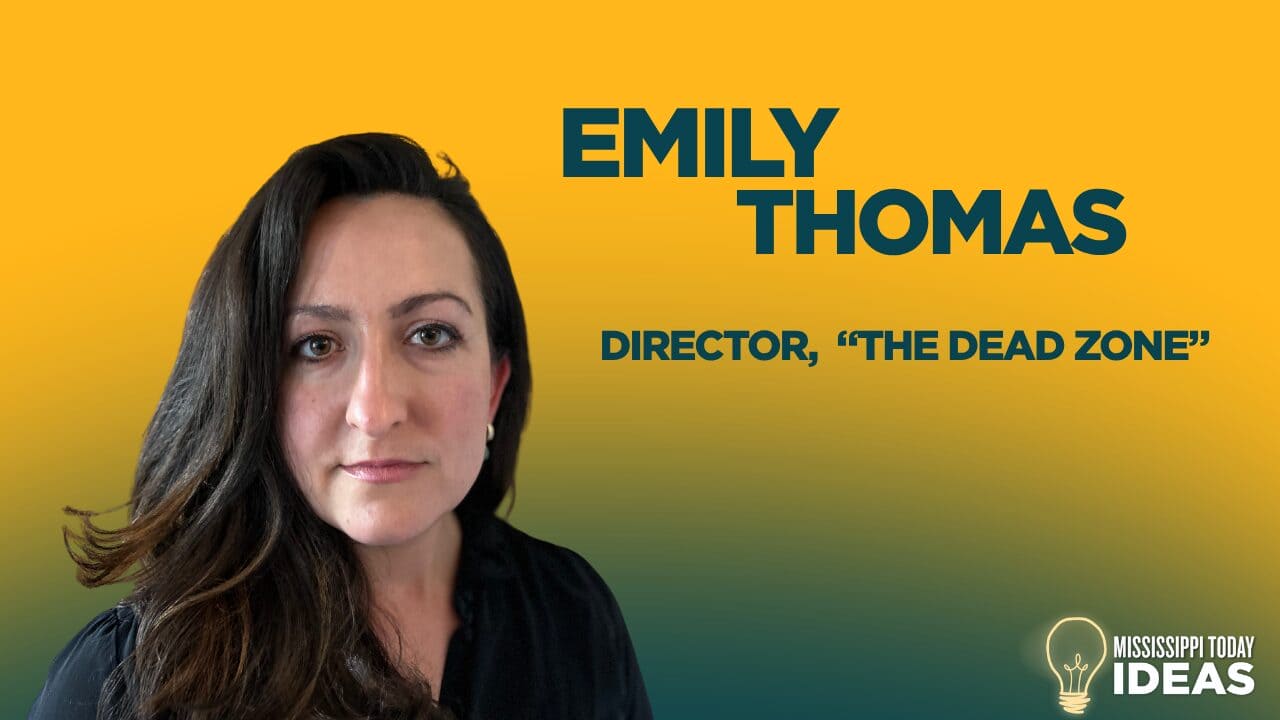
Emily Thomas is a documentary filmmaker, cinematographer and founder of Lemon Tree Productions. Her work is rooted in intimately documenting the human experience to illuminate pressing social justice and environmental issues. She recently was the cinematographer on Baby Doe (SXSW ‘25), the associate producer of Bodyguard of Lies (Tribeca ‘25, Paramount+), and director of Last Days at Paradise High (The New Yorker). As a cinematographer, she has worked on films for Netflix, VICE, The New Yorker, PBS and Frontline. Previously, she was a journalist for VICE, Storyful and The Huffington Post, and was an open source investigator at the Human Rights Center. She is a PGA Create alum, a Prison Journalism Project mentor and a graduate of UC Berkeley’s Graduate School of Journalism. She is currently directing the feature documentary, The Dead Zone, and is based in Baltimore.
The Dead Zone documentary is currently in post-production, to learn more or to bring a screening of the film to your community and be part of the impact campaign get in touch with the film team here:https://www.deadzonefilm.com/
Audio articles are automated for accessibility. Humans wrote and edited the story; however, this audio has not been reviewed for accuracy and may contain errors. Read more about how we use AI to increase access to our reporting.
Many Americans – particularly white Americans – have zero-sum ideas about race, or they believe that one group’s win must mean another group’s loss, author and public policy expert Heather McGhee says.
These ideas are “a framework that is relentlessly marketed to white people by people who have a political and economic profit to gain from that kind of thinking,” she told an audience Wednesday night in Jackson.
“It was originally sort of developed in order to justify enslavement. It was sold to the masses of Europeans who were here who were never going to be part of the colonial plantation class, who were never going to be the very wealthy,” she explained.
“And they were sold a racial bargain as a way to stop what at that point had become a rising movement of white-Black cross-race servant uprisings,” she explained.
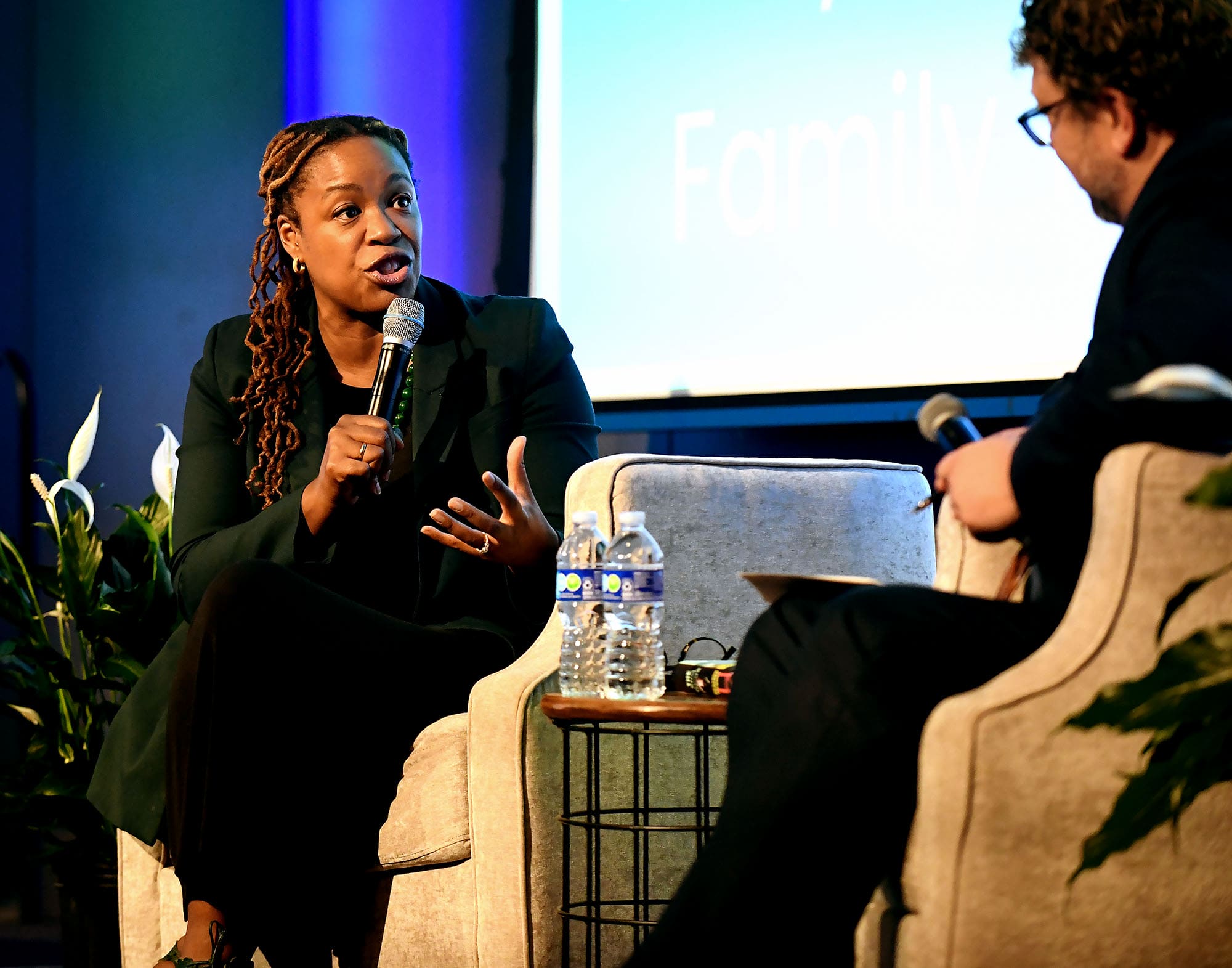
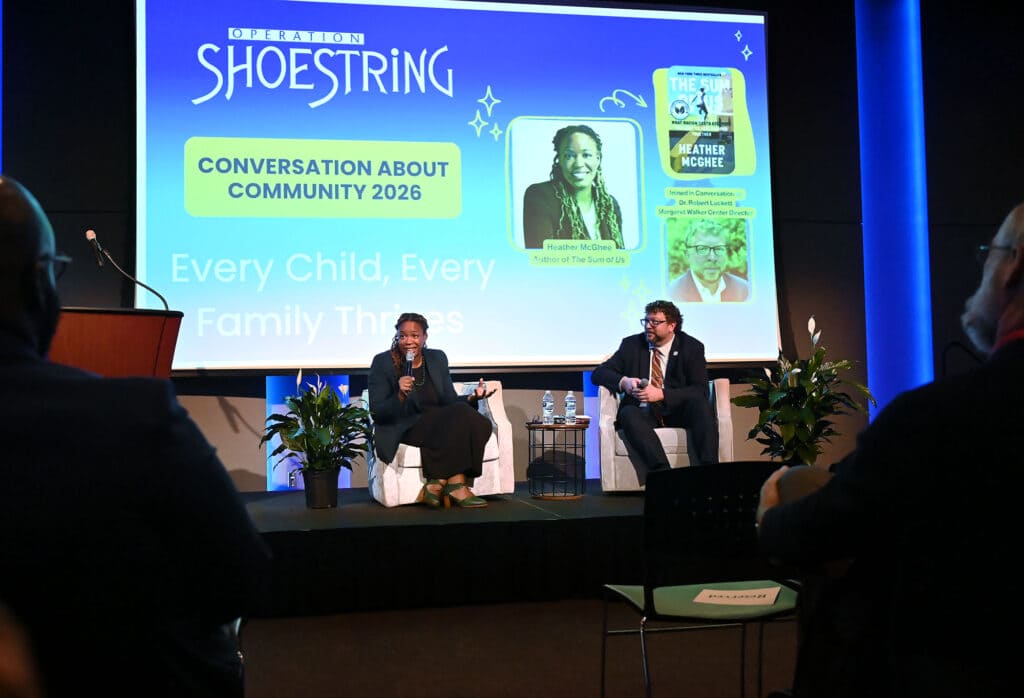
Heather McGhee’s bestselling book, “The Sum of Us: What Racism Costs Everyone and How We Can Prosper Together,” was the topic of discussion at the Two Mississippi Museums, Wednesday, Oct. 21, 2026, in Jackson. Credit: Vickie D. King/Mississippi Today
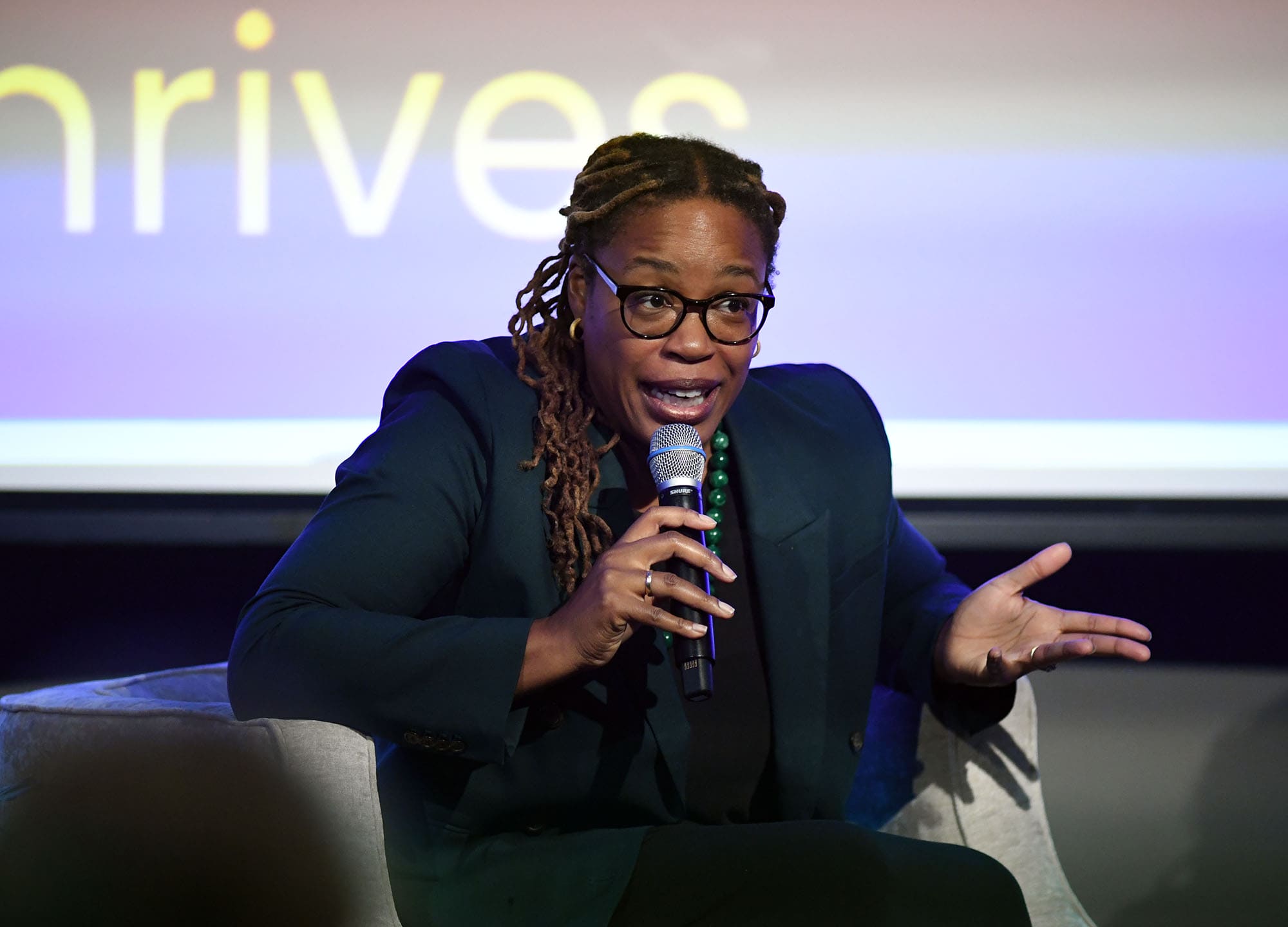
During Operation Shoestring’s “Conversation About Community” event at the Two Mississippi Museums, McGhee said racist policies harm all of society, not just people of color.
McGhee discussed ideas found in her book, “The Sum of Us: What Racism Costs Everyone and How We Can Prosper Together,” based on her 2020 TED talk. She was joined by Robert Luckett, director of Jackson State University’s Margaret Walker Center.
In researching for her book, she found that racist politics and policy-making have prevented advancements in many areas, from education to labor unions.
One example she gave was the Oak Park swimming pool in Montgomery, Alabama. The Oak Park facility was one of thousands of public swimming pools constructed during the New Deal Era, but it shut down in the 1960s to avoid serving racially integrated crowds.
McGhee called it, “a perfect metaphor to describe what we had lost in our society” when the New Deal consensus on the government having an obligation to invest in public goods fell apart due to the backlash against racial integration.
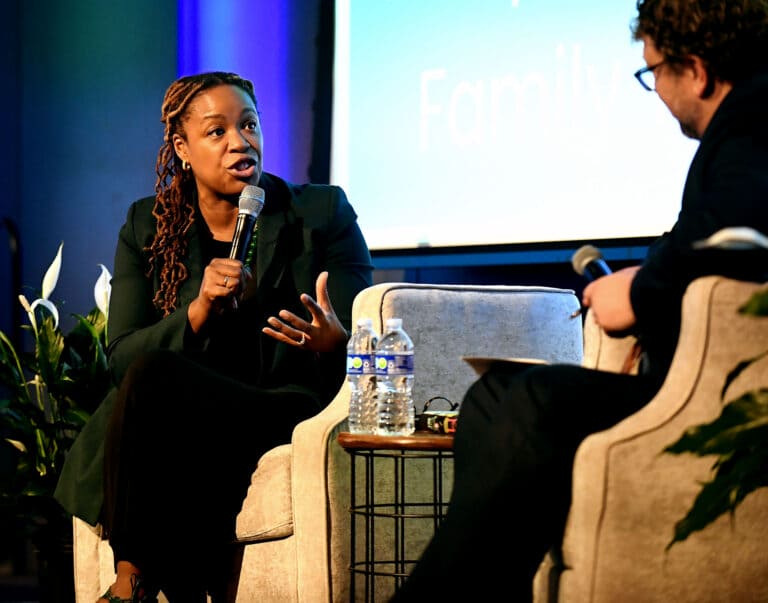
Public policy expert and author Heather McGhee, left, and Margaret Walker Center Director Robert Luckett discuss McGhee’s best-selling book, “The Sum of Us: What Racism Costs Everyone and How We Can Prosper Together,” at the Two Mississippi Museums, Wednesday, Oct. 21, 2026, in Jackson. Credit: Vickie D. King/Mississippi Today
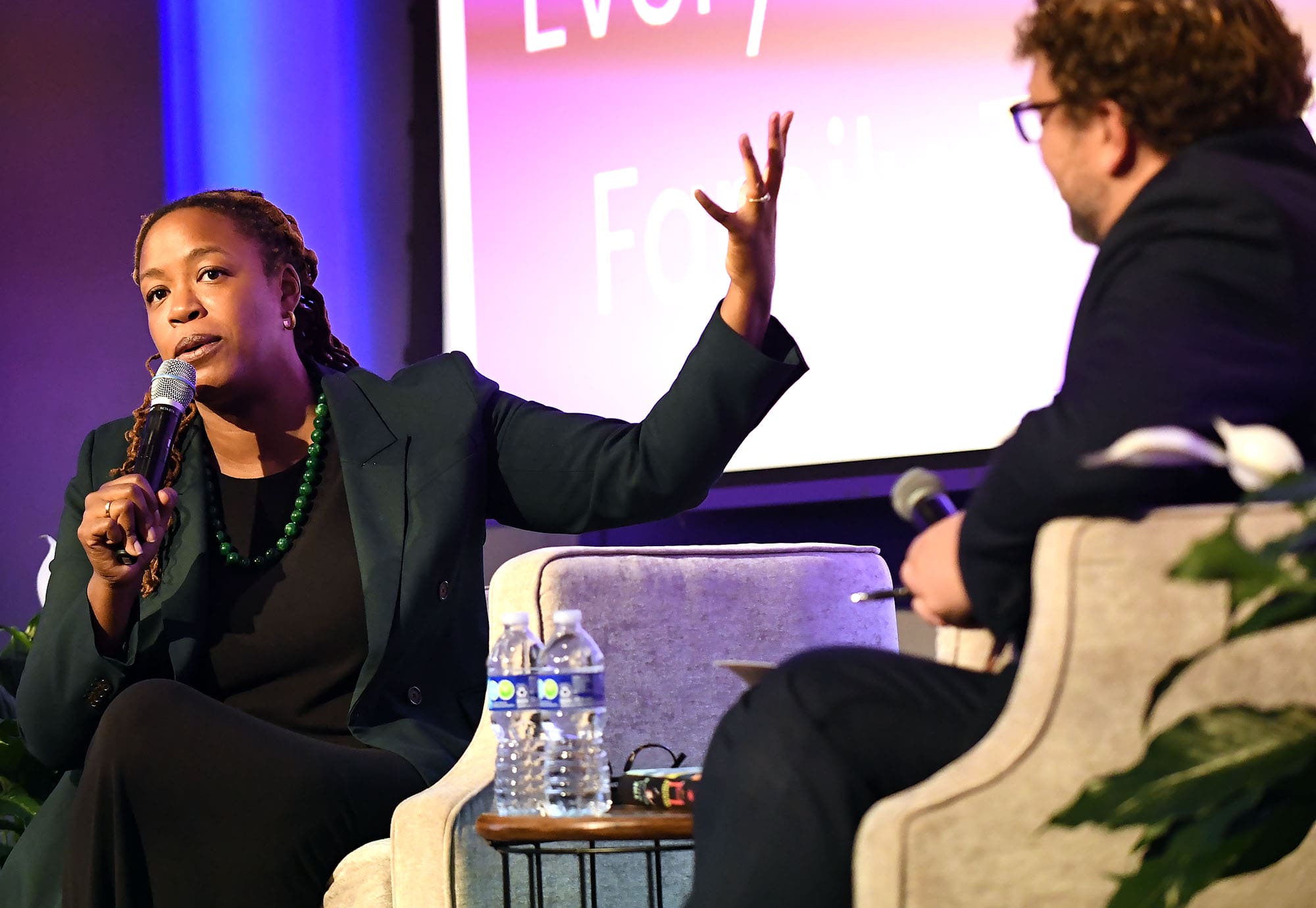
Despite challenges such as artificial intelligence and the movement opposing diversity, equity and inclusion initiatives, she remains optimistic about the power of people to create change.
“We have to be willing to stand up together with a shared sense of purpose and say, ‘We have to rewrite these rules together,’” McGhee said.
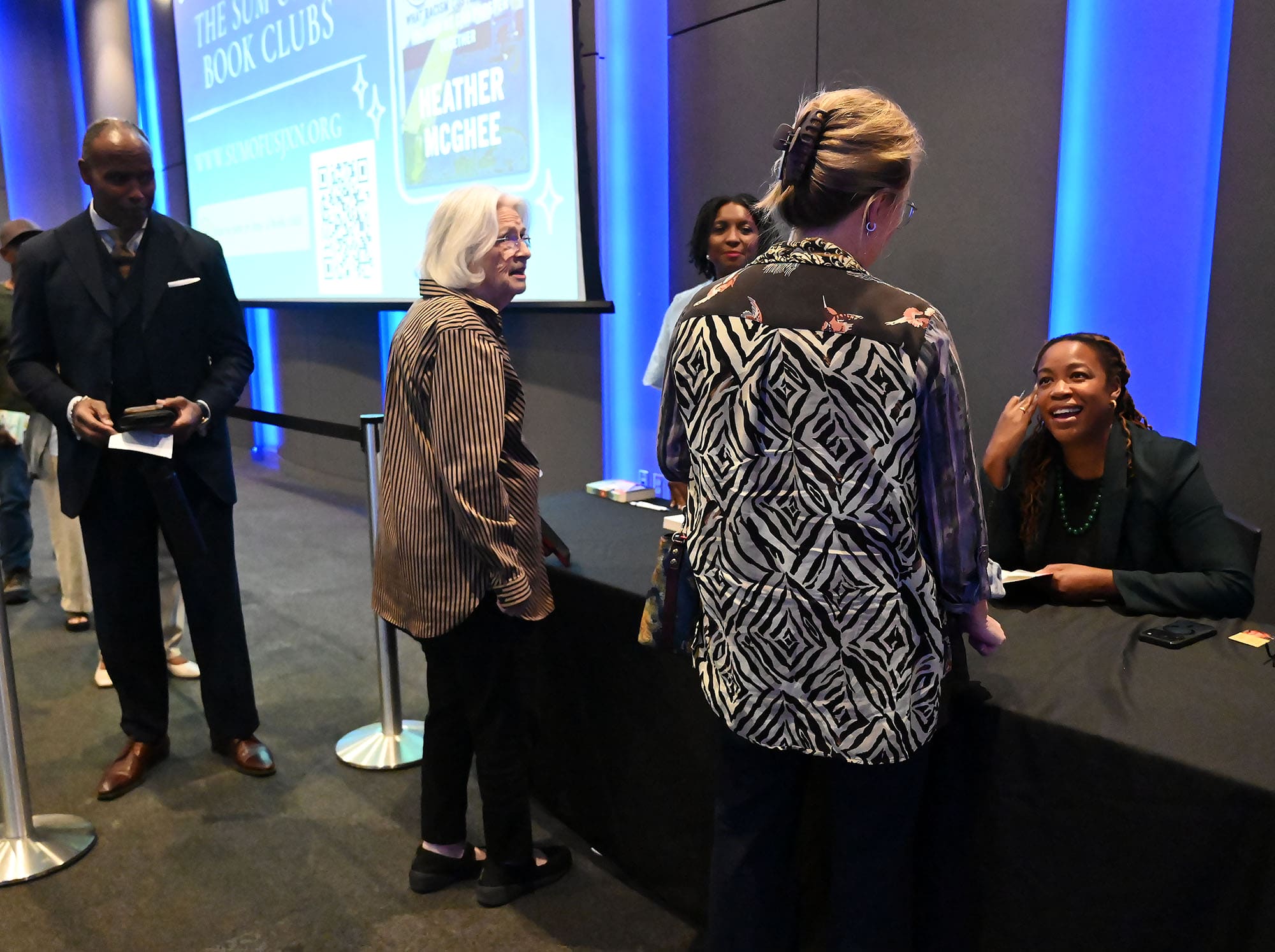
After a question-and-answer segment, audience members were encouraged to buy copies of McGhee’s book and could line up to have them signed.
The groups will finish the book by Dec. 11, then reunite at the Two Mississippi Museums again on Jan. 19, for the National Day of Racial Healing. That day, there will be a conversation with Gail Christopher, the holiday’s founder and McGhee’s mother.
Celess-Mari Johnson attended a discussion of Heather McGhee’s book, “The Sum of Us: What Racism Costs Everyone and How We Can Prosper Together,” at the Two Mississippi Museums, Wednesday, Oct. 21, 2026, in Jackson. Credit: Vickie D. King/Mississippi Today
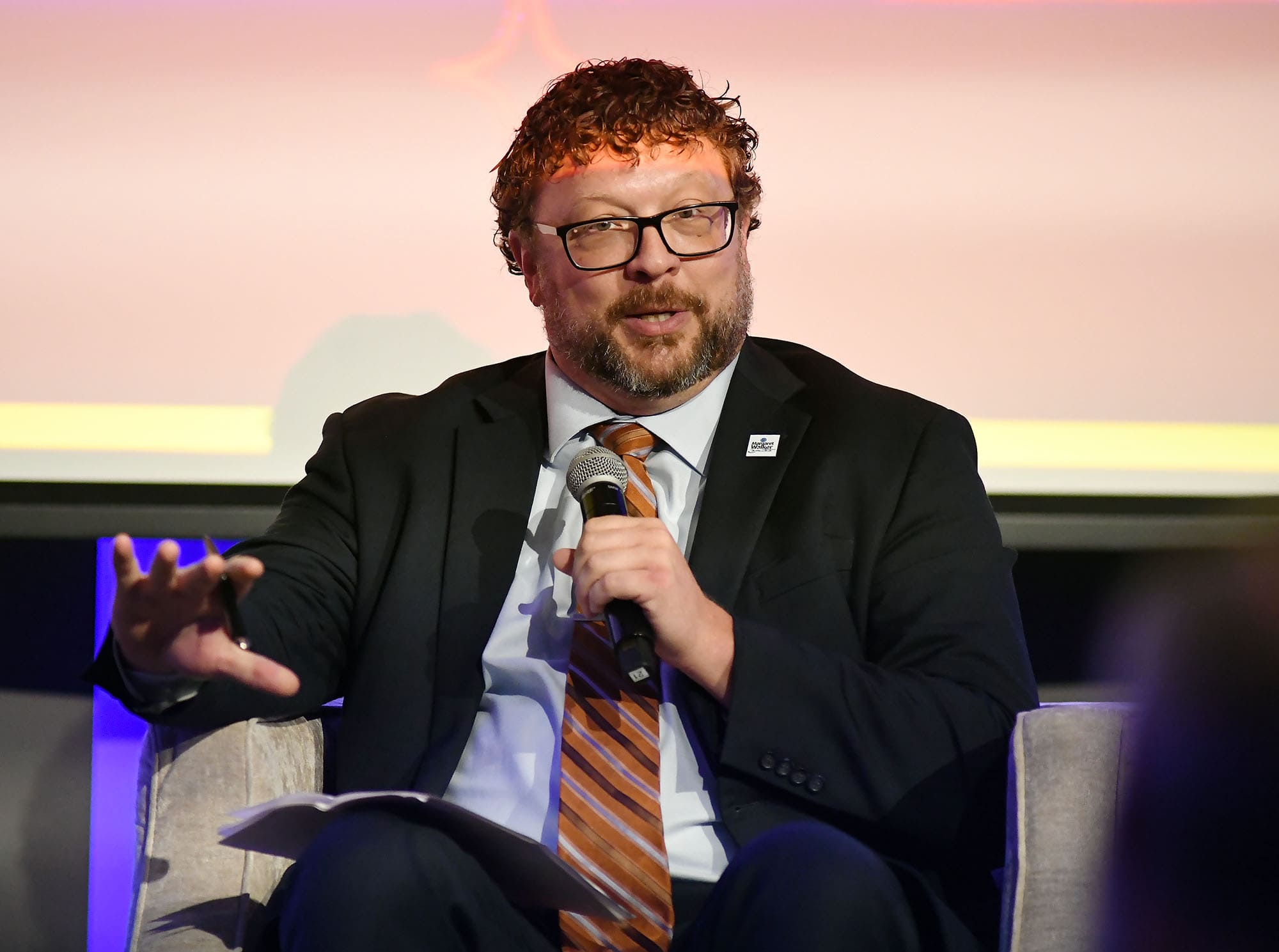
Community advocate Celess-Mari Johnson drove three hours up from the Gulf Coast to hear McGhee speak. She was joined by a few college friends, and they plan to form their own reading group.
She has already begun reading her copy of McGhee’s book. “I think the title says it all,” Johnson said.
“There’s a cost at all levels for everybody involved, and not just one population, not just one generation,” she added.
Public policy expert and author Heather McGhee discusses her bestselling book, “The Sum of Us: What Racism Costs Everyone and How We Can Prosper Together,” at the Two Mississippi Museums, Wednesday, Oct. 21, 2026, in Jackson.Credit: Vickie D. King/Mississippi Today
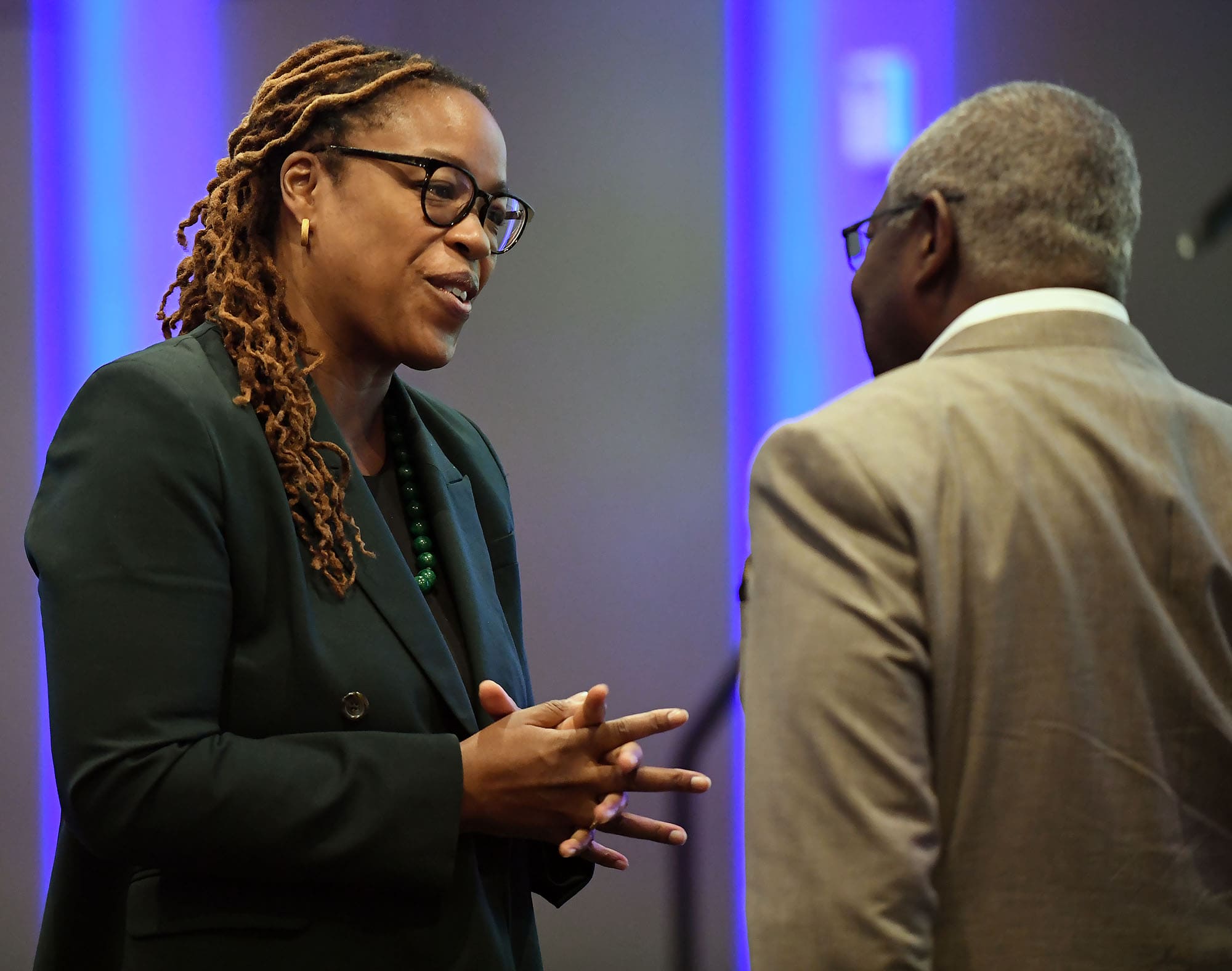
Public policy expert and author Heather McGhee and Margaret Walker Center Director Robert Luckett discuss McGhee’s bestselling book, “The Sum of Us: What Racism Costs Everyone and How We Can Prosper Together,” at the Two Mississippi Museums, Wednesday, Oct. 21, 2026, in Jackson.Credit: Vickie D. King/Mississippi Today
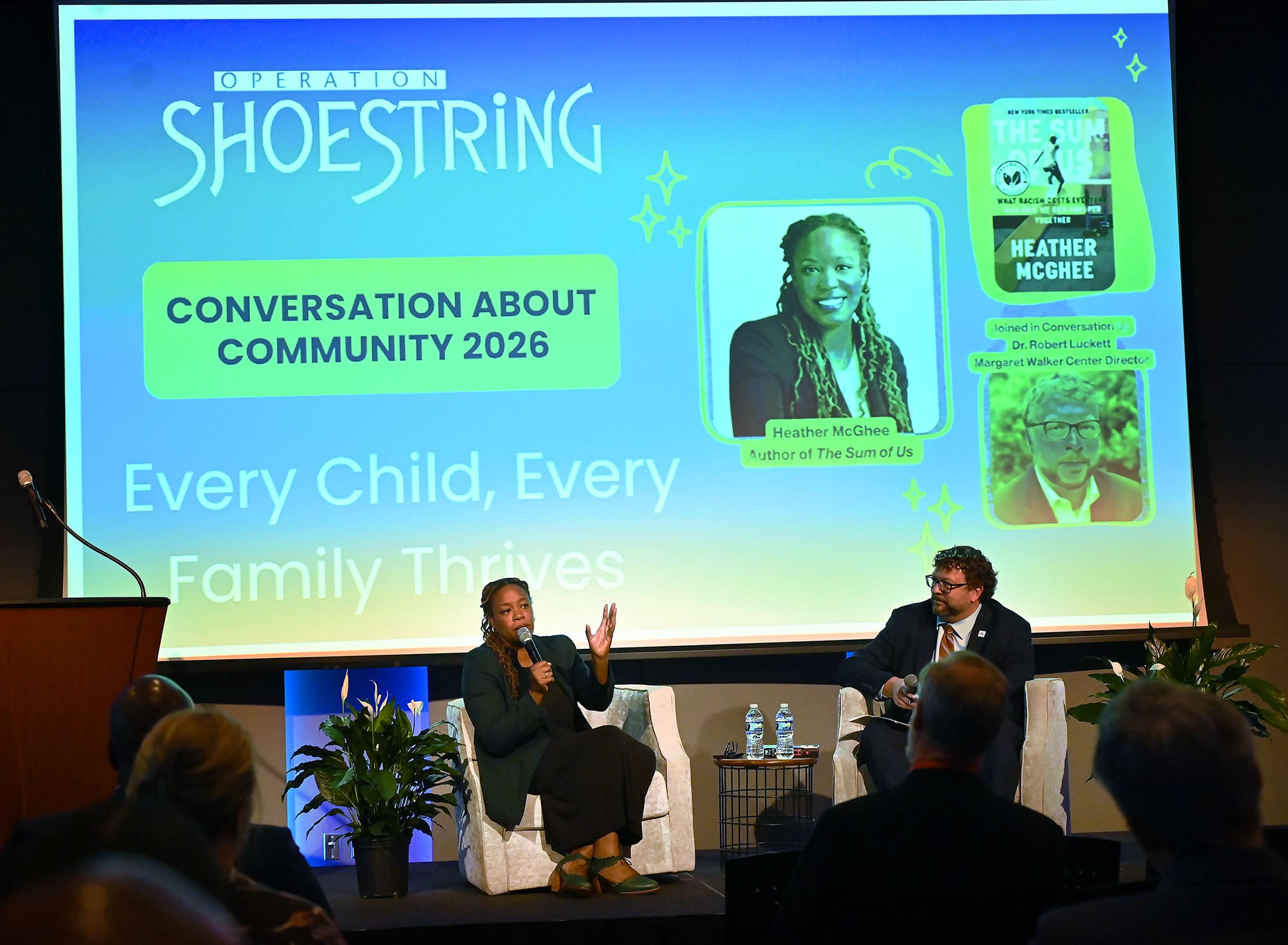
Margaret Walker Center Director Robert Luckett joins public policy expert and author Heather McGhee to discuss McGhee’s bestselling book, “The Sum of Us: What Racism Costs Everyone and How We Can Prosper Together,” at the Two Mississippi Museums, Wednesday, Oct. 21, 2026, in Jackson.Credit: Vickie D. King/Mississippi Today
Public policy expert and author Heather McGhee, left, speaks with Jackson Mayor John Horhn shortly before McGhee discusses her bestselling book, “The Sum of Us: What Racism Costs Everyone and How We Can Prosper Together,” at the Two Mississippi Museums, Wednesday, Oct. 21, 2026, in Jackson.Credit: Vickie D. King/Mississippi Today
Public policy expert and author Heather McGhee, left, and Margaret Walker Center Director Robert Luckett discuss McGhee’s bestselling book, “The Sum of Us: What Racism Costs Everyone and How We Can Prosper Together,” at the Two Mississippi Museums, Wednesday, Oct. 21, 2026, in Jackson.Credit: Vickie D. King/Mississippi Today

Public policy expert and author Heather McGhee, right, signs copies of her book, “The Sum of Us: What Racism Costs Everyone and How We Can Prosper Together,” after she discussed the book at the Two Mississippi Museums, Wednesday, Oct. 21, 2026, in Jackson.Credit: Vickie D. King/Mississippi Today

Audio articles are automated for accessibility. Humans wrote and edited the story; however, this audio has not been reviewed for accuracy and may contain errors. Read more about how we use AI to increase access to our reporting.
Mississippi lawmakers are considering legislation to ban sales of synthetic kratom products after the deaths of two University of Mississippi students.
Rep. Lee Yancey, a Republican from Brandon, is considering legislation to ban synthetic kratom products, while Sen. Nicole Boyd, a Republican from Oxford, wants to give state officials authority to temporarily remove potentially harmful substances from store shelves. Other officials, including Lt. Gov. Delbert Hosemann and State Health Officer Dan Edney, have called for tighter restrictions.
The renewed discussions follow the Sept. 21 deaths of Aidan Hamilton, 18, and Robert Strang, 20, in separate incidents in Oxford. Investigators discovered kratom products while examining the students’ deaths, and federal authorities have since charged a store clerk and his son with selling illegal kratom.
Kratom comes from a tropical tree native to Southeast Asia. Its effects can vary by dose, producing stimulant-like effects at lower doses and opioid-like effects at higher doses. The substance is sold in gummies, tablets and drinkable shots, mainly at gas stations and convenience stores.
At Ole Miss, officials have been encouraging students to use drug education and wellness services and resources from the university’s William Magee Center, said Jacob Batte, a university spokesperson.
Hosemann called for a statewide ban in an op-ed the Magnolia Tribune published this month.
A law already restricts access to kratom. In 2025, Gov. Tate Reeves signed a bill into law prohibiting kratom sales to anyone younger than 21 and outlawing a synthetic form of the substance.
Kratom capsules are seen on Sept. 27, 2017, in Albany, N.Y. Credit: AP Photo/Mary Esch
Yancey, who authored the 2025 law, said he believes synthetic forms are the most dangerous. There needs to be another layer of protection for consumers, he said.
The state Senate has been reluctant to ban the products, Yancey said, so he’s also exploring legislation that would classify kratom as controlled substances and ban over-the-counter sales.
Boyd said she is considering introducing a bill that would give a state agency, such as the state Board of Health, authority to temporarily remove potentially harmful products from store shelves until lawmakers could take further action. Lawmakers would need to determine whether violations would result in administrative penalties or criminal charges, what testing would be required and how much enforcement would cost.
“We’re all looking and thinking through the steps that need to be put in place and in a comprehensive way to get these poisons off our shelves and make sure it isn’t getting to students and our youth,” Boyd said.
The Legislature has been discussing kratom bans for more than six years, and simply passing another law wouldn’t be a magic bullet, said Sen. Daniel Sparks, a Republican from Belmont. Banning one substance could prompt manufacturers to sell similar products under different names, Sparks said.
Some Mississippi communities are already enforcing their own restrictions on kratom. Sales and possession of kratom have been prohibited in Oxford since 2019. Lafayette County has had a local ban in place since January 2021. A Sept. 30 statement from Lafayette County Metro Narcotics Unit called on lawmakers to ban synthetic kratom in statewide.
Edney said he supports classifying kratom leaf as a schedule III controlled substance.That’s what the lawmakers did in 2023, with a law categorizing tianeptine also known as “ZaZa” and “Tianaa,” with other drugs such as ketamine and anabolic steroids.
“I think we can all agree that any potentially addictive substance, that’s even beneficial in other ways, at least needs to be determined safe,” Edney said. “And, right now we can’t say the kratom supply in the state of Mississippi is safe.”
Taylor Vance and Gwen Dilworth contributed to this report.
Audio articles are automated for accessibility. Humans wrote and edited the story; however, this audio has not been reviewed for accuracy and may contain errors. Read more about how we use AI to increase access to our reporting.
Mississippi State Health Officer Dr. Dan Edney is becoming president of a national nonprofit organization representing public health agencies across the United States, the group announced Wednesday.
Edney will lead the Association of State and Territorial Health Officials for a one-year term while continuing to lead the Mississippi State Department of Health. He plans to focus his presidency on maternal and infant health, rural health and highlighting the important work of states and territories, according to a press release from the association.
“Our nation’s public health leaders face increasingly complex challenges, but we also have tremendous opportunities to strengthen our public health system through collaboration, innovation and a shared commitment to improving the health of every community,” Edney said. “I am honored to serve as ASTHO president and look forward to working with my colleagues to advance policies and partnerships that support a healthier nation.”
ASTHO’s members are chief health officials from across the U.S. The organization works to develop public health leaders, support their agencies through training and technical assistance, and advocate for resources and policies that improve public health.
Edney spent the past year serving as the organization’s president-elect. He succeeds Dr. Manisha Juthani, commissioner of the Connecticut Department of Public Health, as president.
“It is a real privilege to welcome Dr. Edney as ASTHO’s next president,” said Dr. Joseph Kanter, the organization’s CEO. “He brings a remarkable depth of experience — not only as a visionary state health leader guiding Mississippi through critical public health milestones, but also as a frontline clinician deeply committed to tackling complex challenges like the opioid crisis.”
Edney has served as Mississippi’s state health officer since August 2022. He succeeded Dr. Thomas Dobbs. Edney previously served as the state agency’s deputy state health officer and chief medical officer and worked closely with Dobbs on the department’s COVID-19 response.
He is also a former president of the Mississippi State Medical Association and former board member of the Mississippi State Board of Medical Licensure. He was in private practice in Vicksburg for more than 30 years, and is a board-certified general internist with a subspecialty board certification in addiction medicine.
Audio articles are automated for accessibility. Humans wrote and edited the story; however, this audio has not been reviewed for accuracy and may contain errors. Read more about how we use AI to increase access to our reporting.
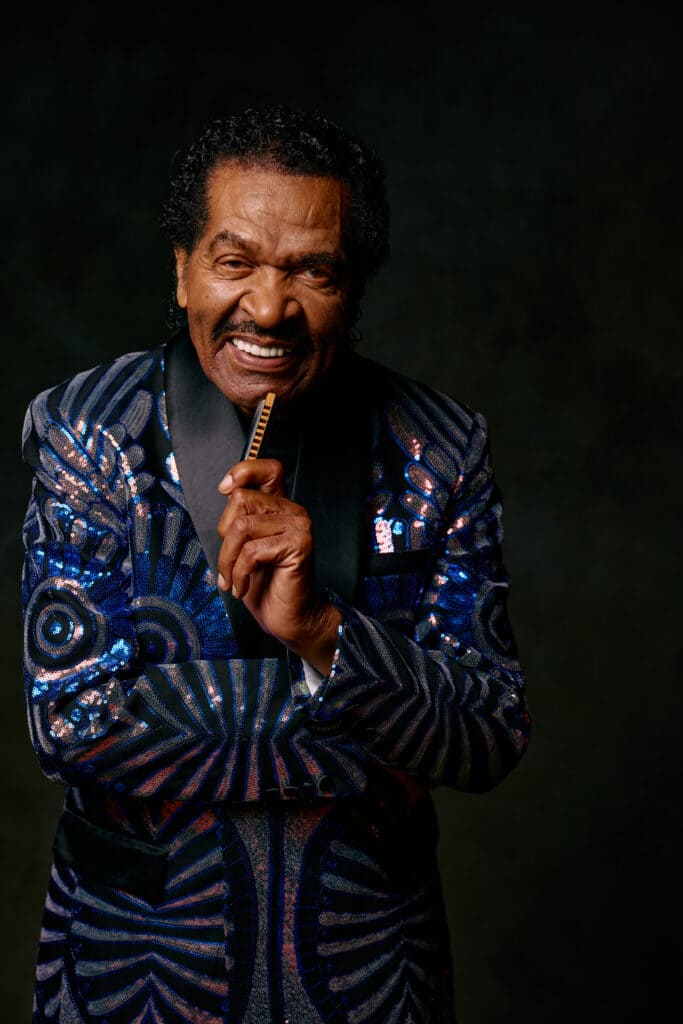
Three-time Grammy Award winner, 16-time Blues Music Awards winner, living blues legend and master showman Bobby Rush has entertained audiences worldwide in a career of more than seven decades, so safe to assume he is easy to spot, particularly at home in Jackson.
And yet, Rush managed to sneak into rehearsals at New Stage Theatre, as cast and crew careened toward opening night of a new musical about him, and hide.
“I cheated a little bit, because I was here when they started, but I didn’t even want him to know,” Rush said, grinning as he pointed toward his co-writer on the musical and the show’s co-director and conceiver Stephen Helper.
Rush scooched down in his seat to show how he hid about five rows back, lifting his head a bit for a peek at the action. He wanted to watch Helper’s reactions, see any changes in the show and judge whether actors liked the script (“You can always tell,” Rush said). But he didn’t want to make them nervous.
Then in rehearsal, the actor playing Rush walked down from the stage and into the aisle, playing to seats yet to be filled, when “Oh!” He found the man himself. “Mr. Rush is in the house, I see!”
Bobby Rush Credit: David McClister
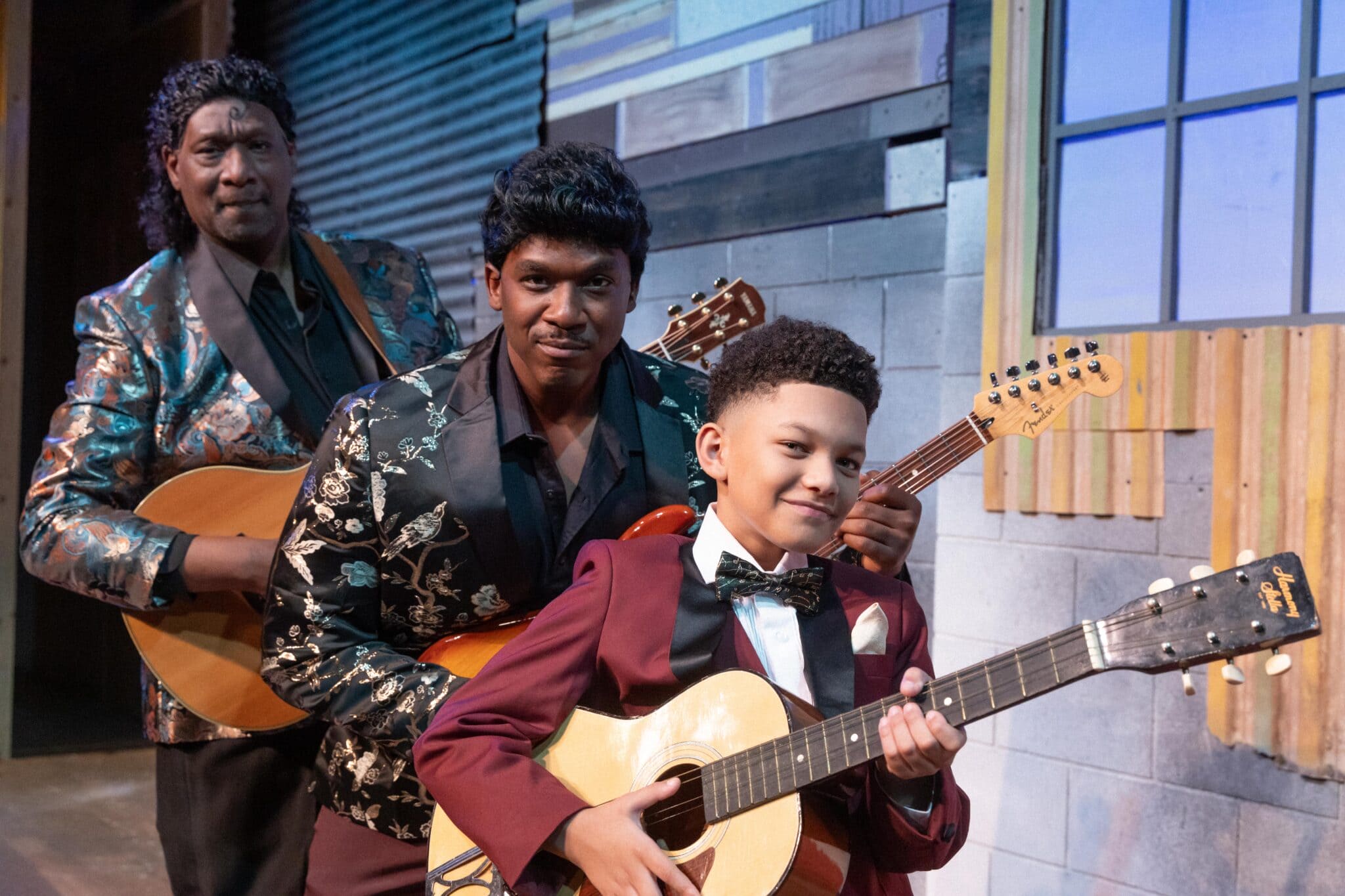
Theater-goers will find Rush there, too — not ducking between rows, but in Rush’s life story up on the stage, from sharecropper to blues superstar with a big batch of his songs propelling the journey. “Slippin’ Through the Cracks: The Bobby Rush Musical” has its world premiere this week at New Stage Theatre.
A $49,000 National Endowment for the Arts grant supported the world premiere production. Visit Mississippi, Visit Jackson, Times Square Production and Hinds County Board of Supervisors are also sponsors.
The show’s title is a nod to the musician’s wits and persistence to slip through the cracks in obstacles such as prejudice, hardship and loss to pursue his dreams.
The show’s run through Nov. 1 is the culmination of a goal set years back.
The inspiration for it came through the car radio as playwright Helper, best-known for co-conceiving the Broadway smash hit “Smokey Joe’s Cafe,” drove down the road one day. Rush’s sly and saucy song “Sue” grabbed his ear, made him laugh and set up shop in his imagination.
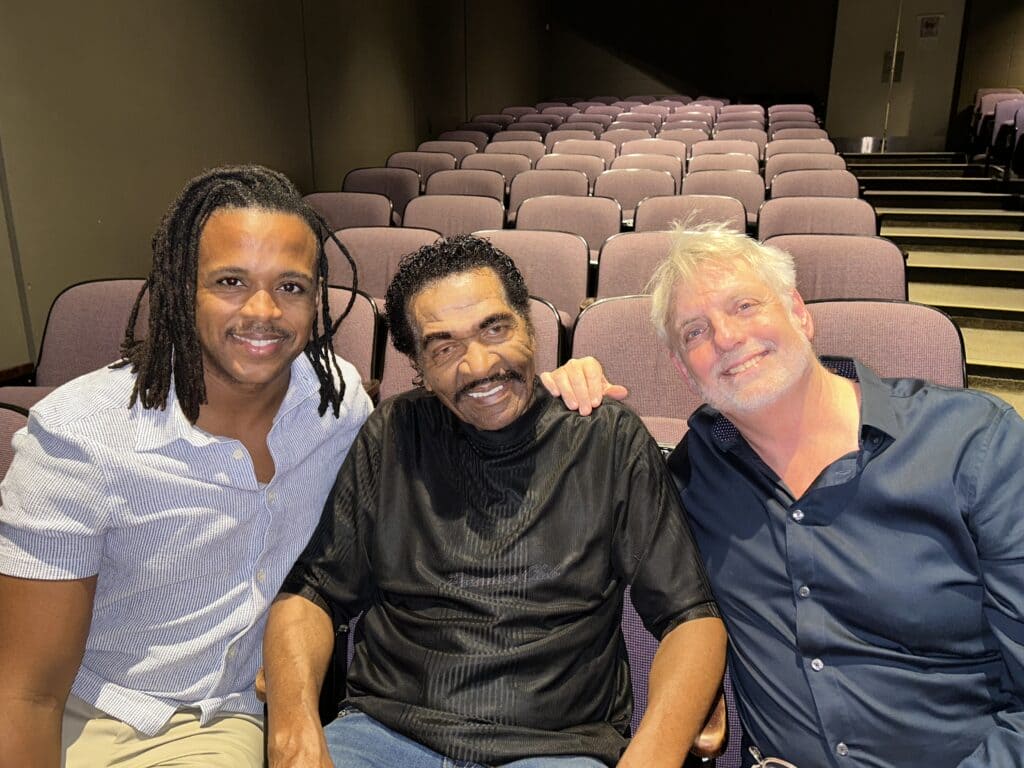
Co-director/choreographer Matthew Johnson Harris (from left), show co-writer and blues legend Bobby Rush and co-writer/co-director/conceiver Stephen Helper gear up for the world premiere of “Slippin’ Through the Cracks: The Bobby Rush Musical” at New Stage Theatre. Credit: Sherry Lucas
“It was bluesy but really funny,” said Helper, who also recognized a bit of vaudeville timing in the tune. “Its timing is impeccable. I thought if I heard that song in a theater, I’d have a great, great time. That was the kernel.”
Research about Rush revealed a story ripe for telling on the theater stage, and Helper reached out about creating a musical. As he and Rush worked on the project, a partnership bloomed into friendship. New Stage Theatre has worked with the show’s creators since 2021.
“I wanted to grow it from its roots,” Helper said of the musical. New Stage Theatre helped shepherd it along.
New Stage’s summer 2022 workshop reading had actors in folding chairs with still photos projected overhead to set scenes. Even with that bare-bones setup, players’ skills, its powerful story and the score packed with Rush’s songs electrified the experience, for a show that guests lapped up and grooved to.
More than a half dozen actors from that workshop are back in the world premiere, including Mark Henderson as older Bobby Rush. Also returning for the premiere production are Hosea Griffith, Nicholas Patrick, Vershaune Stamps, Joy Brashears Amerson, Jayla M. Lomax and Chris Roebuck. They are joined by Actors’ Equity members Rajeer Alford and Melessie Clark, Jaden White, Grady Champion, Quintin Powell, Joe Tomberlin and Nancy Bigelow Cheney.
Money raised from the workshop helped fund a similar presentation in New York City, which raised money for a production. A one-night concert at Chicago’s Goodman Theatre kicked off that theater’s New Stages Festival in 2023.
“Then, it’s just been some perseverance on my part,” Helper said. Noting New Stage Artistic Director Francine Thomas Reynolds’ interest in helping further the show or do a production, “It’s just taken that amount of time to get a slot,” he said. In the meantime, he fleshed out some bits, and tucked others tighter.
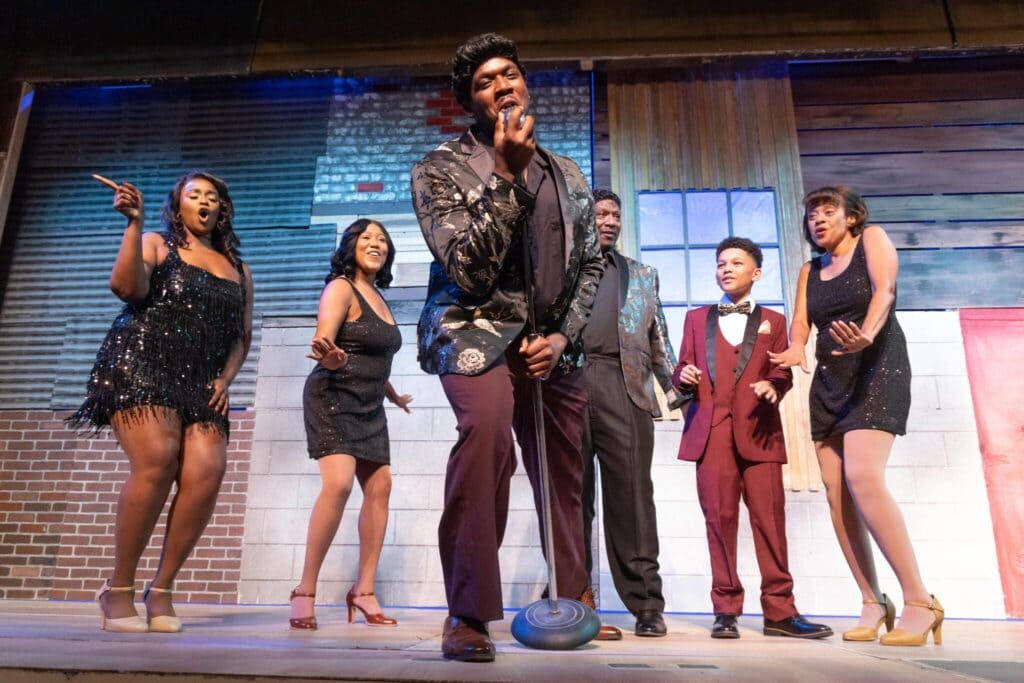
Melessie Clark (from left), Jayla M. Lomax, Rajeer Alford, Mark G. Henderson, Jayden White and Joy Brashears Amerson perform in “Slippin’ Through the Cracks” in its world premiere run at New Stage Theatre. Credit: Destin Benford, courtesy of New Stage Theatre
Premiering it in the South was important, he said, “in the roots, from its culture, from a cast who really knows the blues, who knows Bobby Rush’s music. They are just born with a kind of knowledge that informs the show.” He and co-director/choreographer Matthew Johnson Harris can draw upon that to keep a real sense of authenticity.
“This is the chance to really try it all out, in front of an audience, not on folding chairs but with people who’ve paid money to come,” Helper said.
The setting is ripe, too, because it is Rush’s home.
“He’s an international hero, but he’s also a local hero,” Helper added. “It’s important for a Jackson audience to celebrate its own.”
Choreographer Harris embraced his luck, working on this musical with Rush’s music and the sweep of time it covers. “The nearly 93 years that Bobby has been on this Earth allows me to really use African-American social dancing from the 1930s, ‘40s, ‘50s, ‘60s, ‘70s, ‘80s, ‘90s and 2000s, and tell a story of joy and resilience,” he said. It offers a glimpse, too, at the evolution of dance moves, from the Charleston in early juke joint sequences, to a more ‘90s-based Kid ‘n Play move in the second act.
“What I hope to bring through movement and also through, just, cultural dramaturgy, is a love letter to Bobby, to Mississippi, to Black culture, to Black dance,” Harris said, “and use that as another storytelling device to just track time.”
Amid all the song and dance in “Slippin’ Through the Cracks,” there runs a strong thread of resilience.
“Any woman or man in life is doomed to fail,” Rush said. “It’s not if, it’s when. But when you fall and you can get up, that’s the important thing of life. If you can’t get up, have enough strength to turn over and look up.”
At 92, Rush is still learning, he said. “I still have hope. I’m still enthused about the things that I do. And I still would rather do it well enough to make sure that people like what I’m doing.
“Even if they don’t like it, they can say, ‘Well, I don’t like Bobby Rush, but damn, he’s good.’” Rush chuckled, along with Helper and Harris. “That’s all that matters to me.”
Ditto for this musical about a lifelong entertainer.
“It has to be good,” Rush said.
Inspiration is built into his tale of surviving and thriving, wrapped up in and swept along by the folk funk grooves, humor and heart that made Rush a blues superstar.
“If I can slip through the cracks and be where I’ve been, and who I am as a blues singer and a Black man at that — if I can make it, you can, too,” Rush said.
That is a message that has already hit home. Harris, though blessed to work in commercial theater in New York City for several years, still felt “othered” because of his humble beginnings, even in rooms with all-Black peers (some who’d gone to Yale or Juilliard) or in shows about Black lived experience, he said.
Rush’s song “Just Be Yourself” became his mantra and a life goal, and seeing Rush live in concert was a liberation, he said.
“As he was up there, being so much himself, and he ended, saying, ‘If a dirt-poor country boy can make it, so can you,’” Harris said, his own perspective shifted. He told himself, “You are here, working on Broadway and you are thriving and you are a young Black man in 2026. Could you imagine being a young Black man in 1956, like Bobby had to be?”
That “you can, too” line has always been in this show, Helper said.
“But when it’s represented and spoken by a man who can prove it and lived it and had to work around so many obstacles to achieve it … the content of those words is so much more profound.
“It’s a great thought and we all want to subscribe to it when it’s said by you,” Helper turned to Rush, “and hopefully by little Bobby Rush in our show, it will land in the same way.”
Performances of “Slippin’ Through the Cracks; The Bobby Rush Musical” continue at 7 nightly through Saturday, on Oct. 27 and Oct. 29-31, 2 p.m. Sunday and Nov. 1, and at a special 1 p.m. matinee on Oct. 28. Tickets — $50 with discounts for students, senior citizens, military and groups — are on sale at New Stage Theatre; call 601-948-3533 ext. 223 or visit newstagetheatre.com.
Audio articles are automated for accessibility. Humans wrote and edited the story; however, this audio has not been reviewed for accuracy and may contain errors. Read more about how we use AI to increase access to our reporting.
Gov. Tate Reeves on Wednesday awarded $32 million for healthcare workforce development and psychiatric emergency services as a part of a federal program to improve rural healthcare.
The 60 awards will support earn-while-you-learn programs for healthcare workers, workforce recruitment efforts, clinical mentorship projects and bolster interest in healthcare careers among middle and high school students.
“These projects address different healthcare professions, but they share a common goal: removing the training bottlenecks that limit how many qualified professionals we can prepare to serve Mississippi,” Reeves said at a Wednesday press conference.
The funds will also help establish three therapeutic units at hospital emergency departments to improve crisis mental healthcare.
Reeves was flanked by State Health Officer Dr. Dan Edney and Courtney Taylor, executive director of AccelerateMS, the state’s workforce development agency. Both agencies are collaborating with the governor’s office to distribute and oversee the funding awards.
This is the second round of funding announced by Reeves as a part of the federal Rural Health Transformation Program. Mississippi was awarded nearly $206 million in December as a part of the national $50 billion program. States will receive payments over five years for initiatives designed to bolster rural healthcare and offset the disproportionate impact that federal spending cuts President Donald Trump signed into law in July 2025 are expected to have on rural hospitals.
In September, the governor announced 167 awards worth $104 million for projects aimed at helping rural providers make facility improvements, expand service offerings, upgrade technology systems, bolster cybersecurity defenses and increase telehealth capacity.
Nearly 400 applicants requested roughly $241 million in funding for the four workforce grants awarded. In total, state officials awarded roughly $19.2 million to these projects.
Reeves said the programs will help to address Mississippi’s healthcare provider shortage. Programs he highlighted Wednesday include those to help licensed practical nurses become registered nurses while continuing to work, train experienced practitioners to mentor students and strengthen the rural pharmacy workforce.
“We have Mississippians who want to work in healthcare, and we have communities that need healthcare professionals,” he said. “We’re bringing those two things together by making training more accessible, by helping people advance their careers and by building a workforce that can serve their own communities for years to come.”
University of Mississippi Medical Center Greenwood, Merit Health Central in Jackson and Memorial Hospital Gulfport will establish psychiatric emergency service units to expand access to specialized care for people experiencing mental health crises.
“Far too often, families in our state and others find themselves waiting in emergency rooms for far too long, before their loved ones receive appropriate psychiatric care,” said Reeves. “That’s really not the way it should be, and we’re going to work hard to change that.”
Applications are also open for small, rural providers to adopt or upgrade electronic health records, and for innovative pilot programs that aim to improve healthcare. The state is also seeking proposals for a statewide health information exchange to allow health care providers to securely share patient information and coordinate care.
“The frustrations of our rural providers in not having the patient information they need in real time will be eliminated,” Edney said.
He said the exchange will also be a source of data that can help the Mississippi State Department of Health better understand health problems and propose solutions.
Reeves previously said Mississippi has submitted its request for second-year funding as part of the Rural Health Transformation Program to the Centers for Medicare and Medicaid Services and expects to receive word by November on the amount of federal funding allocated to the state.
Audio articles are automated for accessibility. Humans wrote and edited the story; however, this audio has not been reviewed for accuracy and may contain errors. Read more about how we use AI to increase access to our reporting.
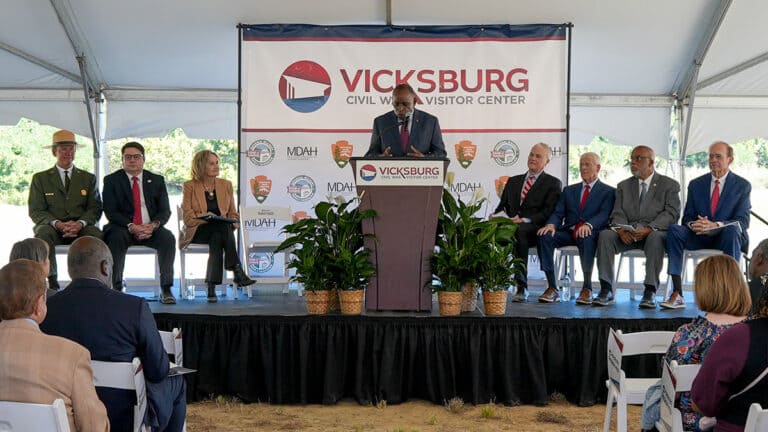
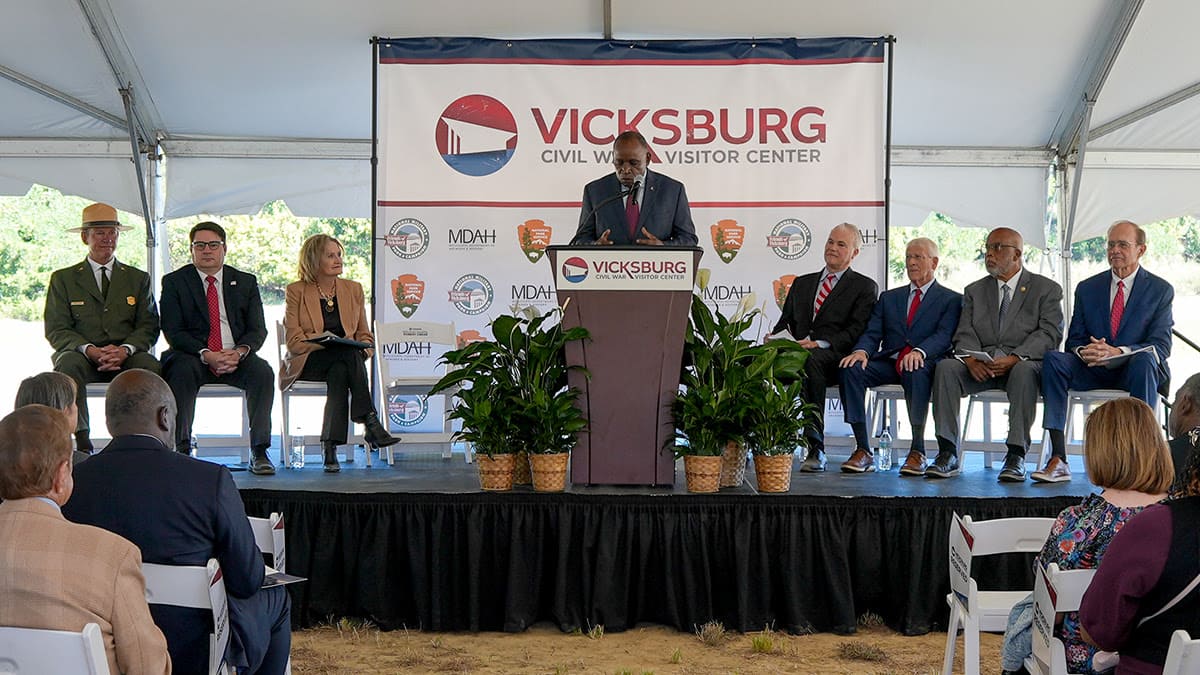
VICKSBURG – Mississippi officials Wednesday celebrated plans to build a $114 million Civil War museum and visitor center next to Vicksburg National Military Park, one day after President Donald Trump signed legislation that will help with the development.
This combination of images, released Wednesday, Oct. 21, 2026, shows the planned development of a Vicksburg Civil War Visitor Center and Museum at the Vicksburg National Military Park. Credit: Courtesy of the Mississippi Department of Archives and History
Historians consider the Siege of Vicksburg a key turning point in the Civil War. The Confederate surrender to Union Gen. Ulysses S. Grant on July 4, 1863, helped Union forces take control of the Mississippi River and effectively cleave the Confederacy into two.
“What you have here today is an opportunity to continue to expand the real story about who actually fought here and saved this country of ours, and ultimately put it back together,” U.S. Rep. Bennie Thompson said during the ceremony.
The expansive new building, set on nearly 13 acres adjacent to the national park, already one of the state’s largest tourist attractions, is expected to be completed by 2030.
The federal government established a national park in 1899 to commemorate the battle.A study cited by project supporters estimates the visitor center will help draw an additional 200,000 visitors to the region, pump $231 million into the local economy and create 1,630 jobs during its first seven years.
The planned 60,000-square-foot facility will include a museum exploring Vicksburg’s history from the prewar era through the siege, Union occupation and Reconstruction.
The space will also feature an event space, gift shop and cafe. Outdoor areas, officials said, will be used for educational programming such as living history demonstrations.
The federal government established the national park in 1899 to commemorate the battle.
Wednesday’s event featured a rare bipartisan appearance between Thompson, Mississippi’s lone Democrat in Congress, and Republican U.S. Sens. Roger Wicker and Cindy Hyde-Smith, who is campaigning for reelection.
“We’re here today as an exercise in bipartisanship,” Wicker said. “Today is a nod to persistence. This is a day to be remembered.”
Wicker called the project a lesson about the “complicated history” in Mississippi and across the country.
Thompson, who introduced the Vicksburg National Military Park Boundary Modification Act on March 16, 2026, said many Black Mississippians believe their stories have been overlooked at historic sites across the state. He expressed hope the Vicksburg center will be different by including exhibits that recognize Black soldiers who died during the war.
The legislation signed into law Tuesday transfers a small piece of the park to the state of Mississippi, which has given $56 million thus far to fund the visitor center and its operations, according to the state Department of Archives and History. State officials said the land will be used for trails to connect the park to the new visitor center.
The state Department of Archives and History said private donors have committed $15 million to the project. This combines with the state funding, plus $3 million so far from the federal government and up to $15.5 million from the City of Vicksburg and Warren County. Supporters also expect to raise more private money.
The state will own the new facility, with the National Park Service serving as its long-term tenant and interpretive partner, while the Friends of Vicksburg National Military Park and Campaign is leading private fundraising and marketing.
Lt. Gov. Delbert Hosemann, a Vicksburg native, helped secure the state money to get the project off the ground. He said his great, great grandfather fought for the Confederacy about half a mile from the patch of grass where the visitor center will be constructed.
“It’s fair to say the Hosemanns haven’t moved very far,” he said.
Spence Flatgard, who presides over the state archives and history board, said the visitor center will give ample space to “tell many, many stories.”
“Mississippi has the most compelling history of any state in America,” Flatgard said. “We’ve got it all. Civil War, civil rights, Native American history, birthplace of American music. We have a lot to be proud of.”
The new facility, which has been under design for the past three years, will modernize the park’s aging visitor center, which officials said was prone to flooding.
Mississippi Today Senior Editor Bobby Caina Calvan contributed to this report.
Correction, 10/21/2026: This article has been corrected to show that organizers describe Wednesday’s event as a celebration. It also has been updated with additional information about funding for the project.
Audio articles are automated for accessibility. Humans wrote and edited the story; however, this audio has not been reviewed for accuracy and may contain errors. Read more about how we use AI to increase access to our reporting.
As funding challenges persist, Mississippi health officials may cut clinical services at more county health departments.
If taken, this step would continue changes the Mississippi State Department of Health made after the Legislature in 2023 denied the department’s request for $9 million to hire the nurses needed to fully staff county health departments and send nurses into the homes of low-income women with high-risk pregnancies.
“Our goal is not to retreat from anywhere, just restructure and reorganize,” State Health Officer Dr. Dan Edney told Board of Health members at a meeting Oct. 14.
Greg Flynn, a spokesperson for the health department, told Mississippi Today on Monday he could not say which counties are being considered for changes because the adjustments are still a “work in progress.”
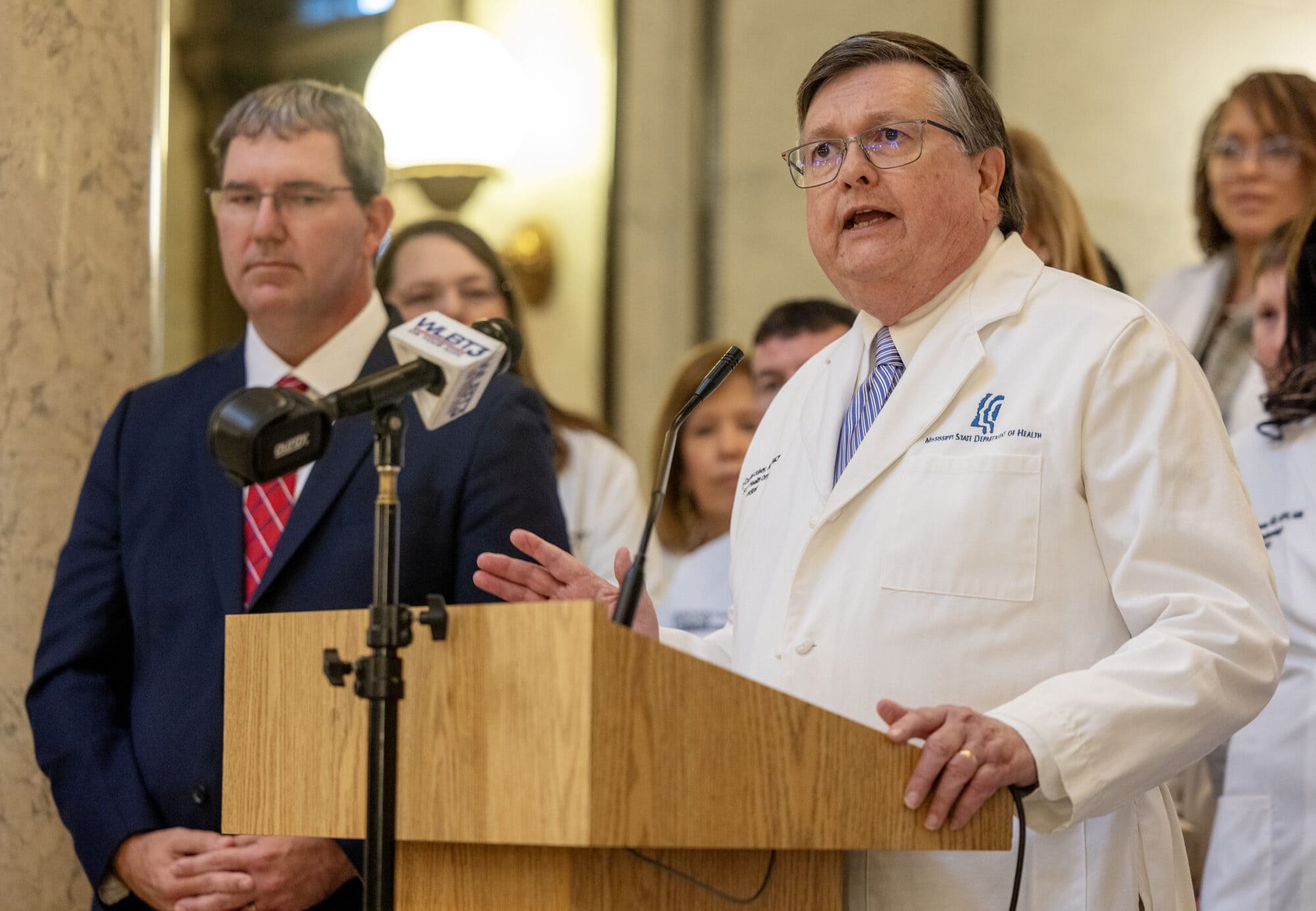
Edney said several county health departments with nurses on staff are seeing patient volumes too low to sustain that level of care. Other clinics, he said, may be able to support a physician or nurse practitioner and be upgraded to a higher level of service.
During legislative budget hearings earlier this month, the health department requested level funding from lawmakers for the upcoming fiscal year, the third consecutive year the agency has not asked for a major increase.
Level 3 clinics, or “super clinics,” have a doctor or nurse practitioner on staff and offer a full range of services.
Level 2 clinics have a nurse on staff and offer limited clinical services and telehealth appointments with providers.
Level 1 clinics do not have a clinician on staff, but offer federal programming for women and children. They serve as “access points” to other locations and may host occasional immunization events with nurses.
County health departments’ levels are not listed on the department’s website. Mississippi Today published a map in 2025 of department levels.
Edney said it is less costly to transport patients to a higher-level clinic than to provide a full range of services in every county. He said the state agency aims to be strategic in its planning to ensure that patients are close to a level 2 or level 3 clinic.
All of the counties operating at a lower level of service have federally qualified health center partners providing access to low-cost healthcare, Edney said.
“Our job is filling gaps, closing access loops and partnering with our community partners, and not competing,” he said.