Home Blog Page 2

Pete Buttigieg calls for Mississippi to elect Scott Colom to US Senate, send ‘shockwaves’

0
Audio articles are automated for accessibility. Humans wrote and edited the story; however, this audio has not been reviewed for accuracy and may contain errors. Read more about how we use AI to increase access to our reporting.

BILOXI – Former U.S. Transportation Secretary Pete Buttigieg on Tuesday pleaded for Mississippi voters to “send shockwaves” by voting for Democratic nominee Scott Colom and rejecting Republican Sen. Cindy Hyde-Smith next week. 

Buttigieg was the latest national political figure to campaign in Mississippi in the homestretch before the Nov. 3 midterm elections. The Senate race has also attracted a last-minute barrage of spending as Democrats see an opening and Republicans worry that reliably conservative Mississippi could become a casualty of President Donald Trump’s sinking popularity nationwide. 

Trump hosted a rally for Hyde-Smith in Corinth on Monday, days after former Democratic Vice President Kamala Harris campaigned for Colom in Columbus last week.
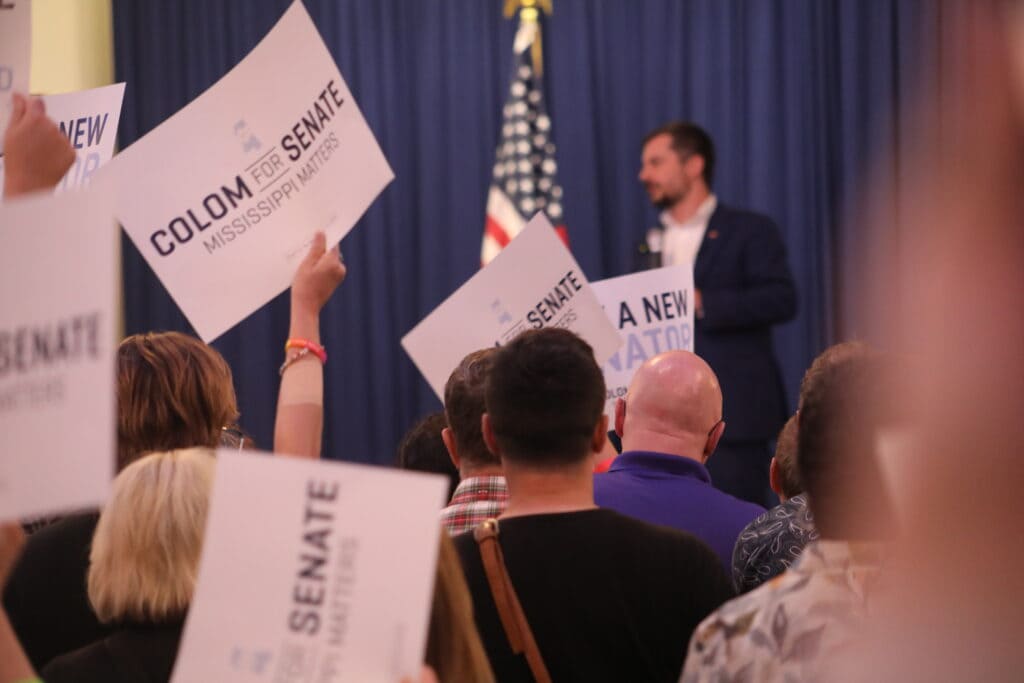
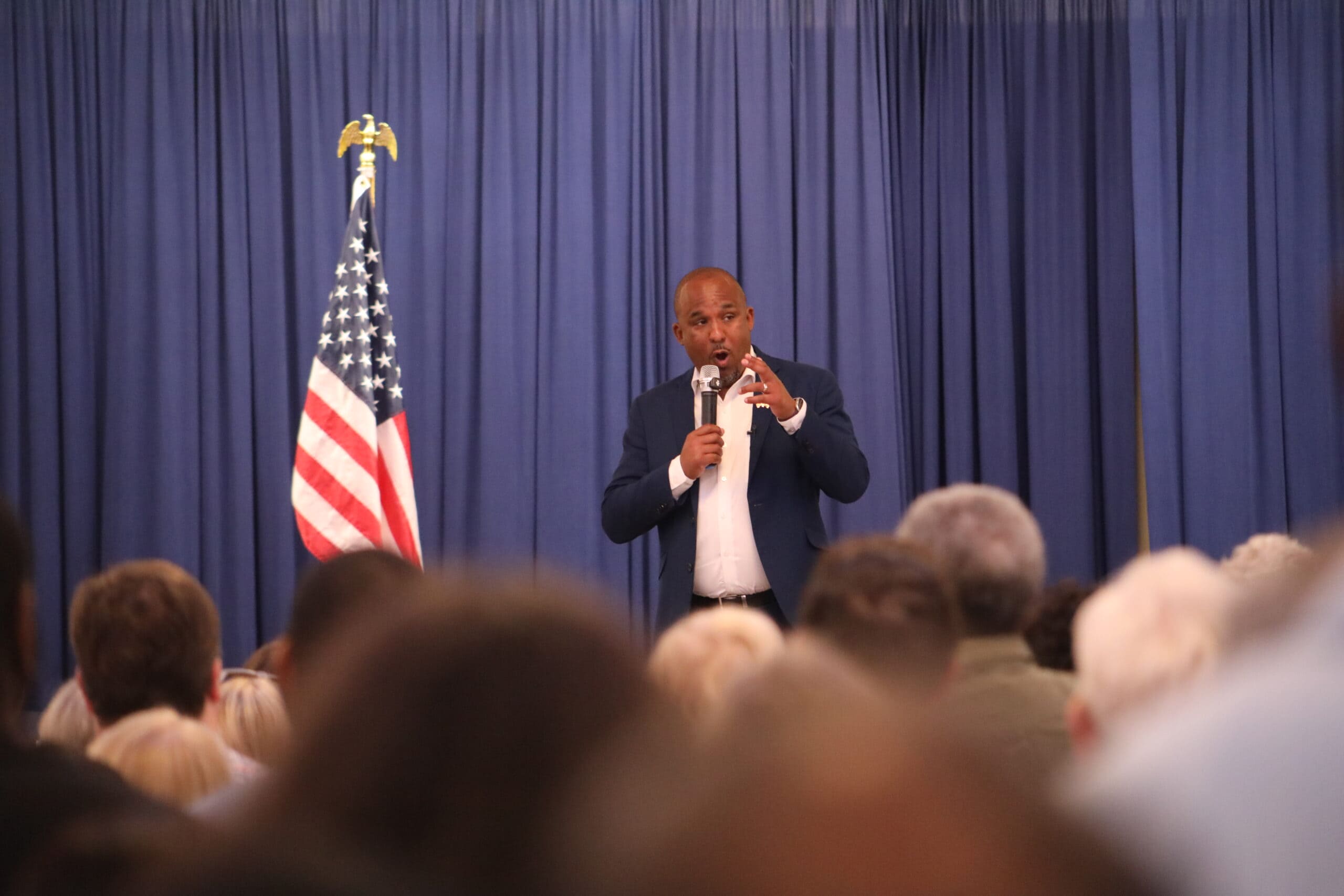
People hold up signs as former U.S. Transportation Secretary Pete Buttigieg speaks at a rally for Democratic Senate nominee Scott Colom in Biloxi on Tuesday, Oct. 27, 2026. Credit: Michael Guidry/Mississippi Today

Trump’s approval ratings have plummeted nationally amid opposition to increasing consumer prices and an unpopular war in Iran. Democrats have grown optimistic that Colom could pull off an upset in a state that hasn’t elected a Democrat to the Senate in more than four decades. 

READ MORE: Trump rallies for Cindy Hyde-Smith in Mississippi: ‘You like me’

“When you win in Mississippi, it is going to send shockwaves,” Buttigieg told a galvanized crowd in Biloxi. 

 Speaking to hundreds of people at a community center, the Biden administration transportation secretary said Trump and Hyde-Smith are directly responsible for soaring gasoline and grocery prices because of the president’s tariffs and other policies and the Iran war. 

“It’s happening because of decisions that were made in Washington,” Buttigeig said. “This time it’s not because Vladimir Putin decided to start a war. It’s because Donald Trump decided to start a war.” 

Colom repeated his campaign pledges about the need to raise the federal minimum wage and his desire to advocate for policies that help deliver access to affordable healthcare to rural Mississippi, which has some of the most dire health outcomes in the nation. 

“My commitment to you is that I am going to fight to do everything in my power to save our healthcare and save our hospitals,” Colom said.  

Buttigieg said healthcare issues show the Trump administration and Republicans are out of touch.

“Folks are saying, ‘We need help with healthcare,’ and they are saying, ‘OK, let’s build a new ballroom in the White House,’” Buttigieg said. “Folks are saying, ‘I need help affording the things that I buy at the store every week,’ and they are busy protecting whoever is in the Epstein files.”

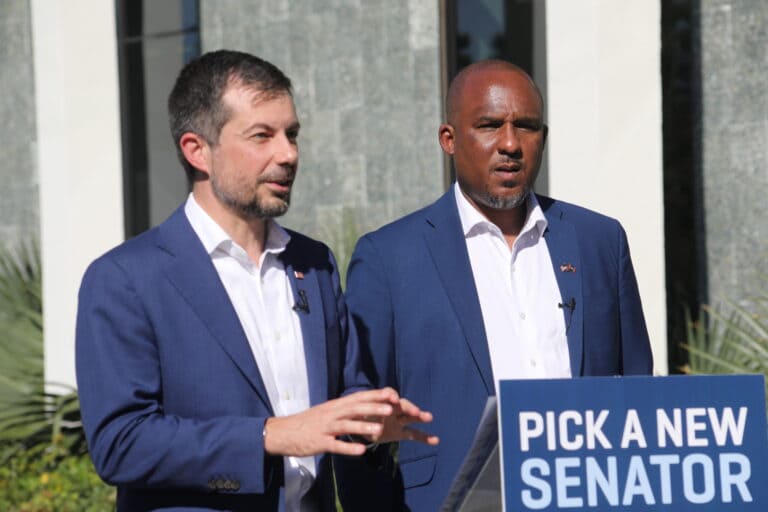
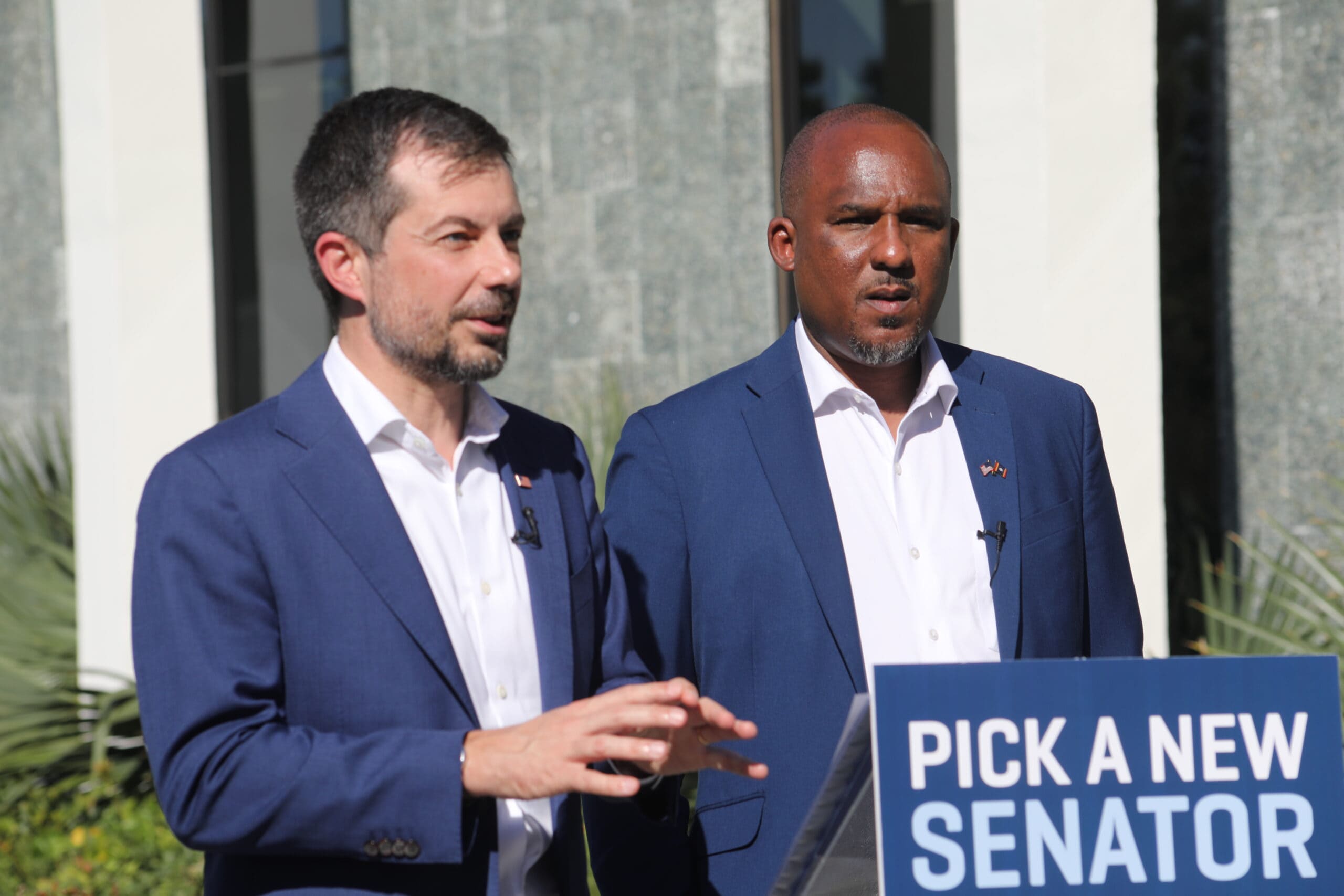
Earlier in the day, Colom and Buttigieg had a press conference at the Coast Transit Authority in Gulfport, where the two celebrated the 2025 restoration of Amtrak’s Gulf Coast route from Alabama to Louisiana, called the “Mardi Gras Service.” 

The route was shut down after Hurricane Katrina and likely wouldn’t have been resurrected without a significant injection of federal money from Congress’ passage of the bipartisan infrastructure bill in 2021. 

Mississippi Sen. Roger Wicker was one of 19 Republican senators and the only Republican in Mississippi’s congressional delegation who voted for the federal legislation. Both Buttigieg and Colom praised Wicker’s support of the program and denounced Hyde-Smith’s opposition.  

“Let’s be very clear, there was a Republican U.S. senator from Mississippi who voted and acted to bring those dollars to this state,” Buttigieg said. “Just not Cindy Hyde-Smith because she was incapable of doing something without the permission of the then-former president.” 

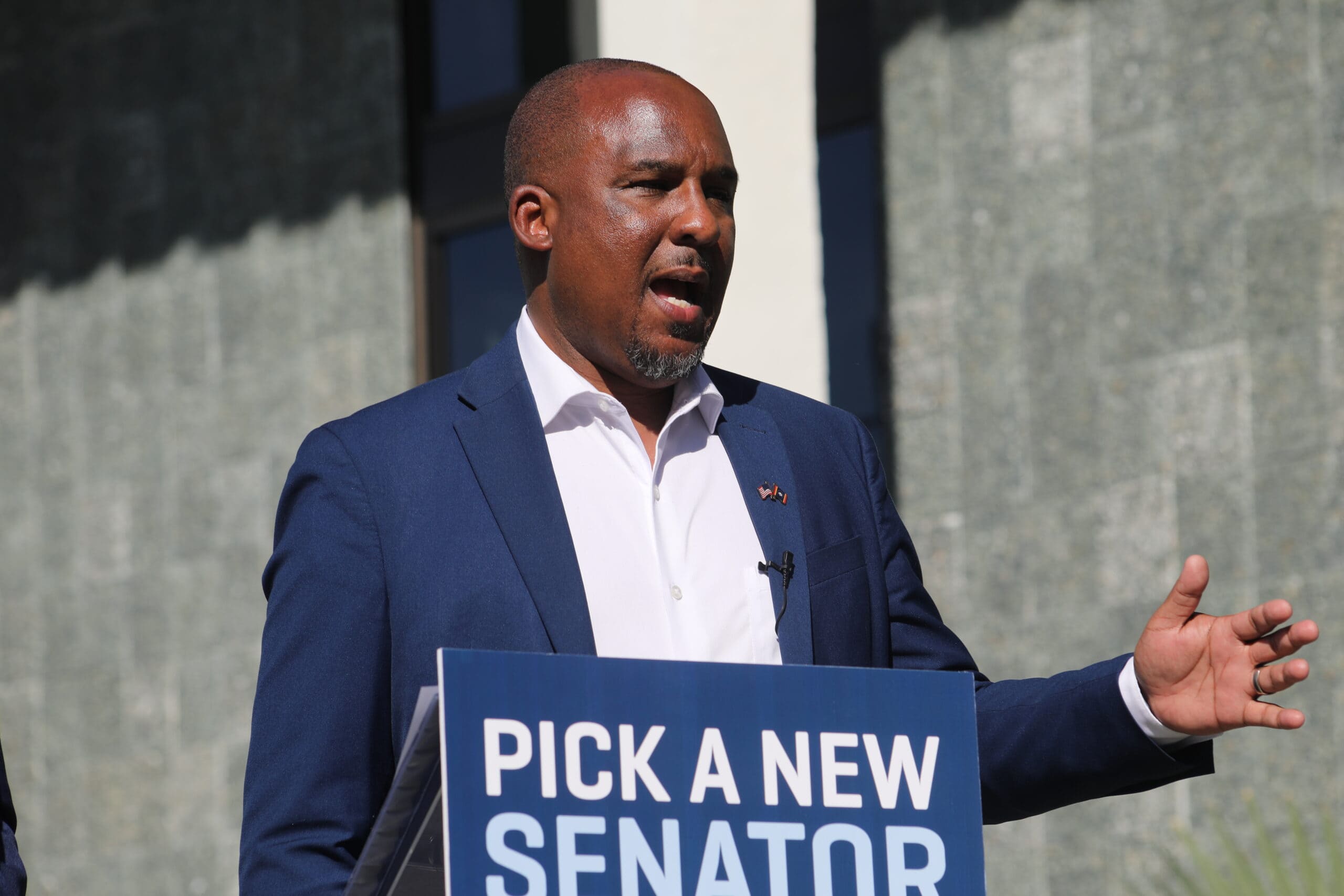
  • Democratic U.S. Senate nominee Scott Colom speaks outside the Coast Transit Authority in Gulfport on Tuesday, Oct. 27, 2026. Credit: Michael Guidry/Mississippi Today
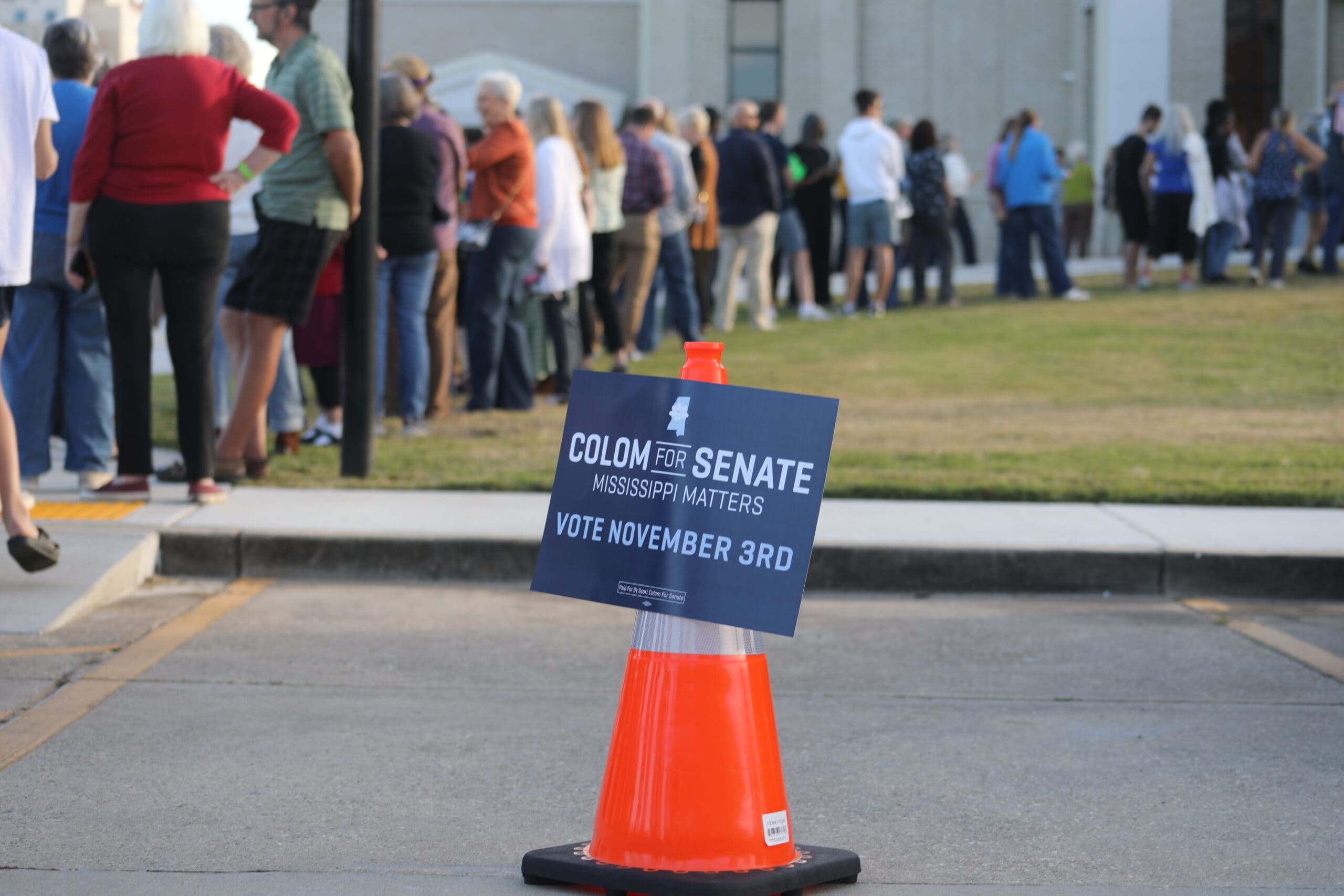
  • People wait in line outside a community center in Biloxi before a rally featuring Democratic U.S. Senate nominee Scott Colom and former Transportation Secretary Pete Buttigieg on Tuesday, Oct. 27, 2026. Credit: Michael Guidry/Mississippi Today
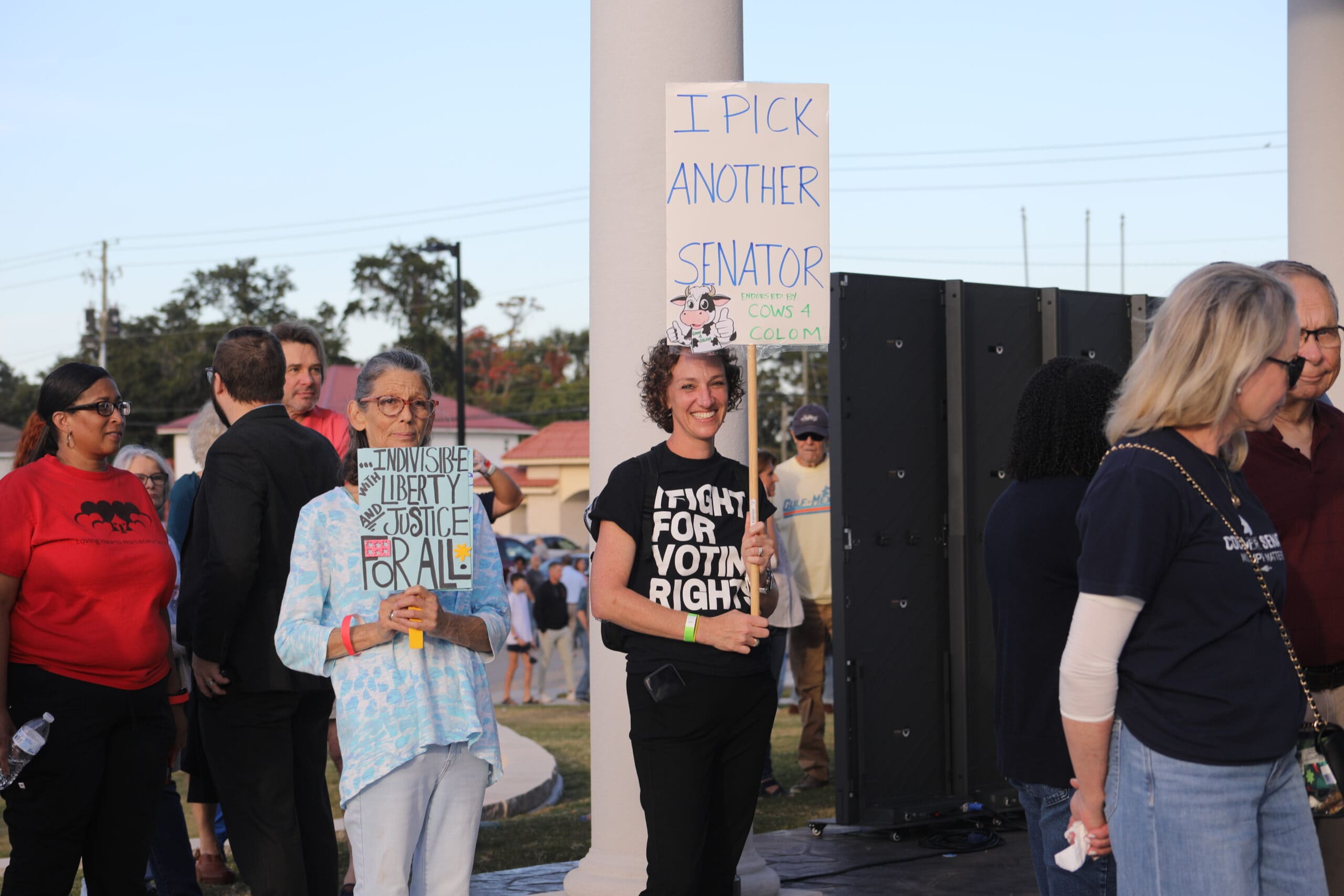
  • Rachel Ciraldo of Hattiesburg, right, and Evelyn Champagne of Biloxi hold up signs outside a rally for Democratic U.S. Senate nominee Scott Colom in Biloxi on Tuesday, Oct. 27, 2026. Credit: Michael Guidry/Mississippi Today
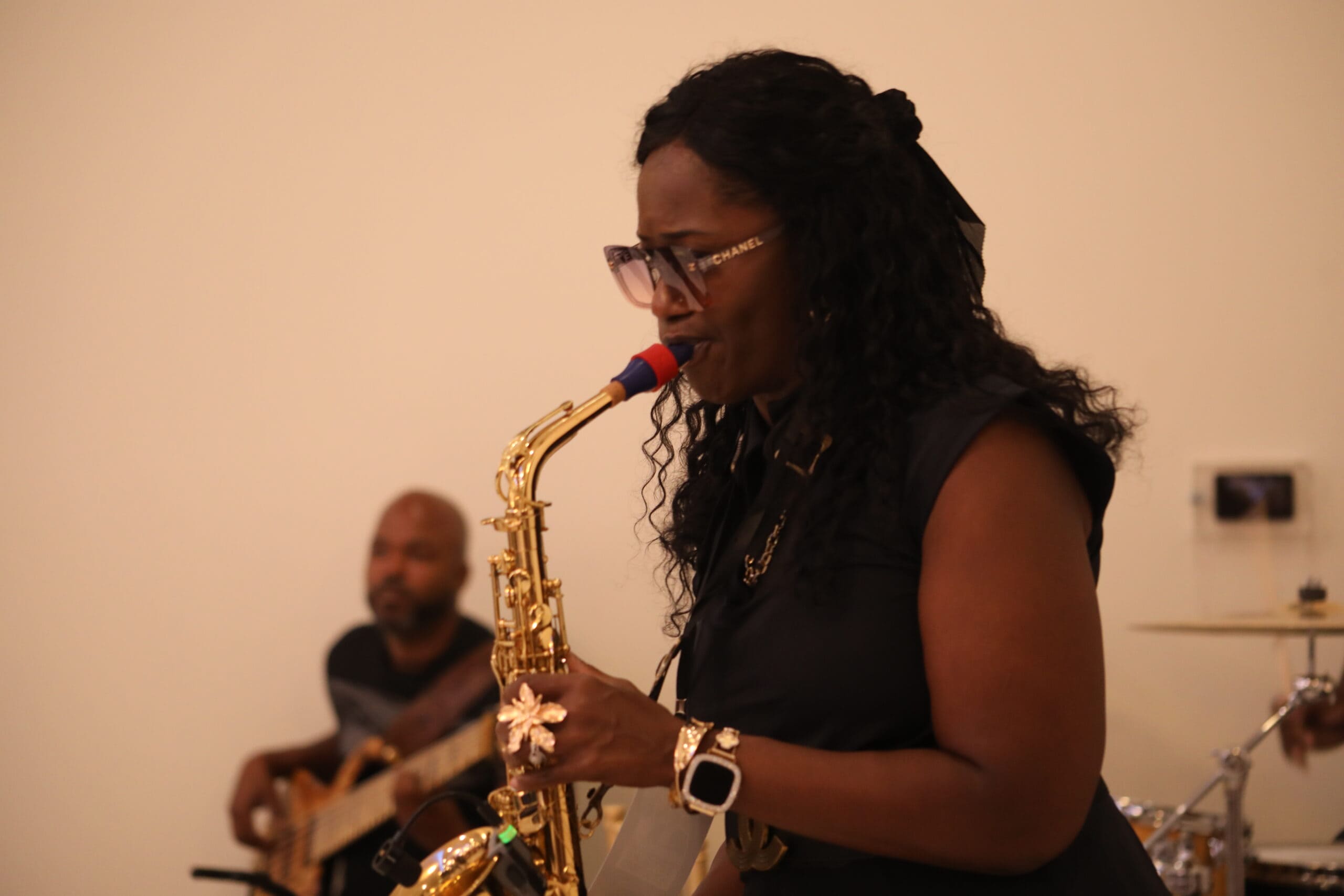
  • Musicians play ahead of a rally featuring Democratic Senate nominee Scott Colom in Biloxi on Tuesday, October 27, 2026. Credit: Michael Guidry/Mississippi Today
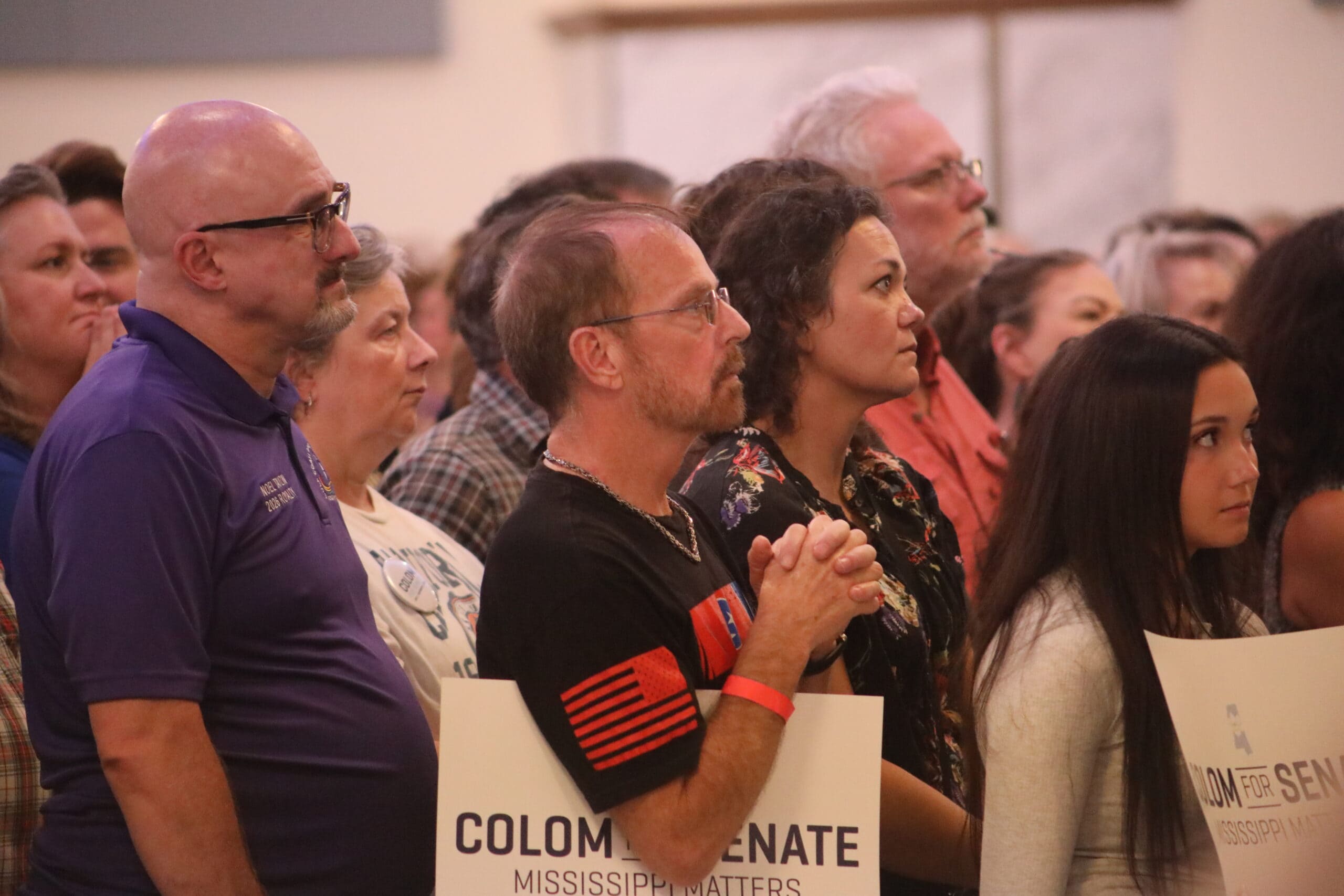
  • People listen to speakers at a rally for Scott Colom, Democratic nominee for a U.S. Senate seat, in Biloxi on Tuesday, Oct. 27, 2026. Credit: Michael Guidry/Mississippi Today
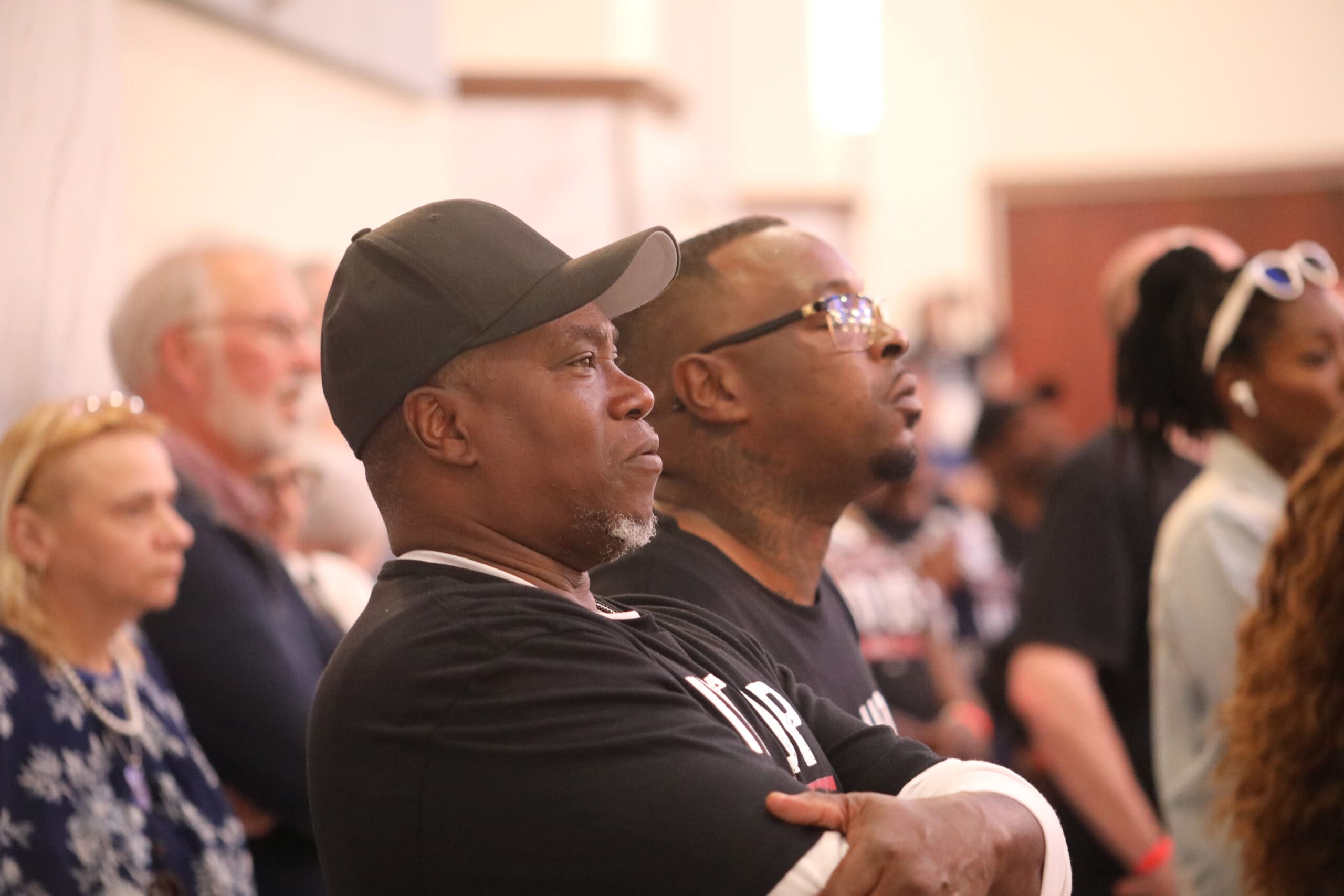
  • Ladarius Evans of Jackson County and Anthony Hood of Vancleave attend a rally for Democratic U.S. Senate nominee Scott Colom in Biloxi on Tuesday, Oct. 27, 2026.
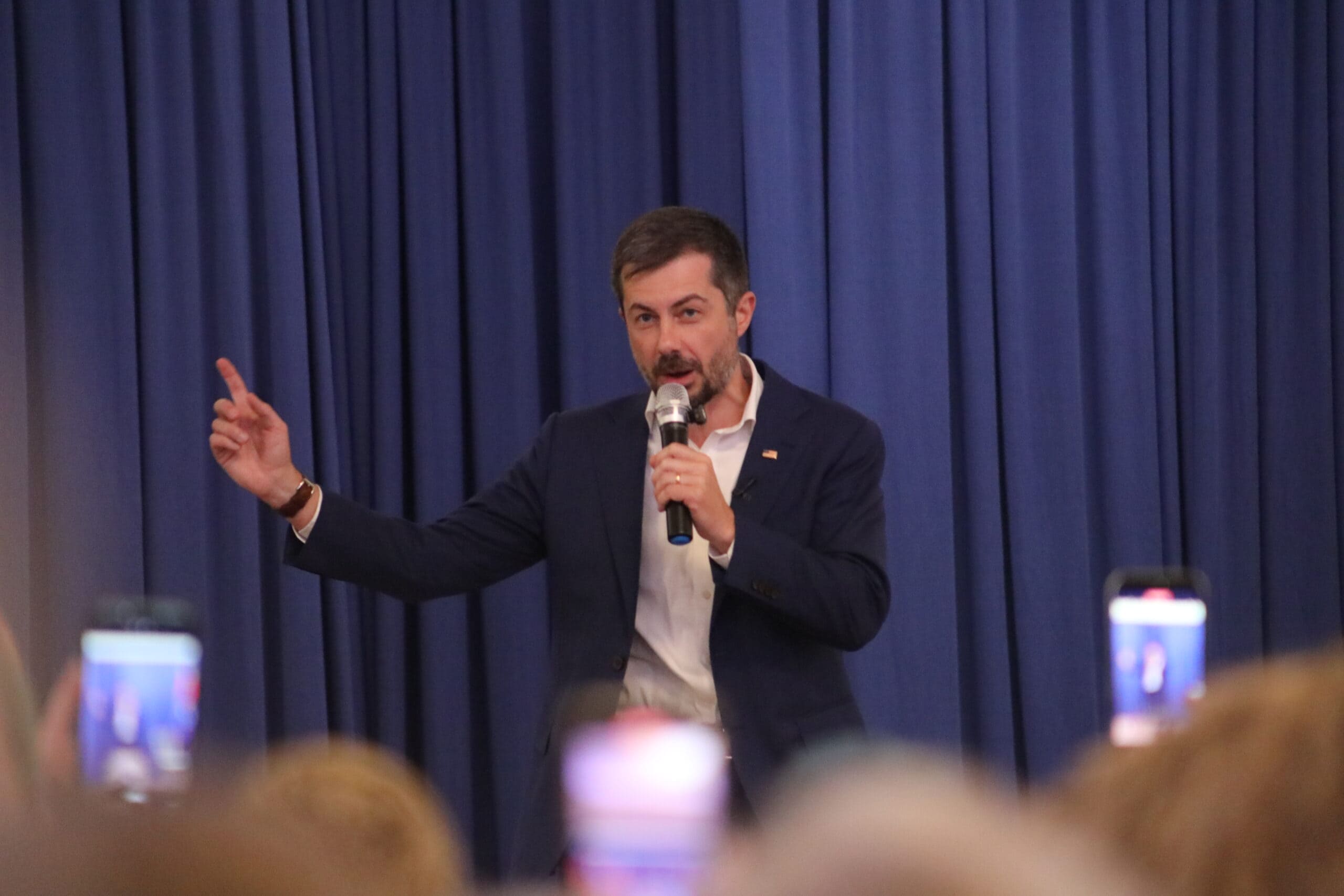
  • Former U.S. Transportation Secretary Pete Buttigieg campaigns for Scott Colom, the Democratic nominee for a U.S. Senate seat, on Tuesday, Oct. 27, 2026, in Biloxi. Credit: Michael Guidry/Mississippi Today
  • Scott Colom, Democratic nominee for a U.S. Senate seat in Mississippi, speaks at a rally in Biloxi on Tuesday, Oct. 27, 2026. Credit: Michael Guidry/Mississippi Today
Hyde-Smith at the time said she opposed the infrastructure legislation because it would increase the national debt, something Colom on Tuesday said was hypocritical because Hyde-Smith hasn’t voiced concerns about the debt increasing under Trump. 

“She doesn’t care about debt,” Colom said. “She cares about politics.” 

Colom also criticized Hyde-Smith for appearing with “Mardi Gras beads” at a ribbon cutting celebrating the reopening of the rail line, calling her dishonest for not disclosing to the public that she voted against the infrastructure bill. 

Buttigieg’s visit to the Magnolia State comes one day after Trump rallied for Hyde-Smith in Corinth in northeastern Mississippi, where he called Colom a “Democrat communist” and accused him of being soft on crime and overly supportive of transgender rights.

Colom called Trump’s description of him lies and pointed to his track record as a district attorney in north Mississippi as evidence that he’s tackled violent crime while in elected office. 

“Can you fill your gas up with those lies?” Colom said of Trump. “Can you pay your grocery bill with those lies?” 

Democratic leaders from outside of the state, such as Harris and Sen. Raphael Warnock of Georgia, have campaigned for Colom in hopes of energizing Democratic turnout on Election Day. 

Hyde-Smith and the GOP have sought to tie Colom to the far-left of the Democratic Party and criticized him for welcoming national Democratic leaders to the conservative state. 

But Colom said Mississippi voters should ask themselves why people such as Buttigieg “care more about roads and bridges” in Mississippi than Hyde-Smith does. 

If Colom wants to pull off an upset, he would need to make significant inroads in the Gulf Coast area, which has become a firewall of support in recent years for Republican candidates. Colom told reporters he believes he’s gained support there because he’s had multiple events in the region and listened to voters’ concerns.

Buttigieg last visited Mississippi in 2024 while he was transportation secretary, to help break ground on a $20-million renovation of Medgar Evers Boulevard in Jackson. He also toured the Medgar and Myrlie Evers Home National Monument and visited the Mississippi Delta, Laurel and Meridian. 

Buttigieg is a potential 2028 Democratic candidate for president and would likely need to shore up support among Black voters to capture the party’s nomination. Mississippi has the largest percentage of Black voters in the nation, but the national party often overlooks Mississippi because of its overall conservative electorate. 

Buttigieg said the national party needs to spend more time in conservative states such as Mississippi because “there’s no such thing as a permanently red state, district or county” and that Southern states deserve better than the incumbents serving them. 

“I think it’s always been a mistake to overlook Mississippi,” Buttigieg said.

Southern Miss plans $25 million renovation and expansion of 42-year-old Pete Taylor baseball park

0
Audio articles are automated for accessibility. Humans wrote and edited the story; however, this audio has not been reviewed for accuracy and may contain errors. Read more about how we use AI to increase access to our reporting.

HATTIESBURG — Southern Miss on Tuesday announced a plan to renovate the 42-year-old home of its nationally renowned baseball program, the only Division I program in the U.S. to boast 10 straight 40-victory seasons and 10 straight NCAA Tournament bids.

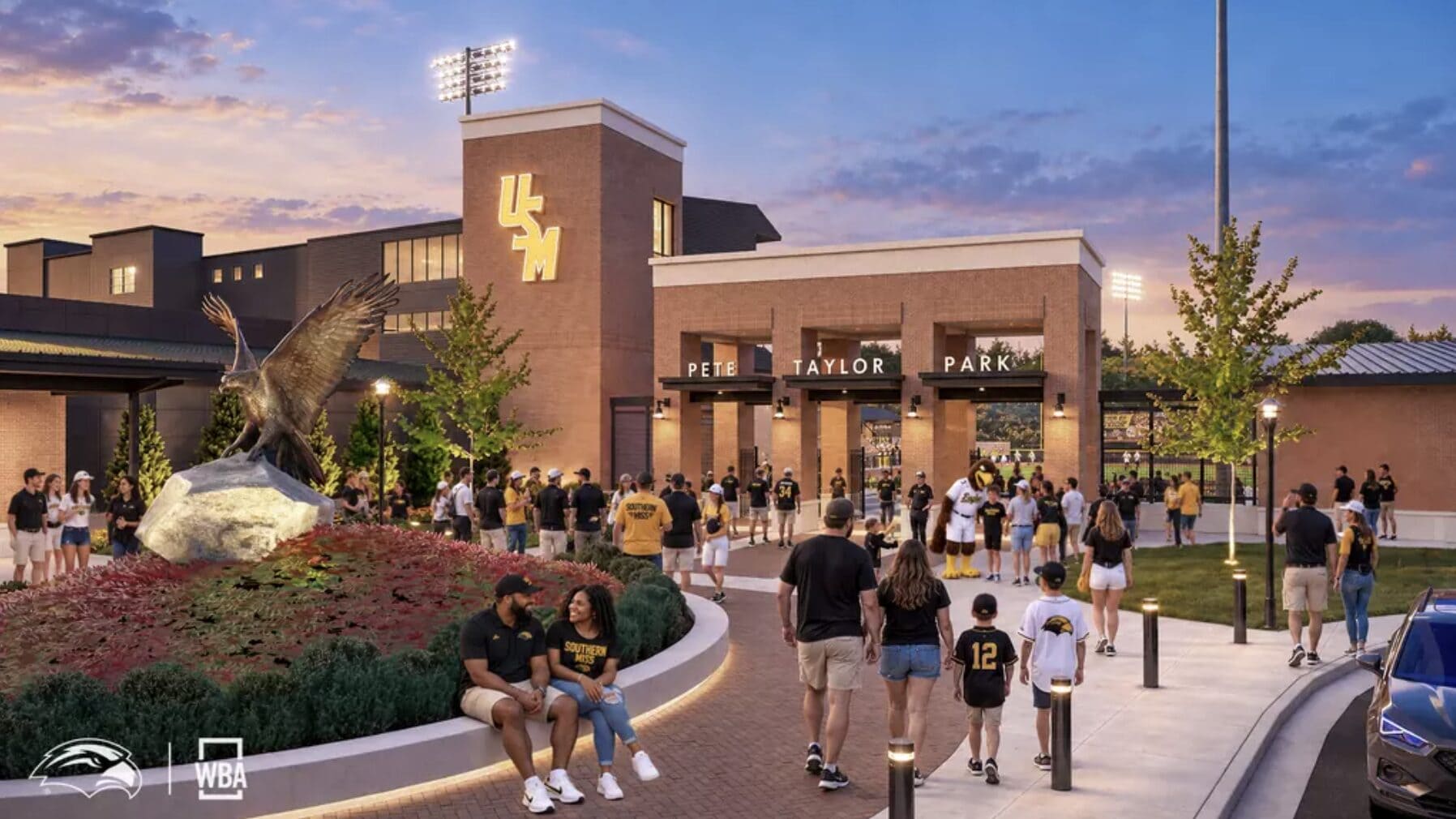
The school plans to raise approximately $25 million through private and corporate funding to complete a renovation and expansion of Pete Taylor Park/Hill Denson Field.

“Pete Taylor Park represents so much of what makes Southern Miss baseball special,” said Southern Miss Director of Athletics Jeremy McClain. “The history, the atmosphere and, most importantly, our fans have created an environment unlike any other. This project allows us to honor those traditions while making a significant investment in what comes next for our program.”

Jackson-based Weir Boerner Allin Architecture, which has designed numerous athletic facilities across the South including Dudy Noble Field at Mississippi State, partnered with Southern Miss to do master planning for the project. Seating capacity would increase to approximately 6,500. The largest crowd to date was 6,346, which included more than 2,000 standing room only. Southern Miss has sold out its season tickets of approximately 4,600 tickets for four straight seasons.

A planned renovation of Pete Taylor Park at Southern Miss would include this seating down the first base line. Credit: Courtesy of Southern Miss Athletics

The proposed stadium renovation would include all chairback seating and the addition of eight more luxury suites to the existing 12. Said McClain, “We wish we had room for 20 more suites because we could sell that many more.”

The master plan includes an indoor pitching laboratory and hitting facility with high-tech sports science equipment to improve performance. Southern Miss coach Chrisian Ostrander, who has guided the Golden Eagles to 143 victories over three seasons called the proposed performance center “a game changer for player development, the backbone our our program.”

Southern Miss is calling the baseball stadium project “Where Tradition Meets Tomorrow, ” McClain said.

“The vision is not to change what makes The Pete special. It is to build around it,” he said. “We want our longtime fans to walk into the renovated ballpark and still feel everything they love about Southern Miss baseball, while the next generation of Golden Eagles experience a facility built for the future.”

McClain said he is confident Southern Miss can raise the money.

“We’ve had several preliminary meetings with potential donors,” he said. “We’ve confident we can get to the finish line soon and move forward with the project. Our baseball program is nationally competitive and we want to continue to invest in its future.”

Fund-raising will include naming rights to the performance center, as well as different enhanced seating areas in the ballpark, McClain said. Already this year, Renasant Bank bought the naming rights to the former M.M. Roberts Stadium in a deal that will pay the university $13.7 million over 10 years.

The birds-eye view of the proposed renovation of Pete Taylor Park. Credit: Courtesy of Southern Miss Athletics

Watch: How the fatal Senatobia shooting unfolded in 25 seconds

0
Audio articles are automated for accessibility. Humans wrote and edited the story; however, this audio has not been reviewed for accuracy and may contain errors. Read more about how we use AI to increase access to our reporting.

Julie Lee is a data reporter at Mississippi Today. Sarah Whites-Koditschek and Mukta Joshi are investigative reporters at Mississippi Today spending a year as New York Times Local Investigations fellows. They report for the Deep South Today Investigative Reporting Center in collaboration with The New York Times.

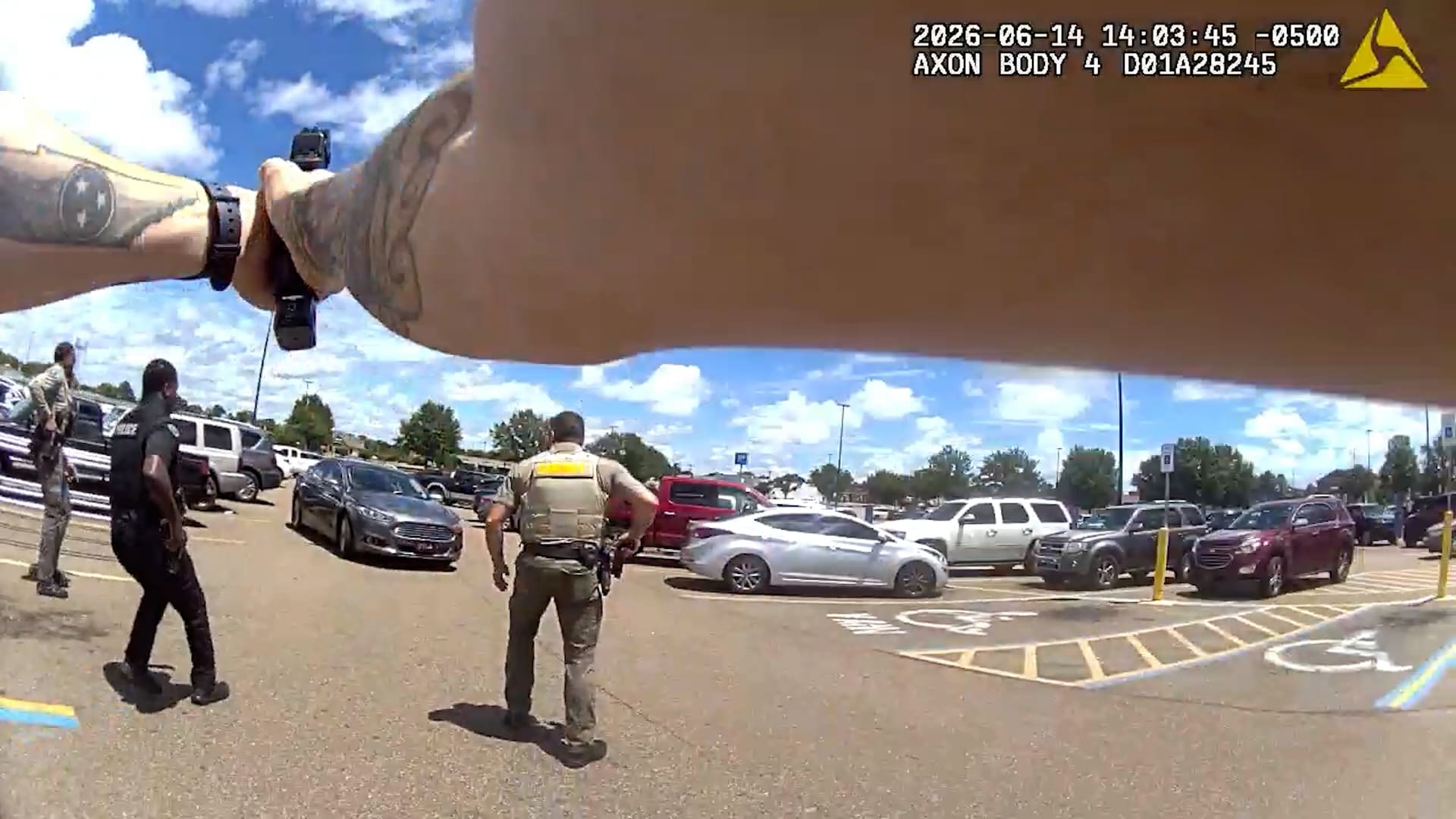
Reporters for Mississippi Today closely examined video footage and broke down key moments of the police confrontation that ended with the fatal shooting of 1-year-old Kohen Wiley in a Walmart parking lot this summer.

The frame-by-frame review shows how a tip that two women were running out of the store escalated in a matter of seconds, with five officers surrounding their car, guns raised. The video analysis also catalogs the moments cited by several experts who said the police unnecessarily escalated the encounter and put themselves in harm’s way.

The Mississippi attorney general, Lynn Fitch, announced last week that the state would not pursue criminal charges against Hunter Foster, the Senatobia police officer who shot Kohen. The toddler was sitting on his mother’s lap as a second woman drove. Foster fired at the car as it drove in the direction of two officers, and Fitch ruled his actions were justified. 

That decision came after a state investigation that relied heavily on the video shown here.

The footage begins just after 2 p.m. on June 14, inside a small room with video monitors near the store entrance. A Walmart employee steps in, interrupting police officers who are discussing an unrelated incident.

Outside, the two women, one of whom is carrying Kohen, run toward a gray sedan in the parking lot, Walmart surveillance footage shows. Latoya Ferrell, carrying a box of diapers, gets in to drive. Kohen’s mother, Vellesiya Wiley, climbs into the passenger seat with her son. 

It is unclear if the officers knew who the women were or why they were running. No one in the video accuses the women of a crime, hints at why they are running or mentions a child. 

An incident report that Senatobia officers filed later said baby clothes and a large box of Pampers Easy Ups diapers were stolen. The report says the diapers were “under rang,” a term for when an item is skipped at self-checkout or a cheaper item is scanned instead. Neither woman has been charged.

As the officers run toward the car, it backs out of its parking spot. They shout, “Stop!” 

The first person to draw a gun is a deputy from the Tate County Sheriff’s Office. He points it at the ground and holsters it almost immediately as the car continues to reverse. Meanwhile, Foster draws his gun. He is the first officer to aim at the car, 20 seconds after the Walmart employee alerted the officers.

Jeremy Bauer, a forensic reconstruction expert who reviewed body-worn camera footage from Foster and two other officers, said the car was still backing up when Foster pointed his gun at it.

Russ Hicks, a retired law enforcement officer and instructor from Washington, said, “What concerns me is taking out the gun so quickly on this kind of a case.” Hicks consults with police departments on use of force and de-escalation techniques.

As the driver backs out of her parking space, she hits an SUV, momentarily coming to a stop. The officers close in around the car, continuing to yell, “Stop,” and drawing their weapons. By the time the car accelerates forward, all five officers have drawn their guns.

The car accelerates toward Foster and a sheriff’s deputy. The front wheel appears to turn left, away from Foster. As the car’s bumper approaches Foster’s leg, he fires one shot at the windshield, about 25 seconds after the Walmart employee ran in. He fires at least two more shots into the side window.

An analysis of body-worn camera footage indicated the audio was at times mismatched to the video by fractions of seconds. The analysis indicated that Foster’s video had a larger lag, though still less than one-third of a second. For that reason, Mississippi Today muted the footage from his camera.

According to Bauer, the forensic reconstruction expert, Foster fires the first shot when his right leg is in front of the bumper and his left leg is beside the car. 

Bauer said it was hard to tell if Foster was grazed by the car. He noted that Foster’s balance was not disrupted and said there was “no definitive evidence of an impact.”

It is unclear in the videos whether any of the other officers who were close to the car were hit, Bauer said. He saw no evidence of possible contact with the other officers beyond one officer who braced his hand on the hood of the car. 

Veronica Roberson, Kohen’s grandmother, said Mississippi Bureau of Investigation officials told her when she viewed the footage that one officer — not Foster — was struck by the car. She said she was told that the officer who was struck was a sheriff’s deputy who was standing in front of the car. 

Walmart surveillance video seems to show him jumping out of the way in time. But the Walmart camera was recording at a lower frame rate than body-camera footage, so it is difficult to determine whether it accurately captured his movement. Other camera angles appear to show the car veer closer to him, and the deputy can be seen lifting his leg and bracing his hand against the car.

The videos released Thursday are a portion of the camera footage collected by state investigators, though they appear to capture the critical moments around the time of the shooting.

Leaked footage published by Darkhorse Press, a Mississippi news outlet, on Oct. 20 included a clip of Foster and another officer talking outside the hospital where Kohen was pronounced dead. In that video, which starts about 20 minutes after the shooting, Foster asks whether the 1-year-old had been hit, saying, “I didn’t even see a baby in her lap,” adding an expletive. That clip was not included in the footage released by the state Thursday. 

Foster was placed on administrative leave by the Senatobia Board of Aldermen on June 16, two days after the incident. He resigned last Wednesday.

Watch the compilation of the footage released by the Mississippi Department of Public Safety here:

Mississippi joins lawsuit claiming Dollar General overcharged customers

0
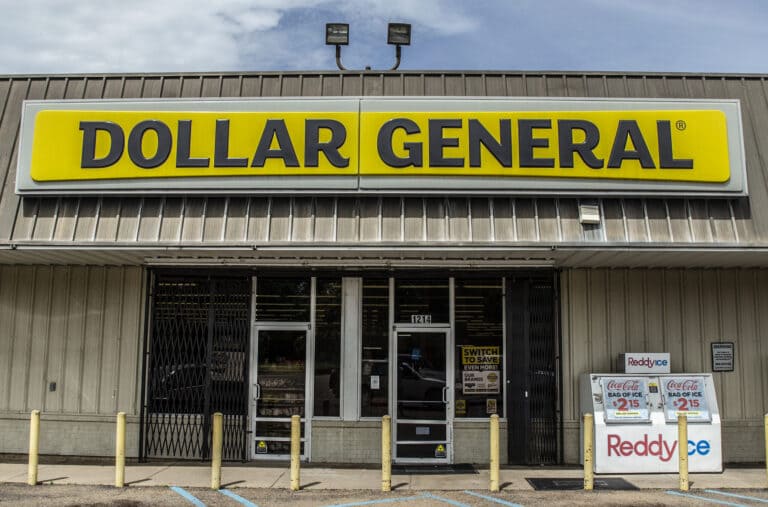
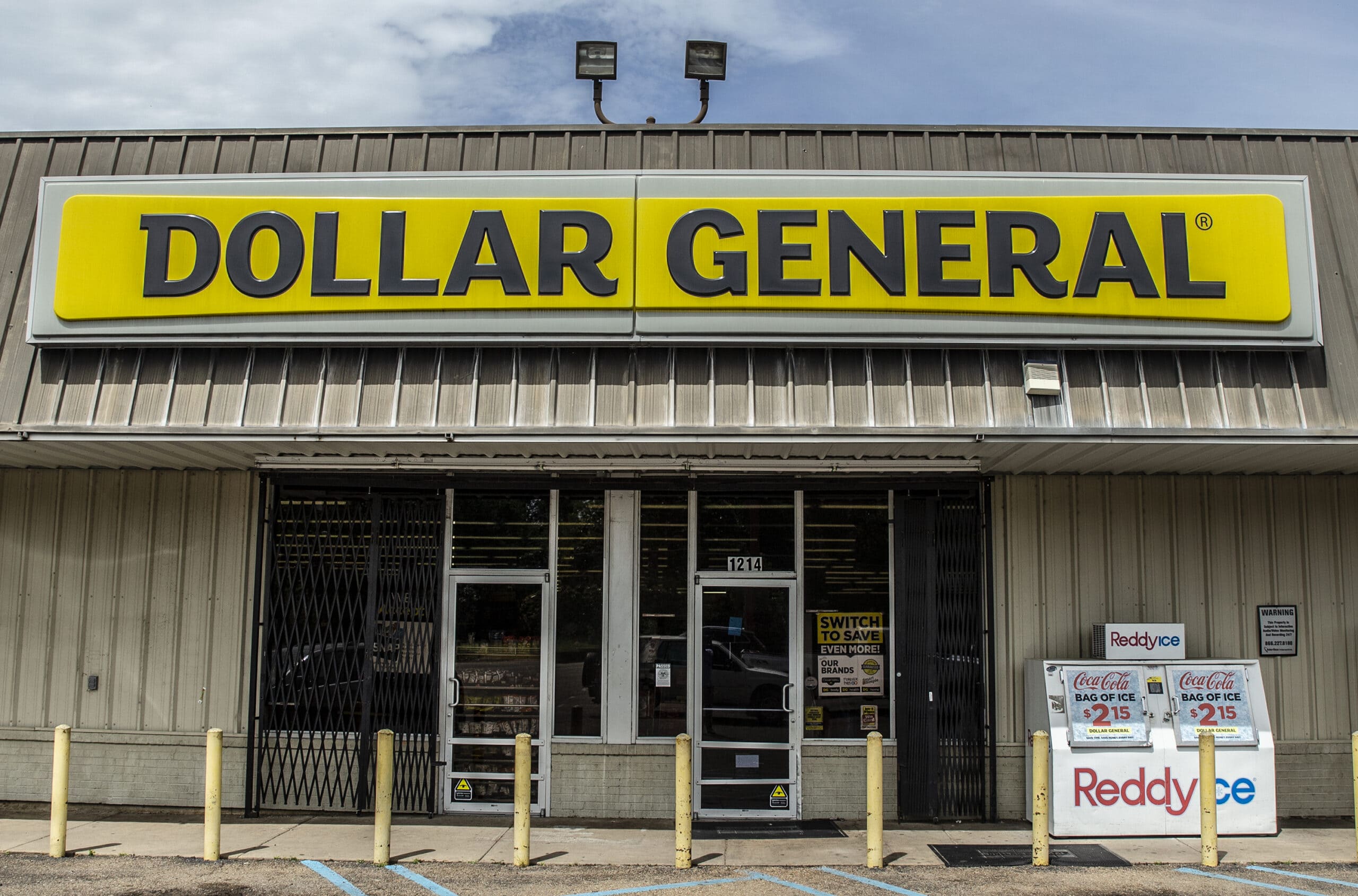
a Dollar General storefront
Audio articles are automated for accessibility. Humans wrote and edited the story; however, this audio has not been reviewed for accuracy and may contain errors. Read more about how we use AI to increase access to our reporting.

Mississippi, the Federal Trade Commission and 19 other states have sued Dollar General alleging the company repeatedly overcharged customers across the country.

The lawsuit claims that the prices customers see on items on shelves and in advertisements are not what gets rung up at the register when they pay.

“Dollar General has for years engaged in deceptive conduct that harms the very consumers it claims to service,” the lawsuit, filed in federal court in Tennessee on Monday, said.

The Mississippi Attorney General’s office is suing for the state and did not respond to a request for comment. 

The discount store operates over 20,000 stores in the United States, with around 670 in Mississippi and 685 in Louisiana. In 2023, Mississippi Public Broadcasting reported Mississippi had the most Dollar General stores per capita in the country.

The lawsuit claims the overcharging pattern has persisted for years, despite internal company data, almost 30,000 consumer complaints from across the country and penalties from state regulators. 

Dollar Generals are a common sight in rural towns across Mississippi and the country. The chain promises discounts and low prices for customers, and has grown over the past decade, building stores in small, mostly rural, communities. The lawsuit said that the company’s main customers are low- and fixed-income households that “depend on Dollar General’s pricing accuracy for basic financial stability.”

“Although Dollar General promises convenience, low prices and value, the company has routinely charged customers more at the register than the prices displayed on shelves, price tags, and advertisements,” the lawsuit said.

The company denies the lawsuit’s claims and said in a statement it would “defend this litigation vigorously.”

“The lawsuit filed today by the Federal Trade Commission … and several States suggests that we have abandoned our mission and willfully disregarded the affordability needs of our customers. Nothing could be further from the truth,” the company statement said.

The company said that there are bound to be “occasional price discrepancies” but its goal is “100% accuracy between shelf and register prices in every store.” 

This is not the first time the company has faced trouble over its pricing.

Last year, Dollar General paid $15 million to settle multiple lawsuits over its pricing practices. Although the company denied any wrongdoing.

Also last year, an investigative series by the Guardian found that over three years, Dollar General stores across the country had failed over 4,300 price-accuracy inspections in 23 states.  

The lawsuit documents numerous examples of Dollar General customers paying more than they expected at the cash register. 

In February, a Mississippi customer complained that the dog food she bought was listed as $24.95 on the company’s website but she was charged $29 at the store. A Louisiana consumer was told that the store could not honor the sales prices that were listed in the flyer she received from the company because the sales prices were not in the register.

While a few dollars here and there may seem insignificant, over years and millions of purchases the lawsuit said that Dollar General has “extracted millions of dollars in unlawful overcharges” despite knowing about the pervasive problem.

“As a direct result of Dollar General’s unlawful conduct, consumers nationwide have paid significantly more than they expected for basic household goods and necessities, enriching Dollar General at the expense of the low-income and rural households it markets itself as serving,” the lawsuit said.

Mississippi State expands housing for upperclassmen

0
Audio articles are automated for accessibility. Humans wrote and edited the story; however, this audio has not been reviewed for accuracy and may contain errors. Read more about how we use AI to increase access to our reporting.

Upperclassmen at Mississippi State University will have more on-campus housing options after state higher education officials approved a $63.9 million dormitory expansion that would add 527 beds in two years.  

The expansion would increase the College View housing capacity from 656 beds to 1,183 beds, reviving plans for the second phase of the project that was postponed during the COVID-19 pandemic. 

The Mississippi Institutions of Higher Learning board of trustees unanimously approved the project expansion plans on Monday. 

A private developer will finance the project through a partnership with the university, IHL spokesperson John Sewell said. The estimated construction completion date is August 2028. 

The university needs more modern housing for upperclassmen that is close to campus and connected to campus life, MSU spokesman Sid Salter said. 

The university also plans to take older residence halls out of service or repurpose them to better serve students’ needs, Salter said. He did not specify when those changes would begin. 

Mississippi State has 18 residence halls on its main campus in Starkville and requires freshmen to live on campus. The university enrollment has also increased from 22,649 students in fall 2022 to 23,563 last year.

Mississippi State Fall Enrollment 2022-2025

  • Fall 2022: 22,649 
  • Fall 2023: 22,657 
  • Fall 2024: 23,150 
  • Fall 2025: 23,563  

Under the approved agreement, Mississippi State will lease 16 acres to Education Realty Trust, a private college housing management and developer, for the expansion. The lease will run for 40 years with options to extend it up for 25 additional years. 

‘Stop asking Jewish voters to sacrifice our values’ in midterm election, leaders urge

0
Audio articles are automated for accessibility. Humans wrote and edited the story; however, this audio has not been reviewed for accuracy and may contain errors. Read more about how we use AI to increase access to our reporting.

Mississippi Today Ideas is a platform for thoughtful ideas to be shared about our state’s past, present and future. Opinions expressed in guest essays are the author’s own and do not necessarily represent those of Mississippi Today. You can read more about the section here.   


During a recent appearance before the Michigan Democratic Jewish Caucus, Michigan Attorney General Dana Nessel offered a midterm election roadmap for Jewish voters. “We have a moral imperative to place the needs of the world above even our own self-interest and, yes, even our own survival,” she said. She urged “sacrific(ing) the comfort, safety and security and even the very future of our own people in exchange for the opportunity to save the rest of humanity.”

As the leader of a Jewish advocacy organization and former Jewish outreach director for a major presidential campaign, we were thunderstruck by Attorney General Nessel’s remarks. Her comments couldn’t be more wrong or offensive. But what disturbed us even more was just how commonplace those sentiments have become.

Never before in our careers have we experienced an election season in which Jews are so often asked to excuse antisemitic rhetoric and disregard actions that should have no place in American politics, all to serve somebody else’s definition of a greater good. Political leaders and candidates in both parties are routinely asking the Jewish community to overlook behavior from supposed allies that we would immediately condemn if it came from opponents.  

Here’s a simple message for our fellow Jewish voters: demand better than what we’re getting now from both parties.  

Democrats are trying desperately to flip the Senate. They have candidates like Abdul El-Sayed in Michigan, who summed up a Hezbollah terrorist sympathizer plowing his car into a synagogue full of preschool children as a case of “hurt people hurt people.” He only apologized months later after securing the nomination. They previously ran candidates like Graham Platner in Maine, whose Nazi tattoo was perfectly fine to party leaders until he was accused of rape—and whose successor, Troy Jackson, suggested that the Holocaust was clouding Jewish Mainers’ views of Israel’s actions in Gaza, before he too offered a politically convenient apology. 

Republicans, meanwhile, are trying desperately to hold Congress. They have incumbents like Randy Fine in Florida, who calls himself pro-Israel while comparing Muslims to dogs, backing the mass deportation of Muslims from the United States, and openinly rooting for Palestinians to starve in Gaza. They are also rallying around candidates like Brandon Herrera in Texas, who has admiringly referred to Nazi weapons as “ghetto blasters” and has spoken proudly of owning a copy of Hitler’s “Mein Kampf,” and Martin O’Donnell in Nevada, who hosted a Nazi sympathizer on his podcast and referred to the conversation as a “marriage made in heaven.”   

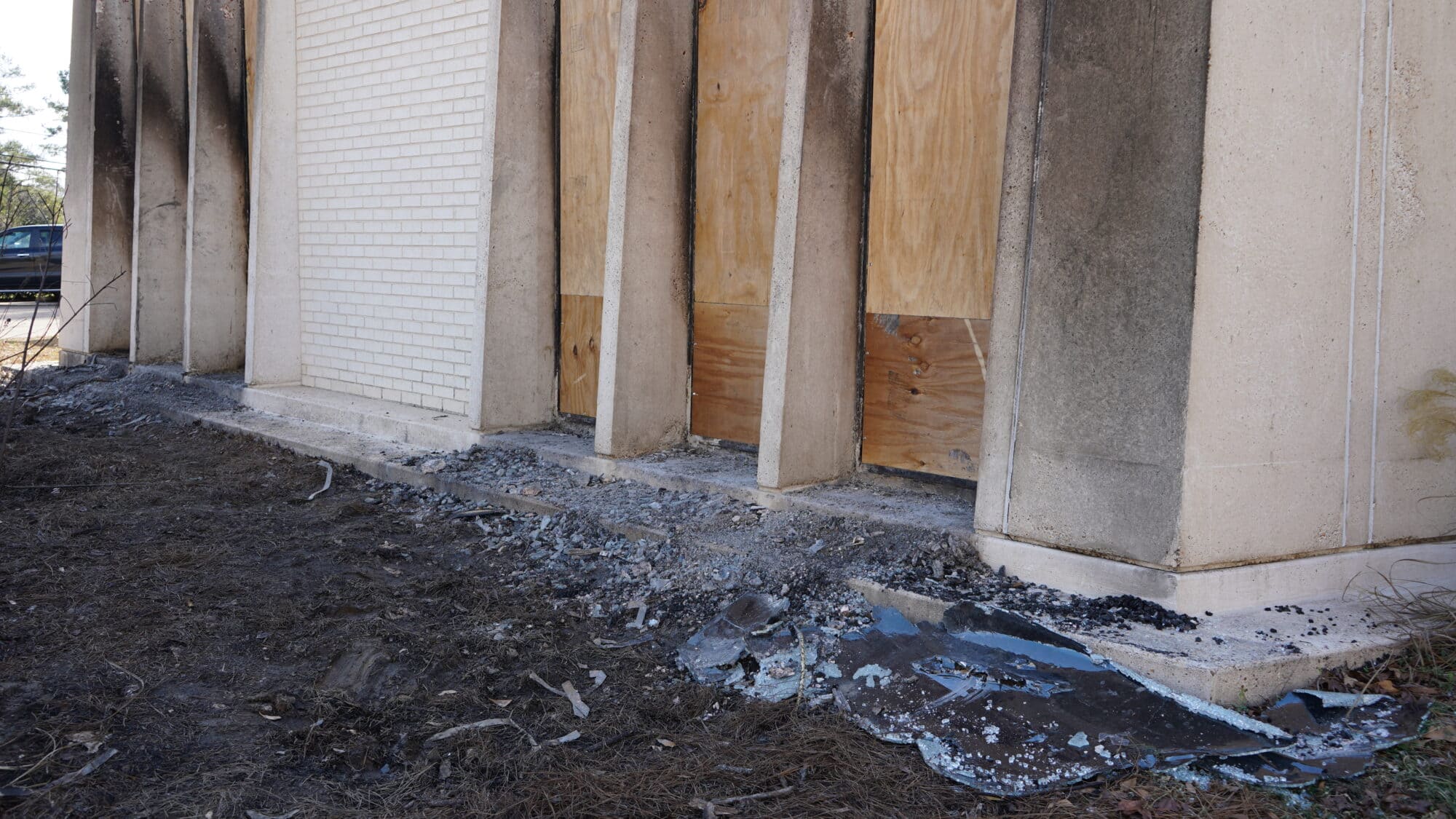
A marker that gives information about the 1967 firebombing of the Beth Israel Congregation synagogue is shown in Jackson on Monday, Jan. 12, 2026, shortly after the latest attack on the synagogue. Credit: Bashirah Mack/Mississippi Today

These individuals have little in common politically. What they share is excuse-making from their respective national parties. Jewish voters are being told repeatedly in this election cycle to forgive and forget offensive comments and dangerous worldviews because the stakes are too high to do otherwise. As each party warns of an existential threat to the country if the other side wins, the common message to Jews is that we need to just keep our mouths closed and fall in line. 

We reject that deal. 

We reject the idea that hate speech should have a home in our political discourse. We reject the notion that acquiescing to discrimination is simply the price of admission to our political system. We reject the principle that ‘anything goes’ in pursuit of control of Congress. 

As Jews, we know all too well the consequences of normalized bigotry. Jews comprise only 2% of America’s population, yet we were targeted in 64% of religion-based hate crimes in 2025. The Anti-Defamation League recorded more than 6,000 antisemitic incidents last year, including a record 203 incidents of physical assaults against Jews.

These numbers don’t exist in a vacuum. When lawmakers and political candidates routinely use hateful rhetoric, they inspire those who share those beliefs and are willing to act on them. Researchers who have examined this phenomenon call it “the emboldening effect.” Studies have found a significant association between hate speech from political leaders and subsequent hate crimes. There are consequences when the boundaries of proper political discourse shift to such a large degree. When political parties reward, excuse or ignore this behavior, they create room for even more of it. 

At a bare minimum, individuals running for office should be modeling respectful behavior. It should be a basic requirement for the job. Yet in too many cases, it appears too much to ask. 

With the midterm election just days away, we encourage our fellow Jewish voters to hold both parties and their candidates accountable for their words. Antisemitism should never be tolerated from anyone. No amount of hate speech is worth the price of victory.

In our system, voters should set the standards by which politicians abide. We Jews should not be expected to tolerate the hate being directed at us on the altar of political expediency. Our dignity will be respected, and our votes must be earned.    


Ron Halber is CEO of the Jewish Community Relations Council of Greater Washington. Joel Rubin is a former Obama Administration deputy assistant secretary of state who served as Jewish outreach director for Bernie Sanders’ 2020 presidential campaign.

Asthma mortality rates in Jackson reach highest level in three years

0
Audio articles are automated for accessibility. Humans wrote and edited the story; however, this audio has not been reviewed for accuracy and may contain errors. Read more about how we use AI to increase access to our reporting.

Jackson is among the most challenging cities in the United States if you’re living with asthma and has some of the highest rates of asthma-related deaths, says a 2026 report from the Asthma and Allergy Foundation of America.

Among the 100 largest metropolitan areas in the United States, Jackson ranks third in mortality rates linked to asthma. The common lung disease causes inflammation of the body’s airways, making it difficult to breathe.

Beyond counting the number of deaths, the nonprofit organization’s report looks at asthma prevalence and emergency department visits for asthma to rank the most challenging places in which to live with the chronic lung condition. Weighing these factors, researchers placed Jackson 36th on the list this year.  

These trends have worsened over recent years. In 2023, Jackson was the 63rd most challenging place to live with asthma out of the same 100 cities. By 2025, Jackson had moved up to 47th place. Previously lower asthma rates have gone up to be “average” with those cities, while deaths from asthma have declined below average.

“Not a lot of people know that (asthma) is life-threatening,” said Hannah Jaffee, research director at the foundation. During a severe asthma attack, the body’s airways narrow and can prevent enough oxygen from entering the bloodstream.

The most recent data from the Centers for Disease Control and Prevention shows that 239 Mississippians died from asthma between 2020 and 2024. While asthma deaths are rare, that number is likely an undercount, said Calandra Davis, the American Lung Association’s director of advocacy in Mississippi. When adjusted for population, Black Mississippians experienced a death rate twice as high as their white counterparts. Nationally, Black Americans are three times as likely to die from asthma as white Americans, and the rate is highest for Black women. 

“Structural and historical racism, at the systemic level, unfortunately has led to a lot of disparities that we see in terms of asthma prevalence, asthma-related emergency department visits and asthma related deaths,” said Jaffee.

While treatments for asthma have improved, racial and ethnic disparities have not, she said. She pointed to poverty from redlining, a practice where bankers denied investment in predominantly Black neighborhoods, and lack of health insurance as factors influencing the disparities. 

Research shows that many asthma-related deaths, especially for children and young adults, are preventable with better care and awareness of warning signs. One of the strongest indicators of a severe attack is extreme shortness of breath that may include audible wheezing and inability to speak. 

Dr. Joshua Phillips, an allergist at the Mississippi Asthma and Allergy Clinic in Jackson, said he considers almost all these deaths to be preventable. 

“This is, in 2026, a treatable disease,” he said, before listing a dozen medication types.  ”These drugs really lowered asthma mortality when they started coming out in the 1980s and 1990s.”

In addition to the daily and emergency rescue inhaler, he’s used injectable medicines, called biologics, that target specific antibodies to help manage severe cases of asthma. 

Phillips treats patients from around the state, and he’s seen the Mississippi State Fair in early October as the beginning of peak asthma season. Several factors come into play — the change in weather, the start of fall viruses, ragweed pollen season and people congregating at outdoor events. Being part of the southern United States, Mississippi experiences longer-than-average pollen seasons for trees and grasses. That exposure can bring out asthma symptoms in people who elsewhere would have experienced nasal allergies, Phillips said. 

“This is a multiple-issue crisis,” Davis said. When people lose access to healthcare, whether through not having health insurance or getting priced out of medications, she expects to see more asthma-related deaths.

Phillips noted that rural hospital closures have led some of his patients to drive into Jackson from the Delta, but lack of reliable transportation means they sometimes miss visits.

Meanwhile, air quality has gotten worse across Mississippi, which directly impacts people with lung conditions such as asthma. 

In April, the American Lung Association issued a “State of the Air” report that shows a decrease in air quality in and around Jackson since the previous year. The surrounding metro area received a B grade for ozone pollution, also known as smog. 

Other parts of Mississippi fared worse. One monitored area that includes DeSoto County received an F, while the Gulfport-Biloxi area was graded a C. Only 10 counties out of 82 in Mississippi have monitoring stations for air quality, limiting the geographic areas researchers are able to analyze. 

Factory gases, smokestacks, diesel engines and power plants can all contribute to poor air quality, said Davis. These pollutants are especially dangerous for youth and older adults, and are linked to health concerns, including heart disease, lung cancer and asthma.

“We are putting our children, our elders, those who are pregnant at risk because there’s an unsafe level of air quality,” Davis said. “So whether that’s a B grade or F grade, there is a level of unsafe air.”

Given the increase in asthma prevalence, Phillips encouraged Mississippians to think of asthma as a long-term, chronic disease rather than something that affects them temporarily. The best way to manage asthma, he said, is to be proactive. This can look like seeing a specialist twice a year and having a plan for how to handle sudden asthma attacks.

“A lot of patients just feel that, ‘Well, I feel better. My asthma went away.’” Phillips said. “No, your asthma did not go away. It may have gone to sleep, but it’s still very much there.”

This story was produced with support from the Sarah Yelena Haselhorst Fund for Health Journalism.

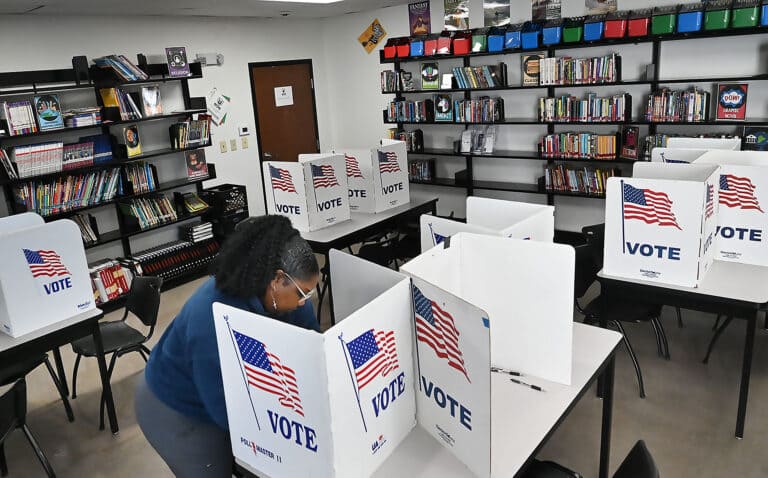
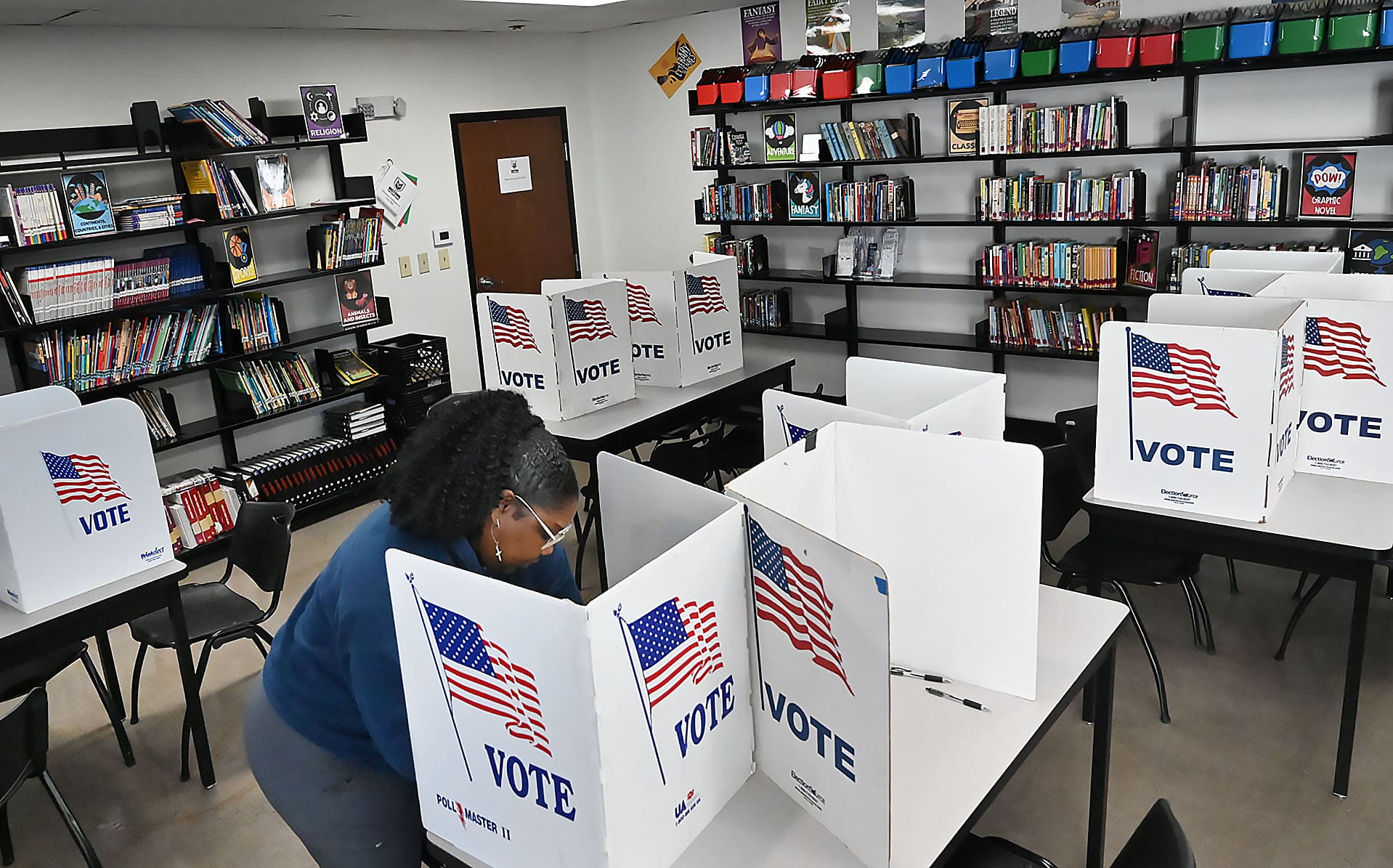
Over 56,000 absentee ballots cast so far in Mississippi midterm election

0
Audio articles are automated for accessibility. Humans wrote and edited the story; however, this audio has not been reviewed for accuracy and may contain errors. Read more about how we use AI to increase access to our reporting.

Mississippi voters have returned more than twice as many absentee ballots as they had done at this point in the 2022 midterms.

But there was no Senate race on the ballot in 2022, and the numbers remain below the last presidential race.

As of Monday, circuit clerks’ offices had received 56,049 absentee ballots, according to the Secretary of State’s office. At roughly the same point in 2022, they had received 22,221.

The jump comes in a year when a U.S. Senate seat is on the ballot, with Republican Sen. Cindy Hyde-Smith facing Democrat Scott Colom and independent Ty Pinkins.

VOTER GUIDE: Mississippi 2026 midterm elections guide: Who’s running? What are the issues?

The absentee ballot count this year is still far below the 2024 federal election cycle, but voter turnout usually increases in presidential election years.  At this point in 2024, 119,818 absentee ballots had been received, so this year’s count is a little under half of that.

DeSoto County currently has the most returned absentee ballots at 4,588, followed by Hinds County at 4,240 and Harrison County at 4,183.

Voters with a qualifying excuse can vote absentee in person at their circuit clerk’s office until noon Saturday, Oct. 31. Mail-in absentee ballots must be postmarked by Election Day, Nov. 3, and received within five business days, by Nov. 10.

Mississippi does not offer no-excuse early voting. Voters must have a legal excuse to vote absentee, such as being 65 or older, having a disability, working during polling hours or being away from their home county on Election Day. Eligibility is narrower for mail-in ballots than for in-person absentee voting.

For more information on how to vote absentee in person or by mail, go to this secretary of state’s web page.

Rural communities push back on school consolidation efforts: ‘They’re just looking at numbers on the paper’

0
Audio articles are automated for accessibility. Humans wrote and edited the story; however, this audio has not been reviewed for accuracy and may contain errors. Read more about how we use AI to increase access to our reporting.

Mississippi has lost thousands of public school students over the past decade, leaving fewer children enrolled in the state’s 138 school districts and less money to go around. 

State leaders think they’ve found a solution: School consolidation. 

House Speaker Jason White has formed a select committee to examine how merging districts in Mississippi could benefit students. Lawmakers say the state has too many small, underperforming school districts that spend too much on administration.

Representatives have identified several counties as potential candidates for consolidation, including Tallahatchie, Copiah, Washington and Bolivar. But state leaders are struggling to articulate a cohesive vision. It’s not clear if their intent is to merge staff, close schools or both.

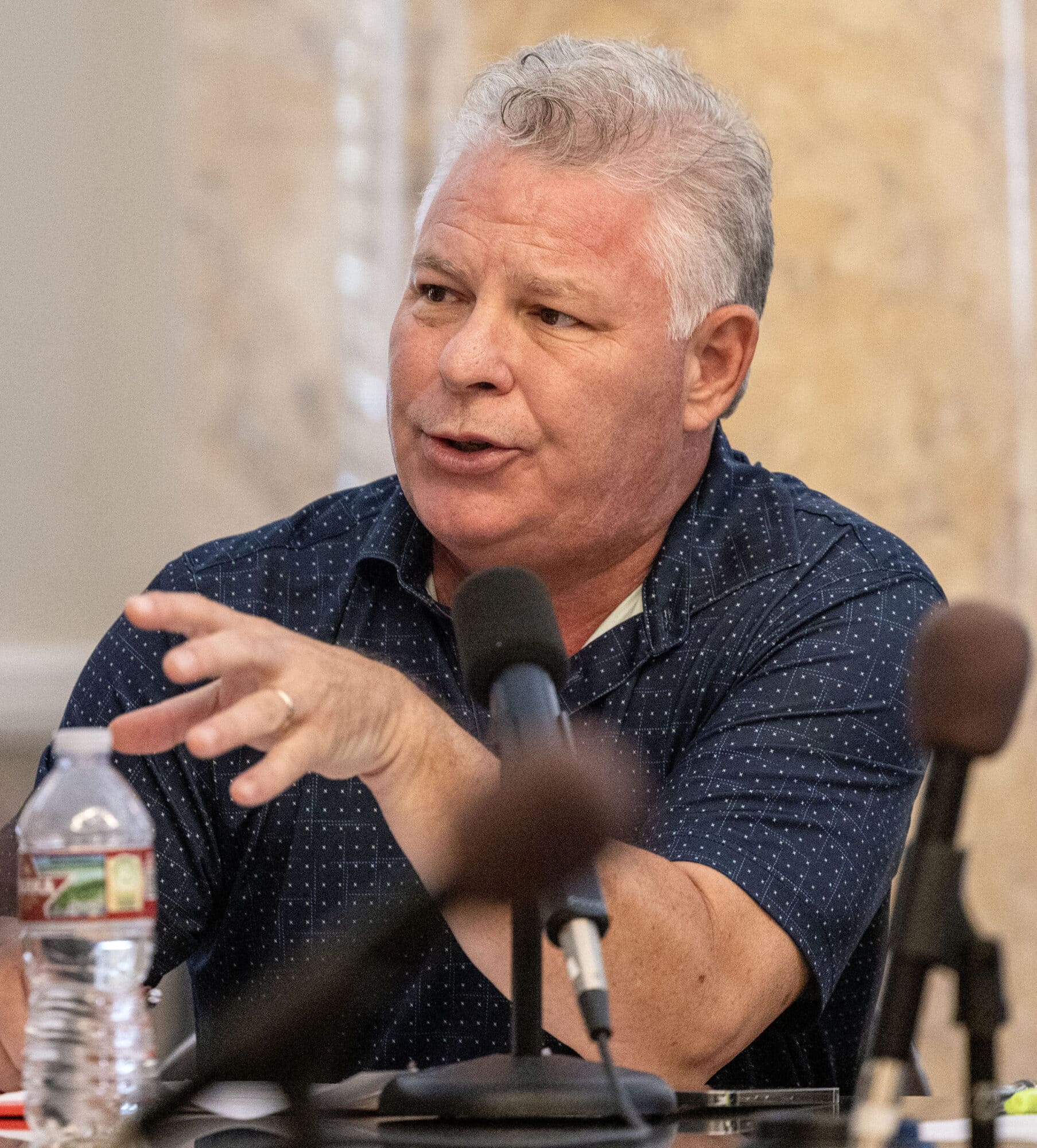
House Education Chairman Rob Roberson, a Republican from Starkville, says the push is primarily about improving education while acknowledging that saving money is another factor. 

Rep. Rob Roberson, R-Starkville, speaks during a meeting of the House Select Committee on Consolidation at the Capitol in Jackson on Thursday, Aug. 6, 2026. Credit: Eric Shelton/Mississippi Today

“It’s unfortunate, and it makes me sound like a bad guy, but I’ve got to look at it realistically,” he said, admitting that administrators’ jobs may be on the chopping block. “Adults matter to me, but the kids matter more.”

But people in communities across Mississippi worry that state leaders are only concerned about saving money without considering how school closures will affect their small towns.

In Tallahatchie, locals fear consolidation will stall progress while Copiah residents fret about deeper dysfunction.

“I don’t think it’s about the kids,” said Bernard Berryhill, a former West Tallahatchie teacher. “I think it’s about dollar bills.”

Shrinking populations, shrinking budgets

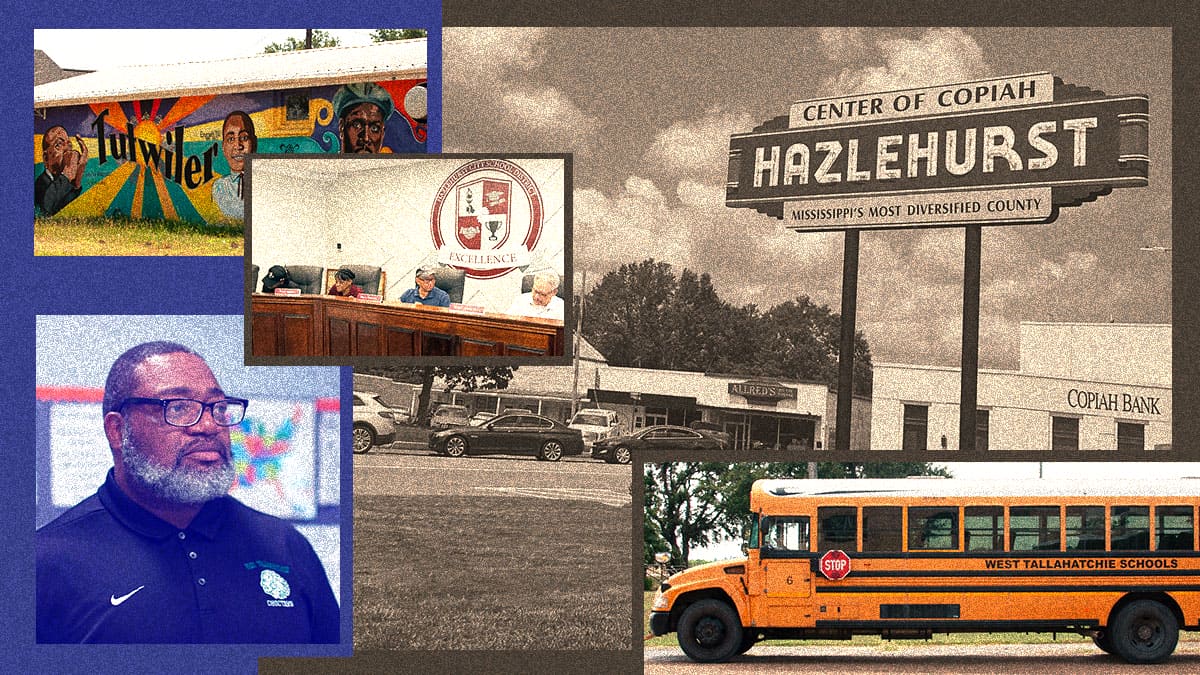
The stakes are different for school districts that may be forced to merge. In Copiah County, consolidation could bring Wesson schools in closer proximity with communities with a history of low academic performance and administrative turnover. Hazlehurst schools would lose local control, including the ability to direct their spending and hire school staff. 

“They’re just looking at numbers on the paper,” said Hazlehurst school board President Paul Rhodes. “And there’s going to be some other costs that may go along with it that they’re not even considering.”

The move comes as Hazlehurst schools face a possible state takeover. School leadership has made the kind of progress in recent months that might put off a state takeover, but a key question they still face is: Are your dysfunctional days behind you?

In some ways, the consolidation makes financial sense. 

The Copiah County School District’s central office is less than a mile away from Hazlehurst City Schools’ in downtown Hazlehurst. Both districts’ bus barns are in the county seat. 

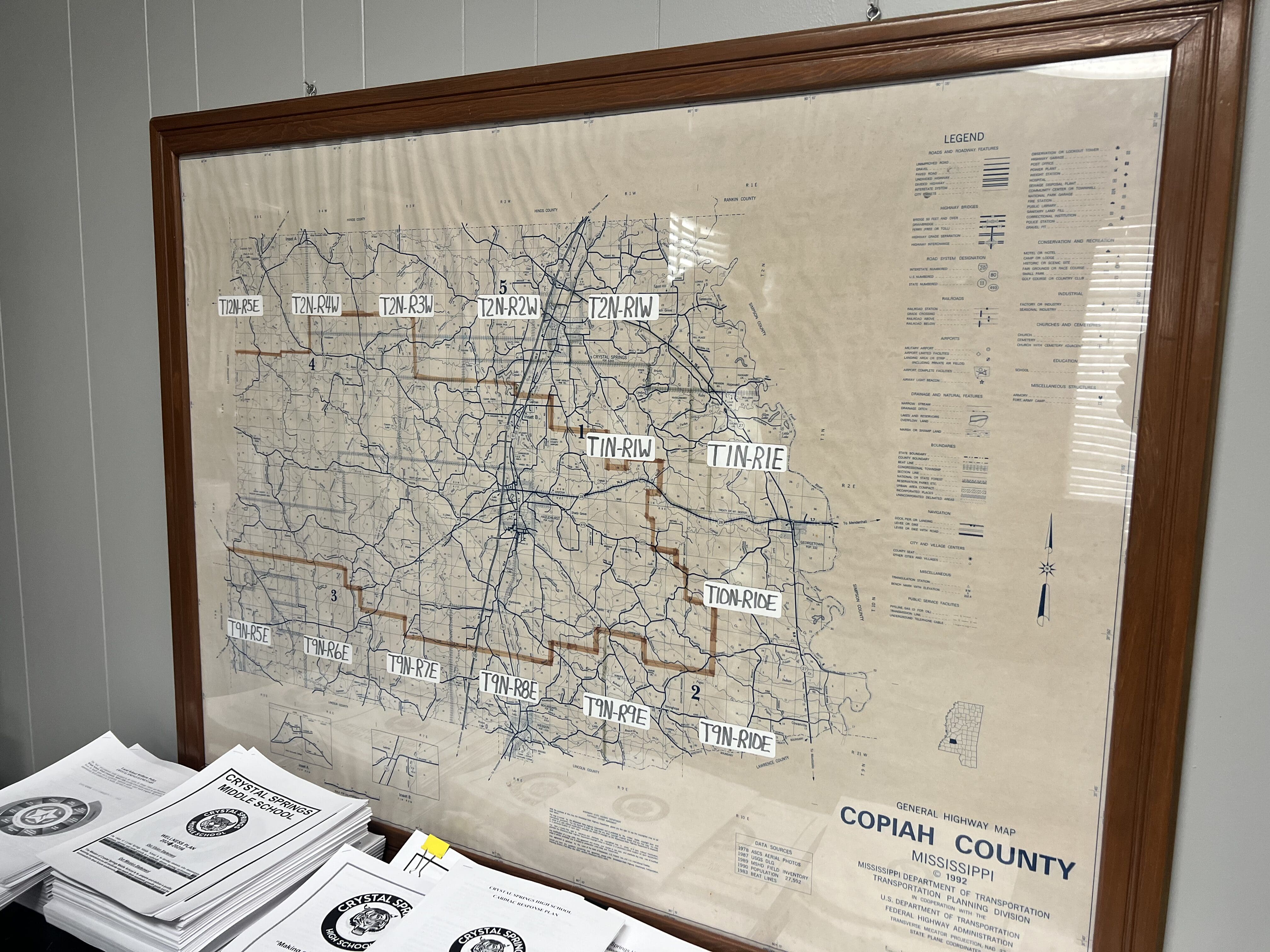
Copiah County School District map with different school zones displayed in the district office in Hazlehurst on Sept. 3, 2025. Credit: Leonardo Bevilacqua/Mississippi Today

But for local communities, the possible savings seem meager compared to losing representation on the school board and mixing district finances and instructional planning for student populations with different needs.

“We want what’s best for the kids,” said Barbara Higgins, whose nonprofit Empowering Doves helps connect Hazlehurst seniors with scholarships. “If they’re afraid of progress, make sure the students have what they need first. We want the chance to grow. And we have been.”

‘The raw end of the deal’

The eastern side of Tallahatchie County is anchored by Charleston, a town of about 1,900 people with a bustling downtown square. The other end of the county is a constellation of four-way stops, rural communities with little more than town halls and gas stations. 

There’s already a sense of inequity between the two ends of the county, said Stephanie Kassem, leader of the Boys & Girls Club in Tutwiler.

The east side has “a stronger tax base, so of course they get more money,” she said. “That’s led to this feeling that they get better things than they would over here.”

Berryhill, the former teacher, said he’s concerned that funds would not be fairly divided between the county’s two districts, East Tallahatchie and West Tallahatchie, after a consolidation. 

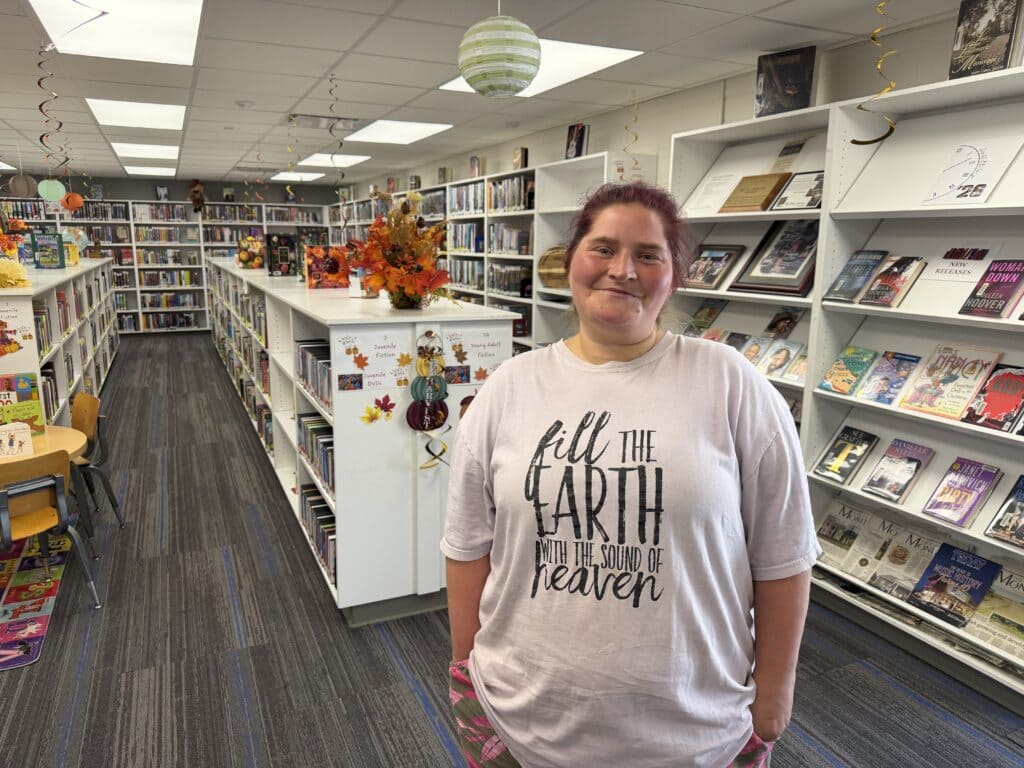
Crystal Morgan, whose children attend Wesson Attendance Center in the Copiah County School District, is pictured at Wesson Public Library, Aug. 27, 2026. She is an alumna of Crystal Springs schools. Credit: Leonardo Bevilacqua/Mississippi Today

Superintendent Tony Young’s perspective, West Tallahatchie School District is doing well on its own, financially and academically. He is already concerned about losing money next year because of a new school funding formula that’s tied more closely to student enrollment. A clause that protects districts from losing funding because of declining enrollment expires next summer.

Almost 70,000 students have left Mississippi public schools since 2013. In that time, West Tallahatchie schools have lost more than 300 students, nearly half of its student body. East Tallahatchie has lost a third.

Opposition to consolidation in Copiah County is centered in Wesson and Hazlehurst, where parents and community leaders fear the change would provide few benefits while deepening disparities in resources.

Crystal Morgan, whose three children attend Wesson schools, fears consolidation will overwhelm teachers and crowd classrooms. The consolidation proposed by the legislature last session redrew boundaries to coincide with board of supervisor lines, which would mean some Hazlehurst students would be zoned into Wesson schools. 

She said she hopes her kids don’t end up getting “the raw end of the deal with extra students in their already small classroom,” and worries about adding poorly-performing schools to the district.

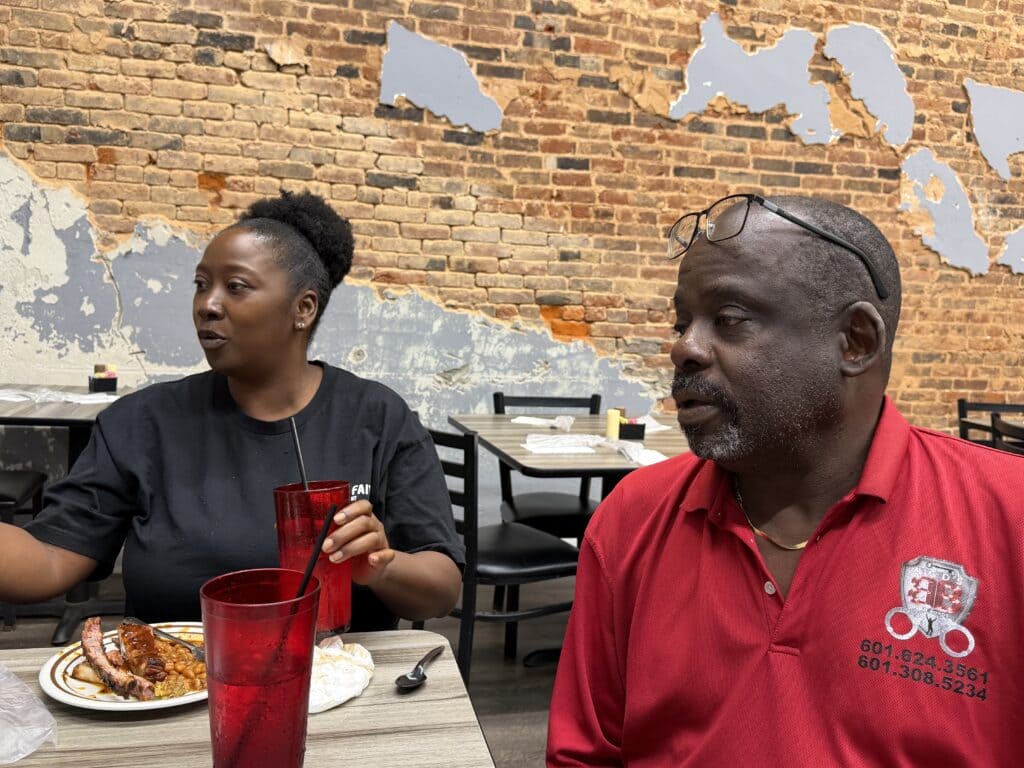
Tanya Marsaw, whose daughter is a senior at Crystal Springs High School in the Copiah County School District, and Dwayne Thompson, a bail bondsman in Copiah County, discuss the prospect of school consolidation over lunch at Brando’s Steakhouse and Buffet in Crystal Springs, August 21, 2026 Credit: Leonardo Bevilacqua/Mississippi Today

“Wesson thrives because it’s a small and tight knit community,” she said. 

Tanya Marsaw, a mother of a Crystal Springs High senior, said the district’s students learn and play in subpar facilities. She’s not sure if that would change in a consolidation, but wonders if new leadership after a merger could pave the way for some improvements. 

“My daughter plays volleyball,” she said. “She goes into the Wesson locker room… It’s like going somewhere else. They don’t have rats, they don’t have roaches, they don’t have paint chipping off the wall, none of those things.”

Fears of violence

For many Tallahatchie County locals, who are proud of the academic growth of both districts, the first question about consolidation is, “Why?” The immediate second question is, “How?”

Lorenzo Pimpton, a West Tallahatchie teacher and coach, said busing a student from Tutwiler, in the western part of the county, to Charleston in the east could take hours if there are multiple stops. 

Lorenzo Pimpton, a teacher and coach, talks about potential consolidation in Tallahatchie County on Aug. 21, 2026. Credit: Devna Bose

The idea, a possible reality of consolidation, is “outlandish” unless lawmakers find the funding for the community to build a centralized school, said Rep. Tracey Rosebud, a West Tallahatchie graduate who now represents the whole county.

“Otherwise, it’s going to be ugly to transfer kids across the region like that,” he said. 

And those long bus rides could lead to fights, he said. Rosebud is particularly concerned about violence between older students if they’re forced together unexpectedly. The two schools have long had a friendly rivalry that sometimes turns hostile, he said.

From her work at the Boys & Girls Club, Kassem worries a merger could destabilize already-struggling students. She knows the trauma many Tallahatchie students are living with: unable to depend on regular meals at home, unreliable transportation and other issues.

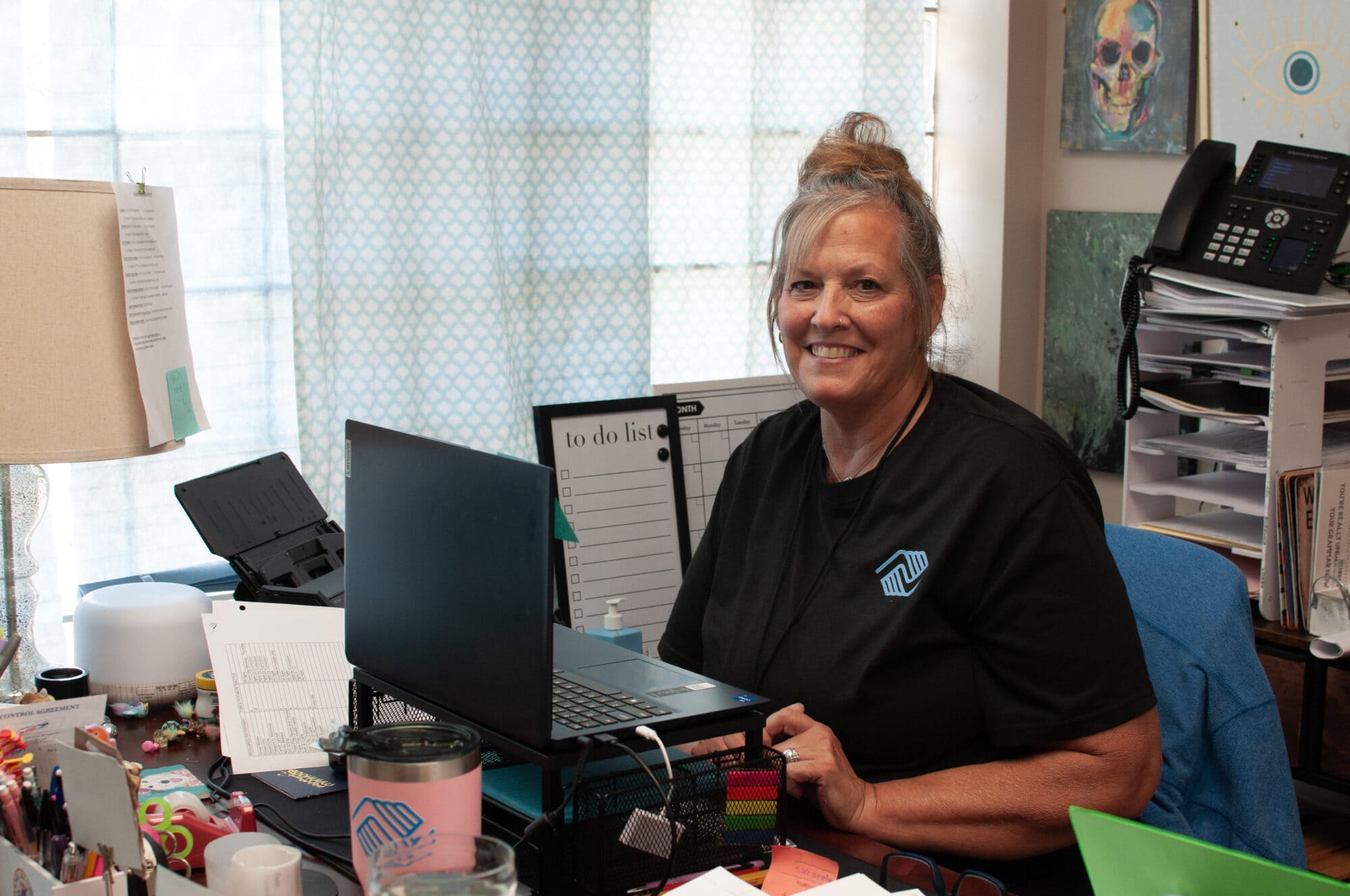
Stephanie Kassem, unit director of the Boys & Girls Club in Tutwiler, pictured on Aug. 21, 2026, in her office. Credit: Devna Bose

“You’re in that kind of awkward age and then you are self-conscious, and this is a huge change to be going through,” she said. “I think it would be too much … and would add to some of their trauma.”

A seat at the table

Whatever lawmakers decide on an administrative or school consolidation, Berryhill hopes they consider locals’ voices and make slow, intentional changes.

“If the state is going to make a change, I’d prefer it’s gradual,” he said. “Where can we meet in the middle? A new campus or a new building, maybe.”

When Hazlehurst students exited their buses on the first day of school in August, they were met with landscaped lawns and planters outfitted with red mulch, repainted buildings and glossy gym floors.

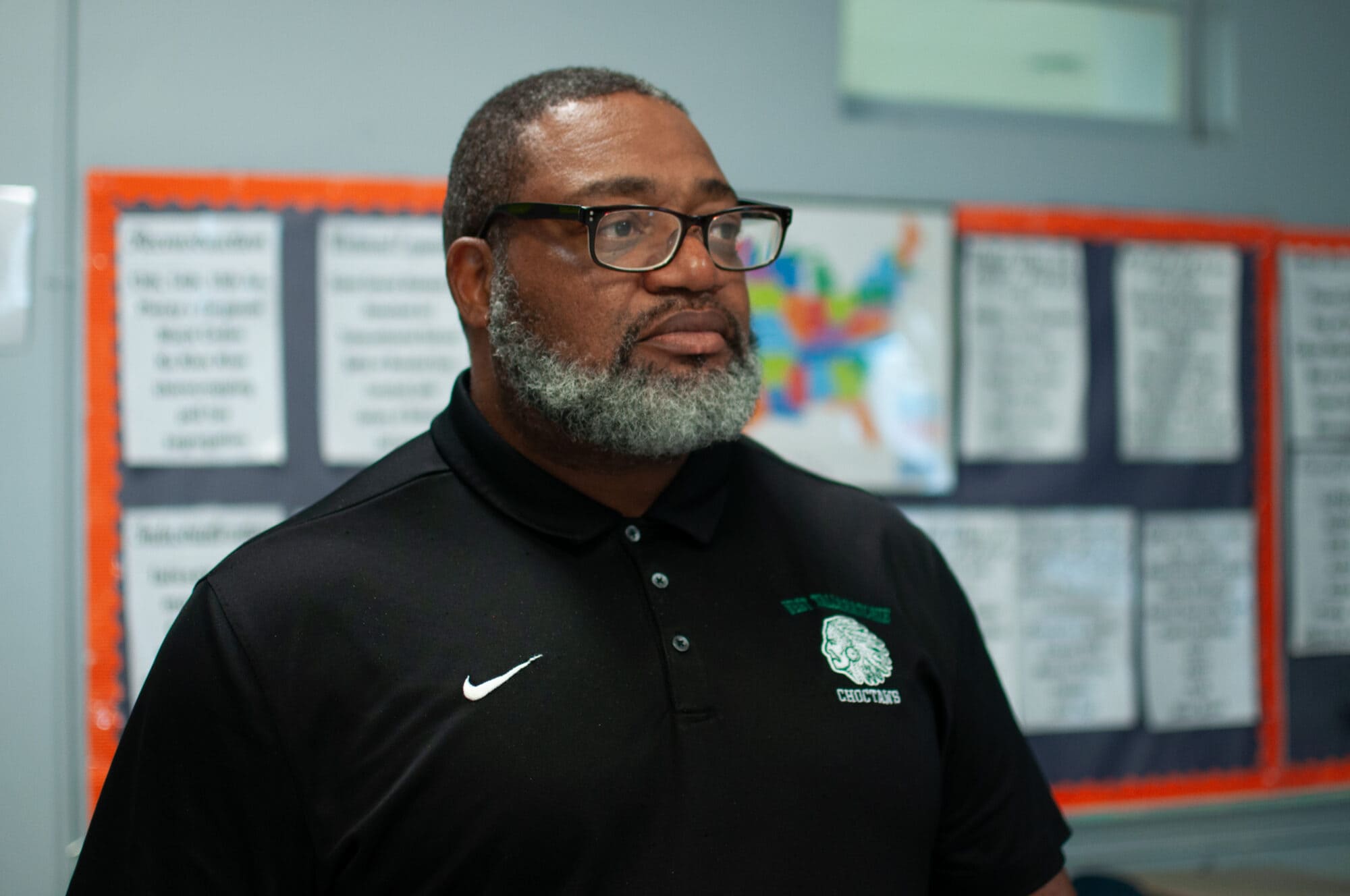
Bernard Berryhill, an alumnus and former West Tallahatchie teacher, talks about consolidation with his mother, Lucinda Berryhill, who serves on the school board. Credit: Devna Bose

The upgrades were the brainchild of Nonya Thrasher, the superintendent appointed in September. She fielded donations and volunteers from local businesses as part of a beautification project. Thrasher brought local leaders into the schools, and cleared the majority of outstanding accreditation violations that kept the district on the state’s radar. 

To many in the community, she has brought something that has eluded the district in recent years: hope. 

For Higgins, a girl scout leader in Hazlehurst for over 30 years, her support for consolidation hinged on the school board’s decision to hire Thrasher, who she says is the most qualified and effective superintendent the district has had in years.

As they discuss consolidating Hazlehurst and Copiah County schools, state lawmakers may also be lingering on a painful and chaotic state takeover of the city district that lasted from 2008 to 2014. The district was out of compliance with nearly every accreditation standard and has struggled to run a functional special education department. 

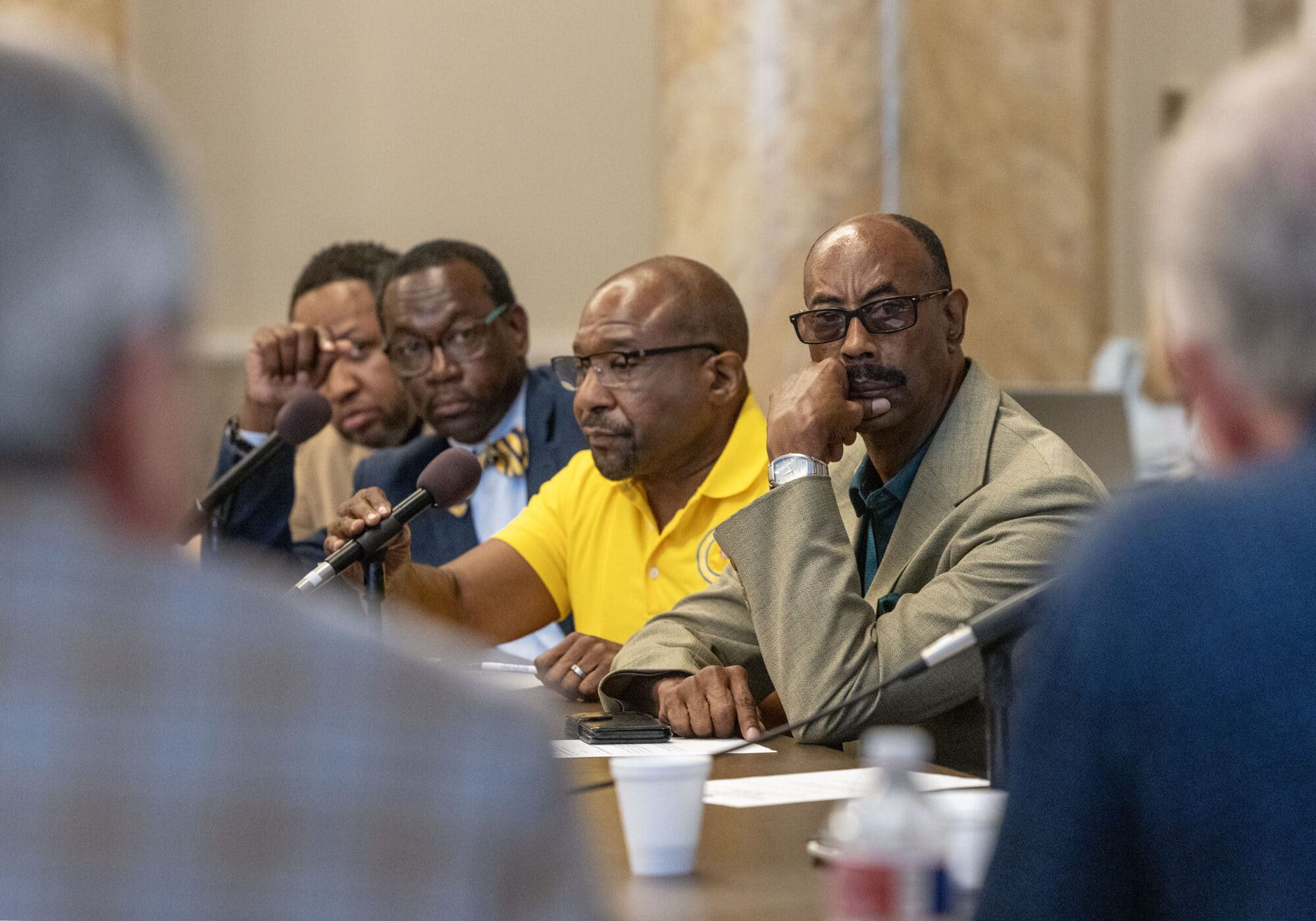
State lawmakers listen as John Ellison, former Chickasaw County School District superintendent, speaks during a meeting of the House Select Committee on Consolidation at the Capitol in Jackson on Thursday, Aug. 6, 2026. Credit: Eric Shelton/Mississippi Today

For now, Thrasher is part of the conversation. She is expected to address the subcommittee on school consolidation in October.

Roberson wants the communities to be involved in the discussion, he said, which also requires admitting there’s a problem.

“Leadership shows up trying to protect what they have,” he said. “What you currently have will not exist over the course of the next few years, because it’s not working. If it was, we wouldn’t be having this conversation.”

8 key questions about school district (and college) consolidation in Mississippi

0
Audio articles are automated for accessibility. Humans wrote and edited the story; however, this audio has not been reviewed for accuracy and may contain errors. Read more about how we use AI to increase access to our reporting.

School consolidation, a perennial topic in Mississippi, is poised to be a top education policy debate during the 2027 legislative session.

Mississippi has 138 school districts, 15 community colleges and eight public universities. State leaders want to shrink those numbers by merging students, administrators and — in some cases — closing schools. 

School districts are set to receive $3 billion in state funding next school year. Community colleges and public universities are set to receive more than $1.26 billion.

Mississippi Today talked to legislators, educators and residents across communities that have experienced school district consolidation or may be targeted for consolidation next year. The reporting reveals fears, successes and other insights. 

Below, we address key questions about school and district consolidation. We also break down how consolidation might affect public education. 

What is school or district consolidation?

Consolidation refers to merging schools (K-12 or college) or districts under centralized management, according to the National Education Policy Center at the University of Colorado. 

It can involve two or more school districts merging central offices, which is an administrative consolidation, or combining multiple schools or districts into one, including staff and students. The same goes for consolidations that involve colleges.

Is consolidation the same as closure?

No. Closing a school or district means to permanently shut down a school — ending operations, closing the building and letting staff go. A consolidation combines multiple schools — its staff, students and resources — into one. 

Still, people might use the term “closure” over “consolidation” because of the loss they’ve experienced, said Carrie Hahnel, a senior associate with Bellwether, a national nonprofit that works to improve education outcomes. 

What are Mississippi lawmakers planning around consolidation?

Almost immediately after this year’s legislative session wrapped, lawmakers indicated they are interested in merging K-12 school districts in a number of counties next year, including Tallahatchie, Copiah, Bolivar and Washington, Mississippi Today confirmed. They are focusing on underperforming districts with declining student enrollment.

Members of the House Select Committee on Consolidation meet at the Capitol in Jackson on Thursday, Aug. 6, 2026. Credit: Eric Shelton/Mississippi Today

Legislators say they have no immediate plans to close any colleges and universities but are weighing factors like population loss, enrollment declines and concerns over whether taxpayer money is being used efficiently.

This isn’t the first time lawmakers have explored consolidating schools in Mississippi. A bill that would’ve consolidated Copiah and Hazlehurst schools died earlier this year. 

Why are lawmakers focusing on consolidation now?

Lawmakers have mentioned shrinking student enrollment, administrative costs and student performance as reasons for their consolidation talks. 

House Speaker Jason White formed a select committee in May to investigate how consolidating schools, districts and colleges in Mississippi could benefit students. 

“My number one goal is to improve academic performance,” said House Education Chairman Rob Roberson, a Republican from Starkville. “Obviously, if you have money savings and efficiency, that would be a secondary benefit of that.”

What are some pros and cons of consolidation?

Some positive outcomes could include enhanced academic and extracurricular offerings for students, better facilities and less spending. 

However, communities can lose a sense of identity when local school buildings close, and students may have to travel farther for school. There tends to be local pushback to consolidation plans because of fears of violence between students from rival communities coming together and the economic impact because of the loss of jobs. 

Also, it doesn’t always result in improved academics. In fact, merging low-performing districts can exacerbate existing dysfunctions. 

Do lawmakers have the power to consolidate K-12 schools and merge colleges in Mississippi?

Local K-12 school boards can initiate school or district consolidations, but the Legislature tends to do the initiating.

The Mississippi Legislature holds the ultimate power in determining which colleges and universities merge or close.

Do consolidated school districts save money?

In Mississippi, generally, yes. But not much.

On average, districts saved a quarter of a million dollars on administrative costs, a fraction of most school districts’ budgets, according to Mississippi Today’s analysis of school superintendents’ spending reports.

One district didn’t save any money. Greenwood-Leflore Consolidated, the product of Leflore and Greenwood school districts, ended up spending $16,070 more on administrative costs in 2020, the year after the districts merged, compared to administrative costs for the two individual districts in the year prior.

In 2012, lawmakers mentioned large savings on administrative costs as part of efforts to sell a school district consolidation to hesitant Bolivar County. Then-state Sen. Gray Tollison, a Republican who represented Oxford, told the Clarion Ledger that the county’s school districts could save $1.6 million if they consolidated their six districts into two. The consolidated districts saved $718,000, according to an analysis of the districts’ administrative spending reports. 

But to make these big savings, school districts have to make tough decisions, former Winona-Montgomery Superintendent Teresa Jackson told state representatives in August at one of the school consolidation select committee’s meetings. 

“If we had not closed schools, we would have saved very little,” she said. 

How strong is consolidated districts’ academic performance?

It varies. 

In Mississippi, most of the mandated consolidations since 2014 involved low-performing districts. 

The Starkville-Oktibbeha district merger in 2015 is considered a bright spot. The consolidated district’s enrollment grew. Community members now say students have access to more academic and extracurricular opportunities. The combined district is now rated an A.