Home Blog Page 2

Nolan Xavier Wells’ mom challenges his mourners to be like her son, ‘the light that brightens the lives of those around you’

Audio recording is automated for accessibility. Humans wrote and edited the story.

OCEAN SPRINGS – Before his name spread across social media, before his parents pleaded for answers about why and how he died and before people lined up to say their goodbyes at his casket, the family of 18-year-old Nolan Xavier Wells had been looking ahead to milestones and wondered what kind of man he would become. 

Football games. Graduation. Someday a family of his own. 

The future they pictured for their son went dark July 6, when his parents learned two days after he was last seen on Horn Island that his body was found in the waters off the Gulf Coast barrier island he visited on Independence Day. 

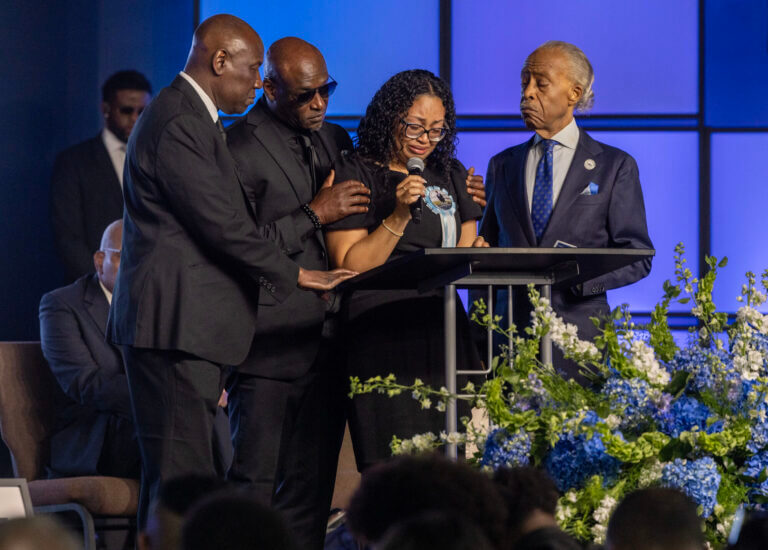
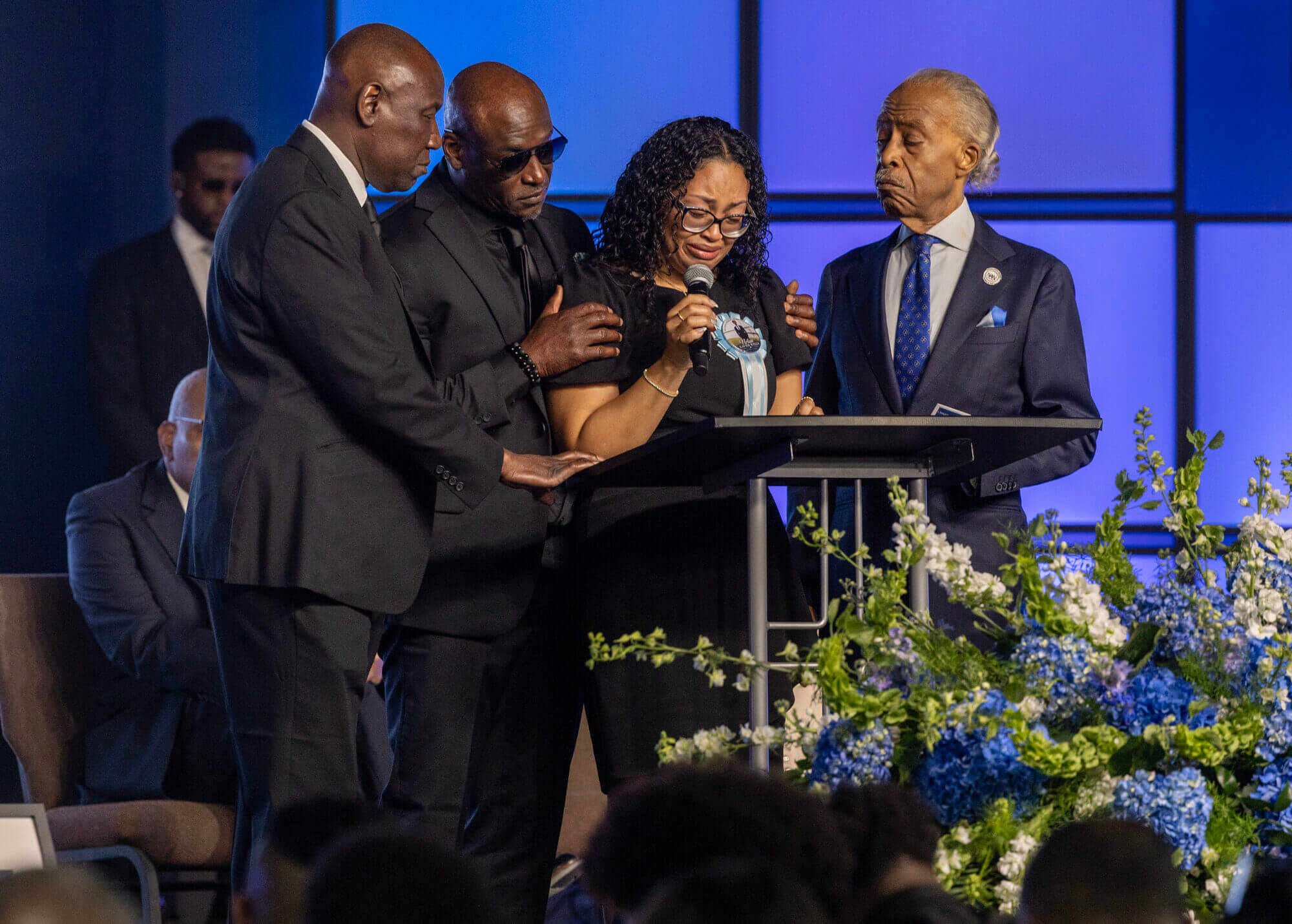
Two weeks later, his mother and father, Christine and Elmore Wonsley, cried and held each other Monday during Wells’ funeral service, tortured by the unanswered questions about his disappearance and death. 

Their voices shook as they spoke quietly and through tears about how proud they were of Wells and the young man he became. They talked about how Wells will be missed: as a role model for his younger siblings, for the jokes he told and how he made people feel welcomed. He trained and built character on and off the field. How he valued family and faith. 

“In a world that can often feel dark, be like Nolan,” his mother said. “Be the light that brightens the lives of those around you. Be the warmth for those who may be feeling the coldness of the world. Love deeply, protect fiercely and welcome others with kindness and remain faithful knowing that God is always with you.”

Christine Wonsley said her son wanted to have three daughters and already picked out names for them: Sophia, Charlotte and Olivia. 
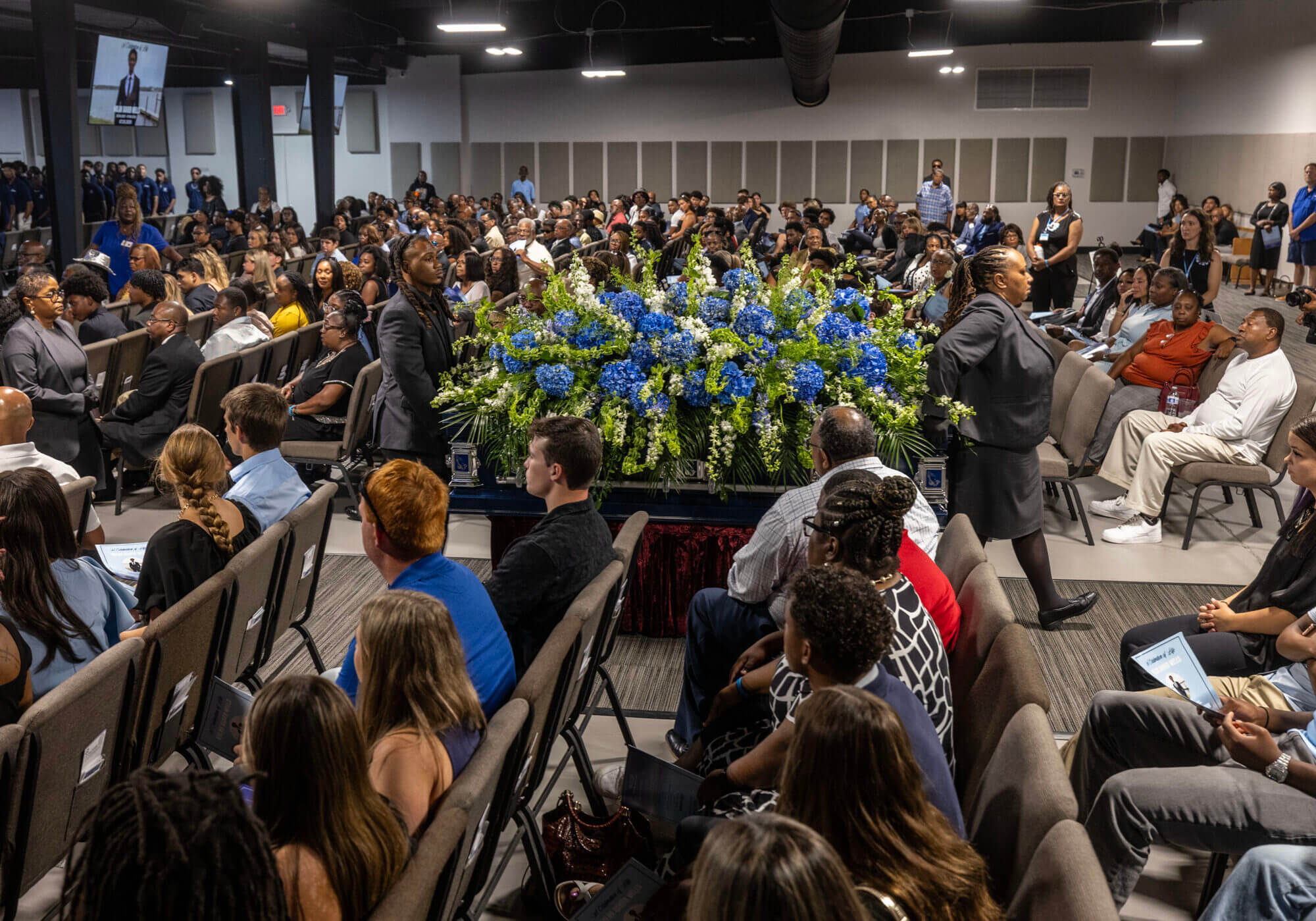
Nolan Xavier Wells’ casket leaves Center Pointe Church in Ocean Springs during his funeral on Monday, July 20, 2026. Credit: Eric Shelton/Mississippi Today

Family, classmates, teammates and community members gathered at Center Pointe Church wearing light blue for the visitation and service. In the afternoon, some planned to attend a private repast celebrating Wells’ life at the Jackson County Fairgrounds in Pascagoula. 

READ MORE: Photo gallery: Funeral of Nolan Xavier Wells

The Jackson County Sheriff’s Department, which is leading the investigation, has provided limited information. Results from a state and independent autopsy have been released, but the family’s attorney said preliminary findings are expected to be shared after Wells’ burial. 

What the family knows is that Wells celebrated the hot Fourth of July by traveling with others 8 miles offshore to Horn Island, one of the largest barrier islands in the Gulf Coast – a known sanctuary for young adults to dock a boat, wade in the water and walk along the shore and white sand. 

He did not return to Ocean Springs with the friend group he arrived with, and he was last seen around the island that afternoon. 

Sheriff John Ledbetter said last week that he suspects the teen drowned, which the family’s legal team has pushed back against. Wells’ family has said he knew how to swim. Volunteer rescuers from the United Cajun Navy have said there was a strong rip current on July 4 and the National Park Service often cautions visitors to check the current status before visiting the Gulf Islands National Seashore. 

On Monday, Wells’ parents stood with the Rev. Al Sharpton, who traveled from New York to deliver a prayer and eulogy, and civil rights attorney Ben Crump. 

They have asked if foul play occurred and whether race was a factor. Wells was Black and arrived on the island with a mostly white group of friends. During the service, demands for a thorough investigation, pursuit of the truth and transparency were met with applause and standing cheers. 
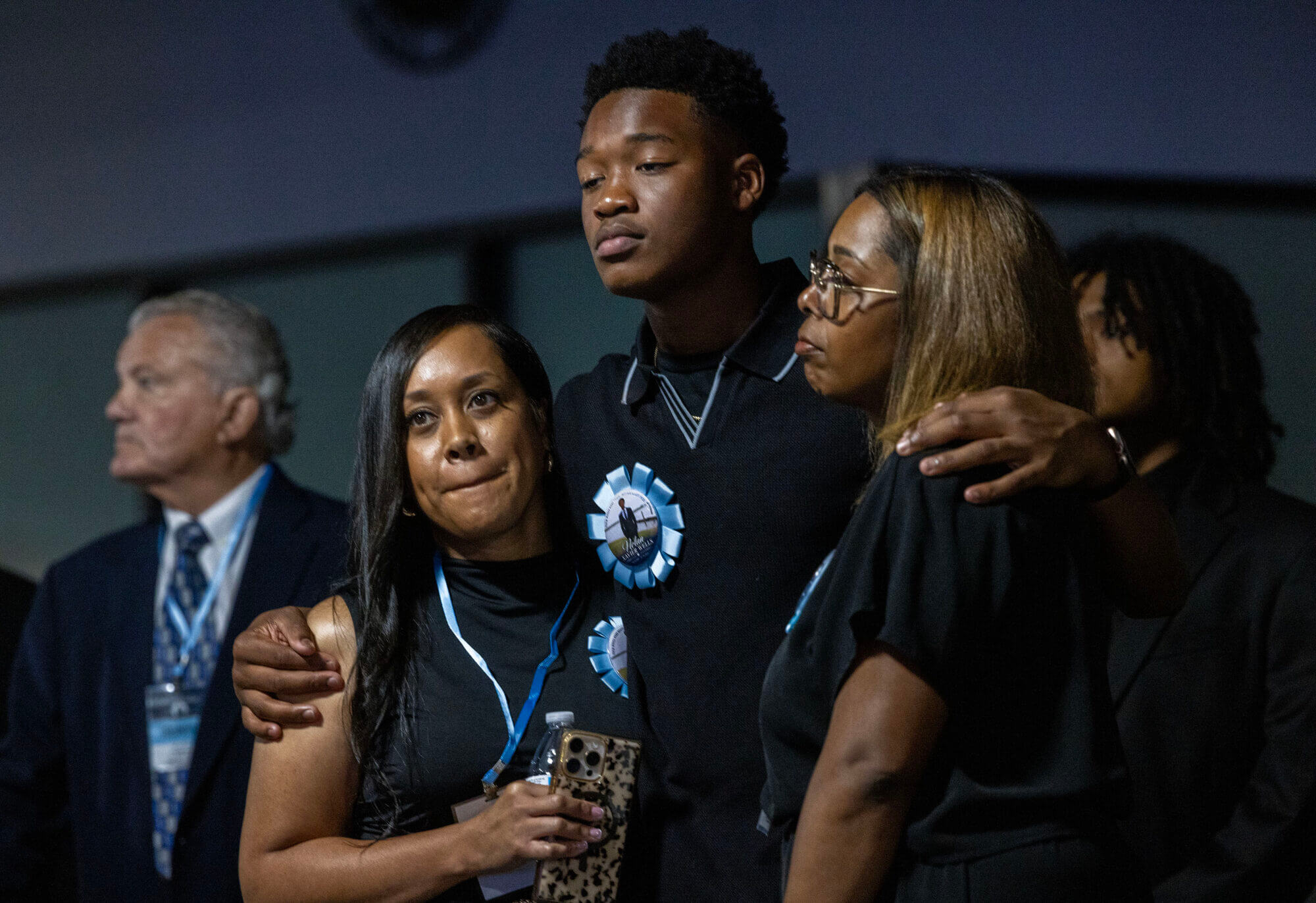
Friends and family of Nolan Xavier Wells console each other during his funeral at Center Pointe Church in Ocean Springs on Monday, July 20, 2026. Credit: Eric Shelton/Mississippi Today

Sharpton said race can’t be discounted because there are too many unanswered questions and because of Mississippi’s history, which led to the deaths of Black boys and men such as Emmett Till and Medgar Evers. He said Wells’ death offers a chance, in this state, for people to come together and act differently than others did in the past.

The reverend said America’s story harkens to the Bible’s story of brothers Cain and Abel and the question “Am I my brother’s keeper?” Sharpton said some have been led to hurt others, and the victims’ blood cries from the ground, just as it does for Wells. 

“Am I my brother’s keeper or am I the keeper of some kind of secret that you could give and won’t stand up?” Sharpton said. “But the blood’s going to haunt you.” 

Sharpton said, with the family’s legal team, they hope to shine light and flush out anyone who knows something, just as turning on the light in the apartment he had grown up in sent cockroaches scattering. 

Crump led the crowd on cheers of “Justice for Nolan Wells” and “Nolan Wells’ life mattered.” 

Sharpton announced a $50,000 reward paid by his organization, the National Action Network, to anyone who could offer information that could lead to an arrest and conviction in Wells’ case. By the end of the eulogy, filmmaker Tyler Perry, who paid for Wells’ service, offered to match the reward, bringing it up to $100,0000. 

“We want the truth no matter who is implicated or exonerated. We want justice no matter who it acquits or convicts,” Crump said during a news conference following the funeral service. 

Wells’ parents met last week with Jackson County District Attorney Angel Myers McIlrath, who plans to present evidence from the sheriff’s completed investigation to a grand jury, which will decide if anyone will be indicted for criminal charges stemming from the teen’s death. 

In a Wednesday statement, the FBI Jackson said it has helped Jackson County investigators, including addressing interstate threats against people connected to the case. The agency did not identify the people who were threatened, but at least two people – a friend who saw Wells before he went missing and a stepparent of another friend who was with Wells near the island  – have said they received death threats

During Monday’s service, flowers with hues of blue and white accompanied photos of Wells that welcomed guests at the door and they adorned his closed casket and framed it in blooming planters in the sanctuary. 
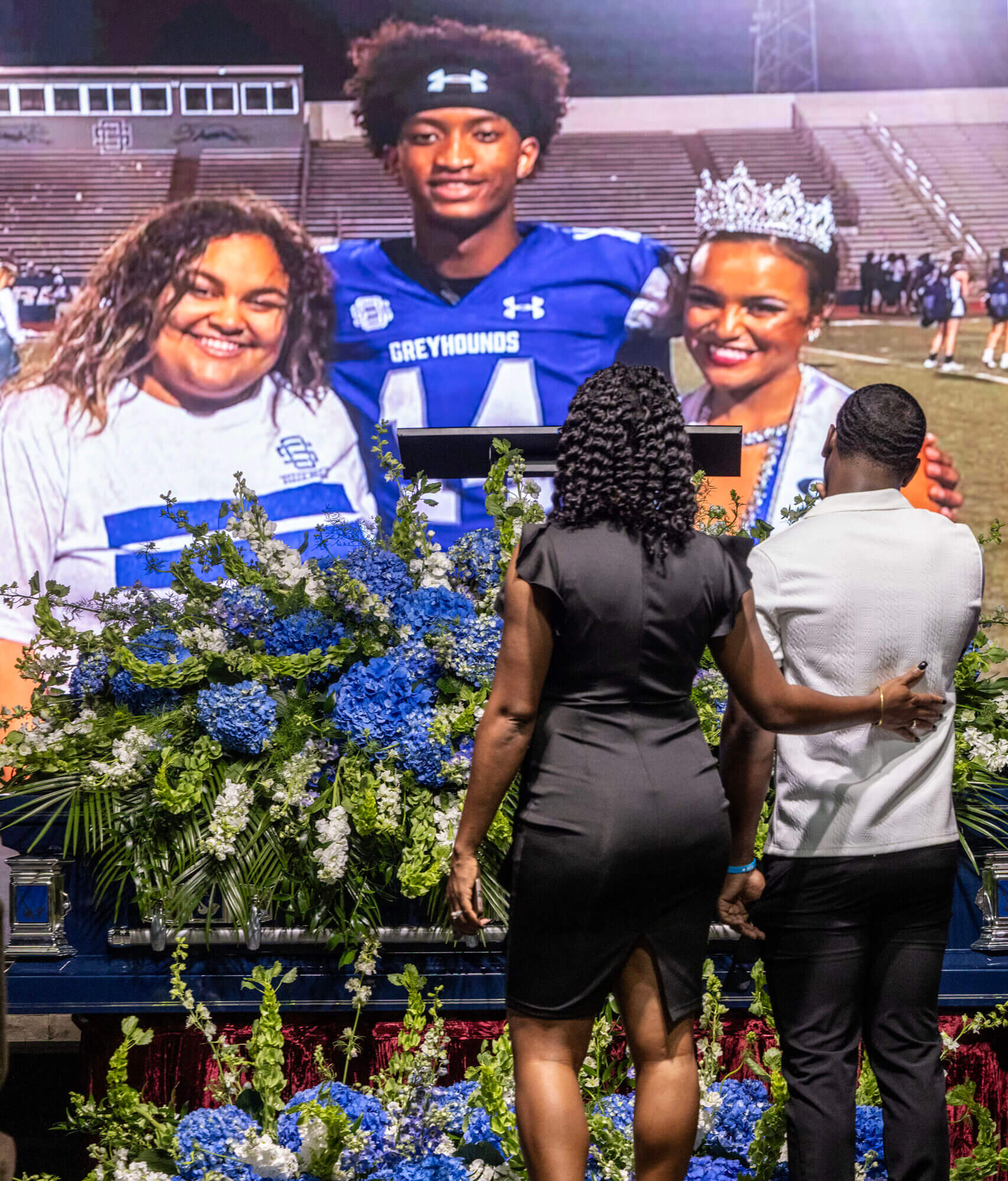
Nolan Xavier Wells’ casket is viewed during his funeral at Center Pointe Church in Ocean Springs on Monday, July 20, 2026. Credit: Eric Shelton/Mississippi Today

On large screens, photos of Wells playing football, basketball and baseball throughout his childhood and teenage years were shown with family pictures, group photos with friends and a few selfies. His 2025 Ocean Springs High School graduation pictures flashed among them. 

His memorial honored his journey as a three-sport athlete, displaying framed jerseys. The last jersey Wells wore, No. 16 for the Southwest Mississippi Community College Bears, was featured next to his photo by his casket. The rising sophomore attended the college on a scholarship, according to his obituary.

Among the mourners were classmates, including Black and white young men who played football with Wells in Ocean Springs. Some offered each other hugs and handshakes.

After the service, Christine and Elmore Wonsley took some questions from reporters. They said they appreciated the community support and saw the kind words and memories they have shared as a testament to the good job they did raising him. 

They plan to start a foundation in their son’s name to define his legacy. 
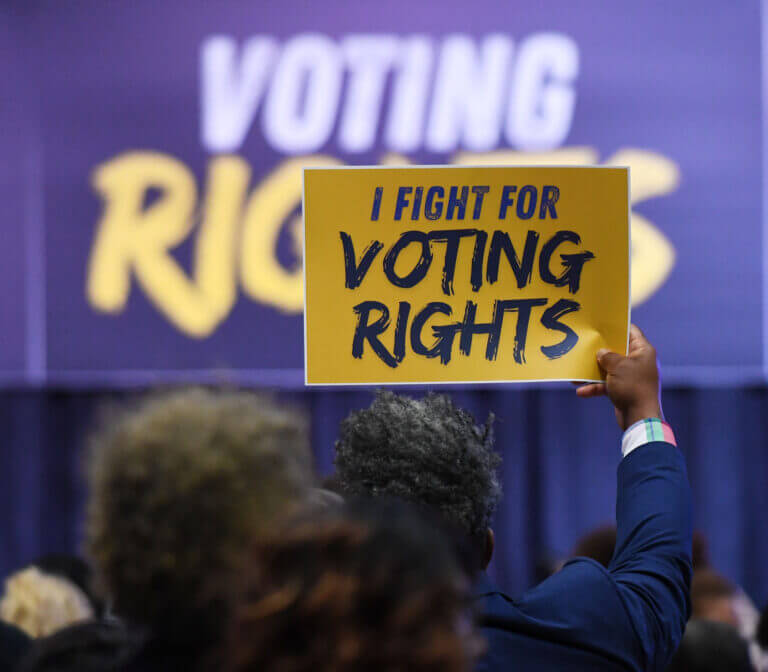
Civil rights groups ask to intervene in lawsuit over majority-Black DeSoto County judicial subdistrict

Audio recording is automated for accessibility. Humans wrote and edited the story.

Civil rights groups on Monday announced a move to intervene in a federal lawsuit filed by a former Republican gubernatorial candidate and others from DeSoto County aiming to dismantle a majority-Black judicial subdistrict..

The American Civil Liberties Union, ACLU of Mississippi, Legal Defense Fund and NAACP moved to intervene on behalf of the DeSoto County NAACP and the Delta Sigma Theta Sorority Inc. in Foster v. Mississippi, the groups announced in a Monday news release. A federal judge is set to hear arguments Wednesday on whether to block the DeSoto County map from going into effect.

The lawsuit was filed on July 2 in the U.S. Northern District of Mississippi by several DeSoto County residents, including former Republican gubernatorial candidate and current county Supervisor Robert Foster. It was filed against the three-member state Board of Election Commissioners, which is comprised of Gov. Tate Reeves, Secretary of State Michael Watson and Attorney General Lynn Fitch, all of whom are Republicans.

The plaintiffs argue the Legislature’s creation of majority-Black subdistricts for the state judiciary violates the Voting Rights Act. The lawsuit came after the U.S. Supreme Court’s May Louisiana v. Callais decision rolled back protections for minority voters during redistricting.

Before that ruling and the new legal landscape it delivered, legislative leaders in 2025 redrew court districts. They changed the districts to account for population shifts and caseload data, but they also allowed for majority-Black subdistricts in certain areas to give Black voters a chance to elect candidates of their choice. A subdistrict is used for a judge to be elected from a smaller area in the main district, but the judge can still hear cases from anywhere in the district.

The Legislature’s actions were “racially motivated and mathematically problematic,” the plaintiffs argue.

In response, the civil rights groups maintain that the plaintiffs are distorting the scope of the Supreme Court’s ruling in Louisiana v. Callais. The U.S. Supreme Court ruled that the use of race to draw Black-majority districts remains constitutional when required by Section 2 of the Voting Rights Act, the civil rights attorneys said.

In DeSoto County, home to the growing Memphis suburbs of north Mississippi, Black people make up about 36% of the population. DeSoto County also has the highest rate of growth in its Black population in Mississippi.

Since almost all judgeships in DeSoto County are elected countywide, Black voters effectively have no opportunity to elect their preferred candidates and would be shut out from representation on the circuit and chancery courts, the attorneys argue.

“Black voters in DeSoto County make up over one-third of the County’s population,” said Joshua Tom, legal director at the ACLU of Mississippi. “We are seeking to ensure all voters have the ability to elect candidates of their choice in DeSoto County.”

The DeSoto County lawsuit is now before U.S. District Judge Sharion Aycock for consideration, the same judge who previously ruled that Mississippi’s state Supreme Court districts violate the federal Voting Rights Act because they don’t give Black voters a chance to elect a candidate of their choice.

The U.S. Court of Appeals overturned Aycock’s initial ruling in light of the U.S. Supreme Court’s April Louisiana v. Callais decision. Aycock is now evaluating how that case should proceed.

The DeSoto County plaintiffs asked Aycock to block the DeSoto County map from going into effect. Aycock would likely have to rule quickly because judicial elections will take place in November.

Mississippi Today reporter Taylor Vance contributed to this report

Hinds sheriff misses judge’s deadline to provide jail death records

Audio recording is automated for accessibility. Humans wrote and edited the story.

The Hinds County Sheriff’s Office withheld jail death records from a legal advocacy organization for nearly a year. Then a local judge ordered the sheriff to turn the records over by July 9. But nearly two weeks later, the Southern Poverty Law Center is still waiting. 

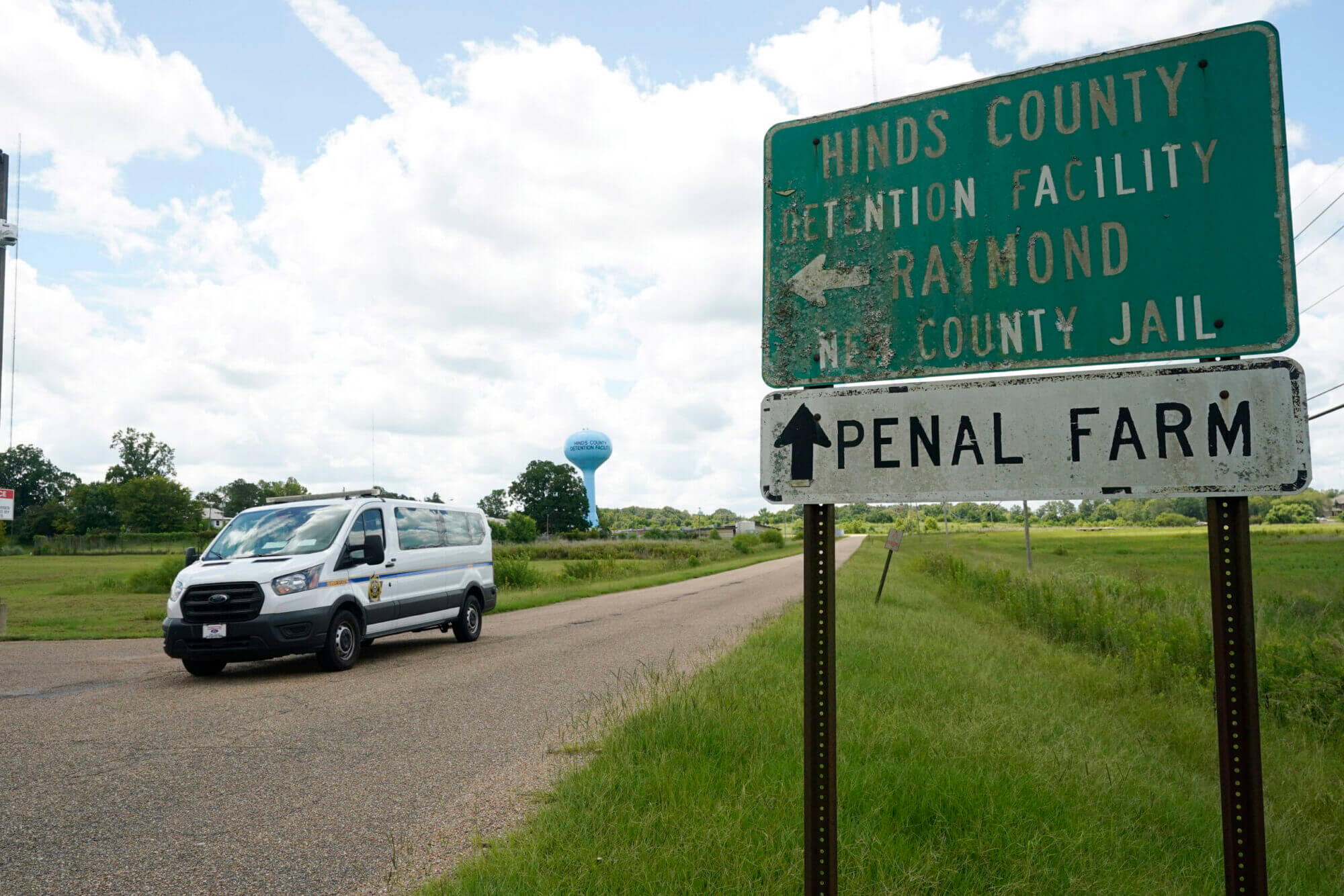
The missed deadline is the latest instance of the county and the sheriff failing to produce jail death records, which the SPLC has been seeking since last summer to learn more about the number of people who’ve died in recent years at the Hinds County Detention Center in Raymond.

“We’re just scratching our heads about why we don’t have the records,” said Andrea Alajbegovic, a senior staff attorney at the SPLC. “It’s a little confounding at this point.”

The dispute over the records comes after 18-year-old Mielun Butler was stomped to death in the Raymond center earlier this month, two days after he was arrested and charged with a shooting death at a south Jackson apartment complex.  

The sheriff’s office’s failure to respond to the SPLC’s lawsuit – much less produce the records – has alarmed at least one local attorney who specializes in Mississippi’s government transparency laws. 

The county’s failure to respond to the SPLC’s records request is egregious, said Leonard Van Slyke, a retired attorney who practiced media law in Mississippi for decades. He said the chancery judge could hold the county in contempt of court, levy fines or even order jail time. 

Van Slyke added that in his experience, it’s common for public officials to claim records are exempt or find other ways to evade a public records request. 

“But to totally ignore a request is very unusual,” he said.

The SPLC first requested the documents in May 2025. Though the Mississippi Public Records Act gives government entities seven business days to respond to public records requests, the sheriff’s office did not acknowledge the SPLC’s inquiry until January.

In March, the SPLC filed a lawsuit in Hinds County Chancery Court over the sheriff’s failure to produce the records. After the sheriff and a county attorney did not respond to the lawsuit, Judge J. DeWayne Thomas ordered the county to turn over the jail death records. 

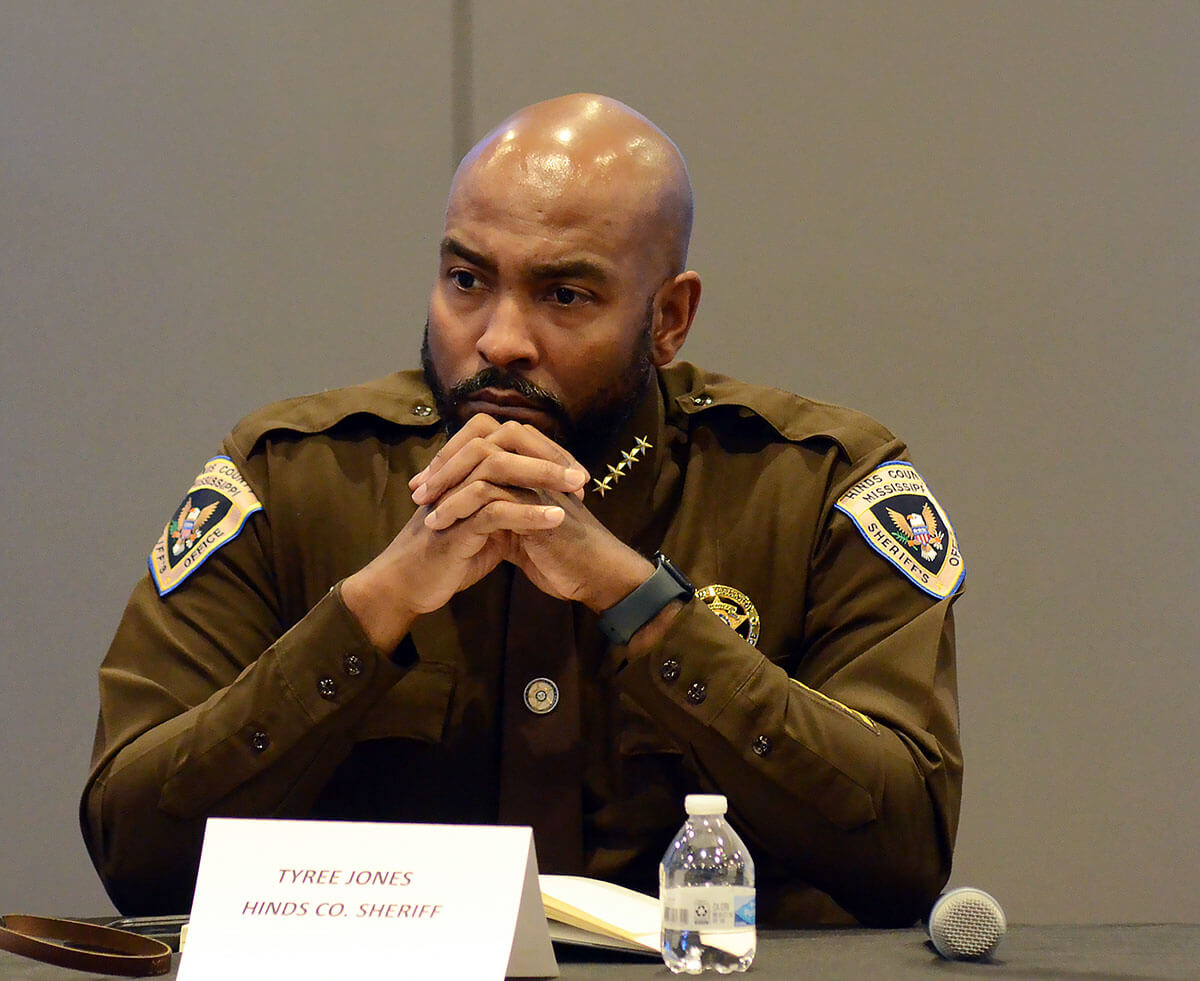
Hinds County Sheriff Tyree Jones listens to opinions on possible crime deterrents during a Violent Crime Prevention Summit held at the Two Mississippi Museums, Thursday, Jan. 5, 2023, in Jackson. Credit: Vickie D. King/Mississippi Today

When Mississippi Today first contacted Hinds County Sheriff Tyree Jones in March about the lawsuit, he said he was not aware. The SPLC did not issue a summons to the sheriff and instead served an officer manager, according to the court docket. In a Friday text message to Mississippi Today, Jones wrote he didn’t know the county had missed the deadline, adding “that’s a legal matter and the county attorneys would have to address that.” 

Tony Gaylor, the Hinds County attorney, said the county has been inundated with public records requests, but he said he didn’t know how long the backlog is. He said the county would respond to the court’s order. 

“That particular request is not something that’s being hid in any way, shape or form,” he said. 

Gaylor also speculated the SPLC did not submit its records request through the county’s online portal until a Mississippi Today reporter informed him the organization had filed the request through that system. 

Gaylor then said the SPLC should seek the records from the federal receiver who took over daily operations of the jail in October. 

John Hall, a private attorney for the sheriff’s office, did not respond to an email and a call from Mississippi Today. 

In mid-December, an attorney for the SPLC who knew Hall emailed him in an effort to obtain the records. According to exhibits attached to the SPLC’s complaint, Hall spoke to the SPLC on Jan. 7 and sent an email acknowledging the organization’s records request on Jan. 8, writing, “We’re on it.” 

But the SPLC did not get the records or any further communication from the county, the emails show. The organization then sought the information from the Mississippi Department of Public Safety in early March but did not obtain the records. 

Two days after SPLC filed the lawsuit in March, DPS provided jail death records. The SPLC subsequently removed the state agency from the suit. 

Under a federal law, DPS is responsible for reporting the number of in-custody deaths in Mississippi to the U.S. Department of Justice. But the state agency gets its numbers from the sheriff, Alajbegovic said, necessitating the need for cross-checking. 

“The full picture of people who have died in the facility seems to be extremely opaque,” she said. 

Butler’s killing occurred the same day Thomas granted the SPLC default judgment. 

A video of the attack circulated on Facebook, drawing renewed attention to the violent conditions at the jail. The Hinds County Detention Center has been subject to a federal consent decree since 2016. 

Butler’s mother, Janice Bradley, joined prominent Jackson attorney Dennis Sweet III at a press conference last week to announce that she had filed a wrongful death claim against the sheriff’s office. 

Sweet pledged to use the potential lawsuit to force the county to be more transparent. 

“We’re going to get at it,” he said. “We will do depositions. We’ll get it all.” 

READ MORE: Jackson mother files wrongful death claim after son is stomped to death in Hinds County jail

Former Ole Miss employee contends in appeal of dismissed lawsuit that Chancellor Glenn Boyce caved to hecklers

Audio recording is automated for accessibility. Humans wrote and edited the story.

A former University of Mississippi employee is arguing in a federal appeal that a judge’s dismissal of her lawsuit against Chancellor Glenn Boyce would allow a government employer to punish a worker for protected political speech because of backlash from outside critics. 

Lauren Stokes, the former Ole Miss employee, is asking the appeals court to reverse the dismissal and allow the lawsuit to proceed. The brief, filed Thursday in the 5th U.S. Circuit Court of Appeals, contends that firing a public employee over protected political speech violates the First Amendment. 

Stokes’ appeal also contends that if the ruling dismissing her lawsuit stands, it would have important and risky implications for free speech.

“If the district judge is correct, a government employer may terminate an employee for no better reason than external hecklers disagree with her political point of view. No other facts matter,” the appeal states. “The First Amendment itself has nothing at all to say about it. 

Chancellor of the University of Mississippi Dr. Glenn Boyce, center, speaks during a Institutions of Higher Learning meeting Thursday, Jan. 16, 2020.

“That is not the law, but the district judge’s orders set a dangerous precedent that affects everyone, whatever their politics.”

Stokes, a former executive assistant in the university’s development office, was fired in September after she shared to her private Instagram account commentary about the assassination of Charlie Kirk, the right-wing activist and CEO of the political organization Turning Point USA. Stokes sued Boyce in federal court, claiming he violated her First Amendment rights. 

On March 16, U.S. District Judge Glen Davidson ruled in favor of Boyce’s motion to dismiss the lawsuit. Davidson determined that Stokes failed to prove the chancellor violated her constitutional rights. Davidson also ruled that Boyce, in his role as chancellor, is entitled to qualified immunity, which protects him from liability stemming from doing his job.

When reached for comment, Stokes’ attorney Alysson Mills said the brief speaks for itself. 

Jacob Batte, a spokesperson for Ole Miss, said the university does not comment on pending litigation. Boyce’s attorney, Cal J. Mayo Jr., could not immediately be reached for comment. 

Challenging a ‘heckler’s veto’

After Kirk was shot and killed, Stokes shared to her Instagram account a post from someone else that criticized the activist’s views on issues including race, gun control and abortion. The post generated immediate backlash for Stokes, who later deleted it. She also apologized to anyone the post offended, saying, “In all facets we strive to be kind and hold space for all. My husband and I do not support violence of any sort.”

Stokes said she shared the post in a “heated moment” and apologized again, saying she looked forward “to getting off the internet to reevaluate kindness, privacy, and respect for all.”

But she was too late, the appeal notes. Stokes was already being doxxed, and people were sharing screenshots of her post.

Conservative activists and state leaders, including Mississippi State Auditor Shad White, a vocal critic of what he calls “woke” initiatives in higher education, shared a screenshot of Stokes’ post on X, formerly known as Twitter, and tagged the university.  As of Monday, White’s post has received about 60,000 views, 130 comments and has been reposted 1,300 times. 

Stokes said she received death threats and bomb threats against her restaurant that forced it to close for two weeks.

The recent appeal claims that backlash, not Stokes’ actions, led to her firing. That equates to a “heckler’s veto” of Stokes’ politics, the appeal contends, and “the government cannot punish speech ‘simply because it might offend a hostile mob.’” 

The appeal comes at a time when public employers across the country, including other colleges and universities, are facing lawsuits over whether workers can be disciplined for political speech posted on their personal social media accounts.

On July 1, the University of Tennessee System Board of Trustees agreed to pay a $1.9 million settlement to a former professor who sued after being fired for comments she made about Kirk. 

In May, Ball State University in Indiana paid a $225,000 settlement to its former director of health promotion and advocacy. She had been fired over a Facebook post in which she said Kirk’s killing was tragic but reflected “the violence, fear, and hatred he sowed.”

In the new brief, Mills notes that among numerous cases challenging a government employer’s firing of an employee for posting about Kirk’s death on social media, Stokes’ may be the first to go before a court of appeals “because it is the only such case to have been completely dismissed.”

Stokes’ case has also drawn the attention of free speech advocates, including The Foundation for Individual Rights and Expression, or FIRE, a nonprofit that frequently litigates First Amendment cases involving higher education. 

Stokes’ appeal could have implications for how public universities discipline employees over political speech on personal social media accounts, said Greg Harold Greubel, senior litigation attorney for FIRE. He said the group plans to file an amicus brief supporting Stokes this week. 

Greubel said he also thinks Stokes’ firing was driven by online outrage  — a heckler’s veto — rather than actual workplace disruption. 

Stokes maintains that her termination was not justified.

“I did nothing wrong,” Stokes said in an email to Mississippi Today. “I didn’t deserve to be fired.”

Education Editor Marquita Brown contributed to this report.

More student loan borrowers are in default since pandemic-era protections lapsed

Audio recording is automated for accessibility. Humans wrote and edited the story.

Defaults on student loans have surged across the United States, reaching record levels as borrowers struggle to keep up with payments. Mississippi has the highest default rate in the nation.

Numbers across the U.S. have spiked since payments came due again following a lengthy pause intended to provide relief during the COVID-19 pandemic. Today, around 9.5 million people — 1 in 5 federal student loan borrowers — are in default, meaning they are more than nine months behind on their payments.

While credit scores can suffer when borrowers are just a few months behind, entering default brings the possibility of more serious consequences, including garnished wages or Social Security payments. For now, the Trump administration has held off on such involuntary collections.

Despair is on the rise, advocates say.

“Folks are struggling to make ends meet and cover all the rising costs of everything else. The growing student loan bills are making things worse and folks are falling behind,” said Aissa Canchola Bañez, policy director for the advocacy group Protect Borrowers.

Here are some takeaways from an Associated Press analysis of student loan defaults.

Why a record number of people are in default now

The U.S. Education Department allowed borrowers to suspend federal student loan payments during the economic tumult of the pandemic. Though payments technically started coming due again in 2023, the Biden administration provided a one-year buffer period that ended in the fall of 2024.

Loans couldn’t enter default during this time, and federal programs designed to help delinquent borrowers and debt forgiveness initiatives brought millions out of default.

Starting in June 2025, with the pause having ended nine months prior, borrowers began defaulting again for the first time since the pandemic.

Since then, the number of defaulted borrowers has exploded from 5.3 million to around 9.5 million, according to data from the Office of Federal Student Aid. Out of $1.7 trillion in federally backed student loans nationwide, $233.3 billion is in default.

Another wave of defaults could be on the way. The Trump administration has eliminated the most generous income-driven repayment plan, Saving on a Valuable Education, or SAVE, as part of its overhaul of the federal student loan system. The millions of borrowers who had been enrolled in SAVE now will face the strain of paying more each month.

Starting this month, new borrowers pick between one standard repayment plan and one income-driven option, as opposed to having several options. The Education Department has described the changes as a simplification of a “fragmented and confusing” system.

States with highest default rates are in the South

Many of the states with the highest concentrations of defaulted borrowers are in the South, an AP analysis found.

Mississippi has the nation’s highest default rate at 28.3%, and others near the top include Louisiana, Alabama, West Virginia, Oklahoma, Georgia, South Carolina and Texas. Rounding out the 15 states with the highest default rates are Alaska, Arizona, Ohio, Indiana, Michigan, New Mexico and Nevada.

Of those states, New Mexico was the only one Republican President Donald Trump didn’t win in 2024.

“These are folks who live in states that President Trump won in the previous election,” Bañez said. “And why I bring that up is, you know, there’s a lot of misconceptions and tropes about who student loan borrowers are, and who are the ones who are falling behind.”

She said many are “working-class folks who just cannot keep up with these bills on top of everything else.”

Meanwhile, the territory of Puerto Rico had a 30.9% default rate, higher than any of the states.

Borrowers at for-profit schools struggle to repay loans

Students who attended for-profit colleges struggle more than others to pay back their loans. Thirty-three percent of those borrowers were 90 days or more behind on their student loan payments, a rate more than double that of borrowers who attended public schools, according to data by the Office of Federal Student Aid released this year to help schools understand and identify default risks.

Out of the schools in the top quarter for nonpayment rates, 76% were for-profit schools.

The FSA argues that a high nonpayment rate represents a “serious risk” of developing a high default rate.

An association for private trade schools and career colleges is so concerned it has created a task force to reach out to students about the importance of loan repayment.

Jason Altmire, the head of the group, Career Education Colleges and Universities, said some of it can be chalked up to the pandemic. Other borrowers are confused over the Biden administration’s failed loan forgiveness effort. Still, he said the issue will be discussed at the association’s summer convention.

“We take it seriously,” he said. “It’s a real problem.”

Whites-Koditschek joins as fellow with Deep South Today Investigative Reporting Center

Audio recording is automated for accessibility. Humans wrote and edited the story.

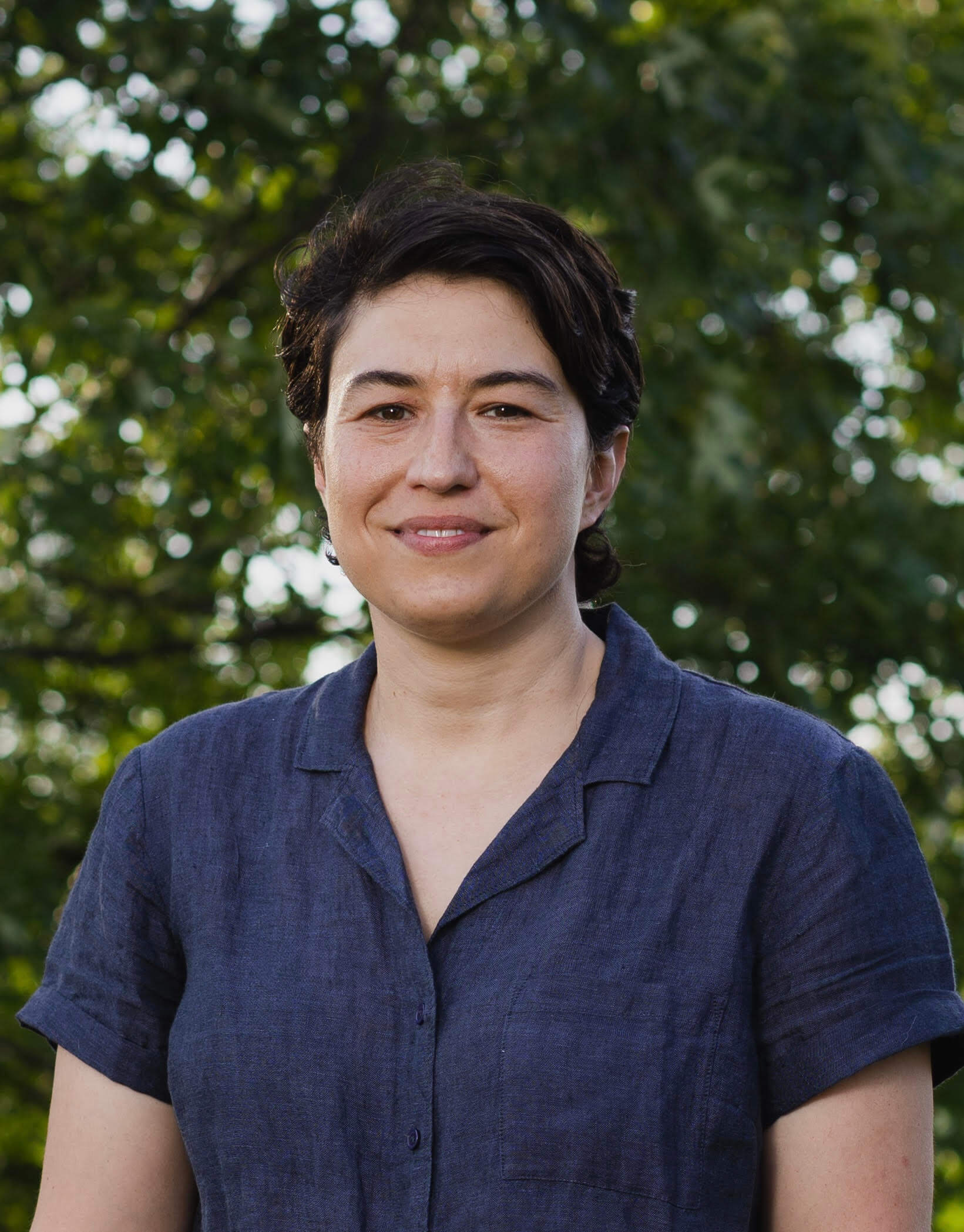
Sarah Whites-Koditschek is joining Mississippi Today and the Deep South Today Investigative Reporting Center as part of The New York Times Local Investigations Fellowship.

Sarah Whites-Koditschek

Whites-Koditschek begins her work Monday in Mississippi Today’s newsroom in Jackson. She is part of the six-person fellowship class that The New York Times announced June 22.

The fellowship program, led by Dean Baquet, a former executive editor of The New York Times, gives journalists the opportunity to produce signature investigative work focused on the state or region they’re reporting from. Their reporting will be published by The Times and made available free for co-publication by local newsrooms.

“This is the program’s fourth fellowship class, and we’re thrilled to work with them on producing important accountability reporting from their communities,” Baquet said. “Their work will add to the fellowship’s strong roster of investigative journalism from regions across the country, and we’re excited to help foster this next generation of investigative reporters.” 

The fellows are based in Illinois, Louisiana, Mississippi, North Carolina, South Carolina and Texas.

Whites-Koditschek is a former investigative reporter for AL.com in Birmingham, Alabama. She has won national awards from the Society for Professional Journalists and the Public Media Journalists Association as well as a Regional Edward R. Murrow award. She previously worked in public radio as a reporter and producer at WHYY in Philadelphia and KUAR in Little Rock. She is a graduate of the Columbia School of Journalism’s Stabile Center for Investigative Journalism, and she completed a fellowship in investigative reporting at Wisconsin Public Radio and the Wisconsin Center for Investigative Journalism.

 “Sarah digs into important issues, even when facing bureaucratic obstacles,” said Mississippi Today Editor in Chief Emily Wagster Pettus. “She is an outstanding addition to an already strong investigative team, and we look forward to the work she will do in Mississippi.”

Whites-Koditschek joins Bobbi-Jeanne Misick, Mukta Joshi and Rosemary Westwood as local investigations fellows of the Deep South Today Investigative Reporting Center created in collaboration with The New York Times. Joshi is reporting for Mississippi Today, while Misick and Westwood are reporting for Verite News in New Orleans.

Investigative reporting that was produced through the fellowship has received national recognition. A yearslong examination of abuses by sheriffs departments in Mississippi was a finalist for the 2024 Pulitzer Prize for Local Reporting the Goldsmith Prize for Investigative Reporting in 2024 and 2026. The team was also awarded the Peter F. Collier Award for Ethics in Journalism, the First Amendment Coalition’s Free Speech and Government Award and the Investigative Reporters and Editors Tom Renner Medal for Outstanding Crime Reporting.

The Times will continue collaborating with Big Local News, a data-sharing journalism program based at Stanford University. Big Local News will be working again with the fellows on obtaining and analyzing data for their projects and providing ongoing training on investigative data techniques.

Applications for the 2027-28 group of fellows opened July 1. Journalists interested in a fellowship based in Mississippi or Louisiana can visit this application form year round.

Rising health insurance exchange costs are bad news for Mississippi’s working poor

Audio recording is automated for accessibility. Humans wrote and edited the story.

Mississippi had one of the nation’s largest declines in the Affordable Care Act health insurance exchange enrollment based on early 2026 numbers, meaning that it has become even more difficult for the state’s working poor to garner medical care.

According to The Associated Press, Mississippi’s ACA health insurance exchange enrollment declined 26.4% from February 2025 to February 2026. It is likely that the enrollment will drop even more – perhaps significantly more – because of the higher cost to obtain a policy from the health insurance exchange based on decisions made by the administration of President Donald Trump.

It could be logically argued that the higher costs of the insurance policies obtained on the exchange impact Mississippi’s working poor more than any other group in the country. First of all, Mississippi’s working poor population is behind the proverbial healthcare eight ball because the state is one of 10 nationwide that has not expanded Medicaid, as is allowed under the Affordable Care Act with the federal government paying the bulk of the costs.

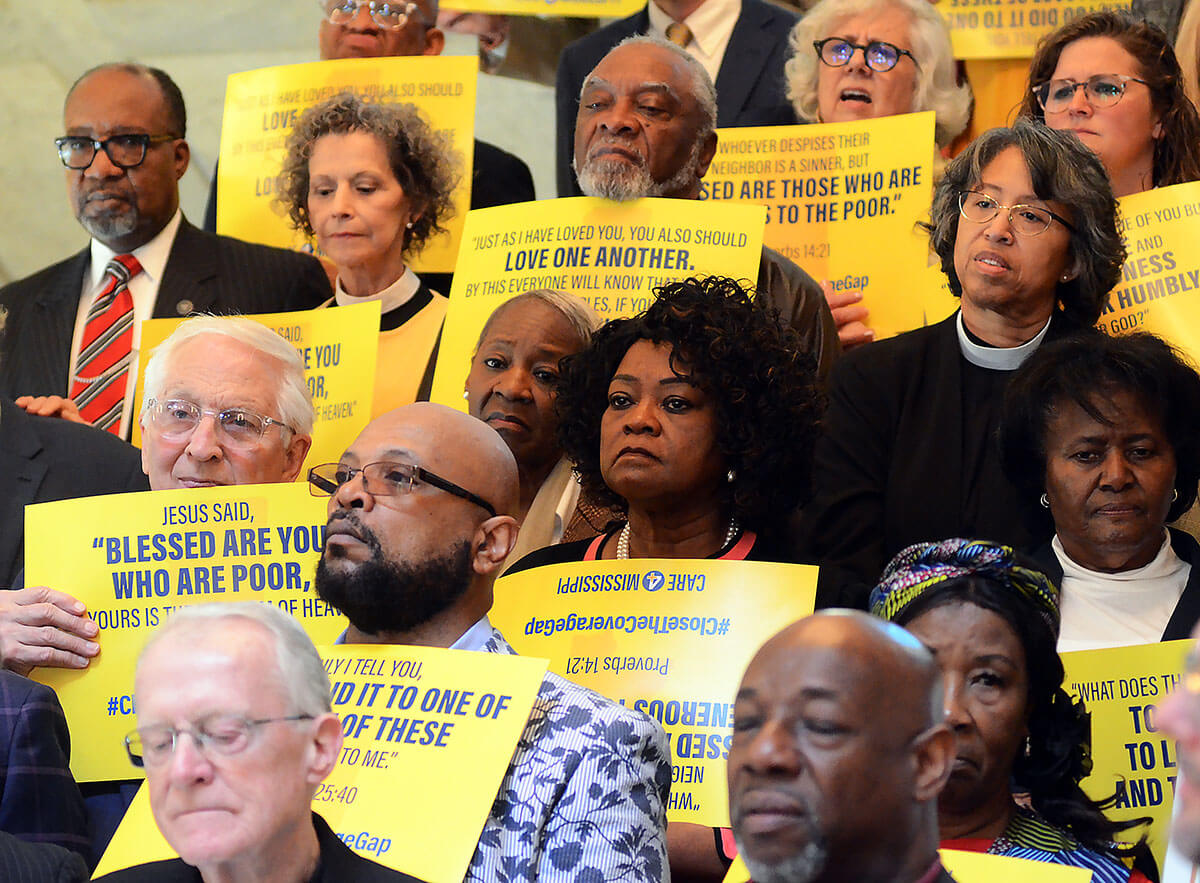
Clergy from across the state during a press conference at the state Capitol urge legislators to expand Medicaid, Wednesday, March 20, 2024, in Jackson.

In the 40 states that have expanded Medicaid, many of their low income people do not have to depend on the healthcare exchange for coverage. They can sign up for expanded Medicaid to obtain healthcare. But in Mississippi, Medicaid expansion is not an option.

So, when the Joe Biden administration pushed through legislation to greatly enhance the already existing federal subsidies for exchange health insurance policies, the working poor in Mississippi – even extending to middle-class families – signed up en masse.

Mississippi had the second-highest increase in exchange enrollments – second only to Texas, which also had not expanded Medicaid. After the enhanced subsidies went into effect, Mississippi had a 242% increase to 338,159 people, according to KFF, a nationwide nonprofit that studies healthcare policy.

Of the 10 states with the recent highest declines in ACA enrollment after the enhanced subsidies ended, Mississippi and South Carolina were the only two that had not expanded Medicaid. 

The enhanced subsidies ended in December 2025 after the Trump Administration and the Republican-led Congress refused to extend them. While multiple Republican lawmakers made efforts to pass legislation to extend the subsidies, U.S. Sens. Roger Wicker and Cindy Hyde-Smith and other Republican members of Mississippi’s congressional delegation made no visible efforts to reinstate the enhanced federal aid.

As a result of the enhanced subsidies ending, KFF estimated that a 40-year-old Jacksonian earning $30,000 per year would see his or her monthly insurance cost increase from $42 to $155 for a policy purchased on the exchange.

Based on that calculation, it should not be a surprise that Mississippians are dropping the health insurance exchange policies. After all, they are dealing with higher costs for groceries, gasoline and other necessities at the same time they are being hit with higher healthcare insurance costs.

They are making the decision to drop the health insurance policies and hoping they do not get sick and understanding that if they do face a major medical bill with no insurance, they will be unable to pay it. The medical bills they cannot pay place a burden not only on them and their families, but also on the overall state healthcare system that must absorb those unpaid costs.

In short, Mississippi’s working poor have been hit with rising health insurance exchange costs and no Medicaid expansion, meaning they have less access to healthcare than most Americans.

But the fact that poor Mississippians, facing higher costs, cannot afford healthcare should not be a surprise.

Is it even news?

Like the old adage goes, it is not news when dog bites man. It is news when man bites dog or when a poor Mississippian actually has access to decent healthcare.

Senatobia officer involved in fatal shooting of Black toddler was accused of making a racially offensive remark two days prior

Audio recording is automated for accessibility. Humans wrote and edited the story.

Mukta Joshi is an investigative reporter at Mississippi Today. She is spending a year as a New York Times Local Investigations fellow examining immigration and criminal justice issues. She can be reached at mukta.joshi@nytimes.com. Joseph Cranney is a reporter with the Deep South Today Investigative Reporting Center in collaboration with The New York Times. Learn more about the center’s work here.

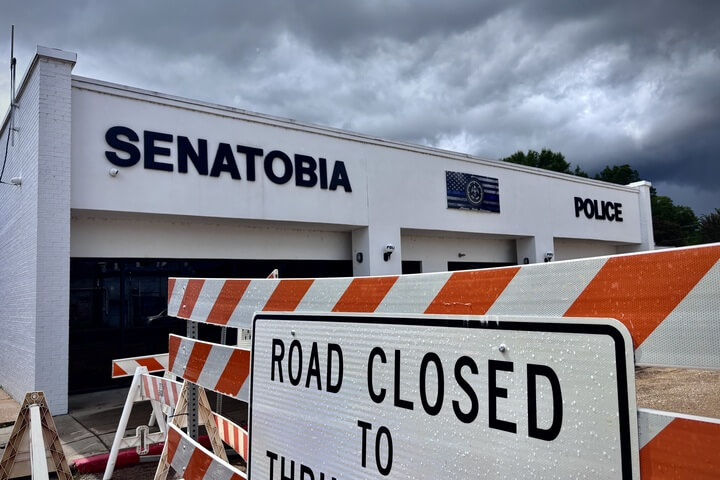
SENATOBIA — A white police officer involved in last month’s shooting that killed a Black toddler and injured a Black woman directed a racially offensive remark toward a coworker two days prior, calling him a “Black motherfucker,” according to an internal department complaint reviewed by Mississippi Today.

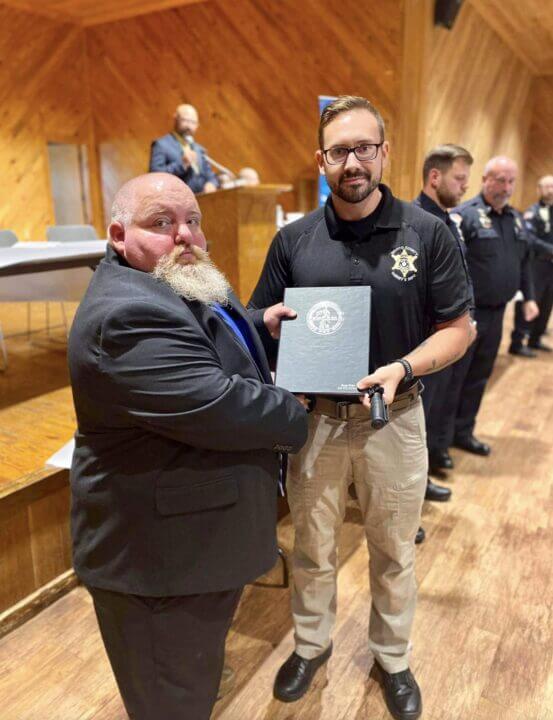
Hunter Foster, right, received an award from the DeSoto County Sheriff’s Office in 2023, when he worked there as a deputy. He later went to work for the Senatobia Police Department. Credit: DeSoto County Sheriff’s Office via Facebook

Senatobia Police Sgt. Hunter Foster was placed on leave two days after the June 14 shooting at the local Walmart that killed 1-year-old Kohen Wiley, though no agency has confirmed if he fired his weapon. In records released by the Mississippi Bureau of Investigation “in error,” Foster was listed as the subject of its investigation into the shooting. Law enforcement and Walmart have declined repeated requests to release video footage from the incident.

Late in the afternoon June 12, Foster entered the police department’s booking room where Officer Dexter Smith, who is Black, was completing some paperwork, according to Smith’s written complaint.

“Who is this Black motherfucker back there?” Foster said, according to the complaint. Smith, who wrote that he had almost no prior relationship with Foster, was taken aback, the complaint says.

“I replied that I had been in the sun from training all week and that I had tanned from the sun,” Smith wrote, adding that Foster repeated the remark and that two other officers overheard it.

“Upon Sergeant Foster making the extremely unprofessional remark, the room went silent and I printed my paperwork and left,” Smith wrote. “I have never had any one-on-one conversation with Sergeant Foster, nor do we have any outside relationship to be on a level for him to speak to me in that manner.”

Exactly a month after Smith submitted his complaint, he resigned from his position at the department, an email he sent to department and city leadership shows. The email, obtained by Mississippi Today, said his resignation was in part because of how the department handled his complaint. 

An Instagram post welcoming Officer Dexter Smith to the Senatobia Police Department on Wednesday, Aug. 27, 2025.
Credit: Senatobia Police Department via Instagram

The complaint had not received “any meaningful response or resolution,” Smith’s email said, adding that it could have been “easily verified,” as the site of the incident was equipped with both audio and video surveillance. “The failure to review or consider this available evidence, combined with the disparity in how workplace issues have been addressed, has significantly influenced my decision to resign.”

When contacted by reporters, Smith declined to comment.

Foster, who is 32 and in his eighth year in law enforcement, didn’t respond to a request for comment. Mississippi Today notified Foster’s father, a retired law enforcement officer, of the allegations in Smith’s complaint, but he didn’t respond.

Lt. Shane Howell, a Senatobia police spokesperson, also didn’t respond to a request for comment sent Friday.

Foster and the police department have been subject to a firestorm of criticism in the month since the shooting at Walmart, which, besides killing the toddler, also injured 22-year-old Latoya Ferrell, who is Black. Ferrell had been accused of shoplifting a pack of diapers and baby clothes.

Kohen’s mother, Vellesiya Wiley, was holding Kohen in her arms in the front passenger seat next to Ferrell, who was driving.

Officers had attempted to stop the car, but “the driver drove in the direction of the officers, almost striking one,” according to a statement released the day of the shooting by MBI.

Ben Crump, a civil rights lawyer representing the Wiley family, hired a forensic pathologist who concluded that Kohen was struck by a bullet from at least an intermediate distance from the side, which Crump said was evidence that officers weren’t in harm’s way when they opened fire. 

Vellesiya Wiley pictured with Kohen Wiley, who was her only child. Attorneys representing the 1-year-old’s family are calling for law enforcement in Senatobia to release body and dashboard camera footage and on Monday, June 22, 2026, announced plans for an independent autopsy. They said both can help provide the family with answers. Credit: Ben Crump Law

Crump shared a photo showing the vehicle’s front passenger window was blown out. The photo also appears to show a bullet hole in the windshield on the passenger side

Foster was hired in Senatobia in March 2025 and promoted to sergeant six months later, city records show. He spent three years with the DeSoto County Sheriff’s Office and a little over two years with the Southaven Police Department prior to that. 

During his time in DeSoto, Foster was named as a defendant in a federal lawsuit alleging that he and other deputies used unreasonable force on a woman after a traffic stop, knocking out multiple teeth and breaking her jaw in three places. Foster’s attorney denied those allegations in court papers and a federal judge dismissed that suit in March.

In a separate lawsuit filed when he was an officer in Southaven, Foster was accused of exaggerating the risks that a car posed to officers during a suspicious vehicle call to a Waffle House parking lot in 2019.

In his report about that incident, Foster claimed that the driver had accelerated his car, “almost running over” another officer. Surveillance footage filed with the lawsuit shows no evidence that the car drove toward, or nearly hit, any of the officers. It shows several officers, though not Foster, aggressively pulling men from the car and striking them while they were on the ground. 

Katherine Kerby, a lawyer for the officers, wrote in her response to the lawsuit that Foster “denies the allegations as to him or that he had any knowledge that any aspects of his report were not accurate.”

Joseph Cranney reported from New Orleans.


Proposed weir rehabilitation aims to restore East Pearl River

Audio recording is automated for accessibility. Humans wrote and edited the story.

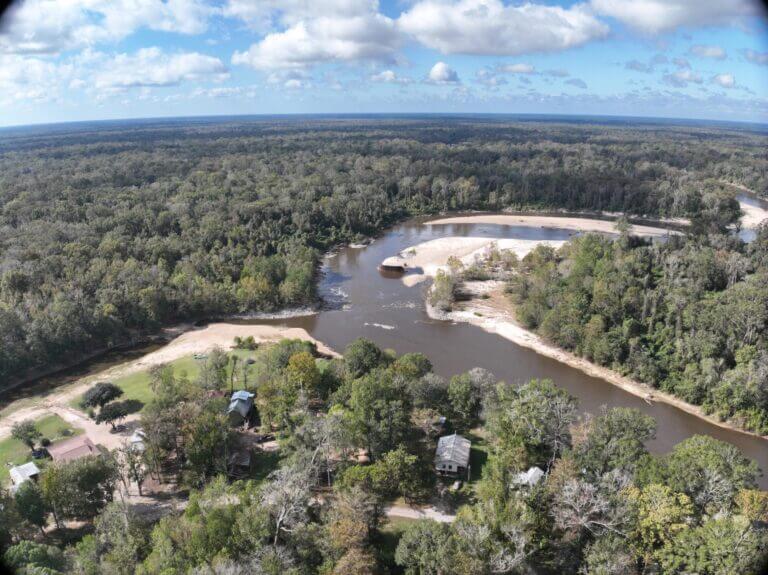
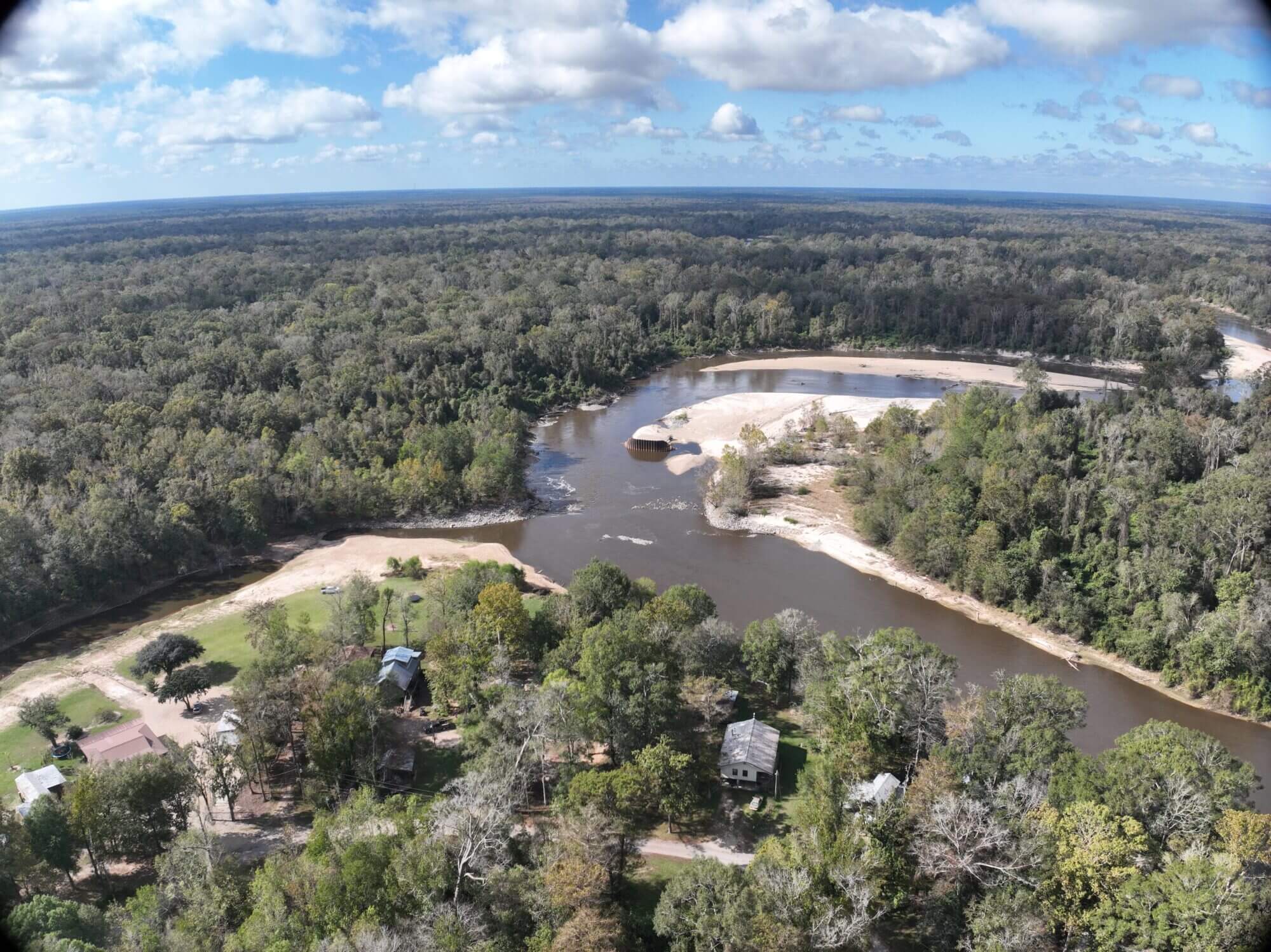
PEARL RIVER COUNTY — Pearl River County officials are working to restore water flow to the East Pearl River, a long-planned effort aimed at improving recreation, supporting wildlife habitat and benefiting communities along the river. 

The project remains in the planning and permitting process and will require continued coordination among local, state and federal partners before construction can begin, according to Pearl River County Economic Development Director Lindsay Ward. She said no construction timeline has been finalized. 

Ward said Sen. Angela Burks Hill, a Republican from Picayune who represents District 40, and Rep. Stacey Hobgood-Wilkes, a Republican from Picayune who represents District 108, have worked alongside county officials throughout the process to help move the project forward. 

A conceptual rendering shows the proposed rehabilitation of the Walkiah Bluff Weir, a project intended to restore water flow into the East Pearl River. The project remains in the planning and permitting process. Credit: Peyton Neely

Ward said restoring water flow would provide environmental, recreational and economic benefits for communities along the Pearl River. 

“You have a lot of homes that are built along the Pearl River that have the potential to lose a significant amount of economic value,” she said. “(It’s) one of the biggest risks to the community — which has this entire culture and way of life along the Pearl River and Walkiah Bluff — that is truly at risk.” 

She said restoring water levels would also improve access to Walkiah Bluff Park and the nearby public boat launch by allowing residents and visitors to more easily launch boats and kayaks. 

“Think about the community benefits of having not only the water flow but also a beautified park and scenic area where families in those communities, as well as visitors, can come,” Ward said. “They can get out in their kayaks, they can launch their boats, and they have enough water to launch them, too.” 

Ward said the effort stems from an environmental impact study completed in the early 1990s that recommended maintaining a 50-50 split in water flow between the Pearl River in Mississippi and the East Pearl River, which forms part of the Mississippi-Louisiana border. 

To help maintain that balance, the Walkiah Bluff Weir was constructed to regulate water flow into the East Pearl River. Ward said the study also anticipated the structure would require significant rehabilitation or replacement after about 25 years to continue operating as intended. 

Ward said heavy spring flooding in 2022 caused the structure to fail, preventing it from directing water into the East Pearl River as designed. 

She said the reduced flow left portions of the river so shallow that boating and other recreational activities became difficult. 

“We had a dedicated team of locals and our state legislators who tried to get both the state of Mississippi and what, at the time, was the local entity responsible for maintaining the structure to get it back up to par,” Ward said. 

According to Ward, responsibility for maintaining the structure previously rested with the Pearl River Basin Development District. The district was created by the Mississippi Legislature in 1964 to oversee water resources throughout the Pearl River Basin before later ceasing operations. 

Ward said county officials continue to work with state and federal partners to complete the planning, permitting and funding requirements needed before the project can move into construction.