A monthlong strike by Jackson transit workers ended Thursday when their union and MV Transportation reached agreement on a new contract, clearing the way for JTRAN workers to return to work after walking off the job in July.
Mayor John Horhn called the agreement “good news” and thanked both sides for ending the 38-day strike.
“Today’s agreement moves us forward and allows us to focus on providing the dependable transit service our residents expect and deserve,” Horhn said in a statement.
Details about the new agreement, which still must be ratified by members of the Amalgamated Transit Union’s Local 1208, were not immediately available. Union negotiators said they had been seeking better pay and benefits.
The two sides have been negotiating a collective bargaining agreement mostly out of public view with the help of a federal mediator.
The agreement builds on the minimum pay under the previous contract, which started at $17.18 per hour and $23.00 for senior employees. It is unclear what the new pay scale will be under the new contract, nor was it clear when workers would return to their jobs.
“This strike shows that our members are willing to lay it all on the line for justice,” local 1208 president Charles Tornes Jr. said in a statement. “I want to thank our riders, and all our allies for coming out and standing with us.”
In its own statement, MV Transportation thanked the mayor and other officials for their work in brokering an agreement “to bring an end to this unfortunate period.”
“Our focus now is on moving forward together and continuing to provide the safe, reliable and critically important transportation services that residents of Jackson depend on every day,” the company’s spokesperson, Nick Dye, said in a statement released Thursday evening.
JTRAN transit workers protest outside the JTRAN Administration and Maintenance Facility Monday, July 13, 2026, in Jackson. MV Transportation failed to reach an agreement after contract discussions. Credit: Eric Shelton/Mississippi Today
The union had been seeking competitive pay raises, while MV Transportation proposed a number of changes to JTRAN, including new safety policies and the ability to hire drivers without commercial licenses to operate smaller vehicles for on-demand services.
A spokesperson for the city, Nic Lott, said provisions in the new contract include the use of smaller vehicles to serve residents throughout the city.
JTRAN provides buses and paratransit services, which represent a lifeline for low-income and disabled Jacksonians to get to work, medical appointments or the grocery store.
Though JTRAN is a publicly funded service, its unionized employees work for MV Transportation, which calls itself the largest privately owned transportation company in America.
The recent strike was the second work stoppage since MV Transportation won the contract to manage Jackson’s transit system. The first strike occurred in the fall of 2024 and ended with the help of a federal mediator.
MV brought in outside workers during the strike to continue bus services. Company representatives have said the bus system mostly ran as normal throughout the strike.
Community members and riders alike voiced concerns throughout the strike. Scott Crawford, a local activist for people with disabilities, wrote multiple letters to the union voicing his worries about how paratransit users would be affected.
“This is good news for all JTRAN riders, but I have a lot of questions about the agreement,” Crawford said.
Ward 3 Councilman Kenneth Stokes threatened to cancel the city’s contract with MV if the two parties could not come to an agreement by Aug. 11. While an order was presented to the City Council, the other six council members declined to second the motion.
Horhn waived requirements that JTRAN drivers hold Mississippi driver’s license, allowing the Texas-based company to bring in out-of-state drivers. The union called the move dangerous.
In late May, tension came to a head after the union learned that Horhn and his administration were presenting the City Council with a plan drafted by MV Transportation that would trim 20% of JTRAN’s roughly $9-million budget.
The city’s chief administrative officer, Pieter Teeuwissen, pulled the plan before the council could vote on it, citing the need for public hearings before a decision could be made.
UPDATE, Aug. 20, 2026: This story has been updated to include a statement from MV Transportation.
Five candidates are seeking to serve out the term of former Hinds County District Attorney Jody Owens, who left office earlier this summer after pleading guilty in a federal bribery case.
Thursday was the deadline to file candidacy papers with the Mississippi Secretary of State’s Office for a Nov. 3 special election.
Jackson defense attorney Darla Palmer is making another bid for the office after two previous attempts – both times losing to Owens, who was first elected to the post in 2019 then reelected in 2023.
Also expected to be on the ballot: Deputy Chief Assistant District Attorney Gwen Agho, Greta Mack, Marvin L. Sanders and Wendy Wilson White, all of whom filed candidacy papers by Thursday’s 5 p.m. deadline, according to the secretary of state’s website.
The winner would serve through January 2028, when Owens’ four-year term would have expired.
Acting Hinds County DA Brad McCullouch, who was appointed to the post last month by Gov. Tate Reeves, is not vying for the job. He is not eligible to run for the post because he does not live within the 7th Judicial District, whose boundaries coincide with that of Hinds County. McCullouch lives in neighboring Madison County.
Owens was set to go on trial in July alongside former Jackson Mayor Chokwe Antar Lumumba and former City Councilman Aaron Banks.
Owens pleaded guilty to a federal bribery conspiracy charge about two weeks before jury selection was to start. A week later, Lumumba and Banks also pleaded guilty to charges of conspiracy in a bribery scheme involving undercover FBI agents and a proposed downtown development project. Sentencing for the three men is set for October. Two others previously pleaded guilty in 2024.
The next Hinds County DA will oversee an office struggling to clear caseloads that have contributed to severe crowding at the Hinds County Detention Center.
The Okolona school district had racked up a $1.25 million deficit by the time the state assumed control of it last year.
The district had been operating at a deficit for six of the seven years that Novum Advisory, a private accounting firm, reviewed for the Mississippi Department of Education. An auditor for that firm presented the findings to the state Board of Education on Thursday.
The Mississippi Department of Education is located in the former Central High School at 359 N. West Street in Jackson, Friday, Mar. 11, 2022. Credit: Vickie D. King/Mississippi Today
Okolona schools have also seen declining enrollment but school officials were spending more, particularly on consulting services and travel, said Stephanie Palmertree, co-founder of Novum Advisory, a Madison-based firm. Palmertree also was a longtime top official in the Office of the State Auditor before leaving in 2024 to start Novum.
“The increase is alarming,” Palmertree told state education board members about the district’s spending.
Missing annual financial audits and federal pandemic relief funds — one-time money that the district was using instead as recurring revenue — masked the district’s “profound state of financial disrepair,” Palmertree said.
In October, Okolona district officials informed the state Education Department that they couldn’t make payroll the following month and asked for help.
The state Board of Education voted in November to take over the district. That was the second time the state had to intervene with the district. Okolona went under state control in 2010 for two years for academic issues and financial troubles.
The agency sent Okolona schools $1.5 million in emergency funds, which district officials agreed to repay in $300,000 installments over the next five years, said Kym Wiggins, the state Education Department’s chief operating officer. The first payment is due in June 2027.
The Okolona district enrolled 505 students last school year, a decrease from 547 students in 2020-21. In the same time frame, the district’s per-student spending increased by 83% to about $18,000 a student. In 2023-24, the state average for per-pupil spending was $12,176.
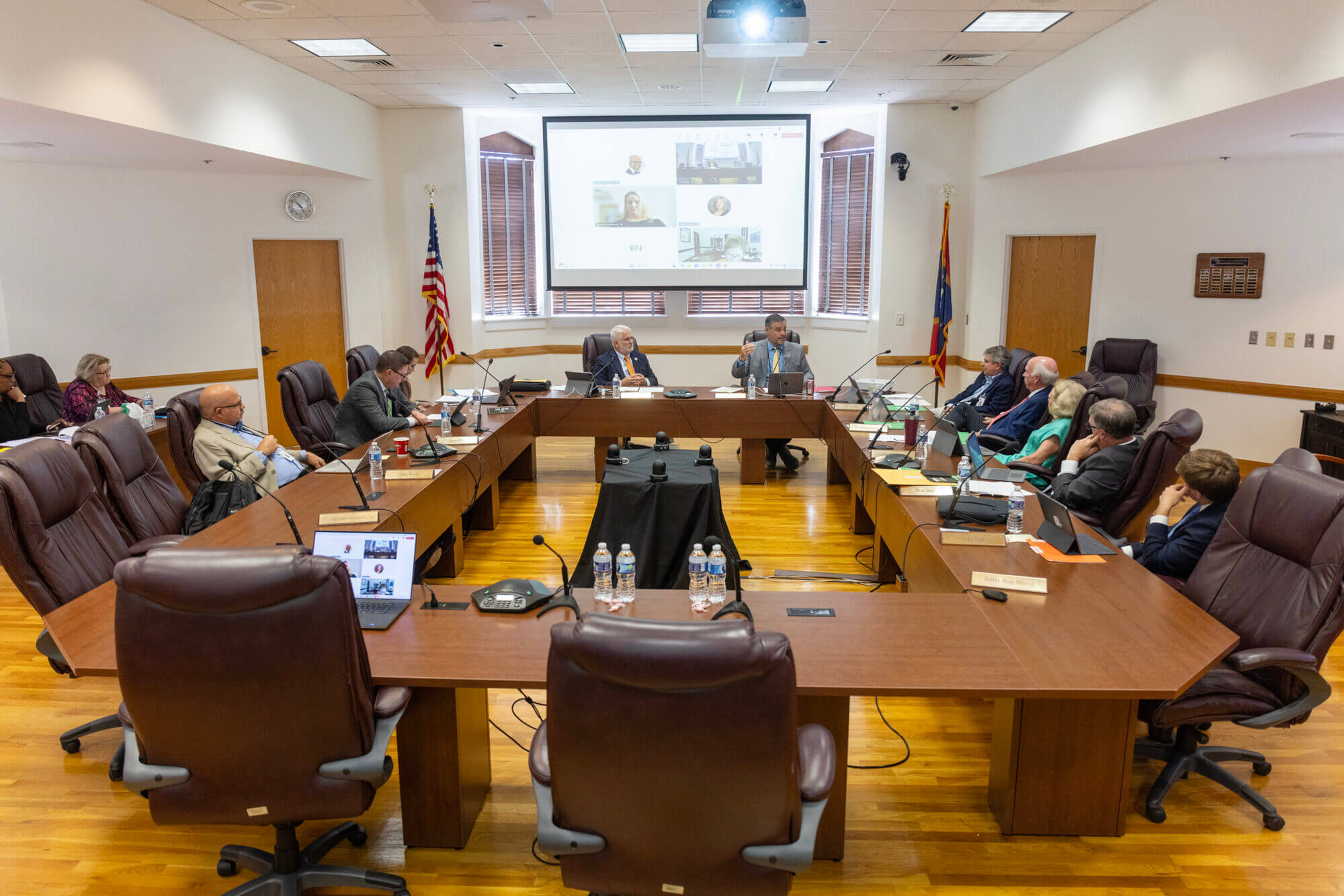
Vice Chairman Matt Mayo during a Mississippi Board of Education meeting on Thursday, Dec. 18, 2025 in Jackson. Credit: Vickie D. King/Mississippi Today
The gap between the district’s expenses and revenue began widening after 2023, Palmertree said. The biggest spending increases were for travel and consulting fees unrelated to student instruction, she said.
“Just like in your own home, what do you cut?” she said. “You cut vacations. You cut things like that before you start cutting your needed services.”
Many of the district’s invoices have “ambiguous descriptions,” Palmertree said. That’s also true for the district’s spending of federal pandemic relief funds, which often require documentation.
The district is working with another firm to get up to speed on missing audits, Palmertree said, and Novum is helping Okolona implement a corrective action plan.
Since taking over Okolona, state education officials have been cracking down on schools with missing financial audits. In March, after state Education Department leaders approved a rule change that ramped up consequences for districts missing audits, officials reported that the number of school districts missing financial audits was down to 32 from 47.
State Board of Education members wondered how many other districts might have similar precarious financial situations that are unknown to agency officials because of the missing audits.
“There are so many questions,” board Vice Chairman Matt Mayo said while board member Ronnie McGehee shook his head in dismay.
Demand for soybeans has improved since last year but Mississippi farmers still face high input costs.
Agriculture remains a top industry for the state with soybeans being the most valuable row crop, valued at over $1 billion a year. Last year, China, the world’s largest soybean purchaser, did not buy any soybeans until late fall due to the Trump administration’s trade war tariffs. This led to economic uncertainty for farmers who were already coping with years of rising costs.
Will Maples, an agricultural economics professor at Mississippi State, said producers are “way ahead of where we were this time last year” with China promising to buy around 25 million tons of soybeans this year. But Maples cautions that input costs are still a huge drag on profit. He said that input costs are the biggest concern he hears about from farmers.
Katherine Lin
During the 2026 legislative session, state lawmakers tried to ease pressure on farmers by passing a bill exempting lime used for farming from sales taxes and reducing the sales tax on fencing materials used for containing livestock. However, prices are often driven by global forces. The ongoing war with Iran has led to increased prices for fuel and fertilizer.
Duane Dunlap of DNS Commodities, an agriculture and renewables consulting firm, said that things are not yet where they need to be for growers to turn a profit.
Dunlap and Maples both said that the industry is grappling with how to become less susceptible to trade disruptions.
“What’s the next step in terms of demand?” Maples asked.
Dunlap said that much of the strength in the commodities market is driven by high biofuel targets set by the federal government. For Mississippi, Dunlap believes the biggest opportunity is encouraging soybean processing within the state. He points out that soybean meal is a major food ingredient for livestock and that helping feed the state’s robust poultry industry could also provide an opportunity to strengthen the domestic market.
In addition to dealing with market forces, farmers are waiting on a new farm bill from Congress. The House passed its version in April but the bill is stalled in the Senate Agriculture Committee over the Supplemental Nutrition Assistance Program for poor people.
Other news
Time named the University of Southern Mississippi’s Gulf Blue Navigator as one of the best accelerators in the U.S. The program focuses on blue-tech startups with the “substantial potential to impact ocean health, economic development and innovation.”
Nissan is using AI to monitor workers at its Canton plant over video. The company said that it is using video monitoring to save millions of dollars in worker safety, to train new workers and keep workers safe. Nissan told Business Insider that the system has only been deployed in its Canton plant.
Southwire, a wire and cable manufacturer, is investing over $250 million in Starkville to expand its operations. The investment is expected to create 128 new jobs. The Golden Triangle continues to be an attractive region for development with the head of its development agency recently saying that there has been interest from data center and defense companies in the region.
In Mississippi, almost all alcohol flows through the state-owned warehouse in Gluckstadt. A new article in the Mississippi Law Journal compares Mississippi’s alcohol laws to other states and makes recommendations about opportunities for reform. The Department of Revenue reported that it collected $108 million last year through its Alcoholic Beverage Control operation.
Applications are expected to open this week for a financial aid program aimed at helping adult students pay for an associate degree or professional credential at one of the state’s community colleges. The application deadline is Sept. 15.
The launch of the Upgrading Priority Skills for Key Industry Learning and Labor, or UPSKILL, Mississippi Grant Program is happening earlier than expected thanks to $1 million in funding from the Mississippi Works Fund, said Courtney Taylor, executive director of AccelerateMS, the state’s workforce development office. The original UPSKILL program launch was slated for spring 2027.
The Legislature created UPSKILL during the last session to cover eligible students’ remaining tuition costs after other financial aid and scholarships are applied. Lawmakers did not allocate funding for the program, which launches as a pilot effort.
Eligible adults — applicants should be at least 24 years old — can receive up to $500 annually for books and other materials. The Mississippi Office of Student Financial Aid will oversee the distribution of grants for the program.
The state’s workforce investment board selected 28 eligible programs based on workforce demand and available enrollment for job training courses. The options include plumbing, construction engineering and emergency medical technician courses.
“By focusing scholarships on priority occupations, we can help more Mississippians move into good careers while addressing some of our state’s most critical workforce needs,” Taylor said.
Jennifer Rogers, who leads the state financial aid office, said AccelerateMS and the state’s financial aid office are finalizing a contract to distribute funds to students.
To qualify for UPSKILL, students must have lived in Mississippi for at least two years. Students must also have a high school diploma, a GED or an equivalent. Students must also be enrolled at least half time in an eligible certificate or associate degree program and have completed the Free Application for Federal Student Aid and the state financial aid application. UPSKILL grants will be awarded on a first-come, first-served basis. Community colleges will also have to provide additional support for students.
The pilot program will also offer support services for students to work with an adviser or success coach at community colleges, according to the legislation. The coaches will help students navigate the program’s course enrollment process and apply for financial aid and will support them with career planning.
The Mississippi Office of Student Financial Aid plans to request $1.5 million from the Legislature in January to fund UPSKILL for the 2027-28 academic year.
As Jacksonians gathered at the public green space of Smith Park Wednesday, they connected over rising healthcare costs, enjoyed free food and live music and plugged into the “One Nation, Overcharged” national campaign network.
The healthcare affordability campaign is an initiative of the Robert Wood Johnson Foundation, a health policy nonprofit research organization. Several state groups co-sponsored the block party styled event, including the Mississippi chapter of the NAACP, the health-oriented Care4Mississippi Coalition, Mississippi Black Women’s Roundtable, Mississippi Urban League and a maternal health group, Six Dimensions.
Early Wednesday, members of the Urban League tucked campaign pamphlets into blue cotton bags filled with canned goods and fruits during their monthly food distribution. Then, volunteers headed over to Smith Park to talk with 150 registered attendees.
The healthcare rally drew the interest of people from different walks of life. Office workers strolled through the event during their lunch break. College students looked up resources and grabbed plates of catfish from food trucks that served over 200 meals during the event. Some visitors, like longtime Jackson resident Dorothy Triplett, were invited by friends.
Dorothy Triplett jots down her concerns regarding the current condition of healthcare during the One Nation Overcharged event held at Smith Park, Wednesday, Aug. 19, 2026, in Jackson. Credit: Vickie D. King/Mississippi Today
At 87 years old, the retired civic advocate said she is still physically active and volunteers with community organizing groups. From the One Nation, Overcharged community participation table, she chose a large yellow sticker to inscribe her frustrations with the healthcare system. A volunteer helped her add the sticker to the growing board of local voices.
“People on Medicaid don’t have equal access to excellent care,” she wrote, punctuated with several exclamation points. Triplett knows, she said, because of how her son has struggled to obtain care in California.
“Healthcare is in need of CPR,” she told Mississippi Today.
Cassandra Welchin, executive director of the Mississippi Black Women’s Roundtable, said her conversations at the event reinforced the importance of advocating for more affordable healthcare nationwide.
She said she spoke to one woman who couldn’t afford paying $1,000 a month for her prescription and was instead waiting until her checkups to collect samples, which last about a month.
“She goes like two months at a time without the prescription because her insurance won’t cover it,” Welchin said. “And she said the cost is just too expensive.”
Welchin hopes people who attended the block party will push Mississippi lawmakers to expand Medicaid.
“The state of Mississippi really needs to care about what families are going through and not play politics with people’s lives,” she said.
Jalyn Owens, left, with Six Dimensions, a non-porofit health and advocacy organization that focuses on Black maternal wellbeing, explains literature to those attending the One Nation Overcharged event held at Smith Park, Wednesday, Aug. 19, 2026, in Jackson. Credit: Vickie D. King/Mississippi Today
As coverage shrinks, costs loom larger
Expanding Medicaid would give Mississippians more health insurance options as premiums increase for plans in the Affordable Care Act Marketplace.
Those rising costs may be linked to people losing coverage. For the first time in over a decade at the Mississippi Insurance Department, Life and Health Actuarial Division Director Bob Williams is seeing the number of people covered by Marketplace plans go down.
After COVID-19-era subsidies that reduced health premiums expired in December, around 200,000 Mississippians lost their Marketplace coverage, Williams said. From a peak of about 335,000 people enrolled in 2025, he estimates around 125,000 are still making payments as of August.
Comedian Rita Brent hosted the One Nation Overcharged event held at Smith Park, Wednesday, Aug. 19, 2026, in Jackson. Credit: Vickie D. King/Mississippi Today
Those numbers may continue to drop. Williams said enrollees in the ACA Marketplace can expect to see an average rate increase of 18% next year, depending on their carrier and plan.
The jump may be tough to handle for Mississippians like Madison-based poet Steven Randle, who performed a healthcare-oriented spoken word piece under the domed Smith Park stage. In it, he reflected on his childhood fear of doctors, with their sharp needles and strange chalky medicines. Now, he’s afraid of how much their services cost.
After leaving his public policy career to pursue poetry full time last year, Randle realized the prices for individual healthcare plans are “astronomical.” To manage the costs, he said he tried to ignore his pain, including flare-ups from an old hip injury and severe migraines.
Marsha Credit spins a wheel with each slot asking a health related question for a prize during the One Nation Overcharged event held at Smith Park, Wednesday, Aug. 19, 2026, in Jackson. Credit: Vickie D. King/Mississippi Today
Randle recently took on a new job solely for the health insurance benefit. But some costs, including the screenings he’s hoping to get due to a family history of cancer, still come out of pocket.
“That’s a fear of mine,” he said. “It’s not only just if they say yes. It’s also, will I be able to afford to live?”
When Mississippi overhauled its literacy education in 2013, one of the most controversial pieces was a policy to retain third graders if they couldn’t pass the reading portion of the state’s English language arts assessment.
Years later, as education officials across the country have taken notice of Mississippi’s literacy gains, more states have adopted their own retention policies.
More than two dozen states now have laws requiring or allowing schools to retain third grade students who are not reading at grade level, according to an analysis from the Education Commission of the States, a nonprofit that tracks state legislation in the United States.
But the research on retention is mixed.
Historically, most studies indicated that students who had to repeat a grade often benefited very little and had long-term negative consequences. Research from the past decade complicates that picture: Younger students may see some positive effects from retention if schools are also combining it with high-intensity tutoring and support, some studies have shown.
Federal data also shows retention rates vary widely by state.
For most of the U.S., high school students made up a large share of those who repeated a grade level from 2011 to 2021, the most recent years in which national data was available. (The U.S. Department of Education Office for Civil Rights, the only source for consistent data across all states, is now eight months behind in releasing new data.)
Western Line School District Superintendent Lawrence Hudson chats with fourth graders during a visit at Riverside Elementary School on Wednesday, Aug. 12, 2026, in Avon. Credit: Vickie D. King/Mississippi Today
Mississippi stands out. The state has one of the highest third grade retention rates in the country.
“If the retention happens in earlier grades and is combined with help — not just a threat, but some kind of positive intervention — the results, at least in the short-run, tend to be good,” said Dan Goldhaber, director of the Center for Education Data and Research at the University of Washington.
‘We have to do something’
Rachel Canter, an education policy expert who helped craft the Literacy-Based Promotion Act, said that in 2013, the Legislature was desperate to improve reading in Mississippi.
“The rationale was that we have to do something about the fact that we have kids graduating high school that are barely literate,” she said. “We had been living in that reality for a long time.”
Mississippi lawmakers started looking to Florida, she said, where former Gov. Jeb Bush made ending “social promotion” — the practice of passing students because of their age — one of his signature policies.
“The argument that won was, ‘We have to do something, and we know how harmful it is when kids pass with no skills,’” Canter said.
Tenette Smith, who at the time helped lead the Mississippi Department of Education’s literacy initiatives, said the Legislature wanted the retention policy to hold administrators and leaders accountable to the state’s children.
The policy was met with criticism. Opponents were worried that it was punitive and would set children up for failure. Across the country, retention policies have become a partisan issue, Canter said, with Democrats largely viewing them as harmful to children.
School administrators in Mississippi said many children would be retained if the policy was passed. But Canter took issue with that mindset and the assumption underneath it: That it’s impossible to get kids ready to read.
“We were sort of taking a leap of faith,” she said. “The goal wasn’t to retain them, but that was what was going to happen if we couldn’t get them ready.”
Despite arguments from people who doubt Mississippi’s reading success and claim the fourth grade reading scores are boosted by holding students back, Canter said Mississippi’s retention rate didn’t significantly spike after the 2013 act.
Jason Griffin, 11, reads Katherine Applegate’s “The One and Only Ivan” during Operation Shoestring’s Summer reading program at Galloway Elementary School in Jackson on Monday, June 15, 2026. Credit: Eric Shelton/Mississippi Today
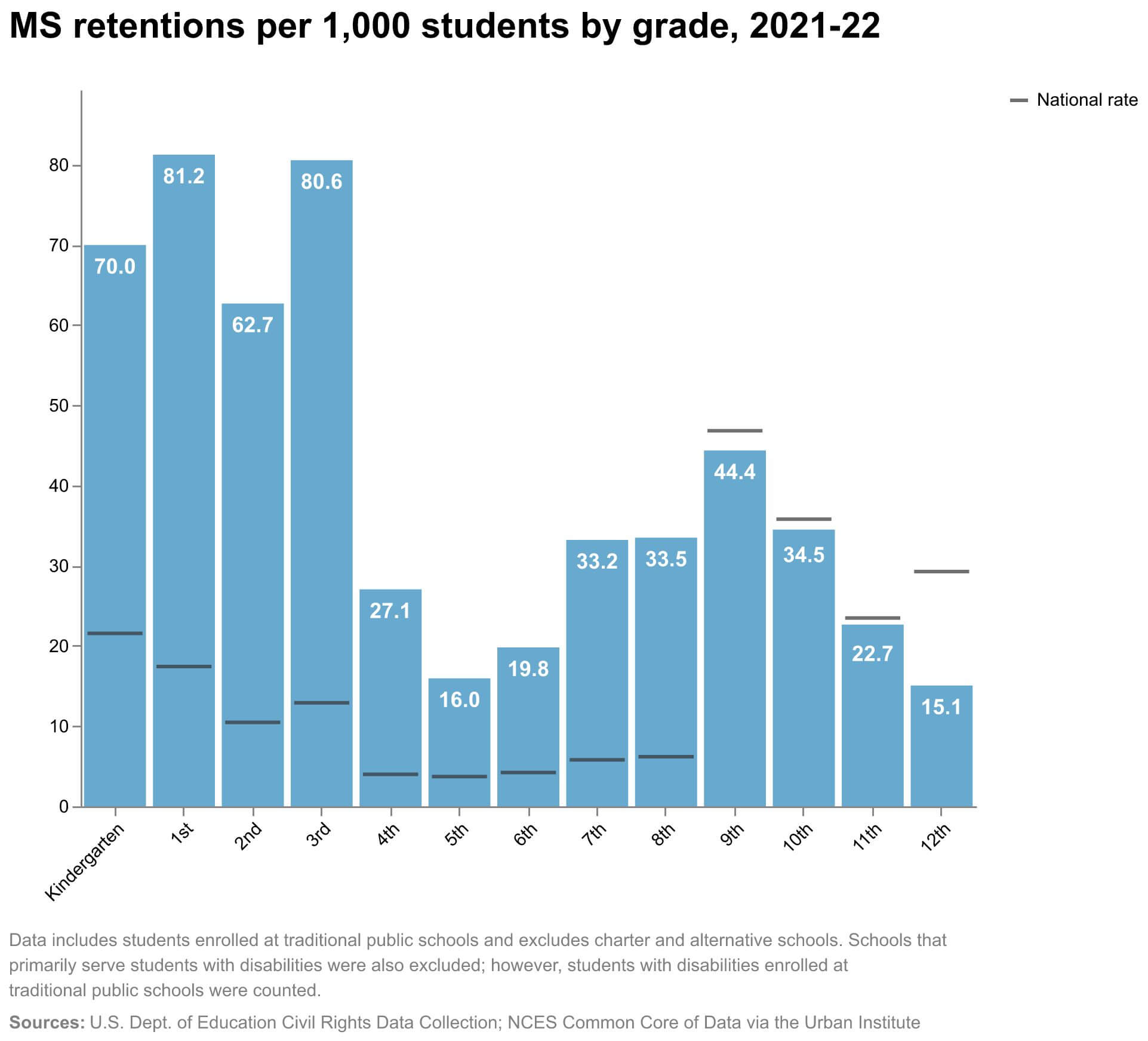
Federal data shows that about 4% of students were held back during the 2011-12 school year. By the 2015-16 school year, after the reading gate was implemented, that percentage increased by a point.
Retention became a hallmark of the state’s literacy overhaul, but the literacy act established other components that were essential to students’ success, she said.
The act funneled money into literacy education across the state, sending literacy coaches to schools and mandating high-quality curriculum. Teachers received literacy instruction.
“If retention is the only thing we would have done, I don’t think it would have worked,” she said.
Raising the bar for early grades
The state’s third grade retention policy has had a trickle-down effect: Retentions in Mississippi are concentrated in kindergarten through second grade, too.
Researchers including Canter say that’s because the literacy legislation established more monitoring and higher standards in those grades as well.
That holds true at Western Line School District, with schools located on the banks of the Mississippi River. Western Line held back 68 students in kindergarten through third grade during the 2021-22 school year, compared to 56 students in all other grades combined.
This chart displays Mississippi retentions by grade in the 2021-22 school year. Credit: Eric Sagara – Big Local News
Not all of those retentions are tied to reading, Superintendent Lawrence Hudson said, but the policy raised the bar for students in early grades.
About 4 in 5 Western Line third graders passed the reading component of the state test on their first try last year, higher than the state average of 75.6%. Passing the test wasn’t the school’s focus, Hudson said.
“We want to make sure kids are successful for the rest of their life,” he said. “We know if children have deficits at younger grades, they’ll get to third grade with those deficits.
“The longer you wait, the harder it is to clear those deficiencies.”
Rep. John Hines, a Democrat from Greenville, fears the retention policy is making it harder for students to graduate in his Delta district, which is one of the poorest regions in one of the poorest states in the country. He said he doesn’t want students in his district to be disproportionately retained.
But Hines can’t deny how beneficial retention was for his younger brother decades ago.
“He was extremely shy and nervous, so he wouldn’t talk, and once he became nervous, he shut down,” Hines said. “The teacher talked my mom into letting him stay back in the first grade.”
That marked the beginning of a transformation, Hines said. His brother was coaxed out of his shell and became an honors student.
Students don’t automatically improve when they’re retained, Canter said. To help students, schools have to get them the academic support they need in that year they repeat. The decision to retain a student is difficult, she said, but combined with intervention, it can pay dividends.
Western Line School District Assistant Superintendent James Johnson, chats with second graders about books the class is reading at Riverside Elementary School on Wednesday, Aug. 12, 2026, in Avon. Credit: Vickie D. King/Mississippi Today
“Any time a child is retained, it is a signal that we have not done what we needed to do as adults,” Canter said. But the retention policy paired with additional support has “done great things for kids,” she said.
Extending the gains
Despite Mississippi’s gains among fourth graders on a national reading assessment, those gains haven’t continued into higher grades.
With hopes of extending those gains to fourth through eighth grades, Mississippi lawmakers passed another literacy policy this year, modeled on the 2013 literacy act.
The state education agency will deploy coaches to schools across the state, provide training for teachers, require screeners throughout the year to assess students’ proficiency and mandate that schools use agency-approved curriculum.
Research shows holding older students back can negatively affect their chances of graduating, so lawmakers intentionally left a retention policy out, said Rep. Kent McCarty, a Republican from Hattiesburg who is vice chairman of the House Education Committee.
Without a firm accountability component, Canter is skeptical the Adolescent Literacy Initiative will have the same impact as the 2013 literacy act.
“Is it going to be enough?” she asked.
This story about being held back was produced as part of a collaboration with Big Local News at Stanford University and The Hechinger Report, a nonprofit, independent news organization focused on inequality and innovation in education. Ariel Gilreath of The Hechinger Report contributed reporting. The data analysis was conducted by Eric Sagara, senior data journalist with Big Local News.
Wednesday was supposed to be Nolan Wells’ 19th birthday.
Instead, hundreds of people gathered for a prayer vigil mourning the beloved Ocean Springs teen’s death and celebrating his life at Greater St. John AME Church in Biloxi.
“As we celebrate what would have been his 19th birthday, I am reminded as a father of a 24-year-old son and the uncle of four nephews between the age of 20 and 24, how dangerous, precarious life can be for a young Black man in America,” CEO of the National Urban League Marc Morial said.
People begin to pray as a choir sings during a vigil for Nolan Wells at Greater St. John AME Church in Biloxi on Wednesday, August. 19, 2026.
Doris Jones waves her arms in the air as she prays during a vigil for Nolan Wells at Greater St. John AME Church in Biloxi on Wednesday, August. 19, 2026.
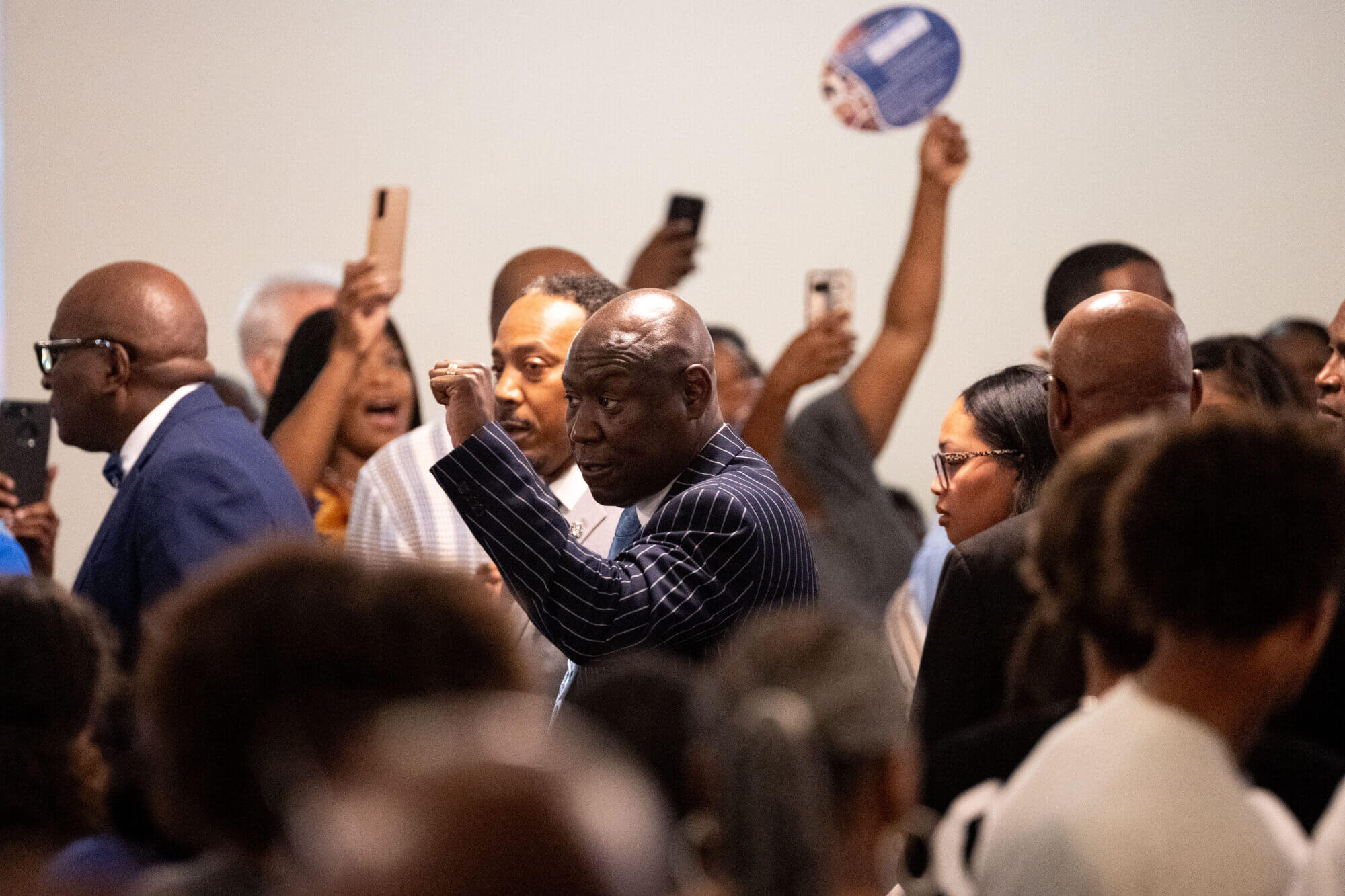
Attorney Ben Crump escorts the Wonsleys through a crowd of people as he and event attendees raise their fists during a vigil for Nolan Wells at Greater St. John AME Church in Biloxi on Wednesday, August. 19, 2026.
The Rev. Dr. Jamal Harrison Bryant gives a speech during a vigil for Nolan Wells at Greater St. John AME Church in Biloxi on Wednesday, August. 19, 2026.
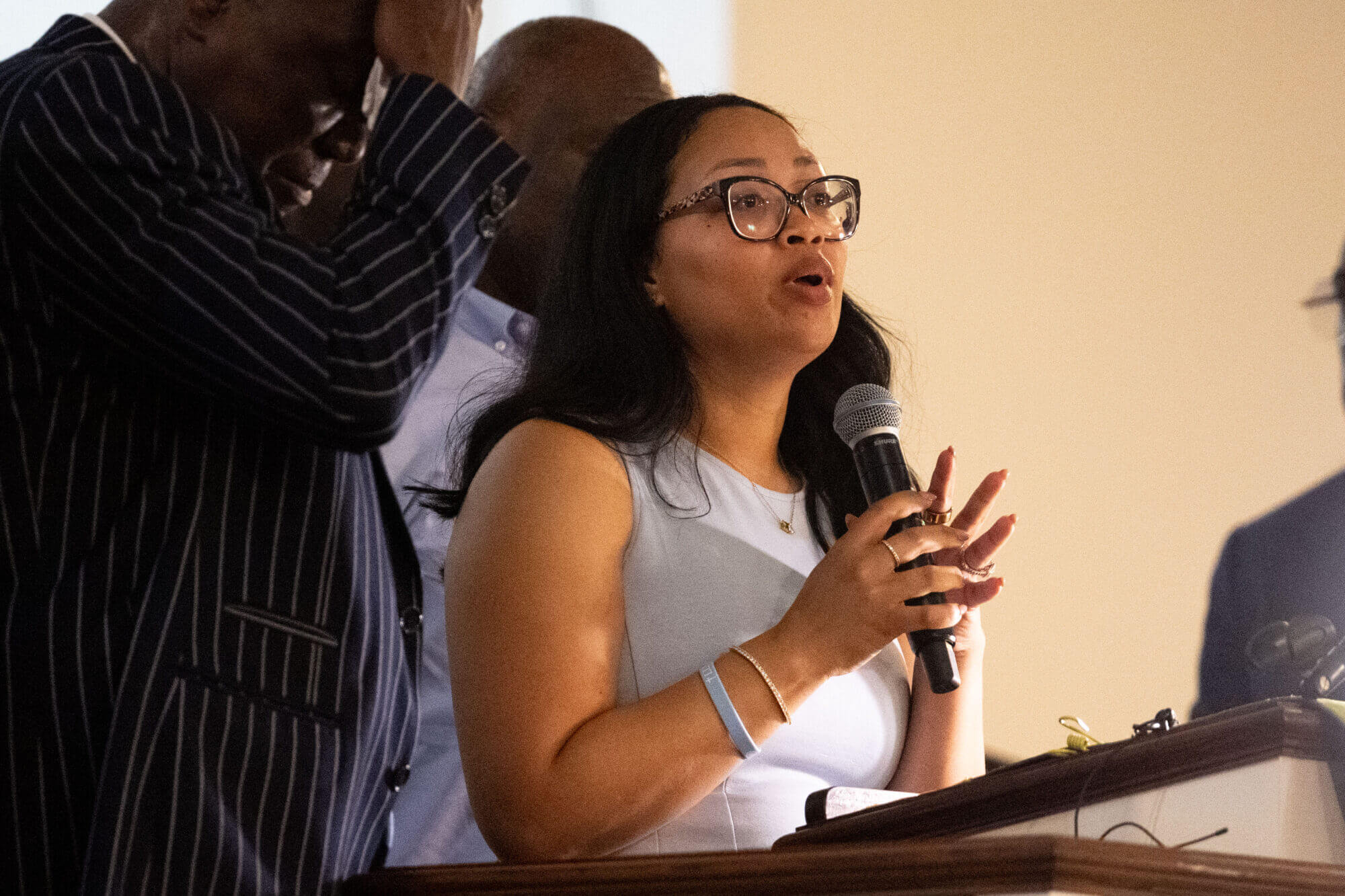
Christine Wonsley gives a speech in remembrance of her son during a vigil for Nolan Wells at Greater St. John AME Church in Biloxi on Wednesday, August. 19, 2026.
Christine Wonsley smiles as she is presented with a birthday cake for her son during a vigil for Nolan Wells at Greater St. John AME Church in Biloxi on Wednesday, August. 19, 2026.
Event attendees stand outside holding signs in support of Nolan Wells’ family during a vigil for Wells at Greater St. John AME Church in Biloxi on Wednesday, August. 19, 2026.
As people packed into the pews of the church, various speakers stepped up to the podium to celebrate the life of Wells and continue to call for transparency and justice as the investigation into his death conducted by the Jackson County Sheriff’s Department continues.
“This family has lost a whole lot,” the Rev. Cory Watts said. “It’s up to us to ensure justice is served for this family’s young man.”
Throughout the vigil, speakers called for everyone to join in prayer as they stand in solidarity with the Wonsley family, following an anonymous complaint filed against Wells’ mother, Christine Wonsley, to the Mississippi Board of Nursing.
“It’s so unfair, it is so unfair to lose your child and to be attacked just for asking for answers,” attorney Ben Crump said. “How is it wrong for them to want answers for what happened to their son?”
The crowd erupted as the Rev. Jamal Harrison Bryant took the stage demanding an end to the cycle of violence against Black people in America. “Mississippi does not have 31 years,” Bryant said in reference to other investigations that took years to be solved.
“We have a moment to disrupt a cycle,” Bryant said. “Because the same blood that absorbed in Genesis 4 is now the same blood that is staying in Mississippi.”
As Bryant called for the Wonsleys to come up to the stage for their own remarks, the crowd began to chant “we love Nolan Wells,” out of support for the family.
On stage, Christine Wonsley talked about memories of her son and how she wished she could have called him on his 19th birthday. “This morning I had to fight the urge to Facetime you and sing my off-tune Happy Birthday song,” Wonsley said. “I miss the warmth of your hugs, I miss hearing you say ‘I love you mom,’ I miss everything about you.”
As the Wonsleys concluded their eulogy for their son, Crump led a final chant, demanding that everyone “say his name” as the crowd shouted back “Nolan Wells.”
As the vigil concluded, a birthday cake and balloons were presented to the Wonsleys. Ending the night was a singing of “Happy Birthday” from the crowd as Christine and Elmore Wonsley blew out the candles for what would have been their son’s 19th birthday.
This story and photos were produced by Jackson Ranger of The Sun Herald.
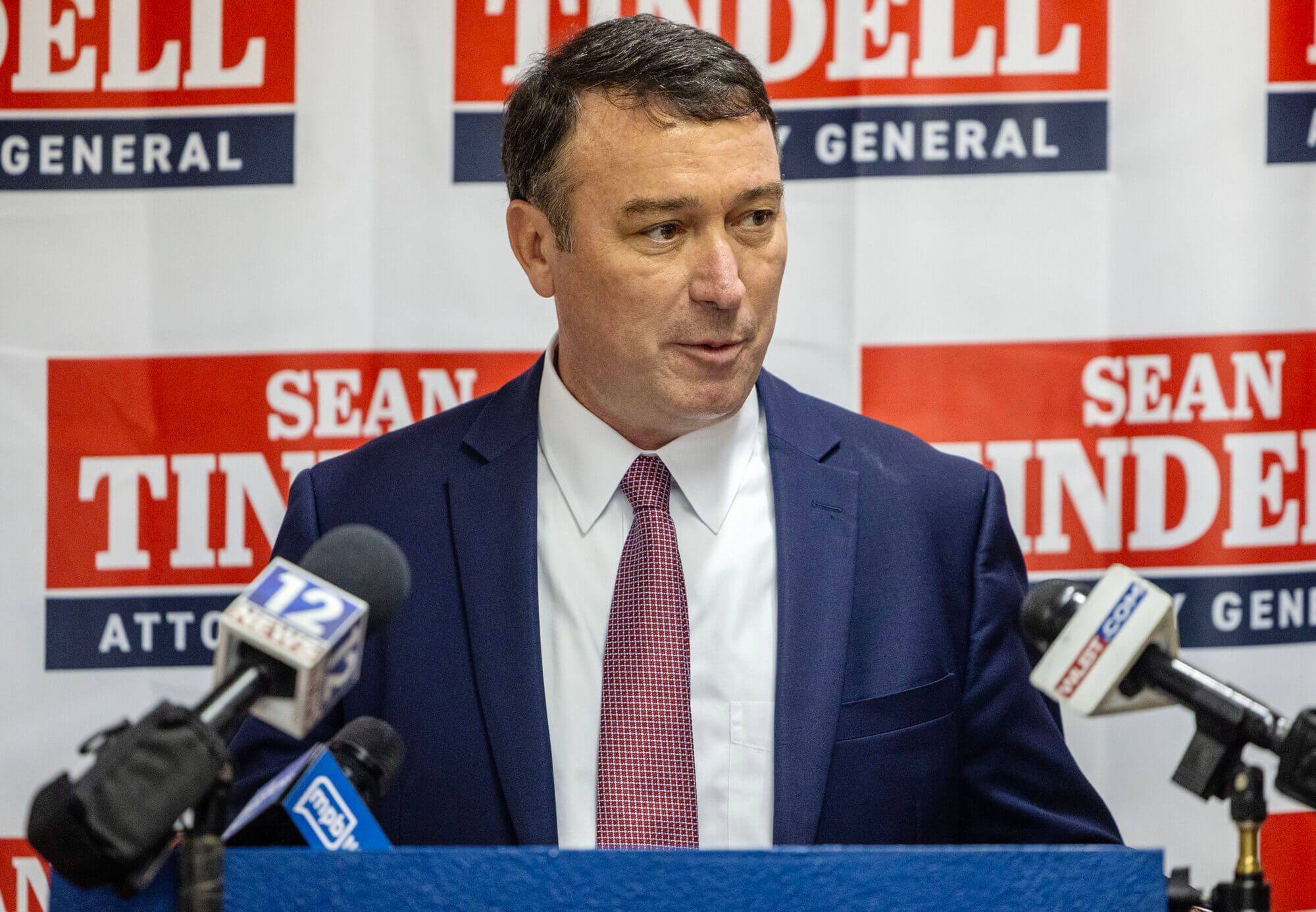
Sean Tindell, commissioner of the Department of Public Safety, announced on Wednesday that he will run in the Republican primary next year for attorney general, Mississippi’s top legal official.
Tindell launched his campaign Wednesday morning in Gulfport and began a statewide tour with stops in Jackson, Tupelo and Southaven.
“Mississippi needs leaders who are focused less on petty disputes and more on working together and getting things done for the people we serve,” Tindell said. “That’s what I’m running for attorney general.”
Tindell has led DPS since Gov. Tate Reeves appointed him to the post in 2020. Tindell previously served as a judge on the Mississippi Court of Appeals for three years and previously represented the Gulfport area in the state Senate for five years.
Tindell said he is “uniquely qualified” to serve as attorney general because of his legislative, judicial and agency experience. He specifically pointed to his initiative to reduce the time the public waits at driver’s license bureaus and his efforts to reduce the autopsy backlog at the Mississippi Forensics Laboratory.
“With me, there is no need for on-the-job training,” Tindell said.
The state attorney general is the chief legal officer and advisor for the state, handles civil and criminal legal matters, represents state agencies and public officials in court and issues legal interpretations of state laws.
Supporters gather as Public Safety Commissioner Sean Tindell announces his candidacy for attorney general at the Republican Party headquarters in Jackson on Wednesday, Aug. 19, 2026. Credit: Eric Shelton/Mississippi Today
If elected, Tindell said he plans to ask the Legislature to expand the scope of his office to handle more public corruption cases and work to provide public bodies with AG opinions more quickly. He also said he plans to eventually resign as commissioner to focus on campaigning for attorney general full time, though he doesn’t have a specific timeline for the resignation.
The attorney general slot will be an open seat because current Attorney General Lynn Fitch has announced she will run for governor next year. Tindell is the only candidate so far to announce he’s seeking the office.
Henry Babour, a national GOP strategist, said on Mississippi Today’s “The Other Side” politics podcast that state Sen. Briggs Hopson, a Republican from Vicksburg who leads the Senate Appropriations Committee, will soon announce he’s running for attorney general.
Here is a list of candidates who have announced they are running for statewide office in 2027:
Army National Guard Command Sgt. Maj. Lee Stringer did not know the surprise awaiting him outside his Pearl office building.
When Stringer stepped outside the 5th Squad office on a humid July morning, he was met with confetti canons, a cheering crowd and an oversized $200,000 check.
The money is a part of Lowe’s Hometown community impact grant – a five-year program centered around renovating and revitalizing community spaces. The money will be used to purchase and renovate a new space in Pearl for the nonprofit, which Stringer said could extend its reach to thousands of additional veterans and their families across the state.
Presenting the check was Tenesha Wells, a Lowe’s military recruiter and longtime 5th Squad volunteer. Stringer immediately cried when he saw her – embracing her as she stepped within arms reach.
“All of that hit me at one time,” Stringer later said. “It was just such a sense of gratitude that we were noticed and appreciated.”
Lowe’s Employees alongside 5th Squad members hold a check for $200,000 at 5th Squad Headquarters in Pearl on July 23, 2026. Credit: Courtesy: Lowe’s Business Television
Stringer is a 26-year military veteran who oversees the Army National Guard’s largest battalion and serves as 5th Squad’s president. He started the group alongside three friends in 2016. The four initial members were a part of the 184th Sustainment Command, and wanted a way to stay connected as they began moving into different facets of the Army.
It was around this same time that a fellow guardsman was struggling to pay his light bill of around $200, Stringer recalled. The guardsman had reached out to several other veteran organizations and was met with denial or extended wait times. He couldn’t afford to wait that long.
Members of the unit gathered and paid the man’s bill the same day. The initial bill payment would become the blueprint for 5th Squad’s quick reaction funding – which allows struggling veterans to reach out and receive same day bill payments.
5th Squad would continue to provide financial assistance and garner more active volunteers as word spread of their mission – so much so that a space was leased in 2021 to keep up.
The 1,200-square-foot building just south of downtown Jackson was mainly used for the group’s monthly meetings and for storage. 5th Squad would eventually move to a smaller space in Pearl two years later to host events for veterans and their families. The events served as a way to help veterans create a community – something Stringer struggled with when he left active duty.
“Those guys that I went downrange with, I created that connection with them,” Stringer said. “When I came off active duty and was just working a civilian job I missed that. It’s like a part of you was missing.”
5th Squad began seeing upwards of 100 people at its weekly events and quickly outgrew the 1,000-square-foot building in Pearl.
Stringer applied for Lowe’s Hometown grant program in March with a request for $100,000 to help find a larger space. In June he was informed 5th Squad was a top 100 finalist out of 6,000 applicants nationwide.
Lowe’s scheduled a consultation meeting with Stringer for its business cleaning and basic repair subscription the following month – an ordinary meeting in Stringer’s mind. It was only when Flowood Lowe’s store manager Cesare Della Valentina led Stringer outside and the cheers started that he realized what was happening.
The amount presented was double Stringer’s request, a surprise demonstrating the strength of his application, according to Lowe’s spokesperson Laurel Waller.
“Instead of making an investment that wouldn’t get the project across the finish line, Lowe’s decided to provide the needed investment to complete the project and allow the doors to open to veterans as soon as possible,” Lowe’s senior analyst Brett Baldeck stated.
5th Squad is one of what Lowe’s hopes will be 100 large scale projects funded this year.
“The opportunities are just endless at this point and it’s all because of Lowe’s selecting us out of all those people to do it,” Stringer said.
The organization plans to move out by November once its current lease ends. Stringer hopes the new venue will allow 5th Squad to begin professional counseling and collaboration projects with other nonprofits.