Has a sporting event ever produced more drama than the 2025 Masters? Has any network ever displayed it better than CBS? No and no, say the Clevelands, who also opine on the sad case of former Tennessee quarterback Nico Iamaleava, Mississippi’s college baseball teams, and what the Saints should do at quarterback.
Sexually transmitted infection testing is no longer free at county health departments due to recent federal cuts to COVID-19 pandemic relief funding.
Community-based organizations and health providers that previously received free STI testing at the state’s public health laboratory through federal grant funding will now have to pay for the services or contract with a commercial lab.
The grant was part of a five-year, $1.13 billion nationwide federal investment to bolster infrastructure to support COVID-19 and STI prevention efforts. It was originally set to end in January 2026.
The cut delivers a double blow to Mississippi, which lost funding for STI services last month when the federal government froze millions of dollars of Title X funding. Title X is used to provide basic reproductive health care, including STI testing and treatment, to Mississippians.
The change will impact chlamydia, syphilis and gonorrhea testing, said Kendra Johnson, the director of communicable diseases for the Mississippi State Department of Health.
The state has been battling skyrocketing syphilis rates for over a decade and has experienced a more recent surge in congenital syphilis, which occurs when a mother passes the infection to her infant during pregnancy. Congenital syphilis is associated with serious health outcomes, including preterm deliveries and infant deaths.
Mississippi’s chlamydia and gonorrhea rates are second and fifth in the nation, respectively, but have been declining since 2020, according to Centers for Disease Control and Prevention data.
County health departments will now accept insurance for STI tests, and people without insurance will have to pay out of pocket. The agency is considering offering a discounted rate for uninsured people.
However, no one seeking STI testing will be turned away from the health department, Johnson said.
“If they don’t have the means to pay for services, we will be able to support it.”
The Centers for Disease Control and Prevention pulled back $230 million in funding to the Mississippi State Department of Health in March that was originally allocated by Congress for testing and vaccination against COVID-19.
The slashed funding to the agency has impacted planned improvements to the public health laboratory, the agency’s ability to provide COVID-19 vaccinations, community health workers and preparedness efforts for emerging pathogens like H5 bird flu.
In the wake of the funding cuts, the health department was forced to make decisions about its funding priorities. Federal funding accounts for 66% of the agency’s budget.
“With limited resources, you’re kind of forced to determine how to keep things moving with what you have, and what’s necessary and what’s not,” said Johnson.
Community-based organizations and health providers were suddenly notified last Friday that agreements for free testing services were halted.
“Effective immediately, the MSDH requires your facility to cease submitting specimens to the (Mississippi Public Health Laboratory),” the April 11 letter from the Health Department stated.
Open Arms Clinic, which has locations in Jackson and Hattiesburg and seeks to make health services accessible to marginalized and underrepresented populations, was using the grant funding to support community STI testing through its mobile clinic, said President and CEO June Gipson.
The mobile clinic will now have to utilize a new funding source to continue providing free STI testing to patients.
Unchecked STIs could be devastating in Mississippi, said Gipson, who remembers the first months of the COVID-19 pandemic, when most resources and attention shifted away from HIV and STI efforts and infection rates climbed unchecked.
“You have to pay attention to STDs like you pay attention to the road,” Gipson said. “Drive for others.”
Plan A, a clinic in the Delta that provides free health care services with an emphasis on sexual and reproductive health, had been receiving free STI testing through the health department lab for about a year before it was notified of the funding cuts last week.
The increase in need paired with a sudden decrease in funding is a “brutal combination,” said Caroline Weinberg, the founder and program director of Plan A. But the clinic will work to find another funding source to ensure that patients don’t experience disruptions in services.
Plan A’s STI positivity rate is significantly higher than the state’s overall rate, Weinberg said. She hypothesizes this may be due to the clinic’s commitment to free testing, which encourages people to get tested even when they don’t have symptoms.
Gonorrhea and chlamydia often go untreated because infected people never have symptoms.
Decreased access to testing will lead to lower STI rates, but will conceal high rates of infection, Weinberg said.
“It’s going to have a longstanding ripple effect,” she added.
A spokesperson for the health department declined to say what other organizations will be impacted by the change.
The health department is not experiencing other cuts to STD or HIV health services at this time, said Johnson.
“But if you ask me that same question next week, we may have a different response.”
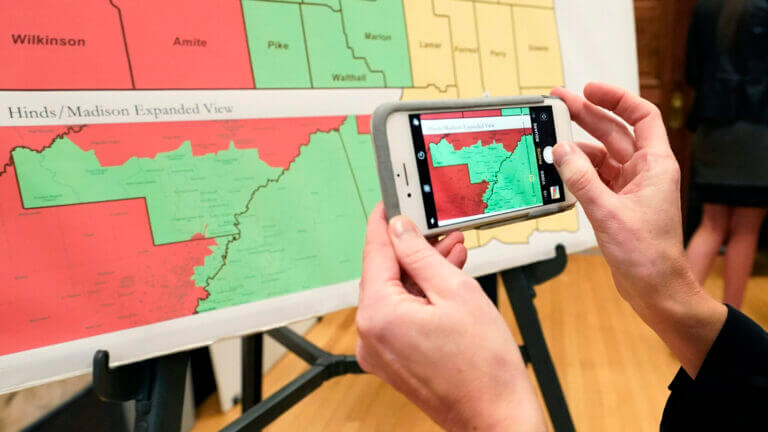
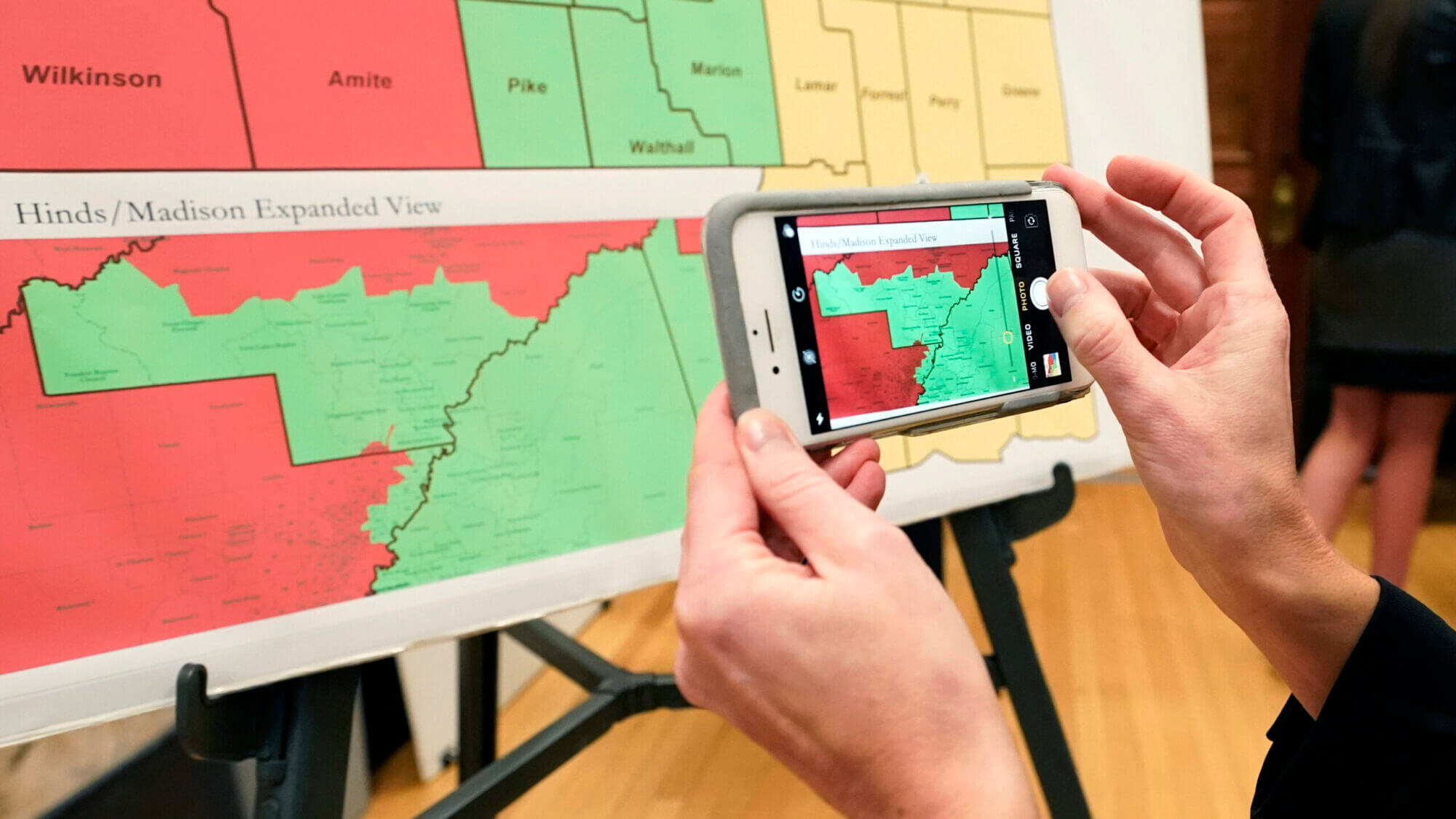
A federal three-judge panel on Tuesday evening ordered state officials to develop another legislative map that ensures Black voters in the DeSoto County area have a fair opportunity to elect candidates to the state Senate.
The unanimous ruling gave the all-Republican State Board of Election Commissioners seven days to propose a new map for the DeSoto County area, with the state facing a time crunch to hold special elections for numerous redrawn legislative districts in November.
The order is another setback for state officials who have fought bitterly with the plaintiffs and among each other to comply with court orders and federal redistricting law.
The panel, comprised of U.S. District Judge Daniel Jordan, U.S. District Judge Sul Ozerden and U.S. 5th Circuit Court of Appeals Judge Leslie Southwick, previously ruled that when lawmakers redrew their districts in 2022 to account for population shifts, they violated federal civil rights law because the maps diluted Black voting power.
To remedy the violation, the court allowed the Legislature to propose a new House map redrawing House districts in the Chickasaw County area and a new Senate map redrawing districts in the DeSoto County and Hattiesburg areas.
Earlier this year, during the 2025 session, the Legislature attempted to comply with the order and tweaked those districts. However, the plaintiffs still objected to parts of the Legislature’s plan.
The plaintiffs, the state chapter of the NAACP and Black voters from around the state, did not object to the Hattiesburg portion of the Senate plan. But they argued the Chickasaw County portion of the House plan and the DeSoto County portion of the Senate plan did not create a realistic opportunity for Black voters in those areas to elect their preferred candidates.
The judges accepted the Chickasaw County redistricting portion. Still, they objected to the DeSoto County part because the Legislature’s proposed DeSoto County solution “yokes high-turnout white communities in the Hernando area of DeSoto County to several poorer, predominantly black towns in the Mississippi Delta,” which would make it hard for Black voters to overcome white voting blocs.
It’s unclear if Tuesday’s order will impact parts of the election schedule. The judges said they were committed to voters participating in November special elections, but it might change other parts of the pre-Election Day schedule.
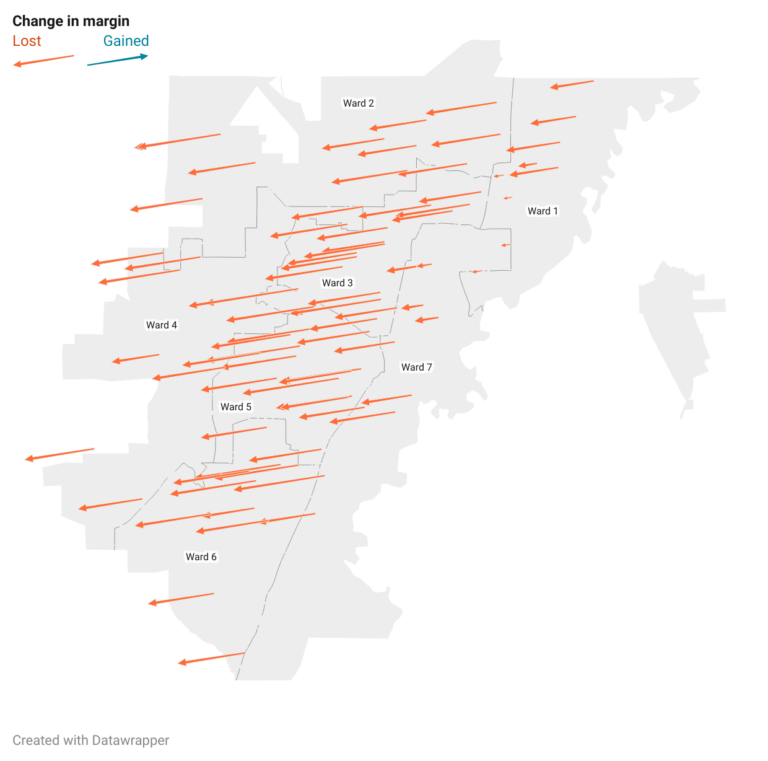
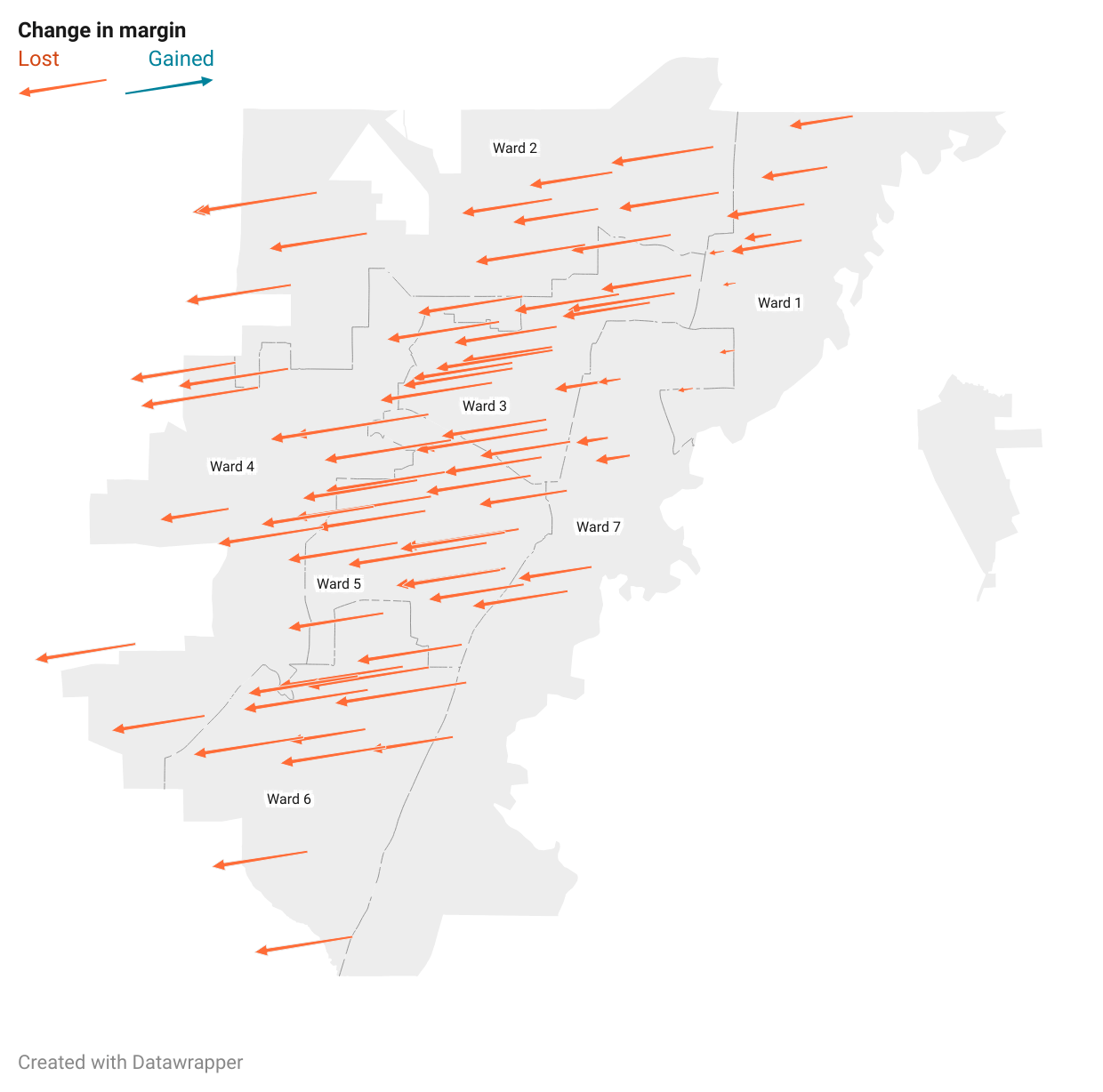
An analysis of the results in Jackson’s Democratic primary shows that Jacksonians all but flipped the script from 2017, the last time state Sen. John Horhn and Mayor Chokwe Antar Lumumba faced each other in a mayoral election.
Eight years ago, Lumumba won the Democratic primary outright, avoiding a runoff by securing 55% of the vote, winning a majority of precincts and taking home more than 18,000 votes.
But on April 1, his share of the citywide vote plummeted to 17%, and he received less than 4,300 votes, placing him second to Horhn. Lumumba led just two Jackson precincts — and even there, he got less votes than he did in 2017.
Meanwhile, Horhn bested Lumumba in Jackson’s remaining precincts, led in all seven wards,and more than doubled his share of the vote from 2017 when he came in second to Lumumba. This year, Horhn took home 48%, nearly enough to avoid the runoff scheduled for April 22.
For this analysis, Mississippi Today reviewed the final precinct returns which election officials completed late last week, and pulled unofficial returns for 2017 from the Hinds County Circuit Clerk, the only precinct-level results available for that election.
Brandon Jones, the director of political campaigns at the Southern Poverty Law Center, which has not participated in this year’s mayoral race, said Horhn’s margin showed a broad coalition of voters across the city supported him — a feat considering he faced nearly a dozen opponents.
“You don’t have to be a mathlete to appreciate that’s a pretty big frontrunner heading into the runoff,” Jones said.
This is especially notable because the timing of Mississippi’s municipal elections — what Jones calls “off off-year elections” — typically favor incumbents due to low turnout.
As one explanation for these shifts, Lumumba and his campaign have argued that Horhn was buoyed by strong support in Northeast Jackson’s Ward 1, where they say Republican voters crossed over to vote in the Democratic primary.
“That’s the grand majority of his votes,” Lumumba told Mississippi Today last week, before election officials completed the final returns.
In fact, Ward 1 made up just over a quarter of Horhn’s total votes. Precincts in that northeastern portion of the city comprised a smaller share of Horhn’s total support in the recent primary than they did in 2017.
And if Ward 1 was removed from the voter pool entirely, Horhn still would have taken home 44% of the vote, while Lumumba would have done just 2 points better.
Northeast Jackson is also where Lumumba lives, though his residence falls in a unique area covered by Ward 7. He votes at Fire Station #16, where he received just 9 votes.
“Jackson is a place where all of your assumptions are proven wrong on Election Day,” Jones said.
It is true that Ward 1 was Horhn’s strongest ward. His margins over Lumumba were the highest in the city’s northeast precincts.
And Lumumba’s support in Ward 1 declined from about a third in 2017 to just 10% in this year’s primary, though that’s primarily due to the mayor’s paltry showing in three of the ward’s nine precincts: Willie Morris Library, Spann Elementary School and Casey Elementary School, which are among the highest turnout precincts in the city.
At Casey, a polling place that sits across the street from his house, Lumumba did not receive a single vote.
But in more than half of Ward 1’s precincts, Lumumba’s support — between 14% and 19% — was on par with his citywide performance, where he averaged 18% per precinct.
Jones said these numbers reflect the fact that one candidate campaigned in Ward 1 and the other 11 candidates did not.
“As a person who is trying to parse the numbers and figure out what actually happened, I see a lot of competing narratives,” Jones said. “I don’t see a lot of competing data points.”
As anecdotal evidence of Republican cross-over, Lumumba pointed to an editorial in the Northside Sun encouraging Republicans to vote in the Democratic primary, as well as the fact that Ward 1 councilman Ashby Foote, the only Republican on the city council, forewent the primary by running as an independent this year.
As far as data, Lumumba said to look at the number of total votes in last year’s presidential Republican primary in Jackson compared to the number of total votes in the Republican primary in this year’s mayoral race.
If the votes decreased, Lumumba reasons that means Republicans are crossing over.
Out of nearly 5,300 votes for mayor in Ward 1 this year, just 149 were cast in the Republican primary. Back in March of 2024, about 1,300 Ward 1 residents voted in the Republican primary for president, according to data from the Mississippi Secretary of State’s office, compared to fewer than 1,200 Ward 1 residents who voted in the Democratic primary.
Ward 1’s reputation as a “Republican ward”, though, belies the results in the November general election, where Democratic candidate Kamala Harris beat Trump 3 to 2 out of nearly 10,000 votes in northeast Jackson.
And participation in municipal Republican primaries in Jackson, which do not produce a competitive candidate, is always much lower than in national elections. In 2017, just 83 people from Ward 1 cast a vote in the Republican primary for mayor.
Byron D’Andra Orey, a political science professor at Jackson State University, said this kind of data analysis comes with a caveat because there are multiple ways to view these results.
For one, it is difficult to compare behavior in national and municipal primary elections; Republican votes matter in the former but are virtually meaningless in the latter. Because Mississippi has open primaries, Orey said it is rational for voters of any political affiliation to cast a ballot in the Democratic primary, which has historically decided the city’s next mayor.
“We need to think about what does it mean to be in a Democratic primary when Republicans do not have the strength in numbers?” he said. “If we revisit that voter — that voter is actually a Democrat on that date.”
Horhn’s win was commanding. He was just 421votes away from avoiding a runoff.
The senator even outperformed Lumumba in the five precincts where the mayor received the most votes in this election: Christ United Church in Ward 1, Timberlawn Elementary in Ward 4, and New Hope Baptist Church, Aldersgate United Methodist Church and Fire Station #26 in Ward 2.
The high-turnout precincts in Jackson’s northwestern Ward 2, where Horhn lives, voted in a way that most closely mirrors the overall electorate in the city. It’s also the area of the city Horhn serves in the Legislature and the ward Lumumba’s father Chokwe Lumumba Sr. represented on the City Council before he became mayor in 2013.
Even though it was the mayor’s strongest ward, Lumumba only received 22% of the vote there compared to Horhn’s 44%. In 2017, Lumumba received a whopping 62% of the Ward 2 vote, and Horhn got just 15%.
Still, Jones said any campaign is going to look at the data and try to find a silver lining or something to use against their opponent. But a candidate’s narrative does not change lived reality in the city: Decades of infrastructure problems, decreasing financial resources and an antagonistic state government.
Nor does it change that the mayor of Jackson may be the toughest job in the state.
“The truth is, this is a very embattled city, and the people pay the price for that,” Jones said.
Two men working as Capitol Police officers have been indicted for manslaughter in the fatal shooting of a Jackson man in 2022.
Mississippi Today has obtained a copy of the March 14 indictment, which charges Steven Frederick Jr. and Michael Lamar Rhinewalt with manslaughter in the Sept. 25, 2022, death of 25-year-old Jaylen Lewis in Hinds County.
It’s the same Frederick who resigned from Capitol Police in 2023 when he was charged with DUI after crashing a state-owned Mississippi Department of Public Safety vehicle.
Rhinewalt has been on administrative leave without pay and has not been actively employed with the agency since January of 2025. according to Bailey C. Martin, spokesperson for the Mississippi Department of Public Safety.
Frederick and Rhinewalt reportedly told investigators that one of them shot Lewis in self-defense after Lewis drove his car toward them. According to the indictment, Frederick and Rhinewalt said this killing “was necessary to protect himself from great bodily harm or death at the hands of Lewis,” but the indictment concluded that was “not a reasonable belief under the circumstances.”
The state attorney general’s office presented the case to the Hinds County grand jury, which indicted the officers.
Upon hearing of the indictment Tuesday, Lewis’ mother, Arkela, said, “I could jump up for joy.”
Capitol Police never explained why her son was shot in the head during a traffic stop on East Main Street, and she never received a copy of the autopsy report, she said. “I haven’t received anything. Nothing at all.”
The woman who was riding with her son told her that the officer was walking toward them with his gun drawn, she said. “My son screamed out, ‘It’s the police.’ He froze. That’s when the shots were fired.”
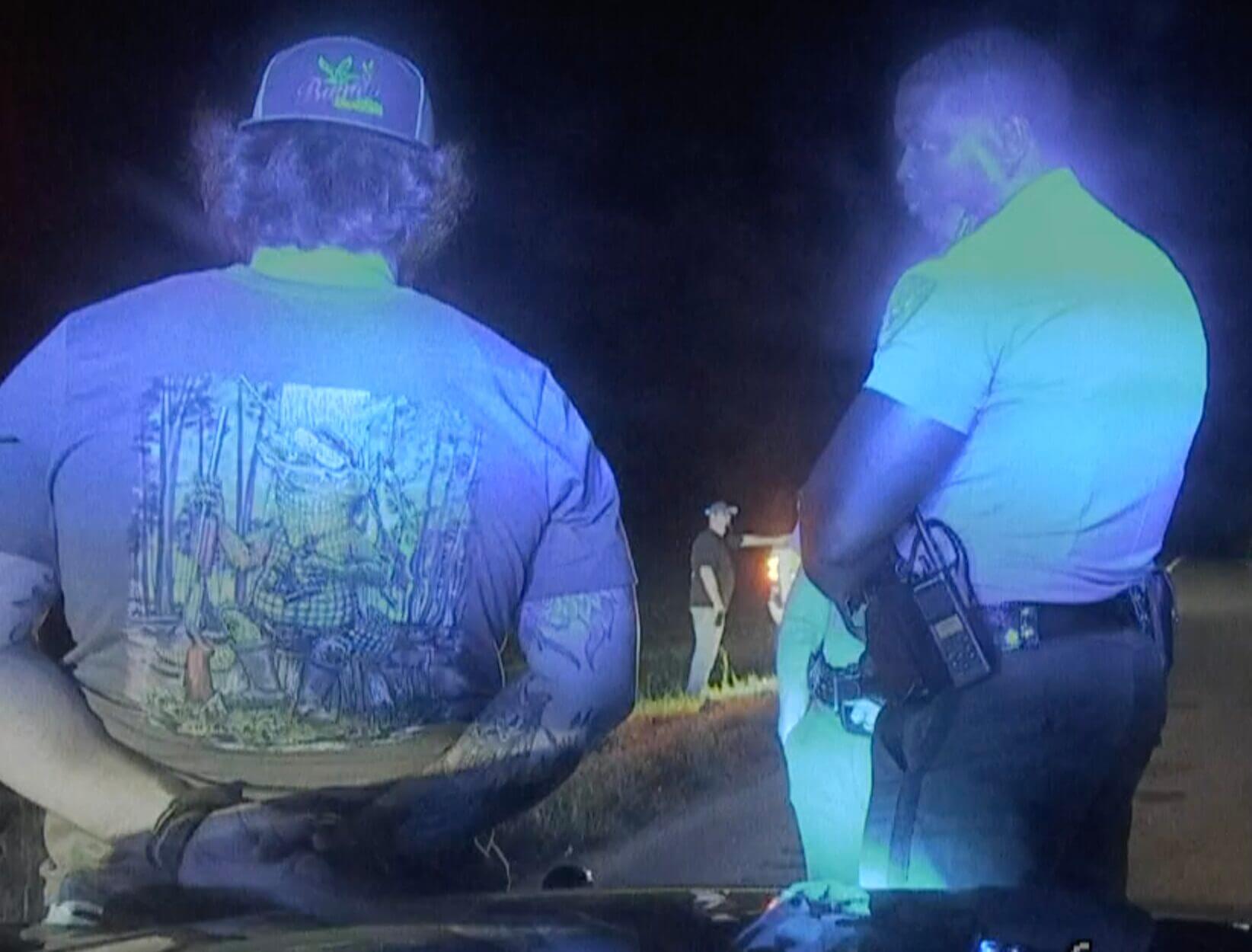
This screen shot shows Capitol Police officer Steven Frederick, left, being arrested by an unidentified Covington County County deputy on a DUI charge on March 12, 2023, after crashing his vehicle and tested at almost twice the blood alcohol content limit.. Credit: Courtesy of Mississippi Highway Patrol
On March 12, 2023, Frederick, who has been dating Rankin County Sheriff Bryan Bailey’s daughter Alexis, totaled his state vehicle. After a breathalyzer test, the trooper said over the radio that Frederick had a blood alcohol level of 0.15, nearly twice the legal limit of 0.08, according to the Mississippi Highway Patrol video. The ticket listed the level as 0.12.
He initially told the trooper he was “trying to clear my head” and had only two beers, but he later admitted he had been drinking liquor, according to Highway Patrol videos obtained by Mississippi Today.
Frederick arrived at the Covington County Jail at 11:49 p.m. Less than an hour later, Covington County Sheriff Darrell M. Perkins ordered Frederick released without bond to Bailey. Afterward, Frederick resigned from the Capitol Police.
Authorities have learned that after the accident, Bailey allegedly contacted a prosecutor, asking what would happen if a trooper didn’t appear for a DUI hearing. The prosecutor replied that, if the trooper failed to appear, the case would be dismissed.
That’s exactly what happened on Aug. 9. The trooper failed to appear, and Covington County Justice Court Judge Bobby Wayne Mooney dismissed the case.
Authorities have also learned that after the accident, Bailey reportedly telephoned Frederick’s supervisor and said that the DUI had been “taken care of” and that Frederick should keep his job, but the supervisor refused to do so.
The Scott County Sheriff’s Department confirmed Tuesday that Frederick works there. He could not be reached for comment, and Rhinewalt’s family said they could not discuss the matter. Bailey previously declined to respond to requests for comment.
Public Safety Commissioner Sean Tindell, whose office is over Capitol Police, said his office would continue to monitor the matter. “It’s a pending criminal matter, so there’s not much I can say,” he said.
In an emailed statement, Martin said DPS has established an Internal Affairs Division to further strengthen accountability that operates independently of other agencies within department and reports directly to Tindell.
“This division includes dedicated investigators tasked with independently handling complaints of officer misconduct. In addition, Capitol Police officers now wear body cameras and additional policies have been instituted to ensure greater professionalism and accountability, Martin said.
Anyone wishing to file a complaint can do so at www.dps.ms.gov.
Updated 4/15/24: This story has been updated to clarify Rhinewalt’s status with the Capitol Police and to include what steps DPS is taking.
The Department of Justice on Tuesday voluntarily dismissed its civil lawsuit against the Mississippi State Senate over allegations that the legislative body paid a Black attorney less money than her white colleagues.
Court documents did not specify a reason for the dismissal, and a Justice Department spokesperson did not immediately respond to a request for comment.
Mississippi Attorney General Lynn Fitch’s office helped defend the Senate in the litigation. MaryAsa Lee, a spokesperson for Fitch, told Mississippi Today in a statement that the “state is pleased” with the dismissal.
Kristie Metcalfe, who is Black, worked as a staff attorney for the Senate’s Legislative Services Office from December 2011 to November 2019. Metcalfe’s starting salary was $55,000, while other Senate staff attorneys were paid $95,550 to $121,800, according to the lawsuit.
Lawyers for the office draft legislation and handle other legal questions for the individual 52 senators.
According to court documents, the Equal Employment Opportunity Commission investigated Metcalfe’s claims and found reasonable cause that the state discriminated against her based on race.
Current Gov. Tate Reeves was the leader of the Senate when he served as lieutenant governor from January 2012 until January 2020, the bulk of the period during which Metcalfe worked in the Senate.
The state in court briefings did not dispute that Metcalfe was paid less than her white colleagues. But it argued that Metcalfe was exempt from federal civil rights laws and that the lawsuit shouldn’t proceed because of a litigation freeze implemented by President Donald Trump’s administration.
The Department of Justice initially filed the lawsuit last year in the waning days of former President Joe Biden’s administration. After Trump took office, his Justice Department ordered the Civil Rights Division to halt most of its work and review its current cases.
FILE – Tennessee quarterback Nico Iamaleava (8) takes a break during the second half of an NCAA college football game against UTEP, Saturday, Nov. 23, 2024, in Knoxville, Tenn. (AP Photo/Wade Payne, File)
So many ways to look at the sad case of former Tennessee quarterback Nico Iamaleava. Perhaps the best way is this: He is a walking, talking, five-star illustration of just how remarkably screwed up college football has become in this NIL, open transfer era.
For those that don’t know, Iamaleava was the gifted, 20-year-old starting quarterback for the Vols until last Friday when he failed to show up for practice before Tennessee’s annual spring football game. As a Class of 2023 recruit out of Long Beach, California, he was the nation’s second-rated quarterback behind only Arch Manning, who signed with Texas. While still in high school, Iamaleava signed a four-year $8 million deal with Tennessee.
Rick Cleveland
Iamaleava then served as a backup most of his true freshman year in 2023 before starting and earning MVP honors in the Citrus Bowl. He became the Vols starter for 2024 and helped his team reach the NCAA’s first 12-team college football playoffs. Iamaleava then decided – or his advisers decided – to renegotiate his deal with Tennessee. He wanted more money. Tennessee said no. Now, he’s in the transfer portal.
I have several thoughts on this:
People ask me: Could this happen to one of our Mississippi teams? It already has. There are several parallels with the Iamaleava case and that of former Ole Miss running back Quinshon Judkins, who wanted more money from Ole Miss after two productive seasons there and eventually left for Ohio State, where he helped win a national championship. The biggest similarity is that in both cases a parent was calling the shots. With Judkins, his mother was essentially his agent. With Iamaleava, his father reportedly directed the show. In both cases, the schools weighed their options and decided its football program would be better off letting the star player go. Would Ole Miss have made the playoffs with Judkins on the team? Perhaps. But what precedent would that have set and how would Judkins’ teammates have reacted? Said one Ole Miss staffer, “If you give in to that kind of demand, you’re going down a really slippery slope. No one player is bigger than the program.”
In many ways, Tennessee is reaping what it sowed. Iamaleava signed a four-year, $8 million deal to play quarterback for the Vols while still in high school. That’s an incredible gamble to take on an 18-year-old kid. Tennessee did more than gamble Tennessee’s attorney general sued the NCAA to prevent the organization from investigating potential infractions by Tennessee in its initial recruitment of Iamaleava. The organization’s response was to stop investigating all third-party participation in NIL-related activity the NCAA crapped out. So did the Vols.
There were five five-star quarterbacks in the Class of 2023 in what was judged by many experts to be the most talented in recent memory. Of those five, Manning is the only quarterback who will play next season for the school he originally signed with. Iamaleava’s decision means that the other four will have transferred at least once. Think about that. That’s college football today in a nutshell.
Was Iamaleava overrated? Statistically, you can certainly make that case. Iamaleava threw for 2,616 yards, 19 touchdowns and five interceptions in 2024. Those are good, not great, numbers. A closer look shows that much of Iamaleava’s excellence was achieved against the weaker teams on the Vols’ schedule. Ten of those 19 touchdowns came against Mississippi State, UTEP and Vanderbilt. Against the likes of Arkansas, Alabama, Georgia, Florida and Ohio State, he threw for a grand total of one touchdown. In the playoff game against Ohio State, Iamaleava completed 14 of 31 passes for 104 yards. He also rushed for 47 yards and two touchdowns on 20 carries.
How much more money can Iamaleava expect to earn in the portal? Hard to say, but. I would bet all of what I could afford that he won’t get the $4 million a year he was asking from Tennessee. I wouldn’t be totally shocked if gets less than the $2.25 million he was to make at Tennessee this year. My best guess is that it will be a case much like that of Judkins, who received similar money at Ohio State to what he had been making at Ole Miss.
Back to my original point: The Iamaleava situation is a sad, sad commentary on college football today. It has become pro football without the rules – i.e., salary cap, collective bargaining, enforceable contracts – that make pro football work. I have spent nearly six decades covering – and mostly loving – college football. It is an understatement to say I have never loved it less.
Editor’s note: This essay is part of Mississippi Today Ideas, a platform for thoughtful Mississippians to share fact-based ideas about our state’s past, present and future. You can read more about the section here.
Balderdash! What a wonderful, descriptive, albeit archaic, word to describe something that is nonsensical, stupid or dumb. One of the editorial writers at the Clarion Ledger, the late Leesha Faulkner, wrote it in an editorial one day to describe a statement by a public official that was, to say the least, nonsensical, stupid or dumb.
As her editor, I told her the word was too old fashioned. But on second thought, it was the perfect word. It made the point, made me think and made me even smile a little as I considered the important, serious issue about which she was writing. That is what good commentary writing does — it makes you think and engage in important issues.
You probably won’t see that word much in opinion writing. In fact, you may not see many words to express opinions on public policy or those who make it — nonsensical or not — simply because editorials and opinion pages are becoming fewer and far between these days.
While there has been an alarming tendency in journalism for some news organizations to let opinion slip into news (i.e. cable news networks), there has been just as alarming tendencies for media organizations to abandon the practice of providing responsible opinion writing as part of the mix of their media products.
I served as editorial director of the Clarion Ledger for almost 30 years, so I have an opinion about the importance of opinion writing. Media organizations should provide solid, fact-based, reasoned and responsible opinion pieces that provide information, thought-provoking points and leadership on the issues of the day.
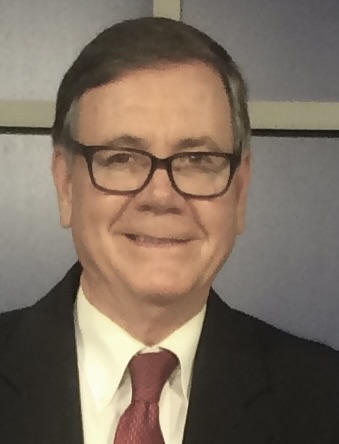
David Hampton Credit: Courtesy photo
The model of media with a staff of opinion writers — independent from news —has faded mostly out of financial pressures which have impacted all media. With limited staff, writing editorials and columns gets a lower priority. Sadly, the hyper polarization of today’s politics also contributes to the reluctance to publish opinions that might be controversial or may not follow the politically popular herd at the time.
Now, more than ever, we need strong opinion writing not only to help sort through complex issues, but also to provide voices of reason during a time when politics has so devolved into angry name-calling, misinformation and exercises in exploiting fear and prejudices to achieve political ends.
It is important for responsible commentary to focus on our local issues. Part of the problem with the decline in local newspapers is the decline of local commentary. That lack of local news and opinion pieces, according to studies, actually contributes to political polarization as people watch national news concentrating on the fight of the day with partisans screaming at each other. The lack of local commentary writing with strong engagement from readers is damaging to public policymaking.
Thankfully in Mississippi we still have strong local newspapers and media organizations with editors and publishers who know the importance of providing local commentary to provide leadership on community issues. Sadly, just not enough and not consistently.
The 2025 legislative session just ended where a wide variety of important, even critical issues facing the state were discussed. With Mississippi’s Constitution, the Legislature is the most powerful policy setting entity. It is not to be ignored. What those 174 members at the Capitol do will affect your life. The legislative session is a time when the public not only needs to pay close attention, but also be engaged.
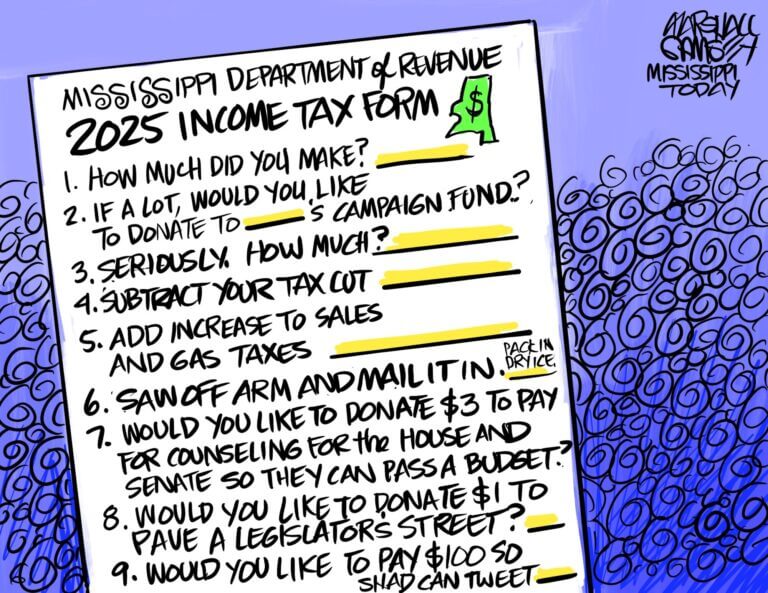
The Legislature is a world unto itself during a session when lawmakers in the close quarters of the Capitol become their own sounding boards with information provided by special interest groups and business lobbyists. This is not to criticize legislators; most are just everyday folks trying to do their best with what they know. But they can tend to live in a bubble where priorities can easily become skewed by the latest political fad. (For example, the tax cut proposal that passed during the just completed session.)
Good policymaking must include thoughtful, fact-based examination that can be provided by independent observers who are not bound by any special interests and whose intentions are only the public good. Good policy making comes from public discussion from informed nonpartisan voices. However, too often today published and posted commentary on public policy comes from special interest groups with direct financial and political interests. That is not the same as an independent editorialist offering viewpoints with engagement by the public in addition to those interests.
It is important to have independent, responsible informed commentary that is not afraid to oppose the politically popular waves. I kept a quote on my desk throughout the years to remind me of this. “What is popular is not always right; what is right is not always popular.” Independent editorialists and commentators are needed more than ever today as we see government actions where facts are ignored and dissent is punished.
At some point, you just need someone to call the BS — balderdash stuff — and talk about the complex issues we face based on facts —with reason, logic and good will — to help us find the best way forward.
David Hampton is former editorial director of the Clarion Ledger, who retired after a 36-year career with Mississippi newspapers. He is winner of several journalism awards for editorial and column writing and is a member of the Mississippi Press Association Hall of Fame.