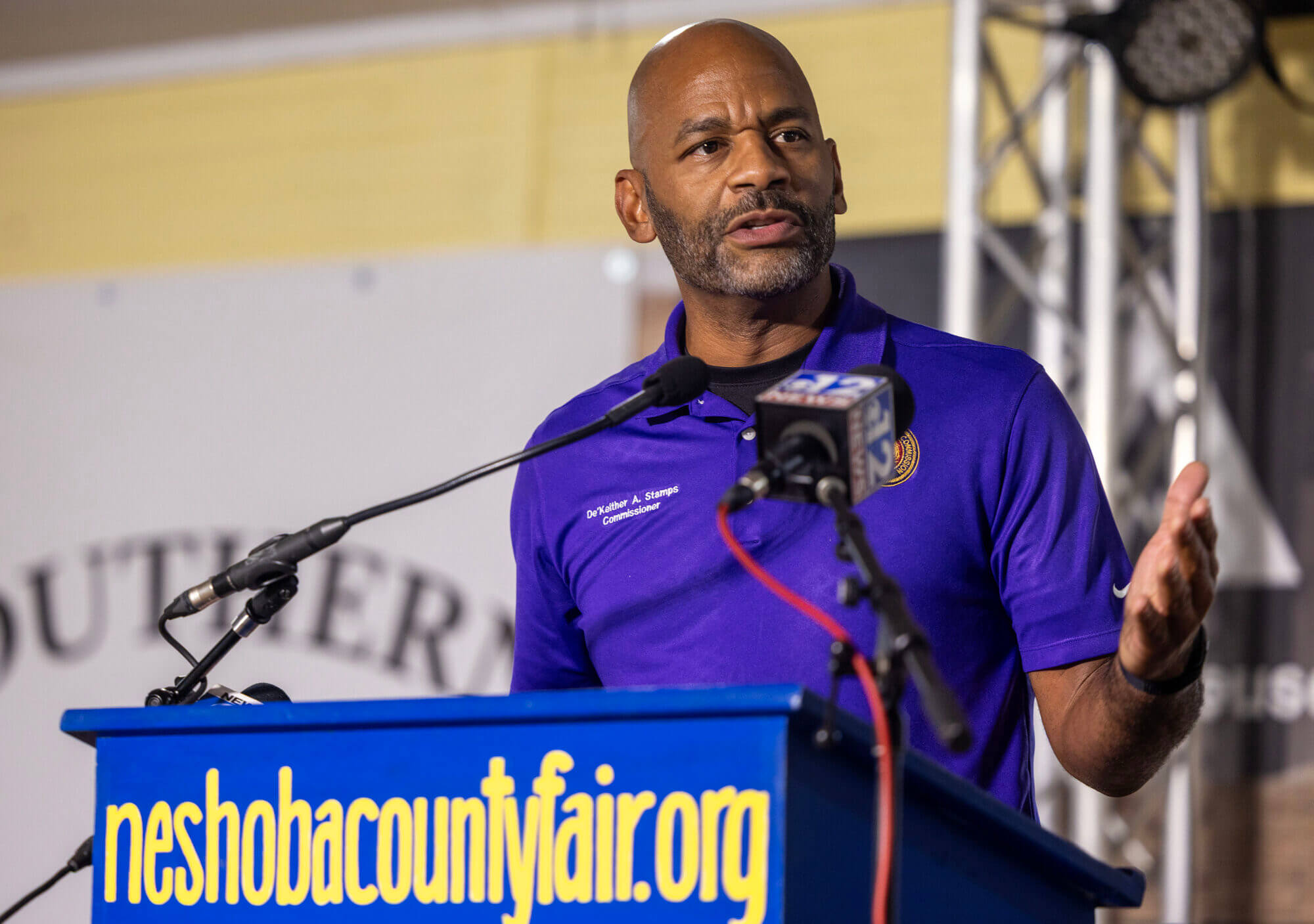
The lone Democrat on the Mississippi Public Service Commission is looking to spur momentum for allowing SNAP benefits to go toward water utility bills. But the other two members of the PSC, both Republicans, rejected during a meeting Tuesday a resolution to support a change to state policy that he said would be the first of its kind.
Central District Public Service Commissioner De’Keither Stamps, who announced the initiative over the weekend, said he will continue to advocate for the idea, including with a letter to Gov. Tate Reeves.
“There are a lot of people who want to put more money into our (water) systems, but how about we just use the money we already receive?” Stamps asked at Tuesday’s meeting, arguing that the added revenue for water systems would help prevent rate increases and keep bills affordable for customers. “People should be able to pay for the water that comes to their house, no matter the delivery system.”
The commissioner reasoned that SNAP recipients are already using those benefits to buy bottled water, so the state should allow that money to support Mississippi’s public utilities, many of which are struggling to stay afloat financially.
SNAP is a federal assistance program to help low-income families afford food and is operated at the state level through the Mississippi Department of Human Services.
Even with state support, the idea would require federal approval, Stamps acknowledged. But the commissioner said officials he’s heard from around the country back the proposal, and Mississippi should be the place to spearhead it.
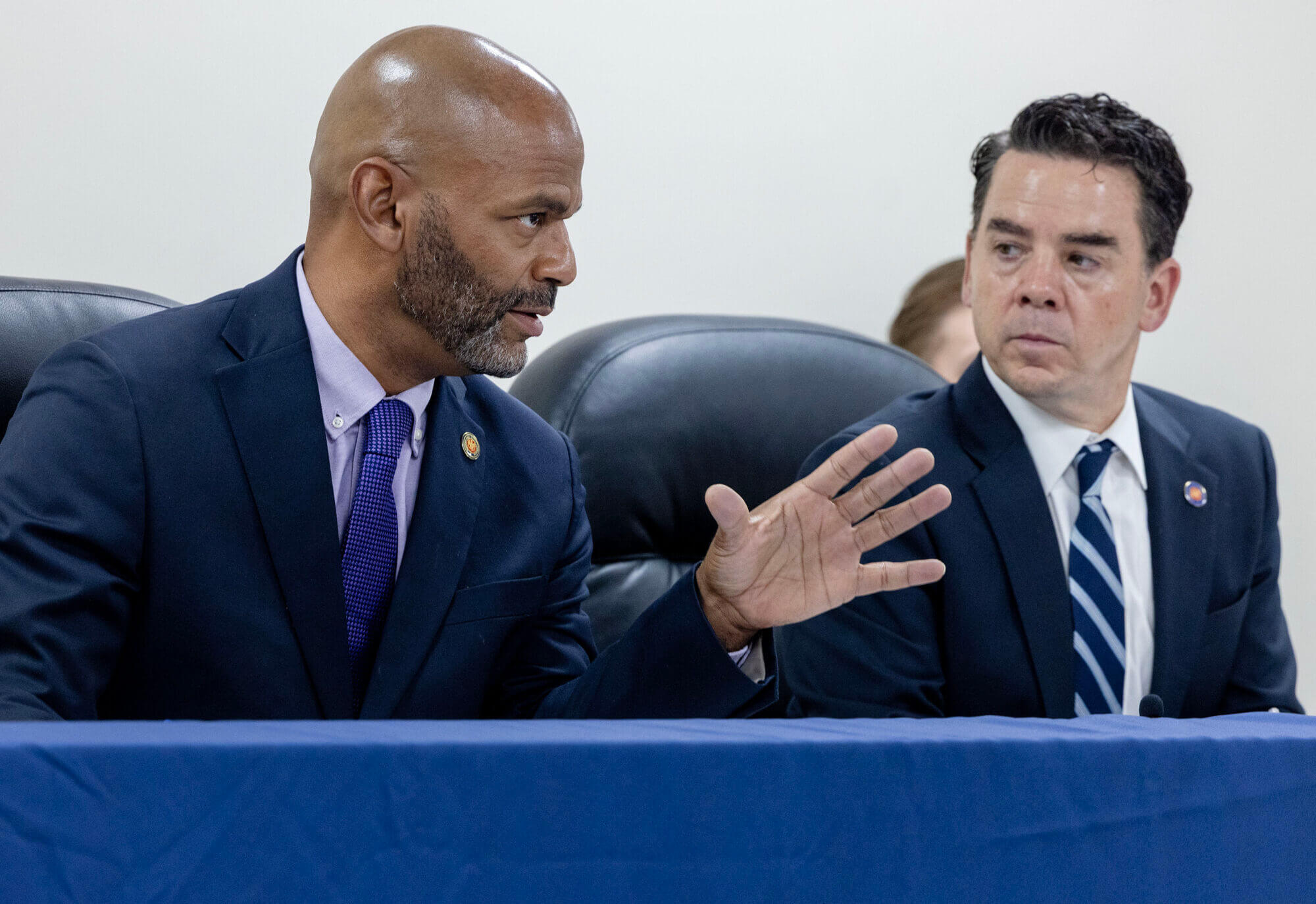
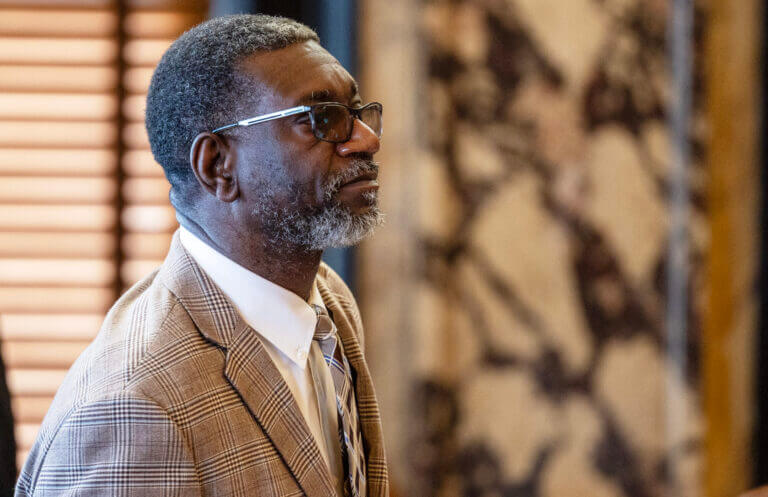
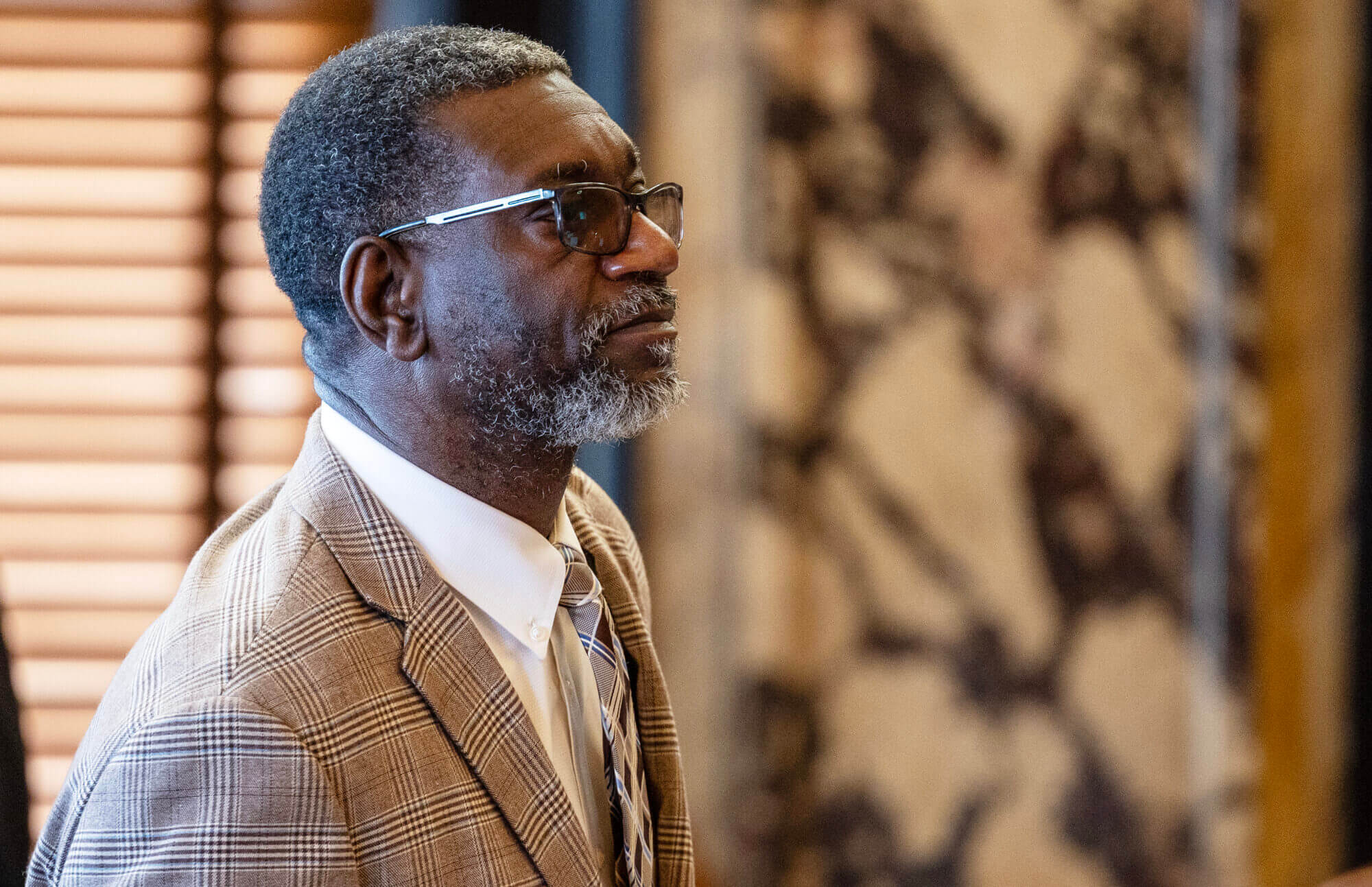
Central District Commissioner De’Keither Stamps, left, and Northern District Commissioner Chris Brown address issues with the Holly Springs Utility Department during a Mississippi Public Service Commission hearing at the municipal court in New Albany, Miss., on Thursday, Sept. 4, 2025. Credit: Eric Shelton/Mississippi Today
“We don’t have to follow Washington, D.C., all the time,” he said, later comparing it to when states created their own laws around abortion and marijuana. “We can spur them into action. If we do this as a state, I don’t believe the federal government is going to come after Mississippi for allowing people who can’t afford a water bill an alternative way to pay.”
Mark Jones, MDHS’ chief communications officer, confirmed to Mississippi Today that such a change in state policy wouldn’t comply with federal law. There is a set list of items allowed to be purchased through SNAP, such as fruits, vegetables, meat and dairy products, Jones explained.
After the COVID-19 pandemic, federal lawmakers created a temporary program, Low Income Household Water Assistance Program, that filled a similar need helping families pay their water utility bills. But that program expired in 2022, and efforts to reestablish the program since then have stalled in Congress.
After Stamps advocated for a resolution supporting the proposal at Tuesday’s meeting, neither Southern District Public Service Commissioner Wayne Carr nor Northern District Public Service Commissioner Chris Brown offered any comment, and the item failed.
“We’re going to keep pushing this issue until it’s done,” Stamps said in an interview after the meeting. “We’re not going to stop because people don’t see it.”
A massive fire broke out at Howard Industries in Laurel on Monday, forcing employees to evacuate.
According to a press release from the city of Laurel, the fire began at an outdoor paint booth and spread to adjacent equipment, causing multiple fires at once.
The Laurel Fire Department was the first on the scene. Laurel firefighters received help from multiple city and county fire departments, including the Ellisville and Collins departments, according to the news release.
No information has been released on possible injuries, and the fire’s cause is undetermined. The fire broke out Monday afternoon and was under control by later that evening, according to reports
Howard Industries, which is based in Laurel and one of the area’s leading employers, is a manufacturer of electrical distribution transformers and technology products.
The large fire could be seen for miles. Smoke from fire at Howard’s manufacturing plant in south Laurel could be seen in Hattiesburg, about 30 miles away, according to the Hattiesburg American newspaper. Images of the large fire were posted on various social media accounts.
“The Laurel Fire Department expresses its appreciation to all departments that assisted in the operation,” the statement read.
College sports has gone so far off the rails I don’t know whether to laugh or cry.
I prefer to laugh – and I do, each time a coach, athletic director or president at a power conference school talks about their “student-athletes” as if they are anything other than sports mercenaries.
Rick Cleveland
Even when a school or a conference tries to draw a line in the sand – as the Southeastern Conference has tried to do with LSU signing football players right out of NFL camps – some judge in some court says, “You can’t do that.”
It’s a free-for-all in big-time college athletics. No rules, no scruples, no nothing. And, yes, LSU coach Lane Kiffin is the poster child for all the madness. I would call Kiffin the Snidely Whiplash of college athletics, except for the fact that even Snidely, for all his evil ways in the Rocky and Bullwinkle show, occasionally displayed rare moments of self-awareness and shame. Not Kiffin.
Where will higher education finally draw the line? How crazy is it? Let us count the ways:
At Ole Miss, the quarterback makes more than five times the salary of the university’s chancellor.
Many weekend starting pitchers in SEC baseball – traditionally, a non-revenue sport – reportedly make $250,000 or more per year. The salary for Mississippi’s governor is $160,000 a year.
Josh Hubbard, the face of Mississippi State’s basketball program, which won five of 18 SEC games last season, makes more money in a year than Mississippi’s governor, lieutenant governor, secretary of state, and state auditor combined. And, yes, Hubbard scored 22 points per game last season, second in the SEC, so you could argue he had a better year than all those others.
The craziness of college sports doesn’t stop at player compensation. In the Big 10 Conference, which, by the way, now includes 18 universities, teams now travel nearly 2,500 miles to play conference games. The flight from Los Angeles (UCLA and USC) to Piscataway, New Jersey, (Rutgers) takes more than five hours. If they still bused to games, it would be 40 hours nonstop. That’s a long way to go for such an unnatural rivalry.
It’s not just men’s sports either. At LSU, the women’s basketball roster continues to evolve. In strange ways. Center Kate Koval, from Ukraine, is leaving the program, following the signing of 17-year-old Russian professional Anna Minaeva. LSU coach Kim Mulkey said she believed the two could be teammates and even help end the war between Ukraine and Russia, which has led to the deaths of approximately 150,000 Ukraine soldiers and 17,000 civilians. Koval, whose father serves in the Ukraine military, didn’t see it that way.
We could go on and on and on. And on.…
But here we are. The college football season has already begun with the first full schedule of games coming up this this weekend. There are some good ones, too. Clemson plays at LSU Saturday night in matchup of ranked teams. Louisville plays Ole Miss in Nashville on Sunday night in another high-profile match of ranked teams. We are little more than two weeks away from the long-awaited Sept. 19 match of LSU and Ole Miss at Oxford. Who the heck knows who will be eligible for that one.
Meanwhile, published reports from reputable sources say 15 of the 16 SEC CEOs are considering suspending or even possibly expelling LSU from the league over the signing of professional football players. Never mind that nearly every SEC football player is, by definition, a professional. They are all being paid to play, and a few are making millions.
Normally, I would be uber-excited about the upcoming weekend and all that’s to come later in the fall. But the current state of big-time college athletics, no longer amateur sports in any way, shape or form, has dimmed my enthusiasm considerably. And I’ve got to wonder how many others, passionate about college sports for decades, feel the same way.
Amid temperatures that have hit triple digits, many people who are incarcerated at the South Mississippi Correctional Institution are without air conditioning – heat relief the Department of Corrections has added to other prisons in recent years.
Since mid June, outdoor temperatures in Leakesville, where the 3,082-bed facility is located, remained above 80 degrees – often reaching the 90s and even into the 100s. With humidity and the prison’s metal and steel construction factored in, temperature indoors can feel over 100 degrees even in the mid-80s.
While parts of the Greene County prison are air conditioned, officials say money is the reason why it hasn’t been installed both throughout the facility and the state prison system. The department estimates it would cost $45.5 million to complete the project – a years-long objective of Mississippi Corrections Commissioner Burl Cain.
“The department welcomes any funding that the Legislature would provide the agency for air installation,” MDOC said Wednesday in an emailed response to Mississippi Today.
That answer wasn’t reassuring for Tammy Knesel, whose loved one at SMCI often goes to sleep early in the night and wakes up in the early morning to shower to escape the heat.
Two weeks ago, she said she remembers seeing a story about how the Hattiesburg Zoo – located about an hour east from the prison – took steps during a heat wave to make sure its animals and staff had access to air conditioning, fans, misters and pools of water.
But she said similar care did not happen for the people incarcerated at SMCI.
“They did nothing for them, nothing,” Knesel said about the prison’s response during the heat wave. “ … All they do is sit there and drip with sweat.”
Fans are used in prison areas without air conditioning, and inmates receive ice and Gatorade along with water, MDOC said in its statement.
Knesel said her loved one’s dormitory housing unit doesn’t have air conditioning or a fan. Knesel said he told her that some prisoners buy personal fans from the commissary and clip them to their beds. She said he did not want to be identified for safety concerns.
Her loved one has been in different housing units at SMCI that are air conditioned. Knesel said he also has access to it in a classroom.
Extreme heat can lead to potentially fatal conditions, such as dehydration and heat stroke. Those with chronic conditions, such as heart disease, mental illness and poor blood circulation, are vulnerable to extreme heat, according to the Centers for Disease Control and Prevention. Some medications and old age can also affect a person’s ability to regulate body temperature.
Air conditioning not only can help prevent heat illness, but it also potentially can decrease incidents of violence in prisons, which research has suggested increases with heat.
No federal mandate requires state prisons to have air conditioning, leaving states to decide whether to offer it. At least a dozen Southern states remain without it, and most state prison systems aren’t fully air conditioned.
Ongoing lawsuits have argued that extreme heat in prison is a constitutional violation amounting to cruel and unusual punishment.
Mississippi prison advocate Mitzi Magleby said the fact SMCI and parts of other state prisons remain without air conditioning is inexcusable.
“I think that promise was gone with the wind,” she said, referring to Cain’s air-conditioning objective.
In 2022, Cain secured funding to start adding air conditioning to the Mississippi State Penitentiary at Parchman. He expected the Central Mississippi Correctional Facility and other prisons to follow.
“It just takes a good while to get it all done,” he said in an April 2023 interview with Missisisppi Today. “That’s just the way the funding is.”
Cain said he was motivated to add air conditioning as a way to address constitutional violations noted in a 2022 U.S. Department of Justice report, which included problems with extreme heat inside Parchman. A later report based on the DOJ’s investigation of SMCI, CMCF and the Wilkinson County Correctional Facility found similar issues with heat.
The Justice Department recommended proper temperature regulation and sanitary conditions in solitaryconfinement.
To date, air conditioning has come to all of the state’s prisons, but not throughout entire facilities, the department said in its email.
Walnut Grove Correctional Facility, the Mississippi Correctional Institute for Women at CMCF and Delta Correctional Facility are air conditioned. The Marshall County Correctional Facility in Holly Springs has all but one of its buildings air conditioned. All of Parchman is air conditioned, with the exception of Unit 29, a maximum security unit where the worst of the worst are housed.
Management & Training Corp., a private contractor, operates two other prisons for the state. East Mississippi Correctional Facility in Meridian has air conditioning in each housing unit and Wilkinson County Correctional Facility in Woodville has it everywhere except in the gymnasium, said Emily Lawhead, a spokesperson for MTC.
Similar to the state-run facilities, EMCF and Wilkinson Correctional provide fans, water and ice inside the prisons for prisoners and staff, Lawhead said.
Although Knesel’s loved one has moments where he can feel air conditioning at SMCI, she said most of his days are spent in bed in the dorm.
“I don’t know how he’s kept himself sane,” Knesel said about staying in the heat.
Department of Public Safety Commissioner Sean Tindell has been overseeing the state Highway Patrol, Bureaus of investigations and narcotics, Capitol Police, drivers services, forensic lab and medical examiners, and many other law-enforcement divisions. Before that he was a state Court of Appeals Judge, state senator and a prosecutor on the Coast. He said his experience has prepared him to serve as the next state attorney general.
Attorneys argued in a federal appeals court on Monday whether a state law that bans diversity, equity and inclusion programs in Mississippi public schools and universities should be enforced and whether a new lower-court judge should oversee the case.
Attorneys for a group of students, parents and educators believe the law violates their First Amendment rights, while Mississippi Attorney General Lynn Fitch’s office contends state government has the right to regulate educational content in public schools.
The state is asking for a new judge, in part, because U.S. District Judge Henry T. Wingate’s staff last year used artificial intelligence to write a flawed order in the case, which drew national scrutiny, including from the U.S. Senate Judiciary Committee.
Wingate granted a preliminary injunction in the case a year ago, after plaintiffs’ attorneys argued that the law was dangerously vague and violated the constitutional right to free speech.
Fitch’s office argued that the plaintiffs’ interpretation of the law was “overwrought.” Wingate sided with the plaintiffs. The injunction prevents the law from being applied until there’s a final ruling in the case. Fitch’s office appealed that injunction.
Anthony Shults, the state deputy solicitor general, told the three-judge appeals panel that Wingate’s preliminary injunction should be overturned because the restrictions in the DEI law only apply to state institutions and educators – not to students.
He argued that the state, to some degree, has a legal right to regulate the material that public educators teach students. If not, he said the state, for example, would not be able to prevent an educator from teaching something incorrect like “the Holocaust didn’t happen.”
Rob McDuff, the attorney for the educators and students, argued that the law is incredibly vague and overbroad and would cause mass chaos in Mississippi’s public school system.
“What does ‘engagement’ mean?” McDuff said. “Does it really mean you can not discuss issues related to race, sex, color, gender, identity, sexual orientation and national origin even though some of those issues have been part of classes for years, some for decades?”
Judge Catharina Haynes, a President George W. Bush appointee, asked if the two sides could somehow reach a compromise to dismiss the litigation. Shults said he found that unlikely, while McDuff said he would be willing to negotiate.
The attorneys also disagreed whether the appellate court should assign the litigation to a new district judge after Wingate admitted that someone on his staff used artificial intelligence to craft an order.
Last year, after an inquiry from U.S. Senate Judiciary Committee Chairman Chuck Grassley, Wingate admitted that his law clerk used an AI program to write an order in the case. It named defendants and plaintiffs who weren’t parties to the case, misquoted state law and referenced a nonexistent case.
Wingate, a President Ronald Reagan-appointed judge, replaced the order with a corrected version after the Mississippi Attorney General’s office raised concerns and wiped the flawed order from the docket. Initially, he refused to explain the errors and referred to them as “clerical” mistakes.
Though Wingate told Grassley in a letter that he’s taking steps to ensure the mistake isn’t repeated, the U.S. 5th Circuit Court of Appeals’ clerk sent a letter to attorneys in the DEI case on Aug. 21, telling them to prepare to argue whether the case should be transferred to another district judge over the AI blunder.
As AI usage rises in the legal profession, more lawyers are being punished by judges across the country for “hallucinations” or other mistakes caused by the systems. But there’s little accountability when the roles are reversed.
Judge Jerry Smith, appointed by Reagan, asked if McDuff thought it was a “pretty serious matter” that Wingate’s office relied on incorrect information from AI to craft the order.
“It is serious, but it’s not as if AI told Judge Wingate to grant the (Temporary Restraining Order),” McDuff responded.
Shults, though, said he believed a new lower-court judge should take over the case.
The three-judge appellate panel is expected to issue a ruling in the coming weeks. If it reverses Wingate’s injunction, it would likely mean that the Mississippi law can go into effect.
The rest of the case is still playing out in the lower court. Both sides are in the evidence collection phase, or discovery. After discovery, Wingate will conduct a bench trial, where he will issue a final ruling.
Mississippi Today Ideas is a platform for thoughtful Mississippians to share their ideas about our state’s past, present and future. Opinions expressed in guest essays are the author’s own and do not necessarily represent those of Mississippi Today. You canread more about the section here.
A proposed railroad merger between the Union Pacific and Norfolk Southern would concentrate an unprecedented share of U.S. freight rail into a single system — and Mississippi’s farmers, manufacturers and ports would feel the impact.
As a state senator, I believe in free markets. In fact, I’ve built my career on this principle. But free markets only work when competitive balance allows small businesses to thrive, industries to grow and hire and consumers to benefit. A merger between the Union Pacific and Norfolk Southern would shift that balance in the wrong direction, and that’s why I oppose the proposed $85 billion merger.
If approved by the federal Surface Transportation Board, this transaction would create the largest railroad in American history, with a single company controlling roughly 40% of all U.S. freight rail traffic. In an industry where four carriers already handle nearly 90% of all freight, that’s not a merger. It’’s the last step toward a monopoly. To be clear, the people who will pay the price aren’t the shareholders in Omaha or Atlanta, but instead farmers, mill workers and small businesses right here in Mississippi.
Let me tell you what I believe is at stake for our state.
Mississippi’s agricultural producers move billions of dollars of soybeans, corn and cotton by rail every year. Those farmers operate on margins so thin that even modest rate increases can wipe out a season’s profit, especially amid ongoing shifts in global trade dynamics.
The American Farm Bureau Federation has warned that this merger would reduce what little bargaining leverage shippers still have, leaving farm-product customers who can’t easily switch to another mode of transportation increasingly captive to a single carrier’s pricing decisions. Rail rates for corn, soybeans, wheat and fertilizer have already risen significantly over the past decade. Further consolidation isn’t going to reverse that trend.
The same threat hangs over Mississippi’s auto industry. Our state has become a major manufacturing hub for vehicle production, with Nissan in Canton, Toyota in Blue Springs and PACCAR in Columbus helping drive roughly $4 billion and nearly 600,000 vehicles a year out of Mississippi over the last three years. Those plants and their suppliers rely on dependable, competitively priced freight service to move parts in and finished vehicles out.
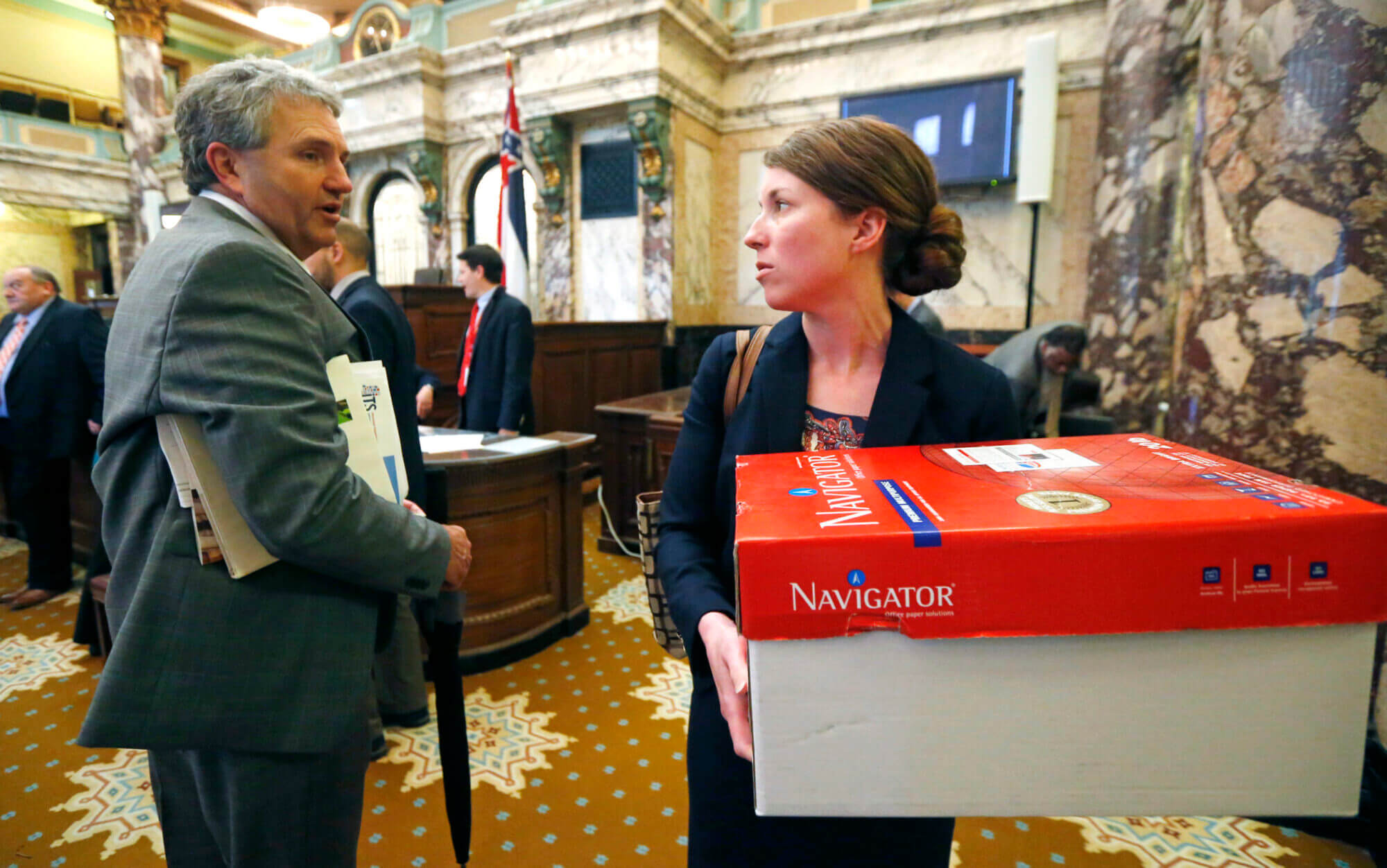
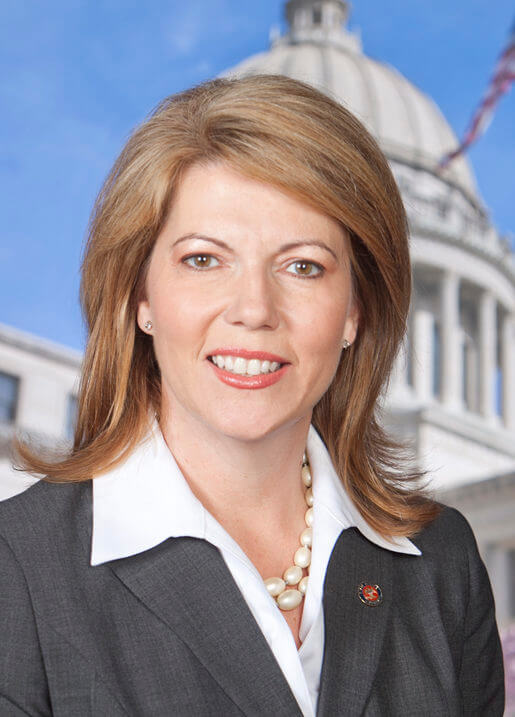
Sen. Charles Younger, R-Columbus, left, speaks with former state Sen. Jenifer Branning, R-Philadelphia, who is now a Mississippi Supreme Court justice. Credit: AP Photo/Rogelio V. Solis
If this merger reduces competition and gives one carrier more power over rates, routing and service, Mississippi automakers will face higher shipping costs, greater delays, and less leverage when they need to get products to dealers and customers on time. That is exactly the kind of supply-chain risk a manufacturing state like ours cannot afford.
Likewise, the port of Pascagoula and our connections to the broader Gulf Coast port network depend on competitive rail access to stay viable. Norfolk Southern currently provides Mississippi shippers an alternative check on pricing and service quality. Remove that alternative through this merger, and you remove the competitive pressure that helps keep shipping costs in check at our ports. When competition fades at a port, cargo doesn’t stay put — it moves elsewhere.
I’m not alone in my concerns.
Conservative commentator Ken Blackwell, a chair at the America First Policy Institute, drew the connection plainly: when competition disappears, what follows is stagnation, higher costs and diminished service. “That’s what happens when competition disappears,” he wrote, “which is exactly the risk posed by the Norfolk Southern–Union Pacific merger.”
This merger was not driven by a clear need to improve service or expand capacity. Instead, it reflects a financially driven consolidation that risks prioritizing returns over reliability and competition. I support healthy markets and strong investment, but those gains should not come at the expense of working Mississippians, small businesses and the industries that keep our state moving.
Unlike most issues, the American people are united in opposition to this deal. A recent national poll found that 71% of Americans oppose this merger. That number holds across party lines. Free markets thrive on competition. Concentrated power works against the people who have the least ability to push back.
Mississippi’s farmers, manufacturers and port communities cannot afford to be collateral damage in a Wall Street transaction. I’m urging the Surface Transportation Board to reject this application and calling on our congressional delegation to make sure Mississippi’s voice is heard loud and clear in Washington.
Charles “Chuck” Younger, a Columbus Republican, has represented District 17, the Lowndes County area, in the Mississippi Senate since 2014. He is previous chair of the Agriculture Committee and currently chairs the Highways and Transportation Committee in the Mississippi Senate.
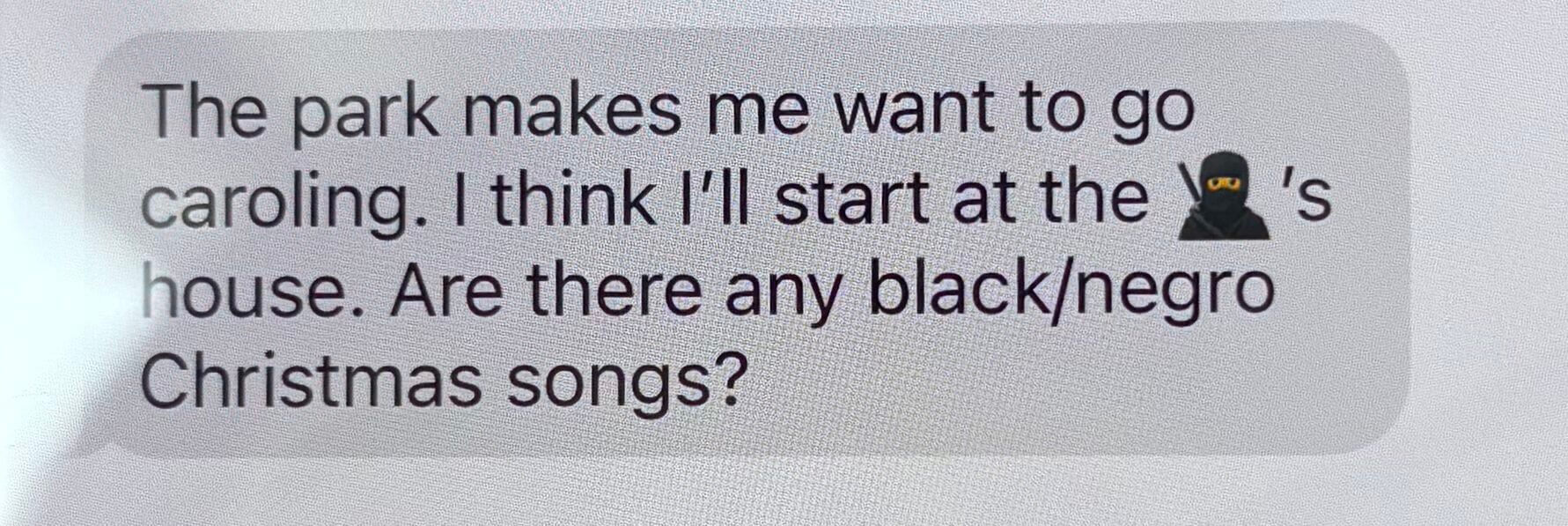
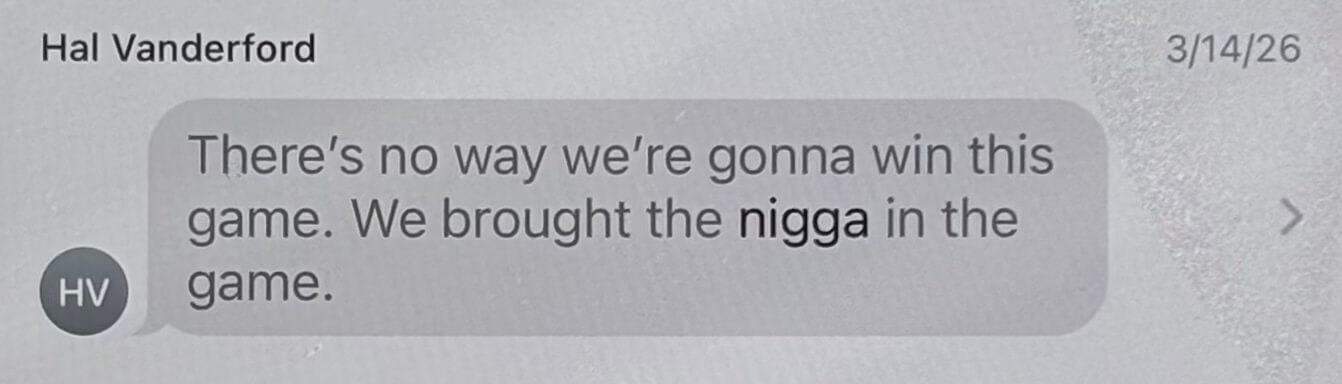
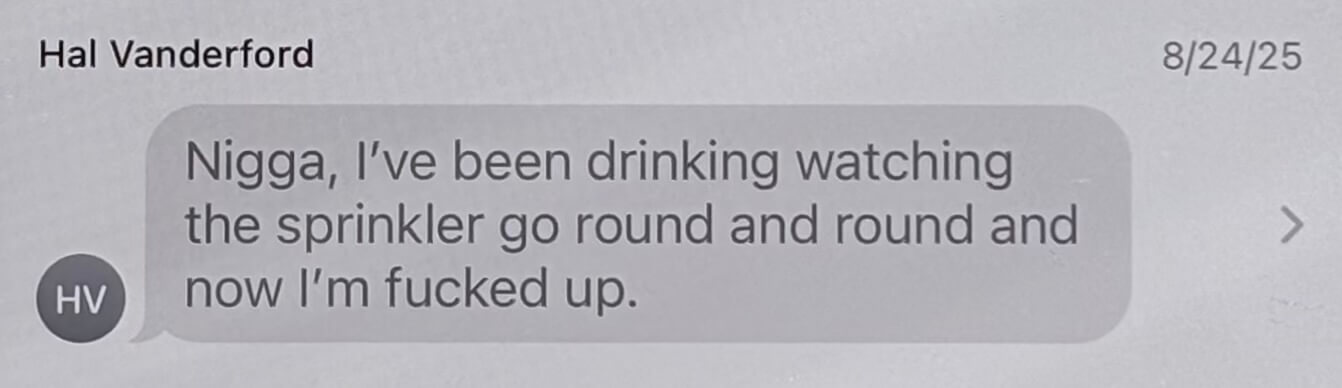
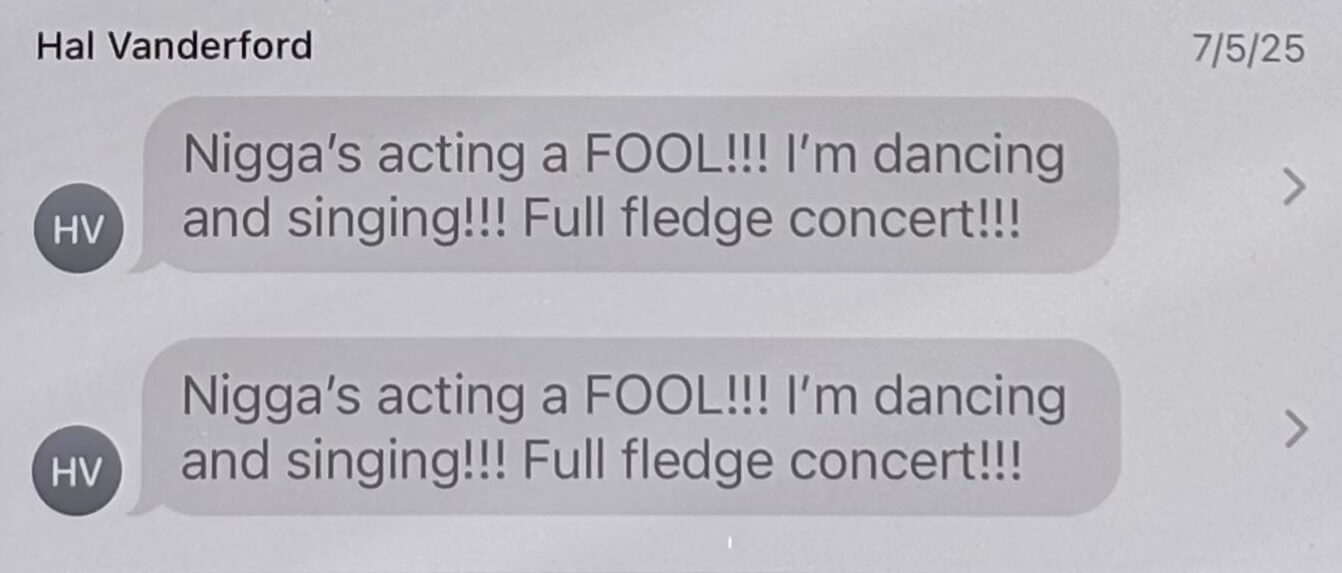
Ten days ago, as our team at Mississippi Today, Verite News and The New York Times reported on the Senatobia Police Department’s fatal shooting of Kohen Wiley, a 1-year-old boy, a source came forward to share texts they said had been sent by Police Chief Harold Vanderford.
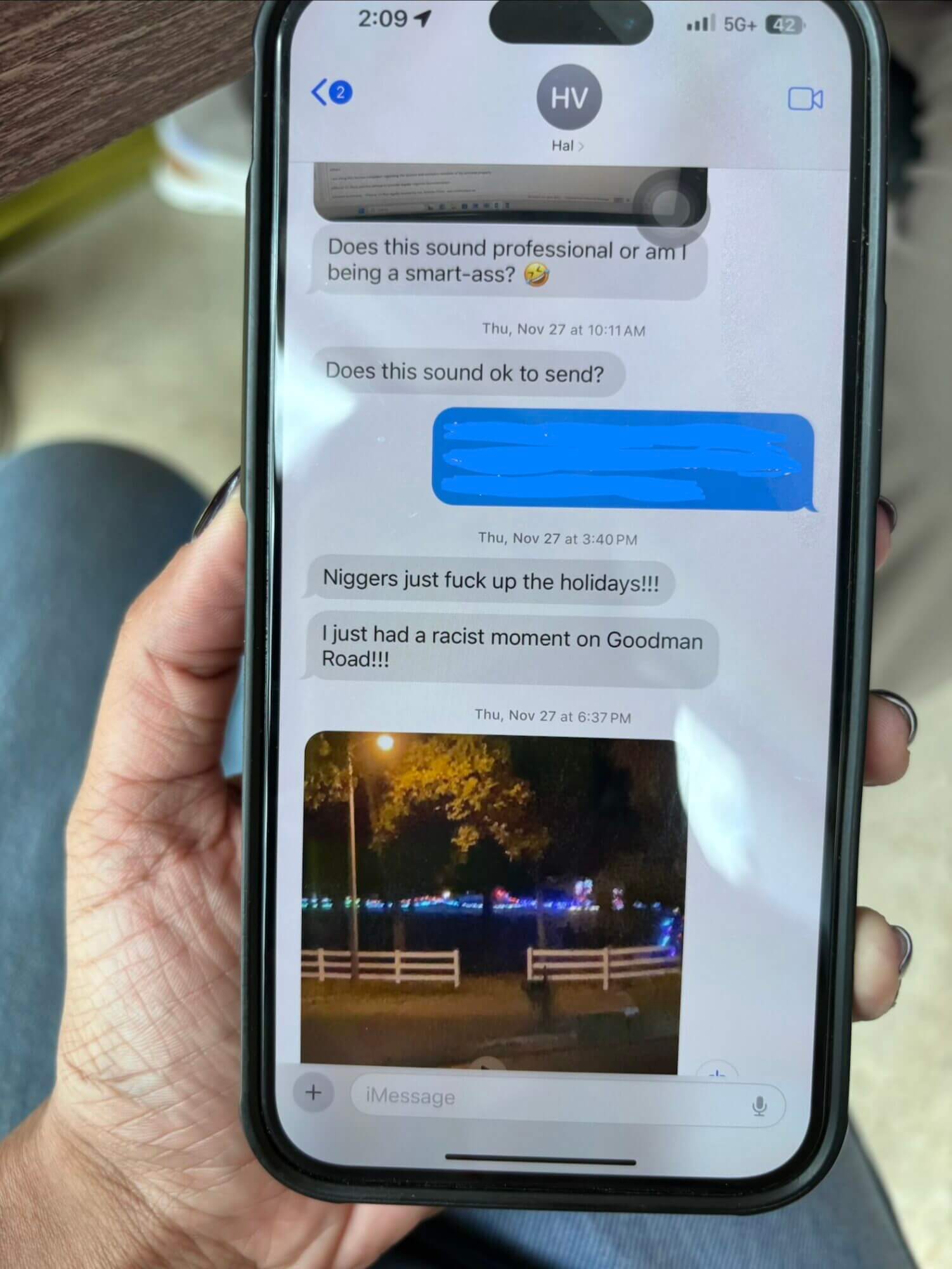
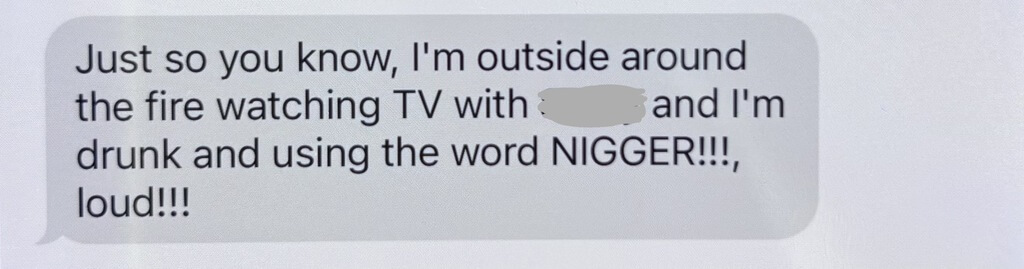
An example of one text conversation our team reported on. We scrolled through messages on our source’s phone and photographed them. That’s why there’s a glare on some of our images. We’ve hidden our source’s response in this exchange to protect their privacy. Credit: Mukta Joshi
The source, a colleague of the chief’s, said they suspected the chief would know who had given us the texts. But they agreed to let us publish the messages if we agreed not to publicly identify them.
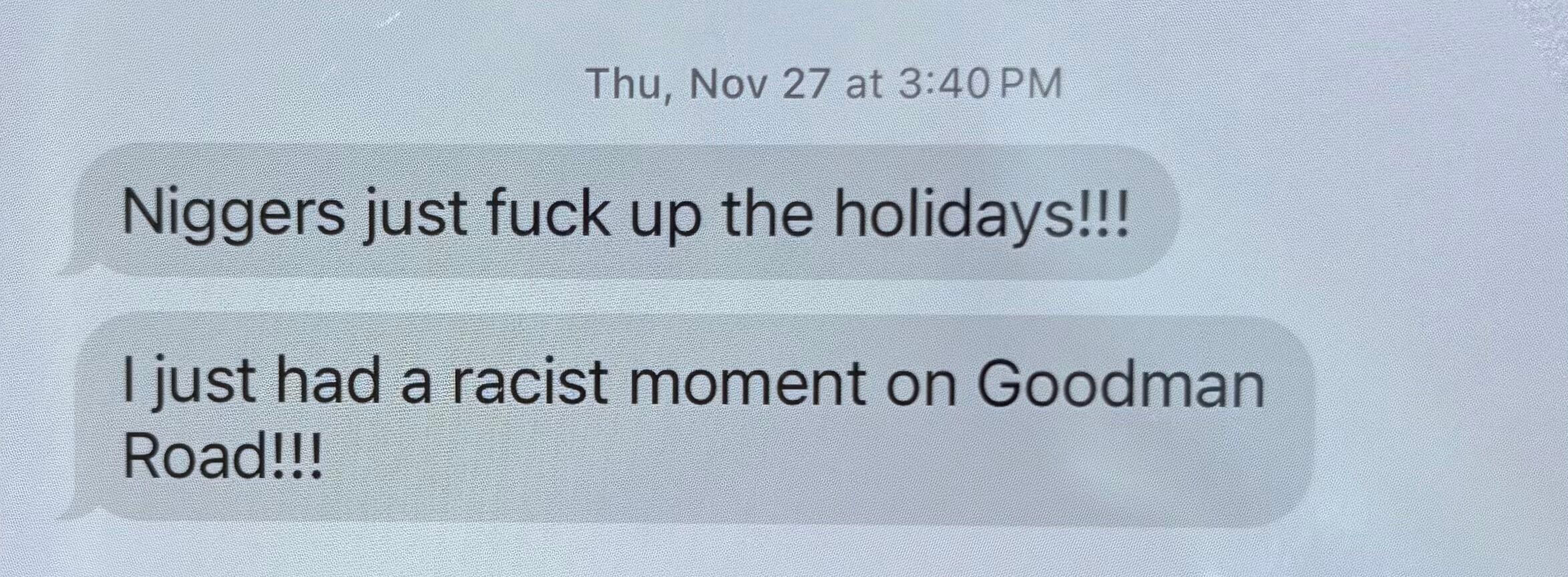
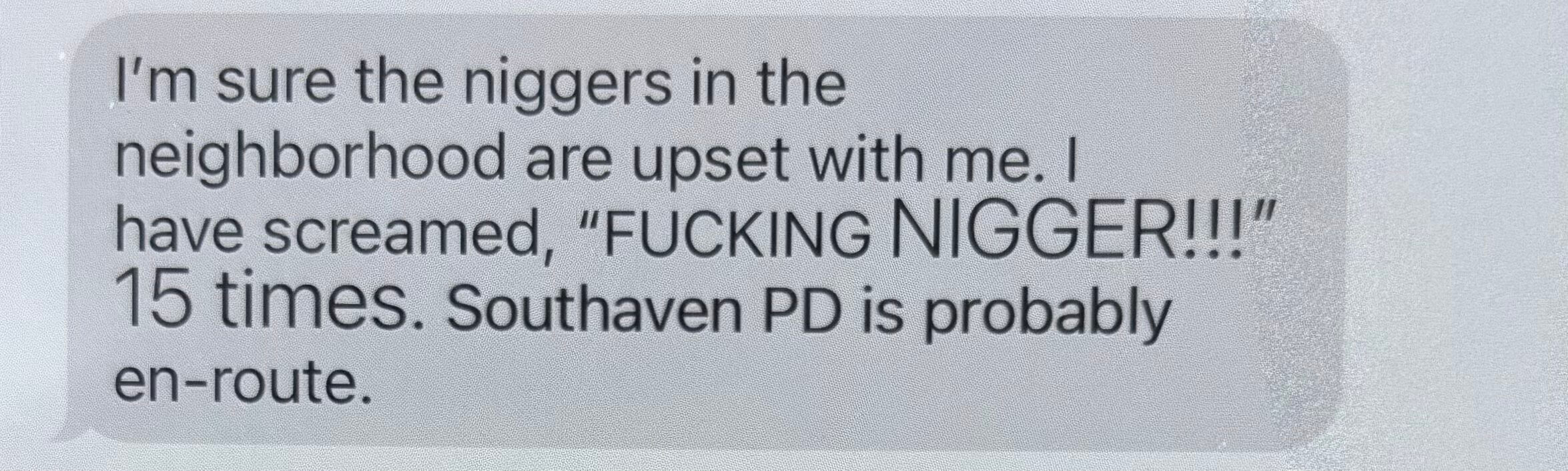
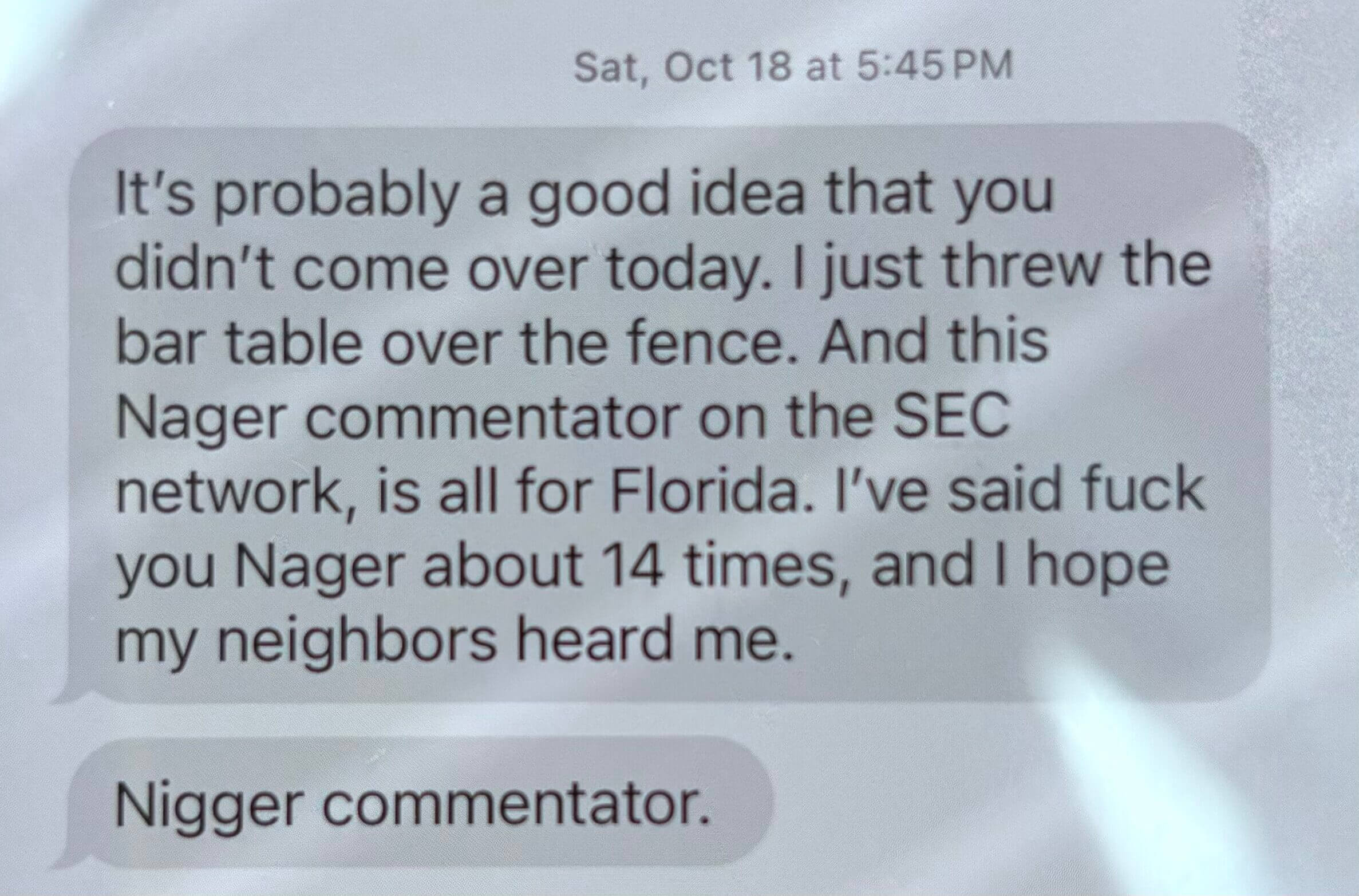
The source showed us 10 text conversations from July 2025 to April 2026. In them, Vanderford uses a racist slur more than a dozen times, spelled various ways. As we previously reported, Vanderford wrote multiple times that he had been loudly and repeatedly saying the slur, sometimes so loud that his neighbors might have heard it. In one text, he wrote that he “almost beat a nigger and white woman’s ass a few minutes ago.”
Our source said these text conversations were between them and the chief. We took a number of additional steps to verify their authenticity. Here’s why we stand behind our reporting that Vanderford sent those texts:
1. The numbers lined up.
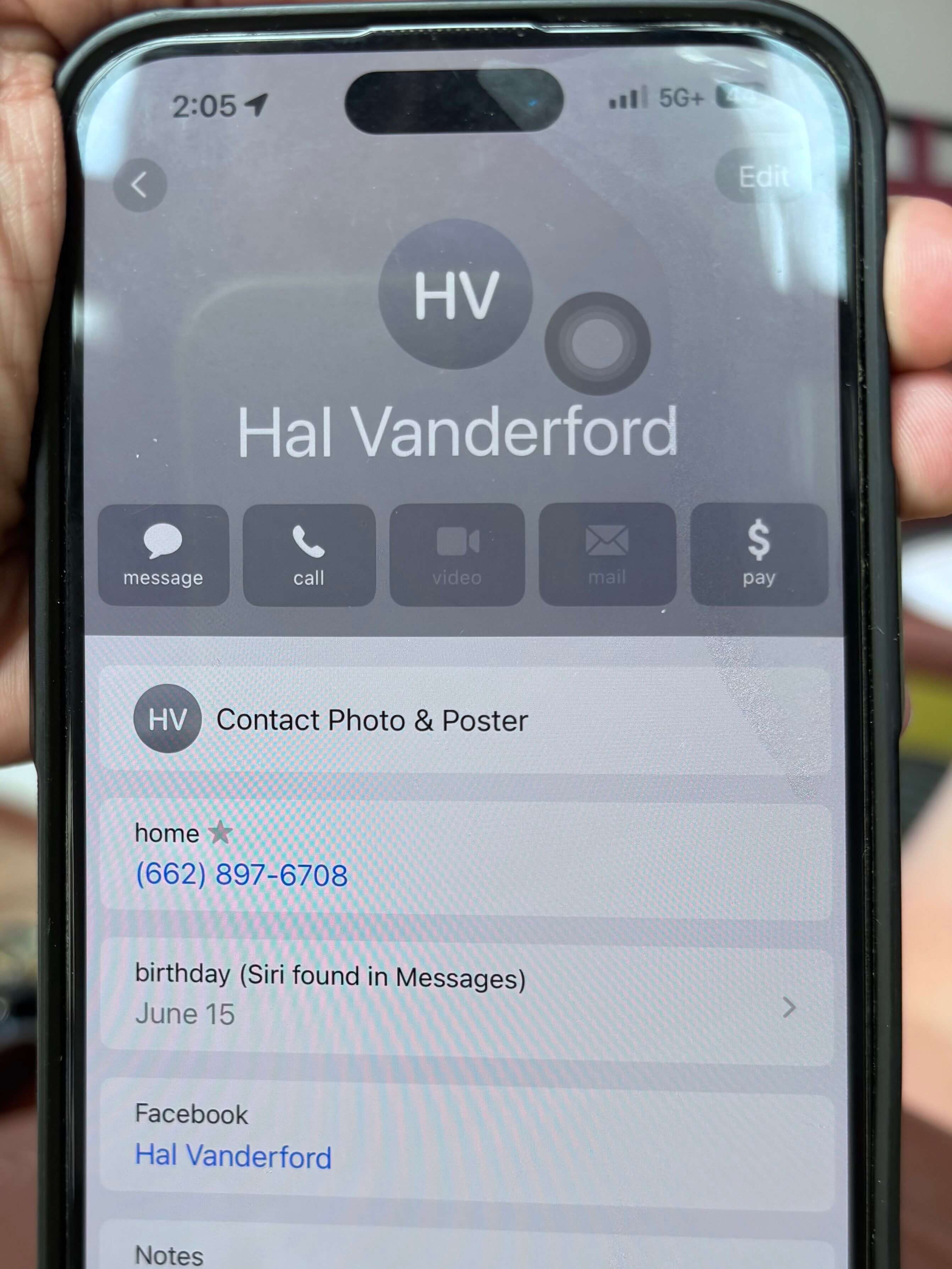
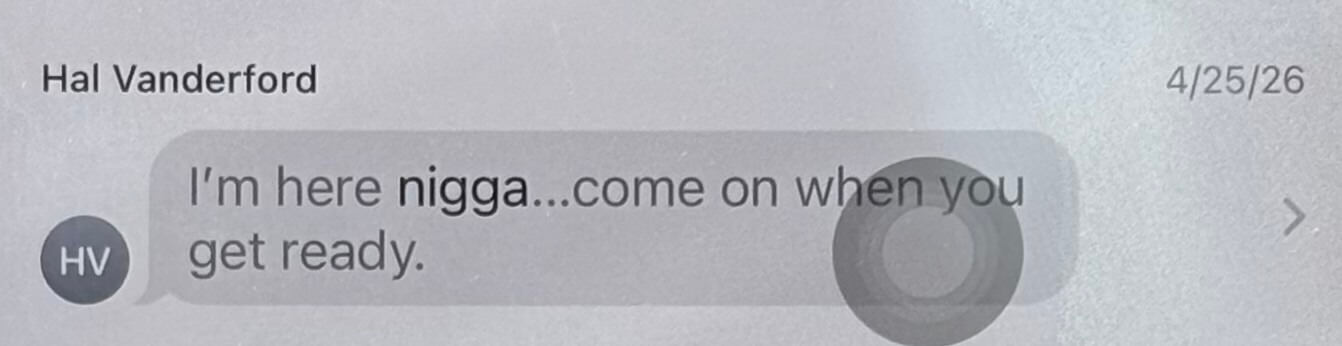
Under the contact labeled “Hal Vanderford” on our source’s phone, the number listed was 662-897-6708. We are publishing the full number in the interest of transparency.
No one answered at that number, and there was no personalized voicemail greeting. So we contacted three separate acquaintances of Vanderford’s, each of whom confirmed that the number we had matched the number they had saved for Vanderford. In the days since, that phone number has been disconnected.
We captured a photo of the phone number the text messages had come from, and noted it down. Credit: Mukta Joshi
2. We looked for context clues.
In one of the text messages, Vanderford says he’s with a woman, whose name we’re withholding to protect her privacy. Two acquaintances of the chief identified her as the chief’s girlfriend. The woman is pictured with Vanderford on her Facebook profile, too.
Another text message includes a photo of a person who the chief calls “GAY!!!” We identified that person as a employee at the department.
Vanderford appears to have sent a number of text messages while watching college sports games, and we separately learned that the chief is a Mississippi State fan.
Mississippi State’s schedules show that Vanderford was texting contemporaneously on dates when the Bulldogs were playing. On Oct. 18, Vanderford texted about a football game against Florida. Mississippi State played the Gators that day — we checked.
3. We reviewed the attached video and photos.
A message the chief sent on Thanksgiving Day includes a video attachment. The man recording the video can be heard addressing our source by name, saying, “You’re missing out.” The metadata of the video shows it was recorded two minutes before it was sent, on the same day.
We had already obtained the chief’s home address through his voter registration records and spoken to his neighbors, who confirmed he lived there.
So we compared the video he’d shared to a Google Street View image taken in February 2025 from the angle of the chief’s home. The images lined up perfectly.
At left: A screenshot from a video sent by Senatobia Police Chief Harold Vanderford on Thanksgiving Day in 2025. At right: A Google Street View image dated February 2025, captured from the angle of Vanderford’s home address.
4. We asked Chief Vanderford himself. Many times.
We first contacted Vanderford on Friday, Aug. 21, and have since made more than a dozen attempts to reach him by phone, email and notes left at his home or office, sharing the specifics of our findings, and explicitly asking for his side of the story.
As recently as Monday, we asked Vanderford and Lt. Shane Howell, a Senatobia police spokesperson, if Vanderford denies the texts came from him.
Neither have responded to our inquiries.
Below, we are publishing Vanderford’s uncensored text messages.
Editor’s note: Mississippi Today does not normally publish racist slurs, but we chose to do so in this case because the slurs themselves are central to why our team reported this story.
Sen. Juan Barnett, a three-term Democratic legislator from Heidelberg and chairman of the Senate Corrections Committee, resigned from the Legislature on Monday, Lt. Gov. Delbert Hosemann said in a statement.
It’s unclear why Barnett resigned, and he did not immediately respond to a request for comment, but he has dealt with health issues that caused him to miss several weeks of this year’s regular legislative session.
“We thank Senator Barnett for his years of service to the state of Mississippi and wish him a happy and well-deserved retirement,” Hosemann said in a statement.
Barnett took office in 2016 and has served as the chairman of the Senate Corrections Committee since 2020. He has represented portions of Forrest, Jasper and Jones counties in the Senate.
Barnett in the past pushed for earlier release and shortened sentences for many incarcerated in Mississippi prisons, despite his father being shot to death in the early 1990s while Barnett was in the Army deployed to Iraq, and the shooter receiving a relatively short sentence. Barnett said he believes in forgiveness and giving people second chances.
Barnett missed several weeks of the 2026 legislative session because of an extended illness. Gov. Tate Reeves will now have 30 days to set the date for a special election.
While he was absent from the Capitol, legislation that attempted to improve medical care in Mississippi prisons died on key deadlines. The vice chairman of the committee at the time said she let the legislation die at Barnett’s direction.
Before serving in the Legislature, Barnett was the mayor of his hometown of Heidelberg.
Mississippi Today reporter Michael Goldberg contributed to this report.
A group of Mississippi University for Women alumni and Columbus residents is asking the state’s college board to consider a prominent alumna as the institution’s next president. They’re also pressing trustees to disclose a timeline and details about how the board will conduct the leadership search.
Doris Taylor Credit: Chris Jenkins
Doris Taylor, a biotechnology researcher and scientist who graduated from the W in 1977, is the top pick for the Citizens Coalition for MUW and Mississippi School for Mathematics and Sciences.
The W is at a defining moment that “demands a leader of national standing who is also a daughter of this institution,” the coalition wrote in a letter to the college board.
That leader would be able to walk the halls of the National Institutes of Health or engage the state Legislature at the Capitol with equal authority, the coalition wrote.
MUW’s next president, the group said, should be someone “who can mobilize philanthropic capital this university has never been able to access, and who will fight for the W with the conviction that comes from having been shaped by it.”
Taylor has had distinguished faculty leadership roles at Duke University and the University of Minnesota, the coalition noted in its letter to the college board. The group also said she is a dedicated MUW foundation board of trustee director, donor and proud alumna whose knowledge of the institution and region could benefit the institution.
Taylor, founder and CEO of Organamet Bio Inc., said the coalition’s endorsement is an honor. She had expressed interest in the top job in 2018, but the appointment went to Nora Miller.
Taylor said she wants to give back to the university that shaped her career. She also said she wants to encourage other candidates who are interested in the role to apply. The more candidates vying for the role, the better options the state Institutions of Higher Learning board of trustees will have to select a strong leader, Taylor said.
“MUW deserves a president that can protect it, fund it and build it,” Taylor said. “And, whoever takes on the role, it’s a critically important opportunity to eliminate those issues that have put an excessive burden on the campus and our community.”
The MUW president search has not yet started
Credit: Gil Ford Photography
At listening sessions IHL held in April, some speakers named Sally Burchfield Doty, director of Broadband Expansion and Accessibility of Mississippi, as a potentially strong president for MUW. Doty, from the W’s class of 1988, served in the state Senate from 2012 to 2020.
Scott Tollison, MUW’s interim president, told Mississippi Today he is focusing on providing transitional leadership and has not thought about the permanent role.
Miller, who was the W’s president since 2018, retired in June. In April, the IHL board of trustees held listening sessions for MUW stakeholders to gather feedback on traits they want to see in their next leader. Since then, the college board has not announced its next steps and plans for the president search.
The IHL board is still discussing details of the search, board President Steve Cunningham told Mississippi Today. IHL board member Teresa Hubbard is chair of MUW’s search committee.
Cunningham said trustees understand the importance of keeping MUW stakeholders updated throughout the search process to ensure transparency. While the college board hasn’t announced their plans, he anticipates the search process will take around three months once it’s initiated.
“We want to ensure that alumni, community residents and other stakeholders are involved in the search process,” Cunningham said.
Coalition forms out of concern for MUW’s future
The coalition’s endorsement of Taylor was a way for stakeholders to assert their voice in the presidential search, said Keith Gaskin, former Columbus mayor and coalition member. IHL trustees’ selection of MUW’s next leader is critical to the university’s future.
The Citizens Coalition for MUW and Mississippi School for Mathematics and Sciences includes alumni and Columbus residents. The group is asking the state’s college board to consider a prominent alumna as the institution’s next president. Credit: Keith Gaskin
“It shouldn’t be about politics, favors or friendships,” Gaskin said. “It should be picking the absolute best person for MUW.”
The group’s seven members include MUW alumni and former professors, former elected officials, judges and community residents.
Gaskin said the coalition formed partly in response to recent legislative proposals and discussions that would close or merge MUW with Mississippi State University and relocate MSMS, a residential high school for gifted juniors and seniors. Betty Bryan, a parent of an MSMS student and MUW alumna, is also a member of the coalition.
Bruce Hanson, a former state representative who wrote the bill to establish MSMS, serves as the coalition’s chairman.
The merger or closure of these schools could devastate the local economy, said Martha Jo Mims, a retired MUW professor.
“We’ve had this burden for a couple years and the communication from our legislators doesn’t reassure us that they are committed to keeping these institutions in Columbus,” said Mims, who is also a coalition member. “It’s critical that our next leader recognizes the importance of these schools as the heart of our city’s economy and future.”
Jim Davidson Jr., a retired chancery court judge, said the coalition isn’t dissuading interested candidates from applying for the presidency. The group worried that IHL would announce a name before the process could even begin.
“We don’t know what IHL will do,” Davidson said. “But we want them to know that people in our community are talking about names who would make great leaders. We want to help them.”
Clarification 08/31/26: This story has been updated to reflect that Scott Tollison, interim president of the Mississippi University for Women, said he is focusing on providing transitional leadership and has not thought about the permanent role.