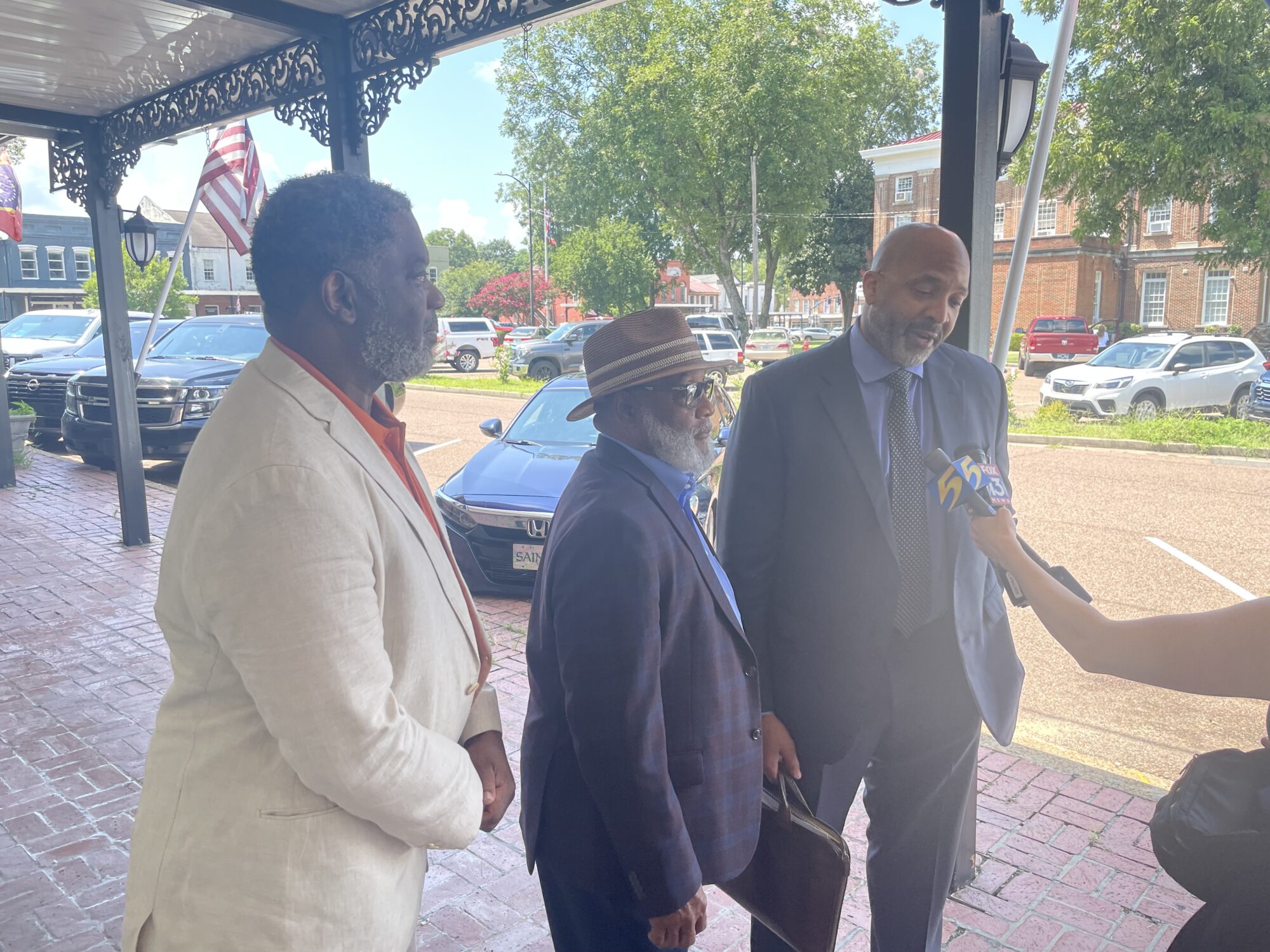
Requests by the family of Nolan Xavier Wells to preserve evidence are being mischaracterized, their attorney Ben Crump said Thursday.
Crump, a national civil rights attorney, said preservation letters were sent out to various people involved in Wells’ death investigation. He clarified that the Wells family hasn’t filed a lawsuit and said “click bait” has presented that action as more of a legal threat.
“We are on record that we want the truth, the whole truth, and nothing but the truth,” Crump said during a news conference held at the National Association for Black Journalists annual convention in Atlanta. “That is going to lead us. It is about the truth.”
Crump called on Black journalists and independent media to keep the focus on Wells and continue asking questions about his case and that of other Black men who have died under suspicious circumstances.
More than a month after Wells traveled by boat with friends to Horn Island on the Fourth of July, his parents Christine and Elmore Wonsley do not have a clear picture of why the 18-year-old did not return with them, why he stayed behind or how he died. His death remains under investigation by the Jackson County Sheriff’s Department and a cause of death hasn’t been released.
The Congressional Black Caucus has expressed similar frustration and highlighted a lack of transparency. On Monday, its members wrote a letter to U.S. Attorney General Todd Blanche and FBI Director Kash Patel to ask for a federal review of Wells’ death.
“The lack of answers thus far continues to fuel speculation and grief,” the letter states. “Neither the Wells family nor the public should be left to fill an information vacuum with speculation.”
Blanche and Patel were asked to respond within a week, U.S. Rep. Lucy McBath of Georgia said at the Thursday news conference.
Jackson County District Attorney Angel Myers McIlrath, who has met with the family, has said results of the investigation and the state’s autopsy results wouldn’t be released until after Wells’ case is presented to a grand jury.
The Rev. Al Sharpton, who also spoke at Thursday’s news conference, said Wells’ family continues to be attacked and threatened for asking questions about what happened to their son.
Among those threats was an anonymous report made to the Mississippi Board of Nursing alleging professional misconduct by Christine Wonsley. In a previous statement, Crump said the timing of the complaint coincided with her speaking up about her son. The complaint was dismissed shortly after.
Arrests have been made against at least three out-of-state people who threatened to bomb or kill witnesses, Jackson County investigators and county court employees.
In the meantime, several connected to Wells’ case have hired attorneys todefend against defamatory claims that they had something to do with his death.
Over $170,000 had been solicited to hire attorneys to represent Warren Hudson, Jax Pitalo and Morgan Seymour, who are the friends who took the boat to Horn Island with Wells and returned to Ocean Springs without him.
They and others have faced death threats and defamation from their names, pictures and personal information being shared online, according to the fundraiser started by Hudson’s father, Benjamin.
The fundraiser has two goals: defend the young men against potential wrongful death action filed by Crump and sue those responsible for libel and slander, specified as Crump, social media influencers, local provocateurs and national news outlets who continue to “invent and spread false narratives and lies with no accountability.”
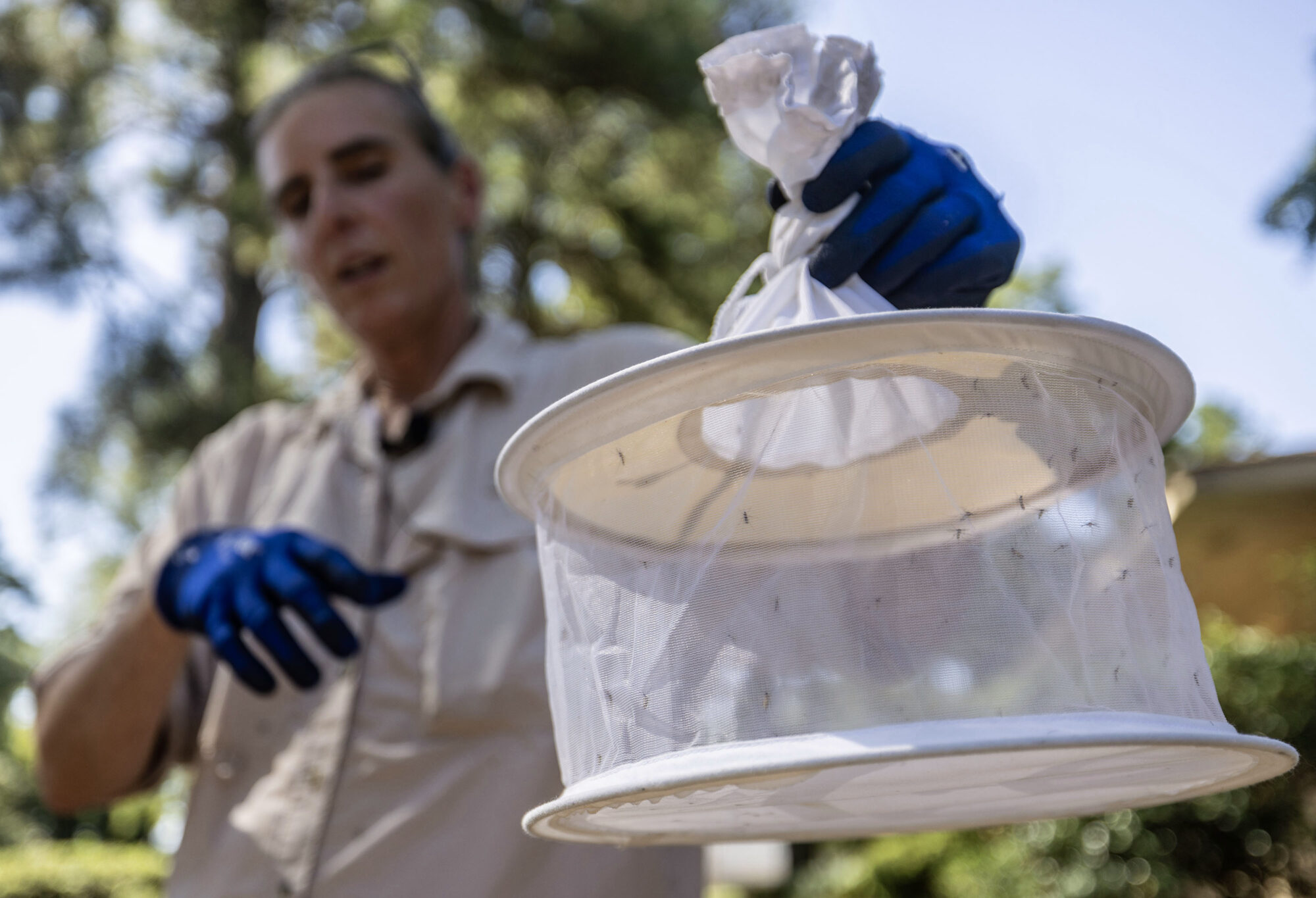
Seven human cases of West Nile virus have been confirmed this year, but Mississippi State Department of Health officials suggest the actual number is likely higher. September and August are the the peak months for these cases.
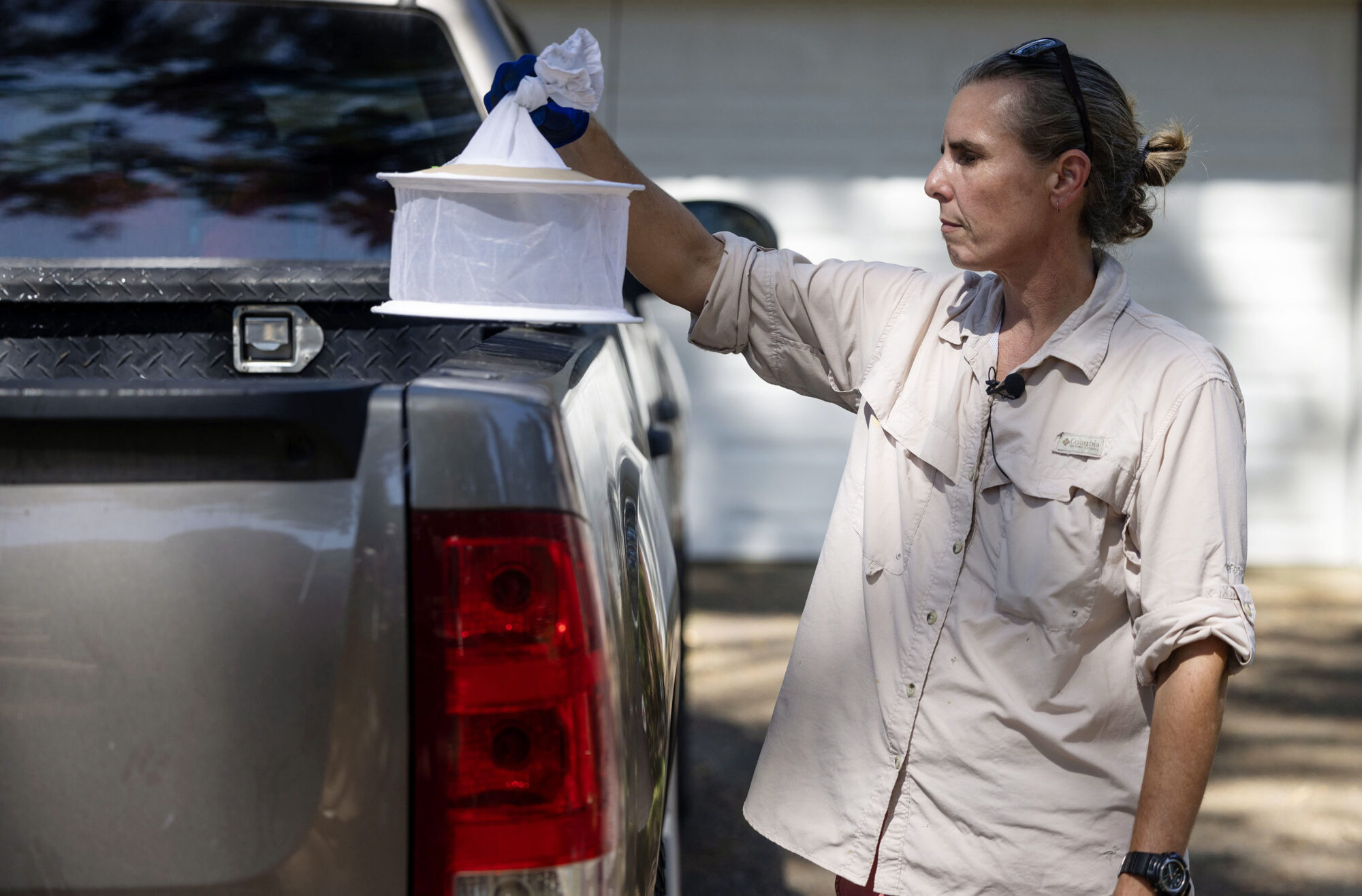
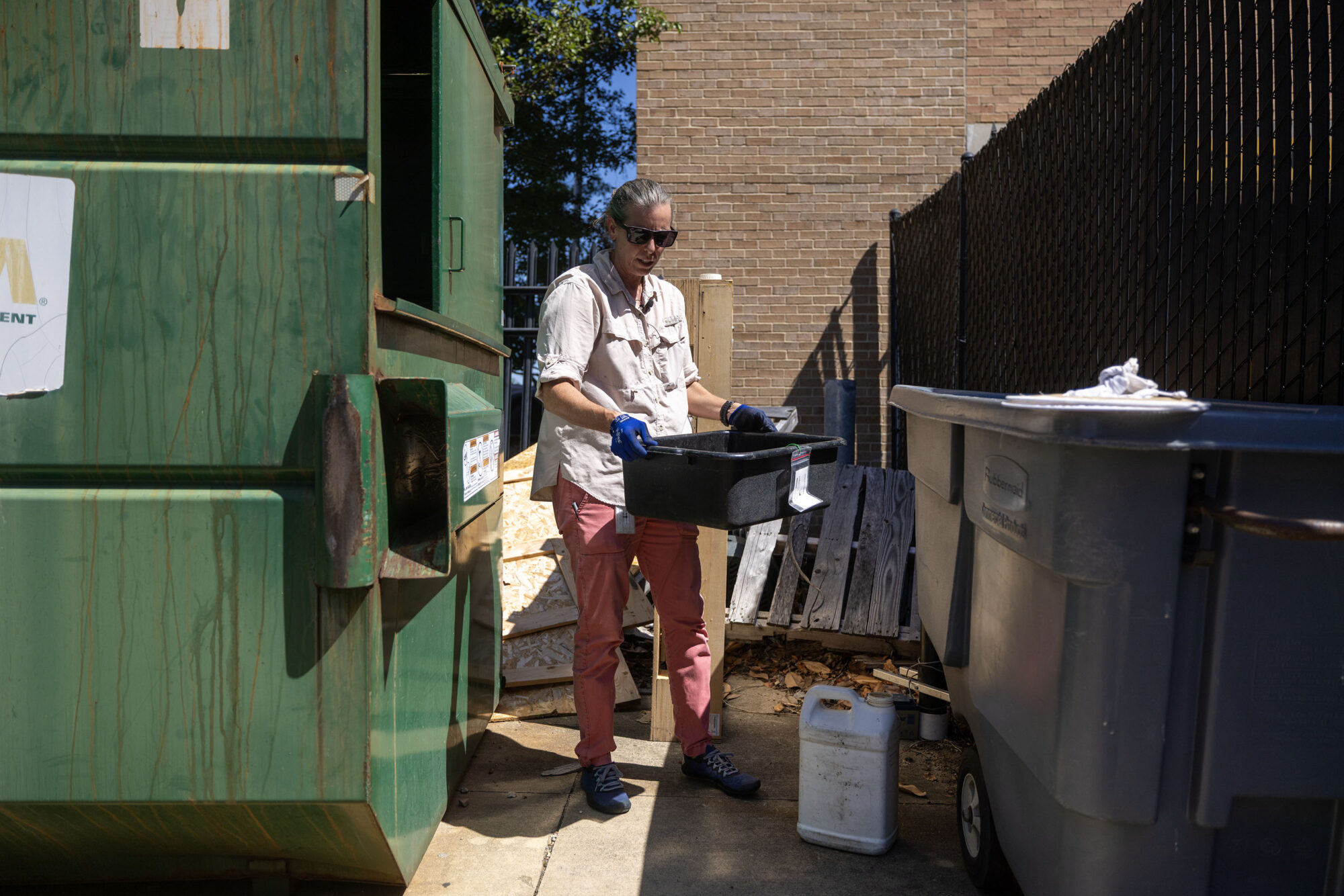
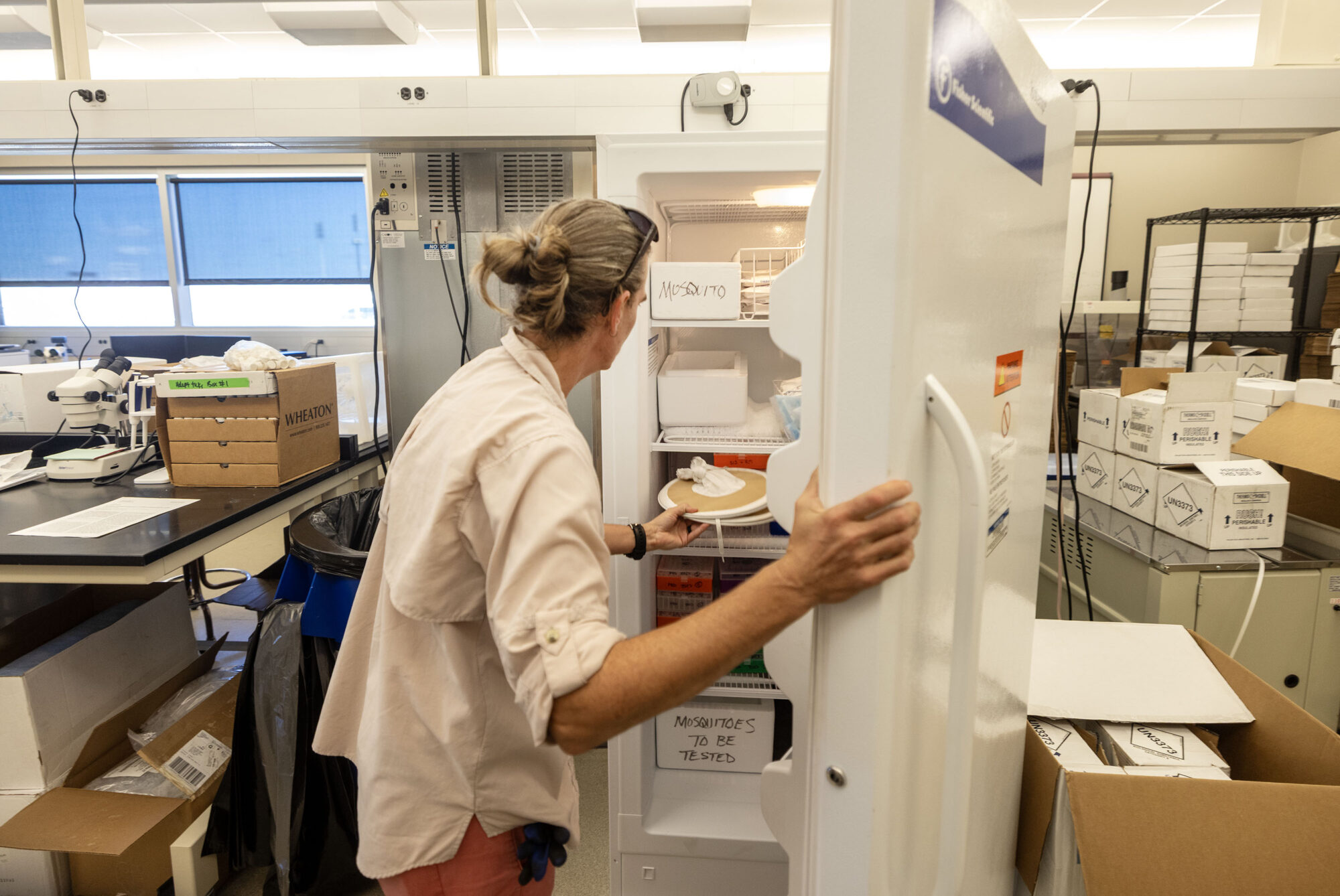
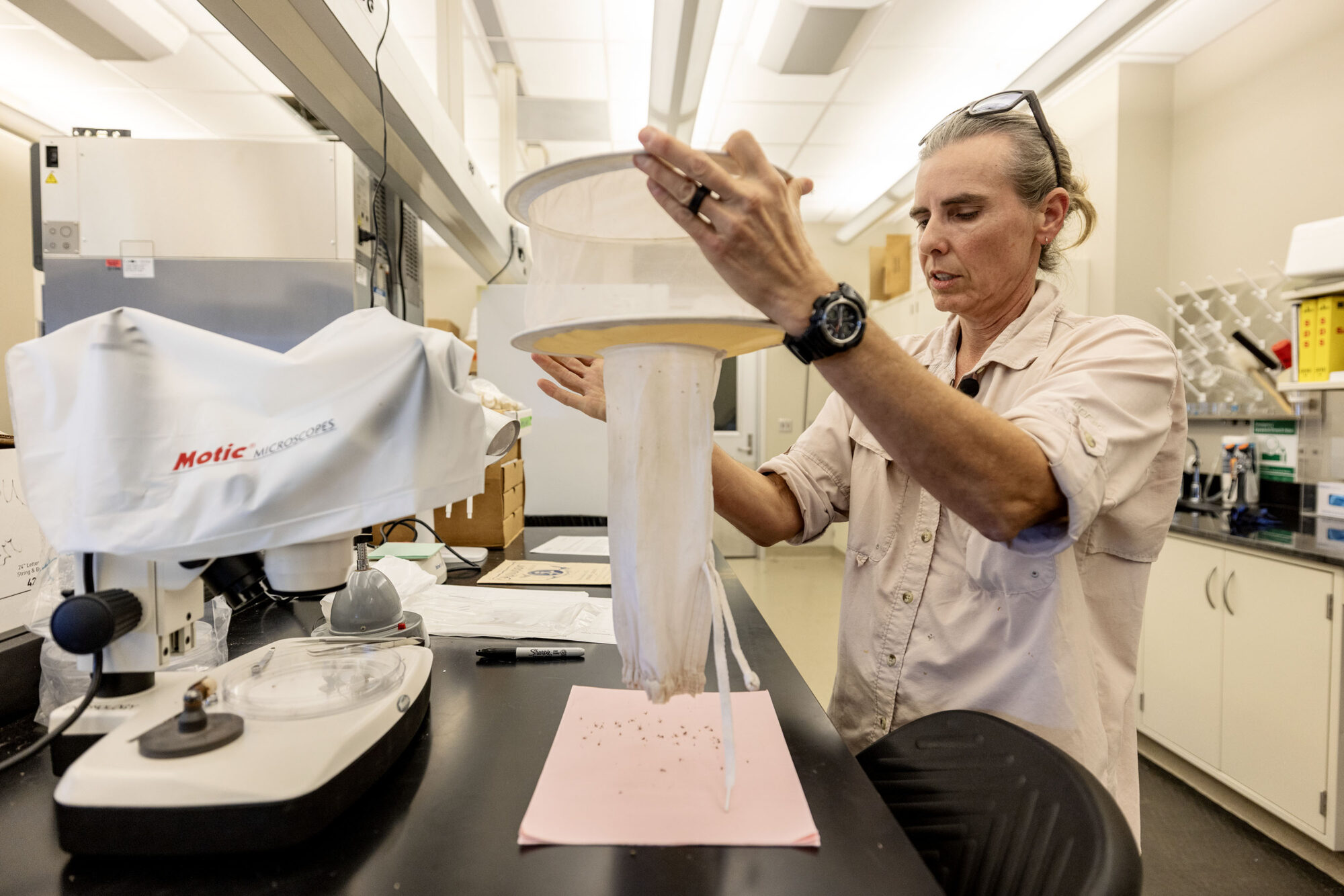
Wendy Varnado, the state public health entomologist, says it is critical to surveil and test mosquitoes for the virus because detecting infected insects can provide up to a two-week warning before human cases appear. Only 11 counties in the state routinely trap mosquitoes and send samples to the Health Department for testing.
Varnado says residents can help reduce mosquito populations by removing standing water around their homes.
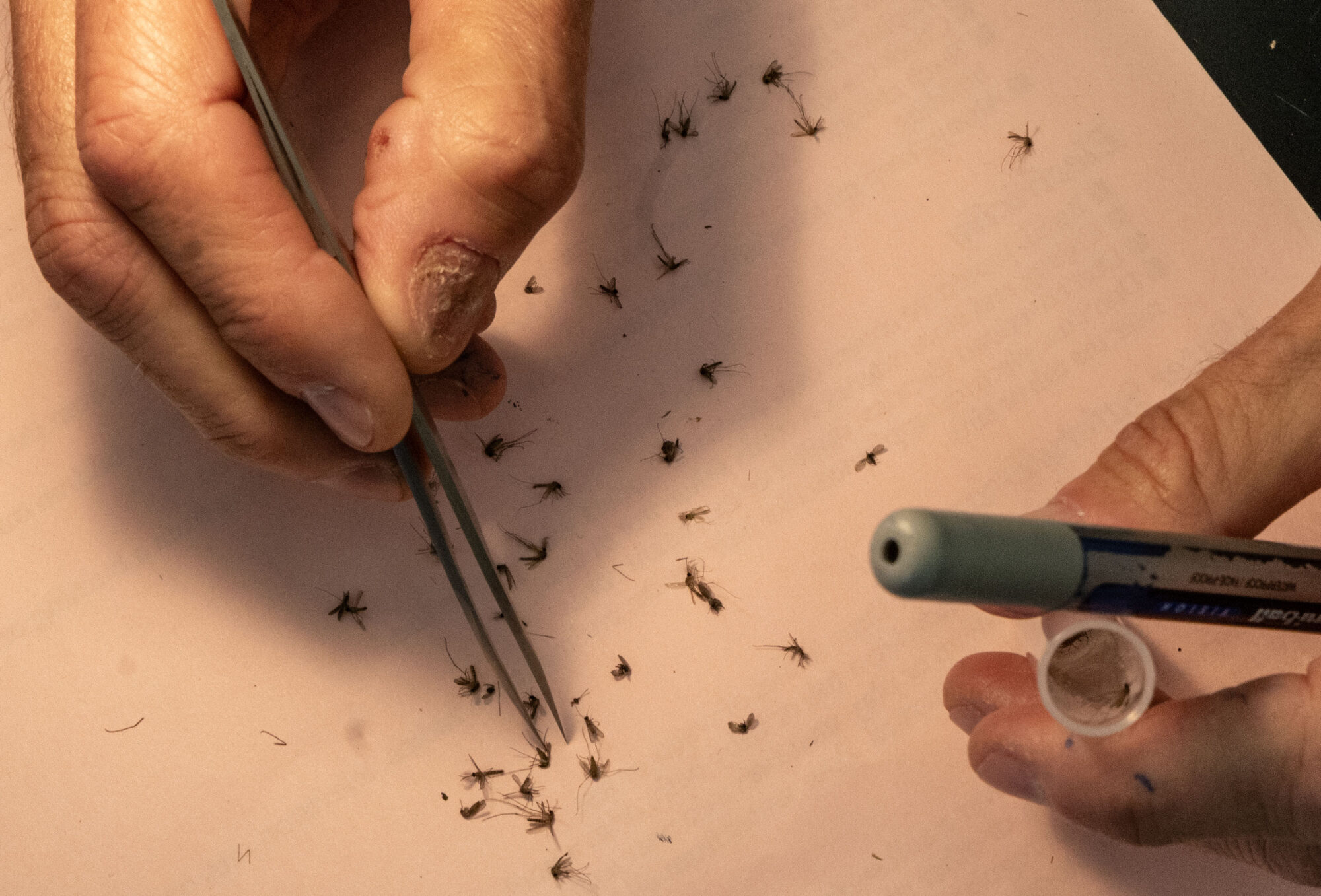
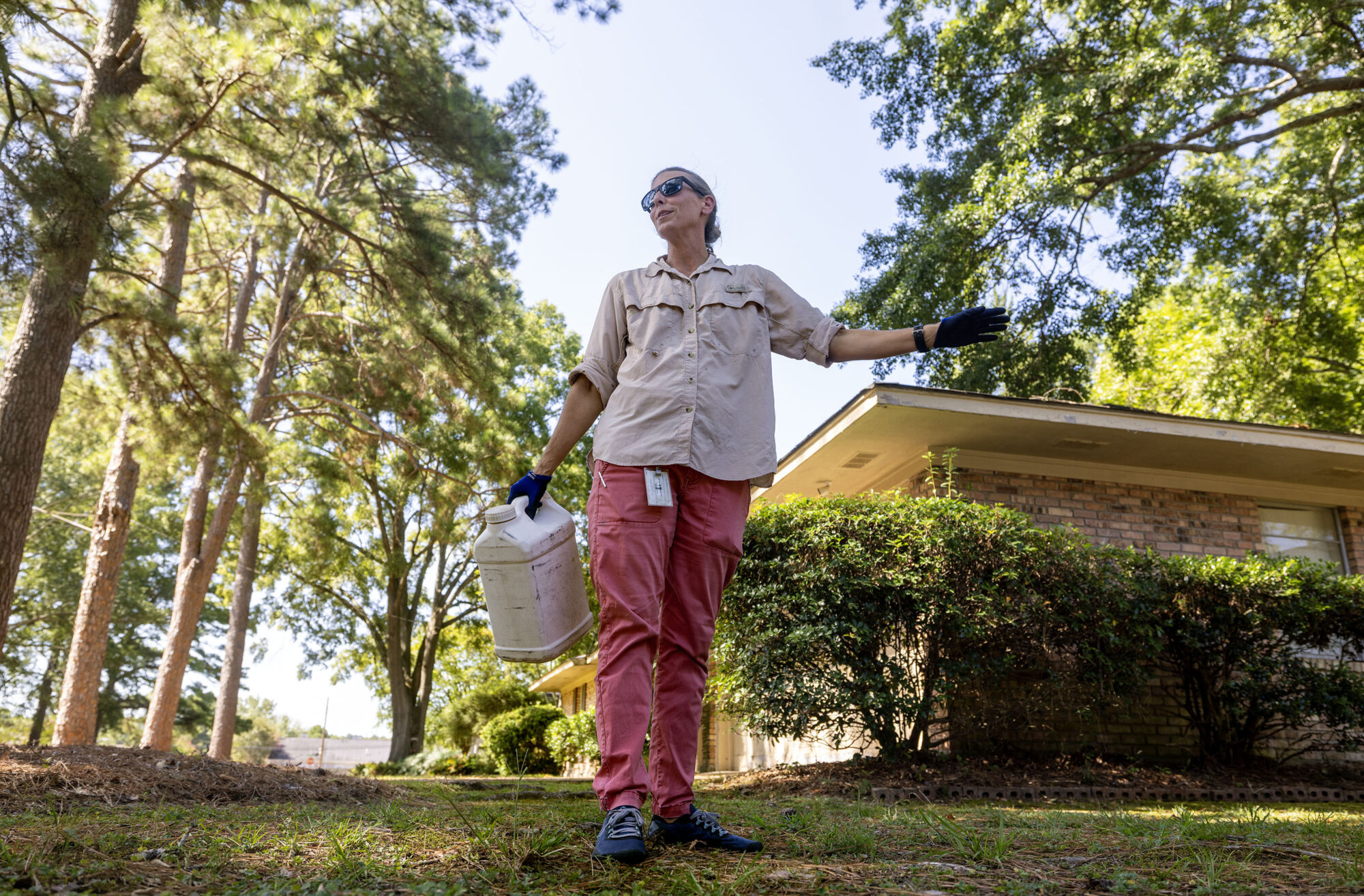
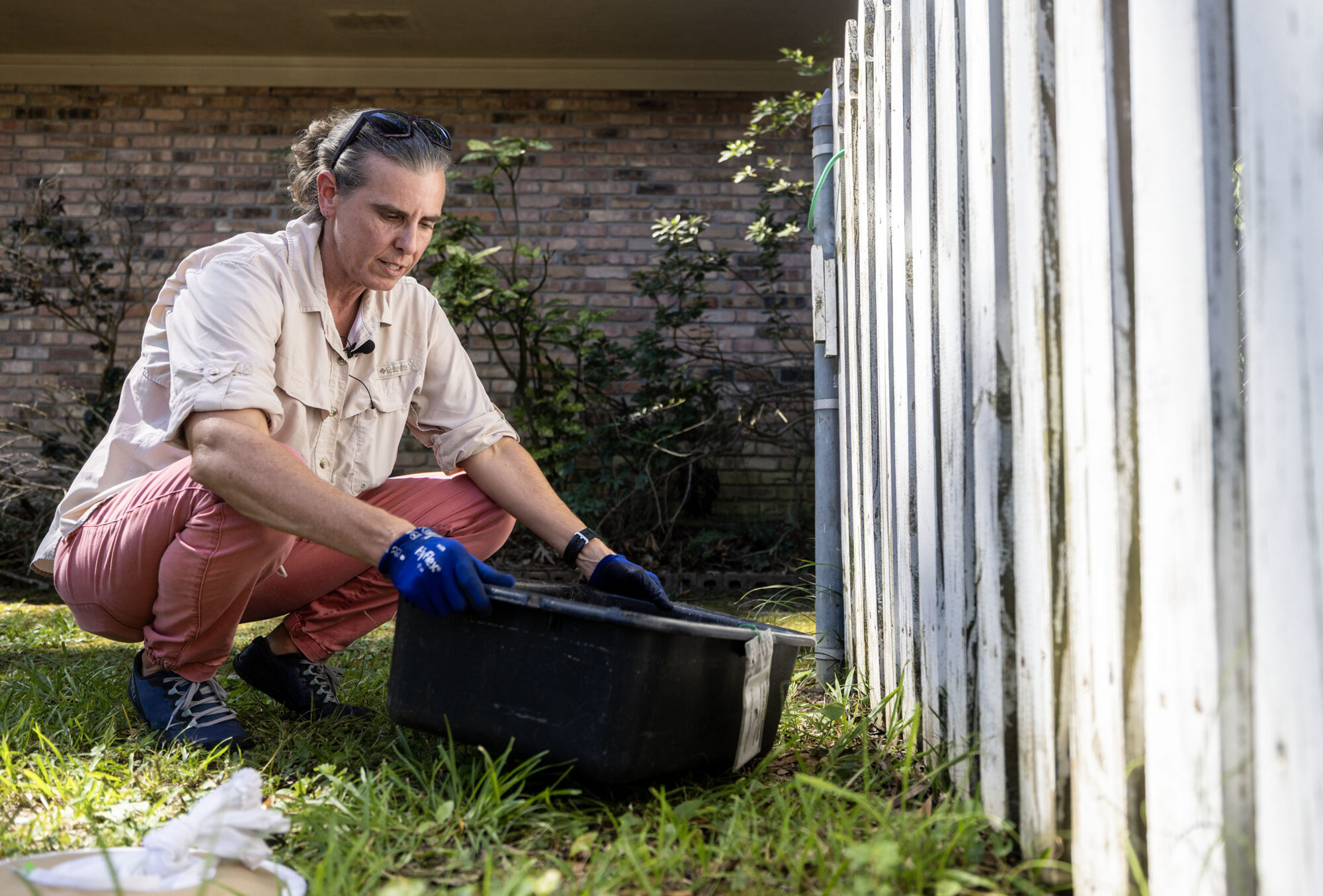
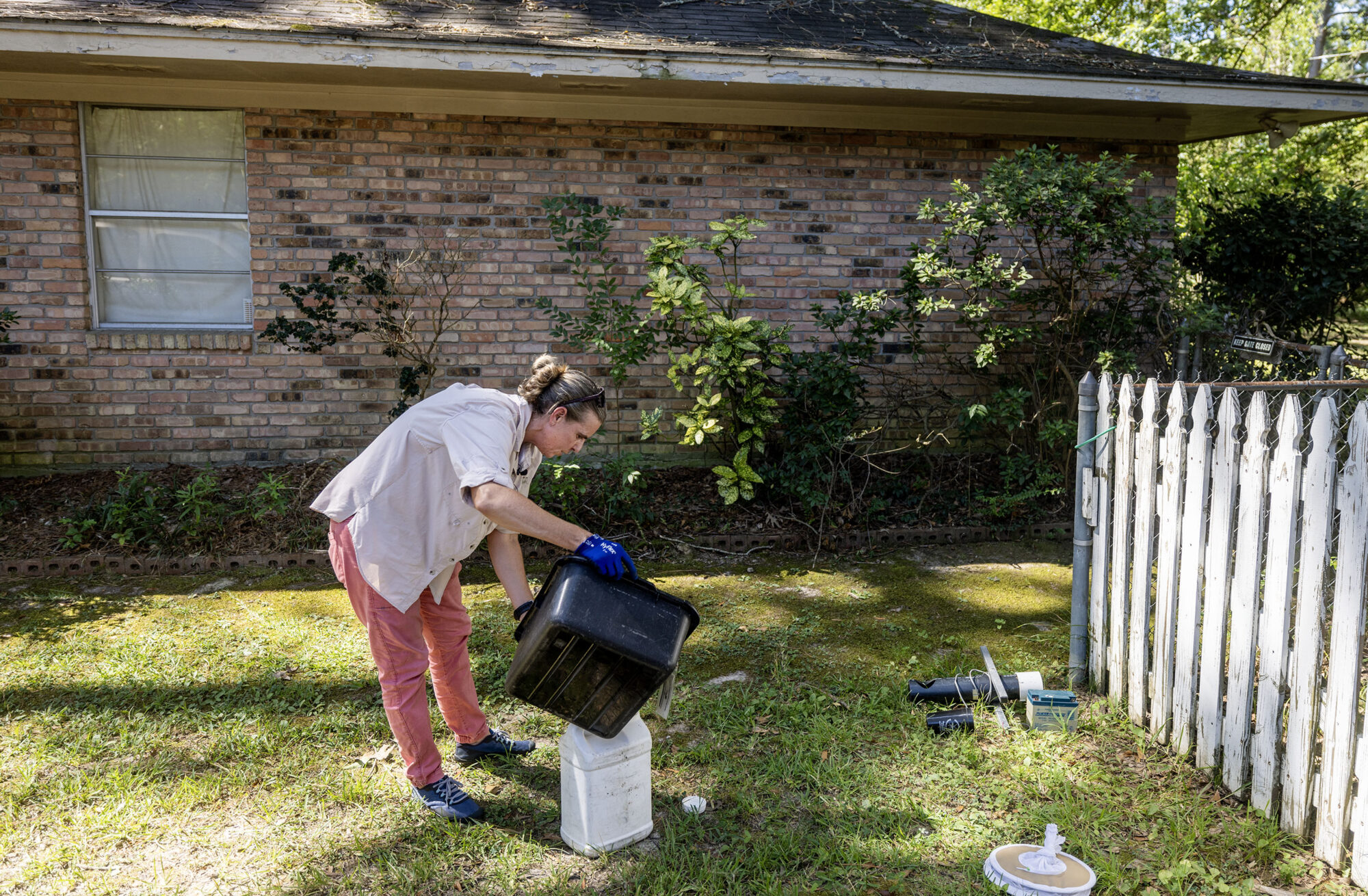
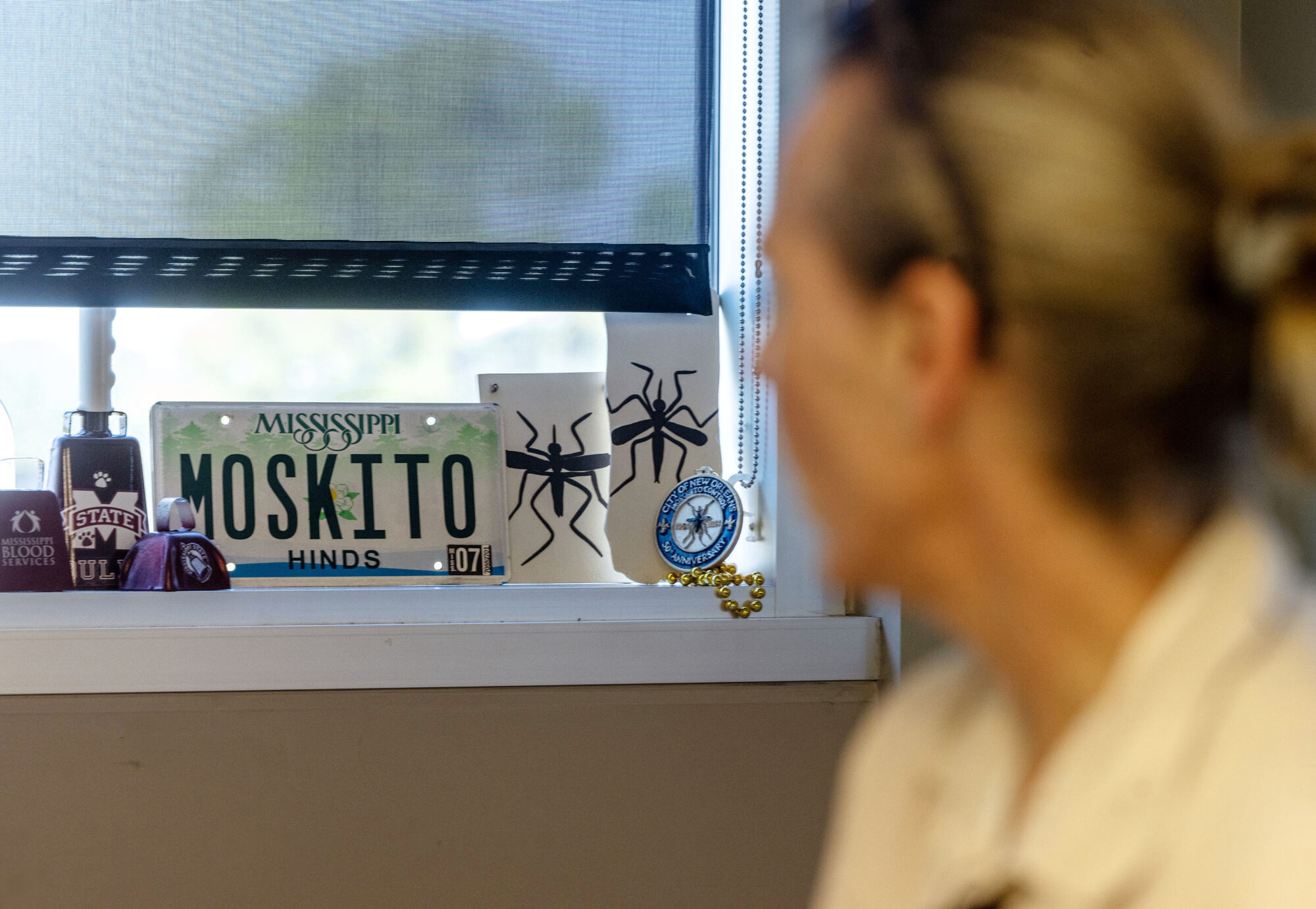
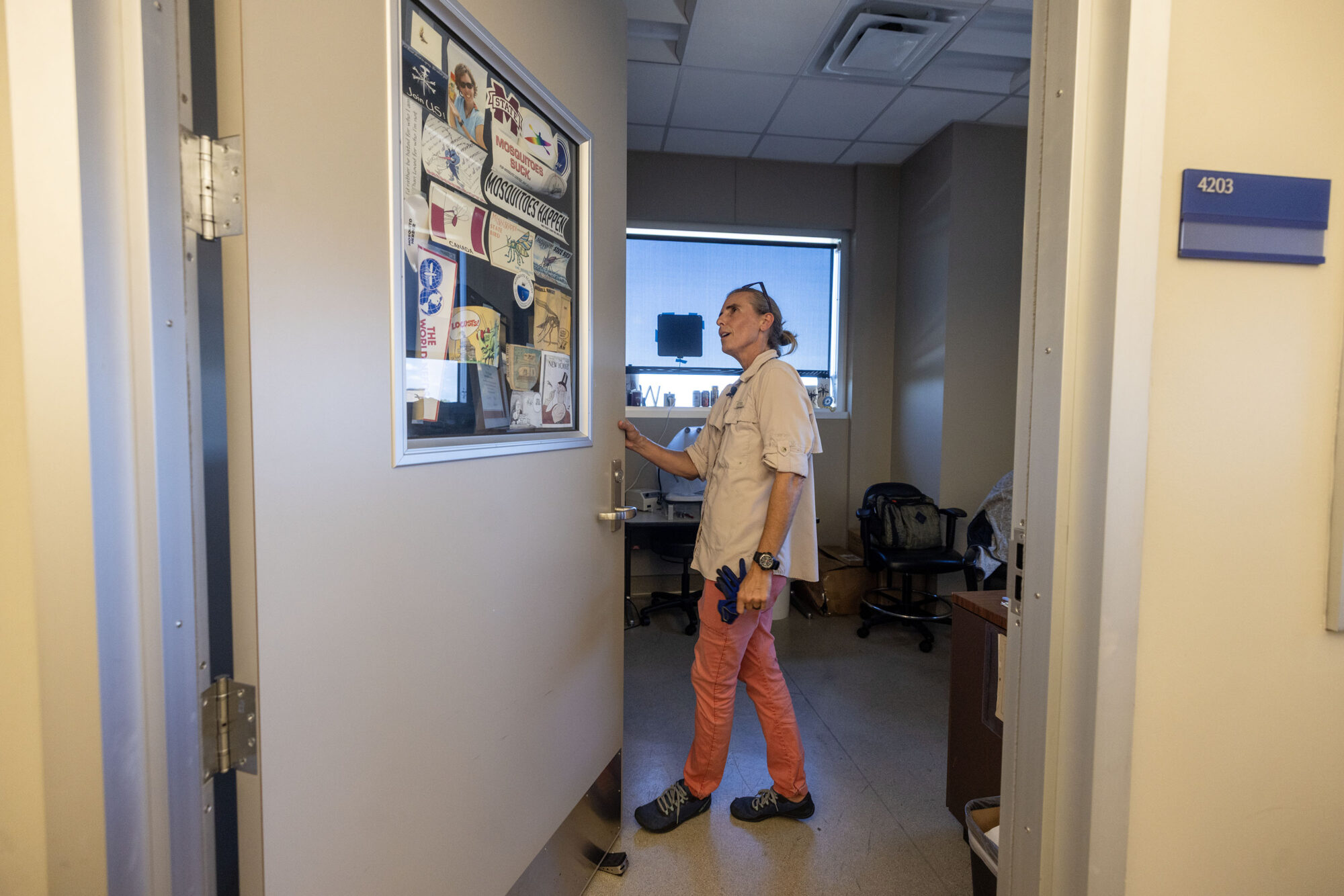
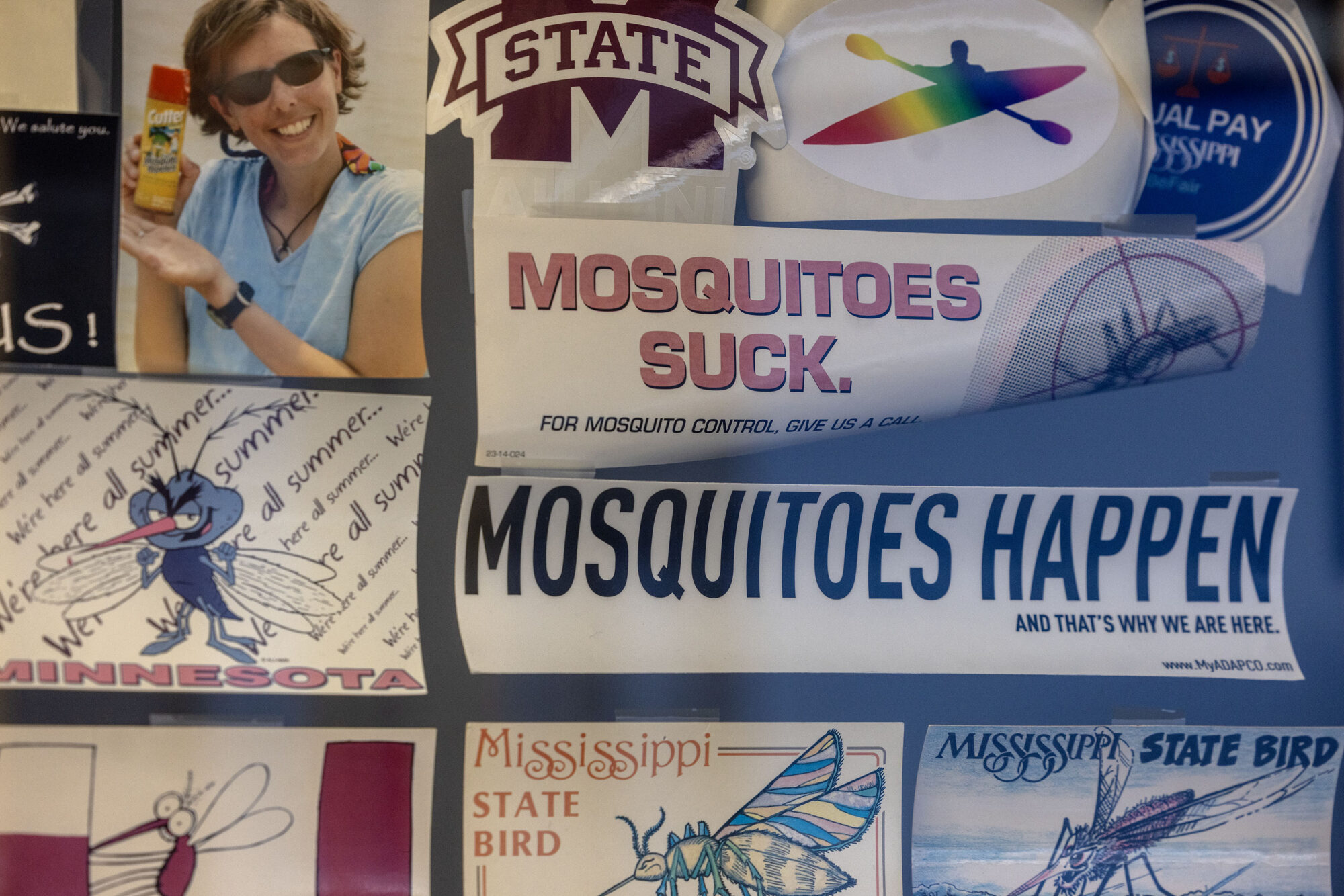
Wendy Varnado, Mississippi’s public health entomologist, prepares to check a gravid trap at a home in Jackson on Wednesday, Aug. 12, 2026. A gravid trap is used to collect female egg-bearing mosquitoes, which can then be tested for West Nile virus. Credit: Eric Shelton/Mississippi TodayWendy Varnado, Mississippi’s public health entomologist, disassembles a gravid trap at a home in Jackson on Wednesday, Aug. 12, 2026. Credit: Eric Shelton/Mississippi TodayWendy Varnado, Mississippi’s public health entomologist, disassembles a gravid trap at a home in Jackson on Wednesday, Aug. 12, 2026. Credit: Eric Shelton/Mississippi TodayWendy Varnado, Mississippi’s public health entomologist, holds mosquitoes caught in a gravid trap at a home in Jackson on Wednesday, Aug. 12, 2026. Credit: Eric Shelton/Mississippi TodayWendy Varnado, Mississippi’s public health entomologist, prepares to take mosquitoes caught in a gravid trap back to her lab at the Mississippi State Department of Health in Jackson on Wednesday, Aug. 12, 2026. Credit: Eric Shelton/Mississippi TodayWendy Varnado, Mississippi’s public health entomologist, collects another gravid trap near the Mississippi State Department of Health in Jackson on Wednesday, Aug. 12, 2026. Credit: Eric Shelton/Mississippi TodayWendy Varnado, Mississippi’s public health entomologist, reaches for dead mosquitoes to test in her lab at the Mississippi State Department of Health in Jackson on Wednesday, Aug. 12, 2026. Credit: Eric Shelton/Mississippi TodayA personalized license plate sits in the window of Wendy Varnado’s office at the Mississippi State Department of Health in Jackson on Wednesday, Aug. 12, 2026. Varnado is Mississippi’s public health entomologist. Credit: Eric Shelton/Mississippi TodayWendy Varnado, Mississippi’s public health entomologist, prepares to test mosquitoes in her lab at the Mississippi State Department of Health in Jackson on Wednesday, Aug. 12, 2026. Credit: Eric Shelton/Mississippi TodayWendy Varnado, Mississippi’s public health entomologist, looks at the stickers covering her office door at the Mississippi State Department of Health in Jackson on Wednesday, Aug. 12, 2026. Credit: Eric Shelton/Mississippi TodayThe office door of Wendy Varnado, Mississippi’s public health entomologist, is covered in stickers at the Mississippi State Department of Health in Jackson on Wednesday, Aug. 12, 2026. Credit: Eric Shelton/Mississippi Today
HOLLY SPRINGS — A chancery court judge has put his faith, at least for now, in the city of Holly Springs’ ongoing efforts to revitalize its long struggling power system.
In a courtroom on the city square on Monday, Chancery Judge Lawrence Little told state and Holly Springs officials he would allow a consultant hired by the city, Michael Watson, to take charge of the department for the time being. Watson has spent the past nine months working with the city through a list of needed improvements.
Little’s hearing came at the end of a receivership hearing where the state Public Service Commission offered a different nominee to lead the utility, which provides electricity to about 12,000 customers in north Mississippi.
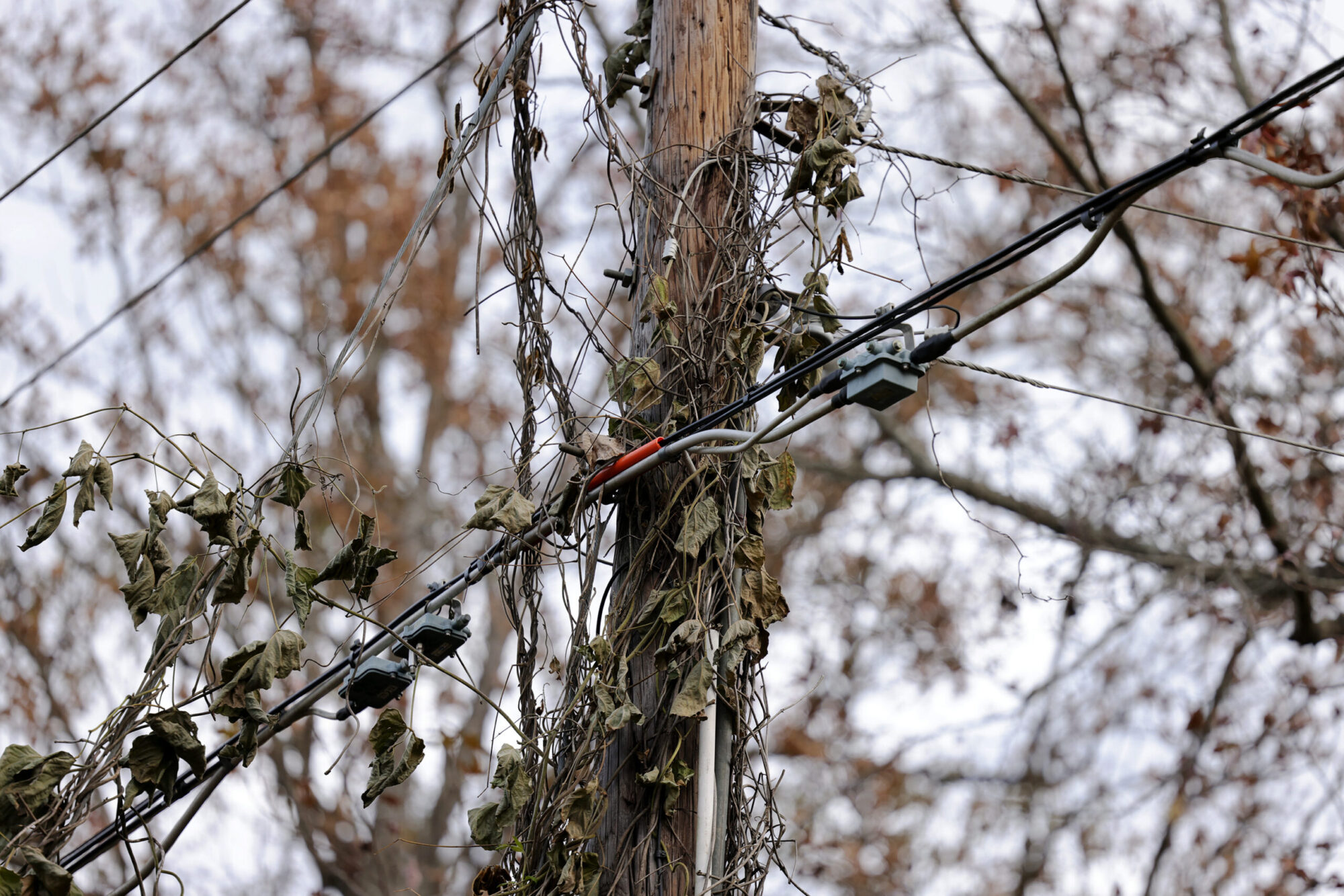
Even though the city runs the Holly Springs Utility Department, the utility has expanded to the point where most customers live outside the city. For years now, the utility’s ratepayers have reported constant problems with the department, namely frequent power outages. Dealing with unmaintained infrastructure, failing substations and overgrown vegetation, the power grid has seen extended outages not only in recent winter storms, but also sporadically during sunny weather.
In 2024, state lawmakers gave the PSC authority to intervene over the department’s issues. Using that power, the commission last year unanimously found that the city failed to provide “reasonably adequate service” to its customers. The ruling paved the way for the PSC to petition a court to place the utility in a receivership.
The commission chose Frank Simon, a Michigan-based attorney who has worked as a receiver for a variety of businesses, including hospitals, cannabis companies and gas stations. State attorney Stephen Schelver described Simon as a “professional receiver” who could build a team of experts to lead the utility.
Vegetation grows on power lines near Ashland, Miss., on Wednesday, Dec. 4, 2024. Persistent maintenance issues have contributed to years of unreliable power for residents served by the Holly Springs Utility Department, a problem worsened by an ice storm in 2023. Credit: Eric Shelton/Mississippi Today
Holly Springs attorney John Keith Perry contested that Simon had no utility experience while Watson, the city’s consultant, spent decades in the industry and had already become familiar with the local power grid.
In the end, Little opted to put Watson in charge of the department for now, reasoning that the move would provide some stability in a messy situation. The judge also said he wanted to be kept up to date about the utility’s performance and whether it’s meeting expectations set by the PSC and Tennessee Valley Authority, which has sold wholesale power to Holly Springs since 1935.
Initially, there was some confusion around the details of the decision from Little, who repeatedly coughed while delivering the message in the small courtroom.
While Perry and Holly Springs Mayor Charles Terry celebrated the outcome as a “victory” for the city, Northern District Public Service Commissioner Chris Brown said he wasn’t sure that Little had officially named Watson as the receiver.
“There is a lot of reporting right now regarding todays hearing,” Brown wrote on Facebook following the meeting. “Nobody has seen the Judge’s orders with his instructions on what happens moving forward.”
While Little still has yet to release an order, his staff attorney, Tara Scruggs, confirmed to Mississippi Today on Wednesday that Watson would be the receiver. Scruggs said she couldn’t give a timeline for when the order would be filed.
Most details of the receivership, such as how long it will last and what reporting the court will require, are unclear for now. Perry said Watson would have to update the court on his progress every 30 days.
Terry, who took office as mayor last year, said the power provider has already seen improvements since Watson came on as a consultant, adding that he was a “great help” in enduring Winter Storm Fern. The storm knocked out power to 95% of the system’s meters and forced the city to borrow $10 million to pay contractors, Perry wrote in a February update to the PSC.
Holly Springs Alderman at Large Dexter Shipp, Mayor Charles Terry and City Attorney John Keith Perry outside a courtroom in Holly Springs, Aug. 10, 2026. Credit:Alex Rozier
“I think we’ve been doing a good job on the outages and recovery time as well,” Terry said. “We’re still having outages, but not as bad as they used to be.”
With Watson’s help, the city has spent $500,000 on rights-of-way maintenance, replaced old meters, rebuilt relationships with neighboring power companies, and has started to catch up on its payments to TVA, Perry said Monday. The city is also developing a new mapping system, set to be ready in 2027.
Perry added that the city has found a long-term general manager to run the system, but declined to name that person for now.
After the hearing, Brown said the commission suggested Simon, who “does this all the time,” to give the city a new type of leadership.
“It’s a system that desperately needs help. It’s in a crisis, so why not go a different direction?” he said.
TVA also offered its own candidate: Dana Jeans, former chief executive officer for Memphis Light, Gas and Water.
In another ongoing legal matter, Holly Springs is facing a federal lawsuit TVA brought against the city last year. In addition to owing TVA $18 million, Holly Springs violated the parties’ contract by committing a series of financial missteps, such as misallocating revenue and not raising rates appropriately, the lawsuit alleges. The two sides are set to meet Monday to discuss a settlement.
The Mississippi Arts + Entertainment Experience (The MAX) in Meridian adds another batch of star power to its towering Hall of Fame with five new inductees whose lasting contributions further cement Mississippi’s foundational role in American music.
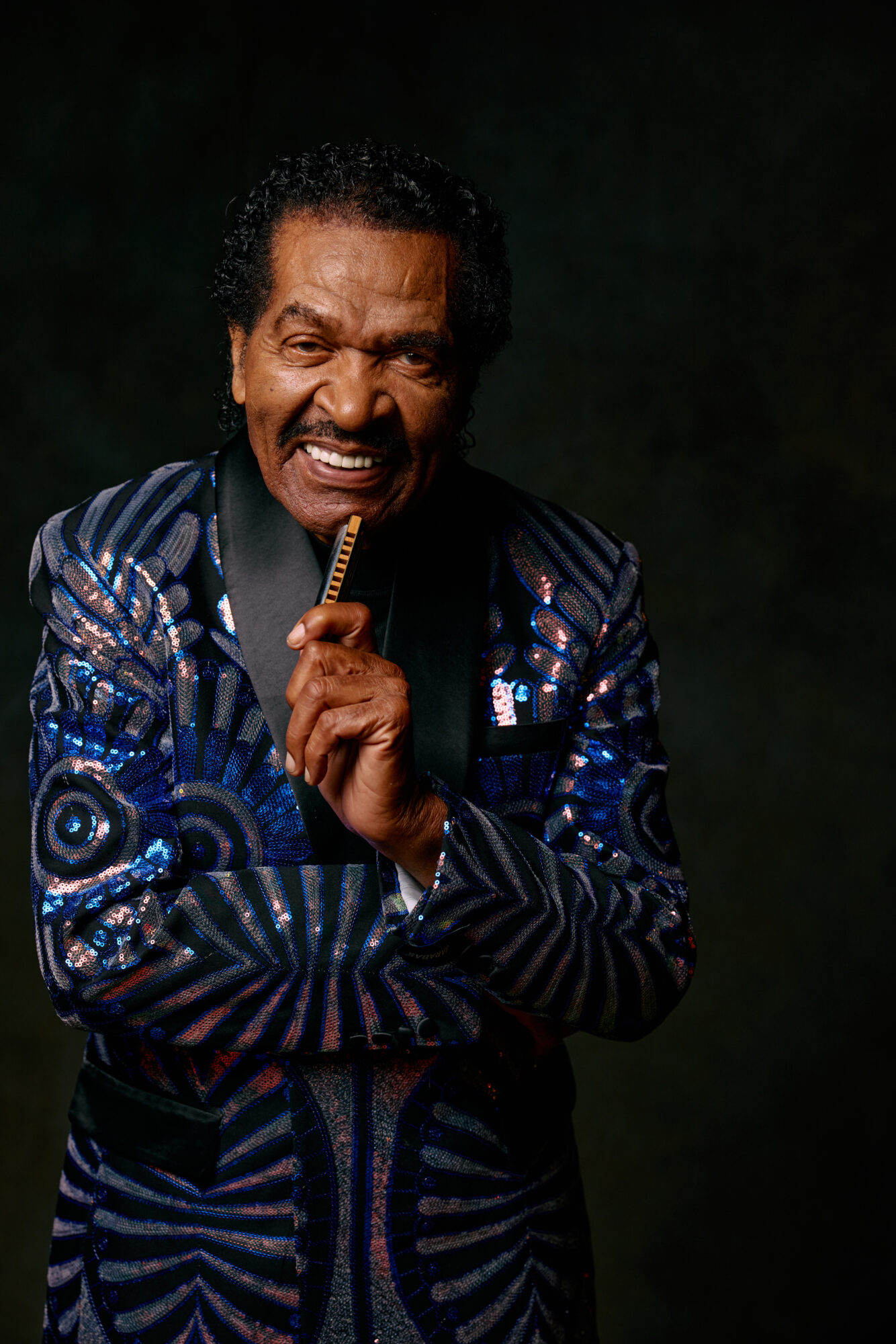
The Mississippi Mass Choir, a world-renowned force in gospel for decades, and bluesman Bobby Rush, who continues to rack up honors and gigs into his 90s, join seminal blues and folk musician Mississippi John Hurt (1893-1966), “Father of the Delta Blues” Charley Patton (1891-1934) and country music icon Conway Twitty (1933-1993) in the 2026-27 inductee class.
Charley Patton Credit: Courtesy of The MAX
“This is what the people wanted,” The MAX President and CEO Penny Kemp said of this inductee class’s all-music lineup.
Candidate recommendations from the public and votes from the public and from arts and entertainment authorities on the prestigious Panel of Electors combine to balance enthusiasm and expertise in Hall of Fame selections. The rigorous process happens every two years.
“Candidates must be recognizable icons in their field who have had a lasting cultural impact on Mississippi and beyond, and they have to have a solid connection to Mississippi,” Kemp said, whether by birthright, moving to the state in their early years or spending a significant portion of their career in Mississippi.
“There are hundreds of people who qualify,” she said, noting Mississippi’s reliably deep bench of creative standouts in literature and visual and performing arts as well as many genres of music. “We produce so many artists and are continuing to do it every day.”
The Mississippi Mass Choir
The Mississippi Mass Choir was formed in 1988 by the late Frank Williams whose vision of uniting some of Mississippi’s finest singers from across the state created a massive gospel powerhouse. Its record-setting debut album hit No. 1 on Billboard’s gospel charts and stayed at the top for 45 consecutive weeks.
The MAX Hall of Fame nod joins a collection of honors that includes multiple Grammy Award nominations and Stellar Gospel Music Awards, Billboard’s Gospel Artist of the Year, Stellar Gospel Hall of Fame and more.
“We are definitely honored,” Mississippi Mass Choir Executive Director Jerry Mannery said, noting the biblical saying that the prophet does not receive honor at home. That this recognition comes from their own people and home state holds special meaning, he added.
“It’s a testament to longevity,” he said. Thirty-eight years after its debut album, the choir’s current release, the 2024 “We Still Believe,” scored two No. 1 songs.
“We’re looking to plant new fields. We’re not looking to rest on our laurels,” he said.
For this last project, the choir brought in 42 new members from all over the state (including several new lead singers), bumping up its usual 150-voice strength to a muscular 214.
“At a time when most folks are kicking back and ready to go into the museum, we’re being inducted into the museum,” Mannery said, chuckling at the distinction. “But we’re not ready to go into the museum.”
The legendary blues showman was in his 80s when he won his first Grammy Award, and now he has three. Already enshrined in the Blues Hall of Fame, Rush continues to take his self-defined folk-funk blend to global acclaim.
Mississippi John Hurt
Mississippi John Hurt was a key and a beloved figure in the American folk-blues music revival of the 1960s. Bob Dylan, Jerry Garcia and Taj Mahal were among the generation of musicians influenced by his syncopated finger-picking style and storyteller vocals, and he is hailed as a bridge between the folk traditions of the 19th century and 20th century American acoustic music.
Mississippi John Hurt Credit: Library of Congress Prints and Photographs
“I am absolutely thrilled,” Mary Frances Hurt, the musician’s granddaughter, said by phone from Chicago. She has operated the Mississippi John Hurt Foundation for the last 30 years, criss-crossing the country to accept awards and honors on his behalf.
“I am ecstatic that he’s being recognized in his own home state,” she said of the man she knew as Daddy John. She, too, recalled the Gospel’s words about a prophet and honor at home. “He loved Mississippi and his home so much.”
That this tribute comes amid such high-profile company in the inductee class, 60 years after her grandfather’s death, “That’s incredible and I’m so grateful for that.”
Charley Patton
Early 20th century Delta blues musician and songwriter Charley Patton’s guitar skills, raw and booming vocals and stage flash proved to be elemental building blocks of blues and early rock ’n’ roll. They exerted a powerful influence on musicians who followed, including such legends as Robert Johnson, Son House and “Pops” Staples. Patton, a Blues Hall of Fame member since 1989, was inducted into the Rock and Roll Hall of Fame as an “Early Influence” in 2021.
Conway Twitty
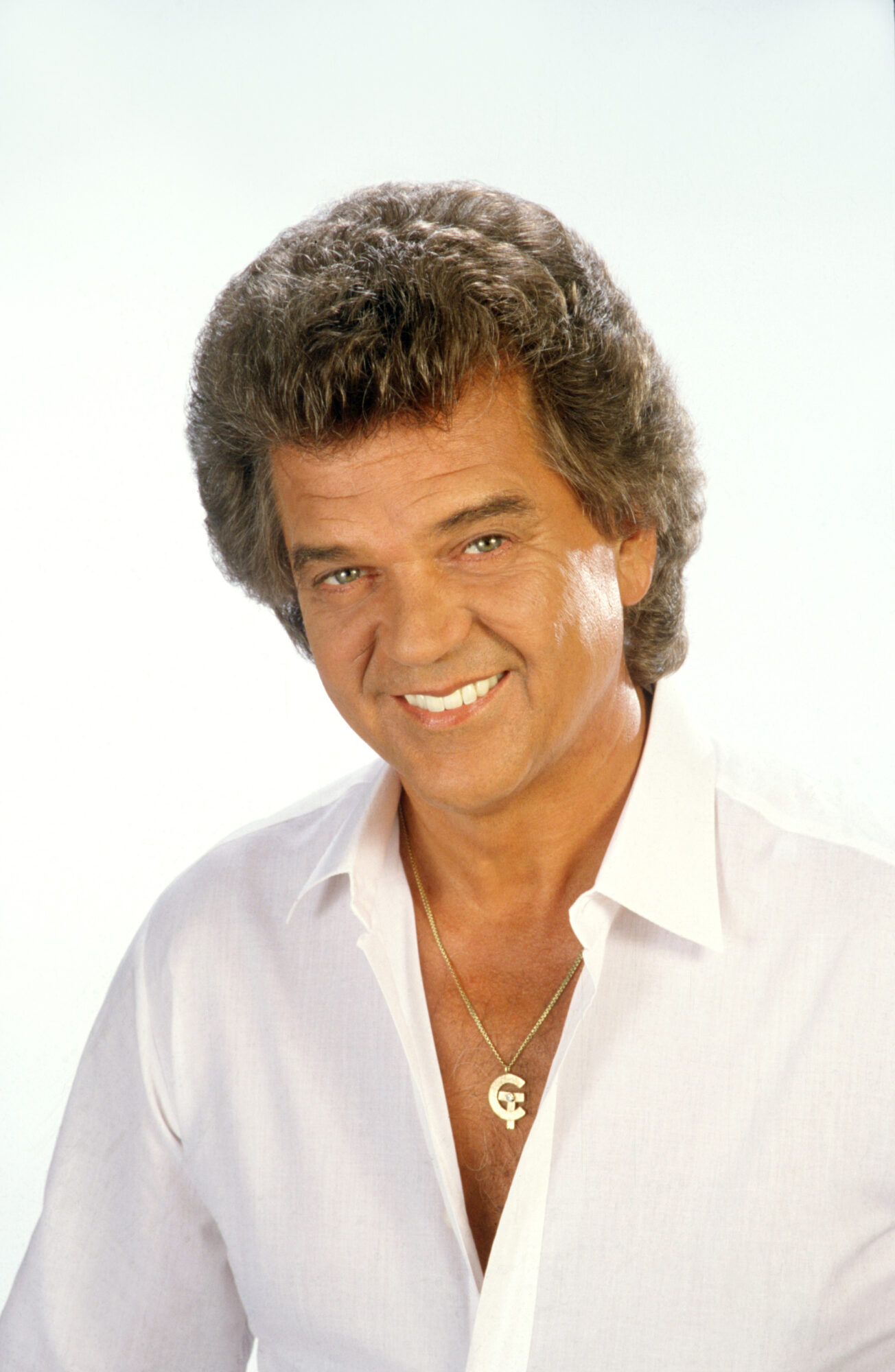
Conway Twitty Credit: Courtesy of The MAX
Enduring hitmaker Conway Twitty, born Harold Lloyd Jenkins in Friars Point, was actually a rockabilly star and teen idol early on, but scored biggest and longest in the country genre. His record of 55 No. 1 singles held until George Strait broke it in 2006. Twitty penned 11 of those chart-toppers himself.
From the No. 1 “Hello Darlin’” to the No. 7 “Goodbye Time,” Twitty stayed a star for five decades, selling over 50 million records and earning a spot, too, in the Country Music Hall of Fame.
An induction ceremony for The MAX Hall of Fame will be held Jan. 28 at the MSU Riley Center just down the street. The ceremony will celebrate inductees with entertaining, educational and often moving tributes in performance, followed by a reception back at The MAX.
New honorees’ bigger-than-life-size portraits will join the soaring, two-story Hall of Fame rotunda that is the centerpiece draw at The MAX, touted as “360 degrees of Mississippi star power.” Interactive kiosks there invite visitors to explore their inspiring stories and achievements.
University of Southern Mississippi professor and military historian Andrew Wiest is among the star-studded cast of Netflix’s “The American Experiment” documentary.
The five-part series chronicles the history of the American Revolution, coinciding with the nation’s 250th birthday. It features commentary, voice-overs and interviews with academics, political figures and more.
Wiest can be heard reading lines throughout the series, including parts of the Declaration of Independence and playing founding father Patrick Henry. He described what it was like to hear himself in the documentary.
“The narrator says right before you hear us read it that these are some of the most important lines ever written in the English language, and I was like, ‘Wow, and I got to read one of those,’” he said.
Andrew Wiest Credit: University of Southern Mississippi
Christine Cavalieri from Reel2Reel Casting emailed Wiest looking for prominent figures, experts and “extraordinary individuals” for the documentary. He agreed when he learned it was being produced by Playtone, a production company co-founded by Oscar-winning actor Tom Hanks, who have acted, directed and produced multiple projects related to American history, including “Saving Private Ryan,” “Band of Brothers,” “John Adams” and others.
Wiest recorded his lines in the sound booth at USM’s Center for Oral History and Cultural Heritage. Sarah Huisenga from Luminant Media directed him on how to read his lines over Zoom.
He hasn’t seen the full series yet, but he has seen two parts that he voiced. He plans to show parts of the series to his classes.
Wiest considers his role in the documentary a career milestone.
“Most folks don’t read deeply in-depth history,” he wrote in an email. “But a doc(umentary) like this, with the very best historians taking part, condenses the most modern in-depth research into a very watchable whole.”
He continued, “Taking part in this kind of means that I have made it as it were. Wish my mom was around to see it. Her boy done made good.”
Weist was lead historian on “Brothers in War,” an Emmy-winning National Geographic documentary based on his book, “The Boys of ‘67.” He also served as chief historical consultant on the documentary “Vietnam in HD.”
Empleados de Battle Fish North afirmaron que, durante años, la gerencia ha recurrido a amenazas de violencia y a negarles contratos de trabajo temporal para disuadirlos de denunciar los abusos ante las autoridades.
El Departamento del Trabajo también investigó a la granja en 2023 por presuntas violaciones de la Ley de Normas Justas del Trabajo y de las regulaciones del programa H-2A, y posteriormente entabló una demanda a la empresa y a sus dueños por obstruir la investigación. En la demanda judicial, que representa la postura de una de las partes, el departamento afirmó que la granja ocultó alojamientos y vehículos que no cumplían con las normas y amenazó con tomar represalias contra los trabajadores que aceptaran ser entrevistados por investigadores federales.
El caso concluyó con un acuerdo sin conclusiones, y Battle Fish no “admitió ni negó” las acusaciones en el decreto de consentimiento. Sin embargo, en un memorándum anterior dirigido a la corte, los demandados afirmaron que “no obstaculizaron la investigación del Departamento de Trabajo, y mucho menos tomaron represalias contra los empleados que pudieran haber participado en ella”, alegando que “las pruebas demuestran que los demandados de Battle-Magnolia cooperaron de buena fe para facilitar la investigación del Gobierno”.
El juez ordenó a la granja que, en adelante, cumpliera con la Ley de Normas Justas del Trabajo y mejorara el acceso a la información sobre los derechos de los trabajadores.
“La gente que viene contratada pierde las esperanzas, porque la otra vez … fue el Departamento de Trabajo, pero no se vio ningún cambio”, dijo un empleado que salió de Battle Fish pero que sigue en contacto con sus antiguos compañeros de trabajo.
El empleado pidió mantener el anonimato por preocupaciones sobre posibles repercusiones para los trabajadores actuales de la granja.
En relación con la investigación de 2023, Andrew Dulaney, abogado de Battle Fish, declaró a Mississippi Today que “Battle Fish North y Magnolia Processing, Inc. han resuelto con éxito y de manera amistosa los problemas laborales con el Departamento de Trabajo en 2023. Tal como lo estableció el fallo de la Corte y como creemos que todas las partes entienden, hubo un malentendido sobre varios asuntos. Estos malentendidos ya han sido resueltos”.
Mississippi Today analizó archivos judiciales y documentos gubernamentales, se comunicó con agencias gubernamentales y con los representantes legales de Battle Fish, y entrevistó a siete empleados actuales y antiguos que trabajaron en la granja entre 2012 y 2026.
Los empleados son ciudadanos mexicanos que han trabajado en EE. UU. de manera temporal con visas H-2A, las cuales permiten a los empleadores agrícolas contratar a trabajadores desde fuera de EE. UU. de manera temporal. Cuatro dijeron que decidieron renunciar para no seguir enfrentándose a los abusos. Uno de ellos afirmó que la empresa no lo volvió a contratar después de que habló con los investigadores del Departamento de Trabajo sobre las condiciones laborales.
Cinco de ellos hablaron con Mississippi Today bajo condición de anonimato por temor a represalias, y dos exempleados que regresaron a México —Jacob Vargas Huante y Francisco Chávez Barajas— dieron su permiso para que se publicaran sus nombres.
“Yo fui víctima, mañana puede ser otro”, dijo Vargas.
Extrabajadores dijeron a Mississippi Today que la intimidación ha venido principalmente de Houston Battle, uno de los dueños, y de Martín Valencia, un capataz que supervisa las operaciones y se comunica con los trabajadores porque Battle no habla español.
Ni Battle ni Valencia respondieron a solicitudes de comentarios después de que Mississippi Today les dejó varios mensajes de voz y mensajes escritos.
“Durante mi investigación, varios empleados de Battle Fish me informaron que Battle y Martín denigran a los trabajadores amenazándolos repetidamente con hacerles daño físico, así como con despedirlos o hacer que los deporten”, se lee en una declaración de Kristina Espinoza, una de las 10 investigadoras que inspeccionaron la granja en 2023. Según los expedientes judiciales, un empleado les dijo a los investigadores, “Ya no aguantaba en la granja el trato del mayordomo Martín Valencia ni del patrón,… todos los días eran así diciéndonos insultos”.
La exsecretaria de Trabajo, Julie Su, escribió en un memorándum a la corte que la investigación del Departamento de Trabajo había revelado un “patrón amplio y continuo de amenazas e intimidación hacia los trabajadores de Battle Fish”.
En una audiencia de moción, el dueño principal, Bill Battle, negó haber tomado represalias contra los trabajadores.
Una vocera del Departamento de Trabajo, Erika Ruthman, confirmó que hay una investigación abierta en curso sobre la empresa, pero señaló que no podía dar más detalles para garantizar la integridad del proceso. Ruthman se negó a comentar si la investigación en curso es de rutina o en respuesta a una denuncia.
Brandon Davis, un abogado que representa a Battle Fish, dijo que sería “inapropiado” hablar sobre la investigación, pero que Battle Fish “seguiría colaborando con el gobierno federal como nuestro organismo regulador, así como con el público y con nuestros distintos grupos de empleados”.
Un negocio familiar
El equipo agrícola en Battle Fish en el condado de Túnica, Miss., el jueves 9 de julio de 2026. Crédito: Claudia Amendoeira/Mississippi Today Credit: Claudia Amendoeira/Mississippi Today
Battle Fish se encuentra a las afueras de Túnica, en el norte del Delta de Mississippi. Cientos de hectáreas de estanques rectangulares agrupados salpican una extensa llanura de campos que rodea la estrecha Carretera 4.
La granja familiar de bagre y la planta de procesamiento, Magnolia, Inc., se encuentran en el mismo sitio. Son propiedad y están a cargo de miembros de la familia Battle – Houston Battle junto con su hermano y su padre. Los abuelos de Houston Battle fundaron el negocio a finales de los años sesenta, y hoy en día la planta procesa alrededor de 10 millones de libras de pescado al año.
Tanto la granja como la planta de procesamiento contratan a trabajadores extranjeros temporales y fueron demandantes en el caso de la corte de 2023. Anteriormente, una investigación del Departamento del Trabajo había revelado que Magnolia Inc. debía más de 11.000 dólares en salarios atrasados a sus empleados estadounidenses.
El Departamento del Trabajo autorizó a Battle Fish contratar a 14 trabajadores a través del programa de visas H-2A para la temporada 2026, de febrero a noviembre. Cada año cientos de miles de personas trabajan en Estados Unidos con visas H-2A, la mayoría de ellas procedentes de México.
Jacob Vargas Huante, exempleado de Battle Fish, presentó una declaración judicial en la demanda de 2023 y le dijo a Mississippi Today que había trabajado para tres empleadores en Estados Unidos a través del programa H-2A sin problemas antes de llegar a Túnica. “Nunca tuve problemas, nunca fui maltratado… solo ahí con Battle Fish”.
Sin embargo, Noemí Hernández, cónsul general de México en Nueva Orleans, señaló que el consulado recibe con frecuencia denuncias de maltratos laborales por parte de ciudadanos mexicanos que trabajan en Mississippi. “ Hay casos que son lamentables”, Hernández afirmó sobre las denuncias procedentes de todo el estado. “En unos pocos casos, los empleadores incluso recurrieron a la violencia”.
‘Un efecto escalofriante’
Cuando los investigadores del Departamento del Trabajo llegaron a la granja en 2023, informaron que la conducta amenazante de la gerencia generaba un “efecto escalofriante” en los trabajadores y les hacía tener miedo de hablar. Dos investigadores, Espinoza y Jose Berrios, testificaron que tuvieron que hablar con los trabajadores en una gasolinera alejada del lugar de trabajo, e incluso allí algunos trabajadores se escondían detrás de basureros y autos y asomaban la cabeza para ver quién estaba cerca.
En su declaración ante la corte, Battle afirmó que el Departamento de Trabajo “al parecer incluso se llevó a algunos de esos empleados de la granja para interrogarlos en una gasolinera y detrás de un contenedor de basura”, pero un exempleado que habló con Mississippi Today explicó que, cuando los investigadores se le acercaron en la granja, fue él quien sugirió hablar en una gasolinera.
“Sabía cuál era la situación”, dijo el exempleado. “Le dije, ‘¿Tu quieres entrevistarme? ¿Quieres que te diga la verdad? Vamos a la gasolinera donde ellos no me vean y allí platicamos y yo te digo todo lo que está pasando’”.
“Nos prohibieron hablar con ustedes… Martín (Valencia) nos dijo que no podemos quejarnos y si nos estamos quejando nos manda de regreso a México”, afirmó un empleado a los investigadores en una declaración escrita.
Durante la investigación, la gerencia de Battle Fish “amenazaba habitualmente con despedir, deportar o causar daño físico” a los trabajadores que se arriesgaban a hablar con los investigadores, según un memorándum del exsecretario Su dirigido al tribunal.
En su declaración a la corte, Battle negó haber tomado represalias o haber amenazado con tomarlas contra los empleados que hablaron con los investigadores del Departamento de Trabajo, y añadió que “los agentes nos trataron a mí y a Battle Fish North de forma discriminatoria, como si hubiéramos cometido alguna irregularidad”.
Un exempleado le dijo a Mississippi Today que Houston Battle “nos grita porque él piensa que nos tiene en sus manos, porque nosotros no queremos perder una visa de trabajo, porque es difícil encontrar otra”.
“Aquí no nos tratan bien pero tenemos que trabajar. Aquí se gana algo de dinero y en México está bien difícil”, dijo otro empleado a los investigadores del Departamento de Trabajo.
Jacob Vargas Huante en su pueblo natal de Michoacán, México, en 2026. Dijo que el maltrato que sufrió en Battle Fish lo dejó “traumatizado” y reacio a buscar otro trabajo en Estados Unidos. Crédito: Cortesía de Jacob Vargas Huante Credit: Courtesy of Jacob Vargas Huante
Según Vargas, algunos empleados también temen comprometer las posibilidades de que sus familiares obtengan visas a través de Battle Fish debido a la presión de los empleadores.
“Les dicen si tú te quejas ya no te vamos a traer, no te vamos a traer a tu familia, no vamos a querer a tu primo, a tu hermano”, dijo Vargas.
Battle Fish no respondió a las solicitudes de comentarios sobre la no renovación de los contratos de trabajo de los empleados que denunciaron problemas.
Vargas trabajó en Battle Fish alrededor de ocho años antes de irse debido a lo que describió como repetidos abusos verbales y amenazas de muerte por parte de Valencia. Vargas le dijo a Mississippi Today que incluso en su ciudad natal en Michoacán, casi tres años después de renunciar su empleo en Battle Fish, “hay veces que despierto en la noche porque tengo pesadillas, sueño mucho, creo que me esta ahogando, que me electrocutan o que me mata Martín Valencia”.
El trabajo de Vargas incluía el mantenimiento del cableado eléctrico alrededor de los estanques de peces, y en su declaración judicial describió cómo Valencia intentó una vez encender la corriente eléctrica mientras él trabajaba. Francisco Chávez Barajas trabajaba junto a Vargas y recordó el incidente. “Vivimos todos esos maltratos o amenazas, lo vivimos en carne propia”, dijo Chávez.
Los registros de la Corte de Justicia del condado de Túnica muestran que, en 2019, Martín Rodríguez presentó una denuncia por agresión simple contra Jacob Huante. Vargas, cuyo segundo apellido es Huante, afirmó que el Martín que figura como denunciante es Valencia. Vargas se declaró inocente y los cargos fueron retirados en el año 2020. Vargas declaró a Mississippi Today que los cargos eran falsos y que Valencia se había inventado los detalles de un supuesto enfrentamiento. Vargas afirmó que, cuando la policía llegó a la granja, “ sí deseaba que me arrestaran para ponerle una contrademanda, porque era falso todo lo que me estaba haciendo”.
No fue posible contactar con Valencia para obtener sus comentarios, pero en su declaración ante el tribunal, Battle afirmó que ningún empleado le había informado de ninguna conducta abusiva por parte de Valencia.
En la denuncia laboral federal presentada por Vargas que precedió a la investigación de 2023, él afirmó que Valencia lo “intimida” a él y a otros trabajadores, llamándolo “pendejo” y “fucking liar” (“pinche mentiroso”). Un empleado actual describió a Battle como “explosivo” y un exempleado recordó el comportamiento de Battle como “racista” y “arrogante”.
Un exempleado señaló que en ocasiones Houston también regañó y maltrató a Valencia. Valencia “ trata más de defender a Houston que a la gente”, dijo.
En una declaración escrita de la investigación anterior del Departamento del Trabajo, un empleado describió a Battle como intolerante y propenso a enojarse. “Sí Houston se molesta con un trabajador, todos pagamos las consecuencias”, decía la declaración.
La investigadora Espinoza escribió en una declaración judicial que, cuando se disponía a salir del lugar de trabajo, escuchó una conversación entre Battle y su hermano.
“Creen que soy amenazante, pero no saben lo que es ser amenazante”, citó Espinoza las palabras de Battle antes de que él volviera “enfurecido a la oficina principal”.
Los trabajadores también le contaron al investigador José Berrios sobre un enfrentamiento físico en el que Battle supuestamente agarró a un trabajador, lo hizo dar la vuelta y comenzó a gritarle. Battle negó tener conocimiento alguno de este incidente durante una audiencia sobre una moción en septiembre de 2023 en el Distrito Norte de Mississippi.
El padre de Battle, Bill Battle, también fue interrogado sobre prácticas violentas de represalia durante la audiencia sobre una moción. Admitió haber estado en libertad condicional por romper el parabrisas de un vehículo que conducían dos empleados. Una denuncia afirma que Vargas envió a los investigadores un video de TikTok en el que se veía a Bill Battle rompiendo el parabrisas “después de apuntarles con su arma mientras se iban tras haber ido a recoger sus últimos pagos”.
Sobrecargados y mal remunerados
Un formulario de autorización del Departamento del Trabajo que permite a Battle Fish contratar trabajadores H-2A especifica una jornada laboral de 11 horas, de las 7 a. m. a las 6 p. m., pero algunos trabajadores dijeron que, al llegar, se encontraron trabajando turnos nocturnos de entre 12 y 14 horas sin recibir pago por horas extras.
“Yo nunca descansé en varios años”, dijo un exempleado. Recordó que los investigadores le dijeron que Battle Fish le debía el pago de las horas extras de esos años, que aún no ha recibido. “Nosotros no tenemos un día de descanso”.
“Somos seres humanos, no somos máquinas de trabajo o animalitos”, dijo Vargas.
“ El contrato no dice que voy a trabajar de noche”, dijo un exempleado. “Cuando yo llegué el primer año, solo me dijo: ‘ necesito que duermas en el día porque vas a trabajar en la noche’”.
En una declaración judicial, Vargas escribió que trabajaba al menos tres horas a la semana por encima de las horas establecidas en su contrato sin paga.
Varios trabajadores afirmaron que sólo recibieron reembolsos parciales por los gastos de viaje entre sus lugares de origen y la granja, gastos que el programa H-2A exige que cubran los empleadores. En 2022 el Departamento de Trabajo informó que la planta procesadora no reembolsó en su totalidad los gastos de viaje a sus empleados.
En un correo electrónico enviado a Mississippi Today, Battle Fish negó que no hubiera cubierto completamente los gastos de viaje.
Davis dijo que no tenía conocimiento de los turnos nocturnos, pero afirmó que “Battle Fish cumple con la Ley de Normas Justas del Trabajo en lo que respecta a todos los empleados”. Esta ley federal exige que los empleadores paguen tiempo y medio cuando los empleados trabajan más de 40 horas en una semana.
‘Inhabitable’
La lavandería que comparten empleados en Battle Fish en el condado de Túnica, Miss. en junio de 2026. Crédito: exempleado anónimo Credit: Anonymous former employee
Las normas federales exigen que los empleadores proporcionen a los trabajadores con visa H-2A alojamiento, transporte confiable entre el lugar de residencia y el lugar de trabajo, y acceso a comidas. En Battle Fish, los trabajadores se alojan en pequeños departamentos y tráilers en dos ubicaciones, ambas a unos minutos en auto de la planta de procesamiento.
Una investigadora testificó que, según sus entrevistas, varios trabajadores dormían en el piso y no tenían acceso a agua corriente.
“Las estufas no sirven, ni el aire acondicionado”, se lee en la declaración de un empleado ante los investigadores. “El piso y la regadera se están hundiendo”.
Algunos trabajadores le dijeron a Mississippi Today que vivían en habitaciones hacinadas e infestadas de ratas y cucarachas, donde el piso se estaba cayendo a pedazos.
El exsecretario Su calificó a una de las instalaciones de “inhabitable” para los trabajadores en un memorándum dirigido al tribunal.
En otra declaración, un trabajador dijo, “El transporte está en muy mala condición. No tiene aire acondicionado. Los vidrios están rotos. Las llantas están malas”. Exempleados le dijeron a Mississippi Today que, debido a la falta de vehículos fiables, les resultaba difícil llegar a los supermercados y que, a veces, tenían que ir caminando al trabajo bajo fuertes lluvias.
“Habíamos estado teniendo problemas para comprar comida, era un solo vehículo para todos y eso no da suficiente y a veces no podemos ir a comprar”, escribió un empleado en una declaración.
En su declaración ante la corte, Thomas Cooper Battle afirmó que “contrariamente a lo que sostiene el Ministerio de Trabajo, los vehículos agrícolas se encontraban en un estado de mantenimiento adecuado para realizar las labores agrícolas de Battle Fish North”. También señaló que Magnolia “recurre habitualmente a los servicios de McElhaney Construction para reparar y mantener las viviendas”.
Battle Fish no respondió a solicitudes de comentarios sobre las condiciones de las viviendas y los vehículos de los empleados.
Los tractores se encuentran estacionados bajo un cobertizo en Battle Fish en Túnica, Miss., el jueves 9 de julio de 2026. Crédito: Claudia Amendoeira/Mississippi Today Credit: Claudia Amendoeira/Mississippi Today
Vidas en peligro
En un rincón remoto del Delta, a miles de kilómetros de redes de apoyo familiar, los empleados señalaron que el acceso a la atención médica era otro desafío recurrente.
El Departamento de Trabajo exige que los trabajadores con visado H-2A tengan un seguro médico estatal o proporcionado por el empleador que cubra “las lesiones y enfermedades que surjan como consecuencia y en el curso del empleo del trabajador”. Sin embargo, seis de los empleados de Battle Fish que hablaron con Mississippi Today recordaron incidentes en los que ellos o sus compañeros de trabajo sufrieron enfermedades o lesiones graves y su jefe no los ayudó a acceder a tratamiento.
Un empleado que trabajó con Battle Fish por una temporada durante la pandemia de COVID-19 dijo que los encargados lo “abandonaron” cuando empezó a tener una tos que persistió durante días y le impedía dormir porque sentía que se estaba ahogando. Contó que, cuando les pidió a Battle y a Valencia que lo ayudaran a llegar a un hospital, se enojaron y le dijeron que tenía que seguir trabajando. Después de tres días, dijo que “no aguantaba” y terminó pagando 100 dólares de ida y vuelta por un taxi que lo llevó a un hospital en Memphis y 200 dólares por el tratamiento.
Los empleados también denunciaron condiciones laborales peligrosas, incluso manejando tractores sin frenos por la orilla de los estanques por la noche para operar los aireadores que oxigenan el agua. “Arriesgue mi vida varias veces”, dijo un exempleado. “Había riesgo de que uno se fuera a la laguna con todo”.
“Ellos nunca se han preocupado por el bienestar de las personas”, dijo un exempleado. Otro trabajador afirmó en una declaración ante los inspectores: “Si te pasa algún accidente ya no te llevan a veces al doctor”.
Battle Fish no respondió a las solicitudes de comentarios sobre incidentes específicos, pero escribió: “Valoramos a nuestros trabajadores y contamos con un historial de seguridad muy sólido”.
“Estamos orgullosos de ser criadores de bagre en el Delta del Mississippi y de tener la oportunidad de proveer alimentos a Estados Unidos”, afirmó la empresa en un correo electrónico enviado a Mississippi Today.
‘Vale más mi vida’
Houston Battle “los quiere tratar como si fueran esclavos, como si fueran una basura”, dijo un exempleado que ahora trabaja para un empleador en otro estado, donde afirma que las condiciones son mejores.
Vargas, ahora en México, dijo, “Jamás regresaría con Battle Fish… al final pueden dar hasta 2 o 3 millones de dólares que regrese y no regreso, porque para mí vale más mi vida.”
Para un empleado que renunció este año, los mecanismos gubernamentales de rendición de cuentas parecen lentos e ineficaces. Dijo que una abogada asociada con el consulado mexicano le informó que su caso podría tardar años. Corre el riesgo de quedar indocumentado si se queda en EE. UU. mientras espera una resolución. “Yo pienso que ellos quieren que yo me desespere, que yo no sepa qué hacer y que me regrese a México.”
“El Departamento de Trabajo no hizo nada. El gobierno no hizo nada para ayudar. El consulado mexicano es para ayudar a los mexicanos, pero ellos no hacen nada”, dijo.
En respuesta a las declaraciones de los empleados, un portavoz del Departamento de Trabajo señaló que los trabajadores que tengan dudas sobre los salarios pueden comunicarse con la División de Salarios y Horas. La cónsul general Hernández indicó que el consulado brinda orientación a los trabajadores mexicanos sobre cómo denunciar estos problemas ante las autoridades estadounidenses, pero que el consulado en sí no tiene la autoridad para investigar las presuntas violaciones.
El empleado, quien sigue en una situación de incertidumbre semanas después de haber dejado Battle Fish, dijo que durante años había estado manteniendo a sus dos hijos en México con su salario, lo que dificultó la decisión de irse. Pero al final renunció a su contrato a mitad de temporada debido a las condiciones y al trato que recibía. “No pude más. No aguanté más”, dijo. “Quiero que esto pare aquí”.
Georgie Pease se unió a Mississippi Today mediante una beca de 10 semanas con la Escuela de Periodismo de la Universidad de California en Berkeley. Claudia Amendoeira se unió a Mississippi Today mediante una beca con la Escuela de Periodismo de la Universidad de Columbia.
Mississippi Today tradujo este artículo con una herramienta de inteligencia artificial; modificaciones y una revisión final fueron realizadas por personas.Patricio Provencio colaboró con la traducción.
As more Mississippians struggle to afford healthcare, Insurance Commissioner Mike Chaney is working to make short-term health plans more accessible as a lower-cost alternative to traditional health insurance, even though they could deny coverage to people with preexisting conditions.
The Mississippi Comprehensive Health Insurance Risk Pool Association, the state’s long-dormant insurer of last resort, is on track to serve as a customer portal for short-term, limited-duration plans with basic health benefits offered by UnitedHealthcare in 2027, Chaney told Mississippi Today on Tuesday. He said he expects the company to offer two or three plan options similar to those it already offers in Mississippi. However, details have not been finalized, and premiums will be roughly “a couple of hundred dollars a month,” Chaney said. People can enroll or cancel at any time.
These plans are designed to bridge a temporary gap in coverage, such as when people are in between jobs. They do not meet federal requirements for comprehensive health insurance under the Affordable Care Act. They are not required to cover essential benefits, including maternity, mental health or prescription drug coverage, or meet federal requirements barring discrimination based on health status.
“It’s just like the plans we had before the ACA came along,” Chaney said.
Insurance Commissioner Mike Chaney speaks during the Mississippi Economic Council’s annual Hobnob at the Mississippi Coliseum in Jackson on Thursday, Oct. 30, 2025. Credit: Eric Shelton/Mississippi Today
The Affordable Care Act, enacted in 2010, significantly reformed the U.S. healthcare system. It established protections for people with pre-existing conditions, created online insurance marketplaces with financial subsidies, expanded Medicaid eligibility for low-income adults and allowed young adults to remain on their parents’ plans until age 26. Most major provisions went into effect in 2014, and for over a decade, Mississippi lawmakers have chosen not to expand Medicaid.
Health policy experts say short-term plans could provide limited coverage to people who will otherwise go without health insurance after the enhanced federal tax credits that made health insurance more affordable for over 300,000 Mississippians expired in December. But they also present potential risks for consumers, who could be saddled with costly medical bills due to the plans’ limitations or be excluded entirely due to a preexisting condition. Experts warn that more young and healthy people enrolling in short-term plans could make Affordable Care Act marketplace plans more expensive because the remaining pool of customers will be sicker — and more costly to insure — on average.
Over time, this situation could create an “unlevel playing field” for older adults nearing retirement age or those with chronic health conditions who need robust healthcare coverage, said Sabrina Corlette, a research professor and co-director of the Center on Health Insurance Reforms at Georgetown University.
“The emergence of a market around these short-term plans is likely to drive the ACA rates even higher,” she said.
Chaney acknowledged the plans will not be a good option for people with more serious health concerns.
“If you need a liver transplant or a knee operation because you haven’t taken care of your body very well, you’re not going to get coverage out of the plan,” Chaney said.
Caroline Landree, a spokesperson for UnitedHealthcare, declined to comment to Mississippi Today.
But he said he hopes the short-term plans will help more than 70,000 Mississippians who disenrolled from ACA marketplace health plans between February 2025 and February 2026 — one of the biggest drops by percentage in the country. Among all states, Mississippi had the lowest share of enrolled people who paid their first premium this year, demonstrating the affordability challenges residents are facing. At the same time, Medicaid enrollment is at one of its lowest numbers in the last decade.
Health policy experts and Chaney expect the number of people without insurance in the state, which fell in 2024 to its lowest rate in over 15 years, to rise.
Congress first authorized the expanded subsidies in 2021 during the COVID-19 pandemic. Mississippi was one of the states that benefitted the most from the increased federal support, in part because state lawmakers have not expanded Medicaid. Between 2020 and 2025, the number of people enrolled in ACA marketplace plans increased by about 240,000. During the same period, the rate of people without insurance — one of the highest in the country — dropped by over 65,000.
With the enhanced subsidies now gone, marketplace premiums for people renewing their coverage more than doubled on average, according to KFF. Marketplace plans primarily insure people who do not have health coverage through their employer, Medicare or Medicaid.
Cathy Peters, senior director of state and local campaigns for the American Cancer Society Cancer Action Network, said her organization is concerned about the expansion of short-term plans. She said their low premium costs can create a “false sense of security,” but leave people with costly medical bills or without coverage for serious illness.
“Things happen to people in their life, and the longer you go on this type of product, the more likely it is that you have some kind of serious health incident,” Peters said.
Dormant state insurance program expected to host short-term plan options
In 1991, the Legislature created the Mississippi Comprehensive Health Insurance Risk Pool Association to extend healthcare coverage to people who were denied insurance, largely due to pre-existing conditions. The program was financed through mandatory contributions from insurance companies. The plans were more expensive than typical policies in the open market, but for some people, they were the only option for comprehensive coverage.
The association stopped issuing policies after the ACA barred insurance companies from denying coverage to people with pre-existing conditions or charging them more.
Under Chaney’s plan, the risk pool association will act as a portal for consumers to purchase short-term plans. The portal is built and ready to go, he said.
In the future, he added, the association’s board could decide to use its remaining funds to partially subsidize the plans. The association has over $22 million in assets, according to 2024 tax filings.
But the available funds may not be enough to make the plans significantly more affordable for customers, Corlette said.
“$20 million is just not going to get you very far,” she said.
In 2025, Mississippians received roughly $2.2 billion from the federal government in advanced premium tax credits, according to an estimate from KFF based on the number of active enrollees and average credit amount.
Chaney has previously pitched the idea of using the remaining funds from the association to create a state-run health insurance marketplace or a reinsurance program to protect insurers on the marketplace from high medical claims for beneficiaries with costly medical needs.
Chaney’s interest in short-term limited-duration plans follows federal efforts to loosen restrictions on them. In 2018, during President Donald Trump’s first term in office, the plans’ allowable duration was extended to up to 36 months.
The current federal rules, passed under the Biden administration, limit the plans to up to three months plus renewals. But the Trump administration announced in August 2025 it would not enforce the three-month cap and planned to consider rule changes that could roll back those regulations.
Chaney said the policies offered through the Comprehensive Risk Pool Association are expected to have terms of at least 364 days.
Some states, including Oklahoma, have indicated they will permit coverage periods that extend beyond the length allowed under the current federal rule. Other states prohibit the sale of short-term limited-duration insurance, such as California, Massachusetts and New York.
A 2025 study from ACSCAN found that after the restrictions were loosened during the first Trump administration, states without their own restrictions on the plans saw increases in late-stage cancer diagnoses. States with no regulations, like Mississippi, saw an average net increase of .84%.
States can strengthen these plans by setting minimum standards, such as forcing them to have more robust benefits or to not discriminate based on health status, Corlette said.
“But it’s a tradeoff,” she added. “The more regulations, the more expensive they can become.”
Richard Roberson, president and CEO of the Mississippi Hospital Association, said short-term plans could help address the state’s health insurance affordability challenges. But he said proposals should consider not only premiums, but also the out-of-pocket and deductible costs consumers may face. These costs can affect hospitals, too, because when patients cannot pay their medical bills, hospitals often absorb the cost.
“The devil’s in the details,” Roberson said.
Chaney said he does not regulate the short-term limited duration plans that are already sold in Mississippi and does not plan to set minimum requirements for the plans advertised through the Comprehensive Risk Pool Association’s portal.
“We do not want to regulate them,” Chaney said. “It should be a free market.”
Changes coming to Mississippi’s marketplace
Several companies will be leaving the ACA marketplace in Mississippi in 2027, and the remaining plans have proposed double-digit rate increases.
Cigna Healthcare announced in April it would be leaving the marketplace in all 11 states where it currently offers plans. The decision stemmed from Cigna’s inability to scale the business, which has been shrinking in recent years, a spokesperson said in an email to Mississippi Today.
Chaney said Molina Healthcare will also leave the state’s marketplace. Molina announced in July it will reduce the number of states where it offers marketplace plans next year as a result of a sicker and more costly insurance pool after the expiration of the enhanced subsidies. Molina did not respond to a request for comment from Mississippi Today.
The remaining three insurers on Mississippi’s marketplace have all requested rate increases ranging from roughly 14% to 40% for 2027, depending on a customer’s plan, according to federal rate review submissions made in May and June.
“It’s not good news,” Chaney said of the proposed rates.
The companies’ suggested rate increases are higher than the national average. Marketplace insurers across the country are proposing a median premium increase of 15%, according to an analysis from KFF. This comes after last year’s median finalized rate change of 20%, representing two years of significant increases.
In rate filings, insurers pointed to higher healthcare costs, general economic inflation, labor shortages, the expiration of the enhanced tax credits in 2025 and a subsequent increase in the risk pool’s morbidity, according to the health policy research organization’s analysis.
Other insurance-like products have also attempted to shore up gaps in coverage, but carry some of the same risks as short-term plans. Farm Bureau in 2026 began offering basic health coverage plans in Mississippi that can deny people with preexisting conditions and deny certain coverage, including maternity care. In 2024, the state Legislature passed a bill to exempt the plans from standard health insurance regulations.
Corlette said it is disappointing that millions of Americans are facing health affordability challenges after enhanced premium tax credits made ACA marketplace plans more affordable between 2021 and 2025, and the uninsured rate decreased.
The Democratic Senatorial Campaign Committee, the fundraising arm for U.S. Senate Democrats, left Mississippi out of a recent $40-million investment in 10 battleground states ahead of the November midterm election.
The fundraising group is sending money to Alaska, Florida, Georgia, Iowa, Maine, Michigan, North Carolina, New Hampshire, Ohio and Texas, according to a July 28 news release.
The money is being used in part to fund state-run outreach programs for Latino, Black and Asian American voters. The DSCC did not respond to a question asking why Mississippi, the state with the highest percentage of Black residents in the nation, was left out of the investment.
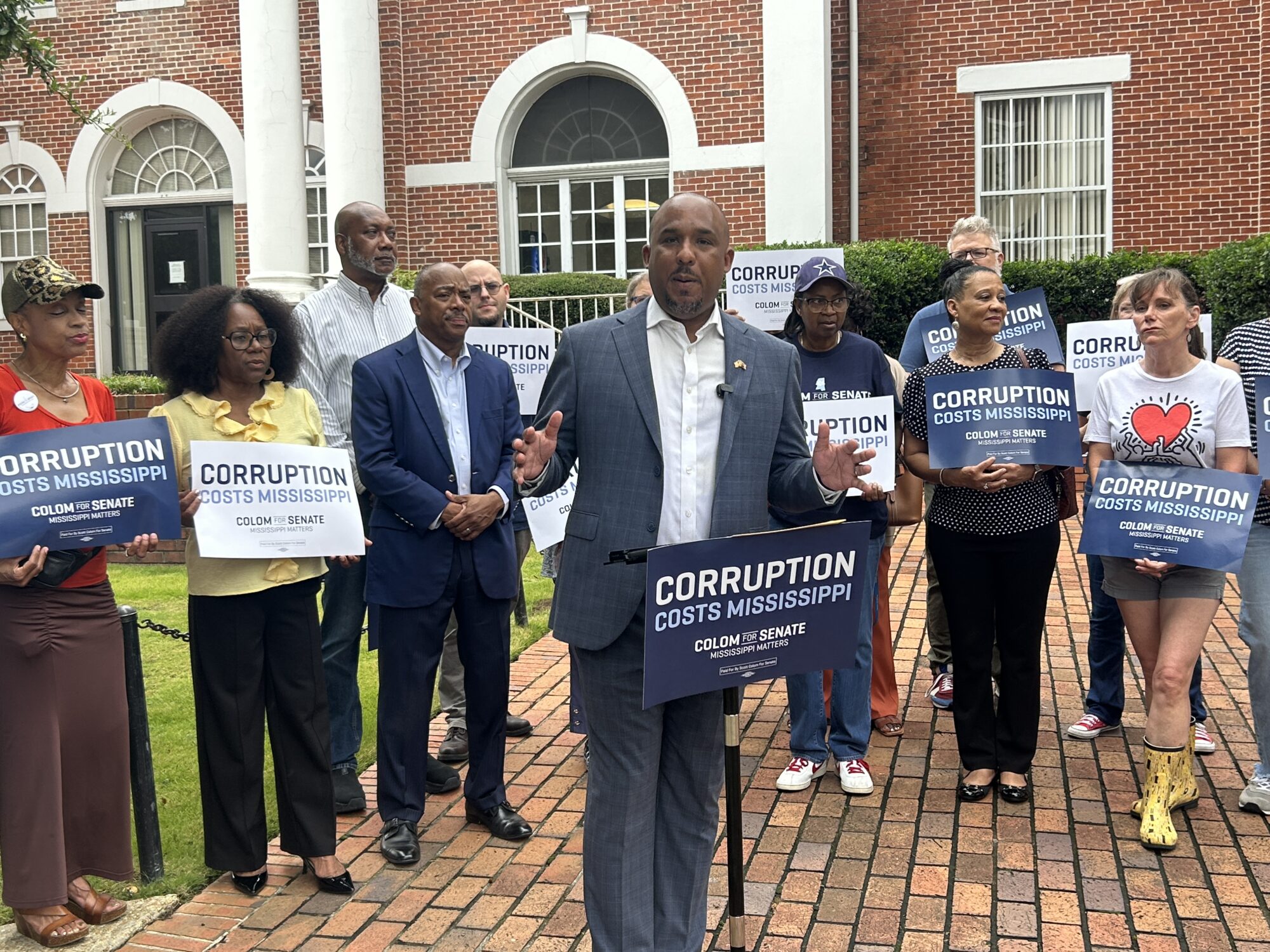
In the GOP-dominated Magnolia State, Democratic District Attorney Scott Colom is challenging incumbent Republican Sen. Cindy Hyde-Smith, and many Democratic politicos had hoped the national party would provide substantial support and funding to Colom.
Senate Minority Leader Chuck Schumer of New York and U.S. Sen. Kirsten Gillibrand, a Democrat from New York who leads the DSCC, said in a joint statement about the $40 million announcement that Democrats have created multiple pathways for their party to win back a Senate majority.
“Today’s announcement allows us to build on our momentum and puts Democrats in a prime position to flip the Senate in less than 100 days,” the two Democratic senators said.
Despite being left out of the funding allotment, Colom has continued to make strides in fundraising and has attracted the attention of some national Democrats. U.S. Sen. Angela Alsobrooks, a Democrat from Maryland, campaigned with Colom on Aug. 1.
NBC News reported that Schumer stopped by a Colom fundraiser in Washington on July 29, and the Democratic leader told Semafor he still sees potential for Colom to defeat Republican incumbent Hyde-Smith.
Gerard Henderson, Colom’s campaign manager, told Mississippi Today in a statement that Colom is outraising Hyde-Smith with Mississippi money and not money from “Washington committee transfers.”
“Washington has overlooked this state for too long, and that’s exactly why he’s running,” Henderson said. “Anyone ready to invest in Mississippi is welcome, but Mississippians aren’t waiting on D.C. to prove this race is real.”
Colom has raised more money than Hyde-Smith in two fundraising quarters, though the Republican incumbent has more cash on hand. This last quarter, Colom raised $945,000 and has $847,000 in cash on hand. Hyde-Smith raised $781,000 last quarter and has $2.5 million in cash on hand.
With all that’s going on in college sports today – and that’s a lot – the U.S. Senate adopts legislation about who won the 1960 National football championship.
NEW YORK — It happened out of necessity. Academy Award-winner Morgan Freeman was in Clarksdale, Mississippi, 25 years ago when some out-of-towners asked where they could hear blues music. Musicians were abundant; venues were not.
“There was no place where we could guarantee that you could go in and hear it,” he told The Associated Press. “So, we had to establish that.”
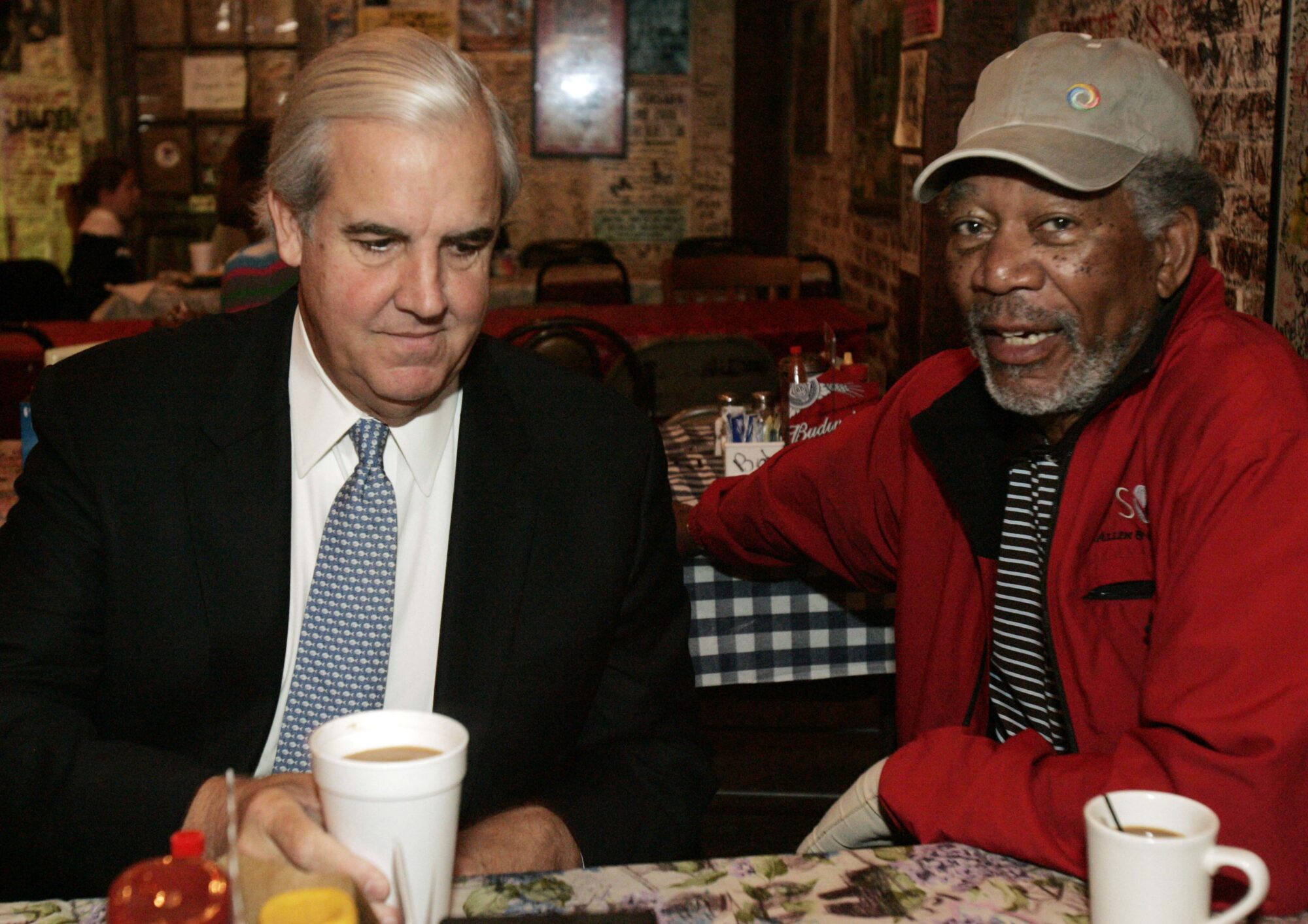
Actor Morgan Freeman, right, and his business partner Bill Luckett are shown during an interview at Ground Zero Blues Club in Clarksdale on Oct. 11, 2009. Credit: AP Photo/Rogelio V. Solis
Freeman and his business partners, then-Mayor Bill Luckett and Howard Stovall, were inspired to open a juke joint in Clarksdale called Ground Zero Blues Club. Then, much more recently, a team created “Morgan Freeman’s Symphonic Blues Experience,” a touring ensemble of blues musicians who marry the beloved Southern genre with classical, symphonic compositions. On Friday, they’ll release an album under the same name. (Luckett, who unsuccessfully sought the Democratic nomination for Mississippi governor in 2011, died in 2021.)
The legendary actor is a producer and narrator on the release, not a performer. That’s left up to the professionals: all-star acts like Taj Mahal, Keb’ Mo’, Shemekia Copeland, Tiernii Jackson, the Stax Music Academy Choir, the Chineke! Orchestra out of London, and many more.
“I like the blues. I like music. I cannot claim to be an aficionado. That’s not my place,” says Freeman. “I’m an enthusiast, but that’s a necessity.”
From live performances to a full-length record
Before the album, the “Morgan Freeman’s Symphonic Blues Experience” traveling performances were born out of a simple idea: How could Freeman and his team bring this music to the world?
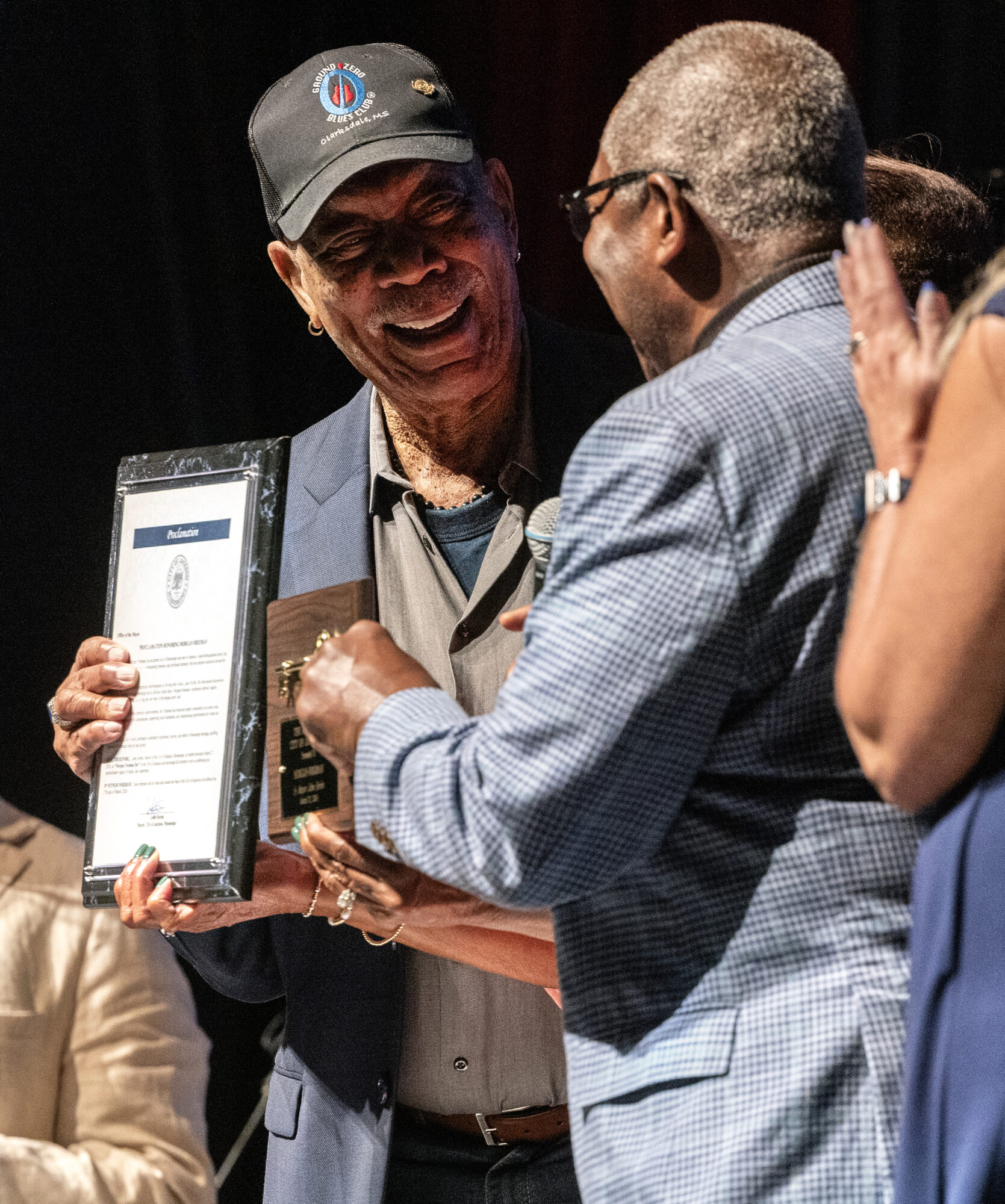
Morgan Freeman smiles as Jackson Mayor John Horhn proclaims March 27 as Morgan Freeman Day during Morgan Freeman’s Symphonic Blues Experience at Thalia Mara Hall in Jackson on Friday, March 27, 2026. Credit: Eric Shelton/Mississippi Today
“Blues is an important American story birthed in the Mississippi Delta out of hardship but obviously resonates with people and cultures on a global basis, both for how good it sounds, but also the message underneath it,” said Eric Meier, Freeman’s partner and co-producer on the project who joined the actor’s blues club in 2018. “We conceived of this concept to really take this music to new geographies and new audiences.”
Turning the live performance into an album meant cutting down a nearly two-hour show to around 45 minutes across 12 tracks, while still honoring the format. It includes video vignettes as well as “cinematic narration,” courtesy of Freeman, recorded at the club in Clarksdale.
“We offer a musical story, a 100-year arc from the 1930s to modern day, so the evolution of blues music,” says Meier.
Freeman’s idiosyncratic voice opens the record, describing the genre with a real poetry, delivered atop a haunting rendition of Blind Willie Johnson’s 1927 gospel blues classic, “Dark Was the Night, Cold Was the Ground.”
“This is music that gave voice to a people, to their pain, their hope and their resilience,” Freeman recites. “Music isn’t just melody, you know. It’s memory, it’s history wrapped in ribbon, the echoes of lives lived and lost, heartache and hope all tangled together. And nowhere is that truer than in the blues.”
Freeman wants to keep the blues alive
The last song on “Morgan Freeman’s Symphonic Blues Experience” sees singer-songwriter Muddy Waters’ great-nephew Keith Johnson covering Raphael Saadiq and Ludwig Göransson’s “I Lied to You” from the Oscar-winning 2025 film “Sinners.” It brings the 100-year story of blues to its coda, but it also serves as a reminder of the film’s ability to bring the genre into mainstream conversation.
That’s something Freeman hopes to accomplish, too. He wants to make sure blues is not forgotten.
“It is a responsibility that we’ve taken on. And the hope is that it, like everything else that catches on, takes root, as it were. You know, the blues is actually America’s music,” he says. “So, it’s incumbent upon us to water it, nurture it, keep it alive, keep it going.”
Meier adds that their album project predates “Sinners” — he says director Ryan Coogler told him the film’s juke joint was partially inspired by Ground Zero Blues Club; the film is set in Clarksdale after all — but it has been “a wonderful coincidence” that both works have the power to bring the blues to the masses.
And maybe one day, “Morgan Freeman’s Symphonic Blues Experience” will receive the same kind of critical praise given to “Sinners.” The album is eligible for the 2027 Grammy Awards.
“We will be submitting in multiple categories,” says Meier. “You got room on your trophy shelf, Morgan?”
“Yeah, yeah. I want it,” Freeman smiles.
Adding Grammy Award-winner to his Academy Award-winner title? “Sounds pretty good to me.”
Musicians perform during Morgan Freeman’s Symphonic Blues Experience at Thalia Mara Hall in Jackson on Friday, March 27, 2026.
The Mississippi Symphony Orchestra performs during Morgan Freeman’s Symphonic Blues Experience at Thalia Mara Hall in Jackson on Friday, March 27, 2026.
The Mississippi Symphony Orchestra performs during Morgan Freeman’s Symphonic Blues Experience at Thalia Mara Hall in Jackson on Friday, March 27, 2026.
Adrian “Rev Slim” Miles performs during Morgan Freeman’s Symphonic Blues Experience at Thalia Mara Hall in Jackson on Friday, March 27, 2026.
Anthony “Big A” Sherrod performs with other musicians during Morgan Freeman’s Symphonic Blues Experience at Thalia Mara Hall in Jackson on Friday, March 27, 2026.
Lee Williams plays the drums during Morgan Freeman’s Symphonic Blues Experience at Thalia Mara Hall in Jackson on Friday, March 27, 2026.
Keith Johnson performs with other musicians during Morgan Freeman’s Symphonic Blues Experience at Thalia Mara Hall in Jackson on Friday, March 27, 2026.
The Mississippi Symphony Orchestra performs during Morgan Freeman’s Symphonic Blues Experience at Thalia Mara Hall in Jackson on Friday, March 27, 2026.