Audio recording is automated for accessibility. Humans wrote and edited the story.
Elon Musk’s data center company, xAI, has more than doubled the number of unchecked natural gas generators at its Southaven facility since coming to Mississippi last summer.
The company uses the turbines to power its two data centers just across the state line in Memphis, and is also planning to build another large center in Southaven. XAI now has 46 “temporary-mobile” turbines at its Mississippi facility, according to the Mississippi Department of Environmental Quality, up from 18 turbines when it first arrived last year.
The NAACP, which filed a lawsuit against xAI last month over the turbines’ lack of permits, last week requested an injunction after learning xAI had increased the number of temporary-mobile turbines to 33. MDEQ later confirmed to Mississippi Today that the actual number was 46.
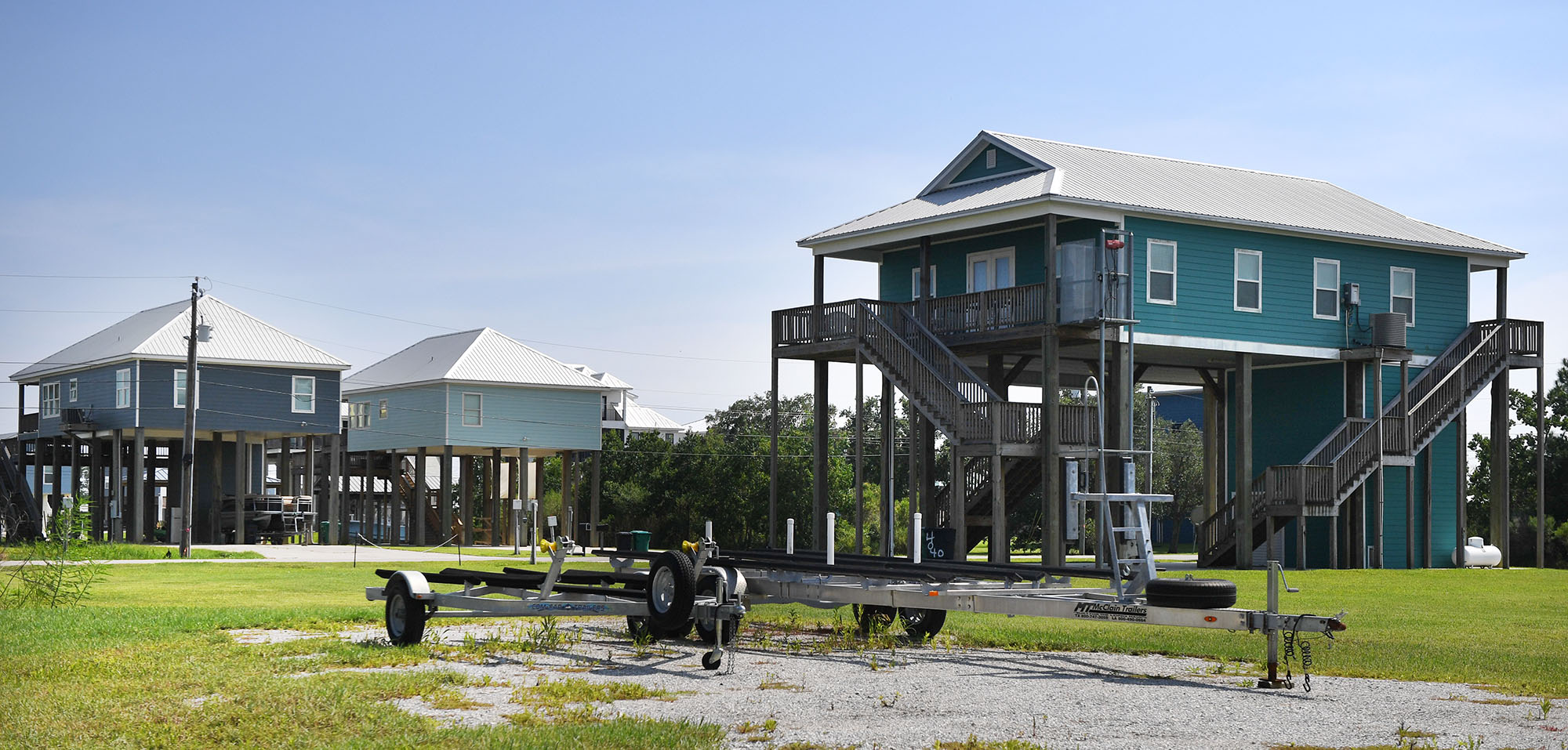
Because the state considers them “mobile” turbines — they’re attached to flatbed trailers — MDEQ allows xAI to run the generators without an air permit for up to a year. But Southaven residents and advocates have pushed back, expressing concerns over unchecked air emissions and constant noise from the generators. Without permits, the state has no way to measure the toxic releases coming from the facility.
Lawyers from the Southern Environmental Law Center, representing the NAACP in its lawsuit, argue Mississippi is misinterpreting the federal Clean Air Act by allowing xAI to bypass the permit process. Language from the law appears to support their argument that the turbines should be considered “stationary,” and thus subject to permit requirements. It defines a stationary turbine as “not self-propelled or intended to be propelled while performing its function. It may, however, be mounted on a vehicle for portability.”
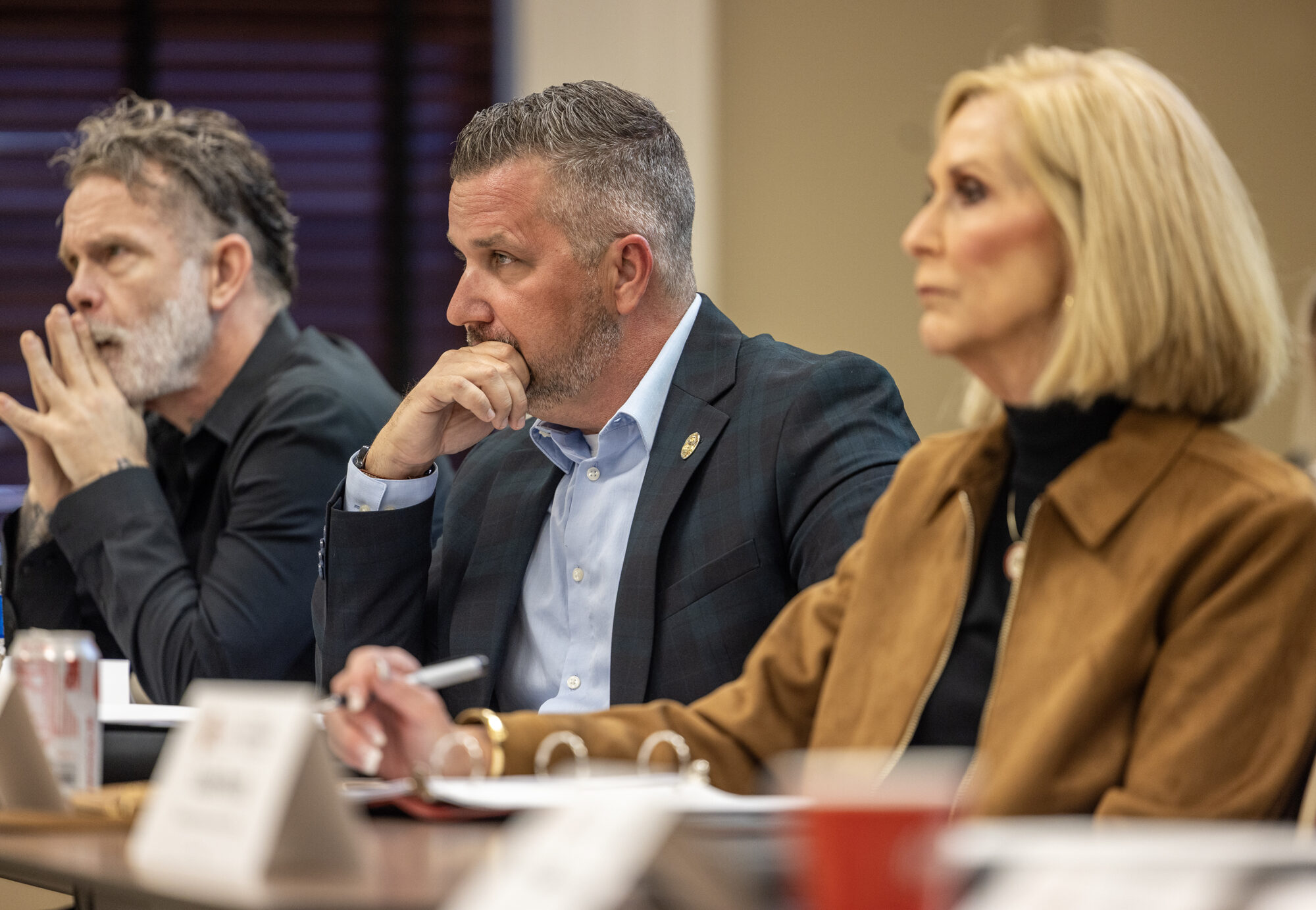
Jaricus Whitlock, left, and Jeffrey Bland prepare for a Mississippi Department of Environmental Quality public hearing on an xAI permit application at Northwest Mississippi Community College in Southaven on Tuesday, Feb. 17, 2026. Credit: Eric Shelton/Mississippi Today
MDEQ said xAI added 19 temporary-mobile turbines between March 25 and May 2. MDEQ told Mississippi Today on May 6 that xAI notified the agency of the additions “this week,” but also said xAI is not required to tell the agency when it brings on more such generators.
When asked if there is any concern about the combined emissions from the growing cluster of turbines, MDEQ said it is monitoring the development.
“As indicated by the facility, all portable/temporary turbines are equipped with control technology to minimize emissions,” agency spokesperson Jan Schaefer said via e-mail. “MDEQ is evaluating the situation and will make the facility aware as to when it can no longer bring additional portable/temporary turbines on-site.”
In a press release last week, the Southern Environment Law Center said the turbines have the potential to “emit a staggering amount of toxic air pollution.”
“Toxic emissions from the facility threaten to do long-lasting harm to nearby communities,” the release said. “Pollution from gas turbines includes smog-forming nitrogen oxides, fine particulate matter and hazardous chemicals like formaldehyde. These pollutants are tied to increases in asthma, respiratory diseases, heart problems and certain cancers.”
In addition to the temporary-mobile turbines, the state permit board in March approved air permits for 41 permanent gas generators at xAI’s Southaven operation. The SELC appealed the decision last month, requesting a hearing on the matter.
Audio recording is automated for accessibility. Humans wrote and edited the story.
Legislative leaders on Wednesday night were still haggling out final details of a so-called “Christmas tree” spending bill to fund dozens of lawmakers’ special projects across the state, hoping to conclude their regular legislative session on Thursday.
Senate Finance Chairman Josh Harkins, a Republican from Flowood, told Mississippi Today that he and House leaders were still working through the particulars, but that lawmakers would likely settle on a list of projects sometime Wednesday night.
A $200 million to $400 million projects bill is typically one of the final items that legislators vote on before they end a session. For the last several years, lawmakers have funded the projects with cash, though they have borrowed money in lean years.
Earlier this week, legislators approved the budget for the Department of Finance and Administration, the state agency that disburses the money for projects. The budget bill authorized the agency to spend up to $253 million on projects, though the final Christmas tree bill could spend less than that.
These bills are used for projects in cities and counties, such as park renovations and road repairs. But Christmas tree bills are often used as a political spoils system for lawmakers, with legislative leaders using approval or denial of lawmakers’ requested projects as a carrot or a stick on votes on other issues. Lawmakers did not pass a project last year due to political bickering between Republican leaders of the House and Senate.
Here are some highlights from the session on Wednesday:
Governor signs SHIELD Act voting restrictions into law
Gov. Tate Reeves announced on Wednesday that he had signed the Safeguard Honesty Integrity in Elections for Lasting Democracy, or SHIELD, Act into law.
The measure requires local election officials to verify voters’ citizenship using a federal immigration database and to audit voter rolls for potential noncitizens. Supporters say the measure will boost confidence in election results. Critics say it will suppress some U.S. citizens’ votes.
“This is another win for election integrity in Mississippi (and America),” Reeves said in a statement on social media. “We will continue to do everything in our power to make it infinitely harder – with a goal to make it impossible – to cheat in our elections!”
The legislation drew vocal opposition from Democrats, who said it would make voting more time-consuming and could even function as a “poll tax” because people might end up having to pay for extra documents, such as birth certificates, to prove their citizenship. Reeves, in turn, accused Democrats on Wednesday of trying to “outsource the management of our country to those who shouldn’t be here.”
There is no evidence that noncitizens are voting in large numbers in Mississippi or across the U.S. But Republicans said the bill is a simple proposal that adds another layer of verification to the state’s process for ensuring only citizens vote.
Reeves signed the bill into law as the Trump administration pushes to “nationalize” elections with a federal bill that could potentially prevent millions of people from casting ballots.
Both chambers of the Mississippi Legislature also sent bills to the governor on Tuesday aiming to crack down on immigration, despite some lawmakers raising concerns that the federal government is responsible for enforcement and that the proposals could inadvertently harm U.S. citizens.
Bill taxing immigrant worker wire transfers likely dead
A bill that would have taxed wire transfers of money from Mississippi to other countries is likely dead after lawmakers from both sides of the aisle raised concerns about unintended consequences and constitutionality.
SB 2828, the “Money Transfer Modernization Act,” was aimed at collecting money from undocumented workers who are not paying taxes when they send money to their home countries, proponents said.
It would have created a fee of $7.50 for wire transfers of up to $500, and 1.5% of the transfer for amounts over $500. People could receive a refund of the charges by going through an appeal process and proving they pay income taxes.
“We need to capture some of that money back for people who are here illegally and using our services,” said Rep. Angela Hill, a Republican from Picayune.
But as the Senate prepared to take a final vote that would have sent the measure on to the governor on Wednesday, other lawmakers had questions about whether the charges are constitutional, and whether they would overburden banks or other institutions with new regulations and tasks.
The Senate voted to recommit the bill for further discussion and possible changes. As lawmakers look to end their 2026 session as early as Thursday, it likely killed the measure for this year.
After big promises, lawmakers land on smaller teacher pay raise
Both chambers on Wednesday passed a teacher pay raise, much smaller than what each chamber had proposed earlier in the session.
The House and the Senate have gone back and forth for months, presenting dueling pay raise proposals. The House wanted to give teachers $5,000 more per year, while the Senate started at $2,000 and eventually upped its plan to a $6,000 raise rolled out over three years.
In the end, though, the Senate’s original $2,000 pay raise won out, disappointing teachers across the state.
House Education Chairman Rob Roberson, a Republican from Starkville, had stern words for critics of the smaller raise on the floor Wednesday morning.
“Protest it. Don’t take it,” he said. “We have attempted to give our teachers pay raises over the years. When you roll out here and you meet another state employee, the guy that works on the side of the road for the state, ask him how many pay raises he’s gotten. You know what the answer is? None. We are trying our best to do what we can.”
Lawmakers said the state couldn’t afford to give teachers any more money this year because of other expenses, but have promised to return to the issue in 2027.
“I’m going to fight very hard for our teachers in the future — don’t doubt that — but I’m not going to apologize for an increase, not whenever we have so many others that didn’t get one,” Roberson said.
Legislators also approved a number of education initiatives that would be administered by the Mississippi Department of Education, including extending the literacy act that boosted reading rates into higher grades, creating a similar statewide math program and requiring financial literacy courses.
The Legislature sent the Mississippi Department of Education’s budget to the governor earlier this week, which provides funding for all of these initiatives and the pay raise.
After the final education bill was adopted Wednesday afternoon, Senate Education Committee Chairman Dennis DeBar, a Republican from Leakesville, gave lawmakers a pat on the back for the policies they passed this session.
“The Senate and the Legislature accomplished a lot this year on education despite the rocky start we had with school choice issues, and you should all be proud of what you’ve done this year,” he said.
House adjourns without taking up youth court bill
Senate Bill 2728, which included sweeping changes to Mississippi’s beleaguered youth court system, died on Wednesday’s deadline, even before its author Sen. Brice Wiggins, a Republican fromPascagoula, began introducing it to his colleagues.
Mississippi’s youth courts handle child abuse and neglect cases as well as juvenile delinquency. These courts are closed to the public, their records held confidential, and operate under different kinds of judges from county to county, leading to inconsistent outcomes for families. Court officials, lawmakers and policy experts have discussed for years the need for Mississippi to bring uniformity to the courts.
Both the Senate and the House had passed versions of the bill earlier in the session and a handful of lawmakers had reached a compromise, called a conference report, filed Monday.
“A youth court system statewide has been discussed in this building for over a decade. We are at this point where we can make something positive for our children in a system that does not serve them,” Wiggins said while introducing the conference report to his colleagues Wednesday afternoon.
But the House had already adjourned for Wednesday, a deadline for the bill, without taking it up for a vote.
Changes in the bill, which wouldn’t have taken effect until 2028, included doing away with the referee system, in which private attorneys are appointed part time to hear youth court cases in chancery courts. It also would have opened court proceedings in child abuse and neglect cases, except in cases in which the judge felt there was a need to close the courtroom, and would have allowed the Mississippi Department of Child Protection Services to file petitions in child welfare matters.
“The state is 22 years into the Olivia Y litigation with a price tag of roughly $95 million. Without systemic changes, the state cannot exit this litigation, and it risks inviting additional litigation,” Wiggins said to the Senate.
Audio recording is automated for accessibility. Humans wrote and edited the story.
Lawmakers sent a bill that makes 50-50 joint custody the legal standard for divorce cases in Mississippi to Gov. Tate Reeves Wednesday.
If Reeves signs the bill into law, chancery court judges, or chancellors, would be required to favor equal parenting time in custody cases. Parents could present evidence showing why that’s not in the best interest of their children. The legislation also exempts parents who agree on a different custody arrangement outside of court. The law would go into effect in July.
Proponents say the legislation will create equal opportunities for fathers who have suffered from courts’ bias that mothers are more worthy of custody. Critics say the bill feigns equality but will be less equitable for vulnerable women and children, including infants who are breastfeeding and mothers who are in domestic violence situations.
In fighting for gender equality, people shouldn’t ignore that mothers develop a special bond with babies during pregnancy, argued Rep. Omeria Scott, a Democrat from Laurel. She was one of eight House members who voted against the legislation Tuesday.
“This is just another situation where women lose in Mississippi,” Scott told Mississippi Today.
Rep. Dana McLean, a Republican from Columbus, pleaded with her colleagues on the floor Tuesday to reconsider the legislation. McLean said it was problematic that breastfeeding infants would also be subject to a presumption that being separated from their mother half the time was best for them.
“We’re talking about breastfeeding babies just coming home from the hospital,” McLean said on the floor. “And I know that the best interest of an infant would be to be with their mother initially.”
Judges would still have authority to override the presumption, responded Rep. Joey Hood, a Republican from Ackerman and chairman of the House Judiciary A Committee where the bill originated.
The proposed legislation does not preclude chancellors “from doing what is in the best interest of the child,” Hood said.
But McLean and Scott disagree.
Judges currently award custody on a case-by-case basis using the Albright factors, a rubric that includes caregiving history, emotional ties and the age of the child.
While the bill was on the Senate floor Wednesday, Sen. Brice Wiggins, a Republican from Pascagoula and chairman of the Senate Judiciary A Committee, said that other states have already adopted a presumption of joint custody.
Sen. Hob Bryan, a Democrat from Amory and one of 10 senators who voted against the bill, asked Wiggins how many other states are doing this. Wiggins answered, “four or five.”
“Then, it sounds like 40-some-odd other states don’t have this law,” Bryan said.
Wiggins responded that “it’s a good thing” if Mississippi is on the front end of this legislation.
In 2017, Kentucky became the first of five states to adopt a joint custody presumption law. Since then, instances have arisen where women and children have suffered abuse because the law compelled them to interact with violent ex-spouses and caregivers, according to The Wall Street Journal.
Mississippi’s proposed legislation specifies that the presumption of joint custody will not apply if the court finds a history of violence with one of the parents. However, that would require a “preponderance of evidence” — attorneys have to prove it is more likely than not that violence occurred.
Sen. Bradford Blackmon, a Democrat from Canton, voted for the bill in March. He changed his vote on Wednesday after hearing from several chancery court judges who were against the bill. Blackmon said the chancellors told him they need to be able to look at all the factors and don’t want to be boxed into a specific custody ruling.
“I don’t know why I, as a legislator that does not practice in that area … would try to override their expertise,” Blackmon told Mississippi Today.
Eight family attorneys and chancery court judges told Mississippi Today they believe the current custody system is the most fair, and the new legislation would set a dangerous legal precedent.
If mothers are awarded custody more often than fathers, it’s not because of an inherent bias but rather a history of being the primary caregiver and fostering emotional closeness, said Kelly Williams, a Ridgeland-based attorney and a child welfare law specialist certified by the National Association of Counsel for Children.
“I’ve been in courts all over the state, and men are not getting an unfair shake,” Williams said.
Audio recording is automated for accessibility. Humans wrote and edited the story.
After nearly two decades of paralysis on the issue, Mississippi officials are inching closer to establishing a state home mitigation program to protect residents from natural disasters. Storm preparation experts say such a program is vital to building resilience as the dangers from climate change continue to grow.
Senate Bill 2409, which would create the Strengthen Mississippi Homes Program, heads to Gov. Tate Reeves for his consideration after both chambers approved the measure on Wednesday.
In a three-part series last year, Mississippi Today reported on the immense vulnerability the state faces to climate change, which some researchers argued is greater than anywhere else in the country.
The program would offer grants of up to $10,000 to allow homeowners to retrofit their property to better protect them from hurricane, tornado, hail and other windstorm damage. The money would go towards upgrading roofs to meet the FORTIFIED standards set by the Insurance Institute for Business and Home Safety.
Alabama, which leads the nation in FORTIFIED homes, released a study last year showing a significant reduction in losses from mitigated houses versus others after Hurricane Sally in 2020. In addition to making homes safer, the grant has also helped reduce home insurance costs. Since Hurricane Katrina in 2005, Mississippians, especially on the Coast, have seen skyrocketing premiums as insurance companies account for the risk of natural disasters.
Insurance Commissioner Mike Chaney speaks during the Mississippi Economic Council’s annual Hobnob at the Mississippi Coliseum in Jackson on Thursday, Oct. 30, 2025. Credit: Eric Shelton/Mississippi Today
“I would like to thank the (lawmakers) for their work in coming together on a mitigation program that puts us on a level playing field with other coastal states that have successful mitigation programs such as Alabama and Louisiana,” state Insurance Commissioner Mike Chaney said in a statement Wednesday, adding that his office is committed to “improve long-term resilience for Mississippi homeowners.”
Single-family, primary residence homes anywhere in Mississippi would be eligible for the grants. The home must have windstorm insurance and, if in a flood zone, flood insurance as well. The Mississippi Department of Insurance, which would administer the program, would fund the grants through fees collected from insurance agents. The department’s appropriation bill, which is being considered by the governor, allows them to spend up to $15 million for the program from the fees collected.
State officials first developed the program in 2007 in the aftermath of Hurricane Katrina. But due to a lack of political will and infighting among state officials, it took until 2024 for the Legislature to fund the program. That approval was limited to a pilot program, though, and lawmakers declined to re-up the funding in 2025.
A main point of contention was whether to allow the Insurance Department to run the program or to put it in the hands of a separate, nonprofit authority. The distrust between lawmakers and Chaney traced back to a 2016 scandal over funding the state couldn’t account for, which went through a different state agency, Mississippi Today reported.
Yet while arguing the Insurance Department shouldn’t run the program, lawmakers also pointed to Alabama’s mitigation program as a shining example. Alabama runs its program through its state insurance department, and experts, such as those at Smart Home America and Habitat for Humanity of the Mississippi Gulf Coast, said the program largely mirrored what Chaney pushed for.
Sen. Scott DeLano, R-Gulfport, listens as questions are asked during a Senate Education Committee meeting on Wednesday, Feb. 25, 2026, at the Capitol in Jackson. Credit: Eric Shelton/Mississippi Today
Sen. Scott DeLano, a Republican from Biloxi who’s led the Legislature’s work on the issue, repeatedly called out Chaney last year over a lack of information and concerns with the Insurance Department running the grant fund. Leading up to this legislative session, though, the two were able to work through their differences, DeLano said.
“I’ve got to commend the commissioner for the work he’s done,” the senator told his colleagues on the floor Wednesday.
Sen. Walter Michel, a Republican from Ridgeland, introduced the measure.
“For too, too long we have played hurricane roulette with the mitigation work,” Lt. Gov. Delbert Hosemann said after the Senate passed the proposal. “So many homes all across Mississippi will need what you did today.”
The proposal would also create an advisory committee that would meet with the Insurance Department about the program three times a year. The committee would be comprised of three appointees from the Senate, three from the House, and the executive director of the Mississippi Windstorm Underwriters Association.
Audio recording is automated for accessibility. Humans wrote and edited the story.
For the first time in years, state leaders have voted to increase the amount of tax credits available to Mississippians who donate to private schools.
The Children’s Promise Act program currently allows people to claim up to $18 million in tax credits in total. Under a bill headed to the governor, that state would instead allow people to claim up to $24 million in tax credits starting in 2027.
Since 2020, private schools and foster care organizations have been receiving money through the Children’s Promise Act, which gives donors dollar-for-dollar tax credits for up to 50% of the donor’s state tax liability.
House Ways and Means Chairman Trey Lamar, a Republican from Senatobia, originally touted the program as a way to give money to nonprofit organizations that care for foster children, but a provision to give tax credits to private-school donors was tucked into the bill when it was passed in 2019.
House Bill 1944, which passed the House and Senate this week, would change the buckets of money available to different organizations, giving private-school donors access to more tax credits.
Under current law, half of the program’s tax credits, up to $9 million, are earmarked for people and organizations that donate to foster care service organizations. The other $9 million in tax credits are available to donors to private or special purpose schools that have any students in the foster care system, students with chronic illnesses or disabilities or students who are eligible for free or reduced-price meals.
But if Gov. Tate Reeves signs HB 1944, one of the $9 million buckets would be entirely available to private-school donors because the legislation separates the schools in the second category and gives special purpose schools access to a new pot of tax credits up to $6 million.
That means next year, nonprofit foster care organizations would be eligible for $9 million, private schools would be eligible for $9 million and special purpose schools would be eligible for $6 million.
Though Lamar’s attempt to substantially increase the cap on the program failed this year — as it has in previous years — this is the first time money has been added to the program since 2022, in large part to advocates who have rallied against the program. Opponents say the program is an indirect way for the state to funnel tax dollars to private schools.
Audio recording is automated for accessibility. Humans wrote and edited the story.
People who distribute, or intend to distribute, abortion-inducing medication in Mississippi could face a criminal charge and up to 10 years in prison if convicted, under a bill lawmakers are sending to Republican Gov. Tate Reeves.
Experts say criminalization could lock up desperate Mississippians and scare doctors away from prescribing these medications in clinical settings for non-abortion purposes, such as stopping postpartum hemorrhaging and easing symptoms of miscarriages.
Lawmakers added restrictions on abortion-inducing drugs to a drug trafficking bill that passed the House 76-38 and the Senate 37-15 on Tuesday. Republicans control both chambers.
“I think we’re going to end up trapping a lot of people into the criminal justice system simply because they want to have autonomy over their own bodies,” said Rep. Zakiya Summers, a Democrat from Jackson, who voted against the bill.
Rep. Celeste Hurst, a Republican from Sandhill, said she introduced this amendment to keep abortion medication, such as mifepristone and misoprostol, from entering Mississippi.
“The intent is to keep doctors from out of state from circumventing our current law,” Hurst told Mississippi Today.
But there is virtually no way for Mississippi to prosecute providers who send abortion pills across state lines, according to Mary Ziegler, an expert on abortion law and a professor at University of California at Davis School of Law. Shield laws in states where abortion is legal protect abortion providers, patients and helpers from out-of-state investigations, lawsuits and prosecutions, Ziegler told Mississippi Today.
“I think lawmakers are imagining this will be primarily used against doctors or drug manufacturers in blue states,” Ziegler said. “But it will be much harder for prosecutors to actually get those people into court than it will be for them to get someone whose partner has these drugs.”
What makes the legislation especially harmful, Ziegler said, is its vagueness. The bill says possession would only be criminal if there were an intent to distribute, but Ziegler expects Mississippians using the drugs for their own purposes could be prosecuted.
Language around clinical settings is also vague. The bill says Mississippi providers would only be prosecuted if they prescribed abortion-inducing medication with the intent to cause an abortion, not in instances where those drugs are prescribed to aid in a miscarriage or stop hemorrhaging. Despite this exemption, the bill is sure to have a chilling effect on health care, Ziegler said.
In both cases, Ziegler said, “the differentiator is intent, which is really, really hard to prove.”
This kind of legislation primarily comes down to the fact that abortion opponents are disappointed that abortions have increased in recent years, Ziegler said.
In 2022, the Supreme Court’s Dobbs decision, in a Mississippi case, overturned the constitutional protections around the right to abortion. At the time, it was considered a huge victory for the anti-abortion movement. But abortions have paradoxically increased across the nation in the years since then, largely due to increased access to mail-in abortion medication.
“That’s kind of a hollow thing for the state if that happens and then the number of abortions doesn’t go down,” Ziegler said. “It’s like, what did you really accomplish?”
Sen. Daniel Sparks, a Republican from Belmont and one of six lawmakers who hashed out the final details of the legislation, told Mississippi Today he supported the amendment as a way to enforce Mississippi’s abortion ban.
“The state of Mississippi has been pretty clear of where they are about their pro-life position,” Sparks said. “If people are circumventing that through the mail or through other mechanisms, then I think we’re trying to be consistent with what the law is.”
Sen. Bradford Blackmon, a Democrat from Canton who voted against the bill, said it’s “outrageous,” “ridiculous” and “unnecessary” to lump abortion medication in with scheduled drugs and allow the state to enforce imprisonment of one to 10 years for the offense. In the end, Blackmon said, it’s just going to hurt poor women.
“The wealthy Mississippians are still going to be able to go where they want to get abortions,” Blackmon said.
Audio recording is automated for accessibility. Humans wrote and edited the story.
Retired Circuit Judge Bob Helfrich died Tuesday. He was 72.
Helfrich was known best for his role prosecuting Sam Bowers, the imperial wizard for the White Knights of the Ku Klux Klan, in the 1966 killing of NAACP leader Vernon Dahmer Sr. in Hattiesburg.
The White Knights was the most violent white supremacist organization in the 1960s.
Before Bowers went to trial in 1998, Helfrich told reporters, ‘‘Justice was never served the first time. It’s time justice was done.’’
The first trial had led to a few convictions, but the klansmen didn’t stay behind bars long because governors pardoned them, commuted their sentences or released them early. Most of the killers walked free, including Bowers.
Thirty-two years after the fact, Bowers went on trial for ordering the killing of Dahmer, who died after defending his family from klansmen who fired into the family home and set it on fire.
Dennis Dahmer was 12 years old when the attack took place on Jan. 10, 1966. That same year, Helfrich watched his dad die from lung cancer. He, too, was 12.
“That’s why I feel close to the Dahmer family,” Helfrich said then. “I was there when my dad died, there till his last breath.”
Days before the August 1998 trial began, his voice broke with emotion as he spoke about the family. “I cannot imagine the thoughts that go through their minds,” he said.
Dennis Dahmer described his relationship with Helfrich as a close one. “We both talked about our shared experience of losing our fathers during adolescence,” he said.
In his closing statement, defense lawyer Travis Buckley claimed that Bowers was being persecuted, comparing it to Adolf Hitler’s propaganda campaign against Jews.
Helfrich told jurors that Bowers ordered klansmen to kill Dahmer, just like Hitler ordered his henchmen to kill millions of Jews. “Did Hitler do it? No. Was Hitler responsible? Yes. And what do we have here?” Helfrich said as he pointed at Bowers. “Let’s talk about Hitler. Let’s talk about an evil genius sitting right there.”
A jury convicted Bowers, and the judge sentenced him to life in prison, where he died in 2006.
“The Dahmer family will always be grateful for the decision made by District Attorney Lindsay Carter and then-prosecutor Bob Helfrich to reopen the civil rights murder case of Vernon F. Dahmer Sr.,” Dennis Dahmer said.
Yes, he said, it was “a risky political decision to make, but it was the right thing to do. Justice delayed is better than justice denied!”
Five years after that conviction, Helfrich was sworn in as a circuit judge. Dahmer’s daughter, Bettie, declared, “It’s a new day for justice in Forrest and Perry County.”
Helfrich became one of the first group of judges to utilize drug courts in Mississippi. Those courts make it possible for those battling drug problems to reverse convictions after completing a recovery program.
In 2006, he threw out the burglary conviction of Black Korean War veteran Clyde Kennard, who was railroaded in 1960 after he tried to enroll at the then-all-white college now known as the University of Southern Mississippi.
Kennard was sentenced to seven years in prison and was released in 1963 after officials at Parchman prison discovered he was dying of cancer. The lone witness recanted his testimony, saying Kennard had done nothing wrong.
“Because this matter did begin here, it should end here,” Helfrich said. “This is not a black and white issue; it’s a right and wrong issue. To correct that wrong, I am compelled to do the right thing.”
in a statement Wednesday, Mississippi Supreme Court Chief Justice Mike Randolph said Helfrich “developed a deep commitment to drug courts, and the former participants held him in the highest regard. … He went on to lead one of the most respected drug courts in the state. Judge Helfrich was appointed multiple times by the Chief Justice of the Supreme Court of Mississippi to serve on the State Intervention Court Advisory Council, and he assisted and counseled all of the state’s trial judges.”
Helfrich retired last year, and Gov. Tate Reeves appointed Hattiesburg attorney Thomas “Michael” Reed to take Helfrich’s place until the term expires in 2028.
Devery Anderson, author of the book “A Slow, Calculated Lynching: The Story of Clyde Kennard,” said the passion and resolve that Helfrich “mustered in prosecuting the mastermind behind the 1966 murder of Vernon Dahmer tells you everything you need to know about him.”
His exoneration of Kennard demonstrates that Helfrich “was always willing to do the right thing — let the consequence follow,” Anderson said. “He will long be revered in Mississippi law for these and a host of other reasons.”
Update 4/1/26: This story has been updated to include a statement from Mississippi chief justice, Mike Randolph.
Audio recording is automated for accessibility. Humans wrote and edited the story.
So much to talk about: Mo Williams to Kentucky, Mississippi State’s baseball excellence, Tiger Woods’ errant drives, Warner Alford, the Final Fours, some Saints news, and Rick’s gumbo.
Audio recording is automated for accessibility. Humans wrote and edited the story.
Opioid Settlement Fund Advisory council member Greg Spore was hopeful when reviewing applications last fall from organizations looking to prevent and address addiction in Mississippi.
As someone who struggled with addiction for years, Spore thought the tens of millions of lawsuit dollars the state Legislature tasked the council with overseeing could help make the resources that have helped him maintain long-term recovery. He saw some plans to do that in some of the applications he and others were reviewing.
“I’m optimistic,” he told Mississippi Today in October. “Because I think I have to be optimistic.”
“I’m really just dumbfounded,” Spore said Monday. “I’m just sort of stumped.”
It’s not that he thought the advisory council was flawless. Spore saw and spoke up against council problems when they arose — such as the body favoring applications members were associated with and high variance in the scoring of applications between different subcommittee groups. And it’s not that he isn’t happy with some of the Legislature’s proposed funding decisions.
But lawmakers went further in changing spending plans for tens of millions of opioid settlement dollars than some councilmembers like Spore thought they could. These changes included sending money to groups that had never applied through the advisory council’s application process, according to the council’s public documents.
“We were just sort of stripped of any input, any vetting we had done,” he said.
Spore is among other opioid overdose prevention advocates and people who’ve struggled with addiction across Mississippi and the country who expressed concern over the Legislature’s recent moves. They worry about lawmakers bypassing advisory council recommendations in its first opioid settlement distributions, misspending money instead of addressing addiction.
The plan lawmakers released goes against what the Mississippi state code they created last year instructs them to do — only accept or reject changes. Seven budget bills show the Legislature plans to change the recommended amounts of money each applicant receives and even some money to groups that never applied for funds.
But there are still other appropriations using money the council oversees for proposals it never reviewed. Lawmakers plan to send the Department of Employment Security $1 million for a new recovery-to-work program, and $4.5 million to community mental health centers for general care purposes. The $4.5 million appropriation is similar to what the Department of Mental Health requested in January in general funds for the organizations.
Republican Senate Judiciary A Chairman Brice Wiggins, who has been involved in this year’s opioid settlement distribution process, told Mississippi Today on Monday lawmakers had the right to make the appropriations the way it did.
“The Legislature changes laws every year and amends laws every year and does that,” the Pascagoula lawmaker said. “It’s all legal. So whatever Mississippi Today’s interpretation is, I defer to lawyers and constitutional scholars.”
Sen. Brice Wiggins, R-Pascagoula, speaks during a Senate Education Committee meeting on Wednesday, Feb. 25, 2026, at the Capitol in Jackson. Credit: Eric Shelton/Mississippi Today
He later posted on his Facebook page thanking the advisory council for its work while saying that “stewarding these funds remains the Legislature’s responsibility.”
After reviewing the 2026 opioid settlement bill, Matt Steffey, a constitutional law professor at Mississippi College, said the new proposed language still reads like the advisory council review process is necessary for spending the national lawsuits required to be used for overdose prevention.
He said it’s hard to see how bypassing the council would follow the law’s stated goal “to ensure public involvement, accountability and transparency in allocating and accounting for the monies in the fund.”
MaryAsa Lee, spokesperson for Attorney General and Advisory Council Chair Lynn Fitch, did not respond to an emailed question about Fitch’s thoughts on lawmakers going outside the council applications in their abatement funding decisions.
The state’s Supreme Court has ruled that lawmakers control money the state wins in lawsuits, and Steffey said he didn’t know if someone would have legal standing to challenge these appropriations in court. But he said just because the Legislature may be able to do that doesn’t mean they should.
“It certainly shouldn’t set up a year-long process and then ignore it,” Steffey said. “If the Legislature sets up a process, the citizens should be able to expect the Legislature to then abide it and honor it.”
The 2026 bill requires the advisory council to contract with a consultant to improve the opioid settlement distribution process, which council member James Moore called for last year. Moore has worked to prevent overdoses throughout Mississippi since his son fatally overdosed 11 years ago.
James Moore, a member of the Mississippi Opioid Settlement Fund Advisory Council, listens to questions during a meeting at the Carroll Gartin Justice Building in Jackson, Monday, Nov. 3, 2025. Credit: Eric Shelton/Mississippi Today
Seeing how the Legislature considered the council’s work, Moore worries whether a consulting group’s work would be treated similarly.
“Would those same legislators have any motivation to accept the recommendations from an out-of-state agency skilled in grant application reviews?” He asked in an email to Mississippi Today.
Tricia Christensen, an independent drug policy consultant in Tennessee, said the Legislature could further shut out Mississippians with the most expertise in how best to prevent more overdoses. Mississippi is one of the few states where there are no opportunities for people without political connections to offer public testimony.
“If the Legislature holds all the power, there will be even less ability for community members and subject matter experts to apply for or help influence how funds are spent,” Christensen said in a text message to Mississippi Today.
Lawmakers in other states have also sought to supersede opioid settlement advisory councils. Regina LaBelle, the country’s former top drug policy official and the director of Georgetown Law’s Center on Addiction and Public Policy, said it could be tempting to soon use legislative power to backfill impending Medicaid funding cuts and other federal health addiction grants.