Home Blog Page 4

Greenville city council hears concerns about closing local school: ‘It’s going to be chaotic’

Audio recording is automated for accessibility. Humans wrote and edited the story.

GREENVILLE — Kim Jones wants her children to succeed. It’s why she rushed to a school board meeting on a sweltering Friday afternoon in June when she heard about plans to close Coleman Middle School, which her daughter and son attend. 

She wanted board members to hear a mother’s voice and consider her children’s safety at a school that needs renovations and will likely be crowded this fall. She wanted to tell board members they were making a mistake.

Jones never got that chance. 
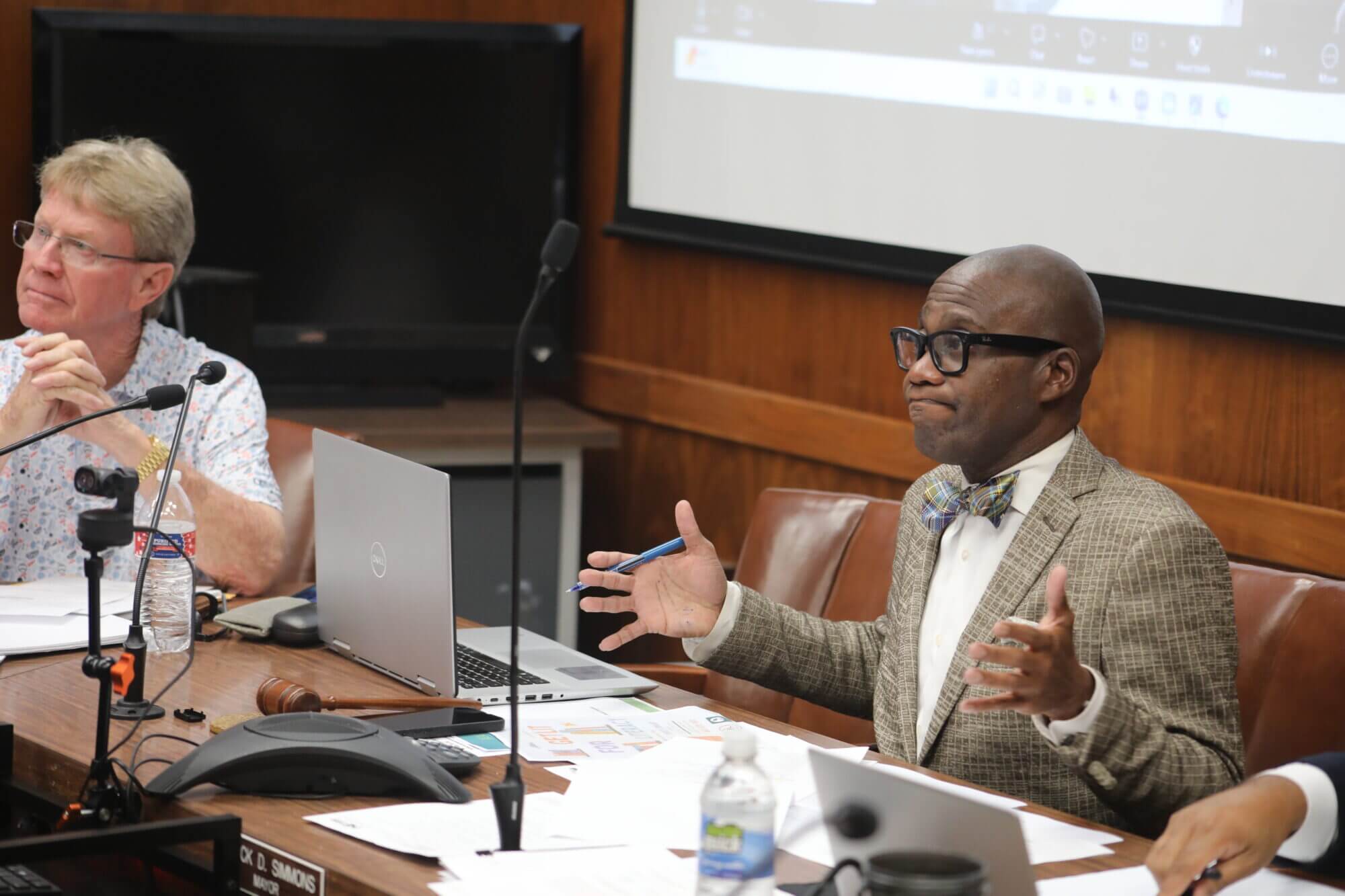
Mayor Errick Simmons, right, explains city hall cannot legally remove school board members to concerned city school district parents on Tuesday, July 7, 2026. Credit: Leonardo Bevilacqua/Mississippi Today

In June, the Greenville school board voted 3-2 to send roughly 290 Coleman students to T.L. Weston Middle. Board President Antoinette Williams, board Secretary Allison Washington and board member Drew Newsom voted yes.  

The vote took about 10 minutes, and the group took no questions or comments from the public. Williams told parents it was illegal to allow public comments because that was not on the agenda when it was adopted. District policy requires the public to request to address the board seven days before the meeting, Williams added. 

Once the June meeting ended, Jones called out to board members who walked away without responding. She said that’s when she started to seriously consider private school for her children, even if it meant an extra job or more shifts.

She wasn’t alone in her concerns. On Tuesday, over a dozen parents, alumni and community leaders packed a Greenville City Council meeting and called on Mayor Errick Simmons and the city council to hold school board and district officials accountable for failing infrastructure and alleged mismanagement.

People said they also worry about the safety of the Weston campus because of needed repairs and crowding about 700 students from rival communities into spaces where, according to a previous principal, it was difficult to accommodate about 400.

“We do want to hear from you,” school board member Anjohnette Gibbs-Walton said. “And so please know that the overall intent is that we do what is best for our children, that we don’t expose them to mold or anything that could harm them. We want to partner with the community. In fact, some of you signed up to do just that.”

On June 25, Superintendent Ilean Richards cited moldy walls and a leaking roof as some causes to close Coleman for renovations and relocate its students. However, at least six parents and grandparents have since questioned the decision to move Coleman students to T.L. Weston, another district school in need of a new roof. Some parents called on city officials to remove board members — authority not granted under state law.
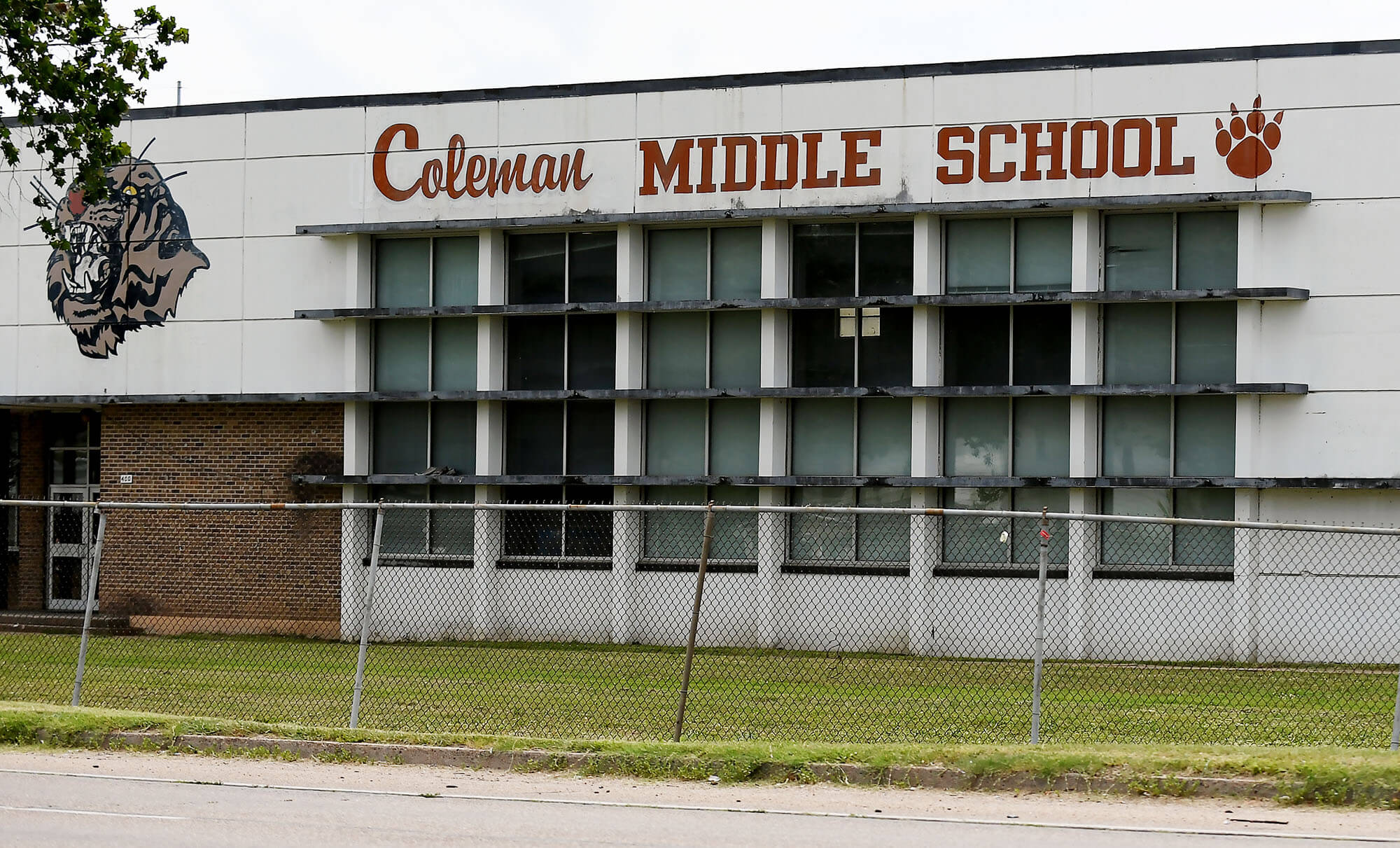
Coleman Middle School as seen from MS-1 in Greenville, Friday, June 26, 2026. Greenville public school officials have announced the closing of the school for much needed renovations. Credit: Vickie D. King/Mississippi Today

Simmons asked the public to gather evidence of wrongdoing before reaching conclusions about school officials. City Attorney Brandon Dorsey responded to questions about how parents can address their grievances with the school district by suggesting they hire an attorney.

“Mississippi law provides established legal avenues for investigation and accountability through the courts and other authorized state entities,” Simmons said. “That legal reality, however, does not diminish our moral responsibility to advocate for our children.”

‘This doesn’t happen overnight’

Some parents and alumni also question how Colemen fell into such severe disrepair. They noted construction at Coleman in January 2025. The district also received federal money to address student safety, which could include roof replacements. 

In 2020-21, the district received $58.3 million in federal aid. Now, Greenville schools might have to repay about $1.3 million of the aid because it was not properly recorded with documentation showing how the money was spent and allocated.

Gibbs-Walton told Mississippi Today that business manager and superintendent turnover had likely factored into why district officials could not provide further documentation to the state education department. 
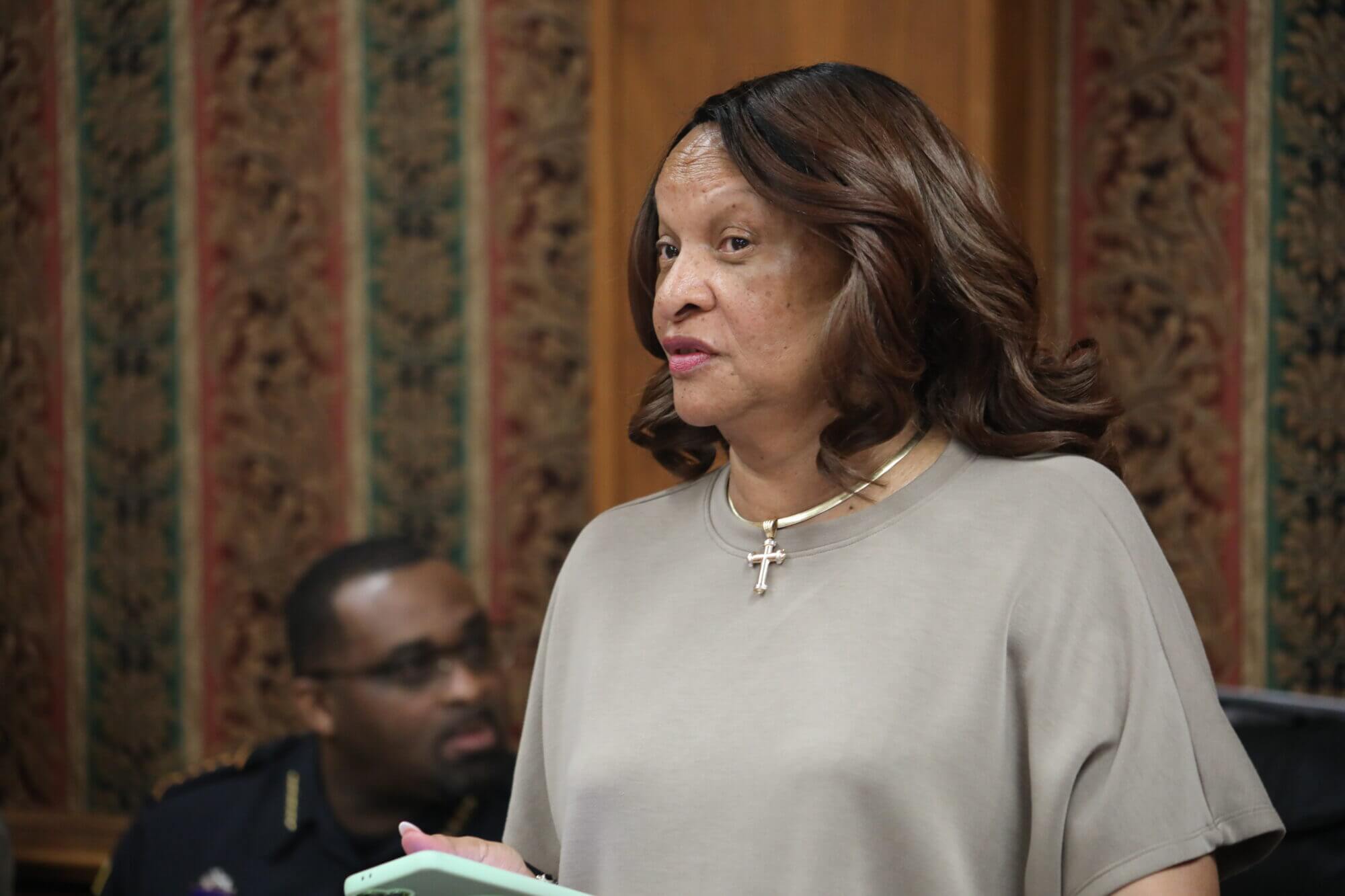
Anjohnette Gibbs-Walton, a Greenville school board member, addresses parent concerns at a city council meeting on Tuesday, July 7, 2026. Walton-Gibbs did not vote to relocate Coleman Middle School students to T.L. Weston Middle School. Credit: Leonardo Bevilacqua/Mississippi Today

The district did not spend at least $5.5 million because officials missed the deadline to allocate the money for projects such as roof replacements. 

Neither Richards nor any other district official responded to questions from Mississippi Today about how district finances were managed. 

Construction projects made possible by pandemic relief dollars at T.L. Weston and Coleman were focused on heating, ventilation and air conditioning repairs, according to documents obtained by Mississippi Today. School leadership tabled a recommendation to replace the roof at T.L. Weston in November but greenlit spending $480,000 on HVAC repairs in the Coleman auditorium and $12 million on other HVAC repairs at Coleman as well as at T.L. Weston and Greenville High.

Sarah Lewis, who taught at Coleman before retiring in 2013, recalled inspections of district buildings throughout the year. She said she doesn’t understand how the maintenance staff missed mold and leaks.

“But I’m just thinking about accountability,” she told the city council. “Somebody didn’t do their job for it to get like that.”

Fears of violence

Several people said they worry that consolidating Coleman and Weston students into the same building will stoke old rivalries between the city’s north and south ends and spur violence. 

“I really fear for their well-being,” Jones said of her son, who is entering eighth grade, and daughter, who is entering seventh. “I love my kids to death. I don’t want anything to happen to them. And I just don’t think it’s right.”

“It really breaks my heart that they don’t love these kids or care about these kids enough,” she said of the school board.

Coleman reported 127 incidents of violence in 2023-24, the most recent year with data available, and T.L. Weston reported 160 the same year, making it the most violent school in the district and among neighboring counties.

When Clayton Barksdale was principal of T.L. Weston in 2023-24, he said it was difficult to accommodate roughly 405 students. He said he remembers asking custodians to clear classrooms that had been used for storage to make space for more students. He said he doesn’t see how the building has the capacity for 700.
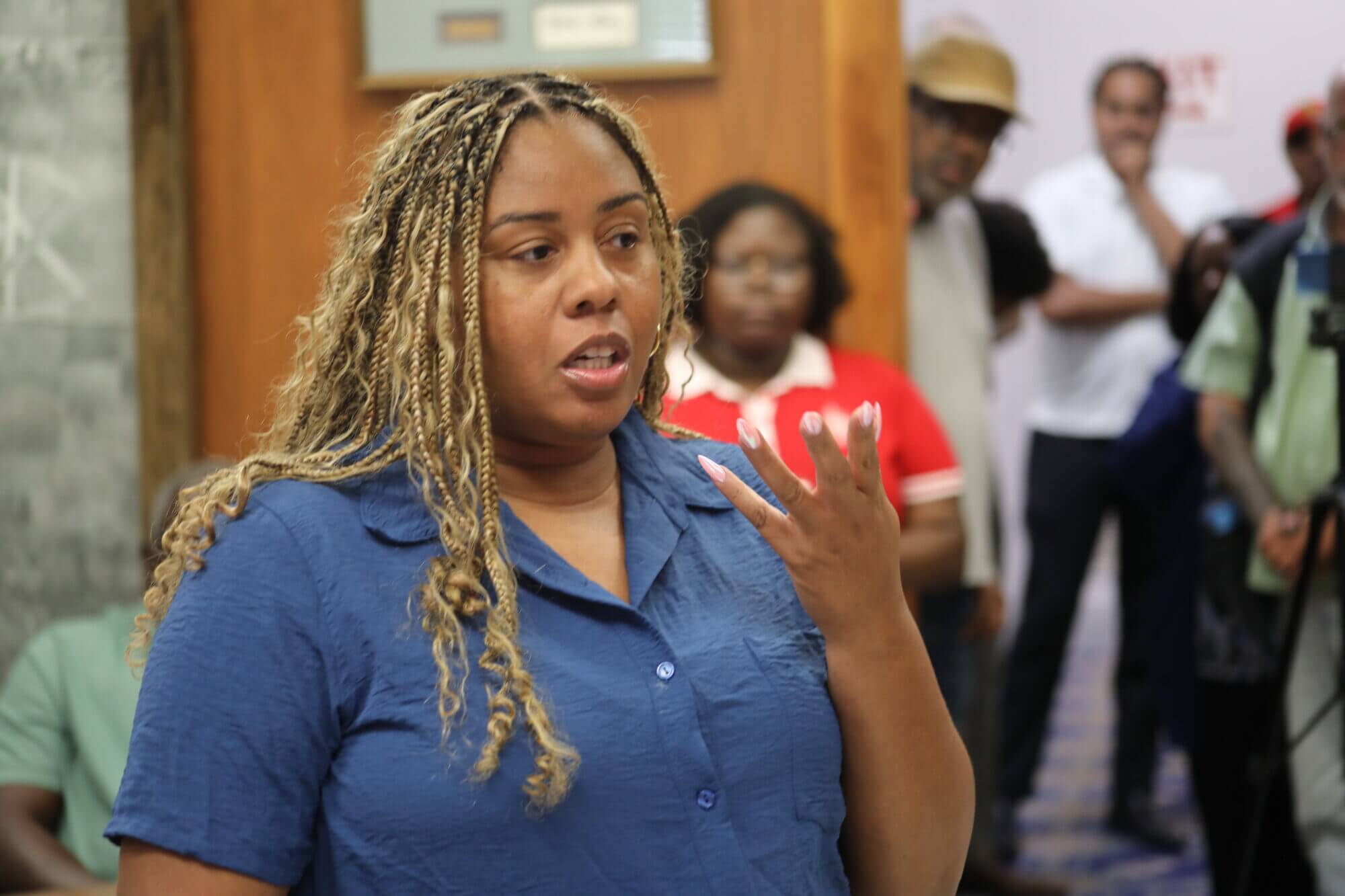
Gayla Fowler, a Greenville public schools parent, voices her concerns about school board member actions at a city council meeting on Tuesday, July 7, 2026. Credit: Leonardo Bevilacqua/Mississippi Today

“There is no question that merging two student populations will be challenging,” Barksdale said. “The key will be anticipating the challenges before they arrive rather than reacting to them after they occur.”

The challenges include the physical condition of Weston.

Gayla Fowler, a Greenville public schools alum, said she recently noticed safety concerns at T.L. Weston: fallen ceiling tiles in the building and what appeared to be mold. She noted classrooms that were blocked off, possibly because of leaks. Given the hazards, she said, she couldn’t bring herself to finish her son’s registration packet.

“I just hope we can come together and get something done for our children because I just don’t think it’s going to be fair,” Fowler told the city council. “I just can’t see it coming together and being peaceful. I think it’s going to be chaotic.”
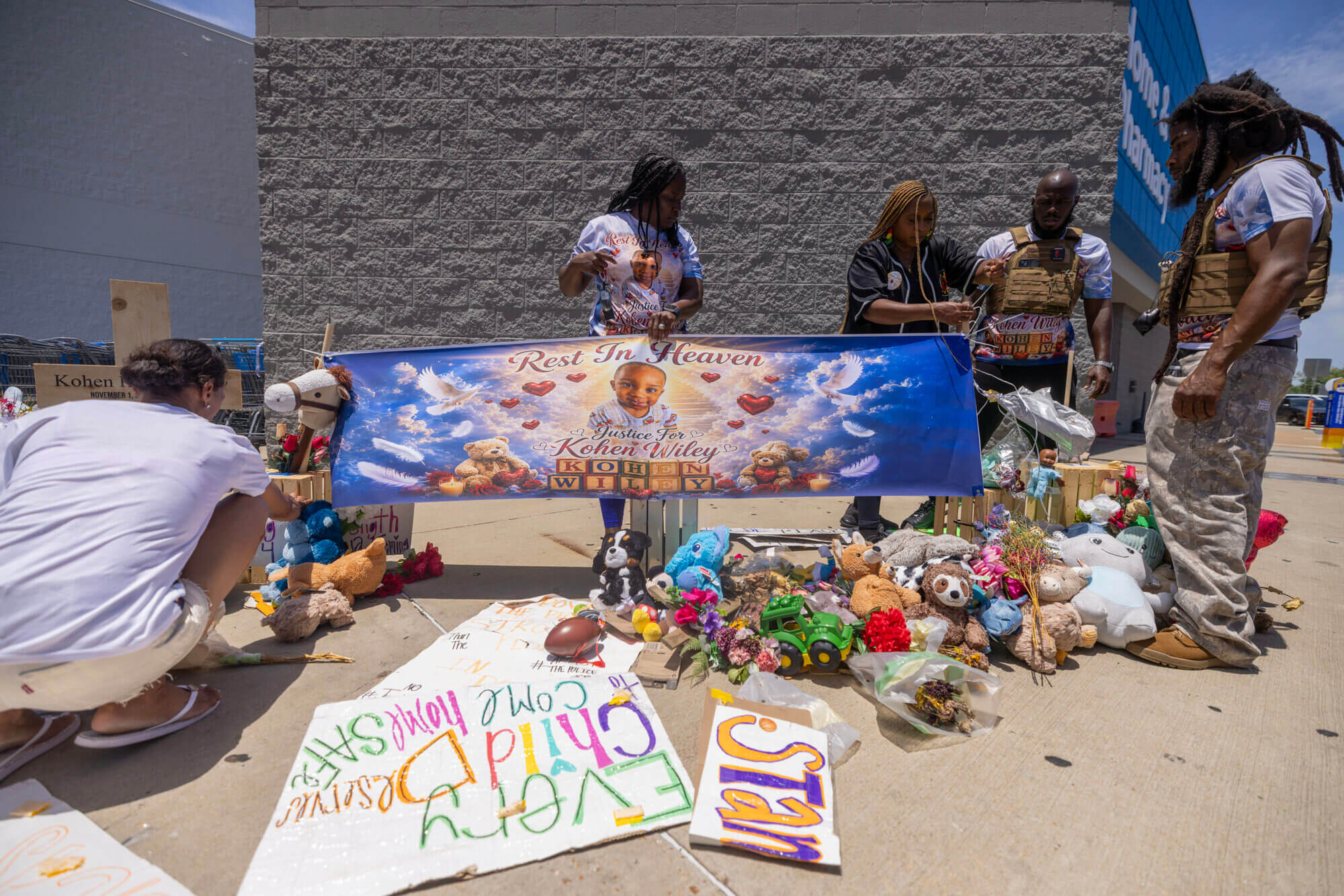
Help us report on the June 14 shooting outside Walmart in Senatobia, Mississippi 

Audio recording is automated for accessibility. Humans wrote and edited the story.

Were you shopping at the Walmart before, during or after the shooting on June 14? 

Do you or anyone you know work at the Walmart Supercenter in Senatobia? 

Do you know anyone who lives in the area? 

If you have photos and/or videos from the scene, please upload them here.

Is there anything else we should know?

We’re a team of investigative reporters with Mississippi Today and The New York Times. We’re trying to learn more about the police shooting last month in which a 1-year-old, Kohen Wiley, was killed. The incident took place in the parking lot of the Walmart Supercenter on Highway 51 in Senatobia, Mississippi. 

State and local authorities, including the local police department and the Department of Public Safety investigating the shooting, have offered few details about what happened. None of the agencies have released body-worn or dashboard camera video, and Walmart has not released surveillance footage. All we know is that police were responding to a complaint of shoplifting, and the resulting confrontation involving the toddler’s mother and her friend ended after police shot into their car. 

The only video from the incident that’s been published captures the car driving away after having been shot at. No other witnesses have publicly come forward. 

If you know anything about what happened that day – if you were around, if you have any photo or video evidence, if you witnessed the incident, or if you know someone who did – we want to hear from you. 

We will not use your name without your consent, or any information you share without informing you first. You can contact us via email at jcranney@veritenews.org. You can also reach out securely on Signal @mmj.2178.

Our mailing address is P.O. Box 12267, Jackson, MS 39236.

Comics, culture and John Jennings’ creative spirit at The MAX

Audio recording is automated for accessibility. Humans wrote and edited the story.

MERIDIAN — John Jennings builds worlds — captivating, colorful worlds full of indelible characters and heroic struggles, centered in Black culture and shot through with magic, mysticism and flecks of the graphic novelist’s native Mississippi.

The exhibition “John Jennings: Build Your World,” on view at The Mississippi Arts + Entertainment Experience (The MAX) in Meridian through March 27, is a peek behind the curtain for an up-close look at the storyteller’s creative process.

A New York Times bestselling graphic novelist, Jennings is also a Harvard Fellow and Hugo and Eisner Award-winning artist, with work featured at the Metropolitan Museum of Art and appearances on “CBS Sunday Morning” and in Marvel documentaries. He is a professor of Media and Cultural Studies at the University of California, Riverside, and a key scholar as well as a creator in the Afrofuturism movement.

In the exhibition, storyboards, sketches, original drawings, notes, pitches, script excerpts and influential books showcase Jennings’ art in action through comics and graphic novels, unfolding across four key collaborative and solo projects: “Silver Surfer: Ghost Light” (Marvel Comics); “Blue Hand Mojo: Hard Times Road” (Rosarium); “Kindred: A Graphic Novel Adaptation” (Abrams ComicArts); and his brand-new “Kenny Dreadful and the Hainted Hoodie.” The exhibition is curated by Benjamen Douglas.

John Jennings resurrected a long forgotten character from a late 1960s Silver Surfer story, fleshed him out and made him a superhero. The exhibition sheds light on working with the huge company and its teams of creatives. Credit: Photo courtesy of The MAX

The day before its June 20 opening, Jennings’ eyes swept the gallery at The MAX, and he let loose a chuckle of recognition. 

“This is like sitting inside my brain,” he mused. “That’s what it feels like.” 

Odd. A little vulnerable, too, with unfinished things on view he would not normally show people. 

“Not only do you look at the things that I work with, but how I work,” he said.

It hits close to home. The work always has. Jennings’ lived experiences as an artist and a Black man from Mississippi filter through an active imagination and a keen observation of contemporary culture. It comes out in comics and projects that reclaim history, highlight fresh perspectives, envision new possibilities and format the future.

Jennings grew up in Flora. 

“The outskirts,” he described it, “back in the sticks of the sticks.” 

That agrarian setting and his upbringing crop up in his creative output.

Comics and science fiction, and his mother’s love of action and horror movies shaped him. 

“She got me into all this stuff. First thing I read as a young kid, I remember, was Edgar Allen Poe stories. We were talking about all the scary stuff. I’m a horror scholar now because of her. I actually study horror as a phenomenon,” said Jennings, whose classes include a course on race and horror. “Students call it the ‘Get Out’ class.” 

Comics ambitions took root about age 10, with his first inkling that it was a job. 

“The first time I really for real lied to my grandmother was when I told her I wanted to go to New York and be a comic book artist, and she burst into tears, and I was, like, ‘Oh no, I was just kidding! I’m so sorry.’” 

He crossed his fingers behind his back and figured he might need to move there in secret, but independent comics and more opened the landscape beyond the New York City hub.

Cultural references from his grandparents and mom, including the songs they listened to, stuck with him and sneak out on the page. 

“The blues are actually a huge part of the stuff I make,” he said.

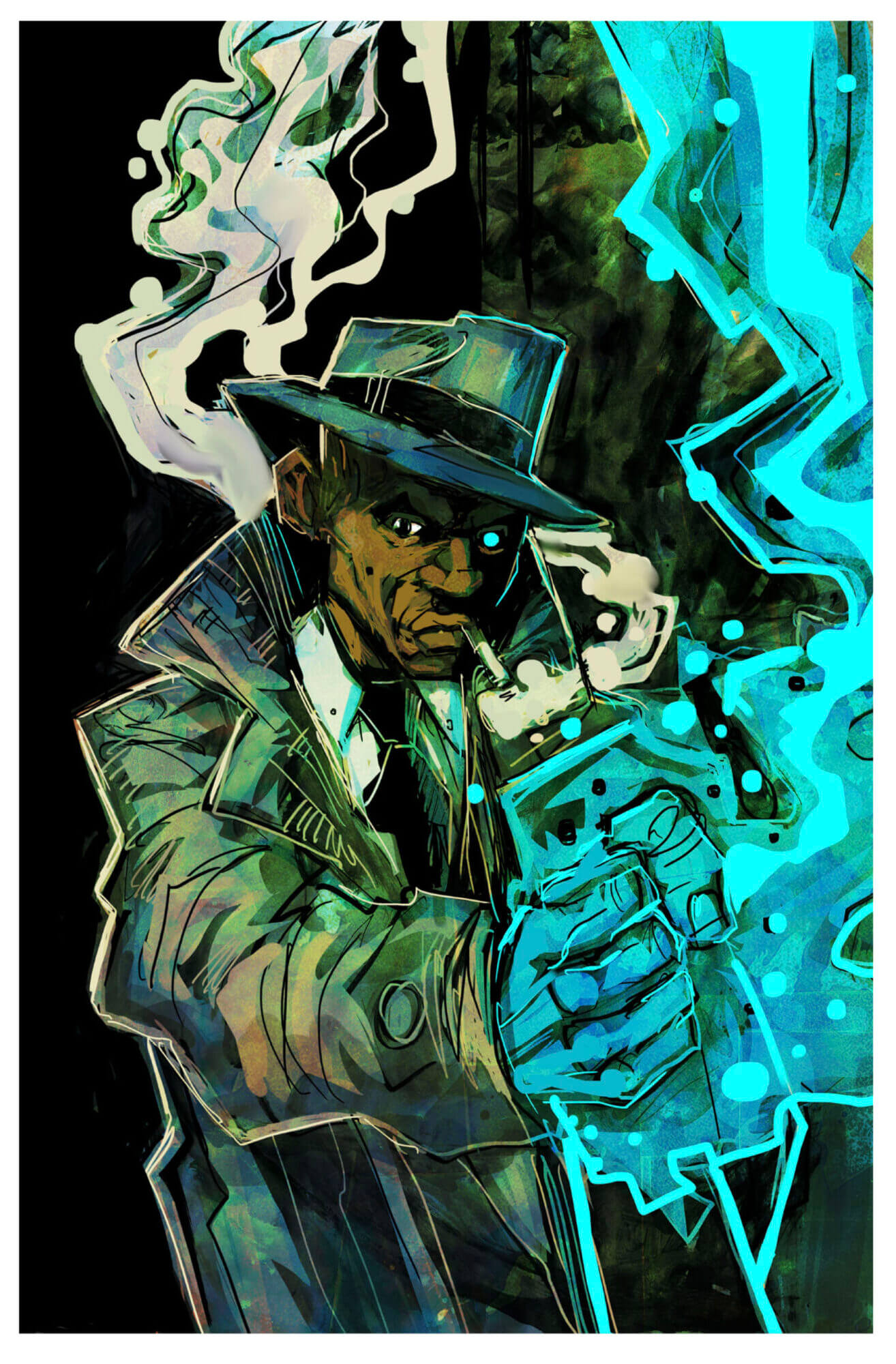
“Blue Hand Mojo’s” noir antihero Frank “Half-Dead” Johnson, a blues detective and conjure man left with half a soul, works to pay off his debt to the devil and echoes bluesman Robert Johnson’s crossroads folklore. “Blue Hand Mojo” has been optioned and may make its way to TV at some point, he said.

The gritty character in a fedora, trench coat, dangling cig and blue right hand aglow with sorcery, radiates magnetic appeal across several portraits as Jennings honed his look. 

“It jumps out at you,” photographer Griff Griffin rightly observed. 

What also jumps out: a Mississippi mud golem, looming in “Blue Hand Mojo” story panels nearby. 

“The environment pops up in my work, too — the red clay dirt and the heat, catching fireflies and watching sunsets … living on a dirt road,” Jennings said. 

His stargazing memories of climbing atop a barn to watch the night sky are ripe fodder, too.

Quilt-making shows up as stitchcraft, a witchcraft riff where quilt panels have spiritual and magical powers and the quilted cloak of an elder transforms into a hoodie on a teen in his new solo project “Kenny Dreadful and the Hainted Hoodie.” 

It can be used as a weapon or a portal, for a protective barrier or a magic carpet ride, he said. “I think kids are going to love it.”

Much of it did not exist before the exhibition, he said. 

“It forced me to actually drill down and make the world.” So, he pitched it to a publisher and he feels good about its prospects. 

“I think somebody’s going to pick it up. It’s got some tweaks here and there, but the story is there. The world is there.”

For “Silver Surfer: Ghost Light,” Jennings pitched to Marvel the resurrection of brilliant Black physicist Al Harper, who sacrificed his life to save the planet in the late 1960s story “… And Who Shall Mourn Him.” Jennings brought him back to life and made him a superhero, Ghost Light, creating a back story for Harper in the limited series adventure and collaborating with a global multi-billion dollar company and its teams in the process. 

“I got a chance to give him a life. It’s really cool.”

Some people were probably not cool with a character besides Silver Surfer at the story’s center, Jennings said, but “That’s the thing. … Everything is not for everybody.

“I want you to love the stories, but the other thing is, I want to challenge who you share empathy with. Because stories are empathy engines.” 

At 55, Jennings has extended empathy to white male characters his whole life, from Sherlock Holmes and Dr. Who to Superman and Batman. As a smart, working class kid, he related more to Daredevil than he did to Black Panther, he said.

“What I’ve been trying to do is create characters that actually resonate at different frequencies to other audiences. And, no shade on those characters, I still love Sherlock Holmes. But there’s space for other folk.”

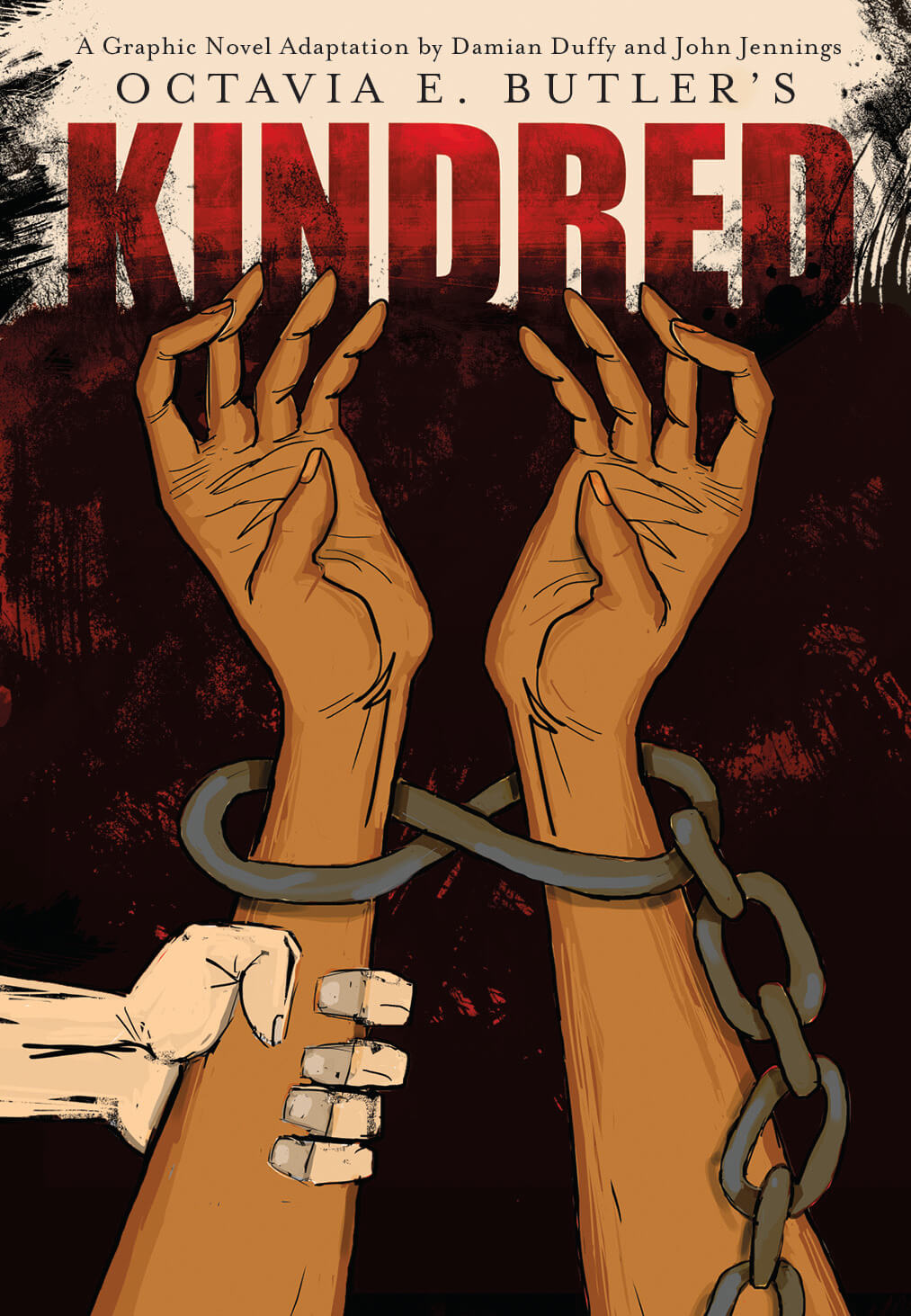
John Jennings and Damian Duffy co-adapted Octavia Butler’s seminal Black science fiction book into a graphic novel. Credit: Photo courtesy The MAX

For “Kindred: A Graphic Novel Adaptation,” he and fellow academic and comics artist Damian Duffy co-adapted Octavia Butler’s acclaimed 1979 time-travel novel for a new generation, adding a rich visual element to the story that served as a cornerstone of the Afrofuturism movement. 

Visual styles and color schemes distinguish 1970s California and early 1800s antebellum Maryland, and the display of two dozen original drawings along with the finished book offers another window into the layers and details world building requires.

With its success and that of additional graphic novel adaptations of Butler works, Jennings pitched a speculative and nonfiction imprint for works by and about people of color. AbramsComicArts’ Megascope line, curated by Jennings, has put out 20 books with more on the horizon.

Its “Framing Emmett Till: Exposing Dark Fear,” a graphic novel biography about the crime, is due for official release Oct. 27 but premieres early at the Mississippi Book Festival in Jackson on Sept. 26. Jennings shares a panel at the festival with its author Christopher Benson and illustrator Eric Battle. Re-examining Till’s legacy through a contemporary lens explores what it means to protect history.

“I think it’s a beautifully done, powerful book,” Jennings said, “and I think it’s a book that actually reminds you of how far we’ve come, and how far we have to go if you look at what’s happening in society now.

“In some ways, I feel it’s Afrofuturist, too, because it’s protecting the past to get to the future, … If you disrupt how people see the past, it will change how they see the future.”

Career highlights also include his role as co-founder/organizer of the Schomburg Center’s Black Comic Book Festival in Harlem, a magnet for Black creatives for more than 10 years. 

“It’s a major achievement for me, because it’s changed people’s lives. I think at the heart of it, that’s what art is supposed to do. It’s supposed to create connections and change people.”

He is the founder/organizer of others, too, in San Francisco, Los Angeles and at Ohio State University. 

“I’m kinda like the Johnny Appleseed of Black comics conventions – ‘Let’s do one, see what happens,’” he said.

Jennings is a curator, a teacher and a creative spark, but at heart and hand, he is a teller of stories with words and pictures that spin new worlds into existence.

Jennings likes “the strangeness of being a storyteller, trapped in here,” he said, tapping his temple, “and trying to figure my way out through the traditions that I’ve inherited from tons of storytellers that came before me. Mississippi storytellers. 

“Because at the end of the day, that’s what I am. I tell stories through the way that I teach and the comics that I make. 

“It’s all about unlocking truths that I feel like I carry with me.”

Overby Center-Mississippi Today program will explore the changing world of college athletics

Audio recording is automated for accessibility. Humans wrote and edited the story.

OXFORD – The rapidly changing world of college athletics will be the focus of a Sept. 17 program at the Overby Center for Southern Journalism and Politics at the University of Mississippi.

Sports Columnist Rick Cleveland during a Mississippi Today event at Crescent City Grill in Hattiesburg on Monday, May 18, 2026. Credit: Eric Shelton/Mississippi Today

“College Athletics: It’s a Whole New Ballgame,” will be co-sponsored by Mississippi Today, the state’s Pulitzer Prize-winning nonprofit news organization.

Rick Cleveland, sports columnist for Mississippi Today, will moderate the program. Joining Cleveland on the program will be Ross Dellenger, senior writer covering college football for Yahoo Sports, and Keith Carter, vice chancellor for intercollegiate athletics at the University of Mississippi. Likely topics will include issues with name, image and likeness deals; the transfer portal; athletic budgets and competitiveness among universities; and the recruiting of athletes and coaches. 

Oxford and the University of Mississippi will draw national attention that week because LSU and Ole Miss will play at Vaught-Hemingway Stadium on Sept. 19. The two schools were the focus of a national story last year when Lane Kiffin left Ole Miss to become the head football coach at LSU. Kiffin was recruited during the season and left Ole Miss after a successful six years. Ole Miss finished the 2025 regular season with an 11-1 record and qualified for the College Football Playoff for the first time. Kiffin, who had agreed to a seven-year, $91 million contract with LSU, asked to coach the team during the playoffs but his request was denied by Ole Miss officials.

Ross Dellenger is senior writer covering college football for Yahoo Sports.
Credit: Courtesy photo

Dellenger is one of the nation’s top reporters on off-the-field issues in college sports, including NCAA governance, College Football Playoff changes, NIL and the compensation model for athletes. He has embraced coverage of the business of college sports as the industry itself evolves from an amateurism product to a professional entity. Dellenger was born in Louisiana and grew up in Biloxi. He’s a graduate of Mississippi State University and worked at several newspapers in his 20-year career, including The Clarion-Ledger. Dellenger was named the 2025 National Sports Writer of the Year by his peers. He was a national writer for Sports Illustrated before leaving for Yahoo Sports. He lives in Washington.

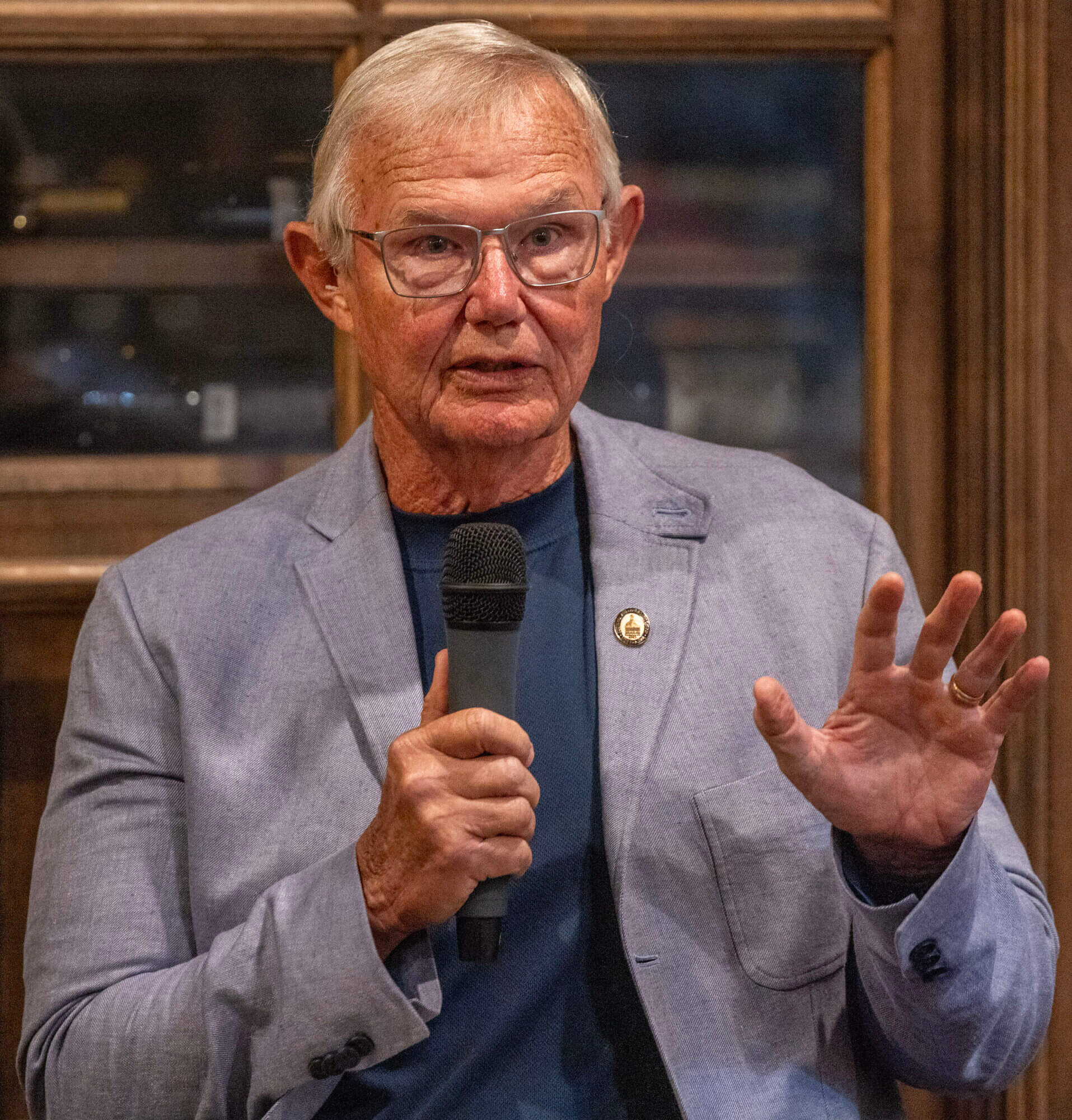
Cleveland joined Mississippi Today in 2016 as sports columnist. He and his son, sportswriter Tyler Cleveland, host the Mississippi Today podcast “Crooked Letter Sports.” Rick Cleveland previously worked as a sports editor and columnist at The Clarion-Ledger, the Jackson Daily News, the Monroe (Louisiana) News Star/Morning World and the Hattiesburg American. He is a member of the Mississippi Press Association Hall of Fame and the Mississippi Sports Hall of Fame. Cleveland has been named Mississippi Sports Writer of the Year 15 times. Cleveland is a native of Hattiesburg and a graduate of the University of Southern Mississippi. He lives in Jackson.

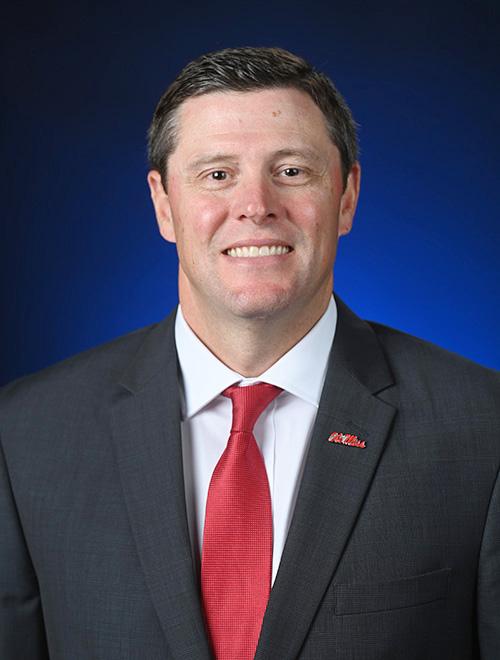
Keith Carter is vice chancellor for intercollegiate athletics at Ole Miss.
Credit: Courtesy photo

“Rick and Ross are two of the best journalists covering college sports today, and I know their conversation with Keith Carter will be sharp, insightful and a heck of a lot of fun,” said Mississippi Today Editor in Chief Emily Wagster Pettus.

Carter was named vice chancellor of intercollegiate athletics at Ole Miss in 2019. He played guard on the Ole Miss basketball team and was a four-year starter, graduating in 1999 and earning All-SEC honors his last two years. He played professionally for nine seasons, primarily in Italy. He joined the Athletic Department at Ole Miss in 2009. Carter’s administrative career at Ole Miss has been marked by record fundraising, NIL initiatives including national recognition of the university’s Grove Collective, and competition successes including two team national championships. Ole Miss athletes have achieved graduation rates exceeding national averages for three consecutive years. Carter has recently been named to a five-year term on the NCAA Division I Men’s Basketball Committee.

The program will begin at 5:30 p.m. in the Overby Center auditorium, 555 Grove Loop on the Ole Miss campus. There is no charge and free parking is available near the center. A reception will follow the program.

US attorney says Jackson bribery case had ‘no racial issues’

Audio recording is automated for accessibility. Humans wrote and edited the story.

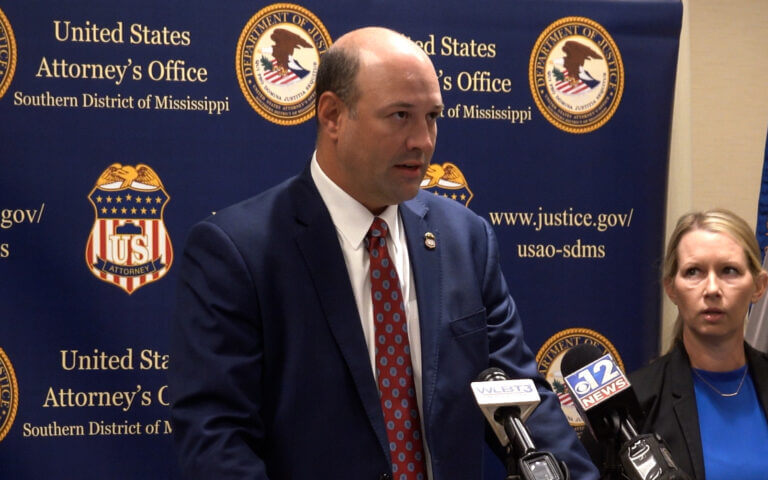
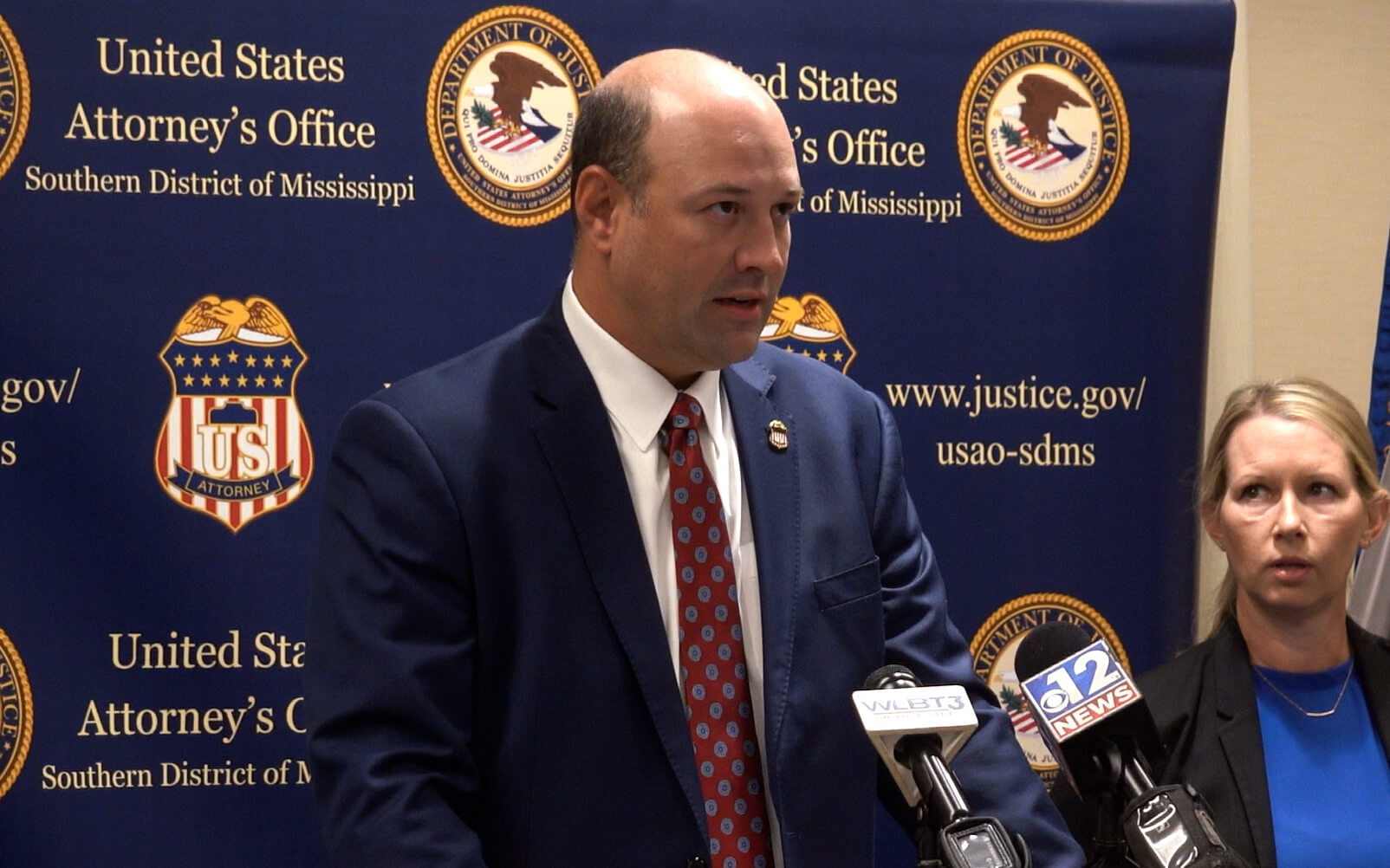
Black elected officials who pleaded guilty in connection to a sweeping probe into corruption in Mississippi’s capital city weren’t targeted because of their race, U.S. Attorney for the Southern District of Mississippi Baxter Kruger said in a Tuesday press conference. 

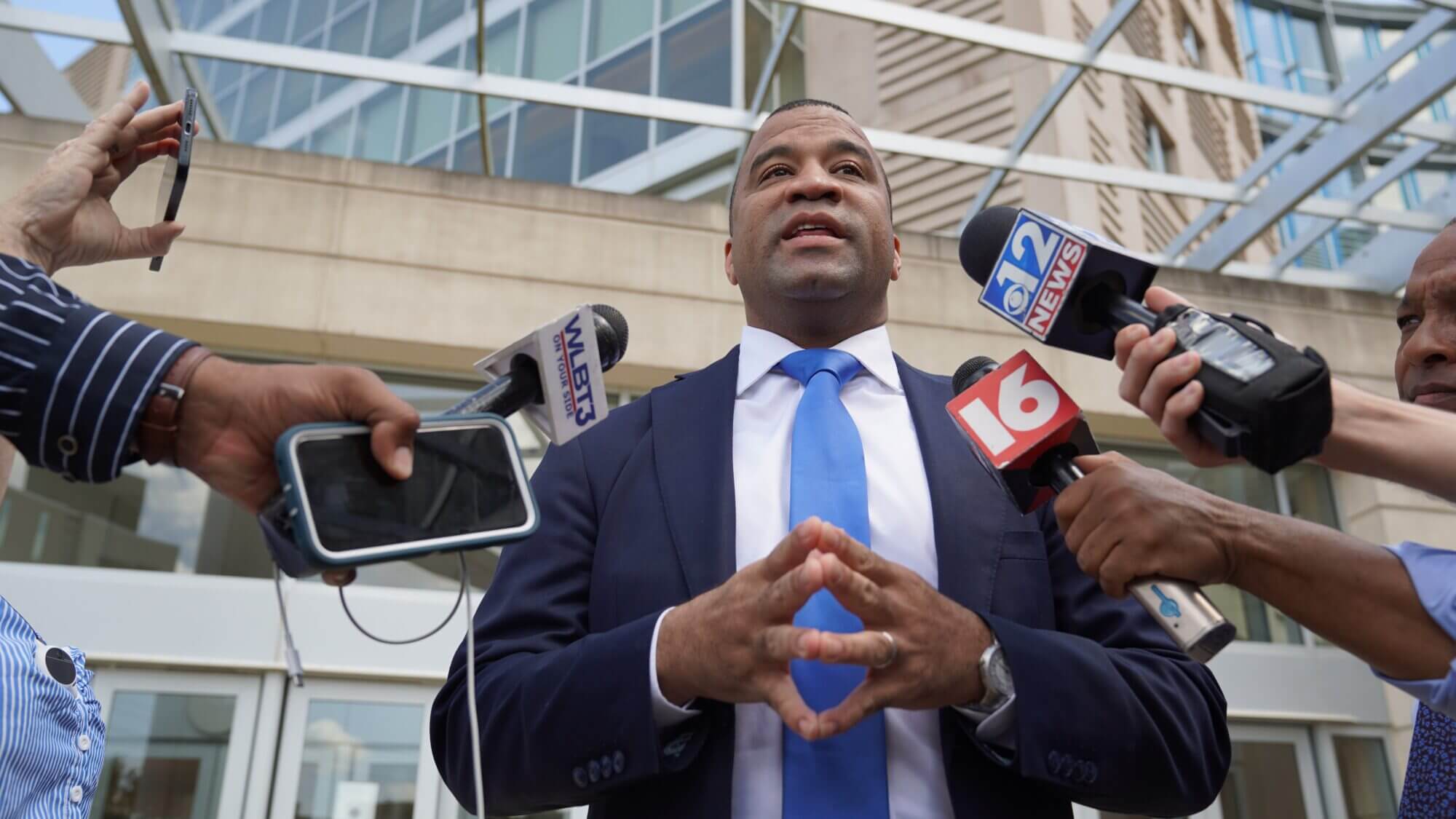
Kruger, who was nominated by President Donald Trump in December, was responding to allegations attorneys supporting former Jackson Mayor Chokwe Antar Lumumba made on the courthouse steps Monday

“There are no racial issues that we’re dealing with here,” Kruger said, referencing a recent jury conviction of former Canton Municipal Utilities engineer Rudy Warnock for conspiracy to commit bribery. 

Warnock, a white man, was sentenced to 12 years in prison last year. 

Kruger also disagreed with claims from some in Jackson that former Hinds County District Attorney Jody Owens, Lumumba and former Jackson City Council member Aaron Banks received lenient sentences. 

Hinds County District Attorney Jody Owens speaks outside the federal courthouse in Jackson after he pleaded guilty to a conspiracy charge on Monday, June 29, 2026. Credit: Richard Lake/Mississippi Today

“They had to admit their guilt, and that’s consistent with the charges that we levied against them,” Kruger told reporters at Jackson’s federal courthouse. 

The investigation began under then-President Joseph Biden’s administration. In 2024, a federal grand jury indicted Owens, Lumumba and Banks for allegedly taking bribes from undercover FBI agents who posed as real estate developers seeking to invest in downtown Jackson. 

The agents enlisted an unsuspecting Owens to act as a go-between with other elected officials in a sting operation similar to those conducted in other U.S. cities

In the 32-page indictment, prosecutors alleged that Owens facilitated tens of thousands of dollars in bribes on behalf of the agents to Lumumba and Banks in exchange for their agreement to help the developers get approval to build a hotel on a plot of land in downtown Jackson the city had obtained a federal loan to develop. 

Prosecutors brought stiff charges. Owens was indicted on eight counts, including conspiracy to commit bribery and money laundering, and faced a cumulative 95 years in prison. Lumumba was indicted on five counts and faced up to 75 years in prison. Banks was indicted on two counts and faced up to 15 years in prison. 

But in July, the three officials pleaded to a similar charge: Conspiracy, which carries up to five years in prison and a maximum $250,000 fine. 

Whether they go to prison and for how long will be determined by U.S. District Judge Daniel P. Jordan III at a hearing in October. But some legal observers say the three officials are facing much less time in custody than they anticipated. 

Matt Steffey, a Mississippi Christian University School of Law professor, said it’s common for federal prosecutors to seek multiple counts in white collar conspiracies, because they will charge each individual crime committed in the course of the scheme. 

At most, the professor said, the officials could have been sentenced to the maximum penalty for their most serious offense, which was 20 years for Owens and Lumumba, and 10 years for Banks. 

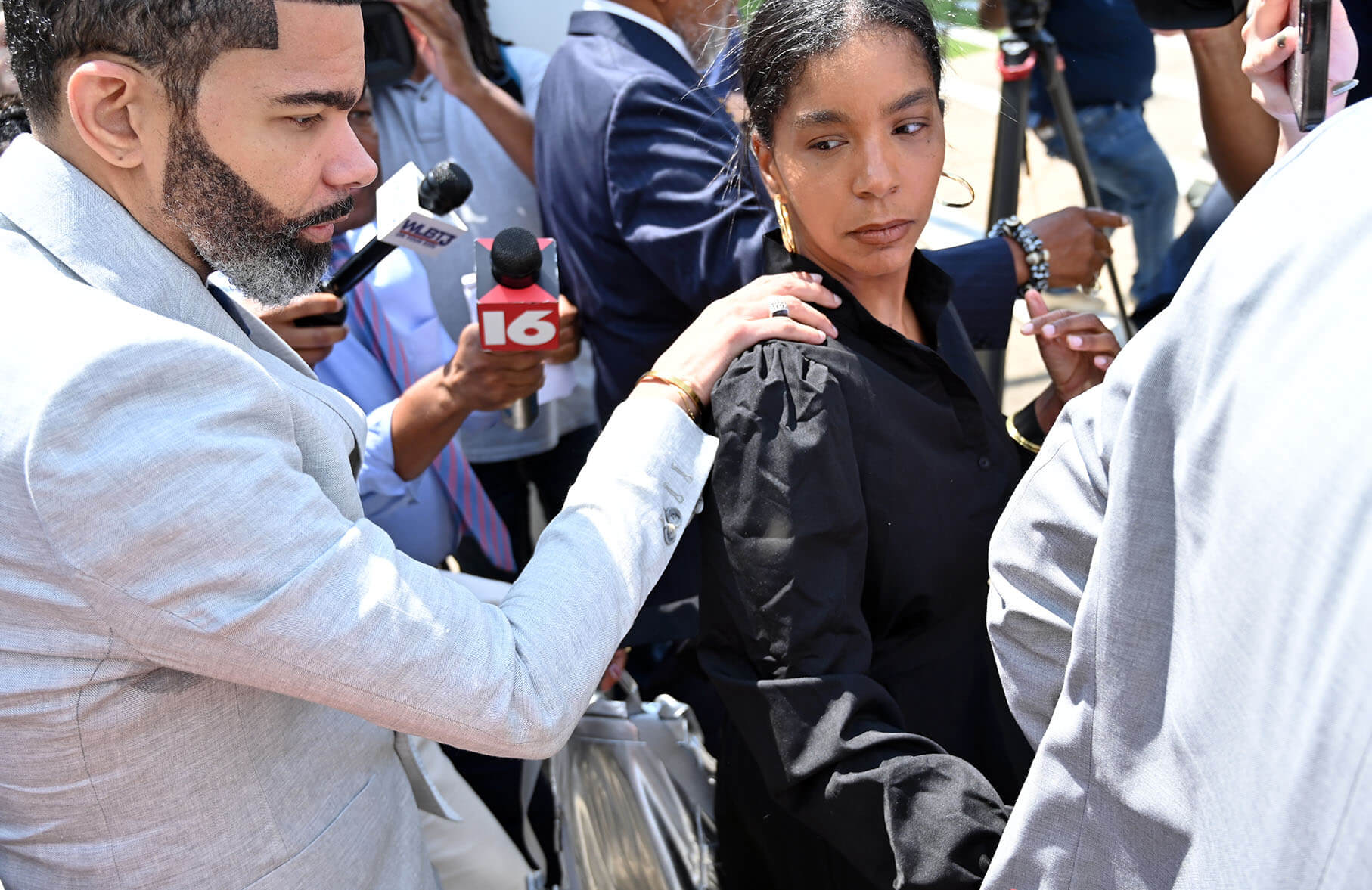
Former Jackson Mayor Chokwe Antar Lumumba, left, exits the federal courthouse in downtown Jackson behind his sister, Rukia Lumumba, after he pleaded guilty in a public corruption case on Monday, July 6, 2026. Credit: Vickie D. King/Mississippi Today

“I don’t want to minimize the moral implications of what they did,” Steffey said. “But how much time do they have to sit in federal prison for us to feel satisfied the public has been vindicated?”

The former officials will also face collateral consequences, Steffey said. All three must give up their firearms. 

Unlike the other two defendants, prosecutors agreed not to seek forfeiture from the former district attorney, according to his plea agreement. This means the federal government won’t take possession of property he used in the course of the conspiracy. 

That includes Owens’ Downtown Cigar Company, a tobacco shop and lounge where he held conversations with the undercover agents and that was raided in a prelude to the indictment in 2024. 

All Mississippi special education teachers can receive $2,000 bonus, lawmakers say

Audio recording is automated for accessibility. Humans wrote and edited the story.

After months of confusion, state leaders say the bonus they granted earlier this year is intended for all special education teachers in Mississippi.

Raising teacher pay was a top priority for lawmakers during this past legislative session. Following months of debate, they agreed on a $2,000 pay raise for all teachers and granted special education teachers an additional $2,000 one-time supplement.

The law says “any licensed special education teacher employed by a school district on a full-time basis and specifically providing special education instruction” is eligible for the bonus. 

But Mississippi Department of Education officials sent a letter to lawmakers in May, asking them to clarify who the money was for, leaving the bonuses up in the air as many teachers finalized their contracts for the coming school year.

READ MORE: Special education teachers were promised an extra $2,000. Where’s the money?

State Superintendent Lance Evans told state Board of Education members in mid-June that he believed the bonus was just for “self-contained” special education teachers, who exclusively teach students with disabilities in one classroom, and would not apply to “inclusion” teachers, who support students with disabilities in their general education classes.

Lawmakers responded to the agency on June 24 with a letter of legislative intent signed by House Speaker Jason White, Lt. Gov. Delbert Hosemann and chairmen of both chambers’ Education and Appropriations committees. The letter specifies that all full-time, licensed special education teachers can receive the bonus.

Education agency spokesperson Jean Cook said full-time inclusion teachers are eligible if they’re appropriately licensed and exclusively teach students with special needs.

However, speech-language pathologists are not eligible for the extra money. Additionally, teachers already receiving a National Board Certification supplement are also ineligible for the special education supplement.

The Legislature’s $14.6-million allocation to the agency for the special education bonus will cover all of the state’s 4,088 eligible teachers, said Jean Cook, a spokesperson for the education agency. She said payments will be disbursed to districts in November.

Mississippi Professional Educators executive director Kelly Riley, who for the past few months has fielded calls from confused superintendents and special education teachers about the bonus, said it was a “positive step.”

“Districts can now finalize contracts with their SPED teachers for the upcoming school year,” she said. “Any uncertainty as to who is to receive the supplement has hopefully been resolved.”

Here are 3 things to know about who influenced Mississippi’s rural health funding plan

Audio recording is automated for accessibility. Humans wrote and edited the story.

Mississippi providers are nearing the first deadline to apply for a share of hundreds of millions of dollars of federal grant funding to improve rural healthcare. But questions remain about how the state crafted its funding application and who influenced its plan.

Mississippi is one of two states where the governor’s office is directly overseeing the money. Republican Gov. Tate Reeves spearheaded the state’s application for the funding last fall and is now coordinating distribution of the $206 million allotted to Mississippi in December for the first year of the five-year, national $50 billion Rural Health Transformation Program. 

During a June 4 legislative hearing, Richard Grimes, who directs the Rural Health Transformation Program Office, told lawmakers that the governor’s office gathered stakeholder input through an online survey, received presentations from select stakeholders and consulted with state agency leaders while drafting the state’s proposal

Lawmakers have said they are concerned the proposal was shaped through survey responses from stakeholders and closed-door conversations rather than broader engagement with people living in rural communities. They also requested more information about the stakeholders who participated in the survey. 

Applications for the state’s first three initiatives to support rural healthcare, which focus on facility improvements, upgrading technology systems and increasing telehealth capacity, must be submitted by July 15.

Through a public records request, Mississippi Today obtained the survey responses submitted to the Mississippi Division of Medicaid during development of the state’s application. Here are three things the responses reveal about the public engagement process. 

1. Respondents had two weeks to submit responses, though some did not meet that deadline. The compressed timeline mirrored a quick federal deadline for states to apply for the funds. 

Mississippi moved quickly to gather stakeholder input after President Donald Trump signed a sweeping tax and spending bill into law July 4, 2025. The legislation reduced Medicaid spending by nearly $1 trillion over a decade and created the Rural Health Transformation Program to help offset the strain vulnerable rural hospitals were expected to face.

States were required to submit applications for the funds by Nov. 5, leaving roughly four months to collect feedback and develop proposals.

“There was a very, very short turnaround,” said Jamila McLean, the director of health equity for Princeton University’s State Health and Value Strategies Program. The program has studied states’ approaches to the application process and implementation of the initiative. 

The Mississippi Division of Medicaid launched an online survey on July 31, including more than 40 questions about the challenges impacting access to rural healthcare and potential solutions. The survey closed two weeks later, on Aug. 14.

By that deadline, the survey yielded 122 responses, with about two dozen additional submissions arriving by the end of October for a total of 145. Eight respondents submitted multiple entries, and five did not answer any of the survey’s questions about improving healthcare in rural areas. 

Grimes told legislators on June 4 that the governor’s office received 145 responses from stakeholders. 

Consulting firm HORNE, now part of BDO, was selected through an emergency procurement process to prepare the state’s application for the program. Potential vendors had less than a week to submit a quote. 

Mississippi did not hold public meetings or hearings as a part of the application process. Thirteen stakeholders were invited to a closed-door forum on Aug. 28 at HORNE’s Ridgeland offices to present their ideas to the governor’s office. 

Other states, including Louisiana and Arizona, held in-person outreach meetings to collect feedback from stakeholders and rural residents. Several states, including Georgia, Alaska and Washington, released survey responses or a summary of themes collected as a part of their efforts to engage stakeholders. 

Senate Public Health Chairman Hob Bryan, a Democrat from Amory, criticized the lack of broader engagement for the program, saying rural residents had no opportunity to weigh in beyond the online survey and that the survey was not widely publicized. 

“That is the one and only opportunity that any just general member of the public has had to do anything,” Bryan said. 

In recent months, after the application was submitted and funds were awarded, Mississippi has hosted online and in-person forums to share information about the program and available grant opportunities. The program office held a webinar and in-person outreach meetings in Pearl, Cleveland, Ellisville, Summit and Tupelo in early June.

McLean said the tight timeline to apply for the funds created a lag in the public engagement process for some states. She said that much of the stakeholder input is occurring now, after the application process has concluded. 

“There’s a little bit of a mismatch, in that the stakeholder (engagement) process is happening now, but at the same time the state is moving forward with implementation,” McLean said.

2. Survey respondents spanned the U.S., with most Mississippi participants concentrated in five counties.

The people who responded to Mississippi’s survey — excluding duplicates and people who did not answer questions or provide an address — represented 19 states and the District of Columbia. 

Nearly 80% of the responses came from people in Mississippi. The Mississippi responses covered 39 counties. More than half of the Mississippi responses were concentrated in five counties: Lee, Hinds, Madison, Forrest and Sunflower. 

On June 4, Grimes noted that the responses covered nearly half of Mississpipi’s 82 counties. Bryan countered that interpretation, arguing it also meant that residents from more than half of the state’s counties did not participate in the planning process. 

“That glass is half empty, I’ll have you know,” Bryan said on Mississippi Today’s political podcast “The Other Side” on June 23. 

Under Mississippi program guidelines, providers receiving funds do not have to be located in a rural area to be eligible but must demonstrate that their proposal will provide meaningful benefits to rural communities. 

The program office, however, classifies all Mississippi counties as rural because each falls below the threshold of 500 people per square mile. The state’s average population density is about 63 people per square mile, according to census data, while DeSoto County, the most densely populated county in the state, has roughly 389 people per square mile. 

3. Most respondents were affiliated with a hospital or private company. 

Roughly a third of survey responses came from hospital administrators and staff. More than 25 hospitals were represented, including rural facilities across the state. Tupelo-based North Mississippi Health Services staff alone accounted for 20 of the 49 hospital responses.

Hospital staff members said healthcare workforce shortages are limiting access to care in rural Mississippi. They also said there are many patients must travel long distances for care and lack transportation, high rates of people do not have health insurance, ambulance systems are overburdened, patients have limited access to specialty care and they are concerned about financial instability given the budget cuts passed into law last summer that will reduce Medicaid payments to hospitals beginning in 2028.

“Physician shortages are a challenge and will be a challenge,” wrote one northeast Mississippi hospital administrator. “Mississippi is not a state providers are rushing to.” 

Private companies made up about one-fifth of all responses. The companies included managed care organizations, technology firms, ambulance providers, patient monitoring and telehealth companies and home-delivered meal services. Many referenced their products and services as solutions to the healthcare issues facing Mississippians. 

Clinics and other healthcare providers represented a range of services, including community mental health centers, family medicine practices, nursing homes and long-term care facilities, pharmacists, senior services organizations, urgent care clinics and youth mental health programs.

Professional organizations included state-based organizations representing hospitals, nursing homes and community health workers, as well as national organizations representing pharmacies and advanced practice providers. Advocacy organizations included groups supporting families with children who are deaf or hard of hearing, people living with Alzheimer’s disease and promoting telehealth policy. 

Three elected officials – two state and one local – also responded. Among them was House Public Health Chairman Sam Creekmore, a Republican from New Albany. He told Mississippi Today he believed lawmakers should have been more involved in the application process, especially those regularly engaged with health policy and providers, like himself. 

“We weren’t included in any of this,” he said. “We deal with this just about every day. Hospitals and nurses and doctors come to us all the time for solutions. We thought the Legislature should have been part of the process.”

Mississippi Today welcomes new senior editor

Audio recording is automated for accessibility. Humans wrote and edited the story.

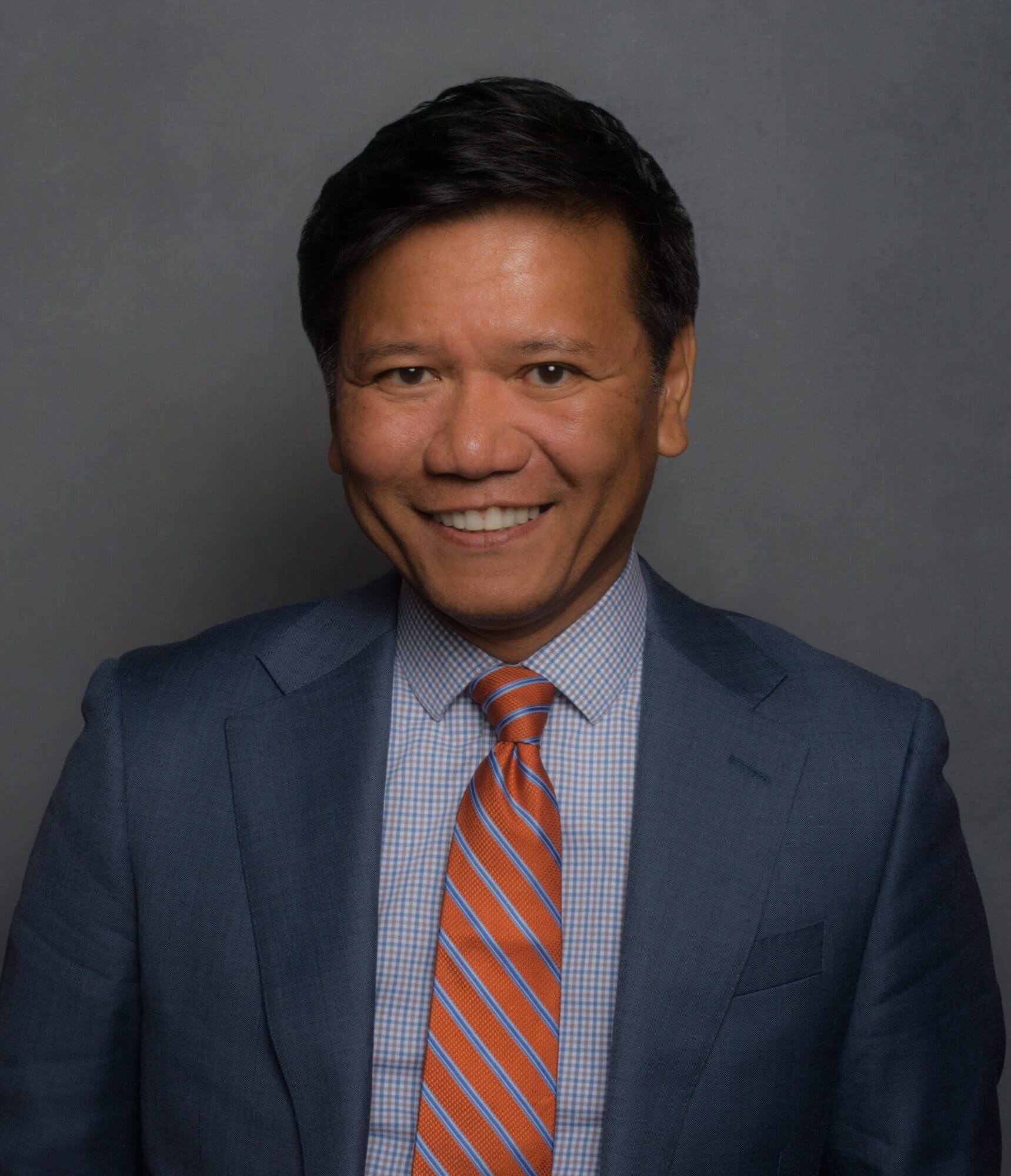
Mississippi Today is pleased to welcome Bobby Caina Calvan as its new senior editor.

In this role, Calvan will lead the Jackson Team, coordinate with other editors on major projects and provide mentoring for early-career journalists. He began work Tuesday.

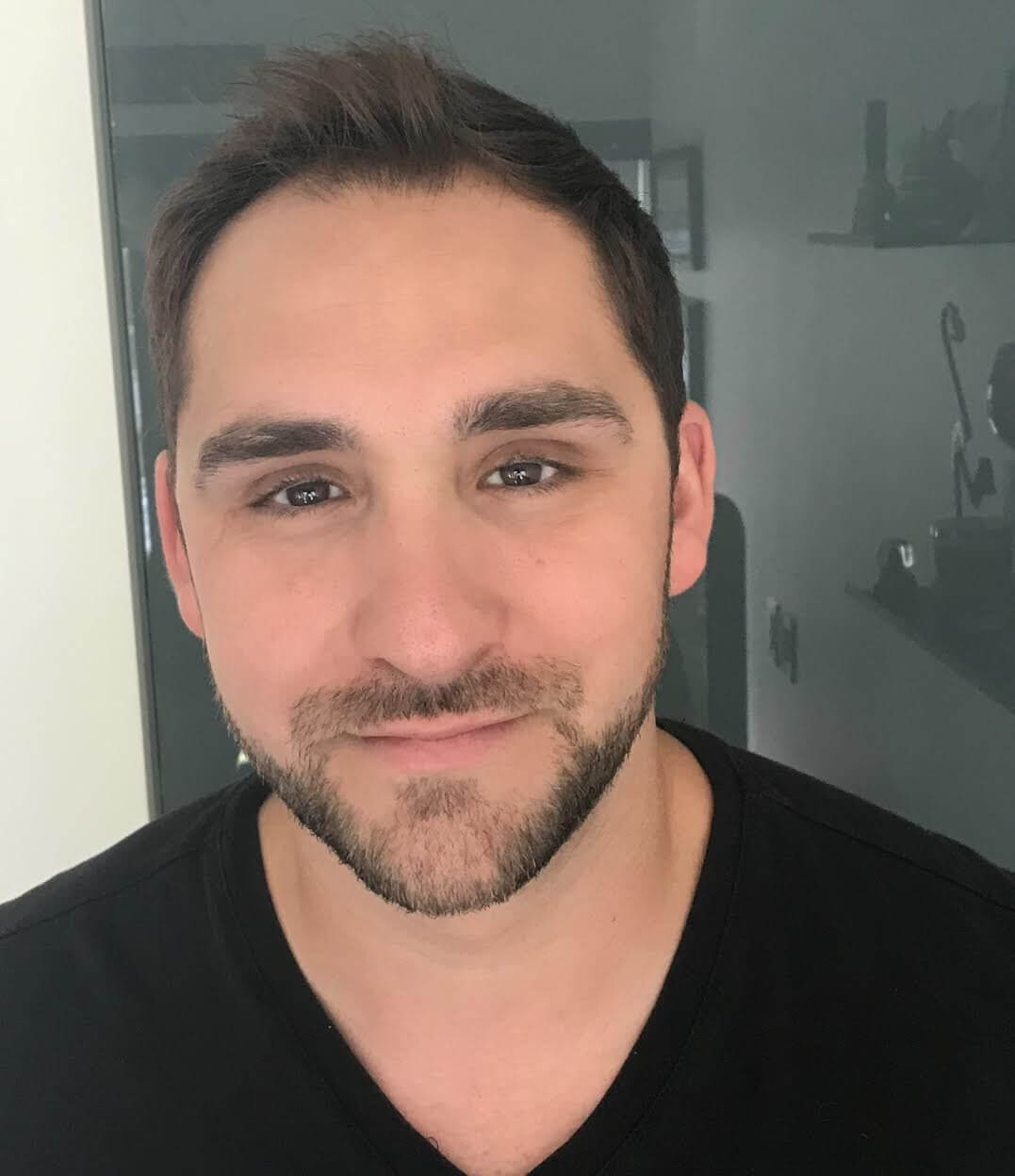
Bobby Caina Calvan

“Bobby and I were long-distance colleagues when we both worked for The Associated Press, and I have long admired his skills as a reporter and writer,” Mississippi Today Editor in Chief Emily Wagster Pettus said. “He is new to Mississippi, and is intensely interested in the state. He brings strong leadership skills and recognizes the importance of journalism that digs beneath the surface and holds public officials accountable.”

Calvan most recently served as deputy editor for government accountability at The Dallas Morning News. Before that, he was a global news manager at The Associated Press, helping coordinate coverage of major news events around the world. Earlier in his AP career, he covered state government and politics in Florida and Montana and worked as a general assignment reporter in New York.

Calvan grew up on a dairy farm in Hawaii, on the other side of the Koʻolau Mountains from Waikiki. He earned a bachelor’s degree in legal studies from the University of California, Berkeley.

He holds lifetime memberships in the Indigenous Journalists Association, the National Association of Hispanic Journalists and NLGJA: The Association of LGBTQ+ Journalists. He is also a member of the Asian American Journalists Association, the National Association of Black Journalists and Investigative Reporters and Editors.

He can be reached at bcalvan@mississippitoday.org.

DeSoto County residents file lawsuit over majority-Black judicial subdistrict

Audio recording is automated for accessibility. Humans wrote and edited the story.

Several DeSoto County residents, including former Republican gubernatorial candidate and current county Supervisor Robert Foster, have filed a federal lawsuit arguing that the Legislature’s creation of majority-Black subdistricts for the state judiciary violates the Voting Rights Act

The lawsuit argues that when the Legislature redrew the state’s court districts, it gave DeSoto County an additional judge for Circuit Court and for Chancery Court. But those judges had to be elected from a majority-Black subdistrict. 

“Racially motivated and mathematically problematic, H.B. 1544 and S.B. 2768 are doubly unconstitutional and violate federal law as they treat similarly situated citizens unequally and deny 3 out of 4 DeSoto Countians the right to vote based on race,” the lawsuit reads. 

The lawsuit was filed against the three-member State Board of Election Commissioners, which is comprised of Gov. Tate Reeves, Secretary of State Michael Watson and Attorney General Lynn Fitch. Fitch’s office will likely defend the state in the litigation, and her office did not respond to a request for comment. 

State Sen. Mike McLendon, a Republican from Hernando, is not a party to the litigation, but he told Mississippi Today in a statement that he supports the lawsuit. 

“DeSoto County was singled out,” McLendon said. “This is bad legislation that was designed to deny you the opportunity to vote for judges who will exercise authority over every person in this county.”

A subdistrict is used for a judge to be elected from a smaller area in the main district, but the judge can still hear cases from anywhere in the district. 

When legislative leaders redrew the court districts in 2025, they changed the districts to account for population shifts and caseload data, but they also allowed for majority-Black subdistricts in certain areas to give Black voters a chance to elect candidates of their choice. 

The Legislature first created judicial subdistricts in the late 80s and early 90s, partially at the urging of former state Rep. Ed Blackmon Jr., a longtime Democratic legislator from Canton. 

In a recent interview with Mississippi Today, Blackmon said he convinced his legislative colleagues and judges in the state to agree to judicial subdistricts after Blackmon said it would not place an incumbent judge in a subdistrict and would give all judges in the state more resources. 

“Almost every single judge I talked to in the state wanted it,” Blackmon said. “They would say, ‘That’s not a bad thing.’” 

One of Blackmon’s legislative colleagues who bought into the idea was Mike Mills, who, at the time, was the chairman of the House Judiciary A Committee and is now a federal judge in northern Mississippi. The case was initially assigned to Mills, but he recused himself. 

The DeSoto County lawsuit is now before U.S. District Judge Sharion Aycock for consideration, the same judge who previously ruled that Mississippi’s state Supreme Court districts violate the federal Voting Rights Act because they don’t give Black voters a chance to elect a candidate of their choice. 

The U.S. Court of Appeals overturned Aycock’s initial ruling in light of the U.S. Supreme Court’s recent Louisiana v. Callais decision that rolled back protections for minority voters during redistricting. Aycock is now evaluating how that case should proceed. 

The DeSoto County plaintiffs asked Aycock to block the DeSoto County map from going into effect, and a hearing is scheduled to take place on July 22. Aycock would likely have to rule quickly because judicial elections will take place in November.

Marshall County Jabil plant expected to bring 2,200 jobs

Audio recording is automated for accessibility. Humans wrote and edited the story.

Gov. Tate Reeves on Tuesday announced that Jabil, a Florida-based manufacturing company, will open a new plant in Marshall County.

The $119-million investment is expected to bring about 2,200 jobs.

“Jabil would not be making this investment unless the company was confident that Mississippi and her people can deliver results. Manufacturing is thriving in Mississippi, and this investment is further proof of that,” Reeves said.

In the announcement, Reeves said that the new project will “support customers in the data center infrastructure market.” According to Jabil’s website, the company builds servers, power systems and liquid cooling that data centers need. No further details were provided on what the plant will produce.

This follows last year’s announcement that the company was investing $70 million in the county to construct a facility that can use X-ray technology to sterilize medical devices. 

“Jabil will bring tremendous economic benefits to Marshall County and will create wonderful career opportunities for our citizens,” said Marshall County Board of Supervisors President George Zinn III. “This investment is a result of a strong collaboration among our state and local partners.”   

“AI infrastructure demand remains extremely strong, and our full-year AI-related revenue outlook is now meaningfully higher,” the company’s CEO Mike Dastoor said in the company’s third quarter report. This year, the company, which had $29.8 billion in revenue in 2025, was named one of Time Magazine’s top 10 most influential manufacturing and logistics businesses.

The data center industry has resulted in unprecedented investment in Mississippi with over $50 billion in spending announced over the past two years.