According to the USDA ERA, 15% of Mississippi households in 2020 were experiencing food insecurity. In 2018, one in four Mississippi children walked around hungry. Hunger is an invisible problem that affects so much and so many.
On this episode of Mississippi Stories, Mississippi Today Editor At Large Marshall Ramsey is joined by Langston Moore, who serves as the Regional Director for Society of St. Andrew — Mississippi, an organization that gleans leftover food from farmers and gets it into the hands of those across the state who are feeding the hungry.
From January to July of 2022, 715,814 pounds of food has been gleaned and distributed providing 2,863,256 servings of nutritious food. Hunger continues to be an issue in Mississippi and Moore shares how SoSA MS is fighting it one saved vegetable at a time. To donate to SoSAMS, you can text 42828 or email mississippi@endhunger.org. Or you can mail a check to PO Box 5362, Jackson, MS 39296.
The average state of Mississippi employee has worked for the state for almost 10 years and earns less than the average of all Mississippi workers and woefully less than their counterparts in the four contiguous states, according to information compiled by the state Personnel Board.
While Gov. Tate Reeves, Lt. Gov. Delbert Hosemann, Speaker Phillip Gunn and other political leaders boast of unprecedented revenue collections and surpluses, the buying power of state workers is going backward. The governor, in particular, touts the strong fiscal condition of the state while seemingly ignoring issues like the salary levels of state employees.
“Inflation has risen every month in the last 18 to 20 months.,” state Personnel Board Executive Director Kelly Hardwick said this week on Mississippi Today’s “The Other Side” podcast. “… And so, looking at it, you know, a dollar that an employee was spending a year ago is worth about 90 cents now, 91, somewhere around there. So how do you counterbalance that? And that’s by increasing the salaries.”
Providing such a raise would require legislative action in the 2023 session. During a recent legislative meeting, Hosemann broached the idea of a pay raise. At the meeting, Hardwick told legislative leaders that in the coming weeks he would offer them suggestions on pay increases – such as one-year raise of around 5% or smaller multi-year raises.
The fact of the matter is that because of Mississippi’s record tax collections and surpluses, legislators have the money to provide a meaningful raise – even more than 5%. The question is whether they have the will to do so.
The irony is that those record tax collections are attributable in a large part to inflation. Because of inflation, salaries – in the private sector, at least – have risen, providing the state more tax revenue. And because of inflation, the cost of retail items has risen, meaning the state’s 7% tax on retail items generates more revenue.
One of the retail items impacted the most by inflation has been groceries. And the state’s regressive 7% tax on groceries, the highest of its kind in the nation, means inflation is helping to fill Mississippi coffers more than those of any other state. There is an argument that those grocery tax collections should be returned to those most impacted by the regressive tax, such as the poor and middle class – and perhaps even to state employees in the form of a pay increase.
Besides inflation, there also is the point that Mississippi state workers earn less than those in the private sector, according to numbers from the Bureau of Labor Statistics. Hardwick said that should not be happening because the private sector includes the types of jobs that do not exist in the public sector, such as service and retail jobs that are normally lower paying.
“If you did the math, compared apples to apples with the private sector, they (state employees) should be making about $50,000,” Hardwick said.
When comparing Mississippi state workers to those in neighboring states, Arkansas is the closest at $50,394 per year – almost $7,000 more than in Mississippi. Louisiana state workers on average earn $52,592 while Tennessee’s is the highest at $61,261.
Still, state workers in Mississippi must be working harder. There are currently 23,561 state employees under state Personnel Board regulations compared to 26,525 in 2018. It should be pointed out that in addition to the workers who fall under the purview of the Personnel Board, there also are public school teachers, public universities and colleges staff and faculty. Adding all of those together, there are nearly 85,000 state workers, including a tiny fraction in the offices of elected officials who work at the pleasure of their bosses. Workers with state Personnel Board purview have civil service protection and cannot be fired without cause.
The startling number is that over the last 10 years the state workforce – those with civil service protection such as prison guards, administrators at Medicaid, direct care workers at Mental Health, social workers in Child Protection Services – has decreased by 24% or by 7,500.
Thus far the Legislature has chosen not to offset those reductions in the workforce by providing significant raises to make the state workers more competitive with employees in the private sector and with those in neighboring states.
Whether that will change in 2023 remains to be seen. But Hosemann and other legislative leaders are talking about it.
It’s hard to find new Halloween music. GOOD Halloween music. It’s always the same old movie themes, horror punk, and gothic melodies. Not that there’s anything wrong with those, but sometimes you want something new.
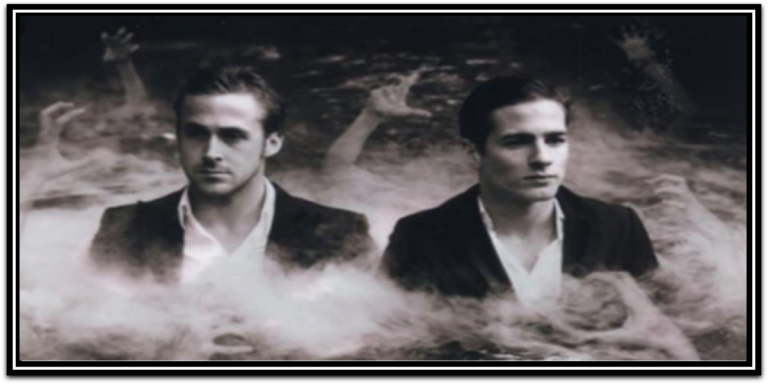
Well, if you’ve never heard Ryan Gosling’s band “Dead Man’s Bones”, you’re in for a treat.
From the hauntingly beautiful music to the dark, sexy vocals from Mr. Gosling…the mood is perfect…only improved by the added genius of a children’s choir singing background on the majority of the album. The whole album is worth a try, but here are a few of my favorites.
“In The Room Where You Sleep” seems to be their most popular song, and was my introduction to the project. This song was on the soundtrack for The Conjuring.
My personal favorite is “My Body’s A Zombie For You”. I think you’ll understand why…if you just listen.
“Lose Your Soul” is a very catchy song.
There are so many more on this album that I love, but I just wanted to give you a taste of it. Go seek out the rest on your own.
Former NFL quarterback Brett Favre met resistance when he tried selling University of Southern Mississippi on a deal to accept federal grant money to build a volleyball stadium, texts show.
“Nancy I spoke with Jon Gilbert this evening and between you and I he is very Leary of accepting such a large grant. Got me very uneasy,” Favre texted Nancy New, owner of the nonprofit Mississippi Community Education Center, which had been granted millions in federal welfare funds from the Mississippi Department of Human Services.
Two days before this, Favre, New, USM Athletic Director Jon Gilbert, MDHS Director John Davis and others had met at the university to discuss the project. Davis, a subordinate of former Gov. Phil Bryant, verbally committed to providing $4 million in welfare funds to build the volleyball stadium.
“He did mention trying to find a way for John (Davis) to allocate money to an entity that could then give to us that would pay for brick and mortar. I passed same info to John and of course he sent back we will find a way to make it work,” Favre wrote.
Federal regulation strictly prohibits states from using funds from Temporary Assistance for Needy Families – the fund MDHS Director John Davis had virtually outsourced to MCEC – on exactly the term Favre used, “brick and mortar,” or construction projects. University officials were apparently apprehensive about the maneuvering.
“My fear is he (Gilbert) doesn’t except all that you and John can allocate even if it is legally signed off on,” Favre texted New.
“They are scared to death it seems,” he also texted, referring to USM, according to the court filing.
Eventually, after conversations between the nonprofit officials, attorneys at MDHS and general counsel for the university, Favre got the greenlight. But only after the deal evolved to include an additional half-million for improvements to the basketball stadium Reed Green Coliseum.
New’s attorney Gerry Bufkin argues in a court document filed Friday that the evidence suggests Bryant may have had a hand in pushing the project into the end zone.
At this time in July of 2017, Nancy New had already entered a subgrant with the USM athletic foundation for around $200,000, which would be used to renovate another building on campus called M-Club. As the smaller of Mississippi’s big three universities, USM has historically had a harder time generating funds for these kinds of projects.
“It’s obvious that you and John are tremendous assets for USM and in order for us to get ahead in the game we have to utilize you guys in every way,” Favre texted New.
These new texts, revealed Friday and printed here exactly as they appear without correction, provide a further glimpse into how officials ended up funneling $5 million in welfare funds, money that’s supposed to serve the state’s neediest residents, into the construction of a volleyball stadium at USM. Nancy New’s son Zach New pleaded guilty to defrauding the government related to the expenditure in April.
But in the midst of Favre’s persistence, the project was also reviewed by many – MDHS attorneys, USM attorneys, the Attorney General’s Office, the Institutions of Higher Learning board – who all failed to intervene and stop it.
The new texts came to light within a court battle over whether Bryant should have to comply with a subpoena issued by the attorney for the News and their nonprofit. Another defendant, Austin Smith, also joined the subpoena.
The attorneys are bringing the subpoena against Bryant in an ongoing civil suit over welfare misspending, even though Bryant is not a defendant in the litigation, because they say Bryant’s involvement in welfare spending, and particularly the volleyball project, is crucial to their clients’ defense. Bryant argues in his objection to the subpoena that he did nothing wrong, and shouldn’t have to release privileged communication as a result of the defense attorney’s fishing expedition.
“Governor Bryant makes one thing abundantly clear: he is desperate to avoid public scrutiny of his text messages concerning welfare funds used to build the Volleyball Facility at USM,” New’s attorney Gerry Bufkin wrote Friday. “Of course, Bryant insists he did nothing to facilitate the flow of millions from MDHS to the athletic construction project, but he refuses to produce his text messages and other documents that presumably would support his contentions, if true. In lieu of transparency, Bryant opts for obfuscation.”
Favre began discussions with USM about building a new volleyball stadium sometime before late 2016. Favre contacted Bryant for help with the project in April 2017. These conversations were about raising private donations for the project.
When officials in the athletics department began talking to New about the volleyball stadium in July, they were already working with her nonprofit on a separate project, in which it would provide money through a lease for renovations and improvements to the student athlete facility called the M-Club. AD Gilbert sent New a copy of the volleyball building design in mid-July 2017.
The next several days were busy. Favre and New met about the volleyball project. Bryant met with Davis about MDHS projects. Then Bryant discussed the volleyball project with Favre, who sent him construction documents.
Bryant did not produce any of his communication immediately after his initial texts with Favre about the volleyball facility, but two days later, Davis and New met with Favre and USM athletics officials and Davis agreed to fund the project.
“Wow, just got off the phone with Phil Bryant! He is on board with us! We will get this done!” New texted Favre several days later.
“Bryant’s denials notwithstanding, the evidence and timing of the meetings described herein, suggest that Davis discussed Favre’s Volleyball Facility with Bryant the week of the meeting at USM and received approval from Bryant, express or implied, to fund the project through MDHS. After the meeting at USM, Davis explaining the large funding commitment saying, ‘the Governor likes this project and wants to get it done.’”
Bufkin also noted that the events leading to welfare officials funding the volleyball project mirror another scenario in which Favre contacted the governor for support for a pharmaceutical company called Prevacus and within days, welfare officials were committing funds to the project.
“Importantly, Davis was Executive Director of MDHS for approximately four years.” Bufkin wrote. “In the entirety of his tenure, he committed $4 million or more only twice upon first hearing a proposal. The first time was the Volleyball Facility. The second was Prevacus. The evidence suggests that Bryant was involved in both projects.”
In July, the News attorney Gerry Bufkin filed a subpoena on Bryant for his communication related to the volleyball stadium. Waide joined the subpoena. Bryant’s attorney Billy Quin objected to the subpoena, claiming the communication is privileged and should at the very least be placed under a protective order. In a lengthy court filing, Bryant released several pages of texts he says prove he didn’t know Favre was getting welfare money for the volleyball project.
Now, Bufkin and Waide are pushing back, saying the timeline Bryant provided through his texts is incomplete and that Bryant should have to produce all the relevant communication publicly.
“Bryant never denies that such expenditure was fraudulent,” wrote Jim Waide, attorney for Smith, Davis’ nephew who received hundreds of thousands under contracts with the nonprofits. “Instead, Bryant blames Defendant John Davis, Defendant Nancy New, and Defendant Brett Favre. Bryant provides documents to demonstrate that he was not personally involved in the fraudulent scheme. Bryant’s documents paint an incomplete picture, however, because he neglects to attach correspondence between Bryant and Defendant John Davis. Communications demonstrating Bryant’s participation would likely be between Bryant and his immediate subordinate, Defendant John Davis.”
Waide notes that the bulk of communication Bryant has put forth came after the former governor was aware that the welfare department was under an investigation by the auditor’s office for suspected fraud. Bryant had relayed a small tip regarding Davis in late June 2019.
“Naturally, Bryant would have been careful not to generate incriminating documents after he knew about the investigation. Only after Bryant knew that he was ‘to [sic] old for Federal Prison’ did Bryant generate exculpatory documents,” Waide writes.
Waide argues that Bryant’s communication is not privileged because privileges do not protect fraudulent conduct. Considering Nancy New’s allegation that Bryant directed her to make payments to Favre, “as a matter of law, there is ‘good ground to support’ a belief that Bryant participated in the fraudulent conduct,” Waide writes.
“Bryant’s selective production of text messages, most of which were created after Bryant realized MDHS was under investigation by the State Auditor, should not be summarily accepted as exonerating Bryant without the parties’ having access to all relevant evidence,” Waide writes.
Bryant’s attorney also accuses New’s attorney from attempting to try the case in the media, but Bufkin argues that Bryant invited the media attention himself, namely in a lengthy interview with Mississippi Today.
“In response to questions concerning his involvement in funding the Volleyball Facility and Prevacus, Bryant chose to sit for a three-hour interview with Mississippi Today in an apparent attempt to shift the public narrative, and the media coverage, in his favor. By doing so, Bryant voluntarily thrust himself further into the media spotlight,” Bufkin wrote.
Mississippi Today compiled the following timeline based on documents and communication gathered in the court process or retrieved through records requests. Read the timeline here.
Editor’s note: Mississippi Today Editor-in-Chief Adam Ganucheau’s mother signed off on the language of a lease agreement to construct a University of Southern Mississippi volleyball stadium. Read more about that here.
As more documents and text messages come to light surrounding the Brett Favre volleyball project, Mississippi Today has compiled a timeline that gives a greater glimpse into how officials funneled $5 million in welfare funds to build a new stadium at University of Southern Mississippi.
The timeline shows that Favre discussed the volleyball stadium for months before reaching out to then-Gov. Phil Bryant for help raising donations. When the private funds didn’t immediately roll in, university officials discussed bringing on Nancy New’s nonprofit as a lease partner on the project. The nonprofit had already signed a similar lease to provide upgrades to another building on campus following a hunting trip Nancy New’s sons attended with USM officials. A flurry of activity happened in late July and early August, including conversations between welfare officials, Favre and Bryant.
USM officials expressed apprehension about using grant funds for the project, but eventually, after the deal was modified to include an additional $1 million for improvements to the basketball stadium and the university’s maintenance fund, per Favre’s texts, university attorneys greenlit the project. It was then approved by the Attorney General’s Office and IHL.
Below is a timeline of events compiled by Mississippi Today based on documents and communication gathered in the court process or retrieved through records requests:
Dec. 20, 2016: Conversations began sometime before then between University of Southern Mississippi and Brett Favre about building a volleyball stadium
“I had the impression Brett wanted to keep his involvement quiet,” Senior Associate Director of Athletics Daniel Feig wrote in an email to his colleague on Dec. 20, 2016.
April 11, 2017: Brett Favre met with USM Athletics about the volleyball facility
“FYI-Chris and I are meeting with Brett and Deanna Tuesday at 11 am to discuss the layout of the facility,” Athletic Director Jon Gilbert wrote in an email on April 7, 2017, the same day Favre started soliciting donations to corporations in exchange for their name on the facility. “Can discuss naming opportunities further if the group has a direction we should look at exploring.”
April 20, 2017: Brett Favre texted Gov. Phil Bryant for help with volleyball project
“Deanna and I are building a volleyball facility on campus and I need your influence somehow to get donations and or sponsorships. Obviously Southern has no money so I’m hustling to get it raised. We want to start this summer and finish in a year or less,” Favre texted the governor.
Bryant said in his filing that this was the first time he discussed the volleyball project with Favre.
“…We will have that thing built before you know it. One thing I know how to do is raise money,” Bryant responded.
April 20, 2017 – July 21, 2017: Bryant’s communication with Favre and welfare officials unknown
Bryant did not produce any of his text messages with Favre or then-MDHS Director John Davis, Bryant’s appointee to run the welfare programs, in the several months after Favre first asked the governor for help with the volleyball project. The messages produced and redacted suggest there could be more communication between the two during this time period.
May 16, 2017: USM Athletics compiled updated donor list
At this point, the USM Athletic Foundation had raised $425,500, including $150,000 from Favre.
May 30, 2017: Nancy New’s sons went hunting with USM athletics staff
On May 23, 2017, USM associate athletic director Brian Morrison invited Nancy New’s sons Zach and Jess New to attend a private hunting event and dinner at Providence Hill Farm with USM President Rodney Bennett and Director of Athletics Jon Gilbert on May 30. They both agreed by email to attend. At this point, MDHS and the News’ nonprofit Mississippi Community Education Center were already engaged in grant activities at USM.
May 31, 2017: MDHS wrote letter approving a non-volleyball related lease between USM and MCEC
MDHS writes a letter to Feig that said MDHS is aware that MCEC is leasing space with the university “because we believe it is important to help MCEC accomplish the purpose of their subgrant which is to provide services designed to stimulate employment, support family financial stability, promote literacy, and increase graduation rates while continuing to support positive youth development, impacting teen pregnancy rates, promotion positive father involvement and supporting MDHS county offices through parenting education and parenting/life skills development.”
While John Davis’ name appears at the end of the letter, it is actually signed by MDHS attorney Garrig Shields. This is the first reference to a lease agreement in emails between MCEC and USM Athletic Foundation.
June 1, 2017: AG reviewed USM’s lease with athletic foundation to build volleyball stadium
Special Assistant Attorney General Stephanie Ganucheau emailed Institutions of Higher Learning officials a copy of a lease between USM and USM Athletic Foundation “so that the Foundation can build a volleyball facility, which would then be transferred back to the university.”
Later that day, IHL’s David Buford emailed an insurance professional for advice on insurance terms. He explained the concept of the project: “USM leases the grounds (which is a vacant space and a parking lot next to a USM-insured building) and the Foundation gets financing, builds a new building, and gives the new building back to USM.”
Based on the emails, it appears IHL was unaware where the Athletic Foundation’s funding may be coming from.
June 7, 2017: AG recommended USM lease with athletic foundation for board approval
At this point, the lease does not involve Mississippi Community Education Center, MDHS block grant funds or any mention of serving the needy.
June 15, 2017: IHL Board approved USM leases with USM Athletic Foundation
During its board meeting, the Institutes of Higher Learning board approved two $1 leases with the Athletic Foundation, one for the volleyball project and one for the purpose of renovating M-Club.
June 15, 2017: Nancy New signed a $192,840 sublease with USM Athletic Foundation
Nancy New and Grant Dyess, then-president of the University of Southern Mississippi Athletic Foundation, signed a sublease for a building within the Jim and Thomas Duff Athletic Center known as the M-Club Room, a space used for USM Athletics meetings and activities. The agreement said the money will be used for renovations and upgrades to the space. The sublease said plainly that MCEC will use the space “for business purposes, educational purposes and for meetings and conferences.”
The M-Club charged membership dues of $50 a year, according to the university’s website.
July 1, 2017: USM signed two leases with Athletic Foundation
USM signed two leases with USM Athletic Foundation, one for M-Club and one for the volleyball project. At this point, MCEC was already engaged on a sublease for M-Club, but not for the volleyball project.
July 16, 2017: USM Athletics reached out to Nancy New about volleyball facility
Gilbert emailed Nancy New, indicating they had met the prior week. He attached a copy of the current volleyball facility design.
“We have not formally announced this project but expect to do so in the next week to ten days. We have hired Weir Boerner Allin out of Jackson as the architect. The facility will be plus/minus 25,000 square feet with an approximate cost of $4 million. Brett and Deanna have agreed to help with fundraising for the facility. We currently have $1.2 million in hand from a variety of people that have committed to the project … Based on our discussion last week, we are interested in presenting this project as once that will benefit women student athletes. We would be interested in presenting to anyone that you would thing have interest in Southern and women’s athletics. I will find out what Brett’s schedule is Tuesday and coordinate a time he can stop by that works for everyone.”
“I am glad to help and look forward to seeing this project to fruition,” Nancy New responded. “I believe it can be done. I, too, was glad to visit with Brian and you. As soon as we get everything put back together after all the renovations, I want you to come back for lunch and a tour of New Summit and our Family Resource Center. The Center offers a good example of the one that we will be organization on Southern’s campus, hopefully in the near future.”
July 18, 2017: Brett Favre met with Nancy New about funding the volleyball project
Favre met with Nancy New, according to Mississippi Community Education Center’s Sept. 30 filing.
July 19, 2017: John Davis met with Phil Bryant about DHS projects
Davis texted Nancy New, “Been with Gov for last two days. He’s loving what we are doing.”
July 21, 2017: Brett Favre and Phil Bryant texted about volleyball project
Screenshots of texts entered into court show Favre texted Bryant on the evening of July 21, 2017, but Favre’s initial message and Bryant’s lengthier response are redacted.
Favre responded to Bryant’s redacted message: “Not sure how we you can help get this facility built for Vball. But you are the governor and on our side and that’s a good thing. Actually a great thing.”
“We can do that,” Bryant responded. “Just get me some numbers and I’ll find a way. Maybe USM or the Coach can call me and we’ll get on it.”
July 22, 2017: Favre sent Bryant construction proposal
Favre texted Bryant a document containing the construction proposal and building renderings. “Latest plans. I’m trying to get sponsors,donations etc…. if we can find a contractor that would say hey rater that give you money I’ll build for free!! Maybe you know of someone,” Favre texted.
“I all over it,” Bryant texted, followed by a bicep emoji.
“Thanks that would help a ton!!” Favre said.
Bryant’s next text, as well as its date and time, are redacted.
July 22, 2017 – May 8, 2018: Bryant’s communication with Favre and welfare officials unknown
Bryant did not produce any of his messages with Favre or Davis for a ten month period, including the time period in which Davis committed to funding the project and Nancy New paid $5 million to the volleyball project and $500,000 million to Favre.
July 24, 2017: Favre, welfare officials and USM athletic staff met
Two days after texting Bryant the construction proposal, Favre met with Bryant’s appointed welfare director John Davis, Nancy New, USM athletics officials and others at the university. During the meeting, Davis verbally committed $4 million to the project.
“Nancy thank you again!!! John mentioned 4 million and not sure if I heard him right. Very big deal and can’t thank you enough,” Favre texted Nancy New after the meeting.
July 25, 2017: Zach New, MDHS attorney and USM Athletics officials discussed volleyball project
“Are you available for a conference call with Garrig and I tomorrow morning?” Zach New emailed Feig the evening of July 24, after the meeting at USM. “I am open to anytime in the morning that will fit your schedule. We would like to discuss options for the new project. I have also copied Garrig in so you will have his contact information as well.”
July 26, 2017: Brett Favre told Nancy New that USM is uneasy about accepting grant
“Nancy I spoke with Jon Gilbert this evening and between you and I he is very Leary of accepting such a large grant. Got me very uneasy,” Favre texted Nancy New. “He did mention trying to find a way for John (Davis) to allocate money to an entity that could then give to us that would pay for brick and mortar. I passed same info to John and of course he sent back we will find a way to make it work.”
At some point after USM expressed hesitations, discussions changed so that the lease would include not only money for the volleyball stadium, but $500,000 for renovations to Reed Green Coliseum, the basketball stadium, and $500,000 for maintenance, potentially causing a $1 million shortfall for the volleyball project, which was already under budgeted.
July 29, 2017: Favre reiterated USM’s fears about taking grant money, suggested including the governor
“Nancy do I need to involve the governor and or Dr.B if need be. Jon made the comment about using money you allocated to athletic dept thus far and although signed off on by all could raise negative concerns etc… with this project and others,” Favre texted Nancy New. “My fear is he doesn’t except all that you and John can allocate even if it is legally signed off on. It’s obvious that you and John are tremendous assets for USM and in order for us to get ahead in the game we have to utilize you guys in every way.”
July 29, 2017: Favre suggested to Nancy New that she pay him for radio spots “and whatever compensation could go to USM.”
“Ok. I could record a few radio spots here initially I’m sure right here,” Favre texted Nancy New. “See how it is received and whatever compensation could go to USM.”
“4 million dollars,” Nancy New responded, followed by three emojis of a face wearing a mask. “Just kidding. The first phase could be $500,000 and after Sept. we can renew. This is a good approach. What do you think?”
“Was just thinking that here is the way to do it!!” Favre responded.
Aug. 2, 2017: Favre texted Nancy New that “the facility is gonna be more than we thought.”
“John said you guys have a big meeting Monday with university. Hope we hit a homerun. Looks as though the facility is gonna be more than we thought which is always the case,” Favre texted Nancy New.
Favre also texted New, “They are scared to death it seems,” and while this text is entered without context, New’s attorney said it referred to university officials’ fears about taking the grant money.
Aug. 3, 2017: Favre asked Nancy New if the media can find out where the money came from and how much
“If you were to pay me is there anyway the media can find out where it came from and how much?” Favre texted Nancy New.
“No, we never have had that information publicized. I understand you being uneasy about that though. Let’s see what happens on Monday with the conversation with some of the folks at Southern. Maybe it will click with them. Hopefully.”
Aug. 4, 2017: Nancy New informed Favre of Bryant’s support
“Wow, just got off the phone with Phil Bryant! He is on board with us! We will get this done!” Nancy New texted Favre.
Nancy New alleged in a court filing that around this time, Phil Bryant directed her to make this deal with Favre.
Aug. 10, 2017: Nancy New texted Favre sharing message from USM counsel
Nancy New texted Favre a copied message from USM general counsel Gordon Cannon that says “we are moving ahead to get this done.”
“Wow wow wow!! Great news,” Favre responded.
Aug. 14, 2017: Nancy New met with USM Department of Research about volleyball funding
Aug. 19, 2017: Nancy New texted Favre an update about approval
“Morning. I got a call yesterday from Gordon Cannon that their meetings went well on accepting the money, etc. Next Wed. there is another meeting with MDHS attorney and USM to make sure all the wording is good before it goes to IHL. Still keeping my fingers crossed. I still think it will happen,” Nancy New texted.
“Thanks Nancy. Jon Gilbert said the same thing yesterday,” Favre responded.
Aug. 23, 2017: Nancy New texted Favre USM counsel said “everything is a go.”
“Brett, I just received this info from Dr. Cannon,” Nancy New texted, followed by the copied message: “Nancy, just finished the meeting with Garrig and Jacob everything is a go. Daniel Feig will be in touch with you or Zack to ask for a draft lease. Our target date for having everything complete for board approval is Sept22. I know this a a short time line but that would get us approval 1. October which would not delay bidding the project as currently scheduled.”
Sept. 8, 2017: Zach New sent USM athletics and general counsel the nonprofit’s plans for the lease
Zach New sends an email to Feig and USM counsel Truett Roberts outlining several events MCEC claimed it would host at the university as a result of its $5 million lease. The events include Yellow Ribbon Events – meant to assist members of the National Guard and Army Reserves – MEMA Reservist Trainings, M-Club events, Healthy Teens Rallies, youth leadership camps by Heart of David, the Christian ministry started by former WWE wrestler Ted DiBiase, and other Families First programming.
When Mississippi Today requested records from the university in 2020 that described any programming the nonprofit conducted on campus, they provided records for exactly one event: The Healthy Teens Rally of 2018 hosted at Reed Green Coliseum.
Sept. 22, 2017: USM President Rodney Bennett sent a letter to IHL requesting board approval for the university’s amended lease with USM Athletic Foundation
Oct. 9 2017: AG approved the amended USM lease with the athletic foundation
Oct. 19, 2017: IHL board approved amended lease between USM and USM Athletic Foundation
On the agenda, the item reads: “The IHL Board approved the original Lease Agreement between the USM and Foundation at the June, 2017 Board meeting. Since that time, this project has been expanded in size and scope and the term has also been extended in accordance with the Amended and Restated Lease.”
The approved meeting minutes state: “This lease and subsequent sublease are being funded through the lease of athletic department facilities by the Mississippi Community Education Center (MCEC), a SO1(3)3 organization designed to provide schools, communities and families with educational services and training programs in South Mississippi. MCEC will use the subject facilities to support their programming efforts for South Mississippi. MCEC’s funding for the project is via a Block Grant from the Mississippi Department of Human Services. The funding from MCEC shall be prepaid rent to the Foundation in the amount of Five Million Dollars ($5,000,000) for the leasing of certain USM athletic facilities including but not limited to the to be constructed Wellness Center, Reed Green Coliseum and additional athletic space as agreed upon by USM and the Foundation.”
Oct. 19, 2017: Nancy New texted Favre about approval; Favre said USM is using part of the money for other projects
“It’s a go. All approved by IHL!” Nancy New wrote.
“Finally and thanks Nancy. I hope it’s enough now. Jon said 500k has to go to renovations for reed green and another 500 to maintenances fund,” Favre responded.
“We will still fundraiser, etc. we will get the rest,” Nancy New texted.
Nov. 2, 2017: Nancy New told Favre she saw the governor
“I saw the Gov last night. We will still plan the fundraiser as well when we can get another date from him that works with your time, too. Surely, Southern folks won’t say to postpone it again. At any rate it’s all going to work out,” Nancy New texted Favre.
Nov. 6, 2017: Nancy New made first payment of $2.5 million to USM Athletic Foundation
Nov. 14, 2017: Athletic Foundation received update from USM athletics about volleyball project
“Wellness and Volleyball Facility has received significant gift and also gift in kinds. A partnership with MCEC will make the facility useful to make groups once it is completed,” the meeting minutes read.
Dec. 5, 2017: Nancy New made second payment of $2.5 million to USM Athletic Foundation
Dec. 27, 2017: Favre thanked Nancy New for $600,000 payment
“Nancy Santa came today and dropped some money off,” Favre texted Nancy New, “thank you my goodness thank you. We need to set up the promo for you soon. Your way to kind.”
Mar. 28, 2018: Favre texted Nancy New, telling her the construction bids came in larger than expected
“Nancy I wanted to update you on facility. The bids all are in and shockingly the lowest is 6.9. The architects were confident it would come it lower than what we have saved. Really frustrating. Jon said he wanted to go back to lowest bed and talk to them about getting it down to 5.9. I’ll keep you updated,” Favre texted Nancy New.
“…We can still have the fundraiser at the Governor’s mansion, too. We can use Phil’s business list that he offered earlier. I will be thinking and hopefully there will be something in the new budget for Families First to offer.”
April 19, 2018: USM Athletics shared an updated list of volleyball facility donors
USM Athletics staffers shared by email an updated list of 23 volleyball donors for a total of $6,045,325. There is an entry for a $4.4 million donation labeled from the donor “CMEC”—presumably a typo for MCEC. The line item for MCEC does not contain any more identifying information, such as the date of donation, the donor’s address or contact information, as it includes for all other donors.
The email also said Favre’s original gift of $500,000 was reduced to $250,000 after he instructed the university to transfer $250,000 to the beach volleyball project.
April 25, 2018: Architect sent updated cost sheet for volleyball facility to USM
In the spreadsheet, the total projected construction cost is $6.3 million, the amount needed to begin construction is $500,000 and the amount needed to finish construction is $1.4 million.
Gilbert sent the document to Favre.
April 30, 2018: USM Athletics sends Favre a donor agreement totaling $1.4 million
“Thank you very much for your generous support of this project and your commitment and loyalty to Southern Miss,” Gilbert wrote to Favre.
Mississippi Today did not find a signed copy of the agreement.
May 9, 2018: Favre reaches out to Bryant for help building lockers at the volleyball facility
“Governor this Brett. I’m still trying to save money on Vball facility,” Favre texted Bryant. “We have visitor and Home lockers yet to build and Warren Hood is donating any lumber. If someone would build them on there spare time. Poncho mentioned the prison industry as a builder. The architects can provide all specs.”
“Let me get on it. Turkey hunting in Nebraska. Will be back this P.M.,” Bryant responded, attaching a picture of his kill.
May 18, 2018: Favre and Bryant texted about lockers
“Hey Governor [redacted]…. Any luck with lockers?” Favre texted, followed by a long block of redacted text.
“I think I have some guys in the lockers. Will know more today. They are in Summeral a,” Bryant wrote.
“And do this type of work,” Bryant texted, followed by a long block of redacted text.
Favre’s response is also redacted.
Bryant responded with a thumbs up and “where can I sent a donation for the Volleyball Complex?”
Favre sent Bryant the USM Foundation’s P.O. Box. Bryant then told Favre that he had found a cabinet maker to construct the lockers. “I am also going to reach out to Poncho and see if we can’t get a fundraiser in Hattiesburg put together,” he added.
May 18, 2018 – July 15, 2019: Bryant’s communication with Favre unknown
For this 11-month period, Bryant did not produce any of his texts with Favre, with the exception of one Jan. 12, 2019 text Bryant sent Favre asking him to retweet a post about the HGTV star who helped connect Bryant with the cabinetmaker.
June, 2018: Nancy New paid Favre an additional $500,000 under advertising contract
June 21, 2019: Bryant received and relayed a tip about suspected fraud to auditor
In communication after this point, which includes Bryant advising Favre on how to reword the proposal to get accepted by the welfare department and has been heavily reported, Bryant is aware of the auditor’s investigation into spending at the welfare department.
July 16, 2019: Bryant said he learned for the first time that MDHS was involved in funding the volleyball project
Favre texted Bryant with concerns that Nancy New wouldn’t be able to “fund her part” of the volleyball project. Favre told Bryant that he paid for three-fourths of the construction. Bryant said in his recent court filing that July 16 was the first time he learned about MDHS’s involvement in funding the stadium. Bryant promised to help, and consulted Favre and Nancy New on how to rewrite the proposal to get MDHS approval, but with the ongoing auditor’s investigation, the welfare department ultimately turned them down.
Editor’s note: Mississippi Today Editor-in-Chief Adam Ganucheau’s mother signed off on the language of a lease agreement to construct a University of Southern Mississippi volleyball stadium. Read more about that here.
Whether you find yourself in Soulé Coffee + Bubbletea by chance, out of curiosity or as a regular, the sighs of satisfaction emanating from you are the results of sipping and savoring worldly fusions.
Owner Ezra Brown, a native of South Carolina, has lived and toured the world as a renowned jazz musician. His travels have taken him to Dakar, Africa, and he lived nearly six years in Asia, residing in places like Japan, Singapore, and Kuala Lumpur, the capital of Malaysia.
These places helped Brown discover and develop a love for the creativity and innovation of how teas and coffees were created.
It was the mixing, the fearless fusions; the adding of fruit or making drinks “dirty” by adding little shots of espresso that intrigued Brown.
“It’s was a different kind of vibe in these places,” said Brown. “Watching, learning and partaking … the drinks kind of follow my whole life, and I had an epiphany. Encompass drinks and community, and forward thinking about economic inclusion. So, why not here?”
Brown says plans for expansion into other areas of the city are also taking shape.
“Jackson can be the breeding ground for greatness from an enterprise standpoint,” said Brown. “All the components are here that you can take to the world.”
His coffee shop and tea house has an easy, welcoming feel. From the artwork on the walls to the soothing jazz and wafting aromas that fill the senses.
“It just hits different,” said a customer of the shop’s ambiance.
The federal government is providing $20 million for the troubled Jackson water system in legislation that passed the U.S. House of Representatives Friday by a 230-201 margin.
The bill passed the Senate earlier this week.
The bill will avert a partial government shutdown and continue funding of the federal government through Dec. 16. President Joe Biden will sign the legislation into law before midnight Friday when the current funding authorization expires.
U.S. Rep. Bennie Thompson, the lone Democrat in the state’s congressional delegation, voted for the proposal while the three House Republicans – Michael Guest, Trent Kelly and Steven Palazzo — voted no. Thompson and Guest both represent portions of Jackson.
Mississippi’s two U.S. senators, Roger Wicker and Cindy Hyde-Smith, both Republican, voted for the proposal when it passed their chamber.
“I support providing additional resources to help the city of Jackson address its water infrastructure needs,” Wicker said. “The $20 million included in this funding legislation would build on the initial $5 million provided by the U.S. Army Corps of Engineers earlier this year through the Bipartisan Infrastructure Law. I recognize this funding will not be enough to address the long-standing water infrastructure issues in Jackson, but this is a good start.
A Wicker news release went on to explain, “The 2007 Water Resources Development Act authorized $25 million for the city of Jackson’s water and wastewater infrastructure needs. This authorization was provided through the U.S. Army Corps of Engineers’ Section 219 Environmental Infrastructure Assistance Program. The city received an initial $5 million appropriation from that authorization earlier this year, which will enable the Corps of Engineers to complete projects in partnership with the city.”
Politico reported at one time Thompson was trying to incorporate into the legislation funding the government an additional $200 million for the City of Jackson. Despite the much smaller appropriation to the city, Thompson, like all congressional Democrats, voted for the proposal.
In a statement, Guest said he voted against the funding bill, known as a continuing resolution, because, “Mississippians are experiencing record high inflation. I have and will continue to fight for legislation that restricts the size of government and addresses our national debt.
As far the $20 million in the bill for Jackson, Guest said, “I continue to be committed to working with local, state, and federal leaders to help with long-term solutions to the Jackson water system problem, but the continuing resolution did not address the situation on a long-term basis. The continuing resolution included concerning levels of spending and a risk for additional inflation that the people of our state cannot afford.”
Both the president and Gov. Tate Reeves issued emergency declarations in late August and early September when the system malfunctioned leaving no water pressure for many of the about 180,000 customers of the system. Water pressure has been restored and boil water notices that lasted for much of the summer have for the most part been lifted.
But officials say the system still faces long-term problems that some estimate will cost as much as $1 billion to fix.
The City of Jackson has committed to spend between $27 million and $34 million of the federal COVID-19 relief funds it received to draw down on a dollar-for-dollar basis COVID-19 relief money the state received from the federal government. Hinds County also is committing about $17 million of its COVID-19 relief funds for the project.
Often, the Republican leaders of the state and the Democratic leaders of Jackson, the state’s capital and largest city, have been at odds on how to fix the water system.
Last week federal Environmental Protection Agency officials met with Jackson Mayor Chokwe Antar Lumumba and voiced a desire to work with city officials to solve the problems with the water system. But in a letter to city officials the EPA said it is prepared to take action under federal law if “an enforceable agreement that is in the best interest of both the city and the United States” is not reached.
En lunes, el administrador de la Agencia de Protección Ambiental, Michael Regan, se reunió otra vez con el alcalde de Jackson, Chokwe Antar Lumumba, esta vez junto con el Departamento de Justicia, para trazar el próximo curso de acción en el sistema de agua de la ciudad.
“El fiscal general adjunto Todd Kim del Departamento de Justicia y yo nos reunimos hoy con el alcalde Lumumba para discutir las acciones que el gobierno federal está dispuesto a tomar para ayudar a remediar esta injusticia de larga data”, dijo Regan en un comunicado de prensa. “Durante esa reunión, transmití nuestro deseo de trabajar con la Ciudad para llegar a un acuerdo judicialmente exigible que asegure un sistema de agua sostenible a mediano y largo plazo”.
El prensa no mencionó el convino entre la EPA y Jackson que ya existe. Las dos partes firmaron una orden administrativa en 2021, que tenía una lista de 40 requisitos de contratación y reparación descritos por la agencia federal.
El alcalde Lumumba dijo recientemente que la EPA ha sido flexible al establecer los plazos en ese convino. Todos los plazos originales ya paso. Mississippi Today le preguntó a la EPA cuál de esos elementos ha cumplido Jackson hasta ahora, pero un portavoz le dijo: “Debido a las actividades de cumplimiento en curso, no podemos proporcionar información relacionada con el estado de cumplimiento de la ciudad”.
Las dos partes también están sujetas a un convino de confidencialidad ordenado por un tribunal que les impide compartir un “plan muy detallado” con un costo estimado para arreglar el sistema de agua de la ciudad, dijeron recientemente oficiales de la ciudad. La EPA confirmó a Mississippi Today que existe una orden de confidencialidad, pero no proporcionó más detalles.
El comunicado de prensa agregó que Jackson ha emitido aproximadamente 300 avisos de agua hirviendo en los últimos dos años.
Nuevos avisos de hervir agua efectan a más de 1,200 clientes
Obtenga las últimas noticias sobre la crisis del agua de Jackson.
Processing…
Success! You’re on the list.
Whoops! There was an error and we couldn’t process your subscription. Please reload the page and try again.
Desde que el departamento de salud del estado levantó el aviso de hervir agua de un mes y medio de duración hace solo 11 días, Jackson ha emitido nuevos avisos de hervir agua para más de 1,200 clientes.
La ciudad anunció el lunes por la tarde que un “contratista cortó inadvertidamente la línea de agua” para aproximadamente 1,000 conexiones en Byram.
Jackson emitió avisos de hervir el agua para las otras 200 conexiones debido a roturas en las líneas provocadas por el aumento de la presión en el sistema, dijeron las autoridades. El alcalde Lumumba advirtió a los residentes a principios de septiembre que el desgastado sistema de distribución sería susceptible a tales problemas.
Trabajadores de la ciudad, con la ayuda de la Asociación de Agua Rural de Mississippi y equipos de Maryland, Arkansas, Minnesota y Carolina del Sur, han continuado las reparaciones en las dos plantas de tratamiento de Jackson. Un comunicado de prensa del lunes dijo que las cuadrillas volvieron a poner en servicio dos de las bombas de agua cruda en O.B. Curtis antes del fin de semana.
La ciudad dijo el lunes que las siguientes áreas, incluidas Byram, Belhaven, North Jackson y Eastover, se encuentran actualmente bajo un aviso de agua hirviendo:
Byram:
[7300-8899] Gary Road, Byram: 39272
Gary Drive
Glen Haven Subdivision
Glennhaven Drive
Glennhaven Court
Glenn Oak Circle
Cedar Glenn Drive
Brank Creek Drive
Red Oak Cove
Cedar Glenn Cove
Trelles Cove
Highland Cove
Azalea Cove
Glennwood Cove
Ridge Place
Redwood Cove
Holybush Place
Glennoak Circle
Eagle Nest Subdivision
Eagle Nest Drive
Freedom Cove
Highpoint Drive
Mountain Crest Drive
Golden Eagle Drive
Talon Cove
Canyon Cove
Lake Ridgelea Subdivision
Turtle Road
Park Avenue
Mary Lane
Lake Shore Drive
Oak Avenue
Pike Avenue
Ridgelea Road
Lure Avenue
Meadow Lane
S. Ridge Road
E. Ridge Road
Bob White Street
Rod Street
Reel Street
Hook Street
W. Ridge Road
Horse Shoe Circle
Line Street
Spinning Street
Jackson:
[1200-2399] North State Street: 39202
[1600-1899] Pine St.
[700-799] Euclid St.
[700-799] Oakwood St.
[700-799] Fairview St.
[700-799] Arlington St.
[700-799] Pinehurst St.
[700-799] Gillespie St.
Popcorn Alley
Park Avenue
[1300-1399] Peachtree Street: 39202
[5300-5599] Highland Drive: 39206
[4300-4599] El Paso Street
Paso Cove
Nota del editor: esta historia se actualizó para incluir más calles afectadas por los avisos de hervir el agua porque la ciudad de Jackson lanzó más ubicaciones después de que esta historia se publicó por primera vez.
Andrés Fuentes
Andrés Fuentes es periodista de FOX8-TV en Nueva Orleans y traductor de Mississippi Today. Antes de que el nativo de Nueva Orleans regresara, era periodista para WLOX-TV en Biloxi, Mississippi.