

Deep South Today seeks CEO for networked hub of nonprofit newsrooms

Deep South Today, a networked hub of nonprofit newsrooms serving the most challenged region of the country, was born out of a shared belief in the inherent value of important local news reporting — robust, unfettered, nonpartisan — backed by a shared commitment to the essential role local journalism plays in a democracy.
What is needed now is a visionary leader passionate about the power of information, a CEO who can refine the strategy, garner the resources, and ensure the staffing, structure and capacity-enhancing services required to support the growing needs of a rapidly evolving operation.
As a nonprofit business entity, Deep South Today is in transition from a startup to an industry model. Entrepreneurial at heart, DST will remain a locally focused organization even as it develops regional systems and national resources.
The CEO of Deep South Today can expect to build and lead a hub with fairly classic components. Subsumed in “fundraising” is the need to develop a replicable revenue model supported through advertising.
While always respecting the editorial independence of the individual units, DST’s CEO will have both the opportunity and the mandate to develop appropriate wrap-around support, making sure the hub’s people, systems, services and funding align with the overall mission. To optimize the hub’s effectiveness, DST’s CEO must leverage data and digital resources to collective advantage while driving DST’s revenue strategy and its relationships with current and potential funders.
To help realize its ambitious mission, Deep South Today requires a proven leader with the creativity of an architect, the tenacity of a builder and the passion of an entrepreneur undaunted by the challenges ahead.
The backing of national philanthropic partners, individual donors and a growing readership will mitigate some of the shorter-term pressures of a true start-up. Nevertheless, the CEO must complement this foundation with the relationships and building infrastructure to ensure a sustainable enterprise worthy of the ambitious mission ahead.
For example, DST Engine is an innovative audience hub under development that will deploy advanced digital technology across the network newsrooms to support audience building, content accessibility and financial management. Such a system might be out of reach for an individual newsroom, but it will be essential for a strong and growing network.
While the focus and immediate audience for Deep South’s journalism is local, the appetite for equitable and accurate local news has traction nationally. Accordingly, the CEO must create or solidify relationships with a broad array of stakeholders across the country. Communications with such stakeholders—current and potential funders, civic and political leaders, program collaborators and the like—could easily take up half of the new executive’s capacity.
The CEO must reside within DST’s service footprint (Arkansas, Louisiana, Mississippi or Tennessee), but the precise location is open to discussion. There are advantages to basing the CEO in either Jackson, MS, or New Orleans, but the Board is open to other considerations as well.
Read the full leadership profile here.
For potential consideration or to suggest a prospect, please email DeepSouth@BoardWalkConsulting.com or call Sam Pettway, Cynthia Moreland, or Michelle Hall at 404-BoardWalk (404-262-7392).
The post Deep South Today seeks CEO for networked hub of nonprofit newsrooms appeared first on Mississippi Today.
Coffee Shop Stop – Butterbean Jackson St Tupelo

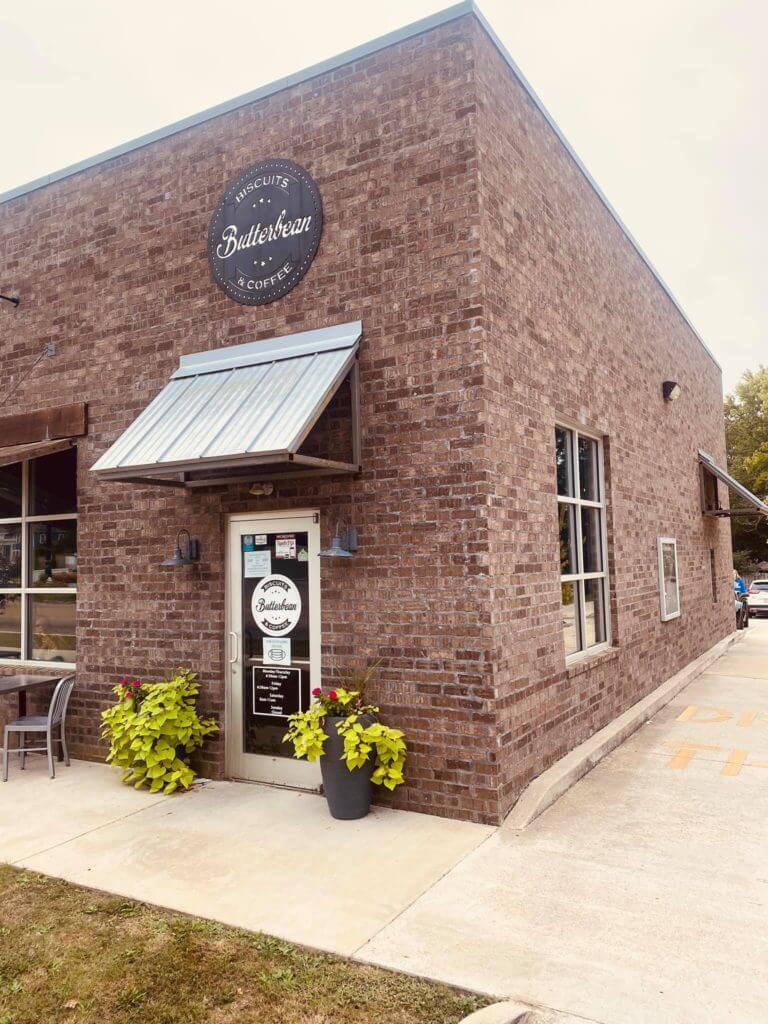
Butterbean Biscuits & Coffee @ 1103 west Jackson Street, Tupelo, MS. Open Tuesday through Saturday, 8:00am – 2:00pm. NEW MENU ITEMS! UPDATED ORDERING SYSTEM coming SOON!
What we’ve ordered:
sausage gravy biscuit $3
Tomato gravy biscuit $3
Sausage Balls $6
cinnamon apple turnover, pastries $5
Avocado Toast $7 *NEW
SEC Muffin $6 *NEW
caramel macchiato 16oz $4.
Frozen Frappe 20oz $4
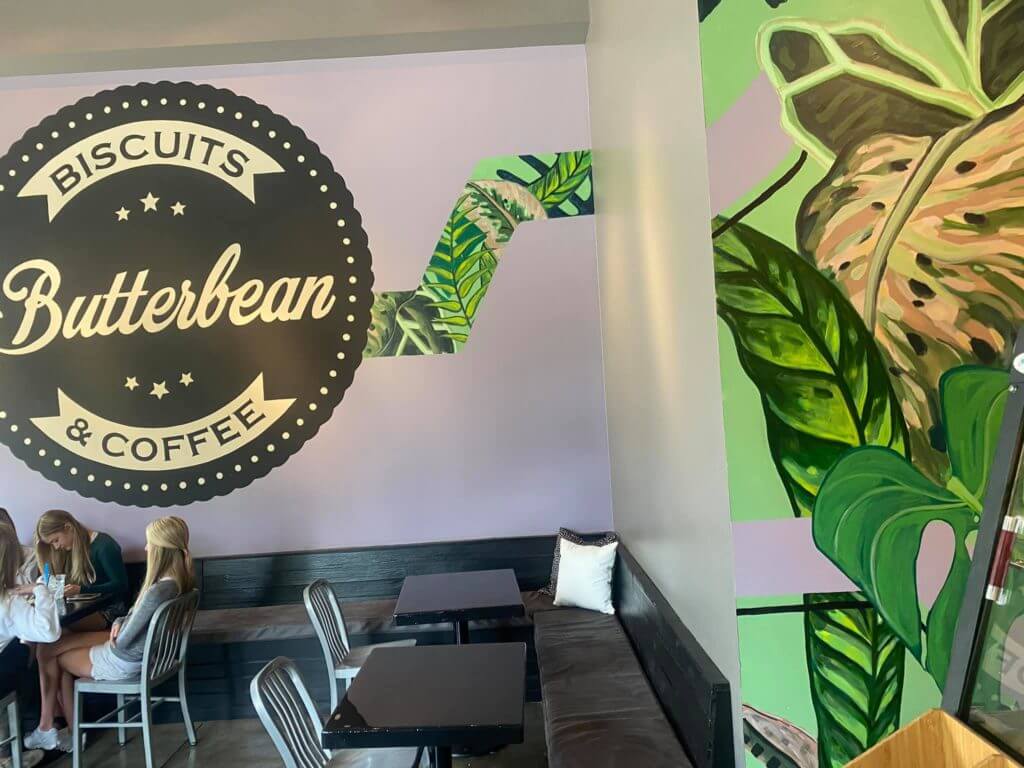
Located in the opposite end of Forklift, their sister restaurant, Butterbean has a special vibe all its own!
For a quick pick me up, they offer a plethora of hot, iced, and frozen coffees, teas, and hot chocolate. Although their coffee selections will satisfy most any caffeine craving, it’s Butterbean’s biscuits and other tasty treats that really excite me!
A hearty breakfast isn’t always associated with a coffee house, but with Butterbean Biscuits & Coffee, you’ve got many tasty choices to choose from!
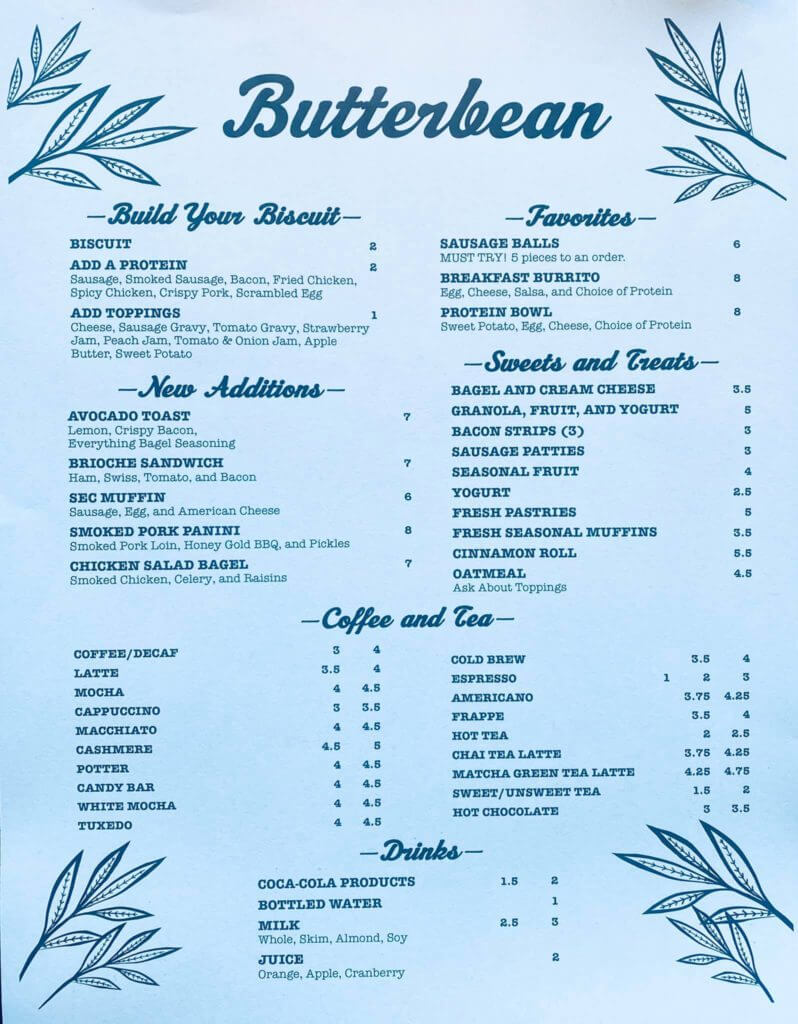
Pastries are always great with any coffee or specialty drink, like their Cinnamon apple turnover, but for some stick to your bones goodness, try their “Build Your Own Biscuit” selection. Two of my all time favorites are Butterbean’s white gravy with thick chunks of sausage and their rich and tasty tomato gravy biscuits! Honestly, I had never had tomato gravy before, and now I’m a huge fan!
They also have new items recently added to their menu that my daughter and I both love. For one is the avocado toast. It’s toast with a nice helping of guacamole, Everything Bagel Seasoning, and real bacon crumbs. My daughter doesn’t eat bacon so we requested hers without, win win!
Oh, and becoming a local favorite that usually sells out is the sausage balls. If your wanting something to nibble while driving, reading or just while enjoying your beverage or choice, it’s hard to beat the these little balls of breaded goodness!
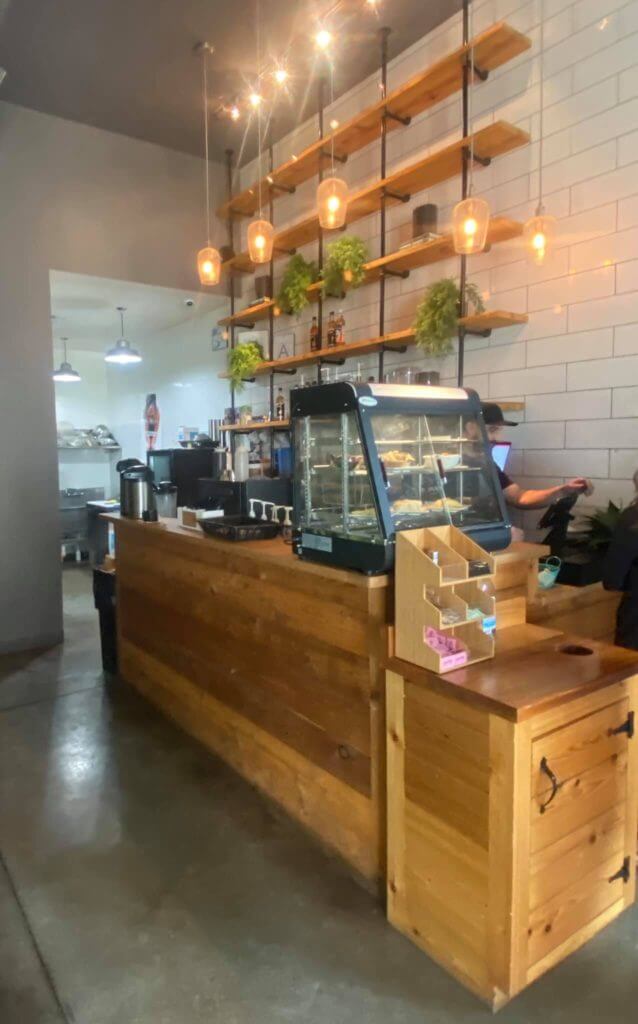
While at Butterbean I had the pleasure of speaking with manager Danielle Ratliff. She was very enthusiastic about the future of Butterbean and how to serve her customers better. They offer dine in and delivery via both Tupelo 2 Go LLC and DoorDash Tupelo, MS. Also for good food fast a drive through window is ready to fill your order.
Danielle tells me that the drive through line is so popular it fills up quick. So to serve customers better they have devised a sort of curbside ordering system that is almost ready and will be implemented soon!
Danielle also introduced me to her favorite new menu item, the SEC Muffin. It’s a large muffin stuffed with a thick slice of sausage, scrambled eggs, and completely covered in melted cheese! I have to say it my new favorite now also!
I’m told they are always on the search for new and tasty breakfast and brunch treats to offer the community, so check their social media often for updates and I’ll see y’all there!












Visit my blog for events, contests, new restaurants, LOCAL Favorites, and their FAMOUS foods!
Help us grow our community @ Eating Out With Jeff Jones
* visit our page
* Click community
* Invite friends
* Like and share this post
Message me If you would like to have your restaurant, menu, and favorite foods featured in my blog. Over 18,000 local Foodies would love to see what you have to offer!
Facebook @ Eating Out With Jeff Jones https://m.facebook.com/eatingoutwithjeffjones
Instagram @ Eating Out With Jeff Jones
https://www.instagram.com/eating_out_with_jeff_jones/
Twitter @ Eating Out With Jeff Jones https://mobile.twitter.com/jeffjones4u
Support LocaL – LIKE • COMMENT • SHARE
Marshall Ramsey: Ain’t Tate


Different issues, different personalities and different amounts of campaign cash. No lies there.
The post Marshall Ramsey: Ain’t Tate appeared first on Mississippi Today.
Against all odds, Lady Rebels make history and knock off Stanford

The Ole Miss Lady Rebels basketball team, guided by their effervescent leader Coach Yo, made history Sunday night on the far side of the continent.
Playing on top-seeded Stanford’s home floor in Palo Alto, Calif., before a highly partisan Cardinal crowd, the Lady Rebels never trailed in taking a 54-49 victory that sends them to the NCAA Sweet 16 for the first time in 16 years.

What makes the Ole Miss accomplishment all the more significant, three-time national champ Stanford became the first top-seed to lose in the second round of the tournament since 2009. There’s a reason for that. In the NCAA women’s game, top seeds play the first two rounds at home. The event is designed to advance the highest seeds into the later rounds, which isn’t really fair. But don’t try telling the always positive Yolett McPhee-McCuin and her team that. They just out-worked, out-quicked, out-hustled and out-played a program that had been to 14 consecutive Sweet 16s and a team that had been to two straight Final Fours.
Next, the Lady Rebels go even farther from home to Seattle where they will face the winner of tonight’s Texas-Louisville game. And how does Coach Yo feel about that?
“I love Seattle,” she gushed during her postgame ESPN interview. Travel clearly does’t bother Coach Yo. She’s from the Bahamas, played college basketball in Rhode Island and has coached all over this country and in her native Bahamas, where she has even headed the men’s national team.
Playing in by far the best women’s basketball conference in the land, these Lady Rebels achieved their 25th victory against eight defeats. That’s up from 23 victories last year and 15 the year before. Coach Yo’s first two Ole Miss teams won only 16 games combined. It has been a building process, and the construction began quietly when Vic Schaefer was a few miles away at Mississippi State making all the noise and leading the Bulldogs to two Final Fours. Now, just look at the bracket. Depending on tonight’s outcome, the Lady Rebels could be facing Schaefer and mighty Texas in the Sweet 16 at Seattle.
Coach Yo has built her program on a foundation of maximum effort and defense. The Lady Rebels defend as if their lives depend on the outcome. Again, just look at Sunday night’s boxscore. Stanford shot a season low of 33%. Harassed from the get-go, they committed a season-high 21 turnovers. That’s defense.
Effort? The one statistic that always will tell you about effort are the rebounding numbers. The Rebels out-rebounded the taller Stanford players 44 to 39. More impressively, Ole Miss gathered 20 offensive rebounds. That’s effort. There may have been a loose ball or two that the Lady Rebels did not get, but they surely retrieved most of them. That’s effort, too.
Offensively, the Ole Miss Rebels were balanced if not pretty. Nobody scored more than 13 points, and the Rebels won despite hitting only one of 11 fourth quarter field goal tries. Freshman Ayanna Thomas, off the bench, might have been the biggest offensive spark hitting three of four three-point tries. Angel Baker scored 13, Marquesha Davis 12 and Madison Scott 11.
Not to be overlooked in this Ole Miss women’s success story is the value of having come through a grueling 16-game SEC schedule. When you go against the likes of South Carolina, LSU, Tennessee, Mississippi State, Arkansas and Georgia on an almost weekly basis, you either get better or you get embarrassed. The league is simply more athletic, more physical than any other when it comes to the women’s game.
This observer had to laugh when UConn’s Hall of Fame coach Gino Auriemma complained about No. 1 ranked South Carolina’s physical dismantling of his team in an 81-77 home court loss this past season. He said his players had visible bruises and that “it’s not basketball.”
Well, it is in the SEC. It sounds trite but it’s true: Only the strong survive. You should know that undefeated South Carolina’s closest call this season came not at UConn but in Oxford where the Lady Rebels lost in overtime.
And, yes, South Carolina blasted the Lady Rebels 80-51 in the SEC Tournament a couple weeks ago. This tournament is South Carolina’s to lose. Still, after tonight, there will be 16 teams standing, and one is Ole Miss.
The post Against all odds, Lady Rebels make history and knock off Stanford appeared first on Mississippi Today.
Tables turned with Gunn, Hosemann on state revenue estimate

Note: This analysis anchored Mississippi Today’s weekly legislative newsletter. Subscribe to our free newsletter for exclusive access to legislative analysis and up-to-date information about what’s happening under the Capitol dome.
Last year, when it was Lt. Gov. Delbert Hosemann’s turn to run the Legislative Budget Committee, House Speaker Philip Gunn was anxious to raise the state’s revenue estimate to grease the skids for his proposal to eliminate the income tax.
This year, Gunn’s turn to run the LBC, Hosemann wants the estimate upped to help his proposal to fully fund K-12 education.
But Gunn says he does not intend to call a meeting of legislative leaders during the final days of the 2023 session to raise the revenue estimate to give lawmakers more money to budget for the upcoming fiscal year, beginning July 1.
What a difference a year makes. This time last year, Gunn was urging Hosemann to call a meeting of the Legislative Budget Committee to raise the revenue estimate.
A key difference is that last year Gunn wanted to raise the revenue estimate to ensure enough money was available to enact the income tax elimination that he and Lt. Gov. Tate Reeves coveted.
Gunn, who is not seeking re-election this year and ending his historic tenure as the first Republican speaker in the modern era, was hoping to increase the scope of the tax cut this session. But the plan was scrapped after it was rejected behind closed doors by a sizable portion of his own Republican caucus.
Now Hosemann is wanting the revenue estimate raised, in part to make it easier to enact a plan to put an additional $181 million in kindergarten through 12th grade schools and achieve full funding of the Mississippi Adequate Program for only the third time since 2003. MAEP is the funding formula that provides the state’s share of most of the basic needs of local school districts, such as teacher salaries, utilities and textbooks.
Gunn, who has the power to call the meeting this year, says he has no intention of doing so.
“No. We don’t see any reason to adjust it (revenue) at this point,” Gunn said late last week as he headed from the House floor to a meeting.
A little background might help. The speaker and lieutenant governor alternate in chairing the 14-member Legislative Budget Committee. Hosemann chaired the panel last year. Gunn is the chairman this year.
Each year in the fall the Budget Committee along with the governor meet to decide on a revenue estimate that represents the amount of money available for the Legislature to appropriate during the upcoming session for the next fiscal year that begins on July 1.
The politicians rely heavily on the recommendation of five financial experts, including the state economist and treasurer, in making the estimate. But since the estimate is of the amount the state is going to collect during for the next fiscal year, beginning in July, it is educated guesswork at best.
The Budget Committee for years has normally re-assembled in the midst of the final days of budget negotiations between House and Senate leaders to revise the estimate. They argue the later meeting during the final days of the legislative session gives the state’s financial experts an opportunity to glean more information on the outlook of revenue collections for the upcoming fiscal year.
Last year Hosemann finally called a meeting on the Friday before the weekend that was the deadline for House and Senate leaders to agree on a budget.
The legislative session is now in the final week before the deadline weekend. So, if Gunn is going to call a meeting, this is when it would occur, though he says he is not.
For a little comparison, through February of last year, seven months into the fiscal year, state revenue collections were $768.4 million or 21.5% above the estimate. During that time, the state had collected $433.3 million or 11.06% more that it collected during the same time period in the previous fiscal year.
Mississippi, like most states, has experienced and continues to experience unprecedented revenue growth. This year, revenue collections are $524.4 million or 12.4% above the estimate through February or $395.8 million or 9.1% above the amount collected the previous year.
Granted revenue collections have slowed slightly. But in past years, state leaders would have jumped at raising the estimate based on such strong collections.
And it is safe the say that if Gunn’s income tax cut was on the table for consideration during the final days of the session, he also would be jumping to call a meeting to raise the estimate.
In January on Supertalk radio, Gunn was still pitching his income tax elimination plan.
“We had about $800 million more than we were even spending, and I advocated that it was time to give some of that back to the taxpayers,” he said at the time. “We are collecting more revenue from our citizens than we’re even spending, let’s return some of that to the taxpayers.”
The post Tables turned with Gunn, Hosemann on state revenue estimate appeared first on Mississippi Today.
Bills to help domestic violence survivors make progress, then die in the Legislature

Domestic violence advocates say Mississippi lawmakers have missed an opportunity to pass legislation aimed to help survivors, such as the creation of domestic abuse courts geared to their needs.
“In order to fix your problem, you have to be willing to admit that there is a problem. And nobody in the state wanted to admit there was a problem with domestic violence,” said Rep. John Hines Sr., D-Greenville. “If you kill (the bill), we don’t have to talk about that.”
He has been filing legislation to establish domestic abuse courts since as early as 2013, and those bills died in committee and didn’t make it to the full House floor.
This year, Hines filed House Bill 170 to establish domestic abuse courts across the state, and that bill passed the House with 119 votes and moved to the Senate’s Judiciary B and Appropriations committees where it died. Sen. Joey Fillingane, chair of the Judiciary B Committee, and Sen. W. Briggs Hopson III, who chairs the Appropriations Committee, did not respond to a request for comment.
Hines wonders how many people would still be alive or uninjured or how many families would still be together if the state had domestic abuse courts in place.
Nearly 40% of Mississippi women and 32% of Mississippi men experience intimate partner physical violence, sexual violence or stalking in their lifetimes, according to the Centers for Disease Control and Prevention.
Wendy Mahoney, executive director of the Mississippi Coalition Against Domestic Violence, said domestic abuse courts are needed and there are already models of them working in Vicksburg and Hattiesburg.
Hines said the intervention court model, which is already in place for drugs and mental health, can work for domestic abuse. In addition to helping survivors, the court would be a place for abusers to learn their actions are violent and how to not hurt others. He said it could also
disrupt the cycle of children learning that domestic abuse is okay or that it is okay to be abused.
Hines sees parallels between how control is exercised in domestic abuse situations and the state Legislature: One political party maintains control and makes decisions, such as what ideas and policies move forward. That is what happened with Medicaid expansion, postpartum Medicaid expansion, funding for historically Black colleges and universities and with House Bill 1020, Hines said, referring to the legislation that would subvert the power of Jackson’s police force by empowering the state Capital Police to have citywide jurisdiction and allow the state’s chief justice to appoint judges to hear cases in Hinds County.
This year is the furthest Hines’ domestic abuse court bill has advanced, which he sees as a good sign that legislators are more open to the idea of establishing the courts. If needed, he plans to refile the bill in the next session and as long as he is a lawmaker.
The idea to set up domestic abuse courts came from former 9th District Chancery Court Judge Marie Wilson, whom Hines said wanted the authority to create programming to help survivors, perpetrators and their children by getting them the proper care and treatment they needed.
Other legislation filed this session was House Bill 65, which would allow a domestic abuse survivors to get out of a rental lease without notice if their safety is at risk, and Senate Bill 2084, which would allow judges to include pets in domestic abuse protection orders.
Mahoney said domestic abuse court programs and these other efforts are the standard in other states.
Rep. Daryl Porter, D-Summit, proposed HB 65 and a similar bill last year. In the current session, the bill made it to the House floor, but it was tabled and died before the body’s Feb. 9 deadline to advance bills.
Under HB 65, landlords would have been prohibited from removing a tenant or ending the individual’s rental agreement if the tenant is a domestic violence survivor and calls 911 for safety or medical help.
Mahoney said in other states, shelters are able to verify those who have experienced domestic abuse if they have reached out or received services from the shelter.
Landlords also would not have been able to charge a penalty if the survivor terminated the rental agreement or disclose personal information that can be used to locate the tenant after the individual left the property, according to the bill. Termination of a rental agreement due to domestic abuse also couldn’t have been used against a person seeking to enter a new rental agreement.
Porter did not respond to a request for comment.
Under SB 2084, companion animals such as dogs and cats would be considered personal property that a judge can direct a person not to abuse or damage.
Sen. Angela Burks Hill, R-Picayune, proposed the bill and started filing similar legislation in 2018. Most of the bills have died in the Judiciary A Committee, but in 2019 the legislation made it to the full House before failing to receive action by deadline.
Hill and Sen. Brice Wiggins, who chairs the Judiciary A Committee, did not respond to a request for comment.
Mahoney said domestic and animal abuse are connected, and harm or threat of harm to an animal is often used as coercion to keep an abused person from leaving.
People have called shelters in the state to ask if they can bring pets, she said. Shelters have worked with veterinary clinics and Mississippi State Unversity’s Veterinary School to house animals. Domestic Abuse Family Shelter, which serves the Pine Belt area, received a grant to provide space for pets in its shelter.
Overall, Mahoney said the coalition and other advocates aren’t always informed about domestic abuse-related legislation when it’s filed and more often they learn about it later in the process. She believes there can be a greater impact if advocates can learn earlier to provide feedback to lawmakers as they work on legislation.
“Out of the need of survivors, this is what we do in our field,” Mahoney said.
The post Bills to help domestic violence survivors make progress, then die in the Legislature appeared first on Mississippi Today.
Changes to the medical marijuana law are headed to Gov. Reeves’ desk. Here’s what they are.

The Legislature has approved changes to Mississippi’s cannabis law that will limit the information available to the public about businesses’ citation records and will attempt to crack down on inconsistencies from the agencies tasked with running the new medical marijuana program.
The bill, first filed in the House, was amended by a Senate committee and the full Senate before the House passed it last week. Gov. Tate Reeves must sign the bill before the new regulations are added to the law. The changes span from minor language tweaks to new provisions on background checks and public records.
The medical marijuana program has been fully operable — with dispensaries selling Mississippi-grown cannabis — for just under three months.
The rollout hasn’t been without hiccups. A Mississippi Today investigation found the Department of Health wasn’t being consistent, especially in its approval of cultivation plans, while dealing with a backlog of applications.
Legislators echoed businesses’ concerns throughout hearings over the bill.
“Unfortunately the Department of Health in their rules and regs probably accepted some things that were not intentioned (sic) by the bill,” said Sen. Kevin Blackwell, a Republican from Southaven and one of the bill’s authors on the floor on March 8. “So we are trying to correct those … and we do so in the bill.”

Legislators approved a new addition that says: “No state agency, political subdivision or board shall implement any rule, regulation, policy, or requirement that is contrary to the provisions of the Mississippi Medical Cannabis Act.”
The bill also turns a mistake by the Health Department into part of the law. Blackwell told the Senate that the department approved a large operator’s secondary location under one license when it submitted its application. The adjustment allows for the state’s largest cannabis growers to have up to two locations as long as the total canopy size doesn’t exceed 150,000 square feet.
That makes the setup of Mockingbird Cannabis, one of the state’s leading cultivators, with a smaller secondary greenhouse-style location 12 miles from their main site, acceptable under one license.
While growers have been debating if adapted greenhouses should be permitted, none of the bill’s updates directly addresses their use.
Mississippi Today was able to learn specifics about Mockingbird – and the construction of its greenhouse – through a public records request for the Department of Health’s investigation records.
The law’s changes make investigation records, including citations handed out by Health Department agents, exempt from the public record law until an investigation has concluded and all appeals ended.
An early draft of the bill called for such records to remain exempt from public record indefinitely, but some senators found the records being exempt from public record for any period unacceptable.
“I think if it was put out in transparency, it would dispel any of the back and forth on social media,” said Sen. Angela Burks Hill, R-Picayune, one of five senators who voted against approving the changes. “I think hiding that is only going to fuel that speculation.”

Critics pointed out an appeal process could take a long time, keeping citation records away from the public and legislators even if they’re ultimately found valid. Blackwell said the changes were made because of “falsehoods” being spread on social media as competitors became aware of other growers’ cited infractions.
The addresses of all cannabis-related businesses, outside of dispensaries, will also be exempt from public record and no longer posted publicly. Rep. Lee Yancey, R-Brandon, said during hearings this was to protect businesses already not accessible to the public, which could make them vulnerable to crime because of the large amount of cash and marijuana products on hand.
The bill includes several other changes that affect patients and businesses:
- The Department of Health will now have only 10 days within submission (changed from 30) to approve a patient’s medical cannabis card application. This change comes after the department has experienced major backlogs in processing applications.
- Patients can now have a follow up with a different doctor than the one who first approved their medical cannabis card without disrupting their care or access to medical marijuana.
- Doctors and nurses who have approved a patient to receive a medical cannabis card can now help them fill out the online application with the state. Yancey said this was especially to help elderly patients.
- The law now specifies the Mississippi Justice Information Center of the Department of Public Safety and the Federal Bureau of Investigation will handle background checks on workers and caregivers.
- Testing facilities can become licensed transporters or contract with transporters.
- Businesses can display marijuana imagery in company logos and other branding. Dispensaries can also post pictures online to display what they sell.
- Hemp products are not affected by the cannabis act.
- Dispensaries can sell hemp items that are legal under federal law, such as low-THC products known as “CBD.” Dispensaries can also sell topical products that contain marijuana, which cannot be ingested, to patrons over 21 who don’t have a medical cannabis card. These products have to be placed in a separate area than the products for card holders.
- Dispensary licensees now have 18 months instead of 12 to complete construction and still maintain their accreditation.
- The Health Department can contract with private laboratories for compliance testing, but those labs cannot also perform commercial testing for medical cannabis businesses.
The post Changes to the medical marijuana law are headed to Gov. Reeves’ desk. Here’s what they are. appeared first on Mississippi Today.
On this day in 1957


MARCH 20, 1957

Award-winning filmmaker Spike Lee was born on this date in Atlanta. His first film, She’s Gotta Have It, with a budget of only $175,000, helped pioneer the independent film movement of the 1980s and changed how Black characters were depicted in film.
The film that cemented his reputation as a premier filmmaker, Do the Right Thing, took a searing look at racism in America through a hot summer day in Brooklyn. Movie critics Ebert & Siskel picked it as the best film of the year, but the Academy Awards failed to even nominate the movie for Best Picture, giving the award instead to Driving Miss Daisy.
Ebert described Lee’s Malcolm X as “one of the great screen biographies” and called it the best film of 1992. Denzel Washington, who portrayed the civil rights leader, received an Oscar nomination for Best Actor but lost to Al Pacino (Scent of a Woman), drawing Lee’s ire.
His 1997 documentary about the KKK’s 1963 bombing of a Birmingham church that killed four girls received an Oscar nomination, but again didn’t win. In 2015, he received an honorary Academy Award for his work, and the Library of Congress selected several of his films for preservation in the National Film Registry.
In 2019, he finally won an Academy Award, albeit for Best Adapted Screenplay for BlacKKlansman.
“I think it’s very important that films make people look at what’s forgotten,” he said. He won an Emmy and Peabody for his documentary on Hurricane Katrina’s devastation in New Orleans, When the Levees Broke, and later received the prestigious Gish Award: “We honor Spike Lee for his brilliance and unwavering courage in using film to challenge conventional thinking, and for the passion for justice he feels in his soul.”
The post On this day in 1957 appeared first on Mississippi Today.
Podcast: Senate leader says House rank-and-file support fully funding public education

Senate Education Chairman Dennis DeBar, R-Leakesville, outlines the Senate plan to tweak the Mississippi Adequate Education Program funding formula for K-12 education, then fully fund it for the first time in more than a decade. The issue is now before the House, where the GOP leadership, along with the governor, has voiced skepticism about the plan. But DeBar said he’s talked to rank-and-file House members and believes there is widespread support for it.
The post Podcast: Senate leader says House rank-and-file support fully funding public education appeared first on Mississippi Today.