Audio recording is automated for accessibility. Humans wrote and edited the story.
Mississippi had one of the nation’s largest declines in the Affordable Care Act health insurance exchange enrollment based on early 2026 numbers, meaning that it has become even more difficult for the state’s working poor to garner medical care.
According to The Associated Press, Mississippi’s ACA health insurance exchange enrollment declined 26.4% from February 2025 to February 2026. It is likely that the enrollment will drop even more – perhaps significantly more – because of the higher cost to obtain a policy from the health insurance exchange based on decisions made by the administration of President Donald Trump.
It could be logically argued that the higher costs of the insurance policies obtained on the exchange impact Mississippi’s working poor more than any other group in the country. First of all, Mississippi’s working poor population is behind the proverbial healthcare eight ball because the state is one of 10 nationwide that has not expanded Medicaid, as is allowed under the Affordable Care Act with the federal government paying the bulk of the costs.
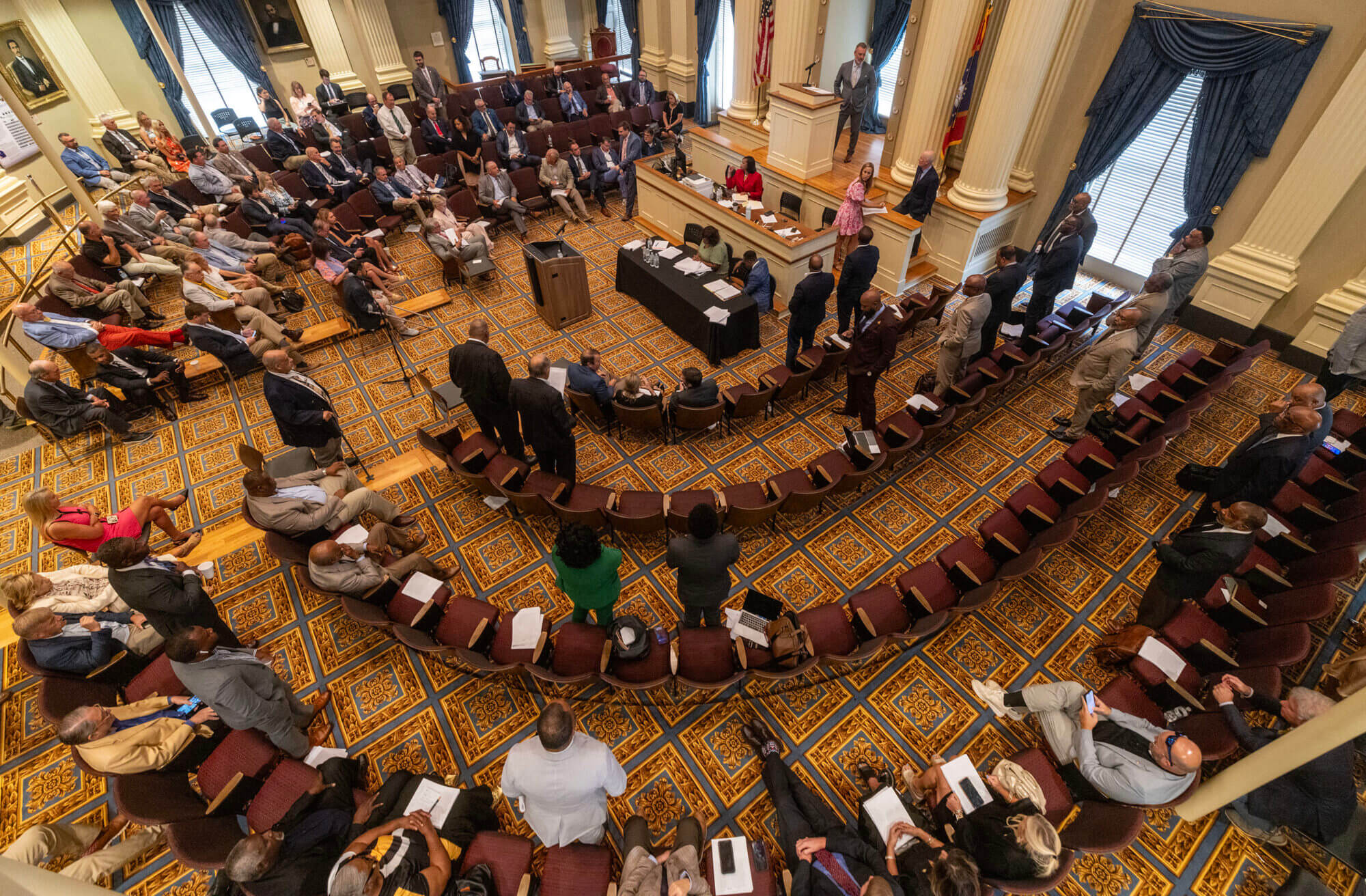
Clergy from across the state during a press conference at the state Capitol urge legislators to expand Medicaid, Wednesday, March 20, 2024, in Jackson.
In the 40 states that have expanded Medicaid, many of their low income people do not have to depend on the healthcare exchange for coverage. They can sign up for expanded Medicaid to obtain healthcare. But in Mississippi, Medicaid expansion is not an option.
So, when the Joe Biden administration pushed through legislation to greatly enhance the already existing federal subsidies for exchange health insurance policies, the working poor in Mississippi – even extending to middle-class families – signed up en masse.
Mississippi had the second-highest increase in exchange enrollments – second only to Texas, which also had not expanded Medicaid. After the enhanced subsidies went into effect, Mississippi had a 242% increase to 338,159 people, according to KFF, a nationwide nonprofit that studies healthcare policy.
Of the 10 states with the recent highest declines in ACA enrollment after the enhanced subsidies ended, Mississippi and South Carolina were the only two that had not expanded Medicaid.
The enhanced subsidies ended in December 2025 after the Trump Administration and the Republican-led Congress refused to extend them. While multiple Republican lawmakers made efforts to pass legislation to extend the subsidies, U.S. Sens. Roger Wicker and Cindy Hyde-Smith and other Republican members of Mississippi’s congressional delegation made no visible efforts to reinstate the enhanced federal aid.
As a result of the enhanced subsidies ending, KFF estimated that a 40-year-old Jacksonian earning $30,000 per year would see his or her monthly insurance cost increase from $42 to $155 for a policy purchased on the exchange.
Based on that calculation, it should not be a surprise that Mississippians are dropping the health insurance exchange policies. After all, they are dealing with higher costs for groceries, gasoline and other necessities at the same time they are being hit with higher healthcare insurance costs.
They are making the decision to drop the health insurance policies and hoping they do not get sick and understanding that if they do face a major medical bill with no insurance, they will be unable to pay it. The medical bills they cannot pay place a burden not only on them and their families, but also on the overall state healthcare system that must absorb those unpaid costs.
In short, Mississippi’s working poor have been hit with rising health insurance exchange costs and no Medicaid expansion, meaning they have less access to healthcare than most Americans.
But the fact that poor Mississippians, facing higher costs, cannot afford healthcare should not be a surprise.
Is it even news?
Like the old adage goes, it is not news when dog bites man. It is news when man bites dog or when a poor Mississippian actually has access to decent healthcare.
Audio recording is automated for accessibility. Humans wrote and edited the story.
Mukta Joshi is an investigative reporter at Mississippi Today. She is spending a year as a New York Times Local Investigations fellow examining immigration and criminal justice issues. She can be reached at mukta.joshi@nytimes.com. Joseph Cranney is a reporter with the Deep South Today Investigative Reporting Center in collaboration with The New York Times. Learn more about the center’s work here.
SENATOBIA — A white police officer involved in last month’s shooting that killed a Black toddler and injured a Black woman directed a racially offensive remark toward a coworker two days prior, calling him a “Black motherfucker,” according to an internal department complaint reviewed by Mississippi Today.
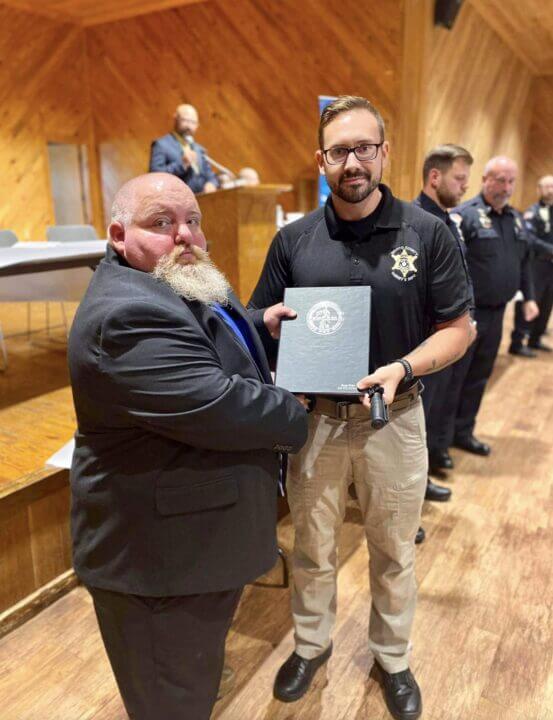
Hunter Foster, right, received an award from the DeSoto County Sheriff’s Office in 2023, when he worked there as a deputy. He later went to work for the Senatobia Police Department. Credit: DeSoto County Sheriff’s Office via Facebook
Senatobia Police Sgt. Hunter Foster was placed on leave two days after the June 14 shooting at the local Walmart that killed 1-year-old Kohen Wiley, though no agency has confirmed if he fired his weapon. In records released by the Mississippi Bureau of Investigation “in error,” Foster was listed as the subject of its investigation into the shooting. Law enforcement and Walmart have declined repeated requests to release video footage from the incident.
Late in the afternoon June 12, Foster entered the police department’s booking room where Officer Dexter Smith, who is Black, was completing some paperwork, according to Smith’s written complaint.
“Who is this Black motherfucker back there?” Foster said, according to the complaint. Smith, who wrote that he had almost no prior relationship with Foster, was taken aback, the complaint says.
“I replied that I had been in the sun from training all week and that I had tanned from the sun,” Smith wrote, adding that Foster repeated the remark and that two other officers overheard it.
“Upon Sergeant Foster making the extremely unprofessional remark, the room went silent and I printed my paperwork and left,” Smith wrote. “I have never had any one-on-one conversation with Sergeant Foster, nor do we have any outside relationship to be on a level for him to speak to me in that manner.”
Exactly a month after Smith submitted his complaint, he resigned from his position at the department, an email he sent to department and city leadership shows. The email, obtained by Mississippi Today, said his resignation was in part because of how the department handled his complaint.
An Instagram post welcoming Officer Dexter Smith to the Senatobia Police Department on Wednesday, Aug. 27, 2025. Credit: Senatobia Police Department via Instagram
The complaint had not received “any meaningful response or resolution,” Smith’s email said, adding that it could have been “easily verified,” as the site of the incident was equipped with both audio and video surveillance. “The failure to review or consider this available evidence, combined with the disparity in how workplace issues have been addressed, has significantly influenced my decision to resign.”
When contacted by reporters, Smith declined to comment.
Foster, who is 32 and in his eighth year in law enforcement, didn’t respond to a request for comment. Mississippi Today notified Foster’s father, a retired law enforcement officer, of the allegations in Smith’s complaint, but he didn’t respond.
Lt. Shane Howell, a Senatobia police spokesperson, also didn’t respond to a request for comment sent Friday.
Foster and the police department have been subject to a firestorm of criticism in the month since the shooting at Walmart, which, besides killing the toddler, also injured 22-year-old Latoya Ferrell, who is Black. Ferrell had been accused of shoplifting a pack of diapers and baby clothes.
Kohen’s mother, Vellesiya Wiley, was holding Kohen in her arms in the front passenger seat next to Ferrell, who was driving.
Officers had attempted to stop the car, but “the driver drove in the direction of the officers, almost striking one,” according to a statement released the day of the shooting by MBI.
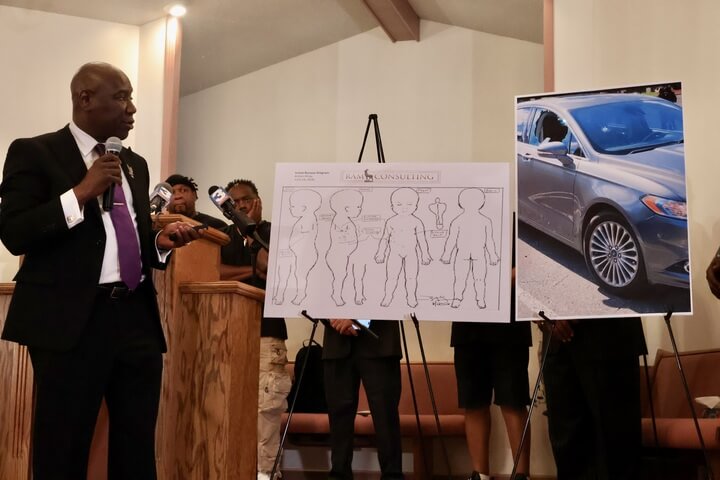
Ben Crump, a civil rights lawyer representing the Wiley family, hired a forensic pathologist who concluded that Kohen was struck by a bullet from at least an intermediate distance from the side, which Crump said was evidence that officers weren’t in harm’s way when they opened fire.
Vellesiya Wiley pictured with Kohen Wiley, who was her only child. Attorneys representing the 1-year-old’s family are calling for law enforcement in Senatobia to release body and dashboard camera footage and on Monday, June 22, 2026, announced plans for an independent autopsy. They said both can help provide the family with answers. Credit: Ben Crump Law
Crump shared a photo showing the vehicle’s front passenger window was blown out. The photo also appears to show a bullet hole in the windshield on the passenger side
Foster was hired in Senatobia in March 2025 and promoted to sergeant six months later, city records show. He spent three years with the DeSoto County Sheriff’s Office and a little over two years with the Southaven Police Department prior to that.
During his time in DeSoto, Foster was named as a defendant in a federal lawsuit alleging that he and other deputies used unreasonable force on a woman after a traffic stop, knocking out multiple teeth and breaking her jaw in three places. Foster’s attorney denied those allegations in court papers and a federal judge dismissed that suit in March.
In a separate lawsuit filed when he was an officer in Southaven, Foster was accused of exaggerating the risks that a car posed to officers during a suspicious vehicle call to a Waffle House parking lot in 2019.
In his report about that incident, Foster claimed that the driver had accelerated his car, “almost running over” another officer. Surveillance footage filed with the lawsuit shows no evidence that the car drove toward, or nearly hit, any of the officers. It shows several officers, though not Foster, aggressively pulling men from the car and striking them while they were on the ground.
Katherine Kerby, a lawyer for the officers, wrote in her response to the lawsuit that Foster “denies the allegations as to him or that he had any knowledge that any aspects of his report were not accurate.”
Audio recording is automated for accessibility. Humans wrote and edited the story.
PEARL RIVER COUNTY — Pearl River County officials are working to restore water flow to the East Pearl River, a long-planned effort aimed at improving recreation, supporting wildlife habitat and benefiting communities along the river.
The project remains in the planning and permitting process and will require continued coordination among local, state and federal partners before construction can begin, according to Pearl River County Economic Development Director Lindsay Ward. She said no construction timeline has been finalized.
Ward said Sen. Angela Burks Hill, a Republican from Picayune who represents District 40, and Rep. Stacey Hobgood-Wilkes, a Republican from Picayune who represents District 108, have worked alongside county officials throughout the process to help move the project forward.
A conceptual rendering shows the proposed rehabilitation of the Walkiah Bluff Weir, a project intended to restore water flow into the East Pearl River. The project remains in the planning and permitting process. Credit: Peyton Neely
Ward said restoring water flow would provide environmental, recreational and economic benefits for communities along the Pearl River.
“You have a lot of homes that are built along the Pearl River that have the potential to lose a significant amount of economic value,” she said. “(It’s) one of the biggest risks to the community — which has this entire culture and way of life along the Pearl River and Walkiah Bluff — that is truly at risk.”
She said restoring water levels would also improve access to Walkiah Bluff Park and the nearby public boat launch by allowing residents and visitors to more easily launch boats and kayaks.
“Think about the community benefits of having not only the water flow but also a beautified park and scenic area where families in those communities, as well as visitors, can come,” Ward said. “They can get out in their kayaks, they can launch their boats, and they have enough water to launch them, too.”
Ward said the effort stems from an environmental impact study completed in the early 1990s that recommended maintaining a 50-50 split in water flow between the Pearl River in Mississippi and the East Pearl River, which forms part of the Mississippi-Louisiana border.
To help maintain that balance, the Walkiah Bluff Weir was constructed to regulate water flow into the East Pearl River. Ward said the study also anticipated the structure would require significant rehabilitation or replacement after about 25 years to continue operating as intended.
Ward said heavy spring flooding in 2022 caused the structure to fail, preventing it from directing water into the East Pearl River as designed.
She said the reduced flow left portions of the river so shallow that boating and other recreational activities became difficult.
“We had a dedicated team of locals and our state legislators who tried to get both the state of Mississippi and what, at the time, was the local entity responsible for maintaining the structure to get it back up to par,” Ward said.
According to Ward, responsibility for maintaining the structure previously rested with the Pearl River Basin Development District. The district was created by the Mississippi Legislature in 1964 to oversee water resources throughout the Pearl River Basin before later ceasing operations.
Ward said county officials continue to work with state and federal partners to complete the planning, permitting and funding requirements needed before the project can move into construction.
Audio recording is automated for accessibility. Humans wrote and edited the story.
Mukta Joshi is an investigative reporter at Mississippi Today. She is spending a year as a New York Times Local Investigations fellow examining immigration and criminal justice issues. She can be reached at mukta.joshi@nytimes.com. Joseph Cranney is a reporter with the Deep South Today Investigative Reporting Center in collaboration with The New York Times. Learn more about the center’s work here.
SENATOBIA — A Mississippi police officer involved in last month’s fatal shooting of 1-year-old Kohen Wiley at a Walmart was previously accused of exaggerating the risks that a vehicle posed to officers during another parking lot confrontation that escalated into violence in 2019, records show.
That incident took place at a Waffle House parking lot when Officer Hunter Foster worked for the police department in Southaven. It led to a federal lawsuit against Foster and a dozen other officers, which was settled for an undisclosed amount in 2022.
According to the lawsuit, Foster falsified his report that stemmed from a call for a suspicious vehicle, claiming that the driver had accelerated his car, “almost running over” another officer. Surveillance footage filed with the lawsuit shows no evidence that the car drove toward, or nearly hit, any of the officers. It shows several officers, though not Foster, aggressively pulling men from the car and striking them while they were on the ground.
Officers had attempted to stop the car, but “the driver drove in the direction of the officers, almost striking one,” according to a statement released the day of the shooting by the Mississippi Bureau of Investigation, part of the state Department of Public Safety.
Bailey Martin Holloway, a spokesperson for the department, declined to provide the source for that assertion or clarify whether it was based on the accounts of the officers involved or on MBI’s review of other evidence, such as body-worn camera footage.
The Senatobia Board of Aldermen placed Foster on leave two days after the shooting, though no one involved has said if Foster fired his weapon. Action News 5 in Memphis reported that MBI had listed Foster as a subject of its investigation into the shooting, based on records that the bureau said it released to the station by mistake. Authorities have not identified the other officers who were present.
The shooting has led to a firestorm of criticism, with some community activists calling for Foster to be fired or prosecuted. Foster, 32, is in his eighth year in law enforcement and has said nothing publicly. He didn’t respond to a handwritten message a reporter left at his home Thursday.
This undated photo shows Kohen Wiley. The Mississippi Department of Public Safety says a police officer responding to a shoplifting call on Sunday, June 14, 2026, shot at a car that allegedly drove in the officer’s direction, 1-year-old Kohen. Credit: Courtesy of Carlos Haynes and Veronica Robinson
Reached by phone, Foster’s father, Rick, who is a retired law enforcement officer, declined to discuss his son’s actions. “That will all come out once the investigation is complete,” he said.
Kohen’s mother, Vellesiya Wiley, was holding Kohen in her arms in the front passenger seat. Wiley’s friend, who was driving the vehicle, had been accused of stealing baby clothes and a pack of diapers.
Mississippi’s public safety commissioner, Sean Tindell, told Senatobia aldermen that MBI had obtained body-worn camera footage, but the agency has denied repeated requests to release footage of the incident.
Ben Crump, a civil rights lawyer representing the Wiley family, hired a forensic pathologist who concluded that Kohen was struck by a bullet from at least an intermediate distance from the side, which Crump said was evidence that officers weren’t in harm’s way when they opened fire.
Crump shared a photo showing the vehicle’s front passenger window was blown out. The photo also appears to show a bullet hole in the windshield on the passenger side.
Foster left his Southaven job a month before the federal lawsuit stemming from the Waffle House arrests was filed in the Northern District of Mississippi. Southaven Police Chief Seth Kern declined to say if Foster’s departure was related to the incident.
Foster went on to a three-year stint with the DeSoto County Sheriff’s Office, where he was decorated for carrying out the highest number of DUI arrests during his first two years.
Foster carried out 297 such arrests in 2022 and 230 in 2023, the most by any law enforcement officer in Mississippi in those years, according to Sobriety Trained Officers Representing Mississippi, a group that tracks DUIs.
During that time, he was accused in a second lawsuit of using excessive force during a traffic stop.
A woman said Foster and three other deputies pulled her over in August 2022 and beat her, knocking out multiple teeth and breaking her jaw in three places, according to the suit. In court papers, a lawyer for Foster denied the allegations of excessive force. A judge dismissed the case in March.
Foster’s use-of-force reports from his time at the DeSoto County department do not include the incident, and the judge who dismissed the suit noted that the plaintiff’s only allegation against Foster specifically was that he was too rough when he handcuffed her.
Foster left the DeSoto sheriff’s office in October 2024 and joined the Senatobia Police Department in March 2025, state records show. DeSoto County Sheriff Thomas Tuggle referred questions about Foster to Tish Clark, a department spokesperson. Clark didn’t respond to emailed questions.
Attorney Ben Crump, representing the family of the 1-year-old boy killed by a police shooting in Senatobia, presents the findings of an independent autopsy of the baby, Kohen Wiley, during a news conference Wednesday, July 1, 2026, in Senatobia. Credit: Mukta Joshi/Mississippi Today
Lt. Shane Howell, a Senatobia police spokesperson, declined to say if the department was aware of Foster’s role in the two federal lawsuits at the time of his hiring. Foster was promoted to sergeant six months after his hiring, city records show.
In Southaven, the incident that was the subject of the 2021 lawsuit began when the two plaintiffs were searching for lost keys, the suit alleges, in the parking lot of a Waffle House. Video footage from before officers arrived shows two men using their car headlights and the flashlight from a phone as they pace the mostly empty lot.
Abruptly, five patrol cars swerve into the lot, with two police SUVs ramming into the plaintiffs’ vehicle. At one point after officers exit their vehicles and stand around the car, the men appear to try to pull forward a few feet. The video does not show an officer in front of the car at that moment.
During the encounter, one of the officers can be seen banging on the hood of the car, pointing his gun at the windshield, smashing the front passenger window with his baton and repeatedly beating one of the men after he exited the driver side and lay on the ground.
The men were arrested and charged with multiple offenses, including aggravated assault on police, resisting arrest and fleeing law enforcement.
Foster, the lawsuit alleged, was one of several officers who submitted false and near-identical narratives of the incident, claiming that the driver nearly ran over an officer and that both plaintiffs had resisted arrest.
Katherine Kerby, a lawyer for the officers, wrote in her response to the lawsuit that Foster “denies the allegations as to him or that he had any knowledge that any aspects of his report were not accurate.”
Court records show the lawsuit was settled following a confidential agreement. The city of Southaven has not responded to a request for the amount it paid to settle.
Audio recording is automated for accessibility. Humans wrote and edited the story.
Five cases of the diarrhea-causing disease cyclosporiasis have been confirmed in Mississippi, the Department of Health reported Friday.
State Epidemiologist Dr. Renia Dotson temporarily declared cyclosporiasis a reportable disease Thursday due to the nationwide spike in cases, she told reporters at a Friday press conference. Mississippi was previously one of three states that did not require health professionals and laboratories to report the disease to the Health Department.
“We have not been tracking these illnesses,” Dotson said. “So, I cannot with confidence say that the five cases we have now are outside of our norm, or outside of our range, because we don’t have a good handle on what the range of cases we normally see is.”
Cases were reported in four of the state’s nine public health regions. These regions cover central and southern Mississippi, the Delta and the Gulf Coast. Dotson said the Health Department has not yet identified any commonalities among the cases.
Cyclosporiasis is a gastrointestinal disease caused by a microscopic parasite. Infections have surged across the nation in recent weeks. As of Monday, more than 1,600 confirmed cases since May 1 in 30 states, according to the Centers for Disease Control and Prevention. The agency said more than 5,000 additional cases required further analysis. No deaths have been reported in connection with the illness.
This photomicrograph of a fresh stool sample, which had been prepared using a 10% formalin solution, and stained with modified acid-fast stain, revealed the presence of four Cyclospora cayetanensis oocysts in the field of view. Compared to wet mount preparations, the oocysts are less perfectly round and have a wrinkled appearance due to this method of fixation. Most importantly, the staining is variable among the four oocysts. Credit: CDC/ DPDx – Melanie Moser
The disease’s symptoms include watery diarrhea with “frequent and sometimes explosive bowel movements,” according to the CDC. It can take between two days and two weeks for an infected person to become sick, and it is typically treated with antibiotics. Young children, older adults and people with weakened immune systems are at risk of more severe or prolonged illness, Dotson said.
The disease spreads when people eat food or drink water contaminated with feces. It is typically not transmitted from person to person. Previous outbreaks have been linked to fresh produce, including leafy greens, herbs and berries.
Health officials have not identified a single cause of the wave of U.S. infections.
On Thursday, the CDC, Food and Drug Administration and public health officials in several states announced they are investigating infections connected to shredded iceberg lettuce served at Taco Bell locations in five states — Indiana, Kentucky, Michigan, Ohio and West Virginia. The federal agencies have identified a single supplier of iceberg lettuce from Mexico in the investigation. Cases in Mississippi have not been linked to this outbreak, Dotson said.
The CDC is also investigating other clusters of cyclosporiasis cases unrelated to this outbreak.
The true number of sick people is likely higher than the number reported, because some people recover without treatment and were not tested, and it can take as long as six weeks to determine if a sick person’s illness is related to cyclospora.
The Health Department has asked laboratories across the state to retroactively review cases from the past year to determine a normal caseload as a point of comparison, Dotson said.
To protect against cyclosporiasis, Dotson said she recommends washing hands and produce before preparing food, including scrubbing fruits and vegetables and removing any bruised areas. She also recommended refrigerating cut or peeled fruits and vegetables as soon as possible and noted that cooking food thoroughly kills the parasite.
Dotson said people experiencing diarrhea lasting longer than a few days, severe dehydration, bloody diarrhea, persistent vomiting or high fever should contact a health professional.
Audio recording is automated for accessibility. Humans wrote and edited the story.
Nora Miller laughs now when she tells the story.
As a high school student in the 1970s living in St. Louis, Missouri, Miller threw away a $1,300 presidential scholarship offer she received from Mississippi University for Women before she even opened it. She was certain she wasn’t moving to Mississippi to attend an all-women’s college.
But after much convincing from her parents, who had retrieved the letter, and her high school guidance counselor, Miller visited the campus in Columbus.
That visit changed everything, setting Miller on a path that eventually led to her presidency at the university.
Miller retired on June 30 after nearly eight years as president of MUW, also known as The W, and more than three decades in higher education in the state.
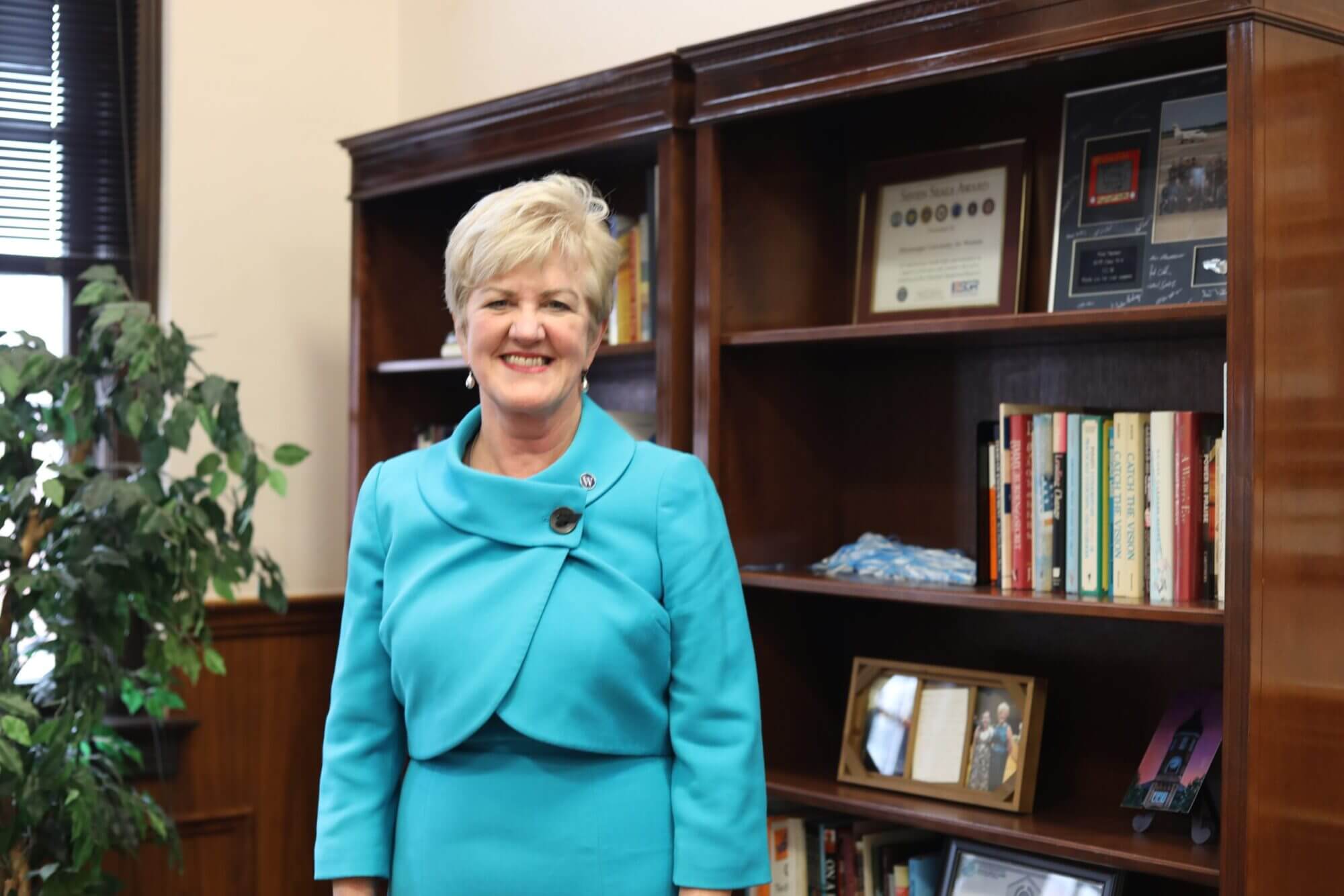
MUW President Nora Miller said the university needs to change its name in order to attract a wider net of students than women. Credit: Molly Minta/Mississippi Today
“The accents, the colloquialisms, it was all funny to me,” Miller said, recalling her first visit to Mississippi. “I’d never seen roaches before, especially not flying ones. But, the slow pace, the friendliness of the people, my newfound friends and support from my family kept my homesickness away.”
Miller said her successor will inherit familiar challenges: funding pressures, an evolving higher education landscape and the task of sustaining the progress made by the regional institution.
Her departure also comes as the college board overseeing the state’s eight public universities is considering a new funding formula for the institutions.
Miller was named president of The W in 2018 after 17 years as the university’s chief financial officer. She also served as director of budget and financial analyst and director of internal audit at Mississippi Institutions of Higher Learning. She earned her bachelor’s and master’s degrees from MUW in 1983 and 1985, respectively.
Mississippi Today asked Miller to reflect on her challenges, accomplishments and lessons that shaped her tenure as MUW president and the rest of her career. She also shared her hopes for her successor.
“My hope is that stakeholders can be a part of the search process and get behind the new president to help them understand the big issues, come up with solutions that will support the institution and preserve all the good things we got going on here,” she said.
The following responses have been lightly edited for length and clarity.
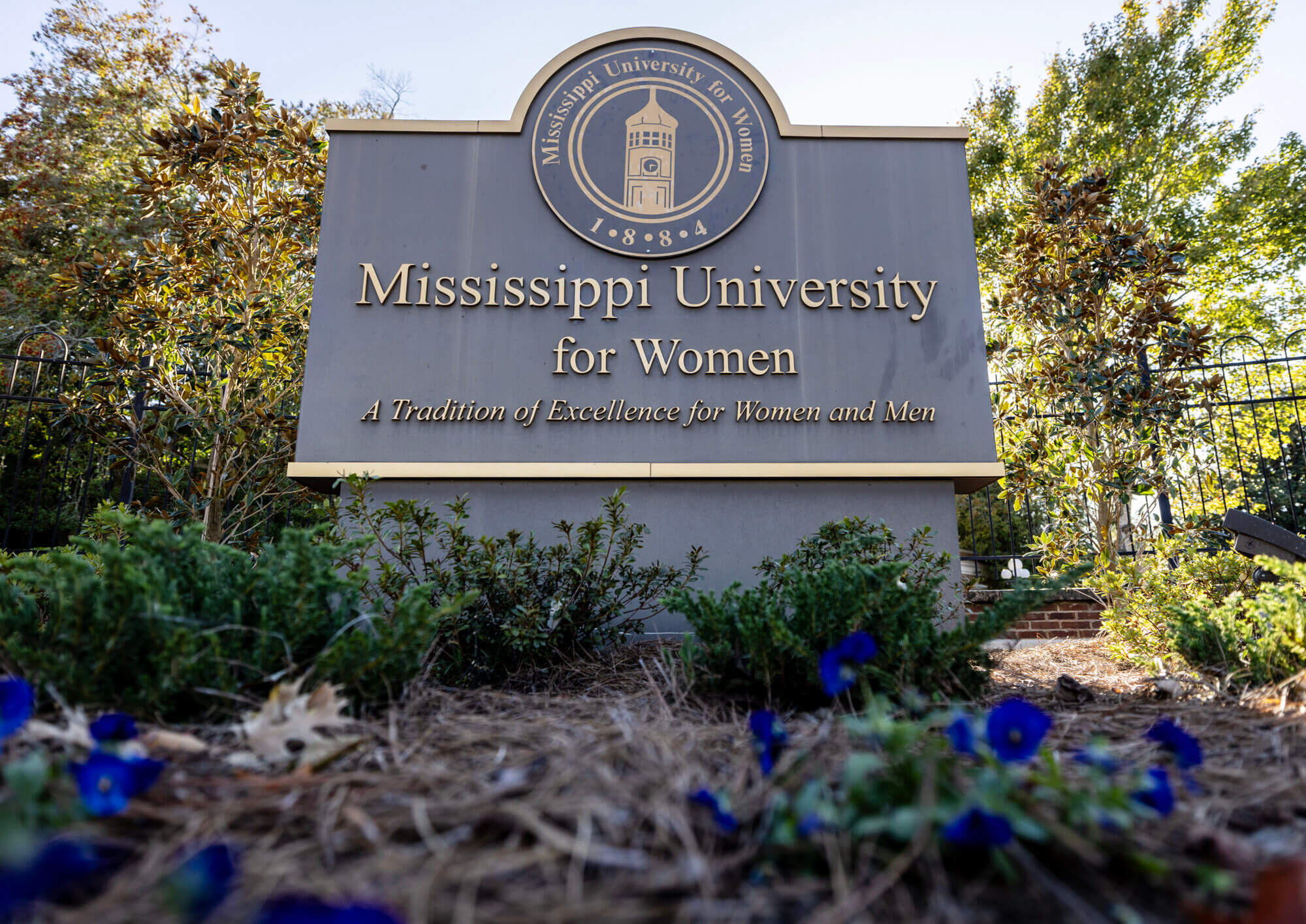
Mississippi University for Women in Columbus, Miss., Tuesday, Nov. 11, 2025. Credit: Eric Shelton/Mississippi Today
On the biggest challenges of Miller’s career and president tenure
The university was hit by a tornado in November 2002. I was vice president for finance and administration of the university at the time, and I had only been in that role for a year. The storm caused nearly $20 million worth of damages. The campus looked like a war zone. Luckily, nobody was hurt. We got one initial payment from (the Federal Emergency Management Agency) but it was at least 10 years before we were reimbursed for everything. But in the process, we were able to rebuild a few campus buildings, including a new recreation center, and restore the third floor of our art building.
The second challenge would be the attempt to change the university’s name in 2024. The reason we were changing the name was to help us market our programs better and to be reflective of who our current student body is. Mississippi Brightwell University didn’t stick. Neither did Wynbridge State University. We weren’t able to come up with a name everyone could really get behind.
The name change also coincided with the Legislature coming up with a bill that would have merged us with Mississippi State University. No matter what opinions were about the name, faculty, alumni and students … wanted to remain a standalone institution. So, I think in some ways it brought us back stronger and helped people to realize just how valuable this institution is.
On big wins as MUW’s president
The W’s reaccreditation status. It happens every 10 years and is a rigorous and big undertaking to make sure the university meets academic and operational standards. Everybody works so hard on it. The university is also celebrating a decade of having intercollegiate athletics in the NCAA Division III.
We also joined the Coalition of Public Liberal Arts Colleges (COPLAC), which is a consortium of 30 public colleges and universities across the country dedicated to providing quality liberal arts education. It’s been great providing our faculty with research opportunities and professional development. Our deans and provosts have benefitted from being part of it.
We also reopened our Culinary Arts Institute building in 2023. We also renovated Turner Hall, our speech language pathology school. We named it after Alma Turner, an alumna and the first principal of the teacher demonstration school. It’s the first building on our campus named after an African American student, and it was important we gave it to her.
On advice for the next MUW president
Listen to everyone and attend as many functions on campus and in town. It’s important to be present, seen and involved. Try to love this place, realize how special it is and try to preserve all the good things the university has going on. There are great people who love this institution. The next leader should know, recognize and be thankful for that. When talking with legislators, share the good news about our university with them.
As for the alums, faculty, students and community stakeholders, I say be open to the new leader. Help them become a part of campus and the Columbus community. My biggest hope is that stakeholders can be a part of the search process and get behind the new person to help them understand the issues, come up with solutions that will support the institution.
Mississippi University for Women in Columbus, Miss., Tuesday, Nov. 11, 2025. Credit: Eric Shelton/Mississippi Today
On university funding issues
It’s a constant battle for funding, mainly infrastructure and operating funds. The state doesn’t fund higher education the way it should be supported and funded. It’s a struggle that our faculty are not paid well enough. We’ve also got buildings that need a lot of work. We’ve got, you know, needs that go beyond what we’re able to fund.
I think we’re going to be in the same situation with the new funding formula that IHL is considering. There’s a lot of competing interests, and the larger institutions have more resources — more opportunities for resources and support — than the regional institutions. They also have a bigger voice and more people in the House. We don’t have a lot of support in the House. Luckily, we have Donnie Scoggin, chair of the House Universities and Colleges committee.
On the Mississippi School for Mathematics and Science
MSMS is a wonderful institution and was founded here on our campus. It’s also wonderful to see the kids excel at what they’re able to do and the opportunities that this school gives them.
But, the school’s lack of funding continues to be an issue. The state funded it in the very beginning but then neglected it. The state couldn’t pay for the upkeep on the school’s facilities. We support them as best we can, but it’s really the state Department of Education that needs to be the advocate for MSMS. It’s the state school. It’s not Columbus’, it’s not Lowndes County’s, it’s not the W’s school. I have spoken out repeatedly at every chance I get for them, but it’s really not our place.
On what Miller’s looking forward to most in retirement
I think being able to read and set my own schedule and calendar. I like to read fiction. I just finished “The Correspondent” by Virginia Evans. I’m reading “The Calamity Club” by Kathryn Stockett, a Mississippi native. Every fall semester, I would take a class called Eudora Welty Writer Symposium, and I would read all the authors who were coming to speak at the annual event. Since 2001, I’ve taken every class and have two bookcases filled with those books. It’s just one of the many things I’ll miss not being on campus.
Audio recording is automated for accessibility. Humans wrote and edited the story.
Editor’s note: Entertainer Pat Boone, Pro Football Hall of Fame quarterback Steve Young and actor Robert Hays of “Airplane” fame signed on as authors of a guest essay provided by US Blood Donors.org for Mississippi Today on “Kidney Chains.” It is a process where people who plan to donate a kidney for a needy family member agree to allow their kidney to go to another recipient if the potential donor is not a match for the family member. Then another kidney might become available for the family member of the original donor.
This guest essay, though, written from a national perspective is of special importance to MT Ideas since Mississippi is among the states with the highest number of kidney disease-related deaths per 100,000 adjusted for age, according to the National Center for Health Statistics.
Hundreds of thousands of dialysis patients in the United States could receive lifesaving kidney transplants sooner if one simple idea became widely known: “kidney chains”— sequences of living-donor transplants that allow one donor to save multiple lives.
The goal is simple: Make “kidney chains” a household phrase.
Kidney chains allow living donors who are incompatible with their intended recipient to help initiate a sequence of transplants that can save multiple lives. The concept builds on Nobel Prize-recognized work in market design and has already enabled thousands of lifesaving kidney transplants.
Yet most Americans have never heard the phrase.
More than 86% of people on organ waiting lists need kidneys. Many dialysis patients face very difficult long-term survival prospects while waiting.
Greater awareness of kidney chains could help expand living-donor transplants and give many more patients the chance to receive a kidney sooner.
There is also a major public policy dimension. Since President Richard Nixon authorized federal coverage for dialysis treatment over 50 years ago, care for kidney failure had grown to represent nearly 25% of Medicare’s budget – 1-2% of the entire U.S. federal budget. Kidney transplantation is generally far less costly than long-term dialysis, meaning more transplants could save billions in healthcare spending.
A more complete explanation of the concept is automatically sent when someone registers at USBloodDonors.org. If you’re curious, please take a look — and if you find the idea worthwhile, consider sharing it to help make “kidney chains” a household phrase.
Audio recording is automated for accessibility. Humans wrote and edited the story.
The House on Thursday passed a measure to overhaul the state’s youth court system after the Senate had passed it late Wednesday night in a special session of the Mississippi Legislature.
But when it looked like lawmakers were soon to wrap up what would have been a relatively quick special session on Thursday afternoon, the efforts hit a snag over a separate issue over which lawmakers have argued for years — reform of pharmacy benefit manager laws.
The behind the scenes haggling over PBMs kept the special session going hours longer than expected, into Thursday night.
Lawmakers into Thursday night were in limbo, unsure whether they would be ending their session soon and going home, or adding a new, contentious issue to the mix and remaining in Jackson. And it left the youth court reform, or at least its funding, also in limbo for a while.
Youth court funding held hostage in attempt to address pharmacy reform
Lawmakers appeared set to finalize a pair of funding measures for the youth court overhaul they had passed, but the funding bills stalled late Thursday afternoon amid a House-led effort to also address PBM reform in the special session. The youth court funding measures would approve $29.5 million in new spending.
House leaders held the youth court funding bills hostage for hours to use as leverage to try to force Senate leaders to agree on PBM legislation, and then get Gov. Tate Reeves to add a PBM overhaul to the current special session.
The House early Thursday afternoon passed the youth court spending bills, but then, in a surprise move, Republican Rep. Steve Massengill of Hickory Flat, a top ally of House Speaker Jason White, held the bills on a motion to reconsider, preventing the measures from going to the Senate for consideration.
House Speaker Jason White later said Thursday night the House would allow them to go to the Senate for consideration. But the reason, White said, the House held them on a procedural motion was because legislative leaders were “very close” on PBM reform. White also said he thought lawmakers had reached a deal on Wednesday night, and then three or four times on Thursday afternoon until negotiations stalled again.
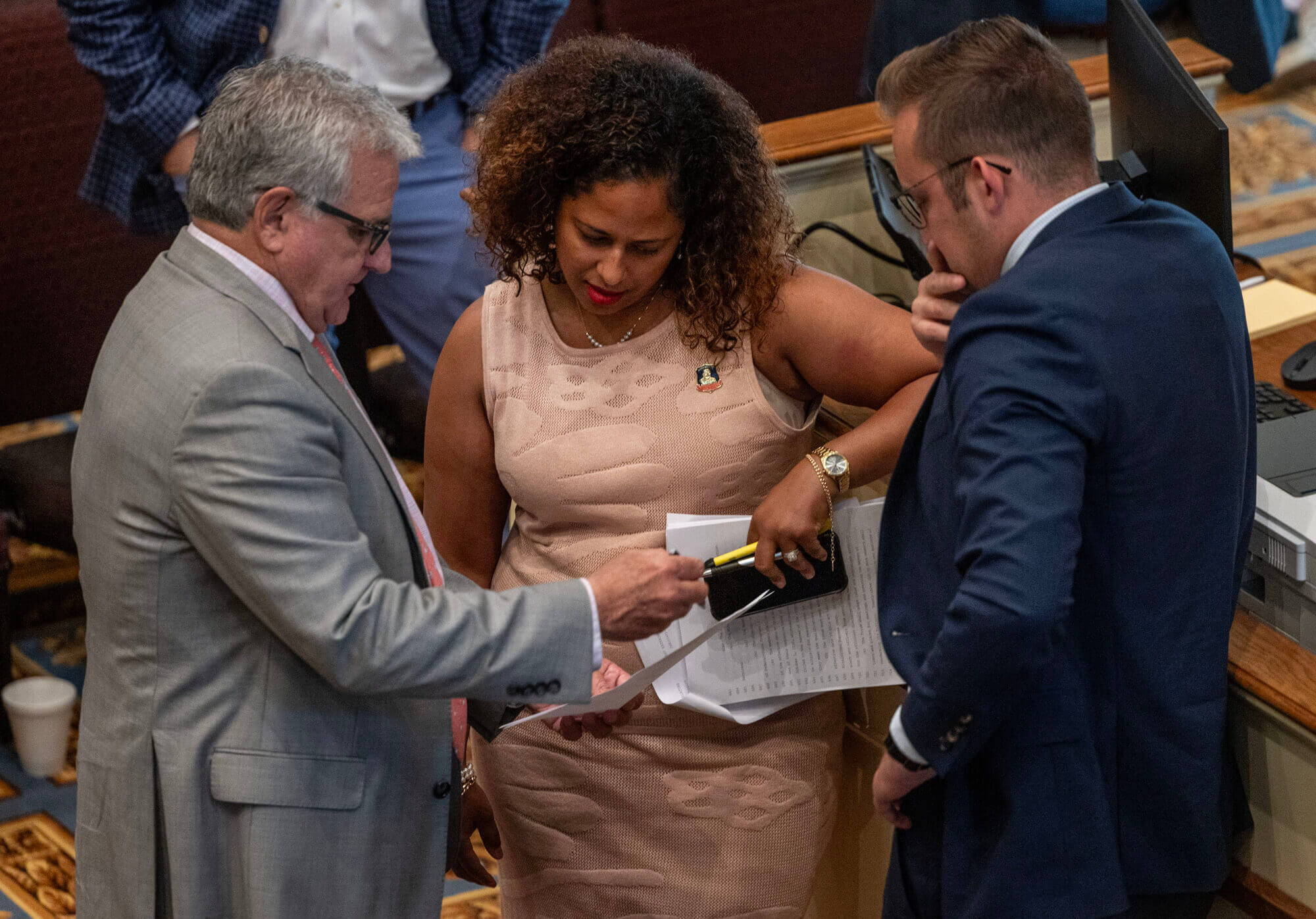
State Reps. Kevin Horan, R-Grenada, from left, Zakiya Summers, D-Jackson, and Jansen Owen, R-Poplarville, discuss legislation concerning the state’s youth court system during a special legislative session at the Old Capitol in Jackson on Thursday, July 16, 2026. Credit: Eric Shelton/Mississippi Today
White told Mississippi Today he and Lt. Gov. Delbert Hosemann have been talking about the prospect of an additional special session on PBMs “over the course of this week” and that Reeves was willing to call a special session if there was an agreement.
“While everybody is at the table, I thought this was a great opportunity, and they’re working hard. I was hoping to land that plane before we got out of Jackson,” White said. “I’m encouraged by parties on all sides over the last few days being willing to really get in a room and shut the door.”
White said lawmakers could be back in a special session “in a week or two, I don’t know,” to deal with PBMs, if they are not addressed now.
The House recessed, with plans to come back later Thursday night and see if an extended special session to deal with PBMs was possible. But the Senate, once the House finally released the youth court funding bills, passed the measures quickly and called an end to the special session.
Multiple senators also told Mississippi Today they had not seen an agreement and were skeptical of whether they could garner the necessary votes to pass PBM reform in a special session. Some said they believed the effort was more political face-saving for House members who had faced flak back home after they failed to pass a PBM reform measure earlier this year.
Sen. Scott DeLano, a Republican from Biloxi, said the Senate was unlikely to approve any reforms to such a longstanding issue at the last minute.
“We tried for three years to get meaningful PBM reform passed,” DeLano said. “While we’ve been close several times, we did not get there. If our intention during this special session is to include PBM reform, it needs to be fully vetted and I question whether the Legislature would have that opportunity in such a tight window. This is an extremely important issue for many Mississippians, including our independent pharmacies, and not something that should be hastily passed without a full deliberate discussion.”
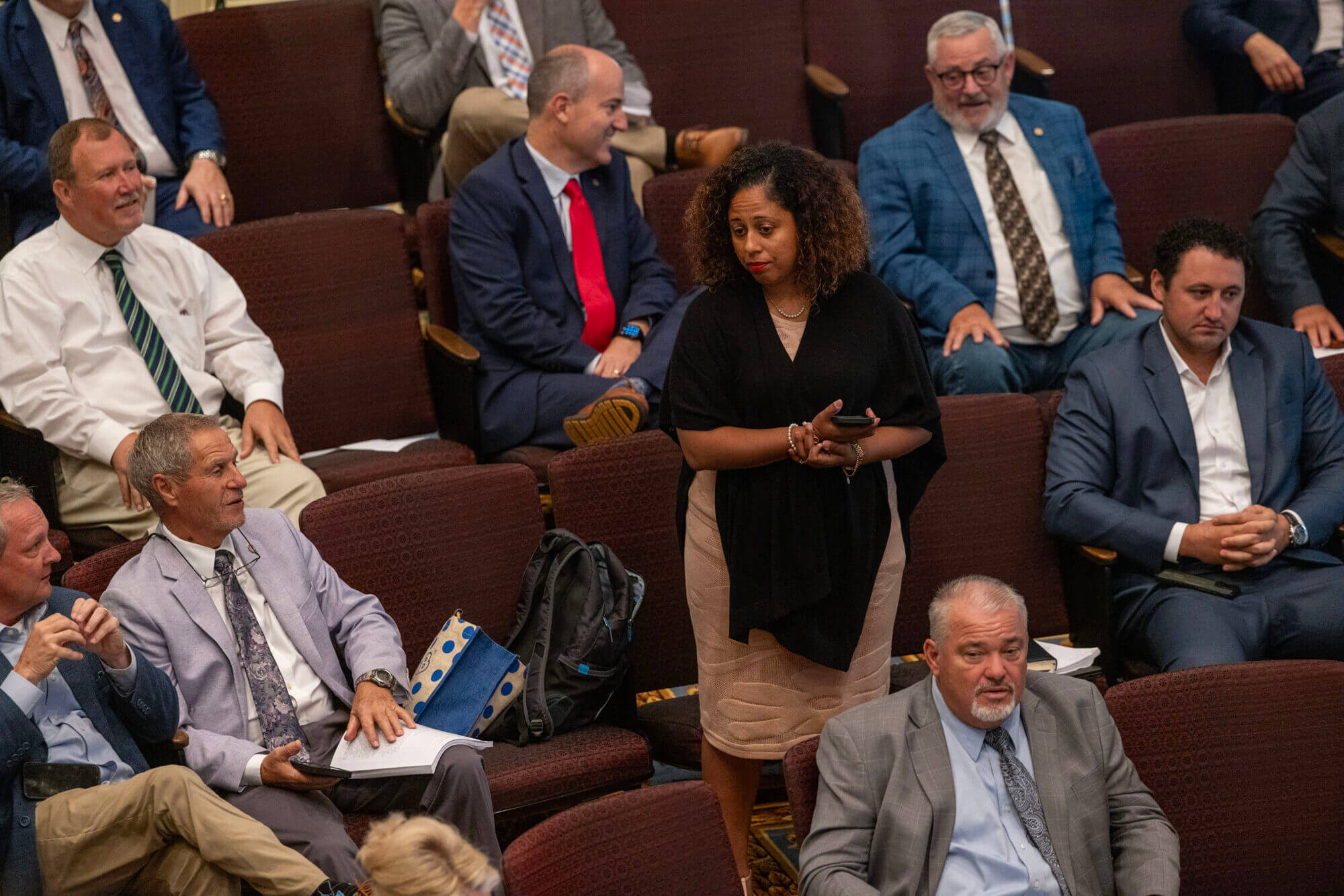
Lawmakers vote on legislation concerning the state’s youth court system during a special legislative session at the Old Capitol in Jackson on Thursday, July 16, 2026. Credit: Eric Shelton/Mississippi Today
As lawmakers were scrambling to figure out where negotiations stood, the Senate drafted its own youth court funding bills on Thursday afternoon, a strategic move in response to the House holding the bills it had passed. It appeared the Senate might pass the spending bills on to the House and tell the other chamber to take it or leave it and potentially leave the special session.
Senate Appropriations Chairman Briggs Hopson, a Republican from Vicksburg, said he was “not sure what’s going on” in the House, so he wanted the Senate to pass mirror versions of the House spending bills as a backup.
“They passed those bills, I think, a few hours ago, three hours ago or so,” Hopson said of the House. They’re held on a motion to reconsider, so I think what we’d like to do is go ahead and get these Senate bills out of the Senate if we can and move those to the House for consideration.”
After years, ‘uniformity’ for youth court
Earlier in the day, in a 67-32 vote that fell mostly along party lines in the Republican-dominated chamber, the House approved the Senate youth court reform legislation without changing it. Democrats introduced several amendments, but all of them were defeated. Tempers flared in the debate’s closing stages, with one Democrat calling Republicans “cowards” for voting for the measure in a “rushed” process, and Republicans responding that the bill was the culmination of a long push toward reforming the system.
The Senate had passed the youth court bill late Wednesday night 25-10 after much debate, with several members absent or not voting.
“Don’t stand up here and say I don’t care about children in this piece of legislation, because I do,” said House Judiciary B Committee Chairman Kevin Horan, a Republican from Grenada and one of the lead House negotiators. “We have been dealing with this for years and years. We have got to get some uniformity in the system.”
House Speaker Jason White listens to debate on legislation to overhaul the state’s youth court system during a special legislative session at the Old Capitol in Jackson on Thursday, July 16, 2026. Credit: Eric Shelton/Mississippi Today
Rep. Jeffery Harness, a Democrat from Fayette, said Republicans were voting to thrust the youth court system into “a chaotic mess.”
“Many of you haven’t even read this legislation; you voted just to vote. And you caused harm to your state and harm to your children,” Harness said. “And you sit here like cowards and can’t even represent your own interests.”
The goal of the overhaul is to replace Mississippi’s current disjointed youth court system. Only 24 of Mississippi’s 82 counties have a full-time judge handling youth court cases. In most of these instances, county court judges handle youth court matters. But not every county has a county court.
In the remaining counties, these matters are handled by “part-time referees,” who are a part of the chancery court. The proposal passed by the Senate would do away with referees and replace them with full-time chancery court judges. The governor will appoint the new chancery court judges, but they will later have to run for election.
Some House members in both parties said localities should have control over the appointments, not the governor, but efforts to tweak the bill in that manner were defeated.
The legislation would also allow for the appointment of another court official called a “family master” to hold emergency hearings, should chancery court judges face a backlog.
The legislation would add more full-time judges and open youth court proceedings to the public. It would also create a statewide “diversion program” to redirect some juveniles from the court system, expand detention capacity at the Oakley Youth Development Center in Raymond and lay the groundwork for the building of new detention centers in both North Mississippi and South Mississippi.
Youth court proceedings will be open to public
One of the most contentious provisions among Democrats is a requirement that an order or ruling of the youth court judge delivered orally must be reduced to writing within 48 hours. Failure to reduce the oral order to writing within that time period would nullify the order.
Democrats said the provision could result in children being sent back to dangerous settings if youth court judges don’t, for whatever reason, successfully put their orders into writing in the required time frame. Republicans said ensuring orders are available in writing is critical to a fair legal proceeding and that there were plenty of technological options available to judges.
Democrats also objected to the bill’s opening of youth court proceedings to the public, arguing that children who have been sexually abused would see the gruesome details of what happened to them exposed in public view. Republicans said judges would have the option to close hearings if they wanted to, and there were already other protections in state law to protect children from undue scrutiny.
“Due process dies in the darkness,” said House Judiciary A Vice Chairman Jansen Owen, a Republican from Poplarville.
For decades, closed youth courts have been the status quo, and only in rare circumstances has the public been allowed to see the proceedings. The new proposal will give judges flexibility on sealing records and limiting courtroom proceedings, but the courts will now be presumed open to the public.
Senate Judiciary A Chairman Brice Wiggins, a Republican from Pascagoula, told Mississippi Today that he understands concerns of the public sharing sensitive details about children and families, but he believes the new law will still protect the privacy of children.
“Open courts are a hallmark of our democracy,” Wiggins said. “If you’re for good government and transparency, you should be supportive of open courts.”
The special session was necessary because youth court proceedings were thrown into confusion after lawmakers, during their regular 2026 session, let state laws that outline how confidential youth court records can be shared between courts, state agencies, attorneys and law enforcement expire.
When a repealer, or sunset clause, is included in a state law, the law or a section goes away on a specified date unless the Legislature votes to reenact it. Because the Legislature didn’t pass a measure extending the repealer, those confidentiality measures and other youth court laws and funding expired.
Some Democrats questioned the hastily called nature of the special session. But existing youth court judges made clear the situation was unsustainable, Owen responded.
“When the statutes expired, it was like a bunch of judge chicken littles running around talking about how the sky was falling and how everything was going to hell in a handbasket,” Owen said.
Longtime Democratic Sen. Hob Bryan of Amory said since he was elected to the Legislature over 30 years ago, he’s continued to watch the Legislature rubber-stamp the governor’s policy requests and abdicate their power to deliberate as a separate branch of government.
“It’s getting where I do not recognize this Legislature, and I do not recognize this Senate,” Bryan said. “I do not understand why people vote for propositions they think are unwise.”
Over the last several years, Bryan said he’s continued to watch lawmakers insert mistakes into legislation, and he partially blames that on the hurried nature of legislative sessions and an unwillingness of lawmakers to carefully scrutinize bills.
Some Republicans in both chambers also criticized the process, pointing out they were left to quickly consider a lengthy bill that was largely written by legislative leadership, not the rank and file.
Rep. Elliot Burch, one of the few House Republicans to vote against the measure, said the special session did not allow members to properly study the bill and its consequences.
“If by youth court reform you mean placing this 216-page rewrite of Mississippi law in front of me and expect everybody to understand it and know the consequences of it before they vote, I have some problems,” Burch said.
Audio recording is automated for accessibility. Humans wrote and edited the story.
The mother of an 18-year-old who was stomped to death in the Hinds County Detention Center in Raymond has filed a wrongful death claim against the sheriff’s office, alleging negligence resulted in her son’s gruesome killing.
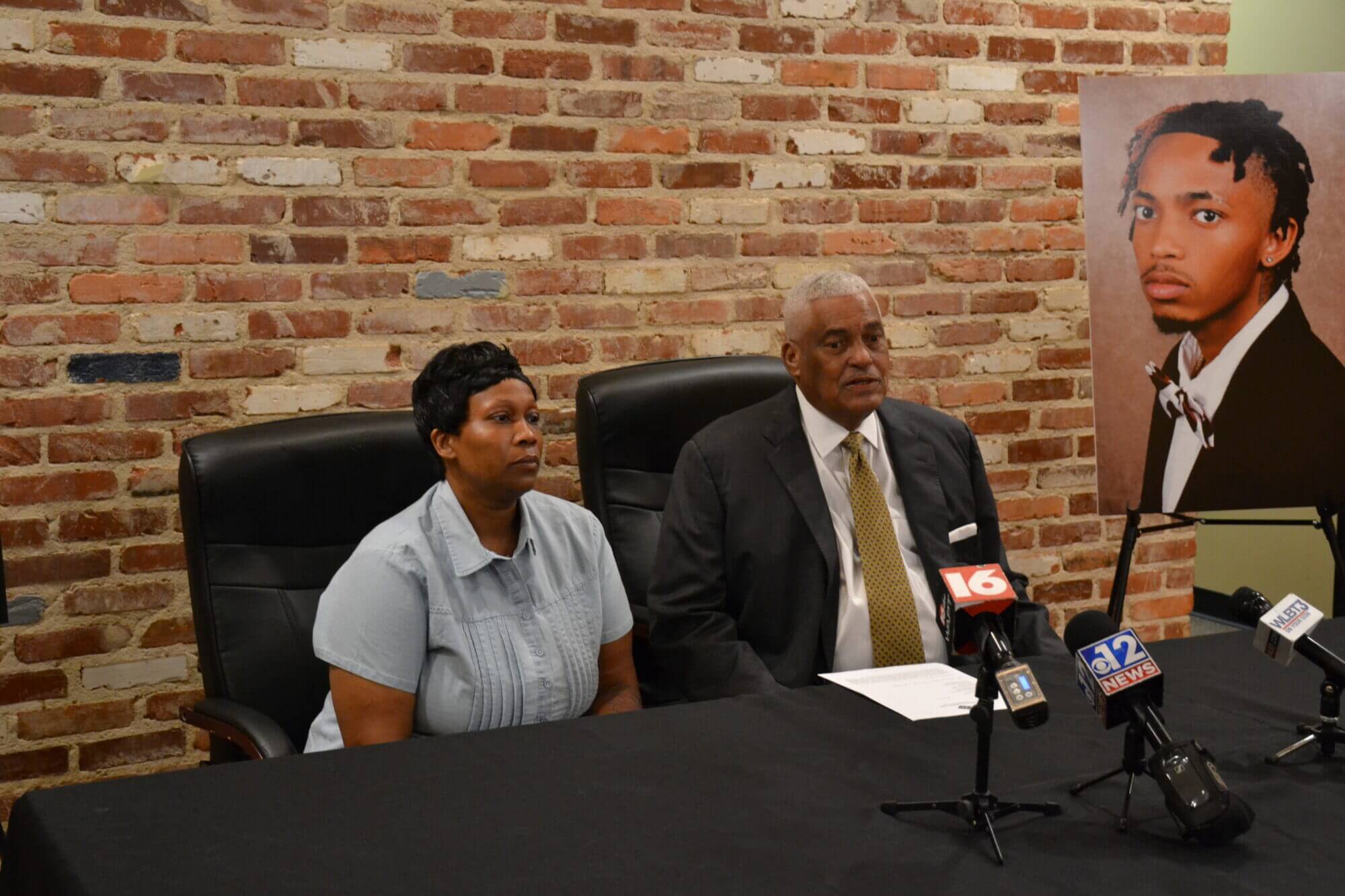
Janice Bradley joined her attorney, Dennis Sweet III, at a Thursday press conference in calling for a full accounting of the events that led to the beating death of her son, Mielun Butler, two days after he was booked into Raymond on July 1.
“My son had a whole life ahead of him,” Bradley said, as she sat next to a poster of him depicted in angel wings.
A video of the beating circulated on Facebook, showing a person wearing black sandals stomping on Butler’s limp and bloody body as someone ordered Butler to say, “Long live Melvin.”
“The sheriff in this case has fallen down,” Sweet said. “That’s a young man in his custody. He’s responsible. There’s no dodging that.”
Butler was being held in Raymond on charges of killing 32-year-old Melvin Edwards at a south Jackson apartment complex known for violence. At Butler’s initial appearance on July 2, Municipal Court Judge Jeffery Reynolds set a $1 million bond, an amount the judge acknowledged the teenager could not post.
Hinds County Coroner Jeremiah Howard told Mississippi Today last week that the teenager “had shoe prints all over his head.”
The Monday after Butler’s killing, Hinds County Sheriff Tyree Jones held a press conference to announce that his office and the Mississippi Bureau of Investigation had launched separate inquiries. Later that week, Jones told Mississippi Today that a detention officer had been placed on administrative leave with pay.
In response to Thursday’s press conference, Jones said in a written statement that “certain allegations and preliminary findings” had led him to contact the FBI. Mississippi Today is awaiting comment from an FBI spokesperson.
“I remain committed to transparency, but only in a manner that does not compromise the integrity of the investigations or the pursuit of factual, evidence-based conclusions,” Jones said Thursday.
Sweet said he believes culpability for Butler’s brutal death extends beyond just one staff member. He said Butler fought for his life, causing a commotion that jail staff should have heard and responded to. He also questioned how the cellphone that recorded Butler’s beating was brought into the jail.
Last year, Jones ceded operational control of the jail to a federal receiver. Earlier this week, the sheriff confirmed to Mississippi Today that the jail was on lockdown for an operation, but he would not reveal the nature of the operation or its findings.
Bradley said her son, who had been assigned a public defender, intended to prove his innocence. Sweet said that as a pre-trial detainee, Butler was entitled to his day in court. A Jackson Police Department spokesperson said the agency did not wish to respond.
Sweet pounded the table as he condemned any contention that Butler deserved to die because he had been charged with a violent crime.
“What’s happening with us and these principles that you’re presumed innocent?” he asked.
Bradley said she wanted justice for her son and for all mothers who have lost children to violence at Raymond. Six people died at the jail last year, including a homicide, a drug overdose and another suspected drug overdose, according to the Marshall Project.
The mother told reporters that she chose not to watch the video so she would not remember her son that way. She recalled Butler as bright and hard-working, saying he had recently graduated from Lanier High School in Jackson and was working at aWendy’s.
Butler had carpentry, welding and forklift certificates, and he intended to study business at Hinds Community College, she said.
Sweet said he called on the FBI to investigate the social media posts and referenced the recent federal investigation into corruption in Jackson that ensnared former Hinds County District Attorney Jody Owens and other elected officials.
“If the FBI can spend time on conspiracies out here, they can spend time on this,” he said.
Audio recording is automated for accessibility. Humans wrote and edited the story.
The auditorium walls of Jackson’s Provine High School couldn’t stop the rat-a-tat-tat of snare drums, the bright blasts from trumpets, the bouncing oomphs from tubas and waves of music pulsing into empty hallways.
The Mississippi Alumni All-Star Band had found its rhythm.
Watch: The Mississippi Alumni All-Star Band puts on a show — and is on a mission
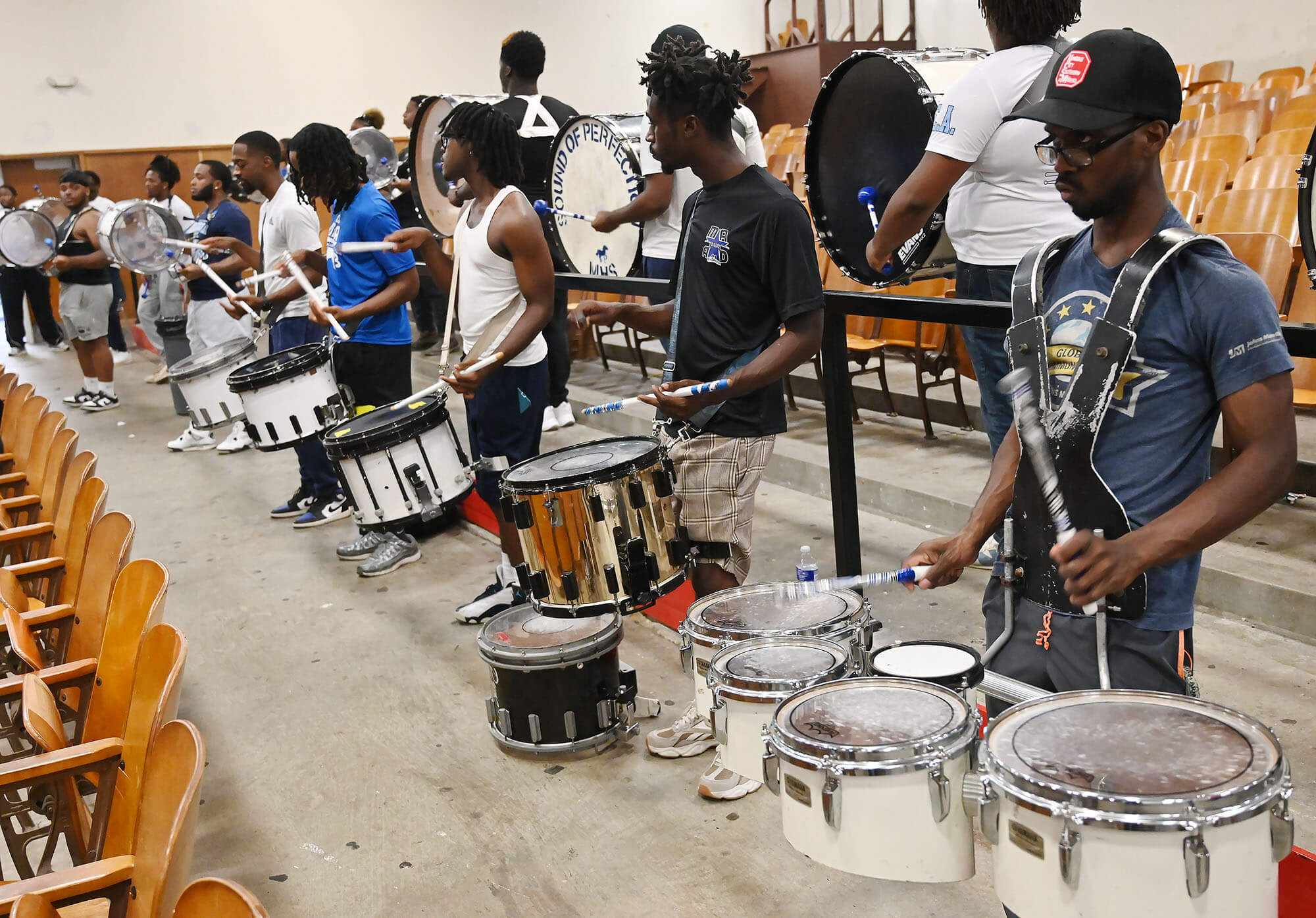
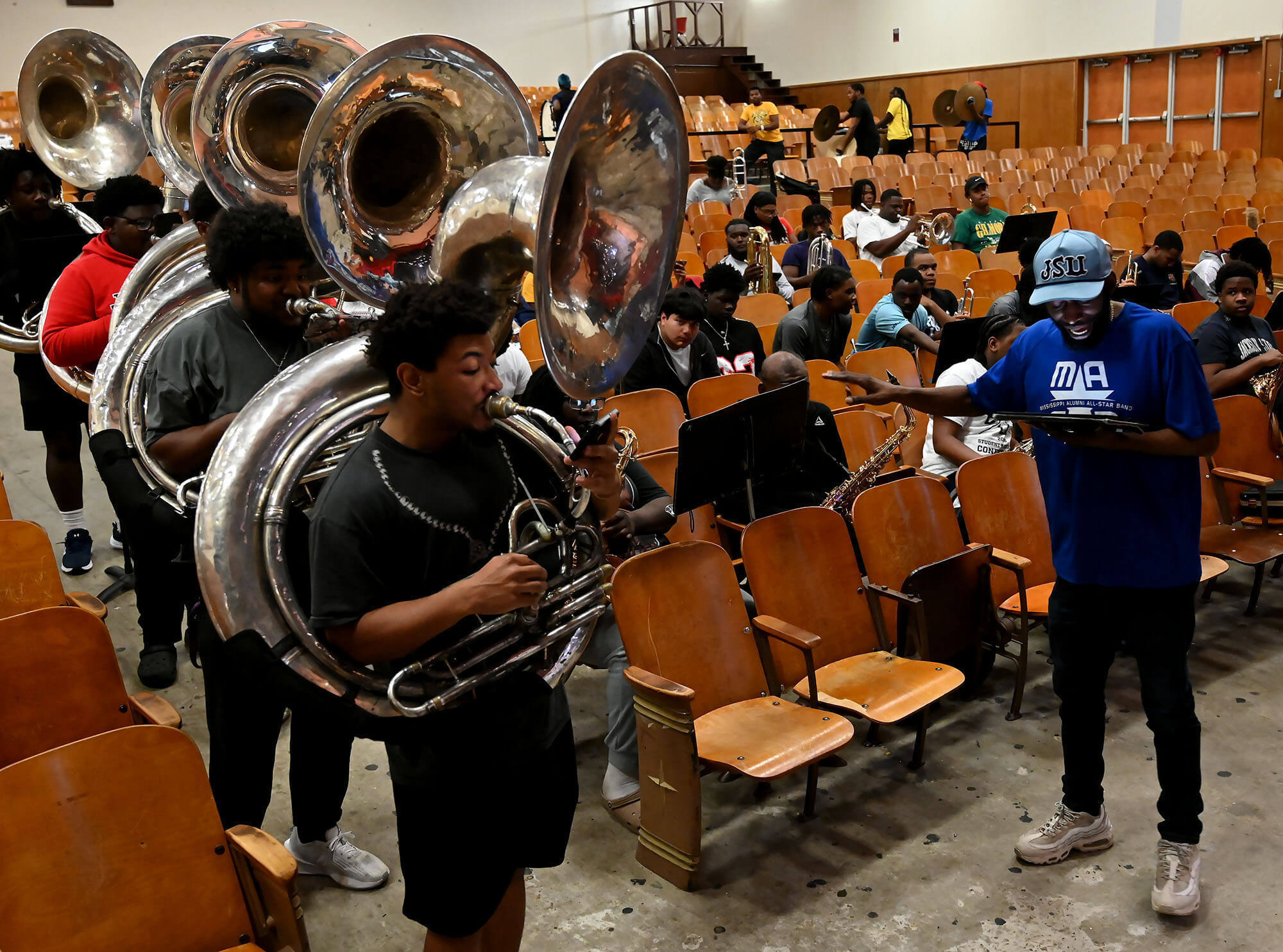
For the next several minutes, nearly 150 band members — middle school, high school and college students from across the state — would groove together during a Tuesday evening practice in June playing arrangements of “Whisper My Name” by Drake and “Who We Be” by DMX. Musicians swayed in wooden auditorium seats — some studying digital sheet music on their phones — awaiting cues from Travis Prewitt, one of the band’s lead directors and conductors.
“Horns, I need you to remember to breathe from your diaphragm when we get to the chorus of these songs,” Prewitt said. “Once you’re there, we’ll be solid. I need to hear those notes roar.”
Jackson State University Assistant Band Director Travis Prewitt directs the Mississippi Alumni All-Star Band during rehearsal at Provine High School, Tuesday, June 9, 2026, in Jackson. The band is comprised of middle and high school students from across Mississippi as well as college musicians. Credit: Vickie D. King/Mississippi Today
The all-star summer band, also known as MAAB, has grown to fill a void in arts education, creating one of the largest community training grounds for students hoping to earn college music scholarships.
In summer 2011, Prewitt, Travis Parks, David Hubbard and the late Christopher Little — four Jackson State University alumni and former members of the Sonic Boom of the South — began gathering friends and local musicians to teach hundreds of Mississippi students to perform “show style,” the high-stepping, high-energy music and traditions typically associated with marching bands at historically Black colleges and universities.
Fifteen years later, the group’s grassroots network of band directors across the state and throughout the South connects students with mentors and resources to help them pursue HBCU band auditions and paths to college.
“You don’t have to know how to read music perfectly. You don’t even have to have an instrument,” said Hubbard, who is also the co-founder of Mississippi Music Institute, a nonprofit organization that works with the all-star band to raise money and recruit students for arts and music programs. “You just have to have the spirit of wanting to be a better musician.”
Since its inception, nearly half of the students in the band have gone on to earn scholarships at Jackson State, Alcorn State, Mississippi Valley State and other HBCUs, Hubbard said. The band receives small grants from local arts organizationsbut mostly collects money through self-sustaining neighborhood barbecue plate fundraisers and concession stand salesto pay for students’ uniforms, travel to competitions and rental rehearsal spaces.
Training the next generation of Mississippi musicians
For months starting each May, students in the mass band train as collegiate-level musicians.
Prewitt and the group’s five other rotating band directors drill their musicians with four to five new compositions each week. They teach breathing techniques.
Terry High School Band Director De’Andre Weekes, left, assists sousaphone player Ke’Dariuos Jackson during Mississippi Alumni All-Star Band rehearsal at Provine High School, Tuesday, June 9, 2026, in Jackson. Credit: Vickie D. King/Mississippi Today
Those lessons serve two purposes: sharpening students’ skills and giving them an edge against other young musicians from bigger Southern cities such as Memphis, Atlanta and New Orleans, who are also vying for scholarships and spots in HBCU marching bands.
“This gives us a chance to teach and show it to them in real time while they’re playing next to a trumpet player from Jackson State, Alcorn or Mississippi Valley,” Prewitt said. “Then after the (summer band) season is over, they then go back to their own schools and colleges and share what they learned with other peers.”
Leonard Martin, a band director at Lanier Jr. Sr. High School in Jackson, said he taps his gifted music students at the end of the school year to join the summer ensemble. That’s how he began his journey.
Little, who was one of the MAAB founders and a former band director of Jackson’s Jim Hill High School before he died in 2023, encouraged Martin to join the mass band program as a trombone player in 2013. The summers in the ensemble eventually helped Martin earn a music scholarship and a spot in JSU’s Sonic Boom.
“It kept me out of the streets of Jackson and from being peer-pressured into doing other things,” Martin said. “My involvement has cultivated and molded me to be a band director to lead by example for my students.”
Credit: Vickie D. King/Mississippi Today
Credit: Vickie D. King/Mississippi Today
Credit: Vickie D. King/Mississippi Today
Credit: Vickie D. King/Mississippi Today
Credit: Vickie D. King/Mississippi Today
Credit: Vickie D. King/Mississippi Today
Credit: Vickie D. King/Mississippi Today
Credit: Vickie D. King/Mississippi Today
The summertime ensemble is also a platform for band directors to elevate their careers. Many directors are hired at colleges and universities after gaining visibility through the program, Martin said.
Finding their tribe among peers
Corbin Williams didn’t want to join the all-star band at first.
The 18-year-old Lanier High senior watched his older brother, Keston, practice snare drum cadences and new musical arrangements he learned each week as a member of the band. Williams said he wasn’t keen on the rigor and discipline the musical ensemble required.
“It was intimidating, and I was lazy and didn’t take the craft of music seriously,” Williams said.
In 2015, he joined the band to sharpen drumming techniques — musicality, hand-eye coordination, rhythm and most importantly, confidence in sight reading music. Williams also began befriending other drummers. During lulls in rehearsal, they would drill him on musicality and rhythm.
“My attention span for retaining music, coordination and rhythm has improved so much since I began practicing everyday with MAAB,” Williams said. “I get better when I’m around them. I see what’s possible for me.”
Credit: Vickie D. King/Mississippi TodayCredit: Vickie D. King/Mississippi TodayCredit: Vickie D. King/Mississippi TodayCredit: Vickie D. King/Mississippi Today
Williams plans to audition for the Sonic Boom this fall. The all-star band rehearsals give him a glimpse of what he might experience.
“It’s just preparing myself and making sure I have all the tools that I need to be able to succeed,” he said.
Auiyhna Scott, a senior studying computer engineering at Jackson State and a trumpet player in the Sonic Boom, said her involvement with summer mass band also started as a way to connect with her late father, Christopher Little. Since 2024, Scott has mentored the all-star band’s high school students, who ask her about the music craft, HBCU band audition prep and academics.
“You’re spending your nights playing with all these new students from different backgrounds and they’re coming up to you looking for advice on how to get better at the craft or ace auditions,” Scott said. “Sometimes they even simply ask me what college is like.”
In the high school’s auditorium on June 16, Prewitt led the band through one final rehearsal. In a few days, the Mississippi ensemble would have to defend their home turf against mass marching bands from Baton Rouge, Nashville and Memphis at an annual community competition, the Independence Showdown Battle of the Bands.
The group had been practicing since 5:30 p.m. The first half-hour was dedicated to scales and warm-ups. Then the band did an hour of team sectionals. For 40 minutes, they practiced marching across Provine’s blacktop before the full-band rehearsals.
If they were lucky, they’d finish practice by 10 p.m. Maybe.
“Band! Who skedd?” Prewitt commanded the band’s signature rallying cry. No fear. It was time to play.
One more time. From the top.
“Who? M-A-A-B,” the group shouted before lifting their instruments.
Jackson State University Assistant Band Director Travis Prewitt, left, directs the Mississippi Alumni All-Star Band during rehearsal at Provine High School, Tuesday, June 9, 2026, in Jackson. The band introduces students to high-level performance techniques and puts them on a path to higher education. Credit: Vickie D. King/Mississippi Today