Home Blog Page 7

Professor offers ‘modest proposal’ to accompany Mississippi’s Confederate Heritage Month

 This essay is part of Mississippi Today Ideas, a platform for thoughtful Mississippians to share fact-based ideas about our state’s past, present and future. You can read more about the section here.


Gov. Tate Reeves is a big proponent of understanding and celebrating Mississippi’s history, sentiments that I heartily agree with. Take for example his recent Confederate Heritage Month proclamation, which mentions the importance of coming “to a full understanding that the lessons learned yesterday and today will carry us through tomorrow if we carefully and earnestly strive to understand and appreciate our heritage and our opportunities which lie before us.” 

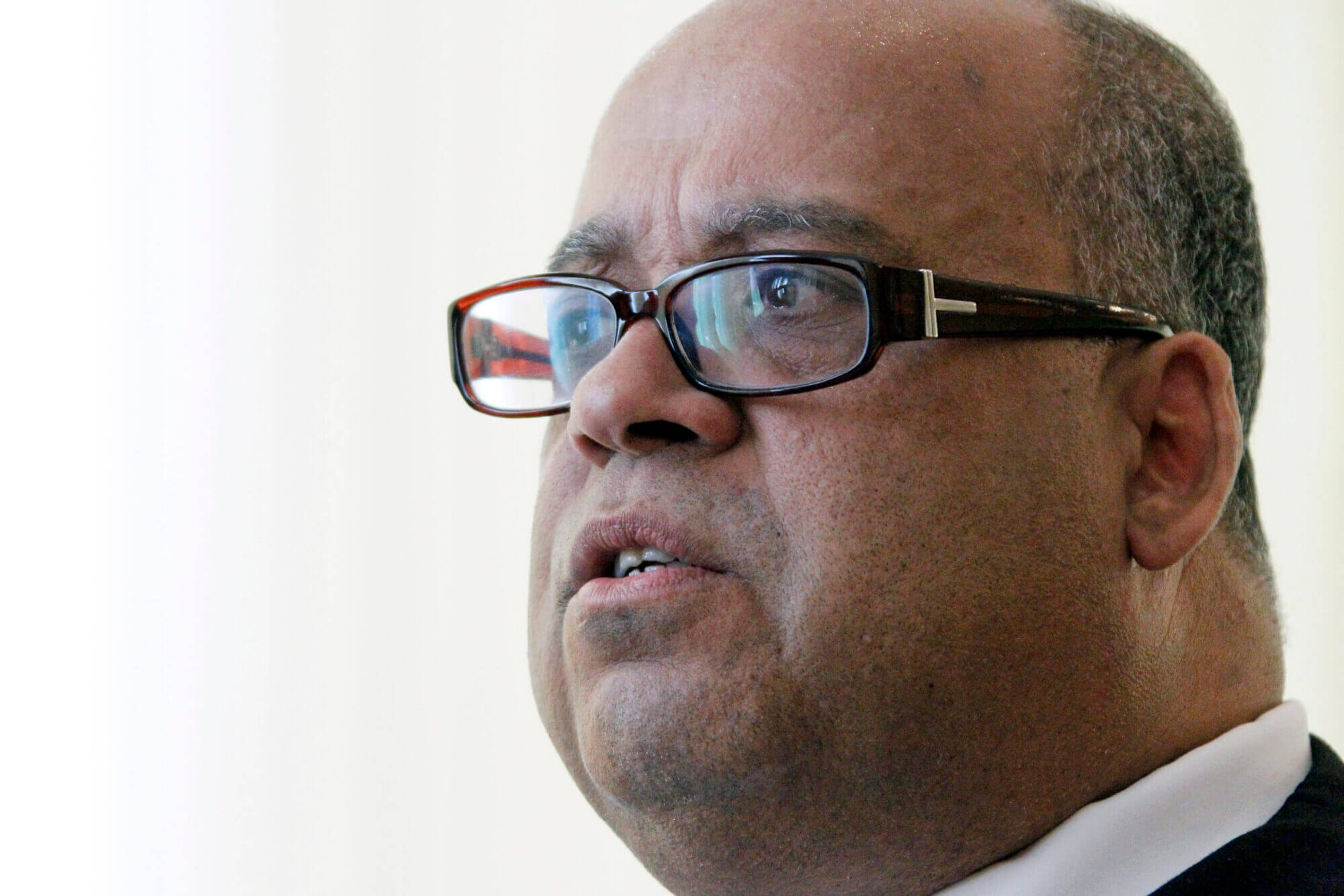
Christopher Norment Credit: Courtesy photo

Although Gov. Reeves’ ambiguous language cleverly manages to say everything while simultaneously saying nothing, we still should ask what he means by urging Mississippians to “earnestly strive to understand and appreciate our heritage.”

After all, he is governor of a state that celebrates Robert E. Lee’s Birthday on the same day as Martin Luther King’s Birthday, Confederate Memorial Day and Jefferson Davis’ Birthday.

These state holidays are part of Mississippi’s heritage, along with its 1861 justification for secession from the Union, which includes the statement that “our position is thoroughly identified with the institution of slavery.” A keen social analyst and purveyor of unintended irony, Reeves has proclaimed April as Confederate Heritage Month while also insisting that there is “not systemic racism in America”

But now to my modest proposal. Given Gov. Reeves’ appreciation for Mississippi’s history, I urge him to proclaim an annual “Jim Crow Heritage Month” as a companion to Confederate Heritage Month.

Identifying the most appropriate month for this recognition might require waiting until the GOP-dominated Mississippi Legislature redraws legislative districts to diminish Black voter power. Symbolically, though, November would be an excellent choice for Jim Crow Heritage Month, because in November of 1890 Mississippi adopted its post-Reconstruction constitution, which used a poll tax and literacy tests to disenfranchise Black voters. As the president of the convention, S. S. Calhoon said, “We came here to exclude the Negro. Nothing short of this will answer.” Consequently, the percentage of registered eligible Black voters in Mississippi decreased from 67% in 1867 to less than 6% in 1892

Now, that’s heritage.

Given the Supreme Court’s April 2026 Louisiana vs. Callais decision, one of the “opportunities that lie before us” – in terms of  Mississippi’s racial history – is the chance to suppress Black voting power throughout the South. According to the Supreme Court’s majority opinion in Callais, which was written by Justice Samuel Alito, “Because the Voting Rights Act of 1965 did not require Louisiana to create an additional majority-minority district, no compelling interest justified the state’s use of race … and that map is an unconstitutional racial gerrymander.”

Curiously, the Supreme Court’s Callais decision functionally implies that majority-white gerrymandered districts are constitutional, a form of fantastical legal logic that could lead to the end of multiracial democracy in the South.

This predication has been verified in Tennessee, where the state Legislature and governor quickly acted to gerrymander Memphis and eliminate the state’s only Black-majority congressional district – supposedly in the name of partisan politics, although the means and ends appear undeniably related to race in a state that celebrates Nathan Bedford Forrest Day, which honors the founder of the Ku Klux Klan.  Louisiana recently followed suit by eliminating one of two Black-majority congressional districts, while Alabama also is preparing to eradicate one of its two majority-Black congressional districts – a move that GOP governor Kay Ivey praised by observing that “For years, we have fought for this outcome, and I am proud to celebrate this win for Alabamians.” 

Well, some Alabamians. 

One small step for Tennessee, Louisiana and Alabama, one giant step for the GOP in its quest to consolidate power in the South, with each state doing its best to channel Nina Simone’s lyrics to “Mississippi Goddam.”  

Bob Thompson (1937-1966), Homage to Nina Simone, 1965. oil on canvas. Minneapolis Institute of Art, The John R. Van Derlip Fund, 89.83 © Estate of Bob Thompson, Courtesy of Michael Rosenfeld Gallery LLC, New York, NY Credit: Photo courtesy of Mississippi Museum of Art

Alabama and Tennessee (and Louisiana) have gotten me so upset, and Mississippi will likely follow.

Given Gov. Reeves’ politics and selective view of his state’s heritage, as illustrated by his 2013 speech to the Sons of Confederate Veterans, which he gave in front of an immense Confederate battle flag; the Republican-dominated state Legislature; and a pile on by GOP candidates for state offices, including Shad White (state auditor) and Michael Watson (secretary of state), it is likely that Mississippi will follow the lead of Tennessee, Louisiana and Alabama, with Congressman Bennie Thompson’s district being an obvious target.

Poll taxes and literacy tests are out for the time being (bad optics, I suppose), but the effects of white-biased gerrymandering on Black voting power could be similar. 

Heritage, y’all. History and opportunity, right? So, how about November as Jim Crow Heritage Month in Mississippi? 

Of course, there is a different way forward for Mississippi, a possible future that pushes back against the state’s legacy of chattel slavery and Jim Crow laws, and its host of racist governors, from James K. Vardaman to Theodore Bilbo and Ross Barnett. Mississippi could refuse to follow the lead of Tennessee, Louisiana and Alabama.

Instead, “A full (and truthful) understanding (of) the lessons learned yesterday and today” could invoke the heritage of Hiram Rhodes Revels (the first African American from Mississippi to serve in the U. S. Congress), Medgar Evers, James Meredith, the Freedom Riders, Robert Moses, Fannie Lou Hamer, William Winter and the Legislature’s 2020 decision to remove the Confederate battle flag from the state flag.

This noble and courageous heritage could propel Mississippi toward a more equable distribution of political, economic and social power. But that’s wishful thinking and appears unrelated to how Tate Reeves and the GOP leaders in Mississippi imagine the “heritage and … opportunities which lie before us.” 

So, cue Nina Simone. 


Bio: Christopher Norment holds a PhD in Systematics and Ecology from the University of Kansas and is an emeritus professor of environmental science and ecology at the State University of New York–Brockport. During his career he published over 50 peer-reviewed scientific papers and three science-related books of creative nonfiction, and received awards from the State University of New York for teaching and scholarship. He now lives in Jackson. 

Sen. Brice Wiggins on youth court reform

Audio recording is automated for accessibility. Humans wrote and edited the story.

Senate Judiciary A Chairman Brice Wiggins has worked for years to reform Mississippi’s notoriously opaque youth courts. He sat down with Mississippi Today to discuss why the courts are now somewhat open to the public, what happened during the the recent special legislative session and why having a uniform youth court system is crucial to to the state.

Still no report: Lawmakers question why firm hasn’t provided review of prison health care

Audio recording is automated for accessibility. Humans wrote and edited the story.

In December of 2025 Kristen Windham, director of policy for Gov. Tate Reeves, emailed a state lawmaker with a “report” on the status of a long-awaited review of Mississippi’s prison health care system. 

The document that Windham called a report was a letter that barely stretched beyond a page. And her update was that the monitoring report lawmakers were expecting still did not exist.

That came as a surprise to lawmakers who passed a law that said they are due a review of the medical services contract from the corrections department on Dec. 15 of each fiscal year. The state recently approved paying the law firm Butler Snow $700,000 for monitoring prison health care, despite no report being delivered yet.

The urgent interest in the review stems from the alleged denial of health care in state prisons. 

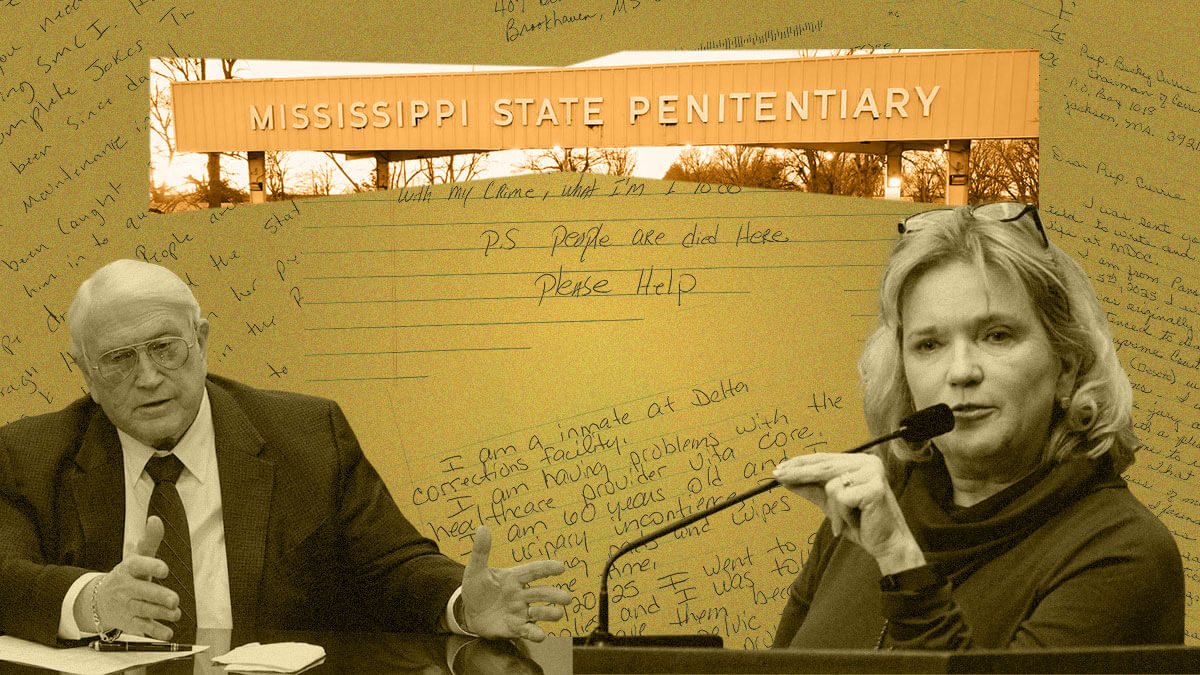
Mississippi Today has documented potentially thousands of people living with hepatitis C going without treatment, amputations following delayed care and trouble getting cancer screenings. Such findings, as well as handwritten letters sent to lawmakers by prisoners seeking care and panicked messages from their family members, drew bipartisan condemnation in the state House and numerous hearings at the Capitol.  

“They have decided to treat 50 inmates a year with Hepatitis C when there are thousands,” House Corrections Chairwoman Becky Currie, a Republican from Brookhaven, said in a recent interview with Mississippi Today. “They provide care when the Hepatitis C patients are so far gone that they need a liver transplant or die.” 

In her email to Currie, Windham cited a lengthy process, one that involved developing a “monitoring program” and “auditing tools” – neither of which had been put in place five years after VitalCore Health Strategies became the medical contractor for Mississippi’s prisons. The Kansas-based company was initially awarded four no-bid emergency contracts, raking in hundreds of millions of dollars in the process, before securing a three-year contract. 

“As you are no doubt aware, developing a medical monitoring program and audit tools tailored to ensure both contract compliance and to evaluate the quality of healthcare takes months to develop,” Windham wrote in the December email. “When development of the audit tools and the initial site visits are completed, MDOC will be able to estimate when the first monitoring report will be completed.”

Seven months later, the Mississippi State Personnel Board on July 16 approved paying the law firm to monitor Mississippi’s prison healthcare system. But several lawmakers granted access to the report under state law told Mississippi Today they still have not seen it, and it’s unclear what progress has been made toward its production. 

“I have not received anything,” Currie said. “If we had used the money that we are paying Butler Snow to tell us what we already know, we could have cured so many people suffering in prison.”

The state law that said lawmakers are due a report from MDOC on Dec. 15 of each fiscal year passed in May of 2025. But Dec. 15 came and went later that year without lawmakers receiving a monitoring report. Windham’s email, obtained by Mississippi Today, shows what the governor’s administration has been telling lawmakers about the process for monitoring Mississippi’s troubled prison healthcare system, a process that has largely unfolded out of public view.

House Public Health Chairman Sam Creekmore, a Republican, and Senate Public Health Chairman Hob Bryan, a Democrat, also told Mississippi Today they had not yet seen any report. Under state law, both of the chairman are owed a copy of the report. They said the last formal update they received was in a December 2025 letter – previously obtained and reported on by Mississippi Today – from Corrections Commissioner Burl Cain, who said a private attorney will manage a team “experienced in correctional healthcare management” to conduct contract oversight. 

That attorney, Bill Lunsford of Butler Snow, the politically connected law firm contracted to monitor Mississippi’s prison health care contract, did not respond to a list of questions. Spokespeople for the Mississippi Department of Corrections also did not respond to messages with similar questions.  

Mississippi Today filed a public request asking for all monitoring reports submitted by Butler Snow on health care available to the state’s incarcerated population. In May, MDOC said the agency does not possess any such documents. 

The genesis of the still-awaited prison health care audit dates back to May of 2025, when the Legislature passed a bill instructing the corrections department to deliver a report on the contractor’s performance. The department hired Butler Snow, a Mississippi-based law firm that has defended prison systems and private prison health contractors in civil rights lawsuits alleging health care failures in several states. 

The 2025 legislation mandating the report on prison health care said MDOC shall provide a report of the monitoring and review of the medical services contract to the chairmen of Senate and House Appropriations, Corrections, and Public Health committees and to the Legislative Budget Office.

Currie had tried to give the Mississippi State Department of Health the authority to monitor prison health care. But her push was defeated, in part due to opposition from Gov. Reeves, who wanted to award monitoring authority to a private firm, according to Currie. 

In MDOC’s search for a medical contractor in 2023, it wrote that the agency “does not employ any licensed personnel responsible with oversight of its contracted healthcare provider,” but said it planned to reestablish a medical compliance office within three to six months of executing the contract. 

At that time, VitalCore had served as the agency’s medical contractor since 2020 after being awarded four no-bid emergency contracts worth $324 million for the services. Combined with its current role, VitalCore has been awarded over $600 million in state contracts.

In the months leading up to the 2026 legislative session, Currie developed a sweeping legislative package of reforms aimed at improving the quality of care in Mississippi prisons and introducing more oversight of the prison medical contract.

Currie wanted to use the report lawmakers had been promised to fine-tune the legislation and build consensus in the Senate, where all her reforms had failed the prior year. So in December of 2025, weeks before lawmakers were set to return to Jackson, Currie began asking for updates.

“I am asking for the audit that the Governor insisted on doing by hiring a firm for over $700,000 dollars to audit Vitalcore,” Currie wrote. “I would like to get it tomorrow before the Christmas Holiday and give me time to study it before the session.”

Windham replied that the contract “provided a six-month implementation period before monitoring activities would commence.”

“Over the next several months, the auditing/monitoring tools will be developed, and the monitoring team of experts will conduct initial site visits of MDOC facilities and begin utilizing the tools,” Windham added. 

Windham did not respond to a list of questions about the site visits, the monitoring tools and the status of the report. 

Without the report in hand, Currie still proceeded with advancing her reforms through the House. But the legislation was ultimately doomed again in the state Senate. 

Corrections Committee Vice Chairwoman Lydia Chassaniol, a Republican from Winona, refused to advance the bills out of committee. Chassaniol had been running the committee while Corrections Chairman Juan Barnett, a Democrat from Heidelberg, was out with an illness. Chassaniol claimed she was honoring Barnett’s wishes. 

“The Health Department was going to do it for free,” Currie said of the long-awaited report. “Now we are charging the taxpayers all this money for a report that supports the inadequate care.”

Mississippi Today reporter Gwen Dilworth contributed to this report

Mississippi public defender system varies widely by county, court plans show

Audio recording is automated for accessibility. Humans wrote and edited the story.

If you are arrested and charged with a felony crime in Mississippi and cannot afford a lawyer, you will be appointed one. But how soon you receive your criminal defense lawyer depends on where in Mississippi you are arrested and charged.

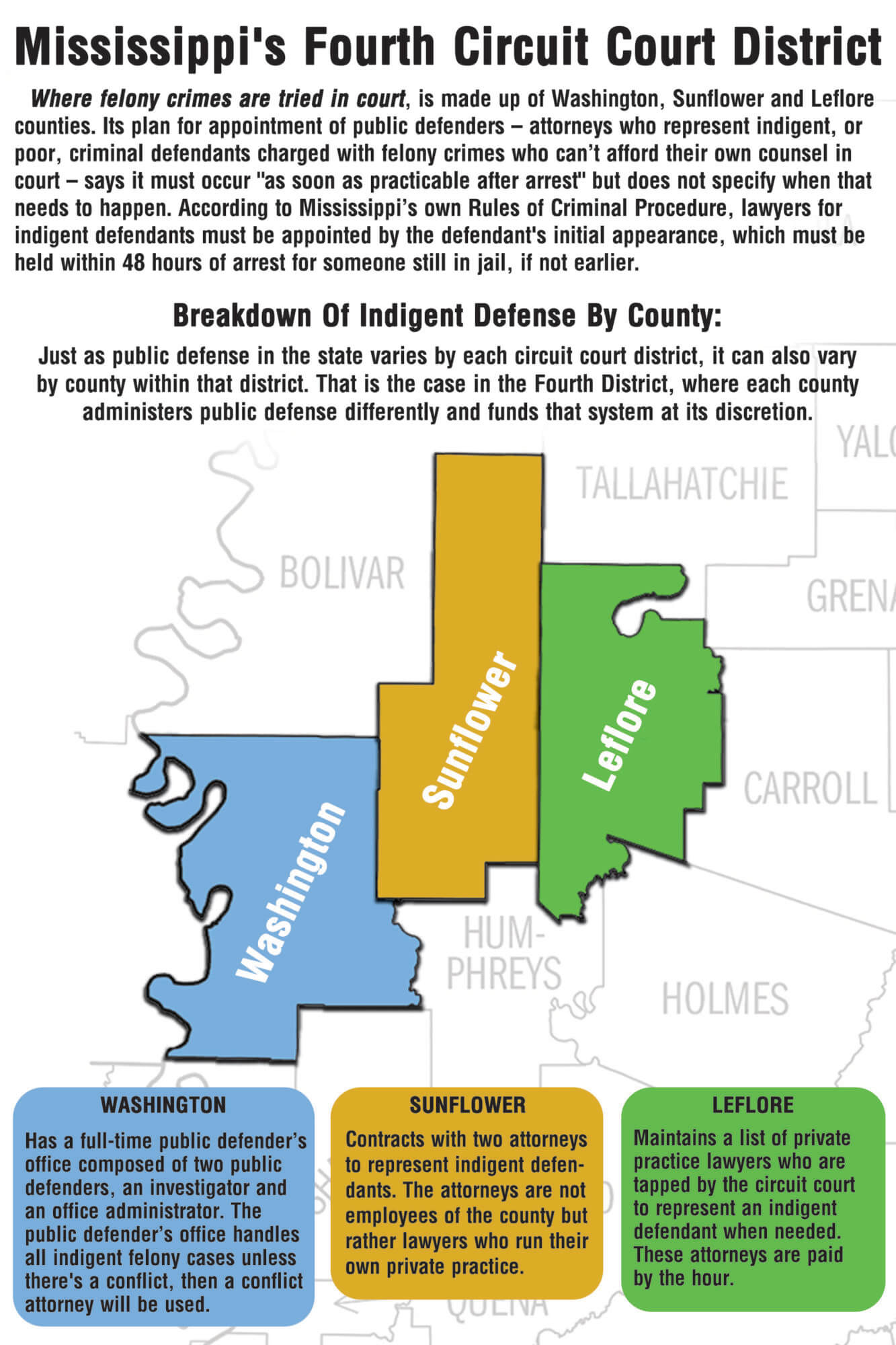
In some Mississippi counties, like Pearl River and Hinds, you could expect to be assigned a full-time public defender whose sole job is to represent criminal defendants. Ideally, they’d stand by your side during your first appearance before a judge, or if not, you’d hear from them within 72 hours after assignment. In other counties, your assigned public defender might be a lawyer in private practice whose criminal defense work is secondary to their main legal practice. They wouldn’t be assigned to you until after your initial appearance before a judge and, in the case of several counties, it could be weeks, rather than hours, before your first meeting with them.

The differing outcomes across Mississippi’s 82 counties are a result of the state’s fragmented, decentralized approach to public defense. It is up to county governments, rather than the state government in Jackson, to not only fund public defense at their discretion but also structure the system, such as determining whether a county will utilize full-time public defenders.

“Justice by geography” is what Aditi Goel, executive director of the Sixth Amendment Center, calls this system, and it has led to an uneven and unequal distribution of criminal defense for defendants throughout the state.

Now, for the very first time, a centralized account of the state’s geographic variations in public defense is available. A collection of reports outlining each circuit court district’s administration of the right to counsel for indigent defendants in felony criminal cases is on file with the Mississippi Supreme Court, after a request made by Chief Justice Michael Randolph in April 2025.

Taken collectively, the plans expose wide gaps in how Mississippi’s 23 judicial circuits document — and potentially deliver — the constitutional right to counsel for poor defendants, an analysis by The Greenwood Commonwealth reveals.

Credit: Savannah Bailey/Greenwood Commonwealth

The Commonwealth reviewed all 23 plans, as did Mississippi’s Office of State Public Defender and the Mississippi chapter of the MacArthur Justice Center, a nonprofit law firm focused on criminal defense. Those reviews found that only about a third of court districts have clear plans that specifically state when and how a public defender is appointed to represent a criminal defendant following arrest.

Acquiring legal counsel as soon as possible after arrest is one core tenant of criminal justice, yet most plans are not clear on that point.

Criminal defense advocates have lauded the publication of those plans as one important step in addressing the shortcomings of public defense, because most were not available for public review before.

“We now have written plans for each district. That’s more than we had before,” said André de Gruy, who leads Mississippi’s Office of State Public Defender. “I would say we’re better off.”

Still, given the lack of clarity in many of the plans, accountability can be difficult, especially since there is no oversight of the patchwork public defender system. De Gruy’s office only handles death row and indigent appeals cases and there is no statewide authority for indigent defense in other criminal matters.

The Constitution’s Sixth Amendment guarantees criminal defendants a right to an attorney. In a state like Mississippi, which has high rates of poverty and demand for public defenders, defendants can sit in jail for months or even years awaiting indictment.

A 2018 report from the Sixth Amendment Center, a national nonprofit organization focused on indigent defense, found that the average delay between arrest and indictment in 10 Mississippi counties ranged from two months to over a year.

While Mississippi may have delegated the funding and administration of public defense to counties, Goel said the state still has a responsibility to ensure defendants receive appropriate representation.

“If the state doesn’t know whether everybody is in fact going to get an effective attorney in a timely manner, once they’re charged and accused of a crime, how is the state aware as to whether they are in fact meeting their obligation under the Constitution?” Goel asked.

Early representation considered key

In Mississippi, a defendant jailed and charged with a felony typically has an initial appearance and other pre-indictment hearings in a misdemeanor court, which can be a justice, county or municipal court.

Goel said it’s a concern if plans don’t offer clarity on legal representation for defendants while their case is still in the misdemeanor courts.

“What is being done to make sure that there’s actual representation provided to somebody who is charged with a felony from the municipal court to the next one? That kind of oversight is still missing,” Goel said. “…You want representation actually happening and visitations to the client happening, you want an attorney to provide legal representation. And that’s just not in court appearances. A lot of that takes place outside of court.”

Criminal defense advocates and legal experts say defendants should be appointed a lawyer immediately after arrest to ensure day-one representation. This allows an attorney to try and get bond lowered for their client and possibly get a case resolved before it is bound over to the grand jury — potentially preventing a defendant from languishing in jail and saving the county money.

Mississippi’s own Rules of Criminal Procedure — rules that the courts must follow when handling the criminal justice process — are very clear that indigent defendants be appointed an attorney no later than at their first, or initial, appearance before a judge. At these hearings, held within 48 hours of arrest if a defendant is still in jail, the judge will determine if there was probable cause for arrest and appoint legal counsel.

These initial appearances – and the preliminary hearings that may follow – are usually held in Mississippi’s misdemeanor courts, before a grand jury may indict a defendant on a felony charge. Following an indictment, the case is transferred to circuit court, where the felony is tried.

The Commonwealth found that only eight of the 23 court districts had plans that specifically state how counsel is appointed for indigent defendants after arrest while seven court districts had plans that said lawyers are appointed for defendants by their initial appearance, if not earlier.

For example, the plans of the 3rd District (Benton, Calhoun, Chickasaw, Lafayette, Marshall, Tippah and Union counties), 7th District (Hinds County), and 15th District (Marion, Jefferson Davis, Lamar, Lawrence and Pearl River counties), all identical in language, state clearly when and how a defendant receives a lawyer. The arresting authority will determine if a defendant already has counsel.

If not, the arresting authorities provide the defendant an affidavit to sign to request free counsel and counsel is then appointed. If a defendant, while still jailed, appears at an initial appearance and does not have counsel, the court then appoints that person a lawyer.

The three districts’ plans also state that appointed attorneys should meet with their clients within 24 to 72 hours after being appointed, preferably as soon as possible to attend their client’s initial appearance.

The above-mentioned plans are the exception, however, rather than the norm. In other judicial districts, the plans imply early representation in the misdemeanor courts but do not specifically explain the procedure for appointment of counsel.

The plan of the 12th District (Forrest and Perry counties) does not mention legal representation in the misdemeanor courts at all and only talks about appointment of counsel once a defendant has been indicted.

In the 4th District (Leflore, Sunflower and Washington counties) the plan states lawyers are appointed “as soon as practicable after arrest” although no timeline is set when that must occur.

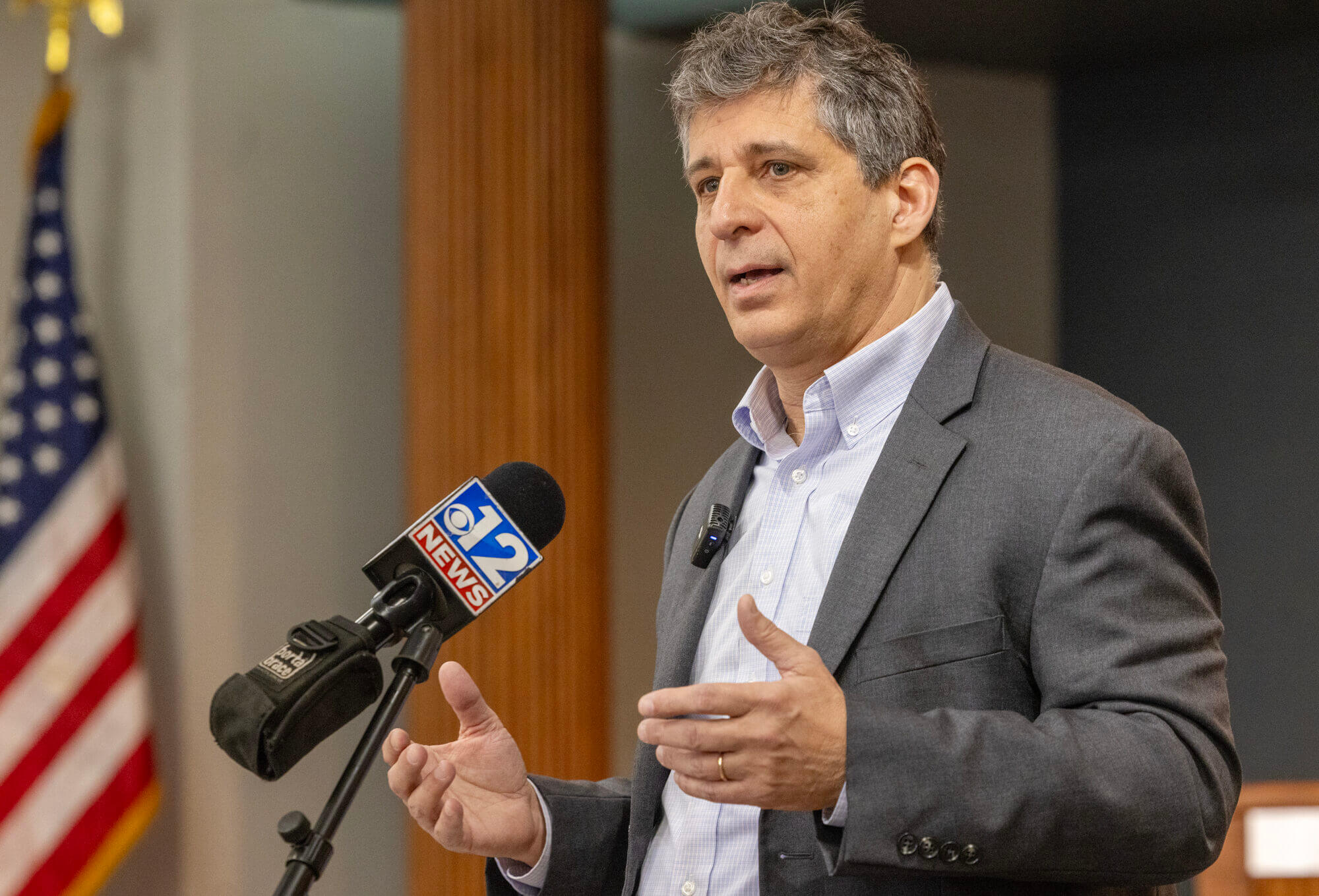
State Public Defender André de Gruy speaks during a press conference advocating for Hinds County to pay its public defenders more on Tuesday, Feb. 24, 2026, in Jackson. Credit: Eric Shelton/Mississippi Today

“They’re not clear on when counsel is appointed, or is assigned, or is notified that they have a client. That’s a problem with these plans, is that they’re not clear,” said de Gruy.

That doesn’t necessarily mean defendants in districts with vague and unclear plans lack appropriate appointed representation. But because the plans are all self-reported, it’s unconfirmed whether what is stated on paper — even in the best of the plans — reflects what’s actually happening in and outside of the courtrooms.

Solutions neither obvious nor easy

It’s also unclear what, if anything, can be done to make improvements without reforming the state’s public defense system.

Associate Mississippi Supreme Court Justice David P. Sullivan, a former public defender who chairs the court’s criminal rules committee, says the high court’s authority is limited to ensuring plans exist, not to critique them and specify what should be in the plans. State Supreme Court justices are not in a position for assessment, given “we’re not out there in the field with the practitioners utilizing that system on a daily basis,” the judge said.

“We have made certain that every district in the state has a plan in place to comply with the rules for indigent defense. And that, until a controversy is brought to the court by litigants or attorneys for us to rule upon, we wouldn’t really have any way to police that,” Sullivan said. “Is it perfect? No, but that’s up to the Legislature to create a statewide system that would, in theory, be more beneficial.”

Past legislative efforts to reform Mississippi’s public defense system, including a modest bill that would set statewide standards, have failed to launch, even as a chorus of stakeholders, from former state Supreme Court justices, circuit court judges and more, have called for public defense to be state-funded, as are prosecutors.

“The reality is there is no governing standard when it comes to public defense,” said Republican state Sen. Brice Wiggins of Pascagoula, the author of the proposed standards bill and who chairs one of the Senate’s two judiciary committees.

“The realization is setting in amongst people and legislators that counties just can’t afford it, won’t afford it, won’t do it. And we’ve got to look at some way to do that” in terms of bolstering public defense, the senator said.

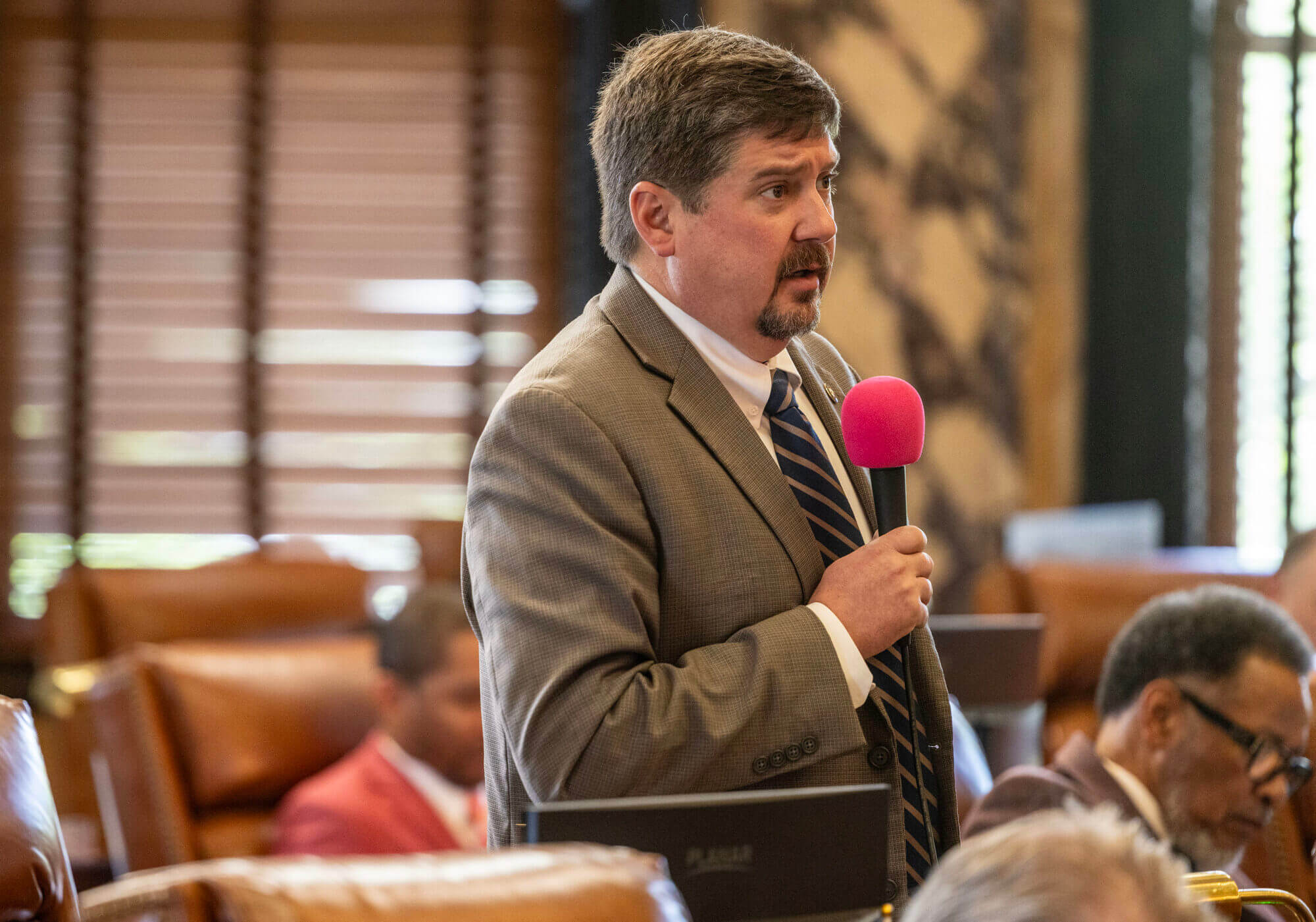
State Sen. Brice Wiggins, R-Pascagoula, during a Senate Corrections Committee meeting on Feb. 13, 2020, at the Capitol in Jackson. (AP Photo/Rogelio V. Solis)

Wiggins said coming up with state funding is a challenge that stalls reform efforts, but it is not the only one, considering there are some public defenders who prefer the status quo.

“The people that benefit from the current system don’t want to have standards placed upon them,” the senator said.

Wiggins said some may believe public defense is only coddling criminals, but reforms would move both guilty and innocent defendants more quickly through the courts and save counties money.

“When money talks about being doled out, legislators tend to clam up. … (the) reality is that courts and the criminal justice system are a core function of government. And people over time have chosen not to put resources in that.”

TIPS WELCOME

Reach out to Greenwood Commonwealth staff writer Gerard Edic at 662-581-7237 or gedic@gwcommonwealth.com if you have tips or experiences to share regarding Mississippi’s public defense and criminal justice system. This article was produced with the support of Report for America and the Investigative Editing Corps and is a follow-up to an article on public defense Edic wrote last September, which can be found at www.gwcommonwealth.com/deadline-indigent-defense-plans-near.


– Gerard Edic is a corps member at the Greenwood Commonwealth with Report for America, a national service program that places journalists into local newsrooms. You can support his work with a tax-deductible donation at bit.ly/4wM0wV6.

Gov. Reeves appoints DeSoto County Judge Celeste Wilson to state Supreme Court

Audio recording is automated for accessibility. Humans wrote and edited the story.

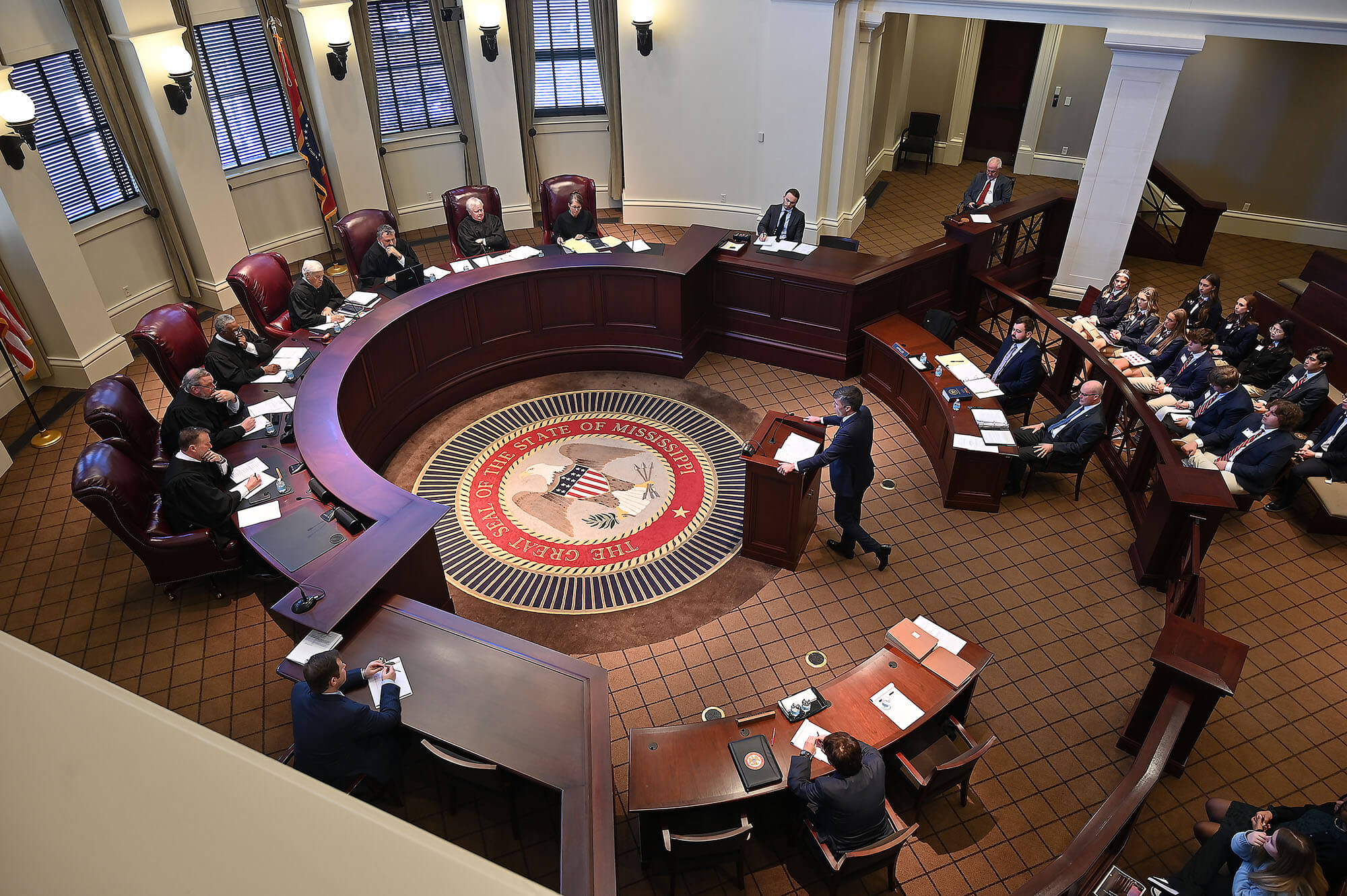
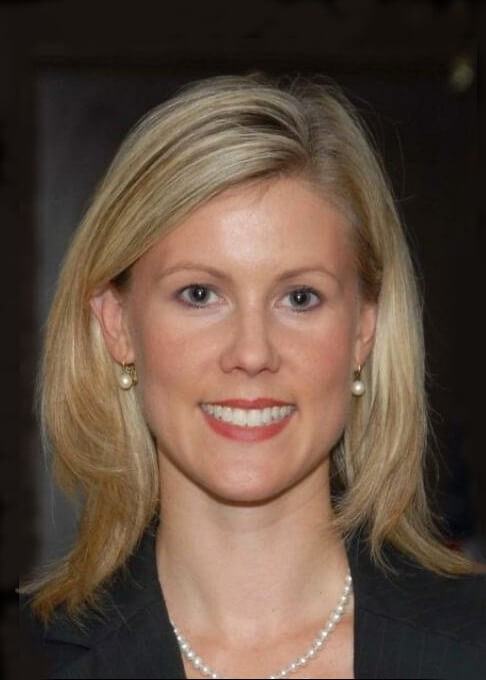
Gov. Tate Reeves on Monday appointed Celeste Embrey Wilson, a circuit court judge in DeSoto County, to fill a vacant seat on the Mississippi Supreme Court. 

“Judge Wilson has dedicated her career to serving the people of Mississippi with integrity, fairness and a steadfast commitment to the rule of law,” Reeves said in a news release. 

Wilson has served as a circuit court judge in northwestern Mississippi since February 2017. Before that she served as a county court judge in DeSoto County from January 2009 through February 2017. 

Before her time on the bench, Wilson was an assistant district attorney for the state’s 17th Circuit Court District for seven years.

Judge Celeste Wilson of DeSoto County. Credit: Courtesy: Gov. Tate Reeves’ office

Reeves has a history of appointing people with prosecutorial experience to vacant judicial seats. 

“I am deeply honored and humbled by this appointment and grateful for the confidence Governor Reeves has placed in me,” Wilson said. “I look forward to serving the people of Mississippi with integrity and an unwavering commitment to our Constitution and the rule of law.” 

Wilson received an undergraduate degree from Delta State University and attended law school at the University of Memphis School of Law.

Wilson replaces Robert Chamberlin, also from DeSoto County, who left his seat on the state Supreme Court after being confirmed by the U.S. Senate as a federal judge in northern Mississippi. 

Her appointment means a second woman will join the court to serve alongside current Justice Jenifer Branning. Wilson will serve on the state high court starting Aug. 1, until a special election is held.

Wilson’s appointment now places an eighth person on the nine-member court. Reeves has not appointed someone to the seat vacated by James Maxwell, who also became a federal judge in northern Mississippi. 

How one man’s Olympic moment brought new life to Jackson rugby

Audio recording is automated for accessibility. Humans wrote and edited the story.

Mitchell McGinnis owns two music academies and teaches vocal lessons in his spare time. He goes regularly to the gym, but that was as far as his athletic prowess and interest in sports went – until he found himself in Paris, at Stade de France during the 2024 Olympics, watching a sport he knew almost nothing about.

The game looked vaguely familiar: players chasing an oval-shaped ball and piling atop one another. But this was not American football. This was rugby.

While still in the stands, he picked up his cell phone and began searching for anything he could learn about the sport.

McGinnis did not know it yet, but his curiosity would help revive one of Mississippi’s oldest rugby clubs, attracting new players to an organization that nearly died out during the COVID-19 pandemic. 

“I remember sitting there Googling rules and trying to understand what was happening on the field,” he said. “It happened so fast.”

His introduction to rugby came by chance. A friend who won a lottery to attend the Olympics invited McGinnis to Paris.

Mitchell McGinnis poses for a photo prior to the Men’s Rugby game at Stade de France on Wednesday, July 24 2024. Credit: Courtesy of Mitchell McGinnis

He started searching for local rugby leagues near his Jackson home. Facebook led McGinnis to the Jackson Rugby Football Club. He began sending messages to the club back home. Within minutes, a practice was scheduled for that August.

Excitement built. But that initial practice fell through. So did another. That’s when McGinnis decided to grab the ball himself and run with it. 

He began recruiting players and scouting a field to play on. He would eventually get Jackson Public Schools’ permission to use Murrah High School’s practice field. Nearly three months after McGinnis first reached out to Jackson Rugby, they were finally going to meet.

He showed up at the high school dressed in a T-shirt and shorts. He kept slipping on the wet grass in his tennis shoes. 

“My friends joke a lot of times that a toxic trait of mine is thinking that I can do anything,” McGinnis said.

While rugby continues to grow in popularity in the U.S., it is hardly a staple of televised sports – dominated by football, basketball and baseball.

Nevertheless, rugby has found homes in some American communities. One of the early Mississippi adopters was Jackson Rugby

In rugby, two teams compete to advance an elongated ball to score a try — or a goal — by kicking, running and passing the ball backward. Its origins extend to the early 19th century in England and spread to the United States, mostly on college campuses. USA Rugby, the country’s governing body for the sport, counts 11,000 active players. 

An English sport makes it way to America

In a state dominated by college football, the English sport found its footing in Mississippi’s capital city in 1974. Back in 2010, team members even purchased and created their own makeshift facility with practice fields near Highway 49. 

“We get to have a good time. We get to run around together, laugh at each other, make a joke, have something to look forward to at the end of the week,” said Chris Mendonca, the team’s coach. “This is what I live for.”

Jackson Rugby Club coach Chris Mendonca catches a pitch during practice at the Murrah High School practice field, Sunday, April 26, 2026, in Jackson. Credit: Vickie D. King/Mississippi Today

Mendonca’s rugby journey started in 1999 during his Air Force deployment to Trier, Germany. Fresh from military training, Mendonca felt he was lacking a community and outlet outside of work. He would run across a local rugby league and instantly fell in love with the sport. 

Rugby became an outlet for Mendonca during his deployments in South Korea, Florida and Japan. Wherever he went, the sport gave him an anchor.

“I don’t know where I would be if I didn’t have this,” Mendonca said.

When he returned to civilian life, Mendonca went to work for Raytheon, a defense and aerospace company, that transferred him to Brandon in 2018.

He already knew he would join Jackson Rugby prior to his move. He had played against the team in 2005 when he played for a club in Okaloosa, Florida.

But it was not the same Jackson rugby team he remembered. 

The team was not nearly as active as it once was. Players left as they began families and started new careers. The last few active members attempted to host practices amid busy schedules. There were talks of merging the Jackson team with the one in Biloxi, but those discussions stalled when the COVID-19 pandemic hit.

Things continued to fizzle until McGinnis gave the team the push it needed. 

The goal: ‘play, have fun, challenge ourselves’

Mendonca was one of the two experienced players available when McGinnis organized the resurgent team’s first practice in October.

Mendonca arrived early and walked around the school parking lot filling a garbage bag with trash as he waited for other players to show up.

McGinnis arrived next. He approached Mendonca, wondering if he was a worker with the school. Mendonca said picking up trash was just something he could do while waiting. The team now makes a habit to clean the parking lot after every practice. 

Nearly two years have passed since the team’s revival on that muggy evening. Now Jackson Rugby regularly has over a dozen players at practice, with new people showing up to try the sport.

Jackson Rugby Club practice at the Murrah High School practice field, Sunday, April 26, 2026, in Jackson. Credit: Vickie D. King/Mississippi Today
On most Sundays at 3 p.m., you can find the team at Murrah High School preparing for its next game. They sprint up and down the field, practice passing the ball and slam into foam pads to perfect their tackles. In between drills, they gather under a bright blue tent that gleams in the sun as they cool off with fresh watermelon and a misting fan.

“If you’re interested in playing, just come out and try for a practice or two,” McGinnis said. “We like to have a good time. It doesn’t matter if you’re a guy or girl. Come out and learn the game with us and have a good time.”

Caroline Swindool joined the group in early February after coming across a yard sign with the team’s information. At first she was intimidated by the predominantly male team. Her love for fitness and trying new things pushed her to join, and Swindool was welcomed with open arms.

“It’s really just a hodgepodge of a bunch of different people that you wouldn’t put together in a group normally, but everybody comes out and has the same common goal,” Swindool said. “We just want to play, have fun, challenge ourselves and get better.”

The club’s newfound popularity hasn’t gone unnoticed. McGinnis said several people approach the team’s tent at the Mobile Battleship Rugby Tournament earlier this month. Some asked about hosting games in Jackson later this year.

James Lawson has been a team member for two decades and has seen the team through hard times. He said the team is exactly where it needs to be.

“I think we got the right combination of people on the team right now,” he said, “and a lot of younger people on the team now to help grow rugby in this area.” 

  • Jackson Rugby Club practice at the Murrah High School practice field, Sunday, April 26, 2026, in Jackson.
  • Jackson Rugby Club coach Chris Mendonca catches a pitch during practice at the Murrah High School practice field, Sunday, April 26, 2026, in Jackson.
  • Jackson Rugby Club practice at the Murrah High School practice field, Sunday, April 26, 2026, in Jackson.

  • Rugby balls used by the Jackson Rugby Club during practice at the Murrah High School practice field, Sunday, April 26, 2026, in Jackson.

  • Jackson Rugby Club practice scrum at the Murrah High School practice field, Sunday, April 26, 2026, in Jackson.

  • Joo Reynolds, center, and Jackson Rugby Club teammates at practice, Sunday, April 26, 2026, in Jackson.
  • Joo Reynolds, left, and Jackson Rugby Club coach Chris Mendonca at practice, Sunday, April 26, 2026, in Jackson.
  • Jackson Rugby Club coach Chris Mendonca, left, and team members during practice at the Murrah High School practice field, Sunday, April 26, 2026, in Jackson.

Will the tobacco lawsuit settlement provide lessons for current leadership?

Audio recording is automated for accessibility. Humans wrote and edited the story.

In a 2005 special session, the Mississippi Legislature was on the verge of selling a significant portion of its future annual tobacco lawsuit settlement funds for an immediate sum of money when a single phone call from the powerful House speaker stopped the process.

Then-state Treasurer Tate Reeves, a Republican who is now in his second term as governor, had explained to legislative leaders how the process to sell the future payments would work. Legislators initially bought into the concept of quickly getting a modest amount of cash rather than patiently waiting to collect a larger amount spread over decades.

Legislation “to securitize” a portion of the annual tobacco lawsuit funds passed the Senate. The bill was expected to pass the House Appropriations Committee and ultimately the full House when Speaker Billy McCoy made a phone call to Appropriations Chairman Johnny Stringer minutes before the committee met.

One version of the story is that McCoy informed his money chairman that he was withdrawing his support for the proposal, and another version is that McCoy told Stringer point-blank not to pass the bill. The story further goes that McCoy made the pivotal phone call after a meeting with Gulf Coast Rep. Diane Peranich, one of his key allies, who voiced strong opposition to securitization.

At any rate, after that call, Stringer killed the bill.

The only problem was that the Legislature still had to deal with a whopping $268 million Medicaid deficit. Even by today’s inflationary standards, such a deficit would be significant. In 2005, it was near catastrophic.

There seemed to be no solution, and the Division of Medicaid was only days from being unable to pay medical providers.

The Democratic-controlled House wanted to increase the measly 18 cents per pack tax on cigarettes to address the deficit. The Senate aligned with Republican Gov. Haley Barbour, who had previously been a tobacco lobbyist, in opposing the cigarette tax increase. And to be honest, a cigarette tax increase on its own would not have generated enough revenue to solve the monumental Medicaid problem. Then, as now, most politicians considered a tax increase a nonstarter.

Seeing no solution, legislators left for the weekend on March 10. But before many of them got home, Barbour called them back in what was then a rare special session within the regular session.

In that special session, the securitization initially was viewed as both a smart business move and a way to solve the deficit.

Ultimately, instead of the securitization, legislators solved the deficit by making cuts to Medicaid and by withdrawing $240 million from the healthcare trust fund that was created with the tobacco lawsuit settlement funds.

The legislation included the caveat that the trust fund would be replenished.

That never happened. The trust fund no longer exists in any substantive manner.

Through a series of well researched stories and the “Black Box” podcast, Mississippi Today details how state and local politicians are starting to spend $430 million in opioid lawsuit settlement funds that the Mississippi will receive over many years.

Comparisons have been made to how the state has spent the tobacco lawsuit settlement money and how the state and local governments are currently spending the opioid lawsuit settlement funds. Both lawsuits were filed to obtain money from companies (tobacco and drug companies) for the harm they caused Mississippians.

The 1997 tobacco lawsuit settlement  guaranteed Mississippi $4 billion over 25 years with annual payments, based on a formula, continuing forever. The most recent annual payment is about $90 million.

In 1999, the Legislature voted to place the annual settlement funds in a trust fund and use the earnings for healthcare initiatives. But not too long after the trust fund was established, a perennially cash-strapped Legislature and governor began to dip into it to deal with budget shortfalls.

Solving the Medicaid deficit in 2005 culminated that effort.

Many believe the end of the trust fund was a lost opportunity for the state to use the massive lawsuit to make a difference in healthcare.

It is hard to argue that it was not. But it also would be hard to argue in 2005 in favor of essentially shutting down the Medicaid program that provides healthcare for low-income people: children, pregnant women, disabled people and some of the elderly population.

For a Legislature afraid of tax increases, few other options existed.

The Legislature and governor are still adverse to tax increases and spend much of their time cutting taxes. But the opioid settlement comes on the heels of the state experiencing unprecedented revenue growth, thanks to a number of circumstances related to a massive influx of federal pandemic relief money.

While that growth has slowed, Mississippi’s financial situation is not nearly as bleak as it was in 2005, giving state leaders the opportunity to use the opioid settlement money for the intended purpose – to fight drug addiction.

If they do that, perhaps people won’t be talking about another lost opportunity a generation from now.

Lawmakers vow to carry on Brown’s and Wallace’s legislative priorities

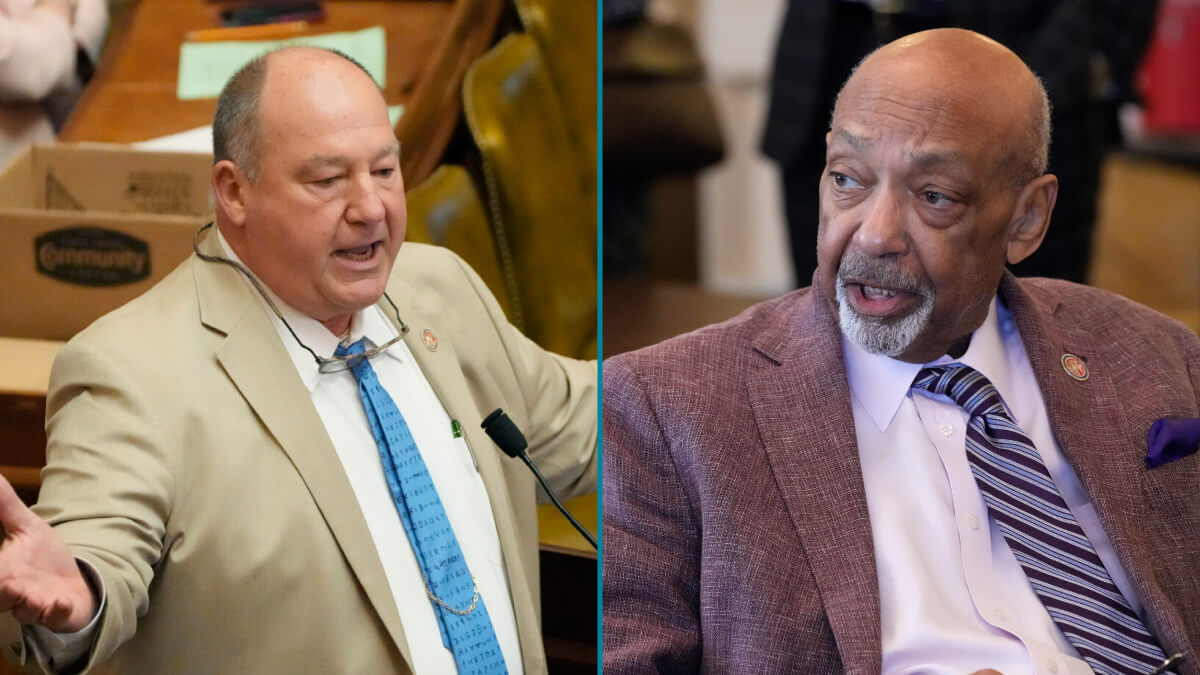
Side by side images of Rep. Price Wallace on the left and Rep. Bo Brown on the right
Audio recording is automated for accessibility. Humans wrote and edited the story.

When a lawmaker dies, a district loses more than an elected official. It loses an advocate who understood its communities, built relationships with over years of public service and often became the driving force behind issues that mattered to the people they represented. 

After the deaths of Reps. William “Bo” Brown and Price Wallace last month, fellow legislators say they plan to keep alive the causes each man championed — from criminal justice reform to restoring Mississippi’s ballot initiative process. Because every bill in the Mississippi Legislature must be reintroduced each session, proposals survive only if a lawmaker chooses to sponsor them. Colleagues of Brown and Wallace say they intend to do just that when they return in 2027. 

Carrying on unfinished work 

Although Brown and Wallace focused on different issues, colleagues say they plan to carry forward each man’s legislative priorities. 

Rep. Earle Banks, a Democrat from Jackson, said he plans to reintroduce criminal justice legislation Brown helped champion, including expanding parole eligibility for some incarcerated people. During the 2020 legislative session, Brown, a fellow Democrat who also was from Jackson, and Banks co-sponsored House Bill 361, which sought to broaden parole eligibility for people convicted of certain capital offenses. The bill died in committee. 

State Rep. Earle Banks, D-Jackson, answers a question during a short debate between himself and sitting Mississippi Supreme Court Justice Bill Waller Jr., Monday, Oct. 1, 2012, at the Stennis Luncheon in Jackson, Miss. Waller seeks reelection and Banks, a veteran legislator, wants to unseat him. (AP Photo/Rogelio V. Solis)

Banks said Brown viewed the proposal as one step toward addressing disparities in Mississippi’s criminal justice system. 

“There are too many people — Bo felt, and I feel, also — who are incarcerated, who are of no threat to society,” Banks said. 

On the Gulf Coast, Sen. Jeremy England, a Republican from Vancleave, said he plans to revive Wallace’s effort to restore Mississippi’s ballot initiative process. 

The process allowed citizens to place proposed constitutional amendments on the ballot after gathering enough signatures. In 2021, the Mississippi Supreme Court ruled it unconstitutionalbecause the state Constitution still referenced five congressional districts even though Mississippi has had four since 2001. 

Wallace, Republican from Mendenhall, sponsored legislation during the 2025 session to restore the process with additional restrictions. The bill passed the House but died before reaching the Senate floor. 

England said he expects to introduce similar legislation during the 2027 session, although he has acknowledged it still faces significant political hurdles. 

“Until we see someone else take that issue up and move it forward. I don’t know what that’s going to look like coming out of the House,” England said. “But with enough people asking for it, somebody’s going to look at it.” 

Different approaches, shared purpose 

While their priorities differed, colleagues said both elected leaders were driven more by conviction than recognition. 

Banks said Brown, as a representative and former city councilman for Jackson, devoted much of his legislative work to expanding economic opportunities for Black Mississippians while addressing inequities in the criminal justice system. 

“Most of the economic development (in the state) does not happen west of Interstate 55,” Banks said. “We need more economic development in Jackson and Hinds County and in the Second Congressional District so you have better jobs for people.” 

Banks said Brown rarely backed away from a debate and remained engaged throughout his last session. “He believed in what he believed in, and you weren’t going to convince him otherwise,” Banks said. “Once he would get something in his mind, that was what he was going to do.” 

During debate over an education bill in April — Brown’s last appearance in the House — he repeatedly stood to question the legislation despite worsening health. 

“His heart was still there, and his strength was still there to say, ‘Hey, I’m challenging this. I have questions about this and I’m not going to just sit here just arbitrarily vote for something,’” Banks said. 

Sen. Jeremy England, R-Vancleave, asks a question about a bill in the Senate chamber at the Mississippi Capitol in Jackson on Wednesday, April 1, 2026. Credit: Eric Shelton/Mississippi Today

England described Wallace as a straightforward lawmaker whose expertise made him one of the Legislature’s leading voices on agriculture. 

A poultry farmer, Wallace was the member colleagues turned to whenever farming legislation came before the House. 

“Price knew that business from the top to the bottom,” England said. Anytime those issues came up, he was ready to fight for the farmer in Mississippi.” England said Wallace also approached legislation collaboratively, often putting policy ahead of personal recognition. 

“He talked to me about his bill on the House side and the work that he had put in, and basically just offered to work with me,” England said. “Price was the kind of guy that it didn’t seem to matter whose name was on the bill. He just wanted to see something get done.” 

Whether either proposal becomes law remains uncertain.

England said restoring the ballot initiative process will likely require additional negotiations before it can gain enough legislative support. Banks said he expects to reintroduce Brown’s criminal justice proposals alongside other legislators who shared Brown’s commitment to the issue. 

Canton schools switch to new free meal program because it makes more financial sense

Ole Miss Rebel Market
Audio recording is automated for accessibility. Humans wrote and edited the story.

Students in Canton public schools will be fed free meals come August. But for that to continue, district officials say, parents now need to verify their income — a requirement for a federal program that will help cover related costs.

A statement posted Wednesday to Canton Public School District’s Facebook page was not entirely accurate. The district later revised the message.

On Wednesday, the district posted a statement on Facebook saying too few parents or guardians completed forms it needs to receive reimbursements to cover meal costs for all students through the Community Eligibility Provision, a federal program for schools and districts in low-income areas. The statement wasn’t entirely accurate.

That bureaucratic hurdle wasn’t necessary before, but Canton schools switched to Provision 2, a separate program that provides more funding if enough parents fill out forms to prove economic need. 

Under CEP, the Mississippi Department of Education and school districts calculate reimbursement amounts based mostly on student enrollment in income-based federal assistance programs like the Supplemental Nutrition Assistance Program, or SNAP, and Temporary Assistance for Needy Families, also known as TANF. Enrollment data is shared for verification purposes between school districts, the Mississippi Department of Human Services, and MDE.

All students eat for free under CEP and Provision 2, but the federal government only reimburses a portion of the meals based on documented economic need. School district and state Education Department officials check rolls for federal programs like TANF to calculate the reimbursement amounts for CEP. With Provision 2, school district administrators and state education department officials verify need by reviewing parent forms. District officials generally choose the program that will offer more in reimbursements and cover more free meals for students.

In April, the state Education Department deemed Canton schools eligible for CEP funding for the upcoming academic year. But the formula, based on new federal programs enrollment data, would only cover 65% of students’ free meals for the upcoming school year, Beatty said. At that rate, she said, district officials decided it did not make financial sense to opt into CEP funding.

Beatty said fewer Canton families are enrolled in federal programs like TANF, which means the district gets reimbursed for fewer meals served to economically disadvantaged students under CEP. There may be fewer Canton public school families on federal financial assistance rolls because parents and guardians are earning more money after landing jobs at the Amazon fulfillment center and Nissan plant, which are major employers in Canton. 

Another issue may be that local families’ needs have not declined, but too few parents reenrolled in federal programs like TANF, Beatty said. Either way, the district now needs to verify families’ economic need to continue to be reimbursed for feeding students free meals at school under Provision 2. 

The overall number of Madison County residents receiving federal public assistance has declined. 

MDHS spokesperson Mark Jones said that 626 fewer people received SNAP in Madison County, where the county seat is Canton, between June 2025 and June 2026. A 2025 federal law narrowed SNAP eligibility for the program, adding work requirements for most high school-aged parents or guardians and excluding asylum seekers and refugees from receiving SNAP benefits. That change may help explain the participation drop.

Research from the Food Research and Action Center, a Washington, D.C., nonprofit that conducts research on federal child nutrition programs, found less than half of Mississippi school districts eligible for CEP participated.

School districts have to consider operating costs as well as the percentage of low income students to determine if they will be able to break even when providing universal free meals.

The amount of federal aid school districts received through CEP might not cover the costs of free meals for all students and related overhead, especially in light of recent increases in the costs of goods, labor and benefits, said Erin Hysom, a senior policy analyst on child nutrition at the center.

School district child nutrition directors, who oversee food service programs, have to ensure students have nutritious foods while keeping related operating expenses in the black, Hysom told Mississippi Today. “Essentially, they’re running a food business.”