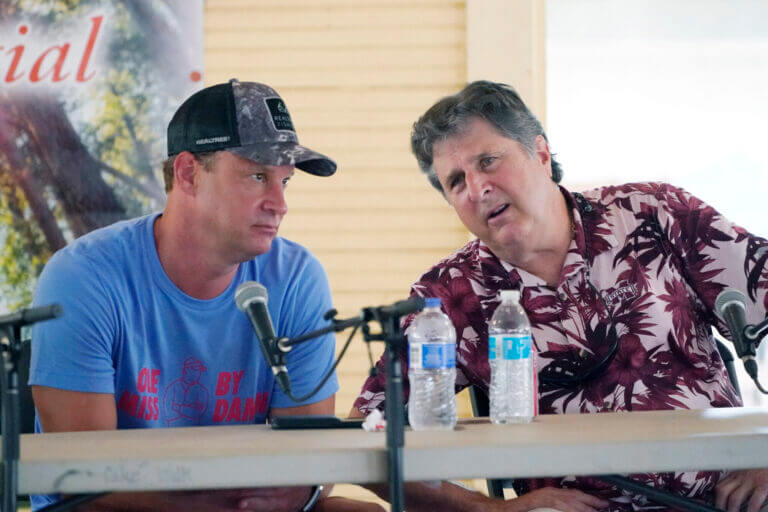
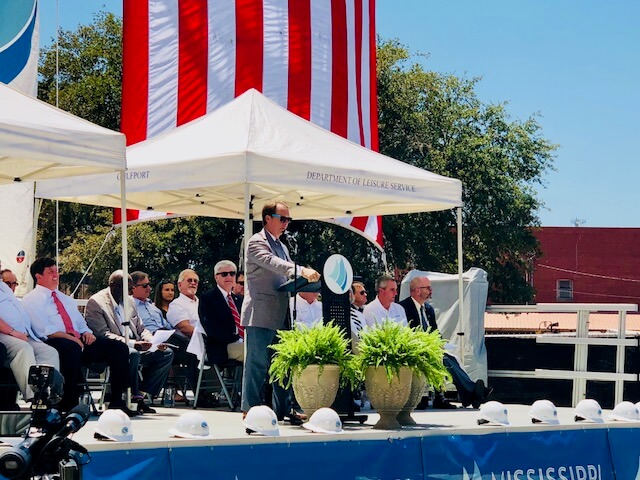
Lane Kiffin of Ole Miss, left, and Mike Leach of Mississippi State. who were once rivals in the Pac-12 Conference, confer with each other during a special “Football at the Fair” program at the Neshoba County Fair in Philadelphia, Miss., Thursday, July 29, 2021. (AP Photo/Rogelio V. Solis)
The Washington State Cougars are flying more than 2,000 miles across the continent to play Ole Miss Saturday for what will be the Rebels’ homecoming game. That’s a long, long way to travel for what appears to be a gross mismatch.
Ole Miss is a 32.5-point favorite, and that’s far and away the largest point spread in college football this week. Still, it would not surprise this writer if the Rebels were to cover that spread by halftime. This is a Washington State team that lost 59-10 to North Texas State. This is an explosive Ole Miss team, ranked No. 4 in the land, that can score points quickly.
Rick Cleveland
But that’s not the point of this column. If Washington State-Ole Miss seems like a weird matchup, well, that’s because it is. It is also a sign of the times in what has become an increasingly strange world of college athletics, which is my point.
This game was scheduled last October in an emergency situation for both schools. Ole Miss had to find a game because Wake Forest reneged on a return match with Ole Miss after the Rebels beat the Deacons 40-6 last September. (If you can’t compete with ‘em, drop ‘em, I suppose.) Meanwhile, Washington State was in the midst of needing to almost totally rebuild its schedule after the Pac-12 Conference disintegrated. In fact, even after scheduling the Rebels, Washington State still needed five more games to complete its 12-game 2025 schedule. That’s why the Cougars are playing an eclectic schedule that includes games against such unnatural rivals and strange bedfellows as James Madison, Louisiana Tech, Toledo and Virginia – and two games in one month against Oregon State, the only other Pac-12 rival remaining after the league’s mass exodus.
Really, what happened to the once-proud Pac-12 is just nuts. Washington, Oregon, Southern Cal and UCLA left for the Big Ten, which has become, in actuality, the Big Eighteen. Arizona, Arizona State and Colorado scrambled into the Big 12 (which now has 16 teams). And Stanford, located as it has always been in Palo Alto, California, is now a member of the Atlantic Coast Conference, as strange as that sounds. That really is nuts.
So, Southern Cal and UCLA now play conference games three time zones away in Piscataway, New Jersey, and College Park, Maryland. That’s not just for football, mind you. That’s all sports. College athletes will spend nearly as much time in jets as they do in classrooms. This week, Stanford’s volleyball team will play conference games at Boston College and Syracuse, then fly back across the continent to play conference games against Miami and Florida State. Nuts, I tell you.
Ole Miss coach Lane Kiffin, who once coached in the Pac-12 at Southern Cal, laments the demise of that league.
“I think the whole thing’s sad, the whole conference alignments and especially that one,” Kiffin said at a press conference this week. “There’s so much history with UCLA and USC and that conference in the Pac-8 and then 10 and then 12, and now they’re flying all over the country and teams flying out there and these weird kickoff times, and I understand it. All these decisions made by conferences and schools are always about money. I get it. It is what it is. It’s just, I don’t think it’s good outside of the money. I think it’s bad for the kids and their travel and their school and rivalries and fans, especially that conference where everybody’s way over there and it’s just the whole thing’s sad.”
And nuts, he might have added.
Because of his time in the Pac-12, Kiffin does have much more familiarity with Washington State than most Mississippians. His USC teams faced the Cougars twice, winning 50-16 on the road against a Washington State team coached by Paul Wulff in 2010 and losing at home 10-7 in 2013 to a Mike Leach-coached Cougars team. Kiffin’s memories of that 2013 game aren’t likely pleasant. The loss came in the Trojans’ home opener at the Los Angeles Coliseum and ended with boos raining down on Kiffin. USC fired Kiffin three weeks later.
To say Kiffin has turned his career around in the dozen years since is an understatement of immense proportions. To say Washington State’s fortunes have diminished over that same time period is a similar understatement.
To say college sports have gone haywire over that same 12 years is perhaps the biggest understatement of all. By the way, Ole Miss comes out pretty swell financially from all this. Wake Forest had to pay Ole Miss $700,000 to cancel the game. Ole Miss only had to pay Washington State $400,000 to come to Oxford. That’s a net profit of $300,000. In today’s crazy world of college sports 300K will get you, at the least, a pretty decent linebacker.
Thirty-four men have died by court-ordered executions in the U.S. so far this year, and eight others are scheduled to be put to death by year’s end, including five in the next eight days.
The total for 2025 already far exceeds the number of executions carried out last year — 25 — and could be the highest since 2012, when 43 inmates were put to death, though still far below the modern peak of 98 executions in 1999.
The increase in executions is largely being driven by four states — Florida, Texas, Alabama and South Carolina — that have carried out 76% of this year’s court-ordered killings.
“This is not an uptick of executions nationally — this is really down to just a few states,” said Robin Maher, executive director of the Death Penalty Information Center.
Chief among them is Florida, which has already carried out 13 executions after performing just one last year. The increase comes as President Donald Trump has urged governors to expand their use of the death penalty.
“Gov. DeSantis is scheduling all of these executions with complete autonomy and in complete secrecy,” Maher said.
Ron DeSantis’ office has not responded to questions about why the governor is increasing the pace of executions now and whether Trump’s policies are playing a role.
Shockley, 48, was found guilty of first-degree murder in the death of Missouri State Highway Patrol Sgt. Carl Dewayne Graham outside his home in Carter County in 2005.
Authorities said Graham was killed because he was investigating Shockley for involuntary manslaughter and leaving the scene of an accident.
Smithers, 72, was convicted of killing two women whose bodies were found in a rural pond in 1996. Authorities said he met his two victims — Christy Cowan and Denise Roach — on different dates at a Tampa motel to pay them for sex.
Norman Mearle Grim Jr., 65, is scheduled to be put to death on Oct. 28. He was convicted of raping and killing his neighbor Cynthia Campbell, whose body was found near the Pensacola Bay Bridge in 1998.
Smithers’ and Grim’s executions would be Florida’s 14th and 15th death sentences carried out in 2025, further extending the state’s record for executions in one year. Since the U.S. Supreme Court restored the death penalty in 1976, the state’s previous record was eight in 2014.
Mississippi
Charles Ray Crawford is scheduled to be executed Wednesday for kidnapping and killing a college student in 1993.
Crawford, 59, was sentenced to death for fatally stabbing 20-year-old community college student Kristy Ray after abducting her from her parents’ home in northern Mississippi’s Tippah County. Crawford told officers he had blacked out and did not recall killing her.
Roberson, 58, had been set to become the first person in the U.S. put to death for a murder conviction tied to a diagnosis of shaken baby syndrome.
Prosecutors at Roberson’s 2003 trial argued that he hit his 2-year-old daughter Nikki Curtis and violently shook her, causing severe head trauma that led to her death.
But Roberson says he never abused the girl. A bipartisan group of Texas lawmakers believe Roberson is innocent and have sought to get him a new trial.
Roberson’s lawyers and some medical experts say his daughter died from complications related to pneumonia. They say his conviction was based on flawed and now outdated scientific evidence.
Arizona
Richard Kenneth Djerf is set to be executed Oct. 17 by lethal injection for killing four members of a family in their Phoenix home.
Djerf, 55, had pleaded guilty to four counts of murder in the 1993 killings of Albert Luna Sr., his wife Patricia, their 18-year-old daughter Rochelle and their 5-year-old son Damien.
Prosecutors say Djerf blamed another Luna family member for an earlier theft of home electronic items at his apartment and became obsessed with revenge.
Alabama
Anthony Todd Boyd is scheduled to be executed by nitrogen gas on Oct. 23.
A judge sentenced Boyd to death for his role in the 1993 killing of Gregory Huguley in Talladega. Prosecutors said Boyd taped Huguley’s feet together before another man doused him with gasoline and set him on fire over a $200 cocaine debt.
Boyd has long maintained his innocence, saying he never participated in the killing.
Tennessee
Harold Nichols is scheduled to be executed Dec. 11.
Nichols, 64, was convicted of rape and first-degree felony murder in the 1988 death of 21-year-old Karen Pulley in Hamilton County. Authorities said he broke into Pulley’s home, raped her and hit her in the head several times with a board.
Nichols had been scheduled to be killed in August 2020, but the execution was delayed because of the COVID-19 pandemic.
Most of Mississippi’s national parks and monuments are closed to visitors because of the federal government shutdown.
An exception is the Vicksburg National Military Park, which initially closed when the shutdown began Oct. 1 but entered an agreement to reopen the next day with donations from the nonprofit Friends of Vicksburg National Military Park.
While the visitor center, USS Cairo Gunboat & Museum, tour roads and restrooms are all open to visitors, the park is running on limited staff.
Operating the park during the shutdown costs $2,000 a day, said Bess Averett, executive director of Friends of Vicksburg National Military Park.
“We are not a massive nonprofit, so we do have limited resources,” Averett said. “So far, the public has been very generous.”
Keeping the park closed would make it vulnerable to vandalism, relic hunting and more problems, she said. It also would mean turning away visitors, hurting the local economy.
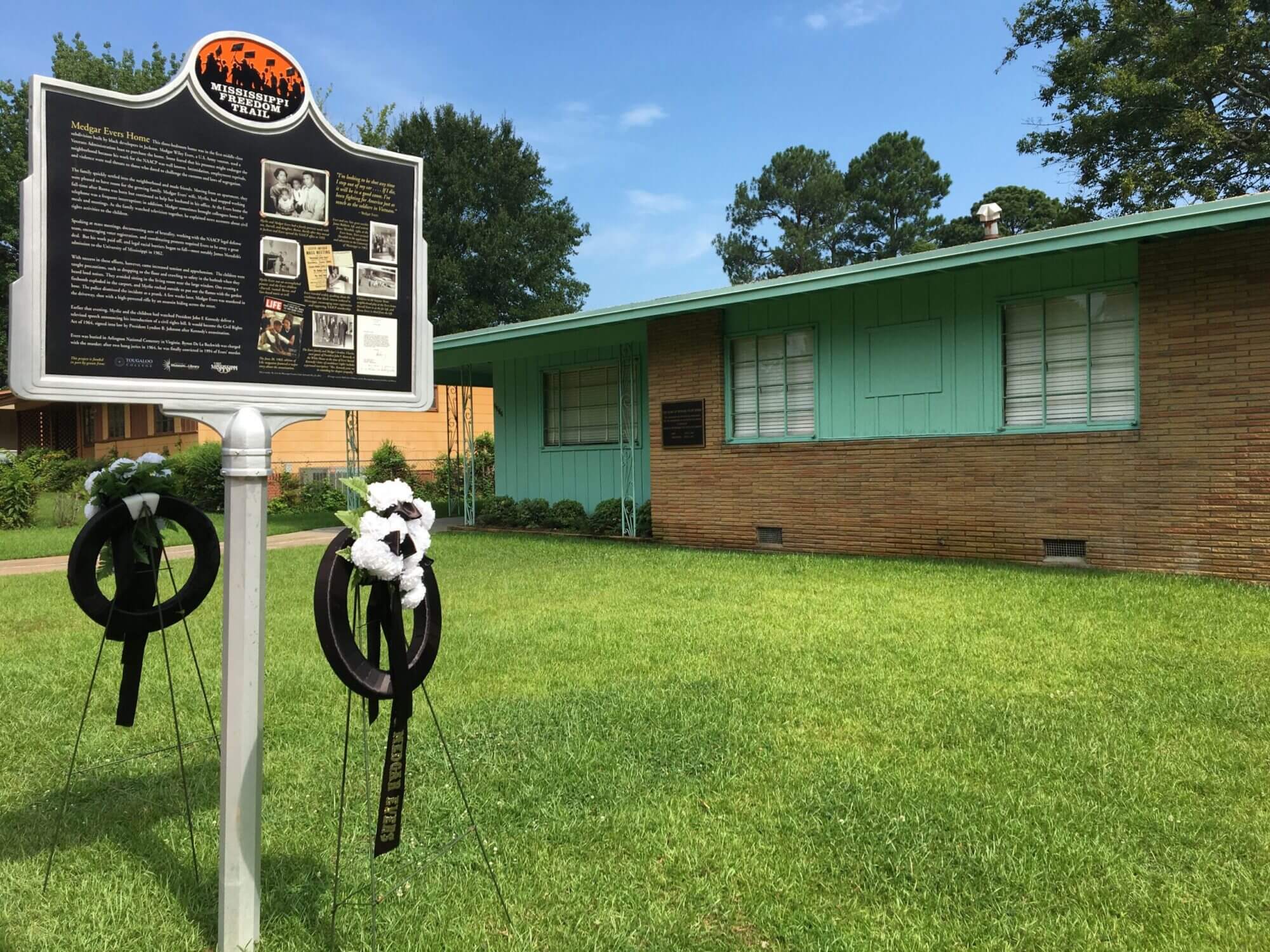
Medgar and Myrlie Evers Home in Jackson. Credit: Ashley FG Norwood, Mississippi Today
The military park is the most visited attraction in Mississippi, according to the local tourism office, Visit Vicksburg.
The federal government shut down after Congress failed to pass a budget for the new federal fiscal year. During a shutdown, essential services continue, including air traffic control and emergency response, but many federal employees are furloughed.
Mississippi Today reached out to most of the national park sites in Mississippi and went to the Medgar and Myrlie Evers Home in Jackson to check if they were open. The calls went to voicemail, the emails either bounced back or went unanswered by the time of publication, and the Evers Home was empty.
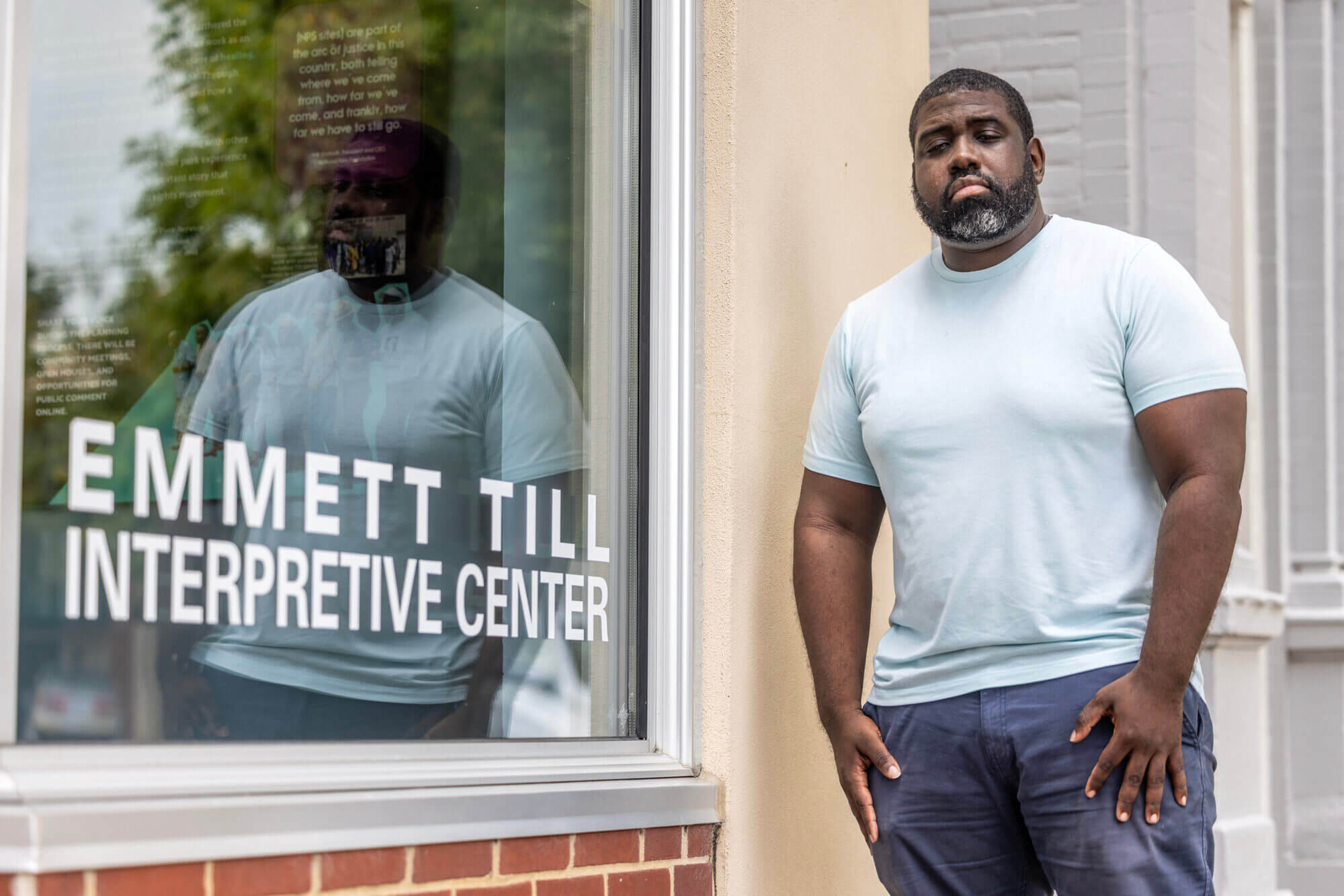
The Emmett Till Interpretive Center and the Emmett Till and Mamie Till-Mobley National Monument, both in Sumner, are closed.
Visitors can still access the islands on Gulf Islands National Seashore in Ocean Springs, the Sun Herald reported. However, the Davis Bayou Area appeared to be closed.
All of Mississippi’s barrier islands are “pretty much shut down,” said Ronnie Wentzell, who works for the privately run Ship Island Excursions.
“When I say it’s shut down, it’s only the fact that there’s no security people, there’s no park rangers on none of the islands or going to the islands,” Wentzell said.
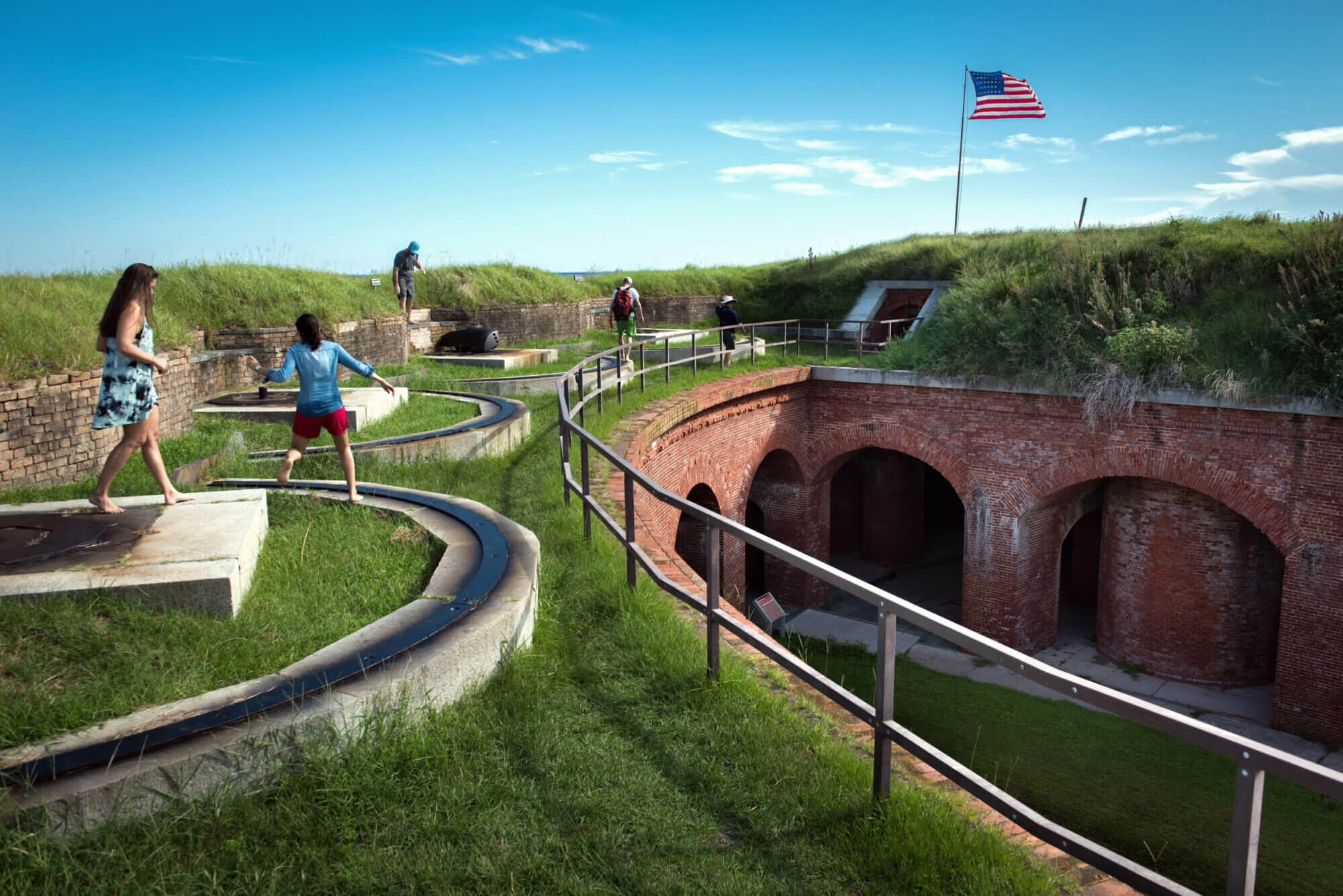
The ferry service is still taking people to Ship Island. However, Fort Massachusetts is closed and there are no public accommodations.
Kim Foster, a spokesperson for Natchez Trace Compact, wrote in an email, “I am happy to report that the Natchez Trace Parkway and many (not all) of its sites remain open during the shutdown.”
Benjamin Saulsberry, pubic engagement and museum education director at the Emmett Till Interpretive Center, poses for a portrait at the center in Sumner, Miss., on Tuesday, Aug. 6, 2025. Credit: Eric Shelton/Mississippi Today
The parkway is open for travel, with a closure that is unrelated to the shutdown, between milepost 181 and milepost 204, roughly French Camp to Mathiston. Most sections of it are open, but some historic sites and trails are closed “for restoration or maintenance.”
Mississippi Today emailed the National Park Service press office, which responded with a statement that national parks would be “as accessible as possible” during the shutdown.
“Critical functions that protect life, property, and public health will remain in place, including visitor access in many locations, law enforcement, and emergency response,” the statement said.
The National Park Service is keeping most national parks partially open during the shutdown. However, more than two-thirds of its employees are furloughed.
The National Parks Conservation Association is calling on Interior Secretary Doug Burgum to close all national parks, arguing that keeping them open is a danger to visitors and the parks themselves.
According to the National Park Service contingency plan, limited staff will remain to perform “exempted activities,” such as law enforcement and fire suppression.
Fort Massachusetts on Ship Island in 2016. Credit: Rory Doyle
Trails, park roads, lookouts and open-air memorials “will generally remain accessible to visitors.” However, there will be no updates on road or trail conditions. Websites and social media will only be updated for emergencies. Parks that collect fees under the Federal Lands Recreation Enhancement Act can use those fees to provide basic visitor services.
Parks that don’t have accessible areas won’t operate and will have minimal staff.
“As part of their orderly shutdown activities, park staff will post signs notifying visitors that only basic or no visitor services, maintenance, or other management activities will be conducted, and emergency services will be limited,” the plan read.
BELZONI – When Archway Charter School was first proposed, it was described as providing “bridges to a brighter future.” It was later referred to as a “reprieve” from a slew of failing school districts in the Mississippi Delta. Archway students would engage with ancient texts in virtual reality and be immersed in a classical education that only students in more affluent zip codes could normally access.
The school was described as an opportunity for Belzoni, a community of 1,700 residents in Humphreys County in one of the poorest, most rural and least tech-accessible parts of the state.
Regulators, evaluators and others ask: Can a virtual school succeed there?
The county, where over a fifth of the residents live below the poverty level, ranks 61st in broadband access out of Mississippi’s 82 counties, according to research from Mississippi State University.
Belzoni – pronounced bel-ZONE-ah by locals – rises from fields of soybean, corn and cotton, more than an hour’s drive northwest of Jackson.
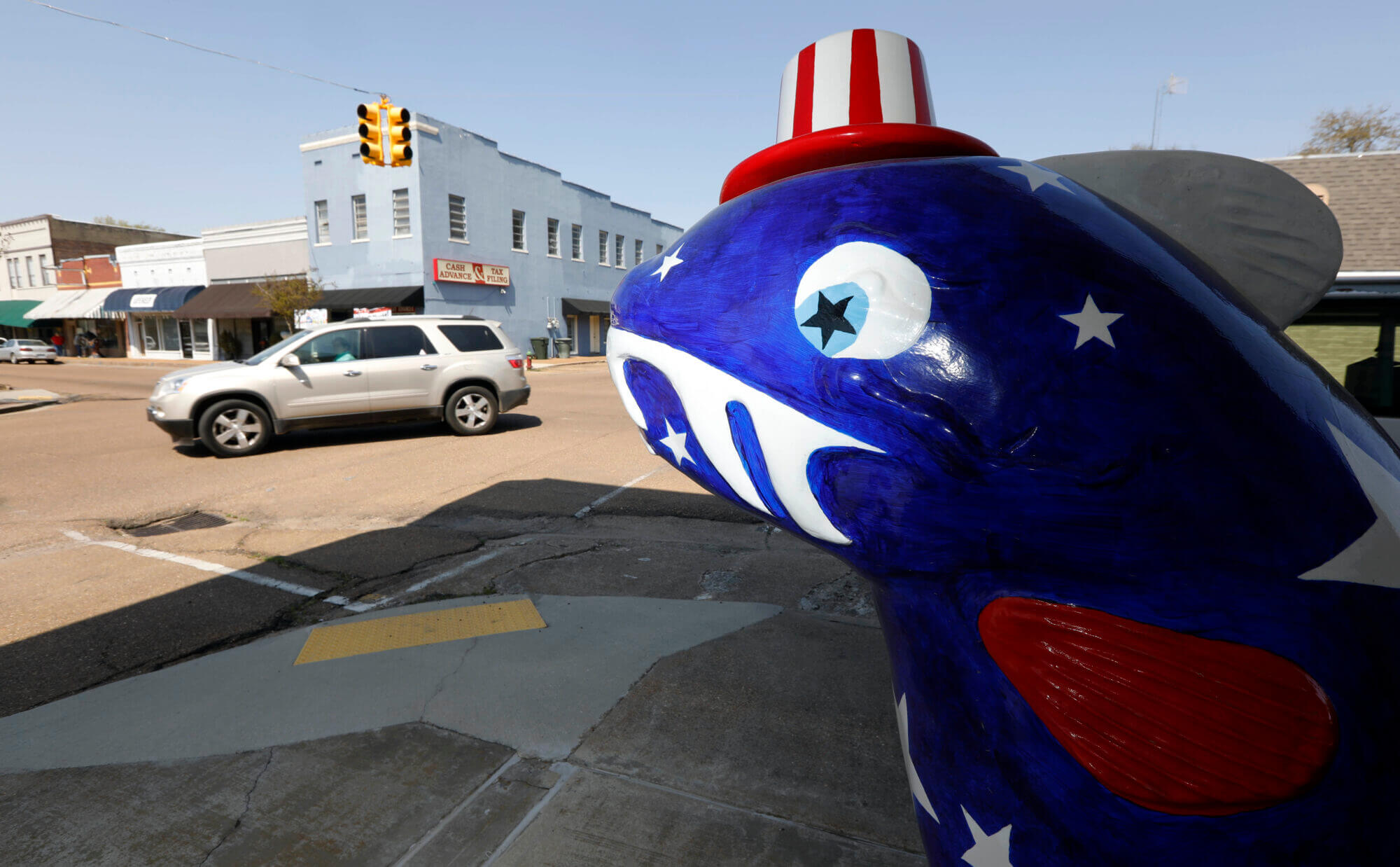
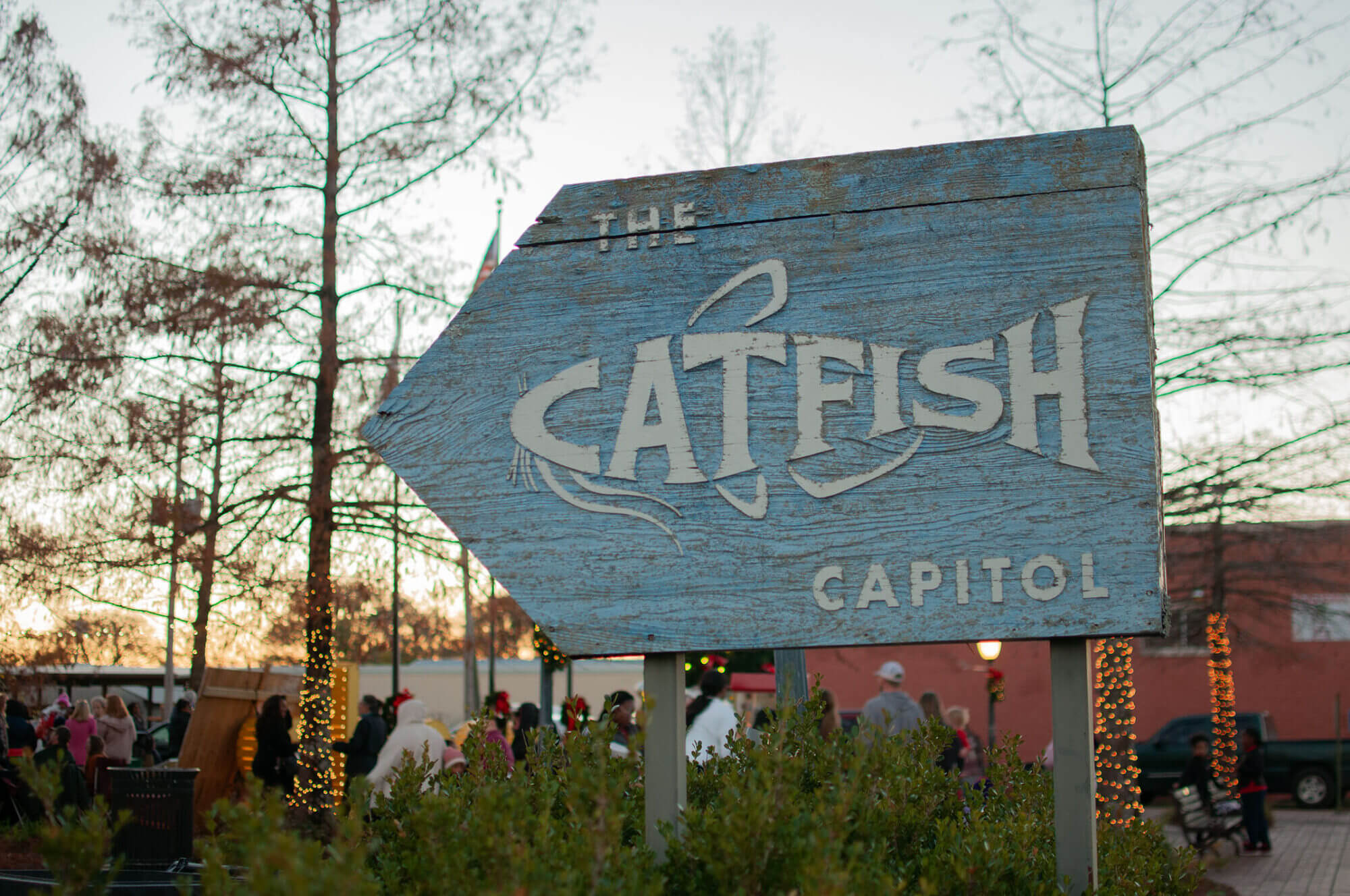
The town first appears in gas station signs and a tall neon one off Highway 49 inviting travelers into “the heart of the Delta.” Ponds beside dirt and paved roads still produce the town’s famous commodity. Belzoni has called itself the “Catfish capital of the world” since 1976.
Plans for Archway Charter School were first announced in spring 2024, with an initial proposal for grades seven to 12. However, the school has struggled to raise start-up funds since gaining state approval. Financial disclosures have also spelled recent trouble for the company contracted to provide the virtual learning component.
These facts, including lack of internet access, concerned the state’s third-party evaluator when Archway first sought approval of its charter in October 2024
“I have seen a hybrid model that worked, but not in rural areas where there’s a high rate of poverty and families that may not have access to equipment or resources to be successful,” said Wanda Giulliaume, one of three independent evaluators who issued a recommendation to the board.
Archway Founder David Herndon responded by saying Archway would pay for internet access for students who need it, by potentially “diverting some funds” to get families access to quality internet. School officials would collect that information along with enrollment applications.
He said he is confident students will be able to connect to the internet after conversations with Southeast Cable and other broadband providers.
But access issues still worry Mississippi Department of Education administrators and local legislators.
Kym Wiggins, chief operating officer for the state Department of Education, expressed concerns after consulting surveys from districts about students’ access to equipment and broadband.
“There is an access issue,” Wiggins said. “So what do students do when they don’t have access? They do nothing. And they are going to a McDonald’s in a gas station. That’s not a viable option.”
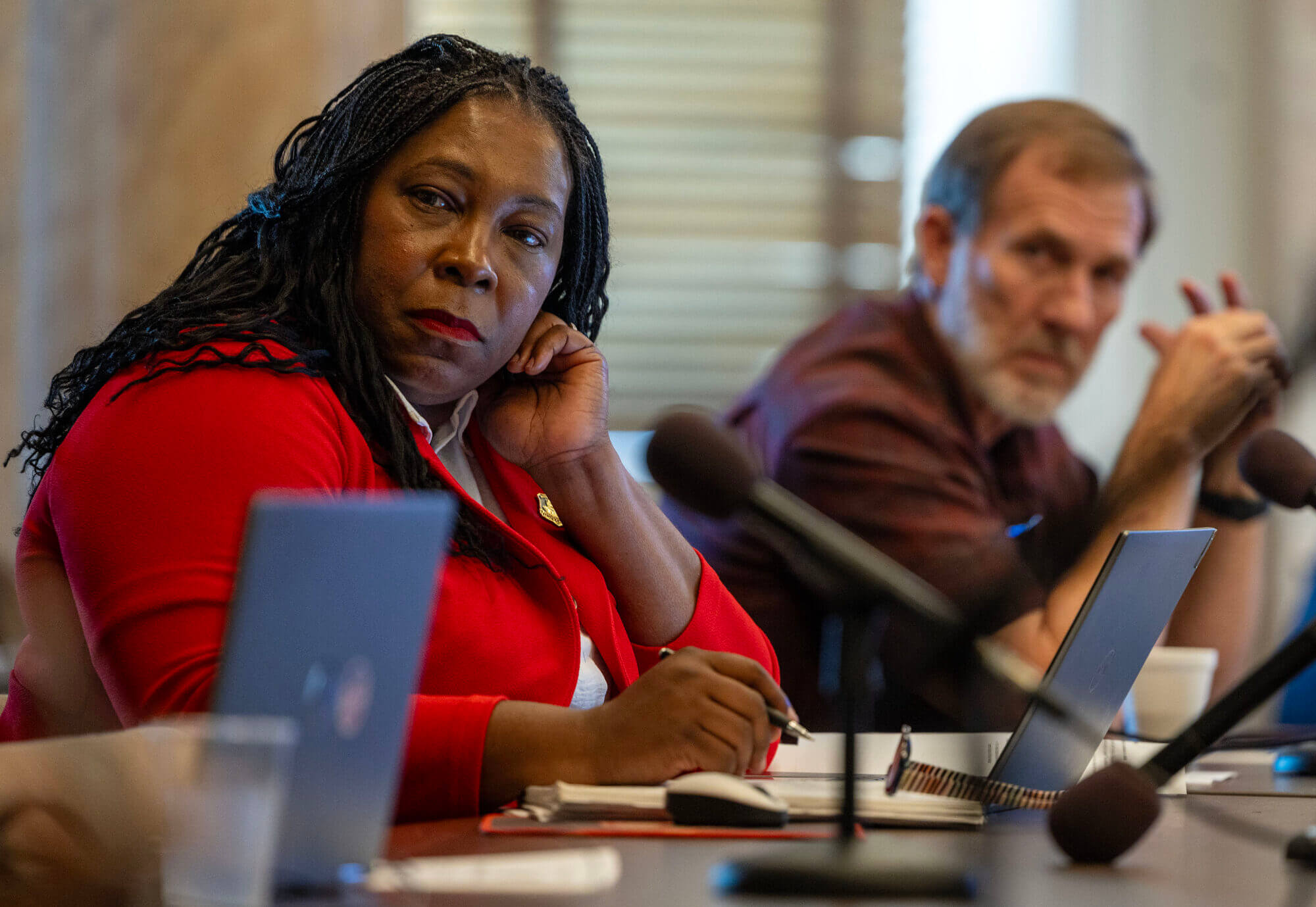
Rep. Timaka James-Jones, photographed Sept. 11, 2025, at a House committee meeting at the state Capitol in Jackson, questions the viability of a virtual charter school in Belzoni. The Democratic lawmaker represents Belzoni. Credit: Eric Shelton/Mississippi Today
Tiny communities such as Midnight, Louise and Putnam as well as homes along Highway 12 and Highway 7 lack adequate broadband access, said Rep. Timaka James-Jones, a Democrat from Belzoni.
By the end of the September 2024 Mississippi Charter School Authorizer Board meeting, Archway had an approved charter with stipulations before it could open, such as proof of start-up funds.
Without a Charter School Program fund and only assumed sources of revenue on its most recently listed budget, Archway has not demonstrated how it will recruit high-quality teachers and finance its operation. Even before the school has opened, Herndon has asked the authorizer board to let Archway expand down to sixth grade.
“As of today, the school does not have any funds available for operations,” board executive director Lisa Karmacharya wrote in an email Thursday to Mississippi Today. “The school will be required to submit an amended/updated budget to the authorizer (board) in December.”
Now Entering the Delta-verse
On a Friday afternoon in Belzoni, locals congregated on porches, pulled grills and invited friends to shuttered gas stations, leaning up against long-emptied gas pumps with plate lunches and cold beer. One street has shacks with wooden boards for windows and black plastic fluttering under loose roof shingles. Another has a junior high school that can only be glimpsed from behind a chain link fence. Restaurants where families would toast new graduates and fill up on grub in between football games are now vacant with yellowed, sunbeaten signs of the meals they once served. The town’s youngest residents still board yellow buses – and on Friday nights in the fall, locals still root for the Humphreys County Cowboys.
For Herndon, the Delta, and particularly Humphreys County, seemed fertile ground for a hybrid school.
In the application to the Mississippi Charter Authorizer Board, Archway identified 14 Delta districts within a 1.5-hour drive of the future charter with “failing” middle schools. Mississippi law restricts charter schools to districts that earn a D or F on the state accountability system. Humphreys County School District has a D, but nine of the 14 Herndon listed are rated C.
“The vast majority of parents with rising sixth-graders in this district are forced to send their children from successful elementary schools to the district’s only middle school that is failing,” Herndon, the charter school’s executive director, told the board.
A sign in Belzoni, Miss., promotes the town’s connection to catfish growing and processing in December 2023. Credit: Devna Bose/Mississippi Today
While nearly every Delta public school district sees a drop in test scores in middle school, the same phenomenon is true in school districts across the state, including in DeSoto County, Pearl and Pearl River County, among other districts that are labeled A or B in accountability ratings. Nearly a third of Delta region elementary schools received a D or F.
The plan is for Archway to be a hybrid school where each month, students log into virtual learning for 18 days and meet in person for two days for culture building and assessments. On virtual learning days, students will have live classes in the morning and self-paced coursework in the afternoon. On Fridays, students will complete self-paced online coursework all day.
Classes conducted in virtual reality will slowly be introduced to the curriculum as the school grows, Archway’s approved charter application says. The district plans to purchase VR headsets for students and staff.
Virtual charter schools have become more popular since the waning days of the COVID-19 pandemic, with many promising better outcomes for students on a more flexible schedule.
However, research from Stanford University found that online charter students saw less academic growth than their peers in traditional public schools, growing 58 fewer days in reading and 124 fewer in math per year.
Herndon said he based his recent failed proposal to expand to sixth grade partly on recent analysis provided by OptimaEd, the Florida-based company contracted to provide the online education component of the Archway curriculum.
OptimaEd provides “virtual reality educational experiences” to schools primarily in Florida.
In one example of virtual learning posted to the company’s account on X, the social media site formerly known as Twitter, Latin students at The Walker School in Florida walk in avatar form across a digital rendering of a Roman villa. In another post, students at another Florida school virtually traipse across the ocean floor to learn about biodiversity.
OptimaEd’s founder is Erika Donalds, a school choice advocate and the wife of U.S. Rep. Byron Donalds, a Florida Republican.
Adam Mangana, the company’s new CEO replacing Donalds, lives in Mississippi, according to Archway’s application. For the last four years, he’s held executive positions at the Naples, Florida-based company he helped co-found.
Mangana previously founded Midtown Public Charter School in Jackson, led a virtual reality lab at Jackson Prep in Flowood, and served as dean of students at St. Andrew’s School in Ridgeland and headed the Christian-centered St. Benedict School.
Midtown Public Charter School has noticeably only received Ds or Fs in the state accountability rating since the 2017-2018 school year.
The application also mentioned that several other company employees were Mississippians whose “proximity” allowed for “a truly unique partnership to Archway as it opens and grows.”
For third-party evaluators, the “classical inspired” education offered by OptimaEd also didn’t clearly align with standards set by the Mississippi Department of Education.
“There is no evidence to support the effectiveness of classical education principles combined with the proposed curriculum,” wrote the third-party evaluators in their final recommendation.
Herndon is the former headmaster of Saint Augustine School, “a classical Christian school” in Ridgeland.
Matthew Metcalf, the Archway school board president, serves as director of business and financial services for an Idaho-based company that helps found “classical Christian schools” across the country, according to his LinkedIn page. He also formerly led “classical academies” in both Alaska and Minnesota.
Classical Christian schools are private schools with curriculums informed by great works of Western literature and philosophy as well as the Bible.
The hub-bub about the hub
Herndon plans to establish an in-person hub whereby students can go to join online classes should they be unable to connect to the internet.
At the most recent board meeting in September, board chair Marcy Scoggins said it would defeat the purpose of a virtual school to depend on an in-person hub.
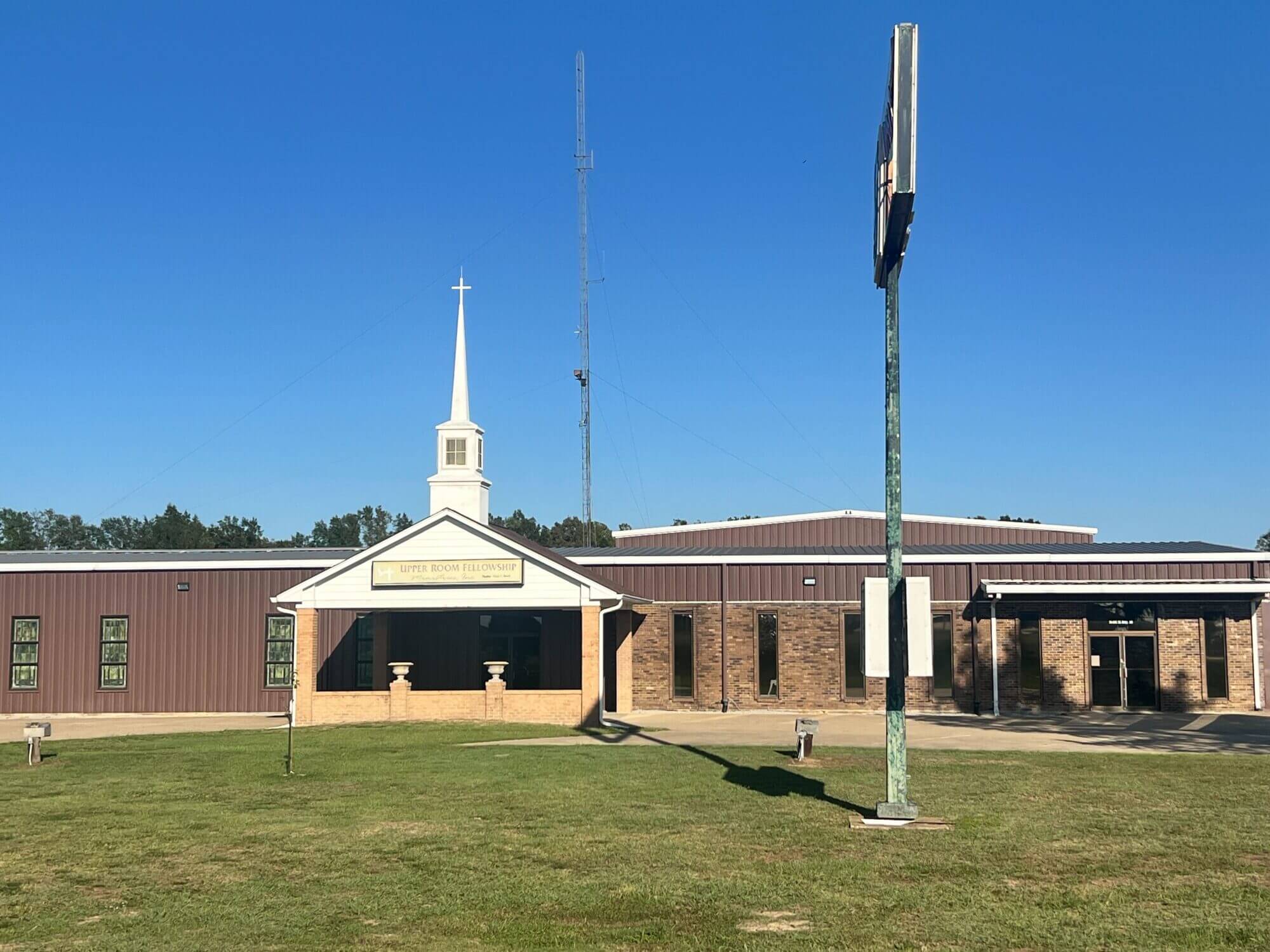
Archway Charter School is located at Upper Room Fellowship Ministries, off U.S. 49 in Belzoni, Miss. Credit: Leonardo Bevilacqua/Mississippi Today
The hub would be at Archway’s physical address at Upper Room Fellowship Ministries, off U.S. 49 in Belzoni. Third-party evaluators said Archway overrepresented how much classroom space was available at the hub for students, pitching the idea of setting up classrooms in the gym, fellowship hall and auditorium.
The Boys and Girls Club, which offers after-school programming to school-aged children, occupied the same site up until this past summer. The Humphreys County club expects to have a new location by January.
Despite outlining a goal to enroll 208 Delta students in Archway’s first year, school officials’ applications or compliance check-ins with the board did not include testimony from any local family planning to enroll a child.
“It is not the best avenue for this rural area for our district, for our county,” Rep. James-Jones said. “It will definitely harm our public school system.”
During the last board meeting in September, two members appointed by Republican Gov. Tate Reeves – Tupelo pastor Jay Carney and Laurel attorney Ben Morgan – were the sole votes in favor of expanding the charter to include sixth grade.
“I think a little differently that we have some flexibility on the front end,” Morgan said. “I want us to be problem solvers, not problem creators.”
Archway is slated to open in August with the condition that it provides proof that it met 40% of its enrollment goal and that all enrolled students have internet access and an amended budget that demonstrates financial solvency.
James-Jones said she has not received a coherent plan guaranteeing her constituents would have access to Wi-Fi if they enrolled a student.
“I understand the focus of the school is education,” she said. “But you have to have the resources to do that.”
President Donald Trump has nominated former Gulfport Mayor Billy Hewes III, also a former longtime state senator, to the federal Consumer Product Safety Commission.
If his nomination is confirmed by the U.S. Senate, Hewes would join the commission’s acting chairman, Peter Feldman, who’s currently the lone member of the commission after Trump removed three commissioners appointed during the Joe Biden administration and a fourth commissioner, Republican-appointed, resigned.
The commission is a regulatory agency created by Congress in 1972 “to protect the public against unreasonable risks of injuries and deaths associated with consumer products.” It has jurisdiction over thousands of consumer products “from coffee makers to toys to lawn mowers,” according to its website, although it does not have authority over automobiles, foods, drugs and cosmetics.
Hewes’ nomination came as a surprise to some Washington observers, as Trump in his fiscal 2026 budget proposal had called for eliminating the commission and placing its functions under the Department of Health and Human Services. The proposal called for one person serving as an assistant secretary for consumer product safety. This would require congressional action, but Trump’s firing of three commissioners and the resignation of Republican Douglas Dziak appeared to be a move toward elimination or consolidation without congressional action.
In July, the U.S. Supreme Court stayed the reinstatement of the fired Democratic commissioners pending lower court litigation.
If his nomination is approved, Hewes would serve a term through 2031. It remains unclear how the commission would operate without a quorum of three. By statute, the commission can have up to five members, appointed by the president and subject to Senate approval for seven-year terms, with no more than three being of the same political party.
Hewes, in a text message responding to a request for comment on Wednesday, said he was on an airplane and could not immediately talk.
Hewes is a longtime Gulfport real estate and insurance business owner and a songwriter and musician whose songs have appeared in movie soundtracks. He was first elected to the state Senate in 1992 and served until 2012, reaching the second-highest leadership spot in the chamber as president pro tempore in 2008. He ran unsuccessfully for lieutenant governor in 2011, losing the Republican primary to now-Gov. Tate Reeves.
Hewes was elected Gulfport mayor and served from 2013 to June of 2025, declining to seek another term. He has served as an advisory board member for the U.S. Department of Commerce and the National Park Service.
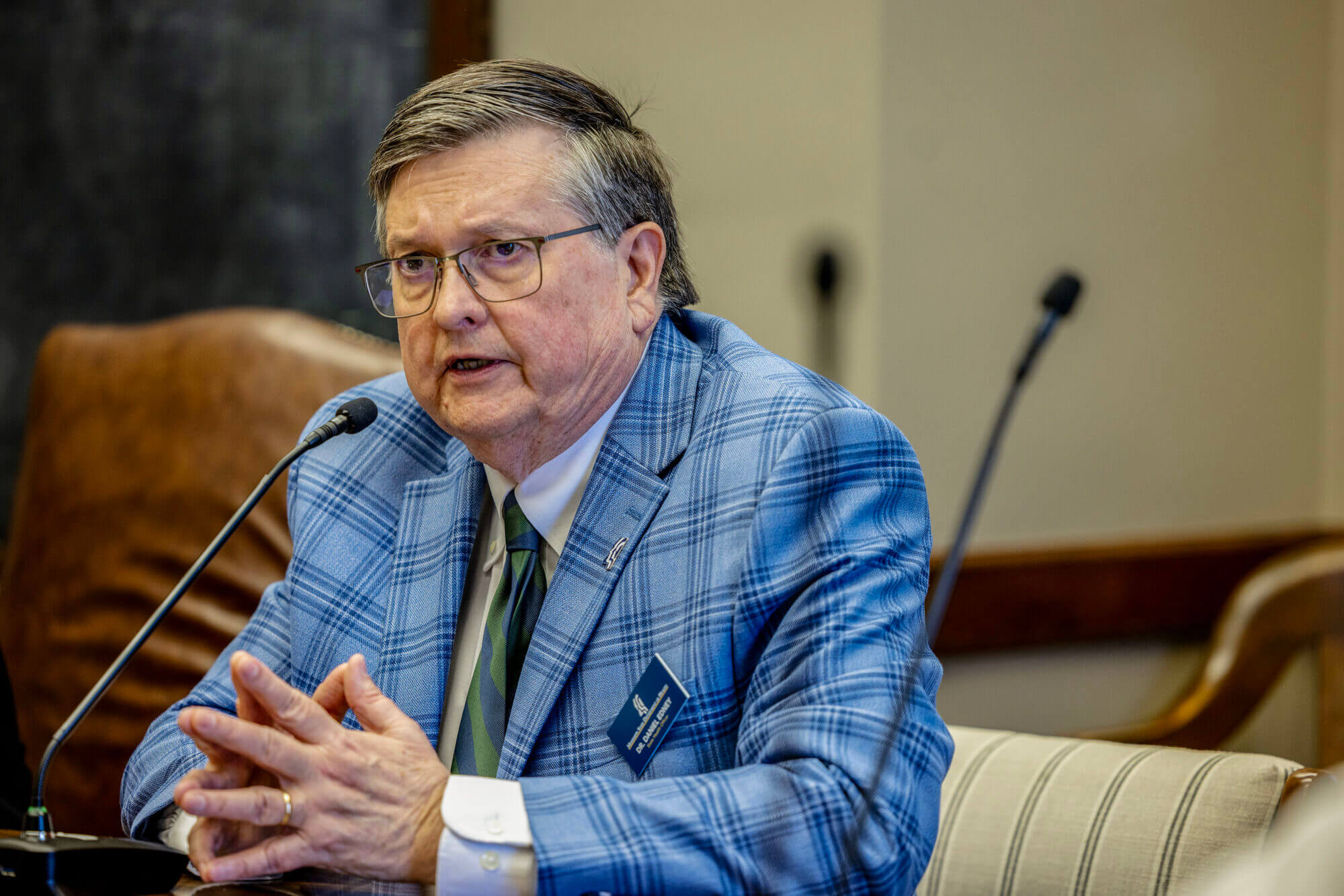
Funding for a food and nutrition program that serves nearly 70,000 Mississippi caregivers and children is expected to last through October amid the federal government shutdown, State Health Officer Dr. Dan Edney said after a Board of Health meeting Wednesday.
“We have a runway with our current federal funding for all of October, probably early November,” Edney said. “And the shutdown better be over by then.”
This comes a day after state Health Department spokesperson Greg Flynn said if benefits for the Women, Infants and Children program (WIC) program dried up this month, the department would have to look at ways to “shore things up” with state funds.
These funds make vital services possible for tens of thousands of households statewide, offering breastfeeding support and monthly vouchers for healthy foods to women who are pregnant, breastfeeding or postpartum, as well as infants and children under the age of 5. Roughly 300 WIC-approved grocery stores and pharmacies allow members to use their benefits.
To stretch federal dollars further, the state Health Department will limit new applicants, Edney said. He added that this could help keep the program afloat for a few weeks. He also said he hopes the use of state funds will not be necessary.
During the government shutdown, new applicants will only be approved if they fall under “Priority 1” designation, which includes pregnant and breastfeeding women and high-risk infants. However, according to Flynn on Tuesday, officials will not require proof of pregnancy, breastfeeding or a high-risk infant to determine priority status, allowing people to get the help they need while it lasts.
“Priority 1” applicants will still need to follow the guidelines for approval, including bringing proof of income, residence and identification to their initial WIC appointment. More information about the application process can be found on the state Health Department’s website.
Leadership at the state Health Department is encouraging WIC applicants and enrollees to direct any questions to an agent at 1-800-338-6747.
Members of the Studio of Dance and Gymnastics perform during the Festival Hispano de Pascagoula on Saturday, Sept. 20, 2025 at Beach Park in Pascagoula, Miss. Credit: Eric Shelton/Mississippi Today
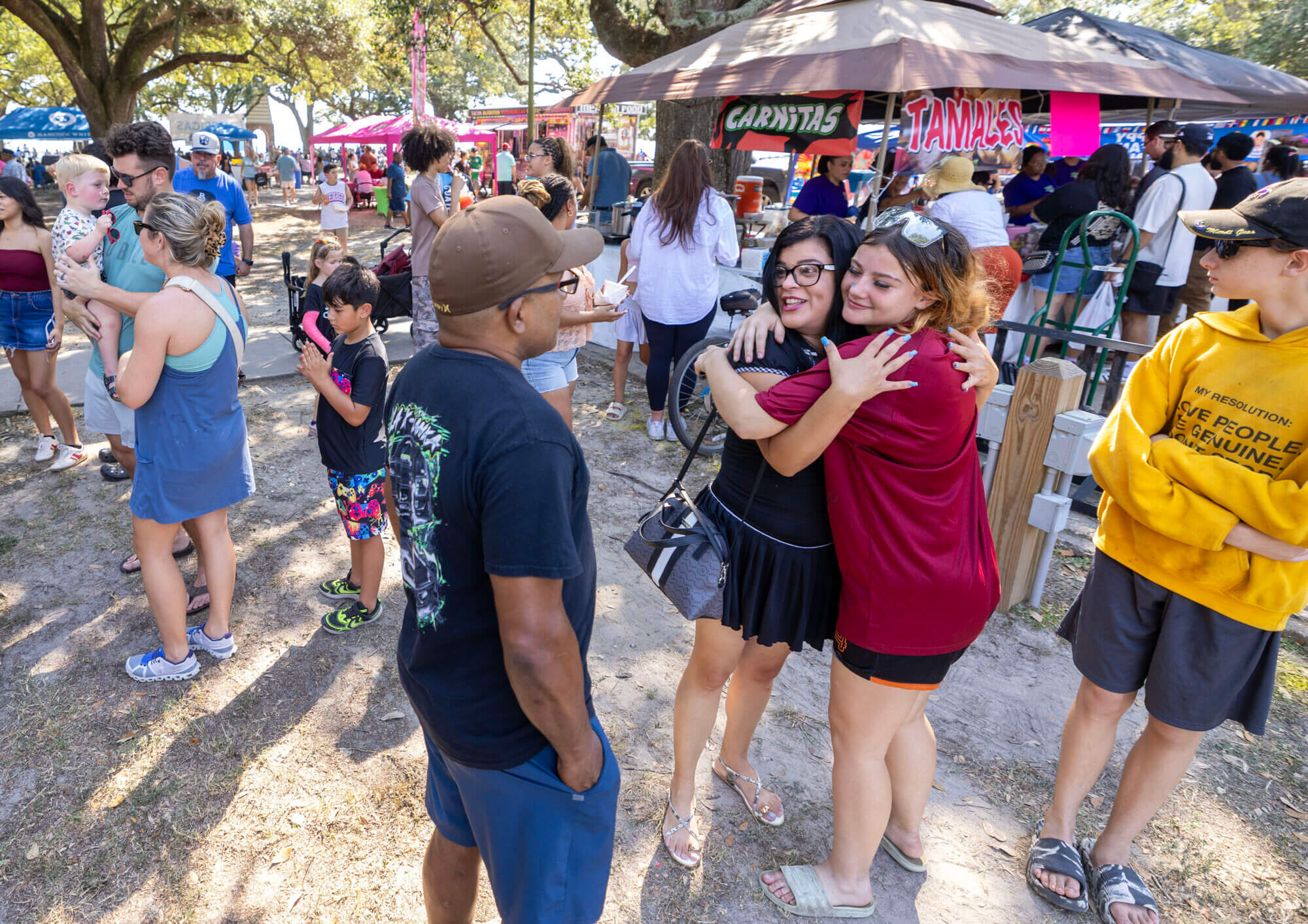
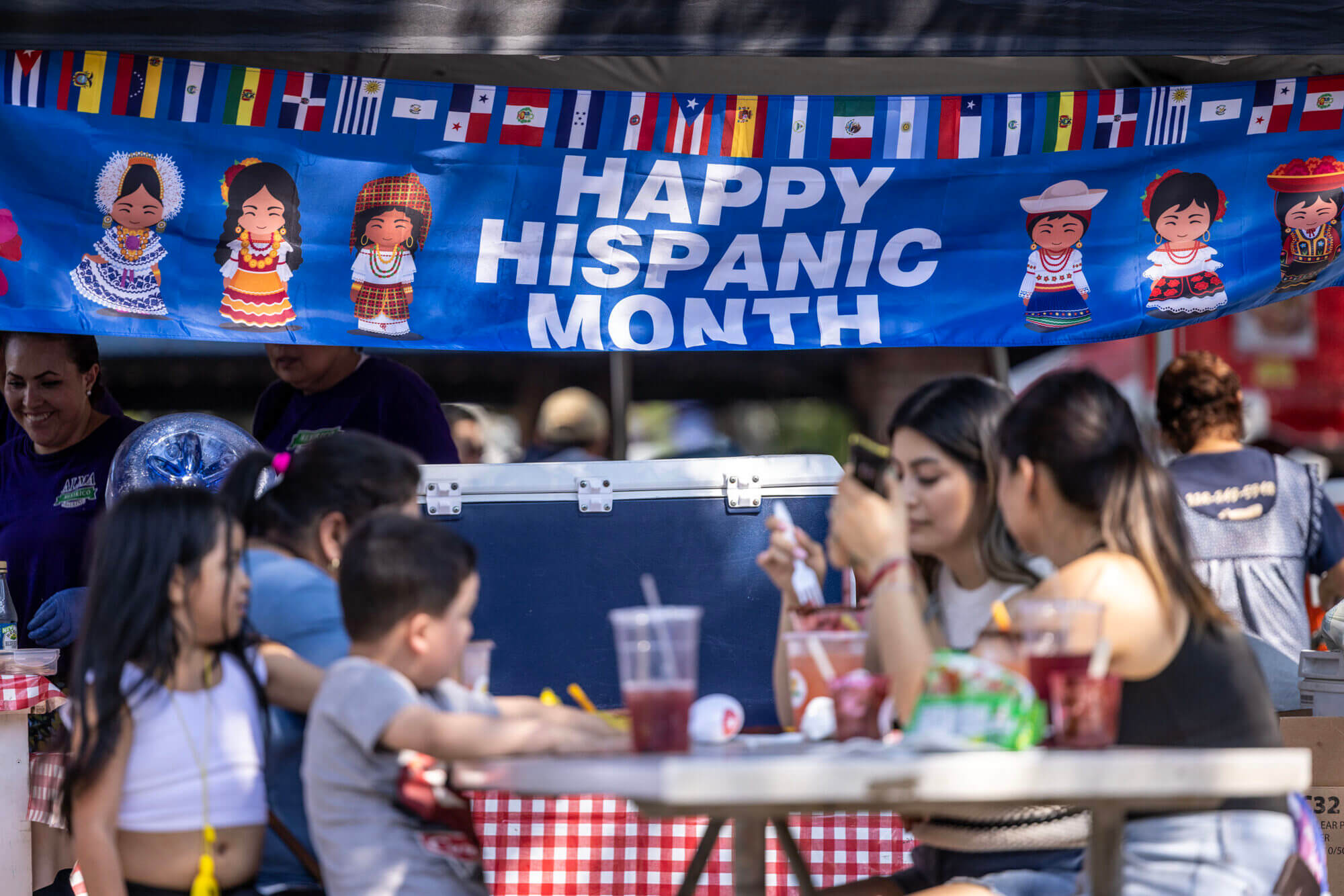
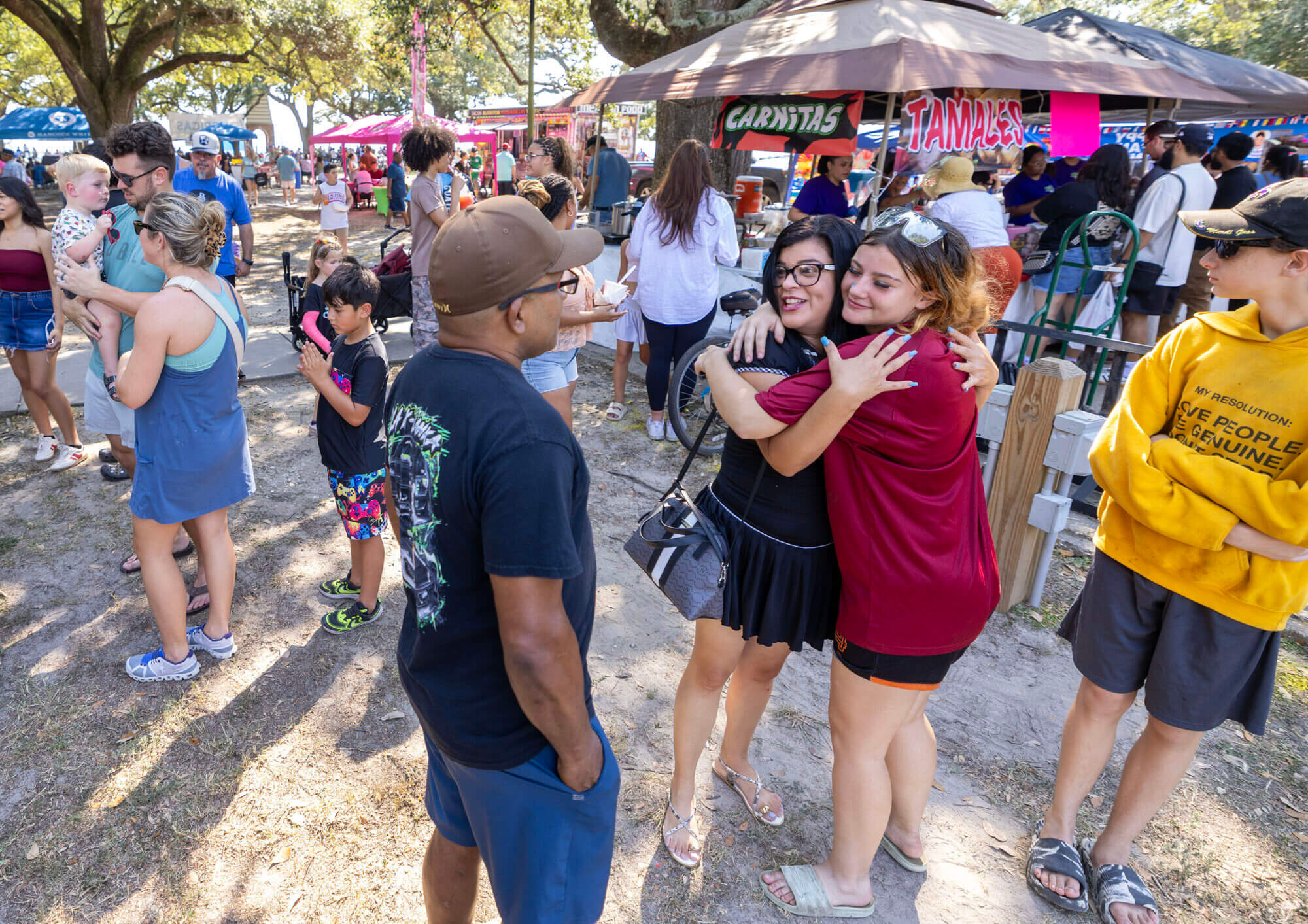
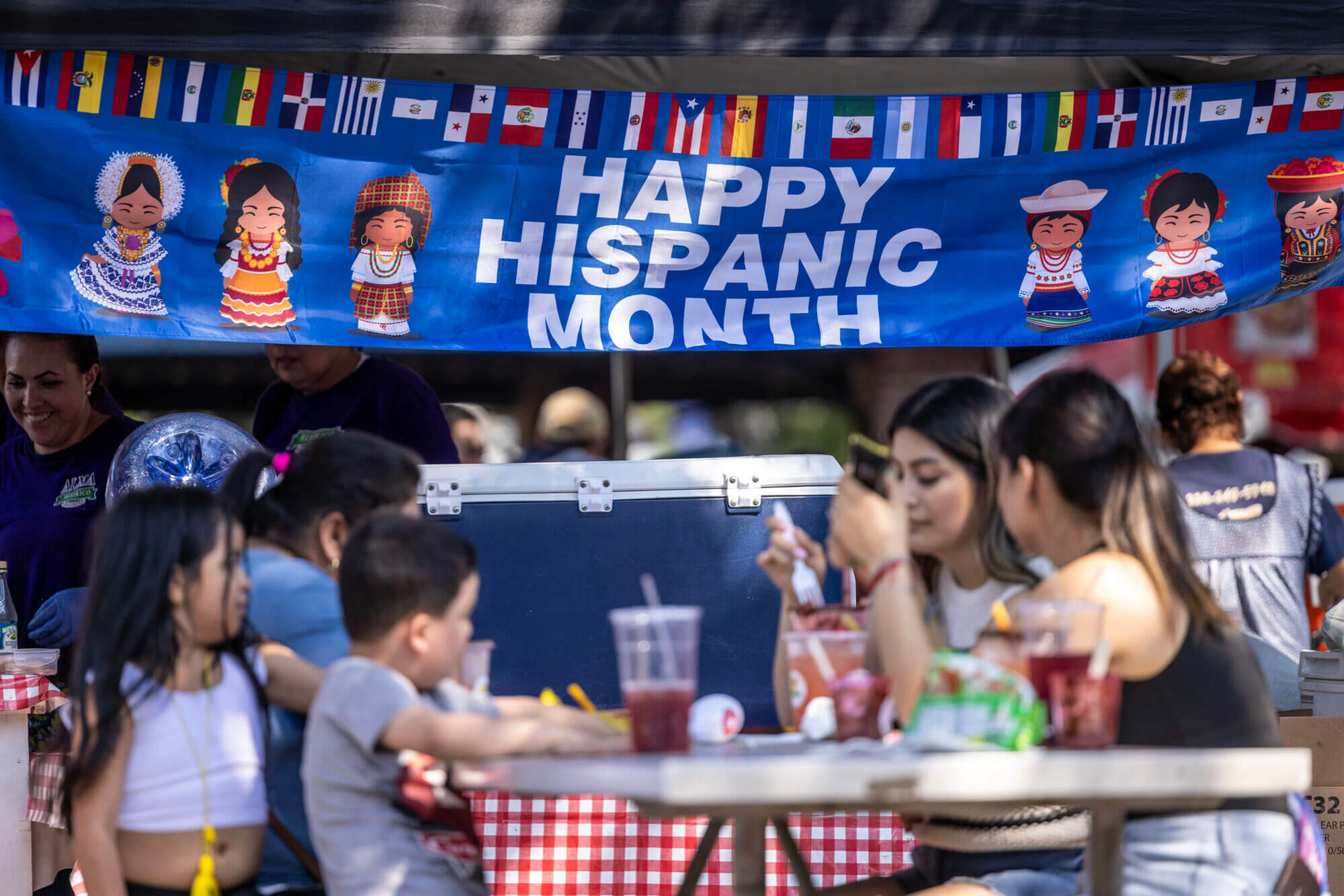
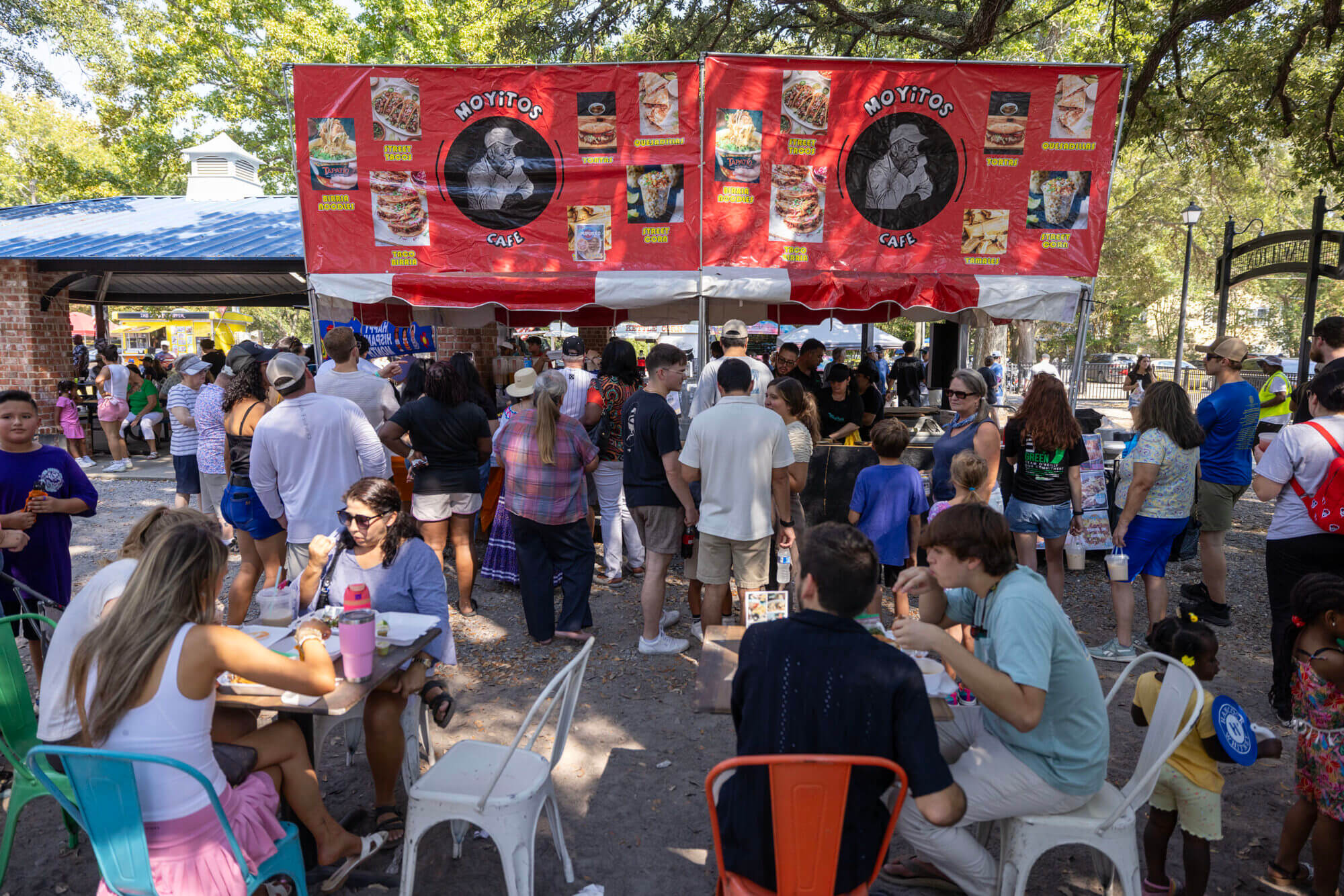
PASCAGOULA – Strings of papel picado and flags representing Latin American countries hung above the crowd at the Festival Hispano de Pascagoula, their bright colors and patterns flashing in the sun. Families from across the Gulf Coast gathered at Beach Park in Pascagoula Sept. 20 to celebrate food, music and cultural pride in the open air.
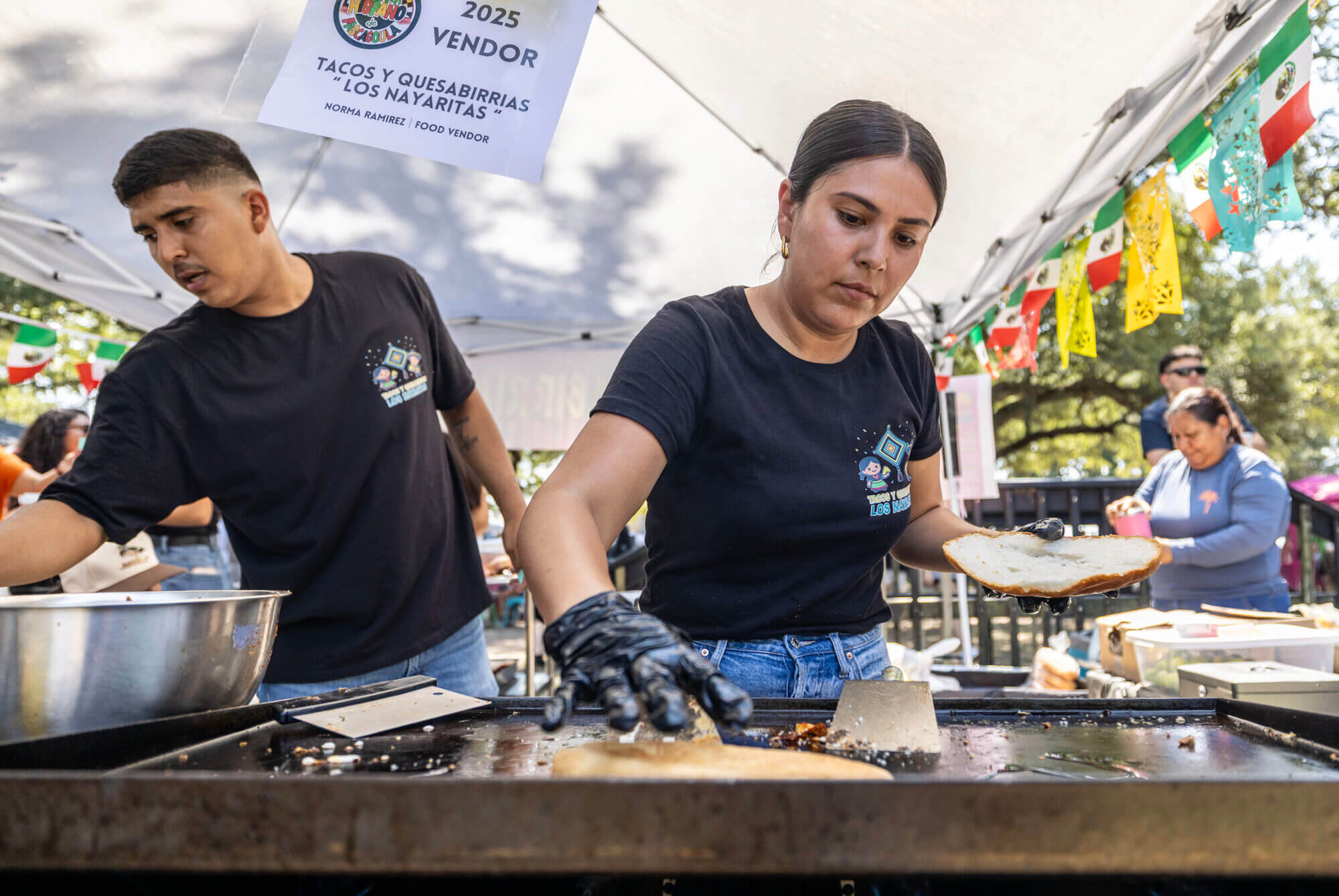
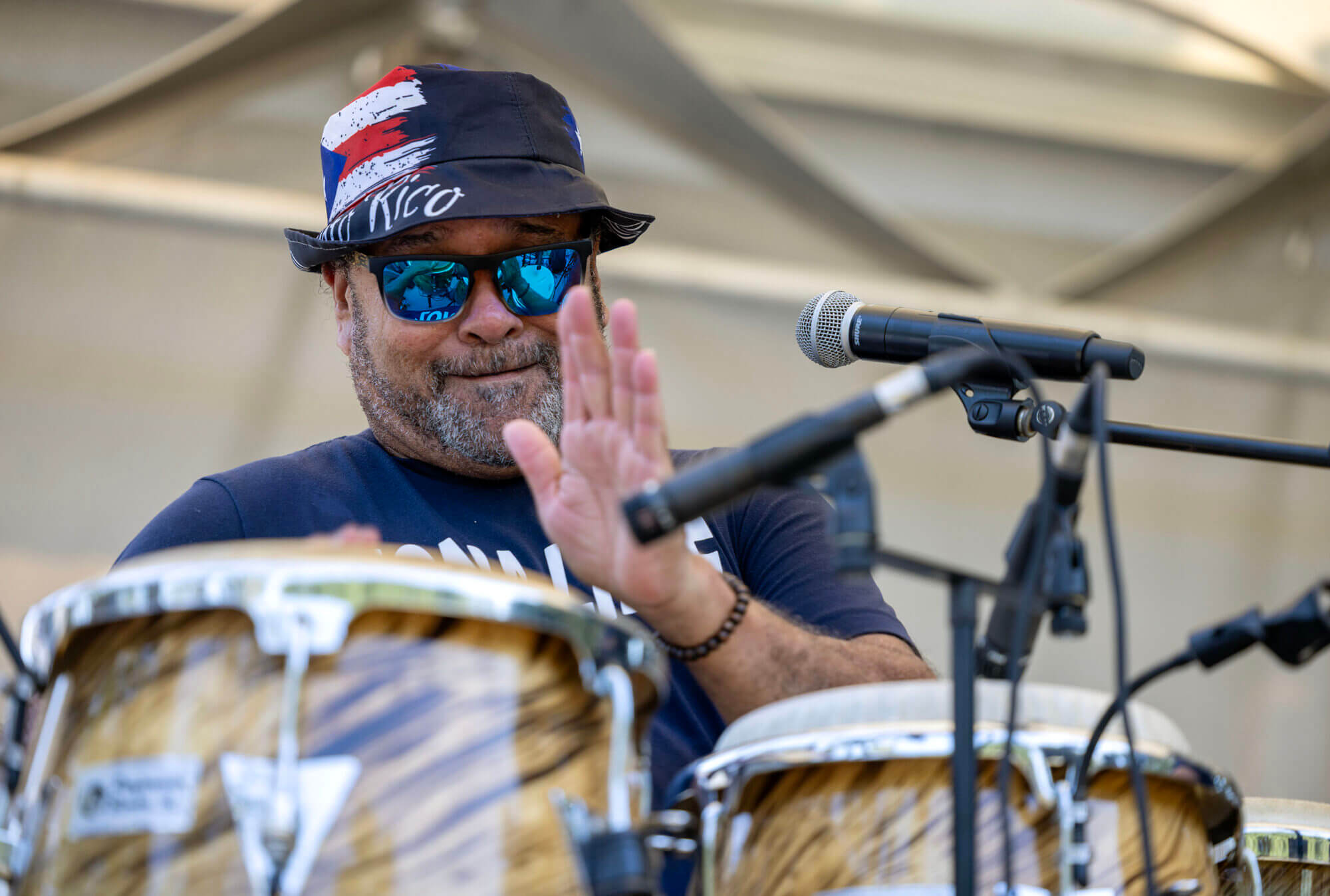
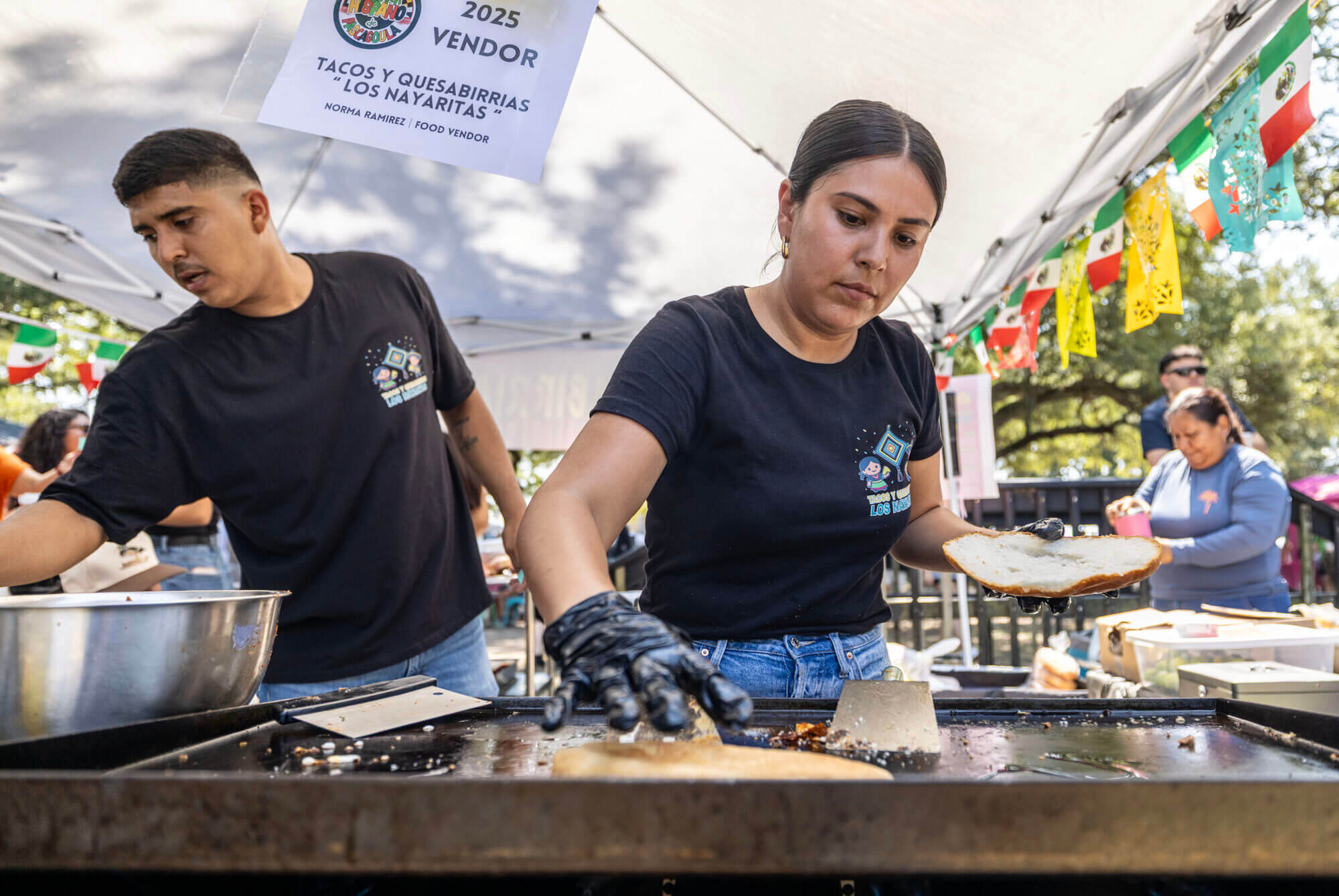
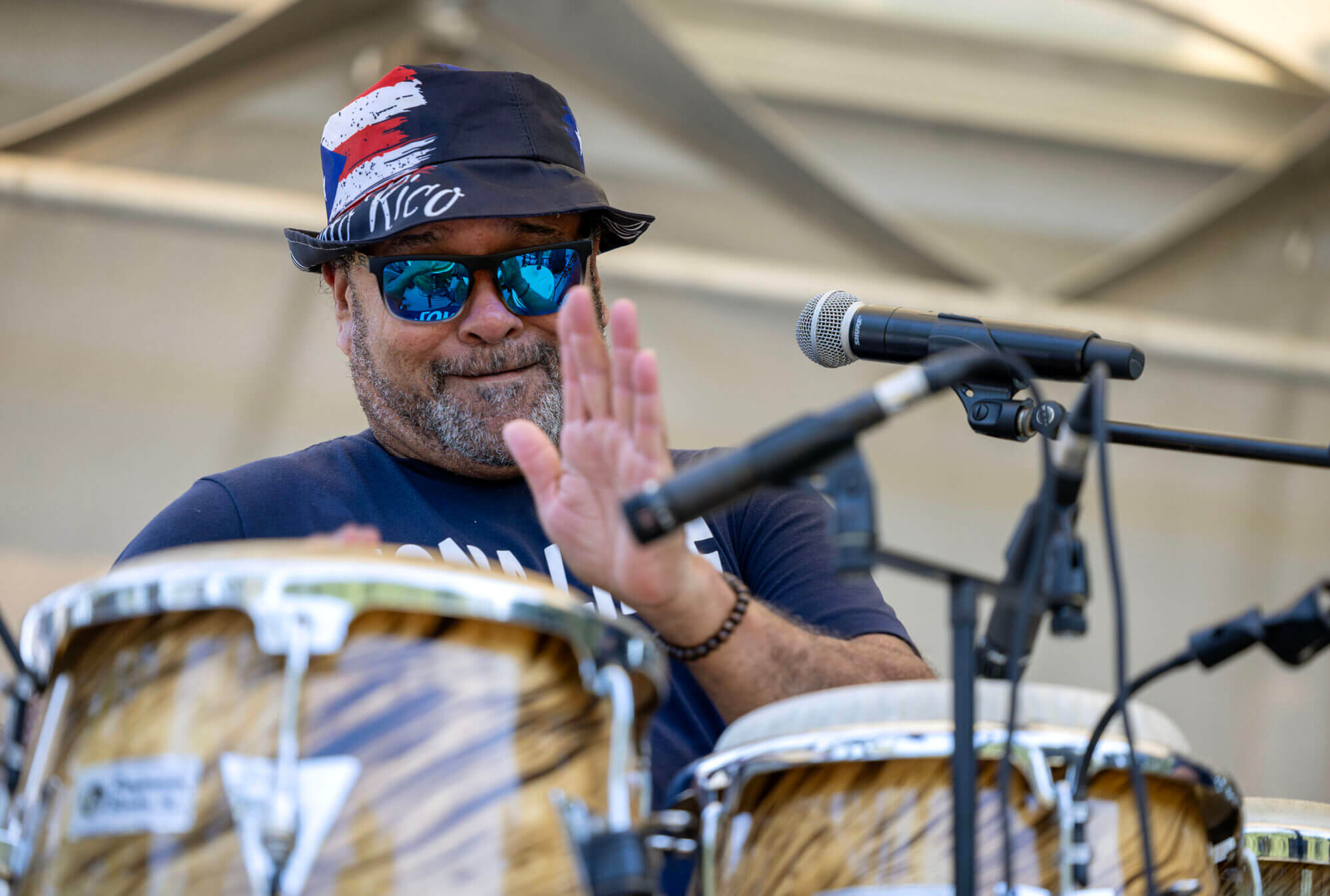
At the festival, vendors offered tamales, fresh tortillas, empanadas and other dishes. Zona Libre played Latin music as the crowd danced and immersed themselves in the sounds with pride and excitement on their faces. Members of the Studio of Dance and Gymnastics wore colorful cultural outfits as they spun in circles, while older eventgoers spoke about heritage and roots in their native countries.
Members of Zona Libre perform during the Festival Hispano de Pascagoula at Beach Park in Pascagoula, Miss., on Saturday, Sept. 20, 2025. Credit: Eric Shelton/Mississippi Today
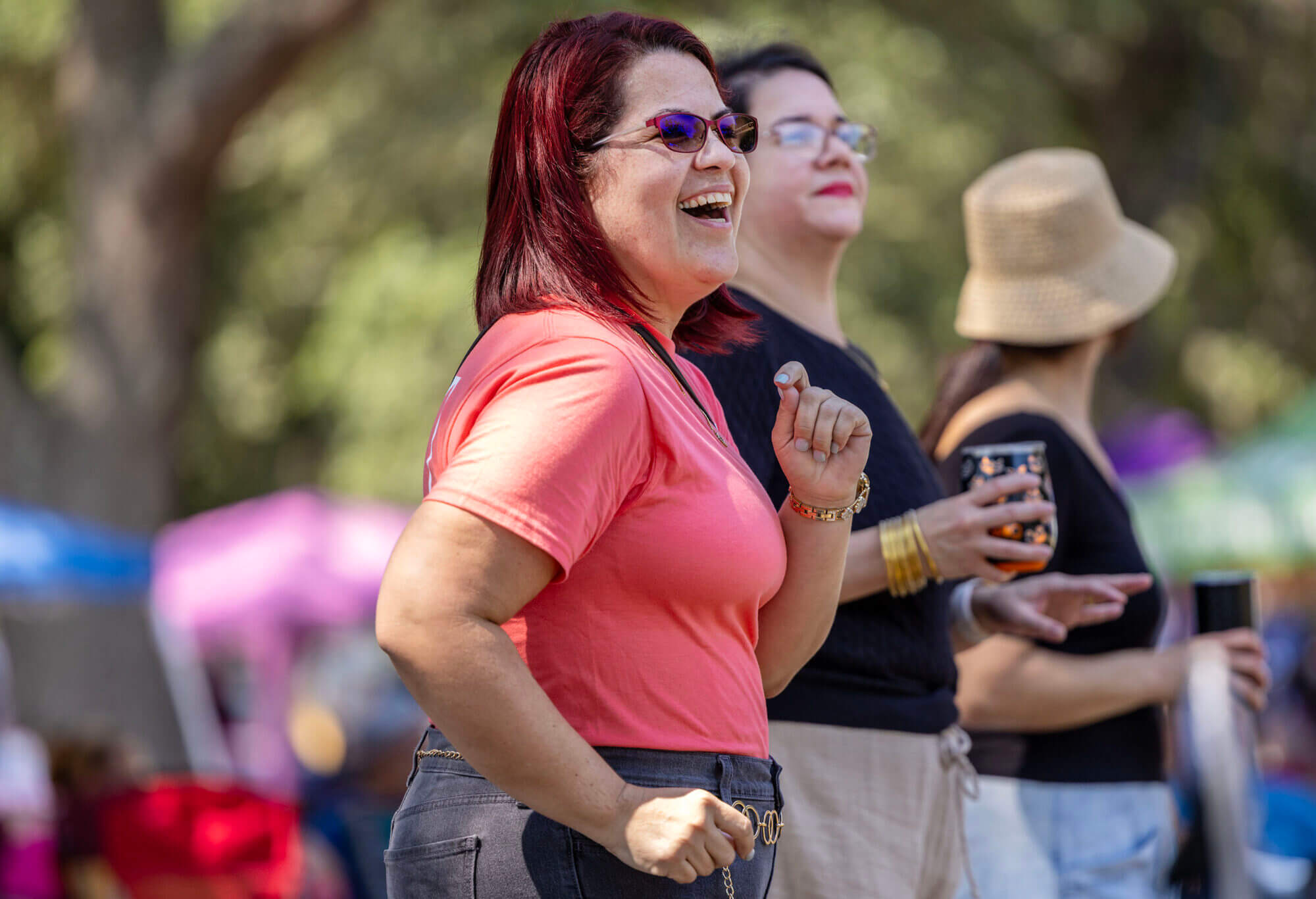
Marisel Villegas, of Venezuela, dances to the music of Zona Libre during the Festival Hispano de Pascagoula at Beach Park in Pascagoula, Miss., on Saturday, Sept. 20, 2025. Credit: Eric Shelton/Mississippi Today
“It feels good to celebrate my culture,” said Nancy Morosky, a Gulf Coast resident originally from Puerto Rico. “I like to be reminded of where we come from, and I want to pass it down to the next generation.”
Pascagoula has one of the largest Hispanic communities on the Gulf Coast. According to the 2020 Census, nearly 15% of its 22,000 residents identify as Hispanic or Latino. In Jackson County, the share is closer to 7%.
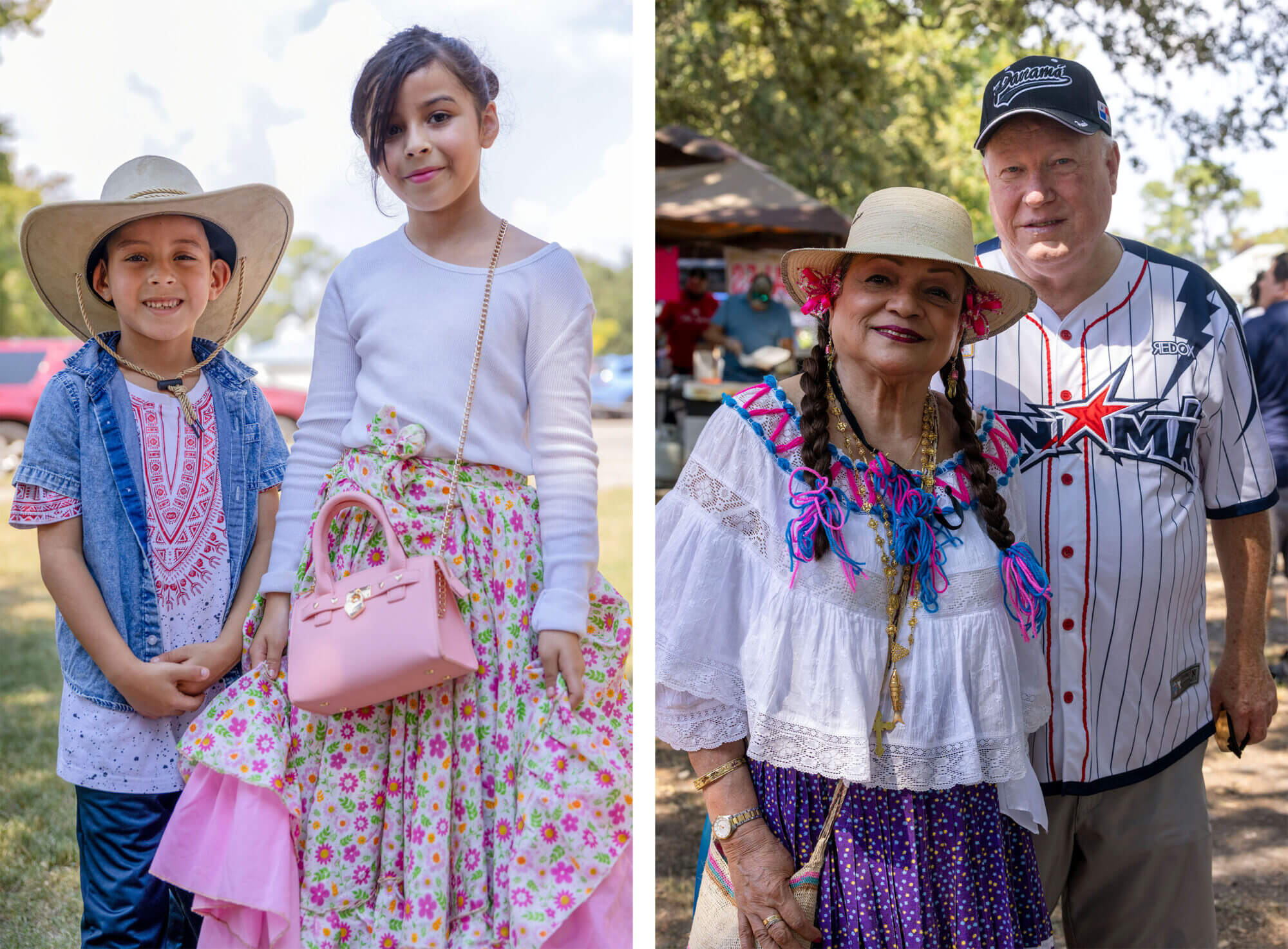
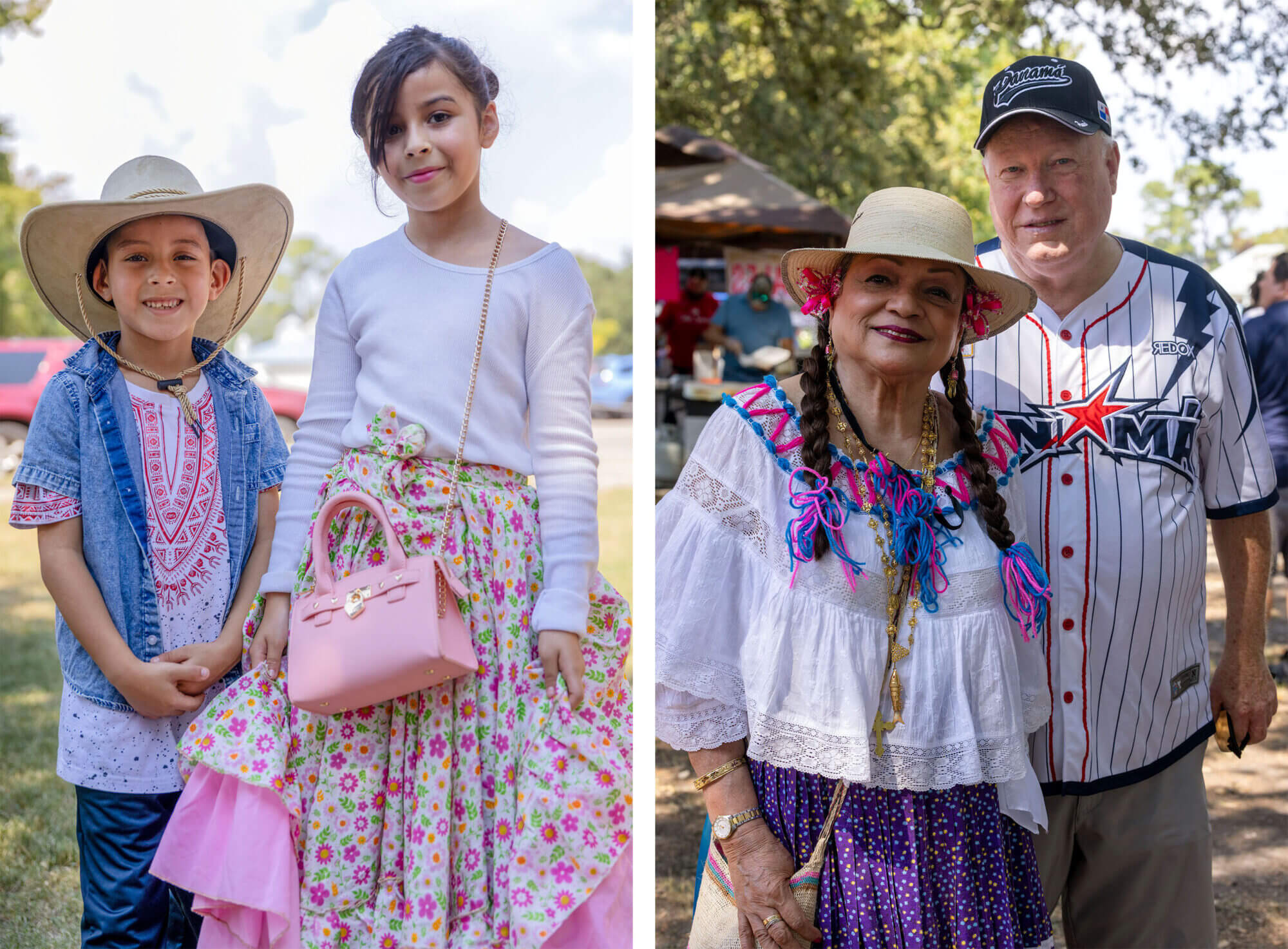
Left: Irene Avalos, 10, and Abby Sandoval, 9 pose for a portrait during the Festival Hispano de Pascagoula at Beach Park in Pascagoula, Miss., on Saturday, Sept. 20, 2025. Right: Megan Santamaria and Aitana Garcia wear traditional Costa Rican outfits during the festival. Credit: Eric Shelton/Mississippi Today
Main Street Pascagoula and the city organized the event, now in its fourth year.
“We think it is important because we have a large Hispanic community that is all along the Coast of Mississippi, and we just love to bring people together to celebrate that with good food, fellowship and good fun,” said Susannah Northrop, executive director of Main Street Pascagoula.
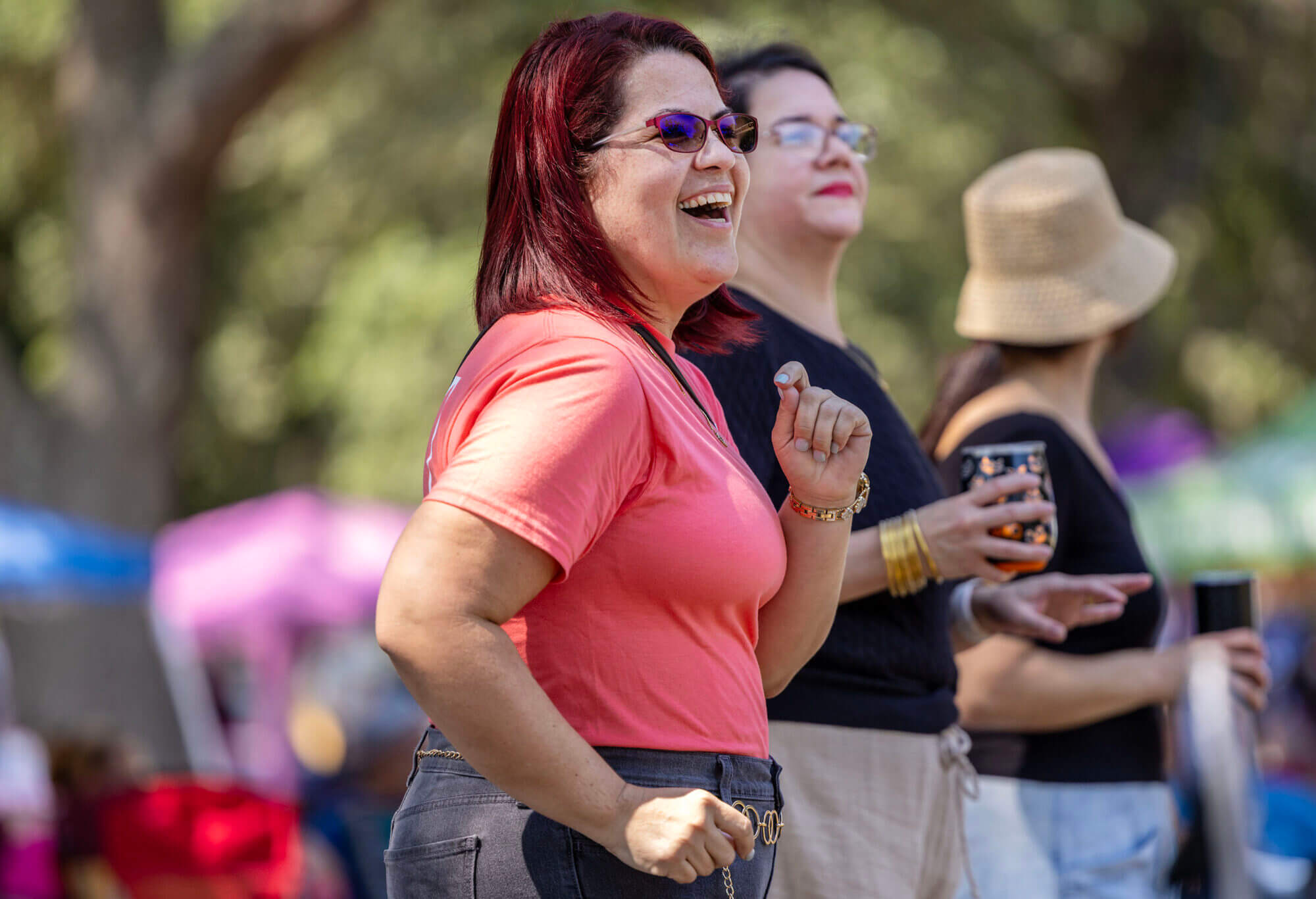
Festival goers greet each other, eat cultural food and enjoy the live music during the Hispano de Pascagoula at Beach Park in Pascagoula, Miss., on Saturday, Sept. 20, 2025. Credit: Eric Shelton/Mississippi Today
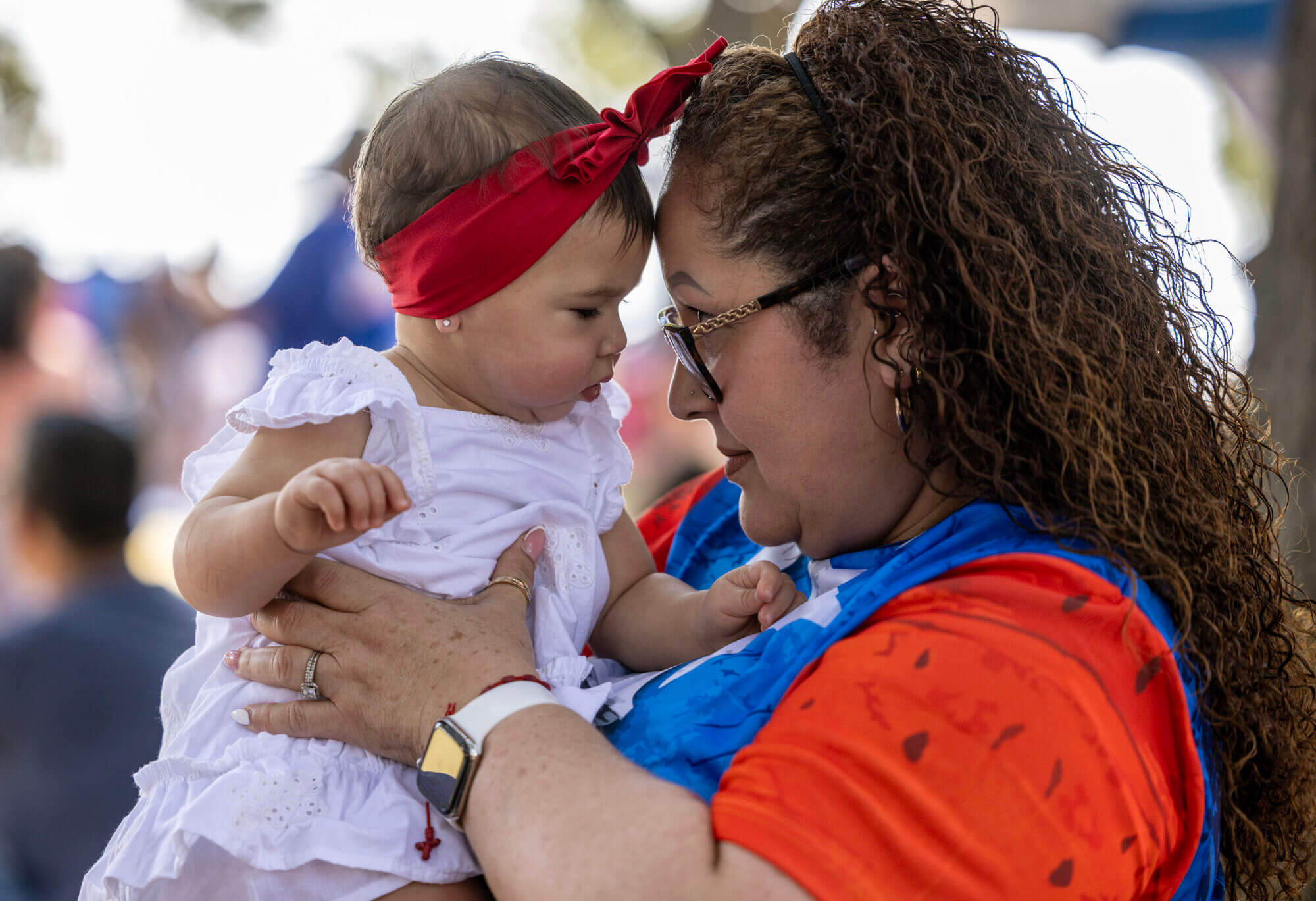
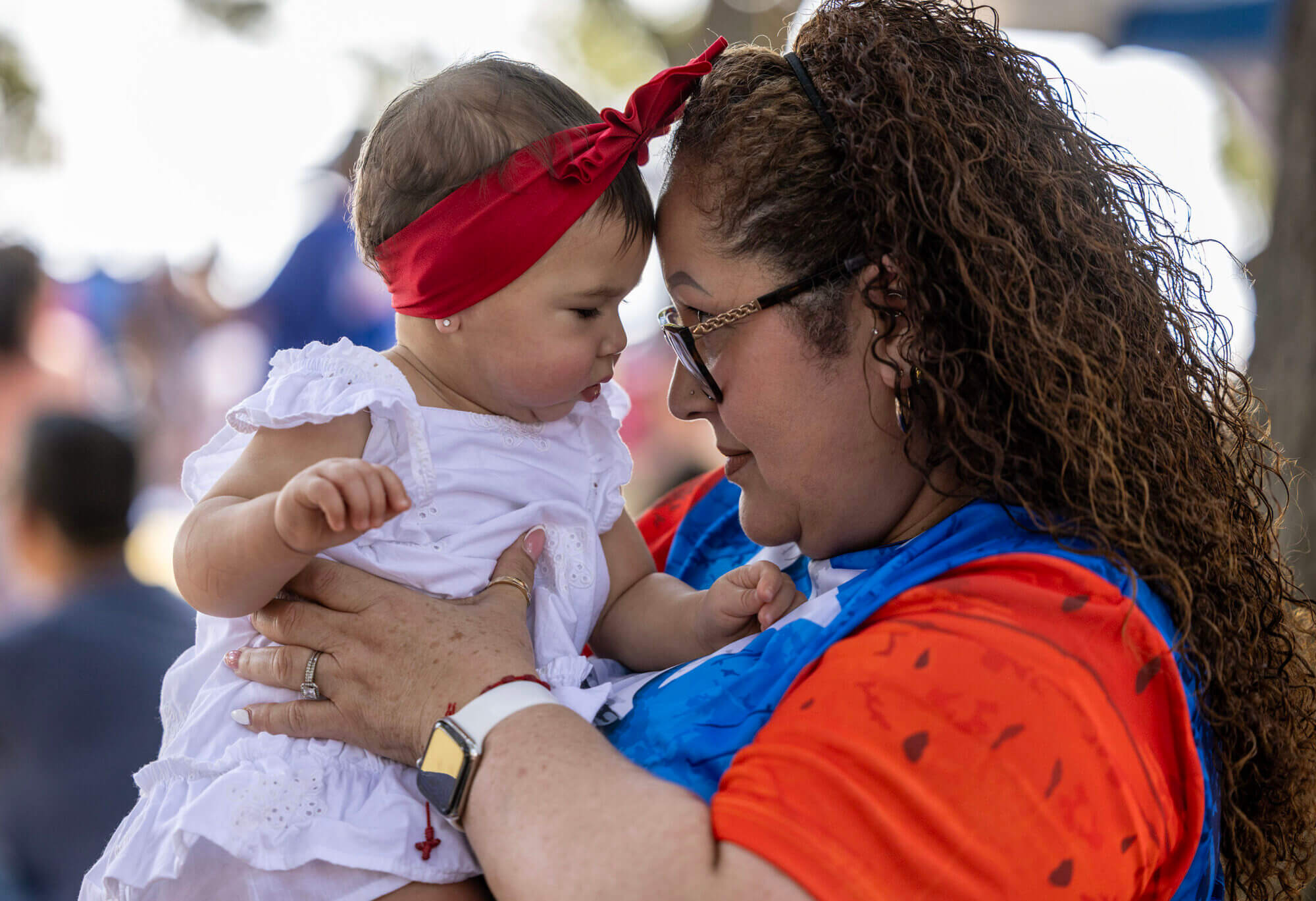
“There are so many Hispanic people on the Gulf Coast, it is important for us to know our culture,” said Marisol Perez, a Gulf Coast resident originally from Puerto Rico, as she held her 8-month-old granddaughter, Neylan E. Quirindongo.
Marisol Perez shares a moment with her granddaughter, Neylan E. Quirindongo, during the Hispano de Pascagoula at Beach Park in Pascagoula, Miss., on Saturday, Sept. 20, 2025. Credit: Eric Shelton/Mississippi Today
The event highlighted more than food, music or cultural outfits. It showed how Hispanic families have built a growing and connected community on the Gulf Coast.
As the day neared its end, drums and maracas kept the rhythms in play. The crowd danced, laughed and celebrated their rich culture and heritage under the southern Mississippi night sky.
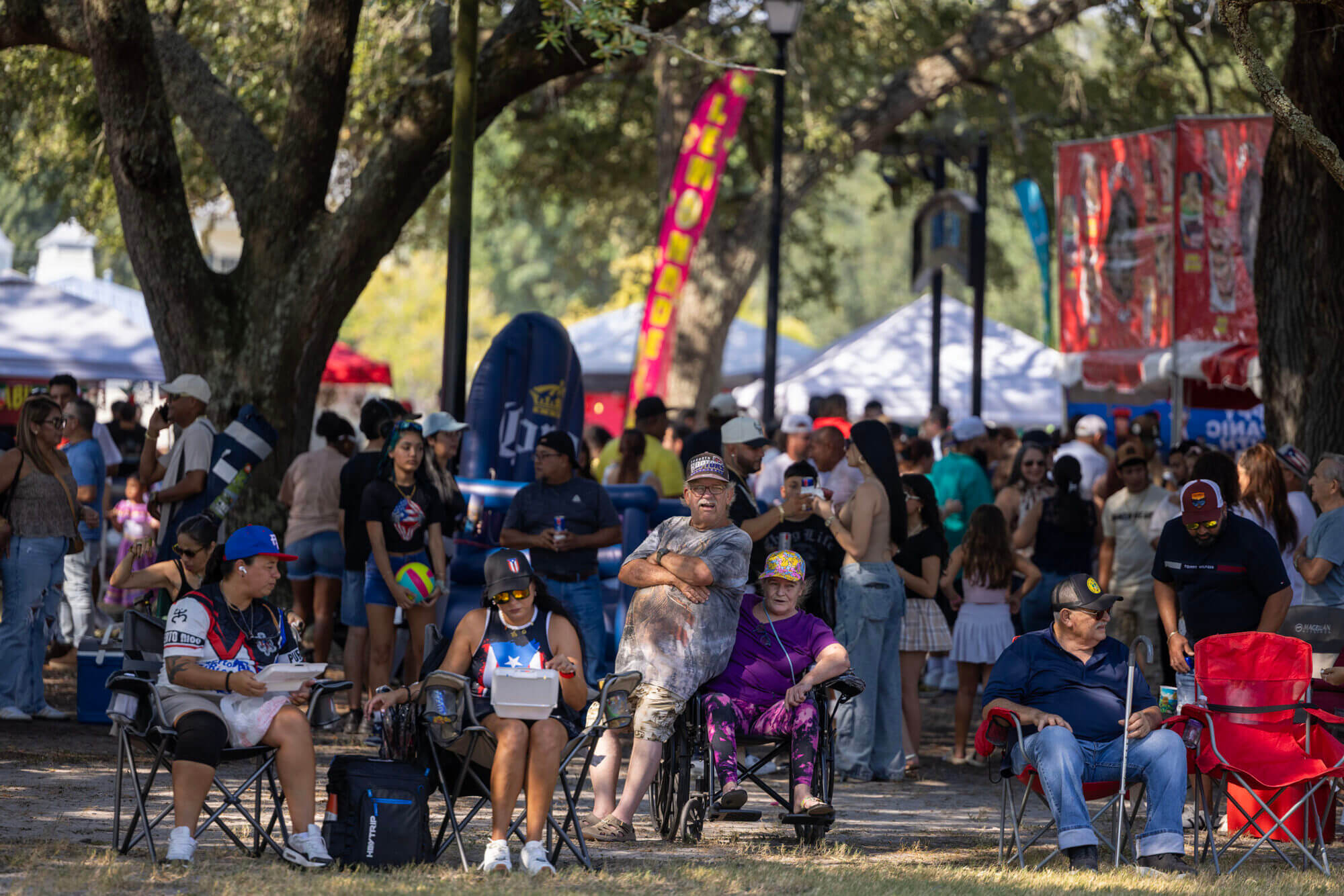
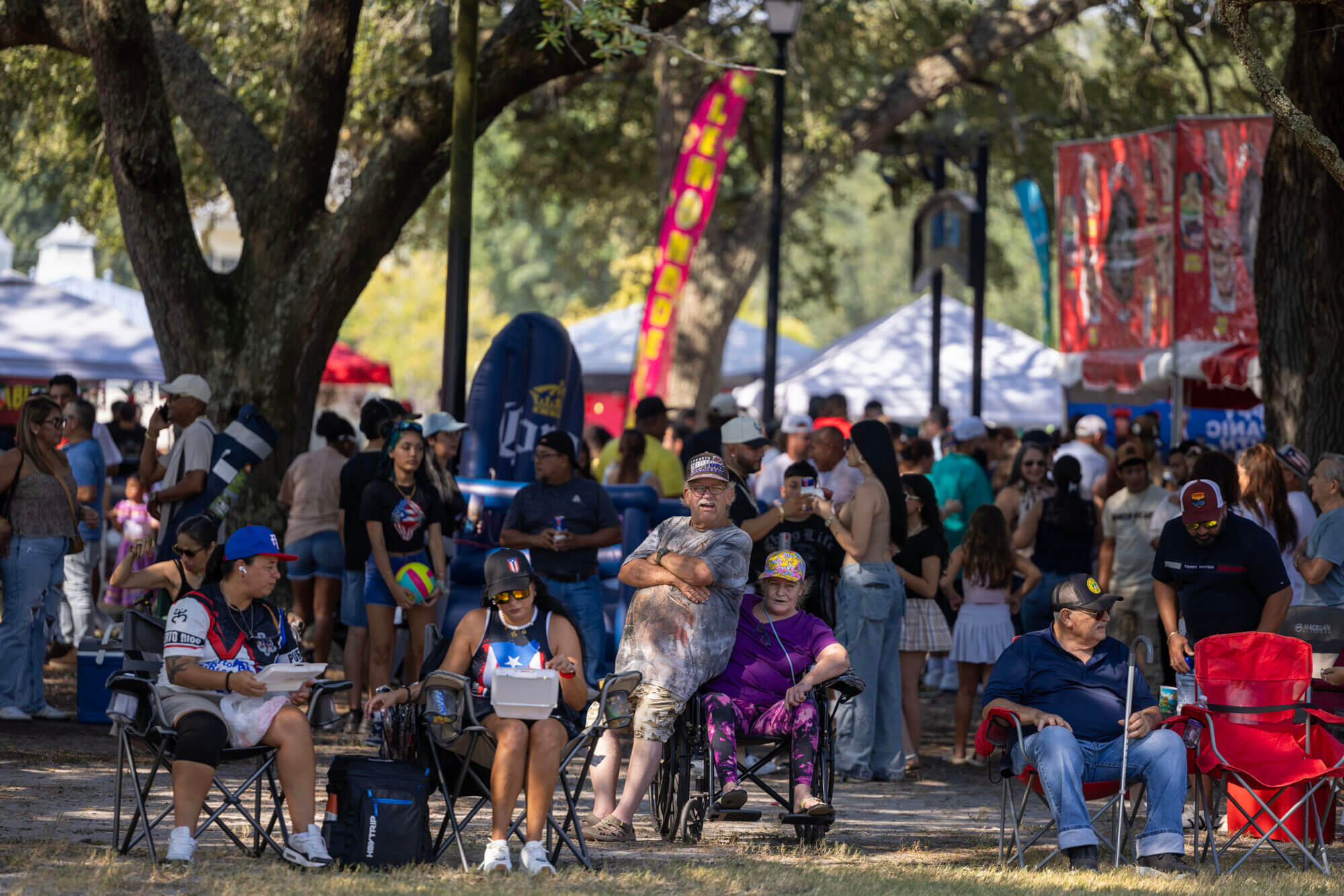
Event goers enjoy food and music during the Hispano de Pascagoula at Beach Park in Pascagoula, Miss., on Saturday, Sept. 20, 2025. Credit: Eric Shelton/Mississippi Today
Patricia Ramirez prepares food for event goers during the Festival Hispano de Pascagoula at Beach Park in Pascagoula, Miss., on Saturday, Sept. 20, 2025. Credit: Eric Shelton/Mississippi Today
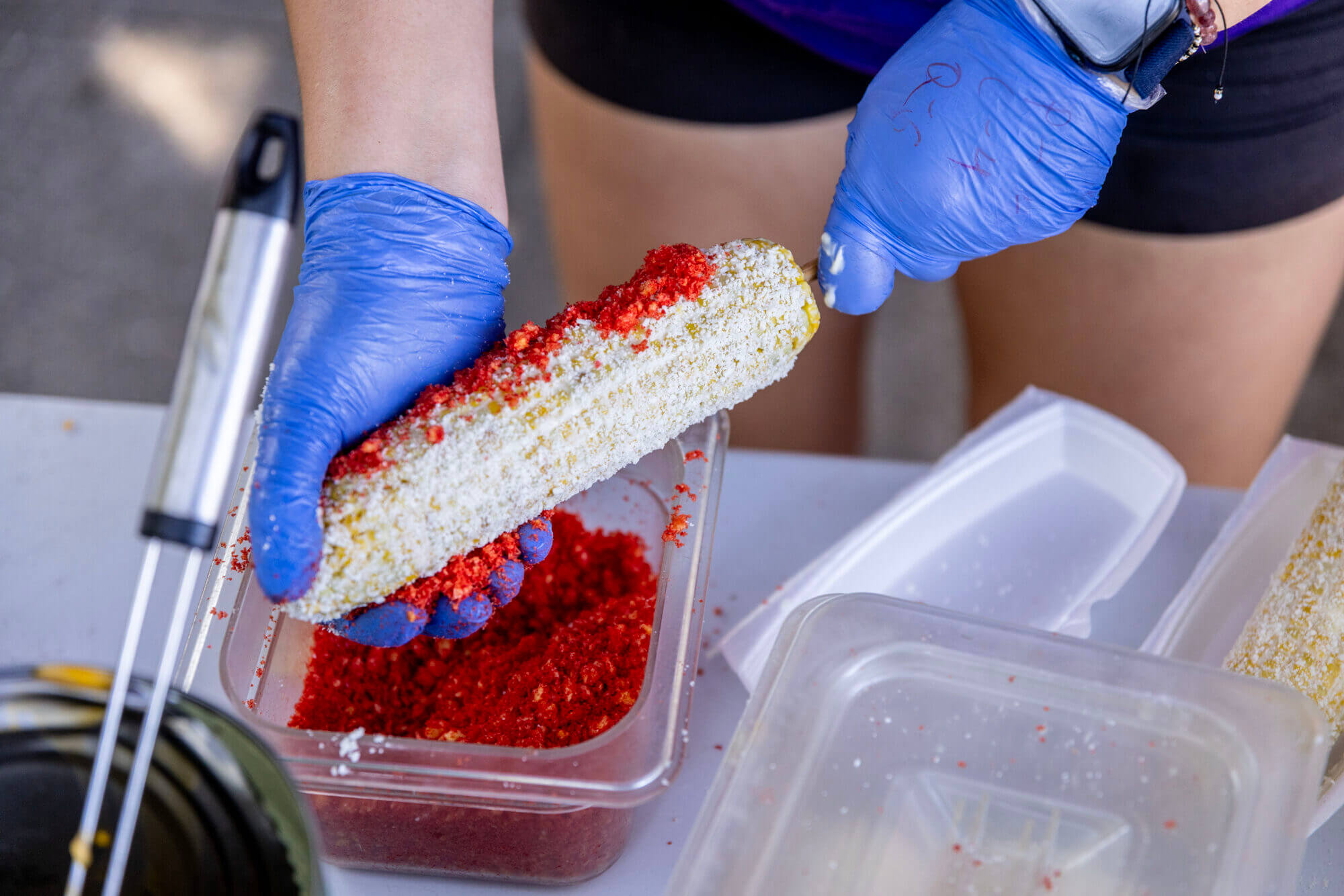
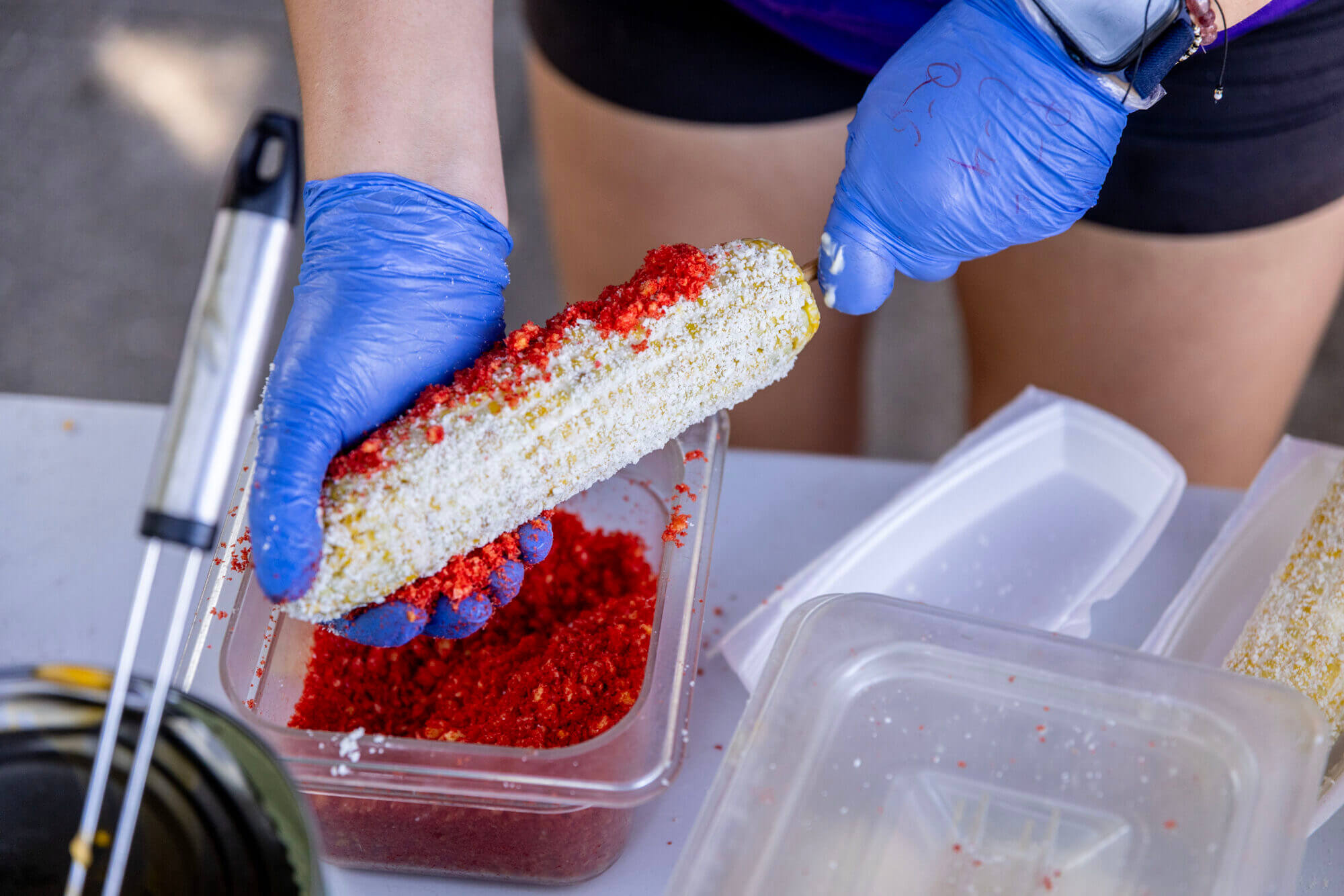
Elote, a popular Mexican dish, is prepared for event goers during the Festival Hispano de Pascagoula at Beach Park in Pascagoula, Miss., on Saturday, Sept. 20, 2025. Credit: Eric Shelton/Mississippi Today
A Mexican flag hangs on a vendors tent during the Festival Hispano de Pascagoula at Beach Park in Pascagoula, Miss., on Saturday, Sept. 20, 2025. Credit: Eric Shelton/Mississippi Today
Members of Zona Libre perform during the Festival Hispano de Pascagoula at Beach Park in Pascagoula, Miss., on Saturday, Sept. 20, 2025. Credit: Eric Shelton/Mississippi Today
Event goers listen to the music of Zona Libre during the Festival Hispano de Pascagoula at Beach Park in Pascagoula, Miss., on Saturday, Sept. 20, 2025. Credit: Eric Shelton/Mississippi Today
A dog wears a festive costume during the during the Festival Hispano de Pascagoula at Beach Park in Pascagoula, Miss., on Saturday, Sept. 20, 2025. Credit: Eric Shelton/Mississippi Today
Left: Julian Soria, 6, left, and Ivana Soria, 9, wear outfits inspired by their Mexican heritage during the Festival Hispano de Pascagoula at Beach Park in Pascagoula, Miss., on Saturday, Sept. 20, 2025. Right: Luz and Ed Stephens pose for a portrait while attending the festival. Credit: Eric Shelton/Mississippi Today
“Donald Trump ducks” are in place for customers to buy during the Hispano de Pascagoula at Beach Park in Pascagoula, Miss., on Saturday, Sept. 20, 2025. Credit: Eric Shelton/Mississippi Today
Items are for sale during the Festival Hispano de Pascagoula at Beach Park in Pascagoula, Miss., on Saturday, Sept. 20, 2025. Credit: Eric Shelton/Mississippi Today
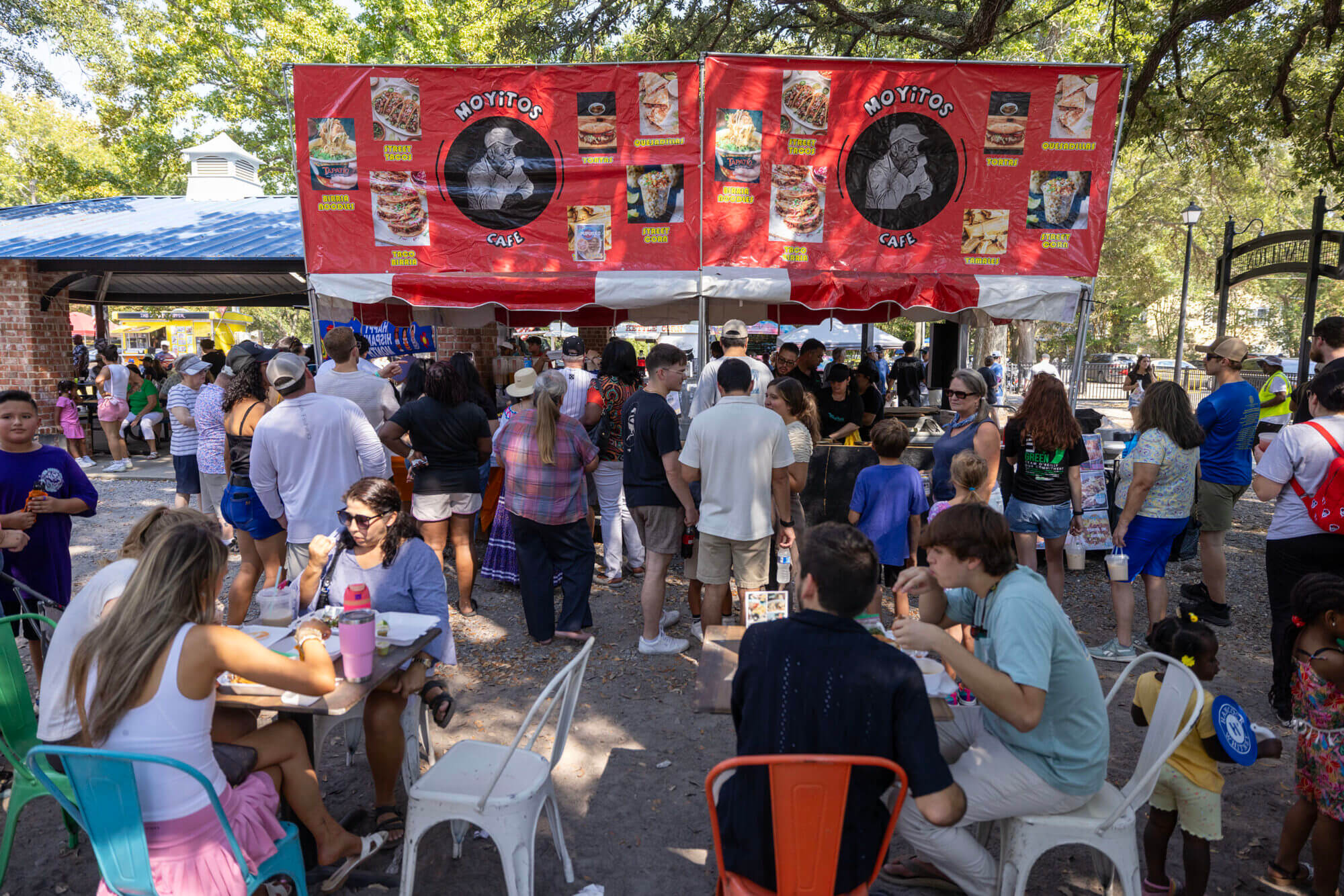
Food vendors representing countries across Latin America lined Beach Park in Pascagoula, Miss. during the Hispano de on Saturday, Sept. 20, 2025. Credit: Eric Shelton/Mississippi Today
A food vendor wears a shirt representing the country where he’s from, Colombia, during the Festival Hispano de Pascagoula at Beach Park in Pascagoula, Miss., on Saturday, Sept. 20, 2025. Credit: Eric Shelton/Mississippi Today
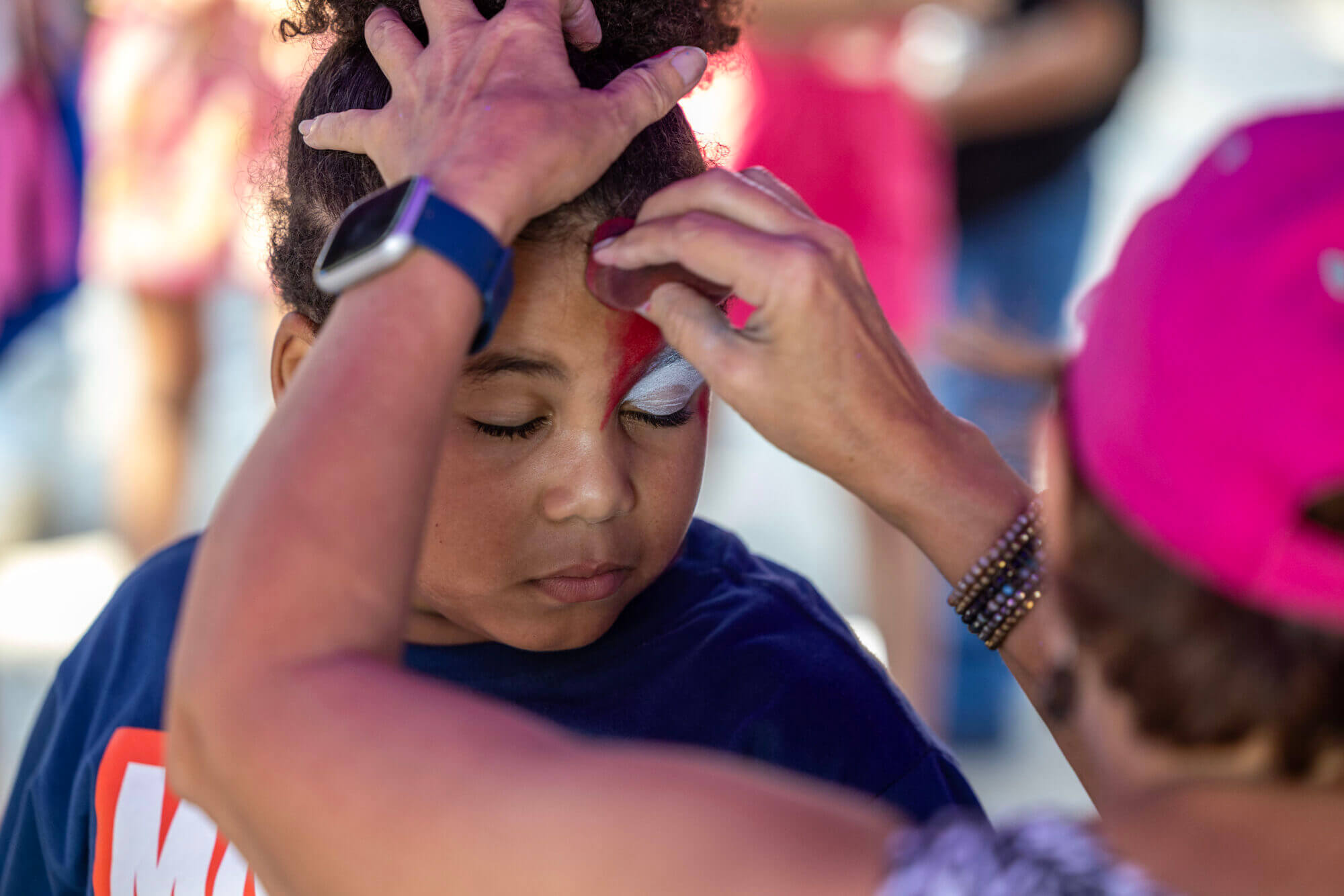
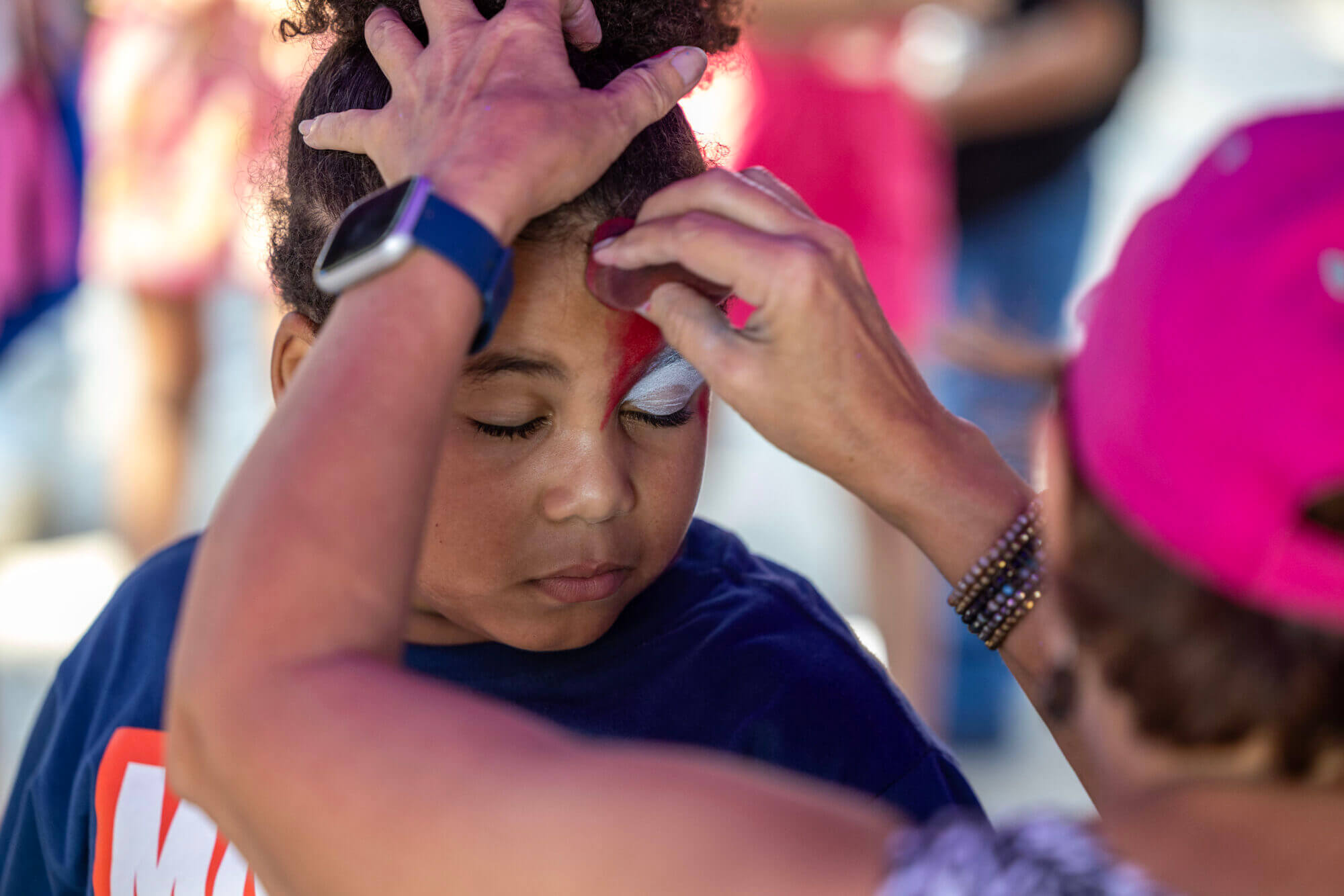
Jeremias Marte, 7, gets his face painted during the Festival Hispano de Pascagoula at Beach Park in Pascagoula, Miss., on Saturday, Sept. 20, 2025. Credit: Eric Shelton/Mississippi Today
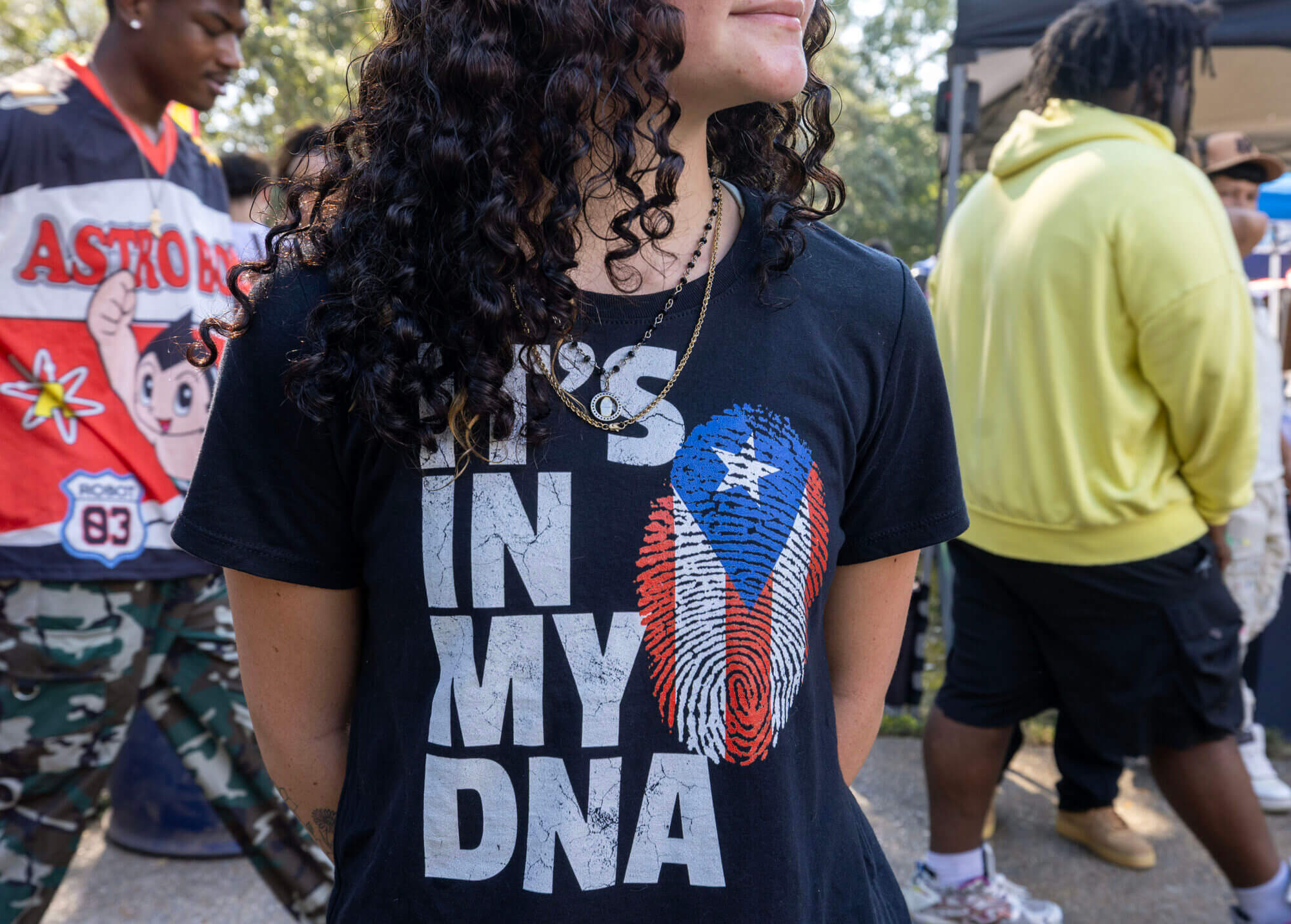
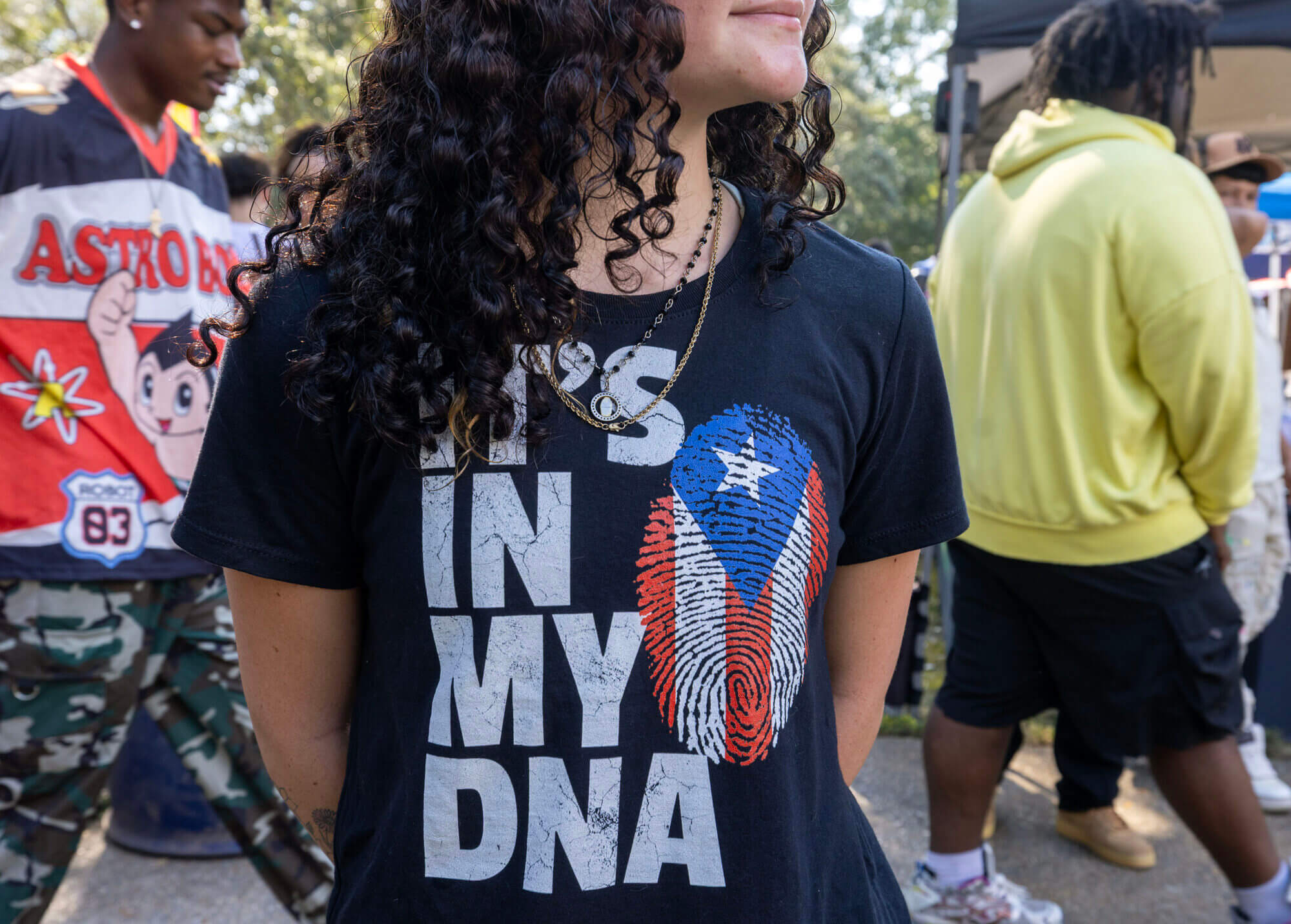
Adriana Lopez, 17, wears a Hispanic Heritage shirt during the Festival Hispano de Pascagoula at Beach Park in Pascagoula, Miss., on Saturday, Sept. 20, 2025. Credit: Eric Shelton/Mississippi Today
Miembros de Studio of Dance and Gymnastics bailan durante el Festival Hispano de Pascagoula el sábado, 20 de septiembre de 2025, en Beach Park, Pascagoula, estado de Mississippi. Eric Shelton/Mississippi Today Credit: Eric Shelton/Mississippi Today
PASCAGOULA — Tiras de papel picado y banderas de países de América Latina —con sus colores fuertes y diseños llamativos— brillaban bajo el sol de septiembre y sobre las cabezas de los asistentes al Festival Hispano de Pascagoula. El 20 de septiembre, familias de toda la Costa del Golfo se reunieron para celebrar su orgullo gastronómico, musical y cultural al aire libre.
En el festival, puestos de comida ofrecían tamales, tortillas frescas, empanadas y otros platos. Zona Libre tocaba música latina y la multitud bailaba, inmersa en los sonidos. Sus rostros transmitían orgullo y emoción. Los miembros de Studio of Dance y Gymnastics, luciendo trajes típicos coloridos, daban vueltas mientras que los asistentes mayores conversaban sobre cultura y raíces en sus países de nacimiento.
Integrantes de Zona Libre actúan durante el Festival Hispano de Pascagoula el sábado, 20 de septiembre de 2025, en Beach Park, Pascagoula, estado de Mississippi. Eric Shelton/Mississippi Today
Marisel Villegas, de Venezuela, baila al ritmo de Zona Libre durante el Festival Hispano de Pascagoula en Beach Park, Pascagoula, estado de Mississippi, el sábado, 20 de septiembre de 2025. Eric Shelton/Mississippi Today
“Se siente bien celebrar mi cultura”, dijo Nancy Morosky, una residente de la Costa del Golfo que nació en Puerto Rico. “Me gusta recordar de dónde venimos y quiero transmitirlo a la siguiente generación”.
Pascagoula es hogar de una de las comunidades latinas más grandes de la Costa del Golfo. Según el censo de 2020, cerca de 15% de sus 22,000 residentes se identifica como hispano o latino. En el condado de Jackson, la proporción es de casi 7%.
Irene Ávalos, de 10 años, y Abby Sandoval, de 9, posan para una foto durante el Festival Hispano de Pascagoula en Beach Park, Pascagoula, estado de Mississippi, el sábado, 20 de septiembre de 2025. A la der., Megan Santamaría y Aitana García visten trajes típicos de Costa Rica durante el festival. Eric Shelton/Mississippi Today Credit: Eric Shelton/Mississippi Today
Main Street Pascagoula y la ciudad organizaron el evento, que ya está en su cuarto año.
“Creemos que es importante porque tenemos una amplia comunidad hispana a lo largo de toda la Costa del Mississippi, y nos encanta reunir a la gente para celebrar eso con comida, compañerismo y entretenimiento sano”, dijo Susannah Northrop, directora ejecutiva de Main Street Pascagoula.
Asistentes se saludan, comen platos típicos y disfrutan de la música en vivo durante el Festival Hispano de Pascagoula en Beach Park, Pascagoula, estado de Mississippi, el sábado, 20 de septiembre de 2025. Eric Shelton/Mississippi Today
“Hay tantos hispanos en la Costa del Golfo, es importante para nosotros conocer nuestra cultura”, dijo Marisol Pérez, una residente de la Costa del Golfo originaria de Puerto Rico, mientras cargaba a Neylan E. Quirindongo, su nieta de ocho meses.
Marisol Pérez comparte con su nieta, Neylan E. Quirindongo, durante el Festival Hispano de Pascagoula en Beach Park, Pascagoula, estado de Mississippi, el sábado, 20 de septiembre de 2025. Eric Shelton/Mississippi Today
El evento destacó más que comida, música y trajes típicos. Demostró cómo las familias latinas en la Costa del Golfo han construido una comunidad que crece y que se conecta.
A medida que el día llegaba a su fin, tambores y maracas mantenían el ritmo. Los asistentes bailaban, reían y celebraban su rica cultura y herencia bajo el cielo oscuro de la noche del sur de Mississippi.
Asistentes disfrutan de la comida y la música durante el Festival Hispano de Pascagoula en Beach Park, Pascagoula, estado de Mississippi, el sábado, 20 de septiembre de 2025. Eric Shelton/Mississippi Today
Patricia Ramírez prepara comida para el público durante el Festival Hispano de Pascagoula en Beach Park, Pascagoula, estado de Mississippi, el sábado, 20 de septiembre de 2025. Eric Shelton/Mississippi Today
Elote, una comida callejera típica de México, es preparado para el público durante el Festival Hispano de Pascagoula en Beach Park, Pascagoula, estado de Mississippi, el sábado, 20 de septiembre de 2025. Eric Shelton/Mississippi Today
Una bandera mexicana adorna un puesto en el Festival Hispano de Pascagoula en Beach Park, Pascagoula, estado de Mississippi, el sábado, 20 de septiembre de 2025. Eric Shelton/Mississippi Today
Integrantes de Zona Libre actúan durante el Festival Hispano de Pascagoula en Beach Park, Pascagoula, estado de Mississippi, el sábado, 20 de septiembre de 2025. Eric Shelton/Mississippi Today
Asistentes bailan al ritmo de la música de Zona Libre durante el Festival Hispano de Pascagoula en Beach Park, Pascagoula, estado de Mississippi, el sábado, 20 de septiembre de 2025. Eric Shelton/Mississippi Today
Un perro luce su mejor gala durante el Festival Hispano de Pascagoula en Beach Park, Pascagoula, estado de Mississippi, el sábado, 20 de septiembre de 2025. Eric Shelton/Mississippi Today
Julia Soria, de 6 años, izq., e Ivana Soria, de 9, lucen trajes inspirados en su cultura mexicana durante el Festival Hispano de Pascagoula en Beach Park, Pascagoula, estado de Mississippi, el sábado, 20 de septiembre de 2025. A la derecha, Luz y Ed Stephens posan para una foto durante el festival. Eric Shelton/Mississippi Today Credit: Eric Shelton/Mississippi Today
Patos “Donald Trump” a la venta durante el Festival Hispano de Pascagoula en Beach Park, Pascagoula, estado de Mississippi, el sábado, 20 de septiembre de 2025. Eric Shelton/Mississippi Today
Artículos a la venta durante el Festival Hispano de Pascagoula en Beach Park, Pascagoula, estado de Mississippi, el sábado, 20 de septiembre de 2025. Eric Shelton/Mississippi Today
Puestos de comida de distintos países de América Latina ofrecen sus platos en Beach Park, Pascagoula, estado de Mississippi, durante el Festival Hispano el sábado, 20 de septiembre de 2025. Eric Shelton/Mississippi Today
Un vendedor de comida viste una camiseta representando su país de origen —Colombia— durante el Festival Hispano de Pascagoula en Beach Park, Pascagoula, estado de Mississippi, el sábado, 20 de septiembre de 2025. Eric Shelton/Mississippi Today
Jeremías Marte, de 7 años, se deja pintar el rostro durante el Festival Hispano de Pascagoula en Beach Park, Pascagoula, estado de Mississippi, el sábado, 20 de septiembre de 2025. Eric Shelton/Mississippi Today Credit: Eric Shelton/Mississippi TodayAdriana López, de 17 años, viste una camiseta con la bandera de Puerto Rico en forma de huella digital durante el Festival Hispano de Pascagoula en Beach Park, Pascagoula, estado de Mississippi, el sábado, 20 de septiembre de 2025. Eric Shelton/Mississippi Today
The Clevelands discuss last weekend and the one coming up, including what appeared to be a routine quarterback sack by the Saints’ Carl Granderson of the Giants’ Jaxson Dart that was somehow called roughing the passer. The Saints, believe it or not, won anyway. Also, the conversation turns to what might have been the last Sanderson Farms Championship and the upcoming weekend in college football.
At least $500 million is expected to flow into Mississippi over the next five years as a part of a major federal investment into rural healthcare.
The funding aims to offset the disproportionate impact already-struggling rural hospitals are expected to bear as a result of Medicaid spending cuts signed into law by President Donald Trump this summer.
More than half of Mississippi’s rural hospitals are at risk of closing. Republican Gov. Tate Reeves will decide what to include in the state’s one-time application for the funding, which is due in just over a month.
Reeves did not respond to Mississippi Today’s questions about his plans or priorities for the funds.
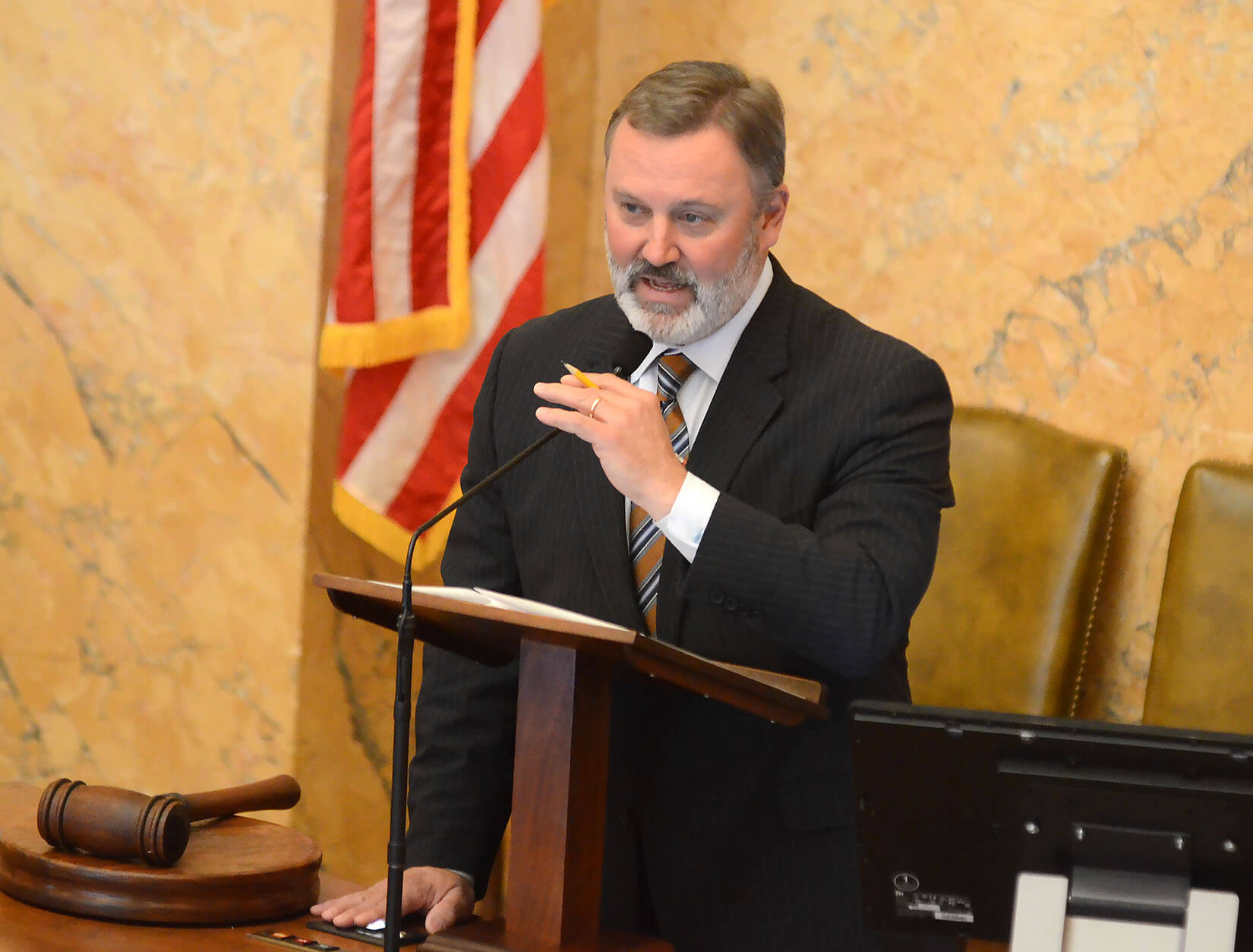
Legislators hold the authority to appropriate money through the “power of the purse.” During a state budget hearing Sept. 24, House Speaker Jason White expressed frustration that they have not been more included in the decision-making process.
This sets the stage for a possible conflict between the governor and legislators over who has the authority to appropriate the funds, echoing disputes that arose during the distribution of federal COVID-19 aid.
Cindy Bradshaw, executive director of the Mississippi Division of Medicaid, listens during a meeting of the Medicaid Advisory Committee at the Sillers Building, Friday, July 25, 2025, in Jackson. Credit: Vickie D. King/Mississippi Today
“I understand the timeline’s tight,” White said to Mississippi Medicaid Director Cindy Bradshaw. “But I also understand, I think people want to have input on what that looks like if they’re going to be appropriating the money.”
The state Division of Medicaid and the Department of Health are supporting the governor in crafting the application.
Half of the $50 billion Rural Health Transformation Program will be distributed evenly among all states with approved applications, amounting to $100 million a year for five years per state if all states apply and are accepted. The other half will be allocated to states based on a variety of factors, including the rural population, the proportion of rural health facilities and the condition of hospitals.
House Speaker Jason White brings the House of Representatives to order at the beginning of the new legislative session at the state Capitol, Tuesday, Jan. 7, 2025 in Jackson. Credit: Vickie D. King/Mississippi Today
Health care leaders told Mississippi Today they expect the discretionary funding allocations to benefit Mississippi, where most people live in rural communities and two out of three hospitals are in rural areas.
“The key takeaway is Mississippi does do really well with this,” said Ryan Kelly, executive director of the Mississippi Rural Health Association, an organization for health professionals and advocates.
The funding is focused on strengthening access to health care by investing in lasting improvements to preventive medicine, collaboration between health care facilities, workforce development and innovations in care and technology.
Bradshaw estimated that cuts to state directed payments, which help hospitals offset low Medicaid payments, will amount to a loss of $160 million a year beginning in 2029.
Rural hospitals may also shoulder rising costs of uninsured care if enhanced premium tax credits, which make marketplace insurance more affordable, expire at the end of this year. Over 100,000 Mississippians are expected to lose health insurance coverage if the credits are not extended.
Some advocates caution that the federal investment in rural health care will be too little to offset the losses Mississippi’s rural hospitals will face.
“It simply won’t be enough,” said Khaylah Scott, a program manager for the Mississippi Health Advocacy Program, an organization aimed at improving health policies.
She called the program a “Band-Aid,” noting that it is temporary and will cover only about a third of the estimated losses to federal Medicaid funding in rural areas.
Bradshaw said the new funding alone may not resolve the challenges facing rural hospitals.
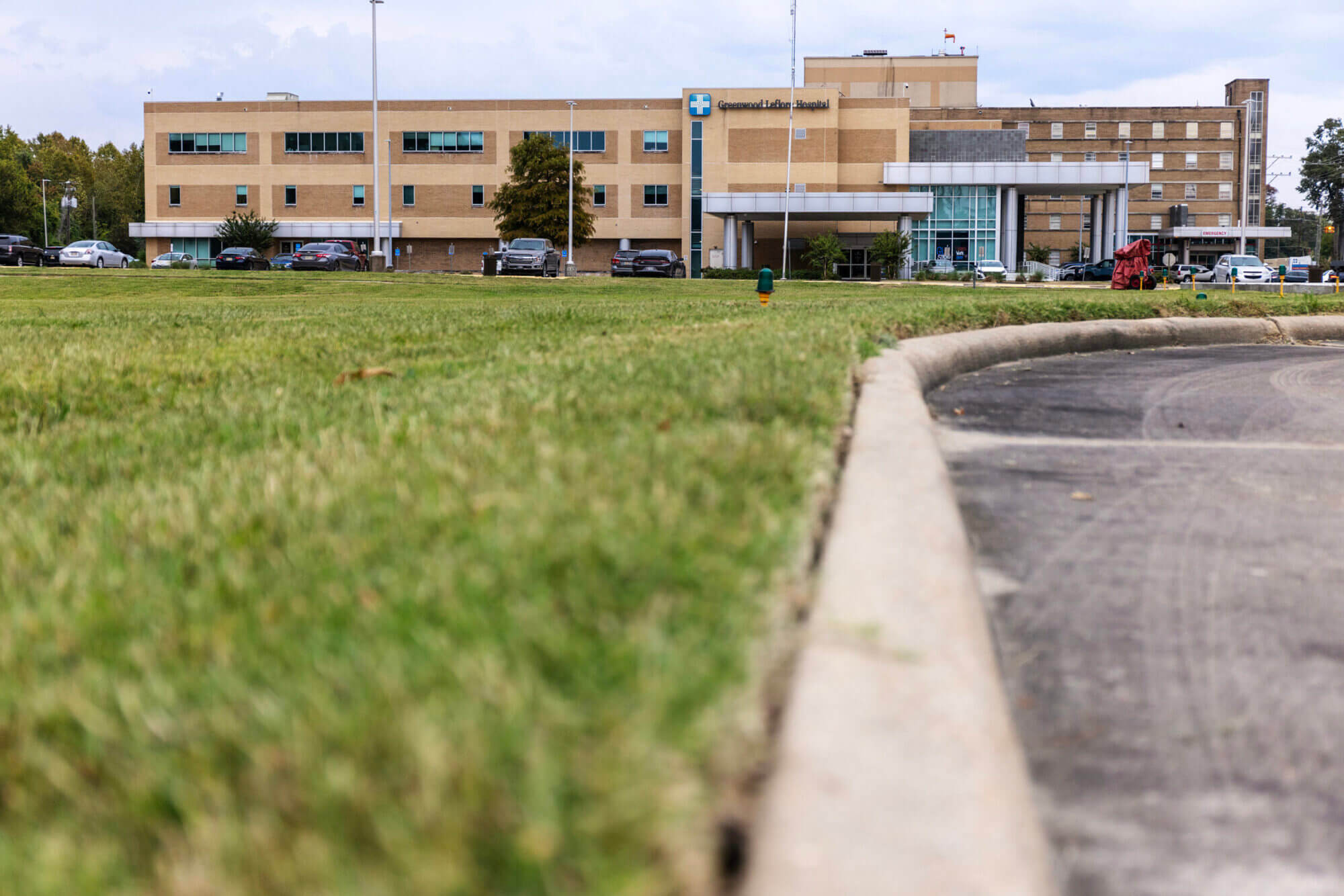
Greenwood Leflore Hospital is pictured in Greenwood, Miss., on Wednesday, Sept. 20, 2023. Credit: Eric Shelton/Mississippi Today
“Throwing more money at hospitals I don’t think is necessarily the answer because we’ve done that the last two years and they’re still not thriving,” Bradshaw told legislative budget leaders.
The application opened in mid-September and states must submit a plan before Nov. 5. The federal government will approve applications by the end of the year.
“The timing is really tricky and maybe even unfortunate that we have such a short amount of time to be able to submit the application,” Bradshaw said.
Mississippi has moved quickly to solicit input from stakeholders and health leaders.
A survey released at the end of July yielded over 120 responses. Thirteen stakeholders were invited to a closed-door meeting Aug. 28 to present their ideas for the program to representatives from the governor’s office, the Division of Medicaid and the Department of Health.
The state has not held any public meetings or hearings. Other states, including Louisiana, have held outreach meetings around the state to gain feedback from stakeholders and rural residents.
The Mississippi Hospital Association was one of 13 organizations chosen to present ideas to the governor.
“We feel like those funds really need to be focused on the rural hospitals to help them absorb some of the upcoming losses of those supplemental payments that have been so vital in keeping the doors open and keeping access to care alive in those rural areas,” said Richard Roberson, the association’s president and CEO.
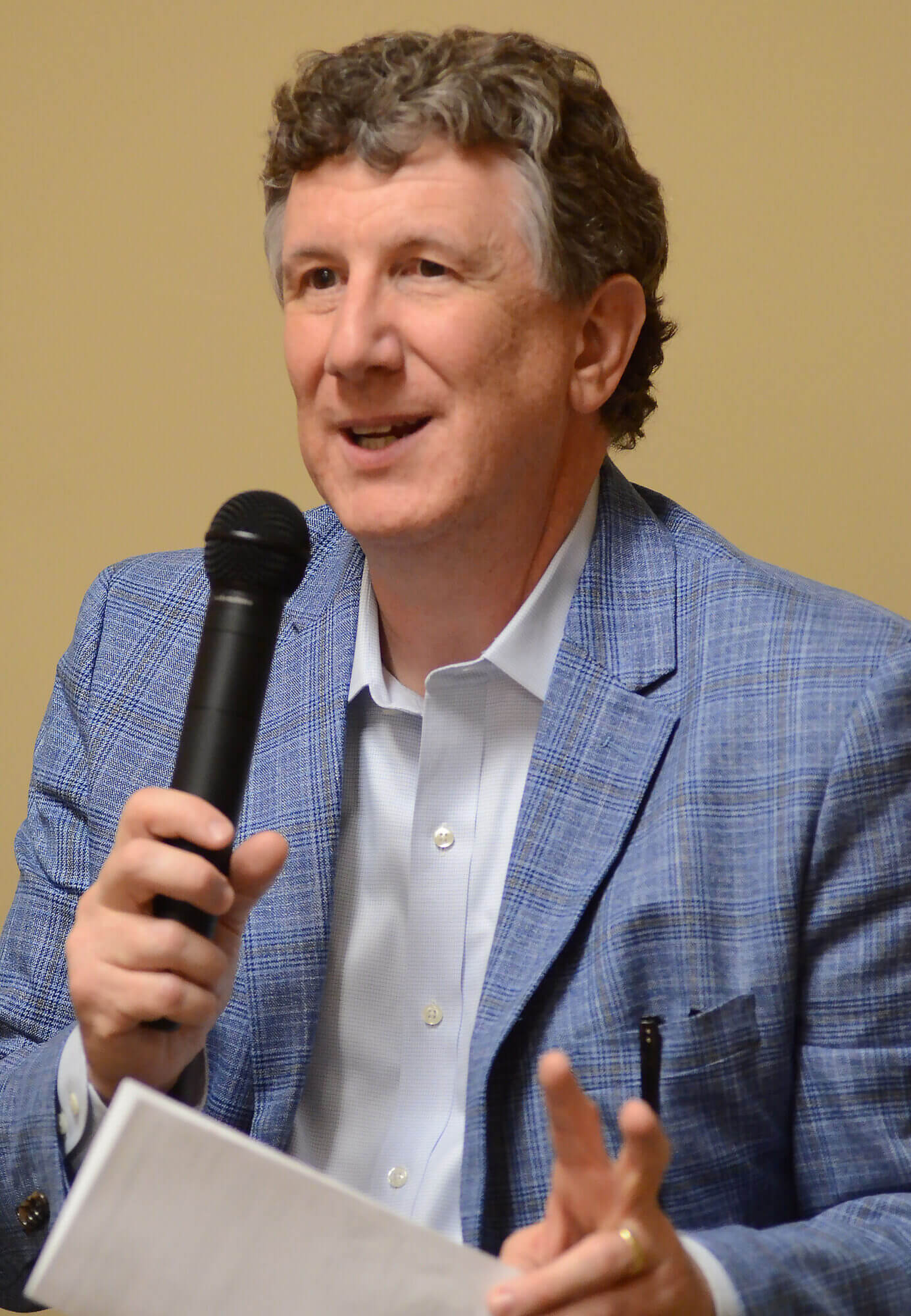
Richard Roberson, Mississippi Hospital Association president and CEO, discusses the impact of what the White House calls “One Big Beautiful Bill,” Wednesday, July 9, 2025, at the Mississippi Hospital Association Conference Center in Madison. Credit: Vickie D. King/Mississippi Today
The association has proposed using the funding for a grant to help rural hospitals cover costs of uncompensated care, improve infrastructure, create programs to recruit and retain health professionals in rural areas, expand the state’s ability to share information between providers and improve telehealth technology.
The Mississippi Healthcare Collaborative, which represents other hospitals and health care organizations and was also invited to present at the forum, did not respond to a request for comment from Mississippi Today.
The program will give Mississippi the opportunity to fund “ready projects” the state has been studying the past two to three years, State Health Officer Dr. Daniel Edney said in an interview with the Association of State and Territorial Health Officials.
Department of Health spokesperson Greg Flynn declined to say which projects Edney was referencing, citing the governor’s authority to make final decisions about the application.
Kelly, of the Rural Health Association, said it is difficult to determine how to support rural health care with a large amount of funding.
“Normally we have to find ways to do things without money,” he said. “Now, it’s like we have to flip on its head what we’ve had to do, and now we have to find a way to spend money – a lot of money. And that’s kind of a challenge.”