Ole Miss and Southern Miss are off this weekend and Mississippi State is on the road, but the Sanderson Farms Championship, Mississippi’s only PGA Tour tournament returns to the Country Club of Jackson. Today’s discussion includes golf – both a Ryder Cup review and a Sanderson Farms preview – and a Mississippi college football season that keeps getting more interesting.
Mississippi Today launched a major update to our website Wednesday night – the first redesign since 2021. In this revamp, we aimed to make the site a fitting showcase for the excellent work our journalists do every day to serve Mississippians while making it easier for you, our readers, to find the news that matters to you in the form you want to consume it.
Above all, we aimed to create a cleaner, less distracting reader experience by reducing unnecessary visual clutter, removing many of the advertisements on story pages and ensuring our reporting reads well on any device. We also made a number of technical improvements for faster load time on slower connections and mobile devices.
The navigation at the top and bottom of the site was also completely reworked to make it easier to directly access stories by topic. You’ll also notice more opportunities throughout the site to explore these topics more deeply, including related stories at the end of story pages, blocks to help you navigate between stories in larger projects and series, and more robust content tagging to help you find more stories on the topics that matter to you most.
We’ve elevated the links where you can find more information about Mississippi Today, how we’re funded and how to get in touch with us. We’ve also added more biographical information about all of our journalists that you can access by clicking on their bylines or by using the “read more” links at the end of stories. We’re proud to say many of our journalists were born and raised in Mississippi and are deeply connected to the communities they serve. We’re equally proud of the work they’ve done, the impact they’ve had and the recognition they’ve received in the form of regional and national journalism awards. This work is now more fully showcased on each of their bio pages.
We know many readers are now consuming our content on video platforms, so we’ve added new ways to feature video content directly on our homepage. As we grow our multimedia team, you can expect to find more video explainers, analysis and direct connection with our journalists through video throughout the site.
We hope you love the changes, and we also value your feedback. If you have any feedback – good or bad – or questions about the new design, please get in touch by filling out this form. We’d love to hear from you.
Finally, this work would not happen without the contributions of our member community. If you already support us, thank you for making all of these improvements possible. If you value this work and have the means to do so, we hope you’ll become a member or consider making an additional contribution so we can continue making improvements to better serve you.
City and county officials across Mississippi have taken new steps to address addiction with opioid settlement money in the wake of Mississippi Today’s investigation into how these funds have been managed and spent.
The newsroom found in September that of the $15.5 million of money nearly 150 local governments had received since 2022 from companies that contributed to thousands of Mississippi overdose deaths, elected leaders used less than $1 million to prevent the crisis from proliferating. That roughly $945,000 was the only part of Mississippi’s total settlement share, over $124 million as of this summer, used to address addiction.
Soon after the investigation was published, Jackson City Council member Kevin Parkinson shared at a late September council meeting how the devastating effects of a deadly overdose can permanently scar any family, including his own.
A few days later, years after Jackson received its first check from lawsuits intended to prevent more drug deaths, Parkinson told Mississippi Today he wants the city to use that money to curb an addiction public health crisis that has claimed the lives of thousands of Mississippians.
The city had received over $500,000 since 2022 from drug companies that contributed to the decades-long opioid crisis. Jackson, so far, has spent that money on routine general expenses such as construction — a common trend among the 147 local governments in the state receiving settlement shares, according to the investigation.
Parkinson, who was elected in June, said he didn’t know what the city had spent its money on until the newsroom’s investigation, and it was disappointing to learn about the dollars funding efforts such as moving city offices.
He said his 32-year-old sister died of an overdose in 2023. She entered addiction treatment but relapsed a number of times, and Parkinson remembers when he and his parents would drive through the Chicago suburbs searching for any sign of her, hoping she was still alive.
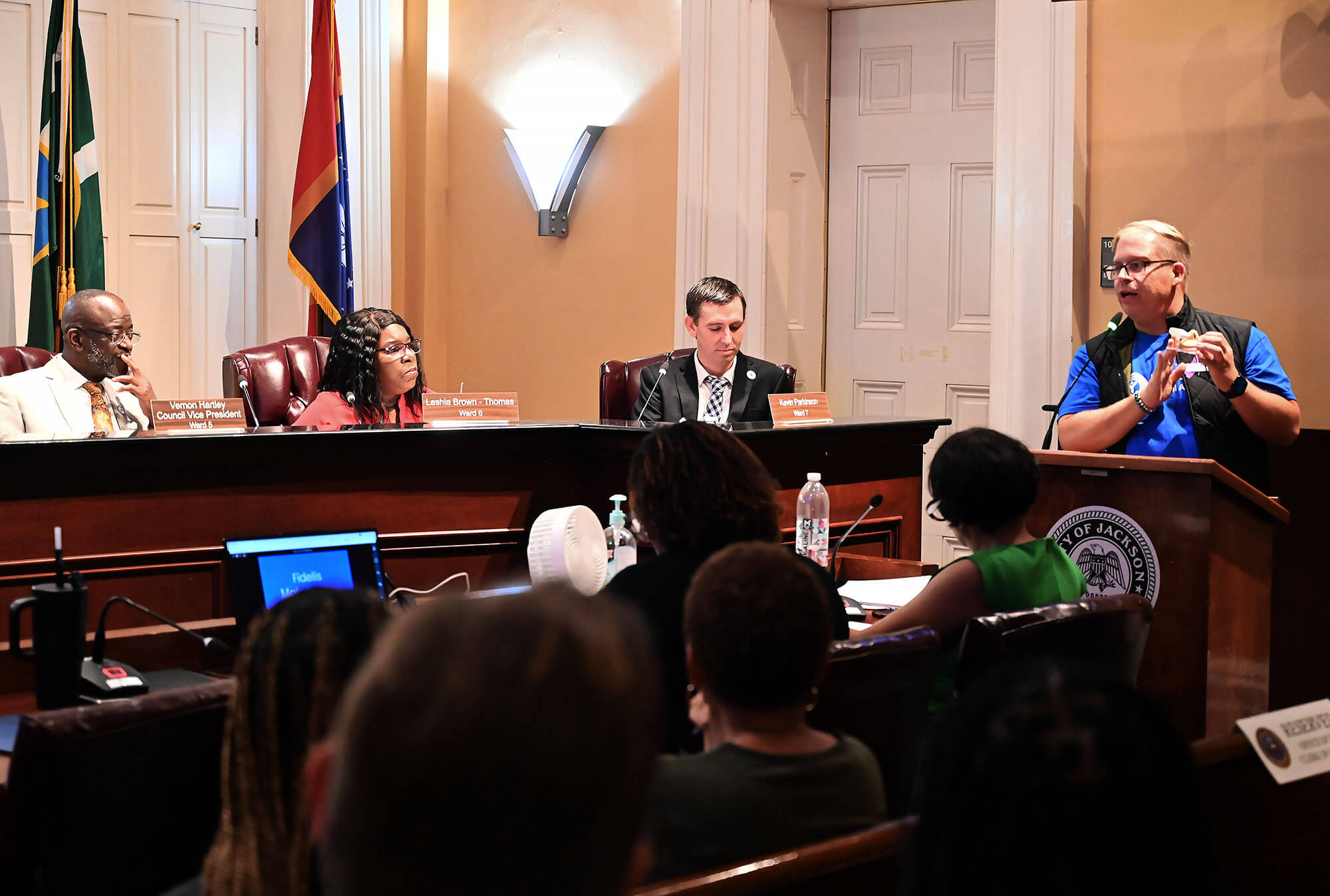
Kevin Parkinson, second from right, listens as Jason McCarty, United Way of the Capital Area program development strategist, shows Jackson City Council members a naloxone kit at City Hall in Jackson on Tuesday, Sept. 23, 2025. Naloxone is a life-saving medication applied to rapidly reverse an opioid overdose. Credit: Vickie D. King/Mississippi Today
Parkinson said he doesn’t see government bodies as the biggest victims in the epidemic, despite the fact Attorney General Lynn Fitch’s office has allowed Mississippi local governments to use tens of millions of opioid settlement dollars for any public purpose.
“Families really, really paid the ultimate price,” he said.
Parkinson said he wants to explore ways for Jackson residents with expertise about the epidemic to share ideas for the money’s best uses — whether that’s through a public hearing or a community-led task force.
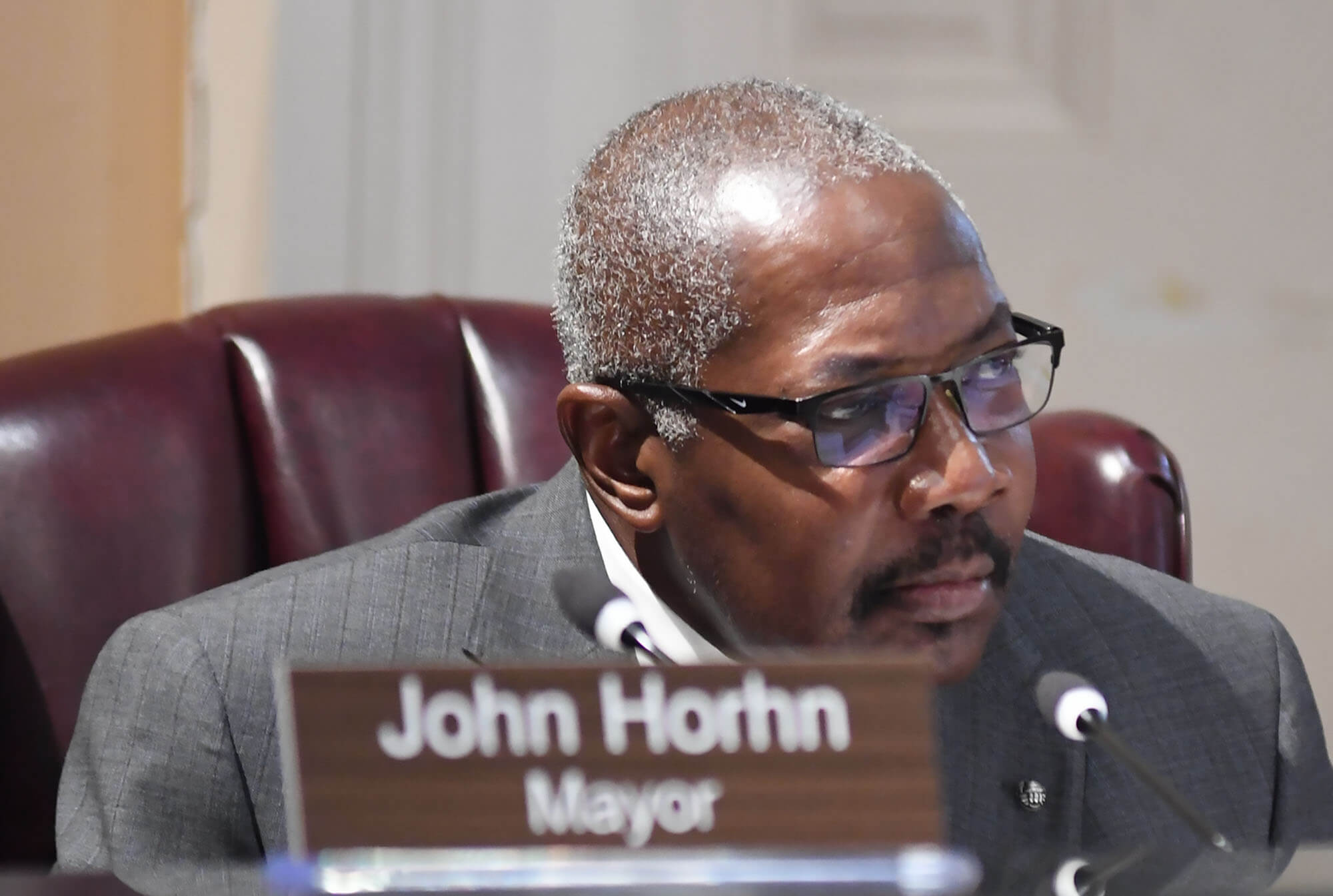
Mayor John Horhn, who took office July 1, said in September that he wants to see Jackson’s opioid settlement money spent primarily on violence prevention in the future. In the same speech, he said anything Mississippi governments can do to prevent fentanyl overdoses is a good thing.
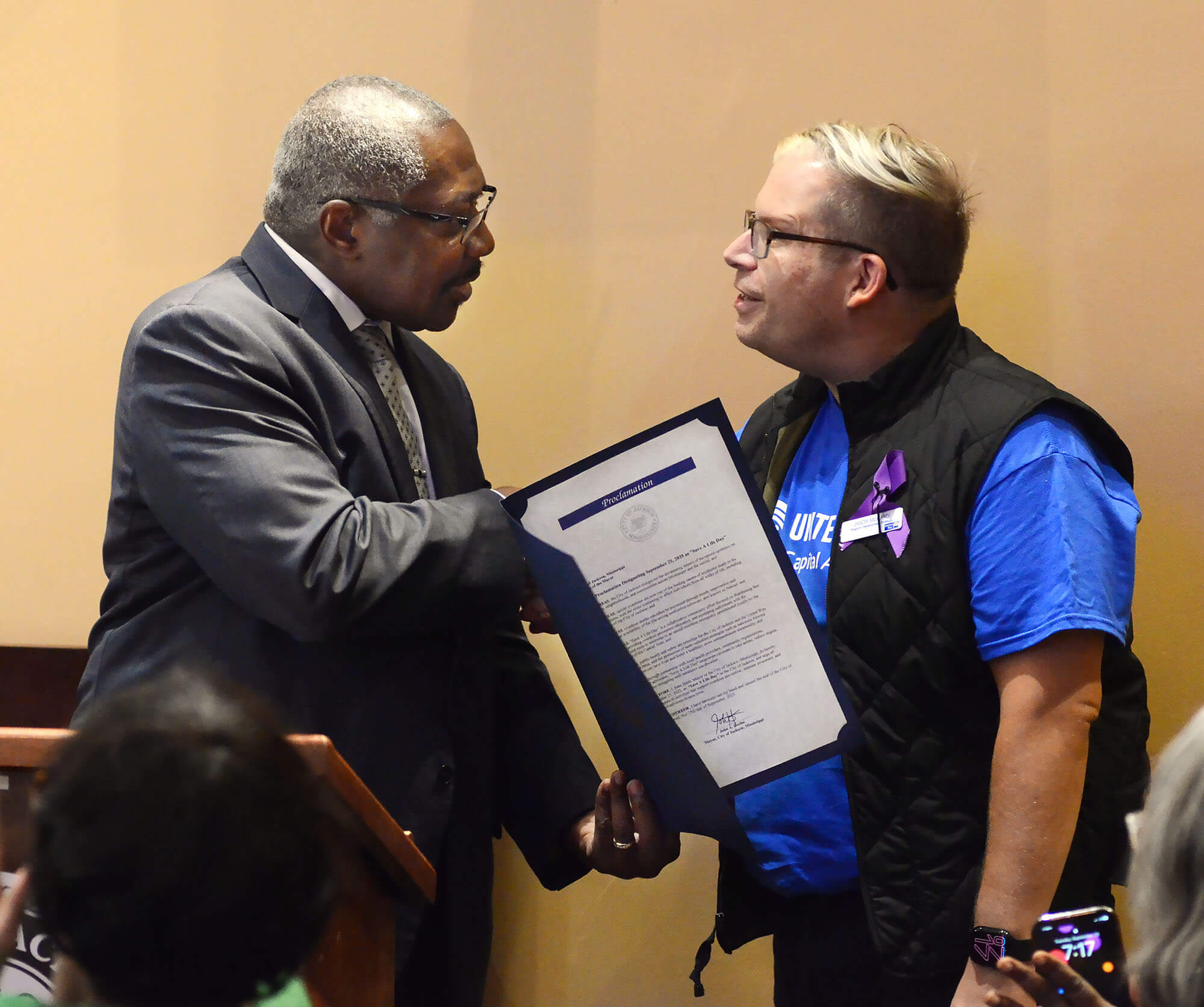
Mayor John Horhn (left) with Jason McCarty, United Way of the Capital Area program development strategist, presents a proclamation, declaring September 25, 2025, Save a Life Day in Jackson, during Tuesday evening’s City Council meeting at City Hall in Jackson, Tuesday, Sept. 23, 2025. Credit: Vickie D. King/Mississippi Today
Nic Lott, Horhn’s spokesperson, did not respond to an email that asked what steps the mayor wanted to take to address the addiction crisis and if Horhn would support a public hearing related to Jackson’s settlement dollars.
Parkinson said Jackson needs to address important problems, including violence, but spending this money on addiction prevention, treatment and recovery could save lives. He said it would’ve been helpful for Fitch to restrict the funds for only those efforts.
“This is a case where I would have appreciated more handcuffs,” he said.
Officials representing four other Mississippi cities and counties, stretching from the Tennessee border to the southern end of the Pearl River, also confirmed they’ve recently taken steps to start spending the settlement money they control to prevent more deadly overdoses.
Officials in Lowndes County plan to send future settlement dollars of up to $50,000 over the next 12 months to Community Counseling Services, the region’s community mental health center, said county administrator James Fisher. Previously, the supervisors had directed over $140,000 for general services.
“Counties are not really equipped to turn funds like that into something meaningful,” Fisher said. “We just decided that they would be better to use the funds than what we were using them for.”
Keenyn Wald, Community Counseling Service’s clinical and operations director, said the center lost state grant funding last spring that it used for its addiction treatment services. Before the cuts, one of those programs helped over a dozen people a month receive treatment while they continued to work.
“Then that decreased pretty dramatically because the funding just stopped,” he said.
While Lowndes County opioid settlement money won’t fully make up that shortfall, Wald said, it will help the program scale up again.
The Yazoo County Board of Supervisors recently agreed to use the dollars it controls to try to prevent more overdoses in the community if it wins additional funds from the state Legislature’s settlement share, according to the Yazoo Herald. The Legislature and the Mississippi Opioid Settlement Fund Advisory Council oversee most of the state’s money from the lawsuits, and they’re expected to start distributing that for opioid-related projects next year.
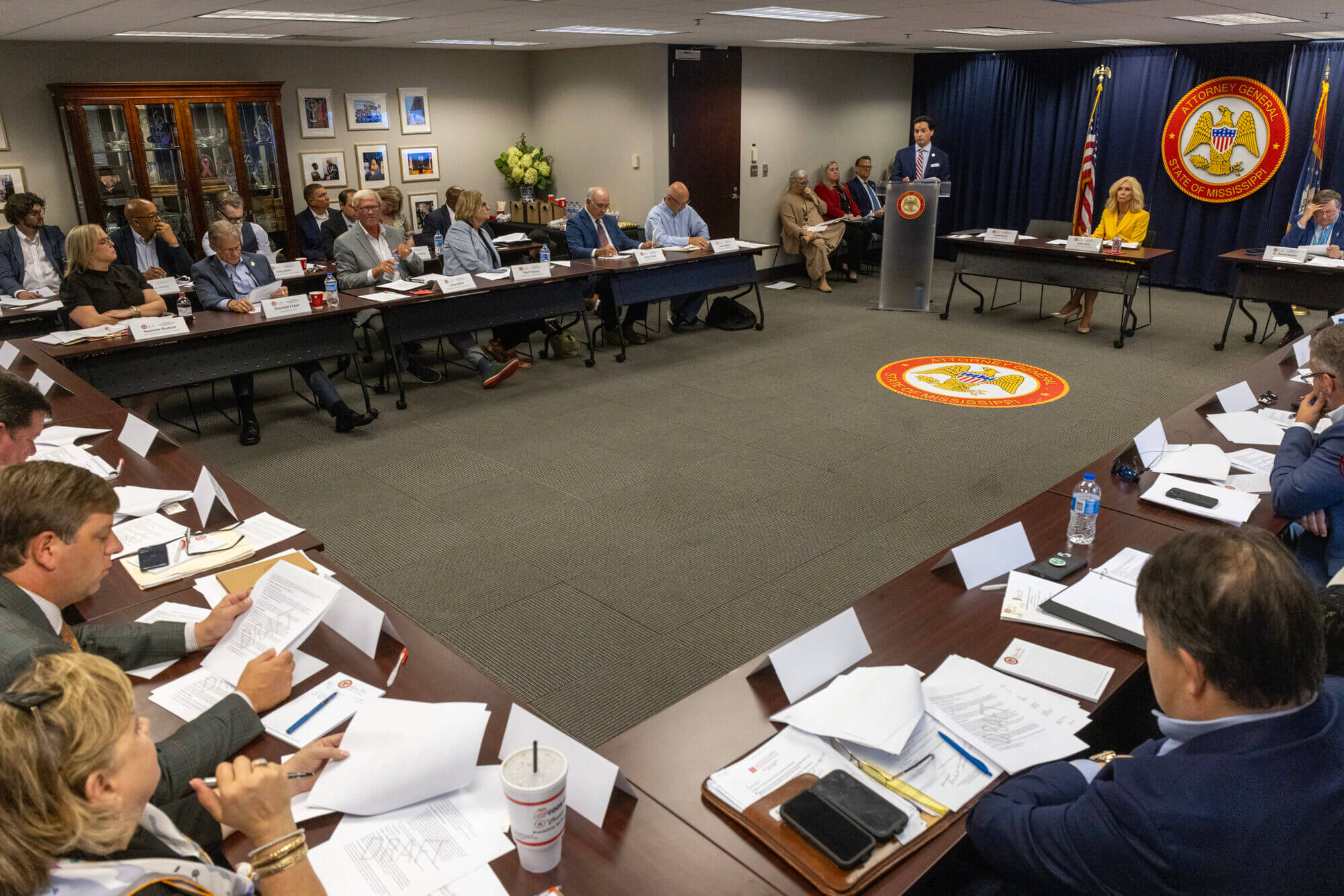
Members of the Mississippi Opioid Settlement Advisory Committee discuss priorities during their first meeting at the Walter Sillers Building in Jackson, Miss., on Wednesday, July 9, 2025. Credit: Eric Shelton/Mississippi Today
If lawmakers and the council approve Yazoo’s grant, the supervisors said they would combine those dollars with the money sent directly to them to hire two social workers to lead county overdose prevention efforts for four years. They’re calling the program Yazoo Health, Education, Access, Leadership and Sustainability — or Yazoo HEALS.
Supervisors had previously placed around $74,000 of settlement money in the county’s general fund.
“We received the money but really had no plan on how to use the funding for opioid addiction,” said David Peyton, one of the supervisors.
He said if the HEALS plan moves forward, the county’s future settlement checks would also go to this fund. Now that the supervisors and county lobbyist Sam Martin have developed a plan, Peyton said it’s easier to see how the local dollars can prevent deaths.
“If we can help people that have that addiction to find ways to stop using opioids in this way, then we’re really helping the community as a whole, one person at a time,” Peyton said.
Near the state’s northern border, Hernando Mayor Chip Johnson successfully lobbied the city’s aldermen in September to split future opioid settlement dollars between DeSoto County emergency mental health services and a local program to divert people charged with low-level drug crimes away from law enforcement and toward addiction treatment.
In June, Johnson wrote to Mississippi Today that the city was using its $73,000 from the opioid settlement to offset the cost of an ambulance. He recently said he still believes that will prevent more drug deaths but hopes spending money more directly on overdose prevention will go further toward that goal.
Johnson said he would recommend that other Mississippi mayors follow his example in spending settlement money for mental health.
“It’s a long-term solution that is going to work for your city,” he said.
Pearl River County could use its more than $500,000 of unspent opioid settlement money to address addiction but is still figuring out the best way, according to County Administrator Adrain Lumpkin.
He said local addiction treatment nonprofits also applied for opioid settlement grants from the state, which the advisory committee will prioritize if the applicants provide matching funds. If the nonprofits end up winning grants, the county wants to use opioid settlement dollars for those matching funds.
Lumpkin said Pearl River County officials are exploring a school program to dissuade kids from using opioids. They know prevention saves lives and money, but they don’t know the best ways to create that curriculum.
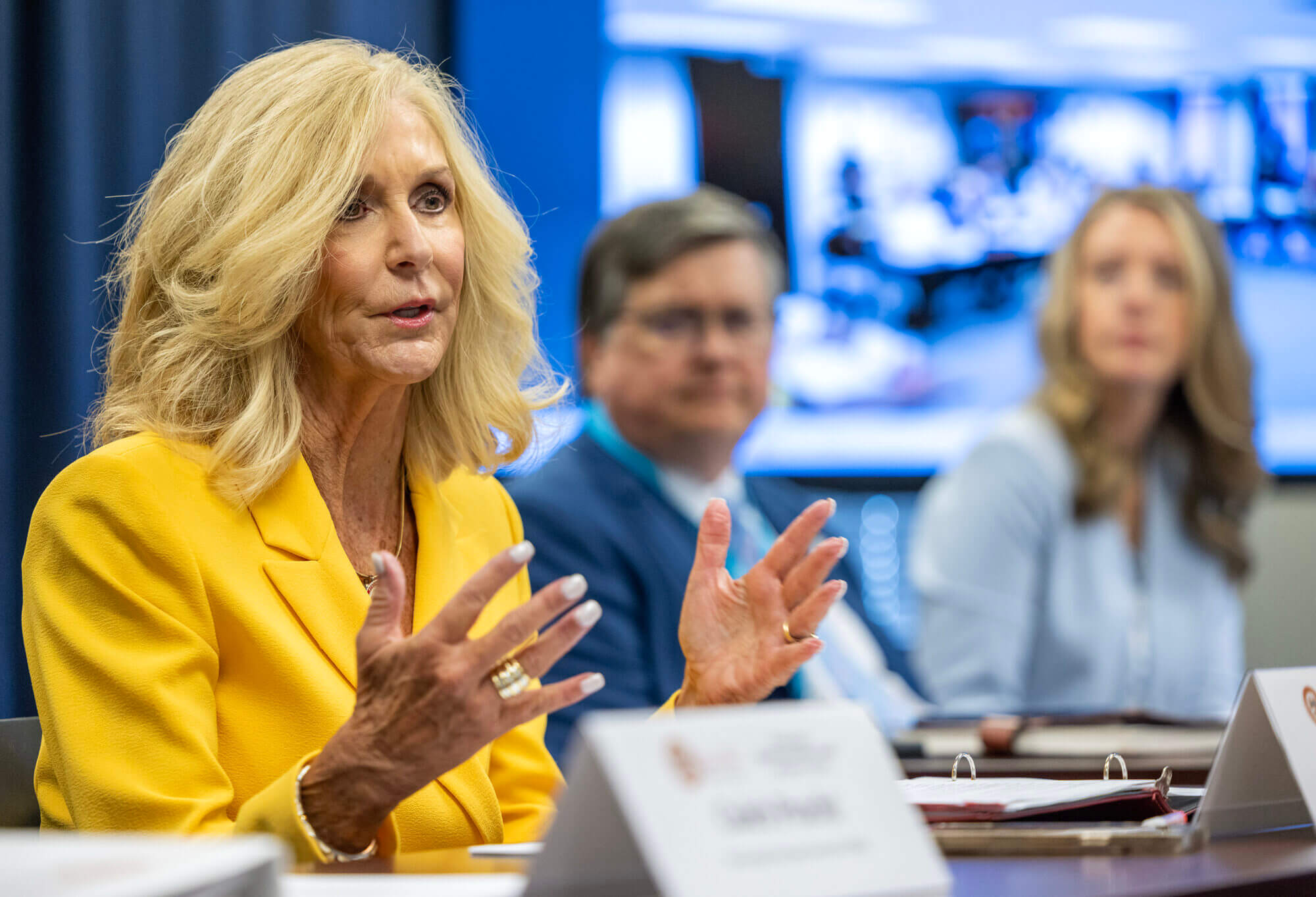
Attorney General Lynn Fitch speaks during the first meeting of the Mississippi Opioid Settlement Advisory Committee at the Walter Sillers Building in Jackson, Miss., on Wednesday, July 9, 2025. Credit: Eric Shelton/Mississippi Today
Other states’ governments have provided guides for cities and counties on how to determine a community’s addiction response needs, develop projects to address those needs and combine resources with other nearby governments. Fitch and the Mississippi Legislature haven’t done that, and Lumpkin said it’s been hard to know how to implement Pearl River County’s prevention ambitions.
“My degree is in accounting. It’s not in social work,” Lumpkin said. “We’re going to have to invent a wheel, because we’re not getting it. It’s not passed down.”
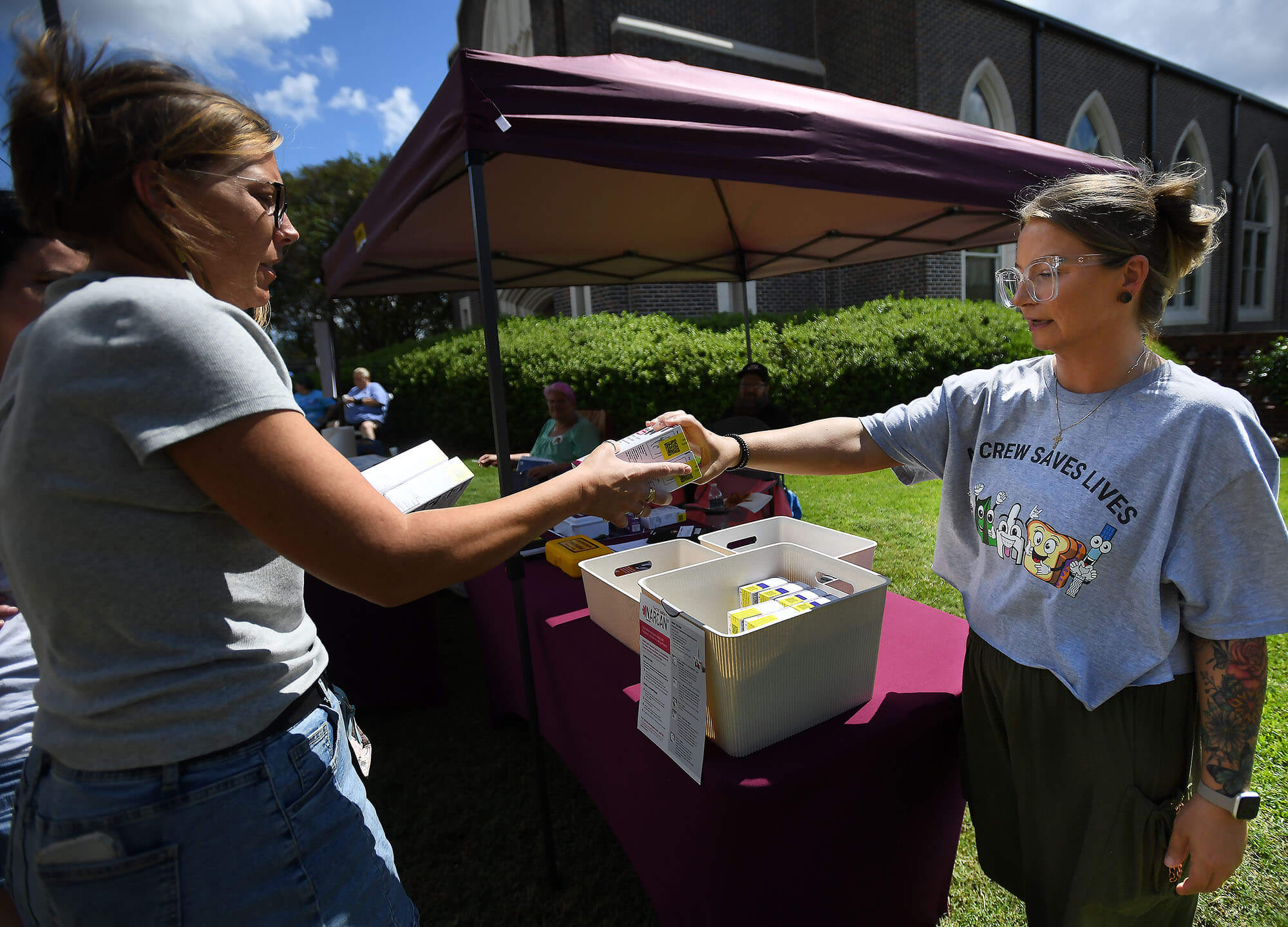
As she handed out free doses of the opioid overdose-reversing drug naloxone in Jackson on the city’s “Save a Life Day,” Brittany Denson stressed the life-saving potential of the settlement dollars. She’s in long-term opioid addiction recovery, and she uses her experience to help others at the Hinds County sober living home Grace House who arestruggling with the disease.
Sarah Donald of Pearl, left, in recovery for nine years, receives naloxone nasal spray from Brittany Denson, the Save a Life Day state co-coordinator and organizer for Hinds County, on Thursday, Sept. 25, 2025 in Jackson. Credit: Vickie D. King/Mississippi Today
Credit: Vickie D. King/Mississippi Today
The recovery residence only serves women, and she said there’s no equivalent nonprofit men’s setup in the area. That’s one of many overdose prevention resource gaps she sees in central Mississippi.
She said public input opportunities, like the ones Parkinson is pondering, are crucial for spending settlement money responsibly.
“It gets real dangerous when people of authority, who don’t understand lived experience, start changing the terms of what recovery looks like and kind of shun people who have that lived experience out of those things.”
The Democratic National Committee says it will spend a “low six-figure” amount to help Democratic candidates in seven special legislative elections in Mississippi in November.
DNC Chair Ken Martin said in a statement to Mississippi Today that building long-term infrastructure in the South is a top priority for him, which is why the committee is investing in Mississippi during an off-year election cycle.
“With this major investment, the DNC is turbocharging Mississippi Democrats’ organizing efforts to win crucial legislative races this November and continue us on the road to a blue Mississippi,” Martin said.
The committee did not say exactly how much it was spending on the Mississippi races.
Republicans have supermajority control of both chambers of the 174-member Mississippi Legislature.
The DNC’s investment will go directly to the Mississippi Democratic Party, according to a news release. The state party is expected to use the funds to support on-the-ground organizing efforts, boost paid advertising and build infrastructure.
Mississippi is conducting special elections this year because a federal three-judge panel recently ruled that the Legislature diluted Black voting strength when it redrew legislative districts in 2022.
Of the 14 seats lawmakers redrew, seven have a contested general election where a Democratic nominee is competing against a Republican nominee. The general election will take place on Nov. 4, and the deadline for voters to register in time to vote in the election is Oct. 6.
Exactly three months after Jackson Mayor John Horhn took office, his former colleagues in the state Senate are announcing a new emphasis on boosting the capital city’s economy.
Republican Lt. Gov. Delbert Hosemann’s announcement did not detail any proposed policy changes — such as new criminal laws Horhn has floated to hold absent landlords accountable or quick-take blighted property — but the formation and membership of a new study committee on Jackson.
“With the city entering a new chapter, the time is now to pursue opportunities that will increase tourism, attract investment, enhance downtown, and promote future growth,” Hosemann, a northeast Jackson resident, said in the Wednesday press release.
A second new Senate study committee announced Wednesday will look at the shortage of attainable housing and increasing accessibility for first-time homebuyers statewide.
A Republican from Ridgeland and operator of a commercial real estate firm in Jackson, Sen. Walter Michel, will chair the Jackson study committee. Michel did not return a request for comment by press time.
Sen. David Blount, a Democrat who represents a district covering downtown and central Jackson, will serve as vice chair.
Blount said he’s repeatedly supported legislation, which has passed the Senate before dying in the House, to move state agency offices currently leasing space in the metro to downtown. The proposal saves the state money with cheaper leases, Blount said, plus it helps revitalize an area currently working to reverse a decades-long hollowing out.
“I believe that’s a win-win for the state,” Blount said.
Blount hopes leaders on each committee will get on the same page about legislation to benefit Jackson before the 2026 session begins.
Committee hearings will take place in coming months.
The Senate Study Committee on Jackson members are Sen. Walter Michel, R-Ridgeland (chair), Sen. David Blount, D-Jackson (vice chair), Sen. Sollie Norwood, D-Jackson (vice chair), Sen. Hillman Frazier, D-Jackson, Sen. Dean Kirby, R-Pearl, Sen. Brian Rhodes, R-Pelahatchie, and Sen. Andy Berry, R-Magee.
The Senate Study Committee on Housing members are Sen. Chris Johnson, R-Hattiesburg (chair), Sen. Rod Hickman, D-Macon (vice chair), Sen. Gary Brumfield, R-Magnolia, Sen. Scott DeLano, R-Biloxi, Sen. Michael McLendon, R-Hernando, Sen. Chad McMahan, R-Guntown and Sen. Angela Turner-Ford, D-West Point.
New funding will pay the tuition and expenses associated with licensure for 201 more students at nine Mississippi universities. Test prep, mentorship opportunities and professional development will also be available.
As long as resident teachers commit to teaching in a “critical shortage area,” Elementary Education and Special Education students can also expect mentoring sessions, professional development opportunities and licensure testing support.
During the 2025 session the Legislature made $2,968,855 available to the Mississippi Department of Education to bolster its residency program. The Mississippi Teacher Residency, a program meant to help staff school districts struggling with teacher retention and recruitment, drew its initial funds in 2019 from the W. Kellogg Foundation and then also from American Rescue Plan Act dollars.
Capacity for the program can now increase from serving 35 to 236 resident teachers each year.
Eligibility is now open to prospective teachers, teachers seeking additional endorsements or licensure help, and currently enrolled education students. The former version of the program only offered tuition waivers and stipends to bachelor’s degree holders looking to get a masters’ in education. Applicants also now apply through their universities as opposed to through MDE.
A majority of Mississippi school districts are categorized as “critical shortage areas,” with 56% claiming the title. Nearly every school district in the Delta region is considered a ‘critical shortage area.’ These districts also received failing or near failing scores in the accountability ratings.
In a recent Mississippi Today story, Delta area teachers-in-training expressed frustration with the lack of preparation they received for licensure, particularly with the PRAXIS licensure exams.
“It left me feeling overwhelmed as I tried to catch up, and it significantly impacted my confidence, academic performance and health,” Timolin Howard told Mississippi Today.
The nine Mississippi universities and the breakdown of funds is as follows:
A one-stop place for survivors of domestic violence and sexual assault on the Gulf Coast is now offering exams and technology to help collect evidence and lead to convictions.
The Gulf Coast Center for Nonviolence, a nonprofit that runs two domestic violence shelters and provides a range of services, began Wednesday offering no-cost medical examinations and forensic evidence collection at its new Waypoint Forensic Clinic.
“Waypoint represents guidance, safety, and hope,” Lillian Lizana, director of the center’s forensic program, said in a statement. “Our goal is to provide compassionate, trauma-informed care that supports survivors and strengthens pathways to justice.”
The clinic is the first in the state to have a CortexFlo camera system, whose enhanced imaging can help see evidence of bruising and other injuries that may not be visible to the eye or by a basic camera, said Rene’ Davis, the center’s communications director.
She said the technology can help provide evidence that can be used in prosecution of sexual assault and strangulation cases.
Waypoint will also contract with certified Sexual Assault Nurse Examiners, who collect evidence in kits that can be used in court. The nurses, who are trained to provide trauma-informed care, are able to see survivors at the clinic or an area hospital.
Davis said the clinic is an integral part of the Gulf Coast Center for Nonviolence’s
Family Justice Center, which brings together under one roof help for survivors through counseling, legal aid, law enforcement, prosecutors and other services. Stakeholders from across Harrison County have been working together for several years to establish the center, she said.
This is the first family justice center in Mississippi, and Davis said the Gulf Coast Center for Nonviolence is hopeful it will be replicated across the state.
The family justice center, located in Gulfport at 47 Maples Drive, offers services that include the Northcutt Legal Clinic, which provides free legal services such as filing for domestic abuse protection orders, divorce and child custody, and a domestic violence intervention program geared to abusers that teaches accountability and respect.
Renderings for the family justice center project imagine spaces for community services such as childcare and pre-school, offices for other departments and agencies and administrative space.
Nearly 20 years ago, the first family justice center opened in San Diego, California, and now there are more than 300 centers around the country, according to the Alliance for Hope International.
A report by the alliance has found that family justice centers help survivors feel safe and empowered and it cites research documenting how they reduce domestic violence homicides.
“There’s no reason we can’t see that in Mississippi,” Davis said.
BATON ROUGE, La. — Planned Parenthood on Tuesday shut down its two clinics in Louisiana over what the organization said were mounting financial and political challenges that made operating in the state no longer possible after more than 40 years.
The closures make Louisiana the most populous of just four states with no Planned Parenthood locations. Louisiana joins Wyoming, North Dakota and Mississippi as states where the organization is absent.
The exit underlines the pressures on Planned Parenthood as it warns of wider closures nationwide in the face of Medicaid funding cuts in President Donald Trump’s tax and spending bill. The organization is also halting advocacy work in Louisiana, where the state’s Republican leaders have cheered on the closures.
The closures were “not the result of a lack of need” but rather the outcome of “relentless political assaults that have made it impossible for us to continue operating sustainably in Louisiana,” said Melaney Linton, the president and CEO of Planned Parenthood Gulf Coast.
Supporters have said the closures will have a detrimental impact on Louisiana, where Planned Parenthood has never been licensed to perform abortions in the state but did provide other medical care services to nearly 11,000 patients last year at its Baton Rouge and New Orleans clinics.
Advocates and medical professionals fear that the organization’s departure will further exacerbate reproductive health care in a state that Centers for Disease Control and Prevention data shows already has one of the highest maternal mortality rates in the country. In addition, a March report by the Louisiana Legislative Auditor’s office noted the state’s significant OB-GYN shortage and health care deserts.
Trump’s spending and tax plan instructs the federal government to end Medicaid payments for one year to certain abortion providers. While the organization is seeking to have its funding restored through the courts, Planned Parenthood officials have warned that around one-third of roughly 600 clinics could be forced to close.
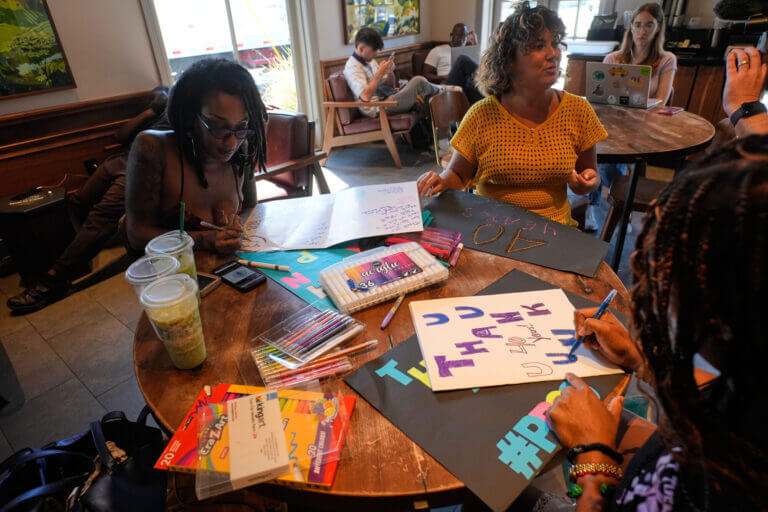
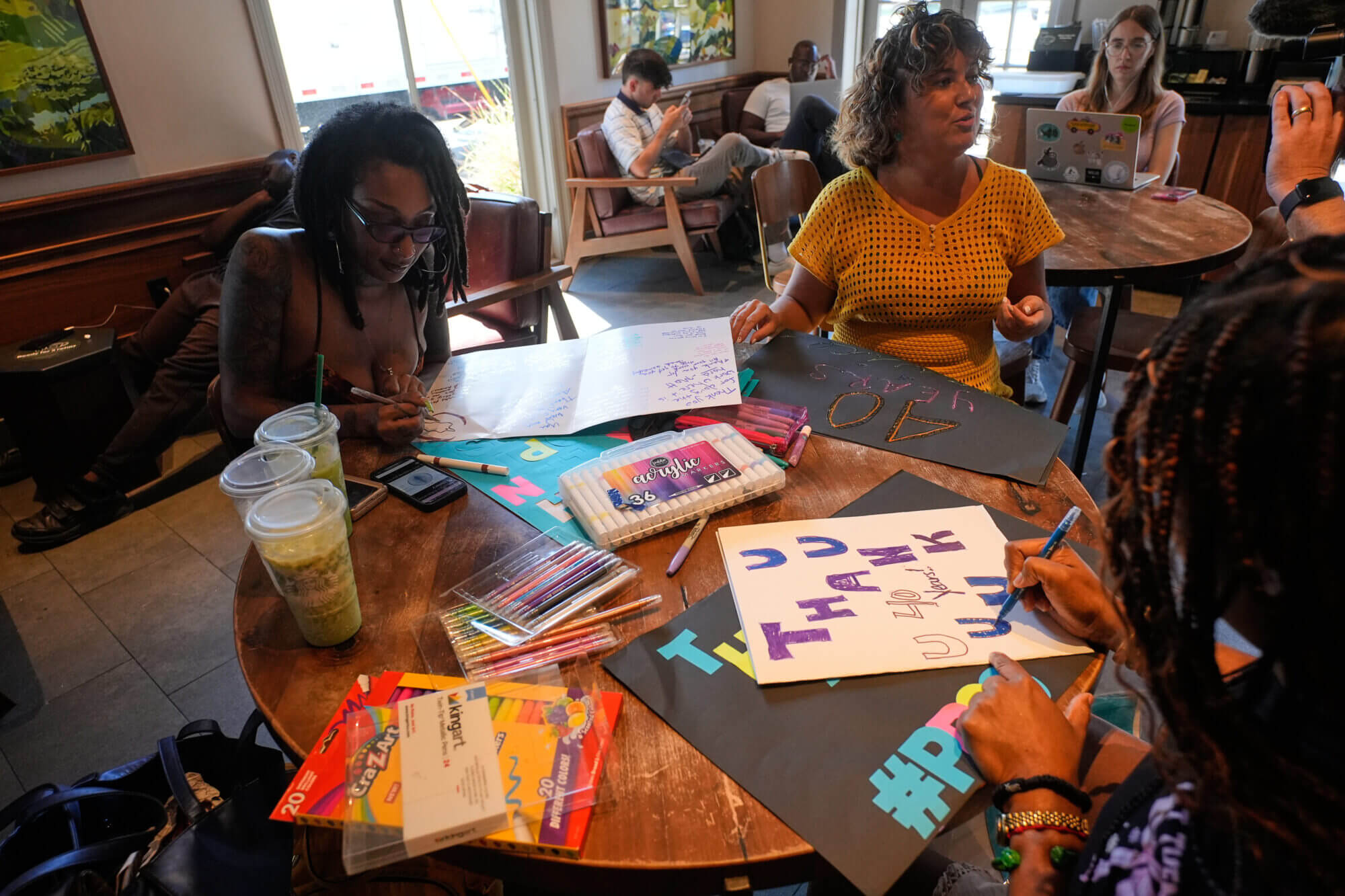
Members of Louisiana Coalition for Reproductive Freedom compose thank you cards and well wishes at a coffee shop to deliver to Planned Parenthood on the day they are closing, in New Orleans, Tuesday, Sept. 30, 2025. (AP Photo/Gerald Herbert)
Earlier this year, five clinics in California and eight in Iowa and Minnesota shut their doors. In the past week, the Wisconsin affiliate announced that it would stop providing abortion and the Arizona affiliate said it would halt Medicaid-funded services.
“This is a win for babies, a win for mothers, and a win for LIFE!” Republican Louisiana Gov. Jeff Landry posted on social media Tuesday.
Planned Parenthood provides a wide range of services, including cancer screenings and sexually transmitted infection testing and treatment. Federal Medicaid money was already not paying for abortion, but affiliates relied on Medicaid to stay afloat.
In Louisiana, a state with one of the nation’s highest poverty rates, 60% of patients at Planned Parenthood clinics used Medicaid. Last year, the clinics in Louisiana provided nearly 30,000 tests for sexually transmitted infections, 14,400 visits for birth control, 1,800 cancer screenings and 655 ultrasounds.
Nearly a decade ago, Jordyn Martin said she turned to Planned Parenthood when she couldn’t afford medical services anywhere else. While at the clinic, a doctor offered Martin a free HIV test. A week later, she was diagnosed with the virus.
“Planned Parenthood saved my life,” said Martin, who went on to volunteer for the organization.
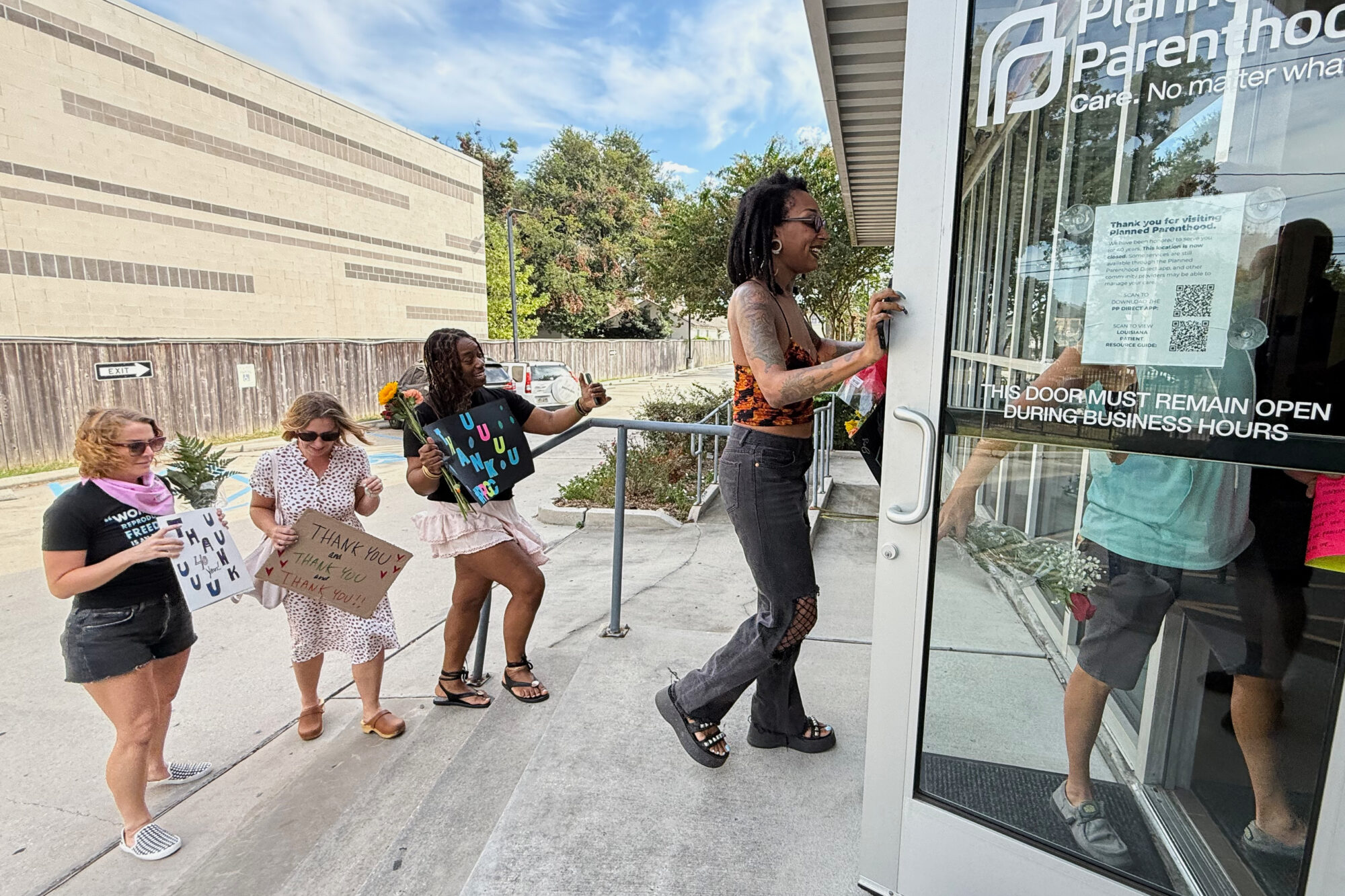
Outside of the New Orleans Planned Parenthood clinic Tuesday, several people gathered and brought thank-you notes to the organization that has spent four decades in Louisiana. Inside the building, up until close, staff worked to connect patients with alternative health care providers.
Starting Wednesday, calls to Planned Parenthood numbers in Louisiana were being transferred to the nearest location in Texas or Arkansas.
Michelle Erenberg, head of a New Orleans-based abortion rights group named LIFT, said people have been contacting her for help to find new clinics. She said it was important to connect people with providers but worries about the strain it will put on clinics that are already short-staffed.
“Whether patients are going to be able to get appointments quickly, or access all of the services that Planned Parenthood provided, is unknown at this point,” she said.
Civil rights organizations around the country are preparing for the Trump administration’s crackdown on progressive-aligned groups, Bryan Fair, President of the Southern Poverty Law Center, told Mississippi Today on Tuesday.
Fair spoke to the news outlet in an exclusive interview on the heels of President Donald Trump signing a memorandum directing federal law enforcement agencies to investigate what he claimed were wealthy donors and organizations funding left-wing political violence.
The memo could be used as a pretext to target civil rights organizations perceived to be enemies of the Trump administration and Republican causes in states such as Mississippi, Fair said.
“The charge from the administration, the most recent memorandum, seems to go after one type of organization — organizations that are critical of this administration, or that promote equality of opportunity for all,” Fair said. “We see this as a partisan attack on progressive nonprofits that seek to lift up due-process rights, First Amendment rights and the equal protection rights of all persons.”
The Southern Poverty Law Center — one of the nation’s most well-known civil rights organizations that rose to prominence by filing legal cases against white supremacist groups in the post-Jim Crow South — will remain undeterred from its mission, Fair said. But Trump’s memo last week and his administration’s vows to attack the financial and organizational networks that support progressive causes have sent many groups bracing for impact.
The center is part of a “civil rights ecosystem” that includes organizations such as the Lawyers’ Committee for Civil Rights, the ACLU, the NAACP, the Legal Defense Fund and Democracy Forward. All of these groups believe that the administration plans to target civil rights groups, Fair said. The SPLC has long attracted the ire of Republican politicians and groups who see the organization as biased against conservatives.
The organization’s work classifying “hate groups” is a particular point of contention, with critics saying the organization lumps mainstream conservative groups together with white supremacists and neo-Nazis.
Anger from Trump and his supporters toward progressive groups intensified after the assassination of conservative activist Charlie Kirk.
Trump administration officials and allied media figures have claimed, largely without evidence, that progressive groups have encouraged physical violence against conservatives. Some conservative critics have trained their attention and large social followings on the center by name.
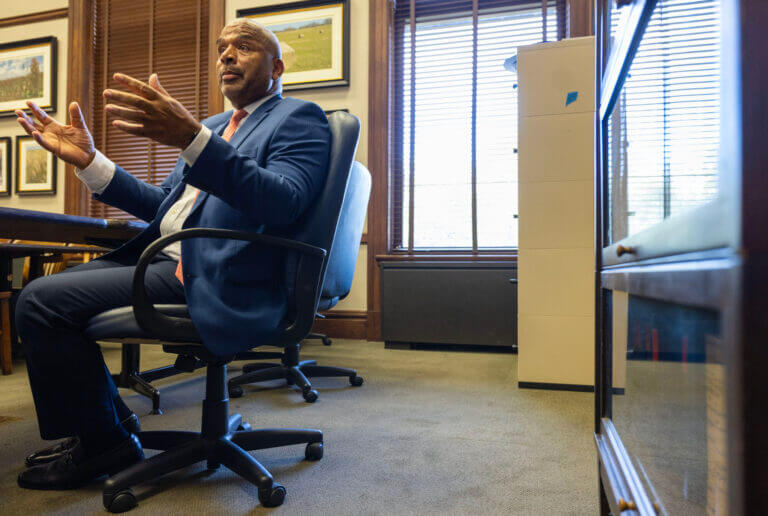
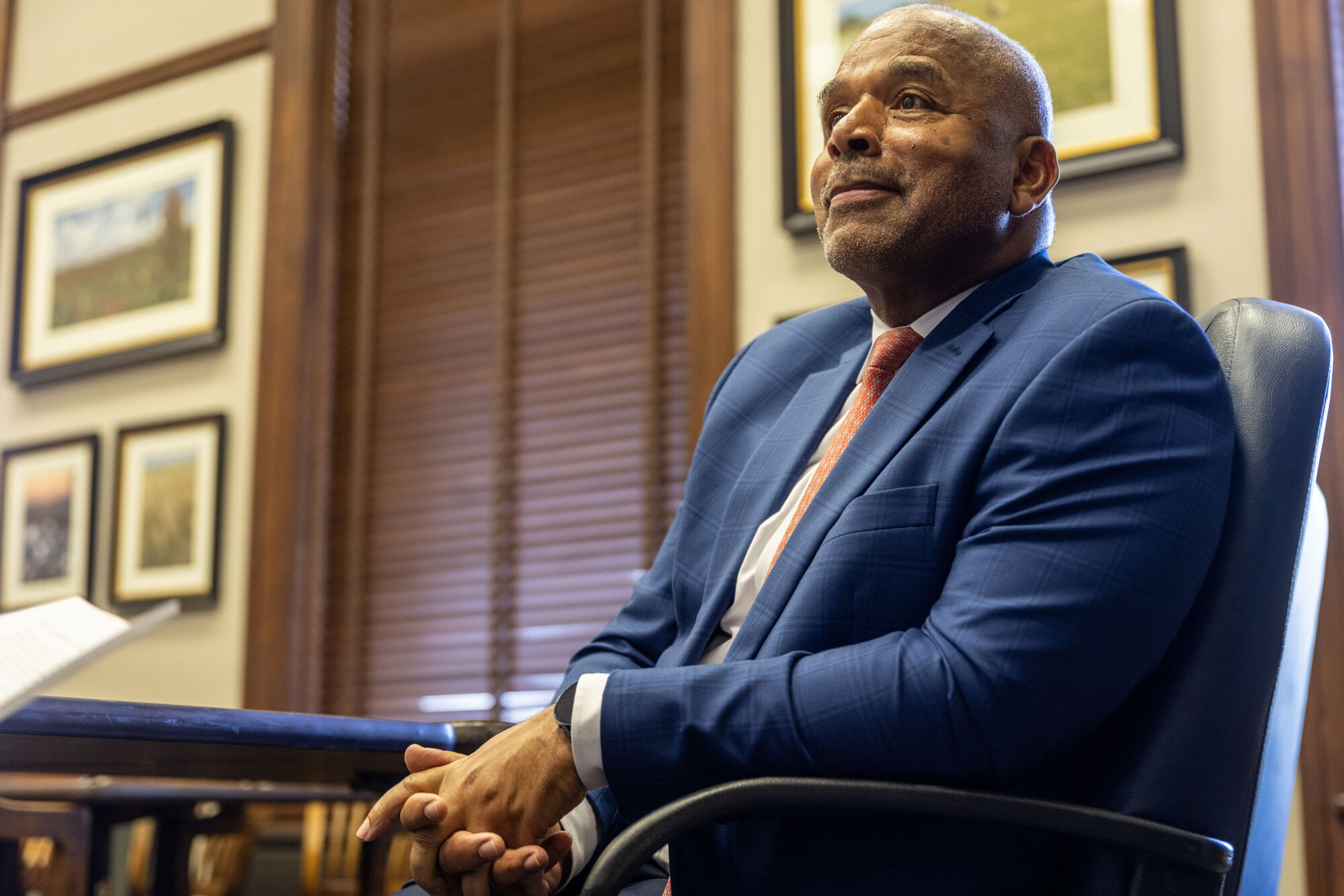
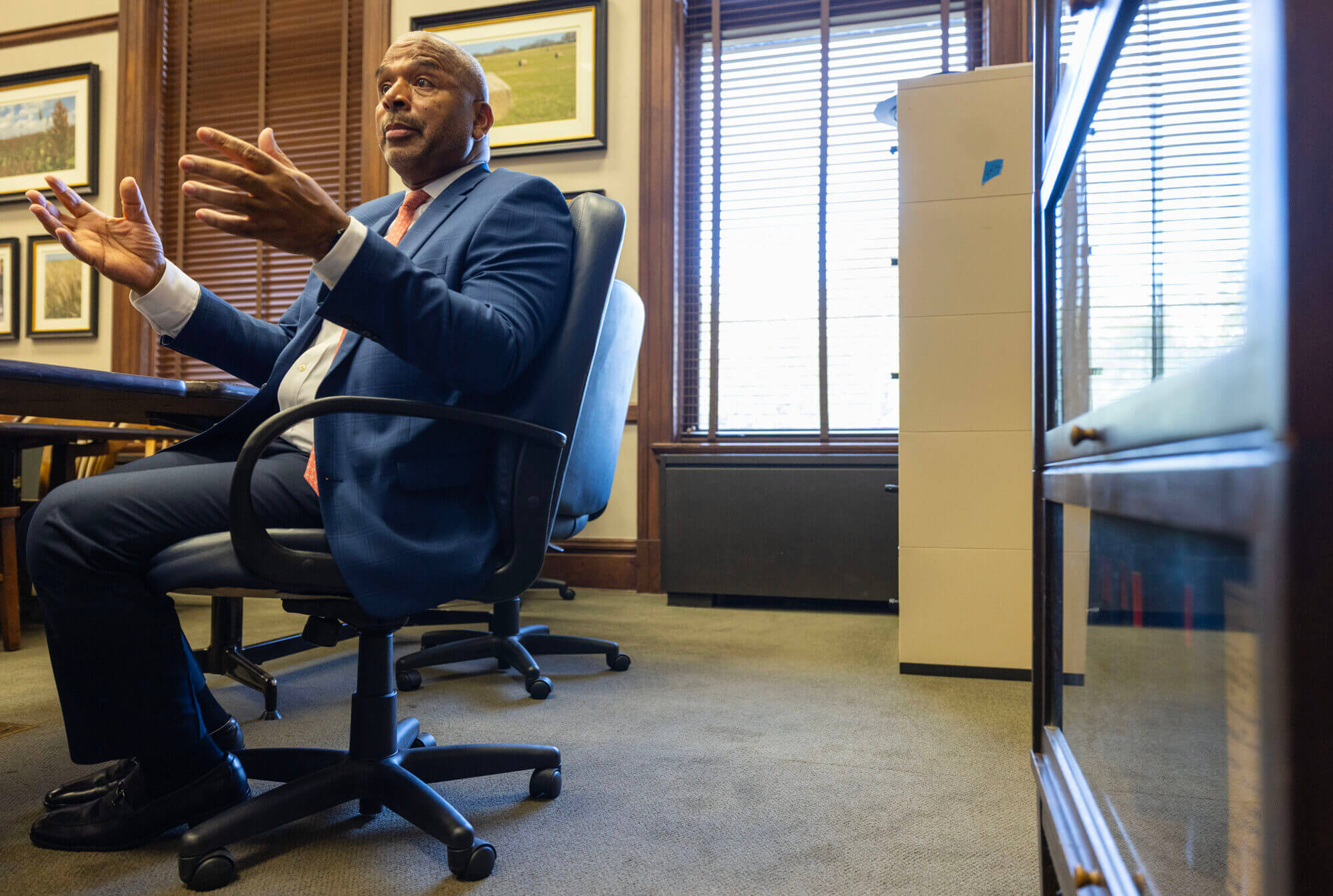
Bryan Fair, president and CEO of the Southern Poverty Law Center, speaks during an interview, Tuesday, Sept. 30, 2025, at the State Capitol in Jackson, Miss., ahead of the Truth, Poverty and Democracy Tour.
Fair said his organization condemned Kirk’s murder and has never condoned political violence of any sort.
“For 55 years, SPLC has been on the front lines of fighting hate and extremism in this country,” Fair said. “We were founded to fight for the civil rights of all persons, and that’s what we do every day. We believe that everything that we do is protected under the law.”
Fair said threats from the Trump administration against groups such as the center have arrived at the same time these organizations are working to blunt the impact of deep federal spending cuts approved by congressional Republicans.
Fair was in Jackson on Tuesday to kick off a “Truth, Poverty and Democracy Tour” around Mississippi. The multicity, week-long tour will connect Mississippians to advocates and resources that “address systemic barriers to health care, housing, education and voting rights,” the organization said.
Mississippi is one of the poorest states in the country, and Fair said the center plans to wage a “war on poverty,” harkening back to President Lyndon B. Johnson’s 1964 State of the Union Address.
Three years after that speech, Democratic Sen. Robert F. Kennedy toured the Mississippi Delta to learn more about the region’s life-shaping poverty, a seemingly intractable problem that still persists.
The center’s plans to emphasize poverty-related issues — such as the Republican-pushed “big, beautiful bill” cuts to Medicaid and food assistance — represent a new strategy for the organization.
“We’ve adopted poverty as a new pillar of our work,” Fair said. “Historically, we have not done great work in that space, but we’re trying very intentionally to shift our focus so that we’re on the ground.”
Democratic state lawmakers said at a press conference later on Tuesday that they would continue partnering with groups such as the center on shared efforts to strengthen social safety net programs.
“I’m done trying to change the minds of some of the people in this Capitol building or change the minds of the people in Washington who are in control,” said House Minority Leader Robert Johnson. “Our job is to get them out. So this partnership will continue whether Trump funds it or not.”
While the shift to a full-throated focus on poverty-related issues might be a departure, Fair said the center would not change its tactics in response to federal pressure.
“We have no intention of being silenced by this administration or any administration,” Fair said.
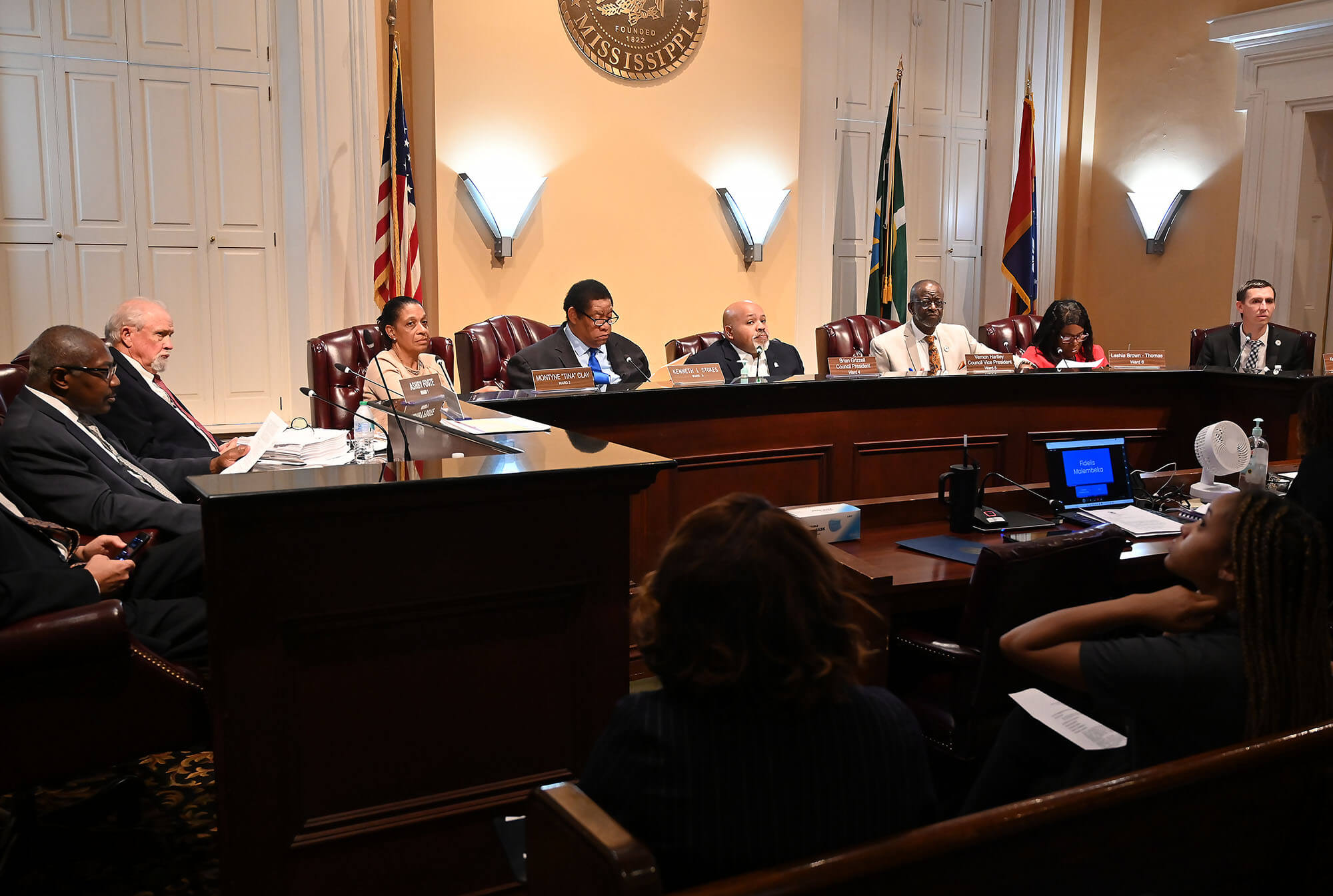
The Jackson City Council confirmed several members of Mayor John Horhn’s new administration, but a notable position was missing from the agenda: chief financial officer.
Fidelis Malembeka, a former Mayor Chokwe Antar Lumumba appointee, said after heading up Jackson’s finances for the last four years, Tuesday was his last day with the city but that he would still be around to answer questions.
Jackson plans to announce a permanent chief financial officer appointment “very soon,” Horhn told Mississippi Today. In the meantime, to aid in the development of next year’s budget, the city has contracted with Michael Thomas of Systems Consultants Associates to create performance indicators for city departments.
“He is evaluating the financial department to see where there are greater efficiencies that can be had, and he is also looking at any possibility that a deeper dive may need to take place on a forensic audit,” Horhn said.
Mayor John Horhn, during a City Council meeting at City Hall, Tuesday, Aug. 26, 2025, in Jackson. Credit: Vickie D. King/Mississippi Today
Thomas’s contract, which the city opted to issue without a bid, is not to exceed $50,000. The shift in financial leadership comes just after the city adopted a flat budget earlier this month — a precautionary move resulting in part from the city’s failure to maintain annual audits.
The city is still working to complete its 2023 audit, which it was supposed to finalize last year but faced challenges in doing so due to the privatization of the city’s water system in 2022. The financial statements from the city and the water utility must be combined, but JXN Water, the third party manager, produced an audit by calendar year instead of municipal fiscal year, making the reports difficult to reconcile, Thomas said.
Thomas said the city’s goal is to finish both the 2023 and 2024 audits by next September.
As an example of a performance indicator Systems Consultants Associates might recommend, Thomas mentioned the city’s Public Works Department. The department might be given a timeframe to complete a task — say, 24 hours from the time a pothole is identified to the time it is paved — that the department could be measured against.
Thomas said it’s too early in his assessment to tell which departments are already effectively measured versus ones that need new benchmarks.
It’s also up to the administration to take the consultant’s recommendations. Thomas said the last time he helped the city in this capacity was during the Tony Yarber administration. He was tasked with finding efficiencies, such as with the in-house print shop — an enterprise fund that generates revenue for the city. Instead of using outside companies for the Jackson’s printing needs, Thomas said he suggests the city use its own shop.
Public Works, a crucial yet challenged city department, has lacked a permanent leader for nearly two years now. The city council filled the vacancy Tuesday, confirming Lorenzo Anderson as the next director.
WLBT reported that Anderson most recently served as Washington County’s engineer while working for IMS Engineers – a familiar contractor to the city of Jackson – but was removed in 2024.
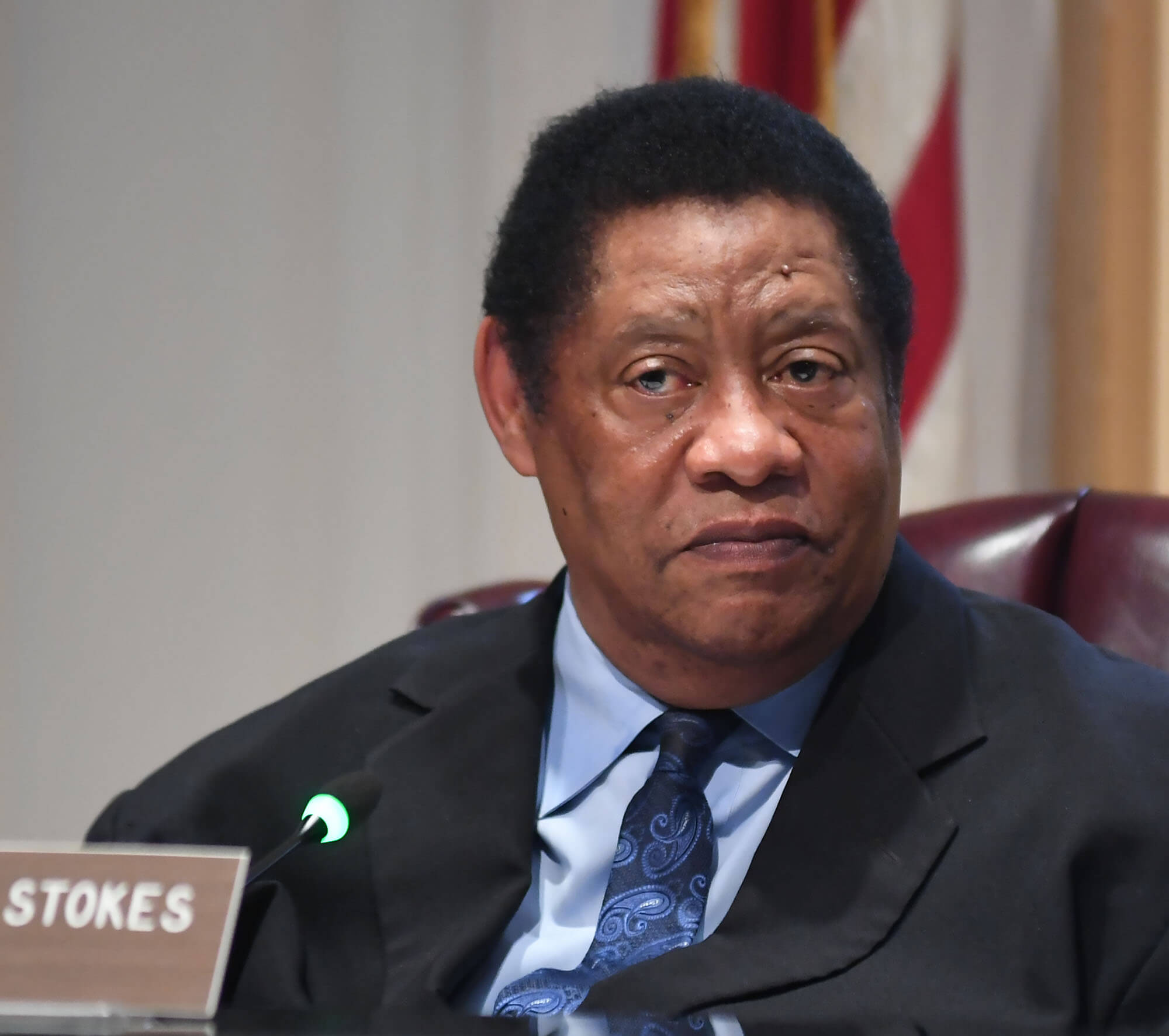
This work history was not raised by council members during the confirmation, but Ward 3 Councilman Kenneth Stokes noted that he’d recently had an opportunity to check out Anderson’s former jurisdiction.
Ward 3 Jackson City Council member Kenneth I. Stokes, during a council meeting at City Hall, Tuesday, Aug. 26, 2025, in Jackson. Credit: Vickie D. King/Mississippi Today
“I had a chance to go to Washington County, to the Delta Blues festival. I presented Bobby Rush a plaque, and the roads are great,” Stokes said.
Just after confirming Anderson, Horhn announced the city had signed on a $40 million bond issue for ditches, drainage, street and bridge repair that “might have just made Mr. Anderson’s job a little easier.”
The city is still working to fill two other major positions: the Jackson Police Department Chief after Joseph Wade stepped down in August, and director of planning and development, a position Von Anderson has held since July on an interim basis.
The city is holding listening sessions to engage the public on the search for a new police chief. As for Planning and Development, Horhn said the city is still working through applications.
“We think we need a planning and development director with more breadth and depth of experience,” he said.
Shortly after his inauguration, Horhn announced that Grace Fisher, communications director at the Mississippi Department of Corrections, would serve as the city’s new communications director, but after the announcement, she remained at MDOC.
The council on Tuesday confirmed Nic Lott, a government affairs consultant and former Republican gubernatorial staffer, as the director of communications and constituent services. In addition to spearheading the city’s social media, Lott will work on a committee alongside Information Technology Director Nathan Slater, also confirmed Tuesday, on rebuilding the website.
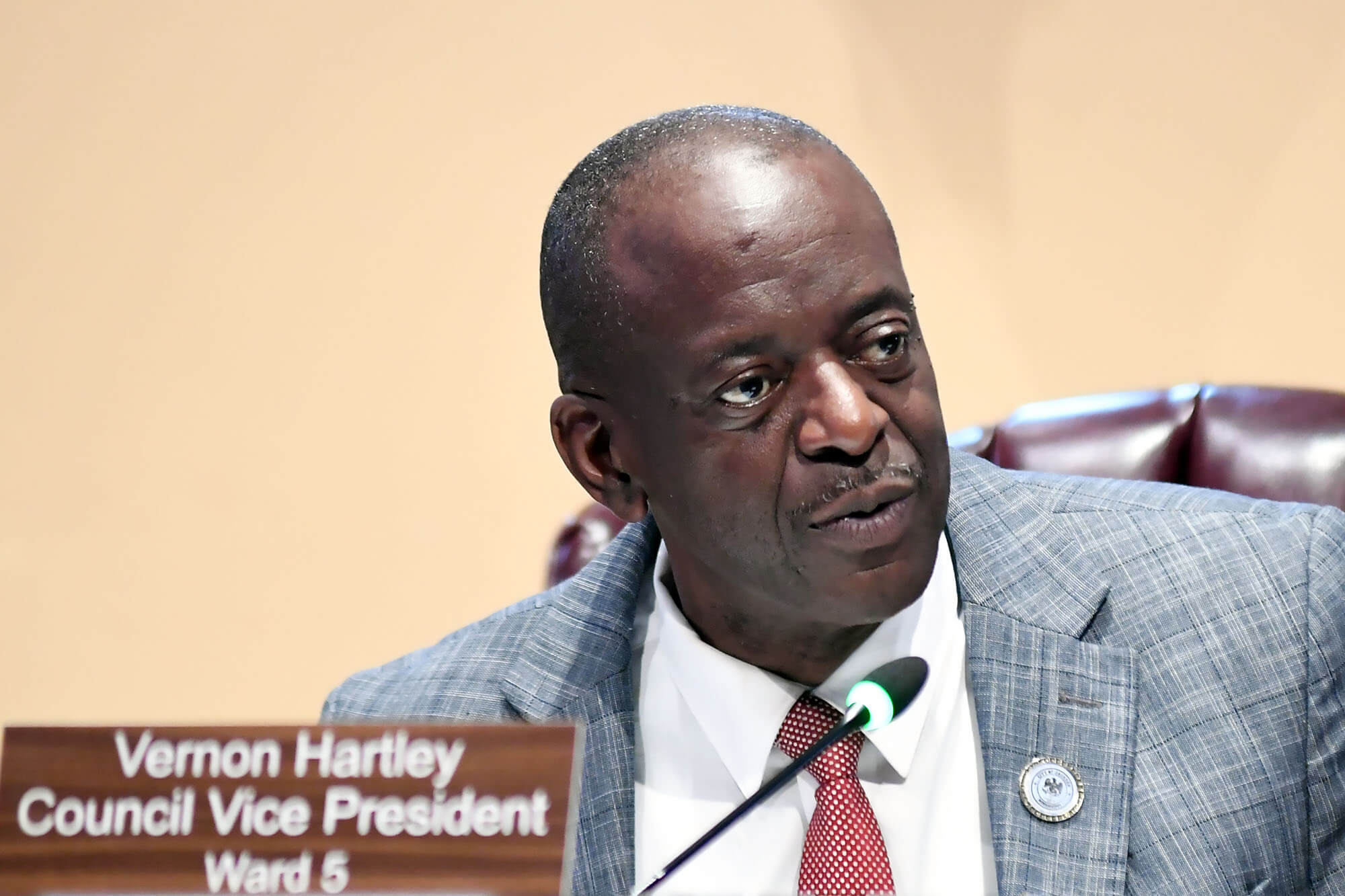
Ward 5 Councilmember Vernon Hartley asked Lott if he would work with council members who he said have not had the opportunity to coordinate with the city’s communications department in the past.
“I believe we should go about telling the story of what we’re doing in the city better,” Lott said.
A staple in city and county government, Pieter Teeuwissen, was also confirmed as chief administrative officer. Stokes, the most tenured member of the council, recounted that when he left the city in 2012 for a stint on the Hinds County Board of Supervisors, he asked Teeuwissen, then city attorney, to follow him there.
“I asked him would he consider coming to Hinds County to keep us out of jail and he came to Hinds County, did a wonderful job, kept us out of jail,” Stokes said.
Speaking before her confirmation, Municipal Clerk Angela Harris said she was continuing efforts she began in 2022 to digitize the city’s files.
While confirming Harris, two council members urged the mayor to look at bringing the city clerk’s office back under the council, where it resided before the Lumumba administration moved it under the mayor.
“We have that under review. We have just been dealing with crisis management since we started here 12 weeks ago and as things settle down, we’ll get into the reorganization that we’ve been talking about,” Horhn responded.
During the confirmation of City Attorney Drew Martin, Hartley recommended taking more frequent legal action to hold parties accountable for the poor conditions, such as blight, that Jacksonians are experiencing. He implored the legal staff to find more ways “to make sure that we have our knife sharpened when it comes to these issues affecting our quality of life,” Hartley said.
Ward 5 Jackson City Council Vice President Vernon Hartley during a council meeting at City Hall, Tuesday, Aug. 26, 2025, in Jackson. Credit: Vickie D. King/Mississippi Today
“We hear the complaints, we hear the issues, and a lot of times there is a legal remedy, and I’d like for us to be a little bit more nimble, a little but more flexible in applying it so we can get some results so we can’t tell the folks that there’s nothing we can do,” Hartley said.
When it came time to confirm Director of Human Resources Toya Martin, a Lumumba holdover, Ward 4 Councilman Brian Grizzell said he was “completely against” the nomination and said he had drafted a resolution for a vote of no confidence in the director he may introduce later. Martin was confirmed by a 5-2 vote.
The council also confirmed six municipal court judges, Taurean Buchanan, Kevin Bass, Lilli Bass, June Hardwick, Jeffrey Reynolds and Virginia Watkins.