
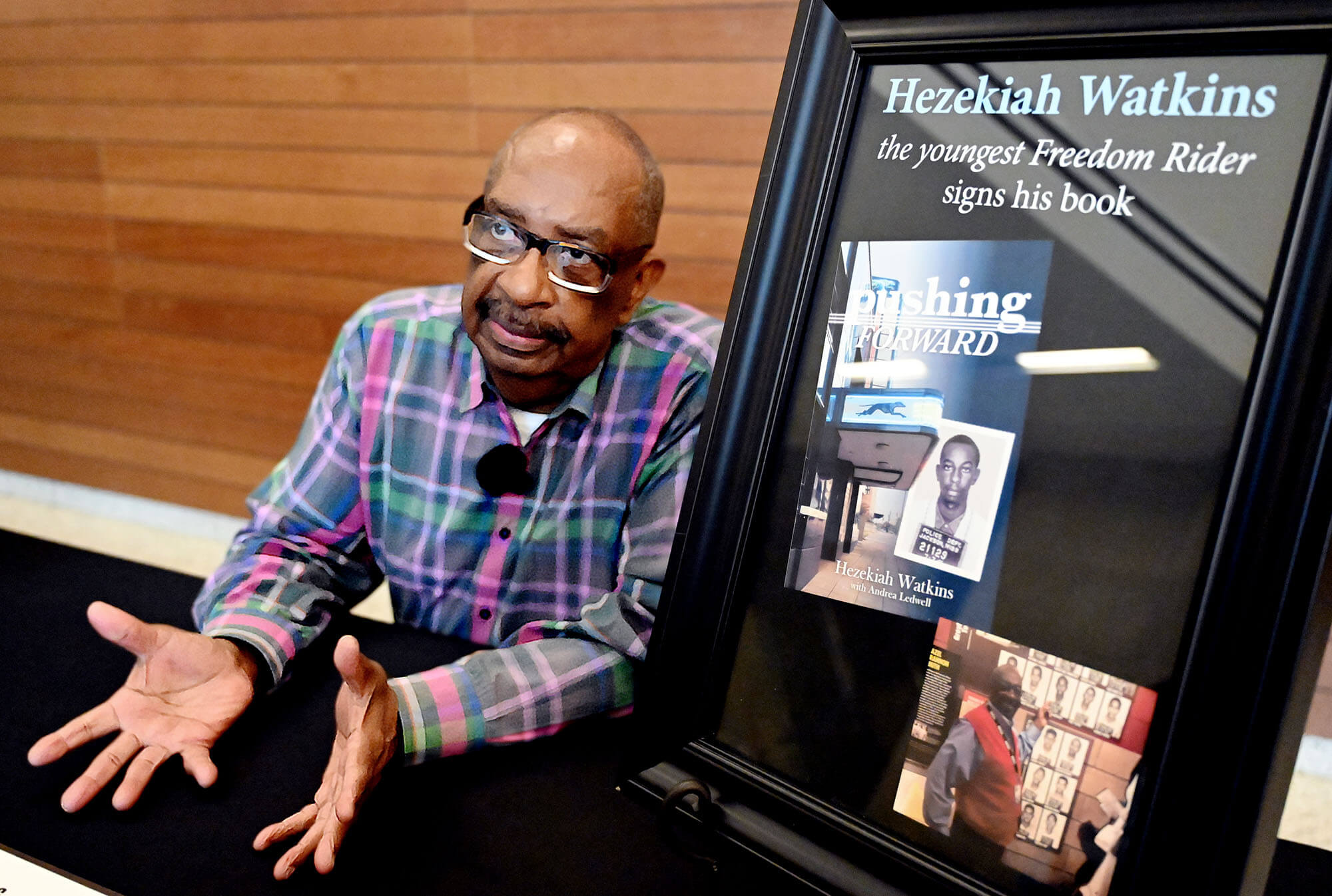
At age 79, civil rights veteran Hezekiah Watkins would do it all over again.
As a teenager, Watkins became the youngest of the Freedom Riders, an interracial group of activists who challenged racial segregation on interstate buses and bus facilities in the South.
He celebrated his birthday at the Mississippi Civil Rights Museum on Tuesday. A crowd of visitors and staff from the Mississippi Department of Archives and History gathered in the center gallery. Under the glow of the museum’s light sculpture, he recounted how his journey as an activist began with a case of mistaken identity.
Watkins was born in Milwaukee, Wisconsin, but raised in Jackson. At age 13, he became obsessed with the Freedom Riders.
In 1961, despite warnings from a pastor and his mother, Watkins and a friend went to the Greyhound bus station in Jackson to watch the Freedom Riders demonstrate.
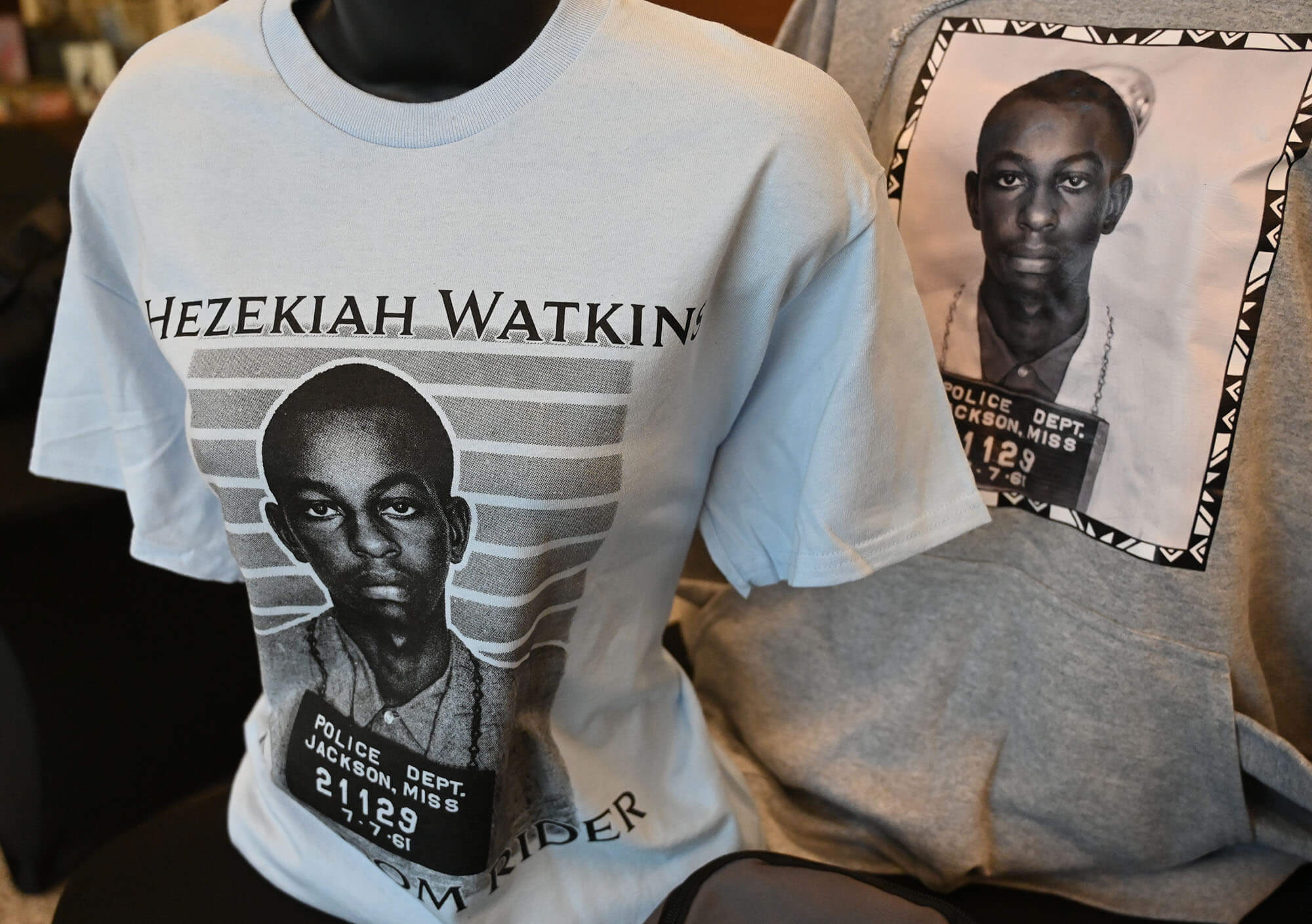
The boys began playing, and Watkins’ friend shoved him inside the bus station. Two police officers grabbed him. When asked, he said his birthplace was Milwaukee. The police took this to mean he was an activist from out-of-state, and they arrested him.
“I was not a Freedom Rider,” he said. “I was just a nosy little Black boy trying to navigate his way through this racist town.”
Watkins and other Freedom Riders were put on death row, where normally inmates sentenced to death were housed at the notorious Mississippi State Penitentiary at Parchman. There, he endured days of horrible abuse.
“It was unbelievable to me, because I’m 13. I don’t know anything about the prison system. I don’t know anything about Parchman prison. I don’t know nothing,” he said.
-

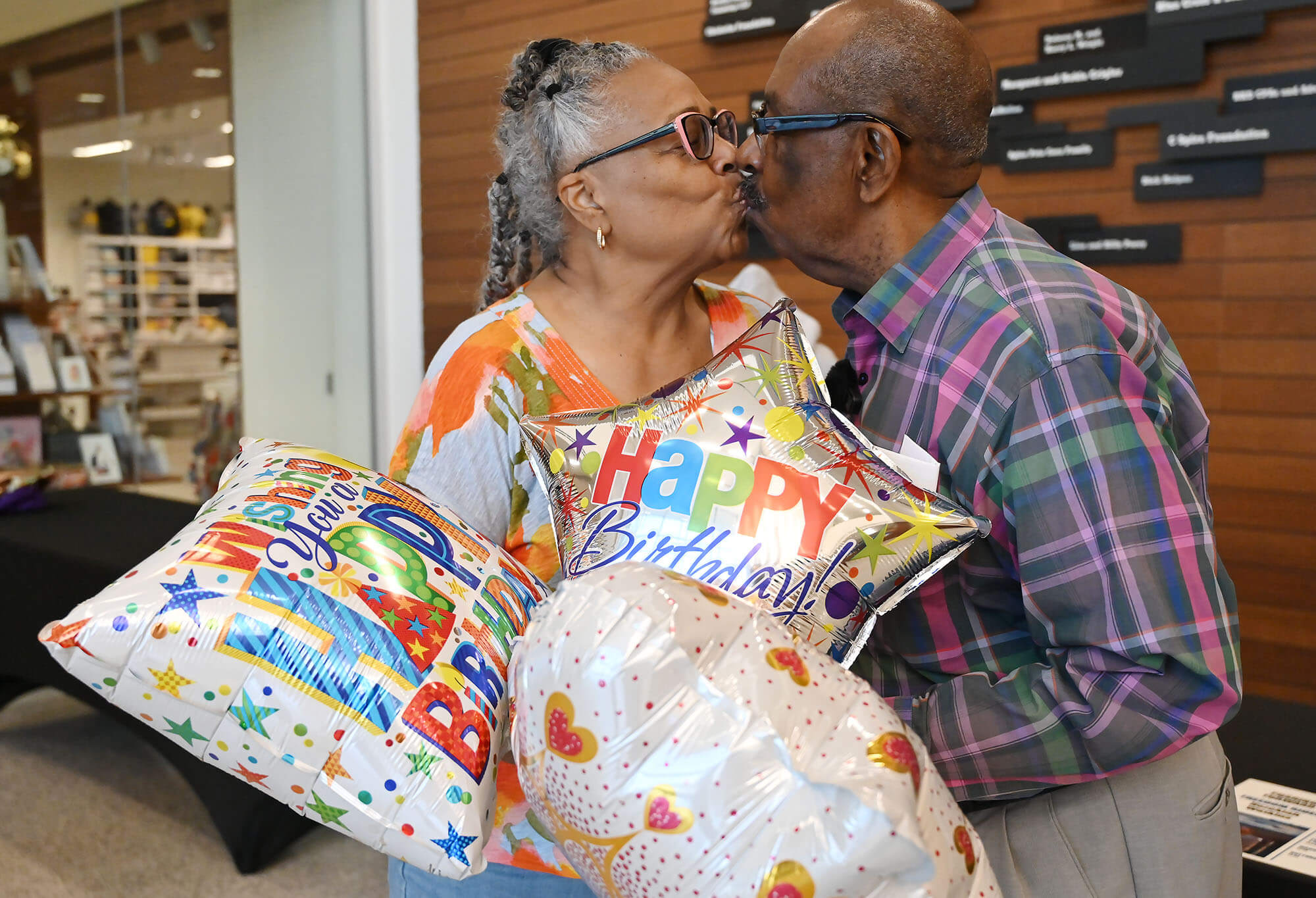
Chris Watkins, left, surprises her husband Hezekiah Watkins with birthday balloons at the Two Mississippi Museums, Tuesday, Sept. 1, 2026, in Jackson. -

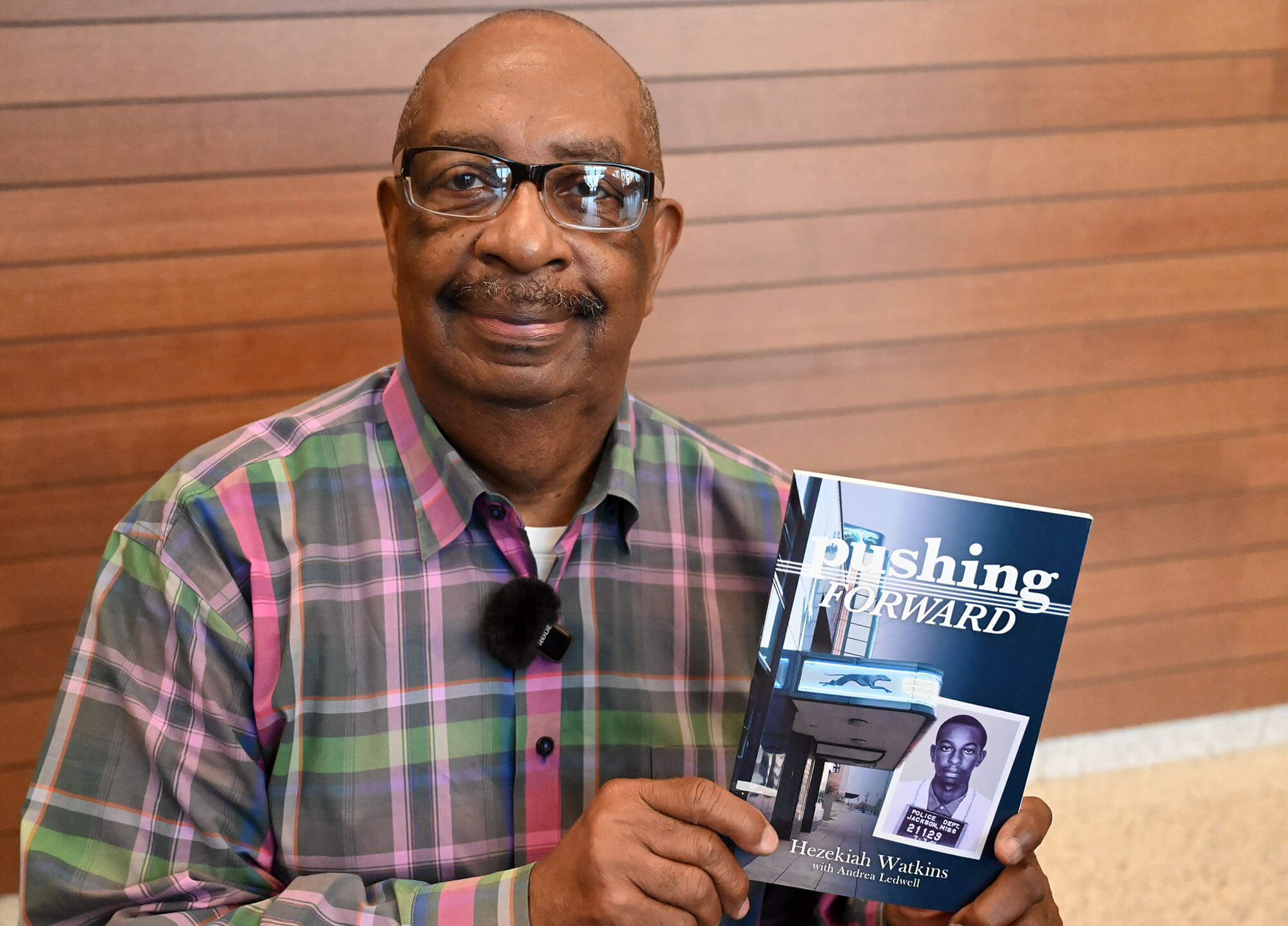
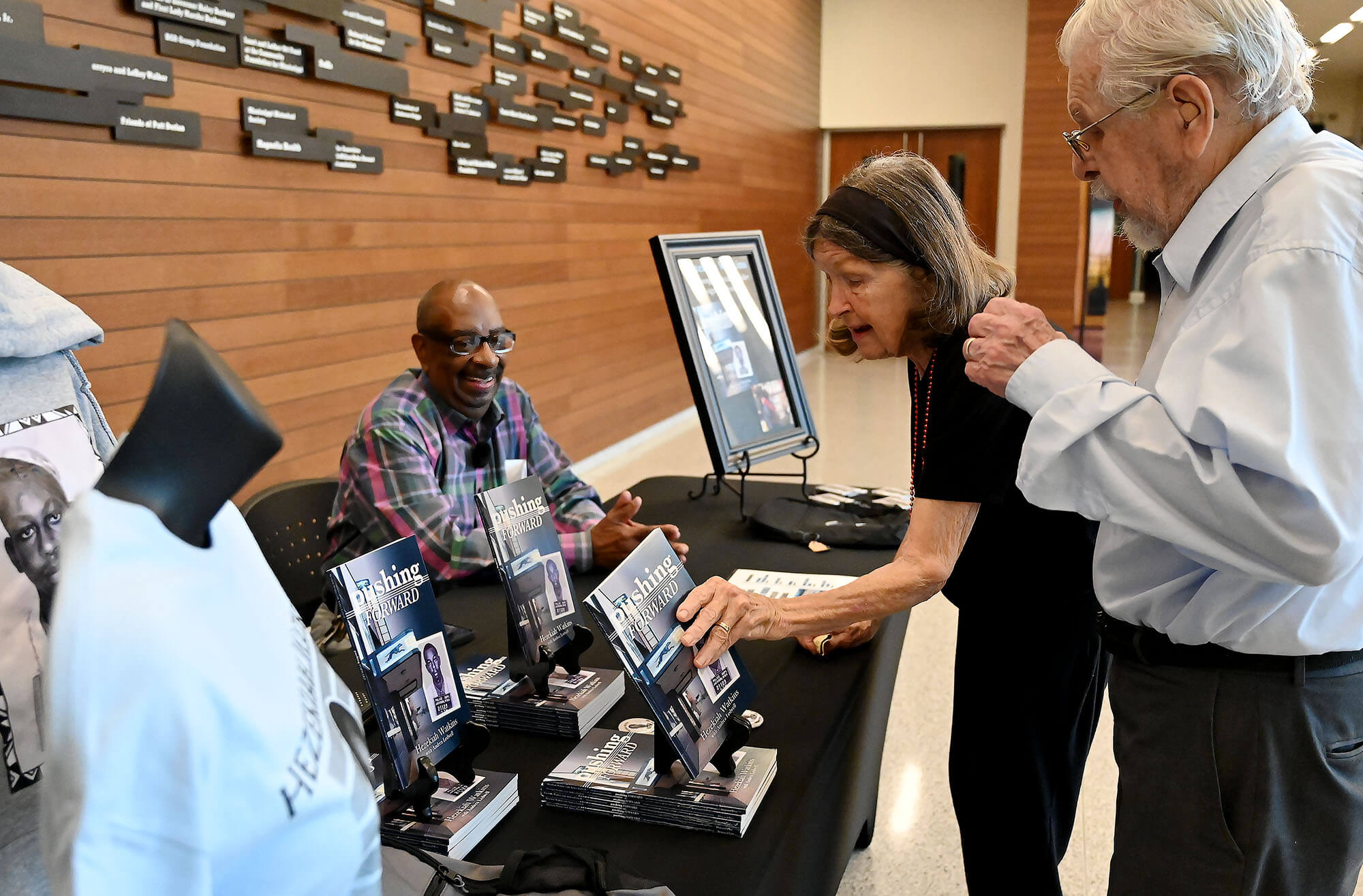
Civil rights icon Hezekiah Watkins with his book “Pushing Forward,” at the Two Mississippi Museums, Tuesday, Sept. 1, 2026, in Jackson. Watkins was the youngest Freedom Rider at 13 years old in 1961. -

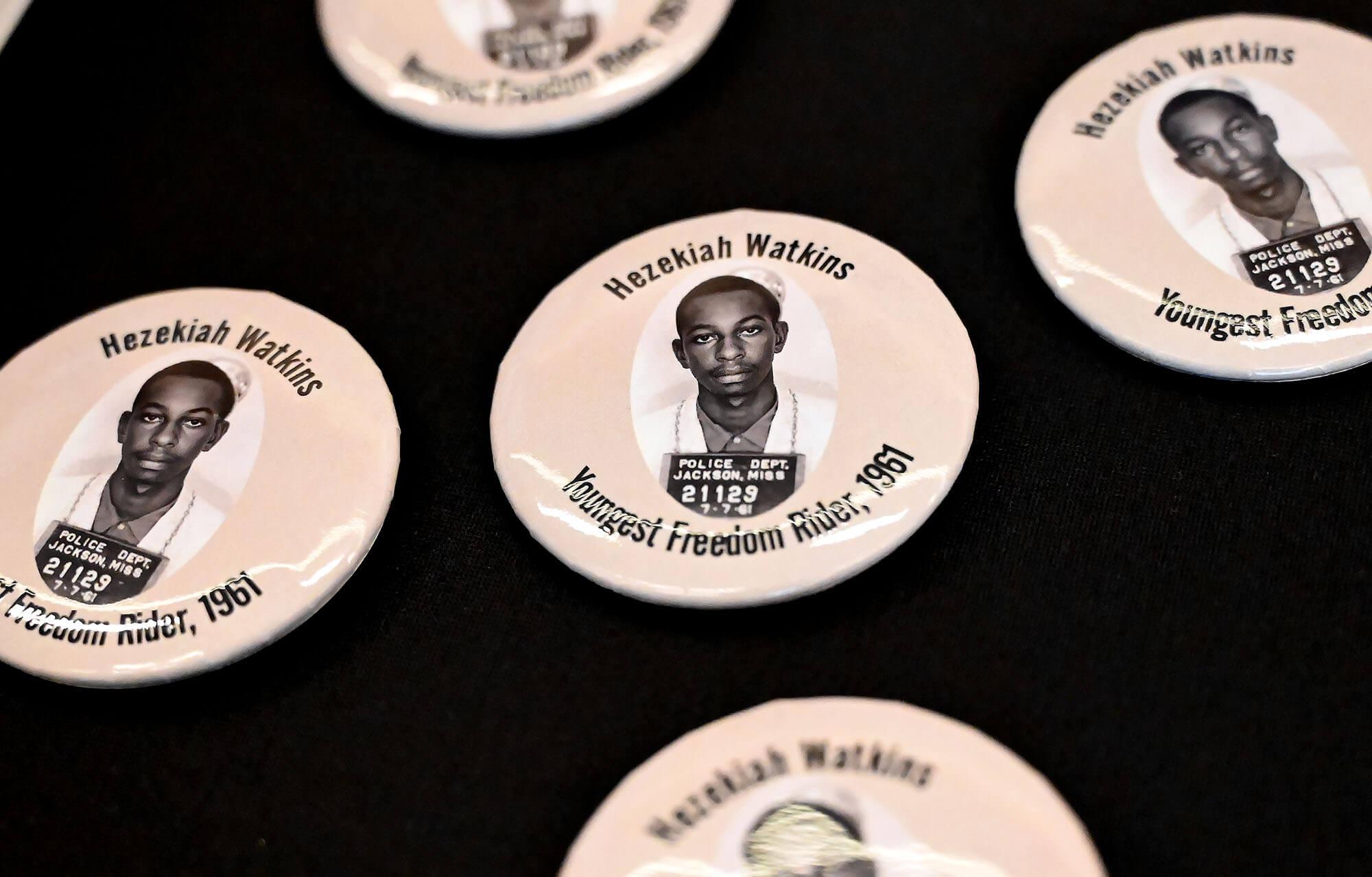
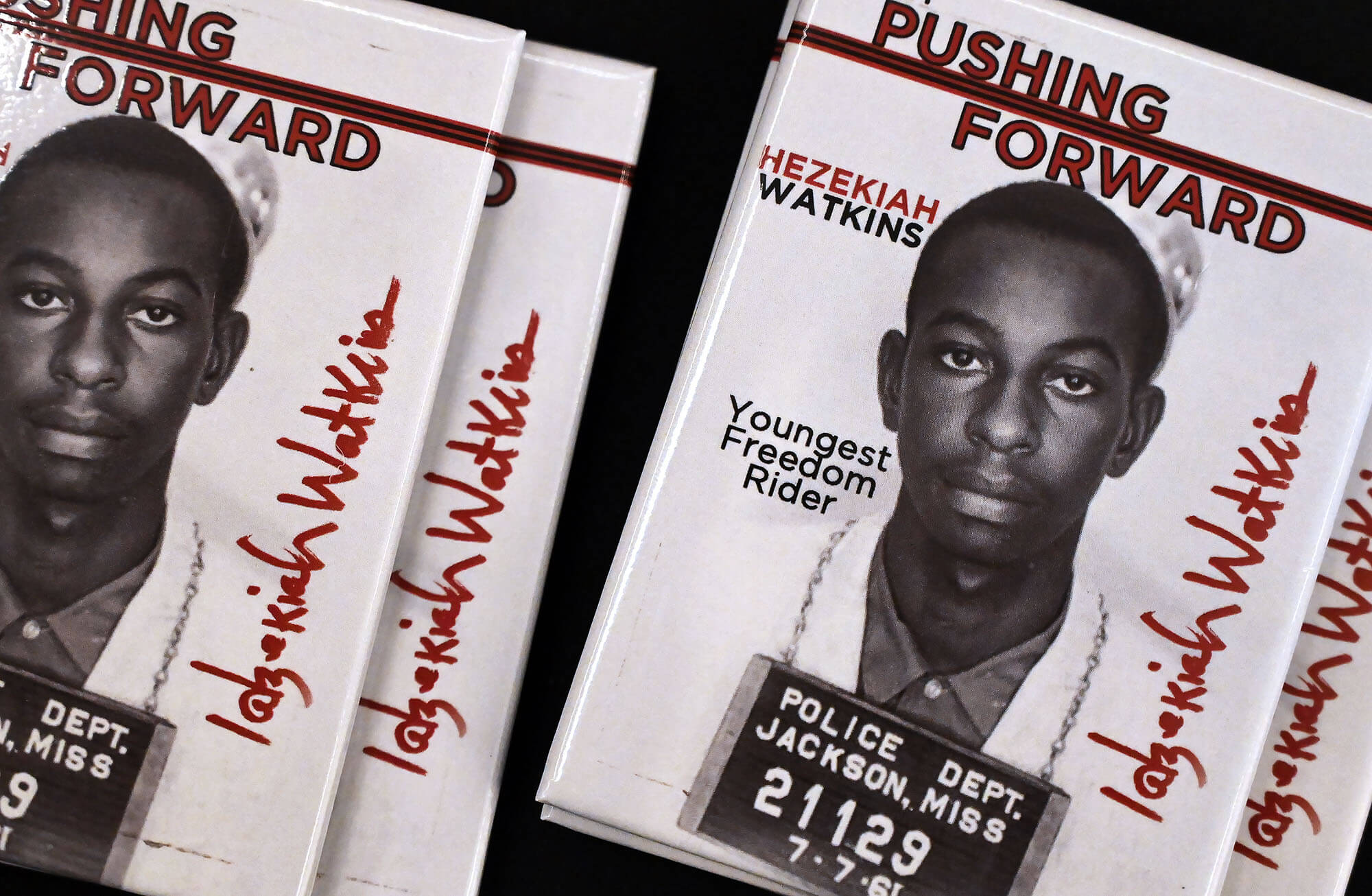
Souvenir buttons available at the Two Mississippi Museums showing a 1961 mugshot of a 13-year-old Hezekiah Watkins, the youngest Freedom Rider, Tuesday, Sept. 1, 2026, in Jackson. -

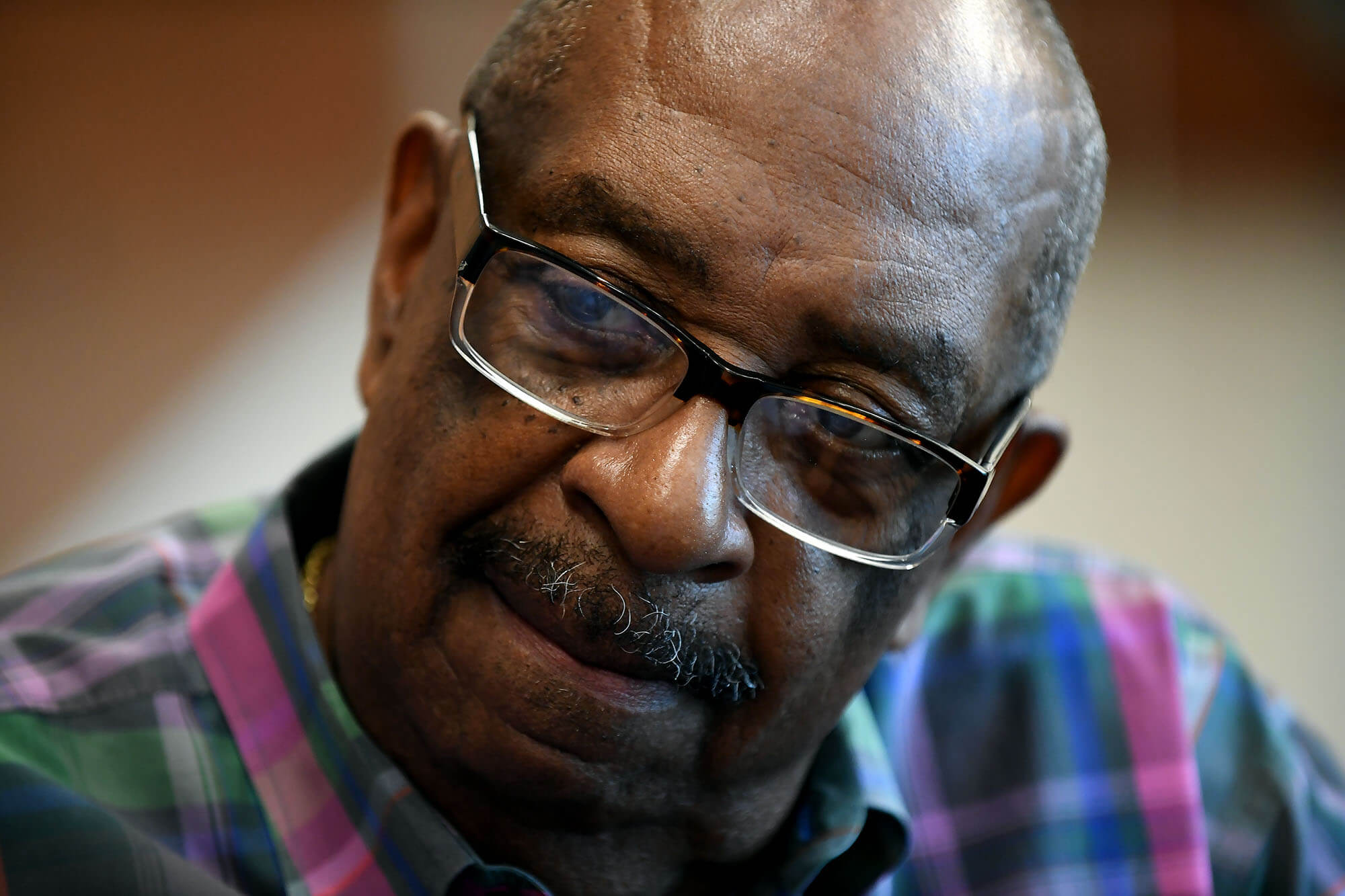
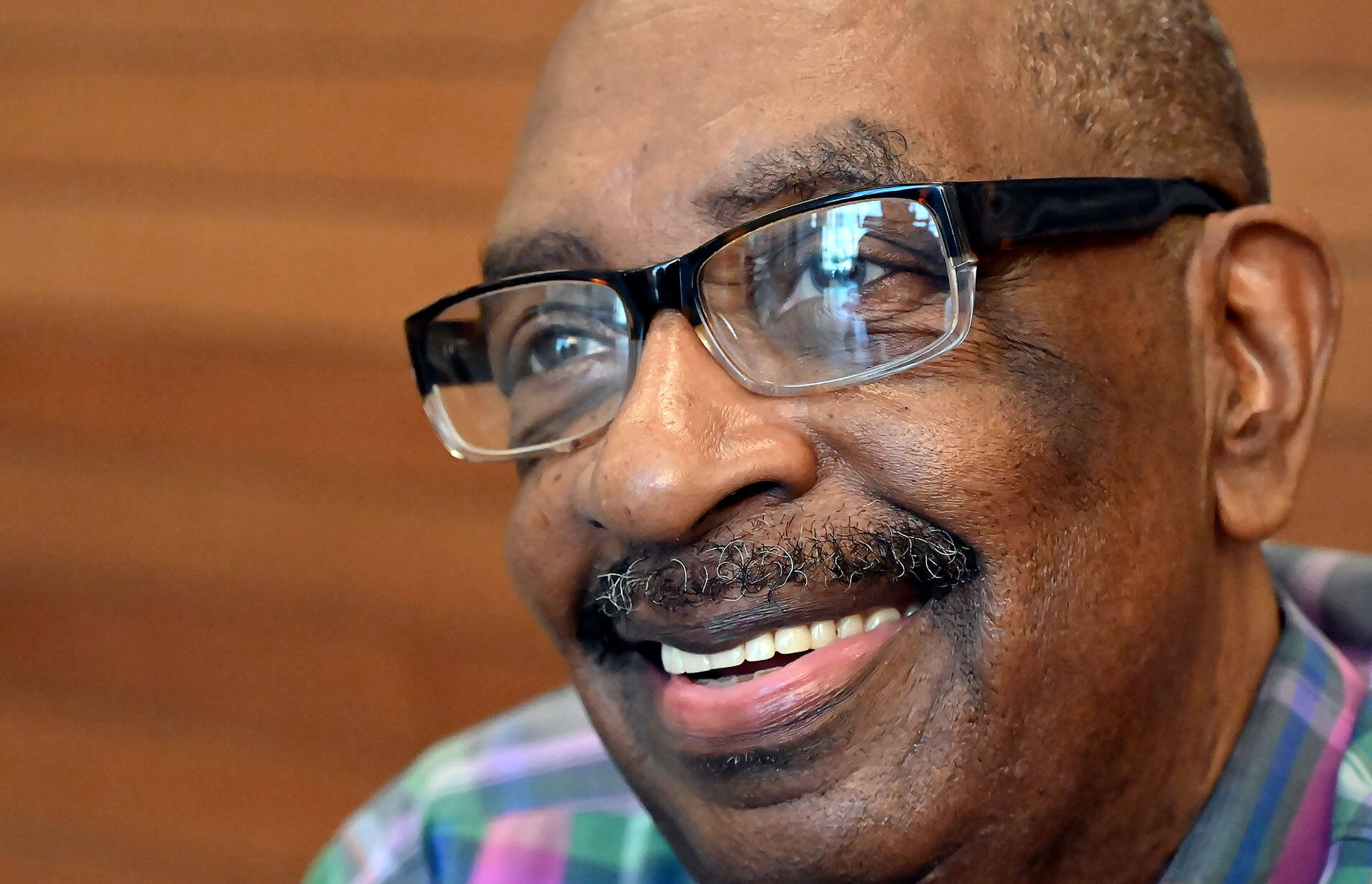
Civil rights icon Hezekiah Watkins at the Two Mississippi Museums, Tuesday, Sept. 1, 2026, in Jackson. Watkins was the youngest Freedom Rider in 1961 at just 13 years of age. -

Judy and Rims Barber, right, stop by the Two Mississippi Museums to wish fellow civil rights icon Hezekiah Watkins, left, a happy 69th birthday, Tuesday, Sept. 1, 2026, in Jackson. Watkins was the youngest Freedom Rider in 1961 at just 13 years of age. -

Apparel available at the Two Mississippi Museums bearing the 1961 mugshot of a 13-year-old Hezekiah Watkins, the youngest Freedom Rider, Tuesday, Sept. 1, 2026, in Jackson. -

Civil rights icon Hezekiah Watkins at the Two Mississippi Museums, Tuesday, Sept. 1, 2026, in Jackson. Watkins was the youngest Freedom Rider in 1961 at just 13 years of age. -

Souvenir magnets available at the Two Mississippi Museums bearing the 1961 mugshot of a 13-year-old Hezekiah Watkins, the youngest Freedom Rider, Tuesday, Sept. 1, 2026, in Jackson.
Watkins said he later learned that then-U.S. Attorney General Robert F. Kennedy sent attorneys to check on the condition of the Freedom Riders. Those attorneys visited Parchman, where they discovered a 13-year-old was being held on death row.
President John F. Kennedy called Gov. Ross Barnett to ask if a child was being held at Parchman, which the governor denied. The next day, one of the governor’s aides told him there was, and that he had lied to the president. Gov. Barnett ordered for Watkins to be released to Jackson police.
At this point, Watkins’ mother and community had been searching for him. His mother thought she’d be picking up his remains. When they reunited, she cried out to God in thanks, and they tearfully embraced. His mother had to sign several documents designed to limit his activities. They went home, where Watkins said his mother “beat the hallelujah out of me.”
That fall, activist Pastor James Bevel tried to recruit Watkins into the movement. Watkins initially wanted nothing more to do with it, but Bevel won him and his mother over.
Bevel took Watkins to downtown Jackson, which opened the teen’s eyes to the realities of racial hatred in Mississippi.
“I knew there was a difference in communities – churches, schools, and you know all of those things. I was aware of that, but I was not aware of how much we was hated by being Black,” he said.
“By being exposed, my mind was made up that I got to do something.”
Watkins went on to become the youngest Freedom Rider, participating in the Mississippi Freedom Summer Project in 1964 and getting arrested over 100 times.
Decades later, he’s still dealing with the trauma from his experiences, but he doesn’t let it get him down. He said he’s thankful to be alive, and to be “in my right mind.”
“There were so many Freedom Riders who are not with us today. There are so many Freedom Riders who are with us today, but that trauma has torn apart” these individuals, he said.
Watkins works at the Two Mississippi Museums, where he shares his story with people of all generations. He worked with writer Andrea Ledwell to create his autobiography, which was published in 2019. In 2023, he returned to Parchman for the unveiling of a historic marker.
Watkins received an official apology from the city of Jackson in January 2026 on Martin Luther King Jr. Day. In March, a street in Jackson was named after him.
He implored the audience at Tuesday’s gallery talk to get out and vote.
When asked what he wanted people to take away from his story, he said, “that you’re never too young or too old to get involved in any situation. Whether it’s being a Freedom Rider or just a concerned citizen, if you see something, say something.”
After Watkins finished his talk and answered questions, the audience sang him “Happy Birthday.”
