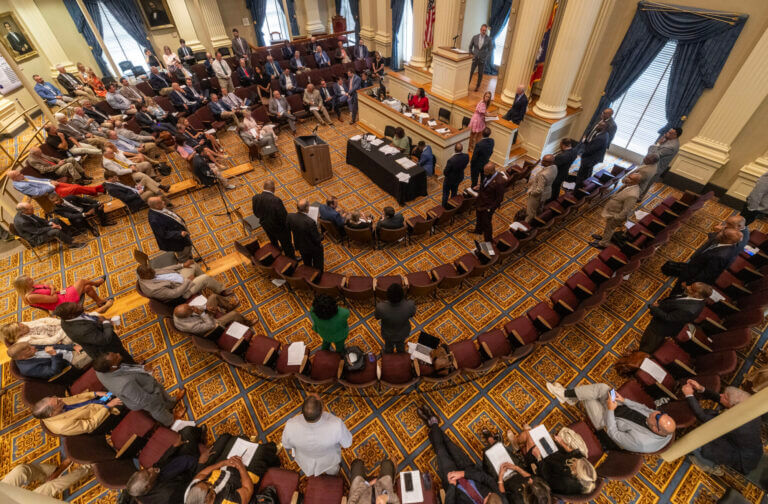
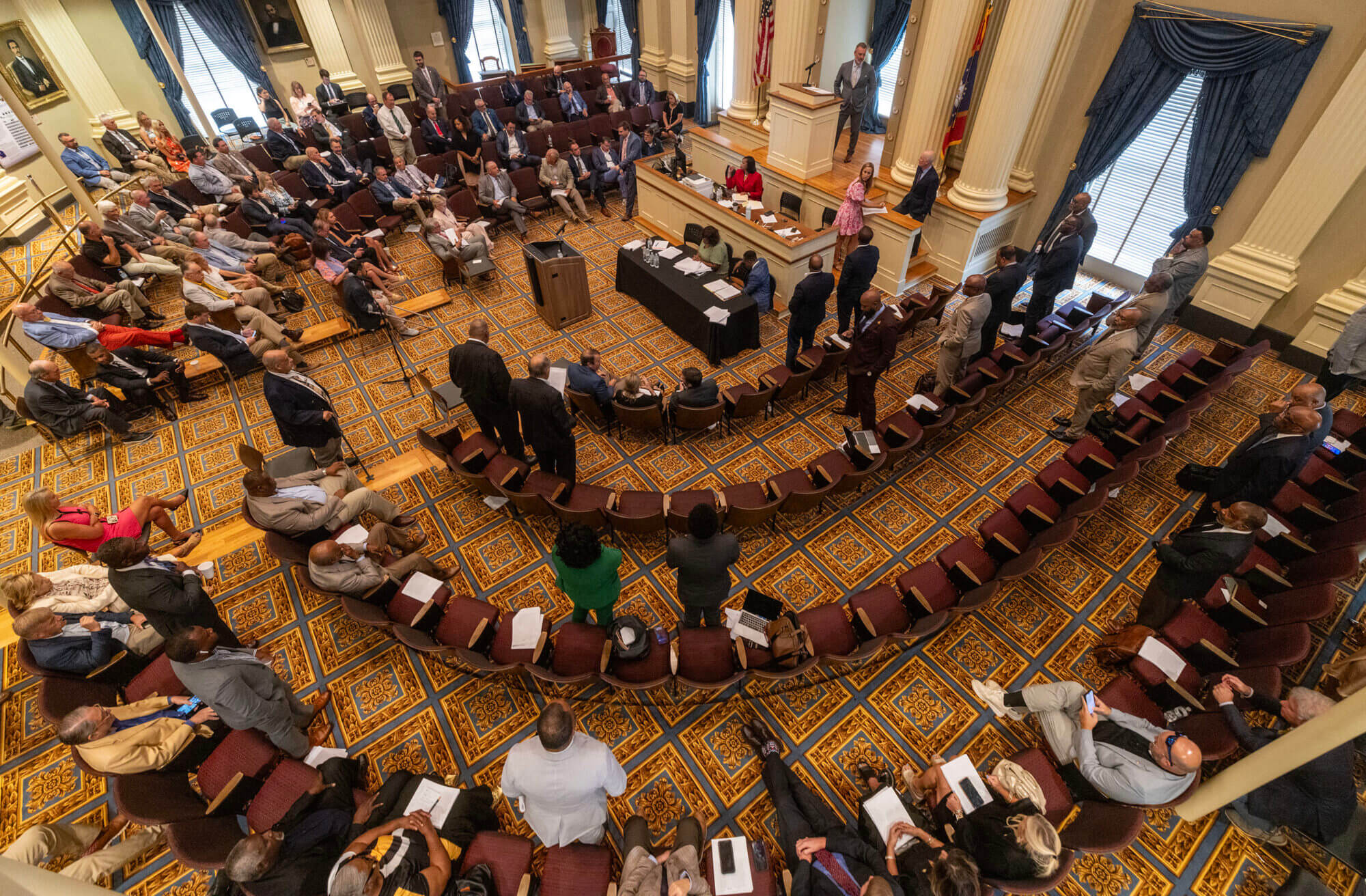
The House on Thursday passed a measure to overhaul the state’s youth court system after the Senate had passed it late Wednesday night in a special session of the Mississippi Legislature.
But when it looked like lawmakers were soon to wrap up what would have been a relatively quick special session on Thursday afternoon, the efforts hit a snag over a separate issue over which lawmakers have argued for years — reform of pharmacy benefit manager laws.
The behind the scenes haggling over PBMs kept the special session going hours longer than expected, into Thursday night.
Lawmakers into Thursday night were in limbo, unsure whether they would be ending their session soon and going home, or adding a new, contentious issue to the mix and remaining in Jackson. And it left the youth court reform, or at least its funding, also in limbo for a while.
Youth court funding held hostage in attempt to address pharmacy reform
Lawmakers appeared set to finalize a pair of funding measures for the youth court overhaul they had passed, but the funding bills stalled late Thursday afternoon amid a House-led effort to also address PBM reform in the special session. The youth court funding measures would approve $29.5 million in new spending.
House leaders held the youth court funding bills hostage for hours to use as leverage to try to force Senate leaders to agree on PBM legislation, and then get Gov. Tate Reeves to add a PBM overhaul to the current special session.
The House early Thursday afternoon passed the youth court spending bills, but then, in a surprise move, Republican Rep. Steve Massengill of Hickory Flat, a top ally of House Speaker Jason White, held the bills on a motion to reconsider, preventing the measures from going to the Senate for consideration.
House Speaker Jason White later said Thursday night the House would allow them to go to the Senate for consideration. But the reason, White said, the House held them on a procedural motion was because legislative leaders were “very close” on PBM reform. White also said he thought lawmakers had reached a deal on Wednesday night, and then three or four times on Thursday afternoon until negotiations stalled again.
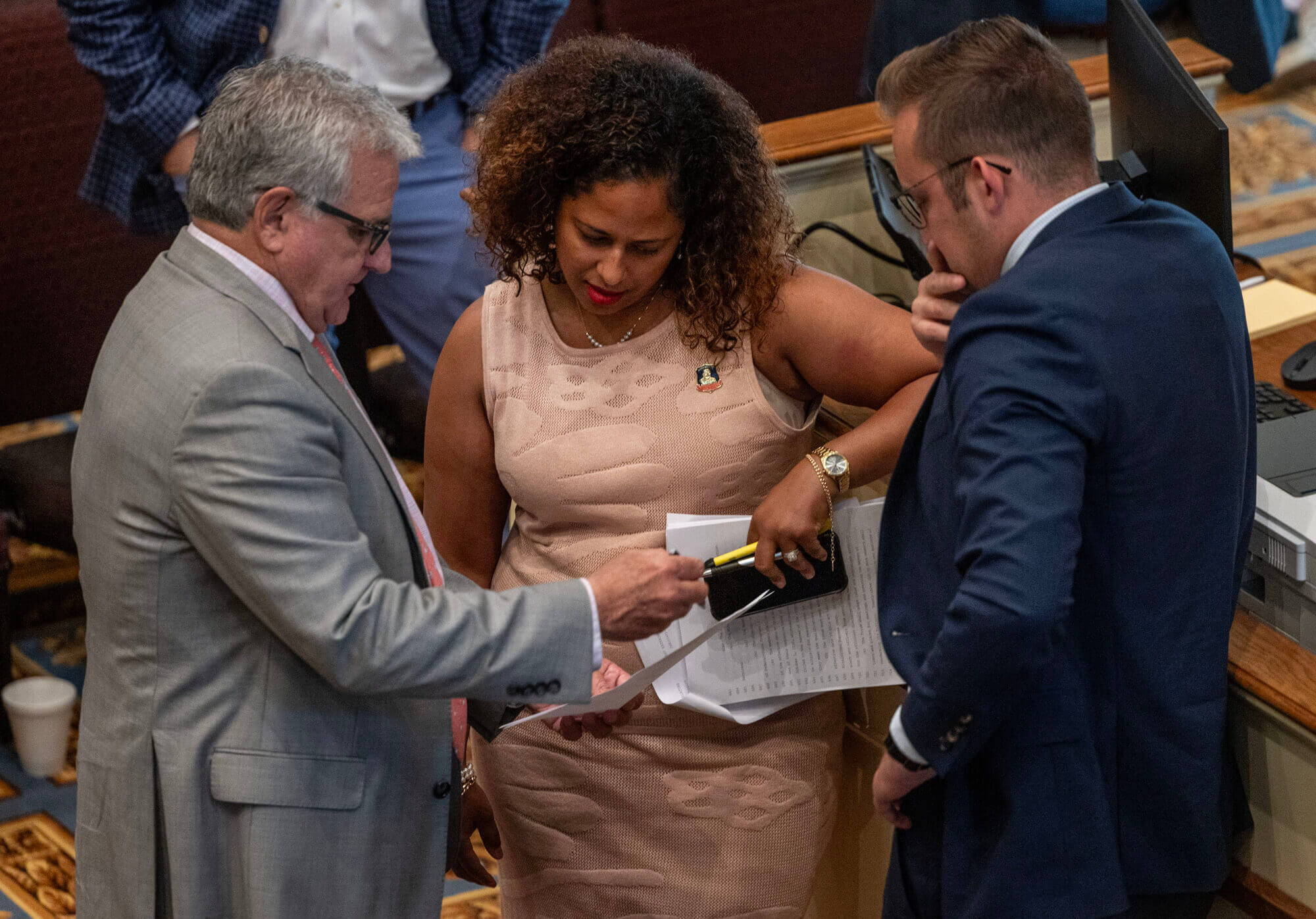
White told Mississippi Today he and Lt. Gov. Delbert Hosemann have been talking about the prospect of an additional special session on PBMs “over the course of this week” and that Reeves was willing to call a special session if there was an agreement.
“While everybody is at the table, I thought this was a great opportunity, and they’re working hard. I was hoping to land that plane before we got out of Jackson,” White said. “I’m encouraged by parties on all sides over the last few days being willing to really get in a room and shut the door.”
White said lawmakers could be back in a special session “in a week or two, I don’t know,” to deal with PBMs, if they are not addressed now.
The House recessed, with plans to come back later Thursday night and see if an extended special session to deal with PBMs was possible. But the Senate, once the House finally released the youth court funding bills, passed the measures quickly and called an end to the special session.
Multiple senators also told Mississippi Today they had not seen an agreement and were skeptical of whether they could garner the necessary votes to pass PBM reform in a special session. Some said they believed the effort was more political face-saving for House members who had faced flak back home after they failed to pass a PBM reform measure earlier this year.
Sen. Scott DeLano, a Republican from Biloxi, said the Senate was unlikely to approve any reforms to such a longstanding issue at the last minute.
“We tried for three years to get meaningful PBM reform passed,” DeLano said. “While we’ve been close several times, we did not get there. If our intention during this special session is to include PBM reform, it needs to be fully vetted and I question whether the Legislature would have that opportunity in such a tight window. This is an extremely important issue for many Mississippians, including our independent pharmacies, and not something that should be hastily passed without a full deliberate discussion.”
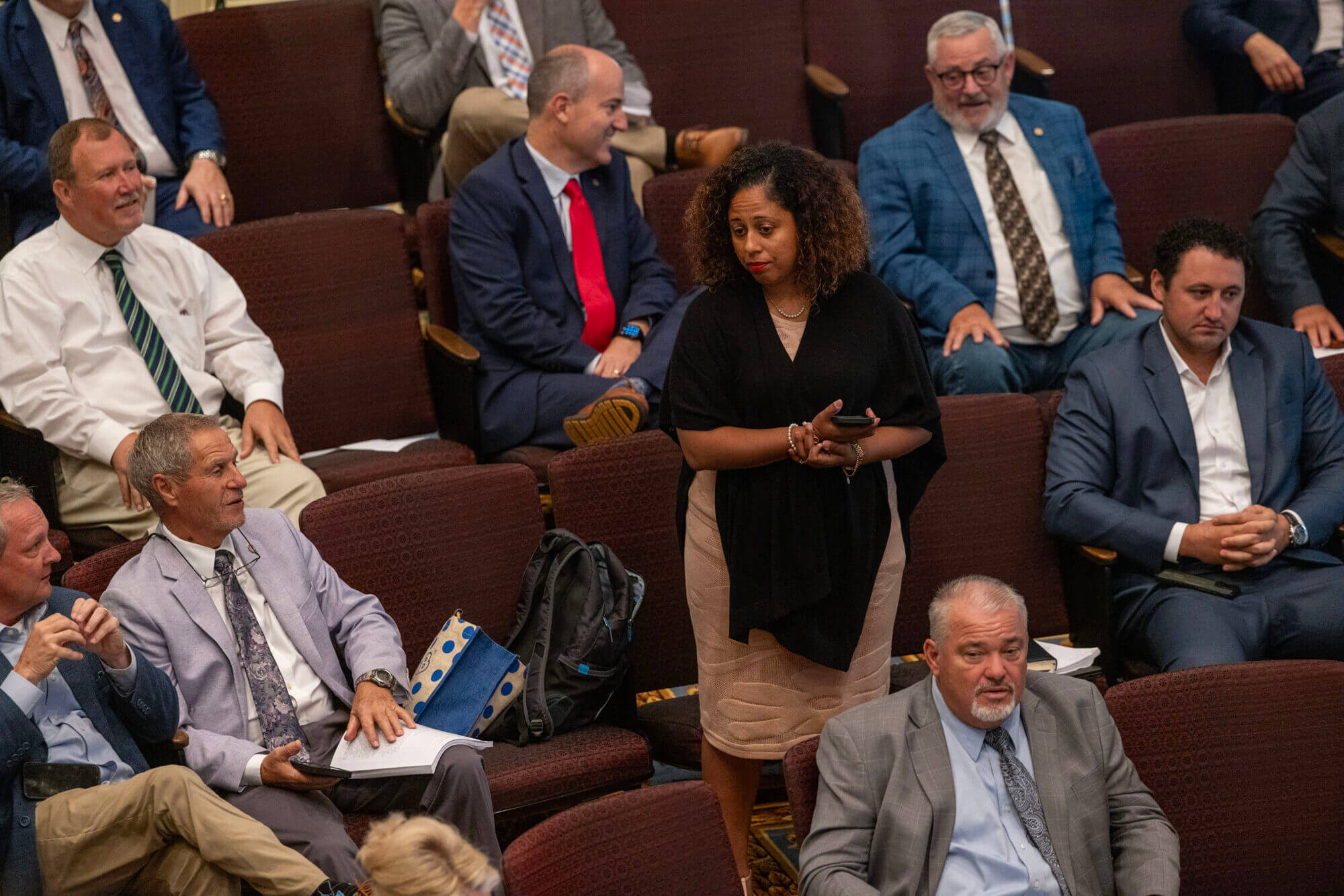
As lawmakers were scrambling to figure out where negotiations stood, the Senate drafted its own youth court funding bills on Thursday afternoon, a strategic move in response to the House holding the bills it had passed. It appeared the Senate might pass the spending bills on to the House and tell the other chamber to take it or leave it and potentially leave the special session.
Senate Appropriations Chairman Briggs Hopson, a Republican from Vicksburg, said he was “not sure what’s going on” in the House, so he wanted the Senate to pass mirror versions of the House spending bills as a backup.
“They passed those bills, I think, a few hours ago, three hours ago or so,” Hopson said of the House. They’re held on a motion to reconsider, so I think what we’d like to do is go ahead and get these Senate bills out of the Senate if we can and move those to the House for consideration.”
After years, ‘uniformity’ for youth court
Earlier in the day, in a 67-32 vote that fell mostly along party lines in the Republican-dominated chamber, the House approved the Senate youth court reform legislation without changing it. Democrats introduced several amendments, but all of them were defeated. Tempers flared in the debate’s closing stages, with one Democrat calling Republicans “cowards” for voting for the measure in a “rushed” process, and Republicans responding that the bill was the culmination of a long push toward reforming the system.
The Senate had passed the youth court bill late Wednesday night 25-10 after much debate, with several members absent or not voting.
“Don’t stand up here and say I don’t care about children in this piece of legislation, because I do,” said House Judiciary B Committee Chairman Kevin Horan, a Republican from Grenada and one of the lead House negotiators. “We have been dealing with this for years and years. We have got to get some uniformity in the system.”
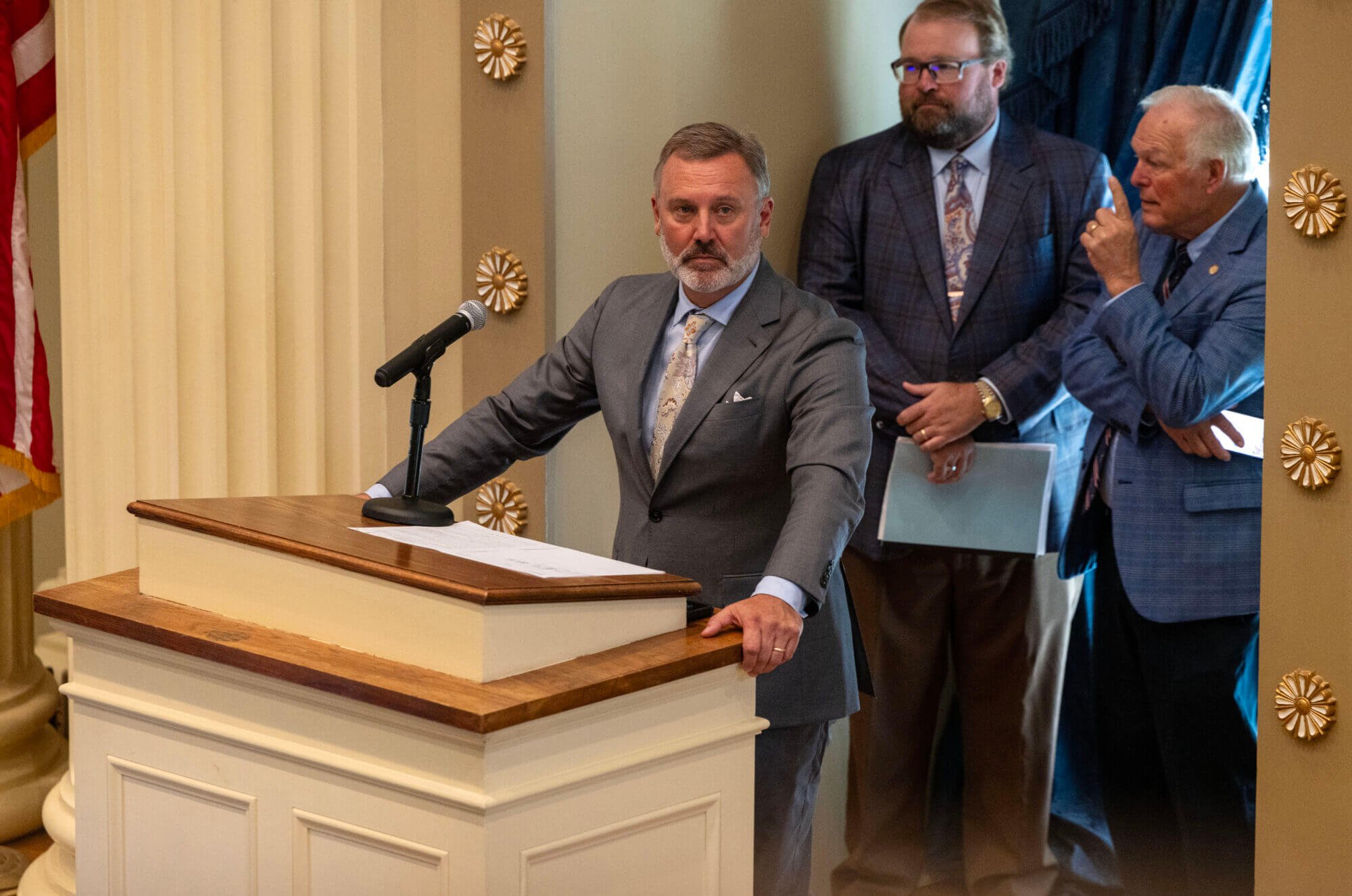
Rep. Jeffery Harness, a Democrat from Fayette, said Republicans were voting to thrust the youth court system into “a chaotic mess.”
“Many of you haven’t even read this legislation; you voted just to vote. And you caused harm to your state and harm to your children,” Harness said. “And you sit here like cowards and can’t even represent your own interests.”
The goal of the overhaul is to replace Mississippi’s current disjointed youth court system. Only 24 of Mississippi’s 82 counties have a full-time judge handling youth court cases. In most of these instances, county court judges handle youth court matters. But not every county has a county court.
In the remaining counties, these matters are handled by “part-time referees,” who are a part of the chancery court. The proposal passed by the Senate would do away with referees and replace them with full-time chancery court judges. The governor will appoint the new chancery court judges, but they will later have to run for election.
Some House members in both parties said localities should have control over the appointments, not the governor, but efforts to tweak the bill in that manner were defeated.
The legislation would also allow for the appointment of another court official called a “family master” to hold emergency hearings, should chancery court judges face a backlog.
The legislation would add more full-time judges and open youth court proceedings to the public. It would also create a statewide “diversion program” to redirect some juveniles from the court system, expand detention capacity at the Oakley Youth Development Center in Raymond and lay the groundwork for the building of new detention centers in both North Mississippi and South Mississippi.
Youth court proceedings will be open to public
One of the most contentious provisions among Democrats is a requirement that an order or ruling of the youth court judge delivered orally must be reduced to writing within 48 hours. Failure to reduce the oral order to writing within that time period would nullify the order.
Democrats said the provision could result in children being sent back to dangerous settings if youth court judges don’t, for whatever reason, successfully put their orders into writing in the required time frame. Republicans said ensuring orders are available in writing is critical to a fair legal proceeding and that there were plenty of technological options available to judges.
Democrats also objected to the bill’s opening of youth court proceedings to the public, arguing that children who have been sexually abused would see the gruesome details of what happened to them exposed in public view. Republicans said judges would have the option to close hearings if they wanted to, and there were already other protections in state law to protect children from undue scrutiny.
“Due process dies in the darkness,” said House Judiciary A Vice Chairman Jansen Owen, a Republican from Poplarville.
For decades, closed youth courts have been the status quo, and only in rare circumstances has the public been allowed to see the proceedings. The new proposal will give judges flexibility on sealing records and limiting courtroom proceedings, but the courts will now be presumed open to the public.
Senate Judiciary A Chairman Brice Wiggins, a Republican from Pascagoula, told Mississippi Today that he understands concerns of the public sharing sensitive details about children and families, but he believes the new law will still protect the privacy of children.
“Open courts are a hallmark of our democracy,” Wiggins said. “If you’re for good government and transparency, you should be supportive of open courts.”
The special session was necessary because youth court proceedings were thrown into confusion after lawmakers, during their regular 2026 session, let state laws that outline how confidential youth court records can be shared between courts, state agencies, attorneys and law enforcement expire.
When a repealer, or sunset clause, is included in a state law, the law or a section goes away on a specified date unless the Legislature votes to reenact it. Because the Legislature didn’t pass a measure extending the repealer, those confidentiality measures and other youth court laws and funding expired.
Some Democrats questioned the hastily called nature of the special session. But existing youth court judges made clear the situation was unsustainable, Owen responded.
“When the statutes expired, it was like a bunch of judge chicken littles running around talking about how the sky was falling and how everything was going to hell in a handbasket,” Owen said.
Longtime Democratic Sen. Hob Bryan of Amory said since he was elected to the Legislature over 30 years ago, he’s continued to watch the Legislature rubber-stamp the governor’s policy requests and abdicate their power to deliberate as a separate branch of government.
“It’s getting where I do not recognize this Legislature, and I do not recognize this Senate,” Bryan said. “I do not understand why people vote for propositions they think are unwise.”
Over the last several years, Bryan said he’s continued to watch lawmakers insert mistakes into legislation, and he partially blames that on the hurried nature of legislative sessions and an unwillingness of lawmakers to carefully scrutinize bills.
Some Republicans in both chambers also criticized the process, pointing out they were left to quickly consider a lengthy bill that was largely written by legislative leadership, not the rank and file.
Rep. Elliot Burch, one of the few House Republicans to vote against the measure, said the special session did not allow members to properly study the bill and its consequences.
“If by youth court reform you mean placing this 216-page rewrite of Mississippi law in front of me and expect everybody to understand it and know the consequences of it before they vote, I have some problems,” Burch said.
