Home Blog Page 138

With no runoff, Jackson’s June 3 general election is ‘last call’ for votes

Out of six candidates on the mayoral ticket in Jackson’s June 3 general election, the one who takes home the most votes will be elected to office, even if he or she does not win a majority of the ballots cast. 

That’s because unlike primary elections in Mississippi, local general elections generally do not feature runoffs. This fact might surprise some Jackson voters, since the race that typically generates the most excitement each election season – the Democratic primary for mayor – often results in a lively runoff between the top-two vote-getters. 

“Everybody needs to be aware that Tuesday is the last call for drinks in municipal races,” said Brandon Jones, the director of political campaigns at the Southern Poverty Law Center. “If you’re planning on voting in a municipal election this cycle, this is your shot.” 

In Mississippi primaries, when no candidate receives at least 50% plus one vote, the election advances a few weeks later to a runoff in which the two candidates who finished with the most votes go head-to-head. Mississippi does hold runoffs in general elections for statewide races – such as for governor – but not municipal.

In fact, runoffs are unusual in the United States, and especially rare in general elections. Mississippi is one of just seven states to require primary candidates to win a majority of the votes, according to the National Conference of State Legislatures. Even fewer states – including Georgia, Louisiana and Mississippi – hold runoffs for general elections, but in Mississippi, that requirement does not apply to municipal elections.

Most of the states requiring winners to secure a majority of votes are Southern due in part to Jim Crow, when white officials deployed runoffs to prevent Black candidates from winning, said Byron D’Andra Orey, a political science professor at Jackson State University. 

“Whites would split the vote and African Americans might end up winning, so when they did the runoff, all of the whites came together who split the vote and they were able to defeat the Black candidate,” he said. 

This Tuesday, Jackson voters will choose between the winners of the Democratic and Republican primaries – state Sen. John Horhn and police officer Kenny Gee, respectively –  plus four independent candidates, businessman Rodney DePriest, musical artist Zach Servis, child care operator Lillie Stewart-Robinson and radio host Kim Wade. (Wade recently announced he was dropping out of the race but his name will still appear on the ballot).

With the ballot split six ways, it’s theoretically possible for one of these candidates to win  by a plurality – the greatest number of votes – despite not securing over 50% of the vote. 

But the chances of that hurting the Black Democratic candidate – which historically wins the mayor’s race in the majority Black city – are low, Orey said. 

While he speculated that white Jacksonians may be motivated to vote for Hohrn’s white challengers, particularly DePriest, Orey said these voters likely won’t have the numbers to influence the election. 

“In the past, it’s always been the case that it was just a landslide,” he said. 

Jones said he’s seen a proliferation of independent candidates winning mayoral elections in the southeast, but that scenario depends on the unique politics and voting format of a city – and Jackson doesn’t quite have the conditions for a historic outcome like that. 

“I just don’t know of a format for voting that is going to prevent John Horhn from getting elected mayor of Jackson,” Jones said. “When you win by a plurality, that would still require someone to have more votes.” 

The only scenario in which Jones could see another candidate securing more votes and winning, he said, was if an independent candidate had a significant amount of Democratic support — and a Republican candidate was popular. 

“That’s just not the case here,” Jones said. 

Orey said he is curious to see how the lack of a runoff could impact the city’s council races, particularly the contested race in Ward 1, given that turnout among Black Jacksonians typically falls for the general. 

“There’s so much racially polarized voting, and one could play with the idea that turnout is typically low and it’s low amongst Blacks,” he said. “But it could be low amongst whites, because when you’re in a majority jurisdiction, you tend to think of yourself as a permanent loser.” 

Mississippi’s Title X recipient lays off half its staff amid funding freeze

The nonprofit charged with administering federal family planning money in Mississippi is laying off half of its staff two months after the federal government withheld its grant. 

Despite complying with the demands of the federal investigation that prompted the funding freeze, Converge leaders have heard nothing about the status of their case and say they must continue operating as if the money won’t come through. That means laying off 10 members of their staff, as well as stopping funding streams to the dozens of clinics around the state that rely on the grant to offer preventive reproductive health services to low-income Mississippians.

The U.S. Department of Health and Human Services (HHS) told Mississippi Today on May 14 that the agency was reviewing the submitted documents to assess compliance with the law and the president’s executive orders. When asked for an update Monday, the department declined to comment.

Title X, a federal program that has been providing money for family planning services to states for over 50 years, flows through Converge to 91 clinics around the state. On March 31, HHS told Converge it was withholding $4.5 million intended for Mississippi’s Title X program indefinitely pending an investigation into the organization’s diversity, equity and inclusion practices. 

Seven states, including Mississippi, had Title X funds completely withheld, while another sixteen had their funds partially withheld. An estimated 834,000 people nationwide would be affected if the funds are never disbursed, Guttmacher estimates.  

In 2024, Title X funded 30,000 visits in Mississippi, the organization’s head told Mississippi Today. 

Since they received the letter, Converge leaders sent in the documents they were asked for, met with members of Congress, fundraised, and furloughed half their staff with the hopes of reinstating those employees if the federal funding came through before June 1. But now that it has not, the organization was forced to institute permanent layoffs.

Danielle Lampton, left, and Jamie Bardwell pose for a portrait at Converge: Partners in Access in Jackson, Miss., Wednesday, April 6, 2022. Credit: Eric Shelton/Mississippi Today

“I thought that it would not come to this,” said Jamie Bardwell, co-executive director of Converge. “Because the accusations were so bizarre, we naively thought that all we had to do was show what we’re doing and we could get the money unfrozen. And I think that that was wishful thinking.”

Bardwell said Monday she has not heard from HHS since submitting all the requested documentation. 

The nonprofit is relying on fundraising to offer services like telehealth availability and pop-up clinics in the meantime.  

“I think often about the fact that we all feel so helpless right now, like, everything seems to be crumbling,” she said. “And the idea that we can do something, as individuals and as an organization, to help people in these dire moments, feels so good. And we’re going to channel that for Converge to create something that is useful for people, even though we never imagined this is how we’d need to do it.”

The next pop-up clinic will take place July 26 at the Jackson Medical Mall and will include physical exams, testing for sexually transmitted infections, pregnancy tests and preconception counseling, and prescriptions for birth control. All services will be available on a sliding scale. 

The team will have reproductive health kits available that include emergency contraception, condoms, a pregnancy test and feminine hygiene products. They will also be giving out free three-month supplies of Opill – the first over-the-counter birth control pill. 

In addition, staff will be available to help people enroll in the Medicaid family planning waiver, which allows low-income individuals to access Medicaid for family planning purposes. 

Bardwell is hopeful Converge will find new ways to offer services, but knows it will be difficult for the organization to operate on the same level it has been without the $4.5 million it was receiving annually from the federal government.

“Mississippians are nothing if not creative and problem solvers, so I feel confident that we can meet this moment, but it will be very challenging,” Bardwell said.

It’s June in Mississippi, so naturally college baseball takes center stage

As always, college baseball becomes front page news as the calendar turns to June in the Magnolia State.

Ole Miss and Southern Miss baseball teams both will play later today for the right to host NCAA Super Regionals this weekend. Meanwhile, late Sunday night Mississippi State announced the hiring of Virginia’s legendary baseball coach Brian O’Connor in an effort to get the Bulldogs back to Omaha and the College World Series.

Ole Miss and Southern Miss dug themselves deep holes last Friday night by losing in the first rounds of the Oxford and Hattiesburg regionals. Both try to complete the rigorous climb out of those holes tonight.

Ole Miss will play Murray (Ky.) State at 5 p.m. in Oxford. Southern Miss will play Miami at 8 p.m. in Hattiesburg. Both games are sold out. Both will be televised. The Ole Miss game will be on the SEC Network and ESPN+. Both ESPN+ and ESPNU will televise Southern Miss-Miami.

After losing to Murray State 9-6 on Friday, the Rebels have won three straight games. They beat Western Kentucky 8-6 Saturday, before defeating Georgia Tech 11-9 and then Murray 19-8 on Sunday.

After losing to Columbia 11-4 on Friday, Southern Miss then came from behind to edge Alabama 6-5 on Saturday. The Golden Eagles then trounced Columbia 8-1 Sunday afternoon and then, despite losing two key infielders to injuries, pummeled Miami 17-6 Sunday night.

Should Ole Miss defeat Murray, the Rebels would face Duke in a Super Regional this weekend with the winner advancing to the College World Series.

Should Southern Miss defeat Miami, the Golden Eagles would host Louisville in a Super Regional with the winner advancing to Omaha.

Meanwhile, Mississippi State has hired a new coach quite familiar with Super Regionals and Omaha. O’Connor has taken Virginia to seven College World Series and his Cavaliers won the national championship in 2015. Already inducted into the College Baseball Hall of Fame, O’Connor, 54, has an overall coaching record of 917 victories, 388 defeats and two ties, a winning percentage of just over 70 percent.

MSU president Mark Keenum, in a press release, said: “At Mississippi State, we have a long tradition of success in baseball. The ‘M over S,’ the Maroon and White, and hosting postseason in Starkville is woven into the very fabric of who we are and what we expect of our baseball program. Brian O’Connor is an elite level coach that aligns perfectly with our elite level program. His past certainly speaks for itself, but his clear understanding of the evolution and future of college baseball is clear. We are in the pursuit of championships. I am thrilled for Coach O’Connor, our student-athletes and Bulldogs everywhere as this is a historic day for Mississippi State.”

‘That’s not governing’: Most lawmakers don’t know what they passed in secret, $7 billion budget

Sometime within the last decade or so, setting the Mississippi state budget became a top-secret affair, closely guarded even against many of the lawmakers who are, ostensibly, tasked with setting it.

Why, rank-and-file legislators even have difficulty getting a spreadsheet that clearly shows what’s being proposed until just before they are expected to vote on the more than 100 bills — thousands of pages — that make up the multi-billion budget.

Budget info is on a need-to-know basis in the Mississippi Legislature, and unless you are one of a small handful of negotiators, you don’t need to know. And the public or press? Forget about it.

Shockingly, we’ve seen in recent years that mistakes get made in this hurried, harried and secret process. Big, multi-million dollar mistakes. Things get sneaked into budgets that clear headedness, deliberation and transparency would have prevented. Ditto for things that get left out.

Earlier this year, the Mississippi Legislature overhauled the entire state tax code by accident, because of typos not caught in the secretive, hurried process. Instead of deliberating and fixing the mistakes, the governor and legislative leaders rolled with it, because the typos were inadvertently close to what they wanted.

That’s a helluva footnote in the history of Mississippi governance and fiscal policy, one big, beautiful clerical error.

Mississippi budget secrecy hit another crescendo last week that had rank-and-file lawmakers on both side of the aisle angered. In a chaotic two-day special session scrum, lawmakers passed a $7.1 billion budget with nearly no deliberation and little adherence to proper parliamentary procedure.

Most lawmakers don’t know exactly what they passed in the budget last week.

The process already produced one major snafu: Lawmakers passed a $1.9 million line item in the Department of Health budget that, if signed into law would threaten the loss of more than a billion dollars of the state’s draw down of federal Medicaid dollars.

READ MORE: House passes bill that threatens Mississippi’s Medicaid funding, then skedaddles, leaves Senate holding bag

But because of the hurried, secretive budget process, the Senate was practically forced to pass the measure anyway, because the House had hurriedly passed all its budget bills in the wee hours of the morning then left the Capitol. Lawmakers said they secured a promise from the governor that he will line-item veto the mistake. They abdicated their purse string responsibility and passed the measure on to him.

It wasn’t always like this.

Not that many years ago, the Legislature’s budget process was a more transparent, egalitarian affair. While final haggling and passage of the actual budget bills has always been a late-night, last minute hectic affair, the budget process was more considered and open.

The Joint Legislative Budget Committee would hold weeks of public hearings on agencies budget requests and provide some scrutiny — again, in public hearings — on said agencies’ spending for the past year.

Lawmakers, even rank-and-file, spent much more of their time on budget deliberations and generally, budget proposals were not a state secret.

But what started as months of hearings and deliberations over time shrank to weeks, then, most recently, just a couple of days. Now, just a few agencies — the process of their selection is unclear — show up and give very and often superficial presentations to the JLBC.

The process has become more and more closed, secretive, or as one lawmaker put it recently, the “mushroom treatment” for most legislators — and certainly for the public.

Legislative leaders have vowed to open the budget process up, or at least slow it down. But so far, that appears to have been lip service. Rank-and-file members from both legislative chambers, and both sides of the aisle, are growing more frustrated with the process.

Politics are politics, and they can’t be removed from the legislative process. But a state budget shouldn’t be full of secrets and mushrooms and political strat-e-gery.

And huge mistakes.

Freshman Sen. Rod Hickman has penned an op-ed in which he summed things up nicely.

“On the day we returned to the Capitol, legislators were handed nearly 100 appropriations bills totaling over $7.8 billion in public spending — and were expected to vote on them immediately,” Hickman wrote. “No time for review. No chance for public input. No opportunity to amend. That is not governing — it’s rubber-stamping. And it disrespects both the legislative process and the people we serve.”

Guide complet du casino en ligne – Tout ce que vous devez savoir

Guide complet du casino en ligne – Tout ce que vous devez savoir

Le monde du jeu s’est radicalement transformé depuis l’avènement d’Internet haut débit. Aujourd’hui, un joueur peut accéder à des centaines de tables virtuelles depuis son smartphone ou son ordinateur portable, sans se déplacer dans un établissement physique. Cette accessibilité a entraîné une explosion de la popularité des casinos en ligne, qui enregistrent chaque année des milliards d’euros de mises dans le monde entier. En France, les autorités ont rapidement réagi pour encadrer cette activité et protéger les usagers contre les dérives éventuelles.

Les plateformes françaises sont soumises à une législation stricte qui impose le respect de critères de sécurité très élevés et la mise à disposition d’outils de jeu responsable. Le choix d’un opérateur fiable devient alors crucial : il faut vérifier la licence délivrée par l’ANJ, s’assurer que les données personnelles sont chiffrées et que les bonus proposés ne cachent pas de conditions abusives. Un guide détaillé aide le joueur à naviguer entre ces exigences tout en profitant pleinement des avantages offerts par le numérique : rapidité des dépôts, variété infinie de jeux et promotions exclusives réservées aux nouveaux inscrits.

Introduction

Le phénomène des casinos en ligne n’a jamais été aussi visible qu’en ce moment ; la combinaison d’offres promotionnelles alléchantes et d’une technologie toujours plus performante attire chaque jour davantage de joueurs français curieux d’essayer leur chance depuis leur salon. Découvrez le nouveau casino en ligne recommandé par les experts de Basketnews.Net pour profiter d’une expérience sécurisée et ludique.

Pourquoi publier un guide complet est indispensable ? Premièrement parce que la législation française impose des normes spécifiques aux opérateurs agréés : protection du portefeuille joueur, contrôle anti‑blanchiment et obligations relatives au jeu responsable sont scrupuleusement surveillés par l’Autorité Nationale des Jeux (ANJ). Deuxièmement parce que la cybersécurité évolue constamment ; connaître les bonnes pratiques pour choisir un mot de passe robuste ou activer l’authentification à deux facteurs évite bien des désagréments futurs. Enfin, un tel dossier permet au public débutant comme confirmé d’évaluer objectivement chaque offre grâce aux critères établis par Basketnews.Net, site indépendant spécialisé dans le classement impartial des nouveaux casinos en ligne.

Section 1 – Les bases du jeu en ligne

Un casino en ligne reproduit virtuellement l’ensemble des services proposés par une salle physique : machines à sous digitales, tables de roulette live avec croupier réel ou encore salons de poker multijoueurs simultanés partout dans le monde.
La différence majeure réside dans l’infrastructure logicielle : chaque partie s’appuie sur un générateur aléatoire certifié (RNG) garantissant un taux de retour au joueur (RTP) conforme aux standards internationaux.

Parmi les catégories les plus répandues on retrouve :

  • Slots vidéo avec volatilité variable – exemples : Starburst (NetEnt) ou Mega Joker (Novomatic).
  • Roulette européenne à zéro unique offrant un avantage maison réduit à 2 %.
  • Blackjack S17 où le croupier doit rester sur un soft‑17.
    Ces jeux possèdent tous leurs propres lignes de paiement (« paylines ») et jackpots progressifs qui peuvent dépasser plusieurs dizaines de millions d’euros.

    Créer un compte est simple : il suffit de saisir son adresse e‑mail, choisir un nom d’utilisateur sécurisé puis confirmer via un lien envoyé par courrier électronique.
    Ensuite vient l’étape cruciale de vérification d’identité – upload d’une pièce officielle et parfois une facture récente afin de lutter contre la fraude financière.
    Une fois validée, le premier dépôt peut être réalisé instantanément grâce aux portefeuilles électroniques ou aux cartes bancaires autorisées par l’ANJ.

    Les bonus de bienvenue varient considérablement ; certains sites proposent jusqu’à 100 % sur le premier dépôt jusqu’à 200 €, accompagnés souvent 30 tours gratuits sur une machine sélectionnée.
    Pour comparer efficacement ces offres il faut regarder trois paramètres clés :

Critère Pourquoi c’est important
Bonus % Indique immédiatement combien votre dépôt sera majoré
Conditions wagering Nombre minimum fois que vous devez jouer avant retrait
Plafond max Limite maximale pouvant être retirée après avoir rempli les exigences

En évaluant ces éléments avec rigueur vous évitez les surprises désagréables lors du cash‑out.

Section 2 – La législation française et la licence ARJEL/ANJ

La régulation du jeu internet français débute officiellement avec la création d’ARJEL (Autorité Réglementaire des Jeux En Ligne) fin 2010 ; elle devient ANJ (Autorité Nationale des Jeux) dès 2020 afin d’élargir ses compétences aux paris sportifs et paris hippiques numériques.
L’objectif principal était —et reste—de garantir transparence financière ainsi qu’une protection efficace contre l’addiction au gambling.

L’ANJ attribue uniquement aux opérateurs répondant à trois exigences majeures :

  • Détention d’un capital minimal suffisant pour couvrir toutes les mises potentielles ;
  • Mise en place systématique d’un système anti‑blanchiment certifié ISO 27001 ;
  • Adoption obligatoire du dispositif “self‑exclusion” permettant aux joueurs souscrivant une interdiction volontaire pendant jusqu’à cinq ans.

    Pour le public cela se traduit concrètement par plusieurs bénéfices : vos fonds sont stockés séparément dans des comptes dédiés (« trust accounts »), toute contestation juridique bénéficie alors d’un médiateur nommé par l’État français et chaque opération bancaire est auditée régulièrement afin d’éviter toute irrégularité fiscale.

    Basketnews.Net utilise une grille stricte lorsqu’il évalue si un site respecte pleinement la législation française :

  • Licence valide délivrée par l’ANJ affichée clairement sur la page « À propos ».

  • Procédure KYC totalement automatisée mais respectueuse du RGPD français.
  • Présence visible « outil auto‑exclusion » accessible depuis le tableau utilisateur sans devoir contacter le support client.

Seuls les établissements remplissant ces critères peuvent être présentés comme recommandés sur notre plateforme indépendente.

Section 3 – Sécurité et confidentialité des données

Les technologies anti‑fraude constituent aujourd’hui le socle fondamental sur lequel repose toute confiance entre joueur et opérateur.\nTous les sites sérieux utilisent aujourd’hui le protocole SSL/TLS avec chiffrement AES‑256 bits afin que chaque échange entre votre navigateur et les serveurs soit illisible pour tout tiers.\nDes audits externes menés chaque trimestre permettent également de certifier conformité aux standards eCOGRA ou iTech Labs.\n\nGestionnaire quotidiennement recommandé — la création d’un mot de passe long (>12 caractères), mêlant majuscules/minuscules/symboles — est complété idéalement par une authentification à deux facteurs envoyée via SMS ou application dédiée comme Google Authenticator.\n\n| Méthodes de paiement sécurisées | Description |\n|———————————|————-|\n| Cartes bancaires Visa/MasterCard | Traitement immédiat via serveur PCI DSS compliant |\n| Portefeuilles électroniques PayPal & Skrill | Authentification supplémentaire avant transaction |\n| Crypto‑monnaies approuvées (BTC/EUR) | Transactions anonymes mais traçables via blockchain |\n\nLa politique de confidentialité doit préciser quels renseignements personnels sont collectés ‑ notamment nom complet, date naissance pour vérification âge ‑ ainsi que leurs usages possibles : prévention fraude, amélioration UX ou communication marketing ciblée après consentement explicite.\n\nPour protéger votre compte contre phishing il suffit souvent d’observer quelques bonnes pratiques simples : ne jamais cliquer sur un lien contenu dans un mail non sollicité prétendant provenir du support client ; toujours vérifier l’adresse URL commençant bien par « https://» ; limiter accès au compte depuis appareils publics ou réseaux Wi‑Fi non protégés.\n\nEn suivant ces recommandations vous réduisez drastiquement vos risques tout en profitant sereinement des offres proposées par nos partenaires évalués chez Basketnews.Net.

Section 4 – Choisir le meilleur nouveau casino en ligne selon ses besoins

Le profil du joueur influence fortement son choix final.\nUn casual cherche avant tout une interface intuitive et des bonus modestes tandis qu’un high‑roller privilégie limites élevées sur dépôts ainsi qu’un service VIP dédié disponible jour/nuit.\nVoici quelques critères décisifs classés selon trois axes principaux:\n\n- Profil : budget mensuel moyen <100 €, entre 100 €–1000 € ou >1000 €.
Catalogue : présence privilégiée éditeurs reconnus tels que NetEnt (Gonzo’s Quest) ou Microgaming (Mega Moolah) offrant respectivement RTP moyen autour de 96 % vs jackpot progressif dépassant parfois 30 M € .
Promotions : comparaison rapide entre deux sites populaires — CasinoA propose +150 % up to €300 +50 tours vs CasinoB donne +200 % up to €500 +100 tours mais condition wagering x35 vs x30.\n\nL’importance capitale revient également au support client multilingue accessible via chat live instantané disponible24/7 ainsi qu’envoi email garanti sous deux heures ouvrées.\nCes éléments combinés permettent au consommateur éclairé —comme ceux consultés régulièrement sur Basketnews.Net—de sélectionner le nouveau site de casino en ligne qui correspond précisément à ses attentes sans sacrifier sécurité ni qualité service.

Section 5 – Stratégies gagnantes aux principaux jeux de table

Blackjack Le comptage simplifié consiste à attribuer +1 aux cartes faibles (2–6), -1 aux fortes (10–As) puis suivre la somme courante («​running count​»). Sur tables virtuelles où aucun mélange manuel n’intervient cette technique reste valable tant que vous jouez plusieurs mains consécutives ; viser un compte positif supérieur à +4 indique généralement avantage statistique supérieur à +0,5 %. Conjuguez cela avec gestion stricte du bankroll — mise maximale ne dépassant jamais 2 % du capital total.\n\nRoulette Sur roue européenne choisissez systématiquement la mise «​Voisins Zéro​», couvrant douze numéros adjacents dont la probabilité collective est supérieure grâce au placement équilibré parmi hauts/bas pairs/impairs. Statistiques historiques montrent qu’environ 45 % des tirages tombent parmi ces cases lors d’une série courte (<25 spins).\n\nPoker online Sélectionnez une salle disposant déjà licencée ANJ afin que vos fonds soient sécurisés ; commencez toujours avec stratégie préflop basique ­– jouer uniquement AA‐KK‐QQ‐JJ‐AKs/AKo quand position tardive permet minimiser risque. Post‑flop privilégiez lecture dynamique basée sur taille pot versus bet sizing adverse pour identifier bluff possible.\n\nUtiliser les versions “démo” gratuites permet enfin affiner vos tactiques sans risquer votre argent réel ; pratiquez jusqu’à atteindre constance avant passer au cash game officiel.

Section 6 – Le jeu responsable & ressources d’aide

L’autodiscipline commence dès l’inscription grâce aux outils mis à disposition par tous les casinos titulaires licence ANJ.\nVous pouvez déclencher directement une procédure auto‑exclusion via votre tableau personnel ; celle-ci bloque toute connexion pendant six mois renouvelables ensuite si besoin.*\nDans la même logique chaque plateforme propose désormais limites personnalisées concernant montant journalier maximal déposé ainsi que temps quotidien passé devant les écrans numériques.\nCes seuils sont ajustables librement depuis votre espace client sans aucune justification requise,\net ils sont strictement appliqués même si vous tentez plusieurs sessions distinctes.\n\nReconnaître tôt les signes classiques—jouer sous influence émotionnelle forte , augmenter progressivement montants misés pour compenser pertes précédentes , négliger obligations familiales —peut éviter escalation vers addiction grave.\nEn France plusieurs associations offrent soutien professionnel telque S.O.S Joueurs accessible via hotline nationale gratuite (09 69 39 00 00) ou forum dédié où témoignages anonymes circulent librement.\nEnfin Basketnews.Net intègre dans chacune ses revues un score RSE (“Responsabilité Sociale & Éthique”) qui mesure concrètement engagement social du site évalué — transparence politique data protection , programmes prévention gambling problématique & initiatives caritatives liées au secteur gaming numérique.

Conclusion

Ce guide a passé au crible tous les aspects essentiels liés aux casinos digitaux : définition précise vs salles traditionnelles, cadre légal français imposé par l’ANJ,
techniques modernes assurant sécurité optimale,
critères pointus permettant choisir LE nouveau site adéquat,
stratégies éprouvées pour maximiser vos chances aux tables classiques,
et enfin outils indispensables favorisant jeu responsable.​

En adoptant ces bonnes pratiques vous serez parfaitement armé·e pour explorer sereinement l’univers riche proposé aujourd’hui par nos partenaires sélectionnés.
N’attendez plus pour tester dès maintenant le nouveau casino en ligne présenté dans cet article ; profitez immédiatement
d’offres attractives fiables,
d’une assistance multilingue disponible jour/nuit,
et surtout… jouez intelligemment tout-en-respectant vos limites personnelles grâce aux conseils fournis ici même!

Hosemann, White vow to focus on school choice, teacher pay, K-12 issues in ’26

One day after concluding a raucous special session to pass a state budget, Lt. Gov. Delbert Hosemann and House Speaker Jason White told reporters they’re planning to focus on K-12 education policy next year during the 2026 session. 

Hosemann, the Republican leader of the Senate, said he wants to pass legislation to give public school teachers a pay raise and find a way to allow retired teachers to work in the classroom again. 

“Without an educated workforce, Mississippi’s momentum will not continue,” Hosemann said at a press conference on Friday. 

State law sets the salary for public school teachers based on how much college education they have received and how long they have taught. The last time the Legislature raised teacher salaries was during the 2022 session. 

White, a Republican from West, conducted a press conference Friday, but he excluded some media outlets including Mississippi Today. But according to a recording of the press conference in his Capitol office, White intends to push lawmakers, again, to consider school choice legislation and will form a study committee to conduct hearings on the issue during the summer. 

“Our sister states surrounding us here in the South all have basically open enrollment now,” White said. “Now, are we ready to go that far? Do we have the votes to go that far? I don’t know that. But it’s time we have a real conversation about what is best for kids and parents and not the status quo or what might upset somebody somewhere.” 

Full school choice policies typically give state dollars to families and allow them to use that money for their child’s K-12 education, regardless of whether they attend a public or private school. But it’s unclear if White would push for full school choice or a more moderate measure.

Earlier this year, the speaker pushed the House to vote for a bill that allows students in D and F-rated districts to transfer to another school, public or private. However, the bill died on a legislative deadline without a vote from the entire House. 

The House also passed a public-to-public “open enrollment” bill to allow students to transfer to a public school district located outside of the district they live. But a Senate committee killed the measure without bringing it up for a vote.

Mississippi currently has a very limited form of “open enrollment” that allows students to transfer from their home district to a nearby school district. However, the transfer requires the approval of both the home and receiving school districts. 

The House’s proposal would have prevented the home district from blocking the student’s transfer. 

Hosemann on Friday said he was personally in favor of both of those proposals, but he was unsure if a majority of the Senate would vote for the measures. 

Other priorities White outlined were: 

  • Continuing to focus on improving the city of Jackson, especially the capital city’s water and sewer systems 
  • Reforming the public employee retirement system 

Hosemann’s other priorities include: 

  • Restructuring government agencies and their office space 
  • Banning student cell phones in public K-12 schools 
  • Free community college tuition 

Lexington residents urge court to scrutinize police abuse claims

Lexington community members joined attorneys and the National Police Accountability Project to urge a federal appeals court to consider evidence in a civil rights lawsuit against the police department alleging a pattern of violent, racist and unconstitutional policing practices. 

A Wednesday filing asks the U.S. 5th Circuit Court of Appeals to hold oral arguments to consider evidence presented at a 2022 hearing and legal arguments that the U.S. District Court overlooked the evidence in dismissing the plaintiffs’ claims. 

Attorneys for the Black Lexington residents who claim they have been stopped at checkpoints, falsely arrested and retaliated against by members of the police department say the plaintiffs had proper standing, their claims were proper and some claims were dismissed without properly analyzing evidence. 

“For those reasons, Malcolm Stewart, Darious Harris, and Robert Harris respectfully request that the judgment of the district court be reversed and the case remanded for further proceedings,” the May 28 appellant’s brief states. 

The original lawsuit, filed in August 2022 in the U.S. District Court for the Southern District of Missisisppi, documented conduct by the former white police chief, Sam Dobbins, who was fired in 2022 after bragging on a recording about killing 13 people while working as a law enforcement officer and using racial and homophobic slurs. 

That complaint also shows the conduct of his successor, Chief Charles Henderson, who is Black and has overseen a department that allegedly is violent against residents and has used roadblocks to exclusively target Black neighborhoods. 

Lexington, located in one of the state’s poorest counties, has a population of less than 2,000 people and is 86% Black. The city’s mayor is white and its aldermen are Black. 

The original lawsuit plaintiffs are brothers Robert and Darius Harris, Malcolm Stewart, Eric Redmond and Peter Reeves. Dobbins, Henderson, the police department and the city were named as defendants in the lawsuit. Later, four police officers were added as defendants. 

“This case is about more than a few rogue officers — it’s about a police department functioning as a tool of racial control and abuse,” Lauren Bonds, executive director of the National Police Accountability Project, said in a statement.

Attorneys from the organization, along with attorney Jill Collen Jefferson of JULIAN and others are representing the appellants.

Bonds said the violations have persisted and escalated, which underscores why the organization’s clients are continuing with the case and why it remains critical.  

In 2022, plaintiffs sought a temporary restraining order against the Lexington Police Department to prevent them from violating Black residents’ civil rights and prevent violence against them, but a federal judge denied it.

Over the next two years the district court dismissed a majority of the plaintiffs claims, and two plaintiffs remained with claims against the officers, Dobbins and Henderson. 

In January, U.S. District Judge Tom Lee approved an agreed judgment between plaintiff Redmond and the defendants and dismissed all claims brought by the remaining plaintiffs. This is the decision being appealed with the 5th Circuit Court. 

Since 2022, there have been other federal lawsuits brought by Lexington residents against Dobbins, Henderson, the city and the police department. Most of those remain active in the district court or the 5th Circuit. 

In a Wednesday statement, the National Police Accountability Project said the Lexington lawsuit by the five men is an example of an urgent need for local and federal action to stop law enforcement abuse in the South and across the country. 

Last week, the Trump administration rolled back federal oversight of police departments by ending consent decrees and halting investigations. 

The Justice Department under the Biden administration opened a civil rights investigation into the Lexington police, but it did not result in a consent decree. 

The New Orleans Police Department had a consent decree that lasted from 2011 to 2024.

Bonds said the Trump administration’s move is a “deliberate slap in the face to the memory of George Floyd” close to the 5-year anniversary of his death at the hands of Minneapolis police officers. 

She also said the move is an attempt to disempower Black communities, shut down paths to accountability and silence resistance. 

“But let us be clear: We are not backing down. We are doubling down,” Bonds said. 

Excitement of voting for Idol’s Jamal Roberts could change lives if carried over to other elections

Editor’s note: This essay is part of Mississippi Today Ideas, a platform for thoughtful Mississippians to share fact-based ideas about our state’s past, present and future. You can read more about the section here. 


When Mississippi’s own Jamal Roberts captured the crown as American Idol’s newest star, it wasn’t just a personal victory. It was a collective affirmation.

Roberts won with the largest vote total in the show’s history, fueled by millions of votes from fans who believed in his voice. People voted from their phones, laptops and tablets, some casting multiple votes in one night. The results were immediate, visible and powerful.

It was a vivid demonstration of the power of participation. But it also highlighted a profound contrast: in civic life, particularly in Mississippi, voter turnout remains inconsistent — and for many, impossible.

Mississippi still has some of the harshest felony disenfranchisement laws in the nation. People who have served their time remain barred from the ballot box unless they obtain a pardon or have their rights restored through an arduous legislative process that rarely grants relief. According to the Brennan Center for Justice, over 200,000 Mississippians are disenfranchised, and many of them are Black — a legacy of Jim Crow that continues to define who gets to fully participate in democracy.

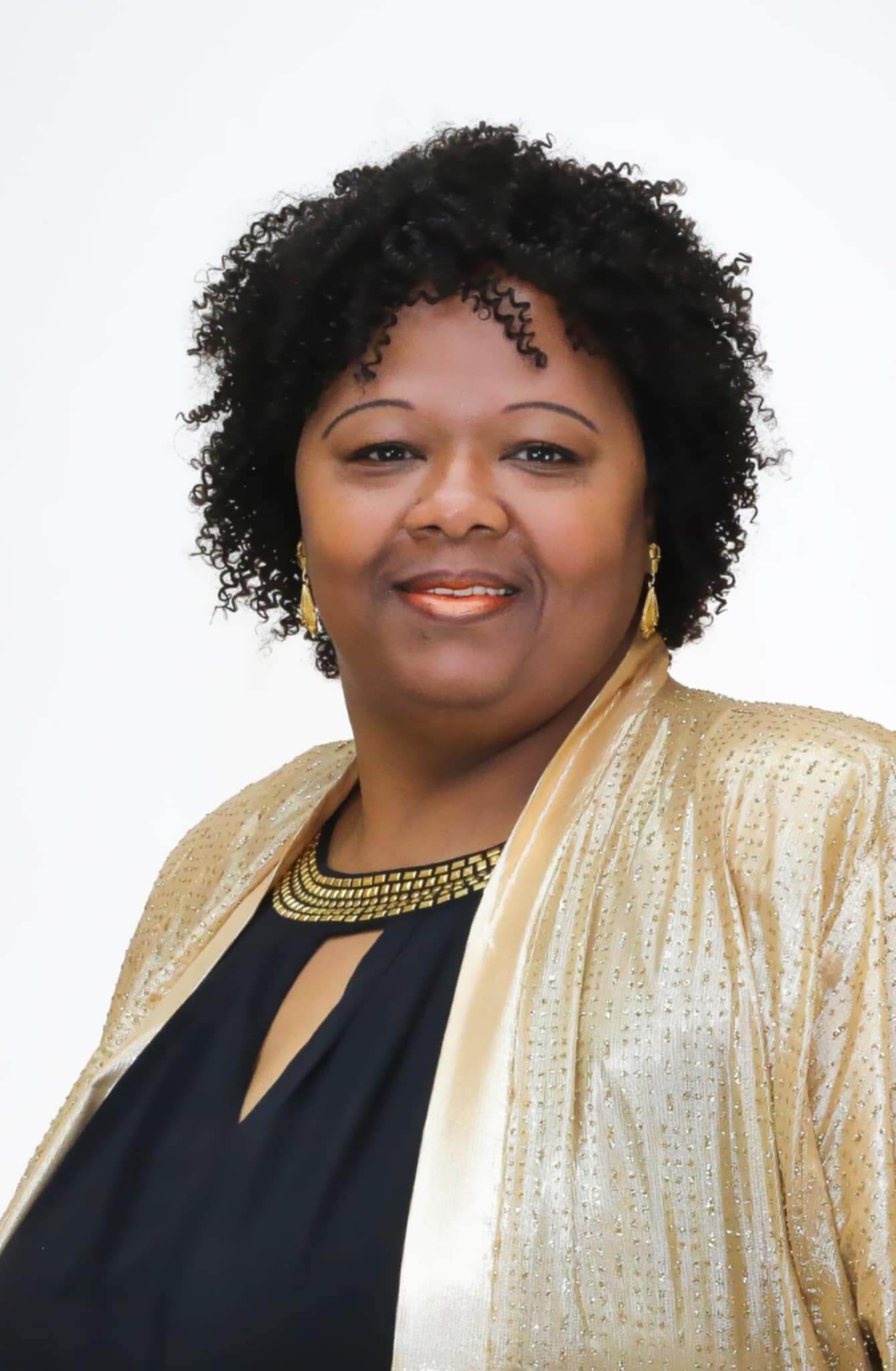
Pauline Rogers Credit: Courtesy photo

Roberts’ win demonstrates what’s possible when people are moved to act. Imagine that same energy channeled into local, state and federal elections. Imagine Mississippians casting ballots not only for a singer but for their children’s schools, their community hospitals, their roads, water systems and criminal justice policies.

But unlike reality television, the results of voting in a democracy aren’t immediate. Votes cast in August may not change policies by September. Ballots mailed in November may not yield results until months later. Democracy is not designed for instant gratification. It is designed for lasting transformation. That requires patience, persistence and most importantly, participation.

History is rich with examples of what sustained, organized civic action can accomplish.

Mothers Against Drunk Driving (MADD) began with a single mother whose daughter was killed by a drunk driver. She organized. She lobbied, and she galvanized others into action. Today, thanks to their advocacy, all 50 states have laws that criminalize drunk driving with legal blood alcohol limits, and thousands of lives are saved each year. Change didn’t happen overnight. It happened because people voted, lobbied and stayed engaged.

The Campaign for Tobacco-Free Kids launched a decades-long effort to reduce youth smoking. They mobilized parents, teachers, doctors and young people themselves. Through a combination of public education, local ordinances and federal action, youth smoking has declined dramatically in the U.S.

The Fight for $15 movement, led by low-wage workers demanding a livable wage, began with walkouts and was once considered a political longshot. Today, it has reshaped local economies across the country, resulting in minimum wage increases in cities, counties and states, and is influencing federal policy discussions.

These examples all underscore a key truth: showing up to the polls may not produce the kind of instant results seen in a televised competition, but it is a necessary step toward durable change. Policy requires organizing, coalition-building and a long-game mindset. It involves “We the People” and that includes returning citizens, low-income families, rural voters, young people and everyone in between.

Mississippi has a storied history of both voter suppression and voter courage. From Fannie Lou Hamer to the Mississippi Freedom Democratic Party, the fight to vote has always been met with resistance but also with resilience. Today, that fight continues, especially for those silenced by a criminal legal system designed to exclude.

The good news is that the blueprint is clear. Vote like Jamal Roberts is counting on it. But also vote like your child’s school lunch depends on it. Like your access to clean water depends on it. Like your loved one’s right to return home from prison and fully participate in society depends on it — because it does.

Whether in-person or absentee, whether at the courthouse or by mail, casting a ballot is a statement of presence. Even when the results aren’t immediate, the act itself is cumulative. It builds pressure. It signals demand. It creates momentum.

Let Jamal Roberts’ victory be more than a moment of celebration — let it be a mirror. Mississippians have already proven the ability to mobilize in historic numbers, helping drive more than 26 million votes to secure Roberts’ win. That level of engagement doesn’t belong solely to the world of entertainment. It belongs to democracy. When that same energy is directed toward policy and people, toward justice and equity, history is not just watched — it’s made.

As Mississippi approaches Election Day on Tuesday, the opportunity to act is here. Let this be a fresh start. The same spirit that voted for Jamal Roberts can show up at the ballot box — whether early, absentee or in-person. Let Mississippi once again show up and show out — not just for a voice on stage, but for the voices in our communities who deserve to be heard, counted and valued.


Pauline Rogers is a longtime advocate for criminal justice reform and the founder of the RECH Foundation, an organization dedicated to supporting formerly incarcerated individuals as they reintegrate into society. She is a Transformative Justice Fellow through The OpEd Project Public Voices Fellowship..

Ryan Coogler hosts ‘Sinners’ screening in Mississippi town where film is set

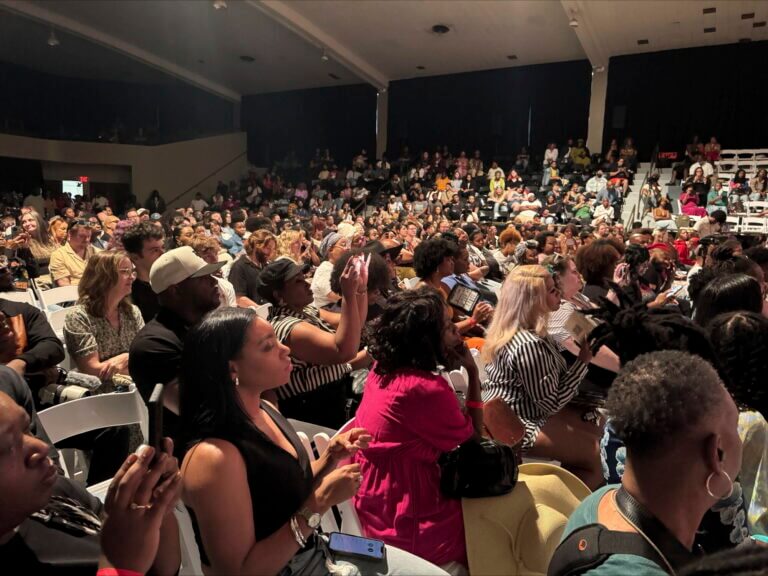
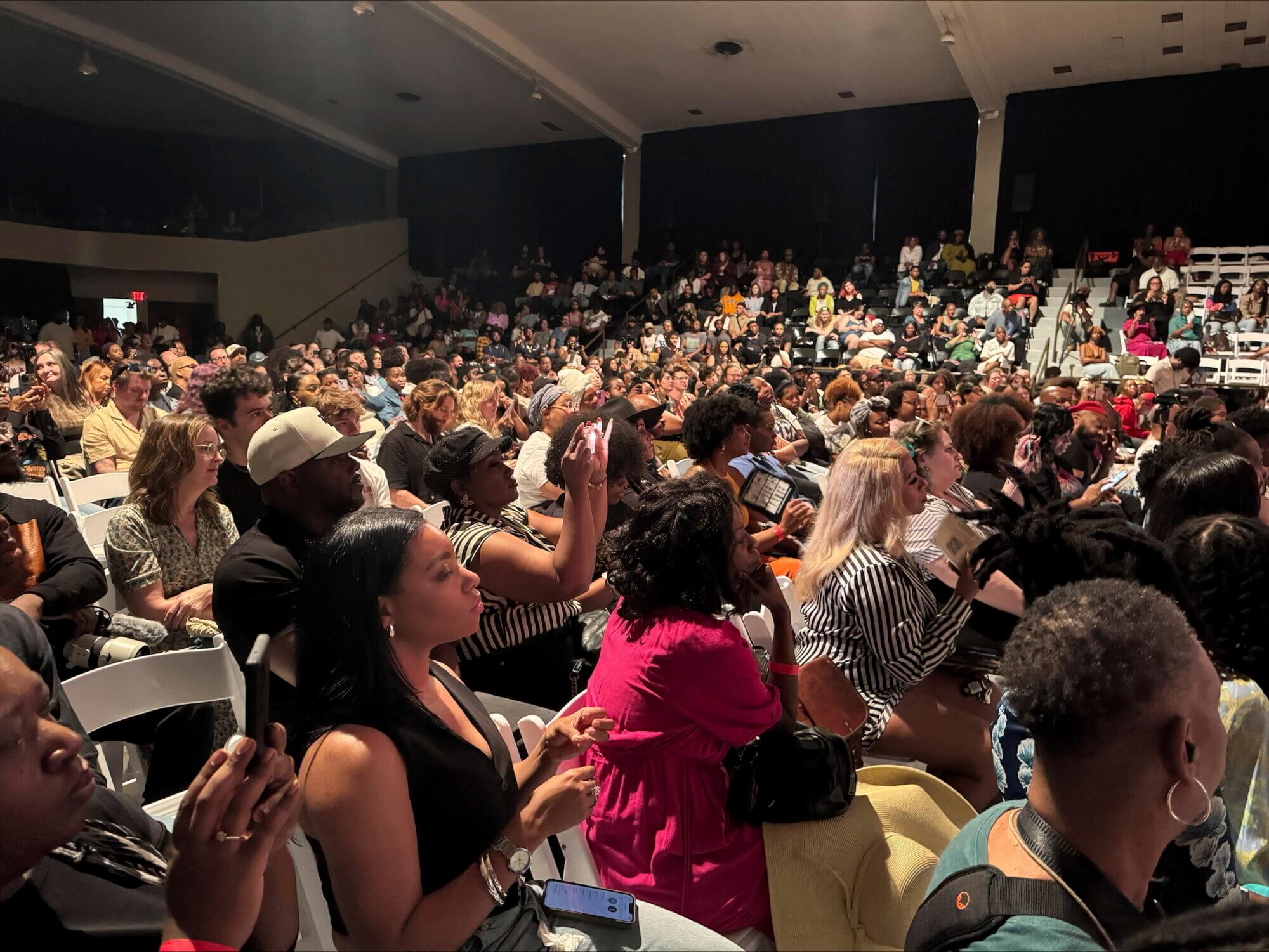
CLARKSDALE — Hundreds of people packed inside a local auditorium Thursday to see the hit film ” Sinners,” set in their community and steeped in Mississippi Delta culture.

The special screening of the blockbuster horror film included an appearance by Director Ryan Coogler and was made possible by a community petition.

“I have family from Mississippi — my uncle, my grandfather — and I had never been until working on this script,” Coogler said, addressing the crowd. “It really changed me, just to come here.”

The movie, starring Michael B. Jordan as twins, is about two brothers coming home to Mississippi to launch a juke joint. It’s also a supernatural vampire flick that blends elements of drama, action and music.

“Sinners” composer Ludwig Göransson, actor Miles Canton and others who worked on the film also attended the screening.

“Anytime that filmmakers take the time out to pay homage to the Delta, especially, because we’re the root of music, the blues culture, that means a lot,” said Brandice Brown Williams, a theater teacher who brought two of her students to the screening.

The film is set in 1930s Clarksdale, Mississippi, but current day Clarksdale doesn’t have a movie theater, making it difficult for people to see the film about their hometown. Community organizers decided to change that, starting a petition to invite the cast and crew to Clarksdale and to collaborate on hosting a public screening.

“The love you have for Southern folk, Mississippians and Clarksdale came to life through your commitment to writing us right,” community organizer Tyler Yarbrough said. “We are ready. We are waiting. And we would be proud to welcome you back to where it all began.”

During the screening, the crowd was expressive — in response to various scenes, they gasped, laughed and cheered. Afterward, Coogler and others stayed for a Q&A.

One attendee, Cindy Hurst, praised the film, calling it a “really good visual representation of the beauty of the Black culture.”

Where Jackson creativity is the “blueprint for resistance,” Briarwood Arts Center is the brick, mortar

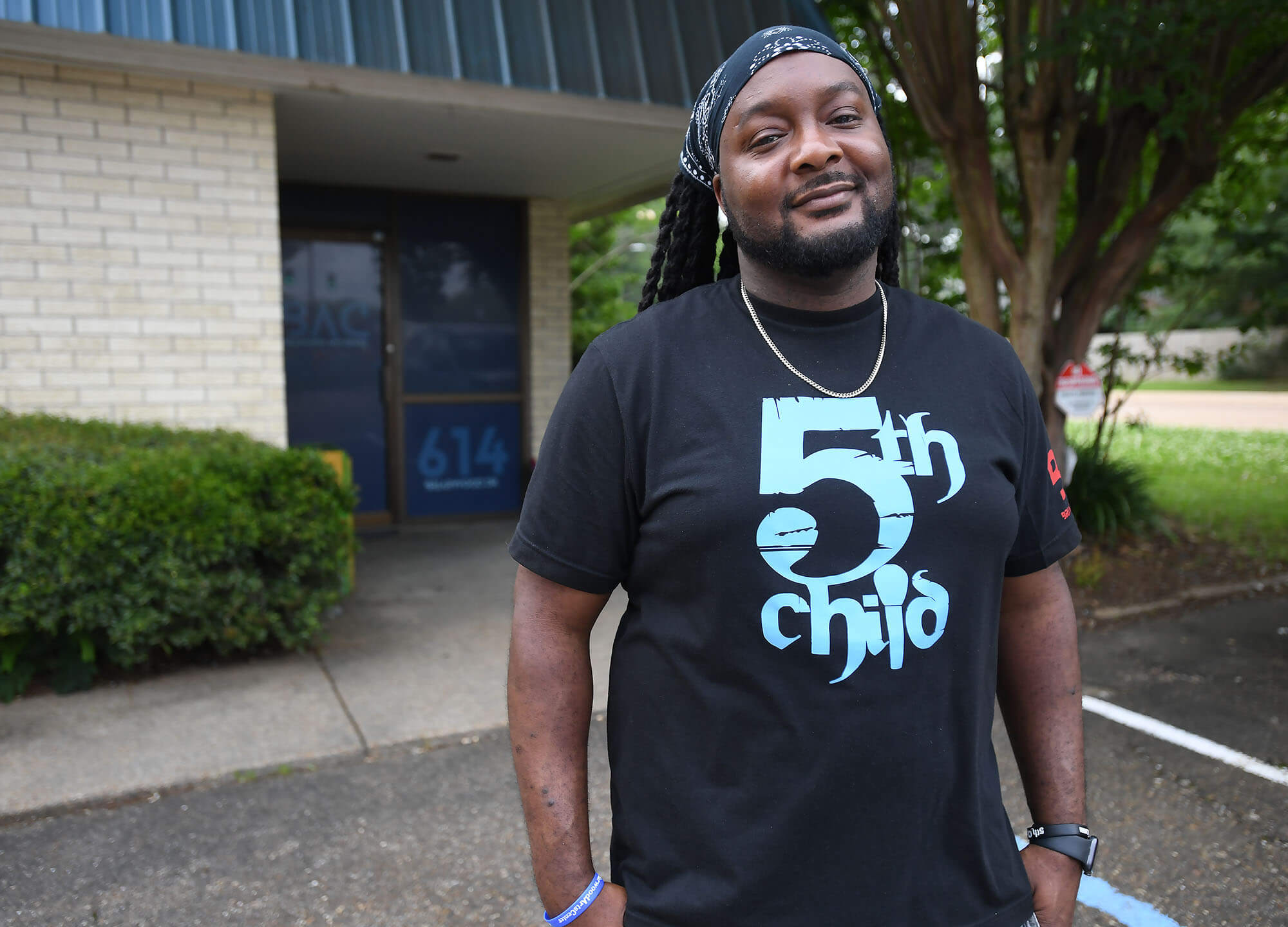
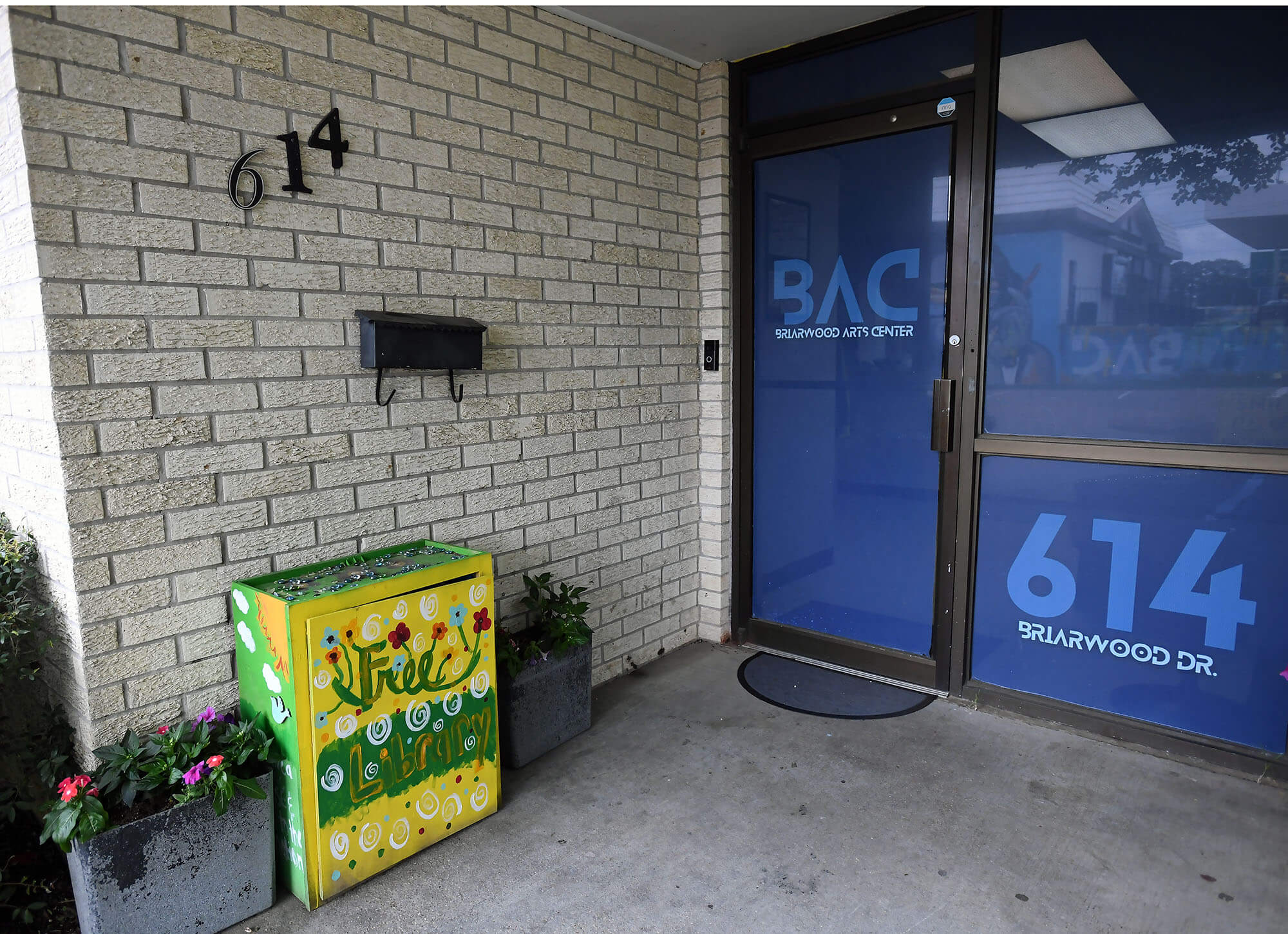
On the edge of the Briarwood community in northeast Jackson sits a white building with a blue awning. On any given night, its rooms are filled with artists, dancers and creatives who have come to build community and hone their crafts.

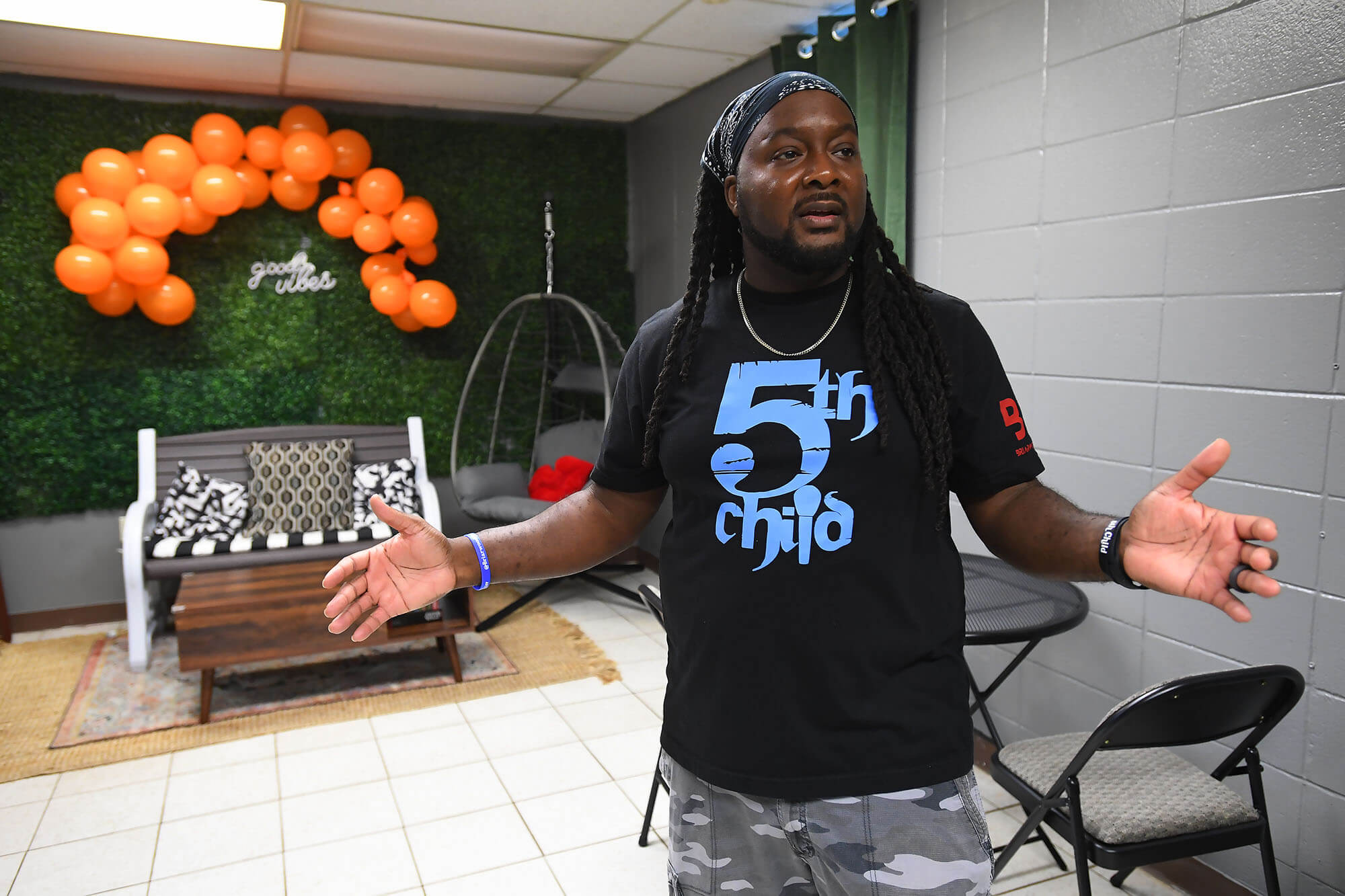
This is the home of the Briarwood Arts Center, the creation of Stephen Brown, also known as the hip-hop artist, producer and DJ 5th Child.

“During the pandemic, there was this unhoused population that had an encampment in front of the building, and the gas station next door had become a dumping site. There were huge piles of trash and tires and all sorts of stuff,” Brown said. “It was really frustrating seeing that as I pulled into my neighborhood after a long day of work.”

The building had been abandoned since he moved into the neighborhood in 2017. It was the remnants of an abortion clinic, turned daycare center, turned 3,500 square feet of deserted possibility. A property management company with property close by eventually bought and leased the building in the summer of 2022.

“When this opportunity presented itself, I knew that it had to be comprehensive,” Brown said. “It wasn’t gonna be just like one type of art. It’s not Stephen Brown Art Center or 5th Child Art Center. This is Briarwood Arts Center. It’s not about one person, but it’s about the community.”

Brown aimed to fill a void in the local arts scene. Popular hangouts like The Flamingo, a collective space and venue in Fondren, had closed, and there weren’t many places around for people who were into the alternative arts and music culture.

“I wanted to create something where we own it, within the artist community, that nobody could just take from us or remove us from or anything like that,” he said. “I didn’t know how that was going to happen, I just knew that it needed to happen even if I wasn’t the person to do it.”

He secured the keys later that fall, and soon after hosted an open-house, gathering ideas for what community members wanted to see. That culminated into stacked programming, with a calendar flush with events such as line dancing classes, Kuumba (Swahili for creativity) Youth Night, GoodEDvice ACT Prep Club and Crochet Circle. Most of the events at the Briarwood Arts Center are free.

“The work that we’re doing here, we can find other ways to make money, but I don’t wanna make money on the backs of the community members,” he said. “I don’t wanna price them out of these enriching experiences, so that’s why the stuff that we do is free.”

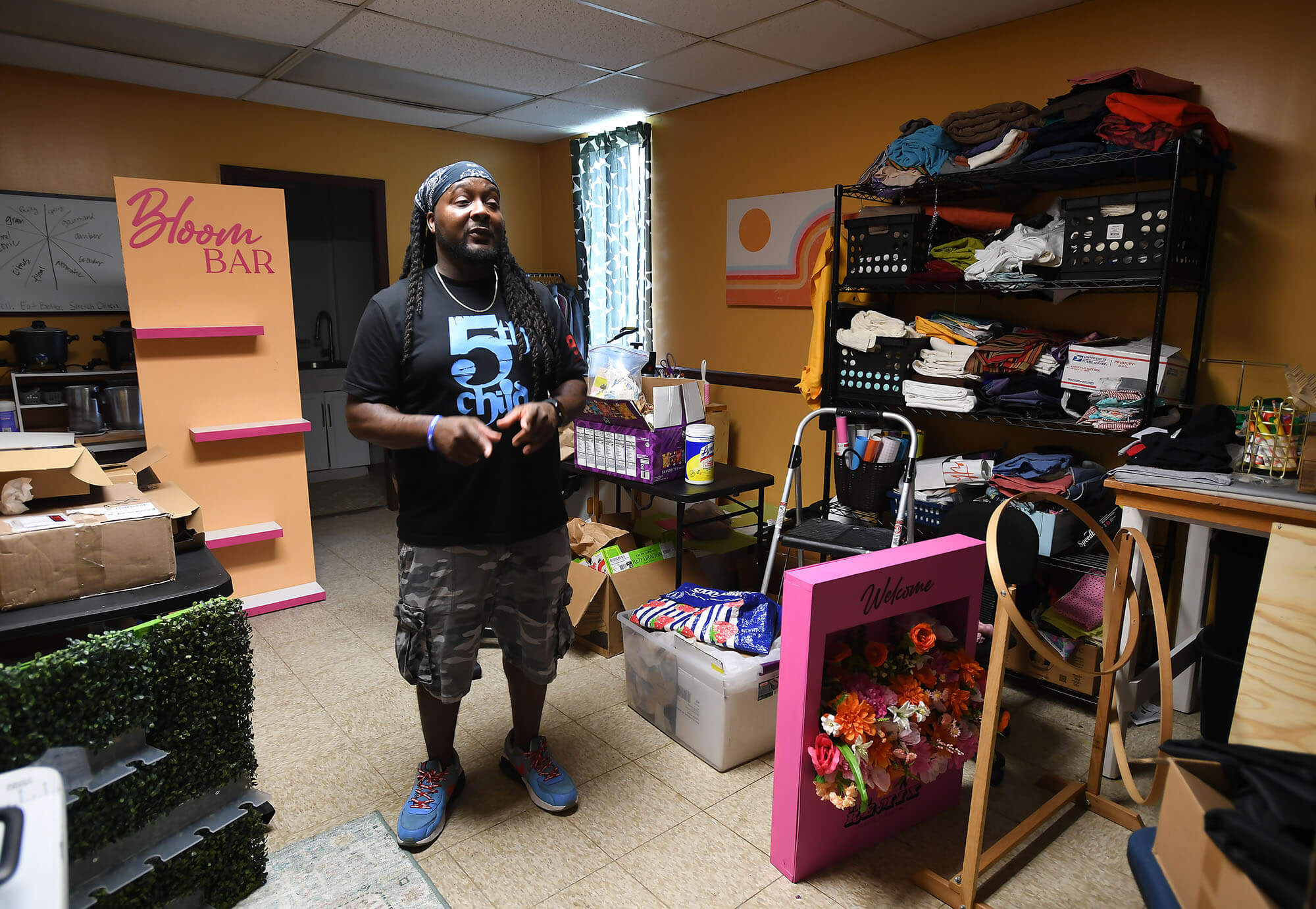
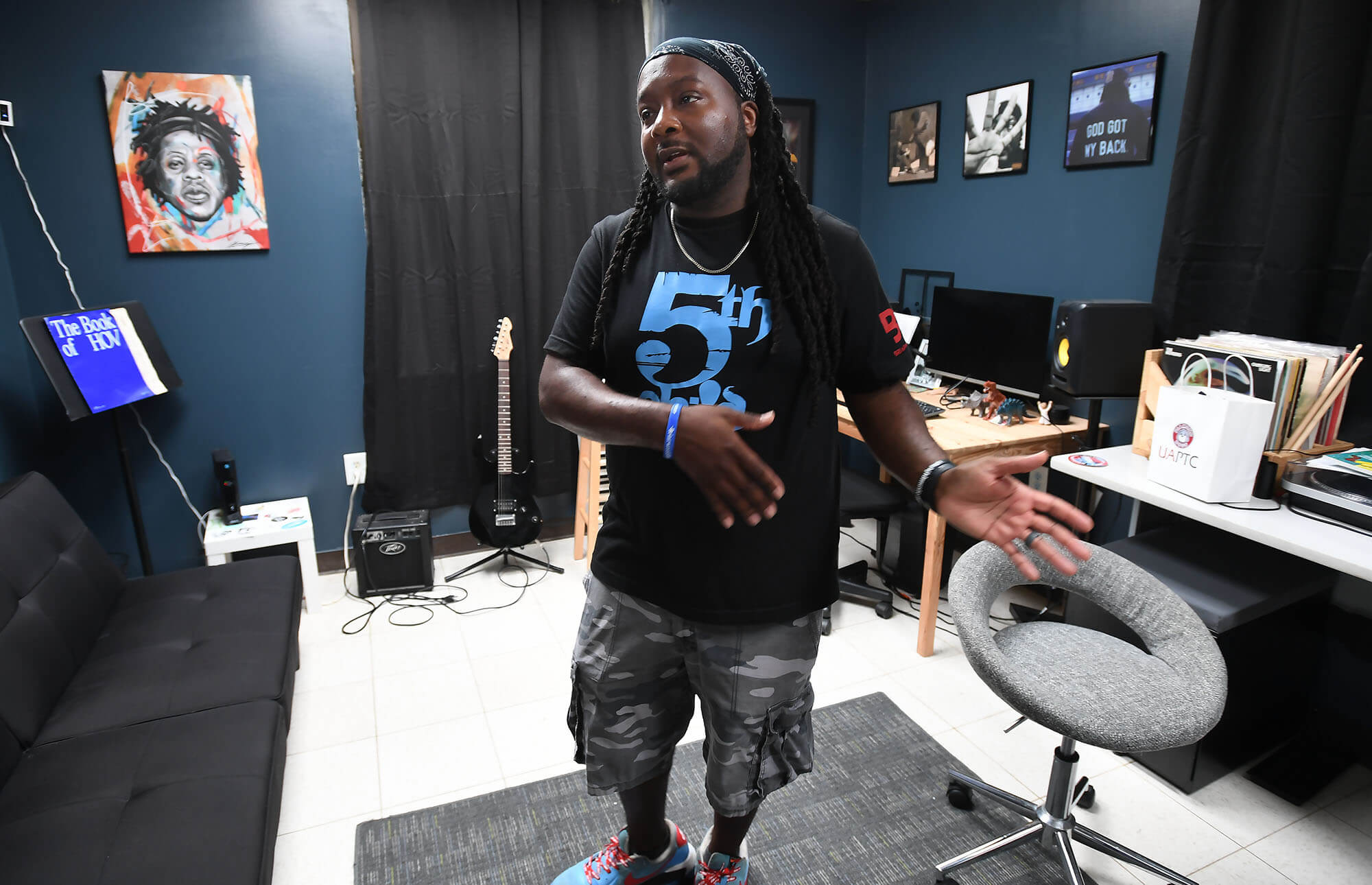
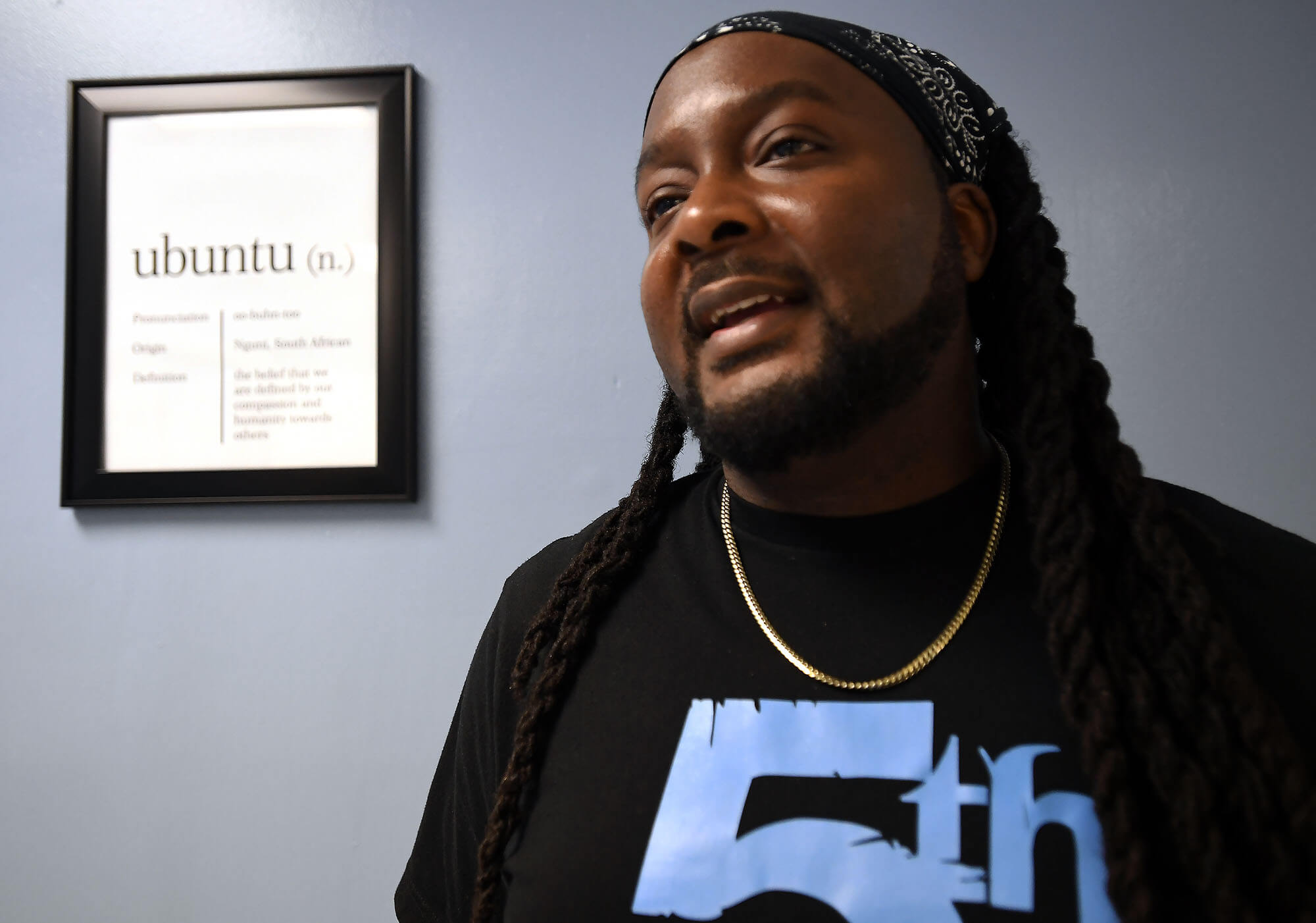
Each room at the center is designed with the artist in mind. There’s the Craft Kitchen, where visitors can develop their crafting skills, practice using a Cricut machine and learn how to sew their own projects. In the Ubuntu room, dancers learn movement through music, and community members can brush up on their self-defense skills. There’s also Cole’s House II, a music lab, and The Branding Lab is complete with a green screen and backdrops for photography practice.

“The space is really designed for folks who are still trying to figure it out, who have the genuine curiosity about something that they’re like, ‘What if I don’t get it right? What if it’s not perfect?’ Well, come here and screw up,” he said. “Come here and make all your mistakes so that you can fine tune it and take it to a bigger, nicer, fancier venue down the line.”

Brown hopes that his persistence and dedication to creating safe spaces inspires others in Jackson to imagine what’s possible for their neighborhoods.

“What I want is for someone in Shady Oaks to be like, ‘Oh man, we got an abandoned building right here in our neighborhood too. Let’s put our money together and start the Shady Oaks Art Center.’ Or somebody in Alta Woods or in Virden Addition to say, ‘Hey man, we got this abandoned building. How about we start the Alta Woods Art Center?’”

Briarwood Arts Center will hold events for 601 JXN Day, which is an annual weekend long celebration of the city coordinated by Visit Jackson. Residents can participate in the Briarwood Unity 2K, as well as a community clean-up. The center will also host the Siegel Select Block Party, a service program where volunteers will collect donations and supplies for residents who stay in the hotel, which is right next to the arts center’s parking lot. 

“There’s no fee to register, but this is more about a demonstration of establishing that camaraderie and dignity for the Briarwood neighborhood,” he said. “Before Fondren was Fondren, somebody had to care enough. Before Belhaven was Belhaven, somebody had to be the squeaky wheel.”

Brown sees the space he cultivated as one that reaches across generations. He said he’s seen visitors at Briarwood Arts Center from ages 6 to 94.

“It’s not just about the technical skill of sewing a stitch, but they’re talking about history. They’re talking about legacy. They’re talking about family tradition and all that stuff is being passed down through the arts,” he said. “The arts are a vehicle to bring these people together. Arts have always been, not only a time capsule, but also a means of resistance. They’ve been a blueprint for resistance.”

More information about Briarwood Arts Center and a calendar of events can be found on its website.