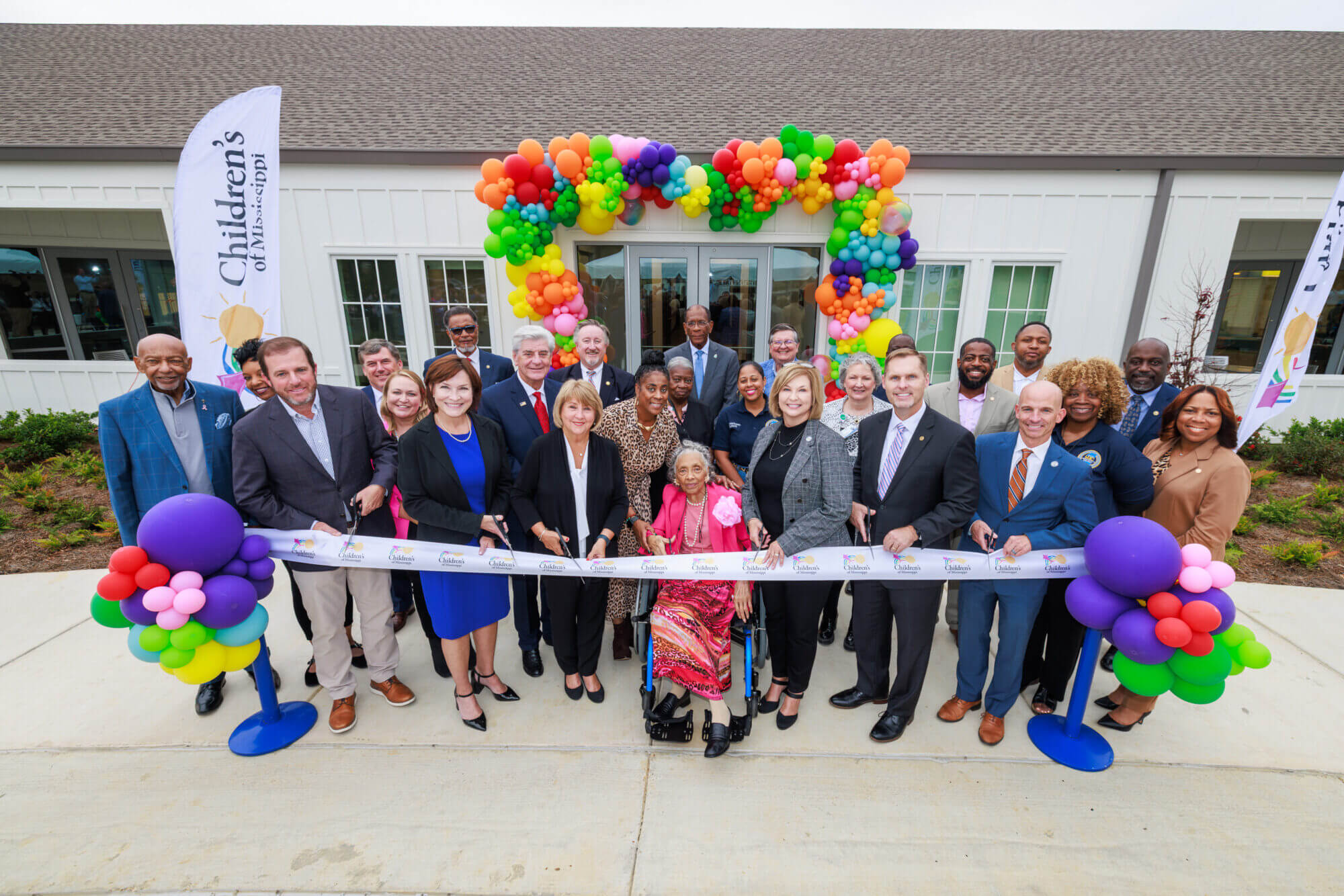
Mississippi’s first skilled pediatric medical center celebrated its opening Tuesday with a ribbon cutting in Jackson.
The Alyce G. Clarke Center for Medically Fragile Children will provide long-term care for patients younger than 19 years old with complex medical conditions and training for others’ families to care for them at home. It is a part of Children’s of Mississippi, the pediatric arm of the University of Mississippi Medical Center.
“The Alyce G. Clarke Center is so much more than a building,” Dr. Mary Taylor, the Suzan B Thames Chair and professor of pediatrics at UMMC, said in a press release.
“It represents hope, and we are so proud that this is going to be a new home for children with special needs. The medical care they need will be provided here, and also supportive care for their families.”
The facility has already admitted its first patient, UMMC spokesperson Annie Oeth told Mississippi Today.
The $15.9 million, 20-bed facility is located about two and a half miles from the University of Mississippi Medical Center’s main campus on North State Street. It has two wings, each with a shared area that serves as a living room.
“It took a whole team of people from the entire state of Mississippi to come together to get this beautiful building built,” said Dr. Alan Jones, UMMC’s associate vice chancellor for health affairs, in a press release. “This building and the people who staff it will deliver life-changing care.”
The pediatric facility’s opening comes after several delays and scrutiny over funding and location.
The center held its first groundbreaking in 2019 and planned to begin construction in 2021. But the COVID-19 pandemic slowed the project due to rising costs and supply chain issues, Jones said in a previous press release.
UMMC awarded the contract to Mid State Construction Co. Inc. in February 2024, and construction of the facility began in August 2024.
The project was funded with $14.5 million in bonds awarded by the state Legislature in 2019 and 2020. However, the project was originally intended to be paid for by private funders and constructed, owned and operated by a nonprofit.
The nonprofit that would spearhead and fundraise for the project, Mississippi Center for Medically Fragile Children, was set up by then-First Lady Deborah Bryant’s chief of staff. Nancy New, the Families First leader who pleaded guilty in 2022 for her role in channeling Mississippi welfare grant funds for illegal projects, served on the nonprofit’s board.
After New was arrested in 2020, she was removed from the board, the nonprofit dissolved, and Children’s of Mississippi assumed responsibility for the project. The nonprofit transferred its remaining funds to UMMC.
The center is named for former Rep. Clarke, the first African American woman to serve in the Mississippi Legislature and a longtime advocate for the project.
She became involved when Calvary Baptist Church in west Jackson, the area Clarke represented, planned to renovate its building to house the center. The church was ultimately left out of the plan after years of working on the proposal. Some lawmakers argued that state leaders hijacked the church’s proposal in order to place the center near the wealthier neighborhood of Eastover in Jackson.
Children’s of Mississippi has provided long-term care to patients in an acute-care hospital setting for years. The new building will serve as a bridge from pediatric inpatient care to home for patients and parents.
“This center will be able to provide medical care for these special children and education for their families in learning to care for them, but it will be a safe, warm place that will feel like home,” Taylor said.
Editor’s note: This essay is part of Mississippi Today Ideas, a platform for thoughtful Mississippians to share fact-based ideas about our state’s past, present and future. You can read more about the section here.
A small-business owner in our district (the 2nd U.S. House District) is alive today because of the Affordable Care Act premium tax credits.
Before the ACA, he faced a life-or-death situation. Insurance companies either denied him coverage outright or quoted $2,000 to $3,000 a month for coverage he could never afford. Without health insurance, even a routine doctor’s visit could have been impossible.
It is because of the ACA tax credits that he finally found a plan he could afford, received life-saving heart surgery and regained his quality of life.
Today, he runs his business, supports his family and provides insurance for six employees. His story is proof of what affordable health care means for real people and real communities. Now, Republicans in Washington want to take that away.
We are living through what could be the longest government shutdown in U.S. history because Republican leaders are trying to end these very same ACA tax credits. If they succeed, Mississippi families – especially in the 2nd Congressional District – will pay the highest price.
These credits are the only reason many Mississippians can afford health insurance. Without them, average premiums in our state would rise by 314%.
That means 338,159 Mississippians, including more than 81,000 people in the 2nd District that I represent, would be at risk of losing coverage.
One 54-year-old small business owner in my district now pays $268 a month for ACA Marketplace coverage. Without the credits, her bill would jump to nearly $900 a month. That’s money she needs for her mortgage, groceries and medication. Hardworking Mississippians should never have to make those choices.
Republicans are also promoting the $50-billion Rural Health Transformation, RHT, Program, created under H.R. 1 – their so-called ‘Big Ugly Bill’ – as a one-time pool of money meant to help rural hospitals and attract doctors and nurses.
To be clear, H.R. 1 was not designed to save rural hospitals. It was written to strip away sustainable funding streams – like Medicaid expansion and Affordable Care Act subsidies – and replace them with a short-term band-aid, the $50 billion RHT Program. Dividing that one pot of money across 50 states over five years doesn’t come close to filling the funding gap needed to stabilize rural hospitals and communities.
Take Mississippi as an example. Had our state approved Medicaid expansion, we would have collected nearly $15 billion in federal funds to date – the very money our hospitals and communities need to remain sustainable.
Instead of creating stability, H.R. 1 pushes 338 rural hospitals across the U.S. closer to closure. Eight of these hospitals are in Mississippi and are barely hanging on financially. Four of them are in the 2nd District: Delta Health – Northwest Regional (Clarksdale), Greenwood Leflore Hospital (Greenwood), Panola Medical Center (Batesville) and Baptist Medical Center – Yazoo (Yazoo City). They are weighed down by the cost of treating patients who can’t pay, and government programs like Medicare and Medicaid don’t make up the difference.
If ACA premiums rise, more families will skip checkups, cut medicines and show up sicker in emergency rooms. That costs all of us more in the long run.
Now, the Republican shutdown makes this health crisis even worse. The U.S. Department of Agriculture has warned that SNAP benefits to nearly 42 million Americans could stop in November if the shutdown continues. That includes over 357,000 Mississippians left without the means to put food on the table. Nutrition and health are inseparable, and in Mississippi, both are at risk.
As members of Congress, we have health insurance. Who are we to deny the same opportunity to the people we serve? That is hypocrisy, plain and simple.
The government could reopen tomorrow if Republicans would work with Democrats to make sure Mississippi families have access to health care and food assistance.
In our community, we take care of each other, and our government should do the same. I will continue to fight for fairness, and I won’t stop until every family has the support they deserve.
Keep the faith.
Bio: Bennie Thompson has represented Mississippi’s 2nd District in the U.S. House since 1993.
There’s so much going on in the sports world, including an epic World Series, a memorable Mississippi college football season, an incredible turn-around at Lanier High School and so much more. All that and the Clevelands, in a generational argument, disagreeing on Shohei vs. the Babe.
This fall, Deep South Today partnered with Murmuration, a nonprofit that strengthens community-driven change at the local level, to understand how people across the Deep South stay informed: where they go for information, what sources they rely on and which stories stay with them. Together, we surveyed more than 5,000 residents across Alabama, Arkansas, Louisiana, Mississippi and Tennessee.
Across people in the Deep South, about half said they still turn to local television, newspapers or regional websites for political and civic information, almost as many as those who rely on national broadcasts. Social media was just as common, with roughly 55% using platforms like Facebook, YouTube, TikTok, or Instagram to keep up. Around 1 in 5 listen to podcasts or talk radio, and many said they also learn about current events from friends, family or people they follow online.
In a world where national headlines dominate feeds, this mix of sources reveals something important: People in the South still look for news that feels close, familiar and relevant to their lives.
The Story is Local
When asked to name a story that had recently caught their attention, 1 in 4 people pointed to something local — a shooting in town, a new policy in Baton Rouge, a school event in Memphis, or a community initiative nearby. That’s a couple points higher (+2.6pp) than in other parts of the country (the range across all 50 states was 12% to 29% local story recall). About 14% of stories were multiclassified because they spanned levels of geography (e.g. “I saw a news story covering Trump and China suspending tariffs for 90 days that caught my attention.”).
Certain patterns stand out. Women were significantly more likely than men to remember local stories (+11pp). Younger adults were far more attuned to community happenings than older residents (+9pp). Urban dwellers remembered more than suburban or rural ones (+7-8pp). Black Southerners remembered more than white Southerners (+5pp). People without college degrees (+7pp), and parents with children at home (+5pp), were also more likely to recall a local event.
Most of those local stories, however, focused on violence or tragedy. Nearly 6 in 10 covered crime, 4 in 10 addressed violence, and 1 in 10 involved both. By contrast, only about 1 in 10 mentioned government, policy, or civic action. In the Deep South, people remember what they feel and often, what they feel most sharply are the moments of loss.
Local news REALLY matters
At the same time, local story recall was stronger in Mississippi (25%) and Louisiana (24%) where local outlets like Mississippi Today, Verite News and The Current continue to invest in community-based reporting. It was similarly solid in Arkansas (26%). On the other hand, in Alabama and Tennessee, recall lagged behind (20% and 21%, respectively).
Access to credible local information is critical because people who regularly consume local news are more than 13 percentage points more likely to say they feel informed about social and political issues in their community.
Why does that matter? Because access to information doesn’t just shape what people know. It shapes what they do. Among those who feel knowledgeable about local life, roughly two-thirds say they vote in every local election (66%). Among those who do not feel informed, the number drops by half (35%).
Final thoughts
This partnership between Deep South Today and Murmuration began as a simple idea: to bridge real-time data with local storytelling and see what we might learn about civic life in a part of the country often written about, but rarely written with.
What we found is that local news still carries real power — not because it’s nostalgic or small, but because it’s near. It is the heartbeat of trust and participation. It shapes whether people feel seen, whether they show up, and whether they believe what happens next is still up to them.
We uncovered so much, yet the deeper questions are still unfolding:
How do we rebuild local information networks so that everyone can see what’s happening in their own backyard?
What would it look like to invest in stories that strengthen belonging, not just break news?
How can researchers and journalists work together to make local truth-telling more visible, more trusted, and more lasting?
If democracy begins with knowing your neighbors, then the future of civic life may depend on something easier said than done: keeping the story close to home.
Founded in 2016, Mississippi Today is now the largest newsroom in the state, and in 2023 it won the Pulitzer Prize for Local Reporting. Verite News launched in 2022 in New Orleans, where it covers inequities facing communities of color. The Current is a nonprofit news organization founded in 2018 serving Lafayette and southern Louisiana.
With its regional scale and scope, Deep South Today is rebuilding and re-energizing local journalism in communities where it had previously eroded, and ensuring its long-term growth and sustainability.
ABOUT MURMURATION
Murmuration is a nonprofit that strengthens community-driven change at the local level. By equipping local organizations with powerful data, technology, and insights, Murmuration helps them amplify community voices, build collective power and drive solutions that reflect the lived realities of the people they serve. murmuration.org
While the school-choice debate continues to simmer in the Mississippi House, the Senate Education Committee is focusing on raising teacher pay and combatting chronic student absenteeism.
The Senate panel on Tuesday heard from a charter school researcher and others during a seven-hour meeting, the committee’s second hearing this month. The hearing also centered around the challenges facing traditional public schools — which superintendents said would only get worse if “school choice” is expanded in Mississippi.
“School choice” refers to a number of policies that give parents more educational options outside of traditional public schools, including private schools, often funding those opportunities with taxpayer dollars. House leaders have vowed it’ll be the key issue of the 2026 legislative session and are already working on a draft bill.
That bill could spell disaster for Mississippi schools, the four superintendents warned the Senate committee.
The school leaders from Oxford, Jackson, Greene County and Scott County said they feared school choice would siphon money and resources away from traditional public schools. Instead, they asked lawmakers to consider investing in the state’s existing education system by continuing to support early education, career and technical education opportunities and student mental-health resources.
“On the surface, it does sound like a good idea to give families dollars to choose the school their child should attend,” said Superintendent Bradley Roberson from Oxford. “But if we look at it, it’s not that appealing for families across our state.”
Last week, the executive director of the regional private school association told lawmakers on the House committee selected to study school-choice policies that private schools were not willing to support school choice unless the dollars came with no strings attached. He said private schools under no circumstances would make their students take state tests or change their curriculum, regardless of whether they received state funds.
Roberson said that’s what sets traditional public schools apart.
“I can assure you public schools aren’t afraid of competition, but I do want to hit on something about competition,” he said. “True competition only exists when everyone plays by the same rules. Our private school friends have made it clear they have no interest in doing that. And why would they? They get to choose the students they serve.
“We open our doors to every child every day regardless of background, income, ability, or circumstance. And y’all, that’s not a weakness … That’s a promise,” he said.
The superintendents lauded the hard work of their teachers and students that’s led to the state’s academic turnaround in recent years, and questioned why lawmakers would threaten to disrupt their progress.
Increasing teacher pay emerged as a top issue during the meeting.
Roberson reminded lawmakers that many of Mississippi districts that struggle academically also struggle to recruit and retain certified teachers. Both Alan Lumpkin from Scott County and Charles Breland from Greene County told lawmakers about challenges recruiting their own daughters to their school districts because of low salaries.
“If we want to sustain the Mississippi miracle, we have to retain teachers and we have to recruit teachers into this profession, and the current salary is not recruiting teachers into the profession,” Lumpkins said. “That’s the struggle that we’re having. I’m having it with my own daughter who wants to be a teacher one day, but she also wants to be able to provide things for her children and her future family.”
Their accounts lined up with data presented by Megan Boren, the Southern Regional Education Board’s director of educator workforce policy.
Mississippi’s teacher pay is among the lowest in the nation, according to SREB data. The state trails its neighbors in average top salary, average salary and starting salary, and generally sits thousands below national averages in those categories.
Another challenge unanimous across schools: chronic absenteeism. Boren encouraged school leaders to build a positive culture at school to incentivize attendance and build relationships with families to establish community-wide the importance of consistently going to school.
Boren said interest in teaching among high school students in the South is down to an average of 4%, an alarming statistic in a region experiencing major teacher shortages. Boren suggested raising pay, creating a “residency year” for teachers and establishing an “induction” process in which teachers are extensively supported during their first few years in the classroom.
Errick Greene, superintendent of Jackson Public Schools, had a unique point to take up with lawmakers. He said the district was challenged by the local presence of charter schools. The Jackson Public Schools board of education last week voted to deny a local charter’s request to expand into high school grades, but the charter authorizer board said the school doesn’t need JPS approval.
Greene encouraged legislators to take a closer look at charter accountability measures and funding.
“We’re required to cut a lump sum check to charter schools but we don’t get paid in a lump sum,” he said. “We’re paid in increments throughout the year … As you might imagine, given that we’re now at about $12 million in payment annually to charter schools just from our district, that’s a huge hit to our schools.”
Greene’s comments were in stark contrast to remarks given earlier in the day by Lisa Karmacharya, executive director of the Mississippi Charter School Authorizer Board.
Karmacharya, in the meeting’s opening presentation, implored senators to loosen charter school laws to allow the sector to grow and make it easier to establish charter schools across the state. Currently, charter schools can be established in areas where the local school district is rated A, B or C if the district’s board approves, and without board approval in areas rated D or F.
She said current state law has created a charter system parallel to the state’s traditional public school system, and for the two to be successful, they need to work together. Aimee Evan, an education researcher from WestEd, said charter school systems need to be given time to show results.
But several senators were skeptical.
“I question whether this 10-year experiment has worked,” said Sen. David Blount, a Democrat from Jackson and vice-chairman of the education committee. The state’s first charter school was established in 2015.
Sen. Nicole Boyd, R-Oxford, asked Karmacharya why the authorizer board hasn’t closed low-performing charters. Most of Mississippi’s charter schools are failing by the state’s accountability measures, which lawmakers noted are set to get even more rigorous next year. Karmacharya told the panel that her board needs more freedom in legislation to act more quickly to renew and close schools, which Sen. Dennis DeBar, a Republican from Leakesville and chairman of the education committee, said he was happy to consider.
But DeBar left her with a stern warning.
“I am concerned that the charter schools have not progressed to where they need to be … I would like to see more charter schools but it’s hard to justify that when the performance that we have just isn’t up to snuff,” he said. “Hopefully next year when we come back ratings will be better. If they’re not, there need to be drastic changes by the Legislature.”
The developer behind a controversial proposed asphalt plant announced on Tuesday he will seek to build it in the Lafayette County Industrial Park, not next to the small community of Taylor as originally planned.
The developer, J.W. McCurdy, announced this change after residents and the owners of a nearby farm vocally opposed the plans, and fought rezoning efforts before the Lafayette County Board of Supervisors.
“Our (original) site on (Mississippi) 328 is an outstanding industrial node, and that’s not changing, but I’m also happy to change for the sake of peace,” McCurdy said in a press release, adding, “We’re going to make this work, just in a new location.”
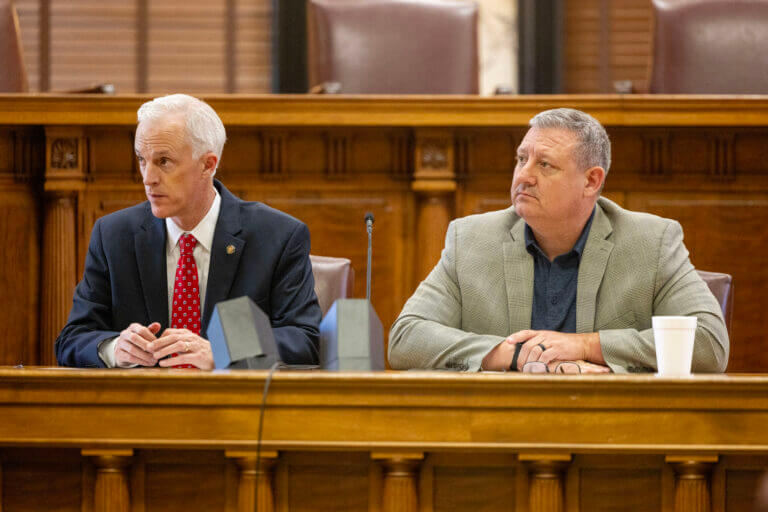
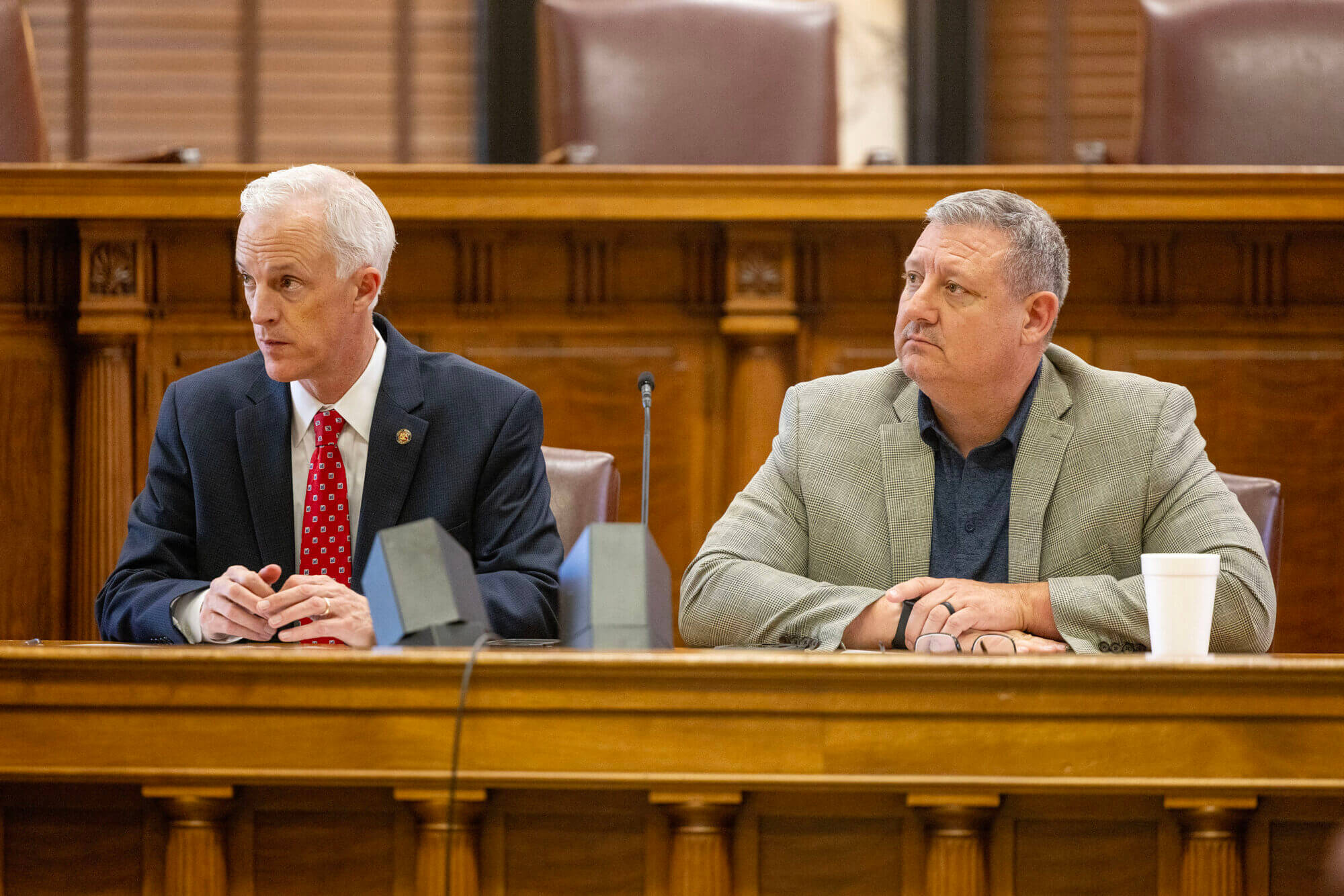
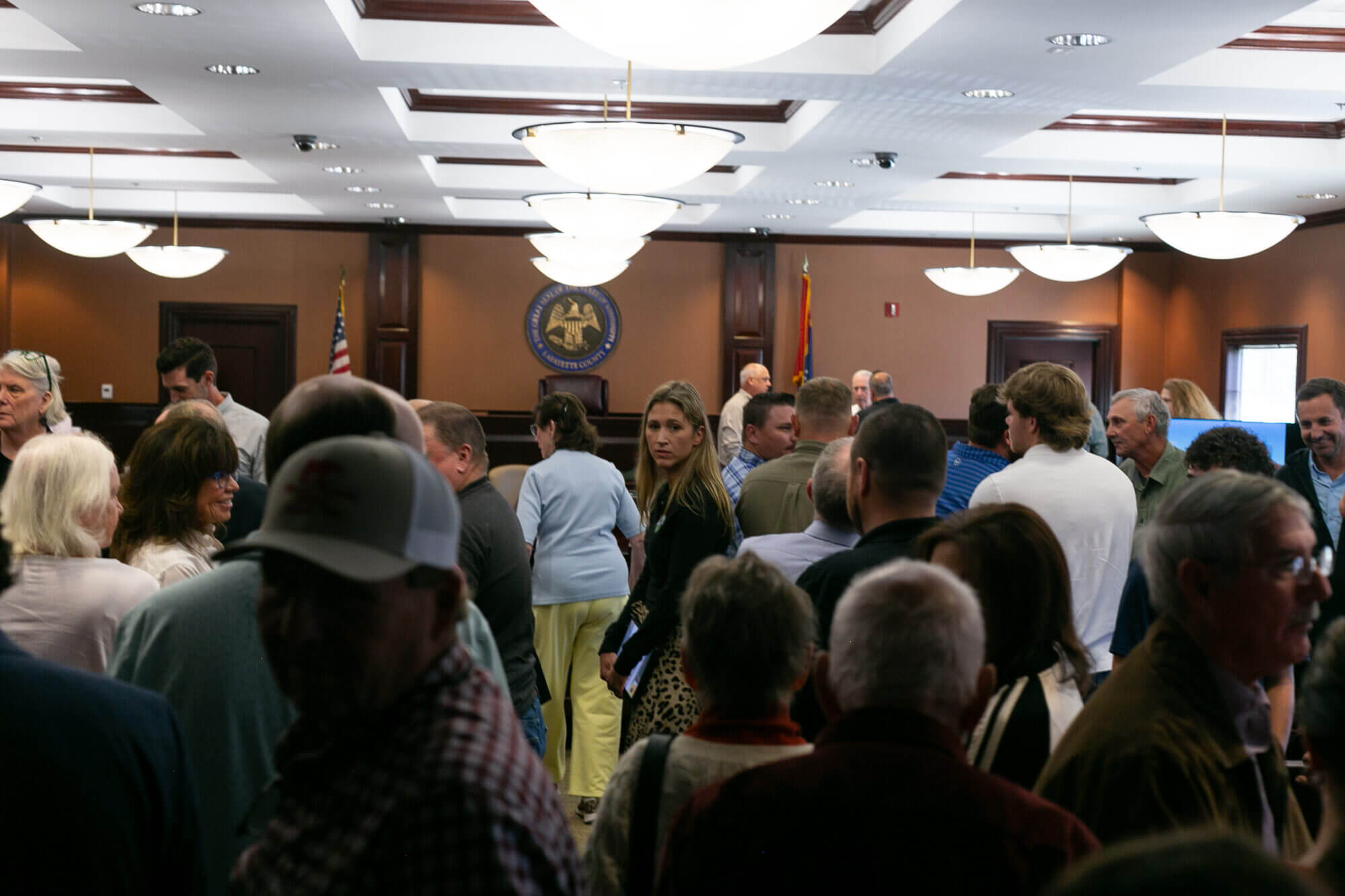
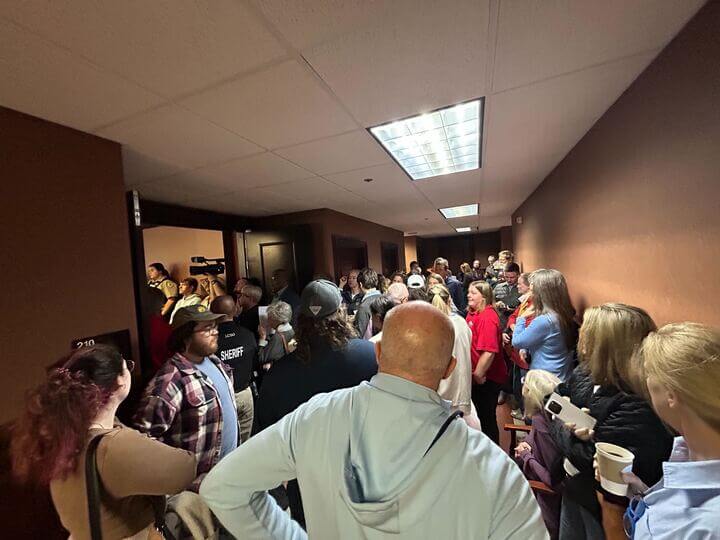
During public meetings over the last month, locals showed up in droves to protest the proposal to rezone the land from agricultural to heavy industrial use, arguing the plant would threaten the sanctity of neighboring Falkner Farms and the “bucolic” nature of Taylor.
McCurdy said he will withdraw the rezoning application. The Lafayette County Board of Supervisors will not vote on the proposal which was previously scheduled to take place on Monday. During an Oct. 20 meeting, the board had tabled its decision after hours of public comments.
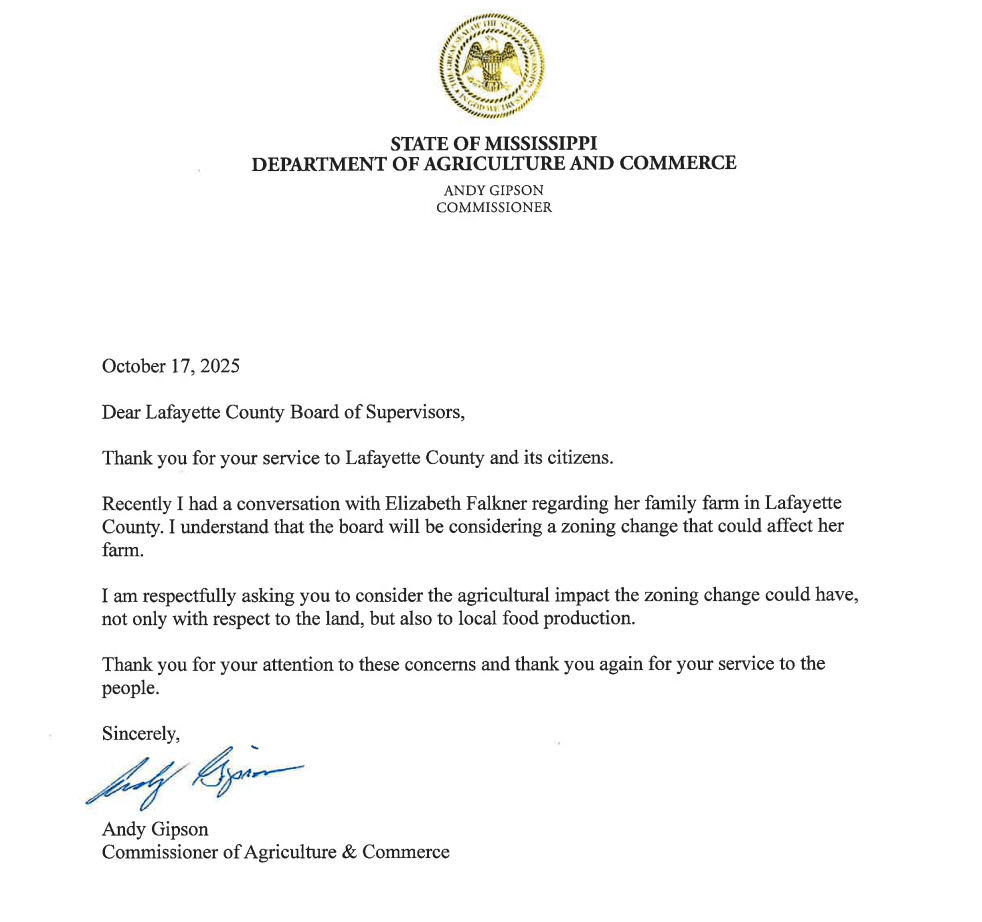
Agriculture Commissioner Andy Gipson visited the Falkner family last week and shared photos of the visit on social media. In a letter to the Lafayette County Board of Supervisors, Gipson asked the Board “to consider the agricultural impact the zoning change could have.”
A letter from Commissioner of Agriculture & Commerce Andy Gipson to Lafayette County officials.
McCurdy maintains the site on Mississippi 328 is “still superior,” and that there are increased costs and risks to the new location. He and others have stated that the utility capacity of the industrial park has been a challenge.
McCurdy, whose company JWM Development LLC owns the land along the highway, said he’s still planning projects there.
“Our neighbors all along said that all they objected to was an asphalt plant, not development in general,” he said. “So we are full speed ahead to bring new commercial, manufacturing, and industrial tenants to the county.”
Taylor residents were concerned the development would increase runoff into the Yocona River, produce air pollution and increase noise and traffic in the quiet area.
They’ve also spoken to how recent expansion around Oxford has started to erode the rural identity of surrounding areas.
But McCurdy and some county officials said the area’s recent growth has caused a higher demand for asphalt to pave roads and build subdivisions.
District 5 Supervisor Greg Bynum said, “(McCurdy) has been patient and professional throughout all this, and, knowing him, I’m not at all surprised that he would sacrifice all his work for the betterment of the county.”
Correction: An earlier version of this story incorrectly identified the original planned location of the asphalt plant.
After Jackson installed some listening devices as part of a trial aimed at detecting the location of gunfire, city leaders found that the program never got far enough off the ground to evaluate if the technology would aid in crime prevention.
The Jackson City Council voted last week to end a contract with Atlanta-based Flock Safety, the company that provides the gunshot detection devices. Flock must now remove the devices that were installed in south Jackson as part of the city’s 180-day trial period.
The Jackson Police Department requested the council terminate the contract out of concern the city would be charged $250,000 for further use of the devices, according to documents in the city’s meeting agenda packet.
But several snafus prevented the department from fully testing Flock’s devices, designed to use acoustic sensors and machine learning to detect the sound of gunshots and provide the police with an exact location of the shots in under 60 seconds.
“We were told that they did not have any data,” Ward 7 Councilman Kevin Parkinson said.
A Flock representative referred all questions to JPD. In a statement, JPD spokesperson Tommie Brown said the technology performed as intended but that some devices had to be removed in response to resident concerns.
“We were never able to deploy all the devices, so we were never able to get a full evaluation,” Brown said.
Brown said 57 devices were installed, covering 1.5 square miles, out of a planned 216. He added that the devices were live and Flock collected the data, but he did not respond to a question about whether the company shared the data with the city.
The company and JPD had sought to install the devices on light poles, but Entergy wanted to charge the city $500 a pop, which JPD did not want to pay, multiple council members told Mississippi Today.
“We ought to be able to use those poles for listening devices if the city wanted to,” Ward 1 Councilman Ashby Foote told Mississippi Today.
An Entergy spokesperson told Mississippi Today in an email that the utility may require cities to pay an upfront fee to install public safety equipment, such as cameras, license plate readers and gunshot detection systems, “to cover administrative and engineering costs, such as site visits and inspections to ensure the proposed location can accommodate the device.”
Some devices, then, were placed on freestanding poles in residents’ lawns without their permission, several council members told Mississippi Today. They said they learned this from JPD Capt. Michael Outland during last week’s work session. Outland did not respond to an inquiry from Mississippi Today, and the council’s work sessions generally are not recorded.
The city of Jackson also has a contract with Flock for license plate readers, as do other cities around the state, including Ocean Springs and Pontotoc.
Similar crime-detecting technology has been criticized for violating civil liberties and for the accuracy of the machines, with some failing to distinguish between gunshots and fireworks. Cities across the country have recently cancelled contracts with similar companies, outlets have reported, citing the recording devices as a “Band-Aid,” not a solution, to crime.
As part of the “Project Prove It” trial period, an order form in the council’s agenda packet shows the department had requested “Raven” devices to cover 3.5 miles of the city. When the council initially OK’d the contract with Flock earlier this year under the previous mayoral administration, then-Chief Joseph Wade said the devices would be installed in south Jackson, WLBT reported.
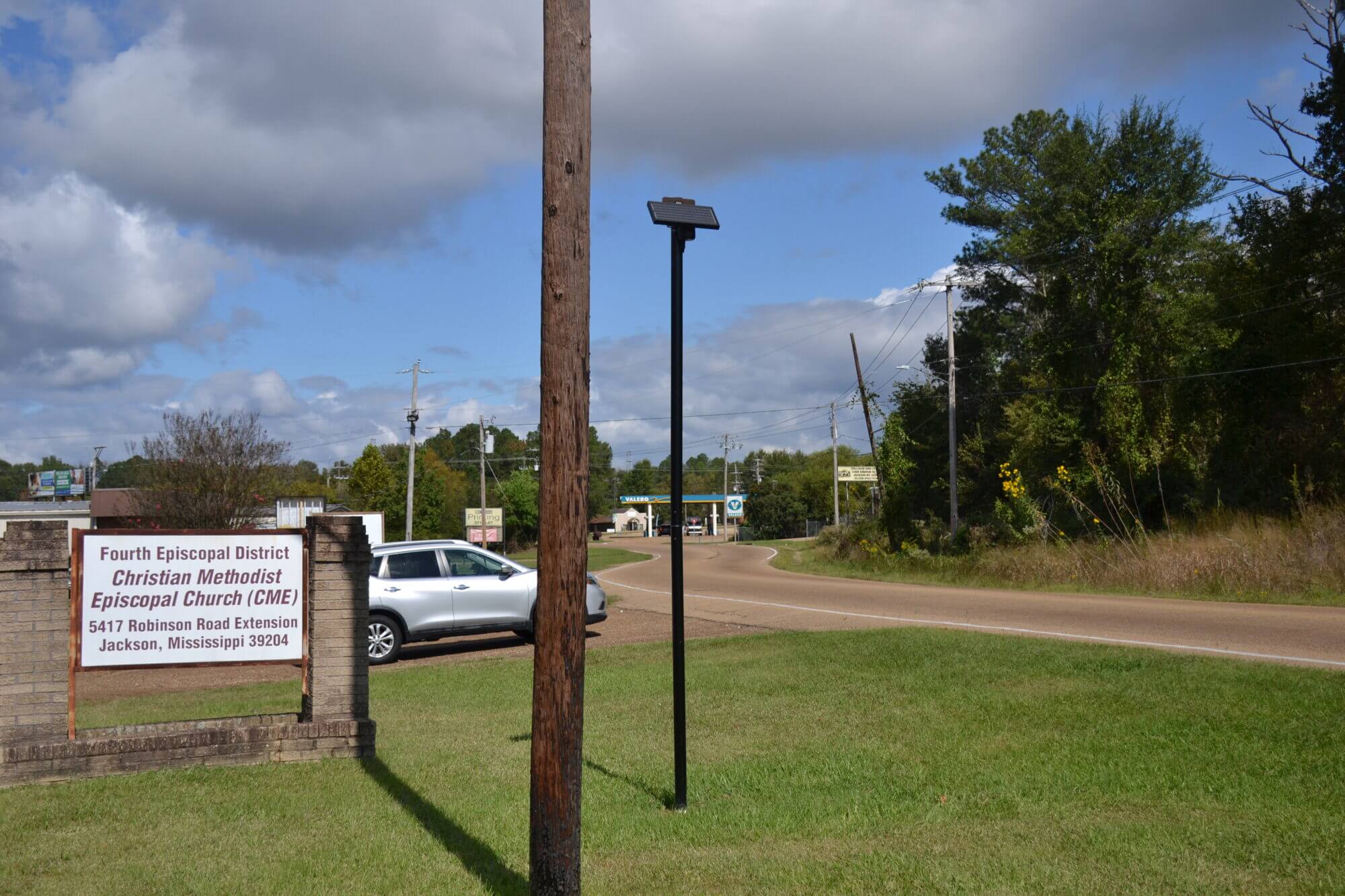
A picture of Flock’s “deployment tracker” that was included in the council’s agenda packet depicts seven south Jackson addresses where devices were placed near the McDowell Square Shopping Center, including the Fourth Episcopal District CME Church on Robinson Road. On Monday, a black pole carrying Flock’s Raven device was still stuck into the grass in front of the church’s street sign.
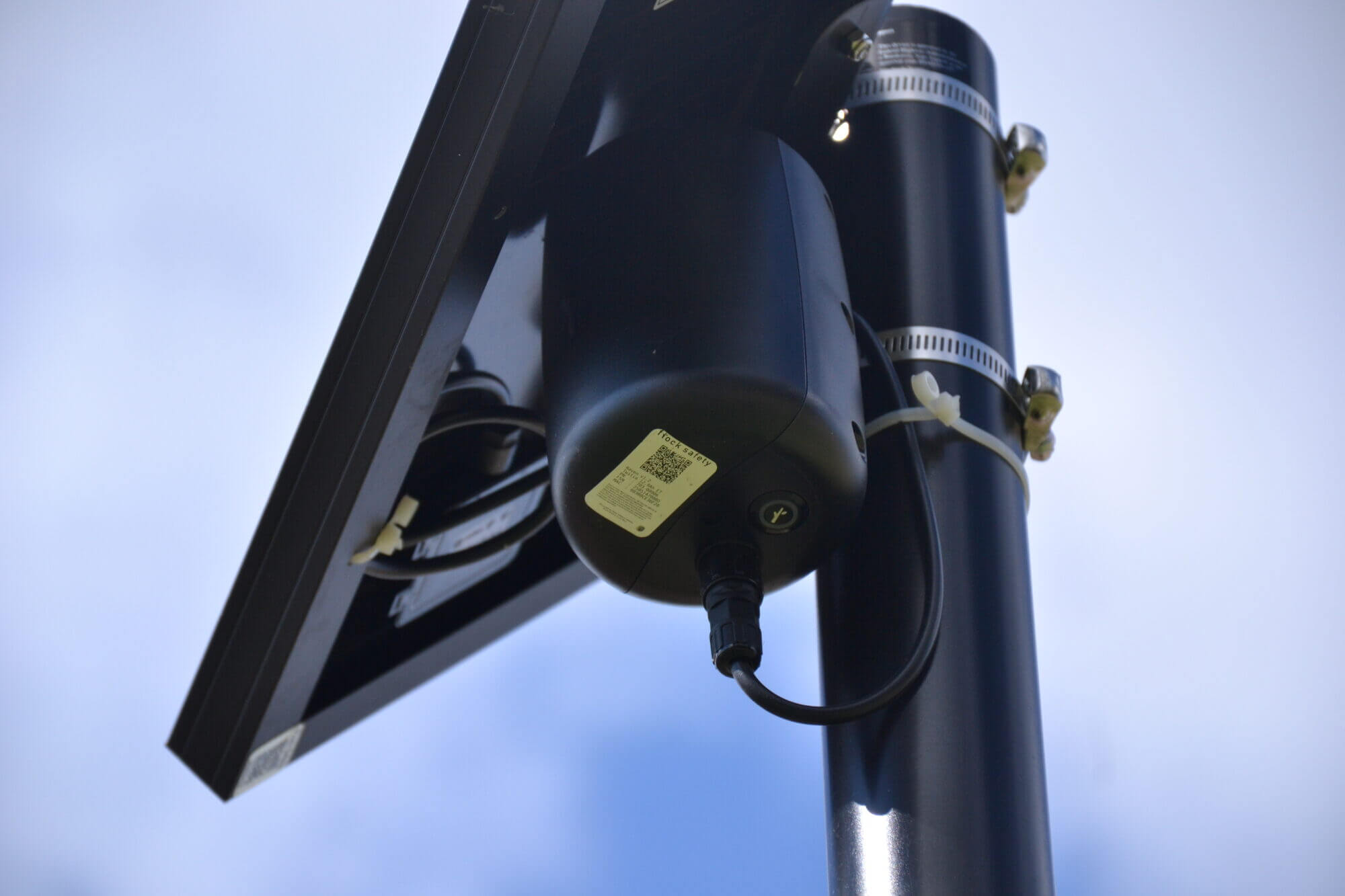
Flock Safety’s “Raven” listening device affixed to a metal pole in front of a church on Robinson Road in south Jackson on Monday, Oct. 27, 2025. Credit: Molly Minta/Mississippi Today
A few months ago, Beverly Dixon, the church secretary, said she pulled into work to see a man who did not appear to be a police officer installing the black pole. She didn’t know what it was until speaking to a Mississippi Today reporter.
“I don’t ask any questions, because I consider this part dangerous,” she said.
It’s not gunshots that worry Dixon, though – she says she never hears them. Instead, it is the homeless people who sleep on the church’s steps. Dixon said she calls the police, but the last time she did, she was stuck in her car on a rainy day for an hour waiting for them to respond.
“They take their time,” she said.
The Flock test period was supposed to begin at the date the first device was installed, which was Aug. 4, but JPD counted the 180-day grace period from the date the city signed the contract, April 23.
JPD said its partnership with Flock remains and the department will continue to evaluate the company’s devices for future use.
“Our decision to pause the Flock Raven project reflects our commitment to balancing technological advancement with the concerns and expectations of our residents,” JPD interim Chief-Sheriff Tyree Jones said in a statement. “We look forward to continuing our partnership with Flock Safety and will evaluate this system in the future as we work toward sustainable, community-driven public safety solutions.”
The Jackson City Council wants to try again with a different company when a new police chief is put in place, multiple council members told Mississippi Today.
“Going forward, I think they got lessons learned,” Ward 5 Councilman Vernon Hartley said of JPD. “We’ll still be dead set on getting those things in place.”
Lashia Brown-Thomas, the Ward 6 councilwoman and a former JPD officer, said in her experience, the police have a 50-50 chance of catching the perpetrators when they respond to a “shots fired” call.
“By the time the officers get there, (the shooters) will be gone,” she said.
Editor’s note: This essay is part of Mississippi Today Ideas, a platform for thoughtful Mississippians to share fact-based ideas about our state’s past, present and future. You can read more about the section here.
A recent public hearing over a proposed asphalt plant near Taylor in Lafayette County played out in a familiar way.
Neighbors, given a few minutes each to speak from a podium in front of a large audience, voiced heartfelt concerns about the proposed plant’s potential impact on noise, dust, water safety and the loss of rural character. The developer, in turn, defended his right to invest and create jobs. Reporters framed the meeting as a “heated exchange,” a “fight,” a “debate.”
If you’ve ever attended a public hearing or a “town hall meeting,” this pattern will sound familiar.These meetings, meant to demonstrate transparency and community input, too often devolve into spectacles of frustration.
They invite people to perform their opinions rather than exchange their perspectives. Participants speak in turn, into a microphone, facing officials who cannot respond and neighbors who cannot reply.
It’s civic theater, not civic dialogue.
While a public hearing may seem as if it is open to all, it truly only includes those brave enough to write and deliver an oration that they hope will meet with the crowd’s approval – perhaps censuring themselves in the process, perhaps grandstanding to win applause.
In any event, it cannot ever become an authentic space to understand the full breadth and depth of a community’s opinions. It also normally occurs just before elected officials will decide a matter – hardly a moment that allows them to incorporate input meaningfully into their decisions.
Public hearings are designed for recordkeeping, not relationship-building. They are procedural necessities, not spaces for understanding. They ask: “Did everyone get a chance to speak?” when the more important question is, “Did anyone really listen?”
Take the meeting on Oct. 20: Citizens opposing the plant, many of them longtime residents, spoke of family farms, clean air and the peace of their community. The developer spoke of economic opportunity and compliance with regulation.
Both sides raised legitimate points rooted in values we all share: safety, stability and stewardship of the land. But the structure of the hearing forced those shared values into competing positions.
Instead of How can we protect our community while allowing responsible growth?, the discussion became Whose side are you on? It turned a complex issue into a binary choice.
There are better ways. Across the country, communities facing similar land-use conflicts have experimented with dialogue-based models of public deliberation – charrettes, stakeholder dialogues and consensus-building workshops that focus first on understanding before decision-making. These formats help residents uncover shared interests and explore creative options before opinions calcify into camps.
What if Lafayette County tried something like that?
The next meeting on Nov. 3 could still follow legal procedure while making space for genuine listening.
Imagine smaller, facilitated conversations where developers and residents alike articulate what they value most about this place and what they fear losing. Imagine supervisors who not only hear concerns but reflect back what they’ve understood and how it informs their next steps.
Public hearings will always be part of the process, but they should not be the only process. When we reduce democracy to a microphone and a timer, we mistake participation for engagement and hearing for listening.
Lafayette County deserves a model of governance that goes beyond compliance to connection. It could be different.
Graham Bodieis a resident of Oxford who teaches people to listen across their differences. He can be reached at gbodie@gmail.com.
Larry Schooleris an assistant professor of communication studies at the University of Texas at Austin and an advisory board member for Unify America and the National Coalition for Dialogue and Deliberation. He can be reached at Larry.Schooler@austin.utexas.edu
The Mississippi Department of Education has announced new pathways to become certified elementary educators and special educators. The change became effective Monday.
Education students can start teaching elementary school classes on a provisional license while taking a new free course to satisfy the Foundation of Reading test requirements. Students must post an 80% upon course completion, by excelling in end-of-section quizzes and pre- and post- “inventories of knowledge” that measure progress.
The Omaha-based AIM institute designed the new academic year-long course, which consists of 14 asynchronous learning sections, two in-person training sessions and testing.
In-person sessions will be held in Jackson, Hattiesburg, Oxford, Meridian, Cleveland, Tylertown, Holly Springs, Hernando, New Albany, Brandon, Carthage, Greenwood, Ridgeland, Columbus, Brookhaven, Gulfport, Ocean Springs, Pascagoula and Moss Point.
MDE also got rid of the reading test requirement for would-be special educators teaching “mild to moderate students,” a term for special education students that tend to be housed in general education classrooms.
The changes were implemented partly in response to the results of a 2024-2025 educator survey, which identified a need for MDE to review its existing licensure guidelines for elementary education and special education.
“The Office of Teaching and Leading is hopeful the revised Foundations of Reading requirements will strengthen Mississippi’s educator workforce,” MDE Office of Educator Continuum Executive Director Courtney Van Cleve said. It will allow for more “more Elementary Education and Special Education candidates to become licensed.”
Adrienne Hudson, who runs a nonprofit that helps teachers with certification, will now be able to move at least 10 teachers in her latest cohort to a traditional license.
“In an area where the critical teacher shortage is so prevalent, what seems like a simple change will have a drastically positive impact on the students we serve,” she said.
Five of her 10 teachers struggling with licensure were special educators on provisional licenses. She has seen a decrease in prospective educators seeking special education endorsements since MDE first introduced the Foundations of Reading requirement in January 2023.
“Typically, our teachers have a special education test after five sessions with no problem,” she added.
Most of the certified teaching jobs posted to MDE’s career portal were for Special education teachers and elementary teachers.
More tests are required for elementary educators than most other specializations. The primary elementary education licensure test has the lowest pass rate of any other subject test. Nearly a quarter of 2015 to 2018 test takers walked away after failing on the first try. (This is the most recent data available as a result of pandemic-era restrictions.)
Hannah Putnam, managing director of the National Council on Teacher Quality, told Mississippi Today that the Mississippi elementary education subject test wasn’t a good measure of teacher promise. Even a fifth-grade English teacher would have to take a test that covers kindergarten through sixth grade instruction as well as science, math, art, English, and social studies, among other subjects.
“Passionate, qualified educators should have multiple opportunities to teach, lead and make a difference in our classrooms,” said Clayton Barksdale, a former Delta educator who is currently running for state Senate on a platform that includes offering more pathways to teacher licensure.
He still remembers the mad dash each summer to fill those jobs when he was a principal.
“We must do better,” he told Mississippi Today. “Many prove their impact while on emergency licenses, only to be fired then immediately rehired as a long-term substitute – doing the same work for a fraction of the pay, with no benefits or retirement.”
Student teacher Jennifer Allen was thinking of spending $1,200 on additional coursework so she wouldn’t have to rely on the reading exam for licensure. She now plans on taking MDE’s newly offered course.
She and five other teachers interviewed expressed that university education programs did not adequately prepare them for the material on the PRAXIS exams, including Foundations of Reading.
With the new course, Allen can start teaching on a provisional license while she works towards a traditional license without penalty to the school.
She feels relieved.
“Knowing that there’s a new pathway designed to help me improve and finally reach my goal of becoming a teacher will boost my confidence, reminding me why I wanted to become a teacher in the first place.”
Cindy Hudnall runs Saints’ Brew Soup Kitchen in Tupelo where she serves hot breakfasts to close to 100 people every weekday – working parents, the elderly, the homeless, veterans and even young adults aging out of the foster care system.
There’s always been a need for people to find enough food to eat in Mississippi, one of the nation’s poorest and most food insecure states. But lately, things are different. Federal money that funded the Supplemental Nutrition Assistance Program (SNAP) has dried up due to the government shutdown – so far the second longest in history – and big changes to the program coming down the pipeline are leaving people desperate and scrambling.
“You can hear it in their voice, you can see it in their face – they are scared,” Hudnall said. “And there’s no magic solution in the foreseeable future. When you get large groups of people who are worried about their livelihoods, you cannot have a thriving community.”
President Donald Trump opted not to tap into emergency funds to continue running the nation’s largest anti-hunger program, according to a memo from the U.S. Department of Agriculture, obtained by Politico. While officials in at least three states have pledged to keep the program going in the absence of federal funds, the Mississippi Department of Human Services announced Friday that its SNAP program had been paused.
“No new SNAP benefits will be issued for November unless federal guidance changes, however, previous benefits will remain accessible,” the department said in a press release Friday.
That decision promises to leave nearly 400,000 Mississippians without food security, according to the Center on Budget and Policy Priorities. But it also undermines people’s confidence in elected officials, explained Gina Plata-Nino, interim director of SNAP at the Food Research and Action Center, a national nonprofit working to end poverty-related hunger.
“Allowing hunger to deepen during a shutdown is a choice,” Plata-Nino said. “The Secretary of Agriculture has the authority and the responsibility to act now to ensure no one goes hungry because of political gridlock. Further delay in using available funds only weakens public faith in government.”
Nonprofits are having to pick up the slack, which is not sustainable long term, said Jason Martin, executive director of the Northeast Mississippi Hunger Coalition, a network of 24 food pantries across eight counties.
“I just got off the phone a little bit ago with a woman whose SNAP benefits are not coming through and can’t survive and is requesting emergency boxes,” Martin said. “From the pantries’ perspective, we’re expecting to be overwhelmed with the request for services. And our system is already taxed to the max.”
Food banks have been under enormous pressure since the U.S. Department of Agriculture cut $500 million to their funding in March. The loss of federal funding to food banks coupled with the increasing need is forcing nonprofits to constantly pivot in an effort to fill impossible gaps, Martin said.
“On a personal note, I just wish that our politicians and legislators would stop politicizing human issues with people who are in a poverty-stricken situation already,” said Martin, who made it clear those were his personal beliefs and not those of his organization.
While the government shutdown will eventually end and SNAP benefits will resume, they won’t look like they used to.
How Trump’s megabill will affect Mississippians who rely on food aid
As a result of a historic tax and spending package President Donald Trump signed into law over the summer, the SNAP program will be transformed in two ways. First, enrollees will face immediate new paperwork and eligibility requirements. Cost shifts will also force states to make tough choices about cutting eligibility or benefits further. Altogether, the so-called One Big Beautiful Bill Act includes the largest cuts to social safety net programs like Medicaid and SNAP.
Mississippians who don’t meet new work requirements could get kicked off SNAP as early as next month, while the state will have to come up with an additional $140 million to keep the program going, according to analysis from the Center on Poverty and Inequality at Georgetown Law School
For the first time ever, states will be forced to cover a portion of the costs for food aid benefits, shifting billions in costs to state budgets. Mississippi, like many other states, will likely have to cut enrollees or benefits or withdraw from the state-federal program altogether. Poverty will increase, local economies will struggle, and food banks will face mounting strain, experts say. As the poorest state in the nation, Mississippi could stand to lose the most.
“This is one of the most significant impacts on Mississippi’s budget,” said Theresa Lau, senior policy counsel at the Southern Poverty Law Center, to a group of lawmakers during a hearing on the federal budget law in September.
For a number of reasons, states are not equipped to handle this shift, explained Elaine Waxman, a senior fellow in the Tax and Income Supports Division at the Urban Institute. The poorest states, that need social safety net programs the most, will be at the biggest disadvantage, she said.
“Unlike the federal government, states typically cannot deficit spend,” Waxman said. “They have to balance their budgets. And they also have a lot fewer revenue sources – they don’t have access to the federal income tax, for example. Especially a state like Mississippi, which has a historically high poverty rate, there’s just less resources to draw out of the population.”
The most likely scenario is that states that can’t afford their new share of the program’s cost will have to make eligibility changes to cover fewer enrollees. Another option would be to reduce the monetary benefits enrollees get – though Waxman said states would likely need to get waivers, specific authorization from the federal government that allows states flexibility in administering the state-federal program, to do so.
Both of those options would put an undue burden on food banks and coalitions like the one Martin runs in northeast Mississippi. His small non-profit network must now find new donors and more grants to meet needs that the government once supported.
“As a nonprofit organization we’ll have to figure out how to sustain that level of funding so we can sustain that level of service,” Martin said. “We don’t have a bunch of staff – I’m the staff person.”
The last option would make food aid a thing of the past.
“The most drastic scenario would be that a state would be unable to support the program and would withdraw,” Waxman said. “And that’s a catastrophic option, but I’ve definitely heard states say that they can’t rule it out because this is a pretty significant escalation in their budget responsibilities and they don’t have a clear path as to how they’re going to meet it.”
“It’s never a simple ‘just do this’ resolution”
Costs to states are expected to increase dramatically in the months ahead. Each state’s share of administrative costs for implementing the program will rise from 50% to 75%. Then, states will be responsible for paying up to 15% of the cost of the actual food benefits – something the federal government used to cover completely.
How much a state has to pay in benefit costs will depend on its error rates. That rate measures how accurately each state determines if a person is eligible to receive benefits, including SNAP. The Trump administration and Congress enacted this provision to crack down on alleged fraud and abuse. But that has been proven to be rare in the SNAP program, which has one of the most rigorous systems to determine eligibility and payment accuracy among safety net programs, according to the Center for Budget and Policy Priorities.
Errors more often come down to overburdened systems and the fluctuation in poor people’s income, Waxman said.
“It’s often literally just administrative errors, or someone forgot to submit something, or someone’s income was fluctuating frequently and that made it difficult to calculate the correct benefits. It’s not driven by fraud – that’s a very small issue relatively in SNAP.”
Mississippi, a state with an error rate over 10%, would be required to pay the maximum 15% share of benefit costs, explained Lau, from the Southern Poverty Law Center.
Shifting costs to states isn’t the only change to SNAP that the federal budget bill imposes. New work requirements will mean that enrollees have to prove they are working, going to school or training at least 80 hours a month, or that they qualify for one of the exemptions.
The law increases the upper age limit on the work requirements from 54 to 65-years-old and extends the requirement to those previously exempt: veterans, those facing homelessness, and youth aging out of foster care. Caregivers remain exempt, but parents must have children under the age of 14 – down from 18.
The coverage losses will have a profound impact on local economies, including grocers and retailers in rural areas who stay afloat from the business SNAP recipients bring, explained Plata-Nino, from the Food Research and Action Center.
“What happens when the SNAP retailer can no longer receive the funds for whatever reason?” asked Plata-Nino. “He still has to pay the rent, there’s no money for rent. He still has to pay salaries, there’s no money for salaries. So, there go the wages, there go the income and federal taxes they would pay, and there go the local taxes. It really is such an ecosystem.”
Research shows that hunger has serious consequences on health and education outcomes. Since children who are enrolled in SNAP or Medicaid are automatically enrolled in free school lunch, the downstream effects of changes to these programs will result in fewer children automatically enrolled in free school-based meal programs. For many children, these meals are the only ones they are guaranteed each school day.
With constant uncertainty and an increasingly frayed safety net, advocates worry people’s desperation will force them toward options that perpetuate poverty. Charity Bruce Sweet, who leads the Economic Justice Campaign at the Mississippi Center for Justice, said she has seen people get buried under debt after taking out small loans to cover bills or groceries – and worries that will become more common.
Payday loans, which often accept bad credit and offer same-day funds, typically have exorbitant interest rates that perpetuate poverty. Mississippi has no protections against payday loans and one of the highest average interest rates for them, Bruce Sweet said. Mississippi’s average payday loan interest rate in 2023 was 572%, according to the Center for Responsible Lending.
“People eventually default on those loans, and they end up in the court system and these attorneys are coming in asking for the loans, plus the interest, plus the late fees, plus the court fees,” said Bruce Sweet. “And it literally will put you in another level of poverty you haven’t even thought of before.”
While it might be easy to judge people or assume solutions, Hudnall, of Saints’ Brew Soup Kitchen, said that working on the ground has opened her eyes to just how many layers are at play when it comes to poverty.
“It’s never a simple ‘just do this’ resolution,” Hudnall said. “Getting to know people at an individual level will change your perspective about life. You do not know the real story until you ask open-ended questions and get to know people – their background, where they came from, what life was like for them growing up, what scares them and what motivates them.”