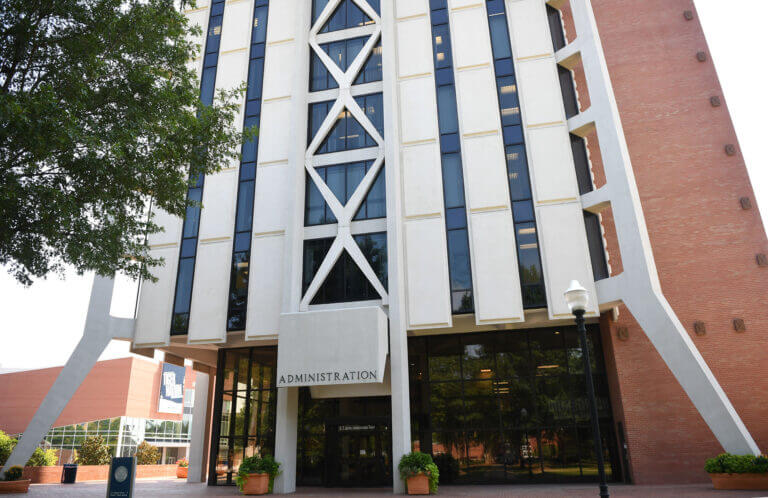
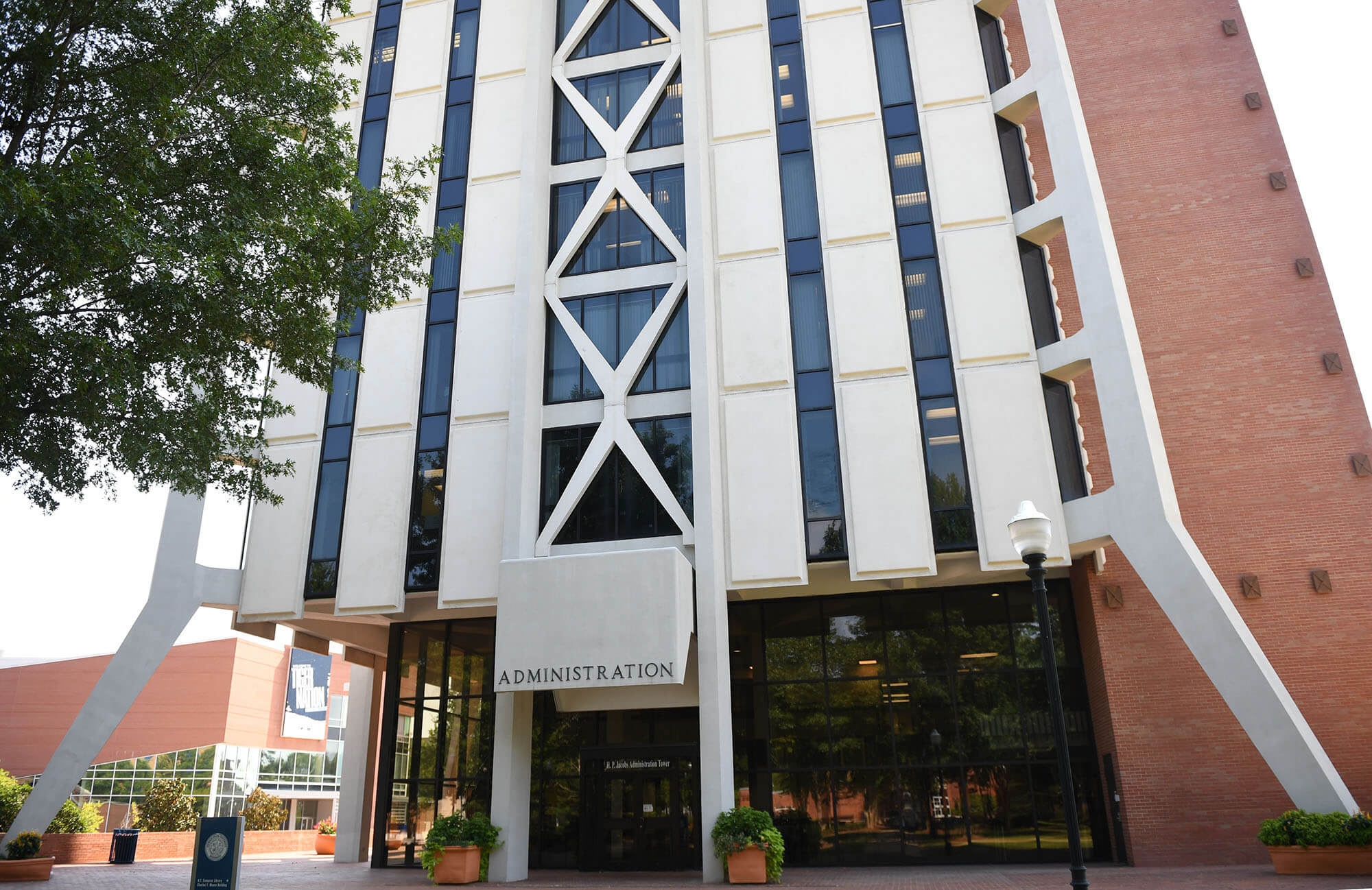
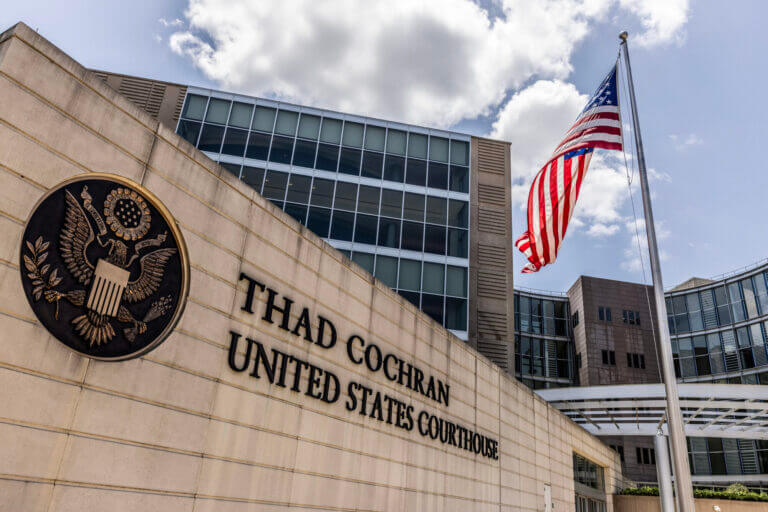
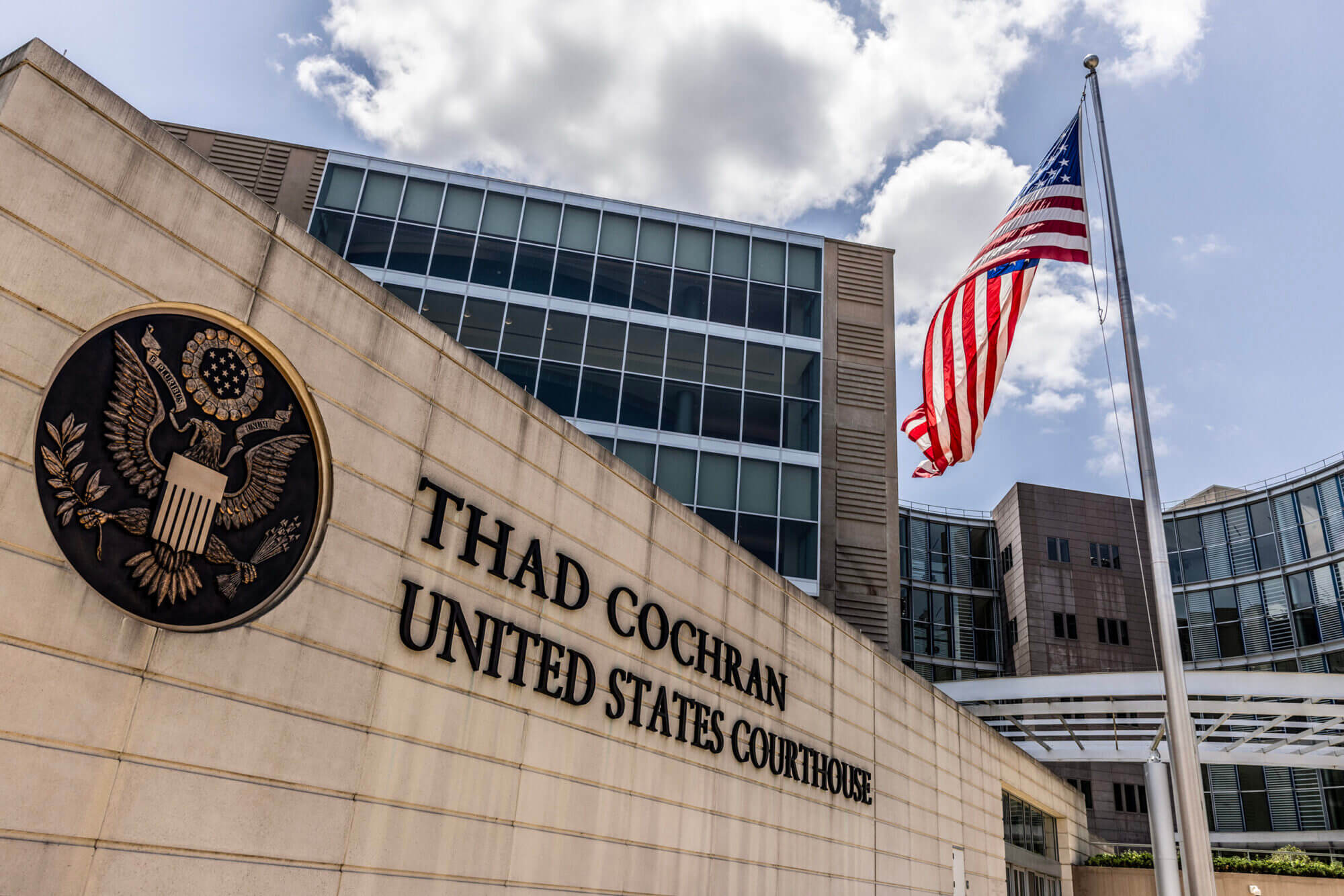
The Mississippi Institutions of Higher Learning Board has selected a search firm to assist with Jackson State University’s president search from the 11 proposals submitted. The position has been vacant since May when Marcus Thompson resigned as president less than two years into his tenure.
The state’s governing body that oversees Mississippi’s eight public universities voted in open session Thursday at its annual retreat to select Association of Governing Board of Universities and Colleges Search, an executive headhunting firm based in Washington, to assist with naming the historically Black university’s next leader.
The move is a departure from the IHL board’s usual pick, Academic Search, an executive firm it has used twice for past university president searches.
In 2023, the board hired Academic Search for $115,000 after Thomas Hudson, Thompson’s predecessor, resigned. The board also paid the firm $85,000 for the Delta State University search, which resulted in Dan Ennis.
The firm presented a proposal that “best matched the qualifications outlined in the formal request for proposals,” a press statement from the board said. Trustees said they will iron out a formal contract with the firm in the next few days.
In August, the board announced to the public it began its official search process three months after Thompson’s resignation. For months, alumni and supporters of the university have raised questions and called for a fair, transparent national leadership search for the university.
The board did not announce additional details regarding the JSU president search.
Correction 9/19/25: This story has been updated to correct that the vote on the search firm was in open session.
Editor’s note: This essay is part of Mississippi Today Ideas, a platform for thoughtful Mississippians to share fact-based ideas about our state’s past, present and future. You can read more about the section here.
I was born and raised in Meridian, Mississippi just four minutes from the Walgreens where I now work as a pharmacist. Some might say my roots in this community run deep.
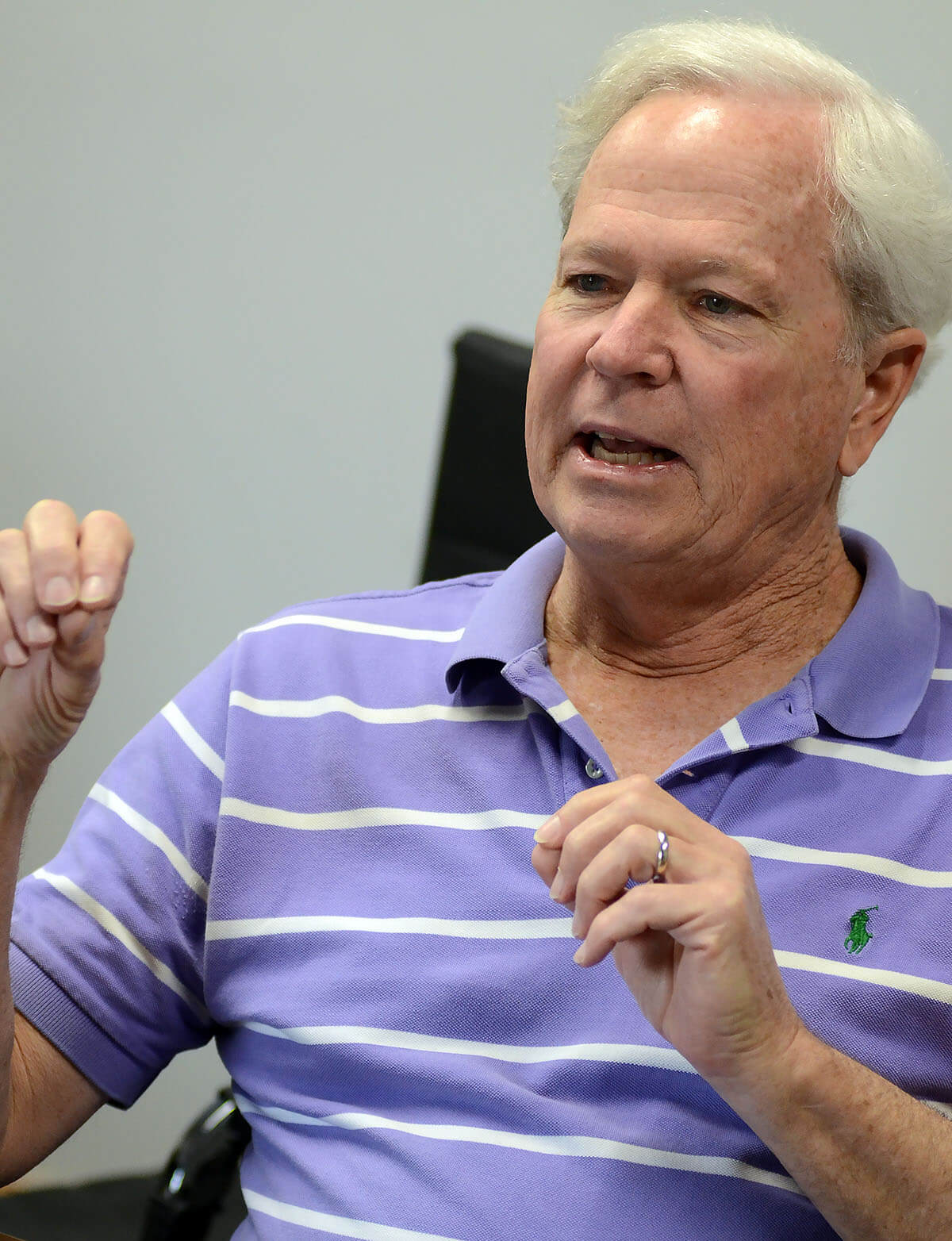
Chris Waldron Credit: Courtesy photo
My family owned a group of independent pharmacies in the area for years, and when they were ready to exit the profession, Walgreens gave me the opportunity to continue doing what I’ve always known: caring for my community through pharmacy.
Today, I serve as a district immunization lead, which means I often lead local vaccine clinics and outreach efforts across the region. It’s a role that allows me to expand my impact beyond the pharmacy counter and bring care directly to the communities that need it most.
A big reason I’m so passionate about preventive care is because I’ve seen firsthand how vaccines can make a difference and how the absence of one can lead to regret.
I recently counseled two patients who are twins about the importance of getting the shingles vaccine. One accepted my recommendation and got vaccinated. The other declined. About a month later, the patient who didn’t get the vaccine came into the pharmacy with shingles.
The patient immediately expressed regret and wished they had gotten the shot. I walked them through when they’d be eligible to receive it, and they’re now planning to get vaccinated. That experience reminded me why I chose this profession — to help people make informed decisions that protect their health.
Mississippi has long struggled with low vaccination rates, and this year, I’m especially concerned.
Misinformation is making it harder for people to trust the principles of how vaccines protect us. I hear it every day: “I’ve never had the flu, so I don’t need the shot.”
But the truth is, flu vaccines aren’t just about individual protection. They’re about keeping our hospitals from being overwhelmed, reducing treatment costs and protecting our most vulnerable neighbors, including children, seniors and those with chronic conditions.
At my store on the east side of Mississippi, we take care of a lot of patients who need vaccines. I’ve worked hard to build trust with my patients, and they rely on me to make sure they’re getting the right care.
That trust is something I don’t take lightly. We host onsite vaccine clinics and do everything we can to raise awareness about the importance of getting vaccinated – especially in more rural areas where hesitancy is higher.
The misconceptions around flu vaccines aren’t new, but they’ve been amplified in recent years. That’s why it’s more important than ever to have honest conversations with your pharmacist – someone who knows your health history, your concerns and your community.
Getting a flu shot is quick, easy and one of the most effective ways to protect yourself and those around you.
I trust vaccines. I’ve seen firsthand how they help prevent disease and reduce hospitalizations.
And I’ll continue doing everything I can to make sure my neighbors in Mississippi have access to the care they need — starting with a simple flu shot.
Chris Waldron is a pharmacy manager and district immunization lead at Walgreens in Meridian. With a lifelong connection to the community and a background rooted in local pharmacy, Waldron now leads vaccine clinics and outreach efforts across the region. He’s especially passionate about preventive care and helping patients make informed decisions about their health.
In the latest twist in Jackson State University’s quest to insulate itself from the city’s water woes, testimony before U.S. District Judge Henry Wingate revealed that a years-in-the-works, nearly complete plan to install backup water tanks on campus could put students at risk of consuming water not intended for drinking.
But the historically Black university, which has not been involved in the city’s ongoing lawsuit until now, was not forced to court over the issue. Instead, the university was the one that filed a grievance. It sought Wingate out for help with what it described as an insurmountable roadblock: Ted Henifin, the federal water receiver, who was refusing to permit the project to move forward.
“It has an enrollment effect on us, a morale effect on us, and most important, an operational effect on us,” Vance Siggers, the director of campus operations, told Wingate, adding that each time the university experiences days without water, it loses “somewhere between 50 and 100 students just on the basis of we don’t have water on campus.”
Jackson water manager Ted Henifin, discusses the current state of the city’s water issues and plans for the future, Monday, March 6, 2023. Credit: Vickie D. King/Mississippi Today
The two sides mostly talked past each other during the Thursday proceedings, with Jackson State contending that it was not attempting to build its own water system for human consumption. The university has been working on this project since the 2022 water crisis disrupted the fall semester for weeks.
Henifin, backed by testimony from the Mississippi State Department of Health, responded that the university’s plan for the backup tanks did not follow safety regulations. That’s in part because, during emergencies, health officials said the plan would route nonpotable water through the same pipes the university normally uses to deliver potable water to the kitchen and dormitories.
“Looking back, it would have been great to work with them from the very beginning,” Henifin said. “At the end of the day, Jackson State hired an engineering firm and they should have reached out to the health department. … It’s engineering malpractice that they got this far along.”
Wingate began the proceedings by reading aloud a Sept. 11 letter he received from the university’s lobbyist. The letter described how Jackson State has a looming deadline to spend $8 million in pandemic relief funds administered by the Department of Finance and Administration to install four water tanks on its campus as part of a plan designed by a local contractor, the Pickering Firm.
Those tanks, which can’t be returned, are currently sitting unused on state property because Henifin will not sign a document that the Mississippi State Department of Health needs in order to formally review Jackson State’s plans.
Instead, the letter portrayed Henifin as pulling strings with the health department to block the project. JSU claimed Henifin had wrongly surmised that the university was attempting to build its own water system.
“Our goal is not to create a new water system but to ensure access to backup water tanks to prevent our students from experiencing water shortages,” Jacqueline Anderson-Woods wrote to Wingate, hoping the plea would lead the judge to force JXN Water’s approval
Over the next three hours, Wingate attempted to unpack the disagreement, an effort that involved testimony from Henifin, Siggers and Bill Moody, the director of the health department’s public water supply division.
The university argued it does not want to build an independent water system and will continue to draw from the city’s water system and pay its bills.
“This is not an independent water system, this is a backup water system,” Siggers said. “We still have to cut those 18 payments a month that I will sign off on every month.”
Siggers described what he envisioned: During periods when issues with the city’s water system resulted in low water pressure on campus, the university could trigger the backup water tanks to keep its cooling and heating systems going.
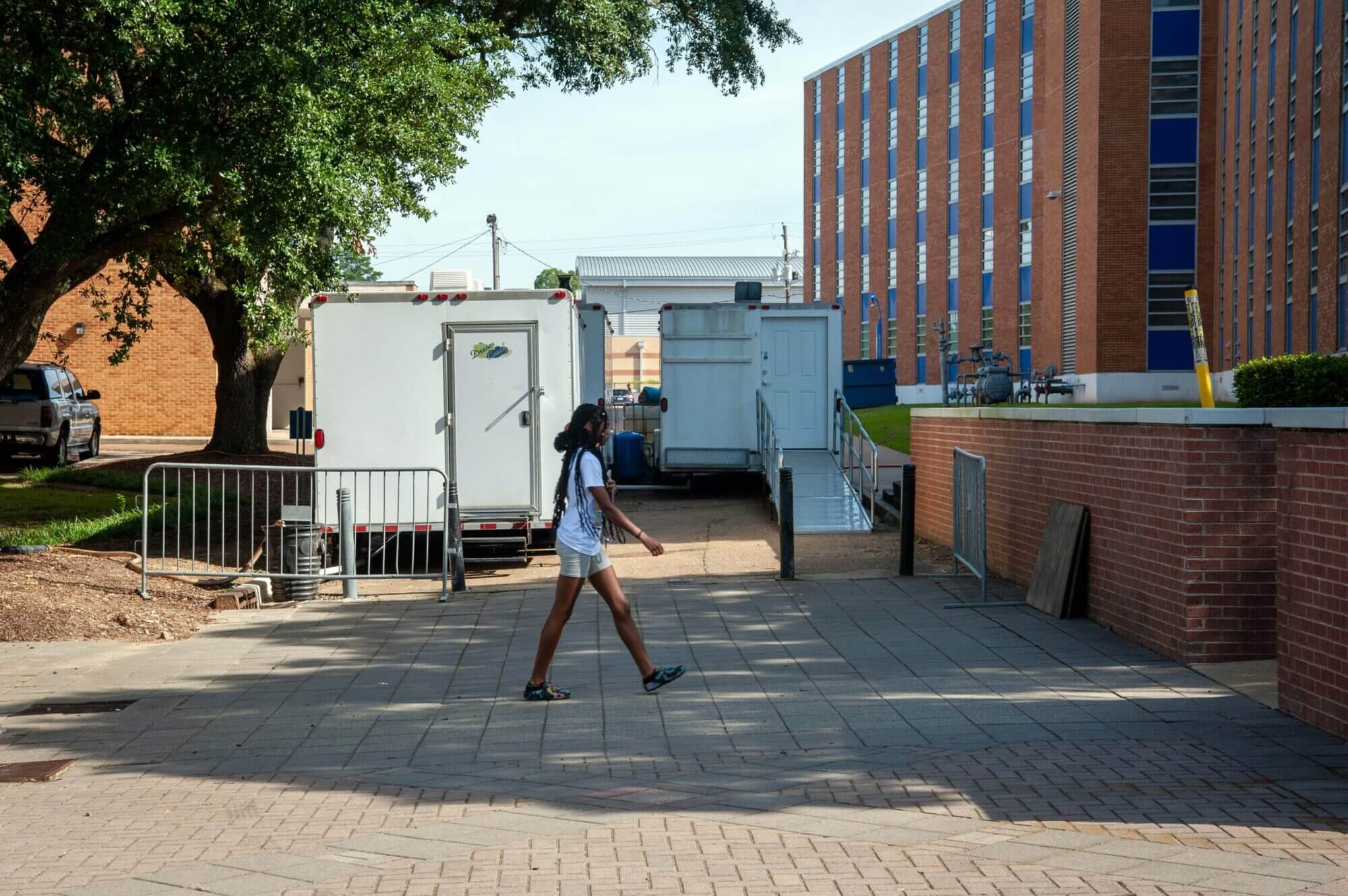
Students could use the backup water to flush toilets and shower so they did not have to leave their dorms to use portable toilets, such as during the 2022 water crisis. Dining hall staff could continue to use the water to keep the kitchen clean.
“It is important that we keep a certain level of PSIs on campus for student use in residence halls such as flushing toilets, shower needs, and washing,” he said. “Over in the dining facility, it is used for back-up such as maintaining cleanliness in the dining facilities while we serve our students.”
A student walks by portable showers on the campus of Jackson State University in Jackson, Mississippi on September 1, 2022. Credit: Rory Doyle/Deep Indigo Collective for Mississippi Today
When the university reached out to Henifin after learning he was blocking the project, Siggers said they did not receive a response. Henifin even ignored a letter from Alfred Rankins, the commissioner of the university’s board, the Institutions of Higher Learning, in support of the project.
In response to Siggers’ testimony, Henifin told Wingate he was “very confused” because as far as he knew, there was no way in the proposed design for the university to separate nonpotable water that goes to a shower from potable water that goes to a bathroom sink.
“They don’t have a dual-pipe system where they can put nonpotable water into their system and only go to toilets for flushing,” Henifin told Wingate. “If it goes into a shower, people open their mouths when they shower. Nonpotable water is not allowed to be used in showers in buildings.”
Henifin also noted that if Jackson State is storing unused water in these tanks for months, bacteria or other contaminants are likely to grow. That means if there is a possibility students could consume the water, the university must treat it — which requires obtaining the necessary regulations, hiring a water operator and conducting regular testing.
“As the protector of Jackson’s water … I cannot sign off on anything that may cause people to have contaminated water,” he said.
The first Henifin learned of the project was when the contractor reached out to ask about an “infrastructure tie-in,” he said. He added that he thought improvements JXN Water had made to the city’s delivery system, including winterizing its facilities, meant Jackson State no longer needed to pursue this project.
This testimony led Wingate to call on the Mississippi State Department of Health. Moody, the director of the department’s bureau of public water supply,told Wingate he had determined that regardless of university’s intent, it was seeking to build a system intended for “consumptive” use.
Moody had informally reviewed the plans, which the university had not provided to him until he issued a cease-and-desist order on the project in May.
“The plans that I’m looking at fully indicated the water would be flowing into the tanks and flowing back out into the building using their pipes,” Moody said.
Moody added the university could solve this if it routed the water from the tanks solely to mechanical systems like HVAC, so that students do not risk consuming the nonpotable water.
Another solution would be for the university to become a public water system, a legal designation for a system that delivers drinkable water to more than 25 people for at least 60 days out of the year.
But Jackson State kept reiterating to Wingate that it did not want to become a public water system because it did not intend for students to drink its backup water, despite the testimony from the health department that its plans would result in students consuming nonpotable water.
“This goal is to be achieved by installation of above ground tanks on the customer side of existing taps to distribute water to dining services, campus housing, the student health center,” said Monica Davis Allen, an attorney for the university. “The intention is to ensure continuous campus operation and not for human consumption.”
At the end of the proceedings, Wingate asked Jackson State to submit a brief to the court within five days as to whether it was building a public water system.
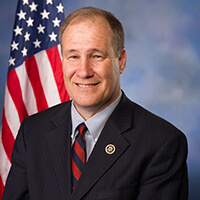
WASHINGTON — U.S. Rep. Trent Kelly, a retired Mississippi National Guard officer, is supporting President Donald Trump’s efforts to mobilize National Guard troops to Washington and other cities around the country to crack down on crime.
Kelly, a Republican who has represented northeast Mississippi in Congress since 2015, said about 200 members of the Mississippi National Guard are still in the nation’s capital, and he believes the troops have sufficient training to aid law enforcement officers in the city.
“It’s part of our civil response,” Kelly said of the Guard. “We know how to do that mission. They’re not law enforcement. They know what they can and can’t do. They’re supporting law enforcement.”
The president has threatened to send troops to other cities he believes have problems with violent crime. Opponents of this policy say the use of federal troops for domestic law enforcement violates federal law and usurps individual states’ sovereignty.
Kelly, a Saltillo resident, first joined the National Guard at the age of 19 in 1985. He mobilized for Operation Desert Storm in 1990 and deployed to Iraq in 2005 and 2009.
In 2018, Kelly was promoted to the rank of brigadier general. In 2020, he was promoted to major general and designated as the state’s assistant adjutant general. Earlier this year, he retired from the Guard. During his tenure in the Guard, he was one of the highest-ranking members of the military serving in Congress.
He told Mississippi Today in an interview at his Capitol office that he has met with about 15 members of the Mississippi unit in Washington, and all of them said they were enjoying their assignment.
Rep. Trent Kelly
“They were on their off time,” Kelly said. “They came by, and we gave them a Capitol tour. It was informal.”
Following the governors of at least three other Republican-led states, Gov. Tate Reeves last month announced he was deploying Mississippi National Guard troops to Washington to bolster Trump’s “effort to return law and order to our nation’s capital.”
The move comes after Trump signed an executive order federalizing local police forces and activating about 800 District of Columbia National Guard members. Washington’s elected officials and several Democratic lawmakers have disputed these claims, noting that violent crime is lower than it was during Trump’s first term in office.
After he mobilized the National Guard in Washington, Trump deployed troops to Memphis, with the support of Tennessee’s Republican governor and U.S. Senators. The president has also suggested sending troops to Chicago, St. Louis and New Orleans.
State leaders have speculated whether Reeves or Trump would send Guard troops to deal with crime in Mississippi’s capital city. White House Press Secretary Karoline Leavitt, in a media briefing earlier this month, called Jackson a “Democrat-run city” in a conservative state and labelled it a “sanctuary city.”
“While Jackson is not formally a sanctuary city, the state of Mississippi formally banned sanctuary cities, and this city has acted as a de facto sanctuary city for criminals and illegal aliens since 2017,” Leavitt said.
But Reeves’ office, in a social media post, said he has not deployed the Guard to Jackson because he has previously worked with the state Legislature to expand the role of the Capitol Police force in the area and has signed legislation into law creating the Capitol Complex Improvement District Court, a state-created inferior court in the state’s capital city.
“The Governor’s holistic approach to fight crime in Jackson — admittedly using tools not available to the President — is working,” Reeves’ office said.
U.S. Rep. Mike Ezell, a Republican who represents South Mississippi and a former sheriff, also said the president’s use of the Guard is a “good strategy” because the mere appearance of military members could be a deterrent for crime.
“I’ll tell you from my own personal experience being a sheriff, being chief of police, if you have a crime problem, and think about what you hear from the police chiefs and the sheriffs,” Ezell said. “‘We don’t have enough manpower. We don’t have enough manpower.’ We hear that. We’ve heard that forever.”
However, not all members of the Mississippi delegation are in favor of the policy. U.S. Rep. Bennie Thompson, the lone Democrat from the Mississippi delegation who represents the Delta, said in an August news release that deploying the Guard was a “power grab” by Trump, “trying to crown himself king.”
“Washington, D.C., needed the National Guard deployed on Jan. 6th, when Trump supporters stormed the Capitol, but he did nothing,” Thompson said. “Now, Donald Trump has chosen to unleash federal power against a community that didn’t vote for him, proving once again that his priorities are political vengeance and self-promotion.”
While the congressional debate in Congress continues over the policy, the courts are also weighing in.
A federal judge in California ruled earlier this month that the Trump administration broke the law by deploying National Guard troops in Los Angeles during the summer. The Trump administration is appealing the ruling.
PETAL — Preschoolers kneel on a kaleidoscope rug, their clumsy hands reaching for wooden blocks, little socked feet tucked underneath.
Block by block, they build a tower that only teeters a little, and for a moment, stands tall. The kids grin proudly. And when it tumbles to the ground a few seconds later, the classroom corner is filled with the sound of giggles.
A bystander might think this is just play. But the teacher watching nearby knows they’re learning essential fine-motor skills. They’re also learning social skills by sharing with their classmates.
Thanks to a statewide investment in early education more than a decade ago, about one in six Mississippi children is learning these integral skills within the first few years of life at “early learning collaboratives” throughout the state. Experts agree the program is directly connected to the state’s reading gains that have garnered national attention.
So when lawmakers created another state-funded pre-K program in 2022, some wondered: Why do we need both? One legislative leader who helped create the collaboratives is concerned the new program might siphon away resources, or recreate some of the problems the state faced for decades with early learning.
Early learning collaboratives, a state and taxpayer funded pre-K program established by the Legislature in 2013, created education partnerships in communities across Mississippi. The program has high academic standards, and it brings together child-care centers, nonprofit organizations, school districts and Head Start agencies. It compensates the groups for partnering.
In 2021, just 18 collaboratives were serving about 3,000 4-year-olds throughout the state, but the program still landed Mississippi top marks for early education from a national research group.
Teacher Alexis Stovall works with children at the Coleman Center for Families and Children in Petal, Miss., on Thursday, July 24, 2025. Credit: Eric Shelton/Mississippi Today
Four years later, that count has more than doubled. Now, 40 collaboratives across Mississippi have more than 6,000 kids enrolled.
But a new program, called the state-invested pre-K program, or SIP, doesn’t require collaboration with Head Start centers, which provide a myriad of services beyond education for some of the state’s neediest children. Additionally, because of the way the program is set up, there’s less red tape.
For those reasons, it may be a more appealing option for underfunded districts looking to make their dollars go further. It’s frustrating for Sen. Brice Wiggins, a Republican from Pascagoula, who championed the original program that required collaboration among pre-K partners, instead of fighting over students and the money that follows them.
“As I understand it, the SIP program has its roots in something that has always plagued early education in Mississippi,” he said. “Competition.”
‘Skin in the game’
There was an old saying among the police officers and prosecutors in Jackson County, Wiggins remembers from his time working in the district attorney’s office.
“They said they determined the amount of prison beds by how well kids performed in the third and fourth grade,” he recalled, in his office at the state Capitol in June. “That resonated.”
When he was elected to the state Senate, those kids were fresh on his mind.
Wiggins spent 2012, his first year at the Capitol, advocating for early childhood education and began working up a plan to reshape the state’s system with policy researcher Rachel Canter. They partnered with then-Republican Rep. Toby Barker, who is now an independent and serves as mayor of Hattiesburg. By the time the next year rolled around — 2013, a seminal year for education in Mississippi — Wiggins thought he had something good.
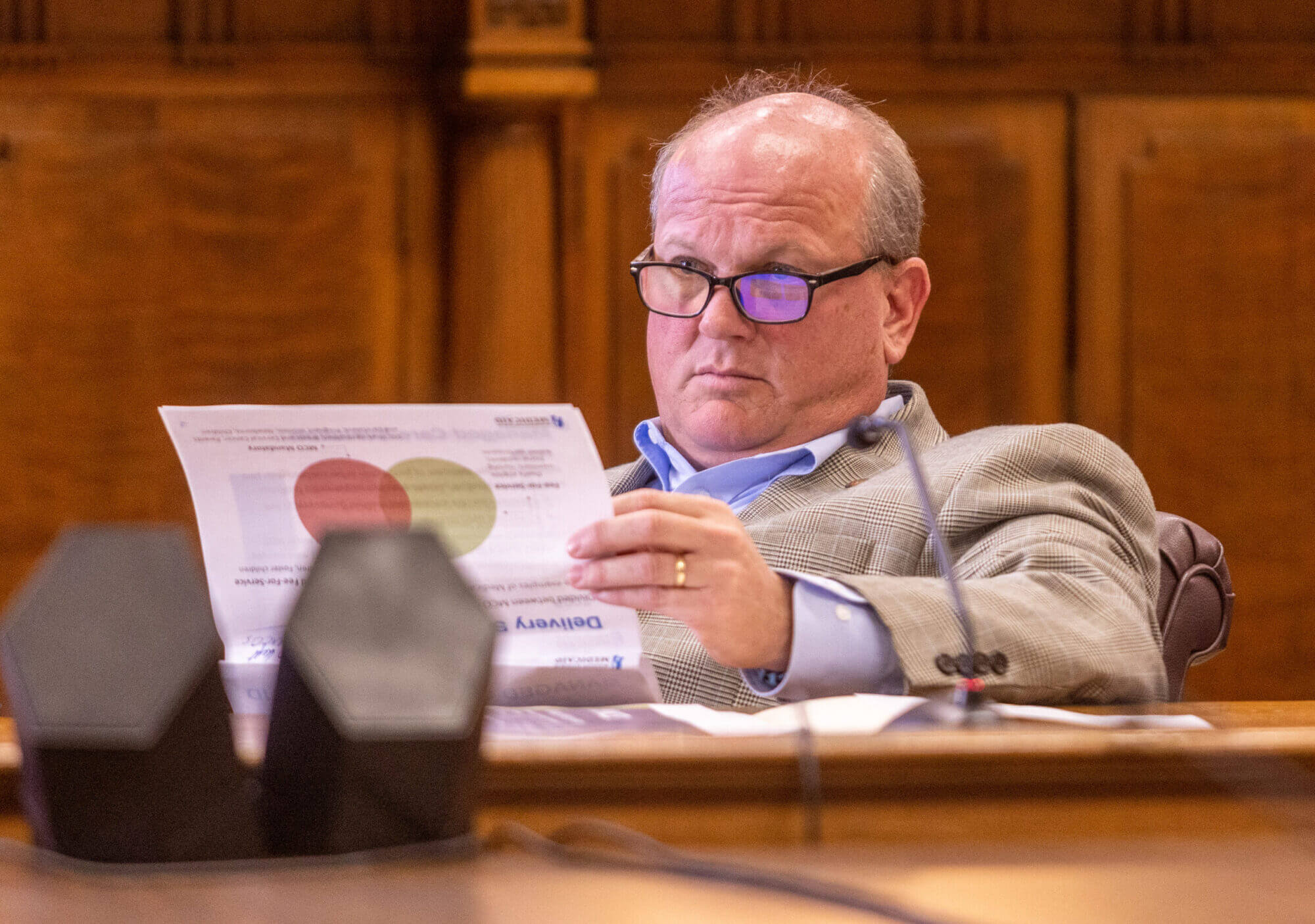
Sen. Brice Wiggins, R-Pascagoula, listens as Drew Snyder, Mississippi Division of Medicaid executive director, gives a presentation during a Senate Medicaid hearing at the state Capitol in Jackson, Miss., Wednesday, Nov. 9, 2022. Credit: Eric Shelton/Mississippi Today
As lawmakers were working up what would become the literacy act that fundamentally changed reading education in Mississippi, leaders in the Legislature were signing off on Wiggins’ early education plan. It addressed the “patchwork of pre-kindergarten entities” in Mississippi and the lack of coordination between them. When students enroll in different pre-K programs, money follows — tuition at private day-care facilities or federal funding at Head Start are two examples. The collaboratives had a goal of eliminating the infighting that happens in communities over 4-year-olds by giving stakeholders a financial incentive to work together.
The bill passed by a vast bipartisan majority in 2013 and lawmakers appropriated $3 million for it. The Mississippi Department of Education selected 11 communities to host the first collaboratives.
In a collaborative, there’s a lead partner — usually the local school district, but it can be a nonprofit organization — that has local responsibility over the program. They’re in charge of disbursing funds, facilitating professional development and ensuring everyone is adhering to standards.
Those standards are rigorous. The bill requires collaboratives to use a curriculum that aligns with benchmarks from the National Institute of Early Education Research. This includes having teachers with bachelor’s degrees and at least 15 hours of professional development a year.
The collaborative’s lead partner is required to work with other local pre-kindergarten providers such as child care and Head Start centers to be eligible for the collaborative and its funding, which was originally $2,150 per student (That amount has since increased to $5,000). But the costs quickly add up. The $3 million from the Legislature got them started The state agreed to pay half of each student’s education costs. The rest had to come from the communities.
Enter the part that Wiggins is most proud of: To make up the other half, the Legislature created a tax-credit program. That means businesses and individuals can donate to their local collaborative and receive a dollar-for-dollar credit on their taxes.
“That created some skin in the game,” he said.
Deanna Hathorn reads to her students at Life Construction Learning Academy in Petal, Miss., on Thursday, July 24, 2025. Credit: Eric Shelton/Mississippi Today
Setting students up for success
Deanna Hathorn holds open a book at the front of the classroom, and every face is turned toward her.
“‘Justin dreamt that he could fly,’” she reads in a lilting voice.
Then Hathorn directs her students: “Hold one finger up if you have dreams!”
Immediately, tiny index fingers fly into the air.
Petal, a suburb of Hattiesburg, was one of the first communities to opt into the early learning collaborative program.
Prior to the program, it was relatively common for Petal students to enter kindergarten without any classroom education because options were limited to Head Start and a handful of Christian-based schools, similar to many other Mississippi towns, according Jana Perry. Perry is Petal’s former primary school assistant principal and the current director of the district’s Coleman Center for Children and Families, the lead partner for the Petal Early Learning Collaborative.
That’s because pre-kindergarten was not funded by the state before 2013.
“The act was a game-changer,” she said. “If we didn’t have this, we would be so far behind. Why we are doing so well as a state is because of early childhood education.”
Wiggins said Petal is one of the state’s most successful early learning collaboratives, in its reach and academic achievement. About 300 kids in Petal enter the district’s kindergarten program every year. Most will have gone through the collaborative, which currently has 179 students across 10 classrooms at five sites.
The difference between the students who have had a year in the collaborative and the ones who haven’t is stark, Perry said.
Mississippi Department of Education data shows that collaborative students outperform their peers on the statewide kindergarten readiness assessment. That’s because the collaborative students enter kindergarten more familiar with classroom structure and the curriculum. Plus, some potential barriers to learning may have already been identified, Perry said. For example, collaborative teachers can intervene if a child has a speech impediment, potentially making a year’s worth of progress by the time that student enters kindergarten.
“We can go ahead and get them set up to succeed once they walk in the door,” she said. “And they know how to do school. Kids who haven’t been through pre-K really struggle in their first year in kindergarten.”
The impact of early education echoes throughout a child’s life, said Steven Barnett, founder of the National Institute for Early Education Research.
“The first thing you’ll notice is that the students do better when they get to kindergarten, and then they do better on those early grade exams,” Barnett said. “But the next thing you’ll notice is they’re less likely to fail and have to repeat. They’re less likely to need special education, and they’re going to be more likely to graduate from high school and go on to higher education.
Jana Perry, director of the Coleman Center for Families and Children, visits with children at Life Construction Learning Academy in Petal, Miss., on Thursday, July 24, 2025. Credit: Eric Shelton/Mississippi Today
“That’s the big payoff, because that’s where you get better health outcomes, better employment, better incomes.”
Petal superintendent Matt Dillon said the first cohort of early learning collaborative students are now in high school, and the impact of the program is tangible — in test scores, expected graduation rates and school environment.
“This is a community that really recognized the importance of early education,” he said. “And fast forward to today, we’re reaping the benefits.”
That success of early learning collaboratives is why, when Wiggins heard about the new state-funded pre-kindergarten program created in 2022, he was confused — and, honestly, a little agitated.
“Nobody asked me about it,” Wiggins said. “And if they had, I would have said, ‘No.’”
New program may fit smaller communities
Union, a tiny town in piney central Mississippi anchored by a couple of four-way stops, is home to about 2,000 people. Most of the town’s 4-year-olds are in three classrooms at the Union Elementary School’s campus, thanks to funding from the new SIP program.
On the whole, it’s not dissimilar from early learning collaborative classrooms in Petal. In rainbow-decorated rooms, children take care of baby dolls, listen to stories read aloud and match letters on worksheets.
But policy differences set the two programs apart.
The SIP program, which was funded in 2022, paid schools $100,000 for each early education classroom, and an extra $25,000 each if the school partnered with its local Head Start. However, that partnership is not required. This policy was slightly changed for the newest batch of participating schools — now, if they do not partner with the local Head Start, the district receives a fraction of that money.
Additionally, while the early learning collaboratives are enshrined in and regulated by state law, the SIP program is simply a line item in the annual education appropriation bill. That means its existence is subject to the whims of legislative approval each year.
The Mississippi Department of Education works hard to make sure all participating schools are in compliance — the SIP program meets all 10 of NIEER’s quality early education benchmarks, as does the collaborative program — but the agency doesn’t have to.
Jill Dent, the agency’s early childhood director, said in an emailed statement that the department advocates equally for both programs.
“Our goal is to support districts in choosing the model that best fits their local needs and capacity,” she wrote.
It’s not unusual, Barnett said, for states to have more than one early education program. But it does beg the question: Who does the SIP program serve?
“Sometimes, one program doesn’t fit everybody,” he said. “But sometimes, it’s just politics.”
The politics didn’t matter to longtime Union Superintendent Tyler Hansford. He just didn’t see a collaborative working for his community. It’s small, doesn’t have many child care centers and the closest Head Start — which Union does work with — is a 30-minute drive. And he’s happy with the decision he’s made, already able to see the positive impact the program is having in Union.
“We’re able to reach more students and get them in early,” he said. “What we’ve seen is that there’s tremendous benefit in that.”
Hansford saw more bang for his buck with the SIP program, along with 32 other communities across Mississippi. Perry and Barnett said they both understand why those districts have made the decision to opt into the SIP program over the collaborative program.
Some districts might not want to partner with as many entities as the collaboratives require because they’re happy with the way they do things. Others, such as Union, might not have as many resources or options in their community to support a collaborative.
But some places that are short on money have made the collaborative structure work, such as Tallahatchie County, a tiny community in the Delta with a median household income of $23,000.
Tallahatchie hosts one of the state’s original early learning collaboratives. The lead partner, nonprofit Tallahatchie Early Learning Alliance, brings together local Head Starts and East Tallahatchie School District and has served more than 1,000 students since the local program began in 2014.
There were no publicly funded pre-K classrooms prior to the collaborative and only a handful of child-care centers. Only two served low-income children and they had long waitlists, said Cheryl Swoopes, director of community engagement for SonEdna, which launched Tallahatchie Early Learning Alliance.
“With limited resources, it’s a process, but we’ve stayed the course,” she said. “We’ve had teachers and administrators tell us that they wouldn’t know what to do if TELA wasn’t here.”
Today, the Tallahatchie collaborative is the only coordinated, fully funded pre-K effort in the county, and in Wiggins’ view, if Tallahatchie can do it, anyone can.
“The ELC, it is work,” said Perry, from Petal. “There’s a lot of work. But it’s very worth it.”
Looking ahead
Despite stagnant state test scores this year, Mississippi continues to revel in the glow of its national academic achievements, particularly in literacy and early education.
Wiggins believes those achievements are in no small part due to the collaboratives. He hopes to see the program expand to include younger students and more communities in the next 10 years.
Access is still low, with enrollment rates of 17.7% of all Mississippi 4-year-olds. The SIP program reaches about 900 kids, or about 2.4% of 4-year-olds. A recent report from Barnett’s organization noted that neighboring Alabama serves twice as many four-year-olds.
Neither of Mississippi’s pre-K programs serve 3-year-olds.
Children play during class at the Coleman Center for Families and Children in Petal, Miss., on Thursday, July 24, 2025. Credit: Eric Shelton/Mississippi Today
Since early learning collaboratives were established, funding has steadily increased. The original $3 million allotment is now up to $29 million, plus $3.25 million for the program’s coaches.
The SIP program received $13 million in the most recent appropriations bill.
“Our scores in kindergarten readiness continue to go up, and the nation understands what we’ve done,” Wiggins said. “But we’ve got to continue to do things.
“We’ve got to reduce the friction in the early education world in Mississippi because it should be about the kids. We have something that works. We need to continue to support that.”
CLEVELAND – The Black student found hanging from a tree Monday at Delta State University died by suicide, according to the state medical examiner’s office. The Bolivar County coroner had earlier drawn the same conclusion and determined no sign of foul play.
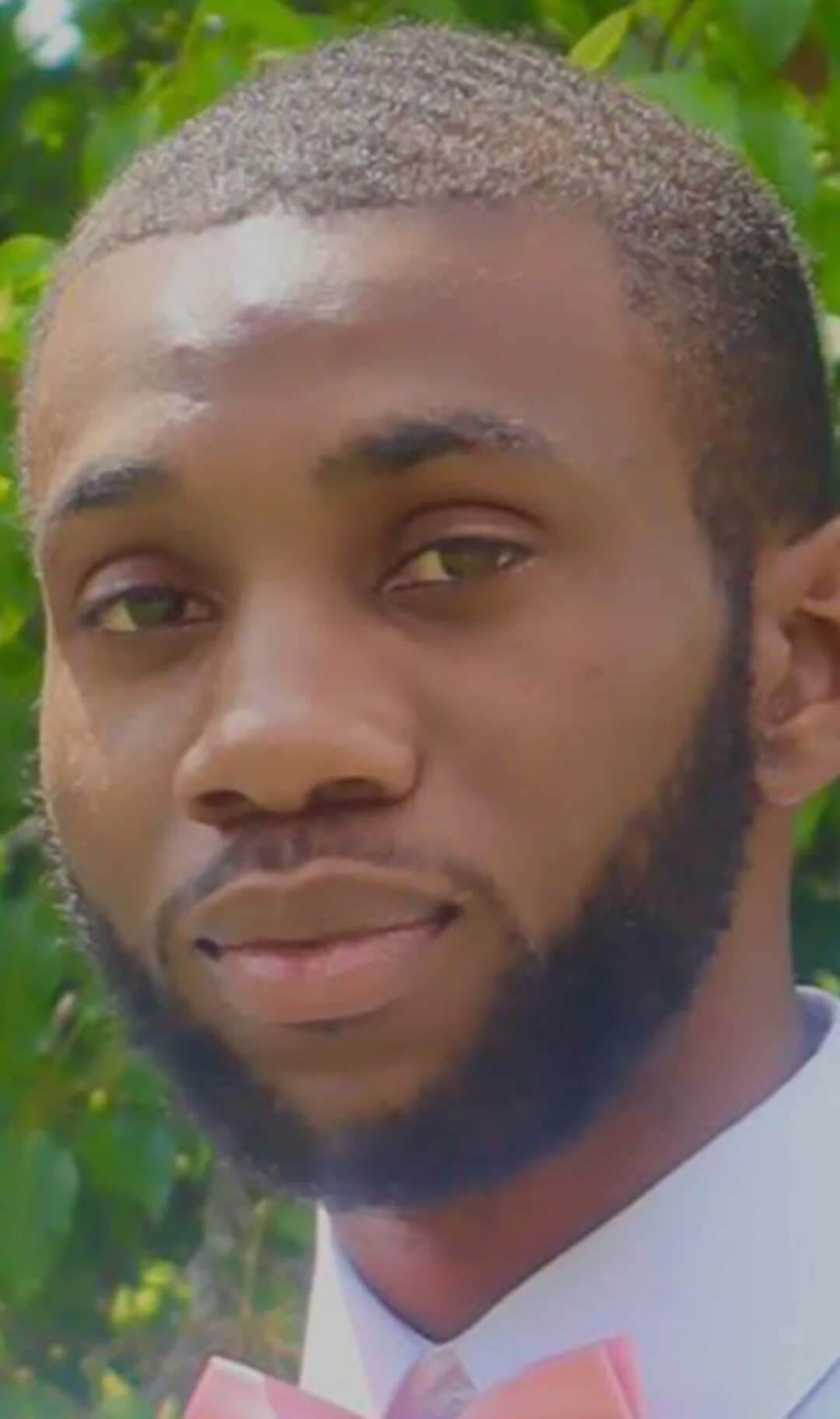
The body of Demartravion “Trey” Reed was discovered shortly after 7:30 a.m. in a tree beside pickleball courts and dorms on the Cleveland campus.
Demartravion “Trey” Reed Credit: Facebook
In the hours and days after, many students and staff have felt besieged as what seemed like every few minutes their cellphones buzzed with new rumors and speculation. The campus was rattled.
What students and faculty saw and heard did not resemble a Cleveland they know.
It was a hot late summer day when Reed’s family joined Delta State University President Dan Ennis and local law enforcement for a press conference Wednesday. Across campus, students still pulled up to empty parking spots closest to their classes, loitered outside the student union and brought food to friends in the library or to their dorms.
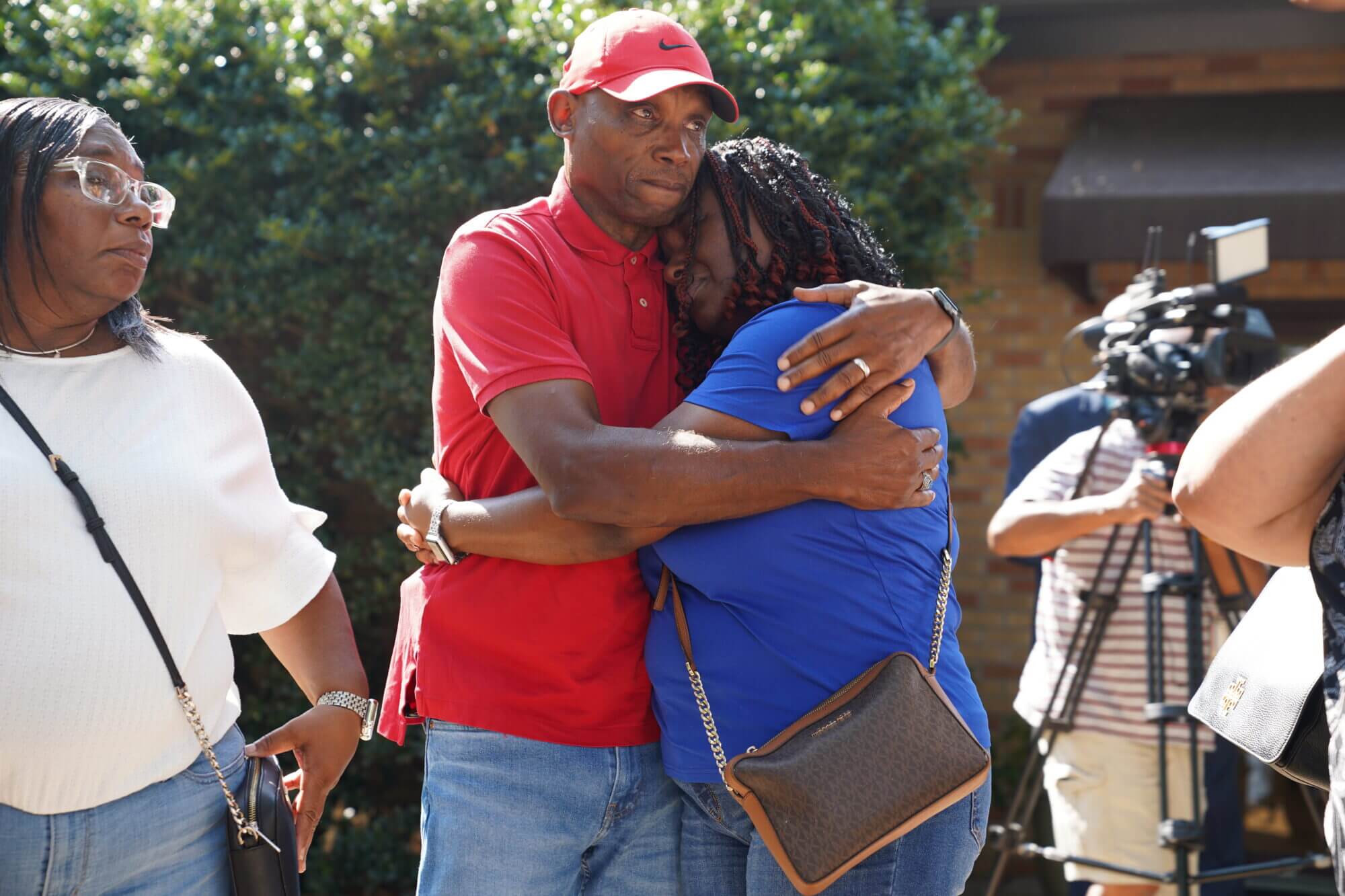
Eight students and three faculty members interviewed by Mississippi Today shared a mix of fear, hope, grief and numbness.
One longtime Delta State employee and father said what took place was hard to put out of mind. He saw the body hanging when he approached the pickleball courts Monday morning, with police patrol car lights flashing nearby.
He said it remains the worst thing he’s seen during 14 years of working on campus.
“I just hope it gets better before it gets worse,” said “D,” who works as a groundskeeper and gets to work around 4 a.m. He wished to go by a nickname for fear of retaliation at work.
“You’ve got to take care of yourself,” he said. “That’s all you can do.”
A Delta native, he said Cleveland and Delta State are generally safer than nearby cities. He looked out on the main drive where a Cleveland police car followed a Delta State police car in a ring around the main quad. They maintained a moving perimeter.
He said he doesn’t trust local law enforcement and is skeptical of their statements that there was no evidence of foul play. The state medical examiner on Thursday confirmed the cause of death hanging and the manner of it was suicide.
It’s been a hard three weeks for the young father, whose son died three weeks ago from gun violence in a nearby city.
“I hate it,” he said of Reed’s death. “He was almost 21 years old. You can’t act like it didn’t happen.”
A different kind of Delta
Delta State University student Leticia Stevenson.
Leticia Stevenson of Clarksdale is studying at Delta State to become a teacher. She said she was “a little freaked out” when she heard what happened.
“I was thinking to myself: Where is the public safety at?”
Her family 45 minutes away wanted her to withdraw from school, but she said she is determined to get her education and work in her dream field.
Her older relatives brought up the history of lynching.
She’s been leaning on her faith and has been keeping the Reed family in her thoughts. Despite the fear that she felt at first, she said she is looking forward to finishing her fall semester.
Cleveland is a lot more peaceful than where she grew up in Clarksdale, she said. The campus has been welcoming and locals are friendly, she’s found.
“It’s a small town,” she said.
For another student from Madison, the hanging similarly provoked fear. The student, who said she wanted to remain anonymous because she’s looking to get hired for a job on campus, found out about the death from an email blast when she was leaving a morning class.
She said she was nervous about attending school in the Delta given “its reputation” of crime. But has found Delta State to be a laid back, secure and warm environment. She has never felt it was dangerous because campus and city police are always patrolling.
One eight-year Delta State employee was in the cafeteria when he found out about Reed’s death. He saw a number of students and faculty clustered near each other following the developing story. He found himself conversing with several students that day.
“There’s just a lot of unknown. There’s still a lot we’re going to know,” said the employee, who did not want to give his name because of fear of retaliation in his administrative role. “I’m waiting for the process to work its way out.”
He said he feels comfortable on campus. He said Delta State and Cleveland are the kind of places where people know each other and tend to trust each other regardless of race and status. If your car is in a ditch, several cars will stop to ask if you need help, he said.
“It’s not a big campus,” he said.
Delta State’s enrollment in fall 2024 was 2,654, making it one of the smallest public universities along with Mississippi Valley State University and Mississippi University for Women. More than most other public universities in the state, Delta State draws primarily from nearby counties and cities.
Cleveland, with a population of roughly 10,000, has branded itself “A Different Kind of Delta” in tourism brochures as part of an effort to showcase the city’s charm. Unlike most other cities in the Mississippi Delta, Cleveland boasts a significant middle class and an engaged junior chamber of commerce. Its downtown rarely has an empty storefront, which is not the case in nearby cities and towns in the long-impoverished region.
‘Always looking around at my surroundings’
Delta State University student Paris Ricks said the news coverage of Trey Reed’s death has been hard to watch. Credit: Leonardo Bevilacua/Mississippi Today
DSU student Paris Ricks said the news coverage has been hard to watch. Reed’s death was a tragedy that she struggled to understand.
“It’s sad,” Ricks said. “I’m still concerned, but I do feel safe.”
She first heard about Reed’s death while scrolling through social media. It later came up in conversation with family and friends on campus. Relatives wanted her to visit home and check in regularly.
Delta State is a mostly “chill” campus, she said. Ricks likes seeing familiar faces across campus. Her rural, Delta high school was also small but lacking the excitement of Cleveland and Delta State. Here, she can go to a bowling alley, a Tex-Mex restaurant, a downtown arts center and several boutiques and restaurants. There’s plenty of live music, too.
Despite feeling protected in Cleveland, Ricks takes extra precautions.
“Walk home in groups, especially if it’s at night,” she said. “I’m always looking around at my surroundings.”
One student who was carrying flyers for a student election said he has had trouble sleeping. He didn’t want to share his name because of the election.
While he didn’t know Reed personally, the student had come across him at events on campus.
“As a young Black male, I’ve never encountered any racial hate incidents or racism,” he said.
He acknowledged the unfortunate significance of the hanging taking place in what he referred to as a PWI, or predominantly white institution.
At Delta State, nearly 49% of students were white, 42% were Black and 9% were classified as another race in 2024. Among non HBCUs in the state, it boasts the highest Black student population.
According to “JJ,” a current Delta State student who studies humanities and social science, a bigger conversation should be had about mental health.
“I just thought it was sad that he took his own life but I still want to wait till we get all that information,” said JJ, who didn’t want to give his last name because he will join the job market when he graduates in a couple of months.
A north Mississippi native, he said Delta State wasn’t a far college move. This week, his parents have called up each day to express their concerns. Like other parents of Delta State students, they have been expecting a visit as well as regular calls.
“It’s a chill campus and not much happens so when something like this happens, it’s kind of crazy in a way,” he said.
JJ said he doesn’t think what happened should discourage high schoolers from applying to and attending the university.
“You hear a lot of stuff about what they thought happened, and it’s not true,” he said.
A viral TikTok on Monday by a former Delta State University student who falsely claimed to be a relative of the deceased dominated timelines across the country and world. The young man spoke to a culture of racial killings and incidents on campus and in the city, which is neither backed up by crime statistics, local news reports or the experience of nearly all students interviewed on campus.
The video, which has since been taken down, alleged without evidence that Reed was the victim of a modern day lynching. Scrolling through social media applications, videos from across the country echo the same theory.
Mississippi Department of Public Safety Commissioner Sean Tindell. Credit: Eric Shelton/Mississippi Today
Mississippi Public Safety Commissioner Sean Tindell told Mississippi Today that the rush to judgment in this case was “a gross misrepresentation of where we are in Mississippi.”
It’s unfortunate that people and politicians began calling this a “lynching” before there was any investigation or determination regarding what happened, he said. “It’s frustrating.”
“Suicide is such a tragic situation. I don’t know anybody that hasn’t been impacted by it,” he said. “We need to do more to raise awareness and for those who need help to get help.”
JJ said he believes that it was a suicide and has been keeping the family in his thoughts. He hopes more students take advantage of the mental health resources and counselors on campus. They really helped out a good friend of his, who was struggling with the transition to college.
Delta State offers free consultations for professional counseling for students, faculty and staff. Counselors are available to help those struggling with anxiety, depression, grief, anger, trauma, adjustment to college life and addiction, among other mental health challenges. Free sessions were recently made available to students with the announcement of Reed’s death.
The campus is still tightknit and “relaxed,” JJ said. He’s glad he chose to attend Delta State when he was a high school senior rather than a bigger school where people feel more disconnected from classmates.
“It’s still home,” he said.
Jerry Mitchell contributed to this report.
If you or someone you love is having thoughts of suicide or mental distress, call or text 988, or chat online at 988lifeline.org. Communications are confidential, and a trained counselor can connect you to resources.
What was once one of the country’s largest casino markets is now down to five operating in the area with the closure of its largest casino. The Tunica market has been declining for years, largely from competition in neighboring states and other gambling options becoming available. Harrah’s Tunica, which was previously the largest casino in the market, closed in 2014.
A majority of Mississippi casinos are now located along the Coast and developers are looking to build more there. Gambling became legal along the Mississippi River and the Coast in 1990. It has since grown to an over $2-billion industry according to the American Gaming Association. Mississippi’s 28 casino properties employ around 37,000 people and provide tax revenue to the state and cities they are in.
Katherine Lin
Nationally, in-person gambling still brings in more revenue. However, the online gambling sector is rapidly growing. In Mississippi, only in-person or on-site sports betting in a casino is legal despite attempts at legalization of mobile sports betting and studies showing students are finding workarounds to place bets online.
Entergy CEO answers data center questions
We’ve heard from Mississippians recently about their concerns over three large data centers being built in Mississippi.
A major concern is potential electricity rate hikes from the power-hungry centers. Other areas across the country have seen rate increases attributed to data centers.
Last week Mississippi Today sat down for a Q&A with Haley Fisackerly, CEO of Entergy, about the impact of the data centers. He said Mississippi learned lessons from other states before it landed its first data centers, and that they will not cause electric bills to spike in Mississippi. He said rates were already likely to increase in coming years as power companies upgrade antiquated infrastructure, and having large new companies helping foot the bill will lower costs to consumers for new plants.
“First of all, rates were already going up,” Fisackerly said. “The investments were going up. Inflation is driving all of our materials up. Natural gas costs have been higher. Now those are dollar-for-dollar patch throughs that we don’t make profits off of. But that trajectory we were showing is being lowered. So there’s still going to be rates going up. Everybody’s rates are going up.
“… Rates are not going to be as high as they otherwise would’ve been.”
Soybeans are Mississippi’s top row crop but soybean farmers face growing uncertainty in the midst of continuing trade wars. China is the largest soybean buyer but has bought less and less from the U.S. after the U.S. implemented new tariffs in 2019. So far, China has not placed any orders here this year.
As local residents call for more environmental protections, AVAIO announced last week that it had begun work on its Brandon data center.
The Foundation for the Mid South announced over $500,000 in grants to support workforce development in Mississippi. According to the foundation, the investment is intended to help grow job opportunities and strengthen local economies. Mississippi Today was one of the grantees.
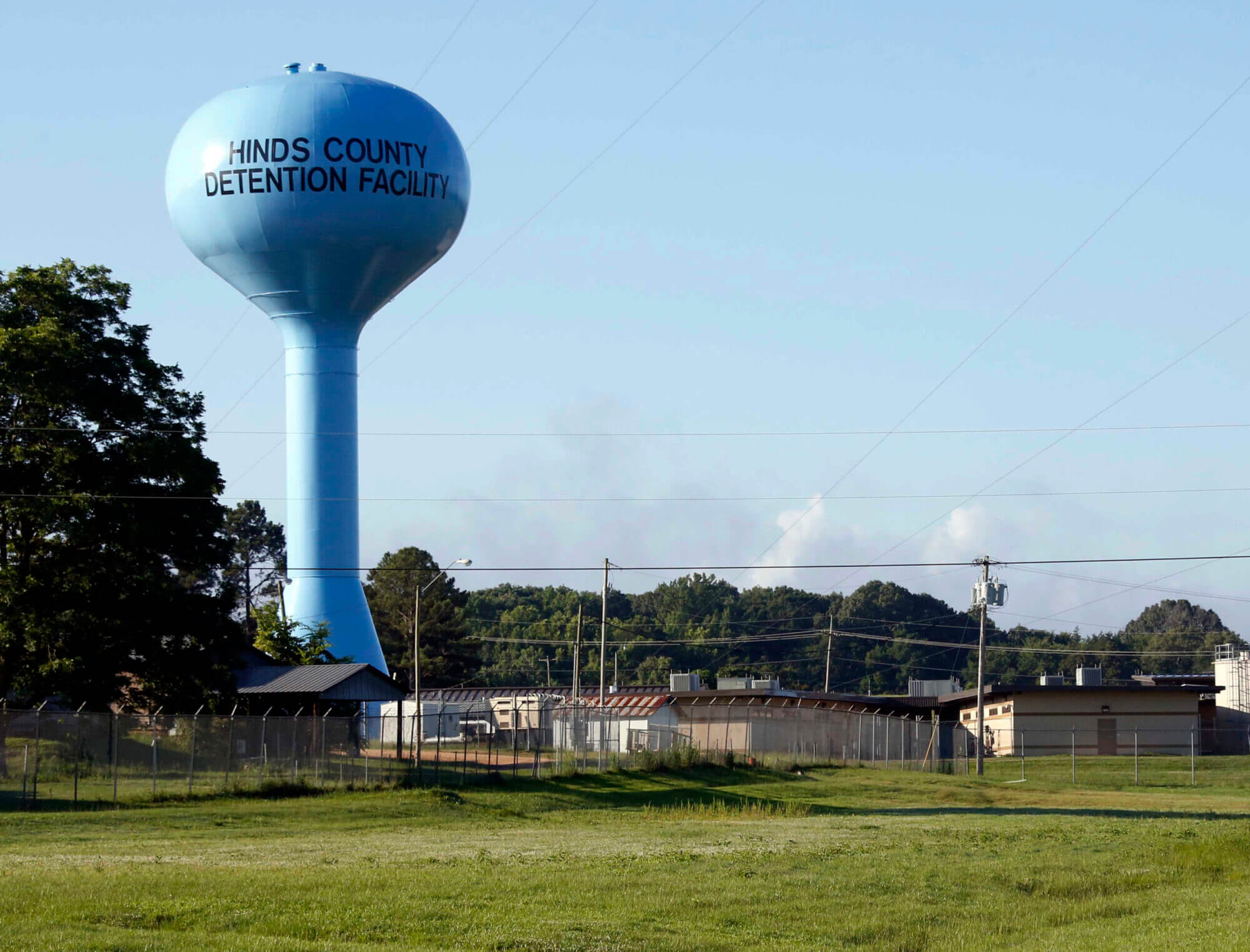
More than three years after a federal judge ordered receivership to manage the Hinds County Detention Center and the county responded with a drawn-out legal pushpack, the receiver will finally take control of the jail next month.
U.S. District Court Judge Carlton Reeves ordered a receiver in July 2022 over conditions that led to seven deaths the year before. He appointed Wendell France Jr., a public safety consultant who worked as an assistant jail warden in Maryland.
France will take “operational control” Oct. 1to fix ongoing unconstitutional conditions like understaffing and the state of facilities at the Raymond jail. He will remain in place no longer than necessary and transition operations and powers back to the county.
Reeves issued the order after the most recent court monitor report compiled from visits to the jail and review of documents. There have been significant changes made since 2022, but ongoing problems remain, the monitors found.
They gave county officials credit for permanently closing A Pod, a dangerous housing unit, and moving about 200 detainees to the privately operated Tallahatchie County Correctional Facility in the Delta. Meanwhile, the remaining housing areas have deteriorated, the report states.
Monitors identified staffing as the biggest problem and an impediment to proper supervision for detainees. Nearly 250 people are needed to operate the housing units, but less than a third of the positions are filled, the report notes.
As justification for his order, Reeves wrote “‘the severity and immediacy of the current and ongoing constitutional violations at [the Raymond Detention Center], the failure of less extreme measures to ensure inmate safety, the need for compliance with the court’s orders, and the lack of leadership at RDC necessary to ensure compliance.’”
Sheriff Tyree Jones said his office has been working closely with the receiver for the last several months and will continue to work with France when he takes operational control.
Hinds County Board of Supervisors President Robert Graham was not immediately available for comment Thursday.
France previously started work at the jail in November 2023 and was preparing to take operational control at the beginning of the next year, but he had to stop after the 5th U.S. Circuit Court of Appeals issued a stay in favor of the county.
The county has opposed receivership, arguing that it has made improvements and improved jail conditions.
Hinds County officials appealed the receivership, which was dismissed last year. While a panel of the 5th Circuit agreed with Reeves’ ability to appoint a receiver, it ordered the judge reevaluate the scope of the receivership, notably authority over budget and related financial matters.
Reeves has issued a new injunction and redefined the scope of the receivership in his June order.
In 2016, the U.S. Department of Justice sued the county alleging a pattern or practice of unconstitutional conditions in its detention facilities. The county and DOJ entered a consent decree with changes to address jail conditions.
There was back and forth over the years about whether the county was complying with the decree. In 2021, seven detainees died in the prison, which prompted Reeves to hold the county in contempt twice and hold hearings about whether to order receivership.
In court and filings, county attorneys have argued that leaders were working with the consent decree and spending millions of dollars to repair the jail. There were also plans to build a new facility, which is currently under construction in Jackson.
D.D. Lewis, the great football linebacker, will be remembered at Mississippi State as one of the university’s most beloved athletes who happened to play on some of the school’s most abysmal teams. He died on Sept. 16 after being hospitalized for 12 days in Plano, Texas. He was 79.
In 1967, playing for a State team that did not win a single SEC game and lost nine of 10 overall, Lewis was named the SEC’s most outstanding defensive player and a first-team All American. He really did not make every tackle. It just seemed that way.
Rick Cleveland
There was some football justice for Lewis. After playing for such dreadful teams at State, he was drafted by the Dallas Cowboys, the so-called America’s Team for whom he became a cornerstone of their famed “Doomsday Defense.” He played in five Super Bowls and earned two Super Bowl rings. Overshadowed by linebacking teammates such as Leroy Jordan and Chuck Howley, Lewis never made the Pro Bowl. Legendary Cowboys coach Tom Landry, upon his retirement, called Lewis “the most under-appreciated player” in Landry’s 29 years with the team.
But D.D. — a good and treasured friend to this writer — was so much more than that. He was a charming man who oozed charisma, despite admittedly battling inner demons for much of his life. He was the 14th of 14 children who grew up in poverty in the area of north Knoxville, Tennessee, where many families from Appalachia settled.
Born a month after the end of World War II, D.D. was named for two American heroes of that war: Dwight Eisenhower and Douglas MacArthur. His was not a happy childhood. He was abused, both physically and mentally, as a young boy.
“I stayed in trouble, both at school and at home,” he once told me. His mother once told him there was no use in doing his homework because he was never going to amount to anything. As a young teen, he was arrested more than once.
D.D.’s path out of all that was football.
“Seems as long as I can remember, I was always striving for attention,” he told me in 1988. “I was a problem student, always getting into trouble and running with the wrong crowd. For a long time, that was my way of getting attention.”
D.D. Lewis at Mississippi State.
Then he found football. Football was his way out. Hitting people — hitting them really hard — brought him acclaim. At Knoxville’s Fulton High, he gained the attention and status his mother had told him would never come. His name was in the newspaper headlines. Sportscasters raved about him on radio and TV. College coaches recruited him. They praised him. They wanted him. For the 14th of 14, that meant so much.
Paul Davis, the head coach who successfully recruited him to Mississippi State, would later call him “the best linebacker I have ever seen.”
But here’s the thing: The more praise D.D. received, the more he feared losing it, the more he feared failure. And that drove him to be better, to hit harder. He told me he had a recurring nightmare.
“I’d be playing linebacker and a big hole would open up in the line,” he said. “And here’d come the running back, and he’d just flatten me.”
That rarely if ever happened in real life. D.D. was a tackling machine. When he retired from the Cowboys at age 36, he had reached the playoffs in 12 of his 13 seasons. He had appeared in 27 playoff games, an NFL record at the time. Indeed, even today, only Jerry Rice and Tom Brady have played in more playoff games. Peyton Manning, too, played in 27.
D.D. was at his best when it mattered most. In a 1975 NFC Championship victory over the Los Angeles Rams, he intercepted two passes. He had four interceptions total in playoff games, the most ever for a linebacker.
Sports writers loved him because he was so honest, such a good quote. Indeed, D.D. was the guy who said, “Texas Stadium has a hole in the roof, so God can watch his favorite team play.”
D.D. could tell a story, too. He once told one about Dandy Don Meredith, the Cowboys quarterbacking star who later sparred with Howard Cosell in the ABC Monday night TV booth.
“We were on a flight back from New York after beating up on the Giants,” D.D. said. “Drinks were flowing. Everybody was having a good time. And then we hear this loud explosion outside the plane, and the plane starts bucking and then the lights go on and off. The stewardesses were crying. I look around and some of our players are crying and some are praying. And then I looked across the aisle at Dandy Don, and he’s smiling. He took a big swig of his drink and then a big drag off his cigarette and said, ‘Well, boys, it’s been a good ‘un.’”
Of course, the jet eventually landed with one good engine, and D.D. enjoyed a pro career in which he never experienced a losing season. He was dependable and he was durable. He missed only two starts because of an injury. He played through aches and pains that would have sidelined most. He retired in 1981, mostly because there wasn’t a joint in his body that did not hurt. After 26 years of football, beginning with peewee ball at age 10, the whistles quit blowing and the “high” of competition, of victory and championships and all the glory that came with it disappeared. His identity had been football, and football was gone.
D.D. was lost. Years later, he would tell me he replaced the “highs” of football with alcohol and pain-numbing drugs.
“It wrecked my life, it wrecked my marriage, it almost wrecked my relationship with my two daughters,” he said.
It didn’t help that the business he entered after football — the booming Texas oil business — went bust. He was broke. He even sold some of his Cowboys memorabilia, including his last helmet, to pay some bills.
“I am a lucky man,” he told me before his 2001 induction into the College Football Hall of Fame. “I got sober. I found the church, and there I found the Lord.”
He also reunited with an old college sweetheart, whom he married and settled down with in more ways than one.
D.D. Lewis in April 2013. (Photo by Rick Cleveland)
“People ask me if I am sorry that I missed all those years with D.D. when he was a big football star with the Cowboys and all that,” Diane Lewis, his second wife, said. “No, I’m not. The D.D. I married was a loving, sober, God-fearing, gentle man. He wasn’t always that.”
D.D. became a fertilizer salesman who traveled the roads of central and east Texas, selling something his customers really needed.
“I’m a shit salesman now,” D.D. once told me. “If you’re going to be a shit salesman, be a good one. I try to be.”
He told a story about one of his customers, a farmer who did not recognize him from his football days. They became good friends. Later on, the farmer was astounded to learn that his friend had once been a big football star for America’s Team. D.D. had never told him. D.D. never tooted his own horn.
“The man liked me because I was D.D. the fertilizer salesman, not because I had played in Super Bowls with the Dallas Cowboys,” he said. “You can’t imagine how much that meant to me.”
“Perfection is not the standard” when it comes to desegregation, the attorney for Rankin County School District told a federal judge this week as he sought to end a four-times-amended desegregation order the system has been under for 55 years.
The district is “practically unrecognizable,” John Hooks said Tuesday in U.S. District Court in Jackson. There aren’t “Black” and “white” schools in the district with mostly Black and white staff and students.
But plaintiffs who sued the district in 1967 for maintaining a segregated school system weren’t convinced. And their attorneys through the Legal Defense Fund had experts in tow along with student and faculty data to provide evidence for what they long experienced: vestiges of a dual school system that treated Black students and staff differently.
“They want it gone so they can do what they want to do here,” one of the plaintiffs, Janie McLaurin-Wheaton, said of the district’s most recent effort to free itself of the desegregation order.
A hearing was called to determine whether Rankin County School District should be released from its desegregation order. U.S. District Judge Kristi Johnson can call for the case to go to trial or rule on the issue.
Three years before most Mississippi schools integrated, Black parents and students sued the school district for maintaining a segregated school system for Black and white students.
The federal court set down a plan for the district to integrate in 1970, 1973, 1978, and 2012. In 2019, the district was able to prove to the court that facilities and busing were equitable for Black and white students, leaving student and staff assignments, extracurricular activities and student discipline still out of compliance with the court order.
“Every nook and cranny of the district’s operations have been inspected by the DOJ and the (Legal Defense Fund),” Hooks said of the Department of Justice and the legal aid group representing the interest of Black parents.
First outlined in the 1970 order and further clarified in the 2012 order, the district had to maintain a balance of Black and white students in each school that was within 20 percentage points in either direction of their percentage districtwide.
In the last five years, the white student population in the district has decreased from about 68% to 63% while the Black student population has increased from 25% to 29%.
At Flowood Elementary in the last 10 years, the Black student population has increased from 23% to 34%, the white population has decreased from 66% to 42% and the population of students of other races has increased from 11% to 24%.
“After six decades, the Rankin County School District has arrived,” Hooks said. The district was looking forward to integrating “not just in fact but also in law.”
He also acknowledged the courage of the plaintiffs, who he said “are in large part why we’re here today.”
More than an old piece of paper
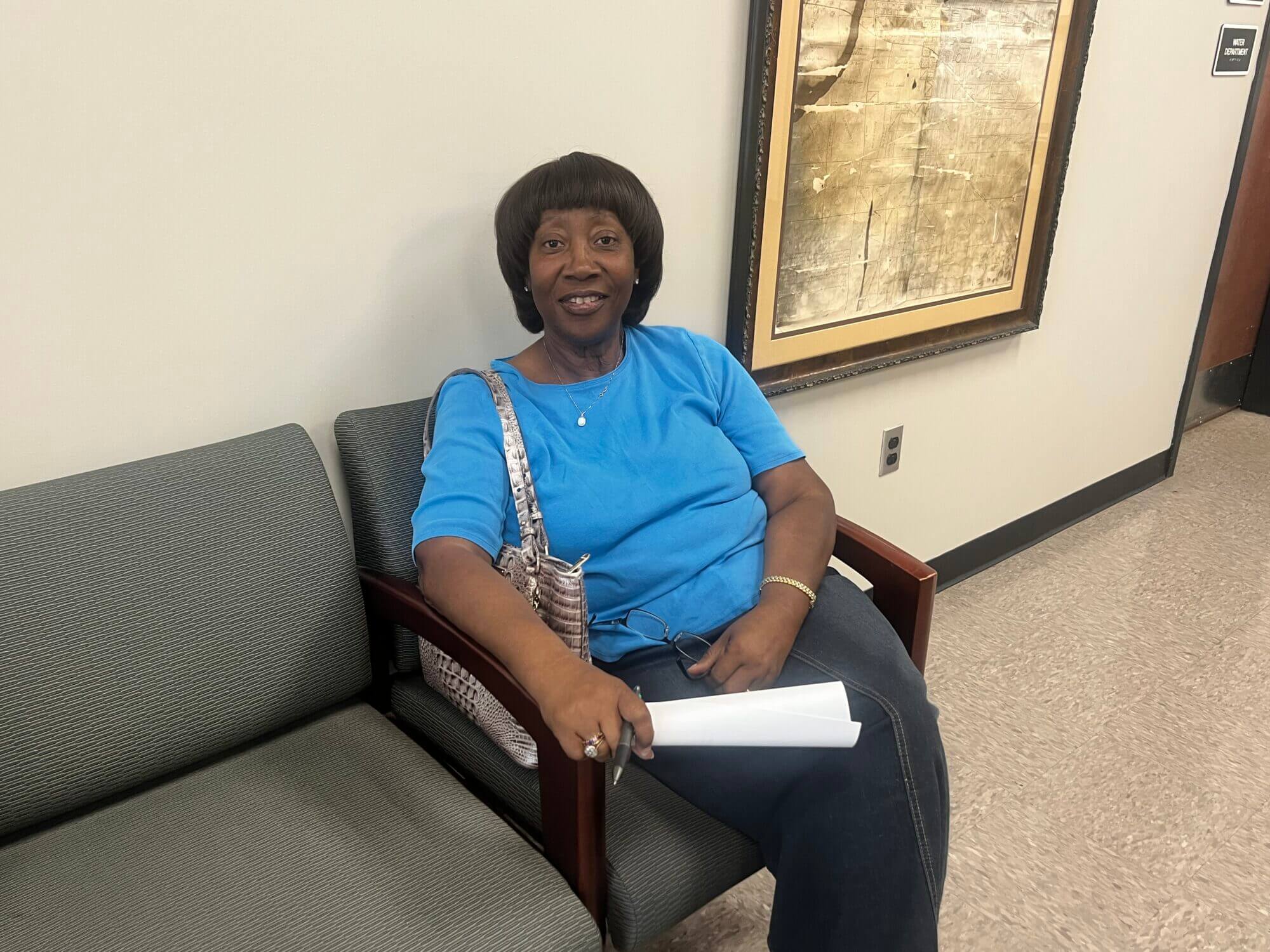
Janie McLaurin-Wheaton, who was part of the first integrating class of Brandon High School, poses for a photograph in the Brandon City Hall lobby, July 7, 2025. Credit: Leonardo Bevilacqua/Mississippi Today
McLaurin-Wheaton remembers when she joined the lawsuit against the school district as a Brandon student 58 years ago. She also recalls a teacher calling her “negress” and white female students shoving her in the restrooms.
She and her mother joined the suit because she wanted the quality public education then reserved only for white students in the county. As a result, she was able to secure positions that were out of reach previously for Black applicants at the Rankin County Tax Assessor’s Office.
“It’s crazy that it’s still going on,” she said outside the courtroom. “It’s something my children had to go through, and now my grandchildren.”
In court, McLaurin-Wheaton was joined by Angela English, head of the Rankin County NAACP.
“It’s been 55 years since the 1970 court order, and here we are in court about the same things,” English said. “It is important that we hold the school district accountable. There are still multiple school districts that are segregated and Black (applicants) that are being overlooked in the hiring process.”
Rankin County NAACP chapter president Angela English Credit: Jerry Mitchell/Mississippi Today
A desegregation order is more than just a request for annual reporting. Parents and community members can invoke it to seek to put a stop to discriminatory practices in their district.
It put a stop to the disproportionate jailing of Black students at Meridian Public School District for throwing spit balls and for other minor infractions while white students with the same disciplinary background got off with lighter sentences. It forced an Arizona district to continue offering a Mexican American Studies course to engage a large Latino student population after the district pulled it.
The Department of Justice under President Donald Trump has signaled willingness to release more school districts from desegregation orders. More school districts were released from desegregation orders during Trump’s first administration than under the past four presidents.
With Copiah County School District’s release from its desegregation order in August, Mississippi now has 29 districts remaining under such orders. In the last 10 years, Justice Department officials have visited Rankin County schools at least twice to check for progress.
What they knew
In the cross examination of Assistant Superintendent Amanda Stocks, the plaintiffs’ attorney pointed out the district checked the references for a white applicant for a job but not the Black applicant, who was not hired for the position despite receiving the same score after her interview as her white counterpart.
An investigative report undertaken by Erica Frankenberg, a researcher on racial desegregation, found the district had missed between 20 and 30 opportunities to diversify its staff, passing on qualified Black applicants in favor of white ones.
The district currently has one Black teacher in the gifted and talented program.
McLaurin-Wheaton said she encouraged a Black person to apply for a music teacher position at the schools in Pigsah but was told after a few weeks with no response by the district that the position had been already filled. English said the district had not started recruiting for teachers on the campus of Jackson State University until last year.
“Some leadership positions are not open to Black staff,” said the plaintiffs’ attorney.
In some cases, Stocks argued, the district hired Black applicants for different roles than what they had applied for. Therefore, she said, the data about teacher hiring was not entirely accurate. She also noted the district’s recent efforts to recruit from Historically Black Colleges and Universities through targeted radio ads.
The plaintiffs also questioned her about why 24 of the 25 approved inner-district transfers to Pisgah High School were white, resulting in the school falling out of compliance by having an overrepresentation of white students the following year.
Stocks attributed the change in part to state law that allows district employees to transfer their kids to the community schools where they work.
Florence Elementary and Middle, Flowood Elementary, and Pisgah Elementary and High schools fell out of compliance this year by 1-3 percentage points. In past years, they have similarly fallen out of compliance with white students overrepresented, except at Flowood Elementary, where they were underrepresented.
‘In Good Faith’
The plaintiffs’ attorneys also raised the issue of white students overrepresented on the cheer team as well as part of other student extracurricular activities and student programming.
Florence High and McLaurin High schools each has one Black cheerleader, while Puckett High School has none. Though Black students made up nearly 29% of the district student body in the 2022-2023 academic year, the Black student population of the gifted and talented program was about 12%, the plaintiffs’ attorney said.
The district offered statistics meant to demonstrate the district’s progress toward providing a quality education to minority students.
Brandon Elementary was designated a National Blue Ribbon School for closing the achievement gap for Black students in 2021, Hooks, the district’s attorney, told the court. Black students post higher graduation grades and lower drop-out rates in the district.
Stocks also spoke of Teacher Leadership Training, an initiative in which faculty are “educated on matters of the heart,” on different ethnicities, “celebrating diversity,” and being “sensitive to other cultures.”
“I’m convinced the district will continue to do the work,” Stocks said. “Everything we do is done because we believe it’s right for our students and for our staff. Things have been brought to our attention and we’ve acted up on it in good faith.”
“Families feel welcome by teachers that look like them,” she added to qualify her support for encouraging diversity among the staff.