We are still in the first week of September, and Mississippi’s largest football-playing universities all face really meaningful games Saturday.
Let’s take a look.
Ole Miss at Kentucky, 2:30 p.m.
The 2024 Ole Miss season likely always will be remembered for what might have been. And what might have been was this: The Rebels, led by first-round NFL draft pick Jaxson Dart, should have played in the first 12-team College Football Playoffs. They were talented enough with a school record eight players taken in the NFL’s seven-round draft. That was more than the likes of Notre Dame, Clemson, Penn State, SMU, Boise State and Indiana — all teams that made the playoffs. That was also more than traditional powerhouses such as Alabama, LSU, Michigan, Florida, Southern Cal and Miami.
Rick Cleveland
Of course, Ole Miss did not make the playoffs, and the 2025 Rebels on Saturday will face probably the primary reason the 2024 Rebels didn’t make it: Kentucky. In retrospect, that home defeat to Kentucky, which was a 17-point underdog, ranks as one of the biggest upsets of the 2024 college football season. After somehow defeating No. 6 Ole Miss 20-17 on Sept. 28, Kentucky lost its last six games against FBS teams. Most weren’t close.
Defeating Kentucky on Saturday — and the Rebels are 9.5-point favorites to do so — won’t exorcise last year’s demon; however, it would be a first step toward making the playoffs this season. It also will provide a first SEC start, on the road, for Ole Miss sophomore quarterback Austin Simmons, who appears to these eyes potentially every bit as good as Dart. Yes, that is sky-high praise, but Simmons appears to have it all: the arm, the smarts, the speed. He appears to throw the football with the ease of throwing a baseball, and you can’t say that about a lot of quarterbacks. Yes, he made a couple of poor decisions in the opener against Georgia State, but he is 19 years young. Saturday should provide a big step in his maturing process.
Kentucky? Kentucky is a question mark, the case with so many college football teams in this transfer portal era. The Wildcats overhauled their squad with 24 transfers, including quarterback Zach Calzada and running back Dante Dowdell, the former Picayune superstar, who is making his third stop in three seasons of college football. Dowdell, who signed with Oregon and transferred to Nebraska as a sophomore, led Kentucky to its opening victory over Toledo with 129 yards and a touchdown on just 14 carries. Dowdell, who packs 227 pounds on his 6-foot-2 frame, will challenge the Rebels’ retooled defensive front.
Simply put, Ole Miss needs to take care of business. Stopping Dowdell and forcing Calzada to throw is the first order of that business. Calzada, making his fourth collegiate stop in his seventh year of college football, completed 10 of 23 passes for just 85 yards against Toledo.
Jackson State at Southern Miss, 4 p.m.
Southern Miss is a 7.5-point favorite, but don’t think for a second T.C. Taylor’s JSU Tigers don’t expect to win. And why wouldn’t they? The Tigers have now won 11 straight games. Meanwhile, Southern Miss has lost 11 straight. Jackson State has won those 11 straight by an average margin of 23 points. Southern Miss has lost those 11 straight by 25 points a game. At first glance, you ask yourself: How can USM be favored?
Yes, there is a difference in competition. FBS team such as Southern Miss can offer as many as 85 scholarships. JSU, which plays at the FCS level, can offer 63 scholarships, each of which can be split among multiple players. Theoretically, USM should have more depth. But then, Taylor says the Tigers are a solid two-deep at every position, and I haven’t heard Charles Huff, USM’s new head coach, say the same.
Huff has had nothing but praise this week for JSU, which defeated Huff’s alma mater, Hampton, 28-14 last Saturday. “Winning cures a lot and they have won,” Huff said. “Their players expect to win, their fan base expects to win … It’s gonna be a challenge. We need to improve quickly.”
To these eyes, Southern Miss appeared an improved team, although it was overmatched at the line of scrimmage last Saturday against Mississippi State. The biggest difference is at the quarterback position, where multi-talented Braylon Braxton should give the Golden Eagles a chance to win any game remaining on the schedule. Of course, until they prove differently, the Eagles also could lose any game remaining on the schedule, including this one. Expect a near-sellout crowd, a terrific atmosphere and a highly competitive contest.
Arizona State at Mississippi State, 6:30 p.m.
Oddsmakers make Arizona State a 6.5-point favorite in what could be a statement game for Mississippi State. The statement? “We’re back!”
We will see. But I saw enough last Saturday to believe State is much improved over last season, especially at the line of scrimmage. State is huge — and can move — on both sides of the ball. Blake Shapen, a top-shelf quarterback, is healthy after sitting out the last eight games of 2024. Do not forget that the 24-year-old Shapen four years ago quarterbacked Baylor to a Big 12 Conference championship and was the MVP of a 21-16 championship victory over Oklahoma State. Shapen completed a record 17 straight passes in that one.
Clearly, Shapen can play, and he played well early last season in a 30-23 road loss to Arizona State. Led by irrepressible running back Cam Skattebo, who rushed for 262 yards and broke seemingly that many tackles, the Sun Devils staved off a fourth quarter State rally. Arizona State went on to an 11-victory season and the NCAA playoffs. You know what happened to State.
But a Mississippi State victory Saturday night would not shock this writer for any number of reasons, including that Skattebo, who pretty much single-handedly whipped State last year, now plays for the New York Giants. Other reasons:
Arizona State was far from impressive in its 38-19 opening week victory over Northern Arizona.
Arizona State is 0-2 all-time playing on the road against SEC teams and 1-6 overall against the SEC.
State has covered the spread in its last four games against ranked teams. The Bulldogs are due to win one of those.
It’s hard to overstate how important this game is for State, mostly because of how difficult the schedule becomes down the road. Beginning Sept. 27, the Bulldogs finish the season, in order, against Tennessee, Texas A&M, Florida, Texas, Arkansas, Georgia, Missouri and Ole Miss. Good luck with that.
Reaching six victories and a bowl game would be a huge step forward for Jeff Lebby and his Bulldogs. It’ll be hard to find six without one of those coming this Saturday.
Cynthia Walker said she was 15 years old when she participated in her first ballot box review — reconciling the number of ballots with poll book entries and taking a count of everything, down to the number of rubber bands in each box.
She claimed her findings, recorded in handwritten notes on a yellow legal pad, led to a landmark election challenge for a Black supervisor 50 miles north of Jackson. The 67-year-old Yazoo City resident said she’s taken part in dozens of these examinations since then.
So when Walker saw former Hinds County Supervisor David Archie in the news in the summer of 2023, incredulous that he’d lost reelection in a smackdown by a political newcomer, she thought to herself, “I know what happened to him,” Walker told Mississippi Today. “I’m going to reach out to him.”
Two days later, Walker appeared beside Archie at a press conference outside the sheriff’s office to decry an alleged “high-tech” conspiracy involving a former election commissioner and voting machine company. She stood 5-foot, wearing a short tapered haircut, jewel dotted shades and a pastel yellow pantsuit.
“She’s a little bitty person, but she has the power of a giant coming out of her,” said Marilyn Hetrick, a 75-year-old Clinton resident, retired assistant personnel director for the city of Jackson, and one of Archie’s staunchest supporters.
Three years ago, Walker and Hetrick didn’t know each other — or the ousted supervisor, for that matter — from Adam.
It was a curious time to become an ally of Archie, who’d become widely defined by his antics, such as a profanity-filled fit during a 2021 supervisor’s meeting. As officers removed him, he tore down the plexiglass partitions on the dias. This behavior, according to his supporters, has all been in the name of drawing attention to corruption in the county.
But the two retired women have teamed up in the last two years to fight what they call a calculated election heist. The alleged proof?
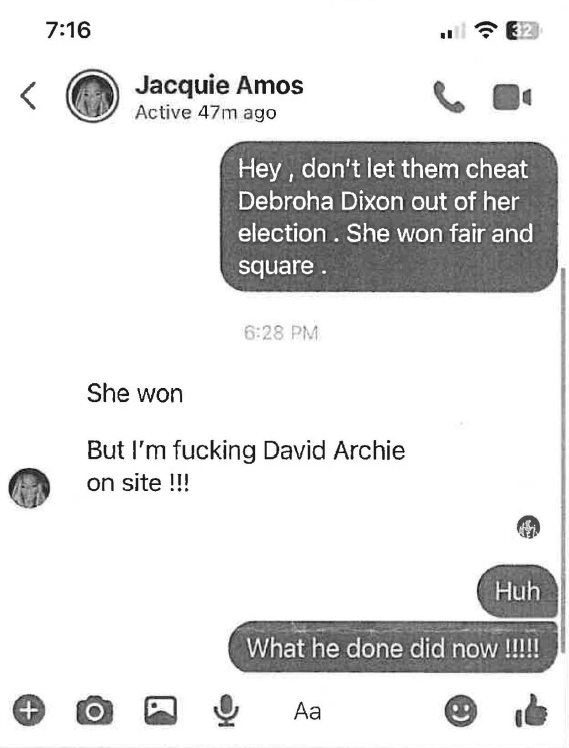
Missing voter signature books. Improperly sealed ballot boxes. Commingled election machine hard drives. A post-election Facebook message from the chair of the Democratic Executive Committee reading, “I’m f—ing David Archie on site !!!”
This spawned a lawsuit, crafted from Hetrick’s suburban kitchen, exhibits strewn across her banquette, with Walker on speed dial from up north near the edge of the Mississippi Delta.
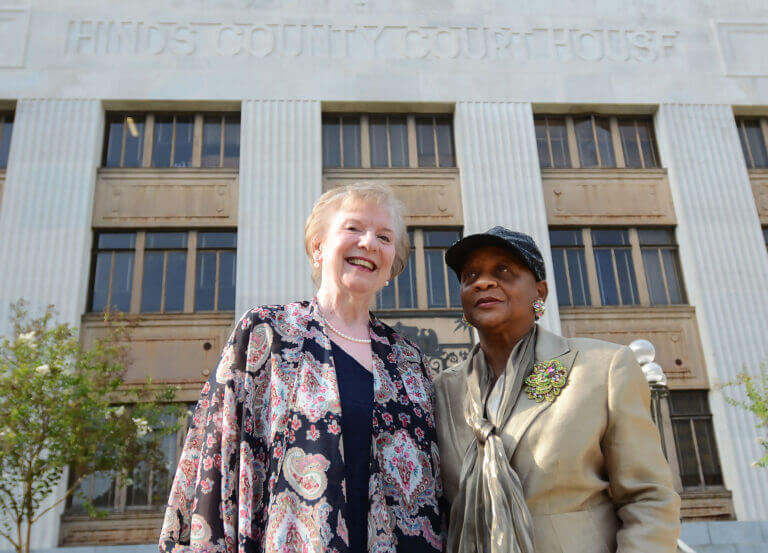
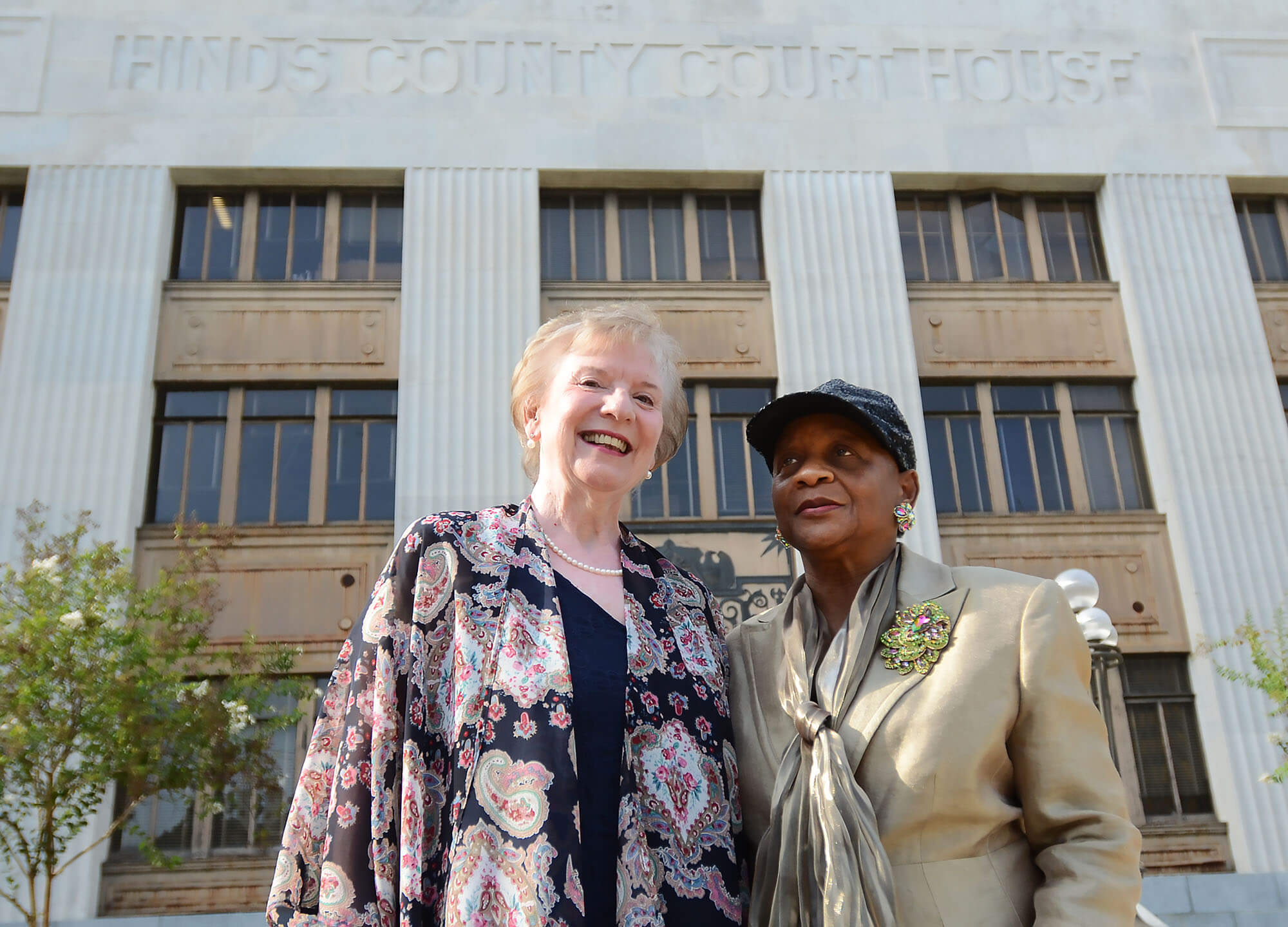
Cynthia Johnson Walker (left) and Marilyn Hetrick, supporters of David Archie, outside the Hinds County Courthouse shortly before the beginning of an evidentiary hearing regarding whether or not Archie filed an election challenge before the deadline, Wednesday, Aug. 27, 2025, in Jackson. Credit: Vickie D. King/Mississippi Today
“It was a radical departure from election laws. It was gross misconduct. It was illegal and immoral and disrespectful. It was voter disenfranchisement,” Walker said on the steps of the courthouse last week, Hetrick behind her.
“You just cannot ‘have it your way,’ like you’re at Burger King, when you’re processing election materials,” Walker added.
Even the harshest critics of Hinds County elections, such as former longtime Hinds County Republican Party chairman Pete Perry, say the challenge is baloney. Procedural irregularities alone do not demonstrate fraud, and they’re not likely to nullify a wide-margin outcome, experts said.
“I don’t think they ran a good election. I don’t believe they ran it legally,” Perry said. “I also don’t believe they did a damn thing that affected 1,800 votes. It’s not possible.”
On the day of the deadline for Archie’s petition for judicial review of the election in September of 2023, Hetrick said her fingers were practically bleeding from all the typing. Then at about 10 a.m., Archie received a call from Supervisor Robert Graham: The county had just experienced a cyber attack. The circuit clerk’s office cleared out for the day.
“My heart just dropped,” Hetrick said.
Archie went down to the courthouse anyway, manilla folder in hand, and recorded videos in front of the locked glass doors to the unlit, empty office, according to his recent Facebook post.
Still, Hinds County Circuit Clerk Zack Wallace — who was initially named as a defendant in the lawsuit — testified that his office was open that day, and Archie took no additional steps to file, meaning he’d missed his deadline. The judge agreed.
Thus ensued a two-year battle over whether the office was open or closed, culminating in over a dozen subpoenas and a packed courtroom hearing on Aug. 27, featuring a who’s who of county powerbrokers.
The special judge appointed to hear the case, retired Circuit Court Judge Barry Ford, reversed his original ruling that dismissed the case, allowing Archie’s lawsuit to proceed.
“Today’s ruling was a win for our case to restore election integrity,” Hetrick wrote on Facebook later that day. “Those who intentionally disregarded election law and protocol must be held accountable as a deterrent to others who might try this in the future.”
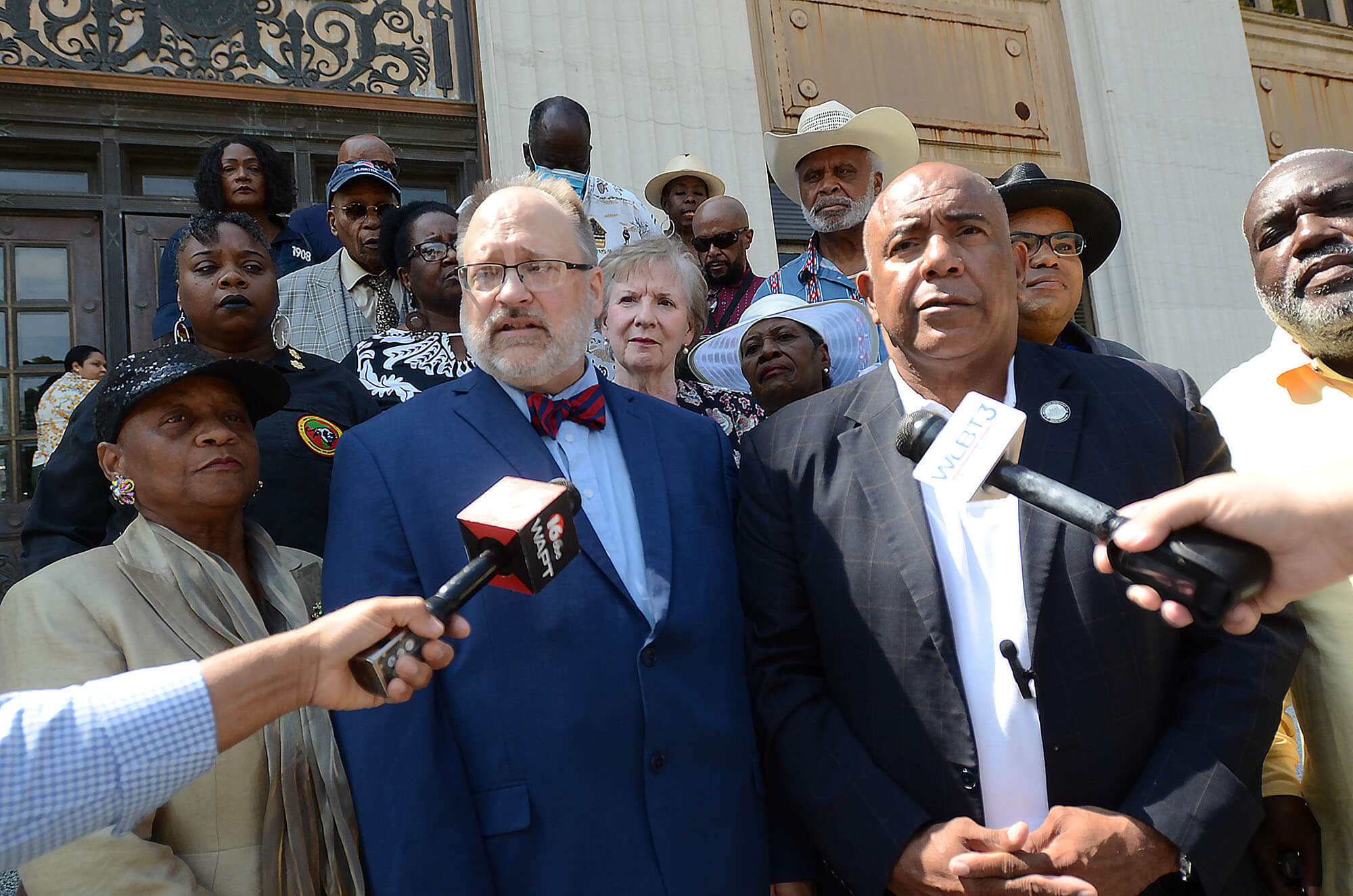
David Archie (right) with his attorney Matthew Wilson (second left) and supporters speak with media after an evidentiary hearing at the Hinds County Courthouse, Wednesday, Aug. 27, 2025, in Jackson. Credit: Vickie D. King/Mississippi Today
One morning in the fall of 2022, a recently widowed Hetrick struck up a conversation with a tall, broad fellow with a slick head while walking on the track at the Baptist Healthplex near her home in Clinton.
He was friendly, calm and knowledgeable, she said. Hetrick asked the man what he did for a living. “I work for government,” he said. What branch? “County.” What position? “I’m a supervisor.”
Which supervisor? “I’m David Archie,” he said.
Hetrick was floored. This wasn’t the loud-mouthed politician she was used to reading about in the news, whose opponent she actively supported years earlier.
Hetrick asked him about his boardroom blow-ups, which he described as a statement, a method of getting people to care about their local government’s dysfunction. After Hetrick vetted her new friend with her former coworkers from City Hall, Archie took her on rides-along to show her the progress he’s made in the county — the things he says the media never broadcasts.
“I started to understand where he was coming from,” Hetrick said.
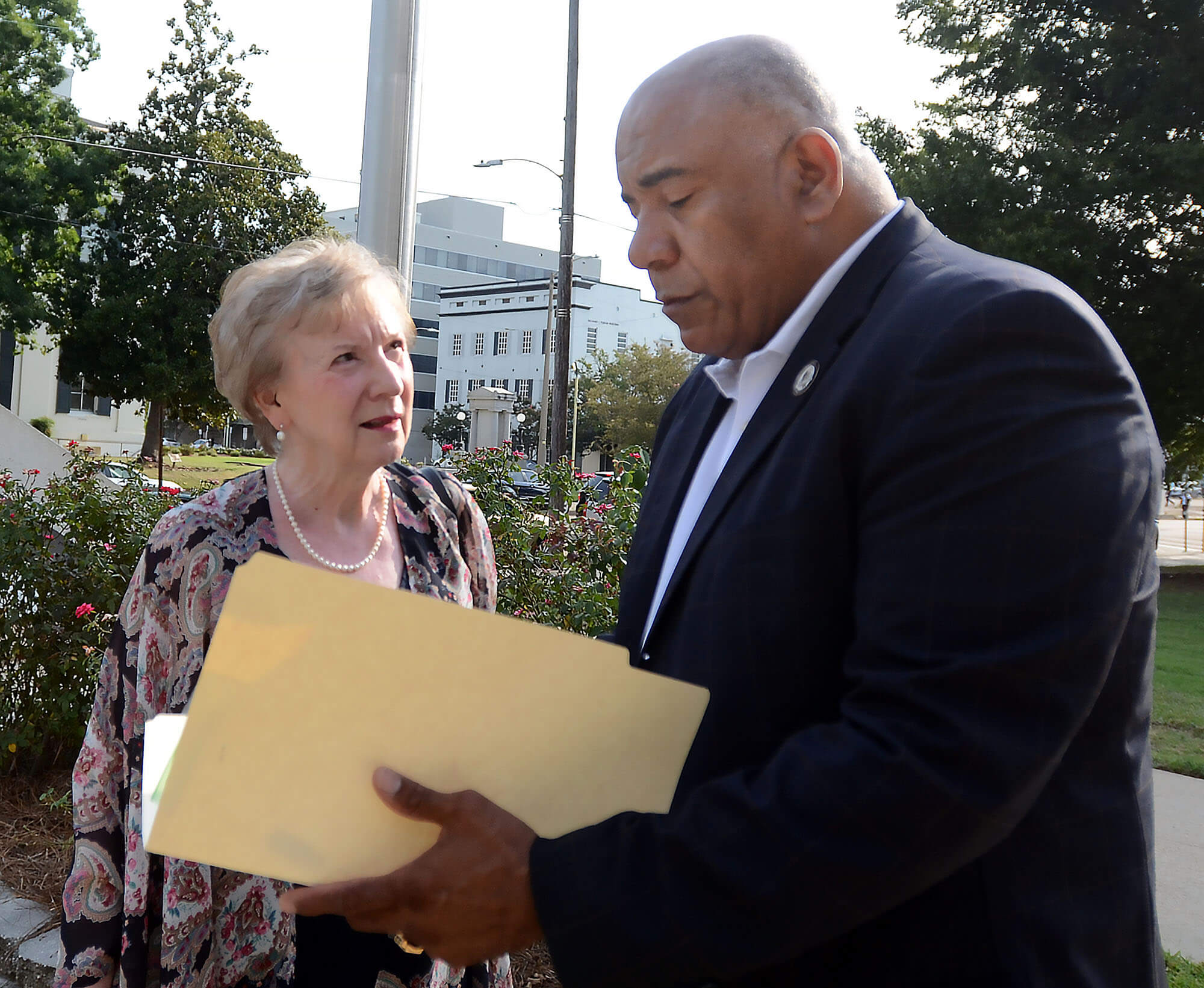
Marilyn Hetrick (left) and David Archie chat outside the Hinds County Courthouse shortly before the beginning of an evidentiary hearing regarding whether or not Archie filed an election challenge before the deadline, Wednesday, Aug. 27, 2025, in Jackson. Credit: Vickie D. King/Mississippi Today
Hetrick lives just outside of Archie’s district, in an area that was represented by Archie’s main foe on the board, former Supervisor Credell Calhoun. The two men hadn’t always been at odds.
Calhoun, a businessman and former auditor in the governor’s office, told Mississippi Today he supported Archie’s campaign for supervisor in 2019. When Archie won narrowly and it looked like there may be a challenge to that election, Calhoun said the board of supervisors directed all of its state road funding to Archie’s district, District 2, to ingratiate voters to Archie in the event there was a rematch.
When that didn’t happen, Calhoun said the board took half of the money back to divvy up across the county, angering Archie. “We were trying to help him so much and then he turned,” Calhoun said.
Archie refutes this, saying the board directed the funding to his district because it had been neglected for several years. Archie has repeatedly accused Calhoun of misspending public money and impeding county progress, which Calhoun denies. He calls Calhoun a “40-year con man,” and Hetrick parrots.
So when the county’s Democratic Party primary rolled around the next year, Hetrick spent most of her energy supporting the candidate Archie’s camp preferred against Calhoun, former state representative Deborah Dixon. Dixon and Calhoun had similar contention, and she ran against the incumbent after she said he backed the candidate who knocked her out of the Legislature in 2019.
Hetrick served as a poll watcher — her first time in the role — for Dixon. At the election watch party that evening, Hetrick celebrated her candidate’s victory but was stunned by her friend Archie’s loss.
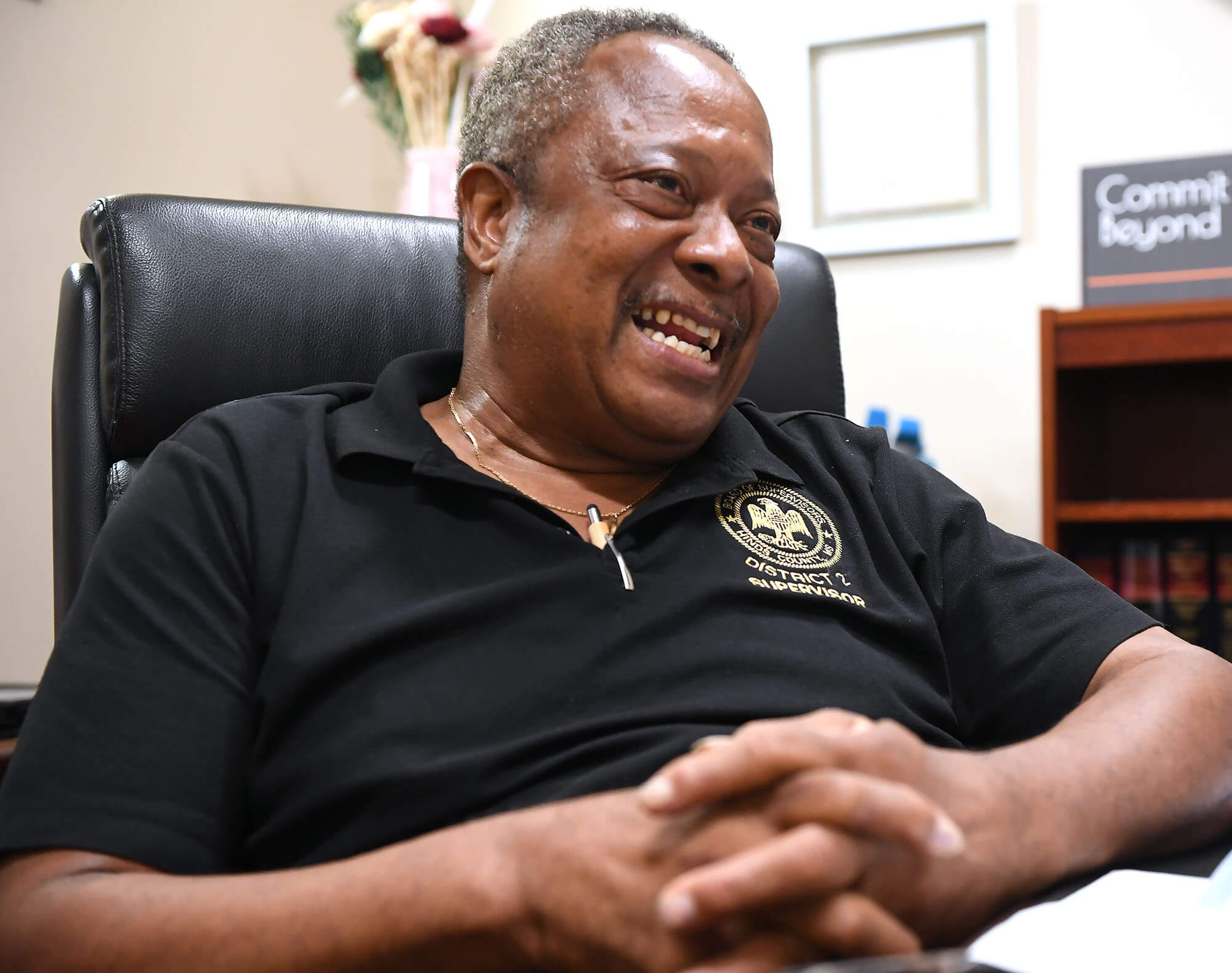
District 2 Hinds County Supervisor Tony Smith at his office in the Chancery Courthouse, Tuesday, Aug. 26, 2025, in Jackson. Credit: Vickie D. King/Mississippi Today
Archie had lost convincingly to Anthony Smith, the owner of a computer maintenance company and a real estate firm, by nearly 2-to-1. Smith, regarded by some as “somebody nobody knew,” took home more votes in 25 out of 26 precincts in the district. The total count was 2,810 for Archie and 4,687 for Smith.
Plenty of residents were unsurprised by Archie’s ouster after all of the bickering. After all, voters shook up more than half of the board – including voting out Calhoun and a third incumbent. But Archie and his team were taken aback.
“Something just doesn’t feel right and we’re trying to figure it out,” Archie told Hetrick when she called him later that night.
Cue Walker.
The retired paralegal, who’s since opened her home to shelter homeless families, had run as an independent for mayor of Yazoo City in 2022 and lost, receiving just 5% of the vote.
Walker publicly alleges her election, and others in Yazoo, were rigged, the work of a Jackson-based election consultant named Toni Johnson.
This is where Walker claims to have found a pattern: She alleges Johnson “came into Yazoo City blazing” starting during the 2018 municipal elections. Walker paints a vague picture of Johnson being in cahoots with the election machine techs and having special access to the computers. And that the candidates Johnson works for always win.
“She went to the highest bidder,” Archie said.
This connection is a handy detail for the Archie camp because Johnson previously served as a Hinds County Election Commissioner, where she found herself in Archie’s crosshairs. She’d also run against him for the supervisor seat in 2019.
Archie accused Johnson of pocketing county money in 2021, WJTV reported, and in early 2022, the auditor’s office arrested her for allegedly defrauding the government by using pandemic relief funds to purchase a television for her home and issuing no-show contracts for services including voting machine audits.
In the 2022 Yazoo City election, Walker alleged Johnson attended the ballot examination wearing her ankle monitor. Johnson pleaded guilty to embezzlement related to the flat screens in 2023 and stepped down from the commission.
Later that year, after forming a nonprofit called We Must Vote, Johnson consulted Smith’s campaign against Archie.
“She was very effective in helping me and, you know, I don’t judge anybody,” Smith told Mississippi Today. “I think she’s still a beautiful person.”
Archie’s team hasn’t provided evidence, or a description of evidence, to support allegations of election machine tampering. But Walker did proclaim during the post-election press conference that Johnson’s “blueprint, her DNA, her blood is all over the stealing, the roguishness and the thieving of elections in Mississippi.”
Johnson’s attorney Lisa Ross spoke at the event: “Show us one machine Toni Johnson has touched. She has touched none,” Ross said.
Archie vowed to bring his information to the county district attorney, the attorney general, the secretary of state and the FBI.
“It is unbelievable that she (Johnson) runs around throwing her weight around because it’s our understanding there’s a real big fish,” Archie said at the 2023 press conference, holding his hands at the distance of a walleye, “that is behind her and protecting her.”
Archie repeated the “big fish” line to Mississippi Today during the reporting of this story, but would not elaborate, saying “you’ll soon find out.”
About a week after the press conference, the resolution board was still working to canvas the absentee ballots to determine which were legally cast and should be accepted. Democratic primary elections, which often determine the winner in Hinds County, are overseen by the Hinds County Democratic Executive Committee.
Jacquie Amos, then-chair of the committee, explained to Mississippi Today that some voters fill out absentee votes on ballots printed on regular paper, which cannot be fed through the machine. Resolution board members, trained by the committee, must transfer the votes to scannable ballots.
So if someone walked into the courthouse basement that day, one week after the election, this is what they’d see: Tables of people bubbling in hundreds of fresh ballots.
Archie, joined by supporters, did just that, and things got heated.
“You don’t really know what they’re doing, marking one ballot to another,” said Dixon, who was there to follow her own race.
Amos said she went down to the basement to try to explain the procedure to onlookers, since “no one knows the process, they always think something is wrong,” she said.
Perry was there, too, and said workers should have been looking over the board’s shoulder but weren’t — an account Amos rejects. Local activist Addie Lee Green, who was attempting to observe workers behind the counter in the clerk’s office, said the election officials attempted to call the sheriff to escort her out.
In addition to Dixon, Archie had backed Malcolm Johnson, former county special projects manager and talk show host, in another supervisors race.
“He said, ‘Jacquie, we’re not going to let you steal this election from Deb or Malcolm,’” Amos said. “I turned around and said, ‘Are you kidding me?’”
Someone had to hold Amos back from a physical altercation. She said she was fuming when she left the courthouse to cool off and received a Facebook message, “Hey, don’t let them cheat Debroha (sic) Dixon out of her election. She won fair and square.”
“She won,” Amos responded. “But I’m f—ing David Archie on site !!!”
Amos said she’d already been on the outs with the supervisor. She said she’d incensed Archie when she refused — in response to many pleas — to run against Calhoun. Archie said that’s not true.
Soon, her profane Facebook message — which became exhibit E in Archie’s lawsuit — would appear in news outlets across the metro, though she said Mississippi Today was the first to call her for her side.
Exhibit E in former Hinds County Supervisor David Archie’s election challenge.
Amos said she was disappointed Archie would use the message, composed in a heated moment, to paint her as corrupt, especially because she grew up with him as a kid.
Amos’ father, a basketball and baseball coach at the now-defunct Hinds County Agricultural High School in Utica, had been Archie’s mentor before he passed. Her father campaigned door-to-door for Archie and was “crazy about him,” Amos said.
“‘If Daddy were here, David would not be acting that way.’ Mama says that all the time,” Amos said.
All of the drama is hurtful in more ways than one.
“What it does, in my opinion, is make voters stay away from the process,” Amos said. “People won’t vote. They say, ‘There’s corruption.’”
After the dust up in the basement, and the committee officially certified the election, Archie asked Cynthia and Hetrick to help with his ballot box review — the process a candidate must undergo in order to challenge the results.
Hetrick accepted the offer, thinking it probably wouldn’t bear fruit, but at least she could help her friend accept his loss. Until she saw inside the boxes.
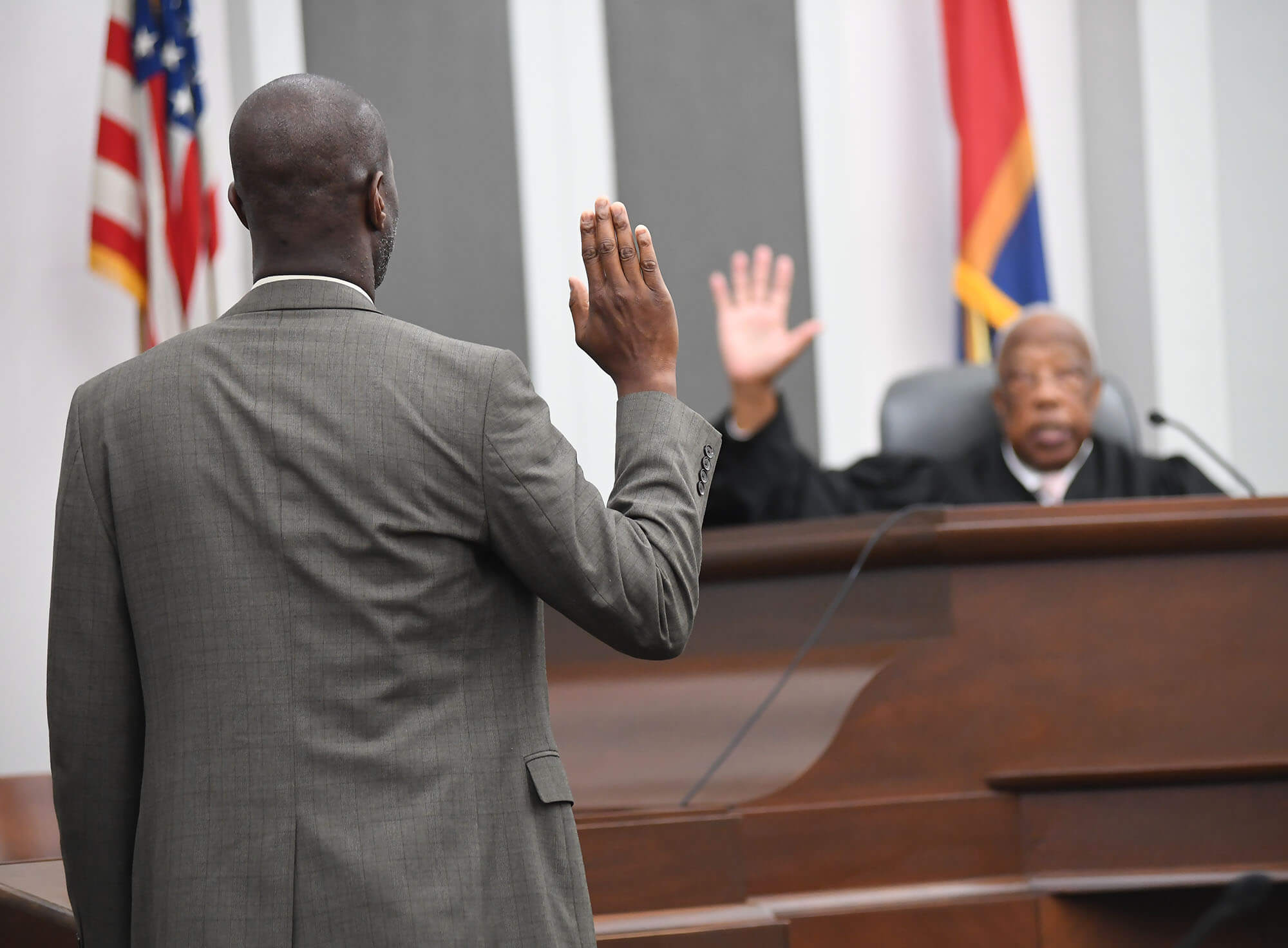
Hinds County Circuit Clerk Zack Wallace (left) is sworn in as a witness by Special Judge Barry Ford during an evidentiary hearing on whether or not election challenger David Archie filed his challenge before the deadline, Wednesday, Aug. 27, 2025, in Jackson. Credit: Vickie D. King/Mississippi Today
In the election commission’s fluorescently lit office in late August of 2023, two white top folding tables sat end to end. Wallace, the circuit clerk, brought the election contents, the soft blue boxes carrying ballots and precinct materials, into the room so Archie’s camp could conduct its examination.
Walker was the leader, joined by Hetrick, advertising specialist Taylor Turcotte, Turcotte’s friend and Green, a former Bolton alderwoman and a frequent unsuccessful statewide candidate.
What happened in that room is a matter of perspective. Smith, who brought a campaign supporter known only to him by his alias “Eyes”, sat across the table from the women, filming videos of them on his phone.
Walker described a tense scene, a gaggle of “grown rusty men that were on the attack, that ran interference, that cussed and screamed and threatened to fight.”
Turcotte’s friend was so uncomfortable that she didn’t come back after the first day. “They didn’t grow up in the hood like me,” Walker said.
Smith rejected this telling, insisting all he did was “watch them very closely.” But Turcotte said Smith’s unblinking, “cold, dead stare” actually made her fear for Archie’s safety. At one point, a scrap nearly broke out, three of the women said.
“That’s how they pick fights with David is they get up in his face and they insult him, and then he gets loud to overwhelm them. And then David looks like the ass,” Turcotte said.
Hetrick, a devout Catholic, began arriving at the commission with her rosary wrapped around her wrist. Walker, who carried pepper spray, made a joke that Hetrick should bring holy water.
The next day, Hetrick said she brought her tiny white plastic bottle, embellished with a gold cross, and sprinkled the chairs around the table before Smith arrived that morning. The tiffs subsided after that, Hetrick said.
What disturbed the women more than the intimidating environment was what they said they found — or didn’t find — inside the boxes.
Each of the precinct boxes contained paper ballots, the petition states.
But the team alleges they found no machine tapes, the print-outs containing the number of votes scanned. They allegedly determined that all of the precinct media sticks, the hard drives that contain the digital record of the vote, were commingled in a bag with no seal, stashed in a commissioner’s desk in an open cubicle.
They alleged that out of 26 precincts, the boxes contained only eight receipt books, where voters record their signature when they sign in to vote, five ballot accounting forms, which show the number of ballots used and left over, and one machine key.
This was after seven days of review.
“Everything was stored in all kinds of different places illegally but nobody cared,” said Turcotte, who ran unsuccessfully as a Republican against U.S. Congressman Bennie Thompson in 2024 and for an open seat on the Jackson City Council in 2025.
The team alleges there’s no way to determine how many people actually voted in the election due to the illegal maintenance of the records.
“If Mr. Smith won, why will they not allow us to validate his win?” Walker said.
Amos said she didn’t know of any documents that were missing, and if the materials weren’t in their designated precinct boxes, it would have been because the commissioners had already started cleaning the boxes out to prepare for a runoff. The records should be stored together in the commission’s office, Amos said.
“I am not Olivia Pope and this is not Defiance,” Amos said.
The committee voted Amos out in 2024, replacing her with Clinton alderman James Lott, a director at Hinds Community College. She left the committee altogether and now serves as the chair of the committee for the 2nd Congressional District. Lott told Mississippi Today his goal is to advance integrity in Hinds County elections through proper pollworker training and giving equal treatment to any complaints.
“Everything deserves to be heard and investigated,” Lott said.
Through an attorney, the Hinds County Election Commission did not respond to Archie’s allegations or answer questions about the current status or whereabouts of the materials.
Because the commissioners will make up the tribunal that offers recommendations to the judge deciding Archie’s case, commission attorney Ray Chambers said they have a responsibility not to respond to press inquiries prior to trial. The only filings from defendants in the lawsuit so far argue Archie submitted past the deadline and avoid any explanation or alternative to the claims Archie laid out.
Perry said his experience is that the laws around election procedure — such as chain of custody, storage of materials and ensuring they are sealed — are frequently disregarded in Hinds County. But it’s inconceivable to him that 18 signature books have vanished.
“I’ll bet my ranch on the fact that the sign-in books exist,” he said.
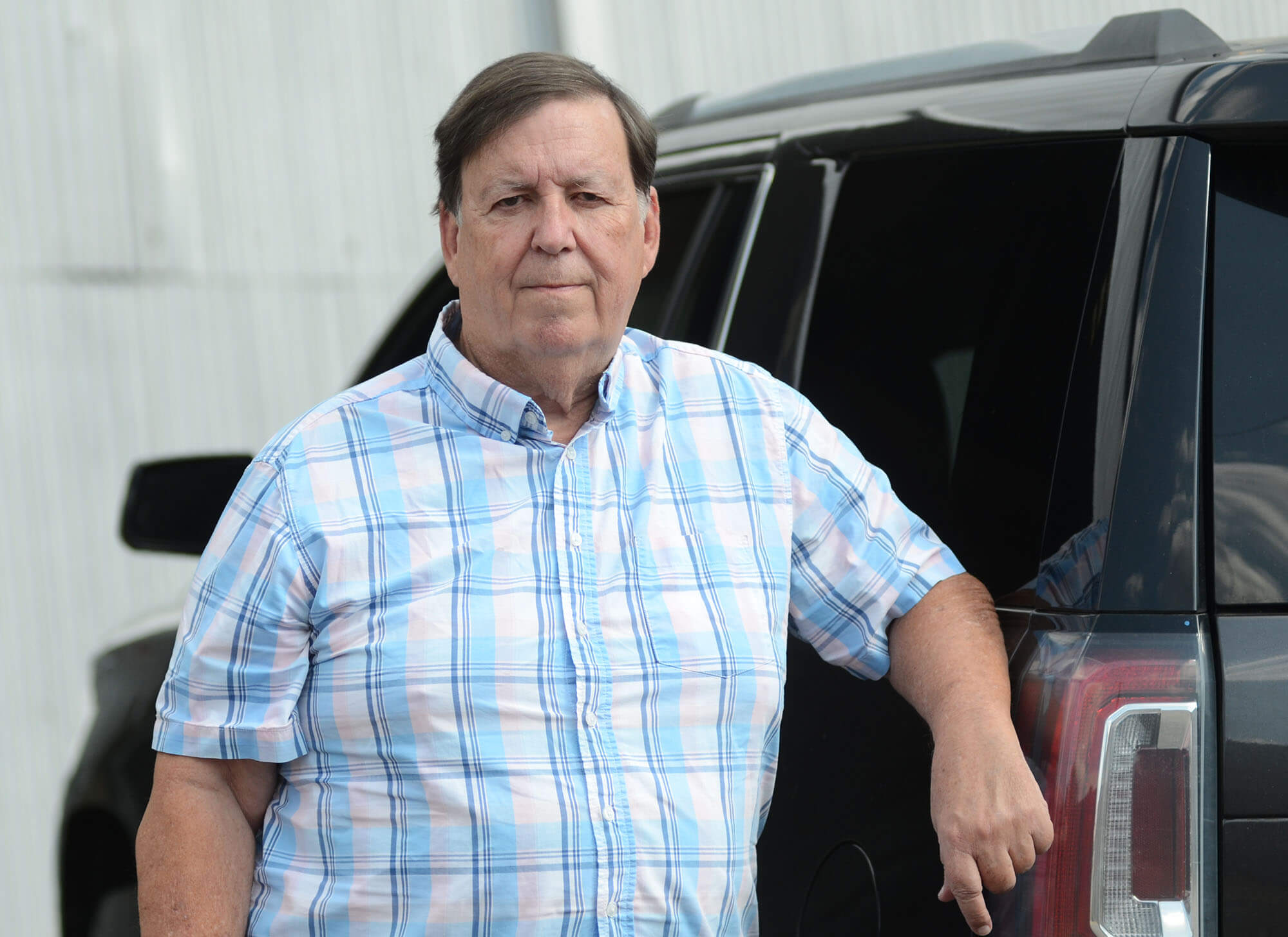
Former Hinds County GOP Chair Pete Perry poses for a portrait, Thursday, Sept. 4, 2025, in Jackson. Credit: Vickie D. King/Mississippi Today
Mississippi Today requested to inspect the books, but Chambers said state law requires that when a challenge arises, the materials are kept under seal until the court hearing.
Perry, who has conducted dozens of ballot box examinations and testified as an expert in election challenges, was present at the commission’s office for some of Archie’s review. He said he observed the team talking back and forth; it didn’t look to him like they knew what they were doing.
“There wasn’t anything to be gained by where they were spending their time,” he said. “All they did was make a scene to say, ‘We spent a week down there.’”
Archie’s lawsuit itself does not allege that the paper ballots he reviewed were forged. It doesn’t utter ballot stuffing or vote buying.
“As a kid in the 60s, I saw it done,” Perry said. “That’s where everybody was marking paper ballots and putting it in a box. And at the end of the day, they’re sitting there, late at night underneath a light hanging from a single cord above a table in an old closed grocery store.”
But that’s not how it works anymore. Today, votes are counted by a scanner instead of by hand. When ballots are printed, there’s a record attached to verify how many are used and left over. The receipt books record how many people entered the polls through their signature. In the poll books, election workers mark on a roster of registered voters, recording who voted. Both of these may be matched to the number on the machine or the number of paper ballots.
Mistakes do happen, particularly with affidavit and absentee votes, and can make a difference in a slim margin race when challenged.
But fabricating ballots in the hundreds, let alone thousands, in theory would require a multi-person conspiracy and a kind of sophistication that all evidence shows Hinds County officials do not possess, Perry said.
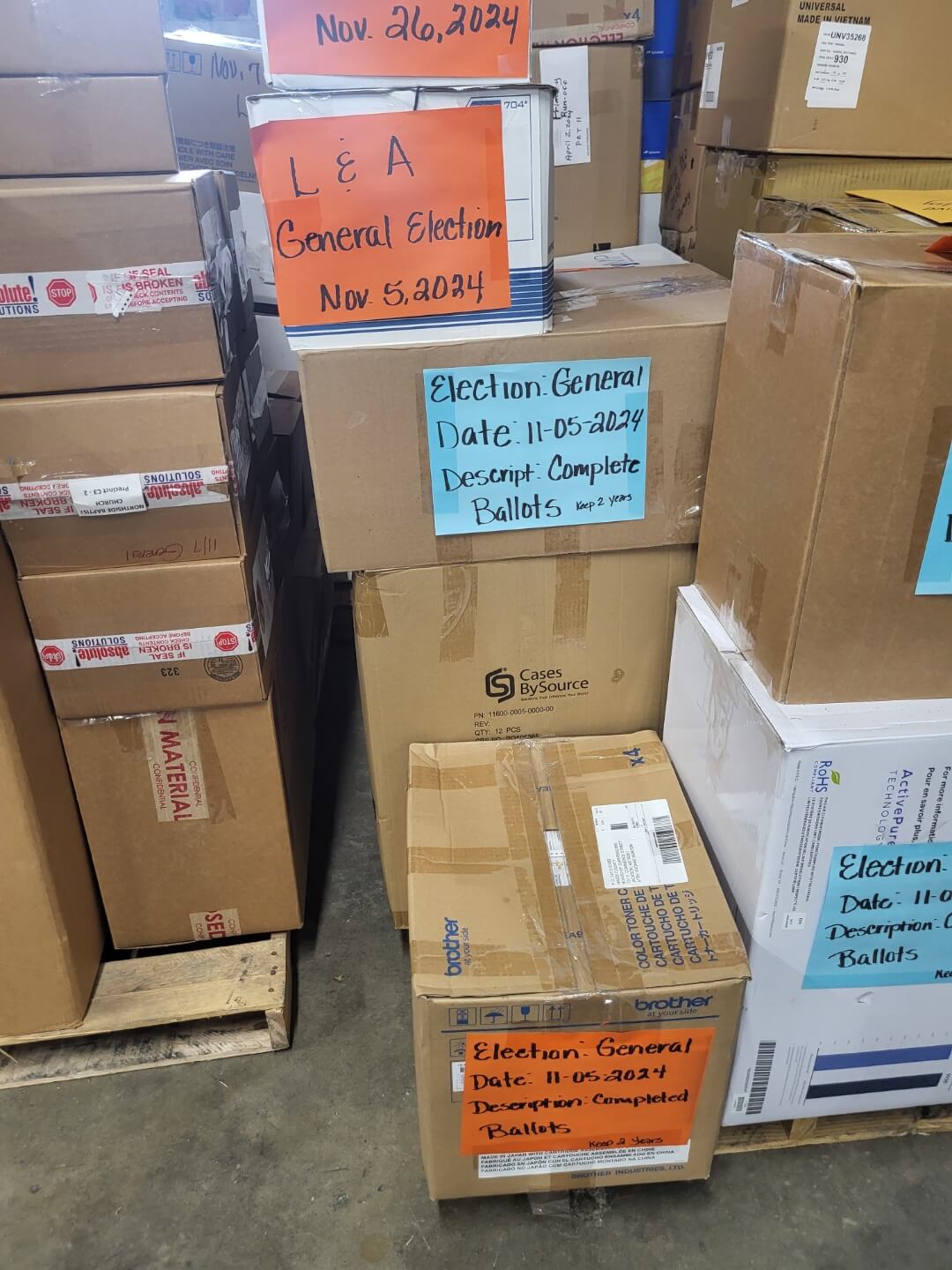
Cardboard boxes full of ballots fill the Hinds County Election Commission, where Pete Perry helped a county court candidate conduct her ballot box examination in November of 2024. Credit: Courtesy of Pete Perry
“You can’t manufacture that kind of vote. The system has too many checks and balances in it to do it,” Perry said.
That doesn’t mean Hinds County elections don’t have problems.
Bridgette Morgan, a candidate in the 2024 election for Hinds County Court Judge, brought a challenge after losing in a runoff last November. In the first race of three candidates, she received nearly enough votes, shy just 9, to win outright.
Morgan alleged that irregularities were to blame for her not being declared the winner. She was unsuccessful in getting a jury to agree with her in July, and she told Mississippi Today she plans to appeal. (Morgan’s challenge was for a general election, so a regular panel of jurors was responsible for deciding the case).
Perry said he’s repeatedly told Hinds County officials that if they don’t start following the laws around securing and storing ballots and maintaining proper accounting, a close election will soon enough result in a new election, costing the county an extra $100,000.
“Because in a close election, the way that they’re ignoring the law, refusing to even pretend to follow the law, it’s going to get overturned,” Perry said. “Now, David Archie’s is not a close election.”
Both Hetrick and Walker refute Perry’s analysis. Hetrick said he lacks imagination; Walker said if he knows of repeating violations, he should have done something about it by now.
Reached about Archie’s claims, a secretary of state’s office spokesperson said simply that the state office has no involvement in the matter. The attorney general’s office confirmed to Mississippi Today it had an active investigation into Morgan’s case, but not Archie’s.
So what’s the recourse? In Mississippi, virtually the only way to address a complaint over the handling of an election is for a failed candidate to file a challenge with the qualifying body in the race — in Archie’s case, the Democratic Executive Committee. If that doesn’t work, a candidate can petition the court for judicial review.
The losing candidate must have the money to hire a lawyer. In these cases, the proper defendant is the winning candidate, not the officials who were responsible for running a fair election.
In the course of one of these lawsuits, a judge could order an election official be jailed for breaking the law, but Perry said he’s only seen that happen once.
Candidates have a difficult time prevailing in election challenges. They must show how irregularities could have made a difference in the outcome of the race. The courts are reluctant to order a new election without clear evidence that the will of the people could not be determined.
Take the challenge of Eugene Fouche, a Black candidate for supervisor in Yazoo County, in 1979. This is the election challenge and ballot review Walker referenced – she was actually 21 at the time.
Walker called it a precedent-setting case that resulted in a U.S. Supreme Court ruling in Fouche’s favor, finding that he should have been declared the winner over the white incumbent.
That never happened, according to the lawyer who brought the case in circuit court, Ed Blackmon. The local judge dismissed the case and Fouche lost on appeal to the Mississippi Supreme Court, records show.
“I’ve never cited it,” said Blackmon, who has brought several election challenges since.
Still, anyone interested in politics in Yazoo County in the 1970s and 80s would have been enthralled by the case, which came as Black Mississippians were increasingly engaging in politics following historic enfranchisement progress made during the Civil Rights Movement.
“I could think of someone who was living in that community at that time, that would be a seminal moment in their lives,” Blackmon said.
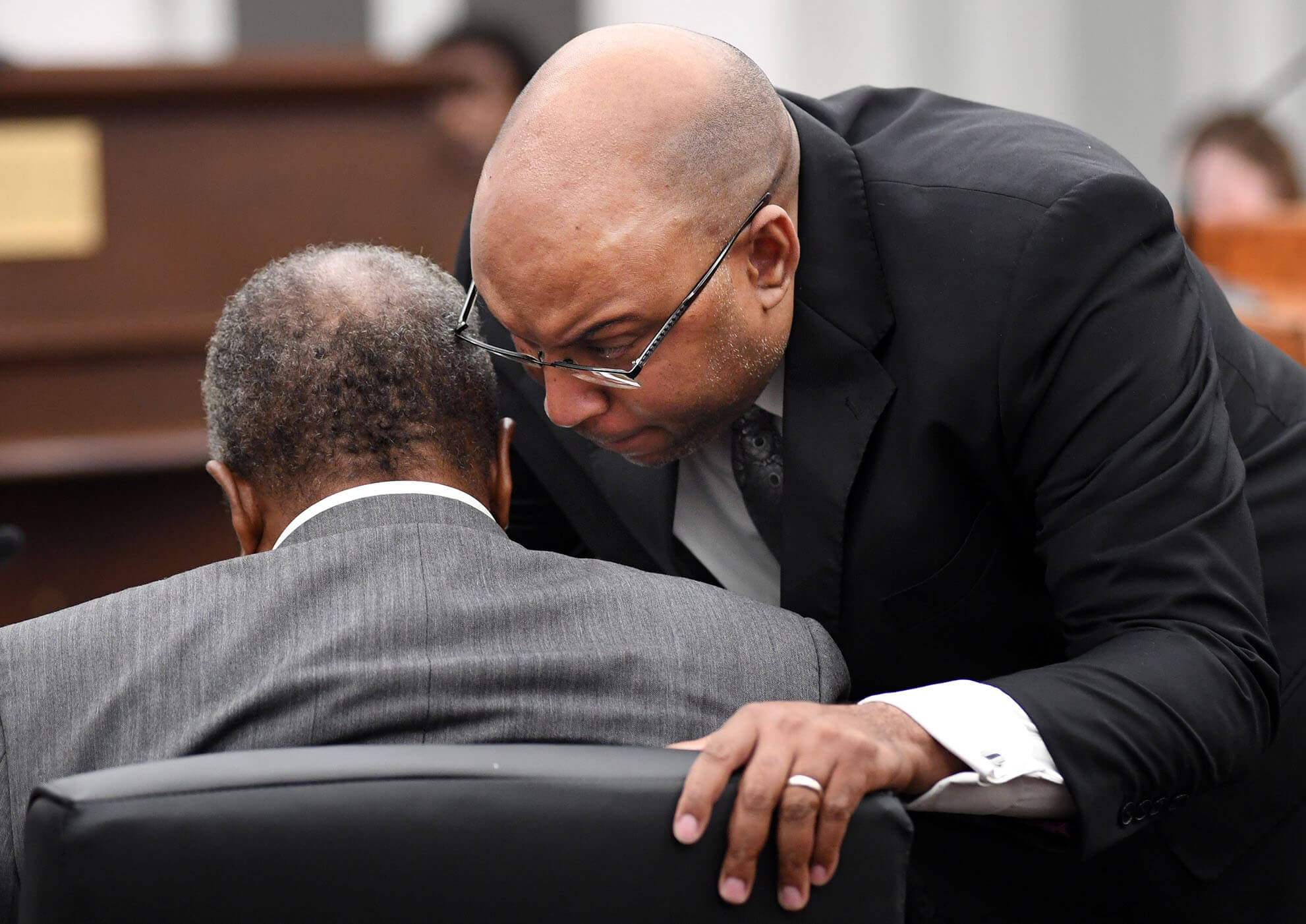
David Archie (right) confers with his attorney Matthew Wilson in Hinds County Court during an evidentiary hearing on whether or not Archie filed his election challenge before the deadline, Wednesday, Aug. 27, 2025, in Jackson. Credit: Vickie D. King/Mississippi Today
Where Archie has had slim success in his political career — winning just one of at least nine campaigns for office and serving one term as supervisor — he’s excelled at recruiting a loyal audience.
On his podcast, a recording by an R&B singer introduces the host, “David Archie, yeah, he’s a man that will take a stand,” before shifting into an Alvin Garrett tune belting, “If you won’t fight with me, if you don’t believe in me, I’m going to walk on by myself.”
Archie has been stirring up news long before the blockbuster supervisor’s meeting: getting arrested at a protest against racial profiling, holding a demonstration against a civil rights figure or alleging excessive force against Jackson airport officials after a bloody altercation during his 20s, when he worked as a fraud prevention officer with the state’s welfare department, according to the Clarion Ledger.
“I know some of y’all are afraid to shake the system, to challenge government, to challenge status quo,” Archie told listeners on one of his most recent broadcasts. “And then you get mad at me because I’m fighting to make it better for you.”
Earlier this year, Archie ran for mayor of Jackson, then took a job in constituent services at City Hall at the tail end of then-Mayor Chokwe Antar Lumumba’s term before getting canned by incoming Mayor John Horhn.
He’s nothing if not persistent — a quality Hetrick and Walker say they can get behind.
Walker said in the majority of her election reviews, when she has recommended candidates challenge their election, they say they don’t have the money or energy. “No one thought David would go this distance,” Walker said.
Attorney Warren Martin (right) confers with his client, Hinds County Supervisor Anthony Smith, in Hinds County Court during an evidentiary hearing on whether or not election challenger David Archie filed his challenge before the deadline, Wednesday, Aug. 27, 2025, in Jackson. Credit: Vickie D. King/Mississippi Today
Hetrick, who left her job under former Mayor Harvey Johnson in 2001 after a local newspaper printed her address, rattling the mother of a then-middle schooler, feels similarly ready to fight now.
Smith’s attorney in the election challenge, Warren Martin, offered another perspective: “He’s convinced people to follow him no matter what, follow him through the desert to water. But it’s a mirage. They’re drinking sand.”
Hetrick said the detractors are missing the point: The case isn’t just about Archie’s supervisor’s seat. It’s about shining a light on the brazen mishandling of elections at large. She doesn’t wish for the spectacle to discourage voters from participating in elections, but to ignite them to demand better.
“Even if we lose the trial, we’re not through,” Hetrick said.
By now, Smith has served nearly half of his four-year term. Judge Ford asked lawyers in the case to agree on a hearing date in the coming days, but it’s possible another appeal could delay it further. By the time Archie’s team exposes the evidence it says it has, the next election could be underway.
So will Archie run again?
“I hope to be in the position before then,” he said. “And I absolutely, 100%, unless I’m sick or fall off the face of the earth, will run in 2027.”
Mississippi’s three largest economic development projects are data centers.
Data centers promise tens of millions of dollars in tax revenue, new jobs and investment in energy infrastructure. A planned Brandon data center alone is expected to bring in over $20 million a year in taxes.
But not everyone is thrilled.
In my latest story on the Brandon data center, I talked with Brandon residents and Rankin’s economic development association about the development. Residents raised concerns about electricity and water usage, air pollution from electricity demands, potential noise pollution and environmental impacts.
Katherine Lin
In other communities across the nation and globe where data centers are being built, residents are raising similar concerns. They want to know what these projects mean for their health, the environment and their pocketbooks. But artificial intelligence continues to grow. The investment bank UBS projects that AI spending will reach $500 billion in 2026.
Professor Ahmed Saeed of Georgia Tech says data centers are not going away. He thinks the way forward is to ensure they’re properly regulated and investing in the community.
“ Having clarity on the impact of data centers within the community where they’re building is important,” said Saeed. “The other side of this is also making sure that there is investment into the community.”
We received a lot of emails in response about Brandon’s new data center. We’re reprinting one of the comments we received, with permission from the author:
“I am deeply concerned about the new data center projected for construction in Brandon, Mississippi. I believe this is a terrible idea and should be reconsidered by our state leaders. Mississippi prides itself on outdoor recreation and agriculture, yet this very decision will impact the land and natural resources in such a harmful way. Our water and energy will surely suffer through egregious water and electricity consumption. We need businesses to move into cities who will contribute to the local community and local economy, not filter resources away from people in that community,” wrote Miranda Loper, MLIS.
The 20th anniversary of Hurricane Katrina last week brought some reports on economic recovery and development since the deadly and destructive storm, including:
Amtrak reopened service along the Gulf Coast after 20 years. Mississippi Public Broadcasting wrote about three towns along the track and how they’ve rebuilt.
Jamie Miller, president and CEO of the Gulf Coast Business Council gave an update on the Coast’s recovery.
Bluesky goes black in MS, the economic potential of tourism and other news:
Alabama, Mississippi and Georgia announced a joint economic development initiative to bolster advanced auto manufacturing. It will bring together industry, academia and government to grow innovation and investment.
“If we are serious about tackling brain drain, we must stop seeing tourism as ‘just’ a leisure industry, but rather a strategic tool for workforce retention, talent attraction and community revitalization,” wrote Danielle Morgan, executive director of the Mississippi Tourism Association. In the latest installment of our series on brain drain, Morgan looks at how tourism is an important part of the state’s economic growth.
Leonardo Bevilacqua, a former Mississippi Today fellow and Delta public school teacher, is joining the newsroom in a full-time role as Delta/Education Reporter.
Leo, a New York native with family ties to Mississippi, just completed a 12-week fellowship at Mississippi Today, where he deeply covered criminal justice, education and culture. He holds degrees from Columbia University in American Studies and Investigative Journalism, and his work appears in the Christian Science Monitor and at Byline.
Leonardo Bevilacqua
Before becoming a journalist, he taught high school English in Indianola, Leland, and Jackson, and worked in nonprofit after-school enrichment programs in Clarksdale and Cleveland. He also directed community theater with the Delta Arts Alliance.
“The phrase ‘hit the ground running’ is trite but seems no better description for Leo,” said Debbie Skipper, Mississippi Today’s Justice Editor. “From the moment he joined our investigative team as a summer fellow from Columbia University, he has kept a pace that is truly remarkable, gleaning insights from Mississippians across the state dealing with real issues like childcare access and affordability, crime victim compensation, undocumented workers, teacher pay and local school control. He never just speaks to officials. As he takes on his new role, Mississippi couldn’t ask for a better journalist to report the stories that touch the lives of everyday Mississippians.”
Leo will serve on Mississippi Today’s newly formed Education Team, which is dedicated to covering all aspects of the state’s education system with a special focus on the challenges and solutions in Mississippi schools that can engage youth and strengthen communities.
The reporting on areas of educational pathways, funding and postsecondary opportunities will be produced in Mississippi Today’s signature style — in-depth, with attention to background and context. This will include a mix of daily news and longer-form pieces involving investigation and data analysis, with a special focus on schools and families in the Mississippi Delta.
That Delta focus makes Leo uniquely qualified for this job.
“I’m humbled to be reporting on a region where I began my professional career as a teacher,” Bevilacqua said. “The Delta deserves high-impact, accountability journalism. I look forward to joining a team of journalists I’ve long revered.”
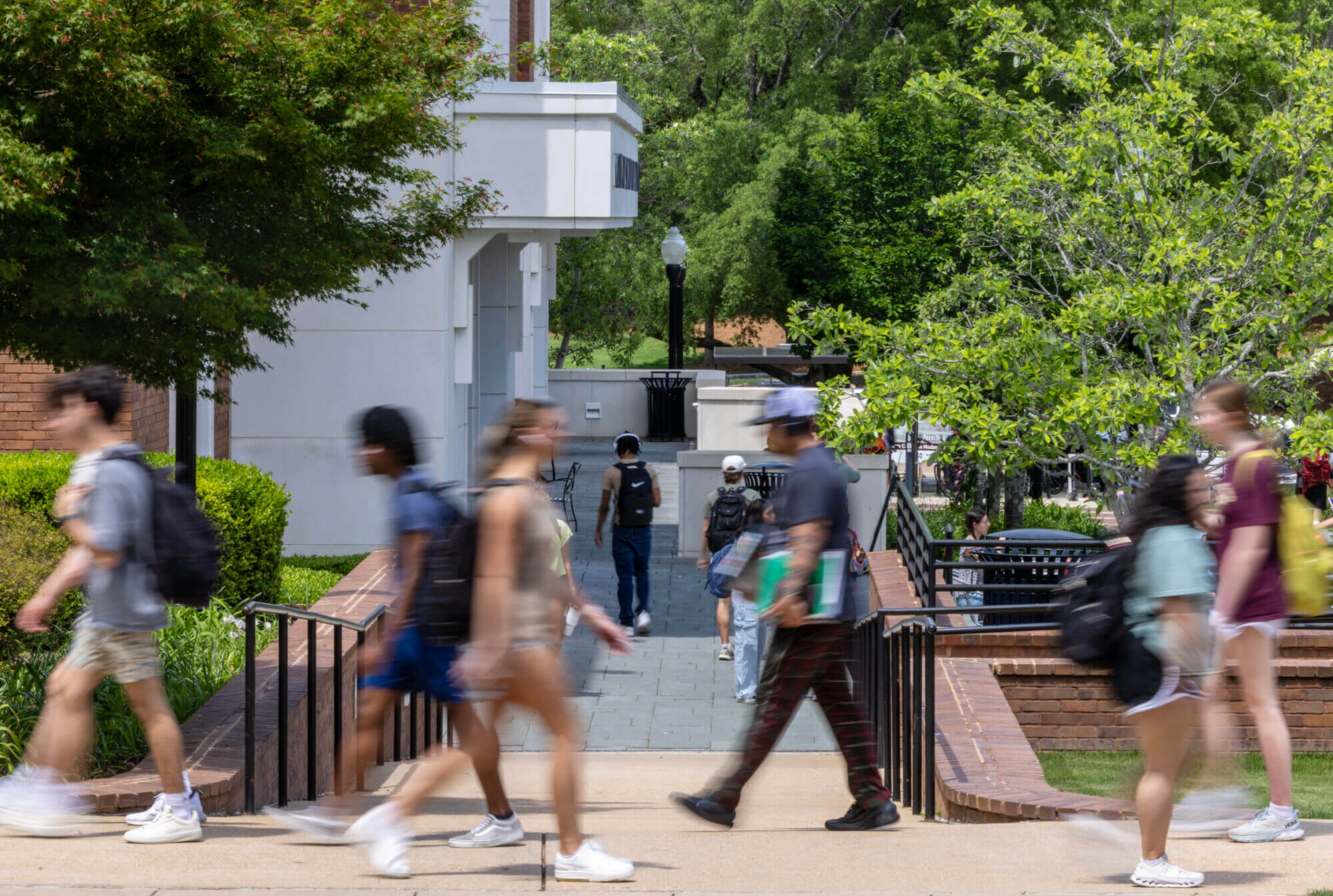
Some Mississippi universities have stopped giving money to student organizations for club activities due to uncertainty over a state law — on hold by a federal judge — that bans diversity, equity and inclusion programs in public schools.
It’s one of the first widespread, tangible consequences of a law that attorneys say will have sweeping ramifications across the state’s education system.
A federal judge has blocked House Bill 1193 for the foreseeable future because he believes it may violate the First Amendment rights of students and teachers. The law will remain blocked until he issues a final ruling after a bench trial, something that will take months to complete.
The law — which prohibits any programming and curriculum related to diversity, equity and inclusion — includes an exemption for registered student organizations. However, it does not exempt money collected from student activity fees from the prohibition.
The Institutions of Higher Learning, the board that governs the state’s public universities, said that student activity fees, despite being paid by students through their tuition, are considered state money.
According to respective student newspapers, Mississippi State students pay a flat $25 student activity fee, while University of Mississippi students contribute $2 for every credit hour in which they’re enrolled each semester.
“Universities are following state and federal law, including the First Amendment’s requirement that student activity fees be used in a viewpoint and content neutral manner,” John Sewell, director of communications for IHL, said in an emailed statement to Mississippi Today.
The First Amendment to the Constitution protects freedom of religion, speech, the press, peaceful assembly and petitioning the government.
University of Mississippi leadership announced the decision to stop distributing funds to campus organizations in an email sent on Aug. 29 from Provost Noel Wilkin, in the name of “predictability,” no matter the outcome of the lawsuit.
Instead of disbursing “Student Activity Fee” money to campus groups, departments such as the Office of Student Affairs and the Department of Campus Recreation will organize activities using those funds. Previously, there was a uniform process for student groups to apply for the funding. That process has been suspended.
“The University is committed to providing a robust slate of student activities this school year with the use of the student activity fees that you pay, and those student activity fees will only be used to support and host student programming,” Wilkin wrote. “In our view, the student activity fee is your money that the university holds in trust for you to be used only for programing for students.”
Associated Student Body president Jack Jones expressed his disappointment in a statement shared to social media. He said the decision would have “serious implications” for campus organizations because they rely almost exclusively on the funds.
“The [Student Activity Fee] was created by students, is managed by students, and is allocated to students — all to support activities for students,” he wrote. “Over the coming weeks, I will be meeting with student leaders from other Mississippi institutions as we work to ensure the SAF process is returned to the hands of students — where it belongs.”
Senior Calvin Wood, who serves in leadership roles for several University of Mississippi organizations, said the decision will devastate campus organizations.
“It’s kind of the lifeblood of our student activities system,” he said. “A lot of us are pretty upset about this.”
Wood is afraid that without the funding, the University of Mississippi College Democrats will have a hard time putting on programming and getting people to attend events.
“Last year, we had a catered Black History Month panel,” he said, as vice president of the organization. “A lot more people showed up because there was food. Now, things like that will be limited — food, guest speakers, swag. We’ll have basically no budget this year.”
Mississippi State University students were notified about a similar decision regarding their student organization funding last week.
The Reflector, the campus newspaper, reported that the university’s Student Association told campus groups on Aug. 27 that it could no longer distribute funds due to the state law. That money will not be touched, student leadership said.
In the meantime, student leaders are seeking solutions to finance campus organizations, such as contacting local businesses for fundraising nights and helping campus organizations set up budgets and bank accounts.
The Student Association allocated nearly $47,000 among 87 student organizations last semester.
Attorneys argued in hearings over the summer that the law was already creating a “chilling effect” across the state’s public schools and institutions. In April, the University of Mississippi pulled its support for the annual Oxford Pride Parade, citing prohibitions in the new state law.
Mississippi Today reporter Taylor Vance contributed to this article.
Senators pressed Mississippi’s two nominees for federal judgeships on Wednesday about their judicial philosophy, qualifications and how they feel about the U.S. Supreme Court recognizing gay marriage.
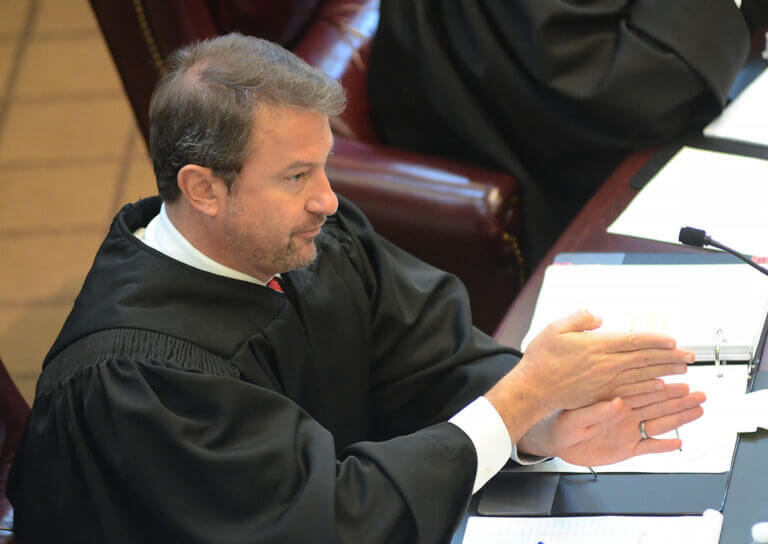
Robert Chamberlin and James Maxwell, two current Mississippi Supreme Court justices, testified at the Senate confirmation hearing about their nominations by President Donald Trump to lifetime judicial slots in northern Mississippi.
Republican Sen. Chuck Grassley of Iowa, the committee’s chairman, said the slate of nominees that appeared before the committee was full of “highly qualified men and women who understand the importance of judicial independence in our constitutional design.”
But senators from both parties still questioned the two men about their judicial records and how they would approach the job of ruling in civil disputes and overseeing criminal trials.
Sen. Dick Durbin of Illinois, the top Democrat on the committee, asked Maxwell to justify the majority opinion he wrote in Nash v. State of Mississippi. In this case, the state Supreme Court upheld a lower-court judge’s sentencing of a man to serve 12 years in jail for possessing a cell phone in a correctional facility.
Maxwell responded that the lengthy sentence may have been harsh, but his role wasn’t to impose a personal sentence on the defendant.
“Our role as the Mississippi Supreme Court is to determine if that was a lawful sentence as set by the parameters of our state Legislature,” Maxwell responded.
The nominees also stated at the hearing that they believed Brown v. Board of Education, the landmark U.S. Supreme Court decision that ruled separate but equal segregation unconstitutional, and Loving v. Virginia, the U.S. Supreme Court decision that declared state bans on interracial marriage unconstitutional, were correct decisions.
However, Chamberlin and Maxwell did not answer a similar question from Democratic Sen. Richard Blumenthal of Connecticut about whether he thought the U.S. Supreme Court’s decision in Obergefell v. Hodges recognizing a right for same sex couples to marry was a correct ruling.
“It is the better practice not to comment on the wisdom of these decisions,” Chamberlin said.
Mississippi Supreme Court Justice Robert Chamberlin Credit: Special to Mississippi Today
Both of Mississippi’s Republican senators, Roger Wicker and Cindy Hyde-Smith, spoke in support of the two nominees at the hearing. Wicker said that Chamberlin was “a rock-solid choice,” while Hyde-Smith stated she had complete confidence in Maxwell’s “qualifications, character and commitment to justice.”
Maxwell earned his undergraduate and law degrees from the University of Mississippi. Former Gov. Haley Barbour in February of 2009 appointed Maxwell to the state Court of Appeals.
Maxwell was elected to the post in 2010 and reelected in 2014.
Former Gov. Phil Bryant appointed him to the state Supreme Court in January 2016. He was later elected to an eight-year term in November of 2016 and reelected in 2024.
Maxwell said his prior experience as a federal prosecutor and growing up with an attorney for a father helped make him qualified to become a federal judge.
Chamberlin earned his undergraduate and law degrees from the University of Mississippi. He first served as a state circuit court judge for 12 years in the 17th Circuit District. In 2016, he was elected to an open seat on the state Supreme Court and reelected in 2024.
Before becoming a judge, Chamberlin was a member of the state Senate for five years, representing DeSoto County.
Chamberlin, at the hearing, said his role as a state circuit court judge has prepared him to preside over a federal courtroom because he’s previously had to “run a docket” in a state court.
Chamberlin and Maxwell will replace U.S. District Judges Michael Mills and Sharion Aycock, both of whom decided to take senior status in recent years.
It’s unclear when the committee will vote on the two nominees, but Republican U.S. Sen. Katie Britt of Alabama said at the hearing that members of the Judicial Committee can submit written questions to the nominees until Sept. 10.
Residents of Brandon have raised concerns about the environmental impact and safety of a data center planned for their city.
AVAIO Digital, a Connecticut-based company, announced Aug. 19 that it plans to build a data center in Rankin County. While some celebrated the $6-billion investment and the over $20 million in annual tax revenue it would bring, other residents worry about the data center’s water and power consumption and possible pollution. The 600,000-square-foot facility is expected to be completed by 2027.
‘People genuinely just want answers’
When Nathan Rester first saw the news about the data center, he was immediately concerned. Rester grew up in Brandon and now lives there with his wife and toddler just a few miles from where the data center will be built.
Rester had followed reports about the air pollution that people in and around Memphis have reported, a result of XAI constructing gas turbines without pollution controls normally used for such turbines. He didn’t want to see what was happening in Memphis happen in Brandon.
His wife, Larkyn Collier, made calls but found the answers unsatisfying.
“ No one could really give a straight answer on how it was being built, what sort of precautions were being taken, whether or not there had been any sort of consideration for utility costs or pollutants or anything like that,” Rester said
In response, Collier and Rester started a petition on change.org that now has over 430 signatures. The petition asks Rankin County leaders to guarantee the data center will not cause such problems. So far they have not received any communication from Rankin or Brandon government officials.
Rester is not completely opposed to the data center being built but he wants the government to guarantee it won’t bring utility bill hikes or pollution.
“ People genuinely just want answers and transparency here. And they want safeguards in place,” Rester said.
The AI boom comes to Mississippi
At their most basic level, data centers store computing equipment. They have been around since the 1940s and power things such as cloud storage. But with the boom in artificial intelligence investment, companies are rapidly constructing data centers across the globe.
The investment bank UBS estimates $375 billion will be spent globally on artificial intelligence in 2025. While this investment has fueled economic and technological growth, data centers have faced skepticism in the communities where they’re built, largely due to the amounts of energy and water they consume and possible pollution they emit.
Mississippi has two large-scale data center projects underway – Compass Datacenters in Meridian and Amazon in Madison County. Including the AVAIO data center, the three will add up to over $26 billion in new capital investment, an unprecedented amount for the state.
Cities and states are embracing data centers because of the potential economic growth, new taxes and innovation they bring.
“This investment is poised to create a lasting, positive impact on the city and the wider region,” Brandon Mayor Butch Lee said in a statement to Mississippi Today. “The project represents a major step forward for Brandon, bringing high-tech jobs and economic growth that will resonate throughout Rankin County and beyond.”
When the property is on the tax rolls and fully up and running, the ad valorem tax will bring in an estimated $23 million in new revenue according to Rankin First, the county’s economic development group. Most of it will go to the local school district.
“ These are not here today. And if we didn’t win this project, we would never see those,” said Garrett Wright, executive director of Rankin First, about tax revenue from the data center.
Rankin First, similar to many economic development groups, is not part of county government and is hired to attract new investment and cultivate existing businesses. It owns the land that the data center will be built on, which has been vacant for around 20 years.
AVAIO is eligible for the state’s data center tax incentive and fee in lieu of property tax. Companies pay a negotiated fee for a set period of time instead of the full property tax. The incentive is designed to encourage economic development. It requires sign off from the county board of supervisors, municipal authorities and Mississippi Development Authority, the state’s economic development agency.
It’s estimated AVAIO will create 60 direct jobs and the Amazon data center 300-400 direct jobs. While data centers create relatively few permanent, direct jobs they create additional jobs in the community. A McKinsey and Company report found that for every direct data center job, approximately 3.5 more jobs are created in the community.
Some residents on social media have wondered whether the data center will negatively impact traffic. Traffic and grade separation of the rail lines have been key conversations as Rankin County has grown. Rankin First acknowledged that AVAIO’s presence will increase traffic but they see it as an opportunity to push for long needed infrastructure improvements.
Rankin First and Brandon have been working with AVAIO for two years and says the company is coming to Brandon, in part, because of the thriving community.
“ The company wants to be a community partner. We see that they’re going to get involved with the local community,” said Regina Todd, assistant director of Rankin First.
Brandon residents want answers
Bailey Henry has lived in Brandon for over a decade. She said that when she read about the new data center on social media, she became concerned.
“ I’ve lived in Mississippi the majority of my life and I was raised to leave things better than you found it,” Henry said. “ And I just don’t think that Mississippi is going to be better off from this.”
Henry is worried about the pressure the data centers will put on the city’s infrastructure, pollution and power demands.
She describes the announcement as “ brief and nonchalant as all the explanations have been. From politicians to people who work for Entergy. It has just been, ‘This is what it is. It’s going to be great. Don’t ask any questions.’”
Henry has made calls to and left voicemails with multiple government offices and has not heard back from any of them.
She’s skeptical, but she hopes she’s wrong.
Brandon concerns echo nationwide conversation
The biggest concerns from residents nationwide over data centers has been potential pollution and increases in utility bills. Across the country, there are stories about data centers driving up energy rates, worsening water shortages, polluting the air and creating a constant noise.
AI data centers demand massive amounts of electricity and run constantly. The average AI data center uses as much electricity as 100,000 households, according to a report from the International Energy Agency.
Another concern is water usage. Data centers need to stay at a specific temperature, and water is one of the most efficient ways to cool the servers.The IEA report found that the average AI data center needs about 528,000 gallons of water every day. For communities that already have water concerns, data centers can exacerbate the problems.
Some communities have blamed the increased demand from data centers for rising electricity bills. While part of these costs may be due to general inflation or paying for infrastructure upgrades, some states are trying to monitor or regulate how households are affected.
A data center’s impact can vary based on the design of the center. But by their very nature they consume a lot of power.
“ AI chips are very power hungry. We’re building a lot of computing capacity, so we need to power all of this,” said Ahmed Saeed, a computer science assistant professor at Georgia Tech.
AVAIO promised “sustainable design,” including rainwater collection and solar panels that would “minimize power demands.” But it’s still unclear what, if any, impact the new data center will have on Rankin County residents.
“ Having clarity on the impact of data centers within the community where they’re building is important,” Saeed said. Saeed believes data centers are here to stay and are key for innovation. But he also thinks there’s a need for more government regulation.
“ They’re not necessarily a negative thing, but on the flip side, in order to make sure that they’re net positive it’s hard to ensure that without some regulation,” Saeed said.
Rankin County’s administrator declined to comment for this story. AVAIO and Brandon Water did not respond to requests for comment.
When Hurricane Katrina hit the Gulf Coast on August 29, 2005, it wiped out the livelihoods of hundreds of thousands of people. But one industry thrived by necessity in the aftermath: demolition, debris removal and construction — the building trades in which men comprise 96 percent of the workforce. By contrast, women, who made up the majority of the tourism and hospitality services that were hit hardest by the storm, saw precipitous drops in employment.
Gender inequalities were amplified. Before the storm, many women — particularly Black women and single mothers — were trapped in low-wage jobs, and they didn’t have the necessary resources to get back on their feet post-Katrina. And with child care and school systems wiped out across the region, they also struggled to find a place to send their kids while they looked for work.
Carol Burnett, then-executive director of Moore Community House, a nonprofit in Biloxi, Mississippi, which provided child care to low-income women and single mothers, watched firsthand as this dynamic played out. Her own organization was nearly destroyed in the storm, and she immediately went to work securing funds to rebuild the free child care program, which was funded by Head Start.
Burnett saw a need for better employment opportunities for the single moms who relied on Head Start. In Biloxi alone, thousands of jobs were lost at the casinos and hotels that dot the shore. So when a D.C.-based nonprofit reached out to see whether she would be interested in hosting a job training to help women enter tradeswork, she jumped at the opportunity. After all, it wasn’t that there weren’t jobs, it was that they were all going to men.
With a small amount of initial funding, she launched the program and found projects in the neighborhood where the women could gain experience in construction and demolitions. Twenty percent of the city had been destroyed by the hurricane, and the houses surrounding Moore Community House were decimated.
“The hands-on training came from just being there with these teams to help rebuild homes after Katrina.”
— Carol Burnett, former executive director of Moore Community House
“We were involved in a coalition of nonprofits all pulling together to try to rebuild and recover,” Burnett said. “The hands-on training came from just being there with these teams to help rebuild homes after Katrina.”
In the nearly two decades since, the program has expanded and updated its curriculum to meet the needs of the industry. This year it graduated its 117th class and boasts a 70 percent employment rate for graduates in trades or related jobs.
“It’s a proven strategy for making a difference in the lives of single moms,” Burnett said.
A neighborhood in D’Iberville was completely destroyed by Hurricane Katrina. Credit: Geoff Pender photo for the Sun Herald
Despite its success, the program lost a crucial piece of funding this spring when Elon Musk’s so-called “Department of Government Efficiency” abruptly cancelled the two-year Women in Apprenticeship and Nontraditional Occupations (WANTO) grants, which support training women in construction trades. The reason given in letters to grant recipients was that the programs no longer aligned with the Department of Labor’s priorities, particularly as it relates to diversity, equity and inclusion.
The cancellation has imperiled the future of the program, which has provided a way for low-income women and single mothers — some of the most vulnerable to disasters due to poverty and their roles as caregivers — to achieve financial security.
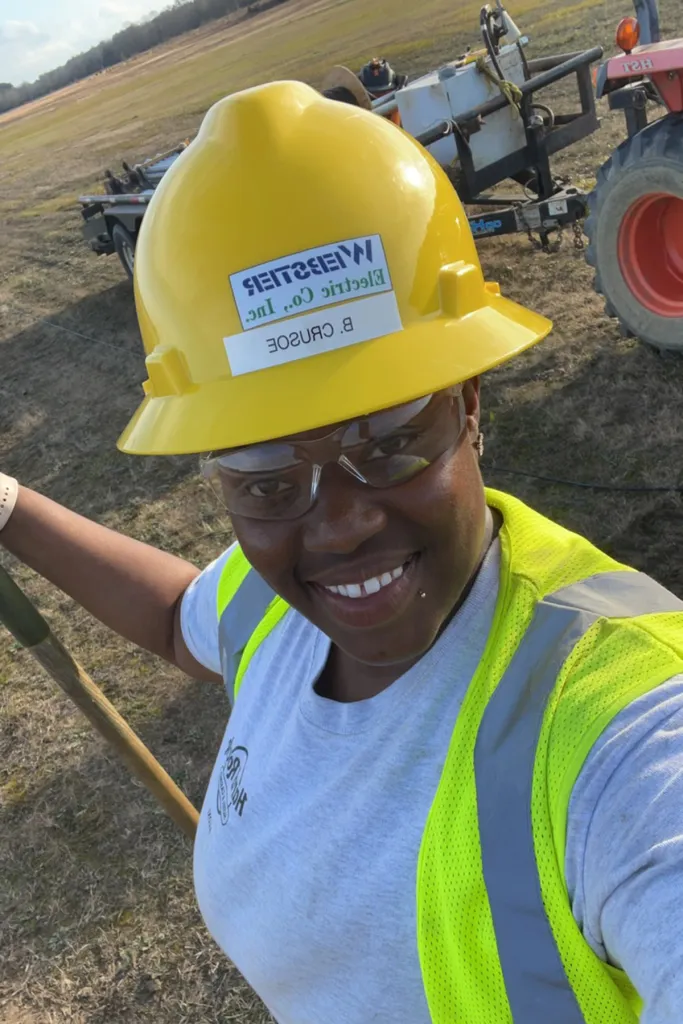
Women like Brianna Crusoe.
In 2018, the single mom was struggling to make ends meet while raising two young children and working at a call center when a cousin told her about the women in construction program.
At 23, she was exhausted from working in customer service, something she’d done since she was 15. The call center didn’t pay well, wasn’t flexible with its scheduling, and she had to work weekends and nights.
With nothing to lose, she decided to enroll in the pre-apprenticeship program. The program paid for her two children’s child care and provided a weekly stipend, both of which made it possible for her to participate.
For eight weeks, she learned the ins and outs of the construction trades like workplace safety and how to use basic tools and equipment that might be found on a jobsite. She also learned about the benefits of working in the trades, including a $30 per hour salary — over double what she was making at the call center.
Bolstered by the experience, she applied for the International Brotherhood of Electrical Workers union apprenticeship, a multiyear training that would pay her while she learned the skills of the trade. To her surprise, she got in.
“They literally guided me through every single step of the way.”
— Brianna Crusoe
“It blew my mind, because I didn’t believe in myself at the time. But because I had all these credentials through women in construction, I was a high priority candidate on the list,” she said.
Because Moore Community House offered child care for a full year, she started the apprenticeship without having to worry about what to do with her kids, and she also was given money to buy textbooks, tools and personal protective equipment. The nonprofit also helped her prepare for her apprenticeship interview.
Brianna Crusoe was able to learn construction trades like workplace safety and how to use basic tools and equipment that might be found on a job site through a workplace training program. Credit: Courtesy of Brianna Crusoe
“They literally guided me through every single step of the way,” she said.
Seven years later, she now works as a test electrician after being the only Black woman in her graduating class. She’s since moved into a two-story home in a neighborhood with better schools for her children. “That has always been my goal, is to put them in a good educational school,” she said. And because she no longer has to work weekends, she can take vacations with her family.
“It changed my life tremendously,” she said. “I’m happy about going into work. I’m no longer stressed as far as doing my job.”
Branden Forshee, the current executive director of the nonprofit, said even for those women who don’t go on to work in the trades, the training they receive can open doors to better paying jobs. “Just having a forklift license makes a world of difference,” he said. The nonprofit also has partners in the shipbuilding industry, and with some of these basic certifications, women have an opportunity to break into that career, too.
Moving women into these better paying jobs addresses what’s known as occupational segregation, a term used to describe the disproportionate concentration of women and people of color in low-wage jobs.
“There was no warning, there was no notice.”
— Branden Forshee, executive director of Moore Community House, on federal funding cuts
“These women are working; they’re just working a job that pays terrible wages and has no benefits and doesn’t have any flexibility,” Burnett said. “If they’ve got a kid, they can’t do anything if there’s a daycare problem because their employer will fire them.”
But what’s allowed women to make the leap is the fact the program offers wrap-around services like child care and a weekly $100 stipend, something made possible after receiving a federal grant in 2017.
The abrupt cancellation of their grant came “out of nowhere. There was no warning, there was no notice,” Forshee said. The program stopped offering the child care benefit this year and cut the stipend in half. He said it’s made an immediate impact on who is able to take the class. They usually have between 20 to 25 students. There are just five participants in the current cohort.
“It’s never happened before,” he said. “There’s obviously the disappointment that comes with seeing a class that small and the frustration behind understanding the importance of those supportive services and not being able to provide them,” he said.
Crusoe said it was devastating to hear the news.
“Child care is a big necessity for us single mothers, and so them taking away that child care stipend is basically putting single mothers back at a standstill,” she said.
Moore Community House recently reapplied to the same grant that was cancelled in the hopes that they could once more depend on federal funds to continue offering some of these services.
Single mothers are disproportionately impacted by disasters, according to researchers. They are more likely to live in poverty, in public housing, and are often taking care of children and the elderly. All of these are factors which make it harder to recover from a natural disaster. Because the majority of disaster relief funding goes to property owners, they also miss out on assistance to rebuild their own lives when housing has been washed away.
“It’s gendered in a context of what was available pre-storm, and what was available during those three years of really intense recovery,” said Pamela Jenkins, a retired professor of sociology who authored numerous academic papers on post-Katrina recovery.
“For marginalized women, the storm only made their lives worse.”
— Pamela Jenkins
“For marginalized women, the storm only made their lives worse,” she said. “Remember, most of these people … they worked two or three jobs just to get by. The restaurant jobs, the nursing jobs. All those jobs were gone,” she said.
But Jenkins, who lives in New Orleans, said women weren’t just victims of the storm, they were also the ones coming up with solutions. She met many women through her research who, like Burnett, were working on the community level to plug the holes in social services that appeared after the storm.
They spearheaded efforts to bring child care back to the city, expanded homeless shelters for women and families and helped women flee domestic violence.
Now, 20 years after Hurricane Katrina made landfall, Jenkins fears that a lot of the progress made to address the needs of women after a natural disaster is evaporating under the Trump administration.
“One, the government is not going to respond the way that it did, even under [George W.] Bush,” she said. “And two, this kind of misogyny that’s being allowed across the country is going to influence how women are affected by the next storm,” she said.
“This kind of misogyny that’s being allowed across the country is going to influence how women are affected by he next storm”
— Pamela Jenkins
The Federal Emergency Management Agency has lost thousands of employees since Donald Trump returned to office. On Monday, former and current agency staff wrote a letter to Congress titled, “the FEMA Katrina Declaration,” warning that a downsizing of the agency and shifting of responsibility to states could affect the country’s ability to respond to the next major disaster.
In the case of the women that Moore Community House works with, the grant cancellations mean less economic security before the next disaster hits.
“If you’re a single mom, stuck in a low wage job. How do you pay for recovery?” Forshee asked. “The work that we do is important because we provide a place for their kids to go while they participate in the training that puts them on a pathway to earning higher wages.”
“In the context of rebuilding, it helps them start to rebuild their own lives, but also help others in beginning to rebuild theirs.”
This story is republished by The 19th. Jessica Kutz is the The 19th’s climate and gender reporter.
The Democratic Legislative Campaign Committee, a national Democratic Party-affiliated organization that supports statehouse races, announced Wednesday that it will help five candidates competing in Mississippi’s special legislative elections this fall.
The five Democratic candidates the organization is supporting are:
Theresa Gillespie Isom (Senate District 2)
Reginald Jackson (Senate District 11)
Dianne Black (Senate District 19)
Johnny DuPree (Senate District 45)
Justin Crosby (House District 22)
“The DLCC is proud to support these five Mississippi Democrats running strong campaigns to challenge the toxic GOP power in their state,” said Heather Williams, president of the DLCC.
Isom and DuPree are the Democratic nominees seeking to win newly redrawn Senate districts with no incumbent in the race. Black and Crosby are trying to topple Republican incumbents. Jackson is a Democratic incumbent attempting to ward off a Republican challenger.
It’s unclear how much money the organization will funnel to the five candidates, but one of the group’s goals is to signal to potential donors that these Democratic nominees are competitive.
In 2023, the organization also promoted a slate of Democratic candidates seeking to defeat incumbent Republicans in Mississippi. None of those candidates were successful. But this year’s special elections could be more consequential because of a federal court order that determined state lawmakers diluted Black voting strength when they redrew state legislative districts in 2022.
Scott Colom, a Democratic district attorney in north Mississippi, announced today that he will run for the U.S. Senate next year against incumbent Republican Cindy Hyde-Smith.
Colom’s entrance into the race is likely to spark a long and expensive battle for the seat, with both national parties expected to spend millions on the race in the Magnolia State.
Chuck Schumer, the Senate’s Democratic leader from New York, told the New York Times he wants to help elect a Democrat in Mississippi. But the Republican Party is almost certain to defend its ironclad grip on Mississippi, a state where both U.S. Senate seats have been held by the GOP since 1989.
In an interview with Mississippi Today ahead of his announcement, Colom said he intends to cast Hyde-Smith’s voting record as prioritizing “D.C. politics” instead of hard-working Mississippians, including her vote for the “One Big Beautiful Bill” that slashed social safety net programs and provided tax cuts for the wealthy.
“Mississippi needs a senator who’s going to put Mississippi first,” Colom said.
But Colom faces an uphill battle. He’s a Democrat running in Mississippi, with one of the most reliably conservative electorates in the nation.
Mississippi last elected a Democrat to the U.S. Senate in 1982, when it reelected John Stennis. A majority of Mississippians have voted for the Republican nominee for president since 1980.
Still, Colom said he can crack the GOP’s stronghold in the state because he has experience with pitching moderate and progressive solutions to a more conservative electorate, as he did when he defeated long-serving incumbent Forrest Allgood, an independent, for district attorney in 2015.
“At the time, people didn’t think I could win the DA’s race,” Colom said.
A native of Columbus, Colom is the elected district attorney of the 16th Circuit Court District, which includes Lowndes, Oktibbeha, Clay and Noxubee counties. He is the first Black DA for the district.
He first won that election by casting his opponent as an incredibly harsh prosecutor who was more concerned with obtaining stiff sentences for convicted criminals than true rehabilitation. After Colom took office, he said he focused his office’s efforts on tackling violent crime and promoting alternative sentencing for nonviolent offenders.
“I have faith that the truth always sees through if you get the message out, speak with conviction and lead with your values,” Colom said. “That’s my plan. I want to speak with my values.”
For example, Colom said he would push for legislation that raises the nation’s minimum wage and exempts law enforcement officers and public school teachers from paying federal income taxes.
This may be the first time the two have competed head-to-head, but it will not be the first time Colom and Hyde-Smith have butted heads. Former President Joe Biden in 2023 nominated Colom to a vacant federal judicial seat in northern Mississippi, but Hyde-Smith thwarted the nomination.
U.S. Sen. Cindy Hyde-Smith speaks to supporters during her reelection campaign launch at the Mississippi Agriculture Museum in Jackson, Miss., on Thursday, Aug. 28, 2025. Credit: Eric Shelton/Mississippi Today
Despite support for Colom from Roger Wicker, Mississippi’s senior U.S. senator, Hyde-Smith was able to block his nomination because of a longstanding tradition in the U.S. Senate that requires senators from a nominee’s home state to submit “blue slips” if they approve of the candidate.
Hyde-Smith never returned one of these slips for Colom. If both senators don’t submit a blue slip, the nominee typically does not advance to a confirmation hearing before the Senate Judiciary Committee.
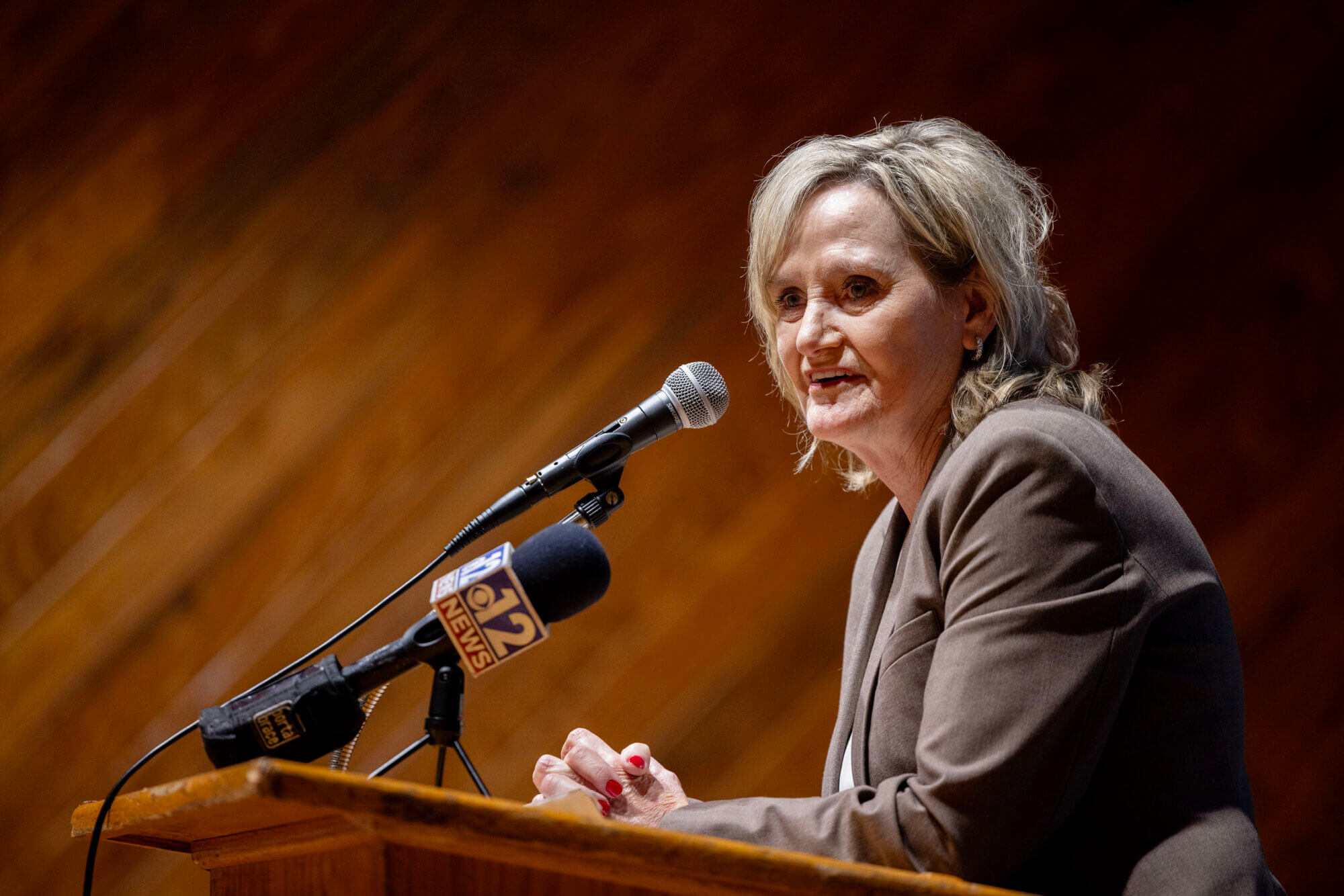
“He thought he was going to be a federal judge, and I blocked him,” Hyde-Smith said to applause.
Colom is the first Democrat to announce his candidacy for the Senate seat. Ty Pinkins, an unsuccessful Democratic candidate for U.S. Senate in 2024, has declared he’s also running for the Senate again in 2026 as an independent.