Where Daniel Lake Boulevard intersects with Terry Road in south Jackson sit a gas station, a strip mall with a blood donation center and the remnants of a failed grocery store.
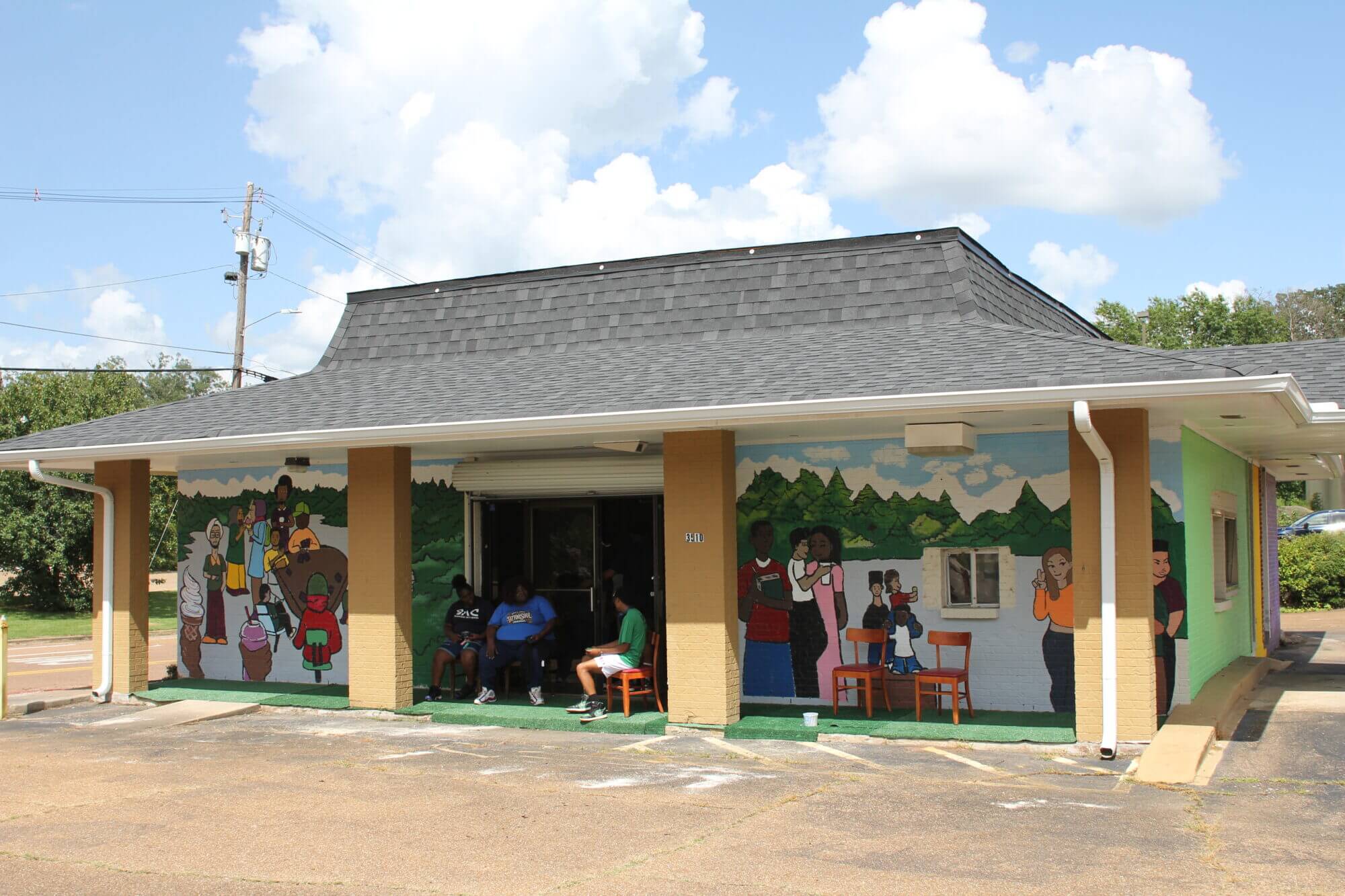
At one corner, there’s a recently renovated building, its painted exterior covered in brightly-colored sketches of people eating ice cream and sipping cups of coffee.
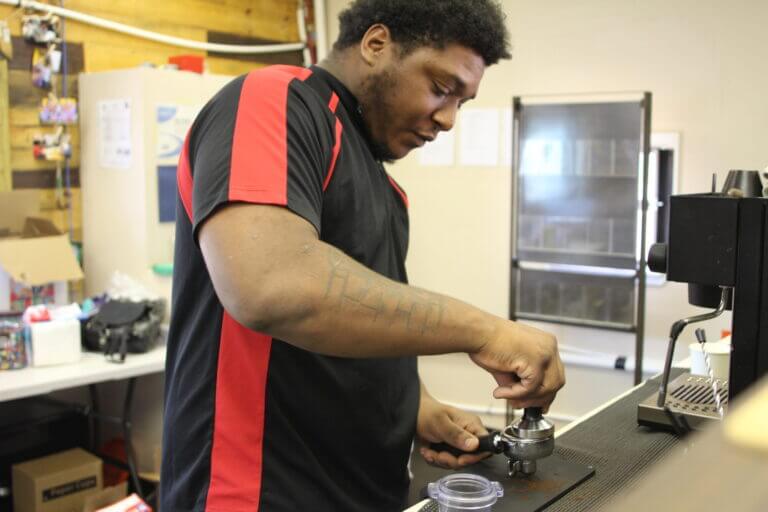
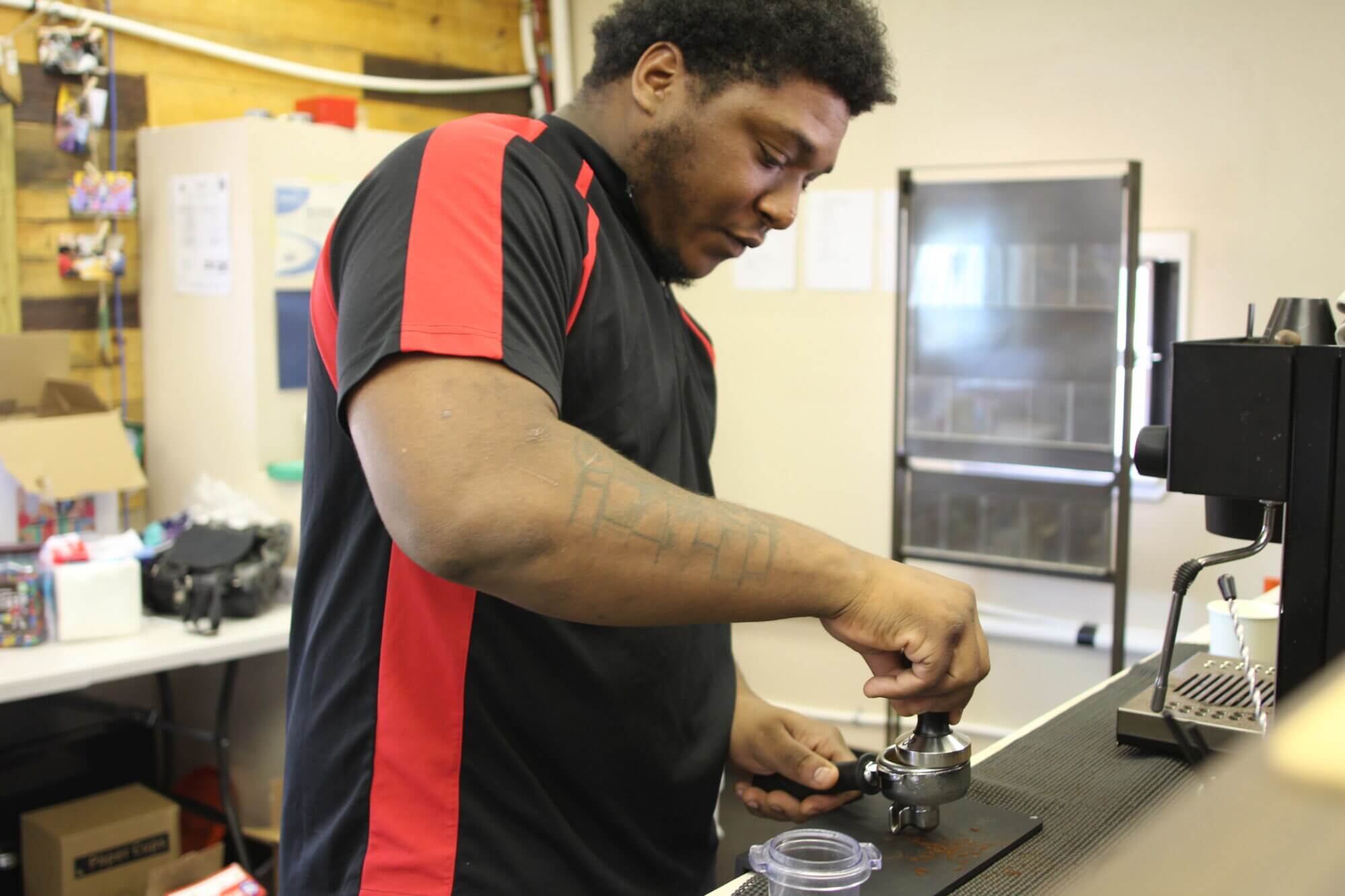
This is the home of Riverside Collective, a weekend coffee shop and ice cream bar that opened its doors in July. It’s here where students such as Antonio Ramirez can learn what it means to be a part of a community.
“I’m learning how to manage my money, how to make coffee, how to run a business, how to profit, and how to communicate with people and share the idea of Riverside,” the Provine High School sophomore said.
Riverside Collective, a coffee shop and community hub located in south Jackson, opened on July 12, 2025. Credit: Maya Miller/Mississippi Today
Ramirez said that while many of his classmates don’t have jobs, he enjoys being able to spend his time working with a group of teenagers who have become his friends. Riverside Collective runs a student entrepreneurship program and currently has eight teens on staff. Ramirez said that he hopes through Riverside Collective, their work can change the narrative of the dwindling landscape of south Jackson.
“People say Jackson barely has anything in it,” Ramirez said. “I feel kind of bad about people saying that about Jackson. I want Jackson to be a city where people can have fun.”
Riverside Collective, co-founded by Vilas Annavarapu, was a project three years in the making. The nonprofit chose south Jackson for its location inside the abandoned Regions Bank because Annavarapu saw it as a place of untapped potential.
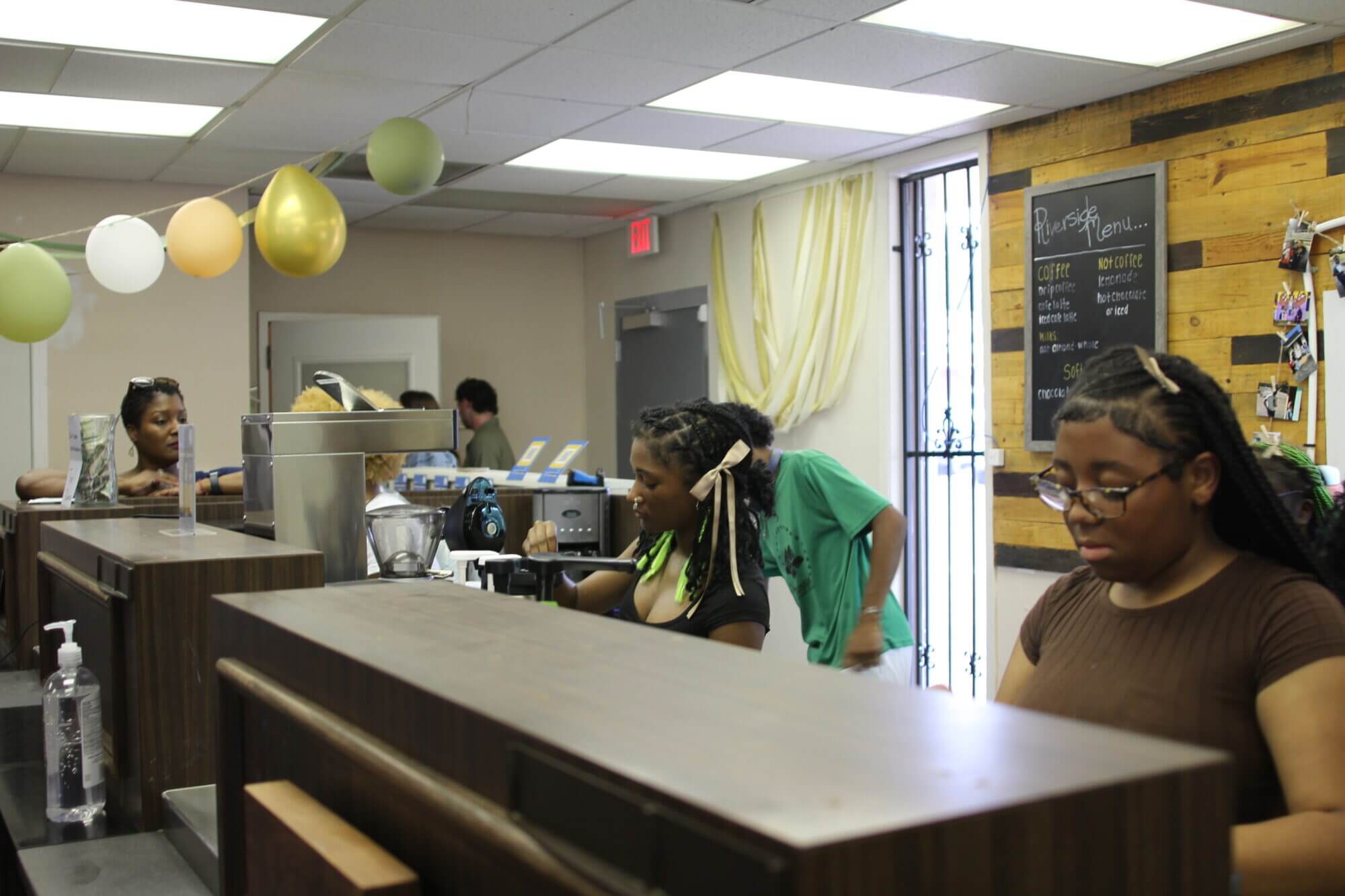
Students from Provine High School serve coffee drinks and ice cream at Riverside Collective, a worker-owned cooperative in south Jackson on July 12, 2025. Credit: Maya Miller/Mississippi Today
“We wanted to do economic development work in a place where a lot of people aren’t doing economic development work, and in fact, stores are leaving,” Annavarapu said.
He points to the recent departures of Burger King and Dollar General stores nearby.
“People are really nervous to open up businesses in that part of town, and we believe there’s economic opportunity there,” Annavarapu said. “It’s really important that west Jackson, south Jackson have really nice things and good things and places for the community.”
Annavarapu said that as a former middle school teacher, he noticed some of his students found it challenging to work as a team. He wanted to create a place where young people can learn the value of working together while making a fair wage. Most of the workers there are students from Provine High School, and they’re paid $15 an hour. Annavarapu said he hopes to eventually increase pay to $22 an hour, the amount United Way of Mississippi defines as a “flourishing wage” for single adults.
“ I realized so many of our young people have not had the opportunity, nor have they been given the skills to understand how to work in a team and how to work in a team in a way that feels really good,” Annavarapu said.
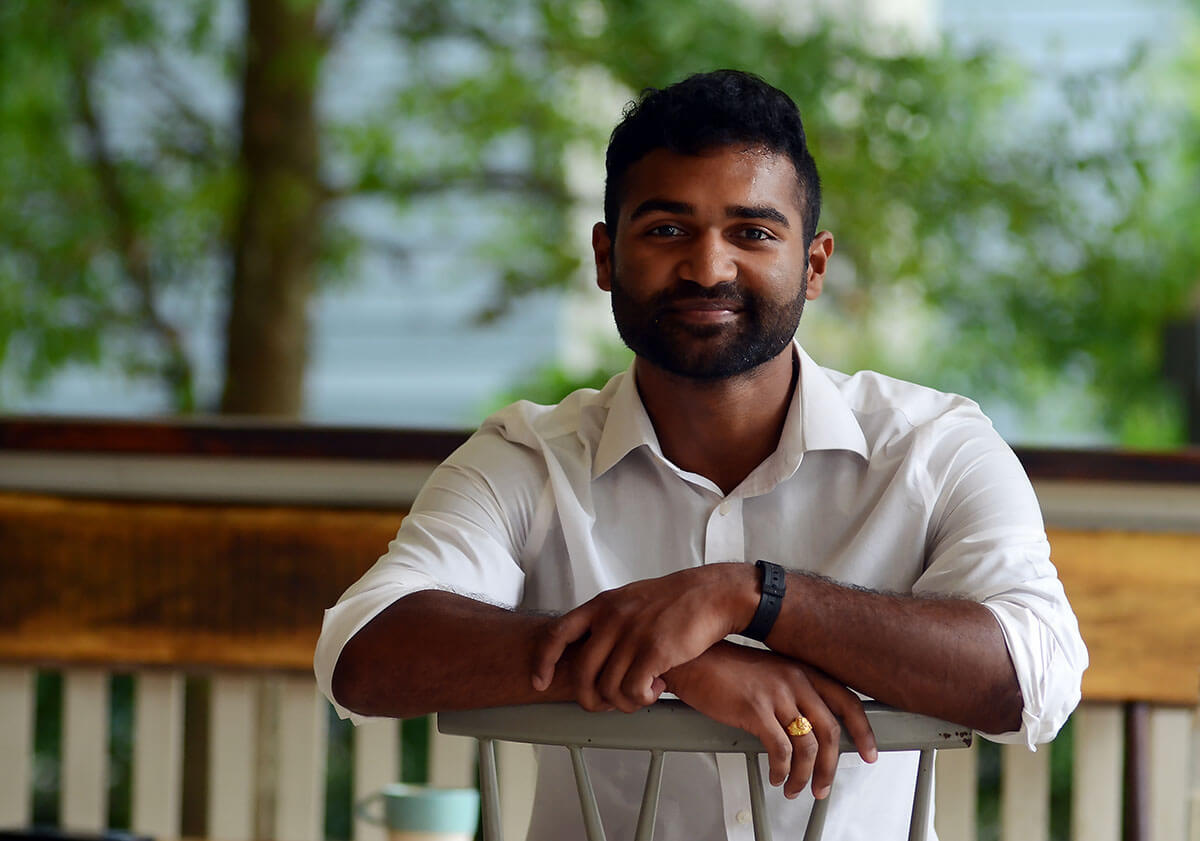
Vilas Annavarapu, 24 of Jackson, is the co-founder of the Riverside Collective, a worker-owned ice cream and coffee shop in south Jackson. Credit: Vickie D. King/Mississippi Today
Now, he’s hoping that spirit of creativity could lend itself to a fully fleshed out community calendar of events and classes, similar to the Briarwood Arts Center in northeast Jackson.
“What I hope Riverside opens up for young people is their imaginative potential. What can we create and what can we build that’s not already there? And how can that be a good thing?” Annavarapu said.
He hopes the impacts of Riverside Collective can be felt in tangible ways, like the number of people that they serve and the students who participate in the program. But he also wants there to be internal transformations for everyone who comes in contact with their initiative.
“ I think on the more intangible side, it’s when young people come into our program and when they leave it, do they leave feeling more confident and prepared to take on the world and are more attentive to the world around them?” Annavarapu said.
Riverside Collective is located at 3510 Terry Road. Its business hours are Saturday 9 a.m. to 1 p.m. and Sunday noon to 4 p.m.
CORRECTION 8/25/25: This story was updated to reflect that Riverside Collective currently pays employees $15 an hour, with hopes to increase to $22 an hour in the future.
Veteran editors Bobby Harrison, Geoff Pender and Emily Wagster Pettus recall the aftermath of Hurricane Katrina and a monumental special legislative session to address storm recovery 20 years ago. They are joined by multimedia and video editors Michael Guidry and Richard Lake for a preview of “The Bulletin,” a Mississippi Today video documentary that will premiere Aug. 29th, the anniversary of the destructive, killer storm.
Russia’s Vladimir Putin, U.S. President Donald Trump and many Mississippi politicians, including Gov. Tate Reeves, have something in common – their disdain for mail-in voting.
Putin, Russia’s president/dictator, has waged wars where thousands of men, women and children have been killed, and his political enemies who aren’t in prison have a knack for dying under strange and often gruesome circumstances.
Yet, Putin has thoughts about American democracy, and apparently President Trump is listening.
One takeaway Trump said he gleaned from his recent Alaskan summit with Putin, which was called to discuss ending Russia’s invasion of Ukraine, is that the Russian president believes Trump would not have lost the 2020 election to Joe Biden if not for fraud and mail-in voting.
Trump volunteered that Putin told him, “‘Your election was rigged because you have mail-in voting. … It’s impossible to have mail-in voting and have honest elections.’” Trump added that Putin said “no country” has mail-in voting.
It is not clear how discussions of the 2020 election will help end the Russian/Ukrainian war. But Putin’s comments are false. Many countries have mail-in voting. And Trump lost the 2020 election because Joe Biden won more votes – a lot more.
Still, soon after the summit Trump announced his intent to draft an executive order to end mail-in voting.
“An executive order is being written right now by the best lawyers in the country to end mail-in ballots because they’re corrupt,” he told reporters.
And here in Mississippi, Reeves and many other politicians have been longtime opponents of no-excuse, mail-in voting.
In 2020 the Republican governor said on social media, “I will also do everything in my power to make sure universal mail-in voting and no-excuse early voting are not allowed in MS—not while I’m governor! Too much chaos.”
In Russia, Putin could most likely end mail-in voting by himself. Russia has consistently been cited for not conducting fair and free elections. But the election clause of the U.S. Constitution gives the legislature in each state the authority to establish the laws regulating elections. The Constitution gives the U.S. Congress the authority to alter the laws passed by the state legislatures. The president, of course, would have the duty of signing into law or vetoing the changes approved by Congress.
But it is difficult to fathom how the president could end mail-in voting by himself. And the White House staff appeared to be walking back the president’s comments that he could end mail-in voting by himself.
The question then is whether Congress would be willing to take such action.
Currently 36 states, red and blue , have universal mail-in voting. Most had mail-in voting when Trump won in 2016, lost in 2020 and won again in 2024.
So, could Trump convince House members and senators, even Republicans ones, to end early voting in say Florida, Arizona, Georgia, Montana or in various other red or swing states?
Perhaps. Republican politicians have often submitted to Trump’s wishes. But it is important to remember politicians passed mail-in voting because their constituents like it. It makes voting easier and promotes civic engagement.
And contrary to the opinion of Trump, as related to him by dictator Putin, there are safeguards to prevent fraud in early voting.
Some of those safeguards include the fact that people have to sign the envelope the ballot is mailed in. And that signature is checked by poll workers against the signature on record from when the person registered to vote.
In addition, most states with mail-in voting also require some type of identifying information, such as the last four digits of the voter’s Social Security number, driver’s license number or an assigned code (usually a set of numbers) that must be placed on the envelope for the mail-in ballot.
If people trust doing banking online, they should feel comfortable with mail-in voting.
Reeves and other Mississippi officials, it is obvious, do not feel comfortable with mail-in voting. Mississippi is among the 14 states that do not have no-excuse mail-in voting.
In addition, Mississippi is among only three states that have no form of no-excuse early voting either by mail or in person.
In the vast majority of states, people can go vote before Election Day. In Mississippi, a person under the age of 65 must have an excuse to vote early.
Mississippi lawmakers have constantly rejected efforts to expand voter access.
In other words, Vlad Putin would most likely endorse Mississippi election laws.
COLUMBUS _ The Golden Triangle’s new headquarters for economic development has opened in the middle of the massive projects it has helped bring to Clay, Lowndes and Oktibbeha counties.
The $2.5-billion Steel Dynamics aluminum mill is visible from one window and the airport from another. Just down the road are the Airbus factory that has built 1,700 helicopters, the 400-acre PACCAR site that churns out engines and Stark Aerospace, which was awarded a $61-million defense contract last year. These are companies that Joe Max Higgins and his team have helped bring to the area.
“It’s in the middle of the kingdom,” said Higgins, the CEO of Golden Triangle Development LINK. “I mean, you can just look. It’s all here. You can just walk around and see everything.”
The headquarters was previously located on Main Street in Columbus. But Higgins said that the agency has wanted to move to a more central location for a while. The new headquarters sits on land owned by the Golden Triangle Regional Airport, which is run by all three counties.
LINK is the regional economic development organization for the three-county area known as the Golden Triangle. It is funded by the three county governments and private backers. This melding of public and private interests was represented at Tuesday’s opening event by the attendance of public officials and business leaders.
The event honored Bobby Harper, a former member of the board of directors, who was instrumental in acquiring private funders to support the organization.
“We could not be here today without Bobby’s work,” Higgins said at the opening ceremony.
The three counties now work together on economic development, but it wasn’t that way when Higgins started. At first he was just working for Lowndes County.
“I was real slow to embrace the regionalism stuff. I just always believed that the only way you win is to tear everybody’s face off,” said Higgins. “That’s still true, but I will tell you that once we put the three counties together, I found out that I had more bullets for a gun, more resources, more places for people to live, more opportunities and more money.”
Higgins is legendary for his economic development efforts, even outside of Mississippi. He’s been negotiating deals for the Golden Triangle since he was recruited from Arkansas in 2003. Since then his team has brought in over $10 billion in capital investment and over 10,000 jobs.
Attendees at the opening of the Golden Triangle Development LINK’s new headquarters on Tuesday, Aug. 19 2025, in Columbus, Mississippi. Credit: Katherine Lin/Mississippi Today
In the process, Higgins has developed a national profile for bringing in manufacturing jobs to the region. This has included profiles on 60 Minutes and in The Atlantic.
Even as more manufacturing moved out of the U.S., the Golden Triangle has continued to invest in manufacturing. And it’s not slowing down.
The group is working on finding a company for its fifth “megasite,” a 1,400-acre piece of land that can accommodate a large scale industrial operation. The organization recently announced a $90-million aluminum processing facility is in the works close to their new headquarters.
“The guy that grabs a hold on a tiger. The tiger starts running. What do you do?” Higgins responded when asked what the next 20 years of development in the Golden Triangle would look like. “Do you let go and the tiger eats you up, or hang on and you don’t know where you’re gonna end up? I think you hang on, and so I think that’s what we’re gonna do.”
Twenty years ago this month, on Aug. 29, 2005, Hurricane Katrina ravaged the Mississippi Gulf Coast, destroying thousands of homes and much of the government infrastructure that provided critical public services to one of the state’s most populous regions.
Then-Gov. Haley Barbour, understanding the necessity of a well-organized, coordinated effort to clean up and plan to rebuild the coastal counties for the long-term future, tapped one of the state’s most successful business leaders, Jim Barksdale, to chair a special commission.
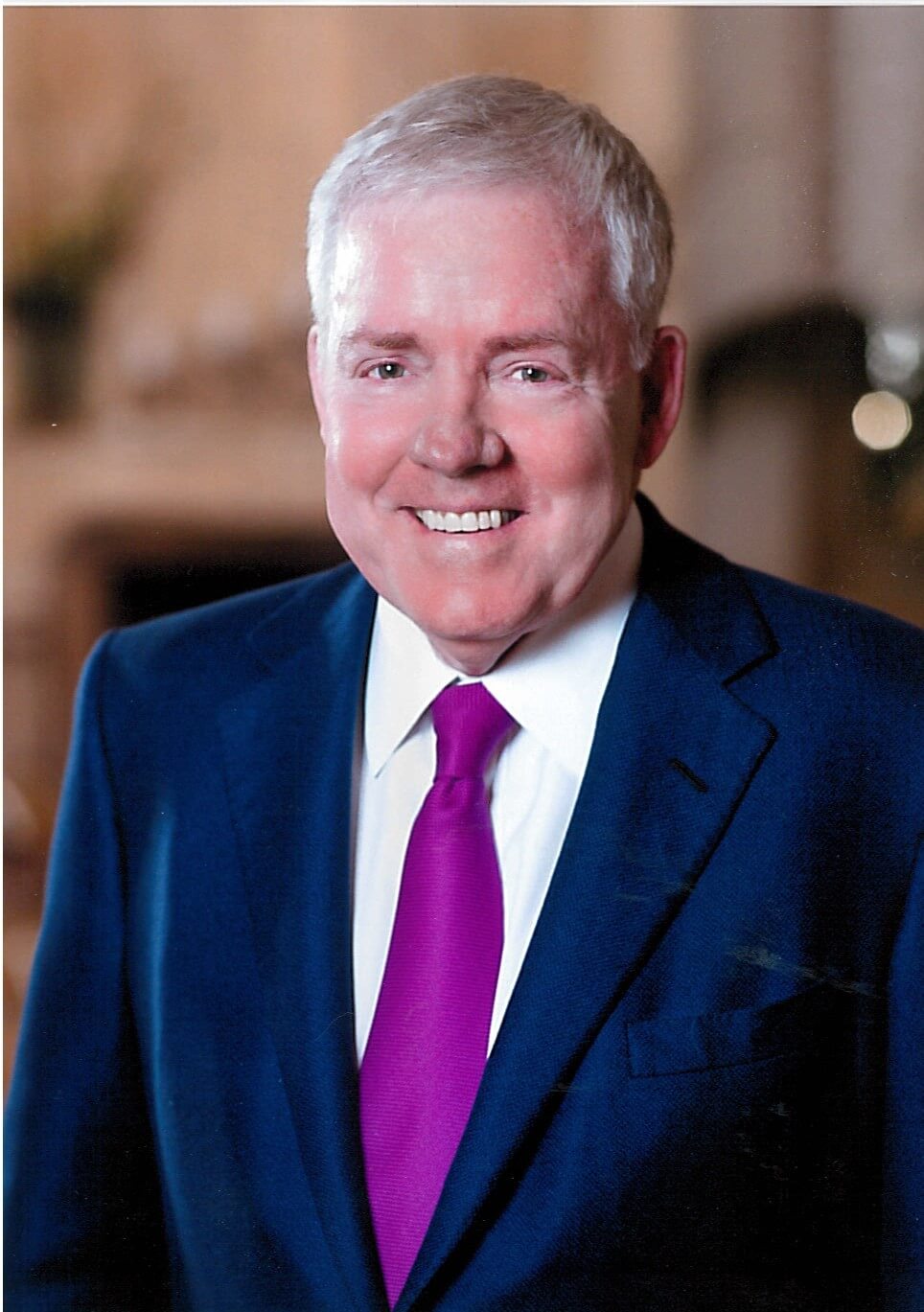
James L. Barksdale
Barksdale, then 62 years old, had recently sold his company Netscape to AOL. He accepted the appointment to lead the entity tasked with deciding how hundreds of millions in federal and state recovery funds would be spent. Just a few days after the storm hit, he and his wife, Donna, flew from Jackson to the Coast, where they spent the first few months of their marriage living on the top floor of a casino resort in Biloxi while Jim led the commission.
Notably, leaders across the country have praised him for his service and modeled it in other post-disaster recovery efforts.
To commemorate the 20th anniversary of the storm, Barksdale sat down with Mississippi Today to recount his time leading the Governor’s Commission on Recovery, Rebuilding and Renewal in the fall of 2005.
Note: This interview has been edited for length and clarity.
Mississippi Today: Where were you when the storm hit 20 years ago, and what were you doing both professionally and personally? What did your life look like when the storm hit?
Jim Barksdale: It’s interesting because I was in a strange place. Donna and I had just gotten back from our honeymoon. We got back here around the first of August, and the storm hit the end of August. So the storm hit about three weeks after we got back. We continued our honeymoon a couple years later, but the storm definitely delayed all that. I was here in Jackson. I’d retired here after I sold Netscape to AOL. I was on probably five or six different corporate boards and commissions around the country, but other than that, I was able to take on the job.
MT: How long was it after the storm that you got to the Coast?
JB: Maybe a couple days after the storm hit, Haley Barbour and Leland Speed, who was his economic development director, called me and asked me if I’d come meet them. I met with them, they asked if I’d lead the effort, and less than a week later, we were on helicopters flying down there. One thing I remember from flying over the damage down there, which was extensive and just so incredible to see, was the smell of the beach down near Gulfport. They had these refrigeration warehouses for chicken poultry products waiting to be exported. They were all still there rotting and had not been cleaned out. Even from a few hundred yards above it, it smelled like we were on the ground. It was awful.
Up and down the Coast, it really looked like an atomic bomb had gone off. People say that all the time, but there’s no other way to describe it. There was really no way to get around. The National Guard had roads blocked off except for first responders and residents. Getting around the debris and the roadblocks was just about impossible unless you had some level of clearance.
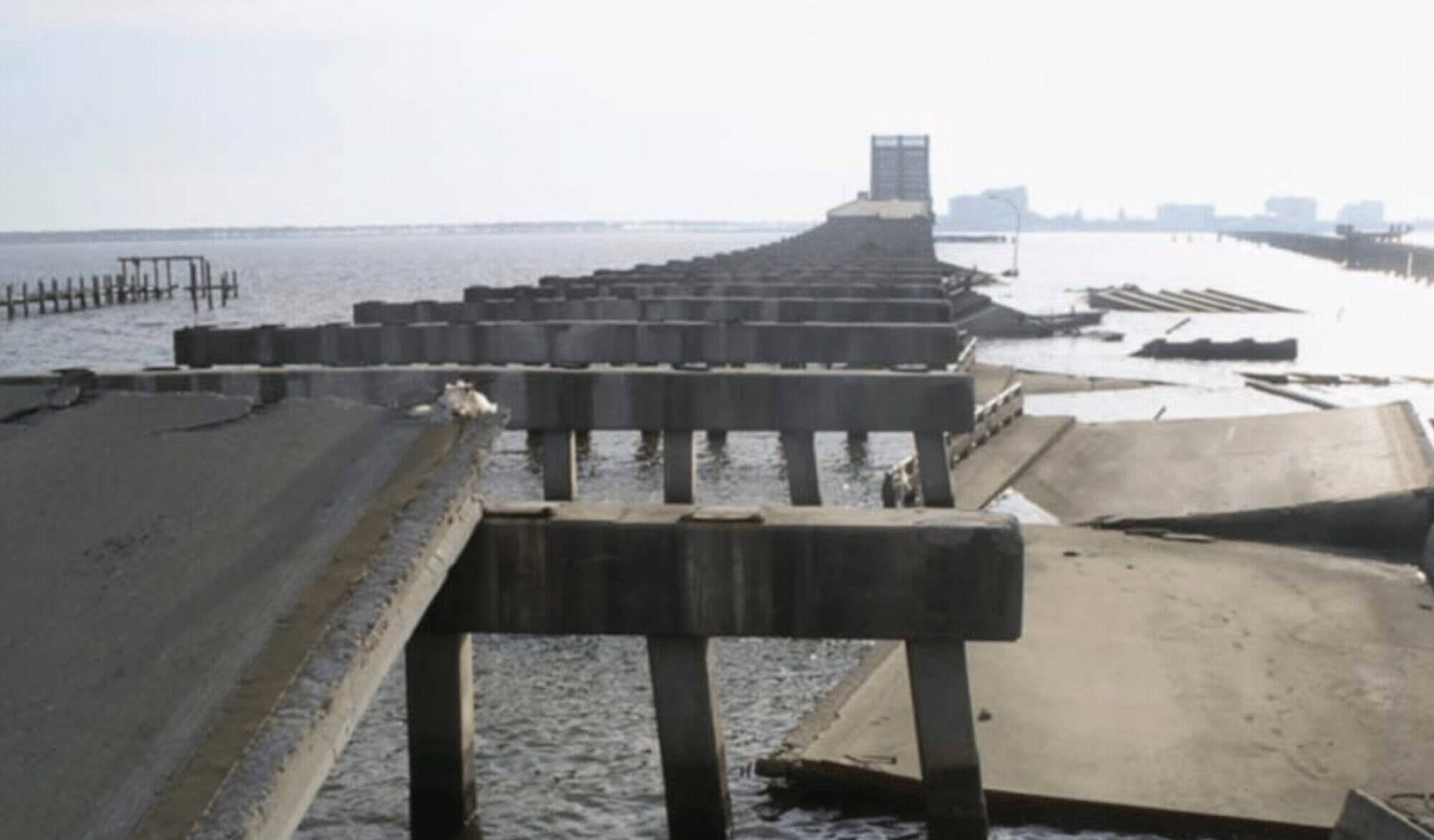
We got down there, and the place we lodged ourselves was in a hotel called the Isle of Capri. The front of the building was all busted open from the storm surge and wind with all the slot machines showing. They were working hard to get the slot machines emptied out before they got robbed. The first two or three floors of the high-rise building were obliterated by the storm, but somehow the elevator worked to take us up to the room they gave us, which was on the top floor. The room was nice. It wasn’t touched. We had power and water. Up there, unless you looked down at all the mess and debris and the collapsed bridge over the bay, you wouldn’t have known anything had happened.
MT: How long were you and Donna there?
JB: Oh, three or four months on and off. We came back here (to Jackson) a few times and would head back down, but it was about three or four months we lived down there — until right around the first of the year (January 2006).
MT: Was it a surprise or was it unexpected to get the call from Gov. Barbour to head up this commission?
JB: It was a total shock. I didn’t really know Haley. I’d met him before, but we were not close at all. Haley had asked me to be his finance chairman when he first ran for governor (in 2003). Not too long before then, he had said some things publicly about me and the Microsoft hearings that really irritated me, and I turned him down. I hadn’t really talked to him again until he called me about Katrina recovery.
When I went to meet with him and Leland Speed, they asked if I’d lead the commission. I said, “Now look, is this because you’re being a statesman or is it for revenge over turning you down as finance chairman?” He laughed and didn’t really answer the question, but he told me that he thought I was highly qualified to lead a comprehensive effort like that, so I accepted. I was happy to serve the state in that way. Donna and I had just been married, and she calls it our “Category Five Honeymoon.”
Later, Haley and I got to be good friends. He’s still a good friend of mine.
MT: It’s hard to believe it’s been 20 years since the storm, but looking back on the work of the commission, what are some of your proudest accomplishments during your time as chairman and what y’all were able to do in those first few months?
JB: The thing I’m most proud of that we were able to accomplish is that we brought so many people of the Coast together to help them build plans for the future, and we gave them hope for their communities. Really, the most important thing we did was give them hope in such a difficult moment in time.
You know, as a group, we came in with this idea that the best way to get started was just get everybody involved, to get everyone busy. There was so much to consider. It may sound simple, but just getting started as quickly as we did was something to be very proud of.
We started these charrettes, or small working groups, as a way to get a lot of people involved in one project. We got the mayors involved as the leaders and some others involved, and let me tell you, it worked. They worked their cans off. The mayors were there every day, night and day. It was literally 24 hours for them. You’d go in at 2 o’clock in the morning, and there would be all the mayors in there working with their teams. We had architects and engineers flying in from literally all over the world helping us. There were architects from Italy that came, people from England that were part of the royal planners, Prince Charles’ team. It was amazing how many people from all over the world came and would just drop a team of people. We had renowned experts who were there to meet with the leaders of every Gulf Coast town and have them lay out their dreams.
We had a wonderful group of people, smart and hardworking who were there to transform these cities across the coastline. There wasn’t really anything for them to do except work — they obviously couldn’t go out and eat, couldn’t go out and have fun or anything, so they just worked. We fed them all there at that hotel, used their big ballroom to be the meeting places, and they broke off in the subcommittees in smaller rooms.
We divided the volunteers up in groups for each different community. If I remember correctly, there were 11 communities on the beach at that time. And we came up with some marvelous ideas for how to pull this place, to put it back together and take it into the future. Not all of them were implemented. Some of them were visions and dreams and so forth. Some worked, most didn’t. But they got some version of them working just about everywhere. That would be another thing I was proud of.
I’m also proud of the dozens of town halls we had during that time. I went to every one of them along with the local people. We would just sit there and answer questions from the citizens. And a lot of them were hard questions that we, quite frankly, didn’t have all the answers to. I think by the end of the meetings, people for the most part liked and appreciated the fact that we were there and being transparent and trying to answer all the questions. They were all scared and worried about the future, and we tried hard to make them feel heard and let them know we cared and were working very hard on their behalf.
I think we formed 11 committees run by some of Mississippi’s finest people — people who were mostly from the southern part of the state. We learned a lot from those meetings, and I remember there were a couple where people got up and cussed us, but it was really helpful for us to listen and apply what we heard to our planning.
MT: You’ve focused so much of your life and personal philanthropy on public education. I know that a big focus for you during your time leading the commission was getting schools back open. Can you talk about that?
JB: We knew we had to get the kids back in school. It was so important because if schools weren’t open, parents would move away. The storm hit right at the start of the school year, and many of these buildings were just totally washed or blown away. So we came up with the idea to have two schools running in one school building, for example. We’d have a morning school and an afternoon school. If there was a school building standing, we’d get kids from other schools to meet there for half a day just to get them back in the classroom somewhere. For the buildings that got destroyed in some cases, we brought down a bunch of house trailers to serve as temporary schools.
We reopened the last public school on Nov. 12, 2005. That was the day that New Orleans reopened their first public school. In New Orleans’ defense, they had decided that they’d use the storm as an opportunity to change everything over to charter schools. So they had to get the legislation done and do all that work, but the problem was that delayed getting kids back into classrooms. The children didn’t get into school nearly as quickly, most of them probably until after the first of the year (2006). Also, the Mississippi Coast didn’t lose as many people as New Orleans did. But we were very proud of how quickly we got classrooms and schools reopened.
MT: And I know there was a huge focus on housing for the thousands of people who were displaced and had nowhere to go.
JB: If I remember correctly, we lost about 4,000 housing units during the storm. Of course that’s counting homes, apartments, anywhere else a family could live, but we lost 4,000 housing units. We lost a whole group of Section 8 houses. We lost several big apartment buildings, and then we lost a lot of single family houses. The houses, in most cases, were just moved totally off of their foundations. They just floated away. You’d drive up on them and they looked like they were perfectly fine, but you’d look a little closer and see that they were sitting on dirt 50 yards from the foundation.
We spent a lot of time getting temporary housing built up and set up all over the place, just to get people somewhere they could live and survive. I could never get my head around exactly how we were going to build 4,000 units. But amazingly, within a few months, we had 4,000 units available at least temporarily. And after five years, we had 8,000 permanent new or rebuilt units available. I don’t think all of them were brand new, but they were good units. They were, in most cases, better and stronger than the 4,000 on average that we had lost. I would not have believed that.
MT: You’ve done a lot of really important things over the course of your life and career. With this experience, in particular, how did it stack up for you? What are some of the things that have stuck with you personally over these 20 years?
JB: I was proud to play a more individual role in some things, and I learned a lot from working with so many smart people. One of the best examples of that is after we’d gotten a big pot of money to rebuild the bridge over Biloxi Bay between Biloxi and Ocean Springs.
We got a design, a big curving design so you could take the ships under it with their masts to go to Trinity Yards and build yachts up there. But we wanted to do it at as little cost to people as possible. We had the money, and all we needed was the approval of the two mayors. So we had a meeting down at the Biloxi City Hall. There were a lot of people in there from representing the towns and architects and the builders and so forth, and it quickly became obvious during that meeting that we just weren’t going to get the mayor of Ocean Springs (Connie Moran) to sign off on a bridge design that didn’t have a walkway going alongside the bridge. The plan we’d drawn up for lower budget reasons didn’t have any architectural features on the bridge, it didn’t have any landscaping. That was the way we kept the price down. It was going to cost $9 million more or something like that to do those three things.
The mayor of Biloxi (A.J. Holloway) kept saying, “Look, we don’t want to go back and ask for more money. We got this all federal money, we’ve got it now, we don’t want them to pull any back, let’s just rebuild the bridge at a base level and get it back open.” He also kept arguing that nobody would use a walking trail over the bridge anyways, that it’d be too steep to climb, the climate was too hot, that we didn’t need it. Mayor Moran was strong, I give her credit. She was adamant that the walkway was necessary.
People started leaving because they didn’t think we’d find a resolution, and I asked the mayors, “Why don’t we go in another room here?” We got the mayors and the highway commissioner in a side room together. I forget who else was in there, maybe a couple more people. I looked at them and said, “We can make this decision right here. Now, Connie, your point is you are not going to accept this design unless it has these features, and A.J., you’re not going to accept the design if they modify it unless they come up with more money to pay for it.” I said, “Look, here’s the deal. I’ll either get or give the $9 million myself. You have my personal commitment to that.” We all shook hands and went back out and announced that we’d agreed to the design with the walkway.
The funny thing was the next morning, Butch Brown (the executive director of the Mississippi Department of Transportation) called me and he said, “Yeah, Jim, we’re not going to make you give that $9 million. We found the money in the budget somehow.” You know, in business, sometimes it’s just a matter of getting everyone in a room and coming up with creative solutions. That was an example of that.
A very funny part of this story is that I was down in Biloxi for the 10th anniversary of the storm. A.J. Holloway was there. He came over to me and he said, “Jim, I’ve got a terrible cold, but I had to come down here just to see you.” He says, “You realize this, but that bridge right now, that’s the most popular thing going on in this side of town. There are hundreds of people who walk over that bridge every day, they ride bicycles and everything.” He said he had even walked over it some. He said, “I just want you to know that I was wrong and I’m willing to eat crow.”
That was just one story of many, but it just shows you how important it was during that time to just find ways to bring everyone together and get buy-in from a lot of people with varying interests.
Editor’s note: Jim and Donna Barksdale are Mississippi Today donors and founding board members. Donors do not in any way influence our newsroom’s editorial decisions. For more on that policy or to view a list of our donors, click here.
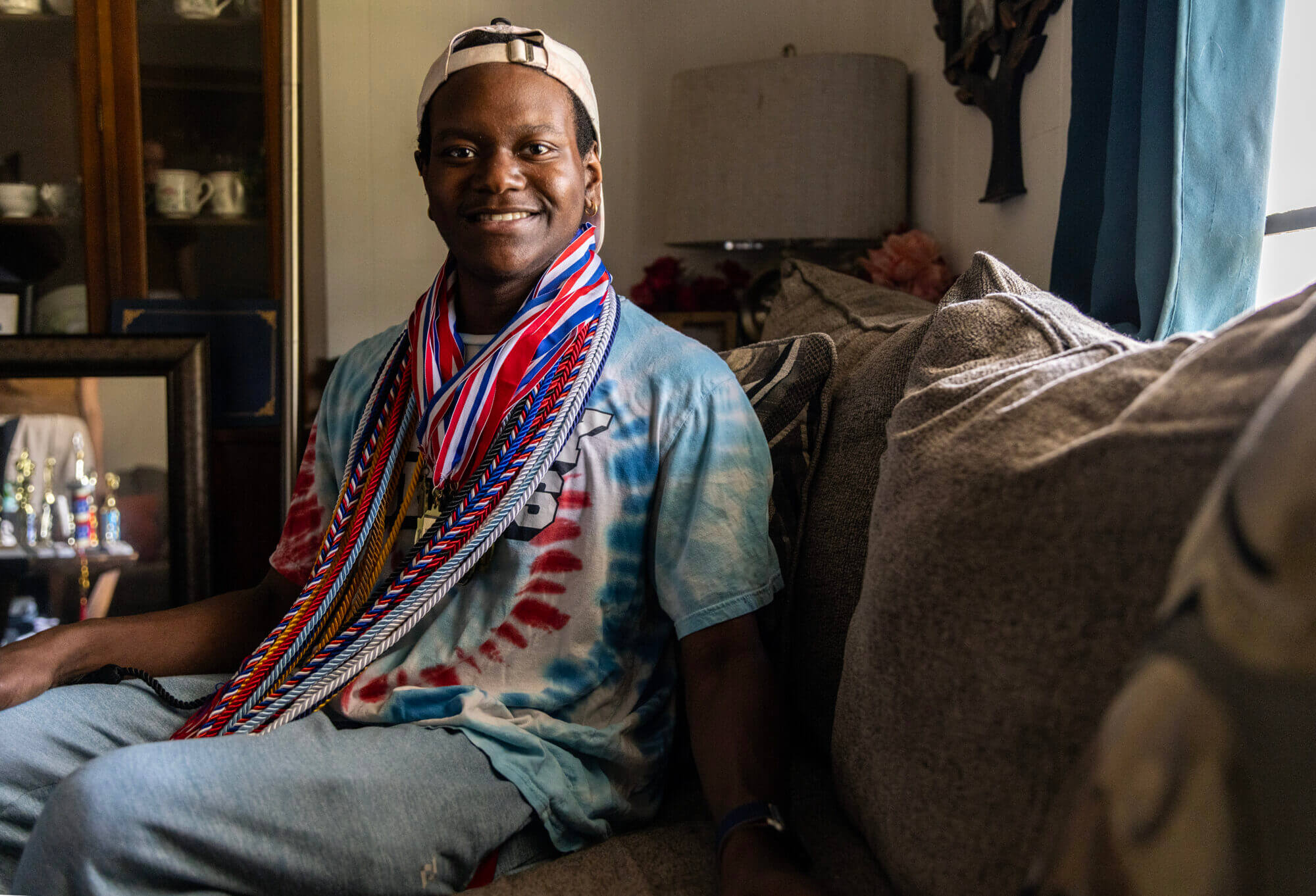
Jayme Anderson wore so many medals to his Forest Hill High School graduation, his mom, Angella, could hear him clanking as he walked across the stage.
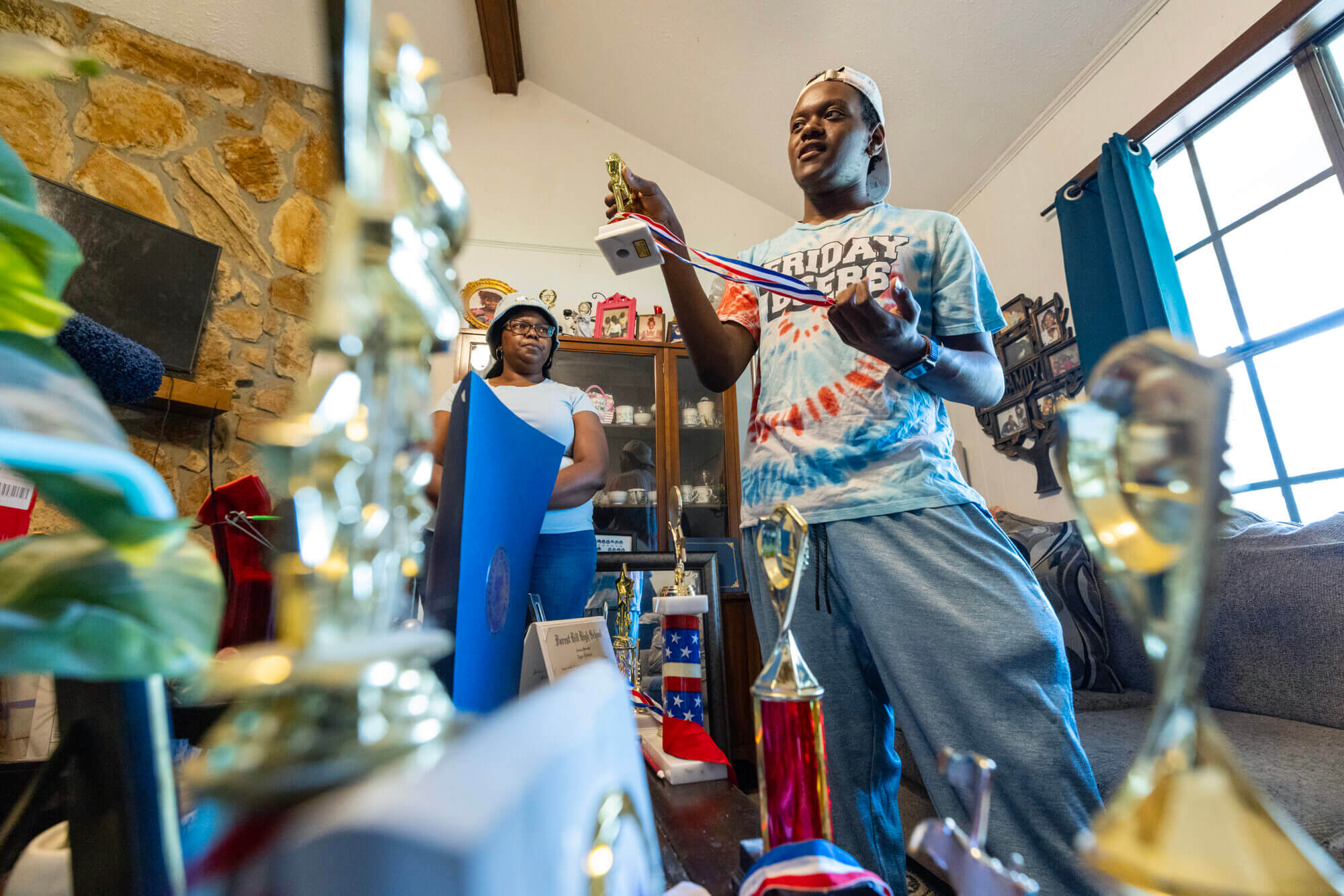
The 18-year-old is something of a collector for academic achievements. At his home in south Jackson, Anderson has a coffee table’s worth of awards: Trophies, badges, plaques, rainbow-colored cords.
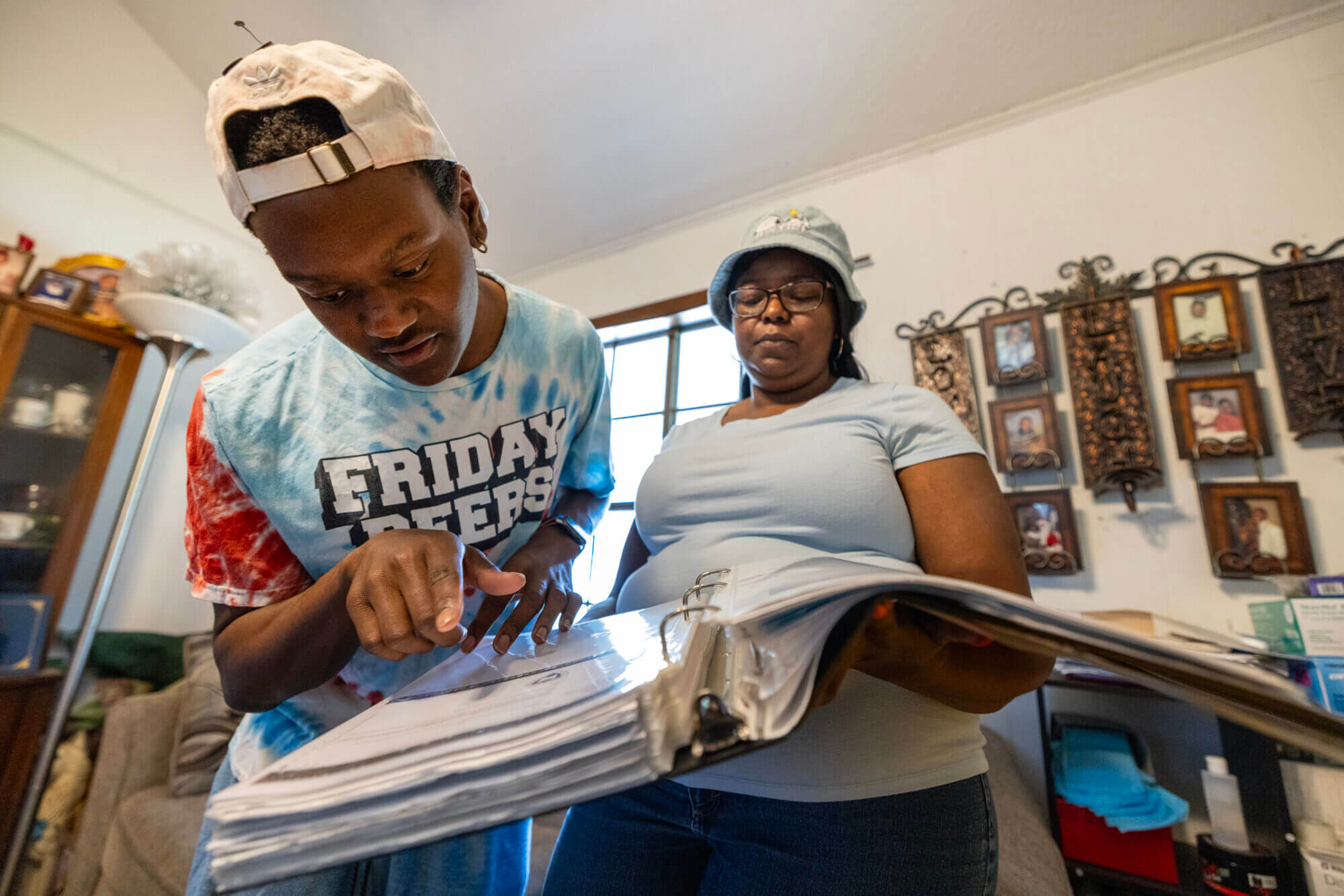
And a binder stuffed full of college acceptances.
All told, Anderson applied to more than 600 colleges and was admitted to exactly 582, racking up more than $10 million in scholarship offers.
The eyepopping feat, which went viral earlier this summer, was driven by curiosity, free time, a desire to go out-of-state for college and a competitive streak.
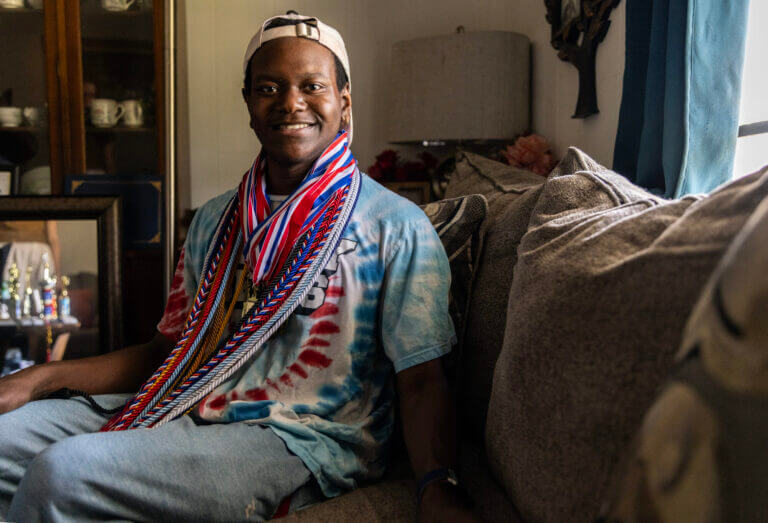
Recent Forest Hill High School and Hinds Community College graduate Jayme Anderson, left, and his mother Angella Anderson look through a binder of college acceptance letters at their home in south Jackson, Miss., Friday, Aug. 15, 2025. Credit: Eric Shelton/Mississippi Today
He also wanted to be an inspiration to other JPS students, who he said are often misunderstood and stereotyped, even by fellow Jacksonians.
“I have to say that when most people think about JPS kids, they think about criminals, bad people,” he said, “but at the end of the day, the majority of the people at JPS, they are not that.”
Who are they?
“Brilliant, intelligent, inspiring,” he said. “They actually want to do better for themselves.”
Don’t get Anderson wrong: There were challenges. During his junior year, afternoon gun violence at a nearby convenience store kept forcing Forest Hill to go on lockdown. He said he missed a lot of AP U.S. History instruction that year.
At one point, Angella thought about putting Anderson in private school. She was frustrated he kept getting marked absent when she knew he wasn’t. The school told her it was an attendance record system issue.
She had a high school picked out – a Christian school on Siwell Road that, like many in the metro area, originated as a segregation academy. But the day she told Anderson she was at her wit’s end, he asked her if he could stay at Forest Hill.
Anderson didn’t want to start over at a school he didn’t know, with teachers who might not support him. The two agreed that despite hardships, he had blossomed in JPS.
“I wanted to continue growing,” he said. “The teachers that I had, my counselors, they motivated me to keep on pushing myself.”
Forest Hill was where, in 9th grade biology class, Anderson decided he wanted to be an oncologist after learning that cancer is caused “by the cells growing out of control.” It was where he joined band and learned to play the oboe, a challenging instrument that he chose in part because it made him more attractive to colleges.
And it’s where he got an opportunity to take dual enrollment classes at Hinds Community College.
“It actually taught me how to study better,” he said.
Anderson’s first anatomy exam, he scored a 79. Then he buckled down and got an 85 on his second.
Recent Forest Hill High School and Hinds Community College graduate Jayme Anderson, right, shows his many awards alongside his mom Angella Anderson at their home in south Jackson, Miss., Friday, Aug. 15, 2025. Credit: Eric Shelton/Mississippi Today
By his senior year, Anderson had racked up so many credit hours, he had a lighter classload and a lot of free time. With encouragement from his guidance counselor, Monica Dickerson, he used those hours to apply to as many colleges as he could.
“He was sitting outside of our office, and my email just started dinging, dinging, dinging,” with requests to send his transcript to one college after another, Dickerson recalled. “So I walked out of my office and I said, ‘Jayme.’ I said, ‘Now listen, I know I told you to apply to schools, but I don’t want you just to go crazy.’”
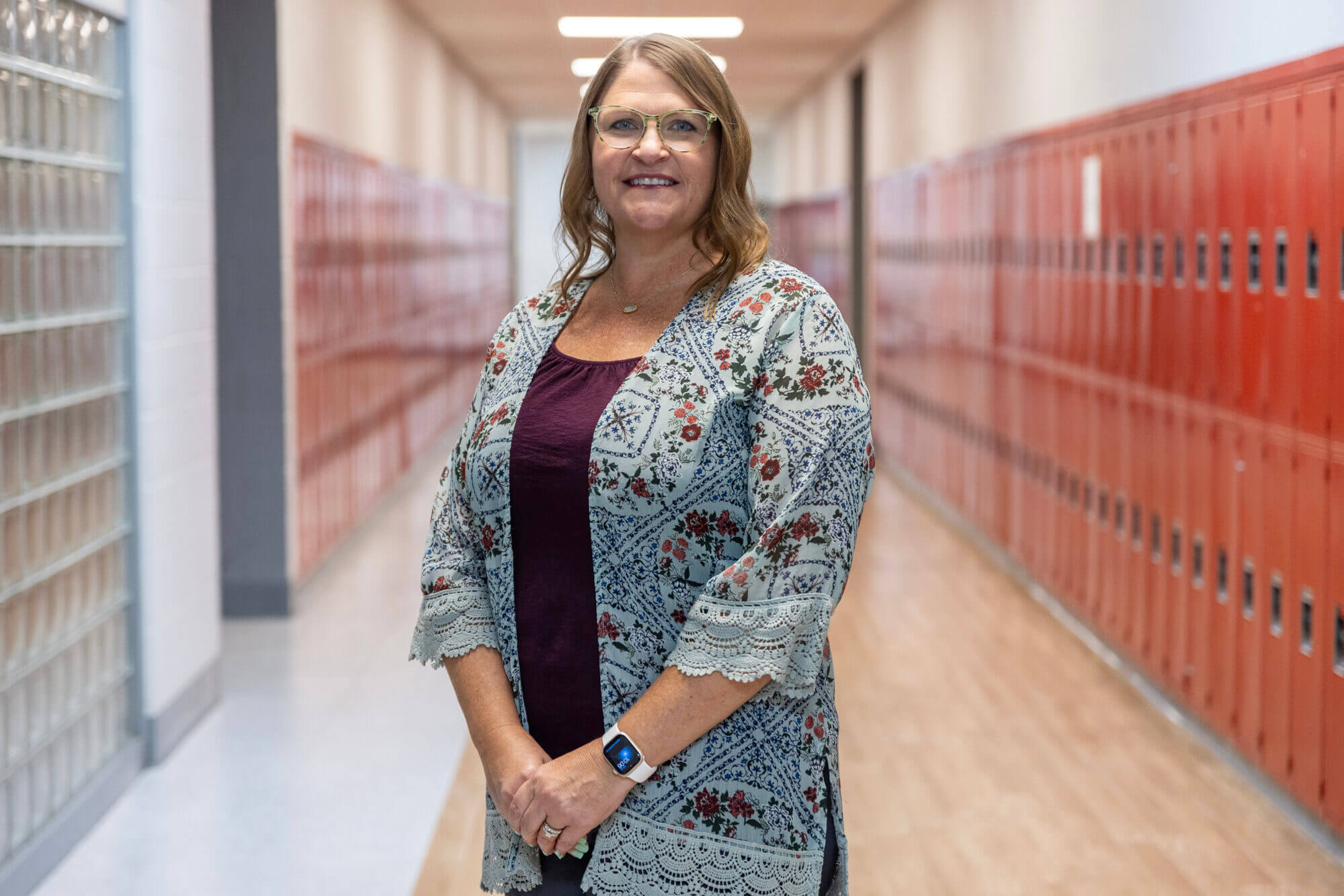
Monica Dickerson, the 12th grade counselor, poses for a portrait at Forest Hill High School in Jackson, Miss., on Thursday, Aug. 21, 2025. Dickerson helped Jayme Anderson with applying to more than 600 colleges. Credit: Eric Shelton/Mississippi Today
He was undeterred. Every now and then, he’d ask Dickerson to print him off some more fee waivers, so he didn’t have to pay for the applications.
He applied to colleges in all 50 states, and even to a few he found on Indeed.com.
“I think his motive was to get a lot of scholarships,” Angella said. “At one point when I talked to him, he was over $5 million, and he was like, ‘Momma, I’m gonna get the most in scholarships.’”
Anderson had initially planned to attend Stanford University, but earlier this month, he had a change of plans. He enrolled in Pennsylvania State University — in part, his mom said, because it snows there, and he wanted to get out of the southern heat.
“That was it, point blank,” his mom said. “It was the cold. It was the air.”
They made the trip to State College earlier this week, taking two cars packed full of the usual necessities — laundry detergent, a mini fridge, boxes of bedding, clothes and lots of pens.
Anderson also brought the award that meant the most to him: His associate’s degree from Hinds.
Recent Forest Hill High School and Hinds Community College graduate Jayme Anderson, left, and his mom Angella Anderson have packed up his belongings at their home in south Jackson, Miss., Friday, Aug. 15, 2025, as he prepares to leave for college. Credit: Eric Shelton/Mississippi Today
Mississippi isn’t ensuring special education students receive all the services they’re entitled to federally, according to the U.S. Department of Education.
A recent report shows Mississippi failing to comply with federal special education requirements in 10 categories, including supervision of how well districts follow laws and by allowing people with suspect qualifications to conduct dispute resolution hearings.
But nothing in the report was particularly surprising to longtime advocates and parents.
“People working with the system have been concerned Mississippi is not compliant,” said Danita Munday, a former Mississippi Department of Education employee turned advocate. “This is validation for what we have been saying for many years.”
The 47-page document outlines numerous areas of noncompliance with federal special education regulations in Mississippi. The overarching conclusion was that the state education agency has not been adequately overseeing districts and ensuring special education students are getting the education they’re entitled to by law.
The violations cited include the state agency reporting invalid and unreliable data, poorly supervising how districts spend money on special education and inconsistently tracking disciplinary measures for students. The report said the agency lacks a system to ensure in a timely manner that districts are in compliance with federal standards.
Without that system, Munday said the state education department is taking a Band-Aid approach to special education violations.
“They’re stepping on bugs,” she said. “They’ve been finding out about noncompliance through complaints and writing corrective action plans to fix it for one child.”
The report also notes a number of issues with Mississippi’s dispute resolution process.
When parents feel their child’s rights have been violated, they have the right to complain. A structured process ensues, with timelines and corrective action plans. But the state’s model written complaint and due-process forms require more information than they’re required to ask for, including complainants’ home addresses and phone numbers. The forms also don’t note that people can file complaints against the state, not just their district.
In the case of mediation, the report shows that Mississippi makes parents sign “confidentiality pledges” before any resolution has been reached. A spokesperson for the agency said that pledge has since been removed.
Additionally, there’s little evidence to show that hearing officers, impartial people who help resolve disputes over special education services, are well-trained or qualified for their jobs in Mississippi, the federal investigation found.
A spokesperson for the state education department said the agency “acknowledges advocates’ concerns and remains committed to better serving communities.”
Cassie Tolliver of Disability Rights Mississippi said the report should draw major concern.
“Parents trust schools to do what’s right by their child, but that’s not always the case,” she said. “We need to ensure everyone knows how egregious this is. … They are failing them all around.”
The numerous violations have Mississippi out of compliance with the Individuals with Disabilities Education Act, the federal law guaranteeing disabled students the right to a free and appropriate public education.
In order to receive federal education funding, state agencies must hold districts accountable to the law. The violations mean the $145 million Mississippi receives annually for special education is now at risk.
The report, released last month along with reviews of nine other states, calls for the Mississippi Department of Education to make corrective changes — some within a few months, and others within a year. According to the spokesperson, the agency has already begun rectifying the shortcomings identified in the report.
Joy Hogge, executive director of Families as Allies, estimated that 95% of the calls her organization receives are from parents who need help getting their kids’ educational needs met. She said those problems are the very ones highlighted in the report.
“Every one of those calls represents a very real child who has every right to learn,” she said. “It’s incredibly widespread and devastating when it’s not addressed.
“It’s validating to see this all written down, but the real proof is going to be if anything happens — what changes are made and what is the state held accountable for.”
Correction, 8/22/25: This story has been updated to remove a quote from state Superintendent of Education Lance Evans because his comments were unrelated to a U.S. Department of Education report about special education services.
The Mississippi State Department of Health on Thursday declared a public health emergency in response to a rising infant mortality rate in the state – most of which is occurring among Black babies.
In 2024, Mississippi saw its highest rate of infant deaths in over a decade.
Data shows the death rate for white infants in 2024 was one of the lowest of the last decade, while the rate for Black infants is the highest it’s been. Nearly twice as many Black infants as white ones died last year.
Mississippi is one of the poorest states and has long led the nation in infant mortality, but the worsening numbers and the growing racial disparities call for extraordinary measures, said State Health Officer Dr. Daniel Edney.
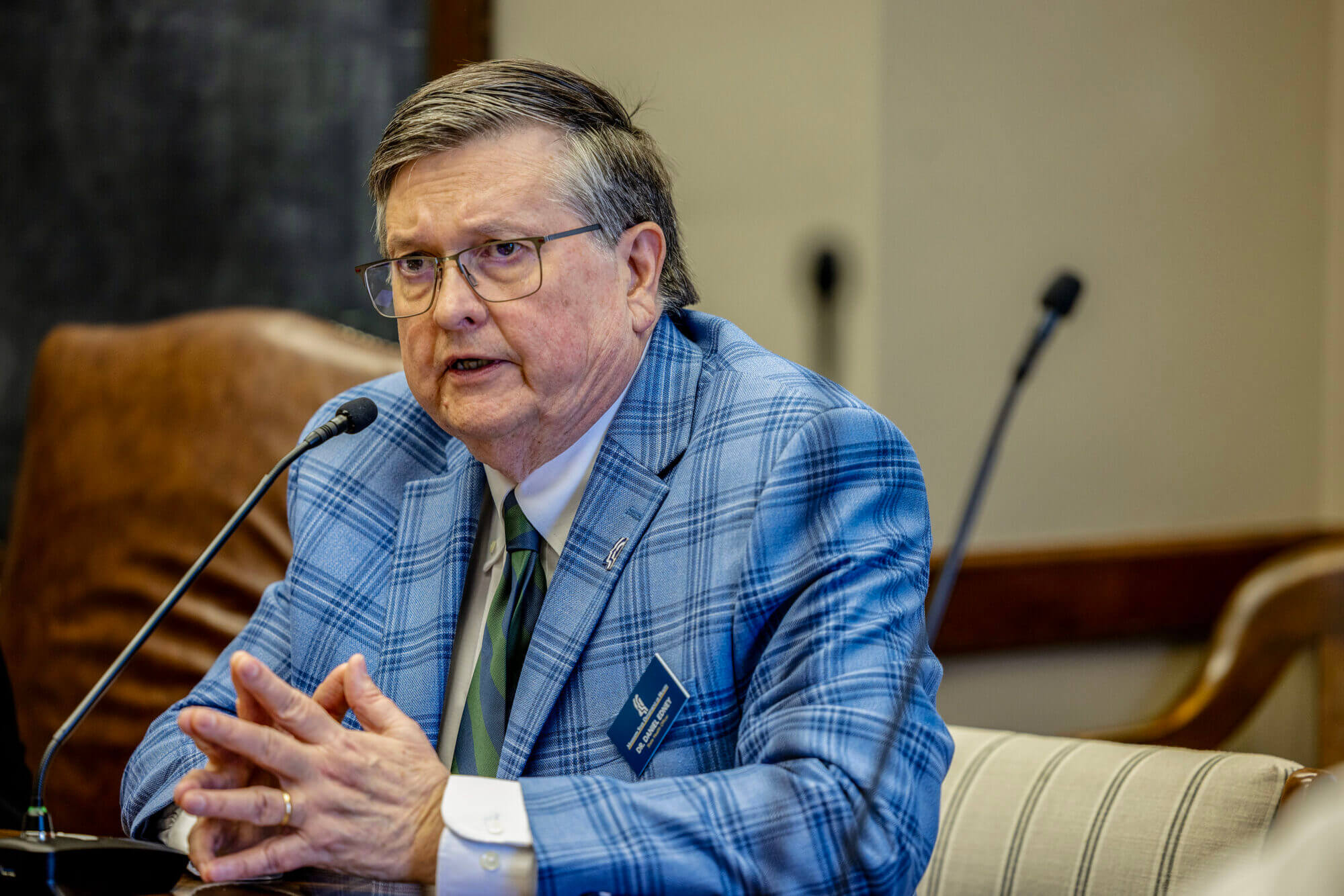
Dr. Dan Edney, Mississippi’s state health officer, speaks to lawmakers during the Democratic caucus meeting at the State Capitol in Jackson, Miss., on Tuesday, April 1, 2025. The meeting focused on discussing federal cuts to healthcare. Credit: Eric Shelton/Mississippi Today
“It hasn’t been this bad in a long time,” Edney told Mississippi Today. “And that’s with a lot of us pushing hard to make it better. In the face of us, and so many partners all over the state, really leaning into this space, the numbers show significant worsening.”
Honour McDaniel Hill, director of Infant and Maternal Health Initiatives for March of Dimes, said declaring a public health emergency is not something she’s seen other states do in response to infant mortality in recent years. She called it an “interesting tactic” to move time, energy and resources to an important cause.
“What a public health emergency does is it allows a state entity – in this case the state Health Department – to put this on high alert, meaning funds can go here, personnel and people’s time and attention can go here,” McDaniel Hill said. “It really does kind of break this barrier.”
Edney said he hopes that with the emergency status, he’ll be able to develop a new system of care six months faster than he’d originally intended.
That OB System of Care, which has been in the works since 2023, involves designating birthing hospitals with different care levels – something called perinatal regionalization, which is used in many states. It also includes implementing transportation and tracking to make transfers of high-risk moms more efficient.
Edney said he hopes to have hospitals designated as early as October, but full implementation of the system could still take a couple of years.
This fall, Edney also hopes to have expanded perinatal services at county health departments in areas that are obstetric deserts, as part of a “multi-pronged strategy” response to the emergency.
Nearly half of Mississippi’s counties are maternity care deserts, McDaniel Hill said, and those counties make up nearly a quarter of the state’s births, making increased access a vital part of the solution.
Other strategies outlined in the State Health Department’s press release included allocating more staff to a home visitation program called Healthy Moms, Healthy Babies, and educating families on safe sleep practices to mitigate sudden infant death syndrome, one of the leading causes of infant mortality in the state.
The most recent March of Dimes report card for Mississippi included several policy recommendations the Legislature would be responsible for enacting, including expanding Medicaid to working people with modest salaries, which Republican Gov. Tate Reeves opposes. The Health Department did not mention Medicaid expansion in its plan Thursday.
Monica Stinson, senior program director of the Mississippi Perinatal Quality Collaborative, said her organization will play a central role in the emergency response, particularly by collaborating with community-based groups and connecting families with resources.
“The declaration is a powerful tool that helps centralize resources, align key partners, and remove barriers that have historically slowed progress,” Stinson said. “This formal recognition of the crisis allows us to move beyond fragmented efforts and toward a more coordinated, statewide strategy aimed at improving outcomes for all mothers and infants in Mississippi.”
Rachel McAlpin, a 17-year-old from Brandon, won the gold medal in the 50-meter breaststroke at the 2025 World Aquatics Junior Swimming Championships Wedneday in Otopeni, Romania.
You, as I, might wonder how it feels to win a world championship at age 17. That’s what Mississippian Rachel McAlpin did Wednesday winning the 50-meter breaststroke gold medal at the World Junior Swimming Championships in Otopeni, Romania, nearly 6,000 miles from hometown of Brandon.
Rick Cleveland
“It feels really cool, honestly,” young McAlpin replied in a phone call Thursday afternoon. “It truly is a blessing.”
And then McAlpin apologized for sounding hoarse, not because she is sick, but because, as she put it, “I’ve been cheering so hard all day and night for all my Team USA teammates.”
One of those teammates is Charlotte Crush of Louisville, Kentucky, the 17-year-old daughter of Mimi Bowen, formerly a highly competitive swimmer for the Jackson Sunkist swim program. Crush Thursday won the 100-meter backstroke gold medal. Said McAlpin, “We’ve become really good friends. Charlotte is an incredible swimmer and person.”
McAlpin is fairly incredible herself. You, as I, might want to know more about Mississippi’s new swimming world champion. Here’s a short dossier: Rachel McAlpin, who is home-schooled, has swam competitively since the age of 5 and regularly swims for the Flowood-based Mississippi Makos. She has committed to swim collegiately for the University of Arkansas, beginning in the fall of 2026. She is the middle of Chris and Christie McAlpin’s three daughters. Rachel is deeply religious, soft-spoken and exceedingly polite, which belies a fierce competitiveness. As a swimmer, she is known as a strong finisher.
Rachel McAlpin
McAlpin fell behind early in her championship race Wednesday but then rallied as she typically does and touched .34 seconds ahead of 18-year-old Smilte Plytnykaite of the Republic of Lithuainia. In winning, McAlpin equalled her personal best time of 30.78 seconds.
“I knew I was in pretty good shape in the last 10 meters when I couldn’t see anybody ahead of me,” McAlpin said. “I knew I just needed to hold on and I did.”
No telling how many hours McAlpin has spent training the past decade-plus to prepare for that 30.78 seconds of glory. Competitive swimming can be almost like a full-time job, requiring hours upon hours of rigorous pool time, plus weight room workouts.
“I guess it really is kind of like a job, and you really have to love it, which I do,” she said. “You also have to have great coaching and a strong support group at home, and I have definitely had that.”
McAlpin is probably finished swimming – but not cheering, she says – in the Romania meet, and will now point toward 2026 competition for both the Makos and Team USA. Yes, she says, her dream is to represent the U.S. in the 2028 Summer Olympics at Los Angeles.
“The Olympics are a goal, but I have a whole lot of swimming and so much work to do before that,” she said.
If nothing else, her victory in Romania establishes her as as a solid threat, if not favorite, to make the U.S. Olympic team.
Meanwhile, her parents have watched, via streaming, at home in Brandon while their middle daugher swam the preliminary heat, the semifinals and, finally, the championship race half a globe away in a country that shares a 384-mile border with Ukraine. With the time difference, they stayed up until 2 a.m. Tuesday to watch the prelims. Said Chris McAlpin, her father, “We were like any parents would be, nervously pacing beforehand and then cheering like crazy during the races. Obviously, we are extremely proud and blessed. It took a minute to sink in but it has: Our daughter is a world champion.”
The percentage of Mississippi students making high scores on state tests declined in all four content areas, the latest results reveal.
It’s the first time those numbers have seen a meaningful drop in years, aside from the onset of the COVID-19 pandemic.
Paula Vanderford, chief accountability officer for the state education department, conceded the downturn was “unusual for Mississippi” at Thursday’s state board of education meeting.
“With the exception of COVID, we’ve seen steady increases in our overall proficiency,” she said. “So the results this year have given us the need to take a deeper dive into what the results really mean.”
All four end-of-course assessments — Algebra I, English II, U.S. history and biology — saw similar or slightly higher pass rates compared to last year.
Results were less straightforward for the four subject areas overall. Passing scores went up slightly overall for English-Language Arts and U.S. history, and they fell slightly for mathematics and science.
However, the percentage of students scoring proficient and advanced during the 2024-2025 school year across the four subject areas fell a couple of points across the board.
The smallest decline was in English — students fell just a fraction, from 47.8% last year to 47.4% — while the largest drop was in science, going from 63.4% to 60.9%.
“The data is not a warning yet,” said board chair Matt Miller. “It’s a reminder. If it happens next year, we’re sliding into a warning situation.”
Vanderford also cautioned board members from becoming too concerned just yet.
She encouraged them to wait to see the results of the National Assessment of Education Progress tests, which reveals how Mississippi ranks against other states, and compare those results to these statewide assessments, the Mississippi Academic Assessment Program.
Results from the third-grade literacy test were a little more promising. Those scores went up marginally, from a 75.7% pass rate to 77.3%.
The Literacy-Based Promotion Act, passed by the state Legislature in 2013, made passing the test a requirement to graduate to the fourth grade. The act has led to higher standards in literacy education in Mississippi, which experts say has largely contributed to the state’s big reading gains, coined “The Mississippi Miracle” by national media.
Still, Miller acknowledged that the state department of education could be in a precarious situation if it loses momentum.
“The Mississippi Miracle, that’s now in the past,” he said at the meeting. “It’s now the marathon. What can we do to move it to the next level? We can’t rest.”
Board members and top education officials stressed that the agency must turn its focus to pushing students to perform at a “proficient” level on the assessments, instead of just “passing.”
The state’s new accountability model, which is still being finalized, puts a “greater emphasis on proficiency,” State Superintendent Lance Evans said in a statement. MAAP results are a big part of the state’s accountability grades, which will be released at next month’s board meeting.
In order to improve scores moving forward, the agency is implementing a number of initiatives. These include increasing the number of literacy and math coaches at schools across the state, encouraging districts to use “high-quality instructional materials,” ensuring administrators know how important it is to implement curriculum based on science of reading research and training teachers in the science of reading.
Additionally, the agency will be seeking funds from the Legislature this session for literacy and math initiatives, which Evans has already discussed with House Speaker Jason White.
But none of these programs will make a difference if districts don’t accept the support offered by the state education department, Evans said at the meeting.
“There are some districts that refused literacy coaches last year and some of them fell tremendously,” he said. “I called them and asked, ‘Are you sure this is what you want to do?’ And they said, ‘Yes.’ You see what happened.”
Several public school districts were recognized for their high scores in three to four subject areas, including Long Beach, Ocean Springs, Clinton, Enterprise, Oxford, Pass Christian and Union County.