Audio recording is automated for accessibility. Humans wrote and edited the story.
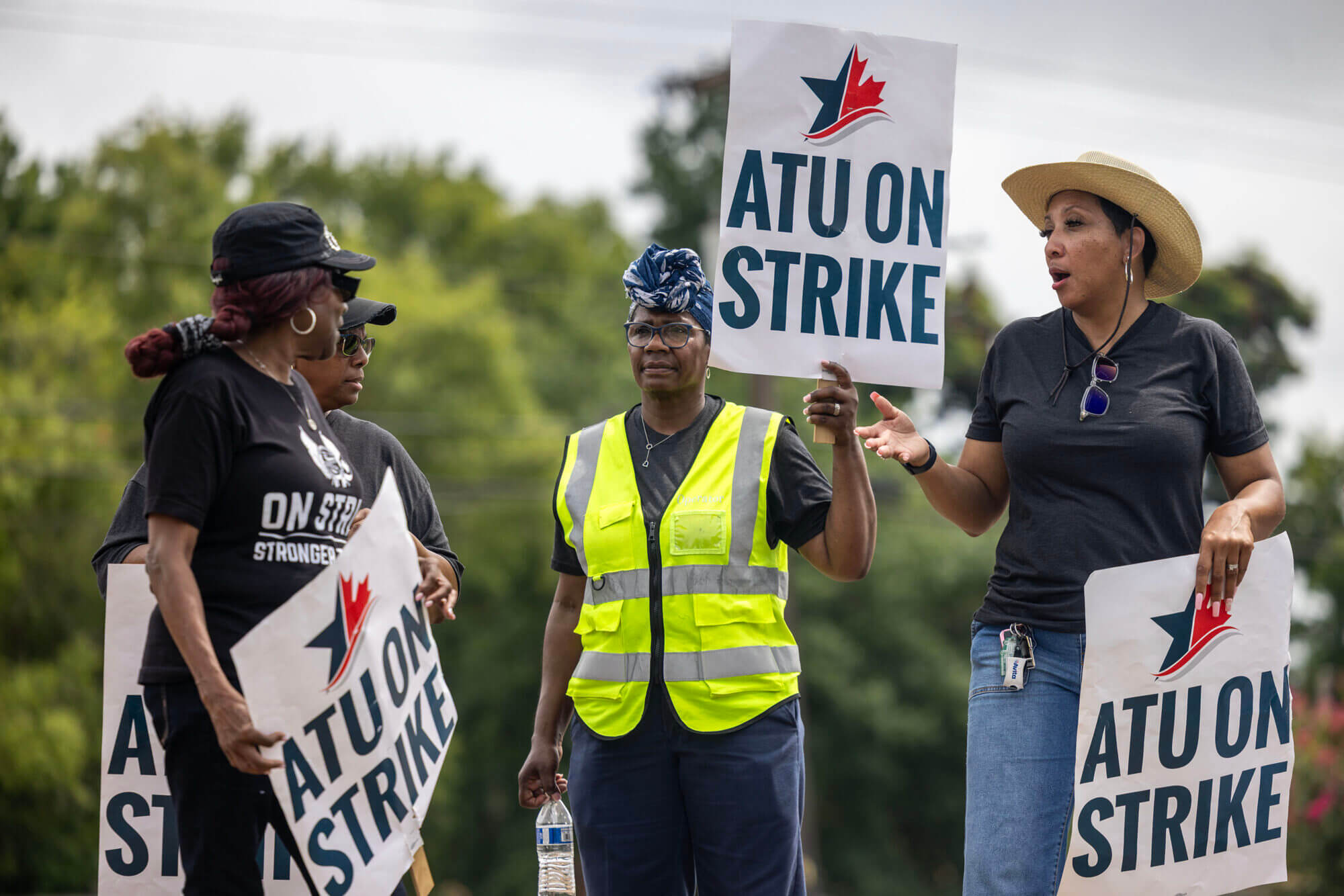
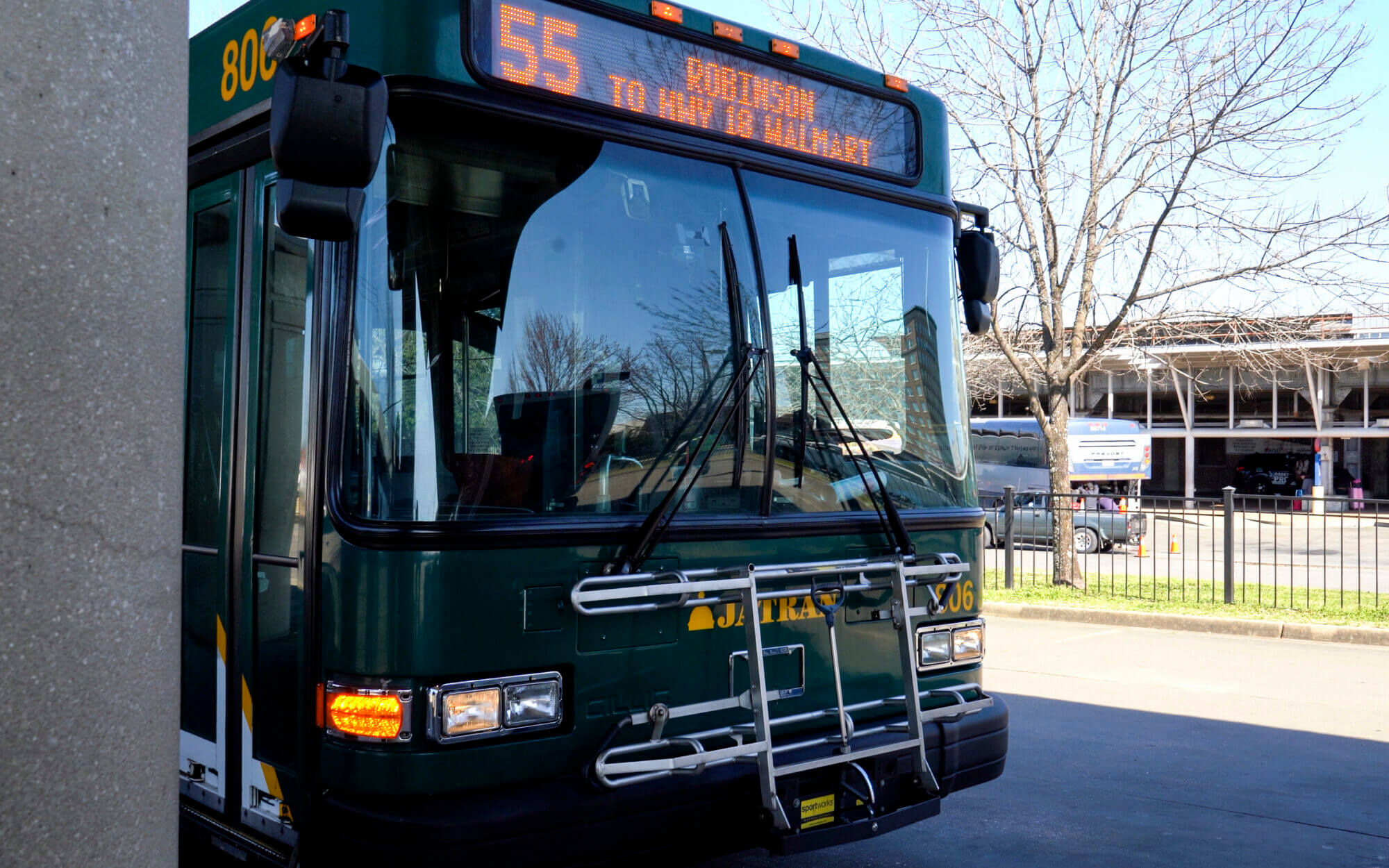
Scores of Jackson bus drivers and other transit workers formed picket lines early Monday, after contract talks over the weekend failed to produce an agreement between the transportation union and the Texas company under contract to run JTRAN.
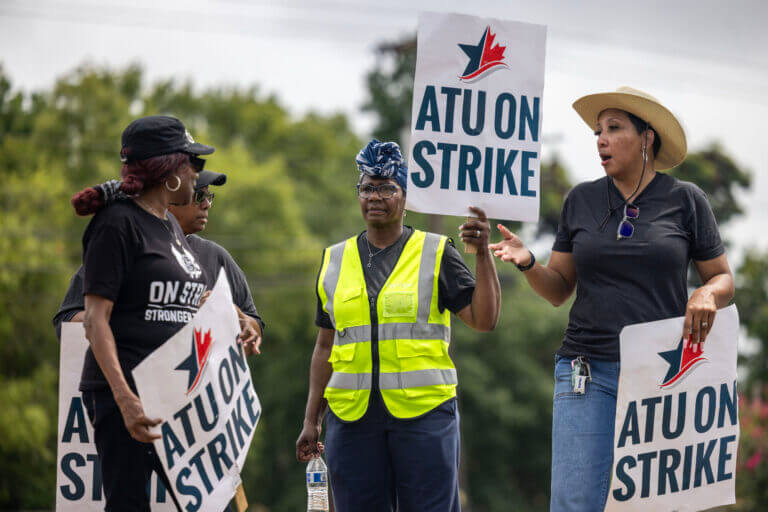
More than two dozen strikers lined Highway 80 outside JTRAN’s headquarters, holding signs and chanting as some motorists honked in apparent support.
“Together we stand, divided we fall,” strikers chanted.
The strike is sure to disrupt the lives of scores of low-income and disabled Jacksonians who rely on the city’s bus system to get to work and travel across the region.
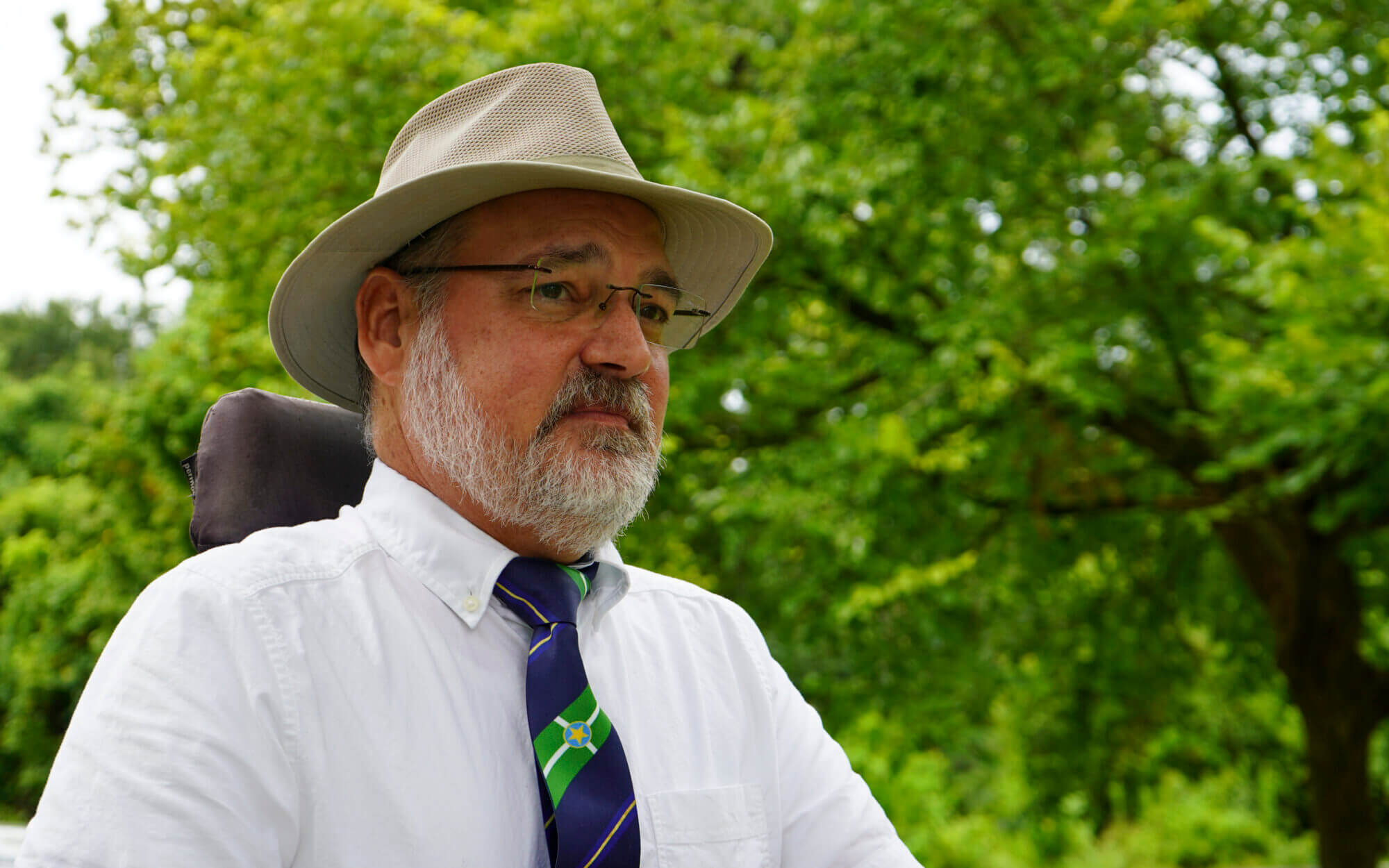
Scott Crawford, a longtime disability activist, is one of many in the area who will be affected by the ongoing strike. Crawford held a press conference in his driveway on behalf of those suffering from disabilities, urging both MV Transportation and JTRAN to come to an agreement.
“I’m not sure how this is going to work out, but I can assure you there will be no winner,” Crawford told reporters. “Not the union, not MV and definitely not the city.”
Crawford, who uses a wheelchair, said his mobility would be further limited because of the strike.
Scott Crawford, a longtime disability activist, prepares to give a press conference from his driveway on Monday, July 13, 2026. Credit: Aaron Lampley/Mississippi Today
“I’m still privileged enough to have at least one grocery store within wheelchair distance,” Crawford said. “But I can’t depend on that grocery store for all my grocery needs.”
Charles Tornes Jr., the president of the Amalgamated Transit Union Local 1208, said his members sought to avert a strike but had no other choice.
“We want the citizens of Jackson to know we did not want to strike. We hope they stand with us,” Tornes said in a statement.
Though JTRAN is a publicly funded service, its unionized employees work for MV Transportation, which calls itself the largest privately owned transportation company in America.
This is the second time in the past two years that the city’s public transportation workers have walked off the job. Workers went on a 14-day strike in September 2024.
In a statement, MV Transportation said it was disappointed the union went on strike.
“To be clear the union leadership’s actions in launching a strike hurt our valued passengers and the people of Jackson AND our teammates who are their dues-paying members,” said the company’s spokesperson, Hyma Moore Jr.
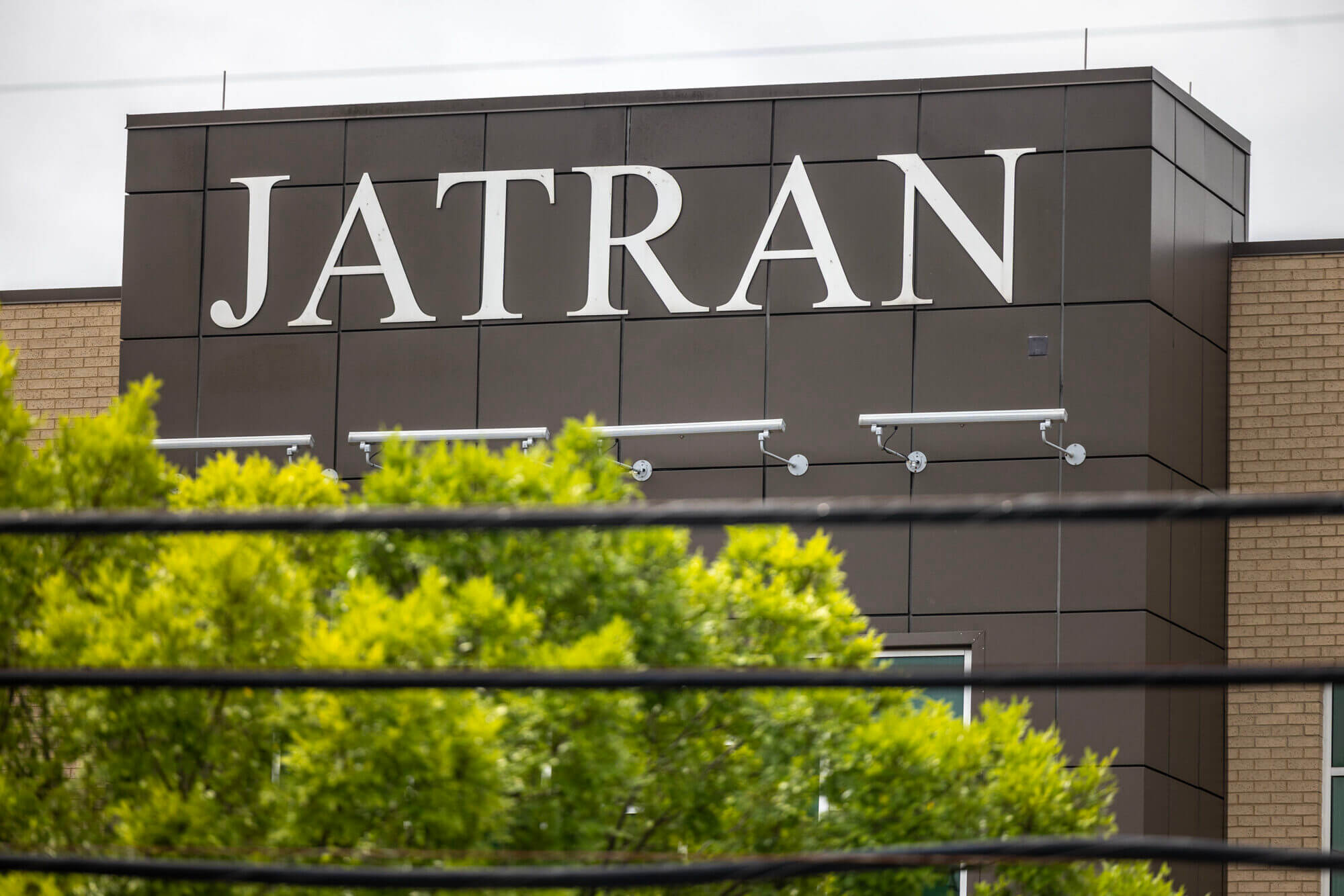
The JTRAN Administration and Maintenance Facility Monday, July 13 2026, in Jackson. Credit: Eric Shelton/Mississippi Today
Mayor John Horhn urged both sides to seek the help of a federal mediator.
“I respect the concerns raised by our JTRAN operators and I recognize the important role they play in keeping Jackson moving every day,” the mayor said in a statement.
“We are carefully evaluating both perspectives to determine what makes the most sense for our riders, our workers, and our taxpayers,” Horhn said.
“My priority is to minimize disruption in service while ensuring that our drivers are treated fairly and that residents who depend on public transit can continue to get to work, school, medical appointments, and other essential destinations,” he said.
He said MV Transportation had begun bringing in out-of-state drivers to keep some routes running. He said the city will be waiving requirements that JTRAN drivers hold Mississippi driver’s licenses for the duration of the strike – a move the union called “dangerous.”
“You don’t have a CDL, so you’re certainly not as trained as our operators here,” Costa said.
The two sides have been negotiating a collective bargaining agreement out of public view since a previous version expired in December. The union has been seeking competitive pay raises, while MV Transportation has proposed a number of changes to JTRAN, including new safety policies and the ability to hire drivers without commercial licenses to operate smaller vehicles for on-demand “microtransit” services.
The union authorized a strike in June and on Friday issued a 72-hour strike notice.
Update, 7/13/2026: This article has been updated with additional information about people affected by the JTRAN strike.
Audio recording is automated for accessibility. Humans wrote and edited the story.
CLEVELAND – Going for nearly a year with broken heating and air conditioning has been miserable for Ashley Matthews. But the last few months have been unbearable – and potentially dangerous. Matthews, 27, is six months pregnant with her third child.
Her car didn’t have air conditioning, either, so Matthews financed a new one in May to get relief from the heat.
“I can imagine if I’m this hot, how hot she is,” Matthews said about her daughter who is due to be born in October.
A single mom of a 1-year-old and a 4-year-old, Matthews works as an early childhood educator. She said she intuitively knew what research in recent years has brought to light: Exposure to extreme heat can be harmful to pregnant women and the babies they are developing.
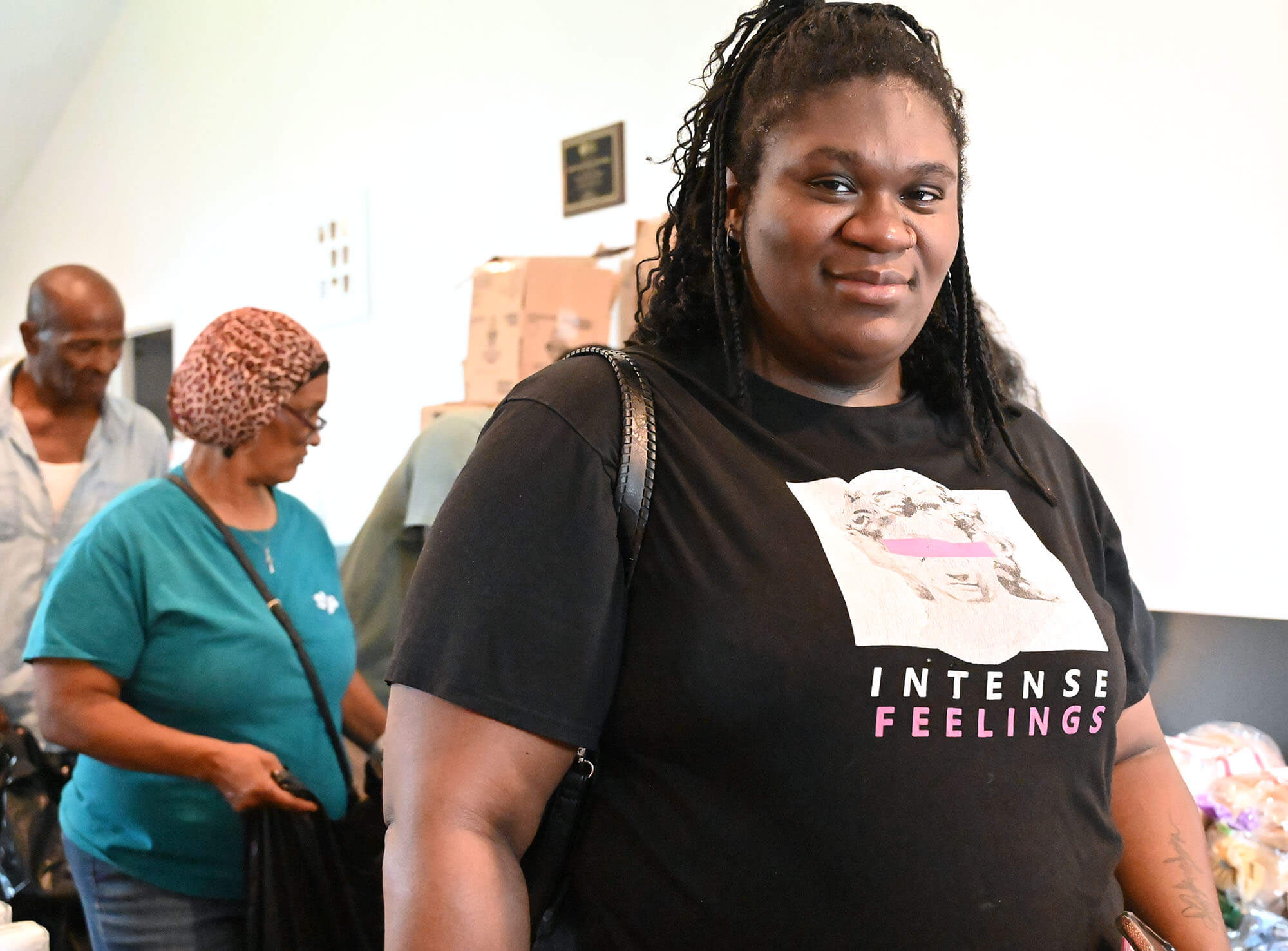
Expectant mother Ashley Matthews picked up items offered at a “Beat the Heat” event held at the South Central Village Apartments, Wednesday, July 1, 2026, in Cleveland. Credit: Vickie D. King/Mississippi Today
The danger is acute in Mississippi, which typically has long, hot and muggy summers and a high rate of people who might not be able to afford air conditioning. The state leads the nation in preterm births, with 1 in 7 babies born before 37 weeks. It also has the highest – and worsening – rate of infant mortality, babies who die before their first birthday. More than twice as many Black infants die as white ones. The gap, in fact, is growing wider.
The causes for the poor outcomes, in Mississippi and across the country, are many. But some risk comes from the warming planet. The last few years in Mississippi have been among the hottest on record, and the National Weather Service forecasts that trend is likely to continue.
A landmark JAMA Open report on the topic in June 2020 was led by Dr. Bruce Bekkar, who stopped practicing obstetrics after 20 years and turned to climate research and advocacy a few years back. It brought attention to extreme heat’s many hazards: preterm birth, low birthweight, stillbirth and more. Women in communities of color, such as Matthews, faced higher risk.
Research since that report has only lengthened the list of possible harms, including to expectant mothers. Some research has even suggested that as little as one day of extreme heat might elevate the risk of pregnancy complications, often linked to dehydration.
Those findings made headlines, in both the medical world and in the general media. But that knowledge hasn’t translated consistently into clinical care.
Many maternal healthcare providers don’t routinely address heat, or how to minimize its potential risks with their pregnant patients, according to providers, researchers and patients interviewed in Mississippi and across the country.
Matthews said her doctor never talked to her about high temperatures or asked about her living conditions.
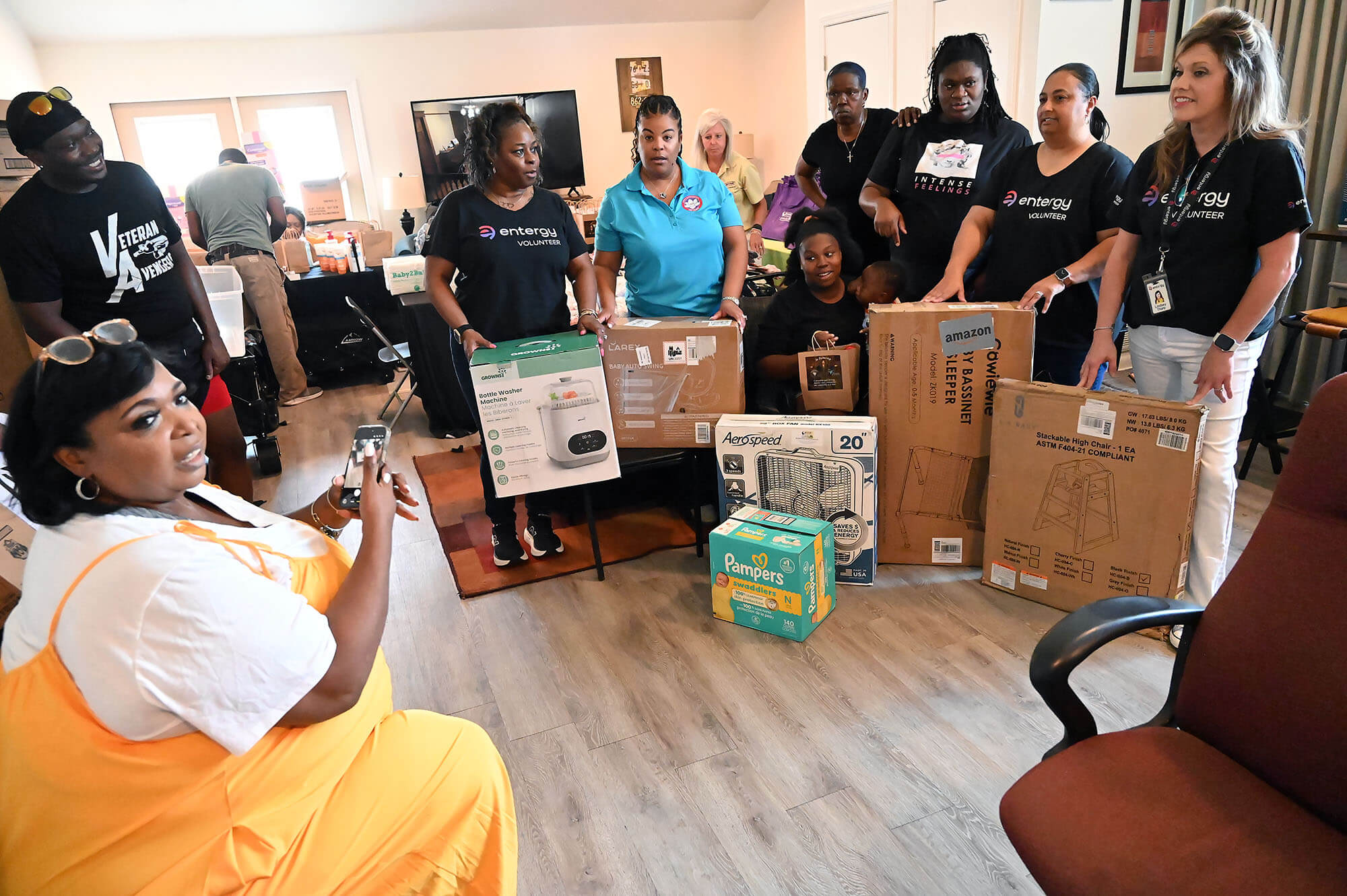
“What can they do about it?” she asked on July 1, as a deadly heat wave descended over much of the United States ahead of its 250th birthday. She was attending a “Beat the Heat” event hosted by community organizer Pam Chatman and held at an assisted living facility in Cleveland within the Delta. Alongside 120 other Mississippians, Matthews received a free 20-inch box fan.
Three other pregnant women at that event told Mississippi Today that their doctors had not talked to them about heat exposure, either.
Major medical groups were slow to emphasize heat, and maternal health and climatescientists are still working on defining precisely how much heat, and for how long, triggers risk. They want women to be careful and certainly know warning signs, but not worry excessively if they do have some heat exposure.
“It’s not a ton (of risk). But it’s not zero,” said Dr. Blair Wylie, chair of obstetrics and gynecology at Beth Israel Deaconess Medical Center in Boston and an internationally recognized leader on climate change and pregnancy.
She noted that heat still doesn’t get a lot of attention as a pregnancy risk for several reasons – including that there’s a long list of things to discuss, test and monitor in prenatal visits that often only last 20 minutes or so.
“We need to get more innovative in how we educate the population and our pregnant patients,” Wylie said. “Not all of it has to be at that 20-minute visit.”
Some health systems are trying tactics such as sending messages in patient portals, or handing out patient information packages. But it’s not a consistent practice across the country.
In the clinic
Low-income pregnant women, often living in subsidized housing without adequate air conditioning or money to keep their air conditioning running, are likely to show up at health appointments with dehydration, contractions and pre-term labor, said Dr. Rashad Ali, the obstetrician at the Family Health Center Women’s Clinic in Laurel.
Dr. Rashad N. Ali poses for a portrait at Family Health Center, Inc. in Laurel on Wednesday, June 25, 2026. Credit: Eric Shelton/Mississippi Today
“Heat leading to dehydration has a lot to do with the preterm contractions and preterm birth problems that we see in our state,” Ali said. During summer, he estimated, about 1 in 5 pregnant women walking into his clinic have those early contractions, a precursor to premature labor and high-risk births.
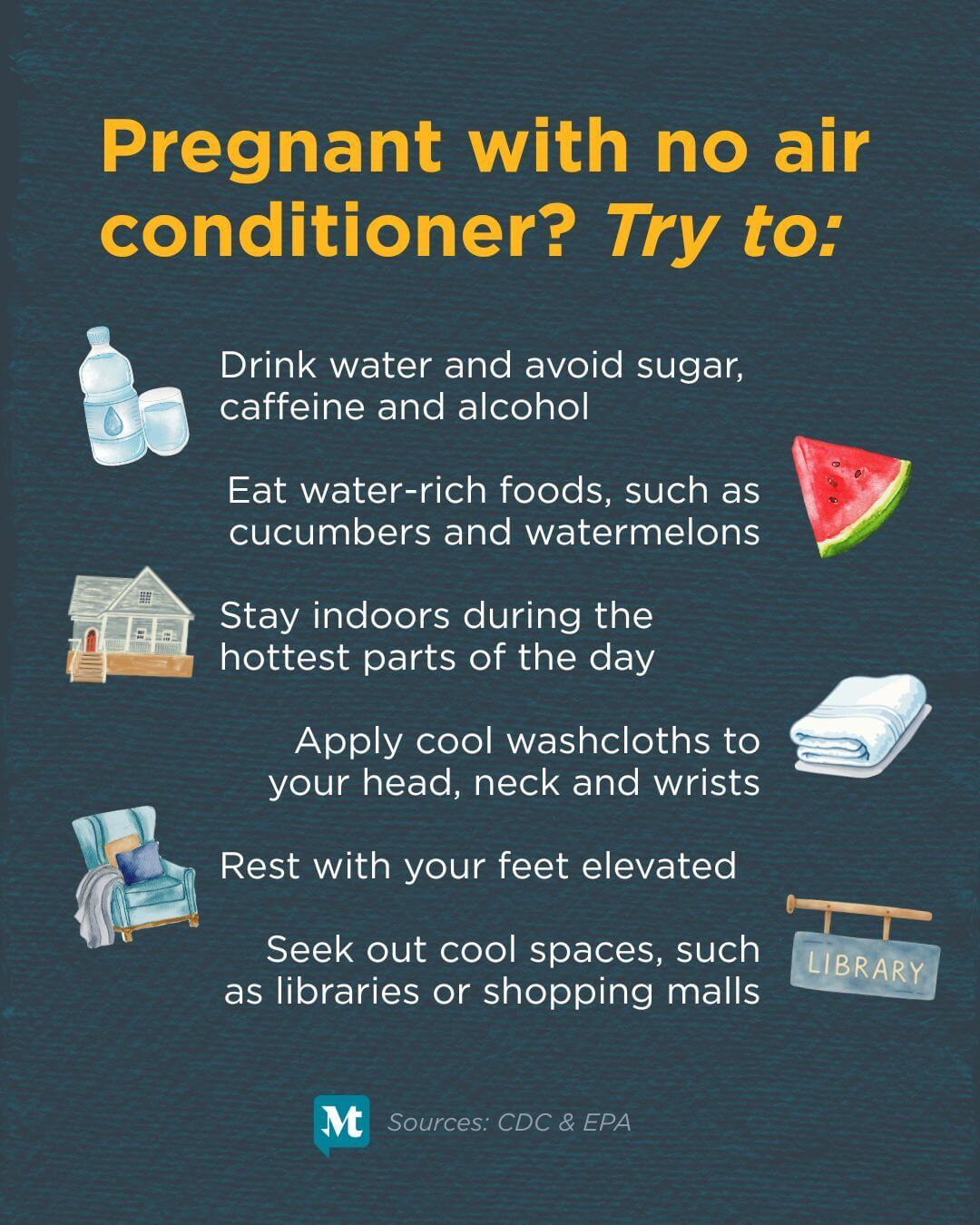
To avoid dehydration, the Centers for Disease Control and Prevention advises people to carry a water bottle and limit beverages high in sugars, sodium and caffeine. Eating water-rich fruits and vegetables also helps. But as Ali noted, many low-income people in Mississippi live in “food deserts” where healthy fresh food is scarce – and expensive. And it’s often difficult for low-income people to stay inside during the hottest parts of the day, rest often or get time off from work.
Malika Holifield, 27, is familiar with this scenario. A patient at Ali’s clinic, she is four months pregnant with her first child and worries about the heat outside and her ability to escape it. In April, when she was just one month pregnant, she began experiencing lightheadedness at her job. It was tough work, sanding doors and lifting heavy objects in a local manufacturing facility. It was hot indoors, without air conditioning.
Mia Walker, a nurse-supervisor at Family Health Center, said about 90% of the clinic’s patients work manual labor jobs in industries such as electrical equipment manufacturing or poultry production. She knows because the clinic team asks patients about how they live and work, hoping to spot potential dangers early on. They encourage their patients to come in if they don’t feel well, without scheduling an appointment. They advised Holifield to get disability leave, which she successfully did.
“When they’re not feeling well and they’re pregnant, they get carte blanche,” Walker said. “They come right to the door, and we see them.”
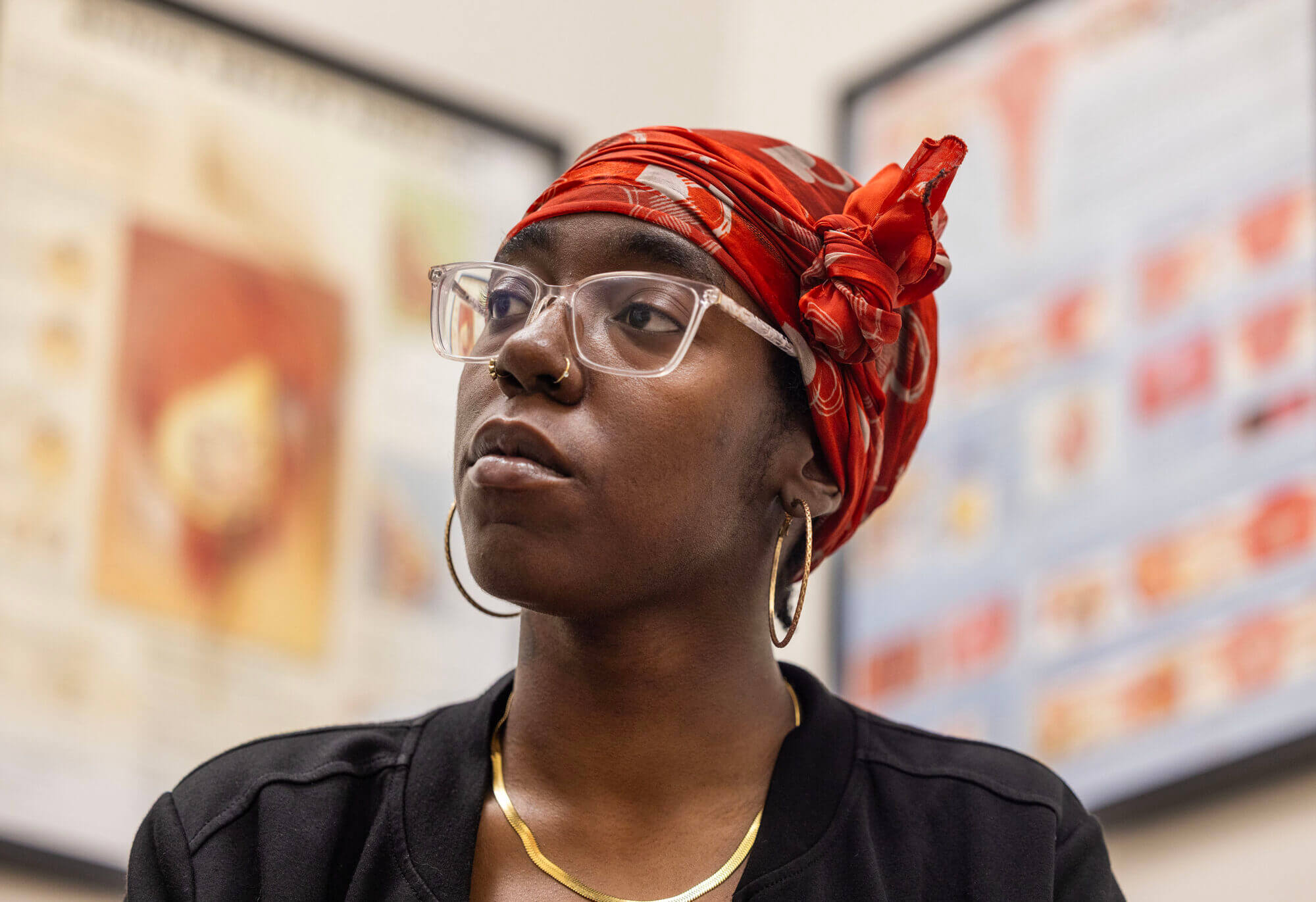
Malika Holifield sits in an exam room as she waits to be seen by a doctor during a visit at Family Health Center, Inc. in Laurel on Wednesday, June 25, 2026. Credit: Eric Shelton/Mississippi Today
But the Laurel clinic might be an outlier. While there’s no landmark survey of how many women get advised about heat during their pregnancy, the gaps are clear.
The American College of Obstetricians and Gynecologists didn’t stress heat on the public-facing portion of its website – other than avoiding hot tubs, saunas and intense exercise – until recently. It wasn’t until this broiling summer that ACOG disseminated its pregnancy guidance on climate and health, including heat, wildfire smoke and pollution as risks.
Similarly, neither the U.S. Preventive Services Task Force nor the American Academy of Family Physicians flag heat and pregnancy on their public sites. (The AAFP does address health threats from climate overall, and notes that air pollution or exercise in extreme heat can be harmful during pregnancy.) The CDC and the Environmental Protection Agency websites do address heat and pregnancy and they’ve been updated, despite the Trump administration’s public health cuts and its position that climate change is a “hoax.”
It’s impossible to know how many women who are pregnant or thinking about becoming pregnant turn to those government sites – or how they cut through such jargon as defining high heat as “above the 95th percentile of mean temperature.” Some health plans do link to those agency sites in the information they send to pregnant people they cover, according to a spokesman for the health insurer trade group, AHIP.
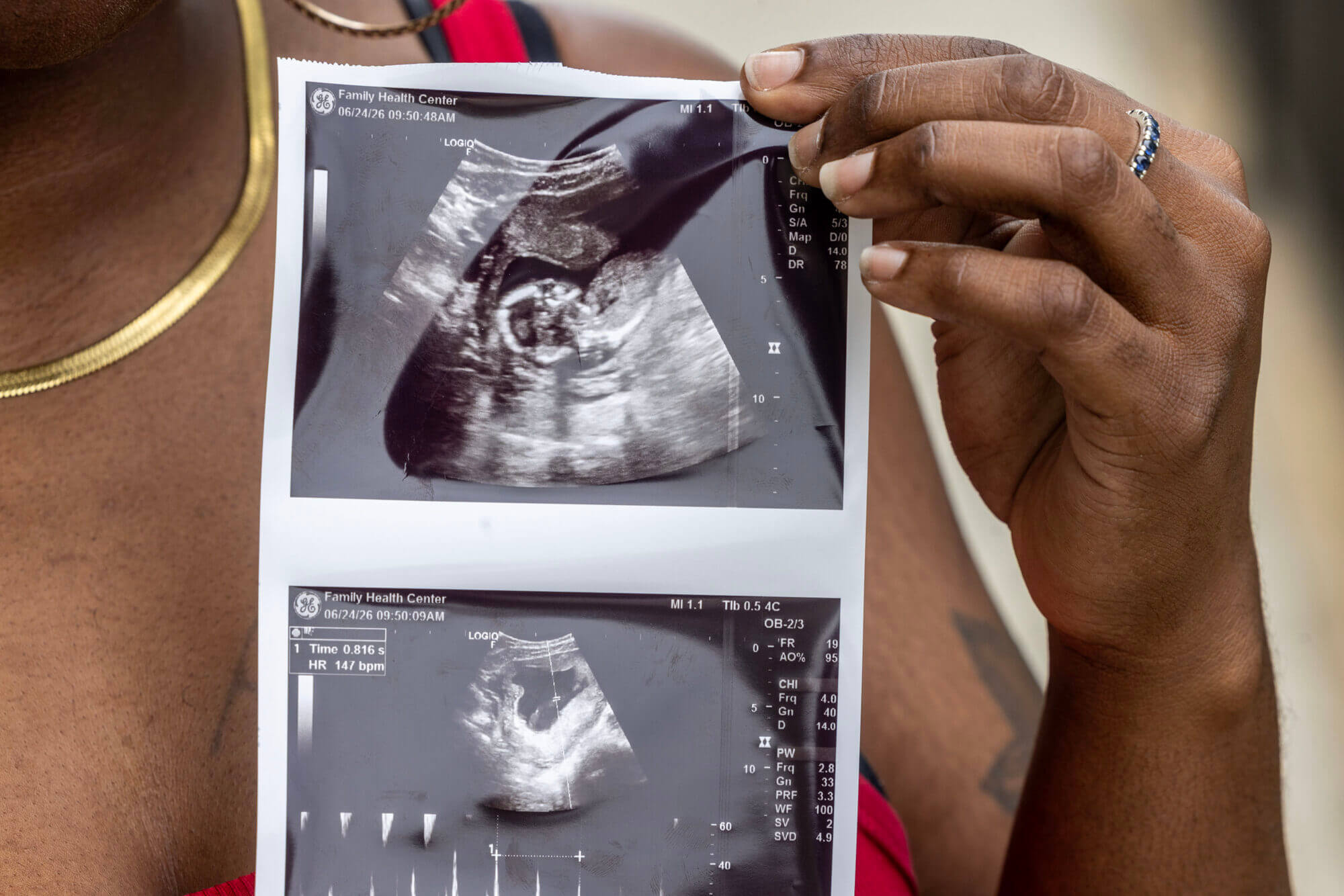
Malika Holifield holds her sonogram outside Family Health Center, Inc. in Laurel on Wednesday, June 25, 2026. Credit: Eric Shelton/Mississippi Today
No escape
Cities are supposed to operate cooling centers on the hottest days of the year. But opening a cooling center in Jackson requires two consecutive days of 100 degree temperatures or heat advisories, according to Nic Lott, communications director for the city of Jackson.
And outside the capital city region, there is seemingly no concerted effort to do so – even in metropolitan areas on the coast. Communications officers in Gulfport and Biloxi said they were not aware of any efforts to open cooling centers this year or in recent years.
When cities do open those centers, they are typically only accessible during the day.
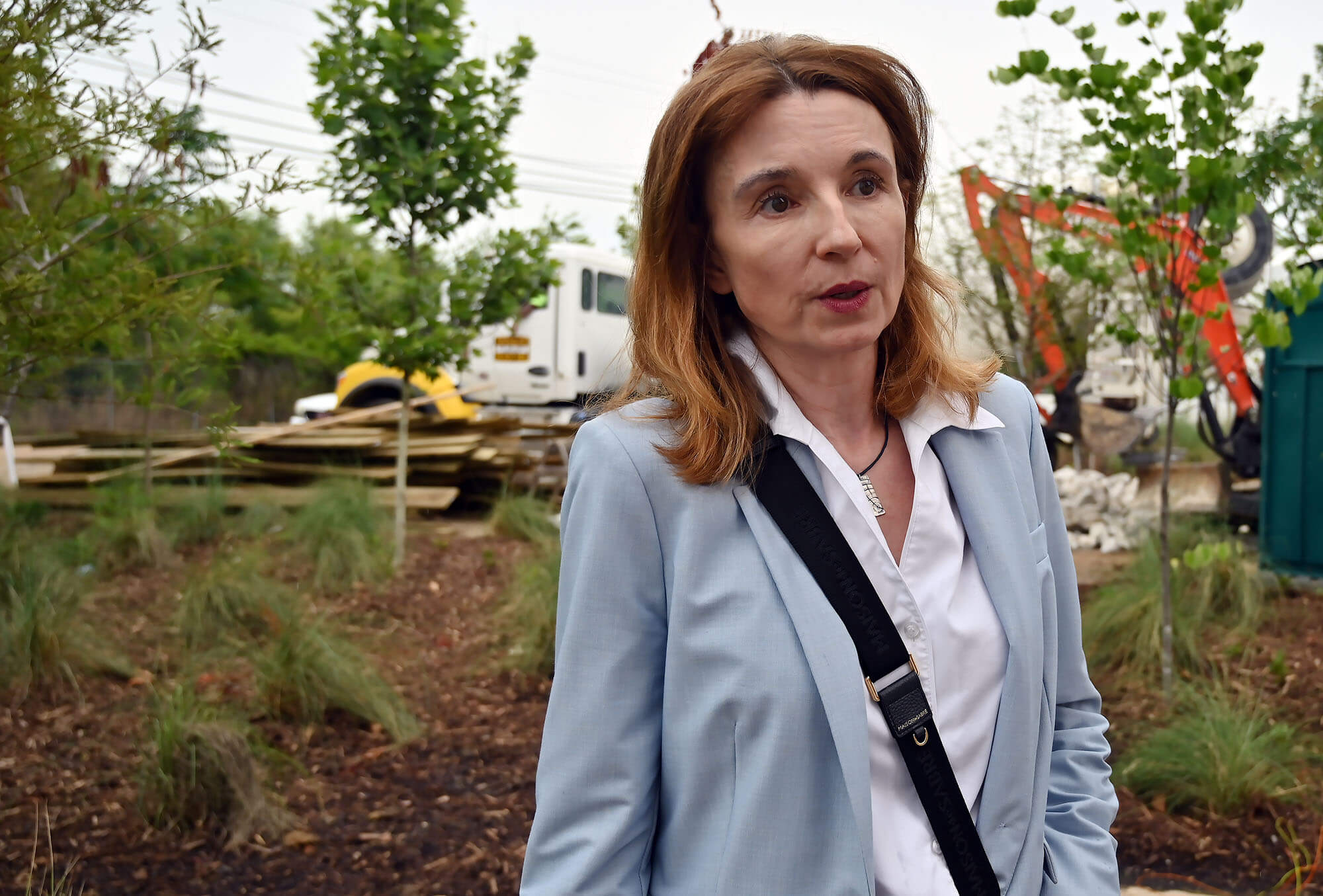
Dominika Parry, an environmental economist who runs a Ridgeland-based climate resilience nonprofit, 2C Mississippi, had hopes of changing that. In 2024, her group was awarded a $20 million federal grant to bring a 24-hour cooling center and resiliency hub to Jackson. It would have housed up to 150 people and included tornado shelters, kitchens and showers.
Dominika Parry, 2CMississippi founding president and CEO, at construction currently underway for a new “green space,” located on Farish Street, Monday, June 8, 2026, in Jackson. Credit: Vickie D. King/Mississippi Today
But Parry’s group lost that funding when the Trump administration ended grants for various environmental justice and climate resilience projects. Her nonprofit is one of 23 affected groups suing in a bid to reinstate funds.
Unlike other catastrophic weather events that happen quickly and have concentrated effects, heat happens slowly and quietly. Still, extreme heat kills more people annually than flooding, hurricanes or tornadoes.
“Heat is by far the most dangerous weather-related phenomenon,” Parry said.
Translating between climate science and medical practice is difficult. Studying ambient temperature or changing rainfall isn’t the same as figuring out how heat affects a pregnant woman’s blood vessels, or a developing embryo. There’s a gap between the public health data being gathered, and the practical advice clinicians can use, said Lyndsey Darrow, a climate researcher at the University of Nevada, Reno, School of Public Health.
“The ideal study to do, of course, would be to put monitors on hundreds of thousands of pregnant patients, monitor them and see what the outcomes are,” she said. “But that’s not realistic. Not only is it a major undertaking, it would cost a lot.”
That leaves some critical questions. Is a single 100-degree day dangerous, as some studies suggest? Are two 95-degree days worse? What about four days at 90? How early in pregnancy is it a factor? How late?
Even without complete answers, experts say the science is well enough established that prenatal care should routinely include guidance about alternatives to air conditioning, such as using cool towels and being extra careful to avoid dehydration, which triggers a cascade of physiological changes.
The climate challenges, illustrated by the “heat dome” that recently enveloped so much of the country, are growing even as many women don’t get early prenatal care. Mississippi is among the states where the share of women getting prenatal care in the first trimester dropped in 2024, according to Georgetown University’s Center for Children and Families.
Mississippi State Health Officer Dr. Daniel Edney declared a public health emergency over infant mortality last August. He has addressed “maternity care deserts,” and introduced ways of proactively intervening in premature or other high risk births. But Edney’s department has no publicly-available plan for how to address the reproductive health outcomes caused by heat and extreme weather.
Planting the seeds
Leading the charge to address climate disparities for families are two unlikely contenders: Librarians and doulas.
Over her five years as director of the Laurel-Jones County Library, Karyn Walsh has watched the library transform into a center for the community. The resources stretch far beyond books: People can check out fishing poles, telescopes and tools, Walsh said. Public libraries remain among the last free, communal spaces in the U.S., especially critical for families.
About half of the people using her library have young children and about 1 in 5 are pregnant, Walsh estimates. Walsh said that during the summer, people often ask if they can come and sit for a while to avoid the heat. Walsh always says yes, and offers a book.
Walsh and her team view these moments as a chance to reach those with the fewest resources and connect them to classes, programs, community and job opportunities.
“Hopefully, we’re planting the seeds to break the cycle,” Walsh said.
Library patrons use the services at Laurel-Jones County Library in Laurel on Wednesday, June 25, 2026. Credit: Eric Shelton/Mississippi Today
About four hours northwest of Laurel and back in the Mississippi Delta, Jacqueline Lambert works as a doula not far from the community that raised her. Lambert runs an independent practice out of Merigold, and also leads the doula program at Delta Health Center in Mound Bayou, one of the nation’s oldest all-Black municipalities.
Roughly 12% of the women Lambert serves don’t have access to consistent and adequate air conditioning, she said. Many of those pregnant women live with extended family and cannot afford more effective cooling systems, Lambert said. Regularly, she sees pregnant women and several of their family members cooling down around one oscillating fan, or sleeping together in a bedroom with an insufficient window unit.
Lambert believes doulas can help move the needle on climate change and health inequity, because they act as a bridge between clinical care and community support. As a doula, she spends hours longer with patients than other providers do – and gets to see them in their homes, where she is better equipped to understand their situation. Mothers open up to her on a daily basis, Lambert said.
“They begin to relate to you as a trusted friend, as a support person, somebody to laugh with or even cry with,” said Lambert.
Lambert is proud to work at Delta Health Center, which offers free doula services to low-income women through maternal health grants. Often, these women find out about the doula services as existing patients, or through word of mouth. But it’s rare that low-income women can access doulas in Mississippi, where Medicaid does not cover those services.
The March of Dimes, dedicated to reducing premature birth and birth defects – both of which have been linked to heat exposure – has urged Mississippi to change that restrictive policy.
For most low-income mothers, assistance only comes from grassroots efforts, such as Chatman’s “Beat the Heat” event in Cleveland.
Matthews, the single mother from Cleveland, hopes the box fan she received will bring her some relief. She’s felt anxious recently. She wonders if the abdominal cramping she’s experiencing lately is normal or a sign of something worse. With two small children, she said she is often up on her feet in her apartment where staying cool and lying down often feel nearly impossible.
“I try to relax my mind and get in front of the small air (unit) in the house,” Matthews said.
Audio recording is automated for accessibility. Humans wrote and edited the story.
I spent last summer scouring the South for the products of prison labor in a strange scavenger hunt across small-town America.
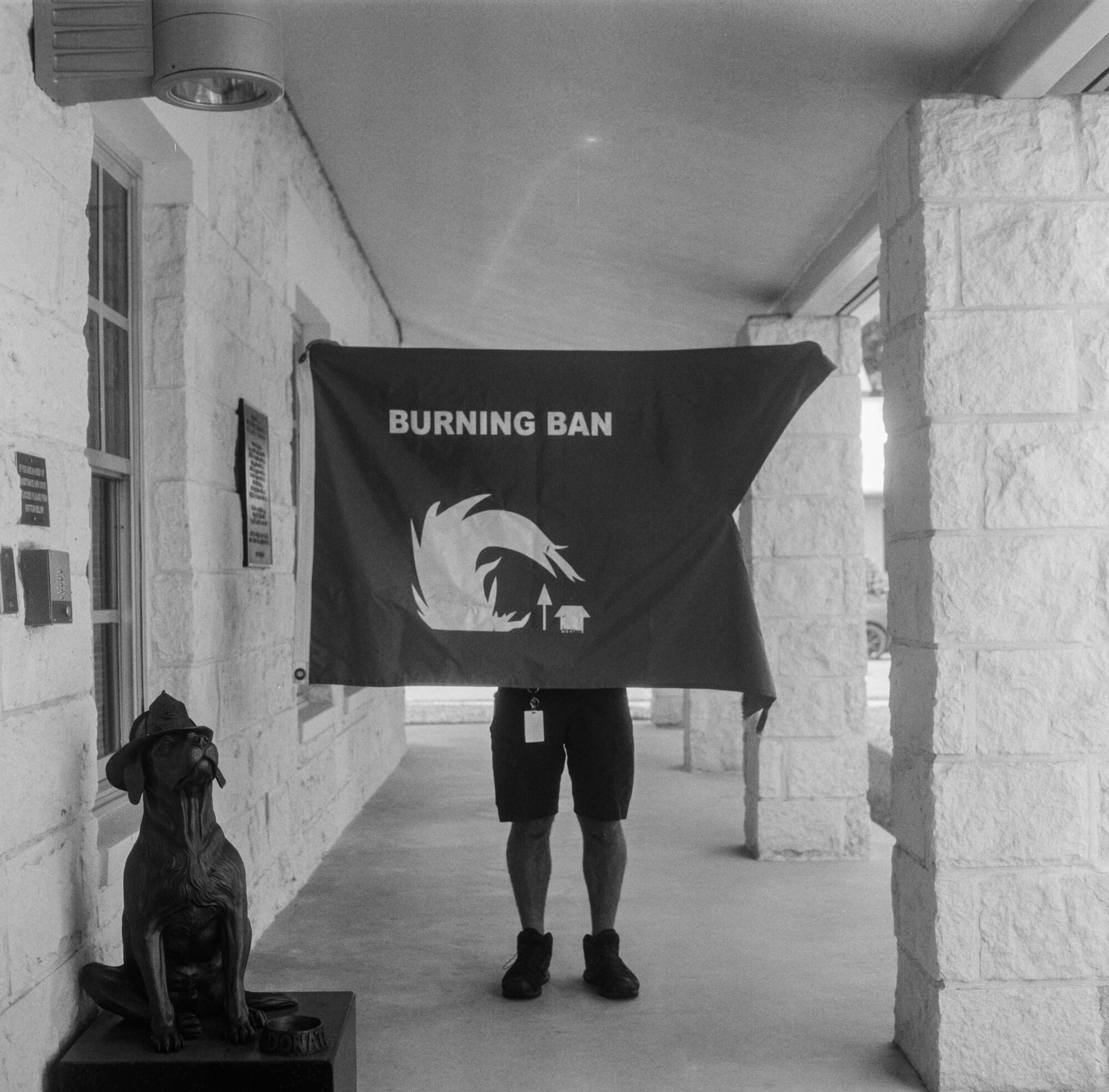
A freshman’s dorm mattress at Mississippi State University. A Georgia Medicaid patient’s eyeglasses. The goalpost padding at Bauxite High School in Arkansas. The burn ban flag at the Boerne Fire Department in Texas Hill Country.
All of them were made by people incarcerated in American prisons.
These are photos of just some of the two dozen objects I was able to track down using state prison industries catalogs and social media accounts. Most are the actual products made by prisoners, others stand in for ones that were.
Incarcerated workers at the Mississippi State Penitentiary in Parchman produce mattresses for MAGCOR (Magnolia Correctional Industries). These mattresses end up at public colleges and universities across the state, including the dorms at Mississippi State University, such as this one in Cresswell Hall. Credit: Daniella Zalcman for The Marshall Project
In the United States, prison labor is everywhere, a practice nearly as old as our nation itself. Incarcerated workers are responsible for producing over $2 billion in goods annually, much of which is sold via federal and state prison industries to public institutions like libraries, schools, courthouses and government agencies.
Incarcerated workers make between 33 cents and $1.41 per hour working for state-owned businesses — though in six states, prison workers aren’t paid for their labor at all.
Metal benches, trash cans and tables throughout the Mississippi State University campus were produced with incarcerated labor through MAGCOR, the Mississippi prison industries program. Credit: Daniella Zalcman for The Marshall Project
Proponents of prison labor argue that these work programs are designed to be rehabilitative and beneficial for incarcerated people: by providing a source of income, teaching someone a new skill or giving a person a purpose once they’re released. Manufacturing braille books, for instance, remains one of the most coveted prison jobs because it allows incarcerated workers to spend the majority of their day reading, and teaches them a marketable skill.
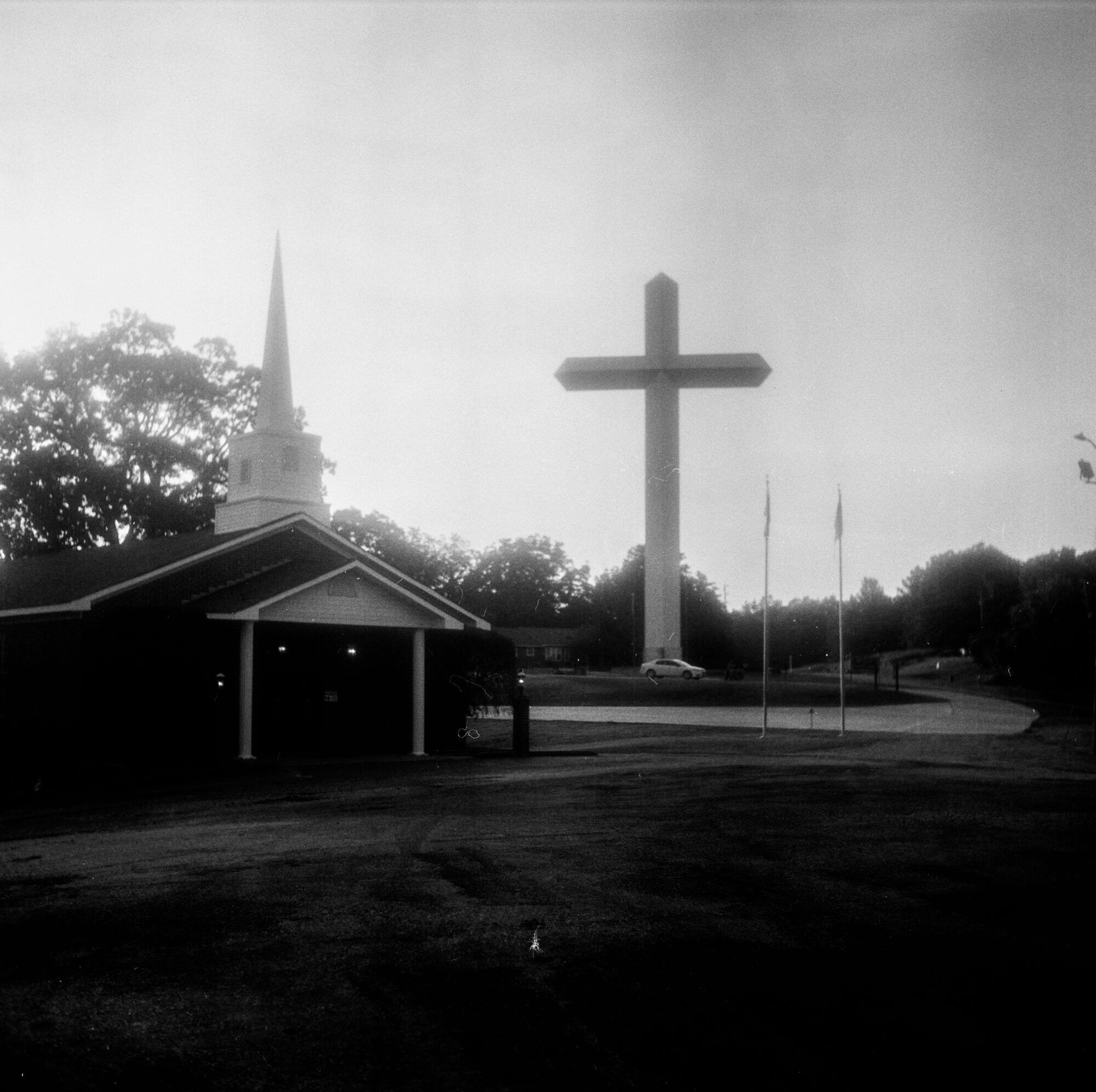
The Cross of Calhoun County in Pittsboro, Miss. In March 2024, MAGCOR posted a photo of the cross on Facebook, with the caption, “We are proud of the craftsmanship behind our metal products – exemplified by the Cross of Calhoun County and our beloved Bulldog Benches!” Credit: Daniella Zalcman for The Marshall Project
But Carla Laroche, Felder-Fayard associate professor of law at Tulane University and the Murphy Institute, says it’s more complicated. “Prison labor goes back to enslavement,” she said. “Someone is being held in a facility, a prison, and told, ‘You must work.’ They don’t have a choice whether they work or not, what skills they want to learn, or what kind of job they have. And some people might say, great — everybody has to work. Everybody has to pay their bills. But we have the ability to leave. We have the ability to choose. And we can work for ourselves. In some prisons, if you do not work, you will be held in solitary confinement.”
Incarcerated workers produced these metal plant stands on Main Street in Senatobia, Miss. Credit: Daniella Zalcman for The Marshall Project
Do you know what in your community is made by incarcerated people?
This project was supported by a Carol Lavin-Bernick Faculty Grant from Tulane University.It was published in partnership with The Marshall Project, a nonprofit news team covering Mississippi’s criminal justice systems.
Daniella Zalcman is a documentary photographer based in New Orleans. She is the founder of Women Photograph, a journalism professor at Tulane University, and a multiple grantee of the National Geographic Society and the Pulitzer Center on Crisis Reporting, and has held fellowships with CatchLight and the International Women’s Media Foundation.
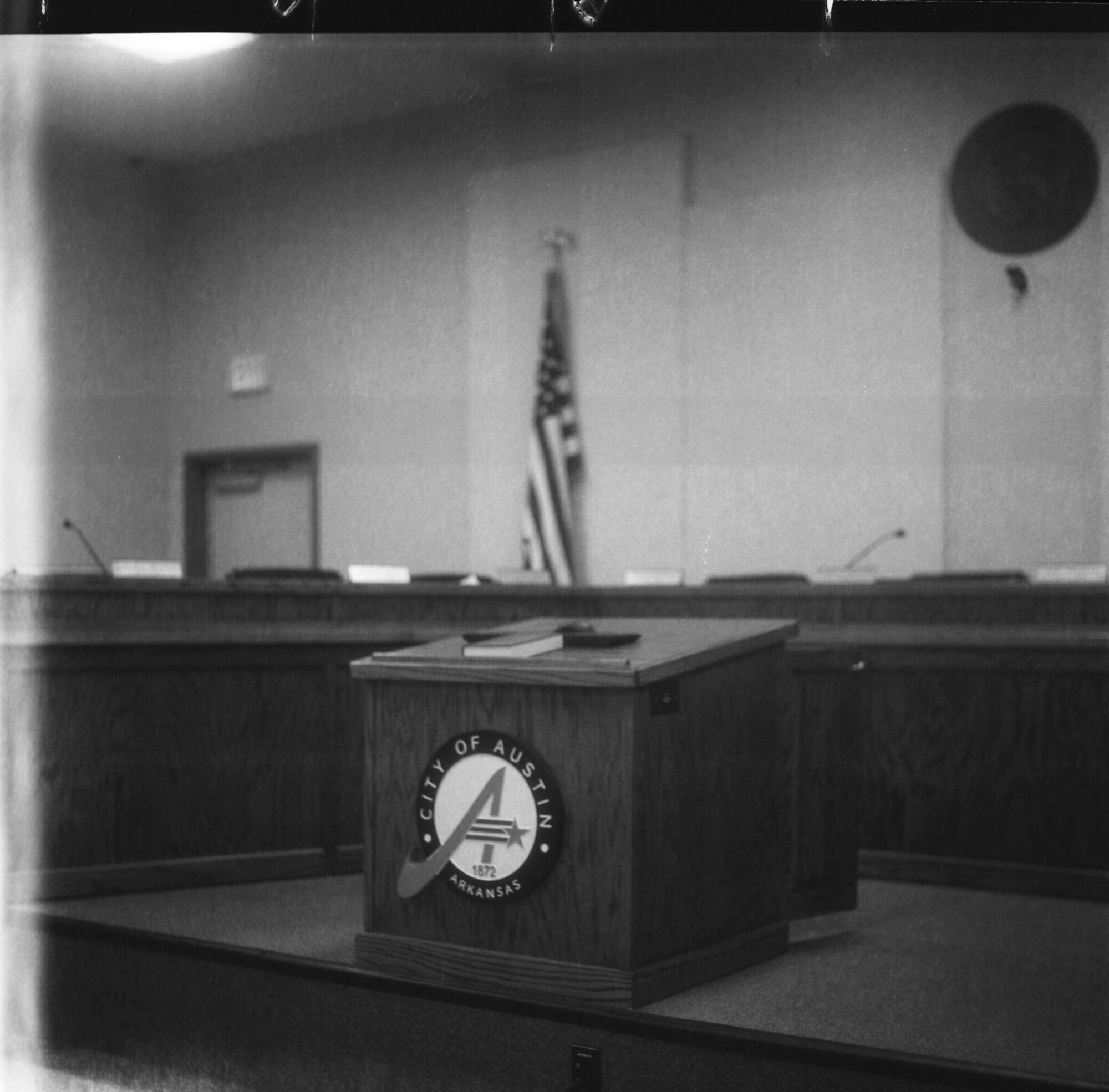
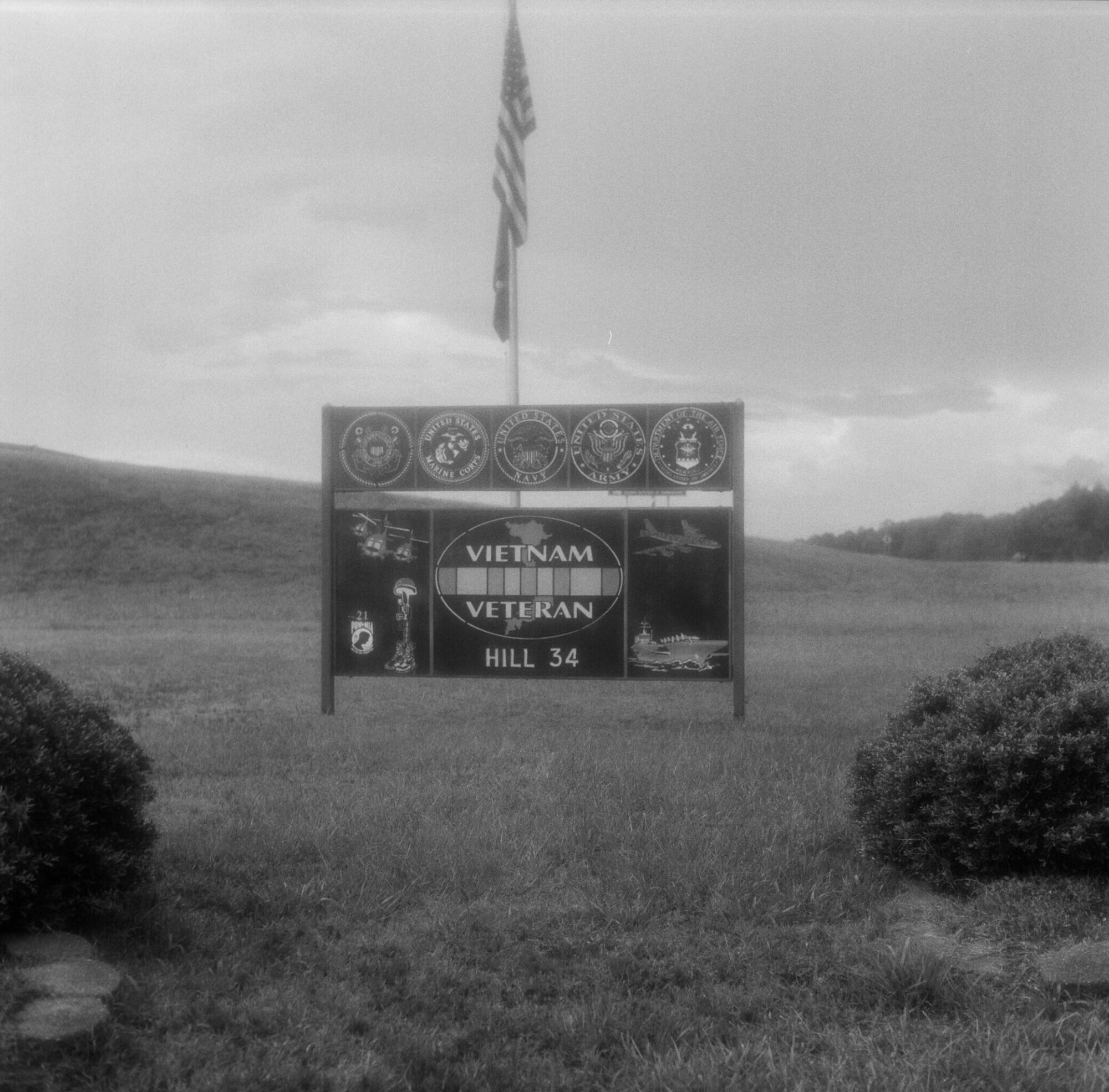
A burn ban flag at the Boerne Fire Department in Texas Hill Country. The Texas Correctional Industries website catalogs goods produced by prisoners in Texas. A burn ban flag, used to caution against lighting recreational fires during droughts, is available for purchase in the site’s Garment Shop for $35. Credit: Daniella Zalcman for The Marshall ProjectThis goalpost padding at Bauxite High School was produced by incarcerated workers through Arkansas Correctional Industries. Credit: Daniella Zalcman for The Marshall ProjectThe Bauxite Miners play football on this field, which is colloquially known as “The Pit.” The town, home to just over 600 people, is named for aluminum ore, which was once a major source of industry in this region. Credit: Daniella Zalcman for The Marshall ProjectIncarcerated people from Georgia Correctional Industries worked on items as part of a restoration project for the Winder Public Library in 2018. The job included powder-coating and lowering the height of shelving units, providing end panels, reupholstering chairs, and refurbishing book drop boxes. Credit: Daniella Zalcman for The Marshall ProjectThe council table for the city of Austin in Arkansas was produced by incarcerated workers with Arkansas Correctional Industries. Woodworking is one of the more common trades taught as part of state prison industries. Credit: Daniella Zalcman for The Marshall ProjectA janitor’s closet at Bevill State Community College in Jasper, Ala., stocks a number of cleaning supplies produced by Alabama Correctional Industries, including a jug of ammoniated window and glass cleaner. Mixing cleaning chemicals, which are often sold to public institutions, is a common type of prison labor. Credit: Daniella Zalcman for The Marshall ProjectA braille copy of “Animal Farm” at the Texas School for the Blind and Visually Impaired in Austin. Today there are more than 35 prison braille programs operating in state and federal prisons through the National Prison Braille Network. In order to be eligible, incarcerated workers must obtain braille certification from the Library of Congress. Credit: Daniella Zalcman for The Marshall ProjectThe conference table at the Arkansas Public Employees’ Retirement System office in Little Rock, Ark., was manufactured by incarcerated workers with Arkansas Correctional Industries. Similar tables are priced at $917.85 – $1,433.13 on the ACI website. Credit: Daniella Zalcman for The Marshall ProjectThe Vietnam Veterans Memorial in White Hall, Ark., was designed and constructed by incarcerated workers with Arkansas Correctional Industries. The Arkansas Department of Corrections website notes that “One of the offenders who worked on the project served in the Vietnam War, and two were directly related to someone who served.” Credit: Daniella Zalcman for The Marshall ProjectThe grounds of the Captain Joe Byrd Cemetery in Huntsville, Texas, are maintained by incarcerated workers with the Texas Department of Criminal Justice. An estimated 3,000 prisoners are buried on the grounds — most of whom were unclaimed by family members. Credit: Daniella Zalcman for The Marshall Project
Audio recording is automated for accessibility. Humans wrote and edited the story.
President Donald Trump’s insistence on interfering in the World Cup’s officiating and disciplinary actions and then bragging about his involvement conjure memories of how he horned in on the opening of the Two Mississippi Museums in 2017.
Believe it or not, the president tends to want to make himself the center of attention regardless of his actual involvement. The World Cup and Two Mississippi Museums are examples of that, though their outcomes were vastly different.
With this year’s FIFA World Cup, the president went out of his way to make it known that he called to urge FIFA officials to reevaluate whether American soccer star Folarin Balogun should be suspended for Monday’s game against Belgium for a foul he committed in the previous game.
It should be pointed out that soccer players who receive red cards, like Balogun, for fouls viewed as egregious face suspension for their next game. England, for instance, had a key player miss a game.
Trump made it known to all that he called FIFA President Gianni Infantino about the red-card suspension for Balogun. After Trump’s call, FIFA’s disciplinary committee reversed course in an unusual but not unprecedented move and allowed Balogun to play against Belgium in a game that the USA ended up losing.
Infantino released a statement saying Trump’s action played no part in the decision of the FIFA disciplinary committee.
But what Trump did by insisting that the world know of his actions was to create an international incident. It took a feel-good U.S. soccer story and added a layer of controversy and charges of corruption – based at least in part on past actions of both FIFA and the American president.
Granted, it is not out of the ordinary for people to complain about referee’s decisions and even ask for reconsideration of penalties, but involvement by the U.S. president, the most powerful individual on the globe, was viewed as unfair and improper by many. His actions were viewed by many as giving the U.S. an unfair advantage.
The whole incident placed the American soccer team in a difficult position and arguably contributed to their disappointing showing against Belgium.
The president making a phone call to inquire about what is going on with a possible reconsideration of a disciplinary action was not necessarily out of bounds, if indeed, that was all he was doing. But he said he did more and his insistence on wanting everyone to know about his actions put a damper and the appearance of impropriety on what was becoming an American celebration of the underdog soccer team.
In another feel good moment in early December of 2017, Mississippi was opening the Two Mississippi Museums in Jackson – the Mississippi Civil Rights Museum and the Museum of Mississippi History.
President Donald Trump speaks inside at a private event but not at the public opening of the Mississippi Civil Rights Museum in Jackson in December 2017. Credit: AP Photo/Susan Walsh
The event was a celebration of a decades-long effort to open a civil rights museum in Mississippi – the site of so many of the activities of the Civil Rights Movement and of racial violence and injustice.
Trump’s announcement generated an immediate backlash. After all, Trump had not embraced many elements of the Civil Rights Movement and at times had made racially insensitive remarks.
In addition, a visit by the president – especially President Donald Trump – would take attention from the actual event and the celebration of the people who played a key role in the opening. Those people included Civil Rights icon Myrlie Evers, the wife of slain Civil Rights leader Medgar Evers; Democratic former Gov. William Winter, the chair of the state Department of Archives and History Board that oversaw the museums; and Republican former Gov. Haley Barbour, whose support was crucial for getting state money from the Legislature to help fund the museums.
Incidentally, Bryant, as lieutenant governor, opposed Barbour’s efforts to garner state funding for the museums, though as governor Bryant took a front row seat for the opening.
The announcement of Trump’s participation was viewed negatively by many. U.S. Rep. John Lewis of Georgia, who was a key figure in the Civil Rights protest of the 1960s, canceled his participation in the opening.
As it turned out, instead of participating in the public opening held outside the museums on unusually cold and snowy December day, Trump visited and spoke before a small group inside of the museums.
The public ceremony celebrating the opening of the museums went on without Trump. For the people attending the event, there was no sign the president had been in Mississippi.
Trump made sure everyone knew of his involvement in the World Cup.
The result was not so great for America on many levels.
The Two Mississippi Museums, on the other hand, continue to be viewed as a state gem.
Audio recording is automated for accessibility. Humans wrote and edited the story.
PERKINSTON — The calls kept coming as floodwaters spread across Stone County. Tim Davenport and Michael Graham had never responded to a natural disaster before, but they had something many stranded residents needed: a boat.
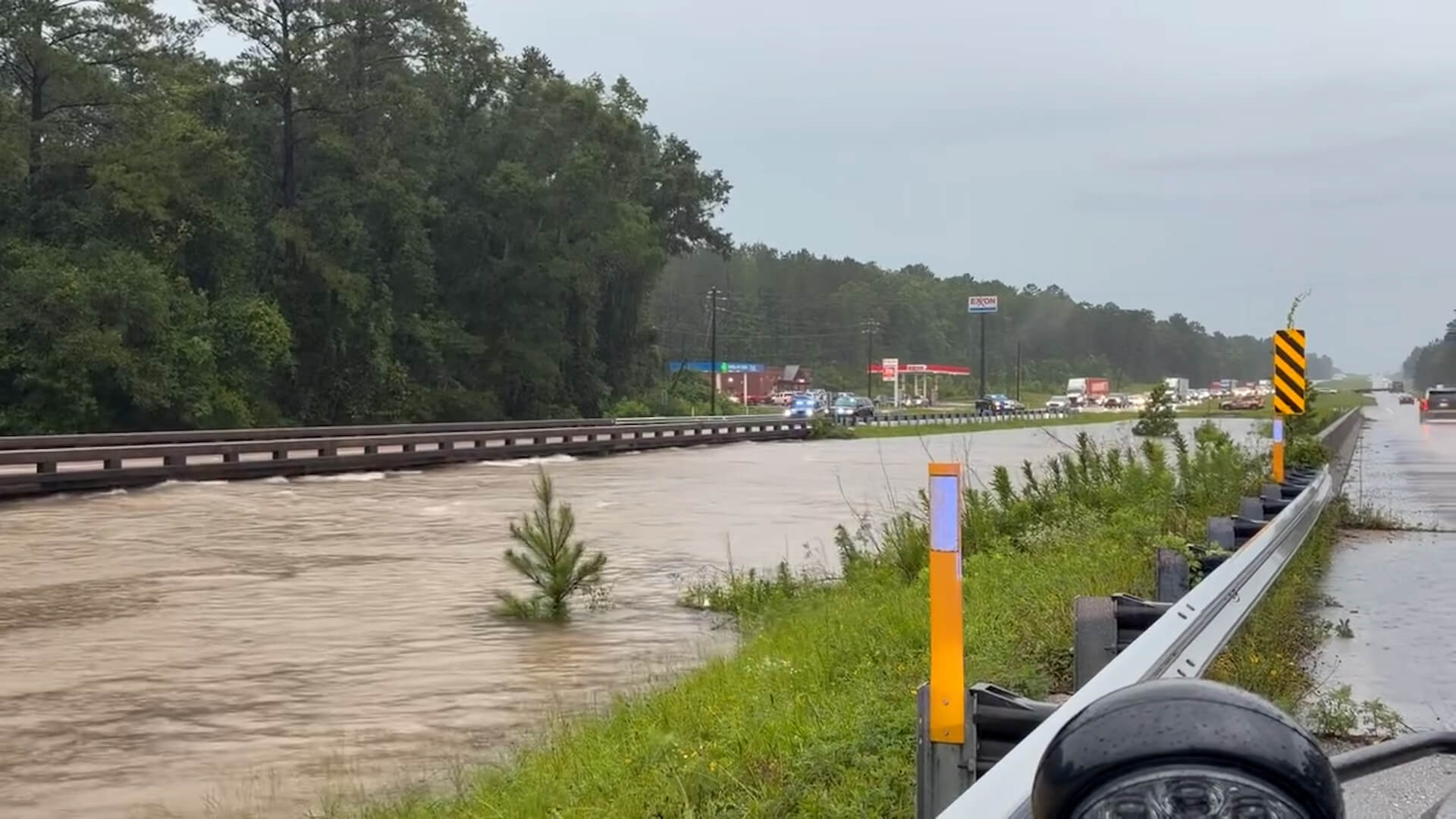
According to the Mississippi Emergency Management Agency, the remnants of Tropical Storm Arthur caused widespread flooding across South Mississippi June 18, damaging homes, businesses, roads and public infrastructure. Preliminary damage assessments identified 121 homes and 34 roads affected in Stone County, and MEMA established a Red Cross shelter at Stone County Middle School in Wiggins.
Davenport, 25, and Graham, 22, both grew up in Stone County and said they felt compelled to help as the floodwaters rose.
“I’ve lived in Wiggins my whole life,” Graham said. “I’ve never seen the water like that in Wiggins.”
Floodwater covers part of U.S. 49 near the 10 Mile Creek bridge in Stone County after heavy rain from the remnants of Tropical Storm Arthur. The flooding forced road closures near Mississippi Gulf Coast Community College and disrupted travel as volunteers helped neighbors across the county. Credit: MHP Troop K
The longtime friends spend most weekends boating local rivers and both work on towboats along the Mississippi River, giving them confidence on the water even though neither had ever participated in disaster response.
“You don’t expect water to come up like that,” Davenport said. “And it just all happened so fast. I mean, half of the people there didn’t have boats. And we just, it’s something we do every weekend.”
As the flooding worsened, Davenport said they posted on Facebook offering assistance and soon began receiving requests from across the county.
“We were just going from pretty much call to call, whoever called us,” Davenport said. “We’d just go and see if we could get to them.”
Davenport said someone also connected the pair with the United Cajun Navy, a disaster response organization that helps coordinate volunteers during natural disasters.
“When stuff like that happens, (the United Cajun Navy) helps with really anything recoveries (related),” Davenport said. “They’re real supportive in situations like that.”
Davenport estimated they responded to more than 15 calls, checking flooded homes, rescuing about a dozen pets and helping neighbors navigate one of the county’s worst flooding events in recent memory.
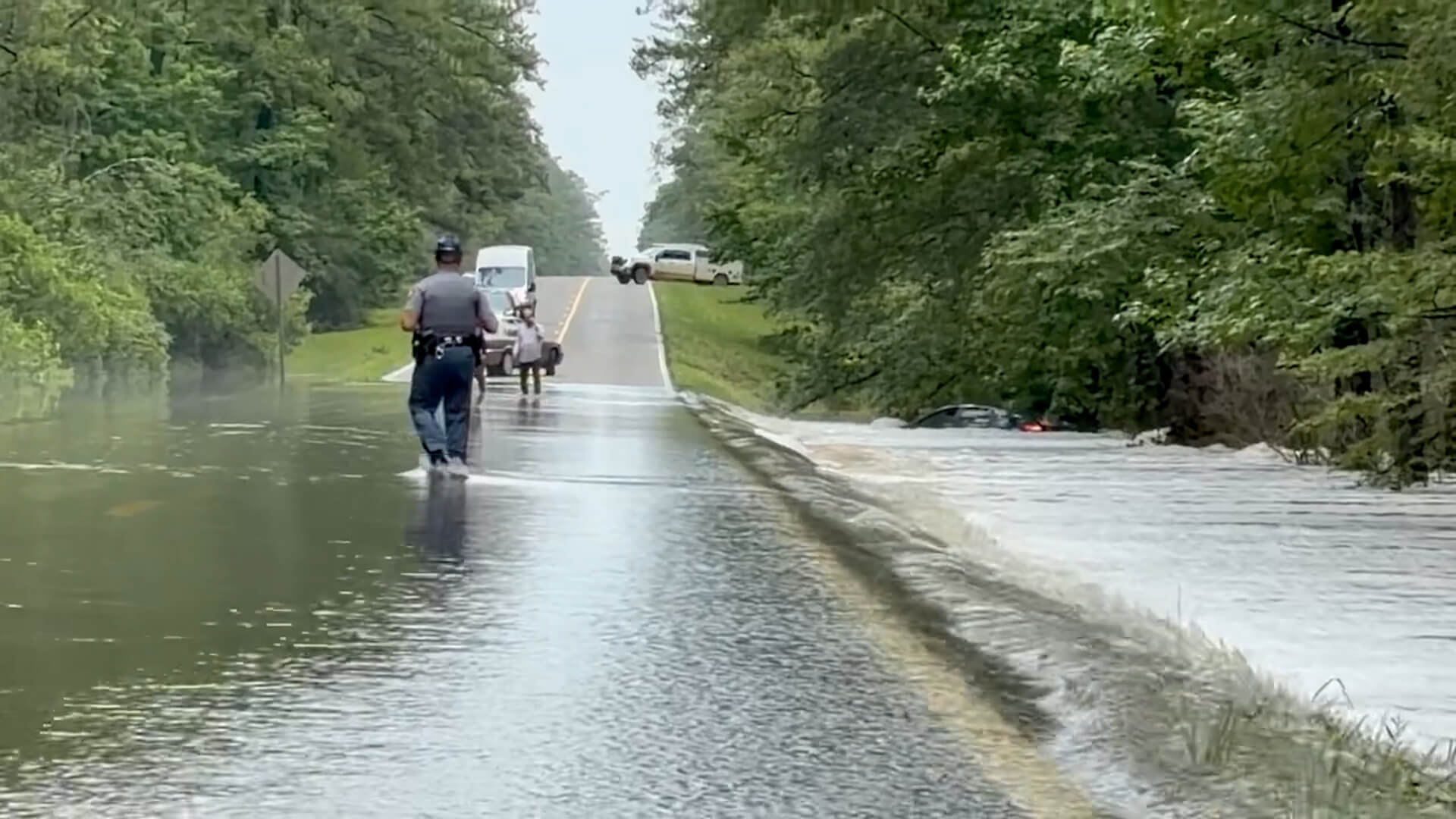
A state trooper walks through floodwater on Mississippi Highway 26 east of Wiggins near Rosalee Road after a vehicle was swept off the roadway in Stone County. Flooding caused by heavy rain from the remnants of Tropical Storm Arthur prompted local volunteers Tim Davenport and Michael Graham to use their boat to help neighbors check homes and rescue pets. Credit: MHP Troop K
During one rescue, Davenport said a homeowner entered a house with more than 4 feet of water inside to retrieve his dogs but became trapped.
“We had to kick the door in to get him back out of the house,” Davenport said.
Davenport said many owners waited anxiously for them to return with their pets.
“A lot of the people who owned the dogs that we saved were waiting on us to get back with the dogs, and they were all very emotional when we got back with their pets,” Davenport said.
He said helping reunite families with their pets became one of the most rewarding parts of the experience.
“Dogs are like family,” Davenport said. “It’s basically another family member out there stranded. We were just trying to help people get their belongings and pets back.”
For Graham, volunteering was simply about using the equipment and experience they already had to help their community.
“Just knowing I had the ability to do it and had the equipment to do it,” Graham said.
After the floodwaters receded, the United Cajun Navy asked Davenport and Graham whether they wanted to continue volunteering with the organization.
“We told them, yeah, because, I mean, it was honestly a bad situation,” Davenport said. “We talked about it, and we enjoyed doing it.”
Graham said he hopes they can help again if another disaster strikes.
“If they call me, I’ll be there, ready to go,” Graham said.
Audio recording is automated for accessibility. Humans wrote and edited the story.
The union representing dozens of Jackson bus drivers and other transportation workers issued a 72-hour strike notice Friday, even as the union said it would continue trying to reach an agreement with MV Transportation, the Texas company under contract to run JTRAN.
If both sides cannot reach an agreement by Sunday, the union plans to go on strike at 4 a.m. on Monday, according to a statement released Friday by the Amalgamated Transit Union Local 1208.
“We care about our riders whom we transport each day and do not want this strike to happen,” the local’s president and business agent, Charles Tornes Jr., said in a statement.
Union members voted last month to authorize a strike.
JTRAN represents a lifeline for low-income and disabled Jacksonians who use the bus to get to work, medical appointments or the grocery store. Though JTRAN is a publicly funded service, its unionized employees work for MV Transportation, which calls itself the largest privately-owned transportation company in America.
The two sides have been negotiating a collective bargaining agreement out of public view since a previous version expired in December. The union has been seeking competitive pay raises, while MV Transportation has proposed a number of changes to JTRAN, including new safety policies and the ability to hire drivers without commercial licenses to operate smaller vehicles for on-demand “microtransit” services.
But in late May, tensions came to a head after the union learned that Mayor John Horhn and his administration were presenting the city council with a plan drafted by MV Transportation that would trim 20% of JTRAN’s roughly $9 million budget.
The cost-cutting proposal would eliminate two fixed routes, cease Saturday service and shorten the work day by two hours. It would also use the city’s existing fleet of paratransit vehicles to expand the microtransit services, raising concerns among a vocal contingent of disabled riders who rely on JTRAN.
The union, which has more than 60 members, previously went on two-week strike in September 2024 over job security, job safety and what it called “unfair treatment.”
Audio recording is automated for accessibility. Humans wrote and edited the story.
Joseph Cranney is a reporter with the Deep South Today Investigative Reporting Center in collaboration with The New York Times. Mukta Joshi is an investigative reporter at Mississippi Today. She is spending a year as a New York Times Local Investigations fellow examining immigration and criminal justice issues.
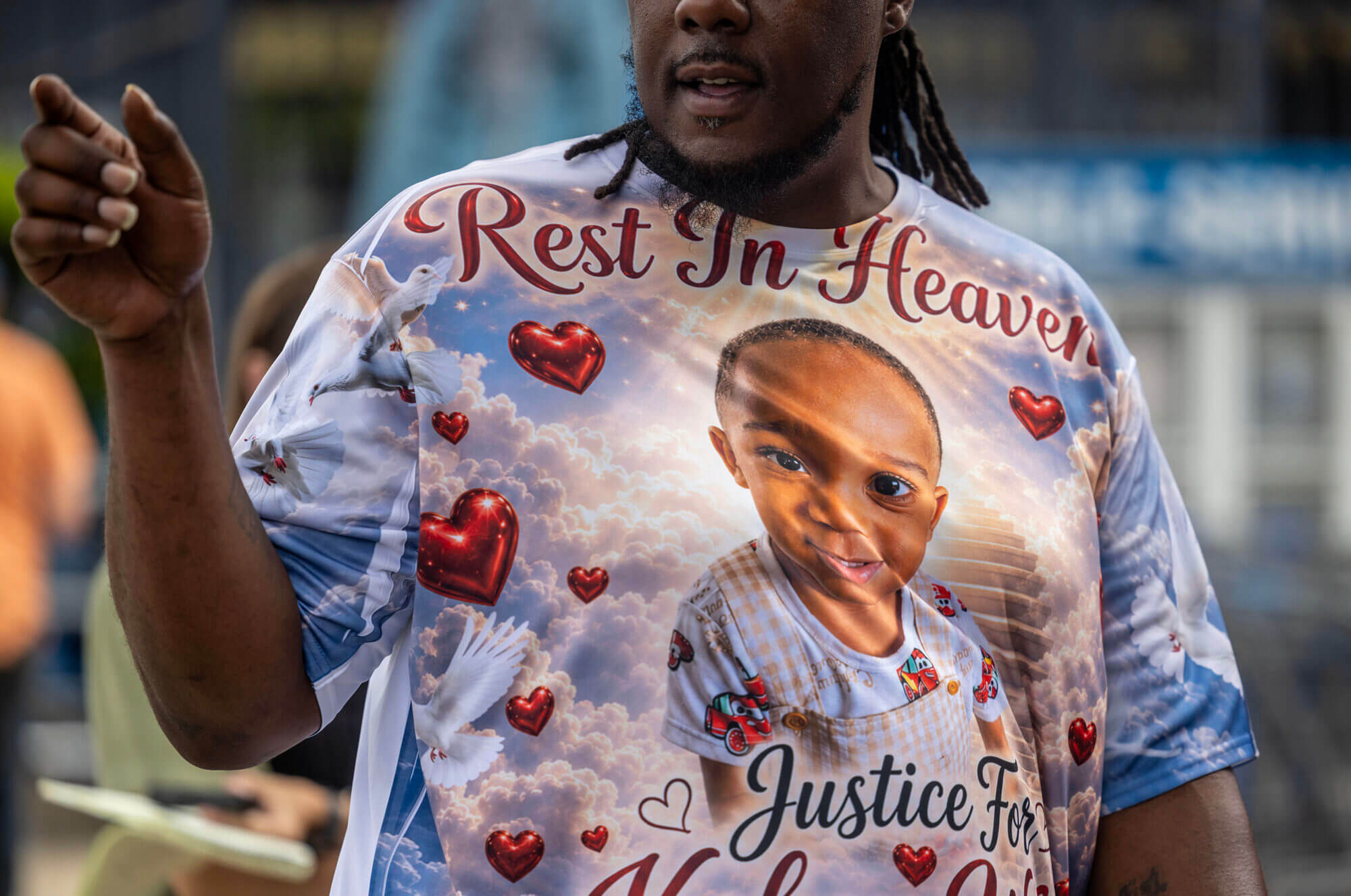
Nearly a month after police in Mississippi shot and killed 1-year-old Kohen Wiley outside Walmart in Senatobia, department officials released a brief report Friday about the shoplifting call that led to the fatal encounter.
But the two-page report — obtained by Mississippi Today through a public records request — contains almost no details of what happened. It does not describe how many officers were present, name the officers who responded or explain why the call escalated into gunfire.
Vellesiya Wiley pictured with Kohen Wiley, who was her only child. Attorneys representing the 1-year-old’s family are calling for law enforcement in Senatobia to release body and dashboard camera footage and on Monday June 22, announced plans for an independent autopsy. They said both can help provide the family with answers. Credit: Ben Crump Law
The official incident report, a document that would typically include such details along with officers’ narratives, states only that the department responded to the Walmart shortly after 1:30 p.m. involving alleged shoplifting of baby clothes and a large pack of Pampers Easy Ups diapers. At 2:04 p.m., Senatobia police were alerted that shots were fired, according to the department’s call logs.
Vellesiya Wiley, Kohen’s 20-year-old mother, said later that her child was seated on her lap in the front passenger seat when officers fired three or four shots at their Ford Fusion, striking the toddler in the chest, and Wiley’s 22-year-old friend in her arm and thigh. The police report makes no mention of that, stating only that the vehicle was impounded shortly before 4:30 p.m. It also doesn’t say if there were any witnesses to the shooting.
In its own statement, the Tate County Sheriff’s Office, which was also on the scene, said without referring to any agency that an unnamed officer fired at an “oncoming vehicle.”
Civil rights attorney Ben Crump, who is representing the family, shared a photo July 2 showing the car’s front passenger window was shot out. Crump said it was evidence that police fired at the vehicle when they were beside the car and not in harm’s way. The photo also appears to show a bullet hole through the windshield, on the passenger side.
In a Facebook post about three hours after the shooting, the Senatobia Police Department acknowledged that a shoplifting call “led to officers discharging their firearms.” The department pledged “full transparency.”
But the police department and the state’s public safety department, which is investigating the incident, have declined repeated requests from community activists and the media to release footage of the encounter. So has Walmart, even though its stores generally have sophisticated surveillance systems.
A Walmart representative, Hannah Henderson, said company policy dictates that Walmart only share surveillance footage with law enforcement while an incident is under investigation. “We continue to work closely with the Mississippi Bureau of Investigations and defer additional questions to them,” Henderson said.
In the past three years, Senatobia police have, on average, responded to more than one call per day to the Walmart on U.S. Highway 51, according to call logs provided to Mississippi Today in response to a public records request. A roster of employees shows that the department has 11 patrol officers.
Unlike other notable police shootings in recent years, bystander video of the incident has been sparse. So far, local media have only reported on one video clip recorded by a witness. It captured the car driving away after the shooting and shows three law enforcement officers standing in the area.
Lt. Shane Howell said Friday that Sgt. Hunter Foster was placed on administrative leave two days after the incident. Authorities haven’t said if Foster fired his gun, or if other officers fired theirs.
Audio recording is automated for accessibility. Humans wrote and edited the story.
Legislative leaders are close to finalizing a deal on reforming Mississippi’s youth court system and expect Gov. Tate Reeves to call them into a special legislative session soon, according to multiple lawmakers and negotiators involved in the discussions.
It’s unclear how wide-ranging the reforms to the court would be and when exactly the special session would take place, though several legislators speculate it will happen later this month. Reeves’ office did not respond to a request for comment.
The reason for the special session is that lawmakers debated a youth court reform bill during their 2026 regular session. The reform package also contained a measure extending the “repealer” in existing law on how confidential youth court records can be shared between courts, state agencies, attorneys and law enforcement.
When a repealer, or sunset clause, is included in a state law, the law or a section goes away on a specified date unless the Legislature votes to reenact it.
Because the Legislature didn’t pass a measure extending the repealer, those confidentiality measures and other youth court laws expired.
The state Supreme Court issued an order earlier this month that state officials said will allow youth court business to proceed as usual. That order expires on July 24, but the Court could extend that order.
Audio recording is automated for accessibility. Humans wrote and edited the story.
Gov. Tate Reeves on Friday appointed an interim steward to lead the Hinds County District Attorney’s office until a Nov. 3 special election can fill the vacancy left by the resignation of District Attorney Jody Owens, who pleaded guilty last week to federal conspiracy charges.
Brad McCullouch, a Madison County resident, has worked as an assistant district attorney in Hinds County since 2023. Owens pleaded guilty to federal conspiracy charges and resigned from office June 29.
The governor announced on social media that he had appointed McCullouch, saying he chose an internal candidate to minimize any disruptions.
“Everyone knows the criminal justice system in Hinds County is far from perfect, but I am convinced the rank-and-file assistant district attorneys who serve Hinds County do an admirable job prosecuting criminals,” Reeves wrote on Facebook.
Under state law, the governor must call an election to fill a vacancy in the office of a district attorney.
Hours before Reeves made the announcement, McCullouch appeared before a federal judge for a hearing on conditions at the Hinds County Detention Center in Raymond, which is already over capacity.
Problems at the jail are among an array of challenges McCullouch will now face as the interim district attorney.
McCullouch said the office would review if people arrested for nonviolent offenses but who have not been indicted could be released. He said that of the 219 unindicted people in Raymond, over 50 are being held on nonviolent offenses.
“There’s still fertile ground” for reducing jail overcrowding, he said.
McCullouch is the first white man to lead the district attorney’s office since Ed Peters retired in 2001. Hinds County is majority Black.