Audio recording is automated for accessibility. Humans wrote and edited the story.
The Jackson City Council voted Tuesday to approve a citywide data center moratorium. It is the first city in Mississippi to do so.
Ward 1 Council Member Ashby Foote has often been the lone voice on the council extolling the benefits a data center could bring to the city, noting it could boost Jackson’s middling general fund revenue by millions of dollars.
“While the data center may not be the perfect economic development, I think it’s a very worthy economic development,” Foote said during Tuesday’s city council meeting.
The moratorium is the latest step in a months-long debate over the future of data centers in Mississippi’s capital city. City Council President and Ward 4 Council Member Brian Grizzell first proposed the six-month moratorium in April. Since then, there have been multiple city and community meetings to educate and solicit feedback from the public.
“This council has voted to go in the right direction,” Grizzell said after the moratorium passed 5-2, with Foote and Ward 5 Council Member Vernon Hartley voting against.
The council can extend or cancel the moratorium at any time. For its duration, the ordinance states the council will identify appropriate sites for a data center and investigate the potential impacts of such development on the city.
A New Jersey-based developer has expressed interest in building a data center in northwest Jackson. Multiple data centers under construction in the state are projected to bring in millions of dollars each year in new property taxes, growing the coffers of local governments.
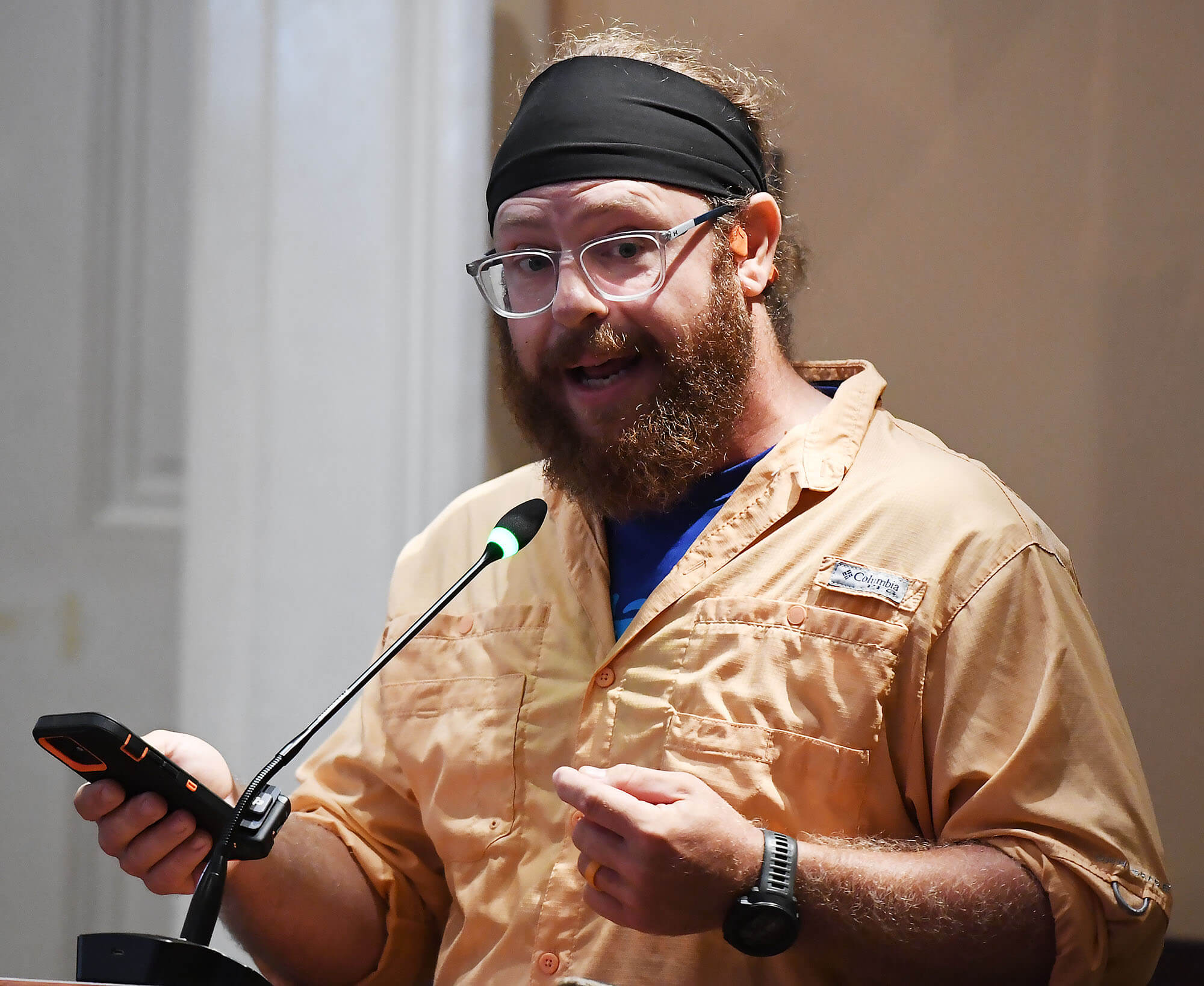
Matt Castell voiced his opposition to the construction of data centers in Jackson during a City Council meeting at City Hall, Tuesday, July 14, 2026, in Jackson. Credit: Vickie D. King/Mississippi Today
When the proposal to rezone the 230-acre piece of property in northwest Jackson went to the planning board, a large crowd turned up in opposition. Public comments have consistently been in favor of a temporary moratorium and passing regulations to address community concerns.
Even as AI promises to reshape the world, the physical infrastructure it needs has become a maelstrom of contention across the country. Jackson is not alone in passing a temporary moratorium. Other cities and states have considered or even passed temporary bans on data center development.
In Mississippi, Clinton and Madison have updated their zoning ordinances to regulate new data centers and Clarksdale attached a list of conditions when it rezoned property where a developer was considering building a data center. Legislators are also starting to explore regulation at the state level, including an AI task force meeting this week.
During Tuesday’s debate on the moratorium, Ward 3 Council Member Kenny Stokes said that he theoretically supports data centers but believed council members should have more control over economic development in their wards.
“I don’t think it’s right that we’re putting something in a council person’s ward and the people don’t want it, the council man doesn’t want it, but you’re doing it because you can,” he said.
Ward 5 Council Member Vernon Hartley said that he spoke to the property owner a few days ago and told him that Jackson is not ready for a data center.
“We need money, true, but we’re looking at an industry here that is still being developed and tested all over the county,” he said.
But Hartley said he felt a moratorium would divide the city. Instead, he said Jackson needed to identify engineering or consulting firms that could help the city’s legal department vet potential data center developments.
Ward 1 Council Member Kevin Parkinson proposed reducing the moratorium to 60 days in an amendment that failed. Another amendment Parkinson offered to create an exemption from the moratorium for land surrounding the Jackson airport passed.
Audio recording is automated for accessibility. Humans wrote and edited the story.
Now disgraced and convicted former Hinds County District Attorney Jody Owens laid it out clearly to the undercover feds offering bribes to Mississippi politicians.
Owens, according to a federal indictment, explained the politicians would “clean (the bribes) like we always do, we’ll put it in a campaign account …”
“Owens also explained that because public officials finance their personal lives through their campaign accounts, campaign contributions were the most effective way to influence them, so long as the money came from within the state of Mississippi,” the indictment said.
Mississippi’s weak, jumbled and conflicting campaign finance laws, along with nearly nonexistent enforcement and meager transparency, are a recipe for political corruption and the corrosive influence of secretive big-money special interests.
The conviction of Owens, former Jackson Mayor Chokwe Antar Lumumba and two City Council members in an FBI bribery sting in which campaign accounts played a prominent role, makes the need for Mississippi campaign finance reform and transparency clear and present.
There have been some, mostly ineffectual, efforts at reform over many years. But the Mississippi Legislature has largely treated these efforts like the plague. The one thing on which most lawmakers appear to agree, be they on the far right, far left or somewhere in between, is that they don’t want any real regulation or transparency over their tax-exempt campaign finance accounts.
Going on a decade ago, lawmakers passed what was billed as a prohibition on personal use of campaign funds. This came after an embarrassing series of news articles about Mississippi politicians using their campaign funds for vacation trips, paying their taxes, a BMW for a family member, an RV to park at Disney World, paying themselves and family, hiring a personal injury lawyer and even buying an $800 pair of cowboy boots.
But the law lacked teeth or clear enforcement authority and, it would appear from what Owens told the undercover FBI agents, politicians still use campaign accounts as personal slush funds. Or, to occasionally launder tens of thousands of dollars in bribes.
Secretary of State Michael Watson has for the last few years pushed for reform, with some assistance from Senate Elections Chairman Jeremy England, but the Legislature has snuffed the efforts out. Such reform hasn’t even gotten a real hearing in the House.
Mississippi voters don’t even stand a fighting chance at figuring out who’s buying our politicians. Most other states, including all those surrounding Mississippi, have searchable databases of campaign contributions. Politicians elsewhere, including Congress, have been required to file campaign finance reports electronically for years, in some cases decades.
But not in Mississippi, nay, nay. Politicians can, if they so choose, file handwritten, illegible reports, in crayon if they like (one candidate did hers in calligraphy years ago).
Campaign finance reports are not as routine checked by anyone for legibility, completeness or accuracy, and they are stored as un-searchable PDFs. Some politicians have filed blank forms. Or, as has been done with little consequence, they can just not file reports. Mayor Lumumba went for three years without filing a report, and when questioned just noted that is “not uncustomary for my campaign.”
A former state lawmaker once filed a report listing a $1,000 expense as “Auto GAS-Travel” for the payee, “CASH” for the address and “Auto GAS (CASH)” as the purpose for the campaign spending. A $5,000 expense was labeled as “Casual Labors” with no other explanation.
Watson has a new computer system at the secretary of state’s office and is creating an online filing system. He has pushed lawmakers to require electronic campaign finance filing, but to no avail.
“I wonder how many cases like this it will take for the Legislature to finally pass common sense and strong campaign finance reform?” Watson said after recent guilty pleas in the Jackson federal corruption case.
The legislative arguments against even having to file reports that the public can easily decipher have been asinine.
Longtime Sen. Hob Bryan, D-Amory, has repeatedly argued that requiring Mississippi candidates to fill out an electronic form for campaign donations and spending would be too onerous. He said that using technology that’s been in most people’s homes – or pockets, with cell phones – for decades would prohibit some from running for office.
The Mississippi public at-large perhaps hasn’t tripped to the fact that it’s being kept in the dark more than other states’ residents or that the state’s lack of campaign finance, lobbying and ethics laws are an open invite to corruption and special interest control.
Meanwhile, more and more money flows into Mississippi campaigns. Even legislative races have become more expensive affairs, with campaigns sometimes raising and spending hundreds of thousands of dollars. In recent election cycles, we’ve seen millions of dollars of dark money flow into campaigns and PACs and what would appear to be flagrant violations of what few rules and limits the state does have – should anyone try to enforce them.
But ironically, the only time this has appeared to be a real issue with lawmakers is during recent attempts to reinstate the public’s right to sidestep the Legislature and place measures directly on a statewide ballot.
In that case, many lawmakers have said as they have repeatedly shot down ballot initiative reinstatement, they fear big-money special interests might improperly influence such proposals and campaigns and co-opt voters.
Maybe they’re worried that would leave less money for them.
Audio recording is automated for accessibility. Humans wrote and edited the story.
University of Mississippi researchers, armed with a bevy of data, have in recent weeks met with state lawmakers and outlined their case for why the Legislature should fund new programs to study and treat problematic gambling.
The researchers will request a $2 million annual allocation to fund two major gambling initiatives on campus, a presentation obtained by Mississippi Today shows.
The effort comes as gambling in the U.S. is on the rise due to increasing access and availability, the researchers said. It also comes as the legalization of mobile sports betting remains stalled in the Mississippi Legislature, with House and Senate leaders at loggerheads over the policy.
The University of Mississippi researchers have not taken a position on the legalization of mobile sports betting. Hailing from departments ranging from social work to higher education to the law school, the researchers will ask for $1 million to fund a Center on Collegiate Gambling. The center will conduct academic research on student gambling and gambling on collegiate sports.
The other $1 million would fund gambling treatment clinics for the general population of Mississippi. The home-base clinic would be located at the University of Mississippi, with additional potential clinics at Mississippi State University, Jackson State University and the University of Southern Mississippi.
The University of Mississippi announced the launch of its Center on Collegiate Gambling in March, describing it as the “first of its kind in the nation” amid rising national concern about betting on collegiate sports.
Researchers affiliated with the initiative have since been looking for steady funding for the center. Figures included in the presentation they delivered to lawmakers point to a growing problem that will take resources to solve.
About 20 million people, or 8% of U.S. adults, report experiencing at least one problematic gambling behavior several times in the past year. The estimated social cost of problem gambling in the U.S. is $14 billion a year, according to findings from the National Council on Problem Gambling. That can be traced to gambling-related criminal justice and healthcare spending, as well as job loss, debt and bankruptcy.
In Mississippi, an estimated 4% of adults in Mississippi are believed to meet criteria for gambling disorder.
In late June, Rep. Beth Luther Waldo, a Republican from Pontotoc, said she and several fellow lawmakers visited the University of Mississippi and that the growing problem of gambling addiction among young people “stood out as particularly concerning.”
“We discussed how easily some individuals can become trapped in a cycle of gambling losses and debt often digging themselves into an even deeper hole as they try to recover what they’ve lost,” Waldo wrote on social media. “While online sports betting is currently illegal in Mississippi, many young people (& adults) are still accessing gambling opportunities through offshore websites and other online platforms.”
A 2025 survey of schools in the Institutions of Higher Learning found that about 40% of undergraduate students gambled in the past year, most often via lottery, cards and sports betting. Gambling was more prevalent among students who were male, white, lived off campus, participated in sports and were involved in Greek life. About 16% of student sports bettors met criteria for moderate or severe problem gambling.
But more broadly, the researchers said, nine out of 10 individuals with a gambling problem never receive treatment.
While gambling might be a financial problem for some individual Mississippi residents, it’s big business for the state as a whole.
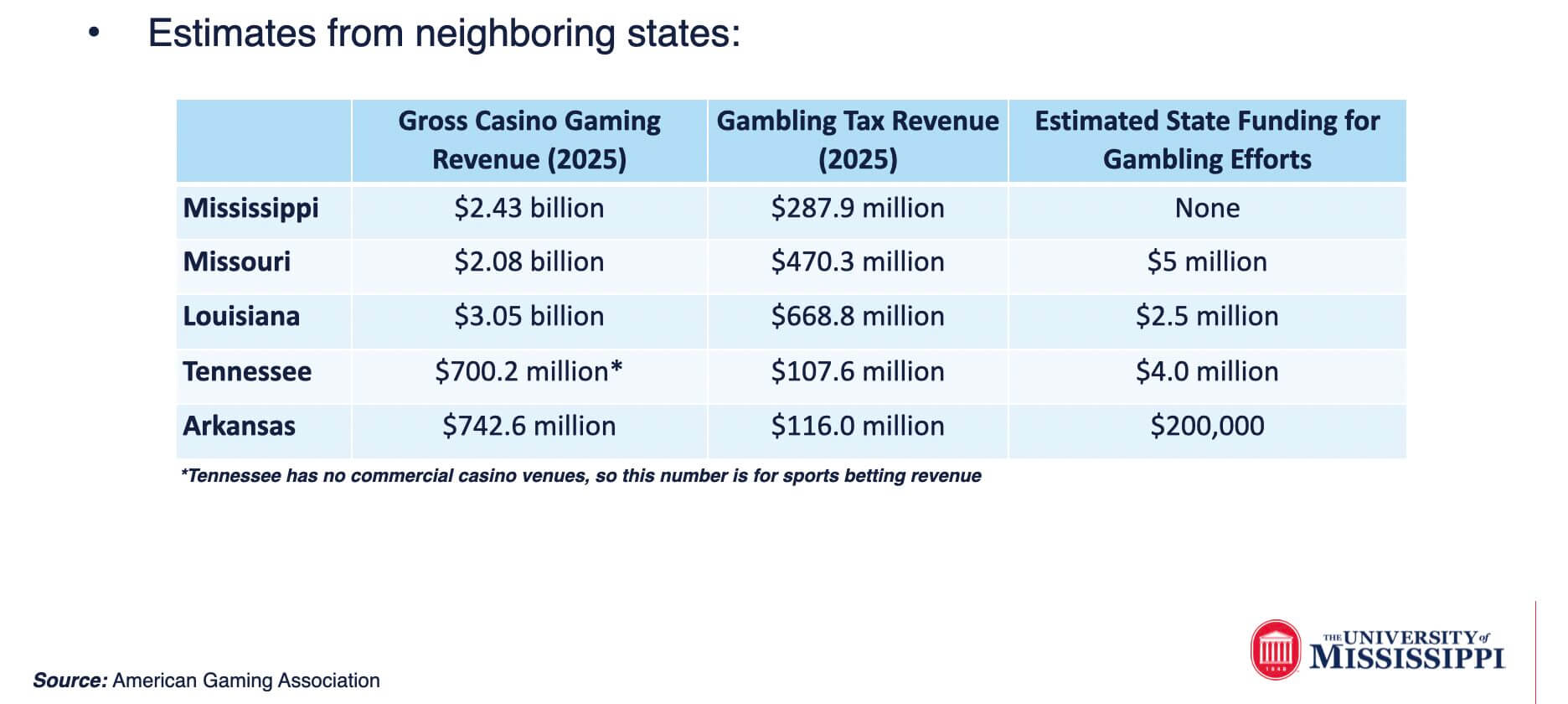
In 2025, total statewide commercial casino gambling revenue in Mississippi was $2.43 billion, the researchers said. That same year, commercial casinos generated approximately $287.9 million in direct gaming tax revenue.
Despite the growing prevalence of gambling addiction and the longstanding power of the state’s casino industry, Mississippi is one of only nine states with no public funding specifically designated for problem gambling services, the researchers said.
The state used to transfer $100,000 to the Mississippi Council on Problem and Compulsive Gambling, but that spending was discontinued in 2018.
In addition to being one of the few states with no taxpayer-funded gambling services, Mississippi has also remained among a minority of states that haven’t legalized mobile sports betting.
The opposition is largely rooted in fears that legalization could harm the bottom line of the state’s casinos and increase the prevalence of gambling addiction. That hasn’t stopped a thriving black market from taking hold in the state.
In 2024, illegal online betting in Mississippi made up about 5% of the national illegal market, which is about $3 billion in illegal bets in Mississippi, proponents said that year. Supporters of legalization, including House Speaker Jason White, say people will place online sports wagers regardless of whether the practice is legal, so the state should regulate and tax it.
The state House voted, for the third year in a row, to legalize mobile sports betting during the regular 2026 legislative session. But Senate leaders have said they plan to let the measure die again.
Recently, Lt. Gov. Delbert Hosemann, who leads the Senate, restated his opposition to legalization, citing the potential economic impact on casinos and “a social cost that is of increasing concern.”
“Mobile sports betting could undermine the billions of dollars invested in brick-and-mortar gaming facilities across our state, increase opportunities for misconduct and illegal actions involving athletes, and raise serious questions about whether the resulting tax revenue would even be sufficient to offset the associated social and economic costs,” Hosemann said. “The Senate should continue to reject this harmful legislation.”
Whether or not Mississippi chooses to legalize mobile sports betting in the future, the University of Mississippi researchers told lawmakers that their gambling initiatives will educate the public around responsible gambling while providing a safety net for those who develop problems.
Audio recording is automated for accessibility. Humans wrote and edited the story.
Christine Wonsley says she and her husband had difficult conversations with their son about race as he grew up in Mississippi, a place where in a not-too-distant past, Black people were denied equal treatment under the law.
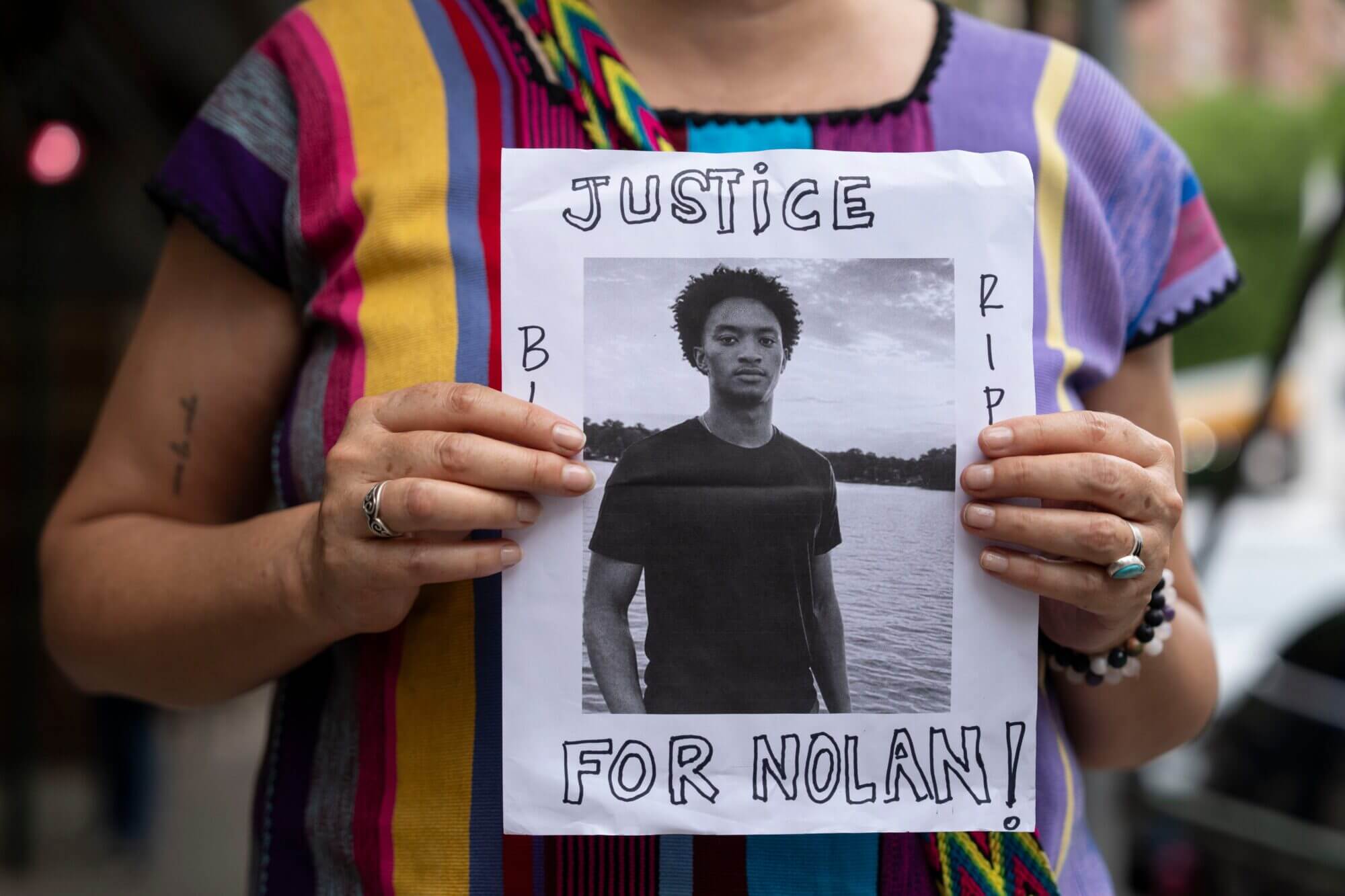
Those childhood conversations with Nolan Xavier Wells have taken new meaning as the grieving mother and others press local authorities for a thorough investigation into the mysterious death of the 18-year-old, whose body was found two days after he and several white friends traveled by boat to Horn Island on the Fourth of July.
The tragedy – and whether foul play and race were factors – has evoked a painful history in a state where investigations into the deaths of Black people have not always been pursued with the same rigor as those involving white victims.
That history has not been lost on Wonsley and her family.
“Me and his dad had conversations with him all the time, not just about the importance of understanding our history as Black people, but also the importance of how you have to move in certain spaces,” Wonsley said at a press conference Friday in New York, standing by the Rev. Al Sharpton and nationally prominent attorney Ben Crump.
“It’s not us feeding into racism or the stereotypes that come with that,” she said. “Unfortunately, it’s just a matter of fact.”
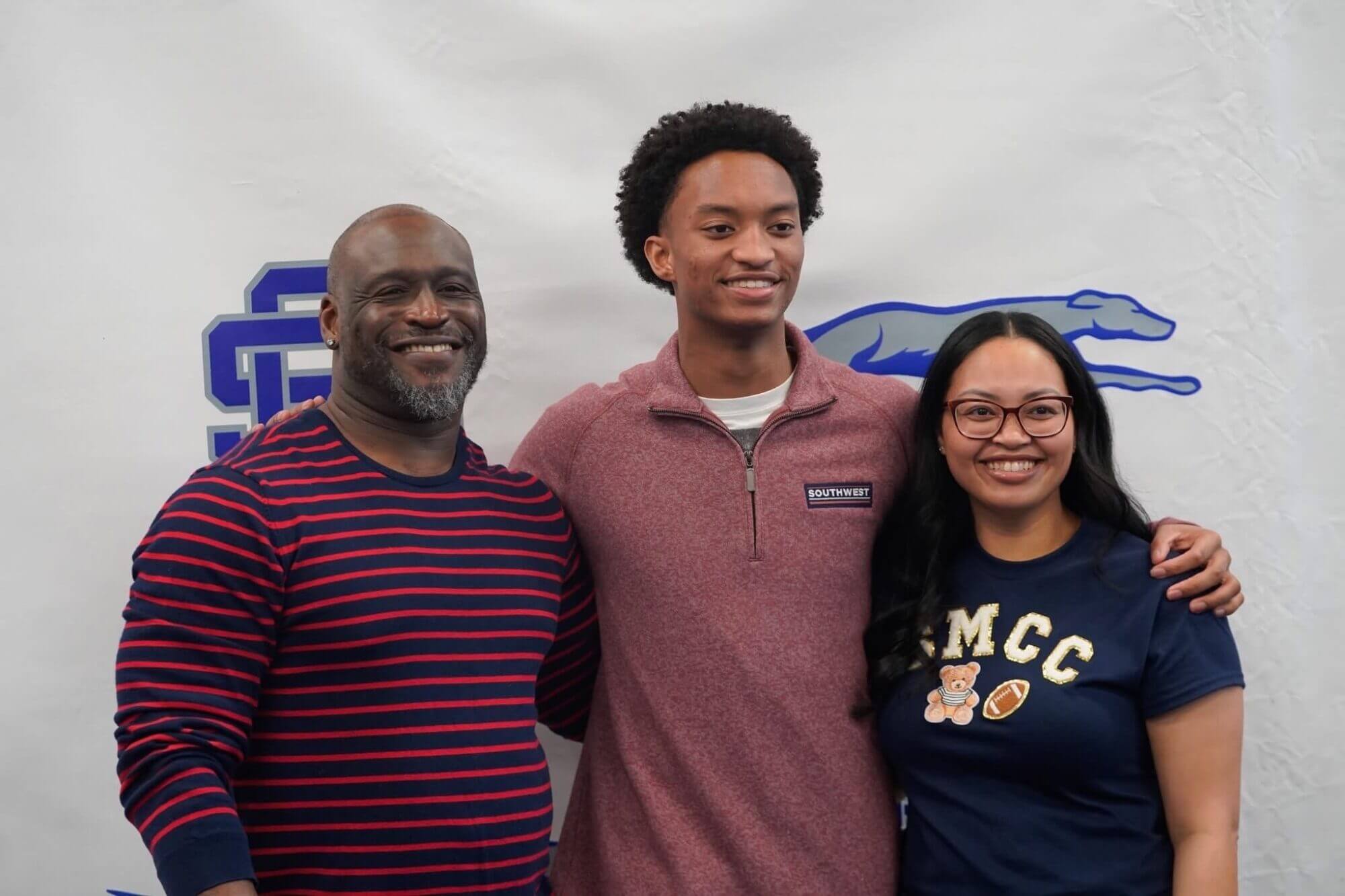
Nolan Xavier Wells, center, will his parents, Elmore and Christine Wonsley. Credit: Ben Crump Law
Lingering questions about how Wells died have ignited broader discussions about systemic racism, policing and the experience of being a Black person living in a majority-white environment.
“People see it as another event where Black bodies don’t matter,” said Byron D’Andra Orey, a political science professor at Jackson State University who studies racial trauma. “How Black people process and are exposed to these events leads to the constant cycle of traumatic experiences.”
Orey said Wells’ death, while still under investigation, has reinforced a belief that justice will not be served – a common sentiment in the aftermath of high-profile incidents of violence against Black Americans such as Rodney King, Trayvon Martin and George Floyd.
A photo circulating across social media, purportedly taken during the fateful trip to Horn Island, shows Wells with his arms around three white friends, prompting questions about why the wide receiver for Southwest Mississippi Community College was left behind on the island, as investigators say he was.
Crump, who is representing Wells’ family, has said his boat companions mentioned Wells wanted to stay on the island to talk to a woman and that he would catch a ride back to shore on another boat. But also according to Crump, the young woman said Wells told her he was getting back on the boat with that original group of friends.
Wonsley tracked his cellphone to the home of one of his boat-ride companions from the holiday weekend, according to Crump. She used Life360, an application that allows users to track the location of other people’s devices and items using bluetooth technology. Nolan’s keys were found at the home of one of the men he was pictured with over the holiday weekend, according to Elmore Wonsley, Wells’ father.
“We are in Mississippi,” Crump told parishioners Sunday at New Birth Missionary Baptist Church outside Atlanta. “These were three young white men. Nolan was the only young Black man. Had the roles been reversed, we know this investigation would be going differently. It would be like the first 48. They would be interrogating those young, Black boys.”
Mississippi coast Chancery Court Judge Ashlee Cole, who is the mother of one of Wells’ white friends, denied her family was hindering the investigation into Wells’ death in a statement. She said her son was interviewed by the Jackson County Sheriff’s Office as part of the investigation. She claimed Wells left the island with a separate group of friends.
Crump also accused local authorities of easily dismissing possible wrongdoing, suggesting that Jackson County Sheriff John Ledbetter’s pronouncement that “no foul play was suspected” – even before an autopsy was completed – was premature.
Ledbetter, who did not respond to requests for comment, has asked the public to share photos and video, sightings and interactions and observations of any arguments or disturbances on the island from July 4. He also asked people to refrain from spreading unverified information.
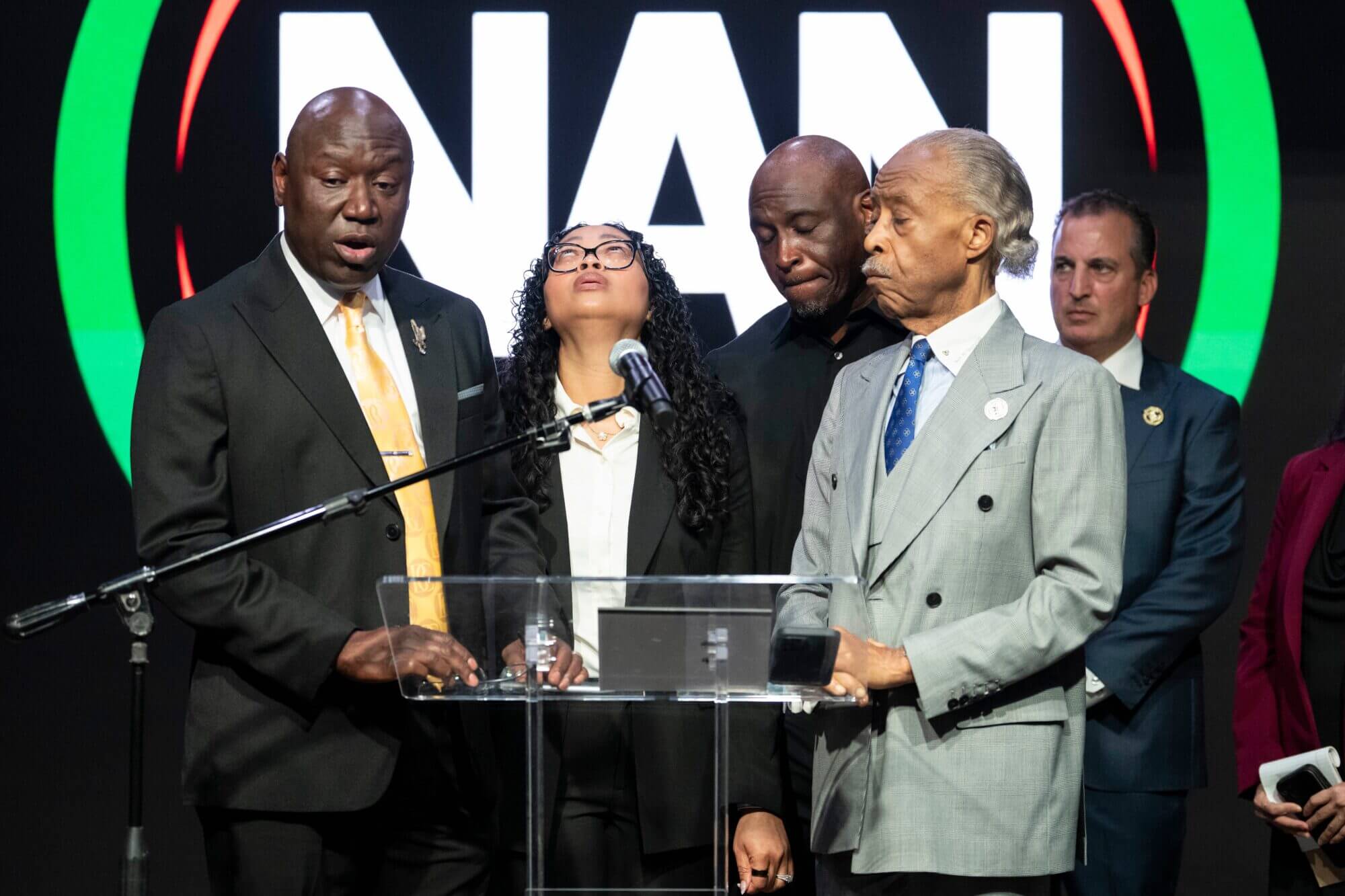
Christine Wonsley, mother of Nolan Xavier Wells, reacts as she speaks during a news conference at National Action Network headquarters, Friday, July 10, 2026, in New York. At left is civil rights attorney Ben Crump. Credit: AP Photo/Yuki Iwamura
Skepticism was echoed Saturday in Wells’ hometown of Ocean Springs, where dozens of demonstrators marched in solidarity with his family and called for more transparency in the investigation.
“There has been a long, long stream, historic stream, of young Black men losing their life under very suspicious circumstances,” Biloxi resident Gordon Jackson told WLOX on Saturday.
Communities on the Mississippi coast are racially diverse. However, racial violence in the distant and more recent past still impacted communities in Mississippi regardless of demographic breakdown. Coast school districts, which are roughly a 20-minute drive from each other, are diverse, too. Biloxi High is 40.6% white and 35.4% Black. Gulfport High is 51.1% Black and 36.2% white. Wells attended Ocean Springs High, a predominantly white school district in a mostly white coastal community. Ocean Springs High is 70.8% white and 12.9% Black. The city is 79.6% white and 7.6% Black.
The death of other young, Black men in Mississippi have started similar conversations about race relations in the once Confederate state. Last September, the body of 21-year-old Demartravion “Trey” Reed was found hanging from a tree on the Delta State University campus in Cleveland – and for many people, his death conjured disturbing images of the Deep South’s history of lynching. The state medical examiner’s office ruled it a suicide, prompting skepticism among the family and the community. After Crump started representing Reed’s family, an independent autopsy was conducted but Crump’s office has not released the results.
Mississippi Today has reported in recent years on state autopsies of Black homicide victims that were later found to be incorrect. State investigators missed obvious signs of police brutality in the death of Damien Cameron. A medical examiner ruled out suicide by misinterpreting the pathway of a bullet that killed Danelle Young.
The Mississippi chapter of the NAACP said it will actively monitor the Wells investigation.
“Justice cannot thrive in the shadows,” said the Rev. John Whitfield, the chapter’s president. “When an 18-year-old life is lost under troubling circumstances, transparency is not a privilege to be granted – it is a public obligation.”
A state autopsy of Wells was completed last week but its results, including a cause of death and toxicology, have not yet been released.
Last week Crump said an independent autopsy will be completed in Washington. On Monday, a spokesperson said there were no investigation or autopsy updates.
Amid the ongoing investigation and the tensions that have risen across the community, the Wells family has called for calm and peace, saying the teen would have wanted it that way.
Wonsley called her son a kind soul who loved everybody, regardless if they “were Black, white, purple, green, looked like a marshmallow.”
With his death, so much more will be left unknown.
“This is not how I wanted the world to get to know my son,” she said. “But here we are.”
Correction, 7/13/2026: This article has been corrected to show that the police beating of Rodney King received national attention.
OXFORD – Tras una oleada de detenciones en Oxford y sus alrededores durante las dos primeras semanas de junio, comunidades de inmigrantes se enfrentaron a una falta de información por parte de las autoridades mientras lidiaban con las emergencias y las afectaciones en las vidas, las familias y los negocios provocadas por los arrestos.
Testigos en Oxford grabaron en vídeo y fotografiaron a agentes del ICE en vehículos sin identificación arrestando a personas, en su mayoría latinos yendo al trabajo, en intersecciones y paradas de tránsito. Una red de base con sede en Memphis (Tennessee), Vecindarios901, descubrió que al menos 24 personas fueron detenidas. Muchas de ellas permanecieron retenidas brevemente en el Centro de Detención del Condado de Madison, en el centro de Mississippi, y luego fueron trasladadas rápidamente a centros de detención más grandes del Servicio de Inmigración y Control de Aduanas (ICE) en Louisiana y Alabama, entre ellos una prisión privada en Jena (Louisiana) con un historial documentado de tortura y malos tratos.
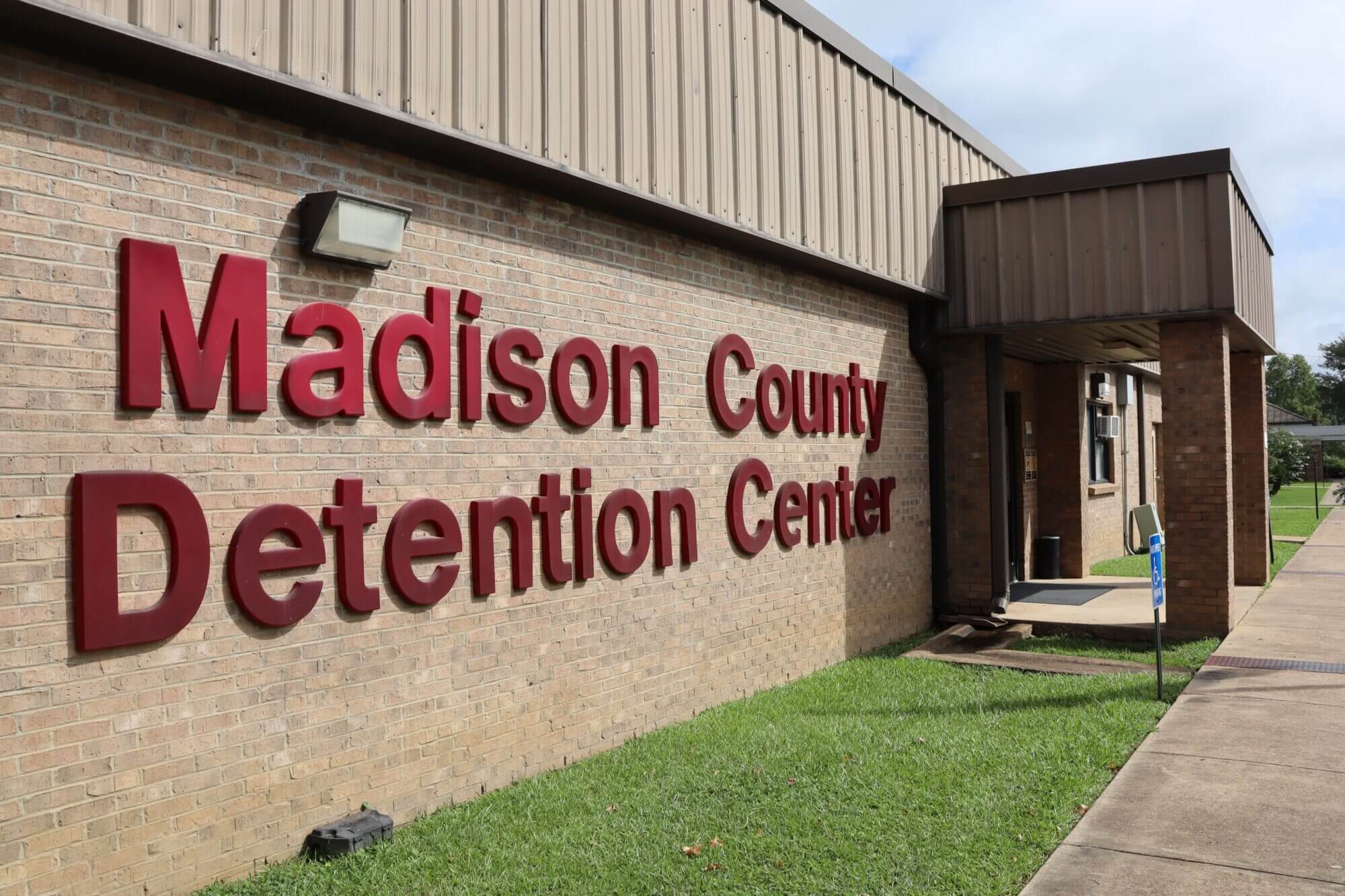
Authorities held people detained in and near Oxford at the Madison County Detention Center in central Mississippi before transferring them to ICE facilities in Louisiana and Alabama. Foto: Georgie Pease/Mississippi Today
Para muchas personas que intentaban localizar a amigos y familiares que habían sido detenidos, Vecindarios901 fue una fuente de información fundamental. La red responde principalmente a las detenciones en Memphis y sus alrededores, donde las comunidades de inmigrantes han sido los principales objetivos de la Memphis Safe Task Force, una operación conjunta de agencias federales —entre ellas el ICE y la Guardia Nacional— en colaboración con las autoridades locales. (El memorándum del presidente Donald Trump de septiembre de 2025 creó esta fuerza para «acabar con la delincuencia callejera y los delitos violentos», pero los agentes federales han sido acusados de actos repetidos de violencia y acoso).
Situada a más de una hora en carro al sureste de Memphis, Oxford no ha sido un objetivo habitual de las autoridades federales de inmigración, pero Vecindarios901 también vigila la zona debido a la proximidad a su sede. Los operadores indicaron que estas detenciones constituían el operativo de control migratorio de mayor magnitud que habían registrado cerca de Oxford desde septiembre.
Bailey Martin Holloway, vocera del Departamento de Seguridad Pública de Mississippi, escribió que, dado que el Departamento de Seguridad Nacional de EE. UU. —que incluye ICE— era la agencia principal en el operativo de Oxford, «cualquier información tendría que ser facilitada por ellos».
El ICE, el Departamento del Sheriff del condado de Lafayette y el Departamento del Sheriff del condado de Madison no respondieron a preguntas sobre el número de personas detenidas ni sobre el lugar al que fueron trasladadas. El portavoz del Departamento de Policía de Oxford, Breck Jones, afirmó que la policía municipal no participó en los operativos y no recibió ninguna información sobre las detenciones. La alcaldesa de Oxford, Robyn Tannehill, no respondió a múltiples solicitudes de comentarios.
Nena Garza, que usa un seudónimo para evitar represalias de las autoridades por su trabajo, es una de las buscadoras capacitadas de Vecindarios901. Se han convertido en expertas en el uso de diversos recursos en línea para ayudar a las familias de la región a localizar a sus familiares detenidos. Las herramientas para encontrar a los detenidos existen, afirmó Nena Garza, pero «poca gente maneja esto, no sabe cómo llegar a esto».
Ella y otros buscadores recopilan información comparando los datos de los registros de detención del condado, una plataforma privada diseñada para que las familias envíen dinero a los presos, el localizador de detenidos de ICE y las actualizaciones de las autoridades locales a través de la aplicación Mobile Patrol.
Sin embargo, el elevado número de detenciones de inmigrantes en la región hace imposible que los buscadores puedan ocuparse de todos los casos. «Son demasiados», afirmó Nena Garza. «Si salgo de la oficina y tengo mi computadora o mi iPad, me pongo a registrar, a checar a ver dónde están».
The Square in Oxford on Thursday, June 18, 2026. Foto: Georgie Pease/Mississippi Today
En un restaurante de carretera a las afueras de Oxford, el marido de la propietaria contó que está balanceando su trabajo a tiempo completo en la construcción con la gestión del restaurante desde que su esposa, de nacionalidad hondureña, fue detenida en Memphis a principios de junio. Posteriormente, el ICE llegó a Oxford y detuvo al hijo de uno de los empleados del restaurante.
«Se han llevado a muchos de mis amigos, muchos conocidos con las redadas de esa forma, con los retenes de migración», dijo el esposo de la dueña, quien habló bajo condición de anonimato para evitar ser identificado por las autoridades de inmigración. «Nos hemos quedado tristes porque mucha de la gente que conocíamos ya no está».
Dijo que su esposa lleva 16 años viviendo en los Estados Unidos, que ha formado una familia aquí, que dirige dos negocios y que estaba a punto de conseguir su tarjeta de residencia. Asumir las responsabilidades de ella ha sido un reto tanto para él como para los empleados del restaurante, sobre todo porque les preocupa la situación a la que se enfrentan sus seres queridos en los centros de detención. Afirmó que las autoridades no le han dado a su esposa los medicamentos recetados y que ella sigue perdiendo peso.
«Tengo miedo de que me la dejen morir ahí», dijo. «Me destroza el corazón».
Nena Garza dijo que, más allá de las desapariciones, las detenciones generan una serie de situaciones de emergencia que las redes de apoyo se apresuran a solucionar, entre ellas: buscar quién cuide de los niños que se quedan sin guardianes, ayudar a las familias cuyo principal proveedor económico ha sido detenido a pagar la renta y los gastos de la casa y organizar el transporte a la escuela o las citas cuando las familias se quedan sin carro o tienen miedo de salir de casa. Recuperar los vehículos que quedan abandonados y son retirados por la grúa tras la detención de sus conductores puede costar a los familiares entre cientos o miles de dólares. Pero el principal daño, Nena Garza afirma, es el trauma emocional.
«La comunidad está muy dañada, está muy dolida por esa situación», dijo. «Estamos hablando que el Gobierno usó su fuerza, su autoridad para aterrorizar a la comunidad.»
Las organizaciones que prestan apoyo a las comunidades de inmigrantes se preparan para un posible aumento de los operativos de control migratorio a partir del miércoles, fecha en la que entrará en vigencia la legislación estatal que obliga a todos los condados de Mississippi a firmar acuerdos de cooperación 287(g) con el ICE. Hasta finales de junio, 24 de los 82 condados de Mississippi habían firmado dichos acuerdos, así como varios municipios, el Departamento de Instituciones Penitenciarias y el Departamento de Seguridad Pública.
Según datos públicos de ICE, a finales de 2025 y principios de 2026 se produjeron alrededor de 300 detenciones de inmigrantes al mes en Mississippi, un aumento respecto a las aproximadamente 200 al mes registradas durante la mayor parte de 2025. Paula Merchant, directora de una organización sin fines de lucro con sede en Jackson que presta apoyo a familias inmigrantes, afirmó que en Mississippi se observó a partir de noviembre un aumento de las detenciones de personas en carreteras, calles y gasolineras. Mississippi Today informó sobre este aumento de las detenciones, que se produjo aproximadamente al mismo tiempo que el DHS puso en marcha un operativo de control migratorio dirigido al sur de Louisiana y Mississippi.
Según el Plan Estratégico del ICE, las detenciones se dirigen contra «personas que representan una amenaza para la seguridad nacional, la seguridad pública o la integridad del sistema de inmigración de EE. UU.». Sin embargo, la gran mayoría de las personas detenidas por el ICE no tienen antecedentes penales, según el Consejo Americano de Inmigración. Además, el ritmo sin precedentes de los cambios administrativos y las interpretaciones de la ley migratoria bajo la segunda administración de Trump —incluidas las políticas de nuevas detenciones y la terminación del Estatus de Protección Temporal— implican que muchas de las personas que se encuentran actualmente detenidas cumplían con los procedimientos de inmigración hasta que «las reglas cambiaron bajo sus pies de todos modos», según Calvo.
Nena Garza vivió las redadas masivas contra los inmigrantes en las procesadoras de pollo de Arkansas y en el sector de servicios de Memphis a finales de la década de 1990, pero afirma que la persecución de los inmigrantes bajo la segunda administración de Trump es la «más terrible» que ha vivido.
«Te duele y te vas a la cama y estás con el corazón bien apachurrado de todo lo que vistes en el día» dijo.
Pero también afirmó que, en sus 30 años de trabajo en apoyo de las comunidades de inmigrantes, nunca había visto a tanta gente movilizarse para responder a las detenciones, sus consecuencias y otras políticas contra los inmigrantes. «Como comunidad, tenemos que reforzarnos, tenemos que protegernos», afirmó.
Georgie Pease se unió a Mississippi Today mediante una beca de 10 semanas con la Escuela de Periodismo de la Universidad de California en Berkeley. Para esta historia, reportó desde Oxford y Memphis.
Mississippi Today tradujo este artículo con una herramienta de inteligencia artificial; modificaciones y una revisión final fueron realizadas por personas.Patricio Provencio colaboró con traducción.
Audio recording is automated for accessibility. Humans wrote and edited the story.
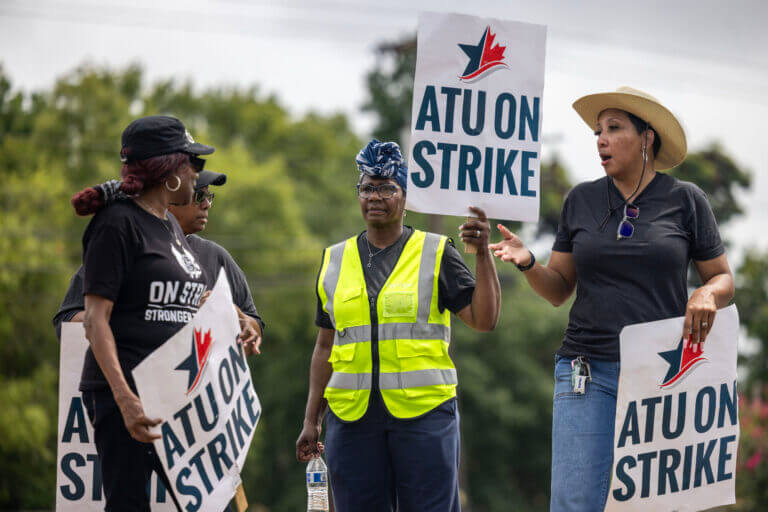
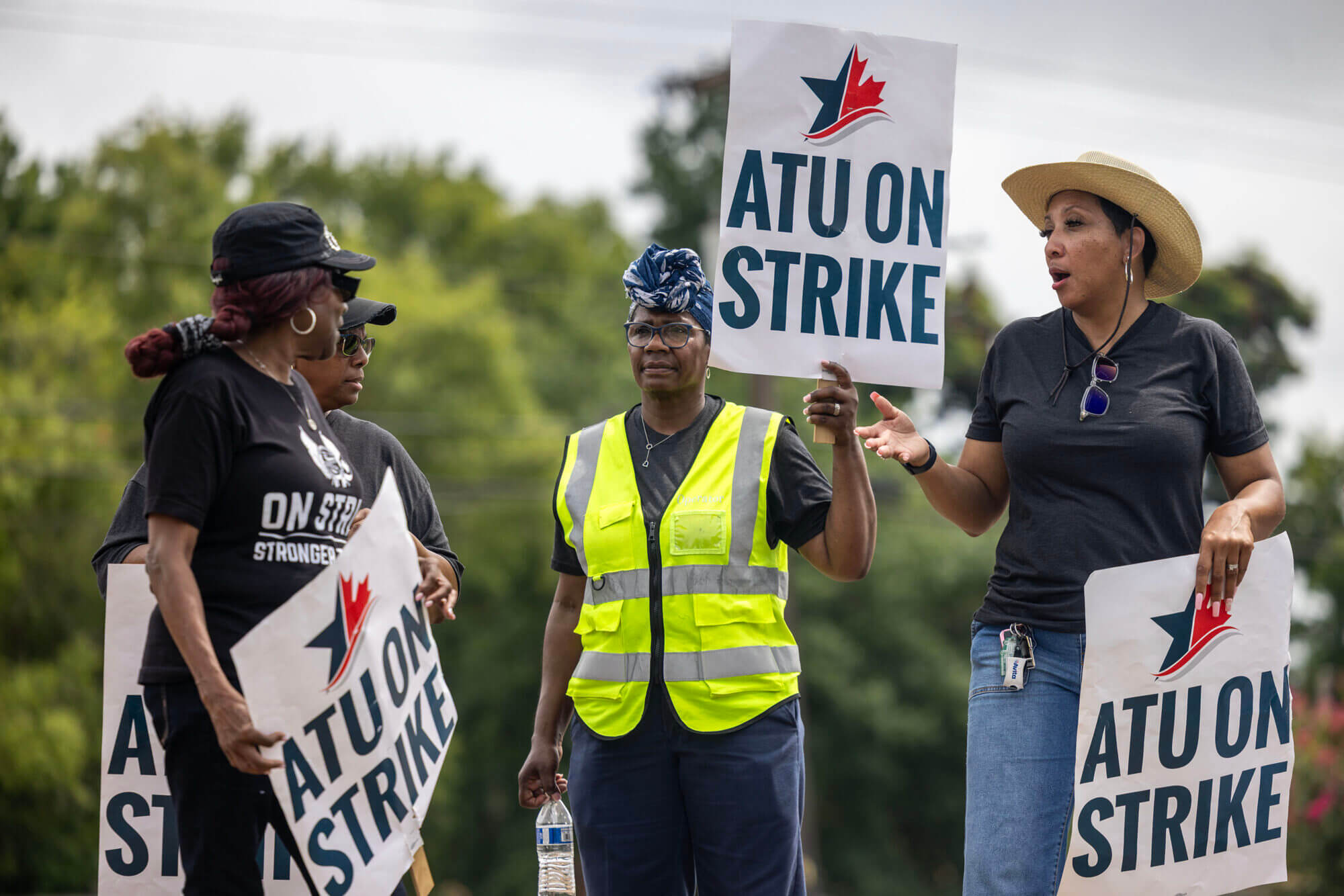
Scores of Jackson bus drivers and other transit workers formed picket lines early Monday, after contract talks over the weekend failed to produce an agreement between the transportation union and the Texas company under contract to run JTRAN.
More than two dozen strikers lined Highway 80 outside JTRAN’s headquarters, holding signs and chanting as some motorists honked in apparent support.
“Together we stand, divided we fall,” strikers chanted.
The strike is sure to disrupt the lives of scores of low-income and disabled Jacksonians who rely on the city’s bus system to get to work and travel across the region.
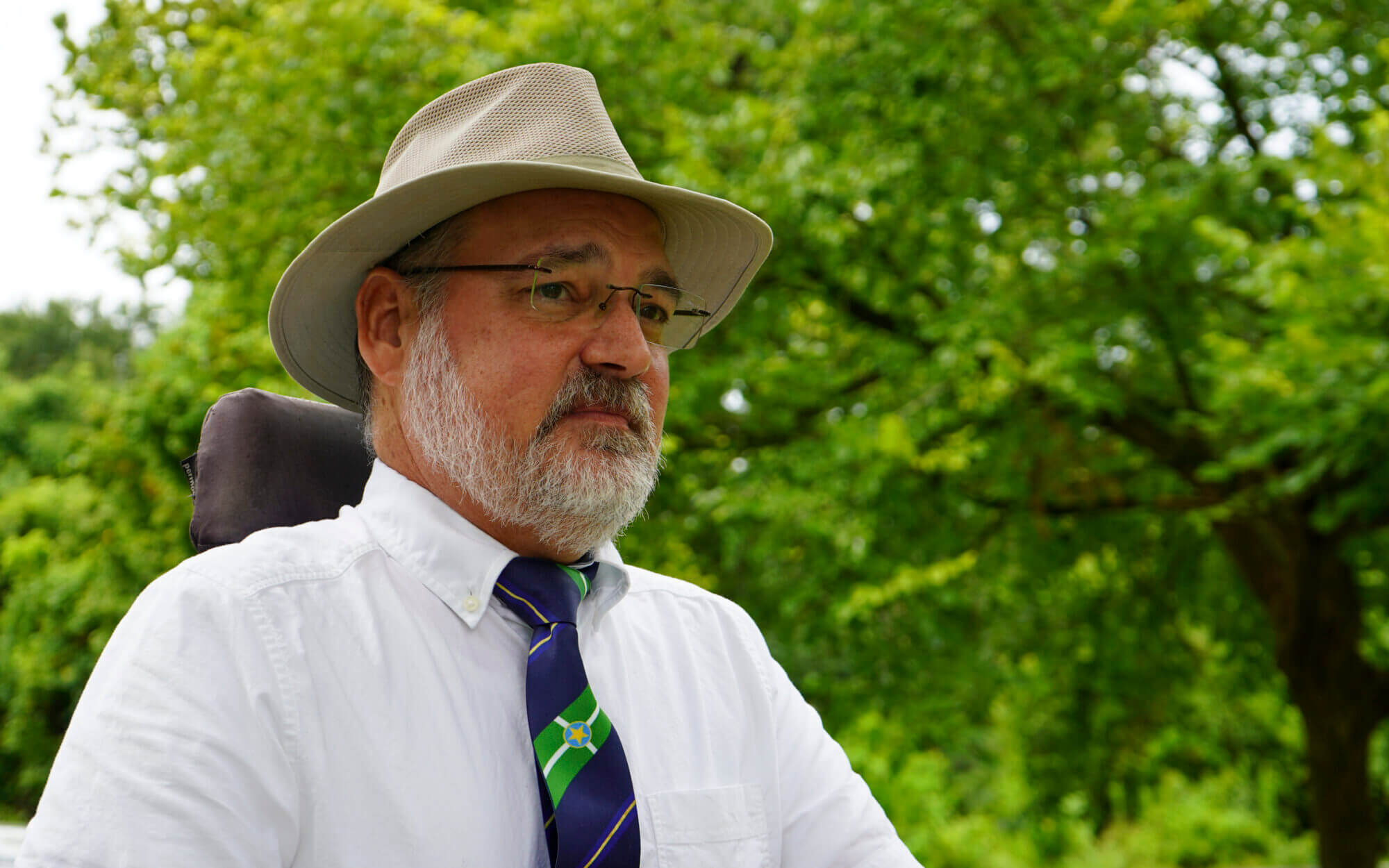
Scott Crawford, a longtime disability activist, is one of many in the area who will be affected by the ongoing strike. Crawford held a press conference in his driveway on behalf of those suffering from disabilities, urging both MV Transportation and JTRAN to come to an agreement.
“I’m not sure how this is going to work out, but I can assure you there will be no winner,” Crawford told reporters. “Not the union, not MV and definitely not the city.”
Crawford, who uses a wheelchair, said his mobility would be further limited because of the strike.
Scott Crawford, a longtime disability activist, prepares to give a press conference from his driveway on Monday, July 13, 2026. Credit: Aaron Lampley/Mississippi Today
“I’m still privileged enough to have at least one grocery store within wheelchair distance,” Crawford said. “But I can’t depend on that grocery store for all my grocery needs.”
Charles Tornes Jr., the president of the Amalgamated Transit Union Local 1208, said his members sought to avert a strike but had no other choice.
“We want the citizens of Jackson to know we did not want to strike. We hope they stand with us,” Tornes said in a statement.
Though JTRAN is a publicly funded service, its unionized employees work for MV Transportation, which calls itself the largest privately owned transportation company in America.
This is the second time in the past two years that the city’s public transportation workers have walked off the job. Workers went on a 14-day strike in September 2024.
In a statement, MV Transportation said it was disappointed the union went on strike.
“To be clear the union leadership’s actions in launching a strike hurt our valued passengers and the people of Jackson AND our teammates who are their dues-paying members,” said the company’s spokesperson, Hyma Moore Jr.
The JTRAN Administration and Maintenance Facility Monday, July 13 2026, in Jackson. Credit: Eric Shelton/Mississippi Today
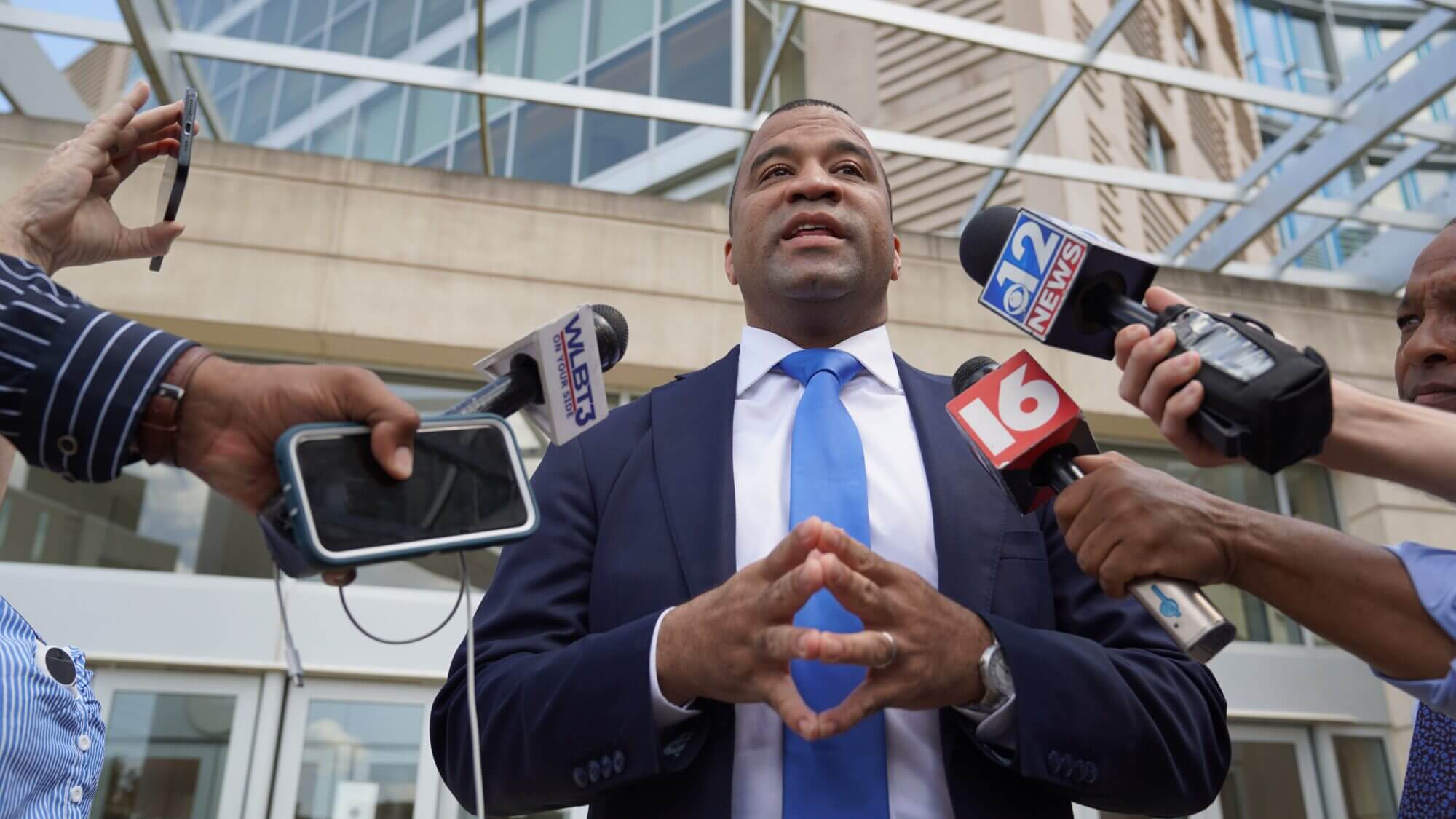
Mayor John Horhn urged both sides to seek the help of a federal mediator.
“I respect the concerns raised by our JTRAN operators and I recognize the important role they play in keeping Jackson moving every day,” the mayor said in a statement.
“We are carefully evaluating both perspectives to determine what makes the most sense for our riders, our workers, and our taxpayers,” Horhn said.
“My priority is to minimize disruption in service while ensuring that our drivers are treated fairly and that residents who depend on public transit can continue to get to work, school, medical appointments, and other essential destinations,” he said.
He said MV Transportation had begun bringing in out-of-state drivers to keep some routes running. He said the city will be waiving requirements that JTRAN drivers hold Mississippi driver’s licenses for the duration of the strike – a move the union called “dangerous.”
“You don’t have a CDL, so you’re certainly not as trained as our operators here,” Costa said.
The two sides have been negotiating a collective bargaining agreement out of public view since a previous version expired in December. The union has been seeking competitive pay raises, while MV Transportation has proposed a number of changes to JTRAN, including new safety policies and the ability to hire drivers without commercial licenses to operate smaller vehicles for on-demand “microtransit” services.
The union authorized a strike in June and on Friday issued a 72-hour strike notice.
Update, 7/13/2026: This article has been updated with additional information about people affected by the JTRAN strike.
Audio recording is automated for accessibility. Humans wrote and edited the story.
CLEVELAND – Going for nearly a year with broken heating and air conditioning has been miserable for Ashley Matthews. But the last few months have been unbearable – and potentially dangerous. Matthews, 27, is six months pregnant with her third child.
Her car didn’t have air conditioning, either, so Matthews financed a new one in May to get relief from the heat.
“I can imagine if I’m this hot, how hot she is,” Matthews said about her daughter who is due to be born in October.
A single mom of a 1-year-old and a 4-year-old, Matthews works as an early childhood educator. She said she intuitively knew what research in recent years has brought to light: Exposure to extreme heat can be harmful to pregnant women and the babies they are developing.
Expectant mother Ashley Matthews picked up items offered at a “Beat the Heat” event held at the South Central Village Apartments, Wednesday, July 1, 2026, in Cleveland. Credit: Vickie D. King/Mississippi Today
The danger is acute in Mississippi, which typically has long, hot and muggy summers and a high rate of people who might not be able to afford air conditioning. The state leads the nation in preterm births, with 1 in 7 babies born before 37 weeks. It also has the highest – and worsening – rate of infant mortality, babies who die before their first birthday. More than twice as many Black infants die as white ones. The gap, in fact, is growing wider.
The causes for the poor outcomes, in Mississippi and across the country, are many. But some risk comes from the warming planet. The last few years in Mississippi have been among the hottest on record, and the National Weather Service forecasts that trend is likely to continue.
A landmark JAMA Open report on the topic in June 2020 was led by Dr. Bruce Bekkar, who stopped practicing obstetrics after 20 years and turned to climate research and advocacy a few years back. It brought attention to extreme heat’s many hazards: preterm birth, low birthweight, stillbirth and more. Women in communities of color, such as Matthews, faced higher risk.
Research since that report has only lengthened the list of possible harms, including to expectant mothers. Some research has even suggested that as little as one day of extreme heat might elevate the risk of pregnancy complications, often linked to dehydration.
Those findings made headlines, in both the medical world and in the general media. But that knowledge hasn’t translated consistently into clinical care.
Many maternal healthcare providers don’t routinely address heat, or how to minimize its potential risks with their pregnant patients, according to providers, researchers and patients interviewed in Mississippi and across the country.
Matthews said her doctor never talked to her about high temperatures or asked about her living conditions.
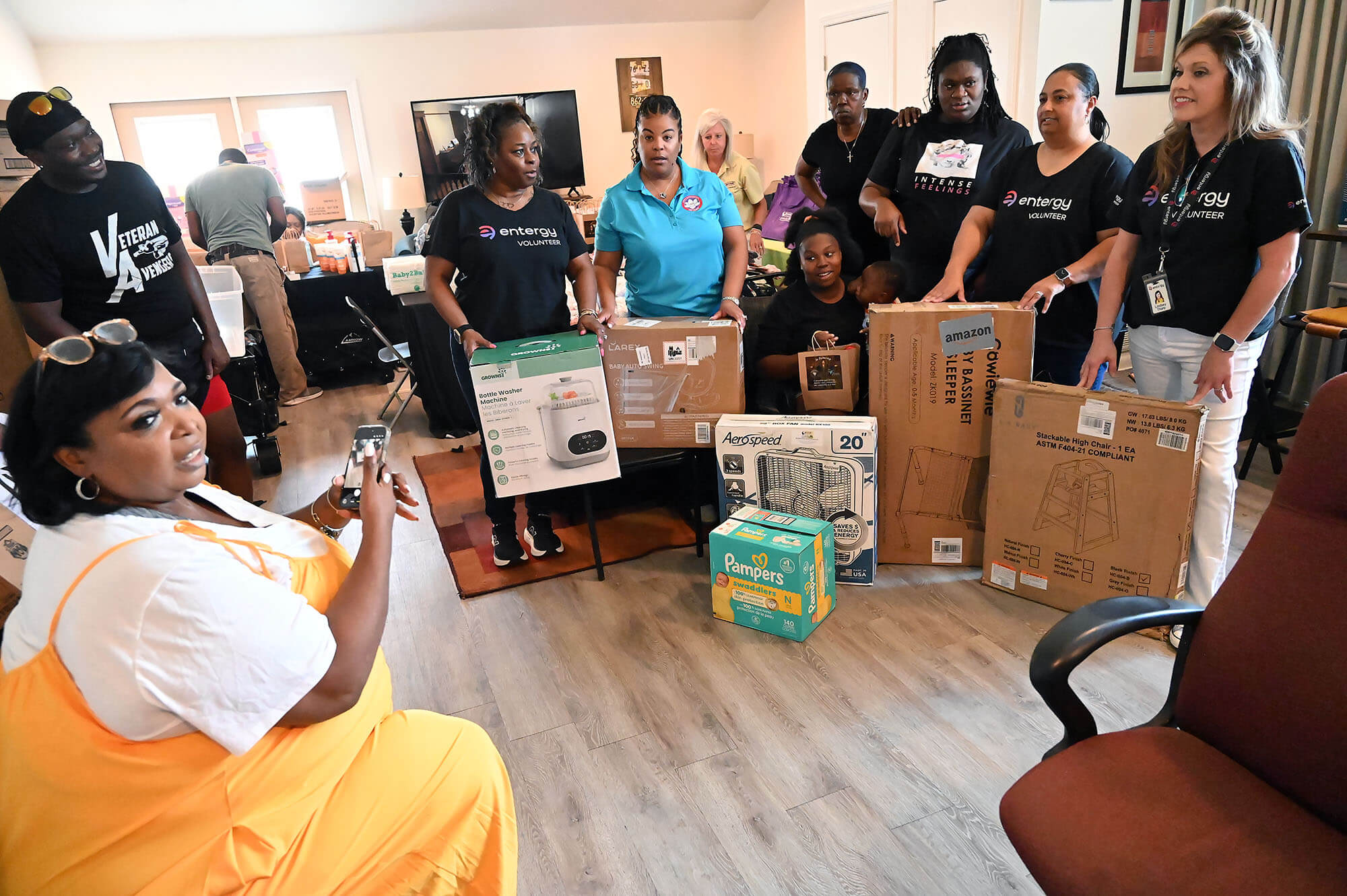
“What can they do about it?” she asked on July 1, as a deadly heat wave descended over much of the United States ahead of its 250th birthday. She was attending a “Beat the Heat” event hosted by community organizer Pam Chatman and held at an assisted living facility in Cleveland within the Delta. Alongside 120 other Mississippians, Matthews received a free 20-inch box fan.
Three other pregnant women at that event told Mississippi Today that their doctors had not talked to them about heat exposure, either.
Major medical groups were slow to emphasize heat, and maternal health and climatescientists are still working on defining precisely how much heat, and for how long, triggers risk. They want women to be careful and certainly know warning signs, but not worry excessively if they do have some heat exposure.
“It’s not a ton (of risk). But it’s not zero,” said Dr. Blair Wylie, chair of obstetrics and gynecology at Beth Israel Deaconess Medical Center in Boston and an internationally recognized leader on climate change and pregnancy.
She noted that heat still doesn’t get a lot of attention as a pregnancy risk for several reasons – including that there’s a long list of things to discuss, test and monitor in prenatal visits that often only last 20 minutes or so.
“We need to get more innovative in how we educate the population and our pregnant patients,” Wylie said. “Not all of it has to be at that 20-minute visit.”
Some health systems are trying tactics such as sending messages in patient portals, or handing out patient information packages. But it’s not a consistent practice across the country.
In the clinic
Low-income pregnant women, often living in subsidized housing without adequate air conditioning or money to keep their air conditioning running, are likely to show up at health appointments with dehydration, contractions and pre-term labor, said Dr. Rashad Ali, the obstetrician at the Family Health Center Women’s Clinic in Laurel.
Dr. Rashad N. Ali poses for a portrait at Family Health Center, Inc. in Laurel on Wednesday, June 25, 2026. Credit: Eric Shelton/Mississippi Today
“Heat leading to dehydration has a lot to do with the preterm contractions and preterm birth problems that we see in our state,” Ali said. During summer, he estimated, about 1 in 5 pregnant women walking into his clinic have those early contractions, a precursor to premature labor and high-risk births.
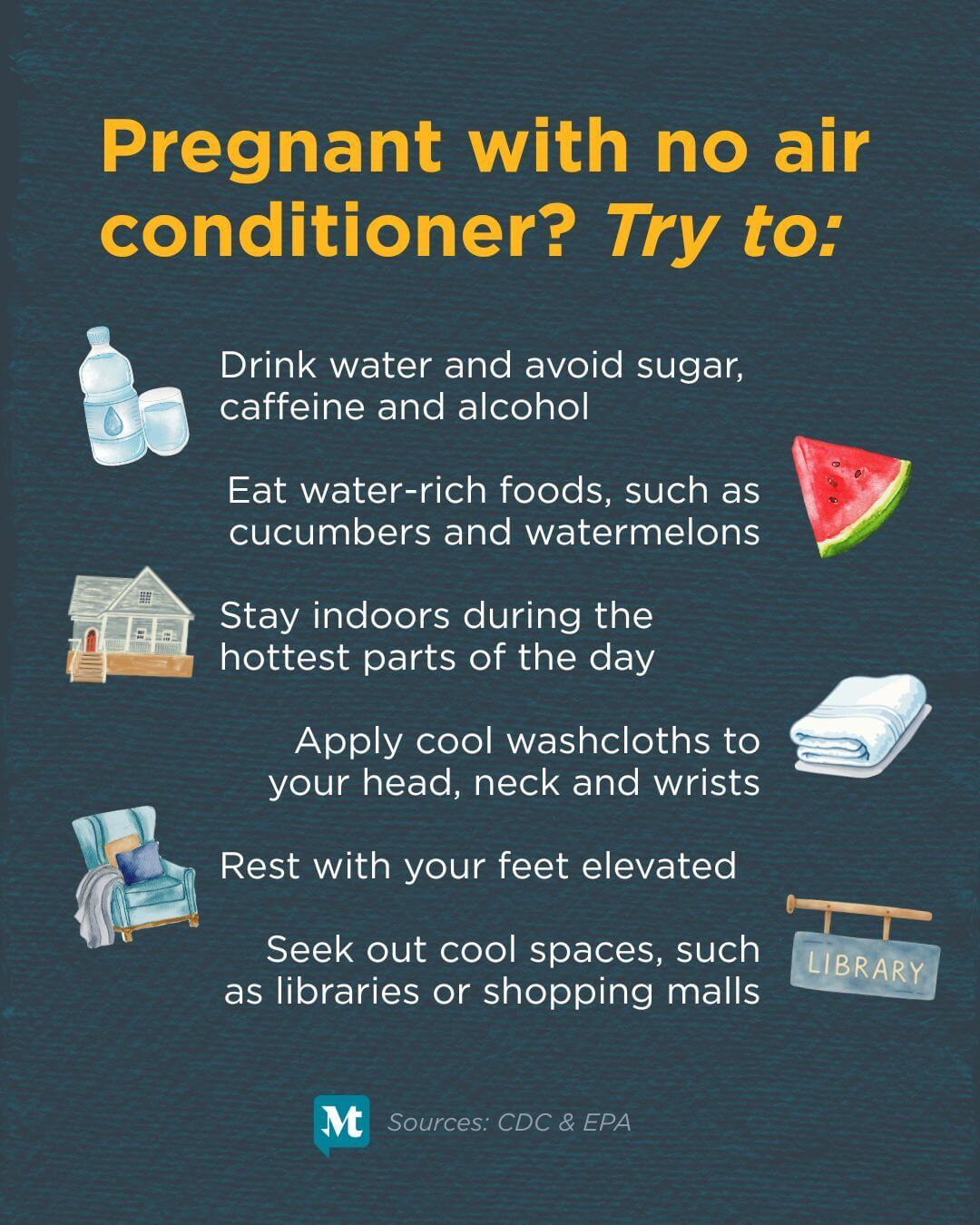
To avoid dehydration, the Centers for Disease Control and Prevention advises people to carry a water bottle and limit beverages high in sugars, sodium and caffeine. Eating water-rich fruits and vegetables also helps. But as Ali noted, many low-income people in Mississippi live in “food deserts” where healthy fresh food is scarce – and expensive. And it’s often difficult for low-income people to stay inside during the hottest parts of the day, rest often or get time off from work.
Malika Holifield, 27, is familiar with this scenario. A patient at Ali’s clinic, she is four months pregnant with her first child and worries about the heat outside and her ability to escape it. In April, when she was just one month pregnant, she began experiencing lightheadedness at her job. It was tough work, sanding doors and lifting heavy objects in a local manufacturing facility. It was hot indoors, without air conditioning.
Mia Walker, a nurse-supervisor at Family Health Center, said about 90% of the clinic’s patients work manual labor jobs in industries such as electrical equipment manufacturing or poultry production. She knows because the clinic team asks patients about how they live and work, hoping to spot potential dangers early on. They encourage their patients to come in if they don’t feel well, without scheduling an appointment. They advised Holifield to get disability leave, which she successfully did.
“When they’re not feeling well and they’re pregnant, they get carte blanche,” Walker said. “They come right to the door, and we see them.”
Malika Holifield sits in an exam room as she waits to be seen by a doctor during a visit at Family Health Center, Inc. in Laurel on Wednesday, June 25, 2026. Credit: Eric Shelton/Mississippi Today
But the Laurel clinic might be an outlier. While there’s no landmark survey of how many women get advised about heat during their pregnancy, the gaps are clear.
The American College of Obstetricians and Gynecologists didn’t stress heat on the public-facing portion of its website – other than avoiding hot tubs, saunas and intense exercise – until recently. It wasn’t until this broiling summer that ACOG disseminated its pregnancy guidance on climate and health, including heat, wildfire smoke and pollution as risks.
Similarly, neither the U.S. Preventive Services Task Force nor the American Academy of Family Physicians flag heat and pregnancy on their public sites. (The AAFP does address health threats from climate overall, and notes that air pollution or exercise in extreme heat can be harmful during pregnancy.) The CDC and the Environmental Protection Agency websites do address heat and pregnancy and they’ve been updated, despite the Trump administration’s public health cuts and its position that climate change is a “hoax.”
It’s impossible to know how many women who are pregnant or thinking about becoming pregnant turn to those government sites – or how they cut through such jargon as defining high heat as “above the 95th percentile of mean temperature.” Some health plans do link to those agency sites in the information they send to pregnant people they cover, according to a spokesman for the health insurer trade group, AHIP.
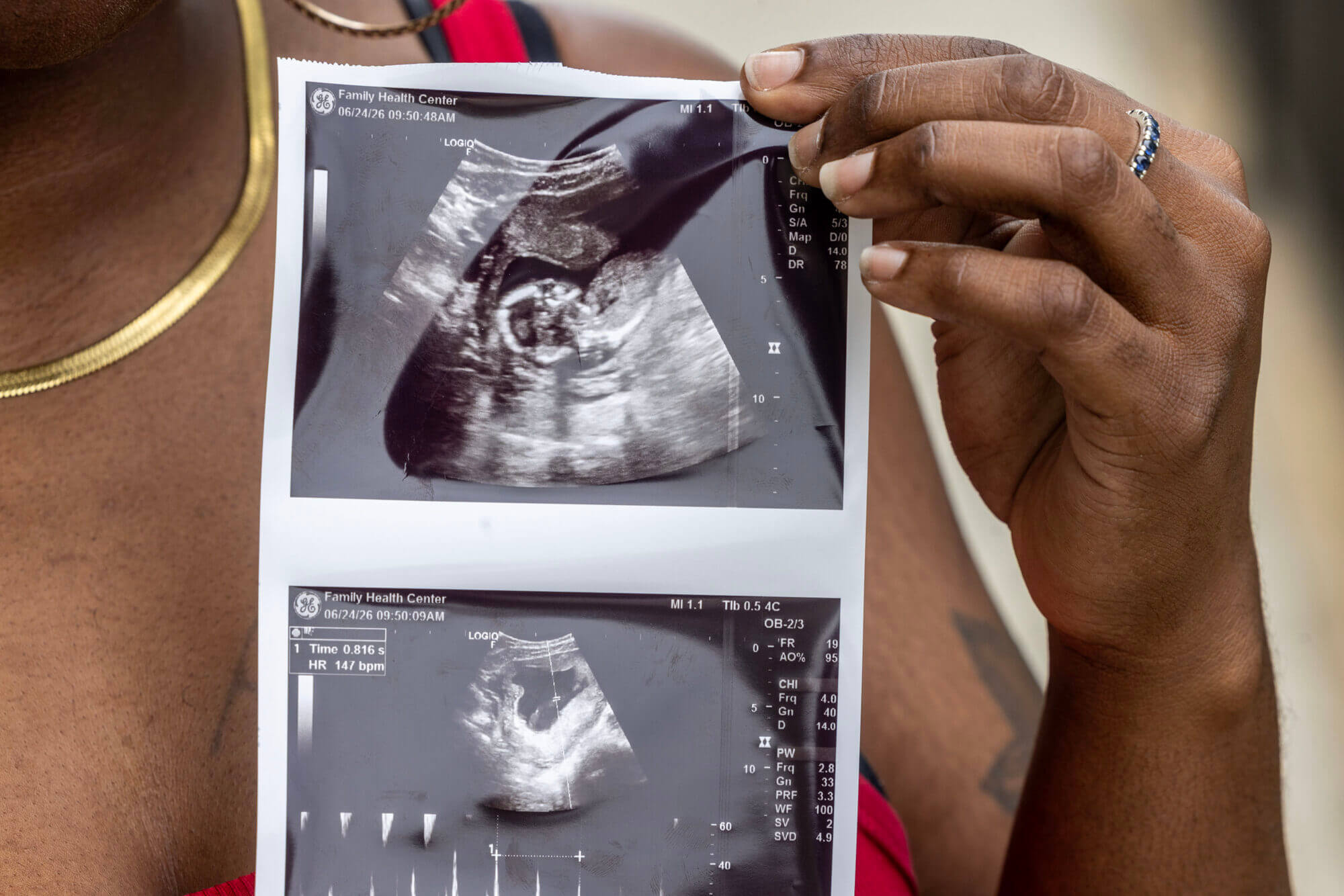
Malika Holifield holds her sonogram outside Family Health Center, Inc. in Laurel on Wednesday, June 25, 2026. Credit: Eric Shelton/Mississippi Today
No escape
Cities are supposed to operate cooling centers on the hottest days of the year. But opening a cooling center in Jackson requires two consecutive days of 100 degree temperatures or heat advisories, according to Nic Lott, communications director for the city of Jackson.
And outside the capital city region, there is seemingly no concerted effort to do so – even in metropolitan areas on the coast. Communications officers in Gulfport and Biloxi said they were not aware of any efforts to open cooling centers this year or in recent years.
When cities do open those centers, they are typically only accessible during the day.
Dominika Parry, an environmental economist who runs a Ridgeland-based climate resilience nonprofit, 2C Mississippi, had hopes of changing that. In 2024, her group was awarded a $20 million federal grant to bring a 24-hour cooling center and resiliency hub to Jackson. It would have housed up to 150 people and included tornado shelters, kitchens and showers.
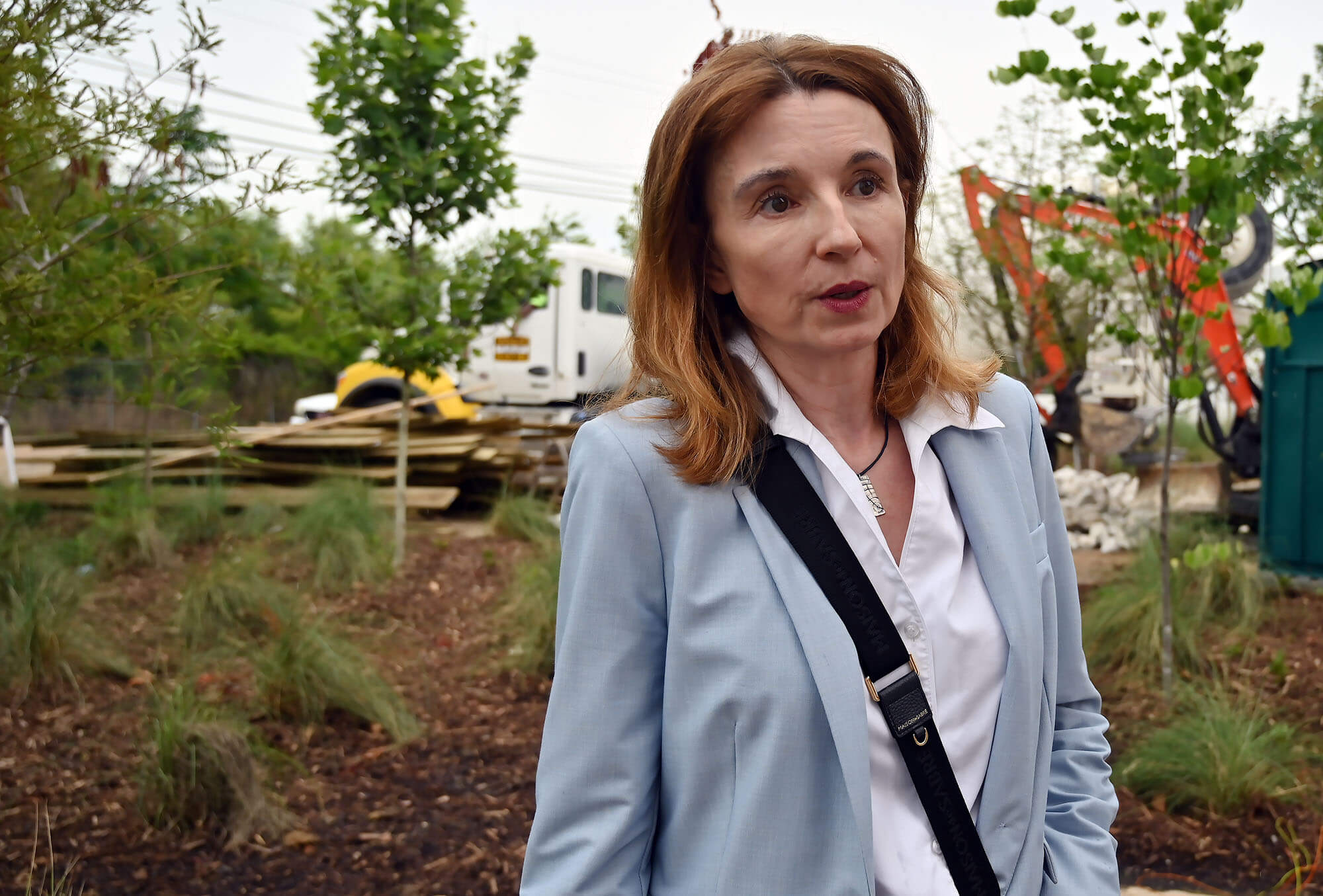
Dominika Parry, 2CMississippi founding president and CEO, at construction currently underway for a new “green space,” located on Farish Street, Monday, June 8, 2026, in Jackson. Credit: Vickie D. King/Mississippi Today
But Parry’s group lost that funding when the Trump administration ended grants for various environmental justice and climate resilience projects. Her nonprofit is one of 23 affected groups suing in a bid to reinstate funds.
Unlike other catastrophic weather events that happen quickly and have concentrated effects, heat happens slowly and quietly. Still, extreme heat kills more people annually than flooding, hurricanes or tornadoes.
“Heat is by far the most dangerous weather-related phenomenon,” Parry said.
Translating between climate science and medical practice is difficult. Studying ambient temperature or changing rainfall isn’t the same as figuring out how heat affects a pregnant woman’s blood vessels, or a developing embryo. There’s a gap between the public health data being gathered, and the practical advice clinicians can use, said Lyndsey Darrow, a climate researcher at the University of Nevada, Reno, School of Public Health.
“The ideal study to do, of course, would be to put monitors on hundreds of thousands of pregnant patients, monitor them and see what the outcomes are,” she said. “But that’s not realistic. Not only is it a major undertaking, it would cost a lot.”
That leaves some critical questions. Is a single 100-degree day dangerous, as some studies suggest? Are two 95-degree days worse? What about four days at 90? How early in pregnancy is it a factor? How late?
Even without complete answers, experts say the science is well enough established that prenatal care should routinely include guidance about alternatives to air conditioning, such as using cool towels and being extra careful to avoid dehydration, which triggers a cascade of physiological changes.
The climate challenges, illustrated by the “heat dome” that recently enveloped so much of the country, are growing even as many women don’t get early prenatal care. Mississippi is among the states where the share of women getting prenatal care in the first trimester dropped in 2024, according to Georgetown University’s Center for Children and Families.
Mississippi State Health Officer Dr. Daniel Edney declared a public health emergency over infant mortality last August. He has addressed “maternity care deserts,” and introduced ways of proactively intervening in premature or other high risk births. But Edney’s department has no publicly-available plan for how to address the reproductive health outcomes caused by heat and extreme weather.
Planting the seeds
Leading the charge to address climate disparities for families are two unlikely contenders: Librarians and doulas.
Over her five years as director of the Laurel-Jones County Library, Karyn Walsh has watched the library transform into a center for the community. The resources stretch far beyond books: People can check out fishing poles, telescopes and tools, Walsh said. Public libraries remain among the last free, communal spaces in the U.S., especially critical for families.
About half of the people using her library have young children and about 1 in 5 are pregnant, Walsh estimates. Walsh said that during the summer, people often ask if they can come and sit for a while to avoid the heat. Walsh always says yes, and offers a book.
Walsh and her team view these moments as a chance to reach those with the fewest resources and connect them to classes, programs, community and job opportunities.
“Hopefully, we’re planting the seeds to break the cycle,” Walsh said.
Library patrons use the services at Laurel-Jones County Library in Laurel on Wednesday, June 25, 2026. Credit: Eric Shelton/Mississippi Today
About four hours northwest of Laurel and back in the Mississippi Delta, Jacqueline Lambert works as a doula not far from the community that raised her. Lambert runs an independent practice out of Merigold, and also leads the doula program at Delta Health Center in Mound Bayou, one of the nation’s oldest all-Black municipalities.
Roughly 12% of the women Lambert serves don’t have access to consistent and adequate air conditioning, she said. Many of those pregnant women live with extended family and cannot afford more effective cooling systems, Lambert said. Regularly, she sees pregnant women and several of their family members cooling down around one oscillating fan, or sleeping together in a bedroom with an insufficient window unit.
Lambert believes doulas can help move the needle on climate change and health inequity, because they act as a bridge between clinical care and community support. As a doula, she spends hours longer with patients than other providers do – and gets to see them in their homes, where she is better equipped to understand their situation. Mothers open up to her on a daily basis, Lambert said.
“They begin to relate to you as a trusted friend, as a support person, somebody to laugh with or even cry with,” said Lambert.
Lambert is proud to work at Delta Health Center, which offers free doula services to low-income women through maternal health grants. Often, these women find out about the doula services as existing patients, or through word of mouth. But it’s rare that low-income women can access doulas in Mississippi, where Medicaid does not cover those services.
The March of Dimes, dedicated to reducing premature birth and birth defects – both of which have been linked to heat exposure – has urged Mississippi to change that restrictive policy.
For most low-income mothers, assistance only comes from grassroots efforts, such as Chatman’s “Beat the Heat” event in Cleveland.
Matthews, the single mother from Cleveland, hopes the box fan she received will bring her some relief. She’s felt anxious recently. She wonders if the abdominal cramping she’s experiencing lately is normal or a sign of something worse. With two small children, she said she is often up on her feet in her apartment where staying cool and lying down often feel nearly impossible.
“I try to relax my mind and get in front of the small air (unit) in the house,” Matthews said.
Audio recording is automated for accessibility. Humans wrote and edited the story.
I spent last summer scouring the South for the products of prison labor in a strange scavenger hunt across small-town America.
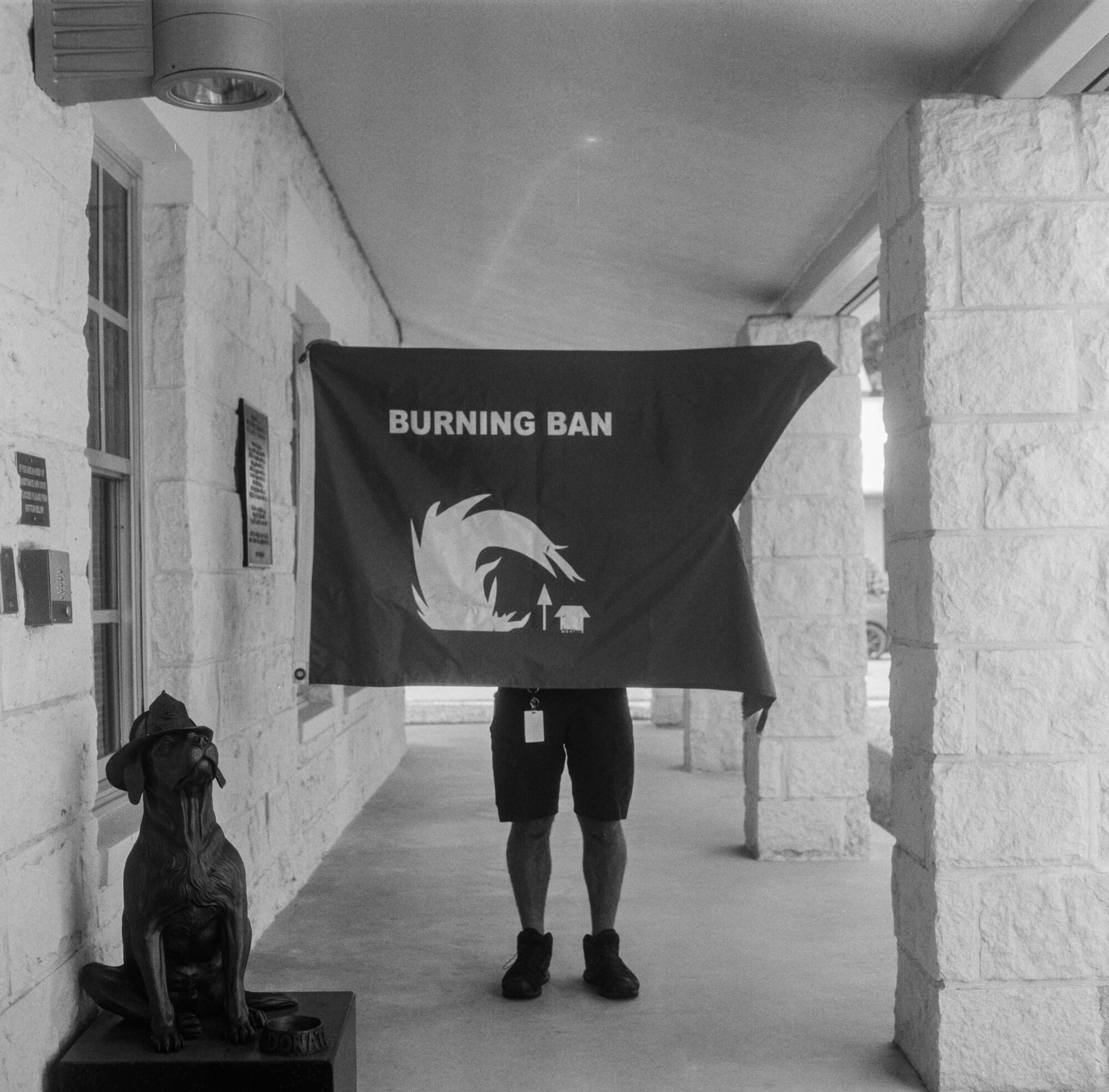
A freshman’s dorm mattress at Mississippi State University. A Georgia Medicaid patient’s eyeglasses. The goalpost padding at Bauxite High School in Arkansas. The burn ban flag at the Boerne Fire Department in Texas Hill Country.
All of them were made by people incarcerated in American prisons.
These are photos of just some of the two dozen objects I was able to track down using state prison industries catalogs and social media accounts. Most are the actual products made by prisoners, others stand in for ones that were.
Incarcerated workers at the Mississippi State Penitentiary in Parchman produce mattresses for MAGCOR (Magnolia Correctional Industries). These mattresses end up at public colleges and universities across the state, including the dorms at Mississippi State University, such as this one in Cresswell Hall. Credit: Daniella Zalcman for The Marshall Project
In the United States, prison labor is everywhere, a practice nearly as old as our nation itself. Incarcerated workers are responsible for producing over $2 billion in goods annually, much of which is sold via federal and state prison industries to public institutions like libraries, schools, courthouses and government agencies.
Incarcerated workers make between 33 cents and $1.41 per hour working for state-owned businesses — though in six states, prison workers aren’t paid for their labor at all.
Metal benches, trash cans and tables throughout the Mississippi State University campus were produced with incarcerated labor through MAGCOR, the Mississippi prison industries program. Credit: Daniella Zalcman for The Marshall Project
Proponents of prison labor argue that these work programs are designed to be rehabilitative and beneficial for incarcerated people: by providing a source of income, teaching someone a new skill or giving a person a purpose once they’re released. Manufacturing braille books, for instance, remains one of the most coveted prison jobs because it allows incarcerated workers to spend the majority of their day reading, and teaches them a marketable skill.
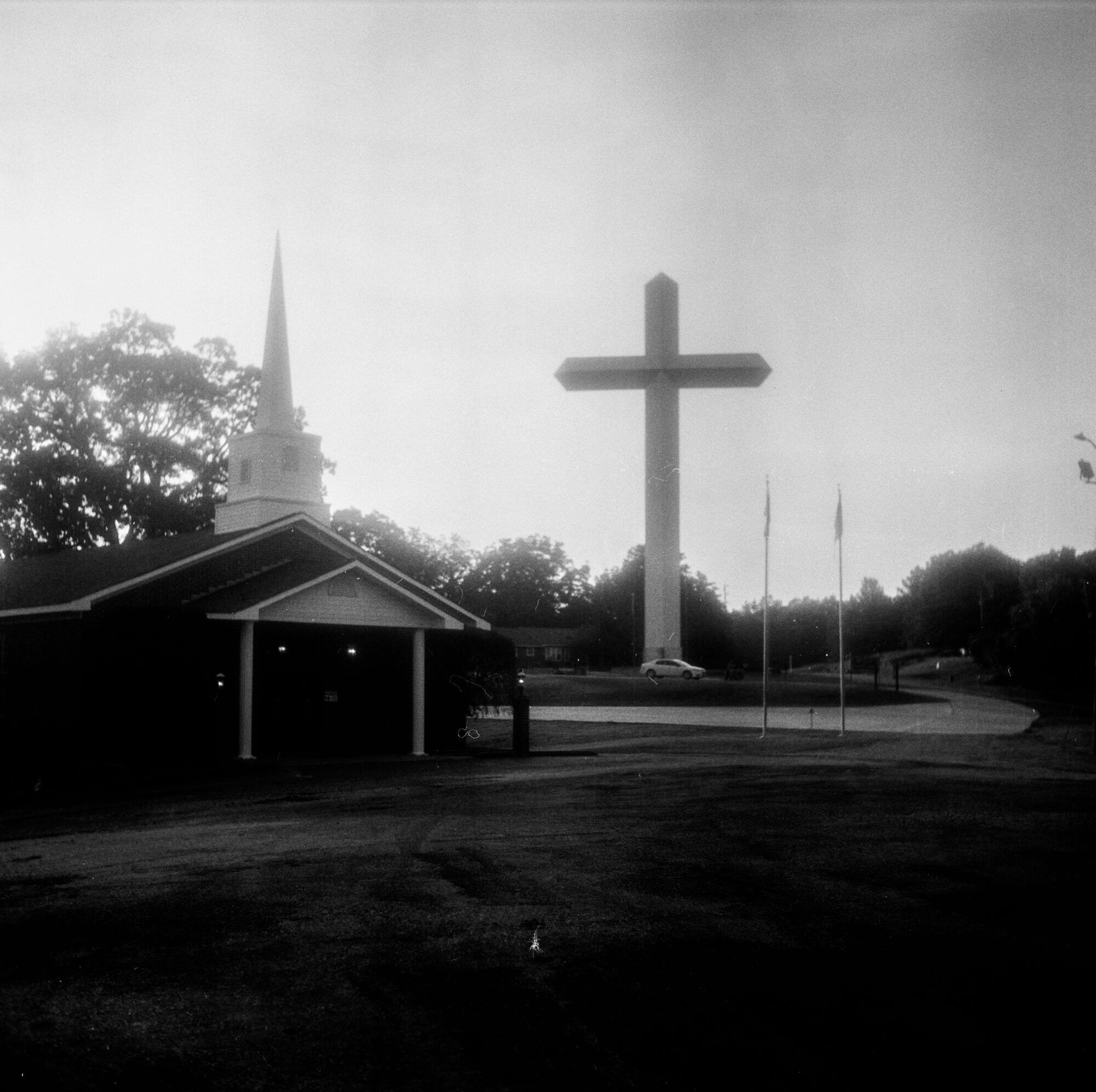
The Cross of Calhoun County in Pittsboro, Miss. In March 2024, MAGCOR posted a photo of the cross on Facebook, with the caption, “We are proud of the craftsmanship behind our metal products – exemplified by the Cross of Calhoun County and our beloved Bulldog Benches!” Credit: Daniella Zalcman for The Marshall Project
But Carla Laroche, Felder-Fayard associate professor of law at Tulane University and the Murphy Institute, says it’s more complicated. “Prison labor goes back to enslavement,” she said. “Someone is being held in a facility, a prison, and told, ‘You must work.’ They don’t have a choice whether they work or not, what skills they want to learn, or what kind of job they have. And some people might say, great — everybody has to work. Everybody has to pay their bills. But we have the ability to leave. We have the ability to choose. And we can work for ourselves. In some prisons, if you do not work, you will be held in solitary confinement.”
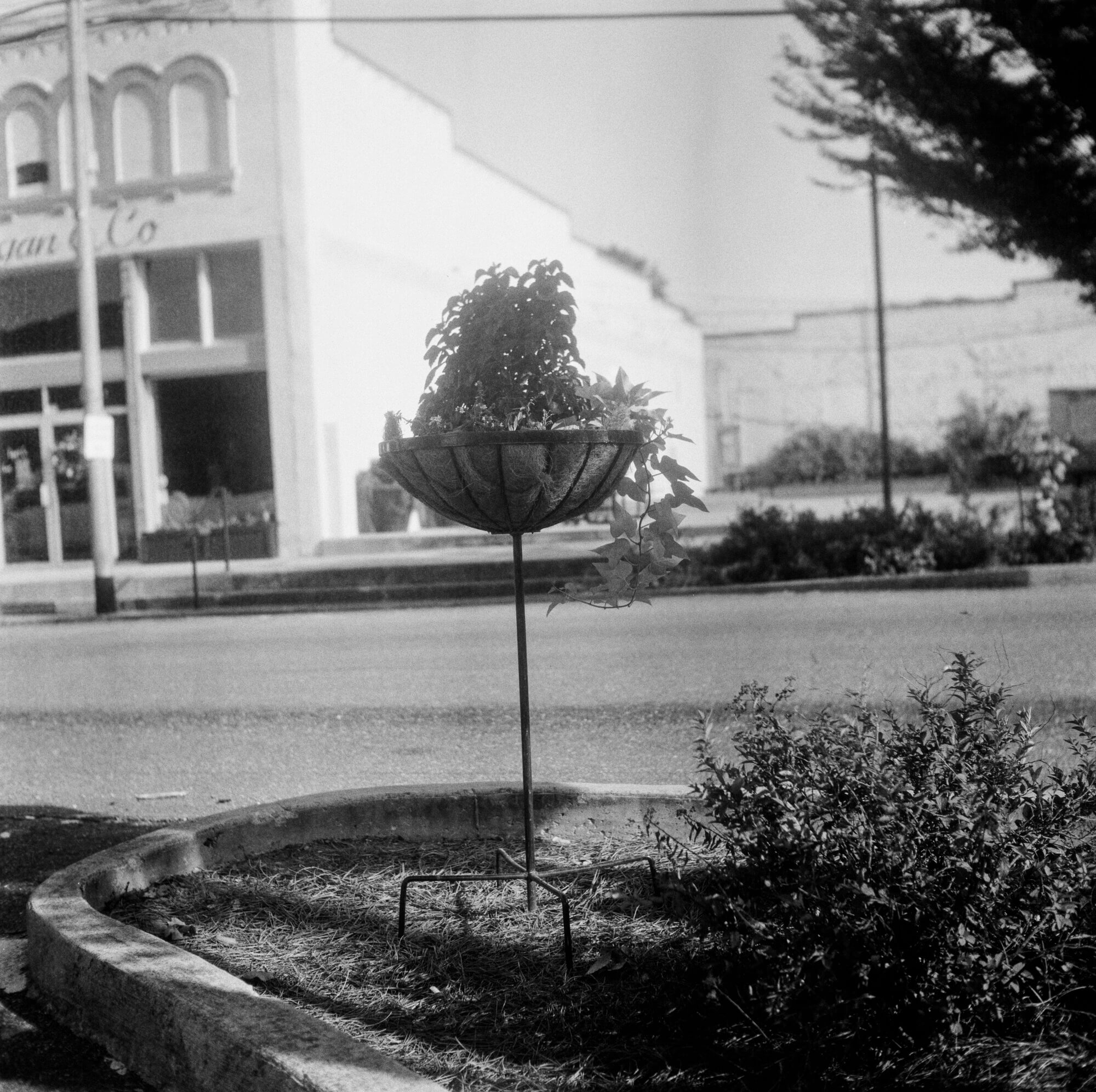
Incarcerated workers produced these metal plant stands on Main Street in Senatobia, Miss. Credit: Daniella Zalcman for The Marshall Project
Do you know what in your community is made by incarcerated people?
This project was supported by a Carol Lavin-Bernick Faculty Grant from Tulane University.It was published in partnership with The Marshall Project, a nonprofit news team covering Mississippi’s criminal justice systems.
Daniella Zalcman is a documentary photographer based in New Orleans. She is the founder of Women Photograph, a journalism professor at Tulane University, and a multiple grantee of the National Geographic Society and the Pulitzer Center on Crisis Reporting, and has held fellowships with CatchLight and the International Women’s Media Foundation.
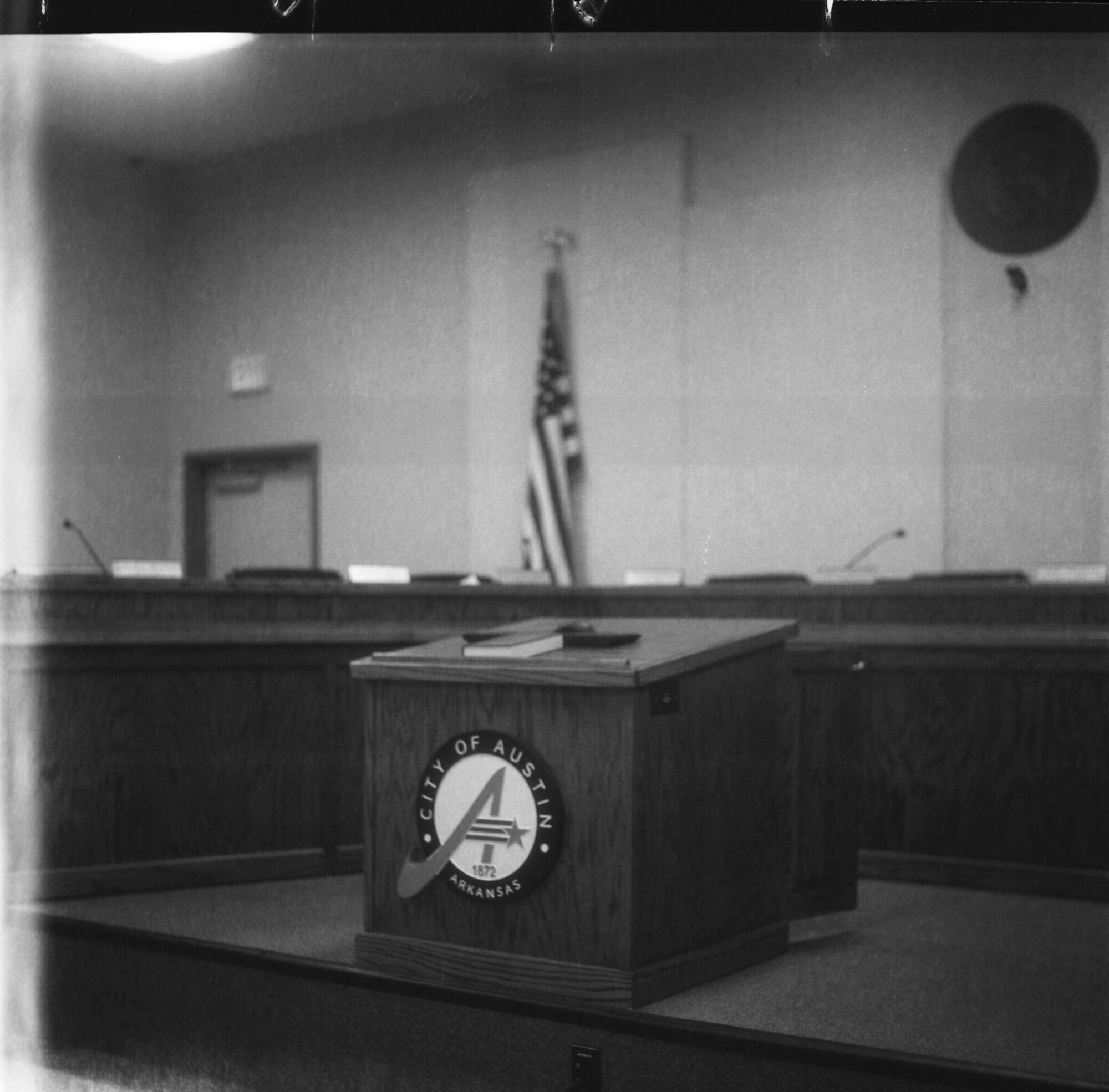
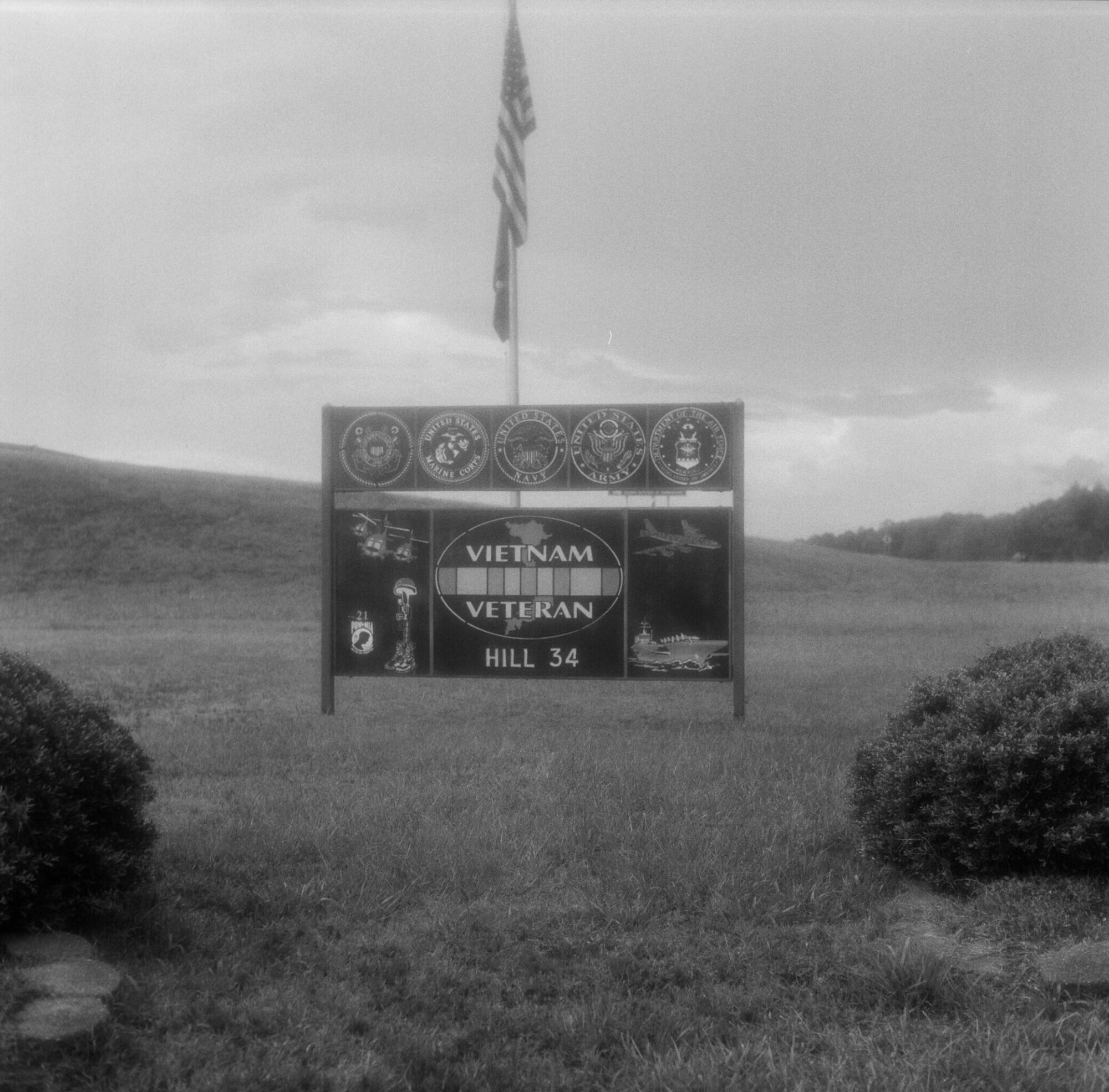
A burn ban flag at the Boerne Fire Department in Texas Hill Country. The Texas Correctional Industries website catalogs goods produced by prisoners in Texas. A burn ban flag, used to caution against lighting recreational fires during droughts, is available for purchase in the site’s Garment Shop for $35. Credit: Daniella Zalcman for The Marshall ProjectThis goalpost padding at Bauxite High School was produced by incarcerated workers through Arkansas Correctional Industries. Credit: Daniella Zalcman for The Marshall ProjectThe Bauxite Miners play football on this field, which is colloquially known as “The Pit.” The town, home to just over 600 people, is named for aluminum ore, which was once a major source of industry in this region. Credit: Daniella Zalcman for The Marshall ProjectIncarcerated people from Georgia Correctional Industries worked on items as part of a restoration project for the Winder Public Library in 2018. The job included powder-coating and lowering the height of shelving units, providing end panels, reupholstering chairs, and refurbishing book drop boxes. Credit: Daniella Zalcman for The Marshall ProjectThe council table for the city of Austin in Arkansas was produced by incarcerated workers with Arkansas Correctional Industries. Woodworking is one of the more common trades taught as part of state prison industries. Credit: Daniella Zalcman for The Marshall ProjectA janitor’s closet at Bevill State Community College in Jasper, Ala., stocks a number of cleaning supplies produced by Alabama Correctional Industries, including a jug of ammoniated window and glass cleaner. Mixing cleaning chemicals, which are often sold to public institutions, is a common type of prison labor. Credit: Daniella Zalcman for The Marshall ProjectA braille copy of “Animal Farm” at the Texas School for the Blind and Visually Impaired in Austin. Today there are more than 35 prison braille programs operating in state and federal prisons through the National Prison Braille Network. In order to be eligible, incarcerated workers must obtain braille certification from the Library of Congress. Credit: Daniella Zalcman for The Marshall ProjectThe conference table at the Arkansas Public Employees’ Retirement System office in Little Rock, Ark., was manufactured by incarcerated workers with Arkansas Correctional Industries. Similar tables are priced at $917.85 – $1,433.13 on the ACI website. Credit: Daniella Zalcman for The Marshall ProjectThe Vietnam Veterans Memorial in White Hall, Ark., was designed and constructed by incarcerated workers with Arkansas Correctional Industries. The Arkansas Department of Corrections website notes that “One of the offenders who worked on the project served in the Vietnam War, and two were directly related to someone who served.” Credit: Daniella Zalcman for The Marshall ProjectThe grounds of the Captain Joe Byrd Cemetery in Huntsville, Texas, are maintained by incarcerated workers with the Texas Department of Criminal Justice. An estimated 3,000 prisoners are buried on the grounds — most of whom were unclaimed by family members. Credit: Daniella Zalcman for The Marshall Project
Audio recording is automated for accessibility. Humans wrote and edited the story.
President Donald Trump’s insistence on interfering in the World Cup’s officiating and disciplinary actions and then bragging about his involvement conjure memories of how he horned in on the opening of the Two Mississippi Museums in 2017.
Believe it or not, the president tends to want to make himself the center of attention regardless of his actual involvement. The World Cup and Two Mississippi Museums are examples of that, though their outcomes were vastly different.
With this year’s FIFA World Cup, the president went out of his way to make it known that he called to urge FIFA officials to reevaluate whether American soccer star Folarin Balogun should be suspended for Monday’s game against Belgium for a foul he committed in the previous game.
It should be pointed out that soccer players who receive red cards, like Balogun, for fouls viewed as egregious face suspension for their next game. England, for instance, had a key player miss a game.
Trump made it known to all that he called FIFA President Gianni Infantino about the red-card suspension for Balogun. After Trump’s call, FIFA’s disciplinary committee reversed course in an unusual but not unprecedented move and allowed Balogun to play against Belgium in a game that the USA ended up losing.
Infantino released a statement saying Trump’s action played no part in the decision of the FIFA disciplinary committee.
But what Trump did by insisting that the world know of his actions was to create an international incident. It took a feel-good U.S. soccer story and added a layer of controversy and charges of corruption – based at least in part on past actions of both FIFA and the American president.
Granted, it is not out of the ordinary for people to complain about referee’s decisions and even ask for reconsideration of penalties, but involvement by the U.S. president, the most powerful individual on the globe, was viewed as unfair and improper by many. His actions were viewed by many as giving the U.S. an unfair advantage.
The whole incident placed the American soccer team in a difficult position and arguably contributed to their disappointing showing against Belgium.
The president making a phone call to inquire about what is going on with a possible reconsideration of a disciplinary action was not necessarily out of bounds, if indeed, that was all he was doing. But he said he did more and his insistence on wanting everyone to know about his actions put a damper and the appearance of impropriety on what was becoming an American celebration of the underdog soccer team.
In another feel good moment in early December of 2017, Mississippi was opening the Two Mississippi Museums in Jackson – the Mississippi Civil Rights Museum and the Museum of Mississippi History.
President Donald Trump speaks inside at a private event but not at the public opening of the Mississippi Civil Rights Museum in Jackson in December 2017. Credit: AP Photo/Susan Walsh
The event was a celebration of a decades-long effort to open a civil rights museum in Mississippi – the site of so many of the activities of the Civil Rights Movement and of racial violence and injustice.
Trump’s announcement generated an immediate backlash. After all, Trump had not embraced many elements of the Civil Rights Movement and at times had made racially insensitive remarks.
In addition, a visit by the president – especially President Donald Trump – would take attention from the actual event and the celebration of the people who played a key role in the opening. Those people included Civil Rights icon Myrlie Evers, the wife of slain Civil Rights leader Medgar Evers; Democratic former Gov. William Winter, the chair of the state Department of Archives and History Board that oversaw the museums; and Republican former Gov. Haley Barbour, whose support was crucial for getting state money from the Legislature to help fund the museums.
Incidentally, Bryant, as lieutenant governor, opposed Barbour’s efforts to garner state funding for the museums, though as governor Bryant took a front row seat for the opening.
The announcement of Trump’s participation was viewed negatively by many. U.S. Rep. John Lewis of Georgia, who was a key figure in the Civil Rights protest of the 1960s, canceled his participation in the opening.
As it turned out, instead of participating in the public opening held outside the museums on unusually cold and snowy December day, Trump visited and spoke before a small group inside of the museums.
The public ceremony celebrating the opening of the museums went on without Trump. For the people attending the event, there was no sign the president had been in Mississippi.
Trump made sure everyone knew of his involvement in the World Cup.
The result was not so great for America on many levels.
The Two Mississippi Museums, on the other hand, continue to be viewed as a state gem.