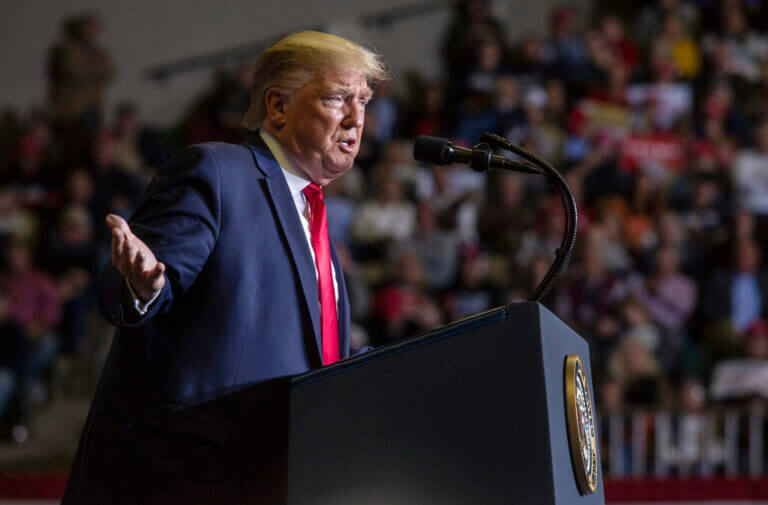
Home Blog Page 239

Mississippi would lose billions if Congress cuts Medicaid, report says

Mississippi will lose out on billions of dollars if Congress continues to advance legislation that would make deep cuts to Medicaid and other agencies to pay for a tax cut championed by President Donald Trump.

Tens of thousands of Mississippians could lose their health insurance as a result of what could be the largest cut in the history of Medicare and Medicaid. 

While the budget resolution passed by Congress this week doesn’t specifically call for cuts to Medicaid, experts have said there is no way to achieve the proposed magnitude of cuts to a group of federal agencies – $880 billion – without slashing Medicaid. 

Mississippi could see a potential reduction of up to $5.4 billion in federal funding for Medicaid under one proposal over the 10-year period, and $16 billion under another, according to a brief by the Center for Mississippi Health Policy based on a report conducted by the Hilltop Institute at the University of Maryland, Baltimore County. 

Neither Gov. Tate Reeves, a Republican and outspoken supporter of Trump, nor the Mississippi Division of Medicaid responded to requests for comment by the time this story published. 

All of Mississippi’s Republican Congress members – Reps. Mike Ezell, Trent Kelly and Michael Guest, along with Sens. Roger Wicker and Cindy-Hyde Smith – voted for the budget resolution. Rep. Bennie Thompson, a Democrat, voted no.

Mississippi, one of the poorest states in the nation with a large Medicaid population, would be significantly impacted by such a blow to the program. In particular, low-income people in vulnerable groups such as pregnant women, disabled adults, children and the elderly would face losing coverage, and hospitals and providers that rely on the program to reimburse for services could face massive losses. 

One state lawmaker in recent weeks said it would bring Mississippi, one of the most federally dependent states in the nation, “to its knees” – particularly on the heels of the state Legislature passing an income tax cut that will result in an estimated loss of about $2.2 billion of the state’s $7 billion in operating revenue.   

Medicaid is a federal-state program that provides health coverage to millions of people in the U.S. States administer the program, which is funded by both states and the federal government.

One option being discussed in Congress to downsize Medicaid is to lower the limit of or to eliminate what’s called the provider tax. Despite being a tax, it allows the state to draw down more federal dollars to use for the Medicaid program and to reimburse hospitals at a higher rate. Mississippi is currently nearly maxed out on the tax it’s allowed to impose on hospitals.

Health care leaders are sounding the alarm bells on the potential cuts, which they say will leave hospitals high and dry. The state, which has not expanded Medicaid, has had to rely in recent years on federal COVID-19 relief money and tweaks to its supplemental payments to keep hospitals afloat.  

Richard Roberson, the CEO of the Mississippi Hospital Association, says that the provider tax is “a lifeline to Mississippi hospitals big and small.”

Richard Roberson, Chief Executive Officer of the Mississippi Hospital Association, speaks to lawmakers during the Democratic caucus meeting at the State Capitol in Jackson, Miss., on Tuesday, April 1, 2025. Credit: Eric Shelton/Mississippi Today

Now, it may be in jeopardy.

“If Congress reduces the 6% ceiling to 5%, 4%, 3% – whatever it may be – there are hundreds of millions of dollars at stake that would be lost that are right now keeping many Mississippi hospitals open,” Roberson said at a House Democratic Caucus meeting at the State Capitol last week. “So that’s a significant concern that we have.”

Other proposals being floated include capping the amount of money states can get per Medicaid enrollee, as well as reducing the federal match rate for states that have expanded Medicaid. As a state that hasn’t expanded Medicaid, Mississippi already does not receive an enhanced federal match rate, so it would not be affected by the latter option.

But any proposal that pushes people off Medicaid has direct consequences for hospitals, argued E.J. Kuiper, CEO of the Louisiana-based Franciscan Missionaries of Our Lady Health System, which owns St. Dominic Health in Jackson. 

Without insurance, patients let their health conditions deteriorate. That, in conjunction with the fact that the emergency room is the only place health care providers can’t turn patients away for not having money, means the emergency room becomes the only source of primary care for uninsured patients. 

“Driving people off Medicaid rolls and making them uninsured – the societal cost is not going to go away,” Kuiper said. “People are still going to get sick whether they’re insured or not. What we’re concerned about is if people don’t have access to the Medicaid program, and are afraid to go see a doctor, what could be a $400 problem in April turns into a $10,000 problem in November.”

The emergency room is the most expensive place to receive care. When patients can’t pay, hospitals pick up the slack covering their care, and the practice – called uncompensated care – costs Mississippi hospitals millions each year. 

Mississippi already has one of the highest rates of uninsured people in the nation. 

Tens of thousands of Mississippians losing health insurance would have a domino effect on employment and the economy, according to a recent report from the Commonwealth Fund. 

Mississippi – whose state leaders have called for work requirements for Medicaid enrollees and stress the importance of a strong labor force participation rate – faces nearly 10,000 people losing their jobs as the result of  potential cuts to Medicaid.

The resolution narrowly passed Congress amid infighting between Republicans allied with Trump and hard-line conservatives who think the legislation doesn’t cut federal spending enough.

But now that the House and Senate have both passed identical versions of the budget resolution, lawmakers can begin working on specifics of what gets cut and how in a complicated process called “reconciliation.” Because reconciliation has been unlocked, Republicans can avoid a filibuster from Democrats and pass the final bill with a simple majority. 

The post Mississippi would lose billions if Congress cuts Medicaid, report says appeared first on Mississippi Today.


Health officials brace for resurgence in childhood illness amid rise in whooping cough and decrease in vaccination rates

Whooping cough cases are accelerating in Mississippi as public health officials prepare for possible measles outbreaks in the state. 

There have been 32 reported pertussis, or whooping cough, cases in Mississippi so far this year, up from 49 total cases last year, reported State Epidemiologist Dr. Renia Dotson at the State Board of Health Meeting April 10.

No measles cases have yet been reported in Mississippi, despite outbreaks in nearby Texas. 

Risk of widespread pertussis or measles outbreaks among young children, who are at greatest risk for both diseases and for having severe complications that can lead to death, are low due to high childhood vaccination rates in Mississippi, said Dotson. The risk of measles outbreaks among adults is low due to lifelong immunity from previous infections.

“Our first line of defense is our immunization rates,” said State Health Officer Dr. Dan Edney.

Mississippi has long had the highest child vaccination rates in the country. But since a federal judge ruled in 2023 that parents can opt out of vaccinating their children for school on account of religious beliefs, the vaccination rate has crept lower, falling from 99% to 97.5%.

The state’s declining childhood vaccination rates are “very concerning,” said Dr. Patricia Tibbs, a Laurel pediatrician and the president of the Mississippi chapter of the American Academy of Pediatrics. 

“With how much the religious exemption has affected our vaccine rates, I’m just worried that once (measles) hits the state, it’s going to spread,” she said.

Dr. Dan Edney, Mississippi’s state health officer, speaks to lawmakers during the Democratic caucus meeting at the State Capitol in Jackson, Miss., on Tuesday, April 1, 2025. The meeting focused on discussing federal cuts to healthcare. Credit: Eric Shelton/Mississippi Today

Maintaining a childhood vaccination rate above 95% is crucial to prevent measles from becoming endemic, or a constant presence in an area, said Edney. 

Measles was declared eliminated in the U.S. in 2000 as a result of the measles vaccination. But vaccination rates have declined nationwide since the COVID-19 pandemic, leaving more children vulnerable to the disease. 

Two school-aged children in Texas died from measles this year, and over 500 cases have been reported in the state. Over 600 cases have been reported nationwide across 22 states. 

Measles is a highly contagious acute viral respiratory and rash illness that will lead to the hospitalization of one in five infected people. One to three out of every 1,000 children who become infected with measles will die from respiratory and neurologic complications. 

The health department is working aggressively to educate physicians and providers on measles.  

“Doctors younger than myself have never seen measles unless they’ve seen it in the developing world,” said Edney.

Whooping cough, named for the “whooping” sound people make when gasping for air after a coughing fit, is a very contagious respiratory illness that may begin like a common cold but lasts for weeks and months. Babies younger than one year of age are at greatest risk for getting whooping cough, and can have severe complications and often require hospitalization. 

Two infants in Louisiana have died of whooping cough in the past six months.

From 2023 to 2024, pertussis cases in the U.S. increased by a factor of seven, soaring from 5,500 to 35,500 cases. 

The best protection for children and communities against measles and whooping cough is vaccination, said Tibbs. She recommends that parents of children who are too young to get the vaccines check on the vaccination status of people who care for their children.

The Centers for Disease Control recommends that children receive two doses of the measles vaccine, which is 97% effective at preventing measles for life. The pertussis vaccination is administered in a five-dose series for children under 7 and booster doses for older children and adults.

The U.S. Department of Health and Human Services cancelled over $200 million in federal grants allocated for COVID-19 pandemic relief to the Mississippi State Department of Health last month, saying the funds were a waste of taxpayer dollars.

The department was using some of those funds to strengthen and augment the state’s epidemiology capacity, including “how we do our surveillance, how we identify when outbreaks are occurring and how we respond,” Edney told Mississippi Today. 

The health department’s reporting systems are adequate for surveilling outbreaks of measles and pertussis, he said. But the cuts will slow the department’s planned improvements to the state public health laboratory and its ability to prepare for emerging pathogens. 

“I think that’s what’s wasteful, not using the money to rebuild public health, but stopping the work halfway through, so now we have a house half-finished with no roof or walls,” Edney said. 

The post Health officials brace for resurgence in childhood illness amid rise in whooping cough and decrease in vaccination rates appeared first on Mississippi Today.

Art exhibit explores the hope and the humanity in migrants’ journeys

Migrants’ stories and the continuing crisis of displacement around the world inspired the exhibition “The Nomad’s Journey” by artist Lucia Duque, on view at the Arts Center of Mississippi through April. Credit: Sherry Lucas/Mississippi Today

A chorus of birdsong lured artist Lucia Duque outside, where she saw an avian crowd descending on her Clinton yard one day in the fall. They filled trees and crowded on power lines, creating a compelling scene as well as a riot of sound. She took her young son, Rio, outside to watch and hear as the birds lingered on just this one stop on a long journey south toward warmer climes.

The image stayed with Duque, forming just the connection she needed for artworks underway  about migrant people and their journeys. “I didn’t want to just put what you see in the newspapers. Everything is ugly with violence, war,” Duque said in her native Spanish, speaking from the heart as Deisy Carrera translated her words. “I wanted to do something … more like poetry.”

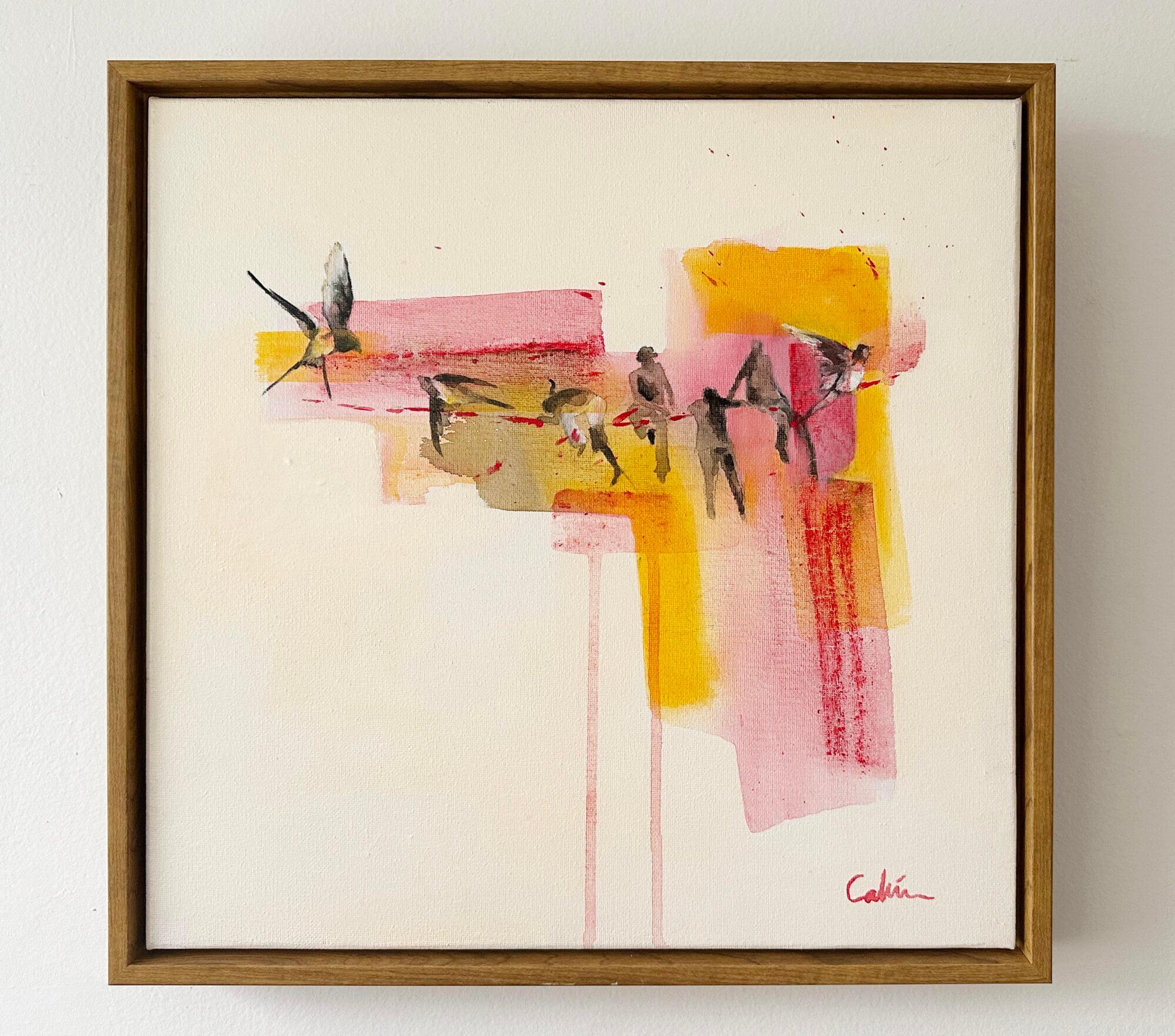
Through the 26 striking paintings of “The Nomad’s Journey,” on view at the Arts Center of Mississippi in Jackson through  April, Duque channels migrants’ experiences through the stories they shared with her. She heard their reluctance to leave, memories they took, situations that drove them, dangers that plagued them and hope that sustains them on the way. Birds symbolize their flight, the lift of their hope, the ascendance of souls and the despair of violence and death. Broad strokes of color convey the emotions of migrants’ journeys, from the bright pink and yellow of hope for a better life to the dark grays and blues of sadness and loss. Her artist signature is “Calu,” a family nickname combining syllables of her first and middle names, Carmen Lucia. 

“Before the Flight” is among the more than two dozen paintings in Lucia Duque’s “The Nomad’s Journey,” on display through April at the Arts Center of Mississippi in Jackson. Credit: Courtesy of Lucia Duque

Duque was 4 when her family moved from her and her father’s native Colombia to Spain, her mother’s homeland, for safety. A couple of years after she married Mississippi-born Josh Brister in Madrid, the couple moved to the United States to be closer to his family as they started their own, settling in Clinton in 2018.

Duque draws from her experiences as an artist in Spain during the migration crisis in Europe in 2015, as refugees from Syria, Afghanistan and Iraq sought asylum in Europe, overwhelming many European countries. News reports recounting the numbers — “thousands arrived” or “thousands disappeared” — hit her hard. “Behind those numbers, there were real people with stories, with lives. I felt the need to do something, even if it was small, to make their suffering visible.”

With a journalist friend in 2016, she traveled to the island of Lesbos, a main point of arrival, to see the refugee camps, talk to the people and better understand their plight. “I heard the hurt of the people,” she said, deeply affected by the experience. The war in Ukraine and ongoing migrant crisis at America’s southern border added more fuel for paintings in this show.

Duque’s aim is not political but humanitarian, by giving voice to people searching for a safe home, and creating a space for dialogue, sensitivity and connection to displaced people and their journeys.

Migrants’ journeys are not to a single, fixed destination, hence“nomad” in the show’s title. “They’re people who go from one place to another, but they’re not stable,” she said through Carrera. “We speak about refugees, but they’re not refugees until you give them political asylum.” 

The people she met, moving from Syria to Greece on the island Lesbos had to remain there for a long time, in a refugee camp that struck her as more like a prison. ““It wasn’t an official prison, but they couldn’t leave. From that first site, they would go to another site … and then they would be sent to another country or another region, to be aided by some organization that would help them relocate.” 

Similarly, “People from Honduras or El Salvador or Guatemala that come to the border — they’re coming here and they’re waiting. They’re not established there. It’s just a momentary spot.”

Abstract paintings with some figurative elements combine European sophistication and the color she inherited from her Latin American roots, Duque said.“When the Winds Call” merges two memories in its hint of a horizontal line, figures in motion and birds on the wing. It recalls the wire birds perched on, and news reports she saw growing up, of people trying to jump the border fence in Ceuta and Melilla, Spanish cities bordering Morocco on the North African coast. “I wanted to portray the people jumping, with the hope of something new and the wings to fly,” Carrera translated for Duque. 

Artworks depict migrants’ means of travel, by ship, inflatable rafts and La Bestia (“The Beast”), the freight train Central American migrants climb onto in a perilous attempt to make it through Mexico to the U.S. border.

“Bound by the Wind” is among the paintings in Lucia Duque’s exhibition “The Nomad’s Journey,” now at the Arts Center of Mississippi in Jackson. Credit: Courtesy of Lucia Duque

In a painting of the Ukrainian capital of Kyiv before the war, flying cranes may be harbingers of civilians’ flight following the Russian invasion. In another, painted after the bombing of a children’s hospital in Kyiv, vultures circle and perch in barren trees amid broad swipes of stormy gray, angry red and yellow, darkened in the layers.

An image of a refugee camp speaks of being stuck in time, waiting to move on. She recalled the chaotic scene in Lesbos at the refugee camp and the tears she shed. People told her they had not wanted to leave their home, even in wartime, but wanted to hang on and hope it would end. “A father with four or five children told me, ‘The moment that I decided to go was when a bomb fell on my kids’ school.” With that, he knew, “There is no more hope here.”

Through her friend’s contact, they visited a little-known cemetery on Lesbos — donated land for burials because there simply was no where else. “When you got there, you would see just a type of rock on top of the grave and it would say ‘2-year-old child’ or ‘woman died in (the year).’ This always makes me cry,” she said, thinking of the many who died on their journey, the lack of identifying information, the families who would not know. “These were a type of mass graves. The people that were burying them tried to give them some type of dignity with whatever details they could, but they didn’t know anything.” 

“Between Two Shores” is among the works by Lucia Duque that are part of the exhibition “The Nomad’s Journey,” which shares the stories of migrants’ struggles and hopes. Here’a. flock of birds pay homage to those who died on the often perilous journey. Credit: Courtesy of Lucia Duque

“Between Two Shores” is her artistic response — a large canvas of blue and golden hues and a flock of birds in the sky. A touch of gold graces their wings, representing ascending souls with a message of“We haven’t forgotten you, you were here.’”

“We see images of refugees in the news, and we think, ‘Oh, my gosh, they’re so different. They’re desperate.’ But really, they’re just like us,” Duque said. “And if something ever happens in the United States, we would be next to go and try to find refuge somewhere else.

“i want people to be conscious of the fact that this is a situation that is growing,” she said, citing a news report that projected 16 million people would be in a situation of displacement in 2025. “It’s growing, it’s not stopping, it’s not getting better and we need to keep talking about it. 

“This exhibit is really to honor the people that are suffering, and to do it with dignity and give them all of the respect that they deserve. And also with the hopes that it would wake up in our hearts the response of ‘OK, this is happening. How can I help?’”

Lucia Duque’s “The Nomad’s Journey” is on view at the Arts Center of Mississippi in Jackson through the month of April. Join Duque for an Artist Talk, 2-3:30 p.m. April 26 at the Arts Center. For viewing at other times, call 601-960-1500 to enter the building.

The post Art exhibit explores the hope and the humanity in migrants’ journeys appeared first on Mississippi Today.

Live‑Spiele vs. RNG‑Spiele bei Nv Casino: Welches Format zahlt besser und ist sicherer?

Live‑Spiele vs. RNG‑Spiele bei Nv Casino: Welches Format zahlt besser und ist sicherer?

Das Online‑Glücksspiel hat sich in den letzten Jahren stark weiterentwickelt. Heute entscheiden sich Spieler nicht nur zwischen klassischen Spielautomaten und Tischspielen, sondern auch zwischen Live‑Dealer‑Varianten und rein zufallsbasierten RNG‑Spielen. Welche Option langfristig die höheren Auszahlungen liefert und gleichzeitig ein hohes Maß an Sicherheit bietet, ist für viele Spieler entscheidend. In diesem Beitrag zeigen wir dir, wie du die Vor‑ und Nachteile beider Formate bewertest, welche Zahlungsoptionen bei Nv Casino besonders schnell sind und worauf du bei der Lizenzierung achten solltest. Am Ende hast du eine klare Handlungsanleitung, um das für dich passende Spielerlebnis zu wählen.

Der Einstieg: Was Spieler häufig übersehen

Viele Einsteiger starten ihr Online‑Casino‑Abenteuer mit dem ersten Bonus, ohne die Grundlagen zu prüfen. Dabei gibt es ein paar Stolperfallen, die leicht zu vermeiden sind: Discover your options at NV Casino Casino offiziell.

  • Unklare Bonusbedingungen – Oft verstecken sich hohe Umsatzanforderungen hinter verlockenden Willkommensboni.
  • Fehlende Lizenzinformationen – Ohne gültige Lizenz kann die Auszahlung im schlimmsten Fall verweigert werden.
  • Unzureichende Zahlungsmethoden – Langsame Auszahlungen kosten Zeit und Nerven.

Pro Tip: Lies immer das Kleingedruckte des Bonus und prüfe, ob die Lizenz von einer anerkannten Behörde stammt (z. B. Malta Gaming Authority oder Curacao eGaming).

Wenn du diese Punkte beachtest, legst du ein solides Fundament für dein Spielvergnügen. Und genau hier kommt Nv Casino ins Spiel: Das Casino bietet eine klare Lizenzübersicht, transparente Bonusbedingungen und eine Vielzahl schneller Zahlungsmethoden. Diese Vorteile sind genau das, was du brauchst, um sicher und profitabel zu spielen.

Live‑Spiele vs. RNG‑Spiele – die Grundlagen

Was unterscheidet die beiden Formate?

Feature Live‑Dealer‑Spiele RNG‑Spiele (Slots, Tischspiele)
Interaktion Echtzeit‑Chat mit echten Dealern Keine Interaktion, rein digital
Auszahlungsrate (RTP) 96 % – 98 % (variabel) 94 % – 99 % (je nach Spiel)
Volatilität Mittel bis hoch, abhängig vom Spiel Von niedrig bis extrem hoch
Sicherheitsaspekt Video‑Streaming, Lizenz‑Checks Algorithmen, Audits (eCOGRA)

Rhetorische Frage: Warum sollte man sich für ein Format entscheiden, das weniger Kontrolle über den Spielverlauf bietet?
Die Antwort liegt im persönlichen Spielstil. Live‑Dealer‑Spiele vermitteln das Gefühl eines echten Casinos, während RNG‑Spiele schnellere Runden und oft höhere Maximalgewinne ermöglichen.

Welche Variante zahlt besser?

Statistisch gesehen liegt die RTP (Return to Player) bei Live‑Spielen leicht unter der von RNG‑Slots, weil die Betreiber höhere Betriebskosten haben. Trotzdem können Live‑Spiele dank niedrigerer Volatilität und regelmäßiger kleiner Gewinne für Spieler, die ein stetiges Einkommen bevorzugen, attraktiver sein. RNG‑Slots hingegen bieten oft massive Jackpots, die das Spielvergnügen erheblich steigern können – allerdings mit höherem Risiko.

Industry Secret: Viele Top‑Jackpots kommen aus RNG‑Slots, weil die Entwickler höhere RTP‑Werte in den Bonus‑Runden verstecken.

Zahlungsoptionen und Sicherheit bei Nv Casino

Ein reibungsloser Geldfluss ist das Herzstück jedes Online‑Casinos. Bei Nv Casino kannst du zwischen mehreren schnellen und sicheren Zahlungsmethoden wählen. Die Plattform legt großen Wert auf Schnelligkeit und Datenschutz.

Zahlungsmethode Auszahlungsgeschwindigkeit Sicherheitslevel
Kreditkarte (Visa, MasterCard) 24 h Hoch
E‑Wallets (Skrill, Neteller) 15 min – 2 h Sehr hoch
Banküberweisung 2–3 Tage Mittel
Kryptowährungen (Bitcoin) 10 min Sehr hoch

Für Spieler, die sofort weiterzocken wollen, sind E‑Wallets die beste Wahl. NV Casino Casino offiziell bietet zudem eine 2‑Faktor‑Authentifizierung, die dein Konto zusätzlich schützt.

Did You Know? Die meisten Beschwerden über verspätete Auszahlungen entstehen bei Banküberweisungen, weil Banken zusätzliche Prüfungen durchführen.

Wie du deine Ein- und Auszahlungen optimierst

  1. Verifiziere dein Konto sofort nach der Registrierung – das beschleunigt spätere Auszahlungen.
  2. Wähle die passende Zahlungsmethode für deine Spielgewohnheiten (z. B. E‑Wallets für schnelle Cash‑Outs).
  3. Setze Limits für Einzahlungen, um dein Budget im Griff zu behalten.

Pro Tip: Nutze die Sofort‑Einzahlung per Kreditkarte, um sofort mit dem Bonus zu starten und gleichzeitig deine Identität zu bestätigen.

Bonus‑ und VIP‑Programme im Detail

Der Willkommensbonus von Nv Casino

  • 100 % Bonus bis zu 500 € auf die erste Einzahlung
  • 35‑fache Umsatzpflicht innerhalb von 30 Tagen
  • Kostenlose Spins (20 Stück) für ausgewählte Slots

Der Bonus ist attraktiv, weil er keine zeitlichen Einschränkungen für die ersten Einzahlungen hat. Das bedeutet, du kannst jederzeit nachholen, wenn du das Budget vorher nicht ausgeschöpft hast.

VIP‑Club – Mehr als nur ein Bonus

Level Jahresumsatz Vorteile
Silber 1.000 € Schnellere Auszahlungen, persönlicher Account‑Manager
Gold 5.000 € Höhere Bonus‑Prozentsätze, exklusive Turniere
Platin 10.000 € Individuelle Cashback‑Programme, Luxus‑Geschenke

Rhetorische Frage: Möchtest du nicht lieber von einem persönlichen Ansprechpartner unterstützt werden, wenn du größere Summen spielst? Der VIP‑Club von Nv Casino sorgt dafür, dass du dich immer gut betreut fühlst.

Quick Win: Melde dich für den Newsletter an, um exklusive Promo‑Codes zu erhalten, die deine Bonusbedingungen senken.

Mobile Erfahrung und Kundensupport

Heutige Spieler wollen jederzeit und überall Zugriff auf ihre Lieblingsspiele. Nv Casino bietet eine vollständig responsive Webseite sowie eine native App für iOS und Android. Die App unterstützt alle gängigen Live‑Dealer‑Spiele und RNG‑Slots, sodass du nahtlos zwischen den Formaten wechseln kannst.

Kundenservice – Immer erreichbar

  • Live‑Chat 24/7 (Deutsch & Englisch)
  • E‑Mail‑Support mit Antwortzeit < 2 Stunden
  • FAQ‑Bereich mit über 100 Artikeln zu Einzahlungen, Boni und verantwortungsvollem Spielen

Industry Secret: Der Live‑Chat ist oft die schnellste Möglichkeit, Auszahlungslimits zu erhöhen – ein kleiner Hinweis, den nicht jeder kennt.

Tipps für verantwortungsvolles Spielen

Ein gutes Casino-Erlebnis endet nie mit Verlusten. Setze dir klare Grenzen und nutze die Tools, die Nv Casino bereitstellt:

  • Einzahlungslimit: Lege einen wöchentlichen Höchstbetrag fest.
  • Verlustlimit: Stoppe das Spiel, sobald du das festgelegte Limit erreichst.
  • Selbstausschluss: Nutze die Selbstsperr‑Funktion für 24 Stunden bis zu 6 Monaten.

Did You Know? Spieler, die regelmäßig Limits setzen, berichten von 30 % längerem Spielvergnügen und weniger Stress.

Fazit

Ob du die Atmosphäre eines echten Tisches im Live‑Dealer‑Format liebst oder die schnellen Gewinnchancen von RNG‑Slots bevorzugst – Nv Casino liefert beides in hoher Qualität. Die Plattform punktet mit schnellen Auszahlungen, einer breiten Palette sicherer Zahlungsmethoden und einem transparenten Bonus‑System. Nutze die hier vorgestellten Tipps, um deine Gewinnchancen zu maximieren und gleichzeitig verantwortungsbewusst zu spielen. Viel Erfolg und viel Spaß beim Spielen!

Protected: From Prison to Purpose

This content is password protected. To view it please enter your password below:

The post Protected: From Prison to Purpose appeared first on Mississippi Today.

Podcast: Masters week is back and so is Mississippi’s Mr. Golf, Randy Watkins

Former SEC golf champion and PGA touring pro is Crooked Letter’s resident expert on all things golf. He’s back with us to tell us who might win this week’s Masters and why.

Stream all episodes here.


The post Podcast: Masters week is back and so is Mississippi’s Mr. Golf, Randy Watkins appeared first on Mississippi Today.
Government secrecy tends to bite Mississippi in the butt. It’s happened again

The state Senate Republican leadership didn’t plan to fail on a Mississippi tax overhaul. It failed to plan.

And when pressed late in the 2025 legislative session to come up with a proposal to counter the House Republican leadership’s sweeping bill, Senate leaders did so behind closed doors and hurriedly.

The result: a majority of legislators passing a tax overhaul bill full of math errors that accidentally did what Senate leaders didn’t want. And it stripped out safeguards for taxpayers that both the House and Senate leadership said were prudent.

No matter how much Gov. Tate Reeves praises House Bill 1 as “one big, beautiful bill,” borrowing a phrase from President Trump as he signed it into law, it was passed through secrecy, subterfuge and error, not representative democracy.

Had the Senate perhaps taken a little more time, allowed more input from and access to its strategizing from rank-and-file lawmakers, and who knows, maybe even a little crowd-sourcing allowing the public to scrutinize the bill before passing it, maybe the blunder could have been prevented.

READ MORE: OOPS! Senate sent House an income tax bill with typos. House ran with it. What’s next?

And while House leaders should receive praise for coming up with an initial public-facing tax overhaul plan through months of public hearings and forums, that’s not what was passed into law. House leaders played a game of secret squirrel to pass the Senate’s mistakes into law. Then instead of negotiating in good faith to fix the problems, House leaders tried to shanghai the Senate in backroom negotiations to pass a few plums they wanted, such as legalized online sports betting and a sales tax increase.

The end result: Historically bitter infighting among state GOP leaders to the point they couldn’t even pass a state budget, their main job. And we have communications between Mississippi’s top legislative leaders and governor, all Republicans, that these days are often reduced to mean tweets or Facebook posts about each other, not earnest negotiations.

READ MORE: The Typo Tax Swap Act of 2025 may be the most Mississippi thing ever

Mississippi government’s default setting is secrecy, from public records and meetings to access to elected officials, and it has never served our citizens well. From a black-ops agency that spied on its citizens for nearly two decades to festering, generational government corruption that has cost taxpayers hundreds of millions of dollars, secrecy is neither good politics nor good policy.

READ MORE: Mississippi lawmakers end 2025 session unable to agree on (or even meet about) state budget: Legislative recap

Major, sweeping state policy should be conducted in the open and with public input. But as the national and world economies plunge into turmoil that is sure to impact Mississippi, our new tax code lacks safeguards that both House and Senate leaders said were needed — all because of secrecy and lack of planning and communication.

The post Government secrecy tends to bite Mississippi in the butt. It’s happened again appeared first on Mississippi Today.

Ward 6 council candidates face the image of south Jackson versus the reality

Driving down roads in south Jackson in recent weeks, residents were inundated with placards of smiling faces and names in bright, bold fonts of people hoping to be the next Ward 6 councilman. 

In some neighborhoods, the streets were as littered with campaign signs as they are overgrown lots and abandoned properties in between neatly kept homes.

“The homes in the surrounding area and businesses in Ward 6 have been decimated. It looks like a bomb went off,” said Sylvia Walker, Ward 6 board member for the Jackson Association of Neighborhoods. “We’ve seen the businesses hollow out and nothing come back in. It’s disheartening. It’s sad.”

Walker said the image of south Jackson must be interrogated. Not enough people are talking about the good happening in Ward 6, she said. 

“South Jackson is very diverse and not just one specific area,” said Walker. “I think the biggest misconception is that south Jackson is just full of dilapidated homes, and the people are poverty-stricken and destitute, and that’s not true.”

Ward 6 has the largest population of Jacksonians, with just over 23,000 people. It also has the highest number of Black residents, according to data from the City of Jackson’s website.

Jackson also has a high number of abandoned properties owned by the state. According to data from the Secretary of State’s office, there are about 1,900 tax-forfeited properties in the City of Jackson. 

There will be a Democratic runoff on April 22 between two candidates for the Ward 6 city council seat. Emon Thompson Sr. garnered 714 votes and Lashia Brown-Thomas came in second with 652 votes. Voter turnout was low, with less than 3,200 votes cast in a ward with a voting age population of more than 16,000. There were nine contenders for the coveted council seat, more than any other council race. 

Candidates for the coveted Ward 6 seat envision a more beautiful, thriving south Jackson. After a stacked primary, two candidates have made it to the runoff to replace Aaron Banks, former council person who faces criminal charges for allegedly accepting cash bribes in exchange for his vote on a development project. He pleaded not guilty. 

Banks is familiar with the image problem in south Jackson. He said he’s made progress with more demolitions and landscaping work done than others in the past. This includes the demolition of Casa Grande Apartments and Appleridge Shopping Center.

“I’ve always said that I would serve two terms, and we got a lot of work done,” Banks said in a recent interview with Mississippi Today.

Lashia Brown-Thomas

Brown-Thomas said that crime and blight are the biggest issues affecting Ward 6. The law enforcement officer wants to hold people accountable for their part in the perceived image of a decaying south Jackson.

“The city has codes, and if these people are not holding up to the codes, they need whatever punishment there is,” Brown-Thomas said. “If they aren’t holding the property up, then they should not have the property.”

She said that if she’s elected, she’ll work to get police officers higher wages, and will remain transparent and available to constituents. 

“It’s not going to happen overnight, but it will take some time,” Brown-Thomas said. “I’m not saying it’s going to come in a year, not even two years, but we have to address the issues first, then everything else will fall in line.”

Emon Thompson Sr.

Thompson Sr., a business owner and retired veteran, said that a lot of the issues with blight comes down to enforcement.

“We need to, first of all, clean up our blighted properties by using the laws that we already have,” Thompson said. “The city already has ordinances with enough teeth to deal with blight.”

South Jackson voters don’t turn out like they should, he said, which can lead to a distrust in the system. He hopes, if elected, to be able to reach constituents where they are and keep them a part of the process in restoring their communities, like water improvement or curbing crime.

“Out of the 40 something thousand people that’s in south Jackson, maybe 3,900 people vote in the municipal elections,” he said. “They don’t have faith in the government anymore.”

“…If there’s a reason why we’re not getting any services out here, then I want to make sure I communicate that with a constituent so they can continue to have hope,” he said. 

Representative Ronnie Crudup, Jr., D-Jackson, said that residents’ migration out of Jackson creates bigger issues for communities.

“To me, blight is just a symptom of a larger problem. The people are leaving the city of Jackson, and the population is decreasing,” Crudup said. “When people leave the properties, you end up with squatters and vagrants who move into these properties and tear them up.” 

Crudup has been renovating and demolishing blighted properties in south and west Jackson for nearly eight years. So far, he said he’s renovated about 35 homes. 

“Even though we are demoing and tearing down one or two properties, when people leave, that leaves other ones there,” he said. “You got all these blighted properties all around south and west Jackson, and some even in parts of north Jackson now, because people are leaving.” 

He said the one thing that’s needed most: more funding from all levels of government for blight mitigation work.

“There needs to be more money from the legislature, but there needs to be more money allocated from the city council too,” Crudup said. “I think the city is going to have to take clean up efforts to a higher circumstance, and let the legislature see that they’re serious about this, and also get the county involved and let them know ‘Hey, we need all the help we can get.’”

And, the perception that city leaders have abandoned south Jackson is not necessarily right. Former Jackson Mayor Harvey Johnson said that blight is an issue that affects not only south Jackson but all parts of the city. Mitigating blight is going to take an intergovernmental approach, he said. 

“I know that in some cases, some people feel they’ve been sort of abandoned, but I don’t think that’s the case,” Johnson said. “It may be a lack of resources to attack the problem and it’s going to require all governments to work together.”

Walker said she remembers when the city’s southern boundary changed and her neighborhood, which had been part of Byram, came inside Jackson city limits. A small portion of her ward was annexed by the city of Jackson in 2006 as part of Byram’s reincorporation. In the last couple of decades, she said she’s seen people be forced out of their homes due to the recession. Others simply chose to leave.

“We’ve had a turnover, but the neighborhood is still relatively stable,” Walker said. “When we moved in, a lot of people moved out.”

Walker said that while her neighborhood isn’t struck by blight, she sees abandoned properties while making her way through the community and near her church. 

When thinking of a candidate that she would want to vote for, Walker said she’s looking for a good communicator who can be an advocate for the ward. 

“We need someone that’s forward thinking. Someone that has the best interests of the residents of south Jackson and an understanding of the vast diversity of the ward,” she said. “Someone that’s able to work with other members of the City Council. Someone able to work with our board of supervisors and state legislators to find solutions to some of these issues.”

Banks said that his greatest achievement as city councilman was hosting quarterly town hall meetings to inform his constituents on the importance of ordinances and legislation created to better their lives.

“There’s one piece of legislation that deals with overhanging tree limbs and limbs. That idea came from a constituent,” he said. “When you see constituents being able to give informed ideas on legislation, which is the job of a council member, I think that’s an achievement because then what that says is there’s involvement in the process.”

“I hope the next person will understand that communicating with the people is key, and that the people of Ward 6 are resilient,” Banks said. “As long as they continue to communicate and stay in the scope of their job and work with the administration, there’s a lot that can be done.” 

The post Ward 6 council candidates face the image of south Jackson versus the reality appeared first on Mississippi Today.