
Home Blog Page 242

GOP-controlled Senate rejects governor’s pick for public broadcasting board. Reeves calls it ‘chicken s–t’

The GOP-controlled Mississippi Senate refused to confirm a top staffer for Republican Gov. Tate Reeves to a position on a state board — a move that occurred on the tail end of a legislative session marked by Republican infighting.

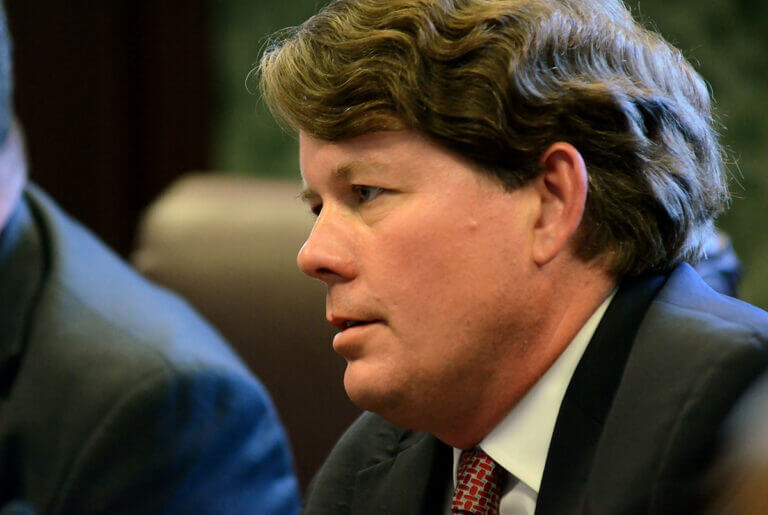
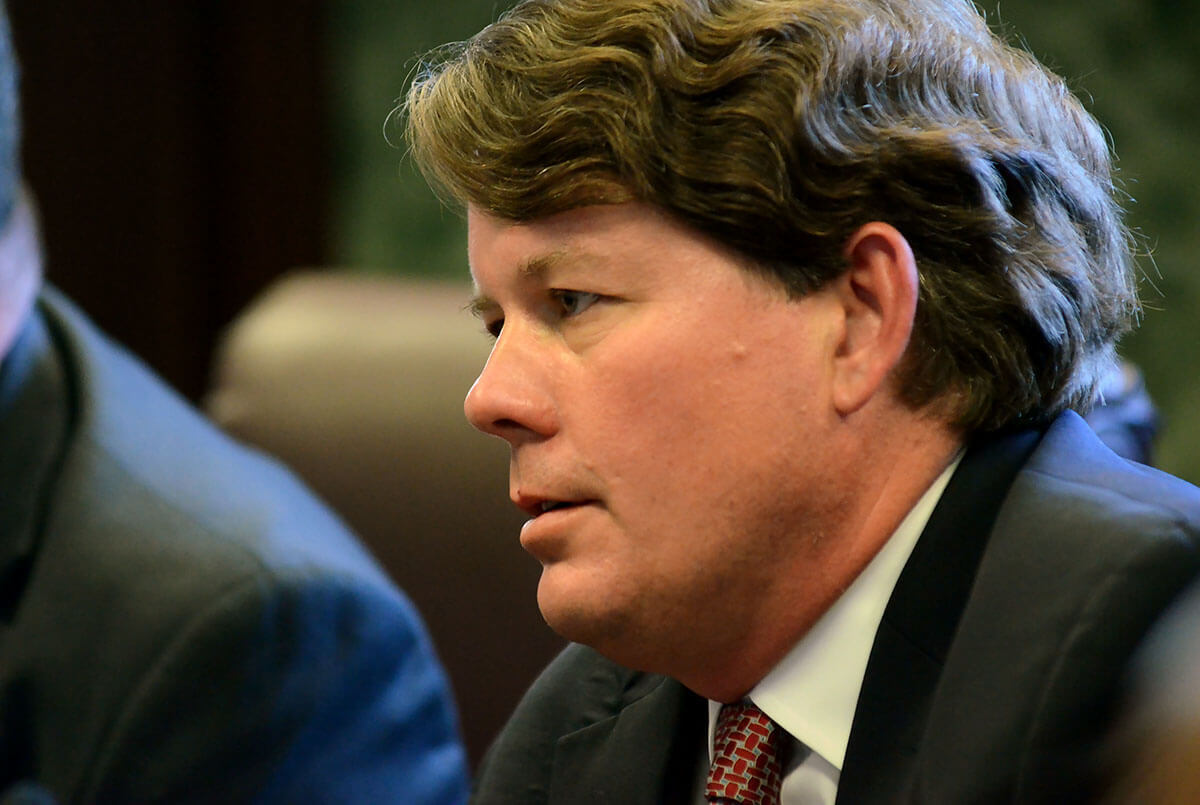
The Senate on Wednesday roundly rejected the nomination of Cory Custer, Reeves’ deputy chief of staff, to serve a four-year term on the board of directors of Mississippi Public Broadcasting, the statewide public radio and television network. Reeves reacted to the Senate’s vote on Thursday, calling it “chicken shit.”

Only eight senators out of the 51-member body voted to confirm Custer, and three of those “yea” votes came from Democrats. MPB’s board members oversee the organization’s operations, manage its finances and guide programming for its multiple newscasts each weekday.

Reeves appointed Custer over the summer of 2024 to fill an open seat on the board as an interim member. Since then, he has participated in board meetings and is listed as a board member on MPB’s website.

According to Custer’s profile on the website, he oversees the governor’s communication team. Custer’s role overseeing Reeves’ public profile seemed to be a point of concern for some senators who voted against his confirmation.

As the full Senate prepared to vote on Custer’s nomination Thursday, Republican Sen. Brice Wiggins asked what responsibilities Custer had as the governor’s deputy of chief.

Republican Senate Education Chairman Dennis DeBar, who shepherded Custer’s nomination through his committee last month, responded that Custer had access to Reeves’ account on X, formerly known as Twitter.

“If you’re referring to his social media account, he indicated that he did have access to the Twitter account,” DeBar said.

In February, Reeves angered several members of the Senate Republican caucus after the governor used his X account to take shots at Republican Sen. Jeremy England. The Republican senator who chairs the Elections Committee had advanced bipartisan legislation to allow “no-excuse” in-person early voting, a policy Reeves opposes.

Reeves, or someone operating his X account, said England earned the “MVP award for the Mississippi Democratic Party!” He also posted a newspaper photo of England on the Senate floor laughing with Democratic Sen. Derrick Simmons and wrote: ” A picture is worth a thousand words!! Senator Jeremy England, you may think it is funny that you are working with the Senate Democrat Minority Leader to pass the Democrats’ priorities…. BUT I DO NOT!”

It is unclear whether Reeves, Custer or someone else authored those X posts.

Custer did not respond Thursday to messages seeking comment.

At a press conference Thursday, Reeves said the Senate’s decision represented an unfair attack on Custer, and that Republican senators might suffer political consequences for killing one of his appointments.

“There’s no doubt there are some Republican senators who like to vote with Democrats on really important topics, and they don’t like the fact that I call them out on it,” Reeves said. “They ought to attack me and not one of my staff members. He had nothing to do with that. Quite frankly, I think it’s chicken shit what they did.”

The vote against Custer occurred just before the House and Senate concluded its regular session without passing a $7 billion state budget to fund state agencies. Reeves will likely have to call the Legislature back for a special session to deal with the budget.

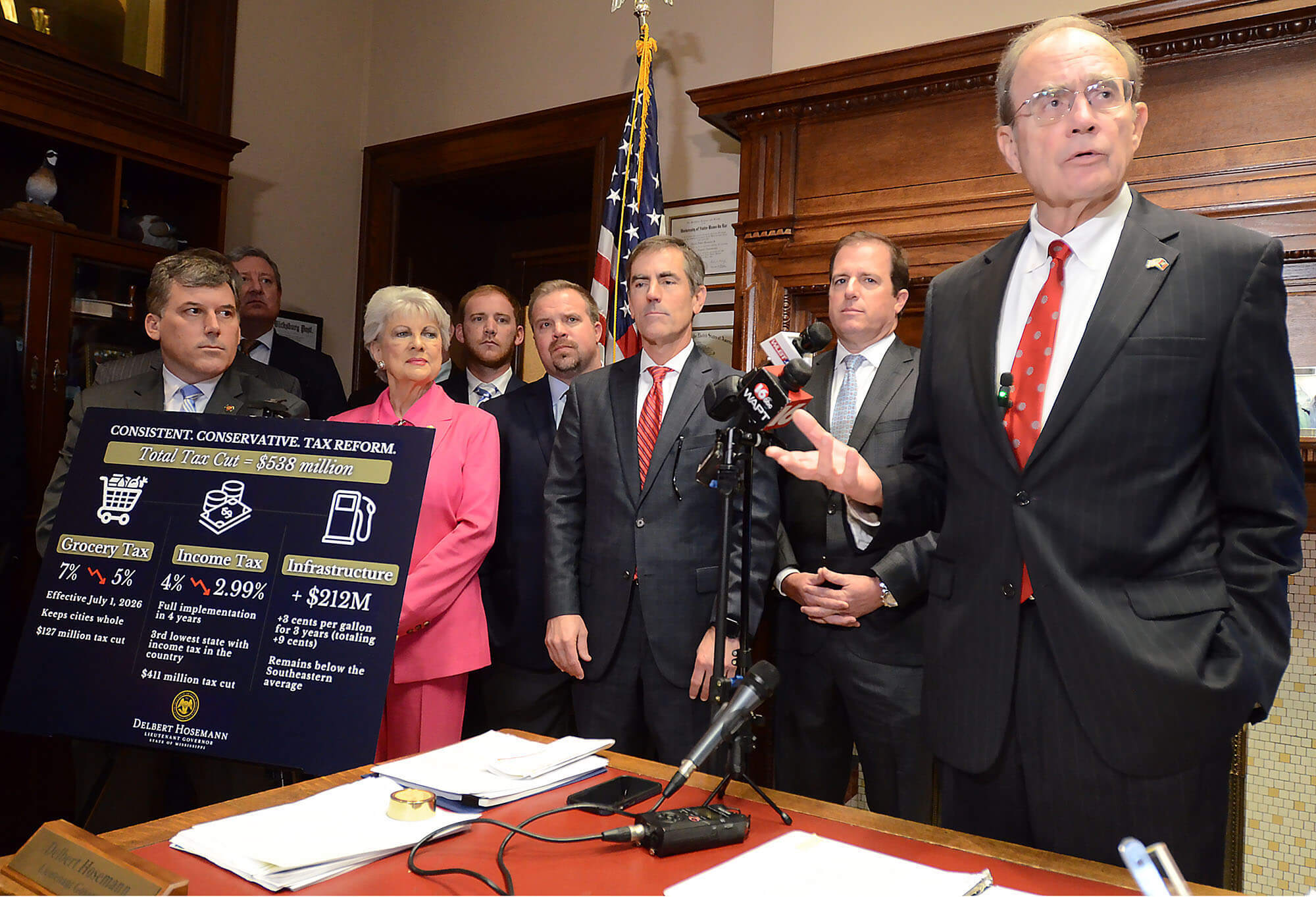
The Legislature’s bill to overhaul Mississippi’s tax system, which included typos that could eliminate the state income tax much quicker than the Senate intended, contributed to tensions over the budget. Reeves signed the typo-riddled bill into law last week.

Gubernatorial appointees are regularly allowed to serve on boards and commissions prior to Senate confirmation. Now that the Senate has rejected Custer’s confirmation, Reeves could appoint someone else to fill the open board of directors seat. That person would need to be confirmed by the Senate during the next legislative session.

The post GOP-controlled Senate rejects governor’s pick for public broadcasting board. Reeves calls it ‘chicken s–t’ appeared first on Mississippi Today.
Early voting proposal killed on last day of Mississippi legislative session

Mississippi will remain one of only three states without no-excuse early voting or no-excuse absentee voting. 

Senate leaders, on the last day of their regular 2025 session, decided not to send a bill to Gov. Tate Reeves that would have expanded pre-Election Day voting options. The governor has been vocally opposed to early voting in Mississippi, and would likely have vetoed the measure.

The House and Senate this week overwhelmingly voted for legislation that established a watered-down version of early voting. The proposal would have required voters to go to a circuit clerk’s office and verify their identity with a photo ID. 

The proposal also listed broad excuses that would have allowed many voters an opportunity to cast early ballots. 

The measure passed the House unanimously and the Senate approved it 42-7. However, Sen. Jeff Tate, a Republican from Meridian who strongly opposes early voting, held the bill on a procedural motion. 

Senate Elections Chairman Jeremy England chose not to dispose of Tate’s motion on Thursday morning, the last day the Senate was in session. This killed the bill and prevented it from going to the governor. 

England, a Republican from Vancleave, told reporters he decided to kill the legislation because he believed some of its language needed tweaking. 

The other reality is that Republican Gov. Tate Reeves strongly opposes early voting proposals and even attacked England on social media for advancing the proposal out of the Senate chamber. 

England said he received word “through some sources” that Reeves would veto the measure.

“I’m not done working on it, though,” England said. 

Although Mississippi does not have no-excuse early voting or no-excuse absentee voting, it does have absentee voting. 

To vote by absentee, a voter must meet one of around a dozen legal excuses, such as temporarily living outside of their county or being over 65. Mississippi law doesn’t allow people to vote by absentee purely out of convenience or choice. 

Several conservative states, such as Texas, Louisiana, Arkansas and Florida, have an in-person early voting system. The Republican National Committee in 2023 urged Republican voters to cast an early ballot in states that have early voting procedures. 

Yet some Republican leaders in Mississippi have ardently opposed early voting legislation over concerns that it undermines election security. 

The post Early voting proposal killed on last day of Mississippi legislative session appeared first on Mississippi Today.
Legislature sends bill requiring hospital ERs to stock, perform rape kits to governor

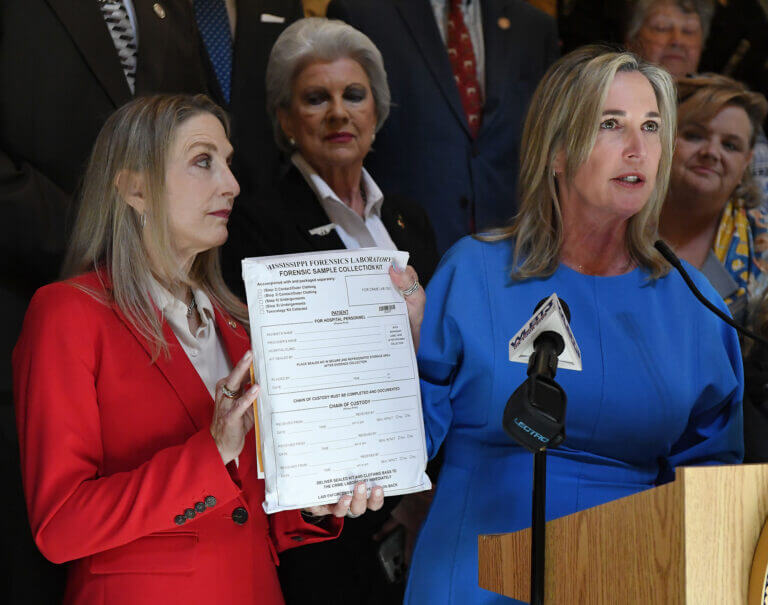
Mississippi hospitals are now required to perform rape kits on sexual assault victims who come to their ERs, pending a signature from the governor. 

That’s thanks to a bill lawmakers passed unanimously Thursday. 

“This is truly a feel-good bill, and I’m so grateful and relieved that it passed,” Rep. Dana McLean, R-Columbus, who spearheaded the legislation, said Wednesday afternoon. “As a legislator it’s my job to help protect the most vulnerable among us. If not us, then who will?”

The policy will mandate all hospitals stock rape kits, have a provider available to perform a rape kit, and that they do not turn rape victims away. The legislation was inspired by several cases where survivors did not receive routine treatment at hospitals, according to sexual assault advocacy organizations. Most recently, the mother of a child in central Mississippi told Mississippi Today they were turned away from an ER that “didn’t do that” after her child was allegedly raped.

The bill passed the Legislature unanimously – but only after key lawmakers moved swiftly in the final days of the session to overcome unforeseen hurdles.

Senate Public Health Chair Hob Bryan, D-Amory, tried to kill the bill Tuesday by raising a rule violation, or “point of order.” Bryan, who let similar legislation die by not bringing it up for a vote in his committee earlier in the session, told Mississippi Today he brought up the point of order to stall the bill because he didn’t think lawmakers had sufficiently studied the scope of the problem or the impact of the bill’s language. 

Sen. Brice Wiggins (left) listens as Hob Bryan, Senate Public Health and Welfare Committee Chairman (right) comments during a medical marijuana hearing at the State Capitol Monday. Credit: Vickie D. King/Mississippi Today

Bryan articulated concern about the unintended consequences the legislation could have on hospitals – although the Mississippi Hospital Association, representing dozens of hospitals in the state, has since come out in support of the bill. The Healthcare Collaborative, which represents most of the hospitals that splintered off from MHA in recent years, has not returned several requests for comment about the rape kit legislation. 

Three lawmakers moved quickly to file a new version of the bill Tuesday evening to fix the violation that was pointed out in the Senate. They were Sen. Angela Hill, R-Picayune; Sen. Joey Fillingane, R-Sumrall; and McLean. Hill and Fillingane were the authors of the Senate bill on sexual assault reform to which McLean added her rape kit language. 

Bryan said if there were other technical violations in the bill, he would have raised them Wednesday. 

There were not, and the bill passed its final legislative hurdle in the Senate on Thursday. It now heads to the governor. 

The policy will go into effect July 1.

The post Legislature sends bill requiring hospital ERs to stock, perform rape kits to governor appeared first on Mississippi Today.
Mississippi Film Society Announces First Film Festival, Stranger Than Fiction

Made possible through grants from Visit Mississippi, Volunteer Mississippi, and the Mississippi Humanities Council.

Written by Laurie Guimont Guillaume

Ryan Parker, Executive Director of the Mississippi Film Society, is passionate about two things, cinema and serving the Mississippi community. Spending his childhood in Brookhaven, Mississippi, Parker traces his interest in film to the Westbrook Cinema 4 and the ‘80s and ‘90s blockbusters that played there.

An English major at Mississippi College, a film and literature course there deepened his appreciation for the genre. After two graduate school degrees, Parker moved to Los Angeles from the academy to the industry, embarking on a career in film publicity and marketing and consulting that spanned a decade in Los Angeles and continues to this day.

In 2022, Parker and his wife Amy moved back to Mississippi. Along with his work film film publicity and producing, he founded the Mississippi Film Society in 2023.

Leveraging his connections to distributors and independent filmmakers, Parker began offering free preview screenings of upcoming theatrical releases or screenings of smaller films that would not ordinarily have a theatrical release in Mississippi. Another goal of the Film Society was to bring another film festival back to Jackson.

This goal comes to fruition on Thursday, April 10, as the Mississippi Film Society launches its first film festival, Stranger Than Fiction (strangerthanfiction.eventive.org), which will run through Sunday April 13 at the Capri Theatre and Fondren Yard in Jackson, MS. The Stranger Than Fiction Film Festival will showcase eight feature-length films, two Mississippi-produced short films, an Introduction to the Film Industry Workshop, and two after parties.

The festival kicks off on Thursday at 7 pm with the opening night screening of Secret Mall Apartment, an unbelievable true story of a group of artists in Rhode Island, who build a secret apartment inside a new mall and lived there for four years. On Friday night at 7 pm, the festival will host another documentary feature, Swamp Dogg Gets His Pool Painted, which profiles musician Jerry “SwampDog” Wiliams and highlights his influential yet under-the radar-career. This screening will be preceded by a Mississippi produced short film, Country Punk Black about Jackson musician Twurt Chamberlain. The night will conclude with an afterparty at Fondren Yard, where Jackson artist DJ Young Venom will live score the silent black-and-white horror classic, The Monster (1925).

Saturday, April 12, is a full day of events at the Capri Theatre and Fondren Yard, starting off with a preview screening of the upcoming A24 family-friendly film, The Legend of Ochi, which will also include a breakfast cereal buffet and coffee courtesy of Northshore Coffee Company. This will be followed by an Introduction to the Film Industry Workshop, co-hosted by the Mississippi Film Office and the University of Mississippi Department of Theatre and film. This will be followed by two more documentary features: at 3:30 p.m., 23 Mile presents a portrait of Michigan residents during pivotal events in 2020 and will be followed by an in-person panel conversation with director Mitch McCabe; and at 6:00 p.m., Kim’s Video pays tribute to an iconic video store and its legendary film archive. The night will conclude with movie trivia in Fondren Yard beginning at 8:00 p.m.

Sunday, April 13 features another full day of programming starting at 1:30 p.m. with a screening of Mississippi filmmaker Anthony Thaxton’s Eudora, which will be preceded by another Mississippi produced short film, Jason Bouldin: Corporeal Nature, directed by University of Mississippi student Tanner Goodeill. At 4:00 p.m., Cajita (written by Belhaven film production professor Rick Negron) is an intimate tale that follows an immigrant laborer who fled his country by shipping himself to the United States in a crate. This screening will be followed by an in-person Q&A with Negron. The festival will close with a 6:30 p.m. screening of the comedy Lady Parts, which will be followed by an in-person panel conversation and Q&A with producer/writer Bonnie Gross and local physician, Dr. Kimberly Zachow of The Woman’s Clinic.

Thanks to generous partnerships with Visit Mississippi, Volunteer Mississippi, the Mississippi Humanities Council, and the Mississippi Film Office, the Film Society can offer attendees a variety of ways to engage the festival including a $25 weekend pass (priority seating at all screenings and free drink coupon), $12 individual screening tickets, and free screenings. Visit The Stranger Than Fiction Film Festival site (strangerthanfiction.eventive.org) for more information on the films and to purchase passes or tickets and to register for any free events.

The post Mississippi Film Society Announces First Film Festival, Stranger Than Fiction appeared first on Mississippi Today.
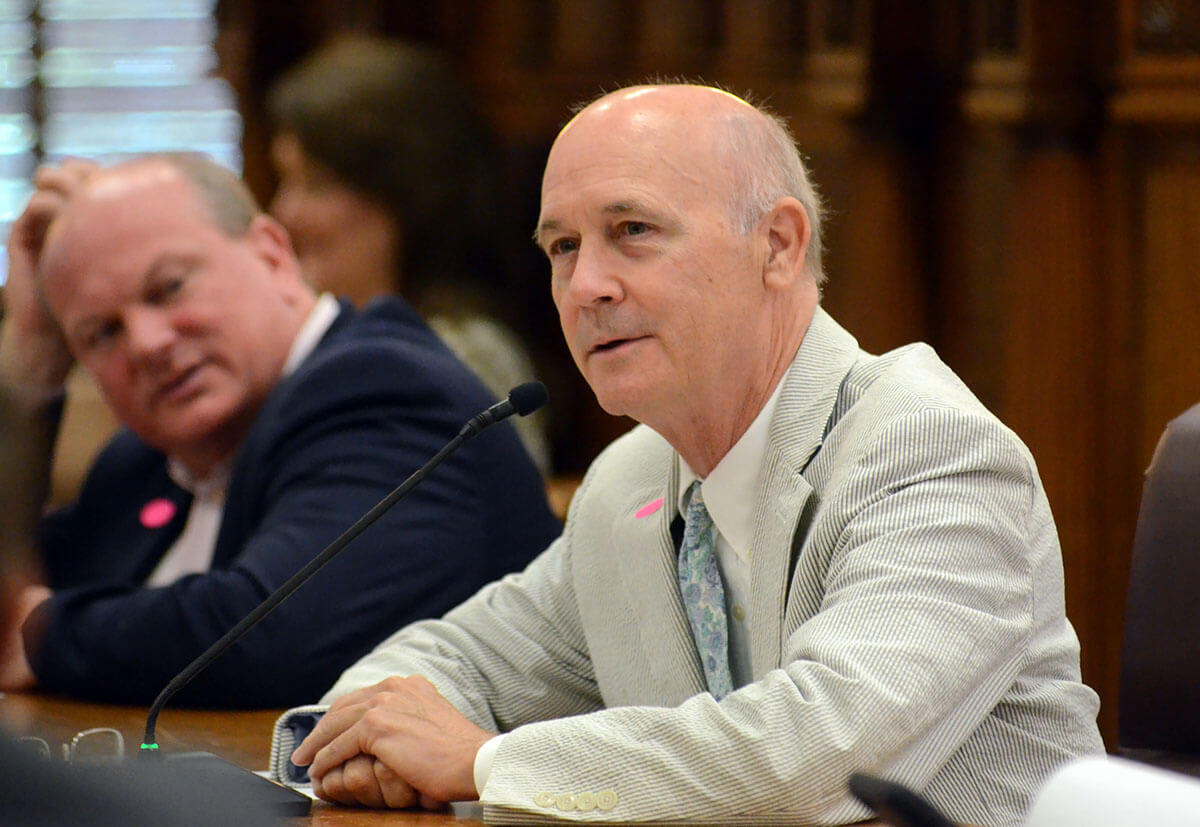
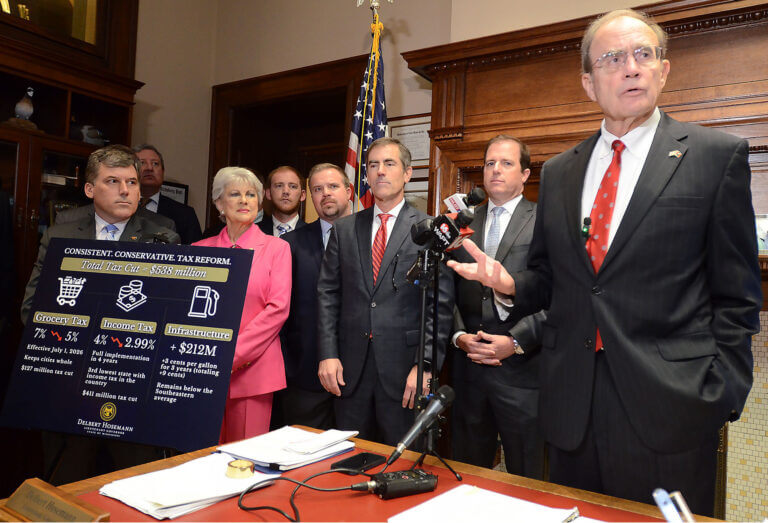
Mississippi Legislature ends 2025 session without setting a budget over GOP infighting 

The House on Wednesday voted to end what had become a futile legislative session without passing a budget to fund state government, for the first time in 16 years. The Senate is expected to do the same on Thursday. 

The decision to leave the Capitol without funding government services means Gov. Tate Reeves would have to call legislators into a special session before government funding runs out on June 30 to avoid a shutdown. The governor could, based on previous legal rulings and opinions, run some agencies at least temporarily but many would be shuttered without a state budget in place.

House Speaker Jason White and Lt. Gov. Delbert Hosemann, both Republicans, blamed each other for failing to come to the negotiating table on ironing out a final $7 billion state budget.

“They have ignored the deadlines, failed to show up repeatedly, taken their marbles home at least twice, and given us conflicting statements every other time,” Hosemann said of the House. 

White, however, said he told Hosemann in early January that the House would not craft a “hurried budget” late in the session. 

Reeves, who previously helped write the state budget when he served two terms as lieutenant governor, has not said anything publicly about the Legislature’s failure to adopt a budget and has not indicated when he might force them back in a special session. 

The 2025 session has been characterized by bitter GOP infighting between White and Hosemann and their leadership teams, with the two chambers killing much of each other’s legislative priorities. 

House Minority Leader Robert Johnson of Natchez said the Republican bickering this session is not good for the state, and he hopes GOP leaders in the House and Senate can learn to get along. He said they should have stayed and passed a state budget, not relied on the governor to force them back into session.

“I think the situation is just unfortunate,” Johnson said. “It appears to me, after being in the Legislature for 30 years, that problems like this are more about personalities than actual issues. They need to step back, set aside their personal feelings and look at what’s best for the state of Mississippi instead.”

Even though the House finally accomplished its long-championed policy of eliminating the income tax, lawmakers might have to correct some of the mistakes in the legislation in the future. 

The House began to seethe after it felt the Senate was dragging its feet on proposing a plan to eliminate the income tax, after it killed most of White’s K-12 public education reforms and refused to pass a bill legalizing mobile sports betting.

When the Senate finally passed a measure to eliminate the income tax, it included typos that eliminated the tax much quicker than the Senate intended. Instead of pointing out the error to the Senate, the House pounced on it, passed the flawed bill and sent it to the governor. Normally, each side would work with the other to correct known mistakes in legislation.

The Senate felt burned by the House’s move and accused House leaders of negotiating in bad faith. Those frustrations carried over into trying to reach agreement on the state’s $7 billion general fund budget.   

The House leadership had vowed to avoid crunching budget numbers late into the night on “conference weekend” Saturday, as is tradition and the deadline for filing agreements. Many lawmakers have for years complained about the rushed budget setting, saying they don’t have time to vet or sometimes even read spending bills, and it has resulted in major mistakes in the past. White has vowed to end the practice.

The Senate, however, said they tried to iron out spending bills with their House counterparts during the week leading up to the conference weekend deadline, but they were initially met with silence.  

Still, House leaders met with Senate budget writers during the middle of last week to try to agree on at least some of the budget bills. But Hosemann said at one point on Friday night, the House walked out of the negotiations. 

Another point of contention between the two chambers is that Senate negotiators pledged not to agree to spend excess cash on lawmakers’ pet projects, including in an annual “Christmas Tree” bill. Lawmakers typically pass such a bill, usually ranging from $200 million to $400 million on earmarked projects across the state. Some lawmakers have complained this “pork” spending based on politics is an unfair way to spend money on projects in a poor state with many infrastructure needs.

The Legislature has not left Jackson without setting at least most of the state budget since 2009, when then-Gov. Haley Barbour had to force them back to Jackson to avoid a government shutdown.

But that 2009 instance was when Democrats still had a slight majority in the House and Senate, with Republican Lt. Gov. Phil Bryant presiding over the Senate and Democratic Speaker Billy McCoy leading the House. Now, Republicans have a supermajority in both chambers. 

The House on Wednesday afternoon made a final attempt to revive negotiations by passing a measure to revive budget bills and extend the session. But shortly after the House passed the proposal, the Senate ended business for the day without considering the House offer. 

Sen. Angela Burks Hill, R-Picayune, is one of a handful of more conservative senators who had opposed the tax overhaul compromise with the House and was angered by its passage due to typos. She also was displeased with the House’s failure to show up on conference weekend to negotiate a budget and said she was “100% opposed” to passing a resolution to extend the session and renew negotiations with the House.

“That’s what happens when you play Napoleon,” Hill said. When asked to whom she was referring as Napoleon, she said, “You can figure it out.”

The decision to leave the state Capitol without a budget comes in the middle of unpredictability with the federal government, where President Donald Trump’s administration is cancelling hundreds of millions of dollars in federal grants and other funding to states.  

Mississippi is one of the most federally dependent states in the nation.

State Health Officer Daniel Edney told lawmakers earlier this week that the federal government has cancelled around $230 million in federal grants to the state Department of Health. 

And Hosemann told reporters on Wednesday that State Superintendent of Education Lance Evans informed him that around $190 million in education funding was frozen, though the lieutenant governor did not reveal the specific details of those funds. 

Mississippi Today‘s Michael Golberg and Geoff Pender contributed to this report. 

The post Mississippi Legislature ends 2025 session without setting a budget over GOP infighting  appeared first on Mississippi Today.

Mississippi Legislature approves DEI ban after heated debate

Mississippi lawmakers have reached an agreement to ban diversity, equity and inclusion programs and a list of “divisive concepts” from public schools across the state education system, following the lead of numerous other Republican-controlled states and President Donald Trump’s administration.  

House and Senate lawmakers approved a compromise bill in votes on Tuesday and Wednesday. It will likely head to Republican Gov. Tate Reeves for his signature after it clears a procedural motion.

The agreement between the Republican-dominated chambers followed hours of heated debate in which Democrats, almost all of whom are Black, excoriated the legislation as a setback in the long struggle to make Mississippi a fairer place for minorities. They also said the bill could bog universities down with costly legal fights and erode academic freedom.

Democratic Rep. Bryant Clark, who seldom addresses the entire House chamber from the podium during debates, rose to speak out against the bill on Tuesday. He is the son of the late Robert Clark, the first Black Mississippian elected to the state Legislature since the 1800s and the first Black Mississippian to serve as speaker pro tempore and preside over the House chamber since Reconstruction.

“We are better than this, and all of you know that we don’t need this with Mississippi’s history,” Clark said. “We should be the ones that say, ‘listen, we may be from Mississippi, we may have a dark past, but you know what, we’re going to be the first to stand up this time and say there is nothing wrong with DEI.’”

Legislative Republicans argued that the measure — which will apply to all public schools from the K-12 level through universities — will elevate merit in education and remove a list of so-called “divisive concepts” from academic settings. More broadly, conservative critics of DEI say the programs divide people into categories of victims and oppressors and infuse left-wing ideology into campus life.

“We are a diverse state. Nowhere in here are we trying to wipe that out,” said Republican Sen. Tyler McCaughn, one of the bill’s authors. “We’re just trying to change the focus back to that of excellence.”

The House and Senate initially passed proposals that differed in who they would impact, what activities they would regulate and how they aim to reshape the inner workings of the state’s education system. Some House leaders wanted the bill to be “semi-vague” in its language and wanted to create a process for withholding state funds based on complaints that almost anyone could lodge. The Senate wanted to pair a DEI ban with a task force to study inefficiencies in the higher education system, a provision the upper chamber later agreed to scrap.

The concepts that will be rooted out from curricula include the idea that gender identity can be a “subjective sense of self, disconnected from biological reality.” The move reflects another effort to align with the Trump administration, which has declared via executive order that there are only two sexes.

The House and Senate disagreed on how to enforce the measure but ultimately settled on an agreement that would empower students, parents of minor students, faculty members and contractors to sue schools for violating the law.

People could only sue after they go through an internal campus review process and a 25-day period when schools could fix the alleged violation. Republican Rep. Joey Hood, one of the House negotiators, said that was a compromise between the chambers. The House wanted to make it possible for almost anyone to file lawsuits over the DEI ban, while Senate negotiators initially bristled at the idea of fast-tracking internal campus disputes to the legal system.   

The House ultimately held firm in its position to create a private cause of action, or the right to sue, but it agreed to give schools the ability to conduct an investigative process and potentially resolve the alleged violation before letting people sue in chancery courts.

“You have to go through the administrative process,” said Republican Sen. Nicole Boyd, one of the bill’s lead authors. “Because the whole idea is that, if there is a violation, the school needs to cure the violation. That’s what the purpose is. It’s not to create litigation, it’s to cure violations.” 

If people disagree with the findings from that process, they could also ask the attorney general’s office to sue on their behalf.

Under the new law, Mississippi could withhold state funds from schools that don’t comply. Schools would be required to compile reports on all complaints filed in response to the new law.

Trump promised in his 2024 campaign to eliminate DEI in the federal government. One of the first executive orders he signed did that. Some Mississippi lawmakers introduced bills in the 2024 session to restrict DEI, but the proposals never made it out of committee. With the national headwinds at their backs and several other laws in Republican-led states to use as models, Mississippi lawmakers made plans to introduce anti-DEI legislation.

The policy debate also unfolded amid the early stages of a potential Republican primary matchup in the 2027 governor’s race between State Auditor Shad White and Lt. Gov. Delbert Hosemann. White, who has been one of the state’s loudest advocates for banning DEI, had branded Hosemann in the months before the 2025 session “DEI Delbert,” claiming the Senate leader has stood in the way of DEI restrictions passing the Legislature. 

During the first Senate floor debate over the chamber’s DEI legislation during this year’s legislative session, Hosemann seemed to be conscious of these political attacks. He walked over to staff members and asked how many people were watching the debate live on YouTube. 

As the DEI debate cleared one of its final hurdles Wednesday afternoon, the House and Senate remained at loggerheads over the state budget amid Republican infighting. It appeared likely the Legislature would end its session Wednesday or Thursday without passing a $7 billion budget to fund state agencies, potentially threatening a government shutdown.

“It is my understanding that we don’t have a budget and will likely leave here without a budget. But this piece of legislation …which I don’t think remedies any of Mississippi’s issues, this has become one of the top priorities that we had to get done,” said Democratic Sen. Rod Hickman. “I just want to say, if we put that much work into everything else we did, Mississippi might be a much better place.”

The post Mississippi Legislature approves DEI ban after heated debate appeared first on Mississippi Today.

House gives Senate 5 p.m. deadline to come to table, or legislative session ends with no state budget

The House on Wednesday attempted one final time to revive negotiations between it and the Senate over passing a state budget.

Otherwise, the two Republican-led chambers will likely end their session without funding government services for the next fiscal year and potentially jeopardize state agencies.

The House on Wednesday unanimously passed a measure to extend the legislative session and revive budget bills that had died on legislative deadlines last weekend. 

House Speaker Jason White said he did not have any prior commitment that the Senate would agree to the proposal, but he wanted to extend one last offer to pass the budget. White, a Republican from West, said if he did not hear from the Senate by 5 p.m. on Wednesday, his chamber would end its regular session. 

“The ball is in their court,” White said of the Senate. “Every indication has been that they would not agree to extend the deadlines for purposes of doing the budget. I don’t know why that is. We did it last year, and we’ve done it most years.” 

But it did not appear likely Wednesday afternoon that the Senate would comply.

The Mississippi Legislature has not left Jackson without setting at least most of the state budget since 2009, when then Gov. Haley Barbour had to force them back to set one to avoid a government shutdown.

The House measure to extend the session is now before the Senate for consideration. To pass, it would require a two-thirds majority vote of senators. But that might prove impossible. Numerous senators on both sides of the aisle vowed to vote against extending the current session, and Lt. Gov. Delbert Hosemann who oversees the chamber said such an extension likely couldn’t pass. 

Senate leadership seemed surprised at the news that the House passed the resolution to negotiate a budget, and several senators earlier on Wednesday made passing references to ending the session without passing a budget. 

“We’ll look at it after it passes the full House,” Senate President Pro Tempore Dean Kirby said. 

The House and Senate, each having a Republican supermajority, have fought over many issues since the legislative session began early January.

But the battle over a tax overhaul plan, including elimination of the state individual income tax, appeared to cause a major rift. Lawmakers did pass a tax overhaul, which the governor has signed into law, but Senate leaders cried foul over how it passed, with the House seizing on typos in the Senate’s proposal that accidentally resembled the House’s more aggressive elimination plan.

The Senate had urged caution in eliminating the income tax, and had economic growth triggers that would have likely phased in the elimination over many years. But the typos essentially negated the triggers, and the House and governor ran with it.

The two chambers have also recently fought over the budget. White said he communicated directly with Senate leaders that the House would stand firm on not passing a budget late in the session. 

But Senate leaders said they had trouble getting the House to meet with them to haggle out the final budget. 

On the normally scheduled “conference weekend” with a deadline to agree to a budget last Saturday, the House did not show, taking the weekend off. This angered Hosemann and the Senate. All the budget bills died, requiring a vote to extend the session, or the governor forcing them into a special session.

If the Legislature ends its regular session without adopting a budget, the only option to fund state agencies before their budgets expire on June 30 is for Gov. Tate Reeves to call lawmakers back into a special session later. 

“There really isn’t any other option (than the governor calling a special session),” Lt. Gov. Delbert Hosemann previously said. 

If Reeves calls a special session, he gets to set the Legislature’s agenda. A special session call gives an otherwise constitutionally weak Mississippi governor more power over the Legislature. 

The post House gives Senate 5 p.m. deadline to come to table, or legislative session ends with no state budget appeared first on Mississippi Today.

Long-sought domestic violence bill heads to governor’s desk

Lawmakers negotiated and passed legislation to create a statewide board to study domestic violence deaths during the final, seemingly chaotic days of the 2025 session. The bill now heads to the governor’s desk.

Senate Bill 2886 by Sen. Brice Wiggins, R-Pascagoula, would establish the Domestic Violence Fatality Review Board to study deaths and near-fatal incidents, suicides and other domestic violence matters. The goal is to learn how a death happened – the lead up, actions taken, what community resources were available and existing laws and policies. 

And from this study, the goal would be for the board to learn how to prevent domestic violence through early intervention and the improvement of how people and institutions respond to domestic violence. 

“We have to keep people alive, but to do that, we have to have the infrastructure as a system to appropriately respond to these things,” Stacey Riley, executive director of the Gulf Coast Center for Nonviolence and a board member of the Mississippi Coalition Against Domestic Violence, told Mississippi Today earlier in the legislative session. 

Conference committee members for the bill included Wiggins and Rep. Fabian Nelson, a Democrat who proposed a House version of the bill. 

Advocates have told Mississippi Today that it’s difficult to know how many domestic violence deaths and injuries there are in any given year because there isn’t data collected at the state level. 

An analysis by Mississippi Today found at least 300 people – victims, abusers and collateral victims in the form of children and law enforcement – died from domestic violence between 2020 and 2024. 

Information was gathered from local news stories, the Gun Violence Archive, the National Gun Violence Memorial, law enforcement and court documents to track locations of incidents, demographics of victims and perpetrators and information about court cases tied to the deaths. 

Last year when a similar bill was proposed but didn’t make it out of committee, Mississippi Today started tracking the number of domestic violence fatalities, demographics and outcomes similar to how a review board would. 

The statewide board would be established under the Department of Public Safety and include appointed members from the criminal justice system and others who interact with domestic violence survivors and victims. 

The House version of the bill would have placed the board under the Department of Health, which has similar boards to review child deaths and maternal mortality. Nelson was the only member of the conference committee not to sign the report to withdraw the House’s amendment to place the board in the Department of Health. 

Under SB 2886, circuit judges can form a review board based in their circuit court district. Those teams would work with local and state domestic violence centers,  local law enforcement and judicial officers including prosecutors and public defenders. 

The bill also directs the membership of a team to be inclusive and reflect the racial, geographic, urban, rural and economic diversity of the state or circuit court district. 

The post Long-sought domestic violence bill heads to governor’s desk appeared first on Mississippi Today.

Federal cuts to Mississippi health agencies surpass $230 million; will impact community health workers, bird flu efforts, substance use programs

Cuts to public health and mental health funding in Mississippi have doubled – reaching approximately $238 million – since initial estimates last week, when cancellations to federal grants allocated for COVID-19 pandemic relief were first announced.

Slashed funding to the state’s health department will impact community health workers, planned improvements to the public health laboratory, the agency’s ability to provide COVID-19 vaccinations and preparedness efforts for emerging pathogens, like H5 bird flu. 

The grant cancellations, which total $230 million, will not be catastrophic for the agency, State Health Officer Dr. Daniel Edney told members of the Mississippi House Democratic Caucus at the Capitol April 1. 

But they will set back the agency, which is still working to recover after the COVID-19 pandemic decimated its workforce and exposed “serious deficiencies” in the agency’s data collection and management systems.

The cuts will have a more significant impact on the state’s economy and agency subgrantees, who carry out public health work on the ground with health department grants, he said. 

“The agency is okay. But I’m very worried about all of our partners all over the state,” Edney told lawmakers. 

The health department was forced to lay off 17 contract workers as a result of the grant cancellations, though Edney said he aims to rehire them under new contracts. 

Other positions funded by health department grants are in jeopardy. Two community health workers at Back Bay Mission, a nonprofit that supports people living in poverty in Biloxi, were laid off as a result of the cuts, according to WLOX. It’s unclear how many more community health workers, who educate and help people access health care, have been impacted statewide.

The department was in the process of purchasing a comprehensive data management system before the cuts and has lost the ability to invest in the Mississippi Public Health Laboratory, he said. The laboratory performs environmental and clinical testing services that aid in the prevention and control of disease. 

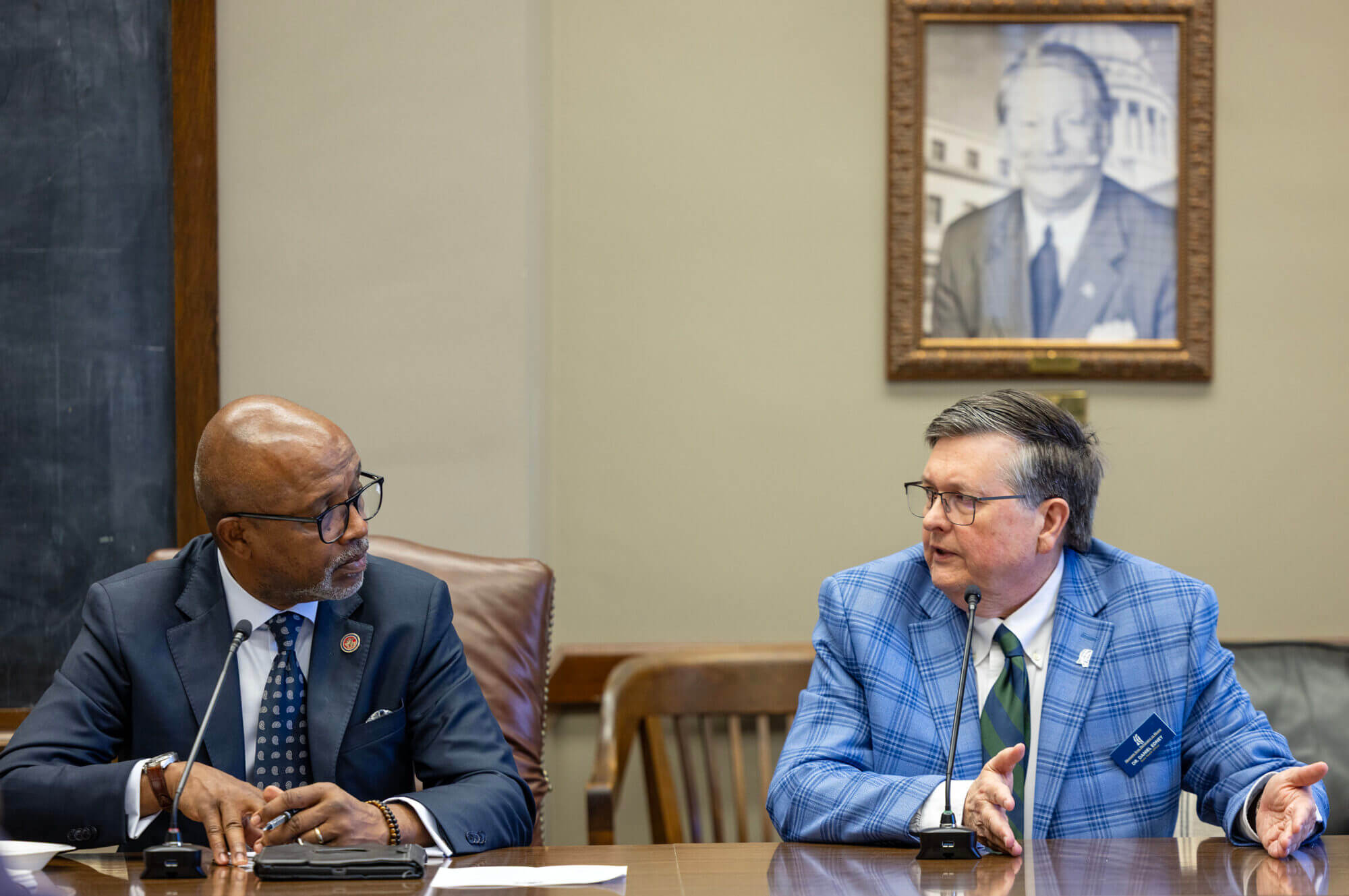
Mississippi State Health Officer Dr. Dan Edney addresses lawmakers during the Democratic caucus meeting at the State Capitol in Jackson, Miss., on Tuesday, April 1, 2025. The discussion centered on potential federal healthcare funding cuts. Credit: Eric Shelton/Mississippi Today

The agency has worked to reduce its dependence on federal funds, Edney said, which will help it weather the storm. Sixty-six percent of the department’s budget is federally funded. 

The Centers for Disease Control and Prevention pulled back $11.4 billion in funding to state health departments nationwide last week. The funding was originally allocated by Congress for testing and vaccination against the coronavirus as part of COVID-19 relief legislation, and to address health disparities in high-risk and underserved populations. An additional $1 billion from the Substance Abuse and Mental Health Services Administration was also terminated. 

“The COVID-19 pandemic is over, and HHS will no longer waste billions of taxpayer dollars responding to a non-existent pandemic that Americans moved on from years ago,” the Department of Health and Human Services Director of Communications Andrew Nixon said in a statement.

HHS did not respond to questions from Mississippi Today about the cuts in Mississippi.

Democratic attorneys general and governors in 23 states filed a lawsuit against the U.S. Department of Health and Human Services Tuesday, arguing that the sudden cancellation of the funding was unlawful and seeking injunctive relief to halt the cuts. Mississippi did not join the suit. 

Mental health cuts

The Department of Mental Health received about $7.5 million in cuts to federal grants from the Substance Abuse and Mental Health Services Administration. 

Phaedre Cole, president of the Mississippi Association of Community Mental Health Centers, speaks to lawmakers about federal healthcare funding cuts during the Democratic caucus meeting at the State Capitol in Jackson, Miss., on Tuesday, April 1, 2025. Credit: Eric Shelton/Mississippi Today

Over half of the cuts were to community mental health centers, and supported alcohol and drug treatment services for people who can not afford treatment, housing services for parenting and pregnant women and their children, and prevention services. 

The cuts could result in reduced beds at community mental health centers, Phaedre Cole, the director of Life Help and President of Mississippi Association of Community Mental Health Centers, told lawmakers April 1. 

Community mental health centers in Mississippi are already struggling to keep their doors open. Four centers in the state have closed since 2012, and a third have an imminent to high risk of closure, Cole told legislators at a hearing last December. 

“We are facing a financial crisis that threatens our ability to maintain our mission,” she said Dec. 5. 

Cuts to the department will also impact diversion coordinators, who are charged with reducing recidivism of people with serious mental illness to the state’s mental health hospital, a program for first-episode psychosis, youth mental health court funding, school-aged mental health programs and suicide response programs. 

The Department of Mental Health hopes to reallocate existing funding from alcohol tax revenue and federal block grant funding to discontinued programs.

The agency posted a list of all the services that have received funding cuts. The State Department of Health plans to post such a list, said spokesperson Greg Flynn.

Health leaders have expressed fear that there could be more funding cuts coming. 

“My concern is that this is the beginning and not the end,” said Edney.  

The post Federal cuts to Mississippi health agencies surpass $230 million; will impact community health workers, bird flu efforts, substance use programs appeared first on Mississippi Today.
Candice Wilder joins Mississippi Today as new higher education reporter

Mississippi Today is pleased to announce that Candice Wilder has joined the newsroom as our newest higher education reporter.

Wilder takes over higher ed coverage from Mississippi Today reporter Molly Minta, who built the beat starting in early 2021 but has since moved to the newsroom’s team covering the city of Jackson.

“I’m thrilled to join a talented and ambitious team of journalists who provide critical news and information to Mississippians,” Wilder said. “Reporting on the state’s colleges and universities at this moment is more important now than ever. My goal is to develop thoughtful coverage and tell crucial stories that will continue to serve and reflect these communities.

Candice Wilder is the education reporter for Mississippi Today. Credit: Vickie D. King/Mississippi Today
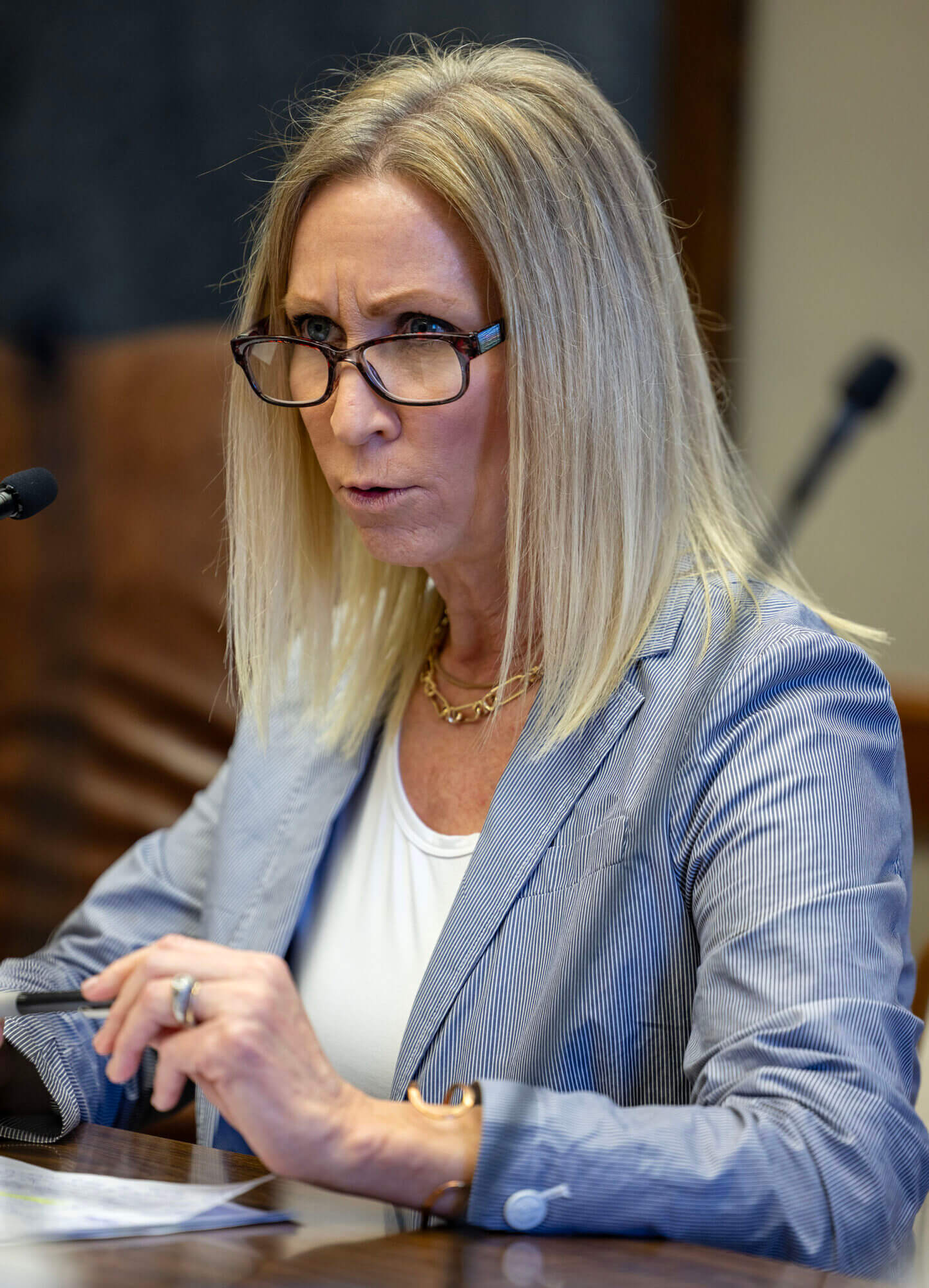
Wilder, an Ohio native, was one of 19 founding staff members of Signal Cleveland, an inaugural nonprofit newsroom part of Signal Ohio. There, she developed a beat that provided accessible health news and information to residents of Cleveland. Her work has led to recognitions from the Cleveland Press Club and the Association of Healthcare Journalists.

“We couldn’t be more excited to welcome Candice to our newsroom,” said Adam Ganucheau, Mississippi Today’s editor-in-chief. “So many aspects of the higher education system are under intense scrutiny and attack across the country — from free speech to funding to accountability — and Mississippi is certainly no exception. Our colleges and universities are at the heart of critical conversations about equity, access, and the future of our state as a whole. Candice brings a sharp eye, strong reporting skills, and genuine curiosity to our team, and I’m confident that her work will help Mississippians navigate the often complicated and evolving nature of higher ed here.”

“We’re so happy to have someone with Candice Wilder’s passion and experience to pick up the mantle of higher education reporting at Mississippi Today,” said Debbie Skipper, who will serve as her editor. “Molly Minta set a high standard in our reporting in this area, and I know Candice will maintain that while offering her own professional perspective.”

The post Candice Wilder joins Mississippi Today as new higher education reporter appeared first on Mississippi Today.