Note: Rep. Jeffery Harness, D-Fayette, offered the following comments during the Mississippi House Democratic Caucus press conference on Feb. 25. House Bill 1193, which he references, is still pending before the Legislature.
Today, we stand together—not just as legislators or as representatives of our districts, but as children of Mississippi, as students of history and as warriors for justice. This movement is bigger than politics as usual. It is about the soul of our state, the soul of our nation, and the very principles that make America worth fighting for.
Make no mistake: House Bill 1193 is not merely another piece of legislation. It is an attack on fairness, on truth and on the values that bind us together. When our Republican colleagues claim they want a better Mississippi, the question remains: for whom? Their proposed bans on Diversity, Equity and Inclusion programs in our public educational institutions tell us the answer loud and clear – it is not for the majority of Mississippians. They care about diversity only when it suits them. When it comes to taking your hard-earned tax dollars or sharing the facts about our history, they remain silent.
Let’s be clear about what DEI stands for:
Diversity means ensuring representation from all backgrounds – race, gender, age, disability, sexual orientation, socioeconomic status and more.
Equity means recognizing that people start from different places because of historical and systemic barriers, and providing the resources needed for fair opportunities.
Inclusion means creating environments where every individual feels valued, respected, and fully able to participate without discrimination.
This bill seeks to strip our schools and universities of programs that celebrate our diverse narratives and to not acknowledge the lived realities of millions. It forbids educators from teaching the full spectrum of our shared history and attempts to erase the challenges and triumphs of marginalized communities. If we were all truly on an equal playing field, we wouldn’t see data revealing disparities in healthcare, education, wages and investments. But the truth is, our Republican colleagues do not want an equal playing field; they want to silence the voices that remind us of our collective struggle toward a more perfect union.
Let us remember: History demands that we stand and be counted. As we navigate these trying times, let us emulate our ancestors—the brave souls who fought for our children’s future and for democracy itself. House Bill 1193 is an attempt to erase, to silence and to control—a government-enforced ideology that denies the lived experiences of our people, especially when it comes to race, gender and identity.
It is no coincidence that this assault on truth occurs at a time when our nation is under threat from dangerous forces. Bills like these are part of an agenda championed by the tyrant Donald Trump and his followers—a reign of lies, division and fear that has poisoned our political discourse. To all Mississippians—regardless of party—heed this bill as a dire warning that we are witnessing the attempted slow dismantling of our democracy.
To our colleagues in the Democratic Party: This is our moment—our line in the sand. We urge a reconsideration of these measures so that Mississippi continues to progress toward a more inclusive and equitable society. We must speak out against these anti-DEI measures now, or history will remember us as cowards. And to our colleagues on the other side of the aisle, hear us clearly: You will not erase us. You will not silence us. You will not defeat us. Truth is louder than lies, and justice is stronger than oppression.
To the people of Mississippi, we say this: They want you afraid and divided. They want you to believe that this state is theirs to control, that your future is theirs to dictate. But they are wrong. Mississippi belongs to the people, and the people will have the final word.
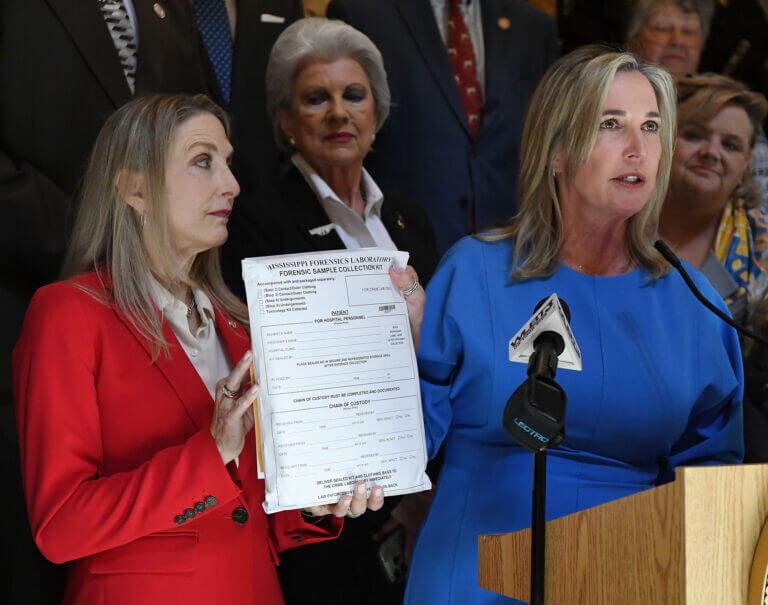
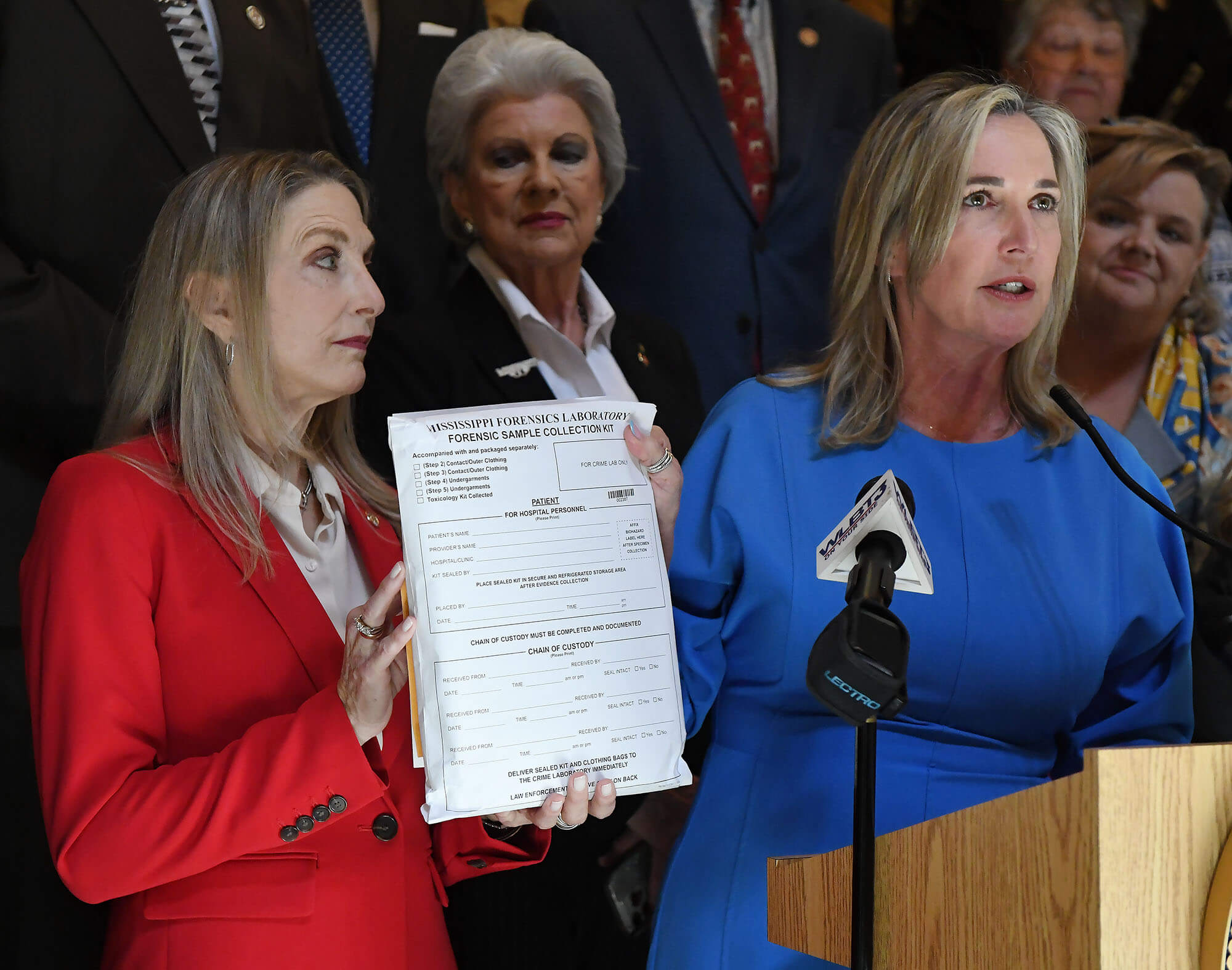
Legislation to guarantee rape victims treatment at Mississippi hospitals faces an uncertain future hours before its deadline. Meanwhile, survivors continue to be turned away in Mississippi hospitals.
Just two weeks ago, a child who was allegedly raped was turned away from an emergency room in central Mississippi, according to his mother. The child’s mother gave Mississippi Today permission to quote her without using her name.
“They just said they don’t do it there,” she said. She then drove nearly an hour to a Jackson hospital where she was able to get a rape kit for her son.
Hospitals in Mississippi are not required to perform rape kits.
Rep. Dana McLean, R-Columbus, is spearheading the effort to change that. McLean’s original bill died earlier in the session, but she revived the legislation in Senate Bill 2211, which faces several more legislative hurdles – including an 8 p.m. deadline Monday.
Meeting that deadline would mean three House conferees and three Senate conferees on the conference report would need to reach an agreement. Conferees have yet to come to an agreement as of the time the story published, due partly to a concern about the impact on hospitals.
“The needle we’re trying to thread is: everyone wants to do everything we can and need to for rape victims. I mean, who’s not for helping rape victims?” said Sen. Joey Fillingane, R-Sumrall, one of the conferees. “But, some of the language, at least at first blush, when the hospitals and their legal teams looked over them, basically said, ‘Wait a minute, y’all are trying to tell ER docs how to practice medicine inside the ER.’”
Several advocacy and law enforcement groups released a statement Sunday suggesting the Mississippi Hospital Association is “leading deceptive pushback” and attributed several claims to them that were “easily disproven.”
Mississippi Hospital Association CEO Richard Roberson refuted the press release, saying his organization has only ever expressed one concern and offered tweaks in language to make sure the bill conformed with federal law. He said MHA supports the legislation regardless of whether or not lawmakers heed his suggestions.
“We are disappointed that anyone would accuse the Mississippi Hospital Association of working against this bill,” Roberson said. “MHA has met with stakeholders and offered language to strengthen the bill so that it conforms to federal law. MHA has been and is supportive of the legislation. Any characterization that MHA has not been supportive is false. MHA will continue to support victims of sexual assault – hard stop – and we will follow the law as the Legislature deems it to be.”
Even if lawmakers file a conference report Monday night, the legislation will have a hard time passing the final hurdles of the session – due to political infighting. Since the two chambers haven’t reached an agreement for the annual budget, the session could end in a stalemate and force the governor to call a special session before July 1.
If the session ends without a budget, anything that hasn’t already been signed into law by the governor would need to be rushed through the legislative process, and it’s unlikely that lawmakers would have time to do that for all the conference reports not yet filed.
Mississippi Today is looking to speak with patients who receive or have received services at the Jackson Medical Mall. We’d like to speak with people who’d be willing to share their experiences for a story about the history of the medical mall and the relocation of UMMC services away from the mall, including cancer center, OB-GYN, and pain management services.
It remained unclear on Monday whether legislative leaders will engage in last-minute negotiations to revive around 100 budget bills that died over the weekend or adjourn this year’s session without passing a $7 billion budget to fund state agencies.
If lawmakers leave the Capitol sometime this week without passing a state budget, dozens of state agencies, which provide critical public services, could be in limbo when the new state fiscal year starts July 1.
To restart negotiations, lawmakers would have to pass a parliamentary measure to revive the budget bills and extend the session, which requires a two-thirds majority of support from the House and Senate.
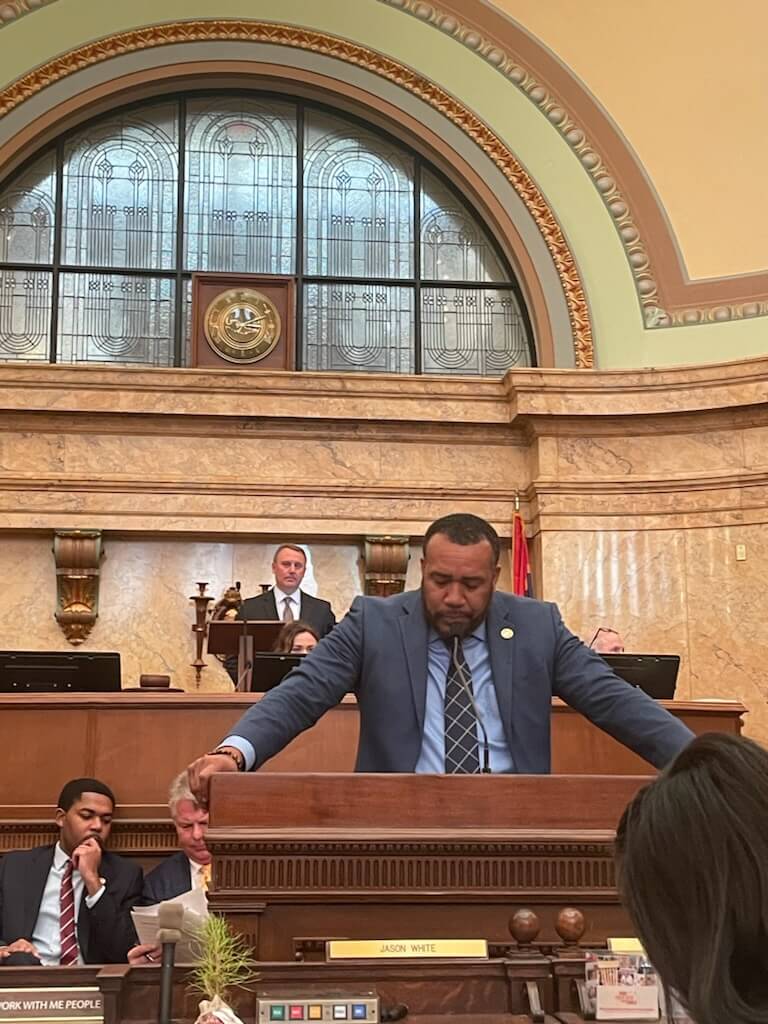
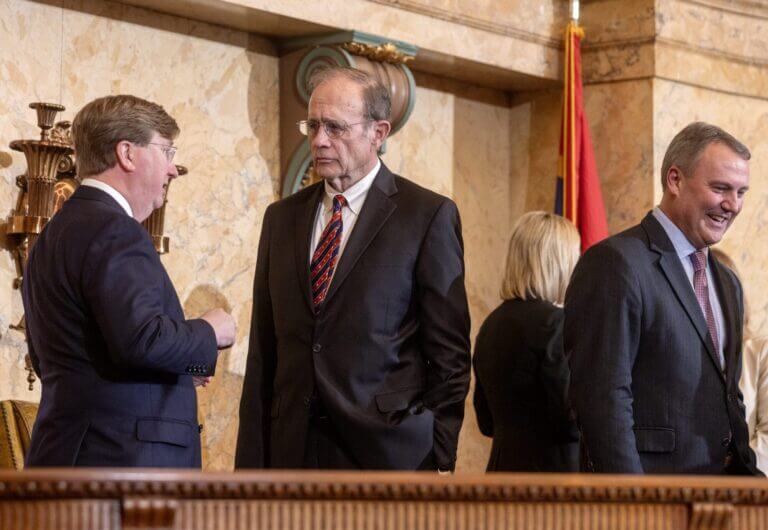
“That would be my urged course of action,” House Speaker Jason White said of a suspension measure. “But it takes two. I’ve been reminded this weekend that we have a Senate, and it’s a bicameral Legislature.”
Republican Gov. Tate Reeves could also force legislators into a special session to pass a budget. This would give the constitutionally weak governor more power than he normally has over legislation. During a special session, governors have the sole ability to set the legislative agenda, and lawmakers can’t take up or pass legislation outside that agenda.
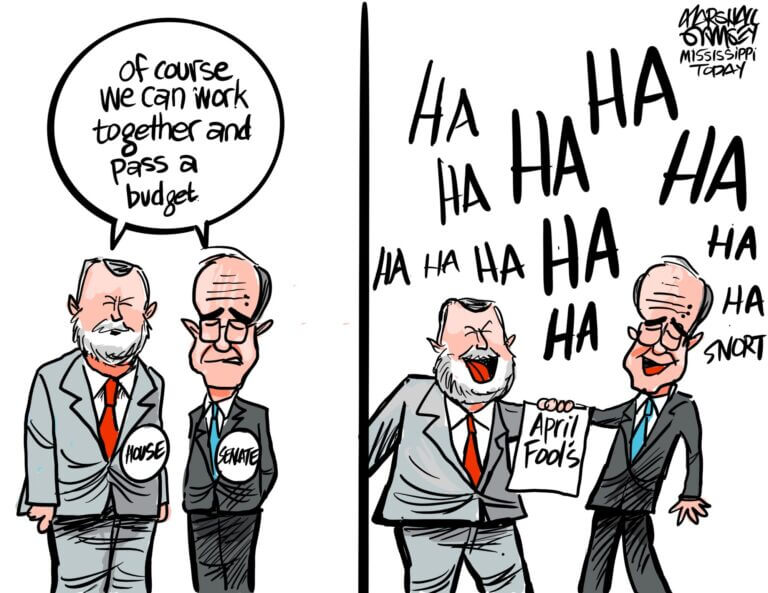
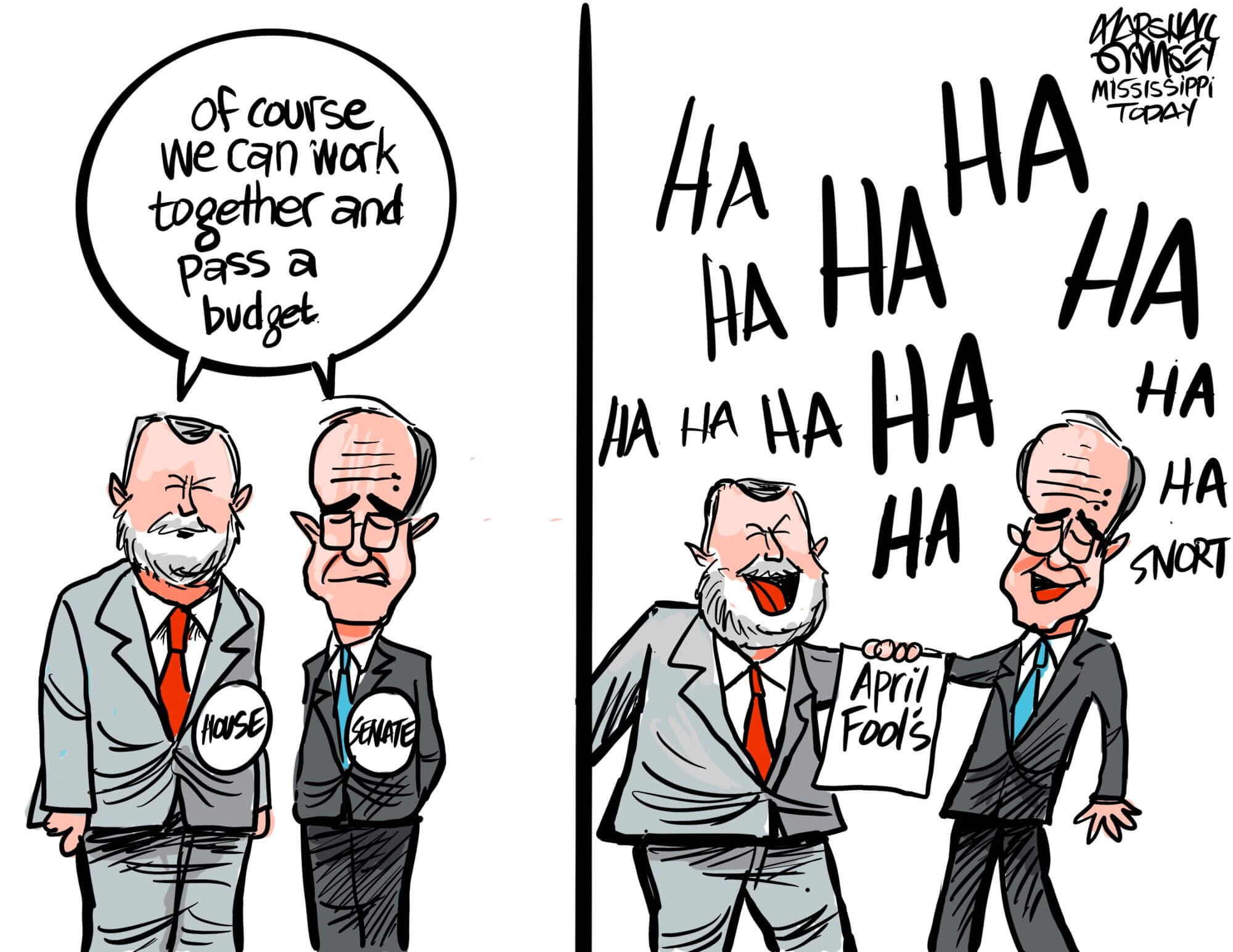
The session crashed over the weekend when the House and Senate failed to come together to negotiate a budget. White and the House refused to meet with the Senate on a key deadline day because they did not want to hurriedly pass a budget.
Republican Lt. Gov. Delbert Hosemann and Senate leaders said they tried starting early last week to engage with House leaders on spending bills, but the House refused to engage with them.
Many senators feel burned by the House over the budget negotiations and how it handled the passage of legislation to eliminate the state income tax. This is why several senators from both political parties on Saturday said they would not vote to extend the session.
Senate Minority Leader Derrick Simmons said he did not support passing a resolution to extend the session and would encourage his caucus to vote against such a measure should it come before the Senate.
“We don’t want to create a situation where people can pick and choose when they want to work, and then we have to support extending the session or a suspension resolution when we believe it’s completely unnecessary and it’s uncalled for,” Simmons said.
Several Republican senators have pledged they won’t support a suspension resolution. If Republicans follow through on that promise, they’ll likely need Democratic support to clear the two-thirds requirement.
Speaker White said he would likely meet with Senate leaders on Monday afternoon or Tuesday to discuss how the two chambers should proceed.
Another sticking point appears to be using surplus cash in the budget for special projects.
White said Senate leaders told him they did not want to spend any capital expenditure money, or surplus money, for these projects. White called this move “short-sighted” and will anger mayors and supervisors around the state.
This money is used for several purposes, but the most fought over pot of this money goes toward local projects, called the “Christmas Tree” bill. This money, usually in the $200 million to $400 million range, gets divided all over the state for various projects such as renovations to volunteer fire departments, sports fields and parks and to repave rural county roads.
Mississippi Today reporter Michael Goldberg contributed to this report.
The 2025 regular session of the Mississippi Legislature appeared to come to a halt on Saturday, after the over 100 bills that make up the state’s $7 billion annual budget died in a standoff between the House and Senate — primarily over whether to work over the weekend.
To revive the budget bills and end this year’s legislative session roughly on time, the House and Senate would have to agree to a parliamentary extension of deadlines and the session, or Gov. Tate Reeves would have to force them into special session sometime before the new budget year starts July 1. Numerous senators, on both sides of the aisle, on Saturday vowed they wouldn’t vote for extending the session.
That would appear to leave one option, have Gov. Tate Reeves force lawmakers into special session sometime between now and the end of the state’s fiscal year June 30th.
Besides costing taxpayers easily $100,000 a day to pay, feed and house lawmakers, staff the Capitol and legislative services offices and other expenses, a special session also gives the constitutionally weak governor a little more control over legislation, in that he can control what items are on the agenda.
Although they’re all Republicans, House and Senate leaders — including Hosemann and Speaker Jason White — have politically clashed for the last two years and had trouble agreeing on major issues.
This latest standoff was whether to meet over what was scheduled to be “conference weekend,” the deadline to reach agreement on at least the broad strokes of the budget. For the last two years, House Speaker Jason White has said he wants to start negotiating on the budget earlier and not be crunching numbers and haggling late on the Saturday night deadline.
For years, rank-and-file lawmakers have complained that they often don’t have time to read the lengthy budget bills because of the rushed nature of Saturday night budget negotiations, which has also caused lawmakers and staff attorneys in previous years to make mistakes in legislation.
Lt. Gov. Delbert Hosemann and Senate leaders on Saturday blasted House leaders for not working over the weekend, and many senators vowed not to agree to vote to suspend rules and extend the session, which would require a two-thirds majority vote of each chamber.
“In Mississippi over the last 24 hours some liberal activists (mostly the ones that masquerade as journalists) are making claims of errors, omissions, mistakes, and changes that need to be made to HB1 – the bill that eliminates the income tax!” — Gov. Tate Reeves, on social media, before Republican legislative leaders admitted publicly they passed a bill full of errors, omissions, mistakes and changes and said they might negotiate ways to fix it. The bill, largely because of the snafu, lacks safeguards both House and Senate leaders said were needed to protect the state economy, such as growth “triggers” for income tax phase out and an offsetting increase in sales taxes.
In Brief
Legislative special election runoffs set for April
Runoffs will be held April 22 for special state House elections in Districts 23 and 82 after voters narrowed the fields last week.
Perry Bailey and Colby Bollinger will face off in a runoff for the District 23 seat to represent parts of Calhoun, Lafayette, Pontotoc and Webster Counties, replacing Rep. Andy Stepp, who died late last year. Bailey formerly held the seat but lost reelection to Stepp in 2023.
For District 82, serving the Meridian area of Lauderdale County, Gregory Elliott will face Joseph Norwood in a runoff to replace Rep. Charles Young, who also died late last year. – Geoff Pender
Prenatal care for poor women is now law, again
A bill to help poor women access prenatal care became law Monday – without the governor’s signature.
Last year’s legislation never went into effect because of administrative hiccups. Rep. Missy McGee, R-Hattiesburg, re-worked the bill this year to match federal guidelines so the program can take effect.
Presumptive eligibility for pregnant women allows low-income women who become newly eligible for Medicaid once pregnant to receive immediate coverage as soon as they find out they’re pregnant – even if their Medicaid application is still pending. The program is especially effective in states that have not expanded Medicaid, like Mississippi.
The policy will go into effect immediately. However, not all providers will participate and those who wish to will need to apply for the program through the Mississippi Division of Medicaid.
Mississippi Today will continue to monitor providers participating in the program.
Expectant mothers will be eligible if they make below 194% of the federal poverty level. That’s about $29,000 annually for an individual, or $50,000 annually for a family of three.
Requests to Gov. Tate Reeves’ office for comment on why he chose not to sign the bill were not returned.
When the governor receives a bill, he has five days to either sign it into law, let it pass into law without signing it, or kill it. Letting a bill pass into law without signing it is a way for the governor to allow a policy that has overwhelming support from lawmakers to become law without endorsing it himself. – Sophia Paffenroth
Governor signs paid family leave into law
A bill to give six weeks of paid family leave to state employees became law Tuesday with the governor’s approval.
House Bill 1063 will apply to state employees who adopt or give birth to a child and are the primary caregiver for that child. It applies to employees working for state government agencies but does not include public school teachers.
Rep. Kevin Felsher, R-Biloxi, author of the bill, said he would consider expanding provisions in the future to possibly include public school teachers and/or secondary caregivers.
The legislation passed the House unanimously and the Senate overwhelmingly.
It will go into effect Jan. 1, 2026. – Sophia Paffenroth
Federal judges will hold legislative redistricting hearing
A federal three-judge panel will hold a hearing on April 8 to determine if the Mississippi Legislature’s proposal to redraw some of its legislative districts is sufficient to give Black voters a chance to elect candidates of their choice.
The court previously determined that lawmakers diluted Black voting strength when they originally redrew districts in 2022 to account for population shifts.
The Legislature created a new House map with a majority-Black district in the Chickasaw County area and a new Senate map with two new majority-Black districts, one in the DeSoto County area and one in the Hattiesburg area.
The plaintiffs in the litigation, the NAACP, object to parts of the newly proposed map, leaving the final decision to the federal court. – Taylor Vance
Senate leader says ‘Christmas tree’ bill in doubt
Senate leader says it’s unclear if lawmakers will pass a “Christmas Tree” bill
As the Legislature winds down its 2025 regular session, Senate Finance Chairman Josh Harkins said he’s unsure if lawmakers will agree on a “Christmas Tree” bill, the legislation that doles out millions of dollars around the state for local projects.
Harkins, a Republican from Flowood, told reporters last week that a compromise between the two chambers on a projects bill will depend on how the final budget looks and legislative leaderships’ spending priorities.
For rank-and-file lawmakers, delivering state money for local projects is a major priority because they will typically tout the projects to their constitutes as major accomplishments. The bill is typically one of the last items lawmakers vote on before the end the regular session. – Taylor Vance
By the Numbers
$0
The current state general fund budget for the coming fiscal year that starts July 1, after lawmakers failed to pass budget bills by a Saturday deadline because of in-fighting between the House and Senate Republican leadership.
Full Legislative Coverage
GOP tax battle gave Mississippi Democrats golden opportunity. Instead, they just went along for the ride
There’s about to be a lot less money for Mississippi government to spend. How and where it’s spent will be even more crucial, dire for poor, rural areas of the state. Mississippi Democrats (and some rural Republicans) missed a golden opportunity to demand changes to the political spoils system GOP leaders have used for doling out state money, which leaves many poor and-or rural areas out in the cold. Read the analysis.
Gov. Reeves signs typo tax overhaul bill into law to phase out income tax, trim grocery tax and raise gasoline tax
Gov. Tate Reeves signed a bill to overhaul Mississippi’s tax system — one that many lawmakers inadvertently voted for because of typos — into law on Thursday. This sets Mississippi on a path to become the first state to eliminate an existing income tax, when the tax is phased out in about 14 years. Read the story.
Replacing blight with baseball: Jackson puts Legislature on notice of its multi-million dollar needs
But proportionate to its size, Jackson is frequently shortchanged by the end-of-session earmark legislation, a process driven by politics as opposed to studied need. In the past three sessions, Jackson, the state’s largest city with a population around 150,000, has received just $5.9 million for improvement projects. That’s in comparison to $38.6 million for the 28,000-resident Tate County, the home of House Ways and Means Chairman Trey Lamar, Mississippi Today reported in its 2024 investigation on earmarks. Read the story.
Policy analyst: Income tax elimination risks significant harm to Mississippi’s future
The state’s tax system is regressive, meaning that the state’s top income earners pay a smaller share of all state and local taxes than their share of all income. Meanwhile, the bottom 80% of the state’s income earners pay more. Read the story.
Bill changing certificate of need law heads to governor
A bill cleared the Legislature Wednesday that will make it easier for medical facilities to make capital improvements and require the state’s only academic medical center to seek state approval before opening educational facilities outside of Jackson. Read the story.
Speaker says House willing to renegotiate typo tax bill
House Speaker Jason White acknowledged for the first time on Monday that House leaders knowingly passed a typo-riddled plan to overhaul Mississippi’s tax system that Senate leaders have since admitted was a mistake. Read the story.
How did the Mississippi Typo Tax Swap Act of 2025 happen? Legislative recap
In one of the most bizarre episodes under the dome on High Street of modern times, the Mississippi Legislature inadvertently passed the first total state income tax elimination in American history due to some Senate typos. Then Senate leader Delbert Hosemann, who had opposed the measure for months and sent the flawed bill to the House by accident, tried to declare victory.Read the story.
Lawmakers struggle to agree on budget, or even when to work, as session draws to a close
Mississippi’s legislative leaders on Friday remained so far apart on crafting the state’s multi-billion dollar budget that at least some of the individual bills to fund state agencies will die on a legislative deadline. Read the story.
Governor vetoes bill hospital head said would help stabilize their budgets
Gov. Tate Reeves vetoed a bill Thursday that would help stabilize hospitals, citing alleged contradictions and the loom of a deficit among his concerns. Read the story.
Shocker! All six lawmakers appointed to finalize the bill banning Mississippi DEI programs are white.
The leaders of the Mississippi Legislature — House Speaker Jason White and Lt. Gov. Delbert Hosemann — are not practicing diversity, equity and inclusion in legislative efforts to ban diversity, equity and inclusion programs. Read the commentary.
Podcast: Tarrif trade war, rising costs, immigration: Mississippi Ag Commissioner Andy Gipson discusses challenges facing Mississippi farmers
Mississippi Commissioner of Agriculture and Commerce Andy Gipson gives Mississippi Today’s Geoff Pender and Michael Goldberg an update on the challenges facing Mississippi farmers, including the burgeoning trade war with countries that buy our chicken, soybeans, cotton and other products as well as rising costs and immigration/labor issues. Gipson, a man of many hats besides his trademark cowboy one, also discusses his recording an album! “I’ll sing at the drop of a hat, even if I drop it myself,” Gipson said. Listen to the podcast.
Filing taxes is an exercise almost all Americans go through in the first part of each year, but those tax filings can differ based on a number of factors, including our income levels, where we live and our employment status.
Some tax tips are universal to all filers, while other advice may be specific to those who operate small businesses or work for themselves. Self-employed filers have certain distinct tax considerations, and general advice may not always apply to those who work for themselves or employ others. Changes to the tax code, especially with a shift in presidential administrations, could also have an effect on tax obligations, and may have a different impact on self-employed filers.
If you’re a small business owner or otherwise self-employed, here are some things you should keep in mind to help you get through this tax season.
Gather your documents
Have a detailed log on hand of the money coming in and out of your business. Even if you have an electronic system in place, items like sales slips, bills, invoices, receipts and canceled checks are generally key supporting documents for calculating and validating your tax filings. Organize these records and keep them in a safe place. If your business employs others, keep track of your payroll records, including documents showing wages, benefits and withholding.
If you’re a business owner…tailor taxes to your business structure
Your tax filing obligations depend on the type of business you’re running. If you’re self- employed, you might be considered a sole proprietorship, meaning you own and operate your unincorporated business as an individual or married couple. Sole proprietors generally report business income and losses on their personal U.S. federal income tax return (using Schedule C), but you could have other taxes and filing requirements, such as those related to self-employment earnings.
Other business structures include Limited Liability Companies (LLC), Limited partnerships (LP), C Corporations and S Corporations. Get familiar with the specific tax requirements for your business structure.
Don’t forget state taxes
If you reside in a state that imposes income tax, calculate your state tax liability using the process applicable to that state. Tax rules may vary by state and some states have their own tax credits and deductions for businesses.
Meet your deadlines
The deadline for filing federal individual income tax returns in 2025 is Tuesday, April 15. If you need more time, you can generally file for an extension, pushing the deadline to Oct. 15. This extension applies only to the filing of the return – you still must pay any taxes owed by April 15. State income tax deadlines can vary – many are the same as the federal deadline but check with your state’s tax agency for your specific due date
Ask the experts
Speaking with a tax professional who can help you determine good strategies for your business can help you remain compliant and successful. Consult a tax professional before making decisions about how to structure and strategize for your business.
Keep up with tax changes
As we’ve entered a new presidential administration in 2025, any tax code changes enacted this year would likely go into effect next tax season at the earliest. Of note: Many of the provisions of the Tax Cuts and Jobs Act, passed in 2017, are currently set to expire at the end of 2025. That expiration or any potential new changes may impact your 2026 taxes when you file in 2027.
The bottom line
Staying on top of your taxes can be among the most time-consuming tasks for a business owner. Consider working with an accountant or tax professional who can guide you through the specific requirements for your business and help you respond to any changes in tax laws, rules or regulations.
Now might be the perfect time to grab those IRS forms, organize your invoices and receipts, and consult with an expert so you can tackle tax day like a pro.
+++
For informational/educational purposes only: Views and strategies described in this article or provided via links may not be appropriate for everyone and are not intended as specific advice/recommendation for any business. Information has been obtained from sources believed to be reliable, but JPMorgan Chase & Co. or its affiliates and/or subsidiaries do not warrant its completeness or accuracy. The material is not intended to provide legal, tax, or financial advice or to indicate the availability or suitability of any JPMorgan Chase Bank, N.A. product or service. You should carefully consider your needs and objectives before making any decisions and consult the appropriate professional(s). Outlooks and past performance are not guarantees of future results. JPMorgan Chase & Co. and its affiliates are not responsible for, and do not provide or endorse third party products, services, or other content.
Investing involves market risk, including possible loss of principal, and there is no guarantee that investment objectives will be achieved. Past performance is not a guarantee of future results.
Asset allocation/diversification does not guarantee a profit or protect against loss.
Products, accounts and services are offered through different service models (for example, self-directed, full-service). Based on the service model, the same or similar products, accounts and services may vary in their price or fees charged to a client.
LEARN MORE ABOUT OUR FIRM AND INVESTMENT PROFESSIONALS AT FINRA BROKERCHECK
JPMorgan Chase & Co., its affiliates, and employees do not provide tax, legal or accounting advice. Information presented on these webpages is not intended to provide, and should not be relied on for tax, legal and accounting advice. You should consult your own tax, legal and accounting advisors before engaging in any financial transaction.
J.P. Morgan Wealth Management is a business of JPMorgan Chase & Co., which offers investment products and services through J.P. Morgan Securities LLC (JPMS), a registered broker-dealer and investment adviser, member FINRA and SIPC.
INVESTMENT AND INSURANCE PRODUCTS ARE:
NOT FDIC INSURED • NOT INSURED BY ANY FEDERAL GOVERNMENT AGENCY
NOT A DEPOSIT OR OTHER OBLIGATION OF, OR GUARANTEED BY, JP MORGAN CHASE BANK, N.A. OR ANY OF ITS AFFILIATES
SUBJECT TO INVESTMENT RISKS, INCLUDING POSSIBLE LOSS OF THE PRINCIPAL AMOUNT INVESTED
Republican Lt. Gov. Delbert Hosemann and other Senate leaders on Saturday excoriated the Republican House leadership, after the House didn’t show up for what was supposed to be “conference weekend” to haggle out a $7 billion budget.
“There is no reasonable explanation for this,” Hosemann said. “… A special session will be very expensive. We just cut taxes, but now we’re going to go spend tens of thousands of dollars so (the House) can have the weekend off. I hope they enjoy their weekend off. If anyone sees any of their House members this weekend, they need to ask them, why didn’t you do your job? Where were you?
“It’s embarrassing,” Hosemann said. “We all took the same oath … We adopted the rules. We all agreed to be here … If we can’t set a budget, that means, for Child Protective Services, we have little girls tonight having to stay in hotel rooms. Teachers can’t sign their contracts for their jobs … Highway patrolmen are out there not knowing how much they’ll get paid … This is chaotic, and it’s senseless.”
The roughly 100 bills that make up the state’s annual budget died with Friday and Saturday night deadlines.
To revive the budget bills and end this year’s legislative session roughly on time, the House and Senate would have to agree to a parliamentary extension of deadlines and the session, or Gov. Tate Reeves would have to force them into special session sometime before the new budget year starts July 1. Numerous senators, on both sides of the aisle, on Saturday vowed they wouldn’t vote for extending the session.
“There really isn’t any other option (than the governor calling a special session),” Hosemann said. “You heard what the senators were saying.”
Besides costing taxpayers easily $100,000 a day to pay, feed and house lawmakers, staff the Capitol and legislative services offices and other expenses, a special session also gives the constitutionally weak governor a little more control over legislation, in that he can control what items are on the agenda.
Lawmakers had expected to end this year’s three-month session by the middle of next week, with setting a budget being one of the final chores.
Although they’re all Republicans, House and Senate leaders — including Hosemann and Speaker Jason White — have politically clashed for the last two years and had trouble agreeing on major issues. Recently, they passed a tax overhaul bill to the governor that would eliminate the state income tax, long a goal of White and House leaders.
But Senate leaders have cried foul over the manner in which it was passed into law. The House seized on typos in the Senate bill that made it more like the House position, and Gov. Reeves signed it into law.
With the tax battle going on for most of this session and causing ill will, the House and Senate have killed much of each other’s other major initiatives and bills.
The House on Friday had announced it was leaving for the weekend and would return Monday.
For the last two years, White has said he wants lawmakers to start negotiating on the budget earlier in the legislative session and try to avoid crunching numbers on the Saturday night deadline, referred to as “conference weekend,” which happens late in the session.
For years, rank-and-file lawmakers have complained that they often don’t have time to read the lengthy budget bills because of the rushed nature of Saturday night budget negotiations, which has also caused lawmakers and staff attorneys in previous years to make mistakes in legislation.
Last session, lawmakers ironed out most of the budget during conference weekend, but White said he told Hosemann that would not be the case this year.
“We’re just not going to be up here in the middle of the night doing a hurried budget,” White said. “We’re through doing that from here and all years forward.”
White told reporters that House leaders had signed off on their proposed budget bills and sent them to the Senate before a Friday night deadline. But Hosemann and other Senate leaders on Saturday said that never happened. They said not only did House leaders not send budget bills over, they ghosted Senate budget negotiators most of last week, preventing early agreements being reached. And, Senate leaders said, the House closed its daily journal and docket rooms early at least a couple of days, meaning the Senate couldn’t deliver and file bills.
Sen. Brice Wiggins, R-Pascagoula, on Saturday said he suspects discord over the tax overhaul, and the Senate refusing to agree with the House on legalizing online gambling played into the current budget stalemate. But he said he gets along with his House counterparts and the problems are more at the leadership level.
“As much as I respect the speaker, I don’t understand this,” Wiggins said. “… Really, what this is doing is holding hostage agencies and the running of state government because of some issues they have … People send us here to get our business done in the 90 days we have. I just want to keep us from becoming like Washington, D.C., because D.C. is not exactly the bastion of efficiency.”
Such a standoff, and potential special session, has loomed over much of the 2025 session, when it appeared the House and Senate would remain at loggerheads over the tax overhaul, until the Senate accidentally agreed with the House with the typos in what it passed.