Home Blog Page 261

Guide complet du casino en ligne – Tout ce que vous devez savoir

Guide complet du casino en ligne – Tout ce que vous devez savoir

Le monde du jeu s’est radicalement transformé depuis l’avènement d’Internet haut débit. Aujourd’hui, un joueur peut accéder à des centaines de tables virtuelles depuis son smartphone ou son ordinateur portable, sans se déplacer dans un établissement physique. Cette accessibilité a entraîné une explosion de la popularité des casinos en ligne, qui enregistrent chaque année des milliards d’euros de mises dans le monde entier. En France, les autorités ont rapidement réagi pour encadrer cette activité et protéger les usagers contre les dérives éventuelles.

Les plateformes françaises sont soumises à une législation stricte qui impose le respect de critères de sécurité très élevés et la mise à disposition d’outils de jeu responsable. Le choix d’un opérateur fiable devient alors crucial : il faut vérifier la licence délivrée par l’ANJ, s’assurer que les données personnelles sont chiffrées et que les bonus proposés ne cachent pas de conditions abusives. Un guide détaillé aide le joueur à naviguer entre ces exigences tout en profitant pleinement des avantages offerts par le numérique : rapidité des dépôts, variété infinie de jeux et promotions exclusives réservées aux nouveaux inscrits.

Introduction

Le phénomène des casinos en ligne n’a jamais été aussi visible qu’en ce moment ; la combinaison d’offres promotionnelles alléchantes et d’une technologie toujours plus performante attire chaque jour davantage de joueurs français curieux d’essayer leur chance depuis leur salon. Découvrez le nouveau casino en ligne recommandé par les experts de Basketnews.Net pour profiter d’une expérience sécurisée et ludique.

Pourquoi publier un guide complet est indispensable ? Premièrement parce que la législation française impose des normes spécifiques aux opérateurs agréés : protection du portefeuille joueur, contrôle anti‑blanchiment et obligations relatives au jeu responsable sont scrupuleusement surveillés par l’Autorité Nationale des Jeux (ANJ). Deuxièmement parce que la cybersécurité évolue constamment ; connaître les bonnes pratiques pour choisir un mot de passe robuste ou activer l’authentification à deux facteurs évite bien des désagréments futurs. Enfin, un tel dossier permet au public débutant comme confirmé d’évaluer objectivement chaque offre grâce aux critères établis par Basketnews.Net, site indépendant spécialisé dans le classement impartial des nouveaux casinos en ligne.

Section 1 – Les bases du jeu en ligne

Un casino en ligne reproduit virtuellement l’ensemble des services proposés par une salle physique : machines à sous digitales, tables de roulette live avec croupier réel ou encore salons de poker multijoueurs simultanés partout dans le monde.
La différence majeure réside dans l’infrastructure logicielle : chaque partie s’appuie sur un générateur aléatoire certifié (RNG) garantissant un taux de retour au joueur (RTP) conforme aux standards internationaux.

Parmi les catégories les plus répandues on retrouve :

  • Slots vidéo avec volatilité variable – exemples : Starburst (NetEnt) ou Mega Joker (Novomatic).
  • Roulette européenne à zéro unique offrant un avantage maison réduit à 2 %.
  • Blackjack S17 où le croupier doit rester sur un soft‑17.
    Ces jeux possèdent tous leurs propres lignes de paiement (« paylines ») et jackpots progressifs qui peuvent dépasser plusieurs dizaines de millions d’euros.

    Créer un compte est simple : il suffit de saisir son adresse e‑mail, choisir un nom d’utilisateur sécurisé puis confirmer via un lien envoyé par courrier électronique.
    Ensuite vient l’étape cruciale de vérification d’identité – upload d’une pièce officielle et parfois une facture récente afin de lutter contre la fraude financière.
    Une fois validée, le premier dépôt peut être réalisé instantanément grâce aux portefeuilles électroniques ou aux cartes bancaires autorisées par l’ANJ.

    Les bonus de bienvenue varient considérablement ; certains sites proposent jusqu’à 100 % sur le premier dépôt jusqu’à 200 €, accompagnés souvent 30 tours gratuits sur une machine sélectionnée.
    Pour comparer efficacement ces offres il faut regarder trois paramètres clés :

Critère Pourquoi c’est important
Bonus % Indique immédiatement combien votre dépôt sera majoré
Conditions wagering Nombre minimum fois que vous devez jouer avant retrait
Plafond max Limite maximale pouvant être retirée après avoir rempli les exigences

En évaluant ces éléments avec rigueur vous évitez les surprises désagréables lors du cash‑out.

Section 2 – La législation française et la licence ARJEL/ANJ

La régulation du jeu internet français débute officiellement avec la création d’ARJEL (Autorité Réglementaire des Jeux En Ligne) fin 2010 ; elle devient ANJ (Autorité Nationale des Jeux) dès 2020 afin d’élargir ses compétences aux paris sportifs et paris hippiques numériques.
L’objectif principal était —et reste—de garantir transparence financière ainsi qu’une protection efficace contre l’addiction au gambling.

L’ANJ attribue uniquement aux opérateurs répondant à trois exigences majeures :

  • Détention d’un capital minimal suffisant pour couvrir toutes les mises potentielles ;
  • Mise en place systématique d’un système anti‑blanchiment certifié ISO 27001 ;
  • Adoption obligatoire du dispositif “self‑exclusion” permettant aux joueurs souscrivant une interdiction volontaire pendant jusqu’à cinq ans.

    Pour le public cela se traduit concrètement par plusieurs bénéfices : vos fonds sont stockés séparément dans des comptes dédiés (« trust accounts »), toute contestation juridique bénéficie alors d’un médiateur nommé par l’État français et chaque opération bancaire est auditée régulièrement afin d’éviter toute irrégularité fiscale.

    Basketnews.Net utilise une grille stricte lorsqu’il évalue si un site respecte pleinement la législation française :

  • Licence valide délivrée par l’ANJ affichée clairement sur la page « À propos ».

  • Procédure KYC totalement automatisée mais respectueuse du RGPD français.
  • Présence visible « outil auto‑exclusion » accessible depuis le tableau utilisateur sans devoir contacter le support client.

Seuls les établissements remplissant ces critères peuvent être présentés comme recommandés sur notre plateforme indépendente.

Section 3 – Sécurité et confidentialité des données

Les technologies anti‑fraude constituent aujourd’hui le socle fondamental sur lequel repose toute confiance entre joueur et opérateur.\nTous les sites sérieux utilisent aujourd’hui le protocole SSL/TLS avec chiffrement AES‑256 bits afin que chaque échange entre votre navigateur et les serveurs soit illisible pour tout tiers.\nDes audits externes menés chaque trimestre permettent également de certifier conformité aux standards eCOGRA ou iTech Labs.\n\nGestionnaire quotidiennement recommandé — la création d’un mot de passe long (>12 caractères), mêlant majuscules/minuscules/symboles — est complété idéalement par une authentification à deux facteurs envoyée via SMS ou application dédiée comme Google Authenticator.\n\n| Méthodes de paiement sécurisées | Description |\n|———————————|————-|\n| Cartes bancaires Visa/MasterCard | Traitement immédiat via serveur PCI DSS compliant |\n| Portefeuilles électroniques PayPal & Skrill | Authentification supplémentaire avant transaction |\n| Crypto‑monnaies approuvées (BTC/EUR) | Transactions anonymes mais traçables via blockchain |\n\nLa politique de confidentialité doit préciser quels renseignements personnels sont collectés ‑ notamment nom complet, date naissance pour vérification âge ‑ ainsi que leurs usages possibles : prévention fraude, amélioration UX ou communication marketing ciblée après consentement explicite.\n\nPour protéger votre compte contre phishing il suffit souvent d’observer quelques bonnes pratiques simples : ne jamais cliquer sur un lien contenu dans un mail non sollicité prétendant provenir du support client ; toujours vérifier l’adresse URL commençant bien par « https://» ; limiter accès au compte depuis appareils publics ou réseaux Wi‑Fi non protégés.\n\nEn suivant ces recommandations vous réduisez drastiquement vos risques tout en profitant sereinement des offres proposées par nos partenaires évalués chez Basketnews.Net.

Section 4 – Choisir le meilleur nouveau casino en ligne selon ses besoins

Le profil du joueur influence fortement son choix final.\nUn casual cherche avant tout une interface intuitive et des bonus modestes tandis qu’un high‑roller privilégie limites élevées sur dépôts ainsi qu’un service VIP dédié disponible jour/nuit.\nVoici quelques critères décisifs classés selon trois axes principaux:\n\n- Profil : budget mensuel moyen <100 €, entre 100 €–1000 € ou >1000 €.
– Catalogue : présence privilégiée éditeurs reconnus tels que NetEnt (Gonzo’s Quest) ou Microgaming (Mega Moolah) offrant respectivement RTP moyen autour de 96 % vs jackpot progressif dépassant parfois 30 M € .
– Promotions : comparaison rapide entre deux sites populaires — CasinoA propose +150 % up to €300 +50 tours vs CasinoB donne +200 % up to €500 +100 tours mais condition wagering x35 vs x30.\n\nL’importance capitale revient également au support client multilingue accessible via chat live instantané disponible24/7 ainsi qu’envoi email garanti sous deux heures ouvrées.\nCes éléments combinés permettent au consommateur éclairé —comme ceux consultés régulièrement sur Basketnews.Net—de sélectionner le nouveau site de casino en ligne qui correspond précisément à ses attentes sans sacrifier sécurité ni qualité service.

Section 5 – Stratégies gagnantes aux principaux jeux de table

Blackjack Le comptage simplifié consiste à attribuer +1 aux cartes faibles (2–6), -1 aux fortes (10–As) puis suivre la somme courante («​running count​»). Sur tables virtuelles où aucun mélange manuel n’intervient cette technique reste valable tant que vous jouez plusieurs mains consécutives ; viser un compte positif supérieur à +4 indique généralement avantage statistique supérieur à +0,5 %. Conjuguez cela avec gestion stricte du bankroll — mise maximale ne dépassant jamais 2 % du capital total.\n\nRoulette Sur roue européenne choisissez systématiquement la mise «​Voisins Zéro​», couvrant douze numéros adjacents dont la probabilité collective est supérieure grâce au placement équilibré parmi hauts/bas pairs/impairs. Statistiques historiques montrent qu’environ 45 % des tirages tombent parmi ces cases lors d’une série courte (<25 spins).\n\nPoker online Sélectionnez une salle disposant déjà licencée ANJ afin que vos fonds soient sécurisés ; commencez toujours avec stratégie préflop basique ­– jouer uniquement AA‐KK‐QQ‐JJ‐AKs/AKo quand position tardive permet minimiser risque. Post‑flop privilégiez lecture dynamique basée sur taille pot versus bet sizing adverse pour identifier bluff possible.\n\nUtiliser les versions “démo” gratuites permet enfin affiner vos tactiques sans risquer votre argent réel ; pratiquez jusqu’à atteindre constance avant passer au cash game officiel.

Section 6 – Le jeu responsable & ressources d’aide

L’autodiscipline commence dès l’inscription grâce aux outils mis à disposition par tous les casinos titulaires licence ANJ.\nVous pouvez déclencher directement une procédure auto‑exclusion via votre tableau personnel ; celle-ci bloque toute connexion pendant six mois renouvelables ensuite si besoin.*\nDans la même logique chaque plateforme propose désormais limites personnalisées concernant montant journalier maximal déposé ainsi que temps quotidien passé devant les écrans numériques.\nCes seuils sont ajustables librement depuis votre espace client sans aucune justification requise,\net ils sont strictement appliqués même si vous tentez plusieurs sessions distinctes.\n\nReconnaître tôt les signes classiques—jouer sous influence émotionnelle forte , augmenter progressivement montants misés pour compenser pertes précédentes , négliger obligations familiales —peut éviter escalation vers addiction grave.\nEn France plusieurs associations offrent soutien professionnel telque S.O.S Joueurs accessible via hotline nationale gratuite (09 69 39 00 00) ou forum dédié où témoignages anonymes circulent librement.\nEnfin Basketnews.Net intègre dans chacune ses revues un score RSE (“Responsabilité Sociale & Éthique”) qui mesure concrètement engagement social du site évalué — transparence politique data protection , programmes prévention gambling problématique & initiatives caritatives liées au secteur gaming numérique.

Conclusion

Ce guide a passé au crible tous les aspects essentiels liés aux casinos digitaux : définition précise vs salles traditionnelles, cadre légal français imposé par l’ANJ,
techniques modernes assurant sécurité optimale,
critères pointus permettant choisir LE nouveau site adéquat,
stratégies éprouvées pour maximiser vos chances aux tables classiques,
et enfin outils indispensables favorisant jeu responsable.​

En adoptant ces bonnes pratiques vous serez parfaitement armé·e pour explorer sereinement l’univers riche proposé aujourd’hui par nos partenaires sélectionnés.
N’attendez plus pour tester dès maintenant le nouveau casino en ligne présenté dans cet article ; profitez immédiatement
d’offres attractives fiables,
d’une assistance multilingue disponible jour/nuit,
et surtout… jouez intelligemment tout-en-respectant vos limites personnelles grâce aux conseils fournis ici même!

‘We should all be worried’: Trump order threatens funding for Mississippi’s colleges cultural centers and programming

For nearly three decades, a little-known federal agency has provided millions of dollars in support and funding to Mississippi’s colleges and universities museums, to libraries and to cultural institutions, including the Margaret Walker and COFO Civil Rights Center at Jackson State University. 

In 2011, the state’s largest historically Black university’s cultural center and museum, received a $48,000 grant from the Institute of Museum and Libraries Services. The grant paid for staff to travel and learn about the historical preservation work from larger museums and institutions across the country. 

“That grant was my professional development,” Robert Luckett, director of the cultural center said. “It was so important and has been foundational for all of the work we’ve done at Jackson State for the last fifteen, sixteen years.” 

But, Jackson State isn’t the only Mississippi college that has benefitted from funds from IMLS, and the federal agency has flowed millions of dollars in grants to the state.

In 2022, Mississippi State University received a $74,000 grant to fund its Office of Museum Services and a $50,000 grant from the American Rescue Plan for Museums and Libraries to train and hire students from underserved communities to assist with biological collection and conservation. That same year, Northwest Mississippi Community College received $33,000 from the agency to support a series of community engagement discussions for students around racial injustice, mental health and stress in the post COVID-19 pandemic. 

In 2020, Hinds Community College Utica’s campus received a $101,000 grant from IMLS’s Museums Grants for African American History and Culture to establish an oral history project for Black rural Mississippians and provided technology and equipment to record stories for residents who couldn’t make it to the campus museum. The federal agency also awarded $500,000 to the University of Mississippi through its Save America’s Treasures program and in 2010 a $450,000 grant to its Modern Political Archives to preserve and digitize 3,800 audio and visual recordings. 

The Margaret Walker Center, which houses oral histories, manuscripts, book collections and history archives of Black Mississippians, and operates as the Black Studies Institute for Jackson State University, has been a cornerstone of cultural development for students. 

Now, with an executive order from President Donald Trump, which led the federal agency’s nearly 70 employees to be placed on administrative leave last week, the future of the Margaret Walker Center’s work remains unclear.

The move to shut down IMLS comes weeks after President Donald Trump signed an executive order to scale down six other federal agencies to “the minimum presence,” according to The Washington Post. 

The agency’s funding, which is less than one percent of the federal budget, has dolled out millions of dollars to museums, libraries and institutions. But, in states like Mississippi, where access to traditional resources and support for cultural institutions may be near to none or nonexistent, the agency’s funding has been essential in providing tools to do important work, Luckett said. 

Out of the eight full-time staff members at the cultural center, two staff and a graduate fellow who works to digitize the historical archives is funded by subgrants of IMLS through the Smithsonian Institute, another national cultural institution facing cuts by the Trump administration. These jobs on the digital humanities staff could be in jeopardy. 

Robert Luckett, director of the Margaret Walker Center at Jackson State University. Credit: Jacson State University

Earlier this year, Luckett said his team applied for another grant from IMLS to pay for their renovation project of Ayer Hall, the oldest building on Jackson State University’s campus and home to the Margaret Walker Center. The grant funding will provide support for staff to move its collections into a safe environment. 

Luckett said the cultural center was supposed to be notified in June if they receive the grant. But, with the changes to the agency, he’s unsure of what comes next. 

“We don’t have the funding to do this,” Luckett said. “We’ll be back to square one.” 

Other cultural institutions and organizations across the state such as the Mississippi Humanities Council, which currently has 35 open subgrants to various state colleges and universities, were reeling after hearing a major defunding announcement. 

In a late night email, the organization learned their grant through the National Endowment of Humanities had been terminated.  The national organization has provided more than 400 grants in Mississippi, including colleges in the state. 

Sweeping cuts at IMLS and the National Endowment of Humanities threaten the future of established museum and library programs at local colleges from panels, literary festivals, history tours, youth education workshops and other public programs. 

“In [Mississippi] our greatest strength is our history and culture,” Stuart Rockoff, executive director of the Mississippi Humanities Council, said. “Our grants and our programs have helped highlight that especially in smaller towns and rural areas of our state.” 

The state’s cultural organization doled out various grants to Mississippi’s public universities and colleges, including a $8,400 grant to the Margaret Walker Center last year, which held a panel discussion on local activism in reflection to Mississippi’s civil rights movement history. 

Luckett said protecting the state’s historical collections and providing access to them are key components for the curriculum for students at Jackson State University  to engage in scholarship and research. 

“These skills are not politicized,” Luckett said. “These are important learning tools for any student of any discipline.” 

While it’s easy to ignore the federal agency being closed, the outside impact that such a small agency has on the country is remarkable, Luckett added. 

“These are public servants doing these jobs, who are committed and who aren’t willing to get rich,” Luckett said. “This assault on IMLS is something we should all be worried about.”

The post ‘We should all be worried’: Trump order threatens funding for Mississippi’s colleges cultural centers and programming appeared first on Mississippi Today.

Preliminary report released in UMMC helicopter crash

The National Transportation Safety Board released a preliminary report last week in its investigation of the UMMC helicopter crash in March that killed three crew members. 

AirCare 3 – one of four helicopters in UMMC’s critical care transport program – was destroyed March 10 after it crashed on a grass field in Canton. 

The pilot and two UMMC employees died in the crash: Cal Wesolowski of Starkville; Dustin Pope, a flight nurse and the base supervisor for AirCare in Columbus; and Jakob Kindt, a critical care paramedic from Tupelo. Denton, Texas-based Med-Trans Corporation provides helicopters and pilots to UMMC.

The preliminary report does not identify the cause of the crash, and the final report could take one to two years to be completed, National Transportation Safety Board member Todd Inman told press after the crash. 

The flight was headed to its home base at Golden Triangle Regional Airport in Columbus after the crew completed a patient transport to St. Dominic Hospital in Jackson and topped off its fuel at the University of Mississippi Medical Center, according to the report. 

The flight was classified as low-risk by the operator’s safety management system. 

The helicopter communicated with air traffic control at Jackson-Medgar Wiley Evers International Airport and terminated communication about five minutes before the accident, after the pilot reported “clear to the north.” 

The helicopter flew over the Ross Barnett Reservoir northeast of Jackson and reached an altitude of 2,500 feet above mean sea level before it began to descend north of the reservoir. 

The flight nurse transmitted a message to the UMMC’s aircraft communications center about halfway through the descent. “We’ve got a major problem, we are having an emergency landing in a field right now, ops are not good, controls are giving us a lot of trouble, coming in fast,” he said. 

No further radio transmissions were recorded from the helicopter. 

The helicopter impacted multiple trees south of a flat grass field in the Pearl River State Wildlife Management Area before coming to rest in the field. 

A manager at Turcotte Fish Hatchery 700 yards from the accident site heard a “boom” or “explosion” while the helicopter was still airborne. He did not hear engine sounds after the boom and did not see smoke or fire coming from the helicopter while it remained airborne, he told the National Transportation Safety Board in a postaccident interview. 

It appeared the pilot was “having trouble controlling” the helicopter, and that the tail was pitching up and down, he said. The craft did not descend straight down but was “coasting,” in a 40 to 45 degree angle descent. 

The time from “boom” to impact with the ground was about 15 seconds, he reported. 

The helicopter was destroyed by a post-impact fire that burned for three hours. Fire department units deployed 1,300 feet of hose after the initial fire suppression, which was carried out using tank water. Water was then shuttled to the site for the remainder of firefighting. 

The National Transportation Safety Board, Federal Aviation Administration, Med-Trans Corporation and Colorado-based Global Medical Response, the company that owns Med-Trans, traveled to the site of the crash but were unable to functionally test any of the helicopter systems due to the fire damage. 

Wesolowski, the pilot, was hired by Med-Trans in September 2024 and passed a competency checkride in October. He had completed over 10,000 hours as a helicopter pilot, according to the report. 

The helicopter, a Eurocopter EC135 P2+, was inspected two and a half hours before the accident. It was manufactured in 2012 and transferred to the Med-Trans operating certificate in 2020. 

There have been 12 other crashes involving the Eurocopter EC135 since 2005, according to publicly available information from the National Transportation Safety Board. 

The Federal Aviation Administration issued an airworthiness directive pertaining to the helicopter model three days before the crash, to take effect March 24, 2025. Airworthiness directives are legally enforceable regulations to correct an unsafe condition in a product. 

The directive was “prompted by reports of malfunctioning emergency fuel shut-off switches on the warning unit,” and mandated inspections of certain switches on the warning units and depending on the result of the inspections, replacing or repairing the warning unit. 

AirCare flights were temporarily grounded after the crash but have now resumed operations.

The post Preliminary report released in UMMC helicopter crash appeared first on Mississippi Today.

Mississippi lawmakers end 2025 session unable to agree (or even meet about) state budget: Legislative recap

Infighting between Mississippi’s Republican House and Senate legislative leaders reached DEFCON 4 as the 2025 legislative session sputtered to a close last week.

Lawmakers gaveled out unable to set a $7 billion state budget — their main job — or to even agree to negotiate. Gov. Tate Reeves will force them back into session sometime before the end of the fiscal year June 30. At a press conference last week, the governor assured he would do so but did not give a timetable, other than saying he plans to give lawmakers some time to cool off.

The crowning achievement of the 2025 session was passage of a tax overhaul bill a majority of legislators accidentally voted for because of errors in its math. House leaders and the governor nevertheless celebrated passage of the measure, which will phase out the state individual income tax over about 14 years, more quickly trim the sales tax on some groceries to 5% raise the tax on gasoline by 9 cents a gallon, then have automatic gas tax increases thereafter based on the cost of road construction.

The error in the Senate bill accidentally removed safeguards that chamber’s leadership wanted to ensure the income tax would be phased out only if the state sees robust economic growth and controls spending.

The rope-a-dope the House used with the Senate errors to pass the measure also stripped a safeguard House leaders had wanted: a 1.5 cents on the dollar increase in the state’s sales tax, which would have brought it to 8.5%. House leaders said such an increase was needed to offset cutting more than $2 billion from the state’s $7 billion general fund revenue by eliminating the income tax, and to ensure local governments would be kept whole.

Reeves was nonplussed about the flaws in the bill he signed into law (at one point denying there were errors in it) and called it “One big, beautiful bill,” borrowing a phrase from President Donald Trump.


“Quite frankly, I think it’s chicken shit what they did.” — Gov. Tate Reeves, at a press conference last week when asked his thoughts about the Senate rejecting his nomination of Cory Custer, Reeves’ deputy chief of staff, to serve as four-year term on the board of Mississippi Public Broadcasting.

What happened (or didn’t) in the rancorous 2025 Mississippi Legislative session?

Mississippi Today’s political team unpacks the just ended — for now — legislative session, that crashed at the end with GOP lawmakers unable to pass a budget after much infighting among Republican leaders. The crowning achievement of the session, a tax overhaul bill, was passed by accident and full of major errors and omissions. Listen to the podcast.


Gov. Tate Reeves, legislative leaders tout tax cut, but for some, it could be a tax increase

Many of those retirees who do not pay an income tax under state law and other Mississippians as well will face a tax increase under this newly passed legislation touted by Reeves and others. Read the column.


Trump administration slashes education funding. Mississippi leaders and schools panic

Mississippi schools and the state education system are set to lose over $137 million in federal funds after the U.S. Department of Education halted access to pandemic-era grant money, state leaders said this week. Read the story.


Gov. Tate Reeves says he’ll call Mississippi lawmakers back in special session after they failed to set budget

Gov. Tate Reeves on Thursday said he will call lawmakers into a special session to adopt a budget before state agencies run out of money later in the summer and hinted he might force legislators to consider other measures.  Read the story.


GOP-controlled Senate rejects governor’s pick for public broadcasting board. Reeves calls it ‘chicken s–t’

The Senate on Wednesday roundly rejected the nomination of Cory Custer, Reeves’ deputy chief of staff, to serve a four-year term on the board of directors of Mississippi Public Broadcasting, the statewide public radio and television network. Reeves reacted to the Senate’s vote on Thursday, calling it “chicken shit.” Read the story.


Early voting proposal killed on last day of Mississippi legislative session

Mississippi will remain one of only three states without no-excuse early voting or no-excuse absentee voting.  Read the story.


Mississippi Legislature ends 2025 session without setting a budget over GOP infighting 

The House on Wednesday voted to end what had become a futile legislative session without passing a budget to fund state government, for the first time in 16 years. The Senate is expected to do the same on Thursday.  Read the story.


Mississippi Legislature approves DEI ban after heated debate

Mississippi lawmakers have reached an agreement to ban diversity, equity and inclusion programs and a list of “divisive concepts” from public schools across the state education system, following the lead of numerous other Republican-controlled states and President Donald Trump’s administration.   Read the story.


Fear and loathing: Legislative session crashes with lawmakers unable to set a budget because of Republican infighting

Republican Lt. Gov. Delbert Hosemann and other Senate leaders on Saturday excoriated the Republican House leadership, after the House didn’t show up for what was supposed to be “conference weekend” to haggle out a $7 billion budget. Read the story.


‘We’ll go another year’ without relief: Pharmacy benefit manager reform likely dead

Hotly contested legislation that aimed to increase the transparency and regulation of pharmacy benefit managers appeared dead in the water Tuesday after a lawmaker challenged the bill for a rule violation. Read the story.

The post Mississippi lawmakers end 2025 session unable to agree (or even meet about) state budget: Legislative recap appeared first on Mississippi Today.

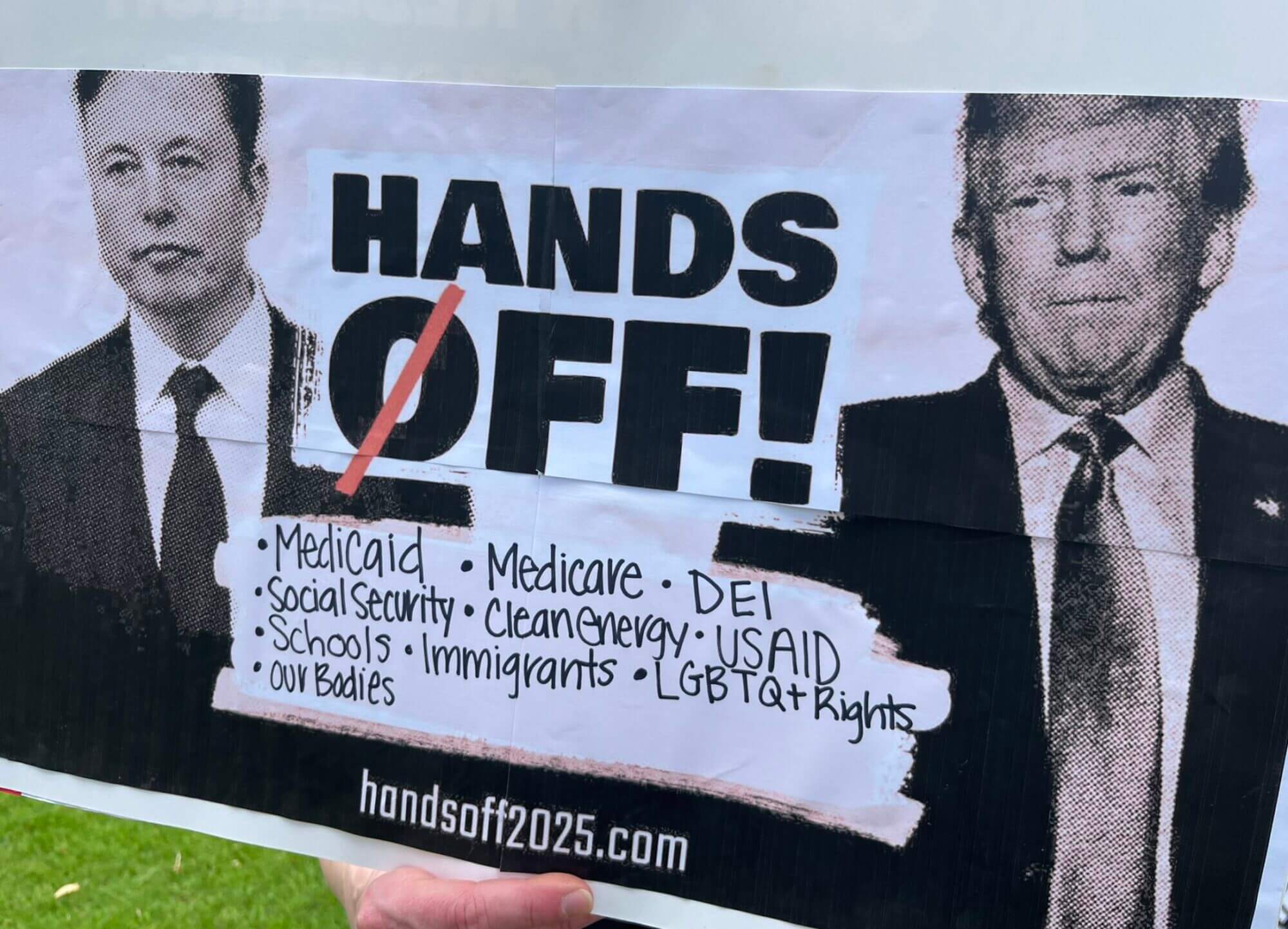
‘Hands Off’: Hundreds of Mississippians protest Donald Trump, Elon Musk as part of national movement

Hundreds of Mississippians gathered across three cities on Saturday afternoon as part of a national movement called “Hands Off” to protest President Donald Trump’s policies and Elon Musk’s government cuts.

About 300 people gathered at the state Capitol in Jackson and dozens others gathered at rallies in Gulfport and Tupelo on Saturday. Organizers at the rallies decried many of Trump’s executive orders since he took office for a second term, and they focused attention on Elon Musk’s Department of Government Efficiency (DOGE), which has abruptly slashed funding for countless public services.

Tens of thousands of Americans participated in the “Hands Off” protests in several cities across the country on Saturday.

The post ‘Hands Off’: Hundreds of Mississippians protest Donald Trump, Elon Musk as part of national movement appeared first on Mississippi Today.

A win for press freedom: Judge dismisses Gov. Phil Bryant’s lawsuit against Mississippi Today

Madison County Circuit Court Judge Bradley Mills dismissed former Gov. Phil Bryant’s defamation lawsuit against Mississippi Today on Friday, ending a nearly two-year case that became a beacon in the fight for American press freedom.

For the past 22 months, we’ve vigorously defended our Pulitzer Prize-winning reporting and our characterizations of Bryant’s role in the Mississippi welfare scandal. We are grateful today that the court, after careful deliberation, dismissed the case.

The reporting speaks for itself. The truth speaks for itself.

This judgment is so much more than vindication for Mississippi Today — it’s a monumental victory for every single Mississippian. Journalism is a public good that all of us deserve and need. Too seldom does our state’s power structure offer taxpayers true government accountability, and Mississippians routinely learn about the actions of their public officials only because of journalism like ours. This reality is precisely why we launched our newsroom nine years ago, and it’s why we devoted so much energy and spent hundreds of thousands of dollars defending ourselves against this lawsuit. It was an existential threat to our organization that took time and resources away from our primary responsibilities — which is often the goal of these kinds of legal actions. But our fight was never just about us; it was about preserving the public’s sacred, constitutional right to critical information that journalists provide, just as our nation’s Founding Fathers intended.

Mississippi Today remains as committed as ever to deep investigative journalism and working to provide government accountability. We will never be afraid to reveal the actions of powerful leaders, even in the face of intimidation or the threat of litigation. And we will always stand up for Mississippians who deserve to know the truth, and our journalists will continue working to catalyze justice for people in this state who are otherwise cheated, overlooked, or ignored.

We appreciate your support, and we are honored to serve you with the high quality, public service journalism you’ve come to expect from Mississippi Today.

READ MORE: Judge Bradley Mills’ order dismissing the case

READ MORE: Mississippi Today’s brief in support of motion to dismiss

The post A win for press freedom: Judge dismisses Gov. Phil Bryant’s lawsuit against Mississippi Today appeared first on Mississippi Today.

Trump administration slashes education funding. Mississippi leaders and schools panic

Mississippi schools and the state education system are set to lose over $137 million in federal funds after the U.S. Department of Education halted access to pandemic-era grant money, state leaders said this week.

In a Wednesday letter to U.S. Secretary of Education Linda McMahon, Mississippi Superintendent of Education Lance Evans said the federal education department failed to provide states with required notice that it would cut of access to funds committed to schools during the COVID-19 pandemic.

Schools were already using the money to pay for a range of initiatives, including literacy and mathematics programs, mental health services, construction projects for outdated school facilities and technology for rural districts.

“This unexpected change creates a severe hardship for Mississippi’s students, educators, and school communities,” Evans wrote. “These are not merely numbers on a spreadsheet; they represent critical services and supports that directly benefit our most vulnerable students …”

The abrupt loss of funds sent Mississippi public and private school leaders rushing to brace for the impact of wide ranging cuts. By Friday, some were already forced to fire grant-funded teachers, coaches and nurses.

At St. Richard Catholic School in Jackson, Father Joe Tonos and Principal Russ Nelson said the school would lose approximately $1.5 million, funds that pay staff salaries and fund programs for mental health. All schools staffers who were employed through grants were to be fired by Friday.

“This funding was not just a budgetary line item; it was a transformational support system for our school,” Nelson wrote in a memo reviewed by Mississippi Today. “Without it, we are facing difficult decisions and significant setbacks in our mission to provide a high-quality, supportive education for every student.”

McMahon set off panic when she declared in a March 28 letter state education heads that schools would lose the federal COVID-19 relief money they originally thought they would be able to spend until 2026.

President Donald Trump’s administration has made deep cuts to government programs, cancelling hundreds of millions of dollars in federal grants and other funding to states, a priority McMahon cited as a justification for the education cuts in her letter.

“Extending deadlines for COVID-related grants, which are in fact taxpayer funds, years after the COVID pandemic ended is not consistent with the Department’s priorities and thus not a worthwhile exercise of its discretion,” McMahon wrote.

McMahon indicated the federal education department might consider keeping funds available on a project-by-project basis.

The money was awarded to help schools across the country recover from the disruption wrought by the pandemic. Schools began hiring new staff members, creating new education programs and planning new projects under the assumption they had until 2026 to access the federal money

Phillip Burchfield, executive director of the Mississippi Association of School Superintendents, said the federal government’s decision to move up the deadline will force schools to find money for projects that are already underway.

“Some districts have already received the money and spent it,” Burchfield said. “Where it’s becoming problematic is … services have been committed to, but the money has not yet been received, so it puts districts in a little bit of a bind to come up with the money.” 

The back and forth between Mississippi education leaders and the Trump administration unfolded on the same week state lawmakers left the state Capitol without reaching agreement on an annual budget to fund the state education department and other agencies.

Mississippi is one of the most federally dependent states in the nation.

Superintendent Evans said he has asked the federal government to reinstate access to the money.

Mississippi Today’s Kate Royals contributed to this report.

The post Trump administration slashes education funding. Mississippi leaders and schools panic appeared first on Mississippi Today.

Meet Willye B. White: A Mississippian we should all celebrate

In an interview years and years ago, the late Willye B. White told me in her warm, soothing Delta voice, “A dream without a plan is just a wish. As a young girl, I had a plan.”

She most definitely did have a plan. And she executed said plan, as we shall see.

And I know what many readers are thinking: “Who the heck was Willye B. White?” That, or: “Willye B. White, where have I heard that name before?”

Rick Cleveland

Well, you might have driven an eight-mile, flat-as-a-pancake stretch of U.S. 49E, between Sidon and Greenwood, and seen the marker that says: “Willye B. White Memorial Highway.” Or you might have visited the Olympic Room at the Mississippi Sports Hall of Fame and seen where White was a five-time participant and two-time medalist in the Summer Olympics as a jumper and a sprinter.

If you don’t know who Willye B. White was, you should. Every Mississippian should. So pour yourself a cup of coffee or a glass of iced tea, follow along and prepare to be inspired.

Willye B. White was born on the last day of 1939 in Money, near Greenwood, and was raised by grandparents. As a child, she picked cotton to help feed her family. When she wasn’t picking cotton, she was running, really fast, and jumping, really high and really long distances.

She began competing in high school track and field meets at the age of 10. At age 11, she scored enough points in a high school meet to win the competition all by herself. At age 16, in 1956, she competed in the Summer Olympics at Melbourne, Australia.

Her plan then was simple. The Olympics, on the other side of the world, would take place in November. “I didn’t know much about the Olympics, but I knew that if I made the team and I went to the Olympics, I wouldn’t have to pick cotton that year. I was all for that.”

Just imagine. You are 16 years old, a high school sophomore, a poor Black girl. You are from Money, Mississippi, and you walk into the stadium at the Melbourne Cricket Grounds to compete before a crowd of more than 100,000 strangers nearly 10,000 miles from your home.

She competed in the long jump. She won the silver medal to become the first-ever American to win a medal in that event. And then she came home to segregated Mississippi, to little or no fanfare. This was the year after Emmett Till, a year younger than White, was brutally murdered just a short distance from where she lived.

“I used to sit in those cotton fields and watch the trains go by,” she once told an interviewer. “I knew they were going to some place different, some place into the hills and out of those cotton fields.”

Her grandfather had fought in France in World War I. “He told me about all the places he saw,” White said. “I always wanted to travel and see the places he talked about.”

Travel, she did. In the late 1950s there were two colleges that offered scholarships to young, Black female track and field athletes. One was Tuskegee in Alabama, the other was Tennessee State in Nashville. White chose Tennessee State, she said, “because it was the farthest away from those cotton fields.”

She was getting started on a track and field career that would take her, by her own count, to 150 different countries across the globe. She was the best female long jumper in the U.S. for two decades. She competed in Olympics in Melbourne, Rome, Tokyo, Mexico City and Munich. She would compete on more than 30 U.S. teams in international events. In 1999, Sports Illustrated named her one of the top 100 female athletes of the 20th century.

Chicago became White’s home for most of adulthood. This was long before Olympic athletes were rich, making millions in endorsements and appearance fees. She needed a job, so she became a nurse. Later on, she became an public health administrator as well as a coach. She created the Willye B. White Foundation to help needy children with health and after school care. 

In 1982, at age 42, she returned to Mississippi to be inducted into the Mississippi Sports Hall of Fame and was welcomed back to a reception at the Governor’s Mansion by Gov. William Winter, who introduced her during induction ceremonies. Twenty-six years after she won the silver medal at Melbourne, she called being hosted and celebrated by the governor of her home state “the zenith of her career.”

Willye B. White died of pancreatic cancer in a Chicago hospital in 2007. While working on an obituary/column about her, I talked to the late, great Ralph Boston, the three-time Olympic long jump medalist from Laurel. They were Tennessee State and U.S. Olympic teammates. They shared a healthy respect from one another, and Boston clearly enjoyed talking about White.

At one point, Ralph asked me, “Did you know Willye B. had an even more famous high school classmate.”

No, I said, I did not.

“Ever heard of Morgan Freeman?” Ralph said, laughing.

Of course.

“I was with Morgan one time and I asked him if he ever ran track,” Ralph said, already chuckling about what would come next.

“Morgan said he did not run track in high school because he knew if he ran, he’d have to run against Willye B. White, and Morgan said he didn’t want to lose to a girl.”

The post Meet Willye B. White: A Mississippian we should all celebrate appeared first on Mississippi Today.

Pastor: Medicaid expansion should be enacted if Mississippi is to be ‘buckle on the Bible belt’


Editor’s note: Even though the 2025 Mississippi legislative session ended again without lawmakers addressing Medicaid expansion, Chuck Poole, former senior minister of Northminster Baptist Church in Jackson, writes for Mississippi Today Ideas that it is never too late to provide health care for poor Mississippians. Theoretically, Gov. Tate Reeves could allow legislators to consider Medicaid expansion in the special session that he will call in the coming days.


Like clean air, adequate nutrition, decent shelter and safe water, healthcare is a necessity, not a luxury; which is why Medicaid expansion is a morally right and true thing, not a politically red or blue thing.

We don’t need another dialogue or seminar, hearing or study to tell us what we already know. We just need to act on the truth we already have; the truth that basic fundamental healthcare is a necessary part of a healthy life; a universal need which next door neighbors Mississippi and Alabama can make more available to more people by acting to close the healthcare coverage gap for the nearly 300,000 Mississippians and Alabamians who make too much to qualify for traditional Medicaid, but too little to be able to access private health insurance. 

The fact that Mississippi and Alabama are among the 10 states to refuse to expand Medicaid is all the more bewildering when one considers the fact that year after year, in poll after poll, Mississippi and Alabama are the states that report the highest percentage of Christians; Mississippi and Alabama, annually vying for “Buckle on the Bible Belt.” 

Chuck Poole Credit: Courtesy Photo

So how is it that the states with the most Christians continue to be among the least Christian when it comes to caring for those who are most in need of healthcare access, equity and justice? The buckle on the Bible belt; in so many ways so beautiful, but in this way badly broken. 

Medicaid expansion is not a magic wand, but we do know that if we fully expand Medicaid, it will infuse new life into struggling Mississippi and Alabama hospitals, shrink Mississippi’s and Alabama’s growing maternal health deserts, create new Mississippi and Alabama healthcare jobs, and, most importantly, bring comfort and care to thousands of hard working Mississippians and Alabamians who are presently struggling and suffering in the healthcare coverage gap. 

And, we know how to pay for it; by accessing the same federal dollars that 40 other states, red and blue,  Republican and Democratic, are receiving to undergird Medicaid expansion for their residents; our federal tax dollars, funding their healthcare, but not our own.

All of which is to say that there is simply no good reason for Mississippi and Alabama to refuse to do the right thing and close the healthcare coverage gap; not someday, or next legislative session, or once we find out what the new administration in Washington might do, but now. 

As Preacher King, one of the Bible belt’s most courageous Jesus preachers, once wisely said, “It is never the wrong time to do the right thing.”


Chuck Poole retired in 2022 from 45 years of pastoral life during which he served churches in Jackson, Georgia, North Carolina and Washington D.C. The author of nine books, numerous published articles, one gospel song and the lyrics to three hymns, Poole has served as a “minister on the street” in Jackson, as an advocate for interfaith conversation, and as an ally to our immigrant neighbors. Poole and his wife Marcia now live in Birmingham, where he serves on the staff of Together for Hope.

The post Pastor: Medicaid expansion should be enacted if Mississippi is to be ‘buckle on the Bible belt’ appeared first on Mississippi Today.