
Home Blog Page 40

Welcome to the Starkville Derby, where the wiener (dog) takes all

Audio recording is automated for accessibility. Humans wrote and edited the story.

STARKVILLE – When asked about a race, most people may think of cars. Starkville native Alden Thornhill thinks about dogs. 

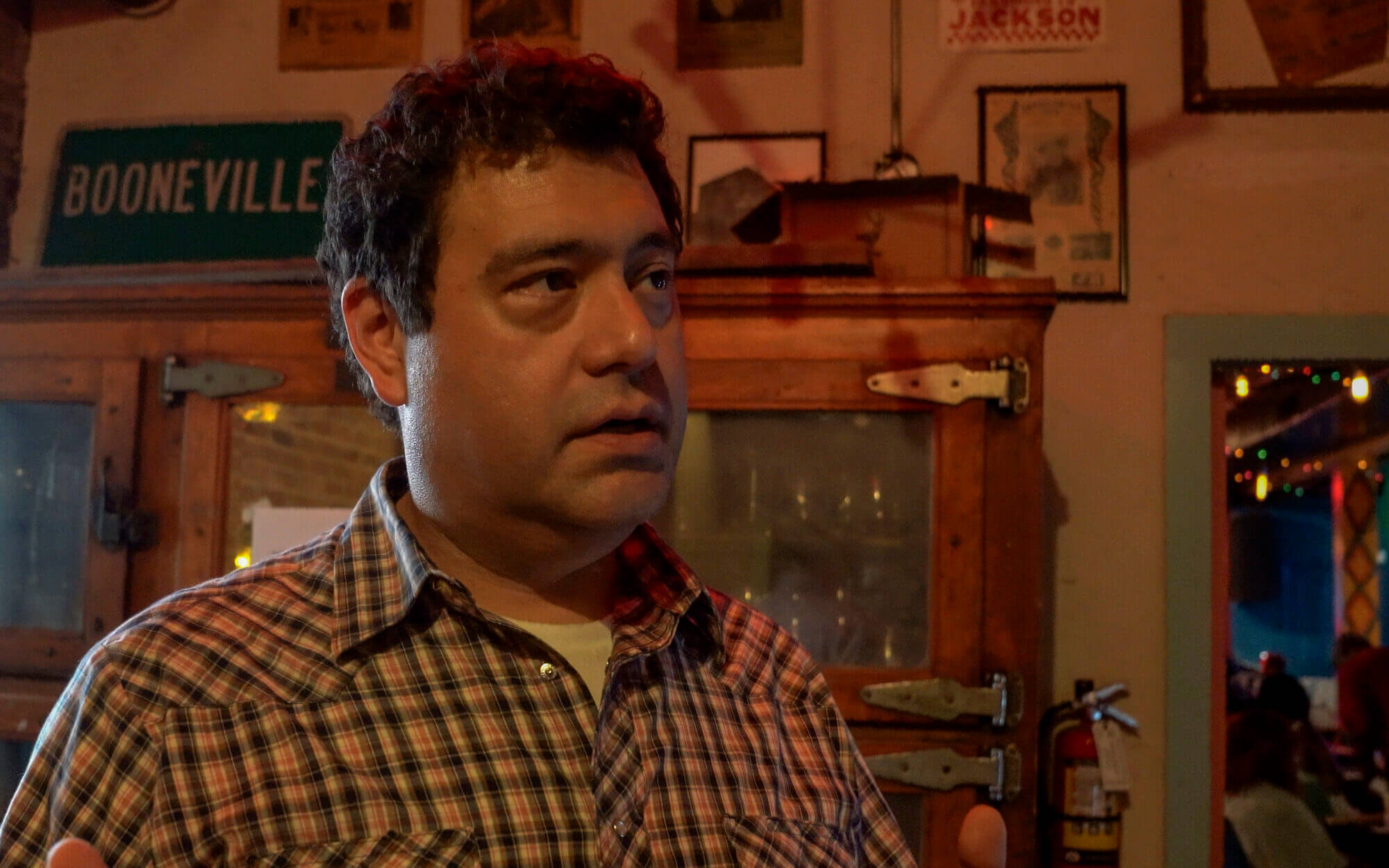
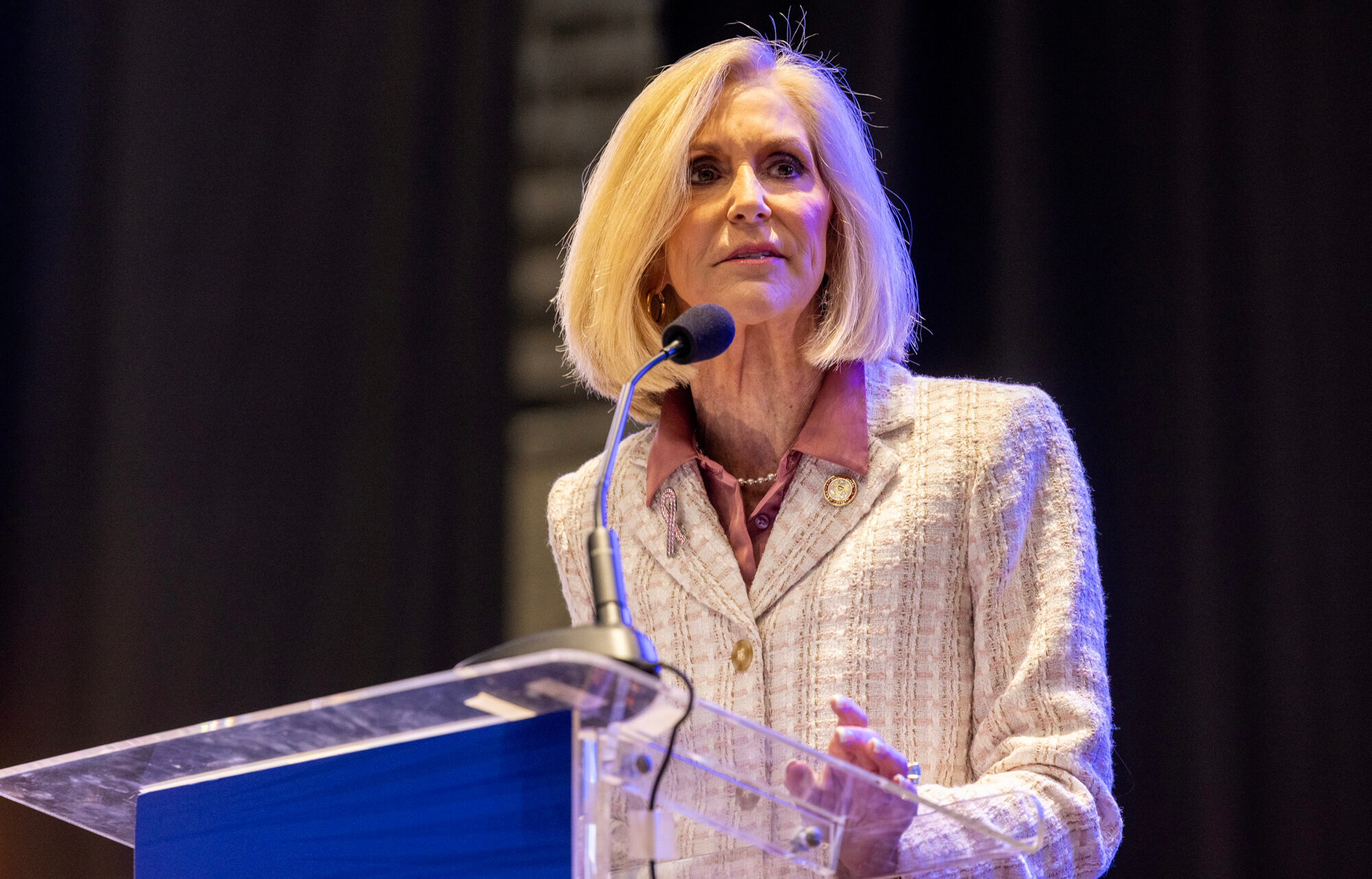
Starkville Derby Founder Alden Thornhill speaks to the crowd during the 4th annual Starkville Derby on Saturday, April 25, 2026. Credit: Aaron Lampley/Mississippi Today

The Starkville Derby is an annual festival of wiener dog races, attracting thousands of people to this college town.

The event — which was started by Thornhill in 2023 — was originally meant to fill a void between spring activities in the college town. However, it has since grown to become the world’s largest wiener dog racing event. 

“A lot of people just come up and see the day of and don’t realize the logistics that we start planning this thing back in December for late April or early May,” Thornhill said. “Its pretty incredible what my team can do and what we do when we get together.”

The multi-award winning event takes place every spring in the downtown Cotton District directly next to Mississippi State University. This year’s derby, on April 25, hosted over 315 dogs across 86 races. 

Maui and his owner Chino Nguyen traveled from Houston, Texas, to be a part of this year’s race. 

“It’s his first year racing in Starkville,” Nguyen said of Maui. “We’re just doing it for fun.”

While numbers have not been provided for this year’s attendance, Thornhill told Mississippi Today that it exceeded last year’s 80,000.

Queen plays outside with a volunteer at the Oktibbeha County Humane Society on Friday, April 24, 2026. Queen is just one of several dogs available for adoption. Credit: Aaron Lampley/Mississippi Today

The Oktibbeha County Humane Society is the main beneficiary of the derby. The event raised over $75,000 for the nonprofit group this year. 

“They rescue dogs and this is a dog-centric event,” Thornhill said. “So it was a match made in canine heaven.”

The Oktibbeha County Humane Society  manages the Starkville animal shelter. It also provides low-cost spay and neuter operations, and it relocates animals to other areas where they might be more likely to be adopted, helping to serve more than 6,000 animals each year in north-central Mississippi.

The society’s executive director, Michele Anderson, said the derby has boosted awareness for the organization.

“I think the biggest impact that the derby has made, aside from the significant fundraising that it does for us each year, is just creating the awareness and getting the word out,” Anderson said. “We still get people that reach out and say they haven’t heard of us before.”

Attendees gather around one of several video boards to watch dogs race during the Starkville Derby on Saturday, April 25, 2026. Credit: Aaron Lampley/Mississippi Today

Law enforcement response to shoplifting leaves 1-year-old dead and adult critically wounded

Audio recording is automated for accessibility. Humans wrote and edited the story.

The Mississippi Bureau of Investigation is looking into a police shooting that killed a 1-year-old boy in north Mississippi. 

Officers from the Senatobia Police Department and the Tate County Sheriff’s Department responded to a reported shoplifting Sunday afternoon at a Walmart on U.S. 51 and saw a car driving away, according to a statement from the Mississippi Department of Public Safety. Officers tried to stop the car, but DPS said the driver drove in the officers’ direction and almost hit one, leading an officer to fire at the car. 

After the shooting, the subjects took themselves to a local hospital, where the child died and another person was being treated for critical injuries, according to DPS and local reporting.

Family members identified the child as Kohen Wiley. They are questioning how the police response led to the toddler’s death and are looking for accountability. They dispute that the adults – the child’s mother and aunt – shoplifted diapers from the Walmart. 

“All we know is that a car was shot up and a 1-year-old baby was killed,” Carolyn Stokes, the boy’s great-grandmother, told Memphis TV station WMC. “And then nobody tells us anything like we’re not anybody.”

She and other family members could not be immediately reached for comment Monday.

In a statement after the shooting, Senatobia police said it is committed to full transparency. 

“As the investigation progresses and facts are verified, we will share as much information as possible,” the department wrote in the statement on Facebook. 

As of Monday, officials have not identified the adult driver of the car and passenger.

Tate County Sheriff Luke Shepherd declined to comment about the shooting Monday afternoon because MBI has taken over the investigation and he declined to say whether anyone has been charged in the shooting. He said the department is doing an independent investigation to determine whether any deputies will be placed on leave.

Police Chief Harold Vanderford was not immediately available for comment.

In a Monday statement, Walmart said it is saddened by the shooting death outside the Senatobia store and said the safety of staff and customers is a top priority. The company is also working with law enforcement during the investigation. 

Another example of how Senatobia police officers have interacted with children occurred in August 2023, when officers placed a 10-year-old boy in a police car and took him to the station for urinating behind his mother’s car in the parking lot of a lawyer’s office she was visiting. 

At the time, then-Police Chief Richard Chandler told news outlets  that the child was not handcuffed, but the boy’s mother said he was put into a jail cell.

Chandler said the officers violated training about how to handle children. He said one officer involved in the boy’s arrest was no longer employed with the department and the others would be disciplined. 

Months later, a youth court judge sentenced the boy to three months’ probation and assigned him to write a two-page book report about Kobe Bryant, the late basketball star. The child’s mother refused to sign the probation agreement after reading the full agreement reached by the child’s attorney and a special prosecutor. 

As of mid-June, at least 12 officer-involved shootings have occurred across Mississippi this year, according to news releases from DPS and local media. Children were not injured or killed in any of the earlier shootings this year. 

Missisisppi law enforcement officers have fatally shot at least four teenagers between the ages of 15 and 17 since 2022, according to records maintained by Mississippi Today. In the deaths, officers reported they believed the teens were involved in criminal activity. 

Law enforcement officers have also injured children in shootings, including then 11-year-old Aderrien Murry, who in May 2023 was hit in the chest and suffered a collapsed lung, fractured ribs and a lacerated liver. 

An Indianola police officer responded to his home when the boy helped his mother call for help about a former partner who was acting irate. A Sunflower County grand jury later declined to indict the officer for criminal charges. 

Update 6/15/26: This story has been updated to include a comment from the Tate County sheriff.

Barney Schoby, Adams County civil rights leader and former state lawmaker, dies at 87

Audio recording is automated for accessibility. Humans wrote and edited the story.

NATCHEZ — Adams County civil rights leader Barney Schoby has died. He was 87.

Schoby was the first Black man to serve on the Adams County Board of Supervisors, a position he held from 1974 to 1980.

He went on to serve in the Mississippi House of Representatives representing District 94 from 1980 to 1997, the first African American to serve this district in the state House.

“I am saddened by his passing,” said Natchez’s Phillip West. “He was a real warrior for trying to help bring about improvements in our community during a time when it was very difficult to do so. He was at the forefront of a lot of action that was taken, especially legal action, to improve the situation in our community. I really feel like a part of me has left. Both of us were out there when it was not good to be out there.”

Barney Schoby. Credit: Special to Mississippi Today

West said if documented properly Schoby’s legacy is playing a key role in “getting us to where we are today. A lot of young people do not know the situations that existed during that day and time. A lot of people politically, from a civil rights perspective, stood up for what was correct and eventually, things got better because of his work and actions and leadership,” West said. “I am really sad about his passing. When you have been on the battlefield for so long, you recognize those who were with you and in front of you. Those are very meaningful kinds of things.”

West succeeded Schoby as representative in the state house for the 94th District.

State Rep. Robert Johnson III followed West and serves as the district’s representative today.

“At the time that Barney Schoby emerged as a leader, it wasn’t an easy time. It took courage to stand up to the status quo. He was revered as a pioneer, a fighter, a colloquial warrior for justice,” Johnson said. “And he was staunch in how he felt about issues. He was always very clear.”

Johnson said Schoby “cut the road and opened up that path that some of us followed. He left a legacy in Natchez as a supervisor, NAACP president and he has a revered legacy in the legislature. We will miss his wisdom and tenacity, but his spirit will continue because we all embody him right now.”

Natchez NAACP President and State NAACP Vice President Joyce Arceneaux Mathis had a different introduction to Schoby.

“I was first introduced to (him) in 1965 as my U.S. Government instructor at Sadie V. Thompson High School. Mr. Schoby was a passionate, dynamic and fiery teacher who embraced life with urgency, knowledge and a need to help his people no matter of the sacrifice he or his family had to make,” Mathis said. “He taught for 32 years with that same passion.

“Throughout my political career, I’ve stood on the shoulders of many pioneers who came before me and laid out a path for me to follow. Mr. Schoby was one of those leaders. He became the first Black supervisor to be elected in Adams County from 1974-1980. That political position was followed by being the first African American member of the House of Representatives elected from Adams County since Reconstruction.”

Even though Schoby worked relentlessly to represent Natchez and Adams County in the legislature, he remained connected to Natchez and the Natchez Community, she said.

In the late 1980s, Schoby became a co-plaintiff challenging a redistricting plan he alleged discriminated against Black voters. He was also intimately involved in the 1988-89 re-integration of schools in Natchez-Adams County.

In 2021, the Natchez Branch of the NAACP presented Schoby with the Dr. Martin Luther King Jr. Award for his continued work on Civil Rights.

“This award respected Rep. Schoby’s courage, sacrifice and dedication to standing firm on the civil rights awarded to all people through the Constitution of the United States of America. This fierce fighter for the rights of others will be sincerely missed by the people of Natchez and Adams County,” Mathis said.

Schoby’s widow, Joyceria Pickett Schoby said Schoby died at his home in Natchez on Tuesday.

He was born in Liberty on Jan. 14, 1939, to Robert Hughes and Mary B. Schoby. Schoby and Joyceria married on Dec. 22, 1965.

Funeral services for Schoby were being held Monday at Mount Zion Baptist Church on Old Washington Road, with burial at Natchez City Cemetery.

This article is republished from the Natchez Democrat, with permission from the newspaper.

Voter Voices: Longtime poll watcher has seen problems, politics

Audio recording is automated for accessibility. Humans wrote and edited the story.

“Voter Voices” is a series of Mississippians sharing their thoughts on voting rights, the state’s history of voter suppression and the new gerrymandering push embroiling Mississippi, the South and the nation.

Since 1988, Bill Gray has been a poll watcher for various Mississippi political campaigns.

During that time, he has seen many Mississippians blocked from voting because they went to the wrong precinct. Sometimes this happened because the precinct had changed, and voters failed to receive notices. Sometimes voters missed the notices. Sometimes voters received incorrect notices.

Mississippi Today, after a recent U.S. Supreme Court decision in a Louisiana redistricting case gutted the federal Voting Rights Act, has solicited voters’ stories of their experiences as debate heats up here and nationwide over gerrymandering and voting rights.

Bill Gray. Credit: Special to Mississippi Today

In 2019, Gray worked as a poll watcher for the Jim Hood campaign for governor. While working at a Rankin County voting precinct, a man walked in wearing a “Make America Great Again” hat.

Gray told the poll manager that the man couldn’t wear a hat like that, and the manager responded that the hat wasn’t political, he said. “And I said, ‘Yeah, it is.’ And so he gets the Rankin County election commissioner out there. Then he and I go at it because he’s telling me it’s not political.”

He questioned why the secretary of state is now using Experian credit data — and nothing else — to have local election officials clean up Mississippi’s voting rolls.

READ MORE: ‘We’re going backwards.’ Mississippians share experiences of voter suppression, dread of redistricting battle

The Mississippi Secretary of State’s Office spent $50,000 to run nearly 2 million checks of Experian’s unverified commercial data on registered voters, saying it did so to verify their addresses and help determine their status in a push starting last July to “strengthen the integrity of elections” statewide.

The office handed those unverified addresses to election commissioners, which led to the removal of numerous legitimate voters without their knowledge over the past two years.

Gray saw the problem with this approach firsthand after someone stole his credit information.

“They were showing me as previously living in Chicago,” he said. “It took me four or five years to finally clear it up.”

Troy rallies for 12-8 win that knocks Mississippi out of the College World Series

Audio recording is automated for accessibility. Humans wrote and edited the story.

OMAHA, Neb. — Jabe Boroff hit the tiebreaking double in a four-run seventh inning and Troy and its potent offense kept the program’s first College World Series appearance going with a 12-8 win over Mississippi in an elimination game Sunday.

The Trojans (39-31) erased a four-run deficit to post their 18th come-from-behind win of the season and advance to a game Tuesday against the loser of the West Virginia-North Carolina game Sunday night.

“I know the city of Troy is absolutely loving this,” said Boroff, among seven Alabama natives on the team. “What really means the most is everybody’s got our back and everybody wants to see us win.”

Troy pitcher Zach Crotchfelt (17) celebrates after an NCAA baseball College World Series game against Mississippi on Sunday, June 14, 2026, in Omaha, Neb. Troy won 12-8. Credit: AP Photo/Vera Nieuwenhuis

Mississippi (41-23) went two-games-and-out in its first trip to Charles Schwab Field since winning the national championship in 2022. Southeastern Conference teams had won 13 straight against non-SEC opponents in the CWS before the Rebels lost to North Carolina and Troy.

Troy, which lost 7-5 to West Virginia on Friday, ramped up an offense that arrived in Omaha averaging 10.6 runs per game in the NCAA Tournament.

The conditions were perfect for the 3-hour, 54-minute offensive free-for-all — sunny, 70 degrees at first pitch and a 15-mph wind blowing out. The teams combined for 26 hits and six homers, second-most in a game at the 15-year-old stadium. It was the first time since 2001 at Rosenblatt Stadium that each team went deep three times.

“Credit Troy for getting the big hit time and time again,” Rebels coach Mike Bianco said. “You look at the back half of the game, we scored runs but we just couldn’t stop them.”

Noah Thigpen (1-5) pitched five innings of relief for the win and JP Robertson (5-2) took the loss.

The Trojans gave up two runs in the first inning and were down 6-2 in the fourth after Brayden Randle and Collin Reuters launched two-run homers to almost the same spot in the right-field seats.

“I can say it jokingly now that we had to get on the guys after the first inning,” Troy coach Skylar Meade said. “I didn’t think we were ready to go. I hope there weren’t any hot mics. Might get in trouble on that. But you have to do what you have to do to produce results.”

Troy’s Sean Darnell, who homered in the second inning, came up in the fifth with two outs and bases loaded. Hunter Elliott balked to bring in a run and Darnell singled in two more to cut it to 6-5.

Jimmy Janicki’s team-leading 21st homer tied it at 6 in the seventh and Boroff, after his two-run double, scored on Houston Markham’s base hit to put the Trojans up 9-6.

“Losers stop when it gets tough, and that’s not what our guys do,” Meade said. “And that’s why they’re getting everything they deserve right now and hopefully a lot more.”

Correction, 6/14/2026: This story has been corrected to show SEC teams had previously won 13 straight against non-SEC teams.

Redistricting battle proves ‘everything old is new again’ in Mississippi

Don’t throw the past away

You might need it some rainy day

Dreams can come true again

When everything old is new again

Audio recording is automated for accessibility. Humans wrote and edited the story.

– Peter Allen

The recent Louisiana v. Callais redistricting decision that gutted the Voting Rights Act proves that “everything old is new again” – at least in Mississippi and many other states, mostly in the South.

But let’s focus on Mississippi.

For much of the history of Mississippi, the state’s leadership has sought to prevent the election of Black people to political office.

The 1890 Mississippi Constitution famously included schemes and ploys designed to prevent Black Mississippians from holding elective office or from even participating in the democratic process by voting.

The federal courts, buoyed by the Voting Rights Act passed in 1965 at the behest of President Lyndon B. Johnson, began in the late 1960s and ’70s to curb those schemes and ploys that were designed to deny African Americans’ civil rights. White Mississippi politicians kicked and screamed in opposition to Black people being allowed to participate in the state’s representative democracy. But federal judges depended on the Voting Rights Act to force their inclusion. 

The recent Supreme Court decision gives politicians permission to ignore the Voting Rights Act and to again draw political districts that dilute or even ignore Black voter strength.

Based on the interpretation of many, political districts no longer will have to be drawn to give Black voters a majority even when the districts could be created that are relatively compact and do not split communities of interest, such as cities and counties.

Hardly was the ink dry from the pen of Justice Samuel Alito, who wrote the majority opinion, before Gov. Tate Reeves and other Mississippi politicians began to conspire to eliminate the majority-Black congressional district that has elected a Black Mississippian, Bennie Thompson, since 1993. Before Thompson, Mike Espy was elected from the 2nd District in 1986 to become the first Black Mississippian elected to Congress since the 1800s.

In addition to scheming to dilute Black voter strength in the 2nd Congressional District, Mississippi legislative leaders are studying the boundaries of the 52 state Senate seats and 122 state House seats with the presumed intent of eliminating many of those majority-Black districts. There are currently 17 such districts in the Senate and 43 in the House.

Because of Louisiana v. Callais, politicians are again looking to prevent majority-Black districts.

Indeed, everything old is new again.

It was not even olden times, though, when the federal courts found that Mississippi politicians were discriminating and diluting Black voting power and ordered three new majority-Black state legislative districts – one in the House and two in the Senate. Those new majority-Black districts were created in 2025 to prevent the dilution of minority voters.

At the very least, look for legislators to eliminate those three new court-ordered districts before the 2027 state elections and go back to the old maps that had fewer majority-Black districts.

After all, everything old is new again.

Mississippi’s New Fabrication Shop Marks Major Investment in Local Growth

Audio recording is automated for accessibility. Humans wrote and edited the story.

On June 10, partners across the public and private sectors came together to celebrate the opening of our new, 70,000 square-foot fabrication shop in Greenwood, Mississippi at an industrial site with a rich history. The event was a powerful moment that validates what is possible when organizations come together to power growth and provide real opportunity through direct investment. It was a proud day for all involved.

For NPL, a Centuri company, the new facility is an opportunity to further serve our utility and energy customers across the Southeast with a range of comprehensive fabrication solutions. The state-of-the-art shop is strategically equipped to support the natural gas, liquids, power generation, steam, and industrial sectors with advanced fabrication, welding, cutting, and machining capabilities. Features like automated and robotic welding systems and ASME-certified processes will enable us to deliver complex projects safely, efficiently, and to rigorous industry standards.

At Centuri, we believe energy infrastructure development is also a regional economic engine. That is why we commit to local hiring and workforce development wherever we operate. The Greenwood facility is an example of this commitment in action, generating more than 40 well-paying, stable jobs. Together with our partners, we will provide high-quality training to ensure the workforce is equipped to meet the safety and quality practices that both Centuri and our customers demand.

We could not have realized this facility’s potential without our state, local, and county partners. NPL Vice President of Pipeline Services Van “Rabbit” Ladnier said it best: “We are grateful for the partnership and support of the economic development agencies, area leaders, and community stakeholders who have helped make our expansion into Greenwood, Mississippi, possible. Greenwood offers a strong workforce, a strategic location, and a business environment that supports long-term success.”

We are particularly grateful to the Greenwood-Leflore-Carroll Economic Development Foundation and the Mississippi Development Authority. With equal parts conviction and passion, they showed why Greenwood is an attractive place to do business and invest.

At Centuri, we believe private sector success and community well-being are not mutually exclusive —when approached intentionally they are reinforcements of one another. When communities like Greenwood grow, everyone benefits. Local businesses prosper, supply chains expand, and workforces are homegrown. For our enterprise, expansion into Greenwood supports our long-term strategy to grow our portfolio by deepening and expanding customer relationships and bringing our comprehensive infrastructure services to new geographies and markets

Since 2020, our North American fabrication services have provided comprehensive fabrication solutions that improve quality, reduce costs, and support project schedules. Services include alterations, pressure piping, pressure vessel fabrication, repair work, steam systems, and data center modules and skids. Capabilities include automated pipe handling, specialty alloy fabrication, hydrostatic and pressure testing, precision laser cutting, and fabrication of large-diameter piping. In Greenwood, this work is further supported by a 10-acre laydown yard and certified industry partnerships.

default

For more than 115 years Centuri has been providing infrastructure solutions through our people and our assets. Today, we serve the entire energy value chain with core offerings that include the replacement, maintenance, upgrading, and installation of electric and natural gas distribution and transmission systems. We prioritize quality, safety, and integrity in every decision. Through an integrated operating model that combines local delivery with enterprise scale, our workforce of more than 9,600 employees provides the expertise and capacity to meet evolving customer needs.

Though much has changed across our industry since our founding, our mission remains unchanged: to be the leader in safe, sustainable, high quality utility infrastructure services while meeting our commitments to our various stakeholders, including employees, customers, investors, and the communities where we live and work.

The new fabrication and manufacturing facility in Greenwood is an opportunity for us to unlock value: for our customers, our communities, and those that invest in us. Infrastructure has a critical role to play in meeting future energy demand, and we are proud to play our part. We invite you to learn more about us at centuri.com/npl-construction.

Mississippi seeks input on barbering, cosmetology rules

Audio recording is automated for accessibility. Humans wrote and edited the story.

The Mississippi State Board of Cosmetology and Barbering is accepting public comments through June 22 on temporary rules that could shape health, safety and business standards across the industry. 

For Hattiesburg barber Bonnie Holloway, the process marks a sign of progress after two years of uncertainty following the state’s merger of its cosmetology and barbering boards. 

Holloway, who co-owns The Dapper Man Studio in Hattiesburg with Crystal McCormick, opened her barbershop just before Mississippi merged the boards in 2024. She said she has seen signs of progress since the board began operating again.

“So far, so good,” Holloway said. “We’ve actually had one of the board members come by to introduce himself, which has never happened. Because it’s kind of like they’re just there and we’re here, but he came by and introduced himself, so that was good.”

Crystal McCormick works with a client at The Dapper Man Studio in Hattiesburg, Miss. McCormick co-owns the shop with Bonnie Holloway, who opened the business as Mississippi began reorganizing oversight of the barbering and cosmetology industries. Credit: Justin Glowacki/RHCJC

What took so long to start?

The board was created after Mississippi combined its separate cosmetology and barbering boards in 2024. But in the following legislative session, the Mississippi Senate didn’t confirm Gov. Tate Reeves’ appointees. Without that approval, the board lost its quorum and couldn’t complete its regular work or finalize temporary rules written earlier in the year. 

Catherine Bell, executive director of the Mississippi State Board of Cosmetology and Barbering, said the current board members were approved by the Senate early in the 2026 legislative session. 

“That enabled the board to get up and running and start to do all of the things that need to get done for a new state agency to get created,” Bell said. 

For Holloway, the board’s return has been a good sign for the future. 

“When we decided to (start our own shop), that’s when they started doing everything,” Holloway said. “For a minute we were without a board altogether, but like (Crystal) was saying, it’s starting to line up. It’s starting to come together slowly, but it looks like it’s really going to happen.” 

What has the board done so far? 

Clippers, guards, combs and shears sit at a barber station at The Dapper Man Studio in Hattiesburg, Miss. The Mississippi State Board of Cosmetology and Barbering is accepting public comments through June 22 on temporary rules that could shape health, safety and business standards across the industry. Credit: Justin Glowacki/RHCJC

Bell said the board began meeting in late January and first addressed issues that had held up licenses, such as setting a passing score for the licensing exam. That allowed applicants to learn whether they passed and what steps remained in the process. 

The board also decided to remove the practical exam from the licensing process, which some educators have said allows them focus more closely on individual learning needs rather than preparing students for a second state test. 

Since the temporary rules written in 2025 expired, the board also began developing a new set of rules chapter by chapter.

The first rules released, Chapter 11, addressed health and safety standards for shops and licensees. Bell said the board received public comments on those regulations and made changes before releasing a revised version. 

“The board received some comments on that and went back to the drawing board and made some very substantial revisions to those rules,” Bell said. 

Bell said the current rules differ from those developed in 2025. She said the board is attempting to protect customers while avoiding requirements that unnecessarily burden professionals and businesses. 

“We want to make sure the rules accomplish that goal without being overly burdensome on the licensees,” Bell said.

Bell said the board is encouraging licensees to review the temporary rules and submit written feedback before the comment period ends. 

“If you want to have an opportunity to craft the future of this agency, now’s the chance. Send in a comment,” Bell said. 

What can the public do?

Bell said written comments can be emailed to executivedirector@msbcb.ms.gov, mailed to the Mississippi State Board of Cosmetology and Barbering at P.O. Box 55689, Jackson, MS 39296-5689, or delivered to the board office. 

Comments must be received by June 22. 

Bell said she will gather the comments for the board, which will review them at a meeting after the deadline and decide whether additional changes are needed. 

“They’ll review all of the comments at that time and, based on the comments received, determine if they need to make any changes to make the rules even better,” Bell said. 

For Holloway, who opened her business as the state began reorganizing oversight of her industry, seeing work get started is a good sign after a period of uncertainty. 

“I think it’s headed in the right direction,” Holloway said. 

New Obama Presidential Center in Chicago honors Fannie Lou Hamer

Audio recording is automated for accessibility. Humans wrote and edited the story.

As the Obama Presidential Center prepares to open Thursday in Chicago, a broader vision of presenting the story of America’s first Black president and first lady emerges – a series of spaces honoring the civil rights and democracy leaders who inspired the Obamas’ own leadership journeys.

These include Mississippi sharecropper and voting rights advocate Fannie Lou Hamer.

Center officials said people like Hamer represent those “on whose shoulders we stand” as people across the country and around the world seek to advance progress, dignity and inclusion.

More than five years after construction began, the opening of the center honoring former President Barack and Michelle Obama will coincide with Juneteenth, the federal holiday on June 19 that commemorates the 1865 emancipation of enslaved Black Americans.

The center marks a milestone for Chicago’s South Side – where the Obamas’ journey began – creating a new civic, cultural and educational destination rooted in community and public engagement.

The Fannie Lou Hamer Walkway at the Obama Presidential Center in Chicago honors the civil rights leader from Mississippi. Credit: Courtesy of Obama Presidential Center

Situated at the entrance to the campus, the Fannie Lou Hamer Walkway serves as a “park within a park” that blends lush plantings and stone hardscapes to provide a contemplative transition between the library and forum buildings. The space honors Hamer, co-founder of the Mississippi Freedom Democratic Party and the National Women’s Political Caucus, who brought national attention to the indignities faced by Black Americans and demonstrated the power of determination in the fight for voting rights.

“President and Mrs. Obama have always been clear that their ability to make change was made possible through the example of leaders, who, through their commitment, sacrifice, and passion, fought for a world where everyone has a voice,” Valerie Jarrett, CEO of The Obama Foundation, said in a news release. “The honorees we are naming today are giants of democracy who showed us all that one voice can change a room and together we can change the world.”

Hamer’s niece, Monica Land, who produced the award-winning film “Fannie Lou Hamer’s America” and oversees its educational website, said the Obamas’ recognition of Hamer’s struggle is both humbling and telling.

“Deep down, Aunt Fannie Lou wondered if what she was doing really made a difference,” Land said in the news release. “She sacrificed so much and she missed so much time with her family because she was constantly traveling on behalf of others. She had regrets. But it’s moments like this that prove that she did make a difference, and she would be so proud to see these advancements.”

Additional signage honoring Hamer appears on the north-facing wall just inside the courtyard and features one of her quotes: “And it’s no easy way out. We just got to wake up and face it, folks. And if I can face the issue, you can too.”

Fannie Lou Hamer testifies before the Credentials Committee at the 1964 Democratic National Convention. Credit: Courtesy: Library of Congress (Warren K. Leffler, photographer)

The Fannie Lou Hamer Walkway was made possible through the support of Blue Cross and Blue Shield of Illinois.

A fearless organizer, Hamer became one of the most important grassroots voices of the 1960s freedom movement by helping thousands to register to vote despite intimidation and violence. After being viciously beaten in a Winona, Mississippi, jail at the hands of local law enforcement in June 1963, she recounted her experience a year later during the nationally televised Democratic National Convention in Atlantic City. Following that emotionally charged testimony, Hamer became one of the most sought-after speakers of her time. 

Hamer died of breast cancer, hypertension and the aftereffects of the jailhouse beating on March 14, 1977.

Other dedicated spaces at the $380 million, 19.3-acre Obama Presidential Center include the Claudette Colvin Program Room, the Dorothy Height Sky Room Vista, the Thurgood Marshall Courtyard and the Rosa Parks Courtyard Lounge. Officials said, “these named spaces will serve as lasting tributes to the giants of history, reminding every visitor that they, too, have the power to leave a lasting mark on the world.”

A one-of-its kind museum, the center is the first fully digital museum and combines high-tech and hands-on exhibits spanning the campaigns, key moments of Obama’s presidency and life at the White House, art installations, a Chicago Public Library branch, athletic facilities and community gathering spaces.

A grand opening ceremony for family members of the dedicated spaces and select guests will be held on Thursday.