Home Blog Page 45

House will try again to legalize mobile sports betting in Mississippi. Challenges remain

0
The audio version of this story is AI generated and is not human reviewed. It may contain errors or inaccuracies.

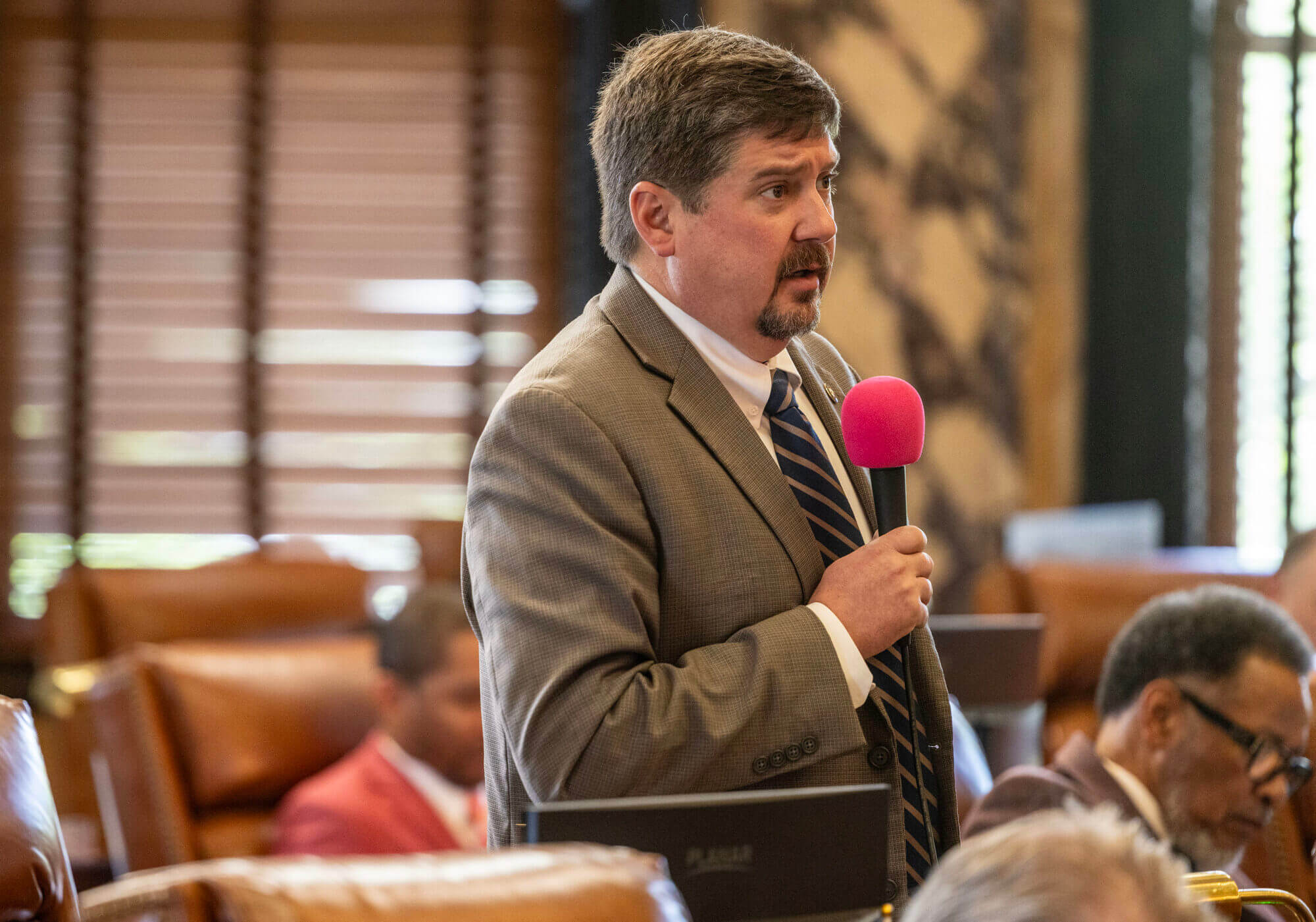
The Mississippi House will try for the third year straight to legalize mobile sports betting with new provisions aimed at winning over Senate lawmakers who have opposed the measure, the House Gaming Committee Chairman said.

This year’s legislation — in a key change from last year’s proposal — would direct all state revenue from online betting to the state’s government pension system, Casey Eure, a Republican from Saucier who chairs House Gaming, told Mississippi Today.

The House and Senate are still at loggerheads over how to shore up the Public Employees’ Retirement System, which has unfunded liabilities of about $26 billion.

The new proposal will also contain other “compromises” for those who have previously opposed legalization.

The persistence of a thriving black market in Mississippi and an estimated tens of millions a year in tax revenue that legal sports betting could generate has prompted a fierce push from some lawmakers to legalize the practice.

“By legalizing mobile sports betting, we can eliminate much of the illegal market — including protecting underage bettors — and provide real consumer safeguards in a regulated environment,” Eure said. “This legislation will also give our brick-and-mortar casinos a new revenue stream to ensure their continued success, while the state revenue generated will help close the gap in funding for our public employees’ retirement system.”

The effort also has a strong and well-funded lobby from sports betting companies. But the legalization effort could again face significant headwinds, from skeptical state lawmakers in both parties and federal regulatory changes since the election of President Donald Trump.

Senate Gaming Chairman David Blount, a Democrat from Jackson who has thus far opposed mobile sports betting legalization, told Mississippi Today he wouldn’t take a position on Eure’s bill until he read it. But he said directing the revenue to PERS wouldn’t be near enough to justify legalization.

“These are the same people who abolished the income tax last year, which generates more than $2 billion a year to the state budget. If we legalized mobile sports betting tomorrow, it would take more than 1,000 years to pay off the unfunded liability in the retirement system,” Blount said. “The amount of money that we’re talking about is infinitesimal compared to the $26 billion unfunded liability of the retirement system.”

Eure has said legalizing online betting could generate as much as $80 million a year in tax revenue. Blount said the estimates he’s seen max out at about $30 million. Either way, the total would not pay off the system’s unfunded liabilities in the near term.

The Senate has already sent the House a bill to put half-a-billion dollars of the state’s current surplus into PERS, in addition to putting $50 million a year over the next decade. House leaders have proposed a recurring revenue stream for PERS, either from the state lottery or by legalizing mobile sports betting.

Blount also pointed to the rise of “prediction markets,” exchanges where people bet on the outcomes of future events. These markets, dominated by platforms such as Kalshi, are different from traditional sports betting because traders set prices. Also, prediction markets try to make money by letting people trade against each other to reveal how likely an event is, while sports betting companies make money by setting odds so the bookmaker always takes a cut.

Under the Trump administration, the Commodity Futures Trading Commission has taken a lax approach to regulating prediction markets, allowing platforms to expand their offerings in states around the country, including states such as Mississippi, where mobile sports betting remains illegal.

“Predictions markets have essentially legalized nationwide mobile betting,” Blount said. “Whatever amount of money was promised last year, that number is reduced, maybe greatly reduced. Because due to the actions of the current administration, no state can tax or regulate prediction markets, which are effectively gambling.”

Traditional sports betting giant DraftKings, which has lobbied Mississippi House Speaker Jason White to legalize online betting, launched its own prediction market product last month.

Two U.S. Senate committees could take up a bill later this month to establish new rules for the cryptocurrency industry, and some on Capitol Hill are pushing to include language that would tighten regulations on prediction markets.

In addition to the role PERS and prediction markets might play in the debate over mobile sports betting legalization in Mississippi, a proposal this year would likely need to assuage the concerns of lawmakers from districts with casinos. Some brick-and-mortar casinos have feared the legalization of online betting could undercut their profits.

To protect smaller casinos from revenue losses, Eure’s bill last year would create a pot of money that establishments could draw from for the first five years after online sports betting becomes legal. It also included safeguards to prevent people from placing bets with credit cards.

Eure still believes legalization would be an economic boon for Mississippi.

“I intend to pass it,” he said.

Mississippi Supreme Court to hear AG, auditor argue who has right to claw back misspent money

0
The audio version of this story is AI generated and is not human reviewed. It may contain errors or inaccuracies.

Lawyers for Attorney General Lynn Fitch and State Auditor Shad White will argue before the Mississippi Supreme Court on Tuesday over which of them has the right to claw back state money they believe was illegally spent.

Fitch believes she has the exclusive right to file a civil lawsuit on behalf of the state. White contends state law gives him the authority to file a suit to recoup funds in some instances.

The issue is over a section of Mississippi law stating that the state auditor is “to institute suit, and the attorney general shall prosecute the same in any court of the state,” when recovering misspent tax dollars.

Fitch first took White to court when the auditor attempted to sue Pro Football Hall of Fame athlete Brett Favre to recoup allegedly misspent welfare money. A Hinds County chancery judge disagreed with Fitch, so the attorney general appealed to the state’s highest court.

The two officials have said they’re considering running for governor and have clashed in recent years over the handling of Mississippi’s massive welfare scandal, which has seen multiple people plead guilty to state and federal crimes.

Fitch also withdrew her office’s representation of the auditor in two defamation lawsuits, including one filed by Favre, after determining a book White wrote about the welfare scandal cast her office in a negative light and created a conflict of interest.

Guide complet du casino en ligne – Tout ce que vous devez savoir

0

Guide complet du casino en ligne – Tout ce que vous devez savoir

Le secteur des jeux d’argent s’est métamorphosé au cours de la dernière décennie : les plateformes de casino en ligne attirent chaque jour des millions de joueurs français grâce à l’accès instantané depuis un smartphone ou un ordinateur. Cette explosion s’explique par la combinaison d’une offre ludique toujours plus diversifiée, de technologies de streaming haute définition et de réglementations européennes qui rassurent le public. En conséquence, le choix d’un site fiable n’est plus anodin ; il doit être guidé par des critères précis afin d’éviter les arnaques et les mauvaises surprises fiscales.

Basketnews.Net s’est imposé comme le comparateur indépendant le plus complet pour identifier le nouveau casino en ligne qui correspond à chaque profil de joueur. Le site teste les licences, analyse les bonus et vérifie la fluidité des paiements avant de publier ses classements mensuels. Grâce à cette expertise reconnue, les joueurs peuvent consulter des avis impartiaux et sélectionner rapidement le meilleur casino en ligne 2026 sans perdre de temps dans des essais hasardeux.

Dans cet article nous décortiquons les points essentiels : la législation et les licences applicables en France et à l’étranger, la variété des jeux disponibles (slots, tables, live dealer), les mécanismes des bonus et leurs conditions de mise, la sécurité des transactions ainsi que l’expérience client et mobile. Vous disposerez ainsi d’un guide pas à pas pour jouer sereinement tout en maximisant vos chances de gains.

Section 1 : Les licences et la régulation des casinos en ligne

Les autorités de jeu délivrent des licences qui garantissent que le casino opère dans un cadre légal strict ; elles protègent le joueur contre les fraudes et assurent l’équité du RNG (Random Number Generator). En France, l’ANJ supervise toutes les plateformes autorisées à proposer leurs services aux résidents français ; hors territoire hexagonal, des juridictions comme la Malta Gaming Authority (MGA), la UK Gambling Commission ou Curaçao eGaming offrent également une surveillance reconnue à l’international.

Pour vérifier qu’un site est légitime, il faut d’abord repérer son numéro de licence affiché au bas de chaque page – souvent sous forme d’un code alphanumérique – puis consulter les conditions générales où sont détaillés les droits du joueur et les obligations du prestataire. Les audits indépendants tels qu’eCOGRA ou iTech Labs publient régulièrement leurs rapports d’inspection ; leur présence sur le site est un bon indicateur de transparence et de conformité technique.

La différence entre une licence française et une licence offshore

Une licence française impose aux opérateurs un taux fiscal réduit sur les gains des joueurs français mais exige que tous les serveurs soient hébergés sur le territoire européen afin d’assurer un contrôle direct par l’ANJ. En revanche, une licence offshore comme celle de Curaçao offre davantage de flexibilité tarifaire aux casinos mais limite souvent le nombre de méthodes bancaires locales disponibles pour les Français (par exemple moins d’options Visa ou prélèvements SEPA).

Le rôle des organismes de test tiers

Ces laboratoires certifient que le RNG produit réellement une distribution aléatoire conforme aux standards internationaux ; ils testent également la volatilité des machines à sous pour garantir que le RTP annoncé est respecté sur le long terme. Les certifications eCOGRA « Safe & Fair », iTech Labs « RNG Certified » ou Gaming Laboratories International sont généralement visibles sous forme d’icônes cliquables menant à un rapport détaillé accessible au public.

Tableau comparatif des principales licences

Juridiction Taux fiscal moyen Exigences serveur Méthodes paiement courantes Supervision
ANJ (France) 0 % sur gains joueurs Europe uniquement Carte bancaire FR, PayPal, Skrill Contrôle national quotidien
MGA (Malte) 5 % sur revenus opérateur Europe + certains pays hors UE Visa/MasterCard, Neteller, crypto Audits trimestriels
UKGC (Royaume‑Uni) 15 % sur bénéfices nets Serveurs UK ou UE Paysafecard, Trustly, crypto limité Rapports publics mensuels
Curaçao eGaming <2 % sur revenus brut Aucun localisation requise Bitcoin, cartes prépayées internationales Inspection annuelle minimale

Section 2 : Les types de jeux proposés et comment choisir celui qui vous convient

Les machines à sous restent la vitrine du casino en ligne ; on distingue trois familles principales : les slots classiques à trois rouleaux avec peu de lignes payantes, les vidéos slots comportant cinq rouleaux et jusqu’à 1024 lignes ainsi que des fonctionnalités bonus interactives, puis les jackpots progressifs où le gain augmente tant qu’il n’est pas remporté (exemple : Mega Moolah avec un jackpot dépassant parfois 20 M€). Pour choisir judicieusement on regarde le RTP moyen (généralement entre 94 % et 98 %) et la volatilité qui détermine la fréquence mais aussi l’amplitude des gains éventuels.

Les jeux de table offrent quant à eux une dimension stratégique plus marquée : blackjack classique avec règle « dealer stands on soft 17 », variantes comme Blackjack Switch ou Spanish 21 ; roulette européenne avec zéro simple versus roulette américaine ajoutant double zéro ; baccarat punto banco où chaque main possède un léger avantage maison que l’on peut compenser par une gestion stricte du capital. Chaque variante possède ses propres tableaux de paiement qui influencent directement votre espérance mathématique.​

Live dealer

L’expérience live dealer combine l’interaction directe avec un croupier réel via streaming HD et la sécurité d’un jeu contrôlé par une autorité officielle grâce aux caméras multiples utilisées par Evolution Gaming ou NetEnt Live . Les tables populaires incluent le Lightning Roulette où chaque spin peut déclencher un multiplicateur jusqu’à ×500 , ainsi que le Blackjack Infinite Bet permettant aux high rollers d’enchérir sans plafond prédéfini – idéal pour ceux qui cherchent l’immersion totale sans quitter leur salon.

Paris sportifs & jeux hybrides

Certains nouveaux casinos en ligne proposent aussi une plateforme sportsbook intégrée où vous pouvez parier sur football Ligue 1 ou e‑sport comme Counter‑Strike pendant que vous jouez aux slots traditionnels ; cela crée une synergie intéressante pour ceux qui veulent diversifier leurs sources de revenu tout en restant sur un seul compte bancaire sécurisé fourni par Basketnews.Net lors du processus d’évaluation comparative.

Adapter son choix à son budget et à son style de jeu

  • Jeux à faible mise : slots avec pari minimum €0,10 – parfaits pour tester plusieurs titres sans trop risquer son bankroll initiale.
  • Jeux haute mise : tables VIP blackjack avec limite maximale €5 000 – réservées aux high rollers capables d’appliquer une stratégie avancée telle que le comptage simplifié des cartes ou la martingale contrôlée dans certaines variantes roulette premium.

En gérant votre bankroll selon votre profil (« amateur », « intermédiaire », « high roller ») vous éviterez l’écueil fréquent du chase loss qui conduit rapidement à une perte totale même sur un jeu au RTP élevé.

Section 3 : Les bonus et promotions – Décryptage des offres alléchantes

Le bonus de bienvenue constitue généralement la première incitation proposée par tout nouveau casino : il combine souvent un dépôt matché allant jusqu’à 200 % + 100 tours gratuits sur une machine populaire comme Starburst ou Gonzo’s Quest . Cependant chaque offre comporte ses propres exigences telles qu’une mise minimum (€10) avant toute activation ainsi qu’une sélection restreinte de jeux éligibles (souvent uniquement les slots).

Les promotions récurrentes maintiennent l’engagement du joueur : cashback quotidien pouvant atteindre 10 % du volume perdu net pendant la journée précédente ; programmes VIP où chaque euro misé rapporte des points échangeables contre des retraits sans wagering ; tournois exclusifs mettant en jeu jusqu’à 50 000 € au total répartis entre plusieurs gagnants selon leur rang dans le leaderboard hebdomadaire . Ces initiatives sont régulièrement mises à jour par les opérateurs afin d’attirer tant les novices que les joueurs confirmés recherchant du contenu frais chaque semaine.

Les exigences de mise (wagering)

Le wagering indique combien fois il faut miser le montant du bonus avant pouvoir retirer ses gains associés ; typiquement on retrouve un ratio entre 20x et 40x selon la politique interne du casino . Par exemple un bonus cash‑in of €100 avec exigence “30x” signifie devoir placer €3 000 en mises admissibles avant toute demande de retrait – ce calcul doit inclure uniquement les jeux spécifiés dans les termes & conditions afin d’éviter toute mauvaise surprise lors du traitement final du paiement .

Pièges fréquents

Certains sites limitent sévèrement la période pendant laquelle vous devez remplir ces exigences — parfois seulement 7 jours — ce qui rend difficile atteindre le seuil requis si vous jouez modérément . D’autres imposent un plafond maximal sur les gains issus du bonus gratuit : même si vous remportez €5 000 lors d’une session avec tours gratuits limités à €20 chacun , vous ne pourrez encaisser que jusqu’à €200 supplémentaires selon cette restriction . Enfin certaines offres ne sont valables que sur quelques titres sélectionnés dont le RTP moyen est inférieur à celui habituel , réduisant ainsi votre marge théorique globale .

Stratégies pour maximiser la valeur d’un bonus

1️⃣ Choisir une promotion dont le ratio mise/bénéfice est inférieur à 30x afin d’alléger rapidement l’effort requis tout en conservant une marge nette intéressante après retrait.

2️⃣ Prioriser les programmes fidélité offrant cashback sans condition supplémentaire – ils permettent récupérer directement une partie perdue sans passer par un processus complexe.

3️⃣ Utiliser systématiquement la FAQ fournie par Basketnews.Net pour comparer chaque offre disponible chez différents opérateurs avant votre inscription ; cela évite bien souvent d’accepter un bonus attrayant mais peu rentable lorsqu’on considère toutes ses contraintes cachées.

Section 4 : Sécurité des transactions et méthodes de paiement

La protection SSL/TLS constitue aujourd’hui le socle indispensable pour chiffrer toutes vos communications entre votre navigateur et le serveur du casino ; elle empêche toute interception malveillante lors du transfert d’informations personnelles ou financières grâce au protocole HTTPS certifié par des autorités reconnues telles que DigiCert ou GlobalSign . Une absence totale ce protocole doit immédiatement déclencher une alerte chez tout joueur avisé suivant nos recommandations publiées régulièrement sur Basketnews.Net .

Méthodes classiques

Les cartes Visa/MasterCard restent largement acceptées partout en Europe ; elles offrent généralement un délai standardisé entre 24 heures et 48 heures pour valider un dépôt tandis que les retraits peuvent prendre jusqu’à 5 jours ouvrés selon la banque émettrice française concernée – parfois accompagnés frais minimes autour de 0·90 €.

Les virements bancaires SEPA assurent quant à eux zéro frais supplémentaires mais demandent souvent 3‑4 jours ouvrés avant créditation complète tant côté émetteur que récepteur — pratique surtout pour déposer plusieurs milliers d’euros sécuritairement sans passer par intermédiaires.

Portefeuilles électroniques

Skrill & Neteller permettent quant à eux presque instantanément (moins d’une minute) tant au dépôt qu’au retrait grâce à leur réseau dédié aux jeux en ligne ; ils offrent également une couche supplémentaire d’anonymat partiel puisqu’ils ne révèlent pas directement vos coordonnées bancaires au casino.

PayPal a intégré récemment son service “PayPal Casino” dédié aux marchés européens : il combine rapidité (15 minutes) avec protection buyer‑seller adaptée notamment aux litiges liés aux paiements non reçus.

Crypto‑monnaies

Bitcoin & altcoins comme Ethereum ou Litecoin représentent aujourd’hui une option émergente très prisée parmi ceux qui recherchent instantanéité absolue (quelques secondes) ainsi qu’une confidentialité accrue grâce aux adresses publiques non traçables directement vers votre identité réelle . Néanmoins ces monnaies restent soumises à une volatilité élevée pouvant impacter fortement votre solde si vous ne convertissez pas rapidement vos gains — risque supplémentaire rappelé dans nos guides détaillés chez Basketnews.Net concernant nouveaux casinos en ligne acceptant ces moyens numériques.

Processus KYC (Know Your Customer) – Quand et pourquoi il est demandé ?

Le KYC devient obligatoire dès que vous souhaitez retirer plus que €1 000 ou activer certains bonus spécifiques ; il consiste généralement à fournir :

  • Une copie lisible d’une pièce officielle (carte nationale ou passeport).
  • Un justificatif récent datant moins de trois mois (facture EDF/Internet ou relevé bancaire montrant votre adresse).

Ces documents permettent au casino – sous contrôle strict des autorités compétentes – d’empêcher blanchiment d’argent et fraude identitaire tout en accélérant ultérieurement vos retraits lorsque votre dossier est déjà complet.

Section 5 : Le support client и expérience utilisateur

Un service client efficace se mesure surtout via trois critères clés : temps moyen réponse (<​2 minutes via chat live), niveau linguistique adapté au public francophone (« bonjour », « merci » inclus) ainsi que capacité réelle à résoudre rapidement disputes relatives aux paiements ou aux conditions bonus.

Les meilleurs sites listés par Basketnews.Net proposent désormais :

  • Chat live disponible 24/7 avec agents spécialisés dans chaque langue européenne dont français natif.
  • Adresse email dédiée répondant sous <​12 heures ouvrées même durant week‑ends.
  • Ligne téléphonique directe exclusivement réservée aux joueurs français afin d’éviter toute barrière linguistique durant appels critiques liés aux retraits urgents.

Qualité du service

En testant personnellement plusieurs plateformes classées parmi nos top‑10 « meilleur casino en ligne 2026 », nous avons observé qu’un temps moyen global était compris entre 45 secondes (chat) et 4 minutes (email), tandis que seules deux plateformes présentaient plus d’un jour complet avant résolution complète — critère éliminatoire automatique selon notre grille méthodologique stricte.

Interface du site & version mobile

L’ergonomie joue ici un rôle décisif : tableau bord clair affichant solde actuel, historique transactions filtrable par date/jeu/montant permet au joueur avancé comme au novice naviguer sans effort.

Sur mobile , nous privilégions aujourd’hui deux approches :

  • Sites responsives optimisés HTML5 fonctionnant parfaitement même sous réseaux mobiles faibles grâce au chargement différentiel (« lazy load »).
  • Applications natives Android/iOS dédiées offrant notifications push instantanées lors réception bonuses personnalisés – fonction très appréciée chez nos lecteurs avidesde nouveautés quotidiennes.​

Tester le support avant l’inscription définitive

Nous recommandons toujours envoyer dès votre première visite une question simple via chat (« Quel est mon délai moyen retrait ? ») afin :

1️⃣ Mesurer rapidité rédactionnelle.

2️⃣ Vérifier pertinence réponse vis-à-vis des conditions affichées.

3️⃣ S’assurer qu’une FAQ exhaustive couvre déjà ce point — sinon privilégier autrement plateforme mieux documentée.

Conclusion

En résumé, choisir judicieusement son casino repose avant tout sur quatre piliers fondamentaux : disposer d’une licence valide délivrée soit par l’ANJ soit par une autorité reconnue internationalement ; aligner sa sélection ludique avec son budget personnel afin qu’elle corresponde réellement à son style—que ce soit low‑stake slots ultra‑volatiles ou high‑roller tables premium ; décrypter minutieusement chaque offre promotionnelle pour éviter pièges cachés tels quotas temporels courts ou plafonds restrictifs ; sécuriser chacune des transactions via SSL/TLS combiné aux méthodes fiables listées ci‑dessus tout en préparant préalablement son dossier KYC afin fluidifier retraits futurs.

Enfin veillez scrupuleusement au niveau du support client ainsi qu’à l’expérience utilisateur globale—un service réactif garantit résolution rapide face aux problèmes éventuels.

En suivant ce guide détaillé publié par Basketnews.Net, chaque lecteur pourra sélectionner le nouveau casino en ligne qui correspond parfaitement à ses attentes tout en jouant dans un cadre sûr et transparent.

Bonne chance et bons gains !

When sending public funds to private schools, Mississippi history can rhyme

0
The audio version of this story is AI generated and is not human reviewed. It may contain errors or inaccuracies.

The effort of Mississippi House leaders and others to expand programs providing public funds to private schools validates the oft-repeated quote that “history may not repeat itself, but it often rhymes.”

Efforts by Mississippi legislators to send public funds to private schools go back to at least the 1960s.

The current effort, led by House Speaker Jason White and buttressed by President Donald Trump and Gov. Tate Reeves, would provide funds to parents to allow them to help pay for the children’s education at a private school.

The argument is made that such a scheme, sending the money to parents to help pay for their child’s private school education, will not violate Section 208 of the Mississippi Constitution, which states definitively that public money may not go to schools not operating as “free schools.”

The argument is being made that it would be constitutional because the public money is going to the parent instead of the private school. Some would argue that the process is simply trying to achieve through deception what the Mississippi Constitution says is prohibited and, who knows, maybe that is the definition of lawyering.

There have been limited state court cases involving Section 208, and none of those addressed directly the issue of whether providing public funds to a family to be spent on a private school education is constitutional.

It is almost certain that many of the nine members of the Mississippi Supreme Court would prefer not to have to take up the explosive issue. But if the bill passes the Legislature, it is almost certain that it will land in justices’ laps at the state’s highest court.

While it does not appear there has been a state case addressing the particulars that will be in front of the Mississippi Supreme Court if the bill becomes law, in 1969 there was a federal case with similar facts. The U.S. 5th Circuit Court of Appeals struck down a state law sending public funds, called tuition grants, to families to be spent on a private school education.

As the number of Mississippi private schools exploded in the 1960s to provide white students an escape from attending classes with Black students, the Mississippi Legislature passed a bill to provide funds to white students to be used to attend segregationist academies.

Many of those academies still exist today and could benefit if the new effort to provide public funds to private schools becomes law.

The 5th Circuit did not address Section 208 of the Mississippi Constitution, but instead said the law was discriminatory. The 5th Circuit found that the law “encourages, facilitates and supports the establishment of a system of private schools operated on a racially segregated basis as an alternative available to white students seeking to avoid desegregated public schools.”

Granted, 2026 is much different than the 1960s. There are many private schools that enroll and do a good job educating Black students.

But there are still private schools that take great pride in being the sole overseer of their enrollment criteria. The private schools told legislators during a hearing on the issue last year that they would not relinquish their authority to decide who they enroll.

There are, no doubt, private schools that deny enrollment to certain disabled students because of the high cost of providing those children an education.

And, no doubt, there would be private schools that would balk at enrolling gay or trans students. Some private schools also might deny enrollment to students who openly embrace certain religious practices.

Are those forms of discrimination?

In 1969, like today, the executive branch of the federal government got involved in the issue of sending public funds to private schools. The Trump administration has endorsed the bill pending in the Mississippi Legislature.

In 1969 the Justice Department of then-president Richard Nixon opposed the effort to provide “tuition grants” for students to attend private schools.

The opposing positions taken by the two presidents perhaps proves that sometimes history does not repeat itself and doesn’t even rhyme.

Ole Miss QB Trinidad Chambliss sues NCAA to seek extra year of eligibility

0
The audio version of this story is AI generated and is not human reviewed. It may contain errors or inaccuracies.

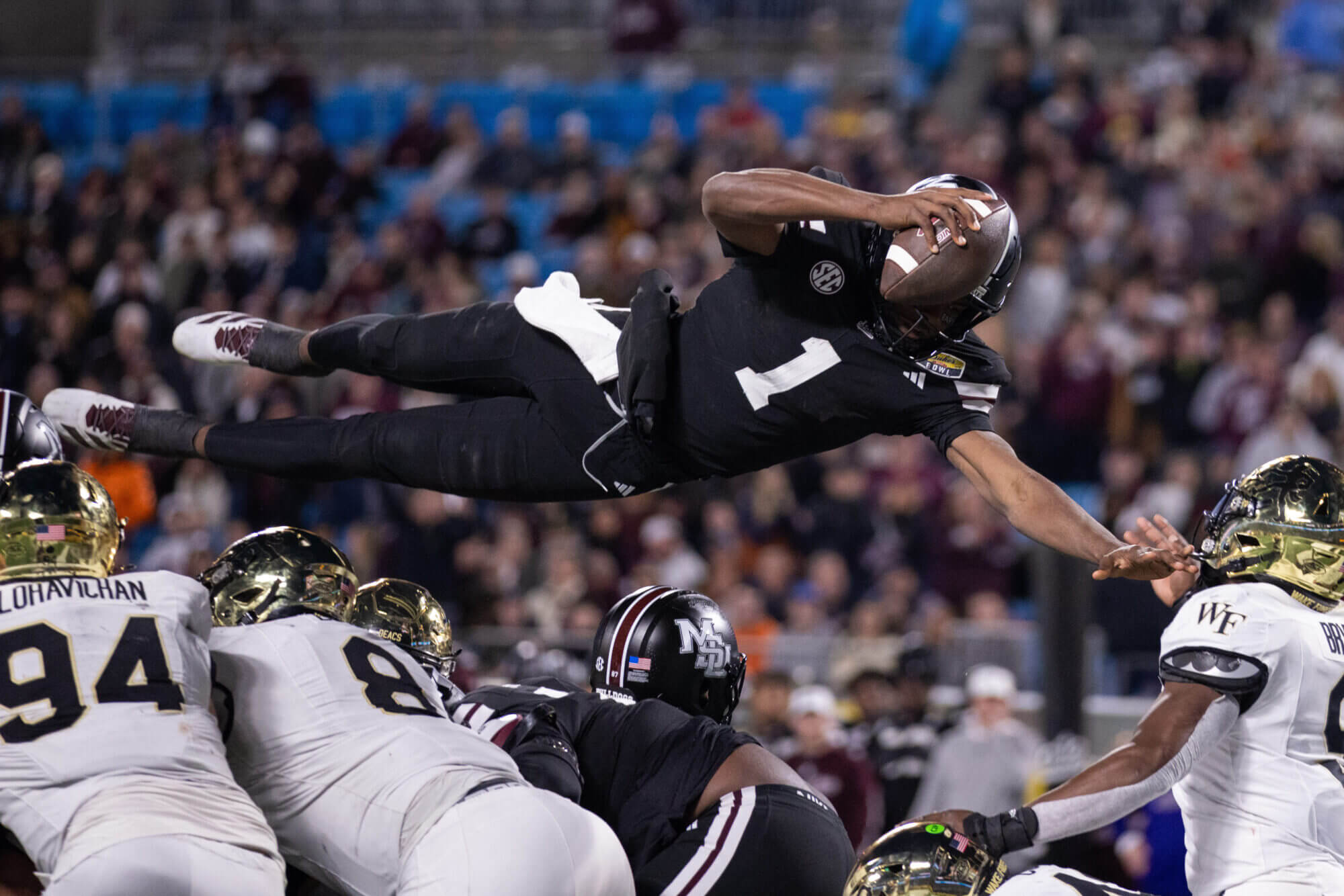
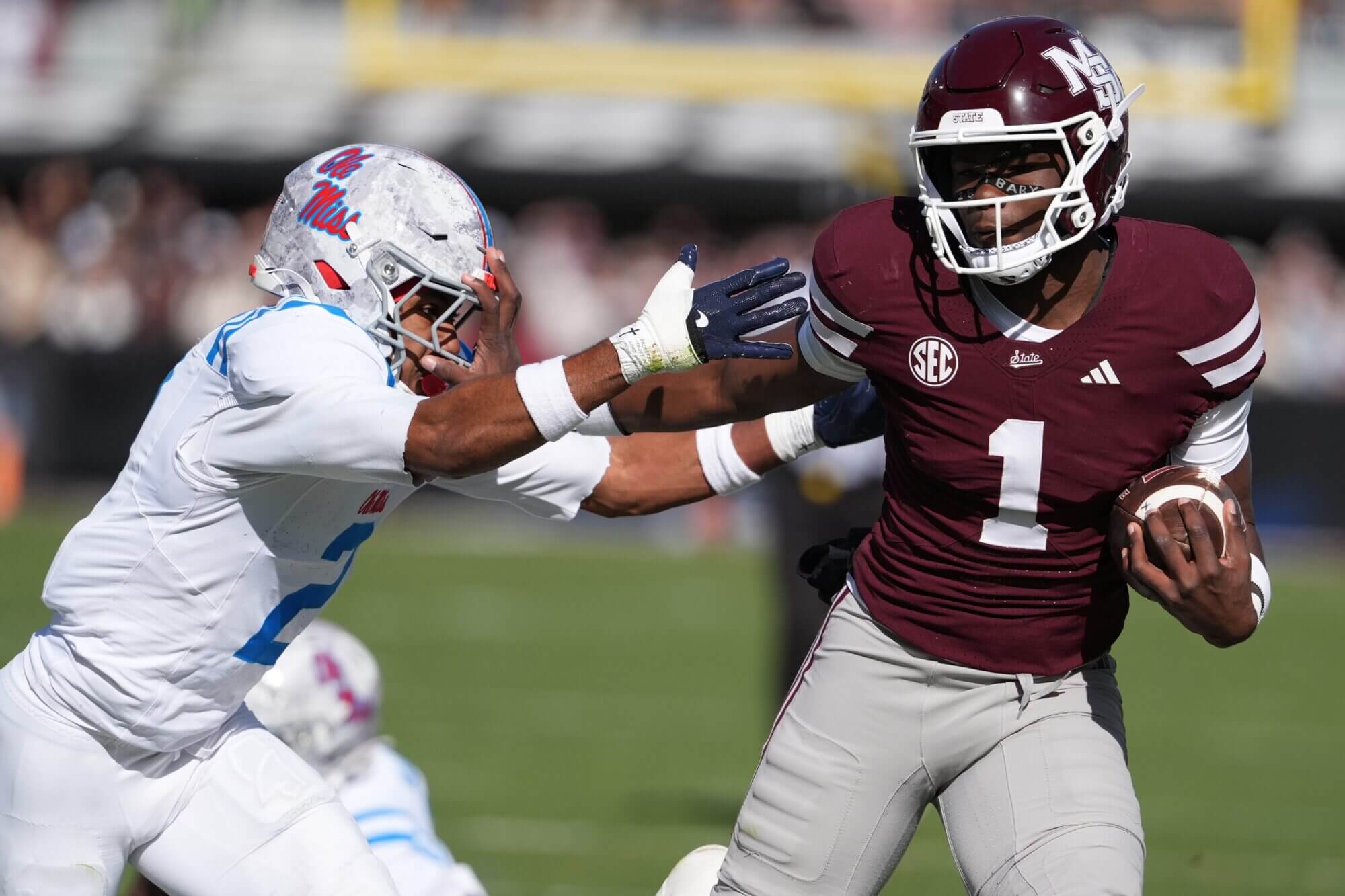
Mississippi quarterback Trinidad Chambliss sued the NCAA in state court on Friday for an additional year of eligibility so he can play for the Rebels next season.

The suit filed in Lafayette County came a week after the NCAA denied Ole Miss’ request for an extra year, saying the university and Chambliss’ previous school — Ferris State — failed to provide adequate medical documentation to back up the request.

The lawsuit filed Friday called the NCAA’s denial in “bad-faith, unreasonable and arbitrary,” and detailed Chambliss’ history of illness and included letters from physicians.

“Despite the duty of good faith and fair dealing it owes to Trinidad, the NCAA insists on considering the evidence in Trinidad’s case in an isolated, rather than comprehensive manner; interpreting its rules to impose requirements not contained therein; taking unreasonable if not irrational positions; and acting in an arbitrary and capricious manner in its decision-making and ruling,” the suit says.

Ole Miss’ arguments revolve around the fact that the 23-year-old Chambliss, although he has been in college for five years, has only played three years of college football because of that medical history.

“Trinidad first enrolled in Ferris State in the fall of 2021, but medical and physical incapacity prevented his ability to adequately train and condition and develop athletically,” the suit says.

After taking a redshirt his first season at Ferris State in 2021-22, Chambliss was held out in his second season for medical reasons.

“Obviously, Trinidad’s medical conditions, which rendered him incapable of competing in any game during these years, were beyond his or Ferris State’s control,” the suit says.

He played two more seasons at the Division II school in Michigan, leading the Bulldogs to a national championship before transferring to Ole Miss before the start of this season.

Chambliss completed 294 of 445 passes (66.1%) for 3,937 yards with 22 touchdowns and three interceptions for Ole Miss (13-2), which set a school record for wins, including two after making the College Football Playoff for the first time. He ran for 527 yards and eight more TDs.

The Rebels lost 31-27 to Miami in the College Football Playoff semifinals on Jan. 8.

The NCAA, when contacted Friday, did not have a new statement, but referred to its statement from a week ago saying “This decision aligns with consistent application of NCAA rules.”

The NCAA said in that week-old statement that approval of such waivers requires schools to submit medical documentation from a treating physician at the time of a student’s incapacitating injury or illness.

“The documents provided by Ole Miss and the student’s prior school include a physician’s note from a December 2022 visit, which stated the student-athlete was ‘doing very well’ since he was seen in August 2022,” the NCAA said. “Additionally, the student-athlete’s prior school indicated it had no documentation on medical treatment, injury reports or medical conditions involving the student-athlete during that time frame and cited ‘developmental needs and our team’s competitive circumstances’ as its reason the student-athlete did not play in the 2022-23 season.”

Ole Miss athletic director Keith Carter previously said the school will appeal the NCAA’s ruling.

Growing up Jewish in Mississippi: Optimism and hope amid the hate 

0
The audio version of this story is AI generated and is not human reviewed. It may contain errors or inaccuracies.

Editor’s note: This essay is part of Mississippi Today Ideas, a platform for thoughtful Mississippians to share fact-based ideas about our state’s past, present and future. You can read more about the section here.


It has been 25 years since I lived in Jackson, Mississippi, and whenever someone finds out I’m Jewish and from there, their first response is usually, Wait, there are Jews in Mississippi?

I am proud to always answer yes.

Beth Israel Congregation in Jackson, and the loving community that calls it home, shaped me into the person I am today.

My family has been part of that community for decades. My grandfather and father served as temple presidents; my mom grew up in the community and later served as sisterhood president.

I have vivid memories of my grandmother walking up and down the aisles during Rosh Hashanah and Yom Kippur, asking people if they had somewhere to go and inviting dozens back to her house to make sure no one observed the holidays alone.

Beth Israel was where my parents were married. It was where my sister and I both became Bat Mitzvahs, where we formed our Jewish identity through religious school and participation in our small but mighty youth group. It was where my husband and I married.  

Alexis Schwartz Credit: Courtesy Photo

Last Saturday, Beth Israel Congregation was set on fire by someone who hates Jews simply for being Jews. Seeing the charred images of the library is painful. I have vivid memories of being in that library playing hide-and-seek, participating in classes and youth group meetings, getting ready for my wedding  and signing my ketubah in that room.

If I close my eyes, I can see the ark where the Torahs—now reduced to ash—once sat. I can see the books lining the walls that held our community’s history. I remember showing my children the plaques commemorating congregants’ milestones, including several from my own family, which have now been reduced to debris.

Growing up Jewish in Jackson made me a member of two diaspora communities – the Jewish one and the Mississippi one. In the aftermath of the fire, I have received messages from many people who are part of my Mississippi diaspora—some Jewish, mostly not—who have beautiful memories of visiting Beth Israel with me. 

For many of my friends, Beth Israel and my family were the only meaningful encounters with Jews they have ever had, and this fire has affected them in ways they did not expect.

This is not the first time Beth Israel has been targeted. In September 1967, the Ku Klux Klan firebombed the synagogue in retaliation for Rabbi Perry Nussbaum’s support of the Civil Rights movement. I grew up always knowing it was part of my community’s history.

What history books rarely emphasize is how that bombing brought the Jackson faith community together. In its aftermath, white and Black clergy were among the first to condemn the hatred, and members of the Jewish community played a significant role working secretly to help uncover the KKK bombings of the 1960s.

Last week’s fire was not an isolated incident. It is the most recent symptom of the dangerous rise in antisemitism facing Jewish communities across the country and around the world. Since the Hamas attacks on Oct. 7, 2023, the European Jewish Congress reports at least 20 attacks on synagogues across the globe. 

Jews make up less than 2% of the U.S. population, yet we are the targets of roughly 16% of all hate crimes and nearly 70% of religion-based hate crimes, according to the FBI. American Jewish Committee’s State of Antisemitism in America 2024 report found that 56% of American Jews have altered their behavior out of fear of antisemitism, and 1 in 3 has personally experienced it. Each one of these statistics is a person — a mom or dad, a brother, sister or child.

This photo shows damage to the Beth Israel Congregation synagogue library from a fire that occurred hours earlier on Saturday, Jan. 10, 2026, in Jackson. Credit: Courtesy of Beth Israel Congregation
These troubling numbers highlight why antisemitism is not just a Jewish problem to solve. We need people to listen when we explain why antisemitic violence must be confronted clearly, forcefully and without hesitation. Our fear — rooted in generational trauma — of rising hateful rhetoric from all sides of the political spectrum is real and has consequences.  We need allies who refuse to look away and choose to stand up and take action.

That was apparent last May, when I was staffing an American Jewish Community event at the Capital Jewish Museum in Washington, D.C., in which Sarah Milgrim and Yaron Lischinsky were murdered after leaving the event.

The event was devoted to how grassroots diplomacy can transform the Middle East through humanitarian aid and cross-cultural collaboration. Many of the more than 100 people there were not Jewish. But they came together in a time of need, unified in purpose and in hope. 

A few months later, a German journalist asked me how I can stay optimistic despite that horrible night. That wasn’t a question I have ever considered. Growing up Jewish in Mississippi has always meant that optimism is the only option.

Being a part of Beth Israel taught me many things, most importantly that community is an antidote to many of the problems of the world, that Jewish joy is always stronger than hate, and that showing up for people in their time of need is often the holiest thing you can do. Jews in Mississippi – and pretty much anywhere else, for that matter – need that help more than ever.


Bio: Alexis (Larkin) Schwartz, a native of Jackson, is the associate director at American Jewish Committee in Washington. She previously worked as a director at the Jewish Federations of North America.

At Jackson prayer service, people of many faiths support Beth Israel after synagogue arson

0
The audio version of this story is AI generated and is not human reviewed. It may contain errors or inaccuracies.

Beth Israel Congregation Rabbi Benjamin Russell and Congregation President Zach Shemper expressed gratitude for the outpouring of support during Thursday night’s All-City Call to Prayer in Jackson, days after an attacker set the congregation’s synagogue on fire.

Jackson Mayor John Horhn and the city’s Inter-Faith Task Force featuring religious leaders across faiths and denominations led a crowd of Jacksonians through prayers and a call to action – an event that had been planned before the fire but took on new urgency after it.

Jackson Mayor John Horhn speaks during the 2026 All City Call to Prayer and Action on Thursday, Jan. 15, 2026, at Thalia Mara Hall in Jackson. Credit: Eric Shelton/Mississippi Today
The event, held at Thalia Mara Hall, allotted time for prayers and special remarks for Beth Israel. Jackson’s only Jewish congregation was a primary focus of the service after the early Saturday fire that destroyed part of the synagogue, which is the state’s largest.

Stephen Spencer Pittman, 19, of Madison is facing federal and state arson charges in the attack.

“I wish I could say that this moment of our coming together in mourning and solidarity and hope and in friendship was unique, but unfortunately we have been here before,” Shemper said. 

“For us Jews, we have been here for literally thousands of years – between dark and light, hate and love, between being feared and accepted, between going and coming, between birth and destruction and rebuilding,” he said. “And we will always rebuild.”

Shemper told the story of a similar attack on Beth Israel in 1967, when the Ku Klux Klan bombed the building in retaliation for Rabbi Perry Nussbaum’s civil rights activism. In the aftermath, many non-Jewish people in the local community supported the synagogue and denounced the attack.

Zach Shemper, president of Beth Israel Congregation, speaks during the 2026 All City Call to Prayer and Action on Thursday, Jan. 15, 2026, at Thalia Mara Hall in Jackson. Credit: Eric Shelton/Mississippi Today

“Beth Israel is not brick and mortar,” said Russell, who spoke after Shemper. “Beth Israel is the people who gather, who pray, who learn, who argue, who care for one another. Wherever we gather, that is Beth Israel.”

Russell said the attack was meant to make members of Beth Israel feel like they didn’t belong, but the community has embraced them with love and solidarity.

“We are rebuilding trust. We are rebuilding connection. We are rebuilding with the knowledge that we do not do this work by ourselves,” he said.

To close, the rabbi offered a blessing to the crowd, who gave him a standing ovation.

Benjamin Russell, rabbi of Beth Israel Congregation, speaks during the 2026 All City Call to Prayer and Action on Thursday, Jan. 15, 2026, at Thalia Mara Hall in Jackson. Credit: Eric Shelton/Mississippi Today

After their remarks, the crowd huddled into small groups to pray for Beth Israel. 

The mayor and Derrick Johnson, national president and CEO of the NAACP, spoke before Shemper and Russell.

“It’s an indictment on our country, on our community, that there wasn’t a way for someone to stand in the gap, to turn him around, to make him inspired not to make that journey,” Horhn said of Pittman.

Horhn led the crowd in a prayer for a better Jackson, for healing and for the entire Jewish community.

“Help us build a Jackson that’s safer, that’s more respectful and more hopeful for everyone,” he said.

Audience members create prayer circles during the 2026 All City Call to Prayer and Action on Thursday, Jan. 15, 2026, at Thalia Mara Hall in Jackson. Credit: Eric Shelton/Mississippi Today

Johnson, who lives in Jackson, compared the fire at Beth Israel to similar hate-based attacks in El Paso, Texas; Louisville, Kentucky; and Pittsburgh. He said the common denominator between the attackers is that they were radicalized on social media platforms.

Johnson also said people need to push back against the current political climate. He said this climate was “germinating directly from the White House,” to which one unknown attendee called out, “It’s not coming from the White House.” Johnson did not acknowledge the response.

“Under no circumstance should we allow political platforms to divide us for an agenda that has nothing to do with who we are and who we should be,” Johnson said. “We must learn from our history, not repeat it.”

The night began with worship songs and ended with more prayers for the mayor, city and state officials, and for the state and city itself. At the end, faith groups were invited to adopt an area around their place of worship to do projects that would improve the community. The first workday will be Monday on Martin Luther King Jr Day.

If convicted on the state charge, Pittman’s sentence could be enhanced under a state law that punishes “offenses committed for discriminatory reasons.” The federal government did not immediately not charge him with a hate crime.

Elder George Tyler prays during the 2026 All City Call to Prayer and Action on Thursday, Jan. 15, 2026, at Thalia Mara Hall in Jackson. Credit: Eric Shelton/Mississippi Today

A federal affidavit alleges Pittman broke into Beth Israel early Saturday morning, doused the lobby with gasoline and set the building ablaze. 

The fire destroyed the library and administrative offices, two Torahs and the synagogue’s Tree of Life. Several other Torahs were damaged. One Torah that survived the Holocaust and was in a glass case remained unharmed. Beth Israel is accepting donations for rebuilding efforts.

Pittman was arrested at a hospital in Jackson, where he was being treated for burn injuries.

Authorities say Pittman confessed after being arrested that he targeted the synagogue for its “Jewish ties,” and called Beth Israel a “synagogue of Satan.”

Pittman was released from the hospital Wednesday and is in federal custody ahead of his preliminary hearing in federal court next Tuesday.

The attack drew national and international attention. State, local and national officials have condemned the arson and antisemitism. U.S. Rep. Bennie Thompson, a Mississippi Democrat, has called on the FBI to investigate the incident as a hate crime.

Former Southern Miss player is among 20 charged in college basketball gambling scheme

0
The audio version of this story is AI generated and is not human reviewed. It may contain errors or inaccuracies.

Federal prosecutors have revealed a sprawling scheme to rig college basketball games while yielding big payouts to gamblers. A former Southern Miss player, Picayune native Mo Arnold who last played for the Golden Eagles in the 2023-24 season, is among 20 men charged.

According to an indictment unsealed Thursday, fixers started with two professional games in China before turning their focus to recruiting college players in America to participate in similar point-shaving efforts as recently as January 2025.

The indictment, which includes charges against current and former college players, coincides with multiple NCAA probes into sports-betting violations.

FILE – NCAA logo displayed on the fence before an NCAA softball game between Jacksonville and FGCU, March 24, 2024, in Jacksonville, Fla. Credit: AP Photo/Gary McCullough

“We were made aware this morning of federal charges brought against a former Southern Miss men’s basketball player as part of a larger sports betting probe,” Southern Miss athletic director Jeremy McClain said in a statement Thursday. “This news is disappointing to everyone associated with Southern Miss athletics. Integrity is important to anyone who loves college sports, and the university stands ready to assist in making sure incidents like these are removed from the competitive space in college athletics.”

Arnold, a point guard, played three seasons at USM, the best being his senior year when he averaged 6.2 points, 2.4 assists and 3.5 rebounds per game. Southern Miss finished 16-16 overall and 9-9 in the Sun Belt Conference that season. Arnold also started 30 of 33 games in the 2022-23 season during which USM won finished 25-8 and won the Sun Belt regular season championship.
Here’s what to know about the latest case:

The types of bets that were flagged

Gamblers can bet on games with the point spread, a projected total by which one team is favored to win against another team.

Winning a bet on the favorite would mean that team won by more than the projected point spread. A winning bet on the underdog would require that team to win outright or lose by fewer points than the spread.

How this scheme allegedly worked

Prosecutors say players involved could manipulate a game, and therefore the bets related to it, by intentionally underperforming. Gamblers working with those players could then place wagers based on “higher degree of certainty” as to whether a team would cover or fall short of the spread, according to the indictment.

Information is displayed during a news conference to announce charges against 20 people including 15 former college basketball players, in what prosecutors called a betting scheme to rig NCAA and Chinese Basketball Association games, Thursday, Jan. 15, 2026 in Philadelphia. Credit: AP Photo/Tassanee Vejpongsa

For example, the indictment charges former college and NBA player Antonio Blakeney with taking payments from two high-stakes gamblers to underperform while in the Chinese Basketball Association during the 2022-23 season.
In one such game in March 2023, Blakeney scored roughly 21 points below his scoring average and his team lost by 31. That covered the spread for the favored opponent so fixers could win most of their bets, according to the indictment.

Fixers later recruited college players to help ensure their teams failed to cover the spread either for the first half or an entire game, offering payments typically ranging from $10,000 to $30,000 per game.

The college games that were impacted

According to the indictment, the scheme eventually involved more than 39 players on 17 Division I men’s basketball teams who manipulated or attempted to manipulate 29 games in the 2023-24 and 2024-25 seasons.

Most games were in the regular season and involved teams at the mid-major level, though DePaul in the Big East had three games cited in the indictment (against Georgetown, Butler and St. John’s) from late in the 2023-24 season.

The indictment listed at least four postseason games impacted in March 2024: Robert Morris’ first-round game against Purdue Fort Wayne in the Horizon League Tournament, New Orleans’ second-round game against Lamar in the Southland Conference Tournament, and Abilene Christian’s two games (against Texas A&M-Corpus Christi and Tarleton State) in the CollegeInsider.com Tournament.
Other schools that were affected

Eastern Michigan, Nicholls State, Tulane, Northwestern State, Saint Louis, La Salle, Fordham, Buffalo, North Carolina A&T, Kennesaw State, Coppin State and Alabama State all had players who allegedly impacted games.

Four charged players competed for their current teams within the past week, however allegations against them don’t involve the 2025-26 season.

They are: Kennesaw State’s Simeon Cottle; Eastern Michigan’s Carlos Hart, with allegations tied to a previous stint at New Orleans; Texas Southern’s Oumar Koureissi, tied to his time at Nicholls State; and Delaware State’s Camian Shell, tied to his stop at North Carolina A&T.

Cottle, the preseason pick for Conference USA player of the year, is averaging 20.2 points and had 21 points in Wednesday’s win against Florida International. By Thursday, however, Kennesaw State had released a statement that Cottle was suspended indefinitely from all team activities.

Separately, Eastern Michigan announced Hart’s suspension from team activities pending the outcome of the case. Koureissi — who played for Texas Southern as recently as Saturday — no longer appears on the Tigers’ online roster, while the school responded to an email from The Associated Press seeking comment with a statement saying Koureissi “has been removed from the team.”

Delaware State didn’t immediately return an email from the AP requesting comment Thursday.

In a statement Thursday, Buffalo athletic director Mark Alnutt said the school will continue to cooperate with investigators.

“We believe these to be isolated incidents,” he said, “that in no way reflect the values and core ethics of the Division of Athletics or our men’s basketball program.”

What the NCAA has done about sports-betting concerns

In a statement Thursday, NCAA president Charlie Baker said enforcement staffers from college sports’ governing body have opened sports-betting probes into roughly 40 athletes from 20 schools in the past year.

Eleven athletes from seven schools were ruled permanently ineligible, while 13 others from eight schools failed to fully cooperate in NCAA probes, with none competing today.

News of those cases has dripped out over the past year.

FILE – NCAA President Charlie Baker speaks during the Division I Business Session at the annual NCAA convention, Jan. 15, 2025, in Nashville, Tenn. Credit: AP Photo/George Walker IV

For example, the NCAA banned three players in September for betting on their own games at Fresno State and San Jose State.

In October, the NCAA announced three former Eastern Michigan players refused to cooperate with its investigation. Two of those, Da’Sean Nelson and Jalen Terry, are defendants in the unsealed indictment.

A month later, the NCAA announced sanctions against six more players, a list that included two defendants — former New Orleans players Cedquavious Hunter and Dyquavion Short — from Thursday’s unsealed indictment. Hunter, nicknamed “Dae Dae,” later said on ABC’s “Good Morning America” that he participated in point-shaving.

Later in November, the NCAA ruled former Temple guard Hysier Miller permanently ineligible for placing dozens of bets on Owls games, including some against his team, during the 2022-23 and 2023-24 seasons.

And in December, the NCAA said former San Francisco player Marcus Williams gave information about his stats in upcoming games during the 2024-25 season to a player from another school who was betting on his performances. Williams reached a negotiated settlement to close the case and had no remaining eligibility.

___

AP Sports Writer John Wawrow contributed to this report.

‘Absent’ Republicans, heavy whipping help Speaker Jason White pass school-choice bill

0
The audio version of this story is AI generated and is not human reviewed. It may contain errors or inaccuracies.

After perhaps the most intense vote-whipping he’s done as House speaker, Republican Jason White prevailed on a major school-choice bill, but only by a razor-thin, two-vote margin, with the future of the legislation uncertain. 

Despite the heavy lifting and House Bill 2’s passage after a four-hour debate, the final vote count could have been tied if every member had voted. 

The 122-member House passed the school-choice bill by a vote of 61-59. Fifty-nine Republicans and the chamber’s two independents voted for the measure. Seventeen Republicans, though, joined all of the chamber’s 42 Democrats to oppose it.

Two House members — Republicans Price Wallace of Mendenhall and Clay Deweese of Oxford — did not vote. 

Deweese was marked present on the House’s roll for the day. Wallace was marked absent. 

After the House concluded its four-hour debate on the school choice bill, Deweese, as chairman of the Appropriations C Committee, immediately presided over a roughly hour-long budget hearing to hear testimony from the Division of Medicaid. 

After the committee meeting, Deweese told Mississippi Today that he was “unavailable” to vote on the school choice bill. When asked why he was unavailable, he didn’t answer the question and walked off into a suite of legislative offices where the public isn’t allowed. 

He did not respond to a separate follow-up question asking how he would have voted on the measure if he were available. 

A legislative tactic that lawmakers can deploy is what’s commonly called “taking a walk,” or leaving the chamber and not voting on a bill. Often, this is a way to avoid drawing the wrath of legislative leadership or voters back home.

The two-term lawmaker represents Lafayette County, which contains two A-rated school districts. Oxford School District Superintendent Bradley Robertson penned an opinion essay for Mississippi Today in October arguing against school-choice legislation. 

Wallace, on the other hand, was not seen at the Capitol on Thursday and was marked absent on the roll. Wallace, a farmer, later told Mississippi Today that he didn’t take a walk. He was repairing some broken farm equipment and could even supply a picture of what he was trying to fix. 

Wallace said if he had been present at the Capitol, he would have voted against the school-choice measure. 

Whenever a speaker puts their full weight behind a policy, it’s long been the realpolitik that House members can gain the speaker’s favor by voting with the leader. Voting against a speaker can get a member demoted, or back-benched or make it difficult to pass their own legislation. 

In the Mississippi House, the speaker wields enormous influence by helping control which bills die and which ones become law. He also decides which members lead committees and can remove them as leaders.

Last year, White removed Rep. Stacey Hobgood-Wilkes, a Republican from Picayune, as the leader of the House Drug Policy Committee.

White never said why he yanked her from the committee, but the Pearl River County lawmaker said it was because she pushed back against White over disagreements on legislation that sought to regulate pharmacy benefit managers. 

While the House debated the lengthy bill on Thursday, Senate Education Chairman Dennis DeBar, a Republican, told Mississippi Today the Senate still doesn’t have the votes to pass a robust school choice package, as the House is pushing.

He also alluded to moves by House Republican leaders to finagle over votes in Wednesday’s committee meeting, such as asking some members to skip the meeting instead of voting no.

“The Senate position is what we passed, and I’m going to support the Senate position,” DeBar said. “I’ve got votes on a single bill, I’m not twisting arms or asking people to walk. I’ve got the full support of the Senate. When the House bill gets here, if it gets here, we’ll deal with it in due course.”

After the vote, White told reporters that he is not pressuring House members to vote a certain way and said arm-twisting was something previous House speakers would do.

“I think pressure comes to bear from voters and politics, not from a heavy hand in leadership,” White said.