Audio recording is automated for accessibility. Humans wrote and edited the story.
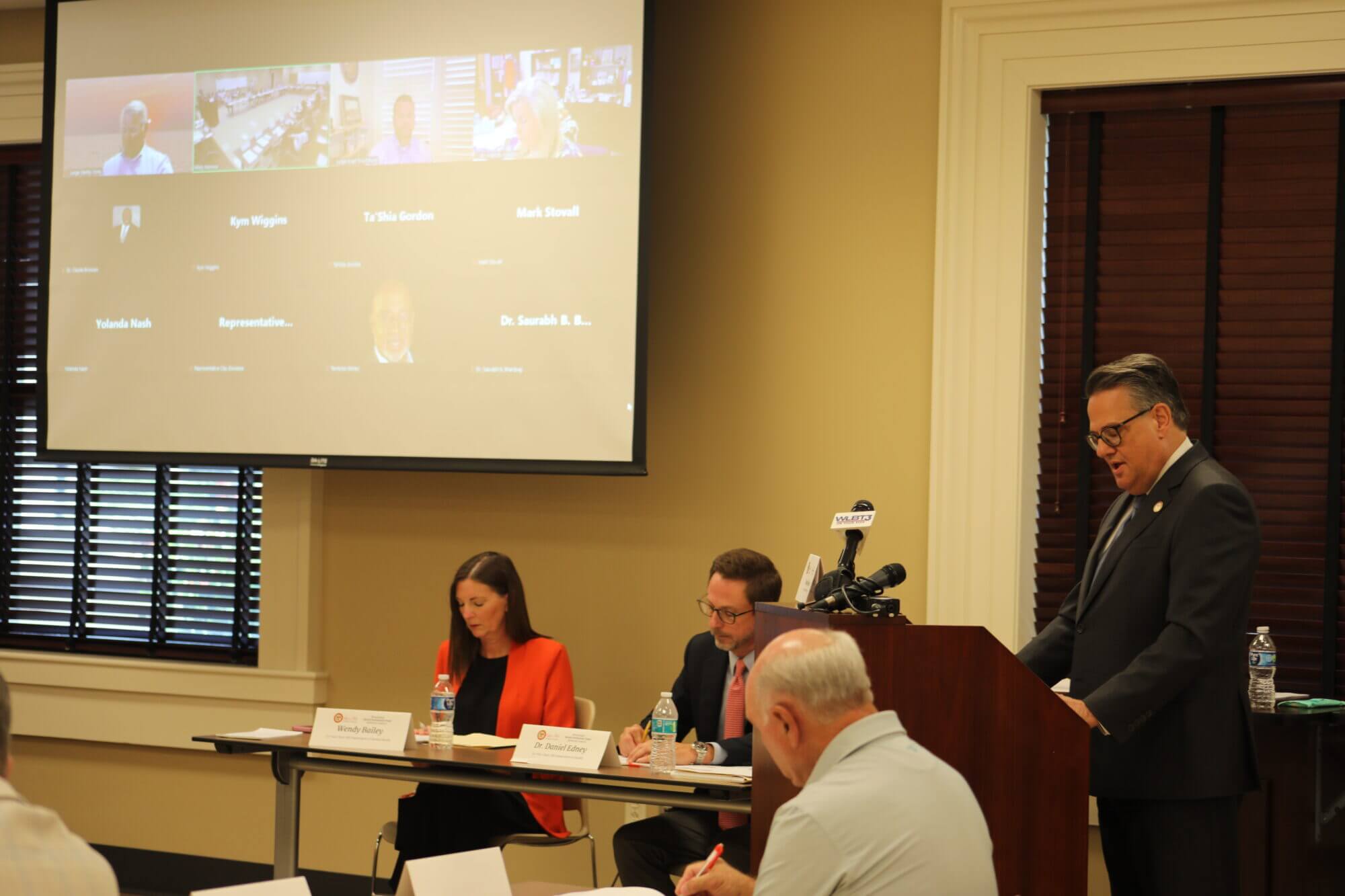
Members of Mississippi’s Opioid Settlement Fund Advisory Council are scrambling to ensure millions of dollars they oversee can actually be used for awarded addiction-response projects.
State lawmakers earlier this year awarded around $50 million in opioid settlement money — payments made by the companies that contributed to the overdose deaths of more than 10,000 Mississippians. The contracts between the state and the awardees say that the selected organizations will be reimbursed for every three months of work.
The agreements were supposed to go into effect on July 1, but some organizations that were selected to receive the money haven’t signed them yet because the upfront project costs would be too high.
The Legislature awarded the north Mississippi community mental health center Communicare $5.2 million to build a new pediatric emergency and long-term residential treatment center in Panola County — the first of its kind in the state. But Melody Madaris, the executive director of Communicare and a member of Mississippi’s Opioid Settlement Fund Advisory Council, told other members at a meeting on Tuesday that with the current contract setup, her organization couldn’t start work on the center.
“There’s no way that our agency can purchase that building and wait for the reimbursement for an entire quarter,” she said at the meeting. “If we were capable of doing that, we would’ve already done it.”
Madaris told Mississippi Today after the meeting that she has yet to sign Communicare’s opioid settlement contract because of this dilemma. Mississippi Deputy Attorney General Doug Miracle, who filled in as council chair for Attorney General Lynn Fitch on Tuesday, told the other members that less than half of the grant agreements Fitch’s office was responsible for had been signed and returned by applicants.
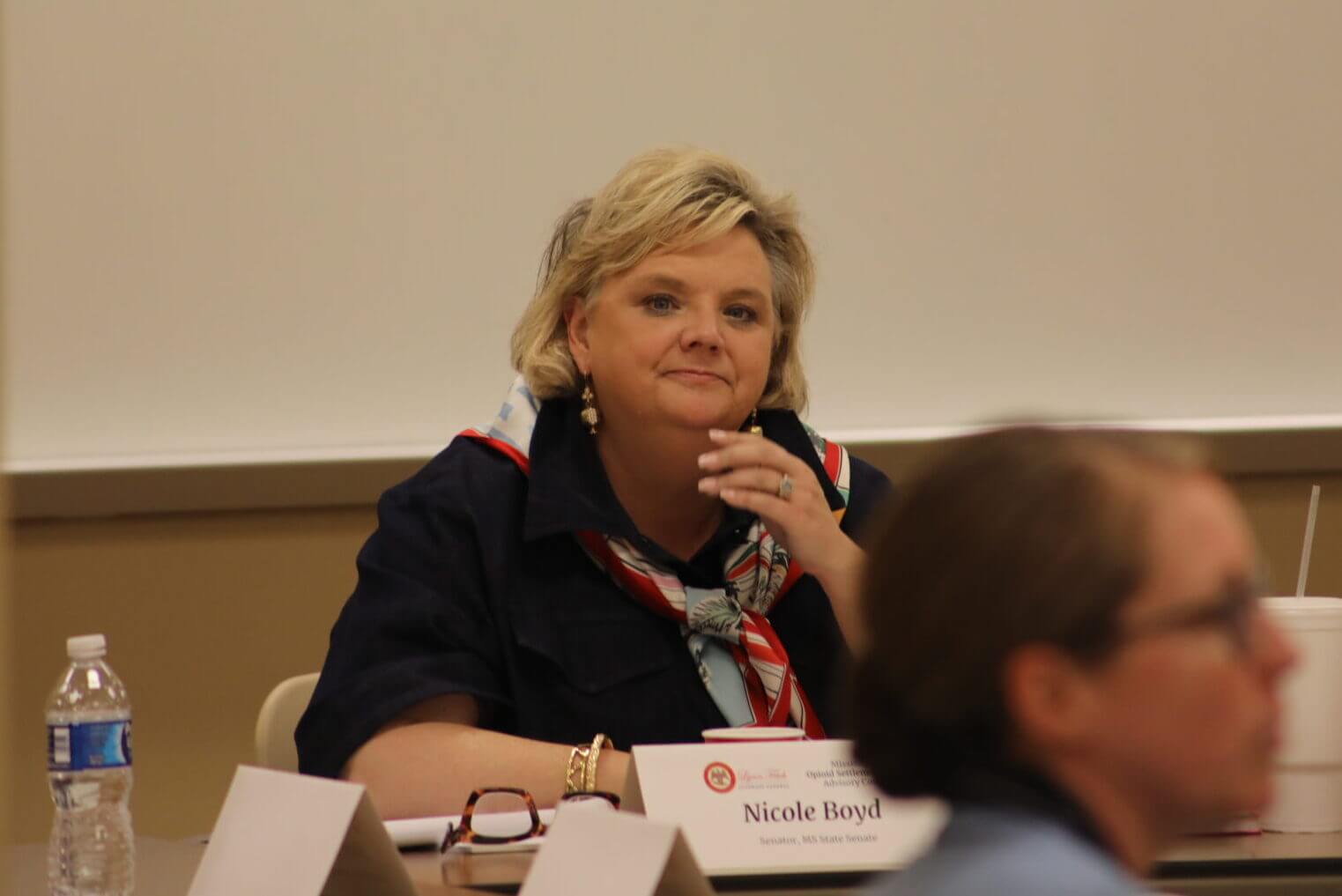
Sen. Nicole Boyd, a Republican from Oxford and a council member, said she also heard from recipients that waiting three months could prevent them from ever starting their addiction response work.
“It’s a difficult issue when it’s quarterly, especially these small nonprofits that we want to be able to work with,” Boyd said at the meeting. “They’re doing great stuff, many of them.”
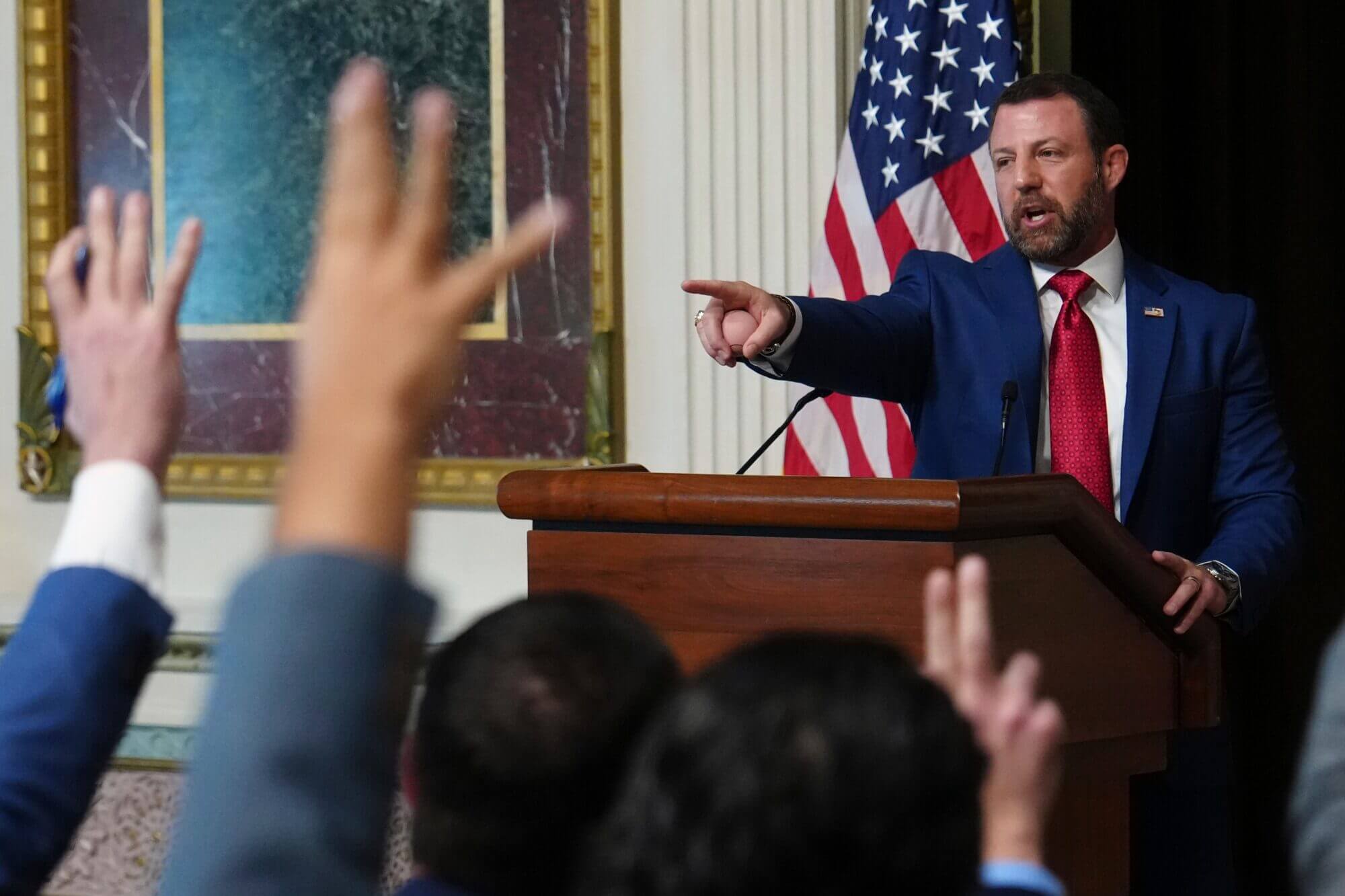
Nicole Boyd, a Republican state senator from Oxford, at Mississippi’s Opioid Settlement Fund Advisory Council meeting on July 21, 2026 Credit: Allen Siegler / Mississippi Today
The $50 million of legislative awards is the first time Mississippi elected officials have used the portion of opioid lawsuit money the settlements say must be used to address addiction. It’s the only state in the country that hadn’t spent any of that share by 2024, according to a KFF Health News investigation.
Boyd said she was getting texts from people with applicant organizations about the reimbursements as the meeting was happening.
“I think it is a larger problem than the council realizes at this point,” she said to the other members.
In a roll call vote, the majority of members agreed to allow opioid settlement grant recipients who applied in 2025 to propose alternative fund disbursement arrangements to their contracts, and the council would review each of those requests at the next meeting, which Deputy Attorney General Doug Miracle said would take place in the next two weeks.
Miracle voted against the motion. He told members that opening up changes to the council-approved contracts for this cycle could further delay Mississippi from using opioid settlement money to address addiction, including for the applicants who can manage the 90-day reimbursement arrangement.
“The packages went out,” he said. “People have been told what the rules of the road were, and they’re returning them.”
Council members did not specify how applicants should go about requesting these changes.
The Attorney General Office Communications Director MaryAsa Lee did not respond to an emailed question asking for further clarity. Miracle declined a Mississippi Today interview after the meeting.
Audio recording is automated for accessibility. Humans wrote and edited the story.
In June, state unemployment remained unchanged for the fourth month in a row and year over year, at 3.8%.
State economist Corey Miller said this is a continuation of the no-hire, no-fire job market of the past few months. Miller said there was a lot of hiring coming out of the pandemic but with ongoing economic uncertainty, businesses are likely reluctant to hire right now.
Mississippi’s seasonally adjusted labor force participation rate, currently at 55.2%, is the lowest it’s been in two years. This follows national trends – the U.S. labor force participation rate in June of 61.5% was the lowest it’s been in five years.
Looking forward, new estimates from the University Research Center and the state economist predict little change in employment for 2026 and a little growth in 2027 in Mississippi and nationally.
Katherine Lin
According to the center, employment in Mississippi grew an average of 1.3% each year from 2021 to 2025. It predicts that employment will decrease by an average of 0.1% each year between 2026 and 2030.
The state GDP follows similar patterns and predictions with growth slowing from 2.5% in the previous five years to 1.3% forecast over the next five.
Miller said that while it’s a downshift, the state remains a little ahead of where it was with GDP prior to the pandemic. These forecasts reflect some continued economic uncertainty in regards to tariffs and the ongoing war in Iran.
Golden Triangle LINK
The Golden Triangle LINK, a regional partnership between Oktibbeha, Lowndes and Clay counties, has been nationally lauded for bringing new companies and economic development to northeast Mississippi.
But Oktibbeha County is reassessing its relationship with the regional economic development organization. In June, the Oktibbeha Board of Supervisors served the LINK a two-year notice that it could terminate its contract in 2028.
The Oktibbeha County Board of Supervisors and Starkville Mayor Lynn Spruill have expressed concerns over the LINK’s leadership turnover during the past year and less development being brought to Oktibbeha. In August of 2025, the LINK abruptly fired longtime CEO Joe Max Higgins, citing “workplace behavior and speech.” His successor, who was brought in from outside the organization, stayed less than four months.
The organization is now led by Meryl Fisackerly who previously served as the LINK’s chief operating officer. At a July 13 meeting, Fisackerly talked to the board about the challenges and opportunities in the Oktibbeha County, and the board president expressed optimism about moving forward. He also clarified that the board was not upset with the LINK but rather was taking “an opportunity to have a conversation.”
Other news:
Aluminum Dynamics is investing $200M in Lowndes County to build a recycled aluminum slab plant. The company has already invested $2 billion on an aluminum rolling plant in the county.
A new tenant has signed a lease for the former Levi’s building in Gluckstadt. MEI Industrial Solutions provides industrial services such as rigging and machinery moving. The Levi’s distribution center operated from 1981 until Deember 2024, and has sat vacant since.
Some say that as goes Jackson, so goes Mississippi. If so, there are some positive signs in downtown Jackson. Brunini, Grantham, Grower & Hewes, one of the state’s largest law firms, renewed its lease in downtown for 15 years. A new collaboration between three Mississippi universities and Downtown Jackson Partners will give students an opportunity to work on projects tied to downtown’s revitalization from a studio close to the Governor’s Mansion.
Siemens Energy broke ground on a new $300 million factory in Rankin County where it will manufacture high-voltage switchgears that are used on electric grids.
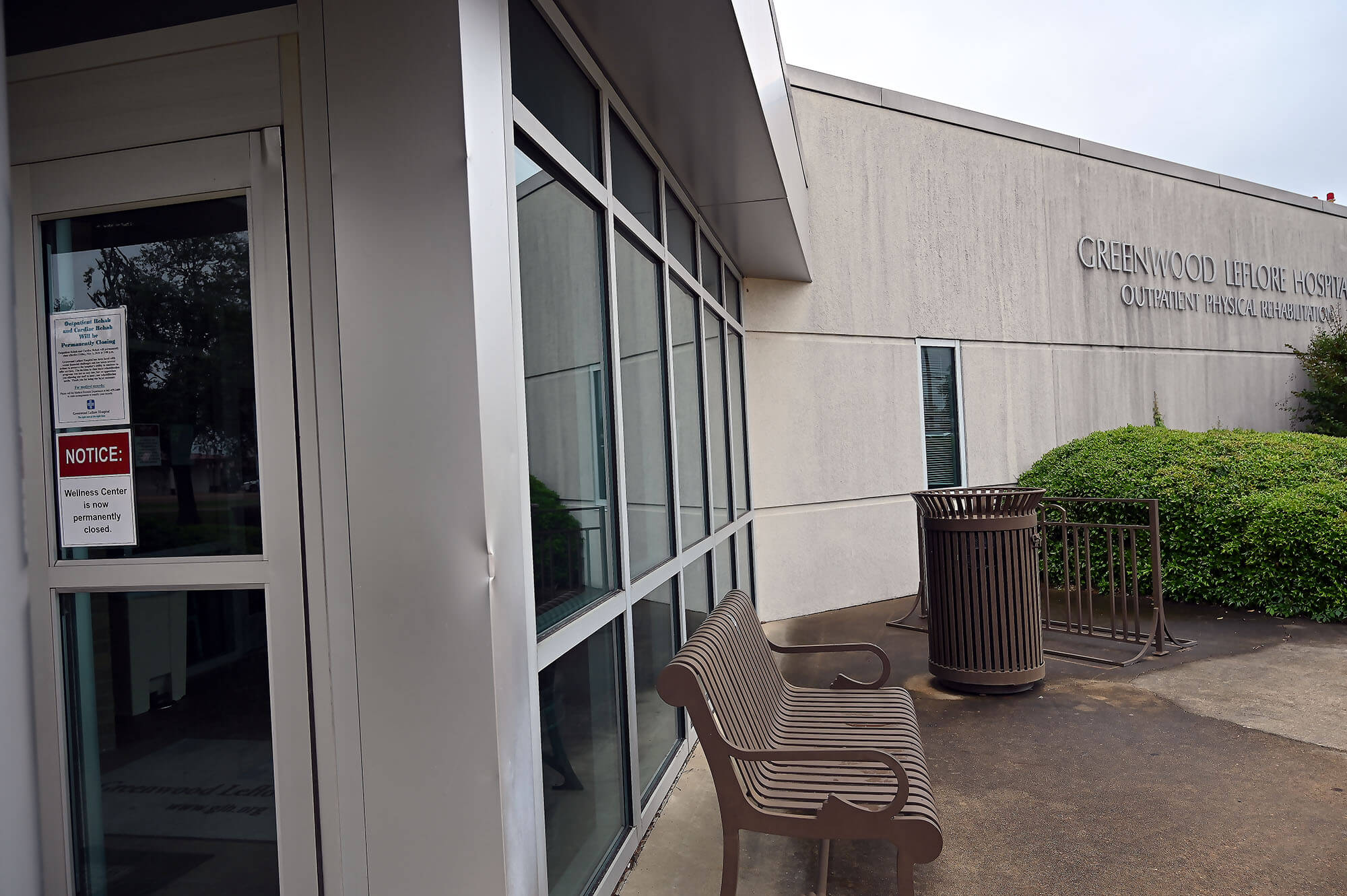
The University of Mississippi Medical Center will take over the Greenwood Leflore Hospital on Aug. 1. The Delta hospital has faced years of financial challenges and filed for bankruptcy earlier this year.
SIP Manufacturing, a beverage manufacturing company, is coming to Southaven. The California-based company said it is investing $100 million to establish operations and will create 187 jobs.
Audio recording is automated for accessibility. Humans wrote and edited the story.
In Brejenn Allen’s painting, a store sits in a field surrounded by rows of crops.
The painting’s title, “Dolla Gentral” is displayed on a distinctive yellow sign. In the expansive sky above the store in the painting, some of the clouds are made up of Dollar General receipts, twisted up and painted over.
“The work is doing two things. It’s honoring my memories and also calling into question or creating a conversation around their business practices and their business model and how it is taking advantage of their consumers,” Allen said.
The Meridian-based artist tries to capture the Mississippi and the South that she has experienced – its people, its beauty and its contradictions.
Her “Dolla Gentral” painting urges the viewer to think about the complex socioeconomic realities of the rural South, she said.
A video Allen made about her painting – she sits in front of a Dollar General store and talks about how the company is often one of the few places to shop in rural areas – has already generated conversation online.
The video has over 3,000 comments and over 1 million views across social media platforms. Some chimed in with a list of Dollar General’s controversies, including the pushing out of mom and pop stores, claims of understaffing and lack of healthy food options. Others said that if a Dollar General is the only option available to people, they should just move closer to urban areas.
“A lot of people didn’t get it when I posted it to social media. They’re like, ‘Oh, why do you shop there? They’re terrible. They’re taking advantage of you,’” the artist said. “We have to shop there. People are not choosing to shop there because that’s the best place for them. They’re shopping there because that’s the only option.”
Brejenn Allen’s artwork “Speedy Cash” is on display at the Patton House and Gallery in Jackson on Wednesday, July 15, 2026.
Brejenn Allen talks about her artwork at the Patton House and Gallery in Jackson on Wednesday, July 15, 2026.
Brejenn Allen’s artwork “That’s the Folks that Sell White Dirt” is on display at the Patton House and Gallery in Jackson on Wednesday, July 15, 2026.
Brejenn Allen’s artwork “Where Y’all Be Fishing At?” is on display at the Patton House and Gallery in Jackson on Wednesday, July 15, 2026.
Brejenn Allen talks about her artwork at the Patton House and Gallery in Jackson on Wednesday, July 15, 2026.
Brejenn Allen’s artwork is on display at the Patton House and Gallery in Jackson on Wednesday, July 15, 2026.
Brejenn Allen talks about her artwork at the Patton House and Gallery in Jackson on Wednesday, July 15, 2026.
Rendell Allen Sr., father of Brejenn Allen, talks about his daughter’s art at the Patton House and Gallery in Jackson on Wednesday, July 15, 2026.
Brejenn Allen’s artwork is on display at the Patton House and Gallery in Jackson on Wednesday, July 15, 2026.
Brejenn Allen talks about her artwork at the Patton House and Gallery in Jackson on Wednesday, July 15, 2026.
A Dollar General in the middle of a field is a familiar sight to Allen and others in rural towns across the country. Allen’s family moved to the small town of Porterville from Indiana when she was 10 years old. The town didn’t have a grocery store so her family would shop at the local Dollar General when they didn’t want to make the long drive to a larger town. She has fond memories of going to the local Dollar General with her dad where he would buy snacks and ice cream sandwiches for her and her siblings.
A 2024 report from the U.S. Department of Agriculture found that when a new dollar store opens, employment and sales at local, independent grocery stores falls. And the drop was larger and longer lasting in rural areas.
Dollar General has close to 600 stores in Mississippi, and in 2023, the state had three dollar stores for every 10,000 people, the highest rate in the country according to an analysis by Mississippi Public Broadcasting.
“There’s a lot of Dollar Generals and people see them without really thinking about it. But then when Ms. Allen put that piece together, it made people pause,” said Garry Brown, the owner of The Patton House and Gallery.
The Patton House is one of the oldest homes in Jackson and now functions as an art gallery and community space. Allen’s work was recently displayed at the house as part of an exhibit called “Back Home Down South” alongside that of fellow artist Christy Meshe as they explored their shared Mississippi roots.
“I think that piece spoke to what America’s going through right now. I think it’s going to ride the wave. It’s a rockstar like she is,” Brown said.
Another of Allen’s paintings in the exhibit captures two people in front of an abandoned Meridian gas station selling “white dirt.” Eating white clay, especially to satisfy cravings from pica and-or pregnancy, is a practice found throughout the American South and across the globe. But researchers caution that consuming white clay over a prolonged period can lead to iron deficient anemia and other side effects. For Allen, the piece captures a very Southern tradition and also honors the entrepreneurship, labor and drive of Mississippians.
“I wanted it to feel inviting to people that aren’t from here, but also representative to people that are from here. So if you’re from here, I want you to feel like, oh, that’s my home girl. She really gets it. And if you’re not from here, to be like, OK, I have a little bit better of an understanding of what Mississippi is like,” Allen said.
The three dimensional texture of the sunset in her painting “The Speedy Cash” reaches out to the viewer, inviting them into the world of the painting. It shows a payday loan store – another ubiquitous feature in poor, rural Mississippi – beneath a vibrant sky, its neon lights glowing.
Payday loan or check cashing stores offer short term loans often without requiring credit reports or credit scores. They promise a quick way to get cash in emergency situations and are used by millions of Americans each year. However, critics say that the high interest rates, fees and industry practices are predatory, and are often used to cover people’s basic expenses. At one time, Mississippi had the highest number of payday loan stores per capita.
“I’ve had to get a loan. So how does this circle back to my own experience with loan places and how I paid my loans off and how I’m in a place now to be able to make work about the places that I used to be?” Allen said.
With support from the W.K. Kellogg Foundation and the Foundation for the Mid South, she will continue to work on a series about check cashing businesses and their role in the Delta.
“It’s filling a need even if it’s taking advantage of people in that specific moment. It’s tough, and I’m trying to capture that tension” Allen said.
“I don’t think we should not paint something or not document it just because you think it has something negative attached to it. Because everybody has their own experience connected,” Allen said.
Among the criticism on social media over her Dollar General piece, many more people commented that they saw their own experience reflected in the painting. Allen says that’s one of the reasons she tries to capture Mississippi in her art.
“Our people and our story are something worth preserving and sharing,” Allen said.
On Thursday, Allen was named South Art’s 2026 Mississippi Fellow for Visual Arts and she will compete for the Southern Prize for Visual Arts.
As part of the fellowship, some of Allen’s work, including “Dolla Gentral,” will be displayed at the Western Carolina Fine Art Museum in Cullowhee, North Carolina.
Audio recording is automated for accessibility. Humans wrote and edited the story.
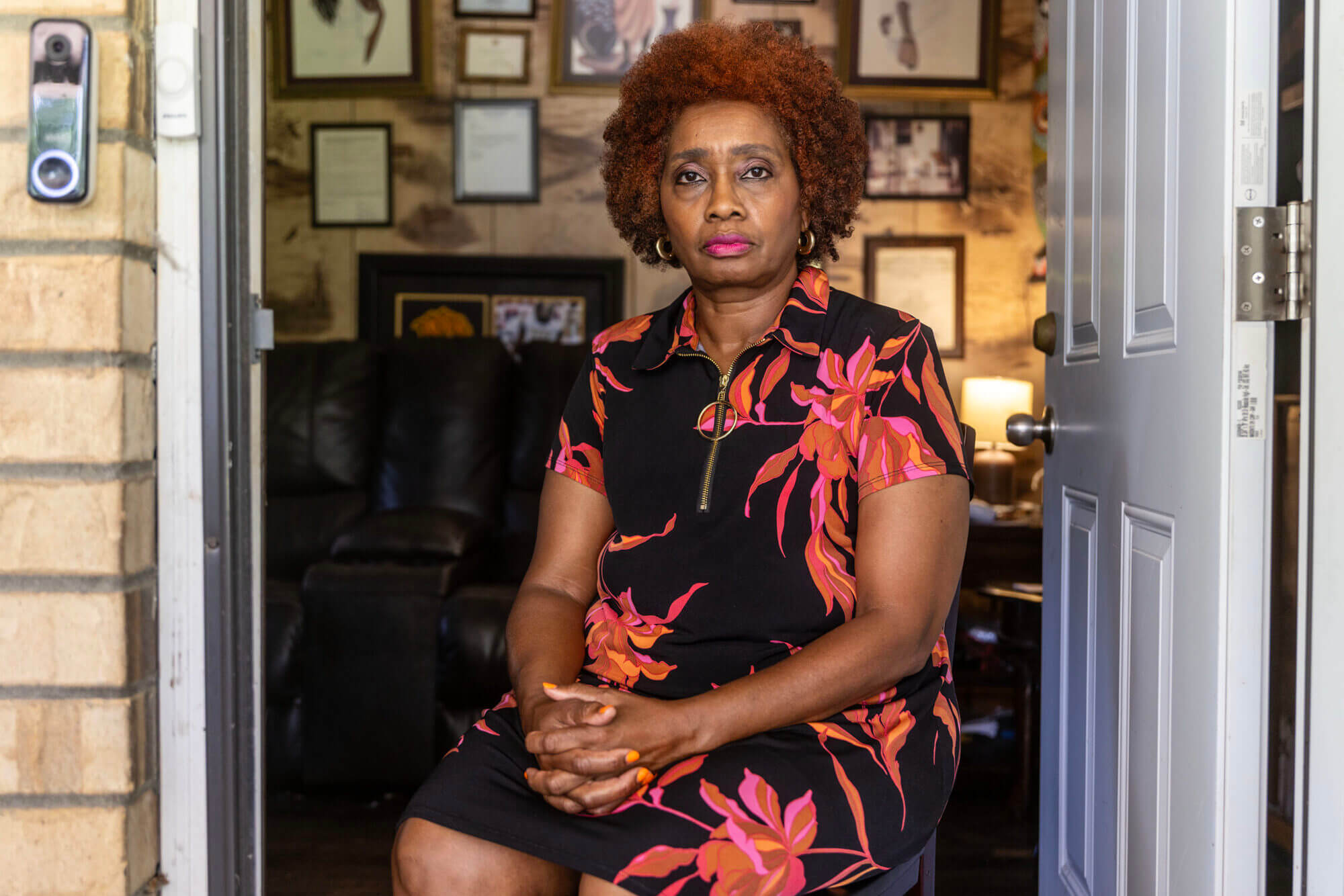
Two-time cancer survivor Sherri Reeves knew she wouldn’t be able to keep her health insurance this year when her first bill arrived in the mail in January.
Reeves’ health insurance premium increased five-fold — jumping from about $100 to $500 a month — for 2026. The 62-year old retired teacher from Lexington made the difficult decision to drop her coverage.
“I couldn’t afford that and my living situation, and my day-to-day,” Reeves told Mississippi Today.
Reeves is one of thousands of Mississippians who chose not to stay enrolled in an Affordable Care Act health plan this year after enhanced federal tax credits, which made health insurance more affordable for 22 million Americans, expired in December. Active enrollment in the plans fell by about 70,000 people in Mississippi between February 2025 and February 2026, a nearly 25% drop, according to new federal data.
Health policy experts say the expiration of the enhanced subsidies has hit adults nearing retirement age especially hard. Because insurers can charge people in their 60s premiums three times higher than those in their 20s, many older adults saw some of the steepest price increases this year without the income-based subsidies. As a result, some older adults have dropped their coverage entirely, while others have chosen to delay care, opt for more restrictive coverage or tighten their budgets. They are more likely to have chronic health conditions that make going without insurance especially risky.
“Older adults are less buffered from those price increases,” said Lynne Cotter, a senior health policy research manager for the health policy research organization KFF’s ACA program. “And they’re going to feel them fully, which means that they might have to make other hard choices about how they spend their money.”
Congress first authorized the expanded subsidies in 2021 during the COVID-19 pandemic. Mississippi was one of the states that benefitted the most from the increased federal support. Between 2020 and 2025, the number of people enrolled in ACA marketplace plans increased by about 240,000. During the same period, the rate of people without insurance — one of the highest in the country — dropped by over 65,000.
Mississippi saw one of the largest increases in marketplace coverage in part because state lawmakers, for over a decade, have chosen not to expand Medicaid. Roughly two-thirds of the people who initially enrolled in marketplace coverage this year would meet the annual income eligibility requirement for Medicaid — between about $16,000 and $22,000 for a single person — had the state opted to expand coverage.
With the enhanced subsidies now gone, marketplace premiums for people renewing their coverage more than doubled on average, according to KFF. About 2.6 million fewer Americans were actively enrolled in plans in February compared to the same time the previous year. The Trump administration has attributed much of the decline to its crackdown on fraudulent enrollments.
Adults aged 50 to 64 made up about one-fifth of the Mississippians who chose a marketplace plan during open enrollment in 2026, according to Centers for Medicare and Medicaid Services data.
After dropping her coverage in January, Reeves went without health insurance for five months before she discovered she could gain coverage through the U.S. Department of Veterans Affairs because she serves as a caregiver for a veteran family member. While the plan does not have a monthly premium, it also does not cover appointments with all of her existing doctors and has higher copays for care.
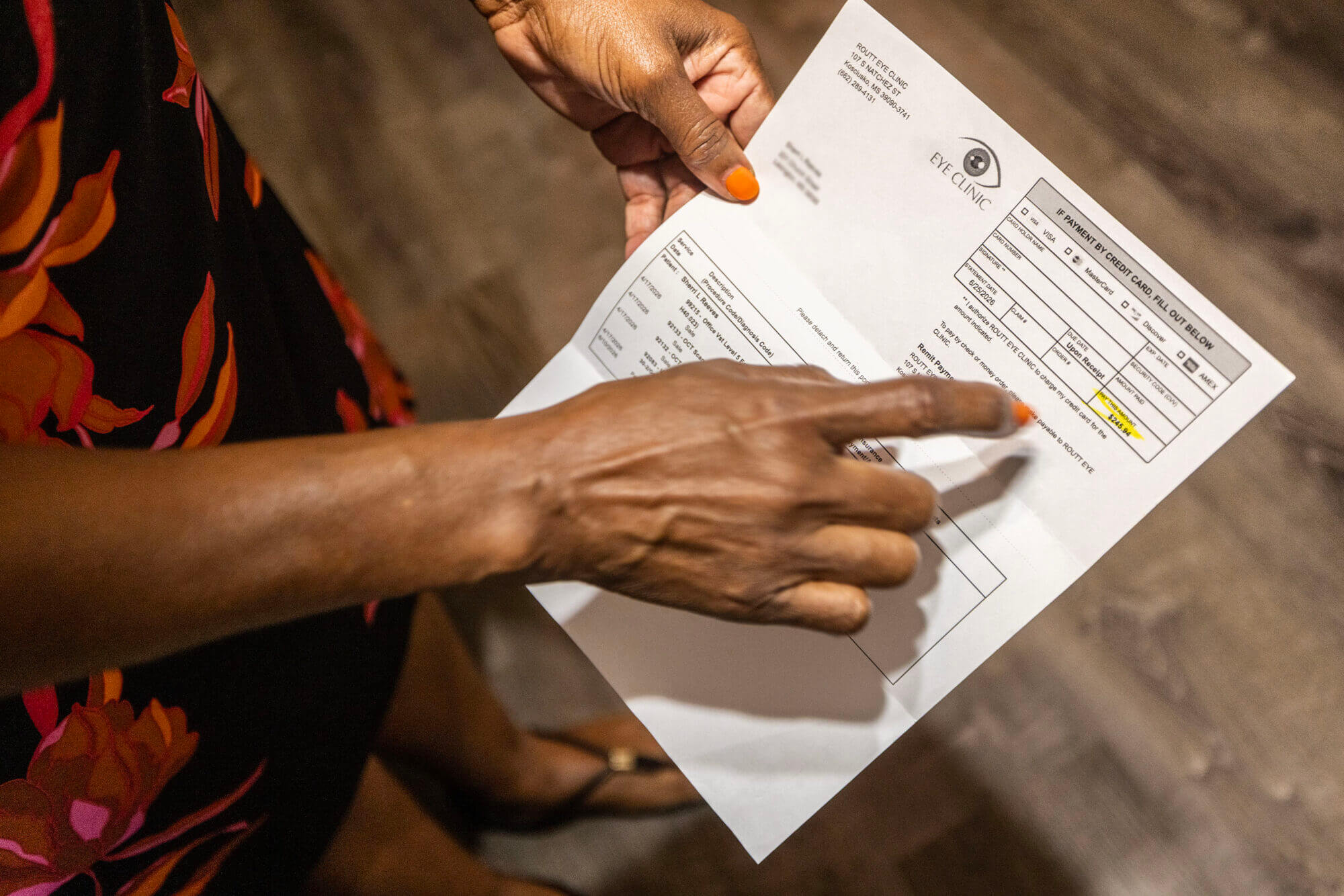
Sherri Reeves reviews a medical bill at her home in Lexington on Friday, July 17, 2026. Reeves dropped her health insurance coverage after Congress declined to renew the enhanced premium tax credits, resulting in a dramatic increase in her premiums. Credit: Eric Shelton/Mississippi Today
To afford her care, she has delayed doctor’s appointments to spread out costs and enrolled in payment plans. Before this year, she said, she was not used to owing doctors money.
“It’s been going through my brain about going back to work part time,” said Reeves, who retired in 2016 after she received her second breast cancer diagnosis because it was difficult to undergo treatment while working full time as a teacher. “I’m really thinking about it seriously.”
She is one of thousands of Americans with serious health concerns who faced difficult choices due to rising insurance costs. Last year, the American Cancer Society Cancer Action Network found in a survey of cancer patients and survivors that three out of four would not be able to afford a comprehensive health plan without the extension of the enhanced premium tax credits. A quarter said they were likely to become uninsured, and a third said they would switch to a plan with a lower monthly premium but higher out-of-pocket costs.
“The motivation to stay enrolled is very high when you’re experiencing a life-altering diagnosis such as cancer,” said Lucy Dagneau, senior director of state and local campaigns for the American Cancer Society Cancer Action Network.
Michael Minor is the executive director of Hernando-based Oak Hill Regional Community Development Corp., which runs Get Covered Mississippi, a statewide, faith-based coalition that has worked for over a decade to help connect Mississippians to coverage options through the marketplace, Medicaid and Children’s Health Insurance Program. Older adults make up a significant portion of the people the organization assists, Minor said.
He said this year, he’s received more calls than in years past from people who enrolled in what he calls “skimpy plans,” or those with lower premiums that may not cover people with preexisting conditions or ACA required services, such as maternity, prescription or mental health services. He said staff have also heard from older adults who had to go back to work or opt for more restrictive coverage.
While many marketplace enrollees still qualify for smaller federal tax credits, others with incomes at or above 400% of the federal poverty level lost eligibility entirely. These people must now pay the full cost of their health insurance premiums without federal support.
Nationwide, adults ages 50 to 64 make up about half of the enrollees affected by this change. This is because many older adults are at their peak income, Cotter said. Combined with higher insurance costs due to age, this creates what Cotter described as a “double whammy” of sharply increasing healthcare costs for some older adults.
Laura Tedder, a 63-year-old living in Raymond, worked as an attorney before she chose to retire early after her husband died. She purchased a health insurance plan through the marketplace. In 2025, it cost about $550 a month.
Her plan now costs about $1,500 a month because her income is just above the threshold for federal assistance. She said she spends roughly a third or a fourth of her fixed income on healthcare costs and is counting down the months until she turns 65 and becomes eligible for Medicare. She has 16 left to go.
To make ends meet, Tedder has sold personal items, stopped eating out, avoided buying brand names at the grocery store and limited outings to avoid paying for gas. She has delayed doctor’s appointments and has been putting off taking her dog to the vet for three months.
“I’ve cut everything as much as I possibly can,” she said. “I’m hanging on by my toenails.”
The loss of enhanced premium tax credits is expected to continue to drive up costs not only for older adults but also for younger people, as healthier enrollees leave the marketplace and leave behind a smaller, sicker pool of participants who are more costly to insure.
This effect is already evident in preliminary rate filings for 2027, Cotter said. ACA marketplace insurers have proposed a median premium increase of 14%, according to a KFF analysis of filings from 16 states and Washington, D.C.
Higher premiums will have ripple effects across the healthcare system, increasing costs for patients, insurers and hospitals, which are required under federal law to provide emergency care regardless of a patient’s insurance status, said Khaylah Scott, program manager for the Mississippi Health Advocacy Program.
Audio recording is automated for accessibility. Humans wrote and edited the story.
WASHINGTON — One Immigration and Customs Enforcement officer has been referred for discipline over a use of force incident since the beginning of the Trump administration, said Democratic members of the House Homeland Security Committee after a briefing with ICE officials Wednesday about body cameras, vehicle stops and training.
The closed-door briefing for committee members comes in the wake of two shootings in which ICE officers shot and killed two immigrants that they were trying to arrest, raising concerns over the agency’s tactics at a time that it is ratcheting up its arrests.
The shootings in Maine and Houston over the span of a week have led to fierce criticism that there’s not enough oversight of the agency key to President Donald Trump’s mass deportation agenda. At least 10 people have died in encounters with immigration agents since Trump launched the crackdown after retaking office, and in the Maine shooting, family members of the ICE officer who opened fire say he had a history of violent behavior and never should have been given a badge and gun.
Rep. Seth Magaziner, a Democrat from Rhode Island, said they were told during the briefing that there have been 56 complaints of excessive force against ICE officers; 32 were cleared, and one was referred for disciplinary action. Magaziner said they were told no discipline had yet been handed out. The rest of the incidents are still under investigation, he said.
“It just defies belief that an agency of 20,000 plus officers with all of the chaos that we’ve seen over the last year and a half through the surges and civilians being injured and killed, that no one would be found to have violated use of force with the exception of possibly one person,” Magaziner said.
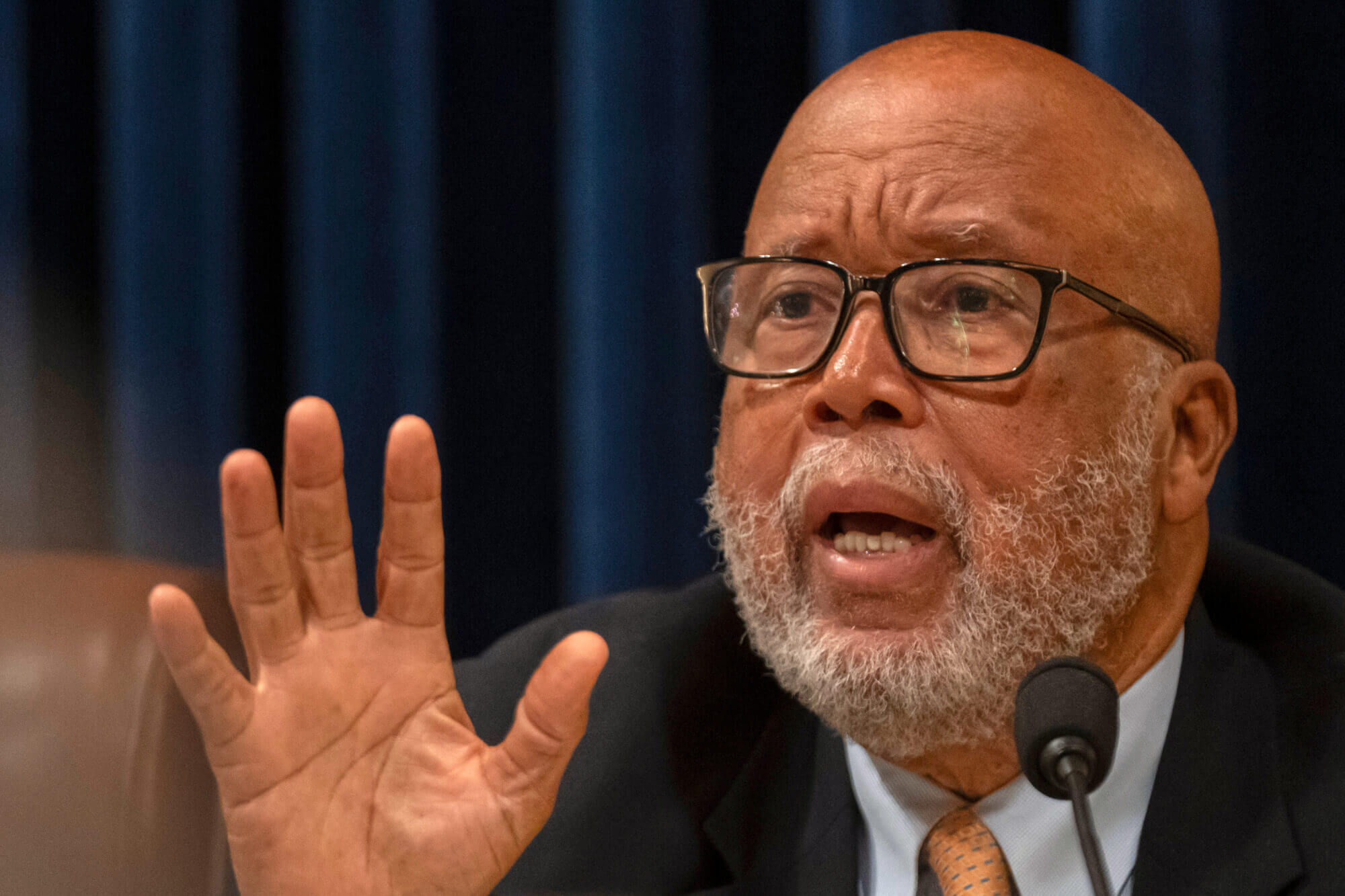
Ranking member Rep. Bennie Thompson, D-Miss., speaks during a hearing of the House Committee on Homeland Security on Capitol Hill in Washington, Thursday, Dec. 11, 2025. Credit: AP Photo/Mark Schiefelbein
ICE and the Department of Homeland Security did not respond to requests for comment. Department leadership has promised to hold officers responsible found to have violated department policy. But they’ve also defended their officers, saying they are operating in a dangerous environment where they’re constantly being attacked and doxxed.
The numbers mark an increase since February when then-acting director Todd Lyons said during Senate testimony that ICE had opened 37 investigations for excessive force; 18 of those were closed, 19 were still pending and one referred for “further action,” Lyons said.
The ranking Democrat on the committee, Rep. Bennie Thompson of Mississippi, said the ICE officials could not discuss the shootings in Maine or Houston, as those are both open investigations. Thompson, who said he came away with more questions than answers from the briefing, said he wanted to know who investigates use of force incidents: “Sometimes they said the FBI, sometimes they said HSI. Sometimes they said another entity.”
Thompson said he pressed for answers about how many officers had been brought back for retraining and how they’re being retrained but couldn’t get any clarity.
Thompson said he and the committee chair, Rep. Andrew Garbarino, R-N.Y., will follow up with ICE with a list of questions.
Garbarino said he appreciated ICE briefing the members.
“Today was an important opportunity for Members to receive timely answers on the status of body camera deployment for law enforcement in the field, training and vetting standards and requirements, and current guidance on the use of vehicle stops as part of immigration enforcement,” Garbarino said in a statement.
When it comes to vehicle stops, Magaziner said they were told that current guidance to ICE officers is to only do them when there’s no other alternative, and they’re supposed to use lights and sirens. But, Magaziner said, that guidance has only been passed along verbally to the staff as opposed to a written directive.
Both the shootings in Maine and Houston involved shootings of immigrants who were in moving vehicles, raising questions about ICE’s training and policies surrounding how it tries to apprehend people when they’re driving.
After the Maine killing, Trump administration officials told ICE officers to suspend most vehicle stops. But the next day, Trump announced on social media that he wanted ICE to keep doing them.
Audio recording is automated for accessibility. Humans wrote and edited the story.
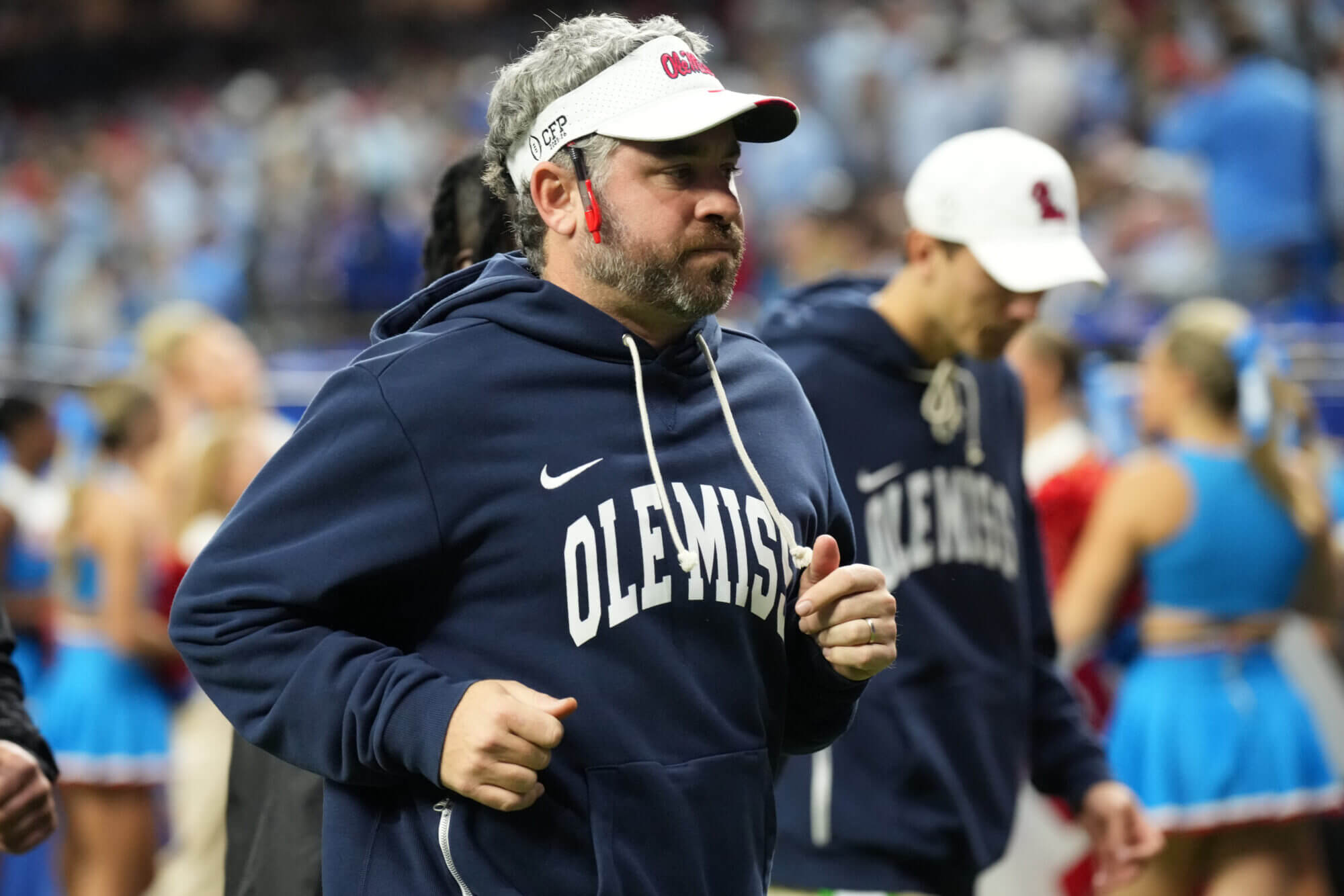
TAMPA, Fla. — Unearthed at Ole Miss after an offseason filled with tales of betrayal, unkept promises and watching college football’s ugly underbelly tearing at the fabric of an institution came this surprise from the new coach there, Pete Golding:
“I have no ill will toward Coach Kiffin,” Golding said Wednesday at SEC Media Days.
Golding was the up-and-coming defensive coordinator who was asked to pick up the pieces when his old boss, Lane Kiffin, abruptly left for LSU for a seven-year, $91 million deal just as the Rebels were about to embark on their first trip to the College Football Playoff last season.
Partly thanks to the fact that the coach had two of the game’s most explosive players in quarterback Trinidad Chambliss and running back Kewan Lacy, Golding racked up two wins, over Tulane and Georgia, and almost a third.
That made Mississippi’s decision to give him a five-year contract right after Kiffin’s departure look like a stroke of genius. It also gave Golding a spot at the podium in Tampa, where he opened up and became an early favorite to “win” the 38th version of the SEC’s annual preseason football gabfest.
“It’s the ex, right? There’s always going to be the history,” said Golding, who is married with three children. “Do you have an ex? Are you married? Well, if you do get married and you have an ex that your wife knows about, like, she doesn’t ever end; she’s never dead. She’s always going to get brought up, and so that’s kind of where it is right now. That’s always going to be there a little bit, which is fun to a certain degree.”
Fun, indeed. And it’s no sure thing that Ole Miss is going to take a step back from last year’s 13-2 record and its trip to the national semifinals just because its celebrity coach, Kiffin, has moved west. (By the way, Ole Miss hosts LSU on Sept. 19.)
Chambliss is returning off a 3,900-yard, 22-touchdown season and a win in court, where he was granted a sixth year of eligibility. Lacy’s 73-yard touchdown run in Mississippi’s CFP loss to Miami capped a playoff stretch that identified him as a first-tier threat. The Rebels have launched Heisman Trophy campaigns for both.
“You know they’re really good players,” Golding said. “I’m not going to talk to you about that. Y’all already know that.”
Golding flicks away questions about tampering allegations
Golding was equally colorful about tampering, a topic the Rebels were drawn into this offseason when Clemson’s Dabo Sweeney accused Ole Miss of unethically luring linebacker Luke Ferelli, who had barely moved from Cal to Death Valley when he suddenly bailed for Mississippi.
Without getting into details of the Ferelli affair — which served as a rare example of a coach calling out another coach for tampering — Golding pointed to one of the key problems about the transfer portal, saying it’s only natural a player would want to know he has a place to go before he leaves his current school. Add agents into the mix, who can easily circumvent rules that prohibit contacting the player, and chaos ensues.
“By design it’s put a lot of people in bad positions,” Golding said. “Let’s not act like recruiting in college football for the last 100 years is the most moral thing.”
Golding is a new homeowner and it’s Kiffin’s old house
When it comes to ethics and morals, though, the conversation down South seems to funnel back to Ole Miss these days. And Golding and Kiffin.
Kiffin’s move, the pundits say, showed college sports’ money-grubbing opportunistic side at its worst. The much-debated bill circulating in Congress intended to regulate the industry includes what’s known as a “Lane Kiffin Rule” that restricts when coaches can leave for new jobs.
It has made for great headlines. Golding’s reaction to it — golden, as well. And in a sign that all may truly be forgiven, ESPN reported that not long after Kiffin bailed for Baton Rouge Golding bought his house in Oxford.
He said he and Kiffin text frequently, and there’s a friendship there that goes beyond coaching.
“I can separate the two. Some people can’t,” Golding said. “I probably shouldn’t say this, but I don’t care, all right? Like I told an Ole Miss group the other day, ‘In 2021, if you said you could look in 2025 and you’re about to be 11-1 and go to the playoff, would you take it if your coach was leaving?’ Hell yeah. You would. Everybody won from it. It’s OK.”
The organization awarded Mississippi Today and The New York Times first place for Public Service in Written Journalism for the Abuse of Power: Beyond the Goon Squad series. The award honors work that informs communities, holds institutions accountable and makes a meaningful difference.
The 2026 awards consider work published in 2025 and are open to reporters and news organizations from Alabama, Arkansas, Florida, Georgia, Kentucky, Louisiana, Mississippi, North Carolina, South Carolina, Tennessee and West Virginia.
Mississippi Today won five other first place awards, as well as second and third place in several categories.
Audio recording is automated for accessibility. Humans wrote and edited the story.
As Mississippians take precautions to protect themselves during the ongoing hurricane season, many will not be eligible for grants to strengthen their homes because of a typo that state lawmakers left in an appropriations bill.
During the session earlier this year, state officials celebrated after the Legislature finally approved a program to make homes more resilient to natural disasters, an effort that first began in 2007 in response to Hurricane Katrina two years earlier. The Strengthen Mississippi Homes Program, administered through the state Insurance Department, offers grants of up to $10,000 to build roofs designed to withstand strong winds and water damage.
While passing the measure this year, the Legislature also appropriated $15 million for the program in a separate bill. But in that House bill, lawmakers wrote that the $15 million was contingent on the passing of Senate Bill 2406, an unrelated measure dealing with roads and bridges, rather than Senate Bill 2409, the storm resilience bill. SB 2406 died in a Senate committee in February.
State Insurance Commissioner Mike Chaney, who has advocated for the mitigation program for years, attributed the mistake to human error: “You got 2406 instead of 2409, that’s easy to do. If you look at a (keypad), the six is right above the nine.”
Mike Chaney, the Republican insurance commissioner, speaks during Mississippi Economic Council’s 2023 Hobnob at the Mississippi Coliseum in Jackson, Miss., Thursday, Oct. 26, 2023. Credit: Eric J. Shelton/Mississippi Today
The Mississippi Insurance Department did secure other funding for the program, $2 million through the Mississippi Windstorm Underwriting Association, more commonly known as the state wind pool. But not only is the amount $13 million less than what lawmakers initially pledged, but also only those living in the state’s three coastal counties are eligible for the wind pool funding. The $15 million would have been open to any home in the state, as long as it has wind insurance and is a primary residence.
Chaney said legislation often contains such errors that are corrected before taking law, but Gov. Tate Reeves did not allow lawmakers to fix this typo.
“When the governor signed the bill, he also said he wouldn’t allow the scrivener’s error to be corrected,” Chaney said. “I said, ‘Governor, you realize that we won’t have any money (for the program).’ (He said,) ‘You’ll figure it out.’ I didn’t argue with him. He’s the governor.”
When reached for comment, Reeves press secretary Shelby Wilcher pointed to the governor’s message when signing the errored bill, where he acknowledged the $15 million couldn’t be spent because SB 2406 died. Wilcher didn’t respond to a follow-up question about why the mistake wasn’t corrected.
Rep. John Read, a Republican from Gautier and chair of the House Appropriations A Committee, was the bill’s lead author. Read did not reply to a phone call from Mississippi Today.
Andy Case, the Insurance Department’s director of Property and Casualty Rating, said the department is confident the Legislature will fix the mistake in 2027 to restore the funding to the full $15 million.
“We haven’t heard from anyone who is in opposition to what we’re doing,” Case said. “We have every reason to believe this will be a major priority on day one when they meet (next session).”
Mississippi is one of the most vulnerable states in the country to climate change, a Mississippi Today project reported last year, and home mitigation funding was one of the main strategies experts highlighted to reduce the impacts of future natural disasters.
Last week, Reeves requested a federal disaster declaration to help the state recover from Tropical Storm Arthur, which damaged over 500 homes in Mississippi last month. If granted, it would mark the third declaration the state has received just over halfway through 2026.
Audio recording is automated for accessibility. Humans wrote and edited the story.
Nearly four years after negotiations collapsed over a potential takeover of the long-struggling Greenwood Leflore Hospital by the University of Mississippi Medical Center, the state’s only academic medical center is set to assume operations of the Delta hospital on Aug. 1.
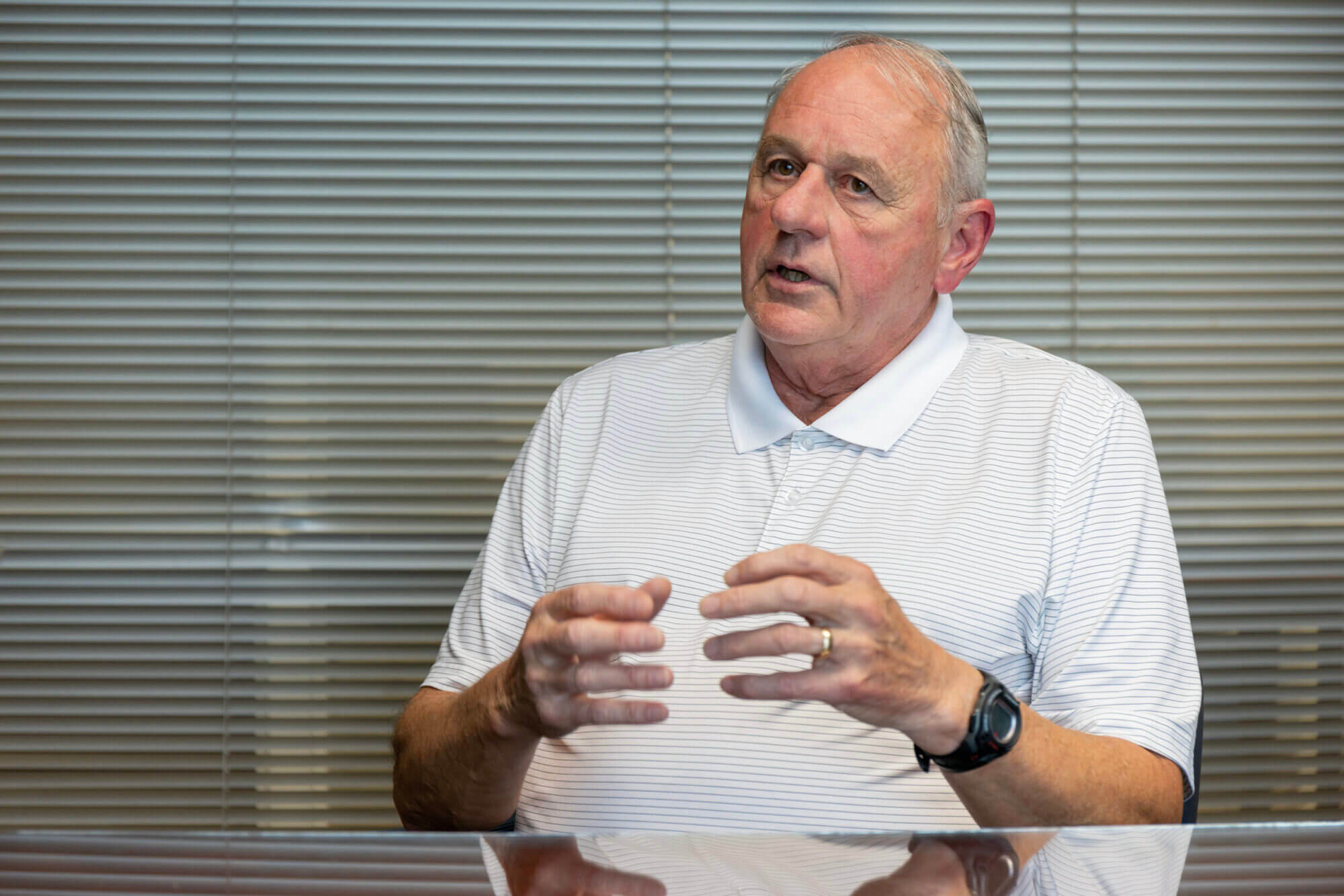
A federal bankruptcy judge on July 16 approved a plan for the donation of the 25-bed public hospital, which is owned by the city of Greenwood and Leflore County, to UMMC. At a Tuesday Greenwood City Council meeting, Gary Marchand, the hospital’s former interim CEO who became a consultant for the hospital’s board, called this the “last hurdle” to completing the transfer.
Gary Marchand talks about the state of the hospital on Wednesday, Sept. 20, 2023. Credit: Eric Shelton/Mississippi Today
“As I speak here today, the university is on our campus,” Marchand said. “They’re making sure the IT — their clinical information systems — are up and running, the connectivity works, etc. We’re ready to switch over.”
The Greenwood hospital has struggled financially for years, with its problems worsening during the COVID-19 pandemic. Officials have repeatedly warned it was near to closure. Its plight intensified in 2025 due to a dispute with the Mississippi Division of Medicaid over the repayment of debts the hospital owed.
The hospital will be renamed UMMC Greenwood and will add to the university medical center’s existing services in the area, which include obstetrics and gynecology, internal medicine and pediatrics clinics and an AirCare helicopter base.
UMMC operates seven hospitals and 35 clinics. In addition to its main campus facilities in Jackson, UMMC has hospitals in Grenada, Holmes and Madison counties.
“We look forward to serving the Greenwood community and surrounding areas as part of our commitment to providing the highest quality health care to the citizens of Mississippi,” Dr. Alan Jones, associate vice chancellor for health affairs, said in a statement to Mississippi Today.
UMMC declined to answer Mississippi Today’s questions about whether the takeover would result in service changes or layoffs. On Tuesday, Marchand said medical center staff are meeting with existing employees about available positions in Greenwood and its other hospital locations.
The hospital has roughly 400 employees, according to documents filed in bankruptcy court. About 40 of these employees will be retained to complete the hospital’s business matters after Aug. 1.
Greenwood Leflore Hospital’s services, including the emergency room, operating room, skilled nursing care and cancer care, will continue uninterrupted when UMMC takes over, Marchand said. He said the Greenwood hospital expects to take approximately 18 months — and likely less — to wind down its corporate affairs before the entity is dissolved.
UMMC will take on the hospital’s Medicaid liabilities and deferred maintenance responsibilities in the transaction, Marchand said Tuesday. A key sticking point in the 2022 talks between UMMC and the Greenwood hospital was the outstanding debts the hospital owed to Medicare and the funds necessary for deferred maintenance on hospital facilities, because UMMC did not want to be responsible for the costs after a transition.
“Greenwood Leflore Hospital will not have a dispute with Medicaid come August 1,” Marchand said.
Several of the hospital’s properties are not included in the transfer, including its Itta Bena Clinic, which is scheduled to close at the end of July. Greenwood Leflore Hospital has operated the primary care clinic since 1997, serving the nearby town of Itta Bena’s more than 1,500 residents.
Delta Health Center, a Mound Bayou-based federally qualified health center with 17 locations, is interested in reopening the clinic and rehiring its employees, Deputy CEO Neuaviska Braugher told city council members Tuesday.
Greenwood City Council President Ronnie Stevenson said the city could not consider the possibility until after the transfer to UMMC is complete, noting that such an arrangement would need approval from the bankruptcy court judge.
“I want to see the Itta Bena Clinic remain open,” he said. “Unfortunately, it will close July 31.”
‘A long road’
Greenwood Leflore Hospital faced a litany of financial challenges over the past several years. Before the pandemic began, the hospital was losing $7 million to $9 million a year.
The pandemic only worsened the hospital’s precarious financial condition. To keep its doors open, the hospital shut down departments and clinics, went up for lease multiple times, drew down millions of dollars in credit, and pursued a more lucrative hospital designation. In 2023, the hospital suspended the use of 173 beds to control costs, according to an audit.
The hospital’s financial challenges worsened in 2025. In June, the Division of Medicaid notified the hospital it would recoup $5.5 million in state-directed payments, or supplemental funds intended to offset low Medicaid reimbursement rates. The overpayments stemmed from the division’s calculations based on old data that did not reflect lower patient volumes after the hospital closed its labor and delivery and intensive care units in 2022.
The hospital and state agency reached an agreement to give both sides more time to negotiate a plan for the debt repayment in December as Marchand warned that the hospital was one day away from making its last payroll.
But even with additional time, it was clear the hospital was in a dire financial situation, Marchand said. Hospital leaders approached three larger hospital systems about taking over operations of Greenwood Leflore. UMMC was the only interested party.
In February, Greenwood Leflore Hospital signed a letter of intent to discuss the possibility of UMMC taking over its services, Mississippi Today reported.
But the hospital’s conflict with Medicaid was not over. Recoupments were scheduled to resume in March, but hospital officials said they would likely force the facility to close. In response, a Hinds County chancery judge ordered Medicaid to temporarily stop collecting the money.
In April, the hospital laid off 86 staff members and closed clinics. Days later, it filed for bankruptcy, a move officials said would give it time to negotiate the transaction with UMMC.
In June, the Hinds County chancery judge ordered the Mississippi Division of Medicaid to make a scheduled payment of roughly $2.4 million to Greenwood Leflore Hospital after the agency said it planned to withhold the funds. The Delta hospital argued that missing a payment would force it to close imminently and jeopardize its proposed agreement with UMMC.
Inside the wood-paneled Greenwood City Council chambers Tuesday, Marchand was greeted with handshakes and kudos from attendees. One man in a brimmed hat reached out to shake his hand and offer congratulations.
Audio recording is automated for accessibility. Humans wrote and edited the story.
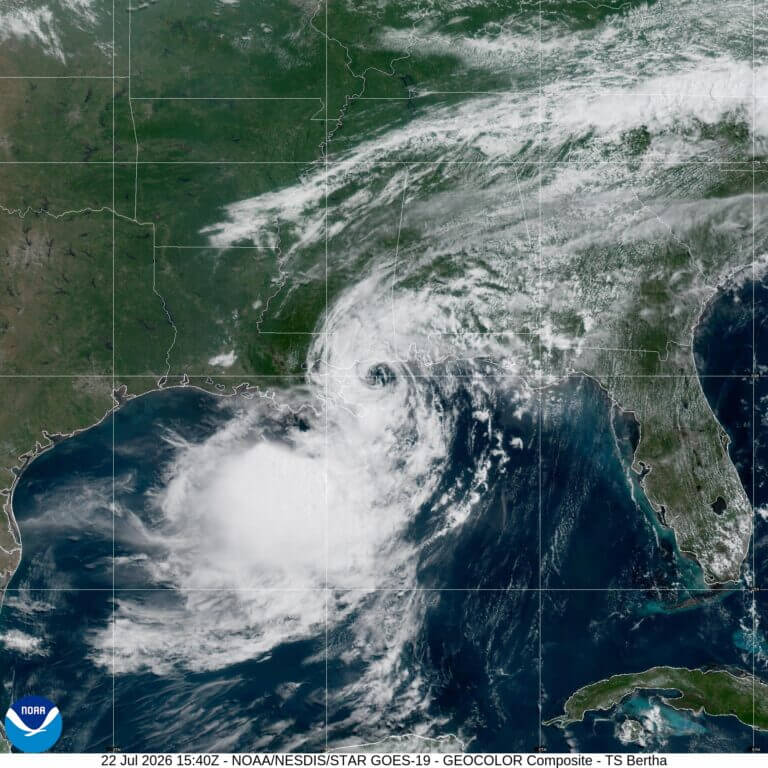
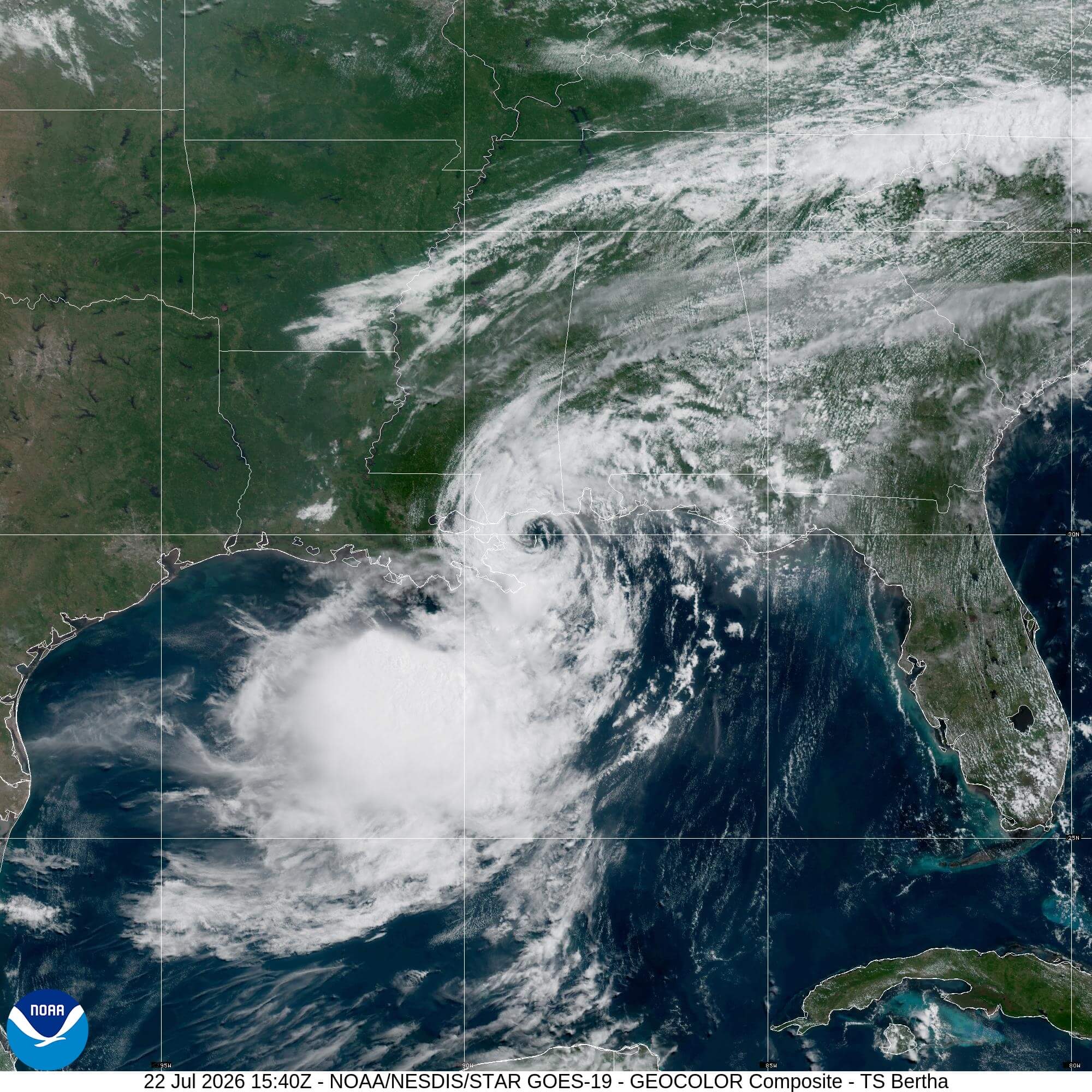
Tropical Storm Bertha crawled into southern Louisiana on Wednesday, making landfall and packing strong winds far from its center after closing beaches from the Florida Panhandle to Mississippi.
The National Hurricane Center said Bertha made landfall in the afternoon in St. Bernard Parish, about 40 miles east of New Orleans. At landfall, the storm’s maximum sustained winds were around 45 mph.
The wind and storm surge were the main threats for the Deep South states. Parks and piers were closed up and down the coast, as were some low-lying roads. A tropical storm warning stretched from Alabama to Mississippi to Louisiana, including New Orleans where extreme heat was adding to misery.
Tropical storm force winds were felt as much as 160 miles from the center of the storm, the National Hurricane Center said. A wind gust of 44 mph was recorded at New Orleans Lakefront Airport on Wednesday afternoon.
But the heaviest rains were staying offshore, reducing the risks of flooding, the center said.
The storm will weaken now that it’s reached land and is unlikely to leave behind widespread damage, Louisiana State Climatologist Jay Grymes said. The impact should be manageable for coastal communities, he said.
Louisiana Gov. Jeff Landry called the forecast “encouraging” but also warned residents to be prepared for some flooding.
Storm surges up to 3 feet were possible in Louisiana and Alabama, forecasters said. Rain totals were forecast between 1 and 4 inches, with higher amounts possible in isolated areas.
Bertha is expected to maintain tropical storm intensity until it reaches the Texas coast on Thursday, the hurricane center said.
Elsewhere in the U.S., a line of storms on Tuesday generated reports of tornadoes stretching from Cincinnati to New Jersey. Torrential rains caused flash floods that swamped homes, washed out bridges and led to water rescues in West Virginia, authorities said.
Rare combination of tropical storm and heat warnings
Southern Louisiana was under tropical storm and extreme heat warnings for much of Wednesday — a rare double dose of suffering, the National Weather Service said.
It was the first time in at least two decades that’s happened in the area, the weather service said, citing records that date back to 2005.
Bertha is the second tropical storm of the Atlantic season
Bertha could dump heavy rain on coastal areas of Mississippi that are still recovering from flooding brought by Arthur that destroyed and damaged homes.
Hurricane Fausto in the Pacific is far from land
In the eastern Pacific Ocean, Hurricane Fausto churned far from land Wednesday. The hurricane was hundreds of miles west-southwest of the southern tip of Baja California with maximum sustained winds of 80 mph.
It was forecast to gradually strengthen and the hurricane center said that ocean swells generated by Fausto were spreading along the Baja California coast and likely to cause life-threatening surf and rip tides.
___
Associated Press journalists Julie Walker in New York and Kim Chandler in Montgomery, Alabama, contributed to this report.
7/22/2026: This article has been updated to show the storm has made landfall.