Mississippi Today Ideas is a platform for thoughtful Mississippians to share their ideas about our state’s past, present and future. Opinions expressed in guest essays are the author’s own and do not necessarily represent those of Mississippi Today. You canread more about the section here.
Mississippi continues to face persistent gaps in mental health service delivery, but these challenges are most noticeable in rural and underserved communities where resources remain limited or altogether nonexistent.
As a social worker, I routinely observe the consequences of these rural mental health crisis disparities. Individuals and families struggle with untreated depression, anxiety, trauma and substance use disorders not because they are unwilling to seek help, but because structural barriers make meaningful access nearly impossible.
Addressing this crisis is not only a public health priority – it is a moral imperative grounded in the core social work values of service, social justice, and respect for the inherent dignity and worth of every person.
Mississippi’s longstanding mental health workforce shortage directly affects service availability in rural counties. More than half of Mississippi is designated as a mental health professional shortage area, and some counties have no licensed clinicians at all.
Individuals may face long travel to the nearest provider, compounded by limited transportation options and financial constraints. When families must choose between attending therapy and losing a day’s wages, mental health care becomes inaccessible by design rather than by circumstance.
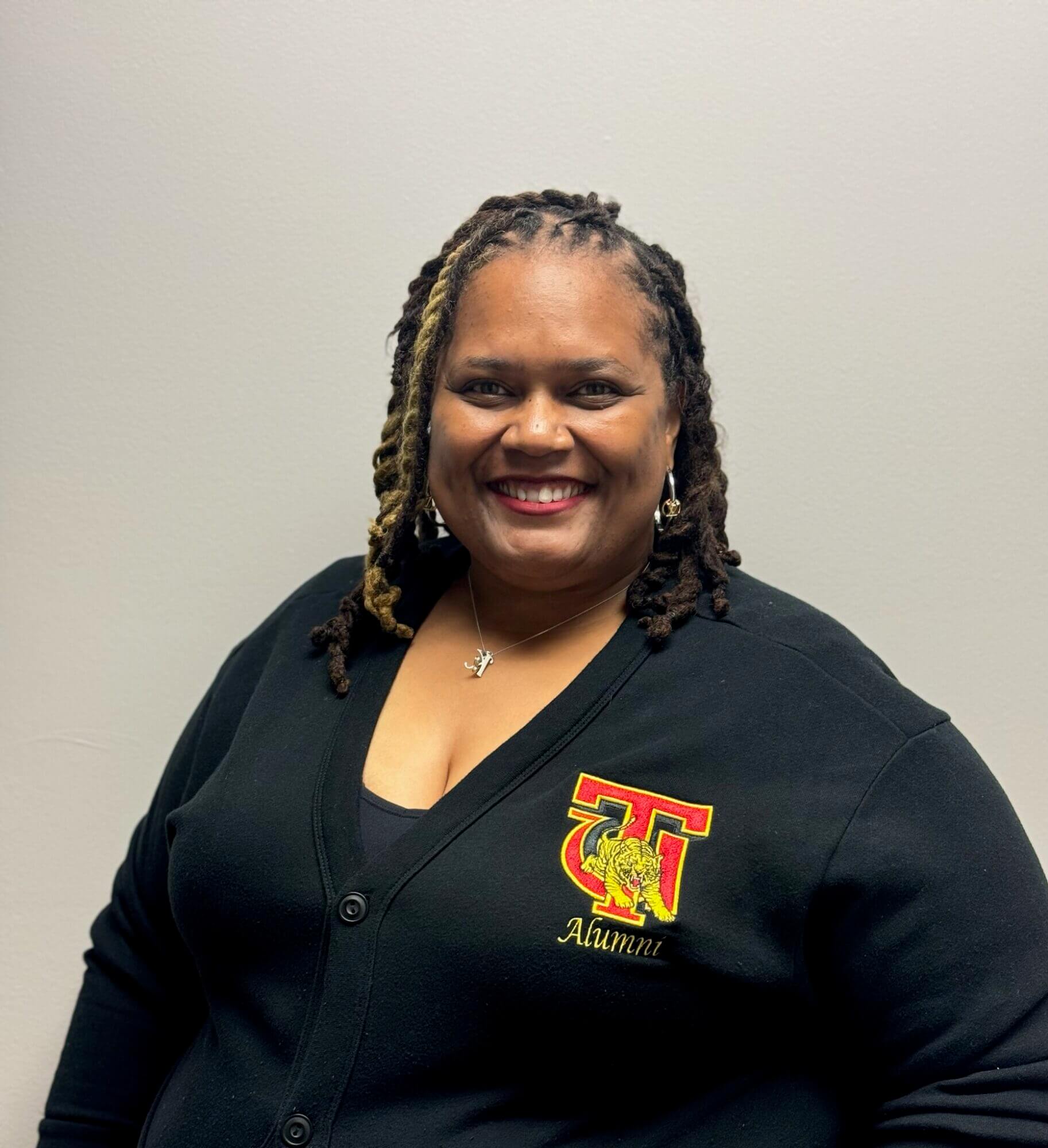
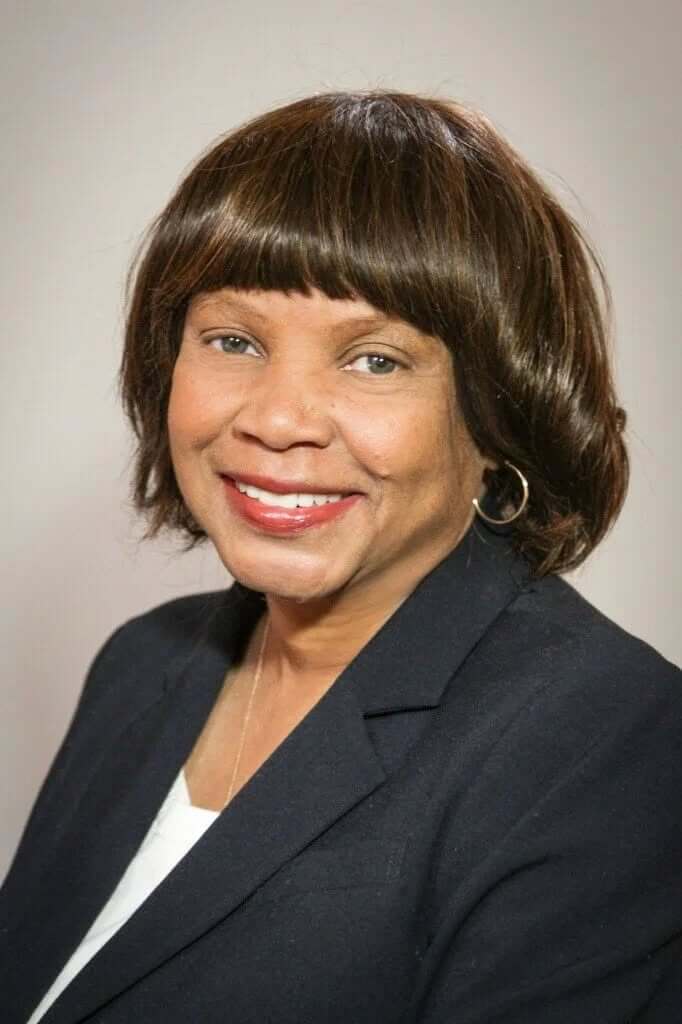
Kinya Johnson Credit: Courtesy photo
Financial barriers also play a substantial role. Mississippi maintains one of the nation’s highest uninsured rates. Even when services exist, cost remains an obstacle for individuals with limited income or those who fall into coverage gaps with no insurance.
Stigma further complicates access. The fear of judgment within close-knit rural communities often suppresses help-seeking behaviors. Minority populations – Hispanic families, Black residents and immigrant communities – encounter additional obstacles such as linguistic limitations, cultural mistrust of formal systems and historical inequities that have shaped their relationship with healthcare institutions.
The consequences of unmet mental health needs extend beyond individual well-being. Communities experience increased emergency room utilization, escalating suicide risk, higher rates of substance use and avoidable involvement in the criminal legal system. Schools struggle to support students dealing with untreated trauma, and employers lose productivity when workers lack access to care. These outcomes generate significant economic costs borne by taxpayers, hospitals and social service systems.
Recent data from the Mississippi Department of Mental Health demonstrates rising mental health-related emergencies, particularly in rural counties.
Without substantial intervention, these trends will continue to place strain on already overburdened systems and deepen existing disparities.
Mississippi has taken commendable steps toward strengthening community mental health. The growth of Certified Community Behavioral Health Clinics (CCBHCs) and the expansion of telehealth coverage under the Division of Medicaid have increased access points for many residents. These efforts demonstrate recognition that community-based, integrated care is essential.
However, progress remains uneven. Certified Community Behavioral Health Clinics are not yet available statewide. Telehealth access is limited by inadequate broadband infrastructure in rural communities. Workforce shortages continue due to insufficient recruitment incentives.
Minority populations often lack culturally responsive services, particularly bilingual providers. Ongoing federal oversight stemming from litigation addressing Mississippi’s reliance on institutional care underscores the need to expand community-based services and modernize the whole system.
Mississippi’s growing Hispanic population, particularly in agricultural and manufacturing regions, faces distinct barriers including language access limitations, insurance gaps and fear of engaging public systems due to immigration-related concerns. Black communities in the Delta and other rural regions encounter disparities rooted in historical and structural inequities that continue to shape health outcomes.
Culturally responsive, community-based interventions are essential to reducing these disparities and building trust.
Mississippi has clear, actionable strategies available. First, expanding Certified Community Behavioral Health Clinics statewide would ensure consistent, comprehensive mental health services. Strengthening workforce recruitment through loan repayment programs, salary incentives and rural training pipelines is essential for filling provider shortages. Improving transportation access through voucher programs and partnerships with community organizations would reduce missed appointments. Broadband expansion is critical to making telehealth more viable. Enhancing school-based mental health programming, particularly in high-poverty districts, would support early intervention.
Increasing culturally and linguistically responsive services – including bilingual providers and community health workers – remains vital. Finally, strengthening Medicaid reimbursement and coverage would increase affordability for low-income families.
Mississippi’s rural mental health crisis is both urgent and solvable.
Policymakers must prioritize funding for community-based services, broadband infrastructure and workforce expansion. Community leaders and organizations must continue working to reduce stigma and create culturally responsive pathways to care. As social workers, we must persistently advocate for systems that ensure all Mississippians have access to comprehensive mental health services.
A healthier Mississippi begins with dismantling barriers and investing in solutions that uphold the dignity and worth of every person.
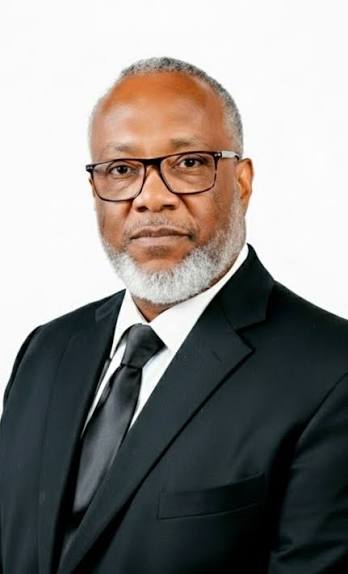
Kinya Johnson was born and raised in Ripley in north Mississippi. She is a Tuskegee University graduate and is currently a licensure specialist for the Mississippi Department of Child Protective Services. Johnson is a social work professional whose career has been rooted in serving children, families and vulnerable individuals. She is currently pursuing a master of social work and is passionate about turning professional experience into advocacy, amplifying the voices of underserved communities and helping create policies that promote safety, dignity and meaningful change.
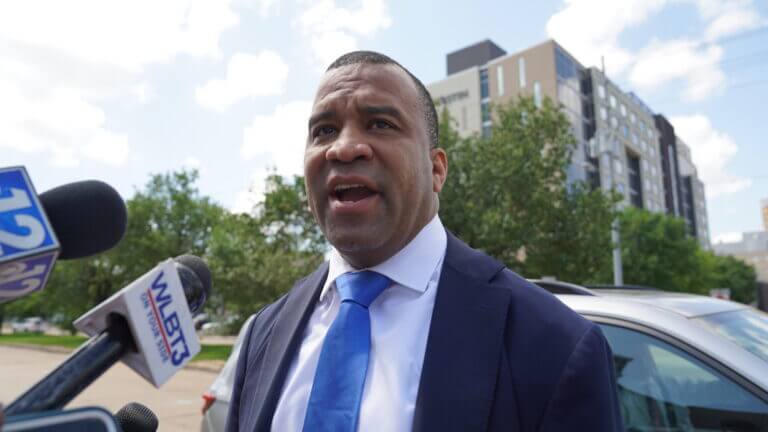
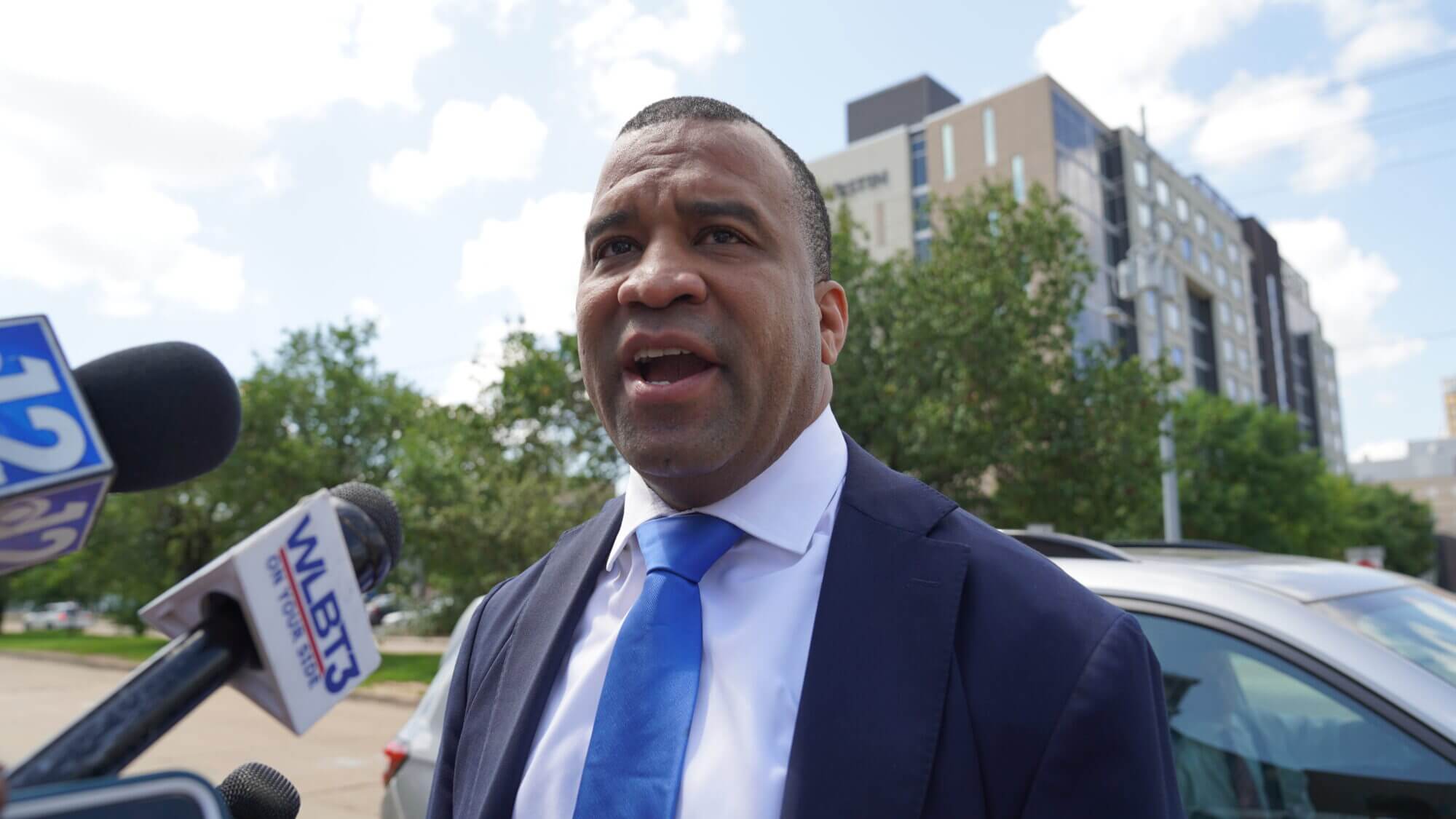
Scott Colom, the Democratic nominee for U.S. Senate, has called on Republican incumbent U.S. Sen. Cindy Hyde-Smith to participate in town halls and a debate before November’s midterm election.
A Hyde-Smith campaign spokesman said she has been busy traversing the state announcing funding she’s secured for Mississippi and other accomplishments as a senator.
Colom at a Thursday press conference in downtown Jackson launched his “Where’s Cindy” tour, in which he plans to hold five town halls in five cities between Aug. 31 and Sept. 4. Colom said he wanted to organize the town halls to allow voters to ask questions before the Nov. 3 election.
“She needs to do one town hall,” Colom said. “She can pick the reddest county in the state.”
Hyde-Smith participated in a 2018 debate during a special election runoff with opponent Mike Espy. She did not debate Espy two years later when she was running for her first full six-year term.
Ty Pinkins is an independent candidate also running against Hyde-Smith and Colom. He has also challenged both party nominees to participate in a debate.
When asked at the Thursday press conference if he would participate in a debate with Pinkins, Colom said he would participate in any debate “any time our junior senator shows up.”
In response to Colom’s “Where’s Cindy” question, Jake Monssen, Hyde-Smith’s campaign manager, said in a statement that Hyde-Smith has been at Delta State announcing funds secured to enhance the university’s aviation program, in Franklin County celebrating recent collaborations to keep rural hospitals open and other towns throughout the state.
“I can tell you where she isn’t,” Monssen said. “Sen. Hyde-Smith isn’t with Scott Colom in George Soros’ apartment in NYC, promoting gender transition surgeries for children and other extreme policies of the radical left.”
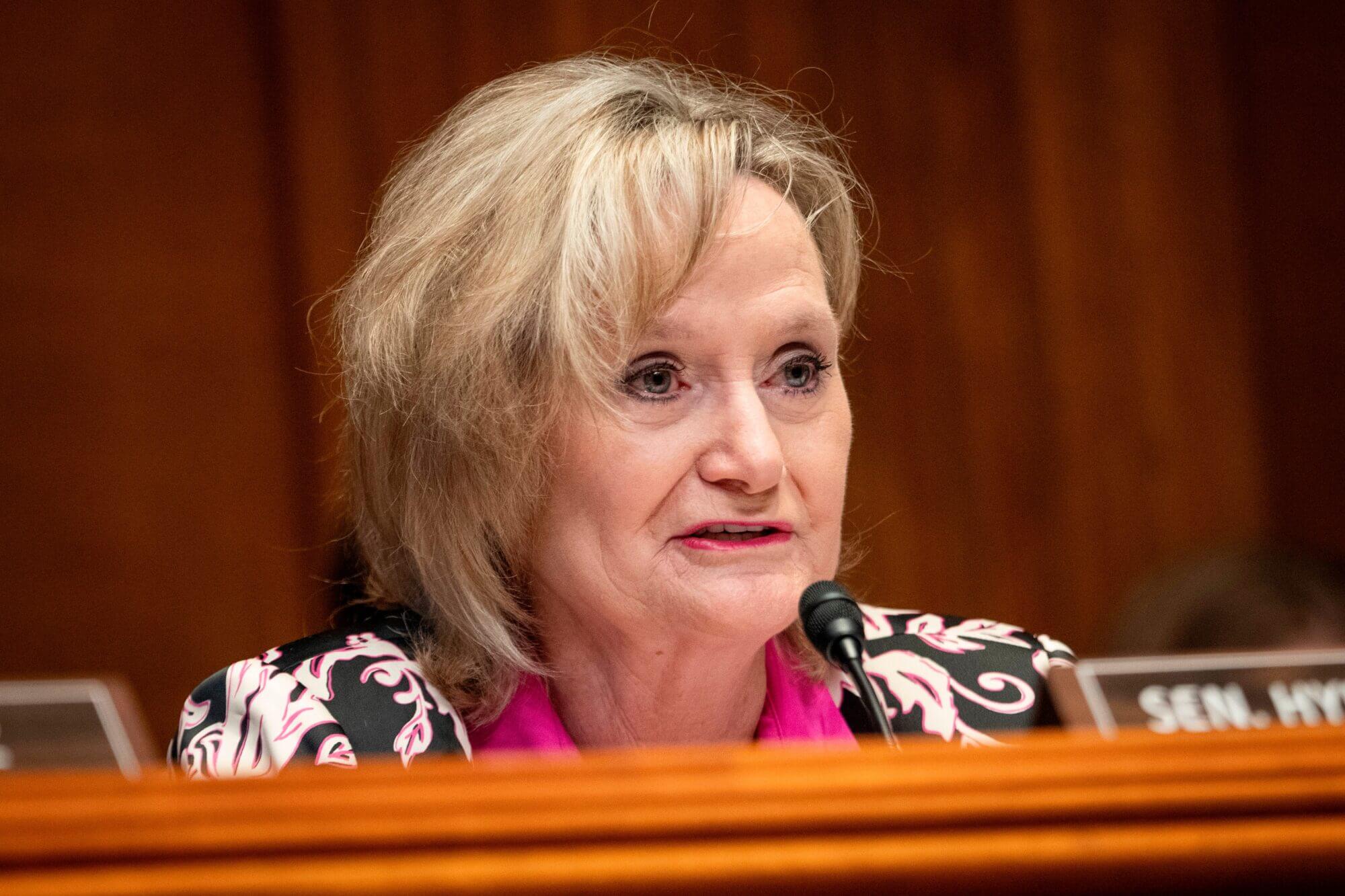
Sen. Cindy Hyde-Smith, R-Miss., speaks during a hearing on Capitol Hill in Washington, on May 2, 2024. (AP Photo/Jacquelyn Martin, File) Credit: AP Photo/Jacquelyn Martin
Monssen’s statement is referring to Soros, a billionaire who regularly donates to Democratic candidates. Soros has donated to Colom’s campaign, though the Democratic nominee has defended that by saying hundreds of Mississippians have also donated to his campaign.
Colom at the Thursday press conference also blasted Hyde-Smith for not doing more to oppose President Donald Trump when it comes to tariffs, agriculture policy and war with Iran, all of which have contributed to higher costs for consumers.
“Listen, she totally gave away our voice on tariffs,” Colom said. “If you look at the Constitution, it’s clear that the Congress, including our senator, is supposed to be Mississippi’s voice when it comes to tariffs.”
Hyde-Smith, Colom and Pinkins will compete in the general election on Nov. 3. Oct. 5 is the last day that people can register to vote in time for the election, and voters can vote by absentee beginning on Sept. 19.
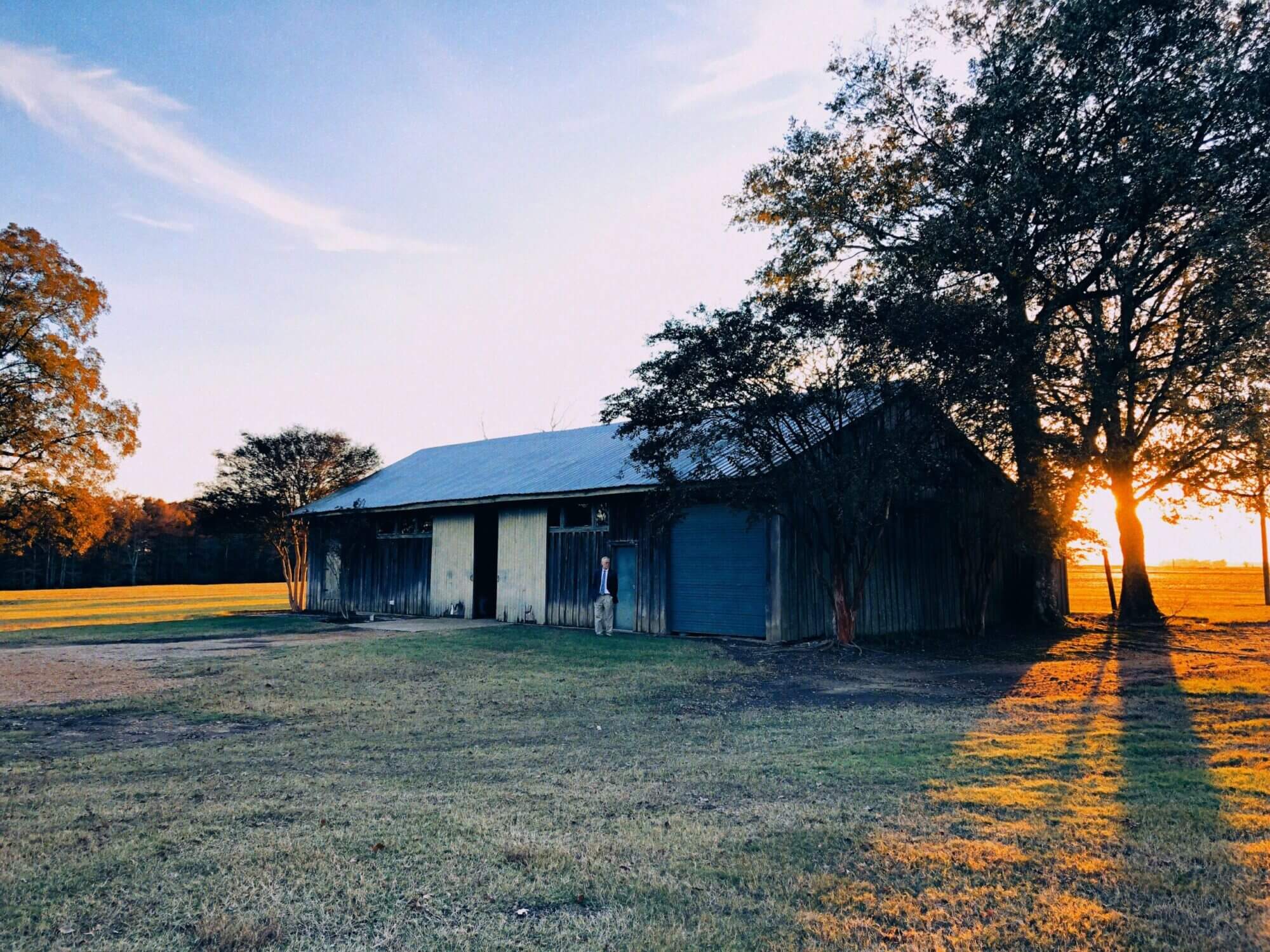
On Saturday, the barn where Emmett Till was tortured and killed will take its first step toward becoming a public memorial.
“For the first time since his lynching, this site is no longer someone’s shed, where they kept their personal belongings, but it will be used as a reverent memorial for Till’s life and legacy,” said Patrick Weems, executive director of the Emmett Till Interpretive Center.
Since the 2024 publishing of Wright Thompson’s best-selling book, “The Barn,” about the site, center attendance has nearly doubled from 2,000 or 3,000 a year to about 5,000 people. Another 25,000 a year are seeing the center’s traveling exhibits on Till.
Although the barn is not open to the public, several hundred people have visited it informally since the center purchased the barn in November, resulting in far more traffic than before, Weems said.
“People go out of their way to find us. We don’t advertise. It’s word of mouth.”
A mob of white men killed Till, a Black teenager visiting from Chicago, on Aug. 28, 1955. His mother, Mamie, insisted on opening his casket “so that the world could see what they did to my boy.” That act helped spark the modern Civil Rights Movement.
Saturday’s memorial service will honor the mother and son. Visitors will gather at 9 a.m. at the Mound Bayou Museum of African-American Culture & History and ride in a caravan to the barn for a wreath laying and concert by the Mississippi Mass Choir, followed by the service.
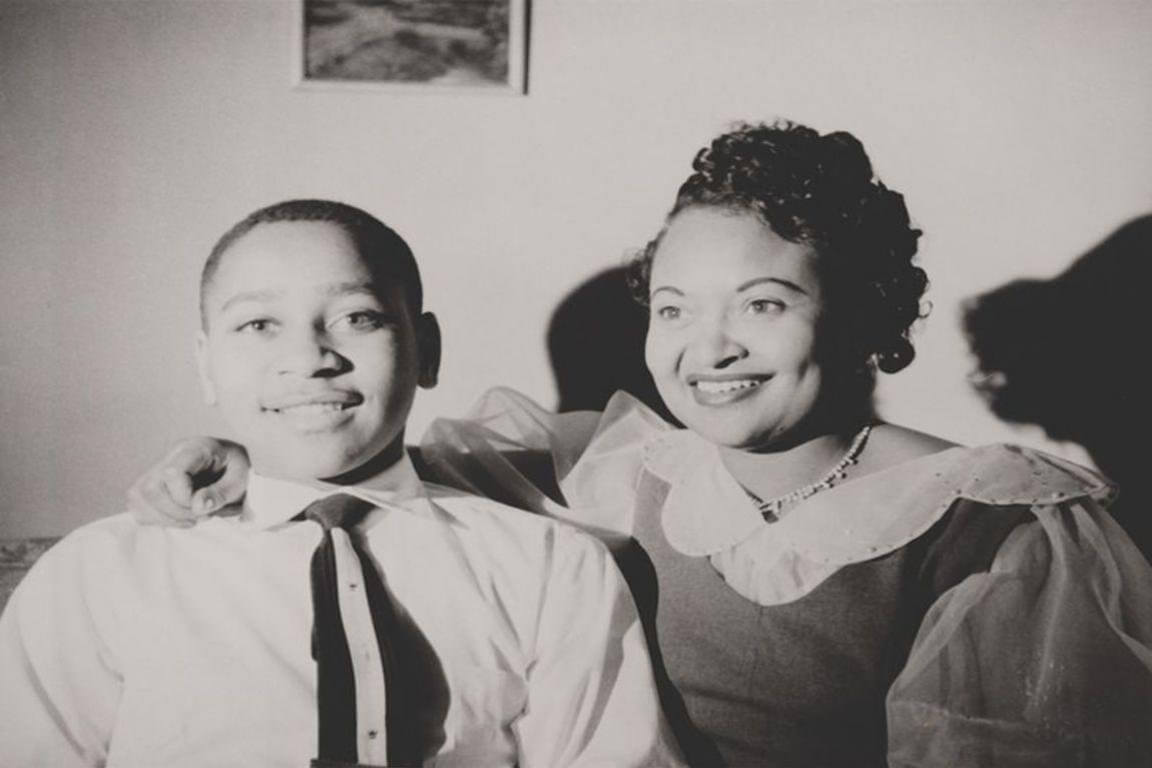
Emmett Till and his mother, Mamie Till-Mobley.
“Preserving this barn where Emmett Till was murdered is as important as preserving the balcony of the Lorraine Motel where Martin Luther King stood when he was shot,” said Devery Anderson, who is updating his book, “Emmett Till: The Murder That Shocked the World and Propelled the Civil Rights Movement,” to include the memorial.
Now that the barn is in the center’s hands, he said, people can go beyond reading about this history — they can touch it.
The first time he stood there, Anderson said he thought about “the beating, screams and bloodshed that happened in that very spot, the killers crouching over Till as he took his final breath.”
Tears flowed from Anderson’s eyes. “I knew I was on sacred ground.”
In recent decades, the barn in the Mississippi Delta belonged to a local dentist. Television producer Shonda Rhimes donated $1.5 million needed to buy the property and the barn — a purchase that drew some criticism.
“Of all the Emmett Till sites, this was the hardest to decide whether to purchase it or not,” Weems said. “We landed on yes. If we’re going to tell the truth about what happened to him, you have to have the barn. It’s ground zero.”
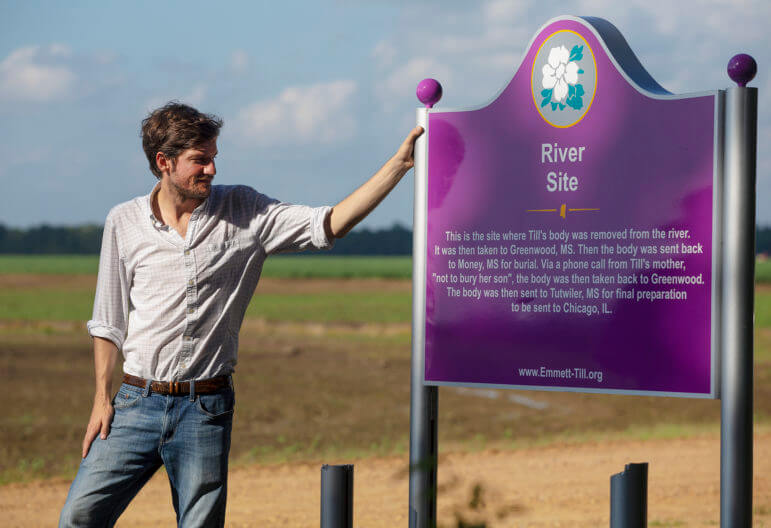
Patrick Weems, co-founder of the Emmett Till Interpretive Center, takes a look at the new Emmett Till river marker during a rededication ceremony for the marker on River Road in Glendora Thursday, June 21, 2018. Credit: Eric J. Shelton, Mississippi Today/ Report for America
Since its purchase in November, officials have built a privacy wall to separate the barn from the previous owner’s property. They are now working on transforming it into a place of memory, Weems said.
“We not only want to honor Emmett Till and Mamie Till-Mobley, but the witnesses who testified against the killers,” he said. “Willie Reed knew full well the consequences he would suffer for telling the truth, and he did it anyway.”
On the day Till was killed, Reed was walking down the road when he saw a truck drive past and head to the barn. There were four white men and three Black men as well as someone hunkered down in the truck.
At the 1955 murder trial of Roy Bryant and J.W. Milam, Reed testified that he heard screams and “licks like somebody was whipping somebody,” coming from the barn. He also identified Milam as the one who emerged from the barn to get a drink.
After torturing Till, who had just turned 14, the killers shot him dead and dumped his body into the Tallahatchie River, where he was found three days later.
In spite of Reed’s testimony, the all-white jury acquitted the killers, who justified their torture and murder of Till because he reportedly whistled at Bryant’s wife.
Reed fled to Chicago, changed his name and died in 2013 without fanfare.
The center has purchased adjacent property near where Reed’s home was located and plans to honor him there as well as turning the barn into a memorial space, Weems said.
The dream is to create parking spaces on the adjacent property and have visitors cross on a bridge over the cypress bayou to the barn, he said. Plans also include the restoration of the barn to the way it looked in 1955, he said. “We’re hoping to raise the resources to do that.”
Darryl Johnson Jr. is the former mayor of Mound Bayou and pastor of the Walk of Faith Covenant Church. Credit: Courtesy of Emmett Till Interpretive Center
Overall plans are still in progress, he said. “How do you honor Emmett Till? How do you honor Willie Reed?”
Darryl Johnson Jr., former mayor of Mound Bayou and pastor of the Walk of Faith Covenant Church, said after starting the Mound Bayou museum, he saw the importance of Mamie Till-Mobley’s courage. She wouldn’t let the injustice done to her son die with him, he said.
“People who support the justification given to kill that young man are still hiding the truth,” he said. “We have to face the truth so that we can receive the love of God, and the way we participate in his love is by loving our fellow man.”
Ashley Nelson, a writer who formerly worked for the International Coalition of Sites of Conscience, visited the site for the first time in July.
“I don’t think anyone stands untouched at Auschwitz,” she said. “The same is true at the barn.”
Gloria Dickerson, who leads the Emmett Till Academy in Drew, grew up hearing her mother talk about the barn where Till was killed, but she didn’t visit it until six or seven years ago. The barn brought back memories of her mother and reminders of what “African Americans have gone through in Mississippi,” she said. “It was emotional.”
Gloria Dickerson of Drew is the founder of We2together Creating Change. She grew up close to the barn where Emmett Till was tortured and killed. Credit: Courtesy of We2together
Making the barn a memorial preserves history and provides a place for reflection and healing. “We’re going to heal ourselves and move forward,” she said. “The fight is not over.”
Vonkerius Jackson, program facilitator for Carrying Our Voices, took several Indianola High School students to visit the barn. “You forget that he was barely 14, and the barn is so dark and lonely,” he said. “To hear the history of it was just, ‘Wow.’”
The hate that led to Till’s slaying, though, has never vanished, he said. “It’s crazy how quiet racism can be and how bold it can be at other times.”
He pointed to the sign memorializing Till, which was shot hundreds of times and had to be replaced with one that was bullet-proof, he said.
After visiting the barn and the center, Jackson learned how much Till loved to joke and laugh. “Nobody talks about how he brought so much joy to the world,” he said.
The visit made Till come alive, he said. “It humanizes his history and inspires me. We have to keep his history alive. The truth is, Mississippi’s history never dies; it just keeps on going in a circle.”
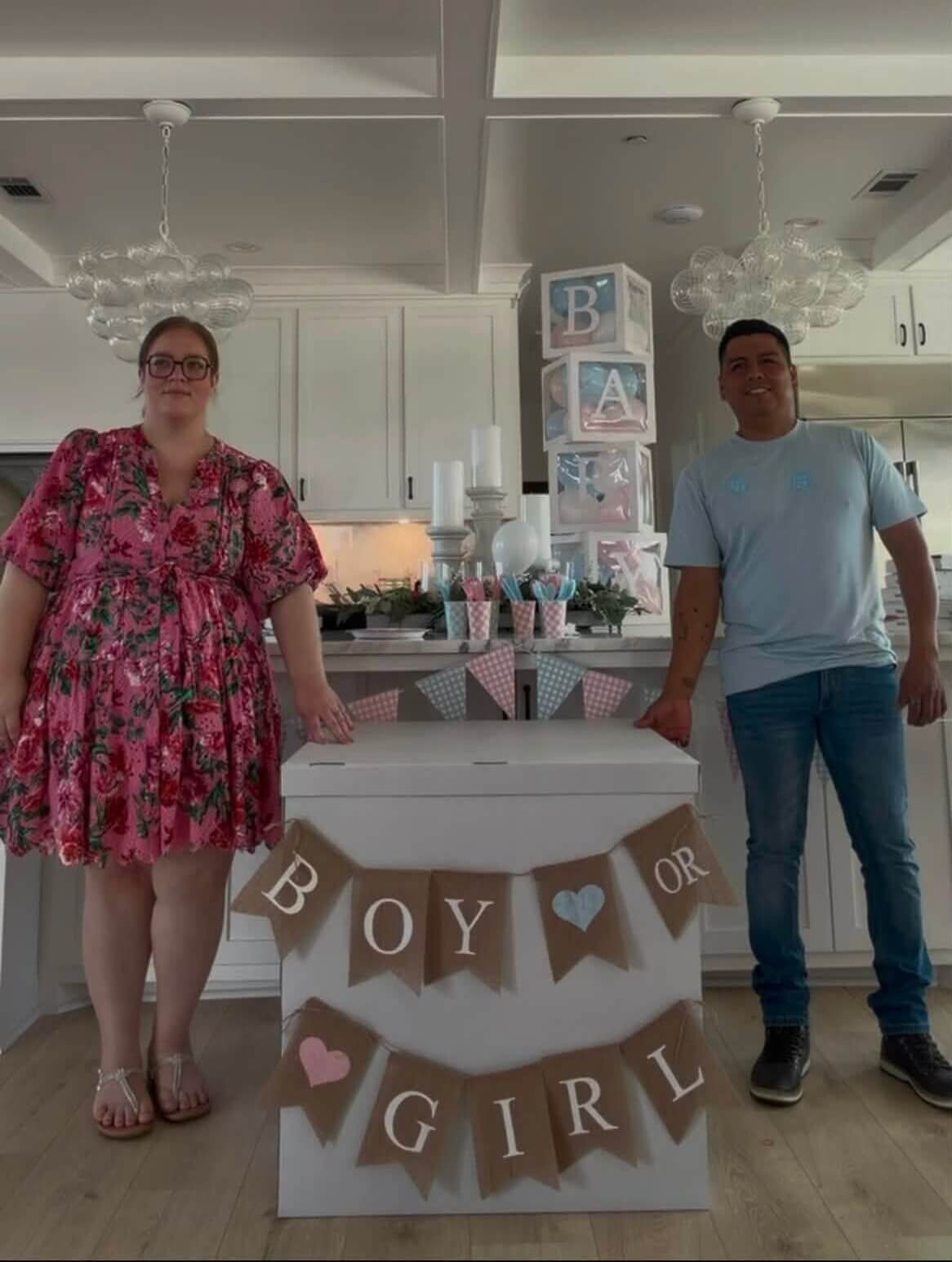
Ever since Catherine Cool and Heriberto Reyes-Ochoas married over a decade ago, she has worried about immigration officials detaining her husband.
Each time Reyes, nicknamed Eddie, drove from their home in Hancock County to work at a marine construction company in Slidell, Louisiana, she felt anxious that he wouldn’t make it back home.
That fear struck last week when Reyes got into a fender bender about 10 minutes from home in Kiln. Nobody was injured, but the Mississippi Highway Patrol trooper who responded determined Reyes, who emigrated from Mexico 20 years ago, did not have legal immigration status and took him to the local jail.
The 34-year-old spent the weekend there before paying bond to leave Monday, only for U.S. Immigration and Customs Enforcement to take him into custody the next day. By Thursday, Reyes was at the Adams County Correctional Center in Natchez facing deportation proceedings.
“This is like a nightmare come true,” Cool, who is 35 and an American citizen, told Mississippi Today. “But we’re going to do what we can.”
The couple celebrated their 12th wedding anniversary last weekend while Reyes was in jail. She is pregnant with their first child, who is due in January.
‘He’s here doing the right thing’
In the mid-2000s, when Reyes was a teenager, he and an uncle traveled through Texas and made their way to Mississippi. When his uncle left, Reyes lived with an older woman and her family until he was able to be on his own, Cool said.
The couple met as teenagers working at a Mexican restaurant in Bay St. Louis. They have been together since 2010 and married four years later.
Heriberto Reyes-Ochoas, nicknamed Eddie, and his wife Catherine Cool are expecting their first child due in January. They have been married since 2014 and met as teenagers, a few years after Reyes came from Mexico with a family member. Reyes has been going through the process to obtain permanent residency and had been waiting for an interview through a consulate office. Credit: Courtesy of Savannah Corbitt
Reyes has taken steps to secure permanent residency, starting with a petition by an American sponsor which had been approved years ago. Because he did not have lawful entry into the U.S., Reyes has had to seek a green card through consular processing, said Delaney Mecham, Reyes’ attorney.
The last step in that process is an interview with the consulate in Mexico. But, his attorney said there are some challenges to that. The U.S. Department of State has paused the visa application process and interviews while Reyes was waiting for one. Any adult who entered the country without authorization and then leaves is subject to a 10-year bar from reentering. Although a waiver has been filed to enable Reyes to go to a consulate interview, Mecham said there is the possibility he wouldn’t be able to return to the U.S.
“We’re not trying to hide the way he came in,” Cool said. “We’re doing what we’re supposed to do through relief given to people like him through the government, and it still doesn’t seem to help.”
Reyes does not have a criminal record, according to his wife.
Cool’s sister, Savannah Corbitt, shared Reyes’ story on Facebook Wednesday morning and it has been shared over 500 times. The post directs people to call U.S. Rep. Mike Ezell’s office and the offices of U.S. Sens. Roger Wicker and Cindy Hyde-Smith. People sharing and responding to the post have also suggested contacting Gulf Coast state lawmakers.
In the post, Corbitt wrote that Reyes has been part of the family for years. They’ve known each other since they were teenagers. He’s held her children when they were young and has shown up for birthdays, family dinners, holidays and other ordinary days, she said.
“If you know Eddie, you know exactly what kind of man he is,” Corbitt wrote. “He is the person who will do anything he can for anyone who needs him. And right now, he needs us.”
Corbitt also started a petition calling for Reyes’ release from detention while his immigration proceedings continue.
What happened?
The day of the minor accident, the trooper told Reyes he had an immigration warrant against him and detained him. They were confused about the warrant because, Cool said, Reyes’ only contact with immigration officials has been through a petition and waiver filed on his behalf through the U.S. Citizenship and Immigration Services.
Reyes’ detention by the trooper was possible through the 287(g) program, which allows local and state law enforcement to work with ICE. The Mississippi Department of Public Safety signed an agreement last year giving the Highway Patrol and several other divisions authority to enforce federal immigration laws during routine policing.
Mecham said local and state law enforcement’s willingness to work with ICE has led to children being separated from their parents and two-parent households turning into single-parent ones.
He said he sees the partnerships as more of a political talking point than a practical benefit for communities. Mecham said a better use of resources would be for local law enforcement to address violent crime and local policing rather than civil immigration matters. The federal government has the resources to address its immigration laws, he said.
“At a community level, these rules will cause more harm for our community,” Mecham said.
Once in ICE custody, officers interviewed Reyes at their office in Gulfport and determined he would be detained, his wife said.
Mecham said he requested ICE release Reyes on personal recognizance or on parole, but that did not happen.
ICE will likely not grant the bond, Mecham said, even though there is nothing in the record to indicate Reyes is a flight risk or a danger to the community. Reyes has strong incentives to appear in immigration court, Mecham said. He noted that his client is near the end of a lengthy process to obtain a green card, and the life Reyes has built with Cool on the Gulf Coast is another incentive.
‘He’s willing to fight it’
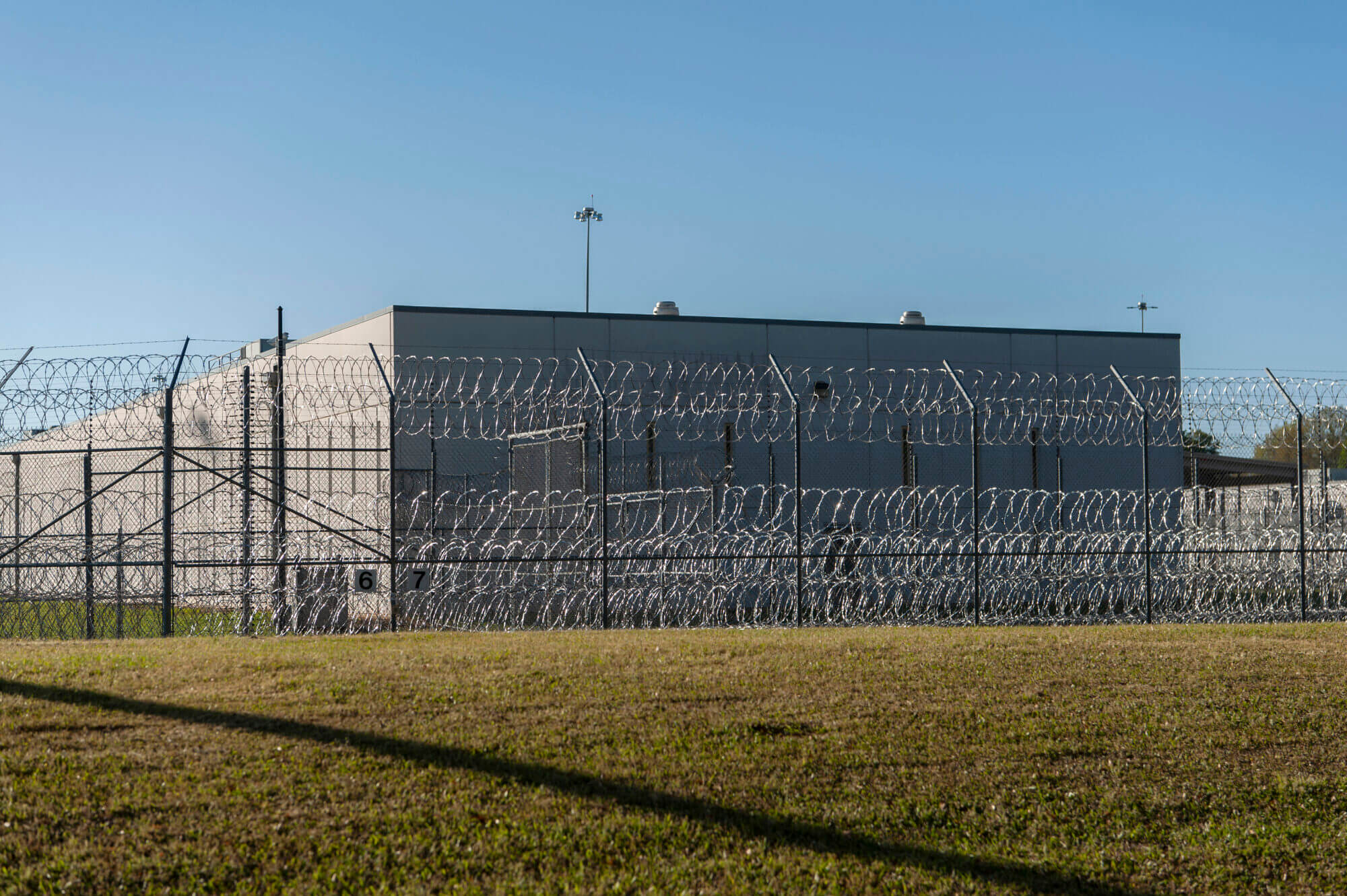
The Adams County Correctional Center in Adams County, Miss., on March 19, 2026. Credit: Rory Doyle for The New York Times
Cool works in Mecham’s immigration office, and she said she has seen the impact of immigration enforcement and detention on people. Now she is experiencing it.
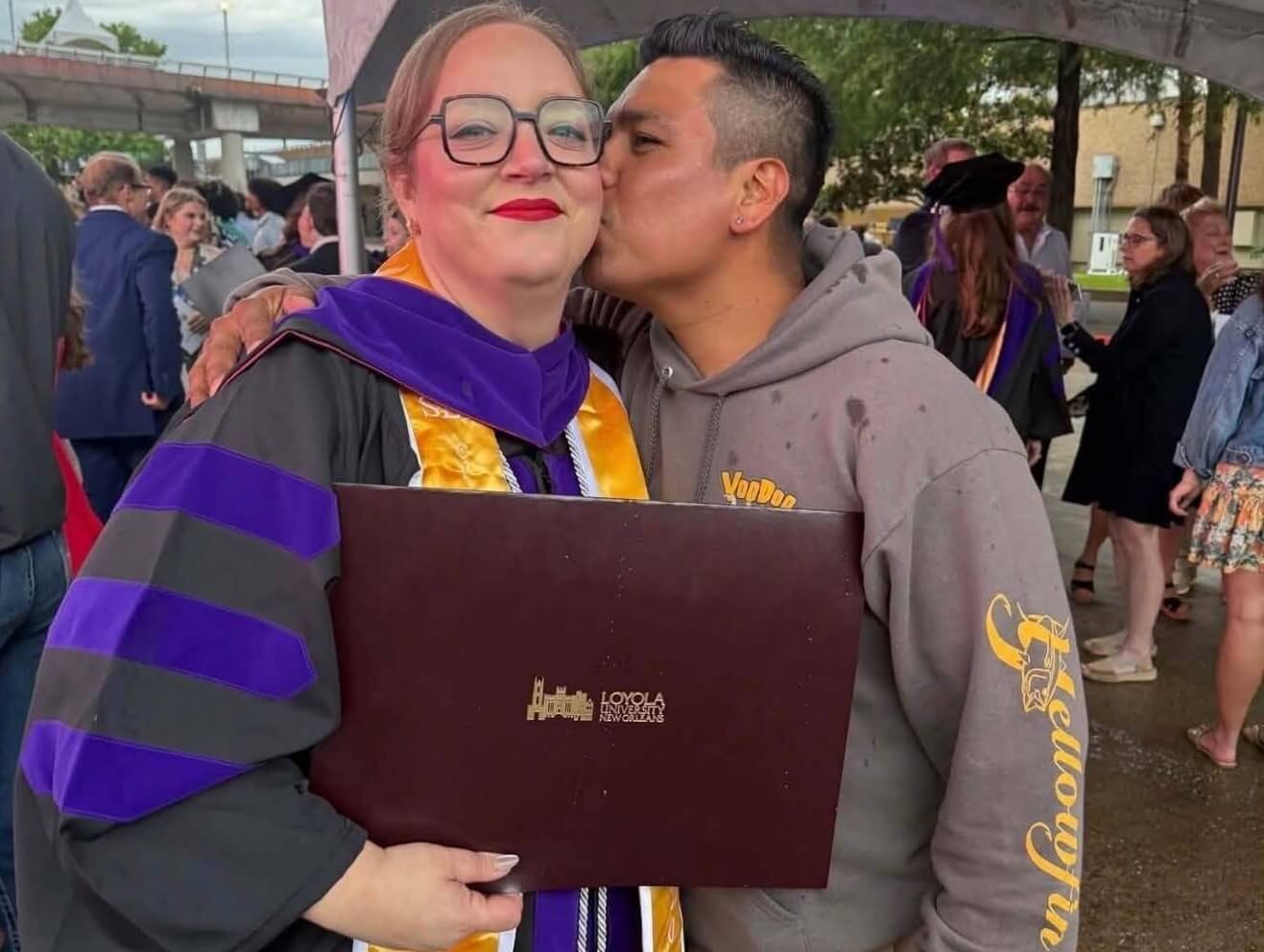
For the past seven years, Cool has worked in the immigration field and is pursuing a career in immigration law. She graduated from Loyola University New Orleans in May and plans to take the bar exam in February.
Cool visited Reyes when he was still at the jail, but on Wednesday he was transferred from Hancock County. She and family thought he would be taken to a detention center in Louisiana, but on Thursday he called her from the Adams County facility to say he was there.
He seems upset and doesn’t understand the situation, Cool said.
His attorney will consider other ways to secure his release, such filing a habeas corpus petition in federal court.
“He said he’s willing to fight it to try and get out,” Cool said.
Mississippi State University campus police detained a student Wednesday after an employee reported that he had threatened to blow up the financial aid office, an allegation the student and his attorney deny.
Zayden Leonard, 21, a junior majoring in biological sciences, was trying to resolve an issue with his financial aid.
He went to the university’s financial aid office to get his questions answered in person, and while waiting for help, six campus police officers approached him, handcuffed him and took him into custody, said civil rights attorney Harry Daniels, who is representing Leonard.
Campus police detained Leonard for less than an hour, and officers later told him an employee in the financial aid office had reported that he threatened to blow up the office, Daniels said. If true, conviction for that crime could result in up to 10 years in federal prison.
Leonard was not charged, university spokesman Sid Salter said in an email.
The university has a responsibility to maintain a safe environment for students, faculty, staff and visitors, Salter said. When concerns are reported involving potential threats to campus personnel or operations, the university follows safety and reporting procedures, he said.
“The university cooperates with appropriate law enforcement authorities while also ensuring that students have access to applicable university resources and support services,” Salter said.
Daniels said the incident was dangerous and unjustified.
“People who weaponize law enforcement to show power should be held accountable for their actions,” Daniels said. “The situation could have ended up deadly.”
Daniels said Leonard and his family are “shell-shocked” and considering legal action.
MSU declined to provide additional details, citing ongoing legal and student disciplinary processes. Salter reiterated that Leonard has not been charged. Campus law enforcement said it is directing questions about the incident and investigation to the university’s communications department.
Days before Brad McCullouch would be appointed the Hinds County district attorney in July, he sat down in a tan Shaquille O’Neal executive chair in a mostly empty corner office on the fifth floor of the Hinds County Courthouse.
Prompted by a public records request from Mississippi Today, McCullouch decided to look for financial and payroll records. He tried to find invoices, accounting software, usernames and passwords for the office’s bank accounts, and audits.
What he found instead, he said, was a black three-ring binder of checks that date back to January 2026.
The apparent lack of recordkeeping was one reason McCullouch said he asked the state auditor’s office to review the Hinds DA’s finances under former Hinds County District Attorney Jody Owens, who pleaded guilty in June to a federal corruption charge and left office soon after.
“I’m realizing that it’s basically one person who is paying all the bills, and I’m thinking, ‘We need somebody to look at all this,’” McCullouch said.
Patchwork of financial oversight
The siloed documentation persisted due in part to a system of patchwork financial oversight for district attorney offices in Mississippi. Regulatory agencies that are supposed to receive financial reports complain of a lack of enforcement power, and accountability depends on the initiative of a particular district attorney.
Once completed, McCullouch’s requested review will be the first audit of the Hinds DA’s office the auditor’s office has recorded since at least 2013, according to Jacob Walters, a spokesperson for the auditor.
District attorneys in Mississippi also face no penalties if they do not notify the state treasury of the existence of bank accounts holding public money, even though state law says district attorneys should file an annual report with this information.
The Hinds DA’s office has not filed such a report to the state treasurer’s office since 2017, according to a treasury spokesperson.
Along with audits, these filings are among the few mechanisms that exist in Mississippi to hold district attorneys accountable for how they spend self-generated funds, such as drug seizure money or fees from pre-trial intervention programs.
These reports also would have been useful to McCullouch. In his role as Owens’ second-in-command, the Madison attorney said he knew of a few bank accounts the office had at Trustmark, because he was a co-signor.
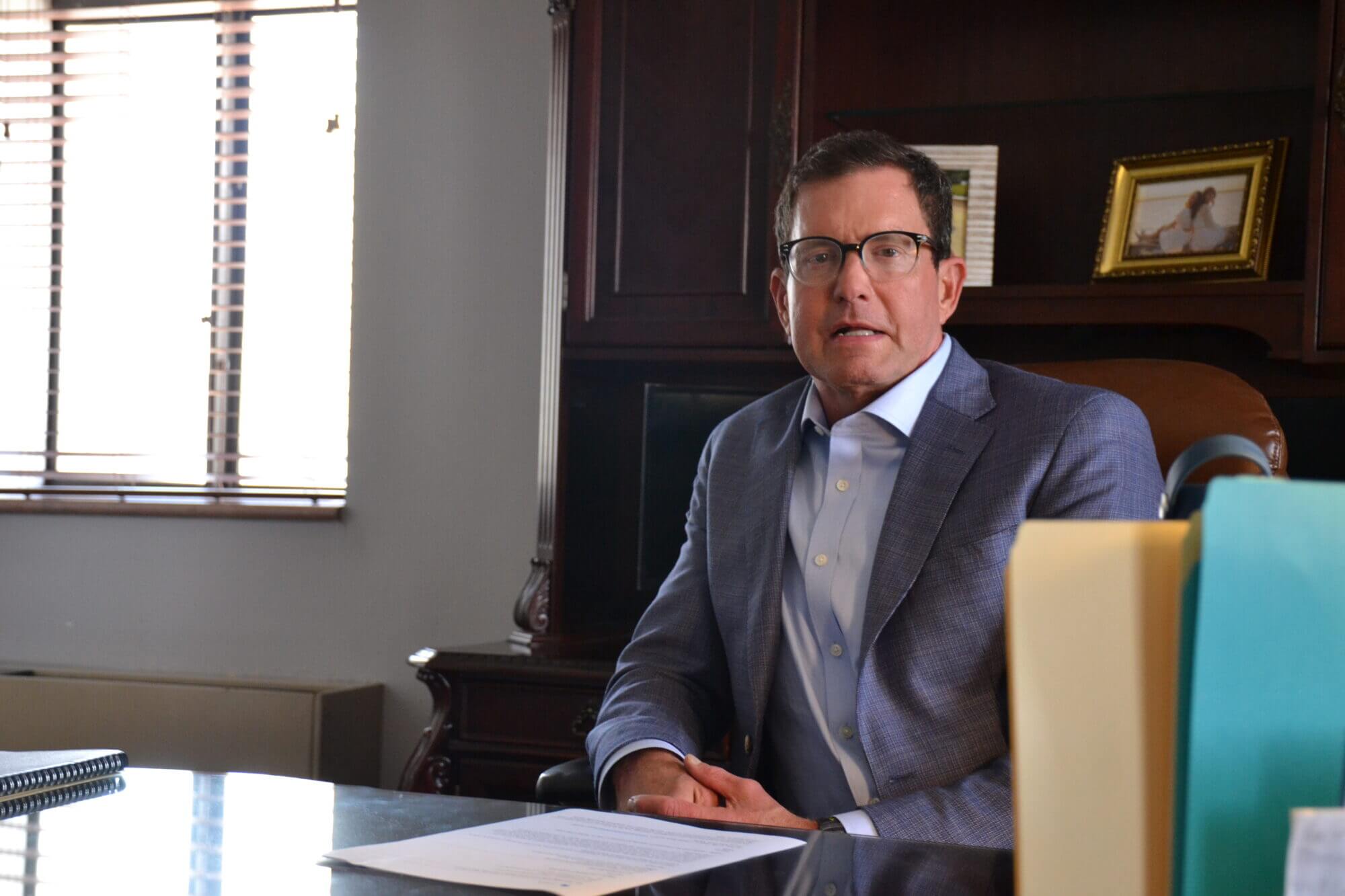
Brad McCullouch, a Madison attorney appointed by Gov. Tate Reeves as Hinds County district attorney in July, discusses proposals he believes could reduce crowding at the jail. Credit: Molly Minta/Mississippi Today
After taking the reins, McCullouch went to Trustmark with an assistant district attorney, who suggested he ask the bank for all the DA’s accounts.
That’s how he learned the DA’s office had seven accounts at Trustmark, some of which McCullouch didn’t know about.
McCullouch said he hopes to have an independent audit of the office completed by the time he leaves his post after the Nov. 3 special election.
In a text message to Mississippi Today, Owens wrote that he paid for an independent audit of his office so he could provide a copy to the Mississippi State Health Department as part of a grant application. Mississippi Today has not retrieved that audit from MSDH by press time.
“To my knowledge there was no independent audits done in our office in the four years before I was elected,” Owens wrote.
The missing audits and treasurer reports for the Hinds DA’s office span the terms of two district attorneys in Hinds County, Owens and his predecessor, the late Robert Shuler Smith.
Smith, who served as Hinds DA from 2008 to 2019, also drew legal scrutiny during his controversial tenure. The Mississippi Attorney General’s Office unsuccessfully pursued various criminal charges against Smith for years, notably accusing him of illegally advising criminal defendants.
But office paperwork was disorganized under Smith, some former prosecutors told Mississippi Today. Paper files routinely went missing. When Owens was elected in 2019, he implemented an online case management system.
Records from 2021 and 2024 show that Owens followed reporting requirements for state funding for prosecutor salary supplements by responding to emails from a Department of Finance and Administration employee who was checking which offices were receiving the extra pay.
Dearth of documents
It is difficult to say how much money is under the purview of the Hinds DA’s office, because of the complexity of the funding for district attorney offices in Mississippi and the dearth of documents. That’s one reason why an audit could be so useful in understanding the finances of one of the most powerful institutions in public life, said Amanda Beck, an accounting professor at Georgia State University who specializes in government auditing.
“It’s public property so the public deserves to know how that money has been spent,” she said.
District attorney’s offices in Mississippi are funded through a mix of state, county and self-generated money. Oversight exists for state and county funds: District attorneys must report how they spend this money to the state Department of Finance and Administration or to local county governments.
But virtually no such enforceable checks and balances exist for self-generated funds, due to the loopholes in state law. Unlike other public funds, this money is solely managed and overseen by the district attorney’s office.
Plus, little guidance exists for district attorneys in Mississippi on how to comply with state regulations. Stephanie Wood, the current president of the Mississippi Prosecutor’s Association, said the organization does not provide training to district attorneys on how to comply with state oversight laws.
Hal Kittrell, a longtime district attorney in the 15th Circuit Court District in south Mississippi, said his office voluntarily pays for an independent audit every year. He doesn’t know why or when the audits started. He said it is just something the office has always done, ever since Kittrell was an assistant district attorney nearly 30 years ago.
“There’s 23 DAs and 23 ways of doing things,” he said.
The patchwork oversight for district attorneys means just one person knows the whole scope of a district attorney’s finances: The district attorney, said Sen. Brice Wiggins, a Republican from Pascagoula who chairs the Senate Judiciary A Committee.
“If you have never served (as a district attorney) you don’t know and would never know how those funds come in and what would go out,” Wiggins said.
Audits required but not always done
Because district attorneys receive state funding, Mississippi statute requires the auditor’s office to audit district attorney’s offices. This is typically done by working with CPA firms to conduct the audits.
While state law mandates the auditor’s office to annually audit state government offices, the law does not specify a schedule for district attorney offices. The law also does not provide for a punishment if district attorney’s offices fail to obtain or file audits.
“There’s no penalty if it’s not getting done, so it’s basically not a law,” said Walters, the auditor’s spokesperson.
When Walters opened a filing cabinet containing audits of district attorneys’ offices in Mississippi to check for records, the folders for other offices contained multiple documents. But he said the folder for the Hinds DA’s office contained just one – a contract for a 2013 audit.
The audit, however, was never filed with the auditor’s office.
David Ewing, the owner of the accounting firm that signed the 2013 contract, said he couldn’t find the final copy of the report in his files, which led him to speculate the audit wasn’t submitted to the auditor’s office because it was never completed. He said his firm hasn’t attempted to audit the Hinds DA’s office since 2013.
Without more stringent requirements, the state auditor relies on district attorneys to self-report suspected wrongdoing in their offices. Past instances of financial crimes involving district attorney employees often involve the office’s self-generated funds.
Since fiscal year 2018, the auditor has taken enforcement action in just two cases against district attorney’s offices, according to a review of the auditor’s annual reports. Both instances involved DA employees embezzling from the office’s self-generated funds.
Walters said some funding for district attorneys is covered by audits of county governments. But these can be out of date: The most recent audit the state auditor has on file for Hinds County was in 2022.
All eyes on Hinds DA audit
Kittrell said he thinks district attorneys across the state will be looking for the outcome of the Hinds DA audit so they can ensure their independent audits are up to par. He noted that the elected offices are unique compared to other government entities in Mississippi, since district attorneys are not quite state offices, but not local agencies, either.
“We’re kind of an oddity among any agency that I know,” he said.
District attorneys are not only virtually unchecked in how they spend their self-generated funds. Mississippi’s top prosecutors are also given special powers to pick and choose crimes to prosecute in their circuit court.
This power wasn’t lost on Owens: He frequently remarked on it to undercover FBI agents who were investigating him. At least one comment that made it into the 2024 federal indictment bore resemblance to McCullouch’s recent realization after his search for financial records turned up short.
“I’m not trying to overemphasize this, you guys, but my ability to prosecute people… there’s only one me,” Owens was quoted saying in the indictment.
Update 8/27/2026: This story has been updated to show that the auditor’s office often works with CPA firms to conduct audits of government bodies.
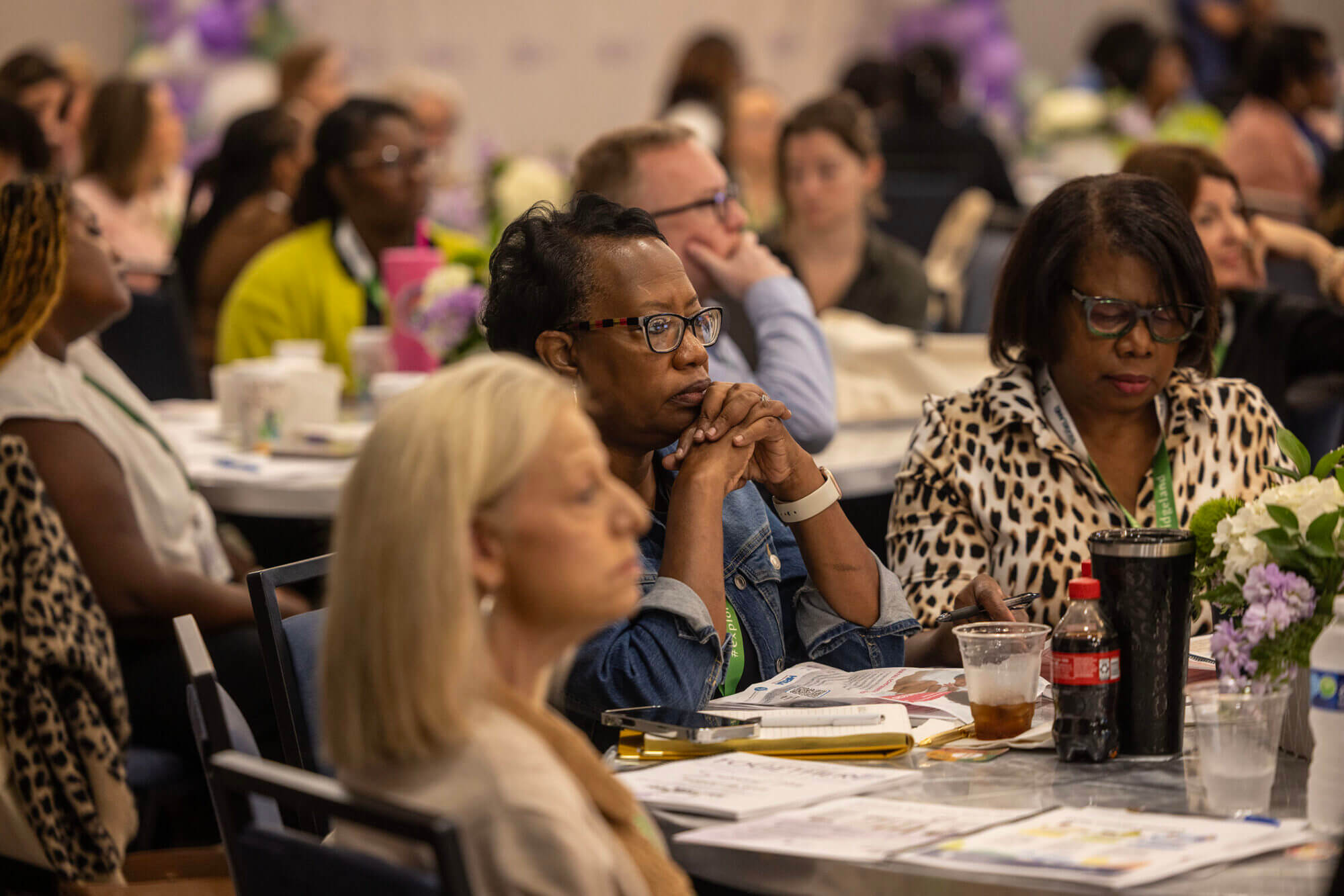
More than 100 Mississippi healthcare providers gathered Wednesday to confront a growing challenge: how to better support pregnant and postpartum mothers struggling with substance use.
Nurses, doctors, counselors and social workers explored treatment approaches that prioritize rehabilitation, keeping mothers with their babies and replacing punitive measures with care, on Wednesday. The conference was organized by Mississippi Public Health Institute, a nonprofit that develops projects to enhance public and mental health, and CHAMP4Moms, a mental health referral service at the University of Mississippi Medical Center for providers who treat mothers.
Following a national trend, overdose has become a leading and rapidly increasing cause of maternal death in Mississippi, one of the most dangerous states for giving birth. Mississippi is one of 16 states where people are arrested for reasons related to their pregnancy. Most of these arrests stem from substance use allegations.
Unlike many of the other states, Mississippi does not have mandated reporting laws, meaning providers don’t have to test or report women for drug use. Mississippi also does not have fetal personhood laws, so drug use during pregnancy isn’t legally considered child abuse. But that hasn’t stopped prosecutors from doling out 20-year prison sentences to Mississippi mothers who are struggling with addiction.
Drug testing in hospitals often does not lead to safer conditions, explained Dr. Mishka Terplan, an OB-GYN board certified in addiction medicine who has helped develop federal guidelines for treating opioid use during pregnancy. Providers regularly perform these tests for moral reasons rather than clinical ones, Terplan said. Positive drug tests often result in officials separating mother and infant, which can have devastating effects, he said.
Dr. Mishka Terplan talks about care and punishment in perinatal substance use disorders during the 2026 CHAMP for Moms Perinatal Substance Use Disorders Summit at Embassy Suites by Hilton Jackson on Wednesday, Aug. 26, 2026, in Ridgeland. Credit: Eric Shelton/Mississippi Today
“We have this assumption that somehow the best way for someone to achieve recovery is to do it separated from their child. And only once they’ve achieved that will we allow for reunification,” Terplan told Mississippi Today. “I think that that’s philosophically and ethically backwards.”
For many people, motherhood can open a “window of opportunity” for behavioral change, Terplan explained. Parenthood can make something as difficult as recovery feel possible for the first time. Too often, Terplan said, babies are taken away before mothers can seize that moment.
These separations are nothing new. In 2015, Joanne Shedd’s newborn son was taken away from her because of her methamphetamine use. At the time, she said, she grieved that loss as if he had died. Shedd later enrolled in Fairland, an addiction treatment center in Tutwiler.
A month after arriving at the center, Shedd said, she was reunited with her son. Looking back, she counts herself as lucky. The kindness of the hospital nurses who helped deliver her son got her through that first month postpartum, she said. They took photos of her with her son during their limited time bonding, one of which she printed and kept on her bedroom mirror.
“That was my motivation when I wanted to give up,” Shedd told Mississippi Today.
‘We can do better’
Mothers using drugs who lose custody of their children in the U.S. are more likely to return to drug use and experience overdose and worsened mental health, research shows. Mental health conditions is the most common complication of pregnancy. Research estimates 75% of those conditions go undiagnosed, which has fatal consequences and goes against medical standards, experts say.
A night-and-day difference exists between how providers treat patients experiencing medical emergencies versus those enduring mental health emergencies, said Utsav Nandi, associate director of research at the University of Mississippi Medical Center’s Department of Emergency Medicine. For example, during a heart attack, a medical team works to stabilize the patient and provide continuous care until providers know the patient is safe and will remain so after leaving the hospital.
“Yet for something like overdose, when someone overdoses and dies and is then revived, the best we can do is ‘Hey, here’s a phone number, and don’t do drugs,’” Nandi said. “We can do better.”
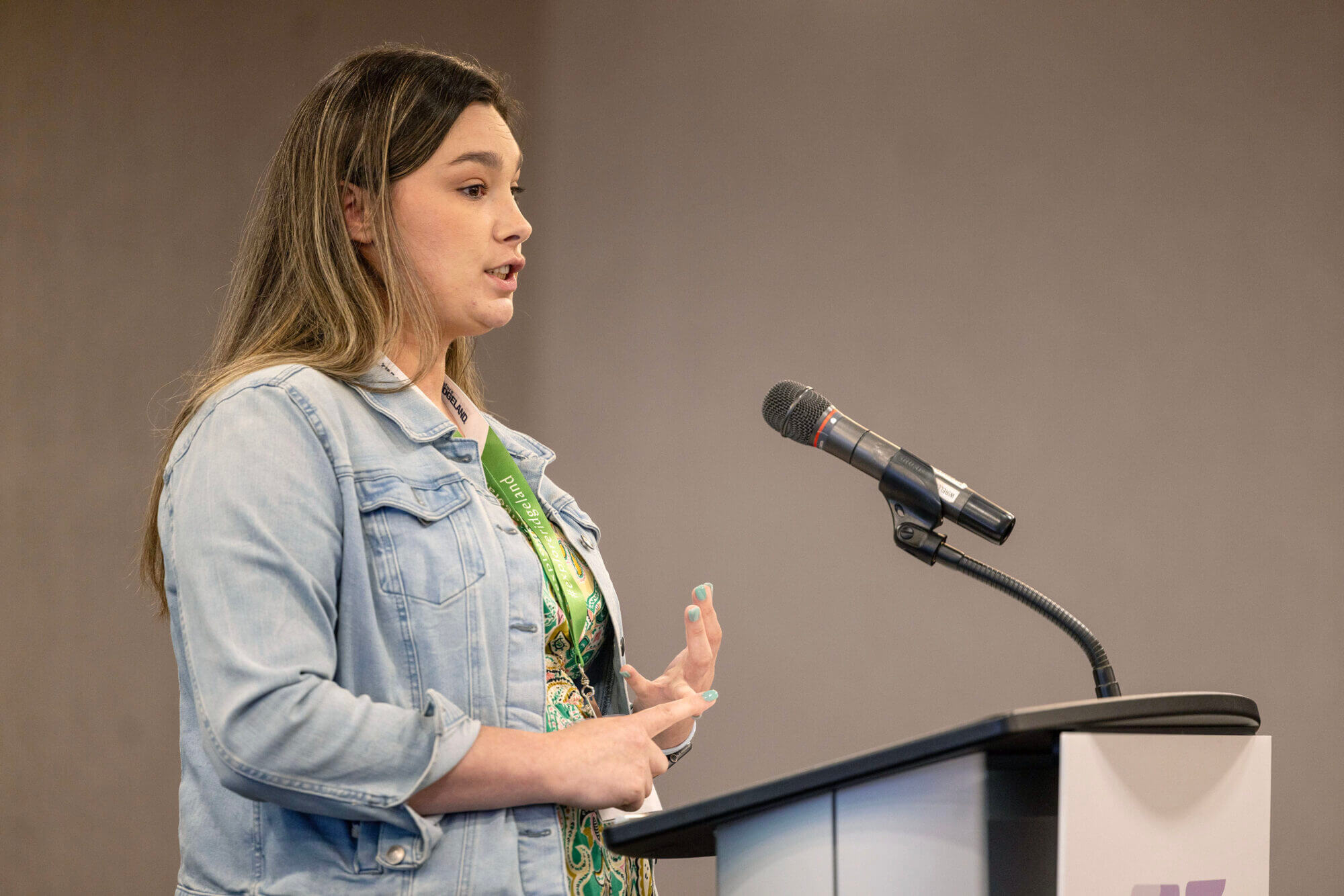
Rachel Gilson shares a personal story of substance abuse during the 2026 CHAMP for Moms Perinatal Substance Use Disorders Summit at Embassy Suites by Hilton Jackson on Wednesday, Aug. 26, 2026, in Ridgeland. Credit: Eric Shelton/Mississippi Today
Stigma poses the biggest barrier to recovery facing those with substance use, experts said Wednesday. Instead, providers can educate themselves and reimagine the infant’s health as intertwined with the mother’s.
Since the U.S. Supreme Court overturned the constitutional right to abortion in 2022, political language has pitted the rights and health of the fetus against those of the mother, Terplan said. In reality, they exist, thrive and suffer together, Terplan said.
In 2023, UMMC launched a phone line, called CHAMP4Moms, that Mississippi healthcare providers can call for guidance on screening, diagnosing and treating a pregnant person or new mother who may have unaddressed mental health needs. Providers can get guidance in real time from reproductive psychologists and psychiatrists in and out of state.
Keeping families together not only makes caregivers happy, speakers stressed. It also saves babies. Infants who are separated from parents often face severe lifelong health and psychological damage due to that trauma.
Along with reducing stigma, keeping families together is among the best ways to improve outcomes for those seeking recovery, Brenda Foster, the lead nurse navigator for the Opioid and Substance Use Programs at the Mississippi State Department of Health, said during the conference. Foster has over 13 years of experience as a psychiatric nurse.
“You’ll cause more harm to these kids by taking them away from someone who loves their kids and just needs the help that they need,” Foster said.
The National Association of Black Journalists has honored Mississippi Today, The Marshall Project and the Clarion Ledger with an NABJ Salute to Excellence Award for coverage of deaths inside Mississippi prisons.
The year-long project, which involved Mississippi Today’s senior investigative reporter Jerry Mitchell and criminal justice reporter Mina Corpuz and Justice Editor Debbie Skipper, also included the contributions of the Hattiesburg American and Mississippi Link. It chronicled dozens of killings that went unpunished.
Over a decade, at least 42 people were killed in the state’s prisons with just six people convicted in those deaths. Often families contacted by the reporters didn’t know their loved ones’ deaths were ruled a homicide. In one case, a prosecutor forgot to serve an indictment until a reporter on the team called about the homicide.
New evidence Mitchell uncovered offered hope to the mother of a son killed in the Mississippi State Penitentiary at Parchman five years ago that she would finally have some answers about what happened.
Faced with these facts, Mississippi Corrections Commissioner Burl Cain told Mississippi Today that he would reopen investigations of the homicide cases as well as deaths ruled undetermined.
STARKVILLE — During Mississippi Today’s investigation into the case against death row inmate Willie Manning, reporters interviewed retired Oktibbeha County Sheriff Dolph Bryan.
The former sheriff investigated the 1992 killings of Jon Steckler and Tiffany Miller. He believes Manning, convicted in 1994 in the murders, took the couple in her two-seat Toyota MR2 from a fraternity house at Mississippi State University to the site where he killed them.
Bryan mentioned that the 1986 MR2 was now in the possession of retired Chief Deputy Sheriff George Carrithers, who investigated the murders with the sheriff.
Carrithers told Mississippi Today that Manning deserves to die for what he did. “I don’t know why Mississippi waits so long,” he said in a July interview. “The family doesn’t see any justice out of the system at all.”
He said when the 1986 Toyota MR2 arrived at the sheriff’s office, deputies opened all the doors, built a tent over it and “put Super Glue in” to develop any fingerprints. They also removed the steering wheel and windshield to test for fingerprints.
Deputies found dozens of fingerprints. Sixteen of them belonged to Steckler and Miller. None belonged to Manning, who was sentenced to death for the killings.
Carrithers said he had to clean under the car with a power washer because the killer used the MR2 to run over Steckler.
After the students’ slayings, an insurance inspector showed up every month, wanting to look at the car, which the sheriff’s office had custody of, Carrithers said.
“Hell, you just looked at it last month,” he said he told the inspector.
“Yeah, but I gotta look at it every month,” he said the man replied.
That continued for some time until Carrithers tired of the interruptions. The next time the inspector came in, he said he told the inspector, “Look, to keep you from bothering me, what the hell will you take for that damn car?”
“I don’t know. What will you give me?” he said the inspector asked.
“I’ll give you $300 for it just to get you to where you ain’t gonna bother me,” Carrithers said he replied.
“That’s too cheap,” the inspector replied. “I can’t do that.”
“Well, what do you want me to do?”
“You give me six.”
He wrote the inspector a $600 check, he said. “The only reason the insurance company totaled it was because it was going to have to have a new interior.”
It’s impossible to get instant glue out of fabric, he said, “but you can get it off the plastic and vinyl.”
The MR2 sat on the sheriff’s lot for two years after Manning’s trial. When Carithers finally took it home, he replaced the windshield, upholstery, carpet and headliner. He also cleaned it inside and out.
He said his daughter drove the car until she graduated from high school and got her own car, and his grandson drives it now.
He sold the car to a man at one point for $2,500, only to have him call back. The man said he told his wife about the car’s history, and she told him, “You get rid of that damn thing.”
The man insisted on giving him back the car for free, but Carrithers refused and paid $2,000. “I made 500 bucks out of it,” he said.
At one point, Miller’s mother visited the sheriff’s office. “She came into my office and told me she was glad I got it,” Carithers said. “She was proud that it was going somewhere where it meant something.”
When showing the car to Mississippi Today journalists, Carrithers opened the trunk and pointed to smudges on the inside of the lid. “This black stuff you see here? That’s all the fingerprint powder we put on there to dust,” he said. “Of course, this thing had prints all over it.”
He pointed at the sportscar’s small interior, “Can you believe three people got in this thing?”
Claudia Amendoeira is at Mississippi Today on a fellowship from the Columbia Graduate School of Journalism.This story was published with the support of a grant from Columbia University’s Ira A. Lipman Center for Journalism and Civil and Human Rights, in conjunction with Arnold Ventures.
STARKVILLE — The case against Willie Manning hangs on a restroom token. It is the link authorities made between a burglary and the killings of two Mississippi State University students, putting him on death row at age 26.
Two weeks before Christmas in 1992, deputies shone flashlights on a dark remote road until they saw something bright — a token between two puddles of blood. Court records show that within 24 hours, they concluded the brass token, about the size of a quarter, was stolen from a car outside a fraternity house where the couple was last seen. Authorities believed once they found their burglar, they had their killer.
A Mississippi Today investigation reveals how this rush to judgment caused them to fixate on known burglars, to reject witnesses who contradicted this theory and to fail to fully investigate the token’s age and circulation.
Four of the six Mississippians exonerated from death row came from the same judicial district where Manning was convicted. All were prosecuted by then-District Attorney Forrest Allgood, and all of them were Black.
As full-fledged service stations began to transition to self-serve pumps and convenience stores in the 1970s, restrooms moved from outdoors to indoors. Some operators used tokens or door codes to limit use of their bathrooms to customers.
During a 1994 capital murder trial, Allgood presented the restroom token — manufactured by Nik-O-Lok and found at the murder scene — as proof Manning carried out both the burglary and the students’ murders. “The burglar was in fact their executioner,” he told jurors.
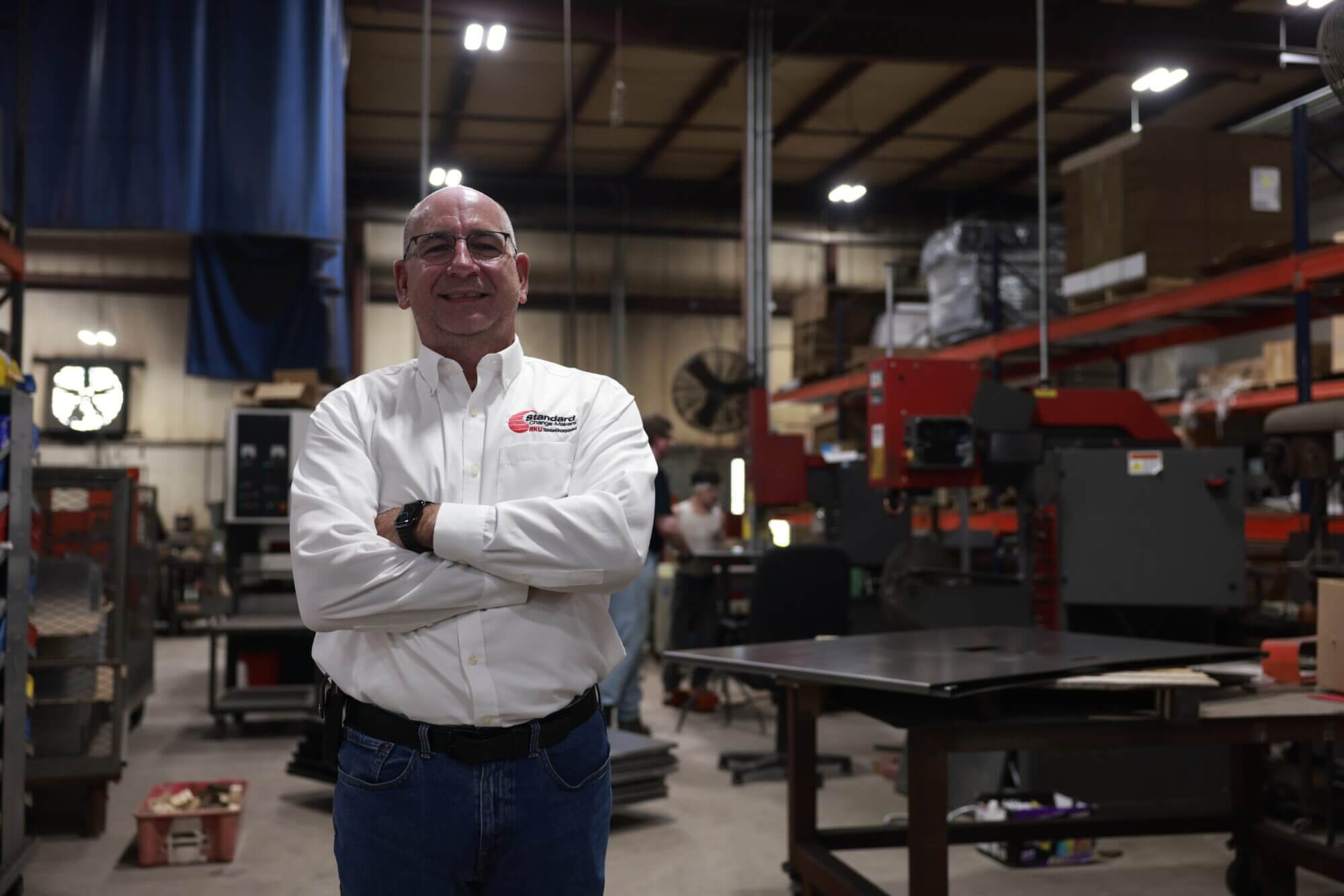
Rob Unterborn owns Standard Change-Makers and Nik-O-Lok in Indianapolis, Ind., which sells bathroom locks and tokens, on Wednesday, July 29, 2026. Credit: Jeremy Hogan for Mississippi Today
Upon learning recently of the token’s use as evidence in Manning’s case, Rob Unterborn, who owns Indiana-based Standard Change-Makers and Nik-O-Lok, told Mississippi Today in a June interview, “If the authorities in Mississippi are using one of our tokens as some sort of proof to tie it back to someone, that would be a serious stretch.”
At trial, Thomas Webster, a vice president for the Nik-O-Lok division of Standard Change-Makers, testified that these tokens could be found at only two locations in Mississippi: a Kentucky Fried Chicken in Laurel and a Shell gas station in Grenada, a popular stop for those traveling on I-55 and for students making their way to Starkville.
But no one asked him about the national circulation of these tokens, distributed to gas stations, laundromats, bus stations and other businesses across the U.S.
In California alone, more than 4,000 locations used these tokens, Unterborn said. “If I had to estimate the number of tokens in circulation nationwide during that time period, I would estimate that number to be well over 100,000.”
In fall 1992, Mississippi State had 13,866 students enrolled at its Starkville campus, more than 800 of them from across the U.S.
Student John Wise testified that while his car was parked outside the Sigma Chi fraternity house the night of the killings, someone stole his leather jacket, CD player, huggie, $10 in change and a bathroom token from the Grenada station. According to then-Oktibbeha County Sheriff Dolph Bryan’s notes, Manning admitted to selling the CD player but denied killing anyone.
At Manning’s trial, Allgood asked Wise about the token, “Once it was missing from your car, when did you see it again and who had it at that point?”
“Sheriff Bryan,” he replied.
Unterborn said there’s no way to conclude a stolen token is the same one that’s been found any more than anyone can pick out a lost quarter from a pile of quarters.
“We literally stamp thousands of tokens at a time, and they are all identical to the untrained eye,” he said. “To have someone look at one of my tokens and positively identify it as ‘the one’ that was previously in their possession is quite ludicrous.”
‘Everyone was scared to death’
The killings of 22-year-old Pamela Tiffany Miller and 19-year-old Jon Stephen Steckler sent shivers through the campus of Mississippi State.
“Everyone was scared to death,” recalled Oktibbeha County Circuit Clerk Tony Rook, a Mississippi State student at the time.
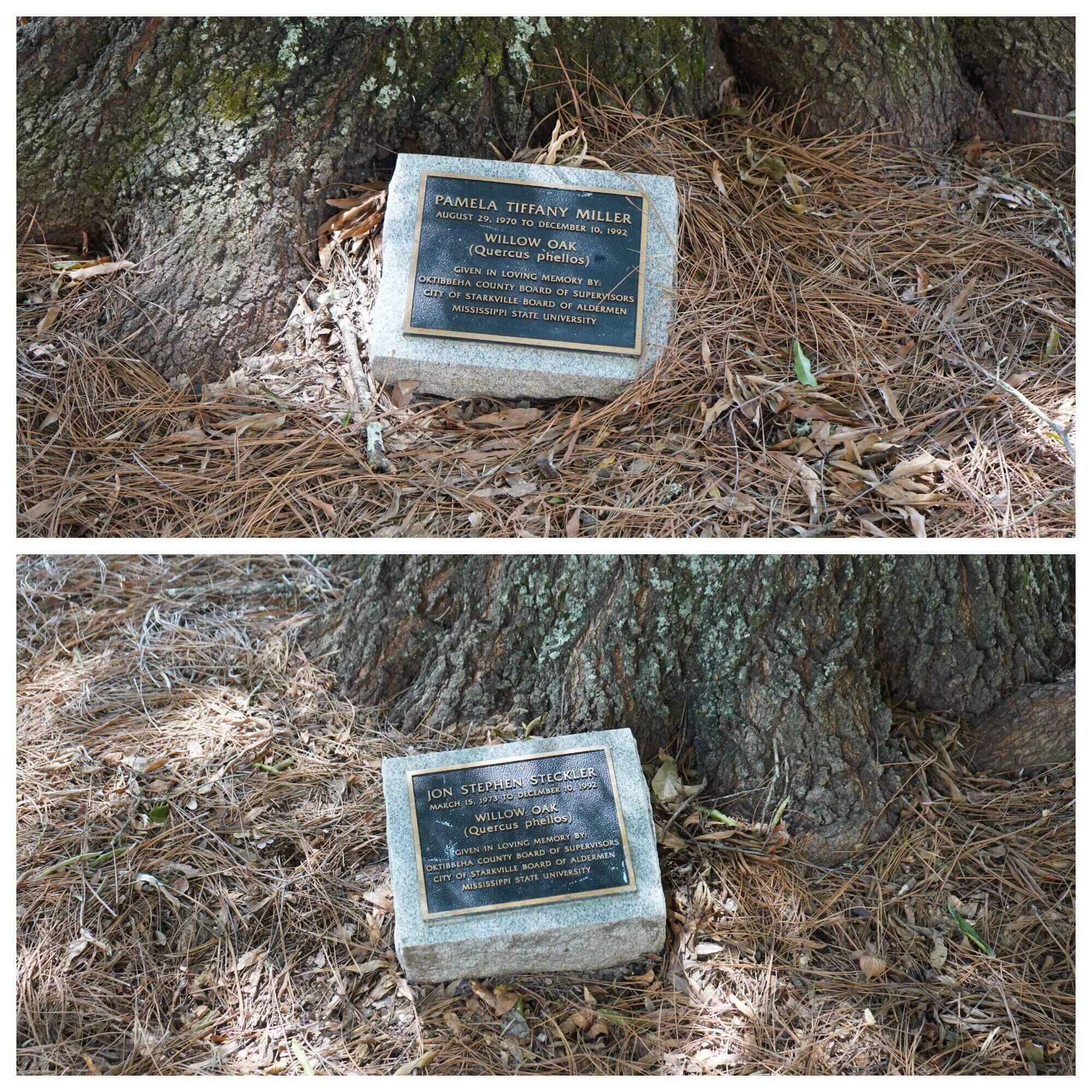
After the 1992 murders of Tiffany Miller and Jon Steckler, Mississippi State University, the Oktibbeha County Board of Supervisors and the Starkville city board donated willow oaks in their memory. Now, 34 years later, those oaks tower over the university campus. Credit: Richard Lake/Mississippi Today
In memory of the students, Mississippi State planted two willow oaks on the east side of the Drill Field. Miller’s tree is near Carpenter Hall while Steckler’s is near McCain Hall.
Miller was a junior. Her friends described her as a “real nice” and “real serious” student. At Madison-Ridgeland Academy, she worked for the newspaper and yearbook as well as serving as an officer for the drill team.
“My daughter was a beautiful, vivacious, clean-living, law-abiding citizen who was on the threshold of accomplishing one of her dreams — to become a nurse,” her father, A.C. Miller Jr., wrote in 1993 as part of his victim impact statement.
Ann-Marie Templeton became emotional as she spoke of her sister, Tiffany, who was 13 years older. “She loved me,” she said. “I was her real live baby doll.”
Despite her youth, she said her sister let her hang out with the high school drill team on the sidelines of the football field.
As the holiday season neared in 1992, she said her sister planned to return home from Mississippi State in time to see her elementary school’s Christmas show but, at the last minute, had to work.
Tiffany never made it home.
When Templeton arrived with her mother at their house on Dec. 11, she saw two of her uncles and a preacher waiting for them, and soon her mother was screaming, she said. “Nobody would tell me what was going on.”
She sobbed. “It’s been a nightmare every day since.”
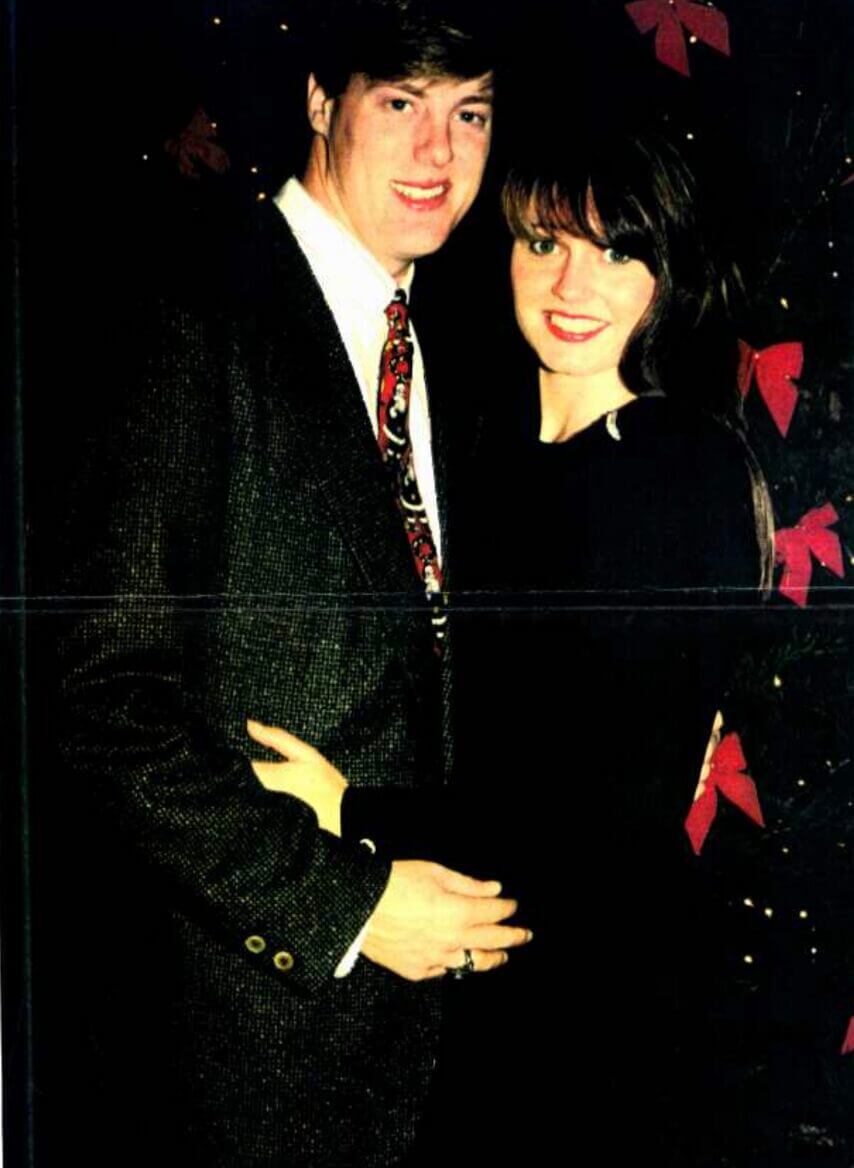
Jon Steckler and Tiffany Miller pose together in this 1992 photo. Credit: Oktibbeha County Circuit Court records
Steckler belonged to a prominent family in Natchez, where he attended the Catholic high school, played defensive end for the football team and made mission trips to Mexico. In his Cathedral High School yearbook, he placed this quote below his portrait: “Man lives by habits, indeed, but what he lives for is thrills and excitement.”
Steckler’s sister, Suzanne, recalled him as “a really great guy. He’d give somebody the shirt off his back, that sort of thing, to help a friend.”
Jeff Allen, who lived next door to Steckler at the Sigma Chi frat house, called his fraternity brother “fantastic, 10 out of 10 as a human being.” Although Steckler had many friends, he was “extremely kind and humble,” said Allen, now an attorney in Clarksdale.
He knew Steckler’s sister, Jennifer, as well. “I am a better person for knowing both of them,” he said.
Expert: Evidence suggests the killer knew his victims
After examining evidence in the students’ slayings at the request of Mississippi Today, former FBI profiler Kathleen Canning-Mello said she believes the killer knew the victims.
She said abductions by strangers are rare. According to the FBI National Crime Information Center data, less than 0.1% (247) of 498,038 missing persons or abductions reported in 2025 came at the hands of strangers.
In other words, a person is far more likely to die from a fall off a ladder than to be abducted by a stranger.
The sheriff testified at trial that he had no evidence to indicate Manning knew either victim.
Canning-Mello, who worked for the FBI for 31 years and spent a decade in the Behavioral Analysis Unit, said the evidence reflects overkill on both victims. “Overkill,” she explained, “is defined as the infliction of injuries beyond what is necessary to kill the victim.”
For instance, the killer shot Miller in the upper lip and the head, and then drove Miller’s car over Steckler after shooting him, she said. “The infliction of excessive injuries in this case indicates the offender was enraged at the time of the killings.”
Anger connected to such impulsive attacks often involves emotionally charged relationships, said Canning-Mello, who co-hosts the podcast, “Real Crime Profile.”
The killer dragged Miller’s body to the side of the road and stripped her down to her bra and panties. The pathologist found no evidence of sexual assault.
At trial, there was speculation the would-be rapist was interrupted, but Canning-Mello wonders if the killer staged this to throw off authorities. She said she wonders the same thing about the items stolen from the victims — their watches and rings.
Authorities concluded that the killer dropped Miller’s ring on the way to her trailer. Canning-Mello wonders if the killer simply got rid of it.
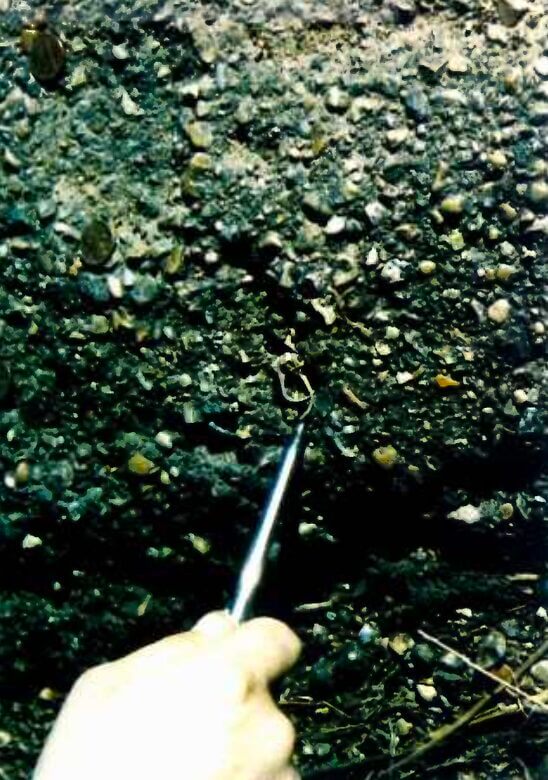
Deputies found Tiffany Miller’s missing ring on the road to the trailer park where she lived. Credit: Oktibbeha County Circuit Court records
She theorized that the killer had a “hairtrigger temper,” a history of assaults, and a possible drug or alcohol problem. “In cases of explosive violence,” she said, “there is typically a stressor of some kind that precedes it.”
Authorities also believed the murderer knew the victims, according to their initial notes on the investigation. They wrote down two theories: One of Miller’s ex-boyfriends killed the couple out of jealousy, or they interrupted an auto burglary and were killed. “The victims knew the subject,” officers wrote.
Canning-Mello said authorities typically investigate those close to the victims of violence “to obtain alibis and discount the involvement of close relationships before widening the investigation.”
In this case, authorities quickly abandoned that belief to look “for someone who burglarizes cars at Mississippi State University,” the sheriff testified.
Despite evidence that suggested the killings were personal, the only names the sheriff put down as suspects for these murders were 13 known burglars. All of them were Black.
Two double murders stunned this town
Five weeks after the students’ murders, another double homicide horrified this town of then-18,000 people. This time, an elderly woman and her daughter were slashed with a knife and beaten to death with a laundry iron.
Time passed with no arrests, and murmurs turned to rumors. Was a serial killer loose in Starkville?
In response to public concerns, authorities let it be known they had two suspects — both known burglars — in custody for the students’ murders. University officials praised this “progress,” but authorities soon dismissed these suspects.
As March came to a close, Sheriff Bryan turned to the public for clues. CrimeStoppers aired a reenactment of the students’ murders, and billboards offered a $25,000 reward.
On April 16, 1993, a firefighter flushing hydrants discovered Wise’s stolen huggie. Despite the fact Manning lived 5 miles away and other suspects lived closer, the sheriff testified that the discovery made Manning a key suspect.
Nicknamed “Fly,” Manning made the perfect burglary suspect. Abandoned by his mother at age 2, he was raised by an intellectually challenged grandmother who often couldn’t afford food, according to court records. At times, they had no bathroom, no running water and no heat beyond firewood.
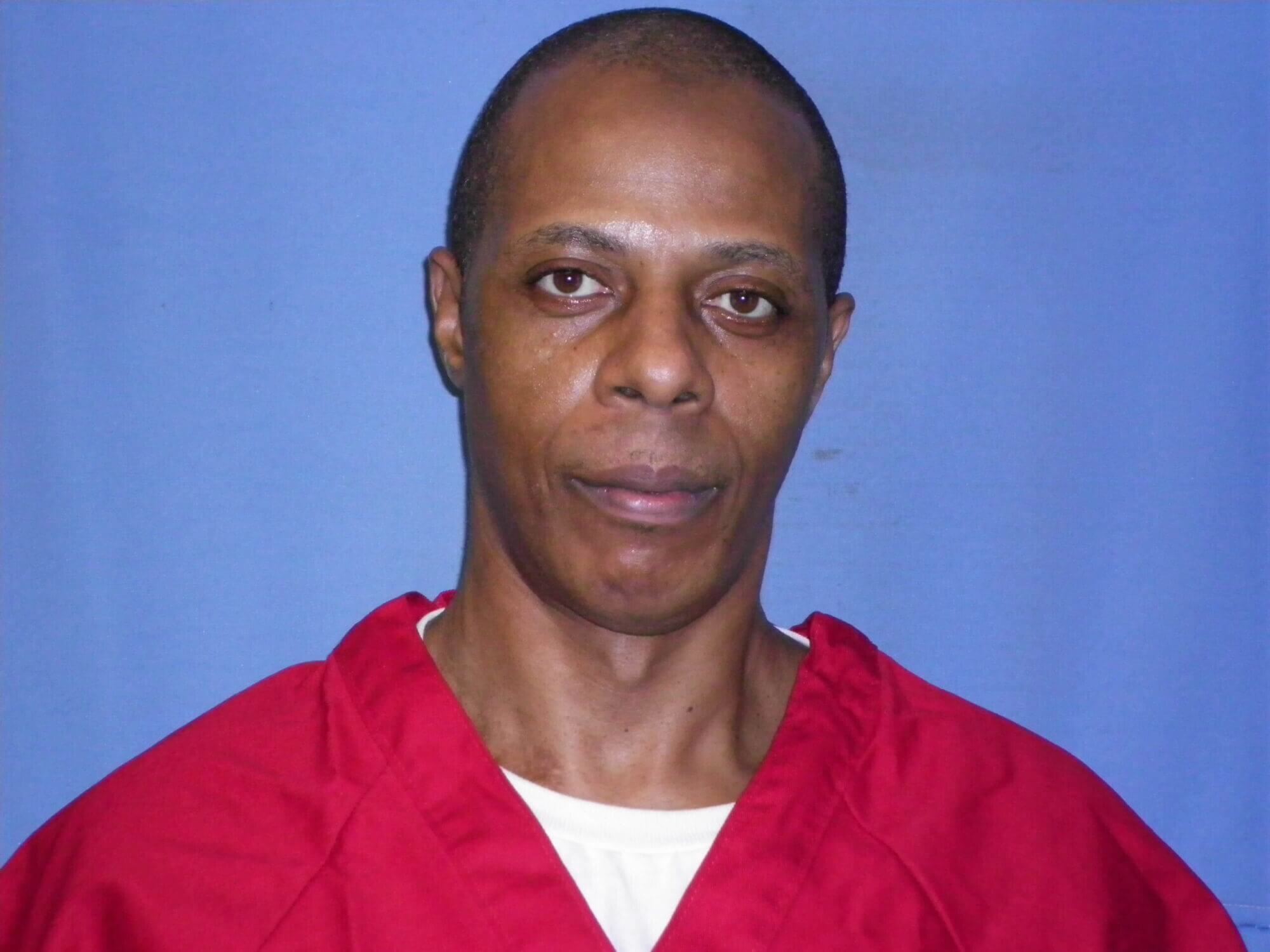
Willie Jerome Manning is on death row, convicted of killing Mississippi State University students Tiffany Miller and Jon Steckler in 1994. Credit: Courtesy of MDOC
Manning swiped his first bicycle at 10, and a year later, a juvenile judge sent him to Columbia Training School for “joyriding,” according to court records. He repeated eighth and ninth grades before dropping out of school. Within a year of moving back in with his now-deceased, alcohol-battling mother, he began drinking, and by 21, he was downing eight cans of beer several times a week and smoking marijuana daily.
Many arrests and some prison time followed, mostly for burglary, auto burglary and auto theft. Court records show he had never been convicted of a violent felony.
Manning lived at Brookville Garden Apartments as a child, and those who knew him there recalled him as well-mannered and peaceful. “ He always was respectful to his elders,” said Lily Duck, who has lived in the complex since Manning was small.
Landon Clayborn grew up with Manning and his brothers and said he knows nothing about him being violent. “He was a thief, but he wasn’t a murderer,” Clayborn said. “I ain’t never known him to jump on nobody.”
Law enforcement officers heard the same thing when they interviewed those who knew Manning. According to investigative notes, one person told officers: “Would not believe he would murder. Would be shocked.”
Rook, who began serving as a deputy in 1993, said he and other officers believed Manning resorted to violence because another felony would send him to prison for a maximum sentence.
The sheriff believed the burglar forced the couple into Miller’s two-seat Toyota MR2, drove them to the remote area and killed them.
He theorized the burglar pulled a weapon. “That little car, you would just about have to hold a gun on somebody to get three people in it anyway. It’s very, very small,” he testified at the 1994 trial. “When three people are in it, it’s completely crammed full.”
The sheriff speculated that Miller sat on the gunman’s lap and Steckler drove the MR2. To get the trio in the car, he testified, “one even has to ride halfway sitting in the lap of a passenger and halfway sitting on the console.”
Miller’s MR2 now belongs to retired Chief Deputy George Carrithers, who bought the car and took it home two years after Manning’s conviction.
In August, Mississippi Today attempted to put three people in the two-seater sportscar at the same time. Getting all three inside proved difficult.
Canning-Mello said if a burglar was a complete stranger to the couple, he would more likely run away. “It’s a lot of work and high risk to abduct two people,” she said, “especially using a two-seater vehicle.”
Despite the parking lot’s close proximity to the frat house, no one inside reported hearing any noises, voices or gunfire during this purported abduction.
In contrast, three people at the University Hills Mobile Home Park where Miller lived reported hearing loud voices, screams and possible gunfire that night outside her trailer.
Nothing in law enforcement’s investigative notes reflects that authorities pursued this, nor is there evidence of following up on tips from Miller’s friends and fellow employees that she had been frightened by two men stalking her. One entry said that two men — who sexually harassed her and yelled obscenities at her — lived a few trailers down from Miller.
Elizabeth Hill, who was lab partners with Miller in microbiology, told Mississippi Today in July that Miller told her about two men following her all the way home, hurling crude comments at her and harassing her.
She said she told Miller that acting scared would make her a target. “Get somebody to walk with you,” she said she told her.
What makes the authorities’ apparent lack of followup on these leads so surprising is they believed her killer returned to her trailer that night.
Murder returns the car he used to kill
At 2:15 the morning of Dec. 11, a motorist found the students’ bodies on a gravel road near a rural intersection, a five-minute drive from Miller’s trailer.
Hours later, deputies found Miller’s blood-covered car double-parked at the Old Mayhew Road Apartments, less than 300 yards from her trailer. In the investigative notes, authorities wrote, “Why was car returned to Mayhew Road?”
Deputies walked toward her trailer and found her missing ring and a set of boot prints the sheriff believed belonged to the killer.
The presence of her car so close to her trailer presented a challenge to authorities’ belief that Manning was the killer. How could he, a stranger, have known where she lived?
The trailer park in Starkville, Miss., where Tiffany Miller lived in 1992 boasted nearly 200 trailers. Credit: Rory Doyle for Mississippi Today
At the 1994 trial, Sheriff Bryan tried to explain away this problem. He testified that the gunman must have driven the “back way,” passing Miller’s trailer park. When that happened, the sheriff said, the couple must have exclaimed, “Let us out. Take the car. Do anything you want to, just let us out.”
The sheriff suggested the gunman returned Miller’s car to the Old Mayhew Road Apartments after the murders and tried to burglarize her trailer. He gave no proof to support this, nor did he explain how the gunman supposedly knew where Miller lived among the nearly 200 trailers in the park.
Witnesses: Screams and gunfire at Miller’s trailer
At Manning’s 1994 trial, Sigma Chi member Taylor Flowers testified that Steckler “was getting some clothes” and heading with Miller to her trailer when the couple left the frat house at 12:50 a.m.
Tina Cockrell, who was earning her engineering degree from Mississippi State, lived catty-corner from Miller’s trailer. During interviews with Mississippi Today in June and July, Cockrell said on the night of the killings, she was watching a TV show after midnight when she heard noises outside.
Tina Cockrell, once a neighbor of Tiffany Miller, stands outside Miller’s former trailer in Starkville, Miss. on Monday, July 20, 2026. The night of Miller’s murder, Cockrell said she heard screams and gunshots at Miller’s trailer. Credit: Rory Doyle for Mississippi Today
She turned down the television and opened her back door. “I could hear what I thought was a heated argument from the direction of Miss Miller’s trailer,” Cockrell said. “A young man was screaming. He was livid.”
She recalled him saying “something to the effect of ‘I can’t believe you did this to me. Why did you do this to me?’”
A few minutes later, she said she heard what sounded like two gunshots. Then she heard a car driving away. She started to go outside, she said, but the sounds scared her.
Nathaniel Morris, who lived two trailers down from Miller, told Mississippi Today in interviews in June and July that he heard loud voices outside her trailer. He said he heard what sounded like a man yelling, “That ain’t right. You know this mother f—ing sh– ain’t right.”
He said he also heard what sounded like gunshots.
Hours after the killings, Miller’s next-door neighbor, John Williams, told the Starkville Daily News that he had been awakened that night by noises. He said he heard a car idling outside his trailer and several people talking. The noises sounded “spooky,” he said, and he heard what sounded like two firecrackers.
Experts say gunfire can be mistaken for firecrackers. Cockrell said she knew the difference because her father was in law enforcement.
None of these three witnesses were called to testify at trial by either the prosecution or the defense.
Earlier this month, Bryan told Mississippi Today he knew nothing about these statements and that he would remember if such statements had been made. Williams’ words appeared in the Starkville Daily News the day after the killings.
Authorities found clues suggesting the killer walked from where the MR2 was parked at the Old Mayhew Road Apartments toward the trailer park. Deputies found boot prints and Miller’s ring on the path there. “The only reason to park the car and go back is to go back to the trailer,” the sheriff told jurors.
He noted that Manning’s home, more than 10 miles away, was in the opposite direction. When deputies later entered Manning’s home, they found nothing matching the boot prints. His ex-girlfriend said he never wore boots, only sneakers.
Canning-Mello said there are two plausible reasons why the killer would park Miller’s car near her trailer. One would be to “walk to a residence nearby,” she said.
Two men who lived near Miller had stalked her and sexually harassed her, according to investigative notes. A week before her killing, Miller talked about a man following her home until Steckler intervened, according to the FBI’s January 1993 interview with her roommate.
The second plausible reason would be for the killer “to return to retrieve his own vehicle,” Canning-Mello said.
Two students testified they left the Old Mayhew Road Apartments at 2:30 a.m. — just 15 minutes after a motorist discovered the slain couple on Pat Station Road. After the students turned right on Old Mayhew Road, a brown car with tinted windows blew past them at more than 55 mph in the 25 mph zone. They quoted themselves as saying whoever was inside the car must be running from trouble.
Dec. 10, 1992
6:30 PM
John Wise parked his Chrysler Eagle Talon outside the Sigma Chi fraternity house on the Mississippi State University campus.
Dec. 10, 1992
11 PM
Wise’s roommate borrows Wise’s car keys to get a liter of Coke from the car.
Dec. 10, 1992
11 PM & Later
Several witnesses saw Willie Manning at the 2500 Club, saying he was looking for a ride. One witness put him at the club as late as 1:50 a.m.
Dec. 11, 1992
12:30 – 1 AM
Jon Steckler and Tiffany Miller left the fraternity house, saying they were heading for her trailer.
Dec. 11, 1992
1:30 AM
John Wise went to his car to get a cupcake. He discovered the passenger door was unlocked, grabbed the cupcake and locked it back before returning inside.
Dec. 11, 1992
After Midnight
Three people at the University Hills Mobile Home Park where Miller lived reported hearing loud voices, screams and-or gunfire outside her trailer.
Dec. 11, 1992
2:15 AM
A man traveling home from work found Jon Steckler and Tiffany Miller murdered on a remote road north of Starkville. At the murder scene, deputies found a shiny restroom token.
Dec. 11, 1992
2:30 AM
Two male students leaving the Old Mayhew Apartments testified that a brown car with tinted windows blew past them at 55 mph or faster.
Dec. 11, 1992
3 AM
Miller’s Toyota is found double-parked at the Old Mayhew Apartments.
Dec. 11, 1992
8:13 AM
John Wise discovered his car had been burglarized. The burglar stole his CD player, a leather jacket, a monogrammed huggie and about $10 in change, including a restroom token.
Dec. 11, 1992
Afternoon
Sheriff Dolph Bryan heard there was a car burglary at the frat house the same evening as the killings, the last place the couple were seen alive. He interviewed Wise and showed him a restroom token, which he identified as the one stolen from his car. Afterwards, the sheriff created a list of 13 known burglars as murder suspects, including Manning.
1993
May 24
Authorities arrested Manning and charged him with capital murder. They believed Manning killed the couple after they interrupted his burglary.
1993
November 7
A jury convicted Manning of capital murder and gave him two death sentences. He has been on death row at the State Penitentiary at Parchman ever since.
The killer’s decision to return Miller’s car signals that this was a highly emotional crime conducted by a criminally unsophisticated offender, Canning-Mello said.
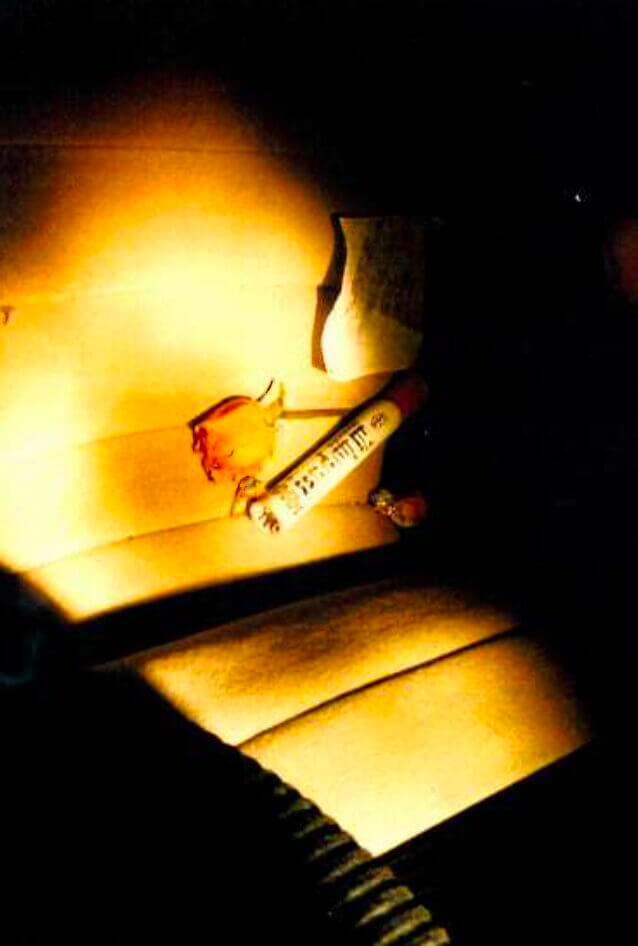
Hours later, deputies searched through the MR2, where they found another ring that belonged to Miller, audio cassettes and a dried rose. What they didn’t find were the clothes Steckler was carrying to Miller’s trailer.
Oktibbeha County deputies found a dried rose inside Tiffany Miller’s Toyota MR2 after her 1992 death. Credit: Rory Doyle for Mississippi Today
Cockrell shared what she heard with her father, Jessie Oden, a deputy with the Oktibbeha County Sheriff’s Department, and she spoke to the FBI a month later, records show.
Before her father died, she said the subject of the students’ murders arose. She said he told her he believed Manning wasn’t guilty of the crime.
Prosecutors use token to convict Manning of murder
The token found at the murder scene became the linchpin of the prosecution against Manning.
In his closing statement, the district attorney pointed at the babyfaced Manning. “He’s dressed nice, and he just doesn’t look like a blood-thirsty monster. The real monsters never do.”
The jury convicted Manning of the murders and sentenced him to death.
But authorities weren’t done. They also blamed him for the unsolved murders of the elderly woman and her daughter, maintaining that Manning had moved from the ranks of burglar to serial killer.
At that 1996 trial, Kevin Lucious testified he saw Manning enter the women’s home.
What jurors didn’t know was Lucious, now serving three life sentences without parole involving a gang murder in Missouri, feared he would be charged with these killings and has since recanted. The truth was he wasn’t living in the apartment where he supposedly spotted Manning — a detail authorities kept hidden from the defense.
In 2015, the Mississippi Supreme Court ordered a new trial in that crime, and authorities exonerated Manning of those capital murder charges.
But justices have not ordered a new trial in the students’ murders, where at least three people have recanted statements they made implicating Manning. Two who testified against him had their criminal charges dropped or reduced and received most of the $25,000 reward.
Key prosecution witness believes Manning is innocent
Paula Hathorn, Manning’s ex-girlfriend and one of those whose words helped put him on death row, spoke to Mississippi Today in July and August interviews. She said she believes he didn’t kill anyone.
She met Manning in 1991 when both of them were being held in the Oktibbeha County jail, her for bad checks and him for burglary. They each spent time behind bars. After they were released, they dated, and she lived with him and his family.
The two of them slept on the top of the bunk bed while his brothers slept below, she said. She recalled how, even before the murders took place, a deputy would park outside Manning’s house, watching him.
Manning sometimes “borrowed” a car to make an out-of-town trip and after he returned, he parked the car at the Kroger grocery store, she said. “He had sticky fingers.”
Paula Hathorn, the ex-girlfriend of Willie Manning, shares what she knew about him and about the evidence against him in the 1992 killings of two Mississippi State University students on Thursday, Aug. 13, 2026, in Starkville, Miss. Credit: Richard Lake/Mississippi Today
After Manning was jailed, the sheriff asked her to share what she knew. She had plenty of reasons to cooperate. She faced up to 10 years in prison for dozens of bad check charges she had racked up.
“They had me under pressure,” she said. “I was seeking my freedom, too.”
The sheriff recorded more than a dozen calls she had with Manning. When she asked if he killed the students, he replied, “You know I didn’t do that.”
The sheriff later wrote, “Of course he answered NO! Manning is a known burglar, auto burglar and auto thief.”
Hathorn said authorities kept pushing her to get Manning to confess, even wearing a wire when she visited him in jail. But no confession came.
In exchange for her help, she said in a 2023 sworn statement to Manning’s lawyers, the sheriff repeatedly took her to savor Church’s fried chicken and to pay for her furniture and other bills — allegations he vehemently denied.
Before Hathorn took the witness stand, she said the sheriff coached her on her testimony, telling her how to handle tough questions. The sheriff acknowledged helping her get ready to testify but denied coaching her.
At trial, prosecutors told jurors the killings took place because the couple interrupted a burglary, but she said the sheriff told her the murders were part of a drug deal gone bad – which Bryan also denied.
She felt like authorities twisted what she told them to make Manning look guilty, she said. “I never ever said he did that.”
In the end, she said she felt the sheriff used her like a tool.
Authorities never recovered the murder weapon so prosecutors decided to call Hathorn, who testified that Manning fired bullets into a tree in his mother’s yard. Those bullets, former FBI examiner John Lewoczko testified, matched the ones that killed the couple “to the exclusion of every other firearm in the world.” (The FBI later called this conclusion junk science.)
Authorities never recovered Steckler’s watch and class ring. Prosecutors attempted to prove Manning had them, but witnesses’ descriptions differed in colors.
Hathorn recalled the sheriff showing her pictures of Steckler’s watch and class ring. Manning did have a watch and class ring that were similar, she said, but they weren’t the same.
After Manning’s conviction, Hathorn received $17,500 in reward money, and she spent no additional time behind bars, according to court records. That money, she said, went to pay her bad checks.
When she goes shopping, people sometimes stare at her, believing she sent Manning to prison when that isn’t true, she said.
Last year, Hathorn received a visit from a state investigator, she said. “He just told me to stop talking to people. He don’t want people to know the truth.”
Retired sheriff: Believed Manning had killed the students
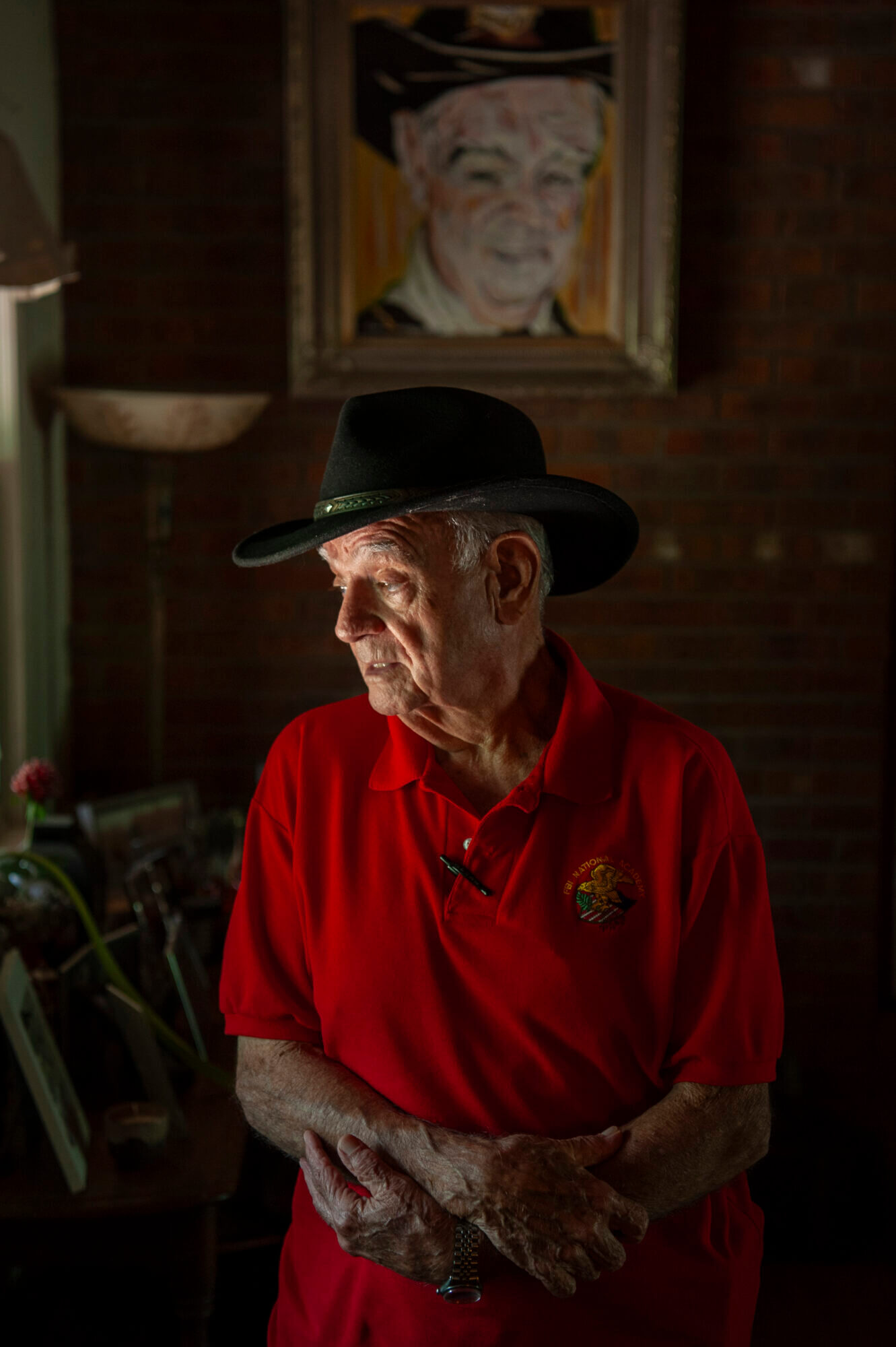
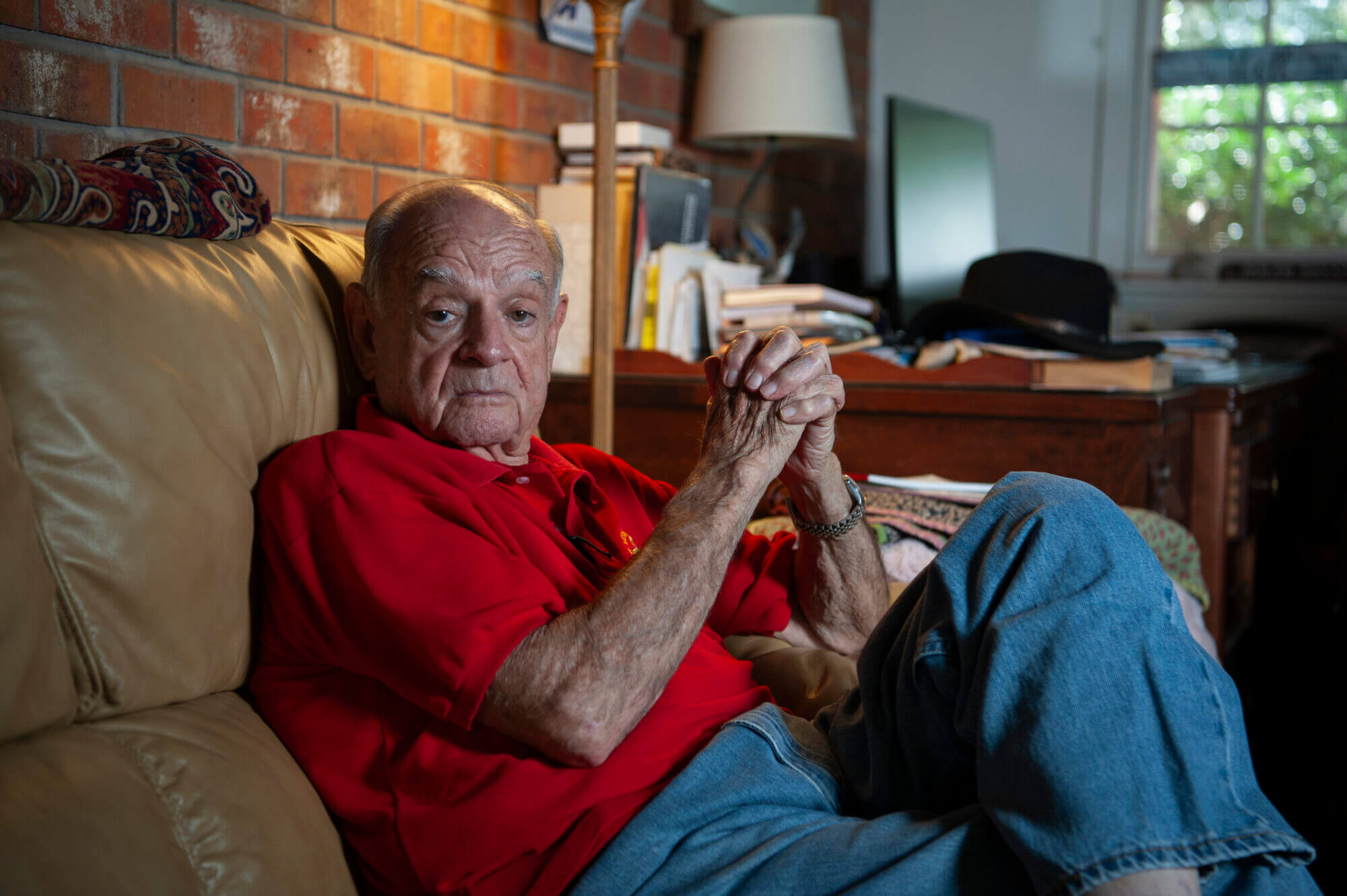
Retired Oktibbeha County Sheriff Dolph Bryan stands beneath a painting made of him during the time he served as sheriff between 1976 to 2012 in his home in Starkville, Miss., on July 20, 2026. Credit: Rory Doyle for Mississippi Today
Thirty-four years after the students’ killings, retired Sheriff Bryan has never forgotten the murder scene. “That was a bloody mess,” he said. “Blood was everywhere.”
There was so much, he said in interviews in July and August, that a truck had to bring in a load of sand to soak it all up.
“ When you’re looking at those corpses, you know that that’s somebody’s baby,” he said. “It never leaves you.”
With murders like these, he said, “You gotta find out who did it, and you gotta punish him.”
From childhood up, Bryan worked at his father’s Gulf service station, where he met deputies who worked for the sheriff’s office.
He wound up getting a job there and found his home in law enforcement. “ Some people love to play golf,” Bryan said. “I love to work.”
He wore a cowboy hat and liked to think of himself as one of the Western stars he adored, standing up against the bad guys like Gary Cooper in “High Noon.”
Bryan first saw Manning at age 6 after the child threw a brick through the window of a Honda dealership in hopes of stealing a motorcycle. “He couldn’t push it off the stand,” Bryan said. “That’s my first memory of Fly.”
Manning continued to be arrested for burglary after burglary, and the animosity between him and the sheriff grew. Asked why, Bryan replied, “‘Cause I put him in jail so many times.”
When he heard what had happened just before Christmas on Pat Station Road, he rushed out in the dark to the remote road where the students’ bodies lay.
After the students’ murders, Bryan said there was some discussion they were killed by someone they knew, but he confessed Manning became his main suspect the day of the crime. “If anything happened that was atrocious,” he said, “Fly was the first suspect.”
Asked what made him believe Manning did this, Bryan said, “He was the only one that’s so damn sorry that he would do something like this.” If there was someone worse than Manning, he said, “I hadn’t met him yet.”
He began talking to inmates inside the jail. “ You don’t get to be a detective ‘cause you’re smart,” he said. “You get to be a detective because you make things happen.”
When two men from the community became initial suspects, Earl Jordan, already in jail for looting, told the sheriff he believed he had seen one of them with Miller. After Manning was jailed, too, Jordan told the sheriff that Manning had confessed to the murders.
At trial, Jordan testified that Manning said he and Jessie Lawrence forced the couple into the MR2 and drove to a remote area where Manning said he shot them to death.
The biggest problem with Jordan’s testimony? Lawrence was in jail in Alabama at the time the murders took place.
Jordan has since admitted he lied. “I was in jail and could have been charged as a habitual offender,” he said in a 2023 sworn statement to Manning’s lawyers. “I changed some words to the way the sheriff said he thought it happened. The sheriff was satisfied. I was not charged as a habitual offender, and I also received some reward money.”
Four different Mississippians, including Hathorn, said in sworn statements to the defense that the sheriff promised to help them with their criminal cases if they would implicate Manning.
Bryan denied these allegations. “ Nobody could ever say I offered them anything,” he said. “ I never gave anybody anything.”
He initially called Hathorn a “known liar” and said he didn’t trust her until authorities began to confirm things she told them.
Later, he referred to her as a “friend” who spent so much time at the sheriff’s office that people thought she worked there. She even answered the phone in the jail, he said. “She was really a lot of help.”
The animosity between the sheriff and Manning continued past his convictions. In 2011, when the death row inmate returned to the courthouse for a hearing, Manning was “cutting up with some deputies and making a lot of ruckus. I went, ‘Man, come on, come here,’” Bryan said. “He ran up to me and hit me, and I started shoving him back in the room … When I got him up against the wall, I hit him in the face.”
Asked what he would say to Manning if he saw him now, Bryan said, “I’d say, ‘Hey, Fly, how you doing? Man, you’ve been in Parchman a long time. They should’ve killed you a long time ago.’”
So what if Manning said he didn’t kill the students?
Bryan paused. “Then I’d have to answer to the Lord for that.”
Execution awaits Manning
Retired Oktibbeha County sheriff Dolph Bryan pauses briefly while discussing Willie Manning’s case inside Bryan’s home in Starkville, Miss., on Monday, July 20, 2026. He says if Manning “was around, he was automatically a suspect.” Credit: Rory Doyle for Mississippi Today
On May 7, 2013, Bryan headed to Parchman prison to witness the execution he had been waiting two decades for — Willie Manning. He said he felt he owed it to the students’ families.
Manning should have been killed “the day they brought the verdict back out,” Bryan said. “He’s been stealing air and water from the state of Mississippi for a long time, and he needs to go away.”
While driving to death row, Bryan got word that the Mississippi Supreme Court had halted the lethal injection in an 8-1 vote.
Days earlier, the state had received letters from Justice Department officials. They repudiated the testimony of an expert who claimed the bullets Manning allegedly fired into a tree came from the same gun that killed the students. Such a claim, the FBI wrote, went beyond the bounds of science.
Justices permitted more testing. No DNA matched Manning. Neither did any fingerprints found in Miller’s MR2.
In September 2024, the Mississippi Supreme Court upheld Manning’s death sentence in a 5-4 decision, clearing the way for his execution.
His lawyers asked for a rehearing. Two months later, Mississippi Today wrote about how the case against Manning had fallen apart.
Justices usually rule on such rehearings within 60 days, according to court observers. So far, it’s taken more than 700 days.
Allgood, who prosecuted the case, declined to comment on the latest development, but he told Mississippi Today in a 2024 interview that Manning deserves to be executed.
As for the higher number of exonerations in his district, he said in the same interview that he never tried anyone he thought might be innocent, and he gave his prosecutors the freedom to dismiss any case where “they entertained a thought of innocence.”
Just because a case is reversed doesn’t mean it equates to exoneration, he said. “They are usually the result of some legal technicality.”
In the end, “Only God knows if a man is innocent,” Allgood said. “That’s why we have no verdict of ‘Innocent’ in our law — just ‘Guilty’ or ‘Not Guilty,’ or, in Scotland, ‘Not Proven.’”
Attorney General Lynn Fitch has repeatedly called on justices to carry out the death penalty on Manning. “What he is doing is a blatant attempt to delay his lawful execution,” she wrote in a 2023 brief. “This Court should set an execution date.”
Manning bears scars
Manning has spent more than 11,000 days in a single prison cell on death row.
“This is one of the worst things that any person could ever go through in their life,” he wrote in 2010. “I would have never thought that I could last 16 years in a small cell and still (somehow) be able to hold on to a small bit of my sanity.”
He told one visitor, “I go years without thinking about the door, and then when I remember it’s there, it crushes me all over again.”
He bears scars. Scars on his face from when he ran into a barbed wire fence as a child. Scars on his chest from when a fellow prisoner threw chemicals on him.
Some scars aren’t visible. In 2025, he lost his closest friend on death row, Richard Gerald Jordan, a white Army veteran who did three tours as a helicopter gunner in Vietnam before returning home a damaged man.
For years, the two men played Scrabble between the prison bars. When Manning’s date with death neared in 2013, Jordan prayed over him. The state halted Manning’s execution.
Last year, it was Jordan’s turn to face fatal punishment. Four days after summer began, Parchman officials strapped him down and injected him with multiple drugs, including one that stopped his heart. Manning wept.
There was no funeral service.
These days, Manning spends most of his time inside his 8-by-12-foot cell, sometimes writing poetry:
The innocent is being caught up …
People falling through the cracks …
Witnesses are being bought up …
Law enforcements pulling ‘jacks’ …
Because I came up in the ghetto …
Everyone I saw was black …
All my peers were in their 20’s …
And they’re the ones who had my back …
Most have known me all my life …
Know that I’ll never take another …
So you can save that ‘Killer’ sh– …
’cause they’re not buying that, my brother
New evidence suggests a second token
The token that helped put Manning on death row could now help spare his life.
An investigation by Mississippi Today has uncovered new evidence that suggests the token was not the same token stolen from Wise’s car.
The token deputies found at the murder scene looks almost new in a photograph taken immediately after it was found. The sheriff called it “bright” and “shiny.”
But when Wise took the witness stand, he described his token as “dirty.”
The reason he gave? The token had been sitting in his car with his change for more than a year.
Unterborn, whose company makes these tokens, told Mississippi Today, “Our tokens are clad in brass, which tarnishes very quickly when exposed to the ambient air.”
A company vice president testified about this at the 1994 trial. When the tokens arrive from the mint, “they’re bright, shiny, brand-new brass,” he said. “As soon as they are handled for a relatively short period of time, they tarnish.”
Unterborn said touching the token transfers skin oils, which accelerate the tarnishing.
He shared a brand-new token. No tarnishing can be seen.
Nik-O-Lok distributes thousands of these brand-new tokens a year. Credit: Jeremy Hogan for Mississippi Today
He shared a nearly month-old token. Some tarnishing can be seen.
Then he shared a token that had been sitting on his desk for almost a year. Heavy tarnishing is evident.
Rob Unterborn, who owns Nik-O-Lok in Indianapolis, Ind., holds up two tokens on Wednesday, July 29, 2026. The one on the left is less than a year old. The one on the right is nearly a month old. Credit: Jeremy Hogan for Mississippi Today
Such tarnishing, Unterborn said, speeds up even more “when mixed with other coins due to the conductivity of the different metals from quarters, nickels, dimes and pennies.”
Shown a photo of the murder scene token, he said there is no way it could be a year old. “It would have been extremely new, likely less than a month old.”
Mississippi Today’s revelation about the token found at the murder scene means “the last remaining vestige of the government’s already-weak case has now crumbled,” said Krissy Nobile, director of the Mississippi Office of Capital Post-Conviction Counsel.
Instead of seeking to solve these horrific murders, law enforcement tried to force the evidence “to match some preconceived notion about what happened,” she said. “The government got it wrong from the start. This is why executions are not the place to act first and ask questions later.”
Claudia Amendoeira is at Mississippi Today on a fellowship from the Columbia Graduate School of Journalism.This story was published with the support of a grant from Columbia University’s Ira A. Lipman Center for Journalism and Civil and Human Rights, in conjunction with Arnold Ventures.