A group of Mississippi University for Women alumni and Columbus residents is asking the state’s college board to consider a prominent alumna as the institution’s next president. They’re also pressing trustees to disclose a timeline and details about how the board will conduct the leadership search.
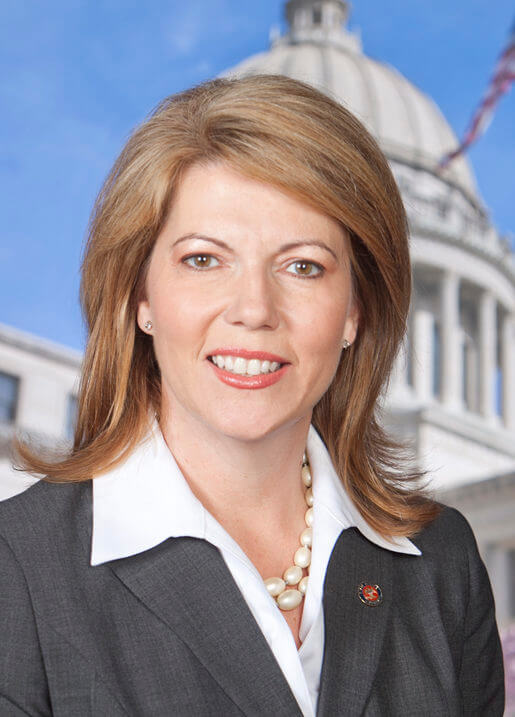
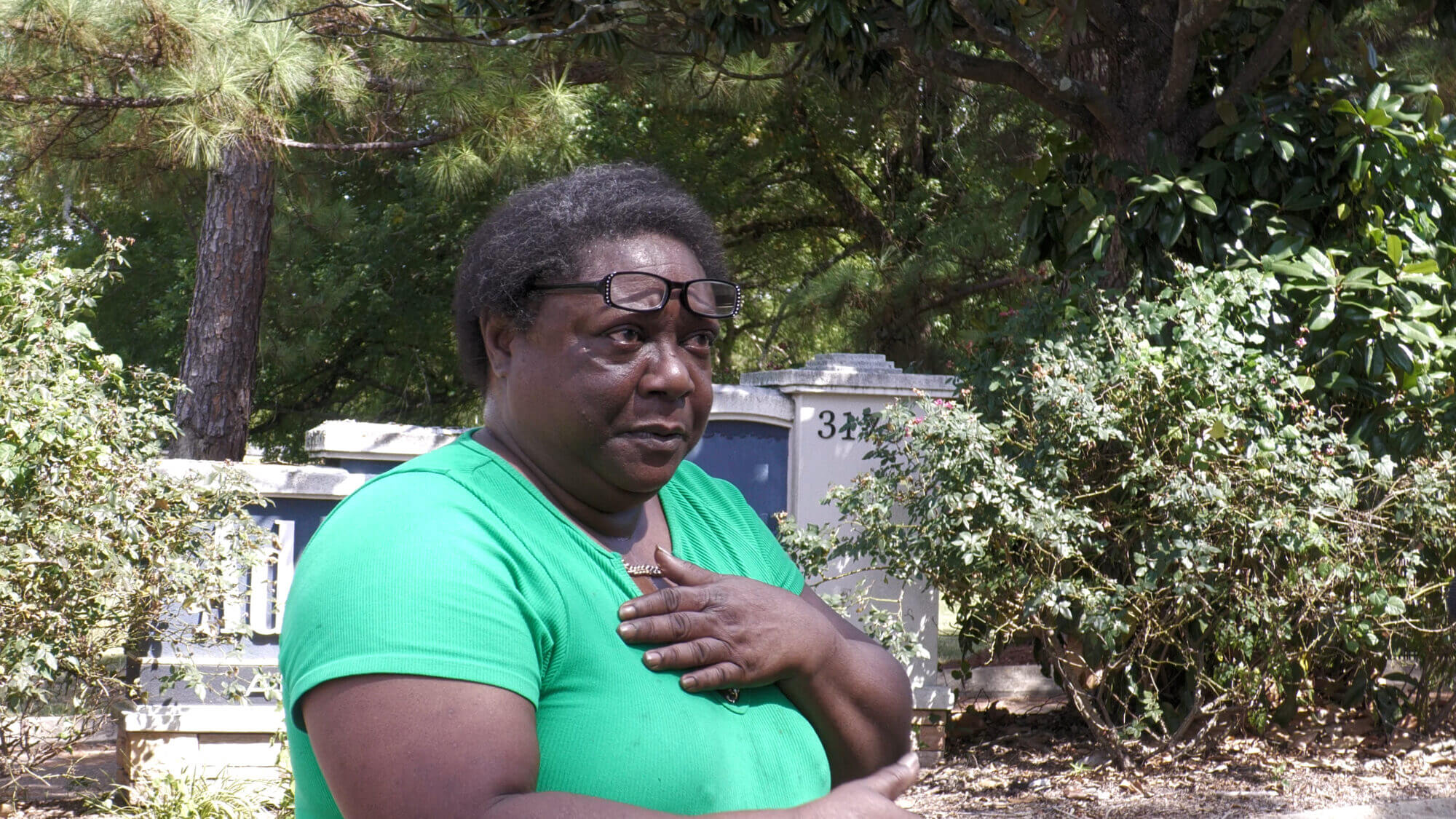
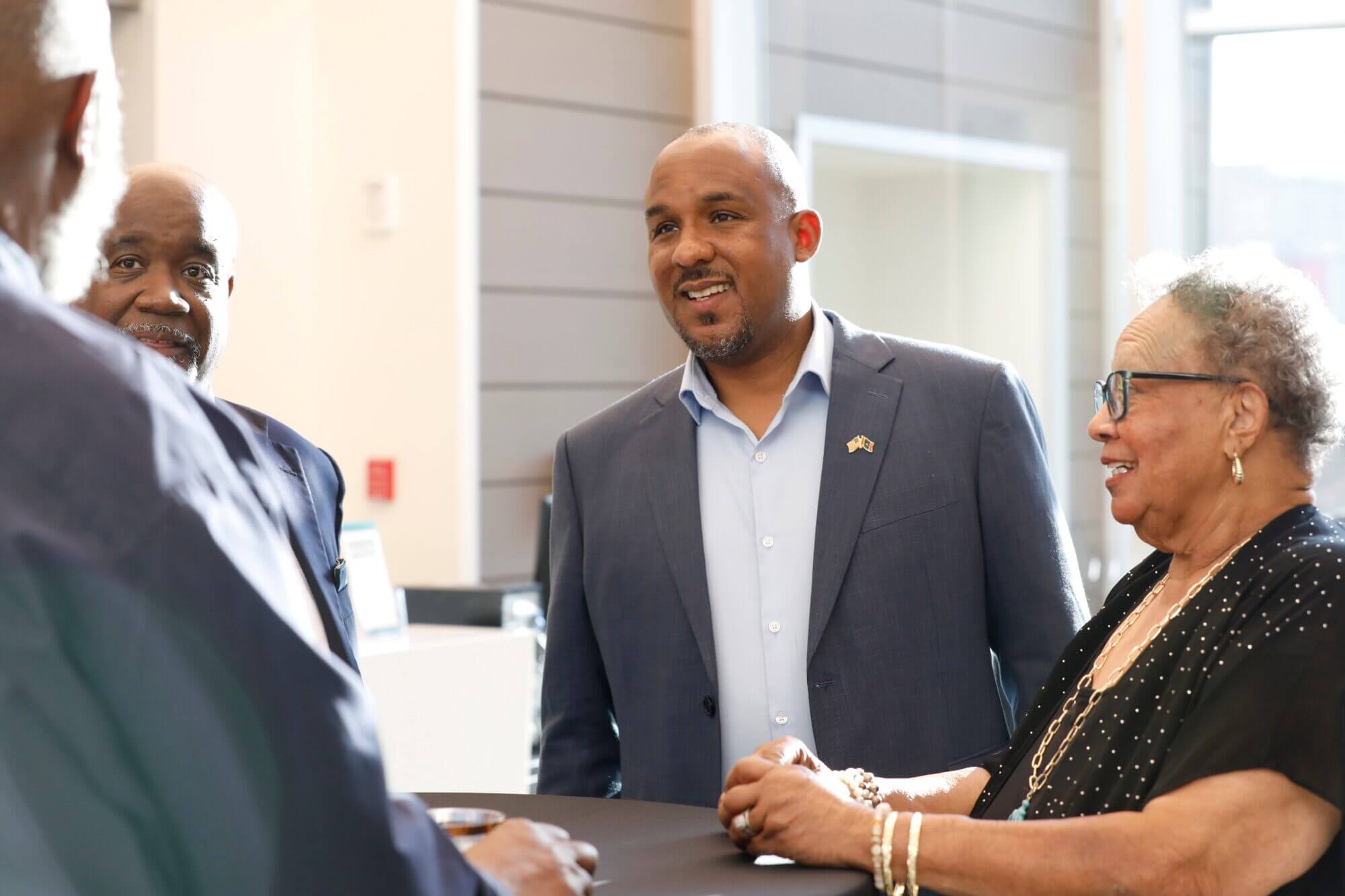
Doris Taylor Credit: Chris Jenkins
Doris Taylor, a biotechnology researcher and scientist who graduated from the W in 1977, is the top pick for the Citizens Coalition for MUW and Mississippi School for Mathematics and Sciences.
The W is at a defining moment that “demands a leader of national standing who is also a daughter of this institution,” the coalition wrote in a letter to the college board.
That leader would be able to walk the halls of the National Institutes of Health or engage the state Legislature at the Capitol with equal authority, the coalition wrote.
MUW’s next president, the group said, should be someone “who can mobilize philanthropic capital this university has never been able to access, and who will fight for the W with the conviction that comes from having been shaped by it.”
Taylor has had distinguished faculty leadership roles at Duke University and the University of Minnesota, the coalition noted in its letter to the college board. The group also said she is a dedicated MUW foundation board of trustee director, donor and proud alumna whose knowledge of the institution and region could benefit the institution.
Taylor, founder and CEO of Organamet Bio Inc., said the coalition’s endorsement is an honor. She had expressed interest in the top job in 2018, but the appointment went to Nora Miller.
Taylor said she wants to give back to the university that shaped her career. She also said she wants to encourage other candidates who are interested in the role to apply. The more candidates vying for the role, the better options the state Institutions of Higher Learning board of trustees will have to select a strong leader, Taylor said.
“MUW deserves a president that can protect it, fund it and build it,” Taylor said. “And, whoever takes on the role, it’s a critically important opportunity to eliminate those issues that have put an excessive burden on the campus and our community.”
The MUW president search has not yet started
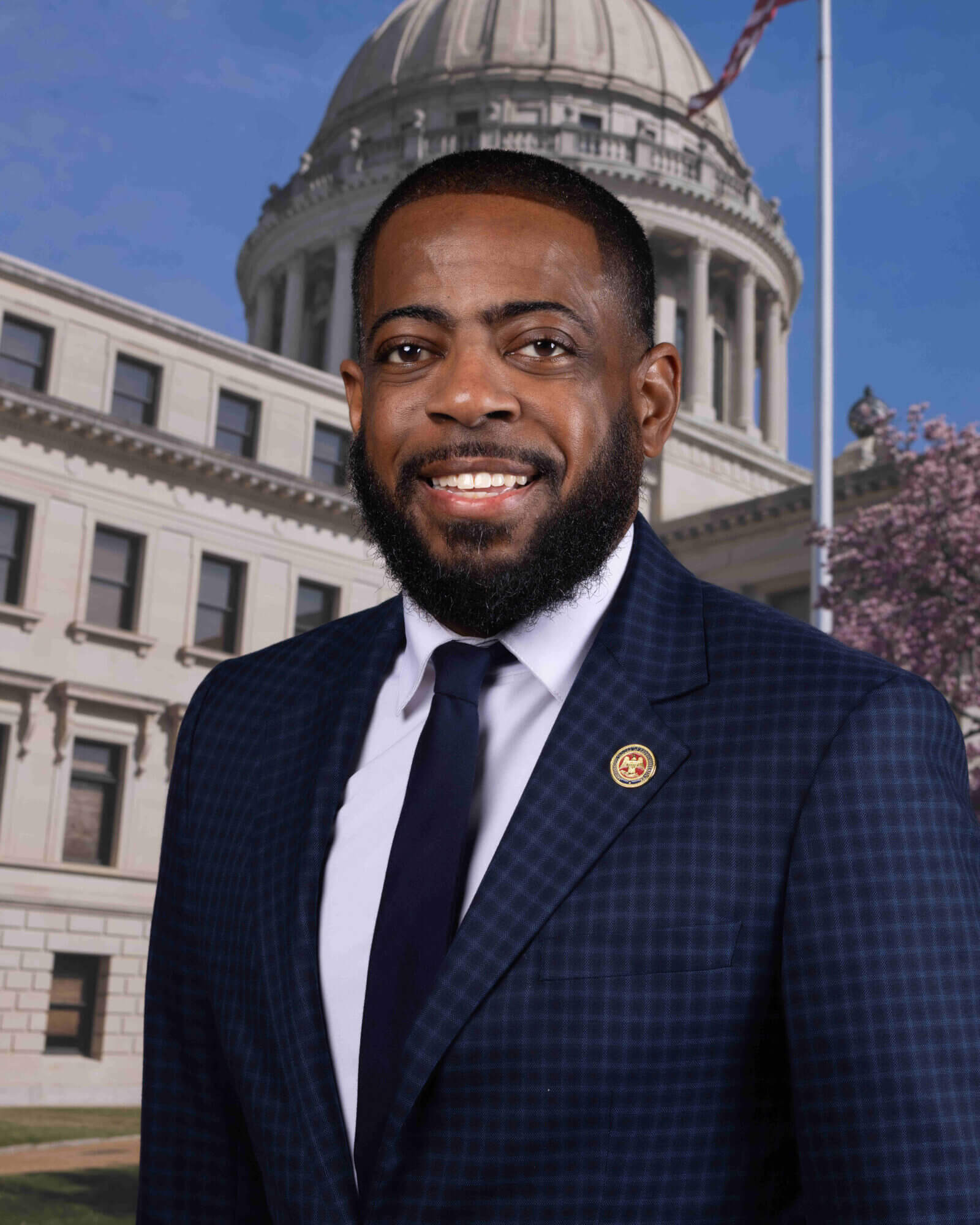
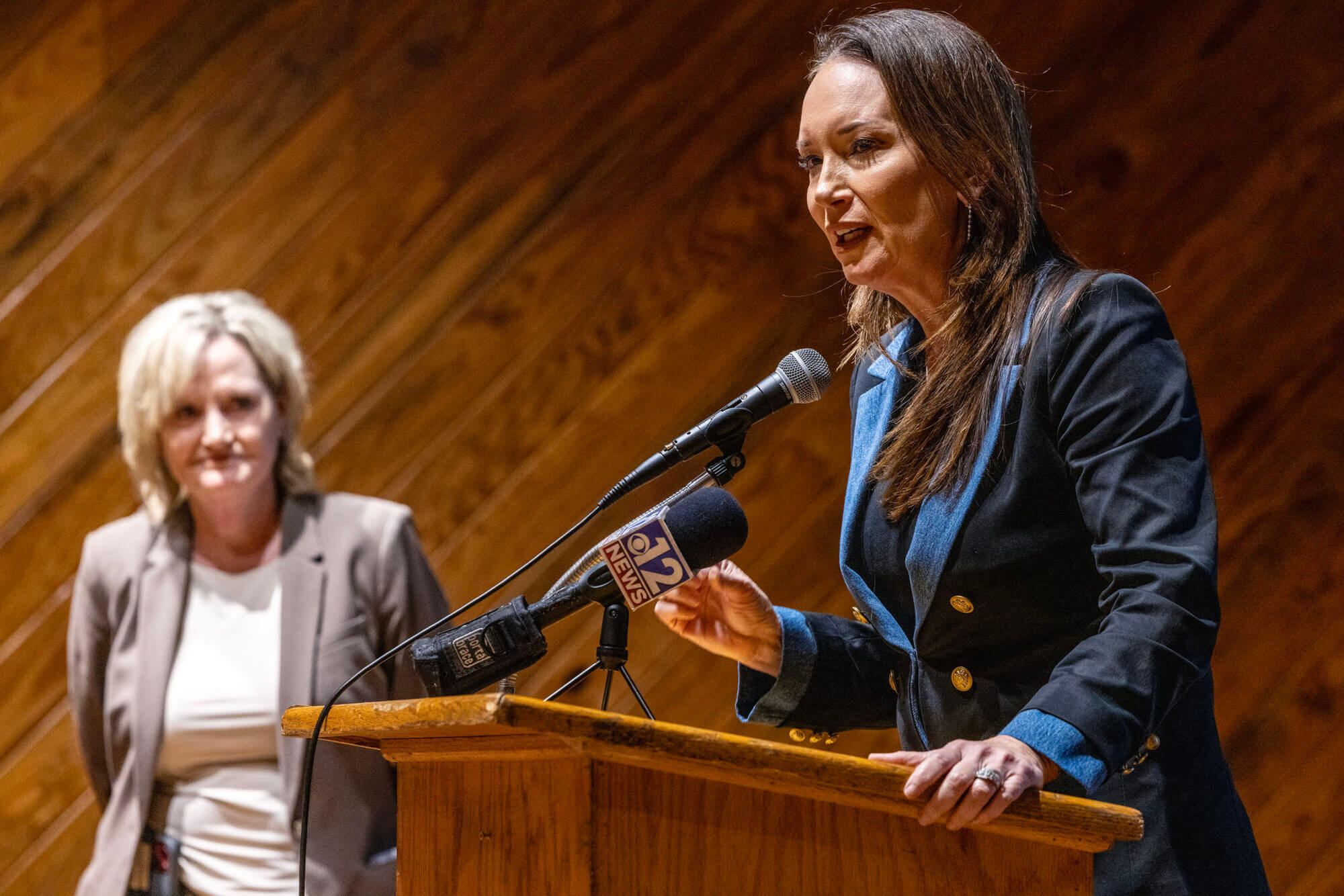
Credit: Gil Ford Photography
At listening sessions IHL held in April, some speakers named Sally Burchfield Doty, director of Broadband Expansion and Accessibility of Mississippi, as a potentially strong president for MUW. Doty, from the W’s class of 1988, served in the state Senate from 2012 to 2020.
Scott Tollison, MUW’s interim president, told Mississippi Today he is focusing on providing transitional leadership and has not thought about the permanent role.
Miller, who was the W’s president since 2018, retired in June. In April, the IHL board of trustees held listening sessions for MUW stakeholders to gather feedback on traits they want to see in their next leader. Since then, the college board has not announced its next steps and plans for the president search.
The IHL board is still discussing details of the search, board President Steve Cunningham told Mississippi Today. IHL board member Teresa Hubbard is chair of MUW’s search committee.
Cunningham said trustees understand the importance of keeping MUW stakeholders updated throughout the search process to ensure transparency. While the college board hasn’t announced their plans, he anticipates the search process will take around three months once it’s initiated.
“We want to ensure that alumni, community residents and other stakeholders are involved in the search process,” Cunningham said.
Coalition forms out of concern for MUW’s future
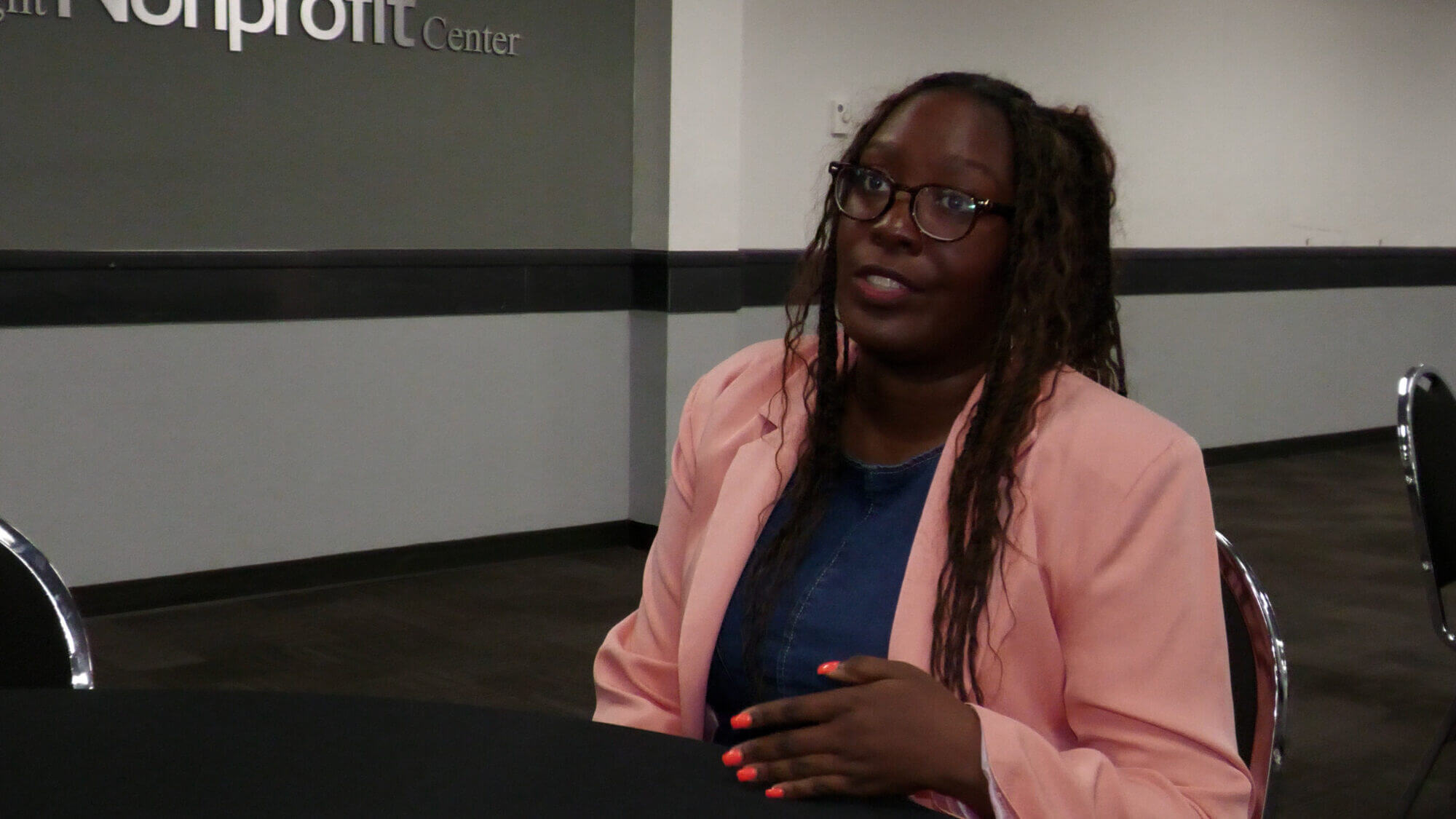
The coalition’s endorsement of Taylor was a way for stakeholders to assert their voice in the presidential search, said Keith Gaskin, former Columbus mayor and coalition member. IHL trustees’ selection of MUW’s next leader is critical to the university’s future.
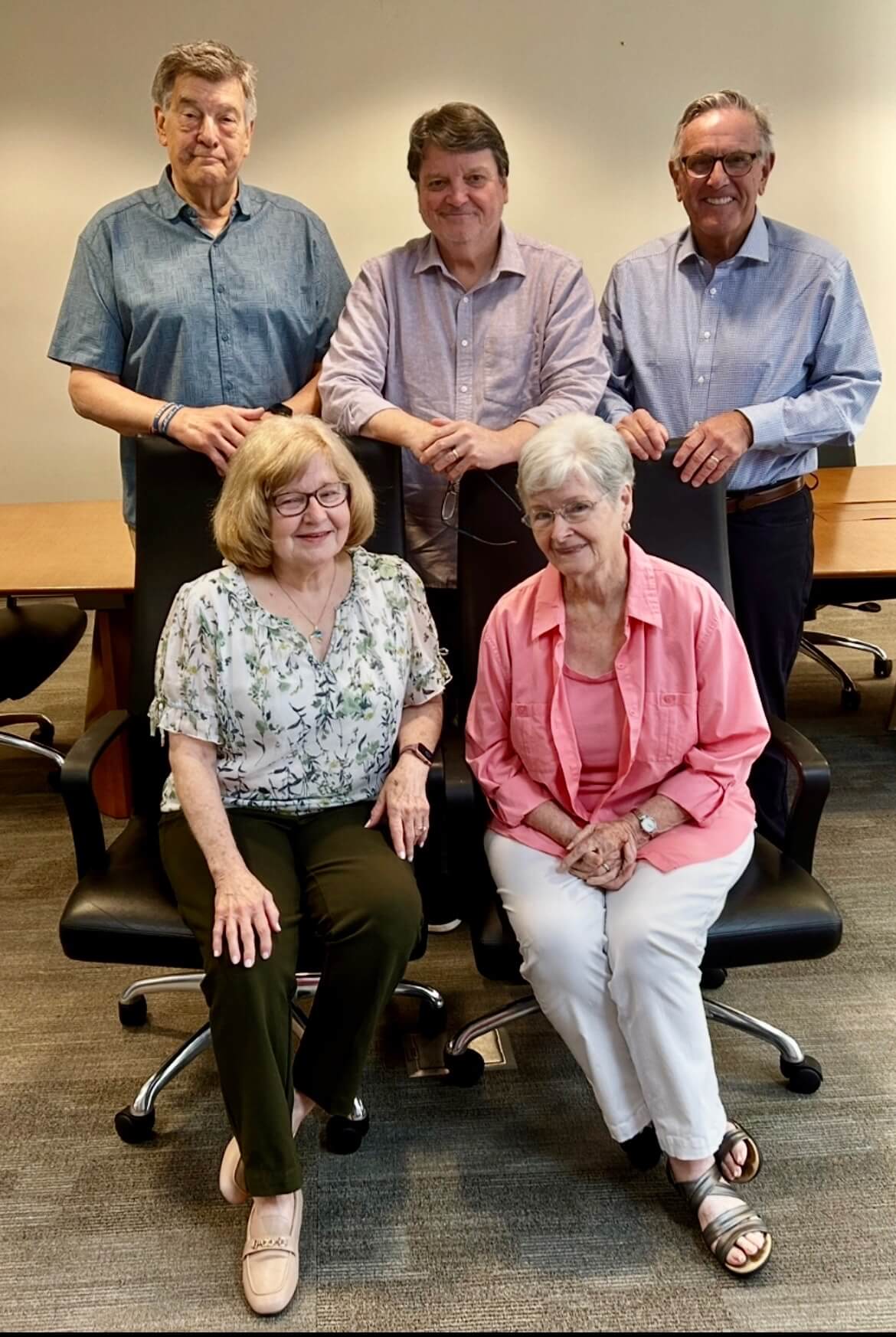
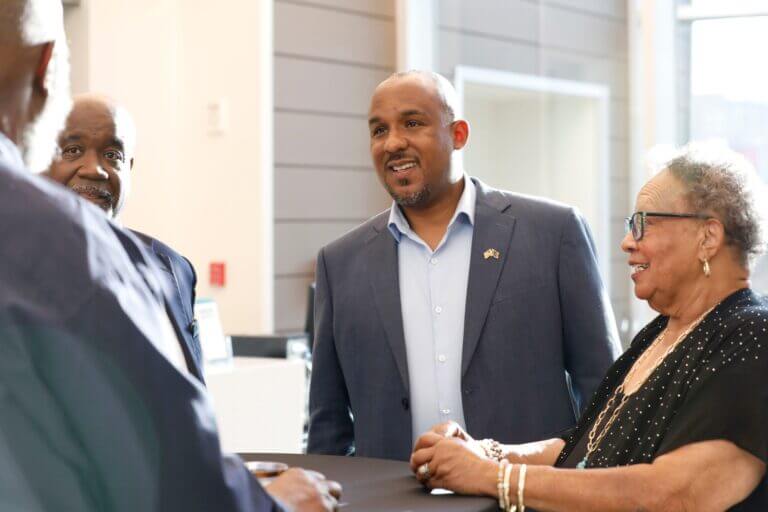
The Citizens Coalition for MUW and Mississippi School for Mathematics and Sciences includes alumni and Columbus residents. The group is asking the state’s college board to consider a prominent alumna as the institution’s next president. Credit: Keith Gaskin
“It shouldn’t be about politics, favors or friendships,” Gaskin said. “It should be picking the absolute best person for MUW.”
The group’s seven members include MUW alumni and former professors, former elected officials, judges and community residents.
Gaskin said the coalition formed partly in response to recent legislative proposals and discussions that would close or merge MUW with Mississippi State University and relocate MSMS, a residential high school for gifted juniors and seniors. Betty Bryan, a parent of an MSMS student and MUW alumna, is also a member of the coalition.
Bruce Hanson, a former state representative who wrote the bill to establish MSMS, serves as the coalition’s chairman.
The merger or closure of these schools could devastate the local economy, said Martha Jo Mims, a retired MUW professor.
“We’ve had this burden for a couple years and the communication from our legislators doesn’t reassure us that they are committed to keeping these institutions in Columbus,” said Mims, who is also a coalition member. “It’s critical that our next leader recognizes the importance of these schools as the heart of our city’s economy and future.”
Jim Davidson Jr., a retired chancery court judge, said the coalition isn’t dissuading interested candidates from applying for the presidency. The group worried that IHL would announce a name before the process could even begin.
“We don’t know what IHL will do,” Davidson said. “But we want them to know that people in our community are talking about names who would make great leaders. We want to help them.”
Clarification 08/31/26: This story has been updated to reflect that Scott Tollison, interim president of the Mississippi University for Women, said he is focusing on providing transitional leadership and has not thought about the permanent role.
CLEVELAND — Just 30 minutes down the road from the Mississippi prison where they are serving time, Lee Andrew Smith and six other incarcerated people felt free — for a few hours.
On stage before a crowd of more than 100 people at the GRAMMY Museum Mississippi, Smith riffed on his guitar alongside fellow members of the Parchman prison band. About halfway through a rendition of Luke Combs’ “15 Minutes,” tears begin to stream down his face.
All kinds of things cross your mind
With all this doin’ time
And a chain gang waitin’ in a long line to use this phone
Same old view, a cinder block room, same old jumpsuit on
I’m just tryna make the best of the rest of this life sentence
But enough about me, I only get 15 minutes
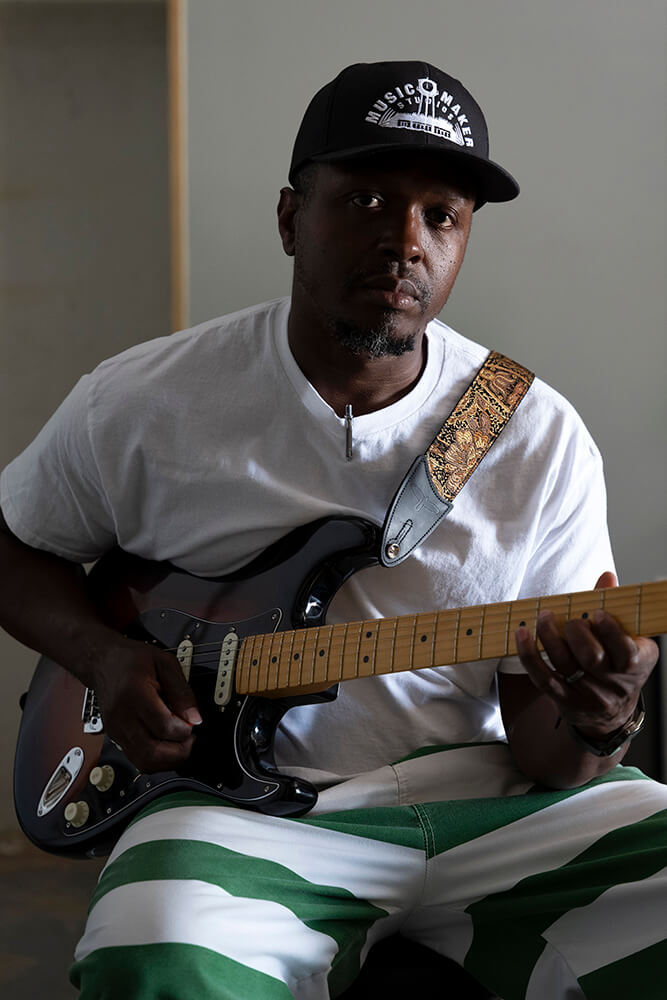
The 44-year-old Smith — who has a close haircut and a salt-and-pepper beard — turned his back to the crowd. He continued playing his guitar, standing there in his well-worn brown cowboy boots and prison-issued, green-and-white striped pants, before walking off stage. After a moment, he returned.
In the audience, tears flowed down his wife’s face. “I feel what he feels,” Joann Smith said. “He was thinking about home … he misses his children, misses his mom, wants to be home with his mom, so all of those things probably ran across his mind.”
Lee Andrew Smith is a member of the Parchman Band, which is composed of people incarcerated at the Mississippi State Penitentiary, in Parchman, Miss. Credit: Rory Doyle for The Marshall Project – Jackson
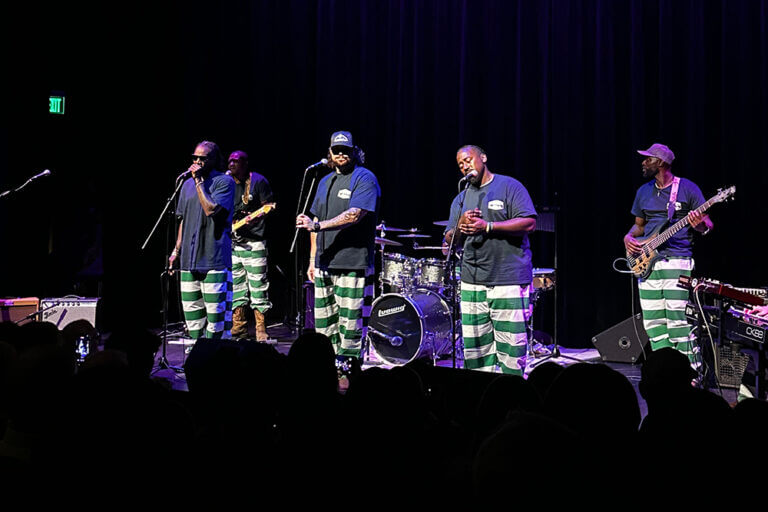
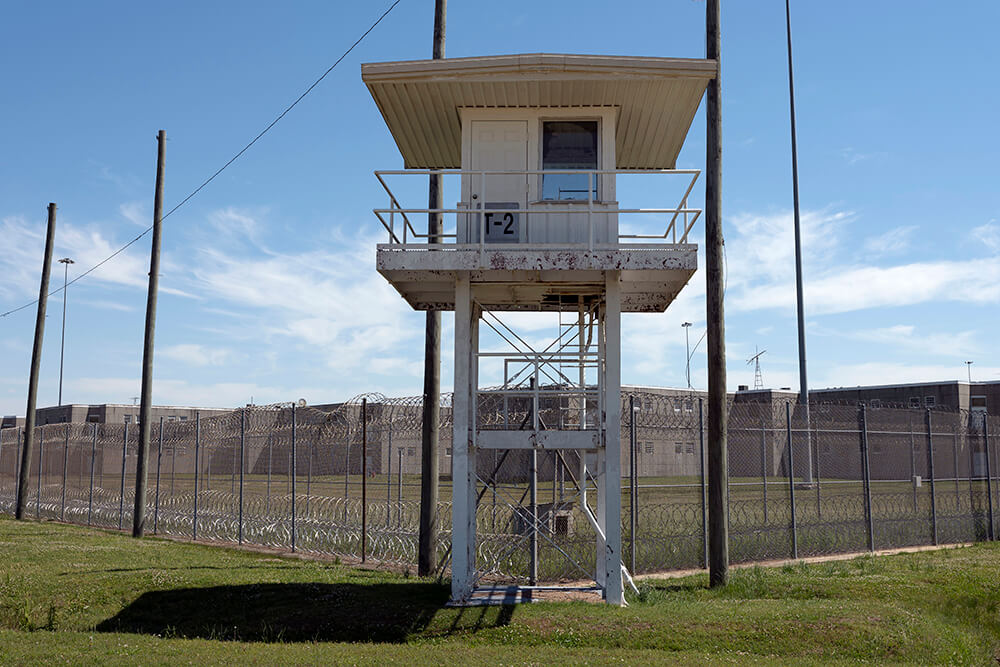
The concert this summer was the third stop on the Parchman Band’s tour through the state with country singer-songwriter Charlie Worsham. It’s part of a musical tradition that dates back to the early 1930s at the prison. The Mississippi State Penitentiary, a prison farm, has a long history of brutality and sits on about 18,000 acres of flat, fertile land in the Mississippi Delta, where the blues were born.
“The torch has been passed down to us,” said Leonard “LJ” Stevenson Jr., 33, a founding member of the latest iteration of the band. They’ve since played at other prisons and festivals and shared the stage with blues legend Bobby Rush. “I’ve heard some of the old ’60s Parchman Band originals, and I can relate to it because I’m living it firsthand,” Stevenson said. “That was basically prison blues.”
Playing in the band offers the incarcerated men a chance to experience life outside the walls, said Marc McClure, the former superintendent at Parchman who restarted the group in 2023. Proceeds from the band go into the state’s inmate welfare fund.
“(The band) gives them that opportunity for one moment to be human and be accepted, which leads them down the road to forgiveness and redemption, and they can be different than what got them there,” he said. “The crime doesn’t dictate their life forever. That band gives them that hope.”
The Mississippi State Penitentiary, a prison farm, sits on about 18,000 acres of land in the Mississippi Delta. Credit: Rory Doyle for The Marshall Project – Jackson
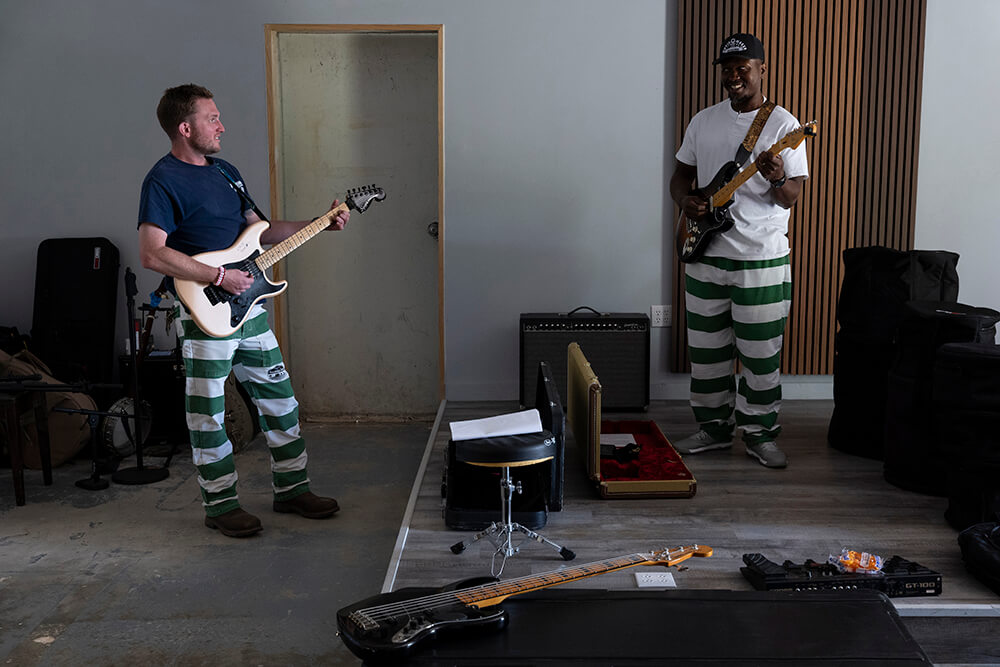
With Smith on lead guitar and Stevenson playing bass, the band also includes Houston Jones on keyboard, drummer Jakellsey Hollis, and vocalists Steven Chambers, Charles Glassco and Michael Snell. The white and green stripes on their pants are indelible reminders of their biggest mistakes, but their music — and the album that will be coming out next year — are a testament to them being so much more.
On that spring night at the museum, the band played its way through a full spectrum of emotions, from slow ballads serenading women they love to electrifying originals that talk of wild times before prison. They also backed Worsham on some of his own songs, and recreated some country covers that evoked the reality of doing hard time in Mississippi.
Stevenson played in the background, laying the bassline that undergirded the songs. As he and his band members got into a groove, a slight smile peeked out from behind his cinnamon-brown beard. Smith’s fingers, almost a blur to the naked eye, glided effortlessly across the strings as he traded solos with Worsham and Jones.
Houston Jones, left, and Lee Andrew Smith, both members of the Parchman Band, in a rehearsal room at the Mississippi State Penitentiary. Credit: Rory Doyle for The Marshall Project – Jackson
Though he stood at the back of the stage, Smith performed in a way that demanded attention. He smiled and pointed out the prettiest woman in the room — his wife — before the band performed a soulful rendition of Chris Stapleton’s “Tennessee Whiskey.”
You’re as smooth as Tennessee whiskey,
You’re as sweet as strawberry wine
You’re as warm as a glass of brandy
And honey, I stay stoned on your love all the time
Smith stepped to the front of the stage, not missing a beat as he stared into his wife’s eyes. He walked his fingers up and down the electric guitar’s neck, delivering a complex solo that drew applause and cheers from the audience.
“Music is his freedom,” his wife said. “He’s free when he’s dealing with any type of instrument.”
The men took turns in the spotlight, telling stories of love and redemption through songs that will be featured on their upcoming album.
Vocalist Charles Glassco, also known as Beast, introduced a high-energy song he wrote for his wife called “Love You Out Loud,” about proclaiming his love publicly, no matter where they are. And Jones, who played both guitar and keyboard in the show, introduced a low-key ballad he wrote to his daughter, who he described as “a great friend.”
I tried my best, just couldn’t give it all to you
I couldn’t be who you needed me to be
But I just wanted you to see
…
I would climb the tallest mountain
Part the Red Sea
Just to have you right here next to me
The themes of love, hard times and redemption in their music have roots in the Delta. It’s a place where Black people — ensnared in the traps of racial terror and White supremacy — made meaning of life on a prison farm as they provided free labor for the state. Incarcerated people worked in the fields, picking cotton, hoeing corn, and working for the state in what historian David Oshinsky called “the closest thing to slavery that survived the Civil War.” They worked to the sounds of field hollers to keep the work tempo and pass the time.
Over the past century, legal action brought an end to corporal punishment, including with a leather whip named “Black Annie”; the end of prisoners given the power to shoot fellow incarcerated people; and upgrades to Parchman. Yet, violence, rampant drug use, poor security, and a brutal underground economy run by gangs have endured.
The music has endured, too, except for a gap in the 1990s.
Like more than 2,000 Mississippians today, Smith, Stevenson, Jones and Chambers have been sentenced to spend the rest of their lives in prison. Stevenson said his life sentence is torture, mentally. “I have a family. I’m engaged now. I have a kid,” he said. “It’s hard being on the phone with them, and not being able to hear first words, see first steps, first heartbreak, first game.”
But he and the other band members are among the few who get to leave the prison grounds and play music in the free world.
“This is as good as it gets for guys like Houston, guys like LJ, because they’re never going home. This is home,” said Trish Doty, a former prison warden who once did vocal coaching with the band and coached LJ in softball. “What sort of justice does it serve to lock them up and throw away a key and give them nothing?”
After the show ended, Smith took the stage again.
“I can’t help but to cry with certain things going on, because this is a thing that I dreamed of all my life. And even though I have this on,” he said, his voice cracking as he pointed down at his green-and-white stripes before pointing up toward the sky, “God’s still fulfilling his promise for me. I’m so grateful.”
“God is good,” an audience member shouted out.
“Yes,” Smith said, “He is.”
This article was published in partnership with The Marshall Project – Jackson, a nonprofit news team covering Mississippi’s criminal justice systems.
Housing advocates are pushing for stronger protections for Mississippi renters, arguing state law leaves tenants with limited options when problems with their housing go unresolved.
Tenants generally cannot withhold rent over needed repairs, and state law limits when they can make repairs themselves and recover the costs. For renters who cannot afford to move, advocates say those restrictions can leave few immediate options.
Lily Coleman faced that dilemma when she and other residents at Addison Place Apartments in Jackson went more than a month without running water.
Coleman, who has lived at the complex since 2018, said she continued paying rent because she did not want to risk eviction.
“We’re going to still pay rent, and we are going to pay whatever we got to pay because we are not trying to get evicted,” Coleman said. “We don’t pay for the water over here — they pay for it.”
Coleman said the cost of moving also leaves her with few alternatives.
“We cannot move right now,” Coleman said. “We’re trying to save some money right now to get in a position to move.”
Several major water shutoffs at Jackson apartment complexes with large outstanding utility balances raised concerns about protections for tenants who can lose service because of bills tied to their properties.
Ashley Richardson, director of housing law at the Mississippi Center for Justice, said Mississippi’s Residential Landlord and Tenant Act needs reform. The Mississippi Legislature recently passed a law that makes it a crime to knowingly, willfully and unlawfully fail to apply utility payments collected from tenants to the bills for which the money was collected. Credit: Justin Glowacki/RHCJC
Mississippi law strengthened those protections this year through House Bill 1404, which makes it a crime to knowingly, willfully and unlawfully fail to apply utility payments collected from tenants to the bills for which the money was collected.
Ashley Richardson, director of housing law at the Mississippi Center for Justice, said the new utility law is progress but more is needed to protect tenants.
The organization is seeking changes that include more notice before evictions for nonpayment of rent, regulation of rent-to-own housing contracts, changes to the repair-and-deduct law and creation of a state fair housing act.
“In the work that I do with MCJ, I would say that the Mississippi landlord-tenant statute favors landlords more than tenants,” Richardson said.
Rep. Fabian Nelson, a Democrat from Byram, introduced legislation in 2025 and 2026 seeking to loosen restrictions on Mississippi’s repair-and-deduct law. His 2026 proposal, House Bill 442, died in committee. Credit: Mississippi Legislature
Mississippi’s Residential Landlord and Tenant Act requires landlords to comply with building and housing codes that materially affect health and safety and maintain rental units and their plumbing, heating and cooling systems in substantially the same condition as when the lease began, excluding reasonable wear and tear.
Those requirements may not apply when a tenant deliberately or negligently causes the damage. State law also allows some maintenance responsibilities to be assigned through a written agreement.
Tenants cannot simply stop paying rent when a landlord fails to make a repair. Instead, state law provides a process for making certain repairs and seeking reimbursement.
To use that process, a tenant must provide written notice of a specific and material defect and give the landlord 30 days to make the repair. If the landlord does not, the tenant can pay for the repair and seek reimbursement.
After receiving receipts, the landlord has 45 days to reimburse the tenant or offset repair costs against future rent.
Richardson said those requirements can make the process difficult when repairs are urgent or tenants cannot afford to pay upfront.
“Depending on the repair, they might need something sooner than 30 days,” Richardson said. “A lot of the people that we service, they don’t have the money to pay for the repairs themselves.”
Richardson said deposits and other upfront expenses can create similar barriers for tenants with limited financial resources.
“We see that a lot of people don’t have the money to just pick up and move somewhere else,” Richardson said.
Beyond the financial barriers, tenants can also struggle to understand what protections are available to them.
Rep. Fabian Nelson, D-Byram, has twice introduced legislation to loosen restrictions on the repair-and-deduct process.
Nelson introduced bills in 2025 and 2026 that would have eliminated the one-month rent limit on repair costs and allowed tenants to use the remedy more than once in six months. His most recent proposal, House Bill 442, died in committee.
Correction, 8/31/2026: This article has been updated to show Rep. Fabian Nelson is from Byram.
Mathematically speaking, Democrat Scott Colom’s chances of defeating Republican U.S. Sen. Cindy-Hyde-Smith this November might be underestimated.
Many prediction markets give Democrats a near even money chance of capturing the Senate in the November midterm election, based on surprising polling numbers in usual red states including Texas, Alaska, Iowa and Ohio.
But neither those prediction markets nor the Democratic Senatorial Campaign Committee are counting on Mississippi being a state that helps put the Democrats over the top.
Republican U.S. Sen. Cindy Hyde-Smith, left, listens as U.S. Agriculture Secretary Brooke Rollins speaks during Hyde-Smith’s reelection campaign launch at the Mississippi Agriculture Museum in Jackson on Thursday, Aug. 28, 2025. Credit: Eric Shelton/Mississippi Today
Granted, the odds are far from favorable for Colom, a district attorney from Lowndes County, to upset Hyde-Smith, who was appointed in 2018 to the Senate by then-Gov. Phil Bryant after Thad Cochran stepped down. This is her third election campaign since the appointment.
The reasons Colom is considered a long-shot are many. Mississippi last elected a Democrat to the Senate in 1982, and the last Democratic governor was elected in 1999. A Democrat has not won a statewide election in Mississippi since 2015, when Jim Hood was reelected as attorney general.
In addition, a U.S. senator from Mississippi has not been defeated since 1942. From an historical standpoint, things don’t look good for Colom
And on top of everything else, it is not clear how many votes independent Senate candidate Ty Pinkins, a former Democrat, will siphon from Colom. Pinkins could erase the slight chance Colom has.
But let’s consider a path forward for Colom with the assumption that Pinkins’ impact will be minimal.
Based on recent election results, there is a mathematical path forward – at least the proverbial puncher’s chance – for a Colom victory.
The outcomes of the two most recent statewide elections – the 2024 U.S. presidential election and the 2023 gubernatorial election – provide a roadmap for Colom and his supporters.
In the 2024 general election, 1,228,008 Mississippians voted and gave Republican Donald Trump a sizable 60% to 38% victory over Democrat Kamala Harris. The turnout will be less in this November’s midterm. History tells us it will be much less.
But perhaps turnout in a midterm election could equal that of the 2023 Mississippi gubernatorial election, when some 821,000 people voted. In that election, Republican incumbent Tate Reeves held on to defeat Northern District Public Service Commissioner Brandon Presley 51% to 48% or by a mere 26,619 votes.
Every election is different, but some patterns do emerge.
Granted, these are big ifs, but it is reasonable to assume that the turnout this November will be similar to that in the 2023 gubernatorial election – higher than most federal midterm elections but less than a presidential election.
And if that is the case, it is not far-fetched for Colom to find 27,000 more votes, or enough to put him over the top.
Consider the possibility that national polls are correct and the enthusiasm among Democratic and Democratic-leaning voters is much higher than that of Republican voters. A recent national poll indicates that Trump is underwater – more unpopular than popular– in every state except Idaho, Wyoming and West Virginia. His approval rating in Mississippi is minus 15, according to the YouGov polling tracked by The Economist.
Still, where does Colom find 27,000 additional votes if, indeed, the 2023 gubernatorial election is the benchmark?
In just five larger counties, – Hinds, Rankin, Harrison, Madison and DeSoto – if the Democratic turnout is similar to the 2024 presidential election in Mississippi, Colom could easily garner 30,000 votes. That is not even taking into account whether he could make similar inroads in other larger counties, such as Lee, Lowndes, Forrest and others.
Heck, just in DeSoto County in northwest Mississippi, 14,000 more people voted for Harris in 2024 than voted for Presley in the 2023 gubernatorial contest.
Can Colom convince the people who came out to vote for Kamala Harris in 2023 to go to the polls in November and vote for him?
If Colom can gain a margin closer to the 2024 Democratic turnout and Republicans vote at their traditional midterm election numbers, Colom can win. He does not need to equal the turnout Harris received in 2024. He just has to be considerably closer to it than to the Presley turnout in 2023.
Sure, it is a big if, but mathematically speaking, it is possible.
On the Fourth of July, a picture of a black bear sitting on the edge of a Tennessee cornfield sparked a social media flurry.
It was the beginning of a deluge. Over the next month, bears would be recorded running through yards and sprinting through a golf course on a rainy day.
Reactions ranged from bewilderment to humor. Many responded with shock — mainly over the location. Because these bears were not being observed in the rolling mountains and hollows of East Tennessee. They were hundreds of miles away, on the opposite side of the state, in the flatlands of West Tennessee.
But these sightings did not surprise Dan Gibbs, black bear coordinator at the Tennessee Wildlife Resources Agency. While most black bears in Tennessee are concentrated in the east, reports from Middle and West Tennessee residents have steadily streamed in over recent years.
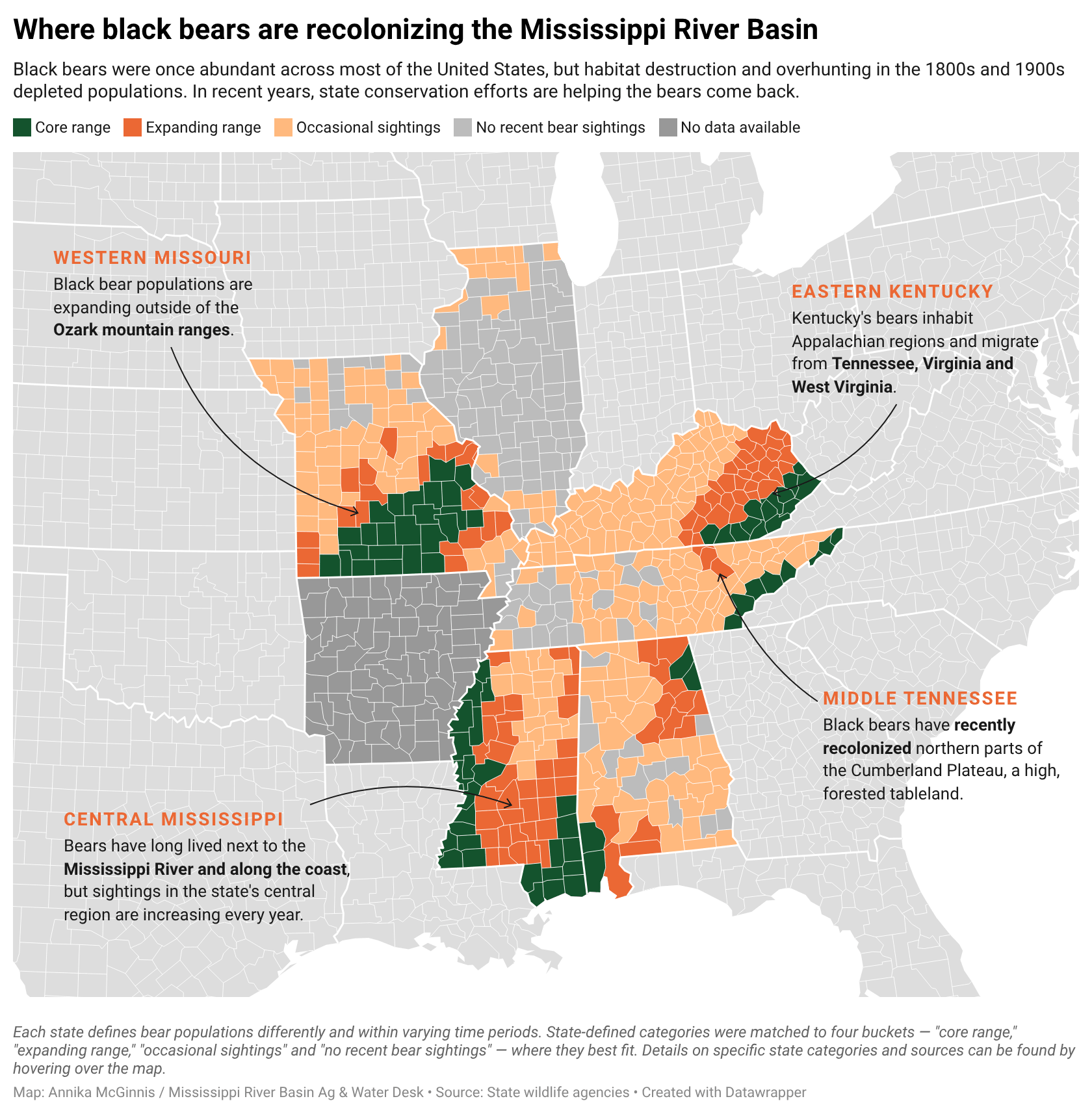
The recent sightings are likely several bears that probably came from bordering states with expanding populations, like Kentucky, Mississippi, Arkansas and Missouri.
“It will be a slow process, but bears are going to recolonize Middle and West Tennessee,” Gibbs said. “You can’t stop it … they’re going to be in northern Mississippi, they’re going to be in eastern Arkansas, eastern Missouri, western Kentucky. That’s just their historical range, and they’re going to reclaim it.”
Mississippi Alluvial Valley was ‘breadbasket’ for black bears
Black bears were once abundant across most of the United States, including the lower Mississippi River basin. But decades of habitat destruction and overhunting in the 1800s and 1900s threatened to wipe out the population altogether. In Tennessee, the animals’ range shrunk to just 10 secluded, mountainous counties along the state’s eastern border by the early 1970s.
In Mississippi, the population was estimated at just 12 bears when the Mississippi Game and Fish Commission (now Mississippi Department of Wildlife, Fisheries and Parks) was founded in 1932.
One of the biggest misconceptions about black bears is that they are a mountain species.
They’re really “generalists” that can survive — and thrive — in a variety of ecosystems, including swamps and wetlands. In Tennessee, European settlement and hunting pushed bears into the Great Smoky Mountains and the Cherokee National Forest, large areas of conserved land and places that were harder for people to reach. But wetlands are rich, productive ecosystems that make great food sources for black bears.
“The whole Mississippi Alluvial Valley … the historical floodwaters that used to flood miles and miles before the levee system, that was kind of the breadbasket of the black bears in this part of the Southeast,” said Anthony Ballard, black bear program leader for the Mississippi Department of Wildlife, Fisheries and Parks.
Mississippi’s core black bear population is concentrated along the Mississippi River in the bottomland hardwood systems — frequently flooded, low-lying areas where oak, hickory and old-growth cypress trees are common. Increasingly, bears are colonizing the state’s southeast corner, establishing home ranges in a very different habitat: pine stands with thick underbrush, Ballard said.
Another myth about black bears is that they form their dens in caves, according to Janelle Musser, TWRA’s assistant black bear coordinator. In reality, caves are damp and not particularly attractive.
“They are great at finding dens in the habitat that they are living in,” Musser said.
In southern Alabama, bears often create dens in shallow depressions in brush on the ground. In the Mississippi Delta, dens can be found in cane thickets and tree tops, Ballard said, sometimes as high as 50 feet off the ground in old-growth cypress.
Black bear populations take decades to recolonize.
Female black bears don’t begin to have cubs until they reach 3 years of age, and if they’re eating natural foods, they’ll have a couple of cubs every other year. Young males begin to move away from their mothers at around a year and a half old, sometimes traveling tens or hundreds of miles to establish their own home range, Ballard said. “It’s kind of nature’s way of making sure that there’s not inbreeding.”
Male black bears can have home ranges anywhere from 25 to more than 60 square miles, depending on the availability of food and presence of female bears. Females’ home ranges are much smaller, and a female cub’s home range may overlap with her mother’s.
These large home ranges and frequent movement make it difficult to survey bear populations, Gibbs said.
A population of black bears is generally considered “established” if there are breeding females in the area.
Tennessee has received cub sighting reports in counties just east of Nashville, Gibbs said. But it will probably be another 10 to 15 years before Middle and West Tennessee have a bear population large enough to survey.
Bear hunting
Hunting black bears was a “part of life” in the Southeast in the 1800s and early 1900s, Ballard said. “It was as much a part of the hunting world as whitetail deer are today.”
Davy Crockett wrote about killing dozens of bears in a personal account of his life published in 1834. “Of all the hunting I ever did, I have always delighted most in bear hunting,” he wrote. When Crockett arrived in Lincoln County, just north of the Alabama-Tennessee border, around 1809, he noted an “abundance” of deer and smaller game, “but the bear had been much hunted in these parts before, and were not so plenty as I could have wished,” Crockett wrote. He had better luck along the Obion River in the western-most part of the state.
Almost a century later, President Theodore Roosevelt went on a storied hunting trip in Mississippi in 1902, failing to find a bear. When assistants located a bear, tied it to a tree and suggested he shoot it, Roosevelt refused. The story led to the invention of the Teddy Bear.
Mississippi put protections in place preventing black bear hunting in 1932, when the estimated population dropped to around 12 bears.
Arkansas — once called the Bear State — was home to an estimated 50,000 black bears before settlement began, according to the Arkansas Game and Fish Commission. The state banned black bear hunting in 1927 due to declining populations. By the 1950s, an estimated 40 to 50 bears remained in the state, according to an article published in The Mountain Echo in 1979.
Arkansas officials trucked in more than 250 black bears from Minnesota and Manitoba, Canada, to the Ozark and Ouachita Mountains in western Arkansas in the 1960s in an attempt to bolster their population. Today, the Arkansas Game and Fish Commission estimates there are around 5,000 black bears in the state.
Louisiana’s Wildlife and Fisheries Commission closed all bear harvest seasons temporarily in 1956 as the population there plummeted. The state similarly brought 161 bears from Minnesota to the Mississippi and Atchafalaya River basins from 1964 through 1967, but continued habitat destruction as agriculture replaced forest land contributed to continuing population decline, according to Louisiana’s Black Bear Management Plan.
The state banned bear hunting in the late 1980s, and the Louisiana black bear was listed as a federally threatened species in 1992.
At least two dozen of the bears relocated to Louisiana were recorded as killed, according to a 1968 article in The Times-Picayune. Others wandered far from their release sites, with one recorded traveling 260 miles. Musser said moving bears away from their home range is not considered effective practice now, because bears frequently attempt to find their way back, increasing the chance that they are killed on the journey.
A 2003 study found that bears in the Arkansas mountains have genetics indicating they descended from bears released in the reintroduction program.
After population growth, the Louisiana black bear was removed from the federally threatened species list in 2016, and the state opened a limited December hunting season in 2024. Louisiana issued 26 tags to hunters in 2025, allowing each to bag one bear. The number of tags increased to 42 this year, and the state’s wildlife department expanded hunting boundaries. The Louisiana Department of Wildlife and Fisheries estimates there are now around 1,500 black bears in the state.
Black bears were thought to be all but wiped out in Missouri by 1931, but sightings began to tick up after Arkansas began its reintroduction program in the late 1950s. Missouri opened a limited, highly regulated hunting season in 2021, and the University of Missouri Extension now estimates there are around 1,000 black bears in the state.
Tennessee closed its hunting season from 1970 through 1972, and partnered with North Carolina and Georgia in 1976 to share management information, ultimately adding Kentucky, South Carolina and Virginia to the fold. Tennessee’s black bear hunting regulations are focused on reducing poaching and protecting breeding females. Bear hunting is prohibited in more than 450,000 acres of bear sanctuary reserves, including the Great Smoky Mountain National Park. Tennessee estimates its current population at around 6,000 bears.
Mississippi has yet to reopen a hunting season for black bears. The state has been studying its black bear population in a standalone program since 2002, initially collaring individual bears to document their home range habitat and reproduction. The population has since grown to the size that it’s no longer feasible to track each individual.
The program is expected to release its most up-to-date population estimates in the coming weeks. (The state typically waits 10 years between estimates to measure a full generation.) The most recent estimate from 2012 put the bear count between 150 to 300.
“Obviously, there’s a lot more now,” Ballard said.
A bill that would have forced a hunting season in 2027 passed through Mississippi’s Senate last year but stopped in the House. Ballard said there’s no set bear population that the state needs to reach before granting hunting licenses, but there are many considerations, including different management objectives for different populations and parts of the state.
“We don’t shy away from the fact that we want to have a season, because that’s a natural outgrowth of having a sustainable population,” Ballard said. “We just want to make sure that we’re not doing it at the risk of potentially over-harvesting an animal that’s just made a recovery to a point where we can harvest.”
Mississippi wouldn’t want to over-harvest its “core population” along the state’s western edge, he said, but in the Southeast, where there are more human developments and less ideal habitat, there may be a different hunting strategy.
Coexistence
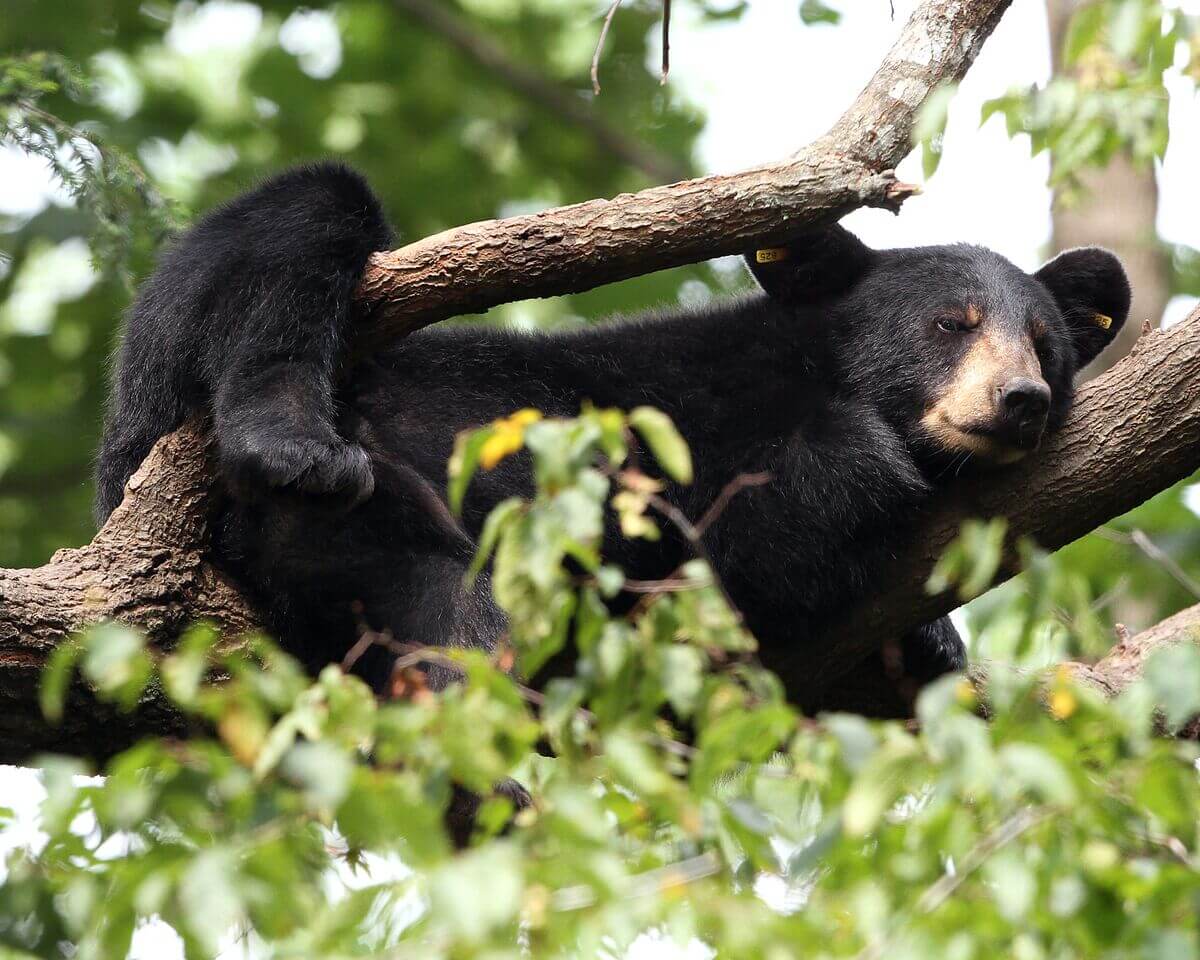
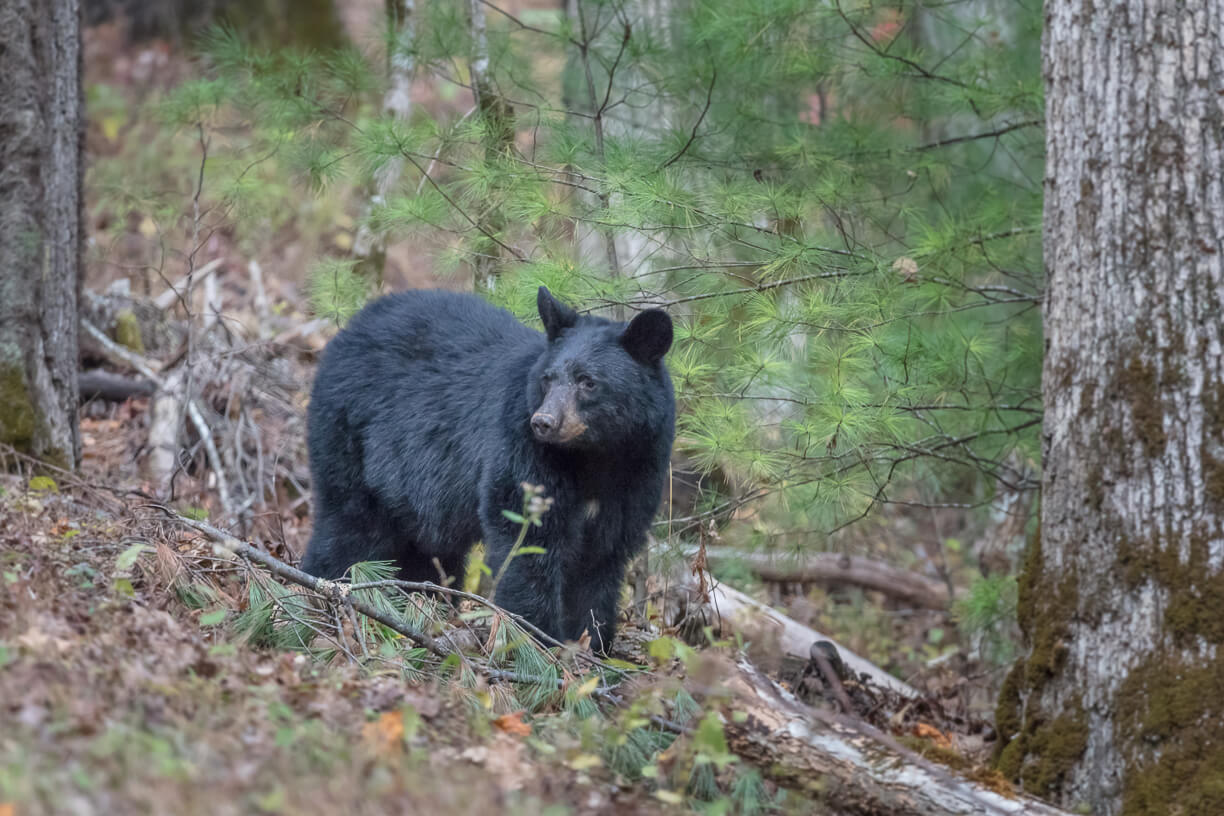
Black bears are typically associated with forest and mountainous habitats, but they were once abundant throughout the Southeast, including in the Mississippi Alluvial Valley and the Atchafalaya Basin. Credit: Courtesy Tennessee Wildlife Resources Agency
Residents and visitors to areas with black bear sightings should start preparing now to live alongside established bear populations, Musser said.
“We don’t know exactly how long that will be until it’s more common per se, but if they continue to wait (to adjust), that’s when we’re going to see those (human-) bear conflicts,” she said.
That means learning more about black bears using resources like bearwise.org and transitioning to using bear-resistant trash cans in residential and public areas.
“We have many people in East Tennessee living with bears, and throughout the country, living in areas with bears, and it’s not a huge safety risk as long as you do a few simple things,” Musser said.
One of those things is preventing bears from eating human food. In Tennessee, it is now a Class B misdemeanor to feed a black bear or fail to secure trash in areas where the state fish and wildlife commission prohibits it.
“I try to impress upon people just how good of a sense of smell that bears have. It’s about seven times better than a bloodhound,” Ballard said. “Anything that a dog can get into, a bear is going to be able to smell better and is going to be much more able to get into that.”
Farmers may see bears attempting to eat crops, mostly corn, Ballard and Gibbs said. But populations in West Tennessee and Mississippi are not dense enough to make a noticeable difference.
Compared to other animals like deer, Ballard said, bears cause much less crop damage. Gibbs said people have had success using herd dogs to keep bears, coyotes and other animals away from livestock and crops.
For smaller-scale farms and chicken coops, electric fences may be a solution, Musser and Ballard said.
And then there’s hazing — using loud noise deterrents or paintball guns to scare bears away.
“Stuff that doesn’t cause long-term harm, but enough that it makes that bear uncomfortable,” Musser said.
Chris Dowdy, 52, grew up in Paris, Tennessee. He has a picture of his grandmother from the 1950s standing next to a bear in her yard. He describes himself as an outdoorsman and hunter. “Ironically,” he said, “my grandmother … and myself are descendants of Davy Crockett.”
He now lives in Dover, which has had several recent reported bear sightings. Dowdy said he welcomes the animals’ return to their original habitat.
Their presence in West Tennessee is literally written into the region’s maps, he said: Dover abuts the Cumberland River, and has an area called “Cub Creek.” To the east, an unincorporated town called Bear Spring was named for the place where the supposed last bear in Stewart County was killed, according to a 1928 article in the Nashville Banner.
“It’s not abnormal (for bears to coexist with people), it’s just abnormal to us because it’s not something we’re used to having,” he said.
A Nigerian man will face federal prosecution for sextortion of a Mississippi teenager, leading to the 16-year-old’s death by suicide.
On Friday, Adebola Festus Adekunle, 26, of Lagos, Nigeria, appeared in federal court in Oxford.
He is charged with a number of crimes, including the sexual exploitation that resulted in the death of Walker Montgomery of Starkville and production of child sexual abuse material.
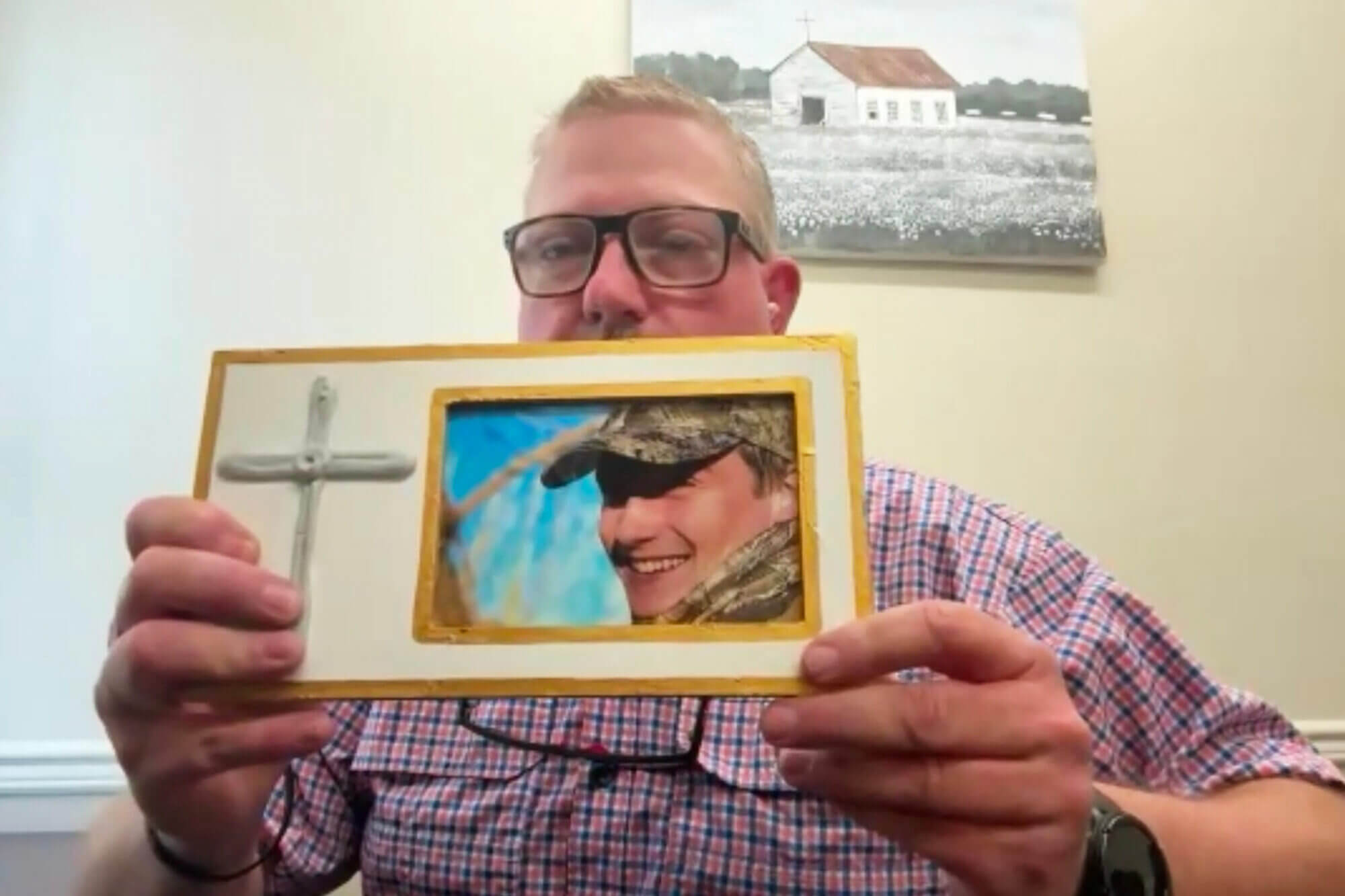
In 2022, Walker died by suicide after Adekunle, allegedly posing as another person, convinced the teenager in an Instagram message to open a video chat and have a sexual encounter, not knowing it was recorded, said Brian Montomgery, the teen’s father in a campaign video against sextortion.
Later, Adekunle contacted Walker again and allegedly demanded $1,000 to prevent the video from being sent to friends and family. The teen said he didn’t have the money and begged for the video not to be released. By the early morning, he was dead.
“Walker Montgomery should be here with us today. He should be moving into his dormitory, meeting up with friends, and running to class. That he is not is a tragedy,” Attorney General Lynn Fitch said in a Friday statement.
“This trial cannot bring back Walker, and the Montgomery Family will always hurt. But I hope that today they get some closure, and some assurances that Walker will get justice.”
The FBI arrested Adekunle in Nigeria in August 2023 as part of a wider operation to arrest sexual extortionists targeting minors in the United States. He was extradited to the U.S. Thursday.
He faces up to a life sentence. The charge of child exploitation resulting in death alone carries a mandatory 30-year sentence.
“Sextortion is a serious crime with devastating consequences. Its impact on victims and their families is profound and long‑lasting,” Special Agent in Charge of the FBI Jackson Field Office Robert Eikhoff said in a Friday statement. “The extradition of Adekunle sends a clear and unmistakable message: crossing state lines does not erase criminal charges, and international borders do not shield individuals from accountability.”
The FBI says it has seen an increase in financial sextortion cases targeting minors.
U.S. Attorney Scott Leary gave credit to state, federal and international partners, including Nigeria’s attorney general and the minister of justice in working on the case.
In 2021, Mississippi criminalized revenge porn. A first offense is a misdemeanor that carries six months in jail or a $1,000 fine. A second offense is a felony punishable with a year in jail or a $2,000 fine.
To remember Walker and address future crimes, the Mississippi Legislature passed “Walker’s Law” making sextortion a criminal offense punishable by up to five years in prison for a first offense and up to 15 for a third or subsequent offense.
In addition, Gov. Tate Reeves signed the “Walker Montgomery Protecting Children Online Act,” which requires age verification on social media platforms. Months after its passage, industry trade group NetChoice challenged the law’s constitutionality, and a federal judge issued an injunction blocking its enforcement. The state appealed to a panel of the 5th U.S. Circuit Court of Appeals.
When her office defended the law, Fitch told the judges that age verification could help protect young people from “sexual abuse, trafficking, physical violence, sextortion and more,” activities that the First Amendment does not protect.
Last year, the federal appeals court allowed the age verification law to take effect.
Curtis Nichouls had a love for Jackson, and it extended deep within the community.
In the wake of the filmmaker’s death last week, those who knew him are fighting to continue Nichouls’ legacy.
“I believe he laid a lot of groundwork,” said Wes Miller, a director and one of the many trying to keep that legacy alive. “It’s for us to figure out where that ended with his passing, and where we can pick up that mantle and keep it going.”
Miller and Nichouls worked on various projects together — including Nichouls’ 2022 action-thriller “A Day to Die,” a film set and shot in Jackson, starring Bruce Willis as one of the lead actors.
The two originally met in 2016 during location scouting for Miller’s film “Atone.” Miller recalled the two instantly becoming close friends and business partners. This led to the creation of Nichouls’ production studio Sweet Unknown South, which sought to build a vibrant film industry in the south.
“He believed in Jackson,” Miller said.
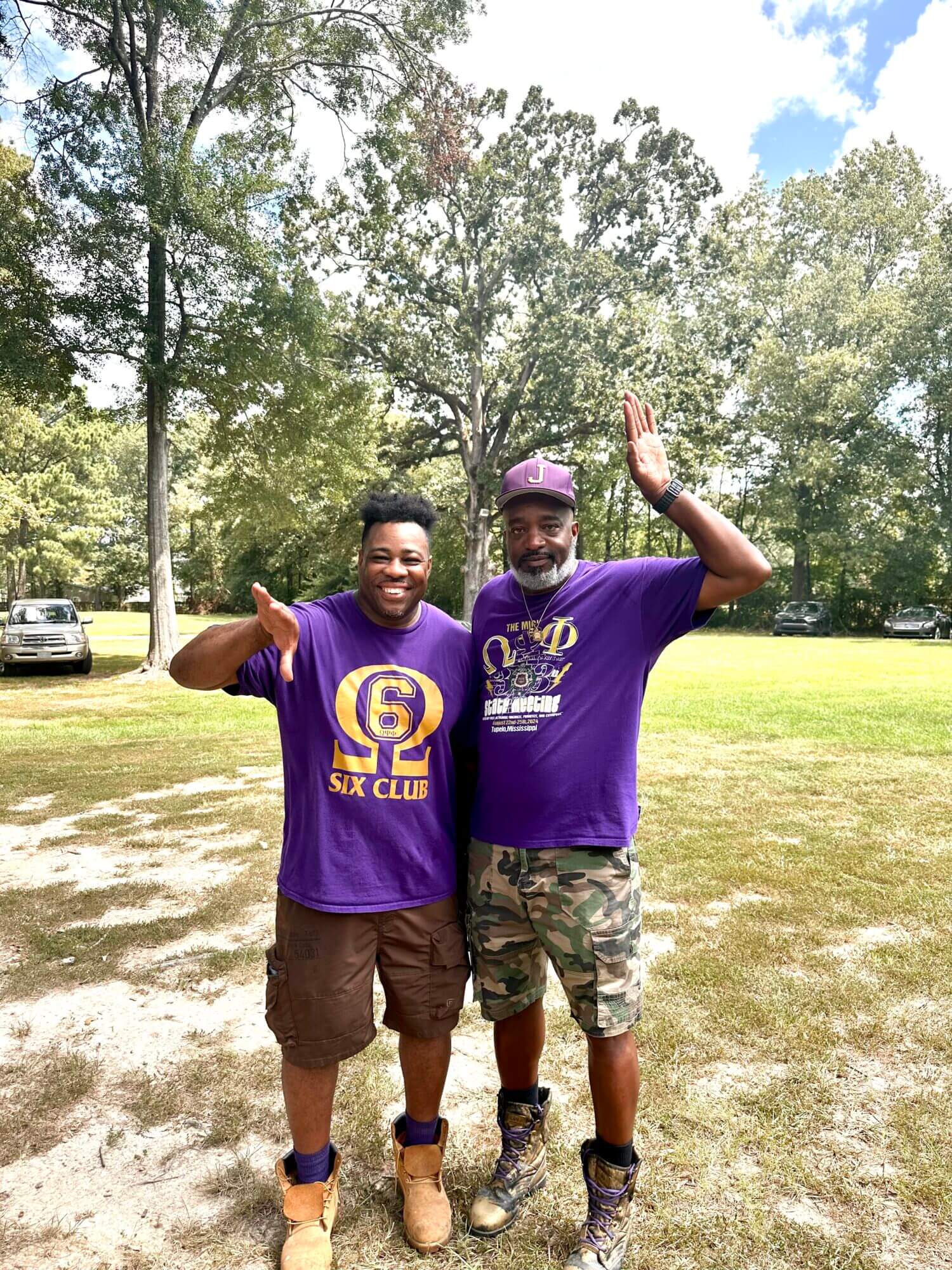
Nichouls often fought for movies to be made in the capital city. His production company Sweet Unknown South allowed local college and high school students to intern in an effort to support the local industry. He often volunteered with his fraternity Omega Psi Phi.
“That was one of the tenets of Sweet Unknown South,” Miller said. “That was born from each of our desires to give opportunities to people in the filmmaking world who traditionally would not have access to it. “
Nichouls was found in his Jackson home Aug. 21 — a result of a welfare check request from family members, according to media reports. The Hinds County Coroner’s Office did not respond to requests for further details.
His production company was housed inside the old Dillard’s anchor store at Metrocenter Mall. Nichouls acquired the building in 2024 after approval of his $360,000 bid for the property by Jackson City Council.
Financing for the property unraveled, according to Jackson City Attorney Drew Martin, adding that Nichouls was allowed to use the facility for several months before he was asked to vacate the property.
During that time, the 172,000-square-foot space would be revitalized into a studio for filmmakers. Local film producer Amile Wilson had his sci-fi feature “The Strange” filmed in the studio before it closed. Wilson said Nichouls’ death came as a shock.
Curtis Nichouls, left, poses with Clarence Irby at the Central MS Coalition of Chapters Annual Summer Breeze Scholarship event in Downtown Jackson on Saturday, Aug. 2, 2025. Credit: Courtesy of Clarence Irby
“As recently as two weeks ago I was going over reps and locations with him for two projects,” Wilson said.
Wilson had recently written a script, with Nichouls in mind for a leading role. Recasting him will be difficult, he said, because he could only see Nichouls in the role.
Wilson described Nichouls as a huge man with a kind and gentle soul. He plans to finish the project as a tribute to the late filmmaker.
Posts flooded social media in the days after his passing, recalling Nichouls’ dedication to Jackson and his kind spirit to the community.
Clarence Irby was one of many who remembered him.
The two were a part of the EKK Omega Men. They crossed paths in 2023 and often worked together during the fraternity’s philanthropic ventures.
Nichouls was absent from the organization’s 35th annual state meeting last week — something that Irby said was unlike him. Irby called Nichouls to see where he was.
He never received an answer.
“I knew when I called and you didn’t answer or return my call, something wasn’t right. Gone too soon!!!!” Irby stated in a Facebook post.
In an interview with Mississippi Today, Irby recalled Nichouls’ smile during an EKK Omega Men’s cookout for kids returning to school – calling it one of his favorite memories of the late filmmaker.
“He just touched so many people in so many different ways,” Irby said. “We know the void that will be there, but we’re holding up well.”
Omega Psi Phi members from across the state gathered Thursday for a funeral service.
Irby said more events are expected to be held in Nichouls’ honor.
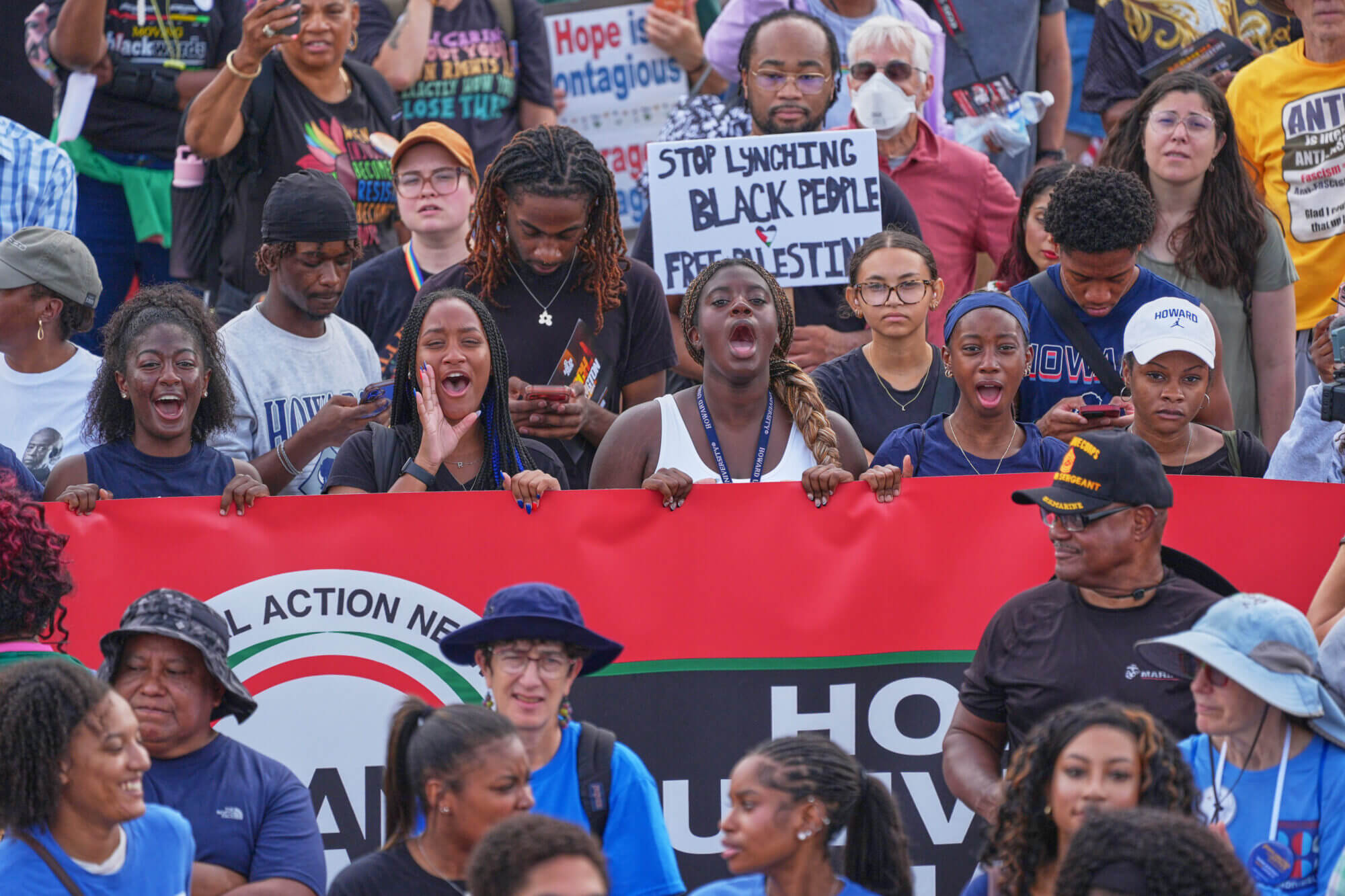
WASHINGTON — Voting rights, the work of the civil rights movement and racial justice took center stage on the National Mall Friday, with protesters gathering ahead of midterm elections and following a wave of changes to voting laws and redistricting that some have condemned as detrimental to Black Americans.
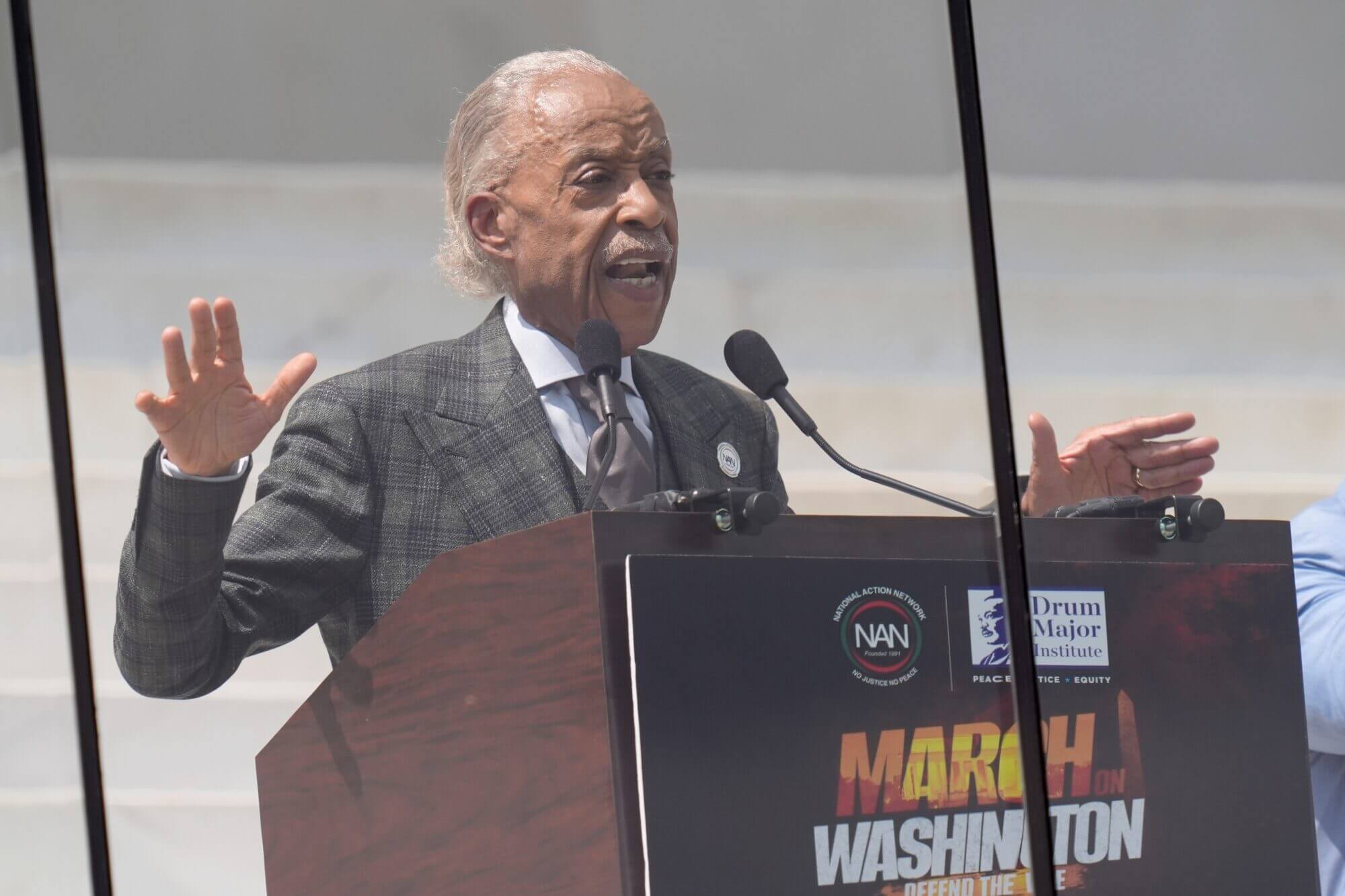
Hundreds of people gathered near the steps of the Lincoln Memorial for the 2026 “Defend the Vote” March on Washington, organized by the Rev. Al Sharpton and Martin Luther King III, echoing the Rev. Martin Luther King Jr.’s 1963 march. The event follows the U.S. Supreme Court’s landmark April decision in Louisiana v. Callais that reinterpreted key provisions of the Voting Rights Act of 1965, allowing Southern states to redraw their congressional maps in a way that erodes equal representation in Black communities.
“We’ve been doing these marches for years, but this is probably the most important because this is the first year we are marching that the voting rights bill has been nullified by the Supreme Court,” Sharpton, founder of the National Action Network, said in an interview with The Associated Press.
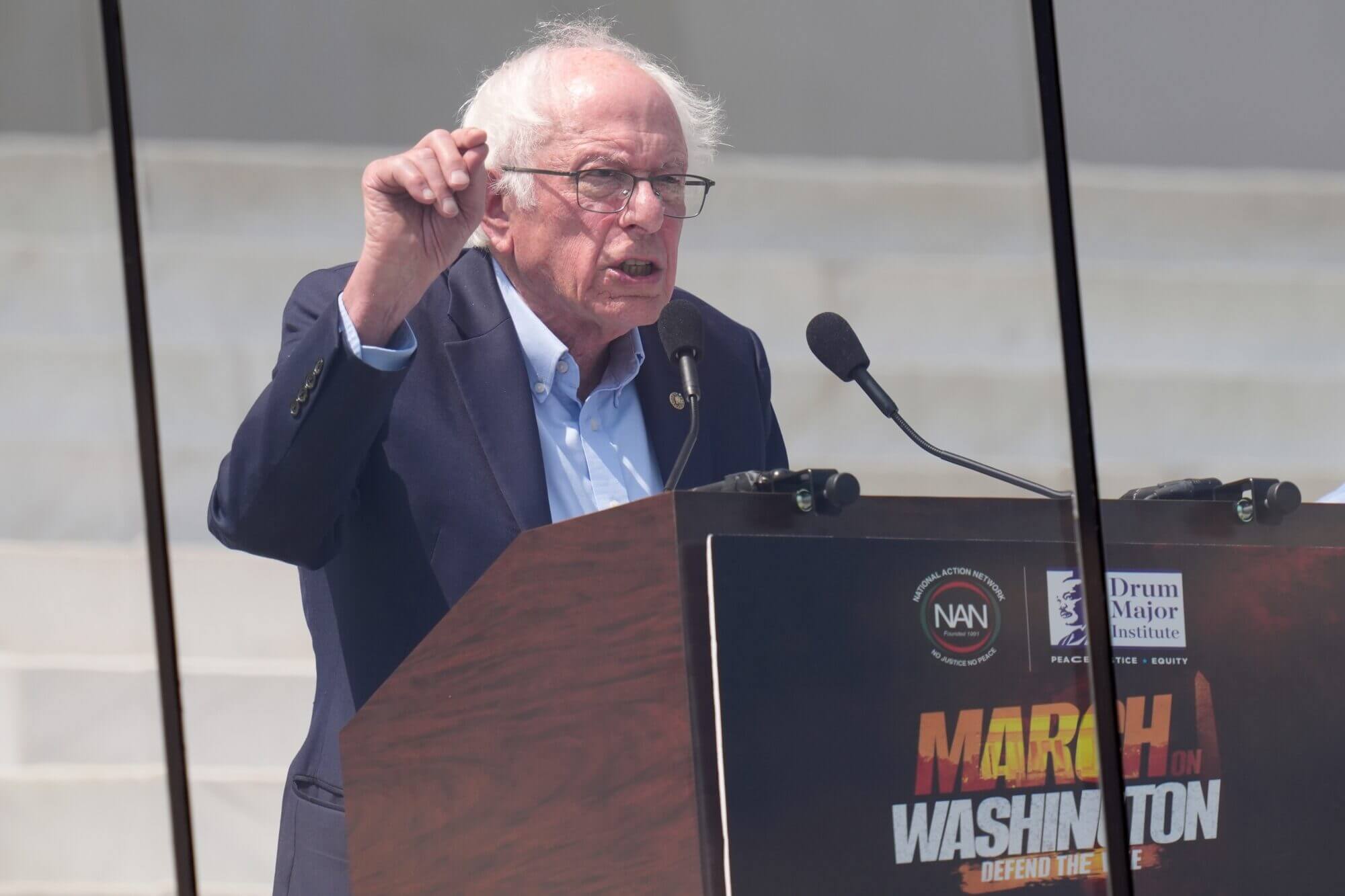
Sen. Bernie Sanders speaks during the March on Washington rally at the Lincoln Memorial on the National Mall, Friday, Aug. 28, 2026 in Washington. Credit: AP Photo/Manuel Balce Ceneta
Some call it a ‘very dangerous moment in American history’
Friday’s event harkened back to King Jr.’s historic March on Washington for Jobs and Freedom in 1963, when more than 200,000 people gathered at the foot of the Lincoln Memorial. That march, an inflection point in the Civil Rights Movement, came at a fraught moment, when economic headwinds, civil unrest, political division and the Vietnam War bitterly divided Americans.
Sen. Bernie Sanders, I-Vt., one of dozens of speakers at the event, said that now is a “very dangerous moment in American history” and that the “dream of a more just and equitable society has never been under greater threat than it is right now.”
He placed blame on Republican President Donald Trump and the Supreme Court’s conservative majority, listing attempts to purge voter rolls, obtain sensitive voter data, restrict mail-in and early voting, and redraw Congressional districts as part of threats to voting rights.
“Today, we have a president along with the Supreme Court members he appointed carrying out the most significant assault on voting rights since segregation, targeting virtually every aspect of the electoral system,” Sanders said.
Martin Luther King III told the AP that the Civil Rights movement’s work “is further eroding” in the wake of the April ruling.
He said his father would be disappointed with the state of the country, but current civil rights advocates should be undaunted.
“Had he lived, we’d be on a totally different trajectory,” the younger King said. “These would not be issues; they would have been resolved. I don’t think he would be surprised because he understands our history and understands those who are trying to retain power. But the challenge is challenging our communities to engage even more.”
King’s Drum Major Institute, a progressive think tank and community action group, co-hosted the march with Sharpton’s group.
Ray Turner, a 65-year-old Maryland retiree, sat Friday on the steps in front of the Lincoln Memorial. He came independently, carrying a sign that read “(Puny) Hands off our elections.”
“The lies about the 2020 election being stolen continue to be sounded, even though they’ve been disproved,” Turner said, adding, “Now they’re trying to use this to prevent people who are legal citizens, legal voters, from voting.”
The Rev. Al Sharpton speaks during the March on Washington rally at the Lincoln Memorial on the National Mall, Friday, Aug. 28, 2026 in Washington. Credit: AP Photo/Manuel Balce Ceneta
“This march is about people who refuse to be counted out. When the courts and the legislature broke apart District 6, they did not just redraw lines,” Rep. Cleo Fields, D-La., said in a texted statement. “They told hundreds of thousands of Black families from Baton Rouge up through the Delta that their voice could be taken away at any moment.”
Fields’ district was central in the Supreme Court decision that hollowed out the Voting Rights Act of 1965. The court ruled that his district, created just one term ago to permit a second majority-Black district in a state where Blacks make up 33% of the population, was unconstitutional because it relied too heavily on race.
The court has held that maps can be redrawn for partisan reasons.
Louisiana’s legislature rushed to redraw the district after the decision, reshaping it to cluster around predominantly white communities in the Baton Rouge area and southern Louisiana.
Embattled Black lawmakers see need for continued rights push
Rep. Shomari Figures, an Alabama Democrat whose majority-Black district was targeted by the state’s Republican-led redistricting effort, said the original voting rights fight required local movements, national figures, lots of coordination and strategy. He sees this year’s march as a continuation of that legacy.
“My district includes Montgomery, which was the birthplace of it all. It started with a bus boycott in 1955 and that, ultimately, morphed into a broader struggle for civil rights and led to a more broad Civil Rights Movement,” Figures told the AP.
Demonstrators shout to speakers during the March on Washington, near the Lincoln Memorial, Friday, Aug. 28, 2026, in Washington. Credit: AP Photo/Mariam Zuhaib
Ahead of Friday, organizations participating in the march filed new claims in their federal lawsuit against President Donald Trump’s executive order restricting mail-in voting. The Supreme Court cleared a path Monday for possible implementation of the order, though it remains unclear how much can be put in place before the midterms.
Late Thursday, a federal judge in Boston who is hearing some of the lawsuits against that executive order put a temporary halt on the administration from moving forward with it. Time is running short to make any significant changes to voting in the midterms, with the first mail ballots scheduled to be sent out next week.
Associated Press writers Gary Fields in Washington and Kimberly Chandler in Montgomery, Alabama, contributed.
With reformed policies and outside help, the Mississippi Opioid Settlement Fund Advisory Council will open its second annual grant application Monday for tens of millions of lawsuit dollars intended to address the state’s overdose crisis.
The council, along with the state Legislature, oversees most of the $430 million of Mississippi funds paid by corporations accused of catalyzing hundreds of thousands of overdose deaths. Now, the council instructs organizations to apply for grants through an online portal.
Mississippi Attorney General Lynn Fitch also serves as council chair and is campaigning to be the Republican candidate for state governor. In an email, her office’s spokesperson, MaryAsa Lee, said the application portal is designed to “reduce the burden on applicants.” The office has also created an email for organizations to send questions they may have about the application process.
“If a question and its answer would be useful to other applicants, it will be added to the published FAQ on the website,” Lee said.
The new website was designed and administered by The Steadman Group, a Colorado-based behavioral health consulting group the council contracted this year. The Mississippi Legislature passed a bill in the 2026 legislative session that instructed Fitch’s office to partner with a third-party group, one that could address opioid settlement application problems lawmakers and council members identified in the previous cycle.
One of those issues was opportunities for council members to influence the reviews of applications that could benefit their own organizations. The portal website echoes language in the law, telling applicants that people who review their proposals have confirmed they have no conflicts of interest.
The application will be live for six weeks, during which Steadman plans to host two webinars for groups interested in applying for Mississippi opioid money. Lee said those who cannot attend can email the new applicant support address with questions.
At the opioid committee’s August meeting, Deputy Attorney General Doug Miracle said Steadman will do the initial review of applications before council members finalize their recommendations to the Legislature. State lawmakers will then consider those suggestions in the 2027 regular legislative session.
Steadman told Mississippi Today in June that one of its main focuses this fall will be ensuring each application is held to a consistent standard.
Like other states, Mississippi began receiving its first national opioids settlement payments in 2022. Unlike other states, Mississippi didn’t use any of the over $130 million it accumulated over its first few years until July — except for lawyers fees and dollars local governments could use for any public purpose.