The Mississippi Department of Human Services is seeking input from older Mississippi residents and their communities to guide the next four years of state services for aging people.
Older adults, their families and caregivers can complete a survey online or participate in a virtual public listening session to share suggestions.
“The community’s input is critical as we develop the next four years of services for Mississippi’s older adults,” KenYada Blake-Washington, director of the MDHS Division of Aging & Adult Services, said in a press release. “We want to hear from the community about what matters most to them and their families.”
The State Plan on Aging is the “blueprint” for the division, which provides services to people 60 and older, Blake-Washington told Mississippi Today. The agency crafts a new plan every four years.
The plan aims to improve services for older Mississippians and identify barriers that prevent them from accessing those services.
“It’s a call to action, improvement, resource alignment and allocation,” Blake-Washington said.
The Aging and Adult Services division works with 10 area agencies on aging on a range of services, including nutrition and meal programs, transportation, case management, legal assistance and caregiver support.
The state plan will fuse input from the area agencies on aging, federal requirements, state-level goals and input from Mississippians.
The state’s population is swiftly aging. Between 2010 and 2020, Mississippi saw a 34% increase in people 65 and older.
Older adults, their families and caregivers can complete an online survey to provide suggestions. The survey’s deadline is Oct. 30.
The Division of Aging and Adult Services will hold three virtual public listening sessions for input. The first two are next week: 4-5:30 p.m. Monday and 9-10:30 a.m. Wednesday. The third session is 10-11:30 a.m. Oct. 14.
Lawmakers selected to study school choice proposals in Mississippi made good Thursday on their promise to hear from both sides of the debate.
What resulted was a dizzying day of conflicting arguments, punctuated by a lunch break that divided the differences in opinion.
In the morning, a school superintendent from the Gulf Coast and an education policy expert argued against expanding such programs in Mississippi, citing education’s worth as a public good.
But the afternoon speakers — a school choice advocate from Florida and an education researcher — instead referred to the education system as a business and centered their argument around the superiority of private schools.
It was the second meeting of the House Education Freedom select committee, which was created by Republican House Speaker Jason White to weigh pros and cons of a robust school choice program. So far, neither of the select committee’s meetings has been streamed online.
“Education freedom,” the moniker that Republicans prefer to describe school choice ideas, refers to a myriad of policies that either disburse money to families to pay for education services, including private school tuition, or allow families to move their children to different schools, regardless of type or location. The issue has gained traction under the Trump administration, and White and other state leaders have repeatedly indicated their support for the issue, which is expected to headline the legislative session that starts in January.
Kim Wiley, education policy analyst at the Mississippi Center for Justice, kicked off the meeting with a warning.
Over the course of an hour, she reminded legislators of the academic gains that have landed the state in a national spotlight and cautioned against turning the “Mississippi Miracle” into a “Mississippi Mistake.”
Around 55,000 students in Mississippi attend private schools, while another 22,000 are homeschooled, she said. One of the options state leaders are exploring — education savings accounts or ESAs — would award families vouchers in the amount of their state-funded student allocation to spend on their education however they see fit. Wiley said it could potentially bankrupt the state, costing upward of $500 million.
In other states, voucher programs have been grossly underestimated. Wiley used Arizona as an example, which is common among school choice opponents. The state expanded the program quickly and without many guardrails, resulting in huge, unexpected costs. Wiley said if something similar is passed in Mississippi, it would come at the detriment of funding to other important issues such as public safety, health care and rural schools.
With federal pandemic relief funding ending and the elimination of the state income tax, Wiley said expanding school choice is a brewing “fiscal storm.”
She offered recommendations that — if school choice were to be expanded — she said would “lessen the harmful impact,” including establishing income limits for eligibility and requiring that voucher applicants have previously attended a public school.
Wiley was grilled by Republican representatives who asked her for examples of neighboring states where expanding school choice was “disastrous,” as she put it. While it’s true that Mississippi is surrounded by states with some version of universal school choice, many of those programs are in their first year, so it’s hard to say what the effects have been.
Rep. Jansen Owen, a Republican from Poplarville who co-chairs the select committee, told Wiley, “We’re not doing what Arizona did. Let’s get that out of the way.”
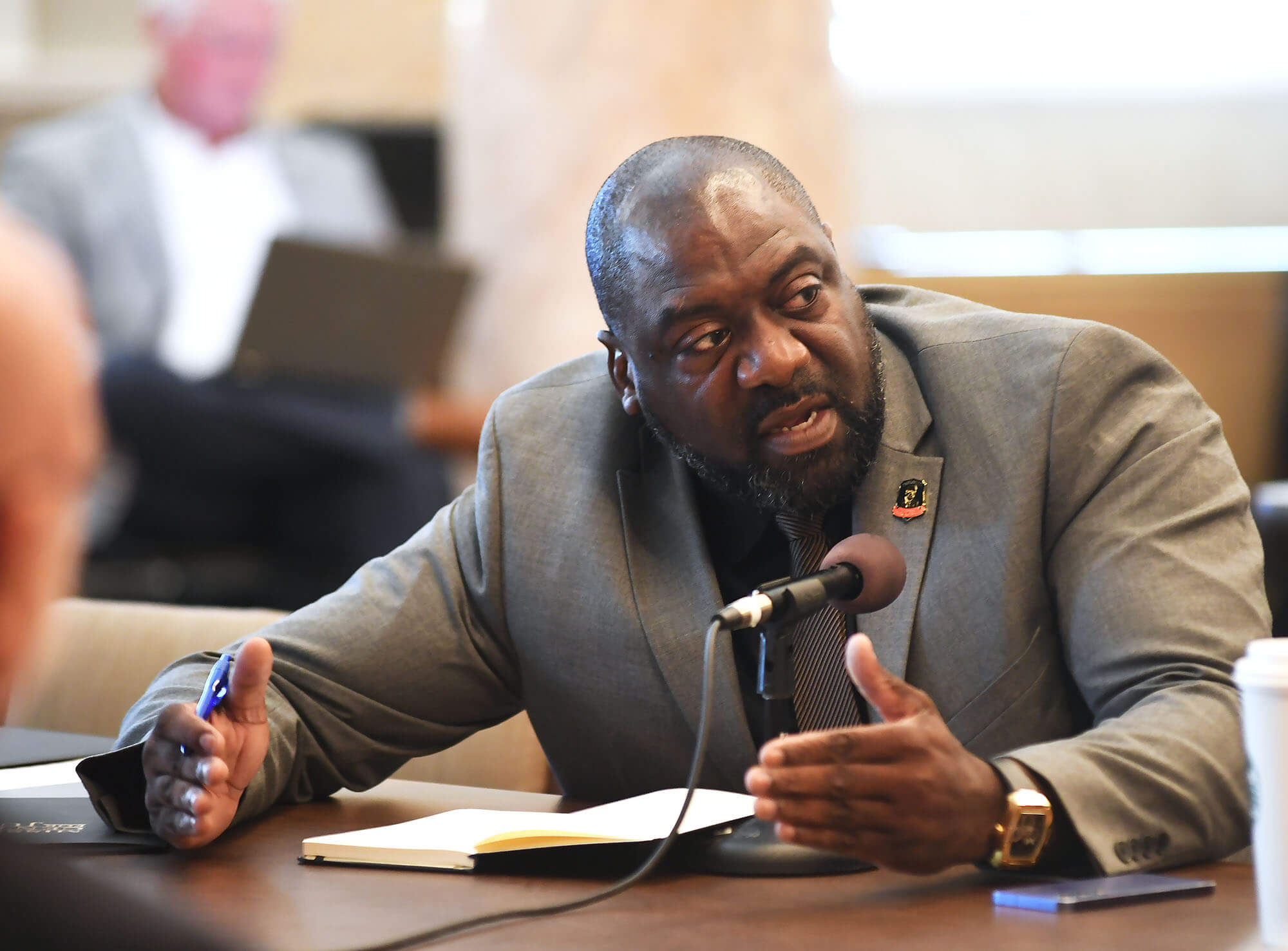
Rep. Gregory Holloway, a Democrat from Hazlehurst, asked Wiley who was behind the recent school choice push.
Rep. Greg Holloway, D- Hazlehurst, questions Kim Wiley during a meeting of the House Education Freedom Select Committee at the Mississippi State Capitol in Jackson on Thursday, Sept. 25, 2025. Credit: Vickie D. King/Mississippi Today
“Defunding public schools has become a priority for some,” she responded. “I think that there are those private interests who realize this is a cash cow. This is a way that they can sort of game the system.”
Owen said later Thursday that he was disturbed by her assertion.
Biloxi School District Superintendent Marcus Boudreaux followed Wiley with a passionate argument against expanding school choice and one that firmly centered schools as the bedrock of communities.
His presentation against expanding school choice policies ran the gamut, arguing they would worsen the teacher shortage andlead to school closures.
He said there was no demand for the policy in his community, where the public district is consistently top-rated. Boudreaux said expanding school choice would create two separate publicly-funded education systems, one without the same level of accountability as the other.
Boudreaux suggested he was supportive of an open enrollment program that would allow students to transfer between public school districts. But he acknowledged that letting students leave schools where they live would worsen the financial and academic disparities between districts, creating “have” districts and “have nots” as money follows students.
Biloxi Superintendent Marcus Boudreaux speaks during the House Education Freedom Select Committee meeting held at the Mississippi State Capitol in Jackson on Thursday, Sept. 25, 2025. Credit: Vickie D. King/Mississippi Today
“I honestly see it as a return to segregation,” he said. “Not necessarily racial segregation — economic segregation.”
When Rep. Trey Lamar, a powerful Republican lawmaker from Senatobia, asked Boudreaux what he would say to children in Greenwood who have limited options outside of their struggling school district, unlike in Biloxi, Boudreaux’s response was succinct.
“I don’t say it to the children,” he said. “I say it to their state. It’s time to invest in public education everywhere.”
Boudreaux said earlier in his presentation: “All Mississippi children deserve the best.”
After a lunch break, legislators heard from Erika Donalds, a school choice activist and wife of Florida gubernatorial candidate Byron Donalds.
She described her sons’ different experiences in public school, which eventually led her to enrolling one in a private school despite struggling to pay his tuition. Donalds later helped found a network of charter schools and campaigned her way onto the local school board, which is where she realized the public school system wasn’t responsive to parents, she said.
Interrupted by frequent applause from supporters, Donalds described classrooms where students were spending the majority of their days being taught by teachers whose values didn’t align with those of the students’ families. She cited polls from pro-school choice organizations that showed parental support for the policy, and added that education was the only “industry” that allowed monopolies in the form of the public school system.
Donalds also had a warning for lawmakers: If school choice isn’t expanded, companies boasting innovative education programs and technologies would be less inclined to come to Mississippi.
“Put these decisions in the hands of parents,” she said. “Give them the education freedom that they deserve, and watch the economy of education in Mississippi flourish.”
Rep. Jeffrey Hulum, D-Gulfport, speaks during a meeting of the House Education Freedom Select Committee at the Mississippi State Capitol in Jackson on Thursday, Sept. 25, 2025. Credit: Vickie D. King/Mississippi Today
House Education Committee Chairman Rob Roberson, a Republican from Starkville, asked Donalds if expanding school choice would harm school districts — a fear of parents who have reached out to him. She responded that high-performing, wealthy districts tend to “beef up,” while less-resourced districts are the ones that are hurt.
Responding to Wiley’s earlier claim, Donalds said she didn’t know anyone — charter school founders, private school leaders or advocacy group staffers — that was “in it for the money.”
“Running schools is a difficult way to do that,” Donalds said, despite describing herself as an “education entrepreneur.” It was reported this summer by a news outlet, the Florida Bulldog, that Donalds’ education companies have garnered millions in charter school contracts.
Donalds emphasized to leaders that their decision to expand school choice would be supported by President Donald Trump, echoing a sentiment repeatedly shared by federal education leaders at the first Education Freedom select committee meeting in August.
Thursday’s meeting concluded with Patrick Wolf, a researcher who serves as the Endowed Chair in School Choice in the University of Arkansas Department of Education Reform. He presented a litany of studies — many authored himself — that connected enrollment in school choice programs with higher rates of high school and college diplomas.
It’s not clear if or when the House committee will meet again.
JACKSON, Miss. (AP) — 911 systems across Mississippi and Louisiana were back online after going down Thursday afternoon, an AT&T spokesperson said.
The Mississippi Emergency Management Agency said AT&T had reported damage to some of its fiber optic lines and that temporarily affected 911 services across the state.
Across Louisiana, 911 phone lines were also down for some time. The state’s most populous cities, including Baton Rouge and New Orleans, reported emergency system outages Thursday afternoon.
“We understand how important these services are and apologize to our customers for the inconvenience,” an AT&T spokesperson wrote in an email.
Initial reports of outages were circulating around 2 p.m. local time in Mississippi. By 4:45 p.m. local time, AT&T reported service had been restored.
“The 911 system in Mississippi has been restored and is now operating as it should throughout our state,” Gov. Tate Reeves posted on X shortly after 5 p.m.
Karl Fasold, executive director of Orleans Communication District, told The Associated Press that systems were being restored following what he described as an “accidental fiber cut.”
Law enforcement agencies across both states took to social media, urging people to call local phone numbers if they were experiencing an emergency.
Mike Steele, spokesperson for the Louisiana Governor’s Office of Homeland Security and Emergency Preparedness, said the agency was “standing by if there are any requests for and there have been no requests for local support from our parishes at this time.”
“Nothing I’ve seen indicates a cyberattack,” Steele said.
The Emergency Communications Center for New Orleans said on its social media page that the outage was due to the cutting of a 911 “fiber line.”
Baton Rouge Mayor Sid Edwards said most parishes in the state were affected by the outage.
Update 9/25/2025: This story has been updated to show 911 service has been restored.
For the first time in years, the performance of Mississippi schools and districts fell from the previous academic year, according to state education rankings released Thursday.
The new scores interrupt the steady progress of Mississippi’s education system that’s been praised across the country and occasionally referred to as the “Mississippi Miracle.” Coupled with mixed results on state tests this past year, it could signal trouble — a possibility the state superintendent frankly acknowledged in a press release this week.
“While Mississippi has made historic progress over the past decade, the areas of declining achievement demand our immediate attention,” Lance Evans said.
This year, 80% of schools and 87% of districts received a “C” or higher on their report card. That’s a meaningful drop compared to the 2023-2024 school year, when 85.7% of schools and 93.9% of districts got a “C” or higher.
The accountability framework was created by the state Board of Education to judge how well schools are serving their communities. It takes into account state test scores, graduation rates and academic growth. This year’s grades fall short of the board’s goal, set in 2016, that every school and district in Mississippi be rated “C” or higher.
Evans had no explanation for the shortfalls in a press call with Mississippi Department of Education officials Monday. He said as soon as agency leaders got the results, they started investigating reasons for the decline but couldn’t pinpoint one specific thing.
“We would have loved to have been able to find one particular issue, but we did not find one,” Evans said. “We also know that over a period of … continual gains, there is going to come a point in time in which there is some drift.”
An empty classroom at Bailey APAC Middle School in Jackson, Miss., on Friday, July 18, 2025. Credit: Eric Shelton/Mississippi Today
School districts closer to the Gulf Coast dominated the top of the list, including Long Beach, Ocean Springs, Petal, Pass Christian and Bay St. Louis-Waveland.
The state’s largest school districts mostly received top scores, too. DeSoto County School District, which serves around 35,000 students, got an “A,” as did Rankin County, Harrison County and Madison County. Jackson Public Schools, the second-largest district in the state, got a “C.”
“I will tell you the reaction that we’ve taken here at the department is we have internally done an analysis of everything we do, every support we provide, to make sure that what we’re doing is actually moving the needle now,” Evans said.
The state Board of Education approved the accountability grades during a meeting Thursday.
Will grades impact school choice expansion efforts?
With the legislative session on the horizon, the slipping scores could provide fodder for school choice advocates, who have been met with opposing arguments about the success of the state’s public schools.
Nancy Loome, education advocate and director of The Parents’ Campaign, said it’s important to note that the accountability grades place a strong emphasis on growth. Because Mississippi has consistently seen improvements, she said, it’s harder to maintain that growth from year to year. Last year’s accountability grades were an all-time high for the state.
She pointed out the National Assessment of Education Progress scores from 2024 showed Mississippi fourth-graders ranked ninth in the country for reading and 16th for math scores.
“I don’t think we have a crisis,” Loome said. “Even as individuals we have good days and bad days, and we’re going to have little bumps in the road. But we didn’t go off a cliff, and I still believe that performance in Mississippi public schools is wonderful.”
The accountability grades could also pave the way for expansion of charter schools, which are publicly-funded schools that operate with more autonomy and independently from districts. Under current state law, charter schools can only be established where local public schools are failing. This year, nine districts earned a “D” or “F” grade, up from three the prior year.
At the same time, six out of seven of the state’s charter schools that were graded this past year got a “D” or “F” rating.
Angela Bass, executive director of policy research organization Mississippi First and a former charter school leader, said it’s “sobering” to see charters at the bottom of the list.
But she, like Loome, didn’t think the grades were a signal the state is headed in the wrong direction.
“Of course, it’s always a time to reflect when we see the number of ‘A’ to ‘C’ districts declining and seeing an increase in ‘D’ and ‘F’ grades,” Bass said. “We think that these grades are a tool that helps us reflect on where we are and pinpoint where we need to target our efforts.”
Bass said her organization is focusing on how to bolster early education and literacy efforts, and strengthen the high-quality teacher pipeline in Mississippi. The latter is one of the reasons agency officials gave on the press call Monday for lowered accountability grades among struggling districts in the Delta.
Some Delta districts struggle, while others shine
Letter grades fell for Holmes County, Humphreys County, Yazoo City and Noxubee County after previously making improvements. All have been taken over by the state for failing performance.
Evans acknowledged his disappointment about the four struggling districts under state control, and said making systemic changes in those districts is “complex work that does not happen overnight.”
Three out of these four “Districts of Transformation” are in the Delta, a region with understaffed schools, districts with some of the lowest pay for teachers and schools that routinely receive low grades from the accountability system.
“Students are being taught by substitute teachers who are not knowledgeable about the content in some cases,” said Clayton Barksdale, a former principal in Greenville and current executive director of the West Mississippi Education Consortium.
Nearly all school districts that received a “D” or an “F” are in the Delta region, with Yazoo City and Clarksdale both receiving an “F.” Greenville, Humphreys County, West Bolivar and Greenwood-Leflore all received a “D.”
“If you look at the larger school districts, which are struggling, they have high turnover at the administrative level,” Barksdale said. “How can there be constant growth with a different superintendent and a different mission and a different vision year after year?”
Holmes County School District headquarters in Lexington, on Thursday, Aug. 5, 2021.
For teachers in struggling districts, boosting the school’s accountability score and encouraging student progress makes up a big portion of work responsibilities. State-tested teachers are often paired with consultants who work with them to move the bottom 25% of students in a subject, which is prioritized in the school accountability system.
Sylvia Jones, a high school science teacher in Humphreys County, said that meant spending her planning period and after school time studying data in which students are ranked by how they scored on their most recent state tests. Students also took biweekly benchmark assessments to track progress throughout the year.
But with so much testing, Jones had to discuss strategies to avoid burnout and build endurance. It can put a lot of pressure on students and staff, she said.
Three Delta school districts received “B” ratings. Tunica County retained its “B” from last year and was the highest performing Delta school district. Leland and Hollandale, two of the smallest districts in the state and located in Washington County, moved from a “C” to a “B.”
“I would credit (the ‘B’) to teacher retention and curbing absenteeism,” said the Rev. Jessie King, superintendent of Leland School District. “We continuously studied the data.”
He said attendance was 90% to 93% most days.
“I would tell other Delta school districts, it is doable and achievable if there is buy-in from staff and administration,” King said. “Public education in Mississippi is an all-time success story. I would say in the midst of upcoming legislative changes, we should rally around the success of our public schools.
“Right now, I don’t think the timing is ripe for an overhaul.”
Next steps
Moving forward, the state education agency plans to seek more dollars from the Legislature this spring to fund a math initiative for grades 2-6 and an adolescent literacy initiative for grades 4-8, expanding the agency’s previous literacy work that transformed reading in Mississippi.
The state education department is also working on a new strategic plan that will be released in 2026 and updating the accountability system by which schools are measured. The new framework, which will be finalized this fall, will add a focus on college and career readiness and raise the standards for each letter grade.
“The foundation we have built over the past decade remains strong,” Evans said. “Higher academic standards, targeted support for teachers, and a strong accountability system have improved student achievement in Mississippi over the long term. This year’s results do not change our commitment to these proven strategies.”
C. Alan Burrow, associate superintendent for district and school performance, said Thursday that schools with low proficiency rates can earn points through growth.
“Accountability is essential to ensuring that we’re working towards our overall goals, making sure that all students are ready to be successful when they leave public education,” Burrow said.
Entergy Mississippi announced plans Wednesday afternoon to invest $300 million into upgrading its power grid over the next five years.
Speaking on a stage outside the company’s facility near Lake Hico in Jackson, Entergy President and CEO Haley Fisackerly explained that the investment, dubbed Superpower Mississippi, would mark a 50% increase in its usual power grid spending. The goal, he said, is to reduce outages by half over the next five years by installing stronger poles, increasing maintenance of rights-of-way, as well as installing smart devices and real-time monitoring systems.
The spending still needs Mississippi Public Service Commission approval, but two of the three PSC commissioners were on site for the announcement. Fisackerly, though, said the investment would have no impact on customers’ bills because of revenue increases coming new business from Amazon and other industries.
The CEO echoed past statements that new industries, including energy-intensive data centers, would not lead to rate increases for residential customers. Earlier this month, Fisackerly told Mississippi Today that two new data centers coming into its service area — one in Madison County owned by Amazon and another in Rankin County owned by AVAIO — would provide enough revenue to the utility that rates would actually go up less than they would have otherwise.
Entergy President and CEO Haley Fisackerly speaks with the media after announcing the launch of Superpower Mississippi, the largest grid upgrade for customers in the company’s history, Wednesday, Sept. 24, 2025, in Jackson, Miss. Credit: Vickie D. King/Mississippi Today
Fisackerly declined to say how much Entergy’s revenue had increased from its new industrial customers.
“The fact that we can pay for an additional $300 million effort without increasing rates gives you an idea about the magnitude of that,” he said. “Think of it this way: We have a cost of business, and when you bring a larger user of electricity, we can spread that cost over a greater base. So they help reduce the cost to the other customers.”
De’Keither Stamps and Wayne Carr — the Central and Southern District PSC commissioners, respectively, — spoke at Wednesday’s announcement in support of the project.
“It’s a step forward in getting to where we want to go,” Stamps said, emphasizing the importance of keeping rates affordable in areas with high poverty.
Entergy is the state’s largest utility company, serving about 459,000 customers in 45 counties.
At the PSC’s September docket meeting, Stamps called for an investigation into the company after hearing complaints from Entergy customers over power outages.
“We’re not going to stop anything until the reality of the citizens changes,” Stamps said. “They must not have to live in fear when the rain picks up, and they shouldn’t have to live in fear that their water’s going to go out because the water in rural Hinds County (comes from) ground pumps.”
Entergy President and CEO Haley Fisackerly (center), flanked by Entergy workers, announces the launch of Superpower Mississippi, the largest grid upgrade for customers in the company’s history, Wednesday, Sept. 24, 2025, in Jackson, Miss. Credit: Vickie D. King/Mississippi Today
Fisackerly said the company continues to hold town halls to hear customers’ complaints.
According to an Entergy press release, the number of outages caused by fallen trees has spiked in 2025 because of dead vegetation after the 2023 drought, as well as recent storms and tornados. The release clarified that many of those trees are outside the areas the company can trim.
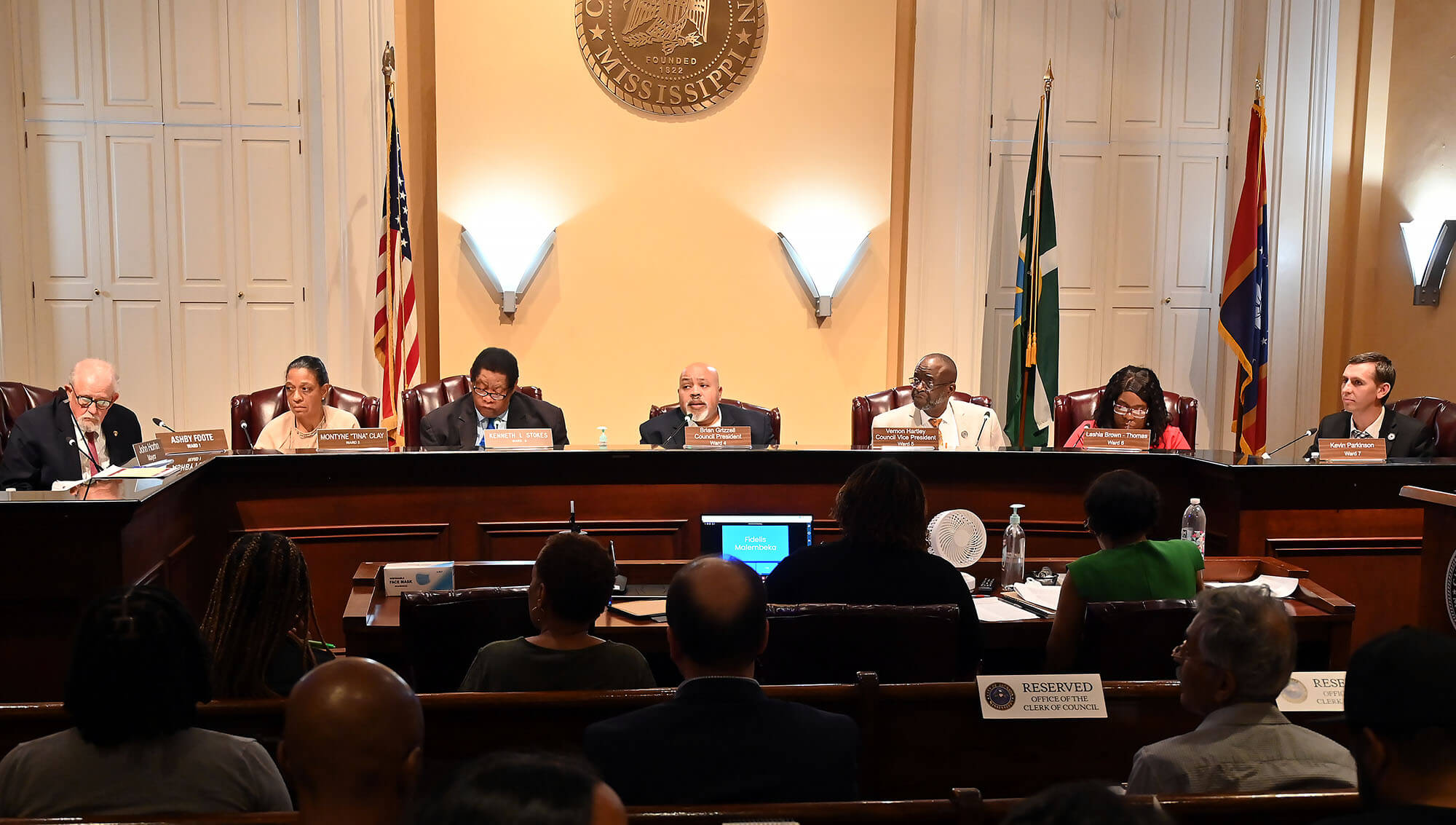
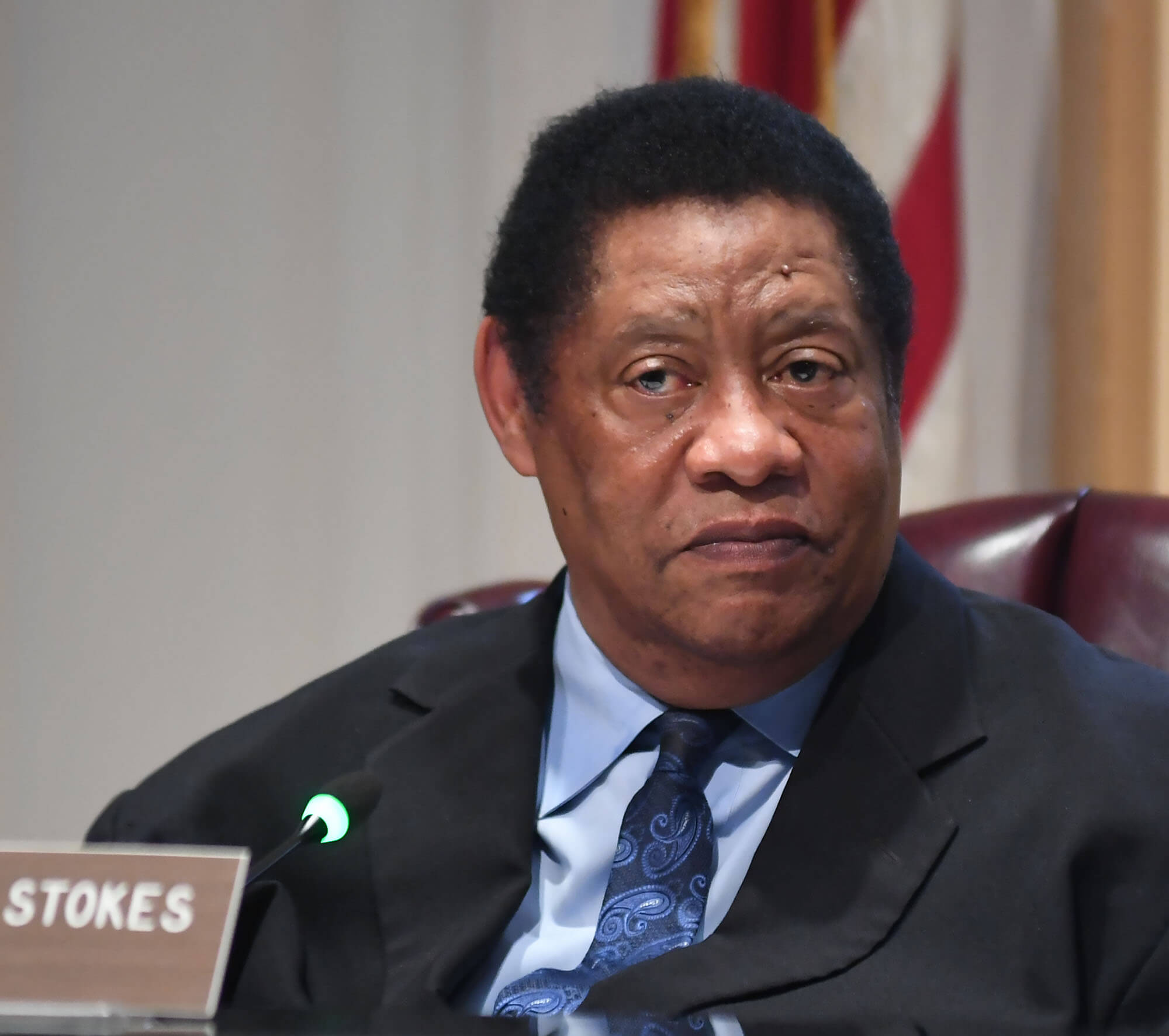
Councilman Kenneth Stokes says he doesn’t want youth crime – which he describes as rampant in his central Jackson ward – to “spread to all over the city.”
Ward 3 Jackson City Council member Kenneth I. Stokes during a council meeting at City Hall, Tuesday, Aug. 26, 2025, in Jackson. Credit: Vickie D. King/Mississippi Today
This concern prompted the longtime Ward 3 councilmember to reintroduce a youth curfew to tamp down on “nocturnal mischief.” The ordinance, passed Tuesday, bars those under the age of 18 from tarrying on streets or highways, in a park, vacant lots or at establishments after 10 p.m. on weeknights and midnight on weekends or during school hours. It contains a few exceptions, such as running an errand for a parent or being en route to or from academic, volunteer or religious activities.
“If we don’t save them, you might be the next victim,” Stokes said.
The council unanimously passed the ordinance with little discussion on Tuesday night. But it remains to be seen if Jackson can enforce it as the city currently lacks a place for the Jackson Police Department to take children who violate the curfew, according to Pieter Teeuwiseen, the city’s chief administrative officer.
Stokes suggested JPD take the children to the Henley-Young-Patton Juvenile Justice Center.
“We got a whole youth detention center right down the street in front of the post office,” he said. “Let’s utilize it. We had the lieutenant governor trying to give us the county jail. What we can’t do is make excuses.”
But a federal juvenile justice law prohibits locking up youth who commit what’s called a “status offense” — a non-criminal act such as violating a curfew that is illegal solely because of the offender’s age — in a secure detention facility.
The city could hold a child who violates the curfew in a community room at Henley-Young, but the child must be free to leave, according to Melissa Milchman, executive director of the Coalition for Juvenile Justice, a Washington-base nonprofit that assists states in complying with the Juvenile Justice and Delinquency Prevention Act.
“This gets very tricky,” Milchman said. “If they are going onto the secure side of the facility, that’s a violation. If they are hanging out in the community room where staff hang out and they are free to leave, it’s not a violation.”
Youth Court Judge Carlyn Hicks said state law further complicates the matter. Status offenders cannot be held in detention without a valid judge’s order, per state statute.
“I plan to follow the letter of the law,” she said.
Hicks told the council last year that she considered the ordinance “unenforceable,” so JPD did not enforce it last year.
Before passing the ordinance, Ward 5 Councilman Vernon Hartley asked if “everything (is) legally sufficient here” and City Attorney Drew Martin indicated it was.
In general, research has shown that youth curfews do not affect crime rates.
“It’s putting resources toward the lowest level of offense, not even a misdemeanor,” Milchman said. “It’s taking away the most critical resource a city has to commit to violence and victimization and distracting them on things that are not crime.”
Jackson has historically struggled to enforce a youth curfew, according to archival newspaper reporting. In 2003, the Northside Sun reported that youth court officials found it difficult to know if a teenager was “in the wrong” for being out at night or if they simply were coming home from work.
In 2011, the city tried to find a place for the children that was not Henley-Young. As part of the federal government’s longrunning consent decree against the facility, the detention center had been cited for putting youth who had violated the curfew in the same building as criminal offenders.
Hinds County Sheriff Tyree Jones prepares to speak about law enforcement during the Capital City Revitalization Committee meeting at the Mississippi State Capitol in Jackson, Miss., on Wednesday, Aug. 27, 2025. Credit: Eric Shelton/Mississippi Today
Teeuwissen raised the issue of where to take the children during a work session earlier this week. On Monday, he told the council that the city would have to find a “non-detention facility” to put the children.
“This is probably a foolish question, but is it possible to just bring them home?” Ward 7 Councilman Kevin Parkinson asked.
Interim JPD Chief and Hinds County Sheriff Tyree Jones said he “wouldn’t recommend that.”
“It goes into technically, ‘Are they in custody?’ And once they are in our custody, we assume responsibilities and liabilities involved,” he said.
This exchange led Teeuwissen to suggest the council involve Hicks in the discussion, but as of Tuesday night, the council had not asked Hicks about reinstituting the ordinance.
Our resident golf expert Randy Watkins breaks down the Ryder Cup. Our discussion also includes LSU-Ole Miss, Mississippi State-Tennessee and a whole lot more.
FLOWOOD – Questions of profound transformation during early motherhood – including changes in mind, body and sense of self – were the subject of discussions by more than 100 Mississippi health care professionals working to better serve the women they see every day.
The internationally established perinatal mental health training this week was free to participants because of a grant from the federal government and the collaboration of two Mississippi health groups.
The three-day course ran through Wednesday at Table 100 restaurant in the Jackson suburb of Flowood. On Monday and Tuesday, participants learned from Postpartum Support International educators how to spot important warning signs, understand lifesaving distinctions and get women and their partners connected to help they need during a time of significant and often misunderstood physical, emotional and identity shifts.
Enrollees included physicians, midwives, doulas, nurses, therapists, lactation consultants, social workers and pharmacists. Many said they have long been interested in learning how to better help the mothers they work with, but the cost of such a course would usually be prohibitive.
“It’s a very professional, well-respected program, so I’ve had it on my wish list and I’d already kind of started to budget it out and was planning on maybe eventually going to it in New Orleans. But then when I heard about this, I jumped on it,” said Bianca Wooden, a lactation consultant in Ocean Springs.
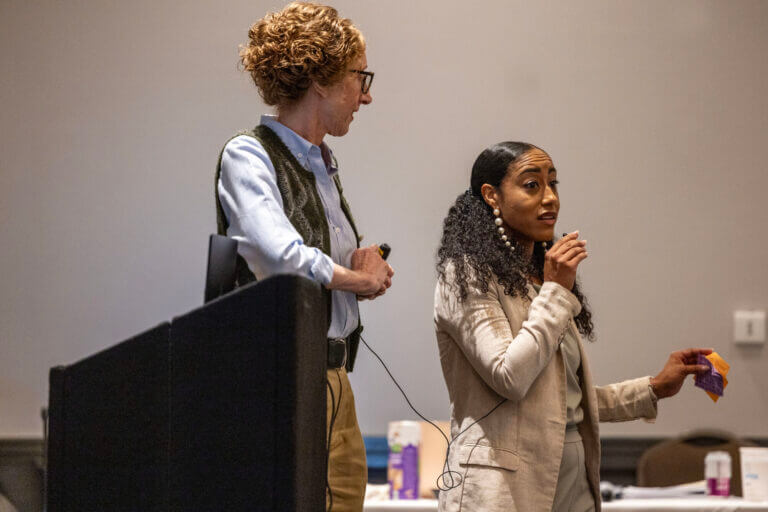
Professionals listen during the perinatal mental health training at Table 100 restaurant in Flowood, Miss., on Tuesday, Sept. 23, 2025. Credit: Eric Shelton/Mississippi Today
Scholarships were made possible because leaders from Mississippi Public Health Institute, a nonprofit that promotes wellbeing, and Champ4Moms, a referral service at the University of Mississippi Medical Center for providers who treat mothers, allocated funding from federal grants. Both groups’ grants came from the Health Resources and Services Administration.
About 1 in 5 women suffers from postpartum depression – a number that is likely closer to 1 in 3 due to underreporting, said Paige Bellenbaum, a Postpartum Support International trainer based in New York.
And it’s not just postpartum depression. Perinatal mental health encompasses many conditions that arise during pregnancy all the way up through 12 months postpartum. If untreated, conditions can last well beyond that. Anxiety can be just as common as depression and can be crippling for new moms.
There’s also panic disorder and obsessive-compulsive disorder, not to mention preexisting conditions such as bipolar or post-traumatic stress disorder that become exacerbated or changed by the demands of motherhood.
Globally, about 1 in 3 women experiences some form of physical or sexual abuse, and PTSD from those experiences is often triggered by pregnancy and birth.
Professionals attend the perinatal mental health training at Table 100 restaurant in Flowood, Miss., on Tuesday, Sept. 23, 2025. Credit: Eric Shelton/Mississippi Today
“I assume everyone has a history of trauma until proven otherwise,” said Birdie Gunyon Meyer, a registered nurse with a master’s degree in psychology and counseling who serves as the director of education and training at Postpartum Support International.
Panelists stressed the importance of having a diversity of providers trained in perinatal mental health, since new mothers see their obstetricians alarmingly infrequently for just a few minutes at a time.
It’s often unclear to doctors whether evaluating mothers for mental health conditions falls on them, speakers said. Having many professionals who encounter women throughout their pregnancy and postpartum period trained in perinatal mental health helps eliminate those misses.
The providers who are seen as less clinical may even have better luck getting patients to open up. And while they can’t diagnose or give medical advice, they can refer those patients to professionals who can.
“I think the reframe for our ally professionals is you might be able to get that ‘in’ before I do as a therapist,” said Patience Riley, a Georgia-based licensed professional counselor and trainer for Postpartum Support International. “People are going to tell you their stories before they tell me their stories. They feel more relaxed, they feel more comfortable, so use that to your advantage to then offer the referral to the therapist, to the prescriber, to the clinic.”
Attendees learned how not to make assumptions around pregnancy, childbirth and motherhood, such as: getting pregnant is easy or difficult, being pregnant means being in a loving relationship, a C-section is easy, strong women don’t need medication, being a mother is instinctual or breastfeeding will come naturally.
They also learned important distinctions such as the difference between the intrusive thoughts of harming one’s baby that are due to OCD and are very unlikely to occur, versus those due to psychosis which are more likely to occur.
Activities involved asking participants to recall a time they met someone who was using substances during pregnancy or motherhood to examine their biases and reflect on how to suspend judgment, as well as learning how to perform intake assessments and earn patients’ trust.
Providers who completed the training are eligible to take an exam at a Pearson testing center to gain internationally accredited certification through Postpartum Support International.
Paige Bellenbaum answers questions during the perinatal mental health training at Table 100 restaurant in Flowood, Miss., on Tuesday, Sept. 23, 2025. Credit: Eric Shelton/Mississippi Today
That certification helps assure parents that the provider has legitimate training, but trained providers who choose not to take the test will still help fill in gaps in care, the educators said.
“Motherhood today can be such a lonely and isolating experience just based on the composition of families and geography,” Bellenbaum said. “A long time ago we had cousins and aunties and grandmothers and moms around, to not only support baby but to support mom. And we just don’t have that community for a lot of families anymore.”
For moms, having a support group or working with a doula, an acupuncturist or another health care provider “can be a part of this fabric to help you through that transition,” she said.
With apologies to all the rest, the best and most meaningful college football rivalry involving a Mississippi team has been the one that matches Ole Miss against LSU. Historically, nothing else comes close.
The two teams play again Saturday at Oxford. Both are undefeated. Both have looked like FBS playoff teams. LSU is ranked No. 4, and Ole Miss is ranked No. 13. Surprisingly, at least to this column, Ole Miss is favored, albeit by the slimmest of margins.
Rick Cleveland
I have covered probably 30 Ole Miss-LSU games in person, but my introduction to the rivalry was not in person or even on TV. No, it came on Halloween night, 66 years ago. LSU was ranked No. 1, Ole Miss No. 3. My father and I listened to the radio at our kitchen table with a yellow formica top on 26th Avenue in Hattiesburg. Our beige Philco radio was tuned to 870 AM, WWL in New Orleans. As was usually was the case at night, WWL came in loud and clear. LSU broadcaster J.C. Politz was on the call.
Ole Miss led 3-0 when Jake Gibbs punted late in the fourth quarter. We heard Politz say Billy Cannon gathered in the punt on a bounce at his own 11-yard line. We heard Politz say Cannon stumbled momentarily at the 20. And then, we couldn’t hear anything Politz said. All we could hear was the roar of the crowd. But, even at age 7, I knew what was happening.
The rest is college football lore. Cannon broke several tackles en route to an 89-yard touchdown. It won the game for LSU and the Heisman Trophy for Cannon. It cost the greatest football team in Mississippi history the outright national championship. Ole Miss absolutely dominated the game, except on the scoreboard. The Rebels gained 19 first downs and 363 yards to six first downs and 74 yards total for LSU. In a Sugar Bowl rematch, Ole Miss hammered LSU 21-0. If not for Cannon’s punt return, that Ole Miss team probably would be remembered as the greatest college football team of all time. Those Rebels outscored 11 opponents, including mighty LSU twice, 349-21
Fifty-four years later, in 2013, Cannon and his LSU coach, Paul Dietzel, attended a meeting of the Jackson Touchdown Club. Also in attendance were several of the ’59 Ole Miss Rebels. Beforehand, Cannon and Dietzel posed for a Clarion Ledger photographer while the former Ole Miss players stood off to the side and watched. And then Marvin Terrell, the biggest and strongest of all the ’59 Rebels, brought down the house when he bellowed, “Hey Billy, come try to run through us now.”
Wisely, Cannon declined.
This this Oct. 31, 1959, file photo, Billy Cannon slips by tacklers at the start of an 89-yard punt return for a touchdown to help LSU beat third-ranked Ole Miss 7-3 in Baton Rouge, Louisiana. (AP Photo/File)
The LSU-Ole Miss series has provided so many more poignant memories, though few with the national ramifications of that ’59 game. The last three Ole Miss-LSU games have ended with the home crowd storming the field The last two meetings have been especially memorable.
Two years ago at Oxford, Ole Miss overcame a 42-34 fourth quarter deficit to win 55-49 in a duel of fantastic quarterbacks Jayden Daniels and Jaxson Dart. As of today, both Daniels and Dart are starting NFL quarterbacks. Last year, at Baton Rouge, Garrett Nussmeier rallied No. 13 LSU to a 29-26 overtime victory over Dart and the No. 9 Rebels. My guess: Nussmeier, as well, will one day start at quarterback in the NFL.
My most memorable in-person Ole Miss-LSU game? There have been so many, but I’d have to go with the 1997 meeting when unranked Ole Miss stunned No. 8 LSU 36-21 behind a heroic performance from previously unsung quarterback Stewart Patridge. Remember?
If you were there at Tiger Stadium that sunny, breezy afternoon, you haven’t forgotten. A week earlier, LSU had knocked No. 1 and undefeated Florida, coached by Steve Spurrier. Ole Miss had lost two of its first five games by double digits. There was nothing to suggest heavily favored LSU wouldn’t wipe the field with Tommy Tuberville’s Rebels, still reeling from NCAA probation and with only 68 players on scholarship.
Patridge, who would win the Conerly Trophy that season, had transferred to Ole Miss from Mississippi Delta Junior College and had not become the Rebels’ starter until late in his junior season. But that October afternoon in Baton Rouge, Patridge was remarkable. Checking off about every other play against the constantly blitzing LSU defense, Patridge, both resourceful and accurate, threw for 346 yards and two touchdowns. He picked LSU apart is what he did. Time and time again, he hit key third down passes to extend drives and keep the Tigers’ offense off the field.
By game’s end, much of the LSU crowd had exited. In the southeast corner of the Tiger Stadium end zone, about 3,000 Ole Miss had-to-be-hoarse fans stayed and Hotty Toddied long, long after the final horn sounded.
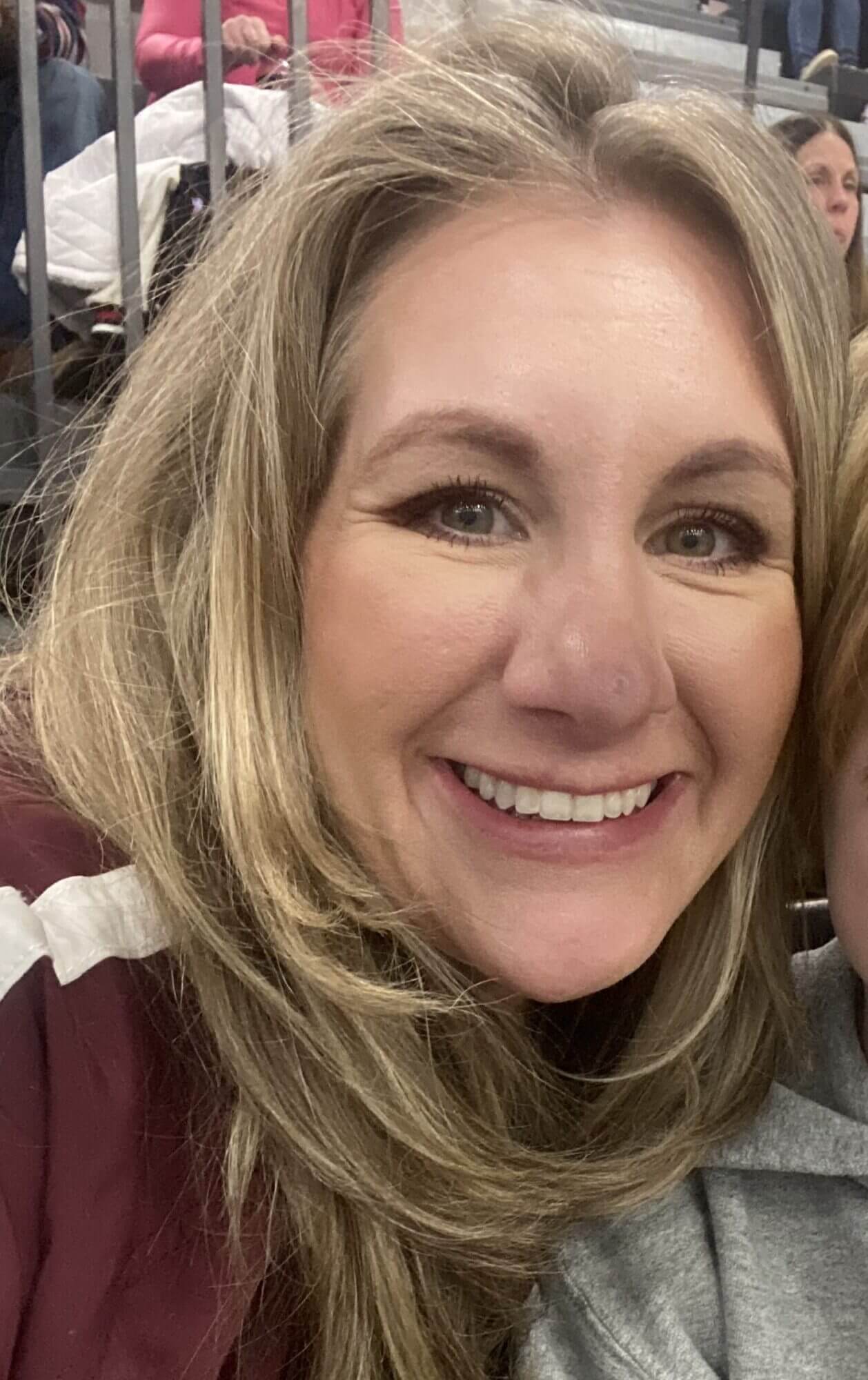
After years of being ridiculed for her prominent nose, Marisa Hankins decided to undergo plastic surgery.
“My whole entire life, I was made fun of for it,” said the 44-year-old hairstylist from Biloxi.
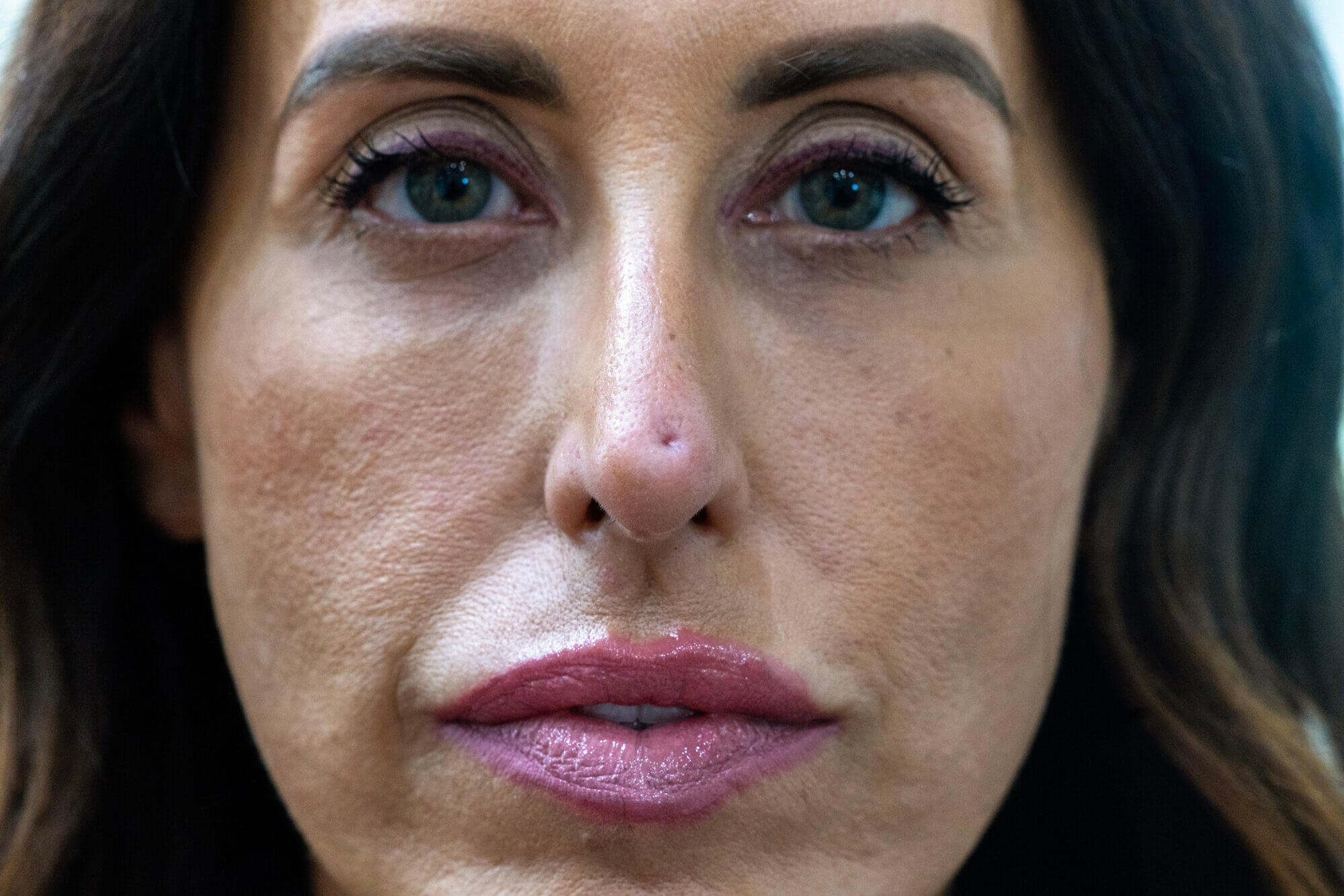
A close-up shows the indentation in Marisa Hankins’ nose at Randy Barras and Friends Salon in Biloxi, Miss., on Friday, July 25, 2025. Credit: Eric Shelton/Mississippi Today
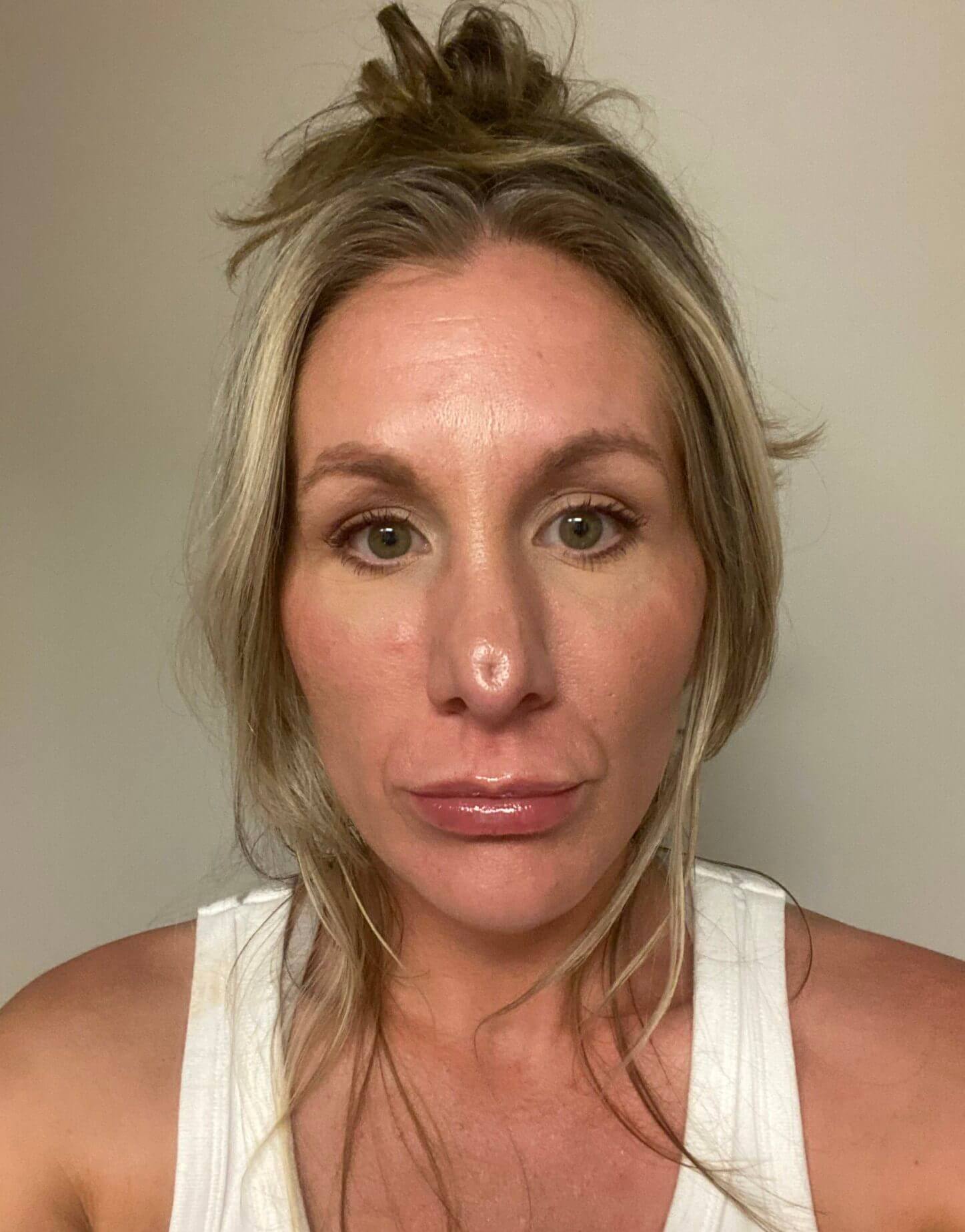
But the relief she felt after the 2021 rhinoplasty was short-lived. Less than a year later, a stitch inside her body ruptured through the skin’s surface and the area below it caved in, leaving a dimple at the end of her nose.
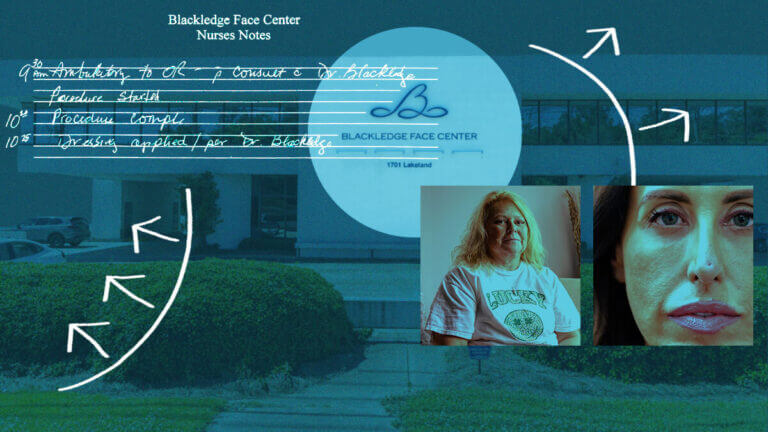
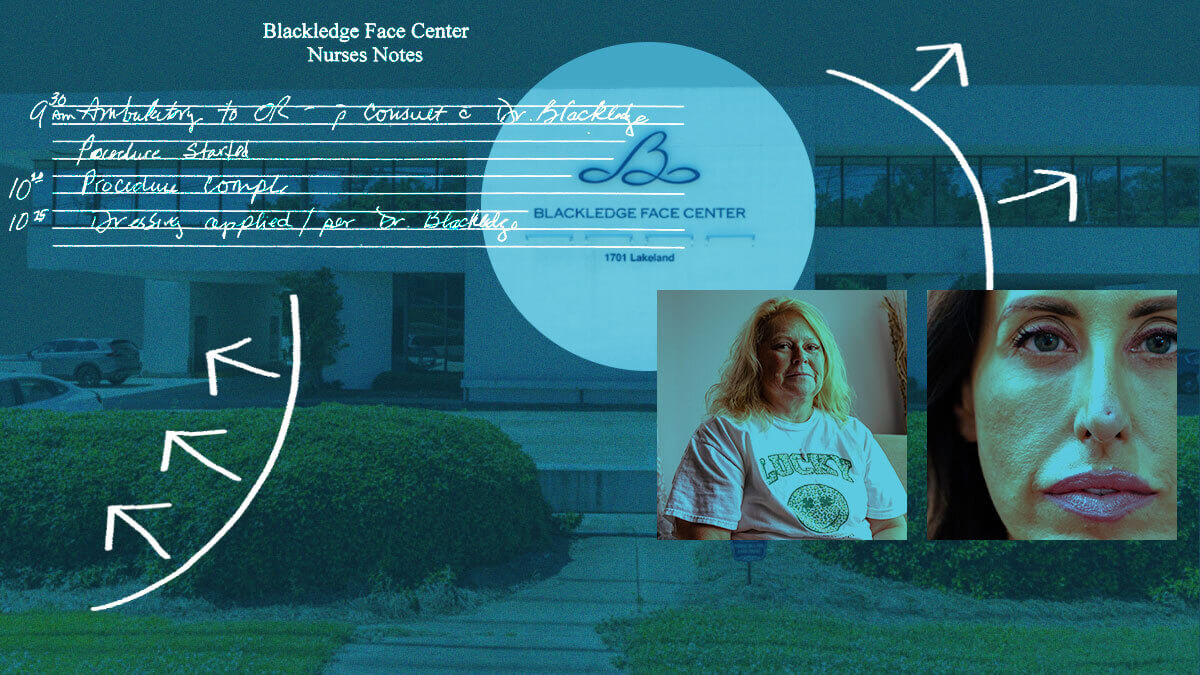
Her surgeon, Dr. Adair Blackledge of Blackledge Face Center in Jackson, offered to correct the issue – going as far as volunteering to drive three hours to Biloxi on a weekend to look at it. But Hankins said she decided she didn’t feel comfortable receiving further medical care from him.
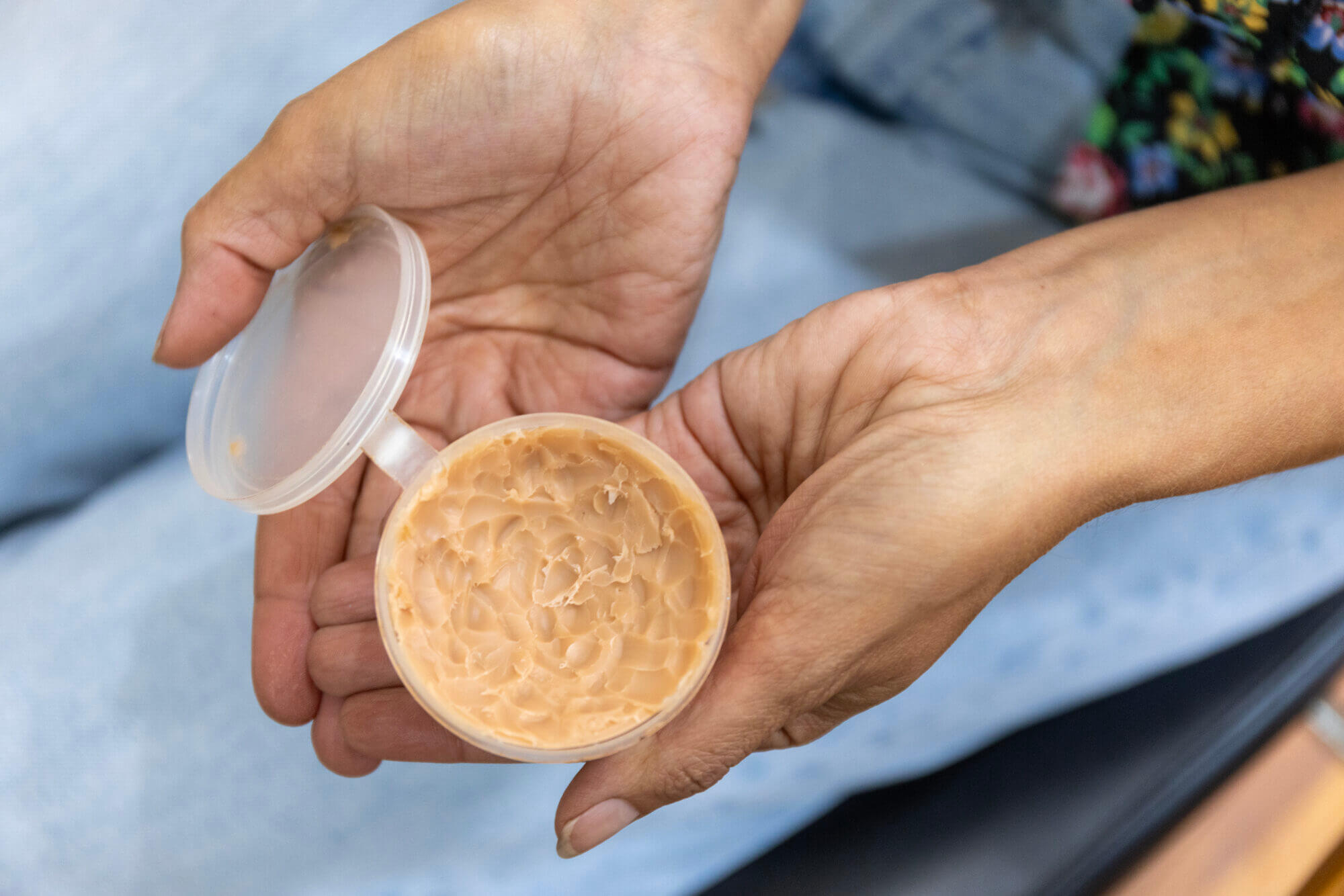
Marisa Hankins holds the special effects makeup she uses to conceal an indentation in her nose at Randy Barras and Friends Salon in Biloxi, Miss., on Friday, July 25, 2025. Credit: Eric Shelton/Mississippi Today
Hankins was wary of some aspects of her surgery, she said — how rushed the procedure felt, the oral sedative medications she was given that did not kick in until after surgery was over, and the “excruciating pain” she felt taking out her stitches using the staple remover Blackledge sent home with her. She had already returned to Jackson twice for minor issues.
“It was a very valuable lesson in vanity,” said Hankins, who uses movie special effects makeup to cover the cavity.
“You go there to get something fixed that you don’t like about yourself,” she said. “And then, they make it worse.”
Hankins is not the only patient who has voiced concerns about the care Blackledge gave. In interviews with Mississippi Today, six others said they experienced prominent scarring or sought medical attention for wounds or complications after surgeries performed by Blackledge. They recounted quick procedures, results that didn’t last and repeated revisions, or procedures to correct or improve past surgeries.
Marisa Hankins applies special effects makeup to her nose at Randy Barras and Friends Salon in Biloxi, Miss., on Friday, July 25, 2025. Hankins underwent cosmetic surgery with Dr. Adair Blackledge in December 2021, including a rhinoplasty. Less than a year later, a stitch surfaced through her skin, leaving an indentation in her nose. Credit: Eric Shelton/Mississippi Today
Mississippi Today spoke to other patients with similar concerns who declined to be named because they did not want people to know they had cosmetic surgeries or said they felt embarrassed.
Blackledge, a well-known facial plastic surgeon who has practiced in the Jackson area for 22 years, told Mississippi Today for months that he could not locate a written transfer agreement he said he had with St. Dominic Hospital in Jackson. Such an agreement is a state requirement for surgeons who sedate their patients in their offices, and an agreement is widely considered a critical patient safety measure for office-based surgery.
The agreements lay out a plan for transportation and treatment of patients at a hospital in case of medical complications or emergencies.
Meredith Bailess, a spokesperson for St. Dominic Hospital in Jackson, said on Aug. 20 the hospital did not have a transfer agreement with Blackledge Face Center and was unable to locate an older agreement.
Blackledge provided a written transfer agreement with St. Dominic to Mississippi Today on Tuesday, signed that day, after Mississippi Today inquired about it for the third time in three months.
He has not faced any public disciplinary action by the Mississippi Board of Medical Licensure, the state agency that licenses and regulates physicians.
Over the past year, Blackledge has faced an onslaught of patient complaints on social media. Some patients, including Hankins, said they believed they were uniquely unfortunate until they discovered online that others had similar experiences.
In emails responding to questions from Mississippi Today, Blackledge described the past year as a “social media barrage,” in which he, his family and his staff members have been attacked and threatened by patients.
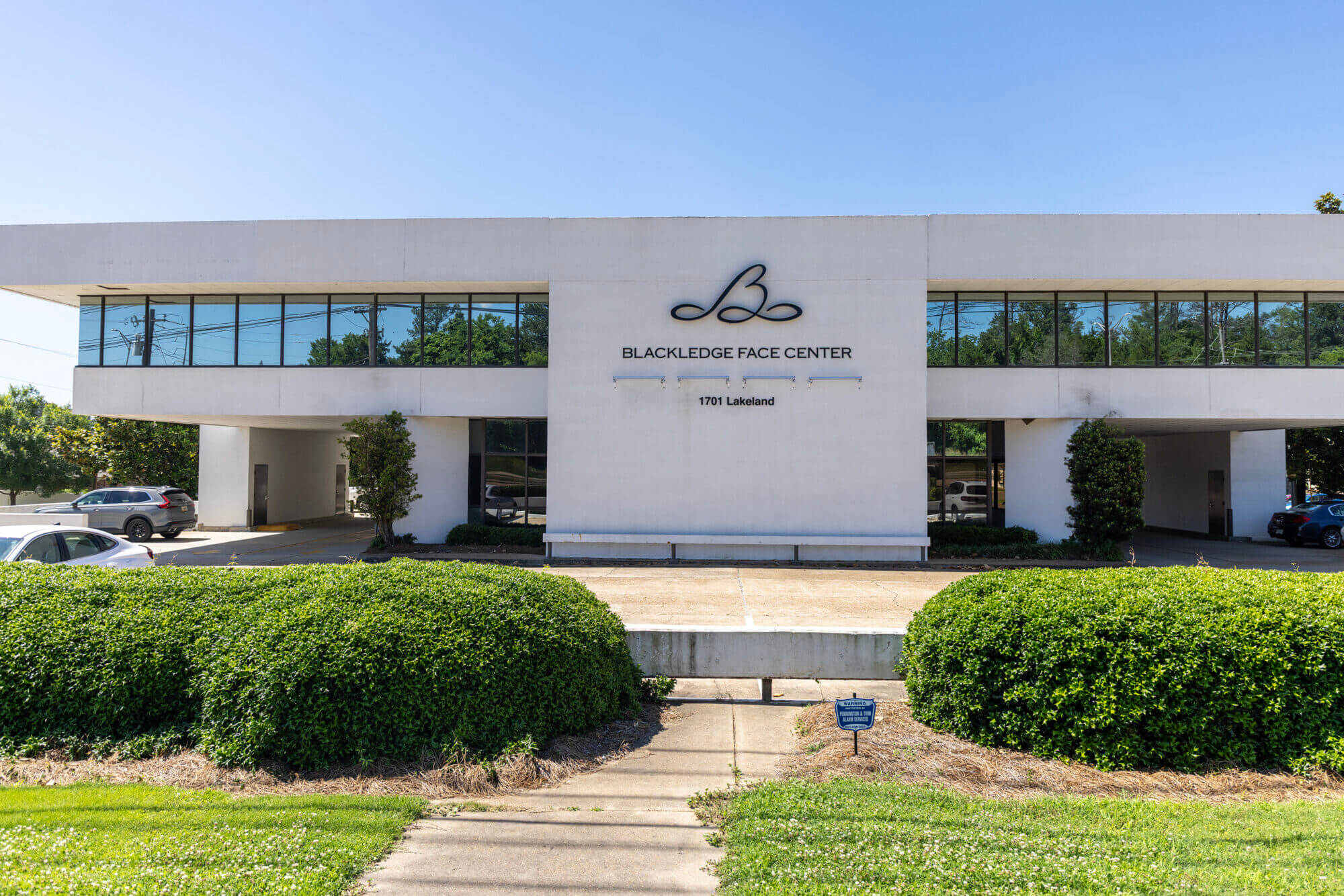
The exterior of Blackledge Face Center is seen in Jackson, Miss., Thursday, May 22, 2025. Credit: Eric Shelton/Mississippi Today
“I believe that what set all this off was a person who considered herself a social media influencer who was initially positive and then turned negative and began the frenzy against me,” he said.
Blackledge said he believes the treatment he provided to the patients interviewed for this article met the standard of care expected of a facial plastic surgeon, and emphasized that they represent only a small portion of his patient population.
“The past year has been an extremely frustrating one for me, and I really feel like I am being painted in a false light by patients who had apparently unreasonable expectations of the results that could be achieved,” he said.
Blackledge said his commitment to patient privacy has prevented him from responding publicly to accusations made about his practice, but he does his best to treat every patient the way he would want a physician to treat him or a family member.
“When you contacted our clinic, it was actually a relief to me that I would finally be able to tell a limited version of my side of this story,” he said to Mississippi Today.
Blackledge’s training and credentials
There are few requirements for doctors to practice facial plastic surgery in Mississippi. Across the U.S., licensed physicians are given the leeway to practice any specialty of their choosing.
Some opt to gain additional, elective credentialing to certify their training in a specialty field. About 90% of U.S. physicians opt to become board certified, which requires that doctors complete an accredited residency program, pass an examination and do continuing education throughout their careers to maintain their certification.
Board certification is not required, but some experts argue it is an important measure to consider when choosing a plastic surgeon or assessing their qualifications.
Blackledge began his career with a residency at the University of Mississippi Medical Center in otolaryngology, a surgical subspecialty focused on the ears, nose and throat. Part of the program was devoted solely to facial plastic and reconstructive training, he said.
Some otolaryngologists, or ENTs, go on to practice facial plastic surgery, which is itself a subspecialty of otolaryngology. But Blackledge said he chose not to pursue board certification in otolaryngology because he was advised to distance himself from the field when he was starting out as a facial plastic surgeon.
The exterior of Blackledge Face Center is seen in Jackson, Miss., Thursday, May 22, 2025. Credit: Eric Shelton/Mississippi Today
“I simply am not an otolaryngologist and do not think it would be fair to the field of otolaryngology or myself for me to be board certified in that field,” he said, citing the fact that he has not inserted ear tubes, performed a tonsillectomy, removed head and neck cancer or performed sinus surgery since his residency.
Board certification improves patient safety by showing that a doctor has trained extensively in a field and demonstrated they are capable of performing certain procedures, said Dr. Ben McIntyre, a professor of plastic surgery at the University of Mississippi Medical Center and the director of its plastic surgery residency program. McIntyre is board certified in general surgery and plastic surgery.
“Physicians, we have a great duty to practice good medicine, safe medicine, and not harm patients by not doing things that we’re not approved or credentialed to do or have no training in,” McIntyre said.
McIntyre, like all of the physicians interviewed for this story, spoke generally about plastic surgery, but did not comment on Blackledge’s practice.
The Mississippi Board of Medical Licensure administrative code states that physicians performing office-based surgery “must be able to document satisfactory completion of surgical training such as Board certification or Board eligibility,” neither of which Blackledge holds. The board did not respond to questions about what other certifications are acceptable.
Blackledge said his residency and fellowship training clearly document extensive training in facial plastic surgery. He advertises himself as a fellowship-trained facial plastic surgeon.
Blackledge spent the year after his residency doing a fellowship in facial plastic surgery with Dr. E. Gaylon McCollough of Gulf Shores, Alabama.
He said he took and passed the American Board of Facial Plastic and Reconstructive Surgery examination in 2003 after his fellowship, but he did not gain the credential because applicants must first be certified in otolaryngology or plastic surgery. Both fields are recognized by the primary organization that certifies specialty boards in the U.S., while facial plastic surgery is not.
Physicians must also submit a record of at least two years’ clinical experience and 100 operative reports for peer review in order to become board certified in facial plastic and reconstructive surgery.
Blackledge said he also shadowed Dr. Frank Kamer of Beverly Hills, California, for two weeks in 2003.
He returned to Jackson in 2003 to practice facial plastic surgery with Dr. George J. Smith of Faces PLLC. In the early years of his career, from about 2003 to 2009, the company’s website represented Blackledge as a board-certified facial plastic surgeon, according to web archives of the page.
Blackledge told Mississippi Today he was unaware the website represented him as such and had no part in its development. In 2009, his practice and Smith’s separated. Smith died in 2023.
There are few regulations guiding what procedures a doctor can or cannot perform in their office or what credentials they must hold, said Dr. Heather Faulkner, a board certified general and plastic surgeon and associate professor at Emory University School of Medicine who chairs the American Society of Plastic Surgeons’ patient safety committee.
Many hospitals and insurance companies require doctors to be board-certified to gain hospital privileges or register as providers. But neither is required for office-based, elective surgeries paid in cash, she said, which places the onus on patients to evaluate doctors’ training and certifications.
“There’s a hard stop (in hospitals), but in a private office, there’s no hard stop there,” Faulkner said. “And there’s no law that says that you can’t practice a specialty that you’re not trained in.”
Speedy surgeries, no general anesthesia
From his office on Lakeland Drive, Blackledge performed 719 surgeries in 2024, according to a post on his Instagram page. He told Mississippi Today that he has performed 12,000 facelifts and rhinoplasties – a pace of at least two such procedures per working day – in his 22-year career.
Courtney Sampson, now 42, traveled from Colorado for a deep plane facelift focused on the lower cheek and neck with Blackledge in 2024. She was surprised by the time it took Blackledge to complete the procedure – about an hour and 15 minutes, according to medical records she shared with Mississippi Today.
The deep plane facelift, a procedure that has risen in popularity in recent years, repositions the layer of fat, muscle and fascia below the skin by releasing it from retaining ligaments. Doctors describe it as an aggressive technique that yields more natural-looking results than traditional skin lifts but carries risks due to proximity to facial nerves.
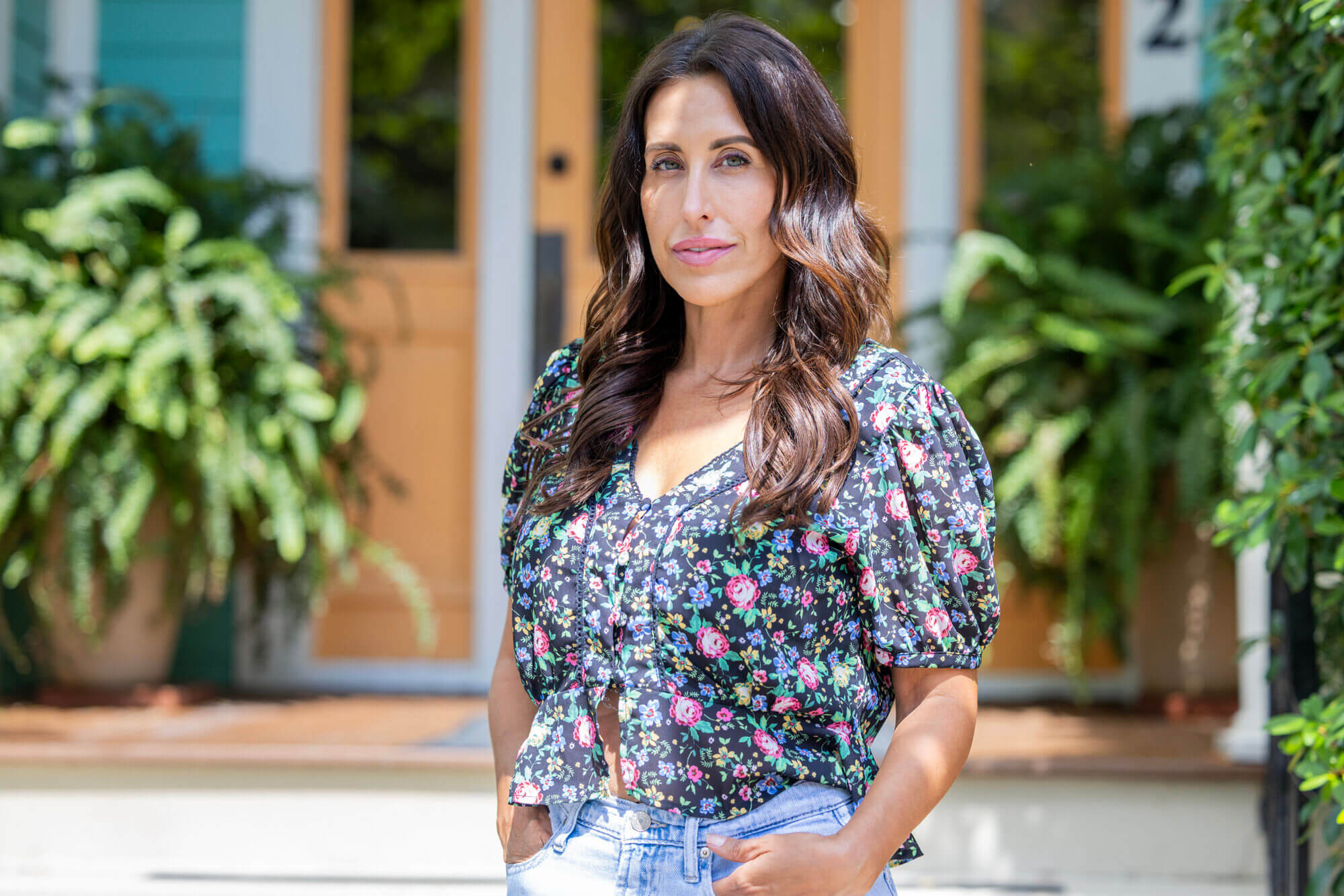
Marisa Hankins poses for a portrait at Randy Barras and Friends Salon in Biloxi, Miss., on Friday, July 25, 2025. Credit: Eric Shelton/Mississippi Today
Patient records show Hankins’ rhinoplasty and a facelift, which were performed in one sitting, took 65 minutes total. Other patient records reviewed by Mississippi Today showed a neck lift completed in 40 minutes and facelift and brow lift in an hour and 20 minutes. Each procedure involved different techniques and parts of the face.
It takes the average plastic surgeon a little over four hours to perform a facelift, said Dr. Alan Matarasso, a board-certified New York plastic surgeon and president of the Plastic Surgery Foundation, a research and education organization affiliated with the American Society of Plastic Surgeons.
Three other plastic surgeons interviewed for this story estimated that the average facelift takes about four to five hours.
Blackledge said there is no way to compare the amount of time a facelift takes to another because each one involves different techniques and areas of the face. The patient’s weight and age, staff’s skill level, whether general anesthesia is used and whether a surgery is a revision are all factors that influence the amount of time a procedure takes.
A procedure like Sampson’s, which was focused on the lower cheek and neck, can take less time than a full facelift, he said.
Blackledge said he was taught that taking more than two hours for a facelift suggests a lack of technical skill and can lead to more complications. He said he believes he is well above the “average plastic surgeon,” both in terms of where he trained and the number of procedures he has performed, adding that ENTs who focus solely on facial plastic surgery may be more efficient than plastic surgeons who perform other procedures.
“I do not believe that there should be a specific time it takes to perform a facelift,” he said.
Blackledge performs major surgeries, including facelifts, without general anesthesia. He instructs some patients to remove their staples themselves. For patients who have traveled to Mississippi, he does post-operative visits at their hotel rooms.
Some surgeons employ these practices, but they aren’t common, said McIntyre, the director of UMMC’s plastic surgery residency program.
Blackledge said he prefers not to completely sedate his patients so they can follow commands and move their mouths during surgery, which allows him to see tissue position and avoid important nerves. He said he administers local anesthetics where he plans to make incisions, and in a minority of cases – about 10% – he inserts an IV, primarily for fluids.
The medical community is divided on the safety of this method. Some plastic surgeons say this method can be safe, while others caution against it for complex procedures, like facelifts.
“Most surgeons are going to want to do (facelifts) in an operating room under general anesthesia,” McIntyre said. Operating on the face poses risks of nerve damage and bleeding, he said, and sudden patient movement could lead to injury of the mouth, nose or throat.
Matarasso said general anesthesia is not always necessary for procedures like facelifts, but recommended monitoring by an anesthesiologist for patient safety and comfort.
Blackledge said he believes general anesthesia increases the likelihood of risks, complications and dissatisfaction because a plastic surgeon can’t determine if he or she is getting close to nerves or if the surgery is causing asymmetry when a patient is unresponsive. He said it also has a greater risk of injury to the throat.
Several patients told Mississippi Today they chose Blackledge’s practice specifically because he does not use general anesthesia.
Blackledge uses a sleeping pill and a sedative, anti-anxiety medication – Ambien and Valium – to sedate most patients before surgery, a drug combination he said he has used his entire career.
The regimen “provides pain control while allowing the patient to be conscious and responsive as well as relaxed in which could otherwise be a harrowing experience,” he said.
McIntyre warned that combining sleeping pills with sedatives could dangerously depress the central nervous system. The combination can be difficult to control because the absorption of oral medications varies by patient, and the effects can peak after surgery – when patients are no longer being monitored – potentially making it difficult for them to breathe.
Dr. Gianfranco Frojo is a board-certified Virginia plastic surgeon currently serving as one of the directors of The Aesthetic Foundation, the research arm of The Aesthetic Society, who has studied the use of oral sedation and local anesthesia for a limited facelift technique.
He said he does not recommend using oral sedation for complex procedures, like deep plane facelifts, because there is a greater risk of damage to facial nerves. He said he doesn’t currently use the method in any facelift he performs.
He said he has never heard of sleeping pills being used for preoperative sedation and warned that patients could fall asleep, making it more difficult to protect the airway.
“I would be very alarmed if someone was prescribing Ambien for patients prior to procedures that they need to be awake for,” he said.
Blackledge said he was trained using this regimen and monitors respirations and oxygen levels throughout surgeries, which is documented in medical records. He said he has never had an adverse event related to anesthesia administration.
Blackledge said the medications he administers, which have been shown to cause amnesia, may have led some patients to misremember parts of their surgeries.
Four patients told Mississippi Today they did not recall changing out of their clothes and into a surgical gown for their surgeries.
It’s typical for patients to change into a surgical gown before complex procedures to minimize the chance of infection, McIntyre said.
Sampson, who received a facelift from Blackledge in 2024, arrived wearing a zip-up sweatshirt. She said she was conscious for most of the surgery but does not remember changing into a gown.
After the surgery, the hood of her sweatshirt was covered in blood, she recalled. A photograph of Sampson taken 10 minutes after surgery shows her recovering in the sweatshirt.
Blackledge said his nurse and surgical assistants change patients into surgical gowns after they have been sedated and help them back into their clothes after surgery.
Frojo said patients typically change into gowns themselves before surgery begins.
“When the patient is sedated, the surgery should be happening, and nothing else,” he said.
‘You’ll be shocked’
Blackledge’s website casts him as an out-of-the-ordinary doctor who sets himself apart with a personal approach to patient care.
“You’ll be shocked when he responds to your texts, even after-hours,” reads the site. “You’ll be thankful when he visits your home or hotel to change your dressing after your facelift. Call him crazy, call him obsessive, call him the consummate Southern gentleman: Adair Blackledge will transform your expectations of facial aesthetics and patient care.”
Blackledge said he has operated a charity since 2008 providing free removal of tattoos from sex trafficking survivors and free removal of gang-related tattoos from formerly incarcerated men.
He has over 20,000 followers on Facebook.
Blackledge said his availability to patients before and after surgery and his willingness to accommodate them financially sets him apart from other physicians.
Kellie James, now 56, traveled from Sugar Land, Texas, for a lower face and neck lift with Blackledge in 2022. The quotes she received for surgery in the Houston area were more than double Blackledge’s. More importantly, she said, she was impressed with the before and after photographs posted on his social media.
She said she appreciated Blackledge’s bedside manner and availability after surgery. She returned to Blackledge for another procedure in 2023 and said she would recommend him to a friend.
“He literally turned me back about 20 years, in my opinion,” she said.
Patients also said they were drawn to Blackledge’s charming personality and ability to remember details about them, which made them trust and feel comfortable around him.
But some said they felt they had not asked enough questions or did not understand all the risks.
Some said they expected to be more sedated than they were, remember crying out in pain, were surprised by the location of incisions or staples, or did not expect Blackledge to use staples, rather than sutures, in certain areas of their face.
Blackledge said he spends a significant amount of time with patients in consultations, ensuring they are a reasonable candidate for the procedure and they understand the risks and where incisions will be made. He said he recommends surgery to less than two-thirds of the patients he consults with and marks on patients before surgery begins.
Summer Price, now 47, traveled from Denver in 2023 for a facelift and brow lift with Blackledge after reading good reviews on social media. She said she was initially happy with the result, which made her look much younger, and she recommended Blackledge’s practice to several friends.
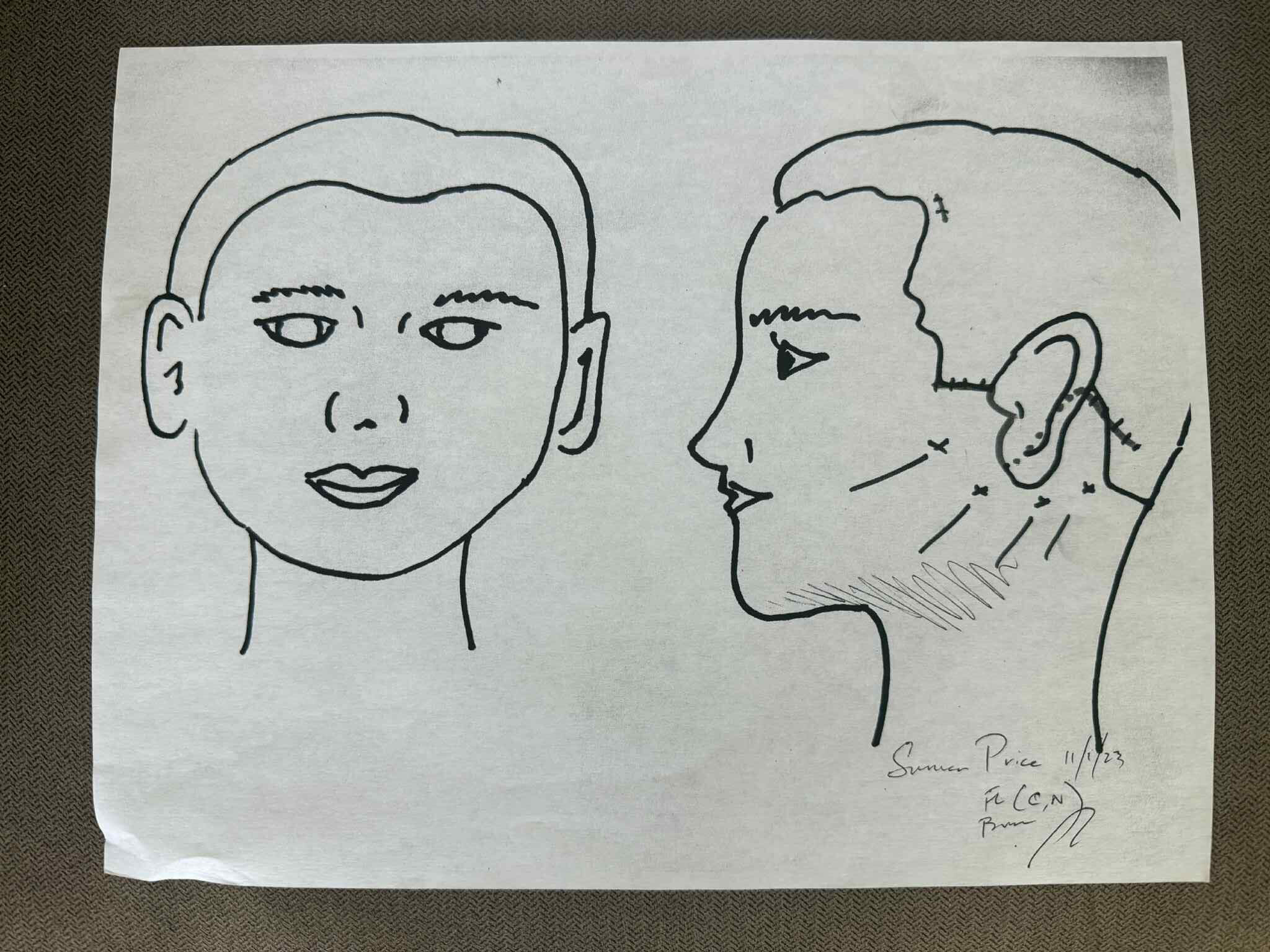
A drawing marked up by Dr. Adair Blackledge shows the planned locations of incisions and stitches for Summer Price’s 2023 facelift and browlift, photographed Jan. 21, 2025. Credit: Image courtesy of Summer Price
But she said she was concerned with the placement of her incisions and staples.
They did not match the drawing Blackledge provided to her, which showed a few stitches hidden in her hairline and others placed behind her ears but concealed by hair. But the incision behind her ears draped about an inch below her hairline, and there were more staples than she expected.
“So many staples – staples upon staples upon staples,” she said. “There was no rhyme or reason.”
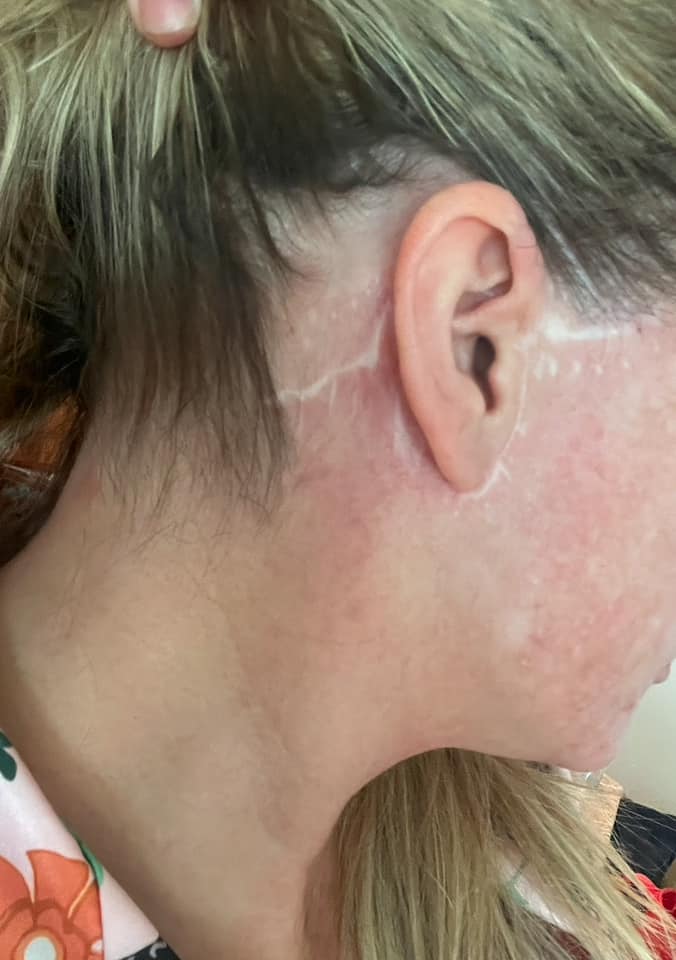
A year and a half later, pearly white scars trailed along Price’s hairline, wrapped around her ears and extended behind them, with white scars dotting areas where staples were placed, photographs show. Her face initially appeared lifted but had mostly returned to its previous appearance after four months, she said.
Scarring around Summer Price’s ear is pictured on Jan. 6, 2025. Credit: Image courtesy of Summer Price
Price said the placement of her scars was debilitating, and she has undergone several scar camouflage tattoo sessions. She stopped wearing her hair up, and didn’t go to the gym for a year and a half because of embarrassment. She doesn’t socialize as frequently as she used to and struggles with a crippling anxiety that she might make the wrong decision.
“I can’t move on from it, because it’s a constant reminder,” she said.
Blackledge said the pictures he has of Price’s scars show an “extremely reasonable result” and emphasized that she was initially satisfied and recommended his practice to friends.
He said that there is no way to avoid the potential of excessive scar formation in any surgical procedure and said he uses techniques during surgery and post-operatively, like creams, to avoid and address scarring.
Frojo, the Virginia plastic surgeon who is one of the directors of The Aesthetic Foundation, said facelift scars are planned to be hidden and shouldn’t be identifiable by someone who doesn’t know they are there. Placing incisions at natural transitions in a person’s skin and proper tension can prevent noticeable scarring, he said.
Most red or sensitive scarring matures within a year, said McIntyre. Abnormal scars, like keloids and hypertrophic scars, may take longer.
Patients signed consent forms, which are typical for such surgeries, acknowledging they discussed the potential risks and complications with Blackledge, including scarring, infection and numbness, that no results were guaranteed and that in rare instances, a revisionary procedure might be required.
“These consent forms constitute documentary proof of the consent process, because memories fade with time, especially when a patient has a result that is less than she was hoping for,” Blackledge said.
Exempt from scrutiny
Anna Ford, now 34, of Poplar Bluff, Missouri, was full of excitement the day of her surgery to slim her nose with Blackledge in 2020. Her nose had troubled her for years, and the procedure was financially out of reach for her in nearby St. Louis, where she said cosmetic plastic surgery is costly.
Her nose was fuller than she had hoped after the procedure with Blackledge, but he offered to revise it at no charge.
After returning to Mississippi in 2021 for a revision surgery, Ford’s nose became red and swollen in winter months and she said she occasionally caught whiffs of a “foul odor.” She said she felt chronically fatigued and depressed.
Anna Ford’s infected nose is covered by makeup on Dec. 7, 2024. Credit: Image courtesy Anna Ford
Nearly three years after the procedure, her nose darkened and became inflamed for weeks before an abscess in her nose burst, leaving an indentation that remains at the tip of her nose today. She said she then realized that the smell had been coming from inside her nose.
“It smelled like death,” she said.
Ford’s revision occurred six days after Hankins’, the rhinoplasty patient who now uses special effects makeup to cover the cavity at the end of her nose. Both women experienced sutures bursting through their skin and have a similar indentation at the tip of the nose.
A slew of doctors’ appointments revealed that Ford had a chronic infection inside her nose. This spring, she underwent surgery to remove the infection after multiple rounds of antibiotics failed to clear it. When it persisted, an infectious disease specialist recommended inserting a long-term intravenous line to deliver antibiotics over a period of weeks.
Three days after it was inserted, she said she felt her energy return. “I was like, ‘Is this what normal people feel like?’” she said. “I was so sick for so long and thought it was depression the whole time. But it was an infection.”
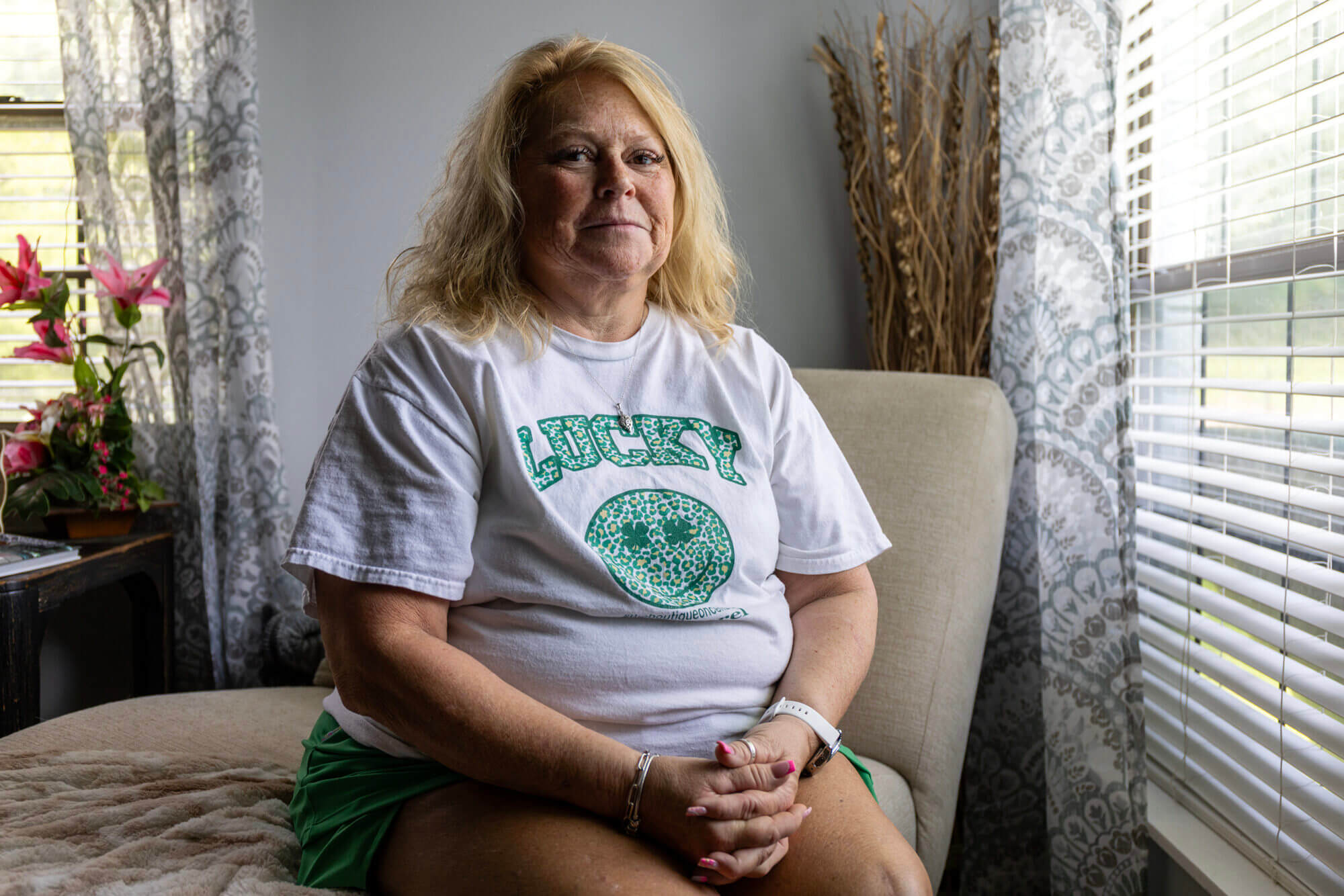
Anna Ford on Aug. 20, 2025. Credit: Image courtesy Anna Ford
Ford said she has had no feeling in her nose since the 2021 surgery.
Blackledge said Ford removed her bandages sooner than she was instructed to, which resulted in a defect in her skin. He said he could not speak to the subsequent issues Ford has faced, but noted that every surgical procedure carries the risk of infection.
“The fact that an infection occurred post-operatively is not proof of inappropriate care,” he said.
He said Ford sent an intimidating message threatening “karma” to one of his nurses, an example of the “mob mentality” of unhappy patients he has faced. Ford said she sent the message because she is angry and thinks he and his staff are responsible for the infection.
Other patients who spoke to Mississippi Today said they experienced various side effects after surgery, including noticeable scarring, a cheek implant bursting through the skin, a loss of feeling in the neck that has lasted five years, scars that badly itch, and wounds that opened and required further medical attention.
Every surgery carries the risk of complications, or health problems that arise after a procedure. A recent review of 59 scientific articles studying rates of complications in facelifts indicated that unfavorable scarring is the most common and occurs in about 5% of cases.
About 3% of rhinoplasties result in complications, including abscesses, infection and adverse esthetic outcomes, and 15% of patients have revisions, according to a recent paper studying complication rates in rhinoplasties.
Blackledge said he believes his complication rate is far below the national average.
“Given the recognized complication rate in various facial plastic procedures, and the number of procedures I perform each year, I understand there will be patients who are not happy with their result,” Blackledge said. “But that is true for every doctor, regardless of the field.”
He said many problems, like redness and numbness, are not unusual and can be corrected with additional treatments or heal with time. He said he discusses the possibility of undesired scars with each patient and has no recollection of receiving a complaint about an implant bursting through the skin.
Implants and stitches bursting through the skin occur very rarely, but do happen, McIntyre said.
Blackledge said he has never been sued in 22 years of medical practice. Mississippi Today searched state and federal court records and could not locate any suits filed against Blackledge pertaining to patient care.
There is little comprehensive research that clearly demonstrates how frequently cosmetic facial plastic surgery patients are dissatisfied or make complaints after their procedures. One recent article studying a sample of 2,000 patient reviews on social media showed about 8% of reviews were negative, with most citing dissatisfaction with the outcome.
Research shows that high volumes of patient complaints can predict higher rates of medical complications and legal suits, said Dr. Scott Hultman, director of the department of plastic and reconstructive surgery at WakeMed Health and Hospitals in Raleigh, North Carolina. Hultman has conducted research on unsolicited patient complaints made about surgeons to hospitals.
Hospitals can use complaint data to intervene and modify surgeons’ behavior, he said. But there are few avenues for patients to make formal complaints in office-based surgery settings, where private practice surgeons are generally exempt from such oversight.
“That’s one of the loopholes in medicine,” he said. “…They often will escape scrutiny for a while until enough patients complain or there’s a malpractice case.”
Blackledge said there are several avenues for patients to make complaints, including lawsuits and to government agencies.
‘You’re just wanting them to fix it and fix it’
Vicky Pitts, now 55, underwent a neck lift with Blackledge in 2020. Weeks after the procedure, the Laurel resident said she noticed her face drop.
“Everything went sour,” said Pitts, who said it appeared her surgery resulted in no change in her appearance. She reached out to Blackledge about her concerns, beginning a string of revisions and touch-up surgeries that occurred for more than two years.
Vicky Pitts is photographed at her home in Laurel, Miss., Tuesday, June 3, 2025. Pitts has raised concerns about the care she recieved undergoing a neck lift and a series of revisions performed by Dr. Adair Blackledge in Jackson. Credit: Eric Shelton/Mississippi Today
One study estimates that early relapses after facelift surgery occur in about 2% of cases.
Blackledge said his facelifts are conservative and he explains to patients he can always revise them – at no charge – if they are not pleased. He said because adverse outcomes can happen, he makes himself as available as possible to his patients.
He said he also pays for patients’ flights and accommodations for revisions.
“I have done this for over ten years and believe patients appreciate it,” Blackledge said.
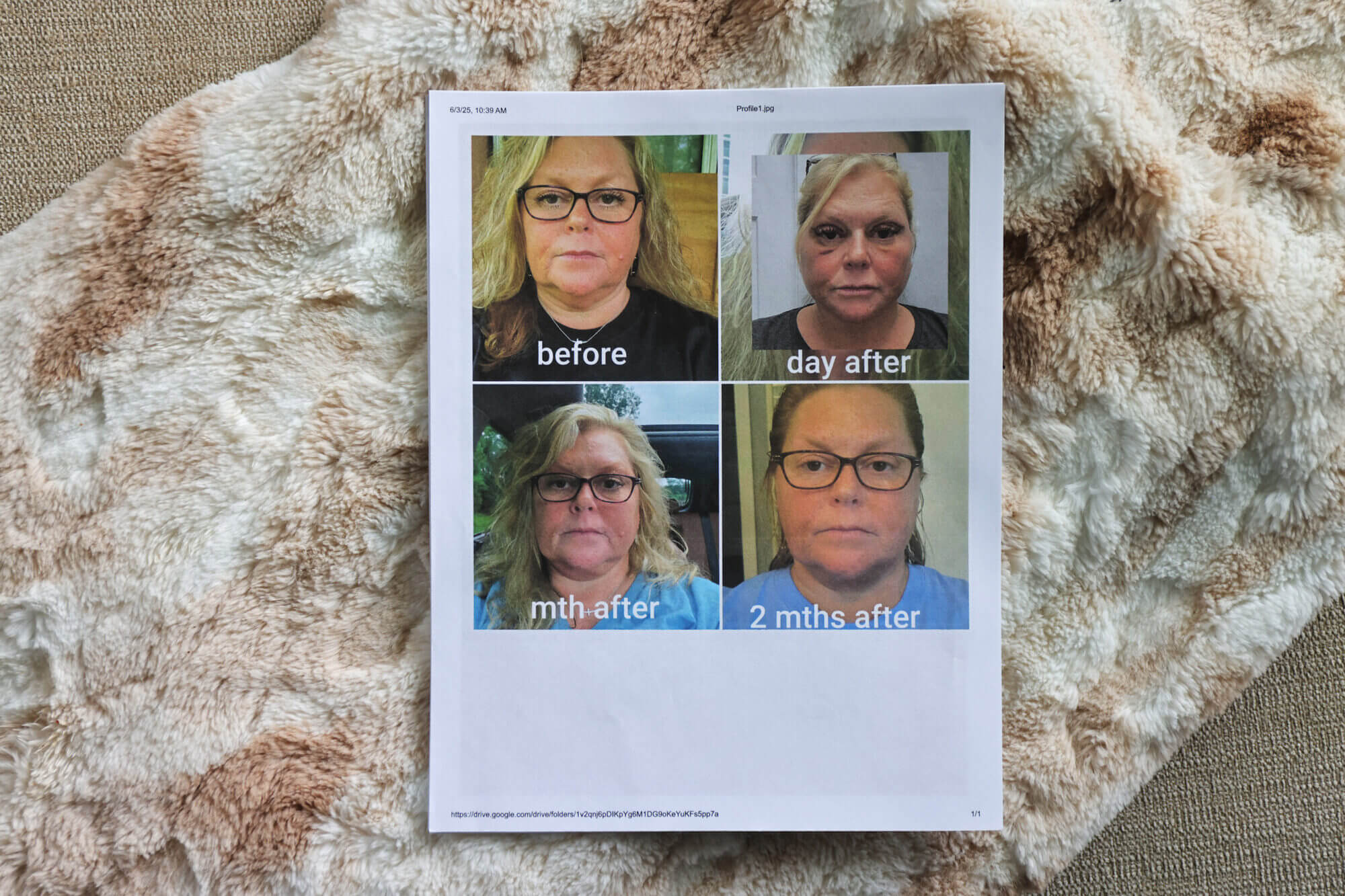
A photo shows Vicky Pitts’ appearance before a neck lift performed by Dr. Adair Blackledge, then the day after, one month after, and two months after the procedure. Pitts has raised concerns about the care she recieved. Credit: Eric Shelton/Mississippi Today
Pitts said she was grateful that Blackledge provided the revisions free of charge, because she couldn’t afford to go to another surgeon after paying for the original procedure.
But some of her revisions came with their own problems, she said. On several occasions, her stitches popped out, leaving incisions gaping open. Once, she went to urgent care to have a wound sutured again.
It was difficult for Pitts to explain why she kept returning, even when she kept experiencing difficulties and wasn’t seeing the results she wanted. She said she felt vulnerable.
“You’re just wanting them to fix it and fix it,” she said.
Social media brushfire
Scores of alleged patients of Blackledge have shared stories and photographs of their surgery experiences in a members-only Facebook group created in 2023.
The concerned patients began reaching a wider audience early this year after sharing images on a public Instagram page that now has over 12,000 followers. Price, an administrator of the page, said she received dozens of messages from former patients.
“It was like a brushfire,” she said. “I couldn’t even keep up.”
Blackledge said he faced no issues regarding his practice until the social media attacks from the past year.
“I didn’t suddenly forget how to do what I was trained to do, and the process and protocols for patient care that I have been using successfully for over 20 years and 12,000 procedures didn’t suddenly become ineffective,” he said.
He said he located social media posts and pictures from people who have never been his patients and that many made inaccurate and disparaging comments.
Some patients said the Facebook group helped them feel less alone.
“I was glad that he didn’t just single me out, because that’s how I felt for the longest,” said Jill Hamilton, now 47, from Nashville, who said she endured discomfort in her face for over a year after Blackledge inserted cheek implants during a 2023 facelift revision surgery – her third revision with him. One implant burst through her skin in 2024, she said.
Blackledge said he was never contacted by Hamilton about the implant bursting through her skin.
On social media, patients encouraged one another to make formal complaints about their care with Blackledge to the Mississippi Board of Medical Licensure.
State medical boards are often one of the only places to lodge complaints against office-based surgeons who are not board-certified, Hultman said, because there is no hospital or credentialing board to which complaints can be reported. It can also be a longer, more cumbersome process.
Price said she was interviewed earlier this year by the board after she submitted a complaint. But five other patients told Mississippi Today their complaints were dismissed by the board or they did not receive a response.
In an email, board attorney Paul Barnes declined to say whether the board is investigating any of the complaints, citing its policy not to comment on pending investigations. Complaints are not public record while a disciplinary investigation is pending and remain confidential if no action is taken.
Sampson, who traveled to Mississippi for a facelift last year, said she saw little change in her appearance and has “horrible scars” from her procedure. Her experience has caused her to lose trust in the medical system, which she believes has done too little to protect her and other patients.
She said it feels that rather than being taken seriously for their claims, she and other patients have been deemed vindictive for sharing their stories.
“That is not the case at all,” she said. “I just don’t want this to continue happening.”