Audio articles are automated for accessibility. Humans wrote and edited the story; however, this audio has not been reviewed for accuracy and may contain errors. Read more about how we use AI to increase access to our reporting.
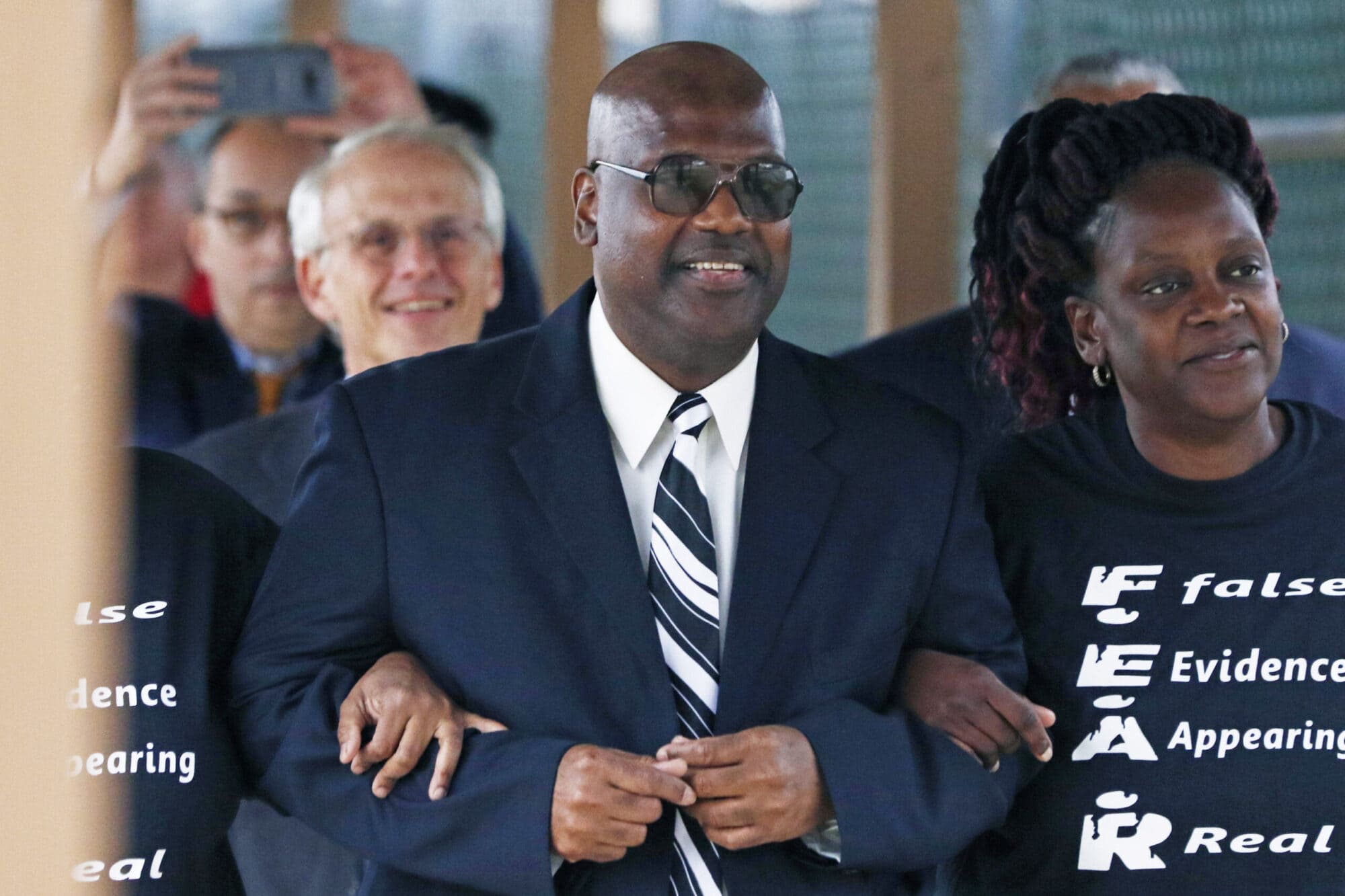
Curtis Flowers, a Black man whose six trials for murder in Mississippi became a landmark case for racial bias in jury selection, has died, according to the Montgomery County coroner.
Flowers was 56.
His cause of death was not immediately released. Montgomery County Coroner Allan Pratt told Mississippi Today in a statement that Flowers’ body was found on Wednesday and that his death is an “ongoing investigation.”
On July 16, 1996, four people were shot and killed at Tardy Furniture in Winona, located about 92 miles north of the capital city of Jackson. The victims were store owner Bertha Tardy and employees Robert Golden, Carmen Rigby and Derrick Stewart.
Then-Montgomery County District Attorney Doug Evans prosecuted Flowers six times for the murders, as Flowers maintained his innocence throughout the prosecutions. Each time Flowers was prosecuted, it either resulted in a hung jury or a guilty verdict that was later overturned by a higher court.
Evans secured a conviction in the sixth trial, and Flowers was sentenced to death. In June 2019, the U.S. Supreme Court voted 7-2 to overturn Flowers’ conviction and said Evans intentionally struck black people from serving on the jury that convicted Flowers.
Flowers was released on bail in December 2019 to await a seventh trial. Evans recused himself, and the state attorney general’s office took over the case. Circuit Judge Joey Loper, in September 2020, dismissed the capital murder charges with prejudice after a motion by the AG’s office.
After the case was dismissed, a judge ordered Mississippi to pay Flowers $500,000 in wrongful-imprisonment compensation.
The American Public Media podcast “In the Dark” investigated the case. It presented an analysis showing a long history of racial bias in jury selection by Evans, and evidence suggesting another person may have committed the crimes.
Audio articles are automated for accessibility. Humans wrote and edited the story; however, this audio has not been reviewed for accuracy and may contain errors. Read more about how we use AI to increase access to our reporting.
WEST POINT — A Mississippi judge Wednesday threw out the murder indictment against Tameshia Shelton, putting an end to the case that has haunted the mother of four for nearly two decades.
Shelton, now 48, was slated to face a new murder trial in Clay County on Monday, but Circuit Judge James T. Kitchens canceled the trial and agreed with Columbus-area District Attorney Scott Colom that the murder indictment should be dismissed.
Shelton, who has maintained her innocence, served 11 years in prison after a jury convicted her of murder in the 2009 shooting death of her sister’s 21-year-old boyfriend, Danelle Young. Shelton was freed on bond in June, after the state Supreme Court upheld an appellate-court ruling overturning her murder conviction and ordering her a new trial. Young’s family could not be immediately reached for comment.
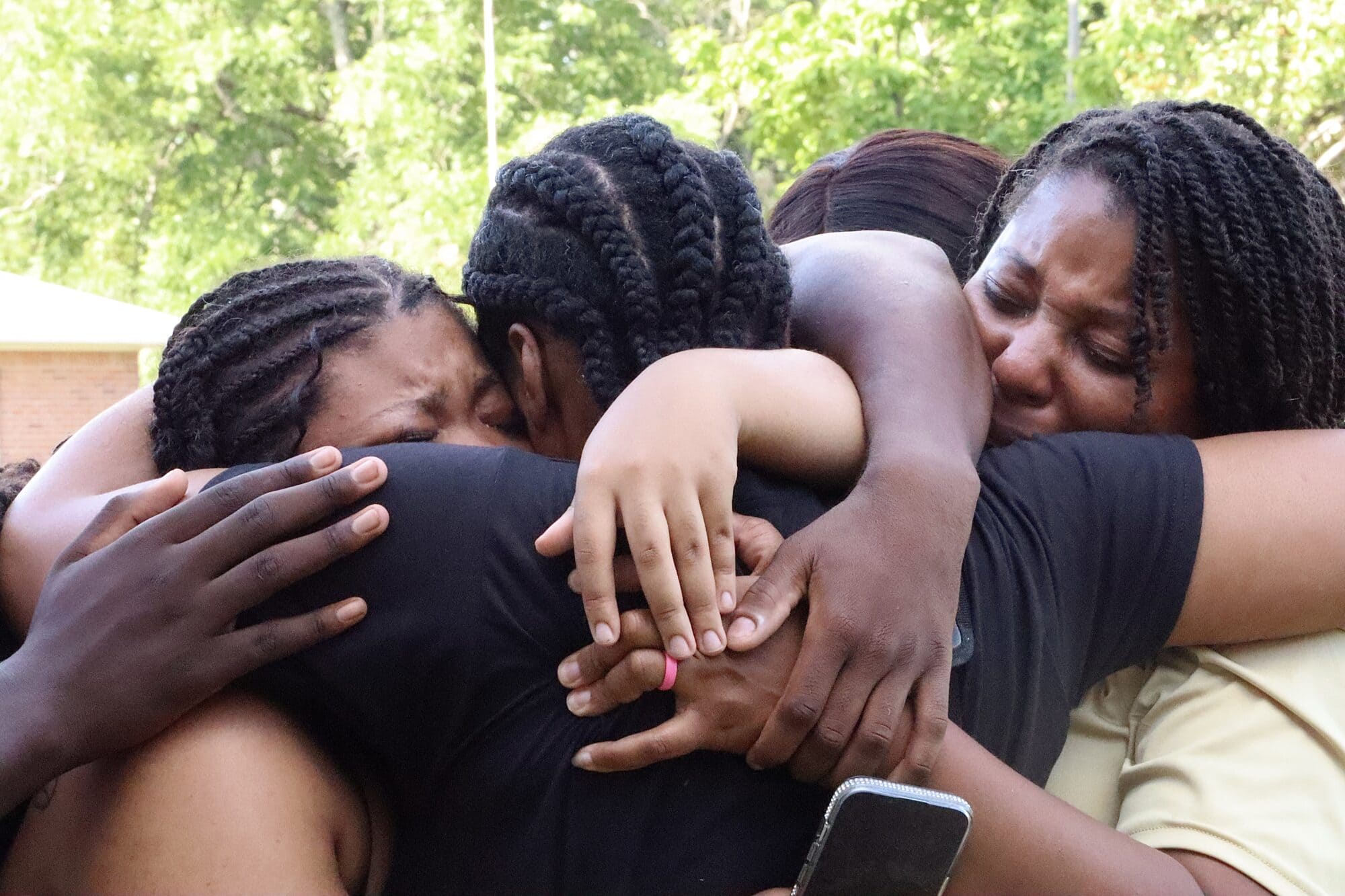
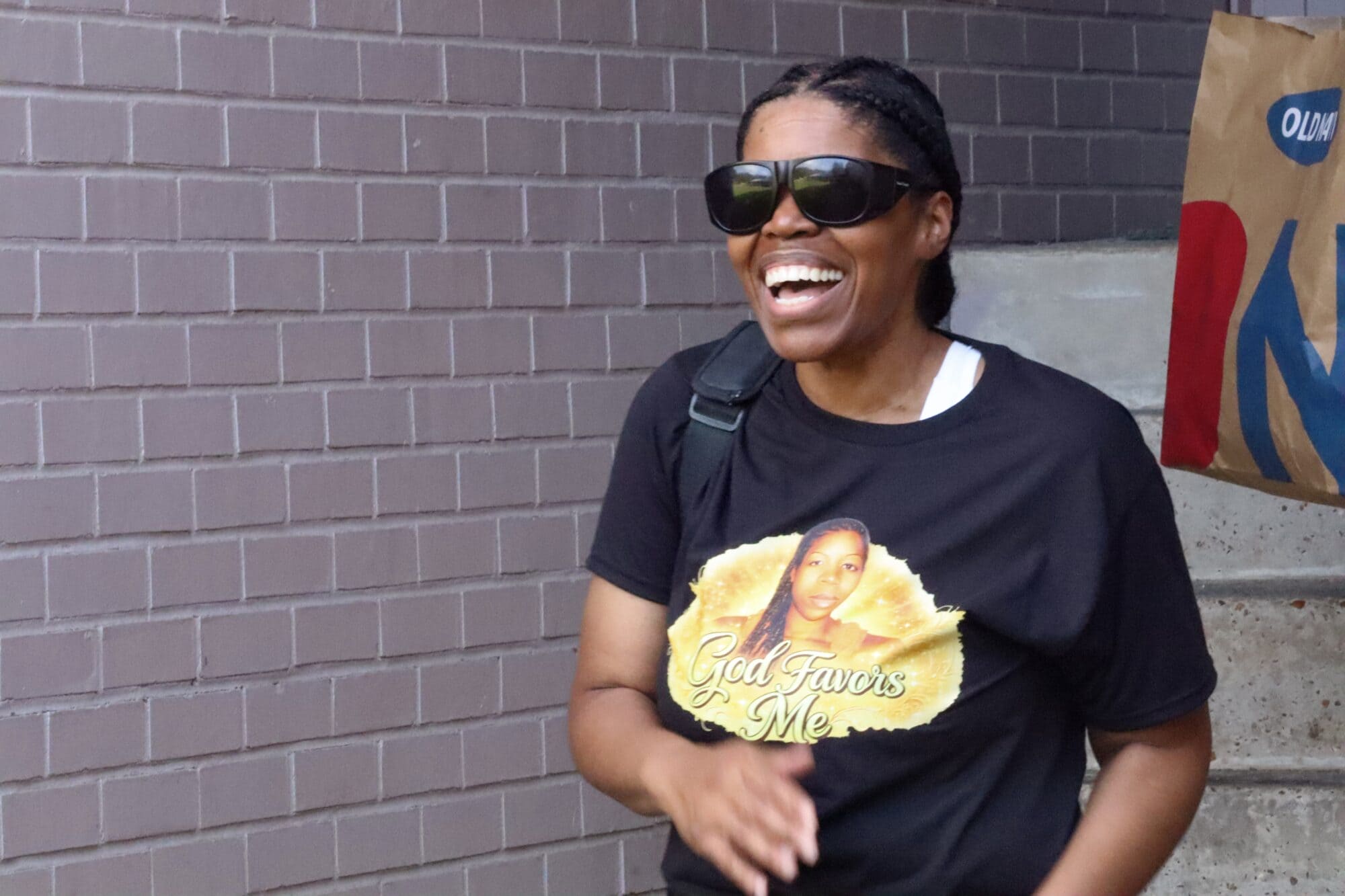
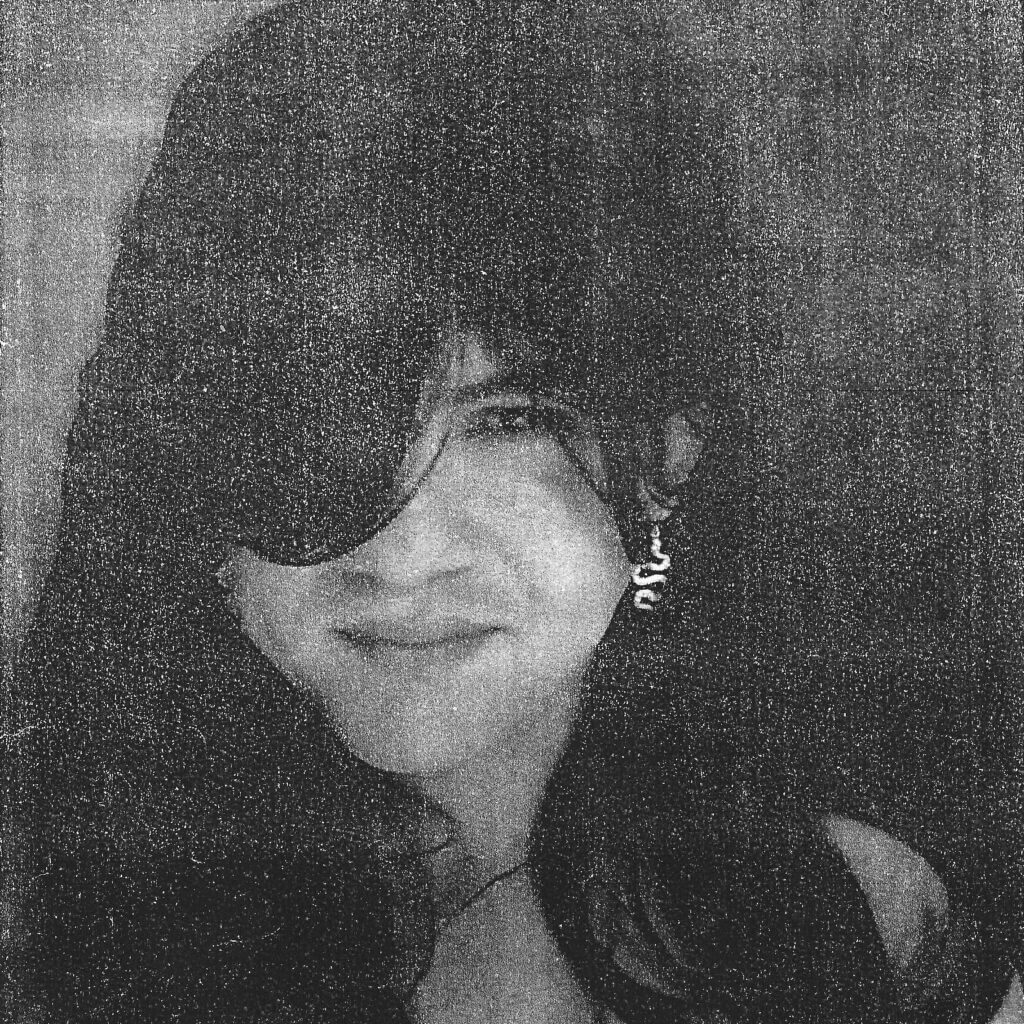
Tameshia Shelton beams at a crowd of family members after her release from the Clay County Detention Center on June 29, 2026. She walked out in a shirt from her niece, featuring a photo of her taken before she was sentenced to life in prison 11 years before. Credit: Claudia Amendoeira/Mississippi Today
When Shelton heard Wednesday that the judge had dismissed her murder indictment, she said she felt ecstatic. “Now I can breathe,” she said. “God, thank you.”
The dismissal marks the end of the nightmare that began 17 years ago when authorities first accused her of murder, she told Mississippi Today. “It’s been a long time coming. It feels like a whole lot of weight has been lifted off my shoulders.”
She said her sister, Shenikia, told her, “Now, we can celebrate.”
The dismissal means this judicial district that covers Clay, Lowndes, Noxubeeand Oktibbeha counties has seen seven people freed from prison after courts overturned their murder convictions — the most of any judicial district in the state. All were prosecuted under the previous district attorney, Forrest Allgood.
Allgood has told Mississippi Today that just because people have their convictions tossed doesn’t mean they’re innocent. “Only God knows if a man is innocent,” he said. “That’s why we have no verdict of ‘Innocent’ in our law — just ‘Guilty’ or ‘Not Guilty,’ or, in Scotland, ‘Not Proven.’”
Last December, the Mississippi Court of Appeals ordered a new trial for Shelton, saying prosecutors failed to prove “beyond a reasonable doubt” she killed Young.
Jurors never heard the apparent suicide note that Young wrote after Shelton’s sister decided against living with him.
“I have no life without her,” he wrote. “These are my last words. Bye, bye.”
Three jurors shown the note this year told Mississippi Today that Shelton deserved a new trial.
On June 1, Mississippi Today published its four-year investigation into Shelton’s case, showing how much of the evidence suggested that Young died from suicide. The pathologist who originally ruled the death a homicide reversed himself.
Days later, the state Supreme Court let stand the appeals court’s decision, clearing the way for Shelton to receive a new trial. The judge has now canceled the trial and dismissed the murder indictment.
“At last, this case that should have never been brought is over,” said Shelton’s lawyer, Sandra Levick. “Ms. Shelton was convicted of a murder that never happened at a trial that was not fair by a jury that never heard all the facts.”
She thanked Colom, who had directed Shelton’s family to the Innocence Project in 2018. “If he had not agreed to look into this case,” Levick wrote, “this day would never have come.”
She also said, “We are grateful as well to generations of law students at Ole Miss, to our many experts including Dr. (Liam) Funte who did the hard thing and admitted that he had been wrong.”
She also thanked her co-counsel Jake Howard from the MacArthur Justice Center, Tucker Carrington, director of the Mississippi Innocence Project, and “everyone else who helped claw back this injustice.”
Audio articles are automated for accessibility. Humans wrote and edited the story; however, this audio has not been reviewed for accuracy and may contain errors. Read more about how we use AI to increase access to our reporting.
SOUTHAVEN — Organizations linked to Elon Musk donated more than $3 million to the Southaven Police Department between December and February, as Musk’s SpaceXAI sought approval for a data center in the city amid increasing public hostility toward the artificial intelligence infrastructure boom.
The donations, which came in two transactions, are part of a wider pattern in which companies and nonprofits affiliated with Musk have donated to public agencies and community organizations in locations important to SpaceXAI’s business deals.
Southaven residents expressed concern on social media that the donations, made in the same period that SpaceXAI and the city negotiated key aspects of a data center deal, presented a possible conflict of interest. Mayor Darren Musselwhite called this perception “simply just not true.” He said that companies commonly donate to support communities where they operate and that Southaven has accepted only money that helps the community at large.
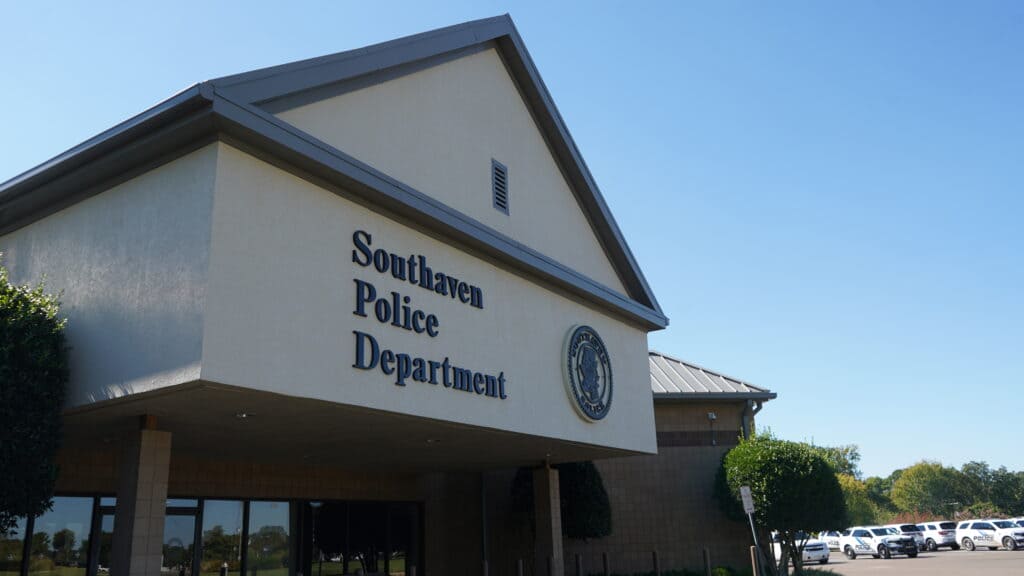
A patrol car is parked outside the Southaven Police Department headquarters in on Tuesday, Oct. 6, 2026. Credit: Julie Lee/Mississippi Today
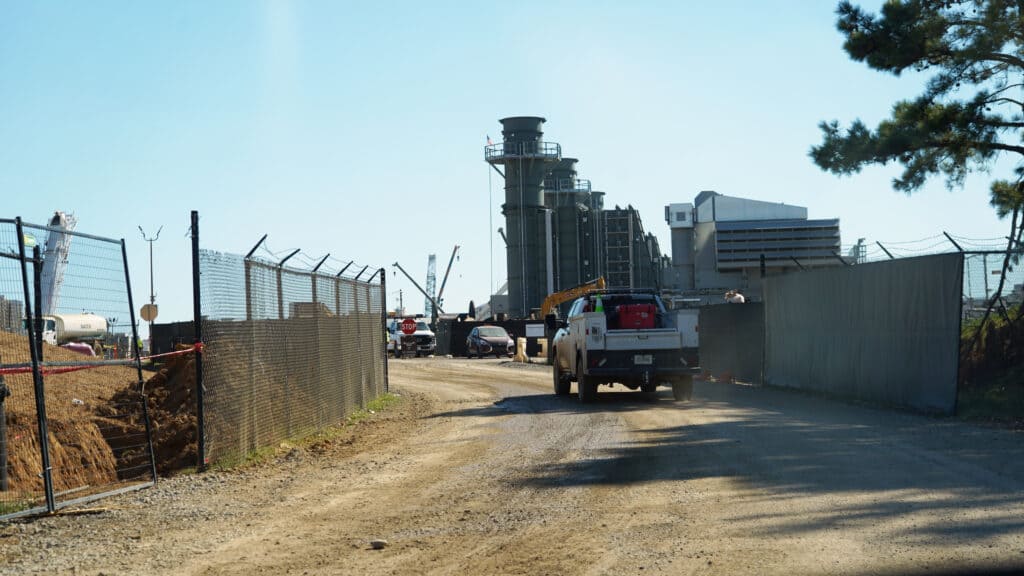
Since August 2025, Southaven has been home to a gas plant that powers SpaceXAI’s largest data center, Colossus II, just across the state line in Memphis. Southaven residents started complaining about noise and pollution soon after turbines were installed, a concern that has led to at least two lawsuits.
Against this backdrop, Gov. Tate Reeves announced in January that SpaceXAI, then called xAI, would invest $20 billion to build a data center in Southaven, the third for the company and its first in Mississippi. Reeves called it the “largest economic development project in Mississippi’s history.”
In the weeks leading to the governor’s announcement, two organizations linked to Musk donated a combined $3.23 million to the Southaven Police Department.
Trucks and cars line up to enter a construction site on Tulane Road on Tuesday, Oct. 6, 2026, where SpaceXAI has a power plant and is building another data center. Residents say traffic in the area has increased recently. Credit: Julie Lee/Mississippi Today
MZX Tech LLC, a subsidiary of SpaceXAI, sent the city $1.38 million, earmarked for the police department. A donation agreement, signed in February by Musselwhite, contained a “no quid pro quo” clause, acknowledging that “no goods or services were provided in exchange.”
A city clerk signed a receipt for the gift on Dec. 17, the day after the Board of Aldermen approved a memorandum of understanding between the city and SpaceXAI relating to the Southaven data center. The memorandum shows MZX Tech will separately contribute $3.46 million to the city to widen and resurface roads near the power plant and the developing data center, “due to the use and strain that MZX’s operations will cause and require of the City’s infrastructure.” The city sent MZX Tech an invoice for that amount on Dec. 17.
In an email, Musselwhite confirmed that MZX Tech made contributions to improve traffic flow. He called the $1.38-million donation an “unrelated transaction.”
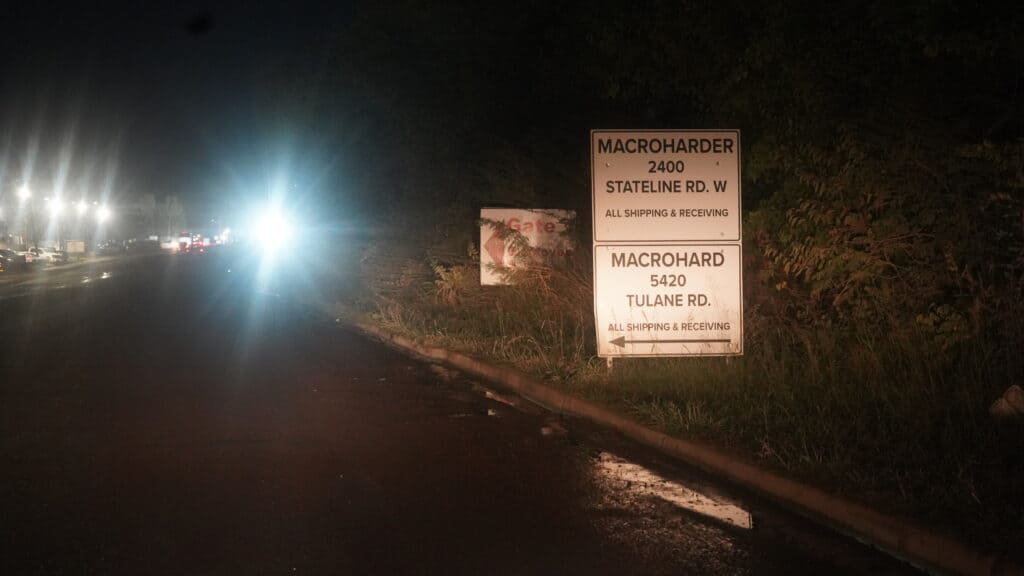
Signs direct cars to Macrohard and Macroharder, SpaceXAI’s second and third data centers, on Tuesday, Oct. 6, 2026. Residents say traffic in the area has increased. Credit: Julie Lee/Mississippi Today
A second donation to the police department, for $1.85 million, came from the Musk Foundation, a nonprofit started by Musk and his brother in 2001. A representative from the foundation reached out to the police department late last year offering the grant opportunity, according to Musselwhite.
“We were made aware that this organization likes to use grant funding to enhance public safety in communities where their ‘for-profit’ companies operate,” Musselwhite said in an email to Mississippi Today. “Public safety grants are not unusual and the City has taken advantage of these for many years.”
A grant agreement signed by the city finance director on Dec. 29 specified the money would be used to purchase “critical equipment for the Southaven Police Department,” including Flock cameras and an autonomous drone system.
Mississippi Today requested comment from representatives of the Musk Foundation, MZX Tech and SpaceXAI.
The combined $3.23 million in donations are a significant windfall for the Southaven Police Department, which had a $21-million budget in 2024, according to the city’s most recent annual audit.
The department has since used grant money to buy 13 Dodge Durango SUVs for about $540,000 and a Flock drone system for $250,000, among other spending. The Board of Aldermen also approved the purchase of five Dodge Ram trucks for about $195,000.
Across the country, Flock has faced widespread criticism for its automated license plate readers, which use high-speed cameras to capture and store billions of license plates a month.
MZX Tech also approached the city with another opportunity. It wanted a 51-acre lot next to the existing SpaceXAI power plant, a site owned by the city that once housed a police and fire training center. In exchange, MZX Tech agreed to give the city a different plot of land and $40 million for a new training facility, Musselwhite said in an Aug. 18 Board of Aldermen meeting.
“It was an easy decision to accept this deal,” Musselwhite said in that meeting. “It’s going to be a win-win for the city.”
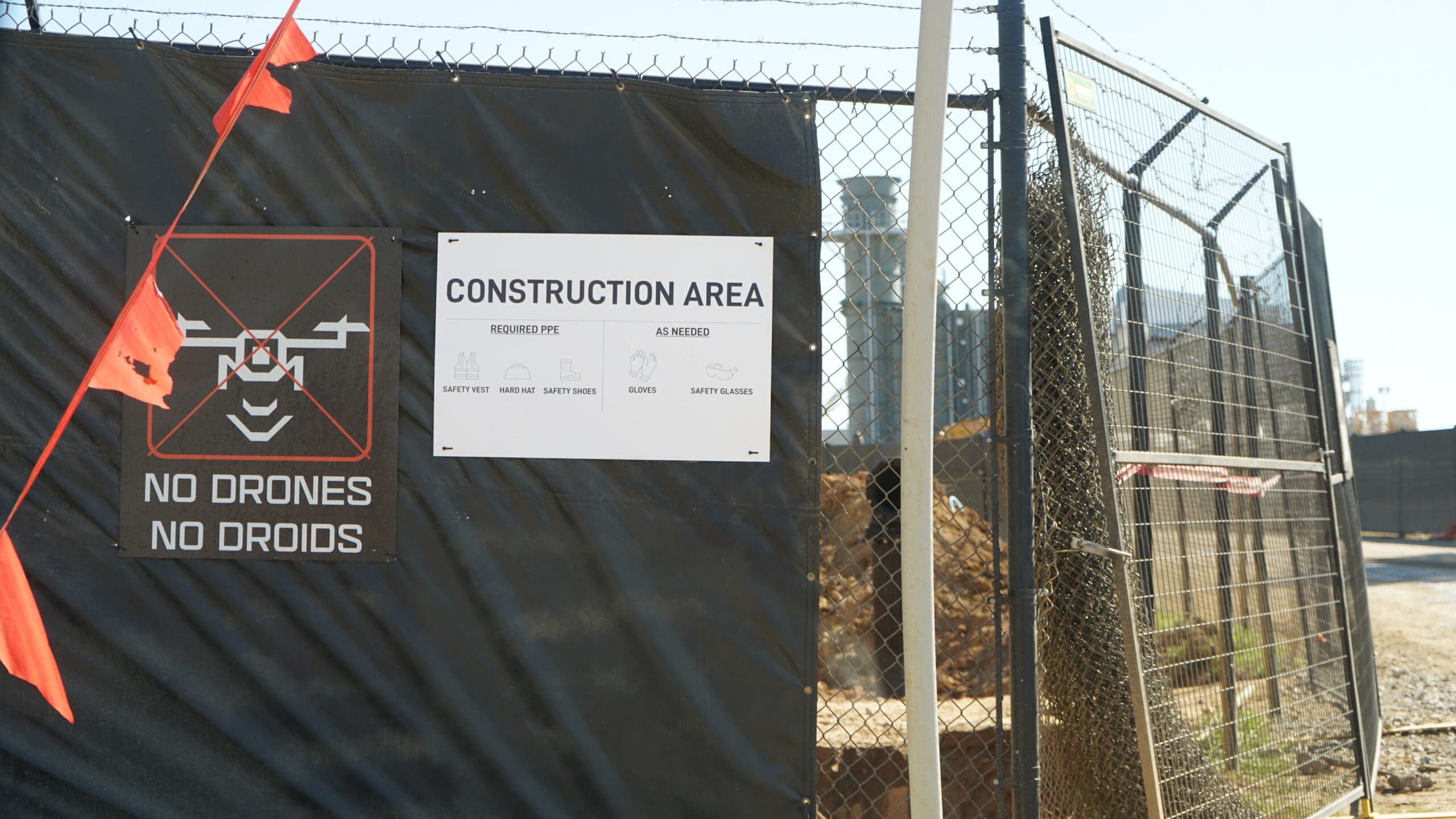
A truck approaches a closed construction site on Tuesday, Oct. 6, 2026, where SpaceXAI has had a power plant since August 2025. In response to resident noise complaints, SpaceXAI has accelerated plans to convert temporary gas turbines into permanent ones, the mayor said. Credit: Julie Lee/Mississippi Today
Residents sued SpaceXAI in June. A few weeks after the class action was filed, Musk announced on X that SpaceXAI would offer half-price Starlink internet to residents of Memphis and the Southaven area.
These donations and deals differ from fee-in-lieu agreements, where companies looking to establish data centers have signed agreements with local governments to pay lower property taxes as an incentive to invest in their communities. The city of Southaven signed a fee-in-lieu agreement with SpaceXAI for the data center on Jan. 9, the day after the governor’s public announcement.
The Musk Foundation’s donations to the Southaven Police Department are unusual, given the causes the foundation publicly promotes.
On its website — which contains just 32 words in plain text — the foundation states that it supports renewable energy, space exploration, pediatric research, science and the development of safe artificial intelligence.
The exterior of the Southaven Police Department headquarters in Southaven, Miss., on Tuesday, Oct. 6, 2026. Credit: Julie Lee/Mississippi Today
More than three-quarters of the foundation’s donations went to Musk’s own companies in 2024, according to an analysis last year by The New York Times. That year, the Musk Foundation’s largest beneficiary was The Foundation, also known as X Foundation, another nonprofit associated with Musk.
The remaining donations, such as gifts to MIT and a nonprofit organization promoting girls in robotics, often align with Musk’s scientific interests. Others seem to coincide with his business interests.
In March 2021, Musk announced on Twitter: “Am donating $20M to Cameron County schools & $10M to City of Brownsville for downtown revitalization.” An hour and a half earlier, a Starship rocket had exploded in Cameron County, Texas, where Brownsville is the county seat. The donations were made through the Musk Foundation.
Tax filings from 2002 to 2024 show the foundation donated directly to a police department once in that period: $15,000 to the Travis County Sheriff’s Office in Texas in 2024.
Signs for SpaceXAI’s second and third data centers, Macrohard and Macroharder, near the Southaven power plant on Tuesday, Oct. 6, 2026. Credit: Julie Lee/Mississippi Today
The foundation sometimes donated five-figure sums indirectly to police departments through affiliated groups such as the Los Angeles Police Foundation, a private nonprofit. The Los Angeles Police Department has used police foundation money, although not necessarily from the Musk Foundation, to purchase surveillance technology, including from Palantir and Flock.
Donations made by the foundation from 2025 onward, such as the $1.85 million grant to the Southaven Police Department and any other police department, are not yet public. Southaven Police Chief Seth Kern said several other police departments around the country had also received a grant from the foundation.
In January, the Musk Foundation sent $50,000 to the Memphis Police Association, the union for Memphis police officers, according to the vice president, John Covington, who posted about the donation on Facebook. “Out of the blue, one of Elon Musk’s assistants reached out to the Memphis Police Association,” Covington wrote. “There were no strings attached.”
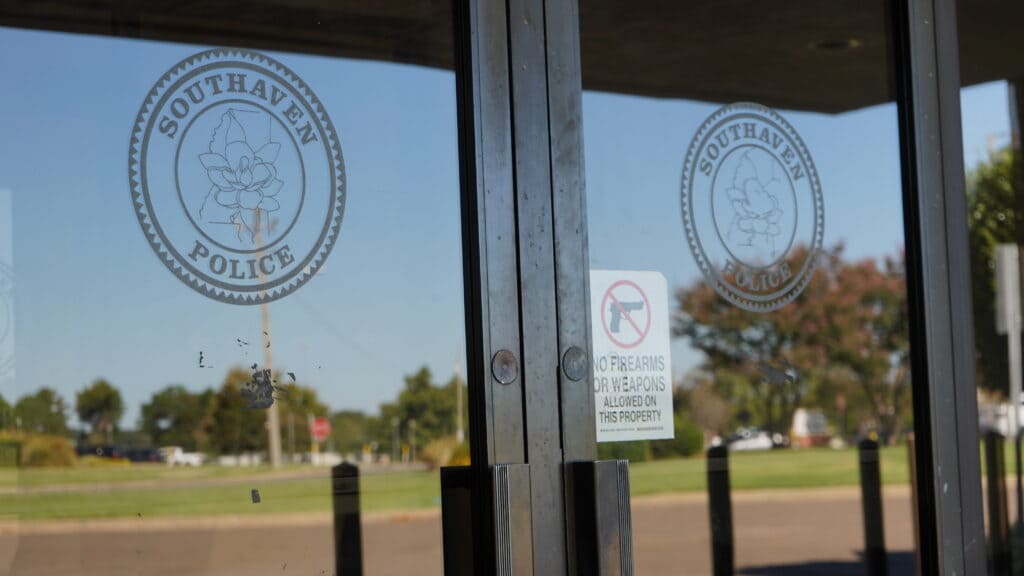
Seals for the Southaven Police Department on the doors to its headquarters in Southaven, Miss., on Tuesday, Oct. 6, 2026. Credit: Julie Lee/Mississippi Today
Audio articles are automated for accessibility. Humans wrote and edited the story; however, this audio has not been reviewed for accuracy and may contain errors. Read more about how we use AI to increase access to our reporting.
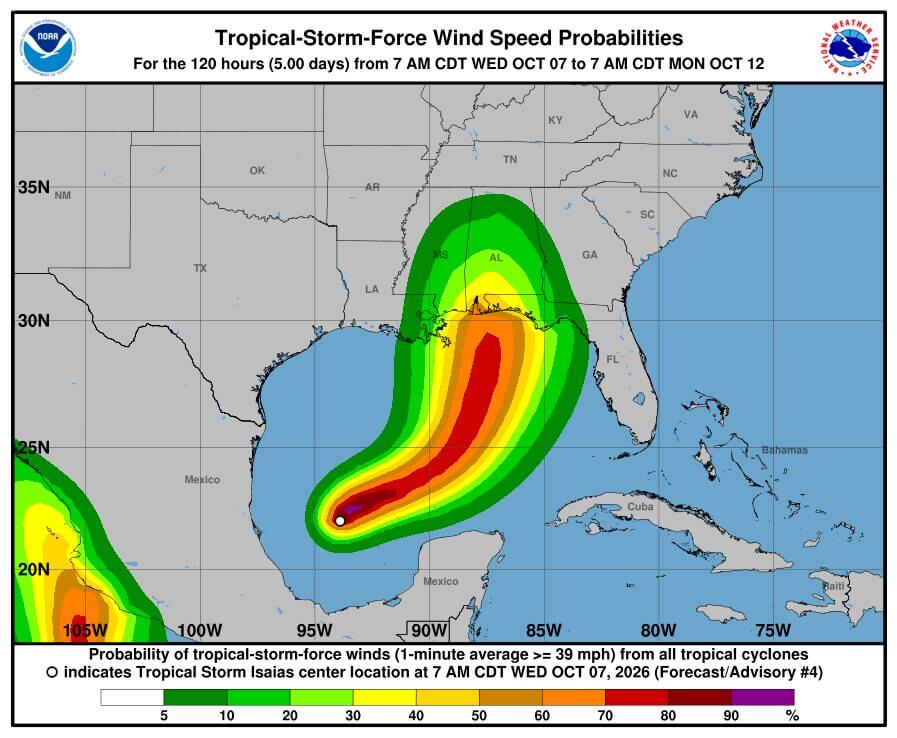
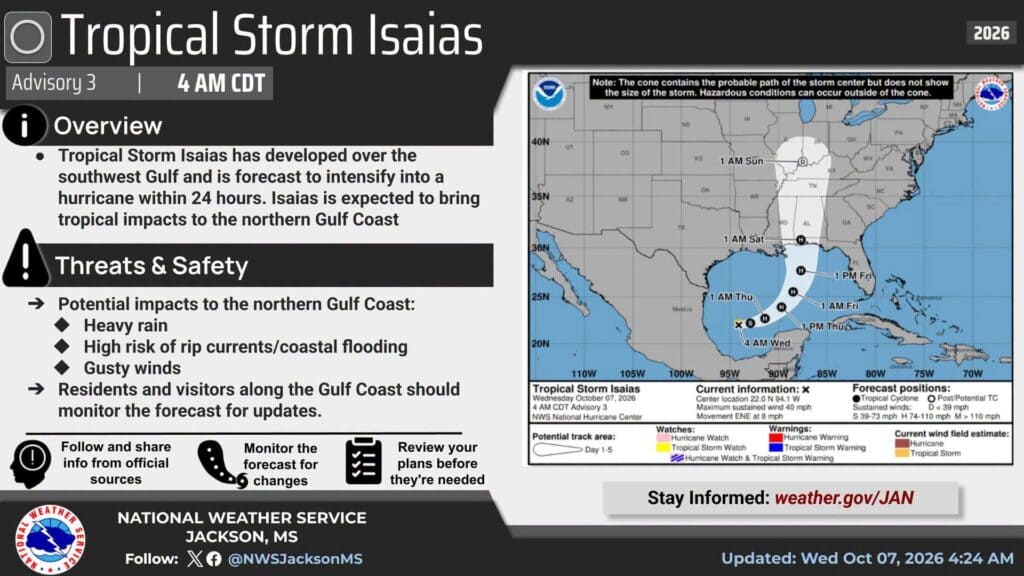
Tropical Storm Isaias, which is expected to develop into the first Atlantic hurricane of the season by Thursday, may be on a path to hit the Mississippi Gulf Coast Friday evening, according to Wednesday projections from the National Weather Service.
“While most severe impacts will remain concentrated along the Coast, heavy rain, flooding and gusty winds will be possible further inland across the forecast area,” NWS Jackson posted on its Facebook page Wednesday morning. “Please continue to monitor forecast updates for further details.”
Mississippi’s Gulf Coast, from Bay St. Louis to the state’s eastern border, is under a hurricane watch. A watch means that hurricane conditions are possible, while a hurricane warning means those conditions are expected.
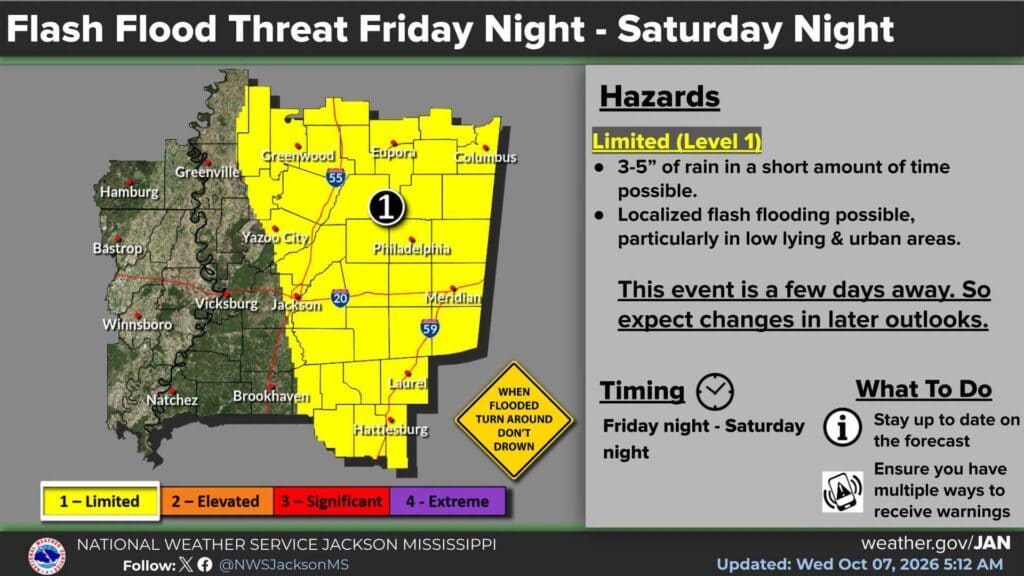
The weather service added that there is a chance of flash flooding for a large swath of the state between Friday night and Saturday night. The projected impact area includes Hattiesburg, Jackson and Meridian, and stretches north into Greenwood and Columbus.
The Mississippi Emergency Management Agency told residents Wednesday to begin preparations now.
“The threat is real, and now is the time to prepare,” MEMA executive director Stephen McCraney said. “We have seen how quickly tropical systems can impact Mississippi. Tropical Storm Arthur in June brought tremendous amounts of rain, flash flooding and significant damage.”
McCraney reminded Mississippians to have enough supplies to last the first three days after a storm hits.
“Do not assume help will arrive immediately,” he said. “Your preparation today could make all the difference tomorrow.”
The agency gave the following preparation tips:
Check emergency supplies. Have at least three days of drinking water and nonperishable food for every member of your household. Make sure you have medications, a first-aid kit, flashlights, batteries, important documents and other essential supplies.
Charge electronic devices. Fully charge cell phones, portable battery packs and other essential devices before severe weather arrives.
Secure outdoor property. Bring outdoor furniture, grills, trash cans and other loose objects inside or secure them so they do not become dangerous in strong winds.
Clear drainage areas safely. Remove leaves and debris from gutters and storm drains where it can be done safely.
Know your flood risk. Never drive or walk through floodwaters. Remember: Turn around, Don’t drown.
Make an evacuation plan. Know where you will go, how you will get there and where you can stay if an evacuation becomes necessary. Make arrangements in advance for children, older adults, individuals with disabilities and pets.
Stay informed. Monitor local weather reports and emergency information. Make sure Wireless Emergency Alerts are enabled on your phone and have multiple ways to receive warnings, including NOAA Weather Radio and the MEMA mobile app.
Audio articles are automated for accessibility. Humans wrote and edited the story; however, this audio has not been reviewed for accuracy and may contain errors. Read more about how we use AI to increase access to our reporting.
A partir del primero de octubre, varios grupos de inmigrantes que residen legalmente en el país, entre ellos los refugiados y los solicitantes de asilo que no tienen un permiso de residencia permanente, perderán cobertura de Medicaid (asistencia médica proporcionada por el gobierno) y del Programa de Seguro Médico Infantil, o CHIP, por sus siglas en inglés. Estos cambios entrarán en vigor a raíz de la ley denominada One Big Beautiful Bill Act que promulgó el presidente Donald Trump el año pasado.
Los expertos en la política de salud y las organizaciones que trabajan con los inmigrantes en Misisipi advierten que los cambios van a intensificar el temor que ya existe y que pueden forzar que los inmigrantes demoren buscar atención médica. A la larga, esto podría resultar en tratamientos médicos más costosos para enfermedades prevenibles y pueden crear más presión en un sistema de salud que ya está sobrecargado.
“Estos grupos de inmigrantes quedarán con muy pocas opciones de cobertura médica a precios razonables,” dijo Drishti Pillai, la directora de La Politica de Salud para Inmigrantes de KFF, (antes conocida como la Fundación de la Familia Kaiser) una organización nacional e independiente dedicada a la política de salud. La directora Pillai señala también las próximas restricciones a los planes subsidiados del Mercado de Seguros Médicos de la Ley de Cuidado de la Salud a Bajo Precio (Affordable Care Act Marketplace) y a Medicare. A partir de enero, estas opciones quedarán limitadas únicamente a los tres grupos de inmigrantes que también seguirán reuniendo los requisitos para recibir Medicaid.
¿Quiénes seguirán calificando y quiénes no?
Los titulares de una tarjeta de residencia permanente, también conocidos como residentes permanentes legales, seguirán reuniendo los requisitos para recibir Medicaid, el programa federal y estatal que proporciona seguro de salud gratuito o de bajo costo a personas de bajos ingresos. También conservarán el acceso a dichas prestaciones los inmigrantes procedentes de Cuba, de Haití y de las naciones insulares del Pacífico incluidas en el Pacto de Libre Asociación (Compact of Free Association, COFA, por sus siglas en inglés), un acuerdo internacional con los Estados Unidos.
Sin embargo, varios grupos de inmigrantes en situaciones de vulnerabilidad van a perder acceso a la cobertura de Medicaid. Ya no tendrán acceso a Medicaid los refugiados y los solicitantes de asilo que huyeron de sus países de origen por temor a la persecución y que han recibido protección humanitaria de los Estados Unidos. Tampoco lo tendrán los supervivientes de violencia doméstica que tengan solicitudes de residencia permanente aprobadas o en trámite bajo la Ley de Violencia contra la Mujer (Violence Against Women Act, VAWA por sus siglas en inglés). Dicha ley creó una vía legal para obtener la residencia permanente para las mujeres que fueron víctimas de abuso por parte de quienes patrocinaban sus solicitudes de residencia.
Los refugiados que llegan a los Estados Unidos están huyendo del terror y de la violencia en sus países de origen, afirmó Lorena Lewis-Quiroz, directora ejecutiva de la Alianza de Inmigrantes por la Justicia y la Equidad (Immigrant Alliance for Justice and Equity, IAJE por sus siglas en inglés), una organización de defensa de los derechos de los inmigrantes con sede en Jackson.
“Estas personas ya vienen de estas situaciones atroces y ahora perderán el acceso a la asistencia médica básica. No puedo creer que esto esté ocurriendo. ¿Me explico?”, afirmó ella. “Esto está desmantelando poco a poco el sistema de atención médica para los inmigrantes.”
De igual manera, entre los inmigrantes que van a perder la capacidad de solicitar la asistenica médica incluyen los víctimas de la trata de personas, tal como la trata sexual y laboral, y los que tienen una visa T aprobaba o pendiente. Este estatus provisional les permite a los inmigrantes solicitar la residencia permantente. Otros grupos que van a perder Medicaid son:
Los inmigrantes a quienes se les concedió un permiso humanitario para permanecer en los Estados Unidos por un mínimo de un año;
Los inmigrantes a quienes se les concedió la suspensión de deportación;
Las personas nacidas en Canadá que son amerindios o miembros de tribus indígenas reconocidas por el gobierno federal;
Las personas mayores a quienes se les concedió admisión condicional antes de que surtiera efecto la Ley de Refugiados de 1980 (Refugee Act of 1980), incluidas las personas que huyeron de países comunistas de la Unión Soviética y de la Europa Oriental, así como también algunos refugiados procedentes del sudeste asiático.
En Misisipi, también perderán acceso algunos niños y adultas embarazadas que residen legalmente en los Estados Unidos. Algunos estados han optado por continuar la cobertura de estos grupos bajo la Ley para la Mejora de la Salud Infantil para Inmigrantes de 2009 (Immigrant Children’s Health Improvement Act, ICHIA) la cual elimina el período de espera de cinco años que muchos inmigrantes deben cumplir entre la obtención de la residencia permanente y su inscripción en Medicaid. Desde enero, 38 estados han optado por proporcionar cobertura médica a los niños con presencia legal en el país y 32 estados han hecho lo mismo para las personas embarazadas. Misisipi ha optado por no cubrir ninguno de los dos grupos.
“Los cambios a Medicaid son brutales y pueden impedir que los niños que reúnen los requisitos reciban cobertura si sus padres ya no pueden presentar solicitudes en nombre de sus hijos ciudadanos dado el estatus migratorio de los padres,” escribió por correo electrónico Kathy Sykes, la directora ejecutiva de la Alianza de los Derechos de Inmigrantes de Misisipi (Mississippi Immigrants Rights Alliance, MIRA). Esta organización estatal proporciona servicios legales y sociales gratuitos a inmigrantes.
“Hay tantos cambios provenientes del gobierno federal que pueden ser muy confusos y puede hacer que incluso las personas que califican para estos servicios decidan no solicitarlos,” dijo.
Consecuencias más allá de la pérdida del seguro médico
A la directora Pillai le preocupan los efectos más amplios de perder el acceso a Medicaid y de los procesos de verificación—incluso para los inmigrantes que aún califican para recibir este programa.
Los estados deberán verificar el estatus migratorio de las personas cuya cobertura será cancelada. Esto se llevará a cabo a través de la base de datos Verificación Sistemática de Extranjeros para la Otorgación de Prestaciones (Systematic Alien Verification for Entitlements, SAVE por sus siglas en inglés), del Departamento de Seguridad Nacional de los Estados Unidos (Department of Homeland Security, DHS por sus siglas en inglés) y de la base de datos del seguro social. Si la agencia estatal encargada de Medicaid puede confirmar que una persona reúne los requisitos para recibir cobertura, esta conserverá su cobertura de Medicaid. Si las autoridades no pueden verficar el estatus legal con la información que tienen, se les van a pedir información adicional a las personas afectadas y se les dará un plazo de 90 días para contestar.
Khaylah Scott, administradora de programas de Mississippi Health Advocacy Program (una organización de defensa de políticas de salud de Misisipi), dijo que las normas para calificar para Medicaid están vigentes desde hace 30 años, desde la Ley de Reforma del Bienestar Social de 1996.
“Cuando se recibe poca comunicación por parte de la División de Medicaid y la primera noticia sobre estos cambios llega mediante una carta, eso puede resultar bastante repentino,” afirmó Scott. “Me imagino la confusión, el miedo que puede sentir alguien con tan solo recibir esta carta por correo y saber, en el fondo, que la razón principal es su estatus migratorio.”
El proceso de verificación puede ser confusa para los inmigrantes, en particular para los que no hablan inglés o los que hablan solo un poco de inglés. Pillai dijo que las investigaciones previas han demostrado que las cancelaciones de cobertura también pueden afectar a las personas que se han mudado de domicilio o que, por alguna otra razón, no pudieron completar la documentación requerida.
“Todo esto puede provocar cancelaciones de cobertura, no debido al derecho de estar en el programa, sino por razones administrativas,” dijo ella.
La División de Medicaid de Misisipi no respondió a la solicitud de comentarios de Mississippi Today sobre cómo se van a implementar estos cambios. Un aviso público emitido el 14 de septiembre sobre una propuesta de modificación al plan estatal de Medicaid señal que “se predice [que la enmienda] no tendrá efecto en el presupuesto ya que el número de individuos afectados es bajo”; no obstante, no proporciona un número aproximado de cuántos inmigrantes se verán afectados.
Los inmigrantes que ya no califican para recibir Medicaid o el Programa de Seguro Médico Infantil todavía pueden recibir cobertura mediante el Medicaid de Emergencia en ciertas circunstancias, como la aparición repentina de síntomas graves, que si no se tratan, pueden resultar en graves daños. Por ejemplo, una mujer embarazada que entra en trabajo de parto tiene cobertura en todos los estados. Ya que Misisipi no ha ampliado Medicaid, los criterios para recibir esta cobertura se limitan a un grupo más reducido de categorías. Un adulto indocumentado de bajos ingresos que no esté embarazado, que no sea padre o madre dentro de una categoría elegible y que no reúna los requisitos por una discapacidad no puede depender del Medicaid de Emergencia, aun si llegara a tener un acontecimiento que normalmente le permitiría recibir esta cobertura.
A la larga, dijo Pillai, esta pérdida de cobertura médica podría provocar peores resultados de salud ya que muchas personas tienen que esperar hasta que las afecciones se vuelvan insoportables.
“Si las personas no tienen seguro de salud, entonces no reciben examenes de salud rutinarios y la falta de cuidado consistente puede provocar que estas personas dependan más de las salas de urgencias,” dijo ella. “Esto puede causar más presión en los centros de salud de las comunidades ya que estos centros atienden a todos los pacientes sin importar el estado de inmigración y sin importar la abilidad de pagar.”
Lewis Quiroz anticipa un efecto similar: “Va a ser otro caso de, ‘Pues, ¿sabes qué? Voy a esperar hasta que me dé una embolia.’”
Este reportaje se produjo con el apoyo de los fondos de Sarah Yelena Haselhort para el Periodismo de Salud.
Corección (30 de septiembre de 2026): Este artículo se ha actualizado para mencionar a la Alianza por los Derechos de los Inmigrantes de Misisipi, MIRA, (Mississippi Immigrants Rights Alliance, MIRA, por sus siglás en inglés), la organización en donde Kathy Sykes es directora ejecutiva.
Story translation provided by David Wood and Judith Caballero.
Audio articles are automated for accessibility. Humans wrote and edited the story; however, this audio has not been reviewed for accuracy and may contain errors. Read more about how we use AI to increase access to our reporting.
Three transgender women who have been detained for months at a male-only central Louisiana immigration detention center allege that they have faced abuse and transphobia at the hands of staff and other detainees.
In interviews with Verite News, they allege that they have been assaulted by officers, forcibly detransitioned, verbally harassed and kept in solitary confinement.
“Everywhere they call us men, faggots, very offensive words,” Camila Toro de Paula, one of the detainees, told Verite News. The officers “let it happen. We don’t have a right to anything here; we trans women don’t have rights” at the facility, she added.
Two of the women — Estephany Rivas and Sofia — have spent months at Central Louisiana ICE Processing Center in Jena. The third, Camila Toro de Paula, has been there for more than a year. The three women are in protective custody, separated from other detainees. Verite is only using Sofia’s middle name because she is worried about the conditions at the detention center continuing or worsening.
Camila Toro de Paula, who was taken by ICE agents in New York. Credit: Courtesy photo Credit: Courtesy photo
Sofia, who was taken by Border Patrol agents in Mississippi and transferred to ICE custody before being sent to Central Louisiana. Credit: Courtesy photo
Estephany Rivas, who was taken by ICE agents in Baton Rouge, Louisiana. Credit: Courtesy photo
The Trump administration forces trans women to be housed with men in detention centers. U.S. Immigration and Enforcement houses the women in solitary confinement for their protection, but the women say the isolation has not prevented them from enduring death threats, humiliating pat downs and physical abuse by staff.
The Jena facility is run by GEO Group — a for-profit corporation that is one of the country’s largest private prison operators — which has been criticized for its treatment of detainees. A 2024 report on ICE detention centers in Louisiana by Robert & Ethel Kennedy Human Rights Center, the American Civil Liberties Union and other leading human rights organizations recorded “systemic human rights abuses,” as they called it, at the facilities. At the Jena facility, they reported that there had been detainee deaths, people being shackled for more than 24 hours, contaminated food, filthy cells and bathrooms, physical abuse – such as spraying detainees with pepper spray, sexual harassment and assault, medical abuse and neglect, and the use of solitary confinement as retaliation.
Other organizations, such as Immigration Equality and Southeast Dignity Not Detention, have found similar conditions for detainees at the facility.
“There is nothing in the system that is built to recognize their full humanity as trans people, and now there’s no mechanisms in place to protect them from transphobic violence, from abuse of solitary confinement,” Mich González, a New Orleans-based immigrant rights attorney who has represented trans women in detention, said about the Trump administration ending protections for transgender detainees.
The three women had all been living in the U.S. for several years. Like most immigrant detainees, they do not have active criminal charges against them. Rivas had misdemeanor traffic offenses that were resolved before her detention, according to court records and her attorney Mauricio Sierra. Toro de Paula had one previous conviction for a low-level misdemeanor as well as two felony charges stemming from a 2025 arrest that were dismissed, according to her attorney and a New York Times report.
Border Patrol detains woman in Mississippi
Media reports and court records also show that Toro de Paula, who is Venezuelan, and Rivas, who is Honduran, were taken by ICE agents in New York and in Baton Rouge, Louisiana, respectively, then taken to Central Louisiana. Sofia was taken by Border Patrol agents in Mississippi and transferred to ICE custody before being sent to Central Louisiana.
They are seeking asylum in the U.S. after facing death threats and attempted rapes in their home countries due to being transgender, and at least one has been persecuted by cartels.
It is not uncommon for people to be detained for months in poor conditions, but as the experience of these detainees, which has been corroborated by legal documents, records from the detention facility, medical records, interviews with the detainees’ attorneys and emails from the attorneys to the facility indicate, LGBTQIA+ immigrants face additional discrimination on the basis of their sexual and gender identity — often the very reason they are seeking asylum in the United States. Transgender women in particular are at a high-risk of gendered and sexual abuse due to being housed in male-only facilities.
Verite News reviewed court documents, emails, medical records and incident reports from their time at the Central Louisiana facility, and spoke with the women and their attorneys.
“What they are doing to us is torture,” Toro de Paula said.
The women say that they’ve faced physical abuse because they have refused to undergo pat downs and strip searches that expose their bodies in front of male guards.
According to a June 25 incident report, a group of guards — which included men and at least one woman — approached Rivas and asked her to stand up and submit to a pat down. It is not clear from the report why they were searching her. The female guard said she touched Rivas’ shoulder. The officer then alleged that Rivas “aggressively turned towards me swinging his arm around.” Rivas turned around, “swung the towel in his hand, striking my neck, and said ‘Don’t fucking touch me,’” according to the officer. The report refers to Rivas using he/him/his pronouns instead of her preferred pronouns.
The guard went on to say that another Correctional Emergency Response Team (CERT) member at the facility put her in the prone position and handcuffed her.
On June 26, a “Unit Disciplinary Committee Report of Findings and Actions” written by a member of the Unit Disciplinary Committee — tasked with investigating incident reports — detailed Rivas’ account of the incident. Verite News has part of the report and requested the full document from the U.S. Department of Homeland Security, which has yet to respond.
According to the report, Rivas “stated his shirt began to rise, that’s when he told the officer ‘Don’t touch me.’” In an interview with the committee, Rivas said that she refused to be searched because there were several men present, and she denied that she ever hit the officer with a towel. Rivas said that “a view of camera footage” would show she never swung a towel.
‘They threw me to the ground’
“They threw me to the ground, and all the men were on top of me. (The female sergeant) tried to lift up my shirt to search me. And I told her, ‘No, no, don’t touch me — don’t touch me because I don’t want you to lift up my shirt,’” Rivas alleged in an interview with Verite News.
Sofia also alleged she had previously allowed the same female guard to search her, but after Rivas was restrained, the guard pushed her against the wall again, taunted her and pulled her hair.
“After they punished (Rivas), she slammed me against the wall again and searched me once more,” Sofia alleged. “‘No touch you?’ ‘No touch you?’,” she’d say to me. She was kind of trying to make me angry to see if I’d do something so she could punish me too. And I told her, ‘It’s okay.’ I told her. And she grabbed my hair and pulled it.”
According to the disciplinary report document, the findings were based on the credibility of the officer, the investigation report and Rivas’ version of the incident. Although only Rivas’ testimony is available in the document, DHS said that “all staff provided the required documentation for the incident” and that a use of force review “was conducted by GEO and ICE Leadership and found to be justified.”
Verite News provided Sarah Decker, a senior staff attorney at the Robert & Ethel Kennedy Human Rights Center Center, with the reports. Decker said that the description of Rivas’ arrest as her being “assisted to the prone position and handcuffed by another CERT member” was a “sanitized” way to describe a takedown — when officers use force to place someone face-down on the floor.
“We’ve had a number of clients who have been beaten and permanently disabled by takedowns, so we routinely see that they’re not actually following the use of force guidelines; that they’re using an indiscriminate amount of force when they’re taking people down,” Decker said.
ICE’s own National Detention Standards handbook classifies a “take-down” as a “hard technique” and stipulates that “officers should first issue verbal commands” because it carries a high risk of injury.
Decker also pointed out the CERT members, who handcuffed Rivas, typically have high-risk security training and are brought in for takedowns.
Rivas’ attorney Mauricio Sierra, who is challenging her detention and seeking her release through a habeas corpus lawsuit, confirmed her account.
“There was no justifiable reason to … attack my client, to confine my client in that way, ” Sierra said. Sierra added that when he met with her, she was in a yellow-colored jumpsuit, a change from her blue-colored jumpsuit, indicating that the facility was classifying her as a higher level threat to the guards at the detention center. DHS confirmed her uniform color was changed because the charge of “Assault on Staff” is more severe.
Due to the conflicting allegations, Rivas was scheduled to have a hearing with an investigative panel on June 29. She alleges that the hearing never took place and that the video footage of the incident she requested was not handed over, while DHS says that the hearing did take place and she provided a verbal statement using the translator line. It is not clear from the documents available to Verite if there were additional findings as a result of the investigation.
Decker added that, in her experience working on use of force cases at detention centers, it is extremely difficult for detainees to hold officers responsible.
“The accounts of the detained people are the most reliable source of information. The video footage is great, but you often can’t get it, and I think the officers’ accounts are just not accurate,” Decker said. Verite asked for the video but it was not provided at the time of publication.
Camila Toro de Paula shows a drawing of the cell where she’s kept in administrative segregation at the Central Louisiana ICE Processing Center in Jena, Louisiana. Credit: Courtesy photo
Protective custody
Beyond the allegations of physical abuse, the detainees said they have suffered emotionally from months of isolation.
At the detention facility in Jena, the women are confined in administrative segregation for their protection because they are transgender. It is the same unit as disciplinary segregation, where people are sent for infractions. Both administrative and disciplinary segregation are types of solitary confinement.
Experts, including the United Nations, say that any type of prolonged solitary confinement amounts to torture, despite its use being widespread in the U.S.
“They say that where they’re keeping us here for our protection, but this isn’t protection, it’s torture,” Sofia said.
Detainees in administrative segregation are supposed to have greater privileges to those who are there for disciplinary reasons, such as getting more time in the yard or being able to use a tablet, but court documents indicate they are still locked up for twenty hours a day.
And the women at the Jena detention center also allege that the few privileges they have are curtailed arbitrarily. According to medical records, Sofia once suffered a mental health crisis due to an officer cutting off time outside her cell.
“Sofia approached the sergeant with the intent to explain how she and other queer detainees felt this was discriminatory,” a psychologist who, in coordination with Humanitarian Outreach for Migrant Emotional Health, provided a mental health evaluation for Sofia’s asylum case. “According to Sofia, the sergeant told her to ‘shut up,’ followed by ‘shut your mouth.’”
“She went to her cell, grabbed a razor, and ‘cut (her)self, just to feel relief,’” the report continued.
“Sofia elaborated that the superficial ‘scratch’ relieved her frustration,” the psychologist wrote. “She believes there is a difference between clinical symptoms of depression and her experience of being ‘rightfully stressed for being (detained) so long under unfair conditions.’”
DHS responded that both Central Louisiana facility staff and medical staff deny the incident occurred, despite their own records showing Sofia had been transferred to a mental health hospital for self-harm.
The The Central Louisiana ICE Processing Center is seen in this aerial photo in Jena, La., Tuesday, April 8, 2025. (AP Photo/Gerald Herbert)
Jeremy Jong, a staff attorney with the immigration advocacy nonprofit Al Otro Lado, told Verite News that detention centers are not equipped to deal with detainees who have complex needs, and often opt to simply place people in solitary confinement.
Additionally, DHS responded that “recreation privileges have never been revoked, and that they are offered recreation daily,” but that the women have at times been moved from the general population yard to the Special Management Unit due to rules infractions.
Despite being in protective custody, the women have faced transphobic abuse and threats from other detainees, they allege. In emails reviewed by Verite News from November and December 2025, Laura Berger, an immigration staff attorney at The Legal Aid society representing Toro de Paula, repeatedly wrote to the Jena facility’s supervisory detention and deportation officer, Christopher Rabe, about a detainee who continually verbally harassed and threatened Toro de Paula.
“One of the other detainees in her unit attempted to assault her and loudly accused her of having AIDS. The detainee threatened to harm my client and said that he had killed people before,” Berger wrote in the email. Although the facility provides a way for detainees to make complaints, Berger says that staff either brushed off Toro de Paula’s complaints or are unable to understand the threats since they were made in Spanish.
When asked for comment, DHS responded that the allegations were “FALSE” and that “no staff at (Central Louisiana ICE Processing Center) witnessed the conduct being described by Toro de Paula’s attorney.” However, emails from Rabe to Berger acknowledge the facility had to separate the other detainee from Toro de Paula.
The agency also said that “staff cannot control what other detainees may verbalize,” but “they are trained to hold detainees accountable for misconduct should it occur with internal disciplinary reports.”
Forced detransition and medical neglect
All three women say they are being denied treatment for medical ailments like stomach aches, blood in their urine and skin rashes, and are also denied trans health care.
When asked for comment, DHS responded that detainees “have been sent to see a urologist on multiple occasions and other specialists as part of their care plan.” The agency added that it “is the best healthcare many aliens have received in their entire lives” and that “meals are certified by dieticians.” The women also allege that the food is contaminated, undercooked and inedible.
The facility had at least two deaths that were due to an improper medical response, according to a 2017 investigation by the DHS’ Office for Civil Rights and Civil Liberties.
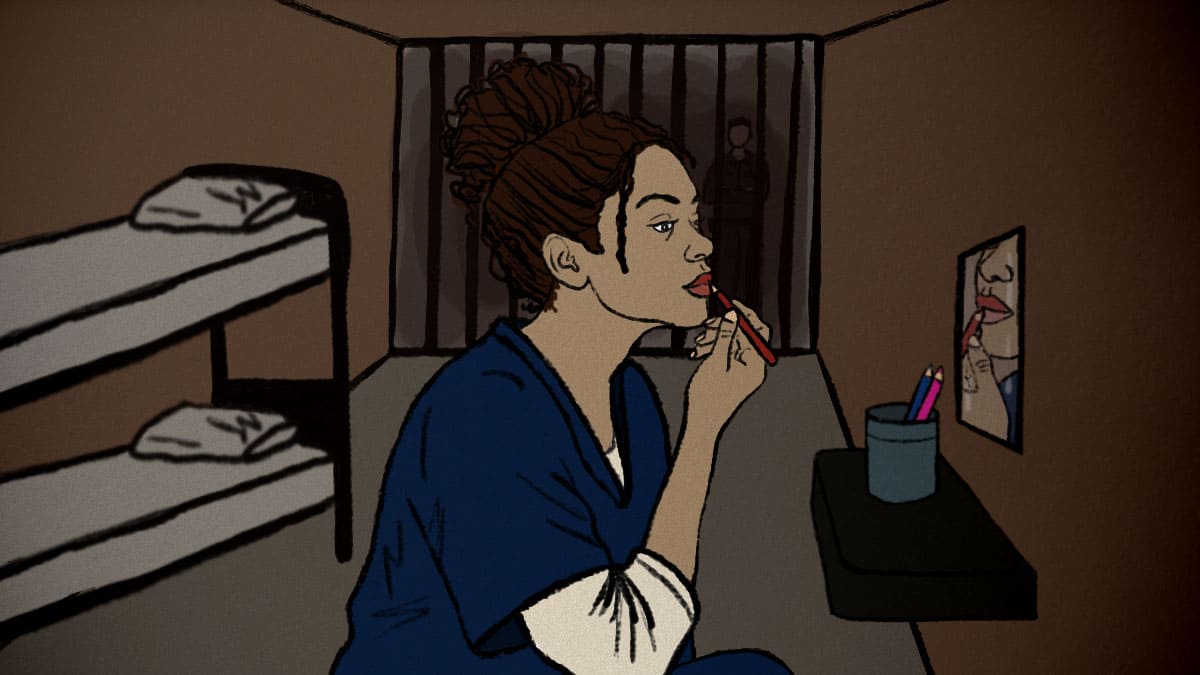
The three transgender women allege to Verite News that they have been denied medical care, including access to hormone replacement therapy that they were taking before being detained by ICE. Credit: Illustration by Bethany Atkinson/Deep South Today
While medical neglect is widespread in detention facilities nationwide, specifically denying trans health care fits into a nationwide trend of forced detransition in detention centers.
At Central Louisiana, Sofia and Rivas say that they are being denied hormone replacement therapy, which they both were taking before they were detained. According to a DHS statement to Verite News, DHS segregates the women by biological sex because of Trump’s 2025 executive order. The order also explicitly states that the Bureau of Prisons and federal funds cannot be “expended for any medical procedure, treatment, or drug for the purpose of conforming an inmate’s appearance to that of the opposite sex.”
The women also say that they are also being denied feminine clothes and makeup, both of which would help them feel more comfortable in their bodies.
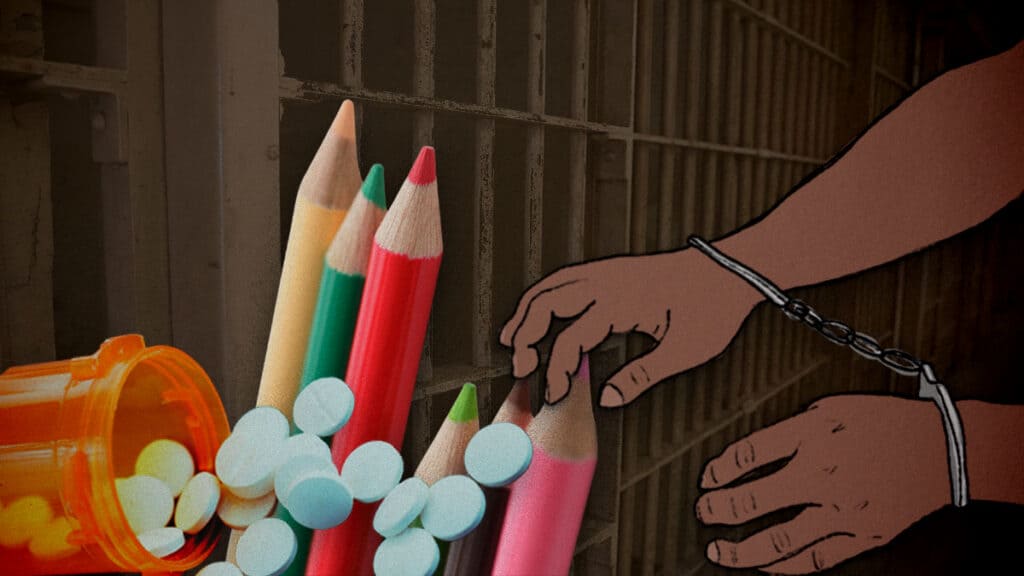
“They don’t let us wear makeup, so what we do is use a pencil to paint on our faces. Just because we do that, they get mad and report us. What harm are we doing to them by” using pencils to replace makeup, Rivas said.
DHS says the allegations that undergarments have been changed is false. Regarding their use of colored pencils as makeup, DHS says that “detainees are not permitted to utilize colored pencils outside their intended use” because it is considered contraband.
“(Detention) is now encouraged because mistreating people puts them in a more desperate situation, to then seek voluntary departure and under duress give up legal rights they may have to stay in the country,” Nora Ahmed, who is ACLU of Louisiana’s legal director, told Verite News.
Transgender immigrants in detention
The women at the Central Louisiana ICE Processing Center who are alleging transphobic harassment, physical and emotional abuse aren’t the only ones in Louisiana in recent years.
In 2023, Vicky, a transgender woman who was detained in Pine Prairie ICE Detention Center — also operated by the GEO Group — filed a civil rights complaint describing the culture of the facility. In a press release announcing the filing of the complaint, the group Immigrant Justice said the facility had a “culture of transphobia, harassment and medical negligence.”
In September 2025, the ACLU of Louisiana, Robert & Ethel Kennedy Human Rights Center and the National Immigration Project filed complaints on behalf of four immigrants who were detained at the South Louisiana ICE Detention Center in Basile — also run by the GEO Group. The complaints alleged that two trans men and one nonbinary person, all housed in a female-only facility, were subject to sexual abuse, forced labor, retaliation and denial of medical care.
And this type of alleged mistreatment is happening in other states as well. A 2016 Human Rights Watch report that included interviews with former trans detainees, found that they were subjected to abusive strip searches in front of male guards, and a peer-reviewed study that analyzed ICE audits found that strip searches of transgender detainees occurred in violation of ICE policy from 2014 to 2019 in at least three states: Washington, Arizona and California.
Yet, it is difficult to estimate how many people are affected by transphobic abuse in immigrant detention centers.
Under the second Trump administration, ICE is excluding the number of transgender detainees from constitutionally-mandated detention center reports. The last report issued by the Biden administration in January 2025 recorded that there were 47 transgender people in immigration detention. But according to the Vera Institute of Justice, the government is not counting transgender people due to the administration’s hostility towards trans people’s lives and rights.
The 2025 executive order that President Donald Trump signed equated gender with biological sex and mandated federal agencies to remove “all statements, policies, regulations, forms, communications, or other internal and external messages” which recognized transgender and gender non-conforming people. The order also prohibited trans women from being housed in women’s prisons or detention centers. In effect, they can only be housed in male facilities.
Shortly after, the 2015 “Transgender Care Memorandum” was taken offline. It was last available in February 2025 from ICE’s website, according to the Internet Archive. The memo — signed by Tom Homan, then the executive director for ICE under the Obama administration — established basic care requirements for transgender detainees. (Homan is now Trump’s “border czar.”) For example, it mandated limiting solitary confinement to 72 hours, to consider placing a detainee in housing consistent with their gender identity, and to conduct strip searches in private, among other rules. Additionally, contracts with some detention facilities had their transgender care requirements removed.
While past complaints indicate that these transgender care requirements were often violated by facilities, the memo still gave trans detainees a degree of recognition, as well as a way to challenge discriminatory treatment.
“We know that the government is making it impossible to even be yourself in prison,” Déa Thatcher, an organizer with Trans & Queer Community Fund, a mutual aid group that provides commissary support for trans immigrant detainees, said. “When I tell you the amount of times I’ve gotten on a video with someone and they have put their hands over their face because they don’t want me to see their beard, it’s like they are being forced to look a certain way and present a certain way.”
‘I am practically signing my death warrant‘
According to Rivas’ habeas corpus petition, she is seeking asylum due to being targeted by the Honduran Los Zetas cartel, who she claims murdered her brothers after she refused to traffic drugs for them. She had been harassed by them for years due to being transgender, the petition says. Mexican cartel members later kidnapped and assaulted Rivas on her journey to the U.S.-Mexico border.
“If I go back to my country, I am practically signing my death warrant,” Rivas said.
Sofia and Toro de Paula are also seeking asylum after being subjected to transphobic physical violence in their home countries. They both had their asylum petitions denied and are appealing the decision.
“In general, trans women had a shot at winning (asylum) because of how our asylum laws are written and because trans people are targeted in many countries for being trans,” Jong told Verite News.
But immigration detention makes it harder for their legal team to prepare an asylum case or an appeal because they can only meet with detainees for a few hours each week, making it more difficult to prepare a strong case. It is then much more likely that they will lose their case and be deported.
“You have to collect all this evidence, where your main person to help you is locked up, with little to no access to the outside world, and where everyone outside is grappling with their absence,” immigration attorney Mich González said. He added that immigrants have cases that could determine life or death, yet are being tried in an administrative court inside a facility that is actively harming people.
The women could be detained indefinitely. The U.S. Supreme Court has agreed to review a case determining whether immigrants can be denied bond and kept in detention while they challenge their removal. If the court rules in favor of the Trump administration, the women will have no clear path out of immigration detention, barring deportation or being allowed to legally remain in the country.
“We want them to treat us with dignity and to treat the next trans people who come to this center well, with respect,” Rivas said.
Audio articles are automated for accessibility. Humans wrote and edited the story; however, this audio has not been reviewed for accuracy and may contain errors. Read more about how we use AI to increase access to our reporting.
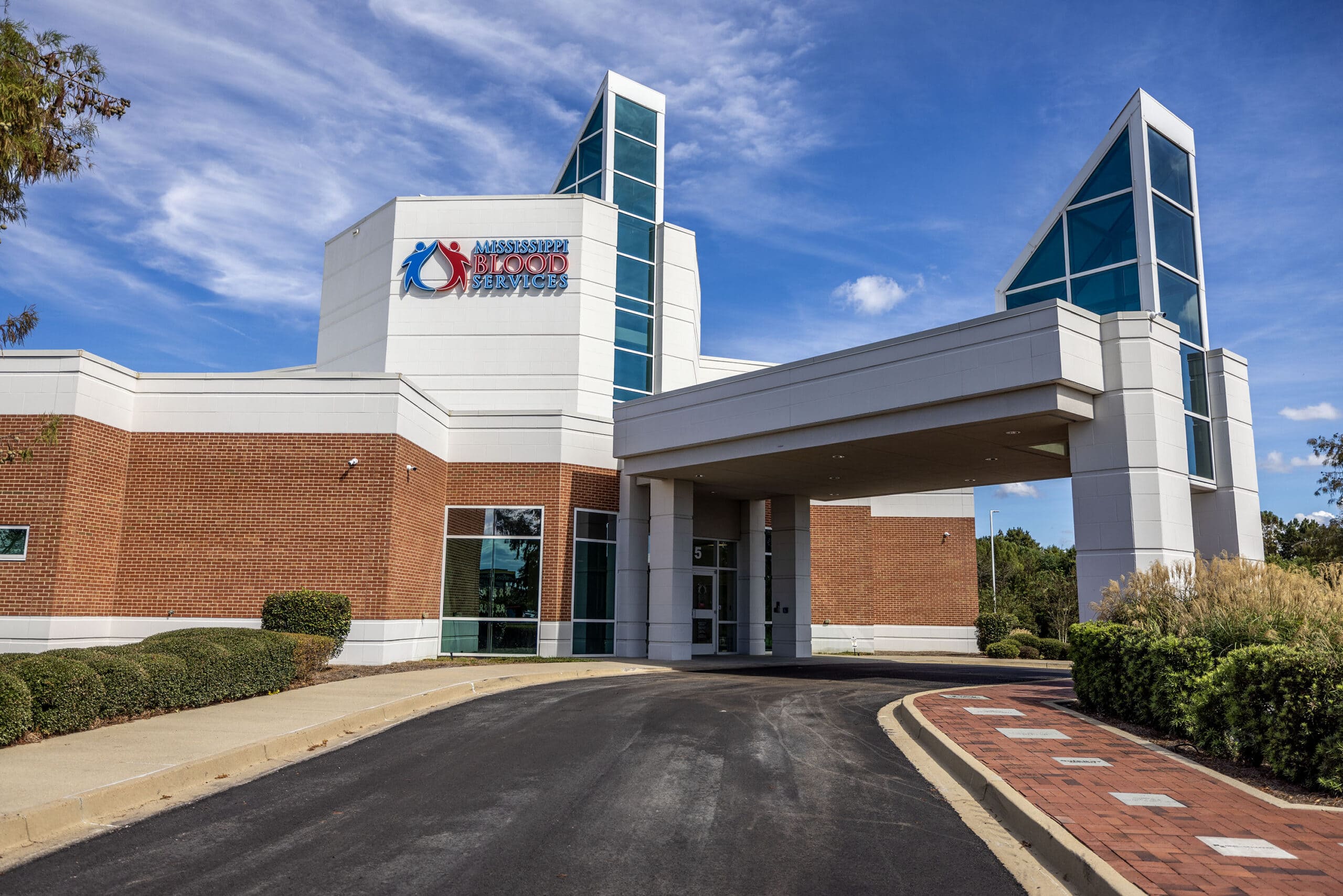
Mississippi Blood Services is calling on all eligible donors to give blood as it struggles with a severe supply shortage.
Kasey Dickson, Mississippi Blood Services director of marketing and public relations, explained that it’s normal for donations to drop during the summer. However, MBS isn’t sure what’s causing the ongoing slowdown.
Mississippi’s blood shortage is part of a national problem. The American Red Cross, America’s Blood Centers and the Association for the Advancement of Blood and Biotherapies released a joint statement in July calling for more donations to help the nation’s strained blood supply.
“Blood cannot be made in a tube,” Dickson said. “The only way that blood can be provided to other individuals in need is if individuals themselves donate it.”
Mississippi Blood Services provides blood products to over 50 hospitals statewide, as well as ambulance and helicopter services that transport to rural communities. This includes whole blood, platelets and more.
MBS collects products at facilities in Flowood, Oxford and with mobile collection units.
Eligible donors can walk in or schedule an appointment. People can find information on eligibility on MBS’ website and by calling 601-981-3232.
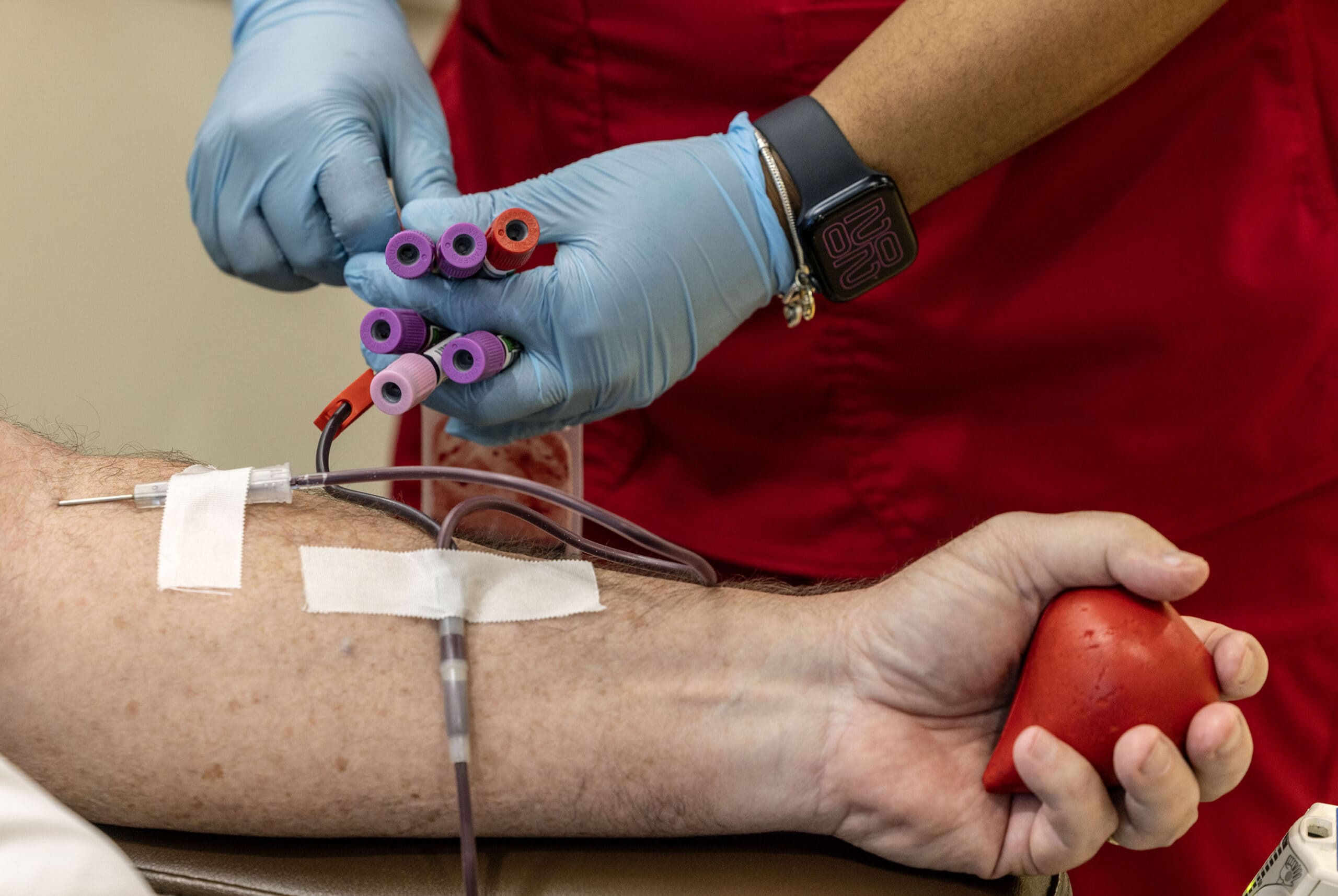
MBS recommends donors prepare by eating a healthy meal and drinking plenty of fluids. Donors will be given an onsite health screening, which includes a questionnaire and a mini-physical.
Once blood is collected, it gets tested for its blood type, red blood cell antibodies and undergoes nucleic acid amplification testing. It’s also screened for infections, including HIV-1 and hepatitis B. After testing and processing, it’s ready to be delivered to hospitals in need.
MBS has been spreading the word about the need for donations, as well as holding special promotions. For Breast Cancer Awareness Donor Appreciation Week, people who donate at the Flowood and Oxford centers can receive a free T-shirt and car magnet while supplies last through Friday.
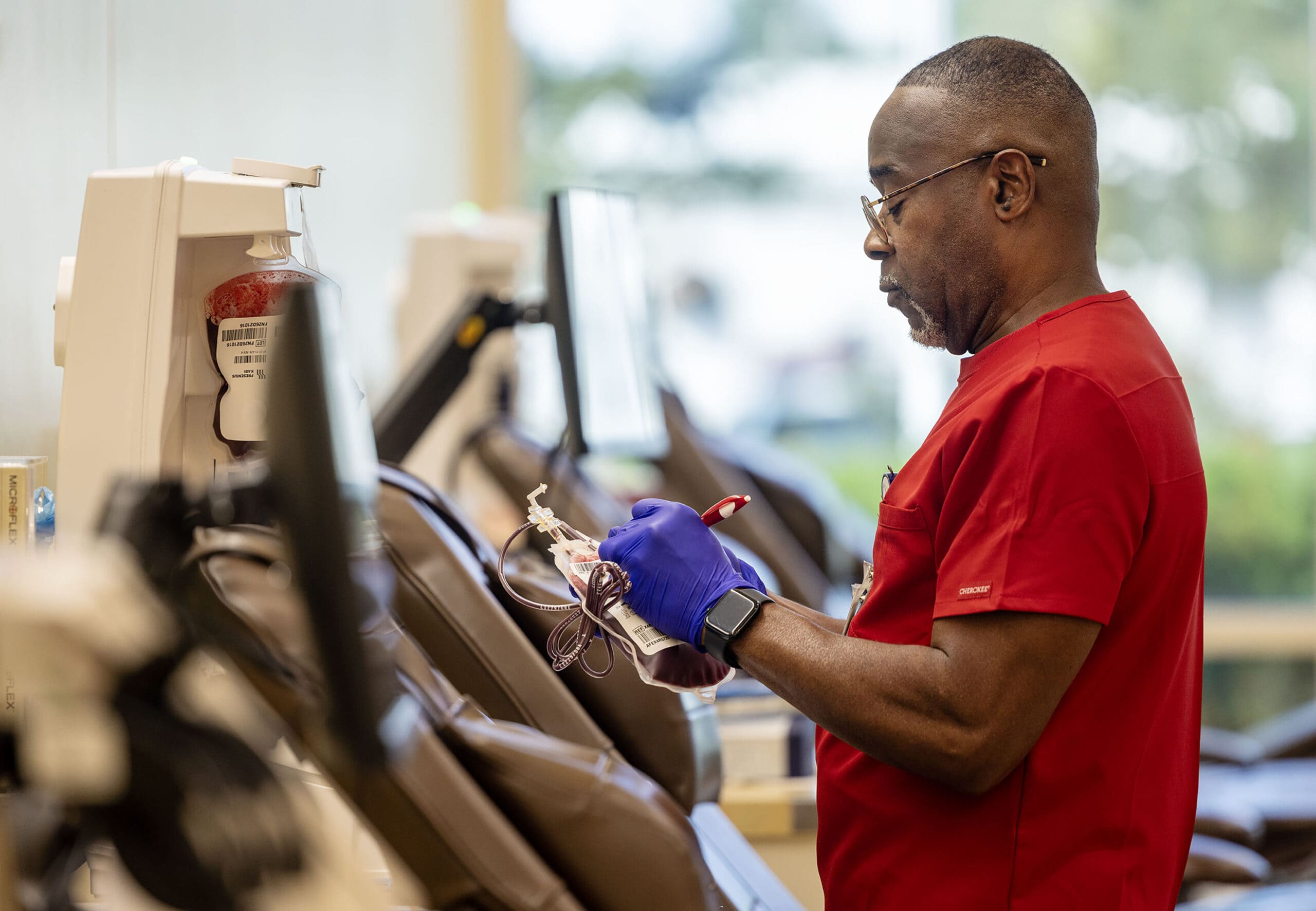
Willie Reynolds, Mississippi Blood Services mobile supervisor, writes information on a collection bag at Mississippi Blood Services in Flowood on Friday, Oct. 2, 2026.
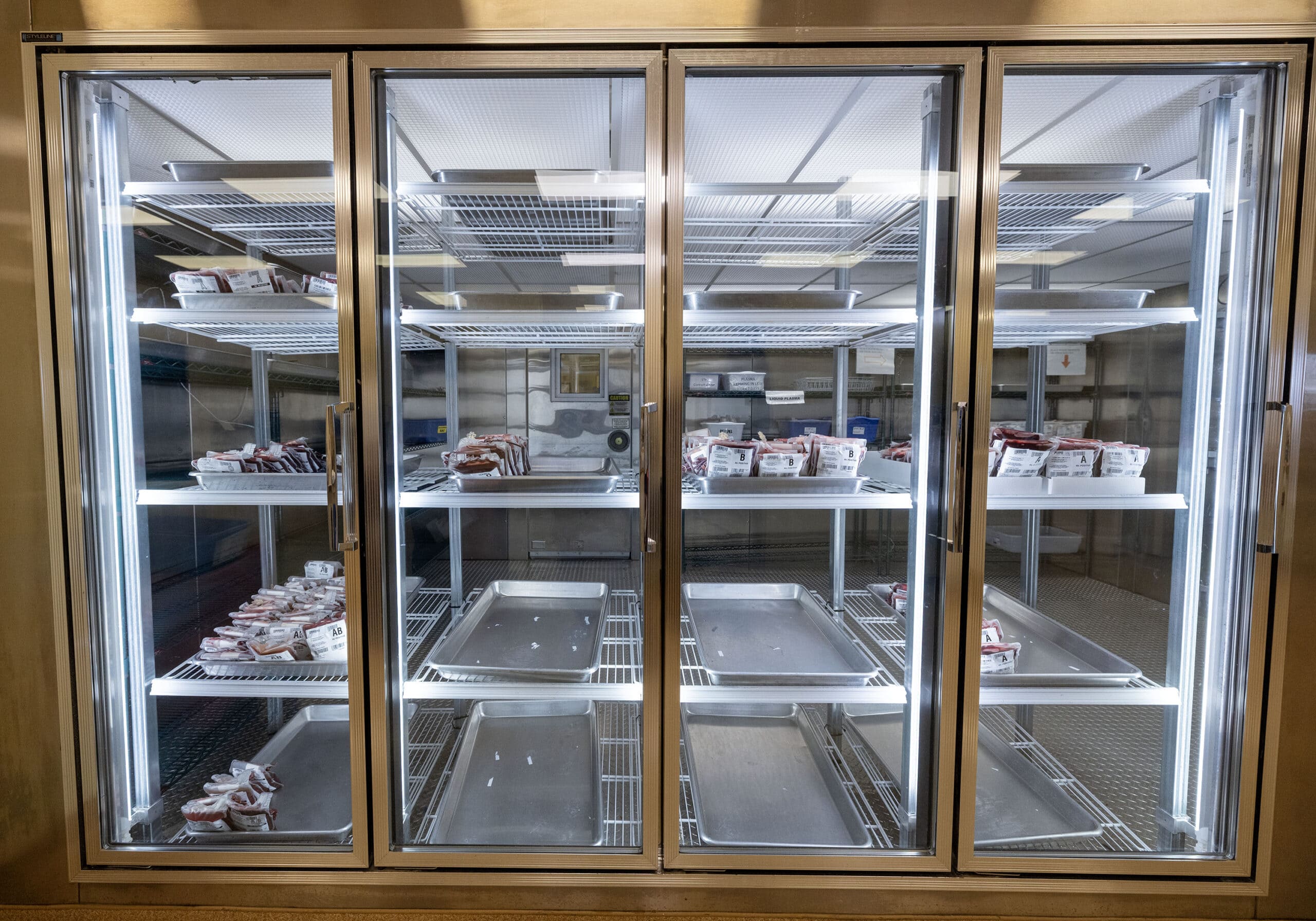
Shelves of donated blood are nearly empty at Mississippi Blood Services in Flowood on Friday, Oct. 2, 2026. The United States is experiencing a blood supply crisis, and Mississippi Blood Services is trying to recruit more donors to meet demand.
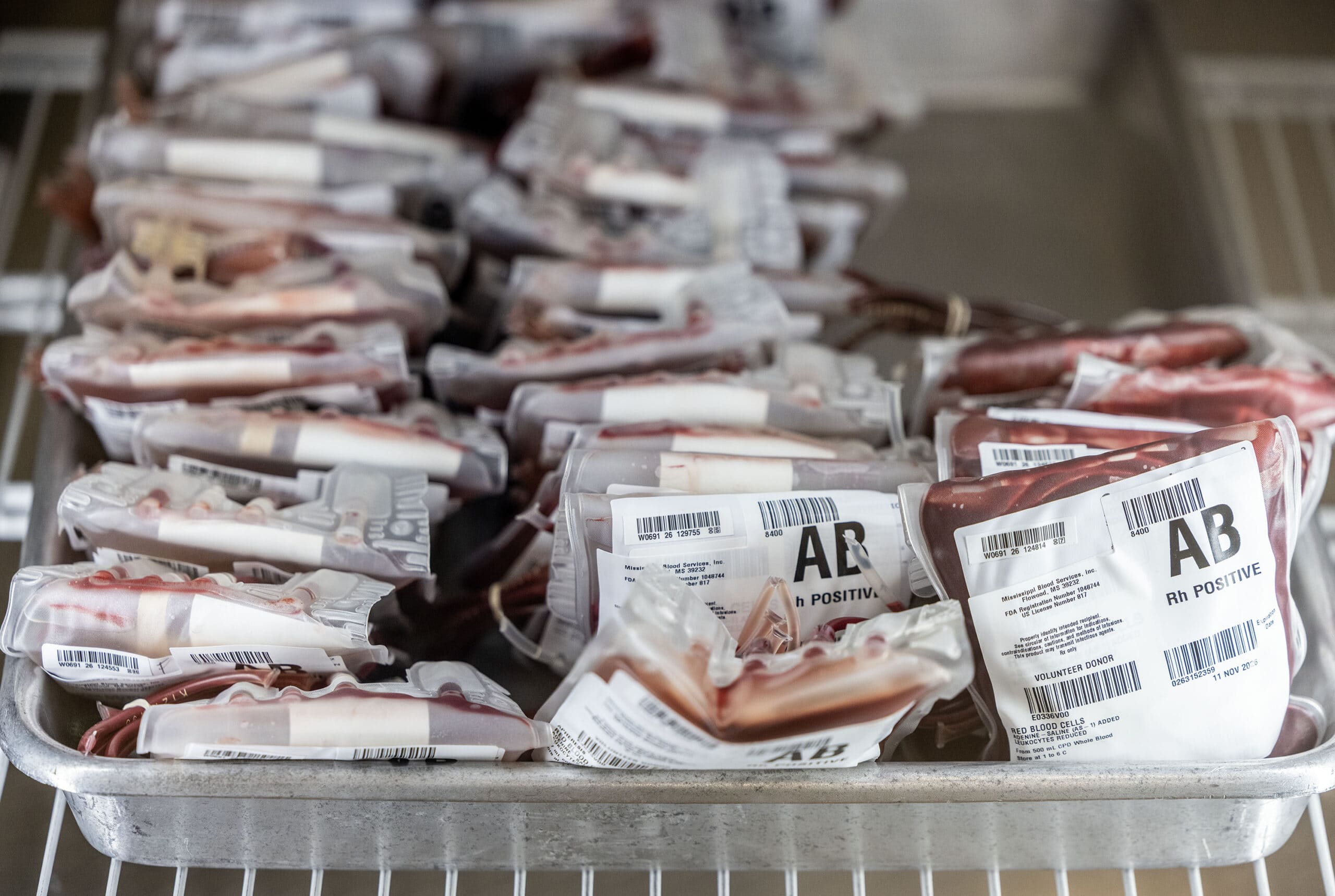
Donated blood is pictured at Mississippi Blood Services in Flowood on Friday, Oct. 2, 2026.
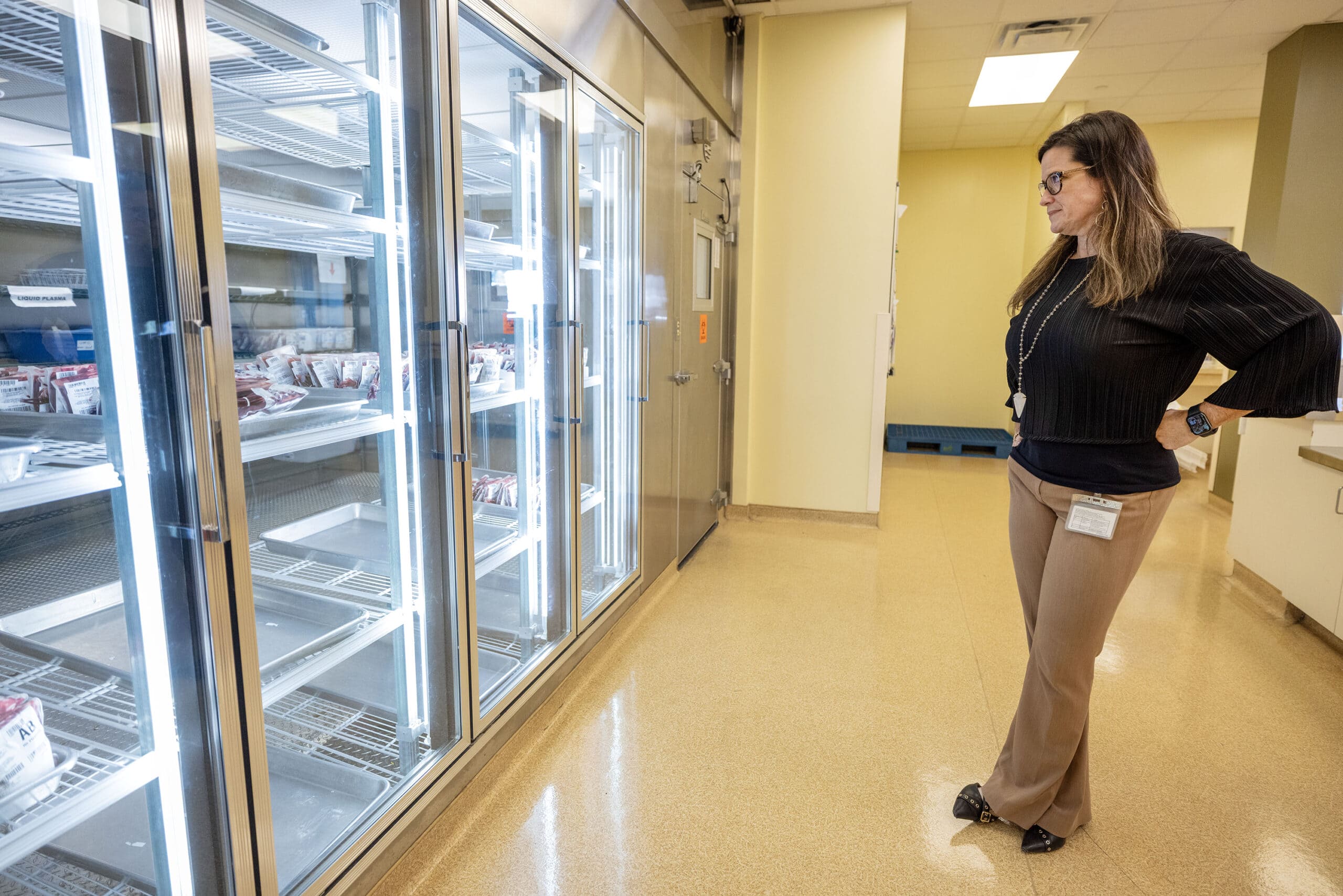
Kasey Dickson, Mississippi Blood Services marketing and public relations director, takes a look at the nearly empty shelves of donated blood at the organization on Friday, Oct. 2, 2026 in Flowood.
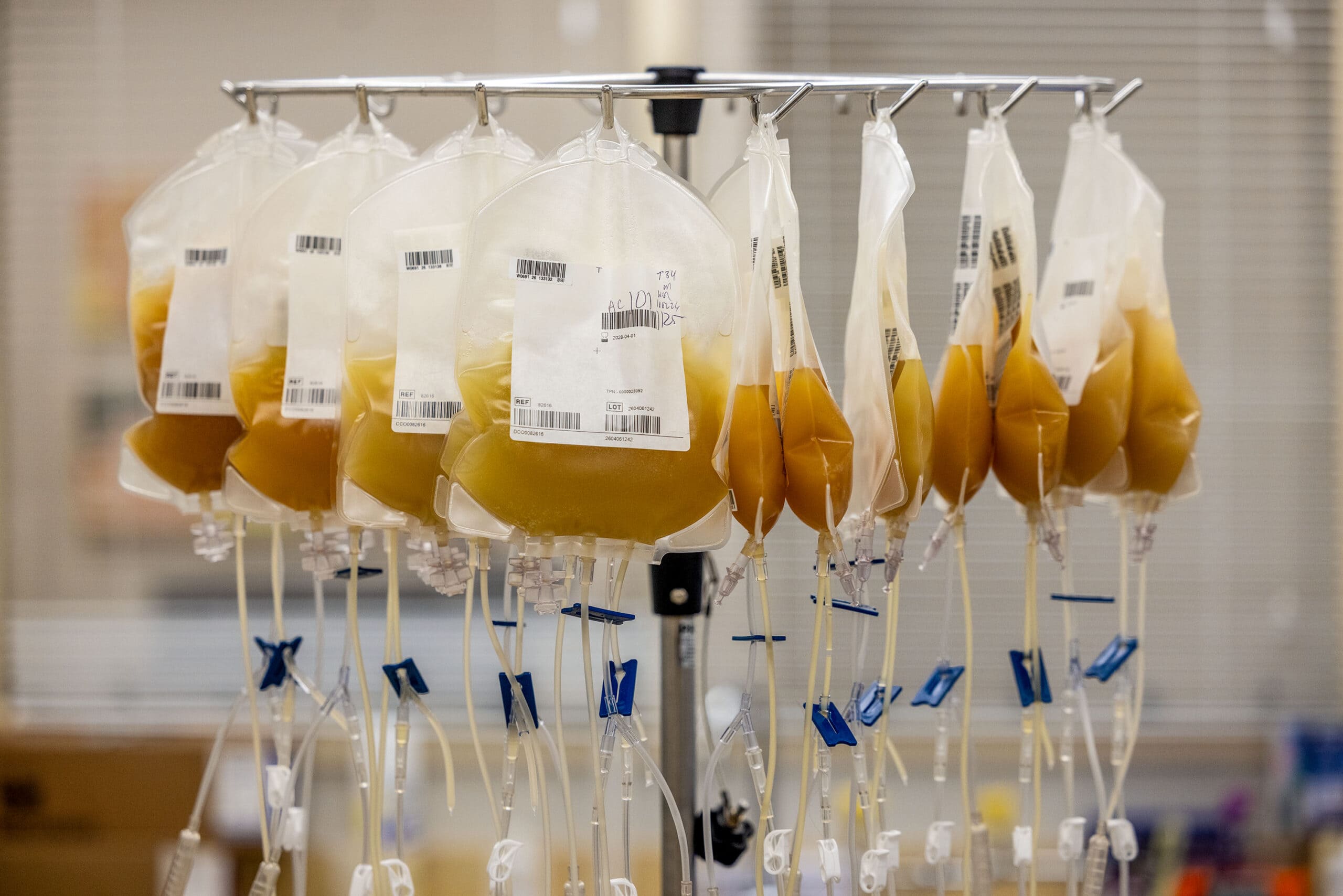
Bags of blood platelets are in place at Mississippi Blood Services in Flowood on Friday, Oct. 2, 2026.
Mississippi Blood Services is pictured in Flowood on Friday, Oct. 2, 2026. The United States is experiencing a blood supply crisis, and Mississippi Blood Services is trying to recruit more donors to meet demand.
Audio articles are automated for accessibility. Humans wrote and edited the story; however, this audio has not been reviewed for accuracy and may contain errors. Read more about how we use AI to increase access to our reporting.
An Alabama man has become the fifth person charged in federal court with making threats related to Nolan Xavier Wells’ death investigation.
Claude Henry Bates Jr., 41, of Montomery is accused of sending death and bomb threats to the Jackson County sheriff’s and coroner’s offices on Sept. 25 — days after a Jackson County grand jury declined to indict anyone in the death of Wells, according to court records. The 18-year-old’s body was found on July 6 on Horn Island.
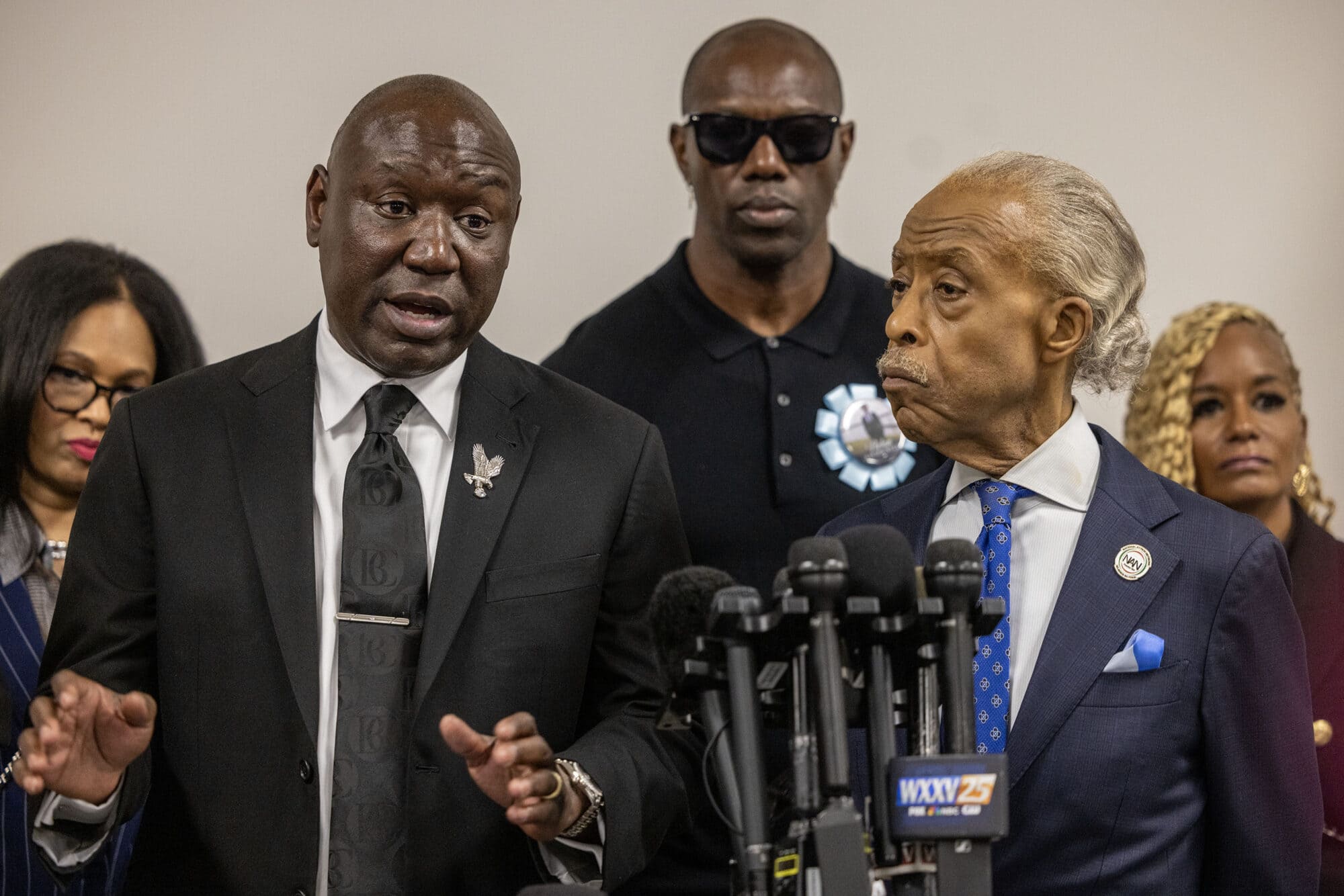
Also, after weeks of threatened lawsuits over alleged defamation, three friends who were with Wells on Horn Island on July 4 filed a complaint Monday in federal court against former NFL Hall of Famer Terrell Owens.
In a Sept. 26 post on X, Owens shared an Instagram video featuring Wells’ friends Warren Hudson, Jax Pitalo and Morgan Seymour that suggested they deleted evidence from Wells’ phone after he died. Owens added the message: “Arrest them immediately!!! Like yesterday” in all capital letters.
A day earlier, the legal team representing Wells’ family held a press conference with Andrew Garrett, the forensic expert whose company was hired to inspect Wells’ phone. Garrett said that Snapchat messages were deleted off the phone but later clarified that other users can delete or recall messages. He added that other people did not unlock Wells’ phone after he last used it.
The friends denied the allegation in the lawsuit, filed in the Southern District of Mississippi. The lawsuit represents one side of a legal argument.
“Nolan Wells’ accident death at the Island was indeed a tragedy beyond measure. However, Warren, Jax, and Morgan played no role whatsoever in Nolan’s tragic death. Any accusations or suggestions that they murder their dear friend or took steps to cover up his murder are categorically false and now an intentional lie,” the complaint reads.
Owens attended Wells’ funeral and contributed $25,000 in reward money for information that would lead to an arrest or conviction in the case.
He was not immediately available for comment Wednesday.
Attorneys representing the friends previously said they plan to sue other public figures who they say have defamed them, including the Rev. Al Sharpton and “The View” co-host Sunny Hostin.
Audio articles are automated for accessibility. Humans wrote and edited the story; however, this audio has not been reviewed for accuracy and may contain errors. Read more about how we use AI to increase access to our reporting.
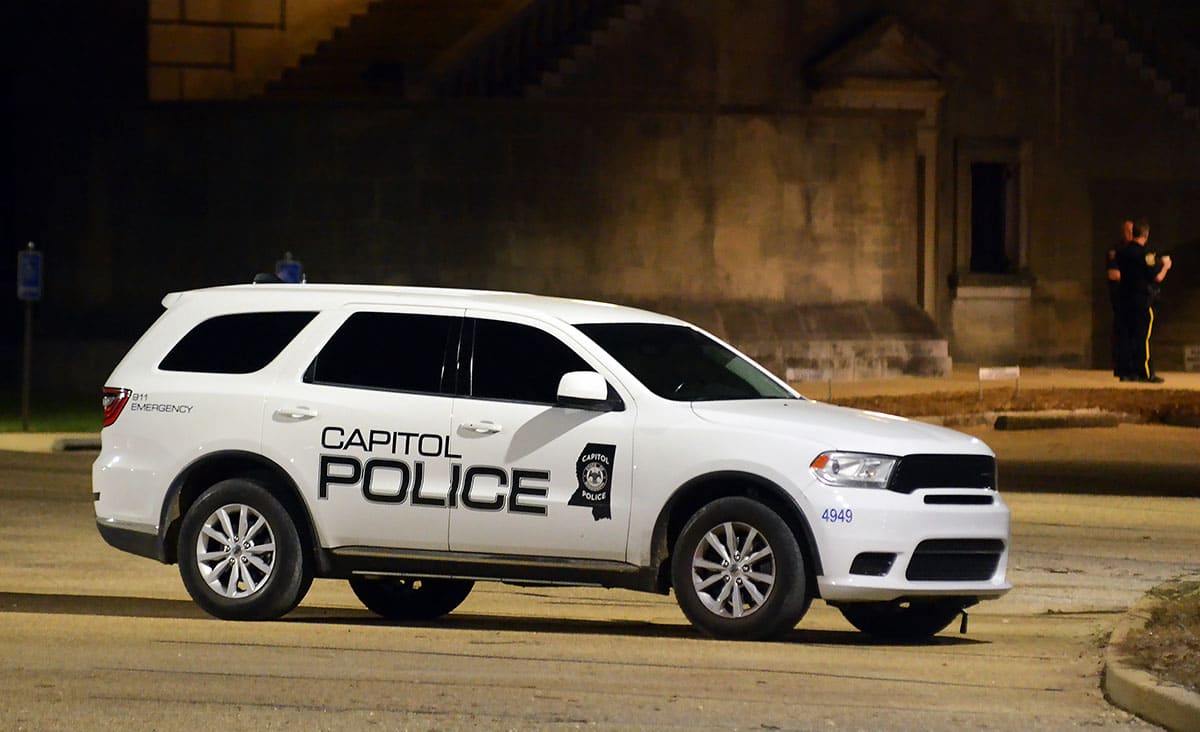
The trial of two former Capitol Police officers accused of unlawfully opening fire on a car and shooting a passenger in the head has been delayed for at least the ninth time, Hinds County Courthouse staff said.
The white former officers, Michael Lamar Rhinewalt and Jeffery Walker Jr., each face up to two decades in prison if convicted of aggravated assault charges. They are accused of shooting at two Black people in August 2022 as they were driving through downtown Jackson, leaving passenger Sherita Harris with “permanent neurological and facial injuries,” according to a civil lawsuit she filed against them.
The officers were set to stand trial on the criminal charge Monday, but the courtroom stood locked and empty, and court records did not immediately give a reason for the delay.
Hinds County Circuit Judge Adrienne Wooten pushed the trial back at the request of the officers’ attorneys, according to De’Vone Cole, a Hinds County sheriff’s officer at the court. But at the time of the trial, the circuit clerk’s office said it had no record of the request or rescheduling. A new date had not been set for the trial in court records.
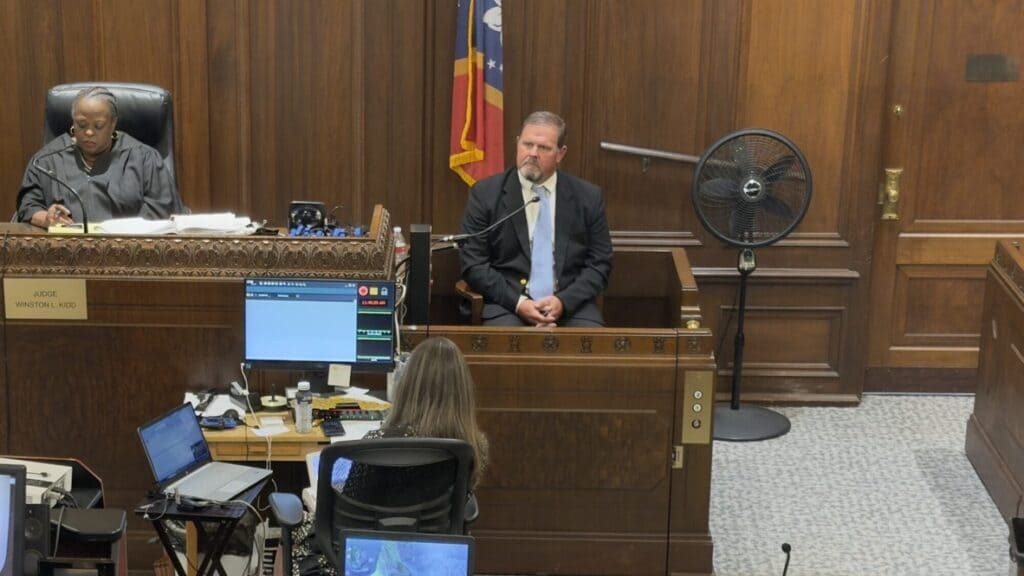
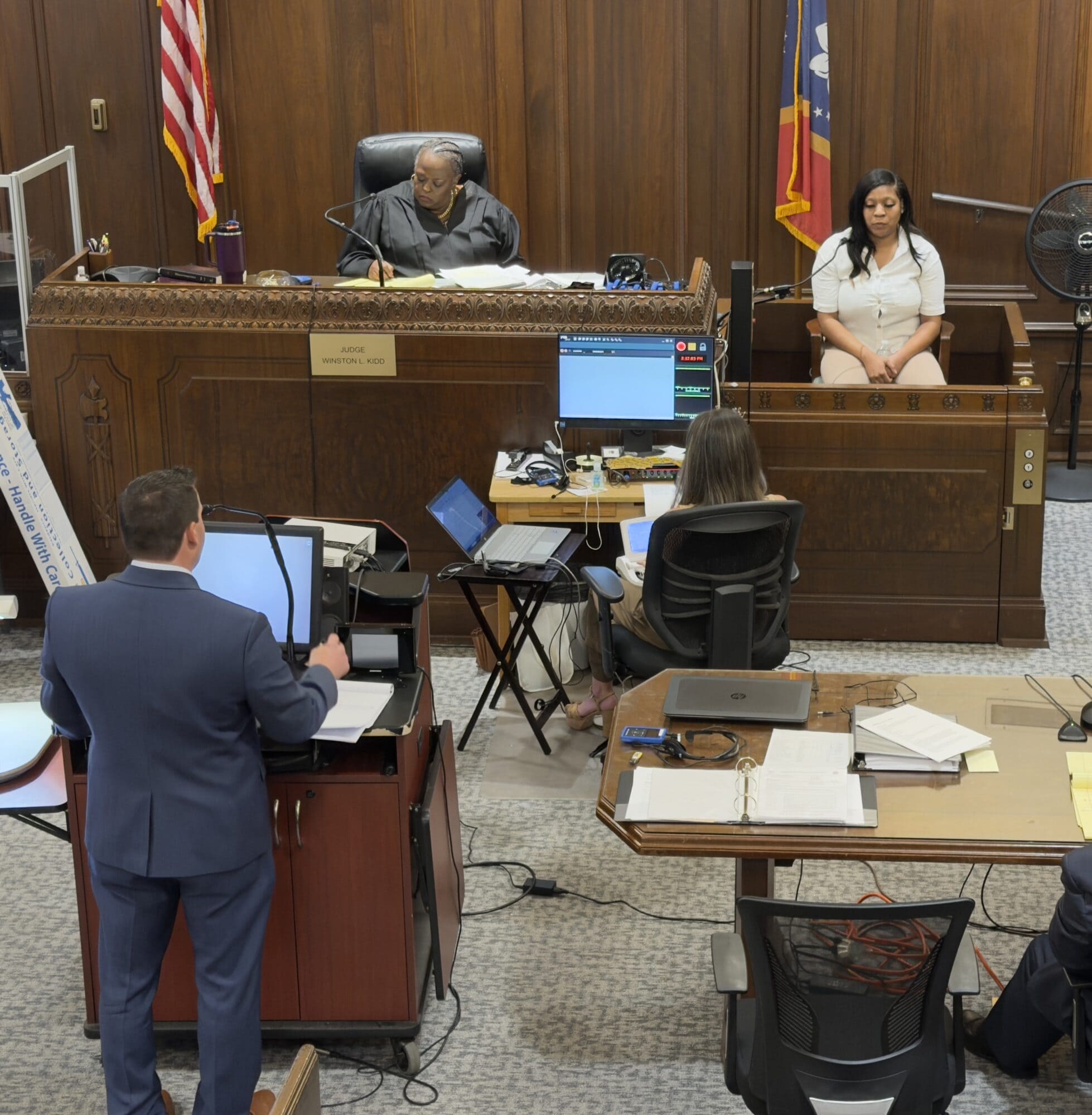
Former Capitol Police officer Michael Rhinewalt answers questions from Special Assistant Attorney General Luke Williamson in his manslaughter trial Friday, Sept. 25, 2026, in the 2022 fatal shooting of Jaylen Lewis. Credit: Jerry Mitchell/Mississippi Today
Wooten’s deputy court administrator, Tandra Thompson, initially told Mississippi Today that she wasn’t aware of anyone on staff who knew why the trial didn’t start — even though the court was responsible for setting its date under the rules issued by the state Supreme Court. Thompson then said scheduling information was confidential to the defense and prosecution, even though it is public record under state law.
The defense and prosecutors did not answer Mississippi Today’s calls to confirm why the trial did not happen.
This will be the second criminal trial tied to a record year of shootings by Capitol Police, both against Rhinewalt. In the first trial, which was rescheduled six times before ending last week, he avoided a manslaughter conviction in the shooting and killing of a 25-year-old Black man, Jaylen Lewis, during a traffic stop a month after Harris’ shooting.
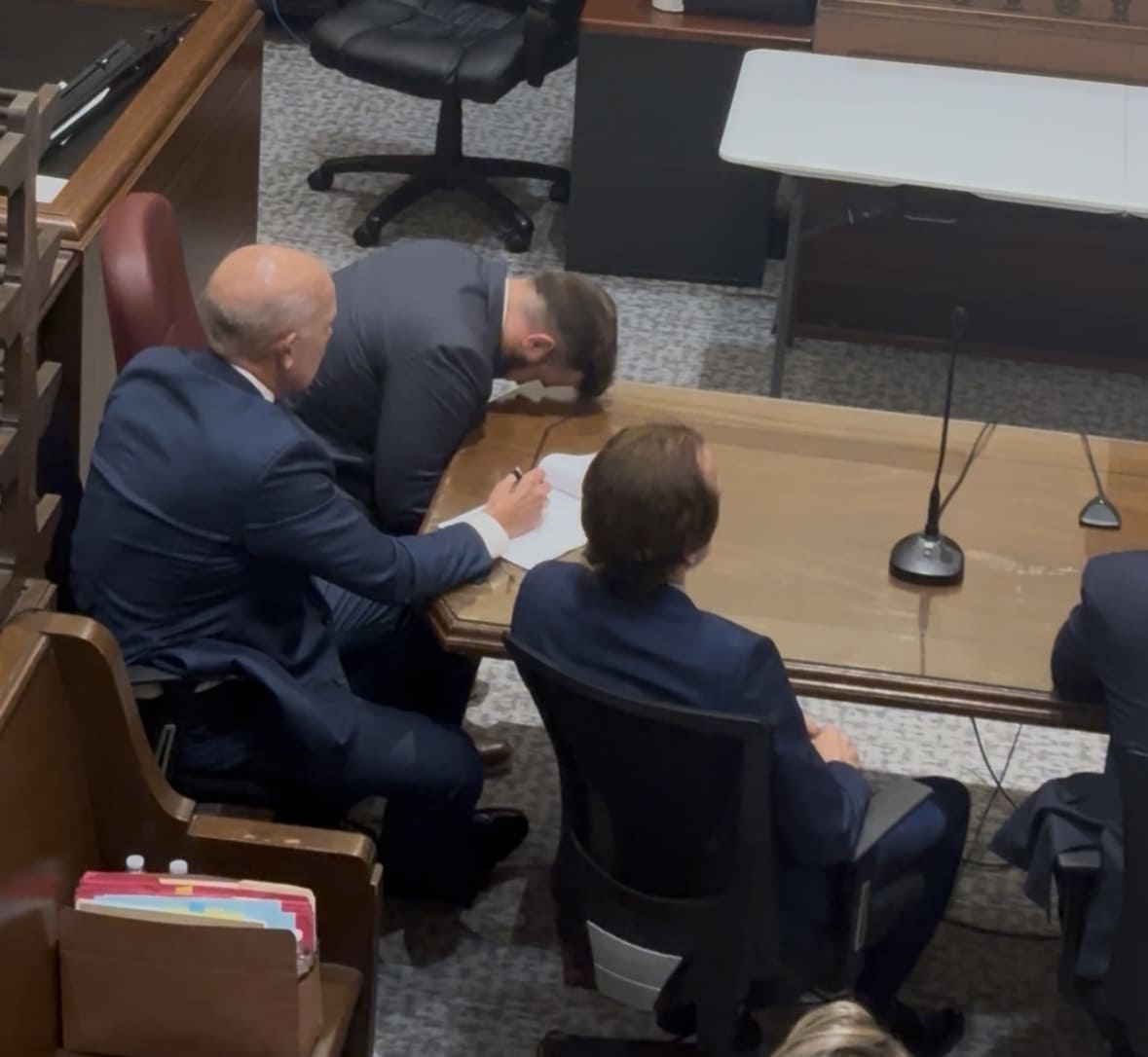
Former Capitol Police officer Steven Frederick Jr., top, reacts on Monday, Sept. 28, 2026, at the Hinds County Courthouse after a jury acquitted him of manslaughter for shooting at a Black man, Jaylen Lewis, in a 2022 traffic stop. Beside him are defense attorneys Boty McDonald, center, and Merrida Coxwell Jr. Credit: Madeline Nguyen/Mississippi Today
After the majority-Black jury deadlocked on whether Rhinewalt was guilty, the state attorney general’s office dropped the case against him, writing, “the benefit of the doubt goes to our law enforcement officers.” The jury in that trial acquitted another former Capitol Police officer, Steven Frederick Jr.
Cole said Rhinewalt’s second trial would begin in December at the earliest — nearly two years after it was initially scheduled. Court records show the trial has been delayed at least eight other times since it was first scheduled for March 2025.
Trial previously delayed after ‘conflict of interest’
One delay came after Judge Wooten barred the attorney general’s office from prosecuting the case because of an unprecedented “conflict of interest which gravely undermines the integrity and fairness of the proceedings.”
While the attorney general’s office was pursuing a criminal case against the two officers for opening fire on Harris, it was also defending the pair against a $3 million federal lawsuit Harris filed for shooting her and violating her constitutional rights.
“This inconsistency is not merely theoretical — it strikes at the heart of fairness and undermines the core ethical obligations owed to clients and to the judicial process,” Wooten wrote in May 2025.
Jaylen Lewis Credit: Courtesy of Arkela Lewis
The attorney general’s office argued that separate divisions were handling the cases and that there was no evidence of “improper influence” on the grand jury that indicted both officers in the shooting. But ultimately, the office of Lin Carter, the district attorney of Forrest and Perry counties, took over prosecution of the aggravated assault case.
Until the criminal case comes to an end, Harris’ lawsuit is on hold.
The case marks a rare criminal proceeding against officers for shooting at civilians. In the entire history of Attorney General Lynn Fitch’s Office reviewing these cases, the office said it has found four incidents not “justified,” including in the killing of Lewis.
In that case, the attorney general’s office still handled the prosecution against Rhinewalt, despite defending him in Harris’ lawsuit.
Why was Harris shot? Officers’ and victims’ versions sharply diverge
The former officers — who were with Capitol Police’s crime suppression Flex Unit — and the victims have given starkly different accounts of the moments that ended with a bullet in Harris’ skull.
In her lawsuit, Harris alleged that the shooting occurred after the friend she was riding with, Sinatra Jordan, “complied” with the officers’ commands to pull over while the two were waiting for a traffic light to turn green. But “shortly” after, the lawsuit stated, Rhinewalt opened fire on Jordan’s silver Nissan Rogue as it tried to drive away to “escape the constant firing of bullets.”
Rhinewalt was believed to be the officer who shot Harris in the head, according to her lawsuit, leaving her with permanent memory loss, a partially paralyzed face and damaged sight and hearing. Walker did not shoot at the car but did admit to opening fire on Jordan once he exited the vehicle, the lawsuit stated.
After the shooting, Jordan survived and was arrested. A month later, Walker admitted in a hearing that both officers opened fire on the car, but only after Jordan ran a red light, fled a traffic stop, led them on a car chase throughout downtown and then shot at them first, sparking a gun battle that ended in a residential neighborhood.
Walker testified that no bullets struck the officers’ patrol car and no gun was found in Jordan’s vehicle. He also said he saw objects being thrown from the car during the chase, but none of these items were found.
Jordan ultimately pleaded guilty to fleeing police. He was also accused of shooting at the officers and charged with aggravated assault, but that charge was dropped last year.
The shooting was one of four by Capitol Police officers in 2022 — more than any other law-enforcement agency in the state. The spike came as the Legislature expanded the force’s reach throughout Jackson in an effort to address record homicide rates.
Harris wrote in her lawsuit that the shooting left her not only with physical injuries but also “severe emotional distress” and “mental trauma,” including panic attacks, anxiety and depression. She argued that “any reasonable police officer” in Rhinewalt and Walker’s position would have known they had a “duty” to “prevent harm” to her, as an “innocent bystander.”
In response to Harris’ lawsuit, both officers denied wrongdoing, arguing that they acted “at all times” in line with “proper policing procedures” and “in good faith.”
Case continues legal trouble for both former officers
Harris’ shooting adds to the legal trouble both former officers face from their service with Capitol Police.
During last month’s manslaughter trial, Rhinewalt admitted he shot Lewis in the head during a traffic stop, killing him. He told jurors the killing was in self defense, as he believed Lewis was trying to run officers over with his Jeep Grand Cherokee.
But the passenger riding with Lewis, Selena Hayes, testified the pair didn’t know they were being stopped by officers, who were not in typical uniforms and were driving unmarked police cars. As a result, she said, Lewis was trying to drive around the officers, rather than to run them over.
Selena Hayes, a passenger with Jaylen Lewis, testifies Thursday, Sept. 24, 2026, in Hinds County Circuit Court, responding to questions from Special Assistant Attorney General Luke Williamson. Credit: Jerry Mitchell/Mississippi Today
While Rhinewalt avoided another trial after the attorney general’s office dropped the manslaughter case against him, he still faces a $75,000 wrongful death suit from Lewis’ family in federal court. He denied the lawsuit’s allegations.
In December, Walker pleaded guilty in federal court to violating a man’s civil rights during a traffic stop just weeks before Harris’ shooting by slamming the man’s head into his car and kicking him in the head and face while he was handcuffed and under control. But he filed a motion to withdraw his plea in August on the day he was scheduled to be sentenced — when he faced up to a decade in prison — because of “newly discovered evidence.”
His then-attorney, Arthur Calderón, wrote that the week before Walker was set to be sentenced, the former officer received pictures from Capitol Police that “contradict” federal prosecutors’ claims that he injured the man, who was identified in court records as E.S. As a result, Walker asserted his innocence and requested a trial.
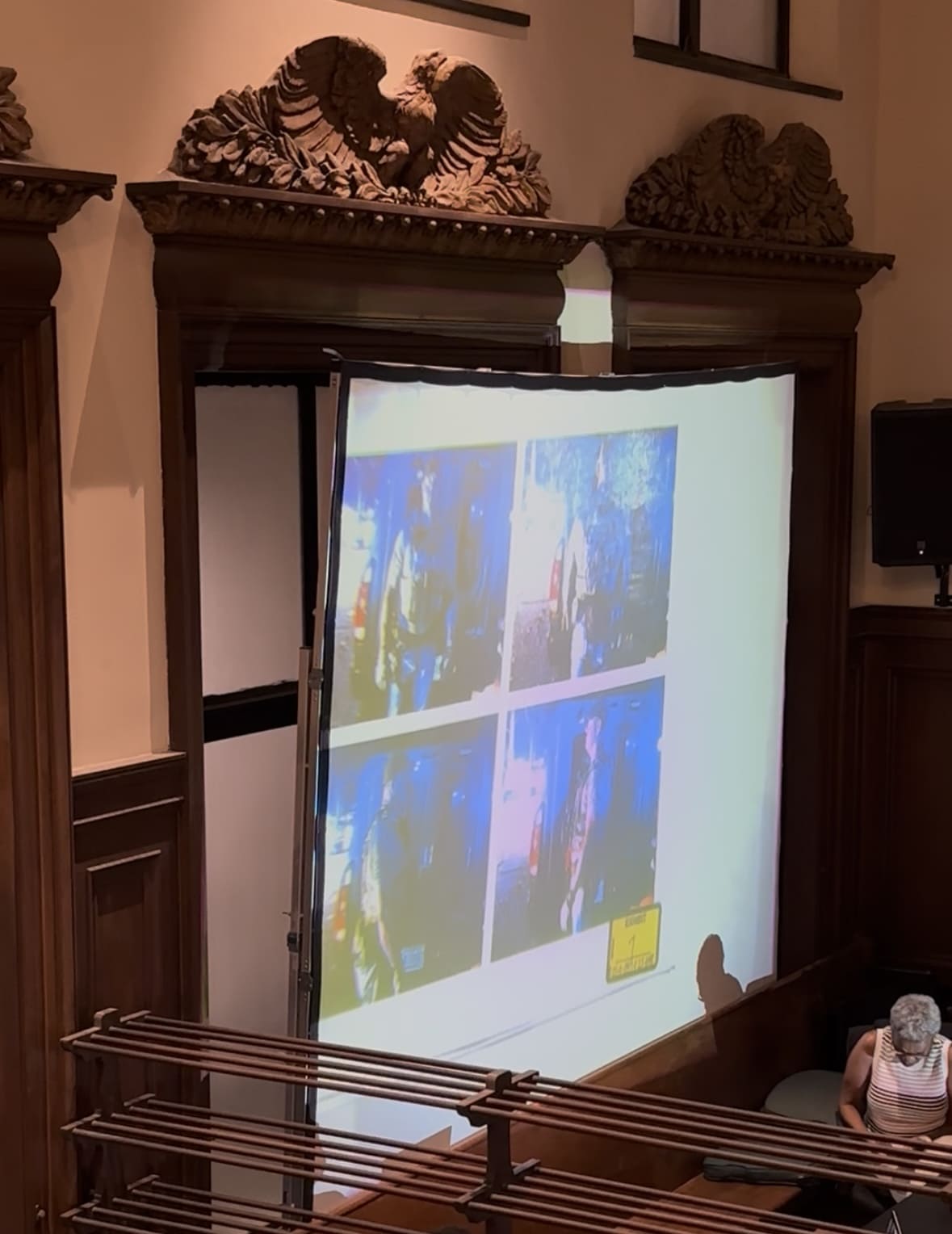
In the closing arguments of the manslaughter trial of two former Capitol Police officers at the Hinds County Courthouse on Sept. 28, 2026, prosecutors presented photos showing that defendant Michael Rhinewalt was dressed in plain clothes and a tactical vest when he was accused of shooting and killing Jaylen Lewis during a 2022 traffic stop. The state attorney general’s office dropped the case against Rhinewalt after jurors could not reach a verdict. Credit: Madeline Nguyen/Mississippi Today
Federal prosecutors say the photos, which were “reportedly” provided by Rhinewalt, show E.S. handcuffed and on the ground with a swollen and discolored face. The prosecution argued Walker was still guilty, as the defense “fails entirely” to explain how the photos — which were not new evidence — demonstrated his innocence.
U.S. District Judge Henry T. Wingate has not ruled on whether the photos are enough evidence to overcome the former officer’s guilty plea and warrant a trial.
Audio articles are automated for accessibility. Humans wrote and edited the story; however, this audio has not been reviewed for accuracy and may contain errors. Read more about how we use AI to increase access to our reporting.
Phil Buffington, a Madison attorney involved in conservative politics and chairman of the Mississippi Tort Claims Board, announced on Tuesday that he will run for state auditor next year in the Republican primary.
Buffington, a partner at Balch and Bingham LLP, advises financial institutions throughout the country. He said in a news release that he plans to campaign on fraud prevention, regulatory accountability and stronger cybersecurity standards for state financial systems.
Phil Buffington Credit: Special to Mississippi Today
“I’m running for Mississippi state auditor because I believe the people of Mississippi deserve a person who wants to make sure your tax dollars are not wasted or stolen and a government that is transparent, accountable, and responsible with every taxpayer dollar,” Buffington said.
Current Auditor Shad White has said he’s considering running for governor and not planning to seek reelection as auditor.
Sen. Daniel Sparks, a Republican from Belmont, and former Rep. Nick Bain, a Republican from Corinth, have also said they’re running for auditor. No Democratic candidate has announced a run. Party primaries for statewide offices will take place in August 2027.
Buffington graduated from the University of Mississippi and Mississippi College School of Law, now Mississippi Christian University School of Law. He serves on the Mississippi Republican Party State Executive Committee and the Madison County Republican Executive Committee.
Candidates who have announced they are running for state office in 2027 include: