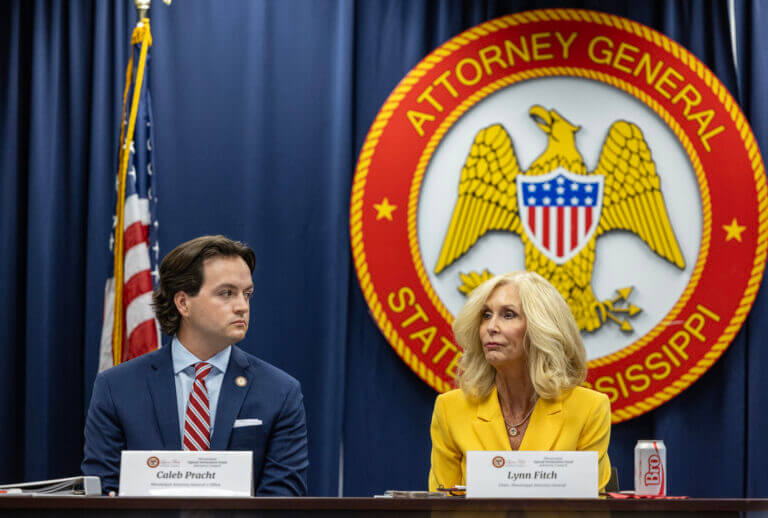
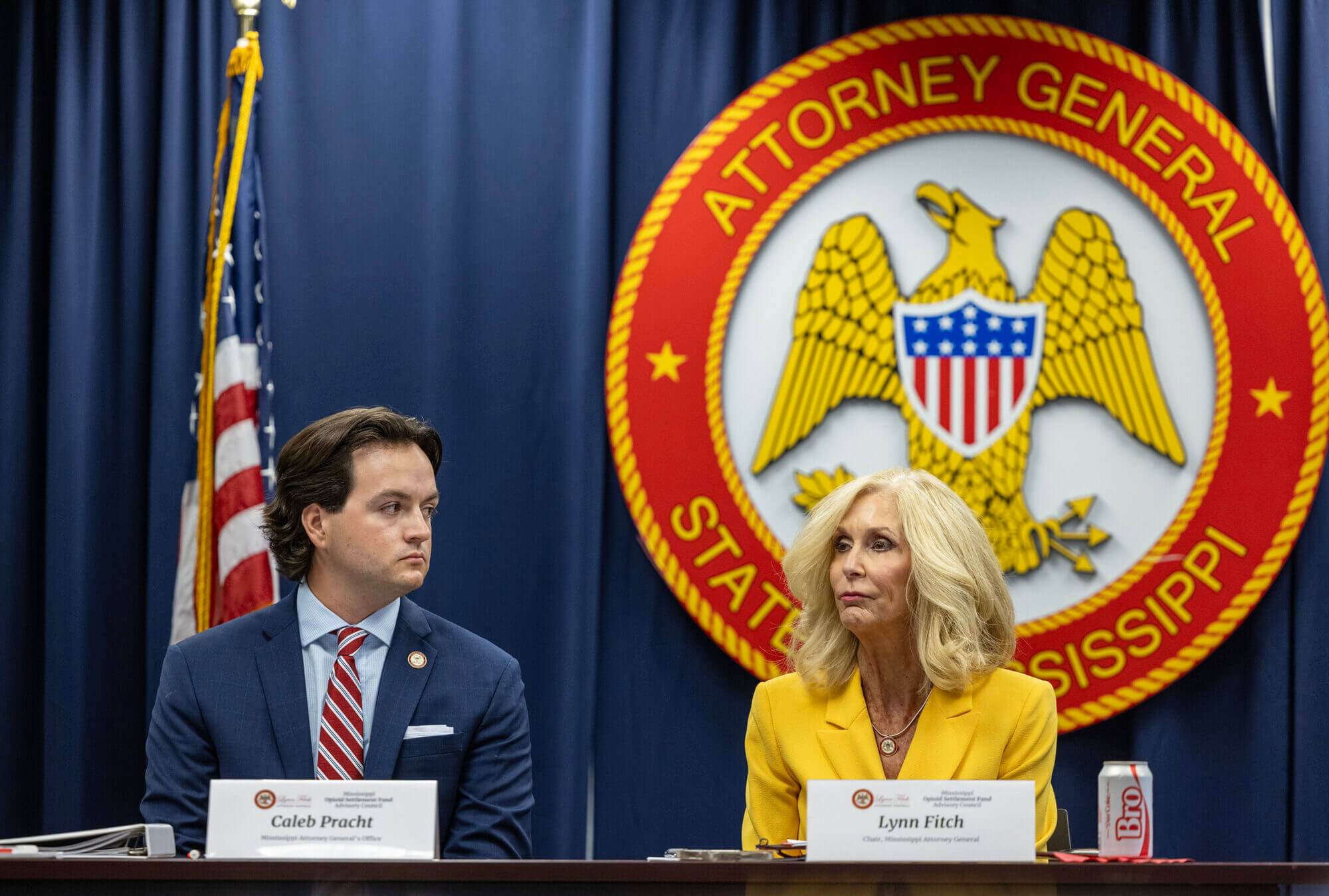
A cybersecurity attack displaying explicit, racist and antisemitic images derailed Mississippi’s second meeting to begin the process of allocating the state’s opioid settlement dollars, further delaying the process of using the money to address addiction.
Mississippi’s Opioid Settlement Fund Advisory Council was scheduled to meet Tuesday at 1 p.m. to further develop how the Legislature will allocate up to $73.3 million from companies that catalyzed the country’s overdose crisis. Unlike the council’s first meeting three weeks earlier, Mississippi Attorney General Lynn Fitch’s office hosted the second exclusively over a Zoom video call. Public participants were not required to sign in to the meeting before joining.
About 10 minutes into the meeting, as meeting host and Fitch special assistant Caleb Pracht asked for approval of the last gathering’s minutes, a Zoom participant noticed that Pracht’s screen was partially blacked out. As Pracht tried to fix the screen, an unidentified voice interrupted the meeting and said, “Yep, that is really good to hear because…”
At that point, distorted music started playing, and an unidentified guest took control of the host screen. The screen featured a man in a sexually explicit pose, a swastika, a symbol for the Ku Klux Klan, a Confederate flag background, and a banner over the screen said “HACKED BY NUENZE.” Three other guest participants who signed in as “Robert Cage,” “Chelsea M Adams” and “Vince Garcia” had similar images as their icons.
The chaos lasted about 20 seconds until the Attorney General’s office ended the meeting. Pracht tried to move the meeting over to a conference call a few minutes later, but Fitch’s Chief of Staff Michelle Williams said that meeting was also hacked. Pracht sent out an email at 1:25 p.m. that the meeting would be rescheduled as soon as possible.
“We truly apologize, and our IT folks are looking into it immediately to address the issue and ensure it can never happen again,” Pracht wrote in an email to meeting attendees.
In a call with Mississippi Today, Williams confirmed someone had hacked the Zoom meeting, an incident she said was unlike anything the Attorney General’s Office had ever experienced before. She said she hadn’t examined the details of the graphic images enough to comment on them, but Fitch’s Cyber Crime Division would be investigating the incident.
“Somebody who clearly doesn’t care what happens to people who have been afflicted by the opioid epidemic just completely kept the committee from doing its work,” she said.
The council was set to review materials for this application process, including a newly drafted scoring rubric for applications and proposed committee assignments for reviewing grants, according to the Tuesday meeting’s agenda. Multiple committee members expressed concern that there was no grading rubric or definition of a qualified applicant in the material proposed at the last meeting.
The council is following a tight schedule to finish reviewing opioid settlement applications by Dec. 1, a deadline prescribed by the Legislature. Meeting that deadline already seemed in jeopardy at the early July meeting, when Pracht suggested delaying the launch of the application by a few weeks.
Williams said Fitch’s office continues to be focused on meeting the Legislature’s deadline. But Tuesday’s cyberattack will make it more difficult to adhere to a tight timeline.
“Whoever just did this today just shortened it.”
This story will be updated as more information becomes available.
Clarification 7/29/2025 — This story has been updated to reflect that Pracht suggested delaying the grant application launch.
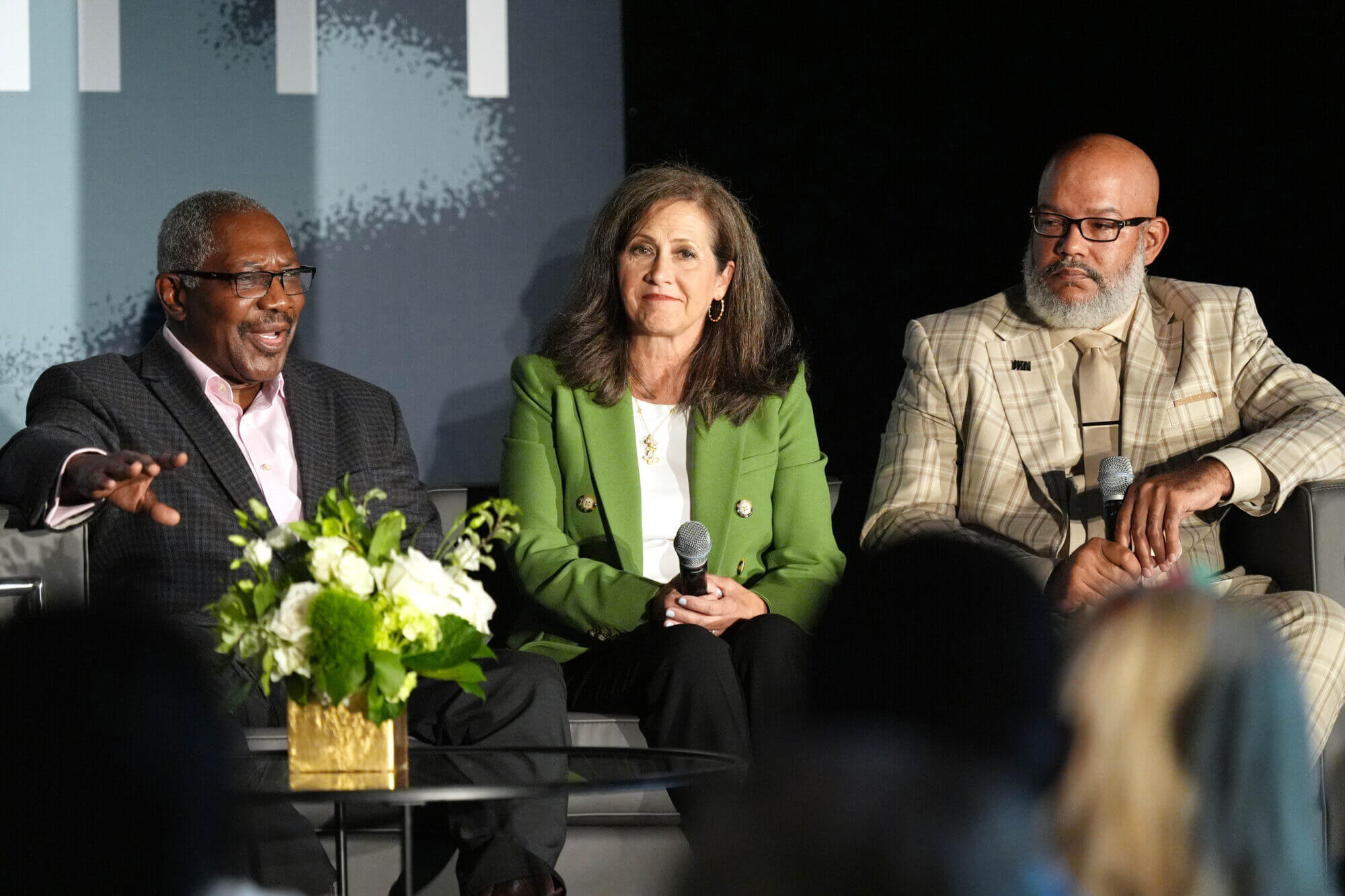
JPMorganChase Chairman and CEO Jamie Dimon, Mississippi businessman Tommy Duff and award-winning journalists joined local civic changemakers and hundreds of attendees Monday for an impactful half-day summit on what it takes to build, stay and thrive in Mississippi.
The “All in on Mississippi” forum, hosted by Mississippi Today and Deep South Today at the Mississippi Museum of Art in downtown Jackson, featured four programs:
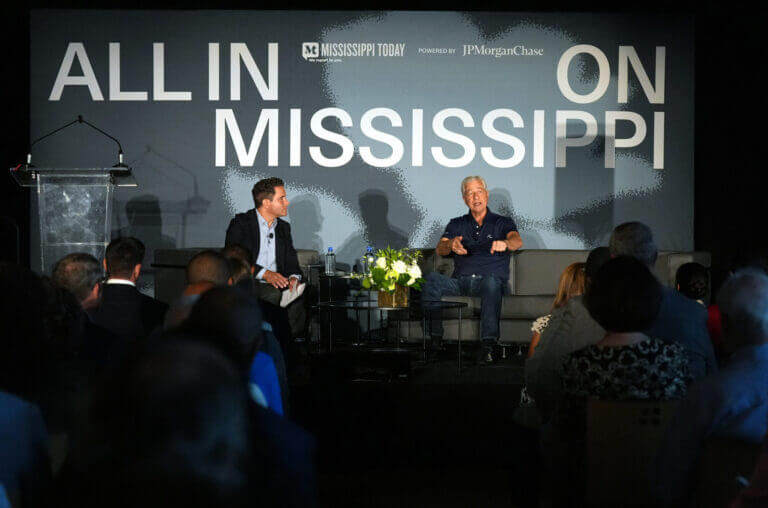
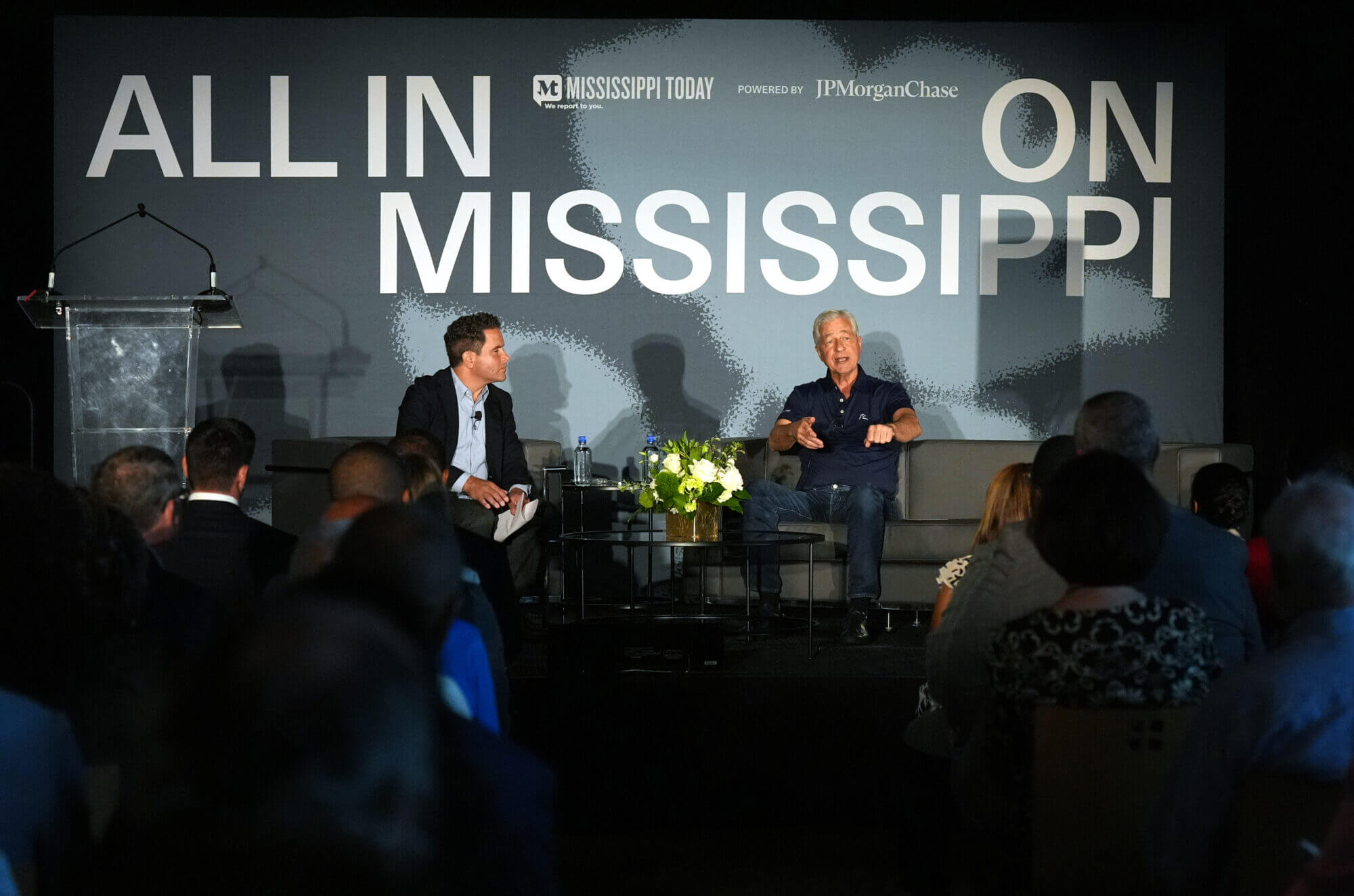
An engaging one-on-one conversation between Dimon and Deep South Today CEO Warwick Sabin.
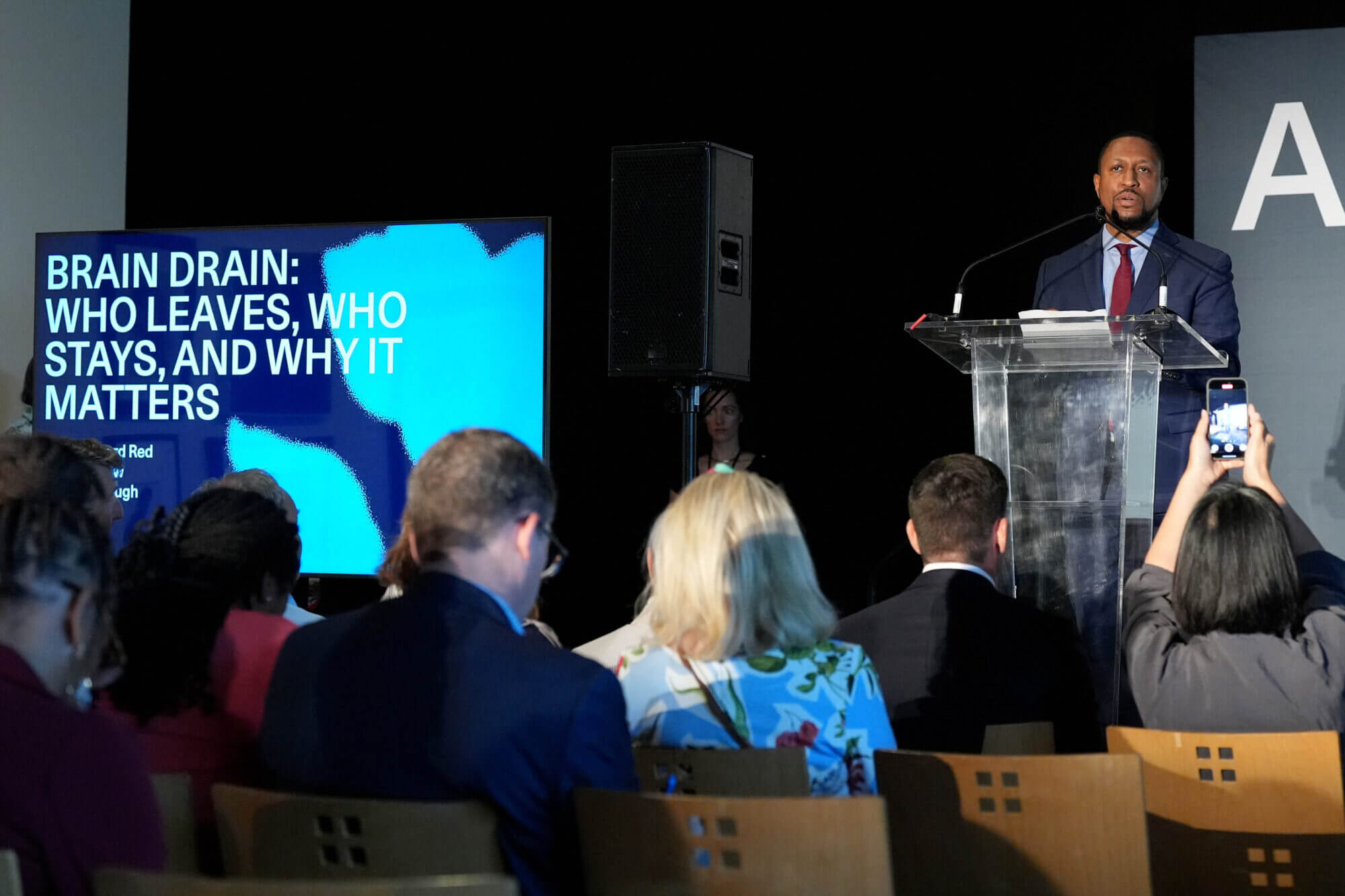
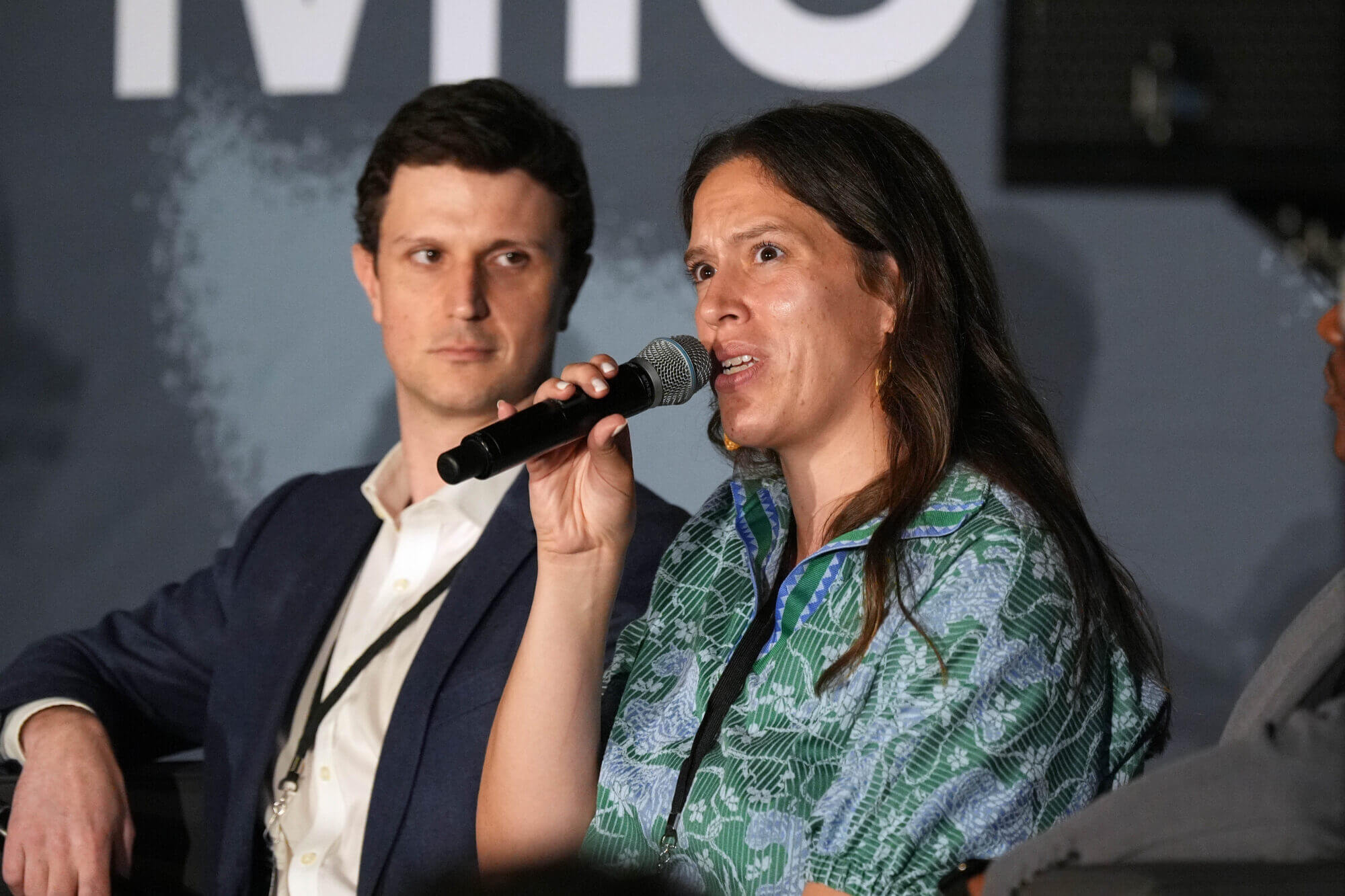
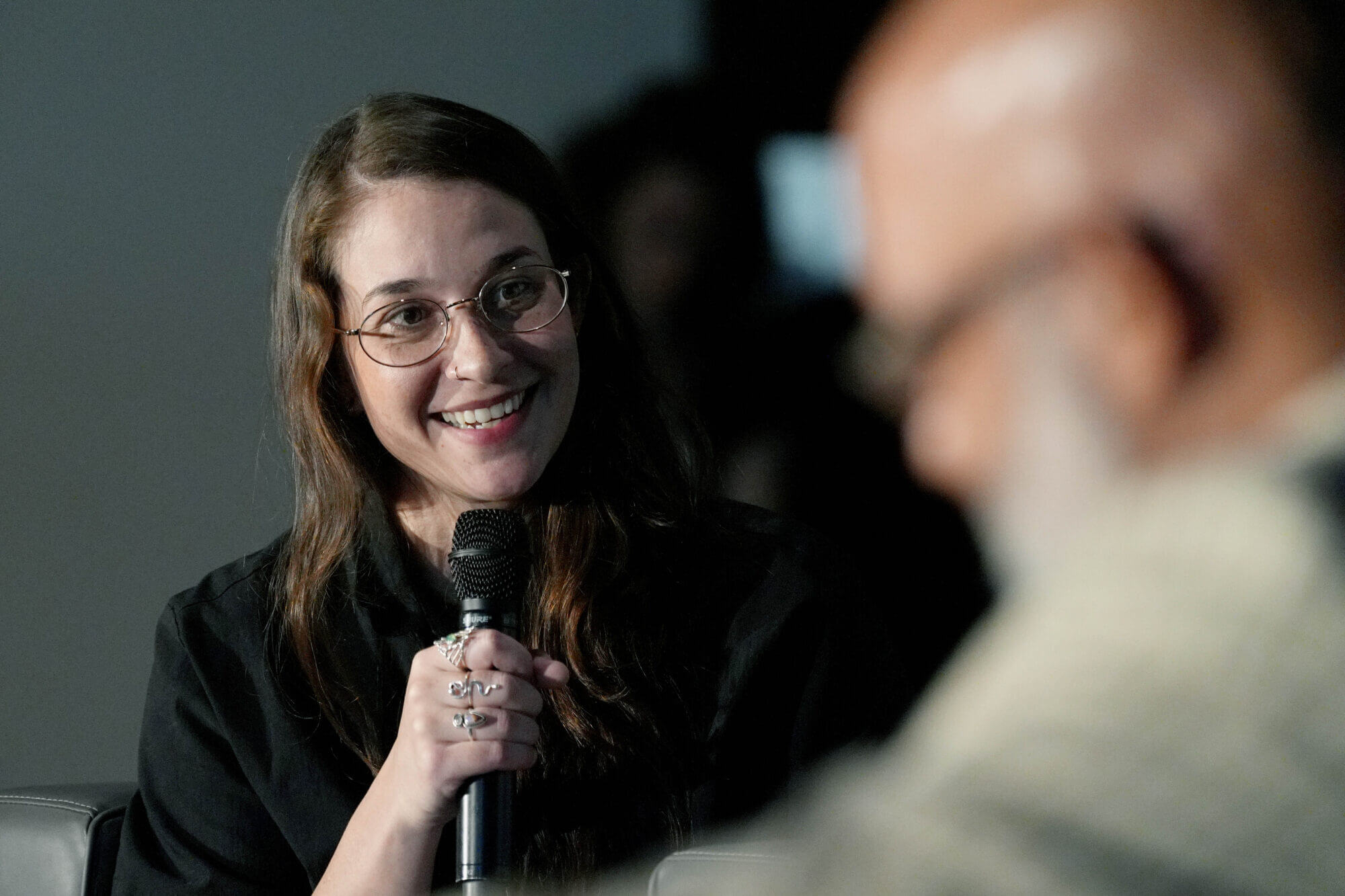
A panel discussion about Mississippi’s brain drain problem and some potential solutions to it featuring moderator Rita Brent, a comedian and storyteller, and Rethink Mississippi Founder Jake McGraw, the Center for Mississippi Food Systems Co-Steward Liz Broussard Red, and MS Delta Programs for Partnership for a Healthier America Director Tyler Yarbrough.
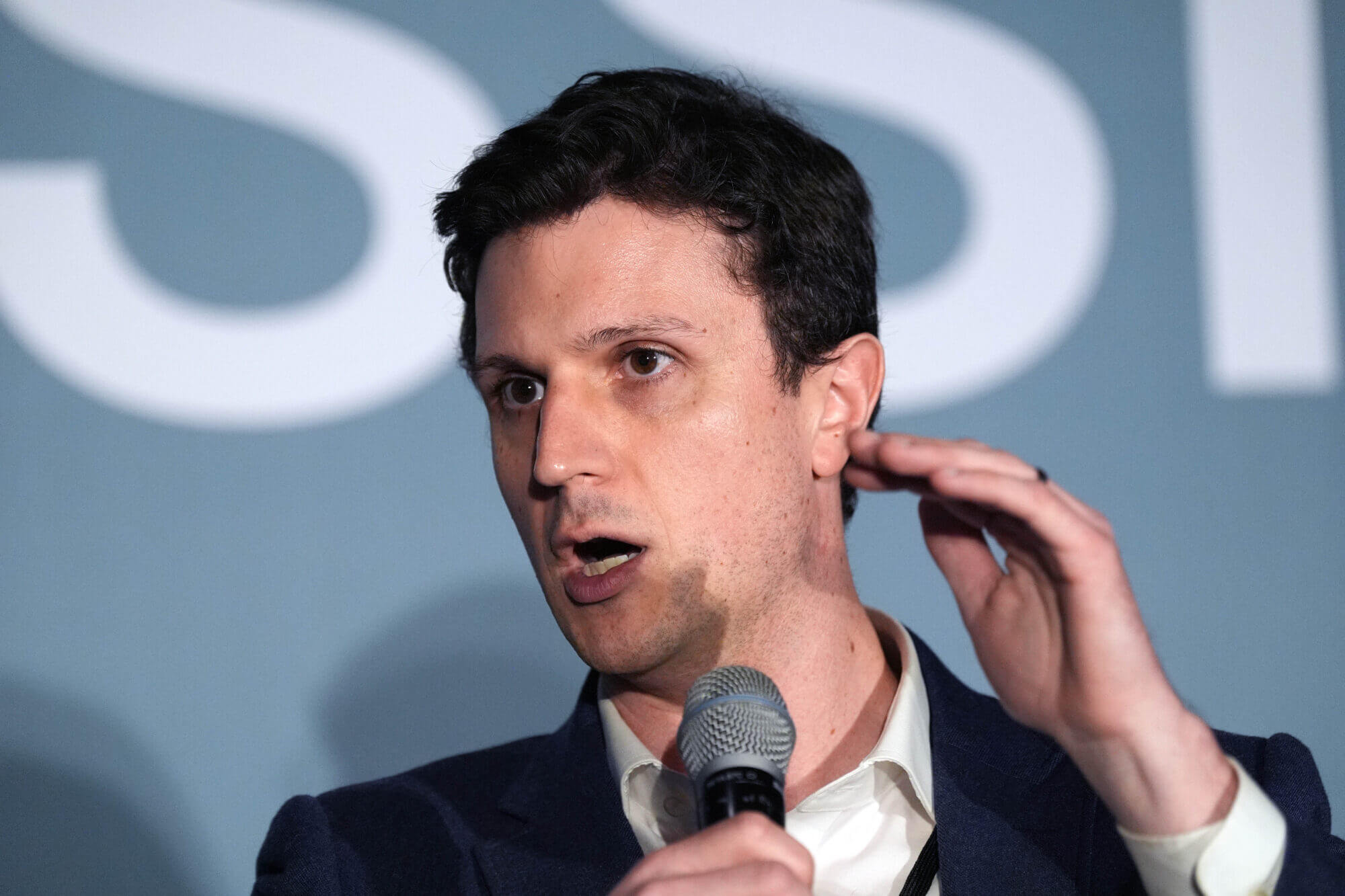
A one-on-one conversation between Duff and Mississippi Today Editor-in-Chief Adam Ganucheau about Duff’s business success in Mississippi and his political future.
A panel discussion about the past, present and future of downtown Jackson and its importance to the state’s overall growth featuring moderator Anna Wolfe of Mississippi Today, Jackson Mayor John Horhn, Downtown Jackson Partners President Liz Brister and Jackson Redevelopment Authority Executive Director Christopher Pike.
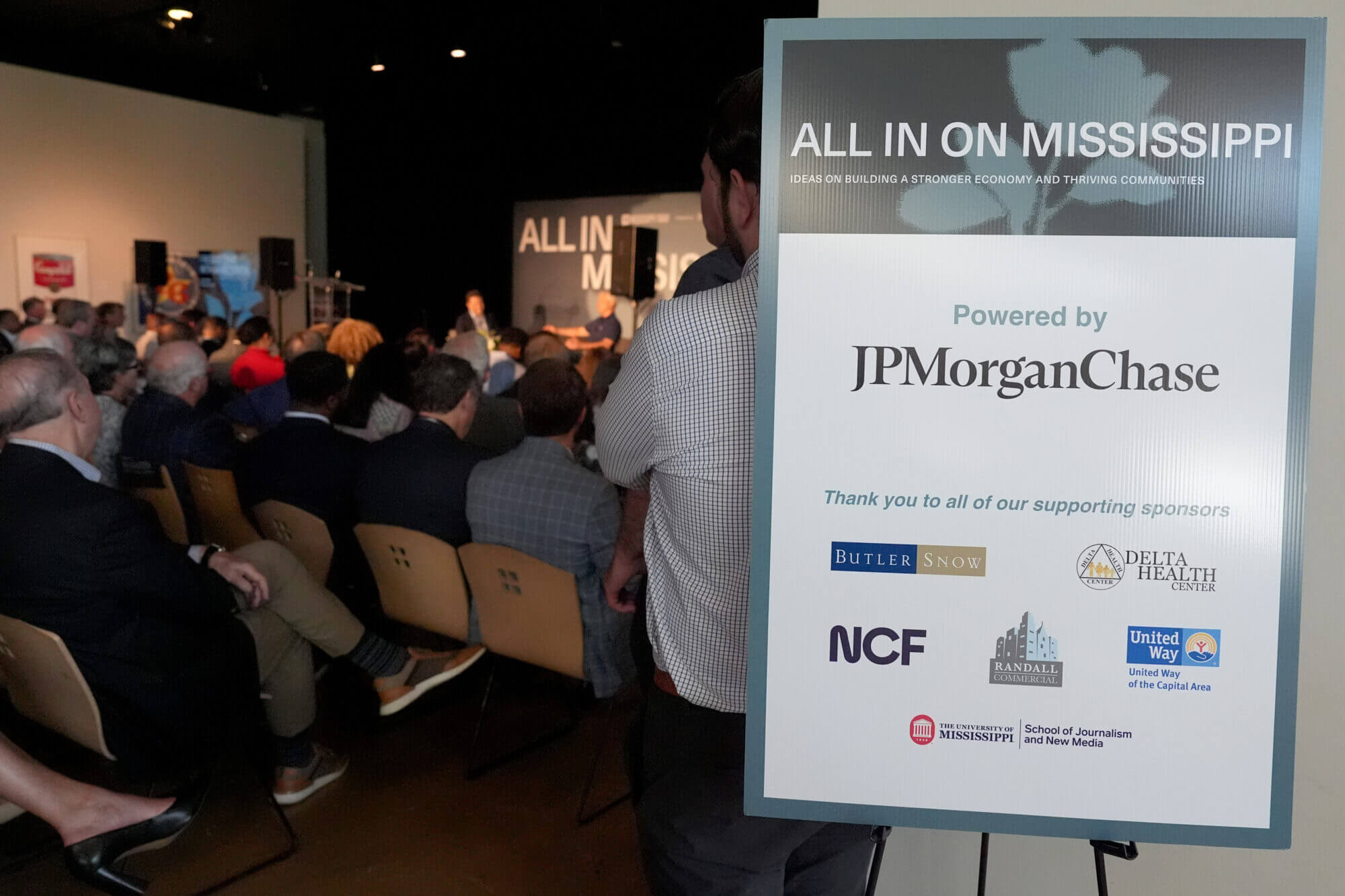
Mississippi Today and Deep South Today thanks JPMorgan Chase for sponsoring the event. We also thank our supporting sponsors: Butler Snow, University of Mississippi School of Journalism and New Media, Delta Health Center, Randall Commercial, United Way of the Capital Area, Singleton Schreiber, and the Nathan Cummings Foundation.
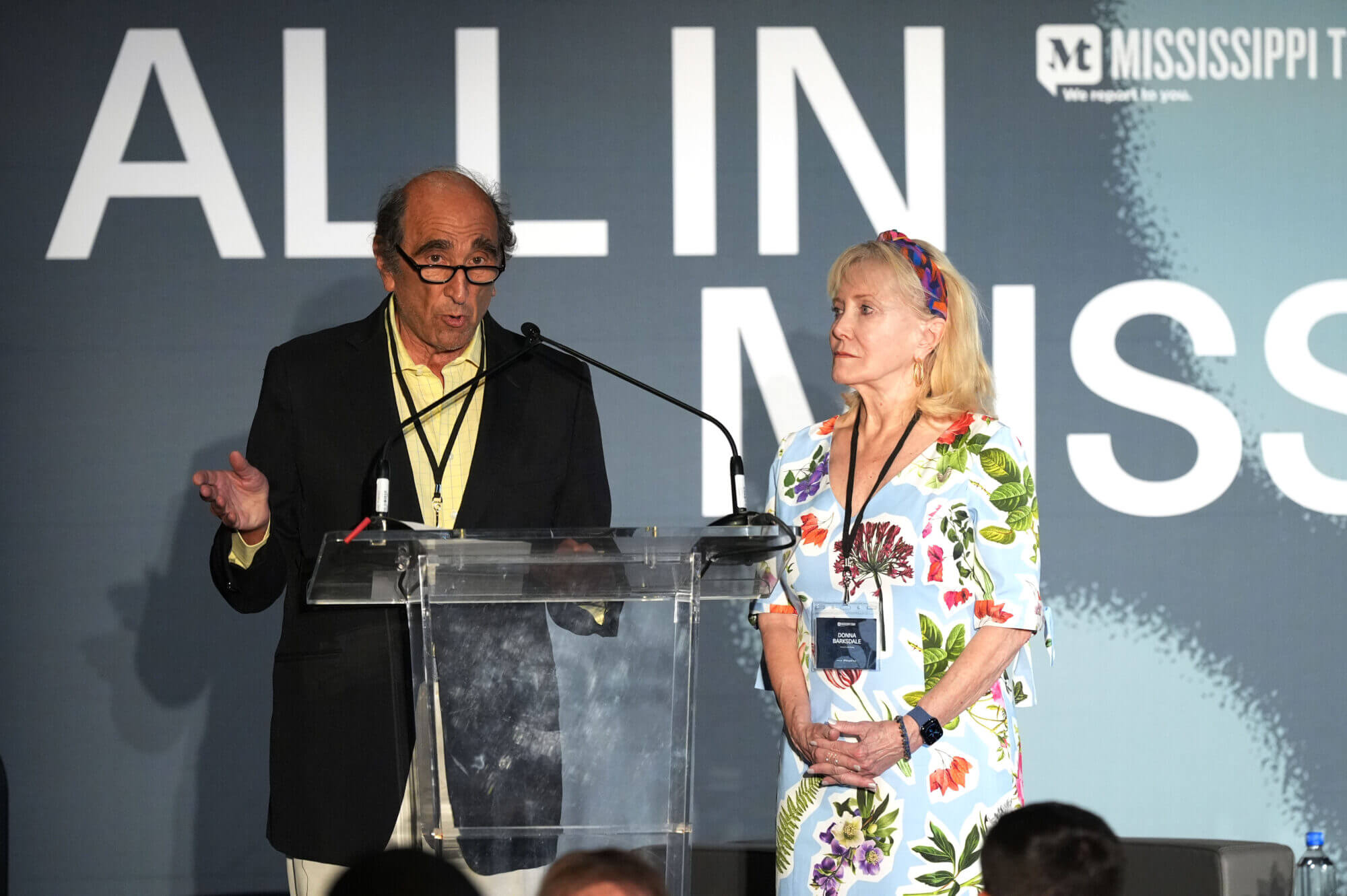
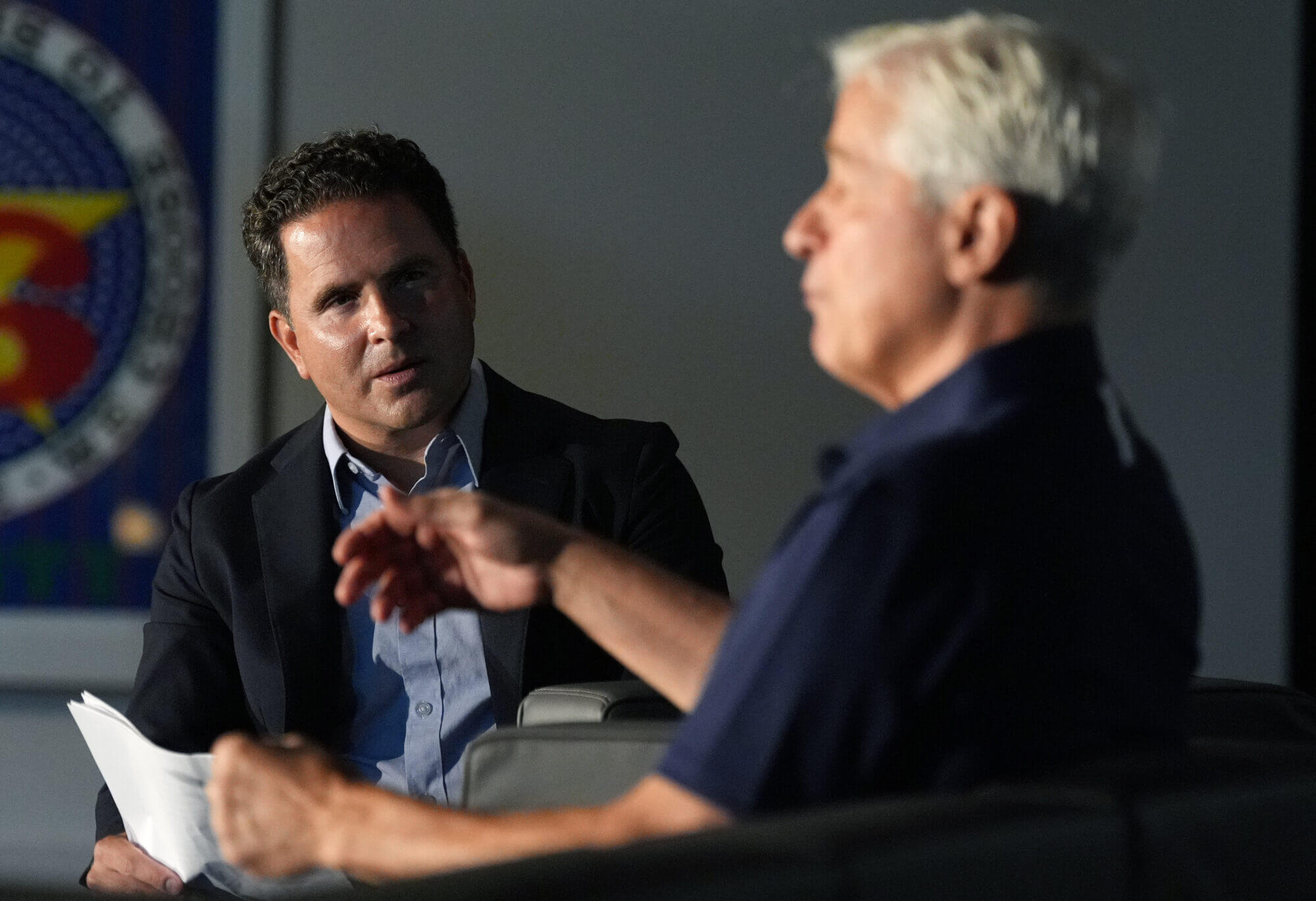
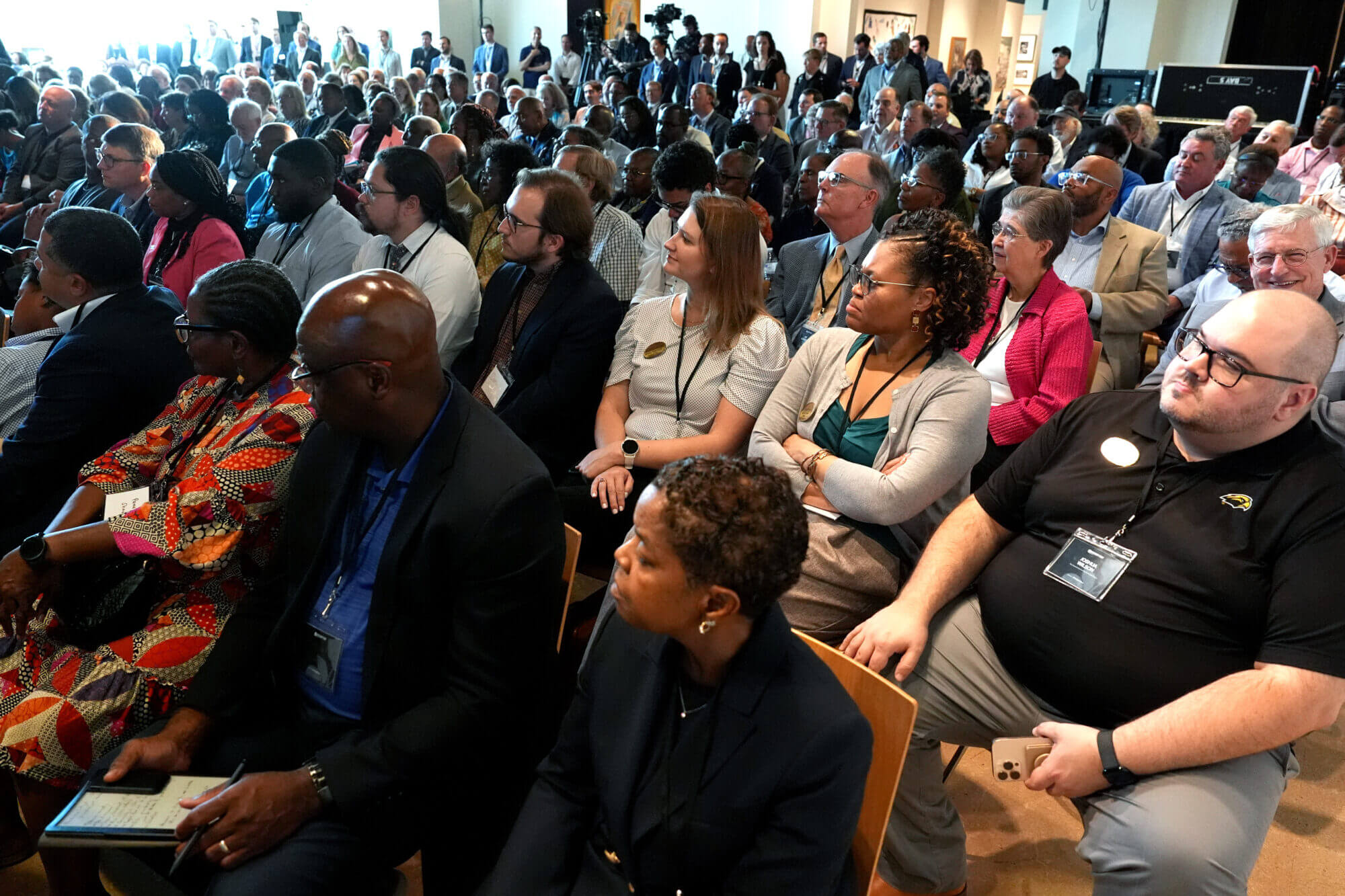
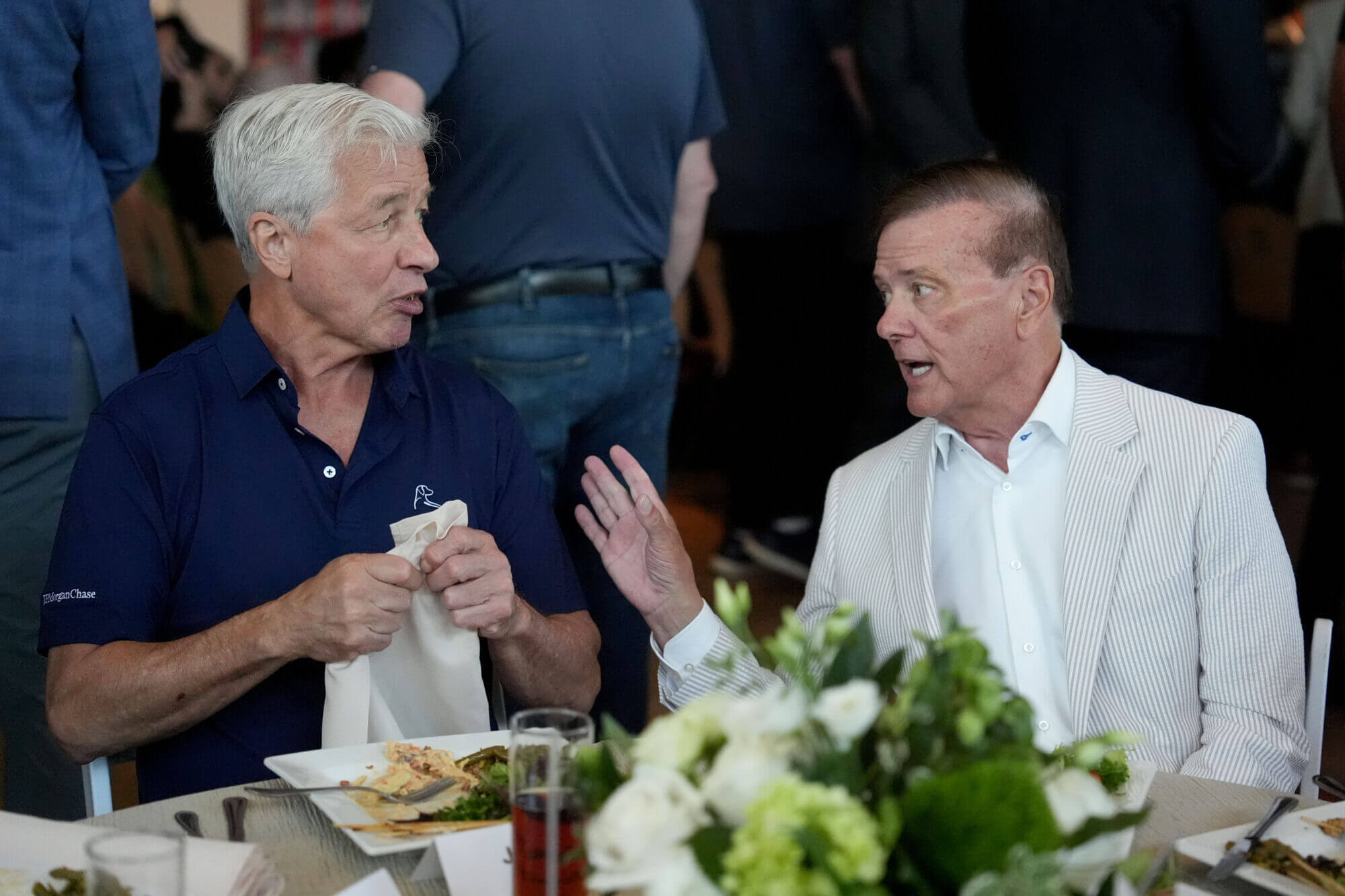
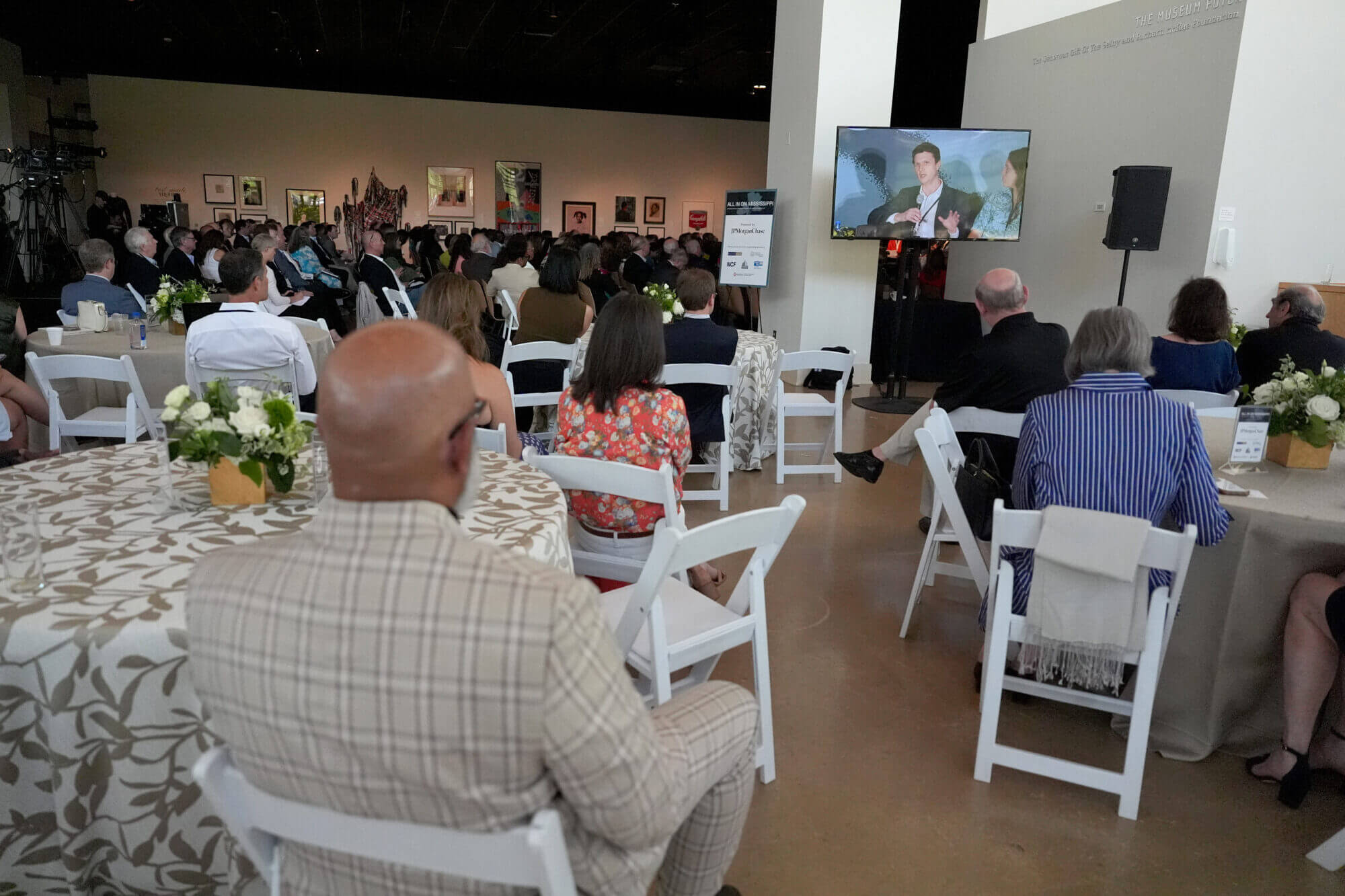
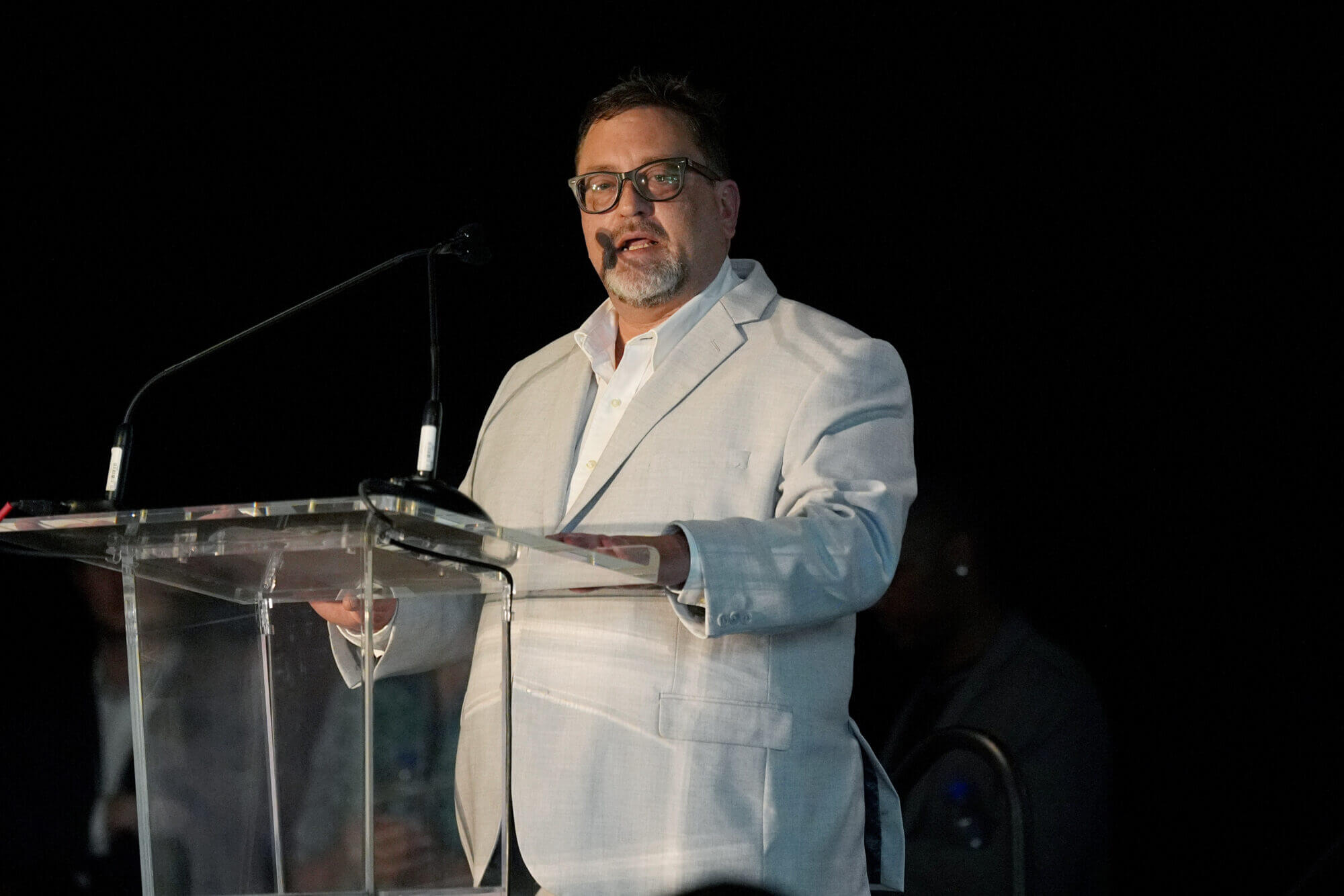
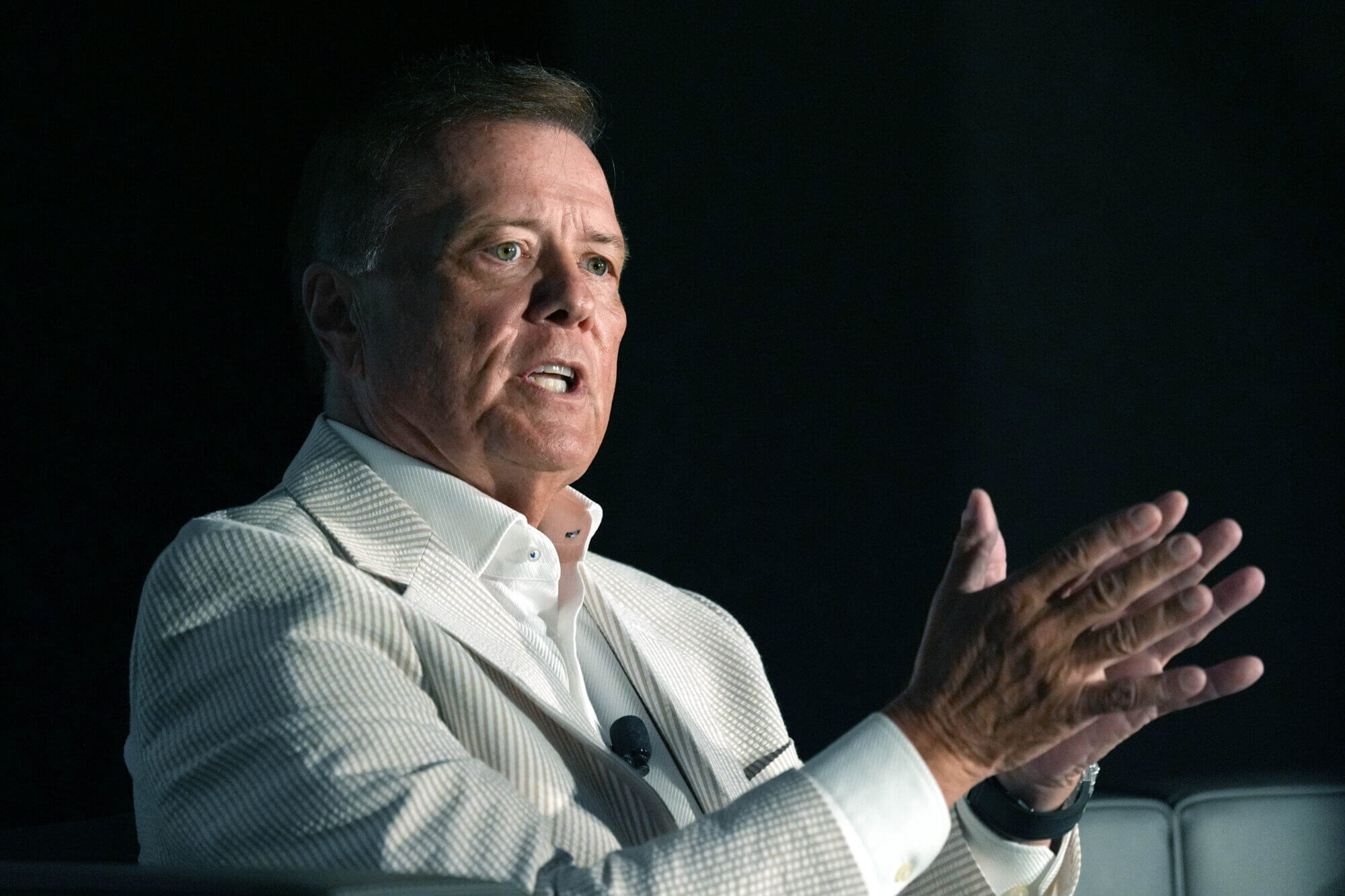
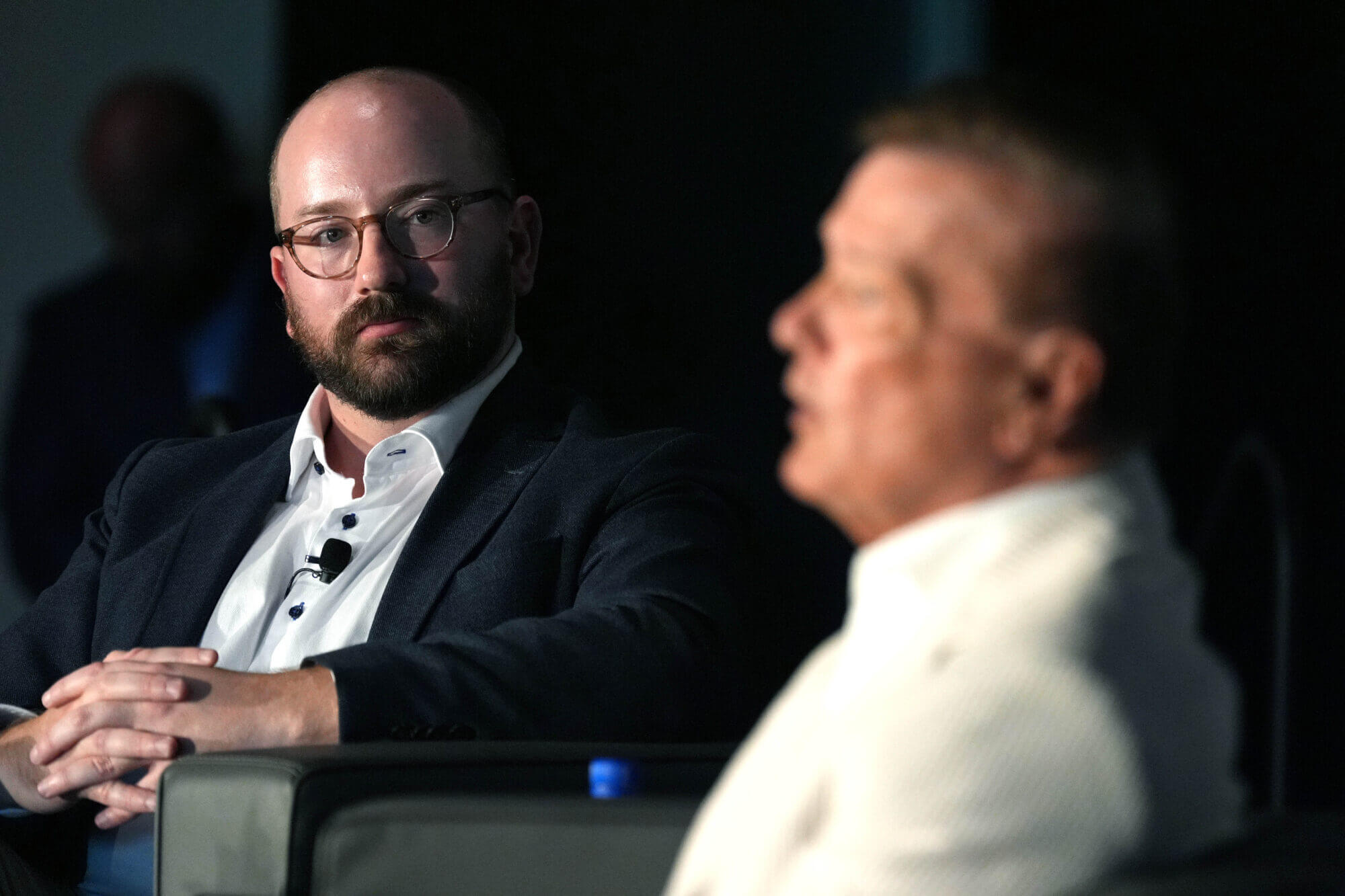
JPMorgan Chase Chairman and CEO Jamie Dimon, right, answers questions from Warwick Sabin, president and CEO of Deep South Today, during “All In on Mississippi,” a civic and economic forum hosted by Mississippi Today and Deep South Today and sponsored by JPMorgan Chase, Monday, July 28, 2025, at the Mississippi Art Museum in Jackson, Miss. (Rogelio V. Solis for Mississippi Today)JPMorgan Chase Chairman and CEO Jamie Dimon speaks during “All In on Mississippi,” a civic and economic forum hosted by Mississippi Today and Deep South Today and sponsored by JPMorgan Chase, Monday, July 28, 2025, at the Mississippi Art Museum in Jackson, Miss. (Rogelio V. Solis for Mississippi Today)Andrew Lack and Donna Barksdale, founders of Mississippi Today and board members of Deep South Today, deliver greetings to “All In on Mississippi,” a civic and economic themed forum hosted by Mississippi Today and Deep South Today and sponsored by JPMorgan Chase, Monday, July 28, 2025, at the Mississippi Art Museum in Jackson, Miss. (Rogelio V. Solis for Mississippi Today)JPMorgan Chase Chairman and CEO Jamie Dimon, right, answers questions from Warwick Sabin, president and CEO of Deep South Today, during “All In on Mississippi,” a civic and economic forum hosted by Mississippi Today and Deep South Today and sponsored by JPMorgan Chase, Monday, July 28, 2025, at the Mississippi Art Museum in Jackson, Miss. (Rogelio V. Solis for Mississippi Today)An overflow audience listens to “All In on Mississippi,” a civic and economic forum hosted by Mississippi Today and Deep South Today and sponsored by JPMorgan Chase, Monday, July 28, 2025, at the Mississippi Art Museum in Jackson, Miss. (Rogelio V. Solis for Mississippi Today)JPMorgan Chase Chairman and CEO Jamie Dimon, center left, and Mississippi businessman Tommy Duff speak with leadership of Mississippi Today prior to their presentations at “All In on Mississippi,” a civic and economic forum hosted by Mississippi Today and Deep South Today and sponsored by JPMorgan Chase, Monday, July 28, 2025, at the Mississippi Art Museum in Jackson, Miss. (Rogelio V. Solis for Mississippi Today)An overflow audience listen to speakers during the “All In on Mississippi,” a civic and economic forum hosted by Mississippi Today and Deep South Today and sponsored by JPMorgan Chase, Monday, July 28, 2025, at the Mississippi Art Museum in Jackson, Miss. (Rogelio V. Solis for Mississippi Today)JPMorgan Chase Chairman and CEO Jamie Dimon, left, and Mississippi businessman Tommy Duff confer during lunch prior to their presentations at “All In on Mississippi,” a civic and economic forum hosted by Mississippi Today and Deep South Today and sponsored by JPMorgan Chase, Monday, July 28, 2025, at the Mississippi Art Museum in Jackson, Miss. (Rogelio V. Solis for Mississippi Today)Tray Hairston, attorney at Butler Snow and Deep South Today board member, speaks during the “All In on Mississippi,” a forum hosted by Mississippi Today and Deep South Today and sponsored by JPMorgan Chase, Monday, July 28, 2025, at the Mississippi Art Museum in Jackson, Miss. (Rogelio V. Solis for Mississippi Today)Rita Brent, a comedian, writer and public speaker, serves as moderator during a session of the “All In on Mississippi,” forum hosted by Mississippi Today and Deep South Today and sponsored by JPMorgan Chase, Monday, July 28, 2025, at the Mississippi Art Museum in Jackson, Miss. (Rogelio V. Solis for Mississippi Today)Jake McGraw, policy director at Working Together Mississippi and founder of Rethink Mississippi, left, listens to Liz Broussard Red, co-steward at the Center for Mississippi Food Systems, speak during the “All In on Mississippi,” a forum hosted by Mississippi Today and Deep South Today and sponsored by JPMorgan Chase, Monday, July 28, 2025, at the Mississippi Art Museum in Jackson, Miss. (Rogelio V. Solis for Mississippi Today)An overflow audience watches a session during the “All In on Mississippi,” a civic and economic forum hosted by Mississippi Today and Deep South Today and sponsored by JPMorgan Chase, Monday, July 28, 2025, at the Mississippi Art Museum in Jackson, Miss. (Rogelio V. Solis for Mississippi Today)Tyler Yarbrough, director of Mississippi Delta Programs for Partnership for a Healthier America, speaks at the “All In on Mississippi,” a civic and economic forum hosted by Mississippi Today and Deep South Today and sponsored by JPMorgan Chase, Monday, July 28, 2025, at the Mississippi Art Museum in Jackson, Miss. (Rogelio V. Solis for Mississippi Today)Jake McGraw, policy director at Working Together Mississippi and founder of Rethink Mississippi, speaks at the “All In on Mississippi,” a civic and economic forum hosted by Mississippi Today and Deep South Today and sponsored by JPMorgan Chase, Monday, July 28, 2025, at the Mississippi Art Museum in Jackson, Miss. (Rogelio V. Solis for Mississippi Today)Attendees at “All In on Mississippi,” a civic and economic forum hosted by Mississippi Today and Deep South Today and sponsored by JPMorgan Chase, Monday, July 28, 2025, at the Mississippi Art Museum in Jackson, Miss. (Rogelio V. Solis for Mississippi Today)Geoff Pender, Mississippi Today’s politics and government editor, presents speakers during the “All In on Mississippi,” a civic and economic forum hosted by Mississippi Today and Deep South Today and sponsored by JPMorgan Chase, Monday, July 28, 2025, at the Mississippi Art Museum in Jackson, Miss. (Rogelio V. Solis for Mississippi Today)Tommy Duff, a Mississippi businessman, speaks during his session at the “All In on Mississippi” forum hosted by Mississippi Today and Deep South Today and sponsored by JPMorgan Chase, Monday, July 28, 2025, at the Mississippi Art Museum in Jackson, Miss. (Rogelio V. Solis for Mississippi Today)Adam Ganucheau, Mississippi Today’s editor-in-chief, left, listens as Tommy Duff, a Mississippi businessman, answers a question during their session at the “All In on Mississippi,” forum hosted by Mississippi Today and Deep South Today and sponsored by JPMorgan Chase, Monday, July 28, 2025, at the Mississippi Art Museum in Jackson, Miss. (Rogelio V. Solis for Mississippi Today)Panel participants discuss Downtown Jackson during the “All In on Mississippi” forum hosted by Mississippi Today and Deep South Today and sponsored by JPMorgan Chase, Monday, July 28, 2025, at the Mississippi Art Museum in Jackson, Miss. Participating panelists were Liz Brister, president of Downtown Jackson Partners, center, and Christopher Pike, executive director of the Jackson Redevelopment Authority. (Rogelio V. Solis for Mississippi Today)Jackson Mayor John Horhn speaks during “All In on Mississippi,” a forum hosted by Mississippi Today and Deep South Today and sponsored by JPMorgan Chase, Monday, July 28, 2025, at the Mississippi Art Museum in Jackson, Miss. (Rogelio V. Solis for Mississippi Today)Jackson Mayor John Horhn, left, speaks during the “All In on Mississippi,” a forum hosted by Mississippi Today and Deep South Today and sponsored by JPMorgan Chase, Monday, July 28, 2025, at the Mississippi Art Museum in Jackson, Miss. Participating panelists were Liz Brister, president of Downtown Jackson Partners, center, and Christopher Pike, executive director of the Jackson Redevelopment Authority. (Rogelio V. Solis for Mississippi Today)Anna Wolfe, Mississippi Today’s Jackson editor, serves as moderator during a session of the “All In on Mississippi,” forum hosted by Mississippi Today and Deep South Today and sponsored by JPMorgan Chase, Monday, July 28, 2025, at the Mississippi Art Museum in Jackson, Miss. (Rogelio V. Solis for Mississippi Today)Mary Margaret White, Mississippi Today’s CEO and executive director, delivers closing remarks at the “All In on Mississippi,” a civic and economic forum hosted by Mississippi Today and Deep South Today and sponsored by JPMorgan Chase, Monday, July 28, 2025, at the Mississippi Art Museum in Jackson, Miss. (Rogelio V. Solis for Mississippi Today)
The Mississippi Highway Patrol suspended the state trooper who failed to obey a subpoena to testify in a DUI case involving the current son-in-law of Rankin County Sheriff Bryan Bailey, Mississippi Today has learned.
That son-in-law, Steven Frederick Jr., and another law enforcement officer are now charged with manslaughter in an unrelated case in 2022 while both were Capitol Police officers.
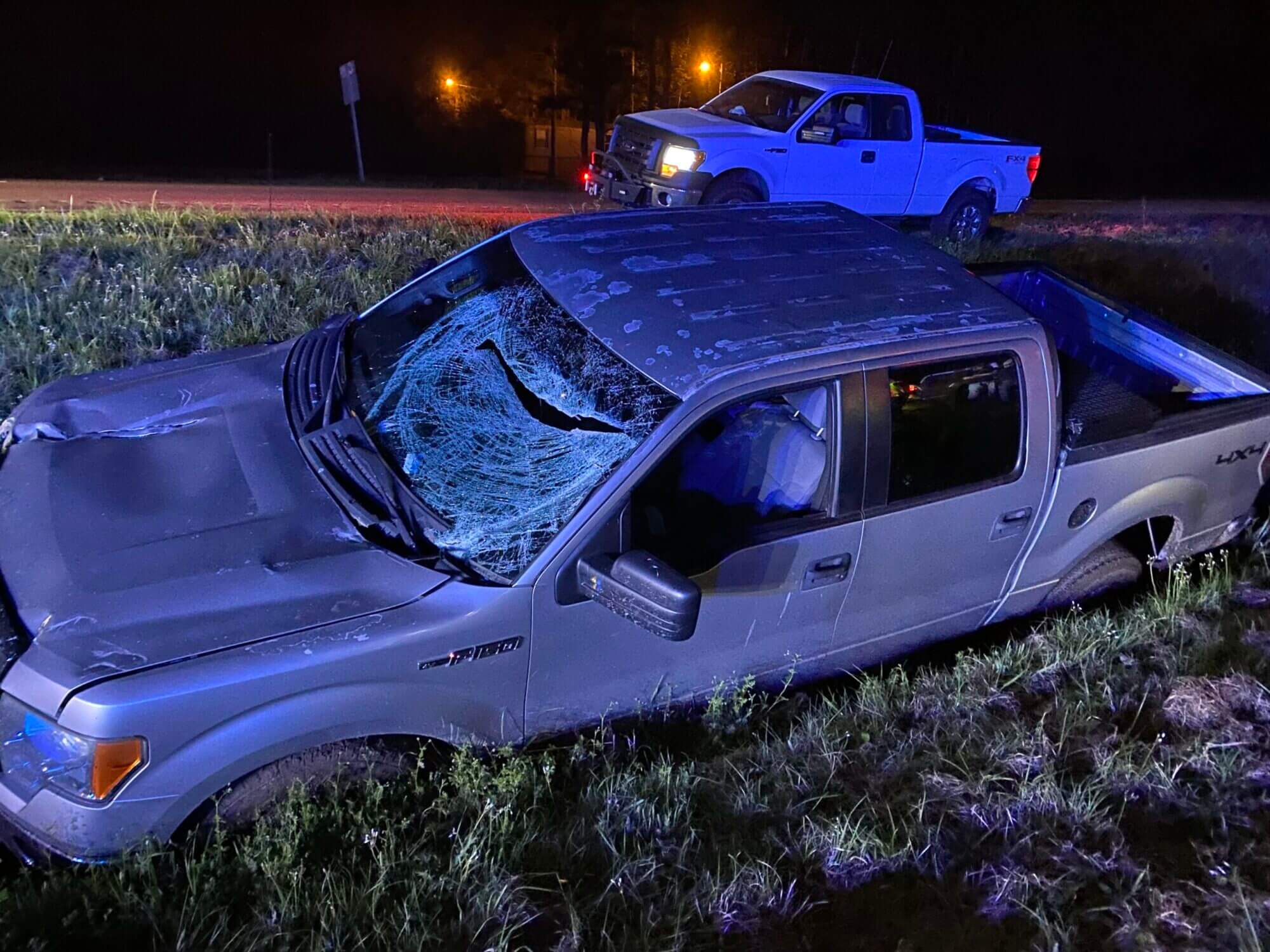
On March 12, 2023,Frederick totaled his Capitol Police Ford F-150 on U.S. 49 South in Covington County, just past the Simpson County line.
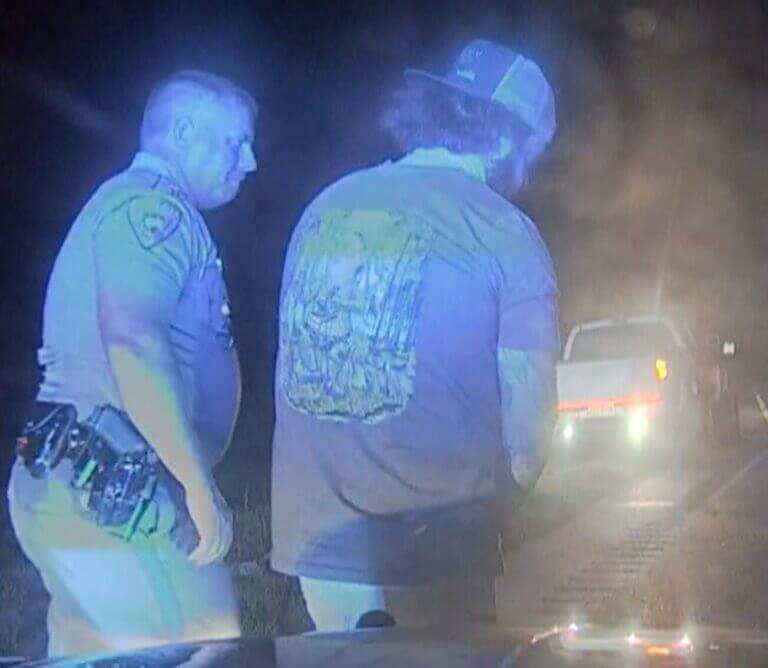
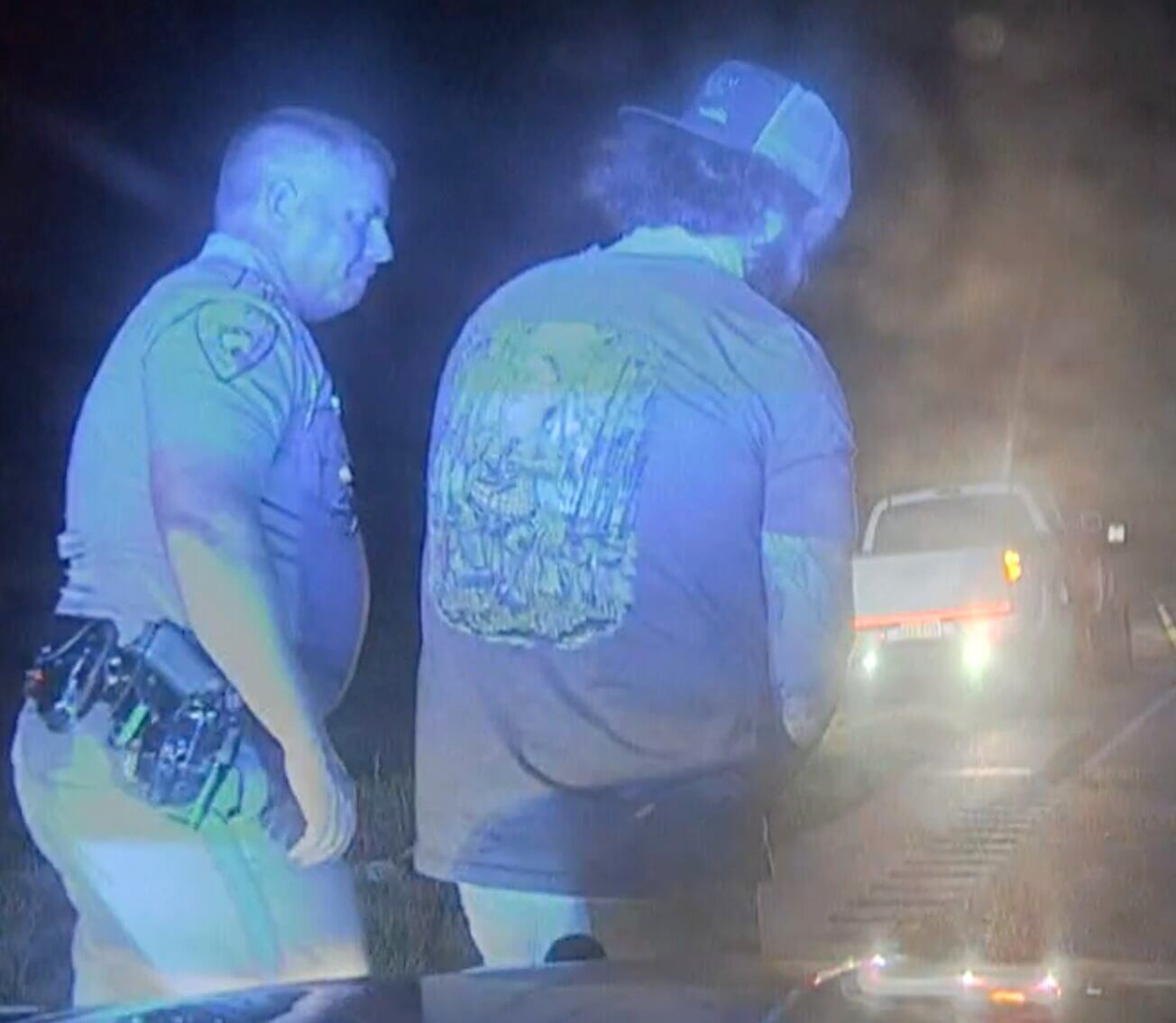
When a trooper arrived, he told Frederick in a dashcam video obtained by Mississippi Today that he wanted to give the Capitol Police officer a handheld breathalyzer test “to see how high you are.”
Frederick flunked the test with a .15 score, nearly twice the legal limit of .08. He was handcuffed and arrested for DUI.
Frederick can be seen on camera asking troopers to remove his handcuffs. They refused.
On the video, Frederick is quoted as saying he had only two beers but later can be heard telling a trooper that he had been drinking whiskey. Then he adds, “I just lost my f—ing career.”
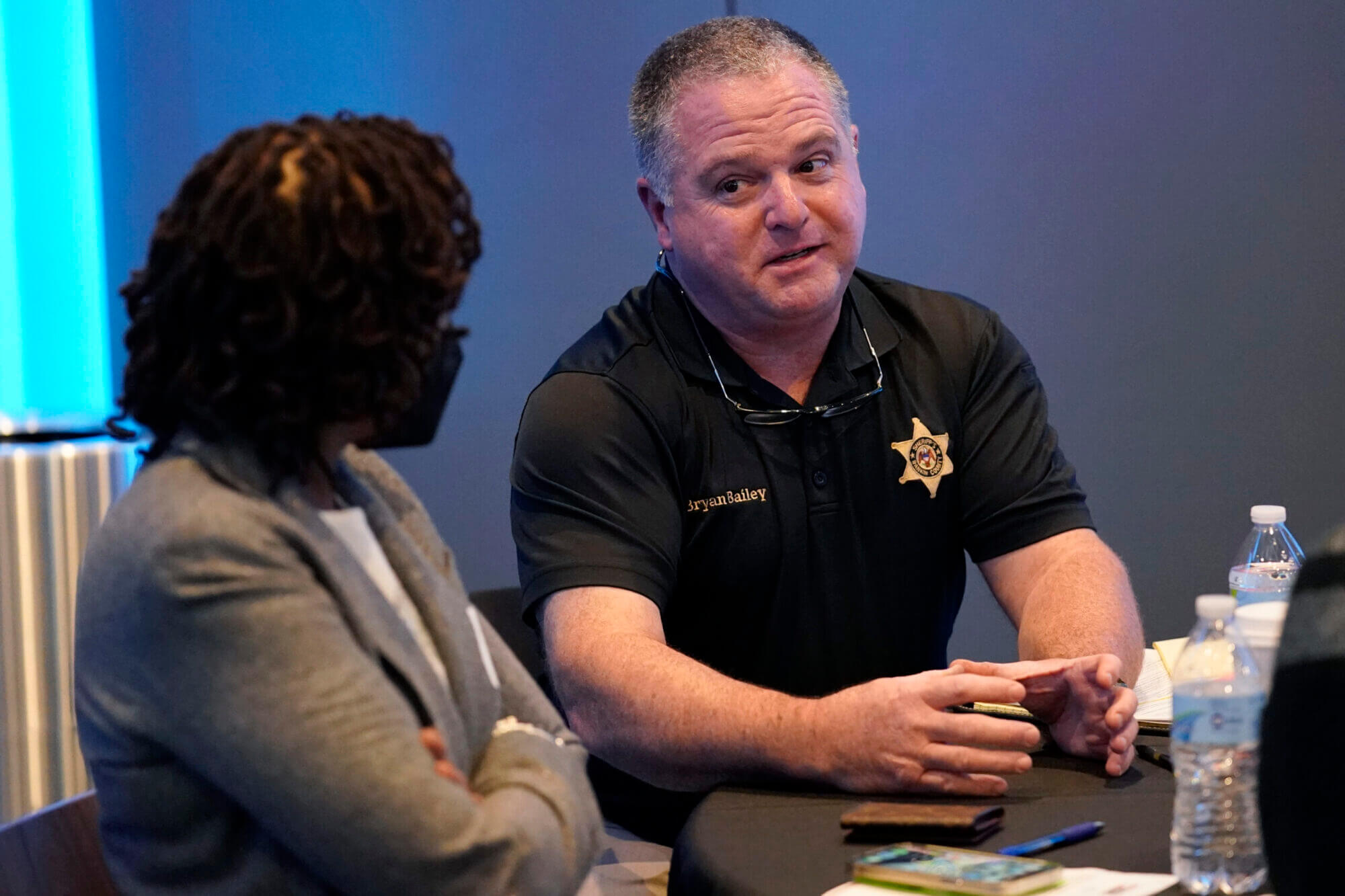
FILE – Rankin County Sheriff Bryan Bailey, right, speaks to an attendee at an employer engagement forum in Jackson, Miss., Nov. 4, 2021.(AP Photo/Rogelio V. Solis, File)
Fellow troopers say Clay Loftin told them that Bailey appeared on the scene and asked if he could take Frederick with him. They said Loftin told them he replied to the sheriff, “No, he’s coming with me.”
Bailey told WLBT in 2023 that he spoke to Loftin a “handful” of times and that he told the trooper to “do his job.”
If Bailey had taken Frederick with him, prosecution would have proved difficult, because results from handheld breathalyzers aren’t admissible in court. This is why DUI suspects are tested on machine breathalyzers.
At the Covington County Jail, Loftin put Frederick on the machine breathalyzer, which tested him at .127, according to the arrest report.
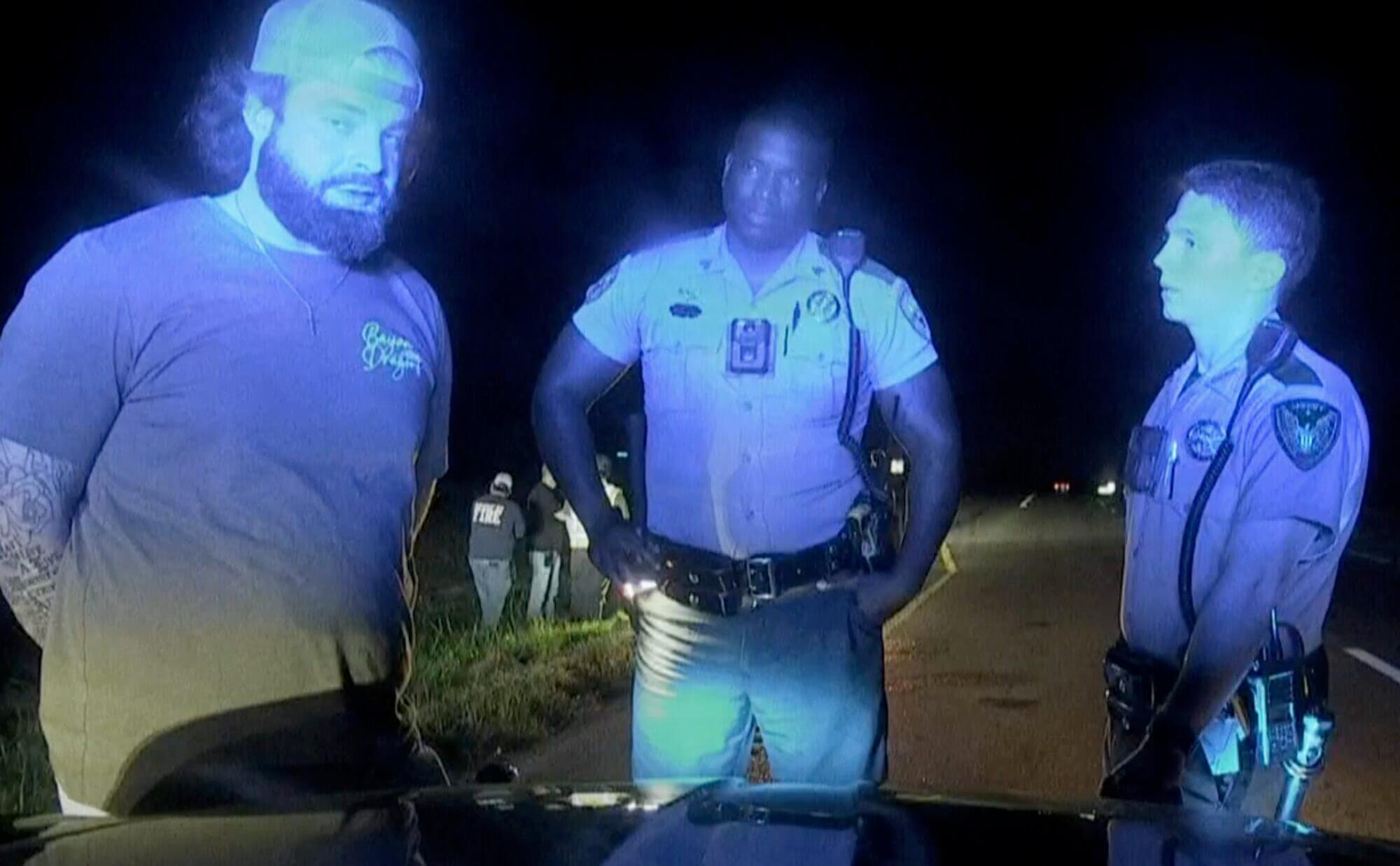
Steven Frederick with two unidentified state troopers on March 12, 2023, in Covington County. Credit: Courtesy: of the Mississippi Highway Patrol
After Frederick was jailed, Covington County Sheriff Darrell M. Perkins released him without bond into Bailey’s custody. He said Bailey told him he was taking Frederick to a hospital.
State authorities have learned that a prosecutor, who wasn’t from Covington County, said Bailey called him and asked him what would happen if a trooper didn’t show up for a DUI hearing and the prosecutor replied that the case would be dismissed.
Bailey has denied these allegations. “Whoever said that I talked to a prosecutor is a liar,” he told WLBT. “That is a completely false lie.”
Authorities have also learned that after the wreck, Bailey reportedly telephoned Frederick’s supervisor at Capitol Police, Porfirio Grimaldo, telling the supervisor that he should keep Frederick on the force because “the DUI has been taken care of.”
Contacted for comment, Grimaldo referred all questions to the department’s lawyers. “Our MDPS legal team is unable to comment on a conversation they were not a party to,” said spokesperson Bailey Martin.
Neither Bailey’s lawyer, Jason Dare, nor Bailey responded to questions about this.
Five months after the accident, Loftin failed to show up as required to testify in the DUI case against Frederick. A Covington County judge dismissed the case.
Loftin was one of four troopers scheduled to testify that day in justice court. He was the only one who didn’t appear.
Afterward, fellow troopers said Loftin told them he had never received a notice of the hearing and if he had, he would have been there. Electronic records, however, show he received the email and opened it.
When troopers start their jobs, they agree in advance to take a polygraph test, commonly known as a lie detector test. If they refuse to take the test, they can be fired.
After Loftin took his polygraph test, the examiner concluded the trooper showed deception when he denied that anyone pressured him to ignore the subpoena to testify in court.
The trooper received a five-day suspension with no pay, and he did not appeal, according to records obtained by Mississippi Today. He declined to respond to requests for comment.
As for Frederick, he resigned three days after the wreck “to prevent termination,” according to his certification records. He had worked for Capitol Police less than eight months and paid nothing toward the Ford F-150 he totaled.
Bailey has said he never tried to influence justice.
“I can swear on a stack of Bibles, I did not ask anyone for any help on that just because I knew the finger would be pointed at me because of that, and you know, let things take their course naturally,” the sheriff said in the 2023 WLBT interview. “I hate that it happened to him (Frederick) because he is a good guy.”
Another wreck, no charges
Capitol Police officer Steven Frederick ran over two road signs before stopping in a concrete ditch. Credit: Courtesy of Mississippi Highway Patrol
A year and a half after Frederick demolished his Capitol Police truck, he wrecked another patrol vehicle, this time as a deputy for Scott County.
Tina Hutchinson said Frederick was driving north on Highway 13 in Smith County when he hit her son’s truck so hard it turned his truck completely around. Frederick’s car careened up the driveway.
Both her son’s truck and Frederick’s patrol car were totaled, she said.
The speed limit along that stretch in Polkville is 35 mph. Frederick admitted he was doing 55 mph, Hutchinson said, and she believes it was even faster because of the damage done, the place the patrol car stopped and the lack of skid marks.
Certification records show Frederick had three previous speeding tickets, one of them resulting in a suspended driver’s license, which he attributed to a “misunderstanding” with the court.
After this accident, Frederick was sitting on the ground, saying he was hurt, Hutchinson said. “If your leg is hurting so bad, wouldn’t you wait for the ambulance?”
Instead, Sheriff Bailey again appeared on the scene and took Frederick to the hospital before troopers ever arrived, she said. “His daddy-in-law comes and picks him up.”
Neither Bailey’s lawyer nor Bailey responded to questions about this.
Frederick wasn’t charged with speeding or anything else, Hutchinson said. “Why leave the scene of an accident and not wait for the Highway Patrol?”
Officers, however, told her son that he couldn’t leave until after he spoke with troopers who had yet to arrive, she said.
Her son suffered no injuries from the wreck, she said. “I don’t know how it didn’t hurt him worse.”
Photo shows damage that Steven Frederick’s patrol car did to the truck owned by Tina Hutchinson’s son. Credit: Courtesy: Tina Hutchinson
Children sometimes play not far from the road where Frederick totaled his patrol car, she said. “What if he had slid and hit a kid?”
Manslaughter charge
Earlier this year, Frederick and Michael Lamar Rhinewalt pleaded not guilty to manslaughter in the Sept. 25, 2022, death of 25-year-old Jaylen Lewis in Jackson. Both officers were working for Capitol Police at the time.
An investigation by Mississippi Today has uncovered that Col. Steven Maxwell, then-director of the Mississippi Bureau of Narcotics, rejected hiring both officers, but Capitol Police, also part of the Department of Public Safety, hired them.
The officers reportedly told investigators that Rhinewalt shot Lewis in self-defense after Lewis drove his car toward them. A witness statement appears to back up their version of events.
According to the indictment, Frederick and Rhinewalt said this killing “was necessary to protect himself from great bodily harm or death at the hands of Lewis,” but the indictment concluded that was “not a reasonable belief under the circumstances.”
Lewis’ mother, Arkela, questioned why the officers, instead of being indicted for murder, were charged with manslaughter, defined under Mississippi law as killing a person without malice. “That’s crazy,” she said.
Frederick was released on a $10,000 cash bond on April 28, two weeks before he married Bailey’s daughter, Alexis. Frederick is set for trial Sept. 15, and Rhinewalt’s trial is set for Dec. 8.
After his indictment, the Scott County Sheriff’s Department put Frederick on administrative leave without pay. In an April 21 letter, Scott County Sheriff Mike Lee wrote that he didn’t know if Frederick would be retained.
That same month, the Department of Public Safety released Rhinewalt. He has also been indicted along with former Capitol Police officer Jeffery Alan Walker Jr. in the Aug. 14, 2022, shootings of Sinatra Rakim Jordan and Sherita Lynn Harris — six weeks before Lewis’ killing. The indictment accuses the officers of “manifesting extreme indifference to the value of human life” in the shootings. Both officers have pleaded not guilty to the aggravated assault charges.
In the wake of these shootings, the department requested funding to purchase body cameras and now requires all Capitol Police officers on patrol to wear them. In addition, the department created an Internal Affairs Division that covers the entire agency and reports to the commissioner, who worked with lawmakers to give the Board of Law Enforcement Officers Standards and Training the power to investigate complaints against law enforcement officers.
Public Safety Commissioner Sean Tindell said Internal Affairs now conducts uniformed background checks for all of the agency’s new law enforcement hires. In addition, he said the department will hold its first agency-wide cadet class in February to help ensure that all its officers are receiving the same training and understand the agency’s policies before beginning their career with the department.
In the past, the department and the divisions it oversees have operated out of multiple headquarters. In 2026, the department plans to move into a new, 146,000-square-foot headquarters in Rankin County, where all divisions will be under one roof.
Tindell said that consolidating all personnel into a single place will not only improve day-to-day communication and collaboration across divisions but will also enhance critical communication during emergencies and improve overall safety for all of Mississippi.
The state attorney general has asked a federal judge in Mississippi to explain errors in a recent ruling, which some lawyers speculated were made by artificial intelligence.
U.S. District Judge Henry T. Wingate Credit: Rogelio V. Solis / Associated Press
U.S. District Judge Henry T. Wingate issued a temporary restraining order on July 20 that paused the enforcement of a state law that prohibits diversity, equity and inclusion programs in public schools. But the order was riddled with mistakes — naming plaintiffs who weren’t parties to the suit, quoting state law incorrectly and referring to cases that don’t appear to exist.
After lawyers with Attorney General Lynn Fitch’s office asked him to correct the order last week, Wingate replaced the error-laden ruling with a corrected version. He removed the original order from the public docket entirely and backdated the new one.
Now, the AG lawyers are calling for that order to be restored to the public docket and asking for an explanation for how the errors were written into the order in the first place.
The state argues in court documents that the pending litigation will likely be appealed to the conservative U.S. 5th Circuit Court of Appeals, so maintaining a clear record of all of the documents filed on the court docket is crucial.
“All parties are entitled to a complete and accurate record of all papers filed and orders entered in this action, for the benefit of the Fifth Circuit’s appellate review,” the court filing states.
Wingate has not responded to previous requests for comment about the factual errors, and it’s unclear when he would rule on the state’s motion.
Ben Cooper is a professor at the University of Mississippi School of Law who studies AI and is a member of the Mississippi Bar’s Ethics Committee. He told Mississippi Today it may be virtually impossible to know if someone on the judge’s staff used AI to craft the order.
“The fact that it had things in it that sounded real but weren’t actually real — that’s the hallmark of somebody in the judge’s chambers using AI,” Cooper said. “But I can’t prove it and I don’t know that anyone can.”
When attorneys are caught using artificial intelligence, judges typically apply sanctions and ask for an explanation. A federal judge in Alabama last week disqualified three lawyers from the law firm Butler Snow from a case after they inadvertently included made-up citations generated by artificial intelligence in court filings.
But the power imbalance makes it more difficult to demand an explanation from a judge when the roles are reversed — especially a federal judge who has a lifetime appointment to the bench.
“I can’t say for sure that Judge Wingate has done anything wrong, so I don’t want to suggest he should be disciplined, but the system is completely different,” Cooper said. “There often is not the same kind of accountability, and it’s not as fast as with lawyers.”
The parties are scheduled to appear in front of Wingate for a hearing on Aug. 5 to argue about a preliminary injunction in the case.
Editor’s note: This Mississippi Today Ideas essay is published as part of our Brain Drain project, which seeks solutions to Mississippi’s outmigration problem. To read more about the project, click here.
“Should I stay or should I go?”
That classic line sung by The Clash could be the theme song of the Mississippi brain drain.
It’s the stark choice young people are faced with when they graduate from high school or college, and it’s often fraught with tension. As much as I wanted to spread my wings when I turned 18, leaving Mississippi came with a heavy emotional toll.
Moving away from family was only part of the guilt. I was also made to feel like I was abandoning my community. All the messages I internalized from local media and state politicians over the years blaming the brain drain for our population loss made me feel like I could only do something that would benefit myself at the expense of everyone else.
When I got to my out-of-state destination — an elite urban university with a reputation for producing public servants — there were only three other students from Mississippi in the entire undergraduate program. Some high schools from the Northeast and California sent more students in a single year, and none of them seemed to feel bad about it. Yet I can’t tell you how many former Mississippians I’ve met in other states — not necessarily internationally, just across the country — who call ourselves expats, displaced, itinerant, even prodigal.
Emily Liner Credit: John Noltner
What if it didn’t have to be that way? We’ve created a false dichotomy with the “stay or go” debate when those aren’t the only paths. Ironically, giving young Mississippians just two options for their future fuels the vicious cycle of the brain drain.
The truth is, we could go a long way toward reversing our fate by welcoming home the native Mississippians who’ve spent time away.
Mississippi’s biggest export isn’t catfish or chicken or lumber. It’s talent.
Going out of state, for any amount of time, is an opportunity to learn new things and expand professional networks. We should encourage Mississippians to pursue their dreams and then bring back the experience they’ve gained.
I finally had that epiphany when I decided to move back in my mid-30s. It wasn’t an overnight decision, but after about three years of hemming and hawing, I finally pulled the trigger on my 34th birthday in January 2020.
I moved back with one thing in mind: to be part of reversing the brain drain. I ultimately took a six-figure pay cut in the process.
Of course, I expected to have a reversal in my earnings relocating from Washington, D.C., with the highest median income nationally, to Mississippi at the other end of the table. But what surprised me wasn’t that jobs would pay less, but that there were so few jobs that could use someone with a master’s degree in business. I had work experience at a Fortune 500 technology company, but the jobs in tech in Mississippi were at call centers.
Business school provided me with one ace up my sleeve: an interest in entrepreneurship. With the low cost of living that Mississippi so prominently advertises, I made the ultimate gamble and opened a small business. I knew I was taking a big risk, but I wasn’t prepared for how hard it would be to sustain a brick-and-mortar which depends on the economic health and social infrastructure of a rural community. I’m only still hanging in there because I’ve been able to raise funding from out of state.
Now that I’m getting older and my fellow elder millennials are starting to think about coming home to raise their families or care for aging parents, I believe there is a real opportunity for Mississippi to welcome its prodigal sons and daughters home. Yet this would only be tougher if I had more personally at stake. When I uprooted, it was just me and my dog. But for those who are married and have kids, who have different racial backgrounds, and who are gay, it’s a much more complicated decision.
Do you move to Mississippi if you’re worried your spouse can’t get a job as good as yours?
Or do you move to Mississippi if you are concerned about the quality of the schools your children would attend; the local public university will get shut down by the state Legislature; that there is no bookstore or movie theater or music venue to give you something to do on the weekends; the quality of the drinking water; the quality of medical care in an emergency because rural hospitals have closed down?
Or what if you are concerned that you might be discriminated against looking for an apartment to rent, or ostracized socially, or physically threatened because of who you are?
These problems are solvable. The only problem is if we have the political will to solve them.
Here’s the funny thing: These concerns aren’t all that different from what anyone would care about when deciding where they want to live. We don’t have to shame people into never leaving or put golden handcuffs on them to make a deal to stay or devise a crazy scheme to poach people. We just need to invest in our own well-being.
I’ve made the best friends of my life since returning to Mississippi, and I’ve seen them leave one by one as it became impossible for them to stay because they could make a better living somewhere else. In the end, it’s that simple.
The more that Mississippi does to welcome back expats, the more native Mississippians will want to stay, and the more it will attract new first-time residents, too. We just have to build a Mississippi that will be better tomorrow than it was yesterday.
Emily Liner is the founder of Friendly City Books, an independent bookstore in Columbus, and of the Friendly City Books Community Connection, a special project of the CREATE Foundation. A native of Bay Saint Louis, she graduated from the Mississippi School for Mathematics and Science, Georgetown University and the University of North Carolina and worked in public policy and the private sector for over a decade in Washington, D.C., before returning to her home state.
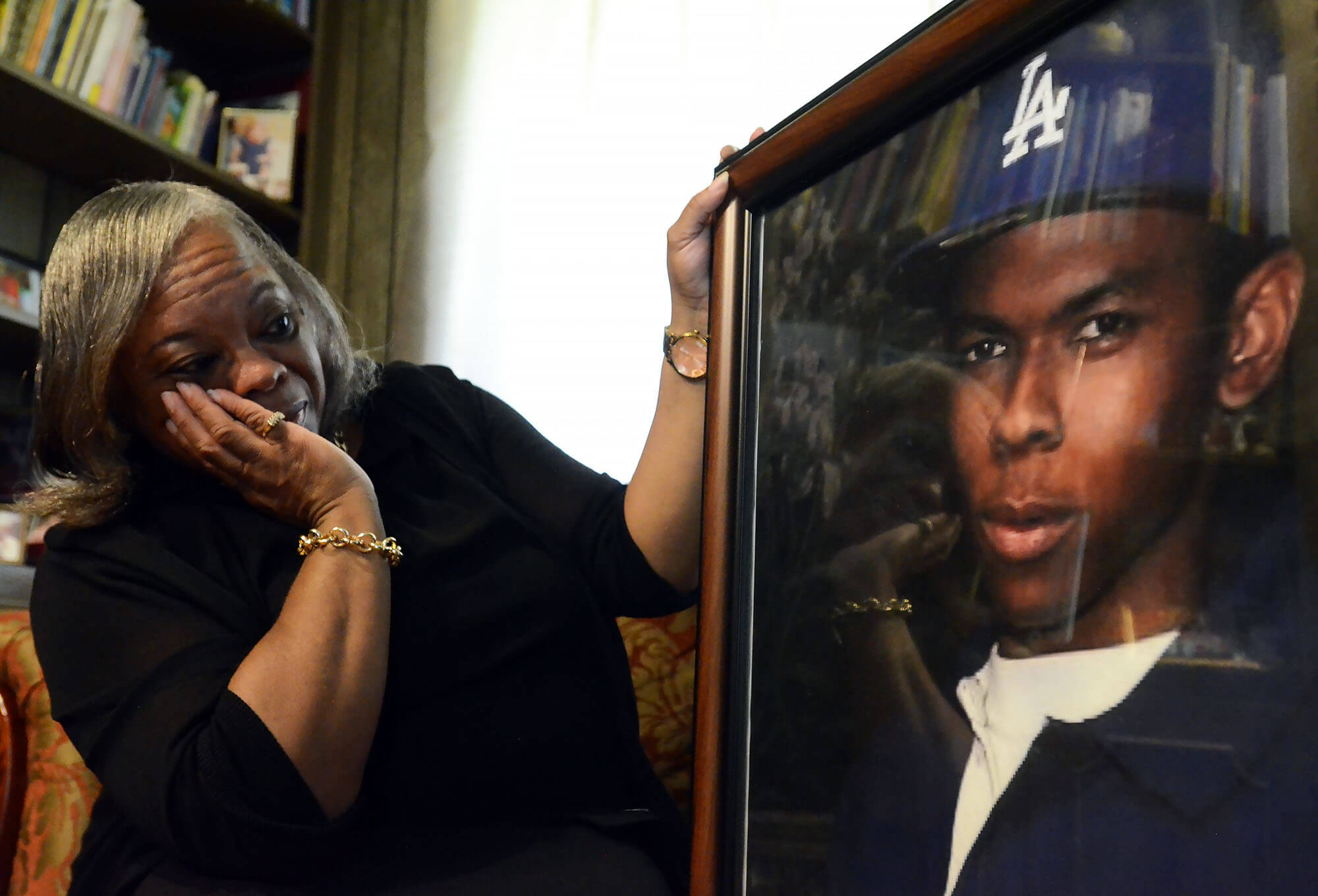
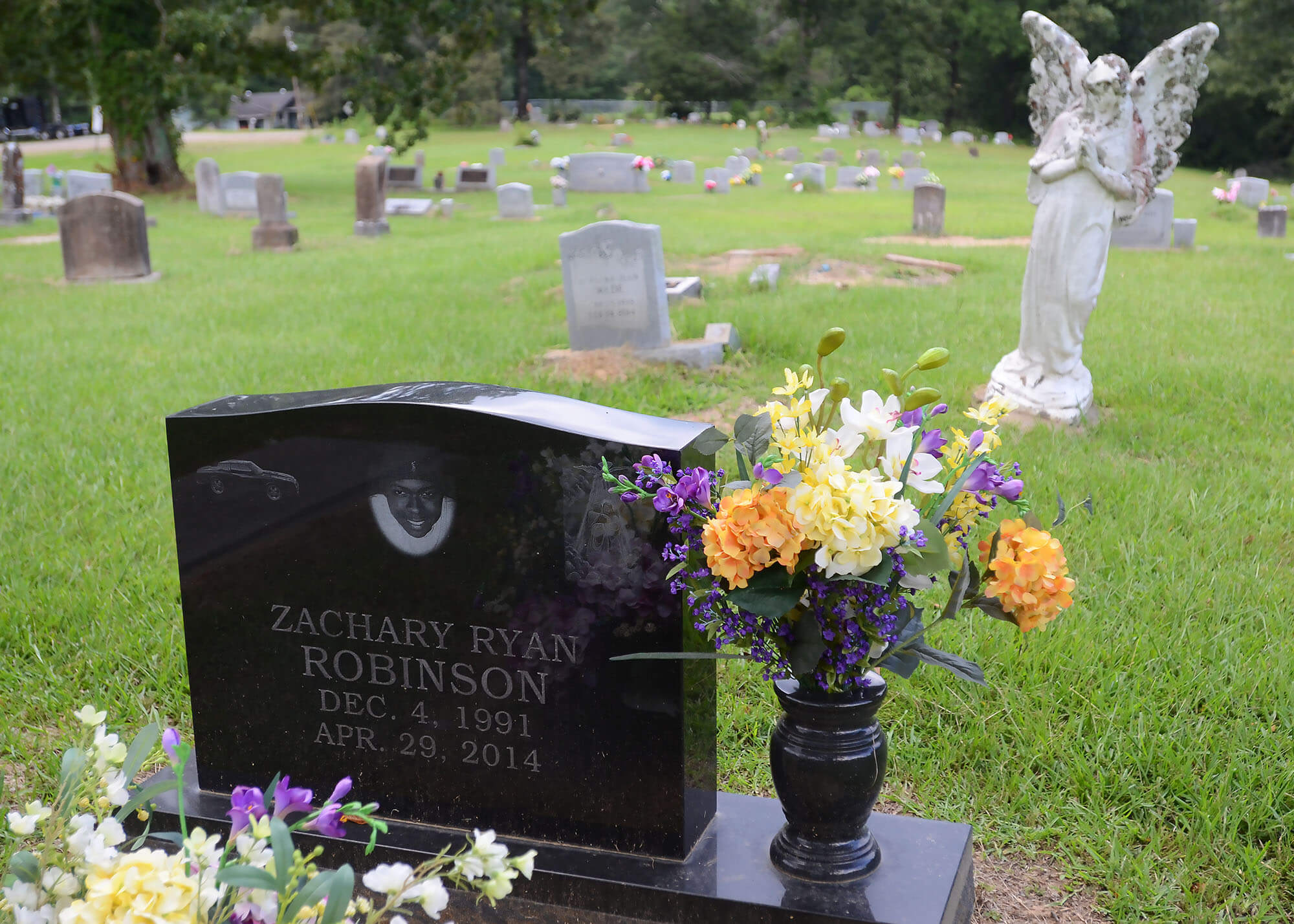
Lucinda Wade-Robinson watched her 22-year-old son, Zachary, hit the pavement feet from her front door on April 29, 2014. She saw the shooter and his friends hightail it to the highway. Her neighbor helped her son into a her car as he bled out. After he was pronounced dead at a hospital and investigators processed the crime scene in her front yard, she says she waited days for the fire department to spray his blood from her bullet-strewn driveway with a fire hose.
Wade-Robinson, worried she wouldn’t be able to cover the $8,000 funeral bill, applied in Hinds County for help from Mississippi’s victim compensation program, a fund that each state has to reimburse victims of crime and their families for funeral expenses, medical costs, crime scene clean-up, execution travel and counseling, among other disbursements.
A funeral home director told Wade-Robinson about it and suggested she apply. But the state attorney general’s office, which administers the program, denied her claim, alleging her son was responsible for his death, a type of denial known as contributory misconduct.
“It was a nightmare,” said Wade-Robinson.
Mississippi’s definition of what kind of conduct contributes to one’s death is broader than most states, and a Mississippi Today investigation found that Wade-Robinson’s denial is not unusual. Mississippi has one of the highest rates of denials attributed to “contributory misconduct” when compared to other states, with about 6% of all applicants getting denied for this reason.
Mississippi’s overall denial rate is 42%, for years 2021 to 2024. From 2021 to 2023, roughly 2% of claims were reduced.
Arkansas, West Virginia and South Dakota have similar outcomes, with all four states rejecting for contributory misconduct at roughly three times the national average, according to federal data collected between 2017 and 2023.
It’s the language of the law that makes Mississippi unique, according to Jeremy Levine, a professor of sociology at the University of Michigan who’s published research on victim compensation. If the victim makes “threatening and obscene gestures,” uses “fighting words,” even if the behavior was not directly connected to the circumstances of the person’s death, they would be ruled ineligible for compensation. The law also asks administrators of the fund to consider the victim’s behavior in the weeks leading up to their death.
The law is broad and open to interpretation, particularly when it comes to blaming victims for inciting their own killing.
“The provocation point is really fuzzy,” said Levine, and Mississippi “is on the top end of vagueness and discretionary openness.”
More than a third of compensation applicants in Hinds County were denied reimbursement from 2021 through 2024, according to records obtained by Mississippi Today. The attorney general’s office rejected 169 claims because of administrative rules like contributory misconduct. It approved 291 claims with a payment.
“A lot of these exceptions make assumptions about communities and blame victims for their own deaths,” said Rep. John Hines, a Democrat from Greenville, a city with one of the highest gun homicide rates in the state.
The attorney general’s office chose not to provide comment. A spokesperson from the Office of Justice Programs in the U.S. Department of Justice wrote that eligibility requirements are at the discretion of states.
The attorney general paid victims an average of $1,877 lessin 2024 than it did the previous one. The average claim was $2,459 in 2024.
Contributory misconduct rejections can present an arbitrary barrier to financial help for victims of crime, said Tina Rogers, a victim assistance coordinator in Columbus, Mississippi.
“It is subjective and can be skewed depending on the type of crime,” wrote Rogers.
Not innocent enough
Lucinda Wade-Robinson at her southwest Jackson home Monday, July 7, 2025, lighting candles near trophies awarded her son Zachary. Robinson, then 22, lost his life to gun violence in 2014. Credit: Vickie D. King/Mississippi Today
Wade-Robinson didn’t leave her house after her son’s death. Zachary Robinson had still been living in the family home; his sudden absence was painful. She was spending more quiet afternoons replaying the killing she watched take place from behind her front door.
Wade-Robinson’s attorney appealed the contributory misconduct denial. As she waited for an answer, the prosecutor informed her that charges would not be pursued against her son’s alleged shooter and the six men who accompanied him. The Jackson Police Department determined Robinson’s murder was a self-defense killing. The victim compensation director swiftly issued a second denial letter, citing the department’s finding.
“It was like being victimized again,” Wade-Robinson said.
Wade-Robinson was hurt. Seven men had come to their house with weapons, she said. After one man came to their door to threaten his mother, Robinson drove home with a concealed weapon and yelled at the men to leave their house, Wade-Robinson remembers. In return, they shot him. And as the seven men sped off, her son’s friend, Lamont Ford, returned fire.
Mississippi has a castle doctrine or “stand your ground” law. But the attorney general’s hearing officer felt it didn’t apply.
“Although the Hearing Officer certainly recognizes Victim’s Second Amendment right to bear arms, Victim was clearly the initial aggressor and his display of a firearm in this circumstance caused another individual to fear imminent death,” the hearing officer said.
Local law enforcement must typically summarize the victim’s involvement in the crime and fill out a document that asks if the victim’s behavior in any way contributed to the person’s death because of drugs and alcohol or fighting words. When it comes to how law enforcement officers interpret how and if a victim’s conduct led to the individual’s death, rationale varies by department and agency.
Law enforcement initially charged Ford, Robinson’s friend, with murder in Robinson’s death, but an assistant district attorney in that office couldn’t explain why. The murder charge was dropped but a shooting into a dwelling charge remained. Ford’s shots missed, entering a nearby home and a delivery driver’s car.
Wade-Robinson didn’t miss a day of the trial. And when the jury found Ford not guilty, Wade-Robinson’s attorney requested that the victim compensation division reconsider its denial of her claim.
On March 31, 2016, at a private hearing held at the attorney general’s office in Jackson, Wade-Robinson’s claim was denied for the second and final time. The hearing officer cited her son’s “displaying of his weapon” and his refusal to call the police. They also cited his decision to drive to his home where two cars of potential adversaries were parked.
“He was acting in a provoking manner that was greater than that of the offender,” testified Amy Walker, director of Crime Victim Compensation. “Robinson had used fighting words and obscene and threatening gestures based on the information that we received. And whether or not there was a causal relationship between his actions and the incident, I determined that there were.”
“So, I did find some level of responsibility on his part,” she added.
Being under the influence and taking risks isn’t behavior that would lead to outright denials by victim compensation programs in most other states.
The director also mentioned Robinson’s gun possession.
Mississippi has the most relaxed gun laws in the country. During the pandemic, then-Mayor Chokwe Antar Lumumba tried to temporarily ban open carry of firearms in the wake of increased violence only to have Attorney General Lynn Fitch ask him to rescind it because it was in violation of the state’s open carry law.
During the trial of Lamont Ford, witnesses were grilled about their gun possession too.
“I fear for my life when I come to Jackson,” said one of the witnesses. “I always keep a gun in my car.”
Zachary Robinson gravesite at the Mount Wade M.B. Church cemetery in Terry, July 7, 2025. Robinson lost his life to gun violence in 2014. His mother Lucinda Wade-Robinson, was denied compensation for his funeral by the Attorney General’s office. Credit: Vickie D. King/Mississippi Today
‘A national disgrace’
Some advocates, academics and victims argue Mississippi’s crime victim compensation division has failed to live up to the vision set forth by its chief architect, President Ronald Reagan.
In 1982, Reagan assembled a task force that looked into how national, local and state policies treat crime victims. The task force found treatment of crime victims to be a “national disgrace.”
Reagan signed the Victims of Crime Act into law two years later, which established a fund for each state to disperse to “innocent” victims of crime. In 1991, Mississippi established its division responsible for dispersing money.
Since establishment of the fund, many states have narrowed their definitions of “contributory misconduct” or removed it as a criterion for eligibility because of disproportionately high rejection rates for minorities and advocacy efforts from victim rights’ groups.
In a 2005 Kansas Supreme Court ruling, judges found that “contributory misconduct” must be directly contributory, ruling against the state’s Crime Victim Compensation Board. A couple had victim compensation diminished for their son who had died in a car wreck that was no fault of his own. The board had found that their underage son had drunk alcohol the night before and therefore had a blood alcohol content level that was illegal for someone his age at the time of his death. The board wrongfully reasoned, the court found, that this crime had contributed to his death.
Ohio in 2021 put a stop to rejections due to mere drug possession and allegations made about victims’ behavior leading up to their death. Pennsylvania prohibited the denial of claims for funeral reimbursements based on “contributory misconduct” in 2022. New Jersey, Delaware, and New Hampshire have made similar changes.
On April 5, a group of 18 attorneys general, including Mississippi’s, joined Alabama’s attorney general and objected to what they perceived as the DOJ’s overreach. They found the updated guidelines “exceeded the agency’s authority” and “could result in the States losing vital funding for their victim compensation programs.”
“State resources available to compensate crime victims are not limitless,” argued Alabama Attorney General Steve Marshall. “States thus have always had to make choices about how to justly allocate these funds,” he wrote, and this includes considering “whether an applicant was partially responsible for the crime that harmed him rather than being a purely innocent bystander.”
Scant resources for innocent crime victims is a common argument made by proponents of using the “contributory misconduct” stipulation to assess victim compensation claims. Applicants in Mississippi can also be denied if the victim or applicant has a prior felony conviction, didn’t cooperate with law enforcement or prosecutors and applied for ineligible reimbursement categories like property damage, to name a few.
At the end of Financial Year 2024 after all the reimbursements were paid, Mississippi’s crime victim compensation fund had at least $2 million unspent.
Crime victim compensation programs are mostly funded by court fines and fees, not taxpayer money. Traffic tickets, felony murder convictions and federal judgments all generate money for the fund. State legislatures and the federal government appropriate money, too.
Even Mississippi crime victims who are approved for victim compensation can wait months to over a year for reimbursement. Neighboring Louisiana offers $500 in emergency funds to victims to help cover immediate costs like medical expenses, crime scene clean-up and lost wages.
In 2023, reimbursements for funerals accounted for more than half of funds paid out. Funeral home directors can fill out forms for crime victim compensation, too, applying on behalf of the victim.
Scotty Meredith runs Meredith-Nowell Funeral Home in Clarksdale on top of serving as coroner for Coahoma County. The small Mississippi Delta city experienced a 250% increase in homicides from 2023 to 2024, with four in 2023 and 14 in 2024. Meredith’s funeral home has gained a reputation in the county as a place to seek help filling out applications for crime victim compensation. But when it comes to the contributory aspect, he finds it hard to anticipate who the division will reject.
“It helps the family at a tough time,” he said, sitting in a room dedicated to grief counseling and funeral planning. The Delta is the state’s poorest region and has the highest number of gun homicides per capita. “It takes a big burden off a family that is already grieving.”
In Mississippi Today’s discussions with 17 funeral homes across the state, 10 confirmed they no longer handle services for families who depend on victim compensation funds to pay for the funeral. It’s too much of a gamble for some, given how subjective the criteria can be.
Funeral home director William Jefferson Jr. of W.H. Jefferson Funeral Home in Vicksburg helped out a young apprentice’s family with a discounted rate after their claim for their son’s funeral was rejected.
The director had cited marijuana found in his toxicology report, Jefferson said.
Her own detective
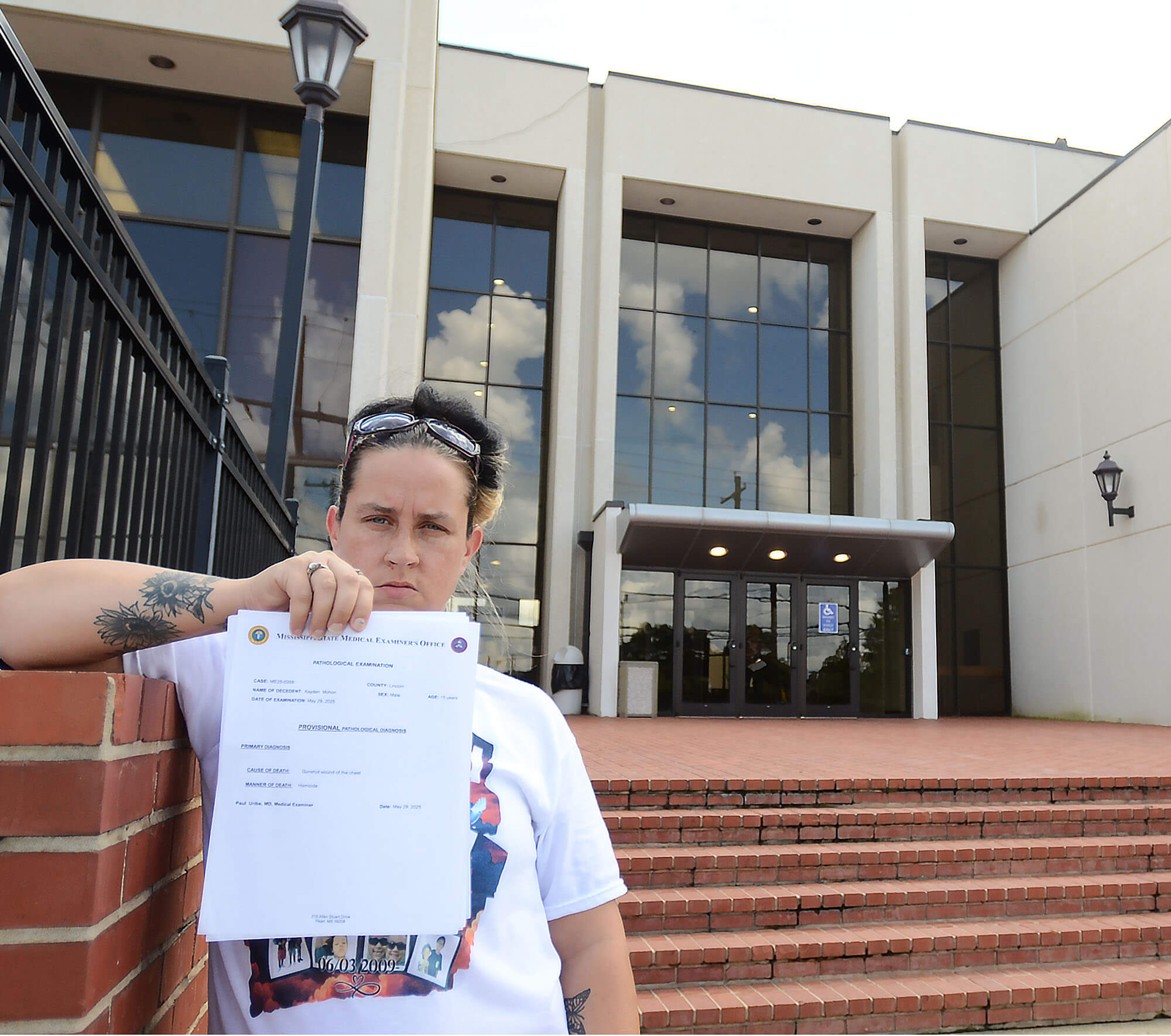
Angel Mohon of Brookhaven, near the Lincoln County/Brookhaven Government Complex, with papers from officials denying compensation for the funeral of her 15-year-old son Kayden Mohon, on Monday, July 14, 2025. Kayden lost his life to gun violence in May. Credit: Vickie D. King/Mississippi Today
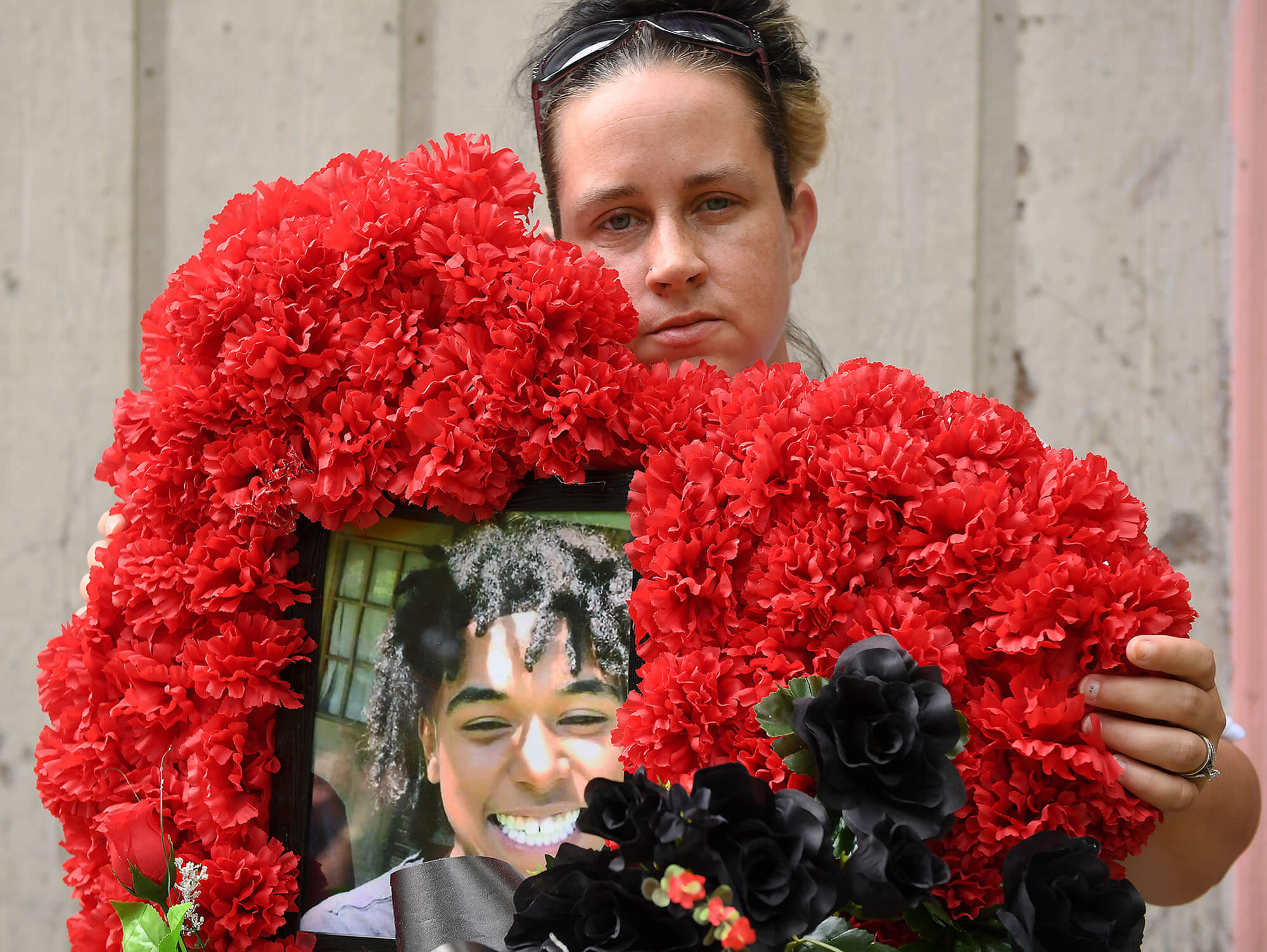
Marijuana was cited in 15-year-old Kayden Mohon’s toxicology report – and in the denial letter sent to his mother Angel Mohon.
Angel Mohon found out about the killing through a social media post circulated by the teenagers she believes responsible for his death. For her, it was a nightmare come true. On a day when she should’ve been celebrating his 16th birthday, Mohon was burying her son.
During Memorial Day Weekend, he was driving his friend home after a pool party in Brookhaven. As he braked near the stop sign on Ozark Lane, shots rang out from the field beside him. His car was riddled with bullets in seconds.
A home security camera captured the shooting: Kayden Mohon opened the driver’s side door as bullets continued to hit the car and the gravel road in front of him. He was driven home to the friend’s house down the street where he succumbed to his injuries and police were called.
Brookhaven Police Department communicated to the attorney general’s office that his death was the result of his own negligence. They labeled it a shootout – and made no arrests. Allegations made in the crime victim letter of Mohon’s firearm usage are not supported by the incident report, which doesn’t identify him with a gun.
Angel Mohon reached out to Brookhaven PD to share the home security camera footage that might exonerate her dead son. But they wouldn’t watch.
So, she took off work as a home health care aide and decided to investigate.
She first tracked down the Toyota Corolla in which her son was killed. She traveled to an Enterprise Rent-A-Car lot in Natchez where the vehicle was towed. She interviewed neighbors who lived on the street where the shooting took place, one shared home security camera footage that cast the incident in a new light. She interviewed a witness to the killing, her son’s friends and knocked on the doors of local parents.
In the weeks after Kayden’s death, Kenny Collins, Brookhaven’s longtime police chief, stepped down. Under his leadership, the department was criticized for incompetence and shoddy police work. The county’s grand jury that considered more than 60 criminal cases found that the “complacent” Brookhaven Police Department “shows a lack of professionalism,” “has a habit of witness blaming” and is prone to “poorly investigating their cases.”
Under new leadership, the police department is reinvestigating several cases and is hiring a new investigator. When Mississippi Today brought Mohon’s case to the new chief’s attention, he confirmed that the case will undergo new scrutiny.
Mohon is still afraid to leave her home. The boys responsible for her son’s murder have threatened to target her next. They have driven by her home and harassed the family from their vehicles, she says. One wears a sweatshirt bearing an image of her son’s dead body.
“It hurts,” she said. “Every time I sit still for too long or I close my eyes, all I see is my baby’s body lying on the ground.”
Kayden was taking classes in welding at the time of his death. His mom was picking up extra shifts as a home health care aide to help pay for the costs of his training. Angel Mohon had also recently taught him to drive.
Angel Mohon of Brookhaven cradles a funeral wreath with a photograph of her 15-year-old son Kayden Mohon, on Monday, July 14, 2025. Kayden was shot to death in May while attending a party at a local park. Credit: Vickie D. King/Mississippi Today
“Why kill my child? Because he had a life, he had a future. He had hopes and dreams that he was fulfilling.”
Mohon doesn’t know how she will come up with the $7,000 to pay for the funeral. She is three months behind on her car payments and was told she would lose her only source of transportation next month if she couldn’t come up with $500.
The victim’s voice
When it comes to assessing a victim’s hand in their death, law enforcement officers are the first arbiters. In Mississippi, officers must file their assessment of victim involvement in a crime within 30 days of the victim’s survivors applying.
A law enforcement officer in Sunflower County, who wished to remain anonymous for fear of losing his job, said he checks the contributory box only if the victim “brought the fight to somebody else.”
Funding for local law enforcement agencies prevented officer salaries from keeping pace with inflation – and many Mississippi departments operate on small budgets with less staff than they require. Three police chiefs interviewed complain that witnesses are often reluctant to share information, and the department lacks the budget to retain talent.
Greenville Police Chief Marcus Turner Credit: Courtesy of Marcus Turner
Greenville Police Chief Marcus Turner recently mandated that all officers provide crime victim compensation applications to families regardless of what responding officers make of the crime scene at first. Even the family of victims responsible for their deaths need our support, Turner said. He also brings sympathy cards to the victim’s home before any interviews take place.
“It’s our responsibility to speak for the victim,” Turner said. “When there’s a murder, you have a suspect and a victim. The victim can’t say anything.”
Mississippi has few nonprofits or charities dedicated to helping crime victims cover even basic burial costs and that provide counseling to immediate relatives of homicide victims. Churches occasionally step in to cover burial costs for longtime parishioners who were the victims of crime. Stewpot, a homeless shelter in Jackson, will occasionally help pay for burial costs of low-income crime victims.
“The survivors of homicide are forgotten on every level,” said Felecia Marshall, founder and CEO of Grant Me Justice, a nonprofit that helps crime victim families navigate the criminal justice system, cover the costs of counseling and pay for burials. “Many parents are not prepared. There are so many layers that the family has to deal with while they are grieving.”
Legally, counties must have a plan in place for burial of paupers, or those who die without a place for their body. State law does not mandate that a pauper burial be marked, though many counties do.
Unmarked
No tombstone marks Chris Magsby’s grave. Jean Tenner, Magsby’s mother and a longtime employee at the Horseshoe Casino in Tunica, had a hard enough time covering the costs of his funeral before her claim was denied.
“I shouldn’t have to do this all by myself,” said Tenner, a single mother with another son in the armed services.
In 2023, Magsby was driving his youngest son when his cousin Decedron Johnson began to threaten him over the phone, trailing him in his car. The two pulled their cars off the road and when Magsby stepped out of his, Johnson started shooting. Johnson was later arrested in Clarksdale, and Magsby was pronounced dead at a hospital.
At the funeral, Magsby was laid to rest in a scarlet casket. Tenner still didn’t know how she’d pay for it. She neglected to make her car payments so she could save to give her son a proper sendoff. But she never saved enough.
While Johnson was out on bail pending a trial, the victim compensation division was still investigating Tenner’s claim for victim compensation.
On July 22, 2023, over a month after the funeral, Tenner got her response: The Mississippi Attorney General’s Office had rejected her claim on the grounds her son had been on probation for a felony conviction. Magsby was never convicted of a felony.
On Aug. 18, 2023, her claim was rejected for a second time, this time on a posthumous accusation that he committed a felony at the time of his death. Police allegedly found a bag of cocaine in his car, which indicated to the attorney general’s office that he was not an innocent victim at the time of his death, and therefore, his mother would be ineligible for compensation.
Also, his posthumous commission of a felony broke his non-adjudication agreement, meaning he was back under the supervision of the Mississippi Department of Corrections – another disqualifier. The initial charge was for “trespassing” into a local business when he was a teenager.
Tenner’s denial is hardly unique in the Mississippi suburbs of Memphis, Tennessee, where a tough-on-crime approach by law enforcement often puts victims under suspicion. The AG’s office denied over half of DeSoto County victims’ compensation claims from 2021 through 2023, records show.
Tenner struggled to make sense of the division’s decision in light of what she knew about her son. In the years before his death, Magsby had received his high school equivalency diploma, moved from the Delta to Horn Lake with his burgeoning family and secured a job at a nearby factory.
Tenner thinks of her son every day, especially how he used to love to take his kids on trips to Disney World and to water parks in nearby Arkansas. She hopes her grandkids will get to go on another trip soon – but they haven’t since Magsby’s passing. Her grandson, who witnessed his father’s death, needs therapy, said Tenner, but with her debts from her son’s death, she feels that counseling is a long way off for the toddler.
As crime increases, more parents are finding themselves struggling with the financial aftermath of their child’s murder, said Turner, Greenville’s police chief.
“Now, we’re living in a time where young people are losing their lives every day, and the parents are not in the position to have them covered under any type of burial or life insurance,” he said.
Every witness or person present when Robinson, Magbsby and Mohon were killed, including the victim, were younger than 30. Since 2013, the number of young crime victims has more than tripled; 338 Mississippians younger than 34 were gun homicide victims in 2023.
Acceptance
Every year, Wade-Robinson attends the Christmas tree decorating party for crime victims hosted by the attorney general’s office. The office usually hires musicians to sing hymns and holiday songs. The families of crime victims hang ornaments on branches while the staff greet grieving families. Last year, she cried, touched by a rendition of “How Great Thou Art.”
Scott Colom, a district attorney in Columbus, organizes a similar event for each family at the end of trials. He plants a tree with the victim’s family in an intimate ceremony outside the courthouse. Victim coordinator Tina Rogers sings hymns and popular music.
Scott Colom, the district attorney for Columbus and surrounding counties Credit:16th Circuit Court website
“Grief is going to be long, but this tree’s going to be here longer,” Colom said, explaining the ceremony. “The victim’s going to be here, too. They can survive it. They can withstand it. They’ve got a reason to live on.”
He has also appealed crime victim compensation denials, in one case because the applicant was a few days from meeting the five-year threshold from a felony conviction. His appeal was ignored. The division upheld all 54 denials that were appealed on paper or in a hearing in 2021, 2022 and 2023, according to records obtained.
“The only way we’re going to be able to successfully prosecute violent crime is cooperation from victims and survivors,” Colom said. “And if victims and survivors and witnesses have a negative impression of the criminal justice system, that decreases the chances that they’re going to cooperate, which decreases our chances of being able to prosecute crime.”
Restitution is the only other type of compensation available to crime victims. Their families can request that a judge order the offender to pay them for counseling and property damage, among other expenses. But restitution isn’t possible until a person has been successfully prosecuted – an obstacle for mothers of murdered sons in counties with low clearance rates.
Wade-Robinson keeps her son’s room close to how he left it 11 years ago. His car sketches are still taped behind a chest of drawers topped with model cars, trophies and certificates.
A chest of drawers in Zachary Robinson’s bedroom in Jackson, Miss., is topped with model cars, trophies and certificates. Credit: Courtesy of Lucinda Wade-Robinson
Robinson was involved in his community, Wade-Robinson remembers. He used to love to ride his grandfather’s horse at his farm in Terry and hunt deer. Robinson was recruited to play the tuba in high school. He won an academic honor in his senior year and graduated with honors from his automotive course.
“It’s hard to forget someone who gave you so much to remember,” began a resolution honoring Robinson, issued by his high school a week after his death. “We recognize that this temporary loss is Heaven’s ultimate gain.”
The city of Jackson did finally settle a wrongful death suit with Wade-Robinson’s family for an undisclosed sum on Dec. 13, 2017.
But grieving and seeking justice for her son still keeps her up at night.
“I just can’t understand how you treat victims like this,” she said.
Editor’s note: Mississippi’s Attorney General’s Office counts applications abandoned by claimants before they provide receipt of a service for compensation as “Approved With No Award.” From 2021 to 2024, 1,301 applications fit into this category. Mississippi Today chose to only tabulate applications where a receipt was provided by the applicant to substantiate their claim for financial relief. Here you will find a county breakdown with all categories included.
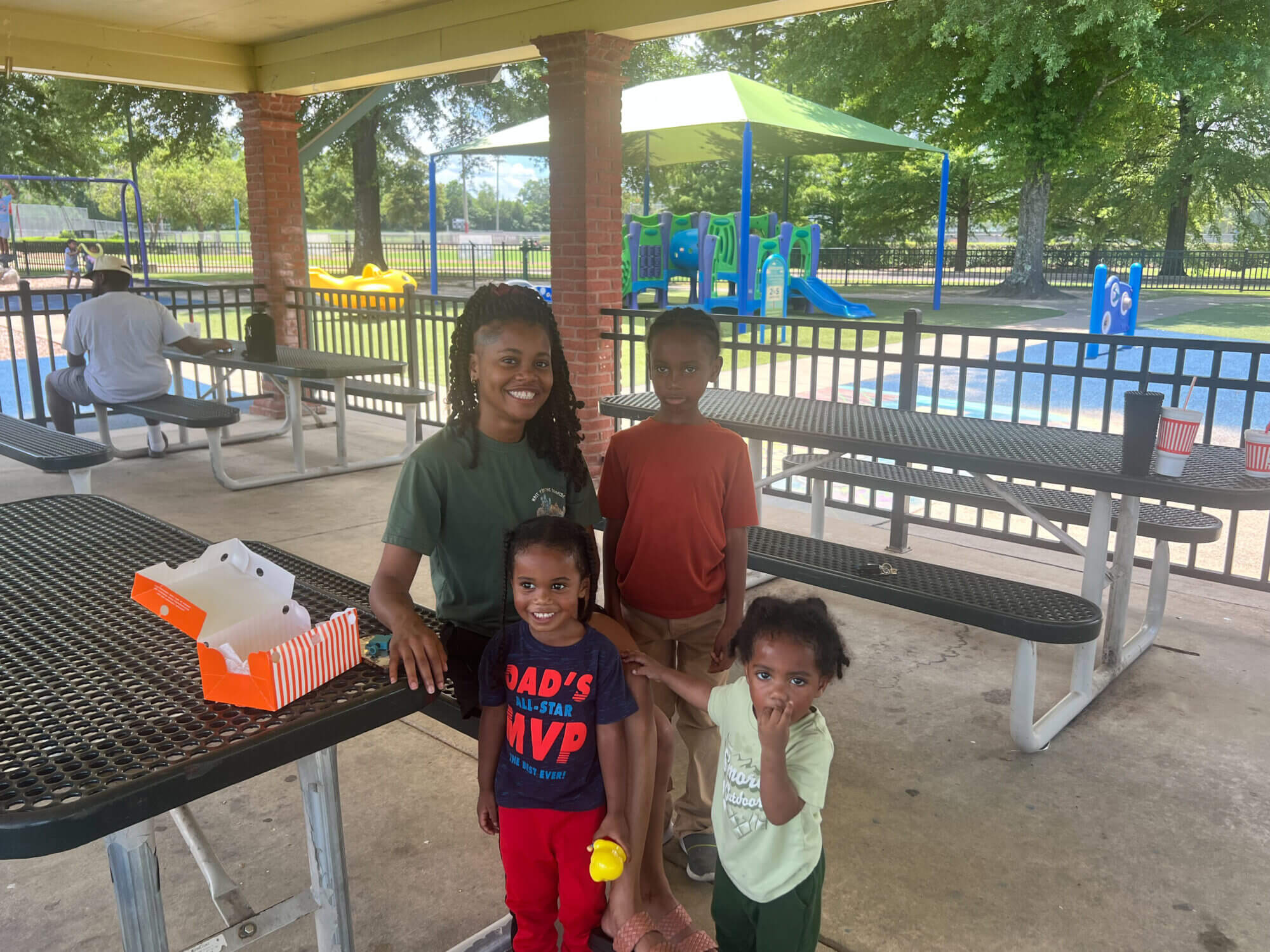
Monica Ford is hopeful but still cautious. After four months without a voucher, she may receive enough financial help to put her kids in a day care closer to home. She might be able to afford her own home for her family with the money saved.
After months of halted assistance and thousands of Mississippi parents losing their child care vouchers – and with it, their access to day care for their children — the state is issuing vouchers again.
Ford spent $11,000 on day care just over the last few months – and was forced to move in with in-laws.
Monica Ford poses with children Tahir, 7, Kian, 4, Nuri, 1, at Freedom Ridge Park in Ridgeland, Miss., July 19, 2025. Credit: Leonardo Bevilacqua)/Mississippi Today
“Giving up is not an option,” she said. “I would love the help. You have to be making money to survive in this economy.”
In April, Ford was denied a voucher renewal along with thousands of other families because she did not meet one of the six criteria the Mississippi Department of Human Service set. Those criteria were: being a recipient of Temporary Assistance for Needy Families, being deployed in the military, being a guardian to a foster child, being homeless, being a parent of a special needs child and being a teen parent.
For some families, these restrictions now no longer apply.
The pause to the pause, the result of the loss of coronavirus pandemic-era funding, was made possible by a direct legislative appropriation to the Child Care Payment Program administered by the department. The agency had asked for $40 million to continue serving the same number of families, but instead received $15 million.
This means, despite announcing that the agency is now taking applications from families on its waitlist, the program is not likely to be stabilized or capable of serving as many children as it did prior to the pause.
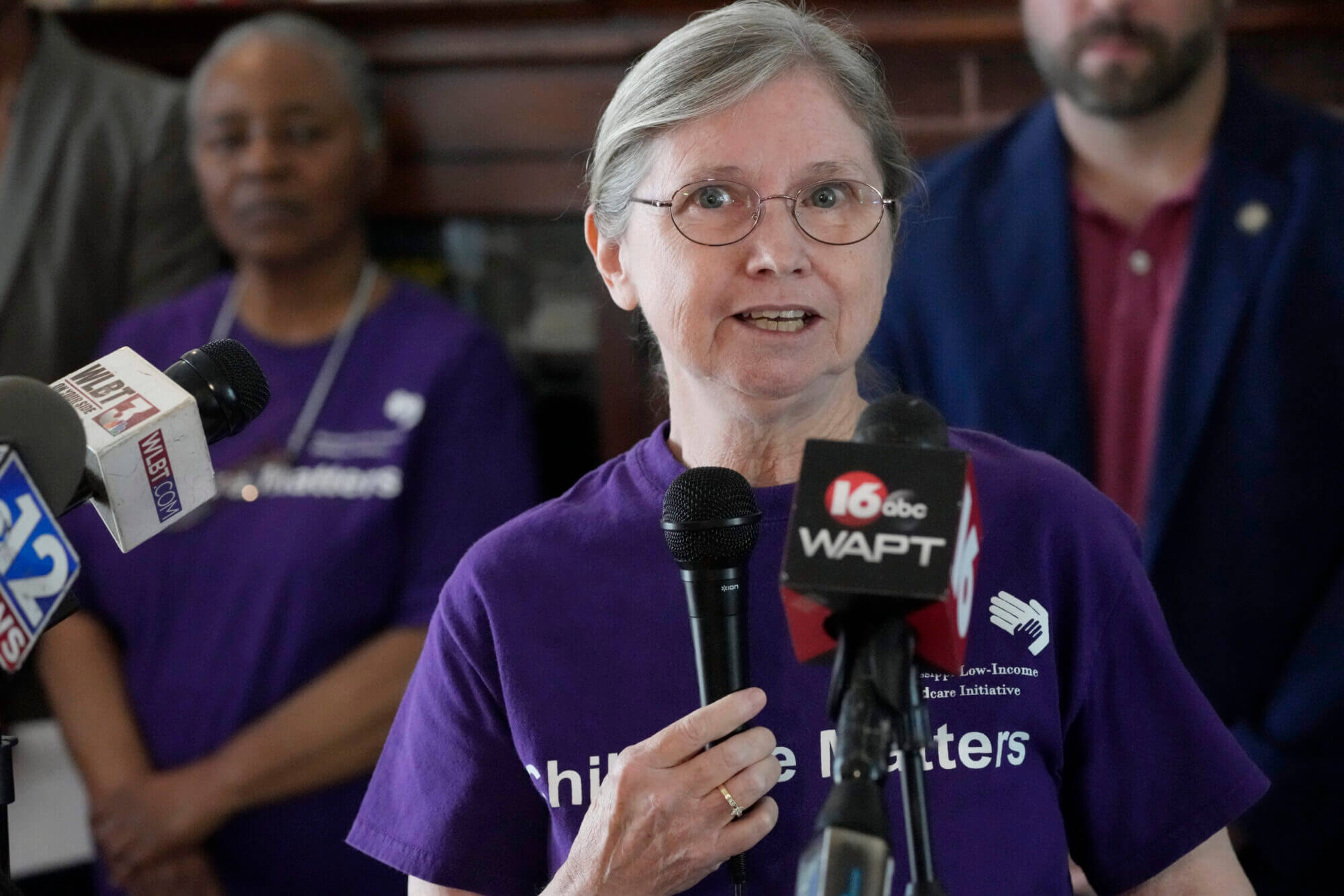
Carol Burnett, executive director of the Mississippi Low Income Child Care Initiative, speaks about a policy change by the Mississippi Department of Human Services, that removed a child support requirement for the Child Care Payment Program, at a news conference Monday, May 15, 2023, in Jackson, Miss. (AP Photo/Rogelio V. Solis)
“We’re going back to a time where I think we are going to see a waiting list reappear and the thing about the waitlist is if you’re on the waitlist, you don’t ever know how long you’re going to be there,” said Carol Burnett, director of the Mississippi Low-Income Child Care Initiative, which has been advocating on behalf of child care supports for decades. “So it’s wonderful the pause is over and DHS has met whatever criteria they needed to eliminate the pause.”
The previous restrictions eliminated working parents that weren’t TANF recipients. For middle class parents forced to take on child care’s extra costs and fees this summer, leaving the wait list can mean financial security.
Vennesha Price’s biggest expense each month is child care, which includes the gas money needed to travel further for the care.
“For single, struggling parents or single parents that are considered middle class like myself, who do not meet certain low-income requirements, I’m just on my own whether I have the money or not,” she said.
Mississippi receives a little over $129 million through the federal block grant that primarily funds the program, the Child Care Development Fund, in 2024, an increase of about $31 million from 2020. Child care in Mississippi received a bump of more than $600 million during the pandemic, one way the state was able to increase the rolls in recent years.
The child care payment program has only ever served a fraction of eligible children – over 139,000 across the state, according to some estimates.
In March before the pause began, more than 36,000 children received the voucher. The state currently serves just under 29,000 children, according to the agency.
In years past, the number of children on the rolls hovered around 20,000–in part because of a child support enforcement requirement that the agency rescinded in 2023.
Through the mostly federally-funded voucher, the state pays up to 80%of a child’s tuition to a qualified provider, with the parent covering the rest. Every three years, the department is required to conduct a market rate survey to ensure its voucher reimbursement rate corresponds to the 75th percentile of the market rate for the different age groups.
Weekly rates increased from 2021 to 2024, with variations depending on whether the recipient is in a metro or nonmetro area and the age of the child, since infant care is more expensive. Infant care in the metro area increased from $152 to $185 per week while school- aged care increased from $130 to $135.
Considering these rates, the current annual value of the voucher for infants in a metro area is about $7,700 and $5,600 for school aged children. For nonmetro areas, the state spends about $5,800 and $5,000, respectively.
The extra state support of $15 million, then, might support roughly 2,500 vouchers for the year, depending on the circumstances of the children who are approved, based on Mississippi Today’s calculations.
That’s only half of the roughly 5,000 children sitting on the waitlist for assistance, according to the agency.
“I’m hoping that it will provide more opportunity for parents,” said Kacheela Dixon, owner of Steppin Up Learning Center in Jackson, Mississippi. “If the parents do sign back up with the vouchers, it will help hire more teachers and pay for more food.”
Dixon might still have to shut her business down in the next couple months unless enrollment increases. The cost of running her business has increased, too. Many of the children rely on her day care for supper.
For day care operator Sherica Lewis, the halt to the freeze might come too late.
She serves less than half the children she did before the child care freeze. She’s had two families with at least three children move to Southaven and Louisiana from Greenville, where her business is based.
“It’s not going to benefit me as much,” she said. “I already lost the kids and families.”
The families moved to be closer to their extended family that can provide free child care.
The Department of Human Sservices is also currently accepting proposals for workforce support subgrants under the TANF program that could include child care services. This has the potential to increase access for families without the voucher without requiring more funding for the child care certificate program.
Day care operator Kaysie Burton has been filling out grant applications herself. She saw how day care afforded working parents in her community the opportunity to focus on their careers.
“We want to help Mississippi keep working,” she said. “We’re trying to make sure our hours are tailored to our parents.
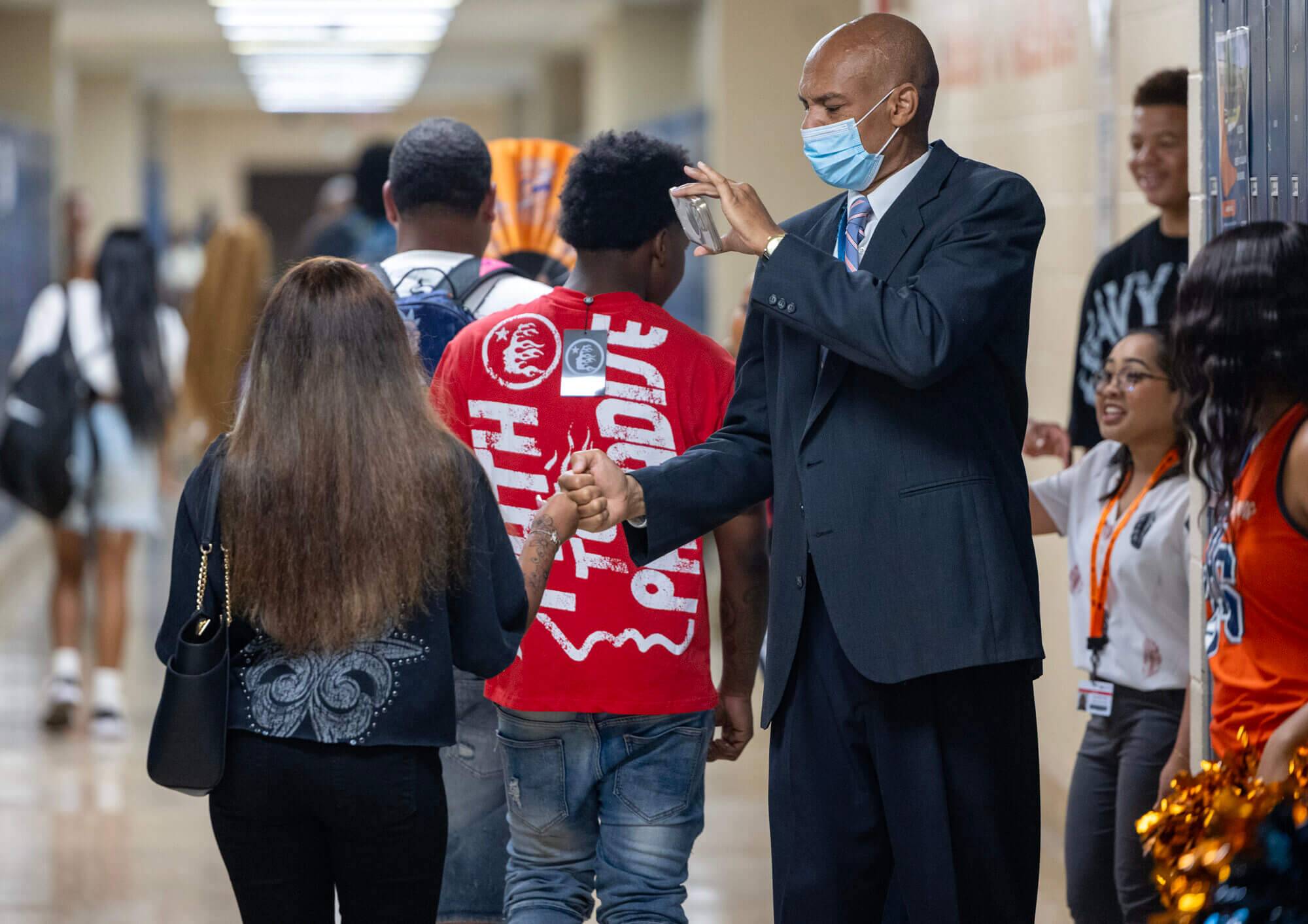
As teenagers flooded into Callaway High School on Monday morning, one shirt that read “last first day” drew the attention of Jackson Public Schools administrators greeting students at the door.
“Last first day!” cheered Superintendent Errick L. Greene, prompting a smile from the senior striding past.
Across the city, students went back to school Monday for the start of the new year. For some, it was their first day in a classroom. For others, like Rakeem Burney, it would be the last time they celebrated the first day of grade school.
“It’s my senior year, but it hasn’t really hit me yet,” he said, dressed sharply in sparkling white sneakers. “I’m just excited to meet all my teachers and embark on this journey and everything this year will bring. The fact that the superintendent came, too, means a lot to me.”
That was the goal, Greene said. By showing up on the first day, he wanted to show students his support and commitment to them.
“This is where the magic happens,” he said. “For all of the back of the office things I have to do, the most important thing is to be here, to observe what’s going on but also to be visible with scholars and team members. They need to know I’m part of this work on the ground.
“This fills my cup.”
Errick L. Greene, superintendent of Jackson Public Schools, visits with a student on the first day of school at North Jackson Elementary School in Jackson, Miss., on Monday, July 28, 2025. Credit: Eric Shelton/Mississippi Today
Students search for their classrooms on their first day of school at Callaway High School in Jackson, Miss., on Monday, July 28, 2025. Credit: Eric Shelton/Mississippi Today
Cheerleaders pose for a photo on the first day of school at Callaway High School in Jackson, Miss., on Monday, July 28, 2025. Credit: Eric Shelton/Mississippi Today
A student solves a math problem on the first day of school at North Jackson Elementary School in Jackson, Miss., on Monday, July 28, 2025. Credit: Eric Shelton/Mississippi Today
Educators greet students on their first day of school at Callaway High School in Jackson, Miss., on Monday, July 28, 2025. Credit: Eric Shelton/Mississippi Today
A student does classwork on the first day of school at North Jackson Elementary School in Jackson, Miss., on Monday, July 28, 2025. Credit: Eric Shelton/Mississippi Today
Errick L. Greene, superintendent of Jackson Public Schools, right, greets students on the first day of school at Callaway High School in Jackson, Miss., on Monday, July 28, 2025. Credit: Eric Shelton/Mississippi Today
Students solve math problems on the first day of school at North Jackson Elementary School in Jackson, Miss., on Monday, July 28, 2025. Credit: Eric Shelton/Mississippi Today
Students prepare for class on the first day of school at Callaway High School in Jackson, Miss., on Monday, July 28, 2025. Credit: Eric Shelton/Mississippi Today
Allison Flores, center, greets her friends Vilma Enamorado, left, and Sherlyn Soto on their first day of school at Callaway High School in Jackson, Miss., on Monday, July 28, 2025. Credit: Eric Shelton/Mississippi Today
The energy was high at Callaway — volunteers and cheerleaders shook pompoms as students meandered through hallways, greeting one another and checking out their schedule for the year — but district changes were also apparent.
As some students entered the high school with cell phone imprints clearly visible in their jean pockets, administrators warned them to put their devices in their backpacks, out of reach.
Phones were already banned at JPS schools, but the board approved a stricter policy over the summer in an effort to curb bullying, violence and miscommunication with parents.
It’s part of Greene’s vision for the school year — a safer, more scholastically successful and well-staffed district. He said academic excellence remains a top focus for JPS, but there’s also work to be done around district culture. That includes supporting teachers and strengthening communication with families.
And the work starts from day one, he said.
Just down the block at North Jackson Elementary School,preschoolers were learning for the first time how to behave in a classroom. Greene joined them later that morning, stacking rainbow blocks on a brightly colored rug, while principal Jocelyn Smith circled the classroom, troubleshooting and smiling at the young students.
Despite her cheeriness, by 9 a.m. on Monday, Smith had been awake for hours.
“The first day for me is just like for the children,” said Smith, who’s been working in education for three decades. “I couldn’t sleep last night. I was too excited to see the children.”
For the elementary students, the first day is essential to the rest of the year, she said.
“They get an introduction to the curriculum … they learn our procedures and how to be safe,” she said. “But most of all, they start learning our expectations for them, and they start to build a relationship with their teachers.”
In a different classroom up the hall, Rakesia Gray was figuring out what her third graders would be interested in reading this year. She passed out a worksheet, and asked her students to circle the topics they liked best.
“On the first row, tell me which one you’d rather read out,” she said. “Polar bears or penguins?”
The room was silent. Students shyly glanced at each other.
“Come on now,” Gray said, laughing. “Y’all have gotta talk to me!”
A ruling from a federal judge in Mississippi contained factual errors — listing plaintiffs who weren’t parties to the suit, including incorrect quotes from a state law and referring to cases that don’t appear to exist — raising questions about whether artificial intelligence was involved in drafting the order.
U.S. District Judge Henry T. Wingate issued an error-laden temporary restraining order on July 20, pausing the enforcement of a state law that prohibits diversity, equity and inclusion programs in public schools and universities.
Lawyers from the Mississippi Attorney General’s Office asked him to clarify the order on Tuesday, and attorneys for the plaintiffs did not oppose the state’s request. On Wednesday, Wingate replaced the order with a corrected version.
His original order no longer appears on the court docket, so the public no longer has access to it. The corrected order is backdated to July 20, even though it was filed three days later.
“Our attorneys have never seen anything like this,” a Mississippi Attorney General’s Office official told Mississippi Today, speaking only on background because the litigation is pending.
Some attorneys who have reviewed the ruling questioned whether artificial intelligence was used to craft the order. Wingate did not respond to repeated questions about the order or whether he or his staff used AI to prepare it.
The original order lists plaintiffs such as the Mississippi Library Association and Delta Sigma Theta Sorority Inc., who have never been involved in the pending litigation and who do not even have cases pending before the U.S. District Court for the Southern District of Mississippi.
Wingate’s original order also appears to quote portions of the initial lawsuit and the legislation that established Mississippi’s DEI prohibition, making it seem as though the phrases were taken verbatim from the texts. But the quoted phrases don’t appear in either the complaint or the legislation.
Wingate’s corrected order still cites a 1974 case from the U.S. 4th Circuit Court of Appeals, Cousins v. School Board of City of Norfolk. However, when Mississippi Today attempted to search for that case, it appears that either it does not exist or the citation is incorrect.
Christina Frohock, a University of Miami law school professor who studies the dangers artificial intelligence poses to the integrity of the legal system, said a common way attorneys are getting caught using AI is due to “hallucinations,” or instances where AI programs cite cases that don’t exist or use fabricated quotes.
Frohock was hesitant to draw conclusions about the errors in the Mississippi ruling and attribute them to AI, but she was similarly perplexed by how basic facts from the case record were incorrect.
“I actually don’t know how to explain the backstory here,” she said. “I feel like I’m Alice in Wonderland.”
Attorneys have an ethical obligation to make truthful representations in court, so when they are caught using artificial intelligence, judges have applied sanctions and demanded explanations. Just this month, a federal judge in Colorado ordered two attorneys to pay thousands in fines after they used AI to write a mistake-riddled court filing.
But there’s little recourse when the tables are turned.
“If an attorney does this, a judge can demand explanations, but it’s not true in the other direction,” Frohock said. “We will probably never know what happened, unless an appellate court demands it.”
Parties in the case will meet again Aug. 5to argue about a preliminary injunction in the case.
Wingate, 78, was nominated to the bench by President Ronald Reagan in 1985. He was confirmed by the U.S. Senate that same year. He served as chief judge of the Southern District from 2003 to 2010.