OCEAN SPRINGS — A Mississippi battle continues in a legal dispute about dissolving a business partnership that managed a program to ticket uninsured motorists.
Chancery Judge Neil Harris booted a member of the media from the courtroom Thursday morning, saying he would hold a closed hearing in a legal dispute between two companies that previously ran a program to nab uninsured motorists.
After having a bailiff tape paper over the window so nobody could see him on the bench, Harris decided to unseal the court file in the case that three politically connected Mississippians filed against their partner, Georgia-based Securix LLC. Attorneys for both sides said when they emerged from the courtroom that Harris had decided to unseal the file. The file could be unsealed Thursday afternoon.
Exhibits and financial records, they said, will remain closed.
What was previously known about the lawsuit comes from its brief removal to federal court in Gulfport, where the file is open.
The three Mississippians, operating as QJR LLC, sued in September to dissolve their partnership with Securix LLC in the uninsured motorist program. QJR also is suing Securix and its chairman, Jonathan Miller of Georgia, for defamation.
“They (QJR) want to stop the defamation from ruining political careers, that’s their argument,” Securix attorney Albert R. Jordan IV said in the federal case, a hearing transcript shows.
Very little else was known about the lawsuit, which QJR asked Harris to seal. Harris obliged. By Thursday, QJR had no objection to the file being unsealed, said company member Robert Wilkinson, a Pascagoula attorney.
MS media fights for court access
Media companies Mississippi Today and the Sun Herald on July 14 asked the state Supreme Court to compel Harris to open the court file. Court files are open by law. A compelling reason for closing a court file must be demonstrated in an open hearing, weighing the interests of the public against litigants’ right to privacy, Mississippi case law has established. Harris never held such a hearing before closing the file.
Securix uses automatic license plate readers, usually mounted on traffic signals, to capture images of license plates. With the help of artificial intelligence, Securix can extract license plate numbers from the images.
The company aimed to team up with Mississippi cities to share in revenue from the program. Ticketed vehicle owners were offered the option of showing proof of insurance, entering a diversion program for $300 or taking their cases to court, where they could face stiffer consequences.
In May 2021, the city of Ocean Springs was the first client Securix LLC signed on. Securix teamed up with QJR so the Mississippi partners could help secure more contracts, municipal records show. QJR members, who used their first names for the company initials, are Quinton Dickerson and Josh Gregory of Frontier Strategies in the metro Jackson area, plus attorney Robert Wilkinson.
Both Gregory and Wilkinson were in court Thursday with QJR’s attorney, Jaklyn Wrigley of Ocean Springs.
Judge Neil Harris Credit: Tim Isbell, Sun Herald
Frontier is an advertising agency that has managed state and local political campaigns, while Wilkinson has worked with numerous government entities, including the city of Ocean Springs.
Securix Mississippi was able to sign on the cities of Senatobia, Pearl and Biloxi for the uninsured motorist program. But the Mississippi Department of Public Safety shut down Securix access to a crucial insured motorist database in August, after Securix LLC chairman Miller raised concerns about whether proper law enforcement controls were in place, according to DPS.
Miller claimed QJR had stopped sharing program information and access with him in March 2024.
This article was produced in partnership between the Sun Herald and Mississippi Today.
President Donald Trump’s tax and spending bill, signed into law earlier this month, slashes social safety net programs that impact schools and children across the nation.
The ramifications could be particularly devastating in Mississippi, one of the most federally dependent states in the country.
The law limits eligibility for the Supplemental Nutrition Assistance Program, through which about a quarter of a million Mississippians with children receive food assistance. The policy also cuts the federal contribution to Medicaid, the country’s largest insurer of children, and creates a tax credit program that doles out private-school scholarships.
Here’s more about how the federal law will impact Mississippi students, teachers and families.
Tax credit private school voucher program
A new program created by the law will allow Mississippians to contribute up to $1,700 to an organization that awards scholarships to private school students starting in 2027, and donors will be given a break on their taxes equal to the amount they contribute.
It’s a dollar-for-dollar tax credit — about three times as much as people receive from donating to a children’s hospital or other causes.
The program is a huge win for school choice proponents in Mississippi — or “education freedom,” as House Speaker Jason White and others call it. He said the issue will be his top priority going into the 2026 legislative session.
But it’s a loss for the state’s public schools, said Nancy Loome, executive director of The Parents’ Campaign, a public education advocacy group.
“This is absolutely intended to shift public money into private schools,” she said. “This is the federal government reimbursing taxpayers for payments to private schools. It’s a kind of money laundering.”
Douglas Carswell, president of the Mississippi Center for Public Policy, calls that a “Pavlovian response” from school choice opponents.
“It’s not money that would have ever gone into the public education system in the first place,” he said. “It doesn’t apply because the dollars weren’t in the public school system to begin with.”
Loome said the program could also lead to private schools increasing tuition. It’s a risk that Carswell doesn’t deny, but says is unlikely given the eligibility criteria for the vouchers.
However, the eligibility criteria is generous — to qualify for vouchers, you can earn up to 300% of the area’s median income. That’s six-figures in Mississippi, or about $150,000, according to U.S. Census Bureau data.
That’s in line with research that shows a majority of private school vouchers across the country go to students who could already afford and were attending private schools.
“It’s clear that these programs benefit wealthier, more affluent families,” Loome said. “Students in the public schools are the ones who will be left with fewer resources.”
The first step for implementing the optional program in Mississippi: The state must choose to participate. It’s likely, given powerful Republican state leaders’ support of school choice initiatives. Then, Carswell suspects we’ll see an increase in scholarship-granting organizations — the groups that will disburse these vouchers, whose sole purpose must be doing so. Ace Scholars is one such organization with an established presence in Mississippi, he said.
Mississippi currently only provides private school vouchers for students with disabilities.
“In Mississippi, we are finally getting to the place where we’re recognized for student achievement in our public schools,” Loome said. “It makes no sense for us to embrace a program that will take our students backwards.”
Federal money for workforce training
Another portion of the law in line with education movements in Mississippi: The ability to use federal grants to pay for short-term workforce training.
Low-income students who qualify for federal Pell Grants can use a Workforce Pell Grant on certain weeks-long training programs for skilled jobs starting next school year.
Scott Waller, president of the Mississippi Economic Council, said the change will have a positive impact in Mississippi, where state leaders have been advocating for more career and technical education opportunities for students. The push comes at a critical time, as Republican state leaders tout the state’s economic growth.
“Are you getting an education that’s tied to employment? That’s the key,” Waller said. “If that happens, it’s going to change the trajectory of a lot of lives in Mississippi.”
Education officials, too, have turned an eye to career and technical education starting in high school, so Waller said the timing of the federal Pell Grant changes couldn’t be better.
“The model we have right now is so geared to the academic side — not that that’s not important — but this is one more step to making connections between the needs of our students and the needs of our companies,” he said. “This is a step forward.”
Free school meals may be affected
Trump’s legislation will create more work requirements for parents to qualify for the SNAP program, which may decrease the number of students getting free school meals.
That could have a domino effect on how many schools meet the federal threshold to provide free meals for all students.
While parents can still fill out paperwork at their child’s school for free meals if they are removed from SNAP rolls, it’s sometimes difficult to get them to do so, according to Amanda Williams, the incoming president for the Mississippi School Nutrition Association.
“We communicate and communicate, but it’s still hard to get parents to do it,” she said. “And if they have other things to pay for, like the light bill, they’re not going to think about sending a dollar with their child for lunch. We’re going to feed our babies anyway at the school, but those students will accumulate a bill that just gets higher and higher.”
Williams said she knows of schools in south Mississippi with upwards of $30,000 in school lunch debt.
About one in four children in Mississippi face food insecurity. And because the state is so rural, Williams said, there’s a greater burden on schools to feed children.
“Our students are not able to just walk down the street around the corner to a local restaurant or cafeteria or fast food,” she said. “If you have parents who work all day, the kid can get home and they’re still hungry. They will have to wait until their parents get home to eat.”
Hunger has a direct impact on student learning. Williams has seen it firsthand as assistant director of child nutrition at Meridian Public Schools.
“I mingle with students in the morning, and when they come in, you can look at their faces and see that they are hungry,” she said. “But once they come in, get their breakfast and start eating, their attitude changes.
“If our children aren’t eating, then they’re not going to excel in school like we want them to.”
According to health policy expert John Dillon Harris, who also studies nutrition, the state could be paying approximately $140 million more annually on SNAP, thanks to changes in the federal spending package.
The legislation makes states responsible for 75% of the administrative costs associated with SNAP instead of half, and the state could also be picking up millions in SNAP benefit costs.
Additionally, the law prohibits immigrants from receiving SNAP benefits unless they are classified as “lawful permanent residents.”
Ramped up immigration enforcement
Immigration enforcement is getting an influx of cash under the president’s spending legislation — an additional $31 billion for U.S. Immigration and Customs Enforcement and $13 billion for states and local communities.
If children’s families are affected by deportations or arrests, they may require more support in school.
ICE raids in 2017 and 2019 in Jackson left lasting trauma among students, teachers said, who required extra counseling at school.
“The students went home and their parents weren’t there, so the schools had to come to their aid,” said L. Patricia Ice, director of the Mississippi Immigrant Rights Alliance.
In the event of arrest, Ice encouraged parents to create family preparation plans — which include talking to children about who will care for them in parents’ absence, keeping contact information up-to-date in schools and designating a trusted individual as a guardian.
Medicaid spending on student services
While the federal spending law makes historic Medicaid cuts, experts say the direct impact on Mississippi schools is minimal because the state hasn’t expanded Medicaid.
In Mississippi, the state Medicaid agency pays for certain services in schools for students with disabilities, including speech, occupational and physical therapists, so those school-based services will not be impacted by the federal changes.
Federal funding to state Medicaid divisions will decrease under the legislation, though, so the Mississippi agency may make its own changes.
April Smith, a resident of south Jackson’s Blossom Apartments, returned from an outpatient surgery Wednesday to find that her water services had been shut off.
She’d seen it coming. Her landlord had been in the news in recent months for falling behind on the property’s water bill by more than $400,000.
JXN Water, the city’s privately operated water utility, had indicated water shutoffs at Blossom and other complexes with delinquent accounts were possible but not imminent. Smith and her neighbors found their taps dry Wednesday – a sweltering summer day reaching 97 degrees.
The pool at Blossom Apartments is seen in Jackson, Miss., on Wednesday, July 23, 2025. Residents at the apartment complex lost water service this week after JXN Water shut it off because of large unpaid bills by the property owner. Credit: Eric Shelton/Mississippi Today
Anticipating this could happen, Smith had filled up her bathtub and pots with water, allowing her to at least flush the toilet. She planned to visit her mother’s home a few miles up the street to bathe.
Blossom Apartments LLC owner Tony Little, whose trouble with JXN Water dates back at least a year, did not respond to a call or email from Mississippi Today Wednesday afternoon, but the Louisiana-based businessman told WLBT in 2024 that he rejected the company’s assessment of what he owed.
JXN Water interim third-party manager Ted Henifin retorted, telling WLBT this week, “He has to pay his bill.”
Water is not the only issue at Blossom, a 72-unit property initially built in 2004 through low-income housing tax credits administered by the state to offer affordable rents to Jackson residents. Smith has lived there for nearly a year and a half, and said she’s been plagued with problems such as faulty air conditioning units and black mold in her apartment.
“Now we’re suffering,” said Smith, 50. “What are we going to do? We’ve been paying. What are y’all doing with our money?”
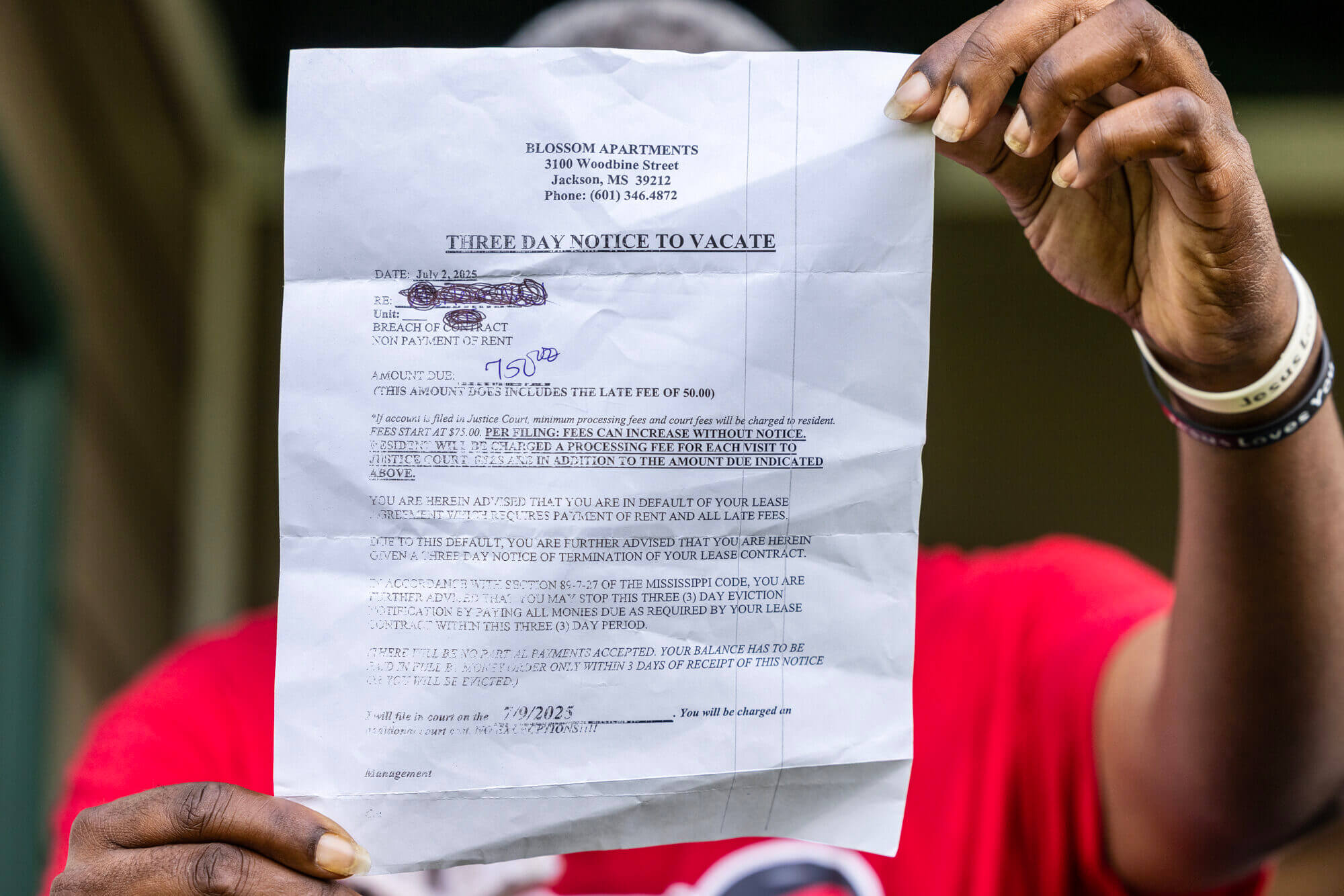
A person holds a notice to vacate at Blossom Apartments in Jackson, Miss., on Wednesday, July 23, 2025. Residents at the apartment complex lost water service this week after JXN Water shut it off because of large unpaid bills by the property owner. Credit: Eric Shelton/Mississippi Today
To her, the water shutoff underscores the issue of poor management. She said the property managers are only accessible on the days rental payments are due.
“They don’t come to the office. They ain’t answer no letters. They ain’t knock on no doors. They ain’t tell us nothing,” Smith said.
Earlier this year, JXN Water released a list of multi-family accounts that had more than $100,000 in unpaid water fees. Blossom was on the list. JXN Water was not able to provide a comment as of press time.
Smith said she receives a housing voucher from the U.S. Housing and Urban Development Department for $543 a month. But now without water, she doesn’t want to pay her portion of the $800 rent, which is also supposed to cover water. She didn’t pay her June or July rent after learning that the water was at risk of being shut off. Earlier this month, she and others who didn’t pay received a notice to submit rent within three days or face an eviction filing in court.
Smith said she’s planning to move from Blossom to another Jackson apartment complex within the next couple of weeks.
“They don’t care,” she said. “When you try to be nice, they don’t care. I’m disabled. I don’t need this.”
Blossom Apartments are seen in Jackson, Miss., on Wednesday, July 23, 2025. Residents at the apartment complex lost water service this week after JXN Water shut it off because of large unpaid bills by the property owner. Credit: Eric Shelton/Mississippi Today
Lillie Wilcher, another resident of Blossom Apartments, said she would move if she could, but it’s too expensive.
“How can we find somewhere else to go if we’re having to keep paying rent over here?” Wilcher asked. “I’m disabled. I live check to check. It don’t make sense. How will we find somewhere else to go?”
When she first moved to the complex about eight months ago, Wilcher said she didn’t have a refrigerator for months, which is a necessity for her since she needs to keep her insulin cold. But she soon traded one problem for another – once maintenance got her a fridge, her stove went out.
“It’s just hectic over here. It’s depressing, and I’m ready to go,” Wilcher said. “I’ve been trying so hard to find somewhere else to go.”
Now, without water, she planned to go to the nearby grocery store to stockpile bottled water. She has to have water for an oxygen machine when she sleeps.
“It’s too hot to be here,” Wilcher said. “It’s getting hotter. It’s too hot to be without water.”
A key Mississippi lawmaker says low-income pregnant women should soon receive faster access to medical services because the federal government has approved a Mississippi law that was on hold for more than a year.
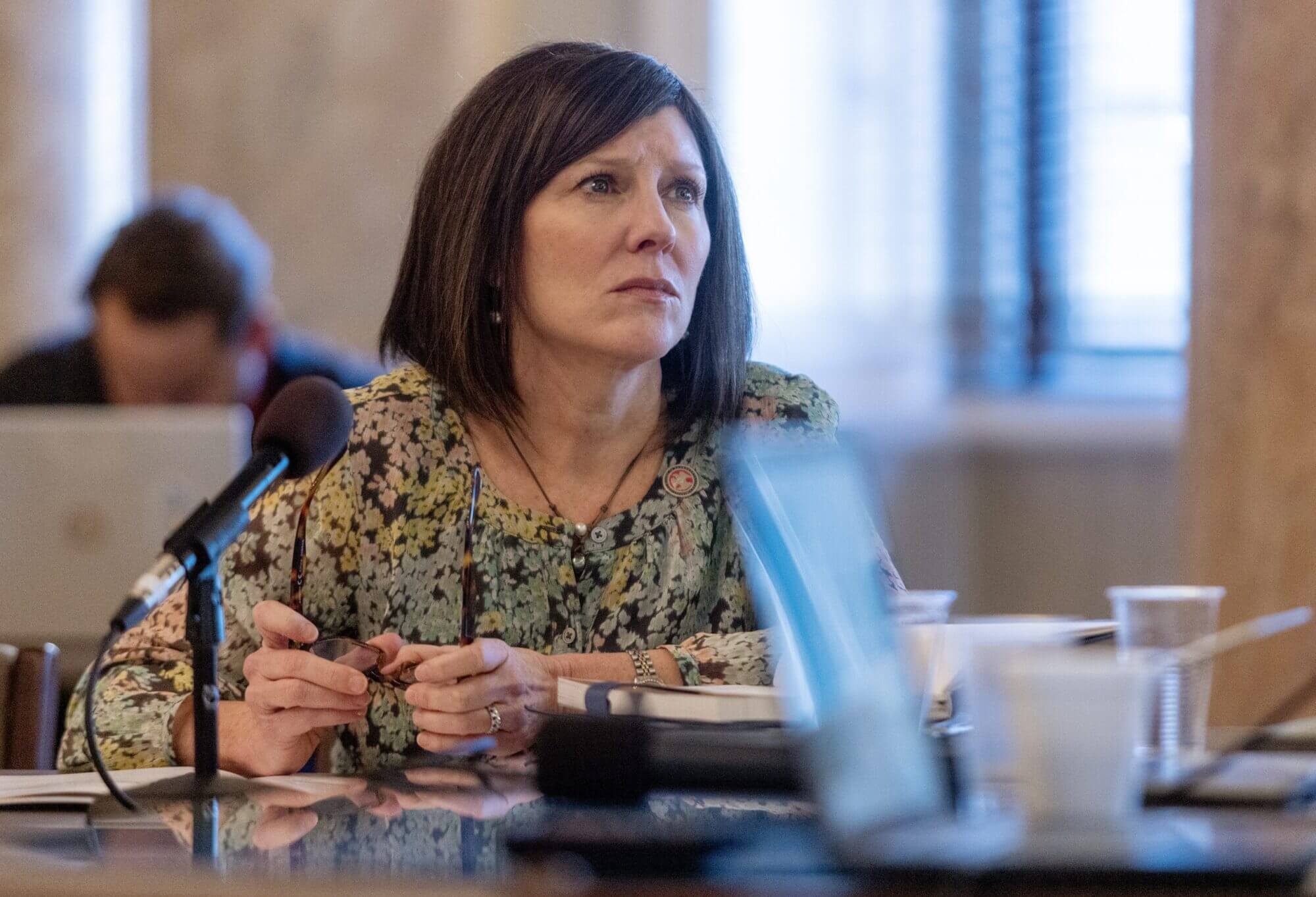
“We know that prenatal care is critical for pregnant women,” House Medicaid Committee Chairwoman Missy McGee, a Republican from Hattiesburg, said Wednesday. “It will give them the best opportunity to deliver a healthy, full-term baby.”
The law allows pregnant women to be presumed eligible for Medicaid coverage while their applications are pending. It was first passed in 2024 but has been stalled because of a discrepancy between state and federal requirements.
Mississippi lawmakers revised the state requirements this year to match federal guidelines. The new bill became law without Republican Gov. Tate Reeves’ signature in March, and the Centers for Medicare and Medicaid Services approved the policy Thursday.
Women will be able to take advantage of the program after providers are trained to make eligibility determinations, Mississippi Medicaid spokesperson Matt Westerfield said Wednesday. The agency aims to schedule training sessions for early August.
McGee led efforts to enact the policy. She said it aims to ensure pregnant women have the opportunity to see a doctor in the early weeks of pregnancy in a state with some of the nation’s highest infant and maternal mortality rates.
Without presumptive eligibility, pregnant women who are eligible for Medicaid must go without care or pay out of pocket while they wait for their application to be processed.
The preterm birth rate in Mississippi is 15% – the highest in the nation, according to March of Dimes. Over 13% of Mississippi women did not receive prenatal care until the fifth month of pregnancy or later in 2024, meaning they received less than 50% of the appropriate number of recommended visits during pregnancy.
Medicaid funds 57% of births in Mississippi, the second highest share in the nation after Louisiana.
To be eligible for the program, women must be at or below 194% of the federal poverty level – an income of about $31,000 for one person or about $53,000 for a family of three. Those approved will receive 60 days of coverage for outpatient care while their application is processed. The average processing time for Mississippi Medicaid and Children’s Health Insurance Program applications is 16 days, Westerfield said.
Providers must complete an application and undergo eligibility determination training before they are approved by the Mississippi Division of Medicaid to participate in the program, according to an explainer published on the agency’s website in 2024.
Sixteen providers are currently approved and trained for the program, Westerfield said. They will be retrained alongside any newly applied providers.
The Division of Medicaid will make a list of providers available on its website after they are trained, he said.
McGee said the next step will be for providers, county health departments and Medicaid managed care organizations to educate people who are eligible to seek the benefit of the program.
The 2024 legislation included a proof of income requirement, which the CMS did not allow, maintaining instead that vocal testimony should suffice for eligibility determination purposes.
McGee said alterations to the law, which included removing the proof of income and proof of pregnancy requirements, did not change its intent.
“The simplest thing was to make those fixes,” she said.
Legislators also passed a law in 2023 that gives mothers Medicaid coverage for one year after they give birth.
Mississippi joins other states that passed presumptive eligibility bills this year, including Alabama and Arkansas.
McGee said she is pleased Mississippi’s presumptive eligibility for pregnant women has finally received federal approval.
“We felt this was imperative and a very important step towards getting off the top of some very negative lists,” she said.
University of Southern Mississippi and Pearl River Community College announced Wednesday a new coastal pathways scholarship that will give graduates of the two-year school a way to complete their bachelor’s degree at USM.
The collaboration announced at USM’s Gulf Park campus in Long Beach is part of a regional initiative to boost education access and add job opportunities to the Mississippi Gulf Coast region. In May, USM held a similar event with Mississippi Gulf Coast Community College.
The partnership with the community colleges is also part of a larger effort to boost USM’s enrollment, which continues to decline with only 564 students enrolled in the Gulf Park campus last fall, according to data from the school’s Office of Institutional Research.
“This scholarship pathway represents more than just financial support — it’s about creating opportunities for student success,” Joe Paul, president of USM, said in a press statement. “By partnering with Pearl River Community College, we’re building a direct and affordable route for students to continue their education and make meaningful contributions to our coastal communities.”
The scholarship offers $5,000 annually to qualified PRCC transfer students, according to the press release. To qualify for the coastal scholarship students must meet the following criteria:
Have most recently attended PRCC with enrollment since 2023
Earned an associate degree from PRCC or have completed at least 60 credit hours with a minimum transfer cumulative GPA of 2.5
Declared one of the following majors at Southern Miss Gulf Park: biological sciences, business administration (general business), elementary education, marine biology, marine science (hydrography), ocean engineering, organizational leadership, psychology or secondary education
Students must also enroll in at least 15 credit hours per semester, including a minimum of nine credit hours of face-to-face instruction on the Gulf Park campus, and maintain a 2.5 GPA to remain eligible.
“These pathways not only open doors for individual students but also have a significant economic impact on our coastal communities,” Adam Breerwood, president of PRCC, said in a statement. “By investing in education, we are cultivating a skilled workforce that can contribute to local businesses and stimulate growth in various sectors.”
For more information on the application process and eligibility, students are encouraged to visit the Gulf Park Coastal Pathways Scholarship website.
Child care worries have been made worse this summer by federal cuts and depleting pandemic funds, and they aren’t expected to ease by the first day of school. While their kids might have gotten a rest, parents reported longer commutes and newfound stress.
A dozen parents from across the state told Mississippi Today about summer child care plans for their toddlers and elementary school-aged children. They shared a mix of anxiety about finding care and frustration with existing options.
Parents have had more reasons to be anxious about those options this summer than in previous ones. A loss of federally funded summer programming for youth, added fees for day care tuition and the loss of vouchers to subsidize tuition costs have changed the landscape of child care.
Shequite Johnson poses with newborn Noah on a work trip in Jackson, Miss., on Feb. 12, 2025. Credit: Courtesy of Shequite Johnson
For Shequite Johnson, a professor at Mississippi Valley State University, it has meant driving 45 minutes in the opposite direction of her job for day care.
“I’ve had to leave my 13-year-old with my 4-year-old,” she said. “And you’re put in a situation where you have to make these decisions. Some are even leaving their babies at home by themselves for five hours and checking on them during lunch hour.”
She had to pull her 4-year-old boy from a day care in her hometown because of excessive fees. She was charged a $20 late fee at pickup, a $100 registration fee for each of her two boys, and a $150 supplies fee that was announced in June on top of the $135 weekly fee.
The Mississippi Department of Human Services recently announced a cutback on vouchers that subsidize child care costs. Without Johnson’s child care voucher, her nearby options were limited to a city-run program in an unsafe neighborhood and three programs in aging facilities.
Delta Health Alliance runs free and reduced summer programming for elementary-aged children. But Johnson makes more than the income cut-off.
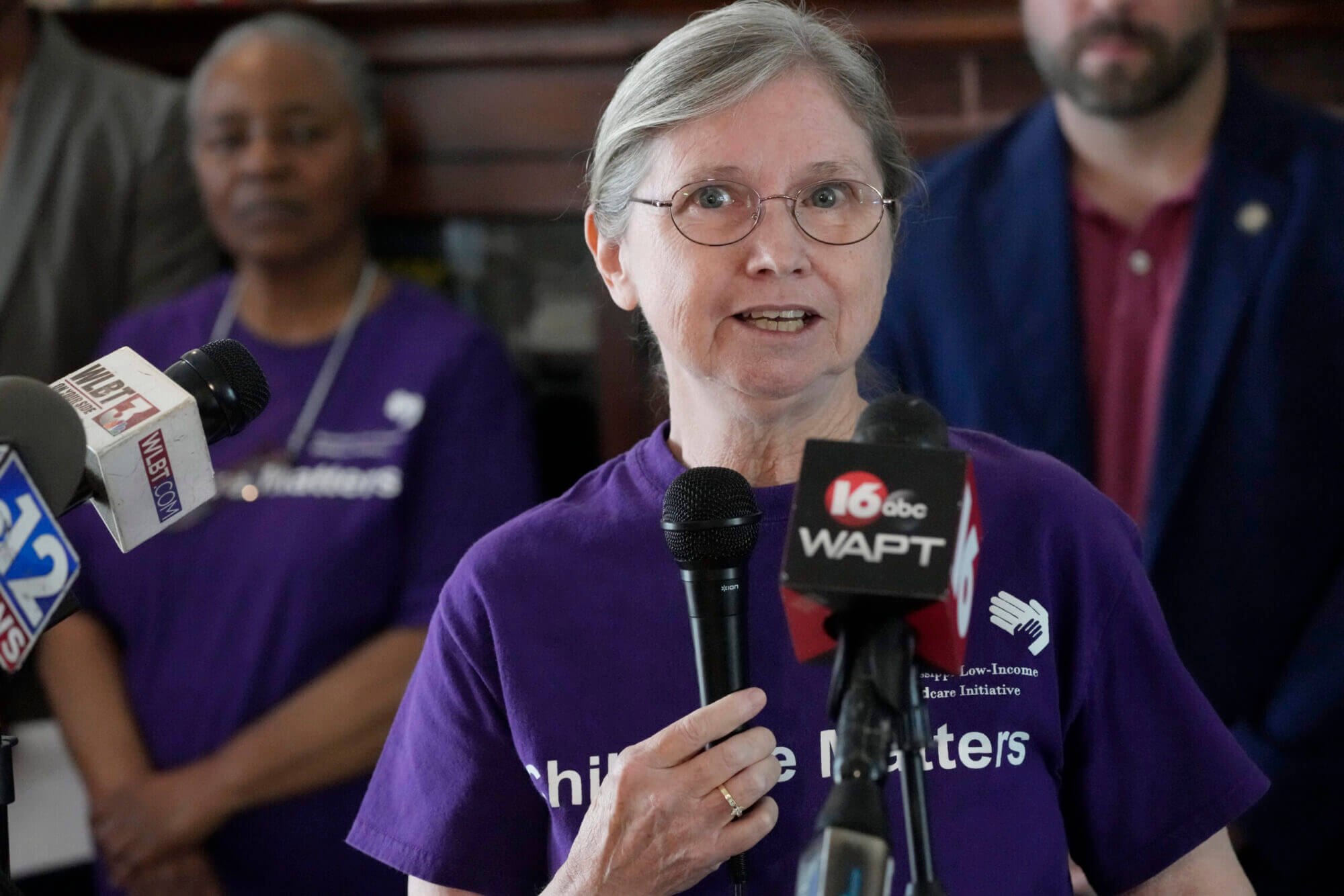
Carol Burnett, executive director of the Mississippi Low Income Child Care Initiative, speaks about a policy change by the Mississippi Department of Human Services, that removed a child support requirement for the Child Care Payment Program, at a news conference Monday, May 15, 2023, in Jackson, Miss. (AP Photo/Rogelio V. Solis)
“It’s a crisis right now in Mississippi,” said Carol Burnett, executive director of Mississippi Low-Income Child Care Initiative. “The lack of affordable child care prevents employers from keeping their workforce. And yet the state of Mississippi wants people to go back to work.”
“Parents are having to make choices. And none of them are good,” she added.
The Child Care Initiative operates a program that connects single moms with higher-paying jobs and covers the costs of child care during the transition. The organization is also advocating for the Mississippi Department of Human Services to spend some of the $156 million in unspent Temporary Assistance for Needy Families on Mississippi’s Child Care Payment Program.
The Child Care Development Fund, which nationally supports these voucher state programs, relied on pandemic-era funding that ran out in September. The Department of Human Services asked the Legislature for $40 million to continue serving the same number of families – but received $15 million.
In April, the department put a hold on renewals for child care vouchers except for deployed military parents, parents who are TANF recipients, foster children guardians, teen parents, parents of special needs children and homeless parents. As a result, 9,000 parents lost child care assistance.
The department will keep the hold until the number of enrollees drops to 27,000 or its budget goes below $12 million in monthly costs. As of Friday, it had no further update but said it will have an announcement in the next couple of weeks.
Using TANF funds unspent from past years regardless of whether they were allocated for child care assistance is prohibited, according to federal guidance. However, the TANF state office can use the leftover funds to form a direct payment program. Ohio and Texas enacted this policy.
U.S. Department of Health and Human Services regional manager Eric Blanchette shared this idea with Mississippi Department of Human Services Early Childhood Director Chad Allgood, according to an email obtained as part of a records request filed by Mississippi Today into communication regarding TANF funds. As of Friday, there were no plans to enact a similar policy in Mississippi.
A second rent
Monica Ford pays nearly $1,600 in monthly child care costs for three kids. She works as a Shipt delivery driver in addition to her day job as a Magnolia Guaranty Life Insurance Co. auditor. She, her husband and their children recently had to move in with his parents.
Monica Ford poses with children Tahir, 7, Kian, 4, Nuri, 1, at Freedom Ridge Park in Ridgeland, Miss., July 19, 2025. Credit: Leonardo Bevilacqua)/Mississippi Today
“It’s more than I’ve paid in rent,” she said. “It’s why I live with my family now.”
She uses a Jackson day care that charges $10 per minute for late pickup. The fees must be paid by the next morning.
Nearly all of the single mothers interviewed said they take on extra work to cover the rising costs of child care in their area. It’s extra work that sees them spending less time with their children.
Ashley Wilson’s child care voucher wasn’t renewed in the spring. She works 55 hours a week at a bingo hall and at Sonic Drive-In.
“We don’t get help. That’s what I don’t understand,” said Wilson, an Indianola parent.
Her preferred day care option in Indianola charged $185 per week and $20 late fees, which Wilson could not afford. Her sister was able to afford monthly costs because of an arrangement with an Angel – a benefactor who helps local families with tuition at day care providers.
Wilson tried other day cares in town. Several were in dangerous neighborhoods with staff that left milk bottles to spoil. Her toddler came home wet some afternoons and with cuts another. She gets help from family when she can.
Whitney Harper lost her child care voucher in April. She is lucky when a relative is willing to watch her 2-year old. Lately, she has considered hiring a sitter off care.com, a website that connects parents with local babysitters. In Jackson, where she lives, the hourly rate is $14 per hour.
Most of the day cares in the Jackson metro area charge between $150 and $250 per week, which is more than she can afford as a sales associate at Home Depot.
“It has been harder this year. They won’t work around my schedule, but I need the job,” she said of her employer.
‘This is the worst I have seen it’
Day care centers are left on the brink when families lose child care vouchers. Making up the lost revenue has meant higher tuition and fees for some centers and reaching out to private donors for others.
“These are small businesses,” Burnette said. “The big story in child care is how much it costs to run it. It requires adequate public investment.”
Level-Up Learning Center leadership team poses in front of their Greenville, Miss., location on July 26, 2024. Left to right are Chief Operating Officer Adrienne Walker, CEO Kaysie Burton and COO/Athletic Director Kwame Malik Barnes Credit: Courtesy of Kaysie Burton
This week, Level Up Learning Center owner and CEO Kaysie Burton visited Greenville’s Walmart, seeking to persuade the manager to sponsor his employees’ child care tuition. She submitted two grant applications and is working on at least three others. Burton’s business survived flooding and relocation. But the latest voucher cutback could shut her banner-adorned doors to the community
At Level Up Learning Center, 75% of parents rely on child care vouchers. In the last three months, 20 Learning Center parents have lost their child care vouchers yet most have stayed. Burton has a policy of not turning parents away if they are willing to contribute a portion of the weekly rate. She has not increased her tuition or instituted punishing fees.
But making up the lost revenue can be a challenge. Since the cutback, she has let seven teachers go, or roughly a third of her staff.
“We’re down to skin and bones right now,” Burton said. “I am willing to take anybody that is willing to come partner with us and help us help parents so that their kids can keep coming in.”
When Burton started her business during the COVID-19 pandemic, she saw the need in the Mississippi Delta for affordable, quality child care. She remains committed to helping prepare a future generation of Greenville leadership.
“We’re in the thick of it with our parents,” Burton said. “And we all just need help and we need prayer.”
SunShine Daycare owner Barbara Thompson has greeted each parent at the door since she started babysitting neighbors’ kids in her living room. The former banker has long had a passion for raising neighborhood children regardless of their parents’ status or income. She raised her seven siblings when her mother died when Thompson was 12.
But for the first time in 30 years of running a business in Greenville, Thompson is losing families by the dozen as well as longtime staff. She has leaned heavily on prayer and has reached out to state representatives for help. She fears more departures and the downsizing of her business.
In the last two months, 12 parents pulled their kids from SunShine. She will have to let three teachers go as a result.
“We won’t have any children if this continues,” Thompson said.
She regularly informs parents of the child care voucher waitlist and of the process for renewals. Besides caring for children, Thompson advises many young parents in her community. She noticed that state agencies communicate primarily through email, which a lot of her parents don’t check regularly.
Children who leave her stoop festooned with cartoon characters can face hours alone without parental supervision. Some children will sit and watch television with their grandparents. For Thompson, child care is about raising children to be “productive citizens.” The youngest years are some of the most important, she stressed.
“They didn’t take it from us,” Thompson said. “They took from the children. That’s the world’s future.”
Waitlisted
Vennesha Price is waitlisted at nearly every day care in Cleveland, where she lives. She’s been on some of the lists for eight months.
“If you haven’t been a resident for five years and you haven’t navigated the waiting list for five years, it’s harder to find a spot,” she said.
She found it difficult to both have a productive work day and watch her elementary-aged children. Eventually, she found a day care that was 40 minutes away. She wakes up an hour earlier to make the commute in time before work.
“I’m a single mother so it’s very difficult,” Price said. “After my grandmother went on to the Lord, it became a struggle trying to get to the day care in time.”
She started factoring late fees into her monthly budget. She’s also including the gas money needed for the extra legs of her commute. Her child care costs doubled for June and July.
“It’s almost like private school tuition now,” she said.
Derrick Nix ran for 202 yards against Illinois in 2002 despite severe kidney issues.
Something will happen at the Mississippi Sports Hall of Fame Class of 2025 induction banquet Saturday night that may never have happened before. That is, a player and one of his coaches will be inducted, together, on the same night.
That’s right: Former Ole Miss football hero Dexter McCluster will be inducted, along with former Southern Miss football hero Derrick Nix, who was McCluster’s position coach in Oxford.
Rick Cleveland
Said Nix, “When I found out I was going into the hall of fame with Dexter, I thought to myself that this can’t be anything but a God thing. … Dexter is one of my favorites. Going in with Dexter is a privilege and an honor.”
Most fans will know that Nix and McCluster are two of the most productive backs in Mississippi football history. What many might not know is that they had two of the biggest hearts. With both, you got the best they had to give every Saturday. And both had to overcome very different obstacles to become the Hall of Famers they are.
You should also know this: They are a two-man mutual admiration society. McCluster calls Nix one of “my favorite ever coaches because of the way he loved and respected the game. He coached with so much energy and passion. He was always going to put you in a position to be the best player you could be.”
Says Nix of McCluster, “He might have been a little guy, but he had a heart as big as Vaught-Hemingway Stadium.”
Nix, despite severe health issues, ran for 3,584 yards and 30 touchdowns over approximately three full seasons at Southern Miss at the turn of the century. McCluster, often the tiniest man on the field, produced 3,698 yards and 22 touchdowns running and receiving over four seasons (2006-2009) at Ole Miss.
They were two starkly different backs. At 220 sculpted pounds, Nix was a big, strapping, powerful runner who could run over you or around you. McCluster was a scatback who played much of his Rebel career at just under 160 pounds. I remember the late Carl Torbush, then the defensive coordinator at Mississippi State, talking about McCluster after the 2009 Egg Bowl: “He’s the fastest man I’ve ever seen in a football suit. There may be faster runners on a track, but I’m not sure there’s ever been a faster man in pads. If he gets a step on you he’s gone.”
McCluster went on to play seven years in the NFL, making the Pro Bowl in 2013. Nix never got that chance, although had he been healthy, he surely would have been an NFL star.
Dexter McCluster was unmatched at making people miss.
Said Dan Rooney, a Pittsburgh Steelers personnel director and longtime executive: “Derrick Nix had it all. He reminded me a lot of Deuce McAllister. He had a gliding style, but he also had great running ability. He could break tackles with power, but he also had good enough feet that he could be elusive in open space. And once he broke loose, he could finish a run. He was a can’t-miss prospect, the kind any NFL team would love to have.”
Nix, one of the most highly recruited players in USM history, surpassed 1,000 yards rushing in both his freshmen and sophomore seasons before severe kidney problems stopped him as a junior in 2000. With Nix, USM won five of its first six games, losing only a 19-17 heartbreaker to Tennessee and beating both Alabama and Oklahoma State by three touchdowns. Without Nix, the Golden Eagles lost three of their last five.
But then, after sitting out the entire 2001 season, Nix came back to rush for 1,194 yards as a senior, including a 202-yard effort against defending Big 10 champion Illinois. In that one, he ran for a 50-yard touchdown and then collapsed in the end zone, throwing up from exhaustion. Turns out, he had been playing with about 10% of his normal kidney function. Nix received a kidney transplant from an older brother shortly after that season and remains healthy and robust at 45. He just never could play football again.
“Sometimes, I wonder what would I could have done if I had remained healthy,” said Nix, now the offensive coordinator at Auburn after 16 years in Oxford. “You can’t help but wonder, but I can’t complain about the way things turned out.”
This will tell you something about Nix: McCluster never knew that about his coach until interviewed for this piece.
“I knew he had been a great player but he never talked about it,” McCluster said. “I never knew about the kidneys, the illness and all that, but that just shows how much he loves football and how much the game meant to him. I do know that much. I knew that the first time I met with him.”
McCluster now lives in Brentwood, Tennessee, where he works as a personal trainer and part-time high school football coach. “My real job is I’m a girl dad. We have five beautiful daughters,” McCluster says.
Nix is a girl dad himself with one daughter he dotes on.
Both men call this Saturday’s induction a career highlight, made all the more special because they will experience it together.
Derrick Nix played much of his college football career, hindered by a life-threatening kidney problem that sapped his strength and ended his playing career prematurely. Dexter McCluster spent much of his career with coaches and talent evaluators telling him he was too small. Eventually, Nix became McCluster’s coach at Ole Miss. Saturday night, they go into the Mississippi Sports Hall of Fame together.
A panel of House Republicans on Monday night chose New York Republican Rep. Andrew Garbarino as chairman of the Homeland Security Committee.
Reps. Michael Guest of Mississippi, Clay Higgins of Louisiana and Carlos Gimenez of Florida were in the running for the top Homeland Security spot.
Guest will continue to lead the House Ethics Committee and the Subcommittee on Border Security and Enforcement.
“I am looking forward to working with Chairman Garbarino to continue to secure our border and advance President Trump’s America First Agenda,” Guest told Mississippi Today in a statement.
Guest, who has represented Mississippi’s 3rd Congressional District since 2019, previously said that if the homeland security panel had selected him as the new chair, he would have worked closely with Trump and that had unique experience to lead the committee.
Before joining Congress, Guest was the elected district attorney in Madison and Rankin counties.
Technology trade group NetChoice is asking the U.S. Supreme Court stop Mississippi from enforcing a law that requires age verification for users of social media.
The group filed an emergency application Monday, days after the 5th U.S. Circuit Court of Appeals said the Mississippi law could take effect. While NetChoice has sued other states over age-verification laws, the Mississippi case is the first to reach the nation’s high court.
NetChoice argues that Mississippi’s law violates privacy and constitutionally protected speech, while state officials who support the law say it aims to protect children from harm online.
“Social media is the modern printing press — it allows all Americans to share their thoughts and perspectives,” Paul Taske, co-director of the NetChoice Litigation Center, said in a press release Monday. “And, until now, Mississippians could do the same free from government interference.”
In April 2024, Republican Gov. Tate Reeves signed the Walker Montgomery Protecting Children Online Act, which unanimously passed the Legislature and was named for a teenager who took his own life after sextortion online.
The law says a minor must have permission of a parent or guardian to have a social media account and requires digital service providers to make “commercially reasonable efforts” to verify users’ ages. It also says social media companies could not collect, sell or share minors’ personal information and tech companies must have strategies to prevent minors from accessing “harmful material.”
NetChoice members include Google, Snapchat, Instagram, Facebook and X. The group sued Mississippi in June 2024 to try to prevent the law from taking effect, arguing that families, not the state, should determine how children interact with social media.
A federal judge issued a preliminary injunction in July 2024 to prevent Mississippi’s law from taking effect. Last week, the New Orleans-based appeals court granted the state’s request to lift that injunction.
In papers filed with the appeals court, Mississippi Attorney General Lynn Fitch, a Republican, argued that the law “imposes modest duties on the interactive online platforms that are especially attractive to predators.”