
District attorney: Education funding cuts can be difference in life and death


Editor’s note: This essay is part of Mississippi Today Ideas, a platform for thoughtful Mississippians to share fact-based ideas about our state’s past, present and future. You can read more about the section here.
With graduation season upon us, I can’t help but be proud of the next generation of leaders. Each cap and gown represents not just an achievement, but a hope for the future and for a better Mississippi.
But graduation season has been overshadowed when I read about the freeze of $137 million in federal funds promised to Mississippi schools. My mind drifts to the death of Harvey Montrell Johnson Jr. It may not be easy to see the connection between the shooting of a 15-year-old and a school budget cut, but for me — as a district attorney for nearly a decade — the consequences are painfully personal.
A cut in school funding isn’t just a line in a report. It means fewer resources, fewer safeguards and more young lives at risk. Lives like Harvey’s.
Harvey was caught in a battle between the streets and the schools—and the streets won. One Sunday afternoon in Columbus in 2022, he found himself with a man nearly 15 years older than him, Tommy Flowers Jr. They were drinking and using drugs together until Tommy decided to settle a score. He took Harvey along, handed him a Taurus 9mm and had him fire round after round at a house where he had a beef with the occupants.
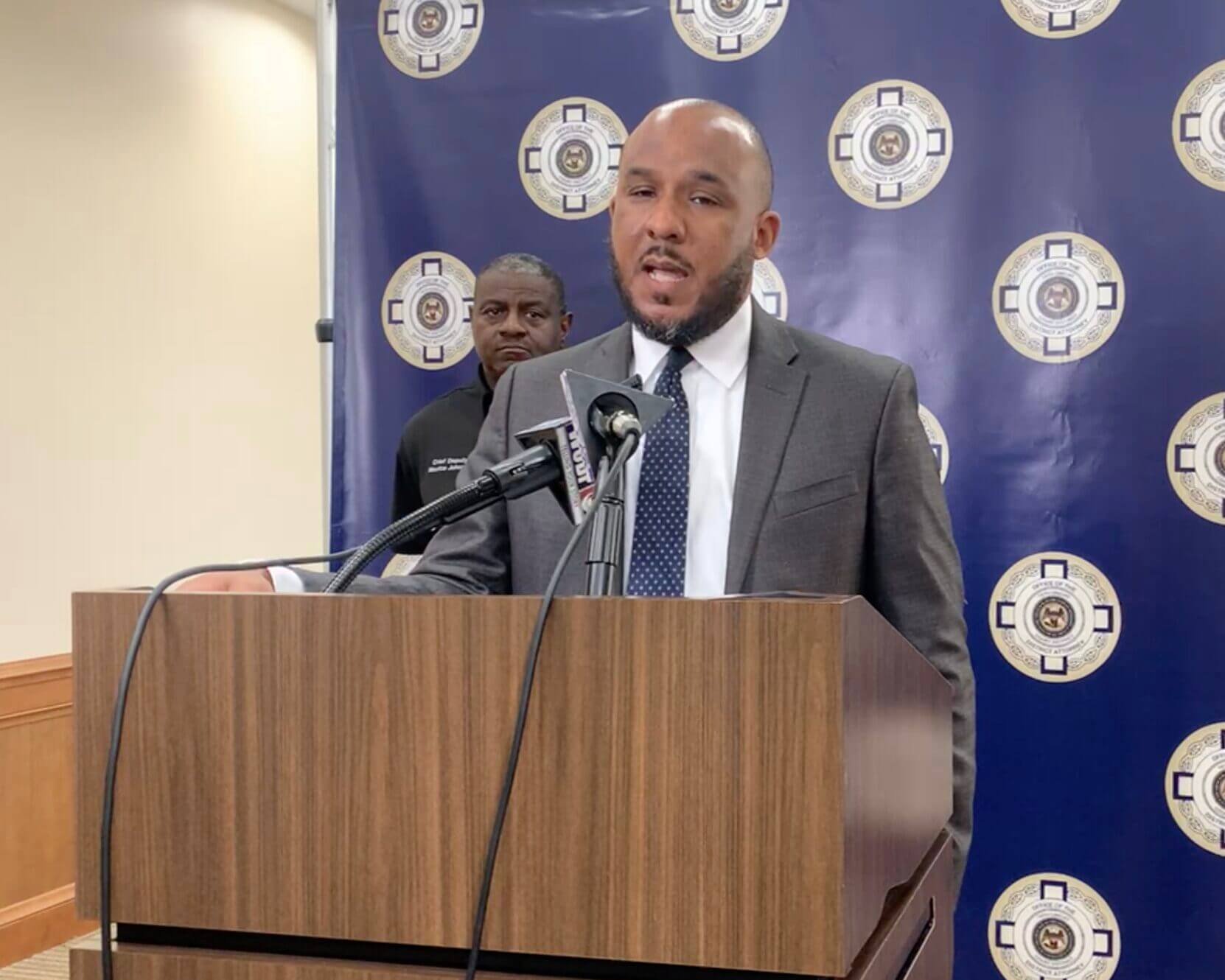
What Tommy failed to prepare Harvey for was that the young men in that house were armed too — “Second Amendment ready,” as people like to say. One of them had an AR-style rifle and returned fire so quickly and heavily that it didn’t take long before Harvey was hit and killed.
During the trial, my focus was on holding Mr. Flowers accountable for leading Harvey to his death. The idea that a nearly 30-year-old man would get a teenager drunk and high, arm him with a gun and take him to attack a home he knew was likely to respond with bullets so enraged me that it was difficult to think about anything else. The jury agreed. I moved on to the next case. In my work, there is no finish line.
But when I read about the freeze in federal education funding, the Harvey case came rushing back–not just the facts, but the warning it carries.
What $137 million can do for Mississippi’s schools is not hypothetical. It’s real support: school counselors who notice when a student starts slipping; after-school programs that keep kids safe until their parents are home; mentors, mental health staff and trained resource officers who de-escalate conflict instead of inflaming it. It’s guidance and structure that can help a 15-year-old imagine a future that doesn’t involve a gun.
According to Mississippi Today, about 70 school districts across the state are set to lose these desperately needed funds. The Jackson Public Schools District alone stands to lose $4.5 million. Of that, $3.62 million was set aside for urgently needed construction, and nearly $1 million was planned for instructional support. Other districts had allocated their money toward literacy programs, math tutoring, mental health services and classroom technology. That money was already budgeted—already spoken for.
The shooting that ended Harvey’s life happened on a Sunday. But the choices that led to it happened every day before that — in classrooms without enough adults to care, in neighborhoods without safe places to gather, in homes stretched too thin to fill the gaps.
If we care about liberty, if we care about life, we must care about what our schools can actually provide.
This funding freeze isn’t just a bureaucratic decision. It’s a threat to the only institutions standing between some of our most vulnerable kids and a world full of people like Tommy Flowers who see them as disposable. We may never know exactly what could have saved Harvey, but we know what didn’t: indifference, underfunding and too many missed chances.
As we celebrate graduation achievements, we must remember that the next generation deserves the opportunity to succeed. The next Harvey is already out there. We still have time to save him — but only if we give our schools what they need to reach him first. We owe that to him. We owe it to our next generation of leaders.
Scott Colom is the district attorney of the 16th Circuit Court of Mississippi, representing Lowndes, Oktibbeha, Clay and Noxubee counties. First elected in 2015, his office has achieved over a 90% conviction rate.
‘Sinners’ puts ‘truth on screen’ for the Mississippi Band of Choctaw Indians
CHOCTAW, Miss. (AP) — It’s a small part in a big movie, but for the Mississippi Band of Choctaw Indians, their scene in “Sinners” is a huge deal.
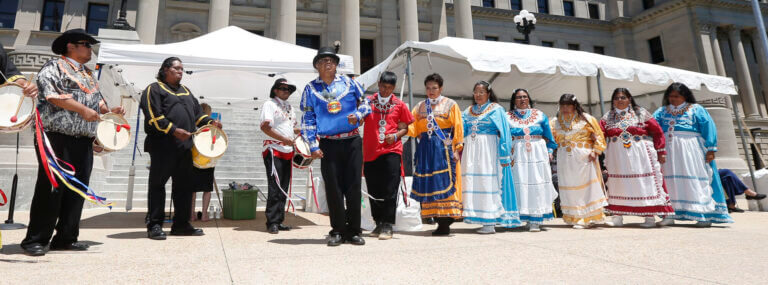
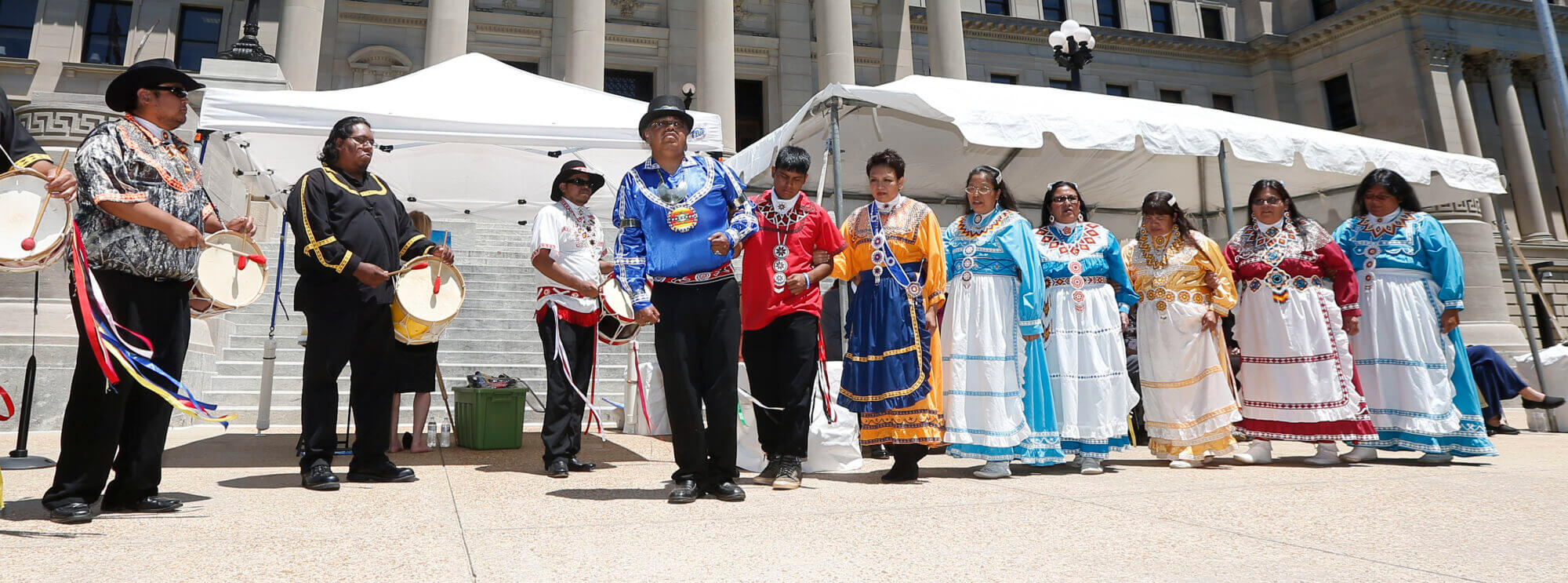
The horror movie blockbuster, starring Michael B. Jordan as a gangster turned vampire slayer, paints a brief but impactful portrait of the tribe using Choctaw actors and cultural experts. For some, it’s the first time they’ve seen the Choctaw way of life accurately portrayed on the big screen.
In the scene, a posse of Choctaw, riding on horseback and in an old truck, arrives at a small farmhouse to warn the couple that lives there of coming danger. When the couple refuses their help, a Choctaw man wishes them luck in his native language before riding off.
“I’ve not seen another movie that has our language, like, spoken correctly,” said Cynthia Massey, a cultural consultant for “Sinners.”
Massey runs the tribe’s Chahta Immi Cultural Center alongside Sherrill Nickey and department director Jay Wesley. All three were hired as cultural consultants to ensure a genuine depiction of the tribe in the film. Together, they sifted through archives, researching how their ancestors would have dressed, spoken and acted in the 1930s, when “Sinners” takes place.
“I was honored and humbled by the fact that they wanted a true representation,” said Wesley, who also acted in the movie.
Wesley connected the filmmakers to Choctaw actors and artifacts like the beaded sashes the Choctaw characters wear in the movie. Those sashes are now part of a “Sinners” display at the cultural center.
The movie’s introduction also features a short snippet of a Choctaw war chant, performed by Wesley’s daughter, Jaeden Wesley, who is a student at the University of California, Los Angeles. While recording, Jaeden Wesley said the filmmakers told her they wanted the Choctaw people to hear their music in the movie.
“We were catering to our own people, even in that short little second,” Jaeden Wesley said.
Shining a spotlight on often overlooked cultures and topics, like the Choctaw people, is part of the mission at Proximity Media, which produced “Sinners.” The company was founded by “Sinners” director Ryan Coogler, his wife and film producer, Zinzi Coogler, and producer Sev Ohanian.
“It was never a question for us that if we were going to portray the Mississippi Choctaw, we got to have the right people who can tell us, who can tell Ryan, what we’re not knowing, what we’re not thinking,” Ohanian said. “It was all because we’re trying to serve Ryan’s story of like putting truth on screen.”
Ohanian and his co-founders didn’t stop with Choctaw consultants; they enlisted a small army of experts who advised on the confluence of cultures mingling in the Mississippi Delta, where the film is set. The resulting cinematic world was so well received, community organizers penned an open letter, inviting Coogler and his fellow filmmakers to visit the Delta. Last week, the Cooglers, Ohanian and others took up the offer, attending a “Sinners” screening in Clarksdale, Mississippi. Clarksdale is where the film’s events unfold.
“I hope this encourages other filmmakers to find opportunities to be authentic in their storytelling and to look at this rich tapestry of culture that’s right here in America,” Ohanian said, noting the film industry has historically misrepresented nonwhite groups.
For Wesley and his fellow consultants, the hope is the film will cultivate curiosity in audiences, encourage them to learn more about Choctaw culture and visit the Chahta Immi Cultural Center.
“It’s important to be connected to this culture because this was here before the public was here,” Massey said. “Probably three-quarters of Mississippi was Choctaw land, and now we only have 350,000 acres.”
They say Choctaw participation in the film has cultivated a sense of pride among tribe members. Nickey hopes it will encourage a sort of cultural renaissance at a time when she says fewer and fewer Choctaw speak their native language.
“I know for a fact that there are a lot of kids out there that don’t even know how to speak our language. They only speak English,” Nickey said. “I hope they know it’s okay to speak our language.”
Expertstrategier för bonusar på Golden Panda Casino
Expertstrategier för bonusar på Golden Panda Casino
Bonusar är den första lockelsen för nya spelare och en viktig motivationsfaktor för erfarna casinofantaster. En välkomsterbjudande ger dig extra spelkassa utan att du riskerar egna pengar. Det betyder längre speltid och fler chanser att hitta en vinststörre spelautomat eller bordsspel som passar din stil.
Förutom välkomstpaketet finns insättningsbonusar, free spins och lojalitetsprogram. Varje typ har egna villkor, men alla syftar till att öka ditt spelvärde. En smart spelare jämför villkoren och väljer den bonus som ger högst RTP‑potential och lägst omsättningskrav.
Att förstå hur bonusar påverkar ditt spel är grunden för att bygga en hållbar bankrulle. När du vet vilka erbjudanden som ger mest värde kan du fokusera på spel som faktiskt ger avkastning, istället för att slösa tid på låga utdelningar.
Golden Panda Casino: Så fungerar deras bonusprogram
Golden Panda Casino har byggt sitt rykte på ett generöst och transparent bonussystem. På deras officiella sida finns en tydlig översikt över varje erbjudande, vilket gör det enkelt att följa med.
Välkomstpaket
Det första paketet ger 100 % matchning på din första insättning upp till 1 000 kr samt 100 free spins på en populär slot. Omsättningskravet är 30 x bonusbeloppet, vilket är lågt jämfört med branschstandard.
Veckovisa kampanjer
Varje vecka lanseras nya insättningsbonusar och free spins. Dessa är utformade för att hålla spelupplevelsen fräsch och belöna regelbundna spelare.
Lojalitetsprogram
Golden Panda Casino casino spela‑programmet samlar poäng för varje satsning. Poängen kan bytas mot cash‑bonusar, exklusiva turneringar eller personliga gåvor.
Inga dolda avgifter
Alla bonusar är tydligt märkta med villkor och tidsramar. Plattformen är licensierad av Malta Gaming Authority, vilket ger extra trygghet för spelare.
För den som söker en pålitlig och belönande spelmiljö är detta casino ett starkt alternativ. Läs mer om deras erbjudanden här på denna sida och jämför med andra marknadsaktörer.
Praktiska tips för att maximera din bonus
Att bara ta emot en bonus räcker inte – du måste spela smart för att omvandla den till riktiga pengar. Nedan följer konkreta steg som hjälper dig att utnyttja varje erbjudande fullt ut.
- Läs villkoren noggrant – förstå omsättningskrav, maxutbetalning och spelrestriktioner.
- Välj spel med hög RTP – slots som har 96 % eller högre ger bättre avkastning på lång sikt.
- Sätt en spelbudget – bestäm hur mycket du är villig att riskera innan du börjar.
- Utnyttja free spins på rätt maskin – fokusera på slots med hög volatilitet för stora vinster.
- Uppdatera dina insättningar – planera insättningar så att du möter bonuskraven utan onödig fördröjning.
Pro Tip: Spela alltid på spel med minst 95 % RTP när du använder en insättningsbonus. Det minskar risken för att fastna i låga utbetalningar.
Exempel: Föreställ dig att du får 200 kr i bonus med 30 x omsättningskrav. Du spelar en slot med 96 % RTP. Efter 6 000 kr i spel (200 × 30) kan du förvänta dig att få tillbaka cirka 5 760 kr, vilket ger dig en vinst på 5 560 kr före eventuell maxutbetalning.
Industry Secret: Många spelare missar att kontrollera maxutbetalningsgränsen. På Golden Panda Casino är den ofta högre än hos konkurrenterna, vilket ger dig större vinstpotential.
Jämförelse av vanliga bonusalternativ
| Bonustyp | Omsättningskrav | Maxutbetalning | Gratis spins |
|---|---|---|---|
| Välkomstmatch | 30 x | 5 000 kr | Ja |
| Veckovis insättningsbonus | 25 x | 2 500 kr | Nej |
| Lojalitetscash | 0 x | Ingen gräns | Nej |
| No‑deposit bonus | 40 x | 1 000 kr | Ja |
Tabellen visar tydligt att Golden Panda Casino erbjuder en av de lägsta omsättningskraven på marknaden. Detta gör det enklare för spelare att omvandla bonuspengar till riktiga vinster.
Ansvarsfullt spelande och hur du skyddar din vinst
Ingen bonus är värd att förlora om du spelar utan kontroll. Golden Panda Casino har flera verktyg för att hjälpa dig att spela ansvarsfullt. Du kan sätta insättningsgränser, förlustgränser och tidsgränser direkt i ditt konto.
Did You Know? Plattformen samarbetar med spelberoendesorganisationer och erbjuder självavstängning om du känner att spelandet blir ett problem.
När du har nått bonusens omsättningskrav, rekommenderas det att du tar ut vinsten omedelbart. Detta minskar frestelsen att återinvestera och riskera hela beloppet.
Kom ihåg att alltid sätta ett maxbelopp för varje spelsession. Att hålla sig till en budget är nyckeln till långsiktig framgång och glädje på casinot.
Genom att följa dessa strategier, utnyttja bonusarna på Golden Panda Casino och spela ansvarsfullt, kan du maximera både nöje och potentiell vinst. Lycka till!
Farish Street groups break ground on green space
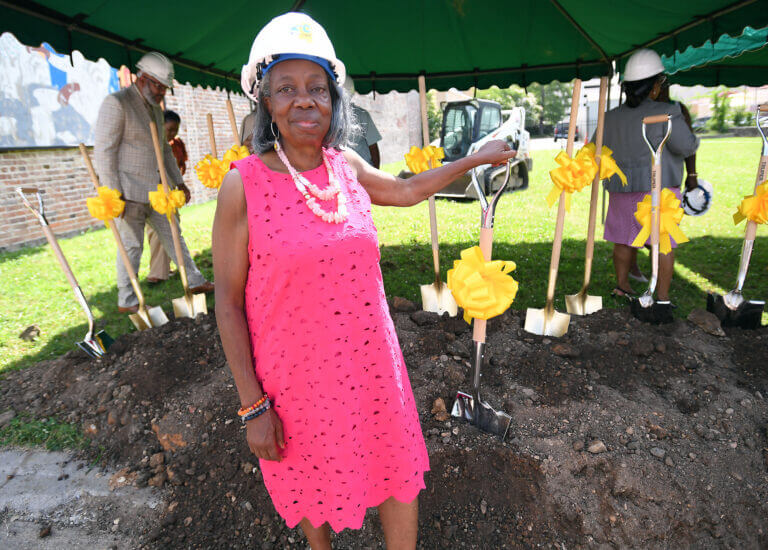

Local officials and community leaders posed to cameras Thursday morning on Farish Street as they dug their ceremonial shovels into the symbolic dirt pile in front of them. The symbolism, they hope, is the continued momentum around rebuilding the historic but largely abandoned downtown Jackson neighborhood.
Nonprofits 2C Mississippi, Farish Street Community of Shalom, and the city’s urban renewal group, Jackson Redevelopment Authority, held the groundbreaking for a new green space between Amite Street and James Meredith Drive. Organizers see the project as both a communal gathering place as well as a shelter and heat sponge.
“This is a historic moment on Farish Street,” said Dorothy Davis, executive director of the Farish Street Community of Shalom.
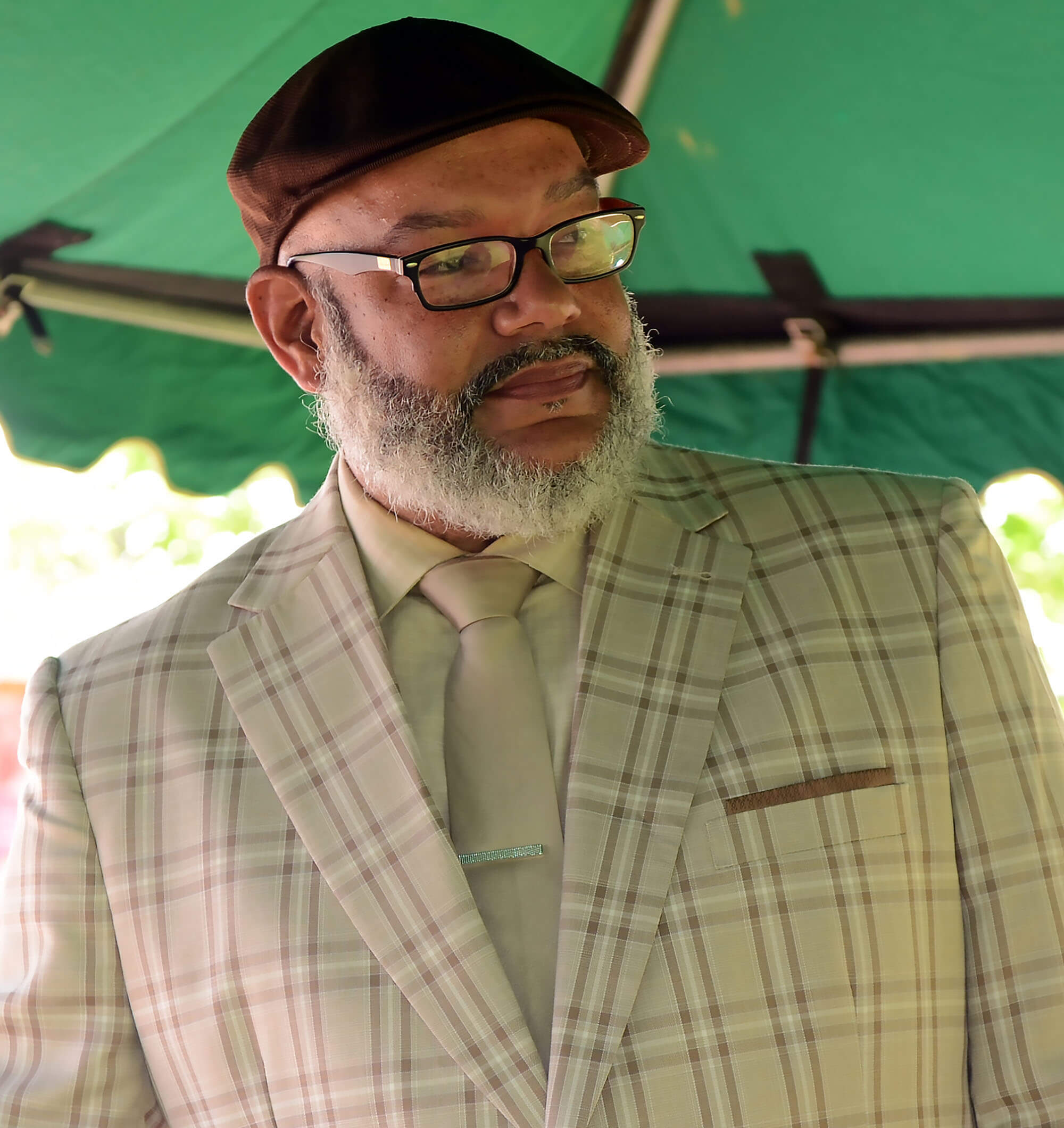
The groups first announced the green space project last year, building off a 2020 study they did identifying Jackson’s “heat islands,” or urban areas that are much hotter because they lack tree coverage and bodies of water. The study found that parts of downtown Jackson got up to 10 degrees hotter than outer parts of the city during the summer.
Davis said the project’s next phase will be tearing down brick walls and planting new grass and trees, which she said they’ll start in the next couple of weeks. Volunteers will continue to monitor temperatures over the next five years. Davis added they’ll hope to have a new stage built by early next year and then begin work on an amphitheater.
The groups are funding the project with a $1.5 million grant through the U.S. Department of Agriculture Forest Service.
The ceremony followed another groundbreaking in April for the Leonard Court project, which will rebuild 67 old homes into new affordable housing in the Farish Street Historical District. That project is set to finish by summer 2026.
Christopher Pike, executive director of JRA, which owns and will continue to manage the space, said they’ll use the park to host events such as the neighborhood’s annual Juneteenth celebration.
“It’ll just be a park for people to come and hang out,” Pike said. “We’ve been talking to people about maybe doing yoga, that type of stuff. So it’ll be an activated space.
“Obviously there’s an environmental component, which is (tackling the) heat island, but there’s also the quality of life component because most communities you see that are really vibrant have these very activated green spaces.”

Pike teased other new projects in the works along Farish Street: in “eight to 12 months” Pike hopes to have another groundbreaking for the Soul City Market, which includes plans for a food hall, stand-alone restaurants, a Farish Street history museum, and loft apartments on the buildings’ second floors. Pike said the projects would together cost around $30 million, which JRA hopes to fund through both tax credits and rebates as well as private sources.
New UMMC tool helps women on Medicaid find prenatal care and family planning
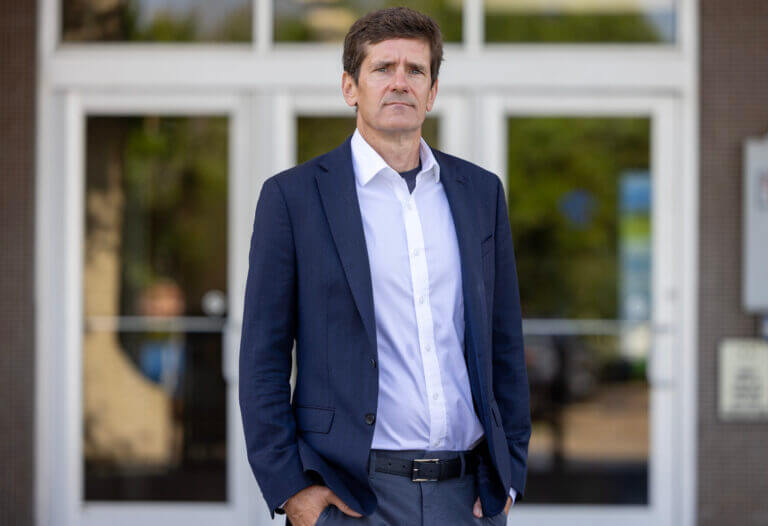
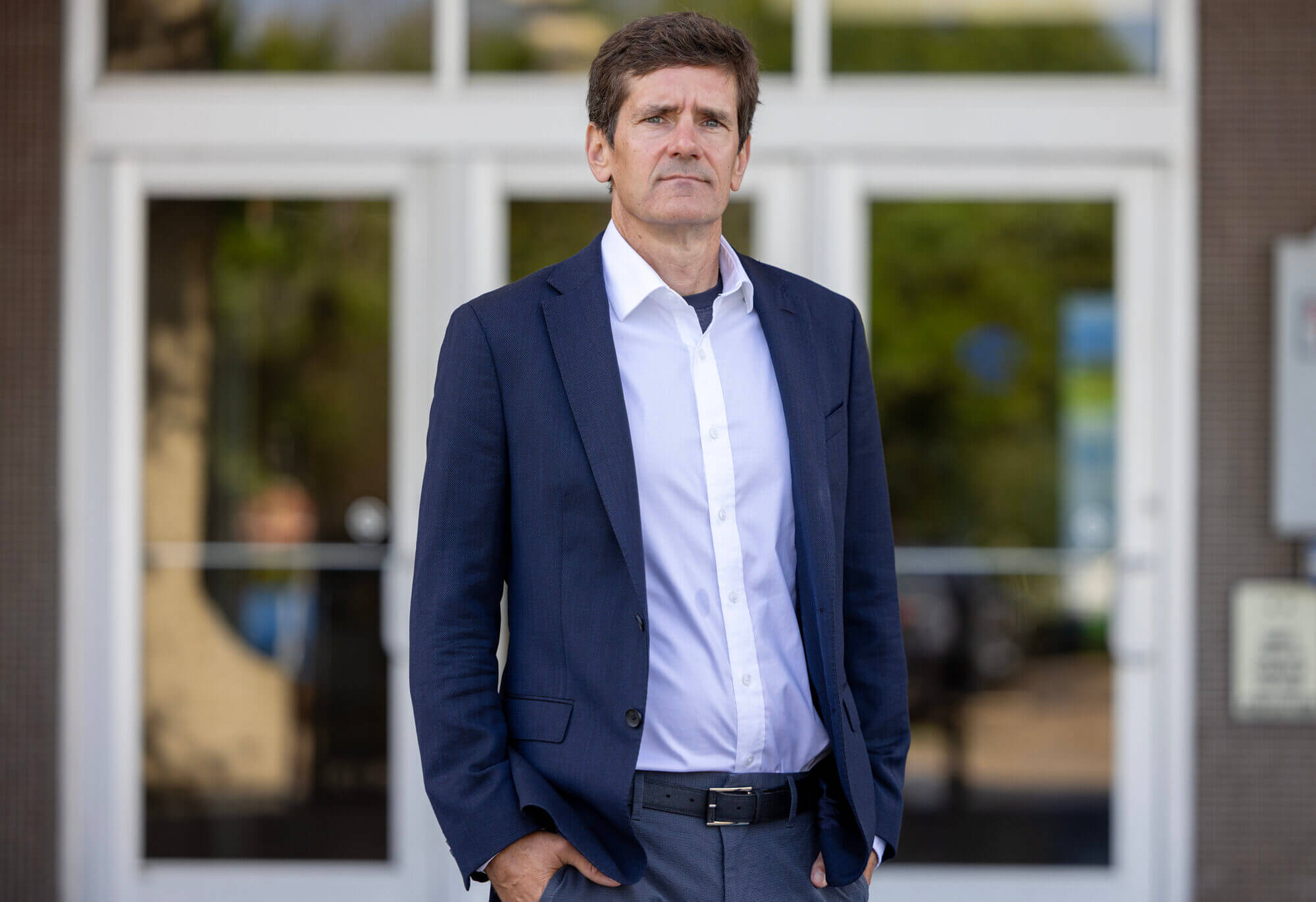
At the University of Mississippi Medical Center, one researcher’s full-time job for the past nine months has been to find out which clinics around the state offer different kinds of women’s health care, and whether they accept various forms of Medicaid.
The final result is a recently-launched database aimed at helping women locate the nearest clinic that can offer the care they need. The work that went into creating it highlights a pervasive problem: Even making an appointment can be a barrier that keeps women from improving their lives.
“We Need to Talk” is a compilation of all Mississippi clinics offering prenatal care – specifying which ones also offer family planning, and whether they take Medicaid insurance, Medicaid waivers and see women whose Medicaid applications are pending. There is also a hotline designed to give additional support to anyone having questions or feeling overwhelmed about the process.
“Having gone through the work, it was remarkable. It wasn’t easy to figure out where you should go for care,” said Dr. Thomas Dobbs, former state health officer and dean of the John D. Bower School of Population Health at UMMC, who oversaw the project. “And that should be one of the most basic bits of information we have.”
The idea was born from the recent 900% increase in babies born with syphilis, Dobbs explained, which he called a “canary in a coal mine” signaling more danger to come.
An investigation into the epidemic showed that one of the driving factors was delayed prenatal care, caused in large part by inaccessible information and concerns about cost, Dobbs said.
Finding reproductive and prenatal care can be difficult for several reasons.
For one thing, there are many different kinds of clinics in Mississippi, making it hard for patients to know what to search for. The list includes federally qualified health centers, county health department clinics and private OB-GYNs. Another reason is that many clinics don’t specify online whether they take Medicaid, much less what their policy is on specific or temporary Medicaid coverage. Calling doesn’t always guarantee patients a comprehensive or accurate answer.
The new database is an initiative of UMMC’s Myrlie Evers-Williams Institute – housed in the Jackson Medical Mall – which is committed to eliminating health disparities by studying the intersection of health and social issues. The institute has a clinic on site that practices what’s called “social medicine,” a key element of eliminating those disparities, the institute’s executive director Victoria Gholar explained.
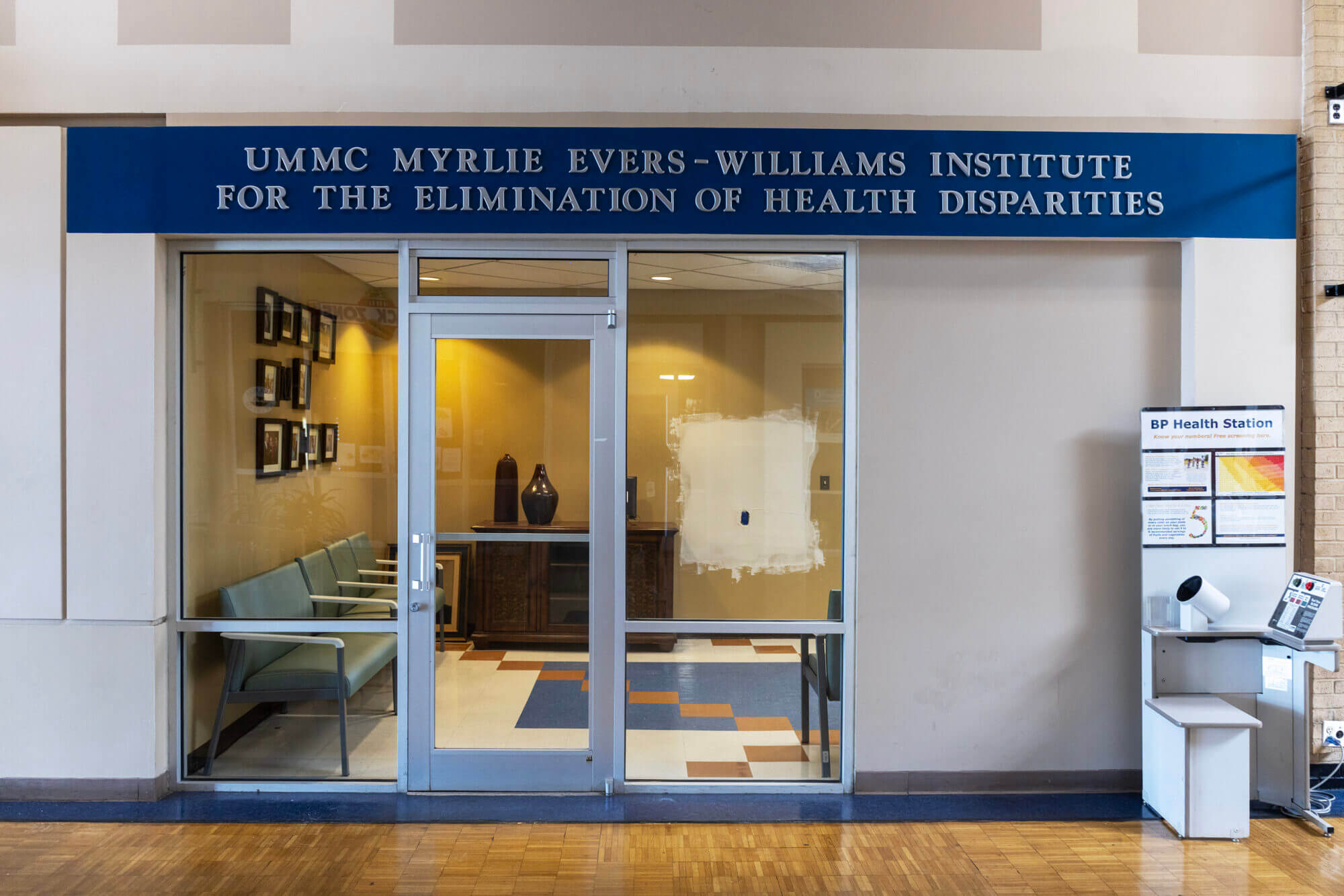
“If you have a patient who has asthma and they’re living in a situation where mold is in their environment, it will really be hard for them to get better,” Gholar said. “Or, if we have a patient who has to use an electronic (medical) device, and their electricity is no longer available because they weren’t able to take care of their utility bill, then we try to work with them and connect them to resources that might be able to help.”
The institute employs a wide range of professionals who work on health from a non-clinical standpoint, such as researchers, community engagers, social workers and registered dietitians. It hosts events like food drives and offers free support from budgeting strategies to meal preparation for those with conditions like diabetes or high blood pressure.
Aside from knowing what to search for, finding clinics that accept Medicaid can also be complicated because Mississippi Medicaid eligibility is constantly changing for a woman based on her age and circumstance – what kinds of services she’s seeking, as well as whether she’s pregnant.
Medicaid eligibility in Mississippi is among the strictest in the nation, with one exception – pregnant women. That means many low-income women only become eligible for Medicaid once pregnant. And since an application can take up to eight weeks to be processed, the chances that a woman in this situation will be able to use her newly-acquired Medicaid insurance in the first trimester are slim.
A law that would cut out this interim period and allow low-income pregnant women to be immediately seen by a doctor passed the Legislature in 2024, but was never implemented because of legislative errors. The policy went back through the Legislature in 2025, passed overwhelmingly again, but is not yet in effect.
Some doctors already see women whose Medicaid application is pending, and the UMMC tool specifies at which clinics that’s the case.
Women of reproductive age seeking reproductive health care are also eligible for leniency in the typical Medicaid stipulations. These women can apply for a Medicaid family planning waiver, which allows them to access Medicaid for family planning purposes, even if they don’t qualify for general Medicaid coverage.
The income requirement for pregnancy Medicaid and the family planning waiver is a household income of less than 194% of the federal poverty level, or about $2,500 for one person in 2025.
Dobbs, who has been the main point person on the project, said he hopes the online database is one more resource improving health care accessibility and women’s health metrics in Mississippi.
“This isn’t about getting patients to UMMC at all,” Dobbs said. “It’s about empowering patients to be able to get the care they need where they live.”
Democratic candidates make gains in Mississippi city elections, but GOP keeps Gulfport red
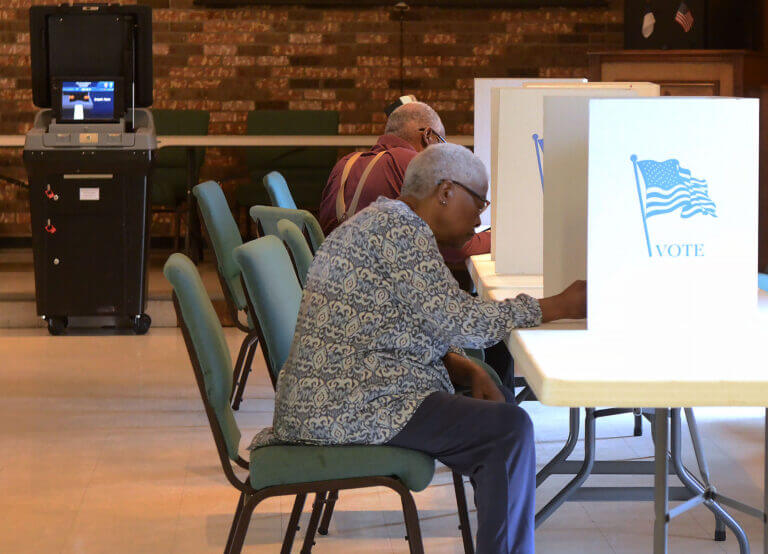
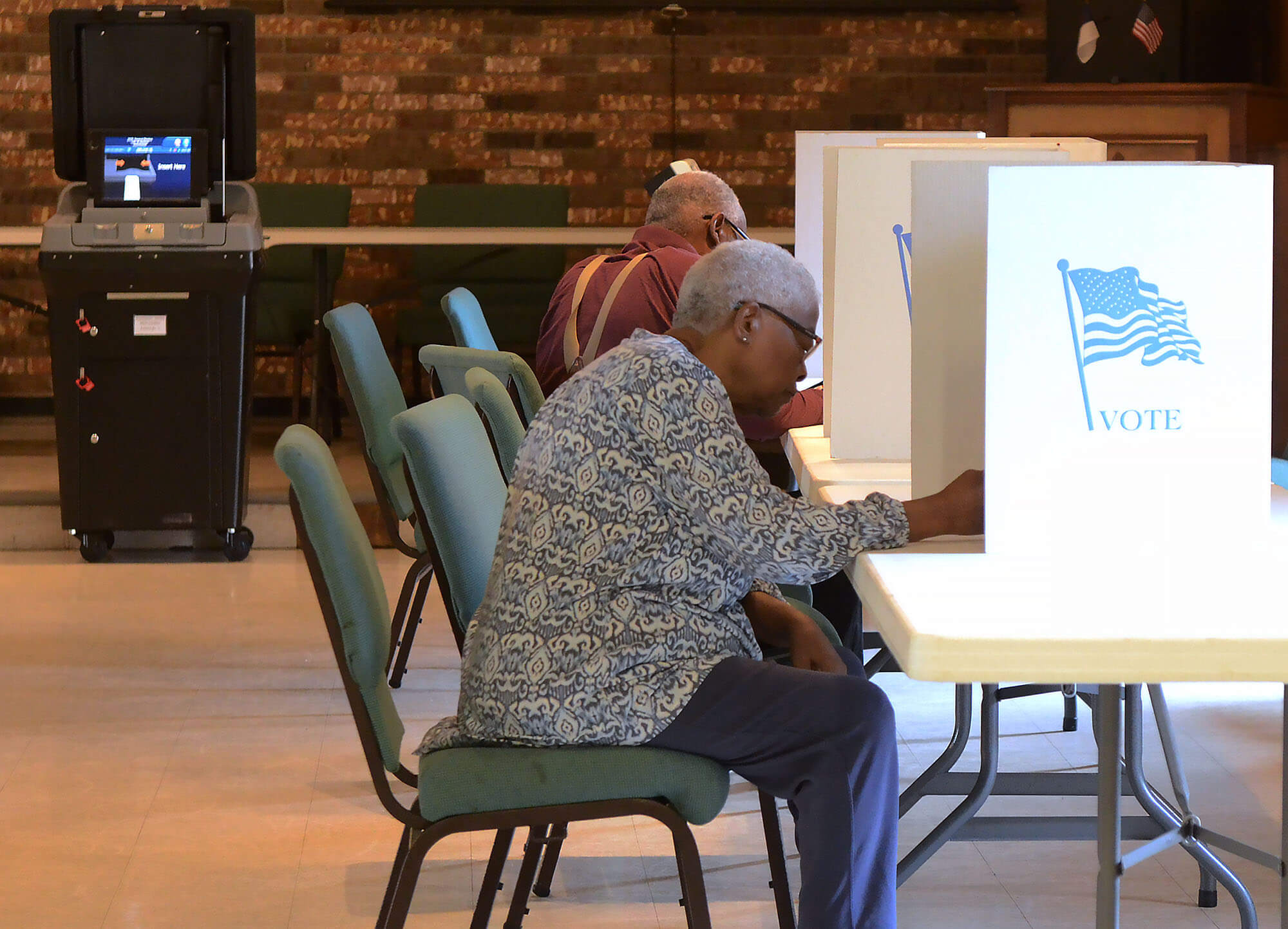
The Democratic Party flipped several seats and made significant gains during Tuesday’s municipal elections across Mississippi.
The day-to-day functions of municipal government often don’t involve partisan policy decisions. But local elections can gauge voters’ moods before congressional midterms next year and the 2027 statewide election for governor.
The election results as of Wednesday afternoon are not official because local election workers will still process mail-in absentee votes for five business days after the election and process affidavit ballots.
The unofficial and incomplete results of some Mississippi mayoral races on Tuesday:
Gulfport
In one of the most hotly contested municipal elections this year, Republican Hugh Keating defeated Democrat Sonya Williams Barnes.
Keating, an attorney, led Barnes, a former state representative, by roughly 1,110 votes in a race that saw relatively high turnout, according to the Sun Herald. The election drew several prominent national figures to the coastal town, such as U.S. Sen. Tim Scott and former Georgia gubernatorial candidate Stacey Abrams.
Toward the end of the campaign, the two campaigns accused the other of skirting election laws. Republicans alleged that a group close to the Barnes campaign was offering meal vouchers to people who voted by absentee ballot, but Barnes denied any affiliation with the organization.
Democrats then cried foul when Rick Carter, a managing partner of Island View Casino, distributed a letter to his employees encouraging them to vote for Keating.
For years, Democratic candidates have attempted to make inroads to break up the GOP’s hold on the Gulf Coast. Polling leading up to the election showed the two candidates were close
Despite Barnes’ loss, Cheikh Taylor, chairman of the state Democratic Party, praised the former legislator for proving Democrats can be competitive in south Mississippi.
Jackson
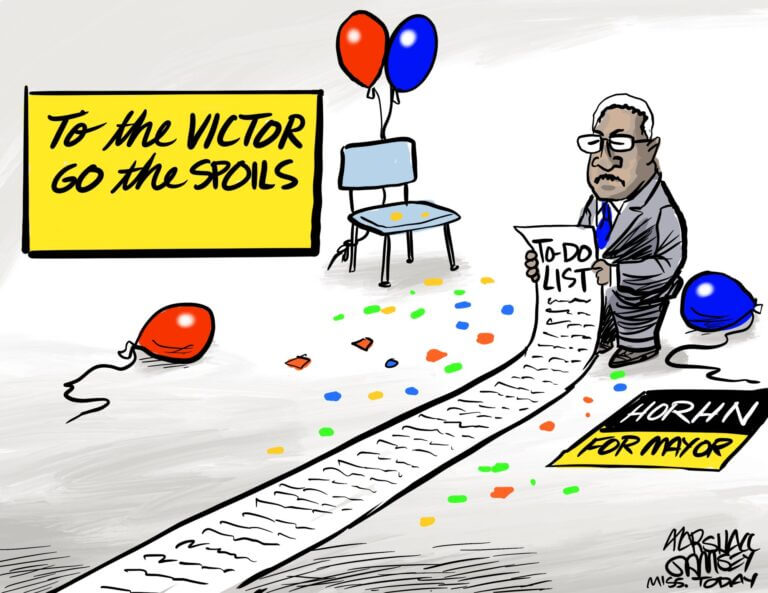
Longtime state Sen. John Horhn easily won the election to lead Mississippi’s capital city by defeating the Republican nominee and several independent candidates.
Horhn’s general election victory was widely expected after he defeated incumbent Mayor Chokwe Antar Lumumba in the Democratic primary in April. The primary has historically decided who will go on to win the general election.
Vicksburg
George Flaggs Jr., a former state legislator who’s served as Vicksburg’s mayor for more than a decade, appears to have been defeated by Democrat Willis Thompson.
Flaggs, an independent, trailed his Democratic opponent by 61 votes, according to the Vicksburg Post.
Vicksburg City Clerk Deborah Kaiser-Nickson told the Vicksburg Post that results will remain unofficial until 111 affidavits are counted, along with any mail-in votes.
Brookhaven
Incumbent Brookhaven Mayor Joe Cox, a Republican, appears to have lost a close race to Democratic challenger Larry Jointer in Tuesday’s election, with Jointer claiming victory by a margin of 37 votes, according to the Daily Leader.
Jointer would be the city’s first Black mayor.
Greenwood
Incumbent Independent Mayor Carolyn McAdams lost to Democrat Kenderick Cox, who garnered around 53 percent of the vote, according to the Greenwood Commonwealth.
Clarksdale
State Rep. Orlando Paden won the mayor’s race and will replace outgoing two-term Mayor Chuck Espy, who did not run for re-election. Paden defeated two independent candidates.
Horn Lake
Democrat Jimmy Stokes defeated his Republican opponent, Danny Klein. The current mayor, Allen Latimer, did not run for reelection.
According to the Commercial Appeal, just one seat on the city’s Board of Aldermen is currently held by a Democrat.
Now the Democrats flipped the script. A Democrat will take office as the new mayor, and Republicans secured just two seats on the board of aldermen.
Meridian
Former Mayor Percy Bland, a Democrat, will return to City Hall in Meridian after losing his re-election bid four years ago.
Bland won back the mayor’s seat Tuesday over Independent candidate Jimmy Copeland by less than 100 votes, according to the Meridian Star.
JPS offering free meals in June to combat summertime hunger


The cafeteria workers knew her only as “grandma.” Every morning, the elderly woman would bring her grandchildren to Key Elementary School off McDowell Road for a free bite to eat.
She wasn’t the only one getting kids out of the house, recalled Latosha Travis, a Jackson Public Schools child nutrition manager working with the district’s summer feeding program who oversaw the cafeteria at Key last year.
“Kids gonna eat you out of house and home during the summer,” Travis said.

Starting this week through June 27, anyone under 18 years old can stop by one of 12 schools in Jackson for a free breakfast from 7 a.m. to 8:30 a.m. and lunch from 11 a.m. to 1 p.m., regardless of whether or not they attend Jackson Public Schools. Adults can buy a meal for $4.
The district’s federally funded program, now in its 33rd year, is intended to combat the rise in hunger that occurs during the summer, an issue of particular concern in Jackson, where the childhood poverty rate is just over 40%.
“I put a little extra on their plate from time to time, knowing this is the only meal many of them will have today,” Travis said.
JPS anticipates serving 18,000 breakfasts and 25,000 lunches this month, said Marc Rowe, the district’s executive director of child nutrition. He noted this is a different program from the one Mississippi opted out of last year due in part to a lack of funding from the state’s welfare agency.
“Just like anything else in the climate we live in, at any point the funding could be pulled for this,” Rowe said.
The district doesn’t track who is eating the meals, only how many are served. Travis, who has worked in the district’s cafeterias for 16 years, said schools situated in neighborhoods are more likely to serve families during the summer.
“It depends on the location,” Travis said. “You see a lot of them come off the street with their children and cousins, little nieces and little babies and stuff. They all come through the line.”

Many of the meals will be served to children enrolled in local daycare centers or attending JPS’s summer camps, such as one that started this week at North Jackson Elementary School near the Tougaloo community. The program is limited to June due to JPS starting its school year earlier this year at the end of July. In prior years, the district served meals through mid-July.
Around 7:45 a.m., kids walked in with sleepy faces and colorful backpacks half the size of their bodies. Teachers said good morning and asked if they were eating breakfast, which was a sausage, egg and cheese burrito with taco sauce, a Pop-Tart, and orange juice or milk.
Diamond Harris, who had brought a group of students for breakfast from the daycare at Caiden’s Christian Academy, said she sometimes cooks for her kids, which can be a heavy lift. “So it’s definitely beneficial for us and less stressful, and we are just really grateful,” she said.
The meals are based on USDA recipes, and the district also works with a food company, Walker Quality Services, to serve children healthy meals, Rowe said. When school is out, students might have junk food as their only option, which is why research has shown that as hunger spikes in the summer, so does obesity.
“So the meals are very attractive, appetizing,” Rowe said.
As part of her menu planning, Travis said she tries to introduce kids to food they haven’t tried before. Each meal comes with a fruit. Today it was plums for breakfast and watermelon for lunch.
“A lot of kids don’t really know what a plum is,” she said.
But it can be a challenge to get children to try food they aren’t used to, Travis said. During the school year, she’s at Green Elementary School off Hanging Moss Road, but she’s managed cafeterias all over the district, including at high schools.
“Elementary children are more easy going and sweet and they love to eat,” she said. “High school students, they are very, very picky. They like a lot of hamburgers and fries. When you put down spaghetti you have to convince them to try. They’re used to fast food.”
She also tries to feed kids meals from different cultures, so lunch at North Jackson tomorrow will be General Tso’s chicken and rice.
Meals are available from 7 a.m.-8:30 a.m. and 11 a.m.-1 p.m at the following JPS Summer Feeding Program schools:
- Bates Elementary School, 3180 McDowell Road Ext.
- Blackburn Middle School, 1311 West Pearl Street
- Callaway High School, 601 Beasley Road
- Cardozo Middle School, 3180 McDowell Road Ext.
- Forest Hill High School, 2607 Raymond Road
- Galloway Elementary School, 186 Idlewild Street
- Kirksey Middle School, 5677 Highland Drive
- McWillie Elementary School, 4851 McWillie Circle
- North Jackson Elementary School, 650 James M. Davis Drive
- Pecan Park Elementary School, 415 Claiborne Avenue
- Provine High School, 2400 Robinson Street
- Shirley Elementary School, 210 Daniel Lake Boulevard
Waiting for government action on air pollution, Pascagoula community grabs the wheel


After 14 years of pushing for safer air quality for her Pascagoula neighborhood, 78-year-old Barbara Weckesser is tired of waiting for government officials tasked with such responsibilities to take action.
In the last seven years alone, she said, over 30 people in her Cherokee Forest neighborhood of just 120 homes have died from heart disease, lung disease or cancer. In 2013, Weckesser started her activist group, Cherokee Concerned Citizens, which has long blamed releases from surrounding industrial operations – including a Chevron oil refinery, a Bollinger shipyard and a Rolls-Royce Naval center – for poor health outcomes in their community.
“Industry has grown, and chosen to put out more and more and more pollution,” Weckesser said. “And guess what? Our bodies can’t absorb it.”
Then in 2021, a ProPublica analysis of Environmental Protection Agency data identified the area as one of the nation’s top hot spots of toxic air pollution. Weckesser said that investigation helped boost her cause’s credibility.
Cherokee Concerned Citizens have remained active against potential environmental harms from local industry. Last year, the group sued the EPA for approving a plastic-based fuel experiment at Chevron’s Pascagoula facility that, ProPublica revealed, could have caused cancer to one in four exposed to production emissions. The EPA then in September said it planned to withdraw its approval.
Weckesser spoke on the phone days before heading to Atlanta to graduate from an environmental justice academy program, through Tuskegee University, that empowered community leaders across the South with knowledge and resources to lead their respective causes. Hearing from former EPA officials, she said the academy taught her a lot, including potential legal avenues for protecting the Cherokee Forest neighborhood.
In 2022, a year after the ProPublica story, the EPA awarded the Mississippi Department of Environmental Quality $500,000 to monitor air quality in Pascagoula, later increasing the amount to $625,000.
But both agencies have yet to give a timeline for the yearlong study. So instead of waiting, Weckesser partnered with University of Colorado Boulder researcher Caroline Frischmon to do their own investigation, the results of which they published in March.
“This is the best data that we’ve had,” Weckesser said.
Their study used air sensors to compare “episodes” of pollution – or when the sensors detected rising levels of chemicals such as ammonia or VOCs (Volatile Organic Compounds) – in the neighborhood with those at another location near downtown Pascagoula, about two miles away. VOCs, the EPA says, can cause liver and kidney damage as well as cancer.

The episodes in Cherokee Forest, Frischmon found, were much more frequent than at the other location, and in total lasted about four to five times longer over the course of two months. On top of the significant frequency of those episodes, she also pointed to correlating wind direction data suggesting the pollution came from the nearby industry.
The timing of those episodes, Frischmon added, also lined up with health symptoms and observations residents recorded, such as red or itchy eyes, nausea – all known impacts of exposure to ammonia and VOCs – and strong “chemical” odors. The largest spike in symptoms, the study says, came just after a jump in emissions from the Chevron refinery.
When asked about the study, MDEQ Communications Director Jan Schaefer said the agency wouldn’t comment on research that didn’t use “EPA-approved methods.” Mississippi Today also reached out to several facilities, including Chevron and Rolls-Royce, who did not provide comment before publication.
Fischmon admitted the work has its limitations. Most notably, she said, they couldn’t afford calibrated sensors that could say if pollutant levels exceeded public health guidelines. She said her team was set to receive federal funding to expand the study, but in May the EPA said via email, “The agency determined that your application no longer supports administrative priorities and canceled issuance of an award.”
While the EPA-funded monitoring MDEQ is planning would include more advanced measurements, it’s unclear when the state agency will begin its year-long study.
“We are currently working with EPA to finalize the Quality Assurance Project Plan (QAPP) and install two EPA-loaned VOC sensors,” Schaefer said in a May email, over two and a half years since the EPA announced the grant. “Official data collection will begin once those sensors are installed and the QAPP is finalized.”
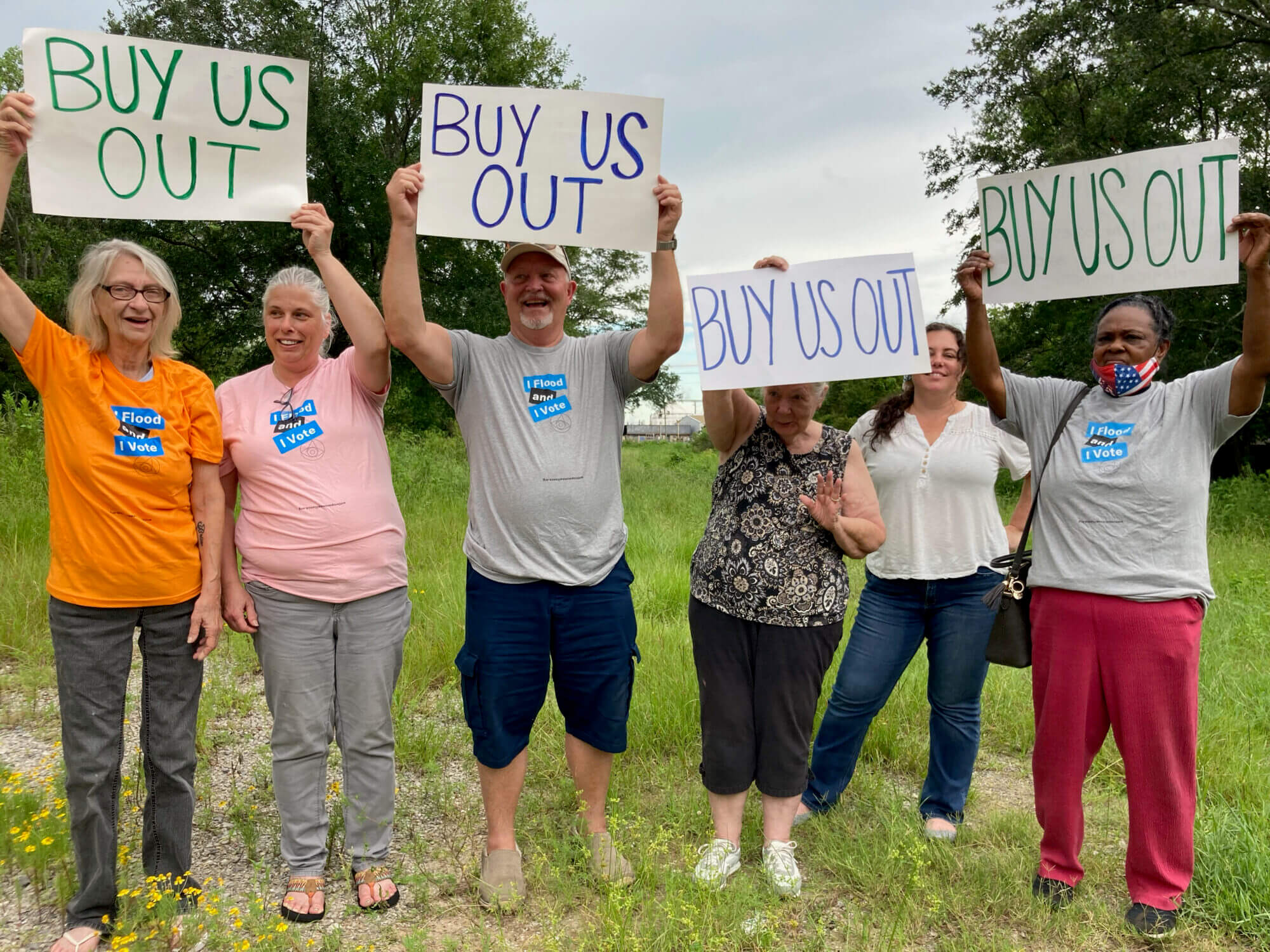
Meanwhile, Cherokee Forest residents are hoping to pool enough dollars from public and private stakeholders to fund buy-outs of their homes. According to a survey, nearly three-quarters of those living in the neighborhood want to relocate “as soon as possible.” Weckesser said Cherokee Concerned Citizens is proposing to convert the area into a natural buffer since the neighborhood, which was built in the 1960s, sits in a flood zone.
Fischmon said she hopes the March study can serve as a model for communities elsewhere who may be discouraged by the high costs of measuring air pollutants. She said the sensors they used for this study cost around $1,000 to build, but that there are others commercially available for around $200.
“ It is becoming more and more feasible, which I think is really exciting because communities can really tailor what they want to measure for what they’re feeling and noticing,” she said. “ We did this project really to demonstrate that there’s still a lot that we can do with these sensors for communities to highlight issues and get the attention of the agencies that do have the resources to do the (more advanced) monitoring.”
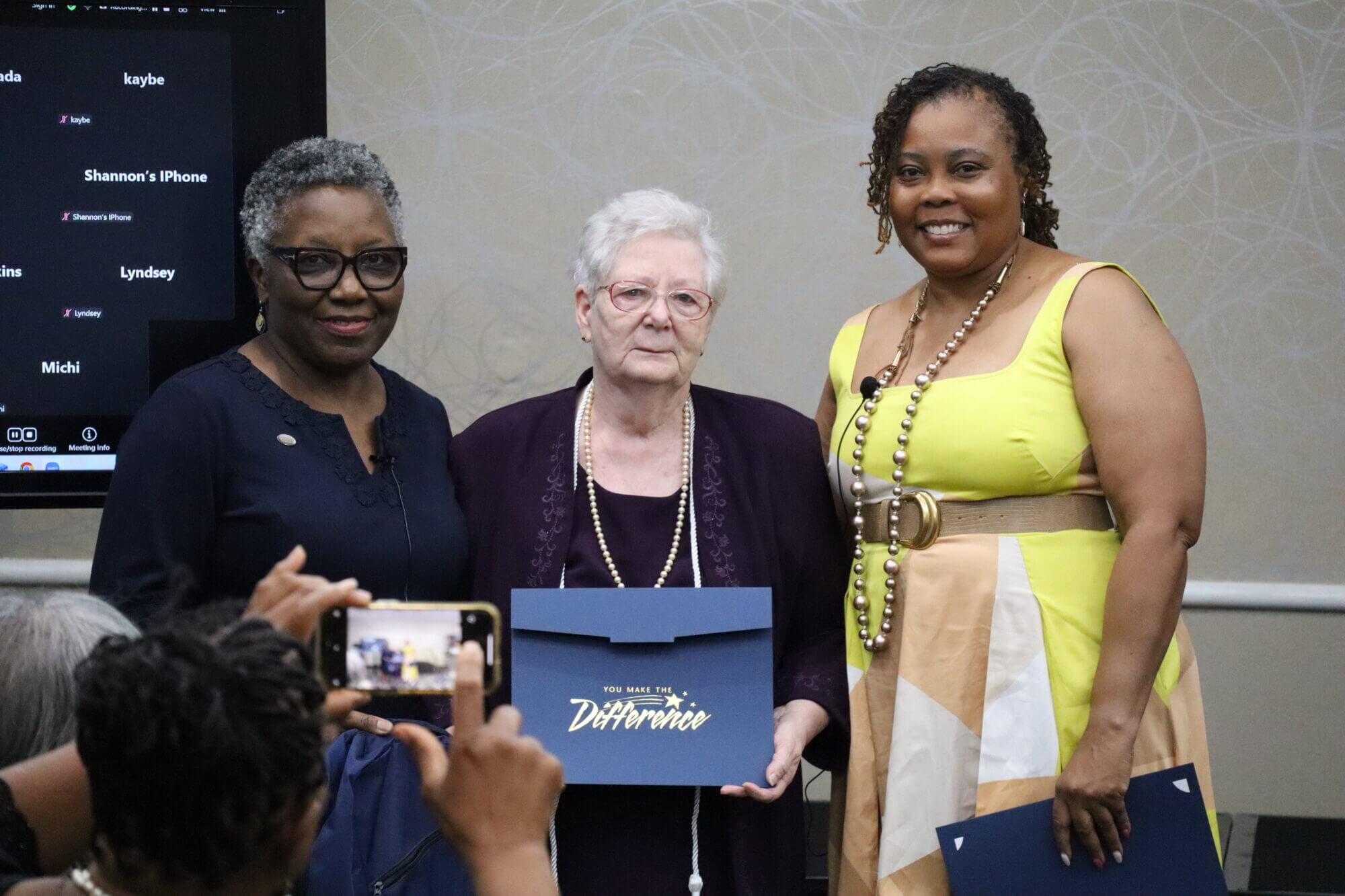
Last Friday, Weckesser graduated from the environmental justice program at a ceremony held in an Embassy Suites hotel in Atlanta. Despite no prior environmental work experience – her only jobs before were in banking and real estate – she said she finished third in her class.
“ The class taught how people need to start holding their own with industry and say, you are not doing this anymore,” Weckesser said, adding she was the oldest student in the academy. “And I only have a high school education. So you can achieve whatever you want to achieve.”
Horhn wins: Mayoral election supports ‘Jackson is ready’ for longtime senator to lead
John Horhn, a longtime state senator, is the next mayor of Mississippi’s capital and will inherit a city with crumbling infrastructure, declining population, low economic mobility among residents and untold promise.
The Democratic nominee received 67% of the unofficial vote Tuesday against five opponents, including a police officer who ran as a Republican and four independents – a businessman with ties to south Jackson anti-violence efforts, a 27-year old musician and frequent city council public commenter, a child care development specialist and a conservative talk radio host who publicly dropped out of the race but still appeared on the ballot.
The general election held June 3 did not come with a possibility of a runoff, meaning whoever secured the most votes won, even if they lacked a majority of votes – a requirement only in primaries.
With an 82% Black population that votes heavily Democratic, Jackson’s general elections aren’t typically competitive. Despite chatter that a white businessman named Rodney DePriest was on Horhn’s heels, Tuesday was no exception. Horhn would have avoided a runoff anyway. Political newcomer DePriest had won 28% of the counted ballots Tuesday night.
About 21% of registered voters visited the polls Tuesday, roughly on par with turnout in the primary.
The senator was favored in the race after he claimed victory over incumbent Mayor Chokwe Lumumba in the April primary, winning almost 50% of votes in a field of 12 Democratic candidates and then besting Lumumba nearly 3-to-1 in a head-to-head runoff.
During the primary, Horhn faced accusations that he was a pawn for white business interests and buoyed by northeast Jackson Republicans, a sliver of the electorate, switching sides to vote in the Democratic primary. But it wasn’t convincing to the majority of Jacksonians across the city who continued to support him in the runoff and general.
The 2025 municipal election marked Horhn’s fourth attempt at the mayor’s seat after he ran unsuccessfully in 2009, 2012 and 2017. His campaign slogan was “Jackson is ready.”
The lifelong Jacksonian, now 70 years old with more than three decades of legislative experience, argued during his campaign that he was the best man to both secure outside resources for Jackson’s poorly maintained infrastructure and fight state efforts to strip the city of local control.
“I’ve been the go-to guy in the Senate when it comes to fighting that stuff,” Horhn told Mississippi Today in April. “I’m not all of a sudden going to change my stripes and hand over the city.”
Horhn, son of a labor organizer and public school cafeteria worker, served the state as a program manager at the Mississippi Arts Commission, State Film Commissioner, federal state programs director for the Governor’s Office and State Tourism Director before becoming a state senator in 1993. Among the legislative accomplishments he’s touted during this race are securing $85 million for the downtown convention center, $20 million for the Westin Hotel, and $20 million for the JSU Metro Parkway.
Horhn has focused his campaign on the need to restore basic services and functionality back to the city.
“I’ve chaired the Senate Economic Development Committee in the past. I’ve worked on economic development for the past 32 years as a member of the Senate,” Horhn said during a candidate forum in northwest Jackson last week. “But let me tell you something, we’re not going to have economic development if we don’t clean the city up. We’re not going to have economic development if we don’t restore trust in our city government. We’re not going to have economic development if we don’t have a plan. And so those are going to be the things that I’m going to focus on.”
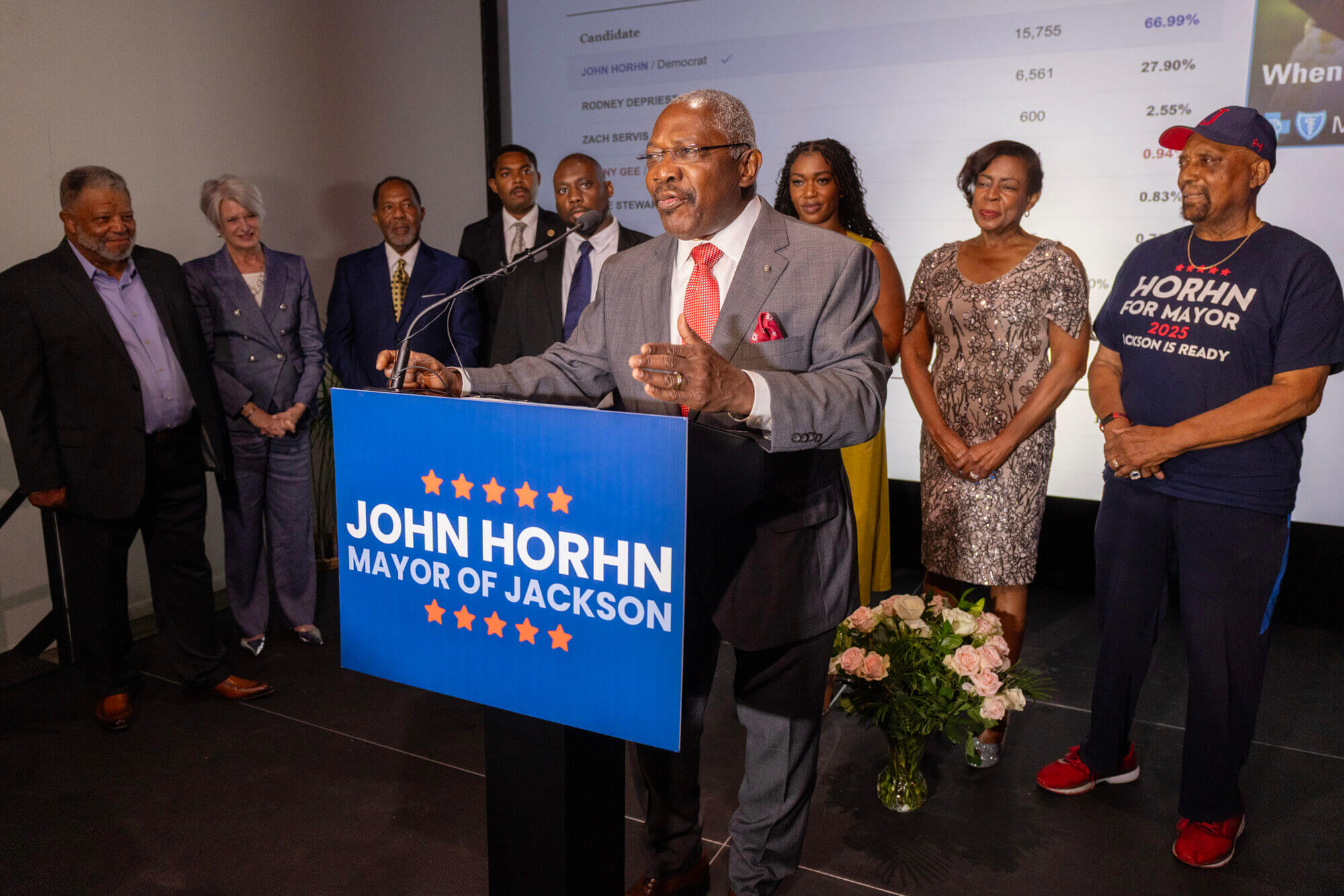
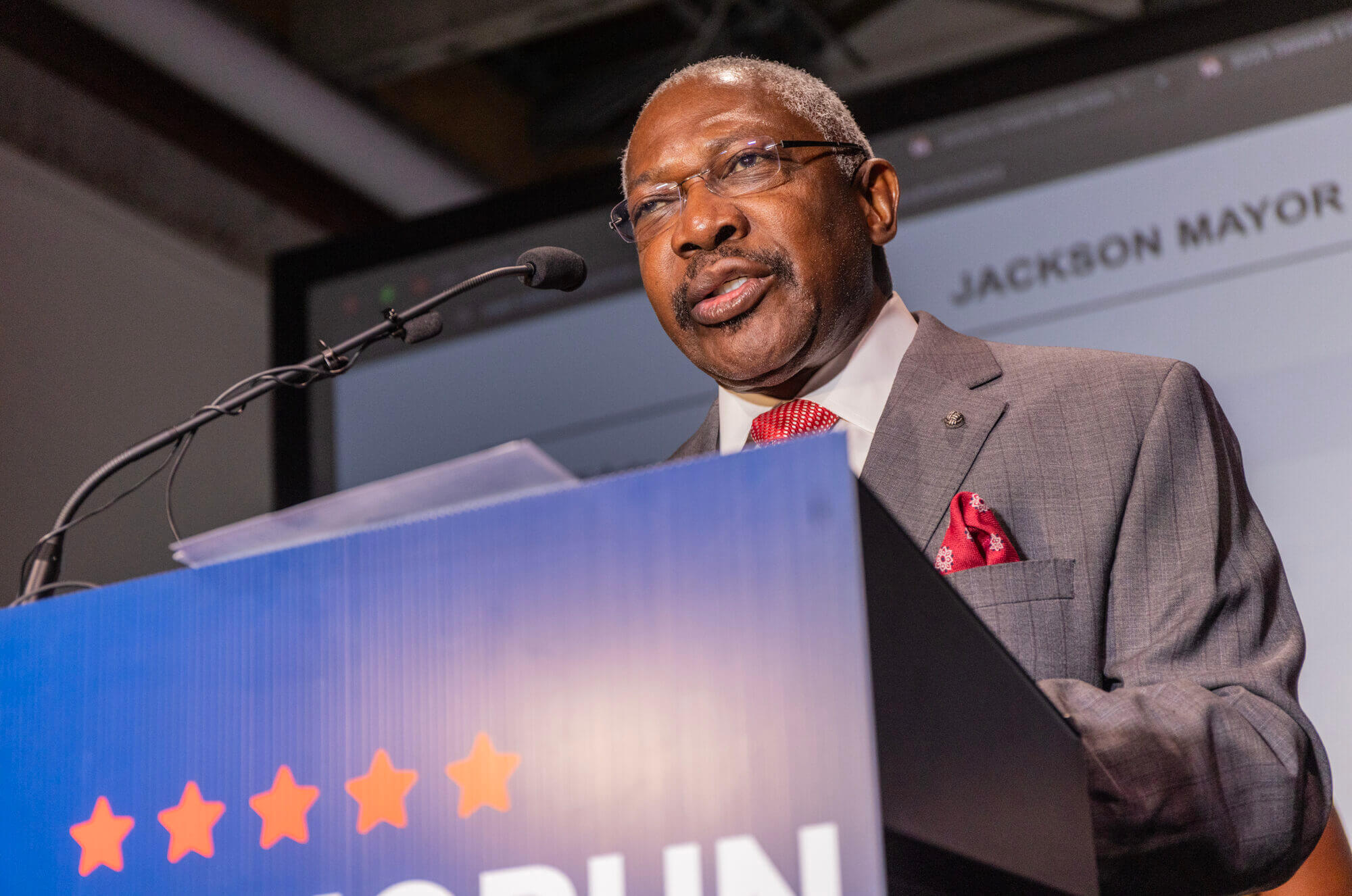
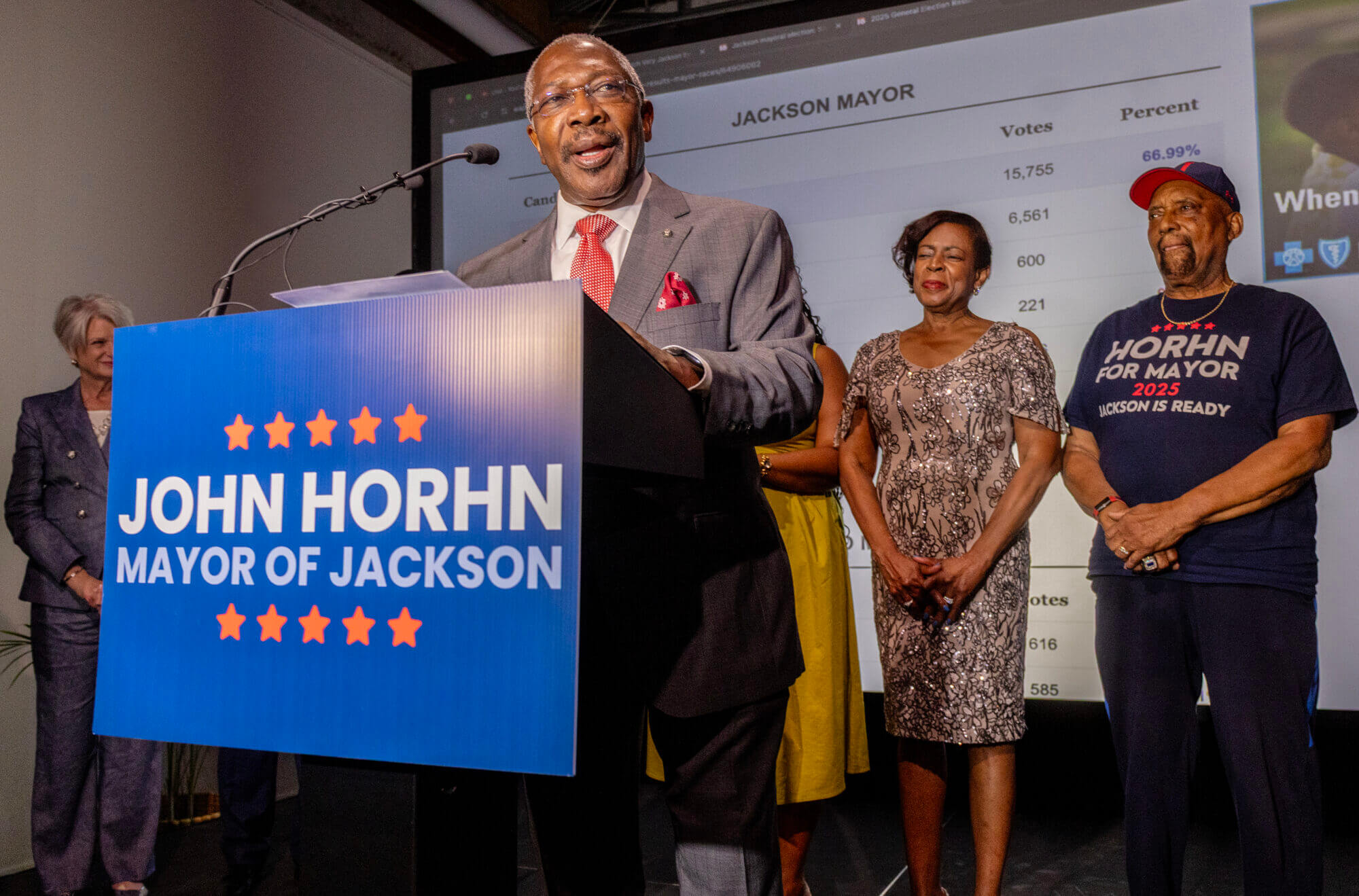
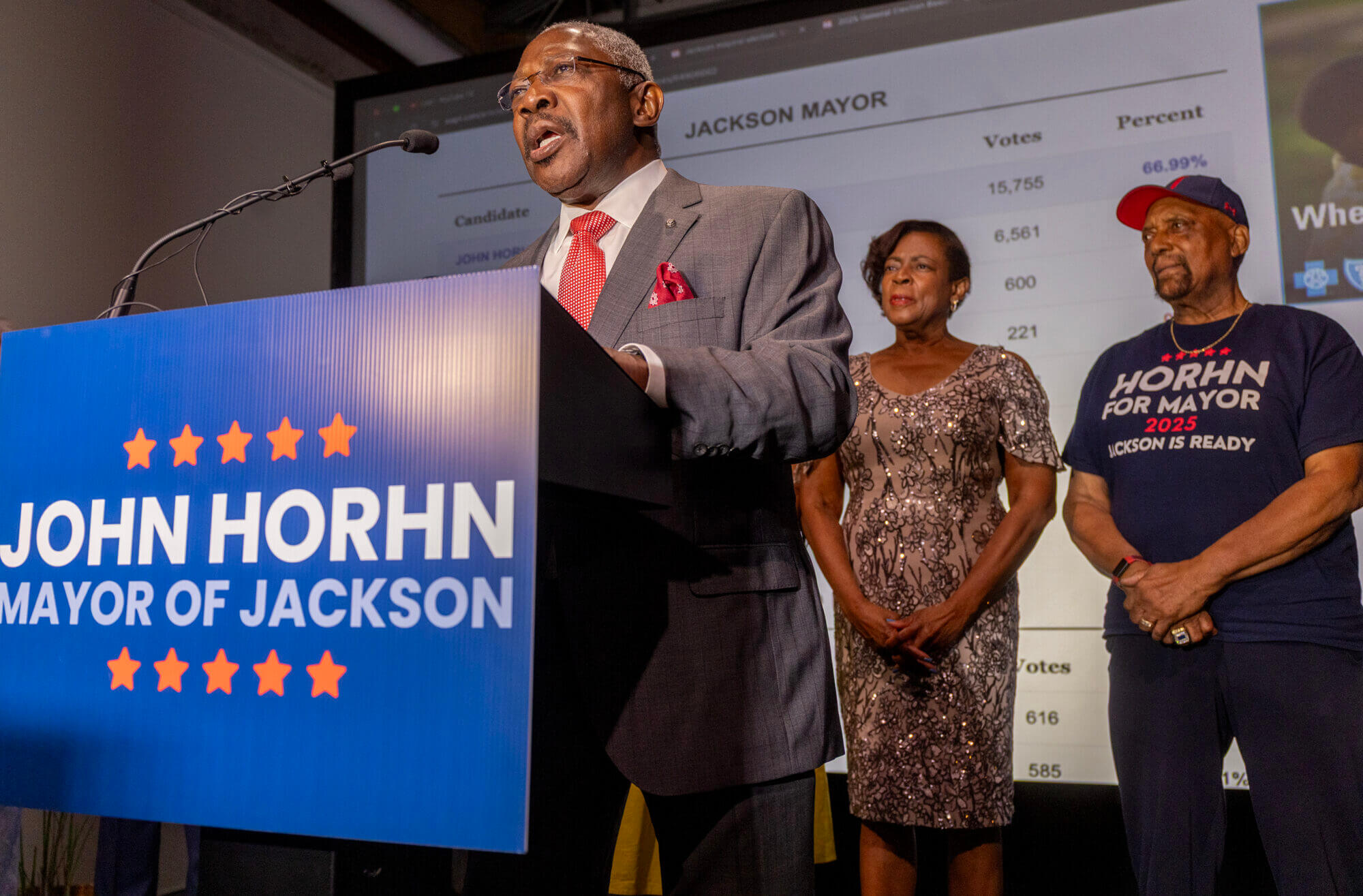
During his victory speech at The Plant venue in west Fondren, Horhn said that his team is working on a comprehensive plan that lays the groundwork for goals his administration hopes to accomplish in the next three, five and even 10 years.
“Talk is cheap,” he said. “It is now time for action.”
Reporters Maya Miller and Molly Minta contributed to this report.
-

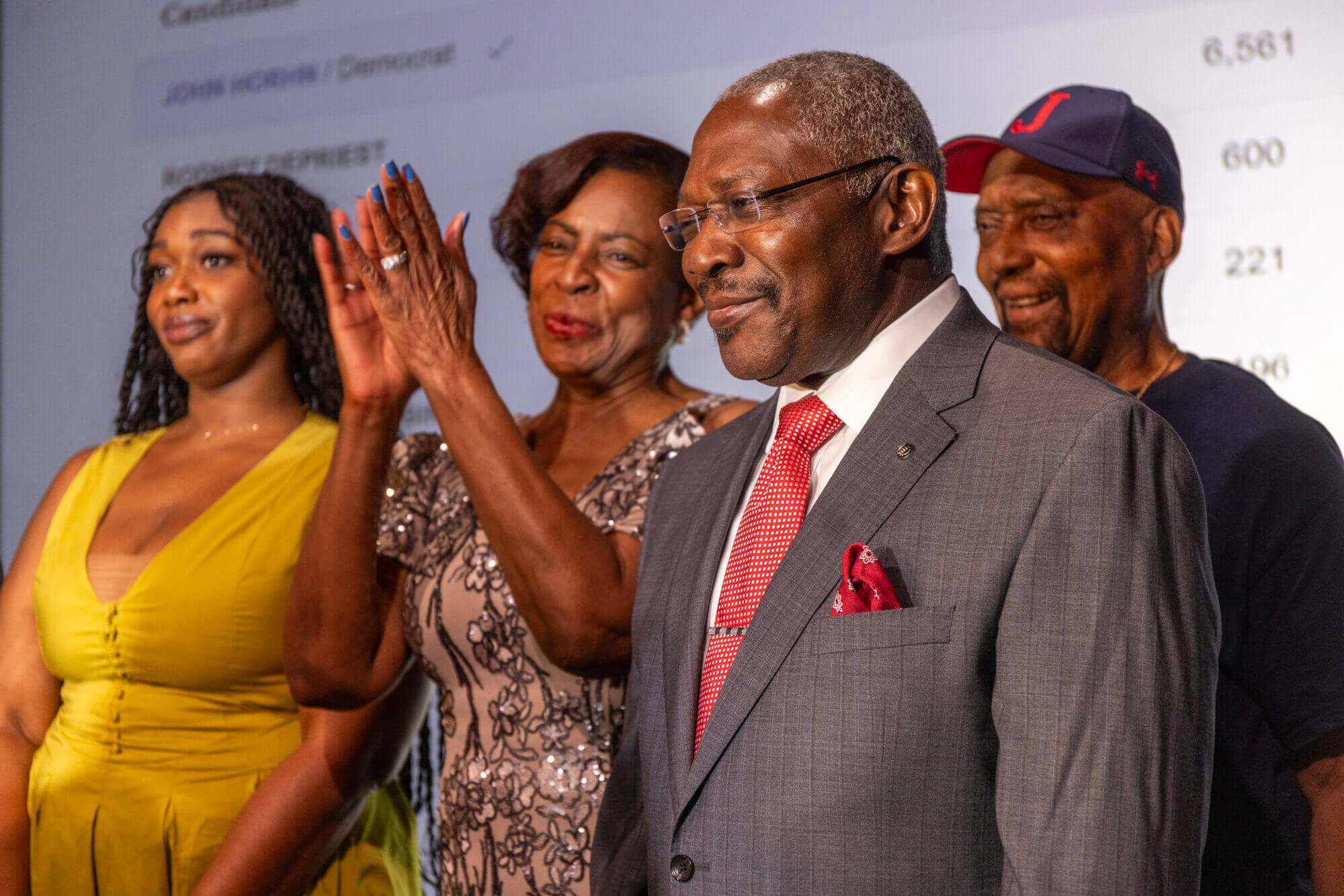
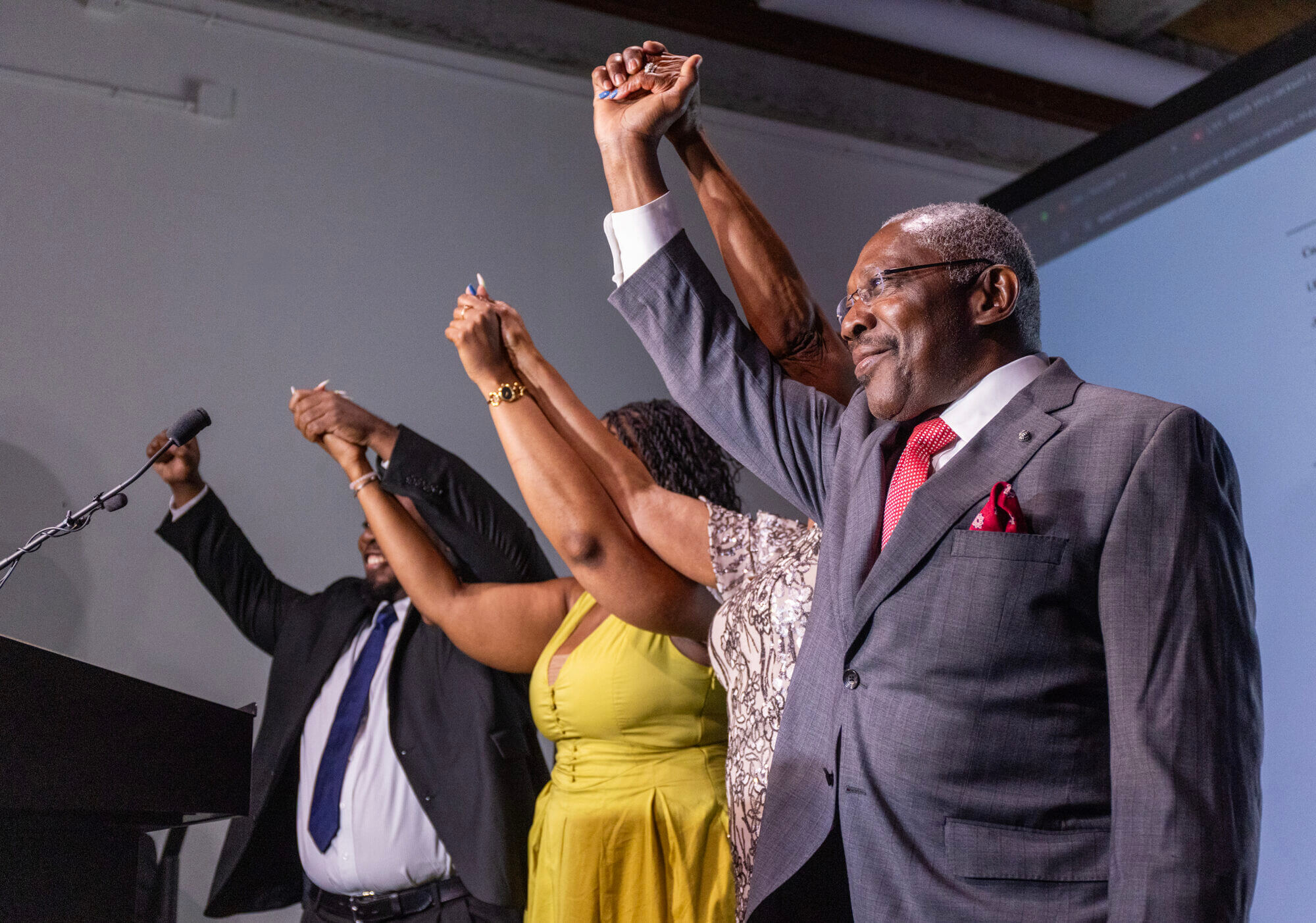
John Horhn stands on stage with family members as supporters cheer during his election night watch party at The Plant Venue, Tuesday, June 3, 2025, in Jackson, Miss. Horhn won the mayoral race. Credit: Eric Shelton/Mississippi Today -
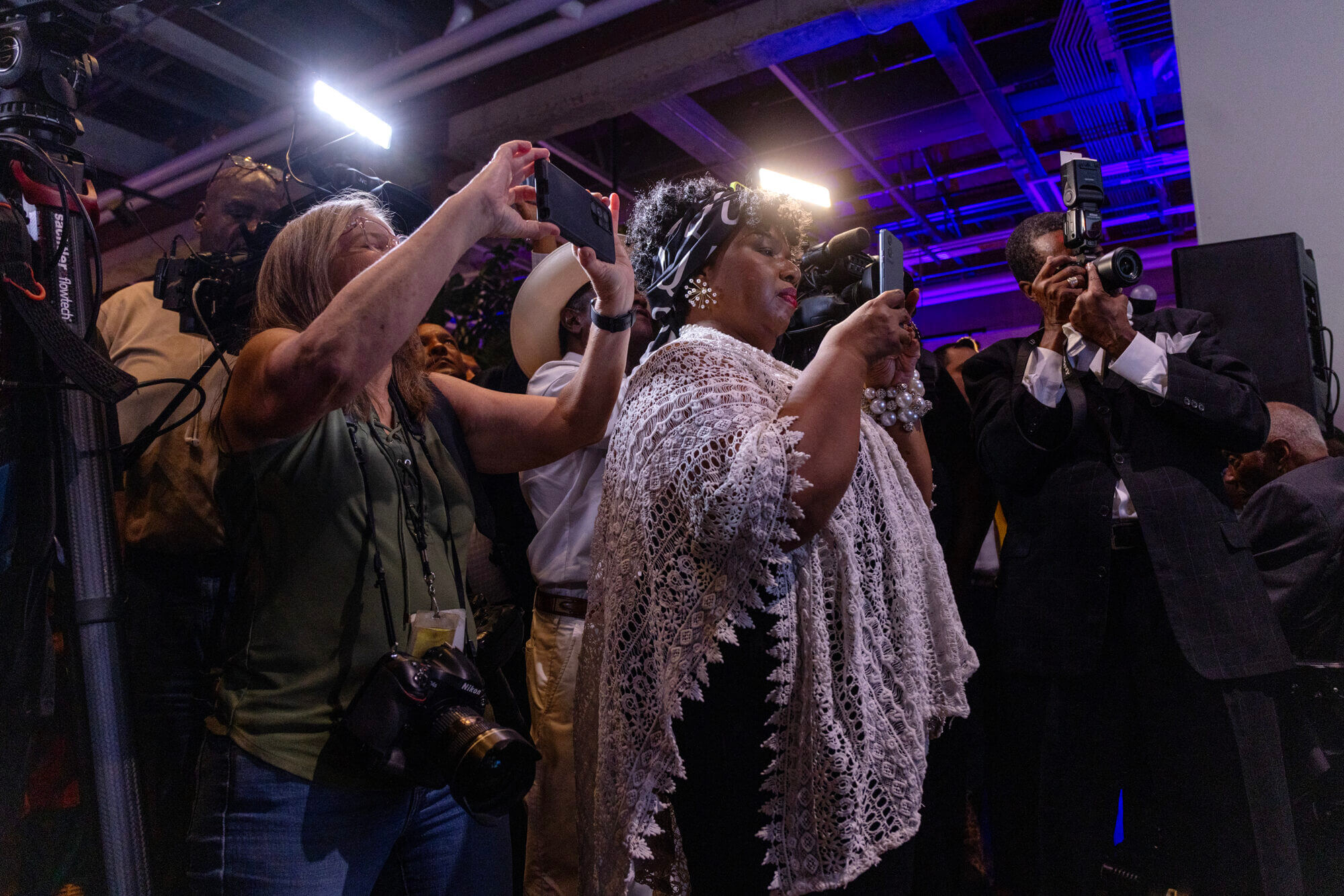
Supporters and members of the media listen as John Horhn speaks after winning the mayoral election during his watch party at The Plant Venue, Tuesday, June 3, 2025, in Jackson, Miss. Credit: Eric Shelton/Mississippi Today -
John Horhn speaks to supporters after winning the mayoral election during his watch party at The Plant Venue, Tuesday, June 3, 2025, in Jackson, Miss. Credit: Eric Shelton/Mississippi Today -
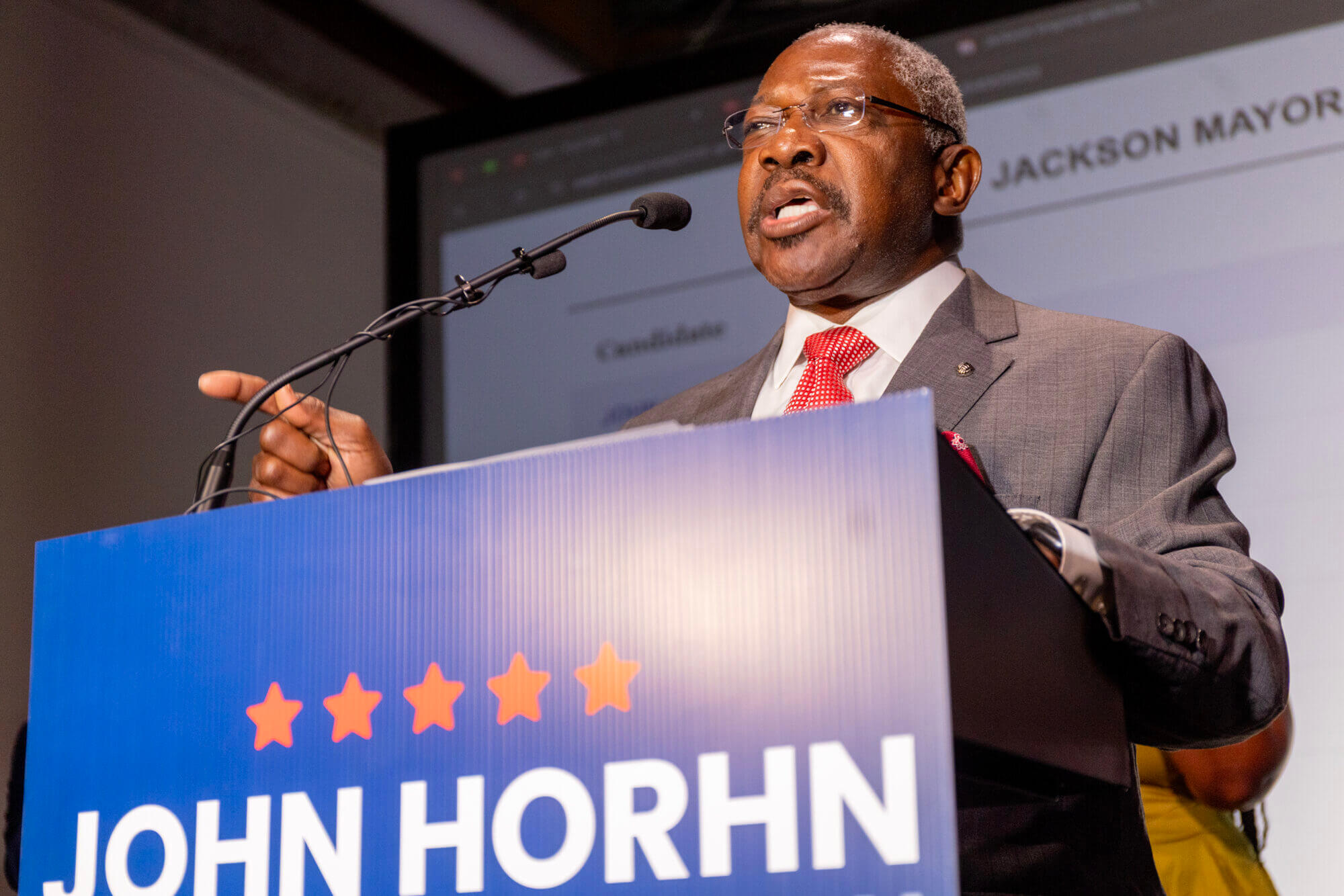
John Horhn speaks to supporters after winning the mayoral election during his watch party at The Plant Venue, Tuesday, June 3, 2025, in Jackson, Miss. Credit: Eric Shelton/Mississippi Today -

John Horhn speaks to supporters after winning the mayoral election during his watch party at The Plant Venue, Tuesday, June 3, 2025, in Jackson, Miss. Credit: Eric Shelton/Mississippi Today -

John Horhn speaks to supporters after winning the mayoral election during his watch party at The Plant Venue, Tuesday, June 3, 2025, in Jackson, Miss. Credit: Eric Shelton/Mississippi Today -

John Horhn speaks to supporters after winning the mayoral election during his watch party at The Plant Venue, Tuesday, June 3, 2025, in Jackson, Miss. Credit: Eric Shelton/Mississippi Today -
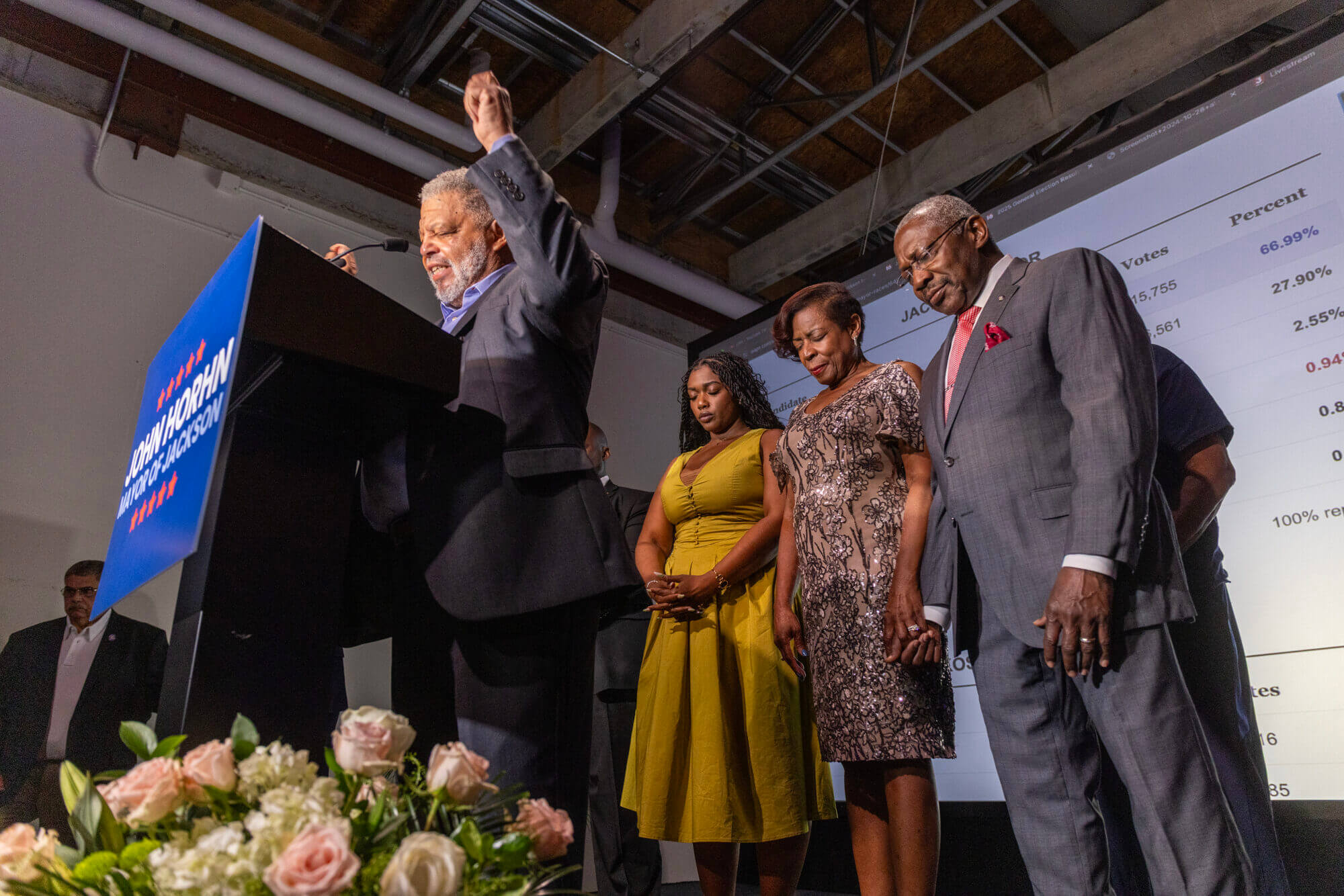
John Horhn prays with family members after winning the mayoral election during his watch party at The Plant Venue, Tuesday, June 3, 2025, in Jackson, Miss. Credit: Eric Shelton/Mississippi Today -

John Horhn stands on stage with family members as he celebrates his victory in the mayoral election during his watch party at The Plant Venue, Tuesday, June 3, 2025, in Jackson, Miss. Credit: Eric Shelton/Mississippi Today -

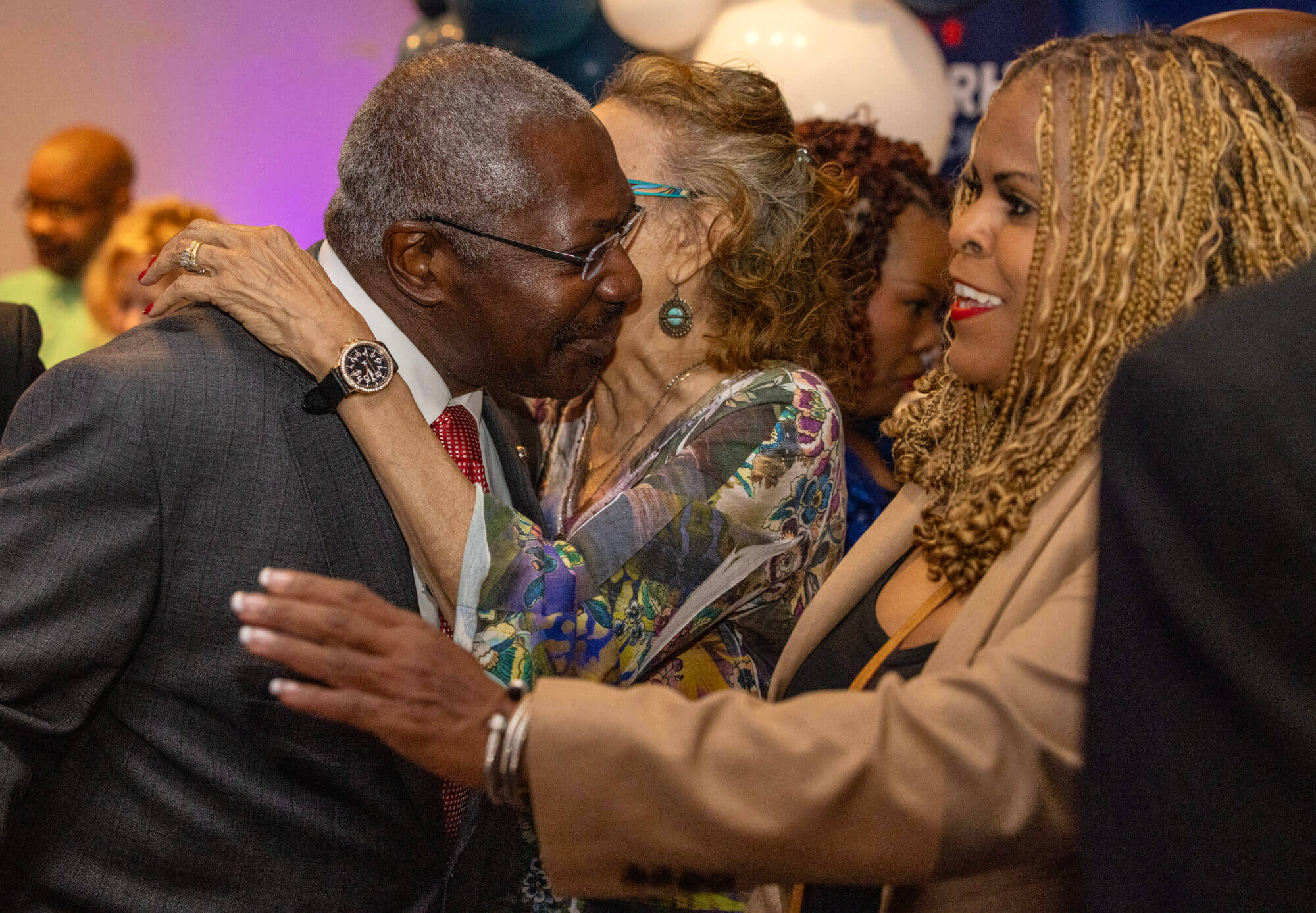
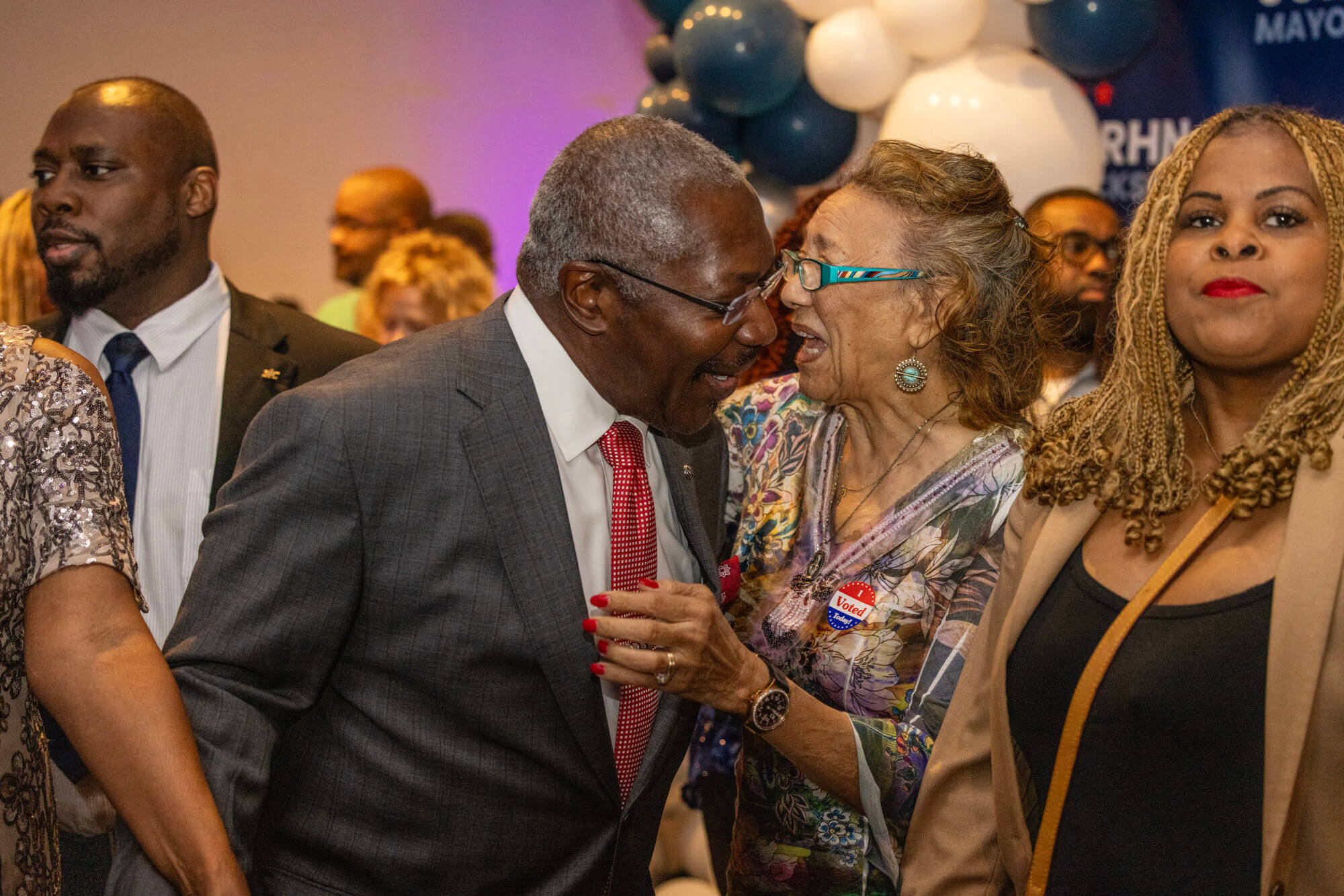
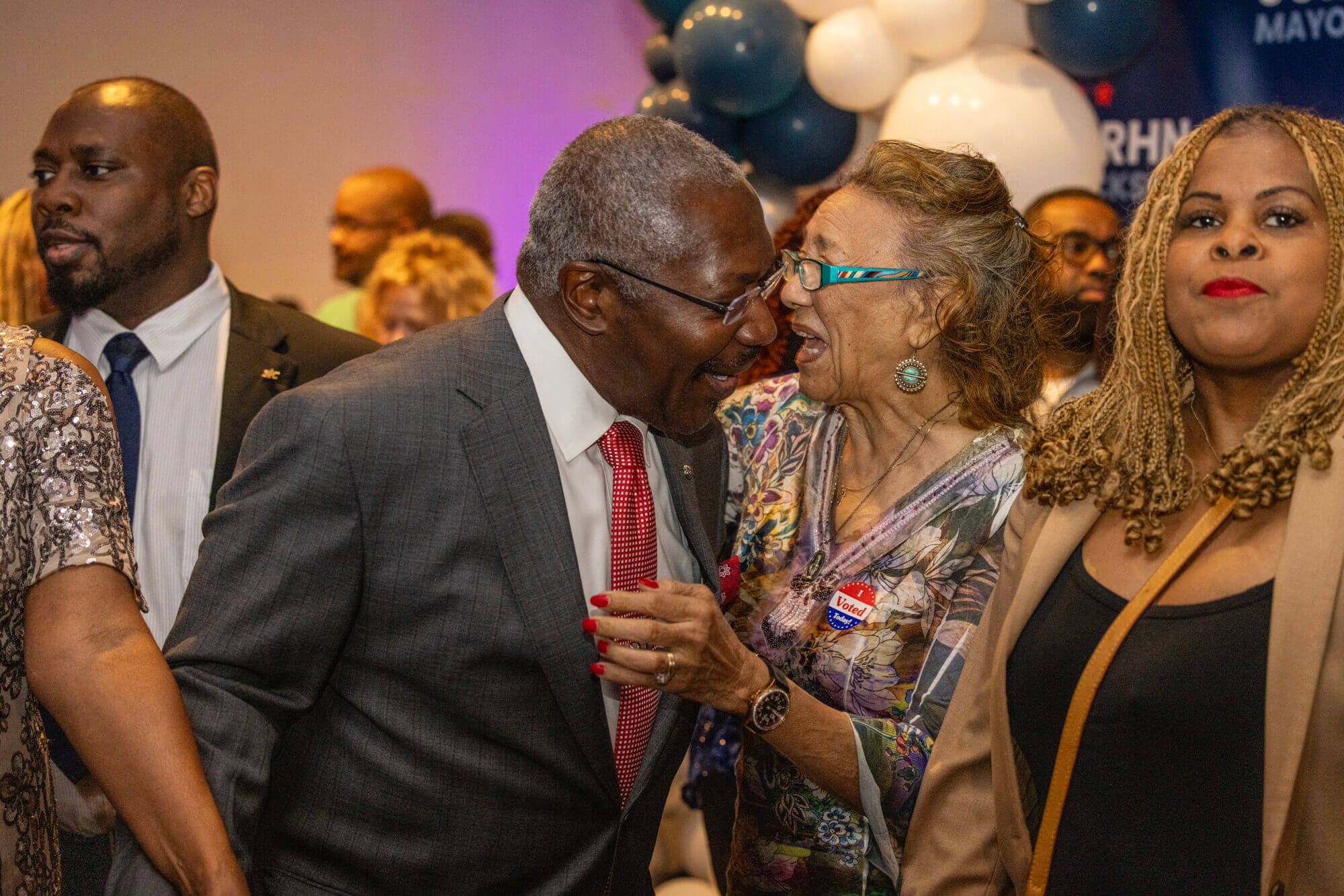
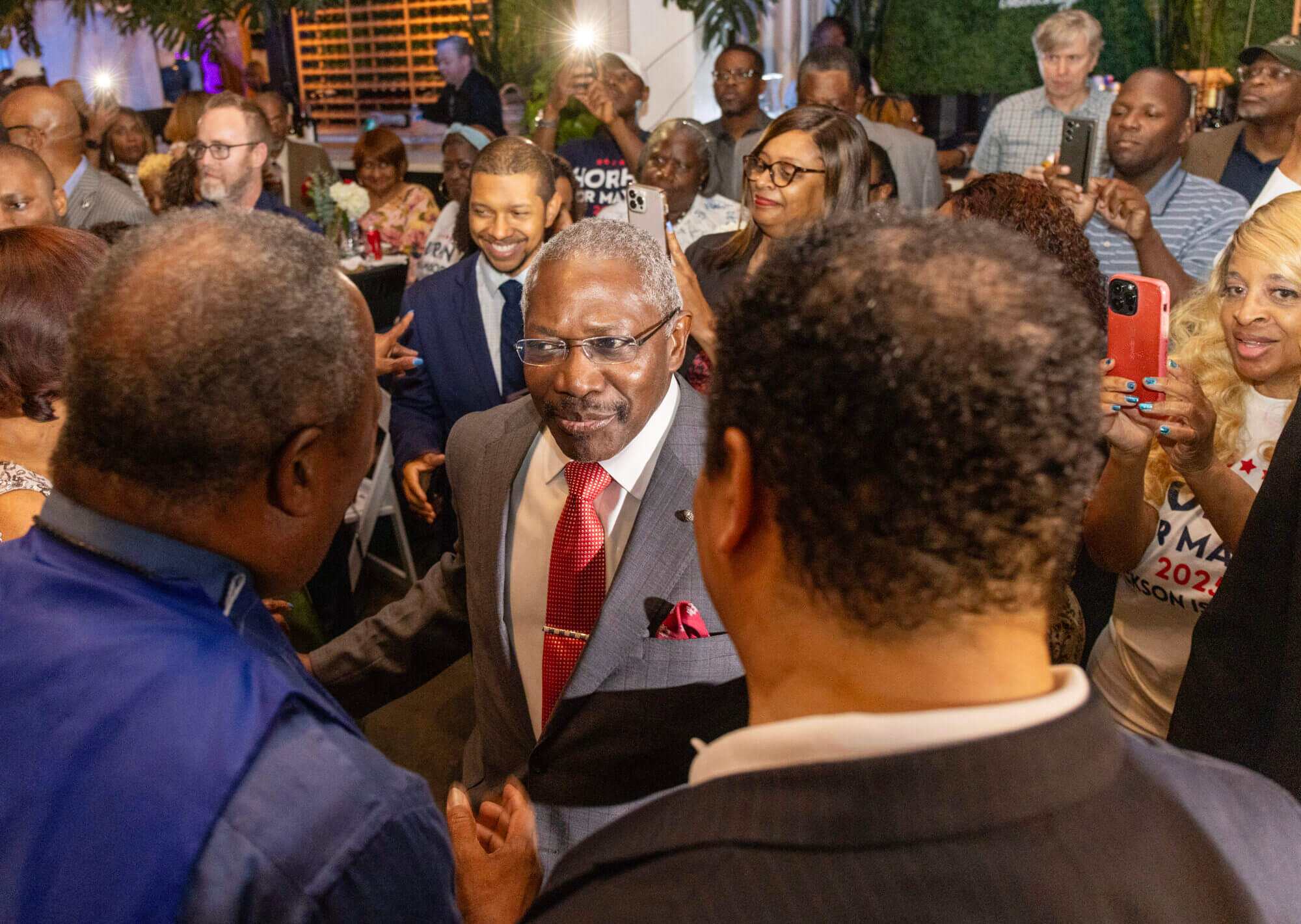
Mayoral candidate John Horhn is greeted by supporters as he arrives at his election night watch party at The Plant Venue, Tuesday, June 3, 2025, in Jackson, Miss. Horhn won the race for mayor. Credit: Eric Shelton/Mississippi Today -

Mayoral candidate John Horhn is greeted by supporters as he arrives at his election night watch party at The Plant Venue, Tuesday, June 3, 2025, in Jackson, Miss. Horhn won the race for mayor. Credit: Eric Shelton/Mississippi Today -

Mayoral candidate John Horhn is greeted by supporters as he arrives at his election night watch party at The Plant Venue, Tuesday, June 3, 2025, in Jackson, Miss. Horhn won the race for mayor. Credit: Eric Shelton/Mississippi Today -
Mayoral candidate John Horhn is greeted by supporters as he arrives at his election night watch party at The Plant Venue, Tuesday, June 3, 2025, in Jackson, Miss. Horhn won the race for mayor. Credit: Eric Shelton/Mississippi Today -
-
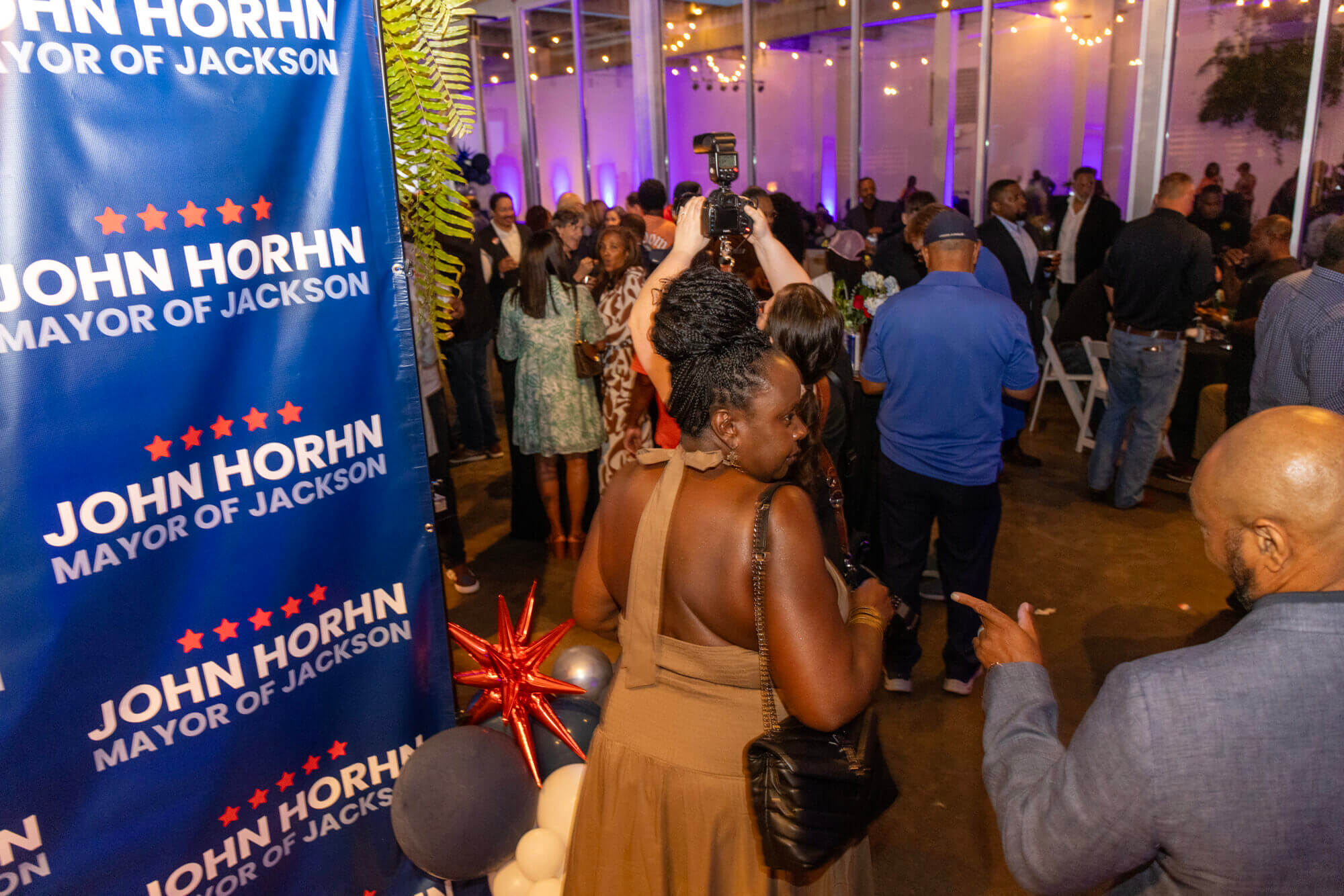
Supporters of mayoral candidate John Horhn wait for election results during his watch party at The Plant Venue, Tuesday, June 3, 2025, in Jackson, Miss. Horhn won the race for mayor. Credit: Eric Shelton/Mississippi Today