Home Blog Page 255

5th Circuit panel denies JPD detective’s qualified immunity claim in all but one instance

Judges for the 5th U.S. Circuit Court of Appeals raised questions this week about the high court’s qualified-immunity doctrine, which critics say has long protected bad law enforcement officers.

The 5th Circuit panel of judges ruled that qualified immunity won’t protect a Jackson police detective in a case where she wrongfully arrested an innocent man.

“We readily acknowledge the legal, social, and practical defects of the judicially contrived qualified immunity doctrine,” Judge Don R. Willett wrote in a 2-1 decision, “but we are powerless to scrap it … [as] middle-management circuit judges.”

On Feb. 13, 2020, someone shot Nicholas Robertson, who knocked on the door of Avery Forbes’ home in Jackson and died there.

Two months later, police arrested Samuel Jennings on an unrelated charge. He told police that Desmond Green told him that he had killed Robertson.

The accusation stunned Green, who told police he didn’t know Robertson, much less take part in his murder.

Despite that, Detective Jacquelyn Thomas and Hinds County prosecutors encouraged the grand jury to indict Green, who was jailed without bond, with armed robbery being the underlying felony that elevated it to capital murder. He spent nearly two years behind bars for a crime he did not commit.

Two years later, Jennings recanted, and Green was finally freed from jail after 22 months. In his lawsuit, he alleges that Thomas used the statement of a jailhouse informant high on drugs, manipulated a photo lineup and withheld evidence from a grand jury that would have shown he was innocent.

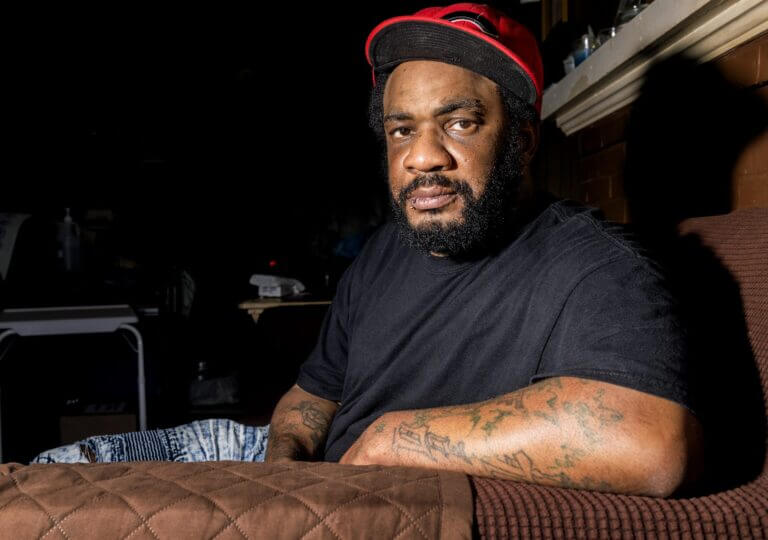
“There was no evidence showing I was involved, so why was I arrested?” Green told Mississippi Today. “My life was on the line the whole time, and I was never allowed to speak to the judge until two years later. I lost time that I’ll never get back.”

Thomas asked for the lawsuit to be dismissed on the basis of qualified immunity, a legal doctrine created in 1967 by the U.S. Supreme Court, which determined that Jackson police officers who arrested ministers who entered a whites-only waiting room were immune from litigation because the officers were acting in “good faith.”

U.S. District Judge Carlton W. Reeves declined to dismiss the lawsuit.

That doctrine “means persons wronged by government agents cannot sue those agents unless the Supreme Court previously found substantially the same acts to be unconstitutional,” Reeves wrote. “A cynic might say that with qualified immunity, government agents are at liberty to violate your constitutional rights as long as they do so in a novel way.”

He called for juries, not judges, to rule on whether officers were guilty of bad acts. “Congress’s intent to protect citizens from government abuse cannot be overridden by judges who think they know better,” he wrote. “As a doctrine that defies this basic principle, qualified immunity is an unconstitutional error. It is past time for the judiciary to correct this mistake.”

Thomas appealed Reeves’ ruling to the 5th Circuit, saying she was “immunized against reasonable mistakes.”

In his statement to Thomas, Jennings said Green confessed that he killed Robertson and moved his body, but evidence showed a much different set of facts: Robertson was shot at one location and, still conscious, arrived at a different location where he was later found dead, wrote Willett, who was appointed by President Trump.

In addition, Robertson was with another man besides Green shortly before the shooting, Willett wrote. 

“Accepting Green’s allegations as true,” he wrote, “Detective Thomas had information which would have undercut any reasonable belief that Green murdered Robertson.”

In March 2022, Samuel Jennings recanted his statement to Thomas, saying he was “just high” and trying to get out of jail. Jennings said he initially pointed to the first photo in a photo lineup, only to have the detective steer him instead to the fifth photo, which was Green.

“This method of identification, if true, is the very type of ‘unlawful’ and ‘suggestive’ identification for which we have previously denied qualified immunity,” Willett wrote.

A month later, prosecutors remanded Green’s capital murder charges to the files, and he was released from jail.

A year later, Green sued Thomas and the city for malicious arrest and prosecution “without probable cause.” Green alleged that the detective withheld evidence from the grand jury that would have shown his innocence.

Thomas insists that she deserves qualified immunity because a grand jury indicted Green. The 5th Circuit judges disagreed.

“Green’s pleadings are sufficient to suggest Detective Thomas materially tainted the grand jury proceedings,” Willett wrote.

They concluded that Thomas wasn’t entitled to qualified immunity on Green’s Fourth Amendment false arrest and 14th Amendment due process claims, but they did grant her qualified immunity with regard to the claim of malicious prosecution.

“Qualified immunity does not protect government officials ‘who knowingly violate the law,’” Willett wrote. “Based on the allegations in the complaint, Detective Thomas falls into that camp.”

Tupelo attorney Jim D. Waide III, who is representing Green, called it “encouraging” that the 5th Circuit would “largely follow the very thorough opinion that Judge Reeves wrote. There are obviously judges on the 5th Circuit that disagree with qualified immunity as much as Judge Reeves does.”

Sheridan A. Carr, special assistant to the Jackson city attorney, said the 5th Circuit did reaffirm the federal commitment to qualified immunity.

“While we respect the court’s ruling, we believe the evidence will ultimately support Detective Thomas and the City, and we expect a favorable outcome as the legal process continues,” Carr responded by email. “This ruling was made at the motion to dismiss stage, where the court was required to accept the plaintiff’s allegations as true without considering any evidence or the full context of the case. We remain confident that a more complete and accurate picture will emerge after the facts have been fully developed through discovery.”

The post 5th Circuit panel denies JPD detective’s qualified immunity claim in all but one instance appeared first on Mississippi Today.


Podcast: Jackson suburbs rule in high school hoops

Germantown, Ridgeland, Canton and Raymond all won State Championships, showing how the power has shifted in Mississippi high school hoops. Plus we get up to date with college basketball, college baseball and the amazing Konnor Griffin story.

Stream all episodes here.


The post Podcast: Jackson suburbs rule in high school hoops appeared first on Mississippi Today.

Mississippi lawmakers keep mobile sports betting alive, but it faces roadblock in the Senate

A panel of House lawmakers kept alive the effort to legalize mobile sports betting in Mississippi, but the bill does not appear to have enough support in the Senate to pass.

Hours before a Tuesday evening legislative deadline, the House Gaming Committee inserted into two Senate bills the language from a measure the full House passed last month to permit online betting. The legislation would put Mississippi on track to join a growing number of states that allow online sports wagering.

But the House Gaming Committee had to resort to the procedural move after its Senate counterpart declined to take up its bill. Senate Gaming Chairman David Blount, a Democrat from Jackson, said he does not support the measure, prompting frustration from House Gaming Chairman Casey Eure, a Republican from Saucier. Eure said he implemented suggested changes from the Senate after lawmakers couldn’t agree on a final proposal in 2024.

“This shows how serious we are about mobile sports betting,” Eure said. “I’ve done everything he’s asked for … I’ve done everything they’ve asked for plus some.”

In a February 88-10 vote, the House approved a new version of the Mississippi Mobile Sports Wagering Act, which Eure said was reworked to address concerns raised by the Senate last year. The new version would allow a casino to partner with two sports betting platforms rather than one. Allowing casinos to partner with an extra platform is designed to assuage the concerns of casino leaders and lawmakers who represent areas where gambling is big business.

Last year, some lawmakers raised concerns that gambling platforms would have no incentive to partner with smaller casinos, and most of the money would instead flow to the Mississippi Gulf Coast’s already bustling larger casinos.

Other changes include a provision that prevents people from placing bets with credit cards, a request from the Senate to guard against gambling addiction.

Blount said there were growing concerns in other states that have legalized online sports betting, including over what consumer protections can be put in place and the impact legalization could have on existing gambling markets.

READ MORE: House panel approves casino tax increase, a shot over bow on blockage of online sports betting

“This is a different industry than any other industry because it is subject to forces outside of the control of the folks who are in this business,” Blount said. “And so what I think we need to do as a state, and we have done this for decades, is we have provided a stable regulatory environment, regardless of who is in the legislature, regardless of who the governor is, without a lot of drama.”

The proposal would levy a 12% tax on sports wagers, with revenue reaching all 82 counties via the Emergency Road and Bridge Repair Fund. Eure said he believes the state is losing between $40 million and $80 million a year in tax revenue by keeping mobile sports betting illegal.

Proponents also say legalization would undercut the influence of illicit offshore sports betting platforms.

Since the start of the NFL season this year, Mississippi has recorded 8.69 million attempts to access legal mobile sportsbooks, according to materials presented to House members at an earlier committee meeting. That demand fuels a thriving illegal online gambling market in Mississippi, proponents have said. Opponents say legalization could devastate the bottom line of smaller casinos and lead to debt and addiction among gamblers.

Mobile sports betting is legal in 30 states and Washington, D.C., according to the American Gaming Association.

The House panel inserted the mobile sports betting language into SB 2381 and SB 2510. The bills now head to the full chamber for consideration.

The post Mississippi lawmakers keep mobile sports betting alive, but it faces roadblock in the Senate appeared first on Mississippi Today.

Key lawmaker reverses course, passes bill to give poor women earlier prenatal care

A bill to help poor women access prenatal care passed a committee deadline at the eleventh hour after a committee chairman said he wouldn’t bring it up for a vote. 

The policy was signed into law last year, but never went into effect because of administrative hiccups. 

Last week, Senate Medicaid Chair Kevin Blackwell, R-Southaven, told Mississippi Today that he would not be taking up the House’s bill to fix the issues in the program, calling it “his prerogative as chairman.” 

However, on deadline day, Blackwell called the bill up in his committee. It passed unanimously and without discussion. It will now move on to the floor vote in the Senate, where it passed with overwhelming support last year. 

Blackwell declined to comment on why he changed course. 

Blackwell had previously added the policy to another Medicaid bill, but was criticized by House Medicaid Chair Missy McGee, R-Hattiesburg, for attaching her legislation to what she called a “$7 million laundry list of unrelated lobbyist requests.”

In addition, the policy in Blackwell’s tech bill included language that the Centers for Medicaid and Medicare Services – the agency charged with overseeing state Medicaid programs – denied last year. 

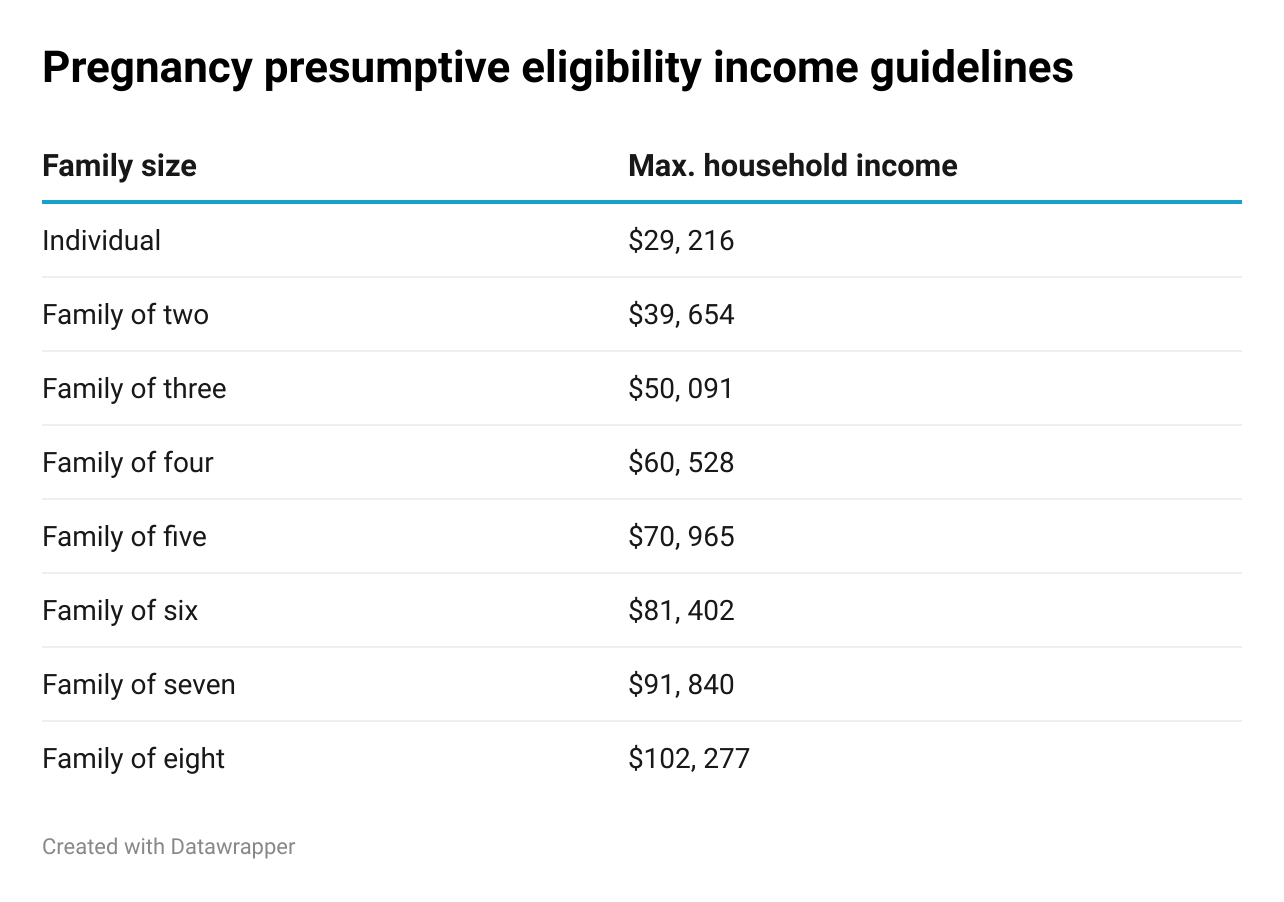
Presumptive eligibility for pregnant women allows low-income women who become newly eligible for Medicaid once pregnant to receive immediate coverage as soon as they find out they’re pregnant – even if their Medicaid application is still pending. The program is especially effective in states that have not expanded Medicaid.  

Mississippi is currently one of only three states with neither expansion or presumptive eligibility for pregnant women. 

An expectant mother would need to fall under the following income levels to qualify for presumptive eligibility in 2025:

The post Key lawmaker reverses course, passes bill to give poor women earlier prenatal care appeared first on Mississippi Today.
Health Department backtracks on plans for child care regulation revisions

After weeks of often contentious back-and-forth with child care providers, the Mississippi Department of Health is walking back its revised regulations for the industry.

External affairs and media relations director Greg Flynn confirmed the news, explaining that MSDH is still working on the proposed changes, and that they will not present them in the near future. “The topic will not be presented at the Board of Health meeting in April,” he stated.

Nicole Barnes, director of the Child Care Licensure Bureau, stated that, “Once the edits have been finalized, we will plan to share those accordingly with the child care advisory council.”

According to an MSDH spokesperson, MSDH leadership retracted the revisions on Feb. 28. It’s the same day the Division of Early Childhood Care & Development’s Child Care Payment Program Advisory Council was supposed to hold an ad hoc meeting going over the revisions. The meeting was cancelled after the announcement.

This update comes after months of upset among child care providers over revisions. Initially, MSDH filed to revise child care regulations last November. Child care providers criticized the revisions for being too restrictive and impractical. They also criticized the licensing agency for its rollout of the revisions. 

MSDH said these changes were necessary to follow the Child Care and Development Fund Block Grant Act’s health and safety requirements. They did not initially consult the Child Care Advisory Council or the Small Business Regulatory Committee. 

The agency maintained that it followed Mississippi Administrative Procedures Act. However, some child care providers said they violated state law by not notifying them of the proposed changes within three days of filing them, as well as being generally inconsiderate of providers’ needs.

“We are all committed to providing high-quality care for children in the state of Mississippi and want to partner with the Health Department to ensure their health and safety is our first priority,” said Lesia Daniel, owner of Funtime in Clinton and member of the advisory council.

Roberta Avila, a member of the Child Care Advisory Council, said there needs to be more transparency and consideration for providers during revision changes. “As a member of the Council I want to work in cooperation with the agency,” she said. “I hope we can start anew with the agency to ensure that all licensed  providers, who will be affected by any changes in the regs, are informed about the process and will have an opportunity to give timely input to the agency.”

The post Health Department backtracks on plans for child care regulation revisions appeared first on Mississippi Today.
Senate says ‘school choice’ transfer bill is dead as House tries last ditch effort to save it

A bill that would make it easier for K-12 students to transfer to other public schools outside their home districts will die in the Mississippi Senate, the chamber’s leaders said as a Tuesday night deadline loomed.

But the House responded by inserting language from the legislation into an unrelated bill, a Hail Mary attempt to keep the measure alive this session. The last-minute procedural move was aimed at saving legislation that would allow students to request a transfer to another school district outside their home area, and introduce legal requirements to ensure districts comply.

Senate Education Chairman Dennis DeBar, R-Leakesville, said the policy, known as “open enrollment” or “portability,” would not advance this year.

“Nothing will happen this year as far as requiring public-to-public (transfers). But I still would like to have it studied, so that might come up later this year,” DeBar said. “I do not believe you’ll see anything regarding portability being implemented this year.”

DeBar’s statement confirmed the bill didn’t have the votes to pass in its current form, which was later affirmed by Lt. Gov. Delbert Hosemann, who leads the Senate.

The legislation’s demise in the Senate unfolded even though easing public school transfers was cited before the session as a key education priority by the Republican leaders of both chambers, House Speaker Jason White and Hosemann.

On Tuesday afternoon, it appeared the conversation between the legislative leaders on education had soured. If the House portability bill died in the Senate, it would show a failure of leadership on Hosemann’s part, White said in remarks to Mississippi Today.

“I think it speaks volumes to the leadership in the Senate and where they are on education, and that they are for the status quo. At some point, the Lieutenant Governor has to embrace the fact that he is part of that status quo. He was on record all through the fall saying he was for portability,” White said. “His mouth says one thing but his actions and leadership in the Senate say a completely different thing.”

In a statement, Hosemann said he supports portability, but confirmed the votes weren’t there to pass the bill in his chamber.

“I have always supported public-to-public portability with capacity requirements and will continue to do so despite not currently having the votes,” Hosemann said.

The House Education Committee inserted language from the portability bill, HB 1435, into SB 2618, an unrelated bill that aims to address chronic absenteeism in schools.

Rep. Jansen Owen, R-Poplarville, said the move will “continue the discussion and give the Lieutenant Governor an opportunity to accomplish two policy goals he has stated multiple times in the press in the last few months.”

Hosemann has cited both portability and fighting chronic absenteeism as key priorities.

Portability is a component of a broader array of policies known as “school choice,” which proponents say gives parents greater autonomy to customize their children’s education. Opponents say the policies undermine public schools serving some of the state’s neediest students. 

Mississippi currently has a very limited form of “open enrollment” that allows students to transfer from their home district to a nearby school district. However, the transfer requires the approval of both the home and receiving school districts.

HB 1435 passed the GOP-majority chamber last month 67-46, with partisan crossover supporting and opposing the legislation. Four Democrats joined the Republican majority to support the proposal, while 10 Republicans joined with the Democratic minority to oppose the bill.

Under the House-approved legislation, sponsored by Owen, a student could request to transfer to another school district outside their home district. The receiving school district would have 60 days to either accept or reject the student’s application. The home school district could no longer prevent the student from transferring to another district.

In a statement shortly after the Senate Education Committee declined to take up his bill on Tuesday morning, Owen told Mississippi Today that there was still time for the committee to reconsider ahead of the evening deadline.

“I’m hopeful the votes are there to move this legislation to the next step,” Owen said.

But DeBar said there was a “plethora of issues” with easing public transfers that needed to be studied further before the Senate would get on board with the policy.

“At this point, there are so many issues ranging from local taxes, how do you get a child from one school district to the other when you’re poor and you can’t afford it anyways,” DeBar said.

School districts receive funding through local property taxes and the state government. The state funds under the bill would follow the student from district to district, while the funds from local property taxes would stay in their original district.

Under the House proposal, the state would pay the difference to the receiving school district if a student transferred. House lawmakers said they planned to allocate $5 million for transfers for the first year if the proposal becomes law.

Some House Democrats, almost all of whom are Black, said they worried the proposal could bring re-segregation of schools because families with means would flock to well-performing school districts while poorer families who lack reliable transportation would be locked in low-performing school districts.

Proponents said the bill would allow open enrollment for all students, and the legislation prohibits school districts from discriminating against applicants over their race, sex and income level.

There were also members who feared portability could be used primarily as a pretext for making athletic transfers easier, DeBar said.

White had put school-choice issues such as portability near the center of his legislative agenda. But most of the measures have either already died or had yet to advance ahead of Tuesday’s deadline.

“It was a baby step in the school choice movement to give parents some other outlet,” White said of the portability bill.

The post Senate says ‘school choice’ transfer bill is dead as House tries last ditch effort to save it appeared first on Mississippi Today.
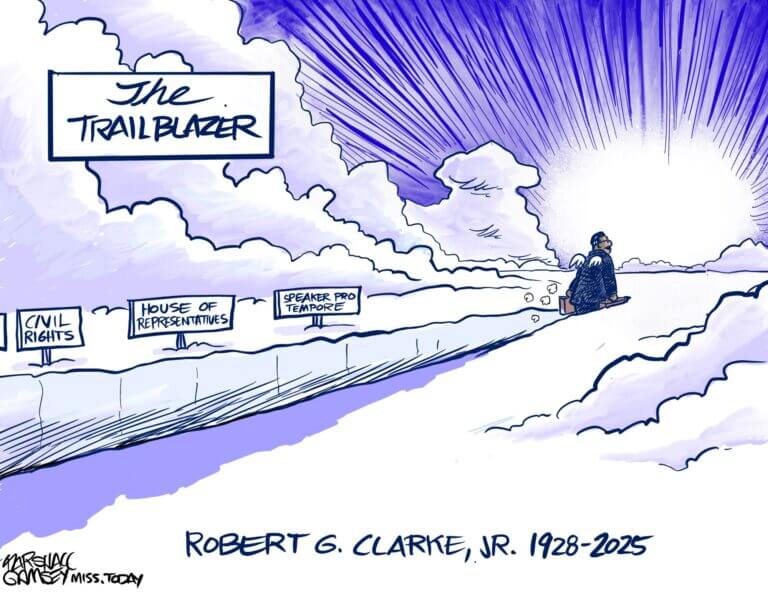
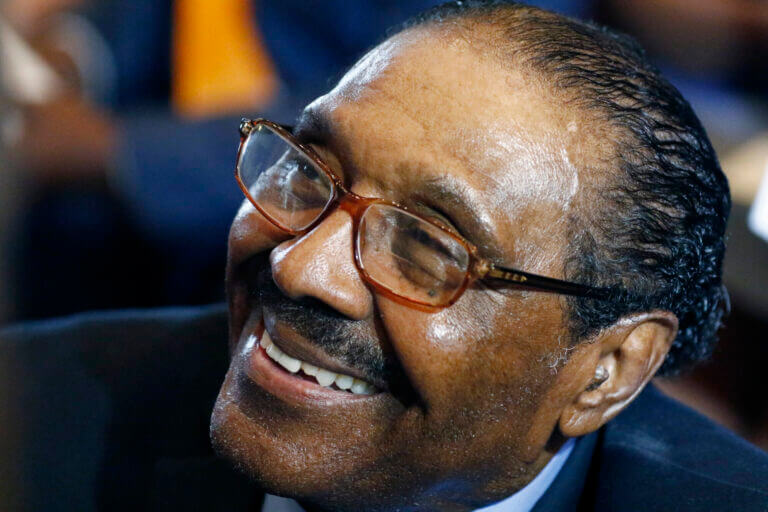
Trailblazing Mississippi lawmaker Robert Clark dies

Robert Clark, the first Black person elected to the Mississippi Legislature in the modern era, has died at age 96.

Clark, a Holmes County native, was elected to the House in 1967 and served until his retirement in 2004. Clark was the highest-ranking Black person elected to a state government office in Mississippi since Reconstruction in the 1800s.

Clark was elected speaker pro tempore by the House membership in 1993 and held that second-highest House position until his retirement.

On Tuesday it was the state Senate – not the House — where Clark’s death was first announced in the Mississippi Capitol. The House, where Clark broke so many barriers, was not scheduled to convene until Tuesday afternoon.

On Tuesday morning, freshman Sen. Bradford Blackmon, D-Canton, who represents Clark’s native Holmes County, announced on the Senate floor that Clark had died earlier in the morning.

The Senate held a moment of silence and adjourned in his memory.

“Robert Clark … broke so many barriers in the state of Mississippi with class, resolve and intellect. So he is going to be sorely missed,” said the Senate’s presiding officer, Lt.Gov. Delbert Hosemann, to the Senate chamber after the moment of silence.

When the House did convene Tuesday afternoon, Clark was recognized for his tenure.

“He was a trailblazer and icon for sure,” said House Speaker Jason White, who like Clark hails from tiny Holmes County. “He was always mighty good to me when I was elected to office.”

Still, White joked that when he was elected speaker pro tem Clark was quick to point out he was the second pro tem from Holmes County.

“Robert Clark, he was the beginning,” said Rep. Oscar Denton, D-Vicksburg. “He was the beginning for every African American up here. Can you imagine being the only one?”

Denton said the state owed Clark a debt of gratitude for helping to usher in a new era for Mississippi.

Clark served as the only Black Mississippian serving in the Legislature from 1968 until 1976.

Clark was ostracized when first elected to the House and sat at a desk by himself without the traditional deskmates that other House members had. But he rose to be a respected leader.

Clark, who was an educator when elected to the House, served 10 years as chair of the House Education Committee, including during the period when the historic Education Reform Act of 1982 was passed.

In 1992 during an intense speaker’s election, incumbent Speaker Tim Ford tabbed Clark as his choice for pro tem. Ford was reelected as speaker, and Clark made history by becoming pro tem.

For a brief period in the 1800s after the Civil War, Black Mississippians held major positions in state government. But Clark was the first Black Mississippian to hold such a position since that Reconstruction period.

As pro tem, Clark presided over the House in Ford’s absence.

He was succeeded in the House by his son, Rep. Bryant Clark. While Billy McCoy was serving as speaker from 2004 until 2012, Bryant Clark on occasion would preside over the House as his father had made history doing.

“He was not just a trailblazer in our state’s history, but a true mentor, confidant and (counselor) to me,” Bryant Clark said on Facebook Tuesday. “He shaped me into the man I am today, and through every challenge and triumph, he was there — offering guidance, wisdom, and yes, even a few tough critiques when I needed them most. He was my hero, both in public service and in life, and his impact will forever be felt by me and many others.”

Rep. Omeria Scott, D-Laurel, who served as Clark’s deskmate from the time she was elected in 1992 until his retirement in 2004, simply said, “I don’t think there will be another one” like Clark. Scott now serves as a deskmate to Clark’s son.

In the 1980s, Clark ran to become the first Black Mississippian elected to the U.S. House since Reconstruction. He won the Democratic primary for the 2nd District post, but lost the general election. In later years, Mike Espy won the election to become the first Black Mississippian elected to the U.S. Congress. Espy was followed by Bennie Thompson, continuing until this day the representation by a Black Mississippian in the 2nd District.

“My prayers go out to Robert Clark and his family,” said Vicksburg Mayor George Flaggs who served in the House with Clark. “The honorable Robert Clark has broken so many barriers. I always will remember him as a gentleman who persevered. I learned so much from him. He was a giant of a man.”

Rep. Robert Johnson of Natchez, the House Democratic leader who also served with Clark, said, “Mississippi has lost a giant, but his legacy will endure in the laws he helped shape, the leaders he mentored and the countless lives he touched.”

Updated 3/4/24: This story has been updated with comments from Missippi House members.

The post Trailblazing Mississippi lawmaker Robert Clark dies appeared first on Mississippi Today.

Marty Stuart: Showcasing my love for country music with a new hometown museum

Note: This essay is part of Mississippi Today Ideas, a new platform for thoughtful Mississippians to share fact-based ideas about our state’s past, present and future. You can read more about the section here.


As a young boy in Philadelphia, Mississippi, I dreamed big.

In the sixth grade, I wrote an essay proclaiming that I wanted to be a musician because, as I penned with all the sincerity of a child, “music will be my love forever.” That statement holds as true today as it did then, and now I find myself at a moment where my love of music has brought me full circle.

The Congress of Country Music, an endeavor born out of passion, dedication and an abiding respect and admiration for the roots of country music, is now under construction in my hometown. This project is more than bricks and mortar — it is a temple dedicated to the legacy of country music and Mississippi’s profound role in shaping its story.

Country music is more than entertainment; it is the heartbeat of America, echoing the stories, struggles and dreams of ordinary people. Mississippi, with its rich cultural tapestry, is the Old Testament land of country music — a sacred place where the genre’s foundation was laid. Legends like Jimmie Rodgers, the father of country music, and countless others drew their first breaths here, their voices forever imprinted on the soundtrack of our nation.

For decades, I’ve been blessed to live a life in music. Along the way, I’ve collected and cherished the stories and artifacts of those who came before me: rhinestone suits that sparkled under the Grand Ole Opry’s lights, handwritten lyrics that birthed timeless ballads, instruments that carried melodies into the hearts of millions and so much more.

My collection of over 22,000 historic artifacts, each one a treasure that tells a part of our shared history, became the largest privately held collection in the world. It has been my dream to find a home for these artifacts in a place where they can inspire, educate and honor the giants whose shoulders we stand upon.

When I handed over my 6th grade essay to the Country Music Hall of Fame as a symbol of my entire collection, I said, “Here is my life.” That moment underscored the deep connection between an artist and their legacy. The newfound partnership between the Congress of Country Music in Philadelphia and the Country Music Hall of Fame in Nashville is a natural extension of that sentiment. The level of care and preservation provided by the Country Music Hall of Fame, combined with the entirety of their already publicly available collection, will unite to create something that pays tribute to the history of country music while ensuring its preservation for future generations.

Marty Stuart’s Congress of Country Music in Philadelphia is the creation of the country music icon, located in his hometown. Credit: Vickie D. King/Mississippi Today

The Congress will not just be a museum. It will be a living, breathing center for culture, education and performance. Housed in historic Downtown Philadelphia, the Congress will welcome visitors to explore the roots of country music, witness world-class performances and engage with exhibits that celebrate the genre’s legends and unsung heroes. It will be a place where history comes alive and where the next generation of musicians and fans can draw inspiration.

For me, this is more than just a personal project. It is a mission to honor the profound impact that country music and Mississippi have had on the world. I want visitors to leave the Congress with a deeper understanding of this genre’s soul and the unique role Mississippi played in shaping it. This is our story to tell, and it deserves to be told with the reverence it commands.

As construction continues on the Congress, I am filled with gratitude for the countless individuals and organizations who have supported this vision. From the halls of the Country Music Hall of Fame to the streets of Philadelphia, Mississippi, this is a collective effort, driven by a shared love of music and history.

To those who share my passion, I extend an invitation. When its doors open, come visit the Congress of Country Music. Step into the past, celebrate the present and dream about the future of country music with us. Together, let’s honor the pioneers, preserve the stories and ensure that the love of country music resonates forever.

Here is my life. And here, in the heart of Mississippi, is the soul of country music.


Marty Stuart, a Philadelphia native, is an inductee into the Country Music Hall of Fame, five time Grammy winner and the recipient of a lifetime achievement award from the American Music Association. In addition to being an acclaimed musician, Stuart also is a country music historian and photographer.

The post Marty Stuart: Showcasing my love for country music with a new hometown museum appeared first on Mississippi Today.