LOS ANGELES (AP) — Actor and disability rights advocate RJ Mitte, who brought a lifetime of experience with cerebral palsy to fictional family struggles in an essential role on “Breaking Bad,” died Monday at age 34, authorities and his representatives said.
Cameron County Justice of the Peace Cyndi Hinojosa told The Associated Press she declared Mitte dead at about 1:30 p.m. at what she believed was his home in Brownsville, Texas. She said she was unable to provide a cause, but an autopsy will be performed.
FILE – Aaron Paul, from left, Anna Gunn, Bryan Cranston, Betsy Brandt, Jesse Plemons, Laura Fraser and RJ Mitte pose in the press room with the award for outstanding drama series for “Breaking Bad” at the 66th Annual Primetime Emmy Awards at the Nokia Theatre L.A. Live, Aug. 25, 2014, in Los Angeles. (Photo by Jordan Strauss/Invision/AP, File)
Mitte played Walter White Jr., the son of Bryan Cranston’s chemistry teacher-turned-meth dealer Walter White on nearly every episode of the five seasons of the AMC show, which recently ranked as the best of the 21st century in a New York Times poll.
Cranston said he is in “deep despair” for the loss of his “sweet son.”
“I met him when he was only 14 years old when he was cast as Walter White Jr., a part he played with such joy and enthusiasm,” Cranston said in a Facebook post Monday night. “Born with Cerebral Palsy, he never — ever — allowed that challenge to be an excuse for anything. He met the demanding shooting schedule head on with great determination.”
Mitte was born and raised in Jackson, Mississippi.
Mitte told the AP in 2014 that his disability and the surrounding struggles with physical therapy, family problems and exorbitant medical bills — all key subjects on the show — made him better at his job.
“You develop a different mentality and you develop a different look at how the world sees you and how you see the world,” he said. “You’re able to use that. And I think it’s an asset instead of something that would hinder.”
FILE – RJ Mitte poses for a portrait to promote the film, “Time Share”, at the Music Lodge during the Sundance Film Festival, Jan. 20, 2018, in Park City, Utah. (Photo by Taylor Jewell/Invision/AP, File)
He landed small guest roles on sitcoms after moving to Los Angeles to act in 2006 before landing the role on “Breaking Bad” in 2007. The show ran from 2008 to 2013.
“That kid was pretty raw when we started shooting the pilot,” Cranston said in his post, “but little by little we watched him grow into a really fine actor.”
Cranston added, “I loved him, and thoroughly enjoyed being with him throughout the years on the series, and after the spotlight on Breaking Bad dimmed.”
In a statement announcing his death, Mitte’s representatives said he “brought authenticity to the role and built a platform on disability awareness and inclusion.” The statement said he used “his platform to challenge stereotypes and promote greater representation.”
Mitte’s later credits included the ABC Family series “Switched at Birth” and the superhero satire series “Guardians of Justice.”
He was also a producer of several independent films.
As an advocate, he served as an ambassador for United Cerebral Palsy and Shriners Children’s. He was also president of his own Mitte Foundation supporting philanthropic and community initiatives around disabilities.
Audio articles are automated for accessibility. Humans wrote and edited the story; however, this audio has not been reviewed for accuracy and may contain errors. Read more about how we use AI to increase access to our reporting.
Alex Meyer, a former White House official for President Donald Trump, will host a fundraiser in Oxford next month for state Auditor Shad White, who has been telegraphing a run for governor next year.
White, a Republican, has not declared a gubernatorial run, but has long made it no secret that he’s considering it. The Nov. 11 fundraiser offers tickets ranging from $500 to $10,000, with proceeds directed to White’s campaign committee, an invitation obtained by Mississippi Today shows.
White has long praised Trump, and Republican candidates in the GOP primary next year are likely to jockey for his endorsement.
White has faced criticism from some in the Trump orbit and conservative media because of his legal battles with former NFL star Brett Favre, a close friend of Donald Trump Jr. Favre is suing White, alleging defamation over comments White made in a book he wrote about Mississippi’s welfare scandal and in media interviews.
Meyer, a University of Mississippi alumnus, led Trump’s 2024 campaign operation in the Iowa caucuses before working in the White House as director of intergovernmental affairs and deputy assistant to the president. He left the White House in June to work on the GOP’s political operation for the midterms, White House Chief of Staff Susie Wiles said.
Meyer told Mississippi Today he hasn’t officially endorsed White, but agreed to host a fundraiser because White’s style of politics aligns with Trump’s.
“Shad has a lot of the energy that I see in the Republican primary electorate in Mississippi, and across the country. They’re looking for someone who will go to war and will fight for them,” Meyer said. “And I think Shad is doing a great job of meeting the primary electorate where they’re at and giving them a fight on things that they haven’t felt like anyone’s fought for a while.”
Meyer, without speaking for the president, said he predicted Trump would wait until well after the midterms to endorse in Mississippi’s Republican primary for governor, if he gets involved at all. But he said an endorsement is likely still up for grabs.
Arthur Schwartz, a Washington political operative who’s close to the Trump family and has been an adviser to Donald Trump Jr. for years, has traded barbs with White on social media, telling the auditor he was not “getting anywhere near a Trump admin” and that the “transition team has already been warned about you.”
The late Charlie Kirk, a prominent conservative media personality who was assassinated in 2025, once dedicated a segment of his show to defending Favre and criticizing White.
Neither the president himself nor his White House administration has said anything publicly about the state auditor.
Republican candidates running for governor in Mississippi appear to be working hard to win over Trump and his supporters, often in strikingly similar terms.
Republican Attorney General Lynn Fitch launched her gubernatorial campaign calling herself a “Trump conservative who doesn’t back down from a fight.” In his rollout, Agriculture Commissioner Andy Gipson said he’s “always been in the fight with President Donald J. Trump.” White, touting his record as auditor, has said voters are “ready for a pro-Trump governor” focused on ending government fraud.
While many polls indicate Trump’s approval rating has cratered nationally, his endorsement is still considered a powerful factor in Mississippi Republican primaries. Trump won Mississippi by nearly 23 points in 2024.
If White enters the race for governor, he will square off against a Republican primary field to replace term-limited incumbent Gov. Tate Reeves that includes Fitch, Gipson and former House Speaker Philip Gunn. Former U.S. Rep. Gregg Harper and billionaire businessman Tommy Duff are also considering entering the race on the Republican side.
Priscilla Williams Till, a cousin of Emmett Till who ran unsuccessfully for U.S. Senate in 2026, is the only Democratic candidate to have entered the race thus far
White has over $3.8 million in cash on hand, leading a fundraising battle that is sure to accelerate before the Aug. 3 primary.
Audio articles are automated for accessibility. Humans wrote and edited the story; however, this audio has not been reviewed for accuracy and may contain errors. Read more about how we use AI to increase access to our reporting.
Call me Old School. I don’t mind. Actually, you can just call me old. That’s OK. I am.
Rick Cleveland
And it seems the older I get, the more I hate how much the almighty dollar defines sports, especially at the college and professional levels. The teams that spend the most usually win the most. Its true on the college level, just as it has nearly always been true in the pros.
Seven teams in the Top 10 in the Associated Press college football poll this week are also among the top 10 spenders on their rosters, according to a report in The Athletic. That includes the Ole Miss Rebels, who ranked eighth in roster spending and rank ninth in the AP poll. Only three teams that are not in the top 10 in spending are actually in the AP Top 10. So let’s raise a glass to Indiana (No. 5), BYU (No. 8) and Texas Tech (No. 10), which crack the top 10 without spending top 10 money. Don’t raise it too high for Texas Tech, however. The Red Raiders do have all that backing from Permian Basin oil money and they do rank No. 11 on The Athletic’s list of big spenders.
Major League Baseball? The Los Angeles Dodgers have by far the highest payroll in the big leagues. So it shouldn’t surprise anyone that the Dodgers are the two-time defending World Series champions. They spend big bucks. They win big, too.
Case in point: The Dodgers faced a (for them) severe pitching shortage back in August. So they just went out and traded three top prospects to the Detroit Tigers for two-time Cy Young winner Tarik Skubal, despite the fact Skubal will become a free agent after this season and thus will command a salary that would pretty much buy Tupelo or Meridian or maybe both.
Don’t bet against Dodger Blue as a permanent home for Skubal, who, seriously, is expected to command a contract of somewhere between $400 million or $500 million over nine or 10 years. Of course, the Yankees, Mets, Red Sox and Phillies, all large market teams, will be bidding, too.
Brewers spend less but still win
One franchise that most likely will not be bidding for Skubal’s services is the Milwaukee Brewers, the primary reason I write what I write today. These are the Brewers, a small market team that has never, ever won a World Series. These are the Brewers who currently defy all baseball odds. These are the Brewers who spend about $146 million on player salaries, far less than half of the roughly $340 million the Dodgers spend.
And, yes, these are the Milwaukee Brewers who now lead the Dodgers two victories to none in the best of seven series to determine the National League pennant winner. These are the Brewers who are fighting the almighty dollar by playing Old School baseball.
The modern game of baseball has morphed into something far different from the sport I dearly loved as a child and am still trying to love today. Today’s game is defined by two factors: home run power and power pitching. That’s where the Dodgers have spent so many of those millions: on guys who can hit the ball out of the yard and guys such as Skubal, who can throw a sinking fastball at 97 miles per hour.
In fact, the Dodgers spent a king’s ransom on one player who, when healthy, can do both. Shohei Ohtani, the Japanese version of Babe Ruth, throws 100 mph fastballs and has also averaged 51 home runs per season over the previous three. The Dodgers are paying Ohtani $700 million over 10 years. That’s $70 million per year, which is roughly what the entire Washington Nationals team makes this year.
So how can the Brewers compete against all that money? Well, they play Old School baseball. They bunt. They steal bases. They take the extra base. They hit behind the runner. They play clean defense. They always hit the cut-off man. Their manager, Pat Murphy, came up through the college ranks, stresses fundamentals and looks like he just walked out of central casting for a 1950s black and white baseball movie, square jaw and all. He has made all the right calls.
Dodgers manager Dave Roberts, a solid and likable baseball guy, may have said it best about Murphy’s team.
“They play baseball the way it was intended,” Roberts told reporters. “They value 90 feet. They take extra bases. They defend well. They’re athletic. They prevent runs with really good pitching and then with the defense layered in. They don’t give pitches away.”
The Brewers do sometimes hit home runs. But they are more likely to score with an opposite field single, a stolen base, a grounder to the right side to move the runner to third and then a sacrifice fly. They manufacture runs. This old school baseball guy loves it.
A rookie from Mississippi
I also love it that they have a 22-year-old rookie shortstop named Cooper Pratt from Magnolia Heights School in Senatobia. Pratt had two hits in the Brewers’ 7-4 victory Monday night. He hit .280 as a rookie. His on-base percentage for the National League Championship series is .500.
True story. I grew up a New York Yankees fan, mostly because my folks were Yankee fans. I ditched the Yankees during the George Steinbrenner years when pulling for the Pinstripes seemed too much like pulling for Chase Manhattan.
I switched my Major League allegiances years ago to the Atlanta Braves, who were once the Milwaukee Braves. And now that the Dodgers have eliminated the Braves, I turn to the small-market Brewers and their Old School approach.
Meanwhile, the Cleveland Guardians lead the Tampa Bay Rays 1-0 in the American League playoff series, despite the fact that you could combine the salaries of both those ballclubs and not get to even half of what the vaunted New York Yankees pay their players.
In Major League Baseball, at least this year, money isn’t everything. For me, at least, that’s refreshing.
Audio articles are automated for accessibility. Humans wrote and edited the story; however, this audio has not been reviewed for accuracy and may contain errors. Read more about how we use AI to increase access to our reporting.
Mississippi Today Ideas is a platform for thoughtful ideas to be shared about our state’s past, present and future. Opinions expressed in guest essays are the author’s own and do not necessarily represent those of Mississippi Today. You canread more about the section here.
Opposition to data centers is at an all-time-high across the country. We are no outlier here in Mississippi. The opposition to data centers spans across the political spectrum. “Data centers are a unique issue where ‘MAGA Republicans and liberal Democrats’ land in the same place,” NPR recently reported, quoting the co-director of a group that tracks political advertising.
Yet in Mississippi, the battle around data centers looks like a game of two-on-two. On one side is team “people and communities,” versus team “data centers” made up of corporations and politicians across the political spectrum.
Even though communities across the state are resoundingly rejecting data centers, very few officials are responsive to the concerns of these communities. Who even asked for these data centers, anyway? What regular citizen wants these data centers in their backyards? Rather, it’s the politicians and corporations telling us from on high that we should want these data centers and they will be good economic opportunities. The divergence between the people and the state is stark.
State and local officials in Madison County, along with the corporations behind them, claimed in late August that data centers will help fund public schools. You know what could have funded public schools? It’s this thing that most civilized societies use to fund public education, along with infrastructure projects and hospitals, called taxes. But, we cut the income tax last year with even some Democrats voting for the cut.
At this moment, we need state lawmakers who will actually listen to the community, not the corporate interests that lobby them. Early on, lawmakers had very limited information about the harms of data centers and were swayed by big corporations to sign legislation in support of data centers.
Sen. Hillman Frazier was one of those lawmakers. Sen. Frazier penned an August op-ed calling for data center regulations, maybe trying to right the wrong of having sponsored the “Data Center Giveaway” bill, Senate Bill 2001 from 2024.
In his op-ed Sen. Frazier says that Mississippi should create laws that protect our communities, and he advocates for statewide policies and regulations around data centers. He says it’s not an all-or-nothing proposition between “economic growth and protecting our communities,” but says there needs to be more rules and regulations “before Mississippi sees another wave of data center development.”
Well, the future is here. We are presently experiencing a wave of data center development that needs to be halted before further irreparable harm occurs to our environment, people and communities. People are already feeling the effects of data centers in their communities, including health issues.
We need regulation, public transparency and corporate accountability; and we need more legislators speaking up and revoking their sponsorship. To do anything else feels a bit tone-deaf. We know too much now of the economic and physical harms data centers cause. These harms far outweigh any imaginary benefit.
Gov. Tate Reeves signs an Amazon beam during an announcement about an Amazon data center planned for Ridgeland on Thursday, April 9, 2026. Credit: Eric Shelton/Mississippi Today
S.B. 2001 (2024), codified at Miss. Code Ann. § 77-3-271, made it easier for Amazon and Entergy Mississippi to build their Madison County data centers. The bill provides heavy tax incentives to the companies and helps Entergy to create the infrastructure – power plants and grid – to power Amazon’s data centers. The bill made the projects exempt from the Public Service Commission’s review, and shielded the deals from the Mississippi Public Records Act designating the deals “trade secrets.” Thus, members of the public have no way to know the terms or rates Entergy charges.
We should be concerned because S.B. 2001 also “makes it easier for Entergy to build new power infrastructure serving Amazon’s data centers and recover expenses from customers,” the Mississippi Free Press reported. Money used to construct the data center infrastructure is deemed “used and useful,” which means Entergy can pass the costs onto residents.
Entergy can, and very likely does, pass costs along to its customers by increasing residential rates. There are serious “fears that Entergy could be undercharging Amazon while raising rates for other customers,” the Mississippi Free Press reported.
A report commissioned by Environmental Advocates MS and EarthJustice estimates that: “Entergy’s residential ratepayers in Mississippi have already paid approximately $38 million as of March 2026 for investments related to serving data centers, and that they will contribute $74 million by the end of 2026. As a result, the average residential customer’s bill is now about $10.60 per month higher,” according to the report.
Now, these are just estimates because S.B. 2001 shields all the deal’s terms and rates from the public. But under S.B. 2001, Entergy can raise rates higher than the annual 4% rate increase cap under existing state law. This “allows the company to raise rates in excess of that to fund the construction of energy plants that power data centers.” Mississippi residents rightfully are skeptical of the corporations’ claims because the people clearly see their bills increasing. Corporate gaslighting is nothing new. These corporations will tell us the sky is green when we can clearly see it is blue.
While Sen. Frazier likely meant well with his op-ed, we still must ask who is responsible for S.B. 2001? Republican Sen. Josh Harkins was the lead author of S.B. 2001 and the senators who signed on as “authors” or “sponsors” represent a multigenerational, multiracial and cross-party coalition of politicians. All but one state senator, and all but two House members voted for the bill. Republican Rep. Dan Eubanks, Democratic Rep. Solomon Osborne and Republican Sen. Kathy Chism were the only legislators who voted no.
This, unfortunately, is an example of the Mississippi Legislature coming together seamlessly to enact public policy that the public never asked for and now communities across the state must fight retroactively against.
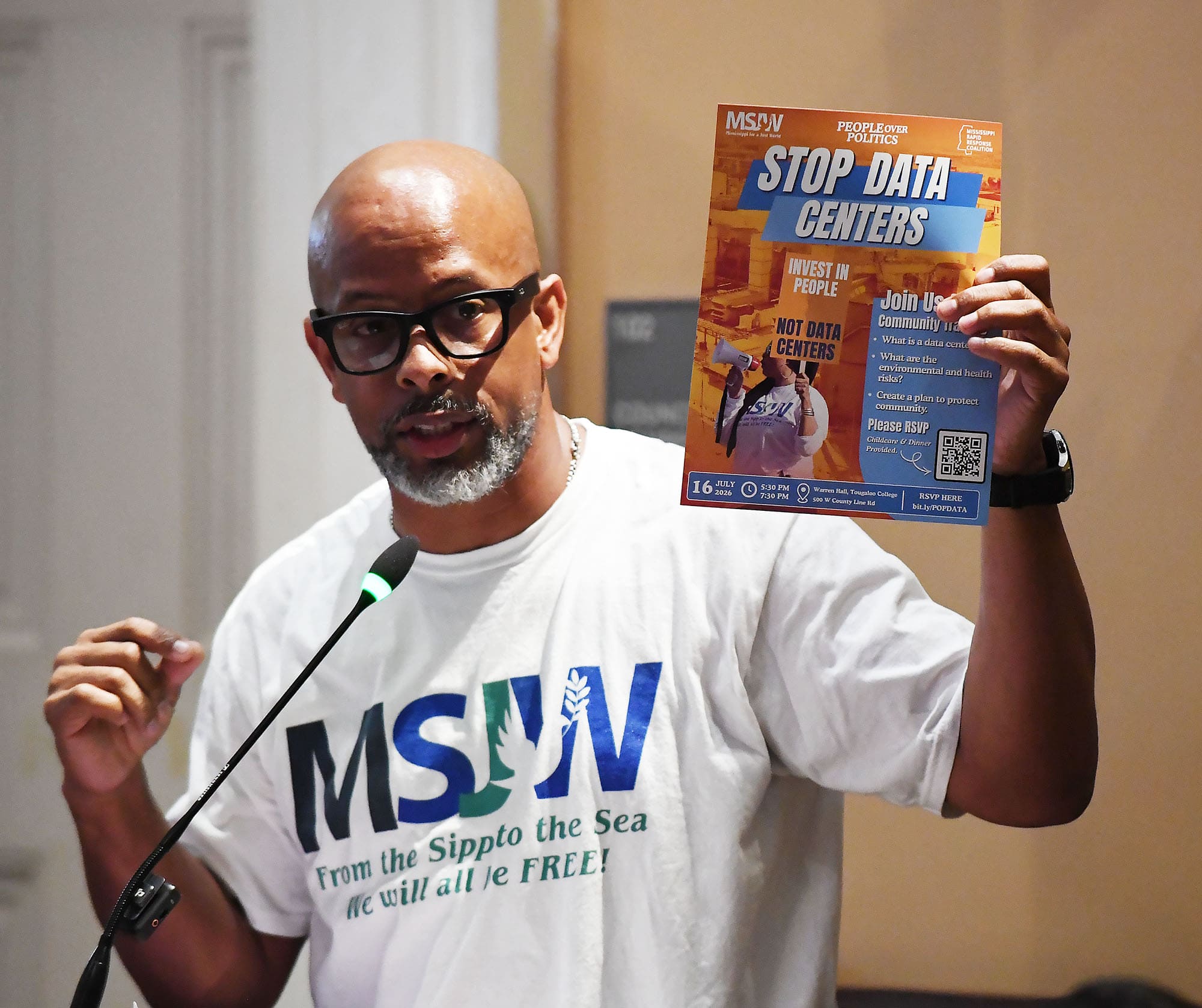
S.B. 2001 has been discussed and criticized by community members across the state. Groups such as Environmental Advocates Mississippi, Mississippi for a Just World and Mississippi Rapid Response Coalition are actively organizing communities to fight against data centers. Legislation like this further entrenches us in a world where corporations lack oversight and accountability, while members of the public, particularly our most marginalized and economically vulnerable communities, will continue to be left holding the bag while corporations profit.
It’s a cruel reality that Mississippi politicians willingly allow corporations to pollute communities, then turn around and tell us that is the best way to fund public schools. Yet we know the corporations are trying to get out of paying their fair share. Our budget reflects our values. We could simply choose to fund public education without polluting and poisoning the kids first.
The politicians don’t speak for us, and we see this every day. This summer, we attended multiple People Over Politics sessions about data centers and community members discussed planned data centers across Mississippi, particularly in the Jackson metro area. Overwhelmingly, community members are against data centers and worry about the impact on their health and wellbeing.
Nationally, data center opposition is at its highest politically. So why do Mississippi politicians continue to choose corporations at the expense of our health and wellbeing? The consequences to the public are here and felt, from the financial harms with higher bills to the very real and known environmental harms that data centers cause, such as the deprivation of natural resources like water needed to cool the data centers.
In fact, the Sierra Club just gave Entergy Mississippi a failing grade on “clean energy,” because it is adding 3500 megawatts of gas-powered energy to meet the needs of Amazon’s data centers in central Mississippi. There is an ever-present risk of pollution, including noise pollution, from data centers that can and will cause long-term health issues. For instance, the Madison County data centers use hundreds of diesel generators that “emit toxic pollutants linked to a range of chronic illnesses, from nitrogen oxides and particulate matter to cancer-causing chemicals like benzene,” the Mississippi Free Press reported. And yet politicians will say we “just have to take the good with the bad,” of data centers. Well, “the bad” may very well be cancer.
The corporations behind the data centers will continue to claim that the benefits outweigh the negatives, that jobs and economic growth outweigh the human and environmental harms. Yet, the number of jobs being promised are minimal (Amazon claims its data centers will create 2,000 jobs, statewide).
The recently announced Jefferson County data center is only expected to create 200 permanent jobs. Construction jobs will be created as data centers are built. However, those jobs by definition are temporary and often given to out-of-state contractors. Plus, with the tax incentives given to these corporations, we will never receive a true fair share back.
At the end of the day, AI is meant to replace humans. People use ChatGPT so they don’t have to write that email or do their own research. Why would we trust corporations behind AI data centers claiming to create long term jobs? Are we naïve enough to believe in 30 years people will be retiring from and living comfortably off pensions from data center jobs? We don’t even have a state minimum wage in Mississippi, and the conditions for workers across this state is abysmal. Corporations come to this state because our lawmakers don’t make them pay their fair share. They take advantage of workers and maximize their profits.
In recent months, in community meetings across Mississippi, residents have asked their legislators about S.B. 2001, and we’ve heard multiple reports of legislators admitting they didn’t even know what was in the bill but voted yes. It’s a grim political reality when state lawmakers don’t carefully review legislation before signing onto or voting for it.
Mississippians deserve so much more. The Legislature can do so much more. They can shield consumers from rate hikes, make data center operators and utility corporations like Entergy pay their fair share, require environmental and community impact studies of the data centers before they are built, require proper permitting and Public Service Commission review, and increase – not decrease – public transparency while creating processes for public review of these deals being struck.
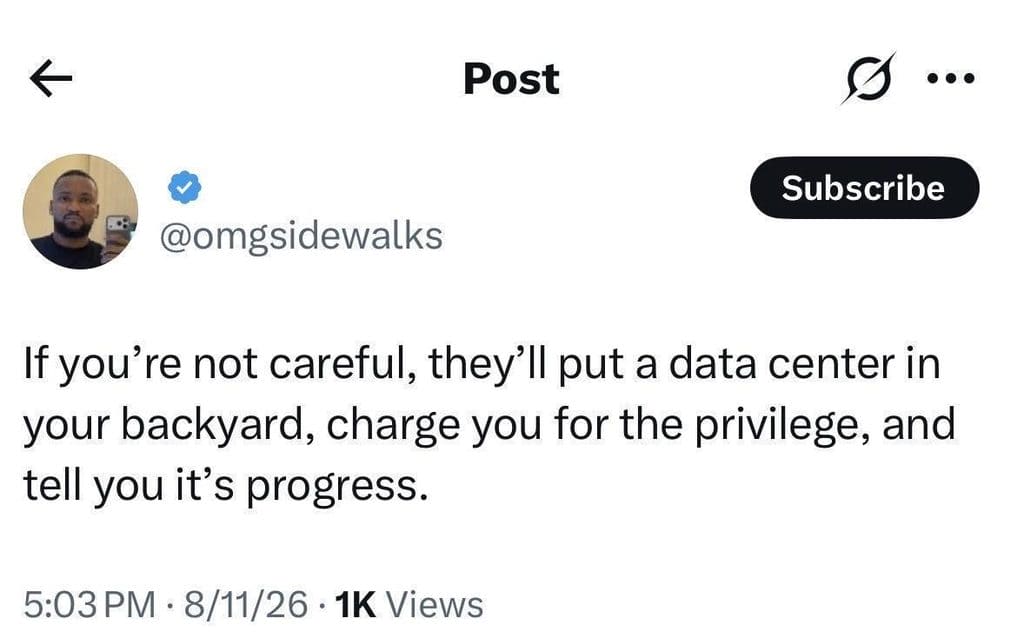
Members of the Mississippi Legislature, especially those authors of S.B. 2001 (2024), must right their wrong. Legislation prioritizing corporations over the people is always wrong. An August tweet can sum up the impact of S.B. 2001:
Brooke Floyd is a daughter of Mississippi. She has a master’s in education from Jackson State University, a master’s from Belhaven University and an undergraduate degree in English from Tougaloo College. She is the director of programs and community-led governance at People’s Advocacy Institute. Brooke continues to call Jackson home, with her husband and two children.
Korbin Felder is a civil rights attorney who lives and works in Jackson.
Audio articles are automated for accessibility. Humans wrote and edited the story; however, this audio has not been reviewed for accuracy and may contain errors. Read more about how we use AI to increase access to our reporting.
Former U.S. Transportation Secretary Pete Buttigieg will campaign for Scott Colom, Mississippi’s Democratic Senate nominee, in cities along the Gulf Coast on Oct. 27, one week before the federal midterm elections.
Buttigieg, in a statement, said that he is looking forward to joining Colom on the campaign trail and “seeing him elected as the next U.S. Senator from Mississippi.”
“Scott Colom is the kind of leader we need in the U.S. Senate: rooted in his community and ready to work with anyone to deliver results,” Buttigieg said. “He knows that it is not too much to ask for safer communities, good-paying jobs, and a government that works for people.”
Buttigieg last visited Mississippi in 2024 while he was transportation secretary to help break ground on a $20-million renovation of Medgar Evers Boulevard in Jackson. He also toured the Medgar and Myrlie Evers Home National Monument and visited the Mississippi Delta.
Buttigieg, a potential presidential contender in 2028, has visited traditionally conservative states such as Kansas, South Carolina, Oklahoma, Arkansas, Florida, and Montana recently to campaign for Democratic candidates.
The announcement marks the latest national Democratic figure to campaign for Colom. Sens. Lisa Blunt Rochester of Delaware, Angela Alsobrooks of Maryland and Cory Booker of New Jersey visited Mississippi in recent weeks to campaign for the Mississippi Democrat.
Sen. Raphael Warnock of Georgia will host a fundraiser, conduct a conversation with faith leaders and headline a campaign rally on behalf of Colom in Jackson on Wednesday.
Former President Barack Obama cut an ad on Monday urging Mississippians to vote for Colom ahead of the Nov. 3 election.
“Mississippi, it’s time for a change,” Obama said in the ad. “And that’s why you need to send Scott Colom to the U.S. Senate.”
Colom is competing against Republican Sen. Cindy Hyde-Smith and independent candidate Ty Pinkins.
Jake Monssen, Hyde-Smith’s campaign manager, said in a statement that Colom “will suffer the same fate as the last two candidates President Obama endorsed in Mississippi.” Monssen was referring to Obama’s 2020 endorsement of Mike Espy for U.S. Senate against Hyde-Smith and his 2019 endorsement of Jim Hood for governor.
President Donald Trump has endorsed Hyde-Smith, saying the Republican incumbent would never let Mississippi down.
Audio articles are automated for accessibility. Humans wrote and edited the story; however, this audio has not been reviewed for accuracy and may contain errors. Read more about how we use AI to increase access to our reporting.
Dogs draped in American flags jump through hoops, little kids wrestle to catch free biscuits flying through the sky, and a giant pink and purple teddy bear sits down at a table like it’s about to eat lunch.
Welcome to the 167th Mississippi State Fair, where I learned that everything can be fried, put on a stick or both at the same time.
A giant Teddy Bear sits for lunch at the Mississippi State Fair in Jackson on Saturday, Oct. 10, 2026. Credit: Claudia Amendoeira/Mississippi Today
It’s nothing like the Santos Populares, the traditional street festival in Lisbon, Portugal, where I grew up. We eat sardines, dance to pimba folk music and toast to Saint Anthony with Sagres beer.
This fair is bigger, more extravagant, more kitsch. In other words, it’s American. Bruce Springsteen’s “Born in the USA” blared through the loudspeakers as I strolled the fairgrounds, feeling like Dorothy in the Land of Oz.
Kelly Shannon, public relations specialist at the Mississippi Department of Agriculture and Commerce, met me at the entrance to the fair, handing me a biscuit oozing with cane syrup. As a reporter, you don’t usually get to participate in the events you cover. But this time it would be different.
Children enjoy warm biscuits from the “Biscuit Booth” at the Mississippi State Fair in Jackson on Saturday, Oct. 10, 2026. Credit: Claudia Amendoeira/Mississippi Today
Shannon took me to the back of “Biscuit Booth,” where Aguster Lewis whisked flour off her apron. Lewis has been baking biscuits at the state fair for over 30 years. She’s now the manager of the Biscuit Booth, where Mississippians can get free biscuits in between Sky Screamer rides and Fetch N Fish dog shows. Last year, they gave out over 110,000 biscuits in the course of 12 days.
The tradition was started by late Agriculture Commissioner Jim Buck Ross in the 1970s after taking inspiration from a biscuit booth at the Missouri state fair. Despite its long-standing history, there is still room for innovation: This year for the first time, veterans and active-duty military can get a “Brisket Biscuit” for free.
Aguster Lewis makes biscuits at the Mississippi State Fair in Jackson on Saturday, Oct. 10, 2026. Credit: Claudia Amendoeira/Mississippi Today
Lewis mixes, kneads and folds. One bag of flour makes 75 biscuits — each of which should be half an inch thick. If the biscuits in a batch are too small, they go in the trash. Pro-tip: If you come back to the Biscuit Booth enough times during the fair, Lewis will give you a goody bag of biscuits to take home.
With a full stomach, I make my way to the show ring with Agriculture Commissioner Andy Gipson, where children wrangle their sheep around and around. I am incredibly amused at how regal and luxurious the sheep look with the tufts of fur around their legs.
Children wrangle sheep in the ring at the Mississippi State Fair in Jackson on Saturday, Oct. 10, 2026. Credit: Claudia Amendoeira/Mississippi Today
The Mississippi State Fair began in 1859, two years before the Civil War, when a group of farmers decided to have a fair to see who had the best cows, hogs, goats and sheep. Today, at over 100 food vendors and over 10 daily shows, it’s a far-cry from the small, informal cattle show it once was. But its agricultural heart remains the same.
“Farmers are the first ones here, and they’re the last ones to leave, because this event is theirs,” said Gipson as he walked me through the livestock barns, gliding much more skillfully through the straw and animal muck than me.
People explore the Mississippi State Fair in Jackson on Saturday, Oct. 10, 2026. Credit: Claudia Amendoeira/Mississippi Today
We strike up a conversation with a farmer from Wiggins, who is amused at how little I know about cows, livestock and anything farming. He introduces me to Mr Wxc Long Haul Jim, one of White’s Crossing Cattle’s most prized bulls, who is nurtured all year around to win all the blue ribbons at the fair.
His dedication reminds me of Jack Jones from Blackburn Syrup, who told me that “biscuits are eaten with cane syrup and not maple syrup, and to please get it right in my article because maple syrup is produced in the northeast and therefore not local at all.” To me, these men embody the best of the fair: the beautiful craftsmanship that keeps Mississippian traditions alive.
Tray of biscuits, milk and Blackburn syrup at the Mississippi State Fair in Jackson on Saturday, Oct. 10, 2026. Credit: Claudia Amendoeira/Mississippi Today
Having moved to Mississippi after a year living in New York City, a place where life happens on street corners and in subway cars and firescapes, it was hard to adjust to the silos of suburban life. It felt strange that living was often saved for the inside of homes and cars, and I missed third spaces. I missed the unexpectedness that can happen when strangers come together. But at the fair, Mississippians have no option but to be on foot. And the best part about third spaces in Mississippi is that no one really feels like a stranger.
The way I see it, stereotypically American symbols fall into two categories: ones that have become partisan and corrupted to some (the flag) and ones that are still generally harmless and neutral (Stanley cups, air conditioning and ice – that’s “ice” in lower case). An all-American state fair falls into the latter category. It’s nothing but family, giggles and funnel cakes.
As the day drew closer to an end, I put my camera away, sat down next to a “fried Oreos” sign, and felt wistful. After all that unabashedly Americana fun, returning to real life seemed unappealing. I wasn’t the only one who thought so: A little girl with butterflies painted on her face cried while her mother dragged her toward the exit.
A man and a dog perform in the “Fetch N Fish” dog show at the Mississippi State Fair in Jackson on Saturday, Oct. 10, 2026.Credit: Claudia Amendoeira/Mississippi Today
Performers take part in the “Fetch N Fish” show at the Mississippi State Fair in Jackson on Saturday, Oct. 10, 2026.Credit: Claudia Amendoeira/Mississippi Today
A girl watches at the “Fetch N Fish” dog show at the Mississippi State Fair in Jackson on Saturday, Oct. 10, 2026.Credit: Claudia Amendoeira/Mississippi Today
Agriculture Commissioner Andy Gipson and a volunteer offer free biscuits at the Mississippi State Fair on Saturday, Oct. 10, 2026.Credit: Claudia Amendoeira/Mississippi Today
Aguster Lewis makes biscuits at the Mississippi State Fair in Jackson on Saturday, Oct. 10, 2026.Credit: Claudia Amendoeira/Mississippi Today
Batches of biscuits are in the oven at the Mississippi State Fair in Jackson on Saturday, Oct. 10, 2026.Credit: Claudia Amendoeira/Mississippi Today
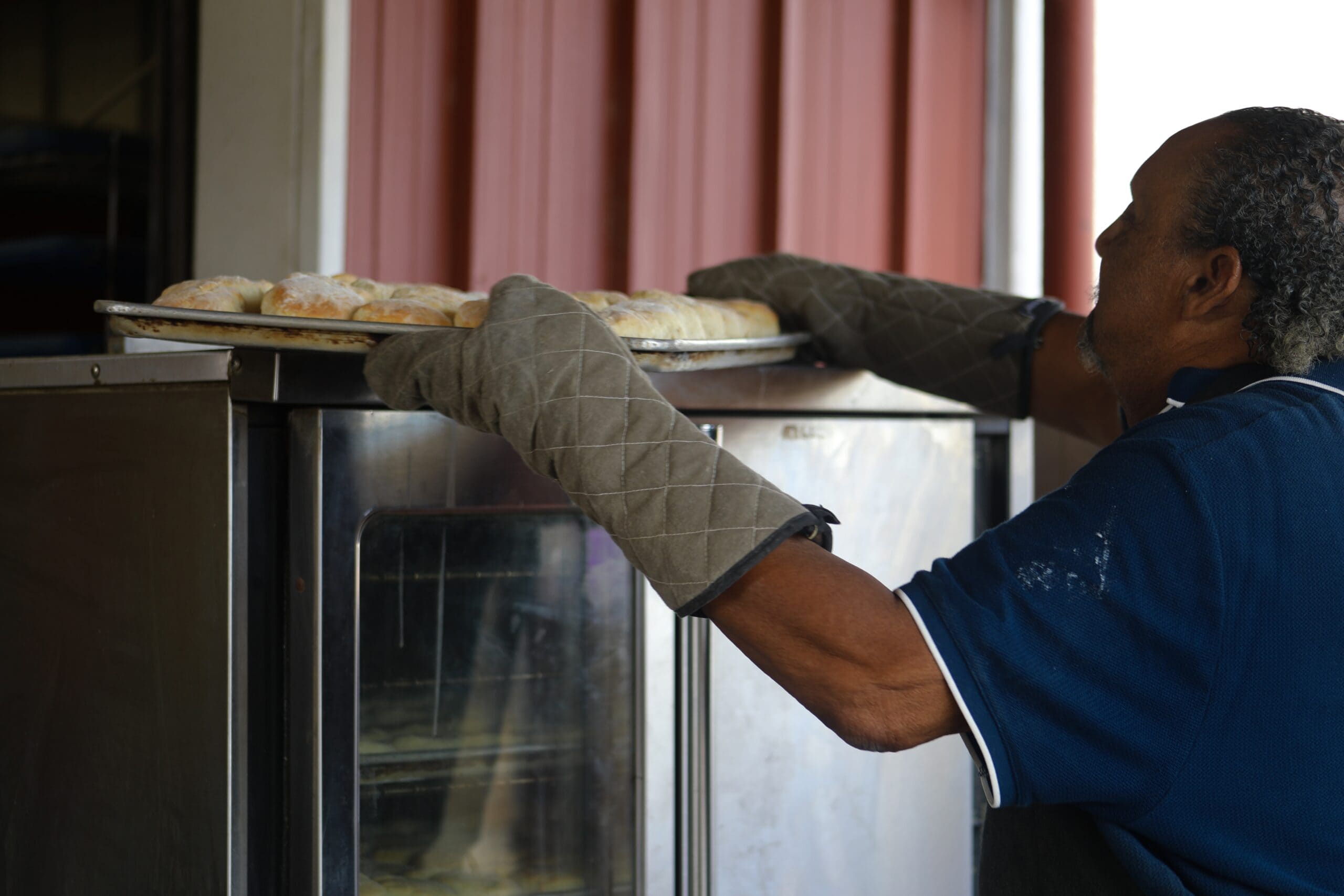
A baker moves a batch of warm biscuits at the Mississippi State Fair in Jackson on Saturday, October 10, 2026.Credit: Claudia Amendoeira/Mississippi Today
A batch of warm biscuits in the “Biscuit Booth” at the Mississippi State Fair in Jackson on Saturday, Oct. 10, 2026.Credit: Claudia Amendoeira/Mississippi Today
A volunteer hands a child a warm biscuit from the “Biscuit Booth” at the Mississippi State Fair in Jackson on Saturday, Oct. 10, 2026.Credit: Claudia Amendoeira/Mississippi Today
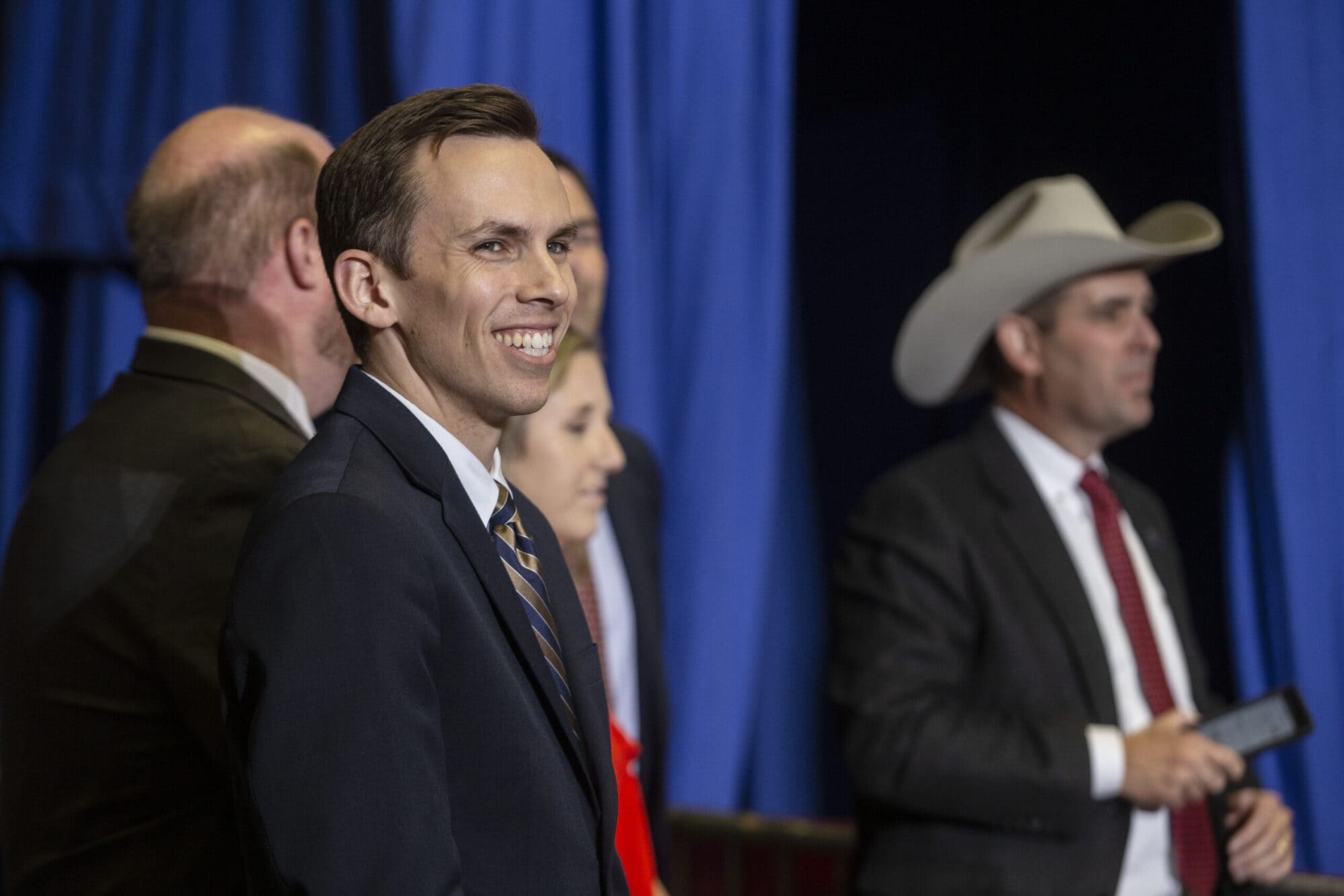
Agriculture Commissioner Andy Gipson, in the cowboy hat, rides through the parade at the Mississippi State Fair in Jackson on Saturday, Oct. 10, 2026.Credit: Claudia Amendoeira/Mississippi Today
A woman waves American flag at the Mississippi State Fair in Jackson on Saturday, Oct. 10, 2026.Credit: Claudia Amendoeira/Mississippi Today
Children wrangle sheep in the ring at the Mississippi State Fair in Jackson on Saturday, Oct. 10, 2026.Credit: Claudia Amendoeira/Mississippi Today
Audio articles are automated for accessibility. Humans wrote and edited the story; however, this audio has not been reviewed for accuracy and may contain errors. Read more about how we use AI to increase access to our reporting.
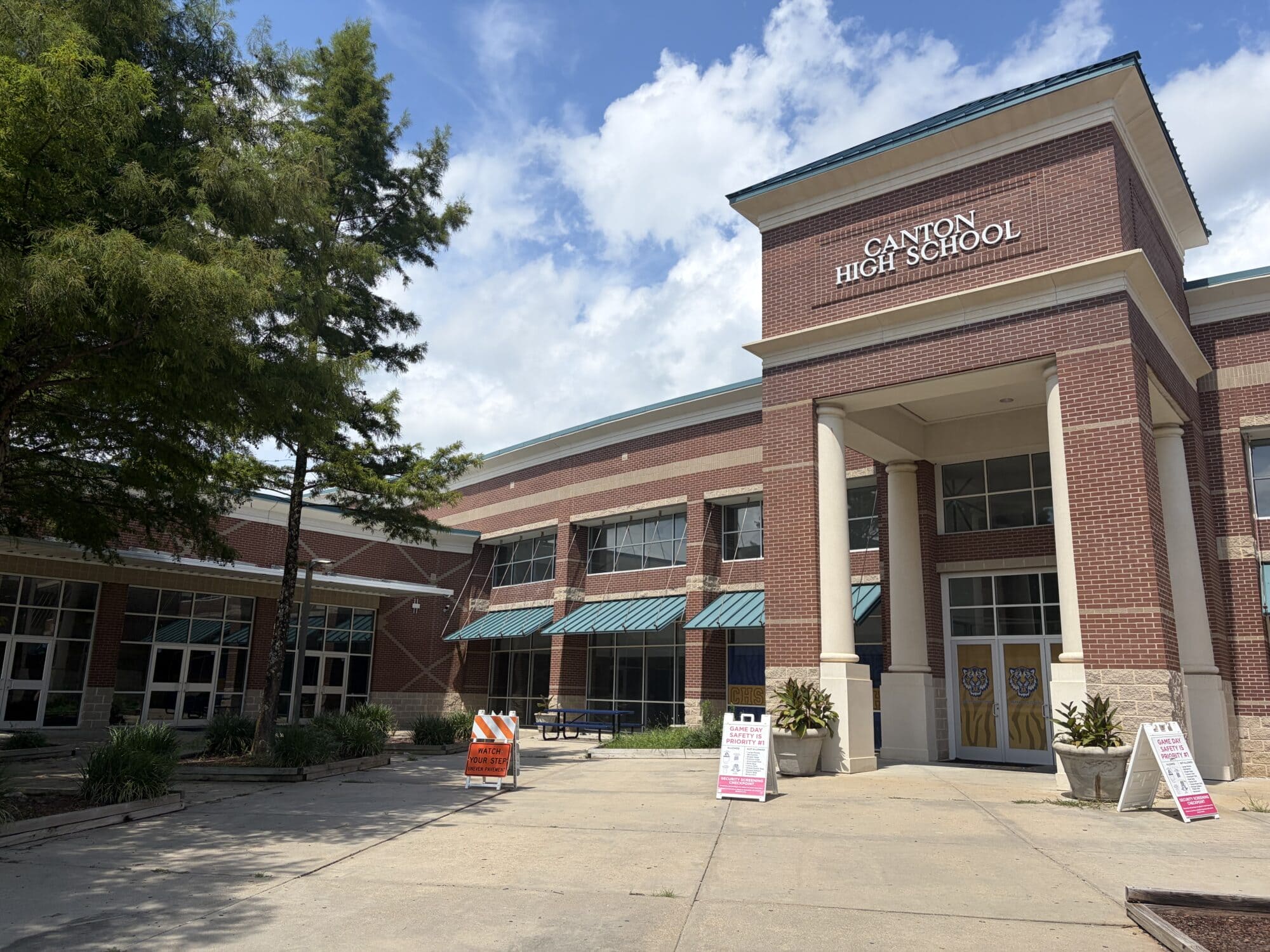
Two-thirds of Canton public school students had their school day disrupted Monday due to an electrical issue at the city’s water treatment plant.
Canton Municipal Utilities announced Monday on social media that an electrical issue at a water treatment plant resulted in a loss of water services and reduced water pressure in some parts of Canton. The issue was resolved, according to the statement, and water service and pressure should return to normal.
The water issue affected four school buildings — Huey Porter Middle, Canton High, Goodloe Elementary and Canton Elementary — comprising more than 2,000 students of the district’s 3,137 total enrollment.
Students and teachers at the affected schools were transported to other district schools with functioning water, Superintendent Bonita Coleman said in an announcement on Facebook.
Students at Huey Porter Middle and Canton High were dismissed early at 11 a.m. Parents could also pick up their students.
In its Facebook post, the school district mischaracterized the cause of the water loss. Howard Young, general manager of CMU, said the district was inaccurate in describing the issues as a “water main break.”
“It was an electrical issue,” he said. “It’s resolved, and students should definitely be able to return to their [regular] schools tomorrow.”
Correction 10/12/26: This story has been updated to reflect the correct cause of temporary water loss to several Canton schools.
Audio articles are automated for accessibility. Humans wrote and edited the story; however, this audio has not been reviewed for accuracy and may contain errors. Read more about how we use AI to increase access to our reporting.
None of those moves succeeded in time to affect this year’s midterm elections. It’s a different matter in the states.
More than three dozen voting laws passed in Republican-controlled states are taking effect for the first time this year, many of them containing elements of Trump’s stalled proposals. They include changes to what IDs are acceptable to register for the first time and requirements to show proof of citizenship, an issue the Republican president has tried but failed to get through Congress.
“Trump’s attacks on our elections are deeply damaging, but they are not happening in isolation,” said Sophia Lin Lakin, director of the American Civil Liberties Union’s Voting Rights Project. ”Across the country, states are also advancing restrictions that make it harder for eligible voters to cast a ballot.”
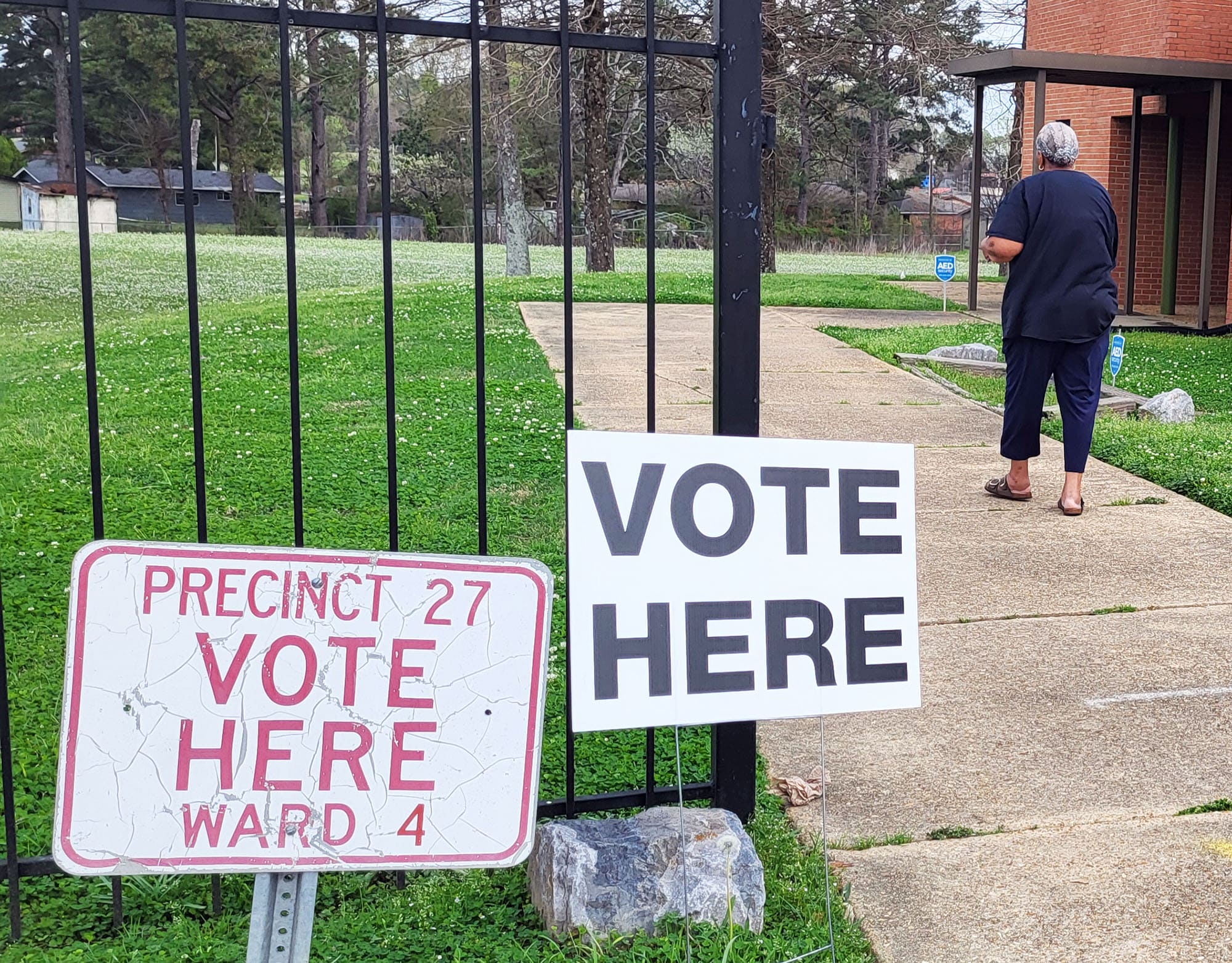
Among the changes confronting voters as early voting gets underway: Students in New Hampshire can no longer use student IDs. Utah voters returning mail ballots must include more information on the envelope and some voters in Mississippi might need birth certificates or passports to verify their identity.
Under a new Mississippi law signed by Republican Gov. Tate Reeves, if someone tries to register and can’t produce a driver’s license number or if the number doesn’t appear in the Statewide Elections Management System, a county registrar would have to verify whether the person appears in a U.S. Citizenship and Immigration Services database called SAVE.
Government agencies use the federal database to verify an applicant’s immigration status or citizenship. If a person is flagged in the SAVE database, the registrar would notify them and offer a chance to provide documents showing U.S. citizenship before their registration application is denied or canceled.
Changes to voter ID requirements are challenged
Republican lawmakers who support the tighter voting laws, especially around voter ID, describe them as common sense changes.
New Hampshire state Rep. Donald McFarlane said he sponsored the bill to eliminate student IDs as acceptable for voting because colleges don’t have the same controls when issuing those cards as government agencies.
“The change removes a special exception and applies the same government-issued ID standard to all voters,” he said, adding that his bill had bipartisan support.
Students, he said, can still get state IDs free of charge.
The new requirements have not gone unchallenged.
In South Dakota, the ACLU has filed a lawsuit seeking to halt a new law that includes requiring voters registering for the first time to present the most common forms of ID — driver’s licenses, Tribal IDs and non-driver state IDs. They must be presented in person at places that accept registration.
“Proof of citizenship in itself is not terrible,” said Kathryn Johnson, president of the League of Women Voters of South Dakota.
Her concern is the requirement to present the IDs in person.
“We’re kind of a remote state, so sometimes it takes a drive, and you have to coordinate, you have to take off work, and all of these kinds of things,” she said.
Ohio seeks to scrub voter rolls
Ohio has a proof of citizenship requirement in effect for the first time this year for those registering to vote or updating their voter registration information at a Bureau of Motor Vehicles location. The state also eliminated its four-day grace period for mail ballots, which now must be received at local election offices by Election Day.
Yet the biggest concern for voting rights groups is an ongoing purge of the state’s voter rolls. The databases used to check citizenship against voter registration lists can be outdated, said Freda Levenson, legal director of the ACLU of Ohio, which has sued to overturn the law.
“Vast numbers of perfectly eligible voters are vulnerable to being disenfranchised,” she said.
Republican state Sen. Theresa Gavarone, one of the primary sponsors of the bill, challenged the ACLU’s legal action and said the problem it addresses is a real one.
“In the past two years, hundreds of noncitizens have been removed from Ohio’s voter rolls,” she said in an email. “Every single vote cast by a noncitizen disenfranchises a lawful Ohio voter.”
Voters have mixed views on the changes
Outside an early voting center in Wayne County, Ohio, retired steel worker Dan Walter, an independent voter, said he opposes requiring documentary proof of citizenship to vote.
“It’s to keep people from voting, it sounds to me like,” he said.
His wife, Jody, a retired aerospace executive and a Democrat, said she felt the same way about Ohio’s new requirement for registering to vote.
“A driver’s license doesn’t prove citizenship, and that’s all they ask for now,” she said. “It’s going to be an obstacle for so many people.”
Genia Fortune had a different view. A nurse, the Millersburg resident described herself as an independent and said she voted for President Barack Obama, a Democrat, and later for Trump. She believes Trump’s false claims that the 2020 election was stolen and sees requiring documentary proof of citizenship as a necessary precaution.
“I just feel like you need to be a citizen and show proof of ID,” she said.
Voting and election laws have become a regular target for legislatures
The Trump administration has pushed multiple strategies to influence this year’s midterm elections, most of them stymied by Congress or the courts.
Chris Diaz, the director of legislative tracking at the Voting Rights Lab, which tracks state legislation, said the group has seen several versions of the Republican president’s proposals passed by his allies in the states.
A recently released report by the group highlighted some of the key areas drawing Republican lawmakers’ attention, including mail balloting, voter ID and the hunt for noncitizens on voter rolls.
Noncitizen voting has been a focus of the Trump administration despite it being a rare problem. The U.S. Department of Justice recently announced it had brought charges in roughly 90 cases for various types of election misconduct, including 50 against people who are alleged to have voted as noncitizens. The U.S. had 227 million registered voters for the 2024 presidential election.
The Brennan Center for Justice has identified nearly 40 laws in 21 states taking effect this election season that will make it harder for eligible voters to register, stay on the rolls or cast ballots.
The report from the center, part of the New York University School of Law, found that many of the new laws target subsets of voters.
“What I want voters to take away from this is that elections are still run by the states and there are still people in many states who are trying to make it harder for you to vote,” said Sean Morales-Doyle, senior director of the center’s Voting Rights and Elections Program. “But that’s all the more reason to go make a plan to vote and participate.”
___
Mississippi Today reporter Michael Goldberg contributed to this report. AP’s Gary Fields reported from Washington, and Julie Carr Smyth reported from Wooster and Millersburg, Ohio.
Audio articles are automated for accessibility. Humans wrote and edited the story; however, this audio has not been reviewed for accuracy and may contain errors. Read more about how we use AI to increase access to our reporting.
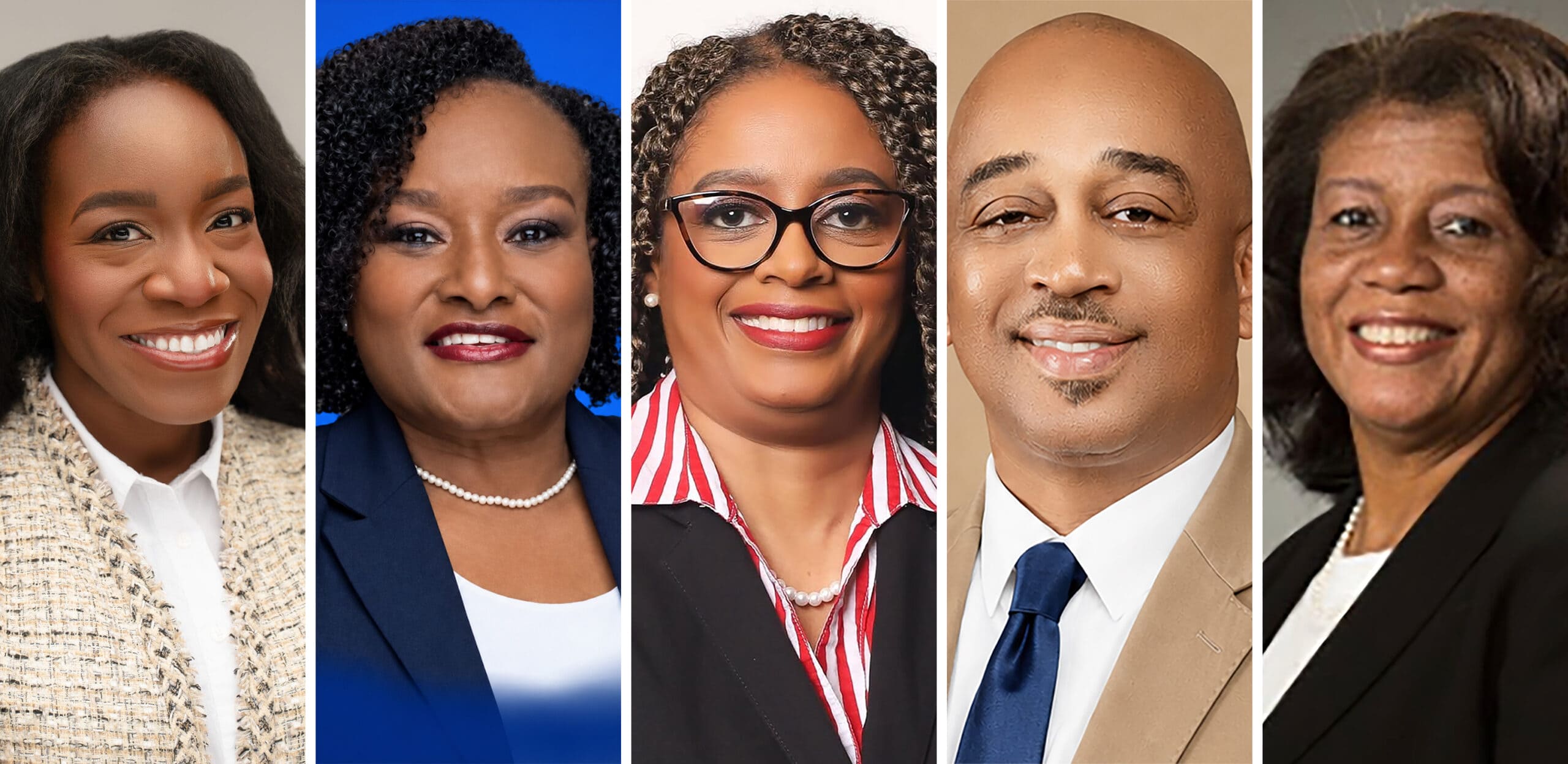
Hinds County voters will go to the polls Nov. 3 to select their next district attorney in a quick-turn special election to fill out the term of former District Attorney Jody Owens, who pleaded guilty over the summer to a federal bribery charge stemming from an FBI sting operation to uncover corruption in Mississippi’s capital city.
Mississippi Today invited candidates to answer questions about their qualifications and priorities. Their responses have been lightly edited for clarity and length.
The winner of the special election will serve through January 2028 and take over the job from acting District Attorney Brad McCullouch, who was appointed by Gov. Tate Reeves. The new DA will have to continue campaigning to keep the post.
Next year’s race will take place within a new electoral landscape: The boundaries of the 7th Circuit Court District – which currently coincides with Hinds County’s borders – will expand to include neighboring Jefferson and Claiborne counties.
The deadline to register to vote for this election has passed. In-person and mail-in absentee voting is underway. Find your polling place here.
Meet the Candidates
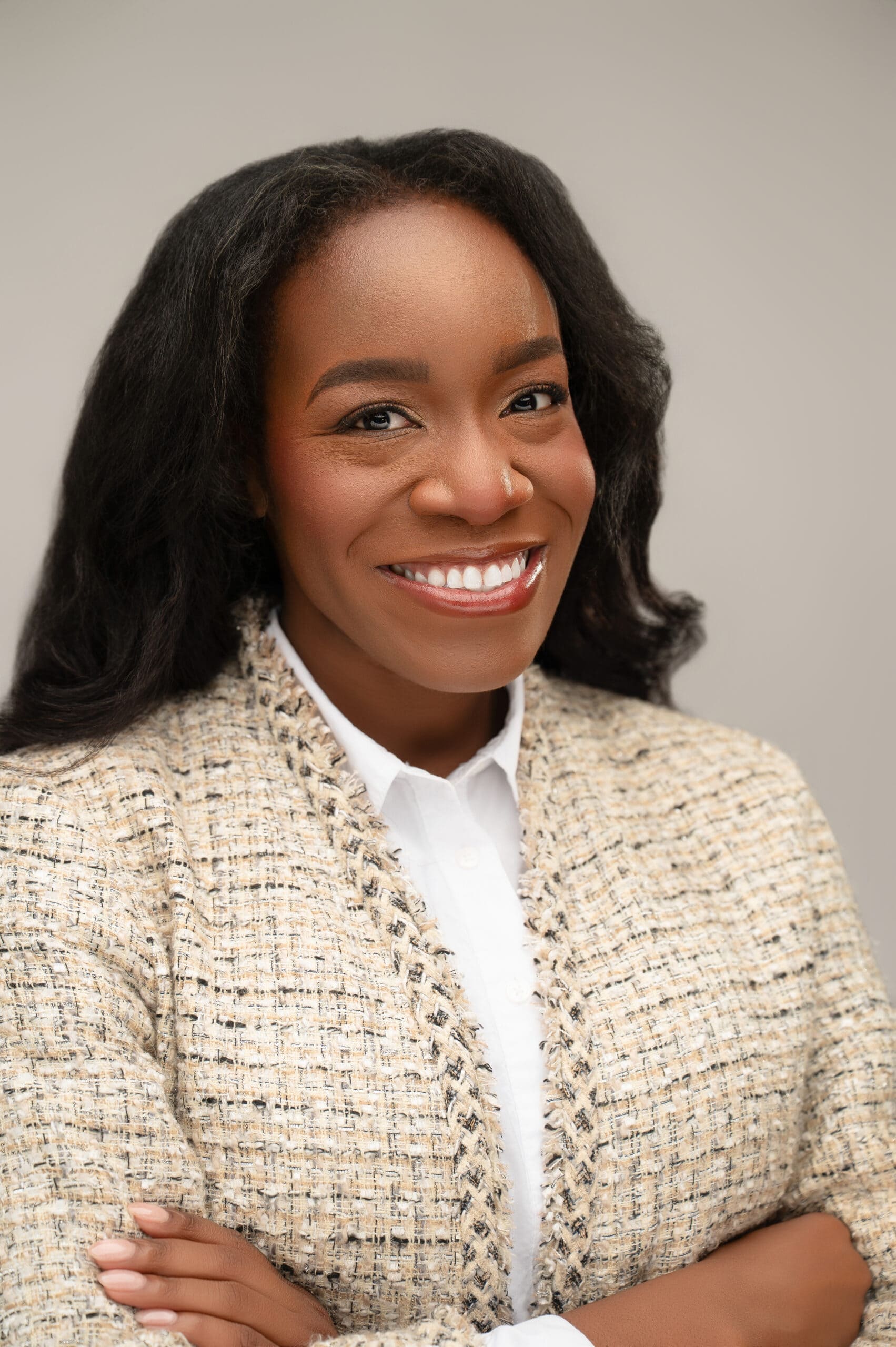
Credit: Photo courtesy Gwen Agho
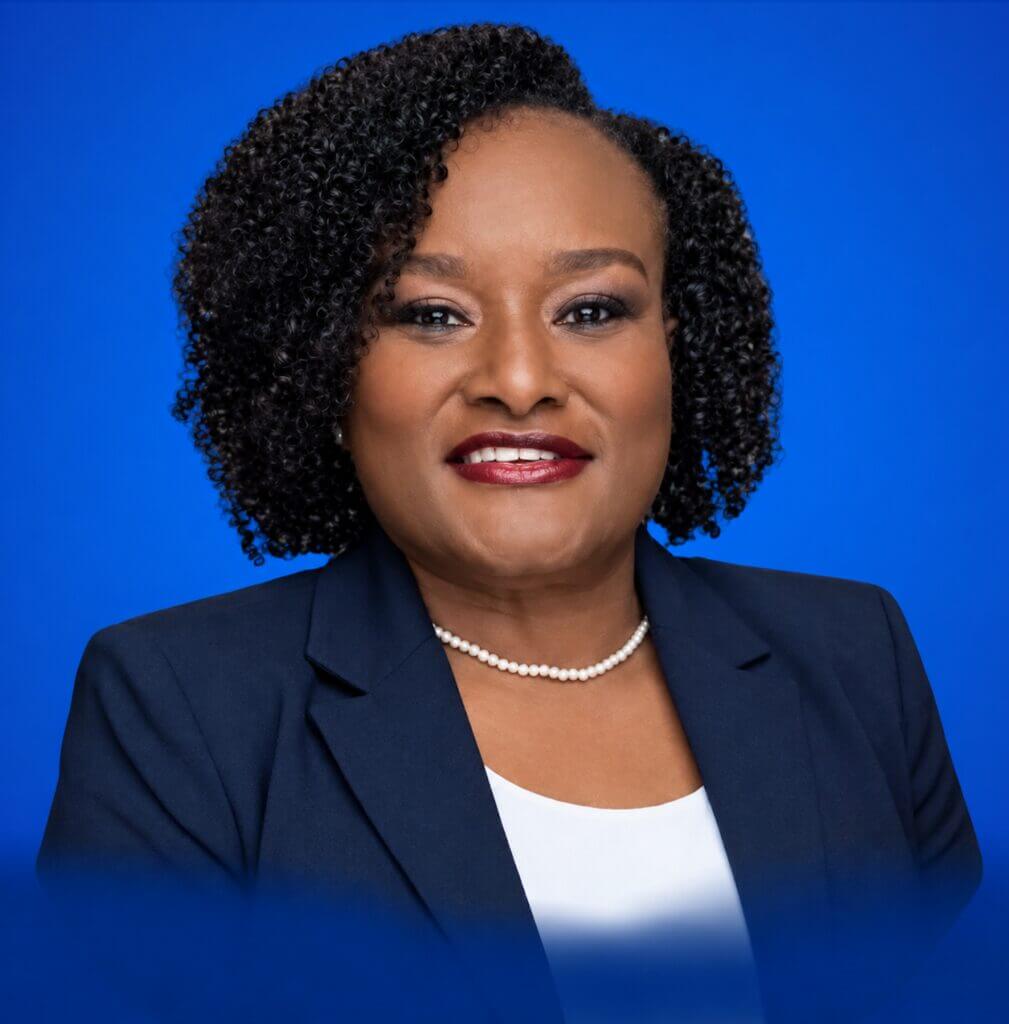
Gwen Agho
Agho, 37, grew up in Clinton and began working as a prosecutor in the Hinds DA’s office in 2016, rising to become the chief deputy. She recently led the prosecution of Timothy Herrington, a University of Mississippi student who pleaded guilty last year to killing fellow student Jimmie “Jay” Lee.
Credit: Photo courtesy Greta Mack Harris
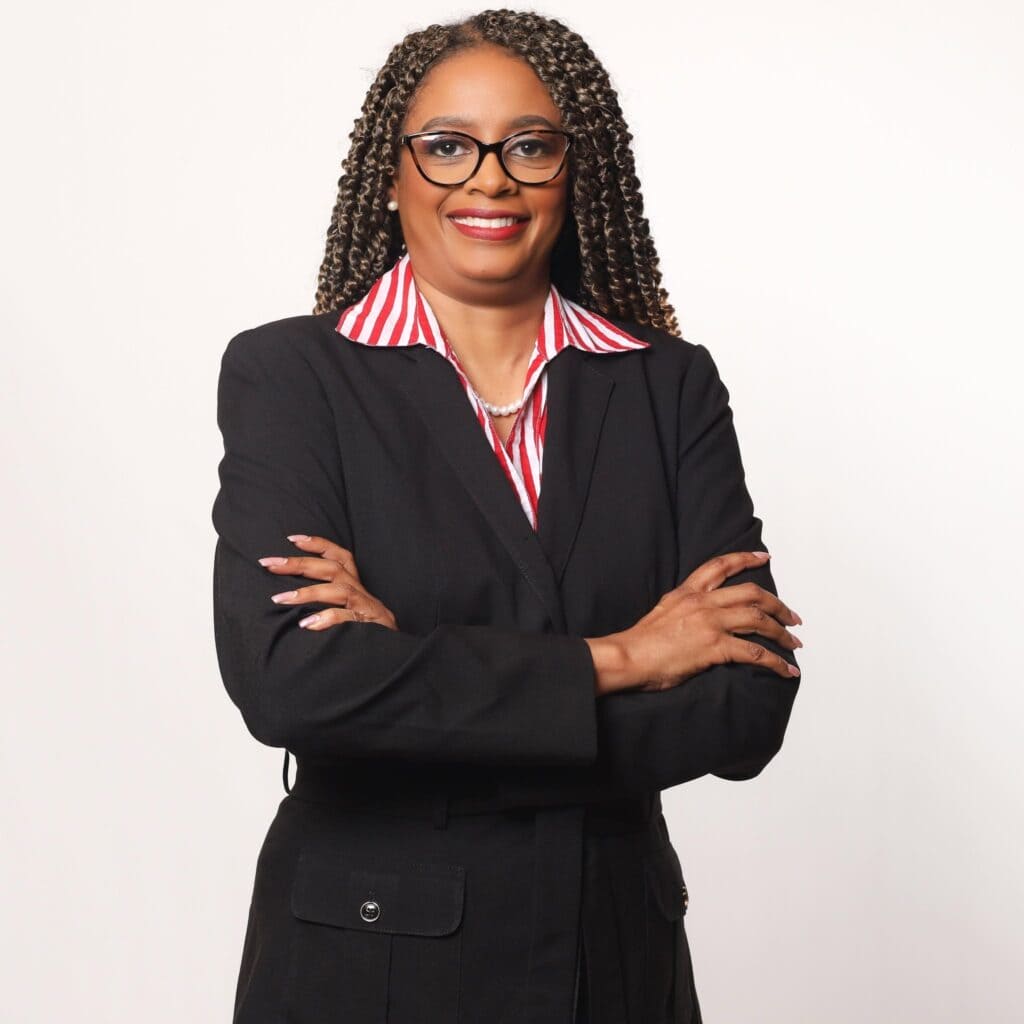
Greta Mack Harris
Mack Harris, 57, was born and raised in Edwards in rural Hinds County. She has worked as an attorney for 30 years, serving as an assistant public defender in Hinds County, a special assistant attorney general for the state of Mississippi and a prosecutor in Hinds, Madison and Rankin counties.
Credit: Photo courtesy Darla Palmer
Darla Palmer
Palmer, 59, was born and raised in Jackson. She has worked as a prosecutor for the town of Edwards and in Jackson’s civil service commission and handled delinquent child support cases for the state. Since 2002, Palmer has worked as a private defense attorney and as a public defender in Rankin County. She twice unsuccessfully challenged Owens for Hinds DA.
Credit: Photo courtesy Marvin Sanders
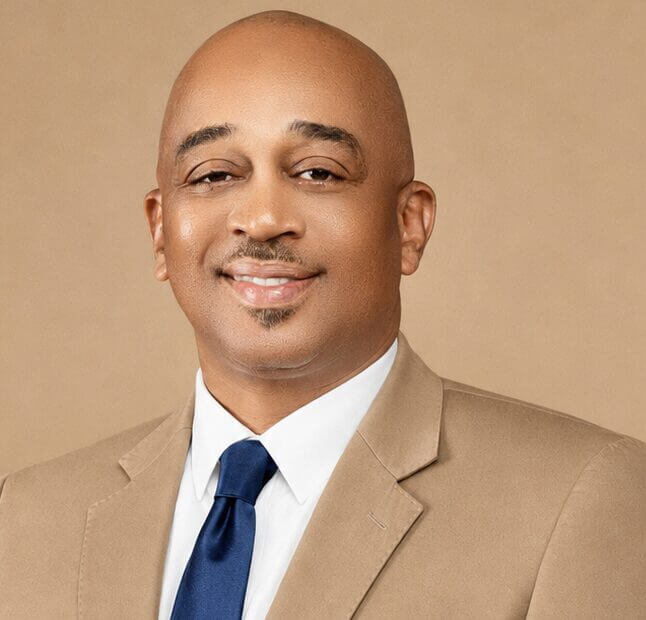
Marvin Sanders
Born in the Mississippi Delta, Sanders, 53, is a veteran of the United States Air Force. He worked in the Hinds DA office in the 2000s under Eleanor Faye Peterson and as an assistant district attorney in Leflore County before moving to the Mississippi Attorney General’s Office. He is now in private practice and a public defender in Sunflower County.
Credit: Photo courtesy Wendy Wilson White
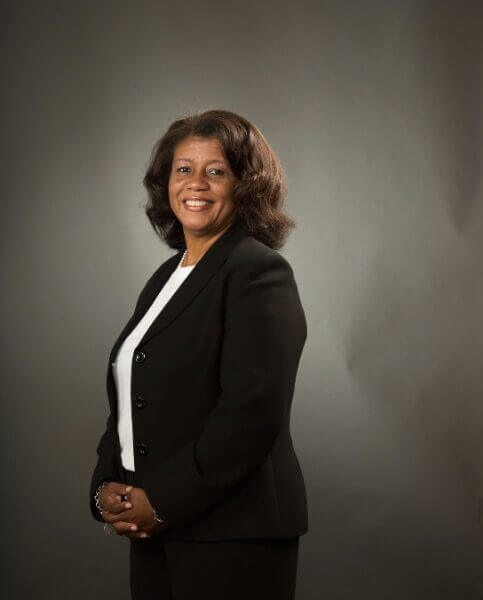
Wendy Wilson White
Wilson White, 57, grew up in west central Jackson. She joined the Hinds County DA’s office in 2020 as a member of the grand jury team, reviewing and presenting cases for indictment. In 2022, Wilson White unsuccessfully ran for circuit court judge. She then worked as a deputy inspector general at the Mississippi Department of Human Services before returning to the DA’s office, where she now conducts probable cause hearings.
What makes you uniquely qualified to be the district attorney for Hinds County?
Agho: I am qualified to be district attorney because I know this office from the inside and have spent years fixing what I found broken. When I joined in 2016, the office was in disarray. Case files were paper, there was no system for storing files, victims were not consistently contacted and there was little institutional memory. When an assistant district attorney left, case information could leave with them, causing delays.
I built my own system. I gave victims my cell phone number so I could update them. I tracked my casework in a spreadsheet so the history of each case would not be lost.
In 2020, I was tasked with finding a case management system to solve these problems. After researching companies, I found one, trained assistant DAs and law enforcement to use it, and helped transfer our data. We went live in 2023, modernizing the office and solving the institutional memory problem. I serve as the system’s case manager.
I am a prosecutor who has tried 100 jury trials to verdict, including six murder trials this year, with an over 90% conviction rate. I will never compromise fairness to resolve a case.
I know where we are failing and how to fix it. I am ready on day one to restore integrity, clear the backlog and put victims first.
Mack Harris: Not only have I worked both sides of the courtroom – giving me the vantage point of every type of case that could come across the DA’s desk – but my experience in this community with the judicial system from both being a practitioner of the courts to being a community member impacted by violent crime.
Palmer: I am the only candidate who has not worked in the dysfunctional Hinds County District Attorney’s Office. I am also the attorney with the most legal trial experience. My concern is violent crime and, beginning day one, I will organize the office to have a primary focus on violent crime.
Sanders: What uniquely qualifies me to serve as Hinds County district attorney is the depth and range of my prosecutorial experience. I have prosecuted felony cases longer than any other candidate in this race and have prosecuted in more than half of Mississippi’s circuit court districts.
Through my work with the Mississippi Attorney General’s Office, I handled public integrity and vulnerable persons cases. I stepped in when district attorneys across the state had conflicts. I prosecuted cases ranging from home repair fraud to murder. Working alongside numerous district attorneys’ offices allowed me to see what works when an office functions effectively and what does not work.
I have also served as a criminal defense attorney and public defender; so, I understand both sides of the courtroom.
Several candidates have described the current Hinds County District Attorney’s Office as dysfunctional. One candidate has even gone as far to say that some of her colleagues within that office are “lazy.” Yet she and two of the other candidates worked within that same administration. I did not. It is like repairing a house. Living inside the house may tell you where it leaks, but repairing many different houses teaches you how to fix it.
Hinds County needs more than someone who knows the office as it has been. It needs someone who knows what a district attorney’s office can be.
Wilson White: I have the most balanced and broad range of experience:
Prosecutorial experience on the city (chief city prosecutor, city of Jackson); county (assistant Hinds County district attorney); and state (Mississippi Department of Human Services, deputy inspector general) levels
Work experience inside the DA’s office (grand jury, case review, trials, pleas, law enforcement relationships, and familiarity with the inner workings of the office and all aspects of the criminal justice system)
Management and leadership positions, promotions and work experiences
Trial and legal experience gained from working in small, mid-size and large law firms
Civil rights/mental health advocacy experience
Long-standing relationships with law enforcement
Strong ties to this community
Banking experience
Teaching experience
Campaign finance: Who is supporting your campaign and do you commit to filing accurate campaign finance reports during this election?
Agho: Yes. I commit to filing complete, accurate and timely campaign finance reports throughout this election. After what this county has been through, voters deserve to know exactly who is funding every candidate. My campaign is supported by individual donors across Hinds County, Hinds County business owners, members of the legal community, friends and family members. Every contribution will be reported as the law requires.
Mack Harris: This is truly a grassroots campaign with much of my funding being self-financed and community members standing with me. I commit to timely and accurate reports pursuant to all applicable laws.
Palmer: My campaign is supported by personal funds and donations from friends, family and local businesses.
Sanders: My campaign is being supported by the Committee to Elect Marvin Sanders, which accepts contributions (including in-kind) from family, friends, professional colleagues, community members and Hinds County residents.
Wilson White: I am financially supporting my campaign, and I commit to filing accurate campaign finance reports during this election. At least 95% of the funds spent on my campaign thus far have been from my personal funds.
It is widely agreed that the criminal justice system in Hinds County is dysfunctional, but there is no consensus as to why. In your view, what is the most pressing issue facing the criminal justice system in Hinds County? Describe what you would do as district attorney to fix the root problem you identified.
Agho: The root problem is disorganization and a lack of accountability for how cases move. Too many cases sit without anyone owning them. Files pass from desk to desk, grand jury presentations stall and people wait in the Raymond jail for months while victims hear nothing. When no one is responsible for a case, no one is responsible for the delay.
I would bring accountability back to case management. Prosecutors should own their cases – from grand jury through sentencing – with assignments based on experience and expertise. The most complex cases should receive experienced review before grand jury presentation, and every homicide should be reviewed by me and at least two experienced prosecutors to ensure the evidence is sufficient.
I would also establish regular meetings with law enforcement leaders to address problems before they cause delays. Grand jury procedures should have clear standards for complete files and experienced review before presentation.
The jail population should be reviewed weekly, prioritizing violent cases while identifying nonviolent cases for diversion, pre-indictment resolution or bond release. Prosecutors should have clear productivity standards, with case-resolution numbers reported publicly.
Finally, I would hire a qualified victims advocate to keep victims informed, explain their rights and help them follow their cases.
Accountability starts at the top. I will hold myself and every prosecutor to the same standard.
Mack Harris: Cases are won or lost long before they reach a courtroom, in how evidence is preserved, how search warrants are executed and whether constitutional standards are met. When prosecutors and law enforcement are not working from the same standards, cases fall apart, victims are denied justice and public trust erodes.
As district attorney, I will rebuild that relationship as a balanced partnership. The DA and law enforcement are partners in the pursuit of justice, but my office will not be a rubber stamp for bad cases. I will reinstate countywide training academies with our local law enforcement agencies in Bolton, Byram, Edwards, Jackson, Raymond and Terry, along with the Hinds County Sheriff. This training will standardize evidence preservation, search warrant execution and constitutional standards, so that cases are built right from the start.
Partnership also requires accountability. Prosecutors and officers both take solemn oaths. When an oath is broken, accountability will be applied equally. As a felony prosecutor, I told a sitting DA on principle that I would not prosecute a case because it lacked the legal merit to proceed. The public and officers alike respect prosecutors who are fair, consistent and legally unassailable. That is the standard I will bring, because justice is only served when every part of the system works in concert.
Palmer: The central problem is the movement of cases in the office and how the office is organized regarding those cases. I would change how cases are being assigned to assistant district attorneys and the manner in which they are assigned to each judge’s courtroom. I would have a person monitoring cases being sent over from the lower courts and set deadlines for completion or submission to a grand jury if that’s the desired result. Some cases need to be dismissed.
Sanders: The most pressing issue facing Hinds County’s criminal justice system is the time it takes to move a case from arrest to prosecution. Justice is not served when cases sit for two years or more without indictment or when individuals are indicted but their cases are not promptly placed on the court docket.
Fixing this requires accountability at every stage. First, the District Attorney’s Office must work closely with law enforcement so officers understand what evidence and documentation prosecutors need to build a case that can actually be tried. Second, prosecutors must thoroughly review cases at the preliminary hearing stage to determine whether sufficient evidence exists to move forward. Once a case is bound over, it should be promptly reviewed and, when appropriate, presented to the grand jury. After indictment, defendants should be arraigned and cases placed on the criminal docket without unnecessary delay.
I would assign prosecutors responsibility for their caseloads from review through resolution and regularly identify cases that have stalled.
Moving cases faster does not mean sacrificing quality. It means preparing cases correctly from the beginning and creating accountability so cases do not simply sit. Justice delayed affects defendants, victims, law enforcement and the entire community.
Wilson White: In my opinion, the most pressing issue facing the criminal justice system in Hinds County is the volume of crime, specifically the violent crime we are seeing and experiencing.
While I will devote myself to addressing existing crime, I will also make crime prevention a priority. What we’re seeing is disturbing on so many levels.
I want to bridge the gaps between the community, law enforcement, schools, churches and faith organizations. I want there to be an exchange of information and healthy dialogue. I don’t want more words; I want action and active involvement. I believe it will take a unified effort. Hence, my platform, “Together We Can.”
It appears as though criminals are gaining momentum. While the number of criminals appears to be increasing and the courts have grown by one, there have been no real increases in law enforcement, prosecutors, public defenders or many of the others we all rely on to render justice. The “why”’ has to be addressed and I plan to make that one of my top priorities.
I believe education has a role to play. I want to see more done to educate our children about crime so that they can better identify it and avoid it. Our adults need to hear the crime we are living through, and witnessing is not normal and should not be accepted as such. I need everyone to understand they have a voice and begin how to use their voices more to stand against crime.
Criminals truly thrive and multiply when they are allowed to hide and avoid accountability and I believe that is what we are seeing.
I also want to see swift justice. I will look closely at how long it takes a case to work through the criminal justice system. There are obvious delays that need to be addressed. Swift accountability will impact crime in a positive way.
How would you foster working relationships across the justice system? Please comment on the current relationship between the district attorney’s office, the Jackson Police Department, the Hinds County Sheriff’s Office, local judges and defense attorneys. How should these relationships look?
Agho: Right now, these relationships are strained. Law enforcement and prosecutors too often blame each other for delays, cases reach the grand jury without complete files and judges are left managing a backlog no one owns. Public trust in the office has been damaged, and that damage affects every partner.
I would start with regular, standing meetings with JPD, the Sheriff’s Office and other agencies to screen cases early, agree on what a complete file looks like, and fix problems before they become delays. I would assign prosecutors as points of contact for each agency so officers know who to call.
With judges, I will bring experienced prosecutors to court and be honest about our caseload. With defense attorneys, I will insist on timely discovery and professional, respectful dealings. A fair process is a faster process.
These relationships should be built on shared goals: safer neighborhoods, cases that move and a system people can trust.
Mack Harris: The current relationship with the interim district attorney and law enforcement seems to indicate more efforts are being made to collaborate. The relationship should look like entities seeking to work in the best interests of and for the common good of the citizens who are being served.
From start to finish, that takes intentional partnership, mutual understanding and respect for processes. We can and will achieve this in a Greta Mack Harris administration through the reinstatement of a case review panel system that sought to bring together the necessary agencies to make sure Hinds County citizens are getting the best service from the judicial system.
Palmer: I have personally spoken with law enforcement throughout Jackson and the rest of the county. The relationship between the DA’s office and the parties aforementioned is clearly fragmented. I would personally reach out to foster better relationships and insist that all persons in the office work to ensure that these relationships are mended.
Sanders: I have prosecuted cases for two decades and have been a criminal defense attorney for almost a decade. I do not currently work in the Hinds County District Attorney’s Office, so I cannot fairly comment on the relationships, whether positive or negative, between the District Attorney’s Office and other players in the criminal justice system. I have worked alongside other district attorney’s offices, so I know what the relationship can be.
As the next Hinds County district attorney, I will conduct training with law enforcement, participate in meetings with leadership within each law enforcement agency to include Capitol Police, Hinds County Sheriff’s Department and each municipal law enforcement agency within Hinds County.
Prosecutors need to be able to work with defense attorneys to make sure cases can be properly moved through the courts. Prosecutors must work with judges to make sure cases are moved efficiently off of each judges’ docket.
Finally, as your next Hinds County district attorney, I will work with leadership within the Hinds County municipalities about the procedures within my office which align with access to law enforcement so that we can have effective training.
Wilson White: I do not know that I can truly speak to the current relationship between the district attorney’s office, the Jackson Police Department, the Hinds County Sheriff’s Office, local judges and defense attorneys.
I can say I have been prosecuting crime here in Jackson and Hinds County for 12 years. During those 12 years, I have served Jackson as its chief city prosecutor, Hinds County as an assistant district attorney and Mississippi as the Department of Human Services’ deputy inspector general.
I have worked hard to form and maintain strong relationships with all of the law enforcement agencies, district attorneys, judges and defense attorneys I have had an opportunity to work with. I build my relationships on mutual respect, trust and honesty.
In order to foster working relationships throughout the justice system, I will listen and encourage everyone else to listen as well. I am sure we all hold good ideas as it relates to issues within the justice system and how to address them. Here again, “Together We Can.”
Crime victims and their families frequently feel excluded from the criminal justice process. What role should crime victims play in prosecution?
Agho: Victims should be informed, heard and respected at every stage. They do not direct a prosecution, but they deserve to understand it and to have their voices count.
When I joined this office, no one was tracking whether prosecutors stayed in contact with victims. I built my own system to make sure I did, and it made a real difference for the families I served. As district attorney, I will make that the standard for every prosecutor.
That means a working victim advocate program, which the office does not have today. It means contacting victims before key decisions such as plea offers, keeping them updated as the case moves and preparing them for court. It means making sure they know their rights under Mississippi law, including the right to be heard at sentencing. Victims should never learn about their own case from the news. Every victim deserves to know where their case stands.
Mack Harris: Crime victims should be actively involved from the inception of a case. As a family member of multiple victims of violent crimes, I know first hand that the system is geared more toward the criminal defendant than victims. If and when elected, we will mobilize the victim assistance coordinator to partner with law enforcement to secure testimony logistics and emergency relocation where necessary, maintaining continuous victim-family communication.
Palmer: Crime victims may be in a position to advance the prosecution against a defendant. They play a crucial role. However, the office must be mindful also that certain developments in the case should remain confidential. Victims should be updated to some degree, however.
Sanders: Crime victims should be consulted prior to any resolution outside of a jury trial, especially violent crimes. They should be properly informed of court dates and proceedings and have access to the prosecutors if they have questions about the status of the criminal case. This is the purpose of and the responsibility of the victim coordinator. As your next Hinds County district attorney, I will make sure that the victim coordinator understands this responsibility and is given the proper training to execute this job.
Wilson White: I think it is a good practice to regularly communicate with victims and keep them abreast of where their cases are in the court system. Victims should have a voice and be heard. They should also be informed and allowed to express their thoughts, feelings and expectations. Justice varies and I believe it is person specific. What looks like justice to one person, won’t look like justice to another. I want to know what justice looks like to our victims so that the DA’s office, in line with the law, can pursue the justice they need.
I often ask, where do broken people go? How do they survive as victims? Victims deserve to be made whole and a part of that is giving them the justice they need and deserve. I want the DA’s office to be the victims’ safe place – a place where they feel respected, seen, heard and valued. The best way to secure those feelings is to be open and honest.
The district attorney’s office generates enormous sums of money through pre-trial intervention programs, but the public doesn’t know how the DA spends these funds. Describe the characteristics of a transparent DA’s office.
Agho: A transparent DA’s office treats every dollar as the public’s money, because it is.
First, all pretrial intervention fees and other self-generated funds should be deposited in accounts subject to regular independent audits, with the results published. Second, the office should publish regular reports showing how much money comes in, where it goes and who approved the spending. Third, clear written policies should govern how those funds can be used, with no discretionary spending outside those rules. Fourth, the office should cooperate fully with the state auditor and the Board of Supervisors.
Transparency also applies to performance. The public should be able to see how many cases the office handles, how long they take, the size of the backlog and how victims are being served.
This county has seen what happens when no one is watching. Under my leadership, everyone will be able to see how this office works.
Mack Harris: A Greta Mack Harris district attorney’s office will be one that is transparent with how pretrial funds are managed. It’s one that includes checks and balances that would require that the person who collects the money isn’t the same person as the one who determines where it will be spent. Checks and balances on allocation of funds coupled with routine audits will ensure that the DA’s office is not only honest in its reporting, but efficient. After each fiscal year, I will publish a financial statement breakdown of the money collected and spent.
Palmer: A transparent DA’s office will provide the budgets as required by the Board of Supervisors as well as what state statutes require.
Sanders: As your next Hinds County district attorney, if there is a question, we will make ourselves open to review by the state auditor. As deputy director of the public integrity division for the Mississippi Attorney General’s Office, I prosecuted numerous cases where there was a significant lack of transparency. So, I know what you can and cannot do with public funds.
Wilson White: The DA’s office under my leadership will not hide or shield the amount of funds it receives or how such funds are expended. The DA’s office under my leadership will have a legitimate system of checks and balances to ensure proper receipts, spending and documentation. The DA’s office belongs to the people, not the DA. I am confident my business education and business work experience will be an asset to the DA’s office in this regard.
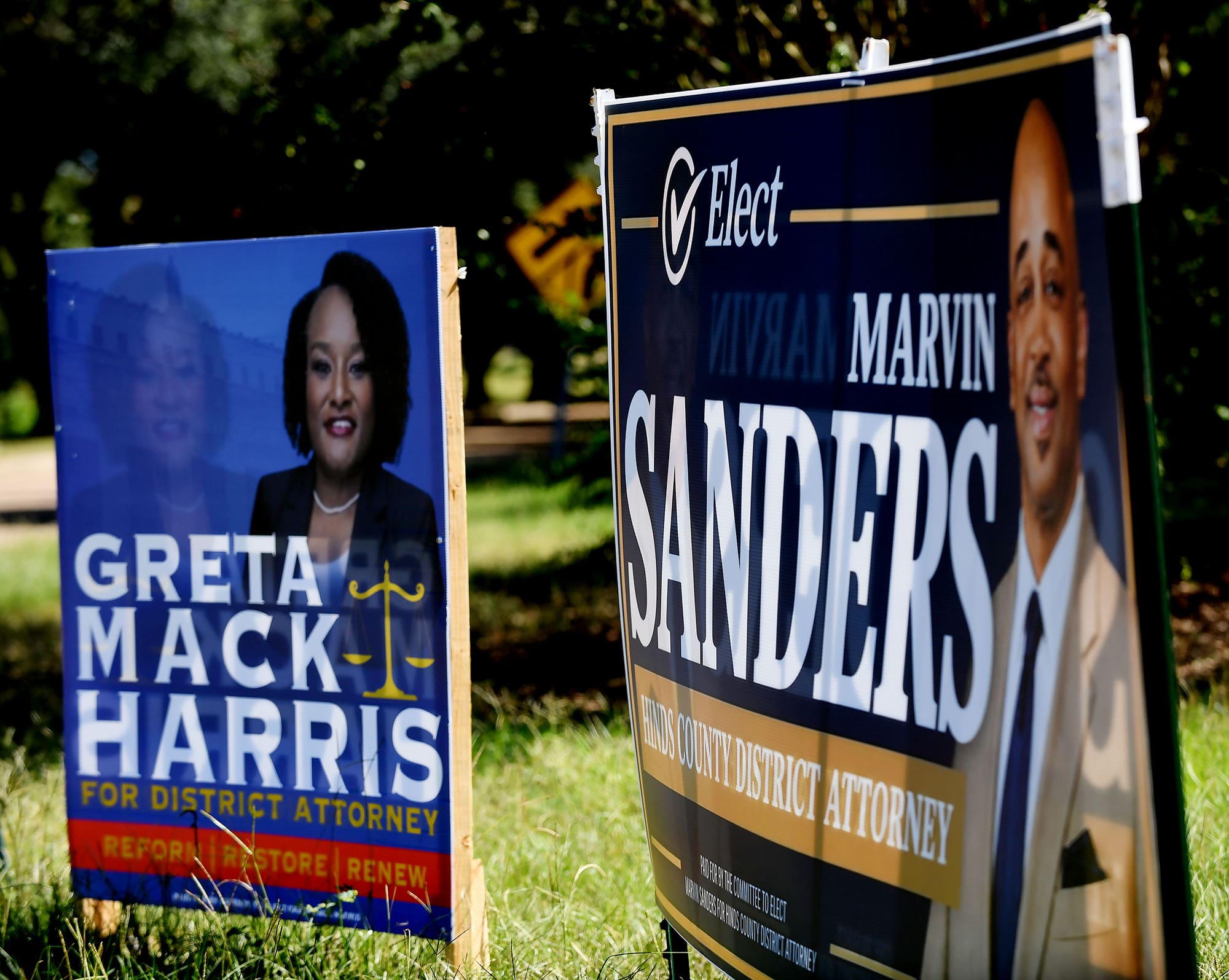
Campaign signs for Hinds County District Attorney candidates Greta Mack Harris, left, and Marvin Harris, located at the intersection of Jefferson and Pascagoula Streets, Wednesday, Oct. 7, 2026, in Jackson.Credit: Vickie D. King/Mississippi Today
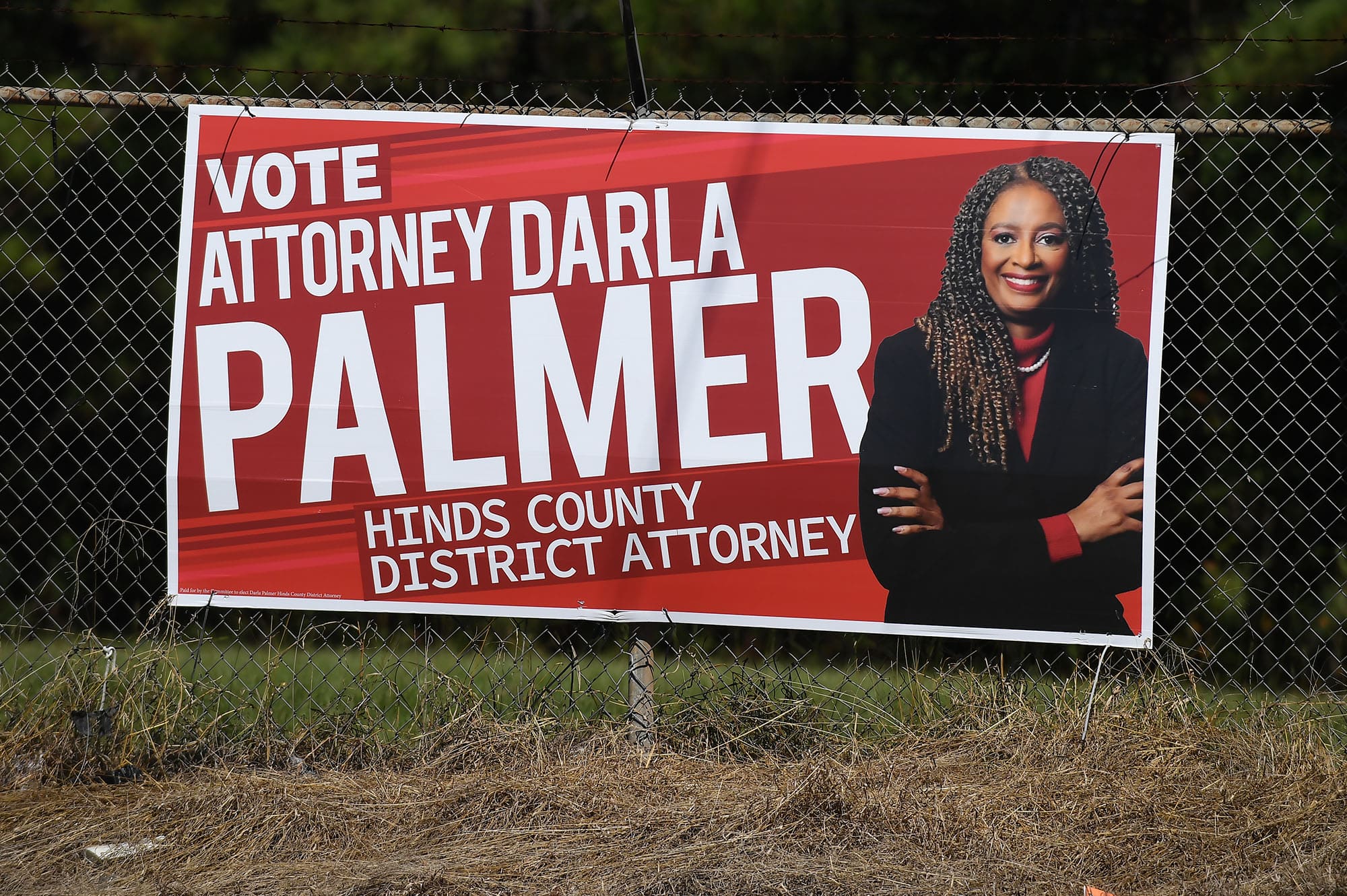
Campaign sign for attorney Darla Palmer, located at the intersection of Northside Drive and California Avenue, Wednesday, Oct. 7, 2026, in Jackson. Palmer is running for Hinds County District Attorney along with four other candidates.Credit: Vickie D. King/Mississippi Today
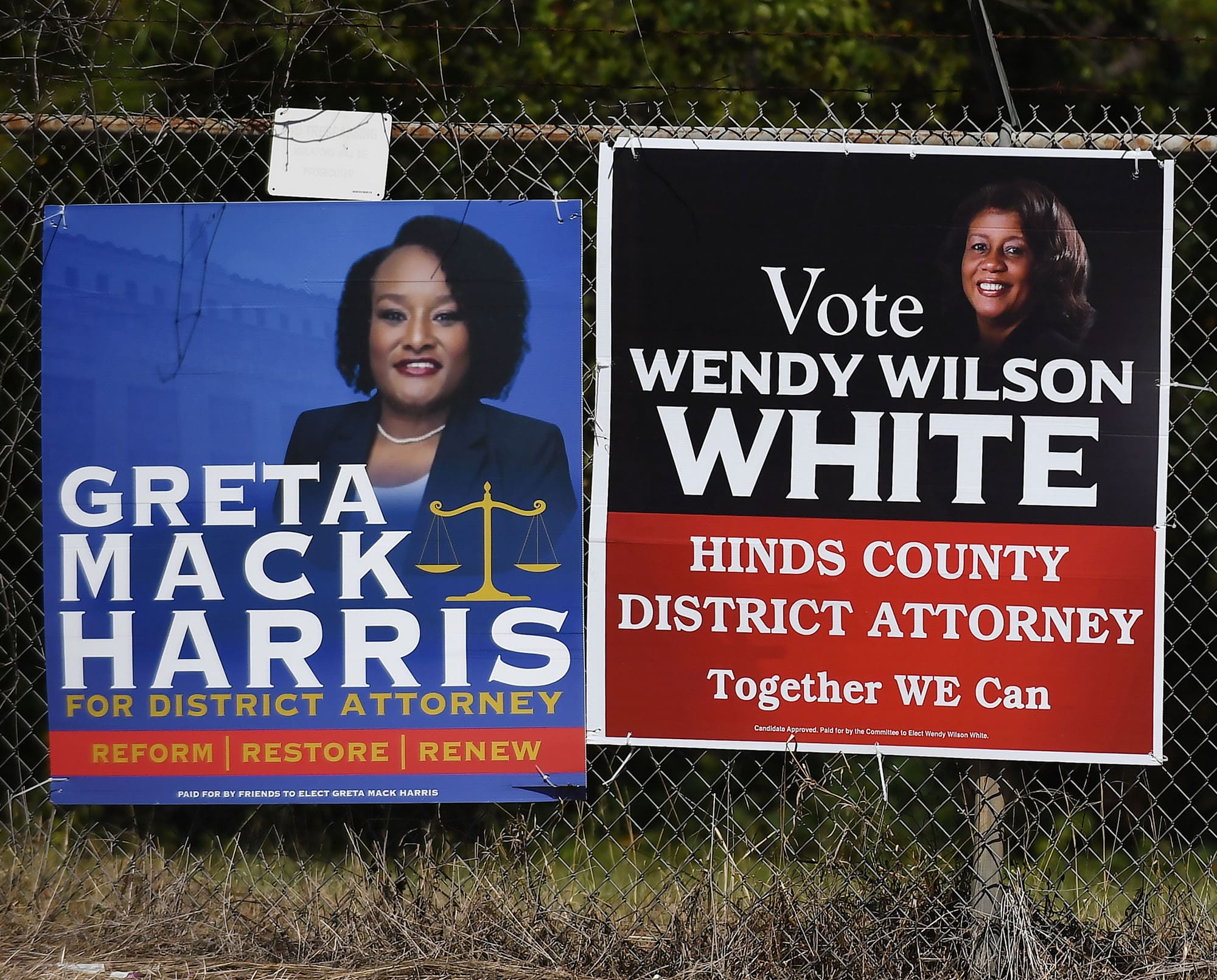
Campaign signs for Hinds County District Attorney candidates Greta Mack Harris, left, and Wendy Wilson White, located at the intersection of Northside Drive and California Avenue, Wednesday, Oct. 7, 2026, in Jackson.Credit: Vickie D. King/Mississippi Today
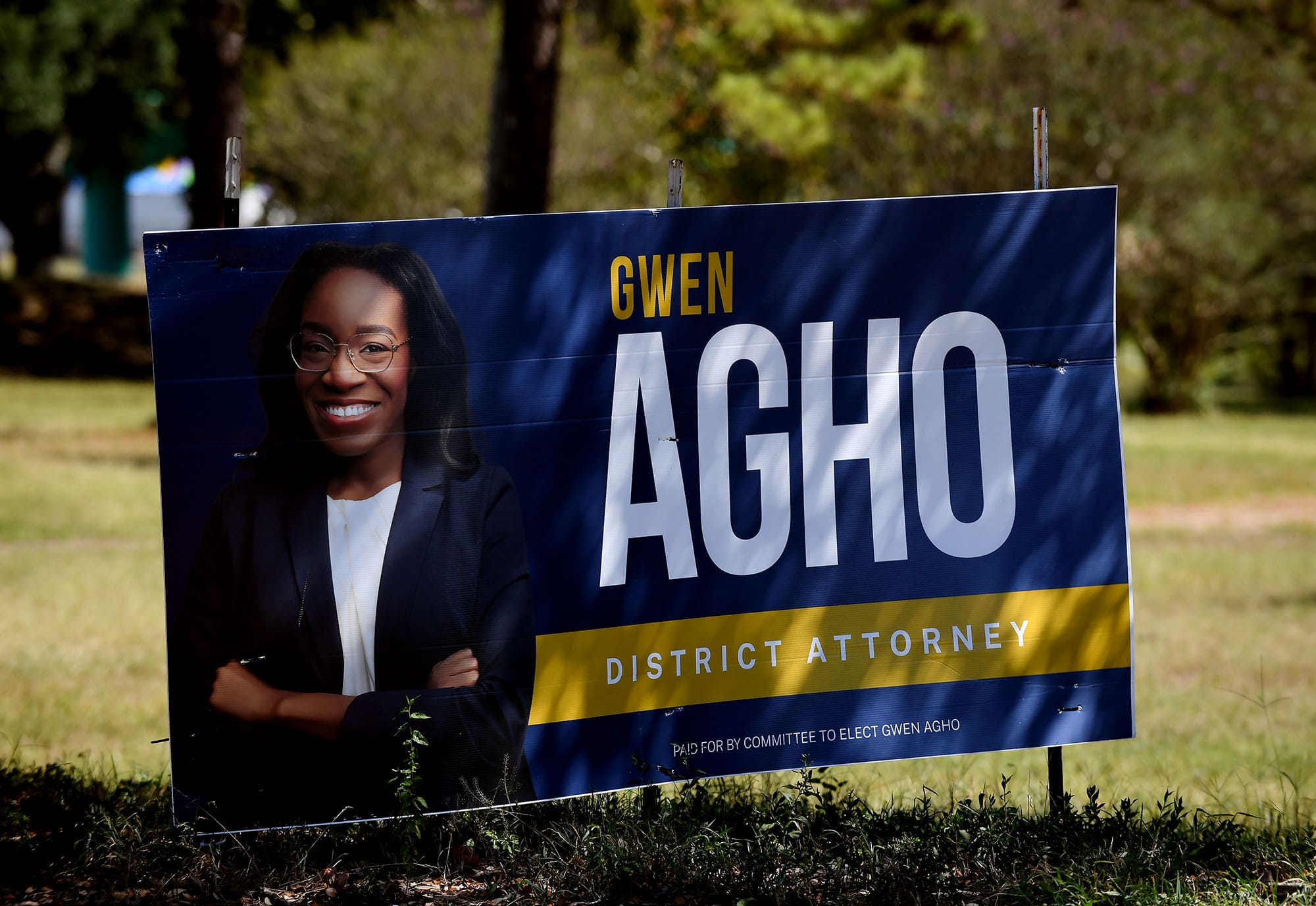
Campaign sign for Hinds County District Attorney candidate Gwen Agho, located at the intersection of Jefferson and Pascagoula Streets, Wednesday, Oct. 7, 2026, in Jackson.Credit: Vickie D. King/Mississippi Today
Audio articles are automated for accessibility. Humans wrote and edited the story; however, this audio has not been reviewed for accuracy and may contain errors. Read more about how we use AI to increase access to our reporting.
A federal judge has rejected a request from the operator of Mississippi’s Alcoholic Beverage Control warehouse to dismiss a lawsuit brought against it on behalf of Mississippi businesses.
Uno Mas, an Oxford restaurant, filed a class action lawsuit against Iowa-based Ruan Transport Corporation over the debacle at the ABC warehouse earlier this year when a software change led to long delivery delays and liquor shortages at Mississippi restaurants, casinos, bars and stores. The restaurant said the delays resulted in lost revenue and harmed businesses, and that Ruan kept fees for deliveries it failed to make.
The ABC warehouse is the single wholesale distributor of almost all alcoholic beverages in the state. With the exception of beer and light beverages, all alcohol in Mississippi package stores and restaurants goes through the warehouse in Gluckstadt. While ABC is run by the Mississippi Department of Revenue, the state contracts operation of the warehouse with Ruan, which has been operating it since 2023.
When Ruan asked the judge to dismiss the case it argued that its contract was with the Department of Revenue, not Uno Mas and other businesses that receive products from the warehouse.
However, Ruan’s contract with DOR requires the company to “guarantee next workday delivery” to businesses buying alcohol. The judge found that even though Uno Mas did not sign the contract, it was intended to benefit from the contract and can sue Ruan over a potential breach.
The outsourcing of ABC operations resulted from 2022 legislation to address longstanding problems with the state running the warehouse. The “alcohol crisis” early in 2026 renewed calls by some lawmakers to privatize the operations.
In court documents, the judge noted that “interestingly, it appears the Legislature did anticipate an inefficient company might poorly operate ABC’s warehouse, resulting in a lawsuit.” The state specified in the law that any lawsuits brought over warehouse operations would be brought against the operator, not the state.
The ABC warehouse operations not only impact Mississippi businesses, but also state revenue. The ABC division collected $108 million last year, about 1.5% of the state’s total annual tax revenue.