

Shad White blames Bennie Thompson for Delta woes. Is that fair?

Audio articles are automated for accessibility. Humans wrote and edited the story; however, this audio has not been reviewed for accuracy and may contain errors. Read more about how we use AI to increase access to our reporting.
Based on state Auditor Shad White’s logic, it is time to clean house of all Republican and Democratic Mississippi politicians on both the state and federal level.
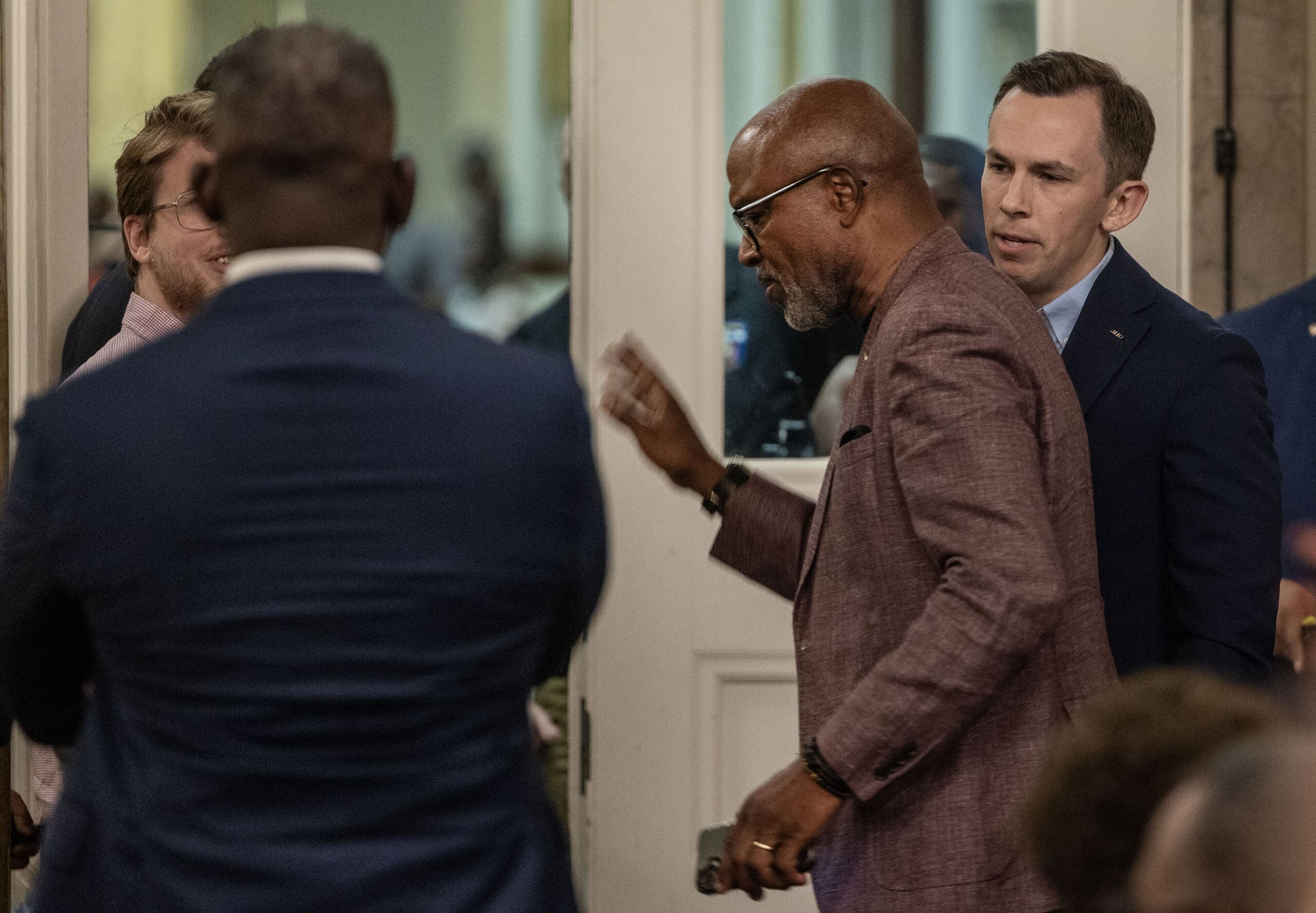
At a recent public hearing about legislative redistricting, the Republican White argued that Mississippi’s congressional map should be redrawn with the intention of removing U.S. Rep. Bennie Thompson from office. White said Thompson has done a poor job representing the 2nd District, which stretches through the Delta, along the Mississippi River and into Jackson.
Since the April U.S. Supreme Court decision that erased protections for Black voting strength, many in Mississippi’s Republican leadership have called for redrawing the state’s four congressional districts to ensure the defeat of Thompson, the state’s only Black member of Congress.
White, who is expected to run for governor in 2027, has been particularly vocal in the call to unseat Thompson, also the state’s only Democratic congressional member. It has appeared Republican leaders wanted Thompson removed for solely partisan reasons.
But at the redistricting hearing, White said Thompson should be removed because he is not adequately representing his district, which includes the poverty-stricken Delta.
Placing blame for Delta on Bennie Thompson
“I travel all over this state, but I travel a ton in the Delta, too…,” White said at the redistricting hearing recently at the Mississippi Capitol. “The Delta has been at the bottom of far too many rankings for far too long, and the Delta deserves better leadership than Bennie Thompson. It just does. The Delta deserves a congressman who’s going to deliver.”
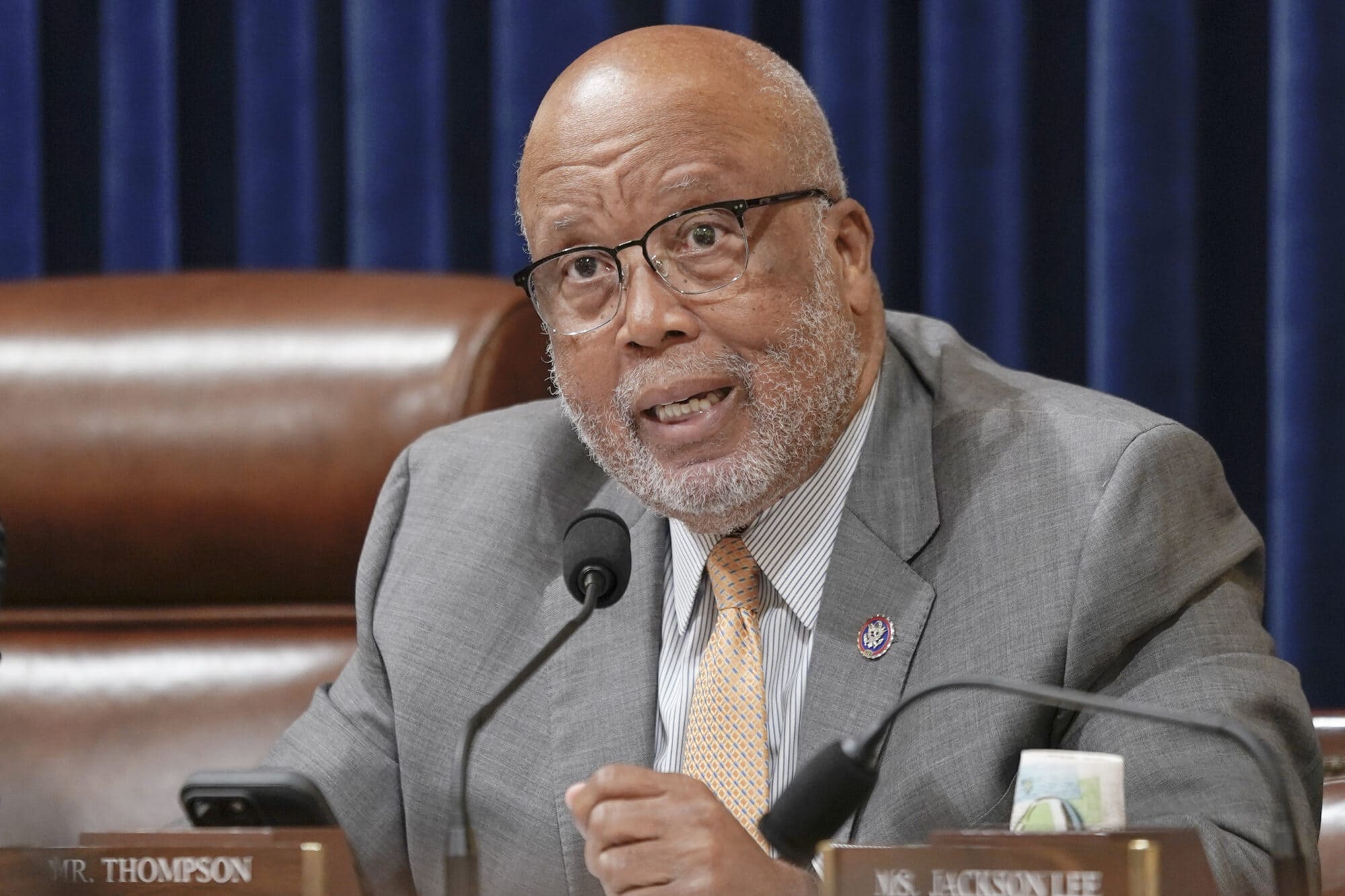
It should be pointed out that the Delta can vote for someone other than Thompson. Delta voters will have that opportunity in November when Republican Ron Eller challenges him. What White is most likely proposing is to split up the Delta’s Black population through redistricting.
Granted, Thompson, has been representing most of the Mississippi Delta for a long time – first elected in 1993. And, yes, the Mississippi Delta has more than its share of problems and has had those problems for generations.
But blaming all of the Delta’s problems on one U.S. House member – one of 435 – seems disingenuous.
Thompson’s 2nd District, which covers western Mississippi, is one of the nation’s poorest districts. It is ranked as having the sixth highest poverty rate at 25%, the website Overflow Data reported in July 2025, based on U.S. Census information.
Using Shad White’s logic, what about other politicians?
But all four Mississippi congressional districts have poverty rates significantly higher than the national average of 12.5%, according to the Coalition on Human Needs.
Are the state’s three Republican congressmen – Trent Kelly, Michael Guest and Mike Ezell – falling down on their jobs and also needing to be replaced, using White’s logic?
And what about the state’s two U.S. senators – Republicans Roger Wicker and Cindy Hyde-Smith – who are two of 100, giving them the opportunity to have much more influence than Thompson?
Why hasn’t Wicker, who has been in the Senate since 2007, and Hyde-Smith who has been in the Senate since 2018, had more of an impact on the 2nd District?
And don’t forget before Wicker and Hyde-Smith, Mississippi’s senators were Republicans Trent Lott, who was elected in 1988, and Thad Cochran, elected in 1978.
Cochran was chairman of the powerful Senate Appropriations Committee, and Lott was a former Senate majority leader. With all that power, why couldn’t they fix the 2nd District?
And of course on the state level, Republican Gov. Tate Reeves has had two terms as governor and two as lieutenant governor – two of the most impactful policymaking posts in state government. And White’s old boss – Phil Bryant – served two terms as governor and one as lieutenant governor.
Couldn’t they fix the 2nd District – or for that matter the state?
Remember, Mississippi routinely has the first or second highest poverty rate.
The problems facing Mississippi, including the 2nd District, are complex. To think one politician can fix them all is fanciful, especially when the politician is one U.S. House member whose proposed fixes are consistently stymied by Mississippi’s Republican majority.
Criticism of Trump makes Bennie Thompson a target
Perhaps the real reason Thompson is in the crosshairs of Mississippi’s Republican leadership is that he is the state’s highest-profile critic of their party leader and often-times political benefactor – Republican President Donald Trump.
Thompson led the House committee that assigned a large part of the blame for the Jan. 6, 2021, attacks on the U.S. Capitol on Trump and cited him for being the first presidential candidate in U.S. history to attempt to overturn the results of a national election.
But perhaps it sounds a lot better for White to say Bennie Thompson is responsible for the poverty in the 2nd District than to say he should be replaced because he has been critical of President Trump.
Isaias weakens but flooding threat persists as hundreds of thousands grapple with power outages


GULF BREEZE, Fla. (AP) — Isaias left behind a trail of damaged rooftops, downed power lines and flooded roadways Saturday as it weakened and was no longer a hurricane. It was blamed on at least one death in Florida after a tree fell on a home.
The storm made landfall Friday near Destin, Florida, a Gulf Coast area known for powdery white-sand beaches and dotted with vacation homes, waterfront bars, and seafood shacks. After it weakened overnight to a post-tropical cyclone, forecasters warned of potential flash flooding and tornadoes as the storm moved inland across Alabama. Hundreds of thousands of customers were without power.
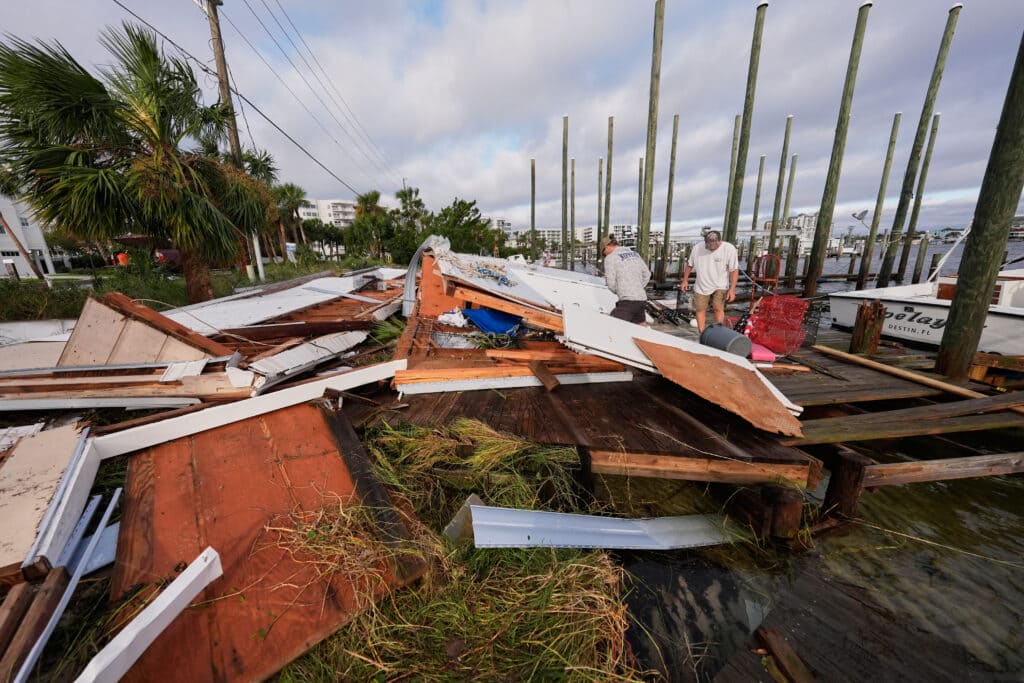
The possibility of life-threatening storm surges still loomed for parts of the Florida Panhandle, along with a potential for 4 to 8 inches (10 to 20 centimeters) of rain across southern Alabama, the Florida Panhandle and Big Bend over the weekend.
Early Saturday, Isaias was about 25 miles (40 kilometers) south-southwest of Montgomery, Alabama and nearly 105 miles (170 kilometers) south of Birmingham, Alabama, with maximum sustained winds of 35 mph (55 kph), the National Hurricane Center said. It was expected to move into the Tennessee Valley later Saturday and Sunday.
“All tropical storm surge warnings have been discontinued as of this morning, but there are still high wind warnings for portions of the Southeast,” Robbie Berg, a warning coordination meteorologist with the National Hurricane Center in Miami. “So even though it has become post-tropical, it still does remain a wind threat, as well as a heavy rainfall threat. We could see some areas of significant flash flooding over the next couple of days.”
In Florida, Gov. Ron DeSantis said state roads were open and officials had not received any search and rescue requests while warning about the possibility for flooding in the day sahead. “Sometimes these things happen a day or two days after the storm goes through,” he said.
In Escambia County, Sheriff Chip Simmons said in a video posted on his Facebook page that one woman died after a tree fell on her home. He did not provide additional details.
Isaias, which was the first hurricane of the Atlantic season, caused some damage when it came ashore.
Roads in Destin were flooded, while in nearby Pensacola, police warned people to stay off the streets because of debris. Many area residents posted pictures online of downed trees and power lines, and one social media video showed a roof being ripped off an inn in Pensacola.
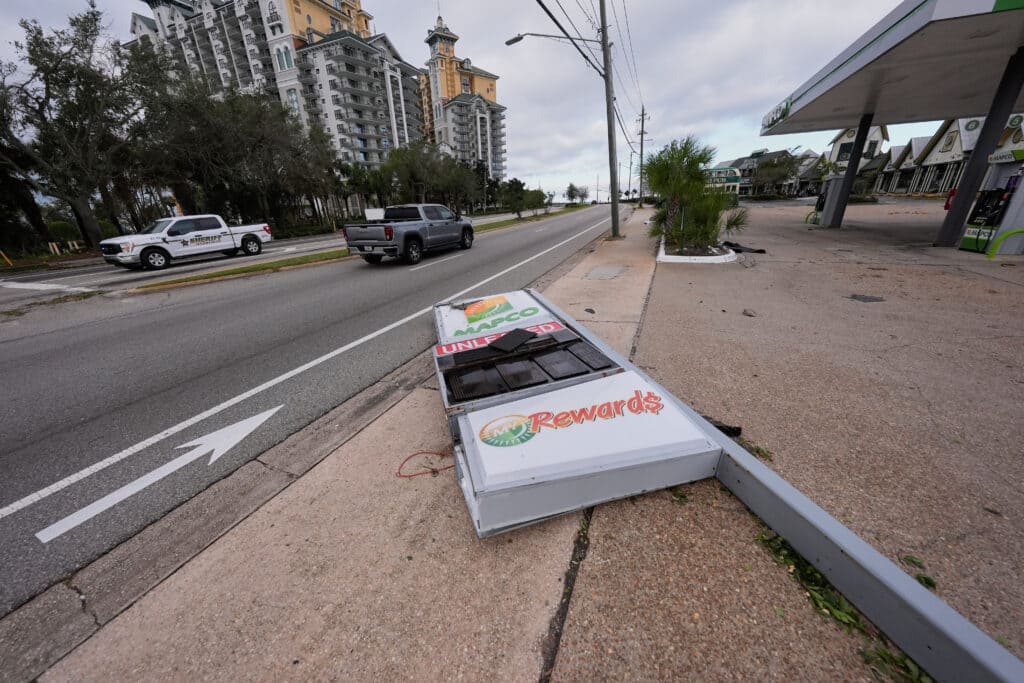
Strong hurricane winds blew the roof off a hotel in Pensacola and the city’s mayor, D.C. Reeves, said on his Facebook page that the airport “took some damage.” Some power was out downtown, he said, and there were trees and power lines down in some areas.
Gas stations in the Florida towns of East Milton and Destin suffered significant damage. A condominium also was damaged in Panama City, insulation from the building was spread across a parking lot.
Parts of southern Alabama also were flooded, with officials in Mobile reporting downed trees and power lines. Roads in Houston County, which is in the southeastern corner of the state, were closed because of similar conditions.
Less than 900,00 customers in Florida, Alabama and Georgia were without power early Saturday, according to poweroutage.com.
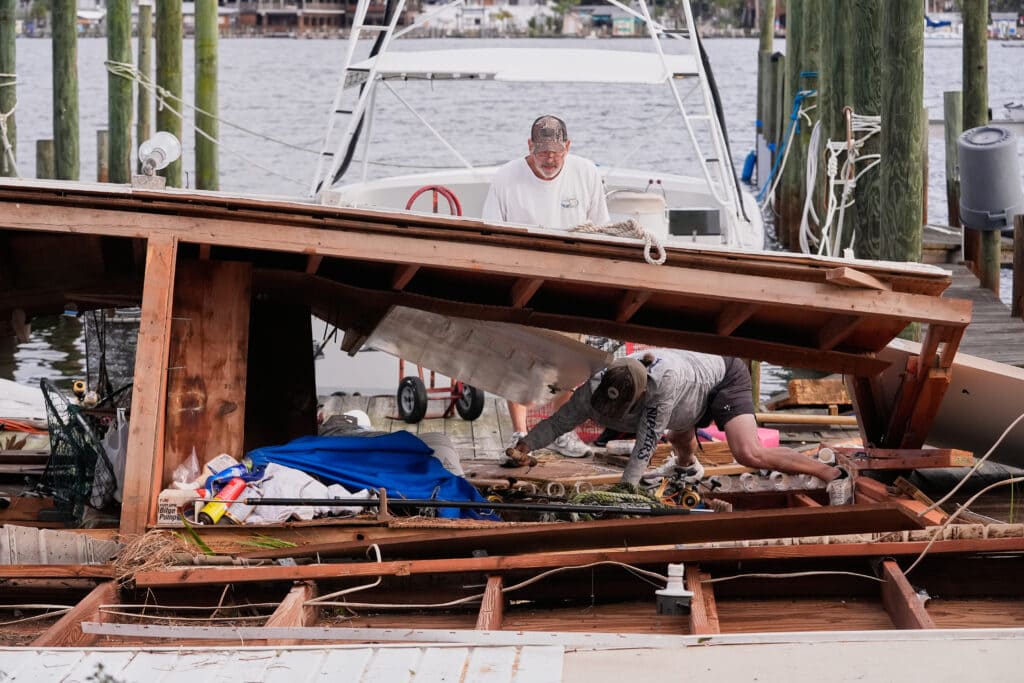
Tim Mowry, who rode out the storm from his home in Pensacola, said the wind was so intense it sounded like a train whistle as it whipped through a crack in his patio door. He lost power around 4:30 p.m. but was able to rely on a generator. Standing water also covered his backyard, and parts of his fence were ripped down, but overall he said the storm wasn’t as bad as he expected.
“As far as Pensacola-wise, we really got fortunate,” Mowry said.
Isaias was the first hurricane to hit the eastern U.S. since Milton tore up the Gulf Coast of Florida in 2024.
Meanwhile, in the Pacific, Simon strengthened into a Category 4 hurricane as it approached Mexico’s coast.
Tropical Storm Rachel was also expected to bring heavy winds and rain to northern Mexico and Southern California over the weekend.
Time for term limits? Dems in majority could have familiar faces in key roles

Audio articles are automated for accessibility. Humans wrote and edited the story; however, this audio has not been reviewed for accuracy and may contain errors. Read more about how we use AI to increase access to our reporting.
WASHINGTON (AP) — Democrats hope to bring a new agenda to the House next year if they take the majority, but they will most likely do so with many of the same faces that have steered their party’s legislative work for a decade or more.
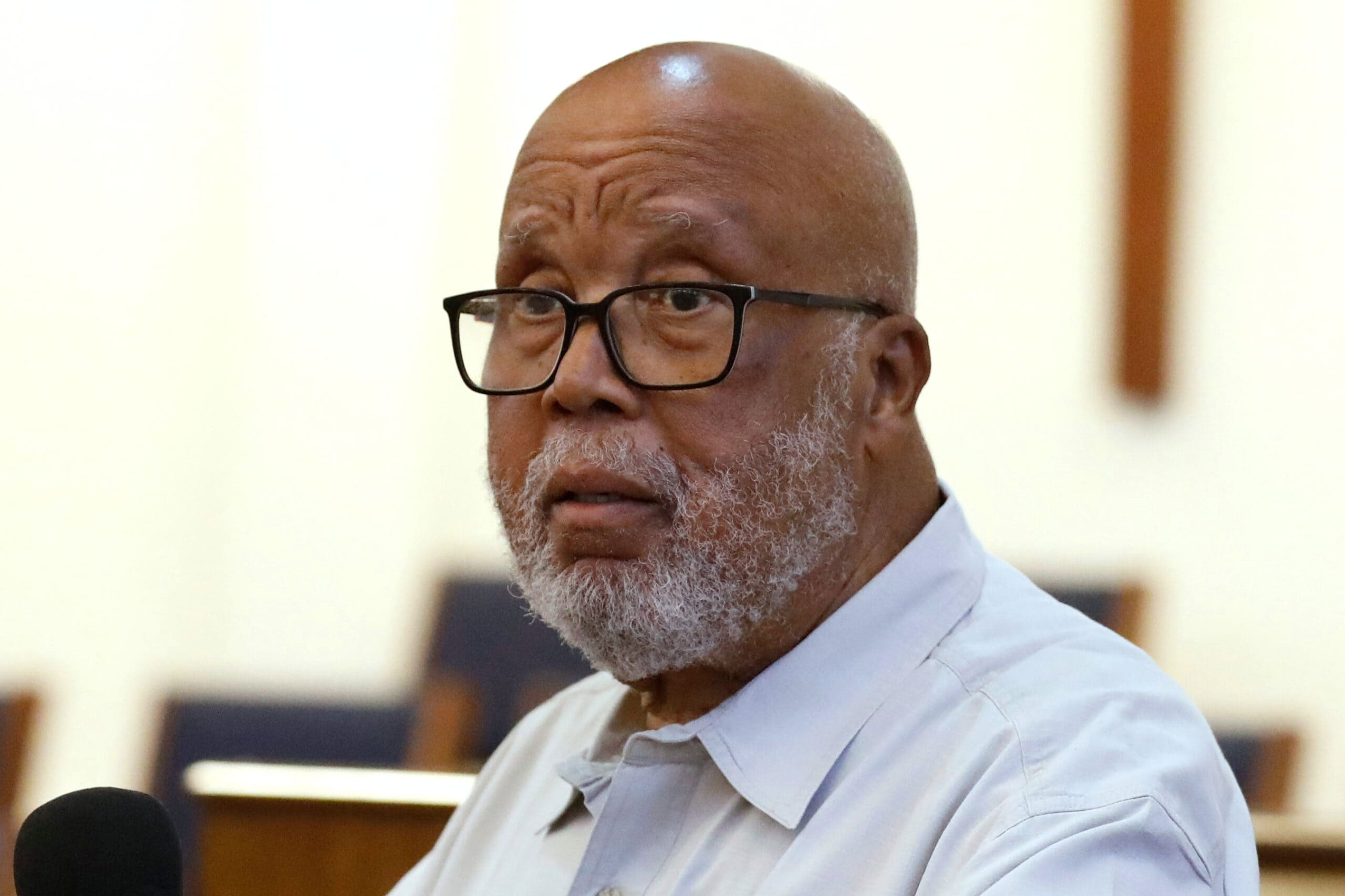
Potential committee chairs in the next Congress include Rep. Bennie Thompson of Mississippi, who has served as top Democrat on the House Homeland Security panel since 2005. Then, there’s Adam Smith of Washington, who began serving as top Democrat on Armed Services in 2011, and Rep. Maxine Waters of California, who became the lead Democrat on Financial Services in 2013.
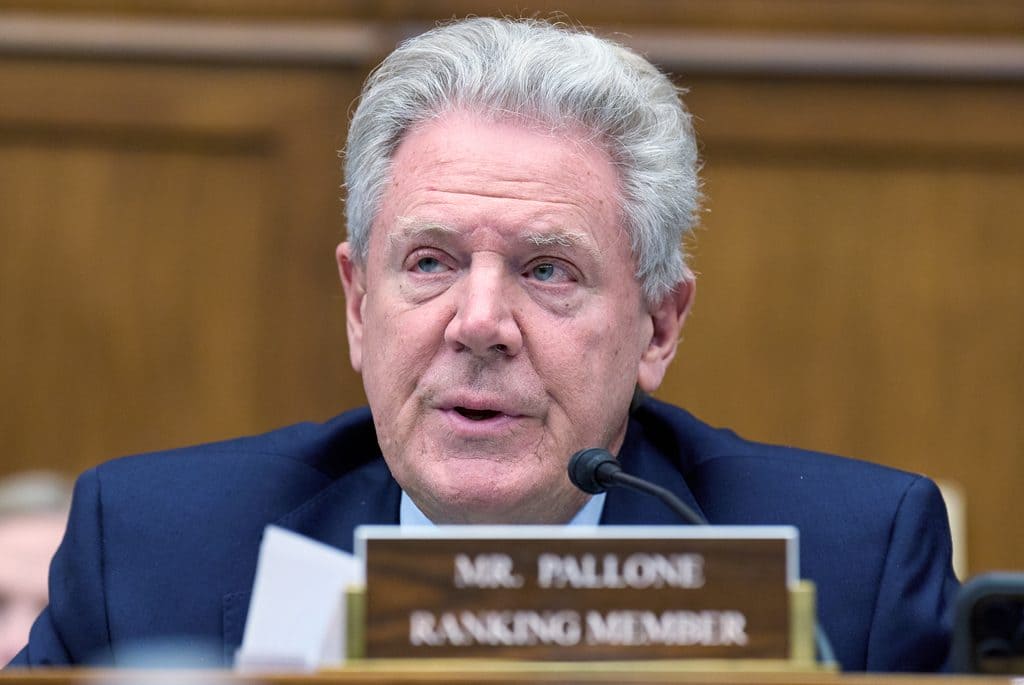
Other longtime committee leaders include Reps. Frank Pallone at Energy and Commerce and Bobby Scott at Education and Workforce, who assumed their leadership posts in 2015. Rep. Richie Neal became the top Democrat on the Ways and Means Committee in 2017.
None would be able to continue in that position under the rules used by House Republicans, which generally limit lawmakers to three terms as chairman or ranking member.
For Democrats, the question is whether to stick with their current system, which emphasizes seniority, or move closer to the one that Republicans have established. It’s a discussion that some Democrats say they are having behind the scenes.
“I think that the idea of term limits could be appealing to the American people, to the Democratic base. It sounds Democratic,” said Rep. Eugene Vindman, D-Va. “I’m open to the idea. I’ve spoken to a number of folks who are open to the idea.”
“I personally think it makes for a more vibrant Congress, but I know I’m in the minority in the minority,” said Rep. Chrissy Houlahan, D-Pa.
Party leaders are playing down the issue for now. Democratic leader Hakeem Jeffries said seniority has always been a factor when it comes to committee leadership, but not the only one.
“The caucus is going to work its will as we move forward,” Jeffries told reporters. “At the end of the day, we can’t put the cart before the horse. We’ve got to still go out and win this thing in November.”
Democrats have been here before
Term limits are not a new discussion for Democrats. When they were weighing whether to return Nancy Pelosi as speaker in 2018, those opposing her bid wanted her to commit to limiting how long lawmakers could serve as House party leaders or committee chairs. She eventually agreed to serve in the post for no more than four more years.
No such restrictions were added for committee chairs. In 2022, Democrats voted overwhelmingly against a six-year term limit for committee leaders.
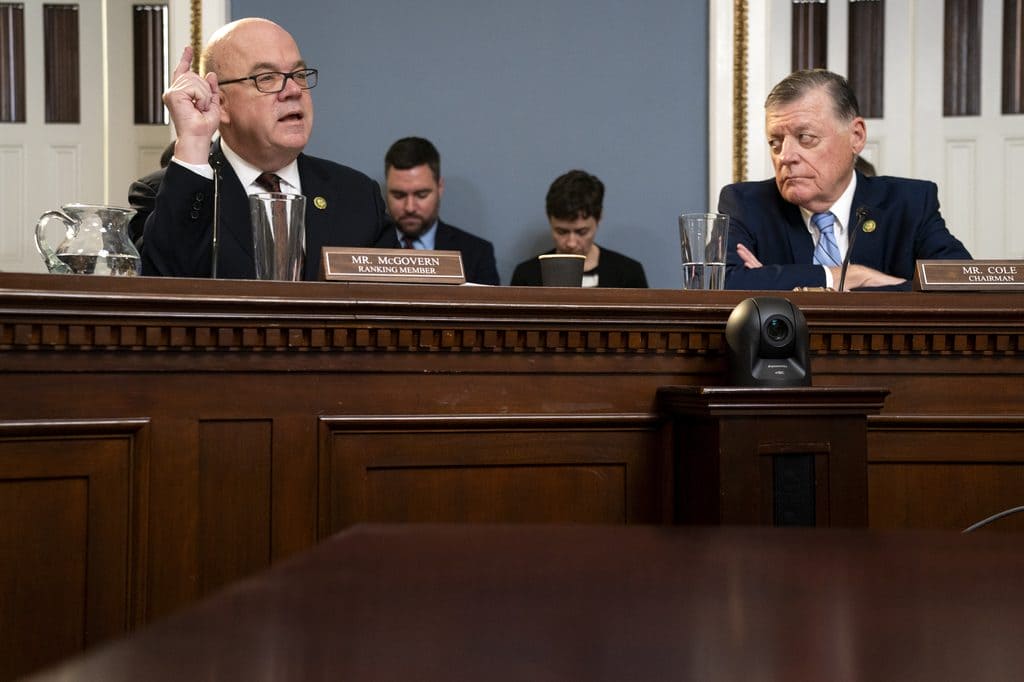
Rep. Jim McGovern, D-Mass., who has served as top Democrat on the House Rules Committee since 2018, called term limits an “artificial, random mechanism that doesn’t always serve the best interest of the institution.”
“I want people in chairs who are going to fight to get things over the finish line and make a real difference,” McGovern said. “Some of those people may have been around for a long time and some of them may be relatively new.”
Pallone said he intends to be the next Energy and Commerce chairman or ranking member. He called term limits for chairs “very undemocratic.”
“If people want to vote for somebody they should be allowed to,” Pallone said.
He also said that term limits can lead to short-term thinking from chairs looking at their next opportunity in the private sector.
“People serve for a couple years, then they go work for some lobbying firm,” he said. “What they do when they’re here is very much influenced by what lobbying firm they’re going to work for.”
Thompson also said he would like to serve again as top Democrat on Homeland Security if he wins reelection. He dismissed the way Republicans limit committee leaders to three terms.
“I don’t want to be like Republicans. I’m a Democrat,” Thompson said.
House Majority Leader Steve Scalise, R-La., says term limits have served Republicans well.
“It’s been really good to show younger members that you’re always going to have a path to leadership if you keep working hard, if you do your job really well,” Scalise said. “We definitely lose some good chairmen along the way, but we also get new leaders who otherwise would not have been able to rise up.”
Democrats have broken with seniority on occasion
Democrats don’t always stick with seniority. One recent exception is Rep. Jamie Raskin, the lead Democrat on the Judiciary Committee. He challenged Rep. Jerry Nadler for the job in late 2024, prompting Nadler, then 77, to step aside.
Similarly, Democrats selected Rep. Angie Craig to become the top Democrat on the Agriculture Committee after she challenged the late Rep. David Scott for the post. Scott had been the panel’s top Democrat for the previous two sessions, but was in poor health.
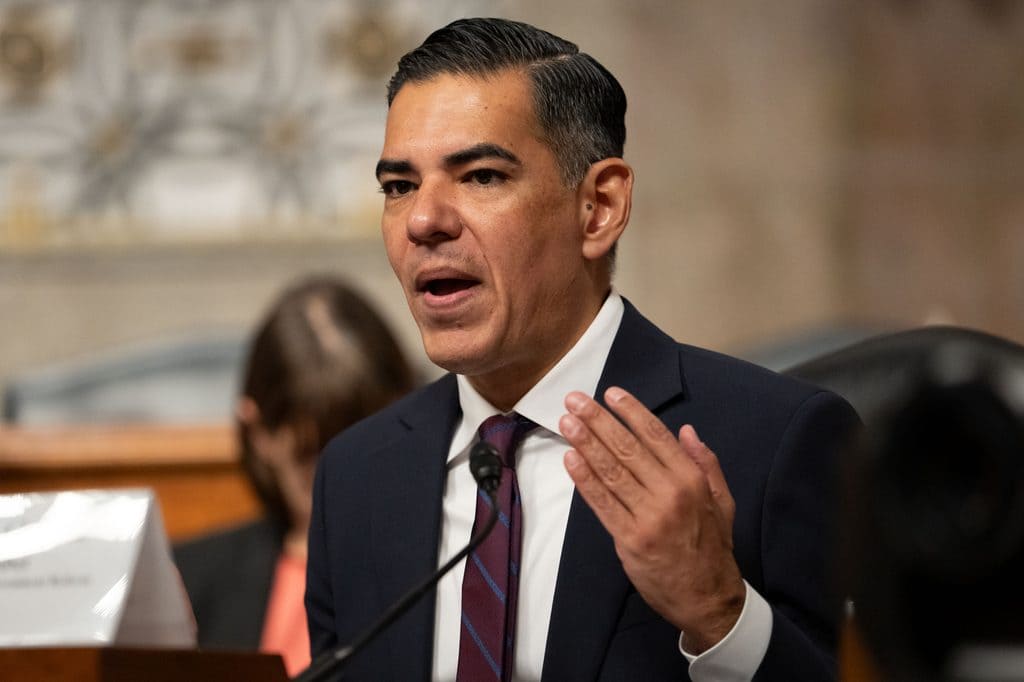
Democrats also elected Rep. Robert Garcia last year to succeed Rep. Gerry Connolly on the House Oversight and Government Reform Committee. Connolly died after a battle with esophageal cancer. Garcia defeated veteran Rep. Stephen Lynch of Massachusetts for the job.
“He has done, by everybody’s measure here, an incredible job,” said Rep. Greg Casar, D-Texas. “We would not have all of the Epstein files that we’ve gotten so far without his leadership on that committee.”
Casar called next steps for Democrats on committee chairs an “internal conversation.”
“I think at a minimum we should go to a system where it’s about who the right person is, and then have discussions about how we make sure that new blood comes in,” Casar said.
Rep. Brad Schneider, D-Ill., said he hears less talk about term limits than past years, and he credits some of the changes Democrats already made.
“Last cycle, there was a lot of clamor, and you saw some changes,” Schneider said. “I’m not hearing similar angst this time.”
Rep. Pramila Jayapal of Washington said she favors term limits, but emphasized that her view is no reflection of the current leaders. It’s more about helping Democrats develop a deeper bench.
“I just think it’s really smart policy and it’s really smart strategy to make sure that we keep building people skills, opportunities and leadership,” Jayapal said.
She said she understood when she first served in Congress a decade ago the longstanding concerns voiced by the Congressional Black Caucus about term limits hurting members who had just earned chairmanships, but believes Democrats have done a better job of diversifying the caucus.
“And we need to do more, but we are taking away opportunities from a lot of those newer members,” Jayapal said.
Some Democrats have talked about a hybrid approach that sets some limits, but not at the three-term threshold set by House Republicans.
“I don’t know what the magic number is, but endless is not the magic number,” Houlahan said.
Isaias makes landfall along the US Gulf Coast as a dangerous Category 2 hurricane

Audio articles are automated for accessibility. Humans wrote and edited the story; however, this audio has not been reviewed for accuracy and may contain errors. Read more about how we use AI to increase access to our reporting.
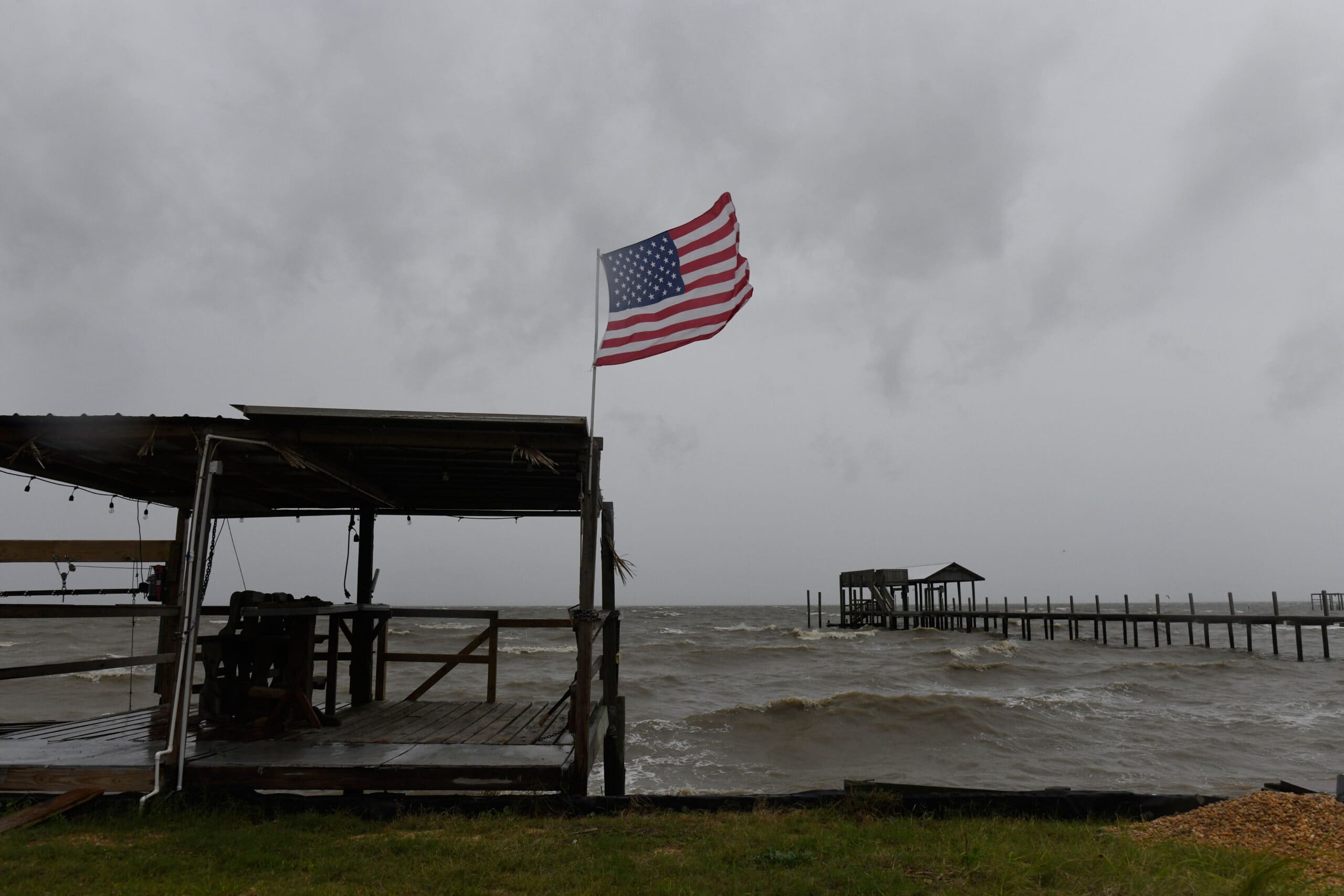
GULF BREEZE, Fla. (AP) — Hurricane Isaias crashed into the U.S. Gulf Coast as a dangerous Category 2 storm on Friday, lashing communities with wind and rain and threatening to flood low-lying areas where residents were advised to evacuate ahead of its arrival.
The first hurricane of the Atlantic season made landfall near Destin, Florida, the Miami-based National Hurricane Center said. It had maximum sustained winds of 105 mph (169 kph). The storm weakened to just below major hurricane status before it came ashore.
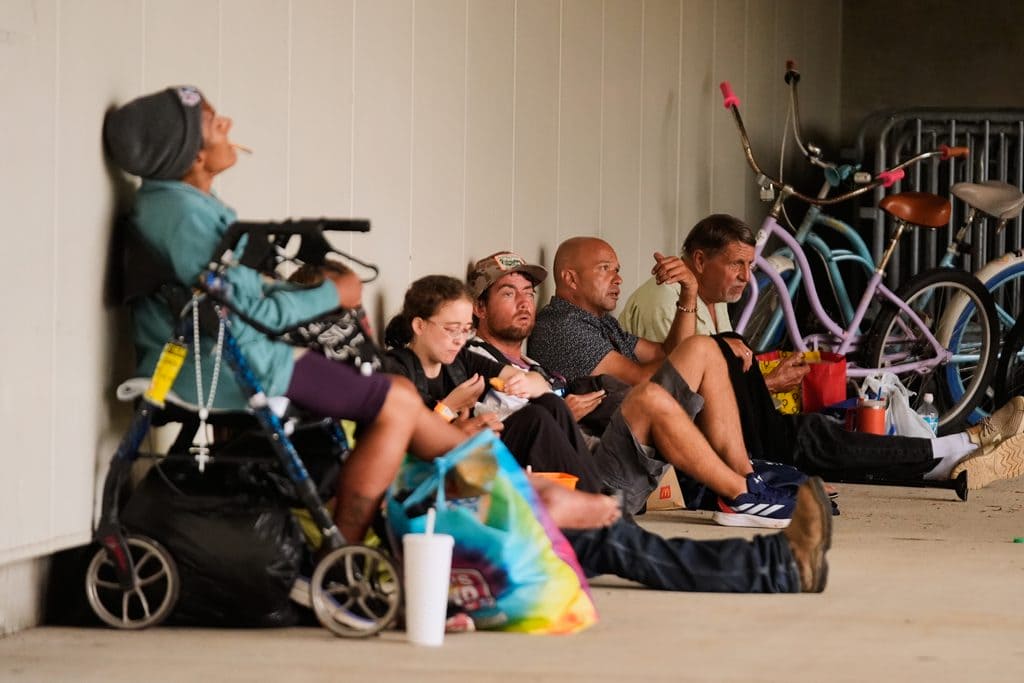
High winds whipped palm trees and thundering waves crashed along the beaches of the Florida Panhandle and Alabama on Friday as Isaias approached.
“The storm is here. Buckle down at this point. Don’t be getting out on the roads,” Florida Gov. Ron DeSantis said at a news conference, adding that flash flooding would be a hazard “throughout the region.”
Forecasters warned of a significant storm surge, damaging winds, flooding and possibly even tornadoes before the storm loses steam as it moves inland and delivers strong winds and rain well north into Atlanta.
Hurricane-force winds lashed the Gulf shoreline in the low-lying coastal area known for powdery white sand beaches that are dotted with vacation homes, waterfront bars and seafood shacks.
In Mobile, Alabama, officials reported downed trees and power lines, while Emerald Coast Utilities Authority, which serves parts of Florida, issued a boil-water notice for its customers.
More than 400,000 customers in Florida and Alabama were without power Friday evening, according to poweroutage.com.
Residents in Panama City, Florida, braved the rain while filling sandbags Friday to protect their houses.
“I mean, it’s just the nature of the beast. It’s Florida,” said Corliss Stone, who works for the fire department.
Many will brave Isaias at home
One of the biggest concerns is a storm surge that could be as high as 6 to 9 feet (1.8 to 2.7 meters), according to the hurricane center. Places most at risk include Florida’s Pensacola Beach and the Gulf Islands National Seashore.
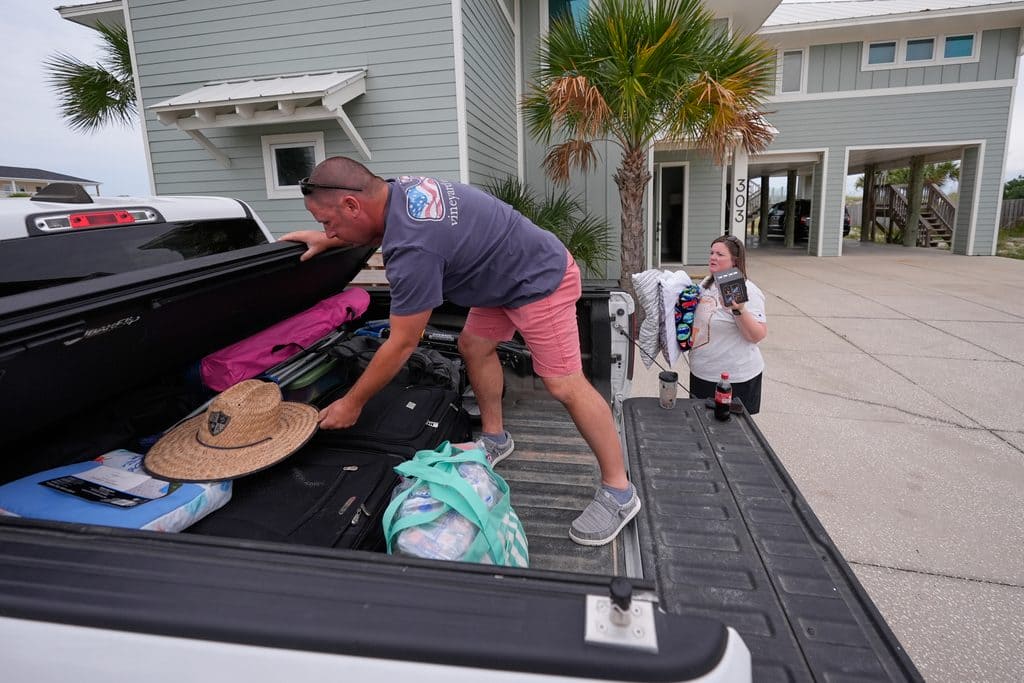
Anne Petzold, who lives with her husband in the Florida beach community of Gulf Breeze, said everyone in their neighborhood planned to ride out the storm. The couple installed hurricane shutters and picked up anything in their yard that could turn into a projectile.
“Everybody does what they can do, everybody asks if they need help — they ask for help, they offer help. All good,” she said. “It’s just another adventure.”
Several counties announced mandatory evacuations while Mobile, Alabama, imposed a curfew beginning Friday evening until morning.
In a sign of how serious the warnings are, dozens of Waffle Houses in the Florida Panhandle were closed, according to the company’s website. The beloved Southern breakfast chain is known for staying open through severe weather and often is a measuring stick of a storm’s severity.
Kelsei Frazier, a Florida-native living in Pace who is no stranger to hurricanes, knows all about the Waffle House Index.
“We joke because if Waffle House is still open, then you know it’s not a bad hurricane, but all the Waffle Houses that I know of within at least a normal range from us are closed,” said Frazier. “Which is a pretty big deal.”
DeSantis warned residents to expect power outages, gasoline shortages and closures of bridges and highways.
The state’s National Guard deployed about 5,000 soldiers and airmen to help with the response, and search and rescue teams were ready to respond, while some prisons evacuated inmates.
The whole region could get soaked
Isaias is expected to weaken and be downgraded to a tropical storm by Saturday afternoon, the center said.
Still, heavy rain is forecast as it moves inland, with 4 to 8 inches (10 to 20 centimeters) or even more expected through the weekend from southern Alabama to southwestern Georgia.

Isaias, which is the first hurricane to hit the eastern U.S. since Milton tore up the Gulf Coast of Florida in 2024, also is expected to bring heavy rain and potential flooding to much of the Southeast over the weekend, and then to parts of the Midwest and Northeast into Monday.
Isaias grounds flights but likely to miss oil hubs
The storm grounded most Friday flights at several Panhandle airports, including all flights into and out of Destin-Fort Walton Beach Airport. President Donald Trump, meanwhile, scrapped his plans to attend Saturday’s football game between the University of Georgia and the University of Alabama in Tuscaloosa. He said he didn’t want to disrupt the emergency response.
Isaias was expected to miss the oil industry’s biggest hubs along the Gulf Coast, but fuel prices could rise if power outages shut down refineries for processing crude, industry experts said.
On Dauphin Island, a barrier island off the Alabama coast, Mayor Jeff Collier said he didn’t expect major damage, “but at the same time, these things are very fickle and a little jog here or there, or some last-minute increase in strength — we just have to be prepared for the worst.”
Meanwhile in the Pacific, Hurricane Simon became a Category 2 storm on Friday and was expected to strengthen further before making landfall in Mexico this weekend.
Tropical Storm Rachel was also expected to bring heavy winds and rain to northern Mexico and Southern California over the weekend.
MVSU basketball player was reportedly warned about his expired immigration status years before ICE detained him


Audio articles are automated for accessibility. Humans wrote and edited the story; however, this audio has not been reviewed for accuracy and may contain errors. Read more about how we use AI to increase access to our reporting.
Years before immigration officers arrested a Mississippi Valley State University basketball player last week, the school he previously played for said it warned him to correct his immigration status — contradicting his attorney’s earlier claim that the student athlete didn’t know his visa had expired.
But Qingfang Pang, the 6-foot-9-inch player born in China, received warnings as early as two years ago — when his previous college, Monroe University in New York, advised him to restore his status after learning it had lapsed in September 2024, spokesperson Jacqueline Ruegger told Mississippi Today.
His attorney, former professional basketball player Marcus Session, said Friday the information was news to him.
“It doesn’t seem like they’re forthcoming with the right information because they continue to allow a student who’s on an expired visa to attend for two years after they supposedly warned him,” Session told Mississippi Today. “This doesn’t make sense.”
Pang previously met with another attorney at Monroe’s recommendation to discuss his expired status, Ruegger said. But Session said Pang told him that he didn’t know his visa had expired until MVSU recently alerted him of the issue.
In the years since Monroe reportedly warned Pang to correct his immigration status, he continued to play basketball for the Monroe University Mustangs, before joining the Delta Devils this academic year. Under federal immigration law, if Pang were on the main international F-1 student visa, his records should have listed that he had officially transferred to MVSU before classes started.
Although MVSU’s semester kicked off in August, Ruegger and Session said the university didn’t contact Monroe for Pang’s international-student records until this week — after immigration authorities had already arrested him. MVSU did not communicate a reason for the potential delay in its request, according to Ruegger. Mississippi Valley did not immediately respond to a request for comment.
Before Mississippi Today learned of the potential delay, MVSU spokesperson Donnell Maxie said the school’s international student office “wouldn’t delay” on paperwork.
“We’re not going to play with that,” Maxie said. “I mean, we’re not a big university with a lot of resources, so we’re just getting by as it is.”
Ruegger said Monroe had been waiting to transfer Pang’s international-student records ever since the basketball player graduated with his associate’s in sports management in the spring, when he informed the school that he planned to continue his studies elsewhere. But for months, she said, Monroe never received word that he had enrolled at another university.
After MVSU requested his records this week, Monroe transferred them, according to Ruegger.
“The responsibility for being in status rests 100% with the international student, not with the institution,” she said. “We were ready to transfer the record, as soon as we were informed that it had some place to go.”
Pang is now in the custody of Immigration and Customs Enforcement at the Richwood Correctional Center in Louisiana, according to the agency’s website. The Department of Homeland Security confirmed that ICE arrested Pang on Sept. 29.
The student athlete was detained when he tried to fly to New York to meet with his sponsor, a family friend, to correct his status, Session previously told WJTV. DHS wrote in an email Friday that Pang’s immigration status expired two years before, in September 2024 — a day after he started his first year playing basketball at Monroe.
“He legally entered the U.S. on November 17, 2023 on a temporary basis not to exceed September 5, 2024, but illegally overstayed,” DHS wrote. “This administration will not ignore the rule of law.”
Mississippi college board extends commissioner’s contract and boosts his pay

Audio articles are automated for accessibility. Humans wrote and edited the story; however, this audio has not been reviewed for accuracy and may contain errors. Read more about how we use AI to increase access to our reporting.
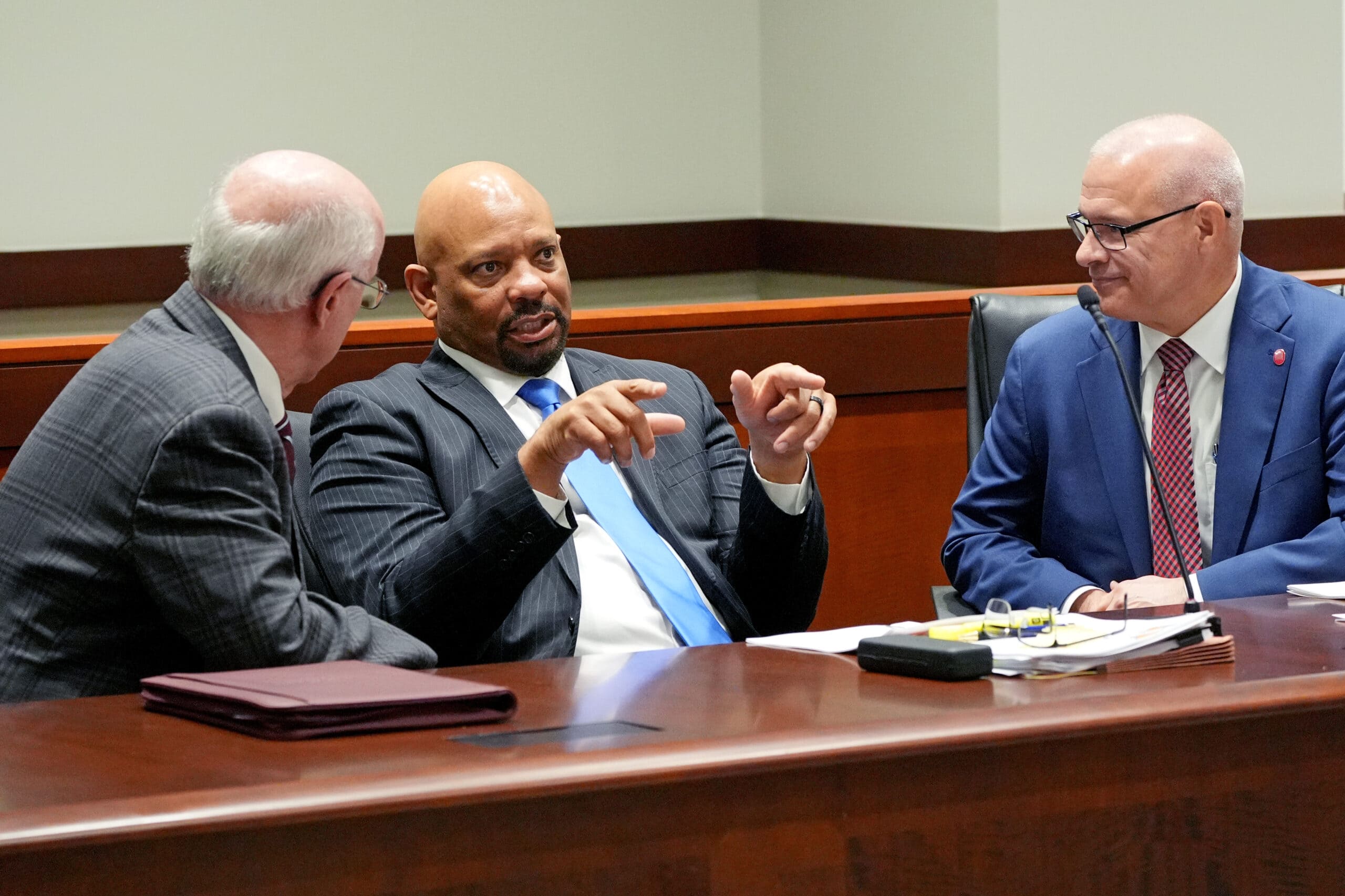
Al Rankins Jr. will continue leading Mississippi’s public university system for another four years under a new contract approved by the state’s college board.
The Mississippi Institutions of Higher Learning Board of Trustees in August unanimously approved increasing Rankins’ annual salary by about 5% to $463,050. His last contract was approved by trustees October 2023, IHL spokesman John Sewell said.
The contract took effect Sept. 1 and ends Aug. 31, 2030.
IHL Board President Steve Cunningham said in an emailed statement that the trustees completed a formal performance evaluation of Rankins before voting to extend his contract. They did not publicly discuss the matter.
Sewell declined to answer questions from Mississippi Today about whether trustees conducted a salary comparison with higher education leaders in other states. IHL policy requires trustees to determine the commissioner’s pay annually. The policy also requires the commissioner to provide regional and national information about executive compensation to help the board make salary decisions.
Kim Hunter Reed, Louisiana’s commissioner of higher education, is paid $451,297 a year, according to the Louisiana Department of Administration website. Texas Higher Education Commissioner Wynn Rosser earns about $325,000 a year, according to a government salary database compiled by The Texas Tribune.
Rankins “has been a strong leader for our state’s university system since 2018 and we look forward to his continued leadership in the years to come,” Cunningham said through Sewell.
Rankins said, through Sewell, that under his leadership, the university system has maintained a strong credit rating, navigated the COVID-19 pandemic and secured funding to support operations.
Mississippi public universities also face challenges including financial pressures, changes tied to artificial intelligence and an expected decline in the number of high school graduates, Rankins said.
“I am working each day with our trustees and institutional executive officers to address these challenges while also continuing our efforts to create new opportunities that will have a positive influence on our state,” Rankins said.
The IHL board hired Rankins in 2018, making him the state’s first Black higher education commissioner. He succeeded Glenn Boyce, who is now chancellor of the University of Mississippi.
As commissioner, Rankins advises trustees on matters pertaining to Mississippi’s eight public universities and the University of Mississippi Medical Center. He also supervises and evaluates the universities’ top leaders.
Curtis Flowers battled diabetes during his wrongful imprisonment

Audio articles are automated for accessibility. Humans wrote and edited the story; however, this audio has not been reviewed for accuracy and may contain errors. Read more about how we use AI to increase access to our reporting.
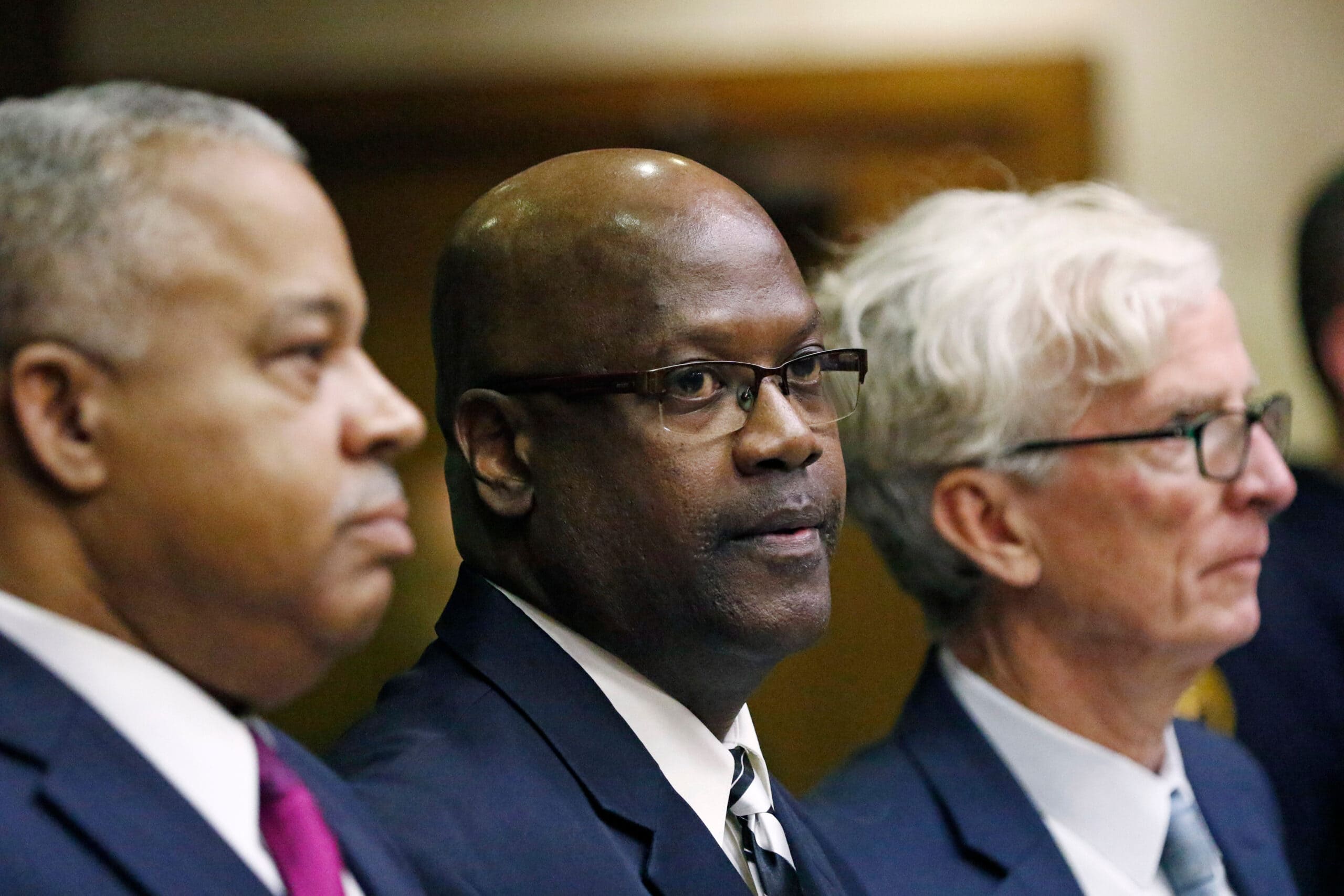
As the cause of Curtis Flowers‘ death is under investigation, an attorney who represented him during multiple appeals, eventually leading to his exoneration and release from death row, said his former client struggled with diabetes the entire time he knew him – a condition that isn’t easy to manage in prison.
Flowers, 56, was found dead Wednesday at his family home in Winona, leaving behind siblings, a daughter and grandchildren. Family members were not immediately available for comment Friday.
Flowers was convicted of four counts of capital murder but maintained his innocence through the string of trials that led to a landmark U.S. Supreme Court case about racial bias in jury selection. Decades of legal work led to his release from prison in 2019.
State Public Defender Andre de Gruy, who was part of the team that represented Flowers during his third through sixth trials, said Flowers enjoyed meeting law school students and interns and talking about the relationship between a client and their attorney.
“He had more experience in the courtroom and legal system than they will ever have,” de Gruy said.
De Gruy said he talked with Flowers a few weeks ago. They were laughing together and catching up about life. They have kept in touch over the years after Flowers returned home.
When they last spoke, Flowers was trying to find a job. He wasn’t sure what type of work he could pursue, de Gruy said, because Flowers didn’t have access to vocational training while on death row.
De Gruy said he and Flowers talked about the possibility of Flowers doing clerical work at the State Public Defender’s Office, but Flowers would have had to relocate to Jackson. He didn’t seem interested in moving, de Gruy said. In Winona, Flowers was close to family and was able to care for his father until his death last year.
“He felt like he was able to pay back some of the love his family had shown to him,” de Gruy said.
In July 1996, Flowers was accused of fatally shooting four people at Tardy Furniture in Winona. Then-Montgomery County District Attorney Doug Evans spent nearly two decades prosecuting Flowers six times, each time resulting in a hung jury or a guilty verdict later overturned by the Mississippi Supreme Court.
The sixth trial resulted in a death sentence. The state court heard and denied appeals twice, and Flowers’ case went to the U.S. Supreme Court.
In 2018, the American Public Media podcast “In the Dark” investigated Flowers’ case and presented evidence of a history of racial bias in jury selection by Evans and evidence that suggested someone else may have committed the shootings.
Flowers’ case went before the U.S. Supreme Court twice, and in June 2019, the court decided 7-2 to overturn Flowers’ conviction, finding that Evans intentionally struck Black people from serving on the jury that convicted Flowers, who was Black.
Afterward, Evans recused himself and the state attorney general’s office stepped in. Months later in December 2019, Circuit Judge Joey Loper dismissed Flowers’ capital murder charges with prejudice on a motion by the attorney general’s office.
Flowers left death row and the Mississippi State Penitentiary at Parchman, but he spent some time in other jails and prisons before he was released and returned home.
Nell Grace helps revitalize Jackson’s once-thriving Farish Street District

Audio articles are automated for accessibility. Humans wrote and edited the story; however, this audio has not been reviewed for accuracy and may contain errors. Read more about how we use AI to increase access to our reporting.
Stepping into Nell Grace is less like walking into a restaurant and more like melting into the soft, unhurried warmth of Big Mama’s embrace.
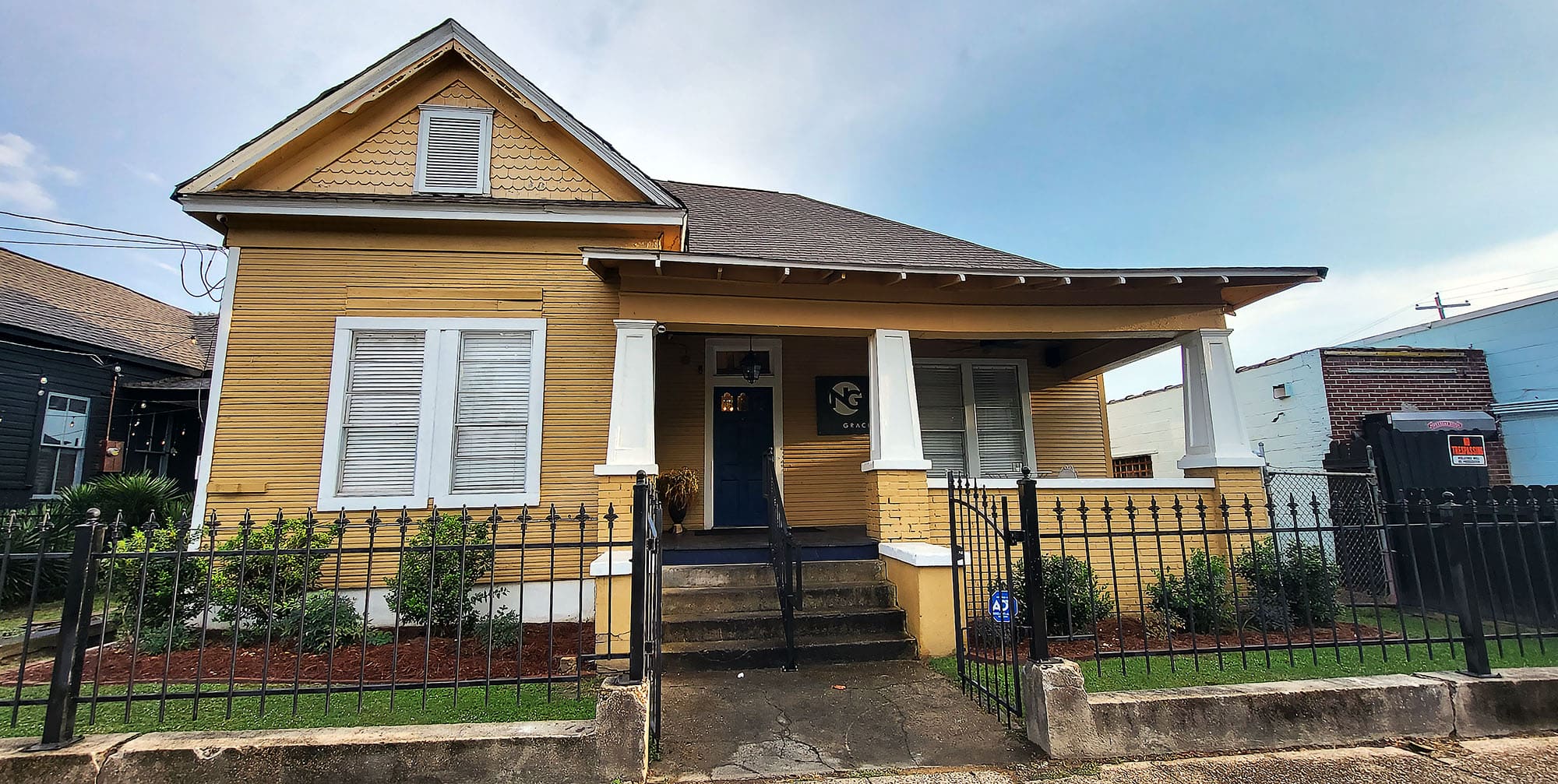
The restaurant is a hidden gem located at 111 East Church St., in downtown Jackson’s historic Farish Street District. And it is the vision of a father and son, Marc and Devan Rowe, who opened Nell Grace in January.
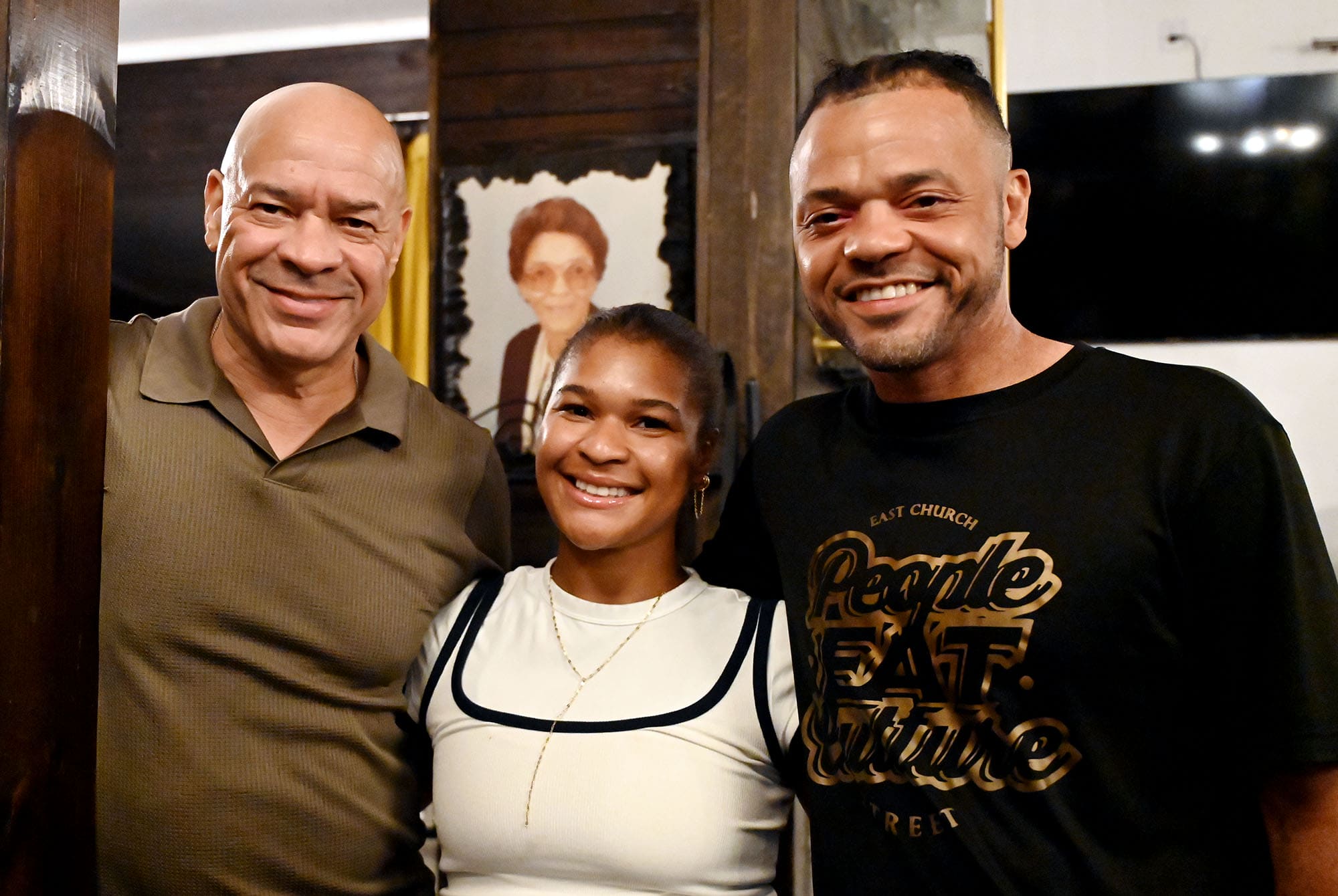
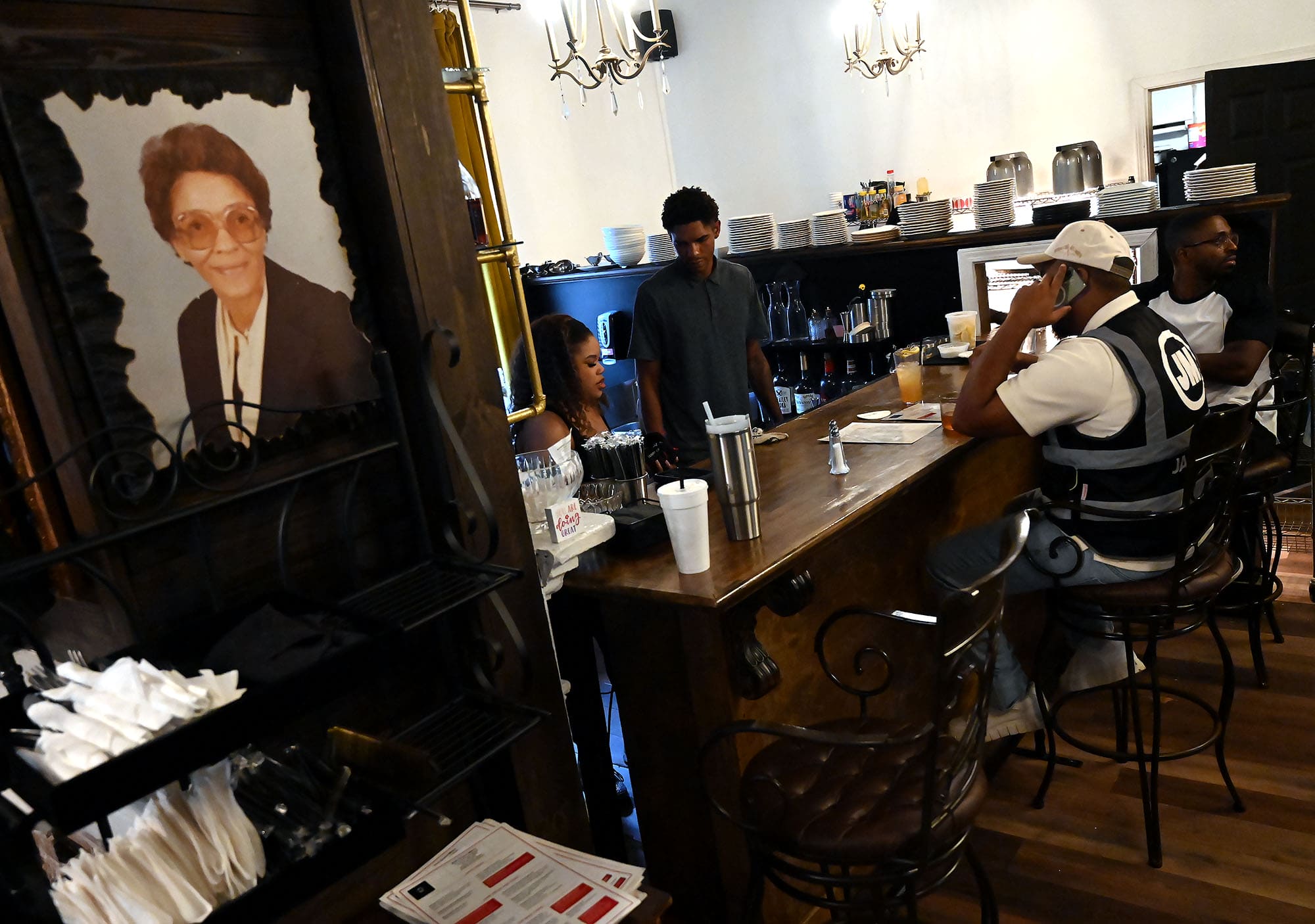
Marc Rowe named the eatery in honor of his mother, Eunella “Nell” Rowe, and his daughter, Grace.
“Naming the restaurant was my way of preserving my mother’s legacy,” Marc said, his voice filled with deep admiration and reverence. “I wanted her name to live on through something that brings people together. When guests come through our doors, share a meal and feel at home, that reflects the kind of spirit she had.”
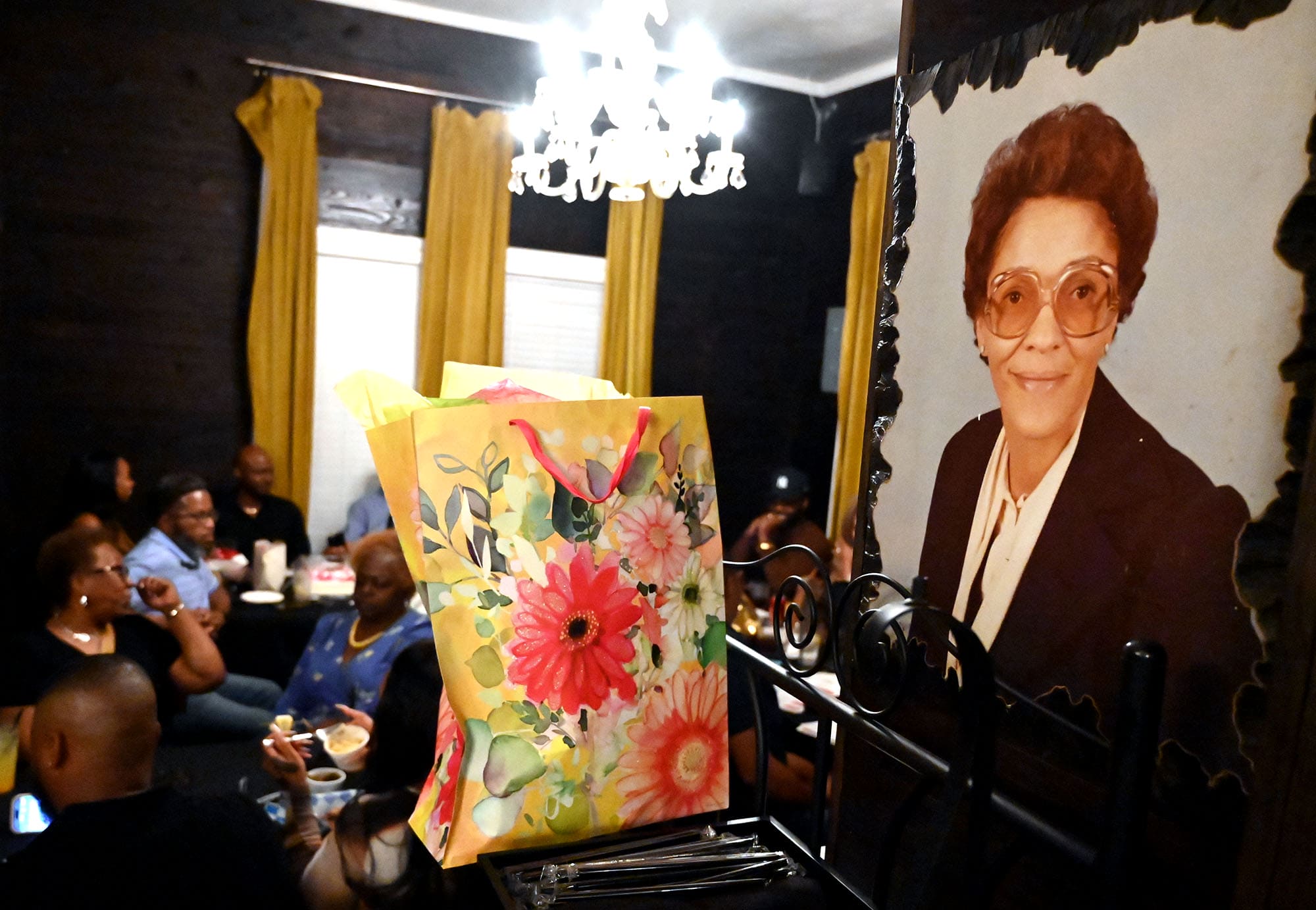
Marc moves with a determined grace, disappearing into the buzz of the kitchen to check on meal preps before emerging to visit individual tables, smiling, chatting, asking diners if they are enjoying their meals. In one section, a large group celebrating a family member’s birthday sat before a floor-to-ceiling mural of a woman frozen in song, an artistic heartbeat for the room.
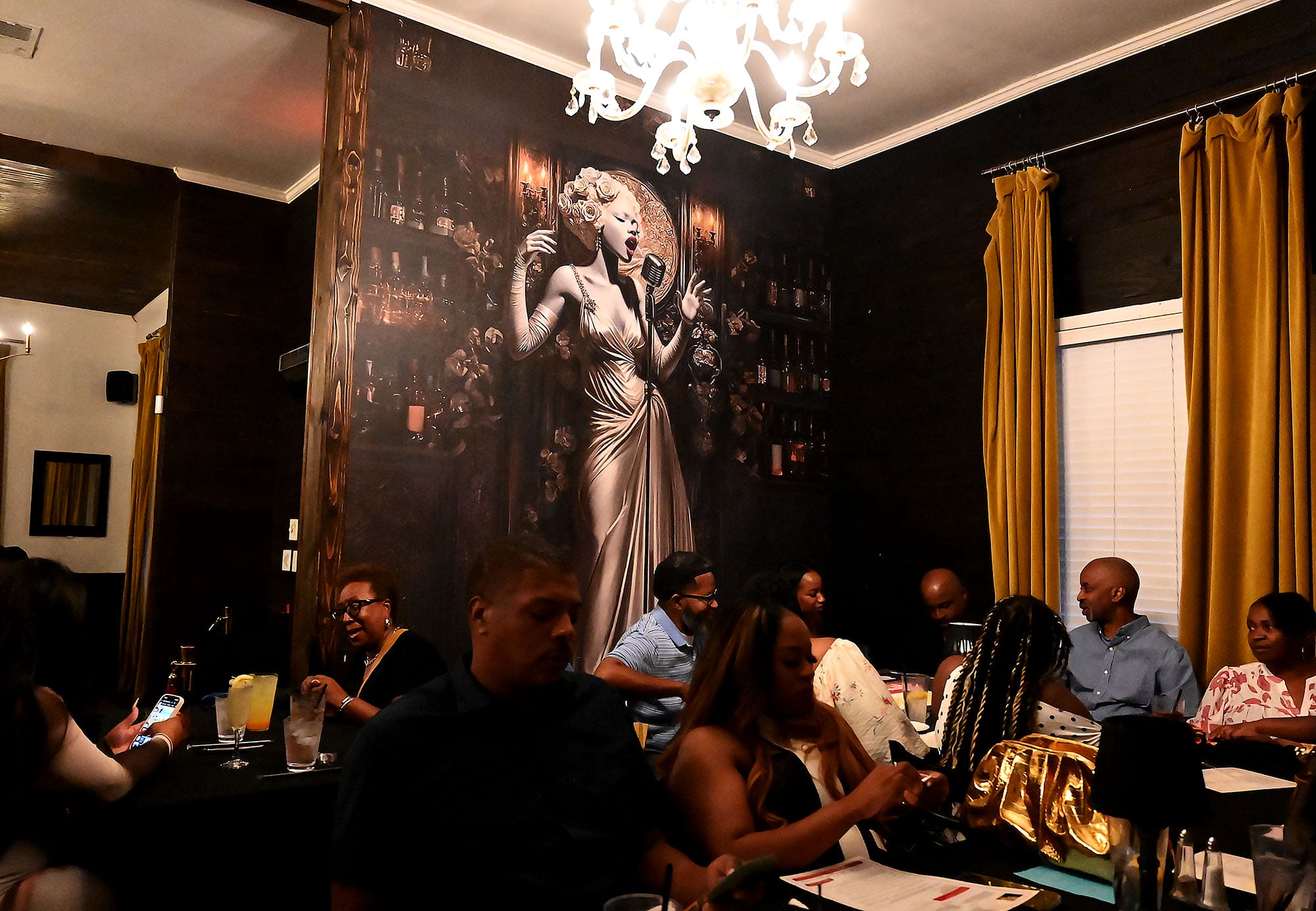
On alternating nights, the air is filled with haunting melodies from violinist Daniel Parker and the sultry, late-night smoothness of saxophonist Keith Ward.
“A lot of what people see in me today came from her,” Devan said, reflecting on the deep influence of his grandmother. “She just had this way about her. She connected with people, and she had such a natural gift for making everyone feel comfortable, special and welcome.”
He said watching her taught him how much relationships matter. “The confidence, the way I connect with people, she planted those seeds in me a long time ago.”

Nell Grace has a laid-back, cozy vibe, with customers cradling cocktails while music drifts over tables and soothing aromas waft from the kitchen. Chatter and laughter subside as forks dig into savory Catfish Atchafalaya, steaks, blackened seafood and ribbons of Cajun pasta.
Order up a burger or a variety of shrimp dishes, traditional wings or Cajun loaded fries. Down-home southern side dishes offer a familiar taste of home cooking — bubbling, baked macaroni and cheese, earthy black-eyed peas, golden cornbread, braised southern greens and sweet yams.
As the night deepens, the Rowes encourage diners to make room for warm peach cobbler, New Orleans-style beignets dusted in a snowfall of powdered sugar, delectable cheesecake or the richness of red velvet cake.

“I spent more than 20 years in Atlanta working in entertainment, but something kept pulling me back home,” Devan Rowe said. “I felt like I had learned enough to bring something back home… learned to bring something meaningful back to Jackson.”
Together, the duo is dreaming a renaissance into existence, with plans to revitalize several historic properties in the Farish Street neighborhood, once the bustling hub of Jackson’s Black-owned businesses. Their vision weaves a tapestry of live entertainment, fine dining and cultural pilgrimages to create a destination that celebrates the district’s landmarks.
-

Catfish dinner with sides at Nell Grace restaurant in Jackson’s historic Farish Street District, Friday, Sept. 4, 2026. -

Nell Grace restaurant customer Jaylin Williams, left, offers saxophonist Keith Ward a dap of approval Friday, Sept. 4, 2026, in Jackson. -

A photograph of Eunella “Nell” Rowe is displayed on a wall at Nell Grace, the restaurant named for her and granddaughter Grace Rowe, Friday, Sept. 4, 2026, in Jackson. -

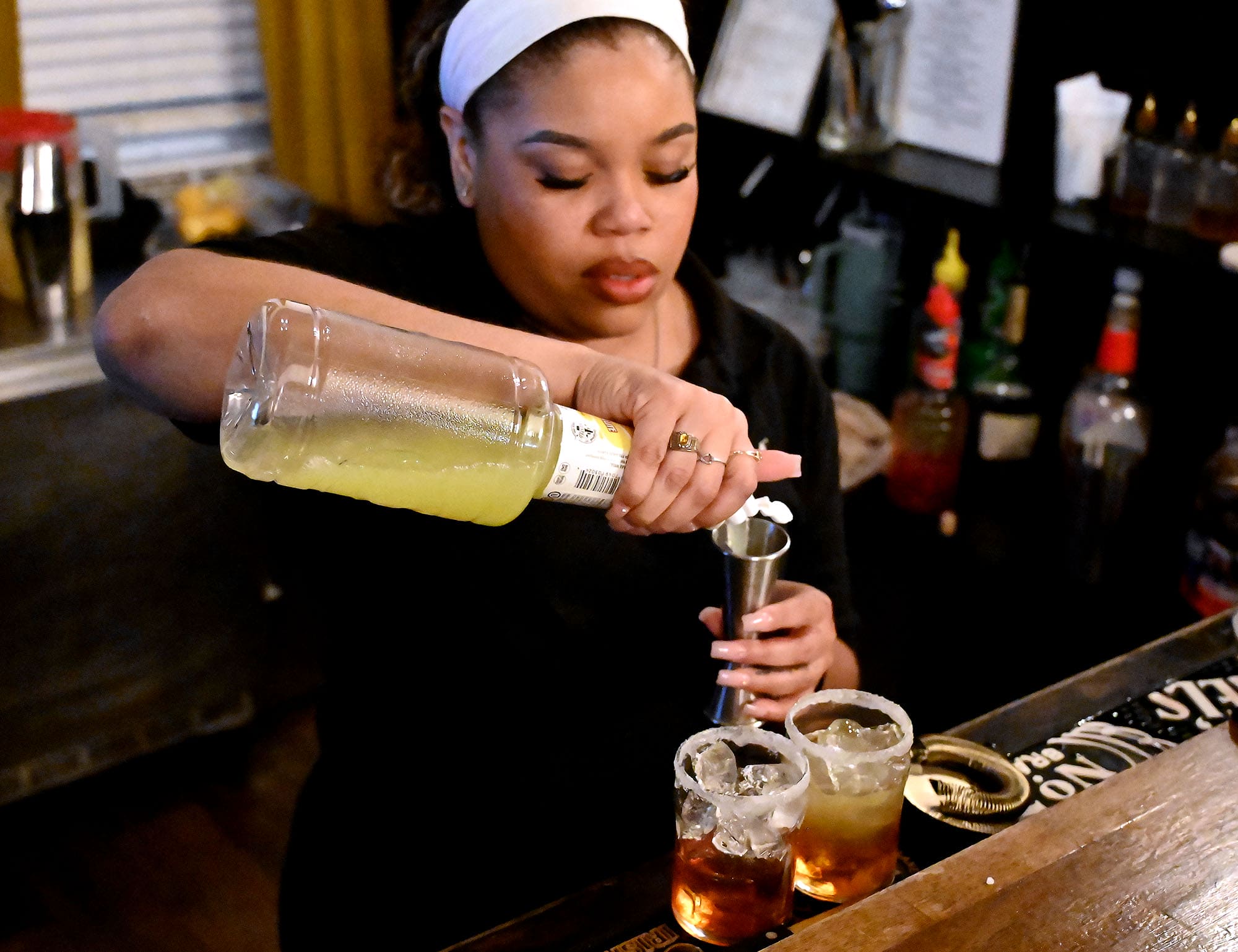
Mixologist Megan Gibbs prepares cocktails for a customer at Nell Grace restaurant in Jackson’s historic Farish Street District, Friday, Sept. 4, 2026. -

A cocktail at Nell Grace restaurant in Jackson’s historic Farish Street District, Friday, Sept. 4, 2026. -

Strawberry daiquiris at Nell Grace restaurant in Jackson’s historic Farish Street District, Friday, Sept. 4, 2026. -

Nell Grace restaurant at 111 East Church St. in Jackson’s historic Farish Street District. -

Violinist Daniel Parker entertains diners at Nell Grace, a restaurant in Jackson’s historic Farish Street District, Thursday, Sept. 3, 2026. The floor-to-ceiling mural is titled “Blue Lady,” painted by Jason Cooper. -

Justin Winn holds his 1-year-old daughter, Janiya, during a family dinner at Nell Grace restaurant in Jackson’s historic Farish Street District, Thursday, Sept. 3, 2026. -

Saxophonist Keith Ward entertains diners at Nell Grace restaurant in Jackson’s historic Farish Street District, Thursday, Sept. 3, 2026.





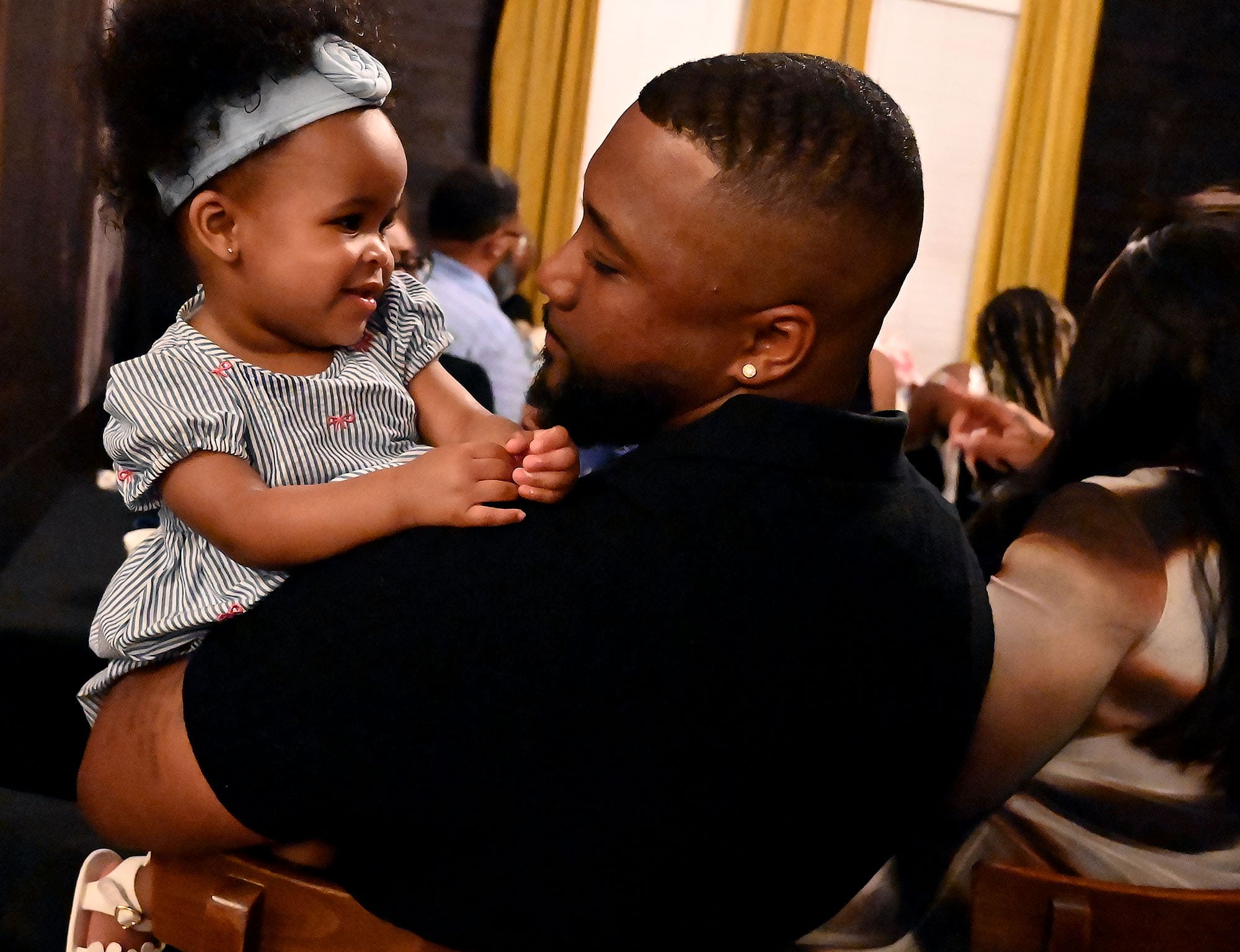

Devan said his father spent 26 years in child nutrition and the food industry.
“He understood the food and operations side, and I come from the entertainment side,” the son said. “I understood how to create an experience. Nell Grace is where those two worlds come together. To me, it is more than a name. When people walk in, I want them to feel like they’ve stepped into my grandmother’s hugs and welcoming home, not a restaurant.”
Nell Grace hours
Monday-Thursday: 11 a.m.-8 p.m.
Friday-Saturday: 11 a.m.-10 p.m.
Sunday: 11 a.m.-2 p.m.
America at its best has an ever-expanding circle of ‘we,’ Tony Award winner writes

Audio articles are automated for accessibility. Humans wrote and edited the story; however, this audio has not been reviewed for accuracy and may contain errors. Read more about how we use AI to increase access to our reporting.
Mississippi Today Ideas is a platform for thoughtful ideas to be shared about our state’s past, present and future. Opinions expressed in guest essays are the author’s own and do not necessarily represent those of Mississippi Today. You can read more about the section here.
There may be no more powerful word in the American experiment than the simple, one-syllable pronoun we.
It is the first word of the United States Constitution: “We the People of the United States….” Before government is described, before powers are delegated, before rights are protected, before any ethnicity is proclaimed, there is an act of collective imagination. The Constitution begins not with a king, a ruler or an army, but with a people. It assumes that a nation can be built upon a shared identity rather than shared blood, tribe, language or religion.
Yet the genius — and the burden — of that first word is that it has never been fully settled.
Who exactly is “we”?
America’s story has been, in many respects, the ongoing argument over that single word.
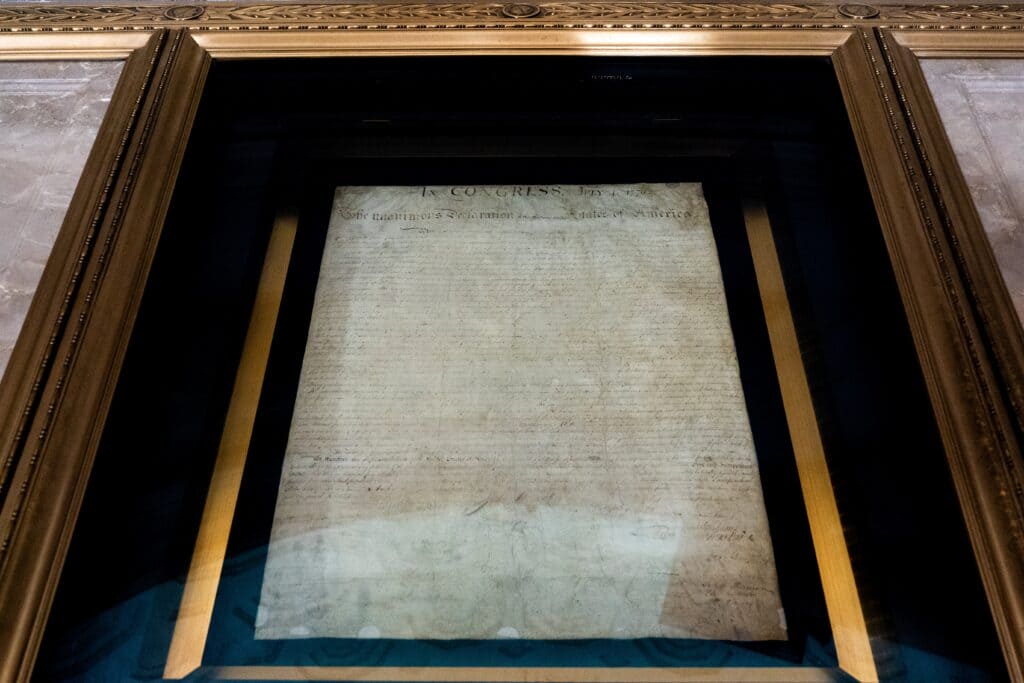
The Declaration of Independence had already planted the nation’s moral seed 11 years earlier by proclaiming that “all men are created equal” and endowed with unalienable rights. Those words represented humanity at its highest aspirations. Yet at the very moment those ideals were proclaimed, slavery remained woven into the fabric of the colonies. Women possessed few political rights. Indigenous nations were excluded from the American body politic. Property ownership determined participation. The ideals were universal; however, their application was painfully selective.
From its beginning, then, America possessed a remarkable duality.
It was simultaneously the most radical declaration of human equality the world had ever seen and a nation unable to extend that equality to everyone living within its borders.
This contradiction has often been described as hypocrisy. There is truth in that. But there is something even more complicated at work. America was founded not as a completed achievement but as an unfinished proposition. Its founding documents established an aspiration far larger than the society that first produced them. In doing so, they created a permanent moral tension between who Americans were and who they claimed they could become.
The word we became both promise and challenge that every generation has inherited by fate or design.
The Civil War was, at its heart, a violent disagreement over who belonged within the American “we.” Abraham Lincoln understood this profoundly. At Gettysburg, he turned not to the Constitution but to the Declaration’s promise that all are created equal, asking whether any nation conceived upon such principles could long endure. The war was fought not merely over territory or economics but over whether the nation’s definition of “we” would forever exclude millions because of race.
The abolition of slavery answered one question while opening countless others.
The Reconstruction Amendments expanded citizenship. Yet segregation emerged. The Constitution said “we,” but Jim Crow screamed “not you!”
Women organized, marched and demanded that the nation’s opening word finally include them politically. Native Americans fought for recognition as citizens within a country built upon lands that had once been theirs. Immigrants arriving from every continent sought not simply opportunity but admission into the American story itself. Labor movements insisted that economic dignity belonged inside the definition of citizenship. The Civil Rights Movement challenged a nation that celebrated liberty abroad while denying equal treatment at home.
Again and again, the question remained remarkably consistent.
Who belongs inside the word, the ostensible protected circle of the word, we?
Every expansion of American democracy has been an attempt to answer that question more generously than the generation before.
Yet, the struggle has never ended.
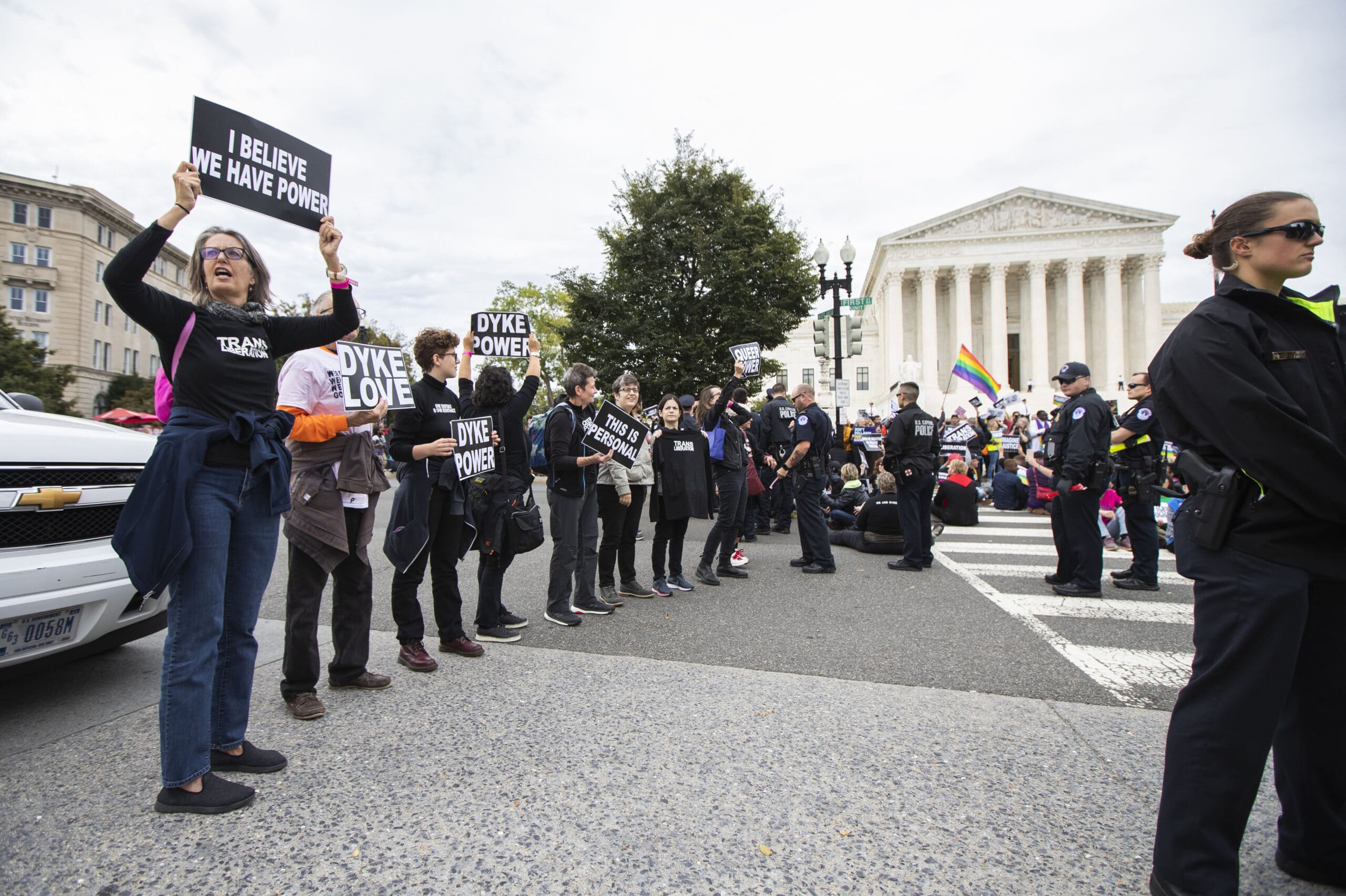
Today the debates have changed their vocabulary but not their substance. Immigration, voting rights, religious liberty, LGBTQ rights, racial justice, economic inequality, disability rights, artificial intelligence, DEI, citizenship and even access to education all circle back to the same foundational question. Whose interests matter? Whose voices count? Whose future deserves protection? In other words, who belongs within “We the People”?
Perhaps this perpetual disagreement frustrates us because we imagine unity as agreement. It is not.
Perhaps America’s founders, knowingly or not, created something different?
The Constitution does not define “we” with mathematical precision. It does not provide an exhaustive list of who to include. Instead, it establishes a framework through which each generation must wrestle with its own conscience. Accordingly, the ambiguity is not simply a flaw, it can also be understood as a source of extraordinary resilience.
Because the meaning of “we” has never been frozen, America has repeatedly found ways to enlarge it.
The nation’s greatest leaders have understood this instinctively.
Frederick Douglass challenged America not to abandon its founding ideals but to fulfill them. Susan B. Anthony and Sojourner Truth insisted women already belonged inside the Constitution’s promise. Martin Luther King Jr. spoke of the Declaration and Constitution as a promissory note yet to be fully redeemed. Labor leaders argued that farmworkers belonged within the circle of American dignity. Barack Obama said “. . . yes WE can.” Countless others — known and unknown — have devoted their lives not to replacing America’s founding principles but to widening the embrace of the word that begins them.
They understood that patriotism is not blind acceptance of who “we” have been. Patriotism is faithful commitment to who “we” might yet become.
This is America’s paradox.
The same nation capable of exclusion has also possessed an unmatched capacity for self-correction. The same Constitution once interpreted to tolerate slavery eventually became the instrument used to dismantle segregation. The same democracy that denied voting rights eventually expanded them. The same institutions that once excluded have often become vehicles for inclusion.
Progress has never been automatic. Every enlargement of “we” required courage, sacrifice, protest, persuasion, legislation, litigation and often blood. History moves because ordinary people refuse to accept that yesterday’s definition must become tomorrow’s destiny.
That may be the true genius of the American experiment. Our shared history necessitates a collective approach to a shared destiny defined by common ground.
Unlike nations built primarily upon ethnicity or ancestry, America has always rested upon an idea. Ideas are powerful precisely because they can grow. They invite interpretation. They demand renewal. They challenge every generation to ask whether its practices are worthy of its principles.
The Constitution begins with “We the People” not because the authors believed they had already perfected that community, but because they dared to imagine one. In this framing, we are all essential sparks in a grand design. The work of democracy has always been to make that imagination more real.
Perhaps the ultimate measure of America’s greatness will never be whether it has perfectly embodied its ideals. No nation has done so. Rather, its greatness lies in whether it continues to possess the humility to ask who has been left outside the circle and the courage to bring them in.
The first word of the Constitution remains unfinished.
Every election, every courtroom, every classroom, every place of worship, every neighborhood, every act of citizenship quietly asks us to complete its sentence.
“We” is not merely a description.
It is an invitation.
It calls every generation to widen the circle just enough that someone who once stood outside can finally say, without hesitation, qualification or presupposition, “We the People” includes me.
B.K. Fulton is an author, Tony Award-winning Broadway producer, former CEO of Verizon’s Mid-Atlantic region and producer of films and documentaries, including PBS’ “W.E.B. Du Bois: Rebel With A Cause.” He is a board member for The Joan Trumpauer Mulholland Foundation, an organization dedicated to civil rights education. Joan Trumpauer Mulholland participated in the 1961 Freedom Rides to Jackson and attended Tougaloo College. Through this foundation, Fulton helps support micro-scholarships and educational programs for HBCU students, including those in Mississippi. Fulton lives in Richmond, Virginia.