
Home Blog Page 96

Auditor Shad White says Legislature should raise pay floor for Mississippi’s assistant teachers

0

Abysmally low pay is driving Mississippi’s assistant teacher shortage, State Auditor Shad White said in a report. 

His office criticizes administrative costs and “outside-of-classroom” spending in the report, and recommends diverting that money to boost assistant teacher pay, which averages $22,840 a year in Mississippi. 

While it’s the first time he’s focused on assistant teachers, White, who is weighing a run for governor, has consistently drawn attention to education spending since he took office in 2018.

White first drew attention to outside-of-classroom spending in a 2019 report that includes examples such as district office salaries, campus and building maintenance and the production of school informational material. Previous reports from the auditor’s office have similarly encouraged districts to cut spending that doesn’t directly go to the classroom, on duplicative or unused equipment and administrative salaries. His predecessor had also criticized Mississippi’s spending on education administration.

Though he has no power over policy or appropriations, White proposed a bill last year that would mandate at least half of the state’s education dollars go toward teacher salaries. White has recently received criticism that some of his reports — including one for which he paid millions to a consultant — are aimed at his gubernatorial aspirations, rather than his job as auditor.

The new report is largely aimed at the Legislature and local school districts, a spokesperson for the auditor said. That’s because state law establishes the minimum salary for assistant teachers, not the Mississippi Department of Education. Districts can add to this base amount.

Advocates and some lawmakers have said for years that teacher assistants often get short shrift even when the Legislature raises pay for teachers.

The Legislature increased the minimum assistant teacher salary from $15,000 a year to $17,000 in 2022, but White is calling on lawmakers to raise the floor again. Raising the state’s average assistant teacher salary to the regional average would mean a $6,000 pay raise — a $67.3 million cost, the report says. 

“Assistant teachers are a vital part of Mississippi classrooms … many Mississippi students will suffer without classroom support from an assistant teacher,” the report reads. “Policymakers can build on Mississippi’s educational momentum by cutting runaway outside-the-classroom spending and reinvesting those dollars directly into classrooms—where they make the biggest difference.”

Assistant teachers in Mississippi are some of the lowest paid professionals in the state, according to data tracked by the Mississippi Department of Employment Security, and their salaries lag behind assistant teachers in almost every other state. Ample research shows that low pay discourages people from becoming teachers and drives them out of the profession. 

Mississippi requires that an assistant teacher be present in every kindergarten, first grade, second grade and third grade classroom. Though their specific duties vary by grade and classroom, they generally help manage students and assist with instruction.

Mississippi Department of Education data shows that there have been at least 500 vacant assistant teacher positions in the state annually since the 2021-2022 school year. 

The report notes a discrepancy of about $62,000 between average entry-level pay for assistant teachers and entry-level school administrators. 

“I don’t make enough to cover most of my expenses,” said a Cleveland School District assistant teacher, who spoke to Mississippi Today on the condition of anonymity out of fear of losing her job. “I live from check to check.”

She supports three kids on an annual salary of $21,000. Cleveland School District does not offer biweekly pay, so her paychecks have to stretch further. The longtime assistant teacher has left other school districts in the Mississippi Delta because they offered annual salaries of less than $20,000.

Now, she’s working on a master’s degree and studying for the Praxis exam, a test that teachers must pass in order to be certified, hoping to make a livable wage.
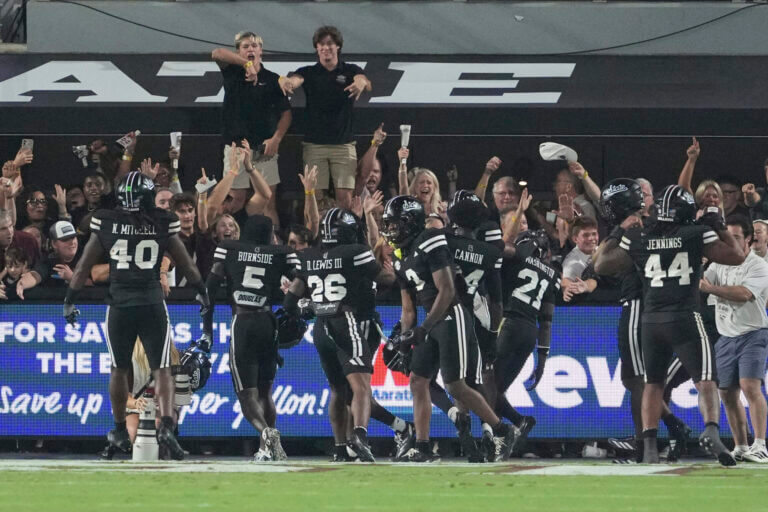
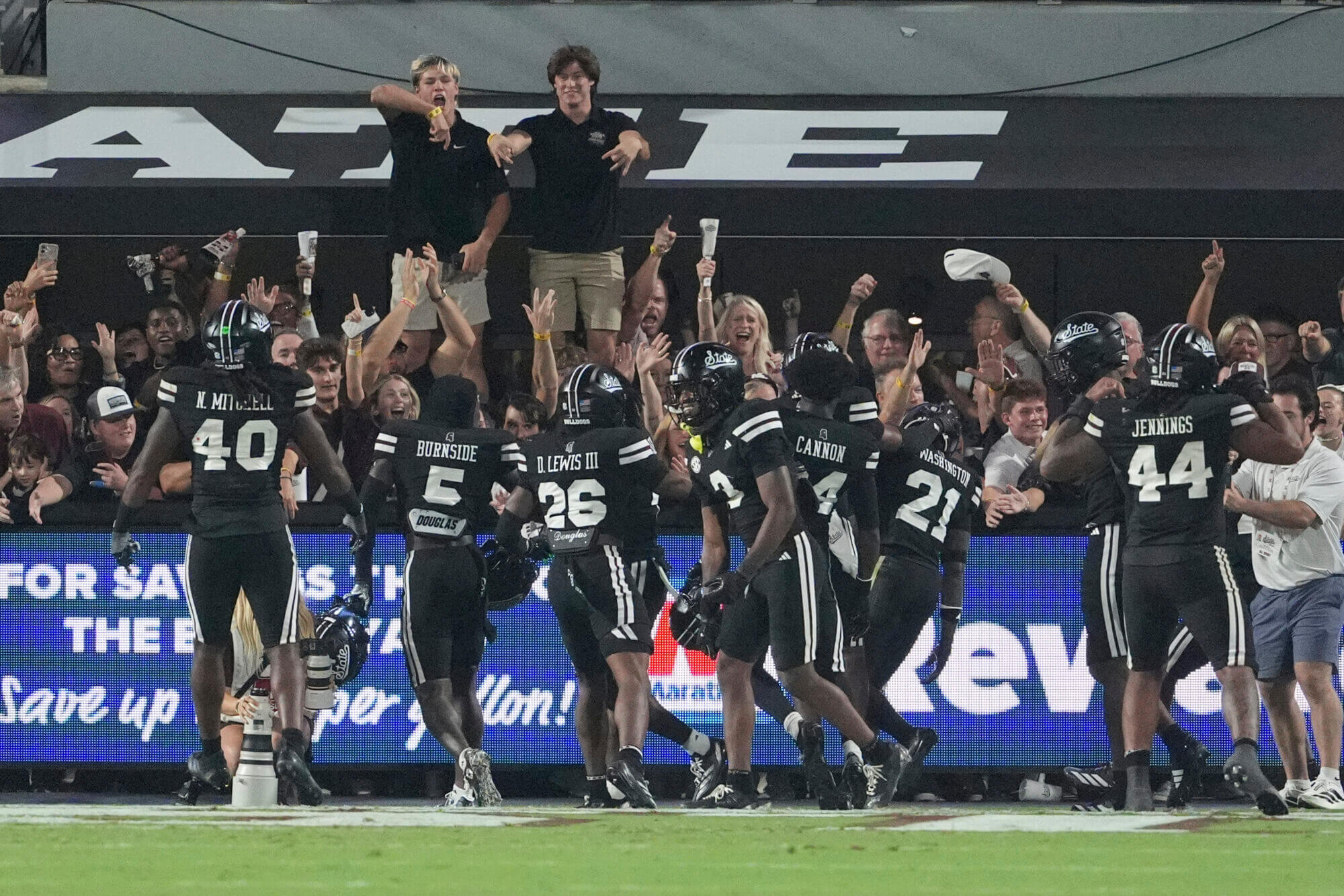
Mississippi State’s upset of No. 12 Arizona State tops a long day of college football

0

These weary eyes watched football — all or parts of four games — morning, noon and night Saturday. I have some thoughts.

Rick Cleveland

First, this: What does it say about college football when you watch game after game for nearly 12 hours, finally sleep, and your dreams are punctuated by TV timeouts?

It says, I believe, there are too dang many.

Other thoughts:

First up was San Jose State-Texas, one of any number of early season games when the visiting team, playing for a huge paycheck, is overmatched. San Jose State surely was. The attraction, of course, was Arch Manning, the young Texas quarterback with so many Mississippi connections. 

Young Manning was coming off his first meaningful college start — at defending national champion Ohio State, no less. That’s an incredibly daunting assignment for anyone, no matter pedigree and ability. Manning’s performance against the Buckeyes was uneven, as his stats showed: 17 of 30 passing for 170 yards, a touchdown and an interception, plus 38 yards rushing on 10 keeps. He showed both promise and at times uncertainty.

Fast forward to Saturday: After a slow start, Manning completed 19 of 30 for 295 yards and four touchdowns with one interception. At one point in the first half, he threw four touchdowns in slightly over five minutes of playing time. He ran for another touchdown, looking forever like his grandfather when he tucked the ball and took off. He missed some throws but hit far more than he missed.

Bottom line: He will only get better and better, as any young quarterback does with experience.


I didn’t even have to switch channels for the next leg of my football marathon: Ole Miss-Kentucky, a hard-fought 30-23 Ole Miss road victory.

Several takeaways:

• Similarly to Manning, Rebels quarterback Austin Simmons showed both promise and plenty room for improvement. Two interceptions helped dig the Rebels into a 10-0 hole on the road. But Simmons, displaying much poise for a 19-year-old, then helped them dig out of it, finishing 13 for 24 with the two interceptions and no touchdowns. Expect him to steadily improve.

• Meanwhile, running back Kewan Lacy, a sophomore transfer from Missouri, looks like the real deal. The Dallas native showed vision, speed and power in running for 138 yards and a touchdown on 28 carries.

• My biggest concern for Ole Miss was who was going to replace defensive tackle Walter Nolan, the NFL first rounder who was such a disruptive presence last season. Zxavian Harris, the Canton native and former Germantown standout, appears to be that dude. He was everywhere for the Rebels Saturday, a 6-foot-8, 330-pound force. His fourth quarter sack was one of the game’s biggest plays.

• Kudos also to backup quarterback Trinidad Chambliss, a transfer from Division II Ferris State, who filled in admirably and then some after Simmons suffered a fourth quarter injury. Playing before more partisans than he probably ever did in a full season at Ferris State, Chambliss led the Rebs to a game-clinching field goal on fourth quarter drive. His performance in the clutch was huge.

Don’t know what it is about Kentucky, but the Wildcats seem to play their best against Ole Miss. Bottom line: The 2025 Rebels did what the ’24 Rebels couldn’t, which is survive Kentucky.


Two TVs were necessitated to watch the second half of Ole Miss-Kentucky and the first half of Jackson State-Southern Miss, just the fourth time in history the two Mississippi schools have played one another. The Golden Eagles’ final winning margin, 38-20, is no indication whatsoever of how competitive this game was. Jackson State competed on even terms for most of the contest. T.C. Taylor’s Tigers appear a team that will once again dominate the SWAC and would be competitive in the Sun Belt. 

And Southern Miss, for the second straight week, appeared much improved in its first season under Charles Huff. Transfers from Huff’s Sun Belt champion Marshall team of a year ago were largely responsible for USM’s hard-won victory. Most notably, quarterback Braylon Braxton gives the Eagles a winner at the most important position on the field. Braxton threw for 214 yards and three touchdowns with no interceptions, and he ran for 20 more yards. He will give the Eagles a fighting chance to win every remaining game on the schedule. On the flip side, USM could lose to any team left on its schedule. 

Jackson State battled the Eagles evenly on both sides of the line of scrimmage. Southern Miss was plus-two in turnovers — and blocked a kick for a touchdown — and that was the difference.

A crowd of more than 32,000, fairly evenly divided, attended a well-played game that, clearly, should happen more often.


We save the best for last: Mississippi State’s scintillating 24-20 victory over No. 12 Arizona State. We must wait until later in the season to know whether Arizona State, a playoff team a year ago, is as good as projected. This we do know: Jeff Lebby’s Bulldogs are a whole lot better than almost everyone thought they would be. State, winner of just two games in 2024, will be favored to be 4-0 headed into a Sept. 27 home game with Tennessee.

The Bulldogs had looked much improved a week earlier in a 34-17 road victory over Southern Miss. They proved it a week later, taking a 17-0 lead against the Sun Devils and then fighting off a furious second half rally.

Lebby dipped heavily into the transfer portal and spent millions of NIL dollars to fix what was clearly broken. All indications are that he spent wisely. It helps immensely that Blake Shapen, a terrific, resourceful player, is back and healthy at quarterback. State would not have been 2-10 last year if Shapen had remained fit throughout.

The Bulldogs benefitted immensely from a raucous, cowbell-clanging crowd that had Arizona State unnerved from the get-go.

“Awesome environment,” ASU coach Kenny Dillingham said afterward. “They were loud, really loud, but that’s what college football is supposed to be.”

Dillingham’s team had dominated the second half, taking its first and only lead, 20-17, on a chip shot field goal with 98 seconds remaining.

State needed only 68 of those ticks to respond on Shapen’s 58-yard touchdown strike to Brenen Thompson. Given the situation, it seemed hard to comprehend the Devils did not have a safety playing deep in the middle of the field on the third and nine play. But they didn’t, and they paid dearly.

Thus, it seemed the Bulldogs and their 50,000-plus fans experienced an emotional release of the frustrations of the death of a coaching legend and two long seasons of subsequent futility in a goalpost-dismantling postgame celebration. 

Yes, and a long, but eventful day in Mississippi football was done.


It wasn’t on TV, but Delta State’s 41-9 victory over North Greenville (S.C.) University deserves mention. That’s because, with the victory, Delta State coach Todd Cooley becomes the winningest coach in DSU’s 95 years of football. Cooley, the 19th coach in DSU history, has won 77 games and lost 46 as coach of the Statesmen. He passes the late Horace McCool, for whom the DSU football stadium is named, who was 76-58 over 13 seasons.

Marshall Ramsey: Duff on Easter Island

0

Tommy Duff, a billionaire likely candidate for Mississippi governor, again stopped short of offering many specifics on his platform at a recent speech in Rankin County.

READ MORE: Tommy Duff tries to stake out ‘outsider’ identity in first political speech

Podcast: Coast senator says Mississippi woefully behind other states in storm mitigation program for home and business owners

0

Sen. Scott DeLano, a Republican from Biloxi, says Mississippi has done little to help protect South Mississippians from storm damages and residents statewide from rising insurance costs in the 20 years since Hurricane Katrina. He says Mississippi lags behind other Gulf states, in part, because the state insurance commissioner has not pushed for a robust mitigation program. DeLano also addresses his recent social media post blasting a state Republican think tank leader’s comments that many viewed as racist.

3 bewezen strategieën om je winkansen te vergroten bij Winnitt Casino

0

3 bewezen strategieën om je winkansen te vergroten bij Winnitt Casino

Wanneer je online wilt gokken, is vertrouwen het eerste wat je zoekt. Niet elke site biedt dezelfde veiligheid. In Nederland moet een casino een geldige vergunning hebben van de Kansspelautoriteit. Winnitt Casino casino officieel beschikt over zo’n vergunning, waardoor je erop kunt rekenen dat je geld veilig is.

In vergelijking met andere platforms biedt Winnitt Casino online een snellere uitbetaling en een klantenservice die 24/7 beschikbaar is. Terwijl sommige sites weken nodig hebben voor een uitbetaling, verwerkt deze site winsten vaak binnen 24 uur.

Maar wat maakt dit casino echt uniek? Ten eerste is de Winnitt Casino casino NL-versie volledig in het Nederlands beschikbaar. Dat betekent dat alle regels, bonusvoorwaarden en support in jouw taal staan. Ten tweede zorgt de licentie ervoor dat er strenge controles zijn op eerlijk spel.

Heb je je ooit afgevraagd waarom sommige spelers sneller succes hebben dan anderen? Het antwoord ligt vaak in de betrouwbaarheid van de site die ze gebruiken. Met Winnitt Casino hoef je je geen zorgen te maken over verborgen kosten of oneerlijke spelregels.

Kortom, voordat je je eerste storting doet, controleer altijd of het casino een officiële licentie heeft, snel betaalt en goede support biedt. Deze site tickt al die vakjes.

2. Strategie #1: Maak optimaal gebruik van bonussen en free spins

Bonussen zijn meer dan alleen extra geld; ze zijn een kans om je speelduur te verlengen zonder extra kosten. Winnitt Casino casino biedt een welkomstpakket dat bestaat uit een stortingsbonus en gratis spins. Het is belangrijk om de inzetvereisten (wagering) goed te lezen voordat je begint.

Hoe pak je dit aan?

  1. Registreer op de site en bevestig je e‑mail.
  2. Doe je eerste storting en claim de welkomstbonus.
  3. Activeer de free spins in de geselecteerde slots.

Door de bonus te gebruiken, kun je meer rondes spelen en daarmee je kans op een grote winst verhogen. Let op: sommige bonussen gelden alleen voor bepaalde spellen.

Tips voor het maximaliseren van bonussen:
– Kies spellen met een hoge RTP (Return to Player).
– Speel eerst op lage inzetten om de wagering sneller te behalen.
– Houd de vervaldatum van de bonus in de gaten; laat geen gratis spins onbenut.

Wat als je de bonus niet goed gebruikt? Dan verlies je potentiële winst en betaal je onnodig extra. Door de bonusstrategieën van Winnitt Casino te volgen, haal je meer uit elke euro die je inzet.

3. Strategie #2: Kies games met hoge RTP en lage volatiliteit

Niet alle casinospellen zijn gelijk. Sommige slots betalen vaker kleine bedragen (lage volatiliteit), terwijl andere zelden uitbetalen maar grote sommen (hoge volatiliteit). Voor de meeste spelers is een combinatie van hoge RTP en lage volatiliteit ideaal.

Voorbeeldgames op deze site

  • Starburst – RTP 96,1 %, lage volatiliteit.
  • Gonzo’s Quest – RTP 95,97 %, medium volatiliteit, maar goede bonusrondes.
  • Mega Joker – RTP 99 % bij maximale inzet, lage volatiliteit.

Door te kiezen voor spellen met een RTP boven 95 % vergroot je je kansen op winst op de lange termijn. Bovendien betekent een lage volatiliteit dat je bankroll minder snel leegraakt.

Stappen om de juiste game te vinden:
– Open de spelcatalogus op Winnitt Casino casino NL.
– Filter op “RTP” of “volatiliteit”.
– Lees de spelbeschrijvingen voor bonusfuncties.

Vraag je je af waarom sommige spelers altijd winnen? Ze kiezen bewust spellen met gunstige statistieken. Door deze kennis toe te passen, speel je slimmer en niet harder.

4. Strategie #3: Beheer je bankroll en speel verantwoord

Een goede bankroll‑managementstrategie is de sleutel tot langdurig plezier. Stel een budget vast voordat je gaat spelen en houd je eraan. Zo voorkom je dat je meer uitgeeft dan je je kunt veroorloven.

Praktische checklist

  • Stel een dagbudget in, bijvoorbeeld €50.
  • Kies een inzetlimiet per ronde, zoals €5.
  • Gebruik de “Self‑Exclusion”‑optie als je merkt dat je te veel speelt.

Voorbeeld van een eenvoudige formule:
Dagbudget ÷ Aantal speelsessies = Maximale inzet per sessie

Met een budget van €50 en drie sessies per dag, mag je per sessie niet meer dan €16,66 inzetten.

Verantwoord gokken betekent ook dat je pauzes neemt. Na elke winst of verlies, stop een paar minuten en evalueer je spel.

Did You Know? De Kansspelautoriteit verplicht alle Nederlandse casino’s, waaronder Winnitt Casino casino officieel, om tools voor limietinstelling en zelfuitsluiting aan te bieden. Deze tools helpen spelers hun speelgedrag onder controle te houden.

5. Hoe Winnitt Casino zich onderscheidt: een samenvatting en checklist

Na het doornemen van de drie strategieën, is het tijd om te zien waarom Winnitt Casino de ideale partner is voor zowel beginners als gevorderde spelers.

Pros and Cons

Pros:
– Licentie van de Kansspelautoriteit (volledig legaal).
– Snelle uitbetalingen, vaak binnen 24 uur.
– Uitgebreid aanbod van bonussen en free spins.
– Mobiel platform dat soepel werkt op smartphones.
– Transparante spelinformatie (RTP, volatiliteit).

Cons:
– Sommige bonussen hebben hogere wagering-eisen.
– Niet alle spellen zijn beschikbaar in de gratis demo‑versie.
– Live dealer‑sectie kan soms beperkt zijn in taalopties.

Checklist om direct te beginnen

  • ✅ Controleer de licentie en veiligheid van deze site.
  • ✅ Registreer en claim de welkomstbonus.
  • ✅ Kies een slot met hoge RTP en lage volatiliteit.
  • ✅ Stel een budget en inzetlimiet in.
  • ✅ Maak gebruik van de 24/7 klantenservice voor vragen.

Met deze lijst heb je een helder stappenplan. Door de strategieën toe te passen en te profiteren van de sterke punten van Winnitt Casino casino, vergroot je je winkansen en geniet je van een veilige speelervaring. Vergeet niet altijd verantwoord te spelen en plezier boven winst te stellen. Veel succes!

Northeast Mississippi speaker and worm farmer played key role in Coast recovery after Hurricane Katrina

0

The 20th anniversary of Hurricane Katrina slamming the Mississippi Gulf Coast has come and gone, rightfully garnering considerable media attention.

But still undercovered in the 20th anniversary saga of the storm that made landfall on Aug. 29, 2005, and caused unprecedented destruction is the role that a worm farmer from northeast Mississippi played in helping to revitalize the Coast.

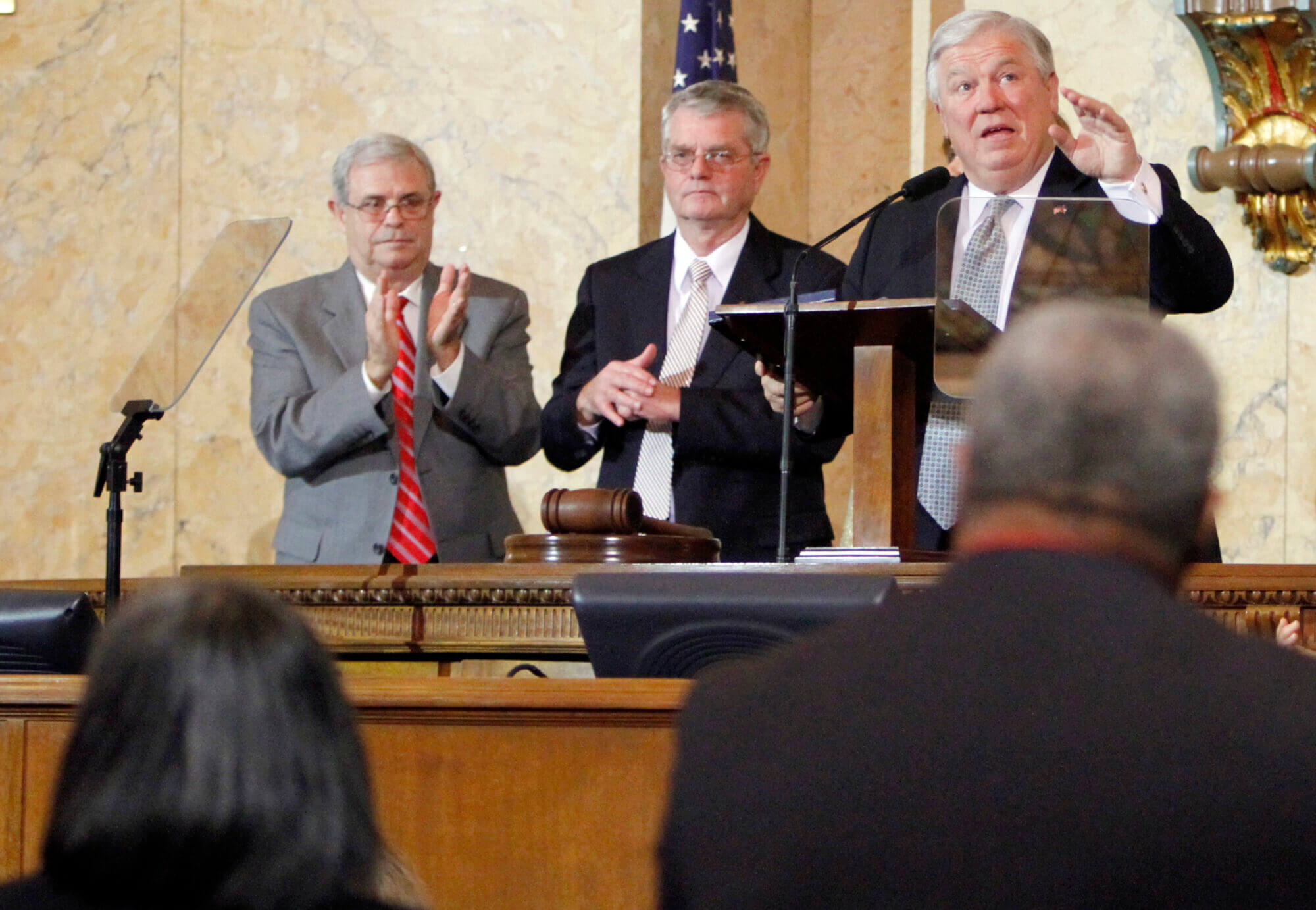
House Speaker Billy McCoy, who died in 2019, was a worm farmer from the Prentiss, not Alcorn County, side of Rienzi — about as far away from the Gulf Coast as one could be in Mississippi.

McCoy grew other crops, but a staple of his operations was worm farming. 

Early after the storm, the House speaker made a point of touring the Coast and visiting as many of the House members who lived on the Coast as he could to check on them.

But it was his action in the forum he loved the most — the Mississippi House — that is credited with being key to the Coast’s recovery.

Gov. Haley Barbour had called a special session about a month after the storm to take up multiple issues related to Katrina and the Gulf Coast’s survival and revitalization. The issue that received the most attention was Barbour’s proposal to remove the requirement that the casinos on the Coast be floating in the Mississippi Sound.

Katrina wreaked havoc on the floating casinos, and many operators said they would not rebuild if their casinos had to be in the Gulf waters. That was a crucial issue since the casinos were a major economic engine on the Coast, employing an estimated 30,000 in direct and indirect jobs.

It is difficult to fathom now the controversy surrounding Barbour’s proposal to allow the casinos to locate on land next to the water. Mississippi’s casino industry that was birthed with the early 1990s legislation was still new and controversial.

Various religious groups and others had continued to fight and oppose the casino industry and had made opposition to the expansion of gambling a priority.

Opposition to casinos and expansion of casinos was believed to be especially strong in rural areas, like those found in McCoy’s beloved northeast Mississippi. It was many of those rural areas that were the homes to rural white Democrats — now all but extinct in the Legislature but at the time still a force in the House.

So, voting in favor of casino expansion had the potential of being costly for what was McCoy’s base of power: the rural white Democrats.

Couple that with the fact that the Democratic-controlled House had been at odds with the Republican Barbour on multiple issues ranging from education funding to health care since Barbour was inaugurated in January 2004.

Barbour set records for the number of special sessions called by the governor. Those special sessions often were called to try to force the Democratic-controlled House to pass legislation it killed during the regular session.

The September 2005 special session was Barbour’s fifth of the year. For context, current Gov. Tate Reeves has called four in his nearly six years as governor.

There was little reason to expect McCoy to do Barbour’s bidding and lead the effort in the Legislature to pass his most controversial proposal: expanding casino gambling.

But when Barbour ally Lt. Gov. Amy Tuck, who presided over the Senate, refused to take up the controversial bill, Barbour was forced to turn to McCoy.

The former governor wrote about the circumstances in an essay he penned on the 20th anniversary of Hurricane Katrina for Mississippi Today Ideas.

“The Senate leadership, all Republicans, did not want to go first in passing the onshore casino law,” Barbour wrote. “So, I had to ask Speaker McCoy to allow it to come to the House floor and pass. He realized he should put the Coast and the state’s interests first. He did so, and the bill passed 61-53, with McCoy voting no.

“I will always admire Speaker McCoy, often my nemesis, for his integrity in putting the state first.”

Incidentally, former Rep. Bill Miles of Fulton, also in northeast Mississippi, was tasked by McCoy with counting, not whipping votes, to see if there was enough support in the House to pass the proposal. Not soon before the key vote, Miles said years later, he went to McCoy and told him there were more than enough votes to pass the legislation so he was voting no and broached the idea of the speaker also voting no.

It is likely that McCoy would have voted for the bill if his vote was needed.

Despite his no vote, the Biloxi Sun Herald newspaper ran a large photo of McCoy and hailed the Rienzi worm farmer as a hero for the Mississippi Gulf Coast.

IHL board seeks outside firm for Jackson State University president search

0

Mississippi Institutions of Higher Learning board of trustees is seeking proposals from executive search firms to assist with Jackson State University’s president search

The state’s college governing board which oversees and selects the historically Black university’s leaders said Wednesday that the firm will help identify and recruit candidates for the search process. The news comes three weeks after officials made public plans to launch a search committee, where all 12 trustee members will serve. 

Marcus Thompson resigned as university president in May, the third person to depart from that post in seven years. The state’s college governing board did not explain why he or his two predecessors left the post nor has it shared with the public details about its next steps for picking a permanent leader for the school. 

Alumni and supporters of the historically Black university have raised questions to the board about its opaque process, calling for a fair, transparent national leadership search for the university.  

The IHL board’s formal request for proposals can be viewed on its website. The deadline for submission is Sept. 12. 

In 2023, IHL hired Academic Search, an executive headhunting firm, for $115,000 after Thomas Hudson, Thompson’s predecessor, resigned. The board also paid the firm $85,000 for the Delta State search. 

The initial contract with Academic Search for Delta State was $130,000, but it was amended after the board cut the search short and chose Daniel Ennis. The board also used the firm for University of Southern Mississippi search. 

Founded in 1877, Jackson State, Mississippi’s largest HBCU, is located in the state’s capital city. The university serves more than 6,000 students with 520 faculty and offers 90 academic programs.

PSC moves toward placing Holly Springs utility into receivership

0

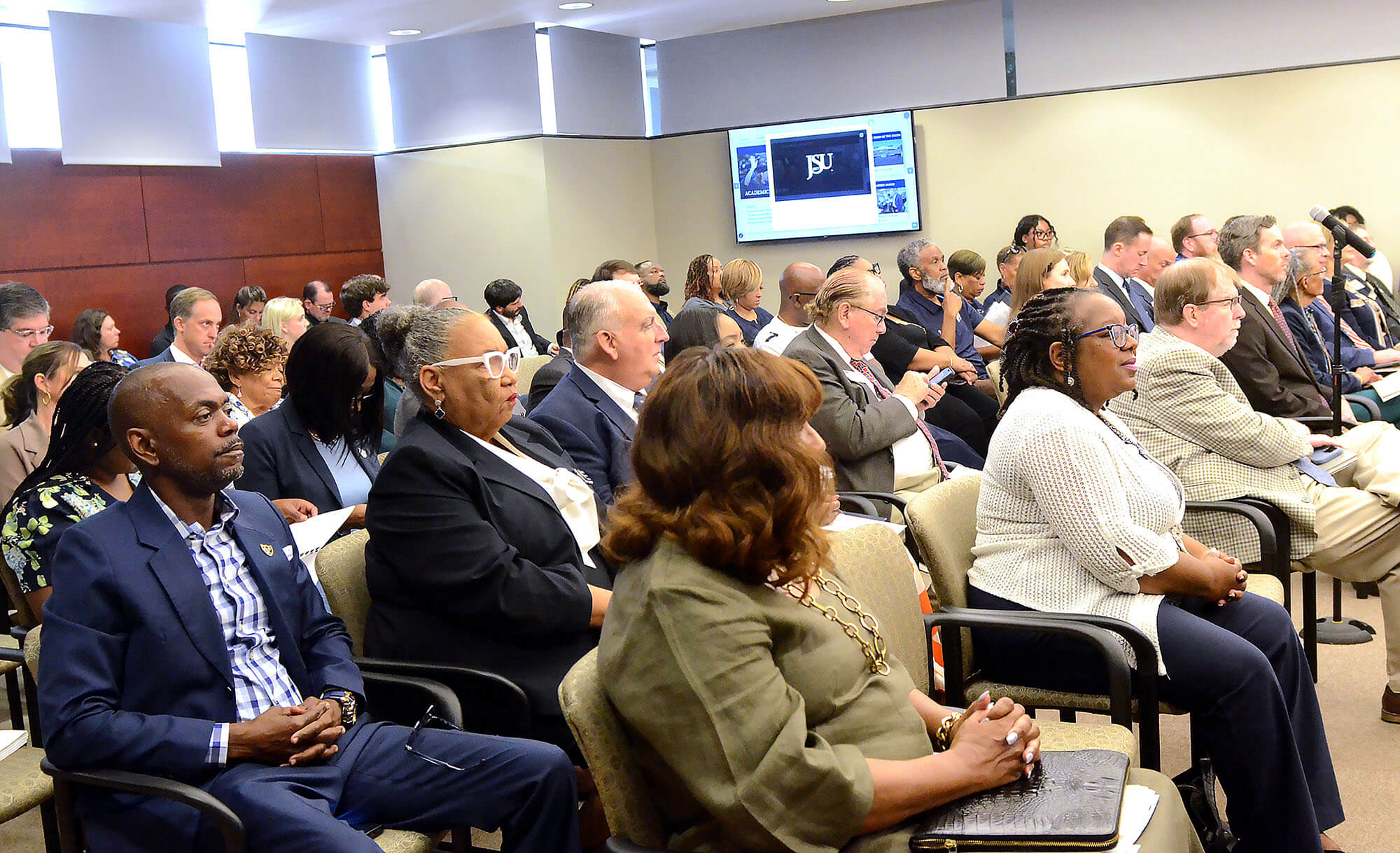
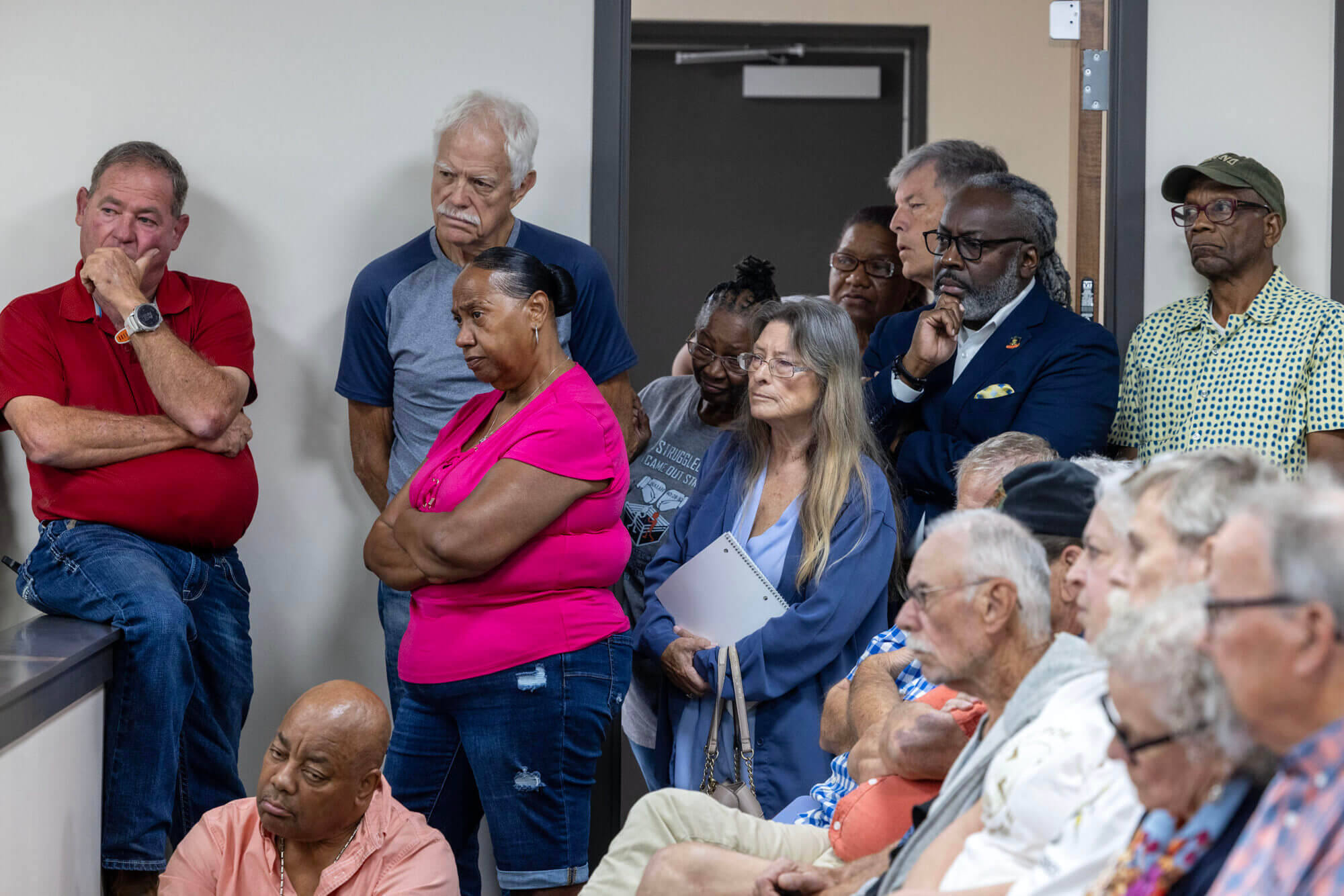
NEW ALBANY — After five hours in a courtroom where attendees struggled to find standing room, the Mississippi Public Service Commission voted to petition a judge to put the Holly Springs Utility Department into a receivership.

The PSC held the hearing Thursday about a half hour drive west from Holly Springs in New Albany, known as “The Fair and Friendly City.” Throughout the proceedings, members of the PSC, its consultants and Holly Springs officials emphasized there was no precedent for what was going on.

Concerned residents listen during a Public Service Commission hearing on whether Holly Springs should retain control of its utility department, in New Albany, Miss., on Thursday, Sept. 4, 2025. Credit: Eric Shelton/Mississippi Today

The city of Holly Springs has provided electricity through a contract with the Tennessee Valley Authority since 1935. It serves about 12,000 customers, most of whom live outside the city limits. While current and past city officials say the utility’s issues are a result of financial negligence over many years, the service failures hit a boiling point during a 2023 ice storm where customers saw outages that lasted roughly two weeks as well as power surges that broke their appliances.

Those living in the service area say those issues still occur periodically, in addition to infrequent and inaccurate billing.

“I moved to Marshall County in 2020 as a place for retirement for my husband and I, and it’s been a nightmare for five years,” customer Monica Wright told the PSC at Thursday’s hearing. “We’ve replaced every electronic device we own, every appliance, our well pump and our septic pumps. It has financially broke us.

“We’re living on prayers and promises, and we need your help today.”

John Keith Perry, Holly Springs City attorney, speaks during a Public Service Commission hearing in New Albany, Miss., on Thursday, Sept. 4, 2025. Credit: Eric Shelton/Mississippi Today

Another customer, Roscoe Sitgger of Michigan City, said he recently received a series of monthly bills between $500 and $600.

Following a scathing July report by Silverpoint Consulting that found Holly Springs is “incapable” of running the utility, the three-member PSC voted unanimously on Thursday to determine the city isn’t providing “reasonably adequate service” to its customers. That language comes from a 2024 state bill that gave the commission authority to investigate the utility.

The bill gives a pathway for temporarily removing the utility’s control from the city, allowing the PSC to petition a chancery judge to place the department into the hands of a third party. The PSC voted unanimously to do just that.

Residents listen during a Public Service Commission hearing on whether Holly Springs should retain control of its utility department, in New Albany, Miss., on Thursday, September 4, 2025. Credit: Eric Shelton/Mississippi Today

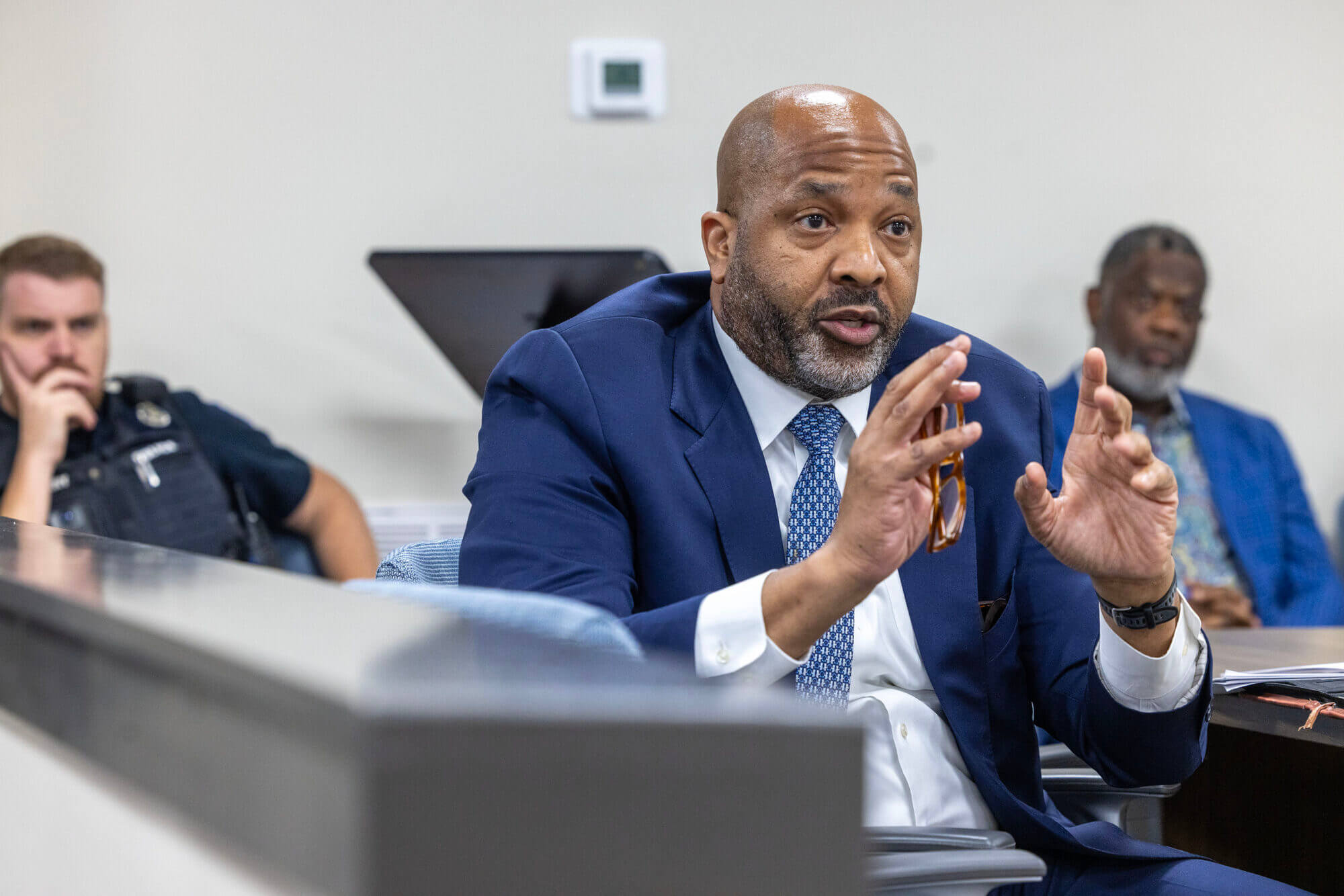
Thursday’s hearing gave the commission its first chance to direct official questions at Holly Springs representatives. Newly elected Mayor Charles Terry, utility General Manager Wayne Jones and City Attorney John Keith Perry fielded an array of criticism from the PSC. In his rebuttal, Perry suggested that any solution — whether a receivership or selling the utility — would take time to implement, and requested 24 months for the city to make incremental improvements. Audience members shouted, “No!” as Perry spoke.

“We are in a crisis now,” responded Northern District Public Service Commissioner Chris Brown. “To try to turn the corner in incremental steps is going to be almost impossible.”

Roscoe Stigger, a Marshall County resident, expresses how the Holly Springs Utility Department’s issues have personally affected him during a Mississippi Public Service Commission hearing in New Albany, Miss., on Thursday, Sept. 4, 2025. Credit: Eric Shelton/Mississippi Today

It’s unclear how much it would cost to fix the department’s long list of ailments. In 2023, TVPPA — a nonprofit that represents TVA’s local partners — estimated Holly Springs needs over $10 million just to restore its rights-of-way, and as much as $15 million to fix its substations. The department owes another $10 million in debt to TVA as well as its contractors, Brown said.

“The city is holding back the growth of the county,” said Republican Sen. Neil Whaley of Potts Camp, who passionately criticized the Holly Springs officials sitting a few feet away. “You’ve got to do better, you’ve got to realize you’re holding these people hostage, and it’s not right and it’s not fair… They are being represented by people who do not care about them as long as the bill is paid.”

In determining next steps, Silverpoint Principal Stephanie Vavro told the PSC it may be hard to find someone willing to serve as receiver for the utility department, make significant investments and then hand the keys back to the city. The 2024 bill, Vavro said, doesn’t limit options to a receivership, and alternatives could include condemning the utility or finding a nearby utility to buy the service area.

Monica Wright, a Marshall County resident, talks about her frustrating experiences with the Holly Springs Utility Department during a Mississippi Public Service Commission hearing in New Albany, Miss., on Thursday, Sept. 4, 2025. Credit: Eric Shelton/Mississippi Today

Answering questions from Central District Public Service Commissioner De’Keither Stamps, Vavro said it’s unclear how much the department is worth, adding an engineer’s study would be needed to come up with a number.

Terry, who reminded the PSC he’s only been Holly Springs’ mayor for just over 60 days, said there’s no way the city can afford the repair costs on its own. The city’s median income is about $47,000, roughly $8,000 less than the state’s as a whole.

Retired military officer: USM has capacity to help train next Merchant Marine generation

0

Editor’s note: This essay is part of Mississippi Today Ideas, a platform for thoughtful Mississippians to share fact-based ideas about our state’s past, present and future. You can read more about the section here.


Throughout my career in the Marine Corps, logistics has always underpinned every operation — from training exercises to overseas combat tours to planning for future conflicts. Weapons, material, fuel and other supplies that our troops rely upon are delivered across thousands of miles of ocean, principally by ship.

I can assure you, the 70-ton M1A1 tanks I commanded in Fallujah in 2007-08 did not arrive by cargo plane. These vital war supplies, along with troop transport, are delivered by the U.S. Merchant Marine.

Not to be confused with the Marine Corps of which I served, the Merchant Marine is composed of civilian mariners and both commercial and federal-owned ships. In peacetime, the Merchant Marine carries domestic and international cargo. During conflict, the mariners become a critical component of the military logistics system. Unfortunately, the Merchant Marine is facing mounting challenges that threaten its ability to fulfill this role.

Maritime commerce plays an essential role in the global economy and the economic security of the United States.

Compared to China, our principal maritime competitor, the U.S. Merchant Marine fleet is smaller and is rapidly aging beyond its service limits. Compounding this issue is a dwindling number of shipyards, a shrinking shipbuilding workforce and a significant shortfall of qualified civilian mariners. This erosion poses a direct threat to the readiness and resilience of our defense and commercial supply chains.

Lt. Col.Robert L. Burton Credit: Courtesy photo

The University of Southern Mississippi, however, is uniquely positioned to help address this challenge. With a strong affiliation with the maritime industry, the proximity of its Gulf Coast campus to naval bases, and the state’s only ocean engineering program, USM could take a transformative step by establishing the Mississippi Maritime Academy.

Civilian mariners are vital to the nation’s sealift capacity, which ensures the rapid transportation of military and humanitarian supplies during crises. The Merchant Marine also supports global commerce, with roughly 90% of world trade moving by sea. However, the U.S. pool of licensed mariners is aging, with many nearing retirements, and the recruitment pipeline is not keeping pace.

The Department of Transportation’s Maritime Administration (MARAD) and the Department of Defense have repeatedly warned of this national security risk.

In response, MARAD published its “Mariner Workforce Strategic Plan” in 2023 (revised in 2025) and has designated 32 Centers of Excellence for Domestic Maritime Workforce Training and Education to help prepare students for various roles in the maritime industry. Notably, two of the inaugural centers are Mississippi Gulf Coast Community College and Hinds Community College — evidence that Mississippi is already contributing to maritime workforce development.

Currently, new merchant marine officers are sourced through the U.S. Merchant Marine Academy, as well as six state maritime academies in Texas, California, Michigan, Maine, Massachusetts and New York. These state academies receive limited federal assistance through the Navy-sponsored Strategic Sealift Midshipman Program (SSMP), as well as training vessels to support their unique licensing and curriculum requirements. Similar to the traditional Naval Reserve Officer Training Corps (NROTC), the SSMP is tailored to develop a cadre of officers to operate merchant ships as naval auxiliaries and are commissioned as Strategic Sealift Officers in the Navy Reserve.

Yet even these combined efforts are not enough to meet the nation’s mariner needs. This poses a risk not only to the commercial sector, but to the Merchant Marine role as a military logistics reserve in conflict.

USM’s Gulf Coast campus offers a compelling solution. Its marine and ocean engineering programs provide a technical foundation that aligns perfectly with the needs of the maritime industry. Additionally, its proximity to key Gulf Coast naval installations, such as Naval Construction Battalion Center Gulfport and Naval Air Station Pensacola, presents opportunities for collaboration with the U.S. Navy and Coast Guard.

Furthermore, the Gulf Coast region supports a robust maritime industry, including shipbuilding, port operations and offshore energy. According to the Mississippi Development Authority, the maritime industries represent 22% of the local workforce in Mississippi’s coastal counties. Collaborations with these industries could enhance practical training opportunities for midshipmen.

This proposal is not without historical precedent. During World War II, the Merchant Marine Cadet Corps trained thousands of mariners at Pass Christian, Mississippi. The Pass Christian Cadet School, home of the Gulf Coast Cadet Corps, made a pivotal contribution to the Allied forces’ sealift capacity during the war. However, it was shuttered in 1950.

Reviving that legacy at USM by designating the Gulf Coast campus as the Mississippi Maritime Academy would honor Mississippi’s past while answering a strategic need.

Establishing a state maritime academy at USM would require coordination among the university, industry partners, state legislators and MARAD.

The Maritime Academy Act of 1958 outlines federal support eligibility, including requirements like mandatory Coast Guard licensing exams before graduation and accepting at least 10% out-of-state students. The governor may also request the assignment of Navy, Coast Guard or Maritime Service personnel as instructors and request access to a training vessel.

USM has the location, expertise and industry partnerships to lead the way. By leveraging these existing strengths, it can help secure America’s maritime future, strengthen its regional economy and contribute meaningfully to national defense.

Now is the time to act.


Robert L. Burton is a future warfare strategist, retired Marine Corps officer and military fiction writer. A Mississippi native, born and raised in Newton County, he was commissioned from the U.S. Naval Academy and received master’s degrees from U.S. Army’s School of Advanced Military Studies, U.S. Army War College and the University of Mississippi.

1942: Charles Jackson French saved 15 sailors during WWII

0

Sept. 5, 1942

Portrait of Charles Jackson French saluting in U.S. Navy uniform
Charles Jackson French. Credit: U.S. Navy

Charles Jackson French, a 22-year-old mess attendant aboard the USS Gregory, rescued 15 sailors during the Battle of Guadalcanal.

Four years before the U.S. entered World War II, he enlisted in the U.S. Navy and served as an attendant — one of the only positions open to Black Americans. And when the Japanese attacked Pearl Harbor, he reenlisted.

Nine months later, three Japanese destroyers opened fire on the USS Gregory, killing 24 and injuring many others. When French saw injured shipmates drifting toward enemy fire, he tied a rope around his waist and dove into the dark water. He swam through the night, dragging the raft of injured shipmates through shark-infested waters. More than six hours later, a plane spotted them, and they were rescued.

French received a letter of commendation for his heroic act, but no medals.

Now his heroism is being recognized. The Naval Base in San Diego has renamed its rescue swimmer training pool after him. He has been posthumously awarded the Navy and Marine Corps Medal, and now the Navy plans to name a destroyer after him.

French’s nephew, Roscoe Harris, called the story of his uncle “an American story. … He cared about his fellow sailors. He cared about them when the Navy was segregated. He saved those white sailors because they needed saving.”