Lost+Found Coffee Company @ 248 South Green Street, Tupelo,MS. inside Relics in Downtown Tupelo. Open Monday through Saturday from 10:00am till 6:00pm.
With most any restaurant or coffee house, it’s a balance between atmosphere, menu, and know how. For a coffee shop, Lost & Found has it going on!
You could spend the better part of a day just strolling through both floors of the antique building looking at all the treasures. When your ready for a coffee break, the knowledgeable baristas can help you choose the perfect pick me up!
They have everything from a classic cup of joe to the creamiest creation you could imagine! From pour overs to cold brews. From lattes, mochas, to cappuccino’s, Lost & Found Coffee Company has got ya covered!
So the next time you want to hunt for lost treasures, or find the perfect cup of coffee, Lost & Found Coffee Company has got ya covered! See y’all there!
Visit my blog for events, contests, new restaurants, LOCAL Favorites, and their FAMOUS foods!
Help us grow our community @ Eating Out With Jeff Jones * visit our page * Click community * Invite friends * Like and share this post
Message me If you would like to have your restaurant, menu, and favorite foods featured in my blog. Over 18,000 local Foodies would love to see what you have to offer!
Do you thrive on the unexpected? Are you waiting for the next fire to crop up?
Have you ever noticed that you can plan something so intricately and you are still going to catch the glitches when life throws you a curve ball? It is one of the beauties of life that we can never prepare for. The unexpected. The only difference is our response to the unexpected. Do we have a knee jerk reaction that finds us swerving to gain back control of our life? Or do we instead just go with the flow and decide to embrace the scenic route life decided to take us on? Our response to life can cause us more stress or we can just enjoy it for what it is in that moment of time. I used to thrive on the unexpected. It was part of my career for many years. The never knowing what “fire” was going to sprout up that day and how I was going to need to put it out. Even this week as we launched our newest book in my publishing company. I thought I had it all planned out only to run into major “hiccups” within 72 hours of the launch. I could either stress out or take it in stride.
Slow and Steady
As my dad retired I watched him take a different approach to life than I had ever seen him take before. I mean, all you have to do is climb up in the cab of his king ranch Ford pick-up and see he is a changed man. He drives slower than anyone should even be allowed to drive out on the roads these days. He knows how to drive, so don’t go yelling at him next time you are stuck behind him. Trust me, my mom does enough yelling for all of us at him about that! He just takes life these days. His sentiments are that he lived in the fast lane his whole life. Rushing to be on time to work, rushing to come home to his family, the constant busy we get entangled with as adults…now, he doesn’t have to be busy and he is going to enjoy that. Truth is, I can’t even be mad at him for that. Now that I am an adult out here rushing from one thing to the next, I totally could use some driving twenty miles per hour in my life some days. Took me getting to nearly forty to even be able to say that though.
The lesson in his wisdom can be heard by all. Some things we lose it over won’t even amount to anything five years from now, yet we gave them so much energy in the moment. All the things we think are so important that we must do and do now. Most will not really matter years from now, yet we poured our soul into them. What would change if we took the time to just enjoy life? To just flow with things as they happened? When hit with something we didn’t expect, we embraced it instead of fighting it? What would happen? I dare say we might have more peace? I probably would be a lot calmer. I probably wouldn’t lose my temper near as much. I probably wouldn’t have anxiety or stress on the daily. I would probably take time to enjoy life more. I certainly wouldn’t yell at the slow driver in front of me.
What about you? Next time you get behind someone driving slowly…take back the name calling and curse words. Maybe take back all of the assumptions that they don’t know how to drive. Maybe use it as a reminder to take a moment, roll down your window, soak in the sunshine. I can promise you that wherever the heck you are going, you will still get there. Maybe that person figured out life and you can use their wisdom too. If they are driving a blue king ranch Ford truck, I can assure you that he is just enjoying his day and he would want you to enjoy yours too. Matter of fact, I wish I had listened to his wisdom a lot more in my earlier days instead of waiting until now.
Here is a plain, searchable text version (most other versions we found were Images or PDF files) of City Of Tupelo Executive Order 20-018. Effective Monday June 29th at 6:00 PM
The following Local Executive Order further amends and supplements all previous Local Executive Orders and its Emergency Proclamation and Resolution adopted by the City of Tupelo, Mississippi, pertaining to COVID-19. All provisions of previous local orders and proclamations shall remain in full force and effect.
LOCAL EXECUTIVE ORDER 20-018
The White House and CDC guidelines state the criteria for reopening up America should be based on data driven conditions within each region or state before proceeding to the next phased opening. Data should be based on symptoms, cases, and hospitals. Based on cases alone, there must be a downward trajectory of documented cases within a 14-day period or a downward trajectory of positive tests as a percent of total tests within a 14-day period. There has been no such downward trajectory in the documented cases in Lee County since May 18, 2020.
Hospital numbers are not always readily available to policymakers; however, from information that has been maintained and communicated to the City of Tupelo, the Northeast Mississippi Medical Center is near or at their capacity for treating COVID-19 inpatients over the past two weeks without reopening additional areas for treating COVID-19 patients. The City of Tupelo is experiencing an increase in the number of cases of COVID-19. The case count 45 days prior to the date of this executive order was 77 cases. That number increased within 15 days to 107, and today, the number is 429 cases. The City of Tupelo is experiencing increases of 11.7 cases a day. This is not in conformity with the guidelines provided of a downward trajectory of positive tests. By any metric available, the City of Tupelo may not continue to the next phase of reopening.
Governor Tate Reeves in his Executive Order No. 1492(1)(i)(1) authorizes the City of Tupelo to implement more restrictive measures than currently in place for other Mississippians to facilitate preventative measures against COVID-19 thereby creating the downward trajectory necessary for reopening.
That the Tupelo Economic Recovery Task Force and North Mississippi Medical Center have formally requested that the City of Tupelo adopt a face covering policy.
In an effort to support the Northeast Mississippi Health System in their response to COVID-19 and to strive to keep the City of Tupelo’s economy remaining open for business, effective at 6:00 a.m. on Monday, June 29, 2020, all persons who are present within the jurisdiction of the City of Tupelo shall wear a clean face covering any time they are, or will be, in contact with other people in indoor public or business spaces where it is not possible to maintain social distance. While wearing the face covering, it is essential to still maintain social distance being the best defense against the spread of COVID-19. The intent of this executive order is to encourage voluntary compliance with the requirements established herein by the businesses and persons within the jurisdiction of the City of Tupelo.
It is recommended that all indoor public or business spaces require persons to wear a face covering for entry. Upon entry, social distancing and activities shall follow guidelines of the City of Tupelo and the Governor’s executive orders pertaining to particular businesses and business activity.
Persons shall properly wear face coverings ensuring the face covering covers the mouth and nose,
1. Signage should be posted by entrances to businesses stating the face covering requirement for entry. (Available for download at www.tupeloms.gov).
2. A patron located inside an indoor public or business space without a face covering will be asked to leave by the business owners if the patron is unwilling to come into compliance with wearing a face covering
3. Face coverings are not required for:
a. People whose religious beliefs prevent them from wearing a face covering. b. Those who cannot wear a face covering due to a medical or behavioral condition. c. Restaurant patrons while dining. d. Private, individual offices or offices with fewer than ten (10) employees. e. Other settings where it is not practical or feasible to wear a face covering, including when obtaining or rendering goods or services, such as receipt of dental services or swimming. f. Banks, gyms, or spaces with physical barrier partitions which prohibit contact between the customer(s) and employee. g. Small offices where the public does not interact with the employer. h. Children under twelve (12). i. That upon the formulation of an articulable safety plan which meets the goals of this
Executive Order businesses may seek an exemption by email at covid@tupeloms.gov
FACE COVERINGS DO NOT HAVE TO BE MEDICAL MASKS OR N95 MASKS. A BANDANA, SCARF, T–SHIRT, HOME–MADE MASKS, ETC. MAY BE USED. THEY MUST PROPERLY COVER BOTH A PERSON‘S MOUTH AND NOSE.
Those businesses that are subject to regulatory oversight of a separate state or federal agency shall follow the guidelines of said agency or regulating body if there is a conflict with this Executive Order.
Additional information can be found at www.tupeloms.gov COVID-19 information landing page.
Pursuant to Miss. Code Anno. 833-15-17(d)(1972 as amended), this Local Executive Order shall remain in full effect under these terms until reviewed, approved or disapproved at the first regular meeting following such Local Executive Order or at a special meeting legally called for such a review.
The City of Tupelo reserves its authority to respond to local conditions as necessary to protect the health, safety, and welfare of its citizens.
Honeyboy and Boots are a husband and wife, guitar and cello, duo with a unique style that is all their own. Their sound embodies Americana, traditional folk, alt country, and blues with harmonies and a hint of classical notes.
Drew Blackwell, a true Southerner raised in the heart of the black prairie in Mississippi. First picked up the guitar at fourteen, he was greatly influenced by his Uncle Doug who taught him old country standards and folk classics. Later on in high school, he was mentored and inspired to write (and feel) the blues by Alabama blues artist Willie King. (Willie King is credited for bringing together the band The Old Memphis Kings.)
Drew has placed 3rd in the 2019 Mississippi Songwriter of the Year contest with his song “Waiting on A Friend” and made it to the semi finalist round on the 2019 International Songwriting Competition with his song “Accidental Hipster.”
Honeyboy (Drew) can also be found belting out those blues notes as the lead vocalist for the Old Memphis Kings and begins everyday with a hot cup of black coffee!
Courtney Blackwell (Kinzer) grew up in Washington State and comes from a talented musical family. She began playing cello at the age of three taking lessons from the cello bass professor Bill Wharton at the University of Idaho. Her mother was most influential in her progression of technique, tone quality, and ear training. Since traveling around much of the South, she has enjoyed focusing on the variety of ways the cello is used in ensembles. When she plays, you will feel those groovy bass lines making way to soaring leads create an emotional and magical connection between you and her music.
Courtney enjoys working in the studio, collaborating with artists and continuing to challenge the way cello is expressed.
They have opened for such acts as Verlon Thompson, The Josh Abbott Band, Cary Hudson (of Blue Mountain), and Rising Appalachia.
Honeyboy And Boots have performed at a variety of venues and festivals throughout the southeast, including the 2015 Pilgrimage Fest in Franklin, TN; Musicians Corner in Nashville; the Mississippi Songwriters Festival (2015-2018); and the Black Warrior Songwriting Fest in Tuscaloosa, AL (2018-2019). They also came in 2nd place at the 2015 Gulf Coast Songwriters Shootout in Orange Beach, FL.
They have two albums, Mississippi Duo and Waiting On a Song, which are available on their website, iTunes, Amazon, and CD Baby.
The duo also just released their fourth recording: a seven-song EP called Picture On The Wall, which was recorded with Anthony Crawford (Williesugar Capps, Sugarcane Jane, Neil Young). It is now available on Spotify, Itunes, Google Music, and CD Baby.
Who or what would you say has been the greatest influence on your music?
My Uncle Doug, because he began to teach me guitar and introduced me to a lot of great older country music.
Favorite song you’ve composed or performed and why?
“We Played On” because it’s about our family reunions, where we would sit around and play guitar and share songs.
If you could meet any artist, living or dead, which would you choose and why?
Probably Willie Nelson. He’s my all time favorite.
Most embarrassing thing ever to happen at a gig?
A guy fell on top of me while I was performing. I was sitting down. He busted a big hole in my guitar.
What was the most significant thing to happen to you in the course of your music?
Getting to perform at Musicians Corner in downtown Nashville. Probably the biggest crowd we’ve ever been in front of.
If music were not part of your life, what else would you prefer to be doing?
I don’t know, maybe fishing or golf.
Is there another band or artist(s) you’d like to recommend to our readers who you feel deserves attention?
Our friends, Sugarcane Jane. They are a husband/wife duo from the Gulf Shores area. Great people and great artist.
Audio articles are automated for accessibility. Humans wrote and edited the story; however, this audio has not been reviewed for accuracy and may contain errors. Read more about how we use AI to increase access to our reporting.
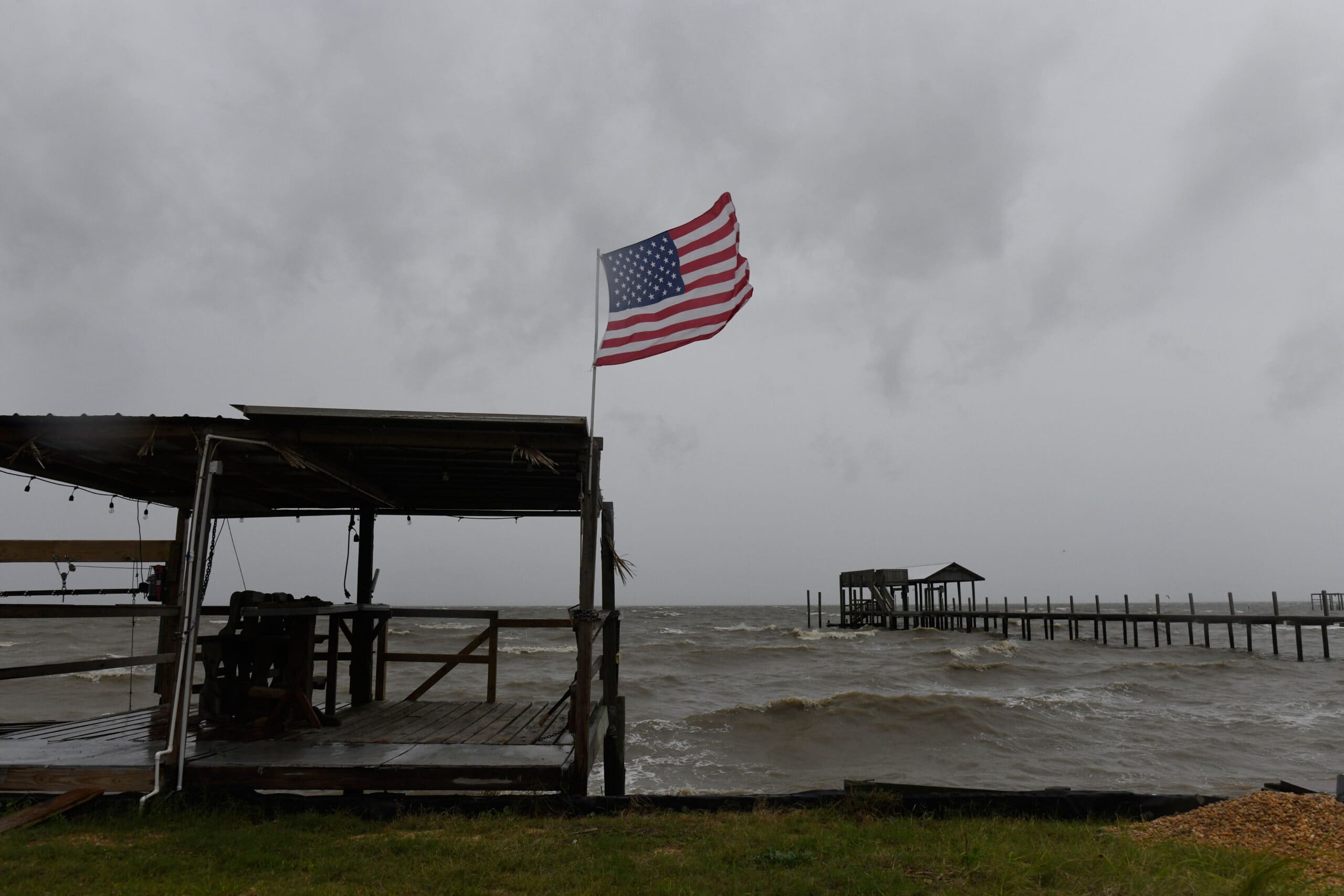
GULF BREEZE, Fla. (AP) — Hurricane Isaias crashed into the U.S. Gulf Coast as a dangerous Category 2 storm on Friday, lashing communities with wind and rain and threatening to flood low-lying areas where residents were advised to evacuate ahead of its arrival.
The first hurricane of the Atlantic season made landfall near Destin, Florida, the Miami-based National Hurricane Center said. It had maximum sustained winds of 105 mph (169 kph). The storm weakened to just below major hurricane status before it came ashore.
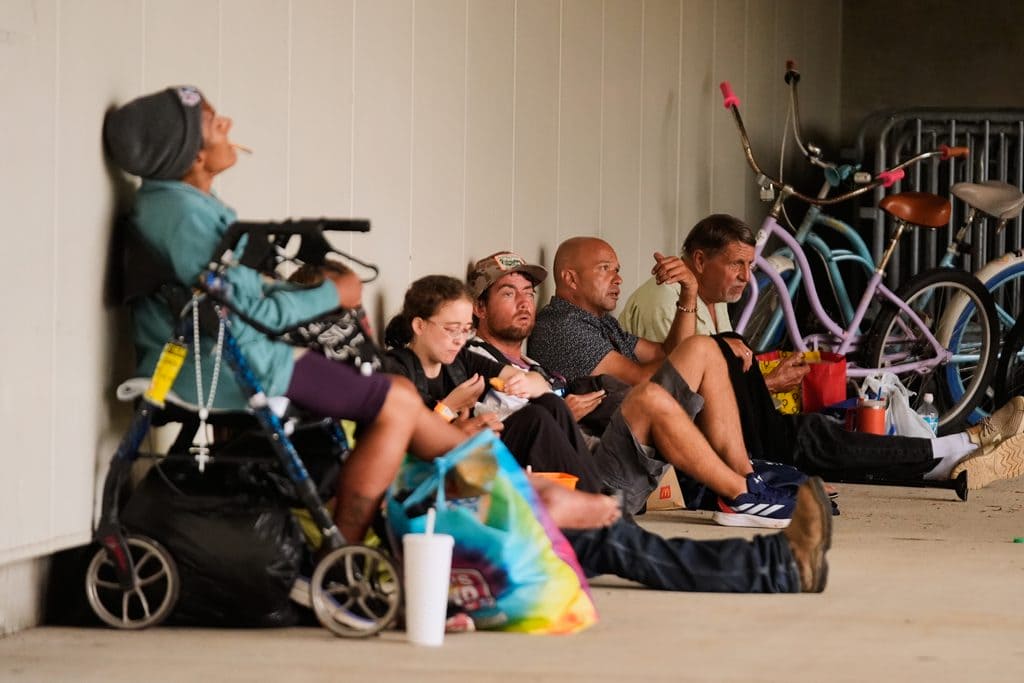
People sit outside an evacuation shelter as Hurricane Isaias approaches Pensacola, Fla., Friday, Oct. 9, 2026. (AP Photo/Gerald Herbert)
High winds whipped palm trees and thundering waves crashed along the beaches of the Florida Panhandle and Alabama on Friday as Isaias approached.
“The storm is here. Buckle down at this point. Don’t be getting out on the roads,” Florida Gov. Ron DeSantis said at a news conference, adding that flash flooding would be a hazard “throughout the region.”
Forecasters warned of a significant storm surge, damaging winds, flooding and possibly even tornadoes before the storm loses steam as it moves inland and delivers strong winds and rain well north into Atlanta.
Hurricane-force winds lashed the Gulf shoreline in the low-lying coastal area known for powdery white sand beaches that are dotted with vacation homes, waterfront bars and seafood shacks.
In Mobile, Alabama, officials reported downed trees and power lines, while Emerald Coast Utilities Authority, which serves parts of Florida, issued a boil-water notice for its customers.
More than 400,000 customers in Florida and Alabama were without power Friday evening, according to poweroutage.com.
Residents in Panama City, Florida, braved the rain while filling sandbags Friday to protect their houses.
“I mean, it’s just the nature of the beast. It’s Florida,” said Corliss Stone, who works for the fire department.
Many will brave Isaias at home
One of the biggest concerns is a storm surge that could be as high as 6 to 9 feet (1.8 to 2.7 meters), according to the hurricane center. Places most at risk include Florida’s Pensacola Beach and the Gulf Islands National Seashore.
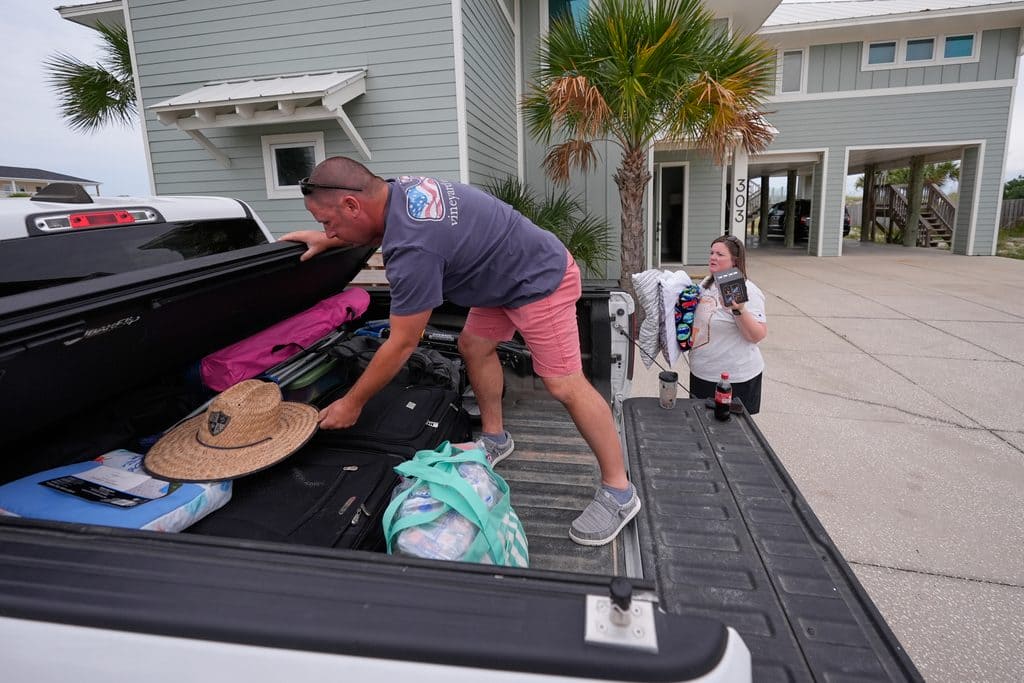
Daniel and Brand Harp, of Lebanon Tenn., here on vacation, pack their belongings to evacuate in the morning as Hurricane Isaias approaches Pensacola Beach, Fla., Thursday, Oct. 8, 2026. (AP Photo/Gerald Herbert)
Anne Petzold, who lives with her husband in the Florida beach community of Gulf Breeze, said everyone in their neighborhood planned to ride out the storm. The couple installed hurricane shutters and picked up anything in their yard that could turn into a projectile.
“Everybody does what they can do, everybody asks if they need help — they ask for help, they offer help. All good,” she said. “It’s just another adventure.”
Several counties announced mandatory evacuations while Mobile, Alabama, imposed a curfew beginning Friday evening until morning.
In a sign of how serious the warnings are, dozens of Waffle Houses in the Florida Panhandle were closed, according to the company’s website. The beloved Southern breakfast chain is known for staying open through severe weather and often is a measuring stick of a storm’s severity.
Kelsei Frazier, a Florida-native living in Pace who is no stranger to hurricanes, knows all about the Waffle House Index.
“We joke because if Waffle House is still open, then you know it’s not a bad hurricane, but all the Waffle Houses that I know of within at least a normal range from us are closed,” said Frazier. “Which is a pretty big deal.”
DeSantis warned residents to expect power outages, gasoline shortages and closures of bridges and highways.
The state’s National Guard deployed about 5,000 soldiers and airmen to help with the response, and search and rescue teams were ready to respond, while some prisons evacuated inmates.
The whole region could get soaked
Isaias is expected to weaken and be downgraded to a tropical storm by Saturday afternoon, the center said.
Still, heavy rain is forecast as it moves inland, with 4 to 8 inches (10 to 20 centimeters) or even more expected through the weekend from southern Alabama to southwestern Georgia.
Jason Coffey boards up a convenience store at a gas station as Hurricane Isaias approaches Pensacola Beach, Fla., Friday, Oct. 9, 2026. (AP Photo/Gerald Herbert)
Isaias, which is the first hurricane to hit the eastern U.S. since Milton tore up the Gulf Coast of Florida in 2024, also is expected to bring heavy rain and potential flooding to much of the Southeast over the weekend, and then to parts of the Midwest and Northeast into Monday.
Isaias grounds flights but likely to miss oil hubs
The storm grounded most Friday flights at several Panhandle airports, including all flights into and out of Destin-Fort Walton Beach Airport. President Donald Trump, meanwhile, scrapped his plans to attend Saturday’s football game between the University of Georgia and the University of Alabama in Tuscaloosa. He said he didn’t want to disrupt the emergency response.
Isaias was expected to miss the oil industry’s biggest hubs along the Gulf Coast, but fuel prices could rise if power outages shut down refineries for processing crude, industry experts said.
On Dauphin Island, a barrier island off the Alabama coast, Mayor Jeff Collier said he didn’t expect major damage, “but at the same time, these things are very fickle and a little jog here or there, or some last-minute increase in strength — we just have to be prepared for the worst.”
Meanwhile in the Pacific, Hurricane Simon became a Category 2 storm on Friday and was expected to strengthen further before making landfall in Mexico this weekend.
Tropical Storm Rachel was also expected to bring heavy winds and rain to northern Mexico and Southern California over the weekend.
Audio articles are automated for accessibility. Humans wrote and edited the story; however, this audio has not been reviewed for accuracy and may contain errors. Read more about how we use AI to increase access to our reporting.
Years before immigration officers arrested a Mississippi Valley State University basketball player last week, the school he previously played for said it warned him to correct his immigration status — contradicting his attorney’s earlier claim that the student athlete didn’t know his visa had expired.
But Qingfang Pang, the 6-foot-9-inch player born in China, received warnings as early as two years ago — when his previous college, Monroe University in New York, advised him to restore his status after learning it had lapsed in September 2024, spokesperson Jacqueline Ruegger told Mississippi Today.
His attorney, former professional basketball player Marcus Session, said Friday the information was news to him.
“It doesn’t seem like they’re forthcoming with the right information because they continue to allow a student who’s on an expired visa to attend for two years after they supposedly warned him,” Session told Mississippi Today. “This doesn’t make sense.”
Pang previously met with another attorney at Monroe’s recommendation to discuss his expired status, Ruegger said. But Session said Pang told him that he didn’t know his visa had expired until MVSU recently alerted him of the issue.
In the years since Monroe reportedly warned Pang to correct his immigration status, he continued to play basketball for the Monroe University Mustangs, before joining the Delta Devils this academic year. Under federal immigration law, if Pang were on the main international F-1 student visa, his records should have listed that he had officially transferred to MVSU before classes started.
Although MVSU’s semester kicked off in August, Ruegger and Session said the university didn’t contact Monroe for Pang’s international-student records until this week — after immigration authorities had already arrested him. MVSU did not communicate a reason for the potential delay in its request, according to Ruegger. Mississippi Valley did not immediately respond to a request for comment.
Before Mississippi Today learned of the potential delay, MVSU spokesperson Donnell Maxie said the school’s international student office “wouldn’t delay” on paperwork.
“We’re not going to play with that,” Maxie said. “I mean, we’re not a big university with a lot of resources, so we’re just getting by as it is.”
Ruegger said Monroe had been waiting to transfer Pang’s international-student records ever since the basketball player graduated with his associate’s in sports management in the spring, when he informed the school that he planned to continue his studies elsewhere. But for months, she said, Monroe never received word that he had enrolled at another university.
After MVSU requested his records this week, Monroe transferred them, according to Ruegger.
“The responsibility for being in status rests 100% with the international student, not with the institution,” she said. “We were ready to transfer the record, as soon as we were informed that it had some place to go.”
Pang is now in the custody of Immigration and Customs Enforcement at the Richwood Correctional Center in Louisiana, according to the agency’s website. The Department of Homeland Security confirmed that ICE arrested Pang on Sept. 29.
The student athlete was detained when he tried to fly to New York to meet with his sponsor, a family friend, to correct his status, Session previously told WJTV. DHS wrote in an email Friday that Pang’s immigration status expired two years before, in September 2024 — a day after he started his first year playing basketball at Monroe.
“He legally entered the U.S. on November 17, 2023 on a temporary basis not to exceed September 5, 2024, but illegally overstayed,” DHS wrote. “This administration will not ignore the rule of law.”
Audio articles are automated for accessibility. Humans wrote and edited the story; however, this audio has not been reviewed for accuracy and may contain errors. Read more about how we use AI to increase access to our reporting.
Al Rankins Jr. will continue leading Mississippi’s public university system for another four years under a new contract approved by the state’s college board.
The Mississippi Institutions of Higher Learning Board of Trustees in August unanimously approved increasing Rankins’ annual salary by about 5% to $463,050. His last contract was approved by trustees October 2023, IHL spokesman John Sewell said.
The contract took effect Sept. 1 and ends Aug. 31, 2030.
IHL Board President Steve Cunningham said in an emailed statement that the trustees completed a formal performance evaluation of Rankins before voting to extend his contract. They did not publicly discuss the matter.
Sewell declined to answer questions from Mississippi Today about whether trustees conducted a salary comparison with higher education leaders in other states. IHL policy requires trustees to determine the commissioner’s pay annually. The policy also requires the commissioner to provide regional and national information about executive compensation to help the board make salary decisions.
Kim Hunter Reed, Louisiana’s commissioner of higher education, is paid $451,297 a year, according to the Louisiana Department of Administration website. Texas Higher Education Commissioner Wynn Rosser earns about $325,000 a year, according to a government salary database compiled by The Texas Tribune.
Rankins “has been a strong leader for our state’s university system since 2018 and we look forward to his continued leadership in the years to come,” Cunningham said through Sewell.
Rankins said, through Sewell, that under his leadership, the university system has maintained a strong credit rating, navigated the COVID-19 pandemic and secured funding to support operations.
Mississippi public universities also face challenges including financial pressures, changes tied to artificial intelligence and an expected decline in the number of high school graduates, Rankins said.
“I am working each day with our trustees and institutional executive officers to address these challenges while also continuing our efforts to create new opportunities that will have a positive influence on our state,” Rankins said.
The IHL board hired Rankins in 2018, making him the state’s first Black higher education commissioner. He succeeded Glenn Boyce, who is now chancellor of the University of Mississippi.
As commissioner, Rankins advises trustees on matters pertaining to Mississippi’s eight public universities and the University of Mississippi Medical Center. He also supervises and evaluates the universities’ top leaders.
Audio articles are automated for accessibility. Humans wrote and edited the story; however, this audio has not been reviewed for accuracy and may contain errors. Read more about how we use AI to increase access to our reporting.
As the cause of Curtis Flowers‘ death is under investigation, an attorney who represented him during multiple appeals, eventually leading to his exoneration and release from death row, said his former client struggled with diabetes the entire time he knew him – a condition that isn’t easy to manage in prison.
Flowers, 56, was found dead Wednesday at his family home in Winona, leaving behind siblings, a daughter and grandchildren. Family members were not immediately available for comment Friday.
Flowers was convicted of four counts of capital murder but maintained his innocence through the string of trials that led to a landmark U.S. Supreme Court case about racial bias in jury selection. Decades of legal work led to his release from prison in 2019.
State Public Defender Andre de Gruy, who was part of the team that represented Flowers during his third through sixth trials, said Flowers enjoyed meeting law school students and interns and talking about the relationship between a client and their attorney.
“He had more experience in the courtroom and legal system than they will ever have,” de Gruy said.
De Gruy said he talked with Flowers a few weeks ago. They were laughing together and catching up about life. They have kept in touch over the years after Flowers returned home.
When they last spoke, Flowers was trying to find a job. He wasn’t sure what type of work he could pursue, de Gruy said, because Flowers didn’t have access to vocational training while on death row.
De Gruy said he and Flowers talked about the possibility of Flowers doing clerical work at the State Public Defender’s Office, but Flowers would have had to relocate to Jackson. He didn’t seem interested in moving, de Gruy said. In Winona, Flowers was close to family and was able to care for his father until his death last year.
“He felt like he was able to pay back some of the love his family had shown to him,” de Gruy said.
In July 1996, Flowers was accused of fatally shooting four people at Tardy Furniture in Winona. Then-Montgomery County District Attorney Doug Evans spent nearly two decades prosecuting Flowers six times, each time resulting in a hung jury or a guilty verdict later overturned by the Mississippi Supreme Court.
The sixth trial resulted in a death sentence. The state court heard and denied appeals twice, and Flowers’ case went to the U.S. Supreme Court.
In 2018, the American Public Media podcast “In the Dark” investigated Flowers’ case and presented evidence of a history of racial bias in jury selection by Evans and evidence that suggested someone else may have committed the shootings.
Flowers’ case went before the U.S. Supreme Court twice, and in June 2019, the court decided 7-2 to overturn Flowers’ conviction, finding that Evans intentionally struck Black people from serving on the jury that convicted Flowers, who was Black.
Afterward, Evans recused himself and the state attorney general’s office stepped in. Months later in December 2019, Circuit Judge Joey Loper dismissed Flowers’ capital murder charges with prejudice on a motion by the attorney general’s office.
Flowers left death row and the Mississippi State Penitentiary at Parchman, but he spent some time in other jails and prisons before he was released and returned home.
Audio articles are automated for accessibility. Humans wrote and edited the story; however, this audio has not been reviewed for accuracy and may contain errors. Read more about how we use AI to increase access to our reporting.
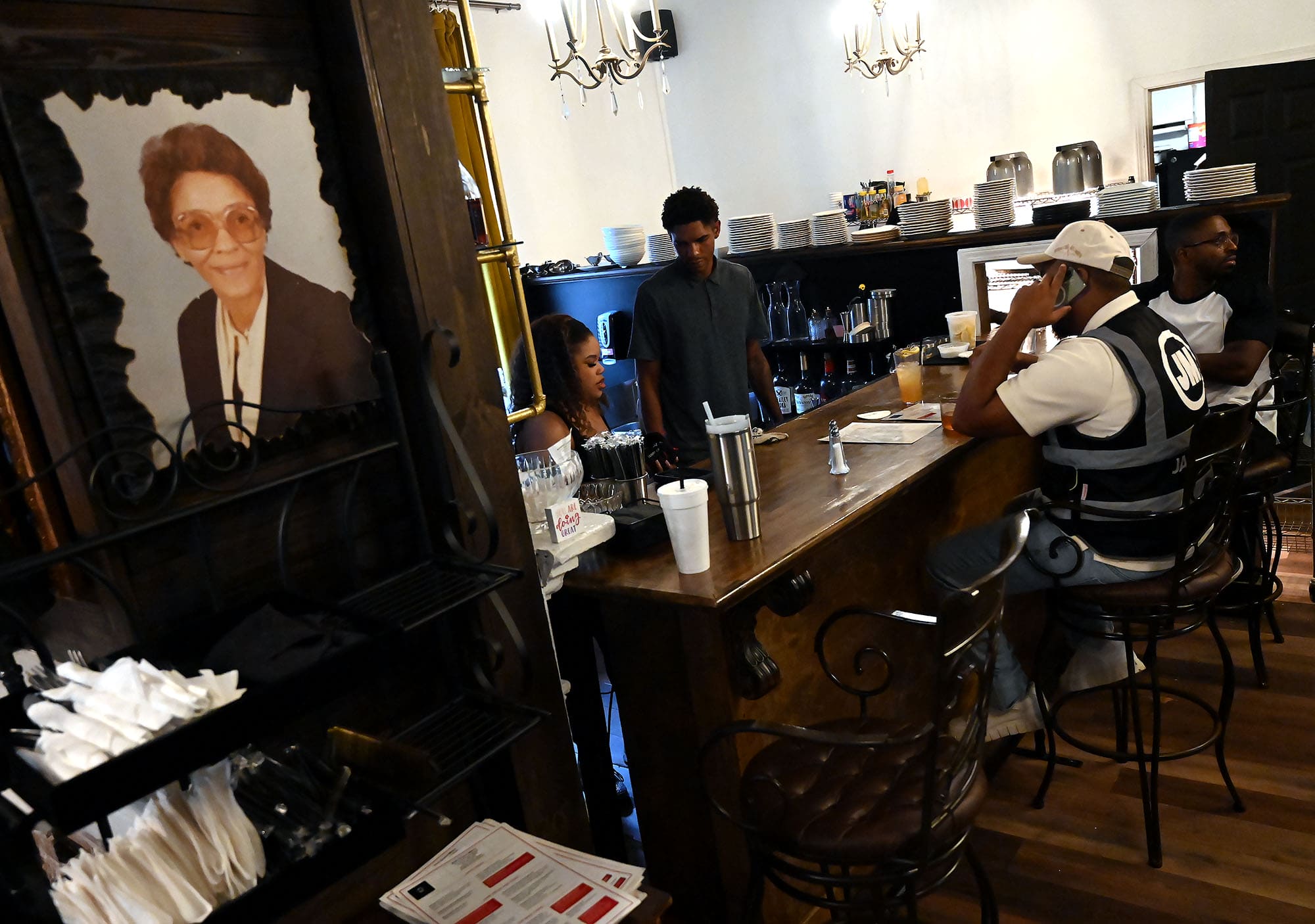
Stepping into Nell Grace is less like walking into a restaurant and more like melting into the soft, unhurried warmth of Big Mama’s embrace.
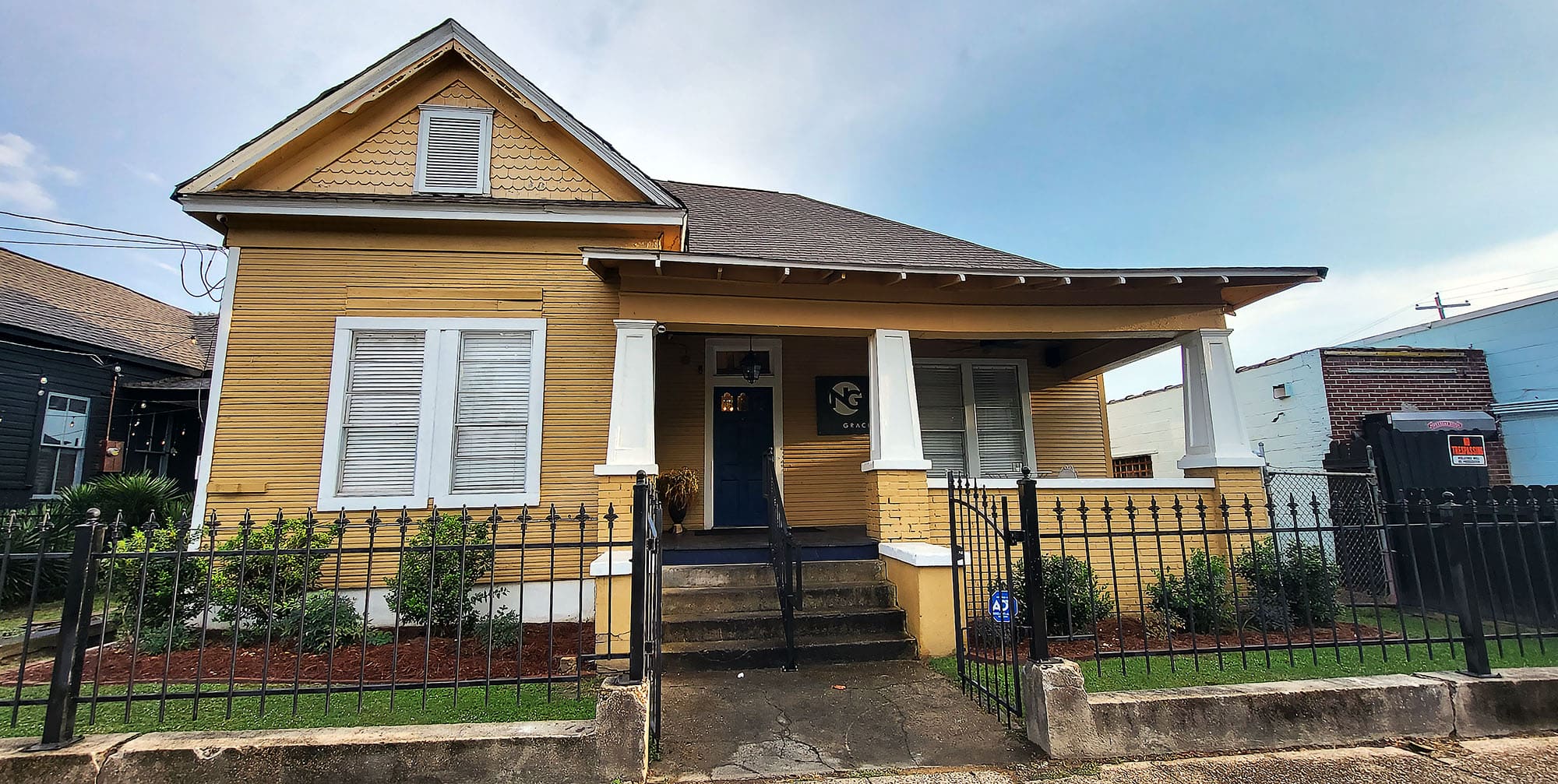
The restaurant is a hidden gem located at 111 East Church St., in downtown Jackson’s historic Farish Street District. And it is the vision of a father and son, Marc and Devan Rowe, who opened Nell Grace in January.
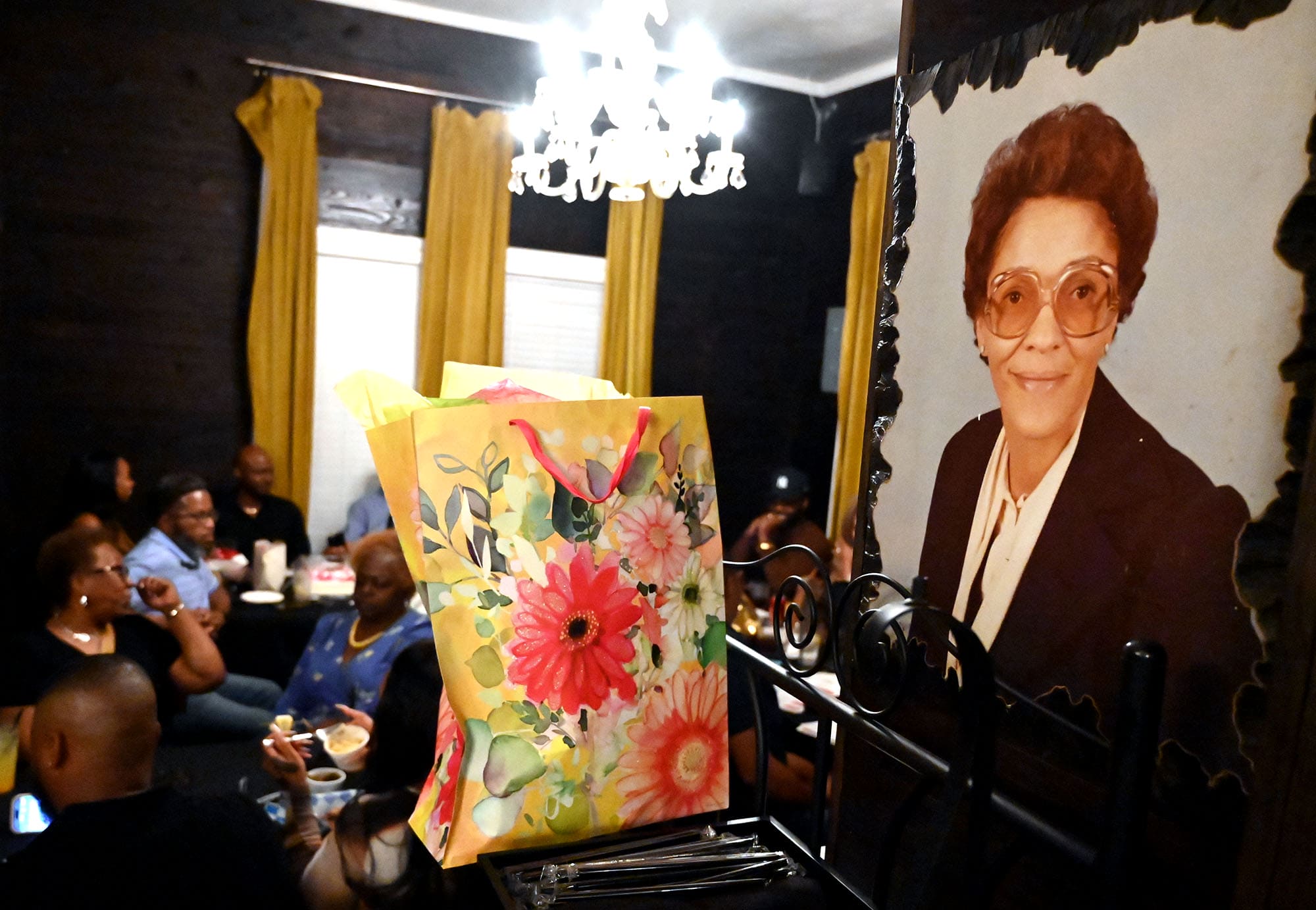
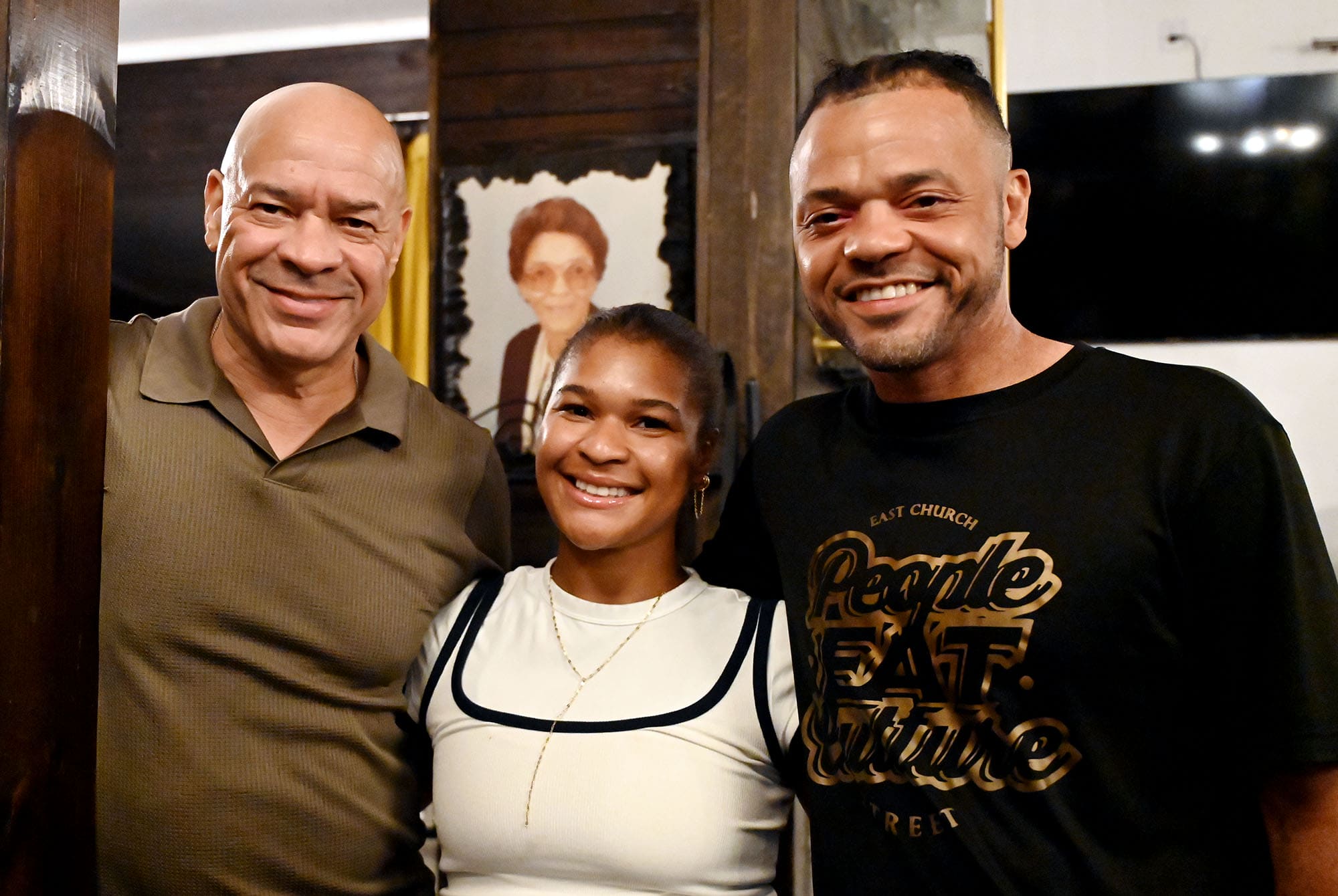
Marc Rowe, left, with daughter Grace and son Devan at Nell Grace, the restaurant the father and son own and operate in Jackson’s historic Farish District, Friday, Sept. 4, 2026. Marc’s mother Eunella “Nell” Rowe is pictured in the background. Credit: Vickie D. King/Mississippi Today
Marc Rowe named the eatery in honor of his mother, Eunella “Nell” Rowe, and his daughter, Grace.
“Naming the restaurant was my way of preserving my mother’s legacy,” Marc said, his voice filled with deep admiration and reverence. “I wanted her name to live on through something that brings people together. When guests come through our doors, share a meal and feel at home, that reflects the kind of spirit she had.”
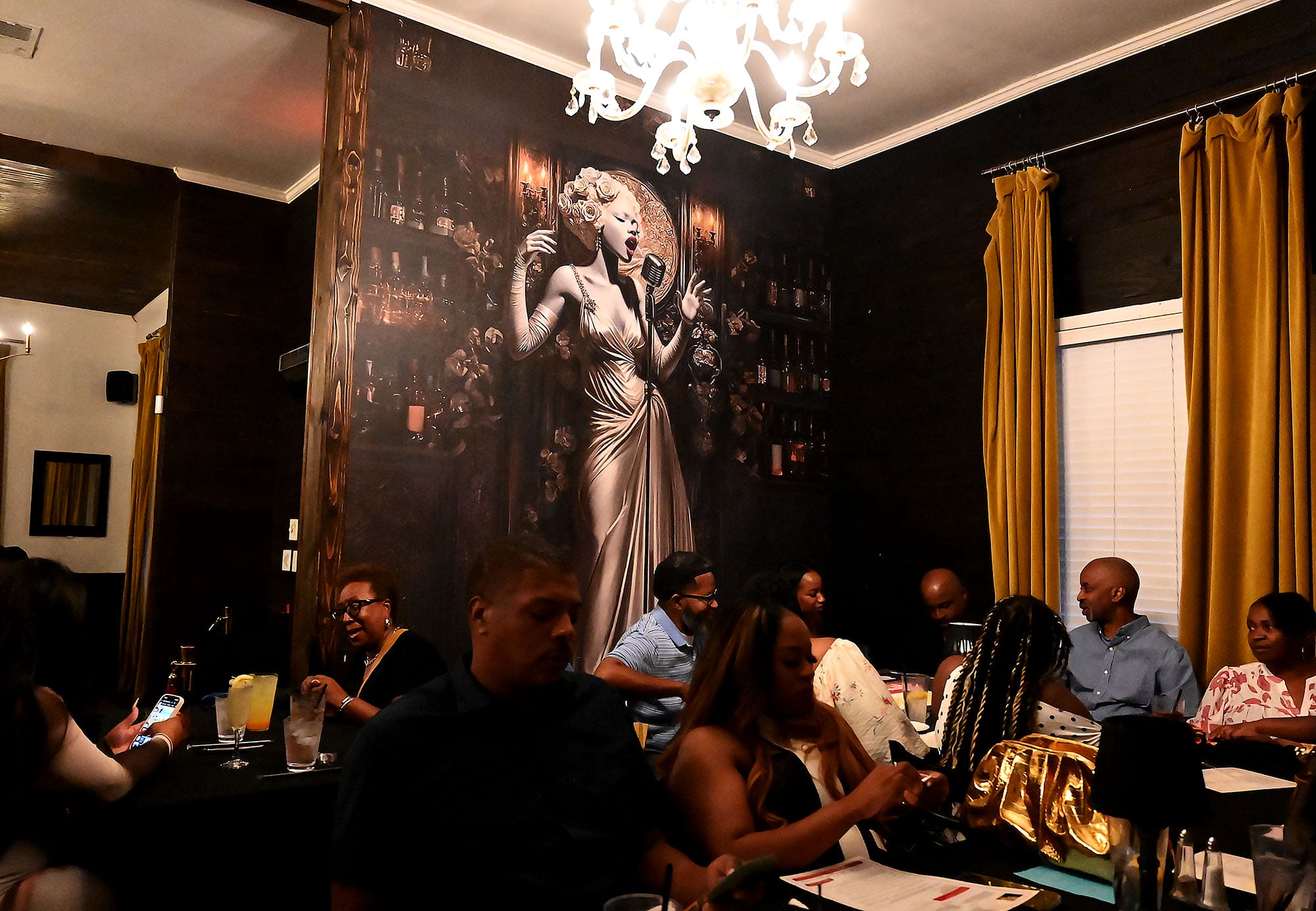
Marc moves with a determined grace, disappearing into the buzz of the kitchen to check on meal preps before emerging to visit individual tables, smiling, chatting, asking diners if they are enjoying their meals. In one section, a large group celebrating a family member’s birthday sat before a floor-to-ceiling mural of a woman frozen in song, an artistic heartbeat for the room.
Customers dine, chat and listen to music at Nell Grace restaurant in Jackson’s historic Farish Street District, Friday, Sept. 4, 2026. Credit: Vickie D. King/Mississippi Today
On alternating nights, the air is filled with haunting melodies from violinist Daniel Parker and the sultry, late-night smoothness of saxophonist Keith Ward.
“A lot of what people see in me today came from her,” Devan said, reflecting on the deep influence of his grandmother. “She just had this way about her. She connected with people, and she had such a natural gift for making everyone feel comfortable, special and welcome.”
He said watching her taught him how much relationships matter. “The confidence, the way I connect with people, she planted those seeds in me a long time ago.”
Violinist Daniel Parker entertains diners at Nell Grace, a restaurant in Jackson’s historic Farish Street District, Thursday, Sept. 3, 2026. Credit: Vickie D. King/Mississippi Today
Nell Grace has a laid-back, cozy vibe, with customers cradling cocktails while music drifts over tables and soothing aromas waft from the kitchen. Chatter and laughter subside as forks dig into savory Catfish Atchafalaya, steaks, blackened seafood and ribbons of Cajun pasta.
Order up a burger or a variety of shrimp dishes, traditional wings or Cajun loaded fries. Down-home southern side dishes offer a familiar taste of home cooking — bubbling, baked macaroni and cheese, earthy black-eyed peas, golden cornbread, braised southern greens and sweet yams.
As the night deepens, the Rowes encourage diners to make room for warm peach cobbler, New Orleans-style beignets dusted in a snowfall of powdered sugar, delectable cheesecake or the richness of red velvet cake.
Saxophonist Keith Ward sings “Happy Birthday” to 1-year-old Janiya Winn at Nell Grace, a restaurant in Jackson’s historic Farish Street District, Thursday, Sept. 3, 2026. Credit: Vickie D. King/Mississippi Today
“I spent more than 20 years in Atlanta working in entertainment, but something kept pulling me back home,” Devan Rowe said. “I felt like I had learned enough to bring something back home… learned to bring something meaningful back to Jackson.”
Together, the duo is dreaming a renaissance into existence, with plans to revitalize several historic properties in the Farish Street neighborhood, once the bustling hub of Jackson’s Black-owned businesses. Their vision weaves a tapestry of live entertainment, fine dining and cultural pilgrimages to create a destination that celebrates the district’s landmarks.
Catfish dinner with sides at Nell Grace restaurant in Jackson’s historic Farish Street District, Friday, Sept. 4, 2026.
Nell Grace restaurant customer Jaylin Williams, left, offers saxophonist Keith Ward a dap of approval Friday, Sept. 4, 2026, in Jackson.
A photograph of Eunella “Nell” Rowe is displayed on a wall at Nell Grace, the restaurant named for her and granddaughter Grace Rowe, Friday, Sept. 4, 2026, in Jackson.
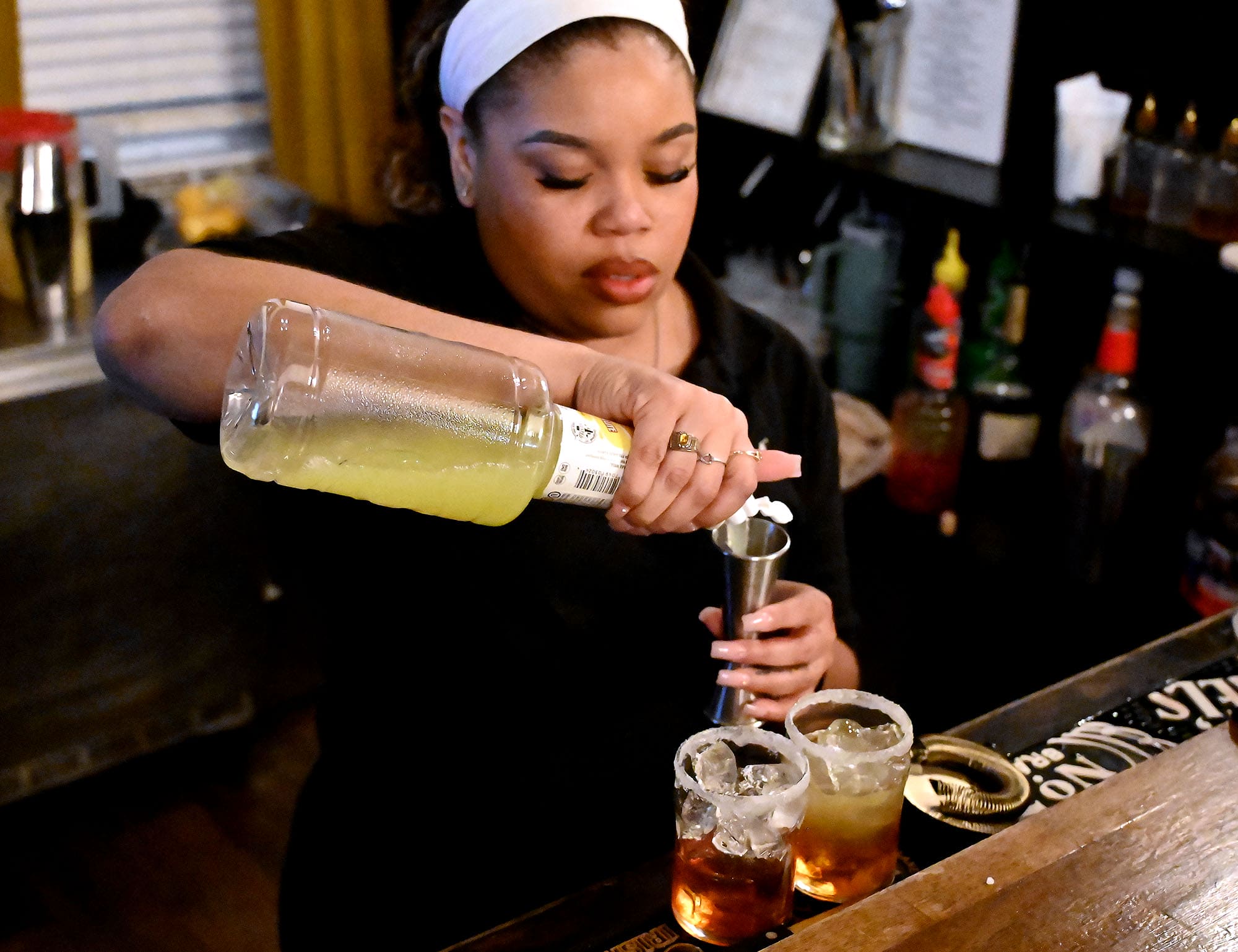
Mixologist Megan Gibbs prepares cocktails for a customer at Nell Grace restaurant in Jackson’s historic Farish Street District, Friday, Sept. 4, 2026.
A cocktail at Nell Grace restaurant in Jackson’s historic Farish Street District, Friday, Sept. 4, 2026.
Strawberry daiquiris at Nell Grace restaurant in Jackson’s historic Farish Street District, Friday, Sept. 4, 2026.
Nell Grace restaurant at 111 East Church St. in Jackson’s historic Farish Street District.
Violinist Daniel Parker entertains diners at Nell Grace, a restaurant in Jackson’s historic Farish Street District, Thursday, Sept. 3, 2026. The floor-to-ceiling mural is titled “Blue Lady,” painted by Jason Cooper.
Justin Winn holds his 1-year-old daughter, Janiya, during a family dinner at Nell Grace restaurant in Jackson’s historic Farish Street District, Thursday, Sept. 3, 2026.
Saxophonist Keith Ward entertains diners at Nell Grace restaurant in Jackson’s historic Farish Street District, Thursday, Sept. 3, 2026.
Devan said his father spent 26 years in child nutrition and the food industry.
“He understood the food and operations side, and I come from the entertainment side,” the son said. “I understood how to create an experience. Nell Grace is where those two worlds come together. To me, it is more than a name. When people walk in, I want them to feel like they’ve stepped into my grandmother’s hugs and welcoming home, not a restaurant.”
Audio articles are automated for accessibility. Humans wrote and edited the story; however, this audio has not been reviewed for accuracy and may contain errors. Read more about how we use AI to increase access to our reporting.
Mississippi Today Ideas is a platform for thoughtful ideas to be shared about our state’s past, present and future. Opinions expressed in guest essays are the author’s own and do not necessarily represent those of Mississippi Today. You can readmore about the section here.
There may be no more powerful word in the American experiment than the simple, one-syllable pronoun we.
It is the first word of the United States Constitution: “We the People of the United States….” Before government is described, before powers are delegated, before rights are protected, before any ethnicity is proclaimed, there is an act of collective imagination. The Constitution begins not with a king, a ruler or an army, but with a people. It assumes that a nation can be built upon a shared identity rather than shared blood, tribe, language or religion.
Yet the genius — and the burden — of that first word is that it has never been fully settled.
Who exactly is “we”?
America’s story has been, in many respects, the ongoing argument over that single word.
The Declaration of Independence had already planted the nation’s moral seed 11 years earlier by proclaiming that “all men are created equal” and endowed with unalienable rights. Those words represented humanity at its highest aspirations. Yet at the very moment those ideals were proclaimed, slavery remained woven into the fabric of the colonies. Women possessed few political rights. Indigenous nations were excluded from the American body politic. Property ownership determined participation. The ideals were universal; however, their application was painfully selective.
From its beginning, then, America possessed a remarkable duality.
It was simultaneously the most radical declaration of human equality the world had ever seen and a nation unable to extend that equality to everyone living within its borders.
This contradiction has often been described as hypocrisy. There is truth in that. But there is something even more complicated at work. America was founded not as a completed achievement but as an unfinished proposition. Its founding documents established an aspiration far larger than the society that first produced them. In doing so, they created a permanent moral tension between who Americans were and who they claimed they could become.
The word we became both promise and challenge that every generation has inherited by fate or design.
The Civil War was, at its heart, a violent disagreement over who belonged within the American “we.” Abraham Lincoln understood this profoundly. At Gettysburg, he turned not to the Constitution but to the Declaration’s promise that all are created equal, asking whether any nation conceived upon such principles could long endure. The war was fought not merely over territory or economics but over whether the nation’s definition of “we” would forever exclude millions because of race.
The Declaration of Independence is on display at the National Archives, Friday, Sept. 25, 2026, in Washington. (AP Photo/Alex Brandon)
The abolition of slavery answered one question while opening countless others.
The Reconstruction Amendments expanded citizenship. Yet segregation emerged. The Constitution said “we,” but Jim Crow screamed “not you!”
Women organized, marched and demanded that the nation’s opening word finally include them politically. Native Americans fought for recognition as citizens within a country built upon lands that had once been theirs. Immigrants arriving from every continent sought not simply opportunity but admission into the American story itself. Labor movements insisted that economic dignity belonged inside the definition of citizenship. The Civil Rights Movement challenged a nation that celebrated liberty abroad while denying equal treatment at home.
Again and again, the question remained remarkably consistent.
Who belongs inside the word, the ostensible protected circle of the word, we?
Every expansion of American democracy has been an attempt to answer that question more generously than the generation before.
Yet, the struggle has never ended.
Today the debates have changed their vocabulary but not their substance. Immigration, voting rights, religious liberty, LGBTQ rights, racial justice, economic inequality, disability rights, artificial intelligence, DEI, citizenship and even access to education all circle back to the same foundational question. Whose interests matter? Whose voices count? Whose future deserves protection? In other words, who belongs within “We the People”?
Perhaps this perpetual disagreement frustrates us because we imagine unity as agreement. It is not.
Perhaps America’s founders, knowingly or not, created something different?
The Constitution does not define “we” with mathematical precision. It does not provide an exhaustive list of who to include. Instead, it establishes a framework through which each generation must wrestle with its own conscience. Accordingly, the ambiguity is not simply a flaw, it can also be understood as a source of extraordinary resilience.
Because the meaning of “we” has never been frozen, America has repeatedly found ways to enlarge it.
The nation’s greatest leaders have understood this instinctively.
Frederick Douglass challenged America not to abandon its founding ideals but to fulfill them. Susan B. Anthony and Sojourner Truth insisted women already belonged inside the Constitution’s promise. Martin Luther King Jr. spoke of the Declaration and Constitution as a promissory note yet to be fully redeemed. Labor leaders argued that farmworkers belonged within the circle of American dignity. Barack Obama said “. . . yes WE can.” Countless others — known and unknown — have devoted their lives not to replacing America’s founding principles but to widening the embrace of the word that begins them.
They understood that patriotism is not blind acceptance of who “we” have been. Patriotism is faithful commitment to who “we” might yet become.
This is America’s paradox.
The same nation capable of exclusion has also possessed an unmatched capacity for self-correction. The same Constitution once interpreted to tolerate slavery eventually became the instrument used to dismantle segregation. The same democracy that denied voting rights eventually expanded them. The same institutions that once excluded have often become vehicles for inclusion.
Progress has never been automatic. Every enlargement of “we” required courage, sacrifice, protest, persuasion, legislation, litigation and often blood. History moves because ordinary people refuse to accept that yesterday’s definition must become tomorrow’s destiny.
That may be the true genius of the American experiment. Our shared history necessitates a collective approach to a shared destiny defined by common ground.
Unlike nations built primarily upon ethnicity or ancestry, America has always rested upon an idea. Ideas are powerful precisely because they can grow. They invite interpretation. They demand renewal. They challenge every generation to ask whether its practices are worthy of its principles.
The Constitution begins with “We the People” not because the authors believed they had already perfected that community, but because they dared to imagine one. In this framing, we are all essential sparks in a grand design. The work of democracy has always been to make that imagination more real.
Perhaps the ultimate measure of America’s greatness will never be whether it has perfectly embodied its ideals. No nation has done so. Rather, its greatness lies in whether it continues to possess the humility to ask who has been left outside the circle and the courage to bring them in.
The first word of the Constitution remains unfinished.
Every election, every courtroom, every classroom, every place of worship, every neighborhood, every act of citizenship quietly asks us to complete its sentence.
“We” is not merely a description.
It is an invitation.
It calls every generation to widen the circle just enough that someone who once stood outside can finally say, without hesitation, qualification or presupposition, “We the People” includes me.
B.K. Fulton is an author, Tony Award-winning Broadway producer, former CEO of Verizon’s Mid-Atlantic region and producer of films and documentaries, including PBS’ “W.E.B. Du Bois: Rebel With A Cause.”He is a board member for The Joan Trumpauer Mulholland Foundation, an organization dedicated to civil rights education. Joan Trumpauer Mulholland participated in the 1961 Freedom Rides to Jackson and attended Tougaloo College. Through this foundation, Fulton helps support micro-scholarships and educational programs for HBCU students, including those in Mississippi. Fulton lives in Richmond, Virginia.
Audio articles are automated for accessibility. Humans wrote and edited the story; however, this audio has not been reviewed for accuracy and may contain errors. Read more about how we use AI to increase access to our reporting.
Local and national changemakers joined Mississippi Today staff in Jackson to examine how to best build on Mississippi’s gains in education and workforce development.
The discussions were part of Mississippi Today’s “All In On Mississippi” summit, which commemorated the publication’s 10-year anniversary. The event attracted hundreds of attendees to the state’s capital to learn more from the people behind the headlines.
Mississippi miracle? More like marathon
The state’s upward climb from the bottom of the nation when it came to fourth and eighth grade reading proficiency emerged after years of work. Beyond introducing more phonics-based instruction into classrooms, the state’s recent educational outcomes also leaned into accountability.
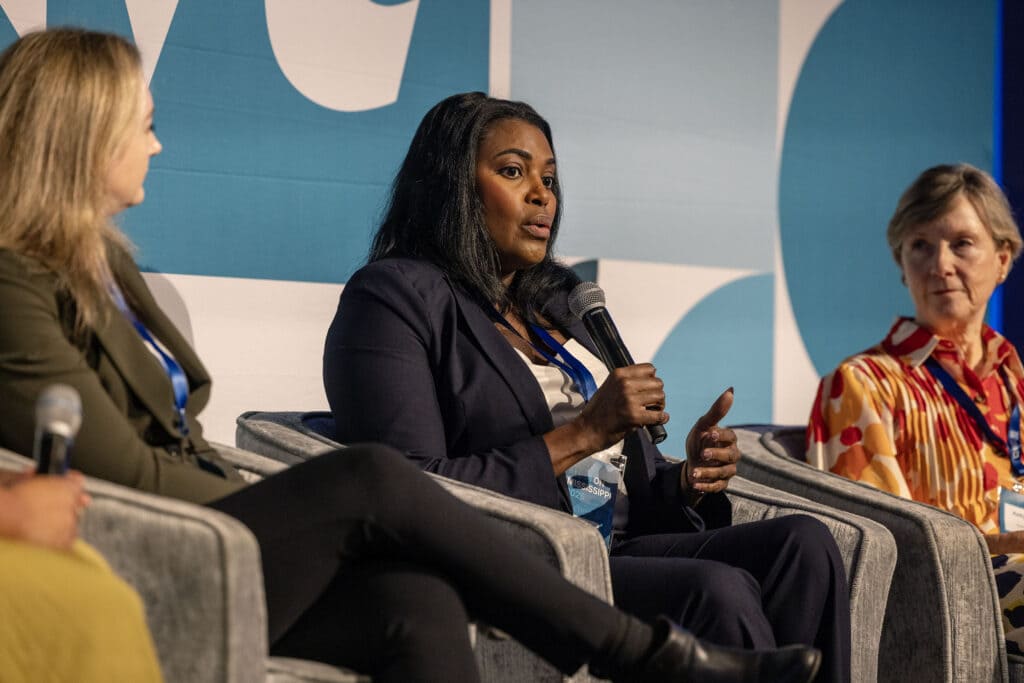
Rachel Canter, the founder and former executive director of Mississippi First, said many states only want to implement the “feel-good” aspects of Mississippi’s literacy plan, such as training teachers on phonics-based instruction, while doing less to hold districts accountable for poor outcomes for students.
“Change starts with honesty,” Canter, who now directs policy for the Reinventing America’s Schools project at the Progressive Policy Institute, told a crowd at the Two Mississippi Museums. “But we all have to take responsibility for our role in the system when the system is broken. And what Mississippi did right is think about that whole agenda.”
Rachel Canter, director of education policy for the Reinventing America’s Schools project at PPI, discusses literacy in Mississippi during the “All In On Mississippi” summit at the Two Mississippi Museums in Jackson on Thursday, Oct. 8, 2026. Credit: Eric Shelton/Mississippi Today
A large part of that agenda was outlined in the Literacy Based Promotion Act, a 2013 state law that mandated that third graders who do not pass the state reading test must be held back. The act also mandated early screenings for students to identify reading challenges. The Legislature also agreed to pay for literacy coaches to train teachers on more phonics-based instruction.
As a high school teacher in Mississippi in the early 2000s, Kymyona Burk, a policy analyst at ExcelinEd, said she noticed students were nearing graduation with gaps in their reading ability. She realized that socially promoting students set them up for failure.
Kymyona Burk, senior policy fellow at ExcelinEd, discusses literacy in Mississippi during the “All In On Mississippi” summit at the Two Mississippi Museums in Jackson on Thursday, Oct. 8, 2026. Credit: Eric Shelton/Mississippi Today
Burk later led the Literacy Based Promotion Act’s implementation as state literacy director in the Mississippi Department of Education. She found part of her job required changing the way local district employees perceived the department. In her own experience as a teacher, state employee visits were not welcome.
“There are so many who are not a fan of the top-down approach, but that is what we had to do in Mississippi to get everyone rolling in the right direction,” said Burk. “I think now we’ve met in the middle, and we understand what we need to do as partners to get things done.”
Expanding apprenticeships to keep opportunities in Mississippi
A challenge for Mississippi is losing the investment in early education when graduates move out of state for jobs. Between 2010 and 2024, roughly 80,000 more residents left the state than moved in, continuing what many experts have labeled a brain drain.
At 55%, Mississippi consistently records one of the lowest workforce participation rates in the country. But state-sponsored training programs have been growing, and will play a vital role in the future of economic development, speakers said during a panel on apprenticeship programs.
In August, Gov. Tate Reeves appointed Daniel “Deano” Harrison to direct the Mississippi Office Of Apprenticeship. Reeves has said he created the office with the long-term goal of doubling the number of apprenticeships statewide to about 7,000.
Daniel “Deano” Harrison, director of ApprenticeshipMS, discusses apprenticeship programs during the “All In On Mississippi” summit at the Two Mississippi Museums in Jackson on Thursday, Oct. 8, 2026. Credit: Eric Shelton/Mississippi Today
At the summit, an audience member asked Harrison if the office would launch an apprenticeship pipeline for youths coming out of juvenile detention. Harrison said no population is off-limits.
“We need to go into every nook and cranny and grab anybody we can,” he said.
The state’s first medical apprenticeship program started at Singing River Hospital System on the Gulf Coast. Stephanie Utesch, the system’s human resources operations director, helps run what she called an “earn-while-you-learn” campus in Ocean Springs that has graduated over 600 apprentices since it launched.
The program started small. In 2021, Utesch recalled during the panel, she walked into an empty clinic and said: “Where’s the chairs? Where’s the tables?”
Stephanie Utesch, human resources operations director for Singing River Health System, discusses apprenticeship programs during the “All In On Mississippi” summit at the Two Mississippi Museums in Jackson on Thursday, Oct. 8, 2026. Credit: Eric Shelton/Mississippi Today
Since then, the program has grown and many of its students have thrived, Utesch said. She recalled a single mother caring for her mother and daughter while apprenticing. The single mother is on track to become a licensed practical nurse with no debt, Utesch said. Another registered nurse who is nearing retirement but doesn’t want to give up work has been taking coding classes through the program, Utesch said. Her goal is to switch to a remote schedule, she said, giving her greater flexibility while still working.
Singing River’s apprenticeship program is a success story, Harrison said, and he encouraged employers statewide to consider starting their own programs.
“When Mississippians leave Mississippi, we do great things,” Harrison said. “But let’s give them the opportunity to do great things in Mississippi.”
These conversations about educational outcomes and expanding apprenticeship programs folded into a broader discussion about the economic wellbeing of Mississippi during the “All In on Mississippi” summit, an event hosted by Mississippi Today featuring conversations about the forces shaping Mississippi’s future. The summit event is the second of a two-day event celebrating Mississippi Today’s first decade of reporting.
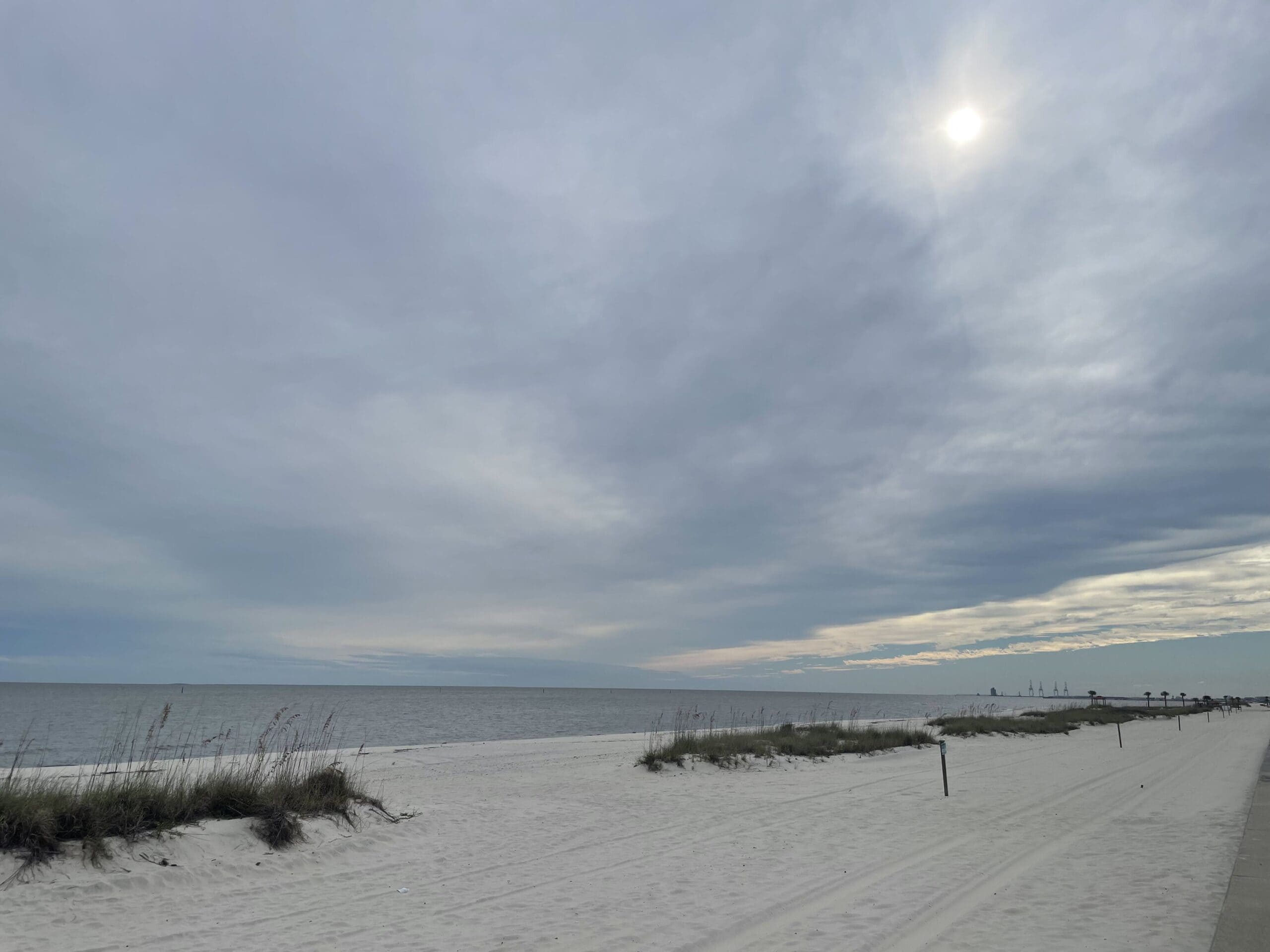
BILOXI – Coast residents and officials filed into the Mississippi Gulf Coast Community College’s hospitality center to talk about disaster preparedness as Hurricane Isaias, an expected Category 2 storm as of Thursday, approached the state’s shores.
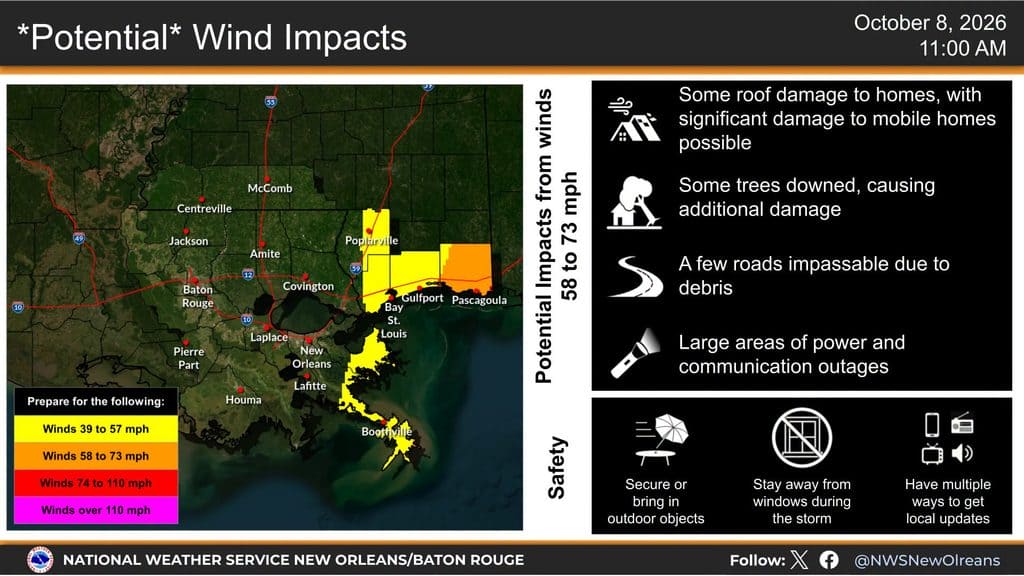
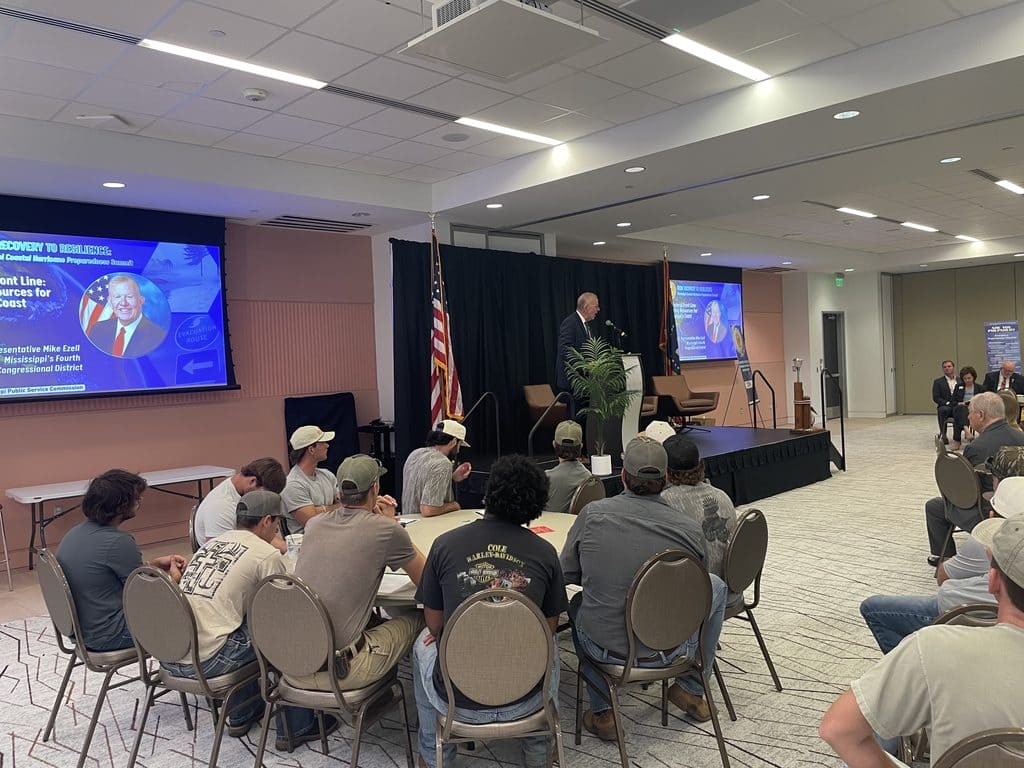
The state’s Public Service Commission put on the timely “From Recovery to Resilience” summit, announced a few weeks ago, just before Isaias’ expected landfall on Friday evening. The hurricane’s path shifted east since initial forecasts earlier this week, but as of Thursday Jackson County was under a hurricane warning and all of Mississippi’s Coast was under a storm surge warning.
Mississippi Emergency Management Agency Director Stephen McCraney said MEMA will likely send National Guard members to support Alabama and Florida, where Isaias is expected to have the greatest impacts.
But the summit attempted to shift the public’s attention from the short term to the long term: What can we do now to prepare for storms down the road? The event was the PSC’s second in a series of resilience summits, following one in Tupelo over the summer focused on lessons learned from Winter Storm Fern in January.
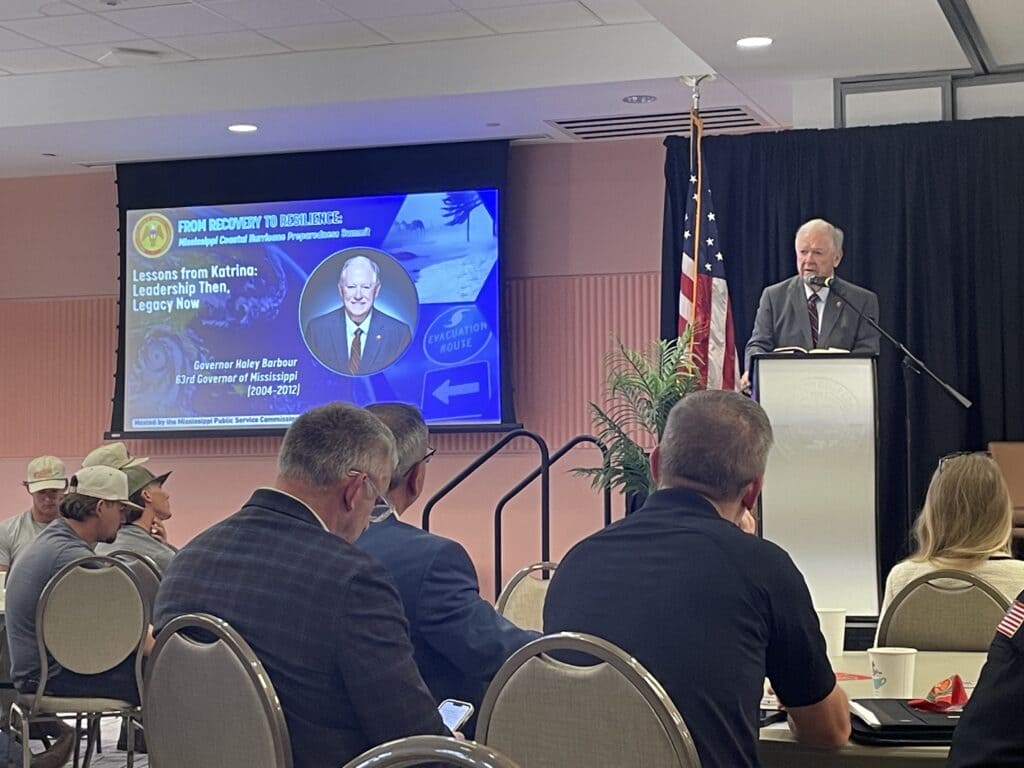
Thursday’s edition, led by Southern District Public Service Commissioner Wayne Carr, homed in on hurricanes, and featured speeches from former Gov. Haley Barbour and U.S. Rep. Mike Ezell.
Ezell, a Coast native elected to Congress in 2023, discussed efforts to improve federal disaster assistance. One bill he introduced last year, for example, would aim to reduce the reporting burden for survivors applying for federal assistance.
Former Gov. Haley Barbour speaks at a resilience summit in Biloxi on Thursday, Oct. 8, 2026. Credit: Alex Rozier / Mississippi Today
“A mayor, emergency manager or family shouldn’t have to submit the same information over and over again,” he said.
Another bill Ezell backed would increase the amount of time applicants for assistance from the Federal Emergency Management Agency would have to appeal denials, from 60 days to 90. That bill passed out of the House Committee on Transportation and Infrastructure in September.
“ Somebody may have lost their home, they’re dealing with insurance people, they’re replacing documents, they’re talking with contractors,” Ezell said. “All those things compounded, dealing with FEMA can be a nightmare.”
The House has not acted on either bill.
The congressman also said he’s hoping to tackle rising insurance premiums on the Coast, which have skyrocketed since Hurricane Katrina. Ezell criticized FEMA for “relying on outdated hurricane information.”
Barbour, who was in office during Hurricane Katrina in 2005, emphasized a broad approach to preparedness. In the decades before Katrina, the state had prepared for another version of Hurricane Camille in 1969. But the two storms’ impact, it turned out, was completely different, he said. While Camille had stronger winds, Katrina delivered an immense storm surge.
Prospective linemen listen as U.S. Rep. Mike Ezell speaks at a resilience summit in Biloxi on Thursday, Oct. 8, 2026.
“I thought to myself, ‘Have we prepared for the wrong storm?’” Barbour reflected.
The former governor also lauded Mississippi’s ability to recover quickly and the confidence it restored in residents. Schools on the Coast, for instance, were able to reopen that November, to his surprise.
“People had a feeling we would recover,” the ex-governor said.
Audio articles are automated for accessibility. Humans wrote and edited the story; however, this audio has not been reviewed for accuracy and may contain errors. Read more about how we use AI to increase access to our reporting.
The impacts of artificial intelligence are, in many ways, contingent on the decisions of a small, powerful group of tech elites, but ordinary people have a central role to play in demanding reasonable regulation of the technology, Kara Swisher told Andrew Lack on Thursday.
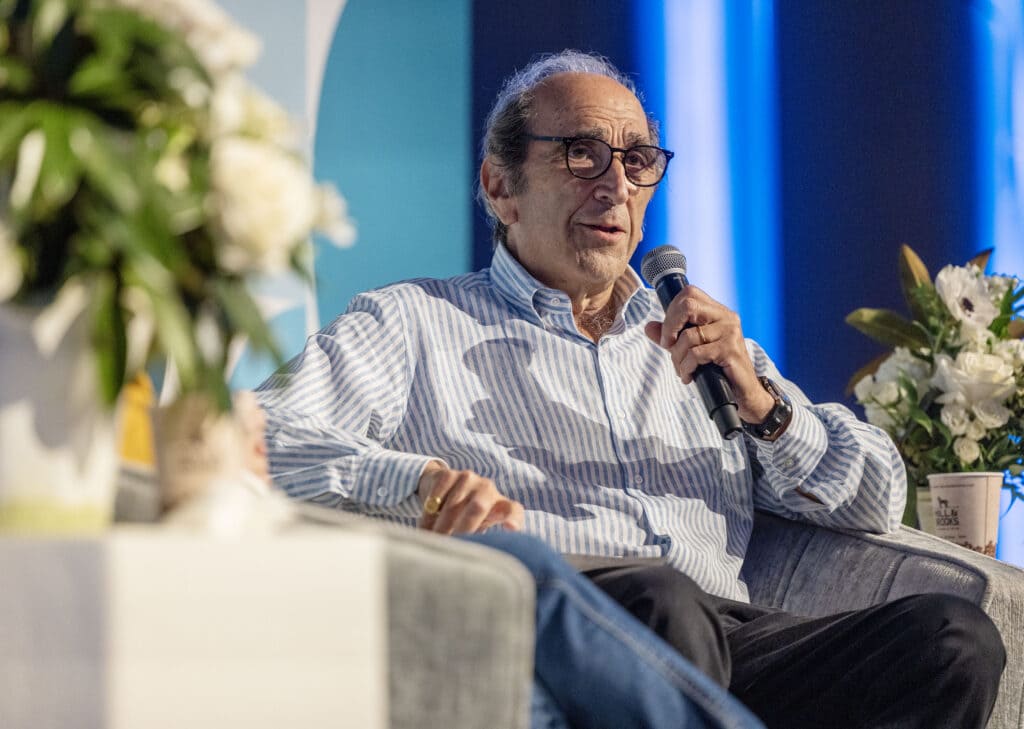
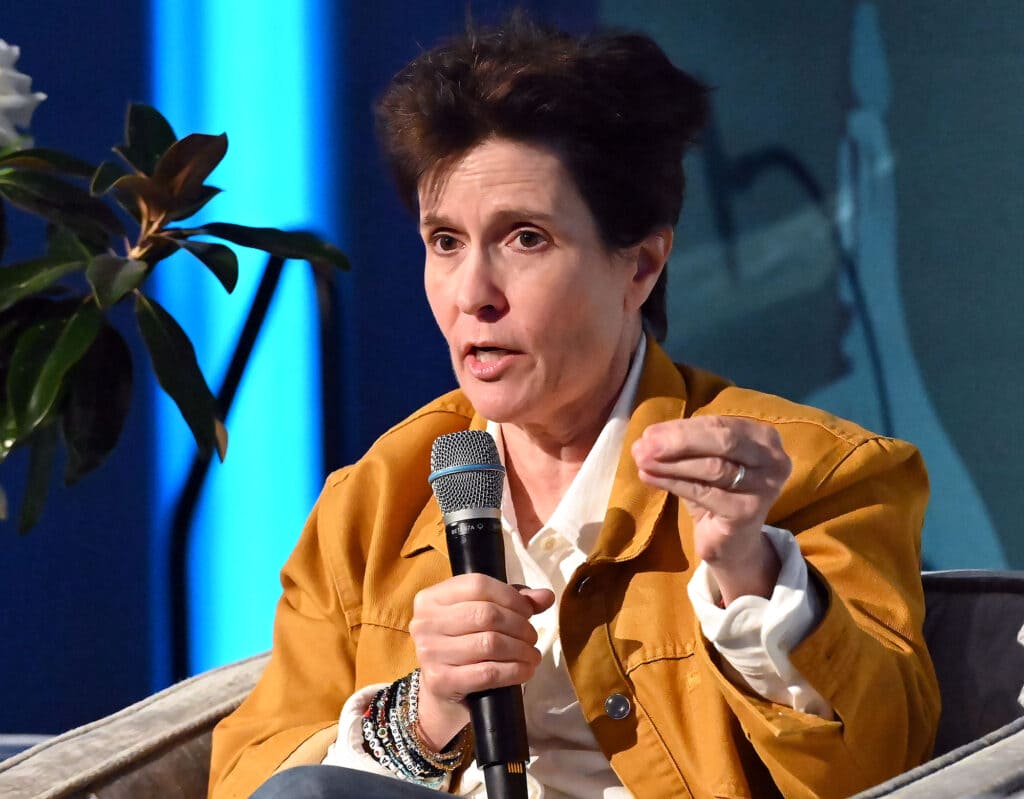
“We are in the new nuclear age, and you need to understand what that means,” Swisher told a crowd at the Two Mississippi Museums in Jackson at Mississippi Today’s 10th Anniversary Celebration. “And demand that your public officials do their job.”
Media executive Andrew Lack discusses artificial intelligence with Kara Swisher, host of “On with Kara Swisher” and co-host of “Pivot,” during the “All In On Mississippi” summit at the Two Mississippi Museums in Jackson on Thursday, Oct. 8, 2026. Credit: Eric Shelton/Mississippi Today
Lack, a journalist and media executive, and Swisher, one of the nation’s most prominent technology journalists, delved into how AI could reshape the world. Lack is the executive chairman and founder of Mississippi Today and Deep South Today and the former chairman and CEO of NBC News. Swisher hosts the podcasts “On with Kara Swisher” and “Pivot.”
The talk came at a time when the rapid rise of AI has ignited both excitement and concern around the globe about the ripple effects of the fast-advancing technology across society. In the American news industry, outlets of every size are working to make sense of what AI will mean for the journalism they produce, their business models and their relationships with the public.
Swisher cut her teeth covering the technology industry — for outlets such as The Washington Post, The Wall Street Journal, The New York Times and Vox — as it came to dominate nearly every aspect of American life. During that time, she developed relationships with many of the world’s most powerful tech titans, including Elon Musk, Mark Zuckerberg, Sam Altman, Sergey Brin and Dario Amodei.
Kara Swisher, host of “On with Kara Swisher” and co-host of “Pivot,” discusses artificial intelligence during the “All In On Mississippi” summit at the Two Mississippi Museums, Thursday, Oct. 8, 2026, in Jackson. Credit: Vickie D. King/Mississippi Today
She has since fallen out with many of them, most notably Musk. The world’s richest man and President Donald Trump mega donor has called her an “asshole.” Swisher, for her part, has called Musk a “one-man wrecking ball” and a “professional adult toddler.”
Back when they were on speaking terms, Swisher said on Thursday, Musk was an early figure to raise the alarm about the potential risks of AI.
But he has since pivoted to join the AI arms race and, along with his competitors, has thrown caution to the wind, Swisher said. That is why it’s important to remember that AI is not yet a technology with a life of its own, but one with humans at the helm.
“The tool is not the problem, and one of the ways it’s being pushed by tech people is, you know, there’s a 10% chance AI will kill the human race,” Swisher said. “Actually, it’s not AI that will kill the human race. It’s the people making AI that will kill the human race, and so we take the technology and blame the technology instead of blaming the person.”
In Mississippi and nearby states, the proliferation of data centers, including those pushed by Musk, has stirred a wave of private investment and public backlash.
Audience members listen as Kara Swisher, host of “On with Kara Swisher” and co-host of “Pivot,” and Andrew Lack, media executive, discuss artificial intelligence during the “All In On Mississippi” summit at the Two Mississippi Museums in Jackson on Thursday, Oct. 8, 2026. Credit: Eric Shelton/Mississippi Today
Tech leaders, Swisher said, are running “into a buzzsaw of anger,” necessitating more public input into how AI is regulated. But these same tech leaders have poured money into the political apparatus of Trump, who has returned the favor by vowing to avoid regulating AI, she added.
Swisher and Lack have ridden the tides of a changing media landscape over their careers, but AI might present more potential to disrupt the news industry than any technology in history.
Lack quoted an Axios report on a shadowy political polling firm that warned of the rise of an “AI-enabled flood of outright fabricated content” that is “wreaking havoc on reality, poisoning the signals that most people rely on to understand just basic politics, business and culture.”
Despite the threats and challenges posed by AI, Swisher said, it is still important to remain optimistic about the positive potential of the technology, such as in medical research, while staying clear-eyed about its risks if left unregulated.
“The deli on my corner has more regulation than a tech company,” Swisher said.
The discussion served as the keynote session at the “All In On Mississippi” summit, an event hosted by Mississippi Today featuring conversations about the forces shaping Mississippi’s future. The summit is the second event of a two-day celebration of Mississippi Today’s first decade of reporting.
Kara Swisher, host of “On with Kara Swisher” and co-host of “Pivot,” and Andrew Lack, media executive, discuss artificial intelligence during the “All In On Mississippi” summit at the Two Mississippi Museums in Jackson on Thursday, Oct. 8, 2026. Credit: Eric Shelton/Mississippi Today
Audio articles are automated for accessibility. Humans wrote and edited the story; however, this audio has not been reviewed for accuracy and may contain errors. Read more about how we use AI to increase access to our reporting.
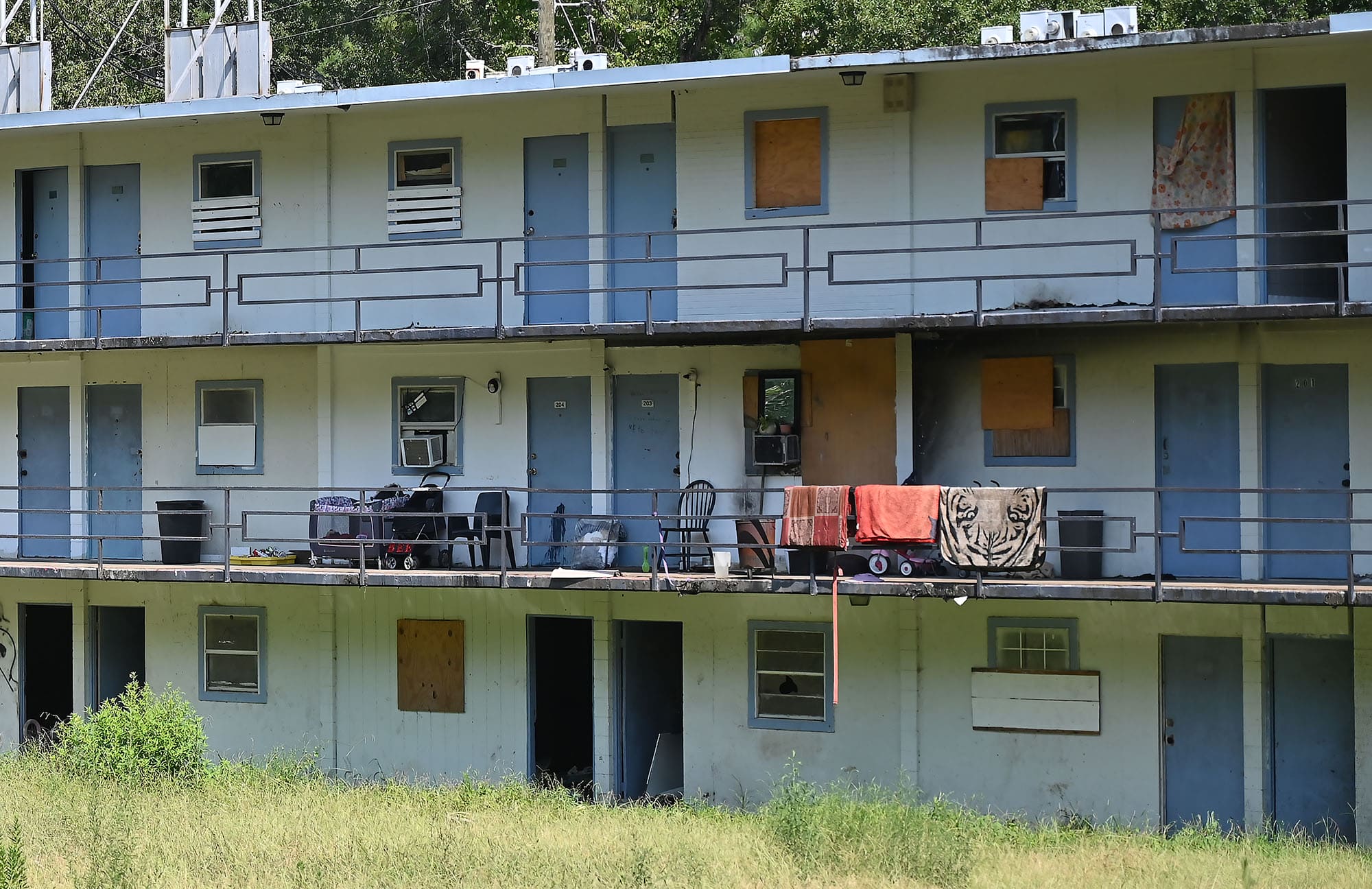
Bright yellow signs papered windows two months ago at a west Jackson apartment complex, condemning the Grand Chateau as uninhabitable and warning trespassers they could be fined.
Despite the city’s efforts, several squatters remain in the dilapidated building. Furniture still sits abandoned in walkways, and clothes hang from railings.
Prompted by the city’s request, a city judge last month put the property’s owner, Ramesh Ramchandran, on notice: Fix the property or go to jail.
The Grand Chateau has become an early test of Jackson’s more aggressive approach to landlords accused of neglecting properties and contributing to blight across the city. In recent months, city attorneys have filed lawsuits against the owners of three apartment complexes in Jackson’s environmental court, including the Grand Chateau.
A look at some of the units at the Grand Chateau Apartments, at 1576 W. Capitol St., on Monday, July 27, 2026, in Jackson. Credit: Vickie D. King/Mississippi Today
Without the money to eliminate Jackson’s blight issue, the city is turning to more aggressive means to reduce stress on the city’s resources.
Jackson has more than 3,200 identified blighted properties. The majority of them are single-family homes, but the list also includes large apartment complexes and commercial properties.
“It would cost something like $80 million to locate and clean up and or demolish all of the blighted properties in the city,” City Attorney Drew Martin said.
“That’s almost the entire city budget,” he said. “We don’t have the kind of money to do that.”
The city can only afford to demolish a few large-scale properties a year, with larger developments like apartment complexes costing hundreds of thousands of dollars to demolish, Martin said.
Jackson usually relies on liens to recoup costs on cleaning, maintaining and demolishing blighted properties. Ward 7 City Councilmember Kevin Parkinson said at a recent council meeting that the city netted $12,000 out of the nearly $900,000 spent on work this past year.
The recent environmental court filings are meant to shift costs to property owners — focusing on those the city deems to have the resources to rehabilitate or demolish properties on their own.
The Grand Chateau is not the only property the city is targeting.
Environmental Court Judge Jeffery Reynolds found the owner and senior asset manager of Chapel Ridge apartments, another development in west Jackson, guilty of four code violations because of debris and burned structures.
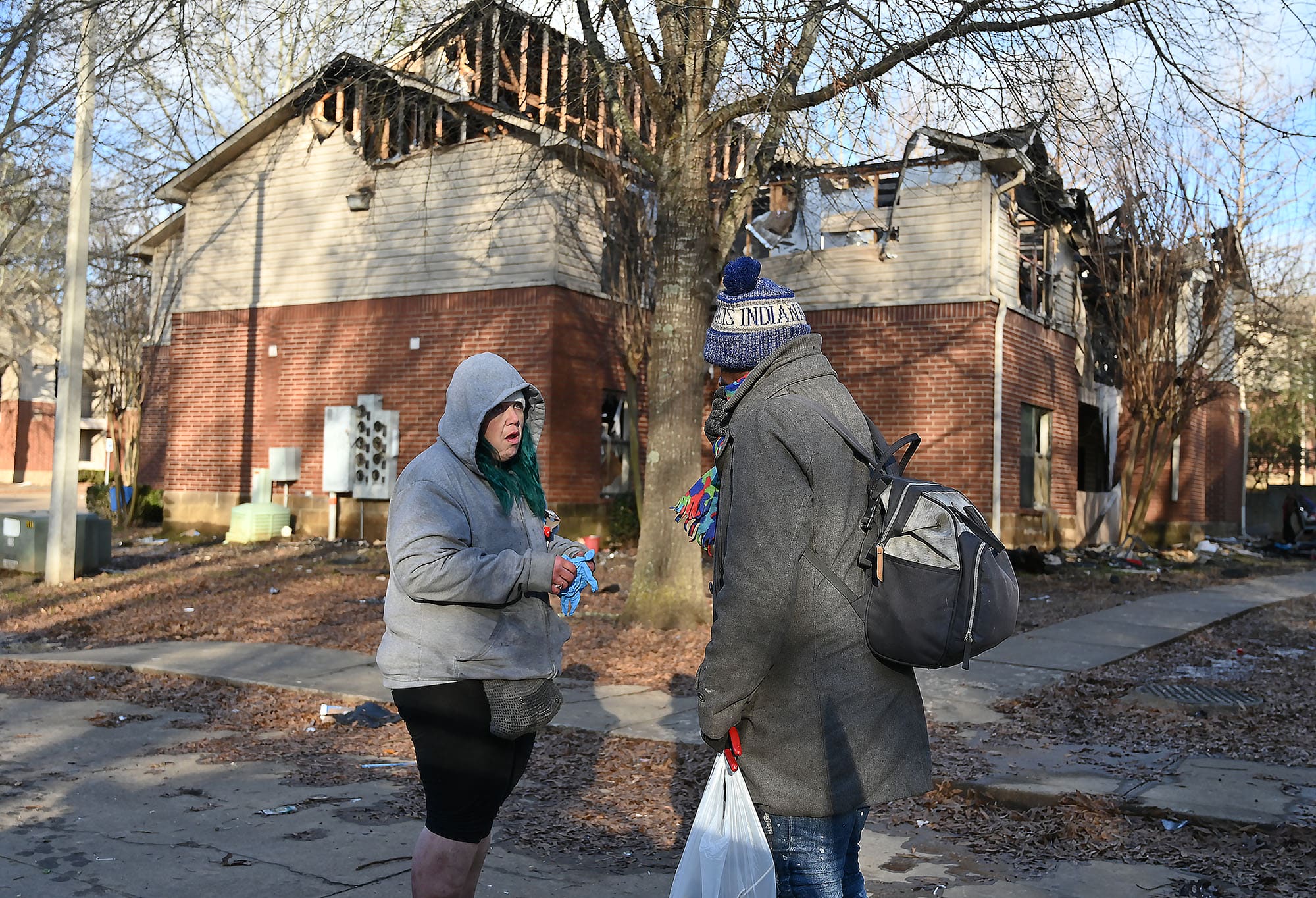
Khristina Miracle, left, chats with former neighbor Joe Jackson near the unit where they once lived at the Chapel Ridge Apartments at 1636 Raymond Road in south Jackson on Monday, Jan. 26, 2026. The apartment unit was destroyed by a fire the previous Saturday night. Credit: Vickie D. King/Mississippi Today
Owners of another property, Addison Place Apartments — which shut water off to residents in July — appeared in environmental court Tuesday over various code violations. In addition to the lack of running water, the property had broken windows, mold, roof damage and unmowed grass.
While litigation has become the face of the fight against blight, Martin said the city is working to enforce more administrative action early on by better enforcing existing codes, including Mississippi’s nuisance laws.
Martin said the city will be filing similar suits with Hinds County Chancery Court to rehabilitate dilapidated properties.
The city can do more to prevent properties from falling into disrepair, Martin said, so blighted properties don’t become city responsibilities.
He pointed to House Bill 1404, which was passed during the last legislative session and signed into law, that makes it a criminal offense for landlords to receive payment for utilities from a tenant but fail to pay them to the provider — resulting in interruptions to the tenant’s utility service.
While the city is turning to the courts to hold property owners accountable, it can only do so when owners can be located and are willing to cooperate.
Ramchandran was served with a trial notice at his 6,000-square-foot Georgia home on Aug. 22 — just short of a month after Entergy shut power to the Jackson complex.
Ramchandran serves as the manager of Kayram Atlanta LLC, according to the Mississippi Secretary of State’s Office. The Georgia-based company has owned the West Capitol Street property since 2021.
Criminal charges can help hold property owners accountable. In the event they flee, they can be arrested. Martin said there’s not much the city can do against a property owner who disappears prior to action being taken.
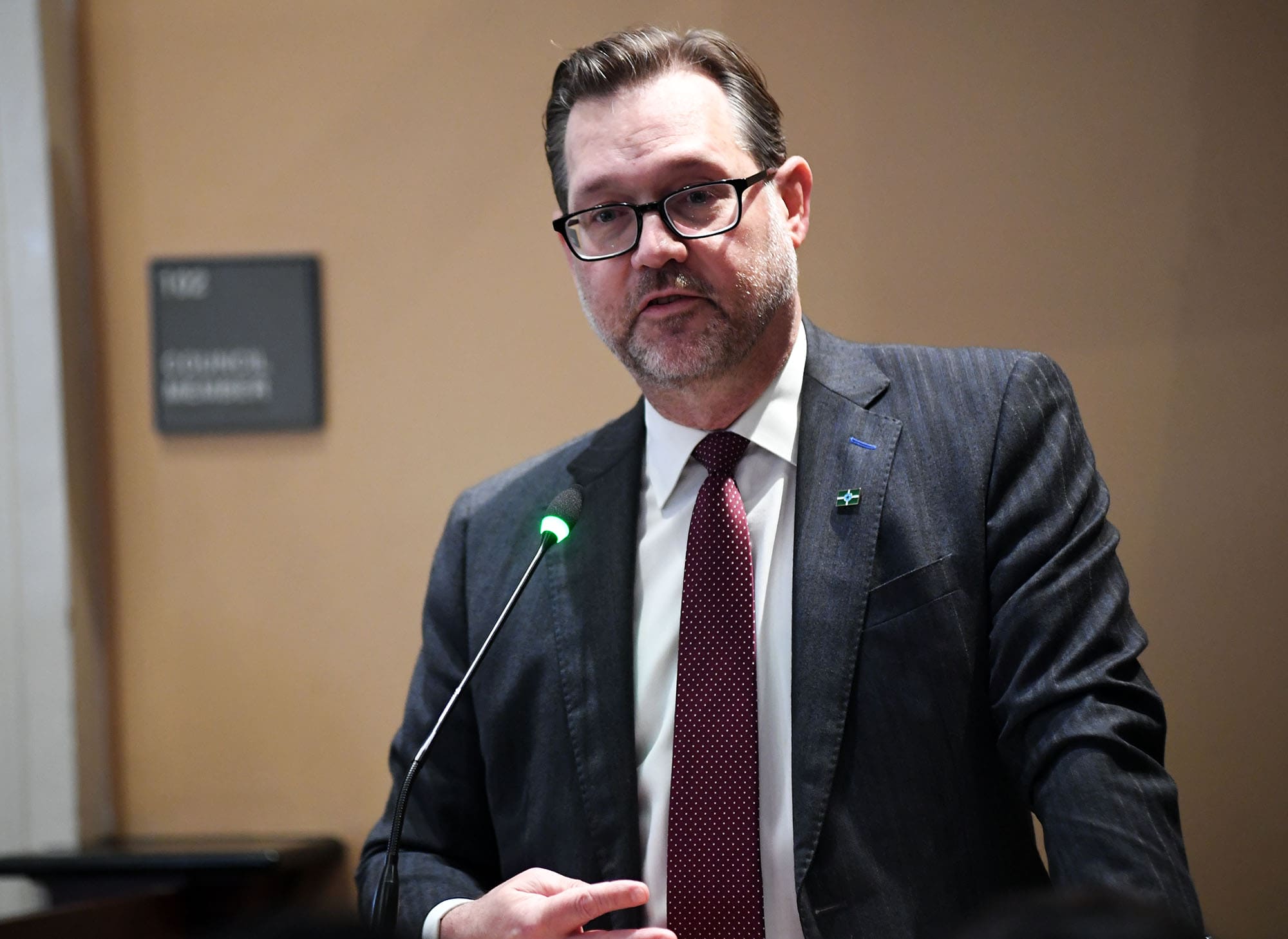
City Attorney Drew Martin speaks on the city’s water issues during a town hall meeting held at City Hall, Monday, Feb. 16, 2026, in Jackson. Credit: Vickie D. King/Mississippi Today
“We’ve got to do more to make sure people don’t feel like they can get away with that,” Martin said.
Last month, Reynolds found Ramchandran guilty of seven environmental charges stemming from unsafe structures, illegal dumping and lack of upkeep. He called the Grand Chateau a “dangerous menace.”
He ordered Ramchandran to pay $1,750 in fees and face 630 days in jail unless he applied within 30 days – now about two weeks left – for a permit to fix or demolish the property.
Ramchandran was also required to post a $1.25 million secured appearance bond in case he fails to comply with the court’s order. The amount would cover the cost of razing the Grand Chateau.
Ramchandran did not respond to numerous requests for comment.
The Grand Chateau became part of the city’s fight against blight when Entergy cut power to the complex in July after signs of meter tampering. The complex was supposed to be vacant.
Ramchandran testified during his court hearing that eviction notices were sent to tenants in May 2025 to prepare the complex for renovations, which the property owner asserts were ultimately stopped because of what he described as gun violence.
One former contractor, Kendrick Holmes, disputed that claim and asserted that renovations stopped in 2024 because of payment issues. He recounted being sent to Lowe’s weekly for renovation supplies using Ramchandran’s company card, only for it to be declined.
A previous property manager, Pierce Wiburn, corroborated Holmes’ claims about the lack of gun violence and payment issues.
The property incurred several violations from code enforcement officers after Holmes left the project.
Outside of legal action, city officials are exploring other avenues to lessen the city’s blight problems.
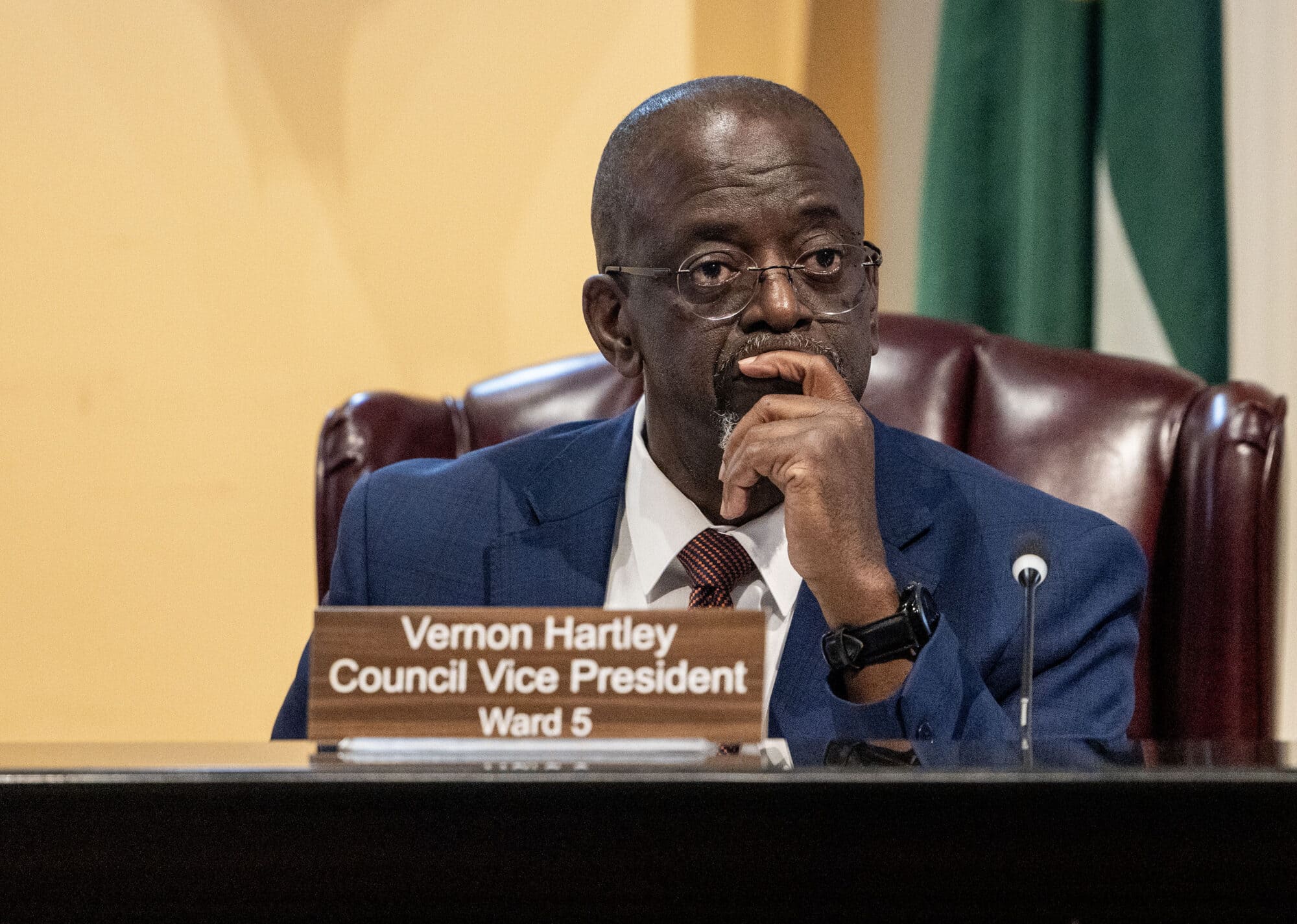
Jackson City Council member Vernon Hartley listens during a council meeting at City Hall in Jackson on Tuesday, April 21, 2026. Credit: Eric Shelton/Mississippi Today
Councilmembers Vernon Hartley and Ashby Foote want to establish a blight and neighborhood recovery plan, now in the works for more than a year.
In collaboration with Jackson State University, which helped collect data for the city, Hartley said the plan creates a step-by-step guide to clear roadways, remove trash from illegal dumping sites and demolish properties.
Hartley said the city hopes to present the plan during the state’s next legislative session to get financial backing for the city’s fight, although he could not specify an amount Jackson would seek from lawmakers.
“We’re gonna have to show something first,” Hartley said. “It’s gonna require us going in and showing folks, ‘Hey we’re serious about it.’”
Hartley said there are discussions to hire an investigator to help the city identify and build cases against owners of blighted properties.
Parkinson also wants to enlist volunteers to help already strained code enforcement officers identify blighted properties. In September, the City Council approved a proposal from Ward 4 Councilmember Brian Grizzell that would partner the city with a debt collection firm to recoup costs from owners who owe the city money.
It’s not clear if these efforts will make long-term changes to Jackson’s blight issues. There’s no tangible evidence that any of these efforts are working outside of current pending litigation, and there won’t be for several months, Martin said.
However, he said he’s confident Jacksonians will begin to see results from the continued efforts within the coming months.